Business RadioX ®

  • Home
  • Business RadioX ® Communities
    • Southeast
      • Alabama
        • Birmingham
      • Florida
        • Orlando
        • Pensacola
        • South Florida
        • Tampa
        • Tallahassee
      • Georgia
        • Atlanta
        • Cherokee
        • Forsyth
        • Greater Perimeter
        • Gwinnett
        • North Fulton
        • North Georgia
        • Northeast Georgia
        • Rome
        • Savannah
      • Louisiana
        • New Orleans
      • North Carolina
        • Charlotte
        • Raleigh
      • Tennessee
        • Chattanooga
        • Nashville
      • Virginia
        • Richmond
    • South Central
      • Arkansas
        • Northwest Arkansas
    • Midwest
      • Illinois
        • Chicago
      • Michigan
        • Detroit
      • Minnesota
        • Minneapolis St. Paul
      • Missouri
        • St. Louis
      • Ohio
        • Cleveland
        • Columbus
        • Dayton
    • Southwest
      • Arizona
        • Phoenix
        • Tucson
        • Valley
      • Texas
        • Austin
        • Dallas
        • Houston
    • West
      • California
        • Bay Area
        • LA
        • Pasadena
      • Colorado
        • Denver
      • Hawaii
        • Oahu
  • FAQs
  • About Us
    • Our Mission
    • Our Audience
    • Why It Works
    • What People Are Saying
    • BRX in the News
  • Resources
    • BRX Pro Tips
    • B2B Marketing: The 4Rs
    • High Velocity Selling Habits
    • Why Most B2B Media Strategies Fail
    • 9 Reasons To Sponsor A Business RadioX ® Show
  • Partner With Us
  • Veteran Business RadioX ®

Search Results for: regions business radio

Tonya Ferguson and Jeff Thrutchley with Camp Horizon

August 4, 2022 by Mike

Gwinnett Business Radio
Tonya Ferguson and Jeff Thrutchley with Camp Horizon
Loading
00:00 /
RSS Feed
Share
Link
Embed

Download file

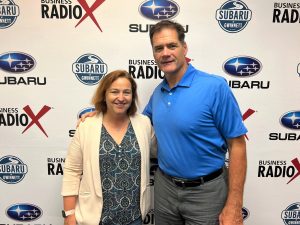
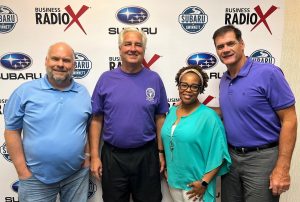
Steven Julian, Jeff Thrutchley, Tonya Ferguson, Harper LeBel

Tonya Ferguson & Jeff Thrutchley/Camp Horizon

Camp Horizon offers year-round programs to Metro Atlanta’s youth in foster care. They work to restore dignity and hope to children, teens, and young adults who have been abused and/or neglected, empowering them to make good decisions and lead healthy, productive lives.

Camp Horizon was founded in 1982 when a handful of friends decided to find a way to positively impact the community. They agreed that changing the lives of abused and neglected children living in foster care would be valuable to the children as well as the community. And so it began in the summer of 1982, supported by a shared goal of investing in the future of our community. The challenge of the new organization was to reach out to the “bruised and broken-hearted.”

From their humble beginnings of only eight campers sleeping in tents in a parking lot of a local church, to their current week-long and year-round programs at a state of the art camping facility, the mission has remained the same. Camp Horizon has grown hundreds of wounded children into healthier adults. Equipped with knowledge and skills they have learned from Camp Horizon, these former campers will be the people who impact their communities with great strength. Not only will they break the cycle of abuse in their own lives, but they will be prepared to help prevent abuse in the lives of those around them. They will take what they have received from Camp Horizon and grow it into a powerful agent for social change.
Gwinnett Business Radio is presented by

Tagged With: camp horizon, foster care, gwinnett business, Gwinnett Business Radio, harper lebel, Jeff Thrutchley, regions bank, steven julian, subaru of gwinnett, Tonya Ferguson

Decision Vision Episode 178: Hitting Pause, with host Mike Blake

August 4, 2022 by John Ray

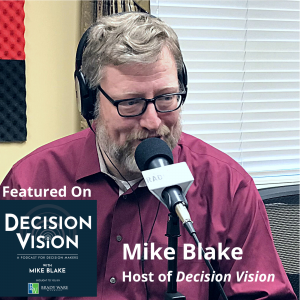
Mike Blake
Decision Vision
Decision Vision Episode 178: Hitting Pause, with host Mike Blake
Loading
00:00 /
RSS Feed
Share
Link
Embed

Download file

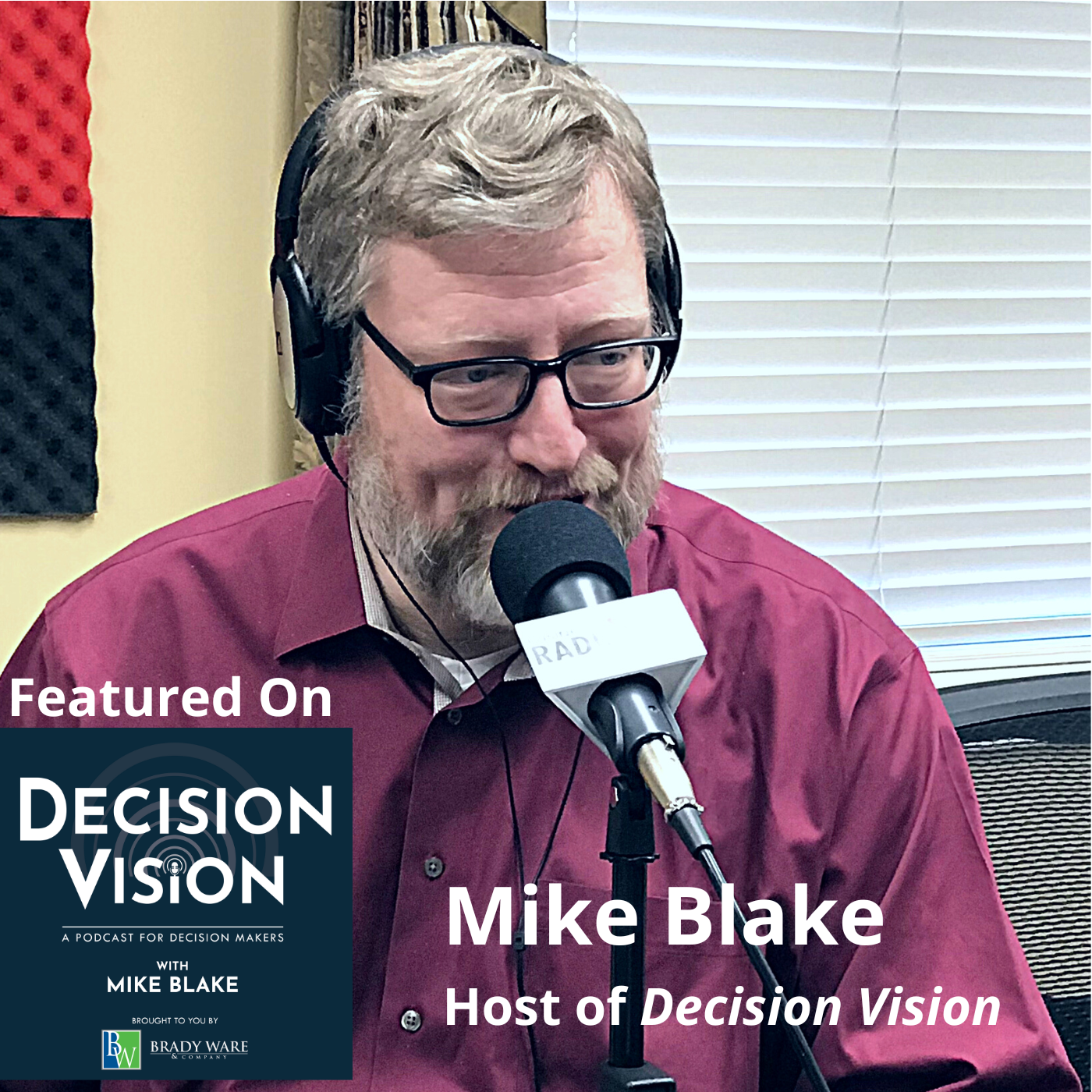
Mike Blake

Decision Vision Episode 178: Hitting Pause, with host Mike Blake

Mike Blake, the host of Decision Vision, announced that the show will pause for a bit. He mentioned several reasons, including wanting to revamp the format, the increasing time demands he’s experiencing heading up Brady Ware Arpeggio, and wanting to refocus the content in new directions.  Mike noted that the show will return with fresh content and format soon.

Decision Vision is presented by Brady Ware & Company and produced by the North Fulton studio of Business RadioX®.

Mike Blake, Brady Ware & Company

Mike Blake, Host of the “Decision Vision” podcast series

Michael Blake is the host of the Decision Vision podcast series and a Director of Brady Ware & Company. Mike specializes in the valuation of intellectual property-driven firms, such as software firms, aerospace firms, and professional services firms, most frequently in the capacity as a transaction advisor, helping clients obtain great outcomes from complex transaction opportunities. He is also a specialist in the appraisal of intellectual properties as stand-alone assets, such as software, trade secrets, and patents.

Mike has been a full-time business appraiser for 13 years with public accounting firms, boutique business appraisal firms, and an owner of his own firm. Prior to that, he spent 8 years in venture capital and investment banking, including transactions in the U.S., Israel, Russia, Ukraine, and Belarus.

LinkedIn | Facebook | Twitter | Instagram

Brady Ware & Company

Brady Ware & Company is a regional full-service accounting and advisory firm which helps businesses and entrepreneurs make visions a reality. Brady Ware services clients nationally from its offices in Alpharetta, GA; Columbus and Dayton, OH; and Richmond, IN. The firm is growth-minded, committed to the regions in which they operate, and most importantly, they make significant investments in their people and service offerings to meet the changing financial needs of those they are privileged to serve. The firm is dedicated to providing results that make a difference for its clients.

Decision Vision Podcast Series

Decision Vision is a podcast covering topics and issues facing small business owners and connecting them with solutions from leading experts. This series is presented by Brady Ware & Company. If you are a decision-maker for a small business, we’d love to hear from you. Contact us at decisionvision@bradyware.com and make sure to listen to every Thursday to the Decision Vision podcast.

Past episodes of Decision Vision can be found at decisionvisionpodcast.com. Decision Vision is produced by John Ray and the North Fulton studio of Business RadioX®.

Connect with Brady Ware & Company:

Website | LinkedIn | Facebook | Twitter | Instagram

TRANSCRIPT

Intro: [00:00:01] Welcome to Decision Vision, a podcast series focusing on critical business decisions. Brought to you by Brady Ware & Company. Brady Ware is a regional, full-service accounting and advisory firm that helps businesses and entrepreneurs make visions a reality.

Michael Blake: [00:00:22] And welcome to Decision Vision, a podcast, giving you, the listener, a clear vision to make great decisions. This is Michael Blake, your host, and I’m going to talk to you a bit, not as a podcast delivering content necessarily, but more news, I guess, is the way to put it. So, I wanted to put this episode out there to let you guys know that I’m putting this show on hiatus for a while.

Michael Blake: [00:00:49] I don’t think it will be too terribly long, but it’s probably going to be, I’m guessing, about a couple of months. And we’ve done 177 shows, I’m not going to consider this a show, but if we are going to put this on hiatus, I think a way to pause on top with Lee Ellis, in Should I Resist, I think, was about as good a way to do it as possibly could be imagined.

Michael Blake: [00:01:13] Certainly, again, pausing on a high note, I’m being very careful to say I’m not going out on a high note, because it is my intention that the show will be back, but we do need to pause it and for a couple of reasons. The first is that, to be candid, I need a break. We’ve been doing this show consistently for about three-and-a-half years now or close to it, not missing a week, and it’s difficult.

Michael Blake: [00:01:43] This is not my day job. It’s a hobby. It’s a side gig. And in my new role as managing partner of Brady Ware Arpeggio, frankly, my time demands have become less forgiving, not more. You think as you become promoted and you serve at the top of the pyramid, you like to think you work for fewer people, you actually work for more. That’s one of the lessons you learn as you kind of go through this journey, and I’m concerned that the quality of the show will suffer.

Michael Blake: [00:02:17] And there are lots of podcasts out there you can listen to. You’ve all been such loyal listeners over the years that I owe it to you, I owe it to our guests, I owe it to my firm to make sure that the product we put out is good. Second, I want to change things up a little bit. The show format has been, for the most part, me interviewing a guest, and I think that’s fine as far as it goes, but Brady Ware & Company and Brady Ware Arpeggio, the part that I’m in charge of, is so much more than just me, but you never really get much of a chance to see it or hear about it, except on the rare occasions that we bring in somebody from the Brady Ware ecosystem as a guest.

Michael Blake: [00:03:06] And frankly, it’s not fair to the firm, and I’m not comfortable with having the brand of the show be all about me. I thought that there was a chance that we might kind of rotate hosts, somebody might take over, shove me out of the chair, and say, I’m going to take this thing over for a while, that hasn’t happened. So, I do think that creating a little bit of space for somebody else to come in and do something that they want to do, I think it’s simply the right thing to do.

Michael Blake: [00:03:40] And third, I think that we need to take a step back and we have some decisions we have to make. We have to be a little bit more strategic and intentional about how we think about the content in terms of serving an audience well. And with 177 shows, we’ve covered a lot of ground, everything from show one, Should I Get a Patent, to show 177, Should I Resist, to one of our more fun shows, Should I Get Captive Insurance, to Should I Sell my Business, Should I Buy a Business, Should I Invest Venture Capital, Should I Raise Venture Capital, Should I sue my partner, that sort of thing.

Michael Blake: [00:04:30] We’ve covered a lot of ground, and there’s an extensive library for you to go back through, and I think most of those topics are still very much evergreen. And we also stepped up our—we also stepped up our production schedule for COVID to try to give people the best information we could to enable people to make the best decisions they could, and frankly, in an impossible environment.

Michael Blake: [00:04:55] And so, I’m proud of the show that we put together, but I would like it to be a little bit more focused, because I do think maybe we’ve run too far afield. And I really do enjoy talking about business. I’m very fortunate that I’m on a job that I love to get up and work at every day with people that I love and for clients that I love in a way that makes a difference.

Michael Blake: [00:05:25] And I want to take a step back, and make sure that our show reflects that and share with you the blessings that I have in terms of doing that and share with you in a more concrete way the impact that our clients have earned and have generated for themselves by becoming better decision makers. Now, that does not mean we’re going to become an infomercial. No way that’s going to happen as long as this guy is behind the microphone. Never going to happen. But I do think we’re missing opportunities because we’re going a little bit too broadly and not as deeply as we could.

Michael Blake: [00:06:03] And I do like to go deep, maybe even Aquaman deep. I do like to go deep in topics whenever I can, which is why we do long podcast shows, and I want to do that. And then, finally, I would like to expand this show to a new platform. Video is an important platform. Now, we’re all watching video. It’s remarkable how democratized video has become. I’m old enough to remember the days of three VHF channels, and if you’re lucky, three more UHF channels, and you sort of had to do ballet in front of the rabbit ears to get Channel 68 WQTV in Boston, where I was growing up, but, man, I sure do remember Candlepins for Cash, which is a great show at 4:30 PM every weekday, candlepin is a form of bowling, by the way, in New England, but that’ll be for a different show.

Michael Blake: [00:06:59] Maybe there’s a candlepin podcast out there. There probably is. But once you record an audio, it’s hard to kind of make that video. It’s a lot easier to start with video and make it audio. So, it just gives us an opportunity to reach a wider audience. And for people that aren’t into podcasting, there are plenty of people that don’t like podcasts, but will watch videos all day long. And so, we want to experiment with that.

Michael Blake: [00:07:27] So, those are the reasons that we’re going to put the show on pause. Like I said, I fully anticipate it will come back, but it will come back after I’ve had a chance to re-energize. It’ll come back after I figured out a way to make the show more inclusive. It will come back after we find a way to make the topics, I think, more focused and more consistent over time. And it’ll come back when we figured out a way to make the show more accessible across a wider variety of platforms so that we can impact more people.

Michael Blake: [00:08:02] And I fully expect that by next quarter, we’re going to be back at it again in some fashion. My guess is it will probably be a roundtable of some kind. You’re going to hear other perspectives than mine, and probably more fun, freewheeling conversations. Maybe we’ll introduce liquor into the conversation, I’m not sure if we’ll do that yet, but it will lead to some interesting content if we do that.

Michael Blake: [00:08:25] And I think we can get people to pour themselves a tumbler of scotch when we do that, but no promises, I don’t want to put them out there yet. So, this is not goodbye. This is simply until the next time we see or hear one another. I would like to thank Brady Ware, though, for the opportunity to have done this podcast for three-and-a-half years. It’s been a tremendous opportunity and I’m grateful for it and for the support of the partners of the show.

Michael Blake: [00:08:53] I’m grateful to the guests who have come on, and given freely of their time and their expertise to share it with me and our audiences. I’ve learned something in literally every podcast, and that’s one of the things that kept me doing it as long as we did. And I’d like to thank our business partners at Business RadioX and John Ray. They’ve been not good, they’ve been great. Without them, the show would have lasted maybe an episode-and-a-half.

Michael Blake: [00:09:17] And I say that half, because I probably would have just thrown the headphones off, and turned the microphone off, and said, This show is over, I’m going back to my trailer. So, if not for them, we would not have had the listenership we’d have had. We would not have had the discipline that we’ve had. We would not have had the overall show quality. So, I’m just going to give them a free plug, because it’s the right thing to do. If you’re thinking of publishing a podcast, and by the way, they’re experimenting with video, but I’m not supposed to say that, give John a call, give his Business RadioX a try.

Michael Blake: [00:09:53] They are a terrific partner. If you believe in the medium, as I do, you really can’t ask for any better. So, with that, as I’m recording this on 29th, July 2022, it is 4:05 on a Friday, and so I don’t know when you’re going to be listening to this, but I know that I’m about to start my weekend, and so is John. So, again, I’m going to say thank you very much for patronizing the program. I do hope you’ll go back and find other shows.

Michael Blake: [00:10:25] And I guess, the last thing, if you have any ideas of what you like us to cover, what you’d like us to do with the show, or maybe ways to get you engaged, because I think that’s a way that—that’s the thing we’re missing. The thing that I haven’t figured out with podcasting yet is how to create real engagement with an audience. So, I’d really like to do that. Send me an email to msblake@bradyware.com and no reasonable idea will be brushed off. This is your show, I just happen to be the steward of it. So, again, thank you, again, for everything. I’m so grateful for the opportunity and you will hear from me again in a couple of months. Take care.


Tagged With: Brady Ware & Company, Brady Ware Arpeggio, Business Radio X, Decision Vision, Mike Blake, podcast

Heat Illness

July 28, 2022 by John Ray

Heat Illness
North Fulton Studio
Heat Illness
Loading
00:00 /
RSS Feed
Share
Link
Embed

Download file

Heat Illness

Heat Illness (Episode 78, To Your Health with Dr. Jim Morrow)

On this episode of To Your Health, Dr. Jim Morrow of Village Medical offered common sense information about heat illness. After a brief update on monkeypox, Dr. Morrow discussed how to recognize heat illness, how to prevent it, what causes it, ways to treat it, when to call 911, and much more.

To Your Health is brought to you by Village Medical (formerly Morrow Family Medicine), which brings the care back to healthcare.

About Village Medical (formerly Morrow Family Medicine)

Village Medical, formerly Morrow Family Medicine, is an award-winning, state-of-the-art family practice with offices in Cumming and Milton, Georgia. The practice combines healthcare information technology with old-fashioned care to provide the type of care that many are in search of today. Two physicians, three physician assistants and two nurse practitioners are supported by a knowledgeable and friendly staff to make your visit to Village Medical one that will remind you of the way healthcare should be.  At Village Medical, we like to say we are “bringing the care back to healthcare!”  The practice has been named the “Best of Forsyth” in Family Medicine in all five years of the award, is a three-time consecutive winner of the “Best of North Atlanta” by readers of Appen Media, and the 2019 winner of “Best of Life” in North Fulton County.

Village Medical offers a comprehensive suite of primary care services including preventative care, treatment for illness and injury, and management of chronic conditions such as diabetes, congestive heart failure, chronic obstructive pulmonary disease (COPD) and kidney disease. Atlanta-area patients can learn more about the practice here.

Dr. Jim Morrow, Village Medical, and Host of To Your Health with Dr. Jim Morrow

Covid-19 misconceptionsDr. Jim Morrow is the founder of Morrow Family Medicine. He has been a trailblazer and evangelist in healthcare information technology, was named Physician IT Leader of the Year by HIMSS, a HIMSS Davies Award Winner, the Cumming-Forsyth Chamber of Commerce Steve Bloom Award Winner as Entrepreneur of the Year and he received a Phoenix Award as Community Leader of the Year from the Metro Atlanta Chamber of Commerce.  He is married to Peggie Morrow and together they founded the Forsyth BYOT Benefit, a charity in Forsyth County to support students in need of technology and devices. They have two Goldendoodles, a gaggle of grandchildren and enjoy life on and around Lake Lanier.

Facebook | LinkedIn | Twitter

The complete show archive of To Your Health with Dr. Jim Morrow addresses a wide range of health and wellness topics.

Dr. Morrow’s Show Notes

What are heat exhaustion and heatstroke?

  • Heat exhaustion happens when your body gets too hot. 
    • If you don’t treat heat exhaustion, it can lead to heatstroke. 
    • This occurs when your internal temperature reaches at least 104°F. 
    • Heatstroke is much more serious than heat exhaustion. 
      • It can cause shock, organ failure, or brain damage. In extreme cases, heatstroke can kill you.

Symptoms of heat exhaustion and heatstroke

  • Symptoms of heat exhaustion are:
    • Muscle cramps
    • Heavy sweating
    • Pale or cold skin
    • Weakness and/or confusion
    • Dizziness
    • Headache
    • Nausea or vomiting
    • Fast heartbeat
    • Dark-colored urine, which indicates dehydration
  • In addition to these symptoms, warning signs of heatstroke also include:
    • Fever of 104°F or higher
    • Flushed or red skin
    • Lack of sweating
    • Trouble breathing
    • Fainting
    • Seizures

What causes heat exhaustion and heatstroke?

  • Heat-related illnesses occur when your body can’t keep itself cool. 
    • As the temperature rises, your body produces sweat to stay cool. 
      • On hot, humid days, the increased moisture in the air slows down this process. 
      • When your body can’t cool, your temperature rises and you can become ill.
  • Hot weather and exercise are the main causes of heat exhaustion and heatstroke. 
    • In hot settings, you need to be mindful of the temperature outside. 
    • The heat index is not the same as the temperature. 
      • It measures the air temperature plus the effects of humidity. 
      • A heat index of 90°F or higher calls for extreme caution. 
      • Prolonged exposure to high temperatures increases your risk of heat-related illnesses.

How are heat exhaustion and heatstroke diagnosed?

  • If a person is displaying known heat illness symptoms, 
    • take their temperature. 
    • A reading of 104°F or more means they probably have heatstroke. 
    • You should call 911 and get medical care right away.

Can heat exhaustion and heatstroke be prevented or avoided?

  • There are many things you can do to prevent heat-related illnesses. 
    • Babies, children, and elderly people are more sensitive to heat and require extra attention. 
    • You also are at greater risk if you are ill or obese, or have heart disease. 
    • People who work outside or in a hot setting also are at risk of heat exhaustion and heatstroke.
  • Don’t go outside when the temperature and heat index are high. 
  • If possible, stay indoors in air-conditioned areas. 
  • If you must go outside, take the following precautions.
    • Wear lightweight, light-colored, loose-fitting clothing.
    • Protect yourself from the sun by wearing a hat or using an umbrella.
    • Use sunscreen with a sun protection factor (SPF) of 15 or higher.
    • Drink plenty of water throughout the day. 
      • Dehydration and lack of salt contribute to heat-related illnesses. 
      • Some sports drinks can help replenish the salt in your body lost through sweating. 
      • Drink water or other fluids every 15 to 20 minutes, even if you don’t feel thirsty. 
      • If your urine is clear, you are probably drinking enough fluids. 
      • Dark-colored urine is a sign that you’re dehydrated.
    • Avoid or limit drinks that contain caffeine (such as tea, coffee, and soda) or alcohol.
    • Schedule outdoor activities for cooler times of the day — before 10 a.m. and after 6 p.m.
    • Take frequent breaks from the heat and outdoor activities.
    • Do not stay in or leave a child in your car when it is hot outside. 
      • Even if you open the windows, the intense heat can be extremely dangerous.
  • Certain medicines can put you in danger of heatstroke. 
    • They affect the way your body reacts to heat. 
      • Talk to your doctor if you take any of these or have an ongoing health problem. 
      • They can help you manage the heat with your condition. 
      • These medicines include:
        • Antibiotics
        • Allergy medicines (antihistamines)
        • Some medicines used to manage blood pressure, cholesterol, and heart disease (beta-blockers and vasoconstrictors)
        • Some medicines that treat mental health problems (antidepressants and antipsychotics)
        • Seizure medicines (anticonvulsants)
        • Water pills (diuretics)
        • Laxatives
        • Some diet pills
        • Prescription acne medicines
        • Illegal drugs, such as cocaine (amphetamines)

Heat exhaustion and heatstroke treatment

  • If you or someone else has heat exhaustion, treat symptoms in the following ways.
    • Get out of the heat quickly 
      • and into a cool place, or at least shade.
    • Lie down and elevate your legs 
      • to get blood flowing to your heart.
    • Take off any tight or extra clothing.
    • Apply cool towels to your skin or take a cool bath. 
      • This will help regulate and lower your internal body temperature.
    • Drink fluids, such as water or a sports drink. 
      • Do not guzzle them, but take sips. 
      • Do not drink fluids with caffeine or alcohol.
  • Call 911 if:
    • Symptoms don’t improve 
      • or they still have a fever of 102°F after 30 minutes of initial treatment.
    • The person goes into 
      • shock, 
      • faints, 
      • or has seizures.
    • The person is not breathing. 
    • You also should begin CPR right away to try and revive them.

Living with heat exhaustion and heatstroke

  • After you’ve had heat exhaustion or heatstroke, 
    • you will be sensitive to heat. 
    • This can last for about a week. 
    • It’s important to rest and let your body recover. 
    • Avoid hot weather and exercise. 
    • Ask your doctor when it’s safe to return to your normal activities.

Complications

  • Complications include secondary infections, pneumonia, sepsis, encephalitis, and loss of vision if severe eye infection. 
    • If infection occurs during pregnancy, still birth or birth defects may occur. 
    • The disease may be milder in people vaccinated against smallpox in childhood. 

Causes

  • Monkeypox in both humans and animals is caused by infection with the monkeypox virus – a double-stranded DNA virus. 
    • The virus is found mainly in tropical rainforest regions of Central and West Africa. 
    • The virus is split into Congo Basin and West African clades, matching the geographical areas.
  • Most human cases of monkeypox are acquired from an infected animal, 
    • though the route of transmission remains unknown. 
    • The virus is thought to enter the body through broken skin, the respiratory tract, or the mucous membranes of the eyes, nose, or mouth. 
    • Once a human is infected, transmission to other humans is common, with family members and hospital staff at particularly high risk of infection.
  • Human-to-human transmission is thought to occur primarily through close contact with an infected subject. 
    • There are indications that transmission occurs during sexual intercourse. 
  • Monkeypox symptoms tend to begin 5 to 21 days after infection. 

Prevention

  • Vaccination against smallpox is assumed to provide protection against human monkeypox infection 
    • because they are closely related viruses 
      • and the vaccine protects animals from experimental lethal monkeypox challenges. 
      • This has not been conclusively demonstrated in humans because routine smallpox vaccination was discontinued following the eradication of smallpox.

Treatment

  • In the European Union and the United States, tecovirimat is approved for the treatment of several poxviruses, including monkeypox. 
    • Best Practice recommends tecovirimat or the smallpox treatment brincidofovir as the first line antiviral treatment if required, 
      • alongside supportive care (including antipyretic, fluid balance and oxygenation). 
      • Empirical antibiotic therapy or aciclovir may be used if secondary bacterial or varicella zoster infection is suspected, respectively. 

Tagged With: Dr. Jim Morrow, heat exhaustion, heat lllness, heat stroke, hot weather, summer, To Your Health, Village Medical

Jerry Flanagan With JDog Brands

July 21, 2022 by Jacob Lapera

JDog-Brands-logo
Franchise Marketing Radio
Jerry Flanagan With JDog Brands
Loading
00:00 /
RSS Feed
Share
Link
Embed

Download file

Brought To You By SeoSamba . . . Comprehensive, High Performing Marketing Solutions For Mature And Emerging Franchise Brands . . . To Supercharge Your Franchise Marketing, Go To seosamba.com.

JDog Brands is a 100 million dollar franchise system servicing customers all around the US. With over 260 franchises nationwide, we are largest Veteran Franchise in the world.

We offer our unique business model to Veterans and Veteran Family members exclusively. My mission continues to create business opportunities and employment for every man and woman whoever served our great country.

Jerry FlanaganJerry Flanagan is CEO and Founder at JDog Brands. Jerry is an Army Veteran and entrepreneur who, along with his wife Tracy, have created a national Veteran brand dedicated to empowering Veterans through entrepreneurship.

Rooted in the Military values of Respect, Integrity, and Trust, the JDog®️ Junk Removal & Hauling and JDog®️ Carpet Cleaning & Floor Care franchise systems have become a nationwide movement, creating business and employment opportunities for Veterans and Veteran family members.

Jerry launched the first JDog Junk Removal & Hauling franchise in 2011. It was a two-person operation – Jerry hauled junk and Tracy managed the back office. As a Veteran, Jerry gained trust and credibility with customers quickly, and referrals came easy. Within a year, he had more business than one person could handle and began hiring local Veterans who embodied the brand’s values.

Through Jerry’s vision and leadership, JDog Junk Removal & Hauling has since grown to hundreds of locations, 90 percent of which are Veteran owned. To date, the company has created more than 1,000 job opportunities across the United States.

Jerry served in the Army from 1987 to 1989, and the National Guard from 1991-1993 and finished at the top of his class. He was awarded the Army Achievement Medal. Since transitioning back to the civilian world, Jerry has committed himself to helping Veterans be successful in business.

He teaches an entrepreneurial boot camp for Veterans at St. Joseph’s University, and at Boots to Business for Veterans, an entrepreneurial program offered through the U.S. Small Business Administration. He is a Strategic Advisor for Grunt Style, a Patriotic apparel company committed to creating a quality product while supporting the Military and First Responders communities. He also sits on the Board of Directors for the Grunt Style Foundation.

Jerry also founded the JDog Foundation, whose mission is to support Military Veterans and Military Veteran-related causes – with a particular focus on Veteran suicide prevention and PTSD.

Connect with Jerry on LinkedIn and follow JDog Brands on LinkedIn, Facebook and Twitter.

What You’ll Learn In This Episode

  • What JDog Brands is and their mission
  • How Jerry created the brand / concept
  • JDog Brand’s growth over the past few years
  • About the partnership with Irreverent Warriors

This transcript is machine transcribed by Sonix

TRANSCRIPT

Intro: [00:00:07] Welcome to Franchise Marketing Radio. Brought to you by SeoSamba comprehensive high performing marketing solutions for mature and emerging franchise brands. To Supercharge Your Franchise Marketing. Go to seosamba.com. That’s seosamba.com.

Lee Kantor: [00:00:32] Lee Kantor here another episode of Franchise Marketing Radio and this is going to be a good one. Today on the show, we have Jerry Flanagan with JDog Brands. Welcome, Jerry.

Jerry Flanagan: [00:00:42] Thanks for having me.

Lee Kantor: [00:00:43] Well, I’m excited to learn what you’re up to. Tell us a little bit about JDog. How are you serving folks?

Jerry Flanagan: [00:00:49] Yeah, sure. So JDog is the world’s largest military veteran franchise system. We started in 2011 just with one truck and one trailer, and we’ve expanded and exploded into over 270 locations around the country. And we’ve added a carpet cleaning and floor care service as well.

Lee Kantor: [00:01:07] So can you talk about the beginning days? What was the genesis of the idea?

Jerry Flanagan: [00:01:13] Well, my wife and I had come off of a personal bankruptcy. Our business had failed. Coming off the recession, we were in the retail world and I needed to do something that was recession proof while I looked for a real job. And it turned out that junk removal was a recession proof business. So I had a jeep. We took we took the jeep and we bought a trailer and I started hauling junk in my neighborhood. A customer found out that I was a military veteran. They thanked me for my military service and they said, You should let the entire world know that you’re a military veteran service in the community. And that’s what we did. We started branding JAG. We put a big bulldog on the truck and camouflage, and everyone knew that we were in the military.

Lee Kantor: [00:01:54] So what was how did you even think of, like, junk removal like?

Jerry Flanagan: [00:01:58] So when I was researching for recession proof businesses, the businesses that were the most popular were pharmaceutical sales, the medical field, trash and junk. And I said, you know, junk removal. I’m a pretty strong guy. I can pick up pianos, refrigerators, hot tubs. I think I’m going to go into that space. And when I started hauling junk, my wife and I just put index cards out with our phone number on and we said veteran, owned and operated. The entire community got behind the business.

Lee Kantor: [00:02:28] But what about how did you know about the math of the business that the math was going to work out?

Jerry Flanagan: [00:02:34] Google is your best friend, right? Youtube videos. I researched what the other guys were doing. There’s a company called one 800 Got Junk and Junk KING And all these other companies that kind of laid the groundwork for the business. So I kind of looked what they were doing and lowered my prices and offered a stronger and better and more personal service. And especially being a military veteran, customers would open up their door and thank me for my service before I even started.

Lee Kantor: [00:02:59] And then when did kind of the light bulb go off and go, you know what, this could be a franchise.

Jerry Flanagan: [00:03:05] Well, that was my wife’s idea. That was in 2012. Our previous business was a franchise model. We did swing sets, birthday parties, and that failed, but we did have some franchise experience. So it was her idea. She saw the unemployment rate for veterans was around 12% back then and she said, we already know how to franchise. Let’s put something together, put a playbook together and let’s franchise to our our fellow veterans.

Lee Kantor: [00:03:29] And was it that simple? Build it and they will come.

Jerry Flanagan: [00:03:32] You know, a lot of hard work, a lot of marketing dollars had to be spent. I had to raise money with some investors. And finally, in 2014, we were able to really go national.

Lee Kantor: [00:03:43] Like, what were some of the breadcrumbs that gave you clues that this thing had traction and it was going to work?

Jerry Flanagan: [00:03:48] Well, I would haul junk away in. The margins were great and I was able to recycle the items. I was able to donate a lot of the items. So my cost to dump the items were really low. I was keeping everything out of the landfill I could and those customers were calling me back saying, Hey, I have a friend, they want to use you. My church wants to use me, my mom wants to use you, my office wants to use you. Everyone wanted to use our brand because it was a military brand. They wanted to give back to the military. And it was very fortunate for us that this is going on all over the country.

Lee Kantor: [00:04:19] And then you said, let’s just lean into this and then let’s see where it takes us.

Jerry Flanagan: [00:04:24] Yeah, because when you’re a military veteran, I served in the Army. When you get out, you don’t have any real direction. You get lost. When you’re in the military, you’re consumed with brotherhood and sisterhood and the work ethic that you learn and the things you do together. And the country is missing that. And I noticed that over the last decade that when we open this thing up, people are coming to JAG to buy a franchise so they can hire their brothers and sisters. I mean, the goal for the company is to get the unemployment rate for veterans to under 1%. And we’re finding that when a franchise opens up, that’s what they want to do.

Lee Kantor: [00:05:00] Now, one of the you educate the listener a little bit about what it’s like when you do leave the military service. I think there’s some misconceptions that they think that, Oh, you’re just on some sort of a path and they’re taking care of you, but it’s kind of they’re cutting the string pretty quickly.

Jerry Flanagan: [00:05:15] They cut it very quickly. They put you through something called TAPS, which is a transitioning program, and they send you on your way. And if you don’t have the right experience when you apply for a job, most human resource people don’t know what your military experience means. They don’t know that you oversaw ten. 30 people or you managed millions of dollars of equipment. They don’t understand your leadership skills. You can’t put it on a resume because they don’t understand it. So I think that the hiring process is a problem from the civilian space.

Lee Kantor: [00:05:43] And then this is where somebody like you can come in and give them a path that makes sense. It aligns with their values, it aligns with their skill set, and it gives them a path out from feeling that sense of being lost or disconnected.

Jerry Flanagan: [00:05:58] Yeah, absolutely. I mean, our motto here is respect, integrity and trust. And we put that to work. When we show up early at the customer’s home, we say, yes, sir, yes, ma’am. You know, the service industry is missing that. And we provide that with our military veterans when they come to work every day. And when the veteran starts opening up in a market, they go crazy. Everyone’s like, I look, I love the veterans. I want to see the trucks. You know, our bulldog is our mascot. And it’s really cool. It’s cool to get a service experience with the civilian people to say Thank you for your military service. I didn’t know that much about the military until I met you. Come into my home.

Lee Kantor: [00:06:32] And then the flip side of that is not every vet thinks of themselves, maybe as a business owner or entrepreneur, by opening their mind to that and kind of opening the mindset to an entrepreneurial lifestyle that really can be a game changer as well.

Jerry Flanagan: [00:06:49] Yeah, the beauty of franchising and the reason we went there is because we can control it. You know, it’s a playbook. It’s one week here at J Dog University. We train you how to pick up the junk, how to clean the floors, what your pricing should be, how to build SEO marketing, how to manage your dollars, your budgets, your pal re review your panels with you so you’re in business for yourself, but not by yourself. And the formula works really well because if you get the right veterans in our system, they do follow orders pretty well.

Lee Kantor: [00:07:19] And that’s the key. The right veteran. Right. This isn’t for everybody.

Jerry Flanagan: [00:07:24] It’s not for every veteran. Just like in the real world. Right? There’s veterans out there that just they served and they don’t want to listen to anybody. Well, that’s not that’s not our model. You need to listen to us. You need to follow the playbook. This is not something where you sign on the dotted line and you’re free Willy out there. You need to follow our franchise system. And and that’s why it’s really important we have a process here where you’ve got to go through multiple calls in an in-person interview to be approved for a franchise.

Lee Kantor: [00:07:50] So what are some of the qualities you’re looking for? You mentioned the ability to be coachable. That’s an important component. But also you don’t want the kind of the the free willy or the maverick out there saying, hey, that’s good, what you started. But, you know, I got some my my own ideas over here.

Jerry Flanagan: [00:08:09] Yeah. I mean, the company really has become a brand and you need to really believe in the brand. I mean, the three things we focus on, AJ Dog is to get the unemployment rate under 1%. So we need you to go out there and try to find veterans and hire them. Number two, you need you want to be a business owner. We want to put veterans into business ownership so they can really create real equity value for themselves. And number three, we want to focus on the mental health of veterans and prevent veterans suicide. If you feel those three things are important to you, you’re going to make a very good franchise for us. As far as the other technical things go, we’ve got it all figured out. We know how to take apart computers, we know how to recycle. We’d have stripped wire. We’ve done all those things we’d have had. We’d had to put all that type of stuff together. But it’s really the work ethic is what we’re looking for.

Lee Kantor: [00:08:54] Right? So you’ve got to follow the playbook, but bring your best self and really believe in the mission because that’s at the heart of all of this.

Jerry Flanagan: [00:09:01] Yeah, you have to believe in the mission because again, like I said, there are certain veterans that get out just don’t want to do anything with the military. And that’s not us. We want other companies to see what we’re doing, how we’re hiring veterans, how what effect we have on the community. We people love what we do. They use us all the time. It’s great because we have competition that’s been out there for 30, 40 years and we’re able to go in and take some of that business simply because we have a relationship with that customer.

Lee Kantor: [00:09:29] Now, talk about this partnership you have with Irreverent Warriors.

Jerry Flanagan: [00:09:34] Sure. So irreverent warriors. Basically, what they do is they want to focus on the mental health and preventing veteran suicide with humor. They have these silky hikes that are nationwide and they bring hundreds of veterans together and they just do a simple ten mile march, walk right through all the cities around the country. And it’s fantastic. A lot of the veterans that are really dealing with PTSD and problems and issues, they miss the camaraderie. And when you put some selfies on and you’re marching through the heat or even in the wintertime with your fellow veterans, you get to meet people that you haven’t seen, talk about the military, your experience, and it really gets their mind off of some of the problems they’re dealing with.

Lee Kantor: [00:10:15] And then how did that come about?

Jerry Flanagan: [00:10:18] So I’m heavily involved with the veteran community. I met one of the the vice president there at a Reverend Warriors, and he told me about it. I said, You know what, I’ve got to try this thing. And so I went out and I was actually just got done by. Back surgery, so I couldn’t do the march. So I jumped in the truck and I was a safety vehicle. And my wife and I followed these veterans all around the city of Philadelphia. And I’m watching people coming out of their homes clapping, waving, cheering them on. Just so proud of the service that all these veterans had given. And, you know, we’re missing that in America right now. We’re missing that. These veterans that put their life on the line and went overseas and and did all kinds of things for us, you know, the civilian community doesn’t know much about them. So when you see them out there marching around, having a great time, Tracy and I fell in love with the mission. And our company is is a sponsor and a donor and we’re definitely a fan.

Lee Kantor: [00:11:09] And these events like what is the irreverent mean? Like, how is the fun part kind of part of this?

Jerry Flanagan: [00:11:15] You know, what happens is they get together, they’re in their silks, they sign up and they do a march like you did in the military. If you were in the military, you did these 15 mile road marches and then they do a little bit of bar crawling. They do it hit a couple of restaurants, a couple of bars. They have lunch. And it’s it’s so simple that unless you experience it and you’re a veteran, you really don’t understand it. But we know what the outcome is. The outcome is they make friends. They connect on Facebook and LinkedIn, and they’re a phone call away in case someone needs somebody. So it’s really important.

Lee Kantor: [00:11:50] So they took something that was kind of drudgery in the military and tried to make it fun and relatable because they’ve all all the people in the military have gone through a version of this. But this is kind of a funner version of it.

Jerry Flanagan: [00:12:04] Yeah. You’re almost making fun of ourselves, right? Like, I don’t know if you’ve ever seen me on a picture of me, but when I threw Silk is on, it was hysterical. My whole office was laughing, and it’s just something that just gets your mind off reality every day. And a lot of these veterans are suffering more than others. And it’s just another tool. Instead of going to the VA or going on prescription medicine, this is just fun, humor and camaraderie.

Lee Kantor: [00:12:29] Right. But it’s still in the framework of something they’re familiar with from the military.

Jerry Flanagan: [00:12:33] Absolutely. There’s a little bit of cadence that goes on and there’s some singing and it’s really fun.

Lee Kantor: [00:12:40] Well, that’s great that you connected with them and that seems perfectly aligned with your brand.

Jerry Flanagan: [00:12:45] Absolutely. Yep. We’re we’re expecting to do maybe 13 to 15 hikes with them this year. So our fellow franchisees are all around the country are getting involved, too.

Lee Kantor: [00:12:56] So that that organization is nationwide as well.

Jerry Flanagan: [00:13:00] Correct? Yep. They do over 100 hikes a year.

Lee Kantor: [00:13:05] Wow, that’s great. Now for you, are you looking to continue the expansion in certain regions or is kind of the world your oyster at this point?

Jerry Flanagan: [00:13:13] Oh, we’re we’re growing everywhere. I mean, our plan at J. Dog is to make sure a military veteran that served in every zip code in the country, it belongs to our organization and can buy a franchise even when their towns are maybe ten or 20,000 population in the middle of the country, we have a program that’s a lower tier, very affordable program where you can still haul junk in your community but be part of our bigger mission. So we’re looking at major cities, we’re looking at suburbs and we’re looking at the smallest towns in America. We just want to make sure that if you’re a military veteran, you have a chance to own your own business and reap that reward, you know, of of equity and building a nice life.

Lee Kantor: [00:13:55] And you’re trying to do it pretty much for anybody, no matter how much money they have.

Jerry Flanagan: [00:14:00] Exactly. And we’ve lowered our tier dollar investments for smaller communities. So if you’re in a small community, we have a tier three. If you’re in a big community like a Philadelphia or Pittsburgh or one of those other towns, then then it’s a tier one, but it’s all related to to the amount of business we think you can do in a market.

Lee Kantor: [00:14:19] Well, if somebody wants to learn more, have a more substantive conversation with you or somebody on the team, what’s the coordinates?

Jerry Flanagan: [00:14:26] Yeah, it’s very simple. It’s a jd.com, JD JD.com. And when you go to that site, you can read all about our foundation. You can you can apply for a job. If you’re a veteran, look into the franchising or you can schedule a service. If you’re just a customer, you can schedule a carpet cleaning service or a junk removal service.

Lee Kantor: [00:14:45] Now, has there been any cases where somebody started as an employee and eventually got their own franchise?

Jerry Flanagan: [00:14:51] Yeah, as a matter of fact, my first employee was was a guy here in my area. He built up four locations and he recently sold those four locations for a substantial amount of money. So he went through the whole process. He was ten years of working in Georgia, built up his market and sold.

Lee Kantor: [00:15:09] So there’s a path for pretty much everybody if you kind of believe in the mission and want to do the work.

Jerry Flanagan: [00:15:15] Absolutely.

Lee Kantor: [00:15:16] Well, Jerry, thank you so much for sharing your story today. You’re doing important work and we appreciate you.

Jerry Flanagan: [00:15:21] Thanks for having.

Lee Kantor: [00:15:21] Me. All right. This is Lee Kantor. We’ll see you next time on Franchise Marketing Radio.

Tagged With: Jdog Brands, Jerry Flanagan

Jennifer Deloach with The DeLoach Law Practice

July 21, 2022 by Mike

Gwinnett Business Radio
Jennifer Deloach with The DeLoach Law Practice
Loading
00:00 /
RSS Feed
Share
Link
Embed

Download file

Jennifer DeLoach and Harper LeBel

Jennifer Deloach/The DeLoach Law Practice

Attorney Jennifer DeLoach with The DeLoach Law Practice specializes in the fields of family law, estate planning, and probate. She offers compassionate legal services and has a results-oriented perspective on navigating some of life’s toughest challenges. Jennifer understands the importance of protecting your family and your legacy, and will take the time to get to know you as an individual and customize a legal strategy that works for you in your unique circumstances.

Gwinnett Business Radio is presented by
Tagged With: business radio, deloach law practice, Family Law Attorney, gwinnett attorney, gwinnett business, Gwinnett Business Radio, Gwinnett Business RadioX, harper lebel, jennifer deloach, regions bank, subaru of gwinnett

Clay Gordon With Stout Street Capital

July 21, 2022 by Jacob Lapera

Clay-Gordon-Feature
Startup Showdown Podcast
Clay Gordon With Stout Street Capital
Loading
00:00 /
RSS Feed
Share
Link
Embed

Download file

Clay-Gordon-Stout-Street-CapitalClay Gordon is Managing Partner of Stout Street Capital, which he co-founded in 2016.

Upon graduation from the University of Colorado, Clay joined a large Washington DC-based nonprofit where he led regional development efforts in the Southeast, contributing to annual fundraising of $25 million.

Clay then served as the Business Development Manager for Denver-based Strata Resources Inc., before founding Stout Street Capital with business partner John Francis to become early investors in Colorado’s burgeoning tech scene.

Clay specializes in fundraising and deal flow management for the fund.

Connect with Clay on LinkedIn.

What You’ll Learn In This Episode

  • Early-stage investing in non coastal markets

This transcript is machine transcribed by Sonix

TRANSCRIPT

Intro: [00:00:04] We’ll come back to the Startup Showdown podcast, where we discuss pitching, funding and scaling startups. Join us as we interview winners, mentors and judges of the monthly $120,000 pitch competition powered by Panoramic Ventures. We also discuss the latest updates in software web3, health care, tech, fintech and more. Now sit tight as we interview this week’s guest and their journey through entrepreneurship.

Lee Kantor: [00:00:38] Lee Kantor here another episode of Startup Showdown, and this is going to be a good one. But before we get started, it’s important to recognize our sponsor Panoramic Ventures. Without them, we couldn’t be sharing these important stories. Today on Startup Showdown, we have Clay Gordon and he’s with Stout Street Capital. Welcome, Clay.

Clay Gordon: [00:00:58] Thank you so much. Excited to be here.

Lee Kantor: [00:01:00] Well, I’m excited to learn what you’re up to. Tell us a little bit about South Street. How are you serving folks?

Clay Gordon: [00:01:05] Yeah, so South Street Capital, we are a seed stage venture capital firm based in Denver, Colorado. We invest in non coastal markets and we also invest in Canada. We’ve we’ve raised two funds and made 65 investments and then we are still actively raising for our third fund. But we’ll have a first close actually today. So I got some celebration to share.

Lee Kantor: [00:01:30] Well, congratulations. Well, what’s your back story? How’d you get involved in this line of work?

Clay Gordon: [00:01:36] Yeah. So it’s a nontraditional path. I assume that’s probably the most common answer as well. So I was actually doing, I would say, community organizing prior in the Carolinas. So I worked in and lived in Washington, D.C. and then ultimately found a home in Wilmington, North Carolina, where I was doing, I would say, community organizing. And I really saw the power of that as well, finding like minded individuals and groups to come together for a certain cause. And so ultimately, I was going to move to Denver, which is where family and home is, and I just saw the power of that and my partner was involved in the startup community as well. And so we just felt like it was just great complementary skill set to kick off a seed stage fund and support more broadly the community. And that’s what we’ve been doing ever since.

Lee Kantor: [00:02:23] So when you were when you made that leap, because this is a it’s a pretty drastic leap, right, from your work as a community organizer to your work today, when did you start realizing, hey, this is something that I am making an impact? I do kind of getting that same warm feeling I used to get when I was doing the community organizing work and this is really making a difference in people’s lives.

Clay Gordon: [00:02:47] Yeah, I would say there was a couple of different factors that came in and I want to say like the writing was on the wall. But ultimately I worked at start ups in college at the University of Colorado in Denver specifically. And so I saw this this industry really, as I would say, new. And I felt like it was an industry that I would be able to create value very different than, let’s say, energy or real estate. I felt like this is something that I could truly create value to benefit the next generation of entrepreneurs. And so a couple of different factors all pointed to, Hey, let’s do startups and let’s build something that could have a lasting impact. And being on the financing is is an important part of that as well. And then we looked at, I would say, historically underserved regions to to invest in. And so we invest again really in small markets across the country, and that can be Phenix, Kansas City, Denver. And again, we have five deals in Toronto. I got a deal in Charleston. So just really great opportunity, really great founders. And I think a little bit of filling out on resources around some of these stellar entrepreneurs can make a huge difference, and that’s really what we try to do at South Street.

Lee Kantor: [00:03:59] Did you have an experience early in your career as a in a startup and actually participating in a startup?

Clay Gordon: [00:04:07] Yes, we were doing warehouse fulfillment and e-commerce for a startup in Denver. I was in the logistics side. More specifically, I was just shipping things all day long. But I really like the free flow environment of a startup as well as helping others kind of achieve their goal. And again, on the e-commerce and logistics business, we were reselling other people’s product, which I think was a win win for everyone. So I really like that aspect. My partner did have more of a finance bent or I mean that that is his background. And so ultimately we were both around it and felt like it was a really good complementary skill set to kick off a fund.

Lee Kantor: [00:04:48] Now. Are you seeing traits in startup founders that you’re like, okay, these are kind of the must haves. These are the kind of the, you know, red flags. Are there certain kind of qualities you’re looking for that stand out to you that gives you a clue that this that this is the right horse to bet on?

Clay Gordon: [00:05:07] Yeah. You know, we do have a different opinion on this because this is, I would say, one of the most common questions as well. South Street. You know, we do look at, I would say, the underlying business model, maybe a little bit more. We emphasize the underlying business model a little bit more than other firms. And the founder is obviously one of the most important parts, but that is not our sole reason for investing. And so at least our firm, we do look for at least a little bit of product validation. And so that does mean revenue at the end of the day. And so as far as red flags or advice, you know, our advice is, you know, go see what the market on the customer side has to say. Usually there’s a couple pivots to find things, and then you’re going back to investors at much more of a position of strength saying, hey, I’m already in market generating revenue and a little bit of investment would go a long way as opposed to the other way to say, Hey, I have a good idea. Will you invest in my idea to move it to a business? We just feel like having a little bit of product market validation really amplifies the company to investors as well.

Lee Kantor: [00:06:15] So selling something to somebody is a clue that you might be on to something.

Clay Gordon: [00:06:20] Yes, you know, I would say I trust the customer a little bit more than me, you know, and 100% of the cases, I would never know as much about the company, product or industry as these entrepreneurs would. And therefore, if someone’s willing to pay money for their product, I feel like there is a lot or that’s very meaningful. So anyways, we do wait the underlying business model a little bit more than other VC shops. But again, these are all in underserved regions where we feel like there is tremendous opportunity that has been overlooked by coastal investors. So we feel like it’s just a win win for everyone.

Lee Kantor: [00:06:57] So now can you explain some of the trade offs when you’re dealing with these underserved markets? Are there what are some of the kind of the great things because it’s probably a less jaded group of people than you’re you’re with, but then they’re not as seasoned and they may not be as cynical. So can you talk about some of the trade offs of working with these underserved groups and markets?

Clay Gordon: [00:07:21] Yeah, you know, I would say some of the benefits will start there. Some of the benefits are the people. You know, we’ve done a ton in the Midwest. I feel like working with people in the Midwest. I feel like that Midwest values really resonates with us. And I feel like the people that you interact with more frequently are very respectful, transparent and considerate, which I think is incredibly important as as we are investors that invest outside of our region. And so getting, you know, transparent and honest communication is we see the importance of that. And so I feel like the people where we invest is got to be number one. I think number two, again, kind of wearing the investor hat is the prices are significantly lower than coastal markets and I feel like that is due to labor just cheaper to hire someone in Saint Louis than it is in New York. And same with Denver versus San Francisco. So I would say those are kind of the two that come top of mind. As far as the flip side of that, I think the two big problems with investing in this region, which are more opportunities, is access to capital because there is few and far between venture capital shops and access to talent.

Clay Gordon: [00:08:31] The good thing is we started a venture conference called the Unmet Conference, which we’ve hosted eight times in four different states, specifically designed to help companies raise institutional seed and institutional series A and this is really where my community organizer background comes in, but again, that is an opportunity to solve this problem. I don’t know if we’ll ever be able to solve it, but at least it’s better than the status quo. And then as far as access to talent, the good thing with tech, which was already happening pre COVID is you can hire people really anywhere in the world to help. And then we’ve also partnered with firms like Powderkeg and Indianapolis to really help non coastal companies get access to a big database of people in the tech industry looking for jobs. So these are two ways that we’ve addressed. I would say the two biggest problems of non or starting a company in a less densely populated area.

Lee Kantor: [00:09:30] Now, are there niches that South Street Capital focus in on or you’re kind of industry agnostic?

Clay Gordon: [00:09:36] We are industry agnostic, so we are all over the bat. I would say like my preference is, is historically I’ve gravitated a little bit more towards S&P software, a little bit more niche your business. And so we’ve invested in software companies that sell to florist, to dental offices, to veterinarians. And we found a lot of really good opportunity and I would say established markets for a product to improve what’s already existing. We do shy away from, I would say, the truly transfer transformational ideas, which probably do require more coastal capital. You know, we do look for, I would say, minor improvements within an established market, which is a little bit more niche here or a little bit smaller of markets.

Lee Kantor: [00:10:24] So now what’s your favorite part about working with these kind of founders that are in these underserved areas?

Clay Gordon: [00:10:30] Yeah, I mean, ultimately it’s to be helpful. I think that’s everyone’s goal for the most part in the startup community, which is just really filling for a career. And then to kind of going back as the community organizer, I mean, how can we put the right people around the table where one plus one can equal three? And I feel like it’s it’s a challenge, but I feel like it’s a sense of purpose that I feel like is truly unique for this disconnected startup community that we all operate in. But again, I think it’s an opportunity to create value for long term, not necessarily change, but value. And I feel like it’s very rewarding.

Lee Kantor: [00:11:11] Now, how did you find out about the start of Showdown and get involved as a judge and mentor?

Clay Gordon: [00:11:18] Yeah, well, I have known the team over at Panoramic for probably about four years. We have a very good reciprocal relationship when it comes to sharing companies we like with each other. There are much bigger than than Stout Street. And so sending opportunities in our portfolio that have grown is a good fit for them and then vice versa as well. And there’s really a great ecosystem of investors primarily in the flyover country, that just share opportunities to be helpful. And I feel like panoramic has been one of our best partners. And then I’ve also participated as a judge and their startup showdown as well. And I think they do a great job. So that’s that’s how I found out about it.

Lee Kantor: [00:12:00] Now, any advice for startups that have never done kind of an event like Startup Showdown? How would you recommend they prepare and, you know, kind of get in the right mindset to get the most out of that activity? Well, going through the process and making sure whether they win or not, but just making sure they’re they’re kind of leveraging their time and getting the most out of the experience.

Clay Gordon: [00:12:29] Yeah, I feel like this is the most actionable, which I love. I feel like listening to other podcasts, quite frankly, is the best is the best answer. And I would say it’s a pet peeve of mine as founders that come to me to say, like, what a style to focus on. You know, we do have a website that we try to articulate as clearly as possible what we invest in and what we don’t invest in. And this one and I have also participated in a couple of other podcasts as well, where I define what we look for in companies. My background and this is all for the most part free where you can listen into what I look for in companies and not necessarily like tailor your pitch accordingly. But chances are there are investors in the room that put out information of what they look for. And I feel like doing that research ahead of time really sets you up for success. And for the most part, it is free and easily accessible.

Lee Kantor: [00:13:28] And there’s a lot of it. It’s happening every day, so there’s no excuse not to do that kind of due diligence.

Clay Gordon: [00:13:35] Yeah, I mean, I would say like as a fund manager, it’s kind of it’s on us to do the same. So like as companies put out information on their company, like it’s kind of our expectation to do that research ahead of time. And that way you’re going into that conversation prepared and at least educated to a certain extent. I feel like it just makes those because sort showdown I would say is like it’s a resource and it makes that resource much more effective.

Lee Kantor: [00:14:03] Now. Any advice for founders out there? It’s so interesting that you’re serving an area that there aren’t a plethora of other people probably tapping in and helping them and giving them the resources to be successful. What advice would you give them that may be common knowledge in like those coastal cities where there’s just so much density there and there’s so much information just everywhere but to give those people in. Like you said, the flyover areas, you know, a leg up. What would give them an edge?

Clay Gordon: [00:14:38] Yeah, I’ll say for my hat as an investor, I mean, I feel like it’s all the power of the network at the end of the day. And I feel like coastal markets just from density, they just have such a strong network because just for proximity reasons. So as far as my advice, which isn’t necessarily easy and so let’s say a company based in Florida, which does have a limited amount of VCs and it is growing by the day and more capital is going on. The tech on the VC tech side is coming to Florida. I would suggest companies to get to know VCs outside of their state, which is much easier said than done. However, there is other conferences that is free for companies like the Internet conference that you can participate that gets you access to investors outside of your region. So one that’s usually the biggest problem of early stage companies is, hey, my network is in, let’s say, Colorado, and that market just from density is still limited. How do I get to know people outside of my region just because like myself, I’ve got I’ve spent 5 to 6 years establishing those networks, but a new founder, that’s all new to them. You can ask some of these seasoned people like who do you know outside of the state that actively invest in this sector or this state? And a second part just to try to be helpful is I feel like a lot of times service providers specifically have always been bucketed as someone that can help with legal or banking or PPO. And I feel like they have resources outside of their role and asking people that you already work with, that you might view that relationship very myopically to say, Hey, who do you know? And so we’ve actually leaned on like our attorney and our banker and things like that to help with connections because they it’s their job to also network. And I feel like that’s an untapped resource by a lot of people just kind of viewing some of these people and just their own individual role.

Lee Kantor: [00:16:33] Now some VCs only want to learn about startups through kind of a warm referral or a lead like that is at the same street, or you’ll talk to anybody if they, you know, go on your website and fill out a form.

Clay Gordon: [00:16:48] Yeah. So we do respond 100% to people. So we actually use a different database called Startup Networks and that works is with an ex dotcom and someone can submit their presentation to us and we do respond to all of those that submit it. Anyone that does through our website, it’s we do look at 100% of those, but we do respond on startup networks to to all of them. We understand that that is a bias where let’s say you have a really good relationship with a fund and any deal that they send to you, you automatically think more positively about that company. We do recognize that bias and do steer away from it, and we do want to value a cold outreach just as much as a referral. Again, easier said than done, but again, we do respond via startup networks, which is again, it’s all on our website, it’s all on our website.

Lee Kantor: [00:17:42] And then, as you were saying, with the startup in these flyover areas, that it’s important to network and it’s important to take initiative. So by listening to a podcast and you hear a managing partner of a fund talk, reach out to them, comment about that and get, you know, introduce yourself to them, get to know them in the in the way that they want to get to know folks. I mean, I think it’s important to kind of be the change you want in the world. Go out and take action. Don’t wait.

Clay Gordon: [00:18:15] Yeah, exactly. I’m not encouraging anyone to pay money to get on a plane, to go network and in a different state. But you can again listen to podcasts and things that are readily available and for the most time free. And then I feel like that is your your legion, essentially. And so like if again, you’re on the East Coast and you want an introduction to South Street listing this podcast, you know, I have told you how we respond to cold outrage. I mean, again, this is a free form lead. So yeah.

Lee Kantor: [00:18:50] Well, if somebody wants to learn more about South Street Capital, what’s the website?

Clay Gordon: [00:18:55] It’s South Street Capital. Think me on LinkedIn, South Street, VC on Twitter email. Probably best, but LinkedIn is is good as well. So.

Lee Kantor: [00:19:06] Well, Clay, thank you so much for sharing your story today. You’re doing important work and we appreciate you.

Clay Gordon: [00:19:10] Thank you for having me on.

Lee Kantor: [00:19:12] All right. This is Lee Kantor. We’ll see you next time on Startup Showdown.

Intro: [00:19:17] As always, thanks for joining us. And don’t forget to follow and subscribe to the Startup Showdown podcast. So you get the latest episode as it drops wherever you listen to podcasts to learn more and apply to our next startup Showdown Pitch Competition Visit Showdown Dot VC. That’s Showdown Dot VC. All right, that’s all for this week. Goodbye for now.

Tagged With: Clay Gordon, Stout Street Capital

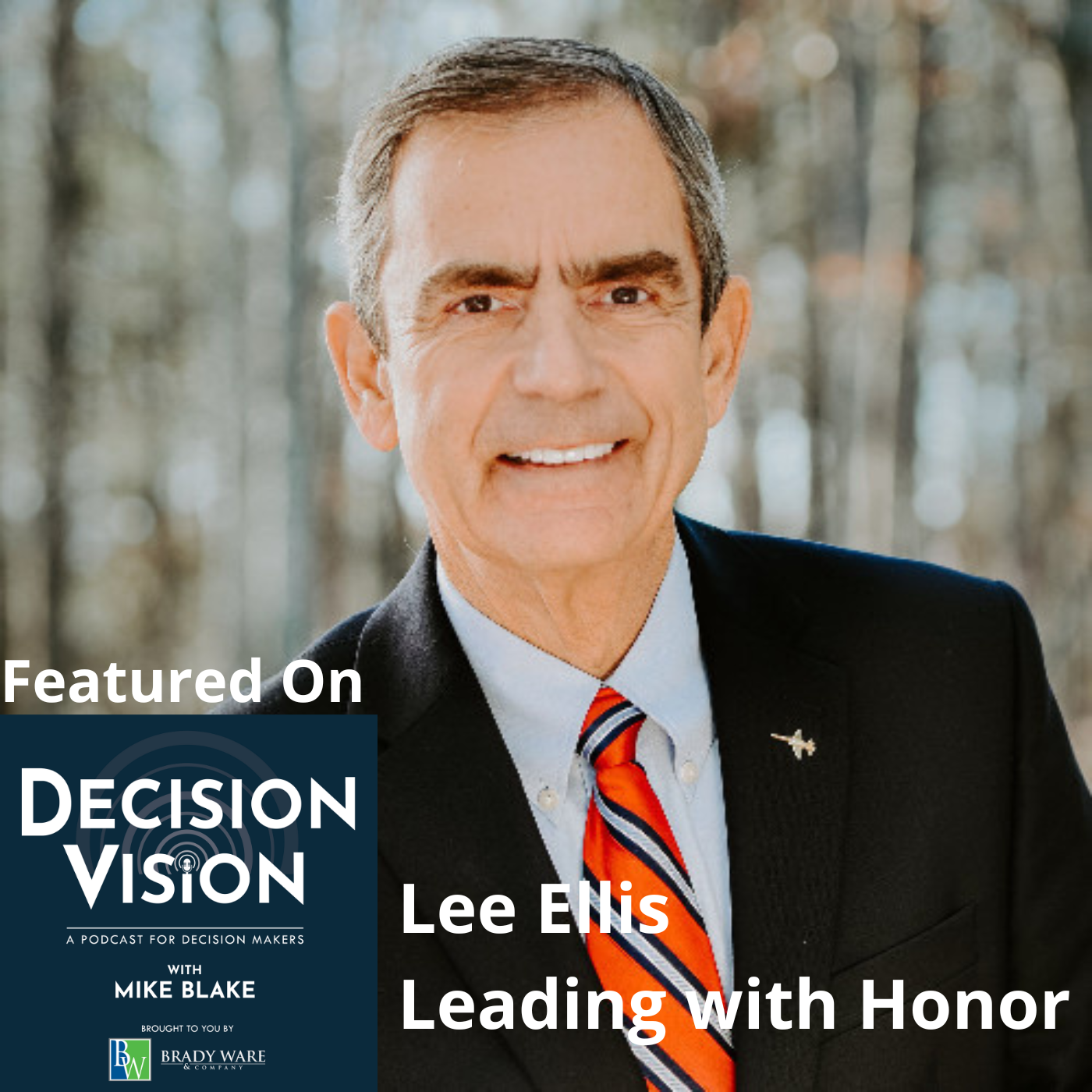
Decision Vision Episode 177: Should I Resist? – An Interview with Lee Ellis, Leading with Honor

July 21, 2022 by John Ray

Lee Ellis
Decision Vision
Decision Vision Episode 177: Should I Resist? - An Interview with Lee Ellis, Leading with Honor
Loading
00:00 /
RSS Feed
Share
Link
Embed

Download file

Lee Ellis

Decision Vision Episode 177: Should I Resist? – An Interview with Lee Ellis, Leading with Honor

Lee Ellis, a decorated veteran of the Vietnam War and President of Leading with Honor, was Mike Blake’s guest on this episode of Decision Vision. From his harrowing experience as a prisoner of war and his military career, Lee brings a wealth of wisdom to the question of resistance. He and Mike talked about his POW experience, the code of honor he adheres to that guided his actions, how resistance looks in business, the role of resistance in effective leadership, ethical considerations, and much more.

Decision Vision is presented by Brady Ware & Company and produced by the North Fulton studio of Business RadioX®.

Leading with Honor, Leadership Freedom LLC

Leadership Freedom LLC is the original consulting, coaching, and training organization founded by Lee Ellis.

The goal isn’t perfect leadership, but it’s agreeing that we all want to authentically lead with honor. Leading With Honor helps leaders grow in character, courage, and commitment and learn new skills based on their natural behavior that will help them develop the next generation in the areas of responsibility, accountability, and resilience.

Their leadership development training methods are based on principles learned in some of the most challenging circumstances of POW life. They also have more than 25 years of experience in the research, development, and deployment of leadership resources including behavioral assessments.

In 2017, they made the transition from Leadership Freedom LLC to the new organizational name, Leading with Honor®, to further emphasize the importance of training leaders in character, courage, and commitment

Company website | LinkedIn | Facebook

Lee Ellis, Founder and President, Leading with Honor

Lee Ellis, President, Leading with Honor

Lee Ellis is President and founder of Leading with Honor®, a leadership and team development training and coaching company, and FreedomStar Media®, a publishing company that provides leadership resources and training. A popular media personality and high-profile human performance expert, Lee focuses on organizational integrity, operational effectiveness, and personal accountability for enterprise, government, and not-for-profit leaders.

His prior experience was as a founding partner and senior vice president of a leadership assessment and human capital management consulting company headquartered in Atlanta, GA. For over 20 years, he has served as an executive coach and a corporate coach in the areas of hiring, team building, leadership, human performance development, and succession planning. His approach to maximizing leadership performance has been implemented by Fortune 500 clients, senior executives, and C-Level leaders in telecommunications, healthcare, insurance, energy, IT, automotive, military, and not-for-profit sectors.

As the Director of Career/Life Pathways from 1990 – 1998, Lee led the development team that researched, developed, and validated Career Direct®, a vocational assessment package and two personality assessments with software applications. From 1998 – 2008, he was responsible for product development of three more behavioral and leadership assessments as well as the launch and Internet deployment of these resources. Most recently, he has developed and released his latest assessment tool, the Leadership Behavior DNA® Discovery Process (formerly N8Traits® Profile). In total, these assessments have been used worldwide by more than 200,000 individuals and are the instrument of choice in many organizations, including Fortune 500 companies and nationally recognized not-for-profits. Lee’s point of view on maximizing leadership performance and organizational leadership during crisis is framed by his extensive research and experience in the assessment of human behavior.

A prolific writer, blogger and thought leader, Lee’s latest book is entitled Leadership Behavior DNA: Discovering Natural Talent and Managing Differences. His last two award-winning books, Leading with Honor®: Leadership Lessons from the Hanoi Hilton and Engage with Honor™: Building a Culture of Courageous Accountability, share his POW experiences and the leadership principles that helped him and his compatriots resist, survive, and return with honor. Additionally, Lee co-authored three books and workbooks on career planning. He is a nationally-recognized Certified Speaking Professional* (CSP), Certified Virtual Presenter (CVP), and expert on the subjects of leadership and performance, team building, mentoring, and career planning. Some of his appearances include interviews on networks such as CNN, CBS This Morning, C-SPAN, ABC World News, Fox News Channel, plus hundreds of engagements in various industry sectors throughout the world.

Lee holds a B.A. degree in History from the University of Georgia and a M.S. degree in Counseling and Human Development from Troy University in Alabama. He is a graduate of the Armed Forces Staff College and the Air War College. Lee supervised, educated, and trained officers for the last 17 years of his Air Force career. He served as the Vice Commandant of the Squadron Officer School, the Air Force’s leadership school for captains. He completed his Air Force career as Professor of Aerospace Studies and Commander of Air Force ROTC at the University of Georgia. More recently he has developed and presented leadership curricula in numerous organizations including Fortune 500 companies, and major sectors of the Department of the Defense focusing on management performance, leadership accountability and principle-based management strategies.

A native of Commerce, Georgia, Lee graduated from the University of Georgia in 1965 and began a career in the Air Force. During the Vietnam War, Lee’s aircraft was shot down over enemy territory and he was held as a POW in various prisons in the Hanoi area for over five years. As a military officer, his experiences as a POW piqued his interest in leadership performance in difficult situations, leading to further research and academic pursuit in the area of measuring and optimizing human performance and leadership effectiveness.

After repatriation, he returned to flying duties with increasing positions of leadership. Rising to the rank of colonel before retirement, Lee’s assignments included duty as a pilot, flight instructor, staff officer, chief of flight standardization and evaluation, flying squadron commander, and supervisor in higher education. He was awarded two Silver Stars, the Legion of Merit, the Bronze Star with Valor device, the Purple Heart, the Air Medal with eight Oak Leaf Clusters, and the Prisoner of War Medal for his service in Vietnam. In addition, he was awarded four Air Force Commendation Medals and four Meritorious Service Medals for performance excellence. Lee is also a 2014 inductee into the Georgia Military Veterans Hall of Fame and the 2015 DAR Medal of Honor Recipient for a lifetime of patriotic service as a military officer and spokesman for leading with honor.

Lee and his wife Mary have four grown children and six grandchildren. They reside in the metro area of Atlanta, GA.

LinkedIn

Mike Blake, Brady Ware & Company

Mike Blake, Host of the “Decision Vision” podcast series

Michael Blake is the host of the Decision Vision podcast series and a Director of Brady Ware & Company. Mike specializes in the valuation of intellectual property-driven firms, such as software firms, aerospace firms, and professional services firms, most frequently in the capacity as a transaction advisor, helping clients obtain great outcomes from complex transaction opportunities. He is also a specialist in the appraisal of intellectual properties as stand-alone assets, such as software, trade secrets, and patents.

Mike has been a full-time business appraiser for 13 years with public accounting firms, boutique business appraisal firms, and an owner of his own firm. Prior to that, he spent 8 years in venture capital and investment banking, including transactions in the U.S., Israel, Russia, Ukraine, and Belarus.

LinkedIn | Facebook | Twitter | Instagram

Brady Ware & Company

Brady Ware & Company is a regional full-service accounting and advisory firm which helps businesses and entrepreneurs make visions a reality. Brady Ware services clients nationally from its offices in Alpharetta, GA; Columbus and Dayton, OH; and Richmond, IN. The firm is growth-minded, committed to the regions in which they operate, and most importantly, they make significant investments in their people and service offerings to meet the changing financial needs of those they are privileged to serve. The firm is dedicated to providing results that make a difference for its clients.

Decision Vision Podcast Series

Decision Vision is a podcast covering topics and issues facing small business owners and connecting them with solutions from leading experts. This series is presented by Brady Ware & Company. If you are a decision-maker for a small business, we’d love to hear from you. Contact us at decisionvision@bradyware.com and make sure to listen to every Thursday to the Decision Vision podcast.

Past episodes of Decision Vision can be found at decisionvisionpodcast.com. Decision Vision is produced by John Ray and the North Fulton studio of Business RadioX®.

Connect with Brady Ware & Company:

Website | LinkedIn | Facebook | Twitter | Instagram

TRANSCRIPT

Intro: [00:00:01] Welcome to Decision Vision, a podcast series focusing on critical business decisions. Brought to you by Brady Ware & Company. Brady Ware is a regional, full-service accounting and advisory firm that helps businesses and entrepreneurs make visions a reality.

Mike Blake: [00:00:21] Welcome to Decision Vision, a podcast giving you, the listener, clear vision to make great decisions. In each episode, we discuss the process of decision making on a different topic from the business owners’ or executives’ perspective. We aren’t necessarily telling you what to do, but we can put you in a position to make an informed decision on your own and understand when you might need help along the way.

Mike Blake: [00:00:43] My name is Mike Blake, and I’m your host for today’s program. I’m the managing partner of Brady Ware Arpeggio, a data-driven management consultancy which brings clarity to owners and managers of unique businesses facing unique strategic decisions. Our parent, Brady Ware & Company, is sponsoring this podcast. Brady Ware is a public accounting firm with offices in Dayton, Ohio; Alpharetta, Georgia; Columbus, Ohio; and Richmond, Indiana.

Mike Blake: [00:01:07] If you would like to engage with me on social media with my Chart of the Day and other content, I’m on LinkedIn as myself and @unblakeable on Facebook, Twitter, and Instagram. I also host a LinkedIn Group called Unblakeable’s Group That Doesn’t Suck, so please join that as well if you’d like to engage.

Mike Blake: [00:01:24] Today’s topic is, Should I resist? And what does that mean? Well, in my 52 trips around the sun, we are in an unprecedented time of social and economic upheaval. Certainly, I think you have to go back to the 1970s – and I was only a kid then and didn’t care about that stuff – to encounter anything like this. And interestingly enough, that’s going to be a recurring theme for today’s show, as a matter of fact.

Mike Blake: [00:02:01] But now we’re put in a position of resisting toxic relationships. We’re in a position of resisting toxic employers. We’re always in a position at some point of resisting people who want to manipulate us into doing or accepting bad things. And we could apply this, of course, to the political arena, which seems to be becoming more polarized by the day. And I don’t know what the solution is there. We’re certainly seeing it in business as people – as we have covered many times in the show – have redefined their relationship with work and, frankly, with a lot of the rest of the world.

Mike Blake: [00:02:55] And there’s even a decision as to whether or not we’re going to resist COVID or how we’re going to resist COVID. Are we going to resist it by being vaccinated? The resistance, are we going to resist vaccination mandates? And some people are doing that, in many cases at great personal cost to them, in some cases the cost of their lives. So, the resistance there, while some of us may disagree with it – I happen to disagree with it. I don’t think that that’s a trivial exercise – I think that one of the things, as I kind of reflect upon our society right now and our country, is not that it’s a good or bad place, but I do think it’s an angry place. It’s a much angrier place that I can ever remember.

Mike Blake: [00:03:51] And the first president that I can remember was Ronald Reagan. And whether you voted for him or not – and I’m certainly not one of these guys that lionizes him or really almost any president, every president that I’ve grown up with has been flawed in some way – and whether you agree with the politics or not, the one thing that he was, I think, always was a positive voice. And our political landscape has changed, where negative voices are being heard more. There’s an economic argument for negative voices. Negativity right now, I think you can argue, sells. And there’s a resistance that I think is required to just resist to avoid being overwhelmed by that sense of pervasive anger and negativity.

Mike Blake: [00:04:50] And so, I’ve wanted to do this show for a long time. This is not a new phenomenon. But not everybody can talk to this authoritatively. But I think I found the right guy who can talk about resistance authoritatively, and I think that you’re going to agree. This will probably be the longest introduction I’ve made of a guest, and too bad because he’s earned it.

Mike Blake: [00:05:16] Joining us today is Lee Ellis, who is President and Founder of Leading With Honor, a leadership and team development, training, and coaching company; and Freedom Star Media, a publishing company that provides leadership resources and training.

Mike Blake: [00:05:30] For over 20 years, Lee has served as an executive coach and a corporate coach in the areas of hiring, team building, leadership, human performance development, and succession planning. His approach to maximizing leadership performance has been implemented by Fortune 500 clients, senior executives, and C-level leaders in telecommunications, health care, insurance, energy, I.T., automotive, military, and not-for-profit sectors.

Mike Blake: [00:05:55] Lee and his wife, Mary, have four grown children and six grandchildren, and they reside in the Metro Area of Atlanta. During the Vietnam War, Lee’s aircraft was shot down over enemy territory, and he was held as a prisoner of war in various prisons in the Hanoi area for over five years. He was awarded two Silver Stars, the Legion of Merit, the Bronze Star with Valor Device, the Purple Heart, the Air Medal with eight oak leaf clusters, and the Prisoner of War Medal for his service in Vietnam. In addition, he was awarded four Air Force Commendation Medals and four Meritorious Service Medals for Performance Excellence. And by the way, after being released, he went back into active service.

Mike Blake: [00:06:34] Leadership Freedom is the original consulting, coaching, and training organization founded by Lee Ellis in 2017. Since then, they’re making the transition from Leadership Freedom to the new organizational name, which you now know as Leading With Honor. First, Lee Ellis, thank you for your service to our country and welcome to the Decision Vision podcast. It’s an honor to have you.

Lee Ellis: [00:06:55] Thank you, Mike. Great to be with you. And I always enjoy hearing what you have to say about things. I’ve seen you on several interviews on our CEO Netweavers, and I admire your wisdom. So, good to be with you.

Mike Blake: [00:07:09] Well, I appreciate that. So, you have, I think, the ultimate perspective of resistance. And we talked about you were in the same prison camp as the late Senator John McCain, correct?

Lee Ellis: [00:07:25] Yes.

Mike Blake: [00:07:26] Right. So, I just can’t imagine, it’s even hard to formulate the questions even though I have them written down. You’re shot down. You’re over enemy territory. You’re taken into custody. And you’re put in a position where you’re in prison as a hostile, as an enemy combatant. And my question, I guess, is, in that moment, how do you decide that it’s worth resisting?

Mike Blake: [00:07:58] Because your captors didn’t just want you to be there. They weren’t just feeding you for their health or, certainly, not even yours necessarily. But they wanted you to do things for them. And you had to make a conscious decision to resist that, decide it’s worth to do so at great personal suffering. How do you come to a point where it’s worth doing that, where it’s worth resisting?

Lee Ellis: [00:08:23] Well, we had memorized, actually, the code of conduct, which I think it’s about six articles in ROTC at the University of Georgia, it’s where I memorized that. And those six articles describe what is the role of a person who’s been captured as a prisoner of war. Basically, you commit to serving your country honorably, not sharing anything with the enemy that you shouldn’t other than your name, rank, service number, date of birth, and things that are very generic are okay. But anything that would have to do with military intelligence, and especially making oral or written comments that would be harmful to your country and its allies. That’s right there in there.

Lee Ellis: [00:09:09] So, those six articles were the foundation of what I really wanted to stand for and stand by. I had committed to that when I took the oath. So, my goal is to live up to that. And so, that’s how I resisted. I said no. They asked me to share this, I said no. They said fill out this, I said no. And of course, that was a battle. And sometimes I got tortured out of it.

Lee Ellis: [00:09:37] And, eventually, I did give them something, but it was nothing of value to them. I remember I had to fill out a three page biography one time and I resisted, and eventually I gave in and said, “Yes. I’ll do it.” And I want you to know that I was in leg irons and handcuffs and blindfolded on the filthy floor in the torture room, and I cried like a baby because I was so ashamed. I felt like the lowest scum that had ever worn the uniform of the United States. Well, I gave them nothing that was true of any value except my father’s first and last name. But I still felt like I wasn’t tough enough to beat them. And that was my disappointment.

Lee Ellis: [00:10:18] Well, when I get back to my cell, I found out the other guys had been through similar things, and some lasted longer than I did, and some didn’t last as long as I did. So, that helped. But it was still a pretty big shocker that I wasn’t tough enough. But that was our commitment right upfront, and that got reinforced by our leadership.

Mike Blake: [00:10:38] So, I’m curious, I want to kind of unpack some of this because I can see many angles in terms of determining that you’re going to resist. And I’m not saying this is true, but just one path to saying you’re going to resist is, “Well, they’re the enemy. And I don’t like these guys. They’re not treating me and my comrades very well, so I’m not going to help them.” Another path is, “Well, I signed an oath where I made a personal commitment to my country, to my government, to the people I’m trying to protect, and it says Lee Ellis on it, and, by golly, that’s going to be my path to resistance.”

Mike Blake: [00:11:18] Or it could be something entirely different. Maybe you’re just resisting because – I don’t want to say just – it could be as simple and as foundational that you’re with a group of other guys that are resisting as well, and you don’t want to be the guy, the weak bat in the lineup, so to speak. Was it any one of those things that dominated? Was it a combination of three? Am I totally missing it and there’s something else? What’s the calculus like?

Lee Ellis: [00:11:42] I think those are the main points that influence us all. First of all, because you might not be able to see another person for a week or a month, in some cases it was six months to a year, although we did have covert communication, but it might be weeks and months before you actually was able to talk to somebody and you might be that isolated. So, you had to stand on your own footing, so to speak, your own foundation. And that’s where that code of conduct came in and your commitment to it.

Lee Ellis: [00:12:15] And then, the other thing, I think, just generally knowing that you are up against an enemy, the Communists, and they were working with the Russians and the Chinese. Actually, they were almost the hand of the Russians and Chinese pushing against the U.S. And so, the Communists all kind of work together. So, wanting to resist them was a big part of it too. And then, some of it was just personal pride, “I’m the good guy. You’re the bad guy. I don’t want to give in to you.”

Mike Blake: [00:12:45] Well, and that’s what I want to ask you about next, when you were in the moment, did you think of yourself as a resister or did you think of yourself as something else, good guy versus bad guy or something else?

Lee Ellis: [00:13:00] We saw it as duty. Our duty is to resist the enemy. And so, yes, I saw myself as a resister. But it was a piece of pride that the line was drawn. And when they stepped over the line, I was going to push back.

Mike Blake: [00:13:23] So, in the movies, they talk about people being given training to resist torture, interrogation, and so forth. I mean, is that true? Is that a thing? Were you given that sort of training? And if so, did you find the training helpful in practice?

Lee Ellis: [00:13:39] Yeah, it was helpful. Absolutely, it was helpful. In fact, I was thinking about that this past week. I was thinking about I’ve been blessed with a nature that I can tolerate things without getting too panicky. And so, they put me in a little box about the size you put a pig in. And I was cramped up like this and left me in there for 30 or 40 minutes in the dark, where I couldn’t even move my elbows out or move my head up. Well, a lot of people would panic with that. And I just said, “Okay. I’m hanging in here.”

Mike Blake: [00:14:16] “I’m doing this now.”

Lee Ellis: [00:14:16] And then, they put me in another vertical, it was like a locker in a gym. You walk in, you hang up the clothes. Well, they locked me up in there for a day or so. And I had to stand up, it’s about a-day-and-a-half and I just think about things to think about. And I could hear there was a guy down the hall from me crying, and I’m thinking, “Well, I’m not going to cry yet.”

Lee Ellis: [00:14:45] So, you know, I think as an air crew member, you’ve gone through both psychological and physical screening and you have a pretty strong ego. It takes a lot of confidence to fly a fighter. And I think the average age and the POWs was [inaudible], the long term guys was like 30, 31. And I just turned 24, so that’s why I was a kid there. But, you know, we were not 18 year olds or 19 year olds. We’d been out on our own. We’d been to a lot of training. I’d been through survival school, the one you just mentioned. I’ve been through water survival training. I’ve been through jungle survival training. So, all that builds you up and prepares you to be ready for very difficult situations.

Mike Blake: [00:15:35] So, you know, if you haven’t been there, I just don’t think you can imagine it, obviously. But you’re in a scenario under which, I mean, at some level, it has to be terrifying. You just don’t know what they’re going to do.

Lee Ellis: [00:15:52] Oh, yeah. Oh, yeah.

Mike Blake: [00:15:53] And your power is limited, to put it mildly. That’s sort of the whole point.

Lee Ellis: [00:15:59] I got a story about being terrified, if I can jump in here.

Mike Blake: [00:16:03] Please. I want to hear you and they want to hear you. Go.

Lee Ellis: [00:16:05] When I got to the first English speaker on the way to Hanoi, it was a holding camp. It’s a bamboo prison. They put you in leg irons and handcuffs or rope tied until they got enough of you there, four or five or six in a truck, and then take you on to Hanoi. And so, they had this one arm interrogator there who spoke very broken English. And I can’t remember, we all have names for all these guys, and I can’t remember his name now.

Lee Ellis: [00:16:33] But he asked me a question about the kind of airplane I was flying and where I was based out of. Well, he asked me what kind of airplane I was flying, and I wouldn’t tell him. But I saw he had my checklist over there behind him on the table. They’d picked it up when I jumped out of the airplane. And I said, “I’ll give you name, rank, service number, date of birth, answer no more questions.” And he just started screaming at me and he yelled at the guard behind me.

Lee Ellis: [00:17:04] There were a couple of guards there. And that guard – I’ve shoot rifles and shotguns – I heard him crank in a bullet, and he yelled at the guy, and the guy put it right up to the side of my head. He said, “You answer or I kill you now.” Well, I just got captured. I didn’t know whether he was truthful and honest and would. Later, I learned he probably wouldn’t have. But then, I didn’t know.

Lee Ellis: [00:17:31] So, I told him I was flying an F-4 Phantom. Well, he had my checklist there, so I didn’t really give him any. So, I answered three or four questions but I didn’t give him anything that was not obvious already or that he didn’t already know. I didn’t give him anything else. And so, I really felt bad about that. But I really didn’t feel like I had a choice. I was scared, by the way.

Mike Blake: [00:17:55] I mean, there’d be something wrong with you if you weren’t. So, when you’re in that situation – and that’s really a perfect example – at any point, they can just decide to put a bullet in you. There’s no recourse. That’s just it. How do you conceive of ways to resist when the power dynamic is so against you?

Lee Ellis: [00:18:18] I think you have to evaluate that. I make these kind of decisions all the time. I have to evaluate, is this worth me resisting? I have business partners. I have friends. I have clients. And I have to decide if this is worth me taking a stand. And most of the time it’s not, but sometimes it is. And so, if they say, “Well, I’m out of here.” Well, okay.

Lee Ellis: [00:18:53] Once you’ve been a POW for five-and-a-half years, you don’t worry about a lot of things that most people worry about day to day. When I came home, I never worried about getting promoted again. I just said, “I’m going to do my job. I’m going to do the very best I can. I will be the person I want to be. And if I get promoted, fine. And if I don’t, hey, that’s okay. I’m home. I’m better off than I was locked up, up there.”

Mike Blake: [00:19:21] So, in the moment as you think about, I guess, we would now almost call them microaggressions, if you will, even resisting the simplest, it must have been very frustrating to your captors because you’re resisting to comply with, even what to them, must have seemed like the simplest comment, the simplest task. In that moment, do you think of the consequences of resisting or do you have to kind of put that aside to give you the mettle to resist?

Lee Ellis: [00:19:51] Well, I think, Mike, the biggest issue here that we’re talking around is really character, honor, integrity. I think that’s where we need to clarify is what is my character, what I believe has integrity, what I believe is honorable. And then, at what level I’m willing to sacrifice for that, and how much risk am I willing to take. I mean, I battle this all the time because I’m a pretty opinionated person. And I see stuff on social media that I just want to jump in there. And I have to coach myself it’s not worth it right now. You’ll have another time at another level. This is not going to matter to hill of beans what you say in that social media. And they’re just cranking you up to respond.

Lee Ellis: [00:20:43] And so, one approach to this issue, from the higher level of character and integrity where you can sit down and talk with others who are on the other side and let’s work through this. I mean, our country was founded basically with two parties, because I think we need two parties, we need accountability. So, if one party holds the other one accountable to our Constitution and our values, then I think that’s a good thing. It helps keep us in line.

Lee Ellis: [00:21:11] Just like my wife and I, we kind of help keep each other in line. My business partners, my managing director, we sit down and talk about it. And I’ll say, “Well, I think we should do this.” And he said, “Well, I think that’s not a good idea.” And I say, “Well, tell me why.” And we analyze it. And, really, it’s a day to day battle for honor and character and integrity. And you’ve got to evaluate what is the risk versus reward, and is there a better place for me to play this battle.

Mike Blake: [00:21:43] Let me ask you this and I’m going to go off script here, because I don’t know you that well, but I’ve interacted with you enough to know that you’re a very positive guy. And I don’t know if you were brought in to the Hanoi Hilton that way or not, but you certainly emerged that way, or at least that’s the finished product that I’ve seen. Does positivity make you a more effective resister? Does it make you more effective than negativity?

Lee Ellis: [00:22:09] Absolutely, man. Absolutely. It does. You got to focus on the positive and be able to identify the negatives that creep in around you and how are you going to handle them in a positive way. Because I can get very negative, by the way. My personality is I don’t mind arguing. Because if I’m off base, I want you to show me the logic and I’ll get on your side, so I don’t mind that, and I can get a little critical. But the reality is, that doesn’t work very well for very long. And so, for me, I have to coach myself how can I take a positive approach to this where I show respect for the other person.

Lee Ellis: [00:22:54] Here’s the bottom line, the truth is every human being wants to be loved and cared for. They want to be accepted. In coaching leaders, I talk about, yes, you have to accomplish the mission. You have to get results. But you also have to connect with your people. You have to acknowledge their existence. You have to accept them for who they are. You have to affirm them on specifics. And you have to show them that you appreciate having them on your team.

Lee Ellis: [00:23:22] And when you do that, you know what’s going to happen? They’re going to believe in themselves, and they’re going to perform better, and they’re going to stay with you longer, and they’re going to grow more. Because now they’re less insecure and they’re more secure and they’re going to perform more healthily and more effectively. So, as a leader, I coach myself, I coach other leaders. Men, it’s probably hard for you. It is for a lot of us. But when you do it and intentional about it, it builds the culture that you want to be in.

Mike Blake: [00:23:57] Does it make a difference that you’re resisting in a group versus an individual?

Lee Ellis: [00:24:03] Oh, yeah.

Mike Blake: [00:24:04] The guy standing in front of the tank in Tiananmen Square in ’89 versus a whole group of protesters. And I guess maybe that’s why they separated you in the prison system.

Lee Ellis: [00:24:13] Yeah, it does. Camaraderie and teamwork and collaboration, that feeling of I’m not in this alone, it’s huge. That’s why we would take great risks to have that covert communication. And I was a good risk taker, so I would reach out to guys in solitary confinement. Now, I had people protecting me by watching, we called it clearing. They’d be looking through the cracks in the doors and listen out the back for a guard coming. And when the guard came, [coughs], they do like that or they’d bump the wall with their elbow. And we’d all do like this and act like we’re just snoozing there.

Lee Ellis: [00:24:50] But, yeah, it’s critical to be connected to others. You don’t want to fight this battle alone. Fighter pilots, we don’t ever want to fight alone.

Mike Blake: [00:25:02] Now, one of the issues of resisting – and we see this unfolding in Russia and Ukraine right now – is that when you resist, it’s not necessarily just you that suffers the consequences of your resistance, but others around you that may not want you to resist necessarily, that they can suffer. We’re seeing in Russia and Ukraine, if you are resisting the propaganda, the party line, or if you’re a soldier and you refuse to fight, it’s not just you that gets shot, but your family’s going to suffer. And that’s how they maintain leverage. That’s their system, unfortunately. You must have recognized also that there were sort of consequences to others, and this happens in business too. How do you think about that? How do you reconcile those things? Can you reconcile them?

Lee Ellis: [00:25:56] Going back to what I said earlier, you always have to evaluate what is the gain versus the loss. And sometimes the gain is good, what you want, but the loss may be greater. And so, you just have to back up and keep your mouth shut and wait until another time and another situation, maybe more evidence builds up or more people see the world the way you do. So, I think you have to evaluate that all the time.

Lee Ellis: [00:26:25] And going back to the community and the group, you know, I feel like I’m very confident about myself. But I know myself well enough that sometimes what I think is right and wise, it’s off a step. So, you got to have mentors, friends. And my wife, for instance, is one of those, in certain areas she say, “I don’t really think about that.” But I have business mentors that I reach out to when I’m going to make a decision where I know I’m too emotionally connected that I’m afraid I can’t make a wise decision, and I’ll say, “Let me run this by you and you tell me how you see it.” And then, I’ll sit there and listen. I’m not giving up my decision to them. I just want to hear is there something I’m missing that I need to know. So, I think that’s so important.

Mike Blake: [00:27:17] So, I want to pivot a little bit more to a more direct connection with business here. And you’re not just a former POW, I mean, you’re a successful, highly influential leadership trainer. So, I’d like to switch and talk about that a little bit. I’d like to start with, first of all, have you seen cases where, in fact, there are employees that do try to resist things that are happening in a company? And if so, what do companies do to try to break that resistance? If I’m thinking of resisting something in my company, for example, what are some tactics you see that management tries to implement to break that resistance?

Lee Ellis: [00:28:06] Well, that’s a little bit of a difficult one for me, because here’s what happens, most of the time, really good leaders bring me in. Bad leaders don’t ever bring in a leadership consultant. And so, most of the leaders I’ve worked with have been really good leaders that would listen, and they cared about their people, they’re mission focused but they cared about their people. So, I don’t have a lot of experience, and I’m sure I’ll think of something here in a minute.

Lee Ellis: [00:28:34] But I think life is that way. You have to constantly evaluate the risk versus reward in light of your character and your life purpose and your mission. And that’s why I say sometimes you’ve got to be able to discuss that with somebody else. Don’t do that just by yourself in secret. You’ve got to have somebody who can look at it slightly different, give you some feedback and discuss it, and take it around. And then, you make your decision about what you’re going to do.

Lee Ellis: [00:29:10] I think that really good companies, they realize that people are important and they listen to them. I was saying about this the other day, creativity in the POW Camp came from the bottom up. It didn’t come from a top down. Strategy comes from the top down. Creativity and innovation and practical fixes and money savers come from the bottom up. And so, leaders have to learn to build a culture where you can set the boundaries and the culture, and then let your people operate, let them go after it. And you have to really re-communicate those boundaries periodically. But it’s so much better because you’re going to have people take ownership and responsibility and be accountable at the lower levels, and that makes for a much better organization and work environment.

Mike Blake: [00:30:05] So, let me phrase the question a different way, because your point about good leadership teams is well taken. But for most people we report to somebody else. It’s rare. There are some people that don’t report to anybody else. You’re a sole proprietor and maybe you’ve raised no outside capital. Maybe you have no obligations to anybody else. But that’s sort of rare. But even successful leadership of companies may have boards to which they need to report. And there’s a resistance that may need to arise against an aggressive board, for example. Or there’s a resistance against a market trend. Or maybe there’s a resistance, for example, to manage quarterly earnings. Or there’s a resistance to “cut costs” that’s going to hurt people in your organization.

Mike Blake: [00:31:05] So, I think my last question was phrased badly. That’s a long preamble to reconstitute the question, in that, would you agree that good leaders are actually good resisters because they often have a lot of things they need to resist?

Lee Ellis: [00:31:21] Yes. I think so. But I think listening is a powerful way to actually resist.

Mike Blake: [00:31:27] Tell me more about that.

Lee Ellis: [00:31:30] Instead of just stomping your fist and saying, “No. We’re not doing that. Get out of here.” It tells you if they’re resisting that there’s something they don’t see that you see. They don’t understand and so clarifying over and over. You know, for all his good and bad, Jack Welch at G.E. used to say, “Everywhere I go, I preach the same sermon.” And he was saying over and over again what their mission was from the high levels and that sort of thing.

Lee Ellis: [00:32:01] As a leader, you have to continually clarify and re-clarify your mission, the boundaries of it, what your expectations are, and those kind of things. And when you come out with a new idea or change or you’re meeting resistance, then you probably need to listen to them and hear their reasons for resisting and then help them see why we can’t do that. And I think they’ll respect that. And they’re much more likely to fold up and stay with you for a while and support you. And then, you may reach a point and say, “Well, this is what we’re going to do, so you have a choice. You can join us and work with us or you can go somewhere else.”

Mike Blake: [00:32:47] So, in a collective resistance – and you sort of hinted at this at the start of the conversation – some people seem to have an endless capacity for resistance and others don’t. And I would imagine a fact of life is that people who are initially committed to the resistance are simply going to get broken. It simply just becomes too difficult and that individual just cannot summon the wherewithal to continue the resistance against the adverse consequences, call it the pressure that they’re facing.

Mike Blake: [00:33:30] I have two questions based on that. The first question is, I think everybody sort of feels like they’re reaching their breaking point. I’m sure that must have happened to you at some point. You might have felt like you’re reaching a breaking point. How do you see yourself to saying, “I’m reaching a breaking point, but I’m going to bend and not break”? How do you do that?

Lee Ellis: [00:33:50] Well, I think you have to sort it out in your head. And so, I thought of something while you were talking there and then I’ll come back to that, this will fit into it. When you go to someone who’s putting something on you and they’re your boss and you don’t like it, then I think you owe it to them to go sit down and talk to them and tell them why you don’t like it, why you don’t think it’s good for the company, or if it’s unethical.

Lee Ellis: [00:34:19] See, this could be a big issue here if they want you to do something that’s unethical. And you’ve got to evaluate that and have that discussion with them. And they say, “No. This is okay. We have to do this. We have to tell a lie. We have to make up stuff and put it out there,” which that’s happening a lot nowadays. Then, you have to decide.

Lee Ellis: [00:34:41] For me, the decision is, is it ethical, is it honorable? And if it’s not dishonorable and it’s not unethical, then I’m probably going to say, “Hey, this is your decision. If it works, great. I’m going to do it. I’m going to give it all I got. But if it fails, you take ownership. I’m going to do my best, but I don’t think it’s going to work.” But I’m going to do my best, you might even have to say that. You just say, “It’s ethical. It is your responsibility. If you want to decide to do that, I will support you. I’ll do my best.”

Lee Ellis: [00:35:17] And then, you’ve helped them the best way you can and now it’s the leader’s responsibility. If it fails, they can come back to you and say, “Hey, this was your fault. I told you it wasn’t a good idea but I’ve done my best to make it happen and it didn’t work.”

Lee Ellis: [00:35:34] I think that’s very important, and I do that. I’ve gone to leaders and said, “I don’t think it’s a good idea. I think we ought to do this.” And they said, “Well, I think we ought to do this.” And I said, “Well, you’re the boss. Yes, sir. We’re going to go do it. I’m going to do it to the very best of my ability, because it’s not illegal, it’s not unethical. And you’re the boss and you own this decision.”

Mike Blake: [00:35:59] And I think what you’re really getting at is, everybody sort of has has a line, at least most people have a line that you’re not going to cross. And in many of our professions, we have rules, regulations, or just professional standards that try to give clarity to that line.

Mike Blake: [00:36:19] But what I want to get to – and this may be an unfair question. If it is, we’ll just move on – I’m close to the Ukraine situation because I lived there for a couple of years. I spent a lot of time in that part of the world. I still have friends that have either fled or they’re now serving in Ukrainian military. And one of the issues they’re now facing is collaborators. You know, the Russians have come in. There’s new management in town. And the Russians, as is widely known, when they say you’re under new management by the Russians, that is not good news. They’re not a kinder, gentler management.

Mike Blake: [00:37:01] And I think about the people that have chosen to collaborate, they’re faced with a horrible choice. And some people are breaking. Some people may be welcoming them. Maybe they want the Russians all along. But at least some subset of them just looked around and said, “You know what? My resistance makes no difference if I’m dead and my family’s dead, so I may as well play along. I may as well ‘work within the system.'” And I’m sure that sentiment must have come up among at least some POWs. How do you react to that? How do you combat that kind of mentality? Or is it unfair to call it a rationalization?

Lee Ellis: [00:37:49] Well, I think we did not have to face a decision where our family was going to be involved. But we did have faced decisions – the leaders did – where their people were going to be tortured or whatever. And so, I think we all knew what the effort was to do your very best. And some people are tougher than others. Some people could draw that. Some people could go five days. Some people could go five hours. And some people couldn’t go much more than five minutes. That’s just the way human beings are different.

Lee Ellis: [00:38:29] And so, our leaders learned to accept that. And they knew if the person had done their best and was committed to that, then whatever that came out, they were going to be okay with. So, there are some people, if you’re talking about killing your family, that would be a little bit different than other decisions. If I thought it’s going to kill my family, the first thing I’d do is I would retreat and get with some more people and get an army together and go back and defend and whatever, you know.

Lee Ellis: [00:38:59] But I think you’ve got to measure – I keep going back risk versus reward – what is at risk and what’s the reward if we come through this? What’s the right thing to do here? And how much risk do we have to take it?

Lee Ellis: [00:39:20] And going back to the one where I tell somebody I don’t think we ought to do this and they decide to do it, I’m going to support them 100 percent. But if that happens a lot, I’m probably going to start looking for a new job somewhere else. I’m going to be leaving. And I think good people are going to leave. I mean, it always showed, bad leaders, they run all the good people off. And the poor performers hang around because they’re afraid they can’t get a job somewhere else. Now, that may be changing with young people today because they don’t care. “Mom and dad will take care of me. If I don’t make it, I’ll just go home live with mom and dad for a while.”

Mike Blake: [00:39:57] Yeah. There may be some of that. So, I want to bring it back to sort of a different kind of discussion, but I had a thought and I’d love to hear your reaction to it. Is there a connection between resistance and radicalization? And I’m not even sure what I mean by that, but going back to my introductory remarks where America has become an angry place. And I have a theory that one of the reasons it’s become an angry place is that radicalization and resistance are being confused. They’re being confounded with one another. Do you have to be a radical to be a resister, I guess? Or when you’re a resister, does that automatically make you a radical?

Lee Ellis: [00:40:55] Well, I think that’s the natural reaction. Yes. I think what we need are people that can rise above that. You know, I’ve been thinking for five or six years because I pay attention to a lot of this stuff, how good it would be to get some senior leaders from all areas together – we changed our brand, our company is still Leadership Freedom, but we changed our brand to Leading With Honor in 2012 when the book came out – if we could have an honor group come together from all parties all around the country to talk about what does honor look like, and how does it serve our country right now, how can we disagree and work together, and sit down and listen to each other and focus on certain things.

Lee Ellis: [00:41:46] And that would be a great idea, I know a lot of people, CEOs and generals and admirals and these kind of people, but I hadn’t had time to do that. But what’s happening is that we’ve been radicalized primarily through social media. If we didn’t have social media – I don’t know if you’ve seen that movie about the social dilemma about the tech, Silicon Valley. And they’ve got a lot of these programmers on there who got paid to build programs that would make a lot of money. And they talk about when we did this, we did not write this to divide the country.

Lee Ellis: [00:42:26] But now, if we don’t change something, we’re going to be in a civil war within 30 years because this is going to continue to multiply and divide us, because the more we can separate people into groups, the more money we make. “You like this? I got other people coming in.” And so, the truth is, if we don’t somehow learn to sit down and work through the important issues, the radical is going to increase.

Lee Ellis: [00:42:56] Now, here’s the other truth. You know I can prove to you if I had to indirectly, that Russia and China appointed millions, if not billions, into social media and other places to divide us. They’re funding different organizations to. They don’t care. They just want to divide us. Obviously, they would like for the socialists to take over. But they just want to divide us and that opens it up for the socialists to take over. And whether it’s race, gender, politics, anything they can do to divide us.

Lee Ellis: [00:43:35] I have a friend here in Atlanta who was a KGB agent who defected. He’s a brilliant guy who grew up in East Germany. He said, “You know, growing up in East Germany, I just hated the West because they were so evil and the U.S. was the most evil because that’s what I was taught. That’s what I heard on the radio. That’s what I saw on T.V.”

Lee Ellis: [00:43:56] And that’s the people in Russia and Communist countries, they control the media and the message. In Hanoi, we had propaganda three times a day, morning, noon, and night. The people in Vietnam, even if you work in the rice field, they had a speaker that would blast the propaganda to you over the rice fields. It was incredible how propaganda is intended.

Lee Ellis: [00:44:22] In the schools, they were taught certain things. I was talking to a young fellow who’s a guard, English speaker though – most of them were English speaker – he spoke a little bit, and we were talking about something. He said, “Yeah. World War II, Japan surrendered when Russia declared war on them. Within five days, Russia saved us. Russia won World War II.” Because that’s what he’d been taught. Well, Russia didn’t join the war until after we dropped the big bombs over there. And Japan was ready to surrender. But he had never been taught that.

Lee Ellis: [00:44:56] See, it’s all how you share that information and get people over to your side. And the bottom line, all of this is power. What’s going on right now is all about power. I want to be more in charge politically, financially, whatever it is. I want to be more. I want more power.

Mike Blake: [00:45:18] You know, that reminds me of my first couple of apartments, my first one in Minsk, and then in Kiev a couple of years later, they are both Soviet built apartments. And in those old Soviet apartments, they always had a radio built into the kitchen. And you could not turn the radio off, you could turn the volume down. But the only way to turn it off is to rip the damn thing out of the wall.

Lee Ellis: [00:45:43] That’s what they do in Communist countries.

Mike Blake: [00:45:45] It was fascinating that it went even to that level.

Lee Ellis: [00:45:48] Yeah. Yeah.

Mike Blake: [00:45:50] I’m talking with Lee Ellis. And the topic is, Should I resist? So, you mentioned something that I think is maybe an interesting connection. I don’t know, maybe it’s totally dumb. But it seems to me there’s actually potentially a connection between communication and resistance. And I think there are two dimensions to that. One dimension is, as you talked about before with your fellow POWs, your ability to communicate to create sort of a cohesive strength –

Lee Ellis: [00:46:24] Essentials.

Mike Blake: [00:46:25] Yeah. But, also, I think the opportunity to communicate with your oppressor, for lack of a better term – there’s a better word than that, I just can’t think of it right now – the person who wants to make you resist, the opportunity to communicate with them and have some constructive communication of some kind probably tends to defuse resistance a little bit.

Lee Ellis: [00:46:51] Probably what?

Mike Blake: [00:46:52] It tends to defuse resistance a little bit, make it less, make you want to resist less if you can actually have a conversation. For example, you probably couldn’t even talk to most of your captors, at least not initially, unless you learn Vietnamese from them.

Lee Ellis: [00:47:06] Yeah, sometimes. But what it really was for us, they did not understand the subtleties of the English language. So, we would pull their chain a little bit if we could. We just tried to outsmart them. Even in those conversations, we were generally trying to outsmart them. Now, if you had just been tortured and you were suffering, they would use the good guy, bad guy.

Lee Ellis: [00:47:37] So, the bad guy is threatening you. You know, “We’ll do this and kill you. We’re going to wear you out. We’ll blah, blah, blah.” And then, the good guy comes in and said, “Oh, I’m so sorry they’re doing this to you. Just fill out these two pages, I’ll get them off your back,” you know, that kind of thing. And so, we were always alert for that sort of thing. And most of our communications were either we were telling them the way we saw the world or we were laying some groundwork to pull their chain later.

Mike Blake: [00:48:12] Lee, this has been a great conversation, but I got to be respectful of your time, even though I could do this for another three hours but that’s not fair to you. There’s a very good chance we didn’t get to questions that our listeners would have liked us to cover, or we didn’t stand up long enough. If somebody wants to contact you for more information about your leadership services or your perspectives on leadership, what’s the best way to do so?

Lee Ellis: [00:48:34] Just go to leadingwithhonor.com, and we have a place there where they can just check in and we’ll follow up directly right there.

Lee Ellis: [00:48:40] I want to say one more thing in closing out. We have an honor code we developed in 2014. It’s free. It’s a nice, colorful graphic, one page. It has seven articles on it. I’ll send you one, and you could put it out there on your website if you want to.

Lee Ellis: [00:49:01] But when you battle with that honor code to be the person that you think you ought to be and others ought to be, it’s probably one of the most helpful things. Like the code of conduct was for the POWs, the honor code can be that for us. And when we work to be the honorable person, then it takes away a lot. It gives us the ability to fight off a lot of this temptation to be sarcastic and demonizing of others, and helps us to see what’s a respectful, honorable thing to do here. I may not like you, but I need to be able to show you respect, because being disrespectful is probably not going to help at all, and it’s just not who I am. I need to fight to be the person I am to treat others with respect.

Mike Blake: [00:49:51] Well, I can’t any better than that, so I’m not going to try. That’s going to wrap it up for today’s program. And I’d like to thank Lee Ellis so much for sharing his expertise with us.

Mike Blake: [00:50:01] We will be exploring a new topic each week, so please tune in so that when you’re faced with your next business decision, you have clear vision when making it. If you enjoy these podcasts, please consider leaving a review with your favorite podcast aggregator. It helps people find us so that we can help them.

Mike Blake: [00:50:15] If you would like to engage with me on social media with my Chart of the Day and other content, I’m on LinkedIn as myself and @unblakeable on Facebook, Twitter, and Instagram. Also, check out my LinkedIn Group called Unblakeable’s Group That Doesn’t Suck. Once again, this is Mike Blake. Our sponsor is Brady Ware & Company. And this has been the Decision Vision podcast.


Tagged With: Brady Ware & Company, Brady Ware Arpeggio, Decision Vision, Leadership, Leadership Freedom, Leading With Honor, Lee Ellis, Mike Blake, prisoner of war, resist, resistance, survival training, Vietnam veterans

Ed Fox with Tradebank Nashville

July 20, 2022 by angishields

Ed-Fox-Tradebank-Nashville
Nashville Business Radio
Ed Fox with Tradebank Nashville
Loading
00:00 /
RSS Feed
Share
Link
Embed

Download file

Ed-Fox-Tradebank-NashvilleAussie Ed Fox (AussieFox) is a lifelong entrepreneur. He started his first business at age 15, with only $80. He grew said business into a multi-million dollar enterprise, even bringing his parents into the fold.

Ed loves small businesses, dad jokes, and Nashville. Ed’s personality and positive attitude are larger than life and infectious. And his Aussie accent? Well, that just makes you want to sit down, shut up and listen to what he has to say. And these days, he wants to talk about helping Nashville do business in the “what’s old is new again” way – bartering.

Ed is the owner of Tradebank Nashville, an international barter exchange company founded in 1987 and headquartered in Georgia. Tradebank Nashville includes the metro area from north of Hendersonville, through Murfreesboro, Dickson and Columbia. Tradebank-Nashville-logo

Ed is making it his mission to teach business owners how to open networks they didn’t even know existed – through bartering. As Ed says, Tradebank is a way to “trade what you have to get what you need or want without spending cash.”

Ed also hosts the Nashville2 podcast, where he interviews other Nashville area small business owners, allowing them to highlight why they are “Nashville, Too.”

He has been married to his American-born wife Alice, for 32 years and the couple have three children.

Connect with Ed on LinkedIn and follow Tradebank on LinkedIn, Facebook, Twitter and Instagram.

What You’ll Learn in This Episode

  • How Ed got his start as a serial entrepreneur at age 15
  • Ed’s passion for small businesses and what drives him to succeed
  • How Ed first became interested in trading / bartering
  • What a professional trade is and how members can benefit
  • Misconceptions about belonging to a professional trading exchange

This transcript is machine transcribed by Sonix

TRANSCRIPT

Intro: [00:00:03] Broadcasting live from the Business RadioX Studios in Nashville, Tennessee. It’s time for Nashville Business Radio. Now here’s your host.

Stone Payton: [00:00:16] Welcome to another exciting and informative edition of Nashville Business Radio. Stone Payton here with you today. And you guys are in for a real treat. Please join me in welcoming to the broadcast with Trade Bank Nashville. Mr.. Ed Fox Good morning, sir.

Ed Fox: [00:00:34] Great Stone. How’s it going?

Stone Payton: [00:00:36] It is going well. Good. All right, there’s a clue. Sounds like you might be from a little bit south of here originally.

Ed Fox: [00:00:43] Yeah, I’m from the Deep South Southern Hemisphere.

Stone Payton: [00:00:48] Everything’s backwards down there, right? Like summer is winter in the. In the water flows. I don’t know. It’s just different, right?

Ed Fox: [00:00:56] It is, yeah. Like, so take Christmas Day, you go down the beach with a with a cold salad and it’s 100 degrees and. Yep.

Stone Payton: [00:01:05] So what brought you from Australia to to our fair land?

Ed Fox: [00:01:10] Well, you know, I tell people I wasn’t born here, but I got here as fast as I could, did all the paperwork, did it all legally. But actually, I met I met a wonderful girl who came to Australia on vacation and she walks up to me and she says, You spent so long flirting with them two New Zealand girls that I think you made me miss my bus for dinner. And even if you didn’t, you should take me out. And I look around and I say, Look back. And I said, I’ve heard of pushy American women. Now I’ve met one. Well, we’ve been married 32 years. Best thing I ever did.

Stone Payton: [00:01:40] Oh, my goodness. And your entrepreneurial journey, where you doing entrepreneurial kinds of things? Back. Back in the homeland?

Ed Fox: [00:01:48] Yeah. I grew up with a grandmother that was like one of the top ten Tupperware dealers in town. And all my aunts and uncles had some sort of business from a fried chicken restaurant to a, I guess you’d call it industrial salvage these days. We called it a junkyard back then, so they were all business owners. And so at seven years old, I told my grandmother, I said, Nan, when I grow up, I want to be a business owner too. And so I left school at 15 and started the first business.

Stone Payton: [00:02:16] And what was that business?

Ed Fox: [00:02:19] It was a convenience store. A little corner store had been shut down. No, no gas pumps, no petrol station, but just a little old fashioned general store on the corner. And the little old lady’s husband had passed away a couple of years ago and the shop had been empty. And I’d known her from we just lived around the corner and I walked up to her one day. I said, Mrs. Simpson, can I rent your shop? I’ve got a plan. She goes, Oh, you’ve got a plan, do you? So she said, Come on in and come on into the house and tell me your plan. And the next week I opened a convenience store with 80 bucks.

Stone Payton: [00:02:52] Wow. What a. That’s why I love to have these conversations. What an inspiring story. I mean, just sharing that story with other people in your in your ecosystem, in your world and letting them know that you were able to do that. I bet it’s a fun story to share and I bet people find it inspiring.

Ed Fox: [00:03:12] Well, I hope so. That’s the whole plan is, you know, you have to be authentic, right? You do you whatever that is for you, as long as you’re not hurting other people. So for me, the entrepreneurial journey, I get asked a lot, well, don’t you miss a formal education? Or do you think they want me to either support their argument that formal education isn’t needed or say that formal education is needed and we all pay for our education one way or another. I’ve spent hundreds of thousands of dollars on mistakes, right on business, and my wife has a degree and is a pharmacy manager for Kroger. And so she’s gone the formal route both can work, right? And so that’s what I want that story to say. Hey, look, if you’re a if you’re a young kid and you want to go into business, go into business, you know, if you want to go to college and get a degree and use that degree in some some other field, then do that. You do you.

Stone Payton: [00:04:03] All right. So let’s talk about Trade Bank a little bit. What got you interested in this whole idea, this this concept of bartering?

Ed Fox: [00:04:12] Well, bartering to me just made good sense when I opened the convenience store. One of the things we did back in 1983 was we had video rentals, right? So VHS and beta back in the day, that sort of dating myself. But we traded movie rentals for virtually everything we needed. So we used barter right from the get go to grow our business. And so when I came across Trademark and I’d always bought it stuff, even as kids and growing into adults, we all barter things all the time. You know, the wife says, look, if you take the kids to the park on Saturday, you know, then I’ll, you know, Sunday afternoon, you can watch football, you can do whatever you want. You know, that’s a barter, right? That’s something that you do well in business. It works the same way. Why pay cash? Why pay a retail price for an item when you could take your wholesale cost and barter that for their retail price item. So even if you break it down to like a bottle of water and a hot dog, right. Stone If I could if you’re the hotdog vendor and I’m the water guy, if I could trade you a bottle of water because you’re thirsty and I’m hungry and I want a hot dog. Well, we both get the value, but we haven’t had to spend the money.

Stone Payton: [00:05:24] I love it. Now I’m operating under the impression that Trade Bank just just provides some some structure and some scale and some convenience and ease of execution to this concept. Right. Because even though I might have a dozen eggs to trade, my neighbor may not have the bacon that I want to trade it for. Right.

Ed Fox: [00:05:45] Exactly. Exactly. So a managed platform is not something that people are very familiar with and we’ve forgotten how to barter. We I have people all the time that just follow their arms and say, I’d just rather pay cash. And I’m like, okay, let me get this straight. You’ve got a ten cent bottle of water that you bought in a case, and I can help you trade that for things you want at full retail boat, but you’d rather just pay the full, full retail price. That doesn’t make any sense to me. And so I realize it’s a failure on my behalf to educate properly. So when you take a managed barter platform and you plug them into the system, think of it like a you ever used cash app, Venmo or PayPal? It’s like an app, right? It’s an app we use on our phone. And and for you to send money to that people they have to be on the app or trade bank has the same sort of app only that you use it within the network. So if I’m a web designer and you’re a voiceover artist, maybe I need you to do some videos on my website, but you need a new website so you and I could barter directly. But like you said, if you’ve got eggs and you want my bacon, but I don’t have bacon, then that’s not going to work. So by using a barter platform app, you can trade what you have with other people that don’t necessarily have anything to trade with you because you’re using the barter currency instead.

Stone Payton: [00:07:02] So are you finding that there are certain industries, certain professional practices, certain types of businesses that really gravitate to this kind of kind of thing and really do well with it?

Ed Fox: [00:07:19] There are industries that do well with it. But more than that, as you’ve come across, I’m sure across the years, it’s more about the attitude of the person behind the business. If they if they grasp the concept, if they grasp the concept of their cost of goods being traded for somebody else’s retail price, and then saving and leveraging that margin and putting that back in their pocket by not having to spend it. It really could work with virtually any industry. Now, there are some legal requirements that certain industries can’t use it, right? If I’m an insurance salesman, I can’t take your premium in barter currency. I’m not allowed to do that. But if I’m a restaurant, if I’m a coffee shop, if I’m a voiceover artist, a web designer, a podiatrist, a lazy guy surgeon, a plastic surgeon, a, you know, basically any other field that can accept cash, can accept barter currency.

Stone Payton: [00:08:14] All right, so let’s talk about me. It’s my show, and it’s my favorite subject. But. But, no, I think it’d be a great way for me to really get my arms around this and helpful for our listeners. Let’s play this through for a moment. So I work with Business Radio X. I own a pretty big percentage of the overall network, but I also I run a business radio studio in Cherokee County, Georgia. You and I were talking before we went on air. There’s a guy here locally that runs the trade bank for this area. Play that like, how would that work for me? Oh, and just to give you some insight on our business model, we don’t charge people to be on the show, obviously, but but professional services, B2B people pay us money to help them design shows that help them use the platform to build relationships. And and so that’s our business model. We’ve been doing it for a long time. So those are, you know, I’m looking for those kinds of clients and then I use all kinds of services. Interesting. You should mention voiceover artists. We use voiceover artists to do our intros and outros and that kind of stuff. So what might that look like for a guy like me, like the onboarding process and how I can get the most out, if you don’t mind. Walk us through that.

Ed Fox: [00:09:29] Yeah, you bet. So having the studio, there’s probably times when the studio is not being used. Would that be correct?

Stone Payton: [00:09:36] Oh, yeah, that’s cool.

Ed Fox: [00:09:38] So that is an booked revenue, right? So if you have if you have an an a studio or a dentist office or whatever and we’re talking in your specific case, you have time in the studio that you’re not getting paid for, get paid for that in barter currency. In turn, take that barter currency. Hire one of my voiceover artists from Nashville, one of my voiceover artists from Wichita, Kansas. I own both those regions. That means that you the cash that you would normally spend on those voiceover artists is back in your pocket because you’re using the barter currency currency and transacting through the app. So you would rent out studio time. Maybe if you do advertising, you would would make some ads for people, you would sell those on barter and then you would take those barter dollars and offset some of your expenses by using barter dollars instead of using your cash. Now you’ve got a whole new revenue stream and you’ve offset some of your regular expenses. So what does that do with the cash that you were spending on those voiceover artists? Now that you’re spending, barter on them that puts that cash back in your pocket. So that makes you healthier, a business, healthier all the way around.

Stone Payton: [00:10:46] So it just dawned on me as you were talking, I suspect that there’s this whole group of people that are already part of the system. Again, here in my world to here here in in Georgia. And so it’s also sort of putting me out there in front of that group, isn’t it? It’s it’s it’s another method for getting the word out about the work that we do.

Ed Fox: [00:11:10] Right. Exactly. It opens you up to a whole new network. You know, sometimes people don’t realize that that all these other networks that are out there I had a financial planner friend who was a gamer. She played she did cosplay and she went to conventions. I said, that’s a whole new market that most financial planners won’t tap into. So now we relate that to Bada Stone. This is a whole network. We have about 4500 members. We’re a boutique barter exchange across southeast United States from Florida, across to Alabama, up to Wichita, Kansas. And there is franchise cities in there. And and the guy you were talking about in the Atlanta area, Lee Conner, would be a great guy to talk to about this if you’re in the Atlanta area. And that would open you up to that network, as you said.

Stone Payton: [00:12:00] So how does the and I ask this question, I come from sort of the sales and marketing side of training and consulting a long, long time ago when I had something more akin to a real job. So it’s how my mindset works. But I’m always interested to know, like, how the whole sales and marketing thing works. And I ask this of attorneys and CPAs and marketing consultants how does the whole sales and marketing thing work for for a guy like you with these multiple entities that are that are doing this business? How do you get to, I don’t know, have conversations like this, I guess.

Ed Fox: [00:12:39] Putting yourself out there the way most other business owners do, joining a chamber, joining a networking group like a BMI or something equivalent A.I. maybe, and just putting yourself out there in front of people. Right. I’m in the process of writing a book. It’s called Be Authentic. Unless you’re a serial killer, then don’t be. That changed. So. So the idea being that if we’re authentic. Right, unless we’re a jerk, right? If we’re a jerk, we need to check. You know, there’s people say, oh, I’m a I just have to accept me for the way I am. No, no, no, you don’t. You can’t build relationships if you’re not a nice person. So be a nice person. So it’s the same with any business. We’re all trying to reach new customers, and I think we’ve forgotten how to be authentic. We’ve forgotten how to share our concerns and our worries. And people think that salespeople are always out there to sell. They’re not. They’re out there to solve problems. And if I solve your problem, is it okay that I make some money because I solved your problem? That’s what I do. So it’s the same thing. Build a network, get out there, meet that network, and invite them to participate in whatever your product or service is.

Stone Payton: [00:13:48] So starting on this entrepreneurial journey, so young, having that success, did you have an opportunity? Did you have some mentors along the way? In the second part of that question, are you finding that now you have some opportunities to to mentor others?

Ed Fox: [00:14:09] Yeah. So you hit the nail on the head of what really drives me right now is I can’t I can’t say I’m a self-made man. Right. Because there’s been so many people that helped me up. So when I started the convenience store with $80, I talked to our at that time, we still had a milkman. He still delivered milk, 1983 in Australia, a little country town, 20,000 people. And I said his name was Ralph Lane, old guy, but he could still carry around cases of milk. And I said, Would you put them in on consignment? He’s like, Do I need cash? I said, But what if you put in like 100 liters on Monday morning and then Tuesday morning I pay you for whatever I sold the day before, and he did that. And so he put them in on consignment, patted me on the head, said, I want to help you out. You’re it’s exciting. We didn’t use the word entrepreneur back then. We said business owner. So he says, exciting to have a kid as a business owner. And then he brings me three or four other guys that put their stuff in on consignment. So all of those guys were mentoring the guys and gals were mentoring me and helping me grow my business to the point that we did 100,000 in 1983, the first year, I didn’t have a clue what.

Stone Payton: [00:15:17] I was doing.

Ed Fox: [00:15:18] You know, 1980, $300,000 for a 15 year old kid. And, you know, mum and dad, I didn’t have a license in Australia. You can’t get a license till you turn 18. So they would deliver the newspapers to the shop and they would buy the groceries and stuff for me, stuff I couldn’t get done. And so again they helped me. Second year they come in and they said, Look, dude, you’re killing yourself. Let us help you build it. Second year we did 300,000, right? And then we we built it up to about half a million. And then I stopped tracking it. It just just kept growing. And then we finally sold it after five years. But it was all about having mentors to help me and learn the steps along the way. And now I’m able to do that for business owners. I’m able to take people that maybe solo entrepreneurs, maybe they don’t know their marketing, they don’t know their advertising, they don’t know what to do. They don’t know how to get their business off the ground. And I love talking on business topics. I love talking business. I love talking and promoting. I have a real passion. Everybody should have a side hustle.

Stone Payton: [00:16:17] Hmm. Well, and I got to believe people love to just hear you talk, right? Don’t you get a little mileage out of that? Awesome.

Ed Fox: [00:16:25] Thank you. And you have some funny conversations like 4th of July, right? So I’m an American citizen. I say Australian by birth, American by choice. I mean, I love to visit Australia. I miss family. But given the opportunities in America, I love Tennessee, I love Kansas. We lived in Kentucky for a year. I love that. I just love those free states. Right. And coming from Australia, which is very controlled, I wanted that freedom and for me, I had a guy the other day says, Do you have 4th of July in Australia? I said, Yeah, it’s right after 3rd of July. Yeah, I’m a bit of a smart aleck, what can I say? You know, they say, Where is your accent come from? I said, me mouth like, No, no, no, where are you from? I said, Well, as long as you don’t say New Zealand, we’re good. I said, I’m from the South. I say, G’day ya’ll, when I want to confuse people.

Stone Payton: [00:17:19] Oh, nice.

Ed Fox: [00:17:21] So I have I have fun with that conversation. It opens doors, you know, I say to people, I say, look, hey, when you go networking, the easiest thing to do is throw out your hand and say, Good day. My name’s Ed. Of course I wouldn’t use today and I wouldn’t use it. I’d use your own name. But, you know, that’s the way that’s the way I say, look, if you need an icebreaker, you say this, say hi. How much does a polar bear weigh? They go, Oh, no, it’s enough to break the ice. My name’s Bob, so I’ve written a couple of Dead Joke books. I do a tick tock channel with nothing but dad jokes. But you know, when you have businesses, when you have multiple different businesses and you’re trying to promote and market the businesses, people want to know the person behind the business. You know, we we in America, Australia, most of the Westernized world, we love chains, right? We love the branding. We love being marketed to. Although we say we don’t, we love being marketed to, but they want we want to be marketed to in the way that is interesting to us. And so most of the time, I find I want to know the person behind the brand like I with you. Stone I would if we were close. I’d love to go out and have a beer or a Coke or a coffee, have something to eat, learn more about what you do, and then I would know better on how to help you utilize Beda to grow your business, right?

Stone Payton: [00:18:43] Yeah. So what you’re saying is Lee should buy me a beer.

Ed Fox: [00:18:48] Lee should buy you a beer?

Stone Payton: [00:18:49] Yeah. Okay.

Ed Fox: [00:18:50] Tell him that I’ll send him a message after we get off this call. And and I’ll. I’ll text you the fantastic.

Stone Payton: [00:18:56] So I know in my world there are at least a handful of what would I call them? Misconceptions. There’s some misinformation. There are some assumptions about what we do and what we’re. Out. And our work gets confused with some other kind of media approaches. I got to believe that there are probably a few just misconceptions, some patterns that you run into that you that you need to clear up to genuinely serve someone. Is that accurate? And if so, can you share a couple of these?

Ed Fox: [00:19:29] Yeah, you bet it is accurate. Number one, awareness. People don’t realize that a managed barter platform is out there or let’s just say Bada. They don’t realize that Bada is done on a high level as well as on an everyday level. They think about Bada with farmers and agriculture, right? Like you said, eggs for baking, but they don’t realize that. But it can happen on a high level. I like telling the story of Pepsi. Pepsi back in the sixties traded billion dollars of Pepsi products for $1,000,000,000 of vodka from Russia. In the eighties. They traded $3 Billion of Pepsi products, and Pepsi became the sixth largest military in the world for a brief period of time because they traded for $3 Billion in decommissioned naval assets, including 17 submarines, a frigate and destroyer now who thinks of Pepsi becoming a military power because they bought a soft drink for military hardware. You know, that’s a barter deal that you would never think of. So there’s misconception out there that barter is not used in today’s economy, but 92% of Fortune 500 companies barter.

Stone Payton: [00:20:40] Wow.

Ed Fox: [00:20:41] Do it all the time. If you just Google search Baidu and do a Google alerts on different things that are busted. So at my level, I get misconceptions like, oh, it’s it’s a cryptocurrency. No, it’s not a cryptocurrency. It’s actually been operating for 35 years or started in the Atlanta market. 35 years it’s been around. Sold their first franchise in 94, I think it was. And teaching people that, you know what? Bada can be as good as cash and in fact it can sometimes be smarter. So one of the one of the misconceptions I break down is I say, stone, if I have $100 cash to put in one hand or we have 100 trade bank barter dollars to put in the other hand. Looks like Monopoly money, but it isn’t. You know, it’s a it’s not a physical note. It’s on the app. If if I let you keep the $100 cash, if we go eat somewhere on trade or we go eat somewhere for cash, and you keep the $100, 99.9% of the time, if people understand it, they’ll say, well, I want to keep the cash.

Stone Payton: [00:21:46] Right, right. I want to.

Ed Fox: [00:21:47] Keep cash and let’s spend your your bot adults, because cash to me has more value. So you’re saying that cash is king, but what you’ve actually told me is, hey, Ed, wouldn’t it be smarter to spend the barter?

Stone Payton: [00:22:02] Well, of course.

Ed Fox: [00:22:03] You’ve just told me that. Oh, I’m going to keep the cash, because cash is king. But what you’ve actually said is it’s smarter to spend the ibotta because we’re going to drive by for burger restaurants to get to the Fifth because he accepts barter. So he’s outbid all his competition for your business by accepting barter dollars. And they go, Yeah, but what’s the benefit to him? Well, now he takes those barter dollars and he buys advertising. We just did, I think we did, up to $2 million on Yellowstone when they launched on Paramount Plus and Peacock, we were able to sell commercials for barter dollars. We had a firm here in Franklin, Tennessee, that does phone services, and they called one called technology. They do voice over IP phone services. And they were able to buy 1000 ads during Yellowstone in a Franklin zip code for two barter dollars and add 1,032nd ads for $2,000. Wow. They can’t they can’t get that exposure anywhere else. And they use the line frustrated by business phone service have rip take it to the train station. It worked great. And then they sent out postcards, but they were able to spend their barter dollars instead of spending their cash. So any time you can spend barter dollars instead of spending your cash, that means more money staying in your pocket. And if we are actually going into a recession, you know, the media would like us to think we’re going into recession.

Ed Fox: [00:23:26] I’m not an economist. I don’t know if we are or not, but I can tell you that if we have that mindset, that it’s going to be a recession. Do you want to spend 100 cents on the dollar for things you need, or would you like to spend $0.50 on the dollar or less because you’re spending that wholesale dollar? So busting down the myths, number one, educating and making people aware that a managed barter platform even exists. Right? That is available to virtually every business out there to get new customers and open up new networks and create new revenue streams without changing their processes. All it is is it go. My wife is a pharmacist and she says it’s like buying in-network or out-of-network. When you have health insurance, if you have health insurance and you shop in network, you save money, right. If you have health insurance, but you go outside of the network that the health insurance provides, you have to pay more. Well, do you want to pay more or less when you are when you have health insurance, you stay with the network. Well, BART is the same way if you’re a trade bank member and you have the option of of buying time on the radio with barter dollars instead of paying cash, that means more cash stays in your pocket to grow your business, feed your family.

Stone Payton: [00:24:39] Well, I’m glad I asked, because, yes, I suspect that all of those are initial thoughts that people will have till they get a chance to have a conversation with you. You strike me as a guy who rarely gets down and you know, I know you’re human. So surely you run out of juice now, now and again. Where do you go? And I don’t necessarily mean a physical place, but how do you recharge the batteries? Where do you go for inspiration?

Ed Fox: [00:25:07] Right. So one of the challenges. Yeah, sure. Depression is something that has run in my family for a long time. I love the fact that in this day and age we can talk about mental health. And so when I get depressed, if you’re on my Facebook page, you will see me do a run of dad jokes and I’ll post a bunch of memes and a bunch of dead jokes. I read an article in Harvard Business Review back in 2014 and it said something paraphrased like the average three year old laughs 200 times a day. And the average 40 year old 12.

Stone Payton: [00:25:39] Wow.

Ed Fox: [00:25:40] That is true. Right. We we don’t have enough laughter. And, you know, Reader’s Digest, I don’t know if you’ve ever read the Reader’s Digest, but they have a page in there called Laughter’s the Best Medicine. And I’ve heard from people that, you know, if you feel down, just start laughing, laughing out loud. Well, you know, we can’t in a work environment or whatever, people think we’re crazy anyway. But but I find when you can make people smile and you can make people laugh, it lightens their heart and keeps them healthy. And so for me, humor is the way I do that. So when I get down, number one, I’m married to the most wonderful wife in the world, and that’s trademark. We’ve been married 32 years. But number two, laughter is the key for me and taking your eyes off yourself and do something for somebody else. So I have people reach out to me through networks like Allina Bell and LinkedIn and Facebook on social media, and then through the chamber and through BMI groups and say, Hey, Edward, you’ve got a lot of skills in marketing and your own personal brand. And, and I would just like to learn from you. And so when I’m depressed, if I can take my eyes off myself and help them briefly, it makes me feel better.

Stone Payton: [00:26:49] What a great piece of counsel right there. All right. So before we wrap, let’s make sure that our listeners know how to get in touch with you, have a conversation with you or or someone on your team, whatever you feel like is appropriate. The social media channels, web website. But I want to make sure that these folks can reach out.

Ed Fox: [00:27:08] Yeah, you bet. So probably the easiest way to see everything that I do and it’s a little messy, but I use a little app called Link Tree. And so it’s link dot E that’s the domain forward slash Ozzy Fox, a U.S. Fox. So link tree Ford slash OSI Fox would take you to all of my different medias, but you can find me on LinkedIn, OSI Fox, USC Fox. You can find me on Facebook under the same thing. I’m all over the place. Just search Edward Fox, Nashville or Edward Fox Wichita on Google and I pop up and it’s either going to be for the sport of cricket or dad jokes or barter because those are the big ideas.

Stone Payton: [00:27:52] Those are the big three. Well, Ed, it has been an absolute delight having you on on the show, man. We certainly appreciate the work that you’re doing. And we want to continue to follow the story. And please, as your book, as you put that book out, please reach back out and let’s let’s catch up on on all three of those things. Okay?

Ed Fox: [00:28:14] Yeah, that’d be great. I love ketchup.

Stone Payton: [00:28:19] Oh, my goodness. Well, thank you. Thanks again, man. This has been a great deal of fun and very informative.

Ed Fox: [00:28:27] Yeah, no, our extend. Thanks for having me.

Stone Payton: [00:28:29] All right. This is Stone Payton for our guest today, Ed Fox with Trade Bank Nashville and of course, dad joke extraordinaire and everyone here at the Business RadioX family saying we’ll see you next time on Nashville Business Radio.

Tagged With: Tradebank Nashville

Erik Boemanns With Improving Atlanta

July 15, 2022 by Jacob Lapera

ErikBoemanns
Atlanta Business Radio
Erik Boemanns With Improving Atlanta
Loading
00:00 /
RSS Feed
Share
Link
Embed

Download file

improvingatlanta

ErikBoemannsErik Boemanns is Vice President of Technology at Improving Atlanta, as well as the office’s CISO. As a non-practicing attorney and technologist, Erik brings a unique perspective to technology and compliance. He’s led several organizations through their compliance journeys (PCI-DSS, SAS 70, HIPAA, and SOC 2), as well as their enterprise technology.

Connect with Erik on LinkedIn.

What You’ll Learn In This Episode

  • Technology trends
  • Security
  • Cloud
  • Retention of technology talent
  • Recruiting in current market

This transcript is machine transcribed by Sonix

TRANSCRIPT

Intro: [00:00:04] Broadcasting live from the Business RadioX studios in Atlanta, Georgia. It’s time for Atlanta Business Radio, brought to you by on pay. Built in Atlanta, on pay is the top rated payroll and HR software anywhere. Get one month free at on pay. Now here’s your host.

Lee Kantor: [00:00:32] Lee Kantor here, another episode of Atlanta Business Radio. And this is going to be a good one. But before we get started, it’s important to recognize our sponsor on pay. Without them, we couldn’t be sharing these important stories. Today on the Atlanta Business Radio, we have Erik Boemanns with improving. Welcome, Eric. Thanks, Lee. I’m excited to learn what you’re up to. Tell us a little bit about improving how you serving folks.

Erik Boemanns: [00:00:56] Sure. So improving is an I.T. consulting company. It’s based out of Dallas, Texas. But we have offices in Canada, US and Mexico and one of our offices here in the Atlantic region. We we actually have had a location here for about 13 years, but we were acquired by improving back in 2019. So we actually, like I said it consulting and we try to bring a slightly different approach to it consulting. We actually want to change the perception of it through trust. So if anybody goes to our website, you’ll actually see the word trust is one of the first words you see versus anything about what we do or the kind of services we offer. So how do we. Approach it in a way that builds trust and builds a relationship with our clients.

Lee Kantor: [00:01:42] So what is kind of that ideal client look like for you guys? What is an ideal improving client look like? Are they enterprise level? Are they small to midsize?

Erik Boemanns: [00:01:54] So we work with pretty much all sizes. We’ve got clients such as BP, American Airlines, all the way down to midsize clients here in Atlanta, as well as even startups in smaller groups. So we work with all the sizes and just depends on what they’re trying to do and how we can help.

Lee Kantor: [00:02:10] And what is the typical pain point that they’re having where improving is the right solution for what they need?

Erik Boemanns: [00:02:18] Yeah, so kind of two different pain points are pretty common right now. One is just in general the whole whole cloud thing. Right, is a lot of businesses are still trying to figure that out or they did figure it out, but are realizing that it’s quite a bit more expensive than they expected. So a lot of what we’re doing now is focused on how we can help with understanding how to best leverage the cloud, whether that’s Microsoft, Azure, Amazon, US or Google’s Cloud. All of those different things are areas that our clients are working in, and we’re helping them navigate those costs and helping them navigate. How do I actually use those services in a way that brings value to my business but also achieves on my goals? The second pain point, which is pretty common right now as well, is how do I staff my IT projects? How do I as a company, I’m needing to grow my IT services, my offerings, my products. How am I able to tap into talent that is very high in demand as they also are trying to hire? Also, instead of hiring, can a consulting company like improving it in a way that helps them accelerate projects where direct hire might be difficult?

Lee Kantor: [00:03:32] So it’s really turnkey services in terms of you can come in and fix the problem that I’m having. I can hire you as a consultant to fix the problems that I’m having. But you can also help me train brand new people to recruit or find the right talent to insert into my organization.

Erik Boemanns: [00:03:49] Yeah, absolutely. So we work on several different levels. One is absolutely that turnkey, that project based where we’re helping you solve a problem or even prevent a problem. Right. We can come in ahead of an initiative and help you plan that initiative out in a way that reduces risk and makes it a smoother implementation. And then we can help you actually implement it with teams that we can build from our side. And then ultimately we can actually even help recruit team members directly to to you.

Lee Kantor: [00:04:16] Now, what is the kind of the market look like right now? Historically, technology talent has kind of had a negative employment rate right there. The people you’re hiring aren’t just sitting on the couch waiting for the phone to ring. They’re already have a job somewhere or a project or they’re freelance or doing something.

Erik Boemanns: [00:04:37] Yep. And that’s only truer now. Right. A lot of big technology companies, especially in Atlanta, have either opened offices recently or some recent announcements that they’re going to be opening offices and hiring thousands of people. And if you’re already in Atlanta, you’re already trying to hire it. Then, you know, there’s there’s not thousands of people available. And so it absolutely is a market where the top talent really has their options in front of them and they’re looking for a job.

Lee Kantor: [00:05:04] So but part of your kind of secret sauce is you have the ability to help people recruit in this market and also retain their current talent that they have.

Erik Boemanns: [00:05:16] So so we can definitely recruit and that is something that we do help clients with. But I think the other part of that is more that we have our own talent, that we’ve been able to to build a strong team around in a lot of different trust principles that we bring. I mean, if a client’s working with us and we’re providing a team from our resources, they see consistency there. A lot of times you may go to a consulting shop and have a different consultant every month because they’re having their own issues. We work really hard with our internal team to make sure that we’re retaining the best talent internally so that we can always make those available to clients.

Lee Kantor: [00:05:52] Now, do you think that you’re good at retaining talent just because of the culture and improving? Like what is what is improving doing that maybe other firms can learn from in order to help them retain talent?

Erik Boemanns: [00:06:06] Yeah. Obviously, we’re not going to give all of our secrets away. But but yeah, I think culture is a huge part of that, right? We strive to really create a connection and a place for what we like to call magnets, where people see a reason to be a part of a team. They may be working with a client team, they may be working by themselves with a client, but they always feel a connection back to moving back to Atlanta office. We have tons of different type of culture events. We do a huge amount of internal education, typically two months of loans every week that are on different topics, both on technology and consulting, helping people identify. Because one thing about technologists is they almost always love to learn because whatever you know, today is going to be out of date sometimes within weeks. And so how do we connect to the individual with what they want to learn and where they want to head is something that we do that’s super important to our team.

Lee Kantor: [00:06:59] Now, when it comes to talent, are you finding talent locally here in Atlanta? Is it something that you have to kind of really be global in your thinking or are there kind of pockets of talent kind of hiding in plain sight in different regions?

Erik Boemanns: [00:07:18] Yeah. So that’s the interesting thing about improving, right, is we have offices in Canada, US and Mexico, so we are actively recruiting in all of those different regions from Minneapolis to Chicago to Ohio, Texas as well. And so each office has its own kind of recruiting focus. So here in Atlanta, we’re definitely focused more on local Atlanta talent. But at the same time, we’ve got employees working in Florida, North Carolina, Virginia. And so so we while we are Atlanta focused, when we do our recruiting, we obviously still have that global perspective because the talent could be anywhere. And with a lot more remote work, it literally can be anywhere. So we a lot of. To answer the first part of your question, a lot of the way we do find people is word of mouth and referral. People who work here, if they know people that they want to work with, often help us connect with those and bring them in.

Lee Kantor: [00:08:14] Now, you mentioned earlier training, coaching, education. Is that something you’re only doing for your own people or is it something that you do kind of outwardly to kind of grow your own talent so you can identify, oh, this person will be good here, and then we can give them a pathway to a full time position or a different type of position than they have currently.

Erik Boemanns: [00:08:38] Yeah, that’s a great question because we actually both offer training and coaching for technologies and things like Agile and Scrum to our clients and to their teams and help them adopt new technologies and new ways of doing technology projects. But we also absolutely offer that same level of of service to our internal clients. Our internal employees. Right. We’re helping them understand new technologies and grow. We also do National One and learn pretty much every week that are free to the public on a variety of topics. So we have a lot of different ways to to take the knowledge that we have, make sure that we’re sharing it with all of our stakeholders, whether they are clients, whether they are the general community or our employees. So that everybody has kind of that access to to new information, new technology.

Lee Kantor: [00:09:26] Now, you mentioned having the advantages of having locations around the world here in Atlanta. Are there kind of specialties that you’re you know, like we’re good at certain? Things here, like we’re going to health care I.T., we’re going to fintech. Are you finding the talent here kind of gravitates around those clusters or and then maybe a different part of the country that they have a bunch of people that are in cybersecurity or different types of specialties?

Erik Boemanns: [00:09:53] Yeah, absolutely. You mentioned both the medtech and the fintech. Those are both big for us in terms of our Atlanta office. We also do a lot of financial services, fintech and the insurance side, as well as the banking. And then but for a great example, right, our Houston office is much more involved in the the oil side of things. Right. So the local companies there. Dallas has some local major corporations there in the Dallas area. So you’ll see those slices, depending on which office you’re talking to, both in terms of the clients that we have, the internal expertise we have, and then also the the team members. We also do a little bit of technology specialization as well. So, for example, fintech may tend toward some of the Linux and Java side of things, whereas our office tends to lean towards Microsoft Azure. And so you’ll see a little bit of technology slicing in that way as well, just because of what kind of products and backgrounds those companies have.

Lee Kantor: [00:10:57] And I would think that that kind of gives you an advantage in the sense that you have specialists in all different areas because of your footprint all over the place.

Erik Boemanns: [00:11:09] Absolutely. Yeah, there are very few projects that we don’t have some level of expertise, whether it’s industrial or technical, not that we know everything about everything. There are definitely areas that we would always refer to a better specialist than we are, but we do have we can bring depth of experience to lots of different industries, lots of different verticals as well as technical backgrounds.

Lee Kantor: [00:11:34] So now when you’re working with a client, are you kind of triaging areas where they have a problem or a challenge, or are you kind of leading in the sense that you’re pushing them into, you know, into the future or like, say, like Web 3.0? Is that something that you’re like saying, hey, we have the skills to do this and you might be able to benefit because of this where they may not have been, you know, in a front burner issue for them.

Erik Boemanns: [00:12:05] Yeah, really, it’s both. I mean, we used to joke that you don’t hire a consultant if everything’s running great, right? Because why do you need to change anything? So we do absolutely a lot of that kind of troubleshooting, firefighting of systems, companies that have outgrown their current capacity, that are scaling beyond what they the systems they build. How do you take what you have, get it to a place where it’s stable and then how do you take it forward from there? And it becomes that next conversation. So if you’ve got something that you’re happy with and you need to grow it, scale it, become an international company, leverage the cloud better than you have today. And that’s something we can absolutely help. But a lot of times it does begin with that, hey, this is broken. Can you guys help?

Lee Kantor: [00:12:48] Now, what about kind of this push pull around hybrid remote in office? How are you kind of handling that turbulence in the talent market right now?

Erik Boemanns: [00:13:02] Yeah, I think that might be another advantage that we bring because we’re consulting, right? So we love to see people in our office when it’s safe and when they’re comfortable coming in or if it’s geographically convenient. We have an office in Alpharetta. It’s a great space, but at the same time. Even even beyond before COVID just commuting is can be a pain. And so we’ve always had a hybrid model. Our office is only about a quarter of the size of our company, so we actually never expect everybody to be here unless it’s an all hands meeting, which are almost quarterly at most when possible. So hybrid is really our assumption. So we’ve got employees who aren’t even local and even they will come in to some of these meetings, but that that hybrid model works well for consulting. The question mark is going to be our clients. Our clients also have to support a hybrid model or as they as the local companies are considering bringing their workers back to their offices. Will they be asking consultants to also show up? One of the things that we’re paying attention to and working with consultants who like the work but aren’t ready to show up on a client’s doorstep. So how do we create that balance of of local businesses who are ready to return to work that are our clients and we being a hybrid company, how do we support nearly both sides is one of the things that we work hard on now.

Lee Kantor: [00:14:29] Are you seeing any other kind of trends in the technology space right now that we should be paying attention to?

Erik Boemanns: [00:14:38] Well, you mentioned cybersecurity earlier. That is absolutely the biggest trend. So I mentioned at the beginning of cloud, right. How do we get to the cloud? How do we spend less money in the cloud? But the other current of all these is also how do I do that in a secure way? The amount of attacks on cyber resources, it’s only gone up every single month. And so how do we build something that is secure? How do we build something that meets a lot of different security requirements? That’s something that I personally work a lot in. I’m actually our local cybersecurity officer and have talked a lot about a lot of the different security approaches that we bring to a client’s all industry standards, the secret sauce there. It’s got to rely on what all the people are doing together, but I’d say that is probably the biggest trend other than just how do I better leverage the money I’m spending on my IT resources.

Lee Kantor: [00:15:34] Now, are you seeing regarding cybersecurity, there’s always been obviously attacks on enterprise level or organizations, you know, but now it seems like the the bad guys are going a little bit more downstream and attacking midsize and smaller organizations. And they tend to not have the, you know, all of the cyber security toys that the enterprise people have. And in some cases, they, you know, have their head in the sand. They don’t even want to think about it.

Erik Boemanns: [00:16:07] Yeah, no, exactly. And kind of saying is there’s a price for every size target. Right? I’m a grandmother all the way up to Fortune 500 companies. There’s a way to monetize an attack on any size of organization. At this point. It’s become very, almost a shopping cart style for the attackers to be able to make money off of anyone. Obviously, a lot more concerted efforts against the big players because it’s a bigger dollar value that you can get. The they’re the people who are doing the attacks obviously want to get a good return on their investment as well, unfortunately. But another thing that we’ve also seen and kind of want to make sure people are aware is as you’re thinking about that, they also look at LinkedIn and they see what your corporate org chart is. They also read your public PR releases. So we’ve seen companies who announce, hey, we just got this $50 Million deal a couple of days later. The attacks just go way up at that point because they just told the world that they’ve got some money coming in. So it’s a sophisticated environment that we’re operating in.

Lee Kantor: [00:17:14] Yeah, and that’s something I don’t know if everybody realizes that these are kind of professionals doing this. This isn’t the kid in the basement with Cheetos and Red Bull. These are they’re whiteboarding things out. They’re, you know, running experiments. They’re paying attention to not only your LinkedIn, but your Facebook. And if you’re I’ve heard horror stories of CEOs saying they’re on vacation and then on Facebook and then immediately somebody is sending a note to the HR person asking for something and, you know, pretending to be the CEO. It’s just these are professionals. These aren’t, you know, just kids just screwing around.

Erik Boemanns: [00:17:57] Yeah, absolutely. It’s it’s a monthly occurrence where somebody reports that they got a supposed text from our CEO and saying, hey, can you send some iTunes gift cards to me? And yes, they’re all fake. Right. And that’s the same thing we have to repeat. Our CEO has a different way. That’s right. And gift cards, right? That’s not texting the newest person who just got hired.

Lee Kantor: [00:18:19] Yeah, it’s it’s really it’s it’s tough for businesses because you want to be able to react fast and have that speed and the is expecting speed in in any interaction. But also you have to be cautious because with speed becomes these kind of mistakes that you can make. One click can be, you know, download malware and it’s game over.

Erik Boemanns: [00:18:44] Absolutely. Yeah. And that’s the balance. Right. And that’s what we’re working with clients is, is how do you strike that balance of speed to market, of being agile with your practices but also staying secure? How do you do secure software development? How do you do DevOps is a trend. Devsecops is the flavor that we try to preach, right? Because security really has to be present in every single decision point. If you leave it out, if you don’t have security, have a seat at the table yet you’re opening yourself up to huge risks. So it’s definitely something that we talk about a lot.

Lee Kantor: [00:19:19] Well, if somebody wants to learn more about improving, what is the website? What is the best way to get a hold of you or somebody on your team to have more substantive conversation?

Erik Boemanns: [00:19:29] Yeah. So improving. Com is our website. From there you can go to any of our local offices. The Atlanta office is there with our address phone number. I’m Eric Bowman’s as well. So I’m on LinkedIn and as well as the rest of our team. So it’s easy to find us and get ahold of us.

Lee Kantor: [00:19:44] Well, Eric, thank you so much for sharing your story today. You’re doing important work and we appreciate you.

Erik Boemanns: [00:19:49] Absolutely. Thank you.

Lee Kantor: [00:19:50] All right. This is Lee Kantor. We’ll see you all next time on Atlanta Business Radio.

Intro: [00:19:57] Today’s episode of Atlanta Business Radio is brought to you by on pay. Built in Atlanta, on pay is the top rated payroll in HR software anywhere. Get one month free at paycom.


About Our Sponsor

OnPay’sOnPay-Dots payroll services and HR software give you more time to focus on what’s most important. Rated “Excellent” by PC Magazine, we make it easy to pay employees fast, we automate all payroll taxes, and we even keep all your HR and benefits organized and compliant.

Our award-winning customer service includes an accuracy guarantee, deep integrations with popular accounting software, and we’ll even enter all your employee information for you — whether you have five employees or 500. Take a closer look to see all the ways we can save you time and money in the back office.

Follow OnPay on LinkedIn, Facebook, and Twitter


Tagged With: Erik Boemanns, Improving Atlanta

  • « Previous Page
  • 1
  • …
  • 49
  • 50
  • 51
  • 52
  • 53
  • …
  • 81
  • Next Page »

Business RadioX ® Network


Our Most Recent Episode

CONNECT WITH US

  • Email
  • Facebook
  • LinkedIn
  • Twitter
  • YouTube

Our Mission

We help local business leaders get the word out about the important work they’re doing to serve their market, their community, and their profession.

We support and celebrate business by sharing positive business stories that traditional media ignores. Some media leans left. Some media leans right. We lean business.

Sponsor a Show

Build Relationships and Grow Your Business. Click here for more details.

Partner With Us

Discover More Here

Terms and Conditions
Privacy Policy

Connect with us

Want to keep up with the latest in pro-business news across the network? Follow us on social media for the latest stories!
  • Email
  • Facebook
  • Google+
  • LinkedIn
  • Twitter
  • YouTube

Business RadioX® Headquarters
1000 Abernathy Rd. NE
Building 400, Suite L-10
Sandy Springs, GA 30328

© 2025 Business RadioX ® · Rainmaker Platform

BRXStudioCoversLA

Wait! Don’t Miss an Episode of LA Business Radio

BRXStudioCoversDENVER

Wait! Don’t Miss an Episode of Denver Business Radio

BRXStudioCoversPENSACOLA

Wait! Don’t Miss an Episode of Pensacola Business Radio

BRXStudioCoversBIRMINGHAM

Wait! Don’t Miss an Episode of Birmingham Business Radio

BRXStudioCoversTALLAHASSEE

Wait! Don’t Miss an Episode of Tallahassee Business Radio

BRXStudioCoversRALEIGH

Wait! Don’t Miss an Episode of Raleigh Business Radio

BRXStudioCoversRICHMONDNoWhite

Wait! Don’t Miss an Episode of Richmond Business Radio

BRXStudioCoversNASHVILLENoWhite

Wait! Don’t Miss an Episode of Nashville Business Radio

BRXStudioCoversDETROIT

Wait! Don’t Miss an Episode of Detroit Business Radio

BRXStudioCoversSTLOUIS

Wait! Don’t Miss an Episode of St. Louis Business Radio

BRXStudioCoversCOLUMBUS-small

Wait! Don’t Miss an Episode of Columbus Business Radio

Coachthecoach-08-08

Wait! Don’t Miss an Episode of Coach the Coach

BRXStudioCoversBAYAREA

Wait! Don’t Miss an Episode of Bay Area Business Radio

BRXStudioCoversCHICAGO

Wait! Don’t Miss an Episode of Chicago Business Radio

Wait! Don’t Miss an Episode of Atlanta Business Radio