Heartland is a financial technology solutions provider that delivers human-tech across all of their solutions, services, and support. This is all designed to help overcome everyday challenges including payment processing and payroll/HR. They are entrepreneurs respectfully serving entrepreneurs.
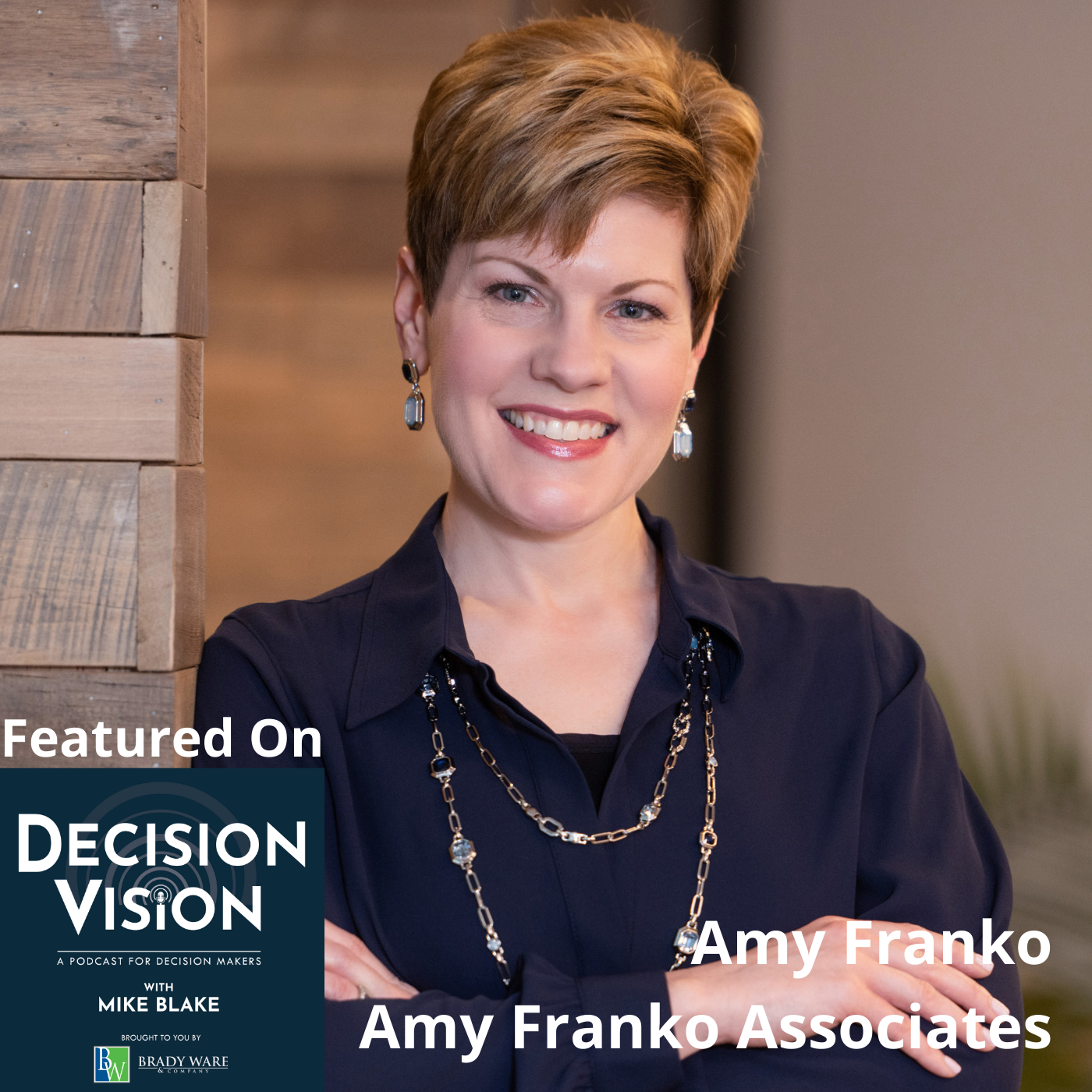
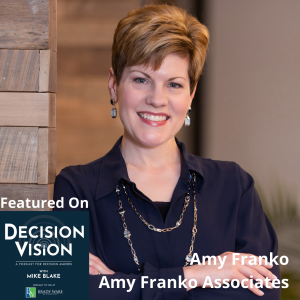
Decision Vision Episode 176: Should I Continue Investing in Sales and Marketing in a Recession?- An Interview with Amy Franko, Amy Franko Associates
/
RSS Feed
Share
Link
Embed
Decision Vision Episode 176: Should I Continue Investing in Sales and Marketing in a Recession?- An Interview with Amy Franko, Amy Franko Associates
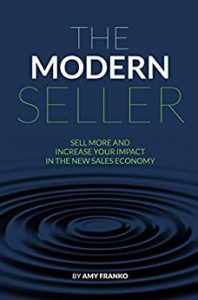
Tempting as it may be to cut expenses such as sales and marketing when faced with the prospect of a recession, Amy Franko argues that is a mistake. Joining host Mike Blake on this episode of Decision Vision, Amy, the author of The Modern Seller, discussed sales and marketing as an investment, the ramifications of putting the brakes on it in an economic downturn, sensible strategies to prepare, the need for Sales and Marketing departments to be in alignment, and much more.
Amy Franko Associates works with mid-market and enterprise-level organizations to significantly grow their sales results. This includes consulting on sales strategy, and learning programs focused on growing sales team performance.
Amy Franko is the leading sales strategist for growth-oriented mid-market organizations. She works with a variety of sectors to grow sales results, through both sales strategy and skill development programs. Her book, The Modern Seller, is an Amazon best seller and she is also recognized by LinkedIn as a Top Sales Voice.
Amy is the Chair of the Board of Directors for Girl Scouts of Ohio’s Heartland, a Top 25 non-profit in the Columbus, Ohio region. She resides in Columbus with her husband Dave and their very energetic black lab, Roxy. She loves all things fitness, enjoys travel, and is usually reading several books at once.
Mike Blake, Host of the “Decision Vision” podcast series
Michael Blake is the host of the Decision Vision podcast series and a Director of Brady Ware & Company. Mike specializes in the valuation of intellectual property-driven firms, such as software firms, aerospace firms, and professional services firms, most frequently in the capacity as a transaction advisor, helping clients obtain great outcomes from complex transaction opportunities. He is also a specialist in the appraisal of intellectual properties as stand-alone assets, such as software, trade secrets, and patents.
Mike has been a full-time business appraiser for 13 years with public accounting firms, boutique business appraisal firms, and an owner of his own firm. Prior to that, he spent 8 years in venture capital and investment banking, including transactions in the U.S., Israel, Russia, Ukraine, and Belarus.
Brady Ware & Company is a regional full-service accounting and advisory firm which helps businesses and entrepreneurs make visions a reality. Brady Ware services clients nationally from its offices in Alpharetta, GA; Columbus and Dayton, OH; and Richmond, IN. The firm is growth-minded, committed to the regions in which they operate, and most importantly, they make significant investments in their people and service offerings to meet the changing financial needs of those they are privileged to serve. The firm is dedicated to providing results that make a difference for its clients.
Decision Vision Podcast Series
Decision Vision is a podcast covering topics and issues facing small business owners and connecting them with solutions from leading experts. This series is presented by Brady Ware & Company. If you are a decision-maker for a small business, we’d love to hear from you. Contact us at decisionvision@bradyware.com and make sure to listen to every Thursday to the Decision Vision podcast.
Intro: [00:00:01] Welcome to Decision Vision, a podcast series focusing on critical business decisions. Brought to you by Brady Ware & Company. Brady Ware is a regional, full-service accounting and advisory firm that helps businesses and entrepreneurs make visions a reality.
Mike Blake: [00:00:21] Welcome to Decision Vision, a podcast giving you, the listener, a clear vision to make great decisions. In each episode, we discuss the process of decision making on a different topic from the business owners’ or executives’ perspective. We aren’t necessarily telling you what to do, but we can put you in a position to make an informed decision on your own and understand when you might need help along the way.
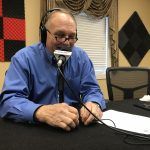
Mike Blake: [00:00:42] My name is Mike Blake, and I’m your host for today’s program. I’m the managing partner of Brady Ware Arpeggio, a data-driven management consultancy which brings clarity to owners and managers of unique businesses facing unique strategic decisions. Our parent, Brady Ware & Company, is sponsoring this podcast. Brady Ware is a public accounting firm with offices in Dayton, Ohio; Alpharetta, Georgia; Columbus, Ohio; and Richmond, Indiana.
Mike Blake: [00:01:06] If you would like to engage with me on social media with my Chart of the Day and other content, I’m on LinkedIn as myself and @unblakeable on Facebook, Twitter, and Instagram. I also host a LinkedIn group called Unblakeable’s Group That Doesn’t Suck, so please join that as well if you would like to engage.
Mike Blake: [00:01:23] Today’s topic is, Should I continue investing in sales and marketing in a recession?
Mike Blake: [00:01:27] So, as we record this on June 21st, literally the longest day, but I don’t think John Wayne’s making an appearance. I miss him. Speaking of Dayton, Ohio, by the way, I think he’s a native of Dayton, but anyway. It seems more likely than not certainly the people who claim to be in the know about these things, and I’m not, but I just read and pair it what other people who say they know what they’re talking about say that a recession seems more likely than not and maybe it’s even necessary. It may take a recession to sort of snap us out of this inflationary funk that our economy is currently in. And, who knows, maybe Paul Volcker is walking through that door.
Mike Blake: [00:02:10] So, I’m of the age where I do remember vaguely anyway the recession of 1980 and 81, where the Fed slammed on the brakes in a big time way. I remember having a CD that offered 18% interest, which is like credit card rates now. I don’t know if we’ll go that high. But it does seem like by hook or by crook in a recession, and if you don’t buy the Fed narrative, there’s always the Russia-Ukraine War and spiking oil prices, spiking food prices, and now monkeypox. Right? We’re not so afraid of murder hornets anymore, but thank God we have monkeypox coming to take its place. So, not necessarily a whole ton of optimism in the economy.
Mike Blake: [00:02:54] And so, given that a recession is at least forecasted by many, and let’s face it, we have pandemic aside from, and I realize it’s a bigger side, we have had a pretty long run, 2008 and ’09 to 2022 is a 13-year run without a recession. I don’t know exactly the history, but I’ll bet you that’s one of the longest runs in history. The only one that’s longer that I can remember is Reagan from ’82 to ’92 up until the Gulf War, the first Gulf War. So, we’ve had a long run. So, from a business cycle perspective, I guess we’re due.
Mike Blake: [00:03:34] And now, for good or ill, I’m old enough to have been through a few of these cycles now. I guess one of the benefits of having gray hair and two arthritic ankles is that companies now have to make a decision on how they’re going to allocate capital. Right? And, the ever-present Elon Musk, who apparently never misses an opportunity to say something inflammatory and he’s got the audience to do it, first announced that basically anybody who’s not in the office just isn’t working at all. And then, he decided to put an exclamation point on that by laying off 3.5% of Tesla, which really in the greater scheme of it, there have been much bigger layoffs, especially in the car industry.
Mike Blake: [00:04:20] So, not to minimize it but, frankly, if you’re in a recession, I want to be let go at the start, not in the middle of it. You have a chance to find a landing spot more quickly, but anyway. And having been through a couple of recessions, one of the things that has been a common theme that I have observed is many companies decide that they’re going to cut back on their sales and marketing under the guise. Well, nobody’s buying anyway, so why bother investing and selling? We’ll kind of come back and get them at another time.
Mike Blake: [00:04:51] And according to The Economist, advertising and marketing spend in the United States actually decreased by 13% in the first quarter of the 2008 recession; 13%. That is a massive number. I’ll bet it’s the largest that has ever been, sort of the Great Depression. But on the other hand, a 2020 Harvard Business Review article by – I hope I’m getting these names right, I’m probably not but we’ll have this in the show notes – Nirmalya Kumar and Koen Pauwels advise not to cut marketing expenditures during a recession. So, who is right? The people who are making the decisions or people who are writing to tell people about how to make the decisions? And I don’t know. I’m a finance guy, so I don’t know the first thing about marketing.
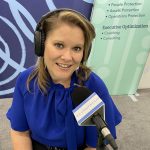
Mike Blake: [00:05:40] So, to help us with this conversation, I have brought in somebody who is an expert, and her name is Amy Franko, who is the leading sales strategist for growth-oriented and mid-market organizations. She works with a variety of sectors to grow sales results through both sales strategy and skill development programs. Her book, The Modern Seller, is an Amazon bestseller, and she is also recognized by LinkedIn as a top sales voice. You can learn more at amyfranko.com, with a K by the way.
Mike Blake: [00:06:10] Amy is the chair of the board of directors for Girl Scouts of Ohio’s Heartland, a top 25 nonprofit in the Columbus, Ohio region. She resides in Columbus with her husband, Dave, and their very energetic black lab. I think that’s redundant by the way. I have a black lab as well. Yeah, separate conversation. But if we ever have a power outage, we’re going to put it on a treadmill and a turbine because I think she can power air conditioning. She loves all things fitness. That’s Amy. I have no idea what the lab likes to do.
Mike Blake: [00:06:10] Amy loves all things fitness, enjoys travel, and is usually reading several books at once. Amy Franko Associates works with mid-market and enterprise-level organizations to significantly grow their sales results. This includes consulting on sales strategy and learning programs focused on growing sales team performance. Amy Franko, welcome to the Decision Division podcast.
Amy Franko: [00:07:01] Mike, it is so good to be here. Thank you for having me.
Mike Blake: [00:07:04] I want to talk about, from a very foundational standpoint, when we talk about investing in sales and marketing, what exactly does that mean? Because I think a lot of people don’t necessarily think of sales and marketing as an investment because that implies an asset. When we say that, what do you think it means?
Amy Franko: [00:07:24] So, before I answer that question, I just have to say, as I was listening to your opening monologue, as I was listening to that, I wrote down a phrase here and you talked about the funk. Sales and marketing can be one of your solutions for the funk. So, I want to open with that, and then share with you – I love that question about sales and marketing being an investment because that is what it is. Because when you make those investments and you being a finance guy, these things drop to the bottom line, the investments that you make in sales and marketing ideally should help improve the bottom line if you’re making the right investments.
Amy Franko: [00:08:07] But as I think about the elements of what it means to invest in sales and marketing, these are things like your sales and marketing strategy, the way that sales and marketing are integrated. And today, more than ever, sales functions and marketing functions are much more integrated, or they should be, if yours or not, in your organization. It’s also investment in talent and having a talent pipeline of sales professionals and marketing professionals. It’s investing in education. It’s investing in your key market segments. It’s innovation.
Amy Franko: [00:08:41] So, there are a lot of different things that we can kind of pick apart here when it comes to actually the investment in sales and marketing. But if you, as a leader, look at sales and marketing as an investment, that will guide your decisions differently than if you look at it as a liability or just something that you have to do, but not something that you want to do.
Mike Blake: [00:09:05] So, what about the argument that you’re in a recession, it’s too hard to sell anyway, got to conserve resources, let’s just sort of retrench a little bit and kind of ride this out. What do you think of that argument or that mindset?
Amy Franko: [00:09:20] I don’t love that mindset. As I was looking at, thinking about questions, I had a big no. Just one. A big no with an exclamation point. Sales is really your revenue and profit engine, and it should be your profit engine, not just your revenue engine. And, marketing is your awareness and your lead generation engines. And if you put those engines into idle or you turn them off completely, you’re not going to be able to move forward. At some point, you are going to be stuck and your competitors or the markets will pass you by. And not to say that you may not need to make some strategic adjustments to your investments.
Amy Franko: [00:10:08] So, for example, pandemic, live events during the pandemic is a really easy one. A lot of that stuff was cut. But if you’re going to be successful in the long run, if you are planning to be in business and successful five years from now, 10 years from now, you can’t turn off the marketing and sales engines today, you need to continue to invest, but you need to invest smart. And you may need to make some strategic adjustments here and there. But if you make wholesale cuts or you are not doing them with a strategic focus, you may not feel that today but you’re going to feel it down the road.
Mike Blake: [00:10:46] And, I wonder if a lot of this discussion has to do with a mindset, you know, and maybe this just means I’m a classical toxic male, but I like to be on offense. When I’m in business, I don’t like to be reactive and responsive. I like to be on offense. And, because life has taught me that when I’m on offense, better things happen, because at least you can force some of the action, right?
Mike Blake: [00:11:13] When you decide you’re going to kind of shut her up and shut down or step back, you’re kind of ceding control of the market, aren’t you, right? To me, that’s a much more defensive stance. And, you’re all about trying to prevent something bad from happening. And, to me, I would find it very difficult. And then, this recession coming up, it would be my first time running a company in a recession, but I would find it very difficult to stay on defense for very long. I find it very difficult to motivate my people to stay on defense for very long.
Amy Franko: [00:11:47] Yeah. And to probably use an overused sports analogy, successful teams have a combination of strong offense and strong defense. You absolutely need both in order to be successful. I personally take a similar viewpoint where the sales and marketing activities are offense-type activities. You may also be keeping your competitors out, which is more of a defensive type of play. But I do see sales and marketing as being offensive. It’s being market forward.
Amy Franko: [00:12:23] One of the mistakes I see organizations make is they shrink back during tough times. And that’s not a good posture in the marketplace. Your clients and prospective clients might start to question how healthy you are as an organization. So, it’s a matter of really thinking through if we make this decision here, what might be the cascading consequence, whether it’s tomorrow or a year from now.
Mike Blake: [00:12:51] So, in my view, we are in a period of measurement. We want to measure everything. We’ve figured out that we can measure a lot more things than we historically have. It’s been revolutionary in marketing, right? I don’t think many people are saying anymore that they’re wasting half their money on advertising. They don’t know which half. Right? That’s something that you’re fired now. But 10 to 15 years ago, that was the state of the art. Right?
Mike Blake: [00:13:18] And that’s a long preamble to the short question, which is this, that in a recession, now that everything is measured, it’s now putting quotas at risk, potentially compensation at risk for salespeople that are commission-based or marketing people or teams that have to meet certain targets on marketing that may or may not be realistic in a recession. So, as management, how do I react to that? And is there a balance you have to walk or establish between still trying to be aggressive and achieve goals, but at the same time not enabling and kind of letting people off the hook altogether because, oh, because recession?
Amy Franko: [00:14:04] Yeah. I think what makes the recession conversation interesting, some people don’t like to talk about recession because they think they’re going to bring it about by talking about it. But recession is often you’re looking out the rearview mirror. It’s, you know, GDP lowering over the course of I think it’s, what, two quarters in a row, so six months of time.
Amy Franko: [00:14:31] So, you realize that you’ve been in a recession when you’re looking in the rearview mirror, you can’t always anticipate what’s happening. And there are lots of companies that thrive during contracted periods of time in recessionary periods. So, just because the markets might be experiencing a recession, that doesn’t necessarily mean your organization is going to experience it if you are diversified, if you are smart about your product and solution mix, or where you happen to be.
Amy Franko: [00:15:05] But to directly answer your question about the quota piece of it, leaders do need to strike a balance, because what you don’t want to do is kill your sales culture. If you have something – I was thinking about this this morning and thinking about vulture culture, which means you might be going after the wrong customers to meet a bottom line. You might be changing compensation plans for your sales teams, which is a surefire way to have issues, let’s just say, you’re essentially creating an unhealthy culture.
Amy Franko: [00:15:44] So, as leaders, we have to really think about the decisions that we’re making when it comes to, you know, you might need to rightsize in the sales quota, you might need to rightsize some things, but to not do it in a vacuum and to think about how those changes could have cascading consequences, and to keep morale, you want to include your sales teams as much as possible in the conversations so that you could potentially come to some solutions together and, as leaders, you’re not just relying on one or two leaders making the decisions without input.
Mike Blake: [00:16:21] You know, in that part about culture, and I think by extension if I can put words in your mouth a little bit, almost a scarcity mentality.
Amy Franko: [00:16:30] Yeah.
Mike Blake: [00:16:31] Reminds me, actually, I watched – for the first time ever, I’m not a big movie guy, but on Friday for the first time ever, I actually watched the entirety of Glengarry Glen Ross, not just the coffees for closers thing. By the way, how Alec Baldwin gets third billing for about 5 minutes of dialogue, he must have had the best agent in the world. But anyway talk about a case study on a toxic culture where in effect most of those people felt like they were behind the 8 ball and frankly could not succeed and there was an absence of leadership and there was an absence of resources to at least make the salespeople feel like they could succeed in an ethical way. Right?
Mike Blake: [00:17:17] And I can’t help but think, as I was watching this – I didn’t do it to prepare for this podcast, just sort of worked out that way. But there is a risk I think even in 2022, so-called modern management, that a boiler room mentality can return, right, unless you adjust expectations and compensation structures.
Amy Franko: [00:17:41] Yeah. And there are plenty of tales of caution out there of those types of sales cultures that might work in the short term. But for the long term, you hurt your culture, which takes a long time to rebuild and probably would also mean a turnover in leadership to do that rebuild and you risk losing market share. So you might be chasing something for the short term, but for the long term, you lose out.
Mike Blake: [00:18:14] So, let’s talk a little bit about the disruption element of a recession. I think that sometimes people forget that some of the most interesting companies have actually been born during recessions, Apple being one during the first oil crisis. Can a recession be thought of perversely as an opportunity?
Amy Franko: [00:18:34] Yes, absolutely. I think there are a lot of opportunities that a recession can provide. You may have competitors that exit, that provide market share opportunities. To your point, you might create an entirely new business during a recession. You have the opportunity to maybe open a new market or find a new way of bringing an existing service to market. If you’re a company of strong cash reserves, you might be able to invest where others aren’t.
Amy Franko: [00:19:07] To prep for our conversation today, I was just doing a little bit of homework on the types of organizations that, or types of businesses I should say, that really thrived during the pandemic. So, these can be lessons for all of us even if we aren’t in these industries. So, like the cleaning industry, the delivery industry, the fitness industry, COVID remote testing, that type of industry. Those are examples of industries that really grew during the pandemic. And now the job of those companies is to continue to capitalize on that. And obviously, there are other challenges around supply chain and staffing shortages.
Amy Franko: [00:19:49] But just because we might be in the midst of a recession if we do look at it as an opportunity, and that comes back to your comment about mindset, we can choose how we look at it, and then if we choose to look at it as an opportunity and we use our actions and behaviors as leaders to look at it as opportunity, then we’re going to be in a much better position to actually find the opportunity versus just shutting our minds and shutting our eyes to finding them.
Mike Blake: [00:20:17] Yeah. You know, and the thing about recessions, it brings to mind a writer that I’m fond of, Nicholas Taleb. He wrote The Black Swan in addition to other things. He also wrote another book called Antifragile, which is effectively a book about resilience. And he made a fascinating observation, which I think is so profound, which is the difference between organisms and mechanisms, is that mechanisms, as they are used, depreciate and deplete. Organisms as they are used actually become stronger. Right?
Mike Blake: [00:20:51] So, people, as we use muscles, for example, they become stronger. Under stress, they become stronger. But machines under stress become weaker, more fragile. They’ll have to be maintained and overhauled. Right? And, I wonder if there’s – as I think about this upcoming recession, I think about and wonder, is that an opportunity for us to become stronger because it is going to create stress, and stress actually can produce very useful things. What do you think about that?
Amy Franko: [00:21:19] That’s such an interesting observation. And it’s reminding me of a conversation that I had with another sales consultant. I was interviewed on his podcast. His name is Victor Antonio, and he has an excellent podcast called The Sales Influencer, for anybody who’s interested in those topics. And what we were talking about, the observation was that in the last year or so, with things like supply chain shortage, resource, human resource shortage like staff shortage, we’ve both talked to so many organizations where sales professionals were saying, “I have so many orders. I can’t even fulfill the orders that I have because we have supply chain problems. We are growing like crazy because there’s so much demand for our service or a product.” You know, fill in the blank.
Amy Franko: [00:22:13] Now, what you’re seeing, and this was his observation which ties to what you just shared, is what sales skill atrophy, if you will. The muscles have not been used because they haven’t had to be. And now we might be entering a period where we have to flex those muscles again, but it’s going to take a few more workouts to get that strength back.
Amy Franko: [00:22:37] So, it’s a really interesting scenario. The people that have continued to work out all through this and keep those skills, whether it’s a leader making the investments or an individual continuing to sell, they’re the ones that are going to thrive. Whereas you’re going to see a lot of organizations that have had that atrophy and they’re going to have to figure it out.
Mike Blake: [00:22:59] I think that’s fascinating. I think that’s a really smart observation, because in a boom time like we’ve had, I do think that it’s been a good time for order takers. Right? But in a recession is when you really appreciate the order makers. Right? And you’re right if you have not been flexing that. And COVID is a perfect example. Right?
Mike Blake: [00:23:25] I went to my first networking meeting about, I guess is, last month in about two and a half years, and I basically drooled on the floor most of the time. I didn’t know how to talk to people anymore. I couldn’t have found my business card if you’d given me 10 minutes and a magnifying glass. Right? I was not at my smoothest, and, you know, a sales – we’re so not used to scarcity right now when it comes to revenue for a lot of us, now that I say this I’m going to lose all my customers tomorrow, so I’ve got to be really careful; knock on wood. But there is a muscle that probably is going to need to exercise.
Mike Blake: [00:24:03] So, with that in mind, I’m going to go off script a little bit because this brings to mind a really interesting – in my mind, a really interesting question. Assuming that people believe the same as I do that some form of recession is coming in the next, let’s say, by the end of the year, how can companies start to prepare now to either at least not be terribly hurt by the recession from a sales and marketing perspective, if not actually position themselves to thrive? How do you – what’s the equivalent of sort of buying all the storm windows before the hurricane hits?
Amy Franko: [00:24:40] Yeah, right. So, where I would counsel my clients to start is you need to get out your sales strategy and you need to get out your marketing strategy, and hopefully those two things exist in your organization. So if they exist, you need to pull them out and this is the time to take a look at them and to determine where you are and where you want to go into the future. If you don’t have these things, it’s not necessarily time to hit the panic button, but you want to get those things in place as well as you can because those can be your North Star, if you will. So, that’s where I would counsel my clients to start.
Amy Franko: [00:25:33] The other thing I would counsel my clients on is to not pivot too hard because I’ve seen organizations chase unproven markets where either they don’t know, they haven’t done their research on what the outcomes could be, or they don’t have enough of their own market share or visibility in those unproven markets. You can squander resources without return.
Amy Franko: [00:26:00] So, you want to take a look at where those resources are being invested and you want to take a look at your numbers. Where are you investing in sales? Where are you investing in marketing? Do you have the return on those investments? So, those are a few places that I would counsel my clients to start.
Mike Blake: [00:26:19] So, what are the landmines? What are the most common mistakes that companies do make in terms of responding to a recession from a perspective of investing in sales and marketing?
Amy Franko: [00:26:31] Yeah. I think the word react really comes to mind. It’s being reactive instead of proactive and not staying the course with the strategy that you’ve designed and not to say that strategy should be stagnant. You know, I am working with clients who are working on strategy that’s maybe a year to 18 months. So, I will work with clients on their sales strategy. And you want to stay the course, but you also want to take a look at what are the returns on those different investments. So, I would say a mistake is to not know your numbers when it comes to sales and marketing return.
Amy Franko: [00:27:17] One of the things that I see organizations do pretty regularly and it doesn’t matter, it’s not necessarily a comment on the recession. It’s really easy to hang on to resources whether they are people resources or other types of investments that you know aren’t performing. They’re dragging on the organization in some way, shape or form, whether it’s organizational morale or dragging on the bottom line and not being proactive with that. That hurts more during a recession. But I see it regardless of what the economy happens to be doing, and that’s a very common mistake.
Mike Blake: [00:27:59] You know that’s interesting because one of the benefits of recessions is, it does sort of separate wheat from the chaff. Right? And though you can – sometimes you can put up with mediocre performers because the recession allows you to do it, but, boy, a recession tends to reveal people’s shortcomings, especially on the sales and marketing side pretty quickly, doesn’t it?
Amy Franko: [00:28:20] It can. And this is where, even – you know, even really high performers, elite performers, aren’t immune to things that happen during a recession. I have seen very elite performers just the industries that they are selling into have hit slumps and some industries were hit much more heavily than others during the pandemic.
Amy Franko: [00:28:44] So, again, that is to your point where you separate the elite high performers from the others. Because the elite high performers, whether it’s in a sales function or a marketing function, they’re the ones that are going to be more resilient and they’re the ones that are going to say, “All right, things do not look good right now. I might be at 50% of my number or maybe even less. But here’s what I’m doing. Here’s how I’m thinking. Here’s what I’m going to go into the market with.” And they aren’t letting it – they aren’t letting it stop them from thinking creatively and being strategic. They’re not just going to sit back.
Amy Franko: [00:29:20] So, in the absence of seeing hard performance numbers like reaching a quota or numbers of leads generated from a marketing campaign, this is where leaders have a great opportunity to really get to know what their individual folks are doing and what their thought processes are and how they’re approaching because that’s going to tell you a lot about how they’ll recover when we do come out of whatever the latest disruption is.
Mike Blake: [00:29:48] What’s an example of a company that got marketing and sales right during the last recession? Can you think of one?
Amy Franko: [00:29:55] Well, you know, this may not be a recession conversation, but I think it’s a unique and interesting story that just speaks to kind of staying the course with strategy. And it’s an Ohio company. It’s a Gojo Industries, which is up in the Northeast Ohio area. And having been a family-owned business, you may not know who Gojo is, but you probably know the brand Purell. You know, Purell is on par with brands like Kleenex and Coke. It’s not hand sanitizer. It’s Purell. Right? But there was a time where that was a market, not a market, it was a loss leader for them. And it took them about a decade to get that product to where it is today, to profitability.
Amy Franko: [00:30:50] And, as I was reading about this, what really struck me was the leadership choices that the organization made, the leaders in the organization to say, you know, if we were perhaps a publicly-traded organization, this is an example of something that would have been cut years ago. But we really believed in it and we wanted to continue to bring it to market even though it took the time that it did and that investment paid off.
Amy Franko: [00:31:14] Now, that’s not necessarily a recession story. It is a story of understanding what your company values are and where you want to invest your resources and those decisions that you make from there. But, again, some of those industries, we could take some real lessons from industries that have thrived during pandemics. And I mentioned a few of them, but a couple of others are health care, telehealth, behavioral health, things like that. What are the lessons we can take from those and apply to our own businesses?
Mike Blake: [00:31:50] Your observation draws me to an observation I love you to react. I wonder if from a purely strategic perspective, privately-held companies actually have more freedom to operate in terms of recession and making investments because they at least have the freedom. Maybe they do or don’t do this, but they have the freedom to think in five and ten-year increments. Whereas in the public company sector, right, when a recession happens, you are expected to slash and burn. That’s what Wall Street wants to see. That’s where people’s bonuses are going to come from in terms of stock price, right, and not necessarily financial performance directly. Could the case be made that private companies actually have an advantage over public companies during a recession?
Amy Franko: [00:32:39] I think you can make the case that there is an advantage there. I think there’s also an advantage to – I think smaller organizations could have an advantage. They may not have the deep pockets, if you will, of larger organizations, but they can often be more nimble and more creative because they’re not constrained by their own mechanisms. Right? They have that ability to be a bit more creative.
Amy Franko: [00:33:04] I agree. I think a privately-held company could absolutely have an advantage. And even in uptimes, publicly-traded organizations are often running quarter to quarter and making these adjustments and pivots to product mix, how they’re incentivizing sales teams, what focus they’re going, what product focus or solution focus they’re going to put their time and attention toward because external forces are pressing down on them to make those decisions. Whereas a privately held organization, they’re going to have internal pressure, but they can make those decisions from the inside out versus the outside in.
Mike Blake: [00:33:46] So, you’ve brought up a term a couple of times that I want to pause on for a second because I do think it’s really important, and that is about reallocating resources. So, when a recession hits, I want to talk about first marketing and then sales. So first, how do you see companies or how should companies think about potentially, if not, reducing the amount of resources in a recession, how those same resources are allocated?
Amy Franko: [00:34:16] So, probably a recent one that can we probably all wrap our heads around is with the pandemic and just the fallout from that, the lack of live events, whether it’s a networking event, it’s a conference, you know what have you. The conference industry, of course, was rocked really hard by the pandemic. And it’s going to take multiple years for them to, for that industry, to recover. But that’s probably a pretty top-of-mind type of example, where if you’re an organization that put a lot of your marketing dollars into things like tradeshows, all of a sudden you had a complete marketing channel that you relied on heavily, it just completely dried up.
Amy Franko: [00:35:04] So, now as a leader, marketing leader or otherwise, you are faced with, all right, here’s this bucket of dollars that we are putting into one channel. I now have some decisions to make on where to reallocate that to. And if you have not had any diversification in those channels, you’re a little bit behind in the game to figure out where to reallocate those dollars or those people to. The other part of that is the replacement mechanisms, which were virtual conferences, a lot of my clients, frankly, did not get ROI out of virtual conferences because of the way that they are structured and just the way that you meet people and cultivate opportunities. It just wasn’t there.
Amy Franko: [00:35:52] So, you have to think about the replacement. Is the replacement going to be as good or better? And if I have this bucket of dollars and I’m going to pull it away, am I going to pull it away permanently, or am I going to maybe put a portion of those dollars back as things start to come online? So, that’s an example of where leaders have decisions to make about where to allocate marketing dollars and do they want to put the pie back to where it was pre-pandemic or pre-recession, or did they make those changes permanent?
Mike Blake: [00:36:29] So, I’ve read that social media tends to be the weapon of choice during a recession now. Have you heard that? Is there any truth to that? Is there any validity to that, or is it maybe –
Amy Franko: [00:36:44] Yeah. You know, I have a bit of an opposite viewpoint. Social media absolutely has its place. And for anyone that connects with me, you will see my presence on social media and definitely more on the business platforms. I use LinkedIn. I mean, I would argue that all the platforms can be used for some type of business.
Amy Franko: [00:37:07] Social media absolutely has its place. Where I see mistakes being made is that companies swing the pendulum so far in that social media direction that it can become a lot of noise. And, I’m a big believer that you have to have a really smart, business-oriented sales force to complement what you might be doing on social media. So, I believe in diversifying. And if all of your eggs are in a social media basket, I believe that you’ll be challenged as an organization moving forward.
Mike Blake: [00:37:45] Now, what about reallocating personnel, particularly sales force, during a recession? Is there a way to do that? Are our salespeople capable, willing to contribute in some other way that they just have to change the way that they sell? Are cutbacks perhaps inevitable whether deliberately or people are just sort of leaving to find a better opportunity? How do you see – what do you think best practices are for companies confronting personnel decisions during a recession?
Amy Franko: [00:38:18] Yeah. So, a lot of the things that you just talked about kind of wrapped up in that question about reallocating resources to other functions or how do we, for lack of a better phrase, rightsize the sales function? I think it starts with as a leader and this is whether you have a small sales team or you have multiple sales teams and you’re a global organization, having the right structures in place really show themselves during recessionary times or in disruptive times. And I mentioned this before that a lot of organizations hang on to professionals that are not not performing.
Amy Franko: [00:39:04] So, as a leader, you do have some options. You may need to cut back on your sales force. You may have some low performers on your team, which every organization has them. I’ve yet to come across an organization that doesn’t. This is also a choice where if you have really savvy sales professionals are going to find a way to stay productive and to continue to build relationships and to set themselves up for moving out of the recession, you have to know who those people are as a sales leader.
Amy Franko: [00:39:45] Most sales organizations don’t have the right sales processes. They don’t have the right skill development, and they don’t understand the skills of their team. If you understand the skills of your team and where they have strengths and weaknesses, that’s going to put you in a lot better position to understand the changes that you might have to make if you hit a period of contraction or some other type of disruption.
Mike Blake: [00:40:13] And what about the balance, if you will, or maybe the relationship between sales and marketing? Does that change? Do you – would you – do you think that best practices would indicate that companies are going to maybe tip the balance in favor of marketing in terms of lead generation? Or are they going to tip in favor of sales in terms of trying to close more of the leads that they have?
Amy Franko: [00:40:38] Yes. The best organizations that I see and work with are working toward an integration of marketing and sales. Now, you may have a chief sales officer or a VP of sales, and you may have a chief marketing officer. You may have people that are sitting in those roles and they’re leading their respective teams. But that type of sort of separated approach, you need to have those leaders that are on the same page moving forward, which is why I will often advocate for a sales and marketing strategy together. Even though you might be doing different activities, your marketing efforts have to support your sales teams, and your sales teams need to take what is created, assuming its quality, and move it through your sales process and your sales pipeline.
Amy Franko: [00:41:35] So, I find the best practice to be an integrated approach to sales and marketing where those leaders are in lockstep, and then that message kind of cascades down to the teams. And if I’m a sales professional, if I’m smart, I want to learn about what’s new in marketing and what my marketing team is doing. If I’m a smart, savvy marketing professional, I want to understand what’s happening in the sales landscape and spend time with my sales teams.
Mike Blake: [00:42:05] Now, what about the choice or the decision on whether or not you’re going to focus on maybe doing more work, more business with your existing customers versus new customer acquisition? How does a recession change, if at all, that calculus?
Amy Franko: [00:42:25] My philosophy is retaining and growing your existing customers is one of your best methods of offense during any type of period of contraction, recession, pandemic, or otherwise. And, every organization is a little bit different. But understanding what the right balance is for your organization, I tend to see a 70-30 split between expanding your existing customers and finding net new logos to add.
Amy Franko: [00:43:00] So, I think professional services, Mike, is a great example of where there’s been a lot of addition to what professional services firms offer. And especially, I work with a lot of public accounting firms, so about half of my business is public accounting and consulting. And, the organizations that have added ancillary high-value services to their portfolio now are in a great position to be able to go to current clients and offer these new services, new ways of thinking that maybe the client didn’t realize, “Oh, my gosh. I didn’t even realize you consulted on this. I absolutely need you to help me with this.” That’s offensive and defensive because not only are you providing a new value, which is offensive, you are ideally keeping your competitors out, which is a great defensive play.
Mike Blake: [00:43:50] So, not all recessions are created equal. Of course, the one that we went through in ’08 was really bad. It was a balance sheet recession that required systemic realignment throughout the economy to sort of rebound from. Others have not been nearly as severe. And so, my question is, does the – and this one doesn’t look like it’s necessarily going to be as severe as ones we’ve had in the past. Does that change at all how one should react to a recession or address a recession or approach a recession from a sales and marketing perspective, if you believe that the recession, for lack of a better term, just frankly just won’t be that bad?
Amy Franko: [00:44:33] Yeah. Sometimes I think it’s kind of the equivalent of pulling out your magic 8 ball and trying to figure out is it going to be bad or is it not? As I was thinking about our conversation today and kind of reflecting on that 2007 to 2009 period, we often talk about it like it was last year, but it was 13 or 14 years ago now. And if you look at your workforce, there’s probably a good portion of your workforce that were in high school when that 2008 recession was here, right, and they’re in their late 20s, maybe early 30s at this point.
Amy Franko: [00:45:13] So, I share that just as a way to give us a little bit of perspective that, like you said, not all recessions or contractionary period, contractive periods are the same. And it’s important to take the lessons that we’ve learned but to know that you may have a portion of your workforce that wasn’t even in the workforce when the last one hit so they may not have a frame of reference and just to treat each thing like its own individual time period and how can I be successful in this time period and also look to the future.
Mike Blake: [00:45:54] I’m talking with Amy Franko and the topic is, Should I continue investing in sales and marketing in a recession. Should a recession alter a company’s risk posture? And in fact, could an argument be made that a recession might be actually a better time to take risks?
Amy Franko: [00:46:12] Yeah. I think every leader is looking at, how do I maximize my upside and minimize my downside, right? So if you are looking to do that throughout your company’s history, whether it is an uptime or we’re hitting a period where we may hit some downtime, if we are smart and doing scenario planning while times are good, then we can minimize our downside ideally in downturns.
Amy Franko: [00:46:50] So, yes, if you have been, if you have good cash reserves, you have maintained a healthy balance sheet, you have diversified products and services, you can absolutely maximize downside. And companies are doing that all the time. It’s whether or not you have put yourself in a position to be one of those companies.
Mike Blake: [00:47:14] You’ve used the term a couple of times in this conversation that I want to come back to, because it’s a very important term, and that’s pivot. How do you decide whether or not the things you need to do or should do in a recession are of a nature where you’re simply rebalancing and adjusting versus a wholesale pivot, which to me implies you’re just going to abandon something and do something else because the thing you were doing just isn’t making it.
Amy Franko: [00:47:44] Yeah. Pivot’s one of those words you could put on a buzzword bingo board.
Mike Blake: [00:47:49] Absolutely. We’ll take that bingo board to the next level with that one.
Amy Franko: [00:47:53] Right. Right. So, between the words pivots and nimble and agile, I feel like we have a whole new game of buzzword bingo. So, yeah, how do you decide whether to pivot strategy, tactics, products, all of that? I think your scenario planning ahead of time can help you with that. Personally, I think that there is a balance between capitalizing on a market opportunity that can present itself during a downtime versus you pivot so hard and you put so many resources into something that isn’t going to pan out. And then, you find that now you have these resources that you’ve wasted.
Amy Franko: [00:48:39] So, your scenario planning ahead of time can be really important. Like, hey, if we do hit a downturn, what are our options? Or you’re in an uptime, what are the markets telling us what we might be able to capitalize on something and then when there is a downturn, you’re in a position to do that? So, it’s continually scanning the environment. So, when I’m doing strategy work with clients’ sales strategy primarily, we’re looking 12 to 18 months out instead of, say, the traditional three to five-year plan that typically gathers a lot of digital dust. And your risk tolerance will determine how hard you take, how sharp is that pivot.
Mike Blake: [00:49:22] So, before we wrap up, there’s a question I want to ask you. And I’m going to admit the question is blatantly unfair. In fact, it’s so blatantly unfair. And I kid you not, there’s no hyperbole here. I think it’s the most difficult question I’ve ever asked in the podcast. And this is episode 173, I think, 170 something.
Amy Franko: [00:49:41] You saved this one for me.
Mike Blake: [00:49:43] Yep.
Amy Franko: [00:49:44] All right. Let’s do it.
Amy Franko: [00:49:44] Because I think you can handle it. So in a recession, the reality may be that even though you advised a client to continue financing their sales and marketing operations, they may not have the money to do so. Right? They may be losing money, right? And they just got a cut. So, my blatantly unfair, horrible question is this. Assuming that the company had a clean, fairly strong balance sheet and assuming that the business owner had fairly middle-of-the-road risk tolerance, would you go so far as to advise a client or to yourself, if you’re in that situation, to actually consider taking on external money from a bank or an investor to keep up your sales and marketing during that recession until operations can recover and pay for it on its own?
Amy Franko: [00:50:43] That’s a really good question. When I think about taking on outside money, outside money could be you’re dipping into your line of credits. Outside money can be you are taking on an external investor who is putting money into your organization and now you have another stakeholder. So, there are probably a lot of considerations for taking on outside investment.
Amy Franko: [00:51:12] So, my answer to that, it’s a conditional yes, and here’s why. I am not opposed to companies taking on or using their debt instruments or outside investment instruments if they have a really clear picture of how they want to use it. If there isn’t a clear picture on how to use it, that can start to become another stressor on the balance sheet and on you as a leader, quite frankly, that you want to consider.
Amy Franko: [00:51:49] So, this is where having outside perspectives, whether it’s my perspective or might even your perspective with your areas of expertise, and really thinking through whether or not that outside investment is going to pay off. If the outside investment, especially if it’s like a line of credit and it’s a low-interest rate on a line of credit and that is a fairly low risk, then that might be an easier decision than taking on an actual outside investor who now has a say in how your company is run.
Amy Franko: [00:52:23] So, a long answer to your question, I wouldn’t leave it off the table, just having very clear parameters on how that’s going to play out and what your exit points are if you see it not working out.
Mike Blake: [00:52:38] Very good. You rose to the occasion. You answered a very tough question. Thank you. Thank you for doing that.
Mike Blake: [00:52:46] Amy, this has been a great conversation but we are running out of time. I’m sure there are questions that our audience wished we would have talked about or maybe talked about longer. If someone wants to contact you for more information about this topic or something related, can they do so? And if so, what’s the best way for them to do that?
Amy Franko: [00:53:03] Yes, please. I would love to hear from you. Two ways. The first is LinkedIn. I’m Amy Franko on LinkedIn. And, please mention that you heard me on our podcast here and I’d be happy to connect with you there. And then, also you are welcome to go out to amyfranko.com and reach out to me that way.
Mike Blake: [00:53:21] That’s going to wrap it up for today’s program. I’d like to thank Amy Franko so much for sharing her expertise with us.
Mike Blake: [00:53:28] We’ll be exploring a new topic each week, so please tune in so that when you’re faced with your next business decision, you have clear vision when making it. If you enjoy these podcasts, please consider leaving a review with your favorite podcast aggregator. It helps people find us so that we can help them.
Mike Blake: [00:53:44] If you would like to engage with me on social media with my Chart of the Day and other content I’m on, LinkedIn as myself and @unblakeable on Facebook, Twitter, and Instagram. Also, check out my LinkedIn group called Unblakeable’s Group That Doesn’t Suck. Once again, this is Mike Blake. Our sponsor is Brady Ware & Company. And this has been the Decision Vision podcast.
Fully Promoted Suwanee is a family owned and operated promotional products company located in Suwanee, GA. Using a custom approach tailored to each business, they help brands ensure they are fully promoted to their current and potential clients. From branded apparel and promotional products to trade show goods and corporate gifts, Fully Promoted Suwanee is your one-stop-shop for all of your branding needs.
Decision Vision Episode 175: Should I Overhaul My LinkedIn Profile? - An Interview with Angela Dunz, Cowgirl Creative Consulting
/
RSS Feed
Share
Link
Embed
Decision Vision Episode 175: Should I Overhaul My LinkedIn Profile? – An Interview with Angela Dunz, Cowgirl Creative Consulting
Angela Dunz of Cowgirl Creative Consulting says that even though LinkedIn is the smallest social platform, 72% of the time it’s the place a potential client will contact you. Given the efficacy of the platform, is it worth the work to overhaul your profile? Angela and host Mike Blake look at the effectiveness of LinkedIn, how to know if it is working for you, how to make the most of it, and much more.
Cowgirl Creative Coaching is inspired by the spirit of adventure and grit that both cowgirls and entrepreneurs have.
It takes speed and agility to get your ideas to market.
Safety and success for horses is in the herd. More eyes, more wisdom. Small business is the same. Together we thrive and create rich communities of collaboration and innovation. Small business is the backbone of what carries great communities. Cowgirl Creative has the grit and spirit to shift quickly in response to changing needs and conditions. They have the boots on the ground ability to address short-term situations. And, the vision and creativity to shape the future. They help their clients see beyond what they think is possible.
Angela works with coaches, consultants, and small businesses building a personal brand and business development using LinkedIn. What does that mean? Establishing a strong brand, building your networks, expanding your influence, increasing opportunities, strengthening referral partnerships, and discovering new ways to reach your ideal audience with connection and content strategies that get results. Her personal mission is to change the awkwardness of “self-promotion” to an act of service.
Angela works with coaches, consultants, and small businesses, building a personal brand and business development using LinkedIn. What does that mean? Establishing a strong brand, building your networks, expanding your influence, increasing opportunities, strengthening referral partnerships, and discovering new ways to reach your ideal audience with connection and content strategies that get results.
Angela’s personal mission is to change the awkwardness of self-promotion to an act of service. Angela is a former high school rodeo champion. She is a rock climbing guide and a current NFL fan, and she’s a big fan of the Packers.
Mike Blake, Host of the “Decision Vision” podcast series
Michael Blake is the host of the Decision Vision podcast series and a Director of Brady Ware & Company. Mike specializes in the valuation of intellectual property-driven firms, such as software firms, aerospace firms, and professional services firms, most frequently in the capacity as a transaction advisor, helping clients obtain great outcomes from complex transaction opportunities. He is also a specialist in the appraisal of intellectual properties as stand-alone assets, such as software, trade secrets, and patents.
Mike has been a full-time business appraiser for 13 years with public accounting firms, boutique business appraisal firms, and an owner of his own firm. Prior to that, he spent 8 years in venture capital and investment banking, including transactions in the U.S., Israel, Russia, Ukraine, and Belarus.
Brady Ware & Company is a regional full-service accounting and advisory firm which helps businesses and entrepreneurs make visions a reality. Brady Ware services clients nationally from its offices in Alpharetta, GA; Columbus and Dayton, OH; and Richmond, IN. The firm is growth-minded, committed to the regions in which they operate, and most importantly, they make significant investments in their people and service offerings to meet the changing financial needs of those they are privileged to serve. The firm is dedicated to providing results that make a difference for its clients.
Decision Vision Podcast Series
Decision Vision is a podcast covering topics and issues facing small business owners and connecting them with solutions from leading experts. This series is presented by Brady Ware & Company. If you are a decision-maker for a small business, we’d love to hear from you. Contact us at decisionvision@bradyware.com and make sure to listen to every Thursday to the Decision Vision podcast.
Intro: [00:00:01] Welcome to Decision Vision, a podcast series focusing on critical business decisions. Brought to you by Brady Ware & Company. Brady Ware is a regional, full-service accounting and advisory firm that helps businesses and entrepreneurs make visions a reality.
Mike Blake: [00:00:21] Welcome to Decision Vision, a podcast giving you, the listener, clear vision to make great decisions. In each episode, we discuss the process of decision making on a different topic from the business owners’ or executives’ perspective. We aren’t necessarily telling you what to do, but we can put you in a position to make an informed decision on your own and understand when you might need help along the way.
Mike Blake: [00:00:44] My name is Mike Blake, and I’m your host for today’s program. I’m the managing partner of Brady Ware Arpeggio, a data-driven management consultancy which brings clarity to owners and managers of unique businesses facing unique strategic decisions. Our parent, Brady Ware & Company, is sponsoring this podcast. Brady Ware is a public accounting firm with offices in Dayton, Ohio; Alpharetta, Georgia; Columbus, Ohio; and Richmond, Indiana.
Mike Blake: [00:01:08] If you would like to engage with me on social media with my Chart of the Day and other content, I’m on LinkedIn as myself and @unblakeable on Facebook, Twitter, Clubhouse, and Instagram. I also host a LinkedIn Group called Unblakeabble’s Group That Doesn’t Suck, so please join that as well if you would like to engage.
Mike Blake: [00:01:25] So, today’s topic is, Should I overhaul my LinkedIn profile? And I’ll be very candid with you listeners. I wasn’t necessarily planning to do this topic. It’s not something that I sort of woke up and said three weeks ago, I got to do this topic. But then, last week I heard our guest speak and I attended her webinar, and I was just blown away by how good it is and how informative it is.
Mike Blake: [00:01:56] I say this in the perspective of somebody who’s been on LinkedIn for quite a long time. I actually generate a lot of business over LinkedIn, thankfully, and develop a lot of important relationships over LinkedIn. And, nevertheless, I thought I was pretty good at this stuff until I heard her speak. And then, I realized, “Oh my God. I’m probably leaving all this business on the table.” And I didn’t want to keep it to myself, frankly. And so, I wanted to bring her on and, thankfully, she agreed to do so.
Mike Blake: [00:02:29] And so, it is my pleasure to introduce Angela Dunz, who’s founder of Cowgirl Creative Consulting. And we’re going to learn why Cowgirl in a second. But they’re inspired by the spirit of adventure and grit that both cowgirls and entrepreneurs have. It takes speed and agility to get your ideas to market. Safety and success for horses is in the herd. More eyes, more wisdom. Small business is the same. Together, they thrive and create rich communities of collaboration and innovation.
Mike Blake: [00:02:59] Small business is the backbone of what carries great communities. They have the grit and spirit to shift quickly in response to changing needs and conditions. They have the boots in the ground ability to address short term situations and the vision and creativity to shape the future. Cowgirl Creative Coaching helps their clients see beyond what they think is possible.
Mike Blake: [00:03:19] Angela works with coaches, consultants, and small businesses, building a personal brand and business development using LinkedIn. What does that mean? Establishing a strong brand, building your networks, expanding your influence, increasing opportunities, strengthening referral partnerships, and discovering new ways to reach your ideal audience with connection and content strategies that get results.
Mike Blake: [00:03:39] Angela’s personal mission is to change the awkwardness of self-promotion to an act of service. Angela is a former high school rodeo champion. We have never had a rodeo champion on this program, and this is podcast number 174. She is a rock climbing guide and a current NFL fan, and she’s a big fan of the Packers – a team that broke my heart as a Patriots fan back in 1996. She is also the author of Conversations with Skunks #LinkedInBadAss, which I just love. LinkedIn Badass, Angela Dunz, welcome to the Decision Vision podcast.
Angela Dunz: [00:04:13] What an intro that was. And thank you so much for the comments about the webinar, Mike. I find that to be true about a lot of people. We don’t know what we don’t know if we don’t stay on top of things.
Mike Blake: [00:04:27] Well, it really was fantastic. Not good. Great. And LinkedIn is now such an important tool. I think the pandemic certainly underlined how important social selling is. And I’m going to use Brandon Lee’s term, he was a guest on our program about 20 weeks back. It’s such an important tool. And it starts with your profile, doesn’t it? I mean, that is sort of your shingle, that is sort of the doorway into the restaurant, so to speak.
Angela Dunz: [00:05:00] Yes. That is where you start to make an impression. So, if somebody Googles your name, the first thing that’s going to come up is your LinkedIn profile. So, often, their very first impression of you is whatever they see on your profile. And you only get five seconds before they decide “Yes. I want to look further” or “No. This isn’t the person.”
Mike Blake: [00:05:24] So, there are, of course, skeptics out there of social media. There are skeptics out there of LinkedIn. Make the case that LinkedIn is so important today.
Angela Dunz: [00:05:39] LinkedIn is the smallest social media platform out there. The smallest.
Mike Blake: [00:05:45] Huh? I didn’t know that.
Angela Dunz: [00:05:47] They are about 15 times smaller than YouTube. If you take all the traffic driven by social media put together, more is driven from LinkedIn, 52 percent of all social traffic to websites comes from LinkedIn, the smallest platform. HubSpot does not even include LinkedIn in their top ten platforms for social media. It’s too small.
Mike Blake: [00:06:17] And so, that enables you to stand out, I guess. And it truly is still fairly business focused, we’re going to get to that a little bit later if we have time. But it still is pretty business focused.
Angela Dunz: [00:06:27] It is. You know, personalization has definitely changed the way we look at professionalism. And communication has changed a lot in the newsfeed. But the reason why driving traffic to your website or a calendar link is so important is because, when we’re on LinkedIn, we have that “I will not be sold to” face on. And so, driving traffic to some place they’re more likely to make a purchasing decision is really what you want LinkedIn to do for you.
Mike Blake: [00:06:59] And I’d like to talk about what LinkedIn can do for me. And I know we’re talking about profiles, but I think we also have to make the case that LinkedIn is an exercise worth doing before we talk about investing in the profile. And I think LinkedIn sort of gets a bad rap, and I’m sure you’ve heard this a million times. I have. I’ve been on LinkedIn for six years. I’ve never gotten a bit of business on it. What have you actually done with it? Nothing. But I’ve never gotten any business, so therefore it’s a waste of time.
Mike Blake: [00:07:30] And I know you coach a lot of clients in this, so what is a realistic set of expectations for what LinkedIn can do as a business development tool? It’s not exactly just sort of set up your profile and then just sort of aggressively wait for the phone to ring or emails to pop-up, right?
Angela Dunz: [00:07:49] Right. Right. And that’s an excellent question. But statistics say that 72 percent of your potential referral partners and prospects look at your LinkedIn profile first. So, number one use is attraction. You want to make sure that you’re getting them to your profile. And once they’re there, your profile is not about you, but it’s client focused. It’s talking about what you can do for that client.
Angela Dunz: [00:08:18] Another thing that LinkedIn can help with is visibility. You know, there’s a lot of traffic in the newsfeed, but are you in the mix providing value and staying top of mind with your referral partners and your prospects?
Angela Dunz: [00:08:34] There’s quite a few things that LinkedIn can do for you. Thought leadership is definitely an entire strategy. And then, using influencers to expand your brand. So, find out who are the movers and shakers in your field, and then go to their posting, and comment and join the conversation. Definite credibility builder.
Mike Blake: [00:09:00] And so, there are so many ways we can go, we can go with this. I want to start with this because I think this is a really important point, that writing the LinkedIn profile from the clients’ or customers’ perspective, extremely important. But in my experience, also deceptively hard to do. And I hope you’re laughing because you agree. Maybe it’s –
Angela Dunz: [00:09:28] Yes.
Intro: [00:09:29] As I’ve tried to do that with my LinkedIn profile and copy in our website, it is painful to do, not because I don’t believe in client centrism, I do, but we’ve all been trained in sort of an egocentric method of, “Not here’s what you need, but here’s what I am. Do you want some?” Writing in that way from the second person – we’re not even trained in school to think about second person perspective. It’s first or third – it’s really hard. It’s a challenge to write in that client perspective, isn’t it?
Angela Dunz: [00:10:03] Yes, it is. And, you know, I’m an introvert and I’ve been a marketer forever. And I’m of the school of thought that you should never be allowed to write your own copy. Because sometimes we’re so close to it, it’s hard to be objective. And market research is just so critical. It’s like, “What is the problem that you’re really solving for your client?” Because it may not be obvious to you, it may be something altogether different. So, you really want to find out what are the things that keep your clients up at night, and how is it that you’re solving that problem for them?
Angela Dunz: [00:10:44] Your LinkedIn profile is not about you until you can communicate clearly to your client. Who is your client? Name that audience. And then, number two, tell them what results you can bring for them and what problem you’re going to solve for them. That’s really what it’s all about.
Mike Blake: [00:11:05] So, I mean, a LinkedIn profile, is it reasonable to even consider hiring somebody to write your LinkedIn profile for you? Because you’re suggesting that somebody trying to write their own collateral material, that’s just very difficult to do. Does a LinkedIn profile rise to the level of potentially even outsourcing that copy?
Angela Dunz: [00:11:30] Well, it really depends. That’s an awesome question. And it’s one of those things where it depends. I work jointly with my clients on writing that profile, so it’s something that we craft together. And I sort of trick them into the kind of copy that’s going to be client focused with a writing activity that I have them do. And they don’t even realize that it makes it easier for them to start talking about the problems that they solve. And then, we incorporate that into the About section.
Angela Dunz: [00:12:08] So, the About section, that very first paragraph really has to be client focused. And I have two ways I like to have people start that. You either use some qualifying questions so that they can say, “Oh, yes. That’s me.” Or you tell a story. What was the challenge that you solved for somebody, and what were the results that they were able to enjoy because of working with you. Anybody can read themselves into a story and stories are memorable.
Mike Blake: [00:12:39] And that’s sort of next level writing, right? I mean, frankly, not everybody can write a story to begin with.
Angela Dunz: [00:12:47] It’s a joint project.
Mike Blake: [00:12:50] Yeah. So, you’ve actually started to answer the next question, but I want to make that explicit. Is the name of the game on LinkedIn to position yourself as the best at what you do or simply differentiate it in some way?
Angela Dunz: [00:13:07] Great question. And I really think – I’m of the school of thought, again – that there is an unlimited number of people who want to work with you. You know, it’s not I’m not taking business away from somebody else by attracting business to me. What LinkedIn is really good for is what is your special something, something.
Angela Dunz: [00:13:29] Now, I belong to a networking group that has four immigration attorneys in it. And a lot of people would say, “That’s insane.” But they each work on different pieces of the pie. One of them works on people who want to get married. And that’s very different than people who are trying to get visas.
Angela Dunz: [00:13:48] So, there’s lots of LinkedIn consultants. One of my specialties is optimization. So, if what you’re looking for is more inbound inquiries and people finding you for the right thing, then I’m the person you want to talk to. Now, if you’re a job seeker, I’m not going to be your best bet. There are other people that are much better at that. So, it’s two pronged, Mike. You want to make sure that people are creating an emotional attachment to you that you’re a real person and you’re very clear about what your specialty is.
Mike Blake: [00:14:31] So, I want to switch tacks here, because one of the challenges of all social media platforms, LinkedIn is certainly no exception, is that their algorithms will change periodically. And some would even argue, just when you think you got the thing figured out, bam, they’re going to change it up on you. But at least LinkedIn is fairly good about announcing major changes to its algorithm. Places like Facebook/Meta will just sort of do it, then you got to figure it out. When LinkedIn makes an announcement like that, should that prompt all of us to run back to our profiles and make sure that it’s now consistent with what the algorithm is going to find?
Angela Dunz: [00:15:17] And that’s another question where the answer is it depends. So, they did a major shift on algorithms for the newsfeed about a year ago, and one of the things that they had been doing is if you re-shared third party articles, like Harvard Business Review or E Ink, it was not going to get as spread around as something that was original material.
Angela Dunz: [00:15:45] Now, Harvard Business Review and E Ink said, “Hey, you attracted us exclusively to post our content on your platform and now you’re penalizing us?” They said, “That’s not playing fair.” So, they evened the board. So, I told all my clients that are sharing content, “Go ahead and share third party articles now because you’re going to get the same juice that you do from original content.” So, yes, adapt to the changes with that.
Angela Dunz: [00:16:13] Now, the way profiles are served up in searches doesn’t change significantly. Where the algorithms change the most is definitely the way content is served up in the newsfeed. And that’s some place where you do want to anecdotally observe what’s going on and adapt to those changes. But I wouldn’t say every time something changes, run out and change your profile significantly.
Mike Blake: [00:16:40] Okay. So, LinkedIn in the last year, I believe – I think it was late last year – introduced something called Creator Mode. And has Creator Mode changed either the opportunities or at least best practices in terms of how we position our LinkedIn profiles? And if so, how?
Angela Dunz: [00:17:01] I don’t think it’s made that big of a difference, to tell you honestly. Because for all the people that I do social media posting for, I kept all kinds of KPIs on exactly what was happening with their profiles and I did not see a significant change. Now, where I think the advantage of Creator Mode is, is that when people read your headline, just below it, are your five quintessential hashtags. Now, if you read that, that should really tell me the flavor of who you are.
Angela Dunz: [00:17:36] So, for me, I don’t work with job seekers, and that’s not included in my Creator Mode hashtag. So, you’ll very quickly be able to differentiate me from another LinkedIn consultant and what they do. So, Creator Mode, I think it has given us an opportunity to be more clear about what it is that we do. And it definitely is a part of the optimization. If somebody uses one of those search terms to find you, you’re going to get served up preferentially for that specific hashtag or those keywords, either way.
Angela Dunz: [00:18:17] So, there are three places in the profile that are more heavily weighed for keywords, Headline, Creator Mode, and the Skill Section. So, that’s where you really want to focus your optimization efforts.
Mike Blake: [00:18:32] So, let’s sort of open the floodgates here. In your mind, what are the most important best practices for creating and maintaining a great LinkedIn profile?
Angela Dunz: [00:18:48] Get some wonderful optimization and use every single one of the pieces and parts of the optimization. That is going to increase your inbound. So, any keyword that’s anywhere in your profile for something that you don’t do any longer, find a way to change that, so that you’re found for the current things that you do by the right people. So, the optimization would be the number one thing that I would work on for someone.
Angela Dunz: [00:19:18] The second thing that I would think about is –
Mike Blake: [00:19:20] Can I pause you there? Can I pause you there because I want to ask a follow up question on that? Sorry to interrupt, but if I don’t ask you now, I’ll forget. When you describe optimization, it sounds a lot like web page optimization, SEO optimization, is that a fair statement?
Mike Blake: [00:19:39] And if so, is building an optimized LinkedIn profile – and I sort of touched this before, but I think it’s worth going back to – a sophistication around LinkedIn search engine now becoming such that there may be a cottage industry, just like there is for SEO and web page optimization of optimizing your LinkedIn profile? Because this is starting to seem like a lot of stuff that’s away from the pay grade of the typical outside of the realm of technical capability for the typical LinkedIn user.
Angela Dunz: [00:20:12] It is a fair analogy. I mean, I try to explain to people that LinkedIn is kind of like an internet, because they have their own formulas for how people are served up in searches. Now, just like SEO, it’s a very complex formula. Density, do you have media, and video, and photos, and infographics incorporated into your featured section and your work experience? Those are really big pieces.
Angela Dunz: [00:20:45] You know, if you imagine your LinkedIn profile is just words, texts, the crawlers don’t care about that so much. It’s looking for density. Do you have video there? Do you have chunky stuff that are going to be so much more attractive to the crawlers and you’re going to get served up more quickly? So, it is a complex formula, and you’re right.
Angela Dunz: [00:21:12] You know, I have a friend who schedules an appointment with herself once a quarter to work on her LinkedIn profile. And that’s one of the first things that she does. Now, for my social media clients, every single week I add more media to their featured section. I add something new. Because it’s very similar to a website, you add a blog, and Google is like, “Ooh, fresh content. We’re going to go get us some of that.” So, there are similar things. You just have to think about it from a different point of view on LinkedIn. It’s not the same as a website, but it’s very similar.
Mike Blake: [00:21:52] That’s interesting. I think that’s an important learning point. So, I did interrupt you. So, after optimization best practices, you’re about to start a number two.
Angela Dunz: [00:22:00] And there is professional branding. You know, if somebody looks at your profile, are they going to ghost you forever or are they going to actually be attracted and engaged by your profile? If you are winning this optimization game, once they arrive at your profile, you want to stay there. So, do you have a profile photo that is up to date, and friendly and approachable, and professional looking? Are you using that banner space in an appropriate way to really draw people in? And if it’s really just a logo or words, no one cares. You want to try to incorporate people in. It’s the biggest piece of real estate on LinkedIn, use it well.
Angela Dunz: [00:22:49] And then, your Headline. Are you speaking directly to your entry level ideal client and piercing them through the heart with the problem that they have? And then, the About section, are you talking to them about what their problems are and how you can fix that? So, that is definitely number two.
Angela Dunz: [00:23:11] And then, are you staying visible? Linkedin’s best use is as a relationship building tool. It is an extension of networking. And whatever you’re doing to attract prospects and referral partners, it’s an extension of that. It’s social. Are you using it in a personalized social way to stay top of mind? And a lot of people think, “Oh, I post every day.” Well, if it’s generic posting, no one’s paying any attention. If you’re not saying, “Hey, happy work anniversary” or “I saw that you just got an award for the chamber,” or whatever it is, that’s personal. Posting every day is not personal.
Mike Blake: [00:23:58] And, again, it’s also egocentric, right? So, when you post every day that’s transactional. But when you’re engaging with somebody else, that’s relationships.
Angela Dunz: [00:24:05] Yes. Yes.
Mike Blake: [00:24:08] So, we talked about the good. Let’s talk about the bad. What are some things that are just obvious Linkedin profile killers? Things you look at and you just say, “Oh, my gosh. That’s just a minute of my time I’m not getting back.”
Angela Dunz: [00:24:25] Well, my biggest pet peeve is the people who are extreme extroverts, and it’s just all about them. You know, you’ve got their profile photo and their banner has six more pictures of them. Those are usually pretty much a killer. Or, “I just won this award. And I just appeared on TEDx,” and all of that. The killers are really talking about yourself.
Angela Dunz: [00:24:55] I think that the pandemic has changed LinkedIn forever. You know, you never used to see really personal posting and really personal things on LinkedIn. And, now, it’s part of the hyper-personalization. So, you really want to be careful about how far you go into the compassion and empathy and speaking directly to your ideal client. But you also do not want to be egocentric and bragging about everything that you do.
Angela Dunz: [00:25:25] The focus is, are you adding value to that person or are you wasting that one minute that they spent looking at your profile? Is there a resource in the featured section that’s actually going to be something that either inspires them, or educates them, or causes them to take some sort of action? Those are rules of thumb that are really good for, Are you wasting people’s time or are you actually engaging with them?
Mike Blake: [00:25:54] And, you know, you bring up a really interesting point, and I’m intrigued by how you link that to the pandemic. That doesn’t mean that I’m arguing with you at all, just I hadn’t thought that through. But I have noticed in the last six months to a year, and it may be happening longer, but this is just my noticing it, that Linkedin is kind of becoming a little bit more Facebook-y. And you’re seeing people share things that border on TMI. You’re seeing people that are now more willing to share political views, which, to me, I think is putting a fork in a toaster while standing in a rain puddle, by the way.
Angela Dunz: [00:26:36] They have no place on LinkedIn, in my opinion.
Mike Blake: [00:26:38] But why do they do that? And I speculate they’re doing that because a lot of those people are being canceled on Facebook. Or they, themselves, are leaving Facebook because, for whatever reason, they can’t take it. Some people see LinkedIn as more of a captive audience, where you don’t want to shrink your network, you don’t want to abandon the platform because of the professional ramifications. Or is it something totally different? What do you think is going on there?
Angela Dunz: [00:27:07] I think it’s something totally different. And I’ll give you a couple of examples. Right after the pandemic started, one of my friends said, “Well, I guess we’re all going to be stuck at home for a while, I’m just going to give you a little video tour of my work from home desk. Here’s the birthday card I got from my mom last week. Here’s my plants.” I thought it was so endearing. And she had thousands of views. And people shared videos of their own. It was touching people in a way. Now, that is a very ephemeral thing. It only has a window of a couple of minutes. It was the beginning of the pandemic. But it was business people connecting with each other in a way that was real.
Angela Dunz: [00:27:55] Now, I’m going to give you another example, and I hope this will help. I post once a week video on LinkedIn, and some of them, I think, are like golden nuggets of LinkedIn tips. And I don’t get that many views. I just don’t. I wish it was a lot more. But the people that do watch actually look.
Angela Dunz: [00:28:18] Now, same week, I can post a pixelated picture of my sister and I snowboarding, and talk about passion and commitment and get 4,000 views on that post. It was me sharing something personal in a business context. And I got business from that post, which is shocking to me. It’s taken me a long time to be able to share on a personal basis.
Angela Dunz: [00:28:48] Now, the other day, I saw a post that really knocked me back in my seat. A woman had gone to a conference in Chicago from out here on the West Coast. And as soon as she got off the plane, they told her to go back home because her son had died. Now, she has not gone back to this specific conference in three years. So, she posted on LinkedIn what happened.
Mike Blake: [00:29:16] I read that. I read that exact post.
Angela Dunz: [00:29:19] And what she did was she said, “Please talk to me about this situation. I’m giving you permission to use my son’s name. I’m so excited to come back and reconnect with all the people that I miss.” She was informing people of what appropriate etiquette was for her in this situation. And for most of us, we don’t want to be wrong and we don’t want to be awkward, but invariably we are. And it was just a really good use of PMI, but in a way that was proactive and informative.
Mike Blake: [00:30:07] Yeah. I thought that was a very interesting post and it was so raw. And as a parent myself, I just think there but for the grace of God go I. So, you cannot imagine that. But I thought that was fascinating that rather than going to that conference and having people sort of stay away because I don’t even know how to start that conversation, like, “How are you doing?” “Terrible.” Or it’s a silly question.
Mike Blake: [00:30:41] By getting in front of that, that’s the opportunity to sort of basically have a virtual sandwich board saying, “Okay. We’re just getting this all out now. And now I’m trying to move on with my life, please help me do that, feel comfortable doing that.” Now, that post could have gone very wrong.
Angela Dunz: [00:31:03] In a hundred ways.
Mike Blake: [00:31:05] And that’s sort of the courage behind it. But as a LinkedIn expert, I’m curious, do you think that that individual had somebody reading it before they posted it? Do you think maybe they sat on it, marinade for two weeks before they did it? Or maybe it was just, “You know what? I’ve had a couple of glasses of wine, I’m getting on this thing at 11:00 at night. Because if I sober up tomorrow morning, I’ll never type this out.” What do you suspect went on there? And what do you think is best practices if somebody in the audience thinks they want to post something similar to that?
Angela Dunz: [00:31:40] All of the above. I would definitely write it out and probably have one of my besties look at it and give me a second opinion. I would probably sit on it for several days and not pull the trigger until I had a glass of wine or a good whiskey before I actually sent it out at midnight and went to bed.
Angela Dunz: [00:32:11] And I’ve done all of the above. And I’ve done all of the above on the same post. But I think it’s good to get opinions about things like that that are potentially oversharing, and vulnerable, and sensitive. But I’ll bet you, there are hundreds of parents that appreciated that share because it informed them about how they could possibly respond in similar awkward situations and not be isolated in whatever they were going through.
Mike Blake: [00:32:51] The topic here, Should I overhaul my LinkedIn profile, which presumes that we want to overhaul it because we think it’s not working very well. What are some signs that the LinkedIn profile is not working well, is not performing as well as it could be?
Angela Dunz: [00:33:09] Well, you know, the bottom line is, are you getting referrals? And, in marketing right now, we say that we don’t know anything. We really don’t. Because consumer behavior has changed so dramatically. We know nothing seriously. We just don’t know what is inspiring people and motivating people to purchase anything these days. We’ve gotten so much more discriminating and so much more sophisticated about all of that.
Angela Dunz: [00:33:37] But I would say, and we also say, it’s 12 to 20 touches before somebody picks up the phone to get a hold of you. Linkedin is one of those touches in many cases, 72 percent of the time it’s the number one place that they touch with you. So, you want to make sure that you’re asking people, How did you find out about me? Did you look at my LinkedIn profile?
Angela Dunz: [00:34:07] Now, sure indicators that LinkedIn is not working for you is you have very few profile views. So, the Who’s viewed your profile? is something that I look at all the time. And if nobody’s viewing your profile, then you haven’t been networking, you’re not adding new people, you’re not getting out and about. No one’s engaging with you. You’re not posting whatever it is. You have to stay visible in one way or another.
Angela Dunz: [00:34:33] Now, the second thing I like to look at is Search appearances. That tells me whether the optimization is working or not. If you’re coming up in a lot of searches and they’re the right searches, then your optimization is working fantastic. But if you’ve got just a few searches and they’re not the right people, you’ve got some work to do.
Angela Dunz: [00:34:56] Now, the other indicator that I like to look at is the social selling index. And it’s interesting because, today, I sent out my newsletter and I explained the importance of all three of those little KPIs that I use with clients. The social selling index is mostly for people who are in sales. But I find that solopreneurs and small firms, business development people, get a lot of great information from the four different categories in the SSI score.
Angela Dunz: [00:35:27] But at the end of the day, it’s, Are you getting inbound inquiries in some way, shape, or form? Is somebody picking up the phone? Is somebody sending you a message? Are they going to your website from LinkedIn? And Google gives us analytics for that.
Mike Blake: [00:35:47] You know, you brought something up here that I think I want to make sure that we hit because I think it’s important. The LinkedIn profile is a keystone to a larger strategy, right?
Angela Dunz: [00:36:02] I like to call it the centerpiece.
Mike Blake: [00:36:04] Okay. The centerpiece. Great. We’ll use your term because you know more about it than I do. So, it’s important to understand the limitations of a LinkedIn profile could be awesome. But if there’s no other activity behind it, it’s unlikely to generate a whole lot of results. It’s part of a broader commitment to the platform itself, right?
Angela Dunz: [00:36:26] Yes. And, you know, there are so many different ways to look at the LinkedIn profile. For attorneys, their end users, the client, usually don’t come to them directly. It’s usually a referral from another attorney. And so, for them, I have a different strategy than I do for coaches. Because they just need one that’s adequate that really lets people know, “Hey, I’m credible. I’m a leader in my field.” So, when the client actually looks at their profile, that they’re not being repelled, they’re being attracted, or they at least say, “Oh, he’s adequate. And he’s been recommended to me, so it’s going to be okay.”
Angela Dunz: [00:37:06] Now, a coach is a completely different situation. They have to establish immediate rapport. And have that person know, like, and trust them well enough to put their vulnerable self in a coach’s hand to solve a specific problem.
Mike Blake: [00:37:23] Well, let me rephrase this, my observation is I think LinkedIn as a platform is becoming a bit spammier than it has been in the past. I’m receiving more connection requests, more Inmail, more, frankly, people that I have to block. Because it’s okay if you want to sell to me, but at least be honest about it. Don’t tell me how interesting I am, connect, and then start to sell me whatever. Do you see the same thing? And is there anything that you can do to your LinkedIn profile that might deter spam?
Angela Dunz: [00:38:07] There isn’t a lot that you can do to deter it other than what you mentioned, the blocking. And I applaud you for doing that. They are repeat offenders. These are very aggressive people. Now, LinkedIn last year limited the number of invitations that can be sent in a week. It used to be 100 a day. It has been reduced to 100 per week per profile. And part of that was to eliminate third party automation and the spray and pray method of trying to get a hold of people.
Angela Dunz: [00:38:43] Now, I think that everyone should have a connection strategy. So, if you take five seconds and you look at who it is that sent you an invitation and you think that they’re going to tell you, “I’m going to make you a seven figure coach within the next nine weeks,” it’s an automatic no. But everybody should have a connection strategy. If they’re not a potential client or referral partner or just an influencer in your field, then it’s a no.
Angela Dunz: [00:39:13] And blocking them is very helpful because if somebody gets X number of blocks, and I believe it’s ten, they get their profile pulled for three days. They go in LinkedIn jail. So, by taking the time to actually block some of these repeat offenders, you’re doing all of us a favor.
Mike Blake: [00:39:35] Okay. I’m glad I’m contributing to the common good by doing that because I do like blocking people that annoy me. So, let me ask you this question, this is probably going to be it depends answer, but that’s okay. I found that one of the stronger features or more useful features of LinkedIn is a LinkedIn Navigator program, because I can see who’s visiting my profile. It ain’t cheap, 80 bucks a month is not an inexpensive investment. But on the other hand, for me, I find just knowing in terms of KPI, and then if there’s somebody that I could actually actively follow up on, it’s worth the price of admission. But I’m curious what you think of it as a true LinkedIn expert.
Angela Dunz: [00:40:26] Sales Navigator, if you are a sales professional, it’s an absolute must. There is no stronger tool for sorting through things on LinkedIn and really drilling into a specific industry, a specific type of relationship.
Angela Dunz: [00:40:44] You know, when I used to teach sales training, I would say, “Go back to anybody who lists some place that you used to work at as one of their former places that they worked, you’ve automatically got a connection. You have a permission to speak to that person sort of situation. There’s so many strategies that are so successful once you make the investment for Sales Navigator.
Angela Dunz: [00:41:15] Now, Sales Navigator is not a CRM. You want to use it in conjunction with something that really helps you sort through your different buckets of ideal clients, and where is that person at on the client journey. So, those are really helpful tags and things that you want to use to segment your lists. But there is no stronger tool than Sales Navigator.
Mike Blake: [00:41:42] Now, it’s my observation that LinkedIn, like almost every other social media platform, is increasingly promoting video content. For whatever reason, they’re doing that, and I’m not a social media expert. Tell our listeners, is there a way to actually integrate video into your profile. And if so, is that a worthwhile undertaking?
Angela Dunz: [00:42:10] Yes. And there are a number of ways that you can do that. Actually, I think it’s two years ago, you can actually add a video to your profile photo and you could say, “Welcome to my profile and I’m so glad that you’re here. And please make sure that you read my About section,” or something like that. It’s a 30 second – I think it’s actually 29 – and you can only do it on your phone. So, that is one excellent way to include video. It adds some chunkiness to your profile.
Angela Dunz: [00:42:46] The other way is I really encourage people to add video to their Featured section, and add it to your posting, add it to your work experience. You know, it’s just like a welcome video on YouTube. You want to let them know who you are, who you work with, what you’re all about, and what problems you solve. And video is the fastest way to know, like, and trust.
Angela Dunz: [00:43:14] I love it when clients come to me and they say, “I watched a couple of your videos,” because I know that that appointment is probably going to be a slam dunk. They already trust me. They’ve already decided that the way I think and the way I operate is going to resonate with them.
Mike Blake: [00:43:36] So, I want to switch gears here. I think my sense is that one of the most overlooked components of the LinkedIn profile is the background image. And I think part of it is that it’s actually not all that easy to put a background image in. There are licensing issues. You’ve got to have the exact dimensions of the photo correctly. It takes some effort. Is it worth the effort?
Angela Dunz: [00:44:05] It is more than worth the effort. It is one of the most converting pieces of your LinkedIn profile. And best practices for that is pictures of people. And interestingly enough, the SSI score, one piece of that is, are you using that banner and are you using it well? So, LinkedIn, themselves, thinks that that is important enough to put into their Social Selling Index. And it is the biggest piece of real estate that you have on LinkedIn. You know, that is your first opportunity to create an emotional connection with your ideal client. So, if you can incorporate the know, like, and trust factor, that is an excellent use of that banner space. It is a very odd size. It’s really hard to get that right. But when it’s well done, it’s amazing.
Mike Blake: [00:45:07] I’m talking with Angela Dunz. And the topic is, Should I overhaul my LinkedIn profile? What about putting your complete contact information on the LinkedIn profile, is that a safe thing to do? Should you put your cell phone on there or limit it to a generic work phone number, for example? What in your mind is best practices in terms of contact information on the LinkedIn profile?
Angela Dunz: [00:45:33] One of the things that I advise my clients is, if you don’t feel comfortable sharing your phone number, make sure that you keep it out of the contact information. It is the little extra box that you click. If you put it there, it is a little more likely to get scraped by people who are scraping LinkedIn. So, if you want to keep it more secure, I have clients that actually put their cell phone number in their headline, and put it in as a call to action in the About section. It’s a little safer place to put your contact information.
Angela Dunz: [00:46:11] But what I recommend to most of my clients is a call to action that’s appropriate is a calendar link. And if they don’t share enough information or answer your questions, that might be a red flag for you. So, a calendar link is sort of keeping things a little bit removed from actually getting a hold of your cell phone number.
Mike Blake: [00:46:33] Okay. And one of the question I want to get to is, one thing that LinkedIn makes very easy, and I’m not sure this is good or bad or not, it’s very easy to update and to edit most of your profile. And I know people, and I am probably one of them, I am a serial tweaker of my LinkedIn profile. Is that a healthy thing? Or how much tweaking or updating is too much, if there is such a thing?
Angela Dunz: [00:47:03] I don’t think there is such a thing. And tweaking your profile, changing things, fresh content refreshes the algorithms. So, I don’t think there’s a downside. And I think there’s a huge upside to that. Now, people that don’t update their profile for a year or two, they’re just not coming up in searches. When I start working with the client, that’s the first thing I do, is I do a search of their name or I do a search of what their main function for their job is. And if they don’t come up, we have some serious work to do together.
Mike Blake: [00:47:40] So, that’s interesting. I mean, that gets back to really just old fashioned SEO is that fresh content is content. Everything else is constant. That’s going to be what gets to the top of the list. So, it sounds like that even a fair amount of tweaking or updating is actually a healthy thing, potentially.
Angela Dunz: [00:47:59] Yes.
Mike Blake: [00:48:01] Well, that’s cool. I would not have guessed that, so I learned something today as I expected to do. Angela, this has been a great conversation, a deep conversation on a fairly narrow topic. But, nevertheless, one that I think applies to a very broad audience. I’m sure there are people that wish I would have asked different questions or maybe that we would have spent more time on a particular question. If somebody wants to follow up with you for advice on how to improve their LinkedIn profile, can they do so? And if so, what’s the best way to do that?
Angela Dunz: [00:48:35] Well, of course, I would love for them to connect with me on LinkedIn, and send me a personal message that they listened to this podcast and that they’d like to ask some further questions. And your URL on LinkedIn needs to be a clean URL. Mine is my name spelled exactly the way I say, no dots, no dashes, no spaces. So, that’s the easiest way for somebody to get a hold of me. The second easiest way is to go to my website, angeladunz.com.
Mike Blake: [00:49:09] That’s going to wrap it up for today’s program. And I’d like to thank Angela Dunz so much for sharing her expertise with us.
Mike Blake: [00:49:15] We’ll be exploring a new topic each week, so please tune in so that when you’re faced with your next business decision, you have clear vision when making it. If you enjoy these podcasts, please consider leaving a review with your favorite podcast aggregator. It helps people find us that we can help them.
Mike Blake: [00:49:31] If you would like to engage with me on social media with my Chart of the Day and other content, I’m on LinkedIn as myself and @unblakeable on Facebook, Twitter, and Instagram. Also, check out my LinkedIn group called Unblakeable’s Group That Doesn’t Suck. Once again, this is Mike Blake. Our sponsor is Brady Ware & Company. And this has been the Decision Vision podcast.
Bradley Thomas is the founder and owner of Inspire Everyday Fitness. Their mission is to help you to reach your goals through healthy lifestyle choices and plant-based nutrition. They use a holistic health approach to inspire consistent action to help you to achieve your goals. They want to help set you up for long term success, which requires a focus on health and fitness.
Decision Vision Episode 174: Should I Fight the IRS? - An Interview with Bruce Wood, Brady Ware Arpeggio, LLC
/
RSS Feed
Share
Link
Embed
Decision Vision Episode 174: Should I Fight the IRS? – An Interview with Bruce Wood, Brady Ware Arpeggio, LLC
The decision to dispute, negotiate or litigate with the IRS is a difficult one, given its reputation and power. Bruce Wood, a principal at Brady Ware Arpeggio, is a business appraiser specializing in tax issues and a former CPA tax advisor. He and host Mike Blake looked at many of the considerations surrounding a tax issue with the IRS, from how to avoid them in the first place through how your returns are prepared, to what to expect from an IRS agent, the importance of having a professional interface with the IRS for you, the appeals process, the costs of litigating, and much more.
At BWA, they value your business – literally. They recognize the gravity and complexities of decisions facing individuals and businesses, and that bad decisions are often consequential and difficult to repair. BWA’s evidence-based decision systems enable businesses and their owners & executives to avoid pitfalls and blunders and accordingly successfully capture value opportunities more effectively than via mundane approaches to decision making.
They ultimately deliver decision clarity and confidence in decision-making based on well-analyzed, relevant data. Brady Ware’s team consistently delivers decision clarity via our proven processes for evaluating critical decisions. This unique insight to help make decisions has a profound impact on the result. Incorporating this decision process creates an advantage from what used to be pain points and barriers.
Bruce’s business appraisal practice focuses primarily on tax-specific areas such as: (1) Tax Controversy – executing business appraisals and litigation support in United States Tax Court cases, as well as settlement efforts between the IRS and taxpayer, under the direction of tax and estate litigation attorneys from national and local law firms. These cases most often arise out of IRS audits of estate, gift, and trust tax returns, as well as IRS challenges of C corporation reasonable officer compensation, etc. (2) Estate, Gift and Trust Tax & business transactions -planning and compliance. Closely held businesses (S corp, C corp, LLC, and family limited partnership issues), M&A, etc.
Bruce brings over 30 years of experience to the marketplace, spending the last 20 years in business appraisal after 12 years as a CPA/tax adviser. Often faced with decisions or situations impacting the value of a transaction or business, Bruce helps navigate the complexities of those situations. He has helped in industries such as meat processing, professional services, manufacturing, distribution, food service, mining, technology, retail, and other business sectors.
While he can assist clients nationwide, most of his career has been spent in and throughout the Atlanta metropolitan area including Atlanta’s southside. With an exceptional network of contacts, Bruce can also help clients connect with other areas of expertise such as within the legal community.
Mike Blake, Host of the “Decision Vision” podcast series
Michael Blake is the host of the Decision Vision podcast series and a Director of Brady Ware & Company. Mike specializes in the valuation of intellectual property-driven firms, such as software firms, aerospace firms, and professional services firms, most frequently in the capacity as a transaction advisor, helping clients obtain great outcomes from complex transaction opportunities. He is also a specialist in the appraisal of intellectual properties as stand-alone assets, such as software, trade secrets, and patents.
Mike has been a full-time business appraiser for 13 years with public accounting firms, boutique business appraisal firms, and an owner of his own firm. Prior to that, he spent 8 years in venture capital and investment banking, including transactions in the U.S., Israel, Russia, Ukraine, and Belarus.
Brady Ware & Company is a regional full-service accounting and advisory firm which helps businesses and entrepreneurs make visions a reality. Brady Ware services clients nationally from its offices in Alpharetta, GA; Columbus and Dayton, OH; and Richmond, IN. The firm is growth-minded, committed to the regions in which they operate, and most importantly, they make significant investments in their people and service offerings to meet the changing financial needs of those they are privileged to serve. The firm is dedicated to providing results that make a difference for its clients.
Decision Vision Podcast Series
Decision Vision is a podcast covering topics and issues facing small business owners and connecting them with solutions from leading experts. This series is presented by Brady Ware & Company. If you are a decision-maker for a small business, we’d love to hear from you. Contact us at decisionvision@bradyware.com and make sure to listen to every Thursday to the Decision Vision podcast.
Intro: [00:00:02] Welcome to Decision Vision, a podcast series focusing on critical business decisions brought to you by Brady Ware and Company. Brady Ware is a regional, full service accounting and advisory firm that helps businesses and entrepreneurs make visions a reality.
Mike Blake: [00:00:23] Welcome to Decision Vision. A podcast giving you, the listener, clear vision to make great decisions. In each episode, we discuss the process of decision-making in a different topic from the business owners or executives’ perspective. We aren’t necessarily telling you what to do, but we can put you in a position to make an informed decision on your own and understand when you might need help along the way.
Mike Blake: [00:00:43] My name is Mike Blake, and I’m your host for today’s program. I’m the managing partner of Brady Ware Arpeggio, a data driven management consultancy which brings clarity to owners and managers of unique businesses facing unique strategic decisions. Our parent, Brady Ware & Company, is sponsoring this podcast. Brady Ware is a public accounting firm with offices in Dayton, Ohio, Alpharetta, Georgia, Columbus, Ohio and Richmond, Indiana.
Mike Blake: [00:01:07] If you’d like to engage with me on social media with my Chart of the Day and other content, I’m on LinkedIn as myself and at #Unblakeable on Facebook, Twitter and Instagram. I also host a LinkedIn group called Unbreakable’s Group that doesn’t suck, so please join that as well if you would like to engage.
Mike Blake: [00:01:24] Today’s topic is, “Should I fight the IRS?” And I’m actually surprised at myself that we haven’t had this topic before because I think this is topical for everybody. It’s clearly an evergreen topic. I’m not sure that anybody is more feared in our government than the Internal Revenue Service.
Mike Blake: [00:01:47] You can make an argument that outside of the armed forces of the most powerful government agency. And, you know, the fact of the matter is that hundreds of thousands, if not millions of people have interactions or people and businesses have interactions with the Internal Revenue Service every year involving some dispute over the amount of taxes that they owe.
Mike Blake: [00:02:14] And I think for many of us, the goal if the IRS approaches us with any kind of controversy is we just, kind of, want to make them go away. Most of us don’t necessarily have an appetite to fight the IRS, but that calculus may change. You may not have the money to pay what the IRS wants you to pay, or it may be just an unreasonable demand, or it may be in effect if it goes in front of a court. It may wind up being an illegal demand.
Mike Blake: [00:02:50] But how do you know that? And I think that is difficult to know. And even CPAs will give you a nuanced answer here, because fighting the IRS is hard and fighting the IRS is scary and fighting the IRS has an uncertain outcome. Notice I didn’t say, should I beat the IRS? I said, “Should I fight the IRS”? There’s no guarantee of victory. And so, I think this will be a very interesting topic, even if you haven’t been the target of an IRS investigation or action or principle of an action.
Mike Blake: [00:03:25] You may be in the future and forewarned is, of course, forearmed. And so joining us today is my new colleague, actually, Bruce Wood, who is a principal at Brady Ware Arpeggio. He is a business appraiser whose practice focuses primarily on tax-specific areas, including tax controversy, which means executing business appraisals and litigation support in US tax court cases. As well as settlement offers between the IRS and taxpayer under the direction of tax and estate litigation attorneys from national and local law firms.
Mike Blake: [00:03:59] Bruce is also an expert in estate, gift, and trust, tax and business transactions, planning and compliance. He works with closely held businesses such as S-Corp, C-Corp analysis, family partners, and et cetera.
Mike Blake: [00:04:13] He brings over 30 years of experience to the marketplace. Spending the last 20 in business appraisal after 12 years as a CPA tax adviser. Often faced with decisions or situations impacting the value of a transaction or business, Bruce helps navigate the complexities of those situations. He has helped in industries such as meat processing, professional services, manufacturing, distribution, food service, mining technology, retail, and other business sectors. And I can’t tell you how delighted we are to have him join the team and I’m equally delighted to have him on the podcast. Bruce Wood welcome to the Decision Vision podcast.
Bruce Wood: [00:04:50] Thank you so much for having me, Mike. And I am equally thrilled, not only about being here, but about being with our company. It’s been a really good, really good match.
Mike Blake: [00:05:03] So, let’s start with the basics. The IRS doesn’t challenge every tax return that comes through. In your experience, what – why does the IRS challenge tax returns at all?
Bruce Wood: [00:05:17] Well, anything else out of estate and gift, as far as I know, they’re selected first by a computer scoring system that is set up to determine anomalies. And then managers go through those returns that are selected to see which ones are audit worthy. Then this – when it comes to estate tax returns, when somebody files one, it’s going to be looked at. And more automatically, it’s not random – if you have enough estate to file an estate tax return, they’ll look at it and they’ll either send a closing letter. Once you got the closing letter then that’s saying they’re going to leave you alone. Otherwise, if they think it’s audit worthy, you know, they’ll look at it more closely, may inquire, may do an audit.
Mike Blake: [00:06:24] Now, that’s interesting. I didn’t realize they sent the closing letter. So, no news is not necessarily good news. You either get an affirmative notification that your estate appraisal has been accepted or or there’s some sort of other action that will be taken.
Bruce Wood: [00:06:41] Right.
Mike Blake: [00:06:42] Interesting. Okay. And for purposes of this discussion, I think it’s important that our audience understand, and you and I have talked about this prior to the conversation, you know, you specialize in a specific area of tax controversy. You’re not necessarily challenging or working on income tax returns, that’s what more conventional CPAs do.
Bruce Wood: [00:07:03] That’s right.
Mike Blake: [00:07:03] But rather a fairly specialized area where wealth is being transferred from one party to another, whether it’s a gift or an estate or charitable contribution, things of that nature.
Bruce Wood: [00:07:15] That’s right.
Mike Blake: [00:07:17] So, you know, when the IRS decides they’re going to raise an issue. And then they send – they say, you owe us X number of dollars. What usually goes into that? How are those numbers of dollars calculated from the IRS perspective?
Bruce Wood: [00:07:40] What they’ll do is what’s called an adjustment or first will be a proposed adjustment. And so, for example, they may disallow a discount – well, you go to a background. In business appraisals, for non-controlling interests, especially there are control in marketability discounts because people wouldn’t pay for as much for us. A block of stock that’s non-controlling.
Bruce Wood: [00:08:09] And the IRS has a serious issue with that. It’s very common that they’ll make an adjustment to the discount. So, it may – we make a proposed adjustment. So, say it’s $10 million. So, that means you owe tax in their mind on an additional $10 million-plus interest and penalties for underpayment. It may be $40 million. But they may make several adjustments in one return so it can get expensive pretty quickly.
Mike Blake: [00:08:41] And how does the IRS decide on interest and penalties to those formulas? Do they get to make up what those things are? How do those work?
Bruce Wood: [00:08:50] No, those are in the – either in the code or statutory. They’re – I mean, I’m not using the right word but they’re predetermined. They don’t get to decide.
Mike Blake: [00:09:01] Okay. So, they’re rules-based. They’re not just —
Bruce Wood: [00:09:03] That’s right, rules-based
Mike Blake: [00:09:04] Not just the IRS says, well, we think you’re a jerk. So, you have to pay more dollars. That’s —
Bruce Wood: [00:09:09] Yes, you can pay credit card interest. It’s the same.
Mike Blake: [00:09:09] There’s a rule that has to be followed.
Bruce Wood: [00:09:11] That’s right.
Mike Blake: [00:09:12] Okay. So, if you’re in the unlucky group, for lack of a better term, that does not get that all-clear notification. Instead, they’re going to challenge and propose an adjustment. What does that look like procedurally? And then, how long does that – can that process takes in trying to resolve an IRS challenge?
Bruce Wood: [00:09:39] I’m not sure there’s a limit on how long it can take. They have – a there’s generally a three-year statute for them to make changes. But litigation can go on for years. I’m dealing with a 2018 case right now. So, it’s hard to put a cap on either the time or the professional fees that would be spent.
Mike Blake: [00:10:11] So, years of litigation, that sounds expensive.
Bruce Wood: [00:10:15] Very much so.
Mike Blake: [00:10:17] So, it’s safe to say that you’re probably looking at the hundreds of thousands of dollars. And if the matter is large enough, like, say, the Michael Jackson case that recently resolved maybe millions of dollars.
Bruce Wood: [00:10:30] Exactly.
Mike Blake: [00:10:33] So –.
Bruce Wood: [00:10:34] And there are —
Mike Blake: [00:10:34] Go ahead.
Bruce Wood: [00:10:35] There are situations where it’s the best thing to do but you really – but making the decision of what we’re talking about. Analyzing and making the decision is key. Are you going to fight this or not? What’s it worth in terms of losing sleep, stress, distracting you from other things you need to do whether it’s work or play. You know, what’s that worth to you?
Mike Blake: [00:11:08] Yeah. So, you know, in a way, I mean, the IRS does that cost of prosecuting or challenging does give the IRS a particular element of leverage, doesn’t it? And that, you know, if the IRS is asking you to pay another $10,000, for example, they probably wouldn’t do that, but just for an example. They’re making an adjustment of 10,000 on an estate. Probably, most of the time, you’re going to say, you know what, just write the check and move on.
Bruce Wood: [00:11:41] I would think so.
Mike Blake: [00:11:43] A boss of mine once said, you know, you cheated me fair and square.
Bruce Wood: [00:11:48] Right. Is it worth – right. In a situation like that, typically – maybe negotiate with the agents and see what you can get. But I wouldn’t go – get heavy into litigation hiring professionals for $10,000, no.
Mike Blake: [00:12:06] So, let’s talk about the negotiating with the agent, because I’d like our audience to understand, and candidly, I don’t fully understand kind of how it works. So, you know, from a day-to-day or practical perspective, when the IRS proposes an adjustment, you decide that, as a taxpayer, you want to challenge that adjustment. What happens then?
Bruce Wood: [00:12:31] Well, first thing to do is talk to the IRS agent on your case. And get him to explain why – or get him or her to explain why the adjustment. They’ll usually – they’ll document that usually. And then, make sure they have all the facts. They may be missing facts. Well, did you know this, this, and this?
Bruce Wood: [00:12:59] So, it’s good to talk with him. A good IRS agent will talk to you about the adjustment before they make it. And that way, if there’s a – if it’s based on a misunderstanding or something, you can catch it early. But if they do propose an adjustment, one thing to keep in mind is their manager has given them this case and say, go out to this taxpayer. You’ve got to make it easy for the IRS agent to take into account what you’re saying, whether it’s you personally or through your professional. Knowledge is power.
Bruce Wood: [00:13:43] A professional should be advising the taxpayer on what to do, giving the agent the relevant law. Keep in mind these agents are – the IRS is understaffed, according to them. And there are so many things they can’t get to. So, they’re going to go for the low-hanging fruit. Don’t give them low-hanging fruit to the extent possible.
Mike Blake: [00:14:10] And then, you know, there’s an – so, there’s an agent involved, right? And I think it’s important for the – for audience to know this. It’s not like you disagree with the IRS and bang, you’re in tax court. There’s likely going to be a lot of things that need to happen before appearing in tax court is even a realistic possibility. And that’s before we even entertain the discussion as to whether or not that’s even a desirable outcome, right?
Bruce Wood: [00:14:38] Right.
Mike Blake: [00:14:39] So, Where does that conversation with the agent go? If you’re not able to get a resolution with the agent, what happens then? Is there an escalation to a manager or something or how does that work?
Bruce Wood: [00:14:55] Yes, she can request to talk to the agent’s manager next. And if you exhaust it, if you exhaust that kind of option, there’s IRS appeals. And it takes at least several months to get on their calendar, but this is just what I’ve heard in several places, but appeals will give away about half of the cases or half of the issues, I should say. Because if the IRS agent hasn’t documented it property, the agent thinks they are or that appeals agent thinks the agent is wrong, they don’t have the bandwidths to redo it for them. They’ll just, typically, I think, decide right there. Okay, we’re going to throw this issue out. We’re going to fight for the IRS for this issue.
Bruce Wood: [00:15:53] And then even if – and then lawyers talk back and forth. And it is – and then, of course, getting it heard in tax court it takes, God only knows how long. So, you would be basically held hostage. If you were – if that was a big issue to you, waiting to go to tax court, they may or may not hear your case. It may take years. There’s a lot involved.
Mike Blake: [00:16:24] So, and it’s important to understand, I think in that process, the meter’s still running to an extent, right? You’re still accruing interest and potentially additional penalties while that process is playing out, right?
Bruce Wood: [00:16:40] It depends. There are cases where you – I don’t know, I’m right offhand, but there – this would be an attorney question. But there are cases where you have to pay the tax upfront and then seek a refund.
Mike Blake: [00:16:55] Interesting.
Bruce Wood: [00:16:55] Depending on the retort you’re going to. And so, that would stop the interest and penalties from accruing.
Mike Blake: [00:17:00] Right, but of course, the downside is the IRS already has your money.
Bruce Wood: [00:17:04] Right, and you may or may not get it back.
Mike Blake: [00:17:06] Right. I mean, this may or may not apply, but they say the possession is 9/10 of the law, right? It’s —
Bruce Wood: [00:17:14] Exactly.
Mike Blake: [00:17:14] You know, I don’t know if this is true with IRS matters, but it certainly feels like I have less leverage if I’ve already written the check.
Bruce Wood: [00:17:21] It does, that never helps.
Mike Blake: [00:17:22] I don’t know if it’s actually true. But it certainly feels uncomfortable. So —
Bruce Wood: [00:17:26] Sure.
Mike Blake: [00:17:28] So, in this conversation – and let’s kind of go back to the agent level. How does having a CPA and a business appraiser, like you, and specialized tax legal counsel, how does having a team like that impact the likelihood of getting the matter resolved in a way that’s positive for the taxpayer?
Bruce Wood: [00:17:52] Well, they have – these professionals know the law. They can – you know, when the agent proposes an adjustment, they can assess the validity of the adjustment. Check out the law and provide the agent more information. There may be something the agent missed. And they can say – they can communicate if they disagree with the agent on the issue.
Bruce Wood: [00:18:22] And another – and they’re not emotionally wrapped up in the case like a taxpayer is. That’s another key element. It’s – a lot of times it’s best for the taxpayer not to talk unless he’s directed to and let the professionals do the talking.
Mike Blake: [00:18:44] And that brings up, I think, a very important point in that. You know, not speaking at all to the dedication or professionalism of the IRS agent or individuals involved. But the fact of the matter is, it’s not their money they’re playing with –.
Bruce Wood: [00:19:02] Right.
Mike Blake: [00:19:03] — on any level, right? And so —
Bruce Wood: [00:19:04] That’s right.
Mike Blake: [00:19:06] You know, I do think that there’s an inherent negotiating advantage with the IRS that is in favor of the IRS because, you know, at the end of the day, the entire exercise is depersonalized, right?
Bruce Wood: [00:19:20] Right.
Mike Blake: [00:19:20] It’s not like an IRS agent gets a bonus if they collect more tax.
Bruce Wood: [00:19:25] They’re not on commission, you’re right.
Mike Blake: [00:19:27] They’re not on commission, exactly. And so, you know, just like in my practice and transactions, we do have clients say, you know, we’re we’re too close because we don’t want to negotiate our own sale and we’ll, sort of, be that buffer. It sounds like there actually is a parallel with an IRS negotiation.
Bruce Wood: [00:19:47] There is. And another value of having the professionals there is this is not unique to IRS agents. Lawyers do this. And gaining somebody’s trust, getting them to talk. The IRS agent may go, wow, this is a really cool business. How did you do this and how did you do that? Get the guy talking. Some people love to hear themselves talk, love to talk about themselves, and they can get all kinds of information that way. And they don’t even realize, you know, what’s happened until it’s too late.
Mike Blake: [00:20:27] Well – and you know, that’s negotiating 101, too, right?
Bruce Wood: [00:20:30] Right.
Mike Blake: [00:20:30] If you can build some sort of relationship with the other party, some way of connecting and make the relationship somewhat less adversarial.
Bruce Wood: [00:20:40] Right.
Mike Blake: [00:20:40] It’s more likely you’re going to achieve some kind of resolution.
Bruce Wood: [00:20:44] Right, I agree that people skills are important. And good professionals know how to do that because IRS agents are people, too. You know, they go home. They don’t want to be screamed at or told they’re idiots, you know, anymore than anybody else does. And they have families. They go home to their families or, you know, they – after a rough day, they get upset, that kind of thing. So, they want they want respect just like the rest of us. That doesn’t mean you have to agree with them.
Mike Blake: [00:21:27] So – you touch on a point that I want to actually ask is the next question, which is, I think some people are tempted to stereotype IRS agents, or really any government employee as as somebody that may or may not necessarily be competent because they’re working for the government, right? We hear about, I’m from the government, I’m here to help, et cetera, et cetera. You know, is that true or do you find a lot of IRS agents, in fact, are very competent professionals?
Bruce Wood: [00:22:05] Sometimes, what you’re saying is true. But other times, I’ve known some that left big for CPA firms to go to work there because they wanted the work life balance. And my guess would be that they love to be underestimated, you know, they probably have fun with that.
Mike Blake: [00:22:28] Interesting.
Bruce Wood: [00:22:31] So, it – and the agent may act like they’re from a sticks. They don’t know anything. But that’s always dangerous. Underestimating people is dangerous, including IRS agents.
Mike Blake: [00:22:48] Yeah, I think that’s right. Years ago, I used to be a fairly serious chess player, decades ago now. But one of the hardest things to do is to play somebody who is new to the tournament scene because you had to make sure to not underestimate them. And because they were new, you couldn’t exactly predict what they were going to do
Bruce Wood: [00:23:11] Hustlers, perhaps.
Mike Blake: [00:23:12] Yeah, yeah. Kind of, hustlers or just, you know, they weren’t indoctrinated with conventional thinking necessarily. So, you weren’t exactly sure, kind of, what the move sequence is going to be, even if you kind of thought that you had that all figured out. And, you know, I can see that. I can see people, sort of, liking the position of being underestimated and being the underdog because if, you know, from the other side of the table, if your counterparty is overconfident, right, maybe they’re going to make a mistake, right?
Bruce Wood: [00:23:49] Right.
Mike Blake: [00:23:49] And maybe they’re going to say something dumb or damaging or compromising that if I’m the agent, that’s going to make my life a little easier.
Bruce Wood: [00:23:59] Right, that’s exactly right.
Mike Blake: [00:24:00] And you know also, I’m curious, I have – I don’t have that much experience with the government, but I’ve read enough about, in particular, SEC actions. And one thing that strikes me about the SEC anyway, is that, for the most part, they really – for the most part, they’re going to give you a lot of ways out. They’re going to give you a lot of off-ramps. But if you’re a jerk and if you’re condescending and if you’re sort of deliberately confrontational and not listening to any kind of reason, the SEC will then turn around and make an example of you.
Bruce Wood: [00:24:46] Sure.
Mike Blake: [00:24:47] There’s a point at which the door to a resolution, sort of a peaceful solution sort of closes. And now you’re going – not only you’re going to court, but you’re probably going to jail if you lose. In your experience, is that the way with the IRS, too, that you can sort of, you know, sort of, get in the ref’s face for a little bit. But at a certain point, there’s a technical foul and you’re thrown out of the game.
Bruce Wood: [00:25:14] Right. And you – well, it’s a little different. You probably won’t go to jail, but it’s – it can make your financial life hell. So, it’s not a good idea.
Mike Blake: [00:25:29] So, you know, we talked about the agent level, the manager level, and then the appeals level, and then presumably after that, there’s tax court level. In your mind, where is the optimal stage to settle a tax controversy?
Bruce Wood: [00:25:45] Well, the IRS is under pressure. Some kind of pressure to settle things at the lowest possible level. So, and to the extent, you can best get advice to follow. Because every time you decide to go over the next step, it’s more time, more stress, or more meetings with your professionals, more strategizing, work produced, and less attention to other things in your life.
Bruce Wood: [00:26:27] So, if you can get something reasonable agreement with the actual agent, that’s certainly the easiest appeals, you have a 50/50 shot. So, if you think, you know, in certain cases where it’s a lot of money, the IRS agent is being unreasonable, you don’t think they did their homework or really have a leg to stand on, that might be a good option.
Mike Blake: [00:27:03] So, in your experience, how often do challenges on – and I’m just saying limit this to your world because I know that’s the place you know. How often do challenges happen on gift and estate tax returns? What would you estimate as a percentage of, you know, given, say, 100 or 1,000 gift or estate tax returns that are filed? What number of those are likely to face a challenge?
Bruce Wood: [00:27:31] We probably – I don’t know a number but it would probably – I can tell you the start where I think the starting point would be though. The larger estates would likely be able to be looked at more closely. And they’re looking for low-hanging fruit. They don’t have – I’ve heard IRS appraisers talk. They came to the TSCPA one time and gave us a presentation. They don’t have time to look at every report. They’re overwhelmed. We have fundamental disagreements about whether control and marketability discounts even apply at all, much less the amount. But they’re going to go after the low-hanging fruit.
Bruce Wood: [00:28:20] The reports that aren’t documented that take leaps of faith that say, based at marketability discount on an average of interest studies instead of what’s going on with that company. When there’s – in time their analysis where they have an analysis when they have a conclusion and they don’t tell you how they got from one to the other, when they leave holes like that, my goal is – in my report, is always to make it easy for the user to go through and duplicate my work.
Bruce Wood: [00:29:03] They could take the same information I had, you know, access to the same databases that I have referenced in the report. So, even if the IRS doesn’t agree with it, they can duplicate my report and see how I got my answers. When they can do that, when there’s not a leap of faith somewhere, well, there’s no patrol here. So, we think it should be 20% or something like that. So, document, document, document. Make it – you’d make their job easier by making the report easier to read. And give them less gray area to jump on.
Mike Blake: [00:29:47] And you know, I’m a big fan of that approach. It’s one of the reasons I think, you know, you and I worked so well together and that we’re of the same cloth there. You know, we don’t like those holes. And in fact, one thing I regret about our profession, you know, I’m sure you know this, but not everybody does. We used to have another credentialing body, the Institute of Business Appraisers.
Mike Blake: [00:30:13] And one thing that stood out in their series of professional standards, that I think was unique, and has not been adopted since. But under IBA professional standards that, you know, a business appraisal report should be replicable by a competent professional given the same information set, basically. And again, it doesn’t mean that they agree with it, but it should be able to be replicated.
Mike Blake: [00:30:43] And, you know, we can and I truly wish the Appraisal Foundation and the National Association of Certified Valuation Analysts. I truly wish they would both – and the NACPA, the third one, would adopt that into their set of professional standards because it really should not be exceptional that we do that. But unfortunately, it is. But it’s really high class, I think, to put a report that an IRS agent or one of their valuation analysts or called engineers, still to this day, you know, that they can actually reverse engineer the report. And I think that’s really important.
Bruce Wood: [00:31:26] It is. And there is no – in our recourse, there’s no ball to hide. So, why wouldn’t we be transparent about how we did it?
Mike Blake: [00:31:37] Yeah, well, and you and I could go down a different rabbit hole. Maybe we will, but not on this particular podcast. But yes, it does sometimes – I see some reports that sometimes make me think that the appraisers are intentionally trying to ensure that their report is just unreadable and taking their chances in the chaos.
Bruce Wood: [00:31:58] Some people fall asleep, you know. I’ve seen than.
Mike Blake: [00:31:59] But, you know, actually, you touched on the next question already. So, why don’t I just go ahead and slide into it which is, you know, when the IRS looks at a return. And the return basically is going to be based on a report like somebody would – you would do. What are the most common flags in your experience that the IRS looks for?
Bruce Wood: [00:32:25] Well, they want – if a report is not logical. If it contradicts yourself, make contradictory statements, for example. The company only pays distributions to cover tax liabilities and then you see something contrary to that. If the report looks, like it was – you know, if sections of the report, kind of, looked like they were copied and pasted from different sources. If it doesn’t flow. If it’s not logical. If there are holes in the analysis, there’s no segue from the analysis to the conclusion or there’s no analysis at all. The conclusions need to be based on something to show that the appraiser did his or her due diligence and follow through and came up with a reasonable conclusion.
Mike Blake: [00:33:31] So, you know, to me, the IRS seems like a different animal. Of course, we have lots of regulatory bodies the Securities Exchange Commission, Environmental Protection Agency, OSHA, Department of Justice, you name it, we’ve got it. But the IRS seems like a different animal to me. In particular in that I think I think more than any other agency, there is a, sort of, a presumption of guilt. You have to, kind of, prove to the IRS why you’ve paid the appropriate amount. Not to the IRS, what they’re suggesting you pay is inappropriate. Is that a fair observation or do you disagree with that?
Bruce Wood: [00:34:23] Well, yes and no. The IRS has to prove income. And you have to create your expenses. So if they think your income was –.
Mike Blake: [00:34:36] Interesting.
Bruce Wood: [00:34:36] Right, if they think your income was more than you reported, they’re obligated to prove that. And any expenses, you know, you’re obligated to show documentation of those.
Mike Blake: [00:34:48] But in your world where an appraisal for the estate or for the gift or has been filed, to me, it seems, again, like the burden of proof is actually on the estate of the gift or not the IRS.
Bruce Wood: [00:35:06] Right, and that’s why documentation, explanation is so key. And at the end of the day, they still have certain mandates, like, for one thing is tax affecting earnings and evaluation. Which means accruing, you know, pass through entity accruing taxes that will be paid at the shareholder level. Because the earnings that are capitalized or discounted should be what you keep, not what you make and they disallow tax affecting.
Bruce Wood: [00:35:47] There are several cases that came up and Michael Jackson, as you mentioned. And the IRS has a national mandate to disallow tax affecting. Regardless of all these court cases now. But most of them say, the tax code is not against tax affecting. But you’ve got to do a good job of it. You’ve got to do a reasonable analysis because they’re not there to recreate it. They’re going to throw it out if your analysis was not reasonable or you made assumptions that weren’t true.
Bruce Wood: [00:36:33] Like, for example, an assumption that the buyer would be a C corporation. Hanging your head on things like that will get it disallowed. But the IRS is starting to position, that’s a huge issue for them is that no tax affecting is allowed.
Bruce Wood: [00:36:51] And so, they probably have other mandates, too. Oh, and one of the IRS appraisers told me that to the IRS all discount evaluations, family and partnerships, LLCs, et cetera, all of them are abusive tax avoidance transactions. That’s their starting gate position. So, they prefer to start at zero. And discounts, generally speaking, unless you prove every percent.
Mike Blake: [00:37:20] So, that’s a very adversarial position to take. And just for our audience, when we say tax affecting, we mean that when you’re, in particular, appraising a business that you’re determining the value of the company on an after-tax basis in terms of profits rather than pre-tax basis. And there are technical reasons why that’s important when you get into things like pass-through entities. It can become very complex.
Mike Blake: [00:37:47] But it’s interesting that – I’m sort of vaguely aware of this. Again, you know, you do a lot more of this than I do. But I am vaguely aware of the fact the IRS, at least they’ve been trying to take this position of starting with zero discounts. They’ve been trying to take the position of assuming that no tax is paid by the company. That everything is a pass through entity.
Mike Blake: [00:37:47] How much have you actually seen that in practice? Because I have to say, knock on wood, I haven’t seen it a lot in my practice. But again, you do more of this and you do it deeper than I do. So, I’m curious how much the reputation is matching the practice on the road, in your experience.
Bruce Wood: [00:38:35] I just had a meeting this week where the agent actually said that. He said that it was a national mandate. They would not allow tax-affecting. And after you said that, I thought back to some other conversations in the past with IRS agents. It seems like sometimes they’re reluctant to say that if they’ve been told, they just can’t do it. And sometimes that comes out as, you know, I’m going to disallow that. And they won’t really explain. So, this is a theory, that maybe that’s why. That they’re uncomfortable saying they’ve been told not to.
Mike Blake: [00:39:17] Yeah. And I mean, it’d be interesting. If those actually get to tax court, I think the IRS is in trouble because when you take that position, you’re actually violating professional standards. You’re basically pre-determining to a large extent, in some cases, you’re actually pre-determining the appraisal outcome.
Bruce Wood: [00:39:40] That’s a good point.
Mike Blake: [00:39:40] And that may be why. Maybe there’s a national mandate, but they’re probably going to play soft with that because, you know, tax judges, generally speaking, know what they’re doing. I’ve actually been very impressed with their reasoning and how they articulate how they got to where they got. And they seem to understand complex financial discussions with actually a fair amount of fluency. Tax judges are going to pick up on that pretty quickly.
Bruce Wood: [00:40:10] Oh, sure. They don’t buy the smoke and mirrors, that’s for sure. They’ve seen enough of it.
Mike Blake: [00:40:20] And they understand, I mean, they get the professional standards. Of course, in every place there are good judges and bad judges. And every profession, there are good appraisers and bad appraisers. But there are enough good judges that, you know, they take the time to understand professional standards and amazing to see how that goes. But anyway, I can tell you about that stuff all day.
Bruce Wood: [00:40:45] Right, and they do. The tax court has disallowed tax-affecting but they make a point of saying but it’s not because they think tax-affecting is wrong, it’s because it wasn’t done correctly. And, you know, they think it’s not their job to recompute it for you.
Mike Blake: [00:41:04] Yes, that’s right. And I’ve seen the same thing that there’ve been a, you know, they’ll do what you’re supposed to do, which is rule and/or make a valued judgment based on the prevailing facts and circumstances. Not a blanket ideological statement, which is what you’re describing.
Bruce Wood: [00:41:27] Right.
Mike Blake: [00:41:28] A question I want to make sure we get to here is, there’s been a fair amount of press to this and you’ve indicated it yourself that the IRS is understaffed, or at least they say they are. I think they’re in the midst of a big hiring push right now. Good luck. But, you know, when the IRS is understaffed, how does that impact their reaction to tax controversies? Does that mean that taxpayer might be able to get away with more or they’re simply going to be a longer queue towards resolution or are there other ways in which understaffing by the IRS, kind of, impacts the the tax controversy conversation?
Bruce Wood: [00:42:14] Well, I think they certainly do have to pick and choose. You know, the IRS certainly has to pick their battles. Because of it – another theory I have is that taxpayers hear that news that the IRS is understaffed and that sometimes they get emboldened. Certain taxpayers will get emboldened to do to push the envelope and they might end up being the ones who stick out and get audited. I don’t have data to quantify that. It’s just a theory.
Mike Blake: [00:42:47] Yeah, and I suspect that is the case, right? A key distinction here that you’ve pointed out. I just want to come back to because I think it is critical, is that with income tax returns, there’s at least a semi-random element as to whether or not your return will be flagged for some sort of closer examination. But in terms of gift or estate, if you’re a taxable estate, i.e., roughly $11 to $12 million, I think the number range for a married couple. If you’re much more than that, it’s really a case-by-case basis where somebody actually is taking the time to carefully read your documentation.
Mike Blake: [00:43:28] And then if your documentation is dubious, then you’re probably going to get that call you don’t want. And if your documentation is solid, then they’re going to move on to that low-hanging fruit, as you said.
Bruce Wood: [00:43:38] Exactly.
Mike Blake: [00:43:41] Let me ask, in your experience, the other side of that coin is, one, picking sort of the lucky few of the returns that will ultimately be audited or more closely examined. But then the other part is, once you’re in that phase, what is the motivation to negotiate, right? We’ve talked about the motivation on the part of the taxpayer, cost time, distraction, lost sleep, et cetera. In your experience, has a short-staffed IRS made the IRS more motivated to dispense with matters?
Bruce Wood: [00:44:24] I would think they would be. Since they are overwhelmed, the agent will be getting more cases from their manager or the manager – again, I’m theorizing. The manager says, Have you finished the Smith case yet? No, I have these stacks worth of filing with me, no. And I would think that the manager would be under pressure from even above them to say, settle it. Give them more. See if you can work it out.
Bruce Wood: [00:44:53] So, I think the IRS is so overwhelmed that I would think that. And They do have some pressure from the top, at least to settle at the lowest level possible. Because at some point, if they litigate too much and ask for too much more money from Congress, the taxpayers are going to start to get irritated. I think that’s how it would play out.
Mike Blake: [00:45:18] OK. Now, when we think about the IRS, we’re most of us anyway. you’re different because you’re so close to it. But most of us think of the IRS. we think of it as a pretty powerful agency. And that means that there can be concerns as to whether or not there could be an abuse of that power.
Mike Blake: [00:45:42] And what I’m getting at is there a recourse? Does a taxpayer have any recourse? If they feel like, for whatever reason, the person they’re talking to at the IRS is biased or is being unreasonable as being is not negotiating effect, not bargaining in good faith. Do taxpayers have recourse or are they kind of just stuck, they get who they get?
Bruce Wood: [00:46:11] Well, there are – the taxpayer advocate is another arm of the Treasury. And I think that’s more on the individual side. Honestly, I’ve never seen them get involved in what I do or whether business. And there are three arms of the Treasury. There is the IRS, the Taxpayer Advocates Office, and there’s TIGTA, the Treasury Inspector General for Tax Administration.
Bruce Wood: [00:46:45] And what TIGTA does is they protect the others from each other. So, nothing strikes fear in the heart of an IRS agent like TIGTA. The IRS agents fear them, kind of, like other people fear IRS agents. Because if there is some kind of abuse, if an IRS agent does an offer – engages in unauthorized access to taxpayer information, one they weren’t assigned or unauthorized disclosure. Those are examples where they can get into a tigta investigation pretty quickly if they’re not careful.
Bruce Wood: [00:47:36] And on the other hand, if a taxpayer harasses an IRS agent, like, shows them their weapons collection or something like that, TIGTA will show up very quickly to defend the IRS agent. So.
Mike Blake: [00:47:59] Okay. I’m talking with Bruce Wood and the topic is, “Should I fight the IRS?” We’re running out of time, but there are a couple more questions I do want to make sure I get in. And one of them is, can you countersue the IRS? You know, in conventional civil litigation, you can countersue for damages or at least you can seek compensation for the cost of litigating a lawsuit that might have been improper, frivolous, or whatever. Does any kind of mechanism like that exist with respect to a controversy with the IRS?
Bruce Wood: [00:48:44] Yes, I’ve heard the tax attorneys I work with that they call those administrative expenses. They can add those on as additional damages and they can be professional fees and any other direct costs of the litigation or the dealing with the IRS.
Mike Blake: [00:49:10] OK. So, Bruce, as we sort of wrap up here, there may be questions that some of our listeners would wish that I would have asked, or maybe we might have spent more time on. If somebody wants to contact you about a potential IRS controversy, just want some advice. can they do so? And if so, what’s the best way to contact you?
Bruce Wood: [00:49:33] Absolutely, they can. My cellphone is 770-310-5347. And my e-mail address is bwood@bradyware.com.
Mike Blake: [00:49:54] And that’s going to wrap it up for today’s program. I’d like to thank Bruce Wood so much for sharing his expertise with us. We’ll be exploring any topic each week. So, please tune in so that when you’re faced with your next business decision, you have clear vision when making it.
Mike Blake: [00:50:08] If you enjoy this podcast, please consider leaving a review with your favorite podcast aggregator. It helps people find us that we can help them. If you would like to engage with me on social media with my “Chart of the Day” and other content, I’m on LinkedIn is myself and at Unbreakable on Facebook, Twitter, Clubhouse and Instagram.
Mike Blake: [00:50:26] Also, check out my LinkedIn group called Unbreakable Group that doesn’t suck. Once again, this is Mike Blake. Our sponsor is Brady Ware & Company and this has been the Decision Vision podcast.
Gui Orliac with SpeedGauge was Jamie Gassmann’s guest on this live episode from RISKWORLD 2022. Gui explained that SpeedGauge is a product that creates risk models for commercial fleet drivers to reduce the risk for the companies that use them. He and Jamie talked about how the score is created, the variables involved such as locations and types of roads, the ways companies use the data, and much more.
This show was originally broadcast from the RIMS 2022 RISKWORLD Conference held at the Moscone Center in San Francisco, California.
SpeedGauge
SpeedGauge is a driving analytics and performance company. Their focused, effective solutions help fleets manage and improve driving behaviors to transform a company’s approach to driving, reduce risk, strengthen business operations and enhance financial results.
SpeedGauge is devoted to helping customers protect their businesses, their drivers, and the motoring public.
Gui Orliac, Director of Revenue Development, SpeedGauge
Gui Orliac, Director of Revenue Development, SpeedGauge
As an experienced business professional in the technology industry, Gui has been bridging the gap between technology and business for more than 20 years. At SpeedGauge he helps direct and implements the company’s growth strategy, with a particular focus on turning our technological advances into revenue-producing products.
During his career, Gui’s work with leading technology companies has given him a deep understanding of the challenges companies experience in bringing products to market and how to successfully address them.
Prior to joining SpeedGauge, Gui worked with and led teams in sales, partnership creation, business development and new product development. He has worked with technology leaders in the United States, starting at Microsoft.
Every day, around the world, organizations of all sizes face disruptive events and situations. Within those workplaces are everyday heroes in human resources, risk management, security, business continuity, and the C-suite. They don’t call themselves heroes though. On the contrary, they simply show up every day, laboring for the well-being of employees in their care, readying the workplace for and planning responses to disruption. This show, Workplace MVP, confers on these heroes the designation they deserve, Workplace MVP (Most Valuable Professionals), and gives them the forum to tell their story. As you hear their experiences, you will learn first-hand, real-life approaches to readying the workplace, responses to crisis situations, and overcoming challenges of disruption. Visit our show archive here.
Workplace MVP Host Jamie Gassmann
Jamie Gassmann, Host, “Workplace MVP”
In addition to serving as the host to the Workplace MVP podcast, Jamie Gassmann is the Director of Marketing at R3 Continuum (R3c). Collectively, she has more than fourteen years of marketing experience. Across her tenure, she has experience working in and with various industries including banking, real estate, retail, crisis management, insurance, business continuity, and more. She holds a Bachelor of Science Degree in Mass Communications with special interest in Advertising and Public Relations and a Master of Business Administration from Paseka School of Business, Minnesota State University.
R3 Continuum
R3 Continuum is a global leader in workplace behavioral health and security solutions. R3c helps ensure the psychological and physical safety of organizations and their people in today’s ever-changing and often unpredictable world. Through their continuum of tailored solutions, including evaluations, crisis response, executive optimization, protective services, and more, they help organizations maintain and cultivate a workplace of wellbeing so that their people can thrive. Learn more about R3c at www.r3c.com.
Intro: [00:00:03] Broadcasting live from Riskworld 2022 at the Moscone Center in San Francisco, it’s time for Workplace MVP. Brought to you by R3 Continuum, a global leader in helping workplaces thrive during disruptive times. Now, here’s your host.
Jamie Gassmann: [00:00:23] Hi, everyone. Your host, Jamie Gassmann here at the Riskworld 2022 live from the R3 Continuum booth in our Expo Hall. And with me is Gui Orliac. And Gui, which company are you with?
Gui Orliac: [00:00:38] Hi, Jamie. Thank you for having me.
Jamie Gassmann: [00:00:39] You’re welcome.
Gui Orliac: [00:00:40] And I’m with a company called Speed Gauge. And what we do, we do risk analytic for commercial fleet or commercial auto. We look at driving behavior and helping the whole commercial world, looking at evaluating risk on the road.
Jamie Gassmann: [00:01:02] Yeah. And talking to you before we jumped on the mics, you were talking about that these are the commercial vehicles that an organization would own. And looking at the risk that’s involved in the drivers driving those vehicles and how somebody should be evaluating their risk level, correct?
Gui Orliac: [00:01:18] That’s right. And thank you for asking. I mean, clearly, you pay some attention to some things that I’m not sure, is that sexy? But thank you for looking into that. What’s happening in the commercial auto or basically truck world is that everybody drive differently, and how do you evaluate and know which driver is and what the risk of the driver is per driver, rather than just creating a blanket statement. And this is accentuated even more as we go toward miles-driven insurance.
Gui Orliac: [00:02:00] So then, you need to evaluate risk based on mileage, not just based on overall, if you have 10 trucks, or 20 trucks, or 100 trucks. And another aspect of that, you want to evaluate risk based on where the company is driving. So, are they driving in a city or are they driving on the highway? And so, once you evaluate the risk, you want to be able to provide insights to the drivers and their manager to help them get better at doing their job.
Jamie Gassmann: [00:02:31] So, in looking at that risk, and I know we were kind of talking a little bit about those drivers, how does your data help you in identifying, because not all of us drive the same?
Gui Orliac: [00:02:42] That’s right.
Jamie Gassmann: [00:02:43] But a lot of the times, I hear, it’s like, oh, well, there’s 16, so they got to pay more, because they’re 16, but you may have a more responsible 16-year-old driver than a 30-year-old driver, so tell me a little bit about how you analyze that.
Gui Orliac: [00:02:55] Exactly. I mean, I think that’s just really the fundamental of it, and I think we are going to see that more in point as you continue to have a shortage of commercial drivers. In the trucking industry, there had always been a shortage of commercial driver, but with the disruption in supply chain, and the disruption, which is linked to COVID and the retirement, you have less and less drivers. So then, you need to bring new drivers working for you. And in general, the world of risk look at a driver based on the amount of time they have been driving rather than on the driver behavior.
Gui Orliac: [00:03:38] And so, what we do, because of our relationship with over 100 telematic providers, because the commercial industry, the commercial auto industry is very fragmented, and because of the work we do with the GPS providers, the telematic providers, we have been able to have access to the data in a broad basis. Okay. And so, we have created a risk model that is very broad and that can provide each individual fleet, each individual insurance company insight on each individual truck and driver, and how they actually behave, not based on historical data, but based on what we call driven data.
Jamie Gassmann: [00:04:26] Yeah. And I’m guessing that that helps them from a policy perspective and identifying how much insurance they need to purchase, but they might be able to use some of that data, too, from a behavioral perspective in terms of how do they coach their employee, right?
Gui Orliac: [00:04:38] Both. And I think that’s what’s really important, and I think as a company, we started to help company provide insight on how they engage with their employees, and as our solution evolve, we started to offer solution to the insurance industry and develop an insurance way to like a credit score, but for driving risk. And so, now, we have been validating that score for a number of years and a number of large commercial insurance companies are using this scoring to understand and to really target appropriate premium and underwriting based on actual driven data. And I think we are going to see that more as we are going to go, as I was saying, toward miles-driven. So then ,you need to be really accurate on understanding where you drive, how you drive, and how many miles.
Jamie Gassmann: [00:05:41] Yeah. And every city is going to be different too, I’ve noticed, from my own driving in other cities. So, does it take into account location by the city and geographic regions?
Gui Orliac: [00:05:51] It goes even closer than that. It goes to the type of road, primary road, secondary road, toll road, things like that. So, we look at—but not only the type of road, also the time of the day. And do you drive the same way at night? Do you drive the same way at day? Another one is when there’s traffic or no traffic. One thing we noticed, so as an organization, Speed Gauge, has worked in the trucking commercial fleet industry for over 12 years. Okay.
Gui Orliac: [00:06:30] So, we have relationship with many, if not all the telematic providers. It’s hard to have all, but at least many of the telematic providers in North America. And so, we were able to see that, for example, increased speeding happened at the beginning of the pandemic, because, in fact, there was less traffic jam. Isn’t that like really fascinating? In understanding that, so basically contextualizing the data, understanding how what’s happening help people like even the fleet, then they can intervene and say to their drivers, maybe you need to slow down, because a ticket is still a ticket.
Jamie Gassmann: [00:07:15] Yeah. Well, and that increases insurance rates when you get too many speeding tickets, right?.
Gui Orliac: [00:07:20] Exactly. So then, the question become, is it, should you—and I think we are actually making a very astute point, is it a good way to judge a risk having a speeding ticket or any ticket? Because like if you drive in Indiana, so we have data that show, in Indiana, if you get in Indiana, you get a ticket. So, no matter what. Then, the question is, you have other states where you drive, you don’t get tickets. But if you are driving in Indiana, you get a ticket. Okay. So then, the question is, is it relevant? Do you need to take into consideration that if you go to Indiana, you are going to ticket or not? That’s a really interesting second question. Does it mean that you are driving poorly just like in Indiana? That’s where the regular trucking.
Jamie Gassmann: [00:08:09] Yeah. And I was going to ask you about during the pandemic, because I know being from the Minneapolis area, I know the roadways got a little bit more dicey with it, became a racetrack, and we weren’t used to that pre-pandemic as many vehicles driving that way. So, what were some of the trending that you’ve seen in the last two years that has made some of your data pulls really interesting?
Gui Orliac: [00:08:32] Well, so I don’t know, I don’t have all of them in mind, but I think like one thing we saw definitely at the beginning of the pandemic, because there was less traffic jam, we saw a significant increase in speeding activities, vehicle moving faster. Does that mean that there was more accident? Not really, because in fact, there was less vehicle on the road. Okay.
Gui Orliac: [00:08:57] So, that’s an interesting contradiction. Okay. Does that mean that you still need not to pay attention to road regulation? I think as an organization, it’s better to be consistent rather than to allow too many variations. And what we have seen is that since then, things have become a little bit more stable, so we are back to a more regular traffic patterns. So, overall, it’s pretty good.
Jamie Gassmann: [00:09:25] Yeah. Slow drivers like myself are now back on the road, they’ve got to watch out. So, quick question, and you may not have an answer to this yet, because I know it’s still pretty new, but with self-driving vehicles coming out from the carrier perspective, has your organization started to look into some of the data on that and plans for how companies can assess the risk of bringing those into their fleet?
Gui Orliac: [00:09:47] Okay. So, I’m not personally looking at self-driving vehicle, per se, but we are looking at data from any type of vehicle. Okay. So, that’s a really interesting differentiation. One, there’s not that many self-driving vehicles on the line today, so that’s really important to keep that in mind. Okay. I think that we are moving forward to what more and more automation of drivers. Okay. I think that’s a good thing because it helps driver to be less tired.
Gui Orliac: [00:10:21] So, assisted driving, I think, has a lot of benefit, and I think fleet and driver are going to benefit from it. I was talking to somebody else at the show today, and they said, well, hopefully, full driver automation vehicle is going to be coming soon, because we don’t have enough drivers. And in some ways, it’s true. We need some help, but I think we are like years away from seeing it actually happening. In small scale, we are going to see it, but like at large scale, I think we are a little bit away. And I think the other thing is that drivers are a great customer relationship person.
Jamie Gassmann: [00:11:04] Oh, completely, yeah.
Gui Orliac: [00:11:05] So, I think like in some ways, it’s—and the question is, are we going to get better services or what type of services with full automation? And I think we don’t know that yet.
Jamie Gassmann: [00:11:17] Yeah, lots to come ahead of us, I’m pretty sure.
Gui Orliac: [00:11:20] Exactly. And so, that’s what’s making this industry quite exciting.
Jamie Gassmann: [00:11:24] I bet.
Gui Orliac: [00:11:25] It’s like changing, evolution, or technology, but I think at the end of the day is what to do with the technology and what to do with the data. And so, from a Speed Gauge perspective, we came up with a way to provide insight to the whole industry. And we believe in transparency so that a fleet can improve, an insurance company can be more accurate, everybody can work together, and we make sure we do that based on permission management, because we do not provide data, and that has not been authorized by all the party involved. And that, I think, is crucial.
Jamie Gassmann: [00:12:02] Yeah, absolutely. Super interesting. Interesting topic and interesting work that you do. I’m so glad you joined us on the show.
Gui Orliac: [00:12:09] No, thank you very much, Jamie, for having me. And I think I could talk a lot about that, but I think most people will be bored very fast about the trucking data, so I will maybe keep it at that, but one thing really important is that it helps people once it’s being used. It has to be used. That’s the truth.
Jamie Gassmann: [00:12:29] Well, data is a very powerful tool, so it tells you a lot when you look at it close enough.
Gui Orliac: [00:12:33] Exactly.
Jamie Gassmann: [00:12:34] Yeah. Well, if anybody wanted to get a hold of you to learn a little bit more about what your company does and like what you do, how can they do that?
Gui Orliac: [00:12:41] Well, they can go to speedgauge.net and they will look for a Frenchman name on their people, and that will be me.
Gui Orliac: [00:12:52] Wonderful.
Gui Orliac: [00:12:53] Thank you very much, Jamie.
Jamie Gassmann: [00:12:54] Yeah, thank you.
Gui Orliac: [00:12:55] And have a good afternoon.
Jamie Gassmann: [00:12:57] You, too.
Gui Orliac: [00:12:58] Bye.
Outro: [00:13:02] Thank you for joining us on Workplace MVP. R3 Continuum is a proud sponsor of this show and is delighted to celebrate most valuable professionals who work diligently to secure safe workplaces where employees can thrive.
Monkeypox (Episode 76, To Your Health with Dr. Jim Morrow)
Host Dr. Jim Morrow with Village Medical discussed monkeypox on this episode of To Your Health. After a brief update on COVID-19, Dr.Morrow covered monkeypox’s similarities to smallpox and chickenpox, where it originated, its symptoms and complications, treatment, and much more.
To Your Health is brought to you by Village Medical (formerly Morrow Family Medicine), which brings the care back to healthcare.
About Village Medical (formerly Morrow Family Medicine)
Village Medical, formerly Morrow Family Medicine, is an award-winning, state-of-the-art family practice with offices in Cumming and Milton, Georgia. The practice combines healthcare information technology with old-fashioned care to provide the type of care that many are in search of today. Two physicians, three physician assistants and two nurse practitioners are supported by a knowledgeable and friendly staff to make your visit to Village Medical one that will remind you of the way healthcare should be. At Village Medical, we like to say we are “bringing the care back to healthcare!” The practice has been named the “Best of Forsyth” in Family Medicine in all five years of the award, is a three-time consecutive winner of the “Best of North Atlanta” by readers of Appen Media, and the 2019 winner of “Best of Life” in North Fulton County.
Village Medical offers a comprehensive suite of primary care services including preventative care, treatment for illness and injury, and management of chronic conditions such as diabetes, congestive heart failure, chronic obstructive pulmonary disease (COPD) and kidney disease. Atlanta-area patients can learn more about the practice here.
Dr. Jim Morrow, Village Medical, and Host of To Your Health with Dr. Jim Morrow
Dr. Jim Morrow is the founder of Morrow Family Medicine. He has been a trailblazer and evangelist in healthcare information technology, was named Physician IT Leader of the Year by HIMSS, a HIMSS Davies Award Winner, the Cumming-Forsyth Chamber of Commerce Steve Bloom Award Winner as Entrepreneur of the Year and he received a Phoenix Award as Community Leader of the Year from the Metro Atlanta Chamber of Commerce. He is married to Peggie Morrow and together they founded the Forsyth BYOT Benefit, a charity in Forsyth County to support students in need of technology and devices. They have two Goldendoodles, a gaggle of grandchildren and enjoy life on and around Lake Lanier.
The complete show archive of To Your Health with Dr. Jim Morrow addresses a wide range of health and wellness topics.
Dr. Morrow’s Show Notes
Monkeypox
An ongoing outbreak of monkeypox was confirmed in May 2022,
beginning with a cluster of cases found in the United Kingdom.
The first recognized case was confirmed on 6 May 2022 in an individual with travel links to Nigeria (where the disease is endemic),
but it has been suggested that cases were already spreading in Europe in the previous months.
From 18 May onwards, cases were reported from an increasing number of countries and regions,
predominantly in Europe, but also in North and South America, Asia, North Africa, and Australia.
1,033 cases had been confirmed as of 6 June.
The outbreak marked the first time the disease has spread widely outside Central and West Africa.
Cases have mainly but not exclusively been identified amongst men who have sex with men(MSM),
but health authorities emphasized that anyone can catch the disease, particularly if they have close contact with a symptomatic person.
Initial WHO assessments expressed the expectation of the outbreak to be contained,
and of low impact to the general population in affected countries.
A more recent statement acknowledged that undetected transmission had occurred for some time
and called for urgent action to reduce transmission.
Signs and symptoms
Monkeypox is an infectious viral disease that can occur in both humans and some other animals.
Early symptoms include
fever, headache, muscle pains, shivering, backache, and feeling extremely tired.
Typically there are swollen lymph nodes behind the ear, below the jaw, in the neck or in the groin.
This is followed by a rash that forms blisters and crusts over;
most frequently in the mouth, on the face, hands and feet, genitals and eyes.
The time from exposure to onset of symptoms is on average 12 days; though ranges from 5-to-21 days.
The duration of symptoms is typically two to four weeks.
Cases may be severe, especially in children, pregnant women or people with suppressed immune systems.
Three-quarters of affected people have lesions on the palms and soles,
more than two-thirds in the mouth,
a third on the genitals and one in five have lesions in the eyes.
They begin as small flat spots,
before becoming small bumps which then fill with at first clear fluid and then yellow fluid,
which subsequently burst and scab over.
There may be a few lesions or several thousand, sometimes merging to produce large lesions.
In each part of the body affected,
the lesions evolve in the same stage.
It looks identical to the rash of smallpox.
The rash typically lasts around 10-days.
An affected person may remain unwell for two to four weeks.
After healing, the lesions may leave pale marks before becoming dark
Limited person-to-person spread of infection has been reported in disease-endemic areas in Africa.
Monkeypox may be spread
from handling bushmeat,
an animal bite or scratch,
body fluids,
contaminated objects,
or close contact with an infected person.
The virus normally circulates among certain rodents.
Diagnosis can be confirmed by testing a lesion for the virus’s DNA.
The disease can appear similar to chickenpox.
The smallpox vaccine can prevent infection with 85% effectiveness,
but smallpox vaccination stopped in most parts of the world in the late 1970s,
resulting in very little immunity against monkeypox.
In 2019, a monkeypox vaccine, Jynneos, was approved for adults in the United States.
The current standard for treatment is tecovirimat, an antiviral that is specifically intended to treat infections with orthopoxviruses such as smallpox and monkeypox.
It is approved for the treatment of monkeypox in the European Union and the United States.
Brought To You By SeoSamba . . . Comprehensive, High Performing Marketing Solutions For Mature And Emerging Franchise Brands . . . To Supercharge Your Franchise Marketing, Go To seosamba.com.
Helping clients understand their potential and develop successful marketing strategies for their businesses is Joshua’s passion. Whether it be grassroots or a detailed and well-organized strategic plan, he makes sure his clients and colleagues have a clear understanding of the steps needed to be taken to achieve their goals.
As a Marketing Director with a focus on behavioral science and communication, he has had the privilege to coach and support more than 100 individual businesses worldwide. With over 10 years of experience in media and marketing, he continues to lend my expertise in coaching, training, development, and strategic thinking.
Intro: [00:00:07] Welcome to Franchise Marketing Radio. Brought to you by SeoSamba comprehensive high performing marketing solutions for mature and emerging franchise brands. To supercharge your franchise marketing, go to seosamba.com. That’s seosamba.com.
Lee Kantor: [00:00:31] Lee Kantor here another episode of Franchise Marketing Radio and this is going to be a good one. Today on the show, we have Joshua Johns with the growth coach. Welcome, Joshua.
Joshua Johns: [00:00:42] Thanks for having me on, Lee.
Lee Kantor: [00:00:43] Well, I’m excited to learn what you’re up to. Tell us a little bit about the growth coach. How are you serving folks?
Joshua Johns: [00:00:48] Well, the growth coach is a business coaching franchise brand. So we believe that so many business owners out there, especially in the small and medium size business realm, they deal with tons of different issues, whether it’s profitability, whether it’s turnover, you know, getting the marketing set up for their business. So the growth coach is that that franchise that has business coaches that go out into the different territories and they help these business owners overcome those obstacles and really become the hero for their own business.
Lee Kantor: [00:01:23] Now, the coaching industry has changed dramatically over the last probably five, ten, even going back as far as 20 years. Initially, this was just a perk for the people at the highest level of an organization, and now there’s some democratization of it and that it’s trickling down to pretty much anybody. Has that kind of fueled the growth for the growth coach?
Joshua Johns: [00:01:47] Absolutely. I mean, we’re for business and sales coaching. It’s been two booming profitable markets. Small and medium sized businesses really make up 97% of the businesses in North America. So especially during the pandemic, when a lot of these business owners were trying to determine what’s the next step for my business? Do we close shop? Do we take it the next step? How do we expand? How do we overcome this? It really was an opportunity for our coaches to go in and help them reevaluate and determine kind of what that new winning combination was going to be for their business. So it really has been, at least over the last seven, 7 to 10 years, just been a huge opportunity.
Lee Kantor: [00:02:28] Now, talk about kind of the methodology. There’s a lot it’s kind of the Wild West when it comes to business coaching out there. A lot of folks have a lot of opinions and a lot of kind of winging it methodology where, hey, I was a VP of marketing at this big company, so now I’m a coach because I was a VP of marketing at a big company. Talk about the growth coaches methodology and how you, you know, kind of where the rubber hits the road for your clients.
Joshua Johns: [00:02:57] Right? You’re very correct in that there’s so often that we see so many individuals that they’re in business, they’re in a specific industry, and after a certain time they go, okay, well, I’m a coach now because I have this I have this background. And the inside joke that we in the industry see is someone when usually on their LinkedIn, you’ll see a point in time where all of a sudden they’ll, they’ll switch their, their employment to coach. And that usually lasts about 3 to 6 months or so until they actually find another job. They’re doing that as an interim. Well, that’s not what we do with the growth coach. We actually have a world class system and a specialized system called the Strategic Mindset Process that the founder of the growth coach Dan Murphy created. And that is the that is a system that we use with all of our clients. We we help them to really face their reality, to understand what some of the obstacles are. And we actually walk through it with them. It’s it’s very much the difference between a consultant and a coach. Consultants come in. They tell you the different things that need to be done in your business. You pay them and then they leave a coach, especially the growth coach. They actually stay there with you throughout the entire process. Thinking of it as a as a G.P.S. They help you map out the course and notice where those obstacles are going to be so you can reroute, but they’re in the passenger seat with you. The business owner is actually driving the business. The coach is there to help them direct.
Lee Kantor: [00:04:25] But another point of distinction between the coach and a consultant. Sometimes the consultant rolls up their sleeves and is doing some of the work where a coach is kind of advising where the business owner is doing the work or they’re hiring out somebody else to do the actual work.
Joshua Johns: [00:04:41] Correct. Now, the similar to like a fitness coach or a sports coach. You are correct that the business owner are the ones actually rolling up the sleeves and actually doing the work. And there is a great sense of fulfillment with that. Like, for instance, from a fitness perspective, I could go on to YouTube, Lee and find out all the workouts that I need to do to get myself into shape. But I don’t have anyone to really hold me accountable. So what are the odds that I’m actually going to go to the gym and do it versus if I get a fitness coach? They’re going to be that person that’s going to be calling me up and saying, Why are you not at the gym? So they’re holding me accountable. Our coaches do the exact same thing. But here’s the caveat, Lee It’s not just one on one coaching. The growth coach really at the heart, our our main concept is a group coaching environment. So we get these other business owners and business leaders into groups. So they are the coach is facilitating, but these other business owners are working together and helping to overcome obstacles in a group setting. And that’s where we have found the most success and where we’re seeing the most growth. And it’s much more rewarding in that in that field.
Lee Kantor: [00:05:47] So it combines kind of individual coaching with group peer to peer conversations.
Joshua Johns: [00:05:53] Absolutely. Any of our coaches have the opportunity to to. You give our product in aa1 on one environment. In a group environment, we have virtual. So all of our product is actually very much customized for the need of the client. Our coaches might go in and work with a specific business and notice that the CEO of the business needs this, but then the sales team needs this. So we’re going to customize a product. A lot of our product where it used to be very linear now is much more modular. So it can be topic based and really customized for the needs of that business owner or that business. And they can have a group where it’s just a closed group within a company, or they can have a group where it’s business leaders from different industries all together working as well.
Lee Kantor: [00:06:41] Now, are you finding that the ideal franchisee is somebody that’s kind of going all in on the growth coach as opposed to somebody who might have a consulting gig on the side and wants to add this as another revenue stream? Or maybe they have an existing brick and mortar business, you know, like a print shop or a co-working space. And they want to add this as another revenue line.
Joshua Johns: [00:07:06] We have both. We have them coming from all different walks of life. We have coaches that are all in that this is their their only source of income. And they are doing this full time. And we have coaches that are coming in, individuals that some are semi-retired or they still have a specific job and they want to do this part time. And then we have ones that are coming in and adding this as a revenue stream to something that they’re currently doing. So we have it in all areas.
Lee Kantor: [00:07:33] So because of that, how do you kind of go to market to attract new coaches?
Joshua Johns: [00:07:40] Well, a lot of it is we have a fantastic franchise development team and which I sit on as the marketing director for the growth coach. We try to attract individuals that are really looking to make an impact. Honestly, if someone just wants to own a business and that’s just when they just just want to own a business, we we usually will try to redirect them to maybe a different franchise because the growth coach is under the I call it the mothership of strategic franchising. Franchising owns five brands. Growth coach is one of them. We have a painting brand, a pet food brand, a senior home relocation and online auctions and. A handyman type of service. So we might direct them into that. But we are looking for clients that are really wanting to make an impact in their community and make an impact in the businesses in their community. So that’s usually who we’re trying to attract, whether it’s someone that has been in business their whole life and they’re there, they’re looking to retire and do this full time or again, someone that’s looking to do this part time, that’s usually the the the light bulb that goes off is when we have the meetings with them, when they’re kind of looking at this opportunity is what is your why? Why are you looking to become a growth coach? And that’s usually some of the questions we ask.
Lee Kantor: [00:08:59] Now when somebody is coming up to you and they’re saying, why should I buy into the growth coach and their methodology when I know a lot about business? I’ve been in business for 30 years. I mean, how much more are you going to give to me when it comes to just kind of the knowledge of business on how to help somebody in their business? If I’ve been in business myself for 20 years.
Joshua Johns: [00:09:24] Very good question. One of the biggest things is our patented and copywriting strategic mindset process that we’ve developed. So yes, we have individuals that might have been in business, but our process and how we coach our clients is what’s different compared to other coaching businesses that are out there. But also the biggest thing is we are by your side every step of the way from a corporate perspective as well. So you, even as the coach, are not alone. So and I think that’s the biggest thing. So if you have someone that’s come in and say, I’ve been business for for 20 years, I’m going to go ahead and be a coach, that’s great. But then you’ve got to develop all the material. You’ve got to develop all the product. You don’t really have a support system. We have ongoing support. We have ongoing training. We have a community of coaches around the world that we all get together virtually, sometimes physically, now that the pandemic is over, to actually learn and grow together, to help develop new product and to help build ourselves up. So that is really the difference between someone that just wants to be a coach versus being a part of a system like we have.
Lee Kantor: [00:10:30] And really being part of a community.
Joshua Johns: [00:10:33] Oh, very much so. It’s a family there. There are coaches that I have, even as the marketing director for the corporate entity, there are coaches that I have that I have now can call friend that they have been, you know, almost a part of my family in many ways, and they live halfway across the United States.
Lee Kantor: [00:10:50] And that’s what I think a lot of folks don’t realize when they when they join a team like yours, that it’s not just kind of the IP, but it’s also, like you said, that support and accountability, the thing that they’re actually offering to their clients, you’re offering to them.
Joshua Johns: [00:11:07] Absolutely. We practice what we preach. I mean, you think about it, there are so many business owners out there, whether it’s a mom and pop flower shop or even someone that owns an I.T. company, a lot of these business owners feel alone and that is usually where the problems start. So if we’re going to have our coaches giving them product and teaching them how to be a part of community, we want to provide that exact same ideology methodology to our coaches.
Lee Kantor: [00:11:32] And then part of what they get with the growth coach is kind of this the systems, processes, but also the infrastructure. So they don’t have to kind of create a whole coaching business from scratch. It’s kind of plug and play. They just go and serve their community and their their market. And then you have you’re doing kind of all the back office heavy lifting.
Joshua Johns: [00:11:55] Absolutely. We develop the websites, the social media presence, as well as all of the material, product and marketing assets. I mean, we really believe in an all inclusive approach when it comes to this. So our marketing, our product toolbox is full of digital and physical assets for all of these coaches to use to promote their services. So we think of ourselves as really a marketing company first. So after all, effective marketing products and clients, that that’s what sets you apart for optimal success and revenue. So we on the back end develop all of this with the insight from our coaches and then they are the ones that are facilitating these workshops to their clients.
Lee Kantor: [00:12:34] Now, is there a specialty for the growth coach in terms of the services that are providing these small businesses? Because small business owners could have a variety of needs, whether it’s finance, whether it’s marketing, whether it’s h.R. Or is it kind of you cover all those bases.
Joshua Johns: [00:12:52] We really do cover all those bases in a modular form. So some of the things that we do focus on is the strategic mindset process that’s so that is broken down into three different areas based on the the business owner or the business leader. And then we have strategic manager and then we have sales mastery. So those are all products that are modular with different topics from leadership, marketing, sales, retention. We just created a new module to all those that succession planning and we’re working on developing and finishing up our next one, which is going to be diversity and inclusion. So all of these modules are kind of focused in those three areas for the business owner, the sales leaders and the managers. But then we also have products like Smart Time Management, performance management, high performance teams, team building. We’ve actually gotten really, really big on personality profile and behavioral science utilizing DESC, Myers-Briggs and these behavioral assessments to help the the business owners and their teams. If they can understand how they communicate and understand how they act, then we can help develop products and systems for them to help them be better.
Lee Kantor: [00:14:06] So what’s next? Are you looking to expand in certain regions or is this kind of the world is your oyster at this point?
Joshua Johns: [00:14:13] Well, we are I mean, we are very particular and strategic in some of the areas that we look to expand. So some of the areas that we are currently looking to expand are in California, Colorado, primarily in the Denver area and some other areas of Texas. We do have a large presence internationally within Latin America in particular, but also in India, Singapore, in Spain. So we’re looking to expand into some of those markets as well. Internationally, there a little bit of a different, different process because the partner that we bring on as a franchisee, they are a franchisee that owns that entire country and then they sell franchises or hire on coaches in their country. So we support them all the materials that we develop here for the United States, we provide to them. And that is just exciting to see the growth coach growing in such a presence internationally as well.
Lee Kantor: [00:15:05] So if somebody wants to learn more, have a more substantive conversation with you or somebody on your team, what’s the website?
Joshua Johns: [00:15:11] The best thing to do is to go to growth coach franchise.
Lee Kantor: [00:15:16] Good stuff. Well, Joshua, thank you so much for sharing your story today. You’re doing important work and we appreciate you.
Joshua Johns: [00:15:22] Lee. It was a pleasure.
Lee Kantor: [00:15:24] All right. This is Lee Kantor. We’ll see you all next time on Franchise Marketing Radio.