
Business RadioX ®

  • Home
  • Business RadioX ® Communities
    • Southeast
      • Alabama
        • Birmingham
      • Florida
        • Orlando
        • Pensacola
        • South Florida
        • Tampa
        • Tallahassee
      • Georgia
        • Atlanta
        • Cherokee
        • Forsyth
        • Greater Perimeter
        • Gwinnett
        • North Fulton
        • North Georgia
        • Northeast Georgia
        • Rome
        • Savannah
      • Louisiana
        • New Orleans
      • North Carolina
        • Charlotte
        • Raleigh
      • Tennessee
        • Chattanooga
        • Nashville
      • Virginia
        • Richmond
    • South Central
      • Arkansas
        • Northwest Arkansas
    • Midwest
      • Illinois
        • Chicago
      • Michigan
        • Detroit
      • Minnesota
        • Minneapolis St. Paul
      • Missouri
        • St. Louis
      • Ohio
        • Cleveland
        • Columbus
        • Dayton
    • Southwest
      • Arizona
        • Phoenix
        • Tucson
        • Valley
      • Texas
        • Austin
        • Dallas
        • Houston
    • West
      • California
        • Bay Area
        • LA
        • Pasadena
      • Colorado
        • Denver
      • Hawaii
        • Oahu
  • FAQs
  • About Us
    • Our Mission
    • Our Audience
    • Why It Works
    • What People Are Saying
    • BRX in the News
  • Resources
    • BRX Pro Tips
    • B2B Marketing: The 4Rs
    • High Velocity Selling Habits
    • Why Most B2B Media Strategies Fail
    • 9 Reasons To Sponsor A Business RadioX ® Show
  • Partner With Us
  • Veteran Business RadioX ®

Search Results for: regions business radio

Decision Vision Episode 165: Should I Pursue Non-Dilutive Funding for my Start-up? – An Interview Lauren Cascio, Gulp Data

April 21, 2022 by John Ray

Gulp Data
Decision Vision
Decision Vision Episode 165: Should I Pursue Non-Dilutive Funding for my Start-up? - An Interview Lauren Cascio, Gulp Data
Loading
00:00 /
RSS Feed
Share
Link
Embed

Download file

Gulp Data

Decision Vision Episode 165: Should I Pursue Non-Dilutive Funding for my Start-up? – An Interview Lauren Cascio, Gulp Data

Lauren Cascio, President of Gulp Data, was host Mike Blake’s guest to explore if start-ups should be looking for non-dilutive funding. They discussed the difference between non-dilutive and dilutive funding, different types of non-dilutive funding, risks and restrictions, the companies it works best for, and much more. Decision Vision is presented by Brady Ware & Company and produced by the North Fulton studio of Business RadioX®.

Gulp Data

Gulp Data provides non-dilutive funding to early-stage companies using their data as collateral.

Unlike other sources of funding, Gulp Data recognizes your data as an asset. Use it as collateral for your loan – they make a secure, temporary copy that is held in escrow and released once you’re done. Gulp Data provides the capital you need now, at a lower cost, and without the hooks.

Gulp Data ensures you keep your equity and your board seats. They aim to close loans with minimal touchpoints and in less than two weeks.

Company website | LinkedIn

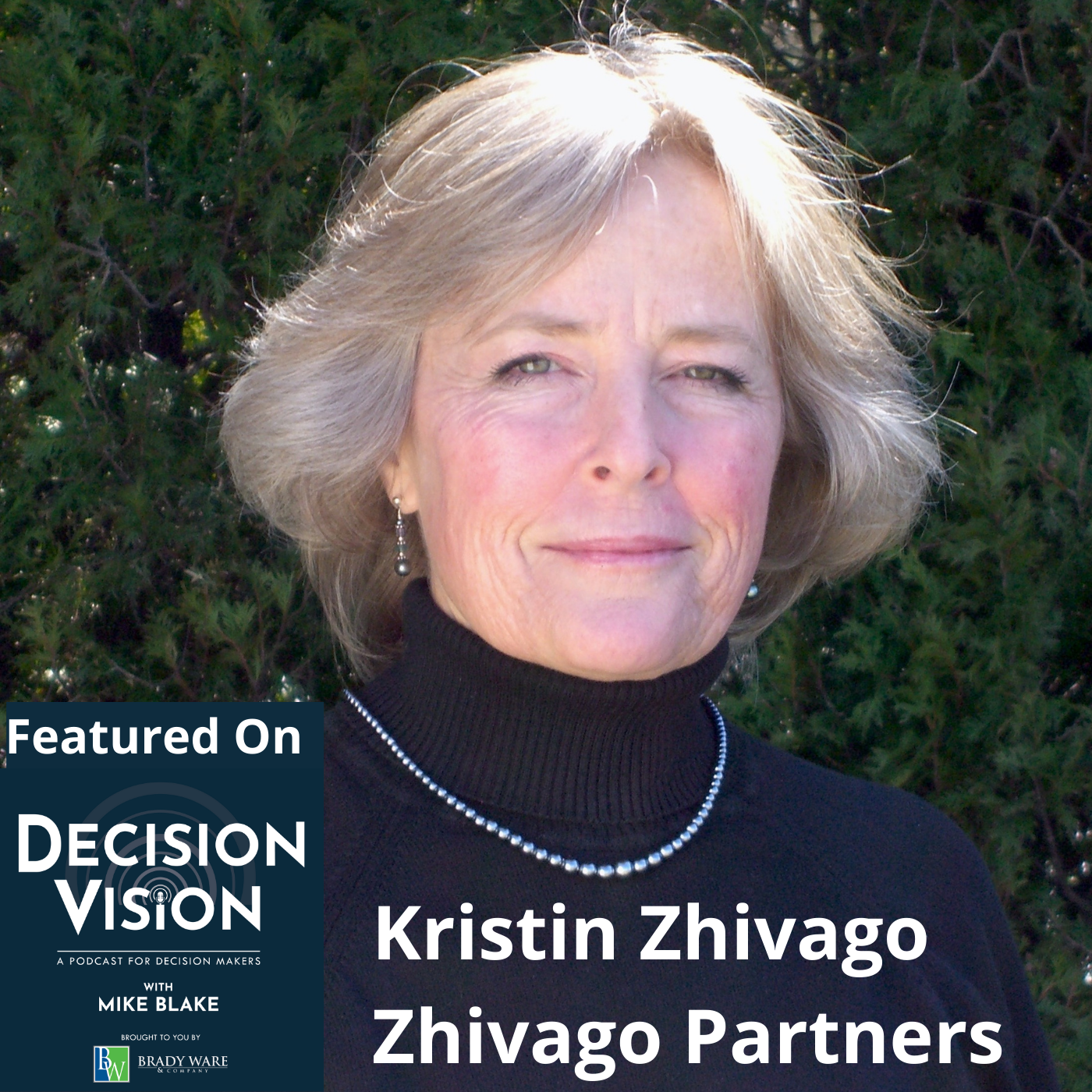
Lauren Cascio, President, Gulp Data

Lauren Cascio, President, Gulp Data

Lauren Cascio is the founder of Gulp Data, a company providing non-dilutive funding using data assets as collateral. She also recently founded aKinned, a seed fund backing healthcare in Africa. Prior to her recent move into funding, she co-founded abartysHealth, a growth stage health-tech company, where she ran product, data, and development for six years. She is a proven angel investor and an active tech ecosystem builder, successfully advising and mentoring dozens of companies through go-to-market, data monetization and fundraising.

LinkedIn


Mike Blake, Brady Ware & Company

Mike Blake, Host of the “Decision Vision” podcast series

Michael Blake is the host of the Decision Vision podcast series and a Director of Brady Ware & Company. Mike specializes in the valuation of intellectual property-driven firms, such as software firms, aerospace firms, and professional services firms, most frequently in the capacity as a transaction advisor, helping clients obtain great outcomes from complex transaction opportunities. He is also a specialist in the appraisal of intellectual properties as stand-alone assets, such as software, trade secrets, and patents.

Mike has been a full-time business appraiser for 13 years with public accounting firms, boutique business appraisal firms, and an owner of his own firm. Prior to that, he spent 8 years in venture capital and investment banking, including transactions in the U.S., Israel, Russia, Ukraine, and Belarus.

LinkedIn | Facebook | Twitter | Instagram

Brady Ware & Company

Brady Ware & Company is a regional full-service accounting and advisory firm which helps businesses and entrepreneurs make visions a reality. Brady Ware services clients nationally from its offices in Alpharetta, GA; Columbus and Dayton, OH; and Richmond, IN. The firm is growth-minded, committed to the regions in which they operate, and most importantly, they make significant investments in their people and service offerings to meet the changing financial needs of those they are privileged to serve. The firm is dedicated to providing results that make a difference for its clients.

Decision Vision Podcast Series

Decision Vision is a podcast covering topics and issues facing small business owners and connecting them with solutions from leading experts. This series is presented by Brady Ware & Company. If you are a decision-maker for a small business, we’d love to hear from you. Contact us at decisionvision@bradyware.com and make sure to listen to every Thursday to the Decision Vision podcast.

Past episodes of Decision Vision can be found at decisionvisionpodcast.com. Decision Vision is produced by John Ray and the North Fulton studio of Business RadioX®.

Connect with Brady Ware & Company:

Website | LinkedIn | Facebook | Twitter | Instagram

TRANSCRIPT

Intro: [00:00:01] Welcome to Decision Vision, a podcast series focusing on critical business decisions. Brought to you by Brady Ware & Company. Brady Ware is a regional, full-service accounting and advisory firm that helps businesses and entrepreneurs make visions a reality.

Mike Blake: [00:00:25] Welcome to Decision Vision, a podcast giving you, the listener, a clear vision to make great decisions. In each episode, we discuss the process of decision-making on a different topic from the business owners’ or executives’ perspective. We aren’t necessarily telling you what to do, but we can put you in a position to make an informed decision on your own and understand when you might need help along the way.

Mike Blake: [00:00:46] My name is Mike Blake, and I’m your host for today’s program. I’m a director at Brady Ware & Company, a full-service accounting firm based in Dayton, Ohio, with offices in Dayton; Columbus, Ohio; Richmond, Indiana; and Alpharetta, Georgia. I’m also managing partner of the Strategic Valuation and Advisory Services Practice, which brings clarity to the most important strategic decisions that business owners and executives face by presenting them with factual evidence for such decisions. Brady Ware is sponsoring this podcast.

Mike Blake: [00:01:15] If you would like to engage with me on social media with my Chart of the Day and other content, I’m on LinkedIn as myself and @unblakeable on Facebook, Twitter, Clubhouse, and Instagram. I also recently launched a new LinkedIn group called Unblakeable’s Group That Doesn’t Suck. So, please join that as well if you would like to engage.

Mike Blake: [00:01:32] Today’s topic is, should I pursue non-dilutive funding? And probably if I were more detail-oriented, I’d say should I pursue non-dilutive funding for startups because that’s really what this is talking about. And, I wasn’t able to find data for the entire non-dilutive funding market, but just the revenue-based financing market, which I’m sure we’ll touch upon today, is expected to reach $42 billion globally by 2027 according to Allied Market Research.

Mike Blake: [00:02:02] And revenue-based funding is fairly novel. I’ve actually had a couple of clients that have used it and there are now, in effect, providers of capital that will lend you money based on your expected revenue coming in. So, in a way, it’s kind of like purchase order financing. But instead of doing that with equipment, it’s generally made available to software as a service company.

Mike Blake: [00:02:30] And it turns out it’s a not very visible market, but it is a much larger one that I think most people realize. And I’ve never met a startup yet that isn’t interested in the question of how to fund their business. So, we leave no stone unturned here on the Decision Vision podcast, and I hope that you’ll agree that this is a useful topic. And, I’m really happy to have somebody on that knows a lot about this topic and really a lot about the venture game as a whole. She’s just going to be a fabulous guest and a fabulous interview today.

Mike Blake: [00:03:04] Lauren Cascio is founder of Gulp Data, a company providing non-dilutive funding using data assets as collateral. She also recently founded aKinned, a seed fund, backing health care in Africa. Prior to her recent move into funding, she co-founded Arbutus Health, a growth-stage health tech company, where she ran product data and development for six years. She is a proven angel investor and an active tech ecosystem builder, successfully advising and mentoring dozens of companies through go-to-market, data monetization, and fundraising. And joining us as our first guest from Puerto Rico, Lauren Cascio, welcome to the Decision Vision podcast.

Lauren Cascio: [00:03:44] Thanks, Mike. I’m so excited to be here and to represent Puerto Rico. How fun. There are a ton of entrepreneurs here.

Mike Blake: [00:03:51] So, for a lot of our listeners, I think their ears are perking up because I don’t know if they necessarily understand when we say non-dilutive funding, even what that is. So, can you take us through, how do you define to somebody what non-dilutive funding is and how does that compare to funding that actually is dilutive?

Lauren Cascio: [00:04:13] Yes. So, this is – by the way, this is one of my absolute favorite topics to cover with founders. This is something that a lot of founders have to learn about the hard way both equity financing and non-dilutive funding. And, it’s never easy or fun to learn about things the hard way, specifically when it’s something you’ve felt.

Lauren Cascio: [00:04:35] I have so many questions about funding and fundraising and what it was like. I now have experience on both sides of the table. So, simply put, non-dilutive funding is any capital that does not require you to give up equity or ownership. And that compares with dilutive funding, where dilutive funding requires you to give up equity or ownership in exchange for capital.

Lauren Cascio: [00:05:03] Dilutive funding also early on can require you to give up things like board seats and preferred equity, anti-dilution provisions, warrants, all of the things that early-stage founders typically think that they need to give up in the beginning of building their business. And there are some caveats to non-dilutive funding as well, specifically around venture debt. We’ll get into the different types. But, yeah, that’s it in a nutshell. It’s either giving up equity or not.

Mike Blake: [00:05:35] So, whether you’re new to the game or you just sort of watch it play out on Shark Tank, which is kind of the WWE version of venture capital, we typically hear about venture funding, the venture capitalists are the ones that get all the pub, they’re the ones that that everybody knows, the Peter Thiel’s of the world, and so forth. Why are some investors now trying to change the model? Especially since that model has worked very well, at least for investors, why are some investors interested in changing the model and providing capital that goes outside the raised capital sell stock kind of model?

Lauren Cascio: [00:06:15] Yeah. So, I don’t think that this is a new tool that VCs or investors are using, but essentially it can do a few things and I have some examples. So, it can definitely lower the risk for VCs by passing on risk to future investors. So, for example, a company that has raised a bunch of money, maybe $10 million, they are going to be eligible for, I don’t know, pretty what’s considered friendly venture debt terms where they’ll be paying interest rates of like 10, 12, 15% and they can probably find financing for about 25 to 50% of that capital. That’s usually later-stage companies that are raising more money, and in turn, the investors like this because they’re essentially passing on that risk to future investors. The life cycle of venture debt is that people raise it and then future rounds pay it off.

Lauren Cascio: [00:07:18] There are some other non-dilutive, and we haven’t gone into the types of non-dilutive funding yet, which I know we will. But there are other types of non-dilutive funding that can be complimentary to VC as well. So, in some cases, VCs have a limitation on the amount of follow-on they can provide into a company, or they have a capped amount of their total fund that they can make into a single investment.

Lauren Cascio: [00:07:45] So, if they want to preserve their position as the company goes on to raise later rounds but they just don’t have the spare capital or can’t make those investments, non-dilutive funding can help them preserve their position in those companies. It’s also – so, yeah, I think with market conditions like we saw last year, we saw insane markups in 2021. We saw valuations go through the roof, seeds, average seed-stage rounds, where I mean over 4 million, I think, in the US, and 2022 is not producing the same valuations.

Lauren Cascio: [00:08:26] And what that means is that investors are locked into these companies and these companies don’t have a choice because a lot of them can’t take a down round because of anti-dilution or whatever other terms they have with their current investors. And so, they’re looking to bridge and they’re looking to preserve their own position in the company, but also the position of their current investors. And so, when we see stagnant valuations, non-dilutive capital can be great. So, yes –

Mike Blake: [00:08:57] You said something that’s really interesting. I’m sorry to interrupt, but I told you we might go off script and we are in question too and that’s okay. But you said something I think is really intriguing and I’m not – it may have been intentional and that is that non-dilutive funding might be used to create effectively a synthetic anti-dilution position. Right? Anti-dilution, at least the way I see it, is considered a pretty onerous, almost punitive term. You don’t see it that often, thank God, because valuing anti-dilution is a nightmare. But on the other hand, you could achieve some anti-dilution by offering non-dilutive financing and sort of have your cake and eat it too.

Lauren Cascio: [00:09:41] Exactly. Exactly.

Mike Blake: [00:09:43] I mean the thought of that.

Lauren Cascio: [00:09:45] It takes – yeah. It really takes risks out of the game for investors. So, yeah.

Mike Blake: [00:09:51] So, one type of non-dilutive funding that I don’t want to talk a lot about today because I have a separate interview scheduled is grants, right? But there are a number of other forms of non-dilutive funding that are available and to the extent that you can. Can you talk a little bit about what other forms of nondilutive funding are out there?

Lauren Cascio: [00:10:15] Yes. All right. So, I won’t cover grants even though I love grants. So, I will definitely dial in for that podcast. All right. So, there are a ton of non-dilutive funding, mechanisms, tools. I think the one that most founders think of when they think of non-dilutive funding is venture debt. And, venture debt can be very predatory. And it can really kill an early-stage company because the interest rates are typically very high because the risk is very high for an early-stage company. And, there are covenants and rights typically in those agreements. And so, venture debt is one type that’s like a Silicon Valley Bank, Mercury, a few others that offer the services, a ton of independent lenders that offer these services. But that is like the typical of what founders think of. It’s either venture debt or VC but is not true.

Lauren Cascio: [00:11:24] So, you also have accelerators that offer non-dilutive funding. I personally have been part of an accelerator here in Puerto Rico some years ago called Parallel 18 that provided just non-dilutive cash, a cash grant for joining their accelerator. You have crowdfunding which is like Kickstarter, Indiegogo, and this is essentially people buying your future product. So, any time that people are buying a future part of the company, that’s non-dilutive funding. They are funding you to get started.

Lauren Cascio: [00:11:59] You have revenue-based financing, which you mentioned earlier. And, revenue-based financing is one of my favorite types of non-dilutive financing for early-stage companies that have MRR or ARR multiples. And, those are companies like Pipe and Founderpath, Uncapped. I think most of those companies do revenue-based financing and factoring, which is for invoices. And, it’s great if you have the metrics to qualify for revenue-based financing.

Mike Blake: [00:12:36] And MRR and ARR for those of us who aren’t necessarily in that world, that’s basically for your sustainable revenue or sustainable growing revenue.

Lauren Cascio: [00:12:45] Yes.

Mike Blake: [00:12:46] Right?

Lauren Cascio: [00:12:46] Sorry about that. Yeah.

Mike Blake: [00:12:47] Monthly run rate or annual run rate.

Lauren Cascio: [00:12:49] Yes. Sorry. So, yeah, it’s based on recurring. Well, I’m probably using acronyms. And I’m like, what? Don’t you know those acronyms? Yeah. Based on recurring revenue. So, predictable revenue. And then, they take a percentage of – so they’ll front you the money upfront, maybe 12 months of your monthly recurring revenue, and then you pay it off over time and they’re tapped into your bank account. They have some algorithms that tell you how much you’re eligible for and all of that.

Lauren Cascio: [00:13:21] You also have tax credits. And this is not something that a lot of companies think about, but it’s something that I have used myself living in Puerto Rico. There are other places like Australia that provide tax incentives typically in the form of income tax credits that you can then sell for cash and that’s just for doing research and development.

Lauren Cascio: [00:13:47] And then, you have government loans, like SBA loans, and you also have asset-backed lending. So, that can either be tangible assets or intangible assets like IP financing for patents and some other things. That was a mouthful. I’m sorry. There are a lot of different types of non-dilutive funding.

Mike Blake: [00:14:07] Well, yeah, look, it is a mouthful, but I think it’s really important because this is a world that I don’t think is very visible. Right? And, I share the same view with you in terms of venture debt. You know, it’s out there. But I don’t know that I’ve ever actually worked with or even met a company that has raised significant venture debt because either the terms themselves are so onerous, or if they’re not onerous the company is really in a point where it’s not really venture debt anymore anyway. It’s more like an SBA loan or something. And it’s like, wow, thanks a lot. We could have gotten money from nine other places. But, you know, not many people know about these other possibilities that are out there. And some companies have been very successful on that model.

Lauren Cascio: [00:14:58] Yeah. I’m actually really interested to hear how, for companies that were seeking revenue-based financing, how impacted their finances. I mean, I imagined it had a really positive impact.

Mike Blake: [00:15:14] Well, it did have a positive impact. And, I think what happens – I think what’s happened, at least in my experience, you know, the folks that are providing revenue financing are no dummies. Right? And, they do good due diligence to make sure that that’s a good investment or at least an investment that is at the appropriate risk level for their particular asset class. And, I think there’s a validation perspective there that is beneficial. And, there’s probably a little bit of selection bias too. I think the companies that are successful with revenue financing, they’ve achieved revenue financing because they were likely to be successful.

Lauren Cascio: [00:16:00] Yeah. Yeah. Yeah. It’s a special kind of company typically that is eligible or a good candidate for revenue-based financing because they’ve obviously proven product-market fit, which is a lot of the uncertainty and risk that you have in early-stage financing or early-stage companies. And so, yeah, they’re definitely not the only but definitely a strong candidate for success. I agree.

Mike Blake: [00:16:28] Now, some listeners may be hearing this and thinking that this non-dilutive financing may almost sound too good to be true. Is there a risk? Is there anybody that’s taking advantage of this, of the attractiveness of non-dilutive financing, and doing bad things with it? Is there a risk of being scammed in this space?

Lauren Cascio: [00:16:54] I don’t know if it’s being scammed. Probably, in a lot of – and this is not just for non-dilutive funding and raising debt. This happens all the time in VC. It’s being misled and founders who are so focused on getting back. So, regardless if you’re doing non-dilutive funding in most cases or equity financing, it is very distracting process for a founder. They are plucked from their day-to-day. Probably, their sales pipeline is suffering and their development pipeline is suffering because they can really only focus on either fundraising or running their company. You can’t do both well simultaneously. Probably, very few founders will say that they can.

Lauren Cascio: [00:17:45] It’s a distracting and time-consuming process. And so, what happens is that founders get to the finish line after doing all of this due diligence and creating data rooms and all of these things, maybe if they’re doing non-dilutive funding and it’s like one of the – we didn’t talk about this, but a hybrid like a convertible note. They’re just glad to be getting the money so they can get back to work and they ignore the fine print. They don’t seek the proper legal advice.

Lauren Cascio: [00:18:13] And so, yeah, they can be misled. They were unaware of certain covenants. They didn’t know that they were signing up for a conversion into preferred shares or whatever it is. You have to be really, really careful. So, the takeaway here is that the wrong venture debt can definitely kill a company if they’re unable to pay the principal. And, what you really need to understand is your worst-case scenario when you’re signing a document. If I’m unable to pay this back, what happens to my company? And you should be asking yourself that whether you’re raising non-dilutive financing or equity. It doesn’t matter. You should always know what happens in the worst-case scenario.

Lauren Cascio: [00:18:57] And so, yeah. I don’t want to see it’s too good to be true or that people are trying to scam you as an entrepreneur, but they definitely have their own best interests in mind. That said, we’re seeing a lot of innovation like the revenue-based financing companies, the factoring companies that have very standard product and very standard terms, which I love, kind of like what safe agreement did for raising equity as an early-stage founder. We’re just finding these standard terms. And that’s great because then you know what you’re getting and everyone’s getting the same thing. But, yeah, legal advice is worth it.

Mike Blake: [00:19:41] Yeah. I was going to say one of the takeaways there probably is that it’s important to have an attorney look this over for you if you’re not really comfortable reading agreements, especially because, you know, some of these platforms, particularly in the revenue-based financing area, do this thing entirely online. Right? And so, I didn’t go through one of the processes, but I suspect that if they are run entirely online and it’s basically a bot that’s going to approve your loan or not, right, you start off by asking, by answering some questions, and the next thing you know, you’re offered a loan and you’re given just a, hey, click to accept. And the next thing you know, right, you’ve got some things you didn’t realize you were agreeing to, and having a lawyer ride shotgun in that can be really important.

Lauren Cascio: [00:20:29] Yeah. Yeah, definitely. Even in the standard products, I agree. It’s really important to understand what you’re signing and what you’re getting into. And you should always, as an entrepreneur, I assume that’s the audience, you should always plan for worst case. And so your worst case in non-dilutive funding is, I’m not paying you back or I’m not paying the interest during the loan term, or I can’t pay the principal or a combination of both. What happens? Do they have security over the entire company? Can they shut down your company and sue you for the assets? You have to understand what you’re signing.

Lauren Cascio: [00:21:07] So, in venture debt, it’s possible. But in the more innovative asset-backed loans and revenue-based financing, factoring, tax credits, typically, no. Typically, I find them more founder-friendly. I’m a big supporter of founder-friendly terms.

Mike Blake: [00:21:31] So, let’s say somebody listening is interested and I’m sure somebody will be. They’re going to want to find out on their own where they might be able to obtain this non-dilutive funding. Sounds great. What’s the best way to go about identifying those sources? Is it as simple as a Google search or are there databases? Are there trade associations, conferences? What’s the best way to go find these sources?

Lauren Cascio: [00:21:57] I really wish that there was – this is something that people ask all the time. They’re like, well, how do you find out about all of these different resources? I wish there was a better collective resource for this in general. You know, it’s so funny when you’re starting a company, there’s a ton of information you can find online about how to raise VC, how to create a pitch deck, how to run all of these metrics of turn and customer acquisition cost, and pretty much give yourself a degree online on how to start a company. It never – like one of the things that it never touches non-dilutive funding sources. And so, I wish there was a better collective for this.

Lauren Cascio: [00:22:40] But for the most part, I think that you can actually just Google some resources and maybe later we’ll start a website that just gives out resources. I’m kidding. I’m not going to do that. But, yeah, you can Google. You can look for, for example, you can Google crowdfunding and you’ll probably find like Indiegogo and Kickstarter. You can look up government loans or like SBA. You can go through SBA. It has a ton of loans. Grants, we’re not going to talk about grants, but there are a bunch of resources for how to find SBIR and grants online.

Lauren Cascio: [00:23:18] For revenue-based financing, you would Google like revenue-based financing for SaaS companies or for service companies or whatever you’re doing and you’ll find, yeah, like Founders Factory, Pipe, Uncapped, those companies. For the tax credits, I think that this is really regional. So, I know really well the tax incentives, the R&D incentives in Puerto Rico, familiar a bit because of a project about the ones in Australia. But I think that this is really regional. So, depending on where you live, maybe like look up research and development, tax credits in wherever you are and they’re maybe –

Mike Blake: [00:24:02] Or ask your CPA.

Lauren Cascio: [00:24:02] Or ask – so that’s another thing that you’re bringing up a really good point, Mike, asking your CPA or your CFO. A lot of early-stage founders don’t have this resource.

Mike Blake: [00:24:14] Yeah.

Lauren Cascio: [00:24:15] Which is part of this problem because part of their job is to find this type of financing. And, it’s one of the last things that founders hire. I mean, you must know this.

Mike Blake: [00:24:26] Oh, yeah. Yeah. In fact, one of the first shows we ever did was, should I hire a CFO? Right? I mean, the answer is yes as soon as you can. But a lot of people don’t because initially, it is a cost center. Right? A CFO is not a profit center. So, that’s very hard. But it’s exactly questions like this that a good CFO can not only help you answer but navigate kind of what is the best – what’s the best model? What’s the best provider?

Mike Blake: [00:24:55] Now, correct me if I’m wrong, but I think one of the other areas, one of the other characteristics that differentiate non-dilutive financing from equity, venture capital, in particular, is it seems to me that a lot of non-dilutive financing is almost anonymous. Right? I see so many online providers where you may never necessarily meet one another and we’re going to get into the process a little bit.

Mike Blake: [00:25:23] Whereas, with equity financing the game, you know, there’s no – you don’t just walk into a venture capitalist office, say, hey, can I have some funding? Right? It’s all about, you got to know somebody. You’ve got to get introduced by one of their investee companies or their investors or something. And, that in itself is very much a barrier to entry for people that are raising capital. Right? If you’re not a very good network, it makes it really tough. But for non-dilutive financings, it’s a little bit different, isn’t it?

Lauren Cascio: [00:25:52] Yeah. Depending on the type of non-dilutive funding, it is. There are some really innovative companies that have put this new spin on revenue financing and factoring and asset-backed lending where you don’t even need to talk to anybody on the phone. You connect your bank account and some metrics about your business model, and they spit out a, you know, a loan amount. And I think it’s great because it’s leveling the playing field for founders that are outside of the circles that are outside of these geographies. And so, it doesn’t require you to be in this insulated inner circle of VCs and what used to be just like Silicon Valley or New York or wherever. Now, it’s expanding a bit post-COVID. But that’s wonderful.

Lauren Cascio: [00:26:47] And I think knowing, and this is where this goes back to having the CFO, knowing the best type of financing for whatever you built is really important because there’s a better fit of non-dilutive funding for each type of company. But, yeah, you would basically plug in your the metrics that they’re asking for. Due diligence is probably not nearly as bad as it is in venture capital and get a loan. And, some of these companies are doing loans in like a day. It’s crazy.

Mike Blake: [00:27:21] Yeah. And that part, I think, also makes it attractive, right? Because the other – one of the other pieces that makes venture capital unattractive is best-case scenario. It’s a months-long process. Right? And, for a startup, months is a lot of time.

Lauren Cascio: [00:27:37] Oh, yeah.

Mike Blake: [00:27:38] Companies live and die in a few months. Right? But, yeah, I was noticing this that it’s almost like some of these non-dilutive loan sources almost operate like online mortgage companies, right, or car lending companies. You put in some information and semi-instant approval. It’s remarkable.

Lauren Cascio: [00:28:00] Yeah. And there will be more of this as well. I think we are just in the beginning. You shared an exciting number at the beginning of this podcast and it’s a growing market. It’s going to, I don’t want to say it’s going to take over portions of VC because there’s just never enough funding. You can never have enough funding. So, just more companies will have capital available to them based on what they’ve built.

Mike Blake: [00:28:29] So, we’ve made a pretty good case that non-dilutive funding is pretty attractive. It’s pretty awesome. Are there – what is the role for venture capital going forward? I’m not sure that Mark Cuban and Peter Thiel are going to be put out of business any time soon. When might somebody kind of pump the brakes in going after non-dilutive funding and instead start seeking equity capital in spite of the shortcomings that we’ve discussed? When might a more traditional route actually be appropriate?

Lauren Cascio: [00:29:03] So, my one-line summary for this is they should always – I want to say – I believe they need to coexist. That equity funding and non-dilutive funding should coexist. There is a time and a place for both of them, and in some cases, there is a time and a place for them to coexist on the same round or at the same time.

Lauren Cascio: [00:29:30] So, even though I’ve had my share of bad experiences with equity funding and boards and venture debt personally, I believe that taking on equity partners or equity investors, pardon me, is really important when you’re making strategic moves in your industry. This is like when you’ve found product-market fit, at least a bit of it, you can repeat the customer a dozen times and they’re paying a similar price for it. And/or you’re ready for an alignment for scale or go public strategy or exit.

Lauren Cascio: [00:30:22] The caveat to that is that there are so many empty promises that are made by VCs. Some VCs have hundreds of companies in their portfolio and not nearly enough time or effort to support all of these companies the way that they need to be supported through their pivots and changes and change management and all the things that happen in early-stage companies. And so, one advice that I often give to founders is that the majority of VC money is just money, and look at it that way and don’t trust the promises. But I always encourage founders to do diligence their investors the same way that the investors are doing diligence on them.

Mike Blake: [00:31:05] I agree with that.

Lauren Cascio: [00:31:06] One of my favorite ways to do that is to talk to their portfolio companies, but not the references that the VC gives you. Because if you ask an investor for references and their network, they’re going to cherry-pick references. I’m talking about going into Crunchbase, finding out the companies that may have died or gone out of business, and interviewing those founders, and understanding what the relationship was like and where there were weaknesses or blind spots within the VC firm.

Lauren Cascio: [00:31:43] So, it’s really, and I think already said this, it’s like getting married. You are bringing somebody into your company. And if you’re at like a seed-stage or Series A stage, likely you’re giving them board seats. You’re giving them power in your company. It was less common probably in the last year or so, where VCs were just handing out a bunch of checks with all the free money that was falling. But they take board seats. And so, you have to work with them. You’re going to have to understand how they envision your company, and you have to understand how you’ll work together just as much as you do with your co-founders or your top executives.

Lauren Cascio: [00:32:24] And so, yeah, there are pros and cons to both. And, I think that most successful companies will dabble in both types of financing because it can be done really eloquently when done correctly. That’s like the long and short of it.

Mike Blake: [00:32:45] Okay.

Lauren Cascio: [00:32:45] I have some other thoughts on how market conditions affect it and valuations play a role and the times that venture debt can be riskier. But, yeah, the main takeaways are that they really should coexist. And, as we see a rise in more standardized non-dilutive funding companies, we’re going to see the two marry in a lot more of the companies that hit the series A, series B, and scale metrics.

Mike Blake: [00:33:21] So, this was actually a nice segue to the next question I wanted to ask, which is, when we think of traditional non-dilutive funding, i.e. loans, the agreement will typically have something that are – some things that are called covenants, which is just another word for agreement, obviously, but they’re restrictive covenants that restrict what the borrower is allowed to do, and in some cases may impose penalties if the company fails to meet certain performance targets. Do those kinds of things, do covenants like that work their way into non-dilutive funding as well?

Lauren Cascio: [00:34:05] Into certain types of non-dilutive funding, absolutely. For example, traditional venture debt will carry usually financial and performance covenants and these are requirements that are part of the loan agreement. Yeah. If you violate – it depends. And this is another one of my many issues with venture debt. If you violate one, you may be defaulting. You may be in breach of contract. And so, they may be able to go after assets or after the company without you even realizing that you’ve done anything wrong.

Lauren Cascio: [00:34:46] It’s not specific to debt. It happens in equity too. But, yes, so you have covenants. You also have right of first refusal which can prevent you from taking other types of debt or other lenders. So, you have to be careful and this is going to go back to one of our first points, which was have a lawyer because you have to make sure that your lenders can coexist. You need to make sure that your debt and your equity can coexist, meaning that your debt does not violate terms of your equity agreements and your equity agreements do not violate terms of your debt. For example, some debt will be above even preferred equity. And so, if you have investors that are earlier investors that had preferred shares, which I also advise against, then – am I allowed to give advice? That’s my own advice.

Mike Blake: [00:35:39] Please.

Lauren Cascio: [00:35:39] My personal advice. Personal advice, don’t give preferred shares. But yes. So then, you would need sometimes subordination signatures and all of these complicated things that I don’t do that lawyers do. And so, yeah, you need to understand what you’re reading or what you’re signing. And, some of the documents can be really long, specifically in venture debt. You can have secured debt that’s like a general obligation of the company. It could also be specifically asset-backed.

Lauren Cascio: [00:36:11] And so, yeah, it’s not innocent, you know, specifically venture debt, it’s not innocent. Typically, it is secured in some form or fashion. It’s not just free money. If you want just free money for doing research and development, I’ll segue into your podcast about grants, so.

Mike Blake: [00:36:34] So, those terms obviously can be very complicated, can certainly be very impactful. In your experience, are non-dilutive capital providers open to negotiation? Is it worth trying to negotiate with them or do they typically just issue a term sheet take it or leave it?

Lauren Cascio: [00:36:55] Everything in life is negotiable. You can negotiate anything in life. So, okay, in the standard products – so Pipe is actually a really good example of this. They’re a marketplace. They take bids for contracts. And so, essentially, those terms are set. Right? They are standard terms. They’ve been evaluated by some models. There hasn’t been a back and forth. There hasn’t been an in-person meeting or a phone call. They’re just terms that are given and people can bid on those terms and you’ll take the best terms that are available. Right?

Lauren Cascio: [00:37:37] And I really love these standardized products because, again, it levels the playing field that you can’t really hide much under it. Everyone’s getting the same deal. And you know what you’re getting into as a founder, which you should be able to safely feel like you know what you’re getting into as a founder. However, when you’re doing convertible debt or you’re doing venture debt, or just like a general note on the company in any form or fashion, yeah, usually you can just negotiate them. They’re not – I mean, I don’t think that any – I don’t think there’s ever a time where you shouldn’t negotiate.

Mike Blake: [00:38:17] Okay. Are there certain kinds of companies or models that tend to be a better fit for non-dilutive funding than others?

Lauren Cascio: [00:38:28] Oh, yeah. Definitely. So, I’ll just say that for mature companies that have clear product-market fit, they’re able to raise equity with strategic investors from strategic, from big firms. They’re on the path to IPO or exit or whatever it is. Equity is definitely a frontrunner. I don’t think that they shouldn’t supplement with financing, taking advantage of financing the other assets they built. Like if they built a strong annual recurring revenue, why not take financing to grow with that asset? Or, if they have created a portfolio of IP assets, why not borrow against those IP assets, if you can, for a reasonable amount of money? And those types of financings are typically reasonable. They have very reasonable loan terms.

Lauren Cascio: [00:39:33] So, the companies that are typically attracted to like, I don’t know, tax incentives, grants, or asset-backed loans, specifically intangible asset back, are typically companies that have taken a heavy technical risk. So, they’ve spent a lot of money developing the infrastructure, the architecture of the product, those are your deep tech companies, and a lot less on sales and marketing efforts. And so, they won’t be able to get revenue-based financing. And in some cases, it’s very difficult for them to raise VC on favorable terms because investors just simply don’t value those intangible assets the way that, I don’t want to say the way that they should, but, yeah, really, the way that they should. Intangible assets are an asset that should be on our financial statements. They should be on our balance sheets, and they’re just not and so –

Mike Blake: [00:40:34] That would be a three-hour rant for me. Don’t get me started on that. Oh, boy.

Lauren Cascio: [00:40:39] Exactly. Yeah. That’s a rabbit hole there. But – that’s one of the big blind areas, in my opinion, of venture capital, is that they have absolutely no idea how to value intangible assets properly specifically for the SME market.

Mike Blake: [00:41:00] Yeah. And the accounting world in general.

Lauren Cascio: [00:41:02] The accounting gap. We’re all running off of gap.

Mike Blake: [00:41:06] It all behaves as if intangible assets don’t exist. Right? I mean, okay, I need to center myself because otherwise we’ll be a three-hour off-ramp into intangible asset valuation and gap, and –

Lauren Cascio: [00:41:18] Yeah.

Mike Blake: [00:41:19] No. We’re just not going to do that.

Lauren Cascio: [00:41:21] Okay. So, we’re not going to go down that rabbit hole. I would jump down the hole with you, Mike. Maybe, we’ll crack open a bottle of port and have a virtual session to commiserate. But, yeah, so, definitely companies that have taken heavy technical risks, deep tech companies, research companies should absolutely optimize what they’ve built with grants and tax incentives or intangible asset-backed loans.

Lauren Cascio: [00:41:51] Companies that have focused more on sales and marketing that have some strong early traction should be looking at revenue-based financing or factoring, depending on what they’re selling and how they’re selling it. Why not? And allow that to fund your build-out of your product or whatever your version too. Companies that are direct-to-consumer, D2C, companies that have tangible products, so many founders I’ve talked to that are building tangible products and I don’t do tangible things. I’m like, I live in the intangible space, data systems, cloud infrastructure, code. But founders that build tangible products, they almost never consider crowdfunding. I’m like, why? If you have all these people asking to buy your product or have purchased prototypes, do crowdfunding effort. Like, that is the perfect non-dilutive financing and you have revenue built in to your funding. And so, yeah –

Mike Blake: [00:42:56] It’s the ultimate customer validation.

Lauren Cascio: [00:42:58] Absolutely, the ultimate. And you don’t even have to take risk because unless you hit a certain metric or sell a certain number, you’re not going to build it and you don’t have to pay the factories or the suppliers. And so, yeah, so there are definitely better types of financing. Maybe, I should write like a post on this, a blog post. I have lots to say.

Mike Blake: [00:43:24] I think you should. You know crowdfunding reminds me – have you ever watched the movie The Producers?

Lauren Cascio: [00:43:30] Possibly.

Mike Blake: [00:43:32] It’s a Mel Brooks movie. It was eventually remade. But basically, the story goes, it’s about a couple of playwrights that recognize that failed plays actually enrich the playwrights more than successful plays. Right? If you raise a bunch of money, it bombs night one, you shut it down, and then you actually pocket the rest of the money. Right? Whereas if it’s successful, you may not. And so, the producers deliberately set out, these two guys, deliberately set out to make a play that would fail, raise a bunch of money for it, sabotage the play, and then pocket the proceeds. The problem was, and they thought they had this winning theme, they called it Springtime for Hitler. Right? It was a musical about Adolf Hitler basically in Brooklyn. And the problem is, that it was so bad, it was hilarious. And it was a smash hit and it basically ruined the two guys that had raised the money.

Lauren Cascio: [00:44:31] That’s funny. I have to check it out.

Mike Blake: [00:44:32] It just occurred to me that whole story was just Mel Brooks talking about crowdfunding in the 1970s.

Lauren Cascio: [00:44:38] Love it. Yeah. There you go. It’s not a new concept. Well, don’t do that to any –

Mike Blake: [00:44:45] Don’t do that. We’re not advocating fraud at the end of the day. I should point out that was fraud, so.

Lauren Cascio: [00:44:52] Yes.

Mike Blake: [00:44:53] And also, don’t make material about Hitler. Only Mel Brooks can get away with making Hitler funny. Nobody else can do that, so.

Lauren Cascio: [00:45:02] No.

Mike Blake: [00:45:02] Not a place we recommend that you go. I’m talking with Lauren Cascio and the topic is, should I pursue non-dilutive financing? I’m curious because you have a unique or certainly a very an unusually informed perspective on this because you’ve been with companies that have raised capital, you’re now a capital provider yourself. Is non-dilutive financing starting to disrupt conventional venture capital?

Lauren Cascio: [00:45:36] This is such a tough question because I think that they’ve co-existed for a long time for as long as I’ve been in the game, at least. And, I don’t – I believe – I firmly believe there’s a shortage of capital, that there is a higher demand and there always will be a higher demand for capital. And there is a true funding gap not only in the US but in global markets, and we will never have enough funding.

Lauren Cascio: [00:46:11] I believe that non-dilutive funding, outside of traditional venture debt, but the other types that we talked about, is going to be a key mechanism in the ability for companies to capitalize on the things that they’ve built and fund their companies to success. And that doesn’t mean that it’s going to take away from the VC market. There’s still a time and a place for VC. We’re seeing a ton of VC funds that are very small emerging – from emerging managers, new managers. People have never run VC funds before. A lot of them, ex-founders, left their own firms to build impact firms.

Lauren Cascio: [00:46:58] And so, I think that that will continue. That trend will continue where you have a lot of emerging managers beginning to fund companies that are seeking to make impact. But I think that non-dilutive funding is just going to slightly close the funding gap that we have. And, you know, as entrepreneurship and building companies become more status quo for people that we’ve seen or seen in post-COVID, people creating their own businesses, leaving the corporate world, there will always just be a demand for capital, and we’re not ever going to be able to fill it.

Mike Blake: [00:47:45] So, before we wrap up, I’d like to ask you a patently unfair question. But I only ask patently unfair questions to my very best, very smartest guests because I know you can handle the curveball.

Lauren Cascio: [00:47:57] Oh God.

Mike Blake: [00:47:58] And that is that it seems to me that non-dilutive funding might also be a path to closing the gender and race bias in early-stage financing because it’s not so personalized. Right? It’s not about being part of the same club, the same alumni association, the same country club. But as we talked about earlier, the sources of financing may not even know who you are. Right?

Lauren Cascio: [00:48:26] Yeah.

Mike Blake: [00:48:27] And there’s no basis for the bias. Does that resonate at all or am I just grasping at straws here?

Lauren Cascio: [00:48:33] Yeah. No. 100%. I’ll make one reference to Gulp Data. In our survey, we ask a question about being minority-owned or being women-owned and that is because I want to compare funding metrics with the SBA’s funding report that they did. I think it was in 2020. There’s a huge gap not only in minority and gender but in geography. And, I think that non-dilutive funding is, I mean, one of the questions you asked me was this decision-making process is essentially blind. It is because it’s merit-based. Does the company fit the profile we’re looking for? Does it fit the risk profile that we’re looking for? And if it does, it gets funded. And if it doesn’t, it does not. It doesn’t matter who you know. It doesn’t matter what school you went to, where you live, what gender you are, what race you are, you get funded. And it’s a beautiful – I mean, I wish that more funding operated like this, including government loans and grants. Like, this is information that they also know typically when you’re applying for funding, and I don’t think it should be relevant. It’s just not a relevant input metric to determine risk.

Mike Blake: [00:50:04] And in fact, that in part is why I sort of carved out grants into a separate topic because a lot of the automation, a lot of sort of the distance between a funding applicant and funding provider that exists in a lot of these revenue-based financing solutions does not exist in a lot of the grant world. The grant world, in my view, actually resembles much more closely venture capital, right, in terms of the relationship building and so forth. That’s why I did carve it out.

Mike Blake: [00:50:39] Lauren, this has been a great conversation. I know it’s an hour later for you there than it is for us, although knowing you, you’re probably working another 10 hours. But if – there are probably questions that we haven’t covered or maybe a listener would have wished we’d spent more time on. If somebody wants to contact you to follow up about this, I mean, you’re so knowledgeable about the topic, can they do so? And if so, what’s the best way to do that?

Lauren Cascio: [00:51:04] Oh, yeah. So – absolutely. And I’m always, like, happy to help founders navigate fundraising or whatever they’re facing. I’ve been there, done that, doing it again. So, the short one I think is lc, like Lauren Cascio, but lc@gulpdata.com. That’s like an easy one. Or you can find me on LinkedIn. I like notes though. You connect with me at a note, so I know why you’re connecting with me.

Mike Blake: [00:51:35] Okay. Well, that’s going to wrap it up for today’s program. And, I’d like to thank Lauren Cascio so much for sharing her expertise with us.

Mike Blake: [00:51:43] We’ll be exploring any topic each week, so please tune in so that when you’re faced with your next business decision, you have clear vision when making it. If you enjoy these podcasts, please consider leaving a review with your favorite podcast aggregator. It helps people find us so that we can help them.

Mike Blake: [00:52:00] If you would like to engage with me on social media with my Chart of the Day and other content, I am on LinkedIn as myself and @unblakeable on Facebook, Twitter, Clubhouse, and Instagram. Also, check out my new LinkedIn group called Unblekable’s Group That Doesn’t Suck. Once again, this is Mike Blake. Our sponsor is Brady Ware & Company. And this has been the Decision Vision podcast.

 

Tagged With: Brady Ware & Company, Crowdfunding, Decision Vision, Gulp Data, Lauren Cascio, Mike Blake, non-dilutive funding, venture capital funding

Achieving Systemness: Competitive Challenges

April 18, 2022 by Mike

Gwinnett Studio
Gwinnett Studio
Achieving Systemness: Competitive Challenges
Loading
00:00 /
RSS Feed
Share
Link
Embed

Download file

Scott Nygaard MD, MBA, the COO of Lee Health System in SW Florida, joins “Leader Dialogue” co-hosts Dr. Roger Spoelman, Dr. Charles (Chuck) Peck, and Ben Sawyer on the April 18th, 2022, podcast. The podcast topic “Achieving Systemness: Competitive Challenges” explores how Lee Health has navigated through the pandemic, and some of the key learnings as they emerge into the post-pandemic healthcare environment. Dr. Nygaard shares his perspective and insights on this important topic, providing practical suggestions from which all healthcare leaders could benefit.

Roger Spoelman, DBA, MBA

Roger is a healthcare executive with more than 38 years of industry experience. He most recently served as interim CEO at Trinity Health Regional Systems in New England, Ohio, and Illinois at Loyola University Health System.

His tenure at Trinity Health included leading several hospital mergers, and later as regional executive for the corporation’s Mercy Health operations. He also is founder and executive sponsor of the Trinity Health Innovation Hub. In 2018, Roger oversaw the merger of International Aid Inc. and CURE International Inc., two organizations where he served on the Board of Directors for over a decade. He recently served as the President and CEO for CURE International Inc., which operates eight charitable hospitals in developing nations, and focuses on faith-based care that restores quality of life to pediatric patients with surgically treatable disabilities. Roger was appointed Chair of the BAMF Health board of directors in 2019. He is working closely with the company to achieve their patent-focused mission of bringing intelligence-based precision medicine to the world.

Roger is a co-host of the Baldrige Foundation Leader Dialogue program, and mentors and coaches’ numerous executives and assists organizations and their boards of directors with succession, strategy, and innovation.

Charles (Chuck) Peck, MD, FACS

Charles (Chuck) Peck is an internist and rheumatologist with more than 35 years of healthcare experience as a clinician, scientist, medical school faculty member, administrator, medical director, CEO, and partner in the global healthcare advisory company Guidehouse.
Chuck’s most recent projects include a $108M financial turnaround of a $2B integrated health system in the northeast leading to their affiliation with a leading academic health system. He was a member of President Joe Biden’s Health and Human Services transition team. Prior to joining Guidehouse, Chuck served as CEO of Piedmont Athens Regional Health System, on the board of Vizient Southern States, partner at a global healthcare consulting firm responsible for the clinical operations practice; CEO of a 150 physician group multi-specialty practice; president of the southeast and northeast regions of a large national health insurance carrier; chief medical officer of a start-up retail health clinic operator; chief medical officer/chief operations officer of a national disease management company; and CEO of an ambulatory surgery center and physician services company.

Chuck is a co-host of the Baldrige Foundation Leader Dialogue program and provides mentoring and thought leadership insights to numerous organizations and leaders across the country on a variety of operational, financial, and leadership topics.

Ben Sawyer, MBA, PT, OCS, LBB

Ben Sawyer is an ABOUT executive. He has more than 35 years of industry experience, most recently serving as CEO of SOAR Vision Group, and EVP of Care Logistics.

Ben started his healthcare career in 1985 as a Physical Therapist, focusing on sports medicine and orthopedics, and received his specialist certification as an Orthopedic Clinical Specialist (OCS) in 1997 from the American Board of Physical Therapy Specialties.

After securing his MBA, he moved into hospital administration, overseeing rehab, wellness, cardiac therapy, and occupational medicine services, specializing in team development and performance optimization. This expanded into a system leadership role overseeing performance and quality improvement. During that time Ben achieved his Lean Black Belt certification (LBB)

Ben has a gift for recognizing strategic gaps that can be turned into opportunities. For example, during the COVID-19 crisis he initiated national executive roundtables with the Baldrige Foundation via the Leader Dialogue program to help executives turn the pandemic disruption into an opportunity for improved collaboration and performance towards true Community Health beyond the walls of hospitals and to prioritize and coordinate action and resources.

Scott Nygaard/Lee Health

Lee Health is one of the largest public health systems in the U.S. and one of the largest not-for-profit public health system and safety net health systems in Florida that receives no direct tax support. They have four acute care hospitals, two specialty hospitals, and many clinics and outpatient service centers. Lee Health System has more than 1.5 million patient contacts each year with a staff of 14,000 employees, more than 4,500 volunteers and auxilians, a medical staff of more that 2,200, including the Lee Physician Group made up of over 750 primary and specialty care physicians and advanced practitioners in over 80 practice locations throughout Southwest Florida.


Leader Dialogue is presented by

Tagged With: about healthcare, baldrige foundation, baldrige leadership, ben sawyer, charles peck, chuck peck, Healthcare, healthcare challenges, healthcare leadership, leader dialogue, leader dialogue podcast, leader dialogue radio, lee health, roger spoelman, Scott Nygaard

Wendi Lucas with Main Event Entertainment and Samuel Richmond with Nvestfit

April 14, 2022 by Mike

Gwinnett Business Radio
Wendi Lucas with Main Event Entertainment and Samuel Richmond with Nvestfit
Loading
00:00 /
RSS Feed
Share
Link
Embed

Download file

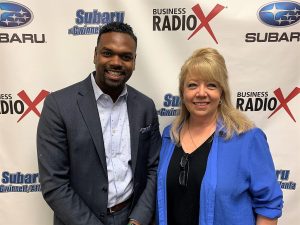
Samuel Richmond and Wendi Lucas

Wendi Lucas/Main Event Entertainment – Suwanee

Main Event Entertainment currently offers three (3) centers in the Georgia: Atlanta (near Cobb Parkway), Alpharetta (off of Mansell and 400), and the best for last – Suwanee (located just off Interstate 85 at the Lawrenceville/Suwanee exit). Main Event offers interactive entertainment center for all ages including games, bowling, indoor ropes course, laser tag, delicious food, and so much more.

Samuel Richmond/Nvestfit

Nvestfit specializes in providing comprehensive wealth management services to individuals, families, and business owners. Their team is committed to serving their clients as unique partners, requiring individual solutions, and well thought-out strategies to empower them to make their own decisions. Above all else, Nvestfit values the relationships and trust that they build.

Gwinnett Business Radio is presented by

Tagged With: financial planning, Gwinnett Business Radio, Gwinnett Business RadioX, main event, main event entertainment, nvestfit, regions bank, samuel richmond, wendi lucas

Mason Ailstock with Rowen Foundation and Tonya Baughman & Melissa Blaurock with Rytech Restorations

April 7, 2022 by Mike

Gwinnett Business Radio
Mason Ailstock with Rowen Foundation and Tonya Baughman & Melissa Blaurock with Rytech Restorations
Loading
00:00 /
RSS Feed
Share
Link
Embed

Download file

Melissa Blaurock, Tonya Baughman and Mason Ailstock

Mason Ailstock/Rowen Foundation

Located on over 2,000 carefully preserved acres along Highway 316 in Gwinnett County, GA, Rowen is a visionary knowledge community that will bring together entrepreneurs, researchers and innovators at the intersection of the Atlanta, Athens, and Gainesville metropolitan statistical areas and more than 50 research and educational institutions. A new multi-use concept designed to foster discoveries in agricultural, medical and environmental sciences, Rowen will build on the land’s rich history of thoughtful environmental stewardship, while changing the economic and social trajectory of Gwinnett, Georgia, and our nation for generations. Rowen Foundation is the independent, mission-driven, not-for-profit entity leading the planning and visioning of Rowen. With its mission to be a catalyst for education, research, and innovation, the foundation is responsible for project leadership and operations to ensure the long-term vision for Rowen is never compromised. For more information, please visit www.rowenlife.com.

Tonya Baughman & Melissa Blaurock/Rytech Restorations

After an unexpected disaster, you can feel frustrated and unsure of how to get back to normal. Rytech Restorations responds quickly to identify the source of damage and provides a plan of action to get you back to normal in the shortest amount of time possible. Live specialists are ready to answer your questions, and dispatch a Rytech tech to your door. Their network responds to over 20,000 claims annually. Restore your property and restore your life.

Gwinnett Business Radio is presented by

Tagged With: Gwinnett Business Radio, Gwinnett Business RadioX, Mason Ailstock, Melissa Blaurock, regions bank, Rowen Foundation, Rytech Restorations, tonya baughman

Adam Geisler With Youth Athletes United

April 7, 2022 by Jacob Lapera

AdamGeisler
Franchise Marketing Radio
Adam Geisler With Youth Athletes United
Loading
00:00 /
RSS Feed
Share
Link
Embed

Download file

Brought To You By SeoSamba . . . Comprehensive, High Performing Marketing Solutions For Mature And Emerging Franchise Brands . . . To Supercharge Your Franchise Marketing, Go To seosamba.com.

AdamGeislerAdam Geisler spent the first 10 years of his career at Everlast, the 118-year-old half a billion dollar global fitness and lifestyle brand. Adam held positions in Marketing, Merchandising, and eventually President of the business, where he led the brand’s wholesale and licensing divisions globally to over $55M in wholesale sales (4 years 15% CAGR) and $18M in licensing income.

Everlast was acquired in 2007 by the $3B retailer Sports Direct for $200M, a 12x+ multiple. Adam later went on to help lead the start-up sports performance accessory company called MISSION. While at MISSION, he led Strategy, Merchandising, and Sales to grow the business from $3M to $50M in wholesale in less than 5 years. He then went on to Authentic Brands Group the 2nd largest IP company globally generating over $13B in total retail sales. There he was the Global Brand Manager of their sports portfolio – Prince, Spyder, and Airwalk to name a few—which represented over $1B in retail sales. He would eventually move on to business development across the IP portfolio, driving new business as well as global retail development.

Adam along with Private Equity Firm Reynolds Channel, his partners and the pre-existing management team created Youth Athletes United 3 years ago with a goal of creating the largest youth sports franchise platform in the country, where every child is an athlete and can enjoy learning the fundamentals of the sport while having fun! Adam and his team have led the company to double its revenue growth in less than 3 years system-wide revenue via organic growth and strategic acquisitions.

Most importantly, the team is getting closer every day to reaching its goal of impacting over 1M kids every year through its platform. Today they impact over 200k+ kids, while burning over 20M calories annually! The company is a group of committed individuals with a team-first approach towards positively impacting children’s lives every day. It is a passion and a lifestyle for all involved!

Connect with Adam on LinkedIn.

What You’ll Learn In This Episode

  • About Youth Athletes United
  • Leveraging a new strategy for franchise growth
  • New brand ambassador program

This transcript is machine transcribed by Sonix

TRANSCRIPT

Intro: [00:00:07] Welcome to Franchise Marketing Radio. Brought to you by SeoSamba comprehensive high performing marketing solutions for mature and emerging franchise brands. To supercharge your franchise marketing, go to seosamba.com. That’s seosamba.com.

Lee Kantor: [00:00:31] Lee Kantor here another episode of Franchise Marketing Radio and this is going to be a fun one. Today on the show, we have Adam Geisler and he’s with Youth Athletes United. Welcome, Adam.

Adam Geisler: [00:00:43] Thank you, Lee. Thanks for having us.

Lee Kantor: [00:00:45] Well, I’m excited to learn what you’re up to. Tell us a little bit about Youth Athletes United. How are you serving folks?

Adam Geisler: [00:00:51] Yeah. So, listen, we we saw an opportunity to create what we believe is one of the largest youth franchise, youth sports franchise platforms in the industry. And the biggest opportunity that we saw is getting kids active, getting kids moving. And I think there’s a lot of people in our space who are starting to see this opportunity. It’s not just about an opportunity. It’s opportunity to have impact. And so what we really said is we want to create this experience of my first sport experience for kids, for parents, and really have an impact for them as they’re coming up through life. And that’s from an activity standpoint. And that’s really what we focus here, focus on here at Youth Athletes, United is being the first sport experience where every kid is an athlete. And we want to we want these kids to have fun while learning the fundamentals of sport. And so we focus on a lot of those first sport experiences soccer, multi sport, baseball, tennis and golf, and those types of experiences where we can really have a profound impact on them both their their physical education, as well as their mental acuity and their life skills.

Lee Kantor: [00:02:06] So for a lot of kids, there’s a lot of leagues and stuff for individual sports as yours kind of all encompassing that you’re kind of sport agnostic and then you’re serving a variety of sports.

Adam Geisler: [00:02:18] Well, no, it’s a really listen, a really great question. So we kind of serve both. So for people that want to have and try every sport, which is what we encourage for kids and for parents, we have amazing athletes and jump bunch. Those two brands, they’re their first sport experience and we teach a different sport every single week. So those become really important gauges for kids to try different things and find paths. Then we have sports specific curriculum. So the brand called super soccer stars called Little Rookies Baseball, and a brand called PGA Tennis and Golf Athletics, where we teach sports specific skills. All of the programs that we have are curriculum based, so they’re as little as 30 minutes to 60 minutes of fun engaging content where we’re teaching them muscle groups, food groups, and then we really get into those sports specific skills.

Lee Kantor: [00:03:07] Now, for a lot of parents, they want their kid to have as much training as possible, to be as good as they want to be or that, you know, to kind of maximize their potential. Is that for this type of parent and child or is this more for the parent that just wants the kid to have an active lifestyle, enjoy sports, you know, not be the professional athlete.

Adam Geisler: [00:03:31] So the answer is both. And that’s really what we’re very focused on. And it’s one of the reasons we’ll talk about in a few minutes of why we’ve brought these professional athlete endorsers is because the success path is actually one in the same. Whether you want to be an elite athlete or you just want to have a lifestyle. The success point is the same. And so there’s this great, great book called Sports Gene, and the principle being is intentional play versus unintentional play. So what we really want to focus on is this unintentional play. They don’t know the kid doesn’t know what they want yet because they haven’t been exposed to enough. So it’s not our decision as parents to say, I want you to be a professional baseball player or professional soccer player. It’s I want you to be a good person. I want you to be a healthy person. And I want to expose you to different things and take you down a journey where ultimately that kid can make that decision. And what we really want and we want to be able to encourage and want to have a big influence on is we don’t want that child or parent to really make that intentional decision to about six or seven years old. And this sports team really talks about this whole pathway and the pathway to lead athletes is let them figure out on their own that journey because it’s not just about where their skills are, but it’s also about where their desires are.

Adam Geisler: [00:04:48] You want that child or that parent to make that decision come to come to them on their own if they’re forced into it. We’ve heard all the stories, and we do know that there are going to be those exceptions in those one offs where it does happen at the age of 18 months. They’re swinging that golf club and we’re seeing the Tiger Woods and everybody says, well, I want to emulate that. If you want to emulate that, emulate that. This is the path. Get your kids trying multiple sports. And we really want to pride ourselves on as that first sport experience. There’s a big opportunity and responsibility that opportunities to have a big impact. But if it’s not fun, it’s not engaging. There’s times where that child or parent may opt out of that sport and they’re done. You know, we’d hate to lose a great professional soccer player if the soccer class isn’t good or if the golf classes and tennis classes good. So that’s a big responsibility on opportunity. But the answer to your question, it’s for all those parents. And the goal is let kids have fun. Let them. Learn their passion. Let them find their passion, that sport. Then at that point in time, we can take them up into that sport specific and that more intentional play with soccer, golf and tennis. But we want them to enjoy everything at first.

Lee Kantor: [00:05:58] Now, in Europe, that’s more common than here. I think that training of young people is more a generalist approach rather than a sports specific approach. Does this require a lot of education for you with the parent to explain that, look, you’re not wasting time by having them be a generous and play these sports. You’re actually helping them. That’s going to you know, they’re going to get a lot better. Maybe they’re going to get more passionate about it and they won’t burn out like some of these young people are.

Adam Geisler: [00:06:28] Yeah, there’s definitely going to take some education and listen, the brands that that that we’ve kind of put into this platform have been around for 20 plus years. So they have buy in from the parents, they have authenticity and they’ve really been tried and tested. But I think the other piece that’s really interesting to your point is we’ve brought on a few athlete endorsers. And the reason and the rationale is exactly what you’re talking about. It’s about that education. So we’ve brought on some really interesting athlete endorsers Leylah Fernandez, Trinity Rodman, Danny Geiss, Ben Graef all with different levels of success in their professional careers. But the thread between all of them is they all played multiple sports, they all had different journeys that led them to ultimately what their success point is. And by them continuing to tell their stories about how they found the sport that was important to them, and they all took similar paths to what we present. That’s the education that we want to give back to the parents. And there’s two really cool stories, if I can. One is Trinity Robin, who’s now really one of the most sought after and up and coming rising female soccer players in the country. She actually took our amazing acting classes at the age of three. And so the principal of the fact that she was exposed to so many different sports at a young age and then ultimately found that soccer was where she felt the most at home. And with her skills and her prowess, she found that after I played basketball and baseball and these other sports, this is what felt like home to me and this is something I wanted to spend my time on. And she’d had really good experiences and coaches up to that point led her to continue down that path.

Adam Geisler: [00:08:06] Leylah Fernandez much the same thing. Her father was actually a professional soccer player and so he actually didn’t want her to be a soccer player. He wanted her to take her own path. And she started out with soccer and she was really, really good at it. And then he kept exposing her to other sports to one day he went to Canadian Tire and said, Listen to sporting a store in Canada. And he said, Listen, I just want a sport where my daughter can swing something with a ball like this big. And the guy’s like, Yeah, well, have you ever heard of tennis? She’s like, No, but just give give me whatever you have. And so they found a tennis racket and tennis ball, and she swung it and she said, This is home for me. This is what I love. And that’s how she found her pathway. And we found that with Danny Guice, who is a professional golfer. His father is one of our franchisees for TGA and Danny played he actually loved basketball is his favorite sport for a while and then he found that golf was really passionate, wasn’t even until high school and that’s where he’s focused all the kind of time and attention. So having those types of stories, I think really for the parents that do believe or they see enough potential in their kids that professional or collegiate is the aspiration. We want to give them that path that this can lead you down there. And then for everyone else, we want to make sure that every parent is getting their kids involved in youth sports because we need to create and promote healthy, active lifestyles at a very young age.

Lee Kantor: [00:09:26] Now, let’s talk about the franchise aspect of this is tell me about that ideal franchisee. What does that person look like? Are they a former athlete or are they, you know, a parent with a child? Like what does a franchisee look like?

Adam Geisler: [00:09:43] Yeah, listen, we have some amazing franchisees in our system. And I would say one of the tie that binds almost every single one of these franchisees, whether it’s amazing athletes, whether it’s super soccer stars, where the PGA or whether it’s Jump Bunch is, they care about kids and they’ve had some sort of experience. Sometimes it’s their own kids are going through sports and they say, you know what, I love sports so much. I want to be a part of it and I want to impact more kids. A lot of times they’ve been educators, whether it’s physical educators or they’ve been enrichment educators. And they say, I know that sports and education can really empower and pack more kids. So I want to do that for a living. And that’s got to be the fundamental root of every franchisee. If they’re willing to get out there and coach and have an impact on kids, every single one of those franchisees will be successful. And that seems to be the profile of what we’ve really built over time. They really got to be passionate about kids and being willing to impact kids.

Lee Kantor: [00:10:36] But they don’t have to be like coaches or former players to have that kind of knowledge because you have a curricular. That’s going to do the training and teaching and coaching part.

Adam Geisler: [00:10:47] Excellent question. So it’s actually almost quite the opposite. You know, it’s sometimes harder for people at that elite level. Doesn’t mean they can’t. But but at that elite level, sometimes they have challenges relating to the younger kids. Now, our business, the real sweet spot of that business is 2 to 6. That’s where a lot of that impact is. So being able to relate to a kid at 2 to 6 is very different than being a really good professional coach who can get high school athletes or really talented younger individuals into sports. So some coaches, we do have plenty of plenty of franchisees who are at that level and have that experience and can relate. But you don’t have to because we’re teaching a life skills and it’s more about how can you relate to a kid? We can teach you soccer, baseball, those other pieces. You don’t have to have that sport experience necessarily.

Lee Kantor: [00:11:30] So what does a day look like for a franchisee?

Adam Geisler: [00:11:33] Yeah, I mean, it depends on the franchisee. And that’s what’s really nice about our system. On amazing athletes, we have these wonderful franchisees that the majority of their day is packed five days a week from about 9 to 12. And sometimes if they have after school businesses as well, but they’re going into preschools and they’re impacting kids and they’re raising kids in from different classes and different programs. They’re running about 30 minutes. It’s 30 minute sessions back to back to back for 2 to 3 hours, anywhere between 4 to 5 times a week. And as they’re growing, they’re really managing a team of 4 to 5 coaches that are doing that within the preschool channel. And that’s the amazing athletes business on the PGA. It’s much the same, but it tends to happen more after school and weekends. We’re running tennis and golf classes at schools and gymnasiums. So we’re going we’re going where the kids are, and we’re running an enrichment program where we’re teaching the fundamentals of tennis and golf, not on a tennis court or a golf course, which can be really intimidating. We want to get you there and we’ll run plenty of classes there.

Adam Geisler: [00:12:33] But those franchisees are running it at schools or hiring coaches to run this at schools. And then on the weekends they’re running those programs on court or on course where they’re able to really enrich these lives and teach them the game of golf and tennis. It’s really, really exciting. And then soccer is much the same is it can run all of those gamuts it can be during the it can be in the morning, it can be after school and it can be on the weekend or impacting these kids and these parents with their first sport experience of soccer. And it’s there’s so much excitement, so much opportunity. And we’re also finding that many of those franchisees, as we’ve been doing this for about three and a half years, they’re taking on multiple brands. So almost 30% of our system are franchisees who have either amazing athletes, soccer stars, PGA or Jump Bunch, and they have multiple brands because they feel that as long as they can impact kids throughout the day, they want to continue to use these different brands and curriculums to do it.

Lee Kantor: [00:13:27] So when they find out about your your company and then they interact with you, is it typically they have a point of entry with one of the brands and then over time they’re adding brands. Are the brands kind of like modules to one overarching umbrella or is it you’re buying an individual franchise in each brand is is its own franchise?

Adam Geisler: [00:13:48] It’s a really good question. So our theory is is no different than than any other business, I think, is you’ve got to come in with focus. So any franchisee that comes in first, they tend to come in with one point of view of they’re very into either impacting kids or specific sport, and we try to lead them down that path. But we do have other brands that we can promote, promote to them if if that territory was sold out as an example. But philosophically, if somebody is into multi sport, they’re coming through amazing athletes, we want them to start with amazing athletes for the first 1 to 2 years and then know that they have an opportunity once they start to build that business. We have other other opportunities, franchise products for them to get into, whether that’s tennis, golf, baseball or soccer. And so that’s kind of the path that we’d want them to be in. Same thing if they come in as a golf expert and they really want to we want them to start in golf, then if they’re really strong, we want to take them over to tennis or we can take them over to soccer or multi sport, but we want them to get really focused, build out their core competency in one area, but know that they have opportunities to build into other brands and build their business and have a real lifestyle business that they feel really good about impacting kids that can generate real revenue and profit for themselves.

Lee Kantor: [00:14:59] Now, is the franchisee typically kind of all in on youth athletes united or is this a complementary brand in a bigger portfolio that might include, you know, other, you know, just complementary brands that they are already a part of. So they’re already kind of in the franchise mindset and working in franchising, and they’re just adding this to a portfolio that they already have in the local market.

Adam Geisler: [00:15:24] I think. I think over time, you know, listen, we launched we had super soccer stars and amazing athletes for about three years. We recently acquired PGA tennis and golf athletics. We just added another business, little rookies, baseball as well as Jump Bunch. So I think the system overall is still very new. We’re still learning our way through what franchisees what type of franchisees will ultimately come through the system. I think you will find some franchisees that will be in franchising, say, I want to be part of this type of business. I’ve been in retail or services or other things, and this looks really interesting to me and I want to impact kids or we have some franchisees and this is what they will do exclusively is be involved in just youth sports and they’ll have they’ll buy into amazing athletes, then they’ll buy the super soccer stars and they’ll buy me. And ultimately, we’d like to see franchisees that can do all of these brands within single territories or multi unit territories.

Lee Kantor: [00:16:17] Now, you mentioned partnering with these younger athletes. Is that trickling down to leveraging some of that nil? With college athletes now being able to take sponsorship? Are you are you going in that direction as well? Or you’ve just kind of handpicked a handful of folks that represent the spirit of what you’re trying to accomplish?

Adam Geisler: [00:16:39] It’s such a great question, and I think you’re spot on to what’s going on in the market. And so what we have seen is with our athletes and Danny guys I think is a really good example of this. And we’re about to do a launch with Ben Greve next this coming weekend in San Diego on the on the baseball side is having these these local market clinics and kind of the touch and feel with these parents and these kids is is unbelievable. So the example is we use Danny Geiss. We had him do a golf clinic for us out in Long Beach with a franchisee, and he spent four and a half hours in professional golf or spent four and a half hours. These kids talk about what he goes through, teaching the different things, helping them with their swing, with their grip, all these different types of things. They will look up to Danny for the rest of his life. As far as they’re concerned, he is Tiger Woods. He is Phil Mickelson. He is one of these elite golfers. And so that aspirational piece, I think, is really important when you can have that connection. So I think our vision we’ve talked to a few different groups about it is to really look at those collegiate athletes. We’ve got to be smart about it. But finding those collegiate athletes in soccer, golf, tennis, multi sports where they can come in and they can impact kids on a different level because they will look up to them, they will follow them. And we know that aspirational piece. It’s good for the parents and it’s good for them for the kids to see what can I be if I if I put my mind to it, what can I accomplish?

Lee Kantor: [00:18:01] So are you targeting certain regions of the country or is this kind of a the world is your oyster situation where you’ll take a franchisee from anywhere?

Adam Geisler: [00:18:10] It’ll really be about franchise adoption. You have some franchisees that I think will will be able to leverage this and be able to do it really well. And so it’ll be on a case by case basis for the franchisee where it makes the most sense if a franchise in Missouri finds that they can get some good local college athletes in tennis and golf, and that can really help them activate their business and impact their business, let’s do it. If in Detroit it doesn’t make sense, we’re not going to do it. So it’s really on a case by case basis. But I think principally the concept of being able to use these collegiate athletes as as role models and examples and aspirations for these kids and these parents is really important. It’s a big opportunity that now a company like ours is afforded to do, and we’re absolutely going to take advantage of it.

Lee Kantor: [00:18:52] So what’s next for you? How do you kind of project growth in the coming year or two?

Adam Geisler: [00:18:58] Yeah, listen, I think for us, you know, we really want to see ourselves growing at 50 to 100 units across our system every single year. And that’s agnostic of brand. As long as we’re impacting kids, it doesn’t matter. And so I think we want to get more amazing at these franchisees, super successful franchisees to franchisees. We just launched little rookies baseball. We want to get more jump on franchisees. We want to see our systems grow. And I think as we continue to do that and we find we see all these shared services where franchisees are able to come in, we’re able to remove a lot of the points of failure that a lot of franchisees have coming in, whether that’s admin, whether that’s scale, whether it’s technology resources, whether it’s marketing resources. A lot of things that we can provide that are turnkey. If we can remove a lot of those points of failure and give new franchisees more confidence to grow within the system and bring in new, then we’ll also continue to look at new support verticals. So I think system growth over the next 3 to 5 years with what we have is really important. And I think there’s probably 2 to 3 new sport verticals that we really see ourselves getting into that will really help grow and kind of complete that athlete pathway where ultimately we want a parent to be able to come to Youth Athletes United and say, listen, I want to I want to invest my time and money into you because I trust you as a brand. And I want to be able to take a soccer class, a baseball class, a tennis class, a multisport class. All with you. I know. I trust you. I know you have all my information. I know you’re going to give me a quality experience and my kids are going to be able to go through the athlete pathway. That’s where we want to be a year or two from now.

Lee Kantor: [00:20:33] Well, congratulations on all the success. If somebody wants to learn more about the opportunity, what’s a website?

Adam Geisler: [00:20:39] Yes. Youth Athletes United.

Lee Kantor: [00:20:42] Good stuff. Well, congratulations again. And thank you so much for sharing your story today. You’re doing important work and we appreciate you.

Adam Geisler: [00:20:49] Thanks a lot.

Lee Kantor: [00:20:50] All right. This is Lee Kantor. We’ll see all next time on Franchise Marketing Radio.

Tagged With: Adam Geisler, Youth Athletes United

Decision Vision Episode 163: Should I Increase Inventory? – An Interview with Jason Haith, OEC Group, Louisville

April 7, 2022 by John Ray

OEC
Decision Vision
Decision Vision Episode 163: Should I Increase Inventory? - An Interview with Jason Haith, OEC Group, Louisville
Loading
00:00 /
RSS Feed
Share
Link
Embed

Download file

OEC

Decision Vision Episode 163: Should I Increase Inventory? – An Interview with Jason Haith, OEC Group, Louisville

Many businesses are wrestling with the question of whether they should build up inventory to counter delivery delays due to supply chain disruption. In this interview with host Mike Blake, Jason Haith of the OEC Group contends that while those supply chain challenges have abated somewhat, they have not been solved, and may become even more challenging. Jason discussed many of the issues at hand, what may be coming later in 2022, what solutions may be available, diversifying shipping and sourcing, and much more. Decision Vision is presented by Brady Ware & Company and produced by the North Fulton studio of Business RadioX®.

OEC Group

Founded in 1981, OEC Group had a vision to provide comprehensive logistics services to clients.

Today OEC Group serves destinations throughout the world and has grown into one of the leading logistics providers from Asia to North America.

Their annual cargo volume has consistently put us in the top position for Transpacific Trade.

With offices in over fifty countries, they take pride in being close to your cargo at all times.

Proximity of their OEC logistics professionals to your cargo enables them to stay on top of relevant market trade intelligence. Their Asia offices bridge the connection between you and your supplier, bringing additional insight to the entirety of your supply chain.

Company website | LinkedIn | Twitter

Jason Haith, Manager, OEC Group, Louisville

Jason Haith, Manager, OEC Group Louisville

OEC Group is an incredibly dynamic International Logistics company specializing in the Asia and West Asia trade. OEC offers Full container, LCL, Airfreight, warehousing, and Customs Compliance services.

Jason is the manager of the office in Louisville, Kentucky and has been with OEC since 2011.

Jason has a degree from The University of Kansas. He lives in Louisville.

LinkedIn

Mike Blake, Brady Ware & Company

Mike Blake, Host of the “Decision Vision” podcast series

Michael Blake is the host of the Decision Vision podcast series and a Director of Brady Ware & Company. Mike specializes in the valuation of intellectual property-driven firms, such as software firms, aerospace firms, and professional services firms, most frequently in the capacity as a transaction advisor, helping clients obtain great outcomes from complex transaction opportunities. He is also a specialist in the appraisal of intellectual properties as stand-alone assets, such as software, trade secrets, and patents.

Mike has been a full-time business appraiser for 13 years with public accounting firms, boutique business appraisal firms, and an owner of his own firm. Prior to that, he spent 8 years in venture capital and investment banking, including transactions in the U.S., Israel, Russia, Ukraine, and Belarus.

LinkedIn | Facebook | Twitter | Instagram

Brady Ware & Company

Brady Ware & Company is a regional full-service accounting and advisory firm which helps businesses and entrepreneurs make visions a reality. Brady Ware services clients nationally from its offices in Alpharetta, GA; Columbus and Dayton, OH; and Richmond, IN. The firm is growth-minded, committed to the regions in which they operate, and most importantly, they make significant investments in their people and service offerings to meet the changing financial needs of those they are privileged to serve. The firm is dedicated to providing results that make a difference for its clients.

Decision Vision Podcast Series

Decision Vision is a podcast covering topics and issues facing small business owners and connecting them with solutions from leading experts. This series is presented by Brady Ware & Company. If you are a decision-maker for a small business, we’d love to hear from you. Contact us at decisionvision@bradyware.com and make sure to listen to every Thursday to the Decision Vision podcast.

Past episodes of Decision Vision can be found at decisionvisionpodcast.com. Decision Vision is produced by John Ray and the North Fulton studio of Business RadioX®.

Connect with Brady Ware & Company:

Website | LinkedIn | Facebook | Twitter | Instagram

TRANSCRIPT

Intro: [00:00:01] Welcome to Decision Vision, a podcast series focusing on critical business decisions. Brought to you by Brady Ware & Company. Brady Ware is a regional, full-service accounting and advisory firm that helps businesses and entrepreneurs make visions a reality.Welcome to Decision Vision, a podcast giving you, the listener, clear vision to make great decisions. In each episode, we discuss the process of decision-making in a different topic from the business owners’ or executives’ perspective. We aren’t necessarily telling you what to do, but we can put you in a position to make an informed decision on your own and understand when you might need help along the way.

Mike Blake: [00:00:41] My name is Mike Blake, and I’m your host for today’s program. This program is sponsored by Brady Ware & Company, a full-service accounting firm based in Dayton, Ohio, with offices in Dayton; Columbus, Ohio; Richmond, Indiana; and Alpharetta, Georgia. I am managing partner of the Strategic Valuation and Advisory Services Practice, which brings clarity to clients facing critical strategic decisions by presenting clients with empirical facts that enable great decision making.

Mike Blake: [00:00:41] If you would like to engage with me on social media with my Chart of the Day and other content, I’m on LinkedIn is myself and @unblakeable on Facebook, Twitter, Clubhouse, and Instagram. Also, check out my LinkedIn group called Unblakeable’s Group That Doesn’t Suck. So, please join that as well if you would like to engage. If you like this podcast, please subscribe on your favorite podcast aggregator and please consider leaving a review of the podcast as well.

Mike Blake: [00:01:32] Today’s topic is, should I increase my inventory holdings, and, specifically inventory holdings coming from abroad? During the pandemic, according to the US Census Bureau Data, US businesses on average have 37 days of inventory in hand. That is the lowest since the 2009 recession and is still trending lower. So, we all know that there are supply chain issues whether you had a hard time getting a Peloton during COVID and now they can’t give them away. It’s taking four or five weeks to get a brand new MacBook Pro. We’re routinely seeing products that we’re used to seeing on the shelves. We’re seeing empty shelves from everything – everything from steak to corned beef hash to oyster crackers. And, of course, remember in the early days when there were massive shortages of disinfectant wipes, disinfectant sprays, the great toilet paper craze of 2020, and the list goes on and on.

Mike Blake: [00:02:39] And, we are told that the reason or a reason that we’re seeing, the inflation that we’re seeing of late, is because the supply chain has yet to recover. And, that appears to be true. And from a consumer’s perspective, of course, it’s irritating. It’s disappointing. And, in some cases where inflation is really hitting, it’s potentially existential. But, of course, this is a show that is aimed at business decision-makers and this is impacting many businesses that are simply running out of product. And running out of product is a bigger deal than you might imagine, at least in some cases. Our guest will talk more about this, I’m sure.

Mike Blake: [00:03:31] But, you know, I think about – it wasn’t that long ago when you could walk into a Home Depot and you could buy Halloween or Christmas decorations on Christmas Eve and they would still have fully stocked shelves. Right. And then, if you wanted to, you could wait a few days later, they’d be selling everything off at $0.30 on the dollar or something. Now, if you’re not stocked up on that stuff by December 15th, that’s already out of there because companies have really tightened up their inventory management practices and they have decided in some cases that they’d rather miss out on a sale rather than being left holding the bag on inventory that they can’t move or going to have to take a bath on.

Mike Blake: [00:04:16] But we’re seeing now the exposure that that creates just in time inventory is fantastic when everything is working the way that it’s supposed to. But it’s vulnerable to one thing not working as well. One bottleneck will have ripple effects throughout the entire supply chain. And then, if you have ten bottlenecks as is the case or more in some of our supply chain, well, you see what we have. Right. And so, you lead to stockouts, which lead to disappointed customers. And if you’re dealing with online retail, I understand that one of the things that can just kill your rankings is if you’re just out of inventory. And that’s really hurting a lot of electronic retailers.

Mike Blake: [00:05:03] And so, this is an important decision, I’m sorry, an important conversation that is leading to a decision about whether or not companies need to change their inventory practices. Some probably have. Others are probably thinking about it very hard. If so, how to do that now? I’m not an inventory guy. I’m not a supply chain guy. I’m a finance guy through and through. So, I have told you the sum total of everything I know about the topic. So, we’ve brought in a guest who knows a heck of a lot more about the topic.

Mike Blake: [00:05:32] And joining us today is Jason Haith, who is the branch manager for OEC Group, Louisville. He’s been with OEC for 16 years, handling full container import-export, less-than-container consolidations, including buyer consolidation, airfreight import-export, along with consulting with clients and documentation. Founded in 1981, OEC had the vision to provide comprehensive logistics services to clients. They serve destinations throughout the world, and has grown into one of the leading logistics providers from Asia to North America. Jason, welcome to the program.

Jason Haith: [00:06:04] Mike, thanks so much for having me.

Mike Blake: [00:06:07] So, I’ve tried to, in a very ham-handed way, set the table here. We’ve been told for a long time excess inventory is bad. It consumes cash. It promotes inefficiency, among other things. Now, all of a sudden, we’re finding ourselves lacking in inventory. Why would companies want to go back the other way right now?

Jason Haith: [00:06:35] In terms of adding additional inventory, you mean?

Mike Blake: [00:06:37] Yes, that’s right.

Jason Haith: [00:06:38] So, I think a lot of what you’d said in your introduction is accurate. I think one of the biggest challenges the import community has faced isn’t just the cost of product in particular or shipping. It’s the uncertainty of transit time. Those issues have abated some as we’ve come out of Chinese New Year this year. But there is an issue that’s looming on the horizon that importers are really going to have to start taking a look at. And that’s the contract, the labor contract renegotiations on the West Coast. That contract is up this year, July 1st, and the possibility of a labor disruption or a full-on strike is likely enough that it’s forced conversations with clients to provide alternatives.

Jason Haith: [00:07:34] The ILWU, the International Longshore and Warehouse Association, effectively controls all of the freight terminals, and these are the terminals that [inaudible] actual vessels come into to be unloaded at the ports. They are the men and women that operate the cranes and move containers around the port facility. That contract is due July 1. And if they’re unable to reach an agreement, the possibility of a labor disruption is likely.

Jason Haith: [00:08:08] That poses a number of problems for the community. The first is that the West Coast of the United States is responsible for something around 60% of all of the volume that’s coming into the country. So, if those gateways effectively go down or inoperable, it places a huge amount of pressure on the remaining ports that are still operable. That would be the Gulf Coast, primarily Houston; the East Coast, primarily Savannah, Norfolk, and New York I think at this point. Those facilities are much smaller. They’re much smaller facilities and just not really capable of handling the volumes that are going to be coming their way. I think it’s going to be tough.

Mike Blake: [00:08:59] Now, leading up to this, there’s been an obsession, I think, or at least certainly a lot of focus on not carrying excess inventory. So, let’s go back to sort of inventory supply chain 101. How did we get to that point? Why did – why have people – why do people decide they wanted to carry as little inventory as possible? Why did we expose ourselves to this risk now?

Jason Haith: [00:09:24] I mean, ironically, I think it was because of the fluidity of the supply chain. Several years ago companies were easily able to operate in that JIT sort of scenario because product was – and product production and the transportation of that product was efficient enough that it allowed companies to sort of build these foundational pillars and how they’re going to operate moving forward. It’s those foundational pillars, I think, that have been shaken by what we saw in 2021.

Jason Haith: [00:09:59] In terms of inefficiency and excess cost, I think importers were looking at what was happening on the sales side and thinking to themselves, “Oh, my gosh, I don’t have – based on the way sales are now, I’m not sure I have the product that I’m going to need in the future. Let’s get more product moving.” And, the difficulties that I think importers saw in 2021 are really leading them to pursue a different course of action up to and including carrying inventory now that they may not have previously just because they’re unsure, not just from a transportation perspective. Transportation is incredibly inefficient. But that’s just one portion of it.

Jason Haith: [00:10:47] On the production side, there are issues as well. COVID lockdowns in China continue. Suppliers in China continue to have issues with inflation and increased product costs. The shipping delays have left product at supplier facilities longer than expected. In some cases, suppliers have had to either slow production or cancel it altogether not because they don’t have the raw materials to produce it, but because once it’s produced, they physically have no other, nowhere to put the product. Their warehouses are so stuffed full of product that was supposed to ship that didn’t that it’s hampering production. So the importers are really in a tough spot because they’re seeing these issues from literally all sides.

Mike Blake: [00:11:39] So, speaking as a citizen now and here as a consumer, I think we are under the hope that supply chain would have been kind of fixed by now or figured out by now. And clearly, it’s not. If anything, I don’t know if it’s worse or not, but it’s clearly not the way we’re used to seeing it. Why are there supply chain challenges? Is it still just on the raw production side where companies are having trouble just getting people in to do the work? Or, is it more on the distribution side? Or is it everywhere throughout?

Jason Haith: [00:12:16] I would say, to answer your question directly, it’s everywhere throughout. I think the initial problem began and is directly related to COVID. Specifically, the first three months of 2020, China was shut down. They were all locked down and US importers couldn’t really get much production because there wasn’t anyone working. And just as China starts to come out of those lockdowns, the US goes under lockdown. And so, US importers are, again, unsure. Should I bring product in or not?

Jason Haith: [00:12:49] When the US starts opening, there’s effectively a 5 to 6 month period in 2020 where not a whole heck of a lot happened, and the economy starts picking up and importers are seeing sales increase so they start to place more orders. That’s what really kicked off this craziness.

Jason Haith: [00:13:09] We find ourselves in this position now because of all of the issues that the initial problems spurred. So, all of this volume starts coming out of Asia. Steamship lines add additional vessels to start carrying it. But the ports on the US side aren’t capable of processing all of those vessels. So, we start to see congestion and then we start to see congestion at the rail, and then we start to see steamship lines canceling sailings because boats are stuck off the West Coast for three weeks. If you’re three weeks late getting to LA, you’re also three weeks late getting back to Shanghai. So, each one of these issues that we’ve seen that’s sort of propagated across the supply chain in this wave are really sort of predicated on the previous problem.

Jason Haith: [00:14:01] And, the issue I think now is I don’t – there’s no real way to throw money at the problem. A lot of people, I think, in the US are sort of under the understanding, well, let’s just build more infrastructure. And, that’s I think a necessity where it’s possible. LA, there’s just no more land. They need to make the ports more efficient. But the caveat is you don’t necessarily build the transcontinental railroad in two weeks or dredge a whole new port terminal in a month.

Mike Blake: [00:14:39] Right.

Jason Haith: [00:14:39] That infrastructure is necessary. But, man, oh, man, is it going to take a while to show up. And these issues have sort of spring boarded or bounced from one side of the Pacific to the other from the US side, back to the Asia side, back to the US side. And I think that is what has continued to present problems. I believe the community, in general, sort of thinks that all of the infrastructure that’s required to get product, say, from a supplier’s door in Shanghai to their door in Wisconsin or Illinois, it’s all the same person.

Jason Haith: [00:15:20] Similar to Amazon here in the US, you order a product on Amazon and it’s Amazon that shows up at your doorstep in most cases to deliver that. This is different. The trucking companies on the China side are not associated with the depot where they collect the container and they’re not – neither the depot nor the trucking company is really associated with the port terminal. And, the terminal is different than the steamship line. And, the steamship lines are different than the railroads in the US.

Jason Haith: [00:15:50] So, these are all sorts of segmented parts of the process that previously worked together in relative harmony. I mean, it was amazing that you could get a 40-foot container of product from, say, Shenzhen to Kansas City or Chicago in 27 days with very little problem and accurately predict the timing. And now, because, just, for example, the port gets congested in Los Angeles and the, excuse me, the truckers aren’t able to have filled enough chassis to pull out all the containers. A vessel discharges 1000 boxes. There’s only enough chassis to pull 500. Then, the next vessel arrives with 1000 containers on it and discharges all of those. They’ve got to go somewhere. So, those containers get put on top of the 500 that didn’t leave, that weren’t pulled out, and now they’re buried in a stack somewhere waiting to be exposed so that somebody can come in and collect them.

Jason Haith: [00:16:51] So, that particular problem, truckers, chassis shortage, in Los Angeles compound the issue at the port because now there are additional containers at the port that aren’t able to be cleared out. And, those containers compound the congestion issue in vessels waiting because the port can’t process as many vessels if they don’t have a place to put all of those containers, so that vessel gets delayed, and then it gets back up to Shanghai. And that’s sort of the circle, the vicious circle, I think that we in the market find ourselves.

Mike Blake: [00:17:23] So, does that mean that what we’re in is a new normal at least for a while? And if so, what is the timeframe in which we’re going to have to cope with uneven supply issues, especially from foreign sources, before it gets back to what we’re used to?

Jason Haith: [00:17:44] I think the term new normal is pretty accurate, and I think that is a lot of the pain that the import community has gone through that adjustment specifically. I think the remainder of this year will be very challenging. There are already processes underway to try and avert issues with the US West Coast. I think importers are really going to have to take a look at, excuse me – really going to have to take a look at what product is important to them. I think these problems could potentially extend through 2023, where the market and steamship lines are introducing new IMO regulations. Effectively, it’s a Go Green Decarbonization program that will result in lower overall capacity in terms of ships in the water available to move containers.

Jason Haith: [00:18:46] So from the import perspective, I do think it’s a good idea for importers to start looking for product and soon. I think those transit times, most importers right now are already considering or directly arranging shipments to avert the West Coast. The appetite for risk on the import community side is just zero. They don’t need or want any other problems or possibilities that could cause delays. So, I think they’re already taking action in sending product to some of these other places. I do think that’s a good way of proceeding. The other side is the economic side, what’s happening with the economy and our sales in three, six, nine months going to be the same as what they may be looking at right now.

Mike Blake: [00:19:40] So, in this, in the before time, if you will, there is pretty established math or algorithms to decide or determine what your optimal inventory level should be. And I’m guessing a lot of those are being either updated or thrown out the window entirely. In this new normal, how do you attack this? Do you just make sure that you have like, you’re used to having 60 days inventory, you need to make room for 120? Or, is there more math or rigor that can be used to optimize inventory under these conditions? Or is it even possible to do something like that?

Jason Haith: [00:20:22] I think a lot of people have taken a genuine swing at that problem. I’m not sure many have connected with a genuine solution that resolves the issue. The problem is the uncertainty of transit time. Yes, production is an issue. Maybe, it’s delayed a week or two or maybe a month. But the uncertainty of transit is the really difficult part. I’ve seen some shipments take 92 to 120 days to arrive. I’ve seen shipments on the subsequent vessel show up in 25 days. So, that span is incredible to try and account for.

Mike Blake: [00:21:04] Yes. It seems random.

Jason Haith: [00:21:05] It’s complete – it seems like some of these shipments that move really quickly should be kind of statistical outliers. But then, there’s an instance where your vessel arrives and the port’s too congested and they have nowhere to store the containers so you just happen to be the lucky person whose container gets moved straight over because they have no other place to physically put the product. It moves straight through. I’ve seen other instances where the containers get buried in stacks.

Jason Haith: [00:21:34] I think one of the best things that importers could probably do to the best of their ability is diversify, how some of this cargo is coming over and how the product is being routed. So, for example, a 40-foot high cube will hold roughly 65 to 67 cubic meters of cargo. If you just think of a regular old pallet, 4-foot by 4-foot by 4-foot tall, that’s about 1.81 cubic meters. So, a high cube will hold 65 to 67, excuse me, ICBMs. If you take 10 cubic meters off that order and put it in a 40-foot container and send that container to Houston and maybe arrange the other 10 cubic meters through a different port, Savannah or New York or Charleston or something along those lines, that arrangement from a financial perspective is probably more expensive than putting everything in one container. The difference is the product itself, the routing, has been diversified.

Jason Haith: [00:22:39] So, if your container in Houston gets stuck, for example, because there’s port congestion, it sits there for 45 days. If all of your product is in one container, that whole PO is stranded until the vessel docks. If you split that order up, yes, you may be looking at additional costs, but you’re also garnering an additional gateway and access to that product.

Jason Haith: [00:23:05] So, those are some of the ways and some of the advice that I’ve worked with current clients on because I really think that what we’re looking at will be extraordinarily challenging. And, like I said, if all the product is in a single container and there’s a problem with the vessel, with the port, with congestion, you’re basically waiting for everything to be processed at once.

Mike Blake: [00:23:32] That’s interesting. So, I mean, at the end of the day, it is a diversification problem, I suppose. But I don’t know. You tell me that. The reason supplies were concentrated in the first place was because that’s probably how you got the best pricing.

Jason Haith: [00:23:48] Yes.

Mike Blake: [00:23:49] And so, implicit is that you’re probably going to give some ground on pricing in order to ensure or at least hedge to make sure at least some inventory is getting through in a timely or at least net/net on a semi-regular basis. Is that right?

Jason Haith: [00:24:06] That is 100% correct. Price was initially the concern, as it should be, should always be considered. But I think if you were to pose the question to a general importer, would you be willing to pay more money? Fill in the blank, whatever that number may be. More money for better access or more consistent access to your product. I think the answer might be yes because it’s not only the cost that’s really become a problem.

Jason Haith: [00:24:40] Like, I said, I mean, the costs have jumped substantially, but importers have been able to make some of that difference up in increasing their price. That’s a problem that they’re able to cope with in one way, one form or another, not knowing when that product is going to show up. And, the span of time could be 30, 60, 90 days. That’s a problem that retailers and importers don’t really have a good solution for. And so, splitting some of these things up and looking at different gateways will help make more product available more often.

Jason Haith: [00:25:21] I do think all of the Gulf and East Coast ports will be congested, but we could see individual issues exacerbate the problem. Say, in Houston, maybe there’s a chassis issue in Houston and the port overall slows down substantially. If that’s the only bet you’ve made, all your product is subject to that contention. But if you have something coming through Savannah, maybe the delays in Savannah are only 10 days. You know, they’ve recently had to commandeer an airport to store empty equipment because of how much cargo was inside those terminals. At least, the tap is still running. And I think that’s going to be really key moving into third and fourth quarters of this year because this could be really, really challenging.

Mike Blake: [00:26:14] But you touched on something I want to come back to a little bit more explicitly, and that’s pricing. Basic economics says, well, if there’s a shortage of a product, simply raise the price, so I get a market-clearing price. It made me, at least, in the short term, that the seller may make more money. Is that a viable strategy? Or why don’t more companies adopt that approach? Or, maybe they are and I just don’t realize it.

Jason Haith: [00:26:46] I think a lot of companies are trying to do that. I think a lot of them have been successful. Larger companies tend to take a little bit longer to move that mark because the numbers are just a little bit different. I think the short-term answer to your question is, yes, raising their price is a viable solution to the fire that’s in front of them, but there just naturally comes a point when whatever that price is, it’s just too high. Whatever that price becomes just becomes too expensive for that individual making the decision at the store to purchase.

Jason Haith: [00:27:27] And, I think the scary part for a good part of the community is it’s really difficult to find that out quickly. And, what I mean by that is if March 1, let’s say April 1, the consumer is making this decision not to buy that item, you may start to see that develop or become represented in sales, maybe on the 15th of the month. But you could already have 10 or 15 or 20 containers on the water of that product with the costing built-in, assuming the price that is now too high for people to pay. So the long-term answer, I think, is, no, I don’t think it’s a viable option to continue to have to raise the costing. I think that’s a temporary answer to a problem that needs something more resolute in the long term.

Mike Blake: [00:28:25] Are there – other than what you suggest, are there areas where or elements that boiled down to, and put in quotes, simple, and there’s nothing simple about it but maybe just straight-ahead inventory management. Are there other inventory management techniques that can be tightened up also, that can help alleviate, you know make this problem a little bit less severe for businesses?

Jason Haith: [00:28:55] I do. Yeah. I think the answer is yes. I think that requires a lot of coordination between the sales team for that particular company and their operations staff who may be fulfilling those orders. I’ve frequently encountered situations where salespeople are selling a product or presenting a product that may not have arrived, that may still be stuck in congestion.

Jason Haith: [00:29:23] And so, one of the things I do in working with my clients every few weeks, I will personally put together market updates that really speak to issues that I think affect or could affect specific clients. And, I do that because I certainly want the people I’m working with to know what’s going on. But I frequently invite in not just salespeople to those conversations, but also those from the purchasing team because oftentimes the severity of the problem may not necessarily get accurately communicated to a salesperson or a purchasing person, and then they’re sort of left to whatever devices they’ve come up with to manage the problem.

Jason Haith: [00:30:10] So, I think the first place to start is to make sure all of the staff or employees in that chain to move the product from operations to sales are communicating. I think accurate information and really close coordination with providers of all types is really, really important and in conjunction with communication with suppliers, the ones actually producing the product. You definitely don’t want to solve or answer the transportation question, the warehousing question, the congestion or delay question and find out your supplier’s 60 days behind in production.

Jason Haith: [00:30:55] And so, I think businesses in the US have really been sort of stricken with a lot of requirements to operate now that just didn’t exist. These just weren’t problems that the average employee had to really address three years ago. It’s just – everything just kind of happened. The shipment got booked, it moved, showed up when it was supposed to. They got an invoice that matched what they were expecting. They paid it and life went on. So, I think communication is the first place to start.

Mike Blake: [00:31:28] So, actually, that segue is very nice in the next question I want to ask which is, how much do supplier relationships matter? And, I’m going to lump transportation and logistics here, too. And I guess what I’m really getting at is, do relationships matter to make sure or at least influence whether your shipment is going to be prioritized versus somebody else’s I guess what I’m really getting at. Does that matter? Is that a thing?

Jason Haith: [00:32:00] It can be. There are avenues. It’s certainly not easy. On the forwarding side, it requires an awful lot of communication and late-night phone calls and those types of things. That is possible for individual shipments or purchase orders. When you start talking about I want you to prioritize everything I do, that’s a different – sort of a different question. It’s no secret that capacity is really tight. Again, it’s abated. Right now, it’s a little easier now than it used to be. But capacity is expected to be really tight moving forward.

Jason Haith: [00:32:41] And so, I think forming a realistic plan with your provider on how to handle shipments that may genuinely be a line-down situation as opposed to, yes, I need this but I also understand the difficulty in getting this product moved. It is possible to prioritize individual shipments. Usually, that means there’s a cost associated with it, especially if it’s something you’re going to want to continue to do on a regular basis. If everything is hot and priority important, then sort of effectively nothing is because it’s all the same.

Mike Blake: [00:33:21] So, in this kind of and this kind of new normal, what’s the – do we change? Are there different KPIs now for inventory management than they were, or are the KPIs the same but the goalposts have moved?

Jason Haith: [00:33:42] I think the KPIs have probably changed and I think the KPIs have probably changed as a result of changes in sales that importers have seen. And I think that’s one of the big difficulties. In 2020, up through June, nothing had really been ordered because no one was really buying anything. And then, the importers started to see sales increase, realized they hadn’t really placed purchase orders for five or six months, and really started driving inventory because sales really dictated that as a necessity. I think that is likely one of the biggest challenges importers have faced is this violent swing in demand from very light to nonexistent to all of the sudden, more people want to buy my product than I have product. There is, I think, absolutely a backside to this mountain that we’re climbing, the difficulties we face, the challenges. There’s definitely a backside to this.

Jason Haith: [00:34:54] I wish I knew when exactly that was going to be. But the violent swing up in consumer demand and purchasing may result in a similar swing downward trend where people or the general consumer recoils from purchasing those items, maybe because of inflation, whatever the reason may be. And so, I think the topic of conversation, what should I do with inventory, is really pertinent for importers. I think the best direct advice I could provide, I do think importers should add to inventory soon. I do not think importers should assume sales numbers currently or in the previous quarter are the same numbers that will carry over into maybe third, fourth quarter, first quarter of 2023, kind of time frame. I think demand will wane.

Mike Blake: [00:35:52] So, we’re seeing a couple of cases. I don’t know if they’re outliers or not, but one thing we’re seeing is that semiconductor manufacturers or semiconductor vendors, probably the best way to put it, are now starting to break ground on facilities back here in the United States. Do you think there’s going to be – will there be more repatriation of production, or do you think that that’s going to be a very unique scenario? And, we’re just so interwoven with Asia that it’s just not realistic to break ourselves out unless something cataclysmic happens.

Jason Haith: [00:36:29] Yeah. So, funny you mention it. I was just earlier today speaking with a client about this exact topic. I think a few things are going to happen. I think companies, semiconductors, and auto parts potentially will reshore product just exactly like they’re doing because the disruption of supply of that item is so significant to the company that increased cost to produce it here makes sense. It’s a viable option, even though it may be a little more expensive.

Jason Haith: [00:37:04] For companies that aren’t necessarily able to reshore production because of a cost scenario, I think what a lot of them start doing is looking to other sources for similar product. Maybe, that means 60% production in Guangdong, in South China, 40% in a place like Brazil or Germany or France, or something like that. For particular commodities that are able to do it, garments, textiles, things like that, there’s an awful lot of production that goes on in places like India, Pakistan, Central America. There is a sort of pseudo trend, I suppose, called nearshoring, which isn’t necessarily coming back to the United States, but that of a country that is a lot closer, say, than Asia will be.

Jason Haith: [00:37:53] But I definitely think this problem forces importers to genuinely consider where that product is being sourced from. The process was so smooth and so easy that huge swaths of the import community had no problem whatsoever, sinking 100% of their production or near that into the Asian market because things were working so well. And this disruption, I think, has proved that changes can come swiftly and can be painful. And having options available in time of need is now a necessity.

Mike Blake: [00:38:37] So, it makes me wonder, and again I speak more of this as a citizen rather than a business person, but maybe we found the trap that we were paying too little for what we were getting because in effect, what we’re talking about is, whether you’re diversifying supply or repatriating production and those are going to lead to higher costs to some extent, mostly. But that higher cost is basically an insurance policy. Right? An insurance. Insurance is a cost of doing business.

Jason Haith: [00:39:10] I think you are exactly right. Companies in the US, you know, if you go back to the ’40s, ’50s, ’60s, maybe even ’70s, production was substantial in the United States of everything, televisions, refrigerators, all that kind of stuff. That production got outsourced specifically because it was less expensive. They didn’t have to pay people as much and the supply chain infrastructure allowed for it.

Jason Haith: [00:39:39] And I think now what the market is seeing is a period of exceptional delay. There have been disruptions in the industry before and sometimes it took a month and sometimes it was three months, sometimes it was four or five months, but things always went back to the way that they were. And I think that maybe detrimentally reinforced companies’ decisions to leave production in Asia because the problem always blew over and this issue that we’re seeing now hasn’t. It hasn’t gone away in three months or six months. It may not go away for 18 to 24 months. It could be 2023, from 2020. It could be 2023 before we see this settle at whatever it’s going to evolve into. And that landscape warrants a different approach to how companies conduct business as opposed to the landscape or environment that they saw in, say, 2015 or 16, when all of these issues were really sort of resolved.

Jason Haith: [00:40:45] You’re right. I think the US, general US consumer has benefited substantially from the lower cost of that item, and maybe not just the lower cost of the item, but the lower cost, the lower associated cost of production of that item. There are a lot of places in China that have been turned into just terrible places to be, with river pollution and air pollution and those types of things. It didn’t happen here because it was produced somewhere else.

Jason Haith: [00:41:17] I think you’re right. I think people are going to have to adjust to a higher cost product if they want to be able, in your example, to walk into a Home Depot and purchase whatever the item is whenever they happen to be at that particular place.

Mike Blake: [00:41:35] So, I want to ask sort of a broader question here. So, as we rerecord this on March 23rd, 2022, the Russia-Ukrainian War is entering its fourth week and the result of that has been in effect. The West has basically said we’re no longer interested in doing business on almost any level with Russia. And I think that a knock-on effect with that is that I think China will do business with Russia, maybe not to the extent that Russia wants to, but I don’t see them joining the sanctions, which tells me that there’s going to be competing – there’s going to be competing interests for Chinese production capacity and probably capacity throughout Asia, again for the countries that are not participating in the Russian sanctions. Is that something now – is this yet another headache that American or European importers now may have to consider? Is it that – because we’re likely seeing a massive realignment of trade flows at a fundamental level that China may not quite be as available to us just by sheer demand for capacity than it has been in the past?

Jason Haith: [00:42:58] Yeah. You know, there are, I think, a lot of issues that are stemming from Russia’s invasion of Ukraine. One of them is the average consumer certainly sees that when they go to a gas station to put fuel in their car. Trucking companies absolutely see it when they go to fill trucks up with fuel. So, you know, the cost of goods delivered by truck increases. That’s where the average US consumer, I think, sees those problems.

Jason Haith: [00:43:27] I do think this is, as you explained, a realignment potentially of trade. You know, China recently opened a railroad that flows from central China into Europe in the hopes of sort of relying less maybe on ocean transportation but a portion of that rail runs through Russia. And since they’re sanctioned now, they’re not able to bring that product through into Europe because part of the railroad goes through Russia.

Jason Haith: [00:43:58] I do think that China may look to align themselves a little more closely with Russia. Russia may look to buy more products. They may look to settle more transactions internationally, financially, not just for product. But they may look to settle more financial transactions in the yuan as opposed to maybe the dollar, which could really change the dynamic of trade in exactly the way that you had described. Chinese suppliers may be at capacity in providing products into Russia as opposed to providing that product into the United States.

Jason Haith: [00:44:39] Now, I think it has to be said that the Russian economy as compared if you’re China and you’re looking at Russia as a potential customer and the United States as a potential customer, the US wins on pretty much all fronts. They order more products. They’re more consistent. The transactions are easier. People get paid on time, all of those types of things.

Jason Haith: [00:45:04] So, there may be instances where Russia looks to maybe soak up some of that Chinese production, but I’m not sure suppliers opt to offer preference to a supplier in Russia because in most cases, those OEM buyers in the United States will be buying much larger portions of product.

Mike Blake: [00:45:30] Now, this assumes, I think that the suppliers have full freedom of choice.

Jason Haith: [00:45:36] Correct. That’s absolutely true.

Mike Blake: [00:45:39] I’m not sure they will.

Jason Haith: [00:45:39] That’s absolutely true. You know, China’s really exercised pretty stringent control over a lot of functions of business in the economy over there. A lot of their tech companies have been delisted on the US side or are in jeopardy of being delisted from stock exchanges. China’s had no problem in allowing Alibaba and Tencent and guys like that to effectively lose tens of billions of dollars in value to regain some sort of authority over how that business operates and what they do.

Jason Haith: [00:46:20] There certainly could be cases where the Chinese government may be redirects particular product or I think potentially more likely China looks to purchase product from Russia that they weren’t able, that they may not have been able to purchase on their own. So, Russia and Ukraine produce a lot of fertilizer, fertilizer components. I’ve seen some articles around that these additives are really important to US farmers in terms of crop growth.

Jason Haith: [00:46:53] If Russia and Ukraine are potentially unable to sell that product to the United States, China, I don’t think right now, wants to be seen donating money or equipment to Russia because of the sanctions. But I don’t know that it would be all that unrealistic for them to purchase products from Russia that they’re either already purchasing, but just now in larger quantities or new products that they’re trying to pull production out of as a way to sort of funnel money into the government there.

Jason Haith: [00:47:26] It’s a really, really difficult and I think extremely tenuous situation. This is definitely I don’t think the type of situation the US government wanted to find themselves in, not just with Ukraine and Russia, but the relationship specifically with China and Taiwan because it’s a very similar type of situation, I think.

Mike Blake: [00:47:50] Yeah. Well, I think China is watching this very carefully. And my own view, I think China has no interest in getting directly involved in the Russia-Ukraine thing. But they’re not our friends. They’re not our friends either. So, I think they’ll probably offer just enough support to maintain the Russian relationship but no more than that. They might supply food. They’re going to want to buy Russian oil and oil for food kind of thing, but I don’t think it will go much beyond that.

Jason Haith: [00:48:23] Yeah. It’s a tough – it’s, I mean, definitely not what any market needed right now, financial, transportation, or otherwise. It’s just one more additive to this variable concoction that people now have to try and figure out how to account for. And I think at this point, there are so many variables that people are really having a hard time coming up with a solution to the equation.

Mike Blake: [00:48:51] I’m talking with Jason Haith. And the topic is, should I increase my imported inventory holdings? Running up against the clock here, but one or two more questions I want to ask before we let you go. One is, it sounds like a tongue-in-cheek question, but it really isn’t. And that is, if we’re advocating – we’re advocating in some cases that companies may want to carry more inventory than they’re used to carrying but there are shortages. That seems paradoxical. Right? How do you build up inventory in a shortage economy?

Jason Haith: [00:49:32] I think an awful lot of people are trying to answer that question. The way that – I mean, effectively, the only way to do it is to order the product and try and wait for it to get there and hope that more product arrives than what you sell, so you’re able to increase that inventory. Now, if that’s what you’re looking to do, the only realistic way, I think, to get ahead is to just spend the money and airfreight everything over. I think in a lot of instances that’s just prohibitively expensive but I think certainly placing orders to start with. But I also think diversifying how that product is coming over, it will be a real benefit.

Jason Haith: [00:50:17] I think changing the way POs are placed. You know, maybe an importer only sends a 40-foot container instead of a 40-foot high cube. The remaining 10 cubic meters of that product are sent through a different port, and maybe you pull 15 or 20 cartons to airfreight that product over. So, you sort of have three modes of transportation, three different gateways for products to come into the United States in order to try and get ahead of the issue. I think watching sales is going to be really pertinent to try and match on the inventory that may be on the water with what types of numbers are coming down the pipeline. So, you’re in a position where you’re not over-ordering.

Jason Haith: [00:51:09] But I really think diversifying how your product, even if you don’t want to separate individual containers out, I don’t think it’s a good idea to send everything you got to one place. If you’re an importer in Chicago, I would be considering potential Mexico gateways – OEC Group has a program to bring containers into Manzanilla, Mexico – and then transport those containers in bond into Laredo, Texas. Customs clearance works exactly the same. Products get spotted in a warehouse in Laredo and then it can be pushed out to wherever it may need to go.

Jason Haith: [00:51:45] I think Houston would be an option. I would be looking at Norfolk and I’d be looking at New York. And if I had four different containers, I would send one through Mexico, one to Houston, one through Norfolk, and one in New York. Because the problem is product isn’t transiting in a timeframe that can be accurately predicted. And, if all of your product is going into one place and there’s a problem at that one place, you’re dead in the water. Everything you have is sitting on a vessel outside of Savannah or whatever. And, at least, if you’re considering additional gateways and potentially methods of transportation, airfreight or LCL, something like that, you’re lessening the risk that your business gets slammed with a huge backorder issue because all your product is stuck in a single area.

Mike Blake: [00:52:42] Jason, it’s a great topic. We covered a lot of ground, but there’s still other questions we could cover and there are likely questions that our listeners would have liked us to spend more time and a lot more depth. If they want to reach out to you for more information about this topic, can they reach out to you? And if so, what’s the best way to do that?

Jason Haith: [00:53:00] Yeah. They can send me a message, jh.sdf@oecgroup.com. I’d be happy to explain market conditions and offer some advice about how to move forward and some different options to get product over and really sort of strategize in learning what they’re trying to accomplish and trying to tailor something that most closely meets that need.

Mike Blake: [00:53:26] That’s going to wrap it up for today’s program. I’d like to thank Jason Haith so much for sharing his expertise with us.

Jason Haith: [00:53:32] We’ll be exploring a new topic each week, so please tune in so that when you’re faced with your next business decision, you have clear vision when making it. If you enjoy these podcasts, please consider leaving a review with your favorite podcast aggregator. It helps people find us that we can help them.

Mike Blake: [00:53:49] If you would like to engage with me on social media with my Chart of the Day and other content, I’m on LinkedIn is myself and @unblakeable on Facebook, Twitter, clubhouse, and Instagram. Also, check out my LinkedIn group called Unblakeable Group’s That Doesn’t Suck. Once again, this is Mike Blake. Our sponsor is Brady Ware & Company. And this has been the Decision Vision podcast.


Tagged With: Brady Ware & Company, consumer goods, Decision Vision podcast, international shipping, Jason Haith, Mike Blake, OEC Group, shipping, Supply Chain

Achieving Systemness: Empathetic Automation Opportunities

April 5, 2022 by Mike

Leader-Dialogue-Tile
Gwinnett Studio
Achieving Systemness: Empathetic Automation Opportunities
Loading
00:00 /
RSS Feed
Share
Link
Embed

Download file

Apruv Gupta MD, MPH, an expert on the topic of empathetic automation and driving care transformation, joins “Leader Dialogue” co-hosts Dr. Charles (Chuck) Peck, Dr. Darin Vercillo, and Ben Sawyer to discuss “Achieving Systemness: Empathetic Automation Opportunities” and explore how empathetic automation can help to address clinical workforce overload and shortages. Dr. Gupta shares his perspective and insights on this important topic, providing practical suggestions that can be applied immediately.

Charles (Chuck) Peck, MD, FACS

Charles (Chuck) Peck is an internist and rheumatologist with more than 35 years of healthcare experience as a clinician, scientist, medical school faculty member, administrator, medical director, CEO, and partner in the global healthcare advisory company Guidehouse.

Chuck’s most recent projects include a $108M financial turnaround of a $2B integrated health system in the northeast leading to their affiliation with a leading academic health system. He was a member of President Joe Biden’s Health and Human Services transition team. Prior to joining Guidehouse, Chuck served as CEO of Piedmont Athens Regional Health System, on the board of Vizient Southern States, partner at a global healthcare consulting firm responsible for the clinical operations practice; CEO of a 150 physician group multi-specialty practice; president of the southeast and northeast regions of a large national health insurance carrier; chief medical officer of a start-up retail health clinic operator; chief medical officer/chief operations officer of a national disease management company; and CEO of an ambulatory surgery center and physician services company.

Chuck is a co-host of the Baldrige Foundation Leader Dialogue program and provides mentoring and thought leadership insights to numerous organizations and leaders across the country on a variety of operational, financial, and leadership topics.

Ben Sawyer, MBA, PT, OCS, LBB

Ben Sawyer is an ABOUT executive. He has more than 35 years of industry experience, most recently serving as CEO of SOAR Vision Group, and EVP of Care Logistics.

Ben started his healthcare career in 1985 as a Physical Therapist, focusing on sports medicine and orthopedics, and received his specialist certification as an Orthopedic Clinical Specialist (OCS) in 1997 from the American Board of Physical Therapy Specialties.

After securing his MBA, he moved into hospital administration, overseeing rehab, wellness, cardiac therapy, and occupational medicine services, specializing in team development and performance optimization. This expanded into a system leadership role overseeing performance and quality improvement. During that time Ben achieved his Lean Black Belt certification (LBB)

Ben has a gift for recognizing strategic gaps that can be turned into opportunities. For example, during the COVID-19 crisis he initiated national executive roundtables with the Baldrige Foundation via the Leader Dialogue program to help executives turn the pandemic disruption into an opportunity for improved collaboration and performance towards true Community Health beyond the walls of hospitals and to prioritize and coordinate action and resources.

Apruv Gupta/Guidehouse Consulting

Dr. Apruv Gupta completed his Internal Medicine training at Beth Israel Deaconess Medical Center in Boston, MA, and received an M.D. and Sc.B. from Brown University, as well as a M.P.H. from Harvard University. He leads care transformation at Guidehouse Consulting, and is an expert in driving transformational change, physician engagement, change management, and leadership development. He has led multiple projects in clinical operating model redesign, length of stay and throughput, clinical variation, and service line optimization. He has experience as a clinician, manager, executive, educator, and thought leader.

Dr. Gupta is also the host of the “Speaking of Making Healthcare Work For You” podcast series.

Leader Dialogue is presented by

Tagged With: about healthcare, Apruv Gupta, baldrige foundation, baldrige leadership, ben sawyer, charles peck, chuck peck, darin vercillo, Empathetic Automation, Healthcare, healthcare challenges, healthcare leadership, leader dialogue, leader dialogue podcast, leader dialogue radio, roger spoelman

Decision Vision Episode 162: Should I Replace My Salespeople with Customer Service Representatives? – An Interview with Kristin Zhivago, Zhivago Partners

March 31, 2022 by John Ray

Zhivago Partners
Decision Vision
Decision Vision Episode 162: Should I Replace My Salespeople with Customer Service Representatives? - An Interview with Kristin Zhivago, Zhivago Partners
Loading
00:00 /
RSS Feed
Share
Link
Embed

Download file

Zhivago Partners

Decision Vision Episode 162: Should I Replace My Salespeople with Customer Service Representatives? – An Interview with Kristin Zhivago, Zhivago Partners

In an age where customers can do extensive research on their own before they buy, does a business still need a traditional sales force? Kristin Zhivago, President of Zhivago Partners, and host Mike Blake explored the shifting nature of sales from a traditional salesperson to a role of customer service. They discussed the evolving needs of the customer or client, how companies meet those needs while still being able to track results, the implications for compensation and corporate culture, and much more.  Decision Vision is presented by Brady Ware & Company and produced by the North Fulton studio of Business RadioX®.

Zhivago Partners

Kristin Zhivago is the president of Zhivago Partners, a digital marketing management company that serves both B2B and B2C clients in a variety of industries. Her digital agency is comprised of a core infrastructure team and a variety of specialists in various digital methods and media.

If any of your performance “arrows” aren’t going up, we work on them until they do. That’s what Zhivago Partners think of as the whole point of marketing and sales efforts.

Today’s successful marketing demands best-practice approaches and constant attention to the success of those approaches. We all move quickly when something isn’t working as it should, improving and experimenting until the arrows start moving in the right direction.

So many clients come to Zhivago Partners after “spending so much and not getting anything for it.” You won’t have that problem with them, because they keep working on the issue—whatever it is—until your arrows start moving in the right direction.

Company website | LinkedIn | Twitter | Facebook

Kristin Zhivago, President, Zhivago Partners

Kristin Zhivago, President, Zhivago Partners

Kristin Zhivago’s career began in the high-tech industry; she and her husband, through their high-tech agency, helped introduce and market all of the technologies we take for granted today. When the web emerged as a commercial medium, she branched out into other industries and re-invented herself to become a revenue coach, helping CEOs and entrepreneurs sell the way the customers want to buy. Her 5-star book, Roadmap to Revenue: How to Sell the Way Your Customers Want to Buy was chosen by Forbes as one of the top sales and marketing books. Zhivago speaks frequently on the subject of the customer’s buying process, which she was one of the first to identify as being key to selling to today’s customers, and about building your business to compete effectively in our fast-changing, hyper-competitive markets.

LinkedIn

Mike Blake, Brady Ware & Company

Mike Blake, Host of the “Decision Vision” podcast series

Michael Blake is the host of the Decision Vision podcast series and a Director of Brady Ware & Company. Mike specializes in the valuation of intellectual property-driven firms, such as software firms, aerospace firms, and professional services firms, most frequently in the capacity as a transaction advisor, helping clients obtain great outcomes from complex transaction opportunities. He is also a specialist in the appraisal of intellectual properties as stand-alone assets, such as software, trade secrets, and patents.

Mike has been a full-time business appraiser for 13 years with public accounting firms, boutique business appraisal firms, and an owner of his own firm. Prior to that, he spent 8 years in venture capital and investment banking, including transactions in the U.S., Israel, Russia, Ukraine, and Belarus.

LinkedIn | Facebook | Twitter | Instagram

Brady Ware & Company

Brady Ware & Company is a regional full-service accounting and advisory firm which helps businesses and entrepreneurs make visions a reality. Brady Ware services clients nationally from its offices in Alpharetta, GA; Columbus and Dayton, OH; and Richmond, IN. The firm is growth-minded, committed to the regions in which they operate, and most importantly, they make significant investments in their people and service offerings to meet the changing financial needs of those they are privileged to serve. The firm is dedicated to providing results that make a difference for its clients.

Decision Vision Podcast Series

Decision Vision is a podcast covering topics and issues facing small business owners and connecting them with solutions from leading experts. This series is presented by Brady Ware & Company. If you are a decision-maker for a small business, we’d love to hear from you. Contact us at decisionvision@bradyware.com and make sure to listen to every Thursday to the Decision Vision podcast.

Past episodes of Decision Vision can be found at decisionvisionpodcast.com. Decision Vision is produced by John Ray and the North Fulton studio of Business RadioX®.

Connect with Brady Ware & Company:

Website | LinkedIn | Facebook | Twitter | Instagram

TRANSCRIPT

Intro: [00:00:02] Welcome to Decision Vision, a podcast series focusing on critical business decisions. Brought to you by Brady Ware & Company. Brady Ware is a regional, full-service accounting and advisory firm that helps businesses and entrepreneurs make visions a reality.

Mike Blake: [00:00:21] Welcome to Decision Vision, a podcast giving you, the listener, clear vision to make great decisions. In each episode, we discuss the process of decision-making on a different topic from the business owners’ or executives’ perspective. We aren’t necessarily telling you what to do, but we can put you in a position to make an informed decision on your own and understand when you might need help along the way.

Mike Blake: [00:00:44] My name is Mike Blake, and I’m your host for today’s program. I’m a director at Brady Ware & Company, a full-service accounting firm based in Dayton, Ohio, with offices in Dayton; Columbus, Ohio; Richmond, Indiana; and Alpharetta, Georgia. My practice specializes in providing fact-based, strategic, and risk management advice to clients that are buying, selling, or growing the value of companies and their intellectual property. Brady Ware is sponsoring this podcast, which is being recorded in Atlanta for social distancing protocols.

Mike Blake: [00:01:12] If you would like to engage with me on social media with my Chart of the Day and other content, I’m on LinkedIn as myself and @unblakeable on Facebook, Twitter, clubhouse, and Instagram. I also recently launched a new LinkedIn group called Unblakeable’s Group That Doesn’t Suck. So please join that as well if you would like to engage. If you like this podcast, please subscribe on your favorite podcast aggregator, and please consider leaving a review of the podcast as well.

Mike Blake: [00:01:39] Today’s topic is, should I replace my salespeople with customer service or customer care representatives? According to the State of the Connected Customer Report, 2nd Edition, produced by salesforce.com, 84% of customers say that the key to winning their business is being treated like a person and not a number.

Mike Blake: [00:01:57] And, you know, like so many things in the last two years, I think we’ve changed our relationship with sales. It’s been very difficult, I think, for a conventional sales approach to survive in a coronavirus, trans coronavirus pandemic. Hopefully, we’re getting to the other side of this thing, but who the heck knows? And for a long time, some of the traditional sales approaches and techniques simply are not available to us.

Mike Blake: [00:02:38] You couldn’t take someone out to a ball game because they weren’t playing. You couldn’t meet people in bars and restaurants. Conferences were effectively shut down for a year. Flying out to see people was difficult at best, and the list goes on and on. And meanwhile, we’ve undergone a massive digital transformation, and traditional sales methods are being replaced. At a minimum, they’re being supplemented, but they’re largely being replaced by digital relationships, real conversations, freely providing information with no expectation of something in return, an approach to business that is about alignment with core beliefs of customers, employees, and even shareholders. You know, it’s all changing and has all changed and some of it will change back. But I don’t think that all of it will. I don’t think anybody thinks that all of it will. And sales have changed. And if we want to continue to being as successful as we have been in the past, this is simply one more of the areas in which we need to change.

Mike Blake: [00:03:59] I was having a conversation with our guest about a week and a half ago. And she brought to me this idea and this concept that she’s been advising her clients on in terms of changing a posture of sales from the traditional sales representative to a customer, a customer care representative, if you will. And I thought that was really interesting.

Mike Blake: [00:04:28] And as we continued that conversation, it got my wheels turning and thinking, you know, there’s a lot here. And I think a lot of companies may be starting to do this or they’re at least sniffing around the concept if they haven’t pulled the trigger. And that tells me it’s an opportune time to address this topic on the podcast.

Mike Blake: [00:04:48] So, joining us today is Kristin Zhivago. Kristin is the president of Zhivago Partners, a digital marketing management company that serves both business-to-business and business-to-customer clients, consumer clients in a variety of industries. Her digital agency is comprised of a core infrastructure team and a variety of specialists in the various digital methods and media.

Mike Blake: [00:05:11] Kristin’s career began in the high-tech industry. She and her husband, through their high-tech agency, helped introduce and market all the technologies we take for granted today. When the web emerged as a commercial medium, she branched out into other industries and reinvented herself to become a revenue coach, helping CEOs and entrepreneurs sell the way her customers want to buy. Her five-star book, Roadmap to Revenue: How to Sell the Way Your Customers Want to Buy, was chosen by Forbes as one of the top sales and marketing books. Kristin Zhivago, welcome to the program.

Kristin Zhivago: [00:05:43] Thank you so much. Good to be here.

Mike Blake: [00:05:46] So, I want to start off with a very basic question that may not be so basic, but it sounds basic, but the answer may not be. In your mind, what is the difference between a sales representative and a customer service or customer care representative?

Kristin Zhivago: [00:06:03] There’s a big answer, several big answers to that question. I’ll try to keep it succinct. One is the way salespeople are compensated. So, they are compensated to close sales, get to the end, make the money come in. So, there’s commission, there’s quota, there’s usual push, push, push kinds of things. The other is the type of person who enjoys working in that environment and thrives in that environment, as we used to call them hunters. And then, there are other types of people who are farmers or nurturers, and those people tended to stay out of sales because they didn’t want to work on a quota and they didn’t want to do that push, push, push stuff.

Kristin Zhivago: [00:06:49] Now, the real problem is that, and I used to call myself a recovering salesperson, but I think I’m so far beyond it now. I don’t need to worry about that anymore. But there’s a tendency among salespeople to want to be the ones in the conversation who know the most about that particular thing. It’s a point of pride where they know the product and they know the answers and so on, and they’re educating the customer.

Kristin Zhivago: [00:07:18] The problem is customers are no longer dependent on salespeople anymore for their information. And even ten years ago, when I was giving speeches in Holland to sales groups about customers, even then I was saying that the customers are getting 60 to 80% of their questions answered on the web before they ever talk to a salesperson. And they had access. And they definitely do now, even more than before, to other customers who had bought that product or service. And so, they not only knew the good, wonderful stuff that the salespeople would say but the stuff that the salesperson wouldn’t say. They find out that sort of the ugly underlying truth, if there is one.

Kristin Zhivago: [00:08:06] So, that’s changed. And the customer, by the time they get to a salesperson, they have one or two very specific questions. And, the salesperson has to be able to answer those questions. And, another problem with salespeople is that they’re often trained more for the general top-of-the-funnel types of questions. And they always have to say, oh, I have to get my technical expert in on that one or something or a subject matter expert for the bottom of the funnel.

Kristin Zhivago: [00:08:38] So, there’s a lot of disconnects going on right now in all industries. And if you ask a normal person, you know, do you like being sold to? The answer is no. So, we’ve just got a real problem with people hiring people to do things that other people that they’re selling to don’t want.

Mike Blake: [00:09:00] Yeah. And, you know, I think we even have less of a tolerance for it now, for whatever reason, whether it’s lack of patience or we just find our time to be more valuable or – it’s just a rewiring of how we as human beings approach things. I think we’re even less tolerant of being sold to now than we were, say, 2 to 3 years ago. Do you agree with that?

Kristin Zhivago: [00:09:24] Oh, yeah. I definitely agree with that. And especially because, you know, Google still owns about 95% of the search market and they’ve continued to get better and better at giving you what you want when you go to look. You might have to revise your search term a little bit, but there’s a new quality among customers now, characteristic, which, and I just wrote a blog article about this recently where they assume if they just keep trying, they’re going to find exactly what they want. So, they’re just – they have no patience.

Mike Blake: [00:10:05] Now, I’m curious. I was kind of thinking about this conversation. Can customer service representatives be confused or conflated with an inside sales position? Some inside sales being defined as somebody with whom you already have a relationship as opposed to a brand new relationship that you’re trying to convert. Is there a comparison or contrast that can be made there?

Kristin Zhivago: [00:10:34] Well, it’s an interesting question. I have a client who is the shining star example of this whole approach because I’ve been talking for years to people about making this shift because I saw it coming because I interview customers for my clients all the time. And I just – there’s no question that we’ve made this shift. But this particular client is a very good manager and he’s also an operations guy. He’s a logistics person. So, he tends to think in terms of logistics and he could see that that wholesales thing wasn’t working. He made the shift and brought his customer service people into this role of making it easy for customers to buy, which is another aspect of this. By the time they come to you, they have the money in their hand, burning a hole in their pocket, their virtual pocket, and they are ready to buy.

Kristin Zhivago: [00:11:31] So, you really have to just get out of the way, give them exactly what they need, and let them make the purchase. They’re on a quest to spend the money. So, you’re really helping them buy. You’re not selling them. You’re not trying to convince them of anything. You’re just giving them the facts. You understand – you know the product really well. And you understand how to give them what they want, maybe by doing things a little differently. If they need something right away and you’re stuck with the supply chain issue, maybe you help them rent something for a month before they get the product. This particular client makes data center equipment and they found that to work.

Kristin Zhivago: [00:12:16] These same people also go back to existing customers, people they’ve had, bought the product maybe two years ago or a year ago or whatever. And they have, as part of their job, to discuss those issues with those folks and check back with them and say, how are you doing? You bought this, how is it going? And people actually appreciate that and they’ve gotten a lot of sales out of that as well.

Kristin Zhivago: [00:12:42] I do have to say that since he did this, their sales have done that wonderful hockey stick thing that we love to see, that – I live for the hockey stick, where it just was going along, going along. And then, it zooms up. And this is a company that’s been around for a long time. And even with COVID, even with supply chain issues, they’re just – they’re going gangbusters. They can’t make them fast enough.

Mike Blake: [00:13:08] You know, that brings an interesting question, at least to me in mind, is that I think what you’re saying is that the role of the salesperson as gatekeeper to information has been made obsolete.

Kristin Zhivago: [00:13:24] Oh, absolutely.

Mike Blake: [00:13:25] By that.

Kristin Zhivago: [00:13:27] Yep.

Mike Blake: [00:13:27] Now, also, I might argue that a little knowledge can go a long way to be dangerous as well.

Kristin Zhivago: [00:13:36] Yeah.

Mike Blake: [00:13:37] A customer having done their research, but, and they may be informed, but they’re not experienced and may have in mind something, one thing, but there’s something completely different or just different, perhaps even more expensive, but is a much better fit with their actual need. And, is that something that the customer service representative is equipped to address?

Kristin Zhivago: [00:14:09] They should be. And, the trick here is they need to be humble enough and honest enough to say, “I don’t know. I’ll help you find out,” or, “let me check with my boss. Let’s get him on the phone,” or whatever they need to do to keep the conversation going, but to help the customer make the decision. And, a good customer service person if something else is better for the client will say that. And, again, because they’re not on a quota, they don’t have a commission, they’re not going to be personally penalized. Sometimes you can put them on a company-wide, if our revenue goes up a certain percentage, you get a bonus. That kind of thing is good because it’s for everybody. Everybody shares and if they help each other, they all benefit. So, I think that’s a better way to handle that kind of incentive.

Kristin Zhivago: [00:15:01] But in the individual conversation, they should be able and willing to just say, “You know what? I need to find out more.” Or, “You know what? I think this other solution might be better for you.” And what’s interesting about that is that the trust factor goes up like 1000% because now the person knows that they’re willing to help you to help them make a decision without being all biased and pushing them into something they don’t want. And they will remember that later when they’re in a position where they might want that, or if they want to recommend someone to someone else. If somebody says, do you know anybody good? And they’ll say, well, you know, I didn’t actually buy from these people, but they were so helpful and this might be what you want but they’ll tell you the truth. So if you go to them, you’ll get the straight scoop.

Mike Blake: [00:15:55] And I wonder in that context too, there’s just something about the dynamic where if the representative of the company, whatever form that takes, is willing to kind of let you go, if you will, that if they’re not the right – they’re not the right solution, you don’t have the right solution for them. But you’re not trying to hammer that square peg into a round hole. And I can tell you that some of my best and most loyal clients, for me anyway, are people that I initially said, you know what, we’re not the right people to help you.

Kristin Zhivago: [00:16:30] Yes. Happens all the time. Much more than anybody likes to admit, but that is correct. I’ve even had clients where when I first started talking to them, I kept thinking, I don’t know, I don’t know if we’re right for you. And I was saying it and they kind of had to talk me into it because we started realizing maybe I could help them. But you have to be agendaless.

Kristin Zhivago: [00:16:55] The problem with the classic salesperson is they have an agenda and that’s to close the sale. And that agenda is not the same as the customer’s. The customer wants to make the correct decision. Those are two very different agendas. So, if all you’re doing is trying to help them make the right decision and think it through, they’re actually going to be appreciative of the time you spend with them and the knowledge that you do bring to that process.

Mike Blake: [00:17:23] So, I think when most of us think of a customer service representative, myself included, I think of somebody that I’m calling when there’s an issue to be addressed or a problem that has to be solved or a failure that needs to be fixed. And, in making this switch, what we’re doing is that we’re expanding the role of existing customer service representatives to then add this responsibility to take care of potential new buyers, if you will, or new purchases. Or is there a redefining kind of both roles that creates more alignment with the descriptive vocabulary?

Kristin Zhivago: [00:18:11] I think it’s more of a realignment. I was just talking to one of the wonderful people. She’s very helpful. She’s done a fantastic job in this role. And she said something interesting. She said, you know, if her manager, the guy I’ve been talking about, had set it up just like the normal sales thing, she wasn’t interested at all. You know, she wasn’t interested in the extra money. She wasn’t interested in the whole push, push, push. But she loves helping people make these decisions.

Kristin Zhivago: [00:18:43] Now, you do still have to have customer service people and they have, in this particular company, it’s a mid-size company, they have two people handling these types of conversations and then other, a couple of other people who handle the normal customer service kinds of stuff. Because that’s more of after you buy, now you’ve got an issue you need to deal with. It’s a very different thing.

Mike Blake: [00:19:11] Yep. So, you know, making this transition – let’s talk about the mechanics of making the transition because if somebody is interested in this topic, they’re probably wondering, okay, how do I go about this? And the first question is, can an existing sales force be retrained, reconfigured, reoriented realistically to adopt a customer service posture? Or, is it more likely that you’re going to have to make some wholesale changes?

Kristin Zhivago: [00:19:50] The latter. I mean, I always laugh. I mean, I would love to say you could teach. And we tried, actually, you know, because this wonderful manager had already bought into the whole concept. And so, they had me do some coaching of their current salespeople. It didn’t work, and I’m a pretty good sales coach, but it was just – it was so contrary to what got them up in the morning. They liked being the guy who knew it all. They liked being the guy who was reaching out, talking to people. And as it turns out, they actually left the company for other reasons, but which turned out to be a good thing. So, we were able to work that out. Excuse me.

Kristin Zhivago: [00:20:34] But, when we looked back at their activity, most of what they were doing was talking to existing big customers and doing that hi, how you doing, Bob? How’s the wife and kids? And going out for golf back in the day when people did that. And they weren’t really selling anyway. They were just riding on the coattails of some large deals. So that was – but that was a separate thing, I mean, that particular group of folks.

Kristin Zhivago: [00:21:08] But they really don’t have the same kind of mindset. Now, you’re going to think, well, what are salespeople going to do if the role of the salesperson is gone? And the answer is, I don’t know. I have a lot of friends who are salespeople. I love salespeople. They are great, you know. But in a way, this is like cats and dogs. Salespeople are dogs. They jump up and greet you and they’re all happy and outgoing. And the customer service people, I don’t know, if they’re exactly cats because cats kind of turn you into a slave instead of the other way around.

Kristin Zhivago: [00:21:41] But it’s a different – it’s a nurturing thing. It’s a comforting thing. It’s a caring thing. It’s a helpful thing. It’s the only thing that matters is that you end up happy when you hang up the phone. And that’s all they care about. It’s a different kind of thing. So, at the moment, I haven’t seen that work. So, yes, you probably have to hire, at least hire somebody to start working on this even if it’s part-time from their home, which is good because you can do a virtual thing and try it out.

Mike Blake: [00:22:13] I wonder if a future role for traditional salespeople – first of all, I wonder if there are industries where that’s still going to work, for example, something that’s heavily commodity-driven, where it’s really not about information at that point because everything’s homogeneous. But also I wonder if there’s still a role for that kind of salesperson making outbound calls because it seems to me, and correct me if I’m wrong, the customer service role that you’re describing seems awkward to me in an outbound role.

Kristin Zhivago: [00:22:54] Yeah. I agree.

Mike Blake: [00:22:55] And that, it’s like calling up random people and saying, “Hey, do you need help?”

Kristin Zhivago: [00:23:00] Yeah. I’m glad you brought that up.

Mike Blake: [00:23:00] And, maybe well-intentioned but [inaudible].

Kristin Zhivago: [00:23:01] Yeah. I’m really glad you brought that up because there’s another aspect of this, another part of this, which is one of the reasons that this is working so well for this particular client, is that we happen – our company, our agency lives to bring in leads, good leads for people. And, we just keep figuring out what digital channels or what other things we need to do to make that happen. And so, they have a good flow of incoming leads. They don’t need anybody to make outgoing cold calls. So, that’s number one.

Kristin Zhivago: [00:23:36] Number two, the whole idea of cold calling doesn’t really work anymore. There’s a lot of companies that claim they can do it. I’m honestly, I keep trying to see if I can make it work somehow, and I’m just not convinced. When somebody is ready to buy, nothing will stop them from going out to Google or their friends or whatever and finding the people they should talk to and then reaching out. They’re just – they know you’re accessible. The websites are all there for them. They can go and go and find you in a nanosecond.

Kristin Zhivago: [00:24:12] So, the whole idea of calling someone who might have a need maybe because of their title or their role or whatever or the company that they’re in, it’s just – the only you can do with those folks is to nurture them over time with really good information that you keep sending to them and do kind of a cold email outreach, maybe combine it with LinkedIn or something. But until they’re ready, they’re not interested. And they’re just – it’s just going to be a very discouraging exercise for someone.

Mike Blake: [00:24:46] Yeah. And to that point, I mean, I’m not even sure. In many cases, I’m not even sure how you effectively cold call, although companies still do it right. We all still receive phone calls for extended warranties and somebody wants to buy our house. So, it’s still going on. Although, again, it’s weird that this focused on those two things.

Kristin Zhivago: [00:25:08] Yeah.

Mike Blake: [00:25:09] Presumably, it works so they wouldn’t do it.

Kristin Zhivago: [00:25:11] Well, I think the extended warranty people are playing a game of numbers. They make millions of automated calls and –

Mike Blake: [00:25:19] Yeah. That’s right.

Kristin Zhivago: [00:25:20] And then, they get enough to pay for it so they keep it up.

Mike Blake: [00:25:24] And, you know, I think that I think that’s exactly right. And that because the calls themselves are automated, the economics can kind of work. But the notion of sort of dialing for dollars, how do you get through to anybody anymore?

Kristin Zhivago: [00:25:41] Well, that’s the other thing. Everyone has caller ID.

Mike Blake: [00:25:44] Yep.

Kristin Zhivago: [00:25:44] And whether it’s on their office system or their phone, mostly their phone. And they just aren’t going to answer the phone and even says, you know, possible spam.

Mike Blake: [00:25:54] Yep.

Kristin Zhivago: [00:25:55] Or I live in Rhode Island and there’s a little island off the coast of where I live, and it’s called Block Island. And I know for sure that there is no corporation on Block Island that’s going to be calling me about anything. So, when it says it’s Block Island, I just laugh. I just – you know, so the screening aspect is, oh, golly, 100 times more effective than it used to be. And so, you just don’t get through. And if they don’t want to answer you, they just don’t – they’re not interested. People don’t return every call anymore. They’re just not going to do it.

Kristin Zhivago: [00:26:31] So, yeah, I think it is broken. You said it was totally obsolete and it really is. And to me, it’s a real shame. And this is one of the biggest problems with sales and marketing, in general, is that people will go on for decades doing the wrong thing, hoping it’s going to work because somebody sold them on the idea. And it’s very different from manufacturing or finance or any of the other areas of business where you can tell pretty soon that something’s not working, especially manufacturing, and you stop doing it. But they’re not doing that with sales and marketing. They keep beating their heads against the same wall and hoping it’s going to work. It’s very sad.


Mike Blake: [00:27:13] Yeah. And, it’s interesting because I think it speaks to how hard sales and marketing is.

Kristin Zhivago: [00:27:24] Yeah.

Mike Blake: [00:27:24] That I think to some extent, you’re almost – it’s a placebo effect, right? You’re almost happy just hiring somebody that even says that they’re capable of doing it and that they want to do it.

Kristin Zhivago: [00:27:37] Yeah.

Mike Blake: [00:27:37] Even when –

Kristin Zhivago: [00:27:39] And six months later, you spent all the money. This is the situation our clients are in when they come to us is I’ve tried this and this and this and I spent all this money and the needle didn’t move. And, that’s sad. That’s really sad.

Mike Blake: [00:27:55] I’m really glad you brought that up because that segues in another question I wanted to ask, which is, it seems to me that a key difference between traditional sales and, I’m going to call this, this new approach, if you will, or the customer service approach to sales is that that traditional sales are very easy to measure, right? Number of calls, number of conversions, etc., etc. You just go down the line. Customer service seems, to me, harder to kind of define and measure and manage KPIs over time. But you tell me, is that true?

Kristin Zhivago: [00:28:32] No, it’s not true. This manager is very logistically driven, as I mentioned. And we have KPIs. We have advertising that we do. We do content marketing for them. In fact, we started advertising some of their most popular blog articles, which is bringing in wonderful leads for us. Something we just started. And, we can track. If you have a good CRM system and you’re tying the activities of the marketing campaign, the machinery of the marketing campaign, the infrastructure, to the client’s system, you can absolutely track the outgoing or the marketing effort all the way through to a closed sale. And in fact, each month we get on with the CEO of the company and we show them the actual ROI numbers. Here’s what has come from marketing and here’s your ROI. And, it’s a really big number and it’s a wonderful thing. So, yes, you can do that. There’s really no difference, I mean. And in fact, salespeople were never that good at entering data into CRM systems anyway.

Mike Blake: [00:29:46] That’s true.

Kristin Zhivago: [00:29:46] Yeah. Yeah. So, you can’t depend on them for that anyway. You really couldn’t, ever. So, now it’s a matter of automating that process going through and having little trigger points that say, okay, this was speed it came in. The only tricky thing is when they came into an ad and then they came back three months later looking at a blog article, and then maybe they had some kind of we had an email go out to them or something, and then they buy. So, which one of those things do you then attribute that to? And, we tend to there’s this is not a perfect science that you get as close as you can get. And in that case, we would attribute it to the first touch, the ad.

Mike Blake: [00:30:33] So, I wonder, do you ever encounter that maybe there’s a little bit of a stigma here that needs to be addressed and that being that there’s a distinction in sales between the originator and the order taker? And, much of what you’re describing candidly doesn’t exactly fit. But I think you can see where I’m going. And if you look through the lens of a traditional sales role, it sounds an awful lot like an order taker. And, an order taker is sort of a dirty word because the feeling is that anybody can answer the phone, take an order and not screw it up. I think I know how you’re going to respond to that, but I’d like you to react to that. Is that stigma going away and what’s sort of happening with that belief system?

Kristin Zhivago: [00:31:26] Well, first of all, they’re not order takers. They are people who are helping the customer with their buying process. And, one of the big things I’ve been pushing for years in my book and all my speeches is that our job is not to sell the customer. Our job is to make it easy for them to buy. They want to buy. We need to make it easy for them. So, how do we do that?

Kristin Zhivago: [00:31:50] Now, I need to segue into something else for a second. In the book, I talk about the four types of products and services in the world based on the amount of scrutiny that the customer applies to the purchase. So, you’ve got light scrutiny, medium scrutiny, heavy scrutiny, and intense scrutiny. The light scrutiny products are commodities, really cheap. See it, buy it. Don’t have many questions; you know, the candy bar at the checkout counter kind of thing.

Kristin Zhivago: [00:32:16] Medium scrutiny is things like clothing on the B2C side and maybe some simple software on the B2B side. You have a few questions. It costs a little bit more than hardly anything. And there might be a few other people involved maybe. Then, there’s heavy scrutiny where you have lots of questions and there’s many people involved and there’s a salesperson who has to get involved to help you figure out how to structure the deal and all that. You have a lot of questions. On the B2C side, obviously, those are houses and cars and those kinds of big purchases. And then, intense scrutiny is all of that but you get married. It’s a long-term process or it’s a big, big deal like a Boeing airplane or something that somebody’s having Boeing make.

Kristin Zhivago: [00:33:05] So, obviously, this type of thing that I’m talking about is more in the heavy to intense scrutiny products and services that cost thousands to millions of dollars. And there needs to be somebody to answer those specific questions. Is this going to fit in my physical or virtual environment? How big is it? And honestly, even on Amazon, people don’t answer that question properly.

Kristin Zhivago: [00:33:35] And, now I need to talk about one other concept, which is something came up with a few years ago, which is the mindset of the customer when they set out to buy is more important than all the other characteristics of a customer. And, the mindset consists of their desires, their concerns, and their questions. And if you address all of those in your website and every place else, if you know what they actually are because you’ve interviewed your customers, then you’re going to make sales.

Mike Blake: [00:34:10] So, in making this change and I know you’ve shepherded at least a couple of companies in making this transition, does the change have to go beyond simply swapping out traditional salespeople for customer service representatives? Or, has it changed just sort of localized to what previously had been called the sales department and sales function?

Kristin Zhivago: [00:34:35] Well, you definitely have to get the CEO on board. CEOs love sales because, to them, it’s a very logical thing. You send people out into the world and beat the bushes and knock on doors and you get money. That’s how they see it. And, as we’ve talked about extensively in this segment here, those days are done. And so, it’s kind of sad, but they don’t have that anymore.

Kristin Zhivago: [00:35:04] So, now, you have to convince them that there’s another way, a better way. And, telling a CEO that you’re going to replace the salespeople with customer service people who are going to make it easy for the customer to buy will scare him to death, especially if you don’t have the right number of leads coming in. Because if you don’t have anybody calling out, even if it wasn’t working very well, it still felt like activity, your marketing better be working, bringing in qualified clients with content marketing and social marketing and all the stuff that we do to bring to bring customers in. So, that’s the part that is difficult. He has to be – he or she has to be on board with it or you’re going to be fighting and fighting and fighting all the way.

Mike Blake: [00:35:50] And, you know, to me, it also seems there needs to be a mindset change, even a cultural change in some respects. You know, when you – I’m, as I’ve said many times on this program, I’m a big, big fan of Simon Sinek’s Start With Why.

Kristin Zhivago: [00:36:08] Yeah.

Mike Blake: [00:36:09] Just re-read the book.

Kristin Zhivago: [00:36:10] Yeah. Good old Simon.

Mike Blake: [00:36:12] You know, one of the things, one of the lessons he teaches in that book is how so much of sales is outright manipulation.

Kristin Zhivago: [00:36:21] Yeah.

Mike Blake: [00:36:22] Right? Especially when you change price, when you lower price, for example, to land a sale, that’s just outright manipulation, which is, to me, was a brilliant observation.

Kristin Zhivago: [00:36:32] It’s true.

Mike Blake: [00:36:34] When you rely on outbound sales in a traditional sense, whether you realize it or not, whether you like it or not, you’ve basically put your chips in the middle of the table saying that we rely on manipulation to sell, right, and if you’re honest about it.

Kristin Zhivago: [00:36:54] Yeah.

Mike Blake: [00:36:54] Whereas –

Kristin Zhivago: [00:36:55] And the people at the receiving end would definitely say that for sure.

Mike Blake: [00:36:59] Yeah. I mean, the people on the offering end probably would not say that and that would be a very painful revelation to many of them. But from where I sit, that’s what’s happening. That would be my analysis. I think Simon would say the same thing.

Mike Blake: [00:37:13] So, the deeper organizational change, the deeper kind of soul shift, if you will, if I can get a little bit metaphysical here, is you have to embrace the fact that you’re going to do a lot of things for people that you don’t know, who may very well never buy from you and buy from your competitors instead and get nothing for it. But that’s now table stakes.

Kristin Zhivago: [00:37:46] Yeah.

Mike Blake: [00:37:47] Because otherwise, there’s no reason for somebody to kind of come to you.

Kristin Zhivago: [00:37:52] Yeah. That is correct. You’ve said it very well.

Mike Blake: [00:37:55] And that’s easy to say. I don’t think that that’s very easy to do.

Kristin Zhivago: [00:38:02] Yeah. And, you know, the guy who headed up Zappos had a very unfortunate end. Sorry about that. Because I did read his book and I was very impressed with what he was doing there at Zappos. But he built a whole business selling shoes and those people were instructed to do whatever they could to help a customer. And there’s a famous story in there about a woman who was on with another one, a customer, a female customer. It took them 8 hours to find the right shoe for her. And, you know, usually, a CEO would be horrified that somebody would spend eight full hours for one pair of $200 shoes or whatever.

Mike Blake: [00:38:46] Right.

Kristin Zhivago: [00:38:47] But the absolute delight. You know, that was their whole thing. We’re out to delight people. And it worked. And he became a billionaire. You know, Amazon bought the company. It wasn’t a bad result. But you really have to be willing. This takes some bravery and courage.

Kristin Zhivago: [00:39:06] You have to trust the fact that your buyers really do want to buy from you and that you really do have a good product or service and you’ve trained your people to be able to help the customer when they set out to buy and have that good, meaningful, consultative conversation, which is why I don’t like the word order taker because that’s not it. They’re not just sitting there taking orders.

Mike Blake: [00:39:30] Yep.

Kristin Zhivago: [00:39:31] They’re talking about, oh, you need this buy. Okay, we’ll have to figure that out. We can’t do it by that date. What if we do this? And what’s the basic setup of your data center, for example, and what kind of floors do you have and how high are the racks up from the floor? And, you know, so you have a lot of very specific requirements that people have.

Kristin Zhivago: [00:39:57] And by the way, this whole scrutiny model has been interesting to me in a sense where you can spend four hours on Amazon trying to find the proper $10 item. I mean, it’s gotten kind of skewed because, again, people think they’re going to be able to find exactly what they need. And, their needs are very specific. And so, your customer service people have to be able to address those needs and solve – and given the power and the knowledge to solve problems for the customer. They’re problem solvers.

Mike Blake: [00:40:35] And because they’re problem solvers, I think that the process of implementing this goes as deep as to even how you recruit.

Kristin Zhivago: [00:40:46] Oh, absolutely.

Mike Blake: [00:40:47] And onboard and compensate such people.

Kristin Zhivago: [00:40:49] Yes, of course. Absolutely. As I mentioned, you stay away from commissions and quotas and you make them very aware of the sales and where it’s going overall for the company. And you also give them bonuses, maybe quarter by quarter or at the end of the year. Let’s say the whole company went up this much and you were a big part of that so you get this percentage of that.

Mike Blake: [00:41:18] So, let me throw out kind of a radical idea. I’d like you to react to it. And if you just think that I’m crazy, please feel free to say that. You will not be the first person on the show to [inaudible]. I promise you.

Kristin Zhivago: [00:41:30] That’s fine. I’m not afraid.

Mike Blake: [00:41:31] But what about – can you even go so far as to reward somebody that make sure that you don’t get a – that you don’t acquire a bad customer? Because in a traditional sales function, you bring in the sale, you get your commission, and then it’s no longer your problem, generally. Right?

Kristin Zhivago: [00:41:55] Right. Right.

Mike Blake: [00:41:56] But it could be somebody else’s big problem, big headache. And, I’ll go back to start with why and there was an anecdote about a woman who constantly sent letters to the CEO of Southwest Airlines about how she was unhappy with the service because she expected full service on a discount service airline. And, finally, they basically responded to this person, the CEO responded to this person saying, you know, “Dear Mrs. Smith,” whatever her name was, “we’re sure going to miss you.” Because they spent so much time trying to satisfy a customer that can never be satisfied.

Kristin Zhivago: [00:42:35] Right.

Mike Blake: [00:42:36] And I don’t know about you, but I mean, I’ve had customers, clients I deeply regretted taking on. I can remember every single one of them. They can be so damaging to an organization. And, I wonder if a role also of a customer service representative is to identify a customer that in the long run, and maybe even the short run, is going to wind up costing the company money and filtering them out.

Kristin Zhivago: [00:43:08] Yeah. It’s an interesting question. For service businesses – and I am one and have been for years. I have a jerk test because I refused to work with jerks. I don’t have any jerk employees and I don’t have any jerk clients. So, we’re living in this bubble, this jerk-free bubble, which is a wonderful thing. I mean, honestly, nobody’s hurting anybody. Everybody’s helping anybody. And, I define a jerk as a person who makes life harder on other people. The good people don’t do that. They try to make life easier on everybody else. So, you live in an environment if you’re jerk-free where everybody is trying to help everybody do a good job and be happy.

Kristin Zhivago: [00:43:51] As much as you can do that in a service company, in particular, it’s a really good idea, or if you have long-term relationships with people. And just like the CEO of Southwest, you have to be willing to walk away if they are making life hard on the other people in the company.

Kristin Zhivago: [00:44:10] One of my clients right now is a big company that does benefit programs for H.R. companies. They manage the benefit programs. And so, I’ve been interviewing H.R. people lately and I’ve been asking – one of my questions when I do these interviews is, what’s your biggest problem right now? And, of course, the biggest problem is finding qualified talent.

Kristin Zhivago: [00:44:31] And, what really keeps people in companies in my experience working with hundreds of companies and thousands of customers and thousands and thousands of workers inside companies, large and small, is that management and the customers make it easier for them to do their job. They come to work. Nobody’s stopping them from doing the right thing. They have permission and full support to do a good job.

Kristin Zhivago: [00:45:01] So, that’s really what we’re talking about here and it has to be a culture in the company. And if the CEO or somebody on top is a jerk and they’re just jerking people around all day and making life hard, it poisons the well, and the good people leave. They don’t need to take it. They’ll find a job somewhere else in the blink of an eye, especially these days.

Kristin Zhivago: [00:45:24] So, I think in a way, this whole thing is about caring. That’s really what this is. It’s not about manipulating. It’s not about pushing people to get what you want. It’s caring enough about the people who are interested in what you have and the people working for you so that you make it easy for them to accomplish their goals. And then, that pays off. In my experience, it pays off big time.

Mike Blake: [00:45:52] So, what are some signs of – somebody listening to this may be thinking, oh, boy, you know, this is interesting. I got to think about it. I think very carefully about maybe moving in this direction. What are some signs that somebody listening to this show could use or try to identify in order to diagnose whether or not this is a scenario that’s hurting their own organization and this may be a change they should consider making? What are the symptoms of the disease?

Kristin Zhivago: [00:46:31] Unfortunately, they are very hidden from general management. And, I used to do sales and marketing department turnarounds, and I made sure that my office was right next to – I was, you know, at the side office with the windows. But in all the cubicles, there were salespeople. And, I could hear their conversations with customers. That’s absolutely essential if you’re managing a sales department because you want to know how they’re – what they’re doing with customers.

Kristin Zhivago: [00:47:02] Now, these days, you also usually record all the conversations and you start listening. This is where you’re going to find out if they’re pushing, if they’re trying to sell the whole presentation to the customer. You know, they want to tell the history of the company and all that.

Kristin Zhivago: [00:47:21] I was just talking to somebody recently. They said they went into a dealership to buy a car. They knew just what they wanted. They thought, okay, I could go in there and 15 minutes later, walk out with a car because I know they’ll have it and I know what I want. And, instead, the salesman tried to take them through the history of the company, and then his history working with the company and then the history of the brand that he was going to sell them. The guy was like, just give me the car. You know, just give me –

Mike Blake: [00:47:50] Right. Do you want to sell me a car or not?

Kristin Zhivago: [00:47:51] Yeah. So, top management has to listen to at least ten or 20 of the calls that a salesperson is making in a given week or whatever, and just start to realize, oh, man, if I was a customer on the other end, he didn’t hear – he or she didn’t hear what I just said. They’re pushing. They’re not answering the customers’ questions.

Kristin Zhivago: [00:48:17] And, you know, with all of this in mind, are we making it easier for them to buy? Or even not just the people, but our policies. We can’t sell it this way. We can only sell it this way. And what if the majority of your customers are saying, “Well, I want it this way.” So, this is what you find out when you get into the weeds, into those conversations because the conversation is where the sale is going to be made or lost.

Mike Blake: [00:48:49] I’m talking with Kristin Zhivago, and the topic is, should I replace my salespeople with customer service representatives?

Kristin Zhivago: [00:48:57] We don’t have much time left and I want to try to squeeze every bit of information we can out of you before you take off. Are there any industries in which this kind of transformation tends to be more effective than others? Is this shift tailor-made for specific, for some industries more than others?

Kristin Zhivago: [00:49:18] Well, I’d go back to the heavy and intense scrutiny industry. So, if your sales depend on someone being on the phone, you know, it’s not an e-commerce purchase where they can figure it all out and buy it online or clothing, the medium and light scrutiny things, this isn’t – you don’t need this kind of people, although there are some companies who use this method and are selling clothing and they do really well because customers know they can get answers. Again, we go back to Zappos as an example. But I think most of what I’m talking about here applies to B2C and B2B heavy or intense scrutiny products and services.

Mike Blake: [00:50:10] Kristin, this has been a great conversation. I’ve learned a lot, and I’m sure there are questions that somebody in the audience thought of that I didn’t or wished that we would have spent more time on one question more than we did. If somebody wants to follow up with you on this conversation, ask you questions, can they do so? And if so, what’s the best way to do that?

Kristin Zhivago: [00:50:31] Yeah. You can just Google me. I dominate the top pages, so just my name, and Google is fine. Our website is zhivagopartners.com. And in addition to the digital, the whole scale of digital marketing, the whole spectrum of digital marketing services that we provide, I also do revenue coaching. I continue to do that. I did that for decades before I opened this company. And I opened this company because I saw a lot of mid-sized companies who needed to understand digital marketing, and they had digital savvy competitors who were beating them in the marketplace. So, anyway, that’s how they can find me. And the book is on Amazon. It’s Roadmap to Revenue: How to Sell the Way Your Customers Want to Buy.

Mike Blake: [00:51:24] That’s going to wrap it up for today’s program. I’d like to thank Kristin Zhivago so much for sharing her expertise with us.

Mike Blake: [00:51:31] We’ll be exploring a new topic each week. So, Please tune in so that when you’re faced with your next business decision, you have clear vision when making it. If you enjoy these podcasts, please consider leaving a review with your favorite podcast aggregator. It helps people find us that we can help them.

Mike Blake: [00:51:48] If you would like to engage with me on social media with my Chart of the Day and other content, I’m on LinkedIn as myself and @unblakeable on Facebook, Twitter, Clubhouse, and Instagram. Also, check out my new LinkedIn group called Unblakeable’s Group That Doesn’t Suck. Once again, this is Mike Blake. Our sponsor is Brady Ware & Company. And this has been the Decision Vision podcast.


Tagged With: Brady Ware & Company, customer service, Decision Vision, Kristin Zhivago, Mike Blake, revenue coach, Sales, Zhivago Partners

Lucy Mejia with Junkluggers and John Withers with How Money Works

March 17, 2022 by Mike

Gwinnett Business Radio
Lucy Mejia with Junkluggers and John Withers with How Money Works
Loading
00:00 /
RSS Feed
Share
Link
Embed

Download file

John Withers and Lucy Mejia

Lucy Mejia/Junkluggers

The Junkluggers are a full-service, eco-friendly, and community-oriented furniture and junk removal company on a mission to keep as much out of the landfills as possible by donating, remixing, and recycling the items they take.


John Withers/How Money Works

The mission at How Money Works is to educate 20 million Americans on the basics of personal finance in the next 10 years. These are the concepts that everyone should have learned, but most were never taught in school. With this education, people can protect themselves and their families and not make the mistakes many have made with money. They conduct free 1-hour educational classes – both LIVE and via Zoom – based on their book “How Money Works – Stop Being a Sucker” by Tom Mathews and Steve Siebold. These classes are aimed primarily at commercial businesses, with a minor focus on churches, schools, and other interested organizations. Their cause is giving Americans the gift of financial literacy, so they can live a better, happier, and even healthier life.

Gwinnett Business Radio is presented by

Tagged With: Business RadioX, gwinnett business, Gwinnett Business Radio, how money works, John Withers, Junkluggers, junkluggers of atlanta metro east, Lucy Mejia

  • « Previous Page
  • 1
  • …
  • 53
  • 54
  • 55
  • 56
  • 57
  • …
  • 81
  • Next Page »

Business RadioX ® Network


Our Most Recent Episode

CONNECT WITH US

  • Email
  • Facebook
  • LinkedIn
  • Twitter
  • YouTube

Our Mission

We help local business leaders get the word out about the important work they’re doing to serve their market, their community, and their profession.

We support and celebrate business by sharing positive business stories that traditional media ignores. Some media leans left. Some media leans right. We lean business.

Sponsor a Show

Build Relationships and Grow Your Business. Click here for more details.

Partner With Us

Discover More Here

Terms and Conditions
Privacy Policy

Connect with us

Want to keep up with the latest in pro-business news across the network? Follow us on social media for the latest stories!
  • Email
  • Facebook
  • Google+
  • LinkedIn
  • Twitter
  • YouTube

Business RadioX® Headquarters
1000 Abernathy Rd. NE
Building 400, Suite L-10
Sandy Springs, GA 30328

© 2025 Business RadioX ® · Rainmaker Platform

BRXStudioCoversLA

Wait! Don’t Miss an Episode of LA Business Radio

BRXStudioCoversDENVER

Wait! Don’t Miss an Episode of Denver Business Radio

BRXStudioCoversPENSACOLA

Wait! Don’t Miss an Episode of Pensacola Business Radio

BRXStudioCoversBIRMINGHAM

Wait! Don’t Miss an Episode of Birmingham Business Radio

BRXStudioCoversTALLAHASSEE

Wait! Don’t Miss an Episode of Tallahassee Business Radio

BRXStudioCoversRALEIGH

Wait! Don’t Miss an Episode of Raleigh Business Radio

BRXStudioCoversRICHMONDNoWhite

Wait! Don’t Miss an Episode of Richmond Business Radio

BRXStudioCoversNASHVILLENoWhite

Wait! Don’t Miss an Episode of Nashville Business Radio

BRXStudioCoversDETROIT

Wait! Don’t Miss an Episode of Detroit Business Radio

BRXStudioCoversSTLOUIS

Wait! Don’t Miss an Episode of St. Louis Business Radio

BRXStudioCoversCOLUMBUS-small

Wait! Don’t Miss an Episode of Columbus Business Radio

Coachthecoach-08-08

Wait! Don’t Miss an Episode of Coach the Coach

BRXStudioCoversBAYAREA

Wait! Don’t Miss an Episode of Bay Area Business Radio

BRXStudioCoversCHICAGO

Wait! Don’t Miss an Episode of Chicago Business Radio

Wait! Don’t Miss an Episode of Atlanta Business Radio