Business RadioX ®

  • Home
  • Business RadioX ® Communities
    • Southeast
      • Alabama
        • Birmingham
      • Florida
        • Orlando
        • Pensacola
        • South Florida
        • Tampa
        • Tallahassee
      • Georgia
        • Atlanta
        • Cherokee
        • Forsyth
        • Greater Perimeter
        • Gwinnett
        • North Fulton
        • North Georgia
        • Northeast Georgia
        • Rome
        • Savannah
      • Louisiana
        • New Orleans
      • North Carolina
        • Charlotte
        • Raleigh
      • Tennessee
        • Chattanooga
        • Nashville
      • Virginia
        • Richmond
    • South Central
      • Arkansas
        • Northwest Arkansas
    • Midwest
      • Illinois
        • Chicago
      • Michigan
        • Detroit
      • Minnesota
        • Minneapolis St. Paul
      • Missouri
        • St. Louis
      • Ohio
        • Cleveland
        • Columbus
        • Dayton
    • Southwest
      • Arizona
        • Phoenix
        • Tucson
        • Valley
      • Texas
        • Austin
        • Dallas
        • Houston
    • West
      • California
        • Bay Area
        • LA
        • Pasadena
      • Colorado
        • Denver
      • Hawaii
        • Oahu
  • FAQs
  • About Us
    • Our Mission
    • Our Audience
    • Why It Works
    • What People Are Saying
    • BRX in the News
  • Resources
    • BRX Pro Tips
    • B2B Marketing: The 4Rs
    • High Velocity Selling Habits
    • Why Most B2B Media Strategies Fail
    • 9 Reasons To Sponsor A Business RadioX ® Show
  • Partner With Us
  • Veteran Business RadioX ®

Search Results for: regions business radio

Decision Vision Episode 96:  Should I Take an Home Office Deduction? – An Interview with Matthew Steinberg, Brady Ware & Company

December 17, 2020 by John Ray

home office deduction
Decision Vision
Decision Vision Episode 96:  Should I Take an Home Office Deduction? - An Interview with Matthew Steinberg, Brady Ware & Company
Loading
00:00 /
RSS Feed
Share
Link
Embed

Download file

home office deduction

Decision Vision Episode 96:  Should I Take a Home Office Deduction? – An Interview with Matthew Steinberg, Brady Ware & Company

The question of a home office deduction has suddenly come up in 2020 with so many more individuals working from home. Brady Ware Tax Manager Matthew Steinberg joins Host Mike Blake to discuss the eligibility factors for a home office deduction, how it is calculated, and more. “Decision Vision” is presented by Brady Ware & Company.

Matthew Steinberg, Brady Ware & Company

Matthew Steinberg specializes in tax and business advisory services, with an emphasis in tax compliance. He also has experience in a variety of areas, including high net-worth individuals, trusts and estates, private foundations, and tax planning. He has over eight years of experience in public accounting and focuses on providing high quality service to his clients.

Matthew is a licensed CPA in the state of Georgia. He is an active member of the America Institute of Certified Public Accountants and the Georgia Society of Certified Public Accountants. In addition to daily responsibilities, he serves as one of the firm’s liaisons at Tech Alpharetta, providing business support and tax advice to start-up technology companies.

He is also involved with the firm’s recruiting efforts at universities, and he attends on-campus events to meet with current students and discuss the opportunities a career in accounting can provide. Matthew is also an active member in his community and volunteers with the nonprofit organization All About Cats.

Mike Blake, Brady Ware & Company

Mike Blake, Host of the “Decision Vision” podcast series

Michael Blake is the host of the “Decision Vision” podcast series and a Director of Brady Ware & Company. Mike specializes in the valuation of intellectual property-driven firms, such as software firms, aerospace firms, and professional services firms, most frequently in the capacity as a transaction advisor, helping clients obtain great outcomes from complex transaction opportunities. He is also a specialist in the appraisal of intellectual properties as stand-alone assets, such as software, trade secrets, and patents.

Mike has been a full-time business appraiser for 13 years with public accounting firms, boutique business appraisal firms, and an owner of his own firm. Prior to that, he spent 8 years in venture capital and investment banking, including transactions in the U.S., Israel, Russia, Ukraine, and Belarus.

Brady Ware & Company

Brady Ware & Company is a regional full-service accounting and advisory firm which helps businesses and entrepreneurs make visions a reality. Brady Ware services clients nationally from its offices in Alpharetta, GA; Columbus and Dayton, OH; and Richmond, IN. The firm is growth-minded, committed to the regions in which they operate, and most importantly, they make significant investments in their people and service offerings to meet the changing financial needs of those they are privileged to serve. The firm is dedicated to providing results that make a difference for its clients.

Decision Vision Podcast Series

“Decision Vision” is a podcast covering topics and issues facing small business owners and connecting them with solutions from leading experts. This series is presented by Brady Ware & Company. If you are a decision-maker for a small business, we’d love to hear from you. Contact us at decisionvision@bradyware.com and make sure to listen to every Thursday to the “Decision Vision” podcast.

Past episodes of “Decision Vision” can be found at decisionvisionpodcast.com. “Decision Vision” is produced and broadcast by the North Fulton studio of Business RadioX®.

Visit Brady Ware & Company on social media:

LinkedIn:  https://www.linkedin.com/company/brady-ware/

Facebook: https://www.facebook.com/bradywareCPAs/

Twitter: https://twitter.com/BradyWare

Instagram: https://www.instagram.com/bradywarecompany/

Show Transcript

Intro: [00:00:01] Welcome to Decision Vision, a podcast series focusing on critical business decisions. Brought to you by Brady Ware & Company. Brady Ware is a regional full-service accounting and advisory firm that helps businesses and entrepreneurs make visions a reality.

Mike Blake: [00:00:20] Welcome to Decision Vision, a podcast giving you, the listener, clear vision to make great decisions. In each episode, we will discuss the process of decision making on a different topic from the business owners’ or executives’ perspective. We aren’t necessarily telling you what to do, but we can put you in a position to make an informed decision on your own and understand when you might need help along the way.

Mike Blake: [00:00:41] My name is Mike Blake, and I’m your host for today’s program. I’m a director at Brady Ware & Company, a full service accounting firm based in Dayton, Ohio, with offices in Dayton; Columbus, Ohio; Richmond, Indiana; and Alpharetta, Georgia. Brady Ware is sponsoring this podcast, which is being recorded in Atlanta per social distancing protocols. If you like this podcast, please subscribe on your favorite podcast aggregator and please consider leaving a review of the podcast as well.

Mike Blake: [00:01:07] So, today’s topic is different from what we normally do. If you’re a regular listener of the podcast, you know that although this podcast is being supported by a public accounting firm, we don’t often talk about accounting specific topics. And I don’t think I have to explain why. In fact, I think it may have been more than a-year-and-a -half since we did the last one. But there’s a topic that’s particularly topical that I want to make sure we cover. And we need to make sure that we cover it before the end of the year, because if we wait until after the end of the year, there may be some issues that may be too late for you to take action with.

Mike Blake: [00:01:57] And so, that topic is, Should I or can I deduct my home office expenses from my taxes? So, spoiler alert, the pandemic happened. A lot of us were sent packing. I mean, some of us are still in the office, but a lot of us have been sent home. And we’ve basically been told by our bosses that, you know, you can work anywhere you want, but you can’t work here. And that has created all kinds of challenges, as are well-known. There’s the general upheaval of simply working in a new environment. You’re probably, at least, initially, you were working in a setup that wasn’t geared towards work. You may not have the infrastructure that you had at the office.

Mike Blake: [00:02:44] And we had Jason Jones on a while back to talk about kind of the decisions that go around working from home and how to meet some of the challenges. And even a little bit of insight as to what the post-coronavirus real estate and office market may look like, if there’s a post-coronavirus. This may be something we live with. We’ll just have to figure that out.

Mike Blake: [00:03:05] But a question that I hear asked a lot – and I think if you’re not asking about it, you should – is, you know, now, that I’m working from home, are there any tax benefits to my doing so? I’m investing in resources and equipment and supplies. I, otherwise, would not have done unless I had been basically compelled to do so, whether it’s by the company, or a localized stay at home order, or some other force that required you to do that.

Mike Blake: [00:03:40] And as you guys know, I’m not a CPA. I’m not an account. The last thing I will do is give accounting advice or tax advice. The second last thing anybody else should do is take my advice if I offer it. So, what I’ve done here is, we’ve brought on an expert on the topic to help us kind of work through that. And there are really kind of a couple of, you know, key questions. One, can you deduct it at all? And number two, should you deduct it? And what I mean by that is, when you get into kind of high level taxes, there are deductions that you’re allowed to take and the IRS looks at, “It’s okay. That’s a deduction.” There are other deductions you take and the IRS looks at it and say, “Wait a second. We need to take a closer look at this here.” And so, you know, not everybody necessarily takes every deduction that is available to them because they don’t necessarily want to have the additional scrutiny on their finances, on their taxes. So, we’re going to talk a little bit about that balancing act to the extent that it plays out here.

Mike Blake: [00:04:51] And so, joining us is our very own Matthew Steinberg, who’s a manager at Brady Ware out of the Alpharetta office. Matthew specializes in tax and business advisory services with an emphasis on tax compliance. He also has experience in a variety of areas, including high net worth individuals, trusts and estates, private foundations, and tax planning. He has over eight years of experience in public accounting and focuses on providing high quality service to his clients. Matthew is a licensed certified public accountant in the State of Georgia. He’s an active member of the American Institute of Certified Public Accountant and the Georgia Society of Certified Public Accountants.

Mike Blake: [00:05:29] In addition to daily responsibilities, he serves as one of the firm’s liaisons of Tech Alpharetta, providing business support and tax advice to startup technology companies. Matthew is also involved with the firm’s recruiting efforts at universities, and he attends on campus events to meet with current students and discuss the opportunities a career in accounting can provide. Matthew is also an active member in his community and volunteers at the non-profit organization, All About Cats. I presume that’s not about the play. Matthew Steinberg, welcome to the program.

Matthew Steinberg: [00:05:58] Yes, it’s not about the play. Thank you for having me, Mike. A pleasure to be on here. You did mention the cat thing. I have a cat, literally, sitting next to me. One of the benefits from working from home, our animals get to enjoy us most of the day now instead of just a third or two thirds of the day, because our home is our office now. And it’s great that we are talking about that today.

Mike Blake: [00:06:22] Well, they do get to enjoy us. And I have two cats as well. I’m convinced they also mess with us, that they know when they don’t want us on the desk, when we don’t want them on the camera. And that’s exactly when they feel like they need to be there.

Matthew Steinberg: [00:06:37] Well, I hope my cat doesn’t walk over and step on the power button while we’re doing this, because that would just cause all kinds of issues.

Mike Blake: [00:06:45] So, Matthew, let’s jump in. You know, who is eligible for writing off a home office or workspace? Can employees do so or only the self-employed? Or is it more complicated than that?

Matthew Steinberg: [00:07:00] That’s a great question. So, currently, the way the tax laws are written, the only people who are really eligible for these deductions anymore are going to be people who are self-employed. The tax law was changed at the end of 2017 with the Tax Cuts and Jobs Act, which eliminated the ability for W2 employees, like you and me, to be able to deduct those expenses. And they were limited as an itemized deduction. I won’t get into the detail, but the IRS and Congress did away with that at the end of 2017, implemented in ’18. So, right now, the only people who are really eligible are those who can consider themselves self-employed or maybe they are partners in a partnership or something to that extent. Those are the people who are going to be eligible, not W2 employees.

Mike Blake: [00:07:54] Okay. And that part of the TCJA really didn’t get a lot of publicity, I don’t think. I think they’re much higher profile elements to that bill, that law. And probably we may not even be thinking about it all that much except for the fact that we have coronavirus.

Matthew Steinberg: [00:08:16] That’s right. Yeah. You know, it wasn’t really something that was being utilized that much, even by W2 employees. It’s always been a bigger bang for your buck and benefit for the self-employed individual. But there were certain people who did qualify. So, you’re exactly right that it wasn’t really publicized like some of the other items that were in that tax bill.

Mike Blake: [00:08:40] Okay. So, first decision point here, are you an employee? If yes, the answer is you’re not going to be eligible. So, I’m going to save you the rest of the 45 minutes, you could probably turn us off and go listen to something else. Listen to other fine podcasts at a podcast aggregator near you. Now, for the rest of us that are self-employed or, I guess, are in a less conventional job market, maybe you’re in a partnership and so forth, are there requirements out there for making a home office deduction? In other words, you know, a lot of IRS rules, as I understand it, have certain tests that will help you determine whether or not you are, in fact, eligible for that deduction. Is there a test of that kind for deducting home office expenses?

Matthew Steinberg: [00:09:33] Yeah. I mean, it’s a pretty standard tests in terms of it’s pretty black and white, which, you know, not a lot of items are with the IRS. Do you have a dedicated space in your home? Or, not necessarily in your home. Do you have a dedicated space that you’re using to operate your business? If the answer to that is yes, then you look to the next step, are you regularly using that space? And, say, you have two offices, say, you have a main office and then you have an office in your home, you are allowed a deduction or a potential for a deduction, even if you have two offices, as long as you can substantiate that you regularly use your home office as a place of business. So, those are pretty much the two generic standards in order to see if you would even qualify and then you move on to the next step at that point.

Mike Blake: [00:10:24] So, you said something I want to pause on. You said substantiate, what in the IRS would constitute sufficient substantiation that that space is indeed a workspace and not something else?

Matthew Steinberg: [00:10:42] I mean, that’s a good question. I mean, you know, the IRS is not going to come and knock on your door and say, “Hey, let me see your home office.” Unless you’re under some complete audit and they’re examining certain things like that. But you just need to be able to prove, you know, “Here’s my house. Here’s a room I have for it.” You don’t necessarily need a blueprint of the space. But all of that, in terms of substantiating and providing sufficient data or information related if you qualify, you know, that’s something you just need to feel comfortable about. If you have a space in your house, you have a room that you say, “Okay. This is where I do my office.” Or, “This is dedicated to it.” If the IRS ever came knocking on my door, which they don’t typically do, if they did, here’s the space and there’s the proof. That’s pretty much the basics behind it.

Mike Blake: [00:11:40] So, assuming you’re in a non-audit situation, you know, do you basically just say, “Hey, look. Our house is 2,000 square feet. We’re using 500 for the office.” And, therefore, you just sort of multiply it by your rent or by, I guess, your mortgage or something, maybe your depreciation and that’s it. And then, you might be asked to do more if the IRS decides to fly you and ask questions.

Matthew Steinberg: [00:12:07] That’s right. Yes. You’re getting into the detail. So, for example, say, your house is 2,000 square feet, like you said, and, say, your home office is 400 square feet. So, quick math, that’s 20 percent. So, if you’re thinking about expenses and things like that, getting into the depreciation, where you’re deducting part of your value of your home as an expense for your business, you’re going to take the percentage that’s related to your home office and things like that. We can get into the expenses and what are considered write-offs. You know, you mentioned mortgage interest and, I think, maybe real estate taxes, a percentage of that could be deductible against your business expenses if you’re a self-employed individual or a home office deduction. So, those are all very good points that you made.

Mike Blake: [00:12:54] What about job search expenses? You know, I haven’t looked at this because, fortunately, I have not been in a job search. But, historically, job search expenses have been something that one can write-off. If you have a dedicated space for your job search, a home office, could that potentially be a write-off opportunity as well?

Matthew Steinberg: [00:13:18] So, that’s a good question you asked. The job search expenses, those kind of went away with the TCJA, especially if it’s for, like, searching for a job, for an employment where you would be a wage worker. Those would fall under the two percent miscellaneous itemized deductions on Schedule A. But you do bring up a good point, say, you’re working for gigs and you’re an independent contractor, and you have a home office space. And you’re spending time searching for opportunities to get jobs, not necessarily employment jobs, but jobs where you get paid out of a 1099 or as a miscellaneous contractor. Then, you could qualify and substantiate some of those expenses related to a home office. But if it’s for job fulfillment related to getting a full time employment position where you’re paid a salary every week or every other week, then that wouldn’t qualify. So, it goes back to what we started with at the beginning, if it’s related to self-employment versus being a wage employee.

Mike Blake: [00:14:17] Okay. Now, for some of us, like me, the workspace is a part of the home. In my case, it’s sort of semi-detached. It’s part of the building, but you have to leave and then come back in, which is great. It means that barrier to entry means I don’t get bothered as much. But, you know, some people might have a garage, or a bar, and a workshop, a shed that’s actually a secondary freestanding structure. Does the concept or the approach to deduction change if it’s a freestanding structure? Does that make it easier, harder, no difference?

Matthew Steinberg: [00:14:57] Yeah. That’s a good point. You know, if you can designate a space that maybe isn’t part of your home, maybe it’s a separate space and you can assign value to that potentially, then it wouldn’t necessarily make it more complicated to compute the deduction. It would just be a different sort of calculation. But you’d still be eligible if you had a detached garage or a barn or shed you’re using that isn’t part of the house, that one unit of the house, you’d still be eligible for the deduction as long as you are regularly using it and conducting business there. So, that would qualify.

Mike Blake: [00:15:35] Okay. I actually know somebody who built a shed, a so-called she shed, on their backyard. And I know that that is exclusively for office use. If you do that, does the way deductions work, does that work any differently? Do you then, basically, have to depreciate the house? Is that how that works? Or can you deduct it all in the first year as an expense? Do you have any insight into how something like that might work?

Matthew Steinberg: [00:16:05] Sure. So, if you build, we’ll call it, a she shed – I don’t know what the use is – but if it’s for a business purpose and you’re generating income regularly from the use of that shed, potentially. Say, it cost them $30,000 to build it, you can easily compute that number because you had to come out of pocket for that amount. You sound like you have to break it out of anything or segregate it.

Matthew Steinberg: [00:16:33] In terms of deducting it, you could not expense it all in year one because it qualifies under the real property statute. So, if it’s being used for business, it would be depreciated over a long period of time. Thirty-nine years is the typical standard of life for a standalone building that’s used for commercial reasons. So, if it costs you 30,000 and you divide that by 39, it’s going to take you a pretty long time to realize that fact. So, it’s a slow process, but, you know, 100 percent of that would be related to the business because that’s what it’s there for.

Mike Blake: [00:17:12] Okay. Now, I want to switch gears a little bit. We’ve talked a lot about the real estate itself, but, of course, it takes more than a building to be an effective workspace. What about furniture? If I buy a Herman Miller chair, buy the snazzy microphone that I’m now working with at home for the podcast, can I deduct that as well? Does that work the same? Is it different? How does that work?

Matthew Steinberg: [00:17:42] So, it’s a little different. So, the answer is yes, you can deduct it. Say, you have an office and you decide to buy two chairs for clients to come sit, and each chair is $1,000. So, you spend $2,000 on chairs that are directly related to your home office. So, you would be able to accelerate those deductions because they’re called personal property. And they qualify under a different statute where you can accelerate the depreciation significantly faster. Then, you would be able to get immediate expensing or a deduction for something like furniture, chairs, computers, things like that. As long as it falls under, what we call, the de minimis threshold, which is set at 2,500 by the Internal Revenue Service.

Matthew Steinberg: [00:18:29] If you start purchasing pieces of property that are $5,000, $6,000, then you need to look into how we would depreciate things like that. But, currently, under the law, those would all qualify for something, we call, bonus depreciation, which right now is 100 percent. Meaning, you would get to expense it immediately under the bonus depreciation statute. So, I mean, you are in a good position in terms of if you need to purchase things like file cabinets, furniture, things like that, that are easily movable, those will qualify for that immediate depreciation or expensing.

Mike Blake: [00:19:07] Okay. I need to go back to the real estate part, because I almost forgot one question that’s really important. What about improvements to existing real estate? For example, I read an article in The Wall Street Journal, I’m going to say, about a month, maybe six weeks ago, where there is a host, I think, on Fox Sports, who basically converted one of his rooms into a home studio with different lighting, different paint, because apparently that works better on camera, soundproof and sound modification, all that kind of stuff. Can home improvements such as those potentially be a tax deduction opportunity as well?

Matthew Steinberg: [00:19:48] Yes. They can as long as it’s for conducting the business. So, if you go out and add a pool to your house, that’s not going to qualify for a business use of home. Unless you can prove that that pool somehow add to some sort of value or it’s related to your business. I mean, if you’re providing swimming lessons, sure. But for the example that you are providing, for the guy or the girl, instead of –

Mike Blake: [00:20:16] It’s a guy, it turned out.

Matthew Steinberg: [00:20:18] A guy. Okay. He had set up an in-home studio for his profession. Those improvements would qualify to be deducted as part of the business use of home deduction. And they are interior improvements more than likely. So, they would probably qualify for something we call a qualified improvement property, where you would get an accelerated benefit or deduction for it. So, that is something where you would be able to get a benefit. Now, if you’re just doing improvements all around the house and making repairs and painting rooms, that’s not going to necessarily qualify because it’s not related to the actual office space you’re using. Let’s say you paint the whole house, sure, you could allocate part of the cost to the office. But you couldn’t deduct your bedrooms and things like that where you’re just updating it and putting crown molding, and things like that. If you try to do something like that, you’re going to draw some attention from the Internal Revenue Service and increase your audit risk.

Mike Blake: [00:21:16] Now, can you write-off or potentially deduct services such as internet access, or even a portion of utilities, or maybe something else, you know, some other service you might buy for your home to work from home that you wouldn’t have if you didn’t need to do that?

Matthew Steinberg: [00:21:35] Yes. There’s something we call indirect and direct expenses. So, there are certain expenses that you’re going to have in your home, whether or not you have an office. You know, power bill, water bill, probably internet and cable, you’re going to have those things. So, we spoke briefly earlier about the square footage of a home and what is designated as the office space. So, we used 400 feet as the square feet of the office space and we used 2,000 for the total, so that was 20 percent. So, say, you have a $1,000 and we’ll call it $1,000 a month in power bills, and water bill, and cable bill. Twenty percent of that, we can designate or allocate to the home office. So, you get a $200 reduction, because 1,000 times 20 percent is $200.

Matthew Steinberg: [00:22:24] Now, there are other expenses that are more direct. Even though you’re using 20 percent of the house as an office, you have other expenses that are 100 percent. So, say, you buy or you pay for a website that’s only related to the office or to your business. Well, that’s going to be 100 percent deduction for the business. So, it’s not going to be like you have to allocate it to your house or things like that. Say, you have postage and things that you’re paying out of pocket that are only related to the business that are coming out of your businesses use of home, things like that are going to be 100 percent direct expenses, even though you only have 20 percent of the house as the office. So, you always need to be deciphering what’s a direct expense, which you get 100 percent benefit for, versus what’s an indirect expense, which you’re only getting a 20 percent benefit for because it’s allocated along the whole house.

Mike Blake: [00:23:18] Okay. Now, what about equipment such as computers, webcams, microphones, printers, things of that nature? Can that also potentially be written off?

Matthew Steinberg: [00:23:32] Yeah. So, those would all qualify as direct expenses for the business or the business use of home. So, you know, say, you need to get a webcam, say, it’s $500, that could be immediate write-off. Computer, printers, all those items would all qualify in the business use of home to reduce your business income and get you a lower taxable income and pay less taxes. So, those are all great ideas and, you know, they would all add to your benefit of having a home office and they’re all great to have.

Mike Blake: [00:24:12] Now, I’ve heard in the past that computers can be tricky and the IRS, at least, at one point, used to pay those extensive scrutiny because a lot of people kind of mix a computers personal use and – sorry – business use. So, if you have games on your computer, unless you’re a game developer, I guess, or game tester, that might be problematic. Was that the case or is that still the case now?

Matthew Steinberg: [00:24:47] You know, it’s a good point. You could say the same thing about cell phone usage. We have cell phones and, you know, do we deduct 100 percent of the cell phone bill? Or do you take 75 percent is business, 25 percent is personal? It’s a fine line. With the computers, the IRS really hasn’t released in recent years, you know, come down hard on taxpayers for buying a laptop and then deducting it all for business purposes, even though you may be using it slightly for personal, for de minimis reasons. You could technically say, if you want to be super conservative, you could allocate your usage of it and only deduct certain amount of it. But for the most part and for most of my clients, they’re going to be deducting those laptops primarily for business, more like maybe allocating those items.

Mike Blake: [00:25:52] Okay. So, I think there’s something on a tax return called a standard home office deduction. Am I right about that? And if so, how does that work?

Matthew Steinberg: [00:26:03] So, I think you’re referring to, maybe, the simplified method potentially. So, most most taxpayers, if they’re self-employed, will file something called a Schedule C, profit or loss report, to show their income and expenses, determine what their amount is that’s subject to taxes and self-employment taxes. And on that form, at the bottom, there’s a schedule called Form 8829 which is where you calculate your business use of home deduction. And that’s where you would calculate all the expenses related to your home, the direct and indirect expenses. And then, you would also be able to calculate the depreciation on the business use percentage of the home.

Matthew Steinberg: [00:26:47] Now, the IRS came out, several years ago, and put something out called a simplified method computation. And the reason they did this is, there were so many people taking a business use of home that it was just too much for the IRS to monitor. So, so many people were doing it. So, they said we’re going to give you something called a safe harbor limitation. And what it means by safe harbor is, if you take this deduction, you are free and clear. The IRS will not look at you and audit you. You can take this amount as a ceiling amount. You can deduct it and you are free and clear. You have no audit risk. It’s called a safe harbor deduction under the simplified method. And the way it works is, for every square foot that you had attributed to home office, you would get a $5 deduction. And it was maxed out at 300 square feet. And it hasn’t changed in the last year. So, the most you could get for a deduction was $300 times five square feet, which is 1,500 bucks.

Matthew Steinberg: [00:27:48] So, the IRS just gave you that as being a self-employed person. You don’t have to give them any information. You don’t have to put any data down. They’ll just give you a $1,500 deduction annually. They’re not going to ask you any questions. You just get it. So, that was put in place maybe five, six years ago. And the amount hasn’t been adjusted for inflation or anything like that. It’s kind of stayed at 1,500. And that has been what a lot of taxpayers have used, because sometimes that $1,500 simplified deduction is actually higher than what they would get if they computed an actual deduction. And you can choose and pick which one you want to do every year. You don’t have to stick with one and keep it going annually. If the actual costs and deductions of the home office are better, you can go to that. But there’s a risk there, because the IRS isn’t giving you that safe harbor. So, it’s always nice to do a comparison analysis. And that’s always why you want to get a good CPA to take a look at that for you.

Mike Blake: [00:28:47] Of course.

Matthew Steinberg: [00:28:47] I’m trying to sell a little bit here.

Mike Blake: [00:28:52] Yes. I did not know that it worked that way. Now, what if your space and equipment have dual purposes, right? As we record this, my office also doubles as my game room. Does that impact deductability? And is that as simple as just saying this room, say, 50 percent is for office and 50 percent is not? Or does it get more complicated than that?

Matthew Steinberg: [00:29:18] Well, you know, if you go and look at the regs, the IRS regulations and the black and white, it says in there that the space that you’re using is supposed to be dedicated and focused to the business. If you have a mixed use space or purpose for the space, then it’s not really designated for the use of the business. So, can you break it out and, say, maybe part of that space, maybe, there’s 500 square feet basement, and 250 is business and 250 is personal or just not related to the business. And the reason they do that is they don’t want you to create an office space that’s 2,000 square feet and really inflate your deduction by getting a lot more depreciation and really pumping up what your expense would be in order to reduce your taxable income.

Matthew Steinberg: [00:30:12] So, it’s pretty clear in the regs about the space and what should be used and what shouldn’t be used as a deduction in determining the square footage and what you can depreciate. That’s really, I guess, where it comes down to. And, also, if you have those indirect expenses, they don’t want you to be allocating more of the utility expenses and things that are more personal in nature to the business if they aren’t really qualifying. So, you have to kind of be careful about those things. You don’t want to overdo it. That’s what I would recommend to my client if they were asking these questions. You know, you don’t want to get too aggressive because then you start causing other issues.

Mike Blake: [00:30:51] Right. As they say down here, “Pigs get fat and hogs get slaughtered,” right?

Matthew Steinberg: [00:30:57] Yeah. That’s the saying I’ve heard quite a bunch.

Mike Blake: [00:31:06] You know, if you wanted to keep documentation, you know, we both know people that they just want to document everything. They just want to assume they’re going to be audited and be ready. You know, if you’re advising a client that were just dead set. And it sounds like you don’t really need to do this. But, of course, documentation is never a bad idea. If somebody listening just wanted to, if nothing else, to satisfy their own anxiety or to do things to document their home office or proactively substantiate, if you will, what kinds of things do you suggest they do?

Matthew Steinberg: [00:31:42] Well, I mean, you would want to maintain a file and you’d want to keep a separate books and records for the expenses that are related to the home office. You’d like to have spreadsheets set up where you can, at least, show on an annual basis that you’re breaking out the expenses or allocating them to the personal side of the home and on the business side of the home. You may even want to take a picture of your office space and just put it into the file that you have, whether it’s an electronic file or you’re still maintaining paper folders, because I still know people that do both.

Matthew Steinberg: [00:32:14] So, you know, if you want to really substantiate your case that you have a legitimate home office, those are the things you want to do. You’d want to keep a copy of your settlement statement from the house because that’s showing the value of the home. Because that’s what you’re going to be depreciating, a percentage of that, so you want to have all these kind of things in your file. The settlement statement, a spreadsheet allocating expenses properly, copies of the real estate document, copy of the real estate tax annually, copies of your mortgage interest statement, because all of these things are being allocated. I mean, if you want to maintain copies of your monthly bills from power companies, cable bills, water bills, anything related that could substantially be related to your business use of home office deduction, all those things you’d want in your file, if you’re just dead set on maintaining a perfect file.

Mike Blake: [00:33:07] We are speaking with Matthew Steinberg of Brady Ware & Company, and the subject today is, Can I or should I deduct my home office expenses from my tax return? Matthew, a couple more questions before we let you go and go back to helping clients. One question I have is, if you have a home and you’ve used it as a home office and then you sell it, are there any specific tax implications on the capital gains or anything else you can think of that you need to be aware of as you prepare to sell that property?

Matthew Steinberg: [00:33:45] So, that’s a good question. You posed a simple question that’s actually complicated, but I’ll do my best to answer it. So, first off, let me state that there is a rule out there that allows for your principal residency if you lived in it for two of the last five years, where you can get, what we call, exclusion of the gain up to 250,000 if you’re single and 500,000 if you’re married, filing jointly. So, what that means is, if you lived in the home for the last two years and you sell it for a million dollars, and your basis was half a million – obviously, two years, you double the value of your home, that’s great – but $500,000 of that is tax free. So, you wouldn’t pay any tax on your stuff. Or report the transaction to the IRS, but you don’t pay any tax on it. And it’s excluded from income tax or capital gains tax.

Matthew Steinberg: [00:34:39] So, getting back to your question, if you depreciate part of the property as a business use of home, is any of that recaptured as income tax? And the way that works is, say, you have depreciated $20,000 – what is called $20,000 – you are entitled to what we call an ordinary income tax deduction at that point, because it reduced your ordinary income by $20,000. So, ordinary income tax rates are higher than capital gains tax rate. So, now, we’re getting into a whole bunch of tax mumbo jumbo here, so I hope I don’t want to lose anybody.

Matthew Steinberg: [00:35:20] But at $20,000, you were able to get a deduction for ordinary rates. So, when you go to sell the home, that gets taxed at capital gain rates. So, the exclusion only allows you an exclusion for capital gains, not the ordinary component. So, when you sell the home, you would have to recapture, potentially, part of the business use depreciation when you sell the property, which would be taxed ordinary rate. So, 500,000 minus 20 would be 480, which was the original gain, 480 would be tax free. And then, you’d be subject to tax on $20,000 ordinary. So, there is a potential tax exposure if you do take actual expenses for a business use at home annually and depreciate it. So, you do need to be aware of that as a tax payer and as a self-employed individual who’s using a business use of home, that there could potentially be a consequence, a tax consequence or a tax liability, from selling a primary home that was used for business purposes at least a percentage of it. So, that is out there. If you have those issues, I would recommend a CPA to help you with that. It is complicated.

Mike Blake: [00:36:27] Yeah. We’ve probably only scratched the surface, too.

Matthew Steinberg: [00:36:31] Yeah. Yeah. That’s as basic as I can make it. That sounded complicated when I was listening to myself.

Mike Blake: [00:36:39] So, I’ve heard in the past – I don’t know if this is true or not, so I’d like you to either substantiate or debunk a myth – does putting in a home office deduction substantially increase the probability of an audit? Is that a flag the IRS kind of picks out and picks on?

Matthew Steinberg: [00:36:59] Well, let me first start with the percentage of individuals being audited has been decreasing every year for the last 20 or 30 years. The IRS is understaffed and they just can’t keep up with the volume of returns. So, let me put that out there, audit risk is already pretty low to begin with. I’m not telling you to go out there and do everything possible to make your return super aggressive and get all the benefits. I would never recommend anything like that. We want you to file a tax return correctly. We don’t want you to pay more tax than you need to pay. You pay the minimum tax which you’re required to pay.

Mike Blake: [00:37:37] Yeah. Of course.

Matthew Steinberg: [00:37:38] Every time you take a position on a return or you’re doing things that aren’t standard, you’re increasing your risk for audit. Now, I mean, I will go back and say that the IRS did implement what we call the safe harbor, which we talked about for a few minutes earlier, where you get that automatic 1,500 deduction based on 300 square foot, which is the cap. And if you do that, they’re not going to audit you. They’re going to stay away from you. But if you have a significant percentage of your home being used for a business deduction, you’re increasing your risk.

Matthew Steinberg: [00:38:14] If you have a 5,000 square foot house and you’re saying 2,500 of it is a home office, then you’re just putting yourself out there and drawing all kinds of red flags. Will you get audited? Maybe. I’ve got clients who’ve done everything right. They say for the last 40 years, and they’re just more audit prone and they get no changes. They don’t have any note. IRS comes in, spends years looking at their returns, and nothing happens. Other clients are a little more on the aggressive side in doing it that way forever. And they’ve never been looked at once. So, how lucky do you feel? I don’t want to say that. But, you know, it’s just some clients are unluckier than others and they do everything perfect. And other ones are taking some positions that may be are more aggressive, not necessarily wrong, but they’re just taking more aggressive positions and certain things and they never get looked at. So, does it increase your audit risk? The simple answer, yes. Will you be looked at? Who knows? I mean, it’s a mystery.

Mike Blake: [00:39:16] Yeah. I mean, there is a significantly random element. You know, in my opinion as a non-CPA, you know, the best defense against audit risk is just doing the right thing. Your number may just come up. I mean, there are some things, I think, that do flag audits. You know, estate, and gift tax issues, donations, those things seem to flag audits more. You know, the IRS will look for, in my experience, just what appear to be outsized deductions. And I think that’s automated, basically. But there is just sort of a random element, right? And your number just comes up and, you know, the best defense against an IRS audit is just don’t give them anything to audit.

Matthew Steinberg: [00:40:03] That’s right. You make a good point. The IRS has – you know, most of the returns are now electronically filed and they run it through a computer system, and they have the formulas in there and algorithms. Say, if you have $200,000 as income and you donate $200,000, that’s going to flag something. Like, how are you giving away all your money? Little things like that doesn’t necessarily trigger an audit, but it triggers potentially a notice or at least someone to review it. So, there are all those things in play. And the IRS system is getting more sophisticated on an annual basis as they computerized more and more of this and more returns get electronically filed.

Matthew Steinberg: [00:40:38] So, you make a good point that there are certain things that trigger notice and red flags and things to that extent. But, you know, there’s also the human element and, you know, is your number going to be up? And, obviously, the best offense is not the best defense, right? Is what they say? Or best defense is not the best offense? One of those.

Mike Blake: [00:40:59] One of those two. Well, Matthew, it’s been a good informative conversation. I’ve learned some things. I know our listeners will be learning some things, too, that they’ll either take back to their own CPA or maybe they’ll even take it back to you, which should be a good decision – speaking of decisions. But if people have more questions about this, how can they best contact you for more information?

Matthew Steinberg: [00:41:23] Sure. So, my name is Matthew Steinberg. My email address, msteinberg, S-T-E-I-N-B-E-R-G, @bradyware.com. You can also reach me at my cell phone – yeah, I’m giving my cell phone number – 678-468-1083. Since we’re not in the office as much anymore, it’s harder to reach me on the office line, so that is my cell phone number. So, please feel comfortable to reach out to me either via email or via my cell phone if you have additional questions. I would love to help you and be an adviser to you, if possible.

Mike Blake: [00:41:59] Well, Matthew, thank you. This is good stuff. And I have a feeling this could be one of those podcasts that people will be pausing and rewinding and taking notes. That’s going to wrap it up for today’s program. I’d like to thank Matthew Steinberg so much for joining us and sharing his expertise with us.

Mike Blake: [00:42:15] We’ll be exploring a new topic each week, so please tune in so that when you’re faced with your next executive decision, you have clear vision when making it. If you enjoy these podcasts, please consider leaving a review with your favorite podcast aggregator. It helps people find us that we can help them. Once again, this is Mike Blake. Our sponsor is Brady Ware & Company. And this has been the Decision Vision podcast.

Tagged With: Brady Ware, Brady Ware & Company, home office deduction, income tax planning, Matthew Steinberg, Michael Blake, Mike Blake, tax manager, tax savings

Jennifer Hill Booker with Your Resident Gourmet

December 15, 2020 by angishields

Chef-Jennifer-Hill-Booker-Your-Resident-Gourmet
Atlanta Business Radio
Jennifer Hill Booker with Your Resident Gourmet
Loading
00:00 /
RSS Feed
Share
Link
Embed

Download file

OnPay-Banner

Chef-Jennifer-Hill-Booker-Your-Resident-GourmetSouthern-born, Jennifer Hill Booker traveled to Paris to study French cooking at Le Cordon Bleu College of Culinary Arts only to discover that rustic French and Southern dishes use many of the same ingredients. Jennifer used this as the basis for culinary exploration in her second cookbook, Dinner Déjà Vu: Southern Tonight, French Tomorrow.

The author of Field Peas to Foie Gras: Southern Recipes with a French Accent uses one list of fresh ingredients to create two meals, one Southern and one French in her latest cookbook, resulting in less food waste and fewer trips to the market. Combined grocery lists also provide time-saving tools for recipes from cocktails to desserts and everything in between, drawing on the strengths of both regions makes recipes like Southern Berry Bramble Cocktail, Brown Butter Banana Pound Cake with Crème Anglaise, and Pimento Cheese Stuffed Deviled Eggs both approachable and delicious. A charming personality, she is also a mother of two who knows exactly what it takes to create enticing meals with limited time and ingredients.

Chef Jennifer’s culinary path has not always been a linear one. She earned her Bachelor’s Degree from the University of Tulsa; eighteen months later graduated first in her class with an Associate of Occupational Science from Oklahoma State Institute of Technology. Extensive travel while married to a United States Army Officer pushed Jennifer to blaze a trail that fit her unique situation-a female African American chef, living abroad.

As a result, her first culinary company Your Resident Gourmet was born. During her time living in Germany, Jennifer honed her culinary talents by providing cooking classes for both military and German families. She was also able to fulfill a lifelong dream of attending Le Cordon Bleu College of Culinary Arts in Paris, where she proudly graduated top of her class. Twenty years later Jennifer finds herself once again blazing culinary trails as she wears many culinary hats as chef, reality TV personality, culinary educator, business owner and cookbook author.

She is an Impact Fellow with the James Beard Foundation, a Georgia Grown Executive Chef for the GA Department of Agriculture, the Culinary Explorer for the Georgia Department of Tourism and Travel, and is the founder of Cast Iron Chronicles dinner series. Chef Jennifer is an active member of the prestigious Atlanta chapter of Les Dames d’Escoffier International, a member of SlowFood-Atlanta and of Atlanta’s No Kid Hungry Atlanta Society. Chef Jennifer currently sits on the James Beard Foundation Scholarship Committee.

Connect with Jennifer on LinkedIn, Facebook and Twitter.

About Our Sponsor

OnPay’sOnPay-Dots payroll services and HR software give you more time to focus on what’s most important. Rated “Excellent” by PC Magazine, we make it easy to pay employees fast, we automate all payroll taxes, and we even keep all your HR and benefits organized and compliant.

Our award-winning customer service includes an accuracy guarantee, deep integrations with popular accounting software, and we’ll even enter all your employee information for you — whether you have five employees or 500. Take a closer look to see all the ways we can save you time and money in the back office.

Follow OnPay on LinkedIn, Facebook and Twitter.

Tagged With: Your Resident Gourmet

Tangela Davis with CEHT

December 13, 2020 by angishields

Tangela-Davis-CEHT
GWBC Radio
Tangela Davis with CEHT
Loading
00:00 /
RSS Feed
Share
Link
Embed

Download file

CEHT-logo

Tangela-Davis-CEHTTangela Davis is the COO and Co-Founder of CEHT, LLC (Cyber Experts Highly Trusted). She has 30 years of IT and Business experience with emphasis in program/project management, software development, cyber security, business process management, education/training, business intelligence and information management and IT professional staffing services. During her career, she has worked in banking/finance, commercial real estate, retail, government, security services, non-profit and technology industries.

She currently has a Cybersecurity Consulting practice that specializes in Cybersecurity Consulting, Customized Training and Solutions to enable enterprise-wide success and revenue growth. She brings this broad-based expertise to the commercial and government marketplace.

Her background includes overall responsibility for staffing key IT resources at various levels of the client’s organizations. Tangela currently assists client companies with their cybersecurity and information technology needs, serving as an external consultant and trusted advisor, which allow her to bring current behind-the-scenes information and expertise to further increase their growth and performance.

Tangela completed her MBA at the University of Phoenix and Bachelor’s from the University of North Carolina at Charlotte. She currently serves as President of the Board of Directors for Trinity Strategic Consulting, Inc. and formerly Board of Directors for Unique Caring Network and Unique Caring Foundation. She also serves on the Board of Advisors for Mitchell Community College and has served as a faculty member for the University of Phoenix and Mitchell Community College.

Tangela has been published in the Mecklenburg Times, Charlotte Business Journal, Charlotte Woman Magazine, and The Black Pages and interviewed by various other newspapers and publications. She has published an eBook, “If I Knew Then What I Know Now, An Entrepreneur’s Guide for Avoiding Costly and Dumb Business Mistakes”.

Connect with Tangela on LinkedIn.

TRANSCRIPT

Intro: [00:00:04] Broadcasting live from the Business RadioX Studios in Atlanta, Georgia, it’s time for GWBC Radio’s Open for Business. Now, here’s your host.

Lee Kantor: [00:00:18] Lee Kantor here. Another episode of GWBC Open for Business, and this is going to be a good one. Today, we have with us Tangela Davis with CEHT. Welcome.

Tangela Davis: [00:00:28] Thank you, Lee. Glad to be here.

Lee Kantor: [00:00:31] Well, before we get too far into things, tell us about your work. Who do you serve them and then what are you up to?

Tangela Davis: [00:00:36] Well, I am very happy to announce that we are CEHT, which stands for Cyber Experts Highly Trusted. And we are considered an advanced IP cybersecurity innovative company. And we serve global markets in the areas of manufacturing, health care, sports and entertainment. And we also service the retail area as well. What we’ve been doing, as you well know, with 2020, we’re seeing unprecedented times right now with cyber attacks where we’re seeing companies are deploying all of their workforce remotely and virtually. So, that has really increased our spike in cyber attacks. So, we have been helping our clients in that space, really, to be more diligent in protecting their data networks. That’s what we’ve been up to.

Lee Kantor: [00:01:37] Now, how did you get into this line of work?

Tangela Davis: [00:01:39] Well, one of the things that we did was, we took a look around and really saw there was certainly a need for a company such as ours. I am actually the co-founder as well as our co-founder is a service disabled veteran woman-owned, who spent 25 plus years in this space working at the highest level in the Pentagon. And we decided to form CEHT because we saw there was a very big need in this space. Not only there was a lack of female in this space, but there was also a lack of minority females in this space. And so, we felt that with our combined efforts and the experts and teams that we have worked with over our careers, that we could really bring something of tremendous value to our clients. And that’s, hence, how CEHCT came to be.

Tangela Davis: [00:02:39] Now, what is something that maybe a CEO doesn’t fully understand when it comes to these kind of cyber attacks and these kinds of threats when it comes to, you know, even their supply chain or, like you mentioned, these remote working opportunities now. There’s an assumption, I’m sure, of safety for a lot of folks that maybe there’s a lot more threats out there that kind of the lay person doesn’t really understand the scope of things.

Tangela Davis: [00:03:09] Well, that is something that we do ongoing with our clients. There are three core areas that we support our clients around. One is consulting, the other one is customized training, and, finally, the last, are solutions. And some of the areas that we work with closely with our CEOs, CIOs and CISOs, which, obviously, are the chief information security officers, are ways to really keep, not only their enterprise, but their supply chain secure from cyber attacks. So, some of the things that we have to think about is how do they demonstrate due diligence on the ship of effective management when it comes to matters of cyber risk. We are asking them to think about, are their risk maps developed to show current risk profile as well as timely identifying emerging risks so that they can get ahead of the curve? Do they have the right leadership and organizational talent? Because that is extremely critical.

Tangela Davis: [00:04:17] And so, those that have some familiarity of this space, there is a shortage of key cyber talent globally. And so, we have been fortunate that we haven’t been faced with that issue and we have been able to be successful in helping our clients identify the right cyber talent to fill those gaps. Some other areas that we’re helping them to think about is, beyond the enterprise systems, who is leading their key cyber initiatives related to their incident command systems and connected products. Also, they need to consider a more established and appropriate cyber risk escalation framework that includes their risk appetite and reporting thresholds. There’s just many things, Lee, that we work with our clients around that they should consider.

Tangela Davis: [00:05:12] And I’m not going to go into some of the more detailed areas, but I think I’ve given you enough. Some of those, our audience and listeners might get an idea of some of the more critical things that they should be considering when they’re looking at securing their enterprise.

Lee Kantor: [00:05:31] Now, when it comes to securing the enterprise, are the threats more likely to come from an outside source or an internal source, like a disgruntled employee or some vendor or something like that?

Tangela Davis: [00:05:48] We’re seeing that it’s coming from an outside source. And, especially, if we’re talking about domestically here in the United States, we’re seeing that it is occurring outside of the United States. And those that are seeking to do undue hardship to our supply chain or anything that would impact our financial systems, that’s what we’re seeing. So, some of the things that we are very diligent about is keeping our clients, as well as some of our audiences, apprised of some of those threats that we’re seeing on the horizon, some of the malware that’s coming, and ransomware that’s showing up. And we have a publication, it’s actually a biweekly publication, called Cyber Insights, where we’re keeping our audience and our clients up to date on some of those critical things that we’re seeing and coming through. So, those are just some of the things that we’re seeing out there.

Lee Kantor: [00:06:53] And this isn’t something that’s a set it and forget it solution, right? This takes due diligence every single day in order to stay ahead of the bad guys, right?

Tangela Davis: [00:07:03] Yes, it does. And, Lee, you have nailed it. And what we’re also seeing, and this is a part of how they are leveraging CEHT, is, because we’re facing these unprecedented times, we’re seeing high stress levels when it comes to the sideburn leadership as well as their cyber workforce. And so, some of the things that we are proposing and supporting in how they can manage their stress levels is to really develop a framework that identifies minimal level of organizational capabilities, such as in the areas of managerial, operational, and technical. We’re also asking them to map out their supply chain for business continuity scenarios in the event of a threat. That is very, very key.

Tangela Davis: [00:07:53] Also, they should adopt a standard set of rules that apply to all firms along the way of their supply chain, because there are customers that we have that may have in excess of 30,000 vendors that is a part of their supply chain. So, that is not always an easy thing to manage, any security around their vendors, so that’s an area. We have a block chain solution that really helps to help our clients manage both the large and global supply chains.

Tangela Davis: [00:08:26] Some other areas in terms of how they can help manage those stress levels is to apply rules to regular, enforceable, digital security and audits to prevent lapse in downstream suppliers and also to adhere to the standard set of definitions for whatever security protocols have been developed. More importantly, to really involve cyber and privacy breach reporting practices, policies, and controls. Because with some of the upgrade protections for organizations, there is also the sharing of information and be able to share some of the cyber incidents that are occurring.

Tangela Davis: [00:09:05] So, those are just some of the ways that our clients, or even the audience that might be listening today, can help manage some of the stress levels. And then, more importantly, obviously, to contact us, where we can come in and give you some advisement and insight in navigating the tremendous wave of some of the risks that may be occurring within their current enterprise.

Lee Kantor: [00:09:31] Now, do you find that during these kind of crises, whether it’s a pandemic or even just the fact that it’s, you know, the holidays, that those kind of situations open the floodgates of bad guys trying to penetrate, using that as a lever, to kind of get into, you know, either through phishing or some sort of hack into somebody’s website. They’re kind of piling on to this onslaught of information you’re seeing and hearing. And you don’t know that someone’s being sneaky during these kind of chaotic times.

Tangela Davis: [00:10:09] You’re dead on. You’re dead on, Lee. And that is attributed to the fact that a lot of people are distracted right now with what’s happening with the pandemic, what has been going on with our election, post-election, the holidays occurring. Also, we mentioned the virtual remote workforce. You have the workforce that are working virtually there. Also, being the baby sitter and helping to support the educational initiatives for their children that are at home. So, when you have those kind of distracters, you may not have people that are as intuned or attentive to the things that are required and necessary to help secure your environment. And, particularly, now that we are in a more remote environment setting, their control, we’re having to have more control measures in place to be much more strategic in securing the environment.

Lee Kantor: [00:11:14] Now, is there any kind of low hanging fruit that an organization can do kind of on their own? Or is this something that you really do need an expert to kind of audit what you’ve got going on and then have an expert kind of just check to make sure that you’re protecting yourself to the best of your ability?

Tangela Davis: [00:11:37] It’s actually going to take a blend of both. But there are things that the organization can look at certainly on their own. But if they feel that it’s over their head and they just don’t know where to start or really have a better control over it, that’s where they can turn to us. But to really look at how organizations can further strengthen their cybersecurity posture within their organization, I’m going to give you or give the audience a few highlights of some things that they can do. The first is to remind employees to stay focused and diligent. That is very, very important. And we’ve already talked about their distractors that are occurring right now that really prevents people from really doing that. But we have to continuously remind them, remind employees that security policies are still in place to protect corporate information and to build mechanisms to reinforce policies. And then, also seek staff augmentation to support the company’s already stretched resources. Because of the climate that we’re in, a lot of companies are still working in a very lean capacity, despite the fact that the workforce is remote.

Tangela Davis: [00:12:56] There are some industries where they’ve had to cut back. And as a result of that, they may not have the level of support that they once had to manage and navigate certain initiatives within the enterprise. Add a security operation center support as an extension to their existing monitoring. We’re finding that our clients may already have 24/7 monitoring, but there are still gaps that they’re experiencing where they’re still turning to us. We have a 24/7, 365 days a year security operation center. It’s actually based in the State of North Carolina. But we are here to be that extension as needed.

Tangela Davis: [00:13:40] And then, finally, conduct testing to identify gaps, which is something that we do frequently for our clients just to stay ahead of the curve and to kind of help identify some of the cyber attacks that might be heading our way. But those are just some of the things that we would encourage companies to be proactive on their own, to really do for themselves. And then, leverage our services and leverage our company and support and expertise as an extension of that. We consider ourselves to be that extended family, so to speak, that extended support.

Lee Kantor: [00:14:20] And this level of due diligence or diligence when it comes to this, your radar has to be kind of distrust first, like if you get an email, even. I heard recently someone told me this, that they got an email from somebody that it looked like it was somebody they knew, a vendor they knew. But when they looked closely at the email, two letters were switched. So, at a glance, it looked like the firm’s email. But it really wasn’t. It was some other URL, you know, on the email side. And then, they were trying to hack into their system and get information by sneaking this through. And these bad guys, this is what they’re doing every day. This is their job. Like, this isn’t, like, a 14 year old hacker, you know, eating Cheetos in the basement. These are professionals that are doing their best to trick people.

Tangela Davis: [00:15:16] That is correct, Lee. And to your point, when you’re looking at emails that are coming, particularly if you’re in a situation where you have lots of emails that are flowing through on a daily basis, or if you are seeing links that are coming through, you really have to be diligent before you click on that link, before you open that email. And particularly some of those emails that come through that have attachments, because some of that malware could be embedded in the attachment of that email. So, you do have to operate from a perspective of not being trustworthy.

Tangela Davis: [00:15:56] And to your point, there are emails that are coming through – and I’m saying this because even our own company, we had to report this up to the highest level, once again, to the Pentagon, where there are those bad guys out there that are leveraging high level people within government, within corporations, and sending these emails out. The people that may not think twice to open, “Oh, such and such actually sent something to me.” Or, particularly, if it’s a small business and they’re seeking out new business opportunities, they may think that it’s a new opportunity for them and they click on that email.

Tangela Davis: [00:16:35] Or we’ve even seen a scenario with a customer where there was a bad guy that had sent an email for a job shipment of computer equipment. And after further due diligence, we found that the location where this – because it was actually in the form of a purchase order in how it was sent via email. And after further research and due diligence, it was all fake. And it was going to be a scenario where it was going to be, I think, it was like a $300,000 purchase order of computer equipment that would have been shipped at this location that wasn’t even real.

Tangela Davis: [00:17:17] So, it’s stuff like this that we have to be mindful and intuned to in terms of the fraudulent activities that’s all associated with the cyber attack. And so, I would just ask everyone, I know we have a lot going on right now during these unprecedented times and this turbulent climate, but let’s still remember to be diligent. Because not only is it protecting you and your family, it’s protecting your employer and your ability to earn your income. Because there’s a lot of damage that can occur when systems go down, when business go down, and people are not able to receive the level of service or care that’s needed. And if you can imagine, when we talk about care, speaking of health care, just imagine if their systems went down, the doctors and nurses and health care providers were unable to really treat their patients accordingly.

Lee Kantor: [00:18:20] Now, the show is GWBC Open for Business, can you talk a little bit about why it was important for you to be part of the GWBC community and join and become a member and a certified woman business owner?

Tangela Davis: [00:18:38] Well, I can’t tell you enough about GWBC. It has really enabled us to access channels that we may not have been able to access on our own. And Roz Lewis, who is the GWBC president, and her team, they are just phenomenal. There are no words to describe how they are such an advocate for women in business and really developing and being the trailblazer to enable us the opportunity to connect with the major corporations. What we’ve seen in our business is the ability to access those markets that we have a desire to access and really just present our solutions.

Tangela Davis: [00:19:28] And, particularly, with us being an MBE and services-abled business enterprise, it really has enabled us to just change the paradigm and bring just a top level of services to our customers that are just as passionate as we are in, really, the work that we bring, the innovation that we’re bringing. And I just can’t speak enough about GWBC. They’re just really doing tremendous work and continue to do this tremendous work to enable companies such as ourselves to access those channels and those opportunities that are there.

Lee Kantor: [00:20:12] Now, regarding your company, CEHT, what is the ideal client for you? Are you working primarily with the largest companies or do you work with companies of all size? I know you mentioned, you know, health care, fintech. You have certain niches that you serve. But what does an ideal customer look like for you?

Tangela Davis: [00:20:36] Yes. And we normally work with larger corporations. Lee, that is a good question. Our profile ideal customer will typically be $500 million to billion plus customer. They will be in the industries that I mentioned earlier, health care, finance, manufacturing, supply chain, sports and entertainment, and retail. Those customers, they’re typically looking for staffing support or block chain as well as stock services or that extension. And so, those are just some of the customers. If we’re talking about problems they’re seeking to solve, lots of times they’re seeking to solve problems in terms of just ensuring their networks and systems are secured properly. They will often have us come in to help do audits of their existing systems and everything, particularly from a supply chain perspective. I’ve mentioned already our block chain solution and how we’re able to track everything from inception to completion.

Tangela Davis: [00:21:53] And we have actually received awards for that block chain solution. But if I had to say why CEHT? Here’s what I’d leave with our audience today, we are a global service provider. We operate right now in five regions within the United States, South Korea, Sri Lanka, Germany, Singapore, Hawaii, Honduras. Also, our team is extremely advanced in terms of red and blue cyber teams and possession, [inaudible], professional expertise of penetration testing. We also understand the dynamics of the successful cybersecurity experience. And more importantly, we successfully navigate enterprise wide security solutions in extremely complex environments. We do what we say we’re going to do and we are very eager to work with you. We want to work with you. So, if we had to sum it up, why CEHT? Why should companies work with us? I would leave it at that, Lee.

Lee Kantor: [00:23:00] Well, congratulations on all your success. And thank you so much for doing the work you’re doing. It’s important and we appreciate you.

Tangela Davis: [00:23:10] Well, we are so happy to be a part of this morning’s radio, GWBC Radio. And I hope that the information shared with our audience will be something that will be extremely helpful. If they would like to learn more or feel that they need to certainly have some added support, they can reach us, of course. Visit our website, www.ceht-jv.com or email us at info@ceht-jv.com. And they can also find us on LinkedIn, we actually have a CEHT LinkedIn page. And, certainly, we welcome you to follow us for behind the scenes information about cyber security.

Lee Kantor: [00:23:58] Well, thank you again for sharing your story today.

Tangela Davis: [00:24:01] Thank you for having us. And certainly feel free to reach out anytime.

Lee Kantor: [00:24:05] And once again, that website is ceht-jv.com. All right. This is Lee Kantor. We will see you all next time on GWBC Open for Business.


About GWBC

The Greater Women’s Business Council (GWBC®) is at the forefront of redefining women business enterprises (WBEs). An increasing focus on supplier diversity means major corporations are viewing our WBEs as innovative, flexible and competitive solutions. The number of women-owned businesses is rising to reflect an increasingly diverse consumer base of women making a majority of buying decision for herself, her family and her business. GWBC-Logo

GWBC® has partnered with dozens of major companies who are committed to providing a sustainable foundation through our guiding principles to bring education, training and the standardization of national certification to women businesses in Georgia, North Carolina and South Carolina.

Tagged With: CEHT

Dawn Kirk with BestU4Life and Zachary Bennett with Reformation Productions

December 10, 2020 by Mike

Gwinnett Business Radio
Dawn Kirk with BestU4Life and Zachary Bennett with Reformation Productions
Loading
00:00 /
RSS Feed
Share
Link
Embed

Download file

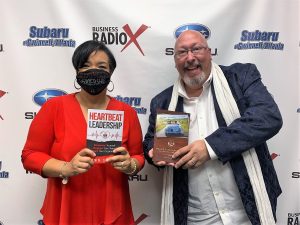
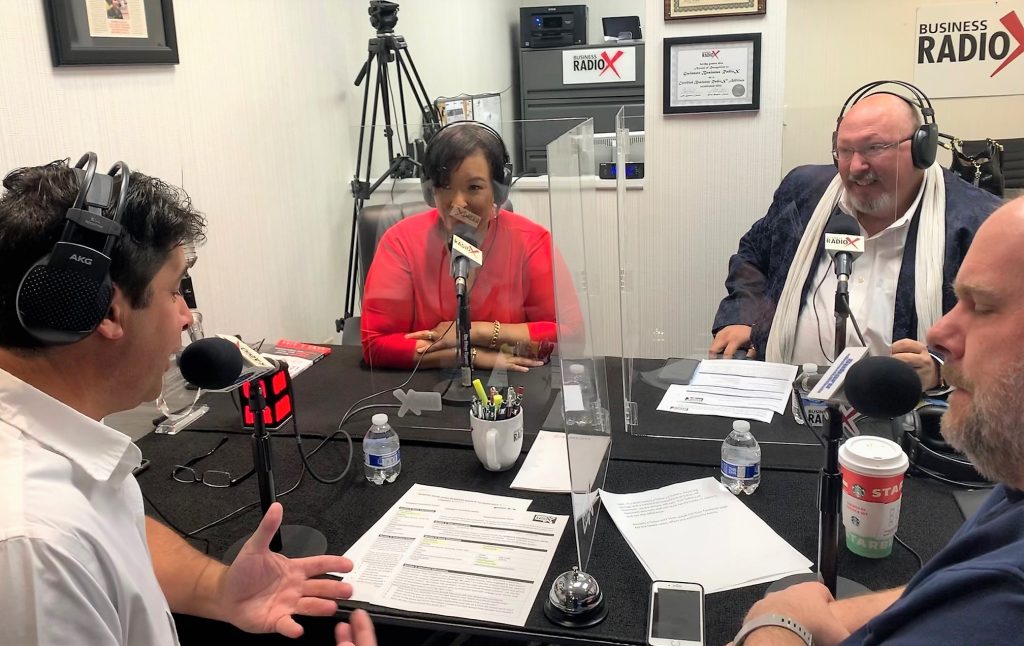
Dawn Kirk and Zachary Bennett

Dawn Kirk/BestU4Life

Thump-thump. How healthy is your leadership? Thump-thump. How engaged is your team? Thump-thump. Is your organization thriving? Not sure? It’s time for a heart check-up. Dawn S. Kirk, owner and founder of BestU4Life, reveals her unique, people-first approach that has help countless leader build real-world influence and impact. No matter the problem, it can be solved through people. Let the Six Pulses of Heartbeat Leadership position you to empower yourself, engage your team, and impact your organization starting right now!

Zachary Bennett/Reformation Productions

Reformation Productions is a full-service marketing agency located in the North Atlanta metro area of Gwinnett County. They use a more scientific, proven approach to business communications and marketing. Partnering with companies to help them accomplish effective and efficient marketing by providing fresh ideas, creative design, and effective strategies that are designed to work against a backdrop of proven success in the traditions of business. No winging it. No guessing. No trying things out.

They are led by author and marketing executive B. Zachary Bennett (bzacharybennett.com) who also offers fractional chief marketing officer services, one-on-one consulting, and business coaching in addition to the services of the agency. He is also a partner with SCORE and the SBDC, providing for speaking engagements and workshops around the Southeast.

Gwinnett Business Radio is presented by


Tagged With: amanda pearch, B. Zachary Bennett, BestU4Life, business podcast, business radio, Business RadioX, Dawn Kirk, Entrepreneurs, Entrepreneurship, gwinnett business, gwinnett business podcast, Gwinnett Business Radio, Gwinnett Business RadioX, gwinnett businesses, gwinnett online radio, gwinnett radiox, Heartbeat Leadership, married to marketing, online radio, people-first leadership, podcast, Radiox, Reformation Productions, regions bank, small businesses, sonesta, sonesta gwinnett place, sonesta hotel, steven julian, subaru, subaru of gwinnett, subaru radio studio

Decision Vision Episode 95: Should I Buy an Existing Franchise? – An Interview with Leslie Kuban, FranNet Atlanta

December 10, 2020 by John Ray

FranNet Atlanta
Decision Vision
Decision Vision Episode 95: Should I Buy an Existing Franchise? - An Interview with Leslie Kuban, FranNet Atlanta
Loading
00:00 /
RSS Feed
Share
Link
Embed

Download file

Decision Vision Episode 95:  Should I Buy an Existing Franchise? – An Interview with Leslie Kuban, FranNet Atlanta

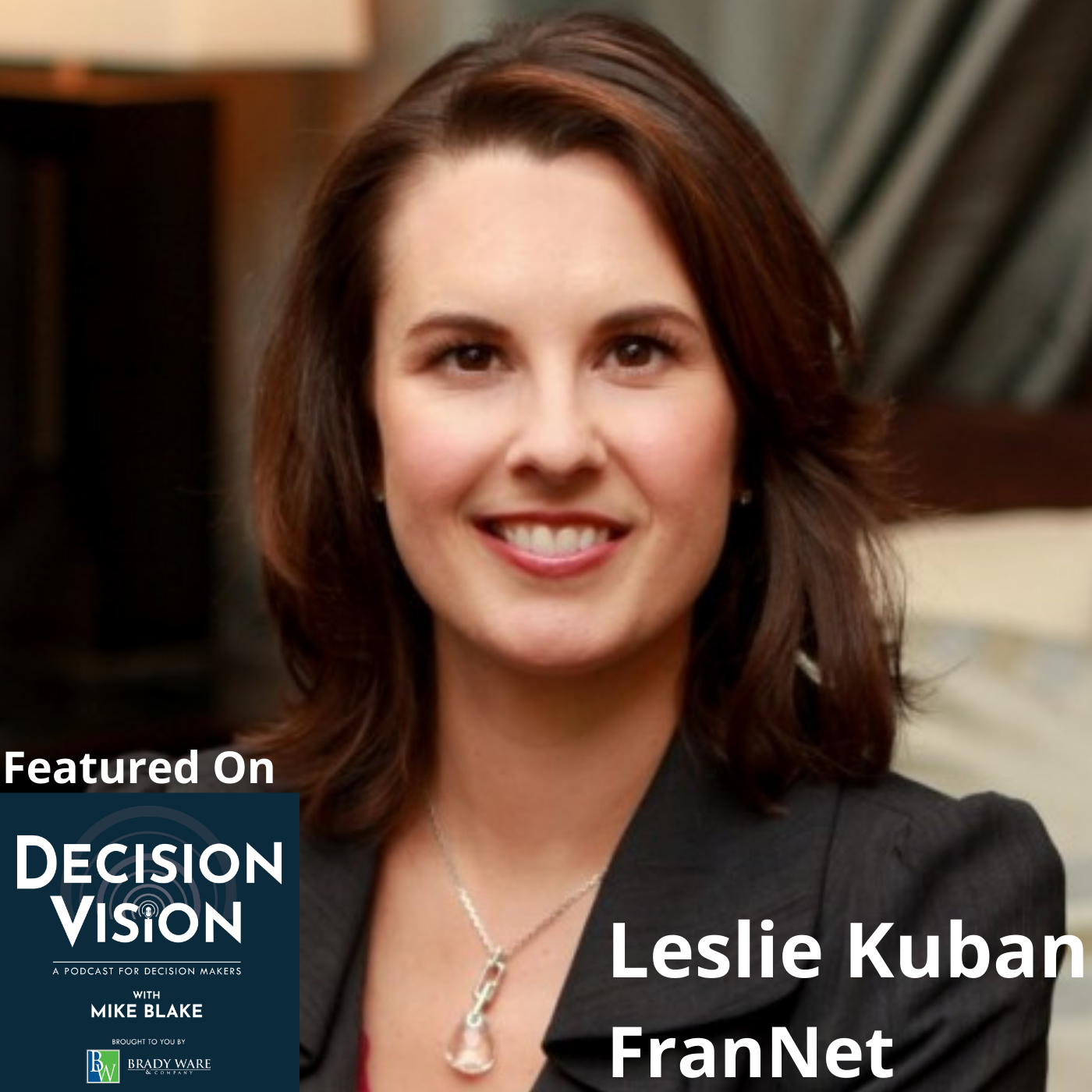
Leslie Kuban, FranNet Atlanta, joins host Mike Blake to discuss the pros and cons of buying an existing franchise business vs. starting a new franchise from scratch. “Decision Vision” is presented by Brady Ware & Company.

Leslie Kuban, Market President, FranNet Atlanta

For over 30 years, FranNet experts across North America have been matching individuals with franchise opportunities through a no-cost, extensive educational and coaching process.

Locally owned and operated, FranNet Atlanta has consistently been a top producing FranNet office. Our team of experts has helped over 500 individuals and families choose the best franchise brand for their needs and goals.

After a rewarding chapter with Mail Boxes Etc. (now the UPS Store), Leslie and her father launched FranNet Atlanta in 1999. They’re well versed in growing a family business during strong economic times and in recessions. They’re proud to have helped over 500 individuals and families choose the best franchise brand for their needs and goals.

Leslie became an Amazon bestselling business author as one of 15 franchise industry thought leaders contributing to More Than Just French Fries, a collaborative work on successful business ownership through franchising. Leslie is featured in Chapter 9: Family Ties, where she discusses multigenerational franchise ownership. Leslie has won 17 awards within FranNet since 2001 and is a graduate of Vanderbilt University.

Connect with Leslie on her company website and on LinkedIn.

Mike Blake, Brady Ware & Company

Mike Blake, Host of the “Decision Vision” podcast series

Michael Blake is the host of the “Decision Vision” podcast series and a Director of Brady Ware & Company. Mike specializes in the valuation of intellectual property-driven firms, such as software firms, aerospace firms, and professional services firms, most frequently in the capacity as a transaction advisor, helping clients obtain great outcomes from complex transaction opportunities. He is also a specialist in the appraisal of intellectual properties as stand-alone assets, such as software, trade secrets, and patents.

Mike has been a full-time business appraiser for 13 years with public accounting firms, boutique business appraisal firms, and an owner of his own firm. Prior to that, he spent 8 years in venture capital and investment banking, including transactions in the U.S., Israel, Russia, Ukraine, and Belarus.

Brady Ware & Company

Brady Ware & Company is a regional full-service accounting and advisory firm which helps businesses and entrepreneurs make visions a reality. Brady Ware services clients nationally from its offices in Alpharetta, GA; Columbus and Dayton, OH; and Richmond, IN. The firm is growth-minded, committed to the regions in which they operate, and most importantly, they make significant investments in their people and service offerings to meet the changing financial needs of those they are privileged to serve. The firm is dedicated to providing results that make a difference for its clients.

Decision Vision Podcast Series

“Decision Vision” is a podcast covering topics and issues facing small business owners and connecting them with solutions from leading experts. This series is presented by Brady Ware & Company. If you are a decision-maker for a small business, we’d love to hear from you. Contact us at decisionvision@bradyware.com and make sure to listen to every Thursday to the “Decision Vision” podcast.

Past episodes of “Decision Vision” can be found at decisionvisionpodcast.com. “Decision Vision” is produced and broadcast by the North Fulton studio of Business RadioX®.

Visit Brady Ware & Company on social media:

LinkedIn:  https://www.linkedin.com/company/brady-ware/

Facebook: https://www.facebook.com/bradywareCPAs/

Twitter: https://twitter.com/BradyWare

Instagram: https://www.instagram.com/bradywarecompany/

Show Transcript

Intro: [00:00:01] Welcome to Decision Vision, a podcast series focusing on critical business decisions. Brought to you by Brady Ware & Company. Brady Ware is a regional full-service accounting and advisory firm that helps businesses and entrepreneurs make visions a reality.

Mike Blake: [00:00:21] Welcome to Decision Vision, a podcast giving you, the listener, clear vision to make great decisions. In each episode, we discuss the process of decision making on a different topic from the business owners’ or executives’ perspective. We aren’t necessarily telling you what to do, but we can put you in a position to make an informed decision on your own and understand when you might need help along the way.

Mike Blake: [00:00:41] My name is Mike Blake, and I’m your host for today’s program. I’m a director at Brady Ware & Company, a full-service accounting firm based in Dayton, Ohio, with offices in Dayton; Columbus, Ohio; Richmond, Indiana; and Alpharetta, Georgia. Brady Ware is sponsoring this podcast, which is being recorded in Atlanta per social distancing protocols. If you like this podcast, please subscribe on your favorite podcast aggregator and please consider leaving a review of the podcast as well.

Mike Blake: [00:01:09] So, today’s topic is, Should I buy an existing franchise? And we’ve had a couple of shows on franchise topics before. We have had a show early on with Anita Best to talk about, you know, should I, basically, buy into a franchise system and start a new franchise? We recorded a couple of weeks ago, and it will be out by the time you hear this but it’s not published yet as of the date of this recording, with Lauren Fernandez where we talked about the decision to take your existing business and to become a franchisor. And then, to kind of complete the three-legged stool here, we’re going to talk to our next guest about buying an existing franchise. And I think that’s a different discussion. We’re going to find out just how different. I could be entirely wrong. It could be a boring podcast. But I don’t think I’m wrong. I think there are some subtle differences that, despite their subtlety, are important.

Mike Blake: [00:02:10] Because buying something that somebody already has up and running is different from starting something new, good or bad. You can buy something that’s already been successful and then your goal is to not run into the ground. Or, you could buy something that has its own problems, kind of like buying somebody else’s car. You may be buying into their problems and you need to understand kind of where they are. And there are different implications in terms of the capital required and value. When you open a new franchise location or you’re a new franchisee into a system, you know, your cost is largely startup costs and you’re trying to capitalize to make sure that you have sufficient capital to develop and grow the business and survive for, at least, a little while in case the business doesn’t take financially right away.

Mike Blake: [00:03:07] Whereas, with an existing franchise, just like any other business, if it’s already successful, an owner is rightly going to expect to be paid for the fact that they built and own a successful business that is an income-producing asset. So, it is different. And this kind of topic, I think, given where we are with coronavirus where a lot of people are in transition, the data shows that people are now considering and launching into being their own boss and being the owner of their own company in numbers that we have not seen for a long time. And I think this is by necessity. There have been massive job losses. We’re still hovering 800,000 and 900,000 new unemployment claims a week, which by American standards is very high. And there are industries and jobs that are not coming back. I mean, it’s unfortunate. It’s hard to hear. But, you know, the people who are going to successfully transition are going to be the ones who make peace with that earlier than later and take aggressive action as to what their next step is.

Mike Blake: [00:04:19] So, I think this is going to be a good show as just about all of our shows have been, thankfully. And joining us today as our expert is my friend, Leslie Kuban, of FranNet. FranNet helps their clients buy the right business so that they can make income they need in a business they enjoy. FranNet are experienced local franchise experts, consultants, and brokers that help you match the perfect business opportunity to meet your goals. They assist with identifying franchises for sale, matching the right franchise to the right buyer, and performing due diligence.

Mike Blake: [00:04:53] After a rewarding chapter with Mail Boxes Etc. – now, the UPS Store – Leslie and her father launched their franchise consulting business in 1999. They’re well versed in growing a family business during strong economic times and in recessions. They’re proud to have helped over 500 individuals and families choose the best franchise brand for their needs and goals.

Mike Blake: [00:05:14] Leslie became an Amazon bestselling business author as one of 15 franchise industry thought leaders contributing to More Than Just French Fries, a collaborative work on successful business ownership through franchising. Leslie is featured in Chapter 9: Family Ties, where she discusses multigenerational franchise ownership. Leslie has won 17 awards – that I can account – within FranNet since 2001 and is a graduate of Vanderbilt University. Leslie, thank you for coming on the program and welcome.

Leslie Kuban: [00:05:44] Well, thank you. That’s quite an introduction. I appreciate it.

Mike Blake: [00:05:48] Well, it’s your fault you did all those things. So, before we get started, I got to ask you a question, because as I was preparing for the show today, and you and I have known each other for a bit, but I didn’t realize something that, actually, you started that Mail Boxes Etc. franchise right out of school, didn’t you?

Leslie Kuban: [00:06:05] I was not even a year out of college. And so, I didn’t know a whole lot about business. So, I think it’s a good example of if I could do it, then anybody should be able to learn it and do it.

Mike Blake: [00:06:18] I mean, I want to get some of that background story. This isn’t what we brought you on for, but I do think it’s a really interesting conversation in itself. I mean, it it seems very daunting. It seems almost impossible to imagine that you graduate from college, here’s your degree, and then, bang, you’re a franchise owner. Can you talk a little bit about kind of how that happened and how you made that happen?

Leslie Kuban: [00:06:45] Well, I had some help. I mean, that’s for sure. And to be fair, I can’t say my experience was completely cold. My father had been in franchising for a long time prior to that. And a very actually similar story to most people that I work with today, he had a long career and a big company, 3M. It was all he ever knew. Corporate reshuffling happened for him and had him look at business ownership as a career option. And franchising was how he entered into business ownership. So, I grew up around small business. We had a successful sign company. He had dealt with some other franchise brands. I managed a MotoPhoto franchise in high school that he had been involved with. And so, it wasn’t really my first rodeo.

Leslie Kuban: [00:07:34] But I graduated college. I didn’t really see myself wired to go do the corporate thing. Back in the day, Andersen Consulting came on Vanderbilt campus with their army of recruiters recruiting college graduates. And I think I was the only one who didn’t get a job offer from them because I just wasn’t wired for that. And so, I graduated school. And kind of since doing something on my own was my path and speaking of existing franchises, this was an up and running Mail Boxes Etc. franchise that my father helped me find and get into. And it was a struggling location. The owner had basically abandoned their business so I was able to take it over for practically nothing. And I made it work because MBE was a really strong franchise with great training. And I went through the full suite of franchise training, even though it was an existing location. I had all the support resources that I called every day needing help with this and with that. And that’s how I made it work and it was successful for me.

Mike Blake: [00:08:42] Well, I’m glad we went down this road because I did not know this. So, what we’re learning is that your first experience in the franchise world is exactly the topic of this conversation. You bought an existing franchise and maybe one that was underperforming, that maybe opened some doors for you. But that is, in fact, how you got started.

Leslie Kuban: [00:09:01] Yes. Yes. It sure is. So, very topical.

Mike Blake: [00:09:06] Yeah. So, good, we picked the right guest for sure. You know, you can buy a franchise and you can buy a standalone business. And the first question is, are those two things different at all or are there some significant differences that someone needs to be aware of if they’re going to look at buying an existing operating franchise as opposed to a standalone business?

Leslie Kuban: [00:09:34] I think there’s certainly some similarities but there are some key differences, and I’ll just jump into the differences. So, first of all, the franchisor is always going to reserve the right to approve the buyer. So, if I’m a franchisee and I want to sell my business or I need to exit, I can’t just go sell it to everybody or to anybody. So, any potential buyer of my franchise at some point is going to have to interact with the franchisor. They’re going to have to go through the same disclosure process and education process. The franchisor has to want that person. They have to feel like that person has the right skills and credentials and money to take that business over and make it work. So, that’s a key difference, is, if you have an independent business, there’s no one out there in reserving right to approve that transaction. Go ahead, Mike.

Mike Blake: [00:10:35] You’re right. You’re right. I do think that’s a key difference. And that segues, actually, nicely to the next thing I want to talk about, which is, in your experience and you’ve been doing this for a while now, how often does a franchisor exercise their right to block a sale?

Leslie Kuban: [00:10:52] So, a franchisor’s incentive is to further the system and grow their royalty stream and the validation and success of their brand. So, they have a franchisee who needs or wants to exit and isn’t really gung ho about participating in the business anymore. Then, it is to their advantage to help in that process and to facilitate a new buyer coming in who’s going to be committed and energized to run the business. So, the only time a franchisor would not approve someone is if they think that potential buyer just isn’t a good candidate. They don’t have the right talents. They don’t have the right commitment level. They don’t have the money. That would be the only reason I could think of that they would not approve a buyer of their franchisee who’s ready to go.

Mike Blake: [00:10:52] And in your career, how often has that happened? And I’m happy to give you a chance to apply yourself here as part of your process making sure that a buyer would not prompt a franchisor to exercise that option.

Leslie Kuban: [00:12:01] Well, I mean, in 21 years of being in my business, I can’t think of a scenario of where the buyer was not approved. Because that’s what my business is. I mean, my business is providing qualified buyers. So, if I’m doing a good job on my end of making sure that the franchise is a fit for what the buyer is looking for, they have the right credentials of what the franchisor is looking for, that usually isn’t the problem. The problem usually comes in on the seller. The seller changing their mind about selling their business or having very unrealistic expectations about what their business is worth. Kind of the same reasons, whether it’s a franchise or not, that the seller is usually the issue, not necessarily the buyer.

Mike Blake: [00:12:47] And thank you for reminding me why I got out of investment banking, because that kind of thing used to drive me crazy. And it’s why I have so much respect for people in your business, because it takes a certain mentality to be able to absorb that. Now, in spite of that sort of threat being out there, there must be a reason why buying a franchise might be more attractive than buying a standalone business. So, can you kind of walk us through what is the case for buying into an existing operating franchise as opposed to something standing alone?

Leslie Kuban: [00:13:27] Yeah. Well, I think there’s a lot of good reasons to consider that if the right types of opportunities are available to you. And some of those answers aren’t necessarily just only for an existing franchise. It’s kind of the case for franchising, period, is, it’s a great way to minimize the risk of getting into business because you have the ability to do all kinds of due diligence, whether it’s new or existing. It’s advisable to go out and speak to other franchisees about their experience running that business and their relationship with the franchisor. I mean, you could even speak to franchisees who acquired an existing franchise within that same system and get a sense of comparables and what their words of the wise would be around that. You know, there’s also the benefit of you not being the only one marketing your business. This is just a key franchising benefit as you have lots of people out there marketing the business and creating brand awareness. That’s not all your time and your money and energy doing that.

Mike Blake: [00:14:35] So, I’m glad you brought that up, because, again, I’m not a franchise expert. I don’t hold myself out to be that. But as I was preparing for the show and kind of reading through other people’s blogs and newsletters and whatnot on why you should buy a franchise, how to do it, and so forth, one thing that occurred to me that I don’t know is talked about enough is that, I think, a franchise in many ways is more transparent than a garden variety standalone business. Because the systems demand that transparency. And you have that disclosure document and you can talk to other people that literally owned the exact same business elsewhere designed to be carbon copies. You can’t do that with most other standalone businesses, right?

Leslie Kuban: [00:15:24] Exactly. I mean, you can try to go talk to some competitors. But competitors have no real incentive to help you do your due diligence if you’re going to become a competitor. And franchisees, they’ll tell you the good, the bad, and the ugly. I mean, you really get the real deal, what people like, what they don’t, what kind of money it took them to get to cash flow positive, how they financed the business, what they would do differently. There’s no crystal ball in any of this. But that’s the closest thing that I’ve seen and experienced myself that you can take advantage of when you can go out and speak to people in the same business who really would be collaborators and not competitors to you by and large.

Mike Blake: [00:16:06] You know, there’s something about franchises that I’ve learned, again, preparing for the show and others, that, the good franchises seem like communities, almost fraternities, if you will. Am I overstating that? Am I drinking too much of the Kool-Aid? Or is that a fair characterization?

Leslie Kuban: [00:16:25] I think it’s in the pathway of very fair. Like, I think I’m great friends with many of my fellow FranNet franchisees. FranNet is a franchise, by the way. I don’t know if I’ve ever shared that with you. So, in my business as a franchise consultant and broker, I’m a part of a brand. I have a franchise agreement. I pay the royalties. So, yeah, I’ve become great friends with many of my fellow FranNet franchisees. We vacation together. We help each other. If we’re troubleshooting ideas, that’s usually my go-to is brainstorming with some of my fellow colleagues that are not competing with me but collaborate with me. So, we’re all on the same team and we wear the same jersey, which is a lot of fun.

Mike Blake: [00:17:12] So, on the less fun side, but I think a reality, is that I’ve seen instances where a franchisor sometimes forces a sale. Well, I’m just going to stop there. Is that true? And why does that happen? And in your mind, from a biased perspective, is that a red flag or a bargain opportunity?

Leslie Kuban: [00:17:37] So, what I’ve seen, I can’t say that I’ve ever seen a franchisor force a sale. But, certainly, they will terminate franchisees who are uncompliant. And some typical grounds for termination would be a real backlog of not paying owed fees and royalties. Most franchises have a minimum performance standard of some kind to stay a part of the system. You have to meet a certain revenue level. They may calculate that differently, but they’re not going to allow franchisees just to be dormant, sitting on territory, doing nothing. So, I’ve definitely seen franchisors terminate franchisees who have abandoned their business or are way out in left field in terms of what they need to be doing. But I can’t say that I’ve ever seen a franchisor force a sale, that contractually forced a sale.

Mike Blake: [00:18:41] Okay. Again, you’re the expert. I’m not. But in the limited work that I’ve done – and this is probably why I’ve gotten involved with my hat as an appraiser – is that, I have been involved in one or two instances where it was effectively a nonperformance issue. And the franchisor doesn’t want bad franchisees out there, because that can be, for lack of a better term – there probably is a better one – but it can be cancerous on the brand, right? If the one location of a franchise, the only one that a big part of the market sees, that does cast a blight and makes it difficult for others to kind of establish and maintain their brand and reputation.

Leslie Kuban: [00:19:26] It is the franchisor’s responsibility to protect the investment of their other franchisees to deal with rogue franchisees who could be damaging the brand and other franchisee investments.

Mike Blake: [00:19:40] Well, yeah, that’s right. And I’m sure that often a lever that is used, if it’s not outright forcing the sale, is that there is a threat out there that you’re not guaranteed a franchise for life, right? So, either shape up, ship out, or sell out. But one way or the other, this thing is changing.

Leslie Kuban: [00:20:01] Yes. Yes. So, I think, actually, you know, selling your business and maybe getting something for your investment versus an outright termination, in my mind, would be attractive to the exiting franchisee. And it could definitely be a bargain for a new franchisee coming in. They’re probably going to have some problems to fix, some things to clean up, which will require investment of time and energy and money. So, it probably isn’t going to be worthless, but it could be a good opportunity, definitely.

Mike Blake: [00:20:36] So, let’s take a step back here, because we’ve gone into the weeds, which is good, I want to do that. But somebody may be listening right now or is going to be at this point on the podcast saying, “Okay. This sounds great. Where do I start? How do I identify a franchise that’s potentially for sale?” I mean, do you open up Craigslist? Does somebody email you? Do they find them on Facebook marketplace? How do you start? How do you identify something for sale?

Leslie Kuban: [00:21:06] So, I think some of the common channels, bizbuysell.com, of course, is the largest online marketplace. But a good business broker friend of mine said, “You know, what you ought to do is have a good stiff drink before you get on BizBuySell and just kind of peruse what is out there.” Because the reality is, there’s so much garbage out there. So, existing franchises is about 20 percent of my business. And the reason it’s not more is because finding good opportunities is hard. And so, BizBuySell would be a place to start. Certainly, some business brokers, the way it works in my world is – you know, I’m not a business broker that’s taking listings – when a franchisor knows of one of their franchisees who’s ready to exit the business for whatever reason, they’ll call me and give me some information about that business. But I’m not seeing or evaluating or auditing the franchisee’s financial statements, but it can be one of the arrows in my quiver of potential opportunities. So, I’m a source for those kinds of opportunities. But, still, if you’re really bent on buying an existing business, I would just plan on taking quite a while and having to kiss a lot of frogs before you find the right opportunity.

Mike Blake: [00:22:29] Okay. So, you said something that I want to drill down on because I think there’s a real opportunity here to educate. You look at BizBuySell listings and a lot of them – we’ll just go ahead and use your vocabulary – are garbage. For somebody that has a trained eye like yourself, what are the things that you look at and you can spot, that somebody like me who is not a franchise expert would miss, and say, “Okay. I already know looking at it for two seconds, it’s not worth my time. Nothing to see here. Move on.” What are the kind of things that sort of send those signals to you?

Leslie Kuban: [00:23:02] Well, the first questions that I’m going to ask are, of course, what is the performance of the business and what is the seller thinking that it’s worth? And there is usually a big divide – oftentimes a big divide – in what the seller thinks it’s worth. This whole notion of valuation is a little bit of a slippery slope, because at the end of the day, the value is what the buyer is going to buy it for and what the seller is willing to sell it for. And, usually, neither are satisfied at the end of the day. I’m sure you see that every day in your line of work.

Mike Blake: [00:23:38] It’s come up

Leslie Kuban: [00:23:39] Yes. But sometimes the seller is just in fantasyland on what they actually think the value of their business is. On one hand, it’s their baby. They put a lot of time and energy into it. And they’re looking to recoup what they’ve made from it or what they put into it at a minimum. And I actually think there’s an argument for that. I mean, one way to look at this is, if I were to buy that same franchise in that same territory as a startup, what would it cost me to get into the business and get it to where it is now? There’s an argument that that’s some kind of a baseline value. Not everybody sees it that way, and I understand that, too.

Leslie Kuban: [00:24:24] But that’s the first thing, it is the questions that I’m going to ask. Where is the seller? Are they really ready to sell? What is their plan after they sell their business? Too many times, you know, someone gets to the 11th hour of selling their business and the buyers already put a lot of time and effort into financial evaluation and hiring the attorney. And then, the seller doesn’t really have a plan for after the sale and they get scared and bail on selling the business, which is really frustrating for everybody.

Mike Blake: [00:24:56] Yeah. And expensive.

Leslie Kuban: [00:24:58] And expensive. So, right off the bat, I’m kind of asking questions around where the seller is, what their plans are, and that right there can give me a sense of if I’m even going to mention it to people I’m working with because I don’t want to waste their time.

Mike Blake: [00:25:15] There’s so much to unpack here, because a lot of what you’re talking about, I think, also applies to buying a standalone business too. The seller’s motivation, desire to sell, you know, on a failing franchise or failing business, really, one of the hurdles I think people face is, you know, we’re psychologically hard wired against loss. And so, the business owner has a construct in their mind that says, “Well, if I can just get out what I got back, I’ll be great.” But your business may not be worth what you put into it. There are businesses that actually destroy value. And, you know, it’s really about sort of get what you can. And it’ll take some time to reconcile a seller. And, unfortunately, it may take three or four, two or three failed purchase efforts or failed sale efforts to convince them that even what they put in is not a sustainable value because people keep walking off the lot, basically.

Mike Blake: [00:26:26] But, you know, it’s interesting that you put valuation very high in there. And I don’t talk about valuation a whole lot of the podcast because I don’t want to make it about me. But I think it’s very interesting that valuation comes up so early for you. And what that tells me is that, from your mindset, one thing that you think about very clearly and very early is that, does this make financial sense?

Leslie Kuban: [00:26:51] Yeah. And, I mean, in an ideal world, you want it to be a win-win for everybody. But, you know, the new buyer needs to be able to come into the business. They need to understand what could they do differently very quickly to turn that business around if it’s a struggling business. Some are very successful businesses and people are cashing out on their equity. And that’s a whole different conversation. But, you know, a lot of what is out there has some warts on it. And where the franchisor can come into play and actually kind of help with some of the stuff is in having a process for educating their franchisees. And they’re selling franchisees on what they need to have in place before they will help that franchisee sell their business. And a franchisor cannot dictate the value of the franchise. They cannot tell their franchisee, “You have to sell your franchise for this.” But they can give some strong recommendations of what is realistic and kind of coach their franchisees on how to think about it and how to position it so that they can actually exit, hopefully, in a satisfactory way.

Mike Blake: [00:28:07] Yeah. Great. This is great. You’re driving this conversation in really awesome places. So, that reminds me in a couple of the franchise scenarios in which I’ve been involved, sometimes the franchisor will even make available data on valuation multiples for what other franchises in their system have sold for. Not all the time. And I’m not even sure it happens a majority of the time. But it happens more than once in a meteor strike, basically. Have you seen that as well? And if so, how often or how accessible can that data be?

Leslie Kuban: [00:28:43] Yeah. Comparables. And I think you start to see that with more mature franchise systems. And this is kind of on my end of things, the franchisor really being my paying client. They’re the ones with whom brokers, like me, have our contract. We have our financial relationship with the franchisor. And what we see is that, sometimes franchisors, younger brands, they haven’t even thought about this until they have their first resale on their hands. And they kind of scramble with, “Oh, boy. What do we do now?” And don’t have a process in place. So, what you’re referring to, you really see with more mature brands that even have a whole resale department. I worked with some very mature brands that they have dedicated people in their franchise development departments just handling resales. But you don’t see that until the brand usually has 300 or 400 franchisees out there and enough transitions under their belt to really figure that out and have a streamlined process to help both the buyer and the seller with that.

Mike Blake: [00:29:50] So, in the intro, you mentioned something that leads to a question I want to make sure that we covered, and that is, as a new franchisee entering by way of being the buyer, am I going to have the same access to training as if I were a new franchisee? And if so, is it the exact same? Is it different in an existing system? And who bears that cost?

Leslie Kuban: [00:30:20] So, the short answer is yes. A good franchisor is not going to rely on their exiting franchisee to train their new franchisee. And things may be very different. The franchisee who is selling, they may have been in that business for 10 years, 15 years, longer. And so, advancements in the business, their systems, the services they offer probably have evolved over that lifespan of that exiting franchisee. So, I can’t think of a scenario where the franchisor is not also reserving the right to train the new buyer in the same way that they would train any new franchisee coming into the system. And the more sophisticated brands – I actually had this just happen with a recent transaction – where they’ve been around long enough to where they know that a buyer coming into an existing franchise is going to have different needs than the buyer of a new license. So, with more mature franchises, they may have an extra track for buyers of existing franchises. But, again, you see that in much more mature brands. Not in emerging brands.

Mike Blake: [00:31:30] And that’s a great question to ask about, right? And one of the things I’m learning through this conversation is that, when you’re buying into a franchise system in this way, you’re really performing due diligence in two directions, one of the franchisor and one of the selling franchisee. And one of those questions may be, “Hey, do you have a separate track to help me kind of get on board?” And that can be very comforting, right? Because if it’s a standalone business, more often than not, the seller wants to drop off the keys and retire to their condo in Costa Rica, basically, and never see it again.

Leslie Kuban: [00:32:06] Yeah. They’ve joined the circus at that point. And so, if you’re asking what might the benefit be of an existing franchise versus someone’s independent company – this is a big one – is the availability for initial and ongoing training and support from the franchisor, the collaboration with the other franchisees. It can be a game changer.

Mike Blake: [00:32:29] And that means as a buyer, you don’t necessarily have to be an expert in that business on the way in. One of my cardinal rules of investing is, a great way to lose your money is to invest in something that you do not understand. And buying a business that you don’t understand and don’t have an opportunity to get to speak quickly in a formal way, that’s just asking for trouble. And from what you’re describing, buying an existing franchise does take a lot of that particular risk off the table.

Leslie Kuban: [00:33:01] And not only that, but most franchise companies and industries – not all, but most -they would prefer someone who doesn’t have any industry experience. They want someone who has the right soft skills. Like, if it’s a business to business franchise, your key role as the owner is probably business development and sales and outbound relationship cultivation. So, they would like to see that you’ve been successful in that soft skill somewhere in your history. Or you’re confident that you have the ability to learn it. Others, you may have a lot of employees and your role as the owner is, you know, team and employee leadership and development. So, have you been in a leadership and management role somewhere in your career? But if you have a lot of experience in their industry, you’re probably bringing your baggage and your bad habits, some good habits, too. But, typically, they would rather have a fresh slate and train you in the way of their business. But you’re bringing the right soft skills to get off the ground running quickly with whatever skills are required. So, there’s a difference between skills and experience here. They definitely are looking for certain skills, but prefer that they be the ones to train you and give you the experience in their industry.

Mike Blake: [00:34:19] So, let’s switch gears a little bit here. Often – not all the time – but often franchisees own more than one location. I would argue that’s indicative of a pretty successful one because scale and franchising is really important. Are sellers at all willing to sell their franchisees off piecemeal? Or, more often than not, do you got to be able and willing to buy the whole thing or find something else?

Leslie Kuban: [00:34:47] You know, I see both, Mike. I can’t say one or the other is really the more common available opportunity. You know, I saw this a lot of my Mail Boxes Etc. days, that being the owner of multiples required very different skills than owning one. And people may have been very successful in owning one. But then, they get into a whole different ball game trying to lead and manage multiples, and they realize it’s just not for them. They’re not wired for it. So, oftentimes, you will see franchisees sell their second or third business that they’ve tried to start and realize that it’s just more than they can handle if they want to retain their original business, because that’s where they are in their comfort zone. So, I’ve seen that a lot. But if they’re really ready to exit the business, they usually are preferring to sell the whole business, whatever that looks like.

Mike Blake: [00:35:43] I think that’s really interesting because, I think, that’s such an astute observation that warrants spending a bit on it. And it is a different skill set. You know, running a one location shop is a very different skill set, is a very different temperament from managing a system, chiefly, because you cannot be at all your places of business at the same time. And so, it must put much more pressure on your ability to hire well and to put in systems. And, as I like to call it, you know, you have less of an opportunity to outwork your mistakes, basically. It just isn’t enough if you’re going around. Is that kind of where you’re coming from?

Leslie Kuban: [00:36:30] Yeah. And sometimes it’s someone’s comfort zone is being able to see and put their hands on every element of the business. You grow into multiple territories. I mean, you’ve got to hire people to help you. You can’t be in three different places at once. And so, it becomes does one have the comfort and ability to delegate through others and hand over responsibility and control to others. And some people are just not good at that or they’re not comfortable with it.

Mike Blake: [00:37:00] So, you know, price in terms of buying a business is important. The other part of it is where do you come up with the money. And, of course, you know, some businesses are bought where somebody just has cash in their account. They wire and then they own the business. But often they’re financed in some way. Standalone businesses have the luxury or, at least, the option of some sort of seller financing. And that’s a long preamble to the question being this, that, are the financing options different for buying a franchise as opposed to buying a standalone business? And if so, how are they different?

Leslie Kuban: [00:37:40] I haven’t seen them be substantially different, Mike. I think it’s kind of the same scenario of the proper equity injection that the bank would require. Oftentimes, there is some seller financing or an earn out in some form or fashion. I think what might help, though, is if the franchise has a history of successful SBA financing behind it. It actually can hurt or it can help that there’s what’s been termed an SBA registry that franchise brands will be known to be on. And there’s a history there of loan payment or defaults. And so, if it’s a good history, it might expedite the process a little bit. And that whoever the lending sources has some familiarity and comfort with the brand, they still have to be comfortable with the borrower and with the deal. But it might expedite it a little bit. You still have to be a qualified buyer in order to get the financing. And there, oftentimes, is some seller financing. Maybe it’s making up the gap between what the bank is willing to lend, and what the seller wants for the business, and the buyer still wanting to buy that business, even though the bank is only willing to bank it so much.

Mike Blake: [00:39:02] So, franchises almost always have something that they are subject to call a franchise disclosure document or something like that. As I’m buying into an existing franchise, can you talk about where would you start looking in terms of making sure there’s nothing in the document that would be a showstopper for me? What are the key areas that I need to pay attention to or maybe tell my lawyer to pay attention to as I review that document?

Leslie Kuban: [00:39:32] Well, I think the key is having a qualified franchise attorney to review the franchise disclosure document, review the franchise agreement, which may be very different than the franchise agreement and the FDD of the seller. If they’ve been in the business for 10 years or 15 years, the terms in the FDD and the franchise agreement do evolve over time. So, it would be important for the buyer to – and the Federal Trade Commission regulates this. So, it’s really not an issue that the buyer has to obtain and have in their possession for at least 14 days the most current FDD and franchise agreement. And there’s things in there that you want to pay attention to, like the investment.

Leslie Kuban: [00:40:21] But what is reported in the FDD is investment for a new franchise. They’re not typically giving information pertaining to buying an existing franchise other than transfer fees. There’s usually a transfer fee that is involved. The new buyer would be signing a new franchise agreement. They’re not assuming the remaining amount of time on the seller’s franchise agreement. So, I mean, I think that you’re looking for the same things that you would be looking for in a new franchise. But really, the resource is a good franchising attorney than trying to decide for yourself what does or doesn’t make sense.

Mike Blake: [00:40:59] I’m talking with Leslie Kuban of FranNet, and the subject is, Should I buy an existing franchise? So, on the topic of that franchise agreement, is there a possibility that the agreement I’m going to be signing as the buyer may be different from the one that was signed going in? Maybe the terms and limiting conditions have changed. Maybe they’re purely pro forma because of court decisions or new regulations, something like that. But can you assume that the new franchise disclosure – I’m sorry – the new agreement I’m going to sign as a buyer is substantially the same as the one that the seller is operating under? Or, do I look at that very carefully to see if there are any changes?

Leslie Kuban: [00:41:49] Well, it may be very similar. It may be very different. I think there’s a lot of it depends embedded in there. The biggest one being, how long has the selling franchisee owned that business? If they’ve been a franchisee for 20 years, their original franchise agreement is probably different in some form or fashion. And it may be around fees. Franchisors do tend to increase their fees over time. And some of that is just when they’re young, they just don’t know any better. They don’t really know what is required to successfully run and augment their systems. So, they do tend to realize they need to increase their fees over time. So, that’s usually the biggest difference. Sometimes they have changed territory sizes. They may be larger. They may be smaller.

Leslie Kuban: [00:42:47] The selling franchisee agreement, in some ways, is almost irrelevant because the new buyer is going to have to sign a new franchise agreement under the new terms, whatever they are. A franchisor can’t cut some special deal if you get a different royalty rate or you have a different term to the agreement. So, I’m not going to say it’s completely irrelevant, but I don’t know that that’s a source of negotiation with what the original franchisee’s terms were in their agreement.

Mike Blake: [00:43:18] Now, you touched on this but I want to be clear, in your model, you get paid by the franchisor or the seller, I guess, just like a business broker or an investment banker would, right? So, somebody who’s looking to buy a franchise doesn’t owe you a dime under most cases, I guess? And so, I imagine that puts you in a position of kind of sifting through who’s going to kind of make it to the finish line. Because you can’t afford to spend a lot of time on nonbuyers, basically. And so, my question is this, what are the characteristics of somebody that you get to know and it doesn’t make sense for them to buy a franchise? You can see they’re just not wired to be part of a franchise system or something. You know, when is somebody kind of not ready and maybe they should consider going back to looking at a conventional business instead?

Leslie Kuban: [00:44:15] So, if the question is an existing franchise versus an independent existing business, I think the answer is, you know what, you’re a part of a franchise. You do have to comply with some things. You can’t just go off and do whatever you want. When I had my Mail Boxes Etc., I couldn’t just decide to sell pizza out of my franchise. You know, the training and the systems and the protocols, I kind of liken them to guardrails that helps someone learn and run that new business, that helps them prevent themselves from making fatal mistakes. But it also kind of hold you in to something.

Leslie Kuban: [00:44:57] So, you have to be comfortable with the fact that you do have to kind of toe the party line on some things and you can’t just go out and do everything you want. And so, I think the person who is wired for that, they air on the side of, “I like the security and the safety of having something that have some systems to it, and I’m willing to forgo some individual freedoms.” But there are, too, people who are just too entrepreneurial and would never work well in any franchise system. So, that’s part of it. And I think someone who’s a true lone wolf, you know, they may not like the fact that you’re involved with other franchisees in the same market. You are swimming in the same swimming pool. And people who view that as competitive versus collaborative, you know, may be better off going the independent route than the franchise route.

Mike Blake: [00:45:56] Leslie, this has been a terrific conversation. There are other questions that we could cover, but we don’t have the time to do that. If people have questions about buying into a franchise, can they contact you? And if so, what’s the best way for them to do that?

Leslie Kuban: [00:46:09] I would love for them to contact me. I’m on LinkedIn, so that’s always a great place to hook up. But my number is 404-236-9115. And my website is FranNet, F-R-A-N-N-E-T, .com.

Mike Blake: [00:46:28] That’s going to wrap it up for today’s program. I’d like to thank Leslie Kuban so much for joining us and sharing her expertise with us. We’ll be exploring a new topic each week, so please tune in so that when you’re faced with your next executive decision, you have clear vision when making it. If you enjoy these podcasts, please consider leaving a review at your favorite podcast aggregator. It helps people find us that we can help them. Once again, this is Mike Blake. Our sponsor is Brady Ware & Company. And this has been the Decision Vision podcast.

Tagged With: buying a franchise business, franchise, Frannet Atlanta, Leslie Kuban, Michael Blake, Mike Blake

Seasonal Affective Disorder- Episode 46, To Your Health With Dr. Jim Morrow

December 9, 2020 by John Ray

Seasonal Affective Disorder
North Fulton Studio
Seasonal Affective Disorder- Episode 46, To Your Health With Dr. Jim Morrow
Loading
00:00 /
RSS Feed
Share
Link
Embed

Download file

Seasonal Affective Disorder- Episode 46, To Your Health With Dr. Jim Morrow

Seasonal affective disorder is common in winter months with shorter daylight hours, and Dr. Morrow addresses symptoms as well as treatment options, both medicine and therapy, for this condition. “To Your Health” is brought to you by Morrow Family Medicine, which brings the CARE back to healthcare.

About Morrow Family Medicine and Dr. Jim Morrow

Morrow Family Medicine is an award-winning, state-of-the-art family practice with offices in Cumming and Milton, Georgia. The practice combines healthcare information technology with old-fashioned care to provide the type of care that many are in search of today. Two physicians, three physician assistants and two nurse practitioners are supported by a knowledgeable and friendly staff to make your visit to Morrow Family Medicine one that will remind you of the way healthcare should be.  At Morrow Family Medicine, we like to say we are “bringing the care back to healthcare!”  Morrow Family Medicine has been named the “Best of Forsyth” in Family Medicine in all five years of the award, is a three-time consecutive winner of the “Best of North Atlanta” by readers of Appen Media, and the 2019 winner of “Best of Life” in North Fulton County.

Dr. Jim Morrow, Morrow Family Medicine, and Host of “To Your Health With Dr. Jim Morrow”

Covid-19 misconceptionsDr. Jim Morrow is the founder and CEO of Morrow Family Medicine. He has been a trailblazer and evangelist in the area of healthcare information technology, was named Physician IT Leader of the Year by HIMSS, a HIMSS Davies Award Winner, the Cumming-Forsyth Chamber of Commerce Steve Bloom Award Winner as Entrepreneur of the Year and he received a Phoenix Award as Community Leader of the Year from the Metro Atlanta Chamber of Commerce.  He is married to Peggie Morrow and together they founded the Forsyth BYOT Benefit, a charity in Forsyth County to support students in need of technology and devices. They have two Goldendoodles, a gaggle of grandchildren and enjoy life on and around Lake Lanier.

Facebook: https://www.facebook.com/MorrowFamMed/

LinkedIn: https://www.linkedin.com/company/7788088/admin/

Twitter: https://twitter.com/toyourhealthMD

The complete show archive of “To Your Health with Dr. Jim Morrow” addresses a wide range of health and wellness topics, and can be found at www.toyourhealthradio.com.

Dr. Morrow’s Show Notes

 What is seasonal affective disorder?

  • Seasonal affective disorder (SAD) is a type of depression that is triggered by the seasons of the year.
    • Symptoms usually begin in late fall or early winter.
    • People with SAD usually feel better in the spring and summer.
    • It is thought that SAD is related to changes in the amount of daylight during different times of the year.
    • Some people have SAD with depressive episodes in the summer instead of winter.
      • This is much less common.

How common is SAD?

  • Between 4% and 6% of people in the United States suffer from SAD.
  • Another 10% to 20% may experience it in a milder form.
  • SAD is more common in women than in men.
  • Some children and teenagers get SAD. But it usually doesn’t start in people younger than 20 years of age.
  • The risk of SAD decreases for adults as they age.
  • SAD is more common in northern regions of the United States.
    • Winters are typically longer and harsher there.
    • There is also less sunlight because they are farther away from the equator.

Symptoms of SAD

  • Not everyone who has SAD experiences the same symptoms.
    • Common symptoms of winter-onset SAD include:
      • change in appetite, especially craving sweet or starchy foods
      • weight gain
      • fatigue
      • sleeping more than normal
      • difficulty concentrating
      • irritability and anxiety
      • increased sensitivity to rejection
      • avoidance of social situations
      • loss of interest in the activities you used to enjoy
      • feelings of guilt or hopelessness
      • physical problems, such as headaches.
  • Symptoms of summer-onset SAD include:
    • loss of appetite
    • weight loss
    • insomnia
    • irritability and anxiety
  • Symptoms of SAD tend to come back year after year.
    • They usually come and go at about the same time every year.
    • If you think this could be happening to you, call your family doctor.

What causes SAD?

  • In most cases, SAD seems to be related to the loss of sunlight in the fall and winter.
  • Researchers have found that reduced sunlight can affect the body in ways that could contribute to SAD. These include:
    • Circadian rhythm (biological clock) –
      • The decrease in sunlight could disrupt your body’s natural rhythms.
      • This could lead to feelings of depression.
    • Serotonin levels –
      • Serotonin is a brain chemical that affects your mood.
      • Reduced sunlight could cause serotonin levels to drop.
      • This could trigger depression.
    • Melatonin levels –
      • Melatonin is a brain chemical that regulates sleep.
      • More darkness causes the body to produce more melatonin.
      • More melatonin could make you feel more tired and lethargic.
      • These are common symptoms of depression.
    • Vitamin D levels –
      • It is believed that vitamin D plays a role in serotonin levels.
      • Much of the vitamin D we get is from the sun.
      • Less sunlight could lead to a deficiency in vitamin D.
      • This can cause depression symptoms.
  • Some people have a higher risk of developing SAD. Factors that increase risk include:
    • Being female.
      • Four times as many women are diagnosed with SAD than men.
    • Living far from the equator.
      • In the United States, living farther north increases your risk.
      • These areas get less sunlight in fall and winter.
    • Family history. 
      • Having family members with SAD or other forms of depression increases your risk.
    • Having depression or bipolar disorder.
      • If you have one of these conditions, your symptoms may worsen with the seasons.
    • Young age.
      • SAD is more common among younger adults.
      • It has been reported in teens and children.
      • Your chances of getting it decrease as you get older.

How is Seasonal Affective Disorder diagnosed?

  • Your doctor will ask you about your symptoms, thoughts, feelings, and behavior.
    • He or she may perform a physical exam.
    • They may request lab tests to rule out other conditions that cause symptoms similar to SAD.
    • They may refer you to a specialist to diagnose your condition.
    • This could be a psychologist or a psychiatrist.

Can Seasonal Affective Disorder be prevented or avoided?

  • There’s not much you can do to avoid getting SAD.
    • But you can take steps to manage it so your symptoms don’t get worse.
    • Some people start treatment before their symptoms start.
    • They also continue treatment past the time that their symptoms normally go away.
    • Others need continuous treatment to control their symptoms.

Seasonal Affective Disorder treatment

  • The three main ways SAD is treated are with light therapy, behavioral therapy, or medicine.
  • Your doctor may want to combine therapies if using one does not work for you.

·     Light therapy

  • Light therapy is designed to make up for the lack of sunlight during the fall and winter.
    • It has been used to treat SAD since the 1980s.
    • You will sit in front of a special light box every day.
    • The box emits a bright white light that mimics natural sunlight.
    • It seems to make a change in brain chemicals that regulate your mood.
    • The amount of time you sit in front of the light box depends on the strength of the light.
    • It is usually between 20 and 60 minutes.
  • There are other types of light therapy.
    • Instead of sitting in front of a box, you can wear a visor that emits light.
    • Another kind is a “dawn simulator.”
      • This light turns on early in the morning in your bedroom.
      • It mimics a natural sunrise and gradually increases in brightness.
      • This allows you to wake up naturally, without using an alarm.
    • If light therapy helps, you’ll continue it until enough sunlight returns.
      • This usually happens in spring.
      • Stopping light therapy too soon can result in a return of symptoms.
    • When used properly, light therapy seems to have very few side effects.
    • Some side effects include eyestrain, headache, fatigue, and irritability.
    • If you use it too late in the day, you could have trouble sleeping.
    • Talk to your doctor before starting light therapy if you have:
      • bipolar disorder
      • skin that is sensitive to sunlight.
      • conditions that make your eyes vulnerable to sunlight damage.
    • Tanning beds should not be used to treat SAD.
      • The light sources in tanning beds are high in ultraviolet (UV) rays.
        • These harm your eyes and your skin.
        • They also cause skin cancer.

·     Behavioral therapy

  • Talk therapy or behavioral therapy can help you identify negative thoughts.
  • Then you replace those with more positive thoughts.
  • Therapy can help you learn healthy ways to manage your symptoms of SAD.
  • You can also learn how to manage stress.

·     Medicines

  • Your doctor might recommend you take medicine to help with your symptoms, especially if they are severe.
    • Selective Serotonin Reuptake Inhibitors (SSRIs) are often used to treat depression.
    • Some have been approved to treat SAD specifically.
  • You may have to take the medicine for several weeks before you feel better.
  • You may have to try more than one medicine to find the one that works best for you.
  • You can also make lifestyle changes that can help your symptoms.
  • Let as much natural light as possible into your home or office.
    • Open blinds, sit close to windows, and keep your environments as bright as possible.
  • Get outside when you can.
    • Even if it’s cold or cloudy, the light can still benefit you.
  • Keep physically active.
    • Exercise and activity boost endorphins and relieve stress.
    • Both of these can keep you feeling better.

Living with Seasonal Affective Disorder

The keys to living with Seasonal Affective Disorder are to plan ahead and to manage your symptoms.

  • Follow your treatment plan.
    • This includes going to appointments, taking medicines, and following up if things aren’t working.
  • Take care of your body.
    • Eat healthy foods and get enough sleep.
  • Exercise has been shown to have the same effect on depression as antidepressants.
  • Have a plan. 
    • Know what you will do when your depression symptoms start to get worse.
    • Watch for early signs and take action before you feel bad.
  • Don’t turn to alcohol or drugs.
    • They make depression worse.
    • They can also have negative reactions with antidepressants.
  • Manage stress.
    • You can’t avoid stress, so you have to learn to manage it.
    • Talk to a counselor or read about ways to handle stress better.
  • Don’t isolate.
    • It’s harder to be social when you’re depressed.
    • But being alone can make you feel worse.
    • Try to reach out as much as you can.
  • Start treatment early.
    • If you know your symptoms usually start in October, start your treatments in September, before symptoms start.
    • You might be able to prevent them.
  • Plan ahead.
    • Some people purposely plan their lives to be very busy during the time they normally feel down.
      • This helps prevent them from “hiding out” at home, because they have already made commitments.
    • Take a trip.
      • Plan a trip to a warmer, sunnier climate during the winter.
      • The positive feelings will extend before, during, and after your trip.

Tagged With: Depression, Dr. Jim Morrow, Morrow Family Medicine, seasonal affective disorder

Decision Vision Episode 94: Should I Change My Corporate Culture? – An Interview with Christian Höferle, The Culture Mastery

December 3, 2020 by John Ray

Christian Höferle
Decision Vision
Decision Vision Episode 94: Should I Change My Corporate Culture? - An Interview with Christian Höferle, The Culture Mastery
Loading
00:00 /
RSS Feed
Share
Link
Embed

Download file

Decision Vision Episode 94: Should I Change my Corporate Culture? – An Interview with Christian Höferle, The Culture Mastery

Christian Höferle of The Culture Mastery asserts that if you’re asking yourself this question, the answer is probably yes. Christian joins host Mike Blake to discuss assessing corporate culture, creating cohesion with employees scattered globally, and much more. “Decision Vision” is presented by Brady Ware & Company.

Christian Höferle, Founder, The Culture Mastery

Christian Höferle is a cultural coach, trainer, and mentor for multinational organizations – or rather: for people who work globally. Based in Atlanta, he is German by passport, American by choice, Bavarian at heart, and people call him The Culture Guy. His passion is to help people discover commonality when they are overwhelmed by difference. His mission is to create peace by facilitating understanding, relating, and connecting. At the core of this purpose is culture. And as he helps people figure out this “thing” called culture, they’ll work at their peak and in peace with others.

Throughout his career, Christian has had the privilege of working with people from all over the world. With his company, The Culture Mastery, Christian and his team serve multinational organizations to achieve their goals in global markets.TCM does this via tailored coaching and training programs for expatriates as well as multicultural teams.

The Culture Mastery

The Culture Mastery assists clients with a variety of professional services targeted at improving international business success. They develop global leaders. They consult, train, and coach diverse management and leadership functions,  provide destination services, support expatriates on foreign assignment, and deliver tailored cultural training programs.

The Culture Mastery provides leadership development programs for the global business community. When companies struggle to adapt to the unique work cultures in foreign markets and when their managers fail to adjust to the norms and behaviors of these cultures, their global success is at risk and the companies stand to lose out on international growth opportunities.

Mike Blake, Brady Ware & Company

Mike Blake, Host of the “Decision Vision” podcast series

Michael Blake is the host of the “Decision Vision” podcast series and a Director of Brady Ware & Company. Mike specializes in the valuation of intellectual property-driven firms, such as software firms, aerospace firms, and professional services firms, most frequently in the capacity as a transaction advisor, helping clients obtain great outcomes from complex transaction opportunities. He is also a specialist in the appraisal of intellectual properties as stand-alone assets, such as software, trade secrets, and patents.

Mike has been a full-time business appraiser for 13 years with public accounting firms, boutique business appraisal firms, and an owner of his own firm. Prior to that, he spent 8 years in venture capital and investment banking, including transactions in the U.S., Israel, Russia, Ukraine, and Belarus.

Brady Ware & Company

Brady Ware & Company is a regional full-service accounting and advisory firm which helps businesses and entrepreneurs make visions a reality. Brady Ware services clients nationally from its offices in Alpharetta, GA; Columbus and Dayton, OH; and Richmond, IN. The firm is growth-minded, committed to the regions in which they operate, and most importantly, they make significant investments in their people and service offerings to meet the changing financial needs of those they are privileged to serve. The firm is dedicated to providing results that make a difference for its clients.

Decision Vision Podcast Series

“Decision Vision” is a podcast covering topics and issues facing small business owners and connecting them with solutions from leading experts. This series is presented by Brady Ware & Company. If you are a decision-maker for a small business, we’d love to hear from you. Contact us at decisionvision@bradyware.com and make sure to listen to every Thursday to the “Decision Vision” podcast.

Past episodes of “Decision Vision” can be found at decisionvisionpodcast.com. “Decision Vision” is produced and broadcast by the North Fulton studio of Business RadioX®.

Visit Brady Ware & Company on social media:

LinkedIn:  https://www.linkedin.com/company/brady-ware/

Facebook: https://www.facebook.com/bradywareCPAs/

Twitter: https://twitter.com/BradyWare

Instagram: https://www.instagram.com/bradywarecompany/

Show Transcript

Intro: [00:00:01] Welcome to Decision Vision, a podcast series focusing on critical business decisions. Brought to you by Brady Ware & Company. Brady Ware is a regional full service accounting and advisory firm that helps businesses and entrepreneurs make visions a reality.

Mike Blake: [00:00:21] Welcome to Decision Vision, a podcast giving you, the listener, clear vision to make great decisions. In each episode, we discuss the process of decision making on a different topic from the business owners’ or executives’ perspective. We aren’t necessarily telling you what to do, but we can put you in a position to make an informed decision on your own and understand when you might need help along the way.

Mike Blake: [00:00:41] My name is Mike Blake, and I’m your host for today’s program. I’m a director at Brady Ware & Company, a full service accounting firm based in Dayton, Ohio, with offices in Dayton; Columbus, Ohio; Richmond, Indiana; and Alpharetta, Georgia. Brady Ware is sponsoring this podcast, which is being recorded in Atlanta per social distancing protocols. If you like this podcast, please subscribe on your favorite podcast aggregator and please consider leaving a review of the podcast as well.

Mike Blake: [00:01:08] So, today’s topic is, Should I change my corporate culture? And culture, it’s certainly something that people have talked about and continue to talk about. But I do think corporate cultures tend to become more important and are more tested in times like this. And as we’re recording this on November 19, 2020, just before Thanksgiving, but I think it will be published after Thanksgiving. But times like this stress a corporate culture.

Mike Blake: [00:01:48] And we’re in a time of extraordinary extreme crisis, not just from a company perspective, but almost everybody in the planet has something going on in their lives that they would rather not have going on. You know, maybe, I guess, if you’re in New Zealand, that’s different because they’ve successfully kind of eradicated and contained the virus. That’s the benefit of being a three hour flight to the nearest large mass of land. But for the rest of us, we are all in a persistent state of crisis on some level or another. And that persistent state of crisis varies in intensity depending on the week, the day, and the hour, frankly. And so, I think that, you know, people are looking to companies where Americans spend so much of their time to kind of make our lives easier. Not easier in an economic sense, not even easier in a spiritual sense, but are companies doing their part to enable their employees to thrive to the extent possible.

Mike Blake: [00:03:04] And there are limits, of course, to what companies can do and some people may or may not have realistic expectations. But a lot of this really boils down to culture. Now, the other fun part of this is that, a lot of companies – most companies, frankly – were humming along minding their own business when, all of a sudden, this virus appears on our shores. And within a couple of months, we’re all told to go home. And many of us are told, frankly, don’t come back or, at least, don’t hurry back. That’s certainly what, at least, our firm in Atlanta is doing. Our office is open but we’re not necessarily encouraging people to come back. Other offices are doing different things. Because different states have different scenarios and, frankly, different offices have different cultures. And we may talk a little bit about that today with our guest.

Mike Blake: [00:03:50] But, I think, that how companies react and how companies support their employees or don’t during this time of crisis can, at least, be partially drawn to corporate culture. And like it or not, this is just another thing that is on the to-do list of the business leader. And so, I hope you’ll find this topic as relevant and as engaging as I do, because I think you’re going to find some nuggets that you can implement right away. And I think you’re going to find some nuggets that, maybe, are long term but are going to make your company a stronger organization, a stronger organism, if you will, in the short term and the long term.

Mike Blake: [00:04:37] And joining us today is Christian Höferle, who is founder of The Culture Mastery. The Culture Mastery provides leadership development programs for the global business community. When companies struggle to adapt to the unique work cultures and foreign markets, and when their managers fail to adjust to the norms and behaviors of these cultures, their global success is at risk and the companies stand to lose out on international growth opportunities.

Mike Blake: [00:05:04] Christian Höferle is a cultural coach, trainer, and mentor for multinational organizations, or, rather, for people who work globally. Based in Atlanta, he is German by passport, American by choice, Bavarian at heart, and people call him The Culture Guy. His passion is to help people discover commonality when they’re overwhelmed by difference. His mission is to create peace by facilitating, understanding, relating, and connecting. At the core of this purpose is culture. And as he helps people figure out this thing called culture, they’ll work at their peak and in peace with others. Throughout his career, Christian has had the privilege of working with people from all over the world. With his company, The Culture Mastery, Christian and his team serve multinational organizations to achieve their goals in global markets. The Culture Mastery does this via tailored coaching and training programs for expatriates as well as multinational and multicultural teams. Christian, welcome to the program.

Christian Höferle : [00:06:01] Well, Mike, thank you for that beautiful introduction. Checks on the way. That was beautiful how you introduced me. I almost didn’t recognize myself. And thank you for having me on your program. I’m honored to be here.

Mike Blake: [00:06:18] So, you know, let’s dive right into it. And when we talk about a company culture, what is that? And you’re, I think, unusually qualified to answer this question from an interesting perspective, because most of us understand what an ethnic culture, what a national culture is. But, maybe, a company culture may be somewhat elusive. So, how do you define that?

Christian Höferle : [00:06:45] Well, it’s an excellent question. It’s also a tough question. And I also want to include the question you asked at the very beginning, do I need to change my culture? If you’re asking yourself that question, then the answer is probably yes. If that question comes up, then that might be an indicator. What is company culture? Well, let’s start with what is culture in general. Culture is the norms and appropriate behaviors that a group of people agree on. That’s one definition. There’s many other definitions. I think when you and I talked in our discovery call, Mike, you said, culture is the the worst behavior leadership is willing to tolerate. That might be a great definition for a corporate culture.

Christian Höferle : [00:07:41] And I like the way that you used the word organism for a group of people or for a group that works along a common goal or towards a common purpose. So, if we make that analogy that a company with a group of people, with employees who work in that company as an organism, then culture is the operating system of that organism. The organism itself, the bodies, the building, the structure, that’s the hardware. The culture is the operating system. And on that operating system, we run different applications. We run the application of language. Right now, the application is English. My operating system happens to be German. So, English is not a native app. It was installed after the fact then I had to do some adjustment to get the glitches out. Sometimes it still glitches. So, if I switch back into a German accent, that’s when that happen.

Mike Blake: [00:08:44] I really love that and you nailed it. As, you know, for somebody who is, himself, a technology geek and a hardware geek, I love that. I love that definition of a culture kind of being the operating system. And that can almost be a podcast in it of itself. I don’t want to get into it too deeply here because we can really put the togas on and go philosophical. Maybe that’ll be a different podcast.

Mike Blake: [00:09:17] But that operating system, let me seize upon that. Who writes the operating system, right? Is it like Linux, which is kind of crowdsource? Or, is it an Apple that has their own very captive people and they write their own operating system? Is it open source? Is it proprietary? Is it something entirely different?

Christian Höferle : [00:09:38] That is a beautiful spinning of that yarn. I never thought of that. But you’re perfectly right. I think, that’s what sets different cultures apart. So, let me preface this with a little bit of a sidebar. We all, whether we are American, German, from Mars or Venus, it doesn’t really matter, we all are part of more than one culture. Most people would think of culture as being part of their ethnic or passport culture. That is one level of culture. There are many layers to that onion, and corporate culture is one of them. The organization which you work the organism that you’re part of, that is also one of the cultural baskets you belong to. And I would argue that ethnic cultures, or national cultures, or maybe cultures around a common language, they tend to be probably more Linux style crowdsource because they evolve over time via the input of every single individual or subgroups within the larger group.

Christian Höferle : [00:10:44] And corporate culture, the way we view it in corporate America or in, let’s say, the “Western World or Corporate Western World” is something, nowadays, that we see as intentional culture or by design. If a company approaches organizational culture that way, then they give it an attention, they create something. And that then, probably, fit more with the Microsoft or Apple version of an operating system. That is not created by the crowd, but created by some higher power by leadership who says these are the parameters that we want.

Mike Blake: [00:11:24] So, you know, within this conversation or this topic of a corporate culture, are cultures like snowflakes and that there are no two cultures that are exactly alike? Or, can there be a helpful construct to categorize cultures that, you know, almost like personalities, right? If individuals can have personalities that are classified, whether it’s Myers-Briggs or something else, can cultures be classified that way, too, to make it easier to get a handle on what they look like, how they differentiate, what their relative strengths and weaknesses are? Or, do you truly have to treat each and every one of them ad hoc and evaluate and analyze them purely in a vacuum on their standalone characteristics?

Christian Höferle : [00:12:18] I think the answer is somewhere in between. And I want to address the choice of words. Snowflake in American English has somehow gotten a bad rep over the last couple of years, so I’m not sure.

Mike Blake: [00:12:31] Yeah. I understand what you’re saying, but I’m going to reject that because I come from the north and, although, I moved to the south, I do not miss snow at all. I do like a good snowflake.

Christian Höferle : [00:12:43] Oh, yeah.

Mike Blake: [00:12:44] I’m going to defend the snowflake here.

Christian Höferle : [00:12:46] Oh, thank you for doing that because I actually miss the snowflakes. I, too, live in the southeastern part of the United States and I grew up close to the mountains in Germany, so I miss the mountains and the snow covered slopes to go skiing. So, yeah, I agree. I just want to, tongue in cheek, make sure that we don’t put culture and the popular culture interpretation of the word in the same basket.

Mike Blake: [00:13:11] Fair enough.

Christian Höferle : [00:13:11] So, the answer – how do we categorize cultures – yes, it can be or often, ideally, there should be a portion of analysis happening in a vacuum without preconceived notions. However, there are certain measurement units that we use in our work. So, we use, as you already said, personality profiling tools, whether it be Myers-Briggs or some use DISC. In our organization, we’re pretty fond of the B.A.N.K Codebreaker system. They typically break down into four prototypes of personalities. And most people are a certain mix of these different prototypes to certain degrees. And there’s many overlaps in these personality profiling tools and some serve different purposes. So, I don’t want to give preference to any.

Christian Höferle : [00:14:03] And on the other hand, human behavior can be explained by their cultural disposition or by their cultural wiring. And the tools that we use in our company, we use two tools. One is called GlobeSmart Profile and the other one is called Country Navigator, which the name is, I think, a bit inelegant because it refers to culture by country, which is often a misleading concept. But these tools and there’s many others out there, so I don’t want to ignore the others out there. They’re probably really good too. So, this is not a marketing program about which tool to use. What these tools have in common is, they compare cultures along, what we call in the field, cultural dimensions. And these are polar opposites of human behavior. So, you would have one dimension is the status dimension. Is a culture more hierarchically structured or is it more egalitarian? So, those would be the two opposite poles. And an individual may fall somewhere in between those two poles from one to ten, as well as a whole group of people.

Christian Höferle : [00:15:14] So, if you look at an organization, is an organization more hierarchically structured? Let’s say, military, armed forces, any type of law enforcement, tends to be quite hierarchical. And then, you look at – I don’t know – Airbnb, Zappos, or a lot of startups that are often fairly egalitarian and status is only rewarded on merit, if at all. So, we can measure along those dimensions. So, there’s the hierarchy. Status dimension is a culture more relationship or task focused. Do they communicate more directly or indirectly? Are they focused more on the individual or more in the group? So, there’s a variety of tools that we use.

Mike Blake: [00:16:04] Now, I think we have a handle on kind of how culture is defined. I’m going to ask this question on behalf of old Gen Xers, like me, and even boomers. Why should we care about company culture? Why are people talking about this? And what happened to just keep your head down, work hard, and let the chips fall where they may? You know, what is company culture and why has there been a movement now to, frankly, care about it?

Christian Höferle : [00:16:30] Well, aren’t there still enough companies out there who operate that way in a more authoritarian or more instructive way? That means also with hierarchies, there is a clear defined leadership structure. There is a clearly defined cascade of power, influence, authority, and we operate along those lines. I think there’s still plenty of companies who work that way, and they may be very successful in doing so. And I’m not going to say this is right or wrong, the keep your head down and plow through it. For some organizations, this works really well. Others chose a different path and they were successful in a different way.

Christian Höferle : [00:16:30] So, I really would refrain from judging cultures. I don’t think a culture per se is wrong. A culture simply is. And as an organization, you can ask yourself, are we getting the results that we want? And if not, is it possible that our organizational culture has something to do with it? Then, let’s talk about that. If your results are within your goal setting, if you’re happy with them, then I would argue your culture might be healthy.

Mike Blake: [00:17:55] I think that’s a really fascinating point. I did not expect to hear that answer from you. And, again, I’m not judging the answer, but I did not expect an answer that suggests that a culture in it of itself is not necessarily good or bad. Again, going back to your example, it doesn’t necessarily mean that an operating system is good or bad. It just means that one operating system, Windows versus Linux versus Symbian versus Mac OS or iOS, just happens to fit your workflows better.

Christian Höferle : [00:18:31] Well, here’s the thing where the good and bad becomes an issue for an organization. As I said earlier, we are humans. And as humans, we are not only part of one culture. Since we are members of many different groups, these groups evolve over time and over the generations. So, I’m a fellow Xer and I’ve seen millennials and Zs come up in the workplace and they’re influenced by different things, by different other groups than I was. My subgroups that I belonged to outside of work or before I even entered the work space was my friends at school, there was my family. Maybe if I was religious, then there was the faith group to which I belonged. Then, I played in a sports club, so there was soccer and there was volleyball. Then, there were the extended friends and family and their offspring and their friends. And I could go on and on. There are many different circles of people, many different subcultures to which I belonged.

Christian Höferle : [00:19:34] And I see that my kids or that millennials that I’ve met over the course of the years, their subgroups, their subcultures, to which they belong are often significantly different from mine. So, the influences that we get from these different cultural groups to which we belong, they also affect how we want to work, how we want to treat others at work, how we want to be treated, and how we want to have our work organized, or organize it for ourselves. Macroeconomic changes affect that. We’re now living in this year, 2020, that, in hindsight, will be marvelous, I hope. That is changing the way we work. That’s outside influence that affects the culture. So, every organization has to respond to that because a company does not work in a vacuum. A company is the sum total of its employees, and these employees have different cultural imprints and they change. They change from decade to decade or maybe even quicker. So, how do I respond then as an organization to the cultural changes my employees are undergoing? That’s the critical question.

Mike Blake: [00:20:52] Okay. That’s interesting. I’m going to have to think on my field a little bit here because I need to reframe this conversation from a good or bad culture. And, instead, let’s talk about this, what are common symptoms that might lead one to examine whether or not the company has a culture of sustaining or promoting a culture that is consistent with their objectives? So, what are the symptoms that something may need to be changed sort of in the cultural kernel of the operating system?

Christian Höferle : [00:21:33] I think some symptoms are high churn rate. So, if you’re losing a lot of employees, if you’re continuing to rehire for positions because you cannot hold onto your employees, that is, I think, a red flag. Also, disengagement. However you want to measure it, I think, engagement levels in an organization are critical indicators. Do my employees engage with each other, and with leadership, and across departments in a way that leadership would like to see? Again, that depends on what the leadership wants. But some cultures, national cultures, ethnic cultures, do not want any engagement beyond the silos in which the people work. In other national cultures, it is highly encouraged. And it also depends on the industry. But engagement defined by the KPIs that the company wants. So, if engagement is low, if you can measure that or if it’s only anecdotal, then that is something you want to look into as, are we really being with each other the way is most productive for us?

Mike Blake: [00:22:49] You know, a thing that strikes me about culture – and maybe this gets back to the personality analytical tools that we’ve discussed – is there something akin to a Myers-Briggs or a DISC that helps somebody like you, maybe, analyze a corporate culture so you can understand kind of what it is and and what it is not? Are there frameworks out there that help you do that diagnostic? Or, is it still you just sort of have to kind of be an expert and you go in and just sort of caught like you see it?

Christian Höferle : [00:23:23] No. The tools that I mentioned earlier, they can be used for that. Especially, GlobeSmart is a tool that we use with groups quite a bit. So, we use it with the individuals and then we create departmental cultural profiles, let’s say, here’s R&D, here sales, here’s H.R. These tools exist. And I’m only naming the ones that we use frequently because those are the ones that I have best experience with. But there’s a handful of them out there. Global Competency Inventory, GCI, is also quite good for that when we talk about international cultural connects or disconnects. And there is a variety, like ICI, IDI, the whole aesthetic concept is still around, which has its pros and cons. There’s a bunch of them out there that are being used for that very purpose.

Mike Blake: [00:24:17] So, let’s then kind of take a hypothetical situation that we diagnose a company culture somehow. And we’ve been prompted to do that because we have discovered that, you know, our churn of employees, particularly the ones who you most value, is higher than we think it ought to be. And our employee engagement is not in the place where we like it to be, but we’d like to have them get engaged with employees. What are most often the root causes of that disconnect taking place?

Christian Höferle : [00:24:58] In my experience, and that is really a limited view that I’m taking because I haven’t worked with every situation yet in the corporate world, but in my experience, it is often a trust question. How much trust is there within the team? How much do leadership trust their people? Do they follow this Apple, Steve Jobs ideal of I hire the best people and let them go to work because they’re smarter than me? Or, do I, as a leader, want to be the smartest person in the organization to surround myself with yes people? That can affect trust. So, is there enough trust is one question.

Christian Höferle : [00:25:46] The other one is, how do we handle feedback within the team? That is something that is affected by these cultural dimensions that I mentioned earlier. Is there a criticizing down approach? Is there, “Hey, you did this wrong, we need to do it again”? Or, is there a coaching up approach, where leadership encourages their people to grow and to get better? So, that is an aspect that can lead to higher churn if that’s not done well. I think compensation is always a question.

Christian Höferle : [00:26:26] In a COVID year, safety protocols and how they are enforced and implemented is a question. I had one client – actually, two clients this year. One client left their employer, even though it was uncertain for him to find immediate new position. But he left the employer because he felt that they were not treating the health threat properly. And he was tested positive several times and they asked him to come back to the office, which was really interesting to hear that. And this first example was more of a midsize organization here in Georgia, in the U.S.

Christian Höferle : [00:27:04] The other one is a global organization with their U.S. base in Texas. And they’re head of their financing group did not want his team to come back to the office after the first lockdown. And headquarters said, “No. You’re bringing people back.” And he said, “Well, we’ve proven that we work remotely from home or from wherever and work gets done, so why put people at risk?” And the company didn’t budge. And he, despite his better judgment, had to bring his people back into the building. So, these things can affect longevity of a team or cohesion on a team. I don’t know, we could go on and on. There’s multiple factors that play into this.

Mike Blake: [00:27:53] So, I infer from your examples here that leadership – and maybe I’ll put the target or the bullseye or the the crosshairs right on the CEO – it sounds like that if there are problematic – boy, it’s so hard not to talk about culture in terms of good or bad. You really messed me up here. If there are problematic elements to a corporate culture that are producing unintended and undesired business outcomes, I infer from what you’re saying that it, more often than not, starts with the top leadership because they’re making decisions that then contribute to these things. Am I on base there or is there something else going on that we need to know about?

Christian Höferle : [00:28:47] I would not challenge your statement. However, I also believe that, depending on the size of a company and the maturity of an organization, culture can change from the grassroots up. Because in certain departments, they begin practicing behaviors that go unnoticed or go unchecked or unedited, so to say, and they go on and on for years. One of my clients, they have this happen in one department that they found out years later that this was what this group or this department have been doing, and nobody ever noticed it or nobody ever cared to look deeper into it. And at some point, it did not align with corporate values anymore. So, it’s both top-down and bottom-up. I think it goes into both directions.

Christian Höferle : [00:29:37] And as you assess culture from the outside, it’s important to look at how does leadership define culture and how do the foot soldiers define it and how does it get created. So, yes, you can be an organization with a top-down cultural footprint that is designed with intention. Does it get lived in the day to day? I don’t know. It depends on how you enforce it.

Christian Höferle : [00:30:05] There is a book by Blair Singer, it’s called Team Code of Honor, that I really like. And code of honor may sound a little bit like Navy SEALs and military. However, code of honor means this is the constitution that we give ourselves as an organization. These are the rules to which we all agree. This is the work contract that you sign when you come in here. These are the behaviors that are rewarded. These are the behaviors that are sanctioned. So, if you agree to this code of honor, then you’re going to be a good fit here. Or if you don’t agree with it, you may have good reasons to help us modify the code of honor. And if a majority is on board with that, let’s do that. However, once a group agrees to common behaviors, if they’re not enforced, then your culture is wobbly. It’s not lived. It’s a wall tattoo with motivational quotes that we do this here. If the picture on the wall says that, but the people don’t do it, then you don’t have a culture. You have a phantom of that.

Mike Blake: [00:31:13] Yeah. I’m a bad person with those pictures on the walls. You’re probably familiar with Successories, and there’s an antithesis to that called despair.com. And they’re the ones that basically take the Successories type of pictures and instead put something entirely cynical on them. In fact, I have one on my desk called Tradition. It shows a picture of the running of the bulls. And it says, “Just because it’s always been done this way it doesn’t mean it’s not incredibly stupid.” I thought they were [inaudible] who like to run away from bulls. But I am really bad with those pictures on the walls.

Christian Höferle : [00:31:59] We had this issue this year with a client and we’re still working with them. It started in February, right before COVID really hit. It’s a medical device manufacturer with the global presence. They make big machines. Like, their cheapest product is, like, $8 million. And they make these radiation guns to kill cancer cells. Quite fascinating company. And they decided to in-house or insource their I.T. support team in India. And they’ve been outsourcing that for years with mixed results. And the corporate decision was made, “We’re going to hire people. We’re going to give them the t-shirt with our logo on it. And they’re going to be on our payroll. And we’re going to have a building and it’s going to be ours. Because we’re done with this here and there supplier taking care of our I.T. support, which may kill people if you don’t get that system to work. And the laser gun or the radiation gun doesn’t kill the cancer cell, but the brain cell next to it, then we’re in trouble.”

Christian Höferle : [00:32:58] So, what they found was that we have a corporate culture and these are our corporate ideals and values. And it turned out that the brothers and sisters in India, and in Hungary, and in Switzerland, and Australia, and in Singapore didn’t quite gel with what Silicon Valley had to say. So, during this year with I don’t know how many live in-classroom trainings before COVID hit and then a bunch of virtual sessions, they came to the agreement that it would be best to bottoms up crowdsource a common code of excellence for their organization. And leadership took a sidestep and said, “Okay. Let them develop this, because this is what we can do better. This is how we’ve hired people because we wanted this change. We wanted to bring them the India people. And so, now, we need to find a common ground between people in the US, Europe, and India.” Those were the three big poles or big baskets of their workforce. And, so far, it’s been working great. To see that happening, how such a diverse group of people of more than 200 I.T. support staff are pulling together to create something that wasn’t in place before and is, to a certain degree, in contradiction to what the corporate values originally were. They’re doing away with these wall tattoos.

Mike Blake: [00:34:23] I’m going to branch off a little bit because I’m curious if you have ever seen a movie called Gung Ho.

Christian Höferle : [00:34:31] I don’t think I have.

Mike Blake: [00:34:33] It is a fascinating movie. And I don’t watch a lot of movies. And the ones I watch are not particularly intellectual. I’m just going to put this out there right now. I’m not a European film guy that watches a Finnish love story with subtitles or something. But there is this one film or movie I remember seeing. The movie is called Gung Ho and it starred Michael Keaton. I think it’s before he was in Batman or right about the same time. And it was done in the ’80s, and back in the ’80s in the United States, we were afraid of two things. We were afraid of communists and we were afraid of the Japanese that they were going to literally take over everything in America. They were killing us in electronics. They were destroying us in automobiles. And they are proceeding to buy up lots of iconic American real estate. I think they bought Rockefeller Center that became Nissan Plaza for a while, if I’m not mistaken.

Mike Blake: [00:35:34] So, anyway, the story is about a Japanese or an American car factory in Detroit that is taken over by a Japanese company. And walks through some really interesting scenes about how the Japanese adapt to the American culture that they’ve acquired and how the Americans adapt to the Japanese culture. And given what you do for a living, I think, one, since you’re such an expert, you’ll probably find 19 things wrong with it. But, nevertheless, I think you may find some nuggets you’d find stimulating.

Christian Höferle : [00:36:09] I will have to watch that because it reminds me of this documentary that was released on Netflix, I believe, last year called American Factory, which looks at a similar plot from a documentary angle. A Chinese company coming into rural Ohio, I believe, and buying a dormant factory and rebuilding it. And the culture clashes between the Chinese and the workforce there in Ohio. It’s flabbergasting. I think the fear of the Japanese in the ’80s has morphed to the fear of the Chinese in the 2000s, right?

Mike Blake: [00:36:42] Not a doubt.

Christian Höferle : [00:36:43] And I remember, because when you said this in the 80s, I totally remember that, because the first time I came to the United States was in 1988. I was a foreign exchange student from Germany. I was 17 years old. So, now you can all do the math and date me. And I came to northwestern Minnesota. So, for those of you who watched another movie called Fargo, then you know exactly where I spent the year 1988. And, by the way, that movie had 19 things correct and maybe one thing off. So, it was spot on as to how people in northwestern Minnesota or the Dakotas behave.

Christian Höferle : [00:37:22] So, I was there with a host family who claimed or rightfully claimed German descent. I guess that’s why they picked me as their foreign exchange student. And the old guy, the grandpa in that family – rural farming family right out there in the flat land of the Great Plains – Lawrence, I remember him. Lawrence, he was in his late 70s when I arrived there and and he was yanking my chain constantly. He was really trying to push my buttons. Instead of to include me into the family, he wanted to see how far he can push the young kraut. And he would say things like, “Well, back in the ’40s, our people kicked your people’s butts and we really kicked the Nazis out of here.” So, he was trying to do all that. And, for me as a child of the ’70s and ’80s, I was like, “Okay. Old man, just bring it. This is your land and I’m okay with that.” And, by the way, I told him, “Our country is really happy that you came kick the Nazi’s ass because we probably still will live under their rules. So, thanks for doing that. And, also, how do you like our cars?” And that typically shut him up. So, the fear of Japanese cars and, maybe, the respect of German cars was palpable in the ’80s.

Mike Blake: [00:38:42] I think that’s right. So, now, I want to hearken back to something you touched upon before that little sidecar, because I think this is really important. It sounds like you have a belief that, you know, if here is a belief or a diagnosis that a company culture is not, for lack of a better term, just sort of working. You know, I’m really struggling with saying good versus bad, but it’s just not working the way that it ought to. You don’t necessarily have to be the CEO to change it. That it is indeed possible to have sort of a bottom up change. If you’re listening to this right now and you’re not the CEO, maybe you’re not even that close to being the CEO, maybe you’re a vice-president or you’re a controller or you’re a director some place, there potentially is hope that you can, in fact, change the culture from below or from the side, not necessarily from the top. Am I reading you correctly?

Christian Höferle : [00:39:40] Well, there is a chance to do it from the side. You simply have to have agency in the organization. If you have a position of influence – I’m not saying authority, but influence – that can help do that.

Mike Blake: [00:39:54] You know, and I wonder, too, sometimes leading by example can be helpful. And I think I’d like you to comment on this. I think that companies even can have sort of mini- enclaves, if you will, where, if a culture throughout a company may be somewhat dysfunctional or not productive, there may very well be business units or squads or teams that are, in fact, quite effective and quite positive. And in that respect, maybe they can then serve as an example. Enough people kind of see and say, “Hey, why aren’t we like that?” And maybe change comes that way. Is that a possibility or am I being my typical idealistic self?

Christian Höferle : [00:40:46] Well, I think idealism is a great start, because unless we have a vision that we want to have, then what are we doing it for? Maybe this is not the answer to your question, but I think if an organization allows culture to happen then you’re in trouble. I think culture will happen in it by itself just by letting people be with each other, and the chips will fall as they may. And they may not fall the way that serves the organizations. So, I think there needs to be some type of intentionality in an organization.

Christian Höferle : [00:41:28] And if it’s true what we both think, apparently, that having some ideals around this is helpful, then leadership needs to be involved to a certain degree. Either they do it themselves. They steer that culture change or that culture design, it doesn’t have to be change. Or they give agency an authority to different players in the group and say, “Hey, you guys take this. Make this your project and you have our backing.” I think, in any type of change needs to have backup. It has to have – I can’t think of a better word than agency.

Mike Blake: [00:42:10] We’re speaking with Christian Höferle of The Culture Mastery. And the question is, Should I change my company culture? We don’t have a whole lot of time, but there’s still some more ground I want to make sure that we can cover here. And one is, you know, is there a way kind of to track company culture, to keep tabs on us so that you have sort of, I guess, early warning systems, if you will, that maybe culture is starting to go in a direction that you don’t want it to so that, you know, just as they say, an ounce of prevention is worth a pound of cure. You can be more in maintenance and preventative mode as opposed to crisis reaction mode.

Christian Höferle : [00:42:55] That’s a good question. I’m not sure I have the answer. Maybe there is an answer to that. I would argue, too much maintenance or culture control in an organization can backfire because it can be viewed by the employees, by the teams, as micromanagement and supervision. This year brought out a term that I truly not like. This term of cancel culture, where we question every behavior that has been okay for a long time, whether it was good or bad, but it has been in place. The group accepted it. And, now, we have some flags going up and we throw the baby out with the bathwater. If that behavior happens in an organization, I would suspect that’s not a good thing.

Christian Höferle : [00:43:52] However, there are certain behavioral traits of an organization that do not stand the test of time. Maybe overly authoritarian leadership. Or in the United States, we’ve seen a lot of conversations around race, ethnicity, and equality in an organization, how race and ethnicity and identity can be brought into the workspace without repercussions or without being a detriment to the team member. If those structures of systemic racism is being thrown out, then I would argue that will make the company better. It will make it more productive and you will have more cohesion.

Christian Höferle : [00:44:39] However, if you’re going to keep tabs on corporate culture as a continuous practice, to me, that sounds almost like 1984 policing. Like a police state, Big Brother is watching you complete control. Maybe I misunderstood your question, but that’s how it feels to me. If we’re going to talk about cultural maintenance in an organization as an ongoing thing, I would be a bit wary of that.

Mike Blake: [00:45:10] Well, I’m sure that you did understand that. And what that says to me is it highlights the challenges then of maintaining this corporate culture. And, in fact, thinking of the firm in the terms of an organism. And I think I see where you’re headed, there are still companies that want to sort of be everything. You know, I did some projects years ago for Coca-Cola here in Atlanta. And, you know, this wasn’t that long ago. I strongly suspect it’s still the same way. You know, everybody’s office is full of red and white and swag that carries the polar bears with Coca-Cola on it and Santa Claus and everything else. And I remember I had dared to go out and I came back with Taco Bell, which at that time, I think, was owned by Pepsi Cola. And you would have thought that I had streets naked across the compound. I mean, I basically was sent back to my car to eat it. So, I learned that I was not going to do that again.

Christian Höferle : [00:46:31] Well, and if the majority of the people at Coke want that to be the behavior, then that’s what they agree on. You may have not liked it because you came in as an outsider. If they agree to it, then that’s their culture, right? I might not feel happy there. You might not feel happy there. Because it’s drowning out everything else that’s not red and white and Coke. But if it works for them, why would I be the judge?

Mike Blake: [00:46:55] Well, I think – go ahead.

Christian Höferle : [00:46:57] I think a company is only a company, a business is only a business, if it solves somebody else’s problems. So, that is always the main purpose of a business. Somebody has an issue that they need resolved with a product, a widget, a service, an idea. and a business will solve that. And as long as everybody in the business works towards that goal, I think that is what every company should think about first, are we solving our customers problems? This is the how outside. This is the what outside. How we do it internally is something that the internal people need to decide how they want to do that, how they stay competitive. And then, I’m going to go full Simon Sinek on you, everybody in the organization needs to know why they’re doing that, why they’re here, why is that important to them to solve the customer’s problem?

Christian Höferle : [00:47:52] If you’re there because you love Coca-Cola and red and white are your colors and you can’t get enough of Santa with the sticky, brown, effervescent liquid, then awesome. You’re there for the right purpose. If that’s not who you are, maybe you’re in the wrong culture. You won’t be able to change Coke with a mindset that doesn’t apply to the problem solving, so to say.

Mike Blake: [00:48:15] Well, now you ended it. Now, you went and mentioned the name of the informal spiritual leader of the Decision Vision podcast, which is Simon Sinek. He does not know this, by the way.

Christian Höferle : [00:48:27] We should tell him.

Mike Blake: [00:48:28] You know, if I could, I would. It is on my bucket list to get him on this podcast someway, somehow. And, really, again, the side conversation goes back and drives home what you said earlier, it’s not about having a bad or a good corporate culture. If that culture works to them, you know, you’re right, I’m not going to judge. Just like when I lived in Russia, they have certain customs. One of them, for example, you don’t give an even number of flowers to somebody unless it’s at a funeral.

Christian Höferle : [00:49:03] The same in Germany.

Mike Blake: [00:49:03] A dozen roses there is a different discussion than it is here. And I don’t judge that. It just means if I buy a dozen roses, but my intent is to greet somebody because they’re having me over for dinner, I’ll take one of the roses and throw it away or give it to somebody so that it’s an odd number. But, you know, whatever culture works for them. That’s a nice way to kind of circle back to that in a practical way.

Mike Blake: [00:49:30] All right. We’re running over time, but I hope you have a couple more minutes because, one, it’s not just an elephant in the room. It is the room that I’ve got to get here on digital recording tape here. So, the question is so big, you want to have it written down. I don’t think I have it written down correctly. How is addressing the coronavirus pandemic forcing companies to re-evaluate or reassess or morph their culture? Or, is it morphing culture, whether companies like it or not? Is this going to cause a mutation? How is culture now kind of interacting with this global pandemic that has upended the way we work for millions, if not billions, of people?

Christian Höferle : [00:50:32] Well, I don’t have the crystal ball. However, what I see so far is a metric that I mentioned earlier, trust. Organizations are learning to trust their people more than they used to before. Because there is not the permanent control over what the employee is doing as their warm body moves around or sits at the desk in the building. For a lot of business models, it is not necessary for companies to have their people in the same building. So, for those companies that recognize that now this work from home or work from — extending more trust. And as they are producing results that are similar to the ones before COVID, they’re recognizing that our people can be trusted. So, I think this will actually enhance the cohesion. This will increase or lower the churn rate. This will make employees stay longer because they feel trusted, that they feel seen, heard, and acknowledged.

Christian Höferle : [00:51:34] Now, there are other businesses, other organizational types, or business models where we do need the people in the field or in the building or we need to have them leave their house. And that also comes with trust because any organization and their clients need to be able to trust the employees that they take the virus seriously, that they are being tested, that they are taking the precautions not only at work, that they’re wearing their PPEs at work, but that they are also reducing their social contacts outside of work.

Christian Höferle : [00:52:07] It’s easy to to ask somebody to come to work with the hazmat gear on if they’re having corona parties with 25 of their friends at home. So, that also means I need to trust my people. And I’m not sure if we, as a society, – when I say we, I mean here in the U.S. – if we have succeeded yet in maintaining our trust levels in the public space or in the corporate space, because the jury is still out, I think. I don’t know often can I trust this person at that office to be safe or am I trustworthy enough to them as somebody entering their space? I think trust will be one of the major critical factors in how we are with each other, whether it’s at work or outside of work.

Mike Blake: [00:53:01] Fantastic answer, because I think there’s so much you can build off of that. And maybe if there’s even one takeaway, if you’re thinking about coronavirus, you’re thinking about how it’s impacting culture. You’re right, the big pressure point at the end of the day is trust. And companies, like it or not, are having to trust their employees and employees having to trust bosses on a level they just have not before and it’s exposed some vulnerabilities. And, as a sidebar, you know, there are companies now that are trying to install spyware just to monitor their employee’s activity, basically.

Mike Blake: [00:53:46] I’m just going to put this out on the public record, if Brady Ware ever does that, I’m out. I would not subject myself to that. And, look, it’s never been a conversation as far as I know. But I feel that strongly that I would not be subject to it and I would not enforce, I would not lead employees to be in that. Boy, I’m trying so hard not to be judgmental, you know.

Christian Höferle : [00:54:14] But it’s funny that you’re saying it –

Mike Blake: [00:54:15] It’s not the culture I’d be in.

Christian Höferle : [00:54:15] It’s funny that you say this, because outside of work, we’ve long accepted to be monitored that way. We all use Google. We all have smartphones. And the NSA is tracking it anyway. I’m being super fatalistic here.

Mike Blake: [00:54:28] But we’re not being monitored in a way where there’s a direct consequence. Let’s take a very extreme example, if I decide on my tablet, I’m going to go to a pornography website. Google knows that and Apple knows that through Safari or whoever. They know that, right? But that’s still an exercise that the next day – you know, unless my wife finds out or somebody else finds out – there isn’t going to be some police that’s going to show up at my door and expose that and shame me publicly or somehow deprive me of my way of making a living. As opposed to, at the workplace where, you know, presumably somebody is going to say, “Hey, you know, according to our records, you only worked seven hours and 48 minutes yesterday. What’s the deal?”

Mike Blake: [00:55:32] I think your point is well taken. We have made our peace of being tracked and I don’t care. Look, if you want to track my daily stuff – and I’ve been tracked by the KGB when I was in Belarus – you’re just going to be really bored. And that’s fine. But, you know, when it gets into that sort of Big Brother, where you have to be accountable for how you spend every minute of your time in a workday, that, to me, borders on evil.

Christian Höferle : [00:56:05] And I know we’re going over time here. But I agree with you that would be evil. However, let’s compare cultural regions in the world and how they address corona. In our Western world, where our individual rights and our civilian rights are so important to each and every member of U.S. society and other Western societies, there was a lot of pushback to any type of government authority trying to regulate allies in order to stop spread the virus. In other more collectivist societies, two examples that I could think of were South Korea and Taiwan, where a group interest trumps individual interest. The society overall was quite comfortable being tracked with the personality tracker on their phone. I think they force downloaded it through the carrier on people’s phones. And if you left the house during lockdown, somebody came to your door and checked on you. So, this is quite Big Brother and George-Orwellian and quite intrusive. However, in those societies, the acceptance for these measures goes higher than it would be in Western societies. And I don’t want to root for that. I don’t want to endorse that. However, I think the results of containing the virus in Korea and Taiwan are a bit better than they are in Europe and North America.

Mike Blake: [00:57:35] Well, that’s true. I mean, you can’t argue with the results. And I guess, yeah, you’re talking about the track and trace kind of programs. You know, and they do seem to be effective. And I don’t use this platform to make any kind of political or social statements, but I will say this, that, I recognize that there is a trade off. Most likely there’s a trade off between what level of individual freedom that we are willing to pay, if you will, in exchange for, at least, a promised level of health security. And each society is deciding the price that there’s a different utility function. Now, I get my economist geek hat on. There’s a different utility function for each society. And what we’ve discovered in the United States, I think, more than any other industrialized democracy, is that, we have two different utility functions. And those are proving very difficult, if not nearly impossible to reconcile.

Christian Höferle : [00:58:48] I would agree.

Mike Blake: [00:58:51] Christian, this has been great. And I so appreciate you being willing to come on and be here a lot. I think this is the longest podcast I’ve ever done. I don’t think we’ve ever gone over the hour mark. So, we must be doing something right or, at least, we’re entertaining ourselves. But thank you so much.

Christian Höferle : [00:59:05] Thanks for having me.

Mike Blake: [00:59:06] And how could people contact you if they have questions about this, or maybe they want to know more about Bavaria, or they want to know more about corporate culture, or international culture and trying to match them, what’s the best way for them to contact you?

Christian Höferle : [00:59:23] I like email. I like the socials. I think you have all my information that will be shared in, I guess, the show notes or so. But as you listen, I think the easiest way is to find us online, theculturemastery.com. That’s one word, theculturemastery. There you’ll find all the links to the socials. I prefer LinkedIn of all the social media tools. But, obviously, I have my shingle out on many others, so it should be easy to find. There’s only one culture guy, so you could also Google The Culture Guy. That will work.

Mike Blake: [00:59:56] Very nice. I need to set myself up as the value guy.

Christian Höferle : [01:00:01] I didn’t set myself up that way. That was my mastermind group. They gave me that name. I would have never chosen that. I found it corny at the start, but they said, “Hey, that’s who you are.”

Mike Blake: [01:00:12] The best nicknames are the ones that other people give you. Mine, actually, has been The Mad Scientist, so I decided I’m going to go with that.

Christian Höferle : [01:00:21] I love it.

Mike Blake: [01:00:24] So, that’s going to wrap it up for today’s program. And I’d like to thank Christian Höferle so much for joining us and sharing his expertise with us. We’ll be exploring a new topic each week, so please tune in so that when you’re faced with your next business decision, you have clear vision when making it. If you enjoy these podcasts, please consider leaving a review with your favorite podcast aggregator. That helps people find us that we can help them. Once again, this is Mike Blake. Our sponsor is Brady Ware & Company. And this has been the Decision Vision podcast.

Tagged With: Brady Ware, Brady Ware & Company, Christian Höferle, company culture, corporate culture, healthy corporate culture, Michael Blake, Mike Blake, The Culture Mastery

Decision Vision Episode 93: Should I Be Thankful?, with Mike Blake, Brady Ware & Company

November 26, 2020 by John Ray

Should I Be Thankful
Decision Vision
Decision Vision Episode 93: Should I Be Thankful?, with Mike Blake, Brady Ware & Company
Loading
00:00 /
RSS Feed
Share
Link
Embed

Download file

Decision Vision Episode 93:  Should I Be Thankful?, with Mike Blake, Brady Ware & Company

It’s been a long, tough, pandemic-affected year, and host Mike Blake takes a moment to reflect on the question of “should I be thankful?” “Decision Vision” is presented by Brady Ware & Company.

Mike Blake, Brady Ware & Company

Mike Blake, Host of the “Decision Vision” podcast series

Michael Blake is the host of the “Decision Vision” podcast series and a Director of Brady Ware & Company. Mike specializes in the valuation of intellectual property-driven firms, such as software firms, aerospace firms, and professional services firms, most frequently in the capacity as a transaction advisor, helping clients obtain great outcomes from complex transaction opportunities. He is also a specialist in the appraisal of intellectual properties as stand-alone assets, such as software, trade secrets, and patents.

Mike has been a full-time business appraiser for 13 years with public accounting firms, boutique business appraisal firms, and an owner of his own firm. Prior to that, he spent 8 years in venture capital and investment banking, including transactions in the U.S., Israel, Russia, Ukraine, and Belarus.

Brady Ware & Company

Brady Ware & Company is a regional full-service accounting and advisory firm which helps businesses and entrepreneurs make visions a reality. Brady Ware services clients nationally from its offices in Alpharetta, GA; Columbus and Dayton, OH; and Richmond, IN. The firm is growth-minded, committed to the regions in which they operate, and most importantly, they make significant investments in their people and service offerings to meet the changing financial needs of those they are privileged to serve. The firm is dedicated to providing results that make a difference for its clients.

Decision Vision Podcast Series

“Decision Vision” is a podcast covering topics and issues facing small business owners and connecting them with solutions from leading experts. This series is presented by Brady Ware & Company. If you are a decision-maker for a small business, we’d love to hear from you. Contact us at decisionvision@bradyware.com and make sure to listen to every Thursday to the “Decision Vision” podcast.

Past episodes of “Decision Vision” can be found at decisionvisionpodcast.com. “Decision Vision” is produced and broadcast by the North Fulton studio of Business RadioX®.

Visit Brady Ware & Company on social media:

LinkedIn:  https://www.linkedin.com/company/brady-ware/

Facebook: https://www.facebook.com/bradywareCPAs/

Twitter: https://twitter.com/BradyWare

Instagram: https://www.instagram.com/bradywarecompany/

Show Transcript

Intro: [00:00:01] Welcome to Decision Vision, a podcast series focusing on critical business decisions. Brought to you by Brady Ware & Company. Brady Ware is a regional full-service accounting and advisory firm that helps businesses and entrepreneurs make visions a reality.

Mike Blake: [00:00:21] And welcome back to Decision Vision, the podcast giving you, the listener, clear visions to make great decisions. I’m going to record a slightly different podcast today. We have a different format because the guest today is me. And the subject we’re covering today is, Should I be thankful? And I think this is a poignant question this year, because I think for many of us, we can’t see 2020 leave fast enough. You know, people ask me who I am -they definitely ask me who I am – but how I am. And, you know, I tell them tongue in cheek – but also hoping to get a laugh out of people because I think that’s important is to laugh as well – you know, if you put aside a global pandemic, massive social upheaval, a constitutional crisis, and murder hornets, I’m actually doing pretty well. But, unfortunately, a lot of us can’t put these things aside. Some of us are much more impacted than others. And I hope that most of us can find things to be thankful for.

Mike Blake: [00:01:35] We’re seeing, of course, present at the time that nobody listening to this podcast doesn’t know already. But I want to acknowledge everybody for their courage and their will in trying to combat this pandemic and everything else that’s going on. We’re now wrestling also with massive social questions that we have not wrestled with for 50 years. I’ve never wrestled with them. I’m only 50. I was born shortly after the heat of the civil rights movement. And, you know, you read a lot now about how to cope with stress because we can’t do the things that we used to do. We can’t just go out to eat, generally. Some people are doing that, and that’s fine. It’s not a choice I would make, but others are making that choice.

Mike Blake: [00:02:22] When we’re not in our state, we may not have that choice to make as, you know, lockdowns seem increasingly likely as we have this second or third wave of COVID. But I hope that in the midst of having unprecedented burdens, whether it’s homeschooling for us. You know, for example, we’re homeschooling our nine-year-old, and that is tough. And, you know, structures that we’re used to having child care has either become prohibitively expensive or shut down entirely. The ability to freely and ad hoc socialize with friends is more challenging. And we’re homebound in many cases. And when we’re not homebound, the statistics are fairly clear that the consequences of that tend to be swift. They tend to be severe. And they tend to be fairly pervasive.

Mike Blake: [00:03:13] So, I’d like to encourage everybody to think about things that you can be thankful for. And I’d like to take this opportunity to use my platform to be thankful, to express my thanks for a lot of things. I’d like to express thanks for, you know, my family. I’m now spending a lot more time with them than I ever have. And it wasn’t necessarily by choice, but I’m glad that I have had the opportunity to do that because I’ve learned things about my family that I did not know. Some good, some things that needed improvement, some things that I needed to improve in terms of interacting with my family.

Mike Blake: [00:03:48] I would like to thank my terrific team at Brady Ware. I’m an introvert and I’ve worked from home, basically, for the last 12 years or so, often whether my employer really liked it or not. But for other people who are more social animals, this is very difficult. And, you know, not everybody has the luxury of living in, you know, a sizeable home and having a standalone separate home office the way that I do. And working under conditions of having life go around you can be extremely challenging. And so, I’d like to thank my staff that works directly for me and with me at Brady Ware for their resilience, their ability to adapt. And I’d like to express gratitude to the whole of Brady Ware for, you know, putting, at some point, our employees first and making some hard decisions.

Mike Blake: [00:04:42] But I’m proud of one thing. We have not had to lay anybody off during the entire pandemic. So, people’s jobs for the moment have been secure. I’m not going to get here and gone here to commit to the future, but I’m very proud of the fact that we’ve kept everybody. It hasn’t meant that our profits have been the best in the world, but we’ve kept our staff and I’m thankful for that. And I’m thankful to Brady Ware for sponsoring this podcast. This requires a lot of my time, which is expensive. And requires a lot of cash outlay because of the work that business radio action genre put into this. This ain’t cheap. And while it is a labor of love, it’s an expensive labor of love. And I’m thankful that I have this platform to do it.

Mike Blake: [00:05:29] And I will say this, too, and you probably guessed this because you’ve guessed I’m not a mouthpiece for Brady Ware. Brady Ware has never come on and told me not to do a topic. It has never told me to edit something. They’ve given me complete freedom to produce in terms of the content of this podcast the way that I see fit. And I hope that you, as the listeners, have enjoyed that, continue to enjoy that and benefit from it.

Mike Blake: [00:06:01] And I want to thank our guests. Our guests, particularly the ones that came on. I, basically, said, “Hey, look. I’m starting this podcast. Nobody’s listening. Do you want to spend an hour of your time and put yourself out there on the internet?” And every single one of them said yes. And, you know, since now we’ve gotten a little bit of a listener base and it’s easier for me to convince people to come on, because I can say that we’ve got 12 million or so downloads since February, which I’m told is a big number. I don’t know that, but I’m told that. I don’t know how to measure podcasts. But, you know, each host has brought something different to the table, a different knowledge, a different experience, a different tone. And each podcast a little bit different. That’s because the guests that have come on and have been willing themselves to be vulnerable. You know, for the most part, they have not come on and try to just sort of sell what they do, but rather just get inside their head and share their expertise freely. Sometimes that expertise, frankly, is valued thousands of dollars per hour. And, you know, I’m not going to sit here and be like Rush Limbaugh where I do a three-hour show by myself every day. I’ll be hoarse and I’ll be boring. So, thank you very much for the guests that have come on and done this.

Mike Blake: [00:07:08] And then, thank you to you guys, the listeners. I can speak into a microphone any time I want. It’s much more fun when it’s turned on, it’s being recorded, and people are listening to it. And the emails that I get and the engagement that we get on social media is fun. It’s nice to hear that when you do something like this that you’re making an impact. And many of you have written to me or called me, tweeted me, @Unblakeable, and told me that what we do makes an impact. This helps you make some tough decisions, helped you avoid some, what might have been, terrible mistakes. And that’s really awesome.

Mike Blake: [00:07:47] And I’m thankful for, knock on wood, my health. I have not been stricken with coronavirus. Nobody, as far as I know, in our family has. That has not been the case for everybody. And this is a scary disease. I believe that it’s real. I believe that it is scary. And we still don’t know what the long term effects are. Some people get better, some people don’t. And that is terrifying to me. So, whatever your ideology is, whatever your chosen path is, you know, I want you to be safe. And I hope you’ll be safe. Because, frankly, I mean, you can’t listen to the podcast if you’re not around. So, I need all the listeners I can get. I can’t have you guys dying off on me because you got the coronavirus.

Mike Blake: [00:08:33] And I’m thankful to the pharmaceutical companies, that a great expense, are developing new vaccines. And we seem to have three or four now that appear to be likely to be available first quarter of next year. And they’ve poured unprecedented resources into this. And they are not all going to make their money back, right? There are something, like, 20 candidate vaccines out there, if even half of them come to market, are they all going to make their money back? I’m not certain that they are. I think a lot of them are doing this from a sense of an obligation to humanity that this is kind of their time to step up and help out. And, you know, I’m thankful to all the individuals and companies that have worked tirelessly and have given up time from their families in order to develop these vaccines that can finally, maybe, put this pandemic away.

Mike Blake: [00:09:26] And, of course, we have to be thankful to the health care workers, and doctors, nurses, orderlies, everybody who is part of our health care architecture. You know, you are right now the folks that are running towards danger rather than running away from it. I’m a running away from it kind of guy, which is why I don’t do those sorts of things. And we’re grateful that you guys, under very difficult conditions, under dangerous conditions, stand there in the face of those conditions, sometimes without a whole lot of gratitude from the public, which is frustrating to see. But for what it’s worth on this one particular podcast that you’ve probably never met, you have my gratitude and appreciation for what you do.

Mike Blake: [00:10:14] And then, finally, I would like to thank our society. You know, our society has been put under immense pressure defining who we are over the last couple of years. Some of it political, some of it environmental, some of it from other places. And our society has had a lot of opportunities to breakdown. I’m not sure they’re out of the woods yet, but I’m very grateful that it hasn’t. And not every society would survive the pressures that this one has. And I’m grateful every day that we do have a society that, it seems no matter what sort of burden we place upon it, we survive. And it’s ugly sometimes. It’s often frustrating. There are winners and losers from it. But it does endure.

Mike Blake: [00:11:08] And I also want to thank my friends out there in the marketplace and the clients of mine who, for 20 years, have entrusted their businesses, their livelihoods to me and to my team. And I thank God. I thank the universe. I thank whatever you think I should be thanking every day for you to be out there. That you do entrust us with this work. And, you know, it does sustain my livelihood but also gives me a life purpose. I don’t have any other skills to feed, clothe, shelter, or heal anybody. I’m a danger to myself and others when I try. But the opportunity to help you, whether you’re a client or whether you’re somebody that simply comes to my office hours at Tech, Alpharetta, or at the Downwind. And we’re going to crank those up as soon as it’s safe to do so. You know, I’d like to thank you for the opportunity to serve you and then for the option to serve you over, in many cases, a long period of time.

Mike Blake: [00:12:17] So, I don’t want to make too big a deal of this. I’ve probably went on longer than I had intended. But it turns out that when I really started thinking about being grateful, there is a lot to be grateful for. So, again, I can’t tell you if you should be grateful or not. You may be in a really tough spot. And I’m not going to sit here and tell you that you have to be grateful to everything that happens to you. And I’m not a motivational speaker. I’m not the guy that’s going to get up on the stage like Tony Robbins and have you do jumping jacks or walk on coals or whatever it is that he does to tell people they can change their lives. Only you can determine to the extent to which that is possible.

Mike Blake: [00:12:56] But I can, again, express my gratitude. And if you’re feeling low, if you’re feeling isolated, if you’re feeling like the cards are kind of stacked against you right now, I hope you can find something positive in your life to be thankful for. I certainly can. I hope all of us can. And if you can’t find that in your heart today, then I wish you all the best in terms of getting to a place where you can do that.

Mike Blake: [00:13:24] So, I wish you a very happy Thanksgiving, if you choose to celebrate it. And, you know, all the best. And here’s looking forward to an upswing in the last part of 2020 and better times ahead in 2021. Thank you.

Tagged With: Brady Ware, Brady Ware & Company, gratitude, Michael Blake, Mike Blake, thankful

Decision Vision Episode 92: Should I Pivot? – An Interview with Brandon Cooper, Aphid

November 19, 2020 by John Ray

should I pivot
Decision Vision
Decision Vision Episode 92: Should I Pivot? - An Interview with Brandon Cooper, Aphid
Loading
00:00 /
RSS Feed
Share
Link
Embed

Download file

Decision Vision Episode 92:  Should I Pivot? – An Interview with Brandon Cooper, Aphid

The question of “should I pivot?” is not just a question for a pandemic, but one businesses are often confronted by as markets grow, target customers change, and competition arises. In this edition of “Decision Vision,” Aphid Founder & CEO Brandon Cooper tells host Mike Blake the engaging story of his company’s pivots and what he’s learned along the way. “Decision Vision” is presented by Brady Ware & Company.

Brandon Cooper, CEO, Aphid

Aphid is a financial technology company and ecosystem that specializes in Internet-related services and products utilizing Artificial Intelligence and Blockchain technologies.

Brandon has over 15 years of experience in Information Technology, graphic design, and over 6 years of chat support. His specialty is in machine learning, and blockchain technology. Cooper has been featured on Steve, NBC, MTV, FOX, and more.

He holds a degree from Michigan State University in Marketing and Merchandising Management.

LinkedIn

Company Website

Company LinkedIn

Mike Blake, Brady Ware & Company

Mike Blake, Host of the “Decision Vision” podcast series

Michael Blake is the host of the “Decision Vision” podcast series and a Director of Brady Ware & Company. Mike specializes in the valuation of intellectual property-driven firms, such as software firms, aerospace firms, and professional services firms, most frequently in the capacity as a transaction advisor, helping clients obtain great outcomes from complex transaction opportunities. He is also a specialist in the appraisal of intellectual properties as stand-alone assets, such as software, trade secrets, and patents.

Mike has been a full-time business appraiser for 13 years with public accounting firms, boutique business appraisal firms, and an owner of his own firm. Prior to that, he spent 8 years in venture capital and investment banking, including transactions in the U.S., Israel, Russia, Ukraine, and Belarus.

Brady Ware & Company

Brady Ware & Company is a regional full-service accounting and advisory firm which helps businesses and entrepreneurs make visions a reality. Brady Ware services clients nationally from its offices in Alpharetta, GA; Columbus and Dayton, OH; and Richmond, IN. The firm is growth-minded, committed to the regions in which they operate, and most importantly, they make significant investments in their people and service offerings to meet the changing financial needs of those they are privileged to serve. The firm is dedicated to providing results that make a difference for its clients.

Decision Vision Podcast Series

“Decision Vision” is a podcast covering topics and issues facing small business owners and connecting them with solutions from leading experts. This series is presented by Brady Ware & Company. If you are a decision-maker for a small business, we’d love to hear from you. Contact us at decisionvision@bradyware.com and make sure to listen to every Thursday to the “Decision Vision” podcast.

Past episodes of “Decision Vision” can be found at decisionvisionpodcast.com. “Decision Vision” is produced and broadcast by the North Fulton studio of Business RadioX®.

Visit Brady Ware & Company on social media:

LinkedIn:  https://www.linkedin.com/company/brady-ware/

Facebook: https://www.facebook.com/bradywareCPAs/

Twitter: https://twitter.com/BradyWare

Instagram: https://www.instagram.com/bradywarecompany/

Show Transcript

Intro: [00:00:01] Welcome to Decision Vision, a podcast series focusing on critical business decisions. Brought to you by Brady Ware & Company. Brady Ware is a regional, full-service accounting and advisory firm that helps businesses and entrepreneurs make vision a reality.

Mike Blake: [00:00:20] Welcome to Decision Vision, a podcast giving you, the listener, clear vision to make great decisions. In each episode, we discuss the process of decision making on a different topic from the business owners’ or executives’ perspective. We aren’t necessarily telling you what to do, but we can put you in a position to make an informed decision on your own and understand when you might need help along the way.

Mike Blake: [00:00:42] My name is Mike Blake, and I’m your host for today’s program. I’m a Director at Brady Ware & Company, a full-service accounting firm based in Dayton, Ohio, with offices in Dayton; Columbus, Ohio; Richmond, Indiana; and Alpharetta, Georgia. Brady Ware is sponsoring this podcast, which is being recorded in Atlanta per social distancing protocols. If you like this podcast, please subscribe on your favorite podcast aggregator and please consider leaving a review of the podcast as well.

Mike Blake: [00:01:10] So, the topic today is Should I Pivot My Business? And in one sense, you might look at this topic and think, “Well, doesn’t everybody pivot my business?” Our producer, John, and I were talking a little bit before we started the program and, well, doesn’t everybody’s business pivot? Because there are not many businesses that are static throughout their existence, right? Maybe if you’re an electrical utility, maybe if you’re in some kinds of real estate, maybe if you’re in some kinds of mineral industries, maybe that’s true. But for the most part, most businesses do find themselves in what they would think is a pivot every day.

Mike Blake: [00:01:55] But I’m not talking about that. I’m putting my startup hat back on today. And I don’t put it on often because I want the show to be more of a generalized business show and not just focused on startups, but this is something that I think is more applicable to startups. And in the coronavirus environment, I think that this topic should be, at least, thought about or on the radar screen of even established companies.

Mike Blake: [00:02:25] And so, what I mean by a pivot, to not put too fine a point on it, is you’re in one business one day, and then the next day, you come to the realization that the business you’re in is no good. And it’s most likely no good because the need that you thought was in the market just isn’t there or, at least, not in the manner that you can effectively address it. Or if you’re in the coronavirus timeframe, your business Feb. 1 looked great. And then, by June, your business doesn’t look great, right?

Mike Blake: [00:03:06] If you’re a restaurant, and I know restaurants are places that we will never do takeout, right? Well, that restaurant did one of two things. They either pivoted to take out or they weren’t a restaurant anymore unless they had a big pile of cash they’re sitting on. Hotels are are pivoting. They’re renting out their rooms now, not to people who are traveling, but they’re renting them out to people like me who are working from home, and then come to the realization that if they stay at home one more day, they’re going to get either fired or they’re going to go crazy because of their family. And people are sort of taking these refugees and that’s what hotels are catering to.

Mike Blake: [00:03:51] So, even in a conventional industry, companies are are pivoting, for sure. I would even argue, Apple Computer back in 2007 pivoted from being a computer company to a mobile device, and software, and media service and sales company. They started that pivot. And now, they’re well along the road. General Motors is very much pivoting towards becoming an electric vehicle company because they see the handwriting on the wall, like it or not, gas-powered cars are going away sometime in our lifetimes. At least, new ones will be. And the list goes on and on.

Mike Blake: [00:04:33] Well, if you’re in a startup, the necessity to pivot, at least, the potential is a way of life. And some startups have to pivot multiple times, and we’ll talk about that. But what you find is nobody really talks about pivoting because pivoting is not really sexy. Pivoting is necessary. It’s often ugly. It’s a survival mode. And you find out who your friends really are in the pivot. And then, after you successfully emerge from the pivot, everybody’s your friend again. Everybody wants to interview you again, and you’re the darling of the startup world.

Mike Blake: [00:05:08] So, it’s a topic I really want to sink my teeth into. And you know what? It’s hard to find a guest that wants to talk about a pivot because it is tough. You have had to admit a setback to your business. And so, it takes somebody that has a willingness to be vulnerable, that has a lot of emotional intelligence that is willing to come out and publicly talk about the pivot. And fortunately, found somebody great who’s going to talk about that with us. And that person is Brandon Cooper, who is joining us from California. And he is the CEO of Aphid.

Mike Blake: [00:05:43] Aphid is a financial technology company and ecosystem disrupting the 9:00 to 5:00 workforce, using artificial intelligence and blockchain technology. And they’re preventing what’s called the singularity, meaning that robots take human jobs, and robots basically think independently and become sentient artificial life forms. From Detroit, Michigan, Brandon is a serial entrepreneur and inventor. He’s an expert in blockchain and machine learning, has over 15 years of experience in information technology and graphic design, and over six years in client support. He specializes in machine learning and blockchain technology. Brandon’s been featured on Steve, NBC, MTV, Fox and more. He owns a Degree from Michigan State University in Marketing and Merchandising Management. Brandon Cooper, thanks for coming on the program.

Brandon Cooper: [00:06:36] Thank you for having me. Glad to be here, Mike.

Mike Blake: [00:06:39] So, Brandon, did I get it right when I described what a pivot is? Do you think I got that description right? Is there something you want to add or change?

Brandon Cooper: [00:06:47] No, you’ve hit the nail right on the head. That’s exactly what it is. Basically looking at businesses and deciding to take a turn down a different street.

Mike Blake: [00:06:59] So, let’s go to pre-pivot days. How long ago did you do your pivot?

Brandon Cooper: [00:06:59] I’ll completely unveil everything, and these are things that I don’t talk about. But as you know, a lot of people don’t like to talk about pivot. As you said, it isn’t sexy. But we had the company a long time ago. This is when I was just really just trying to conceptualize something. It was AphidByte, and we were trying to prevent the piracy protection. So, we would put these Easter eggs hidden encryption into music songs and, also, into video files, so when people were streaming it, midway, we’ll cut them off and say, “Hey, go to iTunes.” Hey, go to whatever outlet it is to actually buy it, right? And these big companies were going to pay us money. We just flood the internet with all of these things.

Brandon Cooper: [00:07:54] I mean, I’m tired running into these aphids. And then, I said, “Yeah, that’s a great business for large enterprises and movie companies like Universal and Warner Brothers, but people are going to hate us.” So, that was short-lived, and we dropped it. And then, I saw that streaming was coming into effect. I knew that Spotify was going to change that. That’s what Sean Parker really wanted to do with Napster anyway, but just did not formulated him and Shawn Fanning. But I saw the streaming was coming, so I knew that there was no business there. So, I really just shelved the company and didn’t do anything with AphidByte any more at the time.

Brandon Cooper: [00:08:34] And in the midst of that time, I did different ventures, just trying to find my way, just looking for different projects to try to work on them. And I’m naturally an inventor. I worked on a project called Proximity that, basically, can show anyone in a room nearby, and you can get all that information with one button as long as they allow it to be seen. So, it destroys business cards. So, different projects like that I worked on. And then, I resurrected AphidByte in about 2017-2018. We were looking at the creative economy, seeing there are a lot of media people who aren’t making much money in the industry. These companies take a big chunk out of the record companies that take a lot of money. So, I was just looking at how to use blockchain technology and things like that with AphidByte.

Brandon Cooper: [00:09:23] So, we made two pivots. And as you’ve mentioned, we’ve changed everything over to AI and that’s the final pivot. This is what we are. I wanted to make sure when we went to market that we established our identity with automation and artificial intelligence. So, I pull back on the marketing and made a tough decision. There are people in the company at that time who didn’t really like the pivot, and they wanted to kind of stick with what we had, and I made a decision, and people left the company, and they’re great people. I’m sure that they didn’t leave because they didn’t believe in the pivot. They probably just got a little exhausted on the change, but I did what was best for the company. So, now, we have Aphid. No Byte, just Aphid.

Mike Blake: [00:10:08] So, I want to talk a little bit about the times leading up to those pivots, either one or both, however you want to answer this. But you tell me if I’m wrong, but I imagine that there was some sort of struggle, if you will, for lack of a better term, to kind of make that business work, right? I would imagine you would have thought that if you tweak X and Y, or change A and B a little better, then the core business is still potentially viable. So, if that’s true, what were the kinds of things that you tried and, I guess, ultimately, didn’t work that, then, led you to the conclusion that that business just was not going to be viable?

Brandon Cooper: [00:10:54] For the initial business premise, streaming was coming into effect. So, I knew that it was going to be dead in the water, where piracy is not going to matter as long as people are paying $10 a month to use Apple Music and TIDAL, or whatever to use. So, that’s when I knew that business model was dead in the water. And then, in terms of the creative economy, it definitely works, it’s just more expensive.

Brandon Cooper: [00:11:18] So, just leading into to that, it’s great to have it as a feature in the future as a future phase, but having that as a business is very expensive. Music industry, streaming, data, I mean SoundCloud is still trying to raise money just to stay profitable. They might make $100 million, but their expenses are $100 million because they ultimately become the YouTube of audio. So, things like that I did a lot of R&D on and realized that artificial intelligence was the future anyway. So, that’s when I knew.

Mike Blake: [00:11:54] So, I think it’s really interesting that you saw … I mean, it sounds like that you saw soon streaming came on, it came on the scene, that things like iPods were just not going to matter anymore, things like stored music were not going to matter anymore, that everything is just going to go online to this virtualized streaming model where there’s not even a transfer of ownership of media anymore for the most part. It’s really just everybody rents them, which is interesting.

Brandon Cooper: [00:12:24] Yeah.

Mike Blake: [00:12:25] I think, frankly, that’s extraordinary because a lot of founders would have denied it, but they would have gone through sort of the stages of grief, and they would have hung on to denial, and said, “No, streaming is not going to be all that. Maybe it’ll have our role alongside it,” right? Netflix was doing streaming and DVDs, parallel for a long time. There’s still going to be a role. We can still make a go of it. What was it that you saw or is it something about you and your makeup that you said, “No, there’s no reason pulling with it. Let’s just look at this with ice-cold clarity. Call it for what it is and get out in front of it before we get run over by it.”

Brandon Cooper: [00:13:10] It’s a tough decision to make because of all the work that’s put into it. And I said I stayed up, I mean, ultimately, you know, at least a year and a half to two years into it and worked just to say everything has been done, just throw it in the trash, or just throw it on the shelf for later or someone else, right? A lot of founders cannot make that decision because of prior issues, because of the amount that they put in opposed to just making the right decision that’s best for the team members and the company.

Brandon Cooper: [00:13:47] So, I saw that piece. I definitely don’t want to get in my own way. A lot of founders can get in their own way, get in their own head, and get emotional, and there’s no room for emotion in business unless you’re like your Steve Jobs putting the spirit into the company and everything. But you can’t be too emotional of something that doesn’t make business sense. It doesn’t make sense to be the SoundCloud in the SoundCloud predicament. We’re not profitable, right?

Mike Blake: [00:14:21] Now, when you’ve had either those two incarnations of your company, have you taken outside money for them?

Brandon Cooper: [00:14:30] Yes, very small. Very, very minute. Small thousands. So, no big angel or venture money. It’s really, really small. And most of that was just for legal information, just structuring LLC, things like that.

Mike Blake: [00:14:48] And do you think that made the pivot easier because you didn’t? Or maybe I’m assuming something. I mean, did that make the pivot easier that you didn’t have large institutional capital in it? Or did you still have to say a lot of uncomfortable conversations where you’re based upon time of death on the investment and saying, “Look, this is what’s happening. I don’t know. We’ll see what will happen next. You may or may not get your money then.” How hard was that?

Brandon Cooper: [00:15:18] It’s a lot easier when it is not big money and you know who the investor is. If it is VC level, they try to control a lot of it. I’m a bigger fan of angel investment because of that reason, unless you have a really, really good VC. But yes, it definitely made it a lot easier to make a pivot. And one of the investors understood the pivot and was supportive of it. And because of the results, they feel better about the pivot even now because there was no worry in their mind. They trust me as a leader to make the best decision. And because of the results that we’ve merited, they’re happy that that has occurred. If there’s no results, then, of course, there’s blame. You made a bad decision. That’s all people care about is results. So, they put money in behind me or into the company. Then, I have to make the best decision for their money and not get emotional myself.

Mike Blake: [00:16:21] You brought something up a couple of times, and I think it’s worth kind of spending a beat on. And that is the emotions of pivoting and being able to look at a company almost like an assassin, if you will, that whatever you spend today, you can’t get it back. It’s gone. And the only thing you can change is from this moment on, what is the future going to look like? And I guess how do I take whatever resources I have left, and then redirect them towards something that has a chance of being successful?

Mike Blake: [00:17:00] But, boy, that’s so hard, especially with that first venture because you really think you’re on to something, you’re getting traction, and then boom, the market just changes. In that case, there  was no bad decision there. It was just bad luck that somebody came out with streaming, and that wasn’t necessarily visible. That emotional mind set to be able to cut the loss, and be decisive, and absorb uncomfortable conversations, if nothing else, with your employees, that is such an important leadership quality in order to execute a pivot and do it in time to actually save the company.

Brandon Cooper: [00:17:43] Yes. I talk about that emotional piece. If you think in terms of relationships, how many people do we know that are in mediocre relationships, but they stay in them just because they’ve been dating them for so long but it’s no longer serving them, right? Look, we’ve been together. I’ve known him since high school, or we’re eight years in, and all the time we put in but it’s no longer serving them. Or even a close friend who is supportive of your business or they want to see you do good, but not better than them, but they’ve been your friends your whole life, and you keep them in your circle even though you know they’re toxic and they’re cancerous to your vibration and your energy. So, if you think in terms of that, that should be applied to business too. And especially when you have people believing you, in the team, and investors.

Brandon Cooper: [00:18:30] And also, an added point for me is with Aphid, we didn’t actually go live. So, that did make the pivot easier as well. These were things that we were just working on. It’s one thing to launch as McDonald’s and you say, “Hey, we’re selling tacos.” That’s not going to work. It doesn’t matter what McDonald’s tries to do. If they start delivering pizzas, I mean that they’re not going to have much success. It’ll probably tank. I have this where they did a joke or whatever, and they called it International House of Burgers.

Mike Blake: [00:19:04] Yeah, I remember that.

Brandon Cooper: [00:19:05] And people went crazy on Twitter about it because they’ve set an identity. So, that was a key piece in my decision of looking at what is your identity. Once you get out here and really start getting the mass press, what is going to be your identity when they see that Aphid? Is it going to be automation or is it going to be this over here? And luckily, we were able to pivot before we actually “got out here.”

Mike Blake: [00:19:31] You said something that, again, I want to latch on to because it is so true that a failing business itself can be very toxic. I’ve been in a failing business before, and it was so toxic and so demoralizing on so many levels that the business itself can almost become a bully. And being able to pivot, this is really interesting, I’m learning something really interesting is that being able to pivot is so much dependent on the emotional state of mind that I’d be willing to bet you that every reason you think of not to pivot is probably, really, just an emotional facet to yourself trying to put up a barrier to making the hard decision.

Brandon Cooper: [00:20:25] Yeah, no question because it’s the work that you put in to it. If you build a house halfway up, no one wants to knock it down and start from the first brick again. And they would rather just continue to build a mediocre house and get mediocre results, but that’s never been me. I’d rather knock it down and start from scratch if that’s what it takes.

Mike Blake: [00:20:48] When you decide to pivot either one or both times, I mean, you talk about what were you able to salvage from the previous businesses or reuse from the previous businesses to help the next incarnation of the business be more successful? It could be anything. It could be physical assets. It could be lesson learned. It could be labor, skills that you could transfer over. Whatever it is, but were you able to salvage from the first incarnation to try to make the likelihood of the next incarnation would be more successful that much more likely?

Brandon Cooper: [00:21:25] It’s definitely putting time into people and understanding delegation. And the terms of order of importance is the idea itself. How scalable is it? Is this something that’s going to be here five years, 10 years, 20 years? And I try to do my best to anticipate the next 15 to 20 years. General Electric, it’s here for how long, right? Ford has been here for how long? And even though they make strides in there, but they’ve created businesses that don’t necessarily shift based upon fads or flip of a switch that can change things. So, that was important for me to say, “Okay. Well, ideas first.”

Brandon Cooper: [00:22:11] And then, the next one of things that I’ve salvaged and I’ve learned to answer your question is bringing in people that had the strengths that I didn’t have. So, whatever my weaknesses were, I brought with me and got out of the way. With this current team with Aphid, there are people on the team who have domain expertise in their particular department. I tell everyone on our team, you’re the CEO of your own position. I don’t micromanage them. They go in and they handle their own thing on their own on autopilot. And the previous team, there were people in a team, there was a lot of retention. People were always managing people in terms of babysitting, not just general managing, but babysitting them.

Brandon Cooper: [00:22:56] And if I have to tell you to do something, then it’s taking away time for me that’s stressing me out. So, I learned that to have people on your team that don’t require you every waking hour is a very, if not the most vital thing to the success of a company because Steve Jobs and all these people got a lot of credit, but there are so many people in the back end that helped these people. Even in sports, everyone gives praise to Aaron Rodgers and these kind of players in the NFL, but they have ball boys, coaches, nutritionists. These are all people who make LeBron James who he is and Tom Brady who he is, right? It is no different in business, whether that’d be a performance coach or your colleagues. I learn from my team. Even though they work with me and look up to me, it works both ways.

Mike Blake: [00:23:49] So, in your mind … I mean, we’ve talked about pivoting. Now, at any point, an option could have been to simply shut down and build something entirely new. Did that thought ever occur to you? And if so, why did you choose to go the way that you did as opposed to just blowing everything up, shutting it down and starting entirely new?

Brandon Cooper: [00:24:15] What occurred? It really was something universal and divine, to be honest with you, because an aphid is an insect that can clone itself. As I mentioned, the original premise was to just flood the internet full of these encrypted files, right?

Mike Blake: [00:24:33] Yeah.

Brandon Cooper: [00:24:33] And then, it would just reproduce at a really high rate. But it just so happened that when I was thinking about artificial intelligence and the reason for creating Aphid was because I was so tired of working for the company I was working for, I said, “Man, I wish I could just clone myself.” I’m so exhausted. I was stressed out. I had a therapist. I took a lot of leave of absence just because. And I worked from home. And I was in my pajamas, and still, just, it wasn’t for me. I just felt there was something pulling me, some energy field pulling me.

Brandon Cooper: [00:25:08] And because I said I wish I could just clone myself, I looked at AphidByte at the time, and I said, “Man, how can I have artificial intelligence work for me?” And I looked at it and I saw AphidByte. And I said, “Let’s just drop the Byte and make it Aphid.” Like there’s Apple, let’s just do Aphid. And it ended up working. Otherwise, it would have just been a different company name, but it fits so perfectly divine that I kept the name.

Mike Blake: [00:25:38] So, talk about your thought process, how you came across the current incarnation of artificial intelligence, and maybe tell the audience too because I did a very high level and probably bad job of describing the company. What’s Aphid doing now and how did you come across that idea that that’s what you’re going to put the new direction?

Brandon Cooper: [00:26:02] Yeah, I was looking to see how can something be at work for me, and make money for me, and I don’t have to be there, where I could spend more time with my family. Typically, we go to work and we get a paycheck every two weeks or some people get paid every week, but typically, it’s biweekly, right? So, I said, “Well, how can we make this go from horse and buggy to the electric car overnight?” And that’s basically creating a digital version of ourselves.

Brandon Cooper: [00:26:28] So, what we’ve created is a mechanism that allows people to earn from the efforts of bots. And what that means is we create a network of chatbot solutions for websites, and we basically take the digital version of yourself, put them on those sites as sales agents. And when it makes sales, you get a commission. So, now the Michael Bot or the John Bot goes on to those websites. If it sells an iPad or refrigerator, you as the controller of your bot, we call aClones, you get a commission. So, now, you’re in your sleep, you wake up, Michael Bot has sold five items. You’ve installed a plug-in for the Michael Bot to trade artificial intelligence, stock trading, or cryptocurrency trading. You can install those plug-ins to your bot, you can train it up to sell different things to people who want to license out your decision trees in terms of the artificial intelligence mechanism in our ID, which is our development system environment.

Brandon Cooper: [00:27:28] But yeah, it’s creating time leverage, right? Time is our biggest asset and we’re losing it every day. If you were to go into a job, and you started a job at 20, or let’s just say 23 out of college, and you’re working at Pfizer or whoever, just pick any company name, and they say, “All right. Well, here’s your 40-year plan,” and then they put how many hours you’re going to work and they time the hour and say, “Here’s your 63,000 hours that you have to work.” Walk to the company, saw on the wall every day, you will lose your brain looking up seeing 61,000. It will feel like you’re in prison. But we don’t look at it that way because the time is diced up and it’s hidden under the table.

Brandon Cooper: [00:28:11] But I know that. We know that it doesn’t work because we see the older people at Walmart, no disrespect, greeting people and everything. They say they’re tired, but the truth is they ran out of money because the system is technically a joke. So, we’re preventing the singularity, saying, “Hey, don’t be afraid about robots taking your jobs.” A robot taking our job is the only way we’re going to be able to spend more time with our family. We just need to pick those machines to a human. And when they work, you get paid. So, we’re going to start off on the internet with the chat bots, the digital agents, and then we’re eventually going to go into IoT and smart cities.

Mike Blake: [00:28:51] So, what’s been the timeline of this whole thing? How long is it taken you to get from starting AphidBytes to this current incarnation of Aphid?

Brandon Cooper: [00:29:03] We’ve done this in about a year and a half.

Mike Blake: [00:29:07] Okay. So-

Brandon Cooper: [00:29:07] Just like about on paper and everything that we’ve accomplished, it looks like about five years of work. We have a large team. Since the pivot, we’re now at almost 30 people in the company without funding.

Mike Blake: [00:29:22] So, without funding. So, just as an aside, I’m curious, how has that happened? Do you have your own funds to bankroll this thing or are you generating revenue now that’s able to support it? How is that working?

Brandon Cooper: [00:29:35] It’s all bootstrapped. And we’re working on our pilots now. So, everyone that’s in the company, believe it or not, has joined the company, they’re equity holders, and then they’re contracting people out as well. But they all believe in the project and glad to be on board. So, I can’t really explain to you how these many crazies have believed in the vision but they see it, and going to be a part of it, and have a piece of that pie. Yeah.

Mike Blake: [00:30:04] I have a feeling we may be coming back to ask you for another podcast because of what you’re describing sounds remarkable. That’s a major accomplishment in and of itself.

Brandon Cooper: [00:30:15] Thank you.

Mike Blake: [00:30:15] How quickly have you seen validation in your decision to pivot?

Brandon Cooper: [00:30:24] I think it only took, I would say, roughly about eight months is what it took for everything to really because we had to formulate the technology behind it, how it’s feasible economically, the tokenomics and the cryptocurrency, the digital asset that we’re creating takes a lot of work. So, I would definitely say at least 18 months.

Mike Blake: [00:30:50] And when you started this thing, you were originally in Atlanta. That’s how we know each other. And you moved out to California. Was the move part of that pivot process?

Brandon Cooper: [00:31:03] Yeah, a big part of the move was I felt like I exercised as much as I could for raising funds and the opportunity of what’s going to be best for the company. Silicon Valley is great, but I didn’t want to go there. I wanted a little bit of a nightlife too just in between. So, I came to LA and like second to third in terms of raising funds for technology with kind of back and forth between here and Austin, Texas beyond Silicon Valley. So, I saw that and said, “All right. Well, that’s a better opportunity for us.” I think the innovation in Atlanta is really stifled because there are people who don’t invest into real innovation. They play it safe. And to me-too companies, nice B2B companies and things like that, but there’s no real innovation. I love Atlanta. There’s no disrespect Atlanta and everything that Atlanta did for me, but the resources just weren’t there. And I honestly felt my presence wasn’t felt in Atlanta in terms of what I was doing with proximity and things like that. So, the pivot towards AI was made once I came to California.

Mike Blake: [00:32:21] Now, along the way, were there other people or resources that you withdrew upon that made the pivots easier than they otherwise might have been? Were their advisers? Were there sources of information? Networks? Anything like that that you kind of leaned on to help make this happen?

Brandon Cooper: [00:32:43] Not at all. It really was just the instinct and the gut. The advisers, at the time, wanted me to stay.

Mike Blake: [00:32:49] Really?

Brandon Cooper: [00:32:50] Yeah, they actually wanted me to stay, and I went against it. And I listened very well to the team and to the advisers, but I looked at the past, I just didn’t want to recreate that past into our future. And I saw the desert, and I had to go to uncharted waters to see what was out there and see what’s here. So, we’ve made great connections. And since I’ve moved out here, the press is night and day.

Mike Blake: [00:33:22] So, what do you attribute what appears to be a great calmness, at least, externally anyway? Where do you get this sort of calmness to pursue a pivot and the way you pursued your venture, the way that you have, frankly, without panicking because I think a lot of people in your position would panic? Where does that come from in your mind?

Brandon Cooper: [00:33:51] Knowing that one day, we’re all going to die and everything, in my opinion, is an illusion, some type of a test to see how bad you want it. But even though the failures occur and things don’t go your way, it’s just a test. It’s a grand test. And I want to be here to make history and just choose a business model that’s going to allow to, not from egotistical point, but just as a company, as the camaraderie of our culture and our company, that’s the most important.

Mike Blake: [00:34:33] So, a lot of businesses right now – just have time for a couple more questions here, but one I want to get to is a lot of businesses are pivoting in a certain extent the way AphidByte pivoted and that there’s an external event that was not foreseeable, that is just overnight rendering certain business models not just obsolete but, in some cases, physically dangerous. And their businesses are very much in jeopardy. Regardless of industry, if somebody were to ask you, “Brandon, I’ve got this business, but I just don’t think in the post-COVID, it’s going to be relevant anymore,” what would be the first couple of pieces of advice or maybe the questions you’d ask them, either one or both, about helping them think through that pivot and giving it a chance to be successful?

Brandon Cooper: [00:35:32] I would always say definitely get what’s changed before change gets with you because at that point, you become [bored with first books]. You become a blockbuster. And if you don’t know how to predict or try to forecast these changes in business or your industry, you probably don’t know your industry, and you have to look in the mirror, ask yourself, do you really know your industry or is this something that you just want to make some money, and you want to make an exit and sell it off because you know it’s a fad, it’s it’s a snuggy, or is this something that you want to pass down to your kids? And I think that’s the first question to ask.

Brandon Cooper: [00:36:12] And then, for the people who don’t know how to forecast or what that looks like in the near future or long-term future is to get a mentor, someone who sees it and knows the business. And you have mentors from afar. You can go on YouTube and see people, Gary V that these people will talk about. You have resources that are free. You don’t have to go to a conference and pay $2000 to get this information. We have the internet.

Mike Blake: [00:36:38] For sure.

Brandon Cooper: [00:36:39] You can piece it together and save yourself a lot of money and learn this information. But the wrong thing to do is to act as if you are a master of your business and you’re not. You have to be learning at all times and always be a student. If you’re not a student at all times, then you’re egotistical. And then, when you’re egotistical, the door’s going to smack you right in the face when you least expect it. You start in yourself. So, that’s really, really important. That would be my advice to that person.

Mike Blake: [00:37:14] Brandon, this has been a very helpful conversation. And I love how vulnerable you’re willing to be. I love how raw you are here. If there’s a question we haven’t covered that one of our listeners would like to ask, can they contact you? And if so, what’s the best way to do that?

Brandon Cooper: [00:37:33] Certainly. The company’s website is aphid.io. That is A-P-H-I-D-dot-I-O. And our social media is @aphidfs. FS is for free society. That’s our slogan, our motto. A-P-H-I-D-F-S, that’s on Instagram and Twitter, and as well as Facebook. And then, me personally is @brandonc00per, the Os in Cooper are zeroes. And that’s on Instagram and Twitter. I’m also on Facebook as well. Yeah.

Mike Blake: [00:38:08] Okay. Well, thank you for that. That’s going to wrap it up for today’s program. I’d like to thank Brandon Cooper so much for joining us and sharing his expertise with us today. We’ll be exploring a new topic each week, so please tune in, so that when you’re faced with your next executive decision, you have clear vision when making it. If you enjoy this podcast, please consider leaving review with your favorite podcast aggregator. It helps people find us, so that we can help them. Once again, this is Mike Blake. Our sponsor is Brady Ware & Company. And this has been the Decision Vision Podcast.

Tagged With: Aphid, artificial intelligence, blockchain, Brady Ware, Brady Ware & Company, Brandon Cooper, Machine Learning, Michael Blake, Mike Blake, pivoting your business

  • « Previous Page
  • 1
  • …
  • 66
  • 67
  • 68
  • 69
  • 70
  • …
  • 81
  • Next Page »

Business RadioX ® Network


Our Most Recent Episode

CONNECT WITH US

  • Email
  • Facebook
  • LinkedIn
  • Twitter
  • YouTube

Our Mission

We help local business leaders get the word out about the important work they’re doing to serve their market, their community, and their profession.

We support and celebrate business by sharing positive business stories that traditional media ignores. Some media leans left. Some media leans right. We lean business.


Sponsor a Show

Build Relationships and Grow Your Business. Click here for more details.

Partner With Us

Discover More Here

Terms and Conditions
Privacy Policy

Connect with us

Want to keep up with the latest in pro-business news across the network? Follow us on social media for the latest stories!
  • Email
  • Facebook
  • Google+
  • LinkedIn
  • Twitter
  • YouTube

Business RadioX® Headquarters
1000 Abernathy Rd. NE
Building 400, Suite L-10
Sandy Springs, GA 30328

© 2025 Business RadioX ® · Rainmaker Platform

BRXStudioCoversLA

Wait! Don’t Miss an Episode of LA Business Radio

BRXStudioCoversDENVER

Wait! Don’t Miss an Episode of Denver Business Radio

BRXStudioCoversPENSACOLA

Wait! Don’t Miss an Episode of Pensacola Business Radio

BRXStudioCoversBIRMINGHAM

Wait! Don’t Miss an Episode of Birmingham Business Radio

BRXStudioCoversTALLAHASSEE

Wait! Don’t Miss an Episode of Tallahassee Business Radio

BRXStudioCoversRALEIGH

Wait! Don’t Miss an Episode of Raleigh Business Radio

BRXStudioCoversRICHMONDNoWhite

Wait! Don’t Miss an Episode of Richmond Business Radio

BRXStudioCoversNASHVILLENoWhite

Wait! Don’t Miss an Episode of Nashville Business Radio

BRXStudioCoversDETROIT

Wait! Don’t Miss an Episode of Detroit Business Radio

BRXStudioCoversSTLOUIS

Wait! Don’t Miss an Episode of St. Louis Business Radio

BRXStudioCoversCOLUMBUS-small

Wait! Don’t Miss an Episode of Columbus Business Radio

Coachthecoach-08-08

Wait! Don’t Miss an Episode of Coach the Coach

BRXStudioCoversBAYAREA

Wait! Don’t Miss an Episode of Bay Area Business Radio

BRXStudioCoversCHICAGO

Wait! Don’t Miss an Episode of Chicago Business Radio

Wait! Don’t Miss an Episode of Atlanta Business Radio