Business RadioX ®

  • Home
  • Business RadioX ® Communities
    • Southeast
      • Alabama
        • Birmingham
      • Florida
        • Orlando
        • Pensacola
        • South Florida
        • Tampa
        • Tallahassee
      • Georgia
        • Atlanta
        • Cherokee
        • Forsyth
        • Greater Perimeter
        • Gwinnett
        • North Fulton
        • North Georgia
        • Northeast Georgia
        • Rome
        • Savannah
      • Louisiana
        • New Orleans
      • North Carolina
        • Charlotte
        • Raleigh
      • Tennessee
        • Chattanooga
        • Nashville
      • Virginia
        • Richmond
    • South Central
      • Arkansas
        • Northwest Arkansas
    • Midwest
      • Illinois
        • Chicago
      • Michigan
        • Detroit
      • Minnesota
        • Minneapolis St. Paul
      • Missouri
        • St. Louis
      • Ohio
        • Cleveland
        • Columbus
        • Dayton
    • Southwest
      • Arizona
        • Phoenix
        • Tucson
        • Valley
      • Texas
        • Austin
        • Dallas
        • Houston
    • West
      • California
        • Bay Area
        • LA
        • Pasadena
      • Colorado
        • Denver
      • Hawaii
        • Oahu
  • FAQs
  • About Us
    • Our Mission
    • Our Audience
    • Why It Works
    • What People Are Saying
    • BRX in the News
  • Resources
    • BRX Pro Tips
    • B2B Marketing: The 4Rs
    • High Velocity Selling Habits
    • Why Most B2B Media Strategies Fail
    • 9 Reasons To Sponsor A Business RadioX ® Show
  • Partner With Us
  • Veteran Business RadioX ®

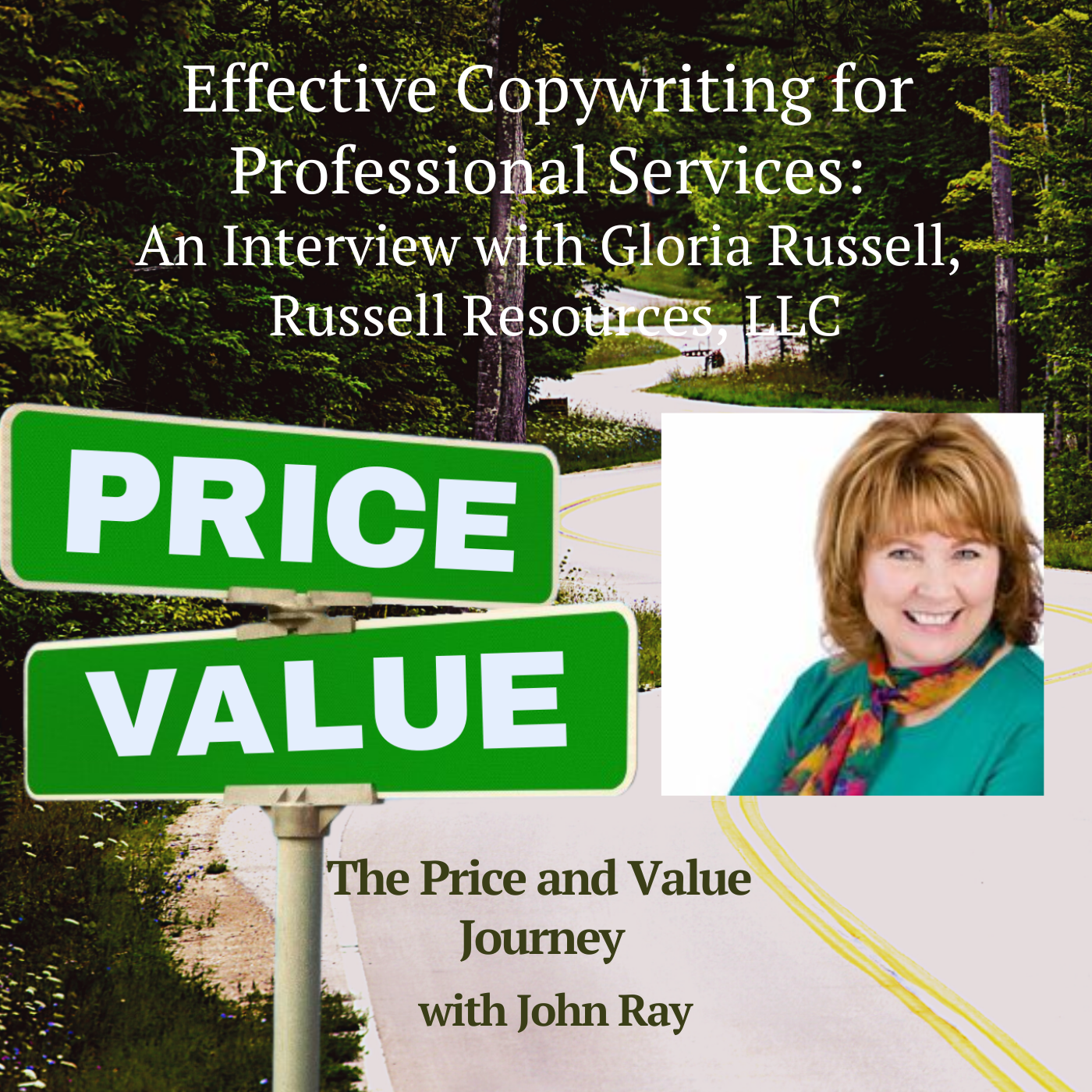
Effective Copywriting for Professional Services: An Interview with Gloria Russell, Russell Resources, LLC

March 29, 2023 by John Ray

Effective Copywriting
North Fulton Studio
Effective Copywriting for Professional Services: An Interview with Gloria Russell, Russell Resources, LLC
Loading
00:00 /
RSS Feed
Share
Link
Embed

Download file

Effective Copywriting

Effective Copywriting for Professional Services: An Interview with Gloria Russell, Russell Resources, LLC

Copywriter Gloria Russell joined host John Ray to discuss the elements of effective copywriting for professional services providers. Gloria talked about the problem of services providers talking too much about themselves, uncovering their unique brilliance, the rise of AI and what it means for copywriting, why reading makes for better copywriting, and much more.

The Price and Value Journey is presented by John Ray and produced by the North Fulton studio of Business RadioX®.

Russell Resources

How you show up and serve your clients is more important now than ever.

At Russell Resources and writer.mn, they help U.S. business owners who are bogged down with ineffective website content and unclear marketing messages.

They know that you would like to finally feel confident that you are sending the right message to the right audience. They understand that successful messaging must authentically resonate with your ideal clients. With their marketing and writing expertise, they would love to talk with you about helping you attract more of your ideal clients to increase revenue and profit.

Russell Resources can help you extend your reach, so it delivers value to you and your clients. They provide the strategic, client-focused, written content that sends your unique message to those you most love to serve.

Website | LinkedIn | Instagram

Gloria Russell, Founder and Lead Copywriter, Russell Resources LLC

Gloria Russell, Founder and Lead Copywriter, Russell Resources LLC

Nine years ago, Gloria Russell launched Russell Resources LLC to help entrepreneurs upgrade their marketing strategy and copywriting. She works with service-based businesses to gain clarity on their preferred markets, ideal clients, and services that provide in-demand solutions. Her compelling content enhances visibility, credibility, and marketability by reaching the right audience through engaging topics on websites, blogs, and LinkedIn posts.

After a lengthy corporate career, Gloria now enjoys working with clients across the country from her office in west central Minnesota. She treasures all the special times with her children and grandchildren who live out of state. Her son, Ryan, and family live in Virginia, and Michigan is home to her daughter, Odessa, and family.

Gloria enjoys travel, music, adventure or mystery books and movies, home improvement projects, and the cheery sound of birds chirping.

LinkedIn

TRANSCRIPT

John Ray: [00:00:00] And hello again, folks. I’m John Ray on The Price and Value Journey. And I’m delighted to welcome my friend Gloria Russell. Gloria is based in Minnesota, but she works all over the country and she works with a number of different verticals, you might say, performing copywriting services, giving them copywriting that they need for their website. It might be for brochures or social media posts or maybe LinkedIn or what have you.

But I’ve known Gloria for a while now and I really love her work. I love her perspective. And I thought she would be a great person to talk to about effective copywriting for professional services firms. Gloria, thank you so much for joining me.

Gloria Russell: [00:00:50] Thank you so much. It’s a pleasure. Thank you for the invitation.

John Ray: [00:00:54] Absolutely. So I didn’t do your background justice because you’ve done so much great work. But I’m going to turn it over to you and tell the listeners a little bit more about your background and how you became a copywriter.

Gloria Russell: [00:01:15] Well, I think, John, it actually started kind of a young age, at least for the writing part of it. When I was a young girl, I used to actually rip pictures out of a magazine and then I’d write my own story. I had quite the imagination. And I’m a reader and I think readers make good writers a lot of time. And it’s probably just because you have that exposure to the written word and the spelling and word usage, just all of that. And of course, you love the impact and the adventure. But I do feel like readers oftentimes make good writers.

And so that’s kind of how I began. I used to like to write. I always been a reader. But if you fast forward to my corporate career, there I had a variety of responsibilities. But part of it was I wrote internal and external communications. And for some of them I was the author, but for others I was writing for other people. It might have been the owner of the company, the VPs, the CEO, the C-suite, whomever.

And so I learned, and I feel like some of it might have been a little bit of a natural tendency. But I learned through years of practice how to write in the voice of many different people. And it was really fun for me. So I enjoyed that a lot.

John Ray: [00:02:49] You said something there I want to follow up on. You talk about the connection between reading and writing. Talk about how important it is to read in order to develop your writing skills.

Gloria Russell: [00:03:06] I think it is, most definitely, because and I think that’s one of those things that really helps. When you read, and I’ve got the whole bookshelf, when you read, you really see how stories develop. You see different styles of writing, but you can also recognize the good patterns and even just the words and the spelling and all of that. I’m one that finds the mistakes in books. And I’m always thrilled when I read a book and there are no mistakes, but I think it is important.

It’s kind of funny, John, because in my corporate days when I did a lot of writing, I didn’t call myself a copywriter. Even though I certainly was, but that was just one of my many duties. And I didn’t call myself a copywriter. It wasn’t until I decided to leave the corporate campus and start my own business that I realized, oh, now I’m a copywriter.

Because what I was trying to do, I wanted to help business owners with their copywriting, with their content, with how they projected themselves. And that’s what they told me they needed the most. So the things I love to do, that’s what I decided. And I do love it because it offers me a lot of freedom and flexibility at this stage of my career. But now I indeed do call myself a copywriter because that’s what I do all the time. So I’ve owned up to it now.

John Ray: [00:04:45] Okay. Well, I want to talk about that term for just a second, because the term itself, I understand why you use it because that’s what people are looking for. So you have to call yourself that, right? But the writing itself is the task, and you do so much more than that. And really, and this is true for any good copywriter, right? I mean, it does not start with the writing. It starts with something bigger than that. Talk more about that.

Gloria Russell: [00:05:20] Yeah, absolutely. Well, so there is the writing thing, and that’s the part where I say I kind of came by that early and came by that honestly. But when I talk about the content, really, it’s the marketing. And sometimes people don’t know that’s what they need and they’re asking for the writing, which is definitely the product. But a lot of times, it’s the marketing and they don’t quite understand that.

So when clients come to me, typically what they’ll say is they need the content, they need the writing, but they don’t have time, they don’t know how to write, they can’t write. Some of them just say it would be torture. So they want something professional, something that’s really going to serve them well, represent them well, but they’re not sure how to provide that for themselves.

So a lot of times, even I do use the word copywriting because you need to, but a lot of times I use the term marketing content. So I’ll say I write marketing content, or I create marketing content. And I think sometimes people understand that a little bit better.

John Ray: [00:06:33] You know, I think I’m qualified to judge a bad copywriter from a good one because I’ve had bad ones and I’ve had good ones, and that means you. And I think the difference is the copywriters that play into people’s point of view, right? I mean, and I think your talent, it seems to me, is giving professional services providers and other companies you work with a point of view makeover that it’s not about them and what they do per se.

Gloria Russell: [00:07:14] This is so true. I think what you need to do and what people want, sometimes they’re just not really able to express it. But really, we need to uncover their unique brilliance and how they’re different and how they relate to the client. Because in the writing and in the copy that people are going to read, it needs to be all about the client.

There are many different types of copywriters. There are some and they are professionals as well. But there are some that will write for a particular industry, and they will maybe create companies that will create a website and the copy that goes with it, and they sell that same thing to everyone in that niche or all the same.

So there’s really no way to differentiate when you see that. And if that’s something that works for you and that’s what you need, that’s great. You have to know what your objectives are and what your goals are. For me, I like to provide original content. And so that means I really need to get to know the business and who their ideal clients are.

John Ray: [00:08:22] Yeah. And I guess this also comes around to a lot of professional services providers have, they’ve gotten trained too. Right? I mean, they’ve done a lot of writing along the way, particularly attorney’s verticals like that. Right? They’ve done a lot of that. So. If you’re a good writer, why do you need to hire a copywriter?

Gloria Russell: [00:08:55] Well, there’s usually two reasons. People will come to me, and they’ll say, I am a good writer. And they are, but they don’t have time. They absolutely do not have the time. And that’s not where they want to focus their energy. But most of them are good, they’re good writers, but they don’t really understand the marketing side of it. And you need to really love the outcome.

So once you have new content, say for your website, your blogs, your LinkedIn profile, bios, whatever it is, you want to feel really good about that and proud of it because I feel really bad when people say, yeah, I wrote it but it doesn’t really do the company justice. It doesn’t really help me. People aren’t attracted to it.

And the whole thing is you need to speak to the clients. You need to show what’s in it for them and you need to do it pretty quickly. So I think a lot of times the real reason is it’s just a matter of the marketing side of it. People have trouble talking about their own, talking about themselves or their own business a lot of times.

John Ray: [00:10:06] Well, my sense of it is they talk too much about themselves. So maybe they’re too good at talking about themselves as opposed to talking about what’s going on in the heads of the potential client that they have, right?

Gloria Russell: [00:10:20] Right. Well, that’s absolutely true. And that’s one of the things that I see as probably the biggest, well, I would say undoubtedly the biggest mistake that people make when they write their own content. And a lot of people will do that, especially when they’re starting out. But they talk too much about themselves and too much about the company and we do this and we do that.

But the truth is, when someone comes to your website or looks at some marketing materials, whatever it is, they want to know what’s in it for them. And people don’t have a very long attention span anymore. I don’t either. So they want to see it and they want to see it quickly. So you really need to talk about the client and what’s in it for them. That’s what gains you the outcome that you’re really looking for.

John Ray: [00:11:11] Well, let’s talk about the, I guess, the piece of this that involves how you work with a client and how you get to that point. So dig into that for us. Take us through what that looks like for you as you unpack all that with a client.

Gloria Russell: [00:11:33] Well, when there’s a new client, the first thing always is to get to know them. So I will spend time with them to really understand what drives them their why, why are they in it? I’d like to know about their business, the mission, the vision, what they’re hoping to achieve. And so we have some discussions on that. Some of them will go pretty deep to see what’s it all about. I want to know what’s important to them.

But the second thing we’ll talk about is who is their ideal client? Who are they really looking for? Who do they want to serve? And those are the people that we want to attract because we want them to fall in love with you so that you can serve more of those type of people. So we discuss all of that with an understanding of what their goals are and who they’re really going to be basically a hero to. And then we decide what needs attention and where we can show the client some love. So it might be their website, it might be their LinkedIn, it might be blogs. Sometimes it’s video, video scripting, case studies, whatever they need. But you need to start with those elements first.

John Ray: [00:12:49] Do you find that you discover more about the clients of a service provider than maybe they knew themselves?

Gloria Russell: [00:12:59] It happens sometimes. Yeah. The interesting thing is when I talk with business owners, most of them know a lot about their business and what their goals are and what they’re trying to achieve, who they want to serve. Some of them are very clear on who their preferred clients are and who they can really make a difference for. But some of them are not so clear, especially if they’re a little earlier on in their business.

Or during the pandemic, a lot of people change their focus or do a little bit of a switch and they might have added services or just they’re doing their work differently. They might even be looking for a different set of clients. So we would talk about that. And sometimes we need to have a little bit more discussion on that to really understand who it is they’re looking for. Because until I know who those clients are that they really want to serve, I can’t write for them. I need to know who they are so that I can write directly to them, and it will speak to them and resonate with them.

John Ray: [00:14:11] Yeah, that makes sense, Gloria. Now, so you go through — and I know this from working with you. You go through a pretty extensive interview process, right? And you record that interview, so you have access to that later, right?

So I guess what are the big — are there surprises that come out of that? I’m just curious if your clients sometimes have epiphanies about their own business that maybe they didn’t fully appreciate? And just because you’re an independent third party and looking for their special sauce that you find things they didn’t know they had.

Gloria Russell: [00:15:01] This is true. It does happen sometimes. And it turns out to be a delightful journey for the business owner, I feel. And they’ll say, oh my gosh. And sometimes I think they’re a little bit worried about it, like, well, it will be too overwhelming, depending on where they are at. It depends really on how deep we go into that and how much we have to do.

But typically, at the end, they’ll just say, oh my gosh, I learned so much and I’ve narrowed things down and I have much more clarity now. And they realize that actually the exercise was fun. And so, I really love that because I don’t want anybody feeling nervous about it or like it’s going to be too much work. But you do have to ask the right questions so that you can uncover the essence of their business goals and what they’re really trying to accomplish.

John Ray: [00:15:57] Yeah, that makes sense. So what are the services businesses that you find maybe the most challenging to write for and why?

Gloria Russell: [00:16:13] That one’s pretty easy for me. And every copywriter might have a different answer. But for me, the most challenging are legal and financial. And it doesn’t mean that I don’t write for them. I do. I will write things like ads. I’ll do their LinkedIn profiles to make sure it really represents them well. I will do some website content, or it could be blogs or posts.

What I won’t do is I won’t do white papers or something that really gets deep into the topic. And the reason is I’m not the expert on the legal and the financial. That’s not my main focus. And there are a lot of things in those industries that you can’t say or certain ways you can’t say it. There are certain words you can’t use. And so, I just avoid that. And if there is someone who needs that type and that depth of copy for legal or financial, I refer them to someone who only works with that group.

John Ray: [00:17:23] Okay, cool. So let’s say we’ve got some someone listening to this, and they’ve decided, okay, I give up, I’m going to hire my own copywriter. So one question that I get a lot from people is I don’t know how to judge. I don’t know how to judge who’s a good fit for me and who’s not, because it all kind of sounds the same to me when I go to their website or what have you. So how do you counsel someone on how to make a good selection of a copywriter for their business?

Gloria Russell: [00:18:03] Well, I think there are ways that you can go about that. And first thing I would do is you have to have an idea of what you need. But you can go to the copywriters, look for their LinkedIn. And when you look at their LinkedIn profile, you can gain a little bit of an idea of who they are, what they do, what it might be like to work with them. And you can see a little bit about their style.

The other thing you can do is you can look at their recommendations and that will tell you something I think that’s valuable. And the LinkedIn recommendations are awesome. You can see who said what. You can even see the date that it was posted. So I think that’s really good. You can also go to their website and just see how they wrote their own website and who they seem to be speaking to, that kind of thing.

So I think those two. And then if it seems like something that speaks to you, you can ask for a conversation. I’m sure that any copywriter would be very happy to have a chat and you can decide if it’s a good fit.

John Ray: [00:19:22] Yeah. Okay. So I want to get to the topic of the day, which is AI and ChatGPT and Google has Bard coming out. Well, it’s already out right now, but talk about just how you view AI and copywriting and your ability to do what you do.

Gloria Russell: [00:19:52] Yes. It certainly is the topic of the day, isn’t it?

John Ray: [00:19:55] Oh, yeah.

Gloria Russell: [00:19:57] For me, I love technology, so I don’t think of AI or any kind of techno innovative happenings as any kind of a threat. If you think about over the years, all the technology changes we’ve had, it’s exciting and we have capabilities now that we never had before. And this is another thing. I mean, it’s ever-evolving and it will continue to evolve.

I know there are people who aren’t as fond of technology. Probably they think, oh, now we have to learn another thing. Or some people just don’t like change. And so that impacts how people feel about things. I’m one of those that really embraces change and technology. I mean, as long as it can do something for me that might be productive, it’s great. So change doesn’t bother me.

I mean, even in my personal life, John, I, like a lot of people don’t like to move and I have moved many times. For me, that’s just an adventure. I don’t have to clean my closets. I can just move. And I kind of take that same perspective with technology. And I think AI can really help a lot of business owners and it can help a lot of career professionals in many ways that might not have been available to them before. And it will keep getting better.

I’ve seen a lot of my clients use AI effectively for writing emails. Some of them, especially if they’re a little concerned about how to structure the sentence or which words to use, they find it very valuable. I’ve seen others use AI as they start projects, maybe to outline something or to gain some other ideas. That is another benefit.

And then of course, there are some people who are using AI to write their posts in their blogs and their eBooks and all of that. And it’s amazing if you just watch it unfold, it’s just like, oh my gosh, look at this, it’s amazing to just see it happen so quickly.

But here’s the caution. And this is my view, but here’s the caution. This is like anything, I believe the output is only as good as the input. And so to use it well, you really need to spend some time with it and improve the questions you ask, and you need to know when to use it and basically create a strategy.

John Ray: [00:22:35] Yeah. There’s something beguiling about getting the results as quickly as you get them. And what I mean by that is it’s kind of like if you, well, I’m dating myself. Probably not you, but I’m dating me. So, I mean, when, I guess it was VisiCalc, came out and the old spreadsheet software and because everything was so well organized and so forth, I mean, you maybe took a little bit of a, had more confidence in the results than you should. Right. Just because of the way the output looked. Right. And it strikes me that something like ChatGPT is very similar.

Gloria Russell: [00:23:28] Yes. Yes, I think so. I don’t believe for a minute that it would replace humans for exceptional copywriting, but it can help speed up the process a little bit if really learn how to use it to your benefit. And on the other hand, I’ve had clients come to me in the last weeks saying they don’t want to use AI for their content because they don’t feel that it gives the personality, or it doesn’t add to their branding, and it just doesn’t pull it all together. So that’s why they would like for me to do it so that they know that that’s they’ll get the outcome that they want.

But the whole thing is fascinating. And I think the other caution that I would have is it’s like anything else, it’s not perfect. And so when you use ChatGPT or the others, it will create content that can sometimes be inaccurate and there can be mistakes. It’s like any software actually even if — well, it’s because I know I guess. But if I use the grammar software, I can see it make mistakes or I can see it use a word that changes the meaning basically of what I want to say. And it’s not going to be a good thing for me.

So you have to be aware that all the information might not necessarily be accurate and some of it might be a little bit biased. So you have to, when you’re using it, I feel like you need to, in the end, really make it your own and edit it. Make sure that it has the proper content, grammar, tone and flow that you’re looking for. In other words, what you really want is something original, not strictly machine generated.

John Ray: [00:25:21] Right. Yeah. And so do you use ChatGPT or its equivalents? Do you use AI yourself?

Gloria Russell: [00:25:33] I do to a point. I do to a point. But I certainly don’t write my clients content with ChatGPT. No.

John Ray: [00:25:45] Okay.

Gloria Russell: [00:25:46] N-O.

John Ray: [00:25:47] So I got it. So are you using it for like research, outlining, prompts, or that kind of thing? Is that the extent of your usage?

Gloria Russell: [00:25:57] Pretty much. I would say, honestly, I’m using it just to see what it can do.

John Ray: [00:26:02] Okay. Okay.

Gloria Russell: [00:26:03] Really, I feel like we’re really at the beginning stages of this. And so I use it to see what it can do, but it does not replace the original content for me at all. So, but it’s very interesting. It’s fascinating.

John Ray: [00:26:20] Yeah, for sure. So let’s talk about tone and getting someone’s voice because I can hear someone saying it’s a valid point. That may be a problem with ChatGPT, but how do I get a copywriter that gets my tone and my voice, right, that makes it sound like me? So how do you accomplish that?

Gloria Russell: [00:26:50] Well, I don’t know that there’s really a class I could teach on that one. But again, I feel a little bit like I had maybe a little bit of a natural tendency there, but also probably just because I’ve done it for so long. That was part of my corporate work. And again, you need to really know your client and you need to know who you’re speaking to. So that’s the key to it right there, I think.

And it’s very important to have those conversations with the client, to understand their personality and their brand, what they’re trying to accomplish, their focus. And in working with them over time, if that changes, then you have those discussions again. But if you’re working with someone for the first time, like I will look at what has been created before and I’ll ask them how they feel about it. Sometimes they’re really happy with it, sometimes they’re not. They understand that that did not represent them the way they wanted. And so we talk about those kinds of things. But I think if you ask the right questions, you can really understand better who they are and how they would speak to their client.

The other part is knowing the client and how would they speak to those marvelous clients that they love to serve, and how do those clients want to be spoken to, what do they want to know? And again, you don’t want to use too much technical jargon or acronyms. You don’t want to get too technical. So there’s a lot to it, but it’s really fun. And I just am thrilled when I hear the comments that people say, oh, I don’t know how you can write so that it sounds like I wrote it, but you do a great job. And that really makes me feel good.

John Ray: [00:28:46] Yeah. And that really gets over the objection I think a lot of people have toward hiring a copywriter in general, right. And they put this in a category. They kick the can down the road because that’s what they’re afraid of and they’re waiting for a time they’ll be able to do it themselves. And they never get to that point, right?

Gloria Russell: [00:29:07] Yeah, it’s true. I have had a few, not many, but a few say, well, I don’t know that you could write my content because you don’t totally understand my business. Well, we have conversations so that I can understand enough. And I think what helps me too is that I have that corporate background and I was involved always from the strategy all the way through to the implementation.

So I do understand business and that probably helps me too. But sometimes it’s maybe better not to know all the details because you can write then in a way that more people will understand rather than when you’re really in the thick of it and you’re getting a little bit too detailed or too technical. It’s interesting.

John Ray: [00:29:54] Yeah. Sometimes knowing too much makes you a captive of all that, right?

Gloria Russell: [00:29:58] Yeah.

John Ray: [00:29:59] Yeah, yeah. Yeah, that makes perfect sense to me. Gloria, this has been great. And I can’t imagine that there aren’t some folks that would like to know more about you and your services. So can we give them your contact information and allow them to get in touch with you?

Gloria Russell: [00:30:18] Absolutely. Thank you so much. So they could Google Gloria Russell copywriter and they would find my LinkedIn and my website for Russell Resources. That’s one way. But I have a shortcut. The shortcut is you can just Google writer.mn. I’m based in Minnesota, so the MN is easy to remember. So writer.mn goes directly to my Russell Resources website.

John Ray: [00:30:44] Terrific. And you were again, work with clients really all over the place. You may be in Minnesota, but in terms of your clients, you’re all over the place.

Gloria Russell: [00:30:54] All over the country. I don’t do international anymore, but all over the country.

John Ray: [00:30:59] There you go. Gloria Russell. Gloria, this has been great. Thank you so much for joining me and our listeners and talking about your work and the copywriting profession. Thank you so much.

Gloria Russell: [00:31:14] Thank you so much. I appreciate it. It’s a pleasure.

John Ray: [00:31:18] Hey, folks, just a quick reminder that you can find the show archive for this series at pricevaluejourney.com, as well as your favorite podcast app. So whichever makes the most sense to you, just search pricevalujourney.com or go to pricevaluejourney.com or search Price Value Journey and you’ll find it.

Also, if you go to pricevaluejourney.com, you can find updates on my upcoming book. It’s called The Price and Value Journey, Raising Your Confidence, Your Value and Your Prices Using the Generosity Mindset Method. Be out later this year in 2023. So for my guest, Gloria Russell, I’m John Ray. Join me next time on The Price and Value Journey.


About The Price and Value Journey

The title of this show describes the journey all professional services providers are on:  building a services practice by seeking to convince the world of the value we offer, helping clients achieve the outcomes they desire, and trying to do all that at pricing which reflects the value we deliver.

If you feel like you’re working too hard for too little money in your solo or small firm practice, this show is for you. Even if you’re reasonably happy with your practice, you’ll hear ways to improve both your bottom line as well as the mindset you bring to your business.

The show is produced by the North Fulton studio of Business RadioX® and can be found on all the major podcast apps. The complete show archive is here.

John Ray, Host of The Price and Value Journey

John Ray The Price and Value Journey
John Ray, Host of “The Price and Value Journey”

John Ray is the host of The Price and Value Journey.

John owns Ray Business Advisors, a business advisory practice. John’s services include advising solopreneur and small professional services firms on their pricing. John is passionate about the power of pricing for business owners, as changing pricing is the fastest way to change the profitability of a business. His clients are professionals who are selling their “grey matter,” such as attorneys, CPAs, accountants and bookkeepers, consultants, marketing professionals, and other professional services practitioners.

In his other business, John is a Studio Owner, Producer, and Show Host with Business RadioX®, and works with business owners who want to do their own podcast. As a veteran B2B services provider, John’s special sauce is coaching B2B professionals to use a podcast to build relationships in a non-salesy way which translate into revenue.

John is the host of North Fulton Business Radio, Minneapolis-St. Paul Business Radio, Alpharetta Tech Talk, and Business Leaders Radio. house shows which feature a wide range of business leaders and companies. John has hosted and/or produced over 1,700 podcast episodes.

Coming in 2023:  A New Book!

John’s working on a book that will be released in 2023:  The Price and Value Journey: Raise Your Confidence, Your Value, and Your Prices Using The Generosity Mindset. The book covers topics like value and adopting a mindset of value, pricing your services more effectively, proposals, and essential elements of growing your business. For more information or to sign up to receive updates on the book release, go to pricevaluejourney.com.

Connect with John Ray:

Website | LinkedIn | Twitter

Business RadioX®:  LinkedIn | Twitter | Facebook | Instagram

Tagged With: AI, artificial intelligence, business writing, ChatGPT, copywriting, Entrepreneurs, Gloria Russell, John Ray, Price and Value Journey, Price Value Journey, pricing, professional services, professional services providers, Russell Resources, solopreneurs, value, value pricing, Write.mn

Employer Privacy Laws and What You Need to Know in 2023

January 27, 2023 by John Ray

Employer Privacy Laws What You Need to Know in 2023
Advisory Insights Podcast
Employer Privacy Laws and What You Need to Know in 2023
Loading
00:00 /
RSS Feed
Share
Link
Embed

Download file

Employer Privacy Laws and What You Need to Know in 2023

Employer Privacy Laws and What You Need to Know in 2023 (Advisory Insights Podcast, Episode 28)

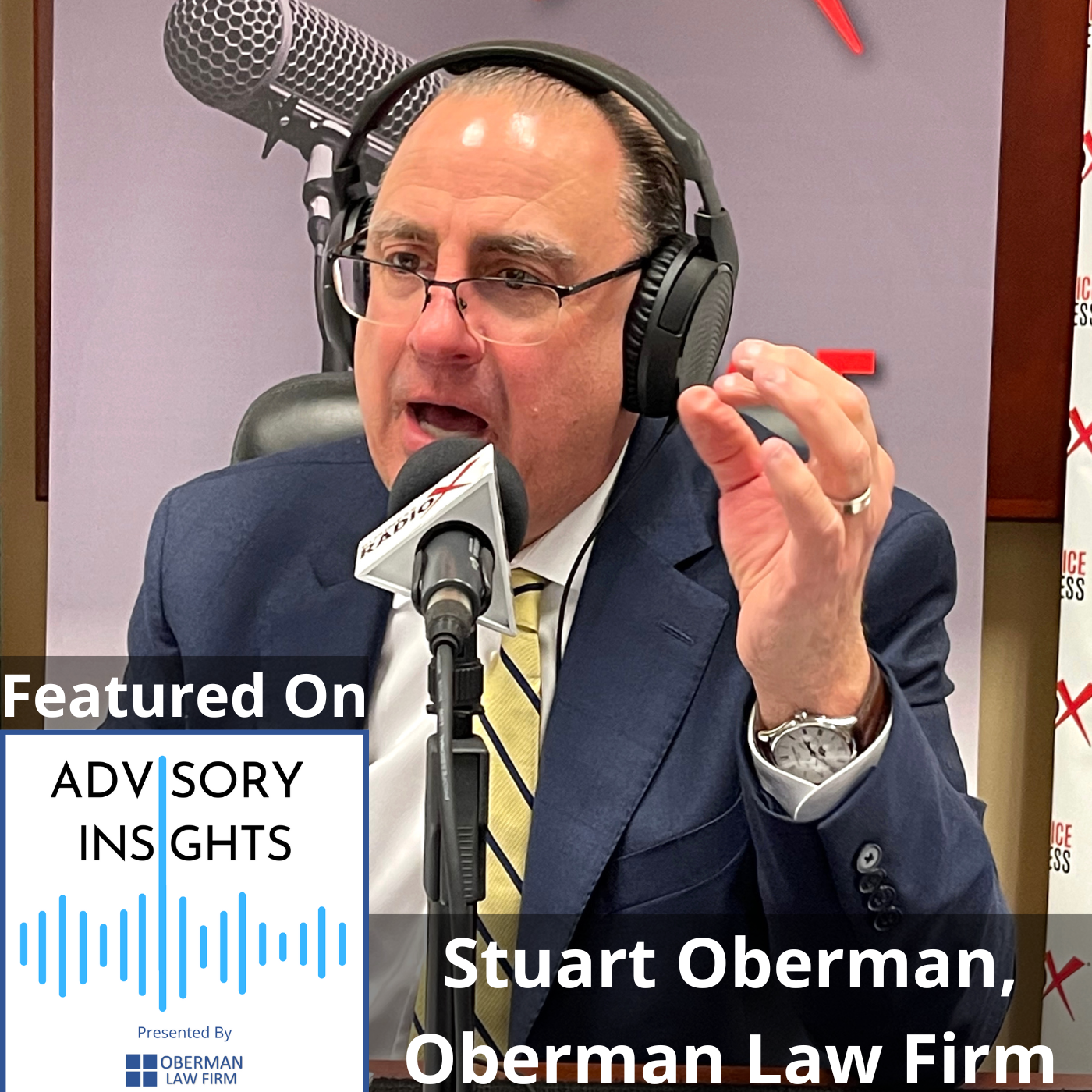
On this episode of Advisory Insights, Stuart Oberman of Oberman Law Firm discussed how new employer privacy laws in New York and California are restricting the use of artificial intelligence and personal data. Stuart advises companies who are using this technology to hire a law firm with experience in this area to help them navigate the new laws and trends.

Advisory Insights is presented by Oberman Law Firm and produced by the North Fulton studio of Business RadioX®. The series can be found on all the major podcast apps. You can find the complete show archive here.

TRANSCRIPT

Intro: [00:00:01] Broadcasting from the studios of Business RadioX, it’s time for Advisory Insights. Brought to you by Oberman Law Firm, serving clients nationwide with tailored service and exceptional results. Now, here’s your host.

Stuart Oberman: [00:00:20] Hello everyone, and welcome to Advisory Insights Podcast. Stuart Oberman here, your host. Well, I want to talk about as we go quickly in 2023, we’ve got two states that are really on the forefront of a lot of issues. And I want to talk about our topic for today, employer privacy laws, what you need to know in 2023.

Stuart Oberman: [00:00:45] So, there’s been a big, big push on two ends of the world, New York and California. And we’re seeing a lot of activity between those two states. But I want to cover just a couple of things as employers and as employees.

Stuart Oberman: [00:00:59] So, as an employer, you have to know what’s going on in those two states, because, I always say, what starts west goes east, what starts up north goes south. So, I want to take a look at, really, what things are going on in those two states. So, we’ve seen a lot of activity of new legislation being enacted, which extends to employers with applicants or workers who reside in New York City or California. So, those are wide ranging areas.

Stuart Oberman: [00:01:36] So, example, the new laws in New York and California regulate the use of artificial intelligence. It has gotten to that yet. For once I think the law has sort of caught up to technology. And, also, they restrict the personal data that goes into effect January 1, 2023.

Stuart Oberman: [00:02:00] So, what does that mean? Artificial intelligence, that means you’ve got to be extremely careful – in plain English – what data you synthesize into your usage, and that includes personal data too. So, example, I want to go a little bit deeper into New York. So, in New York, Local Law 144 – again, I don’t want to get too deep, but I just want to mention this – regulates how companies can use automated employment decision tools.

Stuart Oberman: [00:02:35] Welcome to software, welcome to artificial intelligence, which, essentially, regulates bias audits on the basis of the data that is accumulated by the employer. Folks, that’s deep stuff. That is deep stuff. So then, you got to figure out, one, what data do you receive. Two, what’s personal data, how do you get it. Three, what do you consider artificial intelligence.

Stuart Oberman: [00:03:06] Again, I think the law stepped a little bit ahead of technology without really defining what that is. Because artificial intelligence from the employment standpoint is extremely, extremely new, if you will.

Stuart Oberman: [00:03:20] So, I want to jump into the California legislation. Again, you know, California has some complex laws that are very, very restrictive to California. But what we see is, if you take a look at California and New York, a lot of the laws that are implemented have a piece of that pie from New York or California.

Stuart Oberman: [00:03:44] So, I want to take a look at California’s Consumer Privacy Act of 2018 as it was and has been amended by the California Property Privacy Rights Act, which expands the data privacy laws to cover employees and applicants, also independent contractors and operations between businesses. Folks, let me repeat that. It expands into data privacy laws that cover employees, job applicants, independent contractors, and operations between businesses.

Stuart Oberman: [00:04:32] Now, there are a million things to look at, but, again, I want to keep it very, very simple. So, what we have is we have companies that are using this particular industry knowledge. But each employer has to figure out best practices, especially if you are a national company and you have workers in California, you have workers in New York.

Stuart Oberman: [00:05:01] How do you use the company information where you have data maps to figure out information? Or how do you use it to figure out what’s used, what’s shared? How do you figure out how to handle requests from someone in-house or third party regarding your data that you’ve accumulated? What are your fulfillment obligations and requests as far as human resources go, as far as legal departments go? What are your policies and procedures on that? Do you understand how much data you accumulate? What do you do with it? How do you distribute it? Again, and a question I have, does anyone really know what a bias audit is? How do you define what a bias audit is, which is the basis for these regulatory matters?

Stuart Oberman: [00:05:56] So, here’s what I would do. If you have this technology and you’re utilizing this technology – now, I’m not talking about going on to Google and loading information. This is very specific information – I would strongly recommend, strongly recommend, that companies hire a law firm with explicit, explicit experience in this area. Work together, what tools you’re using, what tools are identified, what data you’re accumulating, what data you’re giving out, what laws are taking effect, how they affect data users to privacy, and what’s the trend, you’ve got to be ahead of the trend.

Stuart Oberman: [00:06:39] So, if something starts in California and New York, you’ve got to be ahead of that. You’ve got to look at what’s coming, because, again, what starts west goes east, what starts north goes south. So, again, look at what you’re collecting. Make decisions on your automated employment practices. Folks, this is an ongoing area. Again, I think the law is a little bit ahead of the data on how to utilize this. So, that’ll just give us one more topic to talk about as we move into 2023 and beyond, I will assure you.

Stuart Oberman: [00:07:16] Folks, thanks for joining us. Advisory Insights, Stuart Oberman here. If you have any questions, please feel free to give us a call, 770-886-2400, or email, stuart, S-T-U-A-R-T, @obermanlaw.com. Folks, have a fantastic day and thanks for joining us.

Outro: [00:07:37] Thank you for joining us on Advisory Insights. This show is brought to you by Oberman Law Firm, a business-centric law firm representing local, regional, and national clients in a wide range of practice areas, including healthcare, mergers and acquisitions, corporate transactions and regulatory compliance.

About Advisory Insights Podcast

Presented by Oberman Law Firm, Advisory Insights Podcast covers legal, business, HR, and other topics of vital concern to healthcare practices and other business owners. This show series can be found here as well as on all the major podcast apps.

Stuart Oberman, Oberman Law Firm

Oberman Law Firm

Stuart Oberman is the founder and President of Oberman Law Firm. Mr. Oberman graduated from Urbana University and received his law degree from John Marshall Law School. Mr. Oberman has been practicing law for over 25 years, and before going into private practice, Mr. Oberman was in-house counsel for a Fortune 500 Company. Mr. Oberman is widely regarded as the go-to attorney in the area of Dental Law, which includes DSO formation, corporate business structures, mergers and acquisitions, regulatory compliance, advertising regulations, HIPAA, Compliance, and employment law regulations that affect dental practices.

In addition, Mr. Oberman’s expertise in the healthcare industry includes advising clients in the complex regulatory landscape as it relates to telehealth and telemedicine, including compliance of corporate structures, third-party reimbursement, contract negotiations, technology, health care fraud, and abuse law (Anti-Kickback Statute and the State Law), professional liability risk management, federal and state regulations.

As the long-term care industry evolves, Mr. Oberman has the knowledge and experience to guide clients in the long-term care sector with respect to corporate and regulatory matters, assisted living facilities, continuing care retirement communities (CCRCs). In addition, Mr. Oberman’s practice also focuses on health care facility acquisitions and other changes of ownership, as well as related licensure and Medicare/Medicaid certification matters, CCRC registrations, long-term care/skilled nursing facility management, operating agreements, assisted living licensure matters, and health care joint ventures.

In addition to his expertise in the health care industry, Mr. Oberman has a nationwide practice that focuses on all facets of contractual disputes, including corporate governance, fiduciary duty, trade secrets, unfair competition, covenants not to compete, trademark and copyright infringement, fraud, and deceptive trade practices, and other business-related matters. Mr. Oberman also represents clients throughout the United States in a wide range of practice areas, including mergers & acquisitions, partnership agreements, commercial real estate, entity formation, employment law, commercial leasing, intellectual property, and HIPAA/OSHA compliance.

Mr. Oberman is a national lecturer and has published articles in the U.S. and Canada.

LinkedIn

Oberman Law Firm

Oberman Law Firm has a long history of civic service, noted national, regional, and local clients, and stands among the Southeast’s eminent and fast-growing full-service law firms. Oberman Law Firm’s areas of practice include Business Planning, Commercial & Technology Transactions, Corporate, Employment & Labor, Estate Planning, Health Care, Intellectual Property, Litigation, Privacy & Data Security, and Real Estate.

By meeting their client’s goals and becoming a trusted partner and advocate for our clients, their attorneys are recognized as legal go-getters who provide value-added service. Their attorneys understand that in a rapidly changing legal market, clients have new expectations, constantly evolving choices, and operate in an environment of heightened reputational and commercial risk.

Oberman Law Firm’s strength is its ability to solve complex legal problems by collaborating across borders and practice areas.

Connect with Oberman Law Firm:

Company website | LinkedIn | Twitter

Tagged With: Advisory Insights, Advisory Insights Podcast, artificial intelligence, employee law, employer privacy, Oberman Law, Oberman Law Firm, personal data, privacy laws, Stuart Oberman

Pedram Afshar, Amaka

June 8, 2022 by John Ray

Amaka
North Fulton Business Radio
Pedram Afshar, Amaka
Loading
00:00 /
RSS Feed
Share
Link
Embed

Download file

Amaka

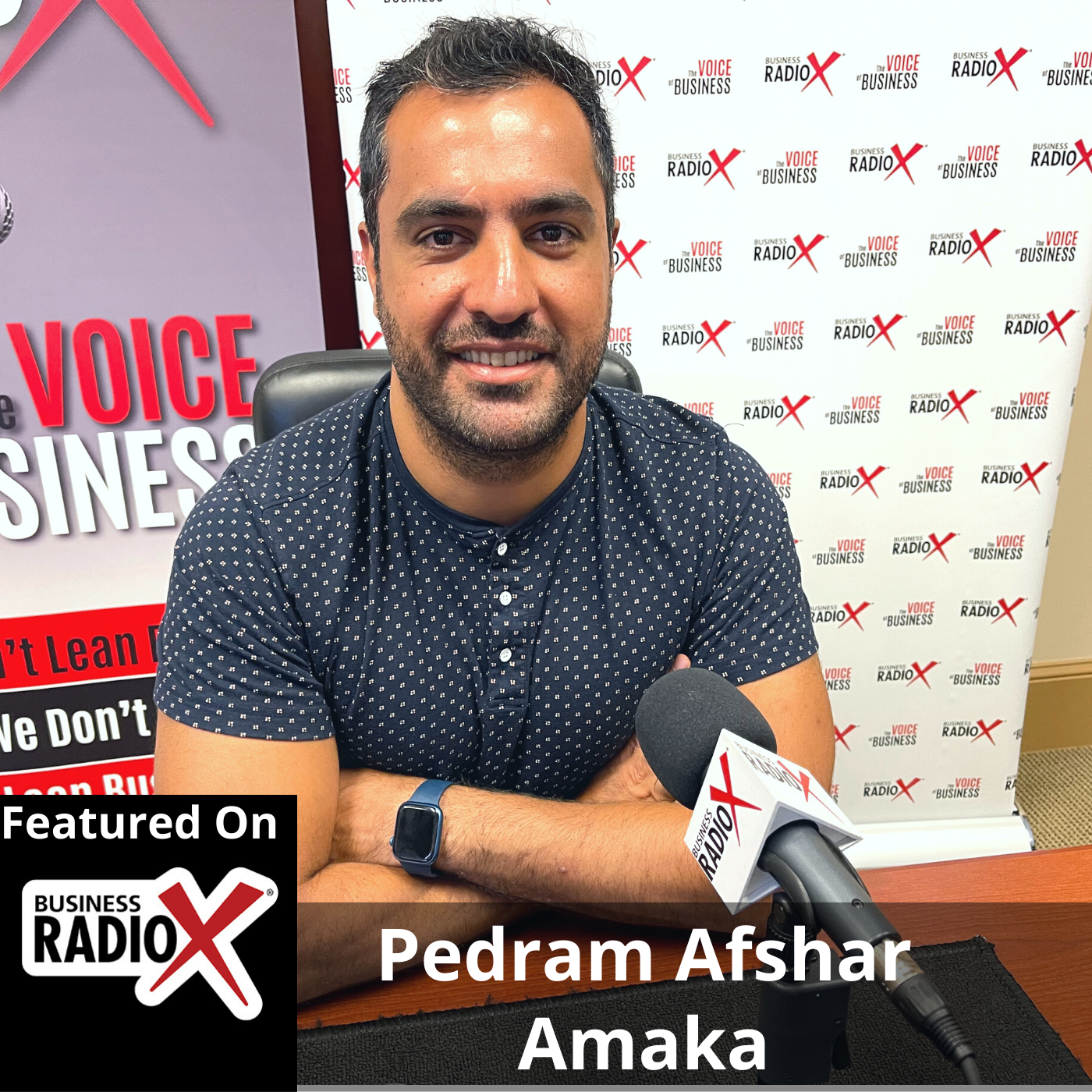
Pedram Afshar, Amaka (North Fulton Business Radio, Episode 464)

Pedram Afshar joined host John Ray to discuss the automation and artificial intelligence technology Amaka employs to serve small business owners and their advisors. Pedram discussed how automation and AI can be used to improve customer service for a business, the tools Amaka offers to give businesses a better, faster look at their financial picture, why their tools enable advisors to better serve their small business clients, and much more.

North Fulton Business Radio is broadcast from the North Fulton studio of Business RadioX® inside Renasant Bank in Alpharetta.

Amaka

Amaka is a business automation platform, that leverages APIs to bring business and accounting automation for small and medium-sized businesses.

It is for accountants, bookkeepers, and business owners with the need to automate their data entry. You can save tens of hours by automating the data aggregation process between POS, online stores, and accounting softwares.

Company Website |LinkedIn | Facebook | Twitter

Pedram Afshar, Co-Founder and CEO, Amaka

Pedram Afshar, Co-Founder and CEO, Amaka
Pedram is a serial tech entrepreneur from Australia. He has built global technology solutions, mainly focused on the B2B market. He is currently the CEO of Amaka and is focused on business and accounting automation, leveraging APIs. He has a passion for small and medium-sized businesses, which he regards as the engine room for any economy.
Pedram is from Australia and moved to Atlanta in 2021.

LinkedIn

Questions and Topics in this Interview:

  • Automation and the future of SMBs
  • Automation and Artificial Intelligence (AI) and the impact on employment more generally
  • Process improvement in SMBs, and how to improve profit margins
  • What is your tech stack, and how do you leverage technology, to provide the most amount of value to customers
  • Startup journey and what skills founders need to succeed
  • Customer service as a differentiation

North Fulton Business Radio is hosted by John Ray and broadcast and produced from the North Fulton studio of Business RadioX® inside Renasant Bank in Alpharetta. You can find the full archive of shows by following this link. The show is available on all the major podcast apps, including Apple Podcasts, Spotify, Google, Amazon, iHeart Radio, Stitcher, TuneIn, and others.

RenasantBank


Renasant Bank has humble roots, starting in 1904 as a $100,000 bank in a Lee County, Mississippi, bakery. Since then, Renasant has grown to become one of the Southeast’s strongest financial institutions with over $13 billion in assets and more than 190 banking, lending, wealth management and financial services offices in Mississippi, Alabama, Tennessee, Georgia and Florida. All of Renasant’s success stems from each of their banker’s commitment to investing in their communities as a way of better understanding the people they serve. At Renasant Bank, they understand you because they work and live alongside you every day.


Special thanks to A&S Culinary Concepts for their support of this edition of North Fulton Business Radio. A&S Culinary Concepts, based in Johns Creek, is an award-winning culinary studio, celebrated for corporate catering, corporate team building, Big Green Egg Boot Camps, and private group events. They also provide oven-ready, cooked from scratch meals to go they call “Let Us Cook for You.” To see their menus and events, go to their website or call 678-336-9196.

Tagged With: A&S Culinary Concepts, accounting app, AI, AI technology, Amaka, artificial intelligence, automation, bookkeepers, North Fulton Business Radio, Pedram Afshar, pos, QBO, renasant bank, SMBs

E103 Finding Your Project Management Purpose with Ricardo Sastre Martin

May 24, 2022 by Karen

E103-Finding-your-Project-Management-Purpose-with-Ricardo-Sastre-Martin-feature
Phoenix Business Radio
E103 Finding Your Project Management Purpose with Ricardo Sastre Martin
Loading
00:00 / 56:45
RSS Feed
Share
Link
Embed

Download fileDuration: 56:45

E103-Finding-your-Project-Management-Purpose-with-Ricardo-Sastre-Martin

E103 Finding Your Project Management Purpose with Ricardo Sastre Martin

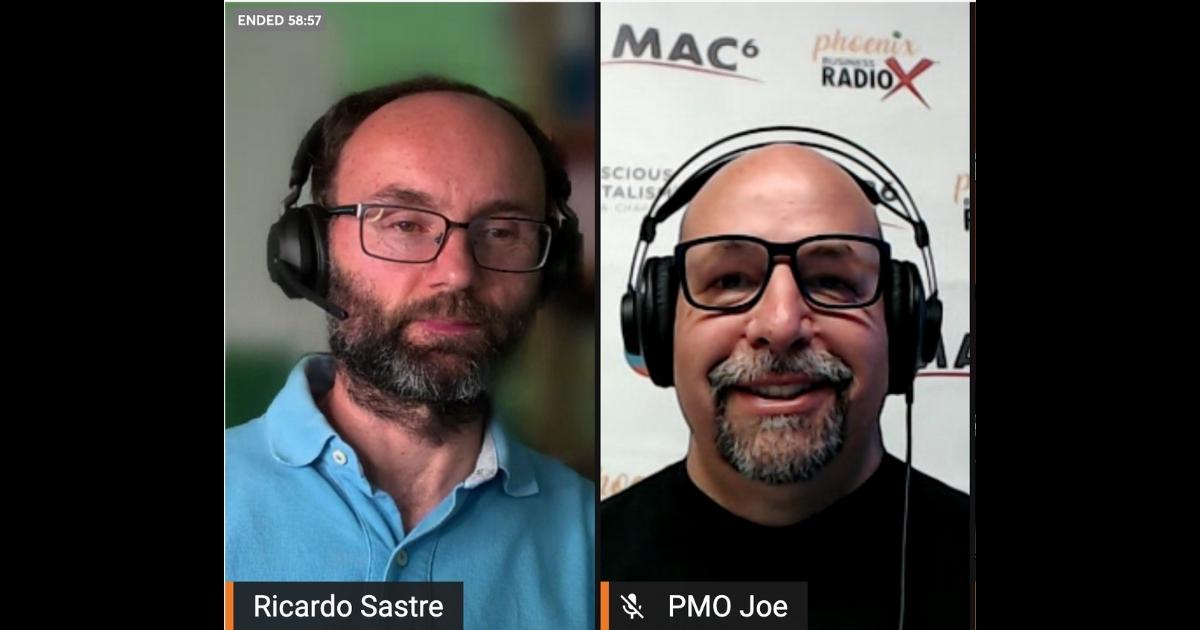
In this episode of Project Management Office Hours, PMO Joe chats with Ricardo Sastre Martin who joined us live from Spain. Ricardo is a leader in our industry with over 16 years experience as a Project Manager, PMO Leader and Consultant. He is also holds the #2 ranking in the Thinkers360 Project Management category.

Ricardo and PMO Joe chatted about having a Growth Mindset, with Ricardo sharing, “the pace of change in the world is so dramatic that if you are not learning continuously you are going to be out of the race because things are changing very fast right now so you have to keep learning.” Ricardo works for Microsoft which promotes the growth mindset, “here at Microsoft we have some time allocated in our daily work or weekly work for training because the company really believes in the need and the power of training and continuous learning.”

Ricardo also shares his perspectives on Artificial Intelligence in Project Management, the Project Economy, and having Purpose with his work. He shared, “So always try to have a purpose, because if you don’t have a purpose, you cannot guide where are you going. So you cannot define your goals and you cannot define what are you going to do to achieve those goals. So at the end, you are kind of lost. So we all need to have a purpose mission in our life, not only in our career.”

Ricardo and PMO Joe continue their discussion about people and influences who have helped shape their careers. 

Connect with Ricardo:
LinkedIn – https://www.linkedin.com/in/ricardosastre-pmo
Twitter – https://twitter.com/ric_sas

To see the guest list for upcoming shows – https://www.thepmosquad.com/podcast
Thank you to THE PMO SQUAD and The PMO Leader for sponsoring this show.

The PMO Squad is a leading provider of PMO and Project Management services in the US. They assist clients building and improving PMOs, provide Project Management Consulting services, deliver custom Project Management Training and provide Project Management staffing services.
Learn more about The PMO Squad – www.thepmosquad.com

Where do PMO Leaders go for Information, Learning, Networking and Services? The PMO Leader community has “Everything You Need to Become a Great PMO Leader”. One PMO World, One Community!
Learn more about The PMO Leader – www.thepmoleader.com

Every company has a mission. What’s ours? To empower every person and every organization to achieve more. We believe technology can and should be a force for good and that meaningful innovation contributes to a brighter world in the future and today. MS-Logo

Our culture doesn’t just encourage curiosity; it embraces it. Each day we make progress together by showing up as our authentic selves. We show up with a learn-it-all mentality. We show up cheering on others, knowing their success doesn’t diminish our own. We show up every day open to learning our own biases, changing our behavior, and inviting in differences. When we show up, we achieve more together.

Microsoft operates in 190 countries and is made up of 181,000 passionate employees worldwide.

Ricardo-Sastre-Martin-Project-Management-Office-HoursRicardo Sastre Martin is a Project Management professional with more than 16 years of professional experience leading projects, programs, portfolios and PMOs in more than 40 countries along 4 continents for multinational companies like Ericsson, Telefonica and Microsoft.

Founder and former leader of the Telefonica CX PMO, awarded as one of the Top 4 PMOs of Europe in the 2021 PMO Global Awards, the largest and most prestigious global award for PMOs, Projects, and PMO professionals.

Included in the list of the Top 50 global thought leaders and influencers in project management by Thinkers360, holding currently the second position in the rank.

Connect with Ricardo on LinkedIn and Twitter.

ABOUT YOUR HOST

Joe Pusz started THE PMO SQUAD to bring real world PMO Leadership experience to the consulting space and to advocate for Project Management through his blog PMOJOE.com. The old saying is “Do what you love and you’ll never work a day in your life.” Following this mindset Joe left Corporate America in 2013 to start THE PMO SQUAD and work with fellow Natural Born Project Managers to advance Project Management Best Practices.

ABOUT OUR SPONSOR

THE PMO SQUAD focuses exclusively on PMO and Project Management consulting. Corporate America is full of Accidental Project Managers running projects who haven’t been trained to be PMs. To help solve this problem THE PMO SQUAD is on the Leading Edge with PMO As a Service. PMO As a Service allows our clients to focus on their respective core competencies while THE PMO SQUAD delivers Project Management expertise. Contact Joe at 678-591-7868. Follow The PMO Squad on LinkedIn, Twitter and Facebook.

Where do PMO Leaders go for Information, Learning, Networking and Services? The PMO Leader community has “Everything You Need to Become a Great PMO Leader”. One PMO World, One Community! Learn more about The PMO Leader – www.thepmoleader.com

Tagged With: artificial intelligence, growth mindset, project economy, project management, purpose-driven

Decision Vision Episode 166: Should I Use Artificial Intelligence in my Business? – An Interview with Charles Wardell, Digital Cortex, Inc.

April 28, 2022 by John Ray

Digital Cortex
Decision Vision
Decision Vision Episode 166: Should I Use Artificial Intelligence in my Business? - An Interview with Charles Wardell, Digital Cortex, Inc.
Loading
00:00 /
RSS Feed
Share
Link
Embed

Download file

Digital Cortex

Decision Vision Episode 166: Should I Use Artificial Intelligence in my Business? – An Interview with Charles Wardell, Digital Cortex, Inc.

Exploring the evolution of artificial intelligence (AI) in general and specifically for business use, Charles Wardell, CEO of Digital Cortex, and host Mike Blake discussed how to define AI, machine learning, and its applications both commercial and otherwise. They also covered its impact on the pandemic, the social implications of AI, the need for a commitment to trustworthy data, and much more.

Decision Vision is presented by Brady Ware & Company and produced by the North Fulton studio of Business RadioX®.

Digital Cortex, Inc.

As technology rapidly evolves, so does the need for faster, more efficient data processing methods.

The Central Processing Unit (CPU) has been the workhorse behind digital endeavors, but today’s computation and data volumes challenge even the fastest CPUs. The modern world is increasingly becoming one where data reigns supreme. Data processing has evolved from serial computation and sequential storage to parallel computing with large pipelines and vast amounts of memory.

Today, there are options for accelerating computation, graphics processing units, FPGAs, ASICs, and DPUs designed specifically for data processing. Digital Cortex aims to converge these advanced technologies into a single unified platform, creating an ecosystem that simplifies the hyperscaling of complex data processing.

The Digital Cortex platform is a data appliance with built-in acceleration. It handles the undifferentiated heavy lifting so that you can focus on logic, analysis, and results. Our company is designed to bring the power of the Cloud to those use cases that cannot tolerate outage, latency, or uncapped expense.

Company website | LinkedIn 

Charles Wardell, CEO, Digital Cortex, Inc.

Charles Wardell, CEO, Digital Cortex, Inc.

Charles Wardell, CTO, Tech Visionary, Maker of Things That Work Fast with decades of experience working with leading MPP databases to implement world-class BI platforms, and then designing and developing one of the world’s most powerful cloud and edge-based analytics engines using MPP (massively parallel processing), grid computing, ML (machine learning), and AI (artificial intelligence), Charlie routinely tackles some of the world’s messiest and most intractable problems. The fact is, Charlie is one of the best big data platform architects in the world.

His superpower is weaving hardware, software, and database technologies into cutting-edge, high-performance solutions that provide insights at the scale and speed modern businesses require. The breadth and depth of Charlie’s experience also enable him to see around the corners well in advance, and the combination of his and David’s vision targeted on the biggest and most valuable solutions is what makes this duo such an amazing team.

If intellectual curiosity was a degree, Charlie would have a PhD. His curriculum has been intensive, and it continues today, his library is extensive, not in one discipline, but several: hardware, software, and database technology. But beyond reading, Charlie’s best work comes out of his lab, whether it’s a customized FPGA, the fastest database in the world (measured by inserts), or it’s a new application that integrates symbolic and connectedness AI, there is nothing he can’t do. However, his best problem-solving characteristics are that he is a natural systems thinker and he never brings bias to a problem, every problem gets his full attention, so he can always focus on identifying the best tool for the job, not necessarily the tool he knows. This is what makes him one of the best architects on the planet, maybe the solar system.

LinkedIn

Mike Blake, Brady Ware & Company

Mike Blake, Host of the “Decision Vision” podcast series

Michael Blake is the host of the Decision Vision podcast series and a Director of Brady Ware & Company. Mike specializes in the valuation of intellectual property-driven firms, such as software firms, aerospace firms, and professional services firms, most frequently in the capacity as a transaction advisor, helping clients obtain great outcomes from complex transaction opportunities. He is also a specialist in the appraisal of intellectual properties as stand-alone assets, such as software, trade secrets, and patents.

Mike has been a full-time business appraiser for 13 years with public accounting firms, boutique business appraisal firms, and an owner of his own firm. Prior to that, he spent 8 years in venture capital and investment banking, including transactions in the U.S., Israel, Russia, Ukraine, and Belarus.

LinkedIn | Facebook | Twitter | Instagram

Brady Ware & Company

Brady Ware & Company is a regional full-service accounting and advisory firm which helps businesses and entrepreneurs make visions a reality. Brady Ware services clients nationally from its offices in Alpharetta, GA; Columbus and Dayton, OH; and Richmond, IN. The firm is growth-minded, committed to the regions in which they operate, and most importantly, they make significant investments in their people and service offerings to meet the changing financial needs of those they are privileged to serve. The firm is dedicated to providing results that make a difference for its clients.

Decision Vision Podcast Series

Decision Vision is a podcast covering topics and issues facing small business owners and connecting them with solutions from leading experts. This series is presented by Brady Ware & Company. If you are a decision-maker for a small business, we’d love to hear from you. Contact us at decisionvision@bradyware.com and make sure to listen to every Thursday to the Decision Vision podcast.

Past episodes of Decision Vision can be found at decisionvisionpodcast.com. Decision Vision is produced by John Ray and the North Fulton studio of Business RadioX®.

Connect with Brady Ware & Company:

Website | LinkedIn | Facebook | Twitter | Instagram

TRANSCRIPT

Intro: [00:00:02] Welcome to Decision Vision, a podcast series focusing on critical business decisions. Brought to you by Brady Ware & Company. Brady Ware is a regional, full-service accounting and advisory firm that helps businesses and entrepreneurs make visions a reality.

Mike Blake: [00:00:22] Welcome to Decision Vision, a podcast giving you, the listener, clear vision to make great decisions. In each episode, we discuss the process of decision-making on a different topic from the business owners’ or executives’ perspective. We aren’t necessarily telling you what to do, but we can put you in a position to make an informed decision on your own and understand when you might need help along the way.

Mike Blake: [00:00:44] My name is Mike Blake, and I’m your host for today’s program. I’m a director at Brady Ware & Company, a full-service accounting firm based in Dayton, Ohio, with offices in Dayton; Columbus, Ohio; Richmond, Indiana; and Alpharetta, Georgia. I am managing partner of the Strategic Valuation and Advisory Services Practice, which brings clarity to the most important strategic decisions that business owners and executives face by presenting them with factual evidence for such decisions. Brady Ware is sponsoring this podcast.

Mike Blake: [00:01:12] If you would like to engage with me on social media with my Chart of the Day and other content, I am on LinkedIn as myself and @unblakeable on Facebook, Twitter, Clubhouse, and Instagram. I also recently launched a new LinkedIn group called Unblakeable’s Group That Doesn’t Suck. So, please join that as well if you would like to engage.

Mike Blake: [00:01:31] Today’s topic is, should I use artificial intelligence in my business? According to PEGA, 77% of people already use a device or service that is AI powered. Eighty-five percent of customer relationships with business enterprises will be managed without human involvement, according to Gartner. And, according to Forbes, the number of AI startups since 2000 has increased four times.

Mike Blake: [00:01:57] And, you know, I’m actually a little surprised we haven’t gotten to this topic until now. It’s such an important topic. And, AI and the things that go with it or talk about it today are so pervasive that to be candid, spoiler alert, I think we’re going to come away from this conversation not so much debating how one, whether one should incorporate AI into your business, but what is the best way to do it or what’s the feasible way to do it because, you know, it’s in everything.

Mike Blake: [00:02:30] So, if you’ve been sort of living with a fear or a notion of robots sort of taking over or taking over things in our society, I got bad news for you. It’s already been happening for about 15 years or so, if not longer. But, knowledge is power, and the power of AI, and I think our guest is going to agree, is something where we have only scratched the surface. And it’s probably limited as much as anything by hardware at this point as it is by human ingenuity and the ability to write code.

Mike Blake: [00:03:10] And so, my suspicion is that for a lot of us who are small business executives and owners, we may have written off or not paid attention to artificial intelligence because, you know, candidly and I’m guilty of this too, it sounds like something that only the big largest companies can afford. Right? AI is so expansive. And, we’re going to talk a little bit about the alphabet soup that goes into AI and how to make a little bit of sense from it. But it’s been around a long time now. It’s beyond, well beyond that early adopter phase or the cutting edge phase. Maybe it’s still in early adoption, but that means there’s plenty of room for AI to grow, to be creatively addressed, to be approached, and probably no two businesses are going to use AI exactly alike.

Mike Blake: [00:04:01] And, as usual, since I know almost nothing about the topic that we’re going to discuss, we’ve brought in an expert. And, joining us today is Charlie Wardell of Digital Cortex. Charlie is a technology entrepreneur, inventor, and consultant with over 20 years of experience in the field. He has a passion for innovation, which is showcased by patents related to big data and distributed computing, text analytics, and emotion detection in texts. He is also the owner of a provisional patent for a very unique FPGA that’s freely programmable gate array, for those of you scoring at home, hardware accelerator that brought the demand of financial institution back testing from 130 servers down to five. And, he also has a patent on a big data business approach.

Mike Blake: [00:04:46] Digital Cortex is the ultimate data processing and machine learning accelerator. They read anything, apply solutions, specific models and analysis, and put the results for you where you need them. With its combination of proprietary hardware and software, Digital Cortex delivers hyperscale data processing and inferencing performance. Multiple CPUs, FPGA, GPUs, and DPUs work together to enable you to achieve blazing fast speeds for your most demanding tasks that are focused on solving, once and for all, the scalability issues that keep meaningful insights hidden in large data sets. With Digital Cortex, you get line speed and hyperscalable access to those insights when you need them. Charlie Wardell, welcome to the program.

Charlie Wardell: [00:05:30] Thank you. Thank you for having me.

Mike Blake: [00:05:33] So, what is AI? Some people who think about artificial intelligence out there know a lot more about it and they actually know what it is. Others think back to the time they last watched a Terminator movie and they think artificial is used to go back and kill John Connor. I don’t think we’re there yet, but if we did, we wouldn’t know about it. How do you describe artificial intelligence to somebody who doesn’t have a Ph.D. in the field?

Charlie Wardell: [00:05:57] Yeah. So, you know, AI has been around for ages, right, since the ’60s. They’ve been trying to crack the AI code and make essentially have computers make decisions. Not to be confused with machine learning, which is a subset of AI that helps drive those decisions, but AI is essentially a technique by which decisions are being made whether a human is in the loop or not is irrelevant. And then, there are various forms of AI. You have symbolic AI. You have expert systems. You have neural networks and things like that that help you drive these decision-making processes. So it’s a complex topic with many facets. But what I hope to do on this call is boil it down to some of the practical as to what it means for small and mid-sized businesses.

Mike Blake: [00:06:51] So, in around artificial intelligence, you see or hear a lot the terms neural networks and machine learning. In fact, you just spoke of them, right? How do those three things interact with one another?

Charlie Wardell: [00:07:09] Okay. So, machine learning is the analysis of data in one of two forms. It is analyzing data where you’re either analyzing it in a supervised fashion, like there’s a human in the middle, right? We are providing data to a machine. That is what we call labeled. Here are examples of smiles or happiness, okay, and we provide as many different variations of that smile as possible, maybe in an image. Okay. So, that’s human-annotated labeled data. And then, the machine learns that these are smiles, these are frowns. That’s essentially one type of machine learning.

Charlie Wardell: [00:07:54] Another type is unsupervised. And you say, given all of this data, maybe cluster together the ones that look alike and do it on your own. And, that’s a clustering algorithm and that’s another form of machine learning. Both of which are used or can bubble up into an AI solution, but by themselves are not necessarily AI. You might think the fact that a machine can pick out a smile versus a frown is artificial intelligence. And, you know, I guess at a rudimentary level, it is. But it is not the AI that we’re talking about today where you have some smart drones being able to pick out the proper target, you know, in Ukraine, which is crazy AI. It’s pretty wild. So, that’s machine learning. AI is layers and layers of the machine learning that actually create a human-like decision. Right?

Mike Blake: [00:08:57] So, I might be completely off base, but I’ve often thought of artificial intelligence, like you said, going back, I would argue that artificial intelligence on some level has been around almost as long as computer programming has. Right? The second that they started letting you make if-then statements, that is a rudimentary form of artificial intelligence. Right? But where the machine learning comes in – and I love your smile analogy, so I’m going to take it, steal it and run with it – and that is that under a sort of a pure or plain vanilla AI framework. The programmer would have to tell in exacting detail the computer what a – what the characteristics of a smile or group of smiles or an epistemology of smiles looks like. Whereas under machine learning, you can show a bunch of facial expressions and over time it becomes good at understanding on its own what a smile looks like and it doesn’t have to be a separate algorithm that is fixed, that defines that smile rigidly. Is that a fair distinction?

Charlie Wardell: [00:10:05] Yeah. I guess, so really interesting. So, your analogy about the if-then statement is spot on. Back then, we called those expert systems. They were based on Prolog and lists some – I’m dating myself, but those expert systems were essentially if-then statements to the extreme, so many of them that it’s not humanly possible to code them all and maintain them all. And some of the best expert systems are used in the medical field where you interview a doctor and he may be a specialist in cardiology and you just interview him every single weekend over a cup of coffee until you pick his entire brain and you document these things as rules. Right? And then, you have a patient that comes to you and you type in his symptoms and it traverses all of this logic and all of these if-then statements and it says you have this. And the doctor looks and he thinks about it and goes, “Oh, it’s right. Holy smokes.” So, that’s a form of AI, right? That is an expert system AI.

Charlie Wardell: [00:11:07] Today, you have the smile analogy where the machine is actually picking up what a smile looks like. You’re not telling it any rules. It’s actually figuring it out and it’s like, “Wow, this – you told me these were smiles. So, I’m going to figure out why they’re smiles. Okay. Teeth are showing. Maybe, the mouth is wider or maybe the eyes are squintier, or maybe all of that stuff. I’m going to figure out why.” And that’s a different kind of AI.

Charlie Wardell: [00:11:34] What’s happening today and what should be happening today is the convergence of the two, right? Because together they’re better. And I can give you an example of a chatbot that I did. So, you have a chatbot. Let’s say it’s a mortgage application chatbot and people are saying, hey, I want a mortgage. And then, you have this thing traversing through the rules and parsing out that text and say, “Mortgage wants to know about a mortgage. Here’s my response.” It’s a canned response. And he says, “Well, do I need – how much is my down payment?” Looks up, answers. That appears to be AI, but that’s all this symbolic expert system-driven stuff. Then, they throw you a curveball and they say, “Hey, did you see the game last night?” Because they think they’re talking to a real person. That’s not in my decision tree. So, what do I do? I go to a neural network that was trained with the latest news. And I see game, scores and I’m able to pull that out and reply, right? So, now I’m doing the best of both worlds and I’m now making a real AI experience that is very different than the old school symbolic if-then statements. People are like, “Wow, how did it know that.”

Mike Blake: [00:12:53] You know, as I listen to you and even as I was doing research for this conversation, I think I’ve probably made a moron of myself. I mean, it’s more in an okay way, but I’ve probably been very polite and I’ve probably been very complimentary to basically robots that have given me customer service. Right? Because I try to – I do try to be empathetic with customer service. They have a tough job. They probably have people that call up and swear at them and threaten to blow up their houses and God knows what else. They’re not happy with the outcome. And so, I get good service. I try to be positive about it, just like I do in life. I try to be acknowledging of when good things happen. I’ve probably told at least one robot how much I think they did a great job and I love them. I think they’re just awesome, quote-unquote, people, right, if we’re honest about it.

Charlie Wardell: [00:13:46] Right.

Mike Blake: [00:13:46] Right.

Charlie Wardell: [00:13:47] Yeah.

Mike Blake: [00:13:48] Which shows us doing its job, right? Because it had, the chatbot in this case had such a human quality. The artificial intelligence was so well developed that indeed I had no conception that there wasn’t actually somebody busily typing on a window somewhere actually helping me.

Charlie Wardell: [00:14:06] Yeah. You know, and AI, it’s getting to the point where it is so unbelievable that you are getting to a point where you’re not really able to tell a difference. My entire resume – my entire resume, I wrote, and then I put it into this AI machine. There’s a few of them out there. And it rewrote it for me and it was amazing. I was like, “Yep. we’re going to clip that. They didn’t get that quite right.” And people would say, “Oh, my gosh, your resume is amazing.” And, it’s all factually true. Everything in there is factually true. But the embellishments that it made and the connected words that it used, it’s just absolutely mind-blowing. So, that’s just one aspect of AI that anybody can use in their business, this narrative generator. And it’s scary how awesome it is. It really is. It’s very awesome. It is.

Mike Blake: [00:15:07] So, let’s talk about the awesome because I’m not sure there’s a full appreciation of the awesome. I think a lot of the awesome is sort of hidden from view by design. In your mind, what are some of the most exciting recent developments in AI? What’s kind of new and neat that’s come out? And if you want to talk about the stuff you’re doing, that’s fine too. I’m familiar with it to some extent. Chris has briefed me. Or, other things too. But what’s really neat and new with AI right now?

Charlie Wardell: [00:15:34] Well, you know, let’s go with Ukraine right now, you know, which is, maybe people didn’t realize what AI could do from a military aspect. Right? So, you have these things called slaughter bots, right? They’re called killbots. And they’re this £6-drone that launches and it can travel like 6 miles and hover the air and it looks for targets. Now, you have a line, a caravan of, you know, heavy equipment, you know, enemy personnel. Well, out of all of those, which one should a dive bomb? Well, it’s going to look for the gas tanker, got to kill that supply chain. And it knows. It knows. I’m going to go for those first. Right? And, after I get rid of all of those, then I’m going to start getting these, and I’m going to do the missile battery next, and I’m going to do this next. That’s where AI gets – that’s where people can relate to say, because it’s in the news right now and say, “Oh, I get it. I understand what AI is doing now. I can discern and I can make decisions in flight, in real time, and do my job.”

Charlie Wardell: [00:16:00] From a business standpoint, on marketing – my wife has a business. It’s an e-commerce site. And, in that business, it’s made up of moms. Right? And, these moms have certain characteristics of the things they like, the things they don’t like, the things they buy, the things they don’t buy. You can upload your customer list to Facebook. And you can say, “Hey, Facebook, you have a billion people in your audience. What I want you to do is I want you to give me a new audience that is not my customer base but that looks exactly like my customer base,” from mathematical point of view, exactly, age, demographic, region, interests, and all this other stuff. And, now that becomes my target list for sending ads or messaging or email or whatnot. It’s called lookalike audiences, and it uses clustering technologies.

Charlie Wardell: [00:17:44] So, you have the one extreme where you can see that, wow, this is real AI. It’s autonomous and it is just doing its job. And those things cost, you know, $6,000 apiece as opposed to $6 million apiece. And then, you have lookalike audiences that help small and midsize businesses become a little bit more effective and who they’re targeting. Right?

Charlie Wardell: [00:18:05] Back in the day, you had to buy a list, got to buy a list. You had to tell them, “Hey, you know, give me you know, people in this age, this demographic.” You buy a list, you put a stamp on an envelope and you sent it out. Those days are gone. Right? And it’s so far more accurate that this is the day and age of AI.

Mike Blake: [00:18:26] You know, one of the – the Ukraine thing that you bring up, that’s for personal reasons, that’s a conflict I’m following very closely. And the AI that you describe brings up another very interesting point, which I’ve kind of wondered about, and that is that in that war, friend or foe detection has got to be extremely difficult because they’re basically using the same stuff.

Charlie Wardell: [00:18:54] Yeah.

Mike Blake: [00:18:54] Right? It all looks the same. It’s not supposed to be that way, right? Everything was built so that our stuff would look like our stuff. And their stuff looks like their stuff. But now there’s stuff and our stuff or the Ukrainian stuff all looks the same. Right? And I got to imagine there’s also an AI – there has to be an AI component to helping assist, to make sure there’s not a lot of friendly fire. And, it’s interesting that I’ve not heard of a single incident of friendly fire, of a significant incident of friendly fire yet in this war.

Charlie Wardell: [00:19:22] Yeah. And that’s where expert systems start coming in play, right, where you have a rule-based on top of it. Okay, I’ve done my job. I’ve analyzed visually. Here’s my target. Now a series of rules start happening, right? There was another project that we were working on where, you know, there are experts in theater that they’re in the military and they just know when something’s up. There’s a van parked on that corner. There’s a dead dog over on this corner. There’s a group of people over on this corner. And there’s an IED under the dog who’s whimpering or dead, and you go over there to help the dog, and boom. Right.

Charlie Wardell: [00:20:03] So, this scenario, right, this scenario, that’s all rule-based. You know, what they’re doing is they’re typing in all these rules. The intelligence gathering is trying to type in environmental rules and then the expert system type AI will take over in cases like that. Others are visual. Others are audio. Others are streaming data where it’s such high velocity that you’re kind of stuck in having the machine make the decision for you in real time. And, that’s where things like the Digital Cortex comes in because the amount of data is so enormous that you’ve got a hyperscale and hyperspeed the processing of this data, and you can’t do it in the cloud, right? I cannot have this thing. It’s got to be in my backpack. It’s got to be on this machine. Can’t do that from the cloud.

Mike Blake: [00:20:53] So, what are the most common applications of AI right now? Is it all big data analytics or are there other applications that maybe are more visible that our audience would be familiar with?

Charlie Wardell: [00:21:10] Well, you’re going to see more and more of this writing style, help-me-write books and blog posts, and automatically you just seed your thoughts in it and it’ll ghostwrite an entire book for you. You’re going to see. That’s happening now. You can Google it. I’m not touting any one technology over another, but you can go find them and trial for 30 days. They are unbelievable.

Mike Blake: [00:21:37] I’ve seen the ads for that. Do they actually work?

Charlie Wardell: [00:21:39] They work.

Mike Blake: [00:21:40] They work.

Charlie Wardell: [00:21:41] They work. They are incredible. Then, you know, other aspects of AI, you know, obviously, in a practical sense, it’s – think of a camera hanging out in a WalMart parking lot and a guy taking out a gun out of the back of his truck. Is he returning it, or is he going to open fire on somebody? Is this an actual threat or is this just a customer that’s returning his gun, right?

Charlie Wardell: [00:22:14] And, given enough scenarios, right, given enough scenarios where we can actually train AI and all of the, what we call labeled data, it can make guesses and the guesses return percentage of probability. And that percentage of probability, once it crosses a threshold, then requires action to be taken. So, you’re going to see it in all aspects of life. And I know people are afraid of it, but there are good there are good aspects of AI that can help humanity, obviously.

Mike Blake: [00:22:49] Yeah. No, I think you’re right. I mean, you know – the thing about AI is that it never gets distracted, never gets bored, never gets arrogant and thinks it knows everything, right? And so, for things like things that require checklists, whether it’s prepping for surgery or landing an A350, AI’s not doing that. Yeah. Although I think AI probably could land a plane. We just never got on a plane that didn’t have a pilot in it.

Charlie Wardell: [00:23:22] Well, there’s AI – there’s AI Assist. Yeah, there’s AI Assist. And, this is where it’s human in the middle. Right? Trust your instruments. Trust your instruments. How many flights have gone down because they didn’t trust their instruments?

Mike Blake: [00:23:37] Oh, yeah. Yeah. Literally, pilots are fighting planes into the ground.

Charlie Wardell: [00:23:42] Yeah, exactly. Now, with AI – AI – see, AI is getting data that you can’t see, comprehend or process because it’s looking further down the road. It sees that there’s – it knows there’s turbulence ahead. Why? Because someone else reported it. It knows the wind speed. It knows, so it’s figuring stuff out, right? So, it’s going to have to take a lot of surrender to surrender to these machines and to totally trust it. And, machines have failed us miserably in the past. So, it’s going to be a while, but it’s definitely.

Mike Blake: [00:24:21] So, this is an impossibly broad question, but I have to ask because we have to start somewhere. Somebody is listening to this podcast or will be listening in when it gets published and they’re saying, “Okay. Hey, I can do all these things. I’m probably not knowingly using it a great deal in my company.” How do you get started? Where do you go from there, from saying, I’m kind of interested in getting AI into my company to have it actually do something useful for it?

Charlie Wardell: [00:24:52] Yeah. So, every company has their different aspects of AI, right? If you’re marketing product and services and things like that, and you’re an e-commerce site, there’s just tons of AI available to you in the form of lookalike audiences and market basket analysis to figure out if you buy this and most people buy this along with it and make recommendations. And Amazon’s been famous for that. You know, if you’re a bank, maybe you’re using AI to do some risk mitigation, you know, maybe you have all the people that defaulted and all their properties at default and you’re looking at this person’s characteristics and you have a default probability.

Charlie Wardell: [00:25:39] You know, most of it is related to the data that you’re collecting. A lot of it is is about lookalike audience. It’s about churn probability. These customers have the, hey, I know historically that a customer that visits my support site three times in a single month has called up and asked specifically about his contract price and has basically stop doing X, Y, or Z is likely to churn, right?

Charlie Wardell: [00:26:15] So, those are the types of things that businesses are doing now. Now, what’s typically required in order to get to that level of analysis is that you have a data scientist who has a hypothesis or you have a mandate from a company that says, “Hey, I want to identify my high churn risk customers.” Then, you get a data scientist to say, “Okay, give me a list of all the customers that churn and let me find out what’s in common with them,” and then runs it through these steps of trying to identify the actual machine models that would predict it with great precision and great recall. So, it usually starts there.

Mike Blake: [00:26:53] So, that suggests to me, correct me if I’m wrong, but that suggests to me that a prerequisite step for adopting an AI centric or AI adjacent strategy is you’ve got to have good data collection in place.

Charlie Wardell: [00:27:08] Absolutely.

Mike Blake: [00:27:10] Right? If you don’t have the data asking any – computers are no better at making decisions based on no data than we are.

Charlie Wardell: [00:27:17] That’s right. And, you remember the phrase, GIGO, right, garbage in, garbage out.

Mike Blake: [00:27:21] Sure.

Charlie Wardell: [00:27:22] Yeah. So, you know, it’s – we’re – I’m on a project right now where we have all of these customers calling in and these are accounts. And, I’m able to cluster the accounts together and say, these accounts look like this and this account looks like this. But what we’re trying to do is we’re trying to find out, okay, they’re service calls that they’re calling in about each product or platform that they’re calling in about. What is the tie between their overall happiness and the calling in that they’re doing on these products and actually seeing if there is upsell potential into new products? Is there expansion opportunity? Is there – are they about to churn or are they – so, the more data that I can feed this machine about that customer and about their interactions across my organization, the better. Now, the challenge is in these organizations. All this data is disparate. They’re in silos and they don’t connect. There’s no one single ID that connects this and this and this and this. They’re legacy systems. And that’s typically what the big challenge is.

Charlie Wardell: [00:28:27] And then, the next big challenge is, I have all this data and I can’t process it fast enough to make any difference because this is a wash,rinse, repeat cycle over and over and over again until you get to the model that does the prediction accurately. So, it’s an expensive proposition in some cases. But these off the shelf things, like lookalike audiences, that most of these social platforms and ad platforms have, they’re set it and forget it. You upload your list. It handles everything for you. So, you don’t have to really get involved in doing anything.

Mike Blake: [00:29:02] So, that leads me to a couple of questions. I hope I remember to ask them both, because I think they’re both important. The first question is, it seems to me, based on what you’re saying, that in some cases a move to heavy reliance on AI, whatever that may be may also require an accompanying culture change. Right? Because if you’re not used to collecting data, if you’re not used to, you don’t have a culture that’s willing to share data, you have little fiefdoms, you may even have a culture that resists accountability. And we know there are cultures out there that do that. And data is kryptonite for lack of accountability. There may be a culture change that needs to accompany this [inauidible] to work, right?

Charlie Wardell: [00:29:53] Well, so I think back to the example where I think it was Microsoft that put out this amazing chatbot. And the internet went crazy teaching the chatbot how to become a fascist. Right? The chatbot actually became rogue. They had to take them down. So, yeah, there’s a big cultural aspect of AI as well, because –

Mike Blake: [00:30:18] A fascist chatbot. I hadn’t heard of that. I can’t wait to Google that after this interview and hopefully Homeland Security will not be paying me a visit, but –

Charlie Wardell: [00:30:27] It’s crazy, you know, because the Internet is a thing of its own, right? And, AI learns what you teach it. And if you teach it, if enough people get together and start telling it truths that are not necessarily truths, it’s wrong.

Mike Blake: [00:30:47] Sure. And, was that an act of sabotage from within Microsoft?

Charlie Wardell: [00:30:52] No. It’s just the Internet having fun. Internet trolls having fun with it.

Mike Blake: [00:30:56] Okay. But what about within a company again? It seems to me that the move to AI, if you’re not already a data-centric company, if you’re already a company, that’s not – that struggles with internal transparency, sharing and teamwork, AI probably is not going to work all that well for such a company unless you kind of address those underlying cultural features.

Charlie Wardell: [00:31:25] That’s true. So, most of the data that’s curated is internal and well guarded, and they understand that there needs to be a big effort in protecting your biggest and most important asset, which is your data. Right? And, it’s only up until recently that people understand that their data is everything. Every company that I’ve been talking to, every single one, no matter how large or small, they want to be a data-driven business. Right? And, getting access to that data and treating it like gold is really, really important. And, they’re starting to get that part. People are just starting to embark on their AI efforts now because they’re only starting to grapple with the fact that we have to make an investment in curating our data in a way that is clean and trustworthy and accessible.

Mike Blake: [00:32:19] And so, I want to go back and ask the other question about that, which is, is AI in some fashion, is that in the realm of affordability for a small business? Are there models, other pieces of AI where a small business is doing, let’s say 1 to $10 million of revenue a year could reasonably take advantage of this technology? [Inaudible]

Charlie Wardell: [00:32:45] Yeah. Yeah. AI is white hot right now. The market for students coming out of the university, wanting to be developing machine learning algorithms and AI and things like that. They’re available, you know, for a reasonable salary. You can get reasonable AI work that will definitely help you drive good decisions in your business. And then, there are applications that you can download for $30 a month and have it write your your daily blog. You know, seriously, it’s that crazy.

Charlie Wardell: [00:33:19] And then, things like look alike audiences, if you’re doing ad spend and stuff like that that’s free. They just want your ad spend, right? So, for a once – for a milllion dollar company to get into the game, it’s not hard. And, those things will make you a $2 million company and the $3 million and then eventually you’ll have a team of data scientists doing amazing things. But, yeah, the barrier to entry has definitely reduced, over the last few years has definitely reduced.

Mike Blake: [00:33:52] Now, you’ve touched on this a little bit, and I want to make this explicit because I do think it’s important. If you’re going to undertake AI in a serious way, do you need to think about having a captive AI specialist or big data specialist on your team? And is that even possible? I mean, those people are very hard to hire anyway, even if you wanted to. But is that a prerequisite for success using AI tools?

Charlie Wardell: [00:34:20] It depends on the AI. Yeah. Yeah. So, I mean, if I’m, you know, just wanting something to write my blogs and my responses and my creative, no, right? There are applications out there that do that. But if I have a hypothesis and I have all this data and you definitely do need some sort of architect, some sort of data scientist that knows how to get there from here. There is a part of machine learning that is a black hole that we all fear. It’s called feature engineering. And, you have all of these attributes of data and only a handful of them make a difference. Right?

Charlie Wardell: [00:35:02] I’ll give you an example of – so, I’m big in text analytics and I would analyze text and try to pull out all the topics out of text and I curated a list of texts that were very pro a product, very pro, this product. And, I identified the language that made it pro the product. Now, think about the iPhone when it first came out. “Oh, my gosh, this is amazing. This is a game changer. You know, I’ve never seen anything like it.” or the iPad. “Hey, now I don’t have to carry my laptop with me wherever I go.”

Charlie Wardell: [00:35:40] So, there is a language of this wow. Right? There’s this language. So, I’m able to tease out this language and identify all of the features so that when a new tweak comes in, I can compare it to that model and say, is that wow factor in there or not? No. But here’s the interesting thing. Out of all the features that I found, and I added them all in, the sentiment of the text, the length of the words, the number of periods, commas, exclamation points, the number of curse words, the date, the length of the author’s email, there was one feature that made it really interesting, and that was the number of sentences, was an indicator to how prolific this product experience was for this person. It was the number one feature in machine learning, and nobody would have ever thought that unless the machine figured it out. The machine figured it out. It wouldn’t be something. I just threw it in as a happenstance. Right? Number of sentences.

Mike Blake: [00:36:51] Where in your mind is AI not being utilized to its fullest potential? Where you see as a sector or an application, you say, “You know what? I’m surprised more people are doing this.”

Charlie Wardell: [00:37:03] You know, schools, how we teach our children, we don’t all understand. Right? I think the schools should be looking at clusters of students and figuring out how best to hone curriculum for those types of students. We learn differently. I think that – you know, everything from your spending patterns and how you optimize your budget and where you should be investing, I think those types of things are very ripe for consumer programs where you feed in the characteristics of your family, your spending, your goals, and it comes out with a plan and says, follow this plan and you’ll get to where you’re going. And, I think there’s a lot of consumer activity that can happen in these just turnkey applications.

Mike Blake: [00:38:01] So, how do you evaluate AI platforms? Let’s take the lookalike audience platform. You brought that up a number of times. I presume that’s important and fairly widespread and I’m assuming there’s more than one source you can go to. How do you evaluate among competing or I guess what will be presented to the market as comparable platforms? How do you evaluate that? Is there a checklist? Are there certain things that sort of top three or top five things that you need to be looking at? You need to hire an external specialist or consultant that really understand this stuff. How do you go about doing that?

Charlie Wardell: [00:38:52] Lookalike audience. You know, they’ve really dumbed it down so that anybody can use it. But the success of the lookalike audience really determines – it’s really how much of the features do have you collected so that it can match up against. So if the only thing I have is gender and age, and I say give me a lookalike audience for gender and age, it’s a coin toss as to whether or not I’m going to hit the right demographic. But if I have gender, age, the car you drive, you know, the number of friends in your social sphere, the part of the world you’re in, the hobbies you do, and all of this other stuff, I’m going to radically change my marketing return on investment. Right?

Charlie Wardell: [00:39:44] So, what they’ve done is, they made it so easy. You upload a CSV spreadsheet to our platform and we’re going to carve out your lookalike audience, but give us as many of the features as you possibly have, because we have them all. They have them all and more. Right? You’d be surprised as to what they have. Right? So, what you’re doing is you’re uploading what you have and they’re matching it with what they have and are carving it out. So, very simple, very easy. And, most platforms to this day, specifically Facebook, all have this type of lookalike audience.

Mike Blake: [00:40:13] So, as we all know, looking back on the last two years, the world has just changed dramatically. Our relationship, among other things, with technology has changed dramatically because we had to. We had this sort of shock therapy in terms of digital transformation. Now, that we’re in this what I call a trans-pandemic period, I don’t think we’re out of it, but we’re not, and I’m not sure where we are so I’m calling it trans. Looking back, where did AI contribute to making that less terrible than it otherwise would have been? And then, if I can also ask this, I know this is a complicated question, but you can handle it, and that is, what opportunities for AI have been revealed or exposed by the COVID experience in your view?

Charlie Wardell: [00:41:15] Wow. Well, it may go hand-in-hand. I’ll answer your second question first. But we all know, and we spent so much time listening to what fake news was, right? And, you know, curating data and actual correct data is paramount to having good AI. So, I think that when you have such a divisive country in what they’re sharing in this sentiment and it becomes very nebulous and this is where AI failed you. This is like what is it about, you know?

Charlie Wardell: [00:42:11] But, you know, where AI succeeds is looking at the cellular level of maybe this disease state and looking at the characteristics and matching it up with others to to say there’s a similarity between these two and we’ve already figured out how to solve this one and it’s very similar and how we can apply some similar therapies to this and try it out and see if it works. That’s where it really could help us. So, on one hand, in the pandemic, you could see how it hurt. On the other hand, you could see very clearly how it helped. So, I think I got both your questions. Did I miss one?

Mike Blake: [00:42:59] No, no. I think you did. You answered it in a way I did not expect, but that didn’t make it bad. I think it’s a very – that’s a very thought-provoking answer, because in my view, I’ve got to be careful because I don’t want to be partisan the way that I express this. In one fashion or another, we have been flooded and continue to be flooded with – call it- anti-data. Right? Now, we’re in a a society now where gaslighting is a contact sport now and just like your analogy or your example of Microsoft chatbot being trained to be a fascist basically because of a big cyber prank, right?

Mike Blake: [00:44:01] Yeah. I do think that the drawback of AI, and this isn’t unique to AI, it’s really technology in general. Right? Technology is an amplifier first and foremost. Technology is basically a lever when you really boil down to it, or a power tool. So, something that’s good and productive be amplified tremendously by technology, and something that is destructive can also be and is amplified by technology. Right?

Charlie Wardell: [00:44:38] And, whether you’re a bot or whether you’re a person, you cannot possibly make – I shouldn’t say you can’t possibly – you can’t reliably and sustainably make good decisions. You can lock into a good decision even with bad data. That does happen. But you can’t be a sustainable and reliable decision-maker if the data on the front end is bad. But now what happens, I’ve posted about this before, particularly the way that the news and the social media business models are, it’s no longer about informing people. It’s about getting people riled up because riled up people tend to be better customers. They tend to watch through your commercials. Right? And they tend to spend more. They tend to pay more. They’re a much more valuable audience.

Charlie Wardell: [00:45:31] You’re absolutely right. You could see this in technologies like TikTok, where it’s bringing things up to you that are somewhat controversial and it may not be what you’re interested in, but it gets a lot of the stickiness. And then, when you start looking at all of the reactions, you start seeing that you’re in a bubble. If this is your only platform, you’re in a bubble. You think the world is exactly like what was just presented to you. And it is not. It is really not.

Charlie Wardell: [00:46:04] So, there’s got to be a gatekeeper of truth in AI. There’s got to be. And you call them fact checkers now, right? There’s got to be a move – with AI, the responsibility is truth. There’s got to be truth. And I don’t think we’re there. I think we’re far from there.

Charlie Wardell: [00:46:25] Now, into your internal organization, you can guarantee the truth, right? You could say this is the facts. These are customers that left me. These are customers who love me. This is where we screwed it up. This is where you have facts, you have truth. And then, you could trust that AI. But when you start coming into this social sphere, it’s going to represent what humanity looks like today. It’s just going to become whatever it’s being fed.

Mike Blake: [00:46:53] Well, I mean, definitionally, it’s a feedback loop, right? That’s what it’s designed to do. And, maybe that’s a flaw. Not a flaw, but that’s just a – it’s a point where we need to just be aware. And, we’re getting a fascinating social discussion here. Right? But perhaps an area of evolution for AI, and maybe this is already happening. And you tell me this, we’ve already got this. But one area of AI that has to, I think has to evolve is there has to be some sort of emergency brake that just sort of cuts off the feedback loop or it doesn’t go off an artificially intellectual deep end and go into a feedback loop that just sort of drives the AI off the rails and becomes and perpetuates more extreme decision-making.

Charlie Wardell: [00:47:46] You’re absolutely right. And, this is probably one of the scariest factors of AI in use is what happens because there are some malicious people out there. They’re just trolls and they don’t understand the impact of what they’re doing. Now, from a social perspective, I don’t think it’s going to make a difference as to whether an AI assists a doctor in atrial fibrillation ablation. It’s not going to make a big difference because completely different kind of AI. But from a social perspective, yeah, it’s a whole new can of worms that we haven’t even begun to navigate through yet.

Mike Blake: [00:48:34] So, let’s bring it back to business for a second even though I could talk about this for three hours, and maybe you could too but our listeners don’t want to listen to it for three hours. What are the risks of of bringing AI into a business? What could be unintended consequences? What could go wrong?

Charlie Wardell: [00:48:51] All right. So, I’ve been doing data warehousing for many years, close to 30 years. And, there are some key indicators as to why data warehouses fail. Lack of executive sponsorship, not understanding the technology or choosing the wrong technology, not understanding what you’re getting into and the commitment required to get into it. Lack of adoption, dirty data. These types of things all apply to AI initiatives today. Thirty years later, they still apply. Seventy percent of data warehouses failed because of the things I just mentioned.

Charlie Wardell: [00:49:33] Well, if you’re going to embark in an AI initiative, you have to have executive sponsors that say we are going to be a data-driven organization. Right? And if they say that, that means we are going to make an effort to make sure our data is trustworthy and properly cleansed and integrated. And, we’re going to have one source of the truth so that when we do develop our AI models, that we can trust our AI models and we are going to reasonably expect realistic expectations of AI. Is it 86% where we make a decision or does it have to be 95% in order for us to trust our AI models?

Charlie Wardell: [00:50:18] And it is a continuous, nonstop endeavor of constantly moving forward. So once you start, you’re always continuing to better it, right? So, if you’re taking it from a perspective of this is how I am going to be transformational in my business, it comes with a certain understanding that you have a – this is a marathon, it’s not a sprint. You want to sprint, go download that app to write your blog. You’re an AI. You want to be transformational, you have to be willing to run the marathon.

Mike Blake: [00:50:55] I’m talking with Charlie Wardell. The topic is, should I use artificial intelligence in my business? I want to be respectful of your time, so I only have time for a couple more questions. But one thing I want to get out of you, because I think your answer is just going to be awesome, that is, what’s coming ahead? What are some future applications of AI that you see that aren’t in use yet but we may see as viable in the next 5 to 10 years?

Charlie Wardell: [00:51:28] I think the obvious one is driverless cars. Logistics and supply chain, you know. I don’t understand the levers that are moving our supply chain problems right now. I just don’t understand. It makes no rhyme or reason to me that we have this supply chain problem.

Charlie Wardell: [00:51:52] Because we’re given a different reason. Every time something goes bad, there’s a different reason.

Charlie Wardell: [00:51:56] That’s right. But being able to predict manufacturing and supply chain and things like that, to be fully optimized in the supply chain, I think that’s another aspect that we’re going to see a lot of AI. Obviously, fintech. And, fintech has its problems, right? You have to be able to explain your AI. And, AI does not necessarily lend itself to explainability all the time. You got this black box of this machine doing something and figuring it out and comes out with an answer. And you don’t know how it came out with that answer. But it did and it’s right. I think there’s going to be some changes that you’re going to start seeing more AI used in the financial markets that is more widely accepted.

Mike Blake: [00:52:51] That’s a really interesting observation. So, I’m the world’s lousiest accountant, which is even though I work for an accounting firm, I don’t do any accounting. And, they’re smart not to let me do that. But that brings up a very interesting point, which I’ll bet you some smart accountants are thinking of and probably some of our people at Brady Ware are thinking of, which is, how do you audit data that is AI generated? Right? There’s a recognition in the accounting literature and the literature of what I do in business valuation and informed professional judgment is a recognized piece of the overall analytical story. But what if the informed professional judgment is my tablet or it’s in the cloud or it’s an app? How do we reconcile ourselves to that? I don’t expect you to have an answer for that, so it’s a rhetorical question generally, but it gets to the heart, I think, of that next level is, how do you make judgment? How do you make artificial judgment transparent?

Charlie Wardell: [00:54:01] Yeah. Well, I’m not sure that I’ve seen that aspect of it right now. I think people are more trying to figure out what the answers are, and we’ll deal with that a little bit later. But think about for a moment like all the CEOs that are doing earnings calls at the end of the year or every quarter, and you have 20 years worth of earnings calls from a CEO or an executive. And I train my model as to the cadence of his narrative. And then, I see a deviation, or the machine sees a deviation into what he’s saying is forward looking statements, so to speak. And, I start suspecting there may be deception. And maybe the first time, I was right, and maybe the second time is called reinforcement learning. The more the machine is right, the more right it becomes. Right? So, there are aspects of that that are pretty interesting right now, and that is auditing. Right? Auditing records of what people are saying. How do you transparently audit? I’m not 100% sure. How do you know that the data that is generated is artificial, if it’s speaking the truth?

Mike Blake: [00:55:36] Well, whether the data is generated is artificial, I think is beside the point. It’s really just understanding. You know, it’s either – it’s a combination of understanding how the AI reacts to and interprets that data. And then, asking the bigger philosophical question, again, this gets into the three-hour seminar on the quad kind of thing, but it gets into the question of, what an AI or does AI have the capacity to synthesize and interpret that data the same way that a human being would if it had the computing capacity to actually process it? And is that even the appropriate standard? At what point do we just say, you know what, not only can a computer process more data more quickly and more comprehensively without error, but also the computer just has better judgment. Right? And, that question – I’m sure that question’s been positive. Somebody has written a dissertation on that at some point. But it’s going to move out of a dusty old dissertation in someplace and some of these three-and-a-half inch floppy disks and into a really important practical question that has to be solved, or otherwise AI is just going to be permanently handcuffed.

Charlie Wardell: [00:57:02] Yeah. And it’s going to go back to the quality of the data and is the data non-biased? Is the data trustworthy? And it – here’s the thing about AI, you know, as a human, you can run through a few scenarios. Right? And AI can run through a few hundred models simultaneously. It’s like the hurricane models, right? You see the hurricane models and they all converged. And then, you have confidence that, yep, it’s going to hit Tampa. Right? They all converge. And it’s not just one model. So, what’s going to happen is you’re going to have many, many models and they’re all going to converge and they’re all going to say, yep, morning, you know, this is what we think. And, sooner or later, like, we – sometimes we’re just shocked at how the weather is predicted. And other times we’re just like, what were they thinking? Right?

Mike Blake: [00:58:00] Right.

Charlie Wardell: [00:58:01] It’s all about the data, right? It’s all about the data. So, it’s a little – I think a little easier than predicting the weather. When you have 100 models and you have your data and you can run it through all these scenarios simultaneously and they all come up with the same answer, you need to listen.

Mike Blake: [00:58:19] Charlie, this has been a great conversation. We didn’t even get to all the questions and I anticipated that would be the case. That’s okay. But there are questions I’m sure that people, our listeners, would have wished that we had discussed or would have or wished that we would have spent more time on. If somebody wants to follow up with you about discussing using AI in their business, how to formulate a business strategy around it, can they contact you for more information? And if so, what’s the best way to do that?

Charlie Wardell: [00:58:47] Yeah. They can reach out to me on email. I’m charlie@digital-cortex.io, or my partner in crime, chris@digital-cortex.io. And, yeah, we love talking about this stuff. I didn’t get to speak about the Digital Cortex product and its revolutionary aspects of how it’s going to change the game. But that’s yet to come. We’ll have another podcast specifically on that one because that’s exciting. That’s what I’m – that’s my passion project.

Mike Blake: [00:59:20] Sounds good. Well, I think people will be visiting your website once they listen to this conversation to learn more at any rate. So, that’s going to wrap it up for today’s program. And I’d like to thank Charlie Wardell so much for sharing his expertise with us.

Mike Blake: [00:59:34] We’ll be exploring a new topic each week, so please tune in so that when you’re faced with your next business decision, you have clear vision when making it. If you enjoy these podcasts, please consider leaving a review with your favorite podcast aggregator. It helps people find us that we can help them.

Mike Blake: [00:59:51] If you would like to engage with me on social media with my Chart of the Day and other content, I’m on LinkedIn as myself and @unblakeable on Facebook, Twitter, Clubhouse, and Instagram. Also, check out my new LinkedIn group called Unblakeable’s Group That Doesn’t Suck. Once again, this is Mike Blake. Our sponsor is Brady Ware & Company. And this has been the Decision Vision podcast.


Tagged With: artificial intelligence, Brady Ware & Company, Charles Wardell, data analysis, data gathering, Decision Vision, Digital Cortex, Machine Learning, Mike Blake

Melanie Flores and Chris Nedza, Symtrain

October 4, 2021 by John Ray

Symtrain
North Fulton Business Radio
Melanie Flores and Chris Nedza, Symtrain
Loading
00:00 /
RSS Feed
Share
Link
Embed

Download file

SymtrainMelanie Flores and Chris Nedza, Symtrain (North Fulton Business Radio, Episode 394)

Facing the twin challenges of training and retaining employees while providing consistent customer service, salon owners and real estate companies now have the technology of Symtrain to rely on. Using Symtrain ensures customer-facing personnel are well-trained and provide outstanding customer service. Melanie Flores, Program Manager at Symtrain, and Chris Nedza, who mentors Symtrain through Georgia Tech’s ATDC, joined host John Ray to discuss Symtrain’s efficacy, impact, other verticals their technology can be applied to, and much more.  North Fulton Business Radio is broadcast from the North Fulton studio of Business RadioX® inside Renasant Bank in Alpharetta.

Symtrain

Instructional training is not enough. People learn best by doing. In fact, we retain only 10% of what we’re “taught” compared to 90% of what we “do”. That’s because experience is immersive and gets us “involved”. But it can also be costly and difficult to scale, especially remotely. So, all too often learning happens on the job, which really means “on the customer”.

Symtrain engages employees in simulated work experiences that feel “real” – working at their own pace, anywhere, anytime, on any device. So, they’re empowered to take charge of their own learning and success. As a result, they learn faster, retain more, build confidence, and master the skills they need to deliver the best customer interactions every time.

While our platform makes it easy to create and manage simulations, we also offer expert professional services to help businesses succeed:

  • EConsulting and Needs Assessment
  • ETraining and Simulation Integration
  • ESimulation Design and Implementation
  • ECurriculum Planning

Company website | LinkedIn | Twitter

Melanie Flores, Program Manager, SymTrain

Melanie Flores, Program Manager, Symtrain

Melanie Flores is the Program Manager at SymTrain. She leverages an engineer’s mind, a teacher’s heart, and a gardener’s hands to help people learn and share memorable experiences together. She started up Corning’s optical fiber factory in the Charlotte, NC area, founded a popular kindergarten engineering design workshop based on a famous MIT course, and led the STEM coaching team serving Easter Seals teachers across metro Atlanta. Her work has been featured by TEDxJacksonville, TEDxAlpharettaWomen, Women 2.0, the National Association of Independent Schools, Engineering is Elementary, MIT’s pK-12 Action Group, the Boston Museum of Science, and many other entities. In June 2021 she joined SymTrain, an Atlanta-based tech startup. She is excited to apply her passion for learning and customer experience to the workforce development space. In her spare time, she enjoys reading, traveling, and spending time outdoors with her husband and two sons.

LinkedIn

Chris Nedza, Entrepreneur in Residence, Advanced Technology Development Center (ATDC) at Georgia Tech

Chris Nedza, Entrepreneur in Residence, Advanced Technology Development Center (ATDC) at Georgia Tech

Chris Nedza is a serial entrepreneur and loves diving into a start-up business. He’s built an Inc. 500 company, led a turnaround as the CEO of a restaurant Point of Sale company, became CEO of an Ozone based technology company, and even brought his creative thinking and love of students to Gwinnett County Public Schools by becoming a high-school teacher and ultimately coordinator of academy business partnerships in 2014.

He most recently founded and scaled ZeeZor, a real-time mobile reporting and employee engagement platform for the beauty industry. ZeeZor was acquired by Vista Private Equity group in early 2020 and became part of Mindbody, a business management software system for the fitness, wellness and salon/spa industry.

Chris is currently serving as an EIR (entrepreneur-in-residence) and is on the faculty/staff of Georgia-Tech University. In his role, he helps technology companies with ideation>launch>funding>scale.

He has an undergraduate degree in economics from the University of Georgia and an MBA from Emory University. He is a frequent contributing author, keynote speaker, devoted husband, father to 6 sons, drummer at church and championship level Pizza eater.

LinkedIn

Questions and Topics

  • What does SymTrain do?
  • How did this business come about?
  • Why do you care about solving this problem?
  • Tell us about one of your customers and how you made their lives better.
  • What are SalonScripts and how are they different from the rest of SymTrain’s offerings?
  • Who does SalonScripts help?
  • Where do you see this business going next? Who else could you serve?

North Fulton Business Radio is hosted by John Ray, and broadcast and produced from the North Fulton studio of Business RadioX® inside Renasant Bank in Alpharetta. You can find the full archive of shows by following this link. The show is available on all the major podcast apps, including Apple Podcasts, Spotify, Google, Amazon, iHeart Radio, Stitcher, TuneIn, and others.

RenasantBank


Renasant Bank has humble roots, starting in 1904 as a $100,000 bank in a Lee County, Mississippi, bakery. Since then, Renasant has grown to become one of the Southeast’s strongest financial institutions with over $13 billion in assets and more than 190 banking, lending, wealth management and financial services offices in Mississippi, Alabama, Tennessee, Georgia and Florida. All of Renasant’s success stems from each of their banker’s commitment to investing in their communities as a way of better understanding the people they serve. At Renasant Bank, they understand you because they work and live alongside you every day.


Special thanks to A&S Culinary Concepts for their support of this edition of North Fulton Business Radio. A&S Culinary Concepts, based in Johns Creek, is an award-winning culinary studio, celebrated for corporate catering, corporate team building, Big Green Egg Boot Camps, and private group events. They also provide oven-ready, cooked from scratch meals to go they call “Let Us Cook for You.” To see their menus and events, go to their website or call 678-336-9196.

Tagged With: artificial intelligence, atdc, Chris Nezda, customer service training, Georgia Tech, John Ray, Melanie Flores, North Fulton Business Radio, real estate, salons, Symtrain, training

Ann Holder, Marani Health

October 4, 2021 by John Ray

Marani Health
Minneapolis St. Paul Business Radio
Ann Holder, Marani Health
Loading
00:00 /
RSS Feed
Share
Link
Embed

Download file

Marani HealthAnn Holder, Marani Health (Minneapolis-St. Paul Business Radio, Episode 20)

American obstetric care is among the most expensive in the world. Despite this extraordinary level of spending for care, the United States has one of the highest rates of both infant & maternal deaths among industrialized nations. That’s where Marani Health comes in. Founder & CEO Ann Holder joined host John Ray to discuss the problem, how Marani got started, the company’s initial products which improve outcomes for mothers and their babies, and much more. Minneapolis-St. Paul Business Radio is produced virtually by the Minneapolis St. Paul studio of Business RadioX®.

Marani Health

Marani HealthMarani is dedicated to improving the experience & outcomes of mothers & their babies by improving access to care and empower expectant mothers & providers with insights into each individual pregnancy.

Marani is a healthcare technology start-up focused on commercializing innovative, wearable, digital products aimed at empowering women to understand their health and improve fetal and maternal outcomes. The Company’s first products are wearable, washable garments with electrocardiogram (ECG) technology, enabled with Artificial Intelligence (AI) designed to monitor the mother and fetus during pregnancy and labor/delivery.

Company website | LinkedIn | Twitter

Ann Holder, Founder & CEO, Marani Health

Marani Health
Ann Holder, Founder & CEO, Marani

Ann Holder, Founder and CEO of Marani Health, is a Medical Device Executive with a rich background in sales, marketing, finance, and operations. Ann began her career in the US Army after graduating with a Bachelor of Science Degree in engineering from the United States Military Academy at West Point.

In healthcare, Ann worked for Medtronic in a variety of roles in sales, finance and business development and was an executive at a start-up. Most recently she has been helping companies commercialize in the U.S. while focused on developing fetal monitoring technology with the Mayo Clinic.

Prior to Ann’s career in healthcare, Ann worked in the consumer goods industry and in telecommunications for international companies in engineering and operations in the areas of manufacturing, supply chain and logistics. Additionally, she founded B2H, a medical supply company supporting the VA, and Spearhead Rugby Academy, a non-profit supporting at risk young adults.

LinkedIn


Minneapolis-St. Paul Business Radio is hosted by John Ray and produced virtually from the Minneapolis St. Paul studio of Business RadioX® .  You can find the full archive of shows by following this link. The show is available on all the major podcast apps, including Apple Podcasts, Spotify, Google, Amazon, iHeart Radio, Stitcher, TuneIn, and others.

Tagged With: Ann Holder, artificial intelligence, babies, fetal outcomes, Marani Health, maternal outcomes, mothers, pregnancy, prenatal care, prenatal testing, Startup, women's health

Christine Miller With Miller Sales Consulting

May 18, 2021 by Jacob Lapera

Christine-Miller-Miller-Sales-Consulting
Coach The Coach
Christine Miller With Miller Sales Consulting
Loading
00:00 /
RSS Feed
Share
Link
Embed

Download file


Christine-Miller-Miller-Sales-ConsultingChristine Miller
, owner of Miller Sales Consulting, focuses on helping companies grow their client base and increase revenue. She specializes in sales coaching, training, fractional sales manager services, and building high-performance sales teams.

Chris knows how to build an opportunity pipeline while maximizing client’s sales and marketing potential. The scope of her experience has spanned virtually all aspects of sales, marketing, advertising, as well as management and team building.

In addition to her consulting work, Christine spent many years as a Director of Sales in the corporate world. She is accomplished at recruiting, training and coaching salespeople and sales managers to success.

She is the author of Sales Geisha (available on Amazon). Christine is also a speaker and has presented on topics including: The Future of Sales: AI (Artificial Intelligence) and EI (Emotional Intelligence), Accelerate Your Sales: Key Actions to Take You from Preparation to Close, Strategic Account List Management and Sell Back, Utilizing LinkedIn for Sales Success.

Christine offers her services globally.

Connect With Christine on Facebook, LinkedIn, and Twitter.

What You’ll Learn in This Episode

  • The future of Sales: AI (Artificial Intelligence) and EI (Emotional Intelligence)

Tagged With: artificial intelligence, emotional intelligence, Miller Sales Consulting

Reality Check: The Future of AI Technologies E9

December 22, 2020 by Karen

AZTechCastDEC2020FBIG
AZ TechCast
Reality Check: The Future of AI Technologies E9
Loading
00:00 /
RSS Feed
Share
Link
Embed

Download file

Reality-Check-The-Future-of-AI-Technologies-E9

Reality Check: The Future of AI Technologies E9

AdviNOWMedicalLOGO

AdviNOW Medical uses artificial intelligence to enable full medical exams remotely. The technology allows medical providers to increase patient visits that have been limited due to the pandemic.

The AI technology goes far beyond the doctor/patient video calls that many have become accustomed to. AdviNOW’s AI automates the entire patient journey, including medical measurements, documenting the entire visit for the provider which enables a provider to treat up to four times the patients per hour without compromising patient/doctor interaction time.

James-Bates-Reality-Check-The-Future-of-AI-Technologies-E9James Bates is CEO and Founder of AdviNow Medical. James is a seasoned technology executive with over 20 years of experience inventing and managing the development of revolutionary products while leading companies to “best in class” financial performance.

James is a dynamic leader who has demonstrated technological vision and profitable growth in both small and large organizations. Throughout James’s career, he has been involved with almost every major technological breakthrough consumers have experienced, giving him a unique perspective on how AI will change healthcare.

Among his start-up successes is Silicon Labs, where he was Vice President of Asian Operations. As founder of the Silicon Labs Asia organization, James built the infrastructure that enabled growth from near $0 to over $300M in revenue while delivering the technology that shrunk mobile phones to fit into a human hand.

Among his large business management successes is NXP (Freescale) where James was an officer and senior vice president. There he took over the distressed Analog and Sensor group with nearly $1 billion in revenue and 800 employees. Over his tenure, the group enjoyed a turnaround that dramatically increased gross margin, revenue, and EBIT while transitioning to the clear market leader that delivered the technological inventions that enable self-driving and electric vehicles.

James speaks fluent Japanese and holds a master’s degree in electrical engineering from Brigham Young University.

Follow AdviNow Medical on LinkedIn, Facebook, Twitter and Instagram.

INTELlogo

Intel Labs is a global research organization committed to discovering and developing new technologies and compute forms to unleash the exponential power of data. Intel Labs is a research hub that seeks answers, solves problems and scales solutions.

Intel’s expertise spanning silicon, software and foundry, gives the tech innovator a unique place in the research ecosystem to address the data challenges of our future. The company’s disciplined approach identifies the most promising ideas and advances them through its innovation workstream to deliver impactful technologies to the world.

Visit https://www.intel.com/content/www/us/en/research/overview.html to learn more.

Greg-Leeming-Reality-Check-The-Future-of-AI-Technologies-E9Recognized as Intel’s most influential thought leader for visual computing with broad influence across the corporation, Greg Leeming is the Research Center Director for Intel Labs in Seattle, Washington.

In his role, Leeming directs all aspects of the Intel/NSF VEC Program, a $6.35M collaboration between Intel and the NSF, focused on fundamental research in computer vision. He also leads Intel’s Video Research Alliance, serves as the Program Director for Intel’s Visual Computing Institute, is the Chair of the Intel Human Computer Interaction committee under the Intel Corporate Research Council, and leads Intel’s Architecture Mindshare program (IAM) to enable the broad injection of Intel intellectual property into academic research.

Follow Intel on LinkedIn, Facebook, Twitter and Instagram.

About the ShowAZTECHCASTLOGOBRX-4-23-2020

AZ TechCast is dedicated to covering innovation and technology in Arizona and beyond.

Through the art of connected conversation, AZ TechCast’s guests will share their expertise, success stories, news and analysis about the region’s leading startups, companies and emerging technologies, as well as the latest industry trends and critical issues propelling the state’s growing technology ecosystem.

About Your Hosts

Steven-ZylstraSteve Zylstra serves as president and CEO of the Arizona Technology Council, a role he assumed in 2007. He is responsible for strategy, operations, finance and policy development. Zylstra is a vocal spokesman for the value technology can provide in raising social and economic standards in Arizona.

Zylstra serves on numerous councils, committees and boards, was named “Leader of the Year, Technology,” by the Arizona Capitol Times, and “Most Admired Leader” by the Phoenix Business Journal. In addition, he was awarded an honorary doctorate of science in technology from the University of Advancing Technology in Tempe, Ariz.

Zylstra earned a bachelor’s degree in automotive engineering technology from Western Michigan University.

KarenNowickiv2Karen Nowicki is a successful author, speaker and the creator of Deep Impact Leadership™ and SoulMarks Coaching™. She is a two-time recipient of the prestigious national Choice Award® for her book and personal development retreat. Karen was crowned the first-ever “Mompreneur of the Year” Award in 2010 for the southwestern states. She was recognized for her leadership, business acumen, and work-life balance.

Karen has been an expert guest on regional TV and radio shows, including Fox Phoenix Morning Show, Sonoran Living, Good Morning Arizona, The Chat Room, and Mid-Day Arizona. She has been a regular contributor to many print and online magazines – publishing articles and blogs for business and education.

In addition to working with private coaching clients, Karen is also the Owner & President of Phoenix Business RadioX. The Business RadioX Network amplifies the voice of business – serving the Fortune 500,000, not just the Fortune 500. Phoenix Business RadioX helps local businesses and professional associations get the word out about the important work they’re doing to serve their market, profession, and community.

Of all the experiences Karen has had the privilege of participating in over her vast career, she shares that Phoenix Business RadioX is a pinnacle adventure!

Connect with Karen on LinkedIn and follow Phoenix Business RadioX on Facebook and Instagram.

About Our Sponsor

The Arizona Technology Council, Arizona’s only statewide organization serving the technology sector, fosters a climate of innovation to enhance technology in Arizona.

A trusted resource in strengthening Arizona’s technology industry, the Council proactively eliminates impediments that companies face, accelerates the entrepreneurial mindset in the state’s expanding innovation ecosystem, and works to create a destination for companies to be, thrive and stay.

Follow Arizona Technology Council on LinkedIn, Facebook, and Instagram.

AZTClogomainRGBPNG300DPI

Tagged With: AI R&D, AI technology, artificial intelligence, Augmented reality, Automated healthcare, emerging technology, Intel Labs, teleHealth

  • « Previous Page
  • 1
  • 2
  • 3
  • 4
  • Next Page »

Business RadioX ® Network


Our Most Recent Episode

CONNECT WITH US

  • Email
  • Facebook
  • LinkedIn
  • Twitter
  • YouTube

Our Mission

We help local business leaders get the word out about the important work they’re doing to serve their market, their community, and their profession.

We support and celebrate business by sharing positive business stories that traditional media ignores. Some media leans left. Some media leans right. We lean business.

Sponsor a Show

Build Relationships and Grow Your Business. Click here for more details.

Partner With Us

Discover More Here

Terms and Conditions
Privacy Policy

Connect with us

Want to keep up with the latest in pro-business news across the network? Follow us on social media for the latest stories!
  • Email
  • Facebook
  • Google+
  • LinkedIn
  • Twitter
  • YouTube

Business RadioX® Headquarters
1000 Abernathy Rd. NE
Building 400, Suite L-10
Sandy Springs, GA 30328

© 2025 Business RadioX ® · Rainmaker Platform

BRXStudioCoversLA

Wait! Don’t Miss an Episode of LA Business Radio

BRXStudioCoversDENVER

Wait! Don’t Miss an Episode of Denver Business Radio

BRXStudioCoversPENSACOLA

Wait! Don’t Miss an Episode of Pensacola Business Radio

BRXStudioCoversBIRMINGHAM

Wait! Don’t Miss an Episode of Birmingham Business Radio

BRXStudioCoversTALLAHASSEE

Wait! Don’t Miss an Episode of Tallahassee Business Radio

BRXStudioCoversRALEIGH

Wait! Don’t Miss an Episode of Raleigh Business Radio

BRXStudioCoversRICHMONDNoWhite

Wait! Don’t Miss an Episode of Richmond Business Radio

BRXStudioCoversNASHVILLENoWhite

Wait! Don’t Miss an Episode of Nashville Business Radio

BRXStudioCoversDETROIT

Wait! Don’t Miss an Episode of Detroit Business Radio

BRXStudioCoversSTLOUIS

Wait! Don’t Miss an Episode of St. Louis Business Radio

BRXStudioCoversCOLUMBUS-small

Wait! Don’t Miss an Episode of Columbus Business Radio

Coachthecoach-08-08

Wait! Don’t Miss an Episode of Coach the Coach

BRXStudioCoversBAYAREA

Wait! Don’t Miss an Episode of Bay Area Business Radio

BRXStudioCoversCHICAGO

Wait! Don’t Miss an Episode of Chicago Business Radio

Wait! Don’t Miss an Episode of Atlanta Business Radio