
Business RadioX ®

  • Home
  • Business RadioX ® Communities
    • Southeast
      • Alabama
        • Birmingham
      • Florida
        • Orlando
        • Pensacola
        • South Florida
        • Tampa
        • Tallahassee
      • Georgia
        • Atlanta
        • Cherokee
        • Forsyth
        • Greater Perimeter
        • Gwinnett
        • North Fulton
        • North Georgia
        • Northeast Georgia
        • Rome
        • Savannah
      • Louisiana
        • New Orleans
      • North Carolina
        • Charlotte
        • Raleigh
      • Tennessee
        • Chattanooga
        • Nashville
      • Virginia
        • Richmond
    • South Central
      • Arkansas
        • Northwest Arkansas
    • Midwest
      • Illinois
        • Chicago
      • Michigan
        • Detroit
      • Minnesota
        • Minneapolis St. Paul
      • Missouri
        • St. Louis
      • Ohio
        • Cleveland
        • Columbus
        • Dayton
    • Southwest
      • Arizona
        • Phoenix
        • Tucson
        • Valley
      • Texas
        • Austin
        • Dallas
        • Houston
    • West
      • California
        • Bay Area
        • LA
        • Pasadena
      • Colorado
        • Denver
      • Hawaii
        • Oahu
  • FAQs
  • About Us
    • Our Mission
    • Our Audience
    • Why It Works
    • What People Are Saying
    • BRX in the News
  • Resources
    • BRX Pro Tips
    • B2B Marketing: The 4Rs
    • High Velocity Selling Habits
    • Why Most B2B Media Strategies Fail
    • 9 Reasons To Sponsor A Business RadioX ® Show
  • Partner With Us
  • Veteran Business RadioX ®

You Don’t Have to Be Perfect to Be Powerful, with Diana Fritz

May 21, 2025 by John Ray

You Don't Have to Be Perfect to Be Powerful, with Diana Fritz, on The Price and Value Journey podcast with host John Ray
North Fulton Studio
You Don't Have to Be Perfect to Be Powerful, with Diana Fritz
Loading
00:00 /
RSS Feed
Share
Link
Embed

Download file

You Don't Have to Be Perfect to Be Powerful, with Diana Fritz, on The Price and Value Journey podcast with host John Ray

You Don’t Have to Be Perfect to Be Powerful, with Diana Fritz (The Price and Value Journey, Episode 133)

In this episode of The Price and Value Journey, executive coach and author Diana Fritz shares the story behind her hard-earned wisdom. She talks about how surviving cancer, navigating single parenthood, and leading in high-stakes environments taught her that strength is not about perfection. It is about showing up with honesty, clarity, and conviction, especially when life gets messy.

Diana and host John Ray explore how embracing your own imperfection can make you a more powerful leader and service provider. They discuss emotional resilience, self-leadership, and the quiet confidence that comes from doing the work no one sees. If you have ever felt like you needed to have it all together to lead, sell, or grow your business, this conversation will help you let go of that belief and replace it with something more truthful and lasting.

The Price and Value Journey is presented by John Ray and produced by North Fulton Business Radio, LLC, an affiliate of the Business RadioX® podcast network.

Diana Fritz, Leadership and Change Consultant

Diana Fritz
Diana Fritz

Diana Fritz is a dynamic executive leader, cancer thriver, and passionate advocate for authenticity, resilience, and positive impact.

With over 25 years of experience spanning executive leadership, operations, human resources, business planning, and technology, Diana has built a reputation for fostering teamwork, driving organizational health, and leading with influence, not just a title.

A member of the Maxwell Leadership Executive Program, a Corporate Facilitator, and a Certified DISC Consultant, Diana is dedicated to empowering individuals and organizations through open, engaging, and values-driven leadership. Her mission is to Uniquely Imperfect. Uniquely Qualified. : Overcome Adversity, Escape the Imperfection Mentality, and Journey from Self to Serve, by Diana Fritzcreate a meaningful impact and ensure every person she encounters feels valued.
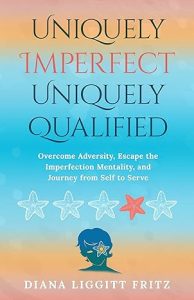
Diana is the author of Uniquely Imperfect. Uniquely Qualified: Overcome Adversity, Escape the Imperfection Mentality, and Journey from Self to Serve. In her inspiring book, Diana shares her powerful journey through cancer, blending personal experience with reflection and practical guidance. Her message is both vulnerable and empowering: we all have some “type of cancer,” and our flaws often make us the best leaders and servants. This book encourages readers to navigate emotional and high-stakes decisions with grace, to recognize their inherent value even in the midst of struggle, and to reframe adversity as a source of strength and a light for others.

Beyond her professional achievements, Diana is a devoted wife, mother, and committed volunteer. She thrives on sharing insights about leadership, resilience, and navigating challenges with authenticity.

Website | LinkedIn

Key Takeaways from Diana Fritz in this Episode

  • You don’t have to be perfect to lead with impact. Diana shares how her experiences with cancer, single parenthood, and executive leadership taught her that power comes from showing up honestly, not flawlessly.

  • Hardship can sharpen your purpose. Instead of weakening her, Diana’s challenges gave her clarity about what matters and how she wanted to lead and serve.

  • Authenticity builds deeper trust than performance ever will. Clients and teams don’t need polished personas. They need someone who’s real, grounded, and present, even when things are uncertain.

Topics Discussed in this Episode

00:00 Introduction to Diana Fritz
02:38 Diana’s Personal Journey with Cancer
05:55 Mindset and Adversity
09:23 Influence of Viktor Frankl and Stephen Covey
13:10 Applying Lessons in Leadership and Life
16:59 Resilience and Reflection
24:33 The Gold in Our Broken Edges
26:01 Embracing Uniquely Imperfect
28:45 The Power of Authenticity
31:16 Overcoming Self-Doubt
34:03 Redefining Normal
35:09 Confidence in Imperfection
39:47 Practical Tips for Imperfect Leadership
42:13 Connecting with Diana Fritz

About The Price and Value Journey Podcast

The Price and Value Journey is a show for expert-service professionals who want more than formulas and quick fixes. If you’re a solo or small-firm provider—consultant, coach, attorney, CPA, or fractional executive—you know the real work of building a practice goes far beyond pricing. It’s about finding clarity, showing up with confidence, and learning how to express the full value of what you do in ways that clients understand and appreciate.

The Price and Value Journey Podcast with host John RayHosted by John Ray, business advisor and author of The Generosity Mindset, this podcast explores the deeper journey behind running a services business: how you think about your work, how you relate to clients, and how you sustain a business that’s not only profitable but deeply fulfilling. Yes, we talk pricing, but we also talk mindset, business development, trust, empathy, positioning, and all the intangible ingredients that make a practice thrive.

With solo episodes and conversations featuring thoughtful guests, The Price and Value Journey is a companion for professionals who are building something meaningful. Produced in partnership with North Fulton Business Radio, LLC, an affiliate of Business RadioX®, the podcast is accessible on all major podcast platforms. The complete show archive is here.

John Ray, Host of The Price and Value Journey

John Ray, Author of The Generosity Mindset and Host of The Price and Value Journey

John Ray is the host of The Price and Value Journey.

John owns Ray Business Advisors, a business advisory practice. John’s services include business coaching and advisory work, as well as advising solopreneurs and small professional services firms on their pricing. John is passionate about the power of pricing for business owners, as changing pricing is the fastest way to change the profitability of a business. His clients are professionals who are selling their expertise, such as attorneys, CPAs, accountants and bookkeepers, consultants, coaches, marketing professionals, and other professional services practitioners.

In his other business, John is a podcast show host, strategist, and the owner of North Fulton Business Radio, LLC, an affiliate of Business RadioX®. John and his team work with B2B professionals to create and conduct their podcast using The Generosity Mindset® Method: building and deepening relationships in a non-salesy way that translates into revenue for their business.

John is also the host of North Fulton Business Radio. With over 850 shows and having featured over 1,300 guests, North Fulton Business Radio is the longest-running podcast in the North Fulton area, covering business in its region like no one else.

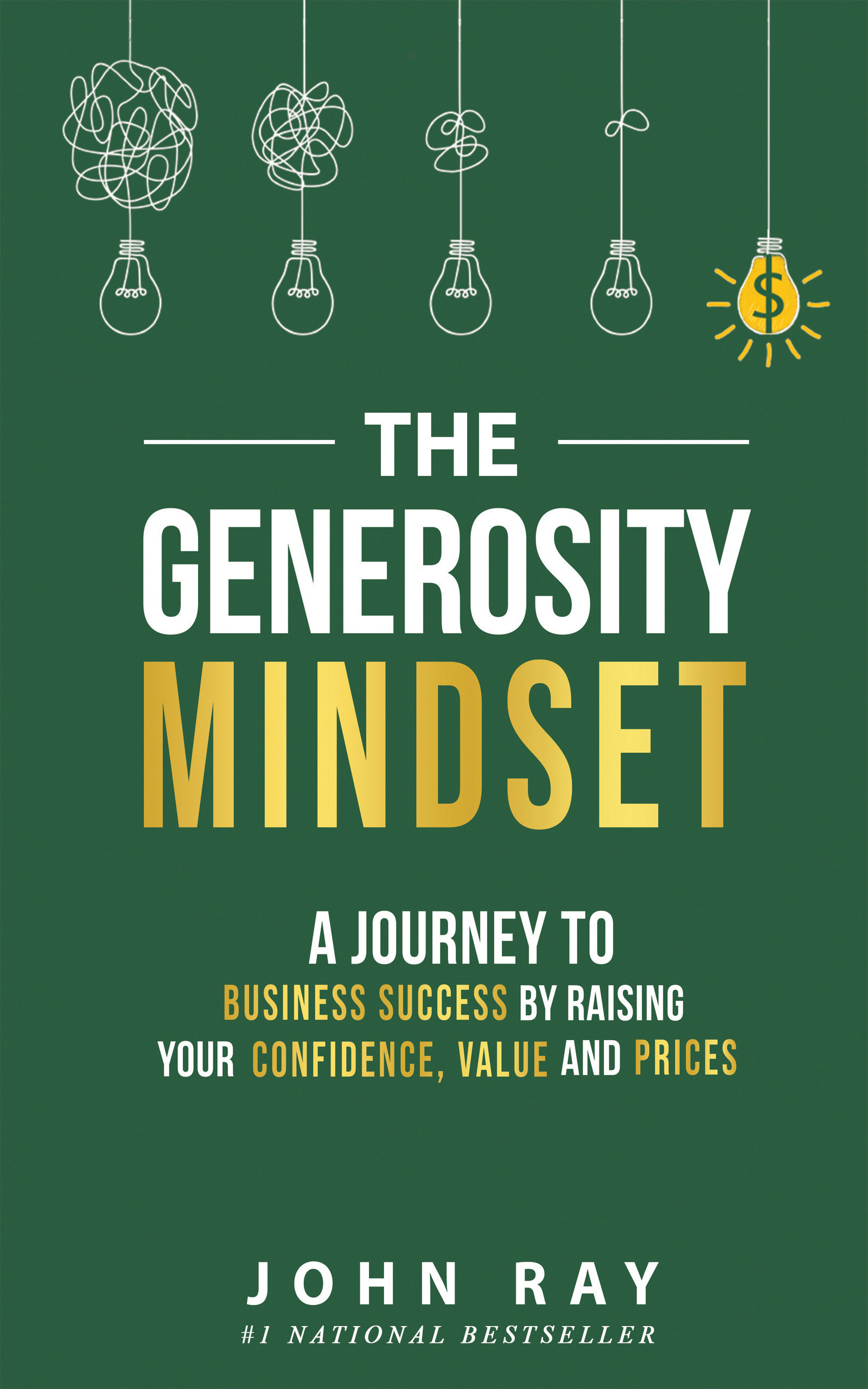
John’s book, The Generosity Mindset: A Journey to Business Success by Raising Your Confidence, Value, and Prices
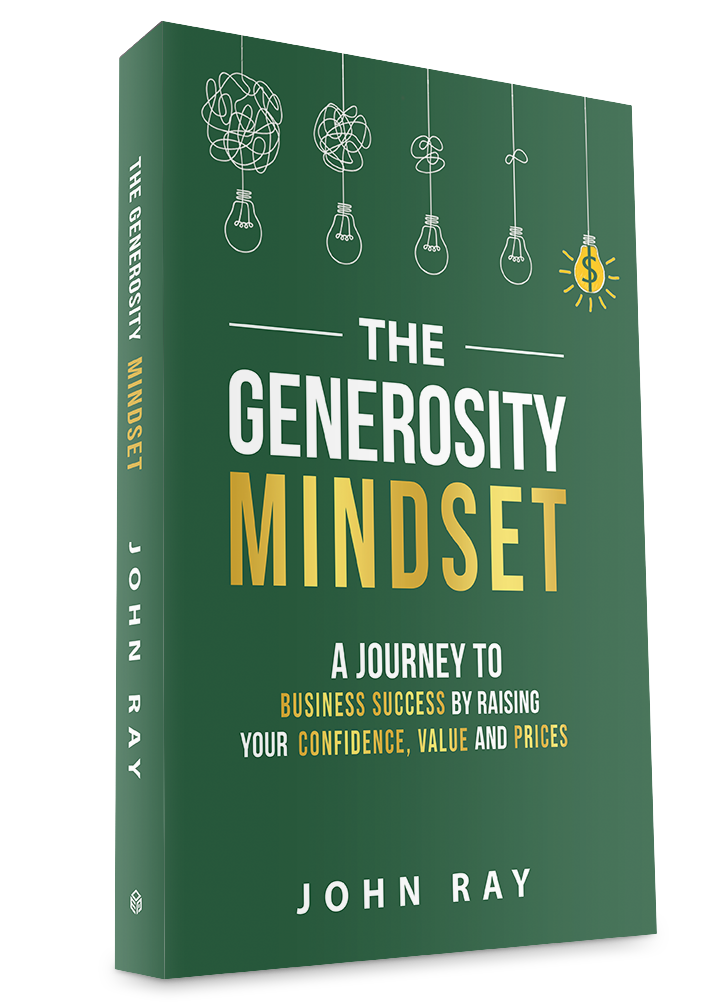
The Generosity Mindset, by John RayJohn is the #1 national best-selling author of The Generosity Mindset: A Journey to Business Success by Raising Your Confidence, Value, and Prices.

If you are a professional services provider, your goal is to do transformative work for clients you love working with and get paid commensurate with the value you deliver to them. While negative mindsets can inhibit your growth, adopting a different mindset, The Generosity Mindset™, can replace those self-limiting beliefs. The Generosity Mindset enables you to diagnose and communicate the value you deliver to clients and, in turn, more effectively price to receive a portion of that value.

Whether you’re a consultant, coach, marketing or branding professional, business advisor, attorney, CPA, or work in virtually any other professional services discipline, your content and technical expertise are not proprietary. What’s unique, though, is your experience and how you synthesize and deliver your knowledge. What’s special is your demeanor or the way you deal with your best-fit clients. What’s invaluable is how you deliver outstanding value by guiding people through massive changes in their personal lives and in their businesses that bring them to a place they never thought possible.

Your combination of these elements is unique in your industry. There lies your value, but it’s not the value you see. It’s the value your best-fit customers see in you.

If pricing your value feels uncomfortable or unfamiliar to you, this book will teach you why putting a price on the value your clients perceive and identify serves both them and you, and you’ll learn the factors involved in getting your price right.

The book is available at all major physical and online book retailers worldwide. Follow this link for further details.

Connect with John Ray:

Website | LinkedIn | Twitter

Business RadioX®:  LinkedIn | Twitter | Facebook | Instagram

Tagged With: adversity, authenticity, Diana Fritz, imperfect leadership, imperfection, John Ray, Leadership, mindset, resilience, self doubt, Stephen Covey, The Price and Value Journey, trust, Viktor Frankl

Embracing Ally Leadership, with Becky Berry, Becky Berry Coaching

August 21, 2024 by John Ray

Embracing Ally Leadership, with Becky Berry, Becky Berry Coaching, on North Fulton Business Radio with host John Ray
North Fulton Business Radio
Embracing Ally Leadership, with Becky Berry, Becky Berry Coaching
Loading
00:00 /
RSS Feed
Share
Link
Embed

Download file

Embracing Ally Leadership, with Becky Berry, Becky Berry Coaching, on North Fulton Business Radio with host John Ray

Embracing Ally Leadership, with Becky Berry, Becky Berry Coaching (North Fulton Business Radio, Episode 797)

In this episode of North Fulton Business Radio, host John Ray welcomes leadership coach Becky Berry. Becky shares insights on ally leadership, contrasting it with mentorship and servant leadership. She discusses the importance of agency, promoting inclusivity, and supporting underrepresented employees. Becky also outlines her “Seven Commitments of Female Leadership” and shares a compelling success story. This episode offers valuable advice for emerging women leaders and emphasizes the significance of allies in fostering a thriving work environment.

John Ray is the host of North Fulton Business Radio. The show is recorded and produced from the North Fulton studio of Business RadioX® inside Renasant Bank in Alpharetta.

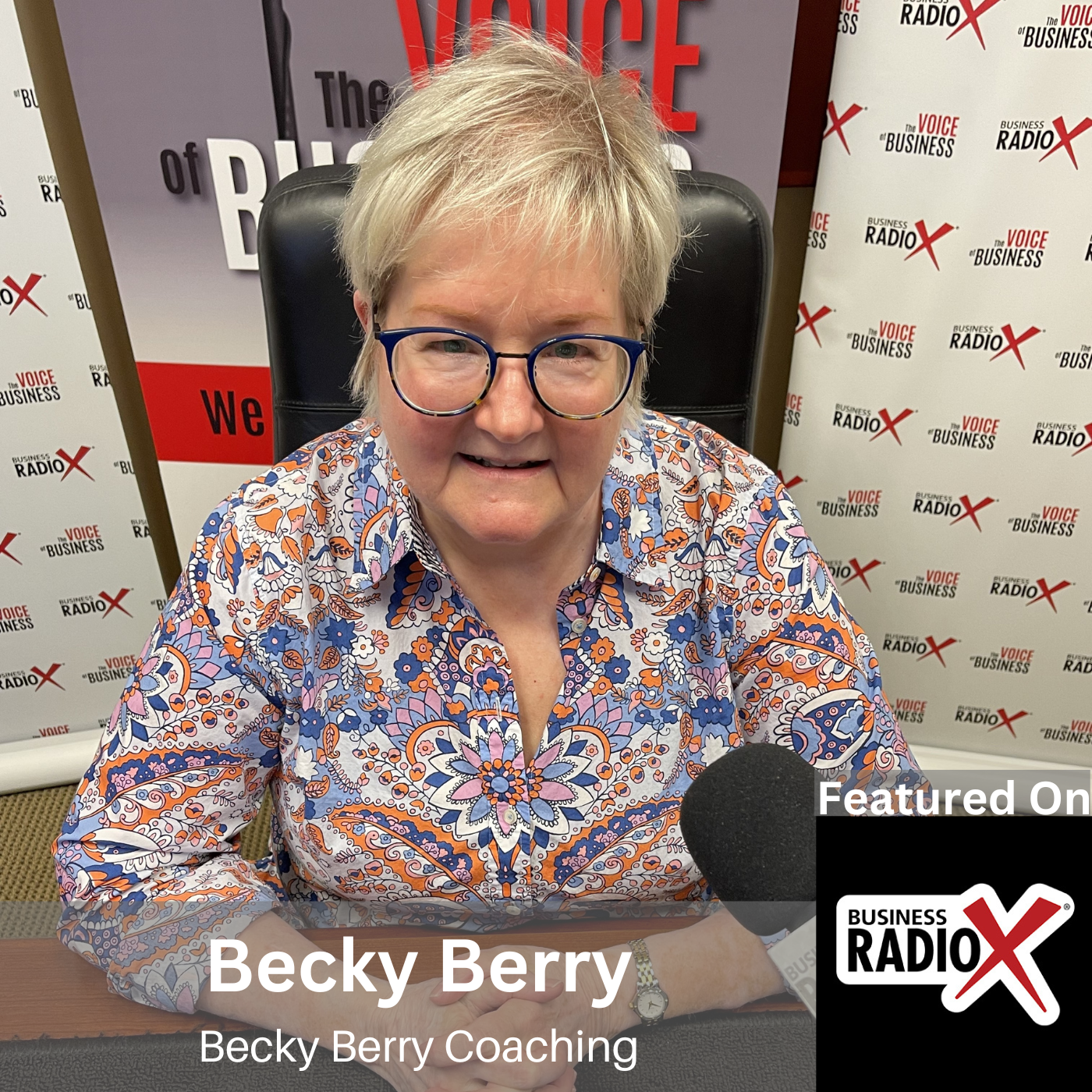
Becky Berry, Becky Berry Coaching

Becky Berry, Becky Berry Coaching

Becky Berry is an Executive Career Coach coach whose mission is to help women reach the potential they’re afraid to admit that they have.

To do that, she empowers women to own their personal impact and the impact of their work. She facilitates their ability to speak fluently, without hesitation, about both. Her specialty is using language to gift clients with a clear understanding of their own gifts and power. She supports women as they create rich, meaningful work and home lives on their own terms.

Becky has experienced several crossroads in her life, including careers as magazine publisher, software entrepreneur, stay-at-home mom, special education teacher, social entrepreneur, and widowhood. Her life and work experiences allow her to provide uniquely empowering and supportive coaching to women at all stages of their lives.

Becky also produces and cohosts She’s Not Done Yet: Conversations with Women Over 50, available wherever you listen to podcasts, including Apple Podcasts and Spotify. She lives in the northern suburbs of Atlanta, GA.

Website | LinkedIn | Instagram | Facebook

Topics Discussed in this Episode

00:00 Introduction and Welcome
01:33 Meet Becky Berry: Executive and Career Coach Extraordinaire
02:29 The Evolution of Becky’s Coaching Practice
04:45 Leadership Coaching: Becky’s Sweet Spot
08:42 The Concept of Ally Leadership
22:18 Commitments of Female Leadership
24:29 Survey on Women’s Leadership Preferences
24:57 The Importance of Agency and Authenticity
25:33 Role Models and Vulnerability in Leadership
27:13 Recognizing and Elevating Unrecognized Talent
28:02 Promoting Diversity for Business Success
29:30 The Business Case for Diversity
33:11 Personal Leadership Coaching Success Stories
34:35 How to Engage with Becky Berry’s Services
41:08 Conclusion and Contact Information

Renasant Bank and Casa Nuova Italian Restaurant support North Fulton Business Radio

Renasant BankRenasant Bank has humble roots, starting in 1904 as a $100,000 bank in a Lee County, Mississippi, bakery. Since then, Renasant has become one of the Southeast’s strongest financial institutions, with over $13 billion in assets and more than 190 banking, lending, wealth management, and financial services offices in Mississippi, Alabama, Tennessee, Georgia, and Florida. All of Renasant’s success stems from each of their banker’s commitment to investing in their communities as a way of better understanding the people they serve. At Renasant Bank, they understand you because they work and live alongside you every day.

Casa Nuova Italian RestaurantCasa Nuova is a proud family-owned and operated restaurant, serving classic, authentic and traditional Italian cuisine and top tier hospitality since 1998.

Casa Nuova is a cook-to-order kitchen, serving traditional fare including pasta, chicken, seafood, veal, vegetarian and gluten-free options, plus daily specials. They are a farm-to-table establishment, meaning that in the summertime, they cultivate their own vegetables in their garden, steps away from the restaurant, including tomatoes, corn, peppers, zucchini, sunflowers and more!

Celebrating more than 25 years, Casa Nuova has become a true staple in the Alpharetta area, serving more than three generations of families, including friends old and new, visiting near and far from all over the metro Atlanta area and beyond.

Website | LinkedIn | Facebook | Instagram

About North Fulton Business Radio and host John Ray

With over 790 shows and having featured over 1,200 guests, North Fulton Business Radio is the longest-running podcast in the North Fulton area, covering business in our community like no one else. We are the undisputed “Voice of Business” in North Fulton!

The show welcomes a wide variety of business, non-profit, and community leaders to get the word out about the important work they’re doing to serve their market, their community, and their profession. There’s no discrimination based on company size, and there’s never any “pay to play.” North Fulton Business Radio supports and celebrates business by sharing positive business stories that traditional media ignore. Some media leans left. Some media leans right. We lean business.

John Ray, Business RadioX - North Fulton, and Owner, Ray Business Advisors
John Ray, Business RadioX – North Fulton, and Owner, Ray Business Advisors

John Ray is the host of North Fulton Business Radio. The show is recorded and produced from the North Fulton studio of Business RadioX® inside Renasant Bank in Alpharetta. You can find the full archive of shows by following this link. The show is available on all the major podcast apps, including Apple Podcasts, Spotify, Google, Amazon, iHeart Radio, and many others.

The studio address is 275 South Main Street, Alpharetta, GA 30009.

John Ray, The Generosity MindsetJohn Ray also operates his own business advisory practice. John’s services include advising solopreneurs and small professional services firms on their value, their positioning and business development, and their pricing. His clients are professionals who are selling their expertise, such as consultants, coaches, attorneys, CPAs, accountants and bookkeepers, marketing professionals, and other professional services practitioners.

John is the national bestselling author of The Generosity Mindset: A Journey to Business Success by Raising Your Confidence, Value, and Prices.

Tagged With: agency, ally leadership, authenticity, Becky Berry, Becky Berry Coaching, diversity, John Ray, Leadership, leadership coaching, North Fulton Business Radio, Servant Leadership

Esther Bailey-Bass, EBB ‘n Flow Lifestyle | Leadership Coaching, LLC

May 10, 2023 by John Ray

Hello, Self . . .
Hello, Self . . .
Esther Bailey-Bass, EBB 'n Flow Lifestyle | Leadership Coaching, LLC
Loading
00:00 /
RSS Feed
Share
Link
Embed

Download file

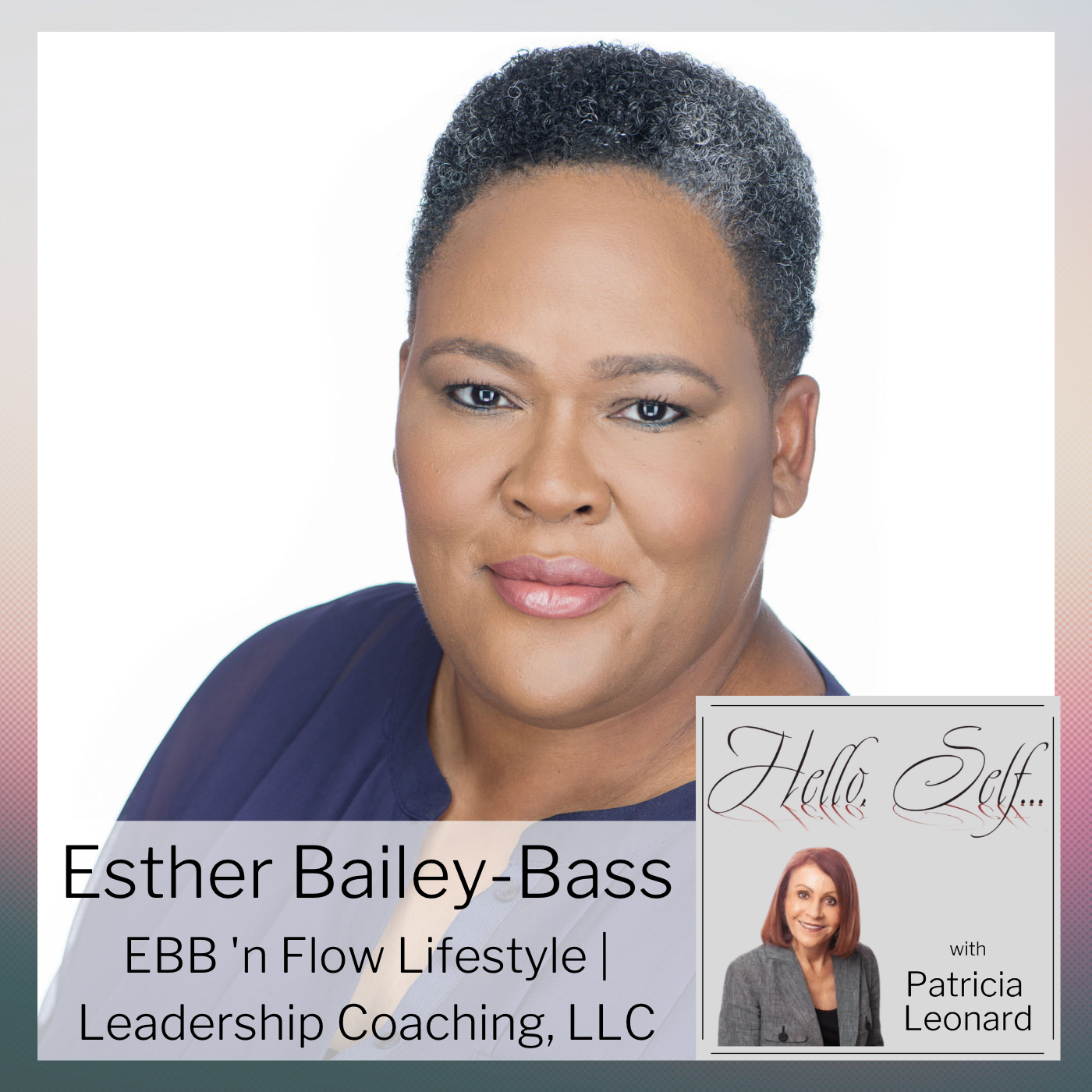
Esther Bailey-Bass

Esther Bailey-Bass, EBB ‘n Flow Lifestyle | Leadership Coaching, LLC (Hello, Self… Episode 19)

Esther Bailey-Bass, Founder and CEO of EBB ‘n Flow Lifestyle | Leadership Coaching, joined Patricia on this episode. Esther described the nudges and intuition that led her into coaching, how she experiences that inner voice, her approach to coaching, and several pivotal life experiences with “Hello, Self” moments. This lovely conversation is full of wisdom and warmth.

Hello, Self… is presented by Patricia Leonard & Associates  and produced by Arlia Hoffman in association with the North Fulton studio of Business RadioX®.

EBB ‘n Flow Lifestyle | Leadership Coaching, LLC

Esther believes that everyone is a leader, and as a leader you have the capacity to empower and influence those you live and work with.Esther Bailey-Bass

However, to OWN your leadership you must follow your personal guidance system, which is a function of your core values and beliefs.

Esther uses warm, calm, gentle, support to get you where you need to go. No yelling here, no ultimatums, unless necessary, just the perfectly timed nudges you need to help you:
◦ Honor and trust your instincts
◦ Align with, articulate and live your values
◦ Rebuild your self-esteem and confidence
◦ Shift your internal dialogue from a frantic mindset to a calm and reflective one
◦ Show up in your relationships and work from a more empowered, engaged and authentic place

Esther guides her clients through a process of self-discovery, awakening them to the agile leader within.

They reconnect to what is most important and learn to lead with integrity, confidence, and authenticity.

Website | Facebook | Instagram

Esther Bailey-Bass, ACC, CPCC, Founder and CEO, EBB ‘n Flow Lifestyle | Leadership Coaching, LLC

Esther Bailey-Bass, ACC, CPCC, Founder and CEO, EBB ‘n Flow Lifestyle | Leadership Coaching, LLC

Before her journey as a coach, she was disconnected from her core values and out of alignment with herself. She was “phoning it in” day after day. She was miserable and felt disrespected, undervalued, and unappreciated.

It wasn’t until she began to question herself, asking “is this what I want to do until I retire?” The voice inside screamed “NO!”. That’s when Esther began her journey into self-exploration.

During her search, her level of dissatisfaction and discomfort grew. Her values were not being honored anywhere by anyone, including herself. In fact, her disconnection from her values didn’t surface until she attended her very first coach training course. Until that time, she continued to suffer. Anger became her go-to emotion because she felt empty, devoid of creativity, self-expression, fulfillment, or purpose. There was a chasm so deep and wide she could hardly recognize her true self.

Esther began exploring options for a future self. She talked to family, friends, colleagues, asking, “How do you see me?” Much of what they offered didn’t hit the mark and she continued to explore. She asked herself what she liked to do as a young woman. She had reached a point of deep personal inquiry, and it led her to coaching.

Once she found her calling, everything fell into place. The voice she thought she’d lost was emerging. she began to challenge authority, to question decisions and offer her insight. No more playing “good girl”, dotting “i’s” or crossing “t’s”. It was messy and she was there for it.

Today she’s different, and she cares less. She cares less about controlling others and their outcomes. She care sless about being in spaces where she’s not welcomed.

Esther embraces simplicity, nourishment, sensuality, sisterhood, service, and more love. She senses that in each one of us there’s a calling for acceptance and true belonging, free from the burden of self-hatred and tolerations. A “welcome home” sign if you will.

LinkedIn

About Hello, Self…

Hello, Self… is a biweekly podcast focused on inspiring stories of turning dreams into reality. Join coach and author Patricia Leonard and her guests as they share life-changing Hello, Self… moments.

Hello, Self… is brought to you by Patricia Leonard & Associates and is based on the new book by Patricia Leonard, Hello, Self.., available here.

The show is produced by Arlia Hoffman in association with Business RadioX®. You can find this show on all the major podcast apps. The complete show archive is here.

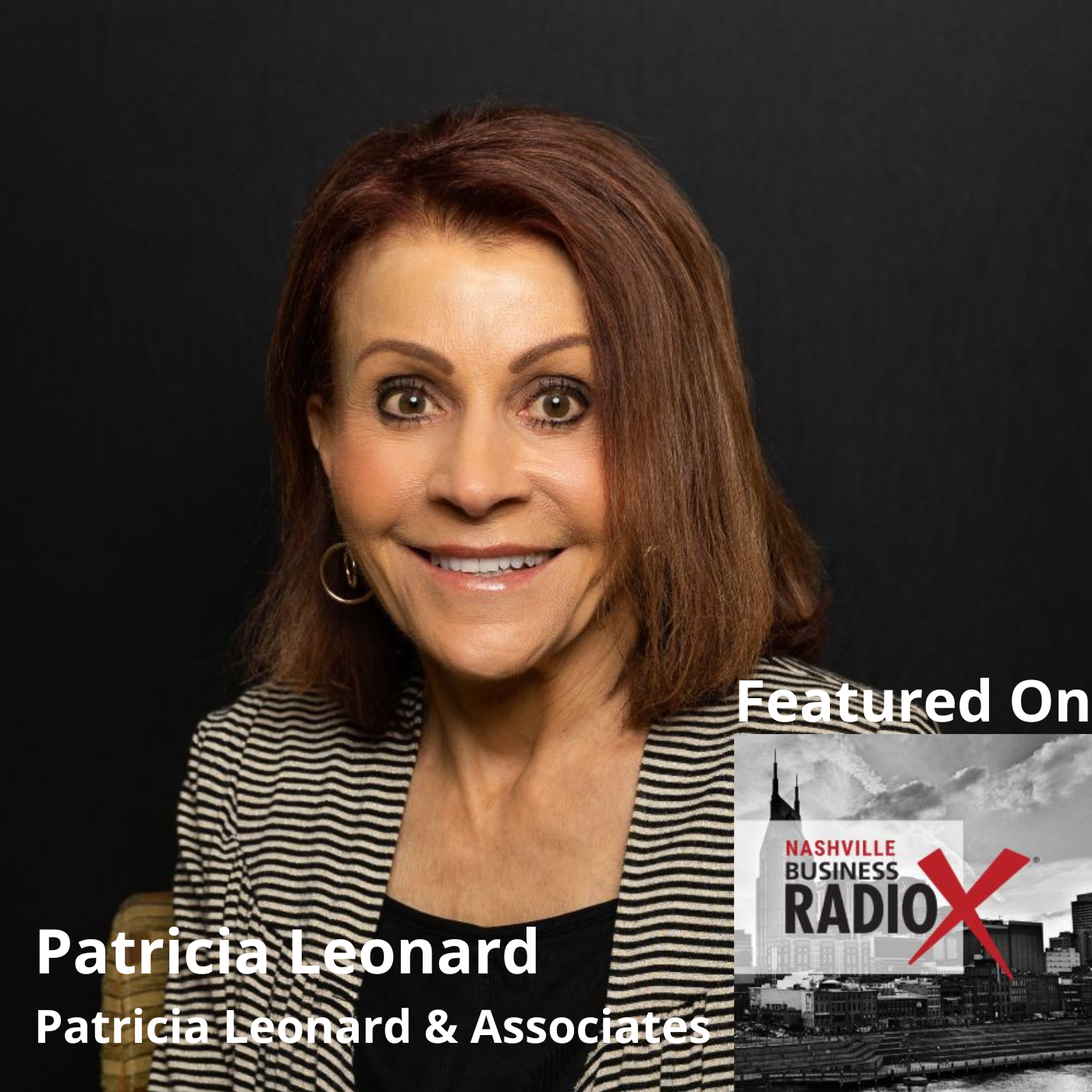
Patricia Leonard, Host of Hello, Self…

Patricia Leonard, Host of Hello, Self…

Patricia Leonard is President of RUNWAY TO SUCCESS, a division of Patricia Leonard & Associates located in Nashville, TN.  She is a MESSAGE ARTIST speaker, career & business coach, author and magazine columnist.  Patricia consults with clients on leadership, empowerment, career management, entrepreneurship and the power of language.  Her work is focused on helping clients find their runway to success!

She has a professional background in management, human resources, corporate training, business consulting and talent development.   Patricia has worked with companies in the service, music, banking, manufacturing, publishing, warehousing, healthcare, academic, retail and financial industries, and has taught management classes as an adjunct professor.

Patricia has a degree in Human Resource Management, is certified as a Career Coach and Consulting Hypnotist and is MBTI qualified.

Her volunteer energies are focused on Women in Film and Television-Nashville, where she is a Board Vice President; Dress for Success as the Advisory Board President; and International Coaching Federation-Nashville where she held Board roles for several years.

Patricia is the author of Wearing High Heels in a Flip Flop World, BECOMING WOMAN…a journal of personal discovery, THE NOW, HOW & WOW of Success, Happenings, a full year calendar of inspirational messages and a spoken word album titled, I AM…

She enjoys songwriting, creating poetry and has written a one-woman show and artistic speech she performs titled Hello, Self…, about a woman in midlife reinventing herself, which led to her new book by the same name, available here.

On the personal side, Patricia, describes herself as a woman, lover of life, mother, grandmother, career professional and message artist; AND in that order!  Her goal is to continue inspiring others, of any age, to START NOW creating and expanding their Runway to Success.

She believes that life is a gift, the way we wrap it is our choice.

Connect with Patricia:

Website| LinkedIn | Facebook | Twitter | Instagram

Tagged With: authenticity, confidence, core values, EBB 'n Flow Coaching, Esther Bailey-Bass, Hello Self Moments, Hello Self Podcast, Hello Self..., integrity, intuition, leadership coaching, Lifestyle Coaching, Patricia Leonard, Patricia Leonard & Associates

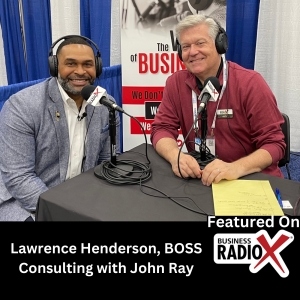
LIVE from SOAHR 2023: Lawrence Henderson, BOSS Consulting

April 10, 2023 by John Ray

LIVE from SOAHR 2023: Lawrence Henderson, BOSS Consulting
North Fulton Business Radio
LIVE from SOAHR 2023: Lawrence Henderson, BOSS Consulting
Loading
00:00 /
RSS Feed
Share
Link
Embed

Download file

LIVE from SOAHR 2023: Lawrence Henderson, BOSS Consulting

LIVE from SOAHR 2023: Lawrence Henderson, BOSS Consulting (North Fulton Business Radio, Episode 634)

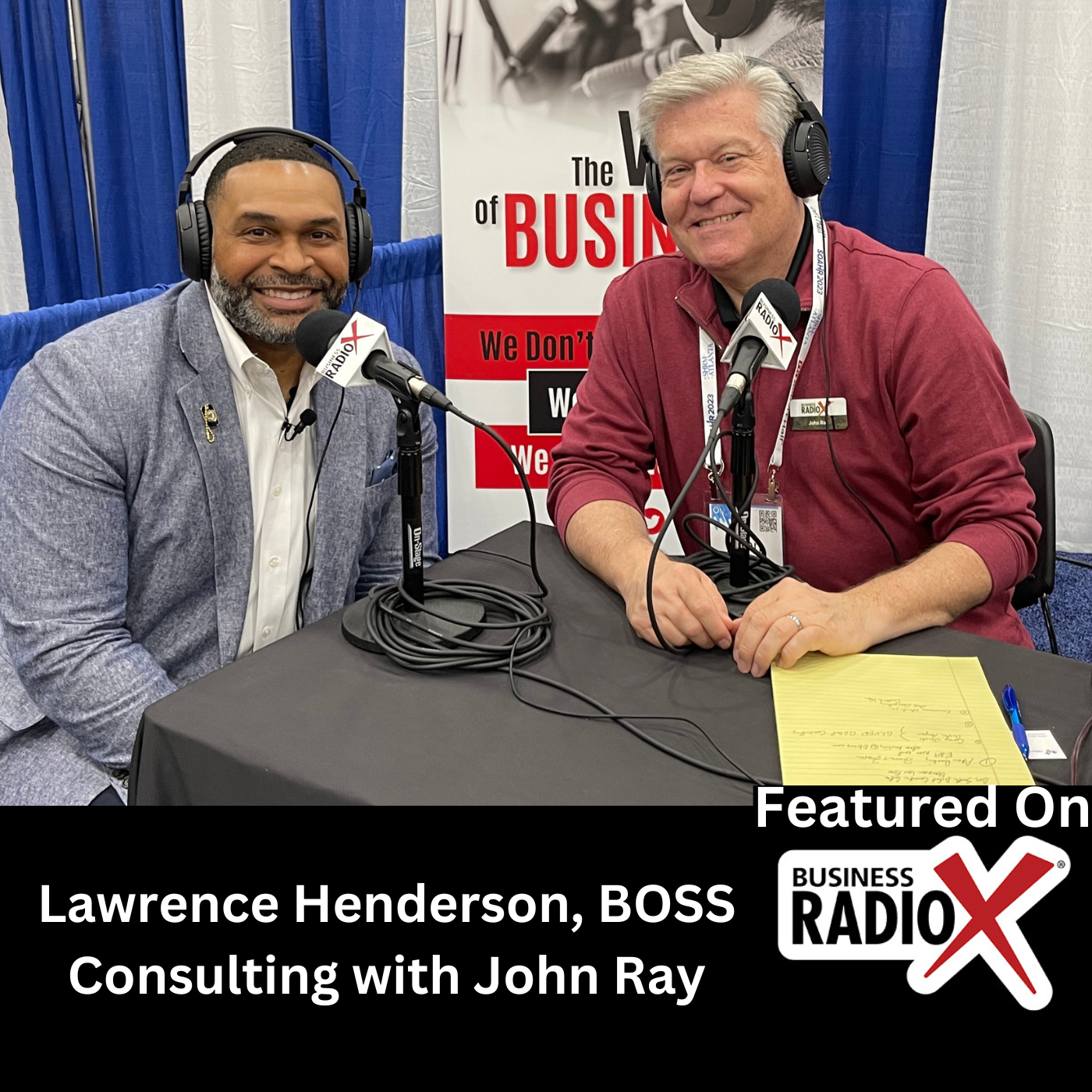
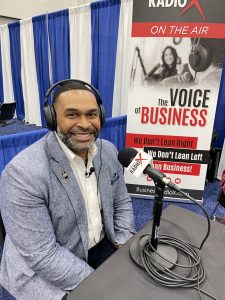
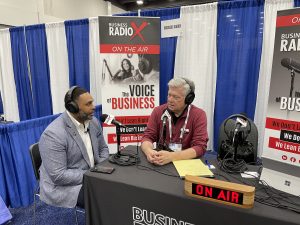
Lawrence Henderson, President and Chief Learning Officer of BOSS Consulting and an Army Veteran, joined North Fulton Business Radio host John Ray LIVE at the Business RadioX® remote at SOAHR 2023. Lawrence talked about his work at BOSS Consulting, his speaking topic at the conference, “Culture Wars – Putting the Posters into Practice,” company values and authenticity, and much more.

This show was originally broadcast live from SOAHR 2023, the annual conference of SHRM-Atlanta, held at the Gas South District Convention Center, Duluth, Georgia on March 28th and 29th, 2023. This series of interviews was underwritten by Oberman Law Firm, your legal guide to workplace complexities.

North Fulton Business Radio is broadcast from the North Fulton studio of Business RadioX® inside Renasant Bank in Alpharetta.

BOSS Consulting

BOSS Consulting, LLC, a veteran-owned business consulting company, exists to help individuals and companies achieve more through in-depth analysis, growth-focused accountability, and hands-on training. They help you R.I.S.E. by Respecting every person’s unique qualities, focusing on Integrity above all, being of Service to mankind, and operating with Excellence.

People don’t hire BOSS to get the status quo answer about professional development. They work with them to improve processes, increase revenue, and grow as individuals and leaders.

Website | LinkedIn | Facebook | Instagram | Twitter

Lawrence Henderson, President and Chief Learning Officer, BOSS Consulting

Lawrence Henderson, President and Chief Learning Officer, BOSS Consulting 

As President and Chief Learning Officer of BOSS Consulting, LLC, Lawrence is driven by the desire to create value and lead organizational change that helps clients remove blind spots in order to create and implement a plan to achieve impact and excellence.

Lawrence served as an active-duty Army officer for over twelve years, during which he was integrated into different units. This exposure to different processes and dynamics taught him the value of not just completing quick needs analyses, but also implementing a plan to see it through.

This has given Lawrence the experience needed to listen to a client’s pain points and translate that into a plan that reflects what they really need. (Which is often different from what they might want.) \With Lawrence, you’ll know exactly what you need to do because he isn’t here to waste your time.

He’s here to build your revenue, improve company culture, or otherwise improve your personal and professional lives.

When you hire Lawrence and BOSS Consulting, LLC, you can expect success. It’s as simple as that.

LinkedIn


Questions and Topics in this Interview:

  • Lawrence’s work at BOSS Consulting
  • His speaking topic at the conference: Culture Wars – Putting the Posters Into Practice
  • Company Values and Authenticity

North Fulton Business Radio is hosted by John Ray and broadcast and produced from the North Fulton studio of Business RadioX® inside Renasant Bank in Alpharetta. You can find the full archive of shows by following this link. The show is available on all the major podcast apps, including Apple Podcasts, Spotify, Google, Amazon, iHeart Radio, Stitcher, TuneIn, and others.

The “LIVE from SOAHR 2023” Series is proudly underwritten by Oberman Law Firm

Stuart Oberman
Stuart Oberman, Founder, Oberman Law Firm

Oberman Law Firm has a long history of civic service, noted national, regional, and local clients, and stands among the Southeast’s eminent and fast-growing full-service law firms. Oberman Law Firm’s areas of practice include Business Planning, Commercial & Technology Transactions, Corporate, Employment & Labor, Estate Planning, Health Care, Intellectual Property, Litigation, Privacy & Data Security, and Real Estate.

By meeting their client’s goals and becoming a trusted partner and advocate for our clients, their attorneys are recognized as legal go-getters who provide value-added service. Their attorneys understand that in a rapidly changing legal market, clients have new expectations, and constantly evolving choices, and operate in an environment of heightened reputational and commercial risk.

Oberman Law Firm’s strength is its ability to solve complex legal problems by collaborating across borders and practice areas.

Connect with Oberman Law Firm:

Company website | LinkedIn | Twitter


Tagged With: authenticity, BOSS Consulting, humility, Lawrence Henderson, Oberman Law, Oberman Law Firm, SHRM Atlanta, SOAHR 2023, Stuart Oberman, values

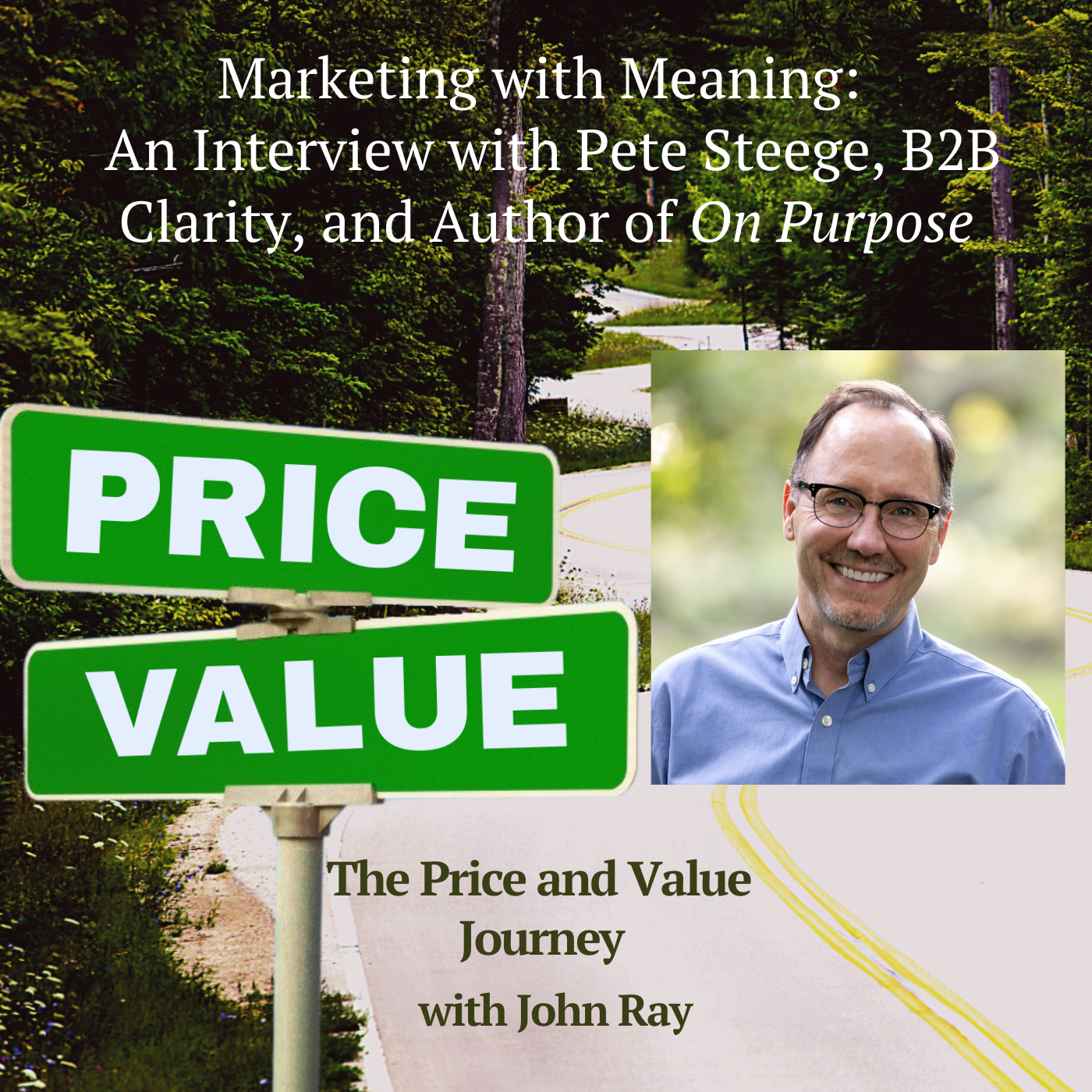
Marketing with Meaning: An Interview with Pete Steege, B2B Clarity, and Author of On Purpose

October 10, 2022 by John Ray

Pete Steege
North Fulton Studio
Marketing with Meaning: An Interview with Pete Steege, B2B Clarity, and Author of On Purpose
Loading
00:00 /
RSS Feed
Share
Link
Embed

Download file

Pete Steege

Marketing with Meaning: An Interview with Pete Steege, B2B Clarity, and Author of On Purpose

If you’re the CEO of a B2B company and feel like your marketing efforts are broken, you’re not alone. Many of your peers see marketing as an overwhelming and complex field with too many solutions to choose from. Pete Steege knows this to be the case after having interviewed about 400 B2B C-Suite executives.

In this interview with host John Ray, Pete Steege discussed his newly released book, On Purpose: The CEO’s Guide to Marketing with Meaning. Pete shared the three “superpowers” of marketing: authenticity, intention, and generosity, why less is more in successful marketing, why your most powerful message isn’t about you, and much more.

The Price and Value Journey is presented by John Ray and produced by the North Fulton studio of Business RadioX®.

TRANSCRIPT

John Ray: [00:00:00] Hello again, everyone. I’m John Ray on the Price and Value Journey. And folks, I’m here today with Pete Steege. Pete is with B2B Clarity and he is also the author of a newly released book called “On Purpose: The CEO’s Guide to Marketing with Meaning”.

Pete is a 30-year marketing veteran. He’s got a wide range of B2B technology and manufacturing business experience, working from Silicon Valley startups all the way to Fortune 500 firms. And he’s got global experience as well in North America, Europe and Asia. And all that experience gives him a wide breadth of perspective and experience he’s going to bring to this interview. But certainly, in his book, which I have read, folks, I have read so, and I’m delighted to say that because it was worth every minute of it. Pete Steege, welcome to The Price and Value Journey.

Pete Steege: [00:01:04] Thanks so much, John. Really happy to be here.

John Ray: [00:01:06] Hey, I’m delighted to have you. Talk about — let’s first of all, just give everyone a quick introduction to what I missed in your business. Tell everyone how you’re serving folks at B2B Clarity, then we’ll get to the book.

Pete Steege: [00:01:21] You know, John, I think you summed it up pretty good. As you said, I’ve been a marketer for a long career. And these last two years have been a big change for me and just a great change where I’m on my own helping B2B business owners and CEOs. And it’s been — it’s just been really, really exciting and satisfying change for me. But yeah, that’s what I do now is I just — I’m able to use some of that, you know, gray hair, I guess, and help people solve problems. I really enjoy it.

John Ray: [00:01:55] One of the aspects to this book that you state right up front is that you believe that most CEOs, B2B CEOs, look at their marketing function and their marketing efforts and they see that as broken. Why?

Pete Steege: [00:02:16] It’s absolutely true. More often than not, they are not satisfied with their marketing. And it’s usually not, oh yeah, it could be better. It’s usually a pain point for them. And I think there’s a couple of things at work there. One is, I think if you’re at all in the business world, you know what a overwhelming space marketing is. I like to call it the marketing industrial complex. There’s so many businesses and agencies and consultants and software applications all fighting for your mindshare and saying that they have the greatest thing since sliced bread to solve your marketing problems.

As a matter of fact, there’s this really interesting number factoid. There’s a guy that tracks it’s called Chief MarTec is the organization, and he’s been tracking since 2011 the number of marketing technology solutions available in the market. And he creates a landscape, right? 2011, the first one, 150. 2022, 9,938 of them.

John Ray: [00:03:32] Oh, wow.

Pete Steege: [00:03:32] So, there’s this overwhelming wealth of solutions, I’ll say, right. So, that’s a problem because no one can get anywhere near to choosing. All of them are even a collection of them. You’re going to have to choose what you’re going to do. And that coupled with the fact that there’s this idea that, oh, I’m just going to choose this thing to do. Some people call it random acts of marketing. You know, hey, we need a video,

John Ray: [00:04:07] Right.

Pete Steege: [00:04:07] Hey, let’s go to the big show this year. You know, this kind of arbitrary thoughts that are emotional sometimes or that feels good, it sounds good. Maybe it sounds fun even sometimes, or your competitor is doing it, right. There’s all these reasons to do them. But you take this wealth of options and couple it with this idea that you can choose one and that it would be just as good by itself versus part of a bigger plan or strategy. And that doesn’t work. It’s like throwing stuff at the wall and your customers are getting these blips of information from you and they’re not consistent when they do get them and you cancel yourself out.

So, basically, a lot of that effort, a lot of the money you are spending is almost — is often just a waste of time because it’s not helping you get closer to your customers.

John Ray: [00:05:09] I’m curious about — I mean, CEOs of larger B2B firms in general, they certainly are — they’re the chief strategy officer, right. And so, this is really a matter of getting their attention diverted toward a tactic, a video, or whatever that tactic, whatever form that tactic takes. Instead of focusing on the strategy and executing the strategy, kind of understand it from a smaller firm point of view, you know, an entrepreneur that’s kind of overwhelmed and can easily maybe get their attention distracted. But the CEO is a bigger firm. I mean, why does this happen? What’s your view on that? You’ve talked to a lot of them, by the way, that was –.

Pete Steege: [00:05:57] I know.

John Ray: [00:05:57] Yeah. So, cite more about that, maybe first.

Pete Steege: [00:06:01] So, I like the fact that I started — when I started my business, I kept track of my meeting. I went out and wanted to talk to CEOs, right. Obviously to find customers, but also to kind of validate as a corporate marketer versus being a solution provider for a CEO, it doesn’t translate, right. So, I had, I think I say in the book, 397 meetings, right. Not all CEOs, but all CEO related people, related to this challenge. And yeah, so a lot of data points and a lot of commonality in that.

And to answer your question, why do the larger companies, strategic CEOs let’s say, ones with a big budget and maybe even a marketing team, they wouldn’t have this problem, right? Guess what? A lot of the places I worked over 30 years were those organizations and I was in those marketing teams. And there is a core problem here that I talked about before that CEOs or their marketing leader or their sales leader tend to bite off more than they can chew with marketing. For the reasons we said, there’s a lot of things you could choose to do, and they tend to try to do more than they can get done, that they can be successful with.

So, even at the larger organizations, I remember one not too long ago where I worked over a hundred marketers on this company’s team and they had big plans and they were sophisticated plans, but they often didn’t finish these sophisticated projects because they were so busy with so many plates spinning. It just scales up, whoever you are. It’s a mindset issue. It’s a problem with thinking of marketing as the more the better. And activity is good versus there’s a less is more theme here and a strategy before tactics.

It’s less important how many things you do and it’s more important why you do them and that you finish, that you finish what you — you do it well, right. That’s really an important part that translates up to — I can’t speak for multibillion dollar companies. Probably a different issue. But certainly, you know, for a wide range of company sizes, this is a challenge for those organizations and the leaders of those organizations to get focus and to follow through and thoughtfully deliver on a purposeful marketing plan.

John Ray: [00:09:00] Pete, one of the things that you talk about in the book is not just, I guess, maybe marketing overload, taking on too many tactics, too many initiatives, but you talk about mindset a lot and that the problem is a mindset of meaning. Explain what you’re talking about there.

Pete Steege: [00:09:28] Yeah. That’s the core of the book, really. What my observation is, there’s a really important hierarchy in marketing. And most businesses, most CEOs know two of the three levels, and they don’t even know the third level exists. The first level, which we all know is tactics. It’s all the stuff you do in marketing. We all know what they are. There’s website, SEO, email, PR, all these things you do. So, these are the things that have a budget line item.

As I said, often, there’s some chaos around the activities, the tactics. And the more incoherent they are, the less valuable they are because they are all out there and your customers are picking them up and they’re busy. And if they don’t hear this common story, it’s a problem, right. So, tactics can be a real and it’s hard to deliver on them. The more you get, you get overloaded, right.

So, the next level is really important, and it really helps solve that problem and that strategy, marketing strategy. Bunch of books out there. You know, we all have our favorites probably if you’re a CEO or a executive. And that helps bring order and priority to these tactics and consistency can really help rein in the chaos. Absolutely. And for a lot of people, that’s where it starts. That’s marketing. You got your tactics, and you got your strategy.

John Ray: [00:11:02] Sure.

Pete Steege: [00:11:03] I strongly believe that there’s a really important element above that, which is mindset. Strategy without mindset, without purpose, without direction — there are almost as many strategies now as there are tactics, right? And there are often multiple strategies that you need to apply to your business marketing, your marketing approach. There are strategies that have to align with your sales strategies and your customer support strategies and your product development so you can — companies that think of strategy as a means to an end that are that — if I just come up with a really smart way to look at this, it’s going to solve all my problems.

They end up with a well, maybe more ordered group of tactics, but I would say in a way they’re almost lifeless, right. They’re mercenary. Their goal is to get, get. Their goal is to get, right, to win the order, maximize profit, change mind perception. All those things are a good outcome. But if those are the destination and there’s not a tie to why you created your business or why you are getting up every day to manage this thing, what’s the vision? What’s the value of your organization.

If your marketing is cut off from that, it doesn’t work. It’s a lot more visible in activity, but it doesn’t change the hearts and minds of your crazy busy clients that are hesitant to come on board with somebody new. And it’s that mindset of meaning that says my — first, I need to start with, okay, why are we in business?

This isn’t a marketing thing. This is why we come here every day. And who is it that we’re here to help? Because a business that gets — you may say, oh, my goal is to make a lot of money. Well, you can’t make a lot of money if you’re not solving a problem for somebody. And knowing that mission is the first step to marketing that works. Because if you know that mission and then you say marketing isn’t a by itself set aside tactic, it’s actually part of us creating the bond with our relationship with our customers that make it work. And so, a little bit of a side topic here.

John Ray: [00:13:57] Yeah.

Pete Steege: [00:13:57] My definition of marketing is optimizing the relationship between your business and your customers. So, it’s relationship. One word, marketing is relationship.

John Ray: [00:14:10] Oh, wow. I love that. And you talk a lot about that in the book too, to be clear. Because those sound like two separate things, mindset and relationship. But they’re not in your world, in your mind.

Pete Steege: [00:14:32] No. And the reason why is picture yourself and your customer, right? There’s these two — it’s a company, yourself as your company, right? But it’s people in your company and then you have your customers. And if your goal is a relationship, I believe that the only way — the way you make that relationship happen, the way you spark it, the way you turn it on and activate it, is meaning. Meaning for them and meaning for you. If you’re doing things at them without a purpose, for the bigger purpose, they can tell.

John Ray: [00:15:10] Right.

Pete Steege: [00:15:11] If they are listening to you or they are interrupted by you and there’s no good reason in their mind why they should talk to you, if there’s not a purpose to that. Meaning, they’re not going to take the time to do it. So meaning back to the word, right, mindset of meaning. Meaning is what makes marketing create that relationship.

John Ray: [00:15:36] So, Pete, let’s talk about — I want to dive into relationship just a little more. You know, for smaller firms, I think they think of that as one-to-one and very personal. They’ve got the capacity to handle one-to-one relationships. As firms get bigger, it gets a little trickier because suddenly you’ve got sales forces and you’ve got layers of folks in your organization. And how are you talking? How do you talk about in the book, you talk about how to create relationships and how those relationships start and how they deepen, cover that force, if you would.

Pete Steege: [00:16:27] Sure. First thing I’ll say is that I like to call them the three superpowers of marketing. So, there are three traits that you as a CEO need to have in your culture and in your organization, that if you do, if those are there, then those relationships happen, but it’s like the essential ingredients of relationship. And what they are is the first one is authenticity. Being transparent and truthful and real with your team and your clients, right, with your world. That’s one authenticity.

The second is intention. Being intentional. We already talked about that, right. That’s having a strategy before you choose your tactics. That’s doing less but doing it better. Choosing, being purposeful, being — doing things with the end in mind. That’s intention, right. That’s the second.

And then the third is generosity. The first two I’ve heard of in a marketing sense or really authenticity, you know, that makes sense.

Pete Steege: [00:17:45] Oh, yeah.

Pete Steege: [00:17:45] Intention, Absolutely, right. Being operationally good and all that. You don’t hear generosity mentioned very often when it comes to marketing, but I am convinced that it is a total — it is absolutely a superpower. And it’s one of the three ingredients. You need all three, but it’s often the missing one.

John Ray: [00:18:07] Well, I want to get to that in a minute, because when I read your book, I had a comment for you on that, that I want to get to. But I think it’s counterintuitive for folks when you talk about the intention piece and you’re talking about let’s do less. I mean, people don’t want to do less, right.

Pete Steege: [00:18:26] Right.

John Ray: [00:18:26] I mean they want to do more because they think pressing on the accelerator is going to what — is what’s going to get them to whatever their goal is for their company. And that’s just counterintuitive and hard for anybody to get their head around.

Pete Steege: [00:18:41] It is. Let me help a little bit with that. There’s a key dynamic in marketing. And I can’t speak to other functions, but it’s absolutely true in marketing that there is a critical mass that you need to reach with a marketing program often, that until you get there, you get kind of zero results from it.

So, let’s say you decide to start posting on LinkedIn and you dabble in it, or you do a poor job of it, or it’s confusing, whatever. You spend a lot of effort on posting on LinkedIn, but it never clicks. Nobody really — it does — it’s not like the more you do, it’s incrementally more result for you and more exposure to your clients. There’s a certain level you have to get to where you reach, escape velocity, and your campaign starts to make a difference and move the needle.

Marketing is that way. A lot of things, okay. So, what often people do is they’re so — they feel so much pressure to do all these things that everybody’s doing around marketing that they — none of them have the mindshare or enough effort available to them to get to that critical mass. So, there’s lots of activity going on, but very little of it is moving the needle. If you force yourself to first say what are — what is important, right. If I had to choose three things, that three programs, tactics, campaigns, that would move the needle for my marketing, I should start with the biggest pain points, right?

So, the first step is understanding that. But when you do and if you can resist the temptation to do the other dozen things now and say, we’re going to solve these three, we’re going to launch these three things, and move the needle in these three ways and check to see if we did, right. That’s part of that intention is be thoughtful and check your work and see if it worked. Your odds of success go way up because you’re able to spend the right amount of time, your team or you or your agency, whatever it might be. You have the time and money needed to do it well, right.

So, those two things. It moves the needle, but also now you’re a brand that does things well. You start to look like you’re good at what you do. And communicating and making relationships is part of what you do, right. So, that’s — I hope that helps with the less is more.

But it’s true in so many factors, it’s true with how much content you put on your website. B2B companies, especially tech B2B, they tend to try to explain everything on their website and put a lot of acronyms on there. So, that’s another example of less is more, right.

John Ray: [00:21:40] Right.

Pete Steege: [00:21:41] Don’t try to explain it all because they don’t have time to grasp it. Another example is your priorities with your team, right? Does your team on board with what’s important right now? Are they all rowing the same direction? Often, people have multiple priorities that confuse their team.

And here’s maybe the most important one, companies need one story. I like to call it the true story, their true story. But they need one story about who they are, whom they serve, how that target benefits from them. And you tell them a lot of different ways, but you got to have that one story. So, that’s another less is more example.

John Ray: [00:22:33] Okay. Now, I’m going to get myself in trouble here. I might get you in trouble here. Let’s see where this goes, but —

Pete Steege: [00:22:40] Let’s do it.

John Ray: [00:22:40] Yeah, okay. Let’s dive into this, because this, the less is more is not where the, I’ll say a lot of the outside marketing firms and really even the inside marketing folks end up, right. I mean because —

Pete Steege: [00:23:01] Right.

John Ray: [00:23:01] And so, there’s a lot of pressure on the CEO or the owner of a business from their own marketing people on this, right. And that’s what I think is so hard for them. I mean, let’s — am I — is it just the marketing people I run into? Or do you see that out there as well?

Pete Steege: [00:23:26] Well, I do see it out there and it’s totally understandable, John.

John Ray: [00:23:31] Yeah.

Pete Steege: [00:23:33] There — you know, it’s their job, right. And more is the shorter path to looking like your progress, right. Because you can quickly point to the activity.

John Ray: [00:23:48] Right.

John Ray: [00:23:50] It’s also more budget that comes with more sometimes.

John Ray: [00:23:53] Well, yeah, that’s where I was going, right. I mean —

Pete Steege: [00:23:56] Oh, it is?

John Ray: [00:23:56] Yeah.

Pete Steege: [00:23:58] And it’s not that people are, you know, their intent isn’t good but there’s a lot of just natural impulse situation here that it’s understandable why it happens so much, right. Because it is counterintuitive and it doesn’t always — sometimes the rewards are delayed, right. This delayed gratification.

Because there’s another connection here, which I’m sure you’ve heard, which I’ve heard from a lot of CEOs, is I just need leads. I need leads and I need them now and I need more. And what can you do to get me those leads next month? Sometimes, there’s a fun, surprising little tweak that does something like that. But most of the time I think you’ve picked up, from my view at least, marketing is an ecosystem.

Marketing is a relationship building engine and it doesn’t happen overnight. And there is — to set up that right environment with your team and your customers and your prospects, it takes time for it to play out. And those leads come more organically usually. Throwing money at a Google Ads, the more you put in, doesn’t mean the more good leads you get out and the more revenue you get out.

There are — like I said, sometimes you get lucky and there’s an opportunity in the market and you want to be ready for those opportunities. But that comes after you’ve understood this — the needs here, right, and the journey your customer is on. And that’s when you see the opportunity. It doesn’t happen, which I see so often where CEOs hire a vendor to do that one tactic, one off in a vacuum, and they say you’re going to mint money with this thing. Wow. This is going to be awesome. It doesn’t happen very often for all the reasons I just said.

John Ray: [00:25:56] Okay. So, Pete, we talked about authenticity. I think we’ve covered intention. So, let’s get to my favorite part in your book, Generous Marketing. And I have to tell folks when I read Pete’s book, I wrote him a note and said you need to name this book, Generous Marketing. And to his credit, he ignored my advice. So, because he knows what he’s doing.

Pete Steege: [00:26:22] Tell me in my next book.

John Ray: [00:26:24] Okay. There you go. And I’ll read that one as well. I loved that concept. And let’s define that in your words. What is generous marketing?

Pete Steege: [00:26:39] So, for me, I like to describe it as customer centricity on steroids, right. This is — we’ve all heard about customer first, and that’s a standard platitude and obvious reasons. Of course, we want to put our customers first. Generous marketing is taking that to another level where putting your customer first isn’t a means to an end. It’s not something you do so you can make more money. It’s the paradox of really believing and wanting what’s best for your customer and changing the behavior of your organization to maximize maximize that. And in a Zen way, magically, that’s where the most success comes, because customers can tell.

And it’s organic, right? It’s deep in their bones that they can tell that you are trying to help them. And that draws them to you more than any persuasive thing you can come up with saying, right. So that’s part — that’s the essence of it. And it shows itself often in a couple of things. One is it’s not about you, right. So, when people aren’t generous, they care about their customers. Of course, they do. But they’re just so excited about what they do to help their customer that that’s what they talk about. Look at how good we are. Look, we are so — we are the best provider for you. And they sincerely — they are, they’re sincere.

But your customer doesn’t want to hear about you. They want to hear about how you can help them. So, the story needs to start with their problem and relieving it. And it just so happens that it’s that thing you do so well that does that. And it’s a subtle difference, but they notice. They notice and they will be drawn to you with your solution for their problem more than they will with your skill and your expertise.

John Ray: [00:28:58] I think it’s so important what you just said about how there’s a subtle difference to this. And it’s so subtle that I’m not sure a lot of companies and marketing gurus, marketing executives, and CEOs get the difference. I think everybody thinks their marketing is helpful, right. We’re trying to help. I think most people think that. But there is a difference that the client can see. So, dive into that a little more.

Pete Steege: [00:29:36] Yeah. So, I think I totally agree with you. It’s subtle, right, and but powerful. And just maybe a couple of other insights along the way that may help people make sense of this. Let me paint a picture.

John Ray: [00:29:51] Yeah.

Pete Steege: [00:29:54] Some things that generous marketing is not. So, persuasion is one thing. Persuasion is an interesting topic for me. When I was early in my — actually, my favorite example is I used to say I’m a marketer. I used to say, oh my gosh, I hate sales. I would never be a salesperson. And my memory is going door to door as a junior high, a 12-year-old or whatever, selling raffle tickets and having to knock on somebody’s door and interrupt their life and say, would you buy these things for me knowing that they had no, I didn’t believe in this was going to help make their life better.

And I — since then I’m realizing what I didn’t like about that wasn’t selling. What I didn’t like about that was putting myself first, right. And trying to talk them — and that’s where persuasion comes in. The best marketing doesn’t have to convince a client of something that they don’t already know or already want. The best marketing finds the people that they truly can help the people that need them and shares the good news about the solution that they have for them.

John Ray: [00:31:08] Right.

Pete Steege: [00:31:09] It’s more of an awareness and an education opportunity. Three things, awareness, education and a gift, right. It’s — do the — start giving. This is another subtle difference here. You may say, we believe it, we want our customers to succeed. I will ask you a tough — a hard question. Ask yourself this. Is your motive — in your mind, is your motive how do I maximize my revenue from this client? Or is your motive how much can I give away before I have to charge them?

Now, those are extremes. But I believe that if you truly could find a way to have that second perspective, and an example of that in the B2B tech world is thought leadership and content, where you’re an expert at what you do. Again, you’re looking for people that need how you can help them because you want to help them, right?

John Ray: [00:32:08] Right.

Pete Steege: [00:32:09] And you say, you know what, I have this service for them that someday hopefully they’ll let me do for them and they’ll pay me. But in the meantime, I have these tips, or I have this framework, or I have this how to guide that will help — as they read this, their life’s going to be better today. They’re going to solve a problem that I know they have because I’m an expert on what they — what that problem is. I can give that to them for free. And they’re going to be — that helps me eventually because they, again, they got it for free.

And if I don’t do that, if I start with rather than giving them something for free, I start with, hey, I’m going to ask you to give me something for free, maybe your email address or have a meeting with me, and my only message is, yeah, I just want you to — do me a favor almost is what it almost ends up being like, right?

John Ray: [00:33:09] Right.

Pete Steege: [00:33:10] Step back from that for a minute. Is that right? Do you really want to ask your customer to pay you first? Generous marketing gives first. And then as long as you can, and again that’s where you look at, free demo. What is it? What is it we can give? Is it free trial? And of course, the math needs to work. You can do it in such a way that it pays for itself.

And I will use an example. I’ll use an extreme example. Apple. Obviously, everyone knows the Apple story. I’m a happy Apple user and no, they’re not perfect, but and I pay a lot for their hardware, and their services, and their subscriptions. I pay more than I could for other people because I feel like I’m getting more than I’m paying. It’s — yeah, I don’t feel like I’m getting skinflint at along the way, you know.

John Ray: [00:34:12] You’re getting value.

Pete Steege: [00:34:14] Getting value consistently.

John Ray: [00:34:17] Right.

Pete Steege: [00:34:17] And it’s not like I got — I looked for a deal and I got one over on them, right. Again, it’s a trusted relationship where I know what I — that’s back to brand, right? I have an expectation of value from my provider. You have the opportunity as a generous marketer to focus first on the relationship by giving in ways that will connect them with you because you know you can help them and that’s a profitable relationship long-term. Just trust it. Make — invest in the relationship and that’s how you build that expectation, that expected value brand over time.

John Ray: [00:34:58] So, Pete, you know, I think a lot of the response a lot of folks have to what you’re talking about is if I give everything away, because I think what they hear is it’s all or nothing when you —

Pete Steege: [00:35:16] Right.

John Ray: [00:35:17] Right. When I give everything away, then why are they going to hire me? Right. I mean, so respond to that thought that I think is going around in some heads out there.

Pete Steege: [00:35:30] If everything you have to offer them, everything they need, everything they value that you can offer them, they can get it from that content or email, you probably need to rethink your product offering. I believe that if you are not this — and this doesn’t work for commodities, I’ll say it right upfront. But if you’re in the business, where you — back to that beginning, you’ve identified that your company has a unique reason to exist, something you do, nobody else can offer them, and you know who it is that has that need that only you can offer, I have found that companies that give without limit within economic reality, right. Of course, at some point you charge. But if you don’t, don’t try to hold back because maybe they won’t need you. If you’ve truly found that product market fit, they absolutely will, the ones that are going to be profitable long-term customers, they want help, right?

You’re the expert. You’ve just made the case from your help that one, you’re trusted. Two, you know your stuff because I’m using your ideas.

John Ray: [00:36:56] Right.

Pete Steege: [00:36:57] And you’re really good at this. And this is important to my business. So, I’m going to get some more of that goodness from you. I need to sign up. Tell me about what you can — how else you can help me. And back to what I said. If your answer is well, it’s pretty much what I shared with you in that spreadsheet, you haven’t thought through your value proposition and your service offering or your product offering because you have more to give them than what you can give them in a quick piece of content.

John Ray: [00:37:29] Well, let me put it a way that I’m going to let you either agree or disagree and tell me where you disagree. You know, if — let’s take your book, for example. I mean, somebody thinks, well, I can get all Pete’s secrets by reading his book, right, because you’re a generous marketer, so you’re going to put it all in the book. The problem with that line of thinking and then being, let’s call it stingy or whatever you want to term you want to give it.

The problem with that line of thinking is what it discounts is the fact that if I read your book and I’m a CEO and I agree with what you’re saying, hiring you is going to help me get there much faster. I mean, I’m going to have to you know, I buy into everything you say. Okay, you’ve laid it all out for me, but I’m going to get there much faster by hiring you and my results are much more assured, right?

Pete Steege: [00:38:36] Right. Another way to say that. Agreed. Another way to say that is I’m a CEO of a business. If you’re — if my client is a CEO of a business, they have a lot more to think about than the marketing.

John Ray: [00:38:50] Right.

Pete Steege: [00:38:50] And they’re looking — as you said, they’re looking for help that starts with some ideas in the book. Give them that. I also do videos on LinkedIn, which again, it’s a way for me to give them three or four minutes of ideas and they can quickly just, oh, okay, that’s something to think about. Both the book and the videos share what’s possible. But to your point, I’m in the business of helping CEOs transform their marketing and create an ecosystem that runs, right, that it keeps going.

John Ray: [00:39:26] Right.

Pete Steege: [00:39:26] And there may be some out there. Just to be clear, there may be some small business owners, some founders, where DIY is their solution. And you know what? I’m good with that. I believe that there’s — my market is rich enough that I can give some stuff away and nobody is going to ever need and some of those people will never need any more for me. But there’s enough CEOs and businesses out there that, as you said, they see — the idea is just plant a seed for them, right, and they need help to implement it. And that’s my opportunity to really move the needle with them.

John Ray: [00:40:07] Yeah. And B2B services provider out there, I’m using Pete as an example here. You know, look at yourself the same way. I mean it — and what you’ve got to offer the same way. That DIY as you brought up, I think it’s a great point, Pete. They’re never going to hire you, anyway, right? So, it really doesn’t matter what the message is to that particular group of clients, they’re never going to hire you. So. So don’t worry about them.

Pete Steege: [00:40:39] Can I add to that?

John Ray: [00:40:40] Please.

Pete Steege: [00:40:41] Those DIYers that may not hire you, could be a lot of them. They’re not going to hire you. But what they might do is be at a dinner party, say, I just read the most interesting book colleague of mine that’s also a business owner. It was really interesting. I got something out of it, right. So that’s — to me, that’s better marketing than anything I could, right, to that person they know at the dinner party is that their friend that they trust, suggesting that there’s value for me. And that person might be the right one that I could help.

John Ray: [00:41:20] So, I have to come back to one point that you’ve made so many great points here that it’s hard for me to keep up with them all, Pete. Sorry about that. But one — you talked about always trying to persuade and that being a problem. So, I take it that all these lead pages I see and all these posts I see that are always trying to get me to sign up for the latest webinar or the, you know, the latest sales coaching, whatever. I mean, you know, you’re not really in favor of that kind of thing.

Pete Steege: [00:41:57] I’m going to disagree with that.

John Ray: [00:41:59] Okay. I’m glad I brought it up then.

Pete Steege: [00:42:02] Yeah. If I have done — if I’ve done the work to understand the strategy as I talked about and I know what my ideal customer journey is, there’s a point on that journey where that webinar — a webinar is another way to help, right?

John Ray: [00:42:23] Mm hmm.

Pete Steege: [00:42:23] So, if there’s a point on that journey where giving them some tools or some some perspective or a case study or something about their problem is helps, then that’s a great thing to do. Maybe what you’re saying and you mentioned the persuasion thing.

John Ray: [00:42:42] Yeah.

Pete Steege: [00:42:43] It’s not tricking them into going. Again, being authentic and generous and saying, hey, people out there, wherever you can find them, maybe it is email, maybe it’s a web ad, could be. But it’s got to be value. It’s a valuable offer. It’s not clickbait, right.

John Ray: [00:43:05] Right.

Pete Steege: [00:43:05] You’re not trying to deceive them into coming and deceive them into the value of your webinar. To me, best marketing is authentically sharing the good news of I have this thing that will be valuable for you, you can come for free. Come to my webinar. Here’s a way to do it. Make it as easy as — again, it’s about them, what’s easy, what’s valuable. And then yes, so there’s a role for that.

John Ray: [00:43:31] Terrific. Now, Pete, we could go on for a while, but I probably ought to let you get back to working with the clients. But when — lets some this up, you know. I definitely encourage folks read the book. But sum it up for us, Pete. I mean, in terms of just you talked about the takeaways. The takeaways that a B2B services or product company ought to think about.

Pete Steege: [00:44:05] So, if I had to summarize it, what I would encourage CEOs and other business owners out there to do is take the time. When it comes to marketing, take the time to set aside what you’re doing and do some do some soul searching. And think about these three things. Is my marketing authentic? My marketing and my team and my culture, is it authentic? Is it intentional? o we have a reason for everything we’re doing? Is it generous? All the things we talked about there?

And if it’s not, you know, I’d encourage you to consider it. Considering it is a different approach. And, you know, in marketing, any time you can do something different than everybody else is doing, something to think about because standing out is a good thing in this world, right. So, I hope CEOs out there, you know, go to a quiet place for a couple of hours and just maybe think through those ideas and see how they apply to you. And there might be some real gems of opportunity for your business with this kind of a mindset of meaning as a reason for what you’re doing in your marketing.

John Ray: [00:45:29] Yeah. And it sounds like folks ought to think about getting some different perspective on this, right? Because their own perspective may be a little jaded. They may think they’re more generous than they really are. They think they’re more intentional or authentic than they really are. So, maybe some third-party perspective, maybe asking their employees, right.

Pete Steege: [00:45:50] Yes.

John Ray: [00:45:51] I mean, so get more ideas on this than just what you come up with over a weekend.

Pete Steege: [00:46:00] I’m going to follow up with what you said.

John Ray: [00:46:02] Please.

[00:46:03] I love what you said. Here’s an even easier than taking that introspection time. Take a little time and do a poll of your employees, as you said, ask them some open-ended questions. Why do you think we’re in business? What’s the most important? What’s our most important message? What do we tell people? Something simple like that, you might be very surprised at the variety of answers you get. Two problems there. One is they’re not the answers you want.

John Ray: [00:46:37] Right.

Pete Steege: [00:46:38] And two is everybody’s got a different answer.

John Ray: [00:46:40] Mm hmm.

Pete Steege: [00:46:40] It’s a good starting place to say I think I need to put a little effort into this purpose thing.

John Ray: [00:46:47] Wow. Lots to think about, folks from Pete Steege. He is the author of On Purpose: The CEO’s Guide to Marketing with Meaning. And he’s also the founder and CEO of his own firm, B2B Clarity.

Pete, this has been great. And I would love it if you could share some coordinates with folks because I can’t imagine there aren’t some folks that would like to be in touch.

Pete Steege: [00:47:15] Sure. And John, thanks so much for the opportunity. It was a great chat today.

John Ray: [00:47:19] Thank you.

Pete Steege: [00:47:19] People can reach me. I find the easiest way is on LinkedIn. Pete Steege, S-T-E-E-G-E, or my website B2Bclaritymarketing.com.

John Ray: [00:47:30] Terrific. And you can find the book on all the usual outlets, folks. So, again, do check it out. I’ve read it and it’s terrific. And it’s a quick read, but dense with a lot of things to take away. So, check it out, On Purpose: The CEO’s Guide to Marketing with Meaning. Pete Steege. Pete, thanks again for coming on.

Pete Steege: [00:47:55] Thank you, John.

John Ray: [00:47:56] Hey, folks, I just want to remind you that you can find previous episodes of this show, The Price and Value Journey. Just go to pricevaluejourney.com. And if you’d like to connect with me directly, just you can email me, john@johnray.co. Thank you for joining us.

B2B Clarity

B2B businesses are drowning in marketing activities that aren’t proving their worth.

Marketing effectiveness is below 50% for most organizations. By rightsizing your marketing to fit your organization and your goals, you can:

  • Rise above the noise with fewer, more impactful marketing projects

  • Connect all your marketing investments to your business purpose

  • Avoid the “bright shiny objects” that dilute your limited marketing resources

  • Create highly efficient marketing programs, sized for your business

  • Measure every marketing effort – and learn from them all

B2B Clarity’s unique fractional approach gives you the savvy and experience of a CMO for a fraction of the price. Your marketing works without your constant attention, freeing you to spend more on your most critical priorities.

Company website | LinkedIn | Twitter | YouTube

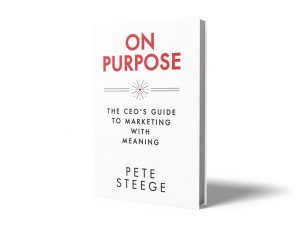
On Purpose, by Pete Steege

Many B2B CEOs carry a dark secret: their marketing is broken—and they don’t know how to fix it.

Pete Steege’s groundbreaking book, On Purpose, offers an unexpected solution: focus first on why you are marketing, and the results will follow. He reframes B2B marketing around a purposeful mindset that helps business leaders right-size their campaigns, align their teams, and have more impact with less angst and effort.

Using this accessible and usable guide, you will learn:​

  • What marketing can and can’t do for your business.

  • How much you should spend on marketing—and where.

  • Which marketing tactics are right for your company.

  • How doing less can actually deliver more results.

  • Why your most powerful message isn’t about you.

Steege shares his experience from three decades as a global marketing leader for innovative companies, ranging from Silicon Valley startups to large corporations. On Purpose will change how you think about marketing—and help you and your business achieve your boldest goals.

Amazon

Pete Steege, President, B2B Clarity

Pete Steege, President, B2B Clarity

Pete Steege is a B2B marketing expert with more than 30 years of experience in a wide range of B2B technology and manufacturing businesses, from 50-person Silicon Valley startups to Fortune 100 firms. He has lived and worked extensively in North America, Europe, and Asia.

Pete holds an MBA degree in marketing and strategic management from the Carlson School at the University of Minnesota, and a bachelor’s degree in electrical engineering from Iowa State University.

He is the founder and president of B2B Clarity, helping CEOs of B2B businesses without a marketing leader, make their marketing work.

LinkedIn | Twitter

TRANSCRIPT

John Ray: [00:00:00] Hello again, everyone. I’m John Ray on the Price and Value Journey. And folks, I’m here today with Pete Steege. Pete is with B2B Clarity and he is also the author of a newly released book called “On Purpose: The CEO’s Guide to Marketing with Meaning”.

Pete is a 30-year marketing veteran. He’s got a wide range of B2B technology and manufacturing business experience, working from Silicon Valley startups all the way to Fortune 500 firms. And he’s got global experience as well in North America, Europe and Asia. And all that experience gives him a wide breadth of perspective and experience he’s going to bring to this interview. But certainly, in his book, which I have read, folks, I have read so, and I’m delighted to say that because it was worth every minute of it. Pete Steege, welcome to The Price and Value Journey.

Pete Steege: [00:01:04] Thanks so much, John. Really happy to be here.

John Ray: [00:01:06] Hey, I’m delighted to have you. Talk about — let’s first of all, just give everyone a quick introduction to what I missed in your business. Tell everyone how you’re serving folks at B2B Clarity, then we’ll get to the book.

Pete Steege: [00:01:21] You know, John, I think you summed it up pretty good. As you said, I’ve been a marketer for a long career. And these last two years have been a big change for me and just a great change where I’m on my own helping B2B business owners and CEOs. And it’s been — it’s just been really, really exciting and satisfying change for me. But yeah, that’s what I do now is I just — I’m able to use some of that, you know, gray hair, I guess, and help people solve problems. I really enjoy it.

John Ray: [00:01:55] One of the aspects to this book that you state right up front is that you believe that most CEOs, B2B CEOs, look at their marketing function and their marketing efforts and they see that as broken. Why?

Pete Steege: [00:02:16] It’s absolutely true. More often than not, they are not satisfied with their marketing. And it’s usually not, oh yeah, it could be better. It’s usually a pain point for them. And I think there’s a couple of things at work there. One is, I think if you’re at all in the business world, you know what a overwhelming space marketing is. I like to call it the marketing industrial complex. There’s so many businesses and agencies and consultants and software applications all fighting for your mindshare and saying that they have the greatest thing since sliced bread to solve your marketing problems.

As a matter of fact, there’s this really interesting number factoid. There’s a guy that tracks it’s called Chief MarTec is the organization, and he’s been tracking since 2011 the number of marketing technology solutions available in the market. And he creates a landscape, right? 2011, the first one, 150. 2022, 9,938 of them.

John Ray: [00:03:32] Oh, wow.

Pete Steege: [00:03:32] So, there’s this overwhelming wealth of solutions, I’ll say, right. So, that’s a problem because no one can get anywhere near to choosing. All of them are even a collection of them. You’re going to have to choose what you’re going to do. And that coupled with the fact that there’s this idea that, oh, I’m just going to choose this thing to do. Some people call it random acts of marketing. You know, hey, we need a video,

John Ray: [00:04:07] Right.

Pete Steege: [00:04:07] Hey, let’s go to the big show this year. You know, this kind of arbitrary thoughts that are emotional sometimes or that feels good, it sounds good. Maybe it sounds fun even sometimes, or your competitor is doing it, right. There’s all these reasons to do them. But you take this wealth of options and couple it with this idea that you can choose one and that it would be just as good by itself versus part of a bigger plan or strategy. And that doesn’t work. It’s like throwing stuff at the wall and your customers are getting these blips of information from you and they’re not consistent when they do get them and you cancel yourself out.

So, basically, a lot of that effort, a lot of the money you are spending is almost — is often just a waste of time because it’s not helping you get closer to your customers.

John Ray: [00:05:09] I’m curious about — I mean, CEOs of larger B2B firms in general, they certainly are — they’re the chief strategy officer, right. And so, this is really a matter of getting their attention diverted toward a tactic, a video, or whatever that tactic, whatever form that tactic takes. Instead of focusing on the strategy and executing the strategy, kind of understand it from a smaller firm point of view, you know, an entrepreneur that’s kind of overwhelmed and can easily maybe get their attention distracted. But the CEO is a bigger firm. I mean, why does this happen? What’s your view on that? You’ve talked to a lot of them, by the way, that was –.

Pete Steege: [00:05:57] I know.

John Ray: [00:05:57] Yeah. So, cite more about that, maybe first.

Pete Steege: [00:06:01] So, I like the fact that I started — when I started my business, I kept track of my meeting. I went out and wanted to talk to CEOs, right. Obviously to find customers, but also to kind of validate as a corporate marketer versus being a solution provider for a CEO, it doesn’t translate, right. So, I had, I think I say in the book, 397 meetings, right. Not all CEOs, but all CEO related people, related to this challenge. And yeah, so a lot of data points and a lot of commonality in that.

And to answer your question, why do the larger companies, strategic CEOs let’s say, ones with a big budget and maybe even a marketing team, they wouldn’t have this problem, right? Guess what? A lot of the places I worked over 30 years were those organizations and I was in those marketing teams. And there is a core problem here that I talked about before that CEOs or their marketing leader or their sales leader tend to bite off more than they can chew with marketing. For the reasons we said, there’s a lot of things you could choose to do, and they tend to try to do more than they can get done, that they can be successful with.

So, even at the larger organizations, I remember one not too long ago where I worked over a hundred marketers on this company’s team and they had big plans and they were sophisticated plans, but they often didn’t finish these sophisticated projects because they were so busy with so many plates spinning. It just scales up, whoever you are. It’s a mindset issue. It’s a problem with thinking of marketing as the more the better. And activity is good versus there’s a less is more theme here and a strategy before tactics.

It’s less important how many things you do and it’s more important why you do them and that you finish, that you finish what you — you do it well, right. That’s really an important part that translates up to — I can’t speak for multibillion dollar companies. Probably a different issue. But certainly, you know, for a wide range of company sizes, this is a challenge for those organizations and the leaders of those organizations to get focus and to follow through and thoughtfully deliver on a purposeful marketing plan.

John Ray: [00:09:00] Pete, one of the things that you talk about in the book is not just, I guess, maybe marketing overload, taking on too many tactics, too many initiatives, but you talk about mindset a lot and that the problem is a mindset of meaning. Explain what you’re talking about there.

Pete Steege: [00:09:28] Yeah. That’s the core of the book, really. What my observation is, there’s a really important hierarchy in marketing. And most businesses, most CEOs know two of the three levels, and they don’t even know the third level exists. The first level, which we all know is tactics. It’s all the stuff you do in marketing. We all know what they are. There’s website, SEO, email, PR, all these things you do. So, these are the things that have a budget line item.

As I said, often, there’s some chaos around the activities, the tactics. And the more incoherent they are, the less valuable they are because they are all out there and your customers are picking them up and they’re busy. And if they don’t hear this common story, it’s a problem, right. So, tactics can be a real and it’s hard to deliver on them. The more you get, you get overloaded, right.

So, the next level is really important, and it really helps solve that problem and that strategy, marketing strategy. Bunch of books out there. You know, we all have our favorites probably if you’re a CEO or a executive. And that helps bring order and priority to these tactics and consistency can really help rein in the chaos. Absolutely. And for a lot of people, that’s where it starts. That’s marketing. You got your tactics, and you got your strategy.

John Ray: [00:11:02] Sure.

Pete Steege: [00:11:03] I strongly believe that there’s a really important element above that, which is mindset. Strategy without mindset, without purpose, without direction — there are almost as many strategies now as there are tactics, right? And there are often multiple strategies that you need to apply to your business marketing, your marketing approach. There are strategies that have to align with your sales strategies and your customer support strategies and your product development so you can — companies that think of strategy as a means to an end that are that — if I just come up with a really smart way to look at this, it’s going to solve all my problems.

They end up with a well, maybe more ordered group of tactics, but I would say in a way they’re almost lifeless, right. They’re mercenary. Their goal is to get, get. Their goal is to get, right, to win the order, maximize profit, change mind perception. All those things are a good outcome. But if those are the destination and there’s not a tie to why you created your business or why you are getting up every day to manage this thing, what’s the vision? What’s the value of your organization.

If your marketing is cut off from that, it doesn’t work. It’s a lot more visible in activity, but it doesn’t change the hearts and minds of your crazy busy clients that are hesitant to come on board with somebody new. And it’s that mindset of meaning that says my — first, I need to start with, okay, why are we in business?

This isn’t a marketing thing. This is why we come here every day. And who is it that we’re here to help? Because a business that gets — you may say, oh, my goal is to make a lot of money. Well, you can’t make a lot of money if you’re not solving a problem for somebody. And knowing that mission is the first step to marketing that works. Because if you know that mission and then you say marketing isn’t a by itself set aside tactic, it’s actually part of us creating the bond with our relationship with our customers that make it work. And so, a little bit of a side topic here.

John Ray: [00:13:57] Yeah.

Pete Steege: [00:13:57] My definition of marketing is optimizing the relationship between your business and your customers. So, it’s relationship. One word, marketing is relationship.

John Ray: [00:14:10] Oh, wow. I love that. And you talk a lot about that in the book too, to be clear. Because those sound like two separate things, mindset and relationship. But they’re not in your world, in your mind.

Pete Steege: [00:14:32] No. And the reason why is picture yourself and your customer, right? There’s these two — it’s a company, yourself as your company, right? But it’s people in your company and then you have your customers. And if your goal is a relationship, I believe that the only way — the way you make that relationship happen, the way you spark it, the way you turn it on and activate it, is meaning. Meaning for them and meaning for you. If you’re doing things at them without a purpose, for the bigger purpose, they can tell.

John Ray: [00:15:10] Right.

Pete Steege: [00:15:11] If they are listening to you or they are interrupted by you and there’s no good reason in their mind why they should talk to you, if there’s not a purpose to that. Meaning, they’re not going to take the time to do it. So meaning back to the word, right, mindset of meaning. Meaning is what makes marketing create that relationship.

John Ray: [00:15:36] So, Pete, let’s talk about — I want to dive into relationship just a little more. You know, for smaller firms, I think they think of that as one-to-one and very personal. They’ve got the capacity to handle one-to-one relationships. As firms get bigger, it gets a little trickier because suddenly you’ve got sales forces and you’ve got layers of folks in your organization. And how are you talking? How do you talk about in the book, you talk about how to create relationships and how those relationships start and how they deepen, cover that force, if you would.

Pete Steege: [00:16:27] Sure. First thing I’ll say is that I like to call them the three superpowers of marketing. So, there are three traits that you as a CEO need to have in your culture and in your organization, that if you do, if those are there, then those relationships happen, but it’s like the essential ingredients of relationship. And what they are is the first one is authenticity. Being transparent and truthful and real with your team and your clients, right, with your world. That’s one authenticity.

The second is intention. Being intentional. We already talked about that, right. That’s having a strategy before you choose your tactics. That’s doing less but doing it better. Choosing, being purposeful, being — doing things with the end in mind. That’s intention, right. That’s the second.

And then the third is generosity. The first two I’ve heard of in a marketing sense or really authenticity, you know, that makes sense.

Pete Steege: [00:17:45] Oh, yeah.

Pete Steege: [00:17:45] Intention, Absolutely, right. Being operationally good and all that. You don’t hear generosity mentioned very often when it comes to marketing, but I am convinced that it is a total — it is absolutely a superpower. And it’s one of the three ingredients. You need all three, but it’s often the missing one.

John Ray: [00:18:07] Well, I want to get to that in a minute, because when I read your book, I had a comment for you on that, that I want to get to. But I think it’s counterintuitive for folks when you talk about the intention piece and you’re talking about let’s do less. I mean, people don’t want to do less, right.

Pete Steege: [00:18:26] Right.

John Ray: [00:18:26] I mean they want to do more because they think pressing on the accelerator is going to what — is what’s going to get them to whatever their goal is for their company. And that’s just counterintuitive and hard for anybody to get their head around.

Pete Steege: [00:18:41] It is. Let me help a little bit with that. There’s a key dynamic in marketing. And I can’t speak to other functions, but it’s absolutely true in marketing that there is a critical mass that you need to reach with a marketing program often, that until you get there, you get kind of zero results from it.

So, let’s say you decide to start posting on LinkedIn and you dabble in it, or you do a poor job of it, or it’s confusing, whatever. You spend a lot of effort on posting on LinkedIn, but it never clicks. Nobody really — it does — it’s not like the more you do, it’s incrementally more result for you and more exposure to your clients. There’s a certain level you have to get to where you reach, escape velocity, and your campaign starts to make a difference and move the needle.

Marketing is that way. A lot of things, okay. So, what often people do is they’re so — they feel so much pressure to do all these things that everybody’s doing around marketing that they — none of them have the mindshare or enough effort available to them to get to that critical mass. So, there’s lots of activity going on, but very little of it is moving the needle. If you force yourself to first say what are — what is important, right. If I had to choose three things, that three programs, tactics, campaigns, that would move the needle for my marketing, I should start with the biggest pain points, right?

So, the first step is understanding that. But when you do and if you can resist the temptation to do the other dozen things now and say, we’re going to solve these three, we’re going to launch these three things, and move the needle in these three ways and check to see if we did, right. That’s part of that intention is be thoughtful and check your work and see if it worked. Your odds of success go way up because you’re able to spend the right amount of time, your team or you or your agency, whatever it might be. You have the time and money needed to do it well, right.

So, those two things. It moves the needle, but also now you’re a brand that does things well. You start to look like you’re good at what you do. And communicating and making relationships is part of what you do, right. So, that’s — I hope that helps with the less is more.

But it’s true in so many factors, it’s true with how much content you put on your website. B2B companies, especially tech B2B, they tend to try to explain everything on their website and put a lot of acronyms on there. So, that’s another example of less is more, right.

John Ray: [00:21:40] Right.

Pete Steege: [00:21:41] Don’t try to explain it all because they don’t have time to grasp it. Another example is your priorities with your team, right? Does your team on board with what’s important right now? Are they all rowing the same direction? Often, people have multiple priorities that confuse their team.

And here’s maybe the most important one, companies need one story. I like to call it the true story, their true story. But they need one story about who they are, whom they serve, how that target benefits from them. And you tell them a lot of different ways, but you got to have that one story. So, that’s another less is more example.

John Ray: [00:22:33] Okay. Now, I’m going to get myself in trouble here. I might get you in trouble here. Let’s see where this goes, but —

Pete Steege: [00:22:40] Let’s do it.

John Ray: [00:22:40] Yeah, okay. Let’s dive into this, because this, the less is more is not where the, I’ll say a lot of the outside marketing firms and really even the inside marketing folks end up, right. I mean because —

Pete Steege: [00:23:01] Right.

John Ray: [00:23:01] And so, there’s a lot of pressure on the CEO or the owner of a business from their own marketing people on this, right. And that’s what I think is so hard for them. I mean, let’s — am I — is it just the marketing people I run into? Or do you see that out there as well?

Pete Steege: [00:23:26] Well, I do see it out there and it’s totally understandable, John.

John Ray: [00:23:31] Yeah.

Pete Steege: [00:23:33] There — you know, it’s their job, right. And more is the shorter path to looking like your progress, right. Because you can quickly point to the activity.

John Ray: [00:23:48] Right.

John Ray: [00:23:50] It’s also more budget that comes with more sometimes.

John Ray: [00:23:53] Well, yeah, that’s where I was going, right. I mean —

Pete Steege: [00:23:56] Oh, it is?

John Ray: [00:23:56] Yeah.

Pete Steege: [00:23:58] And it’s not that people are, you know, their intent isn’t good but there’s a lot of just natural impulse situation here that it’s understandable why it happens so much, right. Because it is counterintuitive and it doesn’t always — sometimes the rewards are delayed, right. This delayed gratification.

Because there’s another connection here, which I’m sure you’ve heard, which I’ve heard from a lot of CEOs, is I just need leads. I need leads and I need them now and I need more. And what can you do to get me those leads next month? Sometimes, there’s a fun, surprising little tweak that does something like that. But most of the time I think you’ve picked up, from my view at least, marketing is an ecosystem.

Marketing is a relationship building engine and it doesn’t happen overnight. And there is — to set up that right environment with your team and your customers and your prospects, it takes time for it to play out. And those leads come more organically usually. Throwing money at a Google Ads, the more you put in, doesn’t mean the more good leads you get out and the more revenue you get out.

There are — like I said, sometimes you get lucky and there’s an opportunity in the market and you want to be ready for those opportunities. But that comes after you’ve understood this — the needs here, right, and the journey your customer is on. And that’s when you see the opportunity. It doesn’t happen, which I see so often where CEOs hire a vendor to do that one tactic, one off in a vacuum, and they say you’re going to mint money with this thing. Wow. This is going to be awesome. It doesn’t happen very often for all the reasons I just said.

John Ray: [00:25:56] Okay. So, Pete, we talked about authenticity. I think we’ve covered intention. So, let’s get to my favorite part in your book, Generous Marketing. And I have to tell folks when I read Pete’s book, I wrote him a note and said you need to name this book, Generous Marketing. And to his credit, he ignored my advice. So, because he knows what he’s doing.

Pete Steege: [00:26:22] Tell me in my next book.

John Ray: [00:26:24] Okay. There you go. And I’ll read that one as well. I loved that concept. And let’s define that in your words. What is generous marketing?

Pete Steege: [00:26:39] So, for me, I like to describe it as customer centricity on steroids, right. This is — we’ve all heard about customer first, and that’s a standard platitude and obvious reasons. Of course, we want to put our customers first. Generous marketing is taking that to another level where putting your customer first isn’t a means to an end. It’s not something you do so you can make more money. It’s the paradox of really believing and wanting what’s best for your customer and changing the behavior of your organization to maximize maximize that. And in a Zen way, magically, that’s where the most success comes, because customers can tell.

And it’s organic, right? It’s deep in their bones that they can tell that you are trying to help them. And that draws them to you more than any persuasive thing you can come up with saying, right. So that’s part — that’s the essence of it. And it shows itself often in a couple of things. One is it’s not about you, right. So, when people aren’t generous, they care about their customers. Of course, they do. But they’re just so excited about what they do to help their customer that that’s what they talk about. Look at how good we are. Look, we are so — we are the best provider for you. And they sincerely — they are, they’re sincere.

But your customer doesn’t want to hear about you. They want to hear about how you can help them. So, the story needs to start with their problem and relieving it. And it just so happens that it’s that thing you do so well that does that. And it’s a subtle difference, but they notice. They notice and they will be drawn to you with your solution for their problem more than they will with your skill and your expertise.

John Ray: [00:28:58] I think it’s so important what you just said about how there’s a subtle difference to this. And it’s so subtle that I’m not sure a lot of companies and marketing gurus, marketing executives, and CEOs get the difference. I think everybody thinks their marketing is helpful, right. We’re trying to help. I think most people think that. But there is a difference that the client can see. So, dive into that a little more.

Pete Steege: [00:29:36] Yeah. So, I think I totally agree with you. It’s subtle, right, and but powerful. And just maybe a couple of other insights along the way that may help people make sense of this. Let me paint a picture.

John Ray: [00:29:51] Yeah.

Pete Steege: [00:29:54] Some things that generous marketing is not. So, persuasion is one thing. Persuasion is an interesting topic for me. When I was early in my — actually, my favorite example is I used to say I’m a marketer. I used to say, oh my gosh, I hate sales. I would never be a salesperson. And my memory is going door to door as a junior high, a 12-year-old or whatever, selling raffle tickets and having to knock on somebody’s door and interrupt their life and say, would you buy these things for me knowing that they had no, I didn’t believe in this was going to help make their life better.

And I — since then I’m realizing what I didn’t like about that wasn’t selling. What I didn’t like about that was putting myself first, right. And trying to talk them — and that’s where persuasion comes in. The best marketing doesn’t have to convince a client of something that they don’t already know or already want. The best marketing finds the people that they truly can help the people that need them and shares the good news about the solution that they have for them.

John Ray: [00:31:08] Right.

Pete Steege: [00:31:09] It’s more of an awareness and an education opportunity. Three things, awareness, education and a gift, right. It’s — do the — start giving. This is another subtle difference here. You may say, we believe it, we want our customers to succeed. I will ask you a tough — a hard question. Ask yourself this. Is your motive — in your mind, is your motive how do I maximize my revenue from this client? Or is your motive how much can I give away before I have to charge them?

Now, those are extremes. But I believe that if you truly could find a way to have that second perspective, and an example of that in the B2B tech world is thought leadership and content, where you’re an expert at what you do. Again, you’re looking for people that need how you can help them because you want to help them, right?

John Ray: [00:32:08] Right.

Pete Steege: [00:32:09] And you say, you know what, I have this service for them that someday hopefully they’ll let me do for them and they’ll pay me. But in the meantime, I have these tips, or I have this framework, or I have this how to guide that will help — as they read this, their life’s going to be better today. They’re going to solve a problem that I know they have because I’m an expert on what they — what that problem is. I can give that to them for free. And they’re going to be — that helps me eventually because they, again, they got it for free.

And if I don’t do that, if I start with rather than giving them something for free, I start with, hey, I’m going to ask you to give me something for free, maybe your email address or have a meeting with me, and my only message is, yeah, I just want you to — do me a favor almost is what it almost ends up being like, right?

John Ray: [00:33:09] Right.

Pete Steege: [00:33:10] Step back from that for a minute. Is that right? Do you really want to ask your customer to pay you first? Generous marketing gives first. And then as long as you can, and again that’s where you look at, free demo. What is it? What is it we can give? Is it free trial? And of course, the math needs to work. You can do it in such a way that it pays for itself.

And I will use an example. I’ll use an extreme example. Apple. Obviously, everyone knows the Apple story. I’m a happy Apple user and no, they’re not perfect, but and I pay a lot for their hardware, and their services, and their subscriptions. I pay more than I could for other people because I feel like I’m getting more than I’m paying. It’s — yeah, I don’t feel like I’m getting skinflint at along the way, you know.

John Ray: [00:34:12] You’re getting value.

Pete Steege: [00:34:14] Getting value consistently.

John Ray: [00:34:17] Right.

Pete Steege: [00:34:17] And it’s not like I got — I looked for a deal and I got one over on them, right. Again, it’s a trusted relationship where I know what I — that’s back to brand, right? I have an expectation of value from my provider. You have the opportunity as a generous marketer to focus first on the relationship by giving in ways that will connect them with you because you know you can help them and that’s a profitable relationship long-term. Just trust it. Make — invest in the relationship and that’s how you build that expectation, that expected value brand over time.

John Ray: [00:34:58] So, Pete, you know, I think a lot of the response a lot of folks have to what you’re talking about is if I give everything away, because I think what they hear is it’s all or nothing when you —

Pete Steege: [00:35:16] Right.

John Ray: [00:35:17] Right. When I give everything away, then why are they going to hire me? Right. I mean, so respond to that thought that I think is going around in some heads out there.

Pete Steege: [00:35:30] If everything you have to offer them, everything they need, everything they value that you can offer them, they can get it from that content or email, you probably need to rethink your product offering. I believe that if you are not this — and this doesn’t work for commodities, I’ll say it right upfront. But if you’re in the business, where you — back to that beginning, you’ve identified that your company has a unique reason to exist, something you do, nobody else can offer them, and you know who it is that has that need that only you can offer, I have found that companies that give without limit within economic reality, right. Of course, at some point you charge. But if you don’t, don’t try to hold back because maybe they won’t need you. If you’ve truly found that product market fit, they absolutely will, the ones that are going to be profitable long-term customers, they want help, right?

You’re the expert. You’ve just made the case from your help that one, you’re trusted. Two, you know your stuff because I’m using your ideas.

John Ray: [00:36:56] Right.

Pete Steege: [00:36:57] And you’re really good at this. And this is important to my business. So, I’m going to get some more of that goodness from you. I need to sign up. Tell me about what you can — how else you can help me. And back to what I said. If your answer is well, it’s pretty much what I shared with you in that spreadsheet, you haven’t thought through your value proposition and your service offering or your product offering because you have more to give them than what you can give them in a quick piece of content.

John Ray: [00:37:29] Well, let me put it a way that I’m going to let you either agree or disagree and tell me where you disagree. You know, if — let’s take your book, for example. I mean, somebody thinks, well, I can get all Pete’s secrets by reading his book, right, because you’re a generous marketer, so you’re going to put it all in the book. The problem with that line of thinking and then being, let’s call it stingy or whatever you want to term you want to give it.

The problem with that line of thinking is what it discounts is the fact that if I read your book and I’m a CEO and I agree with what you’re saying, hiring you is going to help me get there much faster. I mean, I’m going to have to you know, I buy into everything you say. Okay, you’ve laid it all out for me, but I’m going to get there much faster by hiring you and my results are much more assured, right?

Pete Steege: [00:38:36] Right. Another way to say that. Agreed. Another way to say that is I’m a CEO of a business. If you’re — if my client is a CEO of a business, they have a lot more to think about than the marketing.

John Ray: [00:38:50] Right.

Pete Steege: [00:38:50] And they’re looking — as you said, they’re looking for help that starts with some ideas in the book. Give them that. I also do videos on LinkedIn, which again, it’s a way for me to give them three or four minutes of ideas and they can quickly just, oh, okay, that’s something to think about. Both the book and the videos share what’s possible. But to your point, I’m in the business of helping CEOs transform their marketing and create an ecosystem that runs, right, that it keeps going.

John Ray: [00:39:26] Right.

Pete Steege: [00:39:26] And there may be some out there. Just to be clear, there may be some small business owners, some founders, where DIY is their solution. And you know what? I’m good with that. I believe that there’s — my market is rich enough that I can give some stuff away and nobody is going to ever need and some of those people will never need any more for me. But there’s enough CEOs and businesses out there that, as you said, they see — the idea is just plant a seed for them, right, and they need help to implement it. And that’s my opportunity to really move the needle with them.

John Ray: [00:40:07] Yeah. And B2B services provider out there, I’m using Pete as an example here. You know, look at yourself the same way. I mean it — and what you’ve got to offer the same way. That DIY as you brought up, I think it’s a great point, Pete. They’re never going to hire you, anyway, right? So, it really doesn’t matter what the message is to that particular group of clients, they’re never going to hire you. So. So don’t worry about them.

Pete Steege: [00:40:39] Can I add to that?

John Ray: [00:40:40] Please.

Pete Steege: [00:40:41] Those DIYers that may not hire you, could be a lot of them. They’re not going to hire you. But what they might do is be at a dinner party, say, I just read the most interesting book colleague of mine that’s also a business owner. It was really interesting. I got something out of it, right. So that’s — to me, that’s better marketing than anything I could, right, to that person they know at the dinner party is that their friend that they trust, suggesting that there’s value for me. And that person might be the right one that I could help.

John Ray: [00:41:20] So, I have to come back to one point that you’ve made so many great points here that it’s hard for me to keep up with them all, Pete. Sorry about that. But one — you talked about always trying to persuade and that being a problem. So, I take it that all these lead pages I see and all these posts I see that are always trying to get me to sign up for the latest webinar or the, you know, the latest sales coaching, whatever. I mean, you know, you’re not really in favor of that kind of thing.

Pete Steege: [00:41:57] I’m going to disagree with that.

John Ray: [00:41:59] Okay. I’m glad I brought it up then.

Pete Steege: [00:42:02] Yeah. If I have done — if I’ve done the work to understand the strategy as I talked about and I know what my ideal customer journey is, there’s a point on that journey where that webinar — a webinar is another way to help, right?

John Ray: [00:42:23] Mm hmm.

Pete Steege: [00:42:23] So, if there’s a point on that journey where giving them some tools or some some perspective or a case study or something about their problem is helps, then that’s a great thing to do. Maybe what you’re saying and you mentioned the persuasion thing.

John Ray: [00:42:42] Yeah.

Pete Steege: [00:42:43] It’s not tricking them into going. Again, being authentic and generous and saying, hey, people out there, wherever you can find them, maybe it is email, maybe it’s a web ad, could be. But it’s got to be value. It’s a valuable offer. It’s not clickbait, right.

John Ray: [00:43:05] Right.

Pete Steege: [00:43:05] You’re not trying to deceive them into coming and deceive them into the value of your webinar. To me, best marketing is authentically sharing the good news of I have this thing that will be valuable for you, you can come for free. Come to my webinar. Here’s a way to do it. Make it as easy as — again, it’s about them, what’s easy, what’s valuable. And then yes, so there’s a role for that.

John Ray: [00:43:31] Terrific. Now, Pete, we could go on for a while, but I probably ought to let you get back to working with the clients. But when — lets some this up, you know. I definitely encourage folks read the book. But sum it up for us, Pete. I mean, in terms of just you talked about the takeaways. The takeaways that a B2B services or product company ought to think about.

Pete Steege: [00:44:05] So, if I had to summarize it, what I would encourage CEOs and other business owners out there to do is take the time. When it comes to marketing, take the time to set aside what you’re doing and do some do some soul searching. And think about these three things. Is my marketing authentic? My marketing and my team and my culture, is it authentic? Is it intentional? o we have a reason for everything we’re doing? Is it generous? All the things we talked about there?

And if it’s not, you know, I’d encourage you to consider it. Considering it is a different approach. And, you know, in marketing, any time you can do something different than everybody else is doing, something to think about because standing out is a good thing in this world, right. So, I hope CEOs out there, you know, go to a quiet place for a couple of hours and just maybe think through those ideas and see how they apply to you. And there might be some real gems of opportunity for your business with this kind of a mindset of meaning as a reason for what you’re doing in your marketing.

John Ray: [00:45:29] Yeah. And it sounds like folks ought to think about getting some different perspective on this, right? Because their own perspective may be a little jaded. They may think they’re more generous than they really are. They think they’re more intentional or authentic than they really are. So, maybe some third-party perspective, maybe asking their employees, right.

Pete Steege: [00:45:50] Yes.

John Ray: [00:45:51] I mean, so get more ideas on this than just what you come up with over a weekend.

Pete Steege: [00:46:00] I’m going to follow up with what you said.

John Ray: [00:46:02] Please.

[00:46:03] I love what you said. Here’s an even easier than taking that introspection time. Take a little time and do a poll of your employees, as you said, ask them some open-ended questions. Why do you think we’re in business? What’s the most important? What’s our most important message? What do we tell people? Something simple like that, you might be very surprised at the variety of answers you get. Two problems there. One is they’re not the answers you want.

John Ray: [00:46:37] Right.

Pete Steege: [00:46:38] And two is everybody’s got a different answer.

John Ray: [00:46:40] Mm hmm.

Pete Steege: [00:46:40] It’s a good starting place to say I think I need to put a little effort into this purpose thing.

John Ray: [00:46:47] Wow. Lots to think about, folks from Pete Steege. He is the author of On Purpose: The CEO’s Guide to Marketing with Meaning. And he’s also the founder and CEO of his own firm, B2B Clarity.

Pete, this has been great. And I would love it if you could share some coordinates with folks because I can’t imagine there aren’t some folks that would like to be in touch.

Pete Steege: [00:47:15] Sure. And John, thanks so much for the opportunity. It was a great chat today.

John Ray: [00:47:19] Thank you.

Pete Steege: [00:47:19] People can reach me. I find the easiest way is on LinkedIn. Pete Steege, S-T-E-E-G-E, or my website B2Bclaritymarketing.com.

John Ray: [00:47:30] Terrific. And you can find the book on all the usual outlets, folks. So, again, do check it out. I’ve read it and it’s terrific. And it’s a quick read, but dense with a lot of things to take away. So, check it out, On Purpose: The CEO’s Guide to Marketing with Meaning. Pete Steege. Pete, thanks again for coming on.

Pete Steege: [00:47:55] Thank you, John.

John Ray: [00:47:56] Hey, folks, I just want to remind you that you can find previous episodes of this show, The Price and Value Journey. Just go to pricevaluejourney.com. And if you’d like to connect with me directly, just you can email me, john@johnray.co. Thank you for joining us.


About The Price and Value Journey

The title of this show describes the journey all professional services providers are on:  building a services practice by seeking to convince the world of the value we offer, helping clients achieve the outcomes they desire, and trying to do all that at pricing which reflects the value we deliver.

If you feel like you’re working too hard for too little money in your solo or small firm practice, this show is for you. Even if you’re reasonably happy with your practice, you’ll hear ways to improve both your bottom line as well as the mindset you bring to your business.

The show is produced by the North Fulton studio of Business RadioX® and can be found on all the major podcast apps. The complete show archive is here.

John Ray, Host of The Price and Value Journey

John Ray The Price and Value Journey
John Ray, Host of “The Price and Value Journey”

John Ray is the host of The Price and Value Journey.

John owns Ray Business Advisors, a business advisory practice. John’s services include advising solopreneur and small professional services firms on their pricing. John is passionate about the power of pricing for business owners, as changing pricing is the fastest way to change the profitability of a business. His clients are professionals who are selling their “grey matter,” such as attorneys, CPAs, accountants and bookkeepers, consultants, marketing professionals, and other professional services practitioners.

In his other business, John a Studio Owner, Producer, and Show Host with Business RadioX®, and works with business owners who want to do their own podcast. As a veteran B2B services provider, John’s special sauce is coaching B2B professionals to use a podcast to build relationships in a non-salesy way which translate into revenue.

John is the host of North Fulton Business Radio, Minneapolis-St. Paul Business Radio, Nashville Business Radio, Alpharetta Tech Talk, and Business Leaders Radio. house shows that feature a wide range of business leaders and companies. John has hosted and/or produced over 1,100 podcast episodes.

Connect with John Ray:

Website | LinkedIn | Twitter

Business RadioX®:  LinkedIn | Twitter | Facebook | Instagram

Tagged With: authenticity, B2B Clarity, generosity, intention, John Ray, marketing, marketing with meaning, On Purpose, Pete Steege, purpose, The Price and Value Journey

Patricia Leonard, Speaker & Coach, Author of Hello, Self…

July 19, 2022 by John Ray

Patricia Leonard
Nashville Business Radio
Patricia Leonard, Speaker & Coach, Author of Hello, Self...
Loading
00:00 /
RSS Feed
Share
Link
Embed

Download file

Patricia Leonard

Patricia Leonard, Speaker & Coach, Author of Hello, Self…(Nashville Business Radio, Episode 45)

Speaker and Coach Patricia Leonard talked with host John Ray about her unique approach to coaching and her new book, Hello, Self. She shared with John her belief that we are all more powerful than we realize to change our circumstances, and how she coaches her clients to find their true passion and pursue it. She talked also about how this theme plays out in Hello, Self…, remarkable stories of transformation from her coaching clients, and much more.

 Nashville Business Radio is produced virtually from the Nashville studio of Business RadioX®.

Patricia Leonard & Associates

Patricia Leonard & Associates has a mission of expanding visions, building runways to success, and encouraging celebration. As a dream builder, Patricia is personally committed to helping you live your personal and professional life fully by identifying your passions, defining your talents, exploring possibilities, and awakening hope and inspiration within.

Patricia Leonard & Associates offers a full-service CAREER AND LIFE MANAGEMENT program beginning with process approaches for finding your authentic self, defining your vision and developing plans for implementation. Getting to your innermost dreams, desires and goals require knowing your WHY, WHAT and HOW!

Her company works with individuals, corporate and small business leaders, conference organizers, non-profit organizations, focus groups, academic and personal growth planners to craft a one-of-a-kind participatory experience focused on the client audience and their expected outcomes.

RUNWAY TO SUCCESS is an achievement-based organization focused on supporting groups and individuals who want to explore personal, professional, and organizational possibilities. They strive to motivate, encourage, and empower our clients. Patricia’s style is to build capability; not create dependency. Napoleon Hill said: Whatever the mind of man can conceive and believe, it can achieve. This is a key operating philosophy of Patricia Leonard & Associates.

Company website | Runway To Success

Patricia Leonard, President, Patricia Leonard & Associates and Author of Hello, Self…

Patricia Leonard, President, Patricia Leonard & Associates and Author of Hello, Self…

Patricia Leonard is a career and life management coach, inspiring clients to get their dreams and goals off that someday shelf and create a runway to success plan for turning their cants into cans, and their dreams into plans.”

Patricia Leonard is President of RUNWAY TO SUCCESS, a division of Patricia Leonard & Associates located in Nashville, TN. She is a MESSAGE ARTIST speaker, career and business coach, author and magazine columnist of a monthly column titled WISDOM AND ARTS. Patricia consults with clients on leadership, empowerment, career and life management, entrepreneurship and the power of language. Her work is focused on helping clients find their runway!

She has a professional background in management, human resources, corporate training, business consulting, small business startup and talent development. Patricia has worked with companies in the service, music, banking, manufacturing, publishing, warehousing, healthcare, academic, retail and financial industries; and taught management classes as an adjunct professor.

She has a degree in Human Resource Management, is MBTI qualified, and trained as a Career Coach and Consulting Hypnotist. Her volunteer energies are focused on Women in Film and Television-Nashville, where she is an Executive Board Vice President; Dress for Success on the Advisory Board; and International Coaching Federation-Nashville where she held Board roles for several years.

Patricia has authored the books Wearing High Heels in a Flip Flop World,  Becoming Woman…A Journal of Personal Discovery, The NOW, HOW and WOW of Success, Happenings, a full-year calendar of inspirational messages and a spoken word album titled I Am… all available on her website here.

She enjoys songwriting, creating poetry and has written a one-woman show and artistic speech she performs titled, HELLO, SELF…, about a woman in midlife reinventing herself.

Her latest book titled “Hello, Self…”, based on her one-woman show, has just been published and is available on Amazon.

On the personal side, Patricia, describes herself as a woman, lover of life, mother, grandmother, career professional, and message artist and in that order! Her goal is to continue inspiring others, of any age, to START NOW creating and expanding their Runway to Success in their personal and professional lives. She believes that life is a gift, the way we wrap it is our choice.

LinkedIn | Facebook

Questions and Topics

  • What is your story from a personal & professional aspect?
  • What do you specifically offer clients as a coach, speaker, and author? What has been your market focus?
  • What is significant about the state of our business and cultural transition we are facing?
  • What are some titles of the books you have authored and what is a common theme running through them?
  • What are some key messages you would offer those listening to this podcast today regarding career & life management fulfillment?
  • Define your What, Define your Why, Define your How
  • You are publishing a book in July 2022 titled: HELLO, SELF… What is the significance of that book’s content?
  • What is your personal goal(s) for you own life and career legacy?

Nashville Business Radio is hosted by John Ray and produced virtually from the Nashville studio of Business RadioX®.  You can find the full archive of shows by following this link. The show is available on all the major podcast apps, including Apple Podcasts, Spotify, Google, Amazon, iHeart Radio, Stitcher, TuneIn, and others.

Tagged With: authenticity, career coach, Hello Self..., Nashville Business Radio, Patricia Leonard, Patricia Leonard & Associates, Runway To Success, wisdom

Decision Vision Episode 107: Should I Actively Use LinkedIn? – An Interview with Adam Houlahan, Prominence Global

March 11, 2021 by John Ray

LinkedIn
Decision Vision
Decision Vision Episode 107: Should I Actively Use LinkedIn? - An Interview with Adam Houlahan, Prominence Global
Loading
00:00 /
RSS Feed
Share
Link
Embed

Download file

LinkedIn

Decision Vision Episode 107: Should I Actively Use LinkedIn? – An Interview with Adam Houlahan, Prominence Global

Adam Houlahan of Prominence Global joined host Mike Blake to discuss his journey to recognition as a LinkedIn authority, why using LinkedIn can be so rewarding for business owners and professionals, why so many users get LinkedIn wrong, how to effectively use LinkedIn to build relationships, and much more. “Decision Vision” is presented by Brady Ware & Company.

Prominence Global

Prominence Global is, you’ll find, very different. They help their clients position themselves as industry leaders who are the envy of their peers. Their mantra is authenticity. They create intelligent strategies that cut through the noise that is social media. They do that by being authentic, courageous, and committed to make a difference in their world too. They value transparency. More is learned from mistakes than successes, sharing both is their commitment to honesty and truth.

Ethics in marketing is in their DNA, they are not afraid to say ‘no’. They seek continuous improvement through innovation They are constantly curious in growing themselves, their team and the service they provide.

They understand there is no cookie-cutter program that suits every business. They develop solutions that are as individual as their clients are. They believe real and meaningful change comes through the world’s entrepreneurs.  They create a powerful on-line presence for each client that grows & accelerates their global footprint, so that together they really can make a huge impact.

Company website | LinkedIn | Twitter | Facebook

Adam Houlahan, CEO, Prominence Global

Adam Houlahan is an International Keynote Speaker specializing in LinkedIn strategies for entrepreneurs, and CEO of the highly successful LinkedIn agency, Prominence Global. He hosts arguably the world’s largest free on-line LinkedIn training event with thousands of people registering every 10-weeks and is considered to be one of Australia’s leading experts in harnessing the power of LinkedIn for business.

Adam is also the author of three Amazon best-selling books Social Media Secret Sauce, The LinkedIn Playbook, and Influencer. Adam co-authored a fourth international best-seller Better Business, Better Life, Better World. He believes real and meaningful change comes through the world’s entrepreneurs. His purpose is to positively impact 12 million people in need and has surpassed 4 million on the way to that target.

LinkedIn | Twitter

Mike Blake, Brady Ware & Company

Mike Blake, Host of the “Decision Vision” podcast series

Michael Blake is the host of the “Decision Vision” podcast series and a Director of Brady Ware & Company. Mike specializes in the valuation of intellectual property-driven firms, such as software firms, aerospace firms, and professional services firms, most frequently in the capacity as a transaction advisor, helping clients obtain great outcomes from complex transaction opportunities. He is also a specialist in the appraisal of intellectual properties as stand-alone assets, such as software, trade secrets, and patents.

Mike has been a full-time business appraiser for 13 years with public accounting firms, boutique business appraisal firms, and an owner of his own firm. Prior to that, he spent 8 years in venture capital and investment banking, including transactions in the U.S., Israel, Russia, Ukraine, and Belarus.

Brady Ware & Company

Brady Ware & Company is a regional full-service accounting and advisory firm which helps businesses and entrepreneurs make visions a reality. Brady Ware services clients nationally from its offices in Alpharetta, GA; Columbus and Dayton, OH; and Richmond, IN. The firm is growth-minded, committed to the regions in which they operate, and most importantly, they make significant investments in their people and service offerings to meet the changing financial needs of those they are privileged to serve. The firm is dedicated to providing results that make a difference for its clients.

Decision Vision Podcast Series

“Decision Vision” is a podcast covering topics and issues facing small business owners and connecting them with solutions from leading experts. This series is presented by Brady Ware & Company. If you are a decision-maker for a small business, we’d love to hear from you. Contact us at decisionvision@bradyware.com and make sure to listen to every Thursday to the “Decision Vision” podcast.

Past episodes of “Decision Vision” can be found at decisionvisionpodcast.com. “Decision Vision” is produced and broadcast by the North Fulton studio of Business RadioX®.

Visit Brady Ware & Company on social media:

LinkedIn:  https://www.linkedin.com/company/brady-ware/

Facebook: https://www.facebook.com/bradywareCPAs/

Twitter: https://twitter.com/BradyWare

Instagram: https://www.instagram.com/bradywarecompany/

TRANSCRIPT

Intro: [00:00:01] Welcome to Decision Vision, a podcast series focusing on critical business decisions. Brought to you by Brady Ware & Company. Brady Ware is a regional full service accounting and advisory firm that helps businesses and entrepreneurs make visions a reality.

Mike Blake: [00:00:22] Welcome to Decision Vision, a podcast giving you, the listener, clear vision to make great decisions. In each episode, we discuss the process of decision making on a different topic from the business owners’ or executives’ perspective. We aren’t necessarily telling you what to do, but we can put you in a position to make an informed decision on your own and understand when you might need help along the way.

Mike Blake: [00:00:40] My name is Mike Blake, and I’m your host for today’s program. I’m a director at Brady Ware & Company, a full service accounting firm based in Dayton, Ohio, with offices in Dayton; Columbus, Ohio; Richmond, Indiana; and Alpharetta, Georgia. Brady Ware is sponsoring this podcast, which is being recorded in Atlanta per social distancing protocols. If you like this podcast, please subscribe on your favorite podcast aggregator, and please consider leaving a review of the podcast as well.

Mike Blake: [00:01:06] So, today’s topic is, Should I actively use LinkedIn? And, you know, this is an interesting topic, I think, from so many levels. One, the pandemic has created opportunities and necessities that I think are far-ranging. And I don’t need to lecture people by now, at least here in the United States, it’s been a year since this thing has really hit. And we know what kinds of changes that it has created. And one of them has been that, you know, we’re just not selling and marketing the way that we once were. That will likely come back as we enter sort of a trans- pandemic and then a post-pandemic world. But for the time being, if you want to talk to people, for the most part, at least in the United States, it’s going to be in some digital virtual format.

Mike Blake: [00:02:01] And then, when we consider that there’s been massive displacement in our country and elsewhere with respect to employment, people are turning to LinkedIn once again in droves because that is, at least, one way that you’re going to get your next job, particularly if you’re in a technical or a professional field. And then, finally, it’s good to kind of touch base because, you know, the social media landscape is changing so rapidly and evolving that, you know, while LinkedIn has maintained its space and, of course, Facebook has maintained the space where it is, and YouTube, and so forth, yet we’re seeing new entrants such as Clubhouse, that is all the rage. We’re seeing the the ascent of TikTok and so forth, which is setting the world on fire. And, you know, that’s probably going to be the way the things are for a while, that we’re going to have to kind of touch base and take a look back and make sure the things we are using are as useful as we thought they were and that we’re achieving the same goal. And for a lot of people, I still think they need to be convinced candidly that LinkedIn is a viable platform.

Mike Blake: [00:03:24] And I had a conversation with somebody not that long ago, and I will not sell them out here online, but, you know, they did tell me sort of very dismissively, they thought that LinkedIn was basically a method by which we’re told by which their competitors could simply poach their employees. And that’s a pretty cynical view, but it’s not a uniquely held one. And so, I happen to be a LinkedIn fan. I’m an active user of it. I like to think that I’m a Power User, although I think our guest is going to find holes in the way that I use it because he’s the expert and not mine.

Mike Blake: [00:03:57] But we’re very fortunate that joining us today from Surfers Paradise, Queensland, Australia – and I’ve got to ask you about that – is Adam Houlahan, who is CEO of Prominence Global. Adam is an international keynote speaker, specializing in LinkedIn strategies for entrepreneurs and CEO of the highly successful LinkedIn agency, Prominence Global. He hosts arguably the world’s largest free online LinkedIn training event, with thousands of people registering every ten weeks. And is considered to be one of Australia’s leading experts in harnessing the power of LinkedIn for business. Adam is also the author of three Amazon bestselling books, Social Media Secret Sauce, which I’m reading right now; the LinkedIn Playbook, which I have read and led me to invite Adam to the program; and Influencer, which is on the queue. Adam co-authored a fourth international bestseller, Better Business, Better Life, Better World.

Mike Blake: [00:04:51] Prominence Global, as you’ll find, is very different. They help their clients position themselves as industry leaders who are the envy of their peers. They developed a range of support services to cater to every need. They host free web events. There are free community that you can join, a free Profile Optimization course, an Inner Circle Solo, Inner Circle Academy, Inner Circle Legends, and maybe Adam can tell us exactly what those mean. These programs are an intensive deep dive, a superb results producing methodology that creates a cutting edge lead generation sales funnel for almost any industry. The difference is simply how much support you need from their team of dedicated professionals. Adam, welcome to the program.

Adam Houlahan: [00:05:29] Thank you. And a very, very comprehensive introduction there. Well done. Thanks, Mike.

Mike Blake: [00:05:36] Well, thank you. That’s probably a very kind way of saying long winded, but I’m just going to take it at face value. So, I do want to ask you about Surfers Paradise. Are you a surfer yourself?

Adam Houlahan: [00:05:49] Interestingly, no, but where I live is a bit of a surfing mecca in the world. It’s kind of like the tourist capital of Australia, I suppose. And, fortunately, here in Australia, we can still travel around the beach, not so much international people. But I get to live right on about ten beaches within about a half-hour drive, which is fantastic.

Mike Blake: [00:06:16] So, I’m curious, so you are able to travel fairly freely within the country, but international travel, I guess, is shut down as it is in most places.

Adam Houlahan: [00:06:26] Yeah. So, it’s not easy to travel outside of Australia, but, fortunately, we seem to have the pandemic under control. There’s very few cases here in Australia. And they can still go on holidays and travel around. And our economy’s doing quite well, so we’re very blessed. I suppose it’s one of the advantages, Mike, of being an island nation in the middle of nowhere, it’s easy to close your borders.

Mike Blake: [00:06:51] I suppose that’s true. Well, well done and bravo. And, hopefully, we’ll catch up to you guys sooner rather than later. So, Adam, I’d love it if you could tell us your origin story. How did you become involved in LinkedIn? And then, could you sort of take us from that point to how you became one of the world’s leading experts on the platform?

Adam Houlahan: [00:07:15] Yeah. I’d love to. So, it all started about ten years ago now. And for the very first time in my life, I actually worked for somebody else. I was running a company based here in Australia that is a bit of a global player. And we’re exporting organic skincare products to about 64 countries around the world. At that time, I didn’t really know much about LinkedIn, or any other social media for that matter. But what I did notice was that, we were doing a little research on why other companies in that same space around the world were doing well. And it turned out to be that they were really good early adopters of social media from a business perspective. And that kind of piqued my interest on how that could be used for really high quality business.

Adam Houlahan: [00:08:03] And so, I just really immersed myself into learning about it, social media in general. But the more I did, the more I just personally resonated with LinkedIn. It seemed like a very difficult platform to master, and it is. Yet it just kind of made sense to me. And so, I just kept trying different things and learning. As I said, this is the only time I’ve ever worked for another company, and I got to the point where I really wanted to get back into my own thing. And I thought, I’m doing pretty well with LinkedIn myself. I can probably help other people do that.

Adam Houlahan: [00:08:41] So, I started really as just a consultant, just myself coaching a few people. And the interest in it was surprising. And we just kept growing and growing, and we had varying team members to sort of deliver that. And, now, we’re a global team of amazing people. We have a team in North America, in the Philippines, and UK, here in Australia, and we get to work with amazing, amazing people all over the world. And we just specialize in this base of a platform called LinkedIn.

Mike Blake: [00:09:15] So, what did it take to go from user to active user to an expert? Was it intense study? Was it a lot of trial and error? Do you know people who wrote code at LinkedIn? What did it take to develop that level of expertise that you now have?

Adam Houlahan: [00:09:32] I guess it’s that old saying, the ten thousand hours of putting in your time as well as funny things. I often get asked the question like, “How did you become an overnight expert?” Well, I didn’t. I mean, I did my time. It’s a lot of hard work. And as you said, a lot of trial and error, and it still is. We have people on our team, a data scientist, and all they do is kind of monitor algorithms and what’s working and what’s not, and find patterns and commonality and things. And as you’re aware, not only LinkedIn, no social platforms really share their algorithms. So, we spend a lot of time working this stuff out and, eventually, came up with a process that just worked. And we’re fortunate enough to work with over 200 people around the world. And so, it’s not just now, where it’s just what I see in what I’m doing, we get to see the results of what hundreds of accounts are doing. And, of course, that exponential sort of data capability is what helps us to really hone down on what actually is a methodology that works.

Mike Blake: [00:10:58] So, of course, LinkedIn is now one of many social networks. What made you choose to focus on LinkedIn? And I mean, are you active at all in other social networks as well?

Adam Houlahan: [00:11:13] I have other accounts like Twitter and LinkedIn – sorry – Facebook and Instagram. But to be honest, I spend 95 percent of my time on LinkedIn. And I think the differentiator there is that LinkedIn, it wasn’t the social platform. It’s very much a social platform from the business perspective as opposed to many others have a more social – they certainly have a business aspect to them. And there’s certainly industries and businesses that are better served by other platforms – but it’s the general SME, B2B market. There’s really no comparison, in my opinion, anyway.

Mike Blake: [00:12:00] And, you know, it’s interesting how LinkedIn has managed to more or less preserve its status as a network for professionals as opposed to personal purposes. And one example I have, as I’m sure you’re aware, in the United States, we have an unusually polarized political culture. I cannot remember in my 50 years seeing anything like it. And even so, when you see something spill over into the political on LinkedIn, it feels like nails on a chalkboard. I mean, it stands out right away. You can feel sort of the uncomfortableness of it being there. There’s something about LinkedIn, the culture of the users, I’m not sure, but they’ve managed to sort of keep it away. Whereas, with Facebook and Instagram and the others, it really is kind of a free for all.

Adam Houlahan: [00:12:51] You’re right. And interestingly enough, algorithmically, it’s one of the things that LinkedIn sort of manage well. So, I wouldn’t say you don’t see any of that type of content on LinkedIn. It’s certainly there. But the difference really is that they’re suppressing a lot of that out of their feeds. So, let’s be honest, there’s 750 million-plus users on LinkedIn, and probably 95 percent of them don’t really know exactly what is best practice and what works. And it’s not uncommon that it gets used like other platforms. The difference is that LinkedIn’s algorithms can spot a lot of that and actually cut it off before you see the high majority.

Mike Blake: [00:13:48] So, you said something I wanted to dive into a little bit. And you sort of answered the question and that is, it sounds like you think that most people are not using LinkedIn correctly or at least anything approaching the fullest capabilities of the platform.

Adam Houlahan: [00:14:03] Exactly. And I can give you a more specific number than that. In my opinion, it’s probably about the top 0.02 percent of people truly understand how to leverage it to its greatest capability and are rewarded by it. It’s interesting, you sort of mentioned earlier about someone you had a conversation with that had that view that it was just a place to poach team members and things like that. And I’m not saying that that type of thing doesn’t happen, it certainly does. But the real power of LinkedIn is – and I’m going to get some pushback on this one. But what I’m going to say is, it’s actually not a great sales platform and that’s what most people try and use it for. And the people who truly get the results from it truly understand its power are not actually trying to use it as a sales platform. However, because they know how to do it well, they enjoy more sales off the back of that process than 98 or 99 percent of people on the platform.

Mike Blake: [00:15:16] And I’m curious – you may not have specific insight, but I’m curious. Do you think that LinkedIn was designed to be as complex as it is, where there’s only a very small number of intelligency, if you will, or the Illuminati that really understand LinkedIn to its core? Is that the intent or is that something that simply evolved over time as new ideas, new functionality, new data has become available?

Adam Houlahan: [00:15:45] Mike, it’s a great question. And I think the reality is, I think, it’s just evolved over time. If you really go back to LinkedIn’s early days, it was a jobsite, to be honest. It’s a place where you pass your resume. And while it’s still used for job placement – and very, very well, some of them are successful clients, are recruitment agencies – but the reality is – and I think if you kind of put a line in the sand of where that really accelerated, it’s probably around the time Microsoft shelled out $26 billion dollars to buy it. Clearly, a company the size of Microsoft, again, have the resources and the capability to do whatever they wanted with the platform. And I think they’ve actually done more good than bad.

Adam Houlahan: [00:16:43] However, as you point out, in that process, it has become a little bit of a degree of complexity in how the algorithms treat different things that happened on there. And let’s be honest, the old platforms are algorithm-driven. Everything is algorithm-driven. LinkedIn just is what we call hyper-driven by their algorithms. So, the difference between really leveraging the platform well and not so well, it comes down to what we call algorithm intelligence.

Mike Blake: [00:17:20] Now, this may be an unfair question. And if it is, tell me and I’ll talk about something else, but I’m going to throw it out there anyway. Because of that, I wonder what your view is on that complexity of LinkedIn relative to other platforms. Let’s just say Facebook, for example. Facebook can be used to accomplish something similar, but an entirely different way about it, an entirely different business model in a lot of respects. You know, in your view, assuming that you sort of were at a flat footed start with knowledge of LinkedIn versus Facebook or other platforms, where do you think LinkedIn ranks in terms of complexity among the other platforms that are out there? Is it about average? Is it harder than most? Easier than most? Do you have an opinion on that?

Adam Houlahan: [00:18:07] Definitely. I’d say, definitely, it’s harder. Comparing to Facebook, it’s quite normal. Like you said, you have that flat foot stand and start. Really, the difference that I would suggest is that, with Facebook, even if you had a flat foot stand and start, yes, you can do some courses and educate yourself on how the ad platform works. And the reality is, the only way you can leverage real value from Facebook is through marketing budget. So, if you don’t have marketing budget, then you can have all the know how in the world. You’re just not going to get traction on Facebook.

Adam Houlahan: [00:18:53] Conversely, on LinkedIn, if you invest that time in that same education process, you can actually get around amazing results with no budget. You actually alluded to the reason, which you said, was a difference in business model. LinkedIn’s business model is incredibly different to Facebook. Facebook is a pay to play. It’s just that simple. It seems driven around the ad platform. With the LinkedIn, LinkedIn actually generates very high majority of their revenue through subscriptions. Meaning, that people have a subscription to the Premium platform sales navigator, the recruiter licenses, and there’s a whole bunch of other ones out there as well.

Adam Houlahan: [00:19:40] So, they have a, in my opinion, a much better model because it’s – what we call -a recurring profit model. They get paid every month regardless of the value event. They do have an end platform, as you know, but it’s really not the main driver of the revenue. So, what they really want is amazing content creators. So, if you want to dominate the platform, you’ve got to up your skill in content creation, and that’s what they really want. Because they want conversations that stay on the platform and want it to be a place where you come to it for.

Adam Houlahan: [00:20:18] If you think about why people go onto social platforms, in the simplest sense, it comes down to two things, they’re there to be entertained or educated or informed. So, LinkedIn wants to be that place for education and information. Not so much the entertainment part of the process. And it’s done a really good job at doing that. But, as we said, getting the traction on that is not simple.

Mike Blake: [00:20:46] So, you touched on something that I wanted to make sure to ask, of course, LinkedIn now does have fee-based services that do something. Each one kind of does something a little different, which is interesting. It’s not just a tier, but it’s a scope. What’s your view on the fee-based LinkedIn services? And do you think that the typical Power User would ought to at least strongly consider investing in one or more of those services?

Adam Houlahan: [00:21:12] Again, if you’re saying for Power User, then 100 percent you are going to have a Sales Navigator subscription. Now, in the U.S., I think that’s at around $65 a month. It’s around AUD 100, they’re kind of converts as the same thing, £50 in the UK. that sort of thing. So, it’s not a big investment. Realistically, if you’re really going to leverage a platform for high-level business use and success, $60 a month is not a big investment. As you said, there are other higher-level subscriptions. But the reality is the high majority user, you can do incredibly well with that subscription.

Mike Blake: [00:22:00] What do you think is the most understood thing about LinkedIn? What do a lot of people get wrong?

Adam Houlahan: [00:22:07] Most misunderstood, did you say?

Mike Blake: [00:22:08] Yeah. Most misunderstood.

Adam Houlahan: [00:22:10] Yeah. So, I think one of the most misunderstood thing is that, there’s this belief that it’s an amazing tool for sales. And reality is, it isn’t. What it is an amazing tool for is positioning yourself as a subject matter expert. And using that platform to reach out and educate and inform a marketplace that leads to having conversations off the platform. What the high majority of people are doing, as you mentioned with everything that went on in 2020, there was a massive amount of people that moved to LinkedIn. Some of them are already there, there’s a lot of people that would have a LinkedIn profile because someone just told them they should have but they never really used it. So, a lot of those people started using that account or they came across to set one up for the first time.

Adam Houlahan: [00:23:14] And through a mixture of not really understanding how the platform works, and desperation, or having to develop a new business model of how to get conversation, how to network, so to speak, they really missed the true value of what LinkedIn is all about. And interestingly enough, LinkedIn actually had to react. There was so much, let’s just say, low-quality activity that they actually introduced a spam filter into even – what’s called – messaging. So, you know, in the old days – when I say the old days, I mean about 2019 and even 2020 – a lot of people just thought that you connect with people and then you just kind of message and pitch them. And even these low-level programs around you’ve probably seen that say, “Oh, we can automate doing all this stuff.” And so, LinkedIn reacted to that and they introduced the spam filters, which again, algorithmically could detect a lot of this stuff. So, a lot of people are still punching at all these direct messages and not realizing that nobody’s actually even seen them because they’re just getting directed into the spam filters.

Mike Blake: [00:24:38] So, how much time does one have to invest to use LinkedIn in your mind properly? I know that’s a loaded question, because I imagine your answer might be that, theoretically, you can invest every minute, every day in it. But from sort of a typical Power User’s perspective that doesn’t have banks or armies of data analysts and personal assistants and so forth. But somebody just says, “Look, I want to become fluent in LinkedIn. I want to make it a big part of how I position myself in the market.” How much time do you think a typical person who wants to accomplish that needs to budget, say, on a weekly basis?

Adam Houlahan: [00:25:19] It’s a good question. And what I would suggest is, there’s a big difference between the terminology you’re using. The Power User is going to be a different level of use than to the majority of people that just want to get some good results. What I would say is, someone in that top 0.02 percent that we were talking about earlier are really doing this at a high level. On a monthly basis, it takes about 75 hours per month of work to make — happen. But the reality is that, you don’t necessarily need to be at that level to get results and you can certainly get results at a lower level. And the reality is, if you’re very strategic with your time and you sort of work to a plan, you can really get good results if you invest about an hour a day.

Mike Blake: [00:26:14] Okay. So, I mean, it is something that realistically somebody could embark on themselves and do something useful of, it sounds like.

Adam Houlahan: [00:26:24] Yeah, 100 percent. You don’t have to just be those Power Users to get results. It’s not like a deadline and saying you’re above it and you’re getting results and below it if you’re not. It’s a diminishing sort of level of result as you tee down to that. But we’ve proven it many, many times, so many people, as you mentioned, some of the programs, their solid programs, that’s what’s it designed for. Hence, the name. It means doing so. But if you follow the methodology and you diligently implement that hour or so a day, you can get very, very good results.

Mike Blake: [00:27:03] So, when you embrace LinkedIn and you’re moving towards expert level, what was it about your LinkedIn experience that made you feel like, “Okay. I’m on to something. I’m successful using this platform. I’m becoming a Power User.” What was the feedback, if you will, that LinkedIn was giving you that told you that you were really on to something and you’re getting good ROI on your time invested?

Adam Houlahan: [00:27:31] There’s probably two different versions of that. So, one part for me was, actually, being invited by Microsoft to become one of their Australian based ambassadors. So, obviously, that gave me a lot of insight, intel, into probably levels that many other people didn’t get. I still regularly get contacted by them for my thoughts on certain things. So, that certainly is at a different level. But in the more general sense, I think it was just the fact that I was able to take a company business events of around four or five companies prior to this. I wouldn’t say I’m a beginner as far as building a business. But I was certainly a beginner as far as building a LinkedIn business. But to how quickly we got traction and how quickly we were able to get growth, and then, clearly, we were using our own sort of IP, and we were using LinkedIn as the platform to generate all of that business. So, the success we had from me being a single sole consultant to a team of 18 people, that’s certainly a consistent journey. And that’s still a growing journey now, so that was really the validation for us, I suppose.

Mike Blake: [00:29:04] So, I’m going to steal one thing from your book, and I hope that you don’t mind, but I just think it’s a critical question for the podcast. And that is, for a LinkedIn user, what should be their KPIs or key performance indicators they’re looking at to ensure or track whether or not what they’re doing is a right thing so that, you know, they keep doing it if it’s doing well or they do something else if they’re not getting results? Realizing it’s not a sales platform, so judging it by the number of sales you generate is neither appropriate nor fair, what would be the appropriate KPIs to look at as a LinkedIn user?

Adam Houlahan: [00:29:42] It’s a great question. I would suggest that it’s still appropriately fair to track those sales conversations and conversions, albeit that they happen often – they should be happening off the platform. But the KPIs are what generates those conversations, and sales, the back side. So, it really boils down to a few key things. It’s not a lot of stuff that you don’t want to bog down in spending all your time on, either analyzing metrics or whatever.

Adam Houlahan: [00:30:17] But what you should be tracking on a regular basis is not only your growth in first degree connections, but more importantly, it’s the acceptance rate. So, how many connection or question you send are being accepted? If that’s below 30 percent, then there’s a problem there. It means that the market is not resonating with what you’re doing. It means that even your profile needs some work. Or, your messaging and connection strategy need some work. So, that’s the number one thing, you’ve got to maintain above 30 percent acceptance rate, whether you send ten connection requests or 100, it doesn’t matter. It’s the acceptance rate reaction that matter.

Adam Houlahan: [00:31:07] And then, the second thing is, you have to be creating content. If you want to get traction on LinkedIn, you’ve got to be a content creator. So, you need to be sort of across what level of tractions that a content is getting. So, how many views are you getting? Where are those views? LinkedIn is trying to make a connection between your profile, who you’re connecting with, and the content you’re creating. And if they can understand that, then they’re going to show it to the right type of people. So, you’ve got to look at some of the metrics, who is viewing your content and where they are, and is that aligned with the type of people who want seeing your content. So, they’re the two key ones in that area.

Adam Houlahan: [00:31:54] And then, of course, the final one, in my opinion, is how many people are willingly moving from LinkedIn into your database? Meaning, your CRM, your email list, whatever. And, again, I don’t mean these cheesy sort of platforms and bots and things that go and scrape a whole bunch of people’s information, apart from the ethical issue of that. There is no true credibility in what you’re doing if you do that. It’s how many people are willing to go from the interaction with you on LinkedIn into your CRM. And then, of course, the growth in your CRM that’s specifically attributed from LinkedIn. And, of course, how many sales conversations are you generating of that process? Because, clearly, you do need to have a sales process that is part of your LinkedIn sort of strategy. It’s just that it’s going to happen off LinkedIn, but you still need to know what it is. It’s still made world class and you still need to be able to track it.

Mike Blake: [00:33:07] So, you mentioned a couple of things I thought, for me, they’re extremely great takeaways from the book. And one of them is that, LinkedIn use is active. It’s not passive. And I imagine – and please correct me if you think I’m wrong – a common mistake made about LinkedIn is, you put up your profile and you aggressively wait for people to follow you and connect with you. And that’s probably not particularly effective. And then, the second is conversion – which I haven’t thought about until you mentioned it, until I read your book – which was, you need to then take a next step to get people to agree to get off of LinkedIn and onto something kind of more proprietary that you can control and have more direct communication with the user and with your network.

Adam Houlahan: [00:34:02] Well, yeah, exactly. I mean, at the end of the day, the only thing you truly are in control is your website and your database. All of your social platforms, whether it’s LinkedIn, Facebook, Instagram, Snapchat, Clubhouse, any of them, you actually rent access to those. You have no actual say on what happens. You may leverage it better than others, but you’re still at the mercy of those who control that as to what happens. And I can tell you, every week, we get contact by people who have lost their link access to their LinkedIn accounts for numerous reasons and said, “Oh, this is my main source of lead generation. I’ve just lost it. How do I fix that?”

Adam Houlahan: [00:34:46] One, to have lost it, you must have been kind of doing something bad anyway. But the reality is that, if you’ve been building your database off LinkedIn and you’ve got a lot of activity happening there, it should be a blip in the road. It shouldn’t be the detriment of your business.

Mike Blake: [00:35:09] So, how are a lot of people misusing LinkedIn? What are most people doing wrong that they think that they’re doing right and they should change right now?

Adam Houlahan: [00:35:19] How long have we got? Let’s look on the 80-20 rule. Let’s look at the 80% of the outcome. The first thing is, it’s in their messaging strategy. So, it’s that spray and pray approach. You’re connecting with everyone and everyone and then just pitching. I’m sure you’ve had it happen to you plenty times, you might be connected with somebody, then the very next day, you get some sales pitch about – I think your background is being an accountant, which in your world would be fine. But just recently I had somebody connect with me and then send me a message saying, “We got the most amazing program for accountants -” true story “- and we’d love to help your firm to generate new leads for a [inaudible].” “Well, great. Except we’re not accountants.”

Adam Houlahan: [00:36:28] So, it’s this sort of untargeted process. So, it’s a different course frame. You just punch it out to everyone, whether they’re interested or not, hoping that one percent of those people would engage on that. And the reality is that, if you got a one percent actual conversion on that, you’d be doing incredibly well. If you think that through, one percent, you sent out 100 messages tomorrow and one person engaged about that, I think you’d be happy. If you got a [inaudible]. That’s great. I’m going to do that everyday. So, that’s what I would do. But the reality is, it’s way, way, way lower than one percent. It’s, like, less than one in a thousand. And the point, though, is that if you got one in one thousand, you’ve also really annoyed 999 people. So, it doesn’t position you as someone with credibility and authority, that sort of thing. So, that’s the big one.

Adam Houlahan: [00:37:29] The secondary one is the content strategy. So, they’re using it like they probably got a buffer account, or Hootsuite, or one of those scheduling platforms, and they’re punching out the exact same content across multiple platforms because somebody said it was really cool to do that. The reality is that, LinkedIn doesn’t like content that has links to external content. So, if you’re sharing content that takes people off the LinkedIn platform, it doesn’t matter where you take them, whether on your website or landing page – I mean, you could write a post and link to an article on LinkedIn’s blog. And so, this is the greatest piece of content ever created and everybody should read it – LinkedIn will still suppress it because they’ve got some algorithms, are not looking at what the content is. Just if it doesn’t have a link there, yes, this is not quality content.

Adam Houlahan: [00:38:29] And I guarantee you right now, if you went and scrolled through your LinkedIn profile, you wouldn’t have to go past two or three before you’d see one with exactly that type of content. But the interesting part of that, Mike, is, even though you see that one, there’s a hundred for every one you see being suppressed that you don’t see because the algorithms are just torturing them out.

Mike Blake: [00:38:53] You know, that’s interesting. I tend to rely on outside information when I do my posts. I happen to have a chart of the day, and I don’t write these charts myself. So, I want to give due attribution to the people that created it. And I do link, and that probably is undermining my visibility. But at the same time, since I am, in effect, ripping off somebody else’s content, I feel like that’s a price I have to pay ethically to give credit where credit is due, frankly.

Adam Houlahan: [00:39:26] And you’re right. I mean, if it is someone else’s content, you should be attributing them or giving them the kudos for it. Probably the message here is, it’s not really the best use of content falling in. If you want to really get traction, you need to be the author. You need to be the creator of the content. You need to be the one with the opinion.

Adam Houlahan: [00:39:52] And, again, touching on something you said earlier about the political scene in the U.S. with the polarization, the very truth is that, actually, in some ways you can use your content for polarizing an audience in a positive way. And what I mean by that is that, at the end of the day, there’s thousands of people potentially viewing that content, not every one of them are going to be in alignment with it. So, by having a bit of an opinion about something, you can polarize an audience. And the ones who are not your tribe, so to speak, say so. And then, you know the ones who are, so you keep sort of interacting and engaging with those ones.

Adam Houlahan: [00:40:44] I’m sure your previous president, let’s just say, was very, very good at polarizing audiences. But he was also very, very good at then leveraging the part of that market that didn’t resonate with his message. He wouldn’t have been president if it hadn’t been. And the reality is that, your content strategy really has to be as you, the author, more so than someone else’s content. Because, basically, what you do is transfer that authority to the author of that content.

Mike Blake: [00:41:19] Right. We’re talking with Adam Houlahan, CEO of Prominence Global. And the topic is, Should I actively use LinkedIn? We just have time for a couple more questions then we have to let you finish your day and at least another work week. How do you keep up with all the LinkedIn algorithm changes? These algorithms change with some kind of periodicity. And if we don’t keep on top of them, you very quickly fall out of date. How do you stay on top of that?

Adam Houlahan: [00:41:51] Well, for us, it’s not difficult because we have a team of people, but that’s their job to do that. I’d be quite open and honest with you, it’s not me sitting there doing that all day. So, for us, the size of the company that we are, we have that ability to do that. For an individual to do that, I would suggest it’s near impossible. And I often see this modeling team. I shouldn’t laugh when I say this, but, often, people say, “I’ve tested this and it works.” And I would say, “Well, how many accounts did you test that across?” “Oh, mine.” “Great. You think that means it’s the same from all 750 million of us. I guarantee you, it isn’t.” And so, to really do that effectively, you need a much, much wider test base than one single account. So, be very, very careful of the information that you see that suggests that this is being well-tested and proven if it hasn’t been well-tested and proven across 50 plus LinkedIn accounts.

Mike Blake: [00:43:07] So, as we wrap up here, I suspect at least some of our listeners, they’re thinking very, I think, critically about their LinkedIn profile right now. What’s one thing you would suggest that people go look at first just on a LinkedIn profile to make it more attractive, to make it more impactful on the platform?

Adam Houlahan: [00:43:28] Mike, the easiest thing would be, go on our website. We have a free Profile Optimization course there. Over 17,000 people around the world have used that to improve their profile. But, again, we did the 80-20 rule. You’ve got to have a really good background image. You’ve got to have a good profile image. You’ve got to have written your About section and a thing that talks about yourself really, really well. But what is really well? It’s well-documented and outlined in that free course, and I highly recommend that. I guarantee you, you comment what’s in there, and it will put you in the top five percent of that 750 million profiles.

Mike Blake: [00:44:13] Adam, this has been wonderful, and I cannot thank you enough for being so generous with your time. If people want to contact you for more information or maybe your organization, what’s the best way for them to do that?

Adam Houlahan: [00:44:26] One, I spend a lot of time on LinkedIn, so if you’re going to connect with me, though, make sure you leave me a message and say, “Hey. I listened to Mike’s podcast and I want to connect.” Otherwise, I probably won’t accept it. But other than that, just go even to my personal website, adamhoulahan.com, and you can link off to our company site and everything there.

Mike Blake: [00:44:49] Well, very good. That’s going to wrap it up for today’s program. And I’d like to thank Adam Houlahan so much for joining us and sharing his expertise with us. We’ll be exploring a new topic each week, so please tune in so that when you’re faced with your next business decision, you have clear vision when making it. If you enjoy these podcasts, please consider leaving a review of your favorite podcast aggregator. It helps people find us that we can help them. Once again, this is Mike Blake. Our sponsor is Brady Ware & Company. And this has been the Decision Vision podcast.


Tagged With: Adam Houlahan, authenticity, Brady Ware, Brady Ware & Company, LinkedIn, linkedin coaching, Michael Blake, Mike Blake, networking on LinkedIn, Prominence Global, using LinkedIn

Get Clear on Who You Are E39

February 3, 2021 by Karen

Brian-Bogert
Phoenix Business Radio
Get Clear on Who You Are E39
Loading
00:00 /
RSS Feed
Share
Link
Embed

Download file

Get-Clear-on-Who-You-Are-E39

Get Clear on Who You Are E39

In this Tycoons episode, Brian brought up some very real and emotional issues that small business owners deal with when making decisions. Our experiences influence our behavior and that should be used as an advantage in living an intentional life. We should be clear on who we are – what do we want to accomplish, what is important, and why. It’s important to enjoy the journey, but to do so with clarity and strategy.

Brian discusses how the pandemic shifted the mindset of customer interface and how business owners were able to adapt. With virtual setups, we can get to decision makers faster and easier now than ever. Brian shared some great points on overcoming hurdles, scaling your business, and identifying strengths and weaknesses.

Brian Bogert Companies is a human behavior and performance company that focuses on making people’s best, better. We identify ways for our clients to raise their level of awareness and intentionality to become who they already are: their most authentic selves. Our mission is to help our clients and growth-minded individuals learn this transformative approach that cultivates perspective, motivation, and direction to align personal goals that will defy your own expectations and bring joy, freedom and fulfillment into all areas of their lives. We are on a mission to impact 1 Billion lives by 2045.

Brian-BogertBrian Bogert is a passionate human behavior and performance coach, speaker, business strategist, top sales professional and philanthropic leader who believes in helping growth-minded individuals achieve the best version of themselves: their most authentic selves.

Brian teaches how to leverage radical authenticity and awareness to create the intentional life you’ve been dreaming of, but have struggled to create. His revolutionary strategy—embrace pain to avoid suffering—has helped individuals and companies break beyond their normal to achieve the success in life and business that they’ve always wanted. If you want to create a life of no limits and gain freedom, Brian and his team will get you there.

Connect with Brian on LinkedIn, Facebook, Twitter and Instagram.

About Your Hosts

Autsin-Peterson-on-Phoenix-Business-RadioXAustin Peterson is a Comprehensive Financial Planner and owner of Backbone Financial in Scottsdale, AZ. Austin is a registered rep and investment advisor representative with Lincoln Financial Advisors. Prior to joining Lincoln Financial Advisors, Austin worked in a variety of roles in the financial services industry.

He began his career in financial services in the year 2000 as a personal financial advisor with Independent Capital Management in Santa Ana, CA. Austin then joined Pacific Life Insurance Company as an internal wholesaler for their variable annuity and mutual fund products. After Pacific Life, Austin formed his own financial planning company in Southern California that he built and ran for 6 years and eventually sold when he moved his family to Salt Lake City to pursue his MBA.

After he completed his MBA, Austin joined Crump Life Insurance where he filled a couple of different sales roles and eventually a management role throughout the five years he was with Crump. Most recently before joining Lincoln Financial Advisors in February 2015, Austin spent 2 years as a life insurance field wholesaler with Symetra Life Insurance Company. Austin is a Certified Financial Planner Professional and Chartered Life Underwriter.

Austin and his wife of 21 years, Robin, have two children, AJ (19) and Ella (16) and they reside in Gilbert, Arizona. He is a graduate of California State University, Fullerton with a Bachelor of Arts in French and of Brigham Young University’s Marriott School of Management with a Master of Business Administration with an emphasis in sales and entrepreneurship.

Connect with Austin on LinkedIn, Facebook, Twitter, and Instagram.

LandonHeadshot01Landon Mance is a Financial Planner and founder of YourFuture Planning Partners out of Las Vegas, Nevada. His firm came to life in 2020 after operating as Mance Wealth Management since 2015 when Landon broke off from a major bank and started his own “shop.”

Landon comes from a family of successful entrepreneurs and has a passion and excitement for serving the business community. This passion is what brought about the growth of YourFuture Planning Partners to help business owners and their families. At YourFuture, we believe small business owners’ personal and business goals are intertwined, so we work with our clients to design a financial plan to support all aspects of their lives.

In 2019, Landon obtained the Certified Exit Planning Advisor (CEPA) designation through the Exit Planning Institute. With this certification, YourFuture Planning Partners assists business owners through an ownership transition while focusing on a positive outcome for their employees and meeting the business owner’s goals. Landon is also a member of the Business Intelligence Institute (BII) which is a collaborative group that shares tools, resources and personnel, and offers advanced level training and technical support to specifically serve business owners.Your-Future-Planning-Partners-logo

Landon enjoys spending time with his beautiful wife, stepson, and new baby twins. He grew up in sunny San Diego and loves visiting his family, playing a round of golf with friends, and many other outdoor activities. Landon tries make a difference in the lives of children in Las Vegas as a part of the leadership team for a local non-profit. He regularly visits the children that we work with to remind himself of why it’s so important to, “be the change that you wish to see in the world.”

Landon received his B.S. from California State University Long Beach in business marketing and gets the rest of his education through the school of hard knocks via his business owner clients.

Connect with Landon on LinkedIn.

About The Tycoons of Small Biz Sponsor

Whether you’re an established local company, or a brand new start-up, you can count on GBS to be a part of your family.

We’re not just any benefits consulting firm, we’re GBS. We have nearly 30 years of experience in group benefits, a strong sense of purpose and it shows.

Austin Peterson and Landon Mance are registered representatives of Lincoln Financial Advisors Corp. Securities and investment advisory services offered through Lincoln Financial Advisors Corp., a broker/dealer (member SIPC) and registered investment advisor. Insurance offered through Lincoln affiliates and other fine companies. Backbone Financial and Your Future Planning Partners are marketing names for registered representatives of Lincoln Financial Advisors Corp. CRN-3425639-012721

Lincoln Financial Advisors Corp. and its representatives do not provide legal or tax advice. You may want to consult a legal or tax advisor regarding any legal or tax information as it relates to your personal circumstances.

The content presented is for informational and educational purposes. The information covered and posted are views and opinions of the guests and not necessarily those of Lincoln Financial Advisors Corp.

Business RadioX® is a separate entity not affiliated with Lincoln Financial Advisors Corp.

Tagged With: authenticity, awareness, Coaching, human behavior, intentionality, keynote speaking, performance

Decision Vision Episode 77:  Should I Get to Know my Employees on a Personal Level? – An Interview with Alain Hunkins

August 6, 2020 by John Ray

Alain Hunkins
Decision Vision
Decision Vision Episode 77:  Should I Get to Know my Employees on a Personal Level? - An Interview with Alain Hunkins
Loading
00:00 /
RSS Feed
Share
Link
Embed

Download file

Decision Vision Episode 77:  Should I Get to Know my Employees on a Personal Level? – An Interview with Alain Hunkins

Alain Hunkins joins host Mike Blake to discuss moving leadership from a transactional to a personal level, a particularly important topic as employees expect more from their relationships at work than ever before. “Decision Vision” is presented by Brady Ware & Company.

Alain Hunkins, Hunkins Leadership Group

A sought-after keynote speaker, facilitator and coach, Alain Hunkins is a leadership expert who connects the science of high performance with the performing art of leadership. Leaders trust him to help unlock their potential and expand their influence, leading to superior results, increased engagement, higher levels of retention, and greater organizational and personal satisfaction. He has a gift for translating complex concepts from psychology, neuroscience and organizational behavior into simple, practical tools that can be applied on the job.

Over the course of his 20+ year career, Alain has worked with tens of thousands of leaders in over 25 countries, and served clients in all industries, including 42 Fortune 100 companies. He delivers dynamic keynotes, seminars, and workshops covering a variety of leadership topics including communication, team building, conflict management, peak performance, motivation, and change.

Alain HunkinsWith his Master’s in Fine Arts in Acting from the University of Wisconsin-Milwaukee’s Professional Theater Training Program, and a BA from Amherst College, Alain also serves on the faculty of Duke Corporate Education, ranked #2 worldwide in 2018 by Financial Times on its list of customized Executive Education programs. Alain has lectured at UNC Kenan-Flagler’s business school and Columbia University.

Alain has authored over 400 articles, and been published by The Association for Talent Development, CEO Refresher, and the American Management Association.

Alain also authored the book Cracking the Leadership Code:  Three Secrets to Building Strong Leaders.

A certified co-leader for ManKind Project International, a non-profit whose mission is to help men lead lives of service to their families, communities, and workplaces, he’s based in Northampton, MA with his wife and two children.

To connect with Alain, visit his website or connect with him on LinkedIn.

Michael Blake, Brady Ware & Company

Mike Blake, Host of the “Decision Vision” podcast series

Michael Blake is Host of the “Decision Vision” podcast series and a Director of Brady Ware & Company. Mike specializes in the valuation of intellectual property-driven firms, such as software firms, aerospace firms and professional services firms, most frequently in the capacity as a transaction advisor, helping clients obtain great outcomes from complex transaction opportunities. He is also a specialist in the appraisal of intellectual properties as stand-alone assets, such as software, trade secrets, and patents.

Mike has been a full-time business appraiser for 13 years with public accounting firms, boutique business appraisal firms, and an owner of his own firm. Prior to that, he spent 8 years in venture capital and investment banking, including transactions in the U.S., Israel, Russia, Ukraine, and Belarus.

Brady Ware & Company

Brady Ware & Company is a regional full-service accounting and advisory firm which helps businesses and entrepreneurs make visions a reality. Brady Ware services clients nationally from its offices in Alpharetta, GA; Columbus and Dayton, OH; and Richmond, IN. The firm is growth minded, committed to the regions in which they operate, and most importantly, they make significant investments in their people and service offerings to meet the changing financial needs of those they are privileged to serve. The firm is dedicated to providing results that make a difference for its clients.

Decision Vision Podcast Series

“Decision Vision” is a podcast covering topics and issues facing small business owners and connecting them with solutions from leading experts. This series is presented by Brady Ware & Company. If you are a decision maker for a small business, we’d love to hear from you. Contact us at decisionvision@bradyware.com and make sure to listen to every Thursday to the “Decision Vision” podcast.

Past episodes of “Decision Vision” can be found at decisionvisionpodcast.com. “Decision Vision” is produced and broadcast by the North Fulton studio of Business RadioX®.

Visit Brady Ware & Company on social media:

LinkedIn:  https://www.linkedin.com/company/brady-ware/

Facebook: https://www.facebook.com/bradywareCPAs/

Twitter: https://twitter.com/BradyWare

Instagram: https://www.instagram.com/bradywarecompany/

Show Transcript

Intro: [00:00:01] Welcome to Decision Vision, a podcast series focusing on critical business decisions. Brought to you by Brady Ware & Company. Brady Ware is a regional full service accounting and advisory firm that helps businesses and entrepreneurs make visions a reality.

Mike Blake: [00:00:21] And welcome to Decision Vision, a podcast giving you, the listener, clear vision to make great decisions. In each episode, we discuss the process of decision making on a different topic from the business owner’s or executive’s perspective. We aren’t necessarily telling you what to do, but we can put you in a position to make an informed decision on your own and understand when you might need help along the way.

Mike Blake: [00:00:40] My name is Mike Blake, and I’m your host for today’s program. I’m a director at Brady Ware & Company, a full service accounting firm based in Dayton, Ohio. With offices in Dayton, Columbus, Ohio, Richmond, Indiana, and Alpharetta, Georgia. Brady Ware is sponsoring this podcast, which is being recorded in Atlanta for social distancing protocols. If you like this podcast, please subscribe on your favorite podcast aggregator and please consider leaving a review of the podcast as well.

Mike Blake: [00:01:07] So, today’s topic is, should I get to know my employees on a personal level? And this is a topic in business leadership that has been percolating and, I think, bubbling up to the surface really for some time. You know, it’s either been couched in certain other leadership contexts.

Mike Blake: [00:01:32] One of my favorite books on leadership by a retired naval officer named Michael Abramoff called It’s Your Ship. I heard him speak and then later read his book. And it’s a story about how he took over the the lowest performing or lowest performance rated destroyer in, I think, it was the US Pacific fleet and turned it around into the highest performing destroyer in the course of his two year tour. And terrific book. And I’m always fascinated in how you can potentially translate military leadership into the civilian sector. But one of the things that comes across very clearly in that book is that even though he had, you know, a destroyer full of officers and seamen by the hundreds, you know, he got to know most of them and care about them. And you can talk about the other things he did, which I think were very important.

Mike Blake: [00:02:32] Some of the things that I do as an aside, one of the things that I get questioned on a lot is back in the days when our firm used to actually work in an office and we would eat together, I would always make sure that I ate last or at least I ate after any of the non-partner employees did. And people would ask me, “Why do you do that?” And I said, “Well, that’s a military tradition where the enlisted people always eat first.” And the people kind of then go out from there in reverse order or ascending order of rank. And I think that’s a good idea because it’s a symbol of how you put the people on the front lines or closest to the front lines first, even though if it’s in a relatively modest way.

Mike Blake: [00:03:21] And as far as those of you who listen to this program know, I have a massive man crush on Simon Sinek. And I am going to find a way to get him on this podcast or get a restraining order. We’ll see which one of those things actually happens. And I’m a big fan of Start With Why. And then, I recently finished reading his book, The Infinite Game. And not necessarily explicit, but certainly implicit, The Infinite Game is about building relationships. As opposed to the traditional archetypal 20th Century and previous management model, which is really a transactional model. You do work. I pay you. We both go our separate ways. Simon Sinek, I think, is very much a thought leader in this notion of The Infinite Game that the notion of transaction based leadership is simply no longer viable in the 21st Century.

Mike Blake: [00:04:22] People are too smart. Maybe you can say people are too needy. A cynic might say, “Well, in a world of participation trophies, parenting is now being outsourced to leadership in the private world.” And that’s a little too cynic. But I can also see that point from a certain point of view. But, you know, what it really comes down to is moving from a transaction based leadership model into one that is relationship based. And there’s a limit to how much of a relationship you can have with somebody if you don’t know them. You can have a little bit of a relationship. But if you don’t actually know them, it’s really hard to take an interest in them in a way that is authentic and useful if you don’t actually know what kind of matters to people.

Mike Blake: [00:05:14] And frankly as an introvert, it’s something that I have to be very conscious of because I can be a very robotic manager without blinking an eye. Because, again, I’m a Generation X person, which means I’m a shut up, put your head down, do your work, and go home. That’s the culture I grew up in. That’s a culture I shake to – I struggle to shake. But I fully understand, I certainly make a conscious effort to evolve beyond that. And so, I hope for those of you who are like me that are looking for something useful in exchange for having, in my case, gray hair and two arthritic ankles, you know, something that goes along with the wisdom of age and that is evolving into a non-transactional form of leadership.

Mike Blake: [00:06:02] And so, I think this is going to be a great topic. And as an aside, by the way, I think it’s all that much more important because, you know, our people are – I mean, there are a lot of things right now, right? People ask me how I am and I tell them jokingly that, “Well, once you put a global once in a century pandemic, massive social upheaval, and murder hornets aside, I’m actually doing pretty well.” But imagine the slow moving horror movie that we find ourselves in. And our employees, our co-workers, our business partners, our bosses are all finding themselves in a life that is completely disrupted that overnight most of our support structures have been badly damaged or wiped out altogether. And there’s a lot of fear. There’s a lot of anger. There’s a lot of angst. There’s a lot of uncertainty. And frankly, there are just more mental demands on people.

Mike Blake: [00:07:10] And what that means to me is that, getting to know the people you work with on a personal level is more important than ever. And it’s not just because people are isolated now and they’re working at their coffee table. Yeah, there is that. But I think, also, people want to know that somebody out there kind of gives a damn about them. And in an environment where we can’t have that kind of contact we once had with our close friends and family, in some cases, it’s dangerous to interact with them. We need to pay attention to this all the more.

Mike Blake: [00:07:55] So, this is too big and complex a topic for me to cover myself. So, as we always do on this program, I brought in an expert who does know how to help us think about this. And joining us today is author and keynote speaker Alain Hunkins.

Mike Blake: [00:08:11] Alain is a leadership expert who connects the science of high performance with the performing art of leadership. Over the course of his 20 plus year career, Alain has worked with tens of thousands of leaders in over 25 countries and served clients in all industries, including 42 Fortune 100 companies. He delivers dynamic keynotes – I’ve seen them on YouTube -seminars and workshops covering a variety of leadership topics, including communication, team building, conflict management, peak performance, motivation and change.

Mike Blake: [00:08:40] He has a Master’s of Fine Arts in Acting from the University of Wisconsin- Milwaukee’s Professional Theater Training Program. Take that, all the parents who have said that kind of degree doesn’t get you anywhere. And a Bachelor of Arts from Amherst College. Alain also serves in the Faculty of Duke Corporate Education. Ranked number two worldwide in 2018 by Financial Times on this list of customized executive education programs. He has also lectured at the University of North Carolina Kenan-Flagler Business School and Columbia University.

Mike Blake: [00:09:11] Alain has authored over 400 articles that has been published by the Association for Talent Development, CEO Refresher, and the American Management Association. And he just released a book, Cracking the Leadership Code, which treats leadership as a skill set rather than a purely innate talent. And offers helpful guidance on how to develop or improve your own leadership skills. He’s a certified co-leader for ManKind Project International, a nonprofit whose mission is to help men live lives of service to their families, communities, and workplaces.

Mike Blake: [00:09:39] He is talking to us from the Netherlands today. But I also understand he hails from Northampton, Massachusetts, which is close to University of Massachusetts and the National Basketball Hall of Fame in Springfield. And I know that because I grew up about two hours away from there in Boston. I’m embarrassed to say I’ve never been to the Basketball Hall of Fame. Nevertheless, Alain, thank you for coming to the program and welcome.

Alain Hunkins: [00:10:06] Mike, thank you so much. I’m really excited to be with you here today. Thanks.

Mike Blake: [00:10:10] So, let’s jump in here with something very basic, which is when we talk about getting to know your employees on a personal level, what does that mean to you? How would we define that?

Alain Hunkins: [00:10:26] Wow. It’s a great question. And I loved your context up front was really useful. Because I think what that means has really changed over time, getting to know. So, you talked about you’re a self-identified Gen X-er, as am I. And we came of age in the business world where it’s very common. I have even heard this, like, we check your feelings at the door. And so, the idea that work and life were two separate beings.

Alain Hunkins: [00:10:49] But, you know, the world has really changed. You talked about that and just thinking about moving from this transactional based leadership to relationship based leadership. And so, what’s happening now is the fact that we, not just as employees, but just as members of society, our expectations have totally changed about what we expect from everything.

Alain Hunkins: [00:11:13] And a big part of that has to do with information technology has allowed us to be transparent, so we know what’s going on. If we don’t like our jobs, we can look in LinkedIn and Glassdoor and there are options and we can leave. So, I say all that because what it means to get to know your people is people expect more from their relationships at work than they ever have in the past. And the cool thing is we’ve had all this great social science research that shows that when people perform at their best, they’re actually feeling at their best. So, if we want our employees to do a good job, it’s actually in our best interest to make sure the environment they’re in serves that. And a big part of how that environment becomes optimal for them to perform is for them to feel good, which means they have to feel that someone cares about them.

Alain Hunkins: [00:12:06] And actually Tony Schwartz, who wrote a book called The Power of Full Engagement, and Christine Porath, who is a Georgetown professor, did this great article in The New York Times a few years ago called Why You Hate Work. And it had tons of research. And they found that actually feeling cared for is the number one thing that improves engagement and decreases turnover. So, it’s so funny because it sounds so soft and fluffy, right? “Oh, I got to care about my people. Get to know them.” There’s actually some great metrics that show there’s a lot of hard science and performance result. So, for the bottom liners, there is a lot of hard evidence for this very soft and fluffy skill. So, that’s why it’s so important to get to know your people.

Mike Blake: [00:12:56] So, a term that often enters a discussion like this and others, but we’re talking about this, is the notion of authenticity. And I’m hoping you can talk about what authenticity means in your mind and how does it enter this discussion of getting to know your employees?

Alain Hunkins: [00:13:18] Yeah. It’s a great question. You know, there’s this big hoopla around authentic. It’s like people are like, “Well, what if you’re authentically a jerk? Do I show up as an authentic jerk?” Like, “Ah. Maybe.” So, that’s not really what authenticity is about. I mean in the work context, when we think about being authentic, it’s that sense that people don’t have to wear a mask. I mean, obviously, we’re in COVID times, people are wearing physical masks. I’m talking about the psychological mask. The armor that people put on.

Alain Hunkins: [00:13:45] You know, Deloitte did this great study a few years ago and they found that 61 percent of the US employee workforce feels the need to cover their identities in some ways. They have to wear a mask. And the thing is, we all know what it’s like. We’ve all been in situations where we have to kind of put up our guard and wear a mask. And when we do that, we are disconnected both from the people around us, but in some ways from ourselves, because it takes a lot of extra energy to put on that shield.

Alain Hunkins: [00:14:14] So, authenticity is about having a relationship where people can be who they are and express what’s going on. Like, I think the idea that right now, for example, we’re going through this coronavirus pandemic. It makes sense for a leader to say, “You know, it’s okay not to be okay.” This is really tough. This is tough. These are hard times. And so, we have to normalize people’s experience because people are always looking to leaders to set the tone. And if we just pretend like it’s business as usual, deep down people are going to feel like, “Well, there’s nothing wrong. And we’re not talking about this.” And it becomes the elephant in the room.

Alain Hunkins: [00:14:55] So, authenticity is a way to address things in a way where people can drop their guard, let down their defenses, and just relax. And when they do that, the neuroscience would be it actually calms your central nervous system. And when you’re calmer, it frees up these neural resources, your brain, so you can actually focus on the job at hand instead of kind of going, “Am I okay? Is this okay? What does my boss think about me?” And all those weird thoughts that we all have all the time. So, authenticity is key to all that.

Mike Blake: [00:15:27] And, you know, that brings up another question. So, I’m going to go ahead and go off script, which by question three that means we’re on schedule. But you know, in these trying times, I think most companies are at least asking the question, how can we help our employees cope? And some things are realistically within the purview of employers to help with. And some things, frankly, just aren’t. And we cannot fix everything. We don’t have the resources. We don’t have the standing to do that. But you really can’t even begin to help employees through this. And I’m going to make this deliberately vague, whatever this is, because it’s different for everybody. You can’t begin to fix it if you don’t know them, can you?

Alain Hunkins: [00:16:13] No, you can’t. You can’t. And it’s so interesting, because as you describe this idea of fixing it, you’ve touched on such a big leadership trap, which I call – it’s actually the fixer. So, many people in organizations who are in leadership roles think, “Oh, I’m in charge. I have to fix things. I have to solve problems and make things better.” People don’t actually want to work for fixers. They want to work for leaders. And the cool thing is you don’t need to be a mind reader to figure out what’s going on. The fact is, like, for example, coronavirus pandemic. I guess we’re all in the same storm, but we’re not all in the same boat. The fact is, everyone is experiencing this. And I’ll call it a trauma because, by the way, the definition of trauma in the dictionary is a deeply distressing or disturbing experience. So, I think this qualifies, global pandemic, would you say? It’s a trauma.

Mike Blake: [00:16:58] I think so.

Alain Hunkins: [00:16:59] Yeah. I think it qualifies. Sure. So, that being said, how every single person that you work with is going to respond differently. Some people are living home and they’re alone. Other people have small kids. They have to suddenly home school and they’re now teaching on top of work. I mean, people who may be immunocompromised. They may have elderly parents. Like, we don’t know what they’re dealing with. So, the key to knowing your people isn’t to try to fix it and guess. It’s to ask them.

Alain Hunkins: [00:17:26] So, you know, I’ve been coaching a lot of leaders on this over the last few months. Like a simple question just to stop and go, “Hey. How are you? How are you feeling?” And not just, “I’m fine, how are you? Let’s get to business.” Like, “No. Really, how are you doing?” Which means as a leader, you need to park your own agenda. Put it to the side and hold space for somebody else. Now, some people are really uncomfortable because if they ask the question, how are you feeling? Guess what? If you listen, they might tell you. And some people think, “I can’t handle that.”

Alain Hunkins: [00:17:57] You know, the thing that’s really good, you don’t need to be some kind of a licensed psychologist to deal with this. All you have to be is an emphatic human. The fact is, if there are people in your life, like your family and your friends that you love and care about, you do this much more easily. Somehow, though, a lot of us have this barrier when it comes to work, when it comes to employees and asking them how they feel, that’s inappropriate. And then, they’re like, “Oh, let’s get to business.” So, yeah, it’s very much – it’s key for you to, first of all, get out of that fixer mindset.

Alain Hunkins: [00:18:26] And then second, start to listen with some purpose and have some empathy for other people’s situations. And if it turns out that what they’re dealing with is not something you can fix, just the fact that you listen and go, “I hear you. I don’t know what I can do, but I’d like to help you figure out what can get done.” That goes a long way. People get the fact that, “You know what? Ninety-five percent of our customers are gone and our business is about to close.” People get it. You know, they’re not stupid. They’re adults. And so, we have to stop treating them like their children. And a big part of that is getting to know them in their full life outside of just the functional job box that they sit in on your two dimensional industrial aged org chart.

Mike Blake: [00:19:12] And that speaks to, I think, getting out, again, of a transactional mindset. You know, getting away from – you’re not asking somebody how they are or what’s going on because that’s the necessary social protocol than to extract work. It’s a legitimate question. And I love the term empathy. I love the term empathy there.

Mike Blake: [00:19:36] And you bring up a point which I think about a lot and I want to share here, too. Is that it is scary to ask people how they’re doing because you don’t know what you’re going to get back. Right? And caring requires a certain level of courage, doesn’t it? Because once you care, you then adopt some form of ownership or responsibility. Maybe not to fix what’s going on, because that may be beyond your power. But once you do care, you do then have an obligation to share a little bit of yourself, whether it’s your time, your attention, your empathy, in order to help that person deal with whatever it is that’s going on.

Alain Hunkins: [00:20:26] Absolutely you do. Yeah. You can’t but help become invested in some way. You know, as you say that it’s funny. It reminds me, you know, we talk a big game about how important it is for employees to be engaged. You know, we’re always measuring how is our employee engagement? Well, do we ever stop and think about how is the engagement of our leaders? The fact is, as leaders, if we’re not engaged with employees, why would they be engaged with us and or at work? It doesn’t make any sense.

Alain Hunkins: [00:20:52] So, yeah, definitely you need to extend yourself to what’s going on. And yeah, you may not be comfortable with it. And this may derail your agenda. But that’s part of leadership. This is part of stepping into a role where, you know, you want to get somewhere, you have an outcome, but the map is not the territory. And somebody brings something up and suddenly this is the most important thing in this moment. Now, hopefully we’ll get back to something else, but this may take us in a different direction. And that’s being – I’ll call it mature. A mature leader to be able to do that.

Alain Hunkins: [00:21:29] And it’s funny, before you said, Mike, about the sense that, you know, some people are scared of bringing it up or they feel like there’s this protocol. The fact is, we can all smell it really quickly when someone is faking this. When someone thinks, “Oh, I have to ask you how you’re feeling, because my leadership coach told me I’m supposed to ask you that, but I really don’t care. And now that I’ve asked you that, I’m going to move on.” We all know when people are faking it. So, this does have to come from that – we’ll use that word again – authenticity that you actually genuinely care. And that is a different mindset for a lot of people. In fact, I would say that shift, which you described earlier, you know, that shift from transactional to relational may be the biggest divide that leaders have to cross to be able to do this whole caring for your people well.

Mike Blake: [00:22:14] So, let’s say that a listener now is convinced, I need to do a better job or I want to do a better job of getting to know my employees at all on a personal level or better. Is that a formal process, is it an informal process, or is it both? And I guess what I’m really getting at is, what are a couple of steps to get started once I’ve made that decision? Or if I’m going to make that decision, what are the next steps going to be?

Alain Hunkins: [00:22:42] Great question. So, I think there are some formal and there are some informal. I say on the formal side, first of all, is be intentional and make some time. Because this won’t necessarily happen in the elevator, on the water cooler, or in this case, you know, while people are just coming in waiting for the Zoom meeting to start. So, get intentional about carving out some time. The other thing I’d say on a formal point of view is, think about your structure if this helps you. Now, some people are really good at drawing people out, we call it naturally or they’ve already had some practice at it. If you’re not one of those people, you want to think about what would be some really great open-ended questions to get people talking. Because ideally they are doing 80, 85 percent of the talking and you are just asking some really good questions. And then, maybe prompting them with a tell me more. So, that’s the formal side.

Alain Hunkins: [00:23:33] On the informal side, I think it’s showing up, being present, being really open, being curious as to what they have to say, and listening with purpose. So, if I want to get to know someone, so asking a really provocative question like, “What is your biggest aspiration professionally?” That suddenly is different from, you know, “What do you want to be when you grow up?” Or, “What is really exciting to you now?” Or, “What was your biggest hobby growing up?” Or, “What was a big challenge growing up?” You know, suddenly just getting people – it sort of doesn’t matter which one you choose. Let’s face it, we all had these rich lives with incredible history. And if someone just asked us to share, tell me – or you could even say, “So, what’s your story? Tell me your story. I’d like to know more about you.”

Alain Hunkins: [00:24:23] If it’s genuine, people know it and they’ll start to open up. And if you give them the cues that you’re interested and want to hear more, they will share more. You know, I think it was Dale Carnegie in his book, How to Win Friends and Influence People who said, if you want to be interesting, be interested. And so, being interested in people – you know, we love to joke in the field that people’s favorite subject to talk about is themselves. So, you know, it’s true for customers. Why wouldn’t it be true for the people that you lead? So, taking some time upfront, thinking about intentionally how would you structure this conversation, it’s amazing. You can get more information in a half-an-hour call like this than you can otherwise.

Alain Hunkins: [00:25:07] In fact, in one of the leadership trainings I run, I actually have strangers who are confederates. We bring them in, but they’re strangers to the participants – the leader participants. And they have to basically spend a-half-an-hour engaging with a stranger. And then, we debrief the experience at the end. And one of the leaders who went through this said to me, “Oh, my gosh. I just spent 30 minutes with someone. I’m convinced I know more about this person than people who have been on my team working for me for the last five years.”

Alain Hunkins: [00:25:35] So, it’s amazing what the power of intention and the power of saying “I want to engage and get to know you” can do. You know, we like to say that,”Oh, it takes years and years to build trust.” You can accelerate that process with some good intention and some great questioning and listening skills.

Mike Blake: [00:25:55] So, how much of this also is making yourself knowable, right? And I think in that same book, Dale Carnegie talks about making it easy for people to get to know you as well. For example, in my office, I keep a music synthesizer. I almost never play it, but I keep it because it lets people know that I have a musical interest. So, if they ever wanted to ask about that, it sort of gives them an entree. And I’m big into the retro video games and I’m 50, so I’m not trying to impress anybody anymore. And I’m open about it. But I guess my point is that, how important is it also to allow yourself to be known at the same time?

Alain Hunkins: [00:26:42] It’s really important. In fact, there’s this really cool studies that have come out about this. There’s a guy named David Meerman Scott, and he’s got a book that came out about a year ago called Fanocracy. And what he discovered in his research – so, David Meerman Scott happens to be a Grateful Dead fan and he shares that whenever he does talks and workshops, he shares pictures, he talks about it. And what’s amazing is the impact is it doesn’t matter. It isn’t about what it is. It’s that he’s got an interest in something that that creates connection. So for you, it’s your synthesizer and your music in your office. It’s just like showing people that you’re not just a two dimensional worker bee. You know, people want to know that you have a life, you have interests outside. And when we do that, it actually humanizes us, it softens the edges and it creates and accelerates this power of connection. So, it’s called Fanocracy, this idea of how do you turn customers into raving fans. I think we could also say how do you turn employees into raving fans? It’s like let them know who you are.

Alain Hunkins: [00:27:45] You know, we talked earlier about the whole Gen X thing. So, 61 percent of our workforce today is Gen Y and Gen Z. And, you know, they’ve grown up in this digital world where there’s so much more transparency. I have a sister who’s 14 years younger than me and the amount of personal stuff that she posts on Facebook versus me, it’s just we’re different generations in some ways. And it’s just amazing. Because, again, she’s kind of grown up and this is what her peer group does. And they’re just so comfortable with having their world be transparent and knowing that everything is seen. I mean, this is the issue now with social media and the digital footprint is that if you say something somewhere, there’s probably a track on it. So, you’ve got to be pretty comfortable with whatever you put out there someone’s going to see somewhere.

Mike Blake: [00:28:31] So, some of our listeners may be thinking, you know, I’m already making an effort. We have our annual holiday party. We have a couple of firm events. Maybe we have an outing to a baseball game back when that wasn’t a risk your life kind of thing. But, you know, we have our spring outing or whatever. Isn’t that enough? Doesn’t that already mean I’m getting to know my employees?

Alain Hunkins: [00:28:58] Well, it’s funny, right? Yeah. We do it once a year. I mean, to me, the analogy there is a little bit – so, I’ve been married to my wife. We’re coming up on 20 years of marriage. We’ve been together 22 years. And I think the analogy I come up with it is like, so I said to her on our wedding day that I love you. Now, can I use the excuse like, “Well, I said it on our wedding day. Isn’t that good enough?” So, this idea that telling people you care about them at the annual picnic, I mean, if people care about you, wouldn’t you want them to tell you more often?

Alain Hunkins: [00:29:26] So, Gallup did this wonderful study, which they published in this book called First Break All the Rules, where they actually interviewed over a million people around the world. And they spent 20 years doing all the research to put this together. And what they found is that there’s one thing above everything else that makes for a successful employee. And they measured success by profitability, productivity, lower turnover, higher retention, stuff like that. It was what was that relationship with their immediate supervisor?

Alain Hunkins: [00:29:55] So, I would say a couple of things on this. Number one is, let’s say your – let’s just call you the CEO for now and you have 400 employees in your organization. Now, I wouldn’t expect you to get to know every single person on a deep, deep personal because it’s 400. But, hopefully, there are some layers of leadership. And so, you may have, let’s say, ten direct reports. You should really be modeling getting to know them well and being explicit about the importance of them getting to know their people well and so on and so forth. So, that’s one piece.

Alain Hunkins: [00:30:24] The other thing that the Gallup study talked about that was really useful, they turned it into these 12 questions, the Gallup 12. And one of these questions is, has someone, basically, praised me in the last seven days? Now, I’ve shared that research with people in my work. And people say, “Seven days? I’d settle for seven months.” Because some of us think, “Oh, I do it once a year. We do it on our performance review. After all, they have a job. They have a paycheck. Isn’t that motivation enough?” No, it’s not. I mean, all the studies would say, actually, money, once we get to a certain threshold, isn’t going to motivate a whole lot of performance, especially in this knowledge work economy that we live in.

Alain Hunkins: [00:31:01] You know, it might have been so if you said, “Okay. I got to produce ten widgets today. And tomorrow, if you do 12, we’ll pay you more.” But in this creative problem solving knowledge world that we live in, money is not going to be that motivator. So, yeah, getting to know people is, in fact, quite important.

Mike Blake: [00:31:20] So, now we have this relatively new dynamic. It’s not that new anymore, I guess. But for Gen X-ers like me, where the internet consisted of a 300 board modem connected to an Atari 400, it is new. But social media now comes into this, right? And I’d love to get your thoughts. I generally don’t connect with my coworkers on, say, Facebook. And really hesitate even to do it on LinkedIn. Mainly because, particularly, if they’re subordinate with me, I don’t want to feel like they – I don’t want to put them in a position of wondering if they feel like they have to connect with me because I’m higher ranked within the organization. Is that a legitimate concern or am I being overly cautious or am I not being cautious enough?

Alain Hunkins: [00:32:12] Well, Mike, what I love about your approach there is you’re not – now, I don’t know how you are. If they send you an invite, if you accept or not. So, here’s the thing, I think the point of view of, you know, there is all sorts of, we’ll call it baggage, that the leader wears along with their position, which is we have an outsized influence. So, like you’ve said, if you reach out and send a Facebook invitation to one of your direct reports like, “If I don’t accept this, what’s that going to say?” And then, suddenly they have this whole story. So, I think the strategy of if you’re in that leader role, I would wait. I would not reach out. And I would let people make the first move and be quite okay with them not. Or the other option is you are also welcome to be very explicit.

Alain Hunkins: [00:32:59] I’m a huge believer that one of the things great leaders do is they make their implicit assumptions explicit. So, if you feel comfortable, say, you know, as you are onboarding people onto your team, “Hey, I just want to let you know up front here’s my social media policy. I don’t connect. It doesn’t mean this. It doesn’t mean that. This is what it means.” And letting people know because then they’re not getting into this whole weird guessing game. You know, it’s amazing how much drama and politics goes on when people don’t have accurate information and they have to fill in the vacuum. And where we tend to fill in vacuums as humans is with negativity. So, the more you can be clear and overt and also realize you don’t want to put undue pressure on people, yeah, I wouldn’t go and start sending out friend invites to everybody because, otherwise, it’s going to put them in a very uncomfortable situation.

Mike Blake: [00:33:48] So, another question I think some of our listeners will likely have and a concern is, does getting to know your employees lead to a scenario in which you’re playing favorites? And can that – is there a risk of that interjecting kind of unwelcome politics into the workplace? And if that is a risk, what would your recommendations be on managing it?

Alain Hunkins: [00:34:15] That is a great question. So, yeah, it certainly presents a risk, this whole idea of playing favorites. So, you know, there’s a couple of things that go on the psychological level when you get to know people. So, psychologists call one of these things the similarity attraction effect, which is a fancy way for saying, “Oh, you went to the same college I did. Did you? Oh.” Like, suddenly you’re bonded. Or you have the same sports team you love. We start bonding over our shared commonalities.

Alain Hunkins: [00:34:43] So, one thing leaders should be aware of is this creates a huge unconscious bias. So, if you don’t check that and go, “Wow. I am totally wanting to spend time and promote this person because they’re so much like me. They look like me. They talk like me.” So, this is a huge thing, especially in this age where we’re trying to understand that if you want to get the best people in the best places, you want to create a diverse and inclusive workforce. And I’m not meaning just racially and socially economic. In every way, you want to create diversity and inclusion because that’s how you’re going to get the best ideas to innovate and come up with great things to move your business forward.

Alain Hunkins: [00:35:21] So, what this means is we want to be able to check our unconscious bias as best as we can, which is hard. It’s really hard to do that well. And realize that getting to know some people, am I starting to play favorites? And I think one thing that’s really valuable around this is for us, as leaders, to clarify our own values and check in with this. Because if we don’t recognize that we’re doing it, we will be doing it unconsciously and it can definitely lead to problems.

Alain Hunkins: [00:35:58] Now, one of the issues also connected to this is the idea that treating people differently actually makes sense. I’m not saying treat everyone the same, but different people are motivated by different things. And so, a big piece of effective leadership around getting to know people is different people. For example, if you want to recognize them, one person on your team, giving them a cash gift or some kind of a bonus means a lot. Somebody else, it might be doing a public thank you in front of the team or sending a note home to their family. So, you don’t want to treat everyone the same. However, the intention behind it is you want to care for people with an equal level of respect. I realize that is a bit of a subtle distinction, but this is why leadership is a lot easier to talk about than it is to do.

Mike Blake: [00:36:51] And the bias thing, that brings up kind of what I think is an interesting discussion topic, which is, I think in some cases we see employees run amok. Especially with that built-in connection, in particular, when we encounter or we observe what is now known, I guess, as the bro culture. Which is being revealed to be pretty toxic in areas of finance and areas of high growth emerging technology companies. And one of the things that I guess I struggle with, but I try to be very conscious of is that, right now the way our society is generally structured, you know, women and men have a different availability for our friendship or different availability for those kinds of of communications.

Mike Blake: [00:37:47] And to be very specific, right now in America, it is more likely still that women are bearing the bulk of the responsibility for domestic management, taking care of children, et cetera. Men, conversely, don’t necessarily have that responsibility. So, if you want to go out for drinks afterwards, men are more likely to be available than women. Women often need to or have needs that ought to be accommodated. They need to leave the office early, right? And there have been studies that have shown that that does, in fact, hurt women’s careers. And that’s something that we have to be conscious of.

Mike Blake: [00:38:31] But I think what you’re talking about that having the commonality and that bias, if you’re really not careful, it can run amok into creating a massive wedge within the organization, often in an unintended way along gender and, potentially, even racial boundaries.

Alain Hunkins: [00:38:53] Oh, completely, Mike. I mean, as you’re talking about that, that’s exactly where my mind was going to, is realizing, you know, as there has been such an awakening in the US over the last eight or so weeks since before we recorded here, thinking about all of the social unrest in the wake of the George Floyd murder. And recognizing that people are being more woken up to the fact that these biases exist. And the challenge with any kind of power dynamic bias is, in general, power tends to be blind to itself unless it gets some kind of a wake up call that says, “Hey, you should notice this because your privilege is creating these inequities.”

Alain Hunkins: [00:39:36] And for example, like you said, if I don’t stop and think, “Oh, when I invite the team out to drink, some people don’t come.” If I don’t stop to think about what that implication is and I go, “Oh. So, I’m building relationships with those people.” I need to really check – I’m doing all of that from a position of power and a position of privilege. So, it is important for me to check my position of privilege and power at the door and realize what’s the implications. Because, as you said, that can get very messy very quickly.

Mike Blake: [00:40:08] So, another concern is how do you prevent developing relationship with your employees from interfering with tough but necessary to say — but the downside of getting to know your employees as the time may come when you effectively have to fire a friend? And I fired people before. For the most part, I haven’t enjoyed it. There’s one person I couldn’t wait to see leave. I’m just going to be honest about it. That person made my life bad from start to finish. I could not wait for him to leave. So, I didn’t lose any sleep. For most part when I had to let people go, it’s a terrible day. Not as terrible as the person who’ve been let go, but it still ain’t fun.

Mike Blake: [00:40:55] And now, I’m imagining somebody who’s been through the worse and they’ve had to fire, maybe, lots of people over the years. And saying, “You know what? I don’t want to put myself in a position of potentially having to fire somebody that I care about and sees me as their friend.” Because now there’s not just a level of commercial betrayal. There’s a level, potentially, of personal betrayal. How do you work through that? How do you work through that head maze?

Alain Hunkins: [00:41:25] Yeah. There’s a lot. So, we have to unpack this a bit because there’s a lot there. So, let’s just start with, first of all, getting to know people and having to fire them in terms of – let’s just back it up for a second. One of the things I see a lot of leaders struggle with employees is, we don’t make – we talked about this earlier, about this whole mind reading thing -is we need to really clarify expectations and accountabilities upfront. Accountability is this big buzzword these days. We have to hold our people accountable.

Alain Hunkins: [00:41:57] I don’t actually think that leaders need to hold anyone accountable. I think what we need to do is clarify expectations, co-create objectives up front, set those with people, and check in with them along the way, ideally to support them. And if things start to go off track, if they’re not achieving what we have co-created and agreed upon, then I’m not really holding you accountable. I’m just reminding you of the commitments you’re making and that we’ve made. And that should be built on a foundation of honesty, openness, and trust.

Alain Hunkins: [00:42:32] And so, that’s why we can get to know each other. And if there are issues, let’s say you’re under performing in some way. So, my first take is I’m not going to wait until the end of whatever project deliverable or year performance review to come over and say, “Hey, Mike. You know, you screwed this up. And now, you better watch out because you may not have a job here.” Ideally, I would have caught that way sooner, come in and noticed where the trend is, and saying, “Hey, I just want to check in. What’s going on? Is there something that I can support you with?” Suddenly we have a different conversation. So, a big piece around accountability is co-creating those expectations.

Alain Hunkins: [00:43:07] Now, that being said, it doesn’t make it easier when you let people go when you care about them. So, I mean, to me, it’s also recognizing, you know, we tend to – and I’ll go back to what you talked about Simon Sinek and The Infinite Game. If we see a person’s career as this finite, “Okay. You’re hired. You’re fired.” And so, hired means success and fired means failure. I mean, how can we extend those relationships beyond that? So, for example, I have seen and known people who have actually walked out of a meeting getting terminated and actually feel closer to their leader than they did when they walked in, because their leader cared for them. They talked about how we can support you in this transition. They talked about how do we stay in touch and be an alumnus of this network in our organization.

Alain Hunkins: [00:43:57] So, a lot of this is the mindset. If we walk into this of, “You know, I’m firing them. I am slitting their throats.” It’s like, “No, you’re not. You’re actually terminating an employment contract. Like, let’s get clear on that.” And then, how can I – so, this has to do with being honest, straightforward, clear, and you can be empathetic. And we can all learn. And this, again, takes maturity to do all this. So, there’s a lot here. And again, easier said than done. But that’s the ideal that we’re moving towards is, how do we treat people that way? I mean, you could look at that in an analogy. You can look at that at a family system. It’s like, “Well, you know, I could care about my kids and love them, but, you know, they’re going to just move out of the house when they’re 18.”

Alain Hunkins: [00:44:40] You know, at a certain point you’ve got to invest because the investment actually pays dividends longer term. And it will pay dividends in ways you don’t even know. So, as opposed to just thinking, “Okay. Well, this is just an employee, so I’m not going to get to know them too much.” Because what you’re really doing is you’re treating them as a thing. And we’re going back to transactional world again.

Mike Blake: [00:45:04] And really what you’re describing, I think – and I’m using extreme event. It doesn’t have to be termination, but it just makes the conversation easier – is really, probably, what, I think, we consider best practices when you have to let anybody go. You would like it, again, not to be sort of the Dr. Evil kind of scenario. You push a button, the employee drops through a flaming pit. But there is actually some empathy that this is a transitional conversation. And, you know, how can I help make this easier for you, even though this is necessary?

Mike Blake: [00:45:40] You know, in a way, getting to know the employees, I think, if you follow that thesis to the conclusion here, it’s really nudging you in a way that you probably want to go and you probably want to have yourself viewed as a leader and as a company to other prospective employees down the road, right?

Alain Hunkins: [00:46:02] Totally. Totally. I mean, if you think about it, the natural extension of getting to know your people is, “Now that I know them, if it comes time for us to part ways, I’ll be in a much better position to part ways in a more effective, we’ll call win-win situation than we would otherwise.” Because otherwise, it’s much more transactional and much more Dr. Evil less. So, that’s what we can do. And so, by being a kind of leader that cares about people, you’re in a much better situation and you know so much more, so you can make better decisions as you move forward.

Mike Blake: [00:46:38] But I got to be careful using Dr. Evil because there are going to be millennials and Gen Y who have no idea who Dr. Evil is. So, anyway, look it up on YouTube, or Instagram, or TikTok, or whatever it is you’re doing. So, a question I’ve got to get to – and we’re wrapping up. I want to be respectful of your time, especially where you are, it’s approaching dinnertime. But the elephant in the room here – and we’re saving the best for last – is what is the danger of a romantic relationship? Or I’m not sure if it’s worse, but at least equally bad, a romantic feeling that is not reciprocated arising from getting to know your employees better.

Mike Blake: [00:47:29] It’s a natural danger that, you know, intimacy can lead then to desires for other things. I think we both agree can be, in my view, personally, I think are very likely to be enormously destructive. How do you put up a firewall to minimize the likelihood of something like that occurring?

Alain Hunkins: [00:47:55] Oh, my gosh. What a good juicy question we have here. Yes. So this is a big one because, let’s face it, we’re human. And, you know, there’s lots going on. So, one of the things is, first of all, if you’re in a position of leadership in an organization – this probably varies from state to state and even organization – first of all, check your policies first. Like, see what’s legitimate and legal in terms of your organizational policies and all that first. And get really clear on that before any of this stuff happens. Just find it out first, do me a favor, please.

Alain Hunkins: [00:48:27] And then, in terms of that, yeah, for certain, if you are in the leadership role, again, there is a power dynamic. Even though we don’t talk about it, it’s there. And I think that you have to proceed with huge caution around moving forward anyway because of that power dynamic going on. So, again, kind of like you talked about before – let’s assume that the policy is it’s okay. I would say, like we talk with social media, if I’m in a position of power, I do not think it is appropriate for me to initiate any of this. And I would backtrack as much as possible. Like, I wouldn’t send a friend invite, the same thing, because that’s going on.

Alain Hunkins: [00:49:13] Now, you also talked about the sense of what if it’s not reciprocated? I mean, this is where we get into dicier waters, right? So, you want to maintain professional boundaries. That being said, many people in the world have met who ends up becoming their partner/spouse in a work context. It’s going to happen. But I think underneath the principle we’re talking about is being intentional, being conscious, checking your biases, and being respectful of the other person at all times. I think that’s a good rule of thumb to proceed, but also check your policies.

Mike Blake: [00:49:52] You know, and I think that brings to mind a theme that then, I think, recurs is, make sure you’re authentic and you have the right motivation for initiating the get to know you better kind of relationship, the friendship. Because part of the issue with the power dynamic of romance is that, I think, in many cases that does revert back to a transactional space. And I think one of the ways that, at least, a nominally well-intentioned effort to get to know your employees better can be perverted is to then adopt a view that while this is going to become transactional, there’s something that I can extract out of this. And boy, that is sticking your fork in a plugged in toaster standing in a bathtub full of water, isn’t it?

Alain Hunkins: [00:50:53] Totally. It totally is. And, you know, you talked about the sense of, you know, where caring for your people might start to cross the line. We’ve got to be clear, there’s caring for people and that doesn’t necessarily mean intimate caring. There’s a big difference. Just in the same way that I can tell someone that I love them. I have coworkers and I say I love you all. You know, this is totally platonic love. It’s not like I love you and now let’s go and get married.

Alain Hunkins: [00:51:20] Love, there’s a difference. And, you know, part of this is having the wisdom to be able to say that and understand it and to live that. And this goes back to, like you said, the authenticity and the clarity of your purpose and what your intentions are behind it. And people can tell – you know, people smell out intentions pretty well. So, it’s important for us to smell out our own intentions first.

Mike Blake: [00:51:41] And if you can’t handle that, then maybe it makes sense that maybe you dial it back, right? You may not be emotionally wired to engage in a productive relationship. And that may require some kind of psychotherapy or reflection or spirituality to help you kind of work through. But, you know, if in your own self-assessment, you say, “You know what? I just can’t.” Maybe you even have a history. Once I start that relationship, I’m kind of all or nothing. But that may be a situation where if it’s really all or nothing, then maybe nothing is actually better.

Alain Hunkins: [00:52:19] Yeah, for sure. You bring up such a good point here around this whole sense. Because, you know, different people learn about how you develop romantic relationships from a lot of different role models. And some of those role models are healthy and a lot are not healthy. So, we need to kind of check out, like, where am I coming from? And of course, the problem with this is when you’re in a leadership role in an organization, you now have a position of privilege. And people are going to project onto you. It’s like, “Oh, you’re an executive vice president. You’ve got your stuff together and all these other things.” Well, maybe that person has actually gotten some emotional arrested development around relationship building skills when it comes to romance. And suddenly that lack of maturity is now acting out all over the place.

Alain Hunkins: [00:53:01] So, this is why it’s so important, as you said, for us to go back and understand where we’re coming from. So, that’s why we talked about leadership development and personal development. The fact is the two are totally inextricably linked. You can’t really do one without the other because the person is the leader and the leader is the person.

Mike Blake: [00:53:21] So, Alain, this has been a terrific conversation, frankly, even better than than I had hoped. I think we’re already setting a record for the longest podcast we’ve ever done. So, thank you for putting up with that. And I have nine more questions I could ask. But how could people contact you if they want to learn more about this topic, maybe open a dialogue with you, get a quick piece of advice, something like that?

Alain Hunkins: [00:53:46] Yeah, sure thing. So, easiest place to find me is my website, which is www.alainhunkins. I’m going to spell that because it’s a French name. Alain, A-L-A-I-N-H-U-N-K-I-N-S.com. A lot of my thinking is actually been captured in my book, Cracking the Leadership Code. There’s a link to it on my website. You can also go to crackingtheleadershipcode.com and preview the book, download a chapter. And you can also connect with me on LinkedIn. I’m pretty active on that platform. But you won’t find me on Instagram because I’m an old Gen X-er who doesn’t do that as my 13 year old daughter reminds me of all the time.

Mike Blake: [00:54:24] Well, that’s going to wrap it up for today’s program. And I’ll haul out my French degrees and pronounce it properly. So, I like to thank Alain Hunkins so much for joining us and sharing his expertise with us today.

Mike Blake: [00:54:35] We’ll be exploring a new topic each week, so please tune in so that when you’re faced with your next executive decision, you have clear vision when making it. If you enjoy these podcasts, please consider leaving a review with your favorite podcast aggregator. It helps people find us that we can help them. Once again, this is Mike Blake. Our sponsor is Brady Ware & Company. And this has been the Decision Vision podcast.

Tagged With: Alain Hunkins, authenticity, Brady Ware, Brady Ware & Company, Change, communication, conflict management, Leadership, Michael Blake, Mike Blake, motivation, peak performance, team building, thought leader

  • 1
  • 2
  • Next Page »

Business RadioX ® Network


Our Most Recent Episode

CONNECT WITH US

  • Email
  • Facebook
  • LinkedIn
  • Twitter
  • YouTube

Our Mission

We help local business leaders get the word out about the important work they’re doing to serve their market, their community, and their profession.

We support and celebrate business by sharing positive business stories that traditional media ignores. Some media leans left. Some media leans right. We lean business.

Sponsor a Show

Build Relationships and Grow Your Business. Click here for more details.

Partner With Us

Discover More Here

Terms and Conditions
Privacy Policy

Connect with us

Want to keep up with the latest in pro-business news across the network? Follow us on social media for the latest stories!
  • Email
  • Facebook
  • Google+
  • LinkedIn
  • Twitter
  • YouTube

Business RadioX® Headquarters
1000 Abernathy Rd. NE
Building 400, Suite L-10
Sandy Springs, GA 30328

© 2025 Business RadioX ® · Rainmaker Platform

BRXStudioCoversLA

Wait! Don’t Miss an Episode of LA Business Radio

BRXStudioCoversDENVER

Wait! Don’t Miss an Episode of Denver Business Radio

BRXStudioCoversPENSACOLA

Wait! Don’t Miss an Episode of Pensacola Business Radio

BRXStudioCoversBIRMINGHAM

Wait! Don’t Miss an Episode of Birmingham Business Radio

BRXStudioCoversTALLAHASSEE

Wait! Don’t Miss an Episode of Tallahassee Business Radio

BRXStudioCoversRALEIGH

Wait! Don’t Miss an Episode of Raleigh Business Radio

BRXStudioCoversRICHMONDNoWhite

Wait! Don’t Miss an Episode of Richmond Business Radio

BRXStudioCoversNASHVILLENoWhite

Wait! Don’t Miss an Episode of Nashville Business Radio

BRXStudioCoversDETROIT

Wait! Don’t Miss an Episode of Detroit Business Radio

BRXStudioCoversSTLOUIS

Wait! Don’t Miss an Episode of St. Louis Business Radio

BRXStudioCoversCOLUMBUS-small

Wait! Don’t Miss an Episode of Columbus Business Radio

Coachthecoach-08-08

Wait! Don’t Miss an Episode of Coach the Coach

BRXStudioCoversBAYAREA

Wait! Don’t Miss an Episode of Bay Area Business Radio

BRXStudioCoversCHICAGO

Wait! Don’t Miss an Episode of Chicago Business Radio

Wait! Don’t Miss an Episode of Atlanta Business Radio