

Business RadioX ®

  • Home
  • Business RadioX ® Communities
    • Southeast
      • Alabama
        • Birmingham
      • Florida
        • Orlando
        • Pensacola
        • South Florida
        • Tampa
        • Tallahassee
      • Georgia
        • Atlanta
        • Cherokee
        • Forsyth
        • Greater Perimeter
        • Gwinnett
        • North Fulton
        • North Georgia
        • Northeast Georgia
        • Rome
        • Savannah
      • Louisiana
        • New Orleans
      • North Carolina
        • Charlotte
        • Raleigh
      • Tennessee
        • Chattanooga
        • Nashville
      • Virginia
        • Richmond
    • South Central
      • Arkansas
        • Northwest Arkansas
    • Midwest
      • Illinois
        • Chicago
      • Michigan
        • Detroit
      • Minnesota
        • Minneapolis St. Paul
      • Missouri
        • St. Louis
      • Ohio
        • Cleveland
        • Columbus
        • Dayton
    • Southwest
      • Arizona
        • Phoenix
        • Tucson
        • Valley
      • Texas
        • Austin
        • Dallas
        • Houston
    • West
      • California
        • Bay Area
        • LA
        • Pasadena
      • Colorado
        • Denver
      • Hawaii
        • Oahu
  • FAQs
  • About Us
    • Our Mission
    • Our Audience
    • Why It Works
    • What People Are Saying
    • BRX in the News
  • Resources
    • BRX Pro Tips
    • B2B Marketing: The 4Rs
    • High Velocity Selling Habits
    • Why Most B2B Media Strategies Fail
    • 9 Reasons To Sponsor A Business RadioX ® Show
  • Partner With Us
  • Veteran Business RadioX ®

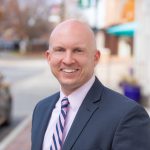
Scott Kelly With Bank of America

February 20, 2025 by Jacob Lapera

Atlanta Business Radio
Scott Kelly With Bank of America
Loading
00:00 /
RSS Feed
Share
Link
Embed

Download file

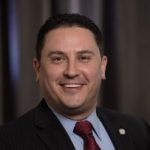
Based in Atlanta, Scott Kelly serves as Bank of America‘s Georgia Market Executive leading the Bank’s Business Banking Team in this market.  His team is focused on delivering customized, comprehensive financial solutions for companies with annual revenues up to $50 million.

Scott has led this team for the past 14 years and has driven top performance in numerous production and leadership roles throughout the Commercial Bank during his 27-year career with Bank of America. Originally from North Carolina, Scott has managed teams on both the east and west coasts for the Bank.

Scott is an Eagle Scout with the Boy Scouts of America (BSA) and is a former Scoutmaster of Troop 69 in Alpharetta, Georgia. He completed BSA National Woodbadge Leadership Training in 2017 and is a member of the Golden Eagle Society of Scouting. Scott is also a graduate of the Forsyth County Sherriff’s Department “Citizens Law Enforcement Academy” (CLEA), served as a 4-year board member for Habitat for Humanity of Southern Nevada, was a multi-year Club President for Civitan International, and served for 3 years as Board Treasurer for Denmark High School Football. He is a member of First Redeemer Church in Cumming, Georgia where he and his family reside and are active throughout the local community. Scott enjoys tennis, travel, and water sports in his free time.

Scott earned a double major in Banking & Finance from Appalachian State University in 1998 and was a Magna Cum Laude graduate of the College of Business Honors Program. He was a 2005 Appalachian Young Alumnus Award Winner and continues to serve in various capacities with the Alumni Council and Appalachian Athletics.

Connect with Scott on LinkedIn.

What You’ll Learn In This Episode

  • Why is it important for Atlanta small business owners to evaluate the state of their business each year
  • What should business leaders consider when conducting an analysis for their company
  • How might inflation affect a business, and what steps can be taken to adjust to economic changes in the year ahead
  • How does technology play a role in optimizing operations for small businesses
  • What are the various capital sourcing options available to entrepreneurs, and how can they determine the best fit for their business

Transcript-iconThis transcript is machine transcribed by Sonix.


TRANSCRIPT

Intro: Broadcasting live from the Business RadioX studio in Atlanta, Georgia. It’s time for Atlanta Business Radio, brought to you by Kennesaw State University’s Executive MBA program, the accelerated degree program for working professionals looking to advance their career and enhance their leadership skills. And now, here’s your host.

Lee Kantor: Lee Kantor here, another episode of Atlanta Business Radio. And this is going to be a good one. But before we get started, it’s important to recognize our sponsors CSU’s executive MBA program. Without them, we couldn’t be sharing these important stories today on Atlanta Business Radio. We have Scott Kelly, who’s the Senior Vice President, Market Executive with Georgia Business Banking section of Bank of America. Welcome, Scott.

Kelly Scott: Thanks so much. Good to be here.

Lee Kantor: Well, I’m excited to get caught up with what’s happening at Bank of America. I think we’re going to talk about why it’s important for entrepreneurs and business owners to kind of do a state of the business every year. And since we’re in the first quarter, now’s as good a time as any to have this kind of conversation.

Kelly Scott: Well, we couldn’t agree more. And again, thanks so much for having me today. I’ve been with Bank of America for 27 years, entirely on the business and commercial side of the bank. So your topic today is a very important one, and one that I know. Well, you know, there’s 33 million small and midsize businesses in the United States, and that makes up 99% of all the firms in the U.S.. So if you take out large corporate and fortune 500 companies, the small and midsize businesses are really the backbone of the economy. And so they account for roughly half of the GDP, half the private sector employment. They drive 70% of new job creation. And so, to your point, I think every year it’s so important to kind of take that step back and really evaluate and review the state of their business.

Lee Kantor: So put yourself in the shoes of that entrepreneur or that business leader. What are kind of what’s what should be on that checklist to get done at the beginning of the year?

Kelly Scott: It’s such a great question. And it’s so important because strategies have to be adjusted. If you look at the election cycle we just came through and all of the volatility and the headwinds our business owners have had to face, they have to be flexible and adaptive and recognize that, you know, this landscape is constantly evolving. So in the start of the new year, you know, we always recommend businesses and owners do a Swot analysis to really analyze their strengths, their weaknesses, opportunities and threats. And it really it helps you look for improvement, but also maybe where there’s challenges. And while the bank expects this to be a really good overall economic year, we do recognize there will still be some volatility. So doing this review and you know looking at productivity. And you know, what’s anticipated in the year ahead is so important because some of the things we’re looking at are inflation and the jobs market. And we’ll continue to see I think equities and rates have some volatility as that longer term yield curve does start to normalize. And while we think we’re kind of still in that mid cycle bull market, really taking that deep look each year at your business and evaluating, you know, what you want to change or accomplish in the year ahead is super critical.

Lee Kantor: Now should these business leaders be doing this exercise by themselves or in concert with their trusted advisors, like their banker or their CPA or their attorney, like the other people that are kind of working with them, their insurance guy, like, where does the banker come into play in this?

Kelly Scott: Well, we always want to be a part of that equation. And so I think the best advice is for them to consult their advisor. And hopefully that’s their banker, at least one of the seats at the table in terms of, you know, seeking that advice and being a part of, you know, those proactive solutions to make sure they are truly positioned and, you know, understanding the headwinds as well as the opportunities in that new year.

Lee Kantor: Now, a lot of people, obviously all business owners have a bank of some sort. And their relationship with the banker, though may not all be the same. Is should an entrepreneur or a business leader really invest time in getting to know the banker, having the banker know them personally, where they, you know, look each other in the eye, periodically shake each other’s hands or on zoom or however they do this and really kind of have the banker involved at this level and have a conversation and talk about, hey, this is my challenge that does the banker want to hear from them?

Kelly Scott: Absolutely. Not only do we want to hear from them, but we want to be proactively contacting them. And it looks a little bit different and unique with each business. It’s not a one shoe fits all. And what one business might need that, say, has a traditional storefront versus another that may be more internationally focused and or online. That contact with that relationship manager or advisor may look completely different, but that’s one of the great things about Bank of America is we really, you know, we listen to the needs of each customer and create customized solution based on what those are. And if you think about it, I mean, there’s a lot of things out there these business owners are dealing with. I mentioned the election cycle earlier, but think about inflation and supply chain. You know that those weren’t just Covid problems and done. We’re still seeing lingering effects of that. We’ve got the new administration, as I mentioned, driving regulatory and policy changes. We have, you know, uncertainty around tariffs and trade. There’s still pressure on energy and commodity prices and look at everything going on geopolitically. And so I would just say relationships are more important than ever. Having that trusted or key advisor and really doing that Swot analysis and that deep review of the business strategy at the beginning of the year is probably more important than it’s ever been.

Lee Kantor: Now, you mentioned that 99% of businesses are small businesses, and they’re not the fortune 500 or these kind of unicorn companies. Is there services for that? Mom and pop, the person who has kind of the the store on the square. Is is there a place in Bank of America to have kind of a human interaction with a banker to get help, or is that something only for that, the 1% that are the, you know, the big mega companies, the enterprise level organizations?

Kelly Scott: No, that’s that’s such an important distinction. Bank of America has a a platform for any size business. And recognizing that stat that I shared earlier that, you know, 99% of the businesses fall into those small to midsize. We’ve invested so much in, you know, technology, um, people, resources, skills, you know, digital and mobile, all of these things to support a business essentially from a start up phase to, you know, establish and sophisticated businesses to where they might need M&A services or taking a company public or, you know, these more complex needs that you see in up market companies. But not only do we serve all of those companies across the spectrum, we have dedicated professionals within each segment. We have eight lines of business that we serve at Bank of America. And each of those niches is an area that we may start in our retail center and then move up into small and, you know, business banking and then eventually evolve into, you know, some of our corporate and some of those larger companies you mentioned. But we have services to support all of those businesses.

Lee Kantor: Now, how are you seeing AI kind of impact your business as well as kind of your clients businesses? It’s what everybody’s talking about nowadays.

Kelly Scott: Well, technology is almost the part of every conversation and it’s truly impossible to avoid. And, you know, today’s business era. So we just say businesses have to continue to evolve. They need the tools and resources that come with technology and AI, and that’s why Bank of America is so heavily invested in mobile and digital. And we want to help our clients do business wherever they operate on the move worldwide. But we also recognized with technology comes other risks. And our our largest responsibility is information protection. So we have to help our clients with technology and AI. We have to give them mobile and digital access. But we’ve got to do it safely and securely. And there’s a lot of really, you know, good bad guys out there that are very complex and good at what they do. So we have to, you know, constantly evolve and build out increased protection for our clients. But 71% of small business owners say they have digitally optimized their business over the last year. I mean, that’s a huge number. And while technology can help with a variety of challenges, you know, it does, as I mentioned, present some risks. So you have to kind of manage both both sides of the platform, but AI and automation can assist with things like screening, you know. Interviews, you know, new candidates that businesses are looking to hire. It can help with project management, team collaboration, workflow and managing customers. So we give a lot of, uh, help with that through digital and mobile devices. And, you know, many of our clients now do business, as I mentioned, internationally, we we do business in over 200 countries now and support over 150 currencies. And we couldn’t do that without the part of technology.

Lee Kantor: Now, when, uh, a business leader is having a conversation with somebody on your team, is this conversation primarily about capital sourcing? Is it about finance, or can it kind of expand into just kind of general business advice?

Kelly Scott: Yeah, it may start with, you know, typically there’s one topic or one catalyst that that kind of leads into initial conversations. And at Bank of America, we deliver as a team. So you might have that banker at the forefront, but they’re surrounded by experts across the bank, from Treasury solutions to, you know, cash management to lending needs. So capital and Treasury are two areas we focus heavily on. But to your point, it might evolve into broader advice or broader discussions around, you know, how do I find and recruit the best talent. How do I, you know, grow in an increasingly international business marketplace? So we do have a variety of services, but we don’t do that with, you know, with only one person or one team mate. They may be the initial quarterback, but having that team of experts around that quarterback to deliver for the client holistically and create those customized solutions I mentioned earlier, I think is one area that really differentiates us.

Lee Kantor: So you’re looking to kind of be that, um, partner in there helping the leader with whatever the challenge might be and it might obviously you’re going to a banker Anchor for either you’re giving them money to hang on to, or they’re helping you get more money into your account in some transactional manner, but you’re available for anything. Like you mentioned. It could be talent. So talent isn’t part of Bank of America’s services, right? If you’re not helping them recruit or anything, but you have enough experts there that can give them some recommendations.

Kelly Scott: Absolutely. And, you know, talent is an area that we focus on tremendously because people are your greatest assets. You can have the best brand, the best technology, and some of the things that we’ve talked about. But without your people, it’s very difficult to drive a relationship focused business. So it starts with attracting the best talent, but then you’ve got to retain that talent that you’re so heavily invested in. And a lot of businesses think that it’s mostly or all about compensation. It matters. You’ve got to start by being competitive, but once you retain that talent or recruit it to retain it, you have to be more, um, differentiated. And so business owners now are doing things like bringing educational resources for employees directly on site for things like career growth or even personal and professional seminars. We see things like family planning, uh, financial wellness, first time home buying. You know, many of our young employees have never bought a home for the first time. Or maybe our employees that have been in the workforce longer are looking for that bridge to retirement and need some advice. So we come in and help companies with things like talent, recruiting and retaining the best, um, you know, employees without, uh, only focusing on banking services. So it’s a really good question.

Lee Kantor: Now, what about when it comes to, um, sourcing capital? A lot of firms struggle in this area. They don’t maybe have enough collateral or they, um, maybe don’t have enough revenue right now. Is there kind of more creative ways to source capital nowadays? Um, or is this something that you and your team can help them with in terms of getting access to capital and maybe areas that were more difficult in the past?

Kelly Scott: Absolutely. And, you know, so capital is one of the things I think businesses most commonly think of banks for. I need a loan or I’m growing my business. How can the bank support me? So sourcing capital is clearly one of the areas of expertise that we have. And that refers mostly to traditional capital. You know what we typically think of as a core bank lending. And that’s working capital lines of credit. Maybe they’re buying a commercial property for their business and they need a real estate term loan. They’re buying some new equipment and they need to to, uh, you know, stock the warehouse or the medical facility with that new equipment. And we finance acquisitions and we offer SBA loans. So there’s a lot of traditional sources. But I think to your question, in today’s business marketplace, um, entrepreneurs have to think more broadly because many times there’s a specific need that is is maybe it’s an emerging company that’s just too new for traditional debt, or maybe it’s too large of a loan and they need, you know, multiple layers of capital. And so there’s other sources, you know, that that are available to clients such as, um, you know, government and foundation grants, equity partners, uh, venture capital, angel loans and other alternative lenders and even asset specific lenders. So the state of Georgia has roughly 200 bank charters. It’s one of the highest in the country. So it’s a very competitive marketplace for loans and access to capital. And that’s really good for clients because each bank kind of defines their client selectivity model differently. So that competition and accessibility is good for our clients. And we want to, you know, compete in that marketplace. But then it’s great to know that through these additional resources, clients have access to other sources of capital, as you’ve asked.

Lee Kantor: So what do you need more of? How can we help you?

Kelly Scott: Well, I think it starts with an introduction. We, you know, we want to work with every business and consumer client that we have, and we do that through the power of every connection. We do it one client at a time. As I mentioned, it’s a relationship business. We want to bring the best resources, expertise, data to our clients and then help them as they’re growing, whatever their goals are. And again, recognizing that there’s a lot of changing, uh, you know, environment in today’s business world, but that we through customized solutions, can support our clients. So it starts with that first conversation or that first, um, you know, contact and your audience can go to Bank of america.com. They can drill down to we’ve got links for small business and business banking. They can explore a variety of resources to just help them move their bank, their business forward and see what the bank can help them with. We also have a website. It’s access to capital. Directory.com that’s access to capital directory.com. And there they can explore some additional sources of funding that I mentioned earlier. So those are just a couple of areas. But really an introduction and an initial conversation will get us started.

Lee Kantor: Should they just walk into a bank.

Kelly Scott: Well there’s certainly nothing wrong with that. But we have great access through our consumer financial center channel, and they are equipped to handle any ask that comes in and get them in touch with the right resources across the bank. But as we talk about that great technology earlier, right from a smartphone device or their laptop going to Bank of America. Com or reaching out to Merrill Lynch or any of our other lines of business, we work together to to get our customers connected with the right areas of our bank.

Lee Kantor: So it’s better to connect that way rather than a bank, because that local banker may not be the right resource for you.

Kelly Scott: Well, I think every way, you know, regardless of how that connection starts, our teammates are trained to help, you know, do that initial screening to make sure we ask the right questions, to get them in touch with the area of the bank that can best help them. Again, a mortgage need is going to be something very different than, hey, I’m looking to, you know, sell my business. So we’re going to really triage that and help get them regardless of how they come into the bank. We want to work with them to find the best partner and the capabilities to align with their need.

Lee Kantor: Well, Scott, thank you so much for sharing your story today. You’re doing important work and we appreciate you.

Kelly Scott: Well, we truly appreciate the opportunity to speak to your audience. You have a great show, by the way, and it’s just truly been a pleasure. Hope to talk to you again soon.

Lee Kantor: All right. This is Lee Kantor. We’ll see you all next time on Atlanta Business Radio.

Tagged With: Bank Of America, Kelly Scott

Michael Williams With Bank of America

October 18, 2023 by Jacob Lapera

Atlanta Business Radio
Michael Williams With Bank of America
Loading
00:00 /
RSS Feed
Share
Link
Embed

Download file

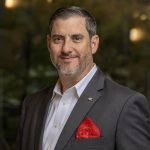
Michael Williams holds the corporate title of Senior Vice President and a Small Business Banker Manager for Bank of America. He is responsible for leading 13 Small Business Bankers across Greater Atlanta. This team is responsible for delivering the full capabilities of our company to small business owners.

He joined Bank of America in July of 2011 as a Consumer Market Manager in Augusta, Georgia. During his 12 years, he has held multiple leadership roles in different markets and segments across our consumer, advance client solutions and small business enterprise prior to his current assignment.

He has championed various region and divisional initiatives and takes pride in being a change agent. Prior to joining Bank of America, he successfully held such positions as Regional Service Director, District Manager and Community Bank President during his ten-year career with another Top 5 Financial Services Institution.

During this time he received a great deal recognition for his success in sales, service, operations and team member development. He is committed to building high performing teams through the coaching and development of others by consistently and effectively executing trend based and real time coaching sessions with direct reports.

Michael defines success by his ability to make himself available to all team members as a sounding board as well as mentor, coach and to provide career developmental advance. He is an active leader within the community, volunteering and supporting organizations such as Cystic Fibrosis Foundation, Autism Society and Special Olympics.

Connect with Michael in LinkedIn.

What You’ll Learn In This Episode

  • What’s driving business owners’ positive outlook towards revenue expectations despite the threat of inflation
  • The economic factors small business owners are most concerned about
  • How women business owners’ recent experiences over the past 12 months have differed from those of male business owners
  • How women business owners have fared gaining access to capital
  • Factors that can create additional challenges unique to women business owners

This transcript is machine transcribed by Sonix

TRANSCRIPT

Intro: [00:00:04] Broadcasting live from the Business RadioX studios in Atlanta, Georgia, it’s time for Atlanta Business Radio. Brought to you by On pay. Atlanta’s new standard in payroll. Now, here’s your host.

Lee Kantor: [00:00:24] Lee Kantor here, another episode of Atlanta Business Radio, and this is going to be a good one. Today on the show, we have Michael Williams. He is the senior vice president, small business banking manager, Atlanta with Bank of America. Welcome, Michael.

Michael Williams: [00:00:42] Good afternoon and thanks for having me. Good to be here with you again.

Lee Kantor: [00:00:45] I am so excited to get caught up with you regarding some of the things that are happening in the business world here in Atlanta, and you have kind of a unique lens to all of the activity. Can you talk a little bit about your role?

Michael Williams: [00:00:58] Yes. Well, my role as a small business banking manager is I lead a team of small business bankers who are active in our local community, out in the field meeting with business owners, entrepreneurs, making sure that we’re providing access to capital, finding ways to help simplify their business, streamline productivity, as well as optimize overall cash flow.

Lee Kantor: [00:01:27] Now in your career, you’ve worked in a variety of roles in banking, including some work with community banks. Can you share a little bit about how a small business person should choose their banking partner? Like, what are some of the trade offs of going with a large enterprise bank like Bank of America versus a community bank?

Michael Williams: [00:01:48] Yeah. Listen, I will tell you that banking, just like anything else in life, is about connections, right? You want to get a team of good people around you. And so my personal recommendation is, you know, almost like an interview process, get to know your local bankers, whether that be through networking events, whether that be through Chamber of Commerce or just going in to some of your local institutions and, and really find out who’s listening to you and providing advice based on where you’re looking to take your organization and some of the specific challenges you may be facing.

Lee Kantor: [00:02:24] So what are some of the questions that small business owners should be asking of that banker?

Michael Williams: [00:02:30] You know, it’s always good to know a little bit about person’s professional background, the different programs and services that the institution provides. But I would tell you, it’s probably more about having someone who’s very interested in you and your business. How did your business get started? Right? Why are you passionate about what you do and what are some of the challenges you faced? And where do you want to take your business in the next 12 months, 3 to 5 years? So I would tell you more so than, you know, someone giving you their credentials. From a banking solutions perspective, it’s good to be with a true advisor, someone who’s going to take the time to understand your priorities, where you’ve been, where you are, and where you’re looking to take your organization.

Lee Kantor: [00:03:19] So if you’re not getting that kind of relationship with your banker, you should probably shop around a little bit then.

Michael Williams: [00:03:27] Yeah. Or let the person know also. Right. Hey listen, feedback is a is a gift. And so, you know, if I’m in a situation where, you know, I’m not getting exactly what I need or I don’t feel heard, I think one of the first things to do, especially if you vote both both parties have invested time in those relationships, is the first. Share that feedback. But definitely there’s nothing wrong with getting a second opinion.

Lee Kantor: [00:03:54] Now, because you do work for one of the largest banking institutions in the country, probably, probably in the world. I would think you have an interesting kind of lens into the small business community, and you’ve done a lot of work with surveys and and a lot of communication with a lot of people in the market here in Atlanta. What are you kind of sensing from the business community here in Atlanta?

Michael Williams: [00:04:22] Yeah, I will tell you, some of our recent surveys have shown that business owners overall are still very optimistic about the next 12 months. They are expecting revenues to increase. That’s down slightly from our last survey. But overall they’re expecting revenues to increase. And a number of businesses are expecting to expand and continue to hire.

Lee Kantor: [00:04:53] Now is it something just because entrepreneurs and business owners tend to be optimistic and look at the glass as half full? You know a lot, if not most of the time. Is it a function of that, or is there really kind of a true belief that, hey, that things aren’t as bad as maybe some of the headlines are saying they are?

Michael Williams: [00:05:14] Yeah, I would tell you that to your point, right? Small business owners, entrepreneurs are typically very optimistic. They’re courageous group. And so that’s a part of it. But the other part is listen, we’ve gone through some some major events. When you think about a global health crisis and being able to manage through that, and those things are also bleeding into the confidence that our small business owners are feeling as well. When you think about 67% of those business owners overall say they expect revenues to increase over the next 12 months.

Lee Kantor: [00:05:54] Now, is there anything that you’re seeing when you kind of parse through the data, like maybe break it down between male business owners versus female business owners, or maybe a minority business owners versus non minority business owners? Or is this just across the board.

Michael Williams: [00:06:12] It is across the board. But there are some things that are unique based on different factors. Right. So for example women entrepreneurs, business owners that were surveyed 63% of them expect revenues to increase. When you look at their male counterparts, the males are about 70%. If you go into some of the ethnic groups as well, Hispanic Latino business owners, 91% say they expect revenues to either increase or remain flat, with 63% of those surveyed saying they expect revenues to increase. Right. And you’re seeing that also increase in the African-American community as well, with 86% of black business owners saying they expect revenues to increase and three of four expecting to expand their business. And I’ll give you some examples of those just here locally. I think about we just helped a. A woman dentist opened up her practice, right? She’s been in the industry for quite a few years, has a great brand within the local community, and we were able to work with our Practice Solutions team that specializes in doctors, dentists, vets and help with accessing gaining access to capital to. Identify and open up a facility, as well as get the equipment she needed, and also cash flow for the staffing until the business can start generating enough revenue to sustain itself in a few months.

Lee Kantor: [00:08:02] Now we do hear a Business RadioX. We do a lot of work with women owned business businesses and the organizations that serve them. A lot of times you hear women business owners have a harder time accessing capital. Is that something that’s changing? Is there some tips you can recommend for a women business owner to get access to some of that needed capital?

Michael Williams: [00:08:31] When you think about women, business owners and access to capital of about 78%, right? Say that they. Plan to obtain financing. 1 in 3. Still feel like it’s very difficult for women to obtain access to to capital. Um, and so a lot of that has to do with, you know, access to advice. So once again, you know, having a relationship with a lender, right? 42% of women owned businesses said they didn’t have a relationship with the lender. So that would be one of the steps, right? Making sure that like we spoke about earlier, you develop a relationship with a local business advisor who understands what your business priorities are and can be a part of advising and helping you build a roadmap to get that access to capital. And then 31% felt they didn’t have the proper information or qualifications that made them feel confident. Would applying for access to capital. So, you know, really having your financials in order, right, 2 to 3 years of business and personal tax returns, being able to speak to your personal and business debts, having an advisor and an accountant or a CPA who understands what your long term goals are for the business. And taking that into consideration as they’re working on your financial documents as well, and advising you. But I would say the number one thing, there was an access or relationship with a lender.

Lee Kantor: [00:10:18] Now, in any business relationship with an advisor, are you and especially when it comes to banking, is it reasonable to ask of the banker for advice for, hey, what do you think I should do? Or is it something that you’re just presenting the banker with information like, here’s my tax returns, here’s my, you know, the bookkeeping information, and you know, you’re telling me, okay, maybe you could get a loan here, or if you did this, that would, you know, help you maybe make more money next year. Like, where is the consulting line as opposed to just, hey, we have access to capital. And if you bring me these documents, I check I have a checklist here and I check them all off and I have that. Then I can present this and then I can help you get a loan or, or help you kind of grow your business. Like where is consulting, advising? How do you kind of discern all of this?

Michael Williams: [00:11:21] Yeah. Listen, I will tell you, I think back to Hispanic and Latino business owners, and 84% of them who surveyed said they wish they had more educational resources, right, centered around their small business. And so, to your point, you know, um, a banking financial professional is a part of that. But sometimes it’s also about access to resources, educational resources, whether it be online or in person or courses or different websites. At Bank of America, we have our Bank of America forward slash small business site, and there are a lot of resources on there, including feedback and and best practices from other business owners. And so, you know, I would start leveraging additional resources. Your advisor is there to provide some level of direction and support. But at the end of the day, you are the quarterback of your business, right? Nobody’s going to care as much about that business as the owners and the people who are putting their blood, sweat and tears into it every day. And so just continue to do your research. Definitely leverage your banking professional. Right. But they can’t discourage you, nor should they discourage you from applying and leverage your different educational resources, whether it be through our site that has a multitude or some other resources out there, and then make sure you do your homework to make sure you’re aware of the different government programs and resources that are available as well.

Lee Kantor: [00:13:04] Right. But when you’re like most business owners obviously aren’t as knowledgeable about finance as a banker. Like this is what bankers do every day. This is all they’re thinking about 24 over seven, where a business owner comes in and they might be good at, you know, cutting hair, or they could be good at fixing a car, or they could be good at, you know, marketing programs. But to have somebody in your corner that’s kind of watching your back and then guiding you a little bit or encouraging you to to proceed, like you said, with government, there might be government money available, but you don’t even know what you don’t know. But the banker might see 50 applications of this in a week, and then they can say, hey, have you considered this? Is that reasonable?

Michael Williams: [00:13:52] That is reasonable to expect your banker to provide at, you know, point you in the right direction of different resources that you may be able to take advantage of, even things like community development programs as well, that that may be available that a lot of banks support. Bank of America, number one is a is a big supporter of community development, financial support that’s out there. So but everything is about having a team of advisors, right. No one person is the the keeper of of all answers. But between your team of advisors, I would say to any business owner, you know, get a team, a good team of advisors, who’s your banker? Um, who’s your your CPA or accountant, who’s your trusted person in the industry or mentor that you can work with as well? So I definitely agree with you. You should be able to lean on all of your advisors to make you aware of different resources that they’ve come in contact with, with their years of experience or resources that are available through that organization.

Lee Kantor: [00:15:06] Well, I think that that’s at the heart of what a good, trusted advisor is, because if. Are not helping you grow your business in tangible ways, not just executing whatever their job is. If they’re not kind of watching your back and letting you know, hey, there’s an opportunity here. Or, hey, you should meet this person here that I just met. Like, if they’re not actively helping you grow, then you better find a different trusted advisor because they’re not. It’s too hard to do this on your own. And you can’t just have vendors or service providers like bankers. Just do the minimum of just, you know, putting deposits in the bank and, you know, sending you a statement every month.

Michael Williams: [00:15:51] Yeah, exactly. We got to be thinking, like, as I said earlier, how do we help you streamline your business? How do we help you simplify your business, if you can, or how do we allow you to hold on to cash longer so you can invest in other areas? I met with a client earlier this year who was really right, starting to have a few issues when it comes to labor, right? And so they were thinking about ways that they can run their business more efficiently. And we were all able to get together and they connected with some folks and research and development, and we were able to help them finance a new piece of equipment that did not take jobs away. It actually allowed them to be more efficient with the staff that they had, and to invest in those employees in a way that they were able to build a different and even more complex skill set, which would serve them better in the future as far as higher wages. But all that started from a tour of her plant, right? And understanding the different challenges and where the business was growing and some of the challenges that the business was facing when it comes to talent, access to talent as a resource. Right.

Lee Kantor: [00:17:16] And that’s not an obvious place where a banker would help. But it was critical in the growth of this company. And that’s that’s a true trusted advisor.

Michael Williams: [00:17:25] Yes, sir.

Lee Kantor: [00:17:27] So if somebody wants to learn more, have a more substantive conversation with you or somebody on your team, what is the coordinates?

Michael Williams: [00:17:35] Um, go to Bank of America, backslash small business. That’ll be our resource site, which also allows you to set appointments with your local small business specialists, either in the financial center or one of our small business bankers that could come out to your place of business as well.

Lee Kantor: [00:17:56] And then when you have a banker and you are working with somebody, a Bank of America, is it something you should check in with them in person every quarter, every six months, every year? How often do you recommend having these kind of human to human conversations?

Michael Williams: [00:18:12] Yeah. Listen, I would definitely say at a minimum, um, every six months, but ideally about every 90 days. I was looking at one of our prior surveys, and it said that over 80% of the business owners had an action plan and were looking to adjust or revisit their action plan on a monthly, quarterly or semiannually basis. So a lot of business owners are starting to see the value of not only having an advisor, but to your point, meeting with them on a regular basis. So definitely every six months and ideally at least once a quarter, even if it’s just a touch base, um, to make sure things are still the same and folks move, right, folks? Folks get promoted or they go and follow other passions. And so you want to make sure that you and your advisor are still connected.

Lee Kantor: [00:19:10] Good stuff. Well, Michael, thank you so much for sharing your story today. You’re doing such important work and we appreciate you.

Michael Williams: [00:19:16] Oh, thanks for having me. And you guys do a wonderful job informing and advising the local community as well. So keep up the great work.

Lee Kantor: [00:19:25] All right. This is Lee Kantor. We’ll see you next time on Atlanta Business Radio.
About Our Sponsor

OnPay’sOnPay-Dots payroll services and HR software give you more time to focus on what’s most important. Rated “Excellent” by PC Magazine, we make it easy to pay employees fast, we automate all payroll taxes, and we even keep all your HR and benefits organized and compliant.

Our award-winning customer service includes an accuracy guarantee, deep integrations with popular accounting software, and we’ll even enter all your employee information for you — whether you have five employees or 500. Take a closer look to see all the ways we can save you time and money in the back office.

Follow OnPay on LinkedIn, Facebook, and Twitter

Tagged With: Bank Of America, Michael Williams

Michael Williams With Bank Of America

May 15, 2023 by Jacob Lapera

Atlanta Business Radio
Michael Williams With Bank Of America
Loading
00:00 /
RSS Feed
Share
Link
Embed

Download file

Michael Williams holds the corporate title of Senior Vice President and a Small Business Banker Manager for Bank of America. He is responsible for leading 13 Small Business Bankers across Greater Atlanta. This team is responsible for delivering the full capabilities of our company to small business owners.

Williams joined Bank of America in July of 2011 as a Consumer Market Manager in Augusta, Georgia. During his 12 years, he has held multiple leadership roles in different markets and segments across our consumer, advance client solutions and small business enterprise prior to his current assignment. He has championed various region and divisional initiatives and takes pride in being a change agent.

Prior to joining Bank of America he successfully held such positions as Regional Service Director, District Manager and Community Bank President during his ten year career with another Top 5 Financial Services Institution. During this time he received a great deal recognition for his success in sales, service, operations and team member development.

He is committed to building high performing teams through the coaching and development of others by consistently and effectively executing trend based and real time coaching sessions with direct reports. He defines success by his ability to make himself available to all team members as a sounding board as well as mentor, coach and to provide career developmental advance.

Michael is an active leader within the community, volunteering and supporting organizations such as Cystic Fibrosis Foundation, Autism Society and Special Olympics.

Connect with Michael on LinkedIn.

What You’ll Learn In This Episode

  • What economic factors are small business owners most concerned about
  • How are entrepreneurs managing their business as a potential recession looms
  • Labor shortages
  • Implementing sustainable practices
  • Concern over rising interest rates is growing for small business owners, and they’re split when evaluating how this will impact their decision to seek financing this year – how is Bank of America helping to ease those concerns as a potential lender

This transcript is machine transcribed by Sonix

TRANSCRIPT

Intro: [00:00:04] Broadcasting live from the Business RadioX Studios in Atlanta, Georgia. It’s time for Atlanta Business Radio. Brought to you by on pay. Atlanta’s New standard in payroll. Now, here’s your host.

Lee Kantor: [00:00:24] Lee Kantor here another episode of Atlanta Business Radio, and this is going to be a good one. But before we get started, it’s important to recognize our sponsor, Onpay. Without them, we couldn’t be sharing these important stories. Today on Atlanta Business Radio, we have Michael Williams with Bank of America. Welcome, Michael.

Michael Williams: [00:00:43] Good morning. Thank you for having me.

Lee Kantor: [00:00:45] Well, you are the senior vice president, small business banking manager, Atlanta North. And your firm has recently released a survey about small business. Can you share a little bit about some of the findings?

Michael Williams: [00:00:59] Yeah, it was. You know, we typically have a spring small business owner survey and we’re very excited about the results. One of the one of the key themes that came through is that despite the ever changing economic landscape, our small business owners have a positive business outlook. When you look at the data, two thirds believe that their revenue will increase over the next 12 months. So that’s pretty exciting to see. Our small business owners and entrepreneurs are still very bullish about the upcoming year.

Lee Kantor: [00:01:36] Now, how are you defining small business? Because a lot of different entities define it in a lot of different ways. And for the mom and pop person that’s running a store downtown versus, you know, a $50 Million business, $100 million business, sometimes that’s categorized as small business. Can you tell us how your firm defined it?

Michael Williams: [00:01:59] Yeah. So small business is defined as anyone with one employees to typically under 50 employees revenues no more than $5 Million. So what you’ll find is in our survey of a thousand small business owners, a good portion of those across the US would be defined as what we consider our mom and pop small businesses as well. So we’re well represented demographics here.

Lee Kantor: [00:02:29] Now, were there any surprises or is that a surprise to you to see that level of optimism? I talked to small business owners every day. So, I mean, it’s hard to be in a small business without being optimistic. So that didn’t shock me. But were there any surprises other than that for you?

Michael Williams: [00:02:46] What I think about surprises, no, that didn’t surprise me because, you know, our small business owners have success and they’re confident in their ability to manage their business. Right. And so that optimism comes from things that they can control. Right. Certain things within the business that they can control outweigh in some situations some of the challenges that they feel they’ll have to overcome, especially when you think about the last few years and having to really deal with a global health crisis as well as a rising interest rate environment. Small business owners have, you know. Come up with a new set of skills that allow them to quickly adapt and learn from situations and challenges within the environment. So I wasn’t surprised by that at all.

Lee Kantor: [00:03:41] Now, you mentioned some of the challenges that are facing small business like interest rates raising for credit. You know, there’s inflation. A lot of folks during the pandemic especially were dealing with supply chain. How does a small business owner kind of manage these large economic issues that are out of their control for the most part? Have you have you learned anything from that?

Michael Williams: [00:04:12] Yes. When it comes to, you know, things like inflation, you know, small business owners, you know, tell us that inflation and supply chain, as you mentioned, remain a challenge for the business owner as they adapt. 88% of small business owners say inflation is currently impacting their business, and that’s holding steady from what we saw last spring in the survey as well. And so this is forcing small business owners to increase prices. About 60% of the folks who had concerns about inflation shared that one of the ways they were dealing with it as they were increasing prices, another a little over 40% stated that they were reevaluating their business spending over the next year. And they’re also starting to reduce some business costs and a little over 25% even reported some sales being lost, you know, as the impact of inflation.

Lee Kantor: [00:05:22] Now, what are you hearing about kind of these issues regarding talent? Talent challenges are impacting businesses of all sizes. I would imagine that small businesses are no exception to this, as there’s a help wanted sign out. You know, if you go down the street, almost every business has one.

Michael Williams: [00:05:42] Yes, right. It’s a very competitive market when it comes to labor. And the labor shortage continues to be a concern across the country. And so small business owners recognize that overcoming this challenge and and the importance of remaining competitive in the marketplace requires listening to and acting based on the needs of their employees. Many say that they’re taking action to improve their labor outlook for the long term. For example, over the next 12 months, over half of the small business owners have implemented additional perks and benefits to attract new talent. Right? Starting with increasing base pay for new employees, allowing one of the things we learned from the health crisis, right, allowing remote and hybrid work environments, introducing new employee training programs, as well as providing additional health care benefits as well.

Lee Kantor: [00:06:51] Now, are you finding any interest for small businesses to lean on technology regarding automation or robotics? Even this chatgpt I’m seeing involved is in customer service and even order taking in some places. I recently was at a totally robotic automated pizza kiosk that exists now and is operational here in Atlanta, where you can buy a freshly made pizza through a vending machine. Are you seeing any of those kind of, you know, as that being part of the talent solution is to automate or create robotics around, you know, tasks that had been previously done by humans?

Michael Williams: [00:07:39] I definitely think so. What we’re seeing that, like you said, right in different, you know, pop up coffeehouses and things I think about around town as well. But it’s amazing how innovative the business owners are right there looking ahead to the future to find ways to implement new technologies that will help not only differentiate their business from competitors, but also find new ways to optimize their staffing and their overall strategy. So, you know, when I think about digital as well and just how technology’s going to impact their ability to take care of clients, 80% of small business owners have digitally optimized their business right. Most are using it not only to expand their profits, but also to reach out to new customers. So, you know, some of the things in the survey, 60% of small business owners have been able to accept more forms of. Cashless payment and 52% of conducted business banking online to add convenience as well. So we’re seeing that in our industry also.

Lee Kantor: [00:08:58] Now, are you finding that a larger and larger percentage of businesses are becoming cashless and that once you make that leap to cashless, that becomes another person you can automate away because you can have a kiosk, just deal with the transaction.

Michael Williams: [00:09:15] Yeah, you know, I don’t know if it’s necessarily about automating away. I do think there’s some benefit to being cashless when there’s a labor shortage, definitely 100%. But most of the businesses are, you know, from people I’m meeting with out in the field. And just the overall theme I’m hearing in the survey are just trying to find more convenient and safer ways to do business and allow clients their customer base to interface with them.

Lee Kantor: [00:09:50] Well, I mean, the the reality is the reality, right? So are more and more businesses cashless today than they were last year or five years ago?

Michael Williams: [00:10:01] Yeah, I would definitely say more are right. You know, going back to it, you know, 60% of the business owners have been able are now, you know. Accepting some form of cashless payment. So that definitely has increased even over the last 2 to 3 years.

Lee Kantor: [00:10:22] Now, is that when they say cashless, is that exclusively cashless? Because I’m finding more and more places exclusively cashless.

Michael Williams: [00:10:31] You know what? Our survey didn’t get that deep into it. But I would tell you that overall it was they’re doing some form of cashless. That 60% may not be, you know, strictly cashless, but they are doing more than they did a few years ago.

Lee Kantor: [00:10:50] Are you seeing in the places that have clients that want to use cash, these reverse ATMs where they you put cash in and like a gift card comes out to the store?

Michael Williams: [00:11:03] Yeah, definitely. Harry Clients look into that technology, work closely with different firms and IT areas to provide that option as well. So that’s definitely an increase that you’re seeing businesses go to.

Lee Kantor: [00:11:21] Also now having a partner like Bank of America banker that they can trust is to me, critical in the growth of any small business. You need to have somebody that’s out there paying attention to all these kind of macro events that are happening to see how they might impact you in a micro level. Can you talk about how Bank of America works with their small business clients to help them either leverage a new technology or just give them the heads up that, hey, pay attention to this because this is coming and it’s impacting a lot of folks and you might be next.

Michael Williams: [00:11:58] Yeah. Listen, we have an ad for 2023. We will continue to continue to partner with small businesses to provide tools and guidance on their path to growth as they’re starting up a business or even as we work through recovery. As we think about possible recession looming, we are always looking for ways to deepen relationships with our clients through enhanced offers and engagement. And to your point, our technology, right, our powerful technology tools are a part of that. Bank of America small business clients can manage their business effectively through customizable, customizable digital tools like our cash flow monitoring, our connected app, our mobile check deposits, as well as Zelle. So there’s this transactions can be more convenient. We’re also looking at different technology that will allow client business clients to have access to their business credit scores, right? So they’re able to monitor the credit health through free access to their business credit score via our Bank of America or Business Advantage 360 online banking. So being able to just leverage the tools for convenience, have someone there on a day to day basis locally giving you advice, and then also being able to monitor your overall credit Health will really help our clients as they look to expand over the next 12 months and beyond and also as they look to think about getting access to additional working capital. Billy, what I’ll tell you most I’m proud of is our small business specialists, right? At Bank of America. We have a small business team that’s ready and equipped to help our business owners with the unique challenges that they face day to day.

Lee Kantor: [00:14:06] So if you were advising a small business owner, how often would you have them meet with one of the Bank of America small business specialists and have a conversation about their business and, you know, just maybe just kind of develop that personal relationship so that when the time is needed, they are there for them to help them grow their business.

Michael Williams: [00:14:34] Yeah.

Michael Williams: [00:14:35] I would I would answer that question a couple of ways. Right. First, it depends on the needs of the business overall. Sometimes you may have unexpected events come up, and that’s why we’re so proud of the local presence we have and all of the communities we serve. We also have our small business resources through Bank of America, dotcom small business resources. But to directly answer your question, I would say at least every 90 days at the top end of that, maybe six months, but I would say about every 90 days is a good time to connect with a with your local small business specialist just to let him or her know a little bit more about what’s going on in your business so we can. Stay up to date on the business priorities. Any life priorities that may be going on, as well as keep the client up to date on technology advances and different offers and promotions that we may have available as well.

Lee Kantor: [00:15:41] Well, Michael, if somebody wants to learn more about your survey or connect with one of the small business specialists, what’s the website? What’s the best way to get ahold of somebody on your team?

Michael Williams: [00:15:52] Yeah, the best way to get a hold of someone on our team is Bank of america.com/small business. From there you’ll be able to make appointments. You’d also be able to get a link to our resource site and within that resource site is also the a lot of the data we’re referencing here as it relates to our small business owner report.

Lee Kantor: [00:16:18] Well, thank you so much for sharing your story. You’re doing important work and we appreciate you.

Michael Williams: [00:16:23] Hey, I appreciate you as well. And I got to tell you, I really enjoyed one of your recent podcasts where you talked about the top three tips for overcoming sales objections.

Lee Kantor: [00:16:34] All right. Well, thank you for that. Michael Williams, Bank of America, Lee Kantor. This is it for Atlanta Business Radio for today. We will see you all next time.

About Our Sponsor

OnPay’sOnPay-Dots payroll services and HR software give you more time to focus on what’s most important. Rated “Excellent” by PC Magazine, we make it easy to pay employees fast, we automate all payroll taxes, and we even keep all your HR and benefits organized and compliant.

Our award-winning customer service includes an accuracy guarantee, deep integrations with popular accounting software, and we’ll even enter all your employee information for you — whether you have five employees or 500. Take a closer look to see all the ways we can save you time and money in the back office.

Follow OnPay on LinkedIn, Facebook, and Twitter

Tagged With: Bank Of America, Michael Williams

GNFCC Year in Review and Leadership Transition:  An Interview with 2022 Chair James Holmes and 2023 Chair Danielle Cheung

January 25, 2023 by John Ray

Danielle Cheung
North Fulton Studio
GNFCC Year in Review and Leadership Transition:  An Interview with 2022 Chair James Holmes and 2023 Chair Danielle Cheung
Loading
00:00 /
RSS Feed
Share
Link
Embed

Download file

Danielle Cheung

GNFCC Year in Review and Leadership Transition:  An Interview with 2022 Chair James Holmes and 2023 Chair Danielle Cheung (GNFCC 400 Insider, Episode 82)

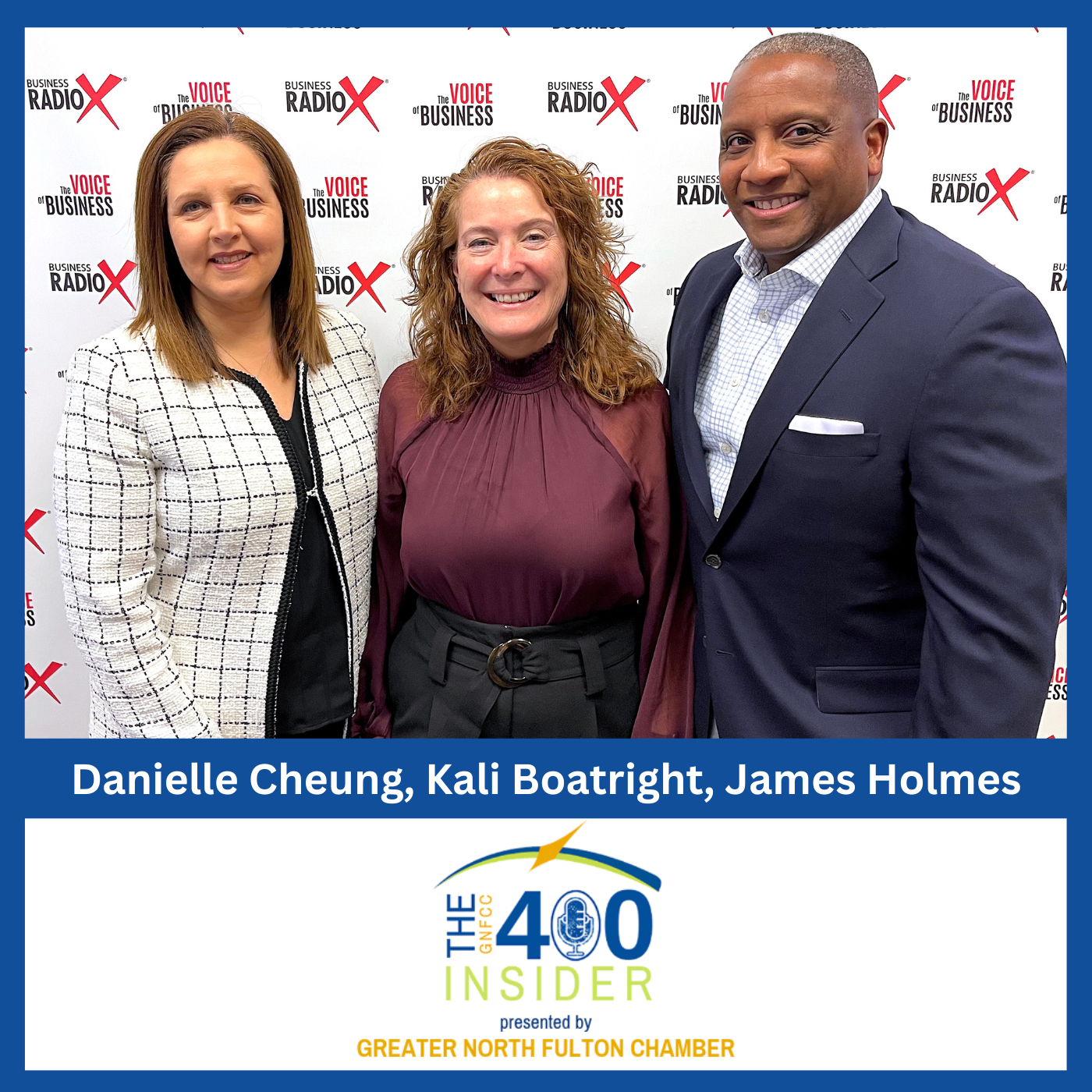
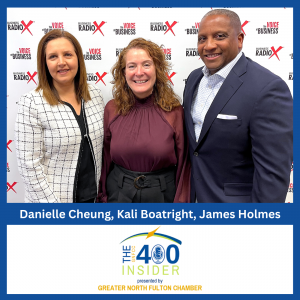
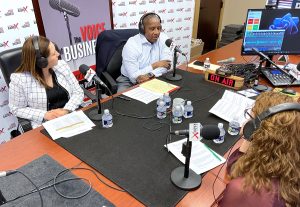
This episode of the GNFCC 400 Insider welcomed Danielle Cheung as the 2023 GNFCC Board Chair and offered gratitude to James Holmes for his service as the 2022 Chair. Along with host Kali Boatright, James and Danielle discussed the Chamber’s achievements for 2022, including the GACOC Award as Georgia Certified Chamber, 2023 goals established from strategic planning in 2022, the Chamber’s growth during the last year, and much more.

The GNFCC 400 Insider is presented by the Greater North Fulton Chamber of Commerce and produced by the North Fulton studio of Business RadioX®.

Danielle Cheung, 2023 GNFCC Chair, and Business Banking Atlanta Metro Market Executive, Bank of America

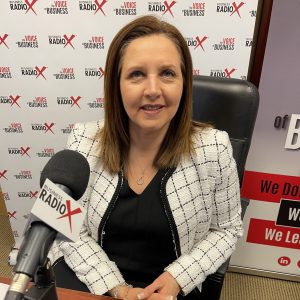
Danielle Cheung, 2023 GNFCC Chair and Business Banking Atlanta Metro Market Executive, Bank of America

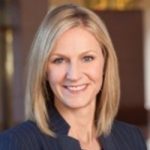
Danielle Cheung is Senior Vice President and Market Executive for Atlanta Metro Business Banking at Bank of America, which focuses on delivering financial solutions to middle market companies. She is accountable for business strategy/execution, sales performance and revenue growth. Danielle was recognized as a national Pinnacle Club winner in 2019 for market sales performance.

Danielle joined Bank of America in 2016 with over two decades of experience in commercial banking at JPMorgan Chase Bank. After completing a formal management training program in credit, she spent sixteen years as a senior relationship manager focused on the non-profit healthcare industry. Danielle also managed new hire training and campus recruiting nationally for commercial banking, after which she relocated from New York to Atlanta to run middle market business development in Georgia and Alabama.

Danielle is a member of Bank of America’s Atlanta Market Leadership team, which focuses on setting business and community engagement strategies across Metro Atlanta. In that capacity, she co-leads efforts around cross line of business client acquisition strategies. Danielle is Executive Sponsor for LEAD for Women, a network dedicated to promoting professional women’s development and has maintained a leadership role in the Business Banking Diversity & Inclusion Council.

Giving back to her community is a priority for Danielle. She currently serves as the Chair of the board of directors of Atlanta Habitat for Humanity and sits on the Board of Directors of the Greater North Fulton Chamber of Commerce (Chair Elect, 2023). Danielle mentors transitioning veterans and their families through American Corporate Partners and assists unemployed parishioners at her church with job search techniques and resume assistance.

Danielle has been heard on local radio and in print discussing the challenges of entrepreneurs and the Bank’s Atlanta market priorities. She was named the 2019 March of Dimes Woman of Distinction for achievement in the financial services sector and received the 2019 and 2020 President’s Volunteer Service Award from Points of Light for her contribution to the community. Danielle is also part of the Leadership Atlanta Class of 2022.

Danielle holds a Bachelor of Business Administration degree in Management Science and Mathematics and a Master of Business Administration degree in Finance from Pace University in New York. She resides in Johns Creek, Georgia with her husband Kamond and their three children (Elizabeth, 20; Gregory, 16; and Zachary, 13)

Company website | LinkedIn

James Holmes, 2022 GNFCC Chair, and SVP & North Fulton Market President, Truist

James Holmes, 2022 GNFCC Chair and SVP & North Fulton Market President, Truist

James Holmes serves as the Market President for Northeast Atlanta encompassing Gwinnett, North Fulton & Forsyth Counties. James is responsible for overseeing the commercial banking team and integration of all other lines of business such as Wealth Management, Institutional Services, Insurance, Retail, & Capital Markets into the Northeast Atlanta Commercial Banking Group.

His focus is helping privately held corporations and non-profits with annual revenues of $5,000,000 – $75,000,000; by aiding them in areas of Capital Formation, Payment Solutions, and Risk Management. James is experienced in real estate transactions, asset-based lending, equipment financing, and leveraged financing transactions.

BB&T and SunTrust formed Truist with a shared purpose—to inspire and build better lives and communities. With our combined resources, collective passion, and commitment to innovation, we’re creating a better financial experience to help people and businesses achieve more. With 275 years of combined BB&T and SunTrust history,

Truist serves approximately 12 million households with leading market share in many high-growth markets in the country. The company offers a wide range of services including retail, small business and commercial banking; asset management; capital markets; commercial real estate; corporate and institutional banking; insurance; mortgage; payments; specialized lending; and wealth management.

Headquartered in Charlotte, North Carolina, Truist is the sixth-largest commercial bank in the U.S.

Company website | LinkedIn

Danielle Cheung

About GNFCC and The GNFCC 400 Insider

Kali Boatright, President and CEO of GNFCC

The GNFCC 400 Insider is presented by the Greater North Fulton Chamber of Commerce (GNFCC) and is hosted by Kali Boatright, President and CEO of GNFCC. The Greater North Fulton Chamber of Commerce is a private, non-profit, member-driven organization comprised of over 1400 business enterprises, civic organizations, educational institutions, and individuals.  Their service area includes Alpharetta, Johns Creek, Milton, Mountain Park, Roswell and Sandy Springs. GNFCC is the leading voice on economic development, business growth and quality of life issues in North Fulton County.

The GNFCC promotes the interests of our members by assuming a leadership role in making North Fulton an excellent place to work, live, play and stay. They provide one voice for all local businesses to influence decision-makers, recommend legislation, and protect the valuable resources that make North Fulton a popular place to live.

For more information on GNFCC and its North Fulton County service area, follow this link or call (770) 993-8806. For more information on other GNFCC events such as this North Fulton Mayors Appreciation Lunch, follow this link.

For the complete show archive of GNFCC 400 Insider, go to GNFCC400Insider.com. The GNFCC 400 Insider is produced by John Ray and the North Fulton studio of Business RadioX®.

Tagged With: 50th anniversary, Bank Of America, chamber of commerce, Danielle Cheung, GNFCC, Greater North Fulton Chamber of Commerce, James Holmes, Kali Boatright, leadership transition, North Fulton, strategic plan, truist bank

Al McRae With Bank of America

December 9, 2022 by Jacob Lapera

Al McRae
Atlanta Business Radio
Al McRae With Bank of America
Loading
00:00 /
RSS Feed
Share
Link
Embed

Download file

BofAAl McRaeAs President of Bank of America, Atlanta, Al McRae serves as Bank of America’s leader in the local market, responsible for delivering responsible growth for shareholders, clients and communities. That includes driving business integration and local market share growth by connecting our capabilities across our eight lines of business to people and companies. It also includes deploying Bank of America’s resources to build strong communities. And it includes making our company a great place to work by connecting employees to the broader enterprise, championing our culture of diversity and inclusion, and fostering opportunities for our employees to develop and grow.

In addition, Al currently serves as Managing Director and Diverse Segments Business Development executive for Bank of America’s Private Bank. He has held various positions with Bank of America focusing on the wealth management needs of high-net-worth families in the areas of investment management, estate planning, banking, and credit.

He is responsible for identifying and implementing strategies for the Private Bank to drive responsible growth within the diverse high-net-worth client segment. Key areas of focus include data analysis to cultivate marketplace opportunities, creating business development strategies, developing marketing plans tailored to diverse communities, and establishing partnerships with key internal and external stakeholders.

He’s an active leader in his community, serving on the boards of the Russell Innovation Center for Entrepreneurs, Metro Atlanta Chamber of Commerce, Georgia Bankers Association and Georgia State University Foundation. He’s also an active member with the Rotary Club of Atlanta, 100 Black Men of Atlanta and is class of 2023 participant with Leadership Atlanta. Al earned his undergraduate degree in finance from Georgia State University. He holds the Chartered Financial Analyst® (CFA® ) designation and is a CERTIFIED FINANCIAL PLANNER™ (CFP®).

Connect with Al on LinkedIn.

What You’ll Learn In This Episode

  • History of Neighborhood Builders
  • His background and role at Bank of America
  • Other ways that Bank of America serve Atlanta communities

This transcript is machine transcribed by Sonix.

TRANSCRIPT

Intro: Broadcasting live from the Business RadioX studios in Atlanta, Georgia. It’s time for Atlanta Business Radio, brought to you by On pay. Atlanta’s new standard in payroll. Now, here’s your host.

Lee Kantor: Lee Kantor here another episode of Atlanta Business Radio. And this is going to be a good one. But before we get started, it’s important to recognize our sponsor on pay. Without them, we couldn’t be sharing these important stories. Today on Atlanta Business Radio, we have Al McRae with Bank of America. Welcome out.

Al McRae: Thankfully. Happy to be here.

Lee Kantor: Well, we’re here to talk about Bank of America’s kind of initiatives in and around serving the Atlanta communities. How important is it for Bank of America when you are in a locale like Atlanta to really immerse yourself in serving the local communities in a variety of ways?

Al McRae: Well, this is one of those situations where as an organization, our company that has such a significant footprint in a city like Atlanta, we have there’s a business imperative and a moral imperative to say that for our existence, we want to understand that communities that do well in our very it’s in our best interest to make sure that communities do well and we support and address help address some of the challenges that that may exist. Because once again, this is a situation where a rising tide lifts all boats. And for us, we want to be a great corporate citizen and partner in a city like Atlanta that does have some challenges. It’s incumbent upon us to be a participant in the solution.

Lee Kantor: Now, as the leader of the Atlanta market, how do you go about kind of choosing which are the appropriate partners and which is going to give you kind of I don’t want to say the most bang for your buck in terms of anything other than doing the most good for the community? Like because I would imagine there’s a lot of folks out there, a lot of organizations that are doing good, and it must be difficult task for you to choose the right ones to partner with.

Al McRae: Yeah, completely. So to your point, there’s a there are a number of challenges that our communities face, and some of those are not so unique to just Atlanta. It’s across the country. And the way that we go about it is we, as we say, where can we have the most impact? And for us, it’s really trying to bridge that gap that we see. I mean, we recently have some articles that were published in some local periodicals talking about the the income equality gap, the gap between the the most achieving and least achieving in our in our city and also the affordability of housing issue. And so those are some those are just two examples of when we think about our investments, and I use that word very intentionally because this isn’t for us, this isn’t charity, this isn’t a giveaway, this isn’t donation, this is real investment with the expectation that our return is not necessarily a financial one, but one of societal return. We want to put it towards one of those those most pressing issues. And so the understanding that having a community, yes, that’s healthier, but also from an economic perspective can thrive is where we, we we direct those. And I know we’re going to talk a little bit about neighborhood builders. And when we make those selections, it’s definitely in the vein of saying the laser focus around making sure that from an economic or resource and a wealth building perspective, we’re doing our part and helping drive those results for our communities.

Lee Kantor: So let’s start talking about neighborhood builders. For those who aren’t familiar, can you tell us a little bit about, you know, mission of neighborhood builders?

Al McRae: Yes. So this is actually an effort across Bank of America, across all of our our markets, where we are looking to be a participant in helping lift both from a philanthropic I’m sorry, from a financial resource perspective and from technical expertise, those organizations that are doing the great work in our communities. And so Neighborhood Builders is a program that’s been around since 2004 with Bank of America. And so since the inception of this, we have contributed over $300 million across 92 markets, our money to communities, to the to the goals of advancing and addressing some of the most pressing challenges. So for the winners of these particular awards in Atlanta, we have to each of the organizations receives a 200,000 unrestricted grant that they or maybe they use for flexible funding for their organization. And in addition to that, to that financial support, they also receive leadership training. And that’s for two of their usually the executive director and an emerging leader within the organization, because we have a vested interest in ensuring that these partners and the winners of these awards are sustainable. So we not only invest in them, right, with the understanding that they’re going to contribute to solving some of the biggest challenges in our community, but we also want them to be sustainable and want them to grow. We want them to grow in their impact. And the way that we do that is not only, yes, providing them with financial resources that they can leverage, but also that technical expertise and training, which is key. A key component of this and one of the largest philanthropic efforts that any corporation or organization have in our country now.

Lee Kantor: So it sounds like not only are you trying to address the situation today, but you’re also trying to create some continuity for tomorrow as well. So you’re trying to grow maybe the future leaders as well as the current leaders.

Al McRae: That’s and that’s that’s a great that’s a great comment, Leigh, because it’s about sustainability. When we think about sustainability. We understand that there’s going to be an evolution of over time and we want these organizations that we select as these neighborhood builders and neighborhood champions to have an existence, an impact that grows. And that is going to be a key part of the community. So effectively, when we think about the prior awardees, we create this community and this family within that subset to say, Hey, how can we leverage with even within this group, how can they leverage each other so they can continue to grow and expand? So some of the past winners, we’ve been proud to see their influence grow within the community, and it’s because of the support that Bank of America and quite frankly, other Atlanta based corporations provide. And we see them continuously having a larger and larger influence to do the work to provide that positive societal return that I talked about earlier.

Lee Kantor: Now, when did you first have a clue of the impact that your contribution and your efforts were making? Did something kind of speak to you in terms of, Wow, you know, that story is really compelling or Wow, I didn’t realize the impact we were making. Did something Can you share a story maybe where this came alive to you personally? Were you able to see how important this is?

Al McRae: Yeah, I think and it’s probably not just one example, but I can tell you I’ve been in the market president role for just over a year now and having the opportunity to have the proximity to these organizations and seeing how transformational it is for them to receive both a grant of that amount, which is which is spread over two years. But the the size of the grant for these organizations, which a lot of them are relatively smaller, you see the size of that. And then also to the lift that they receive from the training. You know, it’s just in the in the conversations of talking to the folks in leadership. And for some of these nonprofits, you get the sense of the impact and the change that it makes, because to be a winner of one of these awards is not just, you know, and within like Bank of America providing that. But then the word gets out and I’m sure the periodicals and all the all the write ups and it gets the attention of our corporate partners in the market to say, okay, that organization must be doing something well. And then once again, it kind of leads to kind of a snowball effect for them. So when we talk to those folks one on one and we invite them in for their training and we and we make sure we keep in contact with them, they are able to give us testimonials around the impact that they were able to to achieve. Some of the things that they were able to do knew as a result of the funding and the text and technical expertise and all of that for me is something as an individual, I guess, both personal satisfaction and satisfaction for the organization.

Lee Kantor: So how are the organizations selected?

Al McRae: So we have to go through a process where it’s an invitation only process where we invite a select number of nonprofits to apply. And it’s a very rigorous process, as you might imagine. But we receive these applications and the way that we review those, we have both an internal team, but then we also invite previous winners in our external community and our partners to come in and give us their views and who they believe might be worthy of receiving our award. And once again, it’s a rigorous process. We have great, robust conversations when we think about this. And and for us, it’s looking at it and saying, what organizations do we want to place our next investment? Who do we want to invest in next that has a level of scale that can be impactful in our community, but then also that has a level of sustainability that as we look at some of the challenges that we focused on in this particular arena, who who are the people that’s going to move the needle and move the Dow and really make a difference and change. And so I’m proud to say that we have great excitement with the external partners that join us in this process, and they’re always happy to do it. And it’s a very rewarding process at the end when we make those announcements and those selections.

Lee Kantor: So who are the latest organizations that were selected?

Al McRae: But we have to. So we have the Automotive Training Center and East Lake Foundation. And so these are two organizations. Once again, all of our applications were impressive and we saw a great need and work. But these two stood out for us for 2022, an award was awarded. We’re awarded our neighborhood builders. The Automotive Training Center is a program that provides technical training for entry level entry level employment and the automotive repair industry. And so you think about them providing students with opportunities and around technical and entrepreneur skills. I don’t know. Lee A lot of your listeners probably have gotten a car repaired in the last 12 to 24 months, and you know how hard it is for us to find capacity and and also the expense of it just because of where we are right now with things like inflation and our supply chains. And so if you think about jobs and places where people can earn a really good living, automotive repair is a great is a great area for for our young people to go into. An automotive training center is an innovative program that not only teaches that but also provides a great learning environment. So they’re going to leverage their funds to build a new facility and also purchase new equipment to train their students. So getting back to that, you know that trying to soften some of the income disparities we see in our city, we can do that by having partners that promote skills, that allow people to go into jobs, that pay above minimum wage.

Al McRae: Eastlake Foundation, I’m sure a lot of your listeners are very familiar with East Lake, the Foundation. We have been a founding partner since the existence of this foundation and also was one of the first corporate members for the East Lake Golf Club. And, you know, the work that East Lake provides is kind of wraparound services. They do a lot for their community and a residence there. But this particular effort that they apply for with around their initiative to provide mixed use, mixed income housing and affordable housing in the East Lake area. So housing continues to be a challenge. Housing affordability continues to be a challenge for a lot of residents of the city of Atlanta. And organizations like East Lake are looking to solve for some of that. And they’re working in partnership with the Atlanta Land Trust to provide 40 units of townhomes for sale. These are not rental units. These will be for sale so that their residents can participate in the appreciation and the wealth building activity that you and I know home ownership affords a lot of folks that are able to own their own home. And so it’s been a great partner of ours for a number of years, and we were very proud and happy to see them as a winner this year for our Neighborhood Builders Award, which will grant them that $200,000 over a two year period and also the leadership training.

Lee Kantor: Now in order, like you mentioned, that this isn’t something you apply for, that you’re selected for, how do organizations get on your radar to even be considered?

Al McRae: So, you know, the good thing is that we have a vast list of partners in the market that we already have relationships with. So we take a look at those folks. And then also we take introductions from individuals that are looking to tell their story, particularly as it pertains to their work around economic mobility and economic opportunity in the market. And so usually when we look at our list of partners and we and we take a select few from there and maybe either we’ve been introduced to some throughout the year that we also want to include in that process.

Lee Kantor: Good stuff. So if somebody wants to learn more about this program, what’s the website? What are the ways to connect with you? Somebody on your team?

Al McRae: So it’s very easy to to to look into the process or looking through the website Bank of America, just Google Neighborhood Builders, Bank of America, and it’ll take you to the site where it explains the program. And like I said, this is a national program, so you’ll get all of that explanation on the existence of the program, the the the operations of it. And then it provides contact information which can be leveraged there for for understanding how those organizations actually get more information when it comes to this.

Lee Kantor: Well, our congratulations on all the success. And you’re doing important work and we appreciate you.

Al McRae: Well, thank you so much for the platform, Lee. And once again, we are happy to be participants and solving for some of Atlanta’s largest challenges and we will continue to do so. I thank you for the time today.

Lee Kantor: All right. This is Lee Kantor. We’ll see y’all next time on Atlanta Business Radio.
About Our Sponsor

OnPay’sOnPay-Dots payroll services and HR software give you more time to focus on what’s most important. Rated “Excellent” by PC Magazine, we make it easy to pay employees fast, we automate all payroll taxes, and we even keep all your HR and benefits organized and compliant.

Our award-winning customer service includes an accuracy guarantee, deep integrations with popular accounting software, and we’ll even enter all your employee information for you — whether you have five employees or 500. Take a closer look to see all the ways we can save you time and money in the back office.

Follow OnPay on LinkedIn, Facebook, and Twitter

Tagged With: Al McRae, Bank Of America

Danielle Cheung, Vice President & Market Executive with Bank of America

January 14, 2022 by Mike

Celebrating Powerhouse Women
Danielle Cheung, Vice President & Market Executive with Bank of America
Loading
00:00 /
RSS Feed
Share
Link
Embed

Download file

Amanda Pearch and Danielle Cheung

Celebrating Powerhouse Women salutes and recognizes women who are making an impact, whether it’s in business, philanthropy, public service, or elsewhere.

Danielle Cheung/Bank of America

Danielle Cheung is Senior Vice President and Market Executive for Metro Atlanta Business Banking at Bank of America, which focuses on delivering financial solutions to middle market companies. She is accountable for business strategy/execution, sales performance, and revenue growth. Danielle was recognized as a national Pinnacle Club winner in 2019 for market sales performance.

With over two decades of experience in commercial banking at JPMorgan Chase Bank, Danielle joined Bank of America in 2016. After completing a formal management training program in credit, she spent sixteen years as a senior relationship manager focused on the non-profit healthcare industry. Danielle also managed new hire training and campus recruiting nationally, after which she relocated from New York to Atlanta to run middle market business development in Georgia and Alabama.

Danielle is a member of Bank of America’s Atlanta Market Leadership team, which focuses on setting business and community engagement strategies across metro Atlanta. In that capacity, she co-leads efforts around cross line of business client acquisition strategies. Danielle is Executive Sponsor for LEAD for Women, a network dedicated to promoting professional women’s development and has maintained a leadership role in the Business Banking Diversity & Inclusion Council.

Celebrating Powerhouse Women is presented by

Tagged With: amanda pearch, Bank Of America, Business RadioX, CAB Incorporated, capital city home loans, Celebrating Powerhouse Women, Danielle Cheung, powerhouse women, successful women, women business leaders, women business podcast, Women Empowerment, women executives

Chad Cunningham with Bank of America

May 15, 2021 by angishields

Chad-Cunningham-Bank-of-America
Atlanta Business Radio
Chad Cunningham with Bank of America
Loading
00:00 /
RSS Feed
Share
Link
Embed

Download file

OnPay-Banner

Chad-Cunningham-Bank-of-AmericaChad Cunningham is the Consumer Banking Region Executive for Georgia in the Southeast Division of Bank of America. The Georgia Region includes 139 financial centers and over 1,100 teammates. His team is responsible for improving the financial lives of 1.3MM consumer and small business households and managing $25B in total deposits.

During his 22 year career in financial services at Bank of America, Cunningham has held various leadership roles as a market, area, and region executive in Consumer and Small Business Banking. Additionally, he has worked with various process, product, and segment teams to improve the way we engage and serve clients. From 2010-2015, Cunningham served as the Market Integration Executive for the Savannah, Georgia market. From 2016 to the present, Cunningham serves as the Consumer Integration Lead for Atlanta. Cunningham achieved Pinnacle Club Membership in 2019.

Cunningham is passionate about community service and was recognized with the Presidential Service Award in 2013, 2014, 2015, and 2016 for volunteerism. Before relocating to Atlanta, he served on the Board of Directors at the Second Harvest of Coastal Georgia and the YMCA of Coastal Georgia. Cunningham is currently an active member of Leadership Atlanta and serves on the Board of Directors for Amana Academy Charter Schools. Bank-of-America-logo

As a champion of Diversity and Inclusion, Cunningham currently serves as the Executive Sponsor for the Atlanta Chapters of the Asian Leadership Network and the Black Professional Group. He also sits on the Atlanta Market President Executive Leadership Team and the Atlanta Contributions Committee which is responsible for awarding over $1.4MM in grants to local non-profits annually. Cunningham was recognized with the Global Diversity and Inclusion Manager Award for Bank of America in 2018.

Originally from Maine, Chad and his wife, Shannon, now live in Atlanta, Georgia; they have two sons and two daughters.

Connect with Chad on LinkedIn.

What You’ll Learn in This Episode

  • About Bank of America’s Balance Assist program and where / when it is available
  • How much clients can borrow with Balance Assist
  • How to apply
  • The eligibility requirements for Balance Assist
  • Other Bank of America programs that are beneficial for clients

About Our Sponsor

OnPay’sOnPay-Dots payroll services and HR software give you more time to focus on what’s most important. Rated “Excellent” by PC Magazine, we make it easy to pay employees fast, we automate all payroll taxes, and we even keep all your HR and benefits organized and compliant.

Our award-winning customer service includes an accuracy guarantee, deep integrations with popular accounting software, and we’ll even enter all your employee information for you — whether you have five employees or 500. Take a closer look to see all the ways we can save you time and money in the back office.

Follow OnPay on LinkedIn, Facebook and Twitter

Tagged With: Balance Assist, Bank Of America, short term liqudity

Wendy Stewart with Bank of America

December 9, 2020 by angishields

Bank-of-America
Atlanta Business Radio
Wendy Stewart with Bank of America
Loading
00:00 /
RSS Feed
Share
Link
Embed

Download file

OnPay-Banner

Wendy-Stewart-Bank-of-AmericaAs the Atlanta Market President, Wendy Stewart is responsible for advancing Bank of America’s strategy across Metro Atlanta. Wendy connects with local business leaders and community stakeholders to deliver the company to customers, clients and the community.

Wendy is also responsible for ensuring Bank of America’s Environmental, Social, and Governance strategy, including philanthropy and community development efforts have a positive impact on metro Atlanta.

As co-head of Bank of America SE Global Commercial Banking practice, Wendy leads the firm’s efforts, working with mid cap and middle market companies. Wendy partners closely with teammates across the firm to provide the expertise and consultation necessary to deliver the best solution for the client.

Wendy serves on the Board of Directors and Executive Committee for the Metro Atlanta Chamber, the Board of Directors for The Grove Park Foundation, the Board of Trustees for Woodruff Arts Center, and a member of Atlanta Committee for Progress.

Wendy is a graduate of Leadership Atlanta- Class of 2017 and Leadership Georgia- Class of 2010.

Connect with Wendy on LinkedIn and Twitter.

What You’ll Learn in This Episode

In just over 8 weeks, the Million Mask Challenge has provided 90+ Atlanta area non-profits with more than 1,000,000 masks – but we believe more can be done as there will be a continued need as schools go back face to face and businesses go back to their offices.

The donation of masks began with Bank of America giving to 14 local organizations – including Morehouse School of Medicine and Atlanta Public Schools, but realized there was an even greater need. A partnership was then formed with the Global Health Crisis Coordination Center (GHC3), Atlanta Metro Chamber (MAC) and VGI Group to challenge other businesses in metro Atlanta for much needed support and resources.

This collaboration has been an unprecedented effort for the Atlanta business community to step in and help those in need, particularly our children, in the face of this pandemic. Major donors include GPC/NAPA, NCR, Coca-Cola, OMNIA Partners and many others who deserve a huge thank you for stepping up to help Atlantans protect themselves and others while keeping Georgia healthy.

To donate or get more information on how to receive donations, contact the Metro Atlanta Chamber at maskdonations@macoc.com

About Our Sponsor

OnPay’sOnPay-Dots payroll services and HR software give you more time to focus on what’s most important. Rated “Excellent” by PC Magazine, we make it easy to pay employees fast, we automate all payroll taxes, and we even keep all your HR and benefits organized and compliant.

Our award-winning customer service includes an accuracy guarantee, deep integrations with popular accounting software, and we’ll even enter all your employee information for you — whether you have five employees or 500. Take a closer look to see all the ways we can save you time and money in the back office.

Follow OnPay on LinkedIn, Facebook and Twitter.

Tagged With: Bank Of America, Million Mask Challenge

GNFCC North Fulton Banking Forum

May 28, 2020 by John Ray

North Fulton Banking
North Fulton Business Radio
GNFCC North Fulton Banking Forum
Loading
00:00 /
RSS Feed
Share
Link
Embed

Download file

Clockwise: Ken Davis, Anna Brumby, Andrew Bell, Danielle Cheung

GNFCC North Fulton Banking Forum (“GNFCC 400 Insider,” Episode 40)

The North Fulton banking industry has been in overdrive the past few months, processing PPP loans and generally tending to customers. Four experienced North Fulton financial professionals offer insights on recent SBA economic recovery loans and advice on how business owners should manage this environment. Renasant Bank sponsored this forum. The host of “The GNFCC 400 Insider” is GNFCC CEO Kali Boatright, and the show is presented by the Greater North Fulton Chamber of Commerce and produced by the North Fulton studio of Business RadioX®. Business RadioX is the Media Sponsor for this series of Economic Recovery Forums.

Moderator:  Ken Davis, Renasant Bank

Ken Davis

Ken Davis is the President of the Georgia Region for Renasant Bank. Ken is extremely active in the North Fulton community, including serving on the Executive Committee of GNFCC and formerly as Chairman.



Forum Panelists

Anna Brumby, UGA Small Business Development Center

Anna Brumby

Anna Brumby has 15+ years of experience as an influential business leader with a history of designing and executing successful marketing, branding and business development strategies. As a consultant for the SBDC, her areas of expertise include building business growth strategies, designing marketing strategies, competitive intelligence analysis, product development, go-to-market sales strategies and brand design.


Danielle Cheung, Bank of America

Danielle Cheung

With over two decades of experience in commercial banking, Danielle Cheung is Senior Vice President and Market Executive for Metro Atlanta Business Banking at Bank of America, which focuses on delivering financial solutions to middle market companies. Danielle is accountable for business strategy/execution, sales performance and revenue growth.


Andrew Bell, Affinity Bank

Andrew Bell

Andrew Bell is Vice President of Business Development with Affinity Bank. He has a 17+ year career in banking and has held jobs which include regional retail branch management over 12 branches, District Sales Manager for merchant services covering the states of Georgia, Alabama, and Florida, and most recently serving as a Commercial Banker in the North Fulton and Forsyth  County markets.

 

About GNFCC and “The GNFCC 400 Insider”

North Fulton Mayor's Roundtable
Kali Boatright, President and CEO of GNFCC

“The GNFCC 400 Insider” (formerly “North Atlanta’s Bizlink”) is presented by the Greater North Fulton Chamber of Commerce (GNFCC) and is hosted by Kali Boatright, President and CEO of GNFCC. The Greater North Fulton Chamber of Commerce is a private, non-profit, member-driven organization comprised of over 1400 business enterprises, civic organizations, educational institutions and individuals.  Their service area includes Alpharetta, Johns Creek, Milton, Mountain Park, Roswell and Sandy Springs. GNFCC is the leading voice on economic development, business growth and quality of life issues in North Fulton County.

The GNFCC promotes the interests of our members by assuming a leadership role in making North Fulton an excellent place to work, live, play and stay. They provide one voice for all local businesses to influence decision makers, recommend legislation, and protect the valuable resources that make North Fulton a popular place to live.

For more information on GNFCC and its North Fulton County service area, follow this link or call (770) 993-8806.

For the complete show archive of “The GNFCC 400 Insider,” go to GNFCC400Insider.com. “The GNFCC 400 Insider” is produced by the North Fulton studio of Business RadioX®.

Tagged With: Affinity Bank, Andrew Bell, Anna Brumby, Bank Of America, banking, Danielle Cheung, economic recovery loans, Ken Davis, PPP, renasant bank, SBA, SBDC, uga sbdc

Business RadioX ® Network


Our Most Recent Episode

CONNECT WITH US

  • Email
  • Facebook
  • LinkedIn
  • Twitter
  • YouTube

Our Mission

We help local business leaders get the word out about the important work they’re doing to serve their market, their community, and their profession.

We support and celebrate business by sharing positive business stories that traditional media ignores. Some media leans left. Some media leans right. We lean business.

Sponsor a Show

Build Relationships and Grow Your Business. Click here for more details.

Partner With Us

Discover More Here

Terms and Conditions
Privacy Policy

Connect with us

Want to keep up with the latest in pro-business news across the network? Follow us on social media for the latest stories!
  • Email
  • Facebook
  • Google+
  • LinkedIn
  • Twitter
  • YouTube

Business RadioX® Headquarters
1000 Abernathy Rd. NE
Building 400, Suite L-10
Sandy Springs, GA 30328

© 2025 Business RadioX ® · Rainmaker Platform

BRXStudioCoversLA

Wait! Don’t Miss an Episode of LA Business Radio

BRXStudioCoversDENVER

Wait! Don’t Miss an Episode of Denver Business Radio

BRXStudioCoversPENSACOLA

Wait! Don’t Miss an Episode of Pensacola Business Radio

BRXStudioCoversBIRMINGHAM

Wait! Don’t Miss an Episode of Birmingham Business Radio

BRXStudioCoversTALLAHASSEE

Wait! Don’t Miss an Episode of Tallahassee Business Radio

BRXStudioCoversRALEIGH

Wait! Don’t Miss an Episode of Raleigh Business Radio

BRXStudioCoversRICHMONDNoWhite

Wait! Don’t Miss an Episode of Richmond Business Radio

BRXStudioCoversNASHVILLENoWhite

Wait! Don’t Miss an Episode of Nashville Business Radio

BRXStudioCoversDETROIT

Wait! Don’t Miss an Episode of Detroit Business Radio

BRXStudioCoversSTLOUIS

Wait! Don’t Miss an Episode of St. Louis Business Radio

BRXStudioCoversCOLUMBUS-small

Wait! Don’t Miss an Episode of Columbus Business Radio

Coachthecoach-08-08

Wait! Don’t Miss an Episode of Coach the Coach

BRXStudioCoversBAYAREA

Wait! Don’t Miss an Episode of Bay Area Business Radio

BRXStudioCoversCHICAGO

Wait! Don’t Miss an Episode of Chicago Business Radio

Wait! Don’t Miss an Episode of Atlanta Business Radio