Business RadioX ®

  • Home
  • Business RadioX ® Communities
    • Southeast
      • Alabama
        • Birmingham
      • Florida
        • Orlando
        • Pensacola
        • South Florida
        • Tampa
        • Tallahassee
      • Georgia
        • Atlanta
        • Cherokee
        • Forsyth
        • Greater Perimeter
        • Gwinnett
        • North Fulton
        • North Georgia
        • Northeast Georgia
        • Rome
        • Savannah
      • Louisiana
        • New Orleans
      • North Carolina
        • Charlotte
        • Raleigh
      • Tennessee
        • Chattanooga
        • Nashville
      • Virginia
        • Richmond
    • South Central
      • Arkansas
        • Northwest Arkansas
    • Midwest
      • Illinois
        • Chicago
      • Michigan
        • Detroit
      • Minnesota
        • Minneapolis St. Paul
      • Missouri
        • St. Louis
      • Ohio
        • Cleveland
        • Columbus
        • Dayton
    • Southwest
      • Arizona
        • Phoenix
        • Tucson
        • Valley
      • Texas
        • Austin
        • Dallas
        • Houston
    • West
      • California
        • Bay Area
        • LA
        • Pasadena
      • Colorado
        • Denver
      • Hawaii
        • Oahu
  • FAQs
  • About Us
    • Our Mission
    • Our Audience
    • Why It Works
    • What People Are Saying
    • BRX in the News
  • Resources
    • BRX Pro Tips
    • B2B Marketing: The 4Rs
    • High Velocity Selling Habits
    • Why Most B2B Media Strategies Fail
    • 9 Reasons To Sponsor A Business RadioX ® Show
  • Partner With Us
  • Veteran Business RadioX ®

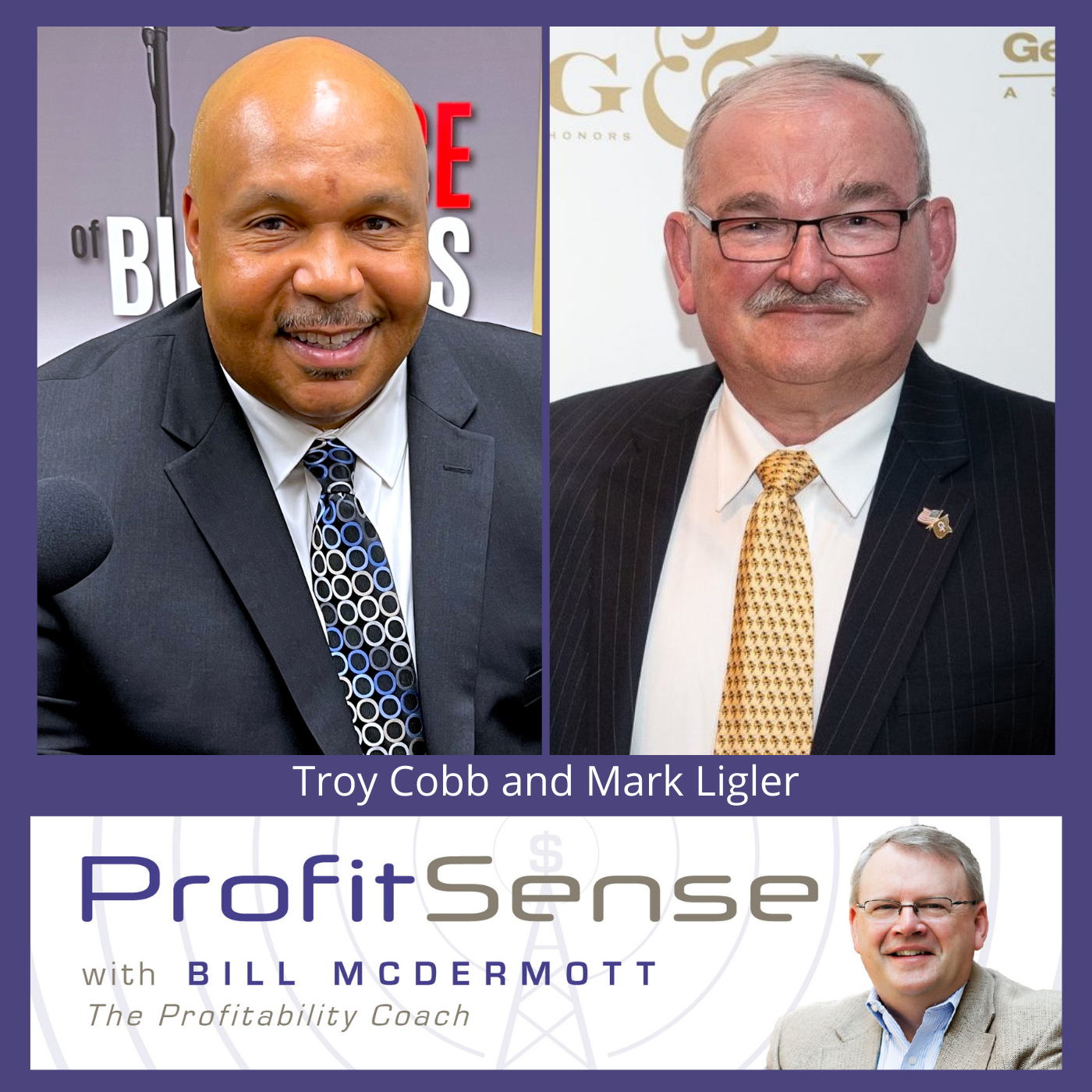
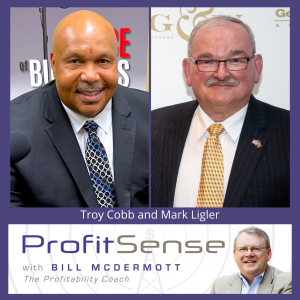
Troy Cobb, Cinch I.T., and Mark Ligler, Factory Automation Systems

October 19, 2021 by John Ray

Factory Automation Systems
North Fulton Studio
Troy Cobb, Cinch I.T., and Mark Ligler, Factory Automation Systems
Loading
00:00 /
RSS Feed
Share
Link
Embed

Download file

Factory Automation Systems

Troy Cobb, Cinch I.T., and Mark Ligler, Factory Automation Systems (ProfitSense with Bill McDermott, Episode 26)

On this episode of ProfitSense, host Bill McDermott was joined by Troy Cobb with Cinch I.T., who discussed the decision to purchase a franchise vs. start his own business, cybersecurity issues he sees currently, and more. Mark Ligler, Owner and Vice President of Factory Automation Systems, also joined the show. Mark’s business has weathered many seasons in the automation and robotic industry, and he shared his wisdom and experience on sensible business growth, attracting and retaining talent, and much more. Finally, Bill shared his thoughts on how essential a good organizational culture is for a business. ProfitSense with Bill McDermott is produced and broadcast by the North Fulton Studio of Business RadioX® in Alpharetta.

Cinch I.T.

Cinch I.T., Inc. was established in 2004. Like so many computer support companies, it started as a one-man shop in a 10×10 office with no windows. But even then, the focus was on building great relationships with their clients. Over the years, Cinch I.T. has been fortunate enough to see unbelievable growth.

They have added some of the most brilliant minds in our industry to the team, expanded into a 12,000 sq ft corporate office complex, and we have been honored to receive numerous awards, including being named one of the Top 501 Managed Service Providers Globally by Future Channels.

Cinch I.T. has established itself as one of the most highly-regarded I.T. company and computer service providers in the United States. The reason is simple. They have spent years shaping the entire company to meet YOUR needs.

With Support plans designed to create lasting relationships, together they ensure immediate and long-term success.

Company website | LinkedIn |  Facebook | Twitter

Troy Cobb, Owner/Sales Director, Cinch I.T.
Cinch I.T.
Troy Cobb, Owner/Sales Director, Cinch I.T.

Troy Cobb became the owner and sales director for the Cinch I.T. Atlanta office in January 2020.

Troy is a USMC Desert Shield/Storm Veteran with over 20 years of experience in the I.T. industry. Originally from New Jersey. he has lived in Atlanta for over twenty years.

 He is married to Tanya Cobb, an incredible Nurse/Hero at Emory University Midtown Hospital.

LinkedIn

Mark Ligler, Owner and Vice President, Factory Automation Systems

Mark Ligler, Owner and Vice President, Factory Automation Systems

Mark Ligler is the Owner and Vice President of Atlanta-based Factory Automation Systems, Inc.

Factory Automation Systems is a full-service systems integrator that provides turnkey automation solutions to manufacturing companies across the U.S.  FAS designs and implements solutions with programmable controllers, manufacturing information systems, motion control and robotic systems. They serve customers from diverse industries – building products, food and beverage, consumer products, automotive, metals, and more.

Factory Automation Systems was founded by Ross Pryor in 1992. Based in Atlanta, GA, the company has implemented thousands of solutions for manufacturers from a variety of industries across the U.S. and abroad.

Discrete control, coordinated motion, process automation, production monitoring, robotic machine tending, material handling, traceability, robotic assembly, machine safety – diverse projects for a wide mix of customers. They welcome the opportunity to put their experienced team to work on your next automation project.
FAS is near the Atlanta airport – they welcome visitors to meet the team and tour their facility.

Company website | LinkedIn | Facebook

About ProfitSense and Your Host, Bill McDermott
Bill McDermott
Bill McDermott

ProfitSense with Bill McDermott dives into the stories behind some of Atlanta’s successful businesses and business owners and the professionals that advise them. This show helps local business leaders get the word out about the important work they’re doing to serve their market, their community and their profession. The show is presented by McDermott Financial Solutions. McDermott Financial helps business owners improve cash flow and profitability, find financing, break through barriers to expansion and financially prepare to exit their business. The show archive can be found at profitsenseradio.com.

Bill McDermott is the Founder and CEO of McDermott Financial Solutions. When business owners want to increase their profitability, they don’t have the expertise to know where to start or what to do. Bill leverages his knowledge and relationships from 32 years as a banker to identify the hurdles getting in the way and create a plan to deliver profitability they never thought possible.

Bill currently serves as Treasurer for the Atlanta Executive Forum and has held previous positions as a board member for the Kennesaw State University Entrepreneurship Center and Gwinnett Habitat for Humanity and Treasurer for CEO NetWeavers. Bill is a graduate of Wake Forest University and he and his wife, Martha have called Atlanta home for over 40 years. Outside of work, Bill enjoys golf, traveling, and gardening.

Connect with Bill on LinkedIn and Twitter and follow McDermott Financial Solutions on LinkedIn.
Tagged With: Bill McDermott, Cinch I.T., company culture, Factory Automation Systems, Mark Ligler, ProfitSense, Recruiting, robotics, The Profitability Coach, Troy Cobb

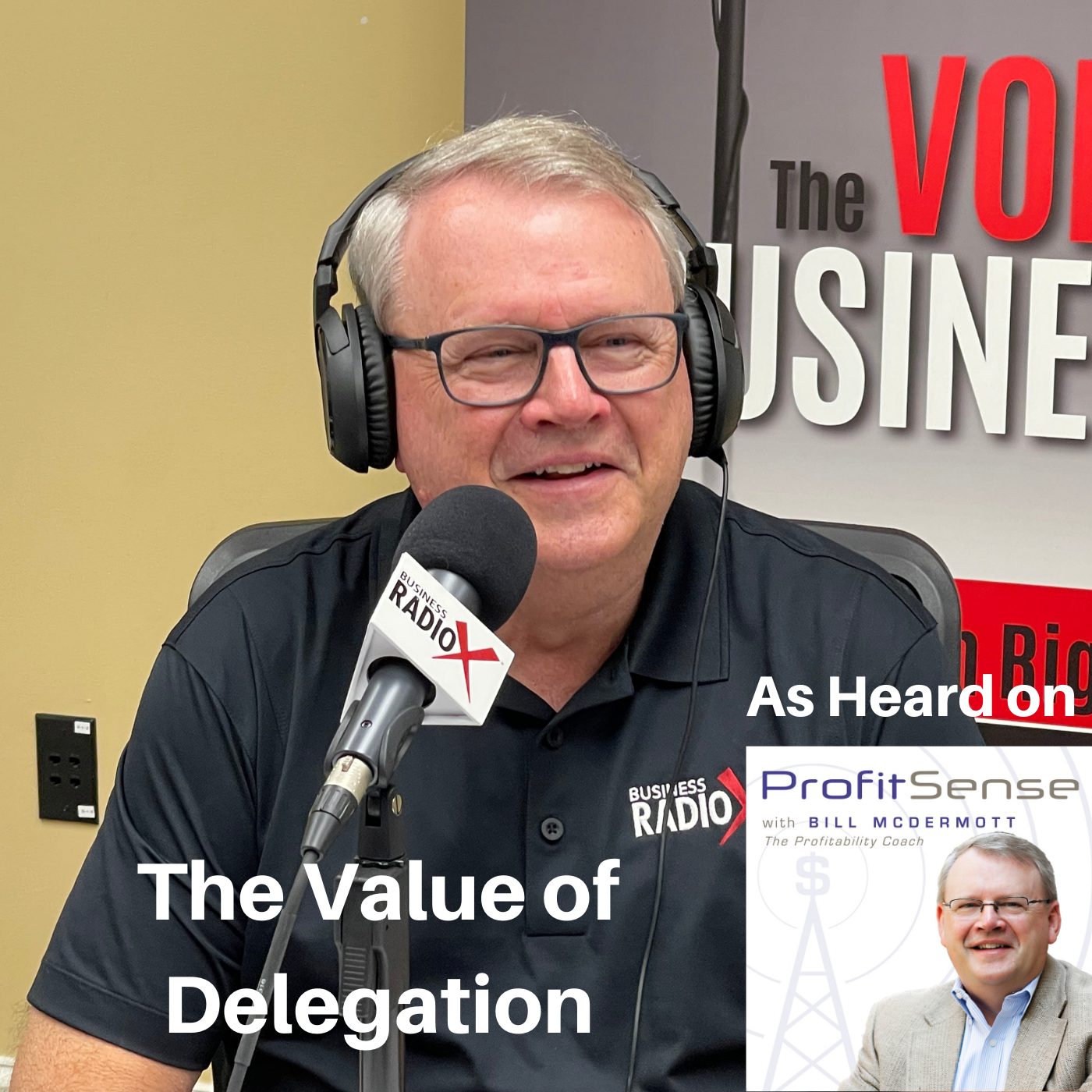
The Value of Delegation, with Bill McDermott, Host of ProfitSense

October 15, 2021 by John Ray

Value of Delegation
North Fulton Studio
The Value of Delegation, with Bill McDermott, Host of ProfitSense
Loading
00:00 /
RSS Feed
Share
Link
Embed

Download file

Value of Delegation

The Value of Delegation, with Bill McDermott, Host of ProfitSense 

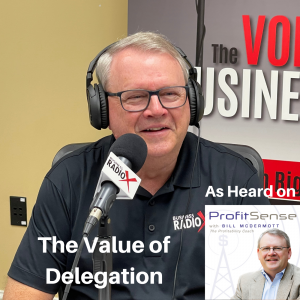
Only 1% of businesses pass the $10 million mark. As Profitability Coach Bill McDermott explains, the number one reason for this striking statistic is lack of delegation. On a recent episode of ProfitSense, Bill discussed the value of delegation, not just for the business, but for employees, company culture, and the owner’s plans to exit. ProfitSense with Bill McDermott is produced and broadcast by the North Fulton Studio of Business RadioX® in Alpharetta.

Bill’s commentary was taken from this episode of ProfitSense.

About ProfitSense and Your Host, Bill McDermott

Bill McDermott
Bill McDermott

ProfitSense with Bill McDermott dives into the stories behind some of Atlanta’s successful businesses and business owners and the professionals that advise them. This show helps local business leaders get the word out about the important work they’re doing to serve their market, their community and their profession. The show is presented by McDermott Financial Solutions. McDermott Financial helps business owners improve cash flow and profitability, find financing, break through barriers to expansion and financially prepare to exit their business. The show archive can be found at profitsenseradio.com.

Bill McDermott is the Founder and CEO of McDermott Financial Solutions. When business owners want to increase their profitability, they don’t have the expertise to know where to start or what to do. Bill leverages his knowledge and relationships from 32 years as a banker to identify the hurdles getting in the way and create a plan to deliver profitability they never thought possible.

Bill currently serves as Treasurer for the Atlanta Executive Forum and has held previous positions as a board member for the Kennesaw State University Entrepreneurship Center and Gwinnett Habitat for Humanity and Treasurer for CEO NetWeavers. Bill is a graduate of Wake Forest University and he and his wife, Martha have called Atlanta home for over 40 years. Outside of work, Bill enjoys golf, traveling, and gardening.

Connect with Bill on LinkedIn and Twitter and follow McDermott Financial Solutions on LinkedIn.
Tagged With: Bill McDermott, business transition, company culture, Delegation, employees, exit planning, McDermott Financial Solutions, Profitability Coach Bill McDermott, ProfitSense with Bill McDermott, The Profitability Coach

Should I Stay or Should I Go? Moving on From Companies With a Poor Company Culture E13

September 1, 2021 by Karen

Should-I-Stay-or-Should-I-Go-Moving-on-From-Companies-With-a-Poor-Company-Culture-feature
Phoenix Business Radio
Should I Stay or Should I Go? Moving on From Companies With a Poor Company Culture E13
Loading
00:00 /
RSS Feed
Share
Link
Embed

Download file

Should-I-Stay-or-Should-I-Go-Moving-on-From-Companies-With-a-Poor-Company-Culture-E13

Should I Stay or Should I Go? Moving on From Companies With a Poor Company Culture E13

This match was like pairing great wines. We love when we have a company that has a great culture paired with a company that supports great culture. This show was just that perfect match for the Culture Crush Business Podcast.

Kelle and David both bring so much knowledge and expertise to the discussion around company culture. This fluid conversation took us in the direction of discussing companies with unhealthy company culture, how to deal with companies that do not have a good culture, and how to support others in leaving those companies in their search for a company with a great culture.

We live in a time where there is no need to stay stuck with a company that has an unhealthy culture. Companies are hiring everywhere and many of those companies are ones with a great company culture. The consensus in the discussion was to encourage people to find the best fit for them, especially if it means leaving and finding a position somewhere else.

Although, we discussed many situations of companies with unhealthy culture and what to do, we also discussed that there are companies with a great company culture that still might not be the right fit. If you are a person that likes flexibility then it would not make sense for you to work at a company that is very strict. If you are not an outdoors type of person then it would not make sense for you to work for a company that has a strong culture that focuses on being outdoors. Finding the right company is like finding the right soulmate online on a dating app.

This conversation is yet another one that we will have to plan on doing a part two in the future. Listen to this podcast:

  • If you are working for a company that has a good culture but is wanting to grow it better
  • If you are working for a company with an unhealthy culture
  • If you are thinking of leaving your company for a company with a better company culture
  • If you are interviewing for a new position with a different company and are trying to find your right fit
  • If you are wanting to learn more about company culture and resources to support you in this journey

CultureWiselogovert-03

CultureWise offers small to medium size businesses a turnkey operating system for culture.

David-Friedman-Culture-CrushDavid Friedman is an award-winning CEO, entrepreneur, author, and renowned public speaker. In 2011, he published his first book, Fundamentally Different, which is based on the insights he learned and taught throughout his leadership career. In 2021 he published the second edition of his book, Culture by Design, the definitive “how to” manual for building a high-performance culture — even in the new remote work environment.

His current company, High Performing Culture, has helped hundreds of companies throughout North America to implement his culture operating system, CultureWise®.

Follow CultureWise on LinkedIn, Facebook and Twitter.

ADMANITY® is the home of the innovative, breakthrough algorithm, The ADMANITY® Protocol. ADMANITY® is the first company to create an online test and predictive emotional algorithm to determine the best emotional advertising strategy for your business, in any niche. admanity-protocol-badge-logo-ATWTYB

The affordable, 5-minute true/false ADMANITY® Protocol test isolates one of 15 emotional archetypes best suited for your business. The ADMANITY® Protocol is the only algorithm that can identify your company’s emotional archetype and then identify your ideal advertising strategies, tactics, formulas, and even copywriting tactics. It gives you agency-level recommendations that your business can use for years.

Discover the secrets formulas billion-dollar brands use every single day.

Kellie-Steinecke-Culture-CrushKelle Steinecke is the Chief Marketing Officer and Partner at ADMANITY®. An accomplished Marketing Executive, her career spans decades of success and numerous milestones of personal achievement. Being an ardent creative with a competitive spirit, Kelle fast-tracked the corporate ladder, regardless of the barriers thrown her way.

Kelle initially found great success in the financial sector, but has proven herself equally adept in many industries, including real estate, healthcare, automotive retail, managed IT, waste management, and bank/credit union consulting. In addition to being an expert leader of marketing teams across many diverse industries, Kelle evolved into a leadership coach for both staff and C-suite teams.

Kelle is a die-hard optimist who champions the kind of culture where teams don’t just survive – but thrive. She sees a challenge only as a gateway to an innovative solution and her passion for helping others achieve goals previously thought impossible, is truly what fuels her entrepreneurial soul.

Connect with Kelle on LinkedIn and follow ADMANMITY® on Facebook, Twitter and Instagram.

About Culture Crush

Culture Crush is officially relaunched! We are thankful to Debra Caron who launched and hosted the show originally. Culture Crush is back with a new host but the same focus- highlighting what makes a great company culture and how it affects the overall success of a company.CultaureCrushKindraBanner2

Culture is not just a tag word to be thrown around. It is not something you throw in job descriptions to draw people to applying for jobs within a company.

According to Marcus Buckingham and Ashely Goodall in their book Nine Lies About Work, “Culture is the tenants of how we behave. It’s like a family creed. This is how we operate and treat each other in the family.”

On this long form podcast we will highlight companies local to Arizona and beyond that are crushing it with great culture!

We will talk with company leaders to learn about real-life experiences, tips, and best practices for creating a healthy work environment where employees are finding joy and satisfaction in their work while also striving and growing within the company.

About the Host

ABHOUTHOSTHEADSHOTKindra Maples is your new host taking the lead on the relaunch of Culture Crush! She is spartan racer, past animal trainer, previous magician’s assistant, and has a weakness for Oreo cookie shakes. Her journey working with people actually started working with animals as a teenager (don’t worry we won’t go that far back for her bio).

She worked for over 15 years in the zoo industry working with animals and the public. Her passion of working with animals shifted into working with people in education, operations and leadership roles. From there her passion of leadership and helping people develop has continued to grow.

Then came the opportunity for relaunching the Culture Crush Podcast and she jumped on it. Leadership, growth, and strong company cultures are all areas that Kindra is interested in diving into further.

Shout Outs

We want to thank a few people for their behind the scenes effort in helping this relaunch to come to life. James Johnson with Tailored Penguin Media Company LLC.– It is a small, but powerful video production company with a goal to deliver the very best by articulating the vision of your brand in a visually creative way. Gordon Murray with Flash PhotoVideo, LLC. -Flash Gordon has been photographing since high school and evolving since then with new products that will equip, encourage, engage, and enable. Renee Blundon with Renee Blundon Design – She is not only one of the best free divers (that’s not how she helped with the podcast) but she is great with graphics design and taking the direction for the vision that you have while also adding creative ideas to bring to your vision to life.

These are just a few of the folks that supported the relaunch of the podcast. If you would like to be part of the Culture Crush team or would like to support underwriting the show- please reach out: culturecrushpodcast@gmail.com

About Our Sponsor

For 23 years Catholic Education Arizona has helped serve underserved children with $268 million in scholarships. Catholic High Schools have a 99.4% graduation rate and 97% move on to higherCatholic-Educaton-Arizona-logo  education or military service.

Participating partners like APS, BBVA, and Grand Canyon University receive a dollar-for-dollar Arizona State Tax Credit. The corporate partners enjoy helping our future work force, Building the Arizona community and future leaders!

The partners also enjoy promotion in Catholic Education Arizona’s newsletter, social media channels and podcast! For more information, call 602-218-6542 or visit www.ceaz.org – they are changing lives one scholarship at a time!

Tagged With: company culture, corporate culture, Culture, Emotional Marketing | Emotional Advertising | ADMANITY | Marketing Consultants | Advertising Agency | Affordable Marketing Solutions, Employee Engagement

Growing Culture Through Music – Brian Mohr E9

April 30, 2021 by Karen

Growing-Culture-Through-Music-Brian-Mohr-feature
Phoenix Business Radio
Growing Culture Through Music - Brian Mohr E9
Loading
00:00 /
RSS Feed
Share
Link
Embed

Download file

Growing-Culture-Through-Music-Brian-Mohr-anthym

Growing Culture Through Music – Brian Mohr E9

When it comes to finding the right guests to bring on to the People and Profit Podcast, our team always has our eyes open for great company leaders that align with Conscious Capitalism and the four tenants. This month we did not have to look very far to find a well-known leader in the Conscious Capitalism network here within the Arizona community as well as the Conscious Capitalism International Team.

Brian Mohr jumped on the Conscious Capitalism bandwagon back before 2015 when he found “his people.” As many others, Brian stumbled upon the Conscious Capitalism movement and knew he had to be part of the tribe. He has been on the board for Conscious Capitalism International and currently sits on the board locally for the Arizona Chapter as well. Not only has he been part of Conscious Capitalism in that facet but also in his past and present company leadership roles that he has held. From growing the very culture focused company Y-scouts, to his new and very culture focused company anthym.

anthym is an interactive, personal storytelling platform leveraging the power of music to catalog some of the most meaningful and pivotal moments and memories in our lives.

It’s becoming clear that the future of work will be embracing an increase in work-from-anywhere and remote work scenarios, which presents a whole new set of challenges for teams and companies. anthym is focusing on bringing the team members together and allowing them to connect on a deeper level. We know WHAT people do but this program allows the team members to truly learn about WHO the people are that they work with.

This podcast dives into the tenant of company culture, why it is important, the need to improve it, and how anthym can improve it. This is a great podcast to listen to if you have read about conscious capitalism and you think that these people align with you. Listen in to fund your tribe just like Brian did.

#companyculture #new #teambuilding #consciouscapitalism #growth #teams #ccaz #podcast

anthym-redesign-finalcopy

Building cohesive remote teams and culture is incredibly difficult – anthym is here to make it easier. At its core, anthym is a personal storytelling platform that helps you reflect on and catalog  some of your most meaningful and important life moments by leveraging the power of cultural touchstones like music, movies, books, and TV shows, which results in your personal anthym profile.

Together with your teammates, the anthym experience is brought to life by a facilitated virtual onboarding where you and your teammates share stories with one another and create powerful, authentic connections. After the onboarding experience, the anthym platform allows for continuous team connection and helps promote connection, inclusion, belonging and trust.

Brian-Mohr-anthymBrian Mohr’s career is a learning-based journey with an intense focus on people, purpose, values, culture, and leadership. Brian has had amazing entrepreneurial and leadership experiences at Jobing.com, P.F. Chang’s China Bistro, Y Scouts and Conscious Capitalism Arizona. Today, Brian is channeling his experiences and energy into helping organizations build cohesive teams in the rapidly accelerating virtual workplace through his new company, Anthym.

Brian is on the national Board of Directors of Conscious Capitalism, Inc., he is a Board member and President Emeritus of the Arizona Chapter of Conscious Capitalism, a member of the Board of Directors of the Better Business Bureau of the Pacific Southwest, a TEDx speaker, and the co-author of “Hiring on Purpose – How the Y Scouts Method is Revolutionizing the Search for Leaders”.

Brian’s most important and cherished responsibilities are being the lucky father to his 2 daughters, Taylor and Riley, and the proud husband to his wife, Jackie. In his spare time, you’ll find Brian practicing guitar and catching a live music concert every chance he can get.

Connect with Brian on LinkedIn, Facebook, Twitter and Instagram.

About Our People and Profit Co-Hosts

Sarah-McCrarenSarah McCraren is an Arizona native with a strong sense of community. Sarah spent many years in the corporate finance world specializing in the operational analysis, measurement and accountability systems, project management and software implementations. However, Sarah wanted to do work which was meaningful and would positively impact her community.

She found that saving lives and reducing injuries through comprehensive safety programs fit that bill. Sarah currently leads the McCraren Compliance team by keeping everyone focused on their primary purpose, creating workplaces where we all watch out for each other, and balancing the needs of all their stakeholders.

Sarah serves on the Boards for Conscious Capitalism Arizona and the Society for Mining, Metallurgy and Exploration Tucson Chapter, and is also active with the Arizona Builders Alliance, Arizona Rock Products Association , Arizona Transportation Builders and Women in Mining Az.

Sarah McCraren
Part of an Awesome Team
www.McCrarenCompliance.com
Creating Workplaces Where We All Watch Out for Each Other

JeremyDeisHostConsciousCapitalismEp1-e1539612502706No arm twisting is required to get Jeremy Neis, a CC Arizona leadership team member, to engage in conversation with impassioned business minds on the topic of leveraging enterprise to create long lasting advancements for humanity.

His two plus decades of entrepreneurial experience, leading strategic initiatives and tailoring solutions for organizations, families and individuals has led to a strong appreciation of the profound impact business wields over the people it serves and relies upon.

It is his delight to explore with inspiration, show guests their experiences, observations and approaches to doing business in a people centered manner.

About Our Sponsor – Conscious Capitalism Arizona

Business has the potential to be a powerful force for good. 

Free enterprise capitalism has served to lift more people out of poverty than any other socio-economic system ever conceived – empowering social cooperation, human progress, and elevating humanity. Conscious-Capitalism-Arizona-as-studio-sponsor-for-Phoenix-Business-RadioX

Good business is the answer to many of the global issues that humankind is facing. This is what we will dive into on the show.

We are working to change the capitalism narrative by shining a bright light on good business – telling the stories of conscious Arizona companies and encouraging others to follow in their footsteps.

Tagged With: ccaz, company culture, Conscious Capitalism, growth, team building, teams

Authenticity – Being Your True Self with Carvana E6

March 24, 2021 by Karen

Authenticity-Being-your-true-self-with-Carvana-E6-feature
Phoenix Business Radio
Authenticity - Being Your True Self with Carvana E6
Loading
00:00 /
RSS Feed
Share
Link
Embed

Download file

Authenticity-Being-your-true-self-with-Carvana-E6

Authenticity – Being Your True Self with Carvana E6

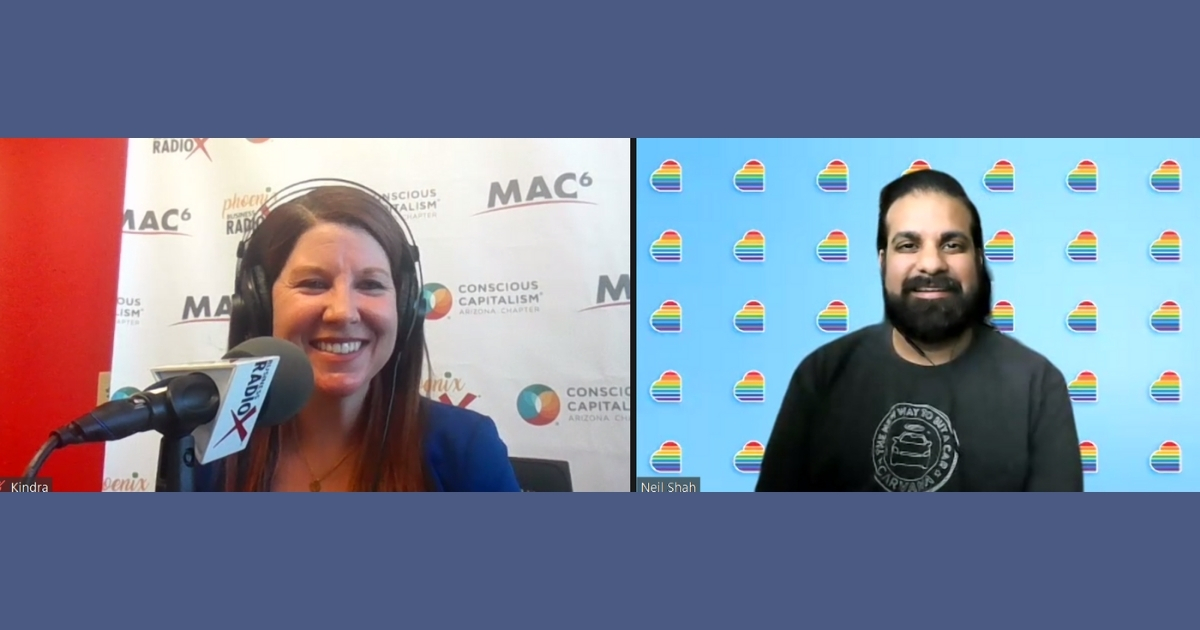
We have heard a lot about the company culture at Carvana, but this podcast was our opportunity to get a deeper dive with an inside perspective. Neil Shah was able to give us the inside look at the growth of Carvana and how they have continued to support their employees through the past year (in the middle of a pandemic if you forget).

Carvana has grown rapidly since its inception and due to the innovation and the concept behind Carvana, the company has continued to grow over the past year, where many other companies have struggled. Since the concept of Carvana already included limited contact with others and had a foundation set in technology to make car buying easy, this allowed Carvana to focus on their people during the beginning of the pandemic instead of the business platform itself. While other companies were struggling to find the right forms of technology to support their company becoming contactless, Carvana was able to put focus on their employees first. In a matter of three fast weeks, Carvana was able to shift their employees to working remote, with a similar and comfortable set up that they had in their office. They cut back hours on some staff, but never cut their health care coverage. Carvana changed their sick plan to include support for those that got covid so they never had to tap into their PTO. The leadership team even took cuts in their own salaries to make sure that the employees were covered.

After shifting their employees to remote and supporting them in their new routines, the company was able to put the focus back toward the company and ways to grow in a contactless fashion. The focus was never off the employees though. The leadership continues to stay in open communication with the employees, continues to offer opportunities for recognition, and supports the employees in being their authentic selves in the workplace. When we mention recognition, we are talking next level recognition in some cases where Carvana gifted 21 employees with a new car this year.

You cannot have a conversation about company culture without talking about values. Carvana has seven values that they showcase and refer to often, but Neil gave us his top two, one of which we cannot get enough of. “Your next customer may be your mom,” is one of their core values, that is not only referenced daily as the employees interact with a wide range of customers, but this is value is showcased on one of the walls in their office. We know many companies that write core values on the wall that do not truly embody what they stand for, but Carvana took it to the next level by adding photos of the employee’s moms on the wall as well. We absolutely love that Carvana has taken the value one step further to help there to be a true connection with the employees and the core values that they believe in.

Here are the rest of their core values in case you are interested…

• We’re all in this together
• Be brave
• There are no sidelines
• Zag forward
• Don’t be a Richard (you know what this one means… and we love it!)

This podcast is not just to hear about a few values that are written on a wall. We know that just because you write them on the wall doesn’t mean the staff feels connected and automatically feels the stronger company culture. This podcast gives our listeners the opportunity to hear about the company culture through the stories, examples, and passion that Neil shares. Hearing from him allows our listeners to connect.

Most of us have left a position at least once, to join a company because we wanted more opportunities to grow. We have most likely stayed with a company because we could truly be ourselves (or left a company because we couldn’t be ourselves). These actions and feelings are at the root of a good company culture and our listeners have the opportunity to connect through this podcast and hearing about the good company culture with Carvana from Neil’s view.

If you like disrupting the norm and are looking to join a company revolutionizing an industry then you will LOVE what Carvana has done for the car buying experience. Buying a car the old-fashioned way sucks and we are working hard to make it NOT suck. I mean, have you seen our vending machine?! Carvana-Primary-Blue-GreyText4kReady

We are looking for people who are excited to thrive in an environment of impactful change. Team spirit is evident at Carvana and every day we let our passions and creativity foster innovation.

We take big swings, set ambitious goals, and challenge each other to make data- and process-driven decisions in everything we do. We’ve been changing the game since 2013, and we’re not taking our foot off the gas now.

Neil-Shah-CarvanaNeil Shah is the Team Lead of Technical Recruiting at Carvana. He has over 13 years of experience in Technical Recruiting coming from a recruiting agency background.

He made the leap from agency to corporate technical recruiting in 2018 in an effort to be a shepherd of culture and growth rather than just a placement professional. He is passionate about creating inclusive and diverse technical teams and building long-term relationships.

Connect with Neil on LinkedIn.

About Culture Crush

Culture Crush is officially relaunched! We are thankful to Debra Caron who launched and hosted the show originally. Culture Crush is back with a new host but the same focus- highlighting what makes a great company culture and how it affects the overall success of a company. CultaureCrushKindraBanner2

Culture is not just a tag word to be thrown around. It is not something you throw in job descriptions to draw people to applying for jobs within a company.

According to Marcus Buckingham and Ashely Goodall in their book Nine Lies About Work, “Culture is the tenants of how we behave. It’s like a family creed. This is how we operate and treat each other in the family.”

On this long form podcast we will highlight companies local to Arizona and beyond that are crushing it with great culture!

We will talk with company leaders to learn about real-life experiences, tips, and best practices for creating a healthy work environment where employees are finding joy and satisfaction in their work while also striving and growing within the company.

About the Host

ABHOUTHOSTHEADSHOTKindra Maples is your new host taking the lead on the relaunch of Culture Crush! She is spartan racer, past animal trainer, previous magician’s assistant, and has a weakness for Oreo cookie shakes. Her journey working with people actually started working with animals as a teenager (don’t worry we won’t go that far back for her bio).

She worked for over 15 years in the zoo industry working with animals and the public. Her passion of working with animals shifted into working with people in education, operations and leadership roles. From there her passion of leadership and helping people develop has continued to grow.

Then came the opportunity for relaunching the Culture Crush Podcast and she jumped on it. Leadership, growth, and strong company cultures are all areas that Kindra is interested in diving into further.

Shout Outs

We want to thank a few people for their behind the scenes effort in helping this relaunch to come to life. James Johnson with Tailored Penguin Media Company LLC.– It is a small, but powerful video production company with a goal to deliver the very best by articulating the vision of your brand in a visually creative way. Gordon Murray with Flash PhotoVideo, LLC. -Flash Gordon has been photographing since high school and evolving since then with new products that will equip, encourage, engage, and enable. Renee Blundon with Renee Blundon Design – She is not only one of the best free divers (that’s not how she helped with the podcast) but she is great with graphics design and taking the direction for the vision that you have while also adding creative ideas to bring to your vision to life.

These are just a few of the folks that supported the relaunch of the podcast. If you would like to be part of the Culture Crush team or would like to support underwriting the show- please reach out: culturecrushpodcast@gmail.com

Tagged With: Carvana, company culture

Flipping the Industry- People and Profit with Keyser and beni.fit E7

March 10, 2021 by Karen

Flipping-the-Industry-People-and-Profit-with-Keyser-and-benifit-E7-feature
Phoenix Business Radio
Flipping the Industry- People and Profit with Keyser and beni.fit E7
Loading
00:00 /
RSS Feed
Share
Link
Embed

Download file

Flipping-the-Industry-People-and-Profit-with-Keyser-and-benifit-E7

Flipping the Industry- People and Profit with Keyser and beni.fit E7

The conversation with Ash Hachmeister and Noah Barrasso was such an insightful conversation about servant leadership, company culture, and building business relationships. Keyser and beni.fit are both wonderful examples of companies that are turning their industry on its head. Both work in industries that are usually out to just make a buck. So how do you continue to grow a company and make money, while also focusing on the people and what is truly best for them? That’s what they discuss in this conversation.

Both Ash and Noah are doing great things in their companies to not only focus on the needs of the clients/employees, but on making everything easier for them to understand as well. Health insurance can be extremely difficult to understand but Ash and his team are there to truly help the individuals pick the plans and options that are best for them because it is not a one size situation. Speaking of size, Noah is there to not only help explain things on the corporate real estate side, but also make sure that the companies they help are really finding the space that is the right size, design, layout and feel to support their company growth and culture.

The listeners are able to get a deeper look into how things work at Keyser when it comes to serving others and how “Being a selfless servant is the most selfish thing to do for your business.” These topics of culture, growth, support, and business relations builds and draws the conversation. beni.fit is flipping their industry on the head by truly focusing on the benefit needs of the employees and making sure they are getting the benefits support they truly need. This is a great show for folks to listen to if they want to understand the benefits of selfless service and even hear ways to start activating this in their own lives. This is also a great opportunity to hear from companies that are not doing things “the same old way.” They have changed their industries for the better and they are not keeping it a secret about how they are doing this- so listen in!

With a focus on the needs of tenants, Keyser exclusively represents occupiers of space and assist them with their commercial real estate needs including leasing, purchasing, constructing or disposing of facilities. We specialize in helping companies leverage their real estate buying power to secure incentives and attract today’s work force, all while reducing cost and risk.

Whether it’s managing a global portfolio of office and industrial leases, helping a retail franchise brand roll out locations nationally, negotiating sites for specialty healthcare clinics, assisting rapidly growing technology companies with their expansion, or helping with our clients’ data center strategy and space needs, our advisors take deep pride in serving and going above and beyond for each of our clients.

Noah-Barrasso-Phoenix-Business-RadioXNoah Barrasso believes in creating a personal experience w/ his clients by serving them in a way which leaves a lasting impression.

Through helping others and creating genuine relationships, Noah is able to truly learn about their culture, their business functions, and what ecosystem is needed to help their company & employees thrive.

From startups to Fortune 500 companies, Noah Barrasso helps companies lease and purchase commercial real estate.

Learn more about Noah on his website, and connect with him on LinkedIn, Facebook and Instagram.

beni.fitpinknobackground-011

beni.fit is reimagining the workplace. They deliver new ways for high-growth companies to win talent and elevate human potential.

By bringing clarity, creativity and strategy to organizations, they help leaders make sense of the confusion and overwhelm that comes with traditional approaches to benefits planning.

They believe it’s time to transform this cost center into a power center that fuels performance, elevates culture and are driving a conversation around aligning benefits, culture, wellbeing and technology.

beni.fit is headquartered in Tempe, Arizona serving modern, high-growth companies across the U.S.

Ash-Hachmeister-Phoenix-Business-RadioXAsh Hachmeister aims to change the view of insurance and bring benefits into alignment with company culture and purpose. Ash knows the industry inside and out, understanding deeply the frustration and complexity leaders face.

Breaking free from convention, he started beni.fit to simplify, educate and work with partners to create new, high-impact strategies.

Follow beni.fit on LinkedIn, Twitter and Instagram.

About Our People and Profit Co-Hosts

Sarah-McCrarenSarah McCraren is an Arizona native with a strong sense of community. Sarah spent many years in the corporate finance world specializing in the operational analysis, measurement and accountability systems, project management and software implementations. However, Sarah wanted to do work which was meaningful and would positively impact her community.

She found that saving lives and reducing injuries through comprehensive safety programs fit that bill. Sarah currently leads the McCraren Compliance team by keeping everyone focused on their primary purpose, creating workplaces where we all watch out for each other, and balancing the needs of all their stakeholders.

Sarah serves on the Boards for Conscious Capitalism Arizona and the Society for Mining, Metallurgy and Exploration Tucson Chapter, and is also active with the Arizona Builders Alliance, Arizona Rock Products Association , Arizona Transportation Builders and Women in Mining Az.

Sarah McCraren
Part of an Awesome Team
www.McCrarenCompliance.com
Creating Workplaces Where We All Watch Out for Each Other

JeremyDeisHostConsciousCapitalismEp1-e1539612502706No arm twisting is required to get Jeremy Neis, a CC Arizona leadership team member, to engage in conversation with impassioned business minds on the topic of leveraging enterprise to create long lasting advancements for humanity.
His two plus decades of entrepreneurial experience, leading strategic initiatives and tailoring solutions for organizations, families and individuals has led to a strong appreciation of the profound impact business wields over the people it serves and relies upon.

It is his delight to explore with inspiration, show guests their experiences, observations and approaches to doing business in a people centered manner.

About Our Sponsor – Conscious Capitalism Arizona

Business has the potential to be a powerful force for good. 

Free enterprise capitalism has served to lift more people out of poverty than any other socio-economic system ever conceived – empowering social cooperation, human progress, and elevating humanity. Conscious-Capitalism-Arizona-as-studio-sponsor-for-Phoenix-Business-RadioX

Good business is the answer to many of the global issues that humankind is facing. This is what we will dive into on the show.

We are working to change the capitalism narrative by shining a bright light on good business – telling the stories of conscious Arizona companies and encouraging others to follow in their footsteps.

Tagged With: Benefits, commercial real estate broker, company culture, Culture, employee benefits, HR, tenant advisor, wellbeing

The Future of Company On-Boarding with Lisa Glenn Nobles E22

February 1, 2021 by Karen

The-Future-of-Company-On-Boarding-with-Lisa-Glenn-Nobles-Feature
Phoenix Business Radio
The Future of Company On-Boarding with Lisa Glenn Nobles E22
Loading
00:00 /
RSS Feed
Share
Link
Embed

Download file

The-Future-of-Company-On-Boarding-with-Lisa-Glenn-Nobles-E22

The Future of Company On-Boarding with Lisa Glenn Nobles E22

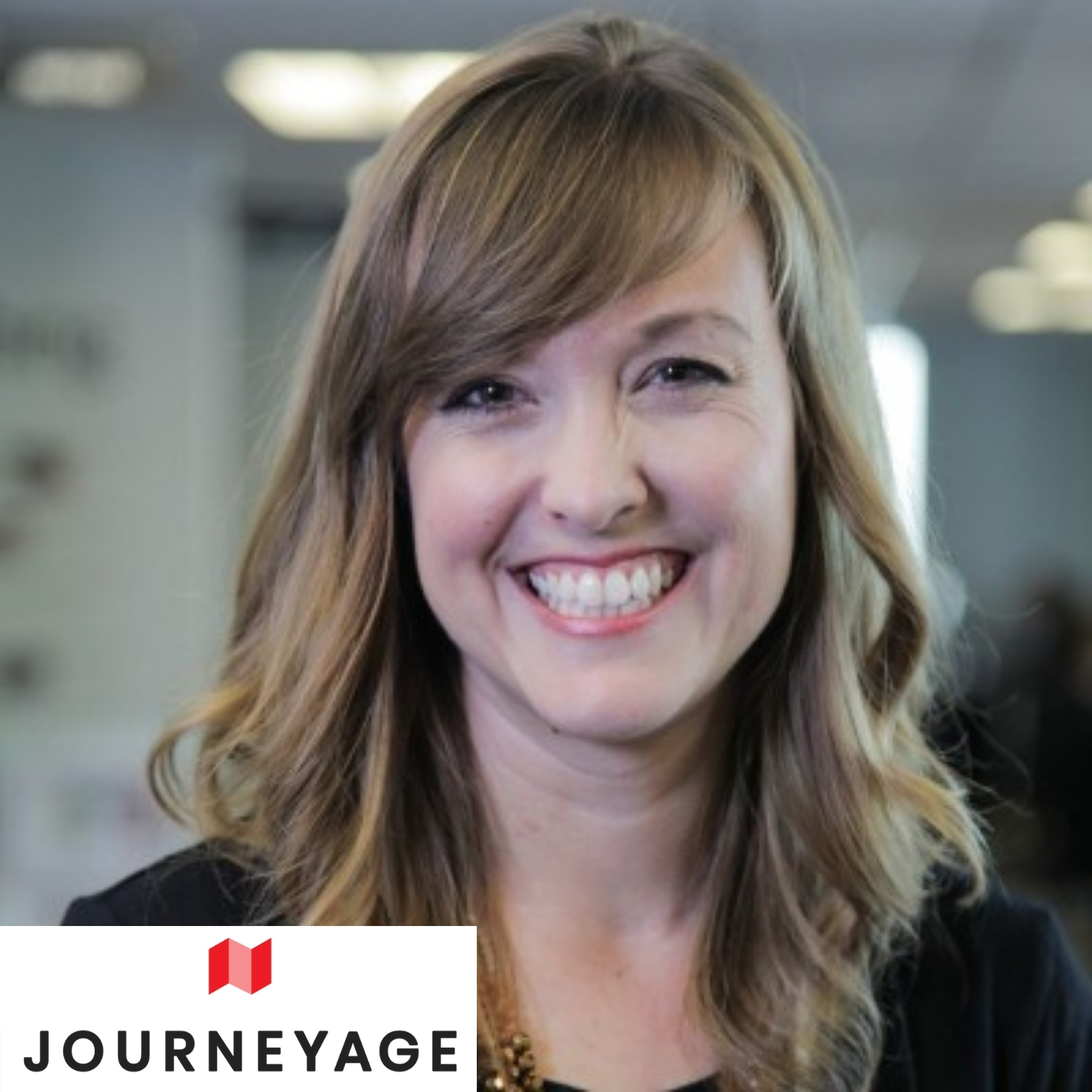
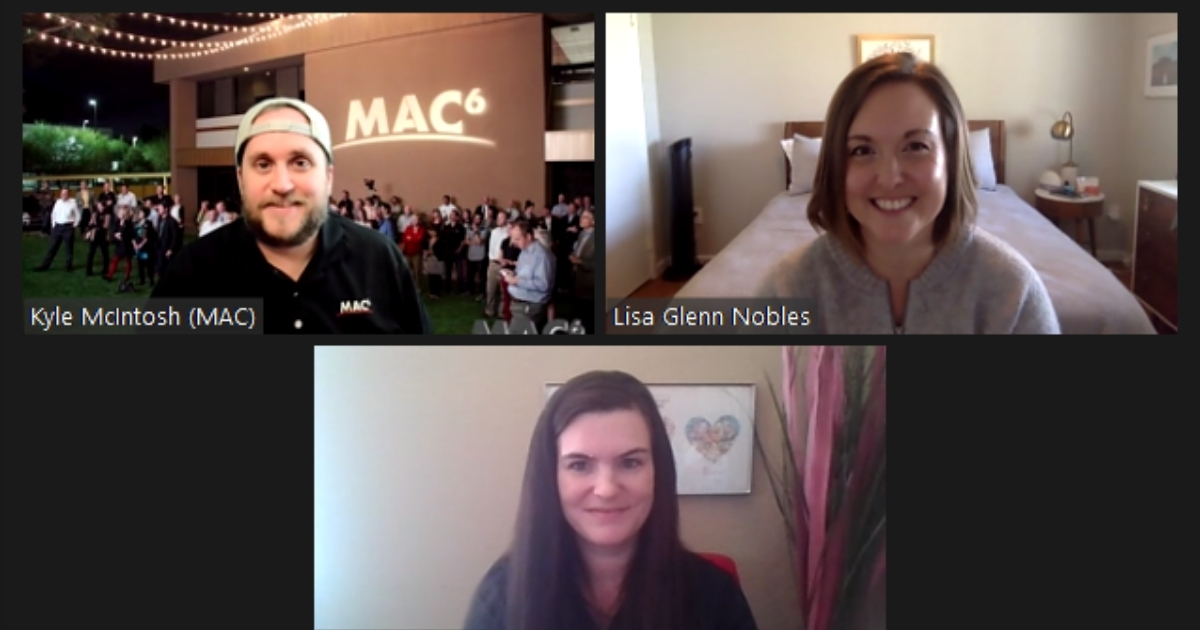
In this episode of The Future of Work: Water Cooler Conversations we are joined by Lisa Glenn Nobles Operations Navigator for Journeyage. We discussed Lisa’s path to leadership, how to cultivate company cultures of belonging and how on-boarding can actually be made to be fun and customized for the learner. Lisa also let us in on what on-boarding and company culture looks like at Journeyage.

If you are looking for ways to increase a sense of community within your company culture, this episode has some great things to consider. Including where to start if you haven’t looked at your on-boarding process in awhile. Lisa talks through the components that should be included to help your new employees understand what the company is really like. For anyone who is looking to build a diverse, innovative and welcoming company culture – this is a must listen!

Journeyage-Logo

Everyone knows exactly what bad training experiences feel like. Fluorescent lighting, bad coffee, a disinterested presenter, and PowerPoints with templates that explore the full spectrum of beige. It’s painful, but it doesn’t have to be this way. Journeyage helps you to create engaging, personalized, and highly relevant training that your employees and users will actually learn from and love.

They are on a mission to co-create the world’s most transformative workplace experience, and we believe that this starts with their company first. They are building an employee-first corporate experience designed to change the world.

Lisa-Glenn-Nobles-Journeyage50’s housewife by interest and intersectional feminist by passion, Lisa Glenn Nobles is just as likely to be whipping up strawberry jalapeno preserves as crafting a Diversity, Equity, Inclusion, and Belonging action plan for Journeyage.

Her professional passions include building systems, creating strong cultures that value humans over profits, and making Slack a fun place to be. When she’s not working on operations at Journeyage, she can just as likely be found:

  • Hiking in the Phoenix Mountain Preserve
  • Binge-watching Queer Eye while having a good cry
  • Planning her next international trip (South America, Japan, Kazakhstan and New Zealand are on the short list)
  • Hanging out with her husband throwing the ball to Labrador Clarence or cuddling with ragdoll cat Honey

Lisa came to Journeyage after a journey through the nonprofit, operations, and education sectors, finding her true home at Journeyage (where she gets to do all those things!). She volunteers regularly with ConstellateAZ, a local nonprofit dedicated to getting high risk youth involved in entrepreneurship. If you’d like to share a recipe or an idea for generosity initiatives, Lisa can be found at:

Connect with Lisa on LinkedIn, Twitter and by email. You can also follow Journeyage on LinkedIn, Facebook, Instagram and Twitter.

ABOUT THE FUTURE OF WORK: WATER COOLER CONVERSATIONS

Welcome to Future of Work: Water Cooler Conversations Radio Show and Podcast – where business leaders share how they integrate humanity and technology through innovative approaches, healthy culture, flexible workspaces and seamless virtual technology.

ABOUT YOUR CO-HOSTS

KyleMcIntoshWith a background in marketing, in various for profit and not for profit companies, Kyle McIntosh wondered, “How can I pair the passion and commitment to community progress of a non-profit with the sustainability and reach of a for profit company?” From this question and perspective a mission evolved to tear down the false distinction between the two sectors and to promote companies with Conscious Capitalism® business models through MAC6.

Kyle is the President and Creative Excitant of MAC6.  Day to day, his main operational role is on the “spaces” side of the business, focusing on creating thriving communities in the commercial office buildings, the co-working space, and the co-manufacturing space.  The other role that he plays is that of EOS implementer, working with clients to bring the Entrepreneurial Operating System, from the book Traction® to their businesses.  Additionally, he sits on the boards of Conscious Capitalism Arizona, telling the stories of good businesses in Arizona, and The Tempe Chamber of Commerce, sustaining Tempe’s quality of life and keeping our community and economy vibrant.TheFutureofWorkApplePodcastandSpreakerheader-1

Kyle loves Arizona and wants to see us all collectively find great success based on the awesome things that are happening here every day.

Follow MAC6 on Facebook and Twitter.

Jennifer-BurwellJennifer Burwell, joined MAC6 in 2013. Jennifer is their VP and Director of Programs.

She uses her experience in real estate, team development and management to seamlessly integrate each of the MAC6 business units to assure they are all focused on the long-term company vision. She is also a student of human behavior.

As a Certified Professional Behavioral Analyst, she uses her knowledge to facilitate culture-focused leadership programs with organizations of all sizes to integrate the company’s values and create higher-performing teams.

To learn more about MAC6 Communities, call 480-293-4075 or find them on Facebook

ABOUT OUR SPONSOR

MAC6 offers flexible spaces and programs to help your team grow, and a community of thriving businesses, just like yours.  Advocating Capitalism as a Force for Good, MAC6 is Accelerating the shift to Conscious Capitalism (where Purpose and Profit Unite) through Creativity, Collaboration, Community and Change.


Tagged With: company culture, onboarding, remote onboarding, remote training, training

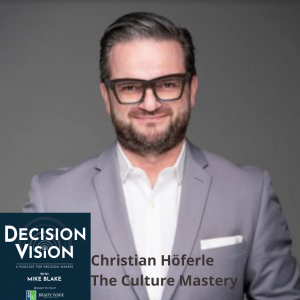
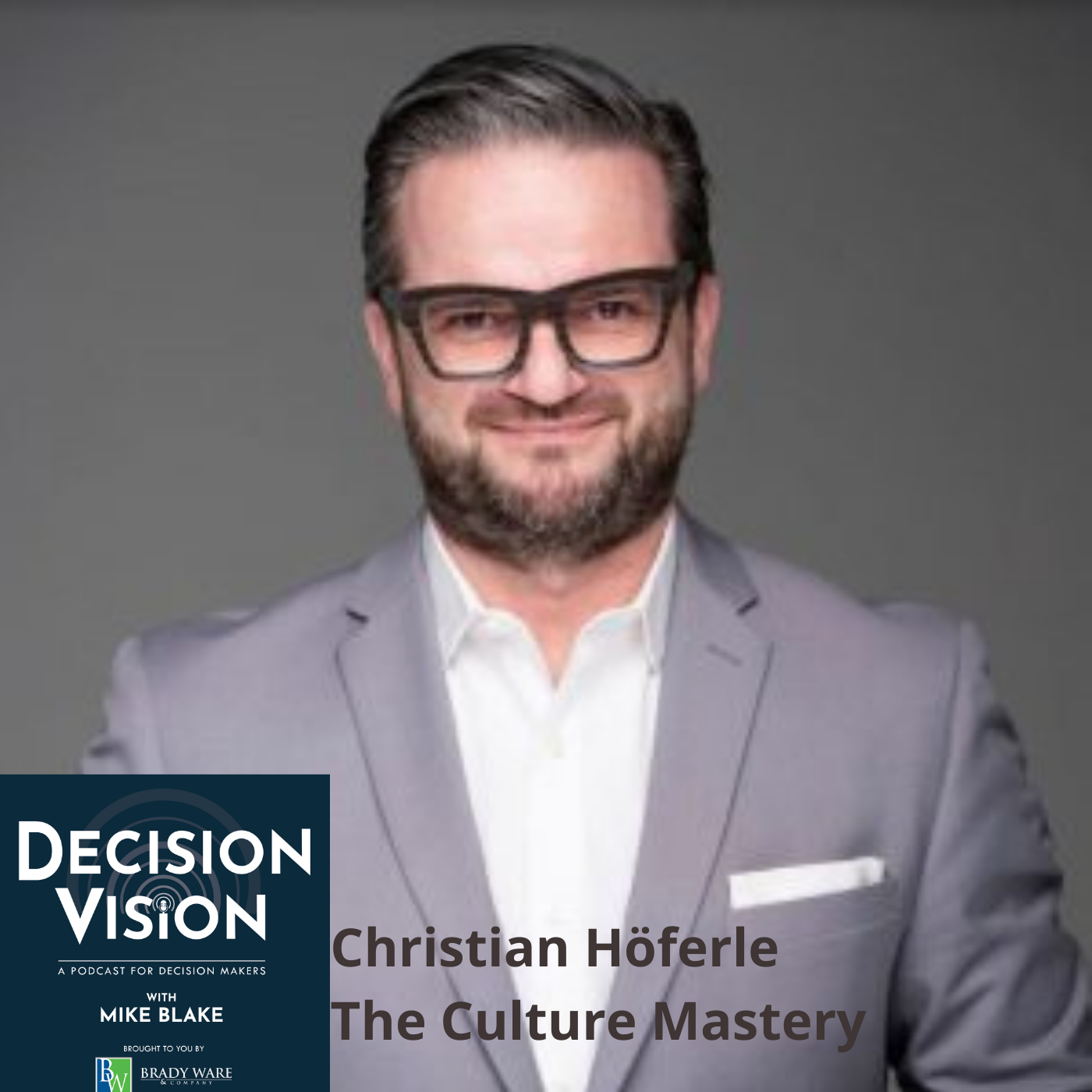
Decision Vision Episode 94: Should I Change My Corporate Culture? – An Interview with Christian Höferle, The Culture Mastery

December 3, 2020 by John Ray

Christian Höferle
Decision Vision
Decision Vision Episode 94: Should I Change My Corporate Culture? - An Interview with Christian Höferle, The Culture Mastery
Loading
00:00 /
RSS Feed
Share
Link
Embed

Download file

Decision Vision Episode 94: Should I Change my Corporate Culture? – An Interview with Christian Höferle, The Culture Mastery

Christian Höferle of The Culture Mastery asserts that if you’re asking yourself this question, the answer is probably yes. Christian joins host Mike Blake to discuss assessing corporate culture, creating cohesion with employees scattered globally, and much more. “Decision Vision” is presented by Brady Ware & Company.

Christian Höferle, Founder, The Culture Mastery

Christian Höferle is a cultural coach, trainer, and mentor for multinational organizations – or rather: for people who work globally. Based in Atlanta, he is German by passport, American by choice, Bavarian at heart, and people call him The Culture Guy. His passion is to help people discover commonality when they are overwhelmed by difference. His mission is to create peace by facilitating understanding, relating, and connecting. At the core of this purpose is culture. And as he helps people figure out this “thing” called culture, they’ll work at their peak and in peace with others.

Throughout his career, Christian has had the privilege of working with people from all over the world. With his company, The Culture Mastery, Christian and his team serve multinational organizations to achieve their goals in global markets.TCM does this via tailored coaching and training programs for expatriates as well as multicultural teams.

The Culture Mastery

The Culture Mastery assists clients with a variety of professional services targeted at improving international business success. They develop global leaders. They consult, train, and coach diverse management and leadership functions,  provide destination services, support expatriates on foreign assignment, and deliver tailored cultural training programs.

The Culture Mastery provides leadership development programs for the global business community. When companies struggle to adapt to the unique work cultures in foreign markets and when their managers fail to adjust to the norms and behaviors of these cultures, their global success is at risk and the companies stand to lose out on international growth opportunities.

Mike Blake, Brady Ware & Company

Mike Blake, Host of the “Decision Vision” podcast series

Michael Blake is the host of the “Decision Vision” podcast series and a Director of Brady Ware & Company. Mike specializes in the valuation of intellectual property-driven firms, such as software firms, aerospace firms, and professional services firms, most frequently in the capacity as a transaction advisor, helping clients obtain great outcomes from complex transaction opportunities. He is also a specialist in the appraisal of intellectual properties as stand-alone assets, such as software, trade secrets, and patents.

Mike has been a full-time business appraiser for 13 years with public accounting firms, boutique business appraisal firms, and an owner of his own firm. Prior to that, he spent 8 years in venture capital and investment banking, including transactions in the U.S., Israel, Russia, Ukraine, and Belarus.

Brady Ware & Company

Brady Ware & Company is a regional full-service accounting and advisory firm which helps businesses and entrepreneurs make visions a reality. Brady Ware services clients nationally from its offices in Alpharetta, GA; Columbus and Dayton, OH; and Richmond, IN. The firm is growth-minded, committed to the regions in which they operate, and most importantly, they make significant investments in their people and service offerings to meet the changing financial needs of those they are privileged to serve. The firm is dedicated to providing results that make a difference for its clients.

Decision Vision Podcast Series

“Decision Vision” is a podcast covering topics and issues facing small business owners and connecting them with solutions from leading experts. This series is presented by Brady Ware & Company. If you are a decision-maker for a small business, we’d love to hear from you. Contact us at decisionvision@bradyware.com and make sure to listen to every Thursday to the “Decision Vision” podcast.

Past episodes of “Decision Vision” can be found at decisionvisionpodcast.com. “Decision Vision” is produced and broadcast by the North Fulton studio of Business RadioX®.

Visit Brady Ware & Company on social media:

LinkedIn:  https://www.linkedin.com/company/brady-ware/

Facebook: https://www.facebook.com/bradywareCPAs/

Twitter: https://twitter.com/BradyWare

Instagram: https://www.instagram.com/bradywarecompany/

Show Transcript

Intro: [00:00:01] Welcome to Decision Vision, a podcast series focusing on critical business decisions. Brought to you by Brady Ware & Company. Brady Ware is a regional full service accounting and advisory firm that helps businesses and entrepreneurs make visions a reality.

Mike Blake: [00:00:21] Welcome to Decision Vision, a podcast giving you, the listener, clear vision to make great decisions. In each episode, we discuss the process of decision making on a different topic from the business owners’ or executives’ perspective. We aren’t necessarily telling you what to do, but we can put you in a position to make an informed decision on your own and understand when you might need help along the way.

Mike Blake: [00:00:41] My name is Mike Blake, and I’m your host for today’s program. I’m a director at Brady Ware & Company, a full service accounting firm based in Dayton, Ohio, with offices in Dayton; Columbus, Ohio; Richmond, Indiana; and Alpharetta, Georgia. Brady Ware is sponsoring this podcast, which is being recorded in Atlanta per social distancing protocols. If you like this podcast, please subscribe on your favorite podcast aggregator and please consider leaving a review of the podcast as well.

Mike Blake: [00:01:08] So, today’s topic is, Should I change my corporate culture? And culture, it’s certainly something that people have talked about and continue to talk about. But I do think corporate cultures tend to become more important and are more tested in times like this. And as we’re recording this on November 19, 2020, just before Thanksgiving, but I think it will be published after Thanksgiving. But times like this stress a corporate culture.

Mike Blake: [00:01:48] And we’re in a time of extraordinary extreme crisis, not just from a company perspective, but almost everybody in the planet has something going on in their lives that they would rather not have going on. You know, maybe, I guess, if you’re in New Zealand, that’s different because they’ve successfully kind of eradicated and contained the virus. That’s the benefit of being a three hour flight to the nearest large mass of land. But for the rest of us, we are all in a persistent state of crisis on some level or another. And that persistent state of crisis varies in intensity depending on the week, the day, and the hour, frankly. And so, I think that, you know, people are looking to companies where Americans spend so much of their time to kind of make our lives easier. Not easier in an economic sense, not even easier in a spiritual sense, but are companies doing their part to enable their employees to thrive to the extent possible.

Mike Blake: [00:03:04] And there are limits, of course, to what companies can do and some people may or may not have realistic expectations. But a lot of this really boils down to culture. Now, the other fun part of this is that, a lot of companies – most companies, frankly – were humming along minding their own business when, all of a sudden, this virus appears on our shores. And within a couple of months, we’re all told to go home. And many of us are told, frankly, don’t come back or, at least, don’t hurry back. That’s certainly what, at least, our firm in Atlanta is doing. Our office is open but we’re not necessarily encouraging people to come back. Other offices are doing different things. Because different states have different scenarios and, frankly, different offices have different cultures. And we may talk a little bit about that today with our guest.

Mike Blake: [00:03:50] But, I think, that how companies react and how companies support their employees or don’t during this time of crisis can, at least, be partially drawn to corporate culture. And like it or not, this is just another thing that is on the to-do list of the business leader. And so, I hope you’ll find this topic as relevant and as engaging as I do, because I think you’re going to find some nuggets that you can implement right away. And I think you’re going to find some nuggets that, maybe, are long term but are going to make your company a stronger organization, a stronger organism, if you will, in the short term and the long term.

Mike Blake: [00:04:37] And joining us today is Christian Höferle, who is founder of The Culture Mastery. The Culture Mastery provides leadership development programs for the global business community. When companies struggle to adapt to the unique work cultures and foreign markets, and when their managers fail to adjust to the norms and behaviors of these cultures, their global success is at risk and the companies stand to lose out on international growth opportunities.

Mike Blake: [00:05:04] Christian Höferle is a cultural coach, trainer, and mentor for multinational organizations, or, rather, for people who work globally. Based in Atlanta, he is German by passport, American by choice, Bavarian at heart, and people call him The Culture Guy. His passion is to help people discover commonality when they’re overwhelmed by difference. His mission is to create peace by facilitating, understanding, relating, and connecting. At the core of this purpose is culture. And as he helps people figure out this thing called culture, they’ll work at their peak and in peace with others. Throughout his career, Christian has had the privilege of working with people from all over the world. With his company, The Culture Mastery, Christian and his team serve multinational organizations to achieve their goals in global markets. The Culture Mastery does this via tailored coaching and training programs for expatriates as well as multinational and multicultural teams. Christian, welcome to the program.

Christian Höferle : [00:06:01] Well, Mike, thank you for that beautiful introduction. Checks on the way. That was beautiful how you introduced me. I almost didn’t recognize myself. And thank you for having me on your program. I’m honored to be here.

Mike Blake: [00:06:18] So, you know, let’s dive right into it. And when we talk about a company culture, what is that? And you’re, I think, unusually qualified to answer this question from an interesting perspective, because most of us understand what an ethnic culture, what a national culture is. But, maybe, a company culture may be somewhat elusive. So, how do you define that?

Christian Höferle : [00:06:45] Well, it’s an excellent question. It’s also a tough question. And I also want to include the question you asked at the very beginning, do I need to change my culture? If you’re asking yourself that question, then the answer is probably yes. If that question comes up, then that might be an indicator. What is company culture? Well, let’s start with what is culture in general. Culture is the norms and appropriate behaviors that a group of people agree on. That’s one definition. There’s many other definitions. I think when you and I talked in our discovery call, Mike, you said, culture is the the worst behavior leadership is willing to tolerate. That might be a great definition for a corporate culture.

Christian Höferle : [00:07:41] And I like the way that you used the word organism for a group of people or for a group that works along a common goal or towards a common purpose. So, if we make that analogy that a company with a group of people, with employees who work in that company as an organism, then culture is the operating system of that organism. The organism itself, the bodies, the building, the structure, that’s the hardware. The culture is the operating system. And on that operating system, we run different applications. We run the application of language. Right now, the application is English. My operating system happens to be German. So, English is not a native app. It was installed after the fact then I had to do some adjustment to get the glitches out. Sometimes it still glitches. So, if I switch back into a German accent, that’s when that happen.

Mike Blake: [00:08:44] I really love that and you nailed it. As, you know, for somebody who is, himself, a technology geek and a hardware geek, I love that. I love that definition of a culture kind of being the operating system. And that can almost be a podcast in it of itself. I don’t want to get into it too deeply here because we can really put the togas on and go philosophical. Maybe that’ll be a different podcast.

Mike Blake: [00:09:17] But that operating system, let me seize upon that. Who writes the operating system, right? Is it like Linux, which is kind of crowdsource? Or, is it an Apple that has their own very captive people and they write their own operating system? Is it open source? Is it proprietary? Is it something entirely different?

Christian Höferle : [00:09:38] That is a beautiful spinning of that yarn. I never thought of that. But you’re perfectly right. I think, that’s what sets different cultures apart. So, let me preface this with a little bit of a sidebar. We all, whether we are American, German, from Mars or Venus, it doesn’t really matter, we all are part of more than one culture. Most people would think of culture as being part of their ethnic or passport culture. That is one level of culture. There are many layers to that onion, and corporate culture is one of them. The organization which you work the organism that you’re part of, that is also one of the cultural baskets you belong to. And I would argue that ethnic cultures, or national cultures, or maybe cultures around a common language, they tend to be probably more Linux style crowdsource because they evolve over time via the input of every single individual or subgroups within the larger group.

Christian Höferle : [00:10:44] And corporate culture, the way we view it in corporate America or in, let’s say, the “Western World or Corporate Western World” is something, nowadays, that we see as intentional culture or by design. If a company approaches organizational culture that way, then they give it an attention, they create something. And that then, probably, fit more with the Microsoft or Apple version of an operating system. That is not created by the crowd, but created by some higher power by leadership who says these are the parameters that we want.

Mike Blake: [00:11:24] So, you know, within this conversation or this topic of a corporate culture, are cultures like snowflakes and that there are no two cultures that are exactly alike? Or, can there be a helpful construct to categorize cultures that, you know, almost like personalities, right? If individuals can have personalities that are classified, whether it’s Myers-Briggs or something else, can cultures be classified that way, too, to make it easier to get a handle on what they look like, how they differentiate, what their relative strengths and weaknesses are? Or, do you truly have to treat each and every one of them ad hoc and evaluate and analyze them purely in a vacuum on their standalone characteristics?

Christian Höferle : [00:12:18] I think the answer is somewhere in between. And I want to address the choice of words. Snowflake in American English has somehow gotten a bad rep over the last couple of years, so I’m not sure.

Mike Blake: [00:12:31] Yeah. I understand what you’re saying, but I’m going to reject that because I come from the north and, although, I moved to the south, I do not miss snow at all. I do like a good snowflake.

Christian Höferle : [00:12:43] Oh, yeah.

Mike Blake: [00:12:44] I’m going to defend the snowflake here.

Christian Höferle : [00:12:46] Oh, thank you for doing that because I actually miss the snowflakes. I, too, live in the southeastern part of the United States and I grew up close to the mountains in Germany, so I miss the mountains and the snow covered slopes to go skiing. So, yeah, I agree. I just want to, tongue in cheek, make sure that we don’t put culture and the popular culture interpretation of the word in the same basket.

Mike Blake: [00:13:11] Fair enough.

Christian Höferle : [00:13:11] So, the answer – how do we categorize cultures – yes, it can be or often, ideally, there should be a portion of analysis happening in a vacuum without preconceived notions. However, there are certain measurement units that we use in our work. So, we use, as you already said, personality profiling tools, whether it be Myers-Briggs or some use DISC. In our organization, we’re pretty fond of the B.A.N.K Codebreaker system. They typically break down into four prototypes of personalities. And most people are a certain mix of these different prototypes to certain degrees. And there’s many overlaps in these personality profiling tools and some serve different purposes. So, I don’t want to give preference to any.

Christian Höferle : [00:14:03] And on the other hand, human behavior can be explained by their cultural disposition or by their cultural wiring. And the tools that we use in our company, we use two tools. One is called GlobeSmart Profile and the other one is called Country Navigator, which the name is, I think, a bit inelegant because it refers to culture by country, which is often a misleading concept. But these tools and there’s many others out there, so I don’t want to ignore the others out there. They’re probably really good too. So, this is not a marketing program about which tool to use. What these tools have in common is, they compare cultures along, what we call in the field, cultural dimensions. And these are polar opposites of human behavior. So, you would have one dimension is the status dimension. Is a culture more hierarchically structured or is it more egalitarian? So, those would be the two opposite poles. And an individual may fall somewhere in between those two poles from one to ten, as well as a whole group of people.

Christian Höferle : [00:15:14] So, if you look at an organization, is an organization more hierarchically structured? Let’s say, military, armed forces, any type of law enforcement, tends to be quite hierarchical. And then, you look at – I don’t know – Airbnb, Zappos, or a lot of startups that are often fairly egalitarian and status is only rewarded on merit, if at all. So, we can measure along those dimensions. So, there’s the hierarchy. Status dimension is a culture more relationship or task focused. Do they communicate more directly or indirectly? Are they focused more on the individual or more in the group? So, there’s a variety of tools that we use.

Mike Blake: [00:16:04] Now, I think we have a handle on kind of how culture is defined. I’m going to ask this question on behalf of old Gen Xers, like me, and even boomers. Why should we care about company culture? Why are people talking about this? And what happened to just keep your head down, work hard, and let the chips fall where they may? You know, what is company culture and why has there been a movement now to, frankly, care about it?

Christian Höferle : [00:16:30] Well, aren’t there still enough companies out there who operate that way in a more authoritarian or more instructive way? That means also with hierarchies, there is a clear defined leadership structure. There is a clearly defined cascade of power, influence, authority, and we operate along those lines. I think there’s still plenty of companies who work that way, and they may be very successful in doing so. And I’m not going to say this is right or wrong, the keep your head down and plow through it. For some organizations, this works really well. Others chose a different path and they were successful in a different way.

Christian Höferle : [00:16:30] So, I really would refrain from judging cultures. I don’t think a culture per se is wrong. A culture simply is. And as an organization, you can ask yourself, are we getting the results that we want? And if not, is it possible that our organizational culture has something to do with it? Then, let’s talk about that. If your results are within your goal setting, if you’re happy with them, then I would argue your culture might be healthy.

Mike Blake: [00:17:55] I think that’s a really fascinating point. I did not expect to hear that answer from you. And, again, I’m not judging the answer, but I did not expect an answer that suggests that a culture in it of itself is not necessarily good or bad. Again, going back to your example, it doesn’t necessarily mean that an operating system is good or bad. It just means that one operating system, Windows versus Linux versus Symbian versus Mac OS or iOS, just happens to fit your workflows better.

Christian Höferle : [00:18:31] Well, here’s the thing where the good and bad becomes an issue for an organization. As I said earlier, we are humans. And as humans, we are not only part of one culture. Since we are members of many different groups, these groups evolve over time and over the generations. So, I’m a fellow Xer and I’ve seen millennials and Zs come up in the workplace and they’re influenced by different things, by different other groups than I was. My subgroups that I belonged to outside of work or before I even entered the work space was my friends at school, there was my family. Maybe if I was religious, then there was the faith group to which I belonged. Then, I played in a sports club, so there was soccer and there was volleyball. Then, there were the extended friends and family and their offspring and their friends. And I could go on and on. There are many different circles of people, many different subcultures to which I belonged.

Christian Höferle : [00:19:34] And I see that my kids or that millennials that I’ve met over the course of the years, their subgroups, their subcultures, to which they belong are often significantly different from mine. So, the influences that we get from these different cultural groups to which we belong, they also affect how we want to work, how we want to treat others at work, how we want to be treated, and how we want to have our work organized, or organize it for ourselves. Macroeconomic changes affect that. We’re now living in this year, 2020, that, in hindsight, will be marvelous, I hope. That is changing the way we work. That’s outside influence that affects the culture. So, every organization has to respond to that because a company does not work in a vacuum. A company is the sum total of its employees, and these employees have different cultural imprints and they change. They change from decade to decade or maybe even quicker. So, how do I respond then as an organization to the cultural changes my employees are undergoing? That’s the critical question.

Mike Blake: [00:20:52] Okay. That’s interesting. I’m going to have to think on my field a little bit here because I need to reframe this conversation from a good or bad culture. And, instead, let’s talk about this, what are common symptoms that might lead one to examine whether or not the company has a culture of sustaining or promoting a culture that is consistent with their objectives? So, what are the symptoms that something may need to be changed sort of in the cultural kernel of the operating system?

Christian Höferle : [00:21:33] I think some symptoms are high churn rate. So, if you’re losing a lot of employees, if you’re continuing to rehire for positions because you cannot hold onto your employees, that is, I think, a red flag. Also, disengagement. However you want to measure it, I think, engagement levels in an organization are critical indicators. Do my employees engage with each other, and with leadership, and across departments in a way that leadership would like to see? Again, that depends on what the leadership wants. But some cultures, national cultures, ethnic cultures, do not want any engagement beyond the silos in which the people work. In other national cultures, it is highly encouraged. And it also depends on the industry. But engagement defined by the KPIs that the company wants. So, if engagement is low, if you can measure that or if it’s only anecdotal, then that is something you want to look into as, are we really being with each other the way is most productive for us?

Mike Blake: [00:22:49] You know, a thing that strikes me about culture – and maybe this gets back to the personality analytical tools that we’ve discussed – is there something akin to a Myers-Briggs or a DISC that helps somebody like you, maybe, analyze a corporate culture so you can understand kind of what it is and and what it is not? Are there frameworks out there that help you do that diagnostic? Or, is it still you just sort of have to kind of be an expert and you go in and just sort of caught like you see it?

Christian Höferle : [00:23:23] No. The tools that I mentioned earlier, they can be used for that. Especially, GlobeSmart is a tool that we use with groups quite a bit. So, we use it with the individuals and then we create departmental cultural profiles, let’s say, here’s R&D, here sales, here’s H.R. These tools exist. And I’m only naming the ones that we use frequently because those are the ones that I have best experience with. But there’s a handful of them out there. Global Competency Inventory, GCI, is also quite good for that when we talk about international cultural connects or disconnects. And there is a variety, like ICI, IDI, the whole aesthetic concept is still around, which has its pros and cons. There’s a bunch of them out there that are being used for that very purpose.

Mike Blake: [00:24:17] So, let’s then kind of take a hypothetical situation that we diagnose a company culture somehow. And we’ve been prompted to do that because we have discovered that, you know, our churn of employees, particularly the ones who you most value, is higher than we think it ought to be. And our employee engagement is not in the place where we like it to be, but we’d like to have them get engaged with employees. What are most often the root causes of that disconnect taking place?

Christian Höferle : [00:24:58] In my experience, and that is really a limited view that I’m taking because I haven’t worked with every situation yet in the corporate world, but in my experience, it is often a trust question. How much trust is there within the team? How much do leadership trust their people? Do they follow this Apple, Steve Jobs ideal of I hire the best people and let them go to work because they’re smarter than me? Or, do I, as a leader, want to be the smartest person in the organization to surround myself with yes people? That can affect trust. So, is there enough trust is one question.

Christian Höferle : [00:25:46] The other one is, how do we handle feedback within the team? That is something that is affected by these cultural dimensions that I mentioned earlier. Is there a criticizing down approach? Is there, “Hey, you did this wrong, we need to do it again”? Or, is there a coaching up approach, where leadership encourages their people to grow and to get better? So, that is an aspect that can lead to higher churn if that’s not done well. I think compensation is always a question.

Christian Höferle : [00:26:26] In a COVID year, safety protocols and how they are enforced and implemented is a question. I had one client – actually, two clients this year. One client left their employer, even though it was uncertain for him to find immediate new position. But he left the employer because he felt that they were not treating the health threat properly. And he was tested positive several times and they asked him to come back to the office, which was really interesting to hear that. And this first example was more of a midsize organization here in Georgia, in the U.S.

Christian Höferle : [00:27:04] The other one is a global organization with their U.S. base in Texas. And they’re head of their financing group did not want his team to come back to the office after the first lockdown. And headquarters said, “No. You’re bringing people back.” And he said, “Well, we’ve proven that we work remotely from home or from wherever and work gets done, so why put people at risk?” And the company didn’t budge. And he, despite his better judgment, had to bring his people back into the building. So, these things can affect longevity of a team or cohesion on a team. I don’t know, we could go on and on. There’s multiple factors that play into this.

Mike Blake: [00:27:53] So, I infer from your examples here that leadership – and maybe I’ll put the target or the bullseye or the the crosshairs right on the CEO – it sounds like that if there are problematic – boy, it’s so hard not to talk about culture in terms of good or bad. You really messed me up here. If there are problematic elements to a corporate culture that are producing unintended and undesired business outcomes, I infer from what you’re saying that it, more often than not, starts with the top leadership because they’re making decisions that then contribute to these things. Am I on base there or is there something else going on that we need to know about?

Christian Höferle : [00:28:47] I would not challenge your statement. However, I also believe that, depending on the size of a company and the maturity of an organization, culture can change from the grassroots up. Because in certain departments, they begin practicing behaviors that go unnoticed or go unchecked or unedited, so to say, and they go on and on for years. One of my clients, they have this happen in one department that they found out years later that this was what this group or this department have been doing, and nobody ever noticed it or nobody ever cared to look deeper into it. And at some point, it did not align with corporate values anymore. So, it’s both top-down and bottom-up. I think it goes into both directions.

Christian Höferle : [00:29:37] And as you assess culture from the outside, it’s important to look at how does leadership define culture and how do the foot soldiers define it and how does it get created. So, yes, you can be an organization with a top-down cultural footprint that is designed with intention. Does it get lived in the day to day? I don’t know. It depends on how you enforce it.

Christian Höferle : [00:30:05] There is a book by Blair Singer, it’s called Team Code of Honor, that I really like. And code of honor may sound a little bit like Navy SEALs and military. However, code of honor means this is the constitution that we give ourselves as an organization. These are the rules to which we all agree. This is the work contract that you sign when you come in here. These are the behaviors that are rewarded. These are the behaviors that are sanctioned. So, if you agree to this code of honor, then you’re going to be a good fit here. Or if you don’t agree with it, you may have good reasons to help us modify the code of honor. And if a majority is on board with that, let’s do that. However, once a group agrees to common behaviors, if they’re not enforced, then your culture is wobbly. It’s not lived. It’s a wall tattoo with motivational quotes that we do this here. If the picture on the wall says that, but the people don’t do it, then you don’t have a culture. You have a phantom of that.

Mike Blake: [00:31:13] Yeah. I’m a bad person with those pictures on the walls. You’re probably familiar with Successories, and there’s an antithesis to that called despair.com. And they’re the ones that basically take the Successories type of pictures and instead put something entirely cynical on them. In fact, I have one on my desk called Tradition. It shows a picture of the running of the bulls. And it says, “Just because it’s always been done this way it doesn’t mean it’s not incredibly stupid.” I thought they were [inaudible] who like to run away from bulls. But I am really bad with those pictures on the walls.

Christian Höferle : [00:31:59] We had this issue this year with a client and we’re still working with them. It started in February, right before COVID really hit. It’s a medical device manufacturer with the global presence. They make big machines. Like, their cheapest product is, like, $8 million. And they make these radiation guns to kill cancer cells. Quite fascinating company. And they decided to in-house or insource their I.T. support team in India. And they’ve been outsourcing that for years with mixed results. And the corporate decision was made, “We’re going to hire people. We’re going to give them the t-shirt with our logo on it. And they’re going to be on our payroll. And we’re going to have a building and it’s going to be ours. Because we’re done with this here and there supplier taking care of our I.T. support, which may kill people if you don’t get that system to work. And the laser gun or the radiation gun doesn’t kill the cancer cell, but the brain cell next to it, then we’re in trouble.”

Christian Höferle : [00:32:58] So, what they found was that we have a corporate culture and these are our corporate ideals and values. And it turned out that the brothers and sisters in India, and in Hungary, and in Switzerland, and Australia, and in Singapore didn’t quite gel with what Silicon Valley had to say. So, during this year with I don’t know how many live in-classroom trainings before COVID hit and then a bunch of virtual sessions, they came to the agreement that it would be best to bottoms up crowdsource a common code of excellence for their organization. And leadership took a sidestep and said, “Okay. Let them develop this, because this is what we can do better. This is how we’ve hired people because we wanted this change. We wanted to bring them the India people. And so, now, we need to find a common ground between people in the US, Europe, and India.” Those were the three big poles or big baskets of their workforce. And, so far, it’s been working great. To see that happening, how such a diverse group of people of more than 200 I.T. support staff are pulling together to create something that wasn’t in place before and is, to a certain degree, in contradiction to what the corporate values originally were. They’re doing away with these wall tattoos.

Mike Blake: [00:34:23] I’m going to branch off a little bit because I’m curious if you have ever seen a movie called Gung Ho.

Christian Höferle : [00:34:31] I don’t think I have.

Mike Blake: [00:34:33] It is a fascinating movie. And I don’t watch a lot of movies. And the ones I watch are not particularly intellectual. I’m just going to put this out there right now. I’m not a European film guy that watches a Finnish love story with subtitles or something. But there is this one film or movie I remember seeing. The movie is called Gung Ho and it starred Michael Keaton. I think it’s before he was in Batman or right about the same time. And it was done in the ’80s, and back in the ’80s in the United States, we were afraid of two things. We were afraid of communists and we were afraid of the Japanese that they were going to literally take over everything in America. They were killing us in electronics. They were destroying us in automobiles. And they are proceeding to buy up lots of iconic American real estate. I think they bought Rockefeller Center that became Nissan Plaza for a while, if I’m not mistaken.

Mike Blake: [00:35:34] So, anyway, the story is about a Japanese or an American car factory in Detroit that is taken over by a Japanese company. And walks through some really interesting scenes about how the Japanese adapt to the American culture that they’ve acquired and how the Americans adapt to the Japanese culture. And given what you do for a living, I think, one, since you’re such an expert, you’ll probably find 19 things wrong with it. But, nevertheless, I think you may find some nuggets you’d find stimulating.

Christian Höferle : [00:36:09] I will have to watch that because it reminds me of this documentary that was released on Netflix, I believe, last year called American Factory, which looks at a similar plot from a documentary angle. A Chinese company coming into rural Ohio, I believe, and buying a dormant factory and rebuilding it. And the culture clashes between the Chinese and the workforce there in Ohio. It’s flabbergasting. I think the fear of the Japanese in the ’80s has morphed to the fear of the Chinese in the 2000s, right?

Mike Blake: [00:36:42] Not a doubt.

Christian Höferle : [00:36:43] And I remember, because when you said this in the 80s, I totally remember that, because the first time I came to the United States was in 1988. I was a foreign exchange student from Germany. I was 17 years old. So, now you can all do the math and date me. And I came to northwestern Minnesota. So, for those of you who watched another movie called Fargo, then you know exactly where I spent the year 1988. And, by the way, that movie had 19 things correct and maybe one thing off. So, it was spot on as to how people in northwestern Minnesota or the Dakotas behave.

Christian Höferle : [00:37:22] So, I was there with a host family who claimed or rightfully claimed German descent. I guess that’s why they picked me as their foreign exchange student. And the old guy, the grandpa in that family – rural farming family right out there in the flat land of the Great Plains – Lawrence, I remember him. Lawrence, he was in his late 70s when I arrived there and and he was yanking my chain constantly. He was really trying to push my buttons. Instead of to include me into the family, he wanted to see how far he can push the young kraut. And he would say things like, “Well, back in the ’40s, our people kicked your people’s butts and we really kicked the Nazis out of here.” So, he was trying to do all that. And, for me as a child of the ’70s and ’80s, I was like, “Okay. Old man, just bring it. This is your land and I’m okay with that.” And, by the way, I told him, “Our country is really happy that you came kick the Nazi’s ass because we probably still will live under their rules. So, thanks for doing that. And, also, how do you like our cars?” And that typically shut him up. So, the fear of Japanese cars and, maybe, the respect of German cars was palpable in the ’80s.

Mike Blake: [00:38:42] I think that’s right. So, now, I want to hearken back to something you touched upon before that little sidecar, because I think this is really important. It sounds like you have a belief that, you know, if here is a belief or a diagnosis that a company culture is not, for lack of a better term, just sort of working. You know, I’m really struggling with saying good versus bad, but it’s just not working the way that it ought to. You don’t necessarily have to be the CEO to change it. That it is indeed possible to have sort of a bottom up change. If you’re listening to this right now and you’re not the CEO, maybe you’re not even that close to being the CEO, maybe you’re a vice-president or you’re a controller or you’re a director some place, there potentially is hope that you can, in fact, change the culture from below or from the side, not necessarily from the top. Am I reading you correctly?

Christian Höferle : [00:39:40] Well, there is a chance to do it from the side. You simply have to have agency in the organization. If you have a position of influence – I’m not saying authority, but influence – that can help do that.

Mike Blake: [00:39:54] You know, and I wonder, too, sometimes leading by example can be helpful. And I think I’d like you to comment on this. I think that companies even can have sort of mini- enclaves, if you will, where, if a culture throughout a company may be somewhat dysfunctional or not productive, there may very well be business units or squads or teams that are, in fact, quite effective and quite positive. And in that respect, maybe they can then serve as an example. Enough people kind of see and say, “Hey, why aren’t we like that?” And maybe change comes that way. Is that a possibility or am I being my typical idealistic self?

Christian Höferle : [00:40:46] Well, I think idealism is a great start, because unless we have a vision that we want to have, then what are we doing it for? Maybe this is not the answer to your question, but I think if an organization allows culture to happen then you’re in trouble. I think culture will happen in it by itself just by letting people be with each other, and the chips will fall as they may. And they may not fall the way that serves the organizations. So, I think there needs to be some type of intentionality in an organization.

Christian Höferle : [00:41:28] And if it’s true what we both think, apparently, that having some ideals around this is helpful, then leadership needs to be involved to a certain degree. Either they do it themselves. They steer that culture change or that culture design, it doesn’t have to be change. Or they give agency an authority to different players in the group and say, “Hey, you guys take this. Make this your project and you have our backing.” I think, in any type of change needs to have backup. It has to have – I can’t think of a better word than agency.

Mike Blake: [00:42:10] We’re speaking with Christian Höferle of The Culture Mastery. And the question is, Should I change my company culture? We don’t have a whole lot of time, but there’s still some more ground I want to make sure that we can cover here. And one is, you know, is there a way kind of to track company culture, to keep tabs on us so that you have sort of, I guess, early warning systems, if you will, that maybe culture is starting to go in a direction that you don’t want it to so that, you know, just as they say, an ounce of prevention is worth a pound of cure. You can be more in maintenance and preventative mode as opposed to crisis reaction mode.

Christian Höferle : [00:42:55] That’s a good question. I’m not sure I have the answer. Maybe there is an answer to that. I would argue, too much maintenance or culture control in an organization can backfire because it can be viewed by the employees, by the teams, as micromanagement and supervision. This year brought out a term that I truly not like. This term of cancel culture, where we question every behavior that has been okay for a long time, whether it was good or bad, but it has been in place. The group accepted it. And, now, we have some flags going up and we throw the baby out with the bathwater. If that behavior happens in an organization, I would suspect that’s not a good thing.

Christian Höferle : [00:43:52] However, there are certain behavioral traits of an organization that do not stand the test of time. Maybe overly authoritarian leadership. Or in the United States, we’ve seen a lot of conversations around race, ethnicity, and equality in an organization, how race and ethnicity and identity can be brought into the workspace without repercussions or without being a detriment to the team member. If those structures of systemic racism is being thrown out, then I would argue that will make the company better. It will make it more productive and you will have more cohesion.

Christian Höferle : [00:44:39] However, if you’re going to keep tabs on corporate culture as a continuous practice, to me, that sounds almost like 1984 policing. Like a police state, Big Brother is watching you complete control. Maybe I misunderstood your question, but that’s how it feels to me. If we’re going to talk about cultural maintenance in an organization as an ongoing thing, I would be a bit wary of that.

Mike Blake: [00:45:10] Well, I’m sure that you did understand that. And what that says to me is it highlights the challenges then of maintaining this corporate culture. And, in fact, thinking of the firm in the terms of an organism. And I think I see where you’re headed, there are still companies that want to sort of be everything. You know, I did some projects years ago for Coca-Cola here in Atlanta. And, you know, this wasn’t that long ago. I strongly suspect it’s still the same way. You know, everybody’s office is full of red and white and swag that carries the polar bears with Coca-Cola on it and Santa Claus and everything else. And I remember I had dared to go out and I came back with Taco Bell, which at that time, I think, was owned by Pepsi Cola. And you would have thought that I had streets naked across the compound. I mean, I basically was sent back to my car to eat it. So, I learned that I was not going to do that again.

Christian Höferle : [00:46:31] Well, and if the majority of the people at Coke want that to be the behavior, then that’s what they agree on. You may have not liked it because you came in as an outsider. If they agree to it, then that’s their culture, right? I might not feel happy there. You might not feel happy there. Because it’s drowning out everything else that’s not red and white and Coke. But if it works for them, why would I be the judge?

Mike Blake: [00:46:55] Well, I think – go ahead.

Christian Höferle : [00:46:57] I think a company is only a company, a business is only a business, if it solves somebody else’s problems. So, that is always the main purpose of a business. Somebody has an issue that they need resolved with a product, a widget, a service, an idea. and a business will solve that. And as long as everybody in the business works towards that goal, I think that is what every company should think about first, are we solving our customers problems? This is the how outside. This is the what outside. How we do it internally is something that the internal people need to decide how they want to do that, how they stay competitive. And then, I’m going to go full Simon Sinek on you, everybody in the organization needs to know why they’re doing that, why they’re here, why is that important to them to solve the customer’s problem?

Christian Höferle : [00:47:52] If you’re there because you love Coca-Cola and red and white are your colors and you can’t get enough of Santa with the sticky, brown, effervescent liquid, then awesome. You’re there for the right purpose. If that’s not who you are, maybe you’re in the wrong culture. You won’t be able to change Coke with a mindset that doesn’t apply to the problem solving, so to say.

Mike Blake: [00:48:15] Well, now you ended it. Now, you went and mentioned the name of the informal spiritual leader of the Decision Vision podcast, which is Simon Sinek. He does not know this, by the way.

Christian Höferle : [00:48:27] We should tell him.

Mike Blake: [00:48:28] You know, if I could, I would. It is on my bucket list to get him on this podcast someway, somehow. And, really, again, the side conversation goes back and drives home what you said earlier, it’s not about having a bad or a good corporate culture. If that culture works to them, you know, you’re right, I’m not going to judge. Just like when I lived in Russia, they have certain customs. One of them, for example, you don’t give an even number of flowers to somebody unless it’s at a funeral.

Christian Höferle : [00:49:03] The same in Germany.

Mike Blake: [00:49:03] A dozen roses there is a different discussion than it is here. And I don’t judge that. It just means if I buy a dozen roses, but my intent is to greet somebody because they’re having me over for dinner, I’ll take one of the roses and throw it away or give it to somebody so that it’s an odd number. But, you know, whatever culture works for them. That’s a nice way to kind of circle back to that in a practical way.

Mike Blake: [00:49:30] All right. We’re running over time, but I hope you have a couple more minutes because, one, it’s not just an elephant in the room. It is the room that I’ve got to get here on digital recording tape here. So, the question is so big, you want to have it written down. I don’t think I have it written down correctly. How is addressing the coronavirus pandemic forcing companies to re-evaluate or reassess or morph their culture? Or, is it morphing culture, whether companies like it or not? Is this going to cause a mutation? How is culture now kind of interacting with this global pandemic that has upended the way we work for millions, if not billions, of people?

Christian Höferle : [00:50:32] Well, I don’t have the crystal ball. However, what I see so far is a metric that I mentioned earlier, trust. Organizations are learning to trust their people more than they used to before. Because there is not the permanent control over what the employee is doing as their warm body moves around or sits at the desk in the building. For a lot of business models, it is not necessary for companies to have their people in the same building. So, for those companies that recognize that now this work from home or work from — extending more trust. And as they are producing results that are similar to the ones before COVID, they’re recognizing that our people can be trusted. So, I think this will actually enhance the cohesion. This will increase or lower the churn rate. This will make employees stay longer because they feel trusted, that they feel seen, heard, and acknowledged.

Christian Höferle : [00:51:34] Now, there are other businesses, other organizational types, or business models where we do need the people in the field or in the building or we need to have them leave their house. And that also comes with trust because any organization and their clients need to be able to trust the employees that they take the virus seriously, that they are being tested, that they are taking the precautions not only at work, that they’re wearing their PPEs at work, but that they are also reducing their social contacts outside of work.

Christian Höferle : [00:52:07] It’s easy to to ask somebody to come to work with the hazmat gear on if they’re having corona parties with 25 of their friends at home. So, that also means I need to trust my people. And I’m not sure if we, as a society, – when I say we, I mean here in the U.S. – if we have succeeded yet in maintaining our trust levels in the public space or in the corporate space, because the jury is still out, I think. I don’t know often can I trust this person at that office to be safe or am I trustworthy enough to them as somebody entering their space? I think trust will be one of the major critical factors in how we are with each other, whether it’s at work or outside of work.

Mike Blake: [00:53:01] Fantastic answer, because I think there’s so much you can build off of that. And maybe if there’s even one takeaway, if you’re thinking about coronavirus, you’re thinking about how it’s impacting culture. You’re right, the big pressure point at the end of the day is trust. And companies, like it or not, are having to trust their employees and employees having to trust bosses on a level they just have not before and it’s exposed some vulnerabilities. And, as a sidebar, you know, there are companies now that are trying to install spyware just to monitor their employee’s activity, basically.

Mike Blake: [00:53:46] I’m just going to put this out on the public record, if Brady Ware ever does that, I’m out. I would not subject myself to that. And, look, it’s never been a conversation as far as I know. But I feel that strongly that I would not be subject to it and I would not enforce, I would not lead employees to be in that. Boy, I’m trying so hard not to be judgmental, you know.

Christian Höferle : [00:54:14] But it’s funny that you’re saying it –

Mike Blake: [00:54:15] It’s not the culture I’d be in.

Christian Höferle : [00:54:15] It’s funny that you say this, because outside of work, we’ve long accepted to be monitored that way. We all use Google. We all have smartphones. And the NSA is tracking it anyway. I’m being super fatalistic here.

Mike Blake: [00:54:28] But we’re not being monitored in a way where there’s a direct consequence. Let’s take a very extreme example, if I decide on my tablet, I’m going to go to a pornography website. Google knows that and Apple knows that through Safari or whoever. They know that, right? But that’s still an exercise that the next day – you know, unless my wife finds out or somebody else finds out – there isn’t going to be some police that’s going to show up at my door and expose that and shame me publicly or somehow deprive me of my way of making a living. As opposed to, at the workplace where, you know, presumably somebody is going to say, “Hey, you know, according to our records, you only worked seven hours and 48 minutes yesterday. What’s the deal?”

Mike Blake: [00:55:32] I think your point is well taken. We have made our peace of being tracked and I don’t care. Look, if you want to track my daily stuff – and I’ve been tracked by the KGB when I was in Belarus – you’re just going to be really bored. And that’s fine. But, you know, when it gets into that sort of Big Brother, where you have to be accountable for how you spend every minute of your time in a workday, that, to me, borders on evil.

Christian Höferle : [00:56:05] And I know we’re going over time here. But I agree with you that would be evil. However, let’s compare cultural regions in the world and how they address corona. In our Western world, where our individual rights and our civilian rights are so important to each and every member of U.S. society and other Western societies, there was a lot of pushback to any type of government authority trying to regulate allies in order to stop spread the virus. In other more collectivist societies, two examples that I could think of were South Korea and Taiwan, where a group interest trumps individual interest. The society overall was quite comfortable being tracked with the personality tracker on their phone. I think they force downloaded it through the carrier on people’s phones. And if you left the house during lockdown, somebody came to your door and checked on you. So, this is quite Big Brother and George-Orwellian and quite intrusive. However, in those societies, the acceptance for these measures goes higher than it would be in Western societies. And I don’t want to root for that. I don’t want to endorse that. However, I think the results of containing the virus in Korea and Taiwan are a bit better than they are in Europe and North America.

Mike Blake: [00:57:35] Well, that’s true. I mean, you can’t argue with the results. And I guess, yeah, you’re talking about the track and trace kind of programs. You know, and they do seem to be effective. And I don’t use this platform to make any kind of political or social statements, but I will say this, that, I recognize that there is a trade off. Most likely there’s a trade off between what level of individual freedom that we are willing to pay, if you will, in exchange for, at least, a promised level of health security. And each society is deciding the price that there’s a different utility function. Now, I get my economist geek hat on. There’s a different utility function for each society. And what we’ve discovered in the United States, I think, more than any other industrialized democracy, is that, we have two different utility functions. And those are proving very difficult, if not nearly impossible to reconcile.

Christian Höferle : [00:58:48] I would agree.

Mike Blake: [00:58:51] Christian, this has been great. And I so appreciate you being willing to come on and be here a lot. I think this is the longest podcast I’ve ever done. I don’t think we’ve ever gone over the hour mark. So, we must be doing something right or, at least, we’re entertaining ourselves. But thank you so much.

Christian Höferle : [00:59:05] Thanks for having me.

Mike Blake: [00:59:06] And how could people contact you if they have questions about this, or maybe they want to know more about Bavaria, or they want to know more about corporate culture, or international culture and trying to match them, what’s the best way for them to contact you?

Christian Höferle : [00:59:23] I like email. I like the socials. I think you have all my information that will be shared in, I guess, the show notes or so. But as you listen, I think the easiest way is to find us online, theculturemastery.com. That’s one word, theculturemastery. There you’ll find all the links to the socials. I prefer LinkedIn of all the social media tools. But, obviously, I have my shingle out on many others, so it should be easy to find. There’s only one culture guy, so you could also Google The Culture Guy. That will work.

Mike Blake: [00:59:56] Very nice. I need to set myself up as the value guy.

Christian Höferle : [01:00:01] I didn’t set myself up that way. That was my mastermind group. They gave me that name. I would have never chosen that. I found it corny at the start, but they said, “Hey, that’s who you are.”

Mike Blake: [01:00:12] The best nicknames are the ones that other people give you. Mine, actually, has been The Mad Scientist, so I decided I’m going to go with that.

Christian Höferle : [01:00:21] I love it.

Mike Blake: [01:00:24] So, that’s going to wrap it up for today’s program. And I’d like to thank Christian Höferle so much for joining us and sharing his expertise with us. We’ll be exploring a new topic each week, so please tune in so that when you’re faced with your next business decision, you have clear vision when making it. If you enjoy these podcasts, please consider leaving a review with your favorite podcast aggregator. That helps people find us that we can help them. Once again, this is Mike Blake. Our sponsor is Brady Ware & Company. And this has been the Decision Vision podcast.

Tagged With: Brady Ware, Brady Ware & Company, Christian Höferle, company culture, corporate culture, healthy corporate culture, Michael Blake, Mike Blake, The Culture Mastery

Shane Jackson, Jackson Healthcare

May 15, 2020 by John Ray

North Fulton Business Radio
Shane Jackson, Jackson Healthcare
Loading
00:00 /
RSS Feed
Share
Link
Embed

Download file

Shane Jackson, Jackson Healthcare

Shane Jackson, Jackson Healthcare (North Fulton Business Radio, Episode 236)

Shane Jackson, President of Jackson Healthcare, joined “North Fulton Business Radio” to discuss the staffing problems hospitals and other healthcare providers face, healthcare heroes, how his healthcare staffing company is dealing with the pandemic, and much more. The host of “North Fulton Business Radio” is John Ray and the show is produced virtually by the North Fulton studio of Business RadioX® in Alpharetta.

Jackson Health Care

Shane Jackson is the President of Jackson Healthcare. Jackson Healthcare is a family of highly specialized healthcare staffing, search and technology companies. With a mission to improve the delivery of patient care and the lives of everyone it touches, it helps healthcare facilities across the country serve more than 10 million patients each year. Backed by more than 1,500 associates and with over $1 billion in annual revenue, Jackson Healthcare is a top three U.S. healthcare staffing firm. In addition to being Great Place to Work certified, it is consistently recognized as an employer of choice, having appeared in consecutive years on Fortune’s Best Workplaces in Health Care and Biopharma, in 2019 on the Best Workplaces for Women and in 2018 on the Best Workplaces for Millennials lists. Learn more at www.jacksonhealthcare.com.

Questions and Topics in this Interview:

  • How Jackson Healthcare aligns clinicians to hospitals and other healthcare facilities
  • The impact of the Covid-19 pandemic on Jackson Healthcare
  • Why hospitals and other healthcare providers are suffering financially in this pandemic
  • how Jackson Healthcare mobilized doctors, critical care nurses, respiratory therapists, and other healthcare professionals across many states, including those most impacted by COVID-19
  • The staffing problems affecting hospitals as elective procedures begin again
  • How Jackson Healthcare is advising these clients
  • The positive stories and heroism of healthcare professionals across the country
  • How Jackson Healthcare’s company culture has served it well in a very stressful period

North Fulton Business Radio” is produced virtually from the North Fulton studio of Business RadioX® in Alpharetta. You can find the full archive of shows by following this link. The show is available on all the major podcast apps, including Apple Podcasts, Spotify, Google, iHeart Radio, Stitcher, TuneIn, and others.

Renasant Bank has humble roots, starting in 1904 as a $100,000 bank in a Lee County, Mississippi, bakery. Since then, Renasant has grown to become one of the Southeast’s strongest financial institutions with over $13 billion in assets and more than 190 banking, lending, wealth management and financial services offices in Mississippi, Alabama, Tennessee, Georgia and Florida. All of Renasant’s success stems from each of their banker’s commitment to investing in their communities as a way of better understanding the people they serve. At Renasant Bank, they understand you because they work and live alongside you every day.

Tagged With: clinicians, company culture, COVID-19, critical care, critical care nurses, Culture, doctors, Healthcare, healthcare heroes, healthcare providers, healthcare staffing, heroism, hospitals, Jackson Healthcare, pandemic, respiratory therapists, Shane Jackson, staffing problems

  • « Previous Page
  • 1
  • 2

Business RadioX ® Network


Our Most Recent Episode

CONNECT WITH US

  • Email
  • Facebook
  • LinkedIn
  • Twitter
  • YouTube

Our Mission

We help local business leaders get the word out about the important work they’re doing to serve their market, their community, and their profession.

We support and celebrate business by sharing positive business stories that traditional media ignores. Some media leans left. Some media leans right. We lean business.

Sponsor a Show

Build Relationships and Grow Your Business. Click here for more details.

Partner With Us

Discover More Here

Terms and Conditions
Privacy Policy

Connect with us

Want to keep up with the latest in pro-business news across the network? Follow us on social media for the latest stories!
  • Email
  • Facebook
  • Google+
  • LinkedIn
  • Twitter
  • YouTube

Business RadioX® Headquarters
1000 Abernathy Rd. NE
Building 400, Suite L-10
Sandy Springs, GA 30328

© 2025 Business RadioX ® · Rainmaker Platform

BRXStudioCoversLA

Wait! Don’t Miss an Episode of LA Business Radio

BRXStudioCoversDENVER

Wait! Don’t Miss an Episode of Denver Business Radio

BRXStudioCoversPENSACOLA

Wait! Don’t Miss an Episode of Pensacola Business Radio

BRXStudioCoversBIRMINGHAM

Wait! Don’t Miss an Episode of Birmingham Business Radio

BRXStudioCoversTALLAHASSEE

Wait! Don’t Miss an Episode of Tallahassee Business Radio

BRXStudioCoversRALEIGH

Wait! Don’t Miss an Episode of Raleigh Business Radio

BRXStudioCoversRICHMONDNoWhite

Wait! Don’t Miss an Episode of Richmond Business Radio

BRXStudioCoversNASHVILLENoWhite

Wait! Don’t Miss an Episode of Nashville Business Radio

BRXStudioCoversDETROIT

Wait! Don’t Miss an Episode of Detroit Business Radio

BRXStudioCoversSTLOUIS

Wait! Don’t Miss an Episode of St. Louis Business Radio

BRXStudioCoversCOLUMBUS-small

Wait! Don’t Miss an Episode of Columbus Business Radio

Coachthecoach-08-08

Wait! Don’t Miss an Episode of Coach the Coach

BRXStudioCoversBAYAREA

Wait! Don’t Miss an Episode of Bay Area Business Radio

BRXStudioCoversCHICAGO

Wait! Don’t Miss an Episode of Chicago Business Radio

Wait! Don’t Miss an Episode of Atlanta Business Radio