
Business RadioX ®

  • Home
  • Business RadioX ® Communities
    • Southeast
      • Alabama
        • Birmingham
      • Florida
        • Orlando
        • Pensacola
        • South Florida
        • Tampa
        • Tallahassee
      • Georgia
        • Atlanta
        • Cherokee
        • Forsyth
        • Greater Perimeter
        • Gwinnett
        • North Fulton
        • North Georgia
        • Northeast Georgia
        • Rome
        • Savannah
      • Louisiana
        • New Orleans
      • North Carolina
        • Charlotte
        • Raleigh
      • Tennessee
        • Chattanooga
        • Nashville
      • Virginia
        • Richmond
    • South Central
      • Arkansas
        • Northwest Arkansas
    • Midwest
      • Illinois
        • Chicago
      • Michigan
        • Detroit
      • Minnesota
        • Minneapolis St. Paul
      • Missouri
        • St. Louis
      • Ohio
        • Cleveland
        • Columbus
        • Dayton
    • Southwest
      • Arizona
        • Phoenix
        • Tucson
        • Valley
      • Texas
        • Austin
        • Dallas
        • Houston
    • West
      • California
        • Bay Area
        • LA
        • Pasadena
      • Colorado
        • Denver
      • Hawaii
        • Oahu
  • FAQs
  • About Us
    • Our Mission
    • Our Audience
    • Why It Works
    • What People Are Saying
    • BRX in the News
  • Resources
    • BRX Pro Tips
    • B2B Marketing: The 4Rs
    • High Velocity Selling Habits
    • Why Most B2B Media Strategies Fail
    • 9 Reasons To Sponsor A Business RadioX ® Show
  • Partner With Us
  • Veteran Business RadioX ®

To Your Health With Dr. Jim Morrow: Episode 8, Sleep Apnea, and Two Special Guests from Taylor Road Middle School

May 8, 2019 by John Ray

North Fulton Studio
North Fulton Studio
To Your Health With Dr. Jim Morrow: Episode 8, Sleep Apnea, and Two Special Guests from Taylor Road Middle School
Loading
00:00 /
RSS Feed
Share
Link
Embed

Download file

Dr. Jim Morrow, Morrow Family Medicine, and Host of “To Your Health With Dr. Jim Morrow”

Episode 8, Sleep Apnea, and Two Special Guests from Taylor Road Middle School

Sleep apnea affects not only a partner who can’t sleep for the snoring, but it reduces quality of life for the person affected by this condition. So why does sleep apnea occur, and what are the best treatment options? On this episode of “To Your Heath,” Dr. Jim Morrow addresses these questions and more, and talks about his own experience with sleep apnea.

Also in this episode, Dr. Morrow welcomes two 8th grade students from Taylor Road Middle School in Johns Creek, Cion Kim and Ananya Shaeker. To complete a project assignment for their language arts class, Cion and Ananya used a previous episode of “To Your Health” to explore the dangers of vaping for their peers. Impressed by their work, Dr. Morrow was delighted to welcome Cion and Ananya to the show!


Ananya Shaeker and Cion Kim


Dr. Morrow’s Show Notes on Sleep Apnea

Sleep Apnea

  • There are two kinds of sleep apnea: obstructive apnea and central apnea.
  • Obstructive sleep apnea is the most common type.
    • Nine out of 10 people who have sleep apnea have this type of apnea.
    • something is blocking the airway that brings air into your body (also called the trachea).
    • When you try to breathe, you can’t get enough air because of the blockage. Your airway might be blocked by your tongue, tonsils, or uvula (the little piece of flesh that hangs down in the back of your throat).
    • It might also be blocked by a large amount of fatty tissue in the throat or by relaxed throat muscles.
  • Central sleep apnea is less common. This type of sleep apnea is related to the function of the central nervous system. If you have this type of apnea, the muscles you use to breathe don’t get the “go-ahead” signal from your brain. Either the brain doesn’t send the signal, or the signal gets interrupted.

Obstructive Sleep Apnea

  • Obstructive sleep apnea is a common disorder that causes patients to temporarily stop or decrease their breathing repeatedly during sleep.
  • People who have sleep apnea stop breathing for 10 to 30 seconds at a time while they are sleeping.
    • These short stops in breathing can happen up to 400 times every night.
    • If you have sleep apnea, periods of not breathing can disturb your sleep (even if they don’t fully wake you up).
  • This results in fragmented, non-restful sleep that can lead to symptoms such as morning headache and daytime sleepiness.
  • Obstructive sleep apnea affects persons of all ages, especially:
    • Men,
    • people who are overweight, and
    • people who are older than 40 years of age are more likely to have sleep apnea.
  • However, it can affect anyone at any age.
  • There are many health conditions associated with obstructive sleep apnea, including
    • hypertension,
    • coronary artery disease,
    • cardiac arrhythmias, and
    • depression
  • Predictive clinical features are:
    • Loud snoring,
    • gasping during sleep,
    • obesity, and
    • enlarged neck circumference.
  • Screening questionnaires can be used to assess for sleep apnea, although their accuracy is limited.
  • The diagnostic standard for obstructive sleep apnea is nocturnal polysomnography in a sleep laboratory (a sleep study).
    • Home sleep apnea tests are available and in recent years have become more reliable.
    • Home portable monitoring can be used as a substitute for in-laboratory polysomnography for the diagnosis of OSA in patients with a high likelihood of SA.
    • Most patients prefer home monitoring, and clinical outcomes among patients diagnosed by either method are comparable regarding sleepiness, sleep-related quality of life, and compliance with continuous positive airway pressure (CPAP) therapy

What is the Result of Untreated Obstructive Sleep Apnea?

Relation to Hypertension

  • About one half of patients who have essential hypertension have obstructive sleep apnea, and
  • About one half of patients who have obstructive sleep apnea have essential hypertension.
  • A growing body of evidence suggests that obstructive sleep apnea is a major contributing factor in the development of essential hypertension.

Excessive Daytime Sleepiness

  • Excessive daytime sleepiness is one of the most common sleep-related patient symptoms
    • affects an estimated 20 percent of the population. Persons with excessive daytime sleepiness are at risk of motor vehicle and work-related incidents, and have poorer health than comparable adults.
    • The most common causes of excessive daytime sleepiness are sleep deprivation, obstructive sleep apnea, and sedating medications.
    • Other potential causes of excessive daytime sleepiness include certain medical and psychiatric conditions and sleep disorders, such as narcolepsy.
    • Obstructive sleep apnea is a particularly significant cause of excessive daytime sleepiness.
      • An estimated 26 to 32 percent of adults are at risk of or have obstructive sleep apnea, and the prevalence is expected to increase.
      • The evaluation and management of excessive daytime sleepiness is based on the identification and treatment of underlying conditions (particularly obstructive sleep apnea), and the appropriate use of activating medications.

Connection to Heart Disease

  • The connection between sleep apnea and heart disease is evolving very rapidly.
  • People with cardiovascular problems such as high blood pressure, heart failure, and stroke have a high prevalence of sleep apnea.
  • Whether sleep apnea actually causes heart disease is still unclear, but we do know that if you have sleep apnea today, the chance that you will develop hypertension in the future increases significantly.
  • One of the problems in defining the relationship between sleep apnea and heart disease is that people with sleep apnea often have other co-existing diseases as well.
  • If you treat people with high blood pressure and sleep apnea, or heart failure and sleep apnea, the measures of blood pressure or heart failure are significantly improved. There is good evidence to think there is a cause-and-effect relationship between hypertension and sleep apnea.
  • Why does your blood pressure go up when your sleep is disrupted by sleep apnea?
    • Your blood pressure will go up because when you’re not breathing, the oxygen level in your body falls and excites receptors that alert the brain. In response, the brain sends signals through the nervous system and essentially tells the blood vessels to “tighten up” in order to increase the flow of oxygen to the heart and the brain, because they have priority.
    • The problem is that things that go on at night tend to carry over in the daytime, even when the sleep apnea patient is awake. The low oxygen levels at night seem to trigger multiple mechanisms that persist during the daytime, even when the patient is breathing normally.
  • How can CPAP (continuous positive airway pressure) reduce the cardiovascular consequences of sleep apnea?
    • The available evidence tells us that when you treat people with sleep apnea using CPAP, their blood pressure is not only lower at night—it’s also lower during the day. That’s a very good thing.
    • Moreover, people with atrial fibrillation (a common type of irregular heart beat) with sleep apnea that is appropriately treated have only a 40% chance of coming back for further treatment of their atrial fibrillation.
      • If their sleep apnea is untreated, the chance of a recurrence of atrial fibrillation goes up to 80%. The message to heart patients with sleep apnea is: With treatment of your sleep apnea, your chances of improvement are considerably better.

Can Sleep Apnea Be Prevented or Avoided?

  • There are things you can do to prevent sleep apnea. The following steps help many people:
    • Stop all use of alcohol or sleep medicines. These relax the muscles in the back of your throat, making it harder for you to breathe.
    • If you smoke, quit smoking.
    • If you are overweight, lose weight.
    • Sleep on your side instead of on your back.

About Morrow Family Medicine and Dr. Jim Morrow

Morrow Family Medicine is an award-winning, state-of-the-art family practice with offices in Cumming and Milton, Georgia. The practice combines healthcare information technology with old-fashioned care to provide the type of care that many are in search of today. Two physicians, three physician assistants and two nurse practitioners are supported by a knowledgeable and friendly staff to make your visit to Morrow Family Medicine one that will remind you of the way healthcare should be.  At Morrow Family Medicine, we like to say we are “bringing the care back to healthcare!”  Morrow Family Medicine has been named the “Best of Forsyth” in Family Medicine in all five years of the award, is a three-time consecutive winner of the “Best of North Atlanta” by readers of Appen Media, and the 2019 winner of “Best of Life” in North Fulton County.

Dr. Jim Morrow, Morrow Family Medicine, and Host of “To Your Health With Dr. Jim Morrow”

Dr. Jim Morrow is the founder and CEO of Morrow Family Medicine. He has been a trailblazer and evangelist in the area of healthcare information technology, was named Physician IT Leader of the Year by HIMSS, a HIMSS Davies Award Winner, the Cumming-Forsyth Chamber of Commerce Steve Bloom Award Winner as Entrepreneur of the Year and he received a Phoenix Award as Community Leader of the Year from the Metro Atlanta Chamber of Commerce.  He is married to Peggie Morrow and together they founded the Forsyth BYOT Benefit, a charity in Forsyth County to support students in need of technology and devices. They have two Goldendoodles, a gaggle of grandchildren and enjoy life on and around Lake Lanier.

Facebook: https://www.facebook.com/MorrowFamMed/

LinkedIn: https://www.linkedin.com/company/7788088/admin/

Twitter: https://twitter.com/toyourhealthMD

Tagged With: continuous positive airway pressure, coronary artery disease, CPAP, Cumming doctor, Cumming family doctor, Cumming family practice, Cumming md, Cumming physician, daytime sleepiness, Depression, heart disease, hypertension, Milton doctor, Milton family doctor, Milton family medicine, Milton family practice, Milton md, Milton physician, nocturnal polysomnography, non-restful sleep, obstructive sleep apnea, obstructive sleep disorder, OSA, overweight, sleep apnea, sleep study, sleep technology, snoring, snoring treatment, Taylor Road Middle School

EASTSIDE MEDICAL CENTER: American Heart Month

February 28, 2019 by Mike

Gwinnett Business Radio
EASTSIDE MEDICAL CENTER: American Heart Month
Loading
00:00 /
RSS Feed
Share
Link
Embed

Download file

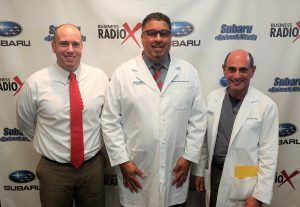
Eric Wheeler, Dr. Marcus Sims, Dr. Michael Lipsitt

Dr. Michael Lipsitt, Dr. Marcus Sims and Eric Wheeler

Eastside Medical Center is an Accredited Chest Pain Center with PCI from the Society of Chest Pain Centers- the highest national accreditation possible for emergency heart care. When minutes matter, Eastside is equipped to quickly treat heart attacks close to home. Our experienced cardiologists offer comprehensive heart care including the treatment of coronary artery disease, heart attacks, heart failure, and heart rhythm abnormalities as well as offering preventative care for those at risk of heart disease. In April of 2018, Eastside opened the new hybrid Electrophysiology Lab, a $2.5 million investment on behalf of the hospital to improve patient care. Cardiac electrophysiology, a sub-specialty of cardiology, deals with heart rhythm issues, and the new state of the art electrophysiology lab allows physicians to diagnose and treat these rhythm disorders.

The experienced physician team at Eastside Heart and Vascular, affiliated with Eastside Medical Center, are leaders in cardiac care and offer the latest advancements in cardiology, electrophysiology and cardiovascular surgery. Dr. Marc Unterman, Dr. Michael Lipsitt, Dr. Marcus Sims, Dr. Niraj Sharma, Dr. Demir Baykal, and Dr. David Casey make up the physician team at Eastside Heart and Vascular. With 7 locations throughout Gwinnett and Walton County, patients at Eastside Heart and Vascular have convenient access to a multidisciplinary team of heart specialists who provide a full range of cardiac care from the first diagnostic test to complex surgery and rehabilitation. Patients at Eastside Heart and Vascular also benefit from the most advanced cardiac technology available at Eastside Medical Center.

Tagged With: coronary artery disease, Dr. Marcus Sims, Dr. Michael Lipsitt, duffie dixon, eastside heart and vascular, eastside medical center, electrophysiology, Eric Wheeler, heart attacks, heart failure, heart health, heart specialists, steven julian, subaru of gwinnett

Coronary Calcium Scoring

September 12, 2013 by angishields

The Doctors Roundtable
Coronary Calcium Scoring
Loading
00:00 /
RSS Feed
Share
Link
Embed

Download file

The statistics are sobering. Heart disease remains the nation’s leading killer for adults > 35 yrs. Consider these statistics: 1) every 29 seconds an American has a heart attack 2) every 60 seconds and American dies from a heart attack 3) for men and women, 50% or greater of those that have a heart attack had no prior symptoms and their first one was death. Heart disease comes about over years or even decades. There is now technology available that is 99% effective in either confirming or ruling out coronary heart disease with less radiation than one would get exposed to on an airplane flight! “Virtual exams” of our internal organs are now a reality due to advances in medical imaging technology. However, imaging does not provide direct outcomes for the patient- but the information these tests can provide can lead to changes that can decrease heart disease risk factors, potentially reverse damage, and save lives.

This segment will discuss a very specific screening test for coronary heart disease: the Coronary Calcium Scoring test or as some people have heard, “The Heart Scan.” Coronary arteries do not normally have calcium. Calcified plaque in coronary arteries is a leading indicator of heart disease. Using non-invasive, low dose radiation CT scan that takes about 15-20 minutes, patients and providers can now obtain critical cardiac information that can be used post test and in comparison’s over time, to minimize risk and take proactive steps in the maintenance of good heart health or the management of heart disease. The test is most beneficial as a screening tool for patients NOT yet diagnosed with heart disease. Scans are taken of the heart and the results are compared to a scoring system that is measured by a range of no cardiac disease, minimally present, moderately present, extensively present or high risk requiring medical intervention. Information is shared with the patient and their medical provider post test and the patient can return to normal activities when the scan is completed.

In this segment, board-certified preventive cardiologist, Jason Reingold and Dan McGeown, CEO of Virtual Imaging will educate the listeners on the testing methods, patients who benefit most, the scoring system and post test results and what do do about them. Listeners can visit: www.virtualimagingatl.com or www.drjasonreingold.com for more information.


Dr. Jason Reingold

  • Board-certified in Internal Medicine and Cardiology
  • MD from Emory University
  • Internal Medicine Residency program completed at UC San Francisco Med Ctr.
  • Cardiology fellowship completed at Mass General Hospital in Boston
  • Regular appearances on CNN’s Sanjay Gupta’s health program


Dan McGeown

  • CEO, Virtual Imaging Atlanta
  • Masters in Education and seasoned entrepreneur


Dr. Jason Reingold & Dan McGeown

Tagged With: coronary artery disease, CT scan, EBCT, electron beam CT, HDL cholesterol, Health, heart disease, heart scan, LDL cholesterol, medical, risk reclassification, subclinical diagnosis

Preventive Cardiology for Women

July 19, 2013 by angishields

The Doctors Roundtable
Preventive Cardiology for Women
Loading
00:00 /
RSS Feed
Share
Link
Embed

Download file

When most women are asked what the leading cause of death is for women over  25 yrs of age in the US, the most common answer is “cancer.” However, the correct answer is heart disease.  One in three women in the US will die of heart disease and about 8 million women in the US are living with heart disease at any one moment. First cardiac events are more fatal in women than men.  Did you know that 42% of women who have a heart attack, will die within one year after this event compared to 24% of men? A woman’s heart is different.

Risk factors for women and men are well documented and many are preventable. Despite this,  alarming trends in the prevalence of risk factors continues.  Aggressive cardiac risk factor management, education and intercepting women at key points like childbearing and menopause, can be keys to better outcomes. Risk factors include high blood pressure, elevated cholesterol, diabetes, poor lifestyle choices and family history.  However, symptoms of a cardiac event in a woman differ from a man. Men report crushing chest pain with pain radiating down the left arm. Many women never experience this and report more atypical symptoms of a cardiac event including shortness of breath, nausea and unusual fatigue.   Hormones and age are also influential with heart disease in women.

Effective treatment options are available to not only manage cardiac events but to slow down this often progressive disease process.  Listen in to this segment to hear local cardiology expert, Dr. Jason Reingold address the topic of preventive cardiology for women.  Understanding and managing cardiac risk factors today may reduce the chance of heart disease for women tomorrow.


Dr. Jason Reingold

  • MD from Emory University
  • Board-certified in Internal Medicine and Cardiology
  • Internal Medicine Residency program completed at UC San Francisco Med Ctr.
  • Completed cardiology fellowship at Mass General Hospital in Boston
  • Regular appearances on  Sanjay Gupta’s CNN health program


doctor-jason-reingold-header


DSC06422
Cardiologist Dr. Jason Reingold on The Doctors Roundtable

 Tanya Mack, Host and Dr. Jason Reingold, Cardiologist and Guest


Tagged With: coronary artery disease, Dr. Jason Reingold, Dr. Reingold, estrogen and heart disease, fatigue, genetic markers for heart disease, genetics and heart disease, Health, heart, heart disease, heart muscle, heart valves, hormone replacement therapy and heart disease, HPV and heart disease, hrt and heart disease, inflammation, keg, medical, new risk factors, non-invasive angiogram, non-obstructive disease, particle counts, plaque, predisposition for heart disease, preventive cardiology, primary prevention, Risk Management, stress and the heart, stress test, stress tests, Stroke, subclinical disease, sudden cardiac death, syndrome x, The Doctors Roundtable, vascular biology, vasoconstriction, vasospasm

Business RadioX ® Network


Our Most Recent Episode

CONNECT WITH US

  • Email
  • Facebook
  • LinkedIn
  • Twitter
  • YouTube

Our Mission

We help local business leaders get the word out about the important work they’re doing to serve their market, their community, and their profession.

We support and celebrate business by sharing positive business stories that traditional media ignores. Some media leans left. Some media leans right. We lean business.

Sponsor a Show

Build Relationships and Grow Your Business. Click here for more details.

Partner With Us

Discover More Here

Terms and Conditions
Privacy Policy

Connect with us

Want to keep up with the latest in pro-business news across the network? Follow us on social media for the latest stories!
  • Email
  • Facebook
  • Google+
  • LinkedIn
  • Twitter
  • YouTube

Business RadioX® Headquarters
1000 Abernathy Rd. NE
Building 400, Suite L-10
Sandy Springs, GA 30328

© 2025 Business RadioX ® · Rainmaker Platform

BRXStudioCoversLA

Wait! Don’t Miss an Episode of LA Business Radio

BRXStudioCoversDENVER

Wait! Don’t Miss an Episode of Denver Business Radio

BRXStudioCoversPENSACOLA

Wait! Don’t Miss an Episode of Pensacola Business Radio

BRXStudioCoversBIRMINGHAM

Wait! Don’t Miss an Episode of Birmingham Business Radio

BRXStudioCoversTALLAHASSEE

Wait! Don’t Miss an Episode of Tallahassee Business Radio

BRXStudioCoversRALEIGH

Wait! Don’t Miss an Episode of Raleigh Business Radio

BRXStudioCoversRICHMONDNoWhite

Wait! Don’t Miss an Episode of Richmond Business Radio

BRXStudioCoversNASHVILLENoWhite

Wait! Don’t Miss an Episode of Nashville Business Radio

BRXStudioCoversDETROIT

Wait! Don’t Miss an Episode of Detroit Business Radio

BRXStudioCoversSTLOUIS

Wait! Don’t Miss an Episode of St. Louis Business Radio

BRXStudioCoversCOLUMBUS-small

Wait! Don’t Miss an Episode of Columbus Business Radio

Coachthecoach-08-08

Wait! Don’t Miss an Episode of Coach the Coach

BRXStudioCoversBAYAREA

Wait! Don’t Miss an Episode of Bay Area Business Radio

BRXStudioCoversCHICAGO

Wait! Don’t Miss an Episode of Chicago Business Radio

Wait! Don’t Miss an Episode of Atlanta Business Radio