Business RadioX ®

  • Home
  • Business RadioX ® Communities
    • Southeast
      • Alabama
        • Birmingham
      • Florida
        • Orlando
        • Pensacola
        • South Florida
        • Tampa
        • Tallahassee
      • Georgia
        • Atlanta
        • Cherokee
        • Forsyth
        • Greater Perimeter
        • Gwinnett
        • North Fulton
        • North Georgia
        • Northeast Georgia
        • Rome
        • Savannah
      • Louisiana
        • New Orleans
      • North Carolina
        • Charlotte
        • Raleigh
      • Tennessee
        • Chattanooga
        • Nashville
      • Virginia
        • Richmond
    • South Central
      • Arkansas
        • Northwest Arkansas
    • Midwest
      • Illinois
        • Chicago
      • Michigan
        • Detroit
      • Minnesota
        • Minneapolis St. Paul
      • Missouri
        • St. Louis
      • Ohio
        • Cleveland
        • Columbus
        • Dayton
    • Southwest
      • Arizona
        • Phoenix
        • Tucson
        • Valley
      • Texas
        • Austin
        • Dallas
        • Houston
    • West
      • California
        • Bay Area
        • LA
        • Pasadena
      • Colorado
        • Denver
      • Hawaii
        • Oahu
  • FAQs
  • About Us
    • Our Mission
    • Our Audience
    • Why It Works
    • What People Are Saying
    • BRX in the News
  • Resources
    • BRX Pro Tips
    • B2B Marketing: The 4Rs
    • High Velocity Selling Habits
    • Why Most B2B Media Strategies Fail
    • 9 Reasons To Sponsor A Business RadioX ® Show
  • Partner With Us
  • Veteran Business RadioX ®

Winter Infections

January 26, 2023 by John Ray

Winter Infections
North Fulton Studio
Winter Infections
Loading
00:00 /
RSS Feed
Share
Link
Embed

Download file

Winter Infections

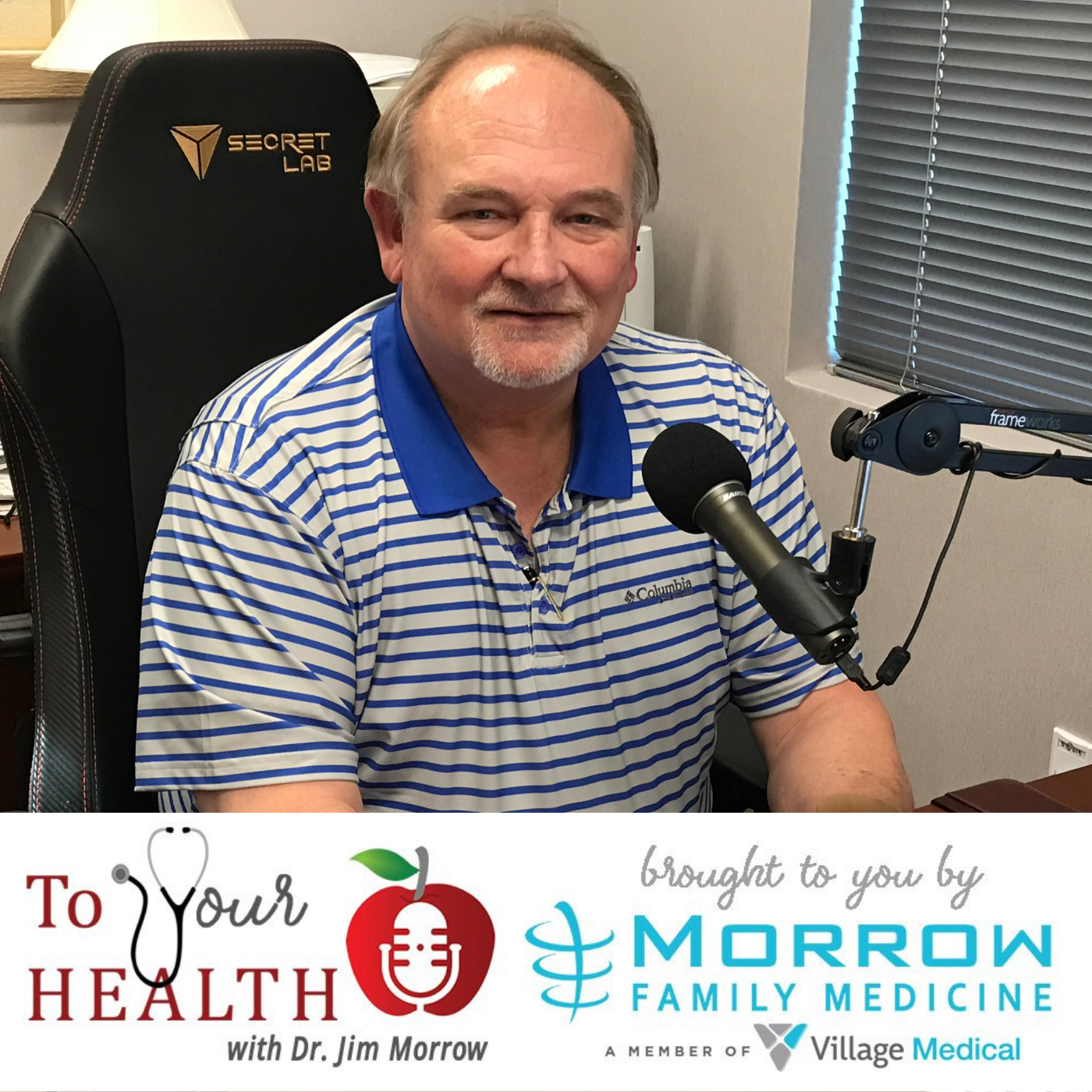
Winter Infections (Episode 83, To Your Health with Dr. Jim Morrow)

Host Dr. Jim Morrow covers a variety of winter infections, including the common cold, bronchitis, pneumonia, and others. He detailed where they occur in the body, advice about when to go to the doctor, sensible measures to avoid getting sick, ways to get better once you’re sick, and much more.

To Your Health is brought to you by Village Medical (formerly Morrow Family Medicine), which brings the care back to healthcare.

About Village Medical (formerly Morrow Family Medicine)

Village Medical, formerly Morrow Family Medicine, is an award-winning, state-of-the-art family practice with offices in Cumming and Milton, Georgia. The practice combines healthcare information technology with old-fashioned care to provide the type of care that many are in search of today. Two physicians, three physician assistants and two nurse practitioners are supported by a knowledgeable and friendly staff to make your visit to Village Medical one that will remind you of the way healthcare should be.  At Village Medical, we like to say we are “bringing the care back to healthcare!”  The practice has been named the “Best of Forsyth” in Family Medicine in all five years of the award, is a three-time consecutive winner of the “Best of North Atlanta” by readers of Appen Media, and the 2019 winner of “Best of Life” in North Fulton County.

Village Medical offers a comprehensive suite of primary care services including preventative care, treatment for illness and injury, and management of chronic conditions such as diabetes, congestive heart failure, chronic obstructive pulmonary disease (COPD) and kidney disease. Atlanta-area patients can learn more about the practice here.

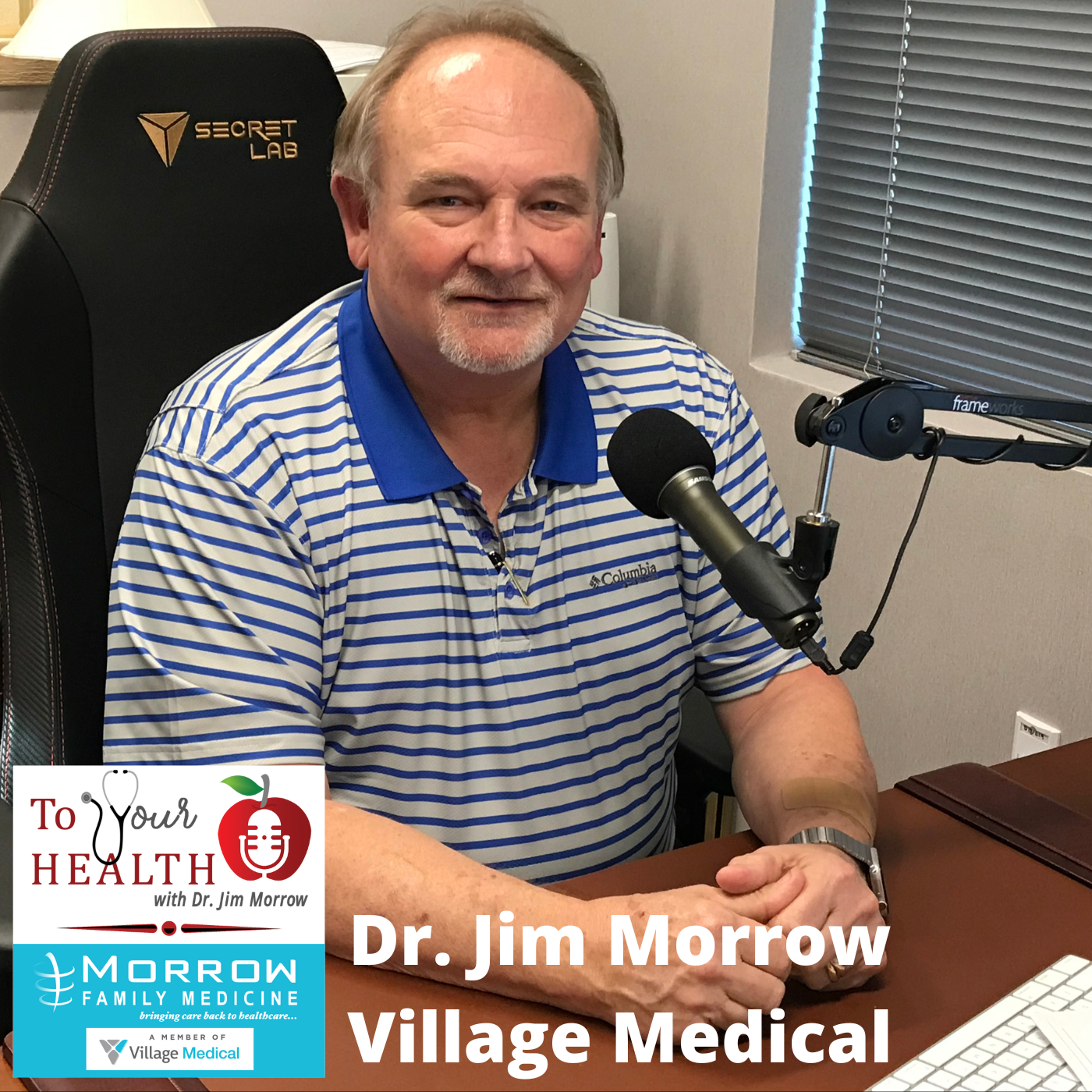
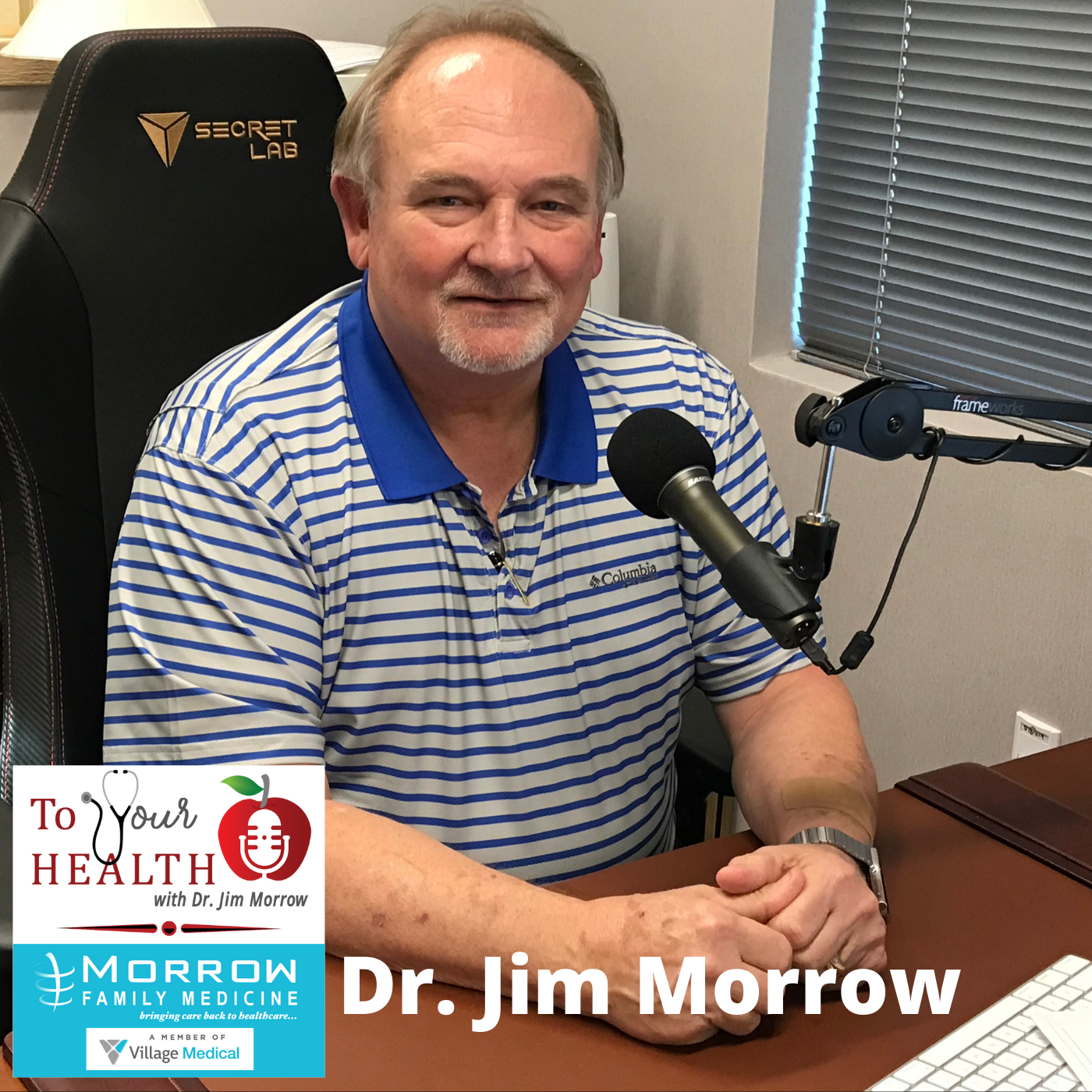
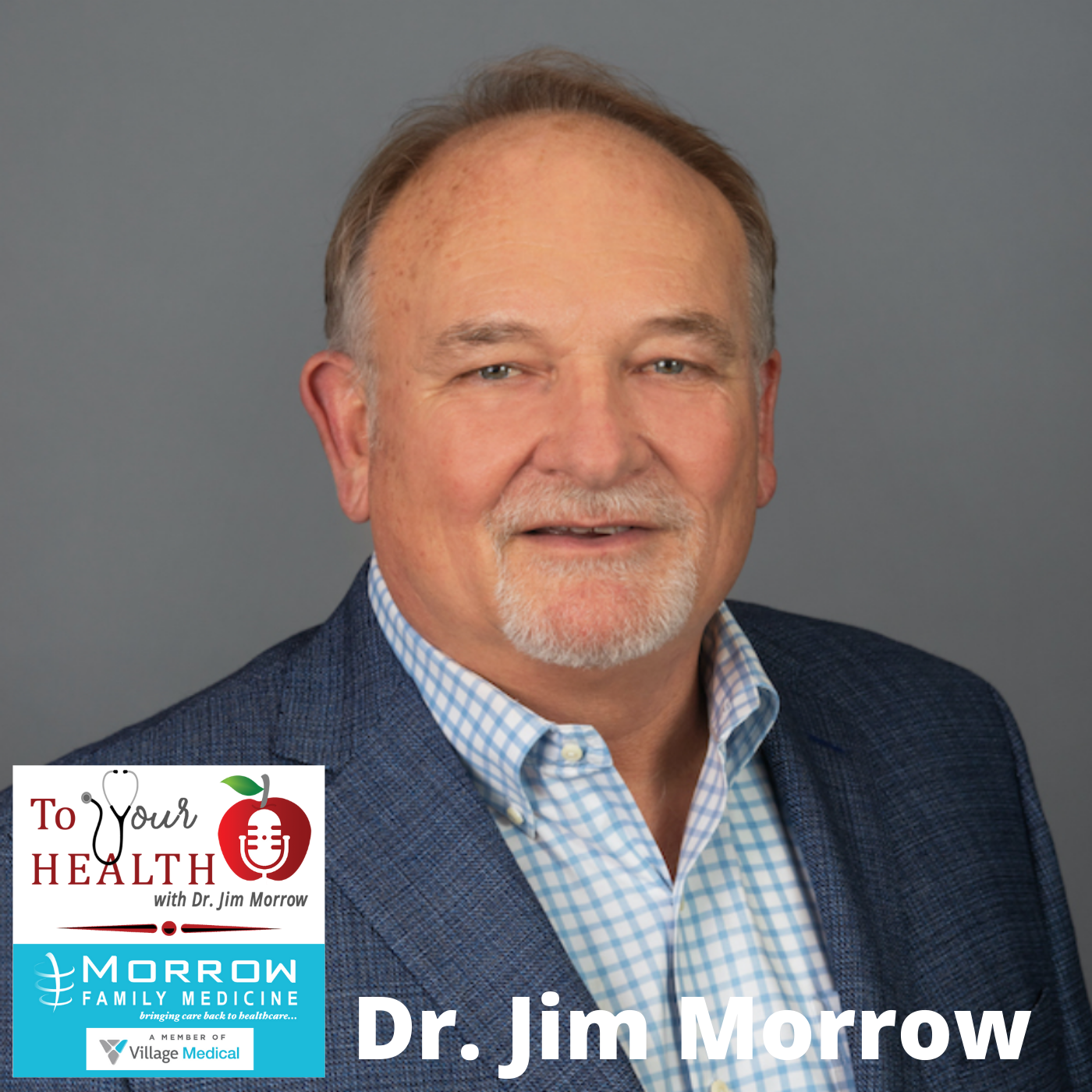
Dr. Jim Morrow, Village Medical, and Host of To Your Health with Dr. Jim Morrow

Covid-19 misconceptionsDr. Jim Morrow is the founder of Morrow Family Medicine. He has been a trailblazer and evangelist in healthcare information technology, was named Physician IT Leader of the Year by HIMSS, a HIMSS Davies Award Winner, the Cumming-Forsyth Chamber of Commerce Steve Bloom Award Winner as Entrepreneur of the Year and he received a Phoenix Award as Community Leader of the Year from the Metro Atlanta Chamber of Commerce.  He is married to Peggie Morrow and together they founded the Forsyth BYOT Benefit, a charity in Forsyth County to support students in need of technology and devices. They have two Goldendoodles, a gaggle of grandchildren and enjoy life on and around Lake Lanier.

Facebook | LinkedIn | Twitter

The complete show archive of To Your Health with Dr. Jim Morrow addresses a wide range of health and wellness topics.

Dr. Morrow’s Show Notes

Winter Infections

What are the symptoms of the common cold?

  • Common cold symptoms may include:
    • Stuffy, runny nose
    • Scratchy, tickly throat
    • Sneezing
    • Watering eyes
    • Low-grade fever
    • Sore throat
    • Mild hacking cough
    • Achy muscles and bones
    • Headache
    • Mild fatigue
    • Chills
    • Watery discharge from nose that thickens and turns yellow or green
  • Colds usually start 2 to 3 days after the virus enters the body and symptoms last from several days to several weeks.
  • Cold symptoms may look like other medical conditions.
    • Always consult your healthcare provider for a diagnosis if your symptoms are severe.
  • A cold and the flu (influenza) are two different illnesses.
    • A cold is relatively harmless and usually clears up by itself, although sometimes it may lead to a secondary infection, such as an ear infection.
    • However, the flu can lead to complications, such as pneumonia and even death.

How is the common cold diagnosed?

  • Most common colds are diagnosed based on reported symptoms.
    • However, cold symptoms may be similar to certain bacterial infections, allergies, and other medical conditions.
    • Always consult your healthcare provider for a diagnosis if your symptoms are severe.

How is the common cold treated?

  • Currently, there is no medicine available to cure or shorten the duration of the common cold.
    • However, the following are some treatments that may help to relieve some symptoms of the cold:
      • Over-the-counter cold medicines, such as decongestants and cough medicine
      • Over-the-counter antihistamines (medicine that helps dry up nasal secretions and suppress coughing)
      • Rest
      • Increased fluid intake
      • Pain relievers for headache or fever
      • Warm, salt water gargling for sore throat
      • Petroleum jelly for raw, chapped skin around the nose and lips
  • Because colds are caused by viruses, antibiotics don’t work.
    • Antibiotics are only effective when given to treat bacterial infections.
  • Do not give aspirin to a child who has fever.
    • Aspirin, when given as treatment for viral illnesses in children, has been associated with Reye syndrome.
    • This is a potentially serious or deadly disorder in children.

What are the complications of the common cold?

  • Colds can lead to secondary infections, including bacterial, middle ear, and sinus infections that may require treatment with antibiotics.
    • If you have a cold along with high fever, sinus pain, significantly swollen glands, or a mucus-producing cough, see your healthcare provider.
    • You may need additional treatment.

Can the common cold be prevented?

  • The best way to avoid catching cold is to wash your hands often and avoid close contact with people who have colds.
    • When around people with colds, do not touch your nose or eyes, because your hands may be contaminated with the virus.
    • If you have a cold, cough and sneeze in facial tissue and dispose of the tissue promptly.
      • Then wash your hands right away.
      • Also clean surfaces with disinfectants that kill viruses can halt the spread of the common cold.
      • Research has shown that rhinoviruses may survive up to 3 hours outside of the nasal lining.

When should I call my healthcare provider?

  • If your symptoms get worse or you have new symptoms, let your healthcare provider know.
  • If your symptoms don’t improve within a few days, call your provider, as you could have another type of infection.

Key points about the common cold

  • A cold is caused by a virus that causes inflammation of the membranes that line the nose and throat.
  • The common cold is very easily spread to others.
    • It’s often spread through airborne droplets that are coughed or sneezed into the air by the sick person.
    • The droplets are then inhaled by another person.
  • Symptoms may include a stuffy, runny nose, scratchy, tickly throat, sneezing, watery eyes and a low-grade fever.
  • Treatment to reduce symptoms includes getting rest and drinking plenty of fluids.
  • Because colds are caused by viruses, treatment with antibiotics won’t work.
  • The best prevention for the common cold is frequent hand washing and avoiding close contact with people who have colds.

What is acute bronchitis?

  • Acute bronchitis is a contagious viral infection that causes inflammation of the bronchial tubes. These are the airways that carry air into your lungs. When these tubes get infected, they swell. Mucus (thick fluid) forms inside them. This narrows the airways, making it harder for you to breathe.
  • There are 2 types of bronchitis: acute and chronic. Chronic bronchitisis long-lasting and can reoccur. It usually is caused by constant irritation, such as from smoking. Acute bronchitis lasts only a short time. Most cases get better in several days, though the cough can last for several weeks.

Symptoms of acute bronchitis

  • The symptoms of acute bronchitis can include:
    • Chest congestion or tightness
    • Cough that brings up clear, yellow, or green mucus
    • Shortness of breath
    • Wheezing
    • Sore throat
    • Fever
    • Chills
    • Body aches
  • Your cough can last for several weeks or more. This happens because the bronchial tubes take a while to heal. A lasting cough may signal another problem, such as asthma or pneumonia.

What causes acute bronchitis?

  • Acute bronchitis is most often caused by a contagious virus. The same viruses that cause colds can cause acute bronchitis. First, the virus affects your nose, sinuses, and throat. Then the infection travels to the lining of the bronchial tubes. As your body fights the virus, swelling occurs and mucus is produced.
  • You can catch a virus from breathing it in or by skin contact. You are at higher risk of catching the virus if you have close contact with someone who has a cold or acute bronchitis.
  • Lesser-known causes of acute bronchitis are:
    • Bacteria or fungal infections.
    • Exposure to irritants, such as smoke, dust, or fumes. You are at greater risk if your bronchial tubes already have damage.
    • GERD (gastroesophageal reflux disease), which causes heartburn. You can get acute bronchitis when stomach acid gets into the bronchial tubes.

How is acute bronchitis diagnosed?

  • Your doctor can confirm acute bronchitis. He or she will do a physical exam and review your symptoms. He or she will listen to your lungs with a stethoscope. Your doctor might order a chest X-ray to look at your lungs. This will help rule out pneumonia.

Can acute bronchitis be prevented or avoided?

  • You can help prevent acute bronchitis by staying healthy and avoiding germs. Wash your hands with soap often to kill any contagious viruses.
  • If you smoke, the best defense against acute bronchitis is to quit. Smoking damages your bronchial tubes and puts you at risk for infection. Smoking also slows down the healing process.
  • Other steps you can take to avoid acute bronchitis include:
  • Wear a mask over your nose and mouth when using lung irritants. These could include paint, paint remover, or varnish.
  • Get a flu shot every year.
  • Ask your doctor if you should get a pneumonia shot, especially if you are over age 60.

Acute bronchitis treatment

  • Most cases of acute bronchitis are caused by a virus. This means that antibiotics won’t help. The infection needs to run its course. It almost always goes away on its own. Home treatment focuses on easing the symptoms:
    • Drink fluids but avoid caffeine and alcohol.
    • Get plenty of rest.
    • Take over-the-counter pain relievers to reduce inflammation, ease pain, and lower your fever. These could include acetaminophen (1 brand name: Tylenol) or ibuprofen (1 brand name: Advil). Never give aspirin to a child. It has been linked to Reye syndrome, which can affect the liver and brain.
    • Increase the humidity in your home or use a humidifier.
    • There are some over-the-counter cough medicines that help break up or loosen mucus. Look for the word “guaifenesin” on the label or ask your pharmacist for a suggestion.
  • Do not hold in a cough that brings up mucus. This type of cough helps clear mucus from your bronchial tubes. If you smoke, you should quit. It will help your bronchial tubes heal faster.
  • Some people who have acute bronchitis need inhaled medicine. You might need this if you are wheezing. It can help open your bronchial tubes and clear out mucus. You usually take it with an inhaler. An inhaler sprays medicine right into your bronchial tubes. Your doctor will decide if this treatment is right for you.
  • If your doctor thinks bacteria have caused your acute bronchitis, he or she may give you antibiotics.

Living with acute bronchitis

  • Most cases of acute bronchitis go away on their own in 7 to 10 days. You should call your doctor if:
  • You continue to wheeze and cough for more than 2 weeks, especially at night when you lie down or when you are active.
  • You continue to cough for more than 2 weeks and have a bad-tasting fluid come up into your mouth. This may mean you have GERD. This is a condition in which stomach acid gets into your esophagus.
  • Your cough produces blood, you feel weak, you have an ongoing high fever, and you are short of breath. These symptoms may mean you have pneumonia.
  • The risk of developing complications from acute bronchitis, such as pneumonia, is greater in some people. These include:
    • Young children
    • The elderly
    • People who have asthma
    • People who have other health issues (such as canceror diabetes)
    • People who haven’t gotten vaccines for flu, pneumonia, or whooping cough

What is pneumonia?

  • Pneumonia is an infection of the lungs. It causes the air sacs (alveoli) of the lungs to get inflamed (irritated and swollen). They may fill up with fluid or pus. This causes a variety of symptoms, which range from mild to severe. Pneumonia is usually caused by bacteria or a virus. It also can be caused by fungi or irritants that you breathe into your lungs. How serious pneumonia is depends on many factors. These include what caused the pneumonia, your age, and your overall health.

Symptoms of pneumonia

  • The symptoms of pneumonia can range from mild to severe. This depends on your risk factors and the type of pneumonia you have. Common symptoms are similar to the symptoms caused by a cold or the flu. They include:
    • cough
    • fever
    • bringing up mucus when you cough
    • difficulty breathing
    • chills
    • chest pain
  • You may also sweat, have a headache, and feel very tired. Some people also experience nausea, vomiting, and diarrhea.
  • If any of these symptoms are severe, call your family doctor. You should also call your doctor if you suddenly start getting worse after having a cold or the flu.

What is walking pneumonia?

  • Walking pneumonia is a mild case of pneumonia. It is often caused by a virus or the mycoplasma pneumoniae bacteria. When you have walking pneumonia, your symptoms may not be as severe or last as long as someone who has a more serious case of pneumonia. You probably won’t need bed rest or to stay in the hospital when you have walking pneumonia.

What causes pneumonia?

  • Bacteria: They are the most common cause of pneumonia in adults. They can cause pneumonia on their own, or after you’ve had a cold or the flu. Bacterial pneumonia usually only affects one area of a lung.
  • Any virus that affects the respiratory tract can cause pneumonia. This includes the flu virus and the virus that causes the common cold. In children under 1 year old, the respiratory syncytial virus (RSV) is the most common cause. Viral pneumonia tends to be mild. It often gets better on its own in 1 to 3 weeks.
  • Some fungal infections can lead to pneumonia, especially in people with weakened immune systems. There are also some fungi that occur in the soil in certain parts of the United States that can lead to pneumonia.
  • You can also get pneumonia through aspiration. This is when you inhale particles into your lungs. These could be food, saliva, liquids, or vomit. It occurs most often after vomiting, and you are not strong enough to cough the particles out. The particles cause irritation, swelling and can get infected. This causes pneumonia.

How is pneumonia diagnosed?

  • Pneumonia can sometimes be hard to diagnose because the symptoms are the same as for a bad cold or flu. If you think it could be pneumonia, you should see your doctor. Your doctor may diagnose pneumonia based on your medical history and the results from a physical exam. He or she will listen to your lungs with a stethoscope. Your doctor may also do some tests, such as a chest X-ray or a blood test. A chest X-ray can show your doctor if you have pneumonia and how widespread the infection is. Blood and mucus tests can help your doctor tell whether bacteria, a virus, or a fungal organism is causing your pneumonia.

Can pneumonia be prevented or avoided?

  • There are many factors that can raise your risk for developing pneumonia. These include:
    • Your age.People older than 65 are at increased risk because the immune system becomes less able to fight off infection as you age. Infants age 2 or younger are also at increased risk because their immune systems haven’t fully developed yet.
    • Your environment.Regularly breathing in dust, chemicals, air pollution, or toxic fumes can damage your lungs. This makes your lungs more vulnerable to infection.
    • Your lifestyle.Habits such as smoking cigarettes or abusing alcohol can increase your risk. Smoking damages the lungs, while alcohol interferes with how your body fights infection.
    • Your immune system.If your immune system is weakened, it’s easier for you to get pneumonia because your body can’t fight off the infection. This could include people who have HIV/AIDS, have had an organ transplant, are receiving chemotherapy, or have long-term steroid use.
    • If you are hospitalized, especially in an ICU.Being in the ICU (intensive care unit) raises your risk of pneumonia. Your risk increases if you are using a ventilator to help you breathe. Ventilators make it hard for you to cough and can trap germs that cause infection in your lungs.
    • If you have recently had major surgery or a serious injury.Recovering from major surgery or injury can make it difficult for you to cough. This is the body’s quickest defense for getting particles out of the lungs. Recovery also typically requires a lot of bed rest. Lying down on your back for an extended period of time can allow fluid or mucus to gather in your lungs. This gives bacteria a place to grow.
  • People who have any of the following conditions are also at increased risk:
    • chronic obstructive pulmonary disease (COPD)
    • asthma
    • heart disease
    • emphysema
    • diabetes
    • sickle cell disease
  • You can help prevent pneumonia by doing the following:
    • Get the flu vaccine each year.People can develop bacterial pneumonia after a case of the flu. You can reduce this risk by getting the yearly flu shot.
    • Get the pneumococcal vaccine.This helps prevent pneumonia caused by pneumococcal bacteria.
    • Practice good hygiene.Wash your hands frequently with soap and water or an alcohol-based hand sanitizer.
    • Don’t smoke.Smoking damages your lungs and makes it harder for your body to defend itself from germs and disease. If you smoke, talk to your family doctor about quitting as soon as possible.
    • Practice a healthy lifestyle.Eat a balanced diet full of fruits and vegetables. Exercise regularly. Get plenty of sleep. These things help your immune system stay strong.
    • Avoid sick people.Being around people who are sick increases your risk of catching what they have.

Is there a vaccine for pneumonia?

  • There isn’t a vaccine for all types of pneumonia, but 2 vaccines are available. These help prevent pneumonia caused by pneumococcal bacteria. The first is recommended for all children younger than 5 years of age. The second is recommended for anyone age 2 or older who is at increased risk for pneumonia. Getting the pneumonia vaccine is especially important if you:
    • Are 65 years of age or older.
    • Have certain chronic conditions, such as asthma, lung disease, diabetes, heart disease, sickle cell disease, or cirrhosis.
    • Have a weakened immune system because of HIV/AIDS, kidney failure, a damaged or removed spleen, a recent organ transplant, or receiving chemotherapy.
    • Have cochlear implants (an electronic device that helps you hear).
  • The pneumococcal vaccines can’t prevent all cases of pneumonia. But they can make it less likely that people who are at risk will experience the severe, and possibly life-threatening, complications of pneumonia.

Pneumonia treatment

  • Treatment for pneumonia depends on several factors. These include what caused your pneumonia, how severe your symptoms are, how healthy you are overall, and your age.
  • For bacterial pneumonia, your doctor will probably prescribe antibiotics. Most of your symptoms should improve within a few days. A cough can last for several weeks. Be sure to follow your doctor’s directions carefully. Take all the antibiotic medicine that your doctor prescribes. If you don’t, some bacteria may stay in your body. This can cause your pneumonia to come back. It can also increase your risk of antibiotic resistance.
  • Antibiotics don’t work to treat viral infections. If you have viral pneumonia, your doctor will likely talk to you about ways to treat your symptoms. Over-the-counter (OTC) medicines are available to lower fever, relieve pain, and ease your cough. However, some coughing is okay because it can help clear your lungs. Be sure to talk to your doctor before you take a cough suppressant.
  • If a fungus is causing your pneumonia, your doctor may prescribe an antifungal medicine.
  • If your case of pneumonia is severe, you may need to be hospitalized. If you are experiencing shortness of breath, you may be given oxygen to help your breathing. You might also receive antibiotics intravenously (through an IV). People who have weakened immune systems, heart disease or lung conditions, and people who were already very sick before developing pneumonia are most likely to be hospitalized. Babies, young children, and adults who are 65 years of age and older are also at increased risk.

What can I do at home to feel better?

  • In addition to taking any antibiotics and/or medicine your doctor prescribes, you should also:
    • Get lots of rest.Rest will help your body fight the infection.
    • Drink plenty of fluids.Fluids will keep you hydrated. They can help loosen the mucus in your lungs. Try water, warm tea, and clear soups.
    • Stop smoking if you smoke and avoid secondhand smoke.Smoke can make your symptoms worse. Smoking also increases your risk of developing pneumonia and other lung problems in the future. You should also avoid lit fireplaces or other areas where the air may not be clean.
    • Stay home from school or work until your symptoms go away.This usually means waiting until your fever breaks and you aren’t coughing up mucus. Ask your doctor when it’s okay for you to return to school or work.
    • Use a cool-mist humidifier or take a warm bath.This will help clear your lungs and make it easier for you to breathe.

Living with pneumonia

  • Your doctor may schedule a follow-up appointment after he or she diagnoses you with pneumonia. At this visit, he or she might take another chest X-ray to make sure the pneumonia infection is clearing up. Keep in mind that chest X-rays can take months to return to normal. However, if your symptoms are not improving, your doctor may decide to try another form of treatment.
  • Although you may be feeling better, it’s important to keep your follow-up appointment. The infection can still be in your lungs even if you’re no longer experiencing symptoms.

When should I see my doctor?

  • Pneumonia can be life-threatening if left untreated, especially for certain at-risk people. You should call your doctor if you have a cough that won’t go away, shortness of breath, chest pain, or a fever. You should also call your doctor if you suddenly begin to feel worse after having a cold or the flu.

What is whooping cough?

  • Whooping cough is a respiratory infection. It is also known as pertussis. Whooping cough is highly contagious and is most harmful to babies.

    Symptoms of whooping cough

  • Whooping cough begins like a cold. Symptoms can start a few days to several weeks after exposure. Early symptoms last 1 to 2 weeks and include:
    • Low fever
    • Mild cough
    • Runny nose
    • Dry or sore throat
    • Apnea (a pause in breathing or shallow breathing, often during sleep)
    • Your cough can get worse over time. Late-stage symptoms include:
    • Coughing fits that end in a “whooping” sound
    • Bursts of coughing that last longer
    • Vomiting after coughing
    • Getting red or blue in the face from coughing
    • Feeling exhausted after coughing
    • Increased coughing at night
    • Worsened apnea
  • Symptoms vary in babies and children, teenagers, and adults. For instance, babies cough less and are more likely to have apnea and turn blue. If you received the vaccine, symptoms will be milder and won’t last as long.

What causes whooping cough?

  • Whooping cough is caused by certain germs, or bacteria. You can get whooping cough if you breathe in these bacteria. It spreads between people when an infected person coughs or sneezes. You also can get it by touching an infected person or surface.

How is whooping cough diagnosed?

  • You should see your doctor if you or someone around you might have whooping cough. Your doctor will review your symptoms and listen to your cough. There are several tests to confirm whooping cough. Your doctor can swab inside your nose and/or throat. A lab will check the swab for whooping cough bacteria. Your doctor also may want to get a blood sample or take a chest X-ray.

Can whooping cough be prevented or avoided?

  • Vaccination is the best way to prevent whooping cough. The pertussis vaccine (DTaP, Tdap) is part of the recommended vaccine schedule for children and adults. Adults should get a pertussis booster every 5-10 years. Pregnant women and those in close contact with babies should be vaccinated. Talk to your doctor to make sure you and your family’s vaccinations are up to date.

Whooping cough treatment

  • Your doctor will most likely prescribe antibiotics. These will relieve your symptoms and kill the bacteria so you aren’t contagious. Infants and babies may need to stay in the hospital. If you have whooping cough, you should avoid contact with others, especially babies.

Living with whooping cough

  • Whooping cough can last anywhere from 1 to 6 weeks. You may continue to cough on and off, even with medicine. Over-the-counter medicines for coughing do not help with whooping cough. You should rest and drink fluids to prevent dehydration. You can try using a cool-mist humidifier or taking a warm bath or shower. These can help clear your lungs and make it easier to breathe. Avoid smoking and areas where the air is not clean. You may need to stay home from work or school. Talk to your doctor about when you can return to your regular schedule.
 

Tagged With: bronchitis, common cold, coronavirus, COVID-19, Dr. Jim Morrow, flu vaccines, infections, influenza, Morrow Family Medicine, pneumonia, RSV, RSV Vaccine, Village Medical, whooping cough, winter viruses

Polymyalgia Rheumatica and Giant Cell Arteritis

October 13, 2022 by John Ray

Polymyalgia rheumatica
North Fulton Studio
Polymyalgia Rheumatica and Giant Cell Arteritis
Loading
00:00 /
RSS Feed
Share
Link
Embed

Download file

Polymyalgia rheumatica

Polymyalgia Rheumatica and Giant Cell Arteritis (Episode 82, To Your Health with Dr. Jim Morrow)

On this episode, host Dr. Jim Morrow describes two related little-known conditions called Polymyalgia rheumatica and Giant cell arteritis, also known as Temporal arteritis. These conditions involve inflammation of the arteries and usually occur in the elderly and affect mostly women. Dr. Morrow discussed symptoms, diagnosis and treatment, and stressed the need to not wait to get symptoms checked out because of the damage that can occur if left untreated.  He also included an update on the latest COVID-19 booster.

To Your Health is brought to you by Village Medical (formerly Morrow Family Medicine), which brings the care back to healthcare.

About Village Medical (formerly Morrow Family Medicine)

Village Medical, formerly Morrow Family Medicine, is an award-winning, state-of-the-art family practice with offices in Cumming and Milton, Georgia. The practice combines healthcare information technology with old-fashioned care to provide the type of care that many are in search of today. Two physicians, three physician assistants and two nurse practitioners are supported by a knowledgeable and friendly staff to make your visit to Village Medical one that will remind you of the way healthcare should be.  At Village Medical, we like to say we are “bringing the care back to healthcare!”  The practice has been named the “Best of Forsyth” in Family Medicine in all five years of the award, is a three-time consecutive winner of the “Best of North Atlanta” by readers of Appen Media, and the 2019 winner of “Best of Life” in North Fulton County.

Village Medical offers a comprehensive suite of primary care services including preventative care, treatment for illness and injury, and management of chronic conditions such as diabetes, congestive heart failure, chronic obstructive pulmonary disease (COPD) and kidney disease. Atlanta-area patients can learn more about the practice here.

Dr. Jim Morrow, Village Medical, and Host of To Your Health with Dr. Jim Morrow

Covid-19 misconceptionsDr. Jim Morrow is the founder of Morrow Family Medicine. He has been a trailblazer and evangelist in healthcare information technology, was named Physician IT Leader of the Year by HIMSS, a HIMSS Davies Award Winner, the Cumming-Forsyth Chamber of Commerce Steve Bloom Award Winner as Entrepreneur of the Year and he received a Phoenix Award as Community Leader of the Year from the Metro Atlanta Chamber of Commerce.  He is married to Peggie Morrow and together they founded the Forsyth BYOT Benefit, a charity in Forsyth County to support students in need of technology and devices. They have two Goldendoodles, a gaggle of grandchildren and enjoy life on and around Lake Lanier.

Facebook | LinkedIn | Twitter

The complete show archive of To Your Health with Dr. Jim Morrow addresses a wide range of health and wellness topics.

Dr. Morrow’s Show Notes

What are giant cell arteritis (GCA) and polymyalgia rheumatic (PMR)?

  • This condition causes inflammation of the arteries in the arms, upper body, and neck.
    • Arteries are blood vessels that carry blood from the heart to the rest of the body.
    • Arteritis is a condition in which the arteries become inflamed (swollen). This reduces blood flow.
      • Giant cell arteritis (GCA) causes certain arteries to become inflamed, red, hot, or painful.
      • It usually affects the arteries above and in front of the ears on both sides of the head (the temples).
      • This type of GCA is also sometimes called temporal arteritis or cranial arteritis.
    • Polymyalgia rheumatica (PMR) is a condition involving inflammation of the muscles in your neck, shoulders, hips, and thighs.
      • This causes stiffness and aching in these areas.
      • It usually develops over time. But for some people, it can start as quickly as overnight.
      • With treatment, PMR usually goes away within a year.
      • It can last for several years in some cases.
      • Both disorders mainly affect people over 50,
        • particularly women.

How are GCA and PMR related?

  • About half of people who have GCA also have PMR. They can have these diseases at the same time, or GCA can develop after PMR.
  • Symptoms of GCA and PMR
    • The symptoms of GCA include:
      • Flu-like symptoms. These can include fatigue, fever, and loss of appetite.
      • Severe headaches.
      • Pain and tenderness in one or both temples.
      • Jaw pain, especially when chewing.
      • Double vision or vision loss.
      • Pain and stiffness in the neck and arms.
      • Unintended weight loss.
    • The symptoms of PMR include:
  • Aching pain and stiffness in the neck, shoulders, hips, and thighs.
  • General muscle weakness.
  • Unintended weight loss.

What causes GCA and PMR?

  • Doctors aren’t sure what causes the inflammation associated with GCA or PMR.
    • Aging and problems with the immune system are possible factors.
    • It also could be related to your genes,
      • or to an environmental trigger like an infection.

Who gets these conditions?

  • You are more likely to develop GCA and PMR if you are older than 50 years of age.
    • The conditions are most common in women between 70 and 80 years of age.
    • For unknown reasons, Caucasian people are more likely to develop GCA and PMR than people of other races.

How are GCA and PMR diagnosed?

  • To diagnose GCA, your doctor will ask about your symptoms and examine the arteries in your temple.

    • He or she will check if they are swollen or tender.
      • They may order blood tests to check for inflammation of the arteries and to rule out other conditions.
        • Often, a biopsy of the temporal artery is needed to confirm the diagnosis.
        • This is an outpatient procedure that involves removing a sample of your temporal artery from your scalp area.
        • To diagnose PMR, your doctor will likely perform a physical exam and ask about your symptoms.
        • He or she may order a blood test.
        • This can help detect inflammation of your arteries and check your blood count.
        • Your doctor could also order a muscle biopsy (removing a small sample of muscle) to check for PMR.
        • Your doctor also can order a c-reactive protein test.
        • This blood test measures the amount of inflammation in your bloodstream but doesn’t identify where the inflammation is located.

Can GCA and PMR be prevented or avoided?

  • There is no known way to prevent GCA or PMR because doctors aren’t sure what causes them.

GCA and PMR treatment

  • Your doctor may prescribe a corticosteroid medicine to treat inflammation and pain.
    • This can help with symptoms of GCA and PMR.
    • These medicines are taken by mouth (in pill form).
    • Once you start taking a corticosteroid, you should feel better quickly.
    • You may need to take this medicine for 6 months up to 2 years.

What else can I do to ease the symptoms of these conditions?

  • Eating a healthy diet and getting enough exercise can help relieve the symptoms of both GCA and PMR.

Living with GCA and PMR

  • Taking a corticosteroid for a long time can raise your blood pressure.

    • It can also increase your blood sugar levels or weaken your bones.
    • Your doctor will need to keep checking you for these side effects during your treatment.
    • Corticosteroids can cause other side effects.
      • These include jitteriness, poor sleep, and weight gain.
      • These symptoms usually get better as you take smaller doses of the medicine.
      • Getting early treatment for GCA is important. If inflamed arteries aren’t treated right away, they could be permanently damaged.
      • This increases your risk of blindness or stroke.
      • Even with proper treatment, GCA and PMR may come back.
        • About half of the time, though, a person who has PMR will experience at least 1 relapse.


Tagged With: biopsy, blood test, COVID-19, Dr. Jim Morrow, Fibromyalgia, Giant Cell Arteritis, Polymyalgia rheumatica, steroids, Temporal arteritis, To Your Health, Village Medical

Workplace MVP: Robyn Smith, Jackson Healthcare

August 25, 2022 by John Ray

Jackson Healthcare
Minneapolis St. Paul Studio
Workplace MVP: Robyn Smith, Jackson Healthcare
Loading
00:00 /
RSS Feed
Share
Link
Embed

Download file

Jackson Healthcare

Workplace MVP: Robyn Smith, Jackson Healthcare

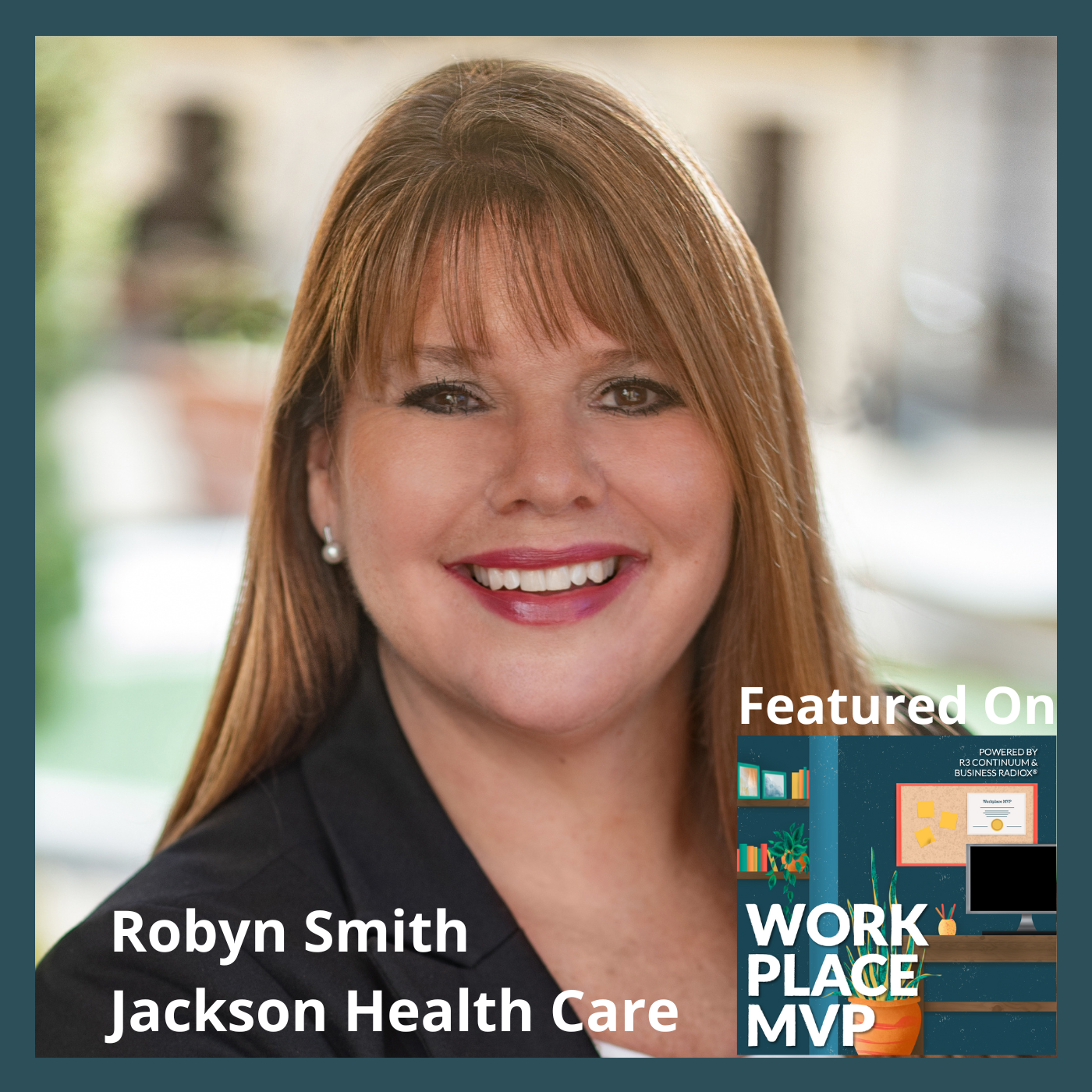
Robyn Smith, Executive Vice President of Human Resources for Jackson Healthcare, was the Workplace MVP on this episode. Robyn detailed the challenges Jackson Healthcare has faced throughout the pandemic and those that are ongoing, and the steps her company took to support the mental and physical well-being of its associates. She and host Jamie Gassmann discussed the creative solutions Jackson Healthcare has implemented, including virtual events, in-person events when they returned to the office, support for the challenges associates may be facing, the need for empathy, and much more.

Workplace MVP is underwritten and presented by R3 Continuum and produced by the Minneapolis-St.Paul Studio of Business RadioX®.

Jackson Healthcare

The Jackson Healthcare companies provide healthcare systems, hospitals, and medical facilities of all sizes with the skilled and specialized labor and technologies they need to deliver high-quality patient care and achieve the best possible outcomes — while connecting healthcare professionals to the temporary engagements, contract assignments, and permanent placement employment opportunities they desire.

Headquartered in metro Atlanta, they’re powered by more than 1,700 associates and over 15,000 clinician providers covering all 50 U.S. states.

Their mission is to improve the delivery of patient care and the lives of everyone we touch. This includes the patients, clinicians, and healthcare executives they work with through their companies every day, as well as their communities, the nonprofit organizations they support and each associate who is part of their family.

Company website | LinkedIn | Facebook | Twitter

Robyn Smith, Executive Vice-President of Human Resources, Jackson Healthcare

Robyn Smith, Executive Vice-President of Human Resources, Jackson Healthcare

As executive vice president of human resources, Robyn Smith brings more than 25 years of experience to her role leading Jackson Healthcare’s corporate HR team. In her position, she sets strategy for talent acquisition, benefits, training and development, career pathing, succession planning, compensation, reward programs, and workplace policies. Since joining the organization, she has been a driving force in expanding its extensive associate professional and well-being offerings. During her tenure, Jackson Healthcare became Great Place to Work certified, has appeared in consecutive years on Fortune’s Best Workplaces in Healthcare and debuted as a Best Workplace for Women and Best Workplace for Millennials.

In 2020, Robyn received the “Great Place to Work For All Leadership Award” – and on the speaker circuit, she addresses wellness and culture topics at various events each year. She serves on the board of Connections Homes, is active in Peer 150’s Human Resources Group and Atlanta CHRO leadership, and volunteers with Open Hand Atlanta and Junior Achievement.

Robyn joined Jackson Healthcare following a successful HR career in the enterprise software space and in national healthcare and staffing firms. She is a graduate of Kennesaw State University and serves on the board of Coles Business School.

LinkedIn

About Workplace MVP

Every day, around the world, organizations of all sizes face disruptive events and situations. Within those workplaces are everyday heroes in human resources, risk management, security, business continuity, and the C-suite. They don’t call themselves heroes though. On the contrary, they simply show up every day, laboring for the well-being of employees in their care, readying the workplace for and planning responses to disruption. This show, Workplace MVP, confers on these heroes the designation they deserve, Workplace MVP (Most Valuable Professionals), and gives them the forum to tell their story. As you hear their experiences, you will learn first-hand, real-life approaches to readying the workplace, responses to crisis situations, and overcoming challenges of disruption. Visit our show archive here.

Workplace MVP Host Jamie Gassmann

Jamie Gassmann, Host, “Workplace MVP”

In addition to serving as the host to the Workplace MVP podcast, Jamie Gassmann is the Director of Marketing at R3 Continuum (R3c). Collectively, she has more than fourteen years of marketing experience. Across her tenure, she has experience working in and with various industries including banking, real estate, retail, crisis management, insurance, business continuity, and more. She holds a Bachelor of Science Degree in Mass Communications with special interest in Advertising and Public Relations and a Master of Business Administration from Paseka School of Business, Minnesota State University.

R3 Continuum

R3 Continuum is a global leader in workplace behavioral health and security solutions. R3c helps ensure the psychological and physical safety of organizations and their people in today’s ever-changing and often unpredictable world. Through their continuum of tailored solutions, including evaluations, crisis response, executive optimization, protective services, and more, they help organizations maintain and cultivate a workplace of wellbeing so that their people can thrive. Learn more about R3c at www.r3c.com.

Company website | LinkedIn | Facebook | Twitter

TRANSCRIPT

Intro: [00:00:04] Broadcasting from the Business RadioX Studios, it’s time for Workplace MVP. Workplace MVP is brought to you by R3 Continuum, a global leader in workplace behavioral health and security solutions. Now, here’s your host, Jamie Gassmann.

Jamie Gassmann: [00:00:23] Hi, everyone. Your host, Jamie Gassmann, here and welcome to this episode of Workplace MVP. Since early 2020 and now into 2022, the workforce and work environments continue to experience shifts and changes. And that shifting and changing, for some, continues at a rapid or frequent pace. And some industries, such as healthcare, are experiencing shortages of staff and a limited candidate pool. While other industries are experiencing a delayed great resignation or, as some have called it, a reshuffle.

Jamie Gassmann: [00:00:56] Disruption has become a constant in our workplaces, resulting in leaders having to take a closer look at the support and resources they’re making available to employees. The workforce is not the same as it was pre-pandemic. Their view on work-life balance has shifted. Their expectations of their employer have grown. And what they need for support from their work life is different than what they would have needed pre-pandemic.

Jamie Gassmann: [00:01:22] How can employers keep up with the changes and move to a work environment employees can thrive in? How can they be creative to ensure the resources and tools they are making available to employees feels a value and appreciated?

Jamie Gassmann: [00:01:34] Well, joining us today to share the out-of-the-box resources and tools her workplace has put into place for their workforce is Workplace MVP and Executive Vice-President of Human Resources at Jackson Healthcare, Robyn Smith. Welcome to the show, Robyn.

Robyn Smith: [00:01:50] Great. Thank you. It’s so wonderful to be with you today, Jamie. Thanks for having me.

Jamie Gassmann: [00:01:55] Yeah. We absolutely appreciate you being on. And I just want to start out by having you kind of walk us through your career journey, share with us how you got into H.R. and kind of that journey you’ve taken to becoming the Executive Vice-President of Human Resources at Jackson Healthcare.

Robyn Smith: [00:02:11] Sure. So, when I graduated from college, I always knew that I wanted to be in human resources. My mother was in human resources, and I loved people, so I thought that would be a great career for me. So, I started out my career in the staffing industry, and then I moved from there into the medical field and worked for a large physician group here in Atlanta doing a lot of merger and acquisition work. And then, I moved to an international publicly traded software company, and I had a large international team and we were in 17 different countries, so that was a wonderful experience.

Robyn Smith: [00:02:56] Then, the opportunity at Jackson Healthcare came up and I just thought, what a great match for me having the staffing industry experience, having the medical industry experience, and then having software and high tech experience. So, to me, it was the perfect marriage.

Jamie Gassmann: [00:03:15] Yeah, it sounds like it. And so, talk to me a little bit about what Jackson Healthcare does. What does it provide your clients with?

Robyn Smith: [00:03:22] Jackson Healthcare is a family of highly specialized healthcare, staffing search and technology companies. The mission is to improve the delivery of patient care and the lives of everyone we touch. Our companies provide hospitals and healthcare systems with the labor and technologies they need to deliver high quality patient care and achieve the best possible outcomes, while also connecting healthcare professionals to employment opportunities that they desire. Each year, we help thousands and thousands of healthcare facilities serve more than ten million patients across all 50 states.

Jamie Gassmann: [00:04:04] Wonderful. And so, looking at kind of the conversation you and I had before, your organization, you’ve seen a lot of growth over the last few years, even before COVID. And I think you’ve even had some even more growth since COVID. So, can you talk a little bit about what that growth has looked like and the impact that’s had in your role at Jackson Health?

Robyn Smith: [00:04:27] Sure. You know, being in the healthcare industry, the needs have been more and more, especially over the last two years specifically. And our business continues to grow. And I’ve been blessed to work for an organization that continues to grow. Since I’ve been here, Jackson has tripled in size. And so, what it means for our people, it’s just wonderful to see them grow and learn new things and new skills and prosper and share that. And we’re continuing to grow because healthcare is not going away. And if anything we’ve learned in the last couple of years, is, it’s at the forefront of everything.

Jamie Gassmann: [00:05:13] Yeah. And, you know, when I start these conversations with a new guest, I’m always looking at areas that really inspire passion and get you excited about the work that you do in kind of driving these conversations. And when we were talking in our pre-show call, you talked about being really proud of the work that your team has done. And there’s a lot of great work that you shared, and we’re going to be touching a lot on it as we kind of move through the show. But tell me a little bit about the work that you’re most proud of with your team. Let’s talk a little bit about that.

Robyn Smith: [00:05:50] Sure. I am unbelievably proud of our people, and our clinicians, and our physicians that we put to work each and every day. A lot of our associates and clinicians worked around the clock. And our people worked to deploy physicians and nurses to the frontline. They were actually saving lives. These were unprecedented times. And they continue to go above and beyond to help the physicians and the clinicians get to where they needed to be to help their coworkers. Everyone leaned into the process and they worked quickly to pivot from what maybe their normal day to day job was.

Robyn Smith: [00:06:34] We found new ways to meet ongoing needs and growing needs. A few examples of this is that we had receptionists, and because the business closed for a couple of months, we cross trained them to credential clinicians and put more and more clinicians out to work on the frontlines. And other associates took on multi-specialties in the healthcare arena so that they could ramp up quickly and get more clinicians to work to care for more patients.

Robyn Smith: [00:07:09] And then, our frontline workers, they were just amazing. They worked shift after shift, overtime, just helping when the pandemic hit its peak. Not complaining. They are our unsung heroes and we owe so much to them.

Robyn Smith: [00:07:31] Our mission is to improve patient care and the lives of everyone we touch. We met our mission on patient care and pivoting to saving patient’s lives each and every day. And during COVID, we really saw the impact of all this great work that was going on.

Robyn Smith: [00:07:49] Some of the things we did, we were first to set up an emergency department outside of a hospital in the epicenter in Georgia, which the outbreak was in Albany. We set up the World Congress Center for Overflow from hospitals for more patients. We set up drive-thru vaccine centers. All of these things have never been done, so we are learning and deploying and executing at real time each and everyday.

Robyn Smith: [00:08:20] The word proud does not do it justice for all of our people and everything that they have done. Their unyielding dedication and commitment to taking care of patients and saving lives has been unprecedented.

Jamie Gassmann: [00:08:35] Wow. That’s just really impressive. And the innovation, and the project management, and the kind of forward thinking and the immediate thinking that you had to do during that time to pull that off is is absolutely impressive. I can see where it’d be something you’d be proud to say you were a part of and able to support. That’s incredible.

Jamie Gassmann: [00:08:58] And so, looking at it and in addition to that, I mean, all the great work that your employees were doing as an organization, you were all so heroic in being able to put some amazing benefits in place to support your employees so that you could keep them helping with that by giving them aid for the school.

Robyn Smith: [00:09:22] I think you said that you brought in some tutors for the children for the schoolwork. And then, you had daycares that were shut down. Can you talk through the educational and childcare resources that you did put in place for your employees, that support that you gave them to kind of lift that strain off of them as they were navigating that so that they could stay focused on supporting patients.

Robyn Smith: [00:09:51] Sure. Sure. You know, when the pandemic first started, things were changing daily, sometimes hourly. And we realized very quickly that we really needed to lean in and help our associates and their families.

Robyn Smith: [00:10:07] So, what we did is we added part-time and drop in hours at our onsite childcare center. We had some extra space available, so that’s where we set up little pods so they could bring in tutors to help. There was a cluster of three or four or six students that they could learn, of course, social distancing. But the cubes were set up enough that they could do that, that they could help each other.

Robyn Smith: [00:10:39] We deployed teachers into associates’ home from our childcare center, which had never been done in the history of that company. So, we really worked hard to get that done because we needed to continue to deploy clinicians and physicians to the frontline. Our people still needed to work but their kids needed to be taken care of. We reserved spots at distant learning centers for older students so that they could continue to learn and be in a safe environment.

Robyn Smith: [00:11:10] We did Zoom calls to engage children who were home. There were stories that came out of this. We did story time. We did arts and crafts. We did kids yoga at a specific time every week so the parents could learn to depend on that time that their children would be occupied. So, if they had an important call to be scheduled or something along those lines, that would take care of it for them. We waived tuition and offered reimbursement for added virtual school costs.

Robyn Smith: [00:11:47] You know, nobody could have anticipated any of this. So, our workforce is 70 percent female, so we have a lot of families. And so, it was really important to us to pivot and come up with creative, out-of-the-box ways to think about things and think about it differently.

Jamie Gassmann: [00:12:06] Wow. I know when we talked and I’ve shared this with you, you know, I have school-aged children and I was that working mom juggling. And, of course, my spouse was home as well. But juggling that schoolwork, and learned very quickly that was not my calling to be a teacher. I do have a whole new level of appreciation for that job.

Jamie Gassmann: [00:12:31] But just the thought of having that lift, it brought back memories to me of navigating that. And then, I teared up just thinking of how wonderful that had to have been for the employees to be able to have that lift off their shoulders and they could just focus on their work. So, kudos to you. I think that’s absolutely impressive and amazing.

Robyn Smith: [00:12:53] Thank you.

Jamie Gassmann: [00:12:54] So, additionally, in your tenure at Jackson Healthcare, you had a clinic put onsite. So, I know you talked a little bit about the clinical resources that you’ve had onsite, but you put a clinic onsite, how did that help with supporting your employees during the highest point of COVID outbreak? And even now, what are you experiencing by having that clinic put onsite? How does that come to fruition of this support system that you probably maybe didn’t think of when you initially had the idea of putting that onsite?

Robyn Smith: [00:13:24] That’s absolutely correct. We put the clinic in a few years ago, and the onsite clinic, it provides both primary and preventive care to our associates and their families. So, as we pivoted into COVID and not knowing what we were dealing with everyday and, not only finding it difficult to get into the hospitals, but some doctor’s offices even closed.

Robyn Smith: [00:13:52] And so, we made a conscious decision early on that we wanted a safe place for our associates and their families to come that was non-COVID, if you will, so they could continue to get their prescriptions filled for their maintenance meds. If they had something other than COVID, they could come and they could be treated. And they were familiar with the staff. And so, even when the office closed for just a couple of months, the utilization on the clinic stayed up around 85 percent, which is just unheard of. And so, those clinicians came in everyday to serve our population.

Robyn Smith: [00:14:37] We also offered 24/7 telemedicine services. The clinic had to pivot to some telemedicine services, and they would do COVID diagnosis over telemedicine so that they could keep seeing the other patients in the actual clinic itself. And this allowed the associates and their families to connect with the physicians from home. And so, I think it really propelled the telemedicine journey forward.

Robyn Smith: [00:15:13] We were very purposeful not to provide COVID testing in the clinic. I bet I got that question everyday, why don’t we have COVID testing. And once again, it was because we wanted a safe place for our associates and their families to get continuous, ongoing care during the time when options were very, very limited.

Robyn Smith: [00:15:35] And then, when the vaccine came out, we started offering the Moderna vaccine to associates and their families, as well as the boosters. So, that was the only thing that we pivoted on with COVID is to help them, because in the early days, it was hard to get the vaccine. So, we were constantly looking at different things that we could do to provide more services to our associates and their families.

Jamie Gassmann: [00:16:03] And has putting that in place and kind of keeping it as a clinic that people can go to that’s non-COVID, has that helped to keep your utilization of it up at this point now too? I mean, did it create kind of knowledge of it?

Robyn Smith: [00:16:22] Yes. Yeah. So, it stays around 80 to 85 percent. It’s probably one of the number one benefits that we have here on campus, because there’s just such value. And we have a partnership with a local pharmacy, so if the physician or the clinician write a prescription, they can get a same day delivery of their prescription. So, it’s not like they have to leave work and go out and pick it up because that takes a lot of time to do that. And sometimes if they’re really busy, they’ll deliver twice a day so that they’re getting the medications that they need.

Jamie Gassmann: [00:17:06] Wow. So, there’s been other creative and out-of-the-box measures that you’ve put in place to show support for your people. So, can we talk about some of those approaches? I know some of them was like therapy dogs, counselors onsite, a COVID response team. You also were prepping your managers. Can you dive into a little bit of some of these other out-of-the-box measures that you’ve done?

Robyn Smith: [00:17:30] Sure. Sure. So, we also have an onsite fitness center, so we reopened that as soon as we possibly could with limited availability and COVID-19 protocols put in place to provide the associates with the opportunity to safely exercise. Because if you think about it, everything was shut down. And so, part of our philosophy is mind, body, and spirit, and working out is part of that as well.

Robyn Smith: [00:17:59] We added some emotional wellbeing webinars, and we broke it up. We did one for the associates to talk about what issues they may be addressing. We had our onsite counselors actually do this via Teams call and answer any questions that they might have. And then, we also had a session for the managers. Because these were unprecedented times, how do you manage through all of this? How do you support your associates? And so, the counselors really speaking towards that and helping them.

Robyn Smith: [00:18:40] And we also did recorded webinars with local and national experts on topics ranging from stress management and emotional wellbeing tied to nutrition and physical health. And how parents can help their children receive better emotional support and health during this pandemic.

Robyn Smith: [00:19:02] So, there were multiple layers in there, and we just kept our pulse on it through spot surveys and kind of seeing how people were actually doing to see if we needed to add more sessions or we needed to pivot to a new topic.

Robyn Smith: [00:19:20] The executive team, we met every morning to talk about, “Okay. What’s going on today? What do we need to address today?” We also reimagined our Jackson Healthcare University, which included traditional professional development, leadership training, networking, and cultural awareness, sensitivity curriculum to better serve our associates during the pandemic. So, we moved everything to virtual and on demand. And we saw participation rate increase of up to 16 percent compared to other years. So, they were hungry for the knowledge and so we just needed to pivot and get it to them in a means that they could digest it.

Robyn Smith: [00:20:06] We also recognized the need to help our associates stay emotionally connected during the physical separation. We — our traditions. We launched virtual events and activities. We had a virtual Halloween costume contest, and we judged it, and gave away awards that we later sent to people’s homes online. We had virtual holiday decor. We did Zoom pictures with Santa, that was very creative. So, we were constantly looking at what was in our normal DNA and how could we adapt it to our associates.

Robyn Smith: [00:20:54] Also, our associates worked diligently from the onset of the pandemic to help ensure that our healthcare professionals were mobilized nationwide to provide critical lifesaving care for patients suffering from COVID-19. We looked at ways to say thank you and show appreciation for one another. And in recognition of the work our associates were doing to fight against the pandemic, we mailed a COVID-19 response team item to them. They can have a hat or a t-shirt or some type of memorabilia. And it was neat because on a lot of the Zoom or the Teams calls, they would be wearing their memorabilia very proudly that they were part of that COVID response team.

Robyn Smith: [00:21:43] We held town hall meetings with one of our physicians, the medical director from our onsite clinic. And he answered a lot of the science behind COVID because things were changing rapidly, you know, when we were thinking about coming back. Why do we have to wear masks? What’s the purpose of a mask? Why do we have to quarantine? And then, when the vaccine came out, well, what’s the best vaccine? Why do we need the vaccine? Which is constantly ongoing, whatever the flavor of the week might have been. So, we were just trying to educate and adjust for their needs and to help get the latest and greatest out to them. And our medical director was on the frontline. He was also practicing. So, he was giving real life examples of what was going on.

Robyn Smith: [00:22:44] We also decided to set up a privacy officer to report exposures or cases. And we hired a registered nurse to do this because we wanted to take it out of the hands of H.R. or managers because we’re not medical professionals. We actually wanted the nurse making those decisions. So, by August of 2021, we had over 6,000 COVID questions or inquiries that had been answered by the nurse, and she was amazing from that.

Robyn Smith: [00:23:21] Some of the other things, we talked about the Halloween costume contest, we also had an online pumpkin carving contest. So, we just tried to think about things that we could do differently. And this year, we added onsite pet therapy. So, they bring in the dogs and that’s to support the mental and wellbeing of our associates.

Robyn Smith: [00:23:47] Our company also signed the Global Mental Health Pledge through the Society for Human Resource Managers and Thrive Global, reaffirming our long standing commitment to mental health and wellbeing of our associates. And that’s really taken off.

Jamie Gassmann: [00:24:03] Wow. That’s a big list. You’ve done a lot. That’s impressive. In looking at them, you mentioned spot surveys to kind of get a gauge of employees response to that and really identify if there’s other areas that you might need to be looking into. So, how have your employees responded to that support and the continued support? You know, what are you seeing amongst your employees?

Robyn Smith: [00:24:30] Yeah. So, I’d say from my observation, for the most part, it’s been welcomed and positive. You know, when we first started to come back on campus, there were still some fear factor around that. Because, listen, some people had some extenuating medical conditions, and for those that were still unsettled, we made accommodations. There was an accommodation form they had to fill out for the nurse. And if the nurse needed to ask more medical questions, which was totally confidential, we did not have any of that information. Then, the nurse could make a proper call on what they needed.

Robyn Smith: [00:25:09] But we really tried to meet people where they were and what they were experiencing. Because then, all of a sudden, you might have had other family members living with you, other people other than your children that you were having to take care of. So, we were constantly adapting.

Robyn Smith: [00:25:28] But once we got started coming back on campus, we heard more positive feedback because they just missed each other. They missed that connectivity, that human interaction. And our campus was built around collision points just to have an impromptu conversation or an impromptu meeting. And so, a lot of that started to come back after that.

Jamie Gassmann: [00:25:59] Wow. I know. I’m in the office today and I generally am working from home still myself, but being able to be around people, it does make a difference. You know, we had lunch together. It was fantastic. I haven’t done that for a while. So, you really see things that you appreciated about that in office setting when you’ve been out of it for a while.

Jamie Gassmann: [00:26:19] So, we’re going to take a break here and hear from our sponsor. So, Workplace MVP is sponsored by R3 Continuum. R3 Continuum is a leading expert in providing behavioral health support to people and organizations facing disruption and critical incidents. Through our evidence-based interventions, specialized evaluations, and tailored behavioral health programs, R3C promotes individual and collective psychological safety and thriving. To learn more about how R3 Continuum can help your workplace make tomorrow better than today by helping your people thrive, visit www.r3c.com today.

Jamie Gassmann: [00:26:59] So, I know in talking with you in our pre-show call, you talked about a mix of employees, some working from home and some who have come back into the office. And this has kind of just shifted and changed kind of throughout the pandemic. What does your current office mix look like now?

Robyn Smith: [00:27:16] Well, it’s still a mix. So, we empower the presidents to make the decision for each one of their companies. And it’s a mix, and I would say most people are in the office Monday through Thursday. And we see a lot of uptick probably Tuesday, Wednesday, and Thursday. But I think in this day and age, it’s always going to be a hybrid model from this point forward.

Robyn Smith: [00:27:50] But, you know, back to those collision centers, they rely upon each other to get their jobs done. And when you’re credentialing a physician or a provider to go to work, there’s multiple steps, and you’ve got to find housing, and you’ve got to get their credentials done. And so, it takes a team to get that done. And so, they are really enjoying being connecting, but then they still have some times that they can work from home as well.

Jamie Gassmann: [00:28:22] So, what’s interesting about the hybrid model that we’re seeing today or the remote work versus people in the office, if you think back to before COVID, so many workplaces were strictly in the office. There was no remote work. There were no hybrid. But then, you had some where it was like, “Okay. These people can work from home because they live in a different state” or “You’ve been here a while, we’ll let you work Fridays.” You know, the reality is similar to a lot of things, I think that this was already probably something that was coming our direction and that COVID just expedited the implementation of it, really.

Robyn Smith: [00:29:00] Yes.

Jamie Gassmann: [00:29:00] I’d be interested in your thoughts on that, because we’ve already kind of had some of that happening before and this just, like, basically, you didn’t have a choice but to get comfortable with it, really.

Robyn Smith: [00:29:13] Yeah. And I think you’re right, I think it accelerated everything. But, you know, we got really good at it because we had to in a short period of time. And so, we’ve continued to refine it and perfect it, if you will. And I think you’ve got to meet your people where they’re at and you’ve got to listen to them as well. It’s important.

Jamie Gassmann: [00:29:39] Yeah. I mean, I think that the generation of workers now across the mix, if you look at people in work settings, in a lot of cases, they’re not even going to apply for a job unless they’ve got that flexibility because they know they can go somewhere else to get it. So, it’s definitely become a different work environment.

Robyn Smith: [00:29:58] Yes. I think you’re right on that. And, also, what we’re seeing is that you either have some people, to your point, that want 100 percent remote. But then, there’s a lot of people on the flip side of that that want that connectivity and need that human interaction. And that’s a real thing.

Jamie Gassmann: [00:30:17] Absolutely. And so, kind of this leads into my next question. You know, you made a comment in our call earlier, and I loved the comment, because you mentioned that we need to think out-of-the-box that this new workforce is not the workforce of pre-COVID. So, we had to look at it, kind of think out-of-the-box of how we approach that. So, can you share your thoughts and perspectives around that?

Robyn Smith: [00:30:55] Yeah. I think it’s a new day. What worked three years ago or two years ago is not working now. And to get people to return to the office and make it an enjoyable and easy experience for them, we started a Better Together Campus Connection event. And when we first came back, we did a family reunion. And we set up tables and it was all outside. And we had food and a band just to start to reconnect. We had a photo booth that they could use the different things and take pictures with people that they hadn’t been together with in a long time.

Robyn Smith: [00:31:49] We’ve done other events where we’ve brought food trucks onsite. We have a not-for-profit partnership fair that we did. We did it outside in the atrium so they could just go from place to place and ask about the nonprofits and see if they wanted to partake and volunteer there. We have done a celebration for a great place to work. We brought back Family Fun Day, which was like a carnival onsite and everybody could bring their families. We’ve done things for Earth Day and Farmer’s Market.

Robyn Smith: [00:32:31] We’re having ongoing focus groups. We listen to our associates, what they want, what’s changing, what needs to make their transition easy. And that’s one of the reasons we started with the therapy dogs, too. We just started that this past May, and now it’s a permanent fixture once a month. Everybody loves when the therapy dogs are coming.

Robyn Smith: [00:32:58] I think I talked a little bit earlier about we do pulse surveys just to see what’s going on. We do skip level meetings to see how people are feeling. We also recently launched a new initiative to help associates that are facing unexpected financial hardships. It’s called the LoveLifts Associate Relief Fund, and associates can contribute to that fund to help their fellow associates in their time of need.

Robyn Smith: [00:33:30] Unfortunately, we had an associate that passed away very unexpectedly, and they’re using that fund to help pay for some of the funeral expenses because they didn’t anticipate that. And a lot of that was feedback from our associates and what they wanted to do and what they needed.

Jamie Gassmann: [00:33:49] Wow. Like a work family and taking care of each other and really reconnecting with each other. That’s like if you go to your first family get together. You know, I can just visualize it. I bet that’s a lot of fun.

Jamie Gassmann: [00:34:05] Listening to all the different things that you’ve put into motion, a lot of your out-of-the-box thinking, for organizations, for leaders that might be listening to this who don’t have an exponential amount of resources or the finances that are available to put some of those ideas into motion, what would you say they could do at an absolute minimum, you know, that is maybe a lower cost or lower resource intensive that would be your recommendation for where they can even start to do some of that out-of-the-box ideas?

Robyn Smith: [00:34:39] There’s a few things that don’t cost any money. Listen to your people and follow through. If there’s an ask, follow through with the ask. Be authentic on your core values of your organization, that’s the lens that you view everything through. Lead with empathy. I mean, you just don’t know what that person is going through personally. You’re only seeing parts of it.

Robyn Smith: [00:35:12] Some of, maybe, the tactical things that you can do, flex the work hours or the work day. Write handwritten notes of affirmation or thanks. Giving them opportunities to connect to something bigger, like volunteer work. Give them some time off to serve at a charity of their choice. So, there’s quite a few things that you can do if you don’t have money in the budget. And lead with kindness also.

Jamie Gassmann: [00:35:44] Yeah. Kindness and empathy. I just saw a post on LinkedIn, somebody had the picture of an iceberg of leading with empathy and the importance of that. And it shows the top of the iceberg is what you can see. But what’s down below is all the things you don’t know that your employee might be going through. And just being really aware that there might be a lot of things they’re not willing to share with you.

Robyn Smith: [00:36:08] Absolutely.

Jamie Gassmann: [00:36:09] So, you’re hitting spot on with a lot of what I’ve seen other leaders really kind of honing in on, especially recently. I mean, a lot of people are still navigating interesting challenges that are kind of lingering as we continue to move into this. You know, we’re halfway through 2022, but just some things that still continue to peak for people.

Robyn Smith: [00:36:32] And then, looking at your opinion, what is the impact if you have a organizational leadership team that isn’t focusing on their work environment or monitoring that emotional state of their teams, what is the impact that they’re likely to face in today’s current kind of work environment?

Robyn Smith: [00:36:53] Yeah. Listen, the pandemic changed everything for employers and employees. And monitoring your people’s mental wellbeing is mission critical more now than ever. They’re dealing with so much more and we need to give them ongoing tools in their toolbox to be able to maneuver work, life, everything that is going on. And as the workforce is shrinking overall, we need to continue to monitor the wellbeing of employees. I think that’s going to set you apart and be a differentiator and that’s what people are looking for. I think it’s a huge miss and they’ll go seek employment elsewhere if you’re not looking out for their mental being.

Jamie Gassmann: [00:37:44] Yeah. And they’re not even holding back anymore with that. You have people just resigning without anything in place so that they can make that move. And then, along with that, you kind of touched a little bit on it, you know, the benefits to a workplace of being conscious and intentional about caring for their employees. You mentioned that you become like an employer of choice, and it really is a differentiator for you. What are some of the other benefits? I know that you’ve probably experienced from all the great work that your team has done.

Robyn Smith: [00:38:16] Yeah. So, when you focus on it, everyone reaps the rewards of those actions and those behaviors. It’s the right thing to do. A little caring goes a long, long way. And it does help you become and stay at a great place to work, which is advantageous for your associates and your customers. So, the whole ecosystem benefits from all of that, you know, from all the caring that you do.

Robyn Smith: [00:38:47] And I’ve seen it throughout the years. I’ve been in H.R. for quite a few years, and the people who have always benefited most, and even more so after the pandemic, is those that lead with the empathy and the kindness and the caring. I think that is spot on what we all need to be continuing to do ongoing.

Jamie Gassmann: [00:39:11] Yeah, absolutely. And so, if a leader is listening in, you know, looking at this constant continued disruption and challenges that workplaces are facing, what piece of advice would you give them about this new workforce that they need to be aware of or intentional in supporting?

Robyn Smith: [00:39:31] I would say, be intentional about how you lead. Servant leadership is what people are seeking. Be open to listening and really hearing what your people are saying. Look for the verbal and the nonverbal and what they mean. And lead with empathy. Your people are the most important part of your organization. Ensuring they know that you care about them and you care about them as a leader, you cannot go wrong with it.

Jamie Gassmann: [00:40:10] Yeah. Great words of advice. This has been such a great conversation, Robyn. If our listeners wanted to get a hold of you or get more information about some of the great kind of ideas and resources you’ve put in place for your team, how can they go about doing that?

Robyn Smith: [00:40:28] Thanks, Jamie. It’s been my pleasure. They can reach out to me on my email, it’s rsmith@jacksonhealthcare.com.

Jamie Gassmann: [00:40:38] Yes. Awesome. Well, again, thank you so much for being on our show and letting us celebrate that great work that you and your team have done through the pandemic and even into today. There’s just some great ideas and wonderful out-of-the-box thinking that I know I appreciated listening and learning from. But I’m sure your employees very much appreciated that level of support that you give and continue to give. So, thank you for being a part of our show and being a guest.

Jamie Gassmann: [00:41:05] And we also wanted to thank our show sponsor, R3 Continuum, for supporting the Workplace MVP podcast. And to our listeners, thank you for tuning in. If you’ve not already done so, make sure to subscribe so you get our most recent episodes and other resources. You can also follow our show on LinkedIn, Facebook, and Twitter at Workplace MVP. And if you are a workplace MVP or you know someone who is, we want to hear from you, email us at info@workplace-mvp.com. Thank you all for joining us and have a great rest of your day.


Tagged With: COVID-19, Disruption, empathy, Healthcare, Human Resources, hybrid work, Jackson Health Care, Jamie Gassmann, remote work, Robyn Smith, Workplace MVP

Monkeypox

June 22, 2022 by John Ray

Monkeypox
North Fulton Studio
Monkeypox
Loading
00:00 /
RSS Feed
Share
Link
Embed

Download file

Monkeypox

Monkeypox (Episode 76, To Your Health with Dr. Jim Morrow)

Host Dr. Jim Morrow with Village Medical discussed monkeypox on this episode of To Your Health. After a brief update on COVID-19, Dr.Morrow covered monkeypox’s similarities to smallpox and chickenpox, where it originated, its symptoms and complications, treatment, and much more.

To Your Health is brought to you by Village Medical (formerly Morrow Family Medicine), which brings the care back to healthcare.

About Village Medical (formerly Morrow Family Medicine)

Village Medical, formerly Morrow Family Medicine, is an award-winning, state-of-the-art family practice with offices in Cumming and Milton, Georgia. The practice combines healthcare information technology with old-fashioned care to provide the type of care that many are in search of today. Two physicians, three physician assistants and two nurse practitioners are supported by a knowledgeable and friendly staff to make your visit to Village Medical one that will remind you of the way healthcare should be.  At Village Medical, we like to say we are “bringing the care back to healthcare!”  The practice has been named the “Best of Forsyth” in Family Medicine in all five years of the award, is a three-time consecutive winner of the “Best of North Atlanta” by readers of Appen Media, and the 2019 winner of “Best of Life” in North Fulton County.

Village Medical offers a comprehensive suite of primary care services including preventative care, treatment for illness and injury, and management of chronic conditions such as diabetes, congestive heart failure, chronic obstructive pulmonary disease (COPD) and kidney disease. Atlanta-area patients can learn more about the practice here.

Dr. Jim Morrow, Village Medical, and Host of To Your Health with Dr. Jim Morrow

Covid-19 misconceptionsDr. Jim Morrow is the founder of Morrow Family Medicine. He has been a trailblazer and evangelist in healthcare information technology, was named Physician IT Leader of the Year by HIMSS, a HIMSS Davies Award Winner, the Cumming-Forsyth Chamber of Commerce Steve Bloom Award Winner as Entrepreneur of the Year and he received a Phoenix Award as Community Leader of the Year from the Metro Atlanta Chamber of Commerce.  He is married to Peggie Morrow and together they founded the Forsyth BYOT Benefit, a charity in Forsyth County to support students in need of technology and devices. They have two Goldendoodles, a gaggle of grandchildren and enjoy life on and around Lake Lanier.

Facebook | LinkedIn | Twitter

The complete show archive of To Your Health with Dr. Jim Morrow addresses a wide range of health and wellness topics.

Dr. Morrow’s Show Notes

Monkeypox

  • An ongoing outbreak of monkeypox was confirmed in May 2022,
    • beginning with a cluster of cases found in the United Kingdom.
    • The first recognized case was confirmed on 6 May 2022 in an individual with travel links to Nigeria (where the disease is endemic),
      • but it has been suggested that cases were already spreading in Europe in the previous months.
    • From 18 May onwards, cases were reported from an increasing number of countries and regions,
      • predominantly in Europe, but also in North and South America, Asia, North Africa, and Australia. 
      • 1,033 cases had been confirmed as of 6 June.
  • The outbreak marked the first time the disease has spread widely outside Central and West Africa.
    • Cases have mainly but not exclusively been identified amongst men who have sex with men(MSM),
      • but health authorities emphasized that anyone can catch the disease, particularly if they have close contact with a symptomatic person.
      • Initial WHO assessments expressed the expectation of the outbreak to be contained,
        • and of low impact to the general population in affected countries.
      • A more recent statement acknowledged that undetected transmission had occurred for some time
        • and called for urgent action to reduce transmission.

Signs and symptoms

Monkeypox is an infectious viral disease that can occur in both humans and some other animals.

Early symptoms include

  •  fever, headache, muscle pains, shivering, backache, and feeling extremely tired.

Typically there are swollen lymph nodes behind the ear, below the jaw, in the neck or in the groin.

This is followed by a rash that forms blisters and crusts over;

  • most frequently in the mouth, on the face, hands and feet, genitals and eyes.

The time from exposure to onset of symptoms is on average 12 days; though ranges from 5-to-21 days.

  • The duration of symptoms is typically two to four weeks.
  • Cases may be severe, especially in children, pregnant women or people with suppressed immune systems.
  • Three-quarters of affected people have lesions on the palms and soles,
    • more than two-thirds in the mouth,
    • a third on the genitals and one in five have lesions in the eyes.
    • They begin as small flat spots,
      • before becoming small bumps which then fill with at first clear fluid and then yellow fluid,
        • which subsequently burst and scab over.
        • There may be a few lesions or several thousand, sometimes merging to produce large lesions.
  • In each part of the body affected,
    • the lesions evolve in the same stage.
    • It looks identical to the rash of smallpox.
      • The rash typically lasts around 10-days.
      • An affected person may remain unwell for two to four weeks.
      • After healing, the lesions may leave pale marks before becoming dark
  • Limited person-to-person spread of infection has been reported in disease-endemic areas in Africa.
  • Monkeypox may be spread
    • from handling bushmeat,
    • an animal bite or scratch,
    • body fluids,
    • contaminated objects,
    • or close contact with an infected person.
    • The virus normally circulates among certain rodents.
    • Diagnosis can be confirmed by testing a lesion for the virus’s DNA.
      • The disease can appear similar to chickenpox.
  • The smallpox vaccine can prevent infection with 85% effectiveness,
    • but smallpox vaccination stopped in most parts of the world in the late 1970s,
      • resulting in very little immunity against monkeypox.
      • In 2019, a monkeypox vaccine, Jynneos, was approved for adults in the United States.
      • The current standard for treatment is tecovirimat, an antiviral that is specifically intended to treat infections with orthopoxviruses such as smallpox and monkeypox.
      • It is approved for the treatment of monkeypox in the European Union and the United States.
        • Cidofovir or brincidofovir may also be useful.
        • Reports of the risk of death, if untreated, are as high as 10% to 11% in the Congo Basin(Central African) clade of monkeypox.
  • Monkeypox was first identified in 1958 among laboratory monkeys in Copenhagen, Denmark.
    • Monkeys are not a natural reservoir of the virus.
    • The first cases in humans were found in 1970 in the Democratic Republic of the Congo.
    • An outbreak that occurred in the United States in 2003 was traced to a pet store where rodents imported from Ghana were sold.
      • The 2022 monkeypox outbreak represents the first incidence of widespread community transmission outside of Africa,
        • which began in the United Kingdom in May 2022,
        • with subsequent cases confirmed in at least 20 countries, in Europe, North America, South America, Asia, North Africa, and Australia

Complications

  • Complications include secondary infections, pneumonia, sepsis, encephalitis, and loss of vision if severe eye infection.
    • If infection occurs during pregnancy, stillbirth or birth defects may occur.
    • The disease may be milder in people vaccinated against smallpox in childhood.

Causes

  • Monkeypox in both humans and animals is caused by infection with the monkeypox virus– a double-stranded DNA virus.
    • The virus is found mainly in tropical rainforest regions of Central and West Africa.
    • The virus is split into Congo Basin and West African clades, matching the geographical areas.
  • Most human cases of monkeypox are acquired from an infected animal,
    • though the route of transmission remains unknown.
    • The virus is thought to enter the body through broken skin, the respiratory tract, or the mucous membranes of the eyes, nose, or mouth.
    • Once a human is infected, transmission to other humans is common, with family members and hospital staff at particularly high risk of infection.
  • Human-to-human transmission is thought to occur primarily through close contact with an infected subject.
    • There are indications that transmission occurs during sexual intercourse.
  • Monkeypox symptoms tend to begin 5 to 21 days after infection.

Prevention

  • Vaccination against smallpox is assumed to provide protection against human monkeypox infection
    • because they are closely related viruses
      • and the vaccine protects animals from experimental lethal monkeypox challenges.
      • This has not been conclusively demonstrated in humans because routine smallpox vaccination was discontinued following the eradication of smallpox.

Treatment

  • In the European Union and the United States, tecovirimat is approved for the treatment of several poxviruses, including monkeypox.
    • Best Practice recommends tecovirimat or the smallpox treatment brincidofovir as the first line antiviral treatment if required,
      • alongside supportive care(including antipyretic, fluid balance and oxygenation).
      • Empirical antibiotic therapy or aciclovir may be used if secondary bacterial or varicella-zoster infection is suspected, respectively.

Tagged With: chickenpox, coronavirus, COVID-19, Dr. Jim Morrow, monkeypox, nigeria, smallpox, To Your Health, United Kingdom, vaccinations, Village Medical

Episode 9 – Health System Strategist Michael Goldberg

May 12, 2022 by Mike

Free Game
Free Game
Episode 9 - Health System Strategist Michael Goldberg
Loading
00:00 /
RSS Feed
Share
Link
Embed

Download file

Michael Goldberg and Luke Jeraci

Michael Goldberg/Health System Strategist

Michael H. Goldberg is an accomplished health system strategist who most recently held the role as executive director of Long Island Jewish (LIJ) Medical Center. He was responsible for day-to-day operations of the hospital’s $1 billion annual operating budget, 583 beds, 6,500 employees and 4,000 physicians. Working with the leadership team at LIJ, Mr. Goldberg drove clinical and operational initiatives to ensure appropriate, safe, efficient, innovative care to its patients.

At the heart of the original epicenter COVID19, Northwell Health treated over 100,000 people with LIJ located in the center of the pandemic in Queens, NY. With brighter days ahead, LIJ was also the site of the first non-trial vaccine administered in the United States. Mr. Goldberg lead the hospital through a critical time ensuring high level clinical care and safety was maintained. Many of these experiences were uniquely captured in the award winning documentary “The First Wave.”

CLICK HERE to watch the video of this episode. 

Tagged With: COVID-19, free game, free game podcast, free game radio, health system strategist, hospital executive, jeremy todd, luke jeraci, michael goldberg, michael h goldberg

Workplace MVP LIVE from RISKWORLD 2022: Dov Gardin, Regeneron

April 21, 2022 by John Ray

Regeneron
Minneapolis St. Paul Studio
Workplace MVP LIVE from RISKWORLD 2022: Dov Gardin, Regeneron
Loading
00:00 /
RSS Feed
Share
Link
Embed

Download file

Regeneron

Workplace MVP LIVE from RISKWORLD 2022: Dov Gardin, Regeneron

Live from the R3 Continuum booth at RISKWORLD 2022, Dov Gardin, Head of Global Resilience at Regeneron, joined Jamie Gassmann to share his work at Regeneron, the focus of his presentation in the Thought Leader Theater, and more.

Workplace MVP is underwritten and presented by R3 Continuum and produced by the Minneapolis-St.Paul Studio of Business RadioX®.

This show was originally broadcast live from the 2022 RISKWORLD Conference held at the Moscone Center in San Francisco, California.

Dov Gardin, Head of Global Resilience, Regeneron

Dov Gardin, Head of Global Resilience, Regeneron

Dov is currently leading the risk and resiliency program at Regeneron where he is developing, building, and running a global resiliency program.

He is an award-winning resiliency professional with 15+ years experience building and managing corporate resiliency programs including threat intelligence, crisis management, business continuity, risk management, resiliency planning, and security planning.

Past clients include several Fortune 500 firms.

LinkedIn

Regeneron

Regeneron (NASDAQ: REGN) is a leading biotechnology company that invents life-transforming medicines for people with serious diseases. Founded and led for nearly 35 years by physician-scientists, their unique ability to repeatedly and consistently translate science into medicine has led to nine FDA-approved treatments and numerous product candidates in development, nearly all of which were homegrown in our laboratories.

Their medicines and pipeline are designed to help patients with eye diseases, allergic and inflammatory diseases, cancer, cardiovascular and metabolic diseases, pain, hematologic diseases, infectious diseases, and rare diseases.

Company website

About Workplace MVP

Every day, around the world, organizations of all sizes face disruptive events and situations. Within those workplaces are everyday heroes in human resources, risk management, security, business continuity, and the C-suite. They don’t call themselves heroes though. On the contrary, they simply show up every day, laboring for the well-being of employees in their care, readying the workplace for and planning responses to disruption. This show, Workplace MVP, confers on these heroes the designation they deserve, Workplace MVP (Most Valuable Professionals), and gives them the forum to tell their story. As you hear their experiences, you will learn first-hand, real-life approaches to readying the workplace, responses to crisis situations, and overcoming challenges of disruption. Visit our show archive here.

Workplace MVP Host Jamie Gassmann

Jamie Gassmann, Host, “Workplace MVP”

In addition to serving as the host to the Workplace MVP podcast, Jamie Gassmann is the Director of Marketing at R3 Continuum (R3c). Collectively, she has more than fourteen years of marketing experience. Across her tenure, she has experience working in and with various industries including banking, real estate, retail, crisis management, insurance, business continuity, and more. She holds a Bachelor of Science Degree in Mass Communications with special interest in Advertising and Public Relations and a Master of Business Administration from Paseka School of Business, Minnesota State University.

R3 Continuum

R3 Continuum is a global leader in workplace behavioral health and security solutions. R3c helps ensure the psychological and physical safety of organizations and their people in today’s ever-changing and often unpredictable world. Through their continuum of tailored solutions, including evaluations, crisis response, executive optimization, protective services, and more, they help organizations maintain and cultivate a workplace of wellbeing so that their people can thrive. Learn more about R3c at www.r3c.com.

Company website | LinkedIn | Facebook | Twitter

TRANSCRIPT

Intro: [00:00:02] Broadcasting live from Riskworld 2022 at the Moscone Center in San Francisco, it’s time for Workplace MVP. Brought to you by R3 Continuum, a global leader in helping workplaces thrive during disruptive times. Now, here’s your host.

Jamie Gassmann: [00:00:21] Hi, everyone. Jamie Gassmann here, your host of Workplace MVP, broadcasting from Riskworld 2022’s Expo Hall in R3 Continuum’s booth. And with me, I have Dov Gardin from Regeneron. Welcome to the show.

Dov Gardin: [00:00:37] Thank you. Thank you, Jamie. Happy to be here.

Jamie Gassmann: [00:00:39] And tell me a little bit about what Regeneron does.

Dov Gardin: [00:00:43] Sure. Yeah. Regeneron is a pharmaceutical company. We’re probably most known these days for producing REGEN-COV, which is a therapy for severe COVID cases. And so, we’ve been providing that probably, about, the last-year-and-a-half and continue to provide it to patients in need.

Jamie Gassmann: [00:01:05] Wonderful. And so, what is your role at the company? What do you do?

Dov Gardin: [00:01:09] Sure. Yeah. I’m responsible for Global Business Resilience. And so, that really stretches across all the components related to continuity of operations, from how we detect events into risk management, crisis management, incident management in a business recovery, disaster recovery. So, it really runs the gamut of everything we do to make sure that we’re as prepared as possible for disruptive events. And when they do inevitably happen, as we all know they do, that we’re responding appropriately and minimizing impact on the business.

Jamie Gassmann: [00:01:41] Yeah. Wonderful. So, obviously, over the last year or a couple of years now, I guess, what did that look like for you in your role?

Dov Gardin: [00:01:49] So, that’s kind of an interesting question. Actually, I’ve only been with Regeneron for about a year. So, I had the opportunity to see three companies through COVID. Because I was at Allergan, which is a different pharmaceutical company, best known as the makers of Botox and other medical aesthetics products. So, I had been there for about four or five years and put the team together to manage COVID. And in the middle of that process, Allergan was acquired by AbbVie, so I spent a year at AbbVie as part of the transition. And then, moved out of AbbVie into Regeneron where I am now.

Dov Gardin: [00:02:29] So, yeah, really interesting. Three pharmaceutical companies in two years. I want to say, two of those transitions, I didn’t meet my boss at all, which is crazy. I mean, I did virtually, but not in-person. AbbVie, I never was at the site. A huge global pharmaceutical company, third largest right now. So, yeah, really kind of interesting experience to see the different yet related challenges that all three companies went through. And I’m actually speaking about that later today.

Jamie Gassmann: [00:02:58] Interesting. So, speaking of you speaking, talk to me a little bit about that presentation. What is it titled? And the content of it, like, what are you going to be talking about?

Dov Gardin: [00:03:09] Sure. Yeah. So, we’ll be in the Thought Leader Theater, and the focus is really when work from home is not an option with a focus on pharmaceutical manufacturing industry. And it’s really, you know, heavily focused on the surprises that we encountered when trying to manage through this very unique, very globally disruptive event, things that surprised us as prepared as you think you are, what didn’t work well and why. And then, also, we’ll present a couple of things that you can do to overcome or avoid the kinds of surprises that we saw.

Jamie Gassmann: [00:03:50] Yeah. Amazing. Would you say that some of the things you might be talking about, is it applicable to other maybe disruptions, too, or is it strictly just more around the pandemic?

Dov Gardin: [00:04:00] Yeah. It is. So, the lessons learned are really very much about how to prepare for and manage a crisis in general, any kind of crisis. And I mean, you know, when you think about disruptive events, you guys, R3, work with companies supporting how you get through disruption. There are always challenges and surprises. You know, business as usual is simple. It doesn’t mean it’s not hard. It means that we know what we’re doing. We know how the business is supposed to operate.

Dov Gardin: [00:04:30] But once you’re confronted with a chaotic, stressful, disruptive situation, a lot of what you had planned for, a lot of the ways of working used to go out the window. And so, a lot of what we’re going to be talking about in that session that we’ll be providing is, yes, it’s using COVID as sort of context, but there are lessons that should be applied in any disruption.

Jamie Gassmann: [00:04:52] Yeah. Because, you know, it’s inevitable that a disruption is going to happen. So, having a preparedness plan, knowing how you’re going to respond to it, how you’re going to support your people, all of those things matter, especially when you get into that moment.

Dov Gardin: [00:05:05] Yeah. And how leadership teams make decisions and come together to focus on the right thing, and not based on their functional expertise, I think, is the most important. It’s interesting. A lot of it has to do with combatting cognitive bias, which is a common theme in risk. Of course, it’s probably one of the number one issues with objectively understanding risk. But that applies to disruptive situations, crises, et cetera, as well.

Jamie Gassmann: [00:05:34] Yeah. Very interesting. So, if there were three takeaways or three key points you want your audience to be left with when they walk away from your presentation, what would those be?

Dov Gardin: [00:05:42] That’s an excellent question. I think the first is to recognize that you’re not going to have all the answers. There are going to be surprises. Don’t go into it thinking, “Oh, yeah. We’ve been through pandemics before,” to use COVID as an example. “We’ve been through supply disruptions before.” There will likely be specifics of that event that you did not plan for or you couldn’t have planned for. And anticipate surprises, which is a little bit of a weird thing to say, but I think what it means is go into the situation with an open mind.

Dov Gardin: [00:06:16] Number two is, you need to apply an appropriate crisis management decision making framework, where you’ve got the right people in the room, so that’s number one. Number two, everyone agrees on what the problem is. What is the problem statement for the business? What are we focusing on? And then, once you have that, you can then get into solution-ing or coming up with your strategies. I think senior leaders, especially, like to make quick decisions, solve problems very quickly without maybe having the best understanding of the problem or having agreement across the leadership team and what the problem is. So, I’d say that’s number two.

Dov Gardin: [00:06:50] And I think number three is, be open to being flexible. That’s what really allows you to be resilient. And by resilient, I mean not just surviving, but thriving. Coming out of that event even stronger than you were before.

Jamie Gassmann: [00:07:04] Yeah. Great. It sounds like a great presentation. I’m sure the audience is really going to appreciate the content, and knowledge, and information you’re sharing.

Dov Gardin: [00:07:12] I hope so. And it’s ten feet away from this booth.

Jamie Gassmann: [00:07:15] I know. I know. It’s great.

Dov Gardin: [00:07:17] So, you can hold the mic up if you want to hear it.

Jamie Gassmann: [00:07:20] That’s wonderful. Well, it’s been an absolute pleasure to talk with you.

Dov Gardin: [00:07:24] Likewise. Thank you.

Jamie Gassmann: [00:07:24] So, if somebody wanted to get a hold of you and hear a little bit more, maybe ask you questions about your presentation or just connect, how would they do that?

Dov Gardin: [00:07:31] LinkedIn is the best way, so Dov, spelled D-O-V, Gardin, G-A-R-D-I-N. Just LinkedIn, mention that you heard the podcast. And I’m always happy to connect with people to talk and kind of share insights and experiences.

Jamie Gassmann: [00:07:48] Wonderful. It’s been such a pleasure to have you on the show. Good luck at your presentation.

Dov Gardin: [00:07:52] Thank you. Thank you.

Outro: [00:07:58] Thank you for joining us on Workplace MVP. R3 Continuum is a proud sponsor of this show, and is delighted to celebrate most valuable professionals who work diligently to secure safe workplaces where employees can thrive.


Tagged With: business continuity, COVID-19, Dov Gardin, Jamie Gassmann, R3 Continuum, Regeneron, resilience, RIMS, RISKWORLD 2022, San Francisco, Workplace MVP

Mary Caldwell, Alzheimer’s Association of Georgia

December 23, 2021 by John Ray

Alzheimer's
North Fulton Studio
Mary Caldwell, Alzheimer's Association of Georgia
Loading
00:00 /
RSS Feed
Share
Link
Embed

Download file

Alzheimer'sMary Caldwell, Alzheimer’s Association of Georgia (Episode 67, To Your Health with Dr. Jim Morrow)

On this edition of To Your Health, Dr. Morrow welcomed Mary Caldwell, Helpline and Early Stage Program Manager for the Alzheimer’s Association of Georgia, to discuss Alzheimer’s disease. Mary described its features, diagnosis, treatments, available resources such as The Georgia Memory Net, and much more. Dr. Morrow also addressed the current Omicron variant of Covid-19. To Your Health is brought to you by Morrow Family Medicine, a Member of Village Medical, which brings the care back to healthcare.

The Alzheimer’s Association, Georgia Chapter

The Alzheimer’s Association leads the way to end Alzheimer’s and all other dementia by accelerating global research, driving risk reduction and early detection, and maximizing quality care and support.

The Alzheimer’s Association, Georgia Chapter, is Georgia’s leading volunteer health organization in Alzheimer’s disease care, serving 159 counties in Georgia with offices in Atlanta, Augusta, Columbus, Dalton, Macon, Savannah, and Tifton. The chapter has been serving Georgia communities since 1982 by providing care and support such as care consultation, support groups, education, and social engagements for those with a diagnosis and their care partners. They also fund research globally and right here in Georgia.

Currently there are 150,000 Georgians living with Alzheimer’s and another 330,000 unpaid caregivers.

Website| LinkedIn| Facebook| Twitter

About Morrow Family Medicine, A Member of Village Medical

Morrow Family Medicine, a Member of Village Medical, is an award-winning, state-of-the-art family practice with offices in Cumming and Milton, Georgia. The practice combines healthcare information technology with old-fashioned care to provide the type of care that many are in search of today. Two physicians, three physician assistants and two nurse practitioners are supported by a knowledgeable and friendly staff to make your visit to Morrow Family Medicine, A Member of Village Medical one that will remind you of the way healthcare should be.  At Morrow Family Medicine, a Member of Village Medical, we like to say we are “bringing the care back to healthcare!”  The practice has been named the “Best of Forsyth” in Family Medicine in all five years of the award, is a three-time consecutive winner of the “Best of North Atlanta” by readers of Appen Media, and the 2019 winner of “Best of Life” in North Fulton County.

Village Medical offers a comprehensive suite of primary care services including preventative care, treatment for illness and injury, and management of chronic conditions such as diabetes, congestive heart failure, chronic obstructive pulmonary disease (COPD) and kidney disease. Atlanta-area patients can learn more about the practice here.

Dr. Jim Morrow, Morrow Family Medicine, and Host of To Your Health with Dr. Jim Morrow

Covid-19 misconceptionsDr. Jim Morrow is the founder and CEO of Morrow Family Medicine. He has been a trailblazer and evangelist in healthcare information technology, was named Physician IT Leader of the Year by HIMSS, a HIMSS Davies Award Winner, the Cumming-Forsyth Chamber of Commerce Steve Bloom Award Winner as Entrepreneur of the Year and he received a Phoenix Award as Community Leader of the Year from the Metro Atlanta Chamber of Commerce.  He is married to Peggie Morrow and together they founded the Forsyth BYOT Benefit, a charity in Forsyth County to support students in need of technology and devices. They have two Goldendoodles, a gaggle of grandchildren and enjoy life on and around Lake Lanier.

Facebook: https://www.facebook.com/MorrowFamMed/

LinkedIn: https://www.linkedin.com/company/7788088/admin/

Twitter: https://twitter.com/toyourhealthMD

The complete show archive of To Your Health with Dr. Jim Morrow addresses a wide range of health and wellness topics and can be found at www.toyourhealthradio.com.

Dr. Morrow’s Show Notes

Omicron, My Omicron

  • The variant is rapidly taking over as the most common cause of Covid in the US.
    • Most cases are already caused by Omicron and while a lot of these cases are mild,
      • this still causes a tremendous threat to those who are most susceptible.
  • The good news is that the mRNA vaccines are looking really good at preventing serious disease and death from Omicron and the other variants of the SarsCoV2 virus.
  • It’s an important distinction to make in this regard that the virus is not mutating.
    • Genetic code mutates.
    • That is NOT what is happening here.
    • The genetic code of this virus is the same in ALL these variants.
      • What is changing is the protein sequence in the spike protein of the virus.
    • See, viruses are composed of NOTHING but protein and genetic material.
      • They are not alive.
      • They are merely pieces of genetic code and amino acids,
        • which when lined up or connected in a certain way form protein molecules.
      • So, when you hear people talk about mutations, they are not informed correctly.
        • This is probably splitting hairs, but I believe it is important for people to understand that the virus is not mutating,
          • it is just having some changes in the amino acid sequence in the spike protein
          • and none of these changes have made it resistant to the vaccine to this point.

And About Treatments

  • Some people tried to drag me into an argument about treatments on social media again yesterday.
    • I do love it (air quotes here) when people say to me, “I got Covid and I took hydroxychloroquine and it cured me.
    • As if they were not going to be cured at all if they did not take it.
    • Just because you or someone you know took a substance and did not die, that does not mean that the substance worked.
    • I know people who got Covid and chewed bubble gum and did not die.
    • Does that mean that the bubble gum cured them?
      • I hope not and if you do not understand that, then I’ll just have to let Darwin sort that out.
      • And if you don’t get that reference, you have no business in this discussion anyway.


Alzheimer’s Disease

The Alzheimer’s Association works to end Alzheimer’s and all other dementia —

o          by accelerating research,

o          driving risk reduction and early detection,

o          and maximizing quality care and support.

Questions for Mary

  • What is the difference between Alzheimer’s and dementia?
  • What are some of the signs of Alzheimer’s?
  • Where are we with early detection?
  • What should people do if they notice a loved one is showing signs of Alzheimer’s?
  • What’s happening with treatment?
  • What should you expect if you or a loved one gets diagnosed with Alzheimer’s or another form of dementia?
  • What are some of the resources that the Alzheimer’s Association has for caregivers and people living with Alzheimer’s?
  • How can people get involved with the Alzheimer’s Association?


Tagged With: Alzheimer's Association Georgia Chapter, Alzheimers, alzheimers association, Caregivers, COVID-19, dementia, Dr. Jim Morrow, Mary Caldwell, Omicron Variant, To Your Health With Dr. Jim Morrow, Village Medical

Medication Errors and How to Avoid Them

October 14, 2021 by John Ray

Medication Errors
North Fulton Studio
Medication Errors and How to Avoid Them
Loading
00:00 /
RSS Feed
Share
Link
Embed

Download file

Medication Errors

Medication Errors and How to Avoid Them – Episode 62, To Your Health with Dr. Jim Morrow

On this edition of To Your Health, Dr. Jim Morrow shared a personal story about medication errors, and how patients can ensure they understand their medications to avoid errors which might cause serious health consequences. Dr. Morrow also provided an update on Covid vaccines and answered commonly asked questions he’s received from patients on boosters. To Your Health is brought to you by Morrow Family Medicine, which brings the care back to healthcare.

About Morrow Family Medicine, A Member of Village Medical

Morrow Family Medicine, a Member of Village Medical, is an award-winning, state-of-the-art family practice with offices in Cumming and Milton, Georgia. The practice combines healthcare information technology with old-fashioned care to provide the type of care that many are in search of today. Two physicians, three physician assistants and two nurse practitioners are supported by a knowledgeable and friendly staff to make your visit to Morrow Family Medicine, A Member of Village Medical one that will remind you of the way healthcare should be.  At Morrow Family Medicine, a Member of Village Medical, we like to say we are “bringing the care back to healthcare!”  The practice has been named the “Best of Forsyth” in Family Medicine in all five years of the award, is a three-time consecutive winner of the “Best of North Atlanta” by readers of Appen Media, and the 2019 winner of “Best of Life” in North Fulton County.

Village Medical offers a comprehensive suite of primary care services including preventative care, treatment for illness and injury, and management of chronic conditions such as diabetes, congestive heart failure, chronic obstructive pulmonary disease (COPD) and kidney disease. Atlanta-area patients can learn more about the practice here.

Dr. Jim Morrow, Morrow Family Medicine, and Host of To Your Health with Dr. Jim Morrow

Covid-19 misconceptionsDr. Jim Morrow is the founder and CEO of Morrow Family Medicine. He has been a trailblazer and evangelist in healthcare information technology, was named Physician IT Leader of the Year by HIMSS, a HIMSS Davies Award Winner, the Cumming-Forsyth Chamber of Commerce Steve Bloom Award Winner as Entrepreneur of the Year and he received a Phoenix Award as Community Leader of the Year from the Metro Atlanta Chamber of Commerce.  He is married to Peggie Morrow and together they founded the Forsyth BYOT Benefit, a charity in Forsyth County to support students in need of technology and devices. They have two Goldendoodles, a gaggle of grandchildren and enjoy life on and around Lake Lanier.

Facebook: https://www.facebook.com/MorrowFamMed/

LinkedIn: https://www.linkedin.com/company/7788088/admin/

Twitter: https://twitter.com/toyourhealthMD

The complete show archive of To Your Health with Dr. Jim Morrow addresses a wide range of health and wellness topics, and can be found at www.toyourhealthradio.com.

Dr. Morrow’s Show Notes

Covid-19Vaccine Booster Update

What is a third dose of the coronavirus vaccine?

• A third dose of the mRNA COVID-19 vaccines (Pfizer or Moderna) is identical to the first two doses.

o It can help protect people with weakened immune systems who did not have a strong enough response to the first two doses of one of the mRNA vaccines.

o Such people can get a third dose as soon as 28 days after a second dose.

o The FDA has authorized, and the CDC recommends, that those with

certain medical conditions that suppress the immune system get a third dose of the same brand of COVID-19 vaccine that they initially received.

Who can get a third dose of a COVID-19 vaccine?

Based on CDC recommendations, third vaccine doses are available now for people who are considered moderately or severely immunosuppressed. These would include those who:

  • Receive active cancer treatment for tumors or cancers of the blood.
  • Received an organ transplant and are taking medicine to suppress the immune system.
  • Have either had a stem cell transplant within the last two years or are taking medicine to suppress the immune system.
  • Were diagnosed with DiGeorge syndrome or Wiskott-Aldrich syndrome.
  • Are diagnosed with HIV and have a high viral load or low CD4 count, or are not currently taking medication to treat HIV.
  • Are taking drugs such as high-dose steroids or other medications that may cause severe suppression of the immune system. If you are not sure whether you fit into any of these categories, please contact your medical provider.

    When can I get a third dose of COVID-19 vaccine?

  • People who have an eligible medical condition that causes a suppressed immune system can receive a third dose of either the Moderna or Pfizer vaccine as soon as 28 days after the second dose.
  • Johns Hopkins Medicine is offering a third dose to those who are eligible. Why is the third shot of a COVID-19 vaccine needed?
  • The CDC recommends a third dose of the two-shot vaccines (Pfizer and Moderna) for people with certain health conditions to help further protect them from getting severely ill or dying due to COVID-19.

o Some people have conditions or take specific medication doses that can cause them to have a decreased immune system.

o Data suggest that two doses of the mRNA COVID-19 vaccine may not have a strong enough response in these individuals and that they may benefit from a third dose.

How do I know if I need a third dose of COVID- 19 vaccine?

  • If you are unsure about whether your health condition or treatment affects your immune system, discuss it with your health care provider, who can help determine if you would benefit from a third dose of COVID-19 vaccine.
  • People eligible for Pfizer’s booster include

o those 65 and older and those who live in long-term care facilities,
o have underlying medical conditions
o or are at higher risk of exposure to the virus because of their jobs or institutional settings, or a group that includes health care workers, teachers and prisoners.

Would a third COVID shot have to be the same brand of vaccine I got originally?

  • Ideally, yes:
    o Your third vaccine dose should be the same type (Pfizer or Moderna) you received when you were first vaccinated.
    § The third shot can be given to you when it has been at least four weeks (28 days) since your second shot if you are considered immunosuppressed based on the criteria determined by the CDC. Can I get an additional COVID-19 shot if I received the Johnson & Johnson vaccine?
  • Data are still emerging as to whether an additional dose is necessary for individuals who received the Johnson & Johnson COVID-19 vaccine.

o There is no current recommendation for an extra dose for people who received the Johnson & Johnson COVID-19 vaccine, even if they have a qualifying medical condition.

o Watch for information from the CDC. www.hopkinsmedicine.org

Medication Errors

I started using electronic health records on December 18, 1998. At the stroke of midnight, pretty much, we made that change. We did it for financial reasons, not quality reasons. If you had asked me, I would have adamantly told you that I was practicing quality medicine, that I was taking great care of all my patients.

Then in a few months, a report was published: The Institute of Medicine’s report “To Err is Human”. Published in 1999

98,000 deaths are attributable to medication errors every year.
Launched the movement to computerized medical records. It was a slow, laborious process.

Started the move to improve care by sharing records with the entire “care team”. It took years to really start making headway.

Multiple people testified to multiple congressional committees, in and around the Washington DC area.

I had started using electronic records in December 1998, and around 2005 was asked to testify to one such committee.

One of the main points in the report, To Err is Human, was about medication errors. Even to this day, this is a huge problem and people die all too often, or have some bad outcomes all too often, because of changes that doctors make in prescribing and those changes are not accurately relayed to the patient or the caregiver.

Doctors might change things like dosage, drug, instructions as to when and how often they are to be taken.

Pharmacies, especially mail-order pharmacies, will purchase the next cheapest drug equivalent they can on any given day so that when a patient receives a refill, the look and size of the pill or capsule is completely different.

Patients become numb to the fact that medications look different from one fill to the next. Therefore, if a doctor changes a medication or a strength of a current medication, the patient might very well NOT realize that change has been made.

And then drug manufacturers change the way their pills or capsules look because they got a better deal on a blue one versus the brown one they have used for years.

And then my recent experience with medication errors . . .

Tagged With: booster, COVID-19, Covid-19 vaccine, Covid-19 vaccines, Dr. Jim Morrow, Medication Errors, Morrow Family Medicine, prescription drugs, prescription medications, Village Medical

Irritable Bowel Syndrome (IBS)

September 24, 2021 by John Ray

IBS
North Fulton Studio
Irritable Bowel Syndrome (IBS)
Loading
00:00 /
RSS Feed
Share
Link
Embed

Download file

IBS

Irritable Bowel Syndrome – Episode 61, To Your Health with Dr. Jim Morrow

On this episode, Dr. Morrow covers Irritable Bowel Syndrome (IBS), its symptoms, and treatments. He also shares a personal story of his wife’s TIA (mini-stroke) experience, which he believes is related to a breakthrough Covid infection. To Your Health is brought to you by Morrow Family Medicine, which brings the care back to healthcare.

About Morrow Family Medicine, A Member of Village Medical

Morrow Family Medicine, a Member of Village Medical, is an award-winning, state-of-the-art family practice with offices in Cumming and Milton, Georgia. The practice combines healthcare information technology with old-fashioned care to provide the type of care that many are in search of today. Two physicians, three physician assistants and two nurse practitioners are supported by a knowledgeable and friendly staff to make your visit to Morrow Family Medicine, A Member of Village Medical one that will remind you of the way healthcare should be.  At Morrow Family Medicine, a Member of Village Medical, we like to say we are “bringing the care back to healthcare!”  The practice has been named the “Best of Forsyth” in Family Medicine in all five years of the award, is a three-time consecutive winner of the “Best of North Atlanta” by readers of Appen Media, and the 2019 winner of “Best of Life” in North Fulton County.

Village Medical offers a comprehensive suite of primary care services including preventative care, treatment for illness and injury, and management of chronic conditions such as diabetes, congestive heart failure, chronic obstructive pulmonary disease (COPD) and kidney disease. Atlanta-area patients can learn more about the practice here.

Dr. Jim Morrow, Morrow Family Medicine, and Host of To Your Health with Dr. Jim Morrow

Covid-19 misconceptionsDr. Jim Morrow is the founder and CEO of Morrow Family Medicine. He has been a trailblazer and evangelist in healthcare information technology, was named Physician IT Leader of the Year by HIMSS, a HIMSS Davies Award Winner, the Cumming-Forsyth Chamber of Commerce Steve Bloom Award Winner as Entrepreneur of the Year and he received a Phoenix Award as Community Leader of the Year from the Metro Atlanta Chamber of Commerce.  He is married to Peggie Morrow and together they founded the Forsyth BYOT Benefit, a charity in Forsyth County to support students in need of technology and devices. They have two Goldendoodles, a gaggle of grandchildren and enjoy life on and around Lake Lanier.

Facebook: https://www.facebook.com/MorrowFamMed/

LinkedIn: https://www.linkedin.com/company/7788088/admin/

Twitter: https://twitter.com/toyourhealthMD

The complete show archive of To Your Health with Dr. Jim Morrow addresses a wide range of health and wellness topics, and can be found at www.toyourhealthradio.com.

Dr. Morrow’s Show Notes

Covid-19 Update

“Check my antibodies” – says nothing about immunity – need a vaccine anyway.

Variants – vaccine works well so far against these new and increasingly important viruses. Previous infection does nothing to prevent infection by these variants.

“The vaccine is not a vaccine, it is gene therapy.”

“I don’t want people to get the vaccine if they live with me because then I can get the virus from them.”

HCQ has been in the news again recently. Some REPORTS, not STUDIES, said that it might help those on a ventilator.  So far, All of the SCIENCE says that it does not stop this virus.

What is Irritable Bowel Syndrome (IBS)?

Irritable bowel syndrome (IBS) is a gastrointestinal (GI) disorder. It describes a group of symptoms that affect your large intestine with no known cause. IBS is common and occurs most often in women. People with a family history of IBS are more likely to have it.

Symptoms of Irritable Bowel Syndrome

Common symptoms of IBS include:

  • Abdominal pain and cramping that usually comes and goes, with relief after a bowel movement
  • Bloating and gas
  • Constipation and/or diarrhea
  • Feeling like you need to have a second bowel movement right after finishing one (often with no results)
  • Mucus in your stool

IBS symptoms vary for each person. You may have some or all of the symptoms listed above. You may even have normal bowel movements some days. Most people have mild symptoms, but some symptoms may be severe enough to affect your daily life.

What causes Irritable Bowel Syndrome?

There is no exact cause of IBS. Doctors believe that a mix of problems with your GI tract can lead to IBS. Health problems that are known to cause or worsen IBS include:

  • A breakdown in how your brain sends signals to your intestines
  • Trouble processing food through your GI tract
  • Abnormal nerves in your GI tract that are more sensitive than normal
  • A bacterial infection in your GI tract
  • An increase or change in bacteria in your small intestine
  • Reactions to certain foods or drinks
  • Mental health issues, such as depression and anxiety
  • Extreme stress

How is Irritable Bowel Syndrome diagnosed?

  • There aren’t any tests that detect IBS. However, your doctor can look for a pattern in your symptoms. Also, your doctor can order tests to rule out other problems. These tests may include a blood test, a stool test, a colonoscopy, or X-rays of your lower GI tract.
  • Your doctor will perform an exam of your abdomen. They will check for bloating, pain, tenderness, or unusual sounds. Your doctor will ask you:
  • If your pain improves or gets worse after a bowel movement
  • How often you have a bowel movement
  • What your bowel movements look like
  • You may be diagnosed with IBS if you’ve had symptoms weekly for 3 months and your symptoms started at least six months ago.

Types of IBS

There are three main types of IBS.

IBS with constipation (IBS-C)

On days with at least one abnormal bowel movement, you have:

  • Hard or lumpy stools at least 25% of the time
  • Loose or watery stools less than 25% of the time

IBS with diarrhea (IBS-D)

On days with at least one abnormal bowel movement, you have:

  • Hard or lumpy stools less than 25% of the time
  • Loose or watery stools at least 25% of the time

Mixed IBS (IBS-M)

On days with at least one abnormal bowel movement, you have:

  • Hard or lumpy stools at least 25% of the time
  • Loose or watery stools at least 25% of the time

Can Irritable Bowel Syndrome be prevented or avoided?

Since there isn’t a single cause for IBS, you can’t prevent or avoid it.

Treatment for Irritable Bowel Syndrome

The best way to treat IBS is to make lifestyle changes. Treatment is different for everyone. You may need to try several options to find the one that works for you. Your doctor will guide you in which options to try. They may suggest you:

Visit with a dietitian for tips on foods that are easy to digest. You may need to avoid caffeine, dairy, some fruits and vegetables, spicy and fatty foods, and foods made with gluten. Gluten foods include cereal, pasta, and processed foods.

  • Eat small meals throughout the day.
  • Increase your fiber a little at a time.
  • Reduce your stress level.
  • Get enough sleep.
  • Exercise regularly.
  • Try meditation or therapy.
  • Take medicines. Your doctor will advise you about which ones may work for your type of IBS.

Living with Irritable Bowel Syndrome

IBS is an ongoing problem. It can subside or flare up, based on your lifestyle. IBS does not require surgery, and it won’t shorten your life. If you have IBS, talk to your doctor about how to manage it. Symptoms often get better with treatment.

Tagged With: Breakthrough Covid Infection, COVID-19, Dr. Jim Morrow, IBS, Irritable Bowel Syndrome, mini-stroke, Morrow Family Medicine, TIA, Village Medical

  • 1
  • 2
  • 3
  • …
  • 6
  • Next Page »

Business RadioX ® Network


Our Most Recent Episode

CONNECT WITH US

  • Email
  • Facebook
  • LinkedIn
  • Twitter
  • YouTube

Our Mission

We help local business leaders get the word out about the important work they’re doing to serve their market, their community, and their profession.

We support and celebrate business by sharing positive business stories that traditional media ignores. Some media leans left. Some media leans right. We lean business.

Sponsor a Show

Build Relationships and Grow Your Business. Click here for more details.

Partner With Us

Discover More Here

Terms and Conditions
Privacy Policy

Connect with us

Want to keep up with the latest in pro-business news across the network? Follow us on social media for the latest stories!
  • Email
  • Facebook
  • Google+
  • LinkedIn
  • Twitter
  • YouTube

Business RadioX® Headquarters
1000 Abernathy Rd. NE
Building 400, Suite L-10
Sandy Springs, GA 30328

© 2025 Business RadioX ® · Rainmaker Platform

BRXStudioCoversLA

Wait! Don’t Miss an Episode of LA Business Radio

BRXStudioCoversDENVER

Wait! Don’t Miss an Episode of Denver Business Radio

BRXStudioCoversPENSACOLA

Wait! Don’t Miss an Episode of Pensacola Business Radio

BRXStudioCoversBIRMINGHAM

Wait! Don’t Miss an Episode of Birmingham Business Radio

BRXStudioCoversTALLAHASSEE

Wait! Don’t Miss an Episode of Tallahassee Business Radio

BRXStudioCoversRALEIGH

Wait! Don’t Miss an Episode of Raleigh Business Radio

BRXStudioCoversRICHMONDNoWhite

Wait! Don’t Miss an Episode of Richmond Business Radio

BRXStudioCoversNASHVILLENoWhite

Wait! Don’t Miss an Episode of Nashville Business Radio

BRXStudioCoversDETROIT

Wait! Don’t Miss an Episode of Detroit Business Radio

BRXStudioCoversSTLOUIS

Wait! Don’t Miss an Episode of St. Louis Business Radio

BRXStudioCoversCOLUMBUS-small

Wait! Don’t Miss an Episode of Columbus Business Radio

Coachthecoach-08-08

Wait! Don’t Miss an Episode of Coach the Coach

BRXStudioCoversBAYAREA

Wait! Don’t Miss an Episode of Bay Area Business Radio

BRXStudioCoversCHICAGO

Wait! Don’t Miss an Episode of Chicago Business Radio

Wait! Don’t Miss an Episode of Atlanta Business Radio