Business RadioX ®

  • Home
  • Business RadioX ® Communities
    • Southeast
      • Alabama
        • Birmingham
      • Florida
        • Orlando
        • Pensacola
        • South Florida
        • Tampa
        • Tallahassee
      • Georgia
        • Atlanta
        • Cherokee
        • Forsyth
        • Greater Perimeter
        • Gwinnett
        • North Fulton
        • North Georgia
        • Northeast Georgia
        • Rome
        • Savannah
      • Louisiana
        • New Orleans
      • North Carolina
        • Charlotte
        • Raleigh
      • Tennessee
        • Chattanooga
        • Nashville
      • Virginia
        • Richmond
    • South Central
      • Arkansas
        • Northwest Arkansas
    • Midwest
      • Illinois
        • Chicago
      • Michigan
        • Detroit
      • Minnesota
        • Minneapolis St. Paul
      • Missouri
        • St. Louis
      • Ohio
        • Cleveland
        • Columbus
        • Dayton
    • Southwest
      • Arizona
        • Phoenix
        • Tucson
        • Valley
      • Texas
        • Austin
        • Dallas
        • Houston
    • West
      • California
        • Bay Area
        • LA
        • Pasadena
      • Colorado
        • Denver
      • Hawaii
        • Oahu
  • FAQs
  • About Us
    • Our Mission
    • Our Audience
    • Why It Works
    • What People Are Saying
    • BRX in the News
  • Resources
    • BRX Pro Tips
    • B2B Marketing: The 4Rs
    • High Velocity Selling Habits
    • Why Most B2B Media Strategies Fail
    • 9 Reasons To Sponsor A Business RadioX ® Show
  • Partner With Us
  • Veteran Business RadioX ®

Brendan Brosnan, Brosnan Consulting LLC

September 15, 2023 by John Ray

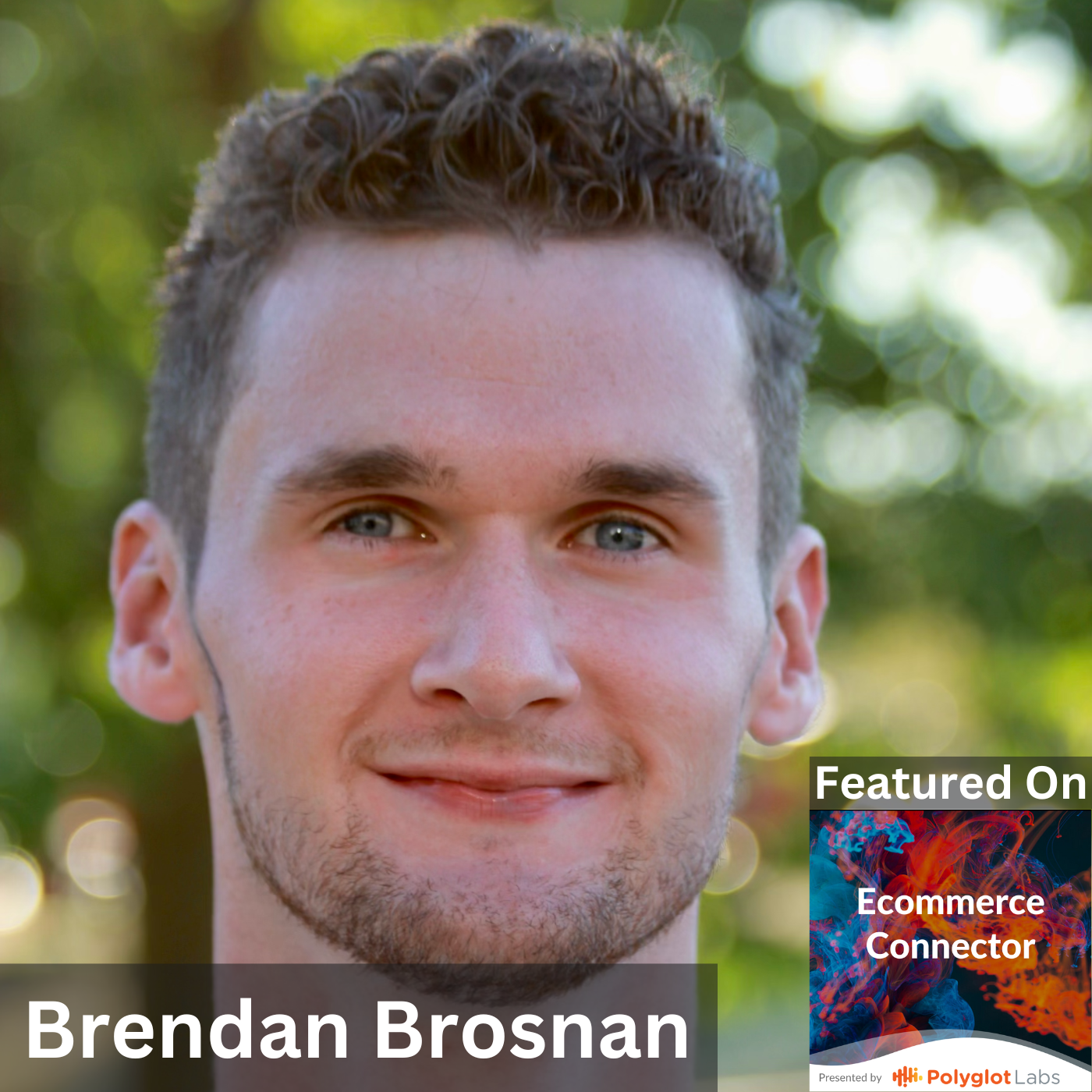
Brendan Brosnan
ECommerce Connector
Brendan Brosnan, Brosnan Consulting LLC
Loading
00:00 /
RSS Feed
Share
Link
Embed

Download file

Brendan Brosnan

Brendan Brosnan, Brosnan Consulting LLC (Ecommerce Connector, Episode 5)

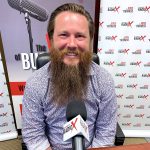
Brendan Brosnan, Entrepreneur and Founder of Brosnan Consulting LLC, joined Garrett Massey on this episode of Ecommerce Connector. Brendan discussed his experience in an ecommerce incubator, ideas that failed, his experience during the pandemic, his business advice, and much more.

Ecommerce Connector is underwritten by Polyglot Labs, Inc. and produced by the North Fulton studio of Business RadioX®.

Brosnan Consulting LLC

Founded by serial e-commerce entrepreneur, Brendan Brosnan, Brosnan Consulting LLC offers unrivaled expertise in the realm of direct-to-consumer (D2C) businesses. With an illustrious career marked by serial entrepreneurship, Brendan’s ventures span across diverse product lines from athleisure to bathroom accessories, with a proven record of over $20 million in gross retail sales.

What They Do:

  • Strategic eCommerce Consulting: Drawing from Brendan’s own experience in founding and scaling companies like Yogaste.co and SockySock.com, they provide hands-on strategic direction for budding and established e-commerce brands.
  • Digital Marketing Mastery: Having personally invested over $8 million in digital ads across platforms like Facebook, Instagram, Google, and more, they ensure that your ad spends yield optimal returns.
  • Email & SMS Marketing: Managing a database of over 1.5 million active clients and 100,000 SMS contacts, they help brands unlock the potential of these powerful marketing channels using tools like Drip, Klaviyo, and Attentive.
  • Process Simplification: At the heart of Brendan’s success lies his knack for de-complicating intricate tasks. They translate this expertise into building streamlined and monetizable processes for our clients.
  • Learning & Development: With Brendan’s notable appearances on platforms like Ted.com and various podcasts, they also offer training sessions, workshops, and talks to empower businesses and individuals in their e-commerce journey.
  • Business Coaching: Given Brendan’s reputation as a go-to strategist for some of the world’s top digital marketing firms, Brosnan Consulting LLC offers exclusive coaching sessions for brands aiming for exponential growth.

Whether you’re kickstarting an e-commerce venture, seeking to scale your existing business, or aiming to refine your digital marketing strategies, Brosnan Consulting LLC is your gateway to unparalleled e-commerce success.

Company website | LinkedIn| Twitter

Brendan Brosnan, Founder, Brosnan Consulting LLC

Brendan Brosnan, Founder, Brosnan Consulting LLC

Brendan Brosnan is a highly motivated and detail-oriented self-starter with several entrepreneurial startups and successful exits over the last decade. His focus has been on the B2C eCommerce sector, where he has achieved over $20 million in gross retail sales across his companies. He enjoys the challenge of simplifying complex tasks and systems into manageable processes that can be monetized.

Brendan has founded five companies with products such as apparel, bathroom accessories, athleisure, and a fitness company. Two of his recent exits were Yogaste.co and SockySock.com.

He managed an email database of over 1.5 million active clients with Drip and Klaviyo and over 100,000 SMS contacts in Attentive.

He has spent over $8,000,000 of his own money on digital ads across several platforms, including Facebook, Instagram, Google, Youtube, TikTok, Pinterest, and Etsy.

Brendan serves as an eCommerce business strategist/coach for some of the top digital marketing firms and companies in the world.

He was also featured on Ted.com for a talk he gave a few years ago and has appeared on podcasts to discuss how he scaled and sold his businesses.

In addition to his work in eCommerce, Brendan is a varsity football coach at his local high school. He played Division 1 football at Penn State University while also balancing the rigors of starting multiple businesses.

When Brendan is not working, he enjoys running, reading, cooking, playing pickleball and hanging out with his dog Maya.

LinkedIn| Twitter

About the Ecommerce Connector Podcast

The Ecommerce Connector Podcast welcomes leaders in the world of ecommerce who share their entrepreneurial journeys, success stories, challenges, and more. The host of the show is Garrett Massey, CEO of Polyglot Labs, Inc. The show’s trailer can be found here.

Ecommerce Connector is underwritten by Polyglot Labs, Inc. and produced by the North Fulton studio of Business RadioX®. The series can be found on all the major podcast apps.
Polyglot Labs, Inc.

Garrett Massey, CEO of Polyglot Labs and Host of the ECommerce Connector podcast

Your business needs developers to help you wrangle and manage complex technology.

Polyglot Labs prides themselves on being developers who integrate seamlessly into your team and get problems solved without causing more issues. Here are the solutions they can provide to you.

You want a website that makes your company look good and drives business. Lucky for you, that’s exactly what they do—build awesome custom websites for businesses.

Some business problems need more than just a website—they require a custom digital solution. Polyglot can turn your products, services, and ideas into cool web and mobile apps that convert.

They created a robust WordPress integration that allows real estate agents, brokers, and property developers to get the most from their multiple listing service (MLS) data on their websites.

Every website or app needs to be hosted somewhere, while being updated and protected. There are plenty of hosting options available, but they specialize in the more complicated situations.

Connect with Polyglot Labs:
Website| LinkedIn | Facebook | Garrett Massey’s LinkedIn

Tagged With: Brendan Brosnan, Brosnan Consulting, business coaching, eCommerce, Ecommerce Connector, ecommerce consulting, ecommerce incubator, entrepreneur, Garrett Massey, Polyglot Labs

Andy Schoenberger, CMP Corporation

August 24, 2023 by John Ray

CMP Corporation
ECommerce Connector
Andy Schoenberger, CMP Corporation
Loading
00:00 /
RSS Feed
Share
Link
Embed

Download file

CMP Corporation

Andy Schoenberger, CMP Corporation (Ecommerce Connector, Episode 4)

Andy Schoenberger from CMP Corporation joined host Garrett Massey to discuss CMP’s work in refrigerant systems and remanufactured compressors. He explained not only what they do, but the shift toward compressors, the challenge of having cores returned to recycle, the growing role of ecommerce to serve their clients, and more.

Ecommerce Connector is underwritten by Polyglot Labs, Inc. and produced by the North Fulton studio of Business RadioX®.

CMP Corporation

CMP Corporation is the world’s largest manufacturer of major brand OEM-equivalent refrigeration and air conditioning compressor parts and remanufactured compressors.

Established in 1966, CMP has factories located in the USA and fulfillment centers in Georgia, Oklahoma, Oregon, and California.

Their 3,000+ customers in over 95 countries benefit from their steadfast goal of getting the quality parts and compressors they need in a reasonable time without the high-OEM price.

Company website | LinkedIn| Facebook

Andy Schoenberger, VP Sales and Marketing, CMP Corporation

Andy Schoenberger, VP Sales and Marketing, CMP Corporation

Continuing his decades in sales and marketing, Andy joined the CMP team in 2019 after serving in a variety of roles in the global water and HVAC/R industries.

Solving issues and providing customers simple solutions for difficult business problems drives his daily mindset.

LinkedIn


About the Ecommerce Connector Podcast

The Ecommerce Connector Podcast welcomes leaders in the world of ecommerce who share their entrepreneurial journeys, success stories, challenges, and more. The host of the show is Garrett Massey, CEO of Polyglot Labs, Inc. The show’s trailer can be found here.

Ecommerce Connector is underwritten by Polyglot Labs, Inc. and produced by the North Fulton studio of Business RadioX®. The series can be found on all the major podcast apps.

Polyglot Labs, Inc.

Garrett Massey, CEO of Polyglot Labs and Host of the ECommerce Connector podcast

Your business needs developers to help you wrangle and manage complex technology.

Polyglot Labs prides themselves on being developers who integrate seamlessly into your team and get problems solved without causing more issues. Here are the solutions they can provide to you.

You want a website that makes your company look good and drives business. Lucky for you, that’s exactly what they do—build awesome custom websites for businesses.

Some business problems need more than just a website—they require a custom digital solution. Polyglot can turn your products, services, and ideas into cool web and mobile apps that convert.

They created a robust WordPress integration that allows real estate agents, brokers, and property developers to get the most from their multiple listing service (MLS) data on their websites.

Every website or app needs to be hosted somewhere, while being updated and protected. There are plenty of hosting options available, but they specialize in the more complicated situations.

Connect with Polyglot Labs:
Website| LinkedIn | Facebook | Garrett Massey’s LinkedIn

Tagged With: Andy Schoenberger, CMP Corporation, cooling systems, eCommerce, Ecommerce Connector, Garrett Massey, Polyglot Labs, Refrigerant, remanufactured compressors

Evan Katz, Very Special Games

July 31, 2023 by John Ray

Very Special Games
ECommerce Connector
Evan Katz, Very Special Games
Loading
00:00 /
RSS Feed
Share
Link
Embed

Download file

Very Special Games

Evan Katz, Very Special Games (Ecommerce Connector, Episode 3)

Evan Katz, Co-Founder and Co-Owner of Very Special Games, joined host Garrett Massey to discuss the role of ecommerce in his company. One of their products has been placed in Target, but 90% of their sales are online. Evan talked about paid ads, analytics, selling on Amazon, and much more.

Ecommerce Connector is underwritten by Polyglot Labs, Inc. and produced by the North Fulton studio of Business RadioX®.

Very Special Games

Evan & Josh’s Very Special Games Company creates and distributes laugh-out-loud party games for creative people.

Largest titles include Ransom Notes, Puns of Anarchy, Charty Party, and Abducktion.

Company website | Facebook| Instagram

Evan Katz, Co-Founder and Co-Owner, Very Special Games

Evan Katz, Co-Founder and Co-Owner, Very Special Games

Evan is the co-founder of Very Special Games, and focuses on marketing, game development, and business direction. This is his 5th startup, and previously has worked in strategy and innovation consulting as well.

When not making a new game, Evan’s usually working on marketing, video production, or playing volleyball around Atlanta.

LinkedIn


About the Ecommerce Connector Podcast

The Ecommerce Connector Podcast welcomes leaders in the world of ecommerce who share their entrepreneurial journeys, success stories, challenges, and more. The host of the show is Garrett Massey, CEO of Polyglot Labs, Inc. The show’s trailer can be found here.

Ecommerce Connector is underwritten by Polyglot Labs, Inc. and produced by the North Fulton studio of Business RadioX®. The series can be found on all the major podcast apps.

Polyglot Labs, Inc.

Garrett Massey, CEO of Polyglot Labs and Host of the ECommerce Connector podcast

Your business needs developers to help you wrangle and manage complex technology.

Polyglot Labs prides themselves on being developers who integrate seamlessly into your team and get problems solved without causing more issues. Here are the solutions they can provide to you.

You want a website that makes your company look good and drives business. Lucky for you, that’s exactly what they do—build awesome custom websites for businesses.

Some business problems need more than just a website—they require a custom digital solution. Polyglot can turn your products, services, and ideas into cool web and mobile apps that convert.

They created a robust WordPress integration that allows real estate agents, brokers, and property developers to get the most from their multiple listing service (MLS) data on their websites.

Every website or app needs to be hosted somewhere, while being updated and protected. There are plenty of hosting options available, but they specialize in the more complicated situations.

Connect with Polyglot Labs:
Website| LinkedIn | Facebook | Garrett Massey’s LinkedIn

Tagged With: Abducktion, Amazon, board games, Charty Party, eCommerce, Ecommerce Connector, Evan Katz, Facebook Ads, Fulfilled By Amazon, Garrett Massey, Polyglot Labs, Puns of Anarchy, Ransom Notes, Very Special Games

Garrett Massey, Polyglot Labs, and Host of Ecommerce Connector

June 15, 2023 by John Ray

Polyglot Labs
ECommerce Connector
Garrett Massey, Polyglot Labs, and Host of Ecommerce Connector
Loading
00:00 /
RSS Feed
Share
Link
Embed

Download file

Polyglot Labs

Garrett Massey, Polyglot Labs, and Host of Ecommerce Connector (North Fulton Business Radio, Episode 673)

Garrett Massey, CEO of Polyglot Labs, joined host John Ray to discuss his company’s work developing and maintaining custom websites for enterprise companies with complex requirements. Garrett also shared the launch of a new podcast, Ecommerce Connector, which will feature leaders from the world of ecommerce. The show will be produced and distributed by Business RadioX®.

North Fulton Business Radio is broadcast from the North Fulton studio of Business RadioX® inside Renasant Bank in Alpharetta.

Polyglot Labs

Your business needs developers to help you wrangle and manage complex technology.

Polyglot Labs prides themselves on being developers who integrate seamlessly into your team and get problems solved without causing more issues. Here are the solutions they can provide to you.

You want a website that makes your company look good and drives business. Lucky for you, that’s exactly what they do—build awesome custom websites for businesses.

Some business problems need more than just a website—they require a custom digital solution. Polyglot can turn your products, services, and ideas into cool web and mobile apps that convert.

They created a robust WordPress integration that allows real estate agents, brokers, and property developers to get the most from their multiple listing service (MLS) data on their websites.

Every website or app needs to be hosted somewhere, while being updated and protected. There are plenty of hosting options available, but they specialize in the more complicated situations.

Website| LinkedIn | Facebook | Garrett Massey’s LinkedIn

Questions and Topics in this Interview:

  • What does Polyglot do?
  • How did it get started?
  • Growth of technical expertise over the years
  • Ecommerce post-pandemic
  • Cortex Digital
  • The launch of Ecommerce Connector

North Fulton Business Radio is hosted by John Ray and broadcast and produced from the North Fulton studio of Business RadioX® inside Renasant Bank in Alpharetta. You can find the full archive of shows by following this link. The show is available on all the major podcast apps, including Apple Podcasts, Spotify, Google, Amazon, iHeart Radio, Stitcher, TuneIn, and others.

RenasantBank


Renasant Bank has humble roots, starting in 1904 as a $100,000 bank in a Lee County, Mississippi, bakery. Since then, Renasant has become one of the Southeast’s strongest financial institutions with over $13 billion in assets and more than 190 banking, lending, wealth management, and financial services offices in Mississippi, Alabama, Tennessee, Georgia, and Florida. All of Renasant’s success stems from each of their banker’s commitment to investing in their communities as a way of better understanding the people they serve. At Renasant Bank, they understand you because they work and live alongside you every day.

Since 2000, Office Angels® has been restoring joy to the life of small business owners, enabling them to focus on what they do best. At the same time, we honor and support at-home experts who wish to continue working on an as-needed basis. Not a temp firm or a placement service, Office Angels matches a business owner’s support needs with Angels who have the talent and experience necessary to handle work that is essential to creating and maintaining a successful small business. Need help with administrative tasks, bookkeeping, marketing, presentations, workshops, speaking engagements, and more? Visit us at https://officeangels.us/.

Tagged With: Cortex Digital, eCommerce, Ecommerce Connector, Eyesore Digital, Garrett Massey, North Fulton Business Radio, Office Angels, Polyglot Labs, renasant bank, website developers

Ofer Yourvexel, Pepperi

October 26, 2021 by John Ray

Pepperi
Business Leaders Radio
Ofer Yourvexel, Pepperi
Loading
00:00 /
RSS Feed
Share
Link
Embed

Download file

Pepperi

Ofer Yourvexel, Pepperi

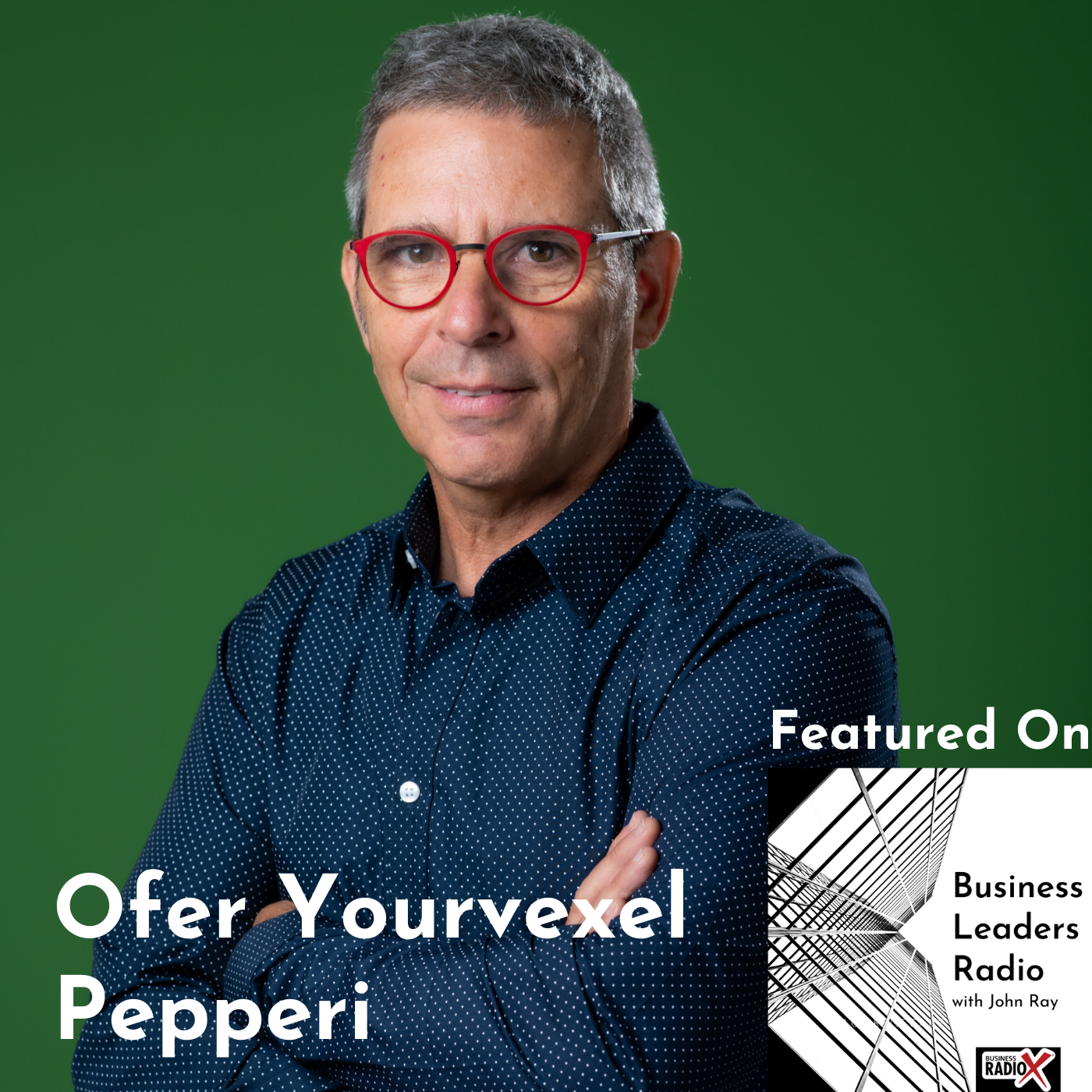
On this edition of Business Leaders Radio with host John Ray, Pepperi Co-Founder and CEO Ofer Yourvexel discussed his company’s work with medium to large consumer packaged goods, health & beauty, and other brands, and the success of the Pepperi platform in supporting and driving B2B sales both online and in-store. Yourvexel shared why Pepperi’s mobile component is so vital for the success of their customers, the flexibility of the platform, and much more. Business Leaders Radio is produced virtually from the Business RadioX® studios in Atlanta.

Pepperi

Pepperi is an omnichannel platform for both online and in-store B2B sales and retail execution. With over 1000 customers in more than 65 countries, Pepperi provides consumer goods and brand manufacturers, distributors, and wholesalers with a comprehensive solution to increase sales figures, reduce inefficient processes and speed up operations.

Combining sales force automation, retail execution, route accounting and B2B eCommerce in an integrated out-of-the-box solution, their customers rely on Pepperi to plan, execute and analyze their B2B omnichannel sales:

• Online/offline order taking made easy with e-catalogs, trade promotions and full customer data

• Retail execution app for in-store auditing, merchandising and replenishment

• Direct Store Delivery and van sales powered by a route accounting app for iOS and Android mobile devices

• Web and mobile B2B eCommerce enables buyers to order anytime from anywhere

• Central management streamlines omnichannel operations across customer touchpoints

Pepperi’s enterprise-grade platform integrates seamlessly with ERPs such as SAP Business One, SAP Business ByDesign, Oracle, Microsoft Dynamics, Microsoft Nav, NetSuite, and many others, making data fully accessible to field reps and buyers on all devices, on and offline.

Company website | LinkedIn | Twitter

Ofer Yourvexel, CEO & Co-Founder, Pepperi

Ofer Yourvexel, CEO & Co-Founder, Pepperi

Ofer has 25 years of experience in international marketing, sales, business development, and management.

He was formerly an executive in multiple Nasdaq companies such as Jacada (JCDA) and Amdocs (DOX).

LinkedIn


Questions and Topics

  • Tell us about your solution
  • Who are your customers?
  • Why do B2B brands and wholesalers need your solution if they can sell D2C (direct to consumer) or on marketplaces?
  • We see a lot of M&A in the CPG industry, especially in the Food and beverage. How does it impact you and F&B companies?
  • Tell us about your most successful implementation
  • Who are your competitors?
  • What’s the role of mobile in B2B sales?
  • Any crazy customer requirements you ever implemented?


Business Leaders Radio is hosted by John Ray and produced virtually from the North Fulton studio of Business RadioX® in Alpharetta.  The show can be found on all the major podcast apps and a full archive can be found here.

Renasant Bank has humble roots, starting in 1904 as a $100,000 bank in a Lee County, Mississippi, bakery. Since then, Renasant has grown to become one of the Southeast’s strongest financial institutions with over $13 billion in assets and more than 190 banking, lending, wealth management and financial services offices in Mississippi, Alabama, Tennessee, Georgia and Florida. All of Renasant’s success stems from each of their banker’s commitment to investing in their communities as a way of better understanding the people they serve. At Renasant Bank, they understand you because they work and live alongside you every day.

Tagged With: b2b sales, Business Leaders Radio, consumer packaged goods, CPG, eCommerce, John Ray, Ofer Yourvexel, Pepperi, renasant bank

The Future of IT Security with Peter Adams and Arvind Hariharan E31

May 4, 2021 by Karen

The-Future-of-IT-Security-with-Peter-Adams-and-Arvind-Hariharan-E31-Feature
Phoenix Business Radio
The Future of IT Security with Peter Adams and Arvind Hariharan E31
Loading
00:00 /
RSS Feed
Share
Link
Embed

Download file

The-Future-of-IT-Security-with-Peter-Adams-and-Arvind-Hariharan-E31

The Future of IT Security with Peter Adams and Arvind Hariharan E31

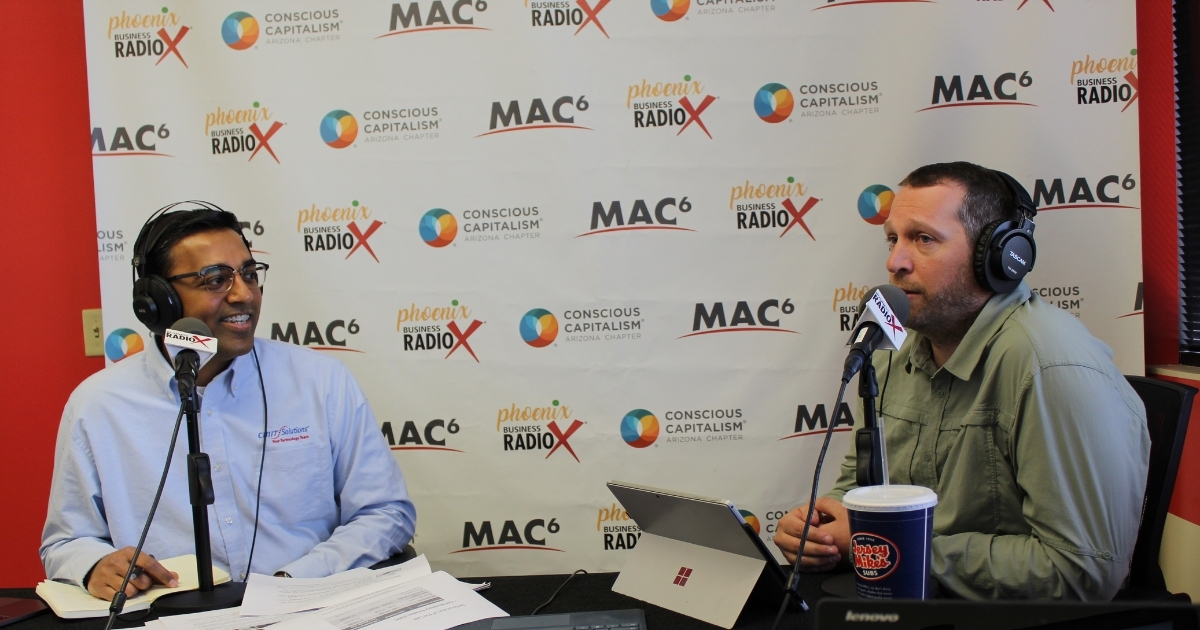
On this episode of the The Future of Work: Water Cooler Conversations we interview IT and Security experts, Peter Adams of Sol Minion development and Arvind Hariharan of CMIT Solutions of Tempe/North Chandler. Peter and Arvind explain why it is so important for every business owner to have a cyber security plan in place.

We learn about both Peter and Arvind’s background and what got them interested in technology. We also get to hear fascinating stories of the very real threats that are out there and what we can do to protect our self. If you are a business owner who is looking for ways to create better processes around IT security, Peter and Arvind offer some solid tips and ideas on how to get started.

Sol-Minion-Development-logo

Sol Minion Development is a Tempe-based technical consulting and software development firm providing peace of mind to small business owners with security-focused software development services.

Peter-Adams-The-Future-of-WorkPeter Adams is a security-focused software engineer with over 22 years of professional software development experience.

He founded Sol Minion Development in 2012 to provide security-focused software development services for small businesses looking to create a competitive edge and increase their business productivity with automation technology.

Follow Sol Minion Development on LinkedIn, Facebook and Twitter.

CMIT-Solutions-Logo

CMIT Solutions of Tempe & North Chandler provides proactive, responsive managed IT services to keep small business networks and computers running efficiently.

Arvind-Hariharan-The-Future-of-WorkArvind Hariharan has over 17 years of experience in the technology industry.

He understands the importance of technology in business today and recognizes how challenging it can be for small business owners to navigate their technology needs.

He aspires to be a trustworthy technology partner that brings clarity and transparency and helps propel his clients’ business to achieve their wildest dreams.

Follow CMIT Solutions on LinkedIn, Facebook and Twitter.

ABOUT THE FUTURE OF WORK: WATER COOLER CONVERSATIONS

Welcome to Future of Work: Water Cooler Conversations Radio Show and Podcast – where business leaders share how they integrate humanity and technology through innovative approaches, healthy culture, flexible workspaces and seamless virtual technology.

ABOUT YOUR CO-HOSTS

KyleMcIntoshWith a background in marketing, in various for profit and not for profit companies, Kyle McIntosh wondered, “How can I pair the passion and commitment to community progress of a non-profit with the sustainability and reach of a for profit company?” From this question and perspective a mission evolved to tear down the false distinction between the two sectors and to promote companies with Conscious Capitalism® business models through MAC6.

Kyle is the President and Creative Excitant of MAC6.  Day to day, his main operational role is on the “spaces” side of the business, focusing on creating thriving communities in the commercial office buildings, the co-working space, and the co-manufacturing space.  The other role that he plays is that of EOS implementer, working with clients to bring the Entrepreneurial Operating System, from the book Traction® to their businesses.  Additionally, he sits on the boards of Conscious Capitalism Arizona, telling the stories of good businesses in Arizona, and The Tempe Chamber of Commerce, sustaining Tempe’s quality of life and keeping our community and economy vibrant.TheFutureofWorkApplePodcastandSpreakerheader-1

Kyle loves Arizona and wants to see us all collectively find great success based on the awesome things that are happening here every day.

Follow MAC6 on Facebook and Twitter.

Jennifer-BurwellJennifer Burwell, joined MAC6 in 2013. Jennifer is their VP and Director of Programs.

She uses her experience in real estate, team development and management to seamlessly integrate each of the MAC6 business units to assure they are all focused on the long-term company vision. She is also a student of human behavior.

As a Certified Professional Behavioral Analyst, she uses her knowledge to facilitate culture-focused leadership programs with organizations of all sizes to integrate the company’s values and create higher-performing teams.

To learn more about MAC6 Communities, call 480-293-4075 or find them on Facebook

ABOUT OUR SPONSOR

MAC6 offers flexible spaces and programs to help your team grow, and a community of thriving businesses, just like yours.  Advocating Capitalism as a Force for Good, MAC6 is Accelerating the shift to Conscious Capitalism (where Purpose and Profit Unite) through Creativity, Collaboration, Community and Change.


Tagged With: custom software development, cybersecurity consulting, cybersecurity training, eCommerce, it services, technical strategy

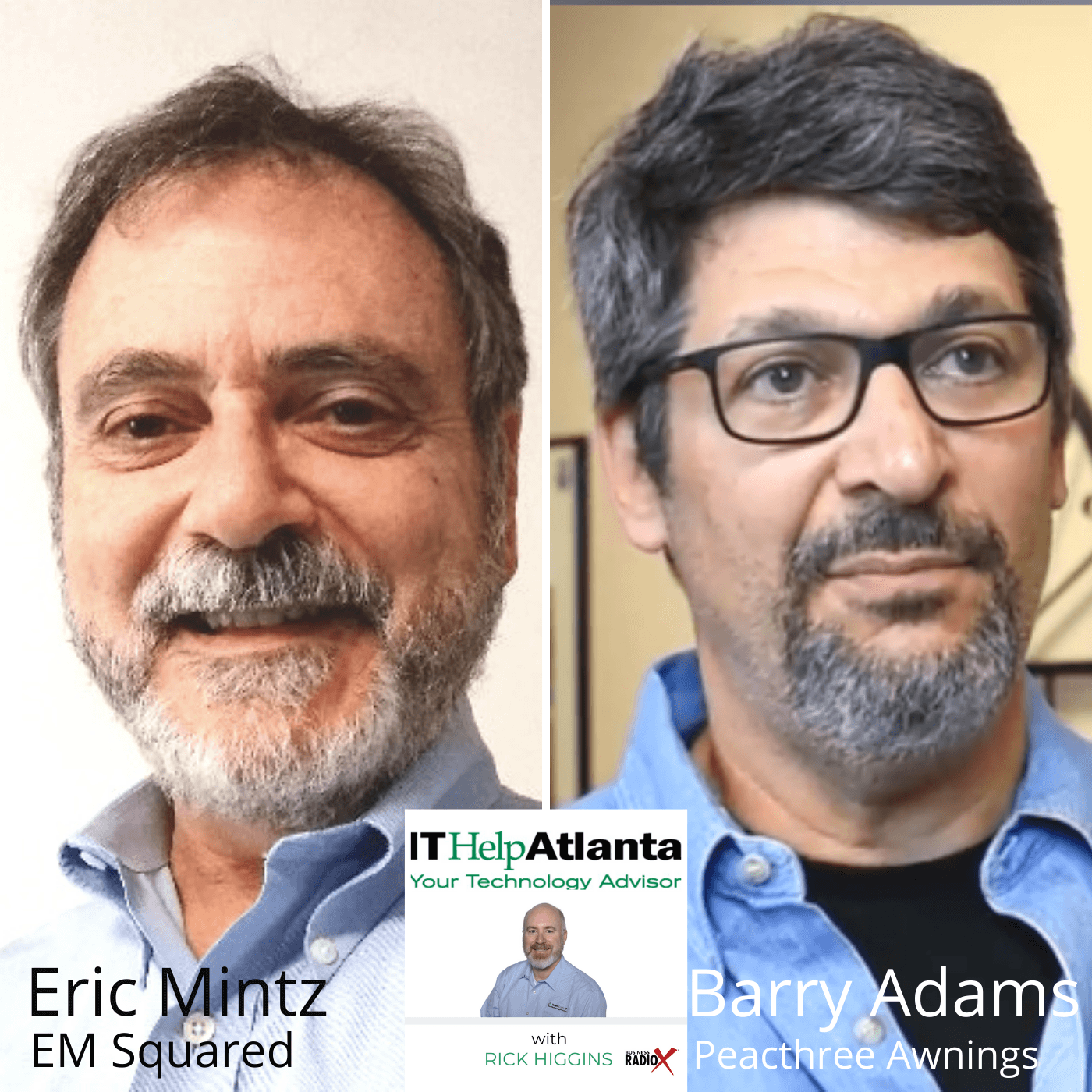
IT Help Atlanta with Rick Higgins: Barry Adams, Peachtree Awnings, and Eric Mintz, EM Squared

August 27, 2020 by John Ray

Peachtree Awnings
IT Help Atlanta
IT Help Atlanta with Rick Higgins: Barry Adams, Peachtree Awnings, and Eric Mintz, EM Squared
Loading
00:00 /
RSS Feed
Share
Link
Embed

Download file

IT Help Atlanta with Rick Higgins Episode 7: Barry Adams, Peachtree Awnings, and Eric Mintz, EM Squared

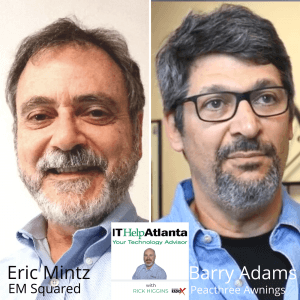
Peachtree Awnings’ Owner Barry Adams and Eric Mintz of EM Squared both started their companies from scratch. Host Rick Higgins speaks with each of them about the ups and downs of their entrepreneurial journeys and how they achieved their current success. “IT Help Atlanta” is brought to you by TeamLogic IT, your technology advisor.

Barry Adams, Owner, Peachtree Awnings

Barry Adams, Peachtree Awnings

Peachtree Awnings is one of the premier manufacturers of custom residential & commercial awnings and canopies in the southeast. they specialize in fabric awnings and metal canopies of all kinds. They have a branch in the Nashville area as well….Tennessee Awnings. Barry Adams is the founder and owner of Peachtree Awnings located in Norcross, GA and Tennessee Awnings located in Smyrna, Tennessee. Barry opened Peachtree Awnings in 2005 which serves the metropolitan Atlanta area and other parts of the southeast. Barry purchased an existing awning company in the Tennessee location in 2012 which serves Nashville and most of middle Tennessee. Prior to getting in the awning business, Barry had 18 years of experience in the electrical distribution industry in sales and sales management. Barry got his undergraduate degree from Tulane University in 1985 and his MBA from Kennesaw State University in 2004. Barry is the most recent past chair of the Southwest Gwinnett Chamber of Commerce and the current chair of the Professional Awning Manufacturer’s Association (PAMA). Barry enjoys concerts and live music and resides in Norcross, GA.

Company Website

Barry on LinkedIn

Eric Mintz, CEO, EM Squared

Eric Mintz, EM Squared

EM Squared provides leading edge custom software and IoT solutions with a focus on solving problems.

They streamline, automate, and evolve business. They redesign business processes and tune existing systems to work better. They automate, build applications, and integrate sensor technology. They streamline workflows and eliminate frustration to better enable your employees. EM Squared adds or improves eCommerce to better satisfy their client’s customers.

Company Website

Eric on LinkedIn

About the Show

“IT Help Atlanta” profiles small to mid-market businesses and highlights how those companies use technology to succeed. An archive of previous shows can be found here.

About Your Host

Rick-Higgins-2019Rick Higgins is Owner and President of TeamLogic IT of Dunwoody, GA. Rick’s firm is part of a national network of locally-owned service businesses, providing comprehensive IT services to the small-medium sized business market.

They offer managed service for networking, cyber security, data and email, as well as hardware and software support in addition to a variety of consultation and preventative maintenance services. Rick’s personal and corporate philosophy is simple: Stand up, be bold, and tell the truth.

Connect with Rick on LinkedIn and Twitter, and follow TeamLogic on Facebook.

Show Transcript

Announcer: Broadcasting from the Business RadioX studios in Atlanta, it’s time for “IT Help Atlanta,” brought to you by TeamLogic IT, your technology advisor. Now here’s your host, Rick Higgins.

Rick: Hey, good morning, everybody, and welcome to “IT Help Atlanta.” The podcast and radio show that profiles small businesses and highlights how those companies use technology to succeed. “IT Help Atlanta” is brought to you by TeamLogic IT, your managed services advisor, specializing in cybersecurity and cloud solutions. TeamLogic IT leverages cutting edge technology to solve all types of business problems. We make technology work for business. Go to ithelpatlanta.com for audio archives of this radio show and to learn more about our sponsor, TeamLogic IT. I’m your host today, I’m Rick Higgins, and today’s special guests are Barry Adams of Peachtree Awnings and Eric Mintz of EM Squared. Good morning, gentlemen.

Barry: Hey, good morning, Rick.

Eric: Good morning.

Rick: So, we’re going to start. We’re gonna do kind of a one-at-a-time scenario on the interview process and we wanna start with Barry. Barry, you’re the founder of Peachtree Awnings. Tell us in your own words who you are and what do you do?

Barry: Well, Rick, we are a manufacturer of custom commercial and residential awnings and canopies in the Atlanta metro area. We actually, we serve the entire Southeast. Our projects go from Central Florida down in Tampa, Orlando, up to Greenville, Birmingham. And then actually, I’m physically sitting at our location in Nashville, Tennessee right now. So, I’ve got a location in Nashville, and I got a location in Atlanta. We started the business in 2005, so we’ve been 15 years in business and yeah, we sell shade and it’s a lot of fun in this COVID era to help people enjoy their time and their staycations in their home. So yeah, we really enjoy that.

Rick: Thank you. Fifteen years, good for you, Barry. That’s really an amazing accomplishment. When you think back to prior to founding the company, you think back to all the reasons that you’ve thought about and what went into being an entrepreneur. What have you learned since then that’s been a really pleasant surprise, or something that’s been fulfilling to you that you just didn’t expect when you were first thinking about starting the business?

Barry: Well, it’s been a labor of love, Rick. I think for all small business people, it is a labor of love, and one of the things I’ve really come to appreciate about my business is that my business is my ministry. You know, I know there’s a lot of faith-based businesses out there but one of the pleasant surprises for me is we happen to be in the awning and canopy business, but I really enjoy helping people to become better people, you know, helping people to fulfill their potential in life, financially and professionally, and become better people. And I found that out after a number of years that I just really enjoy helping people move along a pathway of their choosing. And, it’s challenging. Some people come willingly and some people don’t participate fully, but my business is my ministry and I really enjoy what comes back to me. Whatever I put into it, it seems to come back to me times four, times five. It’s very rewarding in that respect.

Rick: Well, and learning how to get work done through others and managing those people, it really truly is the most difficult thing that a small business person can deal with, right?

Barry: Yeah.

Rick: Because you are the HR department. You know, you are the accounting department, you are the everything department, and sometimes you are the internal counselor to your people as well, right?

Barry: No question, and you have to be a bit of a renaissance man or renaissance person certainly in this day and age. You got to wear, I wear my marketing hat some days and I wear my HR hat some days, and sometimes it’s moment by moment. And I wear my financial, my CFO hat some days, and it changes literally moment by moment. The good news is that as you grow in size, then, of course, then the resources that you can hire or put in place to address some of those, you know, increases, it doesn’t necessarily relieve you of the responsibility of overseeing that part of your operation. But certainly, the old adage “Hiring people that are smarter than you” comes into play, and I was… I don’t know if it was Steve Jobs or somebody else who said that but, you know, hiring people that are smarter than you. And I’ve been blessed to bring people into my organization that were really, in their specific jobs, were really better than me, better than I could do it. And it’s gotten to a size, you know, I used to be able to wrap my arms around just about every problem or every situation that I encountered. But as we’ve gotten larger, I’ve had to make sure I have people in place that can do that.

And it’s gotten larger than me. And so it’s both exciting and terrifying at the same time to say that I’m not the person that can handle… I have more questions than answers every day. And it’s relieving in a sense that as a business owner, I don’t have to have the answers. I really have to, and my role and now is to pose the questions that cause us to get better. And it’s still challenging, by the way, to come up with the questions, but we come up with the questions and it’s a collaborative effort. And those things that we get accomplished, we get accomplished together and I like to say all of us know more than any of us. And so, in every regard, it is a collaborative team effort at Peachtree Awnings, so.

Rick: So, I recently read a four-page spread article on you and your company in a magazine in which you are on the cover. It’s a trade organization and the magazine’s called “Specialty Fabrics Review Magazine.” So, congratulations on that profile and that spread. There was a couple of really interesting nuggets that I pulled out of there that I’d like to ask you to talk about and unpack. And one of them just, I really highlighted it and I’m gonna read it here where you said in your business, it’s almost like being an architect. Could you discuss that and explain what you meant by that?

Barry: Yeah, sure. Well, again, one of the pleasant surprises about being in the awning and canopy business, it’s a custom business and every project that we tackle, even…two awnings or two canopies that look alike, I promise you, they’re not fabricated the same. And so it’s very, very custom work. So I like to say that, in my business, that we spend equal times… A third of the time, I’m a manufacturer, a third of the time, I am a contractor, and a third of the time, I’m an artist. So, equal parts manufacturing because it’s a shop-based business and we manufacture what we install. So, a third of the time, I’m a manufacturer, third of the time is spent out in the field, installing the stuff that we manufacture and that certainly has its challenges as well if you’ve ever been involved with a company or an operation that does field work. That is probably the most unpredictable job environment that you could possibly work in. You get anything and everything thrown at you every day.

Rick: No doubt.

Barry: So that is…yeah, that is really, really challenging. And especially in a thriving metropolitan area like Atlanta and Nashville, the variety of projects that we get involved with is pretty vast. And then a third of the time, I’m an artist. I’m creating a vision for somebody else. Quite frequently, we show up and there’s not a set of plans. You know, I’m meeting with a business owner, and they just have some kind of vision in their mind about what they want this piece or their storefront, or a courtyard, or what they want a certain area to look like, or how they want it shaded, or how they want it protected from rain or the elements. And so we have to create that vision almost from scratch. So it’s like baking, yeah, like baking from scratch. And you have to really be very adept at all three parts of the business in that regard to be successful, I think.

And so we’ve tried to do that at Peachtree Awnings. Never focusing on one of those disciplines to the exclusion of any other is really, really important and trying to develop yourself and develop your team in that way and deliver a very high level of customer service. Obviously, that’s what it’s all about. So, if there’s ingredients to the secret-secret sauce in the awning and canopy business, perhaps, that’s kinda it. That’s been my recipe, anyway.

Rick: Yeah. And that’s good advice for anybody in any vertical or any type of business. So, the other nugget, to use that word again, that I pulled out of here is you made a really interesting general comment about being an owner. And you said, “You have to work on your business rather than in your business.” Could you unpack that a little bit for us?

Barry: Sure, Rick. I think it’s a little counterintuitive for most of us. The more control you try to take, the more you wrap your arms around your business, actually, the less control you have. It’s, for all of us, I think our businesses are a baby, you know, and I try to treat my business literally like a living, breathing entity. And if you treat your living, breathing entity, your business with love and care and concern and nurture it, then it will return to you what you’ve put into it. But the more I try to control that by wrapping my arms around the things that I always used to do, right, I mean, when I started my business in 2005, there was three of us, I called it “the tripod” because it was me, a welder, and a seamstress. That was it, that was three of us. And now there’s 25 in the organization. Still small by anybody’s measure, but the more you wrap your arms around the functions and the things that you do in your business, the less control that you have, and the more that you give up, the more you’ll be able to grow your business. You know, there’s a continuum that we all operate on. And most of us start, it’s operator, owner-operator, owner, right? There’s a continuum there and we start as operator, we all most of us start as operator, many people never get out of that phase of operator. Not to pick on any one discipline or tradesperson, but there’s plenty of plumbers, electricians, painters that only stay in the operator phase.

And then we try to move a distance to owner-operator and I’m still kind of in that…still in that phase, but maybe starting to move a little bit more toward owner. And as we move in that continuum toward owner, then we can really work on our business rather than working in our business. And that is a very, very difficult transition to make. It’s not easy. And you’ve got to give up as much as you take on or you’ll never have that ability to grow. And so, I find that to be challenging for any small business owner.

Rick: It’s the only way to scale. I mean, an individual can only do so much as an operator, you cannot scale unless you can let go. And learning to let go is really, really tough. I just…maybe offline over a lunch or something, I wanna unpack that a little bit more with you to talk to you about exactly how you’re going through that transition.

Barry: Well, and it’s been pleasant to watch you, Rick, because you started, I mean, we started just, you know, maybe a few, I’d say a few years apart. I’ve watched you at TeamLogic IT do the same thing. It was you driving the bus and now you’ve got some really capable people working with you, and so it’s been a joy for us both as our businesses run in their life evolution somewhat in parallel and that’s been a pleasure. That’s been a pleasure to watch.

Rick: So, full disclosure to the listening audience, Barry and Peachtree Awnings are, what, a five-year client now of ours at TeamLogic IT?

Barry: Yeah, at least something like that. Yep.

Rick: Coming up on that.

Barry: Yeah, that’s right.

Rick: And likewise, we’ve really enjoyed working with you guys. Here’s one of my favorite questions, Barry. What is an aspect of your business that people don’t think about, but that you wish people would ask you about?

Barry: Well, these are trying times, and I’ve tried to be a leader in our business and in our community. I hope everybody who listens comes away with a sense that we, you know, we have a responsibility to the communities that we serve. It’s real easy to come in your office every day with your head on, kind of put your head down and start working, keep your head on the desk and stay on point. But we got a real opportunity to be business leaders once we embark on small business ownership, and so, I become the face of my business in the community. And we try to get involved in some philanthropic activities whether that’s the, used to be called the Norcross Cooperative Ministry, now it’s, I think, called the Neighborhood Co-Op, or, and different aspects that we can give back to the community because it’s given so much to us and provides our livelihood. And so, I hope…it’s difficult right now. I think a lot of nonprofits have suffered through the pandemic just because people are not wanting to be in close proximity to each other, but it’s really, really important for us to be strong community leaders and stand up and be recognized and have our people be honest as well.

Rick: You’ve done that, Barry, and I know you won’t mention it yourself so I’m gonna mention it for you. Folks, Barry Adams is the president of one of our local chambers of commerce here in North Metro Atlanta. He’s also the chairman of the board of the main trade organization that he works with, the nonprofit. So, congratulations, Barry, because it’s not just, for you, it’s not just talk, you really are pulling it off with your effort and those of us in small business understand what kind of effort that really takes. So, thank you for that service.

Barry: Thanks, Rick. I appreciate the recognition. Thank you so much.

Rick: Well, I wanna wrap up with you, Barry, but before I do, well, you tell the audience how to get in touch with you and find your business online or otherwise.

Barry: Yeah, absolutely. Thanks, Rick. Yeah, I mean, we can be found, www.peachtreeawnings.com, or, likewise, www.tennesseeawnings.com in the Metropolitan Nashville area and we’re moving to a new location in Lawrenceville in mid-September. So, yeah, we’ll be in a new facility about a mile from Sugarloaf Mills just off of Duluth Highway 120. Yeah, we’ll be in the new facility in mid-September. So, it’s an exciting time for us.

Rick: That second domain was tennesseeawnings.com because I think it broke up a little bit on the audio, so I wanna repeat that for the audience.

Barry: Yeah, tennesseeawnings.com.

Rick: Gotcha. Gotcha. Barry, thank you so much.

Barry: Thanks, Rick. Really enjoyed it. Thank you so much for having me.

Tagged With: awnings, Barry Adams, canopies, eCommerce, EM Squared, Eric Mintz, fabric awnings, IoT, IT Help Atlanta, metal canopies, Peachtree Awnings, Rick Higgins, sensor technology, TeamLogic IT, Tennessee Awnings

Decision Vision Episode 50: Should I Sell on Amazon? – An Interview with Cordelia Blake

February 6, 2020 by John Ray

should i sell on Amazon
Decision Vision
Decision Vision Episode 50: Should I Sell on Amazon? - An Interview with Cordelia Blake
Loading
00:00 /
RSS Feed
Share
Link
Embed

Download file

should i sell on amazon
Cordelia Blake and Mike Blake

Decision Vision Episode 49:  Should I Sell on Amazon? – An Interview with Cordelia Blake

What are the pros and cons of selling your products on Amazon? How do you get started? What are the skills you need to succeed as an Amazon seller? Veteran e-commerce professional Cordelia Blake answers these questions and much more in this edition of “Decision Vision,” hosted by Mike Blake and presented by Brady Ware & Company.

Cordelia Blake, CordeliaBlake.com

should i sell on Amazon
Cordelia Blake

Cordelia Blake has been a successful business owner in the fields of technology and e-commerce for over 20 years. Her diverse skill set spans systems administration, web development, training, training development, customer service, and e-commerce.

After running her own e-commerce company for 5 years which included launching a clothing line, gourmet gift baskets and branded merchandise, she joined the HuntGirl team in 2018. She is also a public speaker, consultant and trainer in the field of e-commerce and runs an organization of Amazon sellers, Scanner Society.

A Philadelphia native who happily transplanted with her family to Atlanta, Cordelia is a graduate of Franklin and Marshall College. She resides with her husband, 2 sons, black lab, and 2 cats in Chamblee, GA.

To learn more, go to Cordelia’s website or her YouTube channel. You can also connect with her on LinkedIn.

Michael Blake, Brady Ware & Company

Mike Blake, Host of “Decision Vision”

Michael Blake is Host of the “Decision Vision” podcast series and a Director of Brady Ware & Company. Mike specializes in the valuation of intellectual property-driven firms, such as software firms, aerospace firms and professional services firms, most frequently in the capacity as a transaction advisor, helping clients obtain great outcomes from complex transaction opportunities. He is also a specialist in the appraisal of intellectual properties as stand-alone assets, such as software, trade secrets, and patents.

Mike has been a full-time business appraiser for 13 years with public accounting firms, boutique business appraisal firms, and an owner of his own firm. Prior to that, he spent 8 years in venture capital and investment banking, including transactions in the U.S., Israel, Russia, Ukraine, and Belarus.

Brady Ware & Company

Brady Ware & Company is a regional full-service accounting and advisory firm which helps businesses and entrepreneurs make visions a reality. Brady Ware services clients nationally from its offices in Alpharetta, GA; Columbus and Dayton, OH; and Richmond, IN. The firm is growth minded, committed to the regions in which they operate, and most importantly, they make significant investments in their people and service offerings to meet the changing financial needs of those they are privileged to serve. The firm is dedicated to providing results that make a difference for its clients.

Decision Vision Podcast Series

should I sell on Amazon“Decision Vision” is a podcast covering topics and issues facing small business owners and connecting them with solutions from leading experts. This series is presented by Brady Ware & Company. If you are a decision maker for a small business, we’d love to hear from you. Contact us at decisionvision@bradyware.com and make sure to listen to every Thursday to the “Decision Vision” podcast. Past episodes of “Decision Vision” can be found here. “Decision Vision” is produced and broadcast by the North Fulton studio of Business RadioX®.

Visit Brady Ware & Company on social media:

LinkedIn:  https://www.linkedin.com/company/brady-ware/

Facebook: https://www.facebook.com/bradywareCPAs/

Twitter: https://twitter.com/BradyWare

Instagram: https://www.instagram.com/bradywarecompany/

Show Transcript

Intro: [00:00:02] Welcome to Decision Vision, a podcast series focusing on critical business decisions brought to you by Brady Ware & Company. Brady Ware is a regional full-service accounting and advisory firm that helps businesses and entrepreneurs make visions a reality.

Mike Blake: [00:00:20] And welcome to Decision Vision, a podcast giving you, the listener, a clear vision to make great decisions. In each episode, we discuss the process of decision making on a different topic from a business owners or executives’ perspective. We aren’t necessarily telling you what to do, but we can put you in a position to make an informed decision on your own and understand when you might need help along the way.

Mike Blake: [00:00:39] My name is Mike Blake and I’m your host for today’s program. I’m a director at Brady Ware & Company, a full-service accounting firm based in Dayton, Ohio, with offices in Dayton, Columbus, Ohio, Richmond, Indiana, and Alpharetta, Georgia, which is where we are recording today. Brady Ware is sponsoring this podcast. If you like this podcast, please subscribe on your favorite podcast aggregator and please consider leaving a review of the podcast, as well.

Mike Blake: [00:01:01] So, today’s topic is about using Amazon as a sales channel and, should you adopt Amazon or expand the use of Amazon as a sales channel? And anybody who’s listening to this is obviously familiar with the internet. And you’ve heard of this little company called Amazon that started out about 25 years ago selling books online and now, have come to dominate almost anything that we can think of, whether it’s television media or selling laptops and TVs and music and now, smart devices in our home, but, you know, what you may not realize is that Amazon’s selling its own stuff on its own account is actually less than 50% of the business.

Mike Blake: [00:01:52] What are called third-party sellers account for over 50% of Amazon’s annual revenue. It has been that way for some period of time now. So, what that’s done is that that has, to a large extent, democratized the retail sector. You know, you see, back in the old days, if you want to sell stuff online, you did on eBay or you had to put up your own website and build your entire unique e-commerce platform. And that’s no longer the case.

Mike Blake: [00:02:22] You know, there are very few places in the world, certainly, no place in United States you cannot reach by Amazon at this point. Now, is it necessarily for everybody? No. We’re going to learn more about that. But, you know, if you’re thinking about, you know, how do you get Amazon to pick your stuff up, it’s not necessarily that hard to get Amazon to pick your product up, but it’s hard to kind of keep it there because they do have a fairly tightly regulated ship.

Mike Blake: [00:02:49] And there are some pros and cons. If you are going to put products on Amazon, you are going to give some things up in order to do it. And so, I am not qualified, as is the case for most of our topics. I’m not qualified to talk about that topic other than what I just said. And so, I have brought in a very special guest expert for our show today. And her name is Cordelia Blake. And yes, that Cordelia Blake, the fabulous and marvelous Cordelia Blake.

Mike Blake: [00:03:21] And in spite of the fact that she is indeed my wife, she is very successful and has been a successful business owner in the fields of technology and e-commerce for over 20 years. Her diverse skill set spans systems administration, web development, training development, customer service, and e-commerce. After running her own e-commerce company for five years, which included launching her clothing line, gourmet gift baskets, and branded merchandise, she joined HuntGirl in 2018, where she is a partner.

Mike Blake: [00:03:50] She is also a public speaker, consultant, and trainer in the field of e-commerce and also runs an organization of Amazon sellers called Scanner Society. You can also see at least some of her Amazon training and informational videos on YouTube. A Philadelphia native who happily transplanted with her family to Atlanta, Cordelia is a graduate of Franklin & Marshall College. We actually met in the registration line in freshman year. She resides with her husband, me. I think that’s me anyway, two sons, a black lab, and we want a dog, by the way, anyway, and two cats in Chamblee, Georgia. Cordelia, dear, welcome to the program.

Cordelia Blake: [00:04:27] Thank you so much for having me on, honey.

Mike Blake: [00:04:30] So, this Amazon thing, it’s so big, it’s kind of hard to get your arms around, isn’t it?

Cordelia Blake: [00:04:39] It is, and frequently the last people you should ask about it are anybody that works at Amazon. So, that makes it like doubly difficult to find out what to do.

Mike Blake: [00:04:49] So, I was right in not finding somebody who’s an Amazon driver or a warehouse worker to come on and do the podcast, they’re not going to know the knots and bolts.

Cordelia Blake: [00:04:56] Or even an executive.

Mike Blake: [00:04:57] Yeah.

Cordelia Blake: [00:04:57] Even an Amazon executive. I’ve spoken with Amazon executives there. The way they run their ship is very vertical. So, if you’re in one division of Amazon, you know that division and nothing else. I’ve met executives who have literally not heard of other things Amazon’s doing. They just don’t stay up to date. So, they’re not really your business partner. They’re just a service provider that you need to manage.

Mike Blake: [00:05:23] So, maybe this is obvious, but I don’t want to assume, if a company is not already selling their products on Amazon, why should they consider doing that?

Cordelia Blake: [00:05:34] So, a company, I kind of want to unpack that a little bit. So, companies who sell products is a little bit vague. So, you have companies that produce their own products. Maybe it’s, you know, their patented product or their dream product or their passion product. Commonly, you’ll have a company that is a distributor for other companies. That’s a model that’s been around for hundreds of years and still very much in play. So, they sell, you know, like a Foot Locker doesn’t really sell Foot Locker shoes, they sell Nike, they sell Adidas. They’re essentially a re-seller for other brands, but they have products to sell. So, there’s different kinds of product companies and different solutions that work for the size of the company and what kind of products they sell.

Mike Blake: [00:06:25] And so, you talked about something I think is a very important distinction, and in particular, I think your comment’s going to be interesting, because you’ve drifted back and forth between those worlds. There are companies that indeed sell their own products on Amazon as a garden variety retail channel.

Cordelia Blake: [00:06:43] Correct.

Mike Blake: [00:06:43] Right? And then, there are the re-sellers, right? The third-party sellers-

Cordelia Blake: [00:06:47] Right.

Mike Blake: [00:06:47] … and something called retail arbitrage we’d maybe get into later in the show.

Cordelia Blake: [00:06:52] Well-

Mike Blake: [00:06:52] But what is the difference between those two?

Cordelia Blake: [00:06:54] So, there’s also a scale difference. So, Foot Locker, which is the example I gave, they’re essentially a re-seller, right? I mean, you go to Foot Locker, you’re not buying Foot Locker sneakers, but they’re a massive company with lots of revenue. Then, you also have people who are essentially hustling out of their garage or they have smaller businesses where they’re reselling products, whether they acquire them wholesale like Foot Locker does or they acquire them arbitrage, which is a term used to describe really buying stuff retail, whether you buy it at Walmart or you buy it at Walgreens or you buy it on walgreens.com and then, you just sell it on Amazon.

Cordelia Blake: [00:07:33] Now, that business model is a lot dicier than it was five years ago. But there are many, what I would call, more legitimate like bigger established brands and companies that are essentially re-sellers that are distributors. And so, for them, you know, their business model is valid. They just have to understand how e-commerce can now integrate within it.

Mike Blake: [00:08:00] Now, a fun example of the retail arbitrage or RA, as it’s called in your community, is, I remember when you used to sell Trader Joe’s peppermint tea.

Cordelia Blake: [00:08:11] I do.

Mike Blake: [00:08:12] Right?

Cordelia Blake: [00:08:13] Yes.

Mike Blake: [00:08:13] And that used to be a big moneymaker, because it was a seasonal item and Trader Joe’s still has only select locations, they’re not ubiquitous like a Kroger is, right? And they haven’t caught on or if you can even still do this anymore. Well, you have to tell me why you stopped.

Cordelia Blake: [00:08:28] It’s still on Amazon.

Mike Blake: [00:08:28] But I remember there was a time that we went into, I think, the Buckhead Trader Joe’s, right? And I’m the idiot. I’m starting to like put the stuff in the shopping cart. You’re like, “No, no, no. Wait here”, right? You went back to the manager, you basically said, you know, “How much can I just buy all of your inventory?” Right? And we lucked with that inventory, filled up our old broken down CRV with peppermint tea and the truck smelled great and that stuff sold very well and made a pretty tidy profit with that.

Cordelia Blake: [00:08:58] I did. I think I tripled my money on that. So-

Mike Blake: [00:09:00] But those are getting harder to come by as, I guess, people are catching on and-

Cordelia Blake: [00:09:04] And also, brands are a lot more savvy now than they were even a few years ago. So, now, Trader Joe’s, you can actually still find that tea on Amazon. Trader Joe’s does not sell on Amazon. So, what Amazon does is they essentially take advantage of the third-party smaller sellers to fill the gaps in inventory for companies that won’t sell to them. So, if they go to Nike or Trader Joe’s, they’re like, “Hey, we want to sell your products”, and they’re like, “F you, we don’t want to sell on Amazon. You’re going to kill our product.” They’re like, “Fine, Cordelia will sell it”, you know. So, I don’t do arbitrage anymore.

Cordelia Blake: [00:09:39] Right.

Cordelia Blake: [00:09:39] I don’t do that business model anymore for a lot of reasons. But yeah, you could go and so, those tea boxes were about $2.50 each and a four-pack, so that costs $10, four boxes selling for $25 to $30 on Amazon. Now, that’s not all profit because Amazon, you know, they’re like the dealer in Vegas, right? The dealer always gets paid. So, that would be about, you know, a $7 profit per unit.

Mike Blake: [00:10:07] But you sell enough of them and it becomes worthwhile, right?

Cordelia Blake: [00:10:10] It’s nice.

Mike Blake: [00:10:10] So-

Cordelia Blake: [00:10:10] Yeah. And Trader Joe’s runs out. It’s a seasonal product. And people love that tea, they buy it as long as it’s available.

Mike Blake: [00:10:17] So, lots of companies aren’t already selling on Amazon. I think to me, you would think that Amazon being so ever present, right? You can’t get away from Amazon anymore. I don’t think there’s a place in country you could hide out from Amazon conceivably. But there are companies that are not yet selling on Amazon. You know, in your mind, why do you think that is? And you said that there’s some companies that do not want to sell on Amazon. Why do they make that choice?

Cordelia Blake: [00:10:46] So, Amazon is its own ecosystem. They have their own rules. They’re irrational. They don’t do what they say they do. It’s crazy. And so, you really need to know that ecosystem well. And there’s not that many people that actually know it well. So, if you treat selling on Amazon like, say, any other channel that you might sell on, then you’re probably going to have a bad experience because you don’t understand the rules of Amazon. And Amazon, they don’t always tell you the rules, you kind of have to figure them out, which is why bringing in a consultant or somebody else who can help you on your team is a really important part of that decision, in my opinion.

Mike Blake: [00:11:25] So, what’s an example? In fact, you and I are having lunch, I think, you gave a good example of this. What’s an example of somebody accidentally stepping on a landmine? Because I didn’t understand how Amazon works, that you’re telling me a story about there’s this individual inside a company thought they’re doing everything right, right? That was their intent.

Cordelia Blake: [00:11:43] Yeah.

Mike Blake: [00:11:43] Right. And then, bad things happen. So, why don’t you take us through that story, because I think it’s very illustrative.

Cordelia Blake: [00:11:47] So, this was a business, a completely legitimate business. They were selling wholesale and private label products on Amazon, had an employee who, you know, did all the things that he was supposed to do. This employee decided to open their own Amazon account and do their own selling.

Mike Blake: [00:12:05] Now, with competing products, it turned entirely different.

Cordelia Blake: [00:12:07] They weren’t, in any way, competing, they weren’t trying to be devious or difficult, they were just doing their own thing on the side. But they used the same cell phone number on that account as they had listed on their user account on this business account. And that business account got shut down for months. They finally had to go through legal to get unsuspended. And she had to fire the employee. It was a disaster. Months of revenue just gone.

Cordelia Blake: [00:12:38] So, I mean, this is kind of a bigger picture thing. I actually think Amazon really needs to be regulated in the US, but there’s very little recourse like she should have been able to just say, “Hey, this guy did his own thing. We don’t sell the same accounts.” And he shut down his account. As soon as it happened, he felt terrible. It was not intentionally done. And she said, “The account shut down, the cell phone is disconnected. It was-“, blah, blah, blah. All you get is like a bot. You’re not getting a human being who’s actually taking your case.

Mike Blake: [00:13:15] Right.

Cordelia Blake: [00:13:15] And so, for her, you know, this was her business, tens of thousands of dollars of revenue a month, and for Amazon, it just wasn’t even on their radar. And so, a lot of what we do in the consulting world is work to prevent suspension. We tell our clients, “Don’t do this because you might get in trouble”, not because it’s rational or makes sense, but just because I’ve known people who it’s happened to.

Mike Blake: [00:13:41] So, you know, if you’re in a sell on Amazon, then you need to make a commitment to understanding that ecosystem. Is it fair to say there’s kind of a language to Amazon as well?

Cordelia Blake: [00:13:50] There is. And if you’re a larger company, which I know that’s what your audience is, it’s more larger companies, I’m still surprised at how many large companies treat the decision to sell on Amazon as if it’s like a side hustle. So, you could have $500 million in revenue and you’re still really essentially treating it like a side hustle. And I just feel like you need to treat it, if you were opening like a new amazing facility in midtown Manhattan, right?

Cordelia Blake: [00:14:19] And you were investing in the pretty storefront and you had a grand opening with models and movie stars. You wouldn’t get your junior intern who was still in college to manage that, but that is what big companies do with Amazon all the time. They don’t treat it like that midtown Manhattan opening. They treat it like the side hustle. And then, the top-level executives in the companies don’t understand. They don’t know what’s happening. They don’t know how to make these decisions.

Cordelia Blake: [00:14:48] And so, things go wrong. And so, some companies, rather than dealing with any of that, they just opt out. So, that kind of goes back to your original question, why would a company not sell, because they’re just not ready for that commitment or they don’t even know where to get the information, because there’s no certification for Amazon consultant. So, everybody says they’re the best and that they know what they’re doing.

Mike Blake: [00:15:10] Right.

Cordelia Blake: [00:15:10] So, you have to kind of suss that out.

Mike Blake: [00:15:13] But what makes them more confounding is it sounds like it’s a lot like Google, that Google has algorithms that they maintain or change or whatever, and they don’t tell anybody, right? In fact, their model is to keep people guessing, I guess. And I don’t fully understand why that is, but their model is to keep people guessing. And I guess Amazon kind of works the same way, too. So, even if you think you’ve got Amazon nailed right today, January 10th, the day we’re recording this podcast, you know, by July 1st, it could be completely undone.

Cordelia Blake: [00:15:54] It could be and, you know, their trade secrets, the way they do the AI, there’s actually some legislation in Europe to regulate this in terms of informing sellers how search works. But here, we don’t have anything about that. And so, we’re all basically trial and erroring what works and what doesn’t, because what they tell us is basically wrong.

Mike Blake: [00:16:21] So, there are smaller sellers and larger sellers on Amazon. I’m curious, I can be of two minds, do you think larger companies have an easier time on Amazon or do you think smaller companies may have an easier time because they’re more willing to learn, they’re more nimble?

Cordelia Blake: [00:16:38] Well, I think like any business, it really depends what your goal is. So, if your goal is to have like a small income, then as a small salary, you definitely have an advantage. But if your goal is to use Amazon as a tool to both increase your sales by millions and also increase your marketing reach, because, you know, people see your product there, then a bigger company has an advantage because really, any business that can like lose money longer has an advantage. A smaller business, they have to be profitable to eat. But a larger company can pour tens of thousands of dollars into something and say, “Okay, well, we know in five years, this is going to be profitable to this point, so we’re going invest this much.” And it is very hard for a smaller seller to be able to have those resources to do that.

Mike Blake: [00:17:31] So, you know, let’s say that somebody comes to you and they want to know about Amazon, they say, you know, “I know all about online selling, I’m on a website. I’ve sold on eBay. I’ve sold on jet.com”, are they pretty much all the same? How much does that experience with other channels translate into an Amazon exercise?

Cordelia Blake: [00:17:54] I mean, every channel has its own rules, its own ecosystem, its own platform. And so, just as I know people who are Amazon sellers who fail utterly at eBay, because they don’t take the time to learn how eBay is different. If you are really good at your own e-commerce site or your own brick and mortar location or whatever your current business model is, any time you venture into a whole new area, which is what Amazon is, it’s a whole new area, and people, again, they don’t really treat it like that, then, you know, you have to learn the way that works.

Cordelia Blake: [00:18:26] I see all the time, like even catalog listings, you can tell by looking at a listing once you kind of know what to look for, that they just took their listing off their website and upload it to Amazon. They didn’t actually take the time to learn how an Amazon listing is its own separate thing. And you can tell. So, absolutely, any kind of knowledge you have in another area, it doesn’t necessarily apply to Amazon.

Mike Blake: [00:18:51] So, I’m going to change gears a little bit, but one thing that strikes me about the Amazon platform that I’ve learned observing you and observing how you advise your clients is Amazon has one big drawback that would concern me and that as the seller, you’re never going to own that retail channel, right? At the end of the day, you are completely at the whim and the mercy of what Amazon decides to do with you, unless you have an exceptionally large legal budget, basically, right? And including if you have an Amazon account and identity, it’s hard to even transfer that. If I’m a business and I’m selling a lot through Amazon, it’s actually hard to transfer that to a buying party, isn’t it?

Cordelia Blake: [00:19:45] Technically, you’re really not supposed to even do that.

Mike Blake: [00:19:47] Right. Okay. Yeah.

Cordelia Blake: [00:19:48] Yeah.

Mike Blake: [00:19:48] Technically, you’re not even supposed to do it, right? So, now, if I’m selling my stuff on Amazon, technically, my business is not saleable, because I’d had to shut it down.

Cordelia Blake: [00:19:57] So, the nuance of that is, the way that you handle that is if you’re setting up an account correctly, what a lot of people do is they set it up in their name and their personal email or their personal business email. So, I would do, you know, my accounts in are Cordelia Blake, cordelia@whatever, whatever, right? But what they should do is to the extent keep—their possible is have all the emails be generic.

Cordelia Blake: [00:20:19] So, have your, you know, amazon@mycompany.com. And so, then you’re not really selling your Amazon account, you’re actually selling your business entity and your bank account. So, if you came in, acquired my business, and you have the bank account and the email and all of the inventory and the log in, you can essentially take over the operation of that account, because it’s not in my personal name.

Mike Blake: [00:20:46] Right. So then, that becomes transparent.

Cordelia Blake: [00:20:49] It’s like an asset of your business. But if you read Amazon’s policies, they say that you’re not allowed to sell an account to somebody else.

Mike Blake: [00:20:57] Right. Right. You know, it’s a little bit minutia, but it’s important if you sell the company that owns the account, right? Then, if you set it up correctly, then as far as Amazon is concerned, that’s entirely a transparent process.

Cordelia Blake: [00:21:15] I mean, honestly, they won’t even know about it.

Mike Blake: [00:21:16] They won’t even know, right?

Cordelia Blake: [00:21:17] Right.

Mike Blake: [00:21:18] And I would imagine on some level really don’t care, what they need to make sure is that there’s some sort of chain of accountability, right? That’s what Amazon’s got to be looking for.

Cordelia Blake: [00:21:28] Today, maybe yeah.

Mike Blake: [00:21:30] Today, maybe yeah. Again, check back with us in six months, right?

Cordelia Blake: [00:21:34] Yeah.

Mike Blake: [00:21:34] You ought to do an Amazon podcast. You never thought of that before, right? All right. So, we’ve gone through this, we’ve set up some of the risks. What does it cost to sell on Amazon?

Cordelia Blake: [00:21:47] It actually costs very little in terms of actual, like you just write a check. A professional seller’s account, and this is the same account every seller has, whether you’re, you know, me, little in my garage or you have a multi-million-dollar account or whatever, it’s $39.99 a month for your sellers account.

Mike Blake: [00:22:05] Okay.

Cordelia Blake: [00:22:05] That’s it. That’s really the only fee. Now, of course, there’s like business costs, like pay per click and inventory and all that kind of stuff, but the actual costs, whereas if you started your own e-commerce site, you know, you’re going to have to invest in the infrastructure of your site, warehousing. I mean, Amazon even will let you use their warehouse. And you’re fulfilled by Amazon and you just pay us a fee based on the number of units that you have in the warehouse. So, it’s not like you have to pay a flat monthly rent. Like if you rented a warehouse, you have to pay rent whether you have stuff or not.

Mike Blake: [00:22:38] Yeah.

Cordelia Blake: [00:22:39] Whereas at Amazon, you only pay on the stuff you actually have in the warehouse at the moment. And so, there are a lot of advantages they give to smaller businesses that would be very hard to leverage on your own.

Mike Blake: [00:22:52] And do they take a percentage of the sales price as well?

Cordelia Blake: [00:22:55] Yeah, they take a percentage of the sales price. They take a fee for fulfillment. They take some other fees and some more fees.

Mike Blake: [00:23:03] That sounds great. We need to build Amazon. Screw this podcast.

Cordelia Blake: [00:23:07] Yeah.

Mike Blake: [00:23:07] We’re going to build an Amazon competitor right now. Forget it.

Cordelia Blake: [00:23:10] I actually know an entrepreneur who built a marketplace. It wasn’t Amazon, but he did turn his business into a marketplace so that he could sell other people’s products as well as his own.

Mike Blake: [00:23:19] Okay.

Cordelia Blake: [00:23:19] So, that is a viable business option if you’re in a niche market.

Mike Blake: [00:23:24] Okay. Now, you said something that might surprise a listener and that is pay per click. When most of us think about pay per click, we think that that’s basically Google, right?

Cordelia Blake: [00:23:35] Right.

Mike Blake: [00:23:35] But Amazon has its own pay per click, its own search algorithm, its own search ecosystem, correct?

Cordelia Blake: [00:23:42] It does. And it’s kind of funny, because now, you read all these articles about how Amazon’s growing their advertising revenue. And I’m like, “That means they’re making me pay more money for my ads.”

Mike Blake: [00:23:53] Okay.

Cordelia Blake: [00:23:53] That’s what that translates as, in case you’re wondering.

Mike Blake: [00:23:56] So, maybe the short answer is if you’re an Amazon re-seller, at least have Amazon stock so that you get some of that back.

Cordelia Blake: [00:24:02] It used to be-

Mike Blake: [00:24:02] Not an investment recommendation.

Cordelia Blake: [00:24:04] It used to be that if you had a product that was relevant to the customer, that wasn’t saturated, that was niche-specific, and was a good fit for what the customer wanted, you really didn’t need pay per click. You could just launch, you could write a solid listing and the customer would find your product. And if it was what they wanted, you know, I’m not talking about selling people’s stuff they don’t want, but like, if you’re really into grass-fed cattle jerky and you sell grass-fed cattle jerky, then you could sell them on Amazon.

Cordelia Blake: [00:24:33] I still want stuff all the time, no ads. But in the last year, that has really changed. It’s almost impossible to do a product launch at any level now without pay per click on Amazon. And then, there’s a lot of Amazon sellers, especially larger companies who, you know, they have off-Amazon marketing as well. And so, that helps their Amazon sells, too.

Mike Blake: [00:24:55] Yeah, I know one of my clients, you know, opened their own Amazon channel about two years ago and they combined that with influencer campaigns, because they do consumer products, right? And basically, there’s an element of affiliate marketing with it. And then, you know, press the Amazon link and then buy through Amazon, right? So, what I’ve learned, it sounds like you’re saying is correct, is that you could make your distribution effort and marketing effort entirely self-contained within the Amazon ecosystem or the Amazon ecosystem and retail channel could be supported by other by other marketing channels as well.

Cordelia Blake: [00:25:35] It could be. And, you know, a lot of times, and I’ve done this, you know, you’ll get a Facebook ad for something that you’re interested in. And instead of clicking through the ad, I switch over to Amazon and look for that product, because I’m like, is that legit or are they going to take me to somewhere, website or whatever? I don’t know, it’s suspicious, whereas there is this trust of Amazon.

Cordelia Blake: [00:25:53] And so, there’s a lot of companies who it’s not always a direct click, where, you know, you click from the Facebook ad to the Amazon product, but that marketing results in increase in your Amazon sales, because people then start searching for your product. And I think if you have a product that you produce or represent that, at the very least, you should have enough of an Amazon presence so that if people are already searching for it on Amazon, you’re not losing those sales, because you’re not there. So, that’s kind of a minimal level of Amazon participation, I think, a lot of companies should have that they don’t necessarily have.

Mike Blake: [00:26:31] And I have to imagine that’s even made all the more complex, because Amazon, itself, is now offering an increasing array of its own products.

Cordelia Blake: [00:26:39] They are. And they will steal your customers like without even thinking about it.

Mike Blake: [00:26:44] Right. They lose less than zero sleep over that.

Cordelia Blake: [00:26:49] They do.

Mike Blake: [00:26:49] Right.

Cordelia Blake: [00:26:49] And in fact, one real issue that a lot of larger companies are having that used to sort of master their whole, you know, like say a paper towel company or a diaper company, you know, they don’t really have a patentable product, it’s just paper towels.

Mike Blake: [00:27:03] Right.

Cordelia Blake: [00:27:03] But they’ve built their reputation over the last 100 years and their supply chain and they know how to make paper towels really well. Well, Amazon’s like, “I can make paper towels, no problem.” And so, they will actually advertise in, you know, let’s say your bounty listing on Amazon for Amazon Essentials paper towels for $3 less than the bounty one and literally just steal that sale.

Mike Blake: [00:27:30] That’s cold blooded, man.

Cordelia Blake: [00:27:32] And that’s where you have, Europe is starting to look at regulating that, because they’re saying, “There’s no way that you can.” I think in the next five years, we’re going to start to see regulations around marketplaces selling their own products and competing against their third-party sellers because it’s a real data gray area.

Mike Blake: [00:27:53] All right. So, let’s switch gears a little bit. You know, our listener, we’ve walked the listener through the pros and a lot of the cons and the cautions about selling for Amazon, but the listener says, “You know what, I get it. I think I’m going to give this thing a shot.” What are the first couple of steps you undertake to now start an Amazon selling channel?

Cordelia Blake: [00:28:15] Well, there’s a lot of learning. So, it really depends. If you’re talking like, you know, somebody who has a small business and they just want to sell on Amazon versus a larger company. So, we’ll simplify it again.

Mike Blake: [00:28:26] Well, I’d be very surprised if Nike executives are listening to this.

Cordelia Blake: [00:28:32] They are, they’re totally.

Mike Blake: [00:28:33] Yeah. Well, hi. Love your shoes. Wearing Air Monarchs, by the way, which my son actually says they’re cool. He’s so delighted I’m not wearing Skechers anymore. No, I think our audience is going to be a small and mid-sized business and they’ve got their own products they’re selling. But, you know, they have probably heard some of the horror stories or have not gotten around to selling on Amazon. And now, we’ve convinced them that that’s something they may want to consider doing. So, I’m in that $20, $30 million a year company, I want to start selling on Amazon. What’s sort of the initial checklist to get started?

Cordelia Blake: [00:29:08] Well, I would honestly reach out to somebody like me. There’s a lot of great consultants out there who really know what they’re talking about. And one of the things that surprises me, I’ve had several companies reach out to me and the first thing I usually do, especially if they’re kind of new to Amazon, is we offer to do a report for them, where we say, “Okay, we’re going to look at your costs. We’re going to look at, you know, the dimensions of your product, the weight, the competitive marketplace. We’re going to see who else is selling what you’re selling and we’re going to deliver you report and basically tell you how this might work for you.” Good, bad, you know, all of it. And they come already having made a decision based on very little data.

Mike Blake: [00:29:50] Right.

Cordelia Blake: [00:29:50] And they don’t want that report.

Mike Blake: [00:29:52] Right.

Cordelia Blake: [00:29:52] And I’m like, “Why would you not want that report?”

Mike Blake: [00:29:53] “Shut up and take my money.”.

Cordelia Blake: [00:29:55] So, I mean, I had a client not hire me, because we really felt like they were making a bad strategic decision.

Mike Blake: [00:30:02] I remember that.

Cordelia Blake: [00:30:02] And they didn’t want to hear it. And I didn’t really want to help them make this bad strategic decision, because I felt like we were just going to end up in an unhappy situation.

Mike Blake: [00:30:10] And you don’t want your name on that.

Cordelia Blake: [00:30:11] So, I would say, if you’re starting out, get that damn report. Get somebody to write you a report. It doesn’t necessarily cost that much in terms of your—and explain the fees for your product, explain the market for your product, the number of searches for not just your product itself, but the category, what the competition looks like, what their costs are, and really start to understand, because the Amazon ecosystem, it’s different. Like I have one client, you know, they sell products in one industry.

Cordelia Blake: [00:30:44] And so, they’ll give me a list of their top competitors. They’re like, “Well, this is our thing and this is what all our competitors are selling it for.” None of those competitors are on Amazon. Those are their brick and mortar competitors. They’re some Chinese company that you never heard of that’s stealing 90% of this business, because they know how to do Amazon. So, the Amazon competitive marketplace may look completely different than the real world’s competitive marketplace. And somebody can do a report for you on that.

Mike Blake: [00:31:14] So, I guess, are there some products that sell better than others or worse than others? And how do you decide what you’re going to sell on Amazon?

Cordelia Blake: [00:31:24] Well, I mean, shipping, right? You can’t live without it.

Mike Blake: [00:31:29] Yeah.

Cordelia Blake: [00:31:29] Shipping is expensive. And so, one big factor is how much does your product weigh? How big is it? How much is it going to cost to ship it?

Mike Blake: [00:31:37] Like FedEx and I think all the other shipping services followed suit, they lowered the bonus threshold to 50 pounds as opposed to 70 pounds, right?

Cordelia Blake: [00:31:46] It’s really getting to the point. I mean, look, shipping costs money and at some point, somebody is going to pay for it.

Mike Blake: [00:31:52] Yeah.

Cordelia Blake: [00:31:52] And so, the big thing is if you sell anvils versus if you sell toothpicks, it’s going to be a different analysis. But the other thing a lot of companies don’t do is they really don’t work the shipping costs into their profitability, so they’ll come and be like, “Our costs are $5 and these are selling for $50, so it’s a win.” And I’m like, “Yeah, but it costs you 40 bucks to ship it.” So, that is one thing I would look at. And then, the other thing is, how can you strategically increase the price of your product?

Cordelia Blake: [00:32:20] You know, if your product is cheap, let’s say you sell a toothpick box, which is $2. There’s like no way that’s worth selling online. But if you sold 20 of those toothpick boxes, it might be. And that’s another thing that surprised me. A lot of companies don’t think about how they can bundle or combine their products to make a higher value product to solve their customer problems and, you know, sell 10 products with the same number of profits as if he sold 100. It’s a lot less work, a lot less labor, all that stuff. So, that’s another way you can be strategic.

Mike Blake: [00:32:51] Now, if I understand correctly, there are certain products Amazon will not allow you to sell.

Cordelia Blake: [00:32:57] Like CBD.

Mike Blake: [00:32:58] CBD. And-

Cordelia Blake: [00:32:59] You may wonder how I know that.

Mike Blake: [00:33:03] Yeah.

Cordelia Blake: [00:33:03] Somebody asked me, “Hey, I’ve got a great source for CBD products.” I’m like, “Yes. So, does everybody and their brother.”

Mike Blake: [00:33:09] Right.

Cordelia Blake: [00:33:09] You cannot sell. And people will say, “But it’s on Amazon.” Because you can buy CBD on Amazon or hemp oil, whatever you want to call it.

Mike Blake: [00:33:18] Right.

Cordelia Blake: [00:33:18] But it’s like, “Yeah, but they’re violating terms, so I’m not going to do that.”

Mike Blake: [00:33:22] Right. Just because they haven’t got caught yet doesn’t mean-

Cordelia Blake: [00:33:24] Right.

Mike Blake: [00:33:24] … they’re not breaking the rules.

Cordelia Blake: [00:33:25] Right.

Mike Blake: [00:33:27] Now, from my understanding, also from going back to kind of the retail arbitrage perspective, there are certain products you can’t sell as well, correct? Because companies have some sort of unique channel relationship arrangement to make sure that third-party sellers can’t compete with the primary supplier, correct?

Cordelia Blake: [00:33:46] Yeah. So, you know, you can brand-register your brand and then, just like, you know, anything else. Larger companies, they have bigger lawyers, bigger law firms that represent them, they’re willing to pursue IP infringement and things like that. And the smaller business can’t necessarily fight that. So, it used to be that you could sell Barbie and you could sell Lego and you could sell all these brands that you just bought, you know, at Toys R Us. Haha. Back in the olden days.

Mike Blake: [00:34:10] They’re coming back.

Cordelia Blake: [00:34:12] But now, you know, those brands are regulated. Some of them are restricted. And there are things that like if you meet somebody who say, “I sold an Amazon for 10 years”, they’re going to just be allowed to sell stuff that you’ll never be allowed to sell if you just start out today. So, it is different. It’s more restricted now.

Mike Blake: [00:34:31] So, as you have been an Amazon seller of some kind for a number of years now, what skills have you found that you have needed to develop in order to be more successful as well as to evolve with how that marketplace works?

Cordelia Blake: [00:34:47] I mean, I’ve just had to become a stronger business person, in general. You know, when I first started selling on Amazon, you could basically sneeze and make money. I didn’t really know that at the time. I just thought it was easy money and it was great.

Mike Blake: [00:34:59] You thought you’re brilliant.

Cordelia Blake: [00:35:01] Because I’m brilliant, you know. But I’ve had to really evolve as a business person and understand things like long-term profits and investing in infrastructure and things that I really didn’t grasp when I first started doing this as a side hustle six years ago, seven years ago. So, Amazon now, it’s a real business. So, just like you wouldn’t go into any other business and assume that you could invest very little money and make a ton of money in the first week, Amazon is the same way. But one of the bad things about YouTube is people will search up videos and videos from five years ago, come up and they’re like, “Oh, this is so easy”, right? And then, they go do this stuff that people were teaching five years ago. And there are teachers out there that are still teaching that. And it’s very bad. So-

Mike Blake: [00:35:55] But even if they’re not teaching it, it’s just some legacy archive video. You look at the timestamp, you realize that it’s basically like being in a time machine.

Cordelia Blake: [00:36:04] Yeah. And people get mad. They’re like, you know, “Why are people taking the price?” And I’m like, “Well, you just did that, because you want that sale.” Like, they just want to have this bubble and it doesn’t exist anymore. So, if you’re going to sell on Amazon, you need to treat it like a real business, whether you’re a re-seller or sourcing your own products. However you do it, it’s a true channel for your business and you really need to understand it and treat it accordingly.

Mike Blake: [00:36:29] And I would also observe that you’ve had to become a much better data analyst than you have been.

Cordelia Blake: [00:36:37] Yes.

Mike Blake: [00:36:37] And had to embrace that.

Cordelia Blake: [00:36:38] I’ve had to embrace data, bookkeeping, I hate bookkeeping. No. But yeah.

Mike Blake: [00:36:45] Thank you for saying that on an accounting podcast, we do appreciate that.

Cordelia Blake: [00:36:48] That’s why you hire people to do that for you.

Mike Blake: [00:36:49] Yes, it is.

Cordelia Blake: [00:36:50] Like Brady Ware.

Mike Blake: [00:36:50] If you hate bookkeeping, call Brady Ware.

Cordelia Blake: [00:36:52] Call Brady Ware. But seriously, yeah, data analytics are important and creative data analytics, which is what I like. So, some people will, you know, their software you pay and I pay for the software and there’s software you get through Amazon if you’re brand-registered, which I love, called Brand Analytics and I could geek out on data all day long. But yeah, there’s data available and you definitely need to learn how to leverage data. And the Amazon data is different from marketplace data.

Mike Blake: [00:37:25] So, how do you use Amazon’s data to figure out which products to sell? I know in your business, you’re selling products and you don’t just sort of say, “Hey, this looks cool. Let’s start selling some.” You’ve done that in the past, you’re no longer doing it.

Cordelia Blake: [00:37:43] It used to work.

Mike Blake: [00:37:43] You could get away with it before, right? But now, you have to be a little bit more thoughtful. So, walk us through a little bit about your process. How does a product make the cut-

Cordelia Blake: [00:37:52] Okay.

Mike Blake: [00:37:52] … to become a product that HuntGirl is going to carry?

Cordelia Blake: [00:37:56] So, I will give you an actual example of a product that I wanted to sell, because I really liked it. And as usual, I teach people stuff from the mistakes I made, because that’s how you learn and I hope to prevent you from making the same mistake. But it’s a leather bracelet. It’s a beautiful leather bracelet, has inspirational sayings on it. It’s just the kind of thing that makes you feel good to wear. It’s attractive, it’s gorgeous, it’s ethically sourced, blah, blah, blah, blah. It’s wonderful, right? So, I’ve seen it off trade shows.

Mike Blake: [00:38:23] The cows voluntarily gave up the leather.

Cordelia Blake: [00:38:24] They did. So, the first thing you do is you look up to see if it’s on Amazon. So, when you do a search on the Amazon, it’ll tell you how many search results there are. So, if you put in coffee mug, for example, into an Amazon search window right now, you will see like 50,000 results. So, that might indicate to you that that’s a little bit saturated.

Mike Blake: [00:38:47] A little bit, of course.

Cordelia Blake: [00:38:49] Right. And maybe you don’t want to sell coffee mugs, but like let’s just say you were trying to do insulated coffee mugs that are made from ethically sourced stainless steel, if there is such a thing, I don’t even know if that exists. Well, then that’s going to be less result. So, the first thing you want to do is do some searching to see how saturated on Amazon your product is. In general, I try to find stuff that has less than 4,000 search results.

Cordelia Blake: [00:39:15] And really, under 2 is ideal. So then, the next thing is, so everything on Amazon is ranked. So, everything has what’s called a BSR or best seller rank. So, just like on a New York Times book list, you want to be the number one best seller, while you want to be the number one best seller on Amazon, too. But there’s a lot of things on Amazon. So, kind of anything under, this is super rough, under 100,000 is usually a decent rank. That’s a very broad generalization and-

Mike Blake: [00:39:43] That shows you how big Amazon is.

Cordelia Blake: [00:39:47] Yes. But certainly, under 50,000 is good. That’s a good rank.

Mike Blake: [00:39:53] Okay.

Cordelia Blake: [00:39:53] So, you want to see if in your search results, there’s stuff that has—because sometimes, you’ll look something up and you’ll be like, “Oh, there’s only 30 results.” And then, everything is like 10 million BSR. You don’t want to sell that. That means nobody’s looking for it. Nobody’s buying it. So, if you have on a search result page, let’s say half your results are, you know, under 50,000, then that’s good. Not only are people searching for that, it’s not saturated, but it’s selling. And then, this is the thing that I made the mistake with the leather bracelets. You want to see the prices stuff is selling for.

Mike Blake: [00:40:28] Okay.

Cordelia Blake: [00:40:28] And if you want to compete on that. So, sometimes, you’ll look and like everything selling for like $20 each and your thing is going to cost $20. And so, you’re like, “All right, I can write a good listing. I can throw some pay per click. I can compete.” But maybe everything is selling for like $8, which is what happened with the leather bracelet. So, I got this beautiful leather bracelet that sells for $40 and every leather bracelet on Amazon was selling for like $6.

Cordelia Blake: [00:40:57] So, I ended up having to donate all those leather bracelets. So, you want to look at the price point. Are you competitive on price and can you realistically compete? Because, you know, there’s some battles that are worth fighting and some battles that are better to walk away from. So, if everything is selling for $6 and there is like 50,00 things that are selling for $6, most likely, it’s just better to walk away. So, those are my three. So, you see how many search results, the ranks of the search results and then, the price point.

Mike Blake: [00:41:32] What’s the most common mistake you see made by people ore companies selling on Amazon.

Cordelia Blake: [00:41:37] They really do not take the time to learn how to sell on Amazon. They want their first thing to be a hit. And they’re like, “I sold one thing. Why didn’t it work well”, instead of really thinking like, “All right. I’m going to sell 100 things and then, I’ll learn.” So, the biggest thing is really to give yourself time for that learning curve and money for the learning curve. Whatever your budget is, divide it by 10 things or a hundred things and just know that you’re going to screw stuff up, you’re going to learn, and just that’s part of it. You can hire a consultant, you can take a high-priced class, you are still going to have a learning curve. It just is part of the process.

Mike Blake: [00:42:16] There’s going to be some trial and error.

Cordelia Blake: [00:42:18] Yeah.

Mike Blake: [00:42:18] As is often the case in e-commerce.

Cordelia Blake: [00:42:20] Or any business, really.

Mike Blake: [00:42:23] Well, we’re running out of time here. There’s a lot more questions we could ask, but I know we got to get you moving along. If people want to learn more about the Amazon Channel, how to take advantage of it, how can they contact you?

Cordelia Blake: [00:42:34] So, they can go to my website, which is cordeliablake.com. I have a couple different companies, so I just unified it all into one website. And then, I’m on YouTube, Cordelia Blake TV on YouTube. I’m on Facebook, I’m kind of on Instagram. So, I do educational videos. You can reach me on LinkedIn. I’m pretty easy to find.

Mike Blake: [00:42:58] Well, that’s going to wrap it up for today’s program. I’d like to thank Cordelia Blake so much for joining us and sharing her expertise with us. We’ll be exploring a new topic each week. So, please tune in so that when you’re faced with your next executive decision, you have clear vision when making it. If you enjoy these podcasts, please consider leaving a review with your favorite podcast aggregator. It helps people find us so that we can help them. Once again, this is Mike Blake. Our sponsor is Brady Ware & Company. And this has been the Decision Vision podcast.

Tagged With: Cordelia Blake, eCommerce, Mike Blake, selling on Amazon

Caroline Dunn with Alexa Dev Group, Brandon Cockrell with Linchpin Sales Interactive and LaShanda Hambrick with Phantom Fireworks

July 2, 2019 by angishields

ABR-7-1-Feature
Atlanta Business Radio
Caroline Dunn with Alexa Dev Group, Brandon Cockrell with Linchpin Sales Interactive and LaShanda Hambrick with Phantom Fireworks
Loading
00:00 /
RSS Feed
Share
Link
Embed

Download file

ABR-7-1-Group

Caroline Dunn is currently VP of Marketing at Alexa Dev Group, a consultancy for voice technology. She was recently featured in Hypepotamous as the only female finalist in the international Amazon Alexa Mulimodal contest. Caroline has worked at various technology and telecom companies including AT&T, BellSouth, Cbeyond, Internap, and SPI in marketing and product management roles.

Caroline completed her Bachelor of Electrical Engineering and Master of Science in Electrical and Computer Engineering from Georgia Tech, and her MBA in Marketing. Caroline has traveled 42 countries and was a 2018 New York City Marathon finisher.

Connect with Caroline on LinkedIn and Twitter and follow Alexa Dev Group on Facebook.

Linchpin Sales Interactive was started by Brandon Cockrell after 12 years of sales and marketing success within large corporations such as Wells Fargo and the PGA TOUR. Over the years, and after meeting with thousands of business owners and executives, Brandon noticed a common problem among all businesses. They had issues getting more quality customers in their doors on a consistent and predictable basis. It was then that he decided to do something about it. And, he didn’t want to just stop there. He wanted to make sure that everything Linchpin did for it’s customers was with a purpose, was fully transparent and could provide a proven ROI.

Connect with Brandon on LinkedIn and follow Linchpin on Facebook.

LaShanda Hambrick is Manager of the Kennesaw Phantom Fireworks. Founded over 40 years ago, Phantom Fireworks, headquartered in Youngstown, Ohio, is America’s premier consumer fireworks retailer. Phantom operates 75 permanent, full-line consumer fireworks showrooms in 17 states, along with over 1,200 temporary sales locations in 18 states. Phantom has built a reputation for quality, value and selection that has set the standard in the consumer fireworks industry. Phantom®, Wolf Pack® and Grucci® brand products are known and appreciated by fireworks enthusiasts from coast to coast.

Follow Phantom Fireworks on Twitter, Facebook and Instagram.

Tagged With: eCommerce, Fireworks, fun, Health, Home services, safety, Social Marketing Sales

  • 1
  • 2
  • Next Page »

Business RadioX ® Network


Our Most Recent Episode

CONNECT WITH US

  • Email
  • Facebook
  • LinkedIn
  • Twitter
  • YouTube

Our Mission

We help local business leaders get the word out about the important work they’re doing to serve their market, their community, and their profession.

We support and celebrate business by sharing positive business stories that traditional media ignores. Some media leans left. Some media leans right. We lean business.

Sponsor a Show

Build Relationships and Grow Your Business. Click here for more details.

Partner With Us

Discover More Here

Terms and Conditions
Privacy Policy

Connect with us

Want to keep up with the latest in pro-business news across the network? Follow us on social media for the latest stories!
  • Email
  • Facebook
  • Google+
  • LinkedIn
  • Twitter
  • YouTube

Business RadioX® Headquarters
1000 Abernathy Rd. NE
Building 400, Suite L-10
Sandy Springs, GA 30328

© 2025 Business RadioX ® · Rainmaker Platform

BRXStudioCoversLA

Wait! Don’t Miss an Episode of LA Business Radio

BRXStudioCoversDENVER

Wait! Don’t Miss an Episode of Denver Business Radio

BRXStudioCoversPENSACOLA

Wait! Don’t Miss an Episode of Pensacola Business Radio

BRXStudioCoversBIRMINGHAM

Wait! Don’t Miss an Episode of Birmingham Business Radio

BRXStudioCoversTALLAHASSEE

Wait! Don’t Miss an Episode of Tallahassee Business Radio

BRXStudioCoversRALEIGH

Wait! Don’t Miss an Episode of Raleigh Business Radio

BRXStudioCoversRICHMONDNoWhite

Wait! Don’t Miss an Episode of Richmond Business Radio

BRXStudioCoversNASHVILLENoWhite

Wait! Don’t Miss an Episode of Nashville Business Radio

BRXStudioCoversDETROIT

Wait! Don’t Miss an Episode of Detroit Business Radio

BRXStudioCoversSTLOUIS

Wait! Don’t Miss an Episode of St. Louis Business Radio

BRXStudioCoversCOLUMBUS-small

Wait! Don’t Miss an Episode of Columbus Business Radio

Coachthecoach-08-08

Wait! Don’t Miss an Episode of Coach the Coach

BRXStudioCoversBAYAREA

Wait! Don’t Miss an Episode of Bay Area Business Radio

BRXStudioCoversCHICAGO

Wait! Don’t Miss an Episode of Chicago Business Radio

Wait! Don’t Miss an Episode of Atlanta Business Radio