
Business RadioX ®

  • Home
  • Business RadioX ® Communities
    • Southeast
      • Alabama
        • Birmingham
      • Florida
        • Orlando
        • Pensacola
        • South Florida
        • Tampa
        • Tallahassee
      • Georgia
        • Atlanta
        • Cherokee
        • Forsyth
        • Greater Perimeter
        • Gwinnett
        • North Fulton
        • North Georgia
        • Northeast Georgia
        • Rome
        • Savannah
      • Louisiana
        • New Orleans
      • North Carolina
        • Charlotte
        • Raleigh
      • Tennessee
        • Chattanooga
        • Nashville
      • Virginia
        • Richmond
    • South Central
      • Arkansas
        • Northwest Arkansas
    • Midwest
      • Illinois
        • Chicago
      • Michigan
        • Detroit
      • Minnesota
        • Minneapolis St. Paul
      • Missouri
        • St. Louis
      • Ohio
        • Cleveland
        • Columbus
        • Dayton
    • Southwest
      • Arizona
        • Phoenix
        • Tucson
        • Valley
      • Texas
        • Austin
        • Dallas
        • Houston
    • West
      • California
        • Bay Area
        • LA
        • Pasadena
      • Colorado
        • Denver
      • Hawaii
        • Oahu
  • FAQs
  • About Us
    • Our Mission
    • Our Audience
    • Why It Works
    • What People Are Saying
    • BRX in the News
  • Resources
    • BRX Pro Tips
    • B2B Marketing: The 4Rs
    • High Velocity Selling Habits
    • Why Most B2B Media Strategies Fail
    • 9 Reasons To Sponsor A Business RadioX ® Show
  • Partner With Us
  • Veteran Business RadioX ®

Why You’re Really Afraid to Raise Your Prices with John Ray

July 30, 2025 by John Ray

Why You're Really Afraid to Raise Your Prices with John Ray, on The Price and Value Journey podcast
North Fulton Studio
Why You're Really Afraid to Raise Your Prices with John Ray
Loading
00:00 /
RSS Feed
Share
Link
Embed

Download file

Why You're Really Afraid to Raise Your Prices with John Ray, on The Price and Value Journey podcast

Why You’re Really Afraid to Raise Your Prices with John Ray (The Price and Value Journey, Episode 141)

Are you afraid to raise prices? You’re not alone.

Raising your prices isn’t just a financial move. It’s an emotional decision that can stir up fear, doubt, and second-guessing.

In this solo episode of The Price and Value Journey, John Ray explores the five hidden fears that often hold expert-service providers back from charging what their work is truly worth. Whether it’s fear of losing a client relationship, feeling pressure to be perfect, or anxiety about the economy, these concerns are real and often unspoken.

John shares how to move past those fears by focusing on what your clients actually value. He explains why your best pricing insight comes not from what you believe about your work, but from what your clients experience and are willing to pay for.

If raising your prices gives you that knot-in-the-stomach feeling, this episode is for you.

The Price and Value Journey is presented by John Ray and produced by North Fulton Business Radio, LLC, an affiliate of the Business RadioX® podcast network.

Key Takeaways You Can Use from This Episode

  • Fear of raising prices is rarely about money. It’s about identity, rejection, and self-worth.
  • Clients evaluate value, not personal worth. A “no” is not a judgment of you.
  • Perfectionism is a trap. Clients value responsiveness, clarity, and honesty more than flawlessness.
  • Cable news and clickbait headlines can distort your perspective. Trust your clients, not the media.
  • You can make thoughtful exceptions for certain clients without holding your whole business back.
  • The most valuable insights about your worth come from client conversations and feedback.
  • Clients often see more value in your work than you do. Your job is to listen and own it.

Topics Discussed in this Episode

00:00 Introduction to The Price and Value Journey and a Personal Anecdote
00:39 The Real Fear Behind Raising Prices
02:09 Hidden Fear #1: You’ll Lose the Relationship
03:29 Hidden Fear #2: You’ll Have to Be Perfect
04:34 Hidden Fear #3: You’ll Be Seen as Greedy or Full of Yourself
06:27 Hidden Fear #4: The Economy Is So Uncertain
08:13 Hidden Fear #5: You Know You Have Clients That Need Help
08:06 Gaining Clarity on Your Value
10:08 Conclusion and Call to Action

About The Price and Value Journey Podcast

The Price and Value Journey is a show for expert-service professionals who want more than formulas and quick fixes. If you’re a solo or small-firm provider—consultant, coach, attorney, CPA, or fractional executive—you know the real work of building a practice goes far beyond pricing. It’s about finding clarity, showing up with confidence, and learning how to express the full value of what you do in ways that clients understand and appreciate.

The Price and Value Journey Podcast with host John RayHosted by John Ray, business advisor and author of The Generosity Mindset, this podcast explores the deeper journey behind running a services business: how you think about your work, how you relate to clients, and how you sustain a business that’s not only profitable but deeply fulfilling. Yes, we talk pricing, but we also talk mindset, business development, trust, empathy, positioning, and all the intangible ingredients that make a practice thrive.

With solo episodes and conversations featuring thoughtful guests, The Price and Value Journey is a companion for professionals who are building something meaningful. Produced in partnership with North Fulton Business Radio, LLC, an affiliate of Business RadioX®, the podcast is accessible on all major podcast platforms. The complete show archive is here.

John Ray, Host of The Price and Value Journey

John Ray, Author of The Generosity Mindset and Host of The Price and Value Journey

John Ray is the host of The Price and Value Journey.

John owns Ray Business Advisors, a business advisory practice. John’s services include business coaching and advisory work, as well as advising solopreneurs and small professional services firms on their pricing. John is passionate about the power of pricing for business owners, as changing pricing is the fastest way to change the profitability of a business. His clients are professionals who are selling their expertise, such as attorneys, CPAs, accountants and bookkeepers, consultants, coaches, marketing professionals, and other professional services practitioners.

In his other business, John is a podcast show host, strategist, and the owner of North Fulton Business Radio, LLC, an affiliate of Business RadioX®. John and his team work with B2B professionals to create and conduct their podcast using The Generosity Mindset® Method: building and deepening relationships in a non-salesy way that translates into revenue for their business.

John is also the host of North Fulton Business Radio. With over 880 shows and having featured over 1,300 guests, North Fulton Business Radio is the longest-running podcast in the North Fulton area, covering business in its region like no one else.

John’s book, The Generosity Mindset: A Journey to Business Success by Raising Your Confidence, Value, and Prices
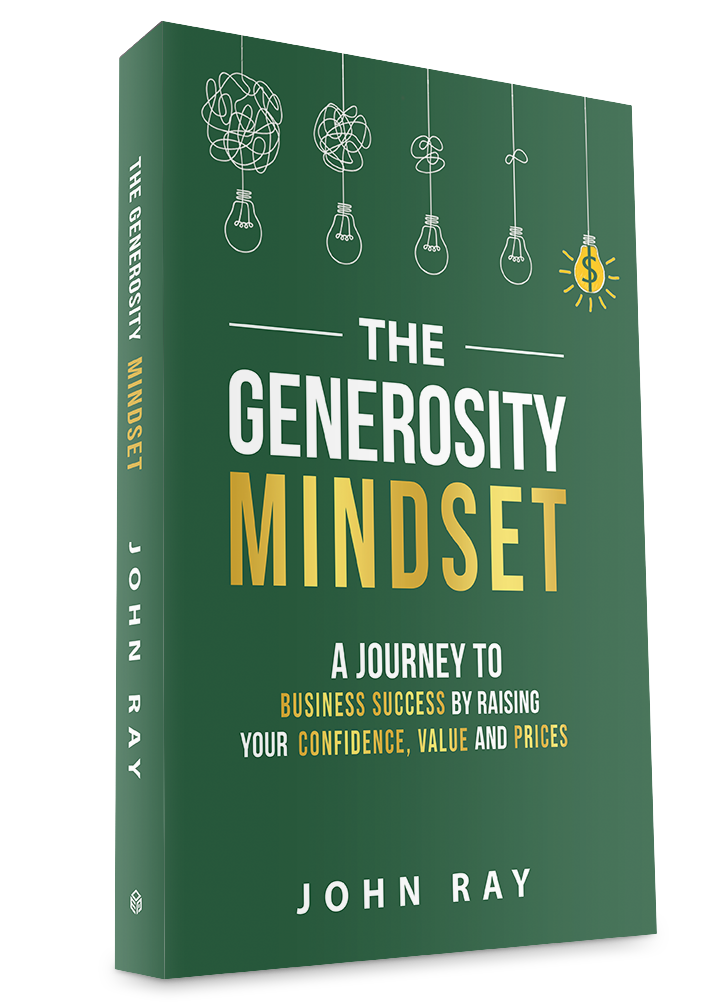
The Generosity Mindset, by John RayJohn is the #1 national best-selling author of The Generosity Mindset: A Journey to Business Success by Raising Your Confidence, Value, and Prices.

If you are a professional services provider, your goal is to do transformative work for clients you love working with and get paid commensurate with the value you deliver to them. While negative mindsets can inhibit your growth, adopting a different mindset, The Generosity Mindset®, can replace those self-limiting beliefs. The Generosity Mindset enables you to diagnose and communicate the value you deliver to clients and, in turn, more effectively price to receive a portion of that value.

Whether you’re a consultant, coach, marketing or branding professional, business advisor, attorney, CPA, or work in virtually any other professional services discipline, your content and technical expertise are not proprietary. What’s unique, though, is your experience and how you synthesize and deliver your knowledge. What’s special is your demeanor or the way you deal with your best-fit clients. What’s invaluable is how you deliver outstanding value by guiding people through massive changes in their personal lives and in their businesses that bring them to a place they never thought possible.

Your combination of these elements is unique in your industry. There lies your value, but it’s not the value you see. It’s the value your best-fit customers see in you.

If pricing your value feels uncomfortable or unfamiliar to you, this book will teach you why putting a price on the value your clients perceive and identify serves both them and you, and you’ll learn the factors involved in getting your price right.

The book is available at all major physical and online book retailers worldwide. Follow this link for further details.


Connect with John Ray:

Website | LinkedIn | Twitter

Business RadioX®:  LinkedIn | Twitter | Facebook | Instagram

Tagged With: B2B pricing, changing your pricing mindset, clients, fear, John Ray, overcoming fear, pricing, professional services, The Price and Value Journey, value

Why Fear Keeps You From Your Work/Life Balance

August 25, 2023 by Mike

StatusLifewithLetaborder
Gwinnett Studio
Why Fear Keeps You From Your Work/Life Balance
Loading
00:00 /
RSS Feed
Share
Link
Embed

Download file

Synthia Simonsen, Leta Brooks-Hays, and Derek Hays

Synthia Simonsen/Certified Life Coach

Synthia Simonsen is a weight loss and life coach for busy moms. She is certified through The Life Coach School. Synthia is passionate about world travel, date nights with her husband, and spending time with her five kids.


“WHAT’S THE STATUS OF YOUR LIFE?”

Ask yourself this question and dive into the “Status Life with Leta” podcast. Leta takes her millions of listeners on a journey to design their best life. No topic is off limits and she never shies away from using her own life as an example. Leta engages her audience with her honesty, captivating stories, and talent for teaching.

“Never settle for the status quo. Life doesn’t have to be boring or mundane. Let’s work together to design your best life!” – Leta Brooks-Hays

“STATUS LIFE WITH LETA” IS PRESENTED BY DEREK HAYS LAW AND 5STRANDS AFFORDABLE TESTING

If you’ve been injured by someone else and you need an attorney to fight an insurance company for you, the only one to call is Derek Hays Law at 404-777-HURT. Let Derek put his 26 years of knowledge and experience in the personal injury field to work for you. When you hire Derek Hays Law, you get a team that specializes in personal injury claims and a one-on-one experience with your attorney.

Gain personalized insights on how your body interacts with your diet and lifestyle patterns with 5Strands Affordable Testing. All they need is 5Strands of hair and you’ll receive personalized results to help you reach your health and wellness goals.

FOLLOW STATUS LIFE WITH LETA

linkedin-256

Contact Leta at statuslifewithleta@gmail.com

Visit Leta’s Blog, Online Store, and more at www.statuslifewithleta.com

Tagged With: 5strands, 5strands affordable testing, balance, certified life coach, Derek Hays, derek hays law, design your life, fear, law office of derek hays, Leta Brooks, leta brooks-hays, Status Home Design, status life, status life podcast, status life with leta, Synthia Simonson, weight loss coach, work-life balance

Should I Price My Services Lower When I’m First Starting Out?

January 31, 2022 by John Ray

When Starting Out
North Fulton Studio
Should I Price My Services Lower When I'm First Starting Out?
Loading
00:00 /
RSS Feed
Share
Link
Embed

Download file

When Starting Out

Should I Price My Services Lower When I’m First Starting Out?

I recently received this question from a professional services provider who was just starting out in their practice, and barely had dry ink on their business cards. The premise behind their question was that they are new in business and want to attract clients to “get going.” Here’s a high-level version of a more specific answer I gave them. (In a word, the answer is no.) The Price and Value Journey is presented by John Ray and produced by the North Fulton studio of Business RadioX®.


TRANSCRIPT

John Ray: [00:00:00] And hello, I’m John Ray on The Price and Value Journey. I recently received a question that was along the lines of, Should I price my services lower when I’m starting out? I get this question a lot from new professional services providers, ones that have just started their practice.

John Ray: [00:00:18] It’s an understandable question, but it comes from a faulty assumption. The premise is that lower prices attract customers, and that’s an understandable misconception. It’s one I labored with when I started out. That conception, that idea is wrong.

John Ray: [00:00:38] A couple things here. One is that prices are marketing signals. In the absence of any other indicator, a price is a marketing signal. For example, if I were to offer you a Lexus for $2,000, what would you think? It’s too good to be true, right? That’s part of the problem with pricing in a way that is supposed to be promotional, sometimes it actually drives clients away.

John Ray: [00:01:04] Now, let’s call something else out though. Part of the problem with professional services providers starting out is both fear and confidence. We are afraid and insecure in thinking a buyer will look at us and question our inexperience in the business. The answer to the problem is focusing on the client, discussing and understanding their problems in depth. What is the scope of the issues that their problems are causing? What will the client be able to do, whether it’s greater sales, lower expenses, less aggravation, a better vacation because the problem gets solved? What’s the cost of doing nothing?

John Ray: [00:01:48] You see, questions like this are a value conversation. And a value conversation is a dialogue with a customer which helps ferret out what the solution to their problem is worth to them. When you have value conversations with clients, you’re shifting everything. The comparison is less about price relative to, well, in this case, you’re supposed lack of experience or your newness in business.

John Ray: [00:02:17] Instead, the comparison becomes more in the minds of that client about price relative to the value of the solution. Once you’ve had a thorough value conversation, you may find that you’re not a great fit for this client. That what they really need is something you can’t provide. If so, you’ve done both them and you a favor.

John Ray: [00:02:42] But if you think you can solve the client’s problems, craft options for working together. Offer a good, better, best set of options. The good option should be your very basic – we’ll call it – compact car offering priced at more than what your gut tells you it should be. The best option should be your luxury solution to the problem when you know you can deliver with a price you think is crazy high.

John Ray: [00:03:12] Now, if you offer options after having a deep dive value conversation, the discussion with that client becomes more about the ways and terms to work with you as opposed to your time in business, your experience, what have you. Now, there’s a lot of detail underneath this answer, but that’s the way I answered this particular question on how should I price when I first start out. Have a value conversation, offer options.

John Ray: [00:03:46] I’m John Ray on The Price and Value Journey. If you’d like to give me a question that I can answer here on this podcast, I’m happy to receive it. Just email me, john@johnray.co. Thank you for joining me.


About The Price and Value Journey

The title of this show describes the journey all professional services providers are on:  building a services practice by seeking to convince the world of the value we offer, helping clients achieve the outcomes they desire, and trying to do all that at pricing which reflects the value we deliver.

If you feel like you’re working too hard for too little money in your solo or small firm practice, this show is for you. Even if you’re reasonably happy with your practice, you’ll hear ways to improve both your bottom line as well as the mindset you bring to your business.

The show is produced by the North Fulton studio of Business RadioX® and can be found on all the major podcast apps. The complete show archive is here.

John Ray, Host of The Price and Value Journey

John Ray The Price and Value Journey
John Ray, Host of “The Price and Value Journey”

John Ray is the host of The Price and Value Journey.

John owns Ray Business Advisors, a business advisory practice. John’s services include advising solopreneur and small professional services firms on their pricing. John is passionate about the power of pricing for business owners, as changing pricing is the fastest way to change the profitability of a business. His clients are professionals who are selling their “grey matter,” such as attorneys, CPAs, accountants and bookkeepers, consultants, marketing professionals, and other professional services practitioners.

In his other business, John a Studio Owner, Producer, and Show Host with Business RadioX®, and works with business owners who want to do their own podcast. As a veteran B2B services provider, John’s special sauce is coaching B2B professionals to use a podcast to build relationships in a non-salesy way which translate into revenue.

John is the host of North Fulton Business Radio, Minneapolis-St. Paul Business Radio, Nashville Business Radio, Alpharetta Tech Talk, and Business Leaders Radio. house shows which feature a wide range of business leaders and companies. John has hosted and/or produced over 1,100 podcast episodes.

Connect with John Ray:

Website | LinkedIn | Twitter

Business RadioX®:  LinkedIn | Twitter | Facebook | Instagram

Tagged With: confidence, fear, John Ray, Price and Value Journey, pricing, professional services, starting a business, starting out, value, value conversation

Plain and Simple. It’s Hard to Be in Business or a Business Owner

January 10, 2022 by John Ray

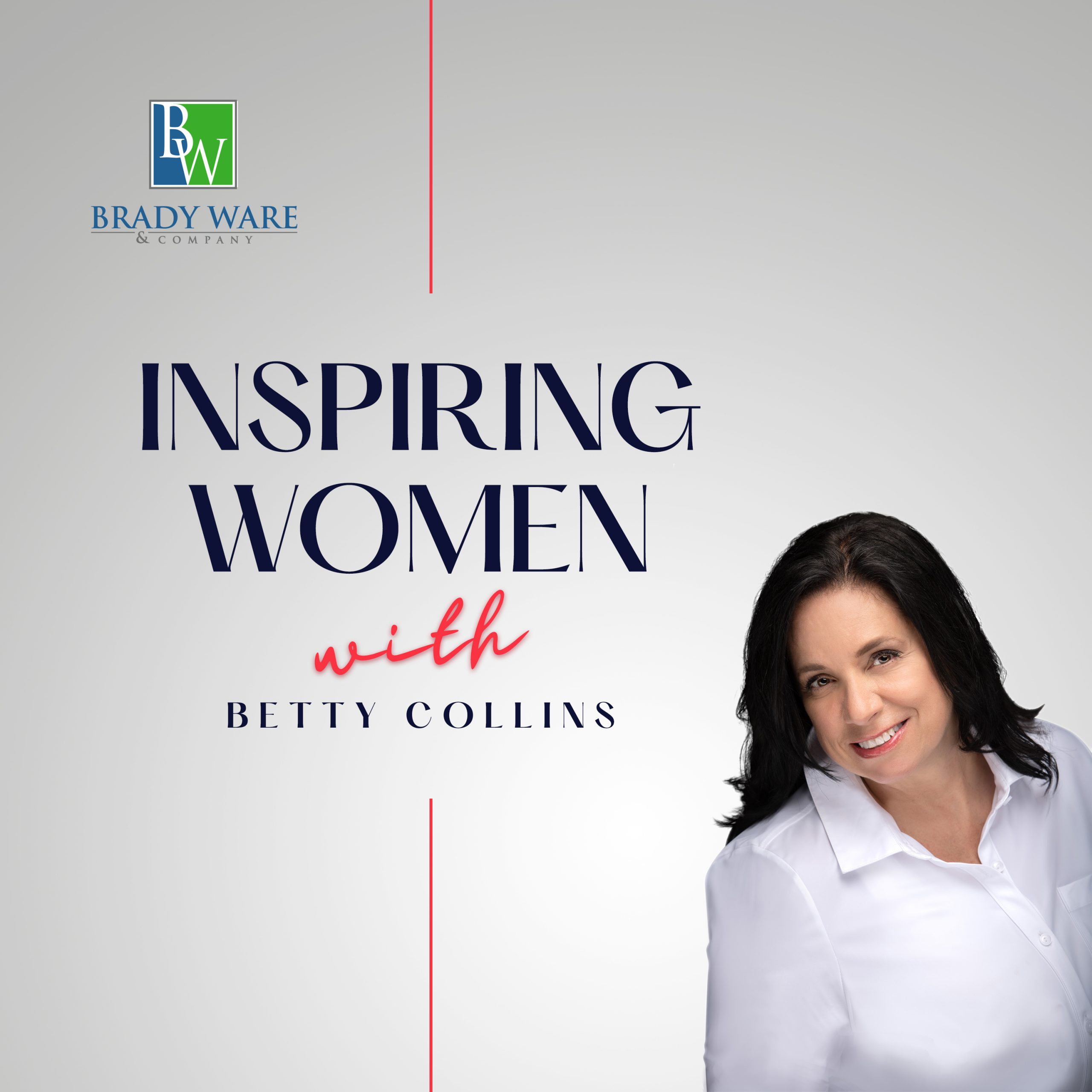
Inspiring Women PodCast with Betty Collins
Plain and Simple. It's Hard to Be in Business or a Business Owner
Loading
00:00 /
RSS Feed
Share
Link
Embed

Download file

Plain and Simple. It’s Hard to Be in Business or a Business Owner (Inspiring Women, Episode 40)

On this episode of Inspiring Women, Betty Collins discusses issues which are making business ownership particularly challenging today, and some of her recommendations for avoiding fear and paralysis. Inspiring Women is presented by Brady Ware & Company.

Betty’s Show Notes

We’re in a new year again, and we just need it to be easier, right?

Many business owners have felt that they can’t move forward because they’re paralyzed. When you’re paralyzed, it means you can’t move. But if you’re a business owner or in business, you aren’t meant to be still, you aren’t meant to be not able to move. So you live in that fear.

But we can’t do that. We have to get to what’s driving the fear.

I’ve put it into a few categories in this episode. I’m sure that there are other things that you could add to it, but you really need to address these things.

This is THE podcast that advances women toward economic, social and political achievement. Hosted by Betty Collins, CPA, and Director at Brady Ware and Company. Betty also serves as the Committee Chair for Empowering Women, and Director of the Brady Ware Women Initiative. Each episode is presented by Brady Ware and Company, committed to empowering women to go their distance in the workplace and at home.

For more information, go to the Resources page at Brady Ware and Company.

Remember to follow this podcast on Apple Podcasts and Google Podcasts.  And forward our podcast along to other Inspiring Women in your life.

TRANSCRIPT

Betty Collins: [00:00:01] Has anyone ever inspired you to change your life that made you more fulfilled? Well, as a leader in your business and in your community, what are those questions that you ask yourself on a daily basis? It’s these questions that we explore on inspiring women. I am your host, Betty Collins, and I’m a certified public accountant, a business owner and a community leader who partners with others who want to achieve remarkable results for themselves and their organizations. I am here to help inspire you to a positive step forward for a better life. You know, plain and simple, it’s just hard to be in business or be a business owner in today’s environment. I mean, you know, 20, 20, let’s look back. That was a whole new world we had to totally deal with. And then twenty one was all about, we’re going to recover and we’re going to have normal. And now we’re in a new year again, and we just need it to be easier, right? Not easy, easier. And part of the reason I think that people get wrapped up in. How can this be easier, but they can’t move forward because they’re paralyzed? I mean, when you’re paralyzed, it means you can’t move. But if you’re a business owner or in business, you you are meant to be still you aren’t meant to be not able to move. So we live in that fear in general, but certainly has been as business owners in the marketplace.

Betty Collins: [00:01:33] We can’t do that. So we have to get to what’s driving the fear. I mean, what’s driving the fear? And I’ve kind of put it into a few categories, but I’m sure that there’s other things that you could add to it, but you really need to address those things. So as as you’re listening, I would be writing down what is driving the fear that’s paralyzing me. Well, I think overall leadership at our local, state and federal level, you know, in the country, I think in our companies, the politics of it all, there’s a lot of fear with that. The workforce is definitely something that is going to take some time after what we’ve been through to get back to the levels that we would like, so that’s a huge issue for people. And if you don’t have workforce, you can’t have the supply chain back. So that’s another thing that we’re a lot of fear about now. If you’re like me, I’m a professional services person. I don’t have a big problem with the supply chain. It doesn’t affect me much. But for a lot of people, it’s very real. I mean, we haven’t seen inflation like this in a long time. It makes people a little nervous, makes them a little afraid. And then I think, you know, for many people, the effects of that 20 20 year in that year, a lot of money in cash were thrown at business owners.

Betty Collins: [00:02:56] And that’s not the norm. We don’t get cash thrown at us because we had to kind of change our mindset in twenty one and now that we’re we’re heading into new years and a new time period. It’s now about us earning money again. It’s about our bottom lines. And because we don’t have a bunch of cash being thrown at us or that we can apply for or get for free. We’re back to that. Hey, we got to get a fair how to sell services and we got to figure out how to provide products so that we can actually earn money again. And I think one of the fears is people, you know, they’re tired. You hear that a lot. Well, OK, so how do we respond to fear? First, we got to do what I just did. You’ve got to identify them. I’m identifying the things that I see all the time with business owners. They just these are the things they talk about over and over, sometimes with fear that we retreat. We kind of suppress. We ignore it. We live in denial. I’m guilty of all those things. We get very sidetracked. Today is nothing. But all of a sudden you’re sidetracked over here and you’re consumed in this and a tweet came across and another notification and you can’t. And then subject matters at all gets you sidetracked. We focus on the negative when we when we’re in fear and remember again, when I said, we’re in fear, we’re paralyzed, we can’t move.

Betty Collins: [00:04:10] The other thing that we think about when we’re in these frame of minds is, Oh, no one else is experiencing what I’m experiencing, not true. And we’ll talk about that. And then we’re kind of holding our assets close. I mean, you’re holding them to you close. And what do you do when you hold something close? It’s not going to grow, it’s not going to go out there. It’s not going to make into something because you’re hovering, you’re holding it. So those are things that we do when we when we have fear. I always ask this question. So now what? Ok, you’ve talked about the fears you know of. I’ve written down some fears. We’ve talked about how we respond to them. So now what? What do I do? Well, if you’re this is a business session, this is about being a business owner. The marketplace is your answer. The marketplace working is your answer and you have a role to play in that as a business owner and a leader. That’s the key. So go back and start with your why and get it figured out. I mean, for me, I keep that focus. I keep that in my forefront. I had someone help me go through Simon Smith’s University of Why. And it came up with when, when the U.S. works, the world works, and I took it a step further and instead when employers, which means they have employees, are taken care of.

Betty Collins: [00:05:26] Those are people that are getting provisions and those are households that form our communities. So in times where I have to look and go, OK, I got to focus on what’s important. I pull out that why I have it in front of me, I go back to that. The other thing when I say now what? Well, control what you can and influence what you’re not controlling to get it to where you need it to be. And of course, you have to look at, you know what? Change is not an option. We all changed in twenty twenty. I hate the word pivot, but we used it a lot. But we had no choice and we really didn’t have those choices in twenty one. And as we go into new times, we’re still not having that choice. And then you have to deal with what keeps you up at night. That’s the hardest thing. If you want more sleep and not wake up at two o’clock, everyone has that conversation. You already know what it is, right? You wake up and you start thinking about it. I used to wake up and instead of just like being grateful that I’m up and going and had a good night’s sleep, I thought, Well, I’ve got to do this. I got to do that and I got to do this.

Betty Collins: [00:06:24] And what about this and what? What keeps you up at night? And I kind of, you know, the overall. So I’m going to go back to these, the overall leadership and politics, the environment that workforce, the supply chains, financial concerns, people are like, well, the stock market’s rocking, Oh, it went down five hundred. No stop. Stop that. We’re going to talk about what you do with that. And then, you know, we still are kind of talking about twenty twenty and twenty one, right? We’re still. But are we looking back or are we looking forward? What keeps you up at night? And I think exhaustion sometimes can keep you up at night because you just can’t wind down and you’re just beyond. Let’s talk about these things that keep you up at night. Things about business owners that are crazy the workforce. Eighty three percent of businesses are struggling with real workforce access. They just don’t have people coming back to work. They don’t have new, new folks. It’s just that way. Eighty three percent, this is not a problem for just hey, retail or restaurants. It’s bigger than than that. It was really tight prior to COVID. I don’t think most people knew that. So when we went through this time period of tremendous change, I think it’s going to take a time period to have it change. Back when I was coming across information about the workforce, this was one of the statistics I was very, very surprised in.

Betty Collins: [00:07:45] 50 percent of teenagers work today. That’s mind boggling to me. We all worked when I was growing up. My kids all work, so it’s not just my generation and now we’ve taken that workforce out of our system. So I don’t know if it’s parents. Put your kids back to work because we’re all focused on act scores and college prep and et cetera, sports and being in two or three sports. But that has contributed to our workforce. So we’ve got to figure out how to get some of that back. You know, people think the shortages, they come up with these things, it’s like, do you have any research or data on it? And there’s some myths about it. You know, people stay home, they get paid more. That was only for three percent of the country during 2020 and 21. Well, if you pay more, they’ll come to work. No. They’re making outrageous offers right now to folks. In fact, if you ask people who are unemployed or employed, what is the number one thing they really want to they want to have in their job? It’s flexibility because they’ve been used to it over this last couple of years. Another myth is that we just are showing a lack of interest or people, and they just that’s not true. There’s a shortage of people. There was pre COVID.

Betty Collins: [00:08:55] So what are the solutions? You know, what do we do to get that workforce back? Well, part of it is I think you’re going to see it happening. First of all, the state and federal unemployment has ended. And so and that’s probably not going to go back to those those levels again, where they’re giving additional money for people to so that they could make it through this time. Another thing is in this may sound harsh, but you can you can now evict people. There’s not a lot of those things going on where for a while you couldn’t evict people if they weren’t paying rent. Another factor is student loan deferment is now over. So that’s another factor, right? But on the other side of that’s the income side. The other is that households, a family of four, it’s about one hundred and seventy five to two hundred dollars more a month to live in cost between food and gas and basic needs. So at some point, you’re going to start seeing people come back to work. For that reason, though, the incomes are gone and the expenses are higher. So I think you’re going to start seeing that, but I still think it’s going to take some time. So you’re going to be up at night. When it comes to your workforce, you’re going to be thinking about that. It’s just harder to do business. So any option and any idea and anything thing take that you can have with your team is crucial during this moment.

Betty Collins: [00:10:13] So you can hire and get on track solutions, pay more sure increase hours. Make sure certainly that you are competitive giving people more hours, especially if they were a 30 hour week. Can you can you do thirty two to thirty five? That would help anything to make productivity better. So you’ve got to evaluate your products and your services and how you’re delivering them and how you’re doing it. Because when you do that kind of stuff. Bingo, you don’t need as many people. So those are that’s another solution. And then you’ve got to focus on five very basic things when it comes to your workforce training, training, training and training. Now that’s not all my five, but training must exist for your employees. They want that. And when they have that and training isn’t just here’s how you do your job. Here’s why we do this. Here’s why we do our salad this way because we want it to be a certain product for the client. That’s why we do this. It’s why we order this kind of food to make it, et cetera, et cetera. So training is not just about here’s how you do it. Here’s why we do it. The other thing you have to focus on is adaptability. Flexibility is the number one thing people are looking for in their jobs right now.

Betty Collins: [00:11:25] Are you hybrid? Can I be home? Can I come in sometimes? Am I going to be hoteling my office? I mean, what can I do? Can I work any time from Monday through Sunday just so I get my job done, et cetera? When you look at those things, the next thing is then how are you going to recruit if you’re going to give those options? Because that’s what people are looking for and you’re looking for people. So you’ve got to be looking at what they are looking at and partnering with educational facilities around you. You know, it was funny. I have a client who is a cleaning company, and the Baby Boomers, of course, are starting to really, really retire. Kind of they still are working part time, but they’re doing things like, I just want two days a week where I can get out and do something. And so this cleaning company all of a sudden has had some retirees. So I said, Well, great. Go to your local senior center, go to your local community areas where older people hang out because they might see a job posting. They don’t want to go online, they don’t want to try to register that way. Instead, they might see something that looks more personal and just call you. It’s a great way to get that. Workforce, because they’re out there and they’re this is a very driven generation. And then you’ve got to consider.

Betty Collins: [00:12:32] Should I get some contingent workers in place contracts and temporary things which take attorneys and insight? But so those are some of the things you can do when you’re focusing on the five basics to get that workforce back. But eighty three percent of are going through it and focus on not what we used to do, focus on what do we need to do and the five things that I just talked about. What else keeps you up at night? Why is it hard to do business and be a business owner, the supply chain? I will tell you that when we get the people back to work, we will have our stuff right. I have a person who is in promotional products and instead of selling what they normally sell, and if client calls and wants this, they direct them to something that they can get. Ok. She’s had. And she says taking the order now is just not taking the order. It’s really giving them all kinds of different options of what’s available. And so she’s had to really work at that. But the five supply chain drivers are production, inventory, location and transportation and information. So those are the things that you need to have some influence on. Maybe you become the supplier. I have somebody doing that in right now in construction because he can’t get wood to build decks. So he’s like, everyone can’t get wood to build decks.

Betty Collins: [00:13:42] So he started buying wood and building it up and guess who has the wood he does because he’s now the supplier? He fixed his own supply problem by continually ordering bulk and finding it where he could find it. It took some time to build up. It was not instant, but now he is the supplier selling things that are really, really good profit. You know, the thing that needs to happen in our supply chain is that complexity needs to be removed and regulation has to be worked on. Do not ever underestimate that if you are big and need supplies and you can’t get it and you know it’s bogged down in regulation, call your representatives and your senators and people that are influential. These are everyday people. Most of them don’t look at the news, look at who’s in your in your districts and start calling them and say, I really need help. My association, this or my lobbying group that or I’m a business owner and I need this. How can you help me? Do not underestimate the power of that phone call because you have to try to to get that complexity removed. Companies with being intentional will win, and it will have the advantage. So when this guy goes out and buys his own lumber and just keeps stockpiling it, he now has something that somebody needs. It’s the same thing in the services industry as well. So you have to look at the supply chain as what can I control about it or it’s just going to take longer or I’m going to not sell as much.

Betty Collins: [00:15:05] So I’m going to have to sell it for more. You have to look at how can you control it and it will come back, especially as the workforce comes back. People have made a ton of stuff that’s sitting on ships. Believe me, they want to sell it, believe me. The other things that keep people up at night really are financial concerns. And it’s funny. This was a funny one because people are like, I’m holding onto my cash. I’m not going to borrow any money. And oh my goodness, and look at this. And then I have people who are like, Look at the stock market, we are rocking it. I mean, so both people are living in worlds of sort of you’re only focused or your your tunnel vision. You have to look at more than one thing when it comes to the financial concerns because this is what holds businesses back from reinvestment. They’re like, I better not do it now because who knows what’s going to happen to my four one kay or my savings or my line of credit, et cetera. These are the things you pay attention to. The stock market’s the easiest one. First, I have a very good financial planner. Do not try to play that. If you you can really lose very badly in that.

Betty Collins: [00:16:02] But the stock market is is very holding. It is thirty six thousand. It is all those things. It could go to thirty four. It could go up five hundred one day and eight hundred. It’s not the only indicator out there that you should be making financial decisions on interest rates. Right now they’re holding and the feds are doing that intentionally. So you really have to look at that interest rate thing and go, are they going up? Which interest rates going up the kind where I earn money in the bank? No. Or the kind I’m paying on my credit card or my loans. And right now, they’re holding those things. So that’s a strong indicator. How long will they hold it? So that’s why you look at it, what’s going to happen in twenty three and watch those interest rates? So now you’re watching the stock market, you’re watching the interest rates, look at unemployment rates. And yes, we are coming back and people are going to go to work. And we saw that even the numbers continue to get better with people who are not filing unemployment claims across the country. That number is a really important number. We’re very used to that being low, but you need to to continue to watch that, obviously during COVID when it went to 18 and 20 percent. Of course, that’s crazy, but that’s not where we normally live and it came back very quickly.

Betty Collins: [00:17:08] Inflation rate, everyone is not used to this. I remember it in the seventies. I remember my brother buying a house and 15 percent interest was what it was. And the day he got that to be, six percent was like a huge deal. But interest rates play. So not only just interest, I’m sorry in. Violation rates, interest, inflation, unemployment stock market, you need to watch all those, and if it’s something that overwhelms you, then get somebody to help you with that, whether it is your account or your financial planner. Economists are out there. They can be hard to understand sometimes, but those are things to pay attention to when you’re making financial decisions. But living in fear or making quick judgments on one factor is going to paralyze you and we all know what paralyzed does. You can’t move the other two things in financial concern. I’m not going to spend a lot of time on today, but they’re not easy. Is the GDP, which is really just the market value of your final goods and services? Is that growing? If it’s not and it’s stagnant, then you have to look and go, Oh, it’s stagnant. But all the costs to do business is continuing to go up. Those are things you watch the last one, which everyone kind of understands, but you know, maybe you don’t talk about it all the time is the consumer price index.

Betty Collins: [00:18:25] You know, what do you pay for things now? Well, I just said earlier in this podcast, groceries, basic needs and gas on a family of four is up one hundred and seventy five dollars a month. So we are paying more. But our are the goods that we’re selling are there’s something you can sell it for more right? Or is it going to be stagnant? So when you’re talking financial concerns, don’t just look at one thing. So then what other keeps us up at night? Well, the uncertainty, just the uncertainty from day to day in your operations. So what? What does that mean? Well, I’m going to tell you to stay with the basics of business. There are three things you stick with. I don’t care if it’s good times, bad times, I don’t care if it’s 19 and we’re roaring and 20 we stop and twenty one we climb out of a hole and twenty two. We’re optimistic and twenty three, et cetera. It doesn’t really matter. These are basics of business that you must practice if you’re going to have success and life is going to be not as hard. When I when I talk about plain and simple, it’s just hard to be in business. Stay with the basics. Number one, align your leadership. If you do not have aligned leadership, everybody going in the same direction, everybody in agreement. At the after they’ve all disagreed, we’re going to agree to disagree, but I mean, they must be aligned.

Betty Collins: [00:19:37] There must be a an absolute strong unity. Stick to strategy. That’s the second one. You do not want to have shoot from the hip. Let’s pivot. Now, let’s make a rash decision. No stick to strategy. Strategy means you’re thinking about it. You have a plan. It means you have purpose. You’re pulling all together. Your strategy needs to be relevant as well in the market time that you’re in. So don’t look at the what we call Sally in accounting, which is same as last year. But you have to stick to strategy and then you have to strengthen your sales and your operations together. You can have all kinds of sales goals if you don’t have supply chain and supplies and product to sell or you don’t have people to service, it doesn’t matter that you put all your focus and strategy on. We’re going to grow 30 percent or, hey, we’re going to just not hire anybody because we can’t hire anyone. And so we’re just going to be flat. And but the sales department is still going to grow. No, when you’re dealing in bigger contracts are bigger things you have to get with the operations, day to day folks and the people who are selling the product. So before you take a contract or before you decide to sell something or whatever it is, do you have the supplies and do you have the people? So those have to go hand in hand? It doesn’t matter that you want to grow 20 percent if you don’t have the people in the service to do, it doesn’t matter.

Betty Collins: [00:21:02] I mean, we have Bob Evans in our area right now who a lot of times can’t open for dinner because they have a host and a cook so they can talk all they want. That restaurant sales needs to be this today. Well, if you’re only open eight hours and their model and plan is to be open 15, you’re not going to meet those sales goals because you don’t have this. What some restaurants have just done has become very good at carryout because you can do that with a skeleton crew, so you still have to come with those options because everything in that store, strategy wise and and when you’re pulling your sales and operations together are counting on that. So you have to do those basics of business when you feel uncertain, stick to basics, align your leadership, stick to strategy and strengthen sales and operations together. You know, you’re up at night, and I made the comment that you probably have a night because you’re so exhausted. Have you ever had those nights where you can’t sleep because you’re just exhausted? I’ve had that right. So how do we quit being as exhausted as we continue to go forward? Well, here are things that I have personally done, and quite frankly, they work.

Betty Collins: [00:22:02] It’s been great for me. I have very little social media. You know why? Because it just takes from me more than it gives. Shut it down. Shut it down. Stop. I’ve actually gotten into crossword puzzles and reading a lot more. I still, though, must be informed you can’t just hide from the world what you’re living in. So research your outlets and make sure that their outlets that are making decisions on truth or giving you truthful information so you can make the decisions. You will not be as exhausted when you can be very cut and dry. Now, one of the things I like is the Epic Times. It’s a conservative newspaper, but I can go in there and it gives me my headlines of the day. It’s not sexy, it’s not jazzy. Because you know what? It’s just news. It’s not opinions. It’s not. Here’s an editorial. It’s just this happened today, OK? At least I know kind of what happened. If I want to click on it, I can. Part of not being exhausted, part of getting some good sleep at night is you have to plan restoration. I know for myself when I know my week is going to be a certain way, I do this now. I look at Sunday or I look at Saturday or Thursday afternoon. I find a time where since I knew Tuesday and Wednesday, we’re going to be absolutely mind boggling.

Betty Collins: [00:23:15] I’m going to be home at Thursday working or I’m going to come. I’m going to take off a little earlier. I’m going to make sure Thursday night isn’t filled with an activity because I need to have a little bit of quiet, maybe with a nice firepit night. It doesn’t matter that it’s Thursday night. I need that restoration to get through Friday and the weekend or whatever it is. When I know that I’m going to hit some certain deadlines right after that, I always make sure there’s a day spa. Something right doesn’t have to be a whole day. It doesn’t have to be crazy. But I have planned restoration when I know my children are coming and they’re bringing their beautiful babies. I know in 30 hours of that, I’m going to be exhausted so nothing can be planned for the next 24 hours because I’ve got I’m going to need to totally overhaul my house because I wanted a certain way, and I know that I’m going to have to plan to rest so that I can enjoy them. But then I’m OK. Planned restoration elimination of negative people just continued to get those purge those people out of your life. You won’t be nearly as exhausted and then you have to look at that balance of health, their spiritual, physical and emotional. They all work together. This was one who changed a lot for me in 2021, the year of twenty twenty one when I came in after a year pandemic, of course, I said I got to do something different and I found a book about rhythm and balance.

Betty Collins: [00:24:33] And in this book, it talks about, here’s the stuff that takes from you, and here’s the stuff that that gives to you. And here’s how much you need. In each balanced quarter, there were four areas, but one of the things that I really learned from that book was the first, and the last hour of the day is really crucial. How I spend my first hour of the day, I how do I want to spend that? I want to get up a little slower and I want to enjoy my house a little bit more and have coffee. I want to pack a healthy lunch. There’s just this vision I had for that first hour of the day. At the end of the day, I don’t want to wind down with TV because it distracts me. I don’t want to wind down with social media because it would distract me. Instead, I wanted to read something positive. I wanted to have some time of gratitude. I chose how I ended my day, which means when I ended that way, I sleep better. And when I start my day, I have a better day. So control the first and last hour of your day. You’ll be amazed in that. You’ve got to figure out what you want that to be.

Betty Collins: [00:25:34] So that’s that’s just as much, you know, you’re created on purpose for a purpose. I’ve never been a big fan of a of a life statement, but I am a big fan of my why and when I’m talking to you, the business owner and people who are in business, when you get discouraged with it, I make sure I focus on my why and what is that? Well, my why is when the U.S. works, the world works. But I took it a step further and I like the when employers have employees, those folks get their provision from that, from that business owner. Those are those are households, right? And those households form our communities. And what I can focus on that is my purpose. That is why I was created to help in this segment called accounting. I can clear the air a little bit. I can go, OK. You can do this. And what I would tell you is what I continue to do, so I’m not so exhausted is I’m bringing back the things that I miss in my life, especially from pre pre-COVID. Those are important things. You know, socialization is huge for me, things that I just really wanted to get together with more. I just started doing that. I have a friend who said, I just want to go to dinner and not talk about COVID 19 in politics and stuff.

Betty Collins: [00:26:48] I just wonder, know how your kids are. I just want to have some fun. I just want some light enjoyment. That was that’s what she’s missing. So she’s making sure she’s doing that and those things will energize you. They will give back to you, and the exhaustion will continue to to be less. So those are the things I want to talk about in the plain and simple, it’s just hard to be in business. It’s just hard to be a business owner. So get hold of those things that are keeping you up at night. Deal with the things. Call this thing called fear, so you’re not paralyzed. Get some help to get through these things. Maybe if they’re too much for you, economic wise, or you feel like you’ve got to be an economist to understand those things that I talked about. You’ll see a difference. I have seen that difference. So I’m just grateful that you joined me today, and I hope this podcast was inspiring for you. Inspired women has been presented by Brady Ware & Company as your career advancements continue, your financial opportunities will continue to grow. Be prepared. Visit Brady Ware to find out more about the accounting services. They can assist you to that next level. All this, plus more about the podcast, can be found in the show notes for this episode. Thank you so much for tuning in. Feel free to share the show or give us a review. Remember, inspiration is powerful. Whose life will you be changing?

Tagged With: Betty Collins, Brady Ware, business, business owner, fear, Inspiring Women

Inspiring Women, Episode 12: Taking Your Business to the Next Level (An Interview with Catherine Lang-Cline)

August 12, 2019 by John Ray

Inspiring Women PodCast with Betty Collins
Inspiring Women, Episode 12: Taking Your Business to the Next Level (An Interview with Catherine Lang-Cline)
Loading
00:00 /
RSS Feed
Share
Link
Embed

Download file

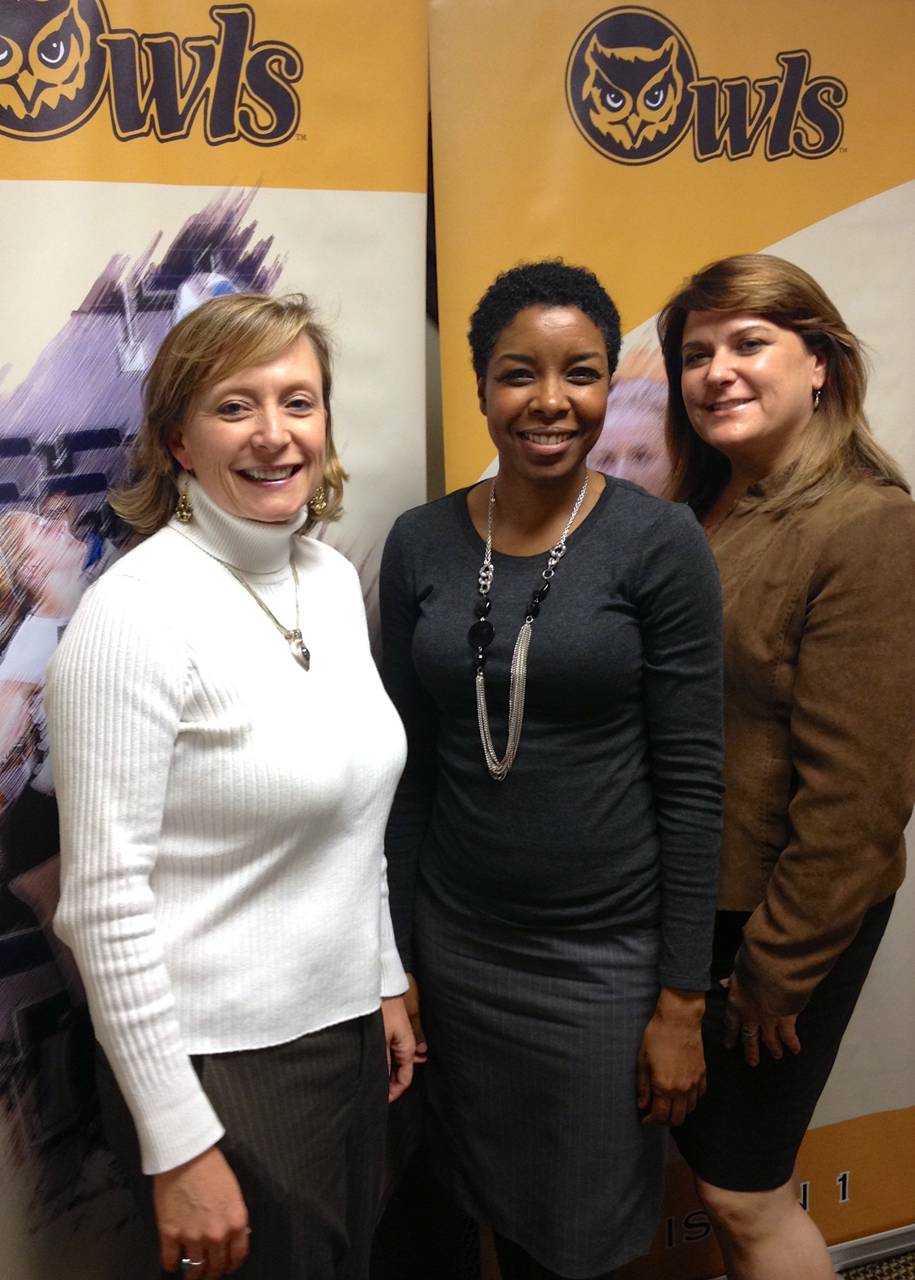
Catherine Lang-Cline and Betty Collins

Taking Your Business to the Next Level

Is your business stuck? What do you need to do to take your business to the next level? Betty Collins, host of the “Inspiring Women” podcast, addresses these issues and more. Betty also interviews Catherine Lang-Cline of Portfolio Creative on the challenges she faced in scaling her business. “Inspiring Women” is presented by Brady Ware & Company.

Catherine Lang-Cline, Portfolio Creative

Catherine Lang-Cline

Catherine Lang-Cline is the President and Co-Creator of Portfolio Creative. Prior to forming Portfolio Creative, Catherine spent more than 20 years in the creative industry as a designer for corporations and ad agencies, both as an employee and as a freelancer. Along with her co-founder Kristen Harris, Catherine felt that there needed to be a place to help artists find work and help clients find talent. They combined their experience and opened Portfolio Creative.

Portfolio Creative connects the best of the best in the creative industry. They connect the best creative clients with the best creative talent. That can come in the form of direct-hire, temp-to-hire, projects with contractors, or other needs. They handle all areas of marketing and advertising. For more information go to the Portfolio Creative website.

Catherine is a Certified Staffing Professional with the American Staffing Association. She serves as a board member for the Greater Columbus Arts Council, the Columbus Chamber of Commerce and is chair of the Chamber’s Small Business Council. She is also an active member of WPO and is currently President of NAWBO Columbus.

Catherine resides in Columbus and enjoys art, traveling, cooking, doing home renovation, and riding motorcycles.

Betty Collins, CPA, Brady Ware & Company and Host of the “Inspiring Women” Podcast

Betty Collins, Brady Ware & Company

Betty Collins is the Office Lead for Brady Ware’s Columbus office and a Shareholder in the firm. Betty joined Brady Ware & Company in 2012 through a merger with Nipps, Brown, Collins & Associates. She started her career in public accounting in 1988. Betty is co-leader of the Long Term Care service team, which helps providers of services to Individuals with Intellectual and Developmental Disabilities and nursing centers establish effective operational models that also maximize available funding. She consults with other small businesses, helping them prosper with advice on general operations management, cash flow optimization, and tax minimization strategies.

In addition, Betty serves on the Board of Directors for Brady Ware and Company. She leads Brady Ware’s Women’s Initiative, a program designed to empower female employees, allowing them to tap into unique resources and unleash their full potential.  Betty helps her colleagues create a work/life balance while inspiring them to set and reach personal and professional goals. The Women’s Initiative promotes women-to-women business relationships for clients and holds an annual conference that supports women business owners, women leaders, and other women who want to succeed. Betty actively participates in women-oriented conferences through speaking engagements and board activity.

Betty is a member of the National Association of Women Business Owners (NAWBO) and she is the President-elect for the Columbus Chapter. Brady Ware also partners with the Women’s Small Business Accelerator (WSBA), an organization designed to help female business owners develop and implement a strong business strategy through education and mentorship, and Betty participates in their mentor match program. She is passionate about WSBA because she believes in their acceleration program and matching women with the right advisors to help them achieve their business ownership goals. Betty supports the WSBA and NAWBO because these organizations deliver resources that help other women-owned and managed businesses thrive.

Betty is a graduate of Mount Vernon Nazarene College, a member of the American Institute of Certified Public Accountants, and a member of the Ohio Society of Certified Public Accountants. Betty is also the Board Chairwoman for the Gahanna Area Chamber of Commerce, and she serves on the Board of the Community Improvement Corporation of Gahanna as Treasurer.

“Inspiring Women” Podcast Series

“Inspiring Women” is THE podcast that advances women toward economic, social and political achievement. The show is hosted by Betty Collins, CPA, and presented by Brady Ware and Company. Brady Ware is committed to empowering women to go their distance in the workplace and at home. Past episodes of “Inspiring Women” can be found here.

Show Transcript

Betty Collins: [00:00:00] Today, this podcast is about going to the next level in your business. We could go on and on about going to the next level in your professional life or in your career, in your company and in your personal life, but today I want to talk really about the business. It’s your business. It’s a woman-owned business, and we’re going to focus on that. For part of the podcast, I’m going to interview Catherine Lang-Cline. She’s with Portfolio Creative, and she has a great story. The reason I chose her is just encouragement.

Betty Collins: [00:00:30] She’s done an amazing job, and it looks easy from the outside, but she’s been through anything probably that you have been through. I have known her through being involved with the National Association of Women Business Owners, the NAWBO Columbus chapter. I had the privilege of serving with her on the board, watching her leadership. It’s no wonder she’s had success. She’s very known in Central Ohio area due to that success, but also just her involvement within the community.

Betty Collins: [00:00:56] I chose the topic today because women are starting businesses at a rapid pace. Here’s some numbers, and this is from the Women’s Business Enterprise National Council, so they’re pretty accurate, and it was done in 2018, so it probably hasn’t changed tremendously. As of 2018, there are 12.3 million owned businesses. When you look back in 1972, when they started tracking this stuff, there was 402,000 businesses, so we go, “Okay, yay! We’ve done some good things.” Here’s a statistic that’s great, women own 4 out of every 10 businesses in the US. That’s pretty significant, considering in 1988 you couldn’t even get your own financing. There was law that finally went into place for that if you were a business owner.

Betty Collins: [00:01:42] Since 2007, the number of women-owned businesses have increased 58 percent, which is better than businesses, overall. Again, we’re going kind of at this rapid pace. Last year, 1,821 businesses started a day, every day, and they were started by women. That’s pretty significant. Sounds really great. Sounds really cool. Women are slightly more likely to start a business than men. Why is that? I don’t know the reasoning behind that, but women have that interest. They have that drive. Women-owned businesses employ 9.2 million people. That is just only, though, eight percent of the private sector, but that’s a lot of people.

Betty Collins: [00:02:29] Women-owned businesses generate $1.8 trillion in revenue, which is about 4.3 percent of the revenue out there. The last one is, that’s really cool, from 2007 up to 2018, total employment by women-owned businesses rose 21 percent so, obviously, we are making some bold moves, some big moves in the marketplace that are changing the marketplace. I always say, when the marketplace works, the country works because households have provision, right? So, it’s just a huge, huge thing, and part of what I like to do in the business world is utilize accounting. Being a CPA is the venue for me to be part of that success. As much as all of these things sound really awesome, women struggle in business, and that’s just a reality.

Betty Collins: [00:03:20] Eighty-eight percent of women-owned businesses generate less than $100,000 in revenue. There could be a lot of things behind that number, so you don’t want to, you know, big doesn’t mean better. It could be what they do. It could be that they’re a sole proprietor, maybe they just got started. You know, when you’re a consultant, you can only consult so many dollars when you’re the actual, like an executive coach, there’s only so much to you get to that. But this group is growing, and it continues. Their revenues are growing. They have a little bit of struggle. And, then, 1.7 percent of women-owned businesses, though, do generate a million dollars in revenue or more.

Betty Collins: [00:03:58] Some people think a million dollars is a lot. Some people think a million dollars is nothing when you have that revenue, and those continue to increase, but women struggle getting to that hundred thousand and then a half a million, then over a million. I don’t know if it’s just all of a sudden you’re over a million, your mindset’s different and everything swoosh, and it just goes happily down the road, but they struggle, and it’s not easy being an entrepreneur whether you are a man or a woman.

Betty Collins: [00:04:25] What are the barriers that most women, you know, feel like are there … I’m going to just say business, in general, I think, but of getting to that next level? A lot of times you are this original, and you have an idea and you’re different and you’re passionate and you might want to do things. I mean, I’m considered a unique CPA because I’m fairly personable. As long as I keep that personal side of Betty Collins, I’m a different CPA. I’m still this original over here, but a lot of times we become copies, and we think we need to transform and be the norm, and a lot of times that takes away from who we are. Capital, less than three percent of venture capital goes to women-owned businesses.

Betty Collins: [00:05:08] I’m trying to ask a different question as to why that is because we know it’s true, but we just don’t really know the why so we can get to the problem of how to solve it. More women use credit cards for capital. Your banker would have a whole conversation about that, where you really should be using a bank and have a relationship with a banker that can give you the right capital, and a lot of times you’d use the wrong start-up money, and then you’re in a credit crisis. Being taking taken serious, that’s a huge thing for women. I do tell women if you want to be not looked at as like a clown, then quit going to the circus.

Betty Collins: [00:05:47] If you want to be taken serious, I mean, I think of Lady Gaga. I will admit this out loud that I went to see A Star is Born and thought, “Man, this singer is amazing,” and I didn’t realize ’til the end when they were doing the credits that it was Lady Gaga, right? She talks about, I wish I was taken more seriously. She’s a talented amazing singer. I mean, she can do all kinds of it, right? You have to sometimes, maybe, be different to be taken serious, but that’s a barrier. Owning your accomplishments, men will own them all day long, but women, they don’t do that as much. “Oh, well, you know, it was a group effort,” and all that kind of stuff. I do the same type of thing but, if you’re going to sell yourself, and you’re going to sell that idea and that stuff to venture capitalists, you own what you have created. We don’t do that well.

Betty Collins: [00:06:40] Building a supportive network. Generally, if you have a bad advisor, you just didn’t know what advisor you probably needed. So, a lot of times, you’ve got to have the right supportive network around you, beyond the banker and even the insurance, you know? It’s why I have a supportive network like NAWBO, or that I give to an organization like the WSBA. Because, when you build those networks, they definitely work for everyone that’s involved. And, then, balancing personal and professional life. That’s a barrier not just for moms. That should be a barrier for parents, that should be a barrier for everybody trying to get that stuff working out. You will never have the perfect balance. It’s a myth. You just won’t, so you have to decide which is more important and how you want it to go.

Betty Collins: [00:07:23] The last barrier that, I think, that’s out there is just fear. Nobody wants to fail, and there’s a lot of risk in being an entrepreneur, and so women really have more of an issue with fear. I think men ignore fear, maybe, I don’t know, or they just don’t let you know it’s there. Let me ask you this question before we kind of talk with Catherine. Where are you in the mix for owning a business? Maybe you have the idea, or maybe there’s a passion, or maybe that idea is now on paper and it could become real, or maybe the start-up has actually started and you’re going, “What was I thinking?” Maybe you’ve made it through two or three years and you’re going, “Wow, is there ever going to be light at the end of the tunnel?” There will be. You might be at the stage where, “I want this to be worth it.”

Betty Collins: [00:08:11] I can tell you right now, one reason I’m a business owner is because I have a piece of stock and one day I will sell that stock. It has to be worth something, right? I’m not going to do all this for nothing. Maybe you think bigger is better. There has to be more. More is always better, and then you’re finding out we grew it too fast, we’re too big, and we’ve lost our identities. Maybe legacy is becoming a familiar word, kind of a scary word but, for me, I really hope legacy is not something I run from, but maybe you’re in that stage of “I want another generation to do this,” or, hopefully, what I did had some impact or, maybe, you’re just ready to sell. It’s time to go to the beach. It’s time to get those premium dollars. You might be anywhere in this mix and you may need to go to different levels, but it all is still, I think, the same principles of getting to that next level.

Betty Collins: [00:09:00] You also have to ask yourself what keeps you up at night? Then you’ll know why you’re not getting to the next level. That’s, as an advisor, I probably try to apply that to my business owners the most. What keeps you up at night? It could be that you don’t have any talent to hire. It could be that your line of credit has to renew again, and you’re going “Will it renew?” And payroll needs to be met again. It’s already Friday and it’s two weeks ago. Maybe your business partner who you thought you could do and be in business with forever, their personal life is completely out of control. Guess what? You’re married when that’s your partner. So, you know, these are things that keep you up, maybe bad advisors and now you realize you have them. You’re not keeping up with competition.

Betty Collins: [00:09:43] I had an interesting conversation with someone the other day who’s just been around forever doing something, and she said to me, “I’m behind. I didn’t do what I needed to, and now I’m trying to catch up,” or maybe there’s just not capital available for what you do, and you’re kind of tied. These are things that where are you in business, and what are the things that keep you up at night? Probably you’re not alone if you start talking to other businesses around you. The business community and the importance of the marketplace is too crucial to let those things get you down. You’re too crucial to, hey, go to that next level, so it plays an important part in our marketplace and for those around you.

Betty Collins: [00:10:24] Someone who has done this with just ease is Catherine Lang-Cline, and she is the owner of Portfolio Creative. She’s really admired in our community and respected because her leadership skills, she does make it look easy, but she hasn’t always been that, so I welcome you to the podcast today. I’m glad that you are with us.

Catherine Lang-Cline: [00:10:44] Thank you. I’m very excited to be here.

Betty Collins: [00:10:44] Yes. You said yes immediately, so I was grateful for that. I’d like to start with talking about your company today, so give my audience an overview of here we are now.

Catherine Lang-Cline: [00:10:58] Okay. Well, Portfolio Creative has been around for about 14 years now. We do staffing and recruiting for anything in the advertising and marketing field. In a good year, we can have as much as $9 million in revenue. On average, were around six. Essentially, we just work in the Columbus region, and we are now starting to push out to Cleveland and Cincinnati. We do have some placements in Pittsburgh, and we have worked in New York because, essentially, if people call us, we’ll try and find them someone. Sometimes, people that we used to work with move to those places and ask if we can still do it in that area, so that kind of has helped us grown as well.

Betty Collins: [00:11:36] Oh, that’s great. How many employees do you have today, just approximately?

Catherine Lang-Cline: [00:11:39] Right now, we have about 10, and that includes myself and my business owner. The people that we place, that ranges by season, so that can be anywhere from like 60 to 100 people.

Betty Collins: [00:11:48] Okay, so back when you were ready to start this, talk about your idea and that glass of wine. Tell us about that moment.

Catherine Lang-Cline: [00:11:58] I don’t remember necessarily wine being involved, but I can tell you how I did start.

Betty Collins: [00:12:03] Okay.

Catherine Lang-Cline: [00:12:04] Essentially, both Kristen Harris, my business partner and I, worked for the The Limited Brands, so we had been in marketing and advertising for years and years. She mostly works with corporate America, and I kind of jumped between corporate and freelance, so I knew exactly what it was like to kind of be on my own and how to bill properly and find work at the same time. At that time, I was freelancing for her. Our paths had crossed again, and this time I was working with her as, you know, kind of her contract employee.

Catherine Lang-Cline: [00:12:36] She came up to me and she said, “I spend half my time looking for great, creative talent, and if there was only a service that I could farm this out to, that would be great.” And then, maybe, like the next day she came back and said, “Now, would you use a company like this if you were looking for freelance work?” I was like, “Absolutely.” When I lived in Chicago, I worked for companies like that all the time. I would let them know when I was available, they would find me work, I’d find work on my own, and it was a really, really great way to kind of back fill your pipeline.

Betty Collins: [00:13:03] Sure.

Catherine Lang-Cline: [00:13:05] She was like, “Great, you know how to do this, so I would love to have a partner to try this.” Essentially, we found this book that was called “Six Weeks ‘Til Startup.” It was really more … and I cannot remember the author, but it’s on Amazon, and it’s essentially a workbook that you fill out. It took us more like six months to start up because we were both working at the same time, and we also had to decide, well, when are we going to pull the trigger on this? We picked January 1st of 2005. As an accountant, you’ll appreciate that our books are always based on a calendar versus fiscal year.

Betty Collins: [00:13:36] Yes.

Catherine Lang-Cline: [00:13:36] That worked out well for us because we’re designers, you know, we had not worked in a business, but the reason I mentioned where we both work from, it was that it was a great place to learn about business. When people talk about starting their own business, I’m like, “Where have you worked before?” Because you can teach yourself on someone else’s dime, for the most part, how to run a business. Anyway, so we went through this workbook, which, essentially, went through the process of setting up a business. I would really recommend it to anybody, especially, if they have a business partner, to kind of make sure that you’re on the same page because we have been incredibly lucky that 14 years later, we still get along fantastic.

Betty Collins: [00:14:15] Sure.

Catherine Lang-Cline: [00:14:15] Some of that formula is, everything that I wanted to do, she did not want to do, and everything that she wanted to do, I did not want to do.

Betty Collins: [00:14:23] Perfect.

Catherine Lang-Cline: [00:14:23] Which worked out really great, so it wasn’t everybody was doing sales, or everybody was trying to place talent. I love the sales, she loved finding the talent, and we both stayed in our lane. Actually, going through the workbook, that really helped, too, because it took you step by step as far as what would your mission be for this company? What do you value? How do you vision the company? And you can run into a partner that, and there’s nothing wrong with either scenario, that one, wants, anytime there’s money being made, they want to reinvest in the business, they want to hire more people, and another one wants to buy a boat. If you are that skewed in where you would like the business to go, then yeah, it’s time to have a conversation, and maybe it’s not a good partnership. People also start their businesses with their very best friend. I always like to joke that Kristen and I are not friends. We are business partners.

Betty Collins: [00:15:09] That’s a different thing. That’s good.

Catherine Lang-Cline: [00:15:10] While we would probably do very fine out socially, but we very rarely socialize, and we really did not know each other beyond our work experience and ethics that we found each other. I said, “You know what? Kristen’s always been a hard worker, and I think she would be a great business partner,” and she thought the same of me, so that’s how we kind of started.

Betty Collins: [00:15:32] Okay.

Catherine Lang-Cline: [00:15:32] And then everything else just came like, “Well, what do you have? Well, I have a computer and you have a printer and a fax machine,” because back then we needed a fax machine.

Betty Collins: [00:15:39] Right. Do we have those now? I don’t know if we have those now.

Catherine Lang-Cline: [00:15:41] We don’t anymore.

Betty Collins: [00:15:44] You don’t need them. Well, I mean, what I do like you hearing it saying is, so when we’re talking about the mix of people that are listening to the audience today, there was some thought before you opened doors.

Catherine Lang-Cline: [00:15:55] A lot of thought.

Betty Collins: [00:15:56] There was a lot of planning, so you knew, you know, I guess you could call it marriage counseling. You still might get a divorce.

Catherine Lang-Cline: [00:16:02] Exactly, or Pre-Cana or whatever (inaudible) good marriage.

Betty Collins: [00:16:02] Right, but you had really thought through some good things.

Catherine Lang-Cline: [00:16:10] Yes.

Betty Collins: [00:16:11] So the idea becoming reality was there was a lot of discussion. It wasn’t just, “Here’s my shingle, let’s go.”

Catherine Lang-Cline: [00:16:17] Right, right.

Betty Collins: [00:16:18] Okay.

Catherine Lang-Cline: [00:16:19] Of course, at that time, because you talked a little bit about, you know, funding and things like that.

Betty Collins: [00:16:23] Yeah.

Catherine Lang-Cline: [00:16:25] A lot of it was all, it was all bootstrapped. I mean, Kristin had some money, some cash to start. I was still working part of the time. You know, you’re finding talent to place and, in some instances, I would say, “Well, if I can’t find you the perfect person, it’ll be me. I will come by and do it.”

Betty Collins: [00:16:40] Right.

Catherine Lang-Cline: [00:16:40] There was at least twice that I had to go and do that where, you know, our database was not that deep, and I wanted everyone to have the perfect person to do it and, in some cases, these were my past clients, so I felt I had to kind of handhold it through until I find someone as good as me or better to take the job on.

Betty Collins: [00:16:57] Well, when did you realize that, “Wow, so we talked it through,” because some people think, “I’ve created my LLC with the State of Ohio, everything’s ready to go,” which is not how it works. At what point did you decide, I mean, “We have the idea. We’ve started up, and this is great. We’re off and going?” But when did you decide let’s make this worth our time? When did you see, maybe, give us a time period, how events fell out? When did it become like, “We’re going to make this worth our time”?

Catherine Lang-Cline: [00:17:32] Well, I don’t know how realistic this is for everyone, but for us, we decided that after six months, if we cannot pay ourselves, we were just gonna get a job.

Betty Collins: [00:17:42] Okay.

Catherine Lang-Cline: [00:17:42] We had a lot of networking experience at that point, so we figure we could get a job anywhere, I suppose, at that point. But that was the first finish line we had to cross before we knew this was a real business, and six months came along and we could, so we’re like, “Okay, I guess we’re doing this.” After that point, that’s when we realized, you know, we’re gonna have to start being a little more brave and getting larger clients and get really connected to the people that we know that we used to work with that were now in those companies and find our champions and just kind of went after it and said, “Based on how you know me and how I work and what I can produce, could you take a chance on this?” And we had a number of people that just, essentially, just walked us right into HR or right to the diversity person and got us signed up.

Betty Collins: [00:18:28] So, your mindset changed pretty quickly into this?

Catherine Lang-Cline: [00:18:32] Yeah. Once we realized … because we thought if we paid ourselves, people were buying it, you know?

Betty Collins: [00:18:37] Right. You got Kool-Aid, and they’re drinking it.

Catherine Lang-Cline: [00:18:39] Yeah, exactly. We felt a lot more confident and (inaudible) said hey, “Let’s just keep this momentum going,” and it was just a while, just the two of us, until we started, you know, having a little more success, a little more work, and then we started, you know, hiring interns and part-time people to kind of help with things.

Betty Collins: [00:18:56] When you started expanding and you started getting to, “Hey, now I’ve got a payroll to meet, or I’ve got some volunteer interns. This is awesome,” but what was the hardest transition about, “Man, it was just Kristen and I, we could do these things, now I’ve got an office full of people.” What were those challenges for you?

Catherine Lang-Cline: [00:19:18] One of the larger challenges was delegation, I will say that, because who else is going to do it better than me?

Betty Collins: [00:19:25] Right, right. Right. I am.

Catherine Lang-Cline: [00:19:28] I loved, for example, this is always one of my favorite stories. I love keeping the books. There’s nothing more fun than, you know, when the checks come in and you get to add them up and run them to the bank and things like that. It got to the point where it’s like, “Well, I could probably delegate that.” You know, someone had said to me early on, “Catherine, you need to focus on the things that only you can do, and then you have to hire people that can do these things better or at least get them off your plate,” so that’s kind of where we started with our hiring of people. People that could do the paperwork, people that could do the books, people that could, you know, handle the paychecks and things like that. I would stick with the selling and the relationships and the client, you know, partnerships and things like that.

Betty Collins: [00:20:08] The things that really generated the checks that were going into the bank, right?

Catherine Lang-Cline: [00:20:11] Absolutely.

Betty Collins: [00:20:11] That’s where the business owner is. But I do want it be known that she liked accounting.

Catherine Lang-Cline: [00:20:17] I did. I really did.

Betty Collins: [00:20:18] We have to say that.

Catherine Lang-Cline: [00:20:20] QuickBooks is an amazing thing still to this day.

Betty Collins: [00:20:21] It is.

Catherine Lang-Cline: [00:20:23] That was definitely one. And, then, as we started growing, too, because it is a business where you have to pay people before you get paid, based on the size of the company. I think it’s the larger the company, it’s the longer you have to wait for the check. We had to figure out how we were going to start financing this, because once we started getting into big companies, corporations, it was, you know, like thousands and thousands of dollars, and we couldn’t … Again, we went to the banks, and I can tell you that, you know, unless you can really prove that you’re credible … and you think about that with anything, if a relative comes to you and asks for money and you’re like, “Oh, I don’t know if I like this idea,” they’re not going to loan you the money.

Catherine Lang-Cline: [00:21:01] So, we found a factoring company that would help us, and that is a great way to kind of help you through some of the more challenging times just because they will buy out your invoice, essentially, and they’ll handle … you get the money right away and, essentially, when they get paid, then you get the rest of the money, and they keep a little smidge of it for their time. That works out for about a year, I want to say, until we started being cash rich enough where we could handle it. At that point, once we got to about a million dollars, we then went back to the bank and then suddenly we were friends.

Betty Collins: [00:21:31] Yeah, you were their best client. Right.

Catherine Lang-Cline: [00:21:33] Then, with the help of the SBA, we were able to get a line of credit, and that’s always been kind of the slush fund, if you will. If we are waiting for some money to come in, we’ll just take out the line of credit and then pay it back once the check comes in.

Betty Collins: [00:21:48] Well, I mean, so you go from the idea to you have a passion, you see a need because you’re living in the need, right, and then you get it started. It sounds like things, really, went off fairly quickly for you.

Catherine Lang-Cline: [00:21:59] Mm-hmm.

Betty Collins: [00:22:01] But then you realized, “I got to have bigger clients.” I mean, you can have, you know, 100 $10-clients, or you can have 10 $100-dollar clients.

Catherine Lang-Cline: [00:22:07] Yes.

Betty Collins: [00:22:07] You know, that’s the better way to go. I’m sure you were seeing this growth, but what probably, at this point, were some game changers that just maybe took you off the charts or went, “Wow!” You can look back and go, “That was a game changer”?

Catherine Lang-Cline: [00:22:24] The game changers come when you have a client that everybody’s heard of. Like, for us, we were from The Limited, and we knew a lot of people there, so we found a champion in there to get us in, and we had them within our first year of business.

Betty Collins: [00:22:37] That’s big.

Catherine Lang-Cline: [00:22:38] I know people, you know, really like, “Oh, if I could only work with The Limited.” The difference that made it work, too, was that not only do we have a champion, but we knew exactly what they wanted. We came from their marketing department. We knew exactly what they needed. We knew the right person to go in there, so it was somewhat of an easy sell. It wasn’t like we were coming in and now trying to sell them, you know, office supplies or something because we would have absolutely no experience with that, and we had to work, you know, a couple partnerships and they let us dip our toe in at first. But, for us, if we had five people placed there, it was like Christmas. It had grown exponentially since then because we were able to prove it and keep delivering and you can’t fail once you’re at that level too. A lot of it, I think, also came from just a belief in what we did too. You had talked about how sometimes women will get scared in business and things like that. I can, honestly, say I never have been. I just figured it was worth a try.

Betty Collins: [00:23:33] Yeah.

Catherine Lang-Cline: [00:23:33] It was also a little bit of almost like a math problem, too, “Okay, that didn’t work this time, so what else can we try to get in there. Now, how can we try…” you know, you’re just poking at all these different angles. “Who do we know? Who can we find? What networking event will they be at? Who’s a friend of a friend that could get me in there?” Because it was never a “No,” it was a “No, not yet,” or, “No, not now,” and I just felt like, well, why wouldn’t they want to work with us, you know? For me, it was just no question, we were just gonna get in there and we were just gonna do it, and I just hoped that Kristen was able to handle everything I threw back at her and she did, so.

Betty Collins: [00:24:10] Yeah, but I like the fact one of the barriers we talked about was owning, kind of owning your success, owning your idea, believing in that, and it sounds like you had no issue with that.

Catherine Lang-Cline: [00:24:18] Right. A lot of people might think, “Oh, I’m not like that,” but everybody kind of is. I think you have to kind of get over your own personal hump with that too. I had that as well. My life could be its own podcast, you know, as far as some of the struggles that I’ve gone through and, you know, a past marriage and, you know, things like that.

Betty Collins: [00:24:37] Sure.

Catherine Lang-Cline: [00:24:37] Some of the things that changed my life, that really kind of helped, is that I had that great support team. It started initially with, at that time, my boyfriend, who then became my husband. I had said, you know, “I have this crazy idea, I’m going to start a business,” and the first words out of his mouth were, “Oh, I think you’d be great at that.”

Betty Collins: [00:24:55] Awesome.

Catherine Lang-Cline: [00:24:56] And people who were surrounding me said, “Yeah, I think you could do that,” and then when I started, I don’t know, kind of getting more and more into it, you do start connecting with, you know, like the people at NAWBO and other people who run a business, and you find out that a lot of your worries are the same worries that they had, especially at start-up or they run into a certain crisis, which, you know, scares you because you’re not sure how you can handle it.

Betty Collins: [00:25:20] Right.

Catherine Lang-Cline: [00:25:20] But, then, you have people beside you that you can talk to and say, “What do you do in this situation?” And they’re like, “You know? Nothing. It’s going to be fine.”

Betty Collins: [00:25:25] Right.

Catherine Lang-Cline: [00:25:26] We lost a client, and I was able reach out to one of my NAWBO sisters, and she’s like, “Oh, yeah, that happened to us too,” and I’m like, “Well, what did you do?” You know, as I’m still sweating, and she said, “You get more clients,” it was just that simple.

Betty Collins: [00:25:43] Oh, okay. Thank you.

Catherine Lang-Cline: [00:25:45] Oh, okay. The fact that it happened to her and she’s super successful, it took all the sting out of it.

Betty Collins: [00:25:50] Yeah.

Catherine Lang-Cline: [00:25:51] So, then I just knew, you know, all right, then I just have to get more clients and it kind of made the ship a little more right at that point.

Betty Collins: [00:25:58] Well, there’s all kinds of people listening today who are, you know, business owners. You’ve been through all kinds of things, but what is the best advice you give to a business owner who is struggling or they’re just stuck? Like, “Man, you know, Kristen and I came together over six months and then we, all of a sudden, we were the bank’s best friend, and then, you know, hey, we got some big names in,” but then you kind of came to this plateau, you get stuck. What would be the advice you would say about that?

Catherine Lang-Cline: [00:26:26] Just start thinking about things differently. You know, you have to change something to get change. If you keep everything status quo, it will stay status quo, and status quo is a very safe place to be because it works. We could stay at a certain level and be perfectly fine with it. You know, you had mentioned that some of the revenue that women have reached and that’s the average. When I have a bad day, sometimes I think, you know, I have a multi-million-dollar business, and that’s kind of unheard of for a woman-owned business. There’s a lot that just don’t reach that and so, at that point, I’m just like, “Well, I’ve just got to figure this out then,” because clearly, it’s working. Something just has gone off track a little bit, and we have to just try different marketing. We have to try different networking events. We have to try different people. We have to try different cities. So, it’s always problem solving and trying to keep ahead of whatever the latest trend is.

Betty Collins: [00:27:22] I was just talking to someone today and we were trying to solve a problem, and I said, “Maybe we’re just asking the wrong question.”

Catherine Lang-Cline: [00:27:27] Right. Right.

Betty Collins: [00:27:28] Let’s think about what other questions are out there that surround this? I know when I merged my business from a small company to Brady, where in 2012, it was very nerve racking, but I was in that plateau. I was in that stock. This was it. I knew what my next 10 years was going to look like, right? Brady, where I’ve never known what my next 10 years was going to look like, but I did have to ask, step back, what am I going to do differently because I don’t want to stay here?

Catherine Lang-Cline: [00:27:57] Mm-hmm. Yes.

Betty Collins: [00:27:58] Because I believe, you know, my coach will tell you you’re either going forward or you’re going backward, you’re not going to stay right there.

Catherine Lang-Cline: [00:28:04] Yeah. Actually, what you did was definitely a viable option. I mean, merging with other companies, or (inaudible) is a different way of rethinking it. You know, if I have this backing me, I know I can take this farther.

Betty Collins: [00:28:16] Yes.

Catherine Lang-Cline: [00:28:16] So, yeah, it could be advisors, it could be partners, it could be anything but, yeah, it’s really just sitting around and kind of figuring out what is (inaudible) because you might be in an area, too, where you are just tapped out of people, which we have thought of too. Have we talked to everybody? Is this as big as we get? Are we going to be happy with this? Are we going to push it further?

Betty Collins: [00:28:33] Right.

Catherine Lang-Cline: [00:28:33] That changes day to day.

Betty Collins: [00:28:35] Sure.

Catherine Lang-Cline: [00:28:35] Because, sometimes, you know, it’s good to stay in the easy part.

Betty Collins: [00:28:37] Yes.

Catherine Lang-Cline: [00:28:38] But, every once in a while, we’re like, “Let’s just see what happens if,” and that’s just how we grow.

Betty Collins: [00:28:45] Well, share with the audience just the memories or events, something that really impacted your success today, you know, something that you can go, you always, when you’re having a bad day or you’re plateauing, you can go back to that moment.

Catherine Lang-Cline: [00:29:01] Probably the first time we were on the Fast 50 list. I never thought of, at all, about having an award-winning company. At that point, it’s like, you know what? It’s not me that thinks it’s great, me and Kristen, other people are thinking we’re doing a great job too. That is reflected in, you know, a few other awards that we have received too, where it’s like, you know what? People are seeing that we’re making a difference, and so that also helps you kind of raise your game, too, because once you get that first award, you’re like, “Okay, well, can we stay on that list for next year? Can we keep the growth going? What else should we be, you know, trying to get or obtain,” or things like that?

Catherine Lang-Cline: [00:29:41] That’s also how we kind of got more into community involvement, too. We started getting super grateful with how the community was welcoming us, and we’re like we have to give back, and with that becomes a lot of reward, too, just by your growth potential. You know, being on boards, I think, you won’t believe how much you grow when you’re on a board. Volunteer work, you know, things like that. Writing blogs, you know, just to show your expertise in a blog or a podcast or things like that. It’s all that little stuff that kind of helps you own your space, and then people think of you first when things come up.

Betty Collins: [00:30:21] They do. Well, I’m sure there’s a next level, and this isn’t a question on the list, but I’ll ask it anyways. Do you see a next level? Something you are like, “Man, if I could just do that”?

Catherine Lang-Cline: [00:30:30] Oh, gosh. There’s so much I want to do, especially because I have been gifted, I will say, access, to a lot of different opportunities. I would still, on a personal level, would like to break through the corporate board ceiling. That’s one thing that’s on my list of to-do’s. As far as the company itself, I think, I would like to just have it to have a continued, steady growth. I’d like to see it, you know, reach $10 million. That’s been a goal of ours for a while.

Betty Collins: [00:30:58] Sure.

Catherine Lang-Cline: [00:30:58] We talked about, you know, topping off again. It’s like I’d like to reach $10 million but, in the long run, that’s just a number. You know, we have a great team. You know, I’m in good health. You know, there’s nothing that I really need, need. My family’s great. So, sometimes, I’m like, you know, “Don’t rock the boat. Be happy with what you got,” but then, every once in a while, like I said, you’re like, “You know, $10 million would be kind of good bragging rights.”

Betty Collins: [00:31:25] Exactly. They’d be awesome. But there are those things that, I mean, we just learned with Elise Mitchell about the destination versus the journey-

Catherine Lang-Cline: [00:31:34] Yeah. Oh, the journey is so great.

Betty Collins: [00:31:35] Right. You have to have that destination thing out there, though.

Catherine Lang-Cline: [00:31:35] That would, probably, be the one thing that I would add, too, to anybody who starts a business is really kind of enjoy the journey, and every part of it, like the pitfalls and the peaks. I mean, all of it is you learn so freaking much in all of that, and then you can go out and you can help others, you can mentor others. You can be that person that just says, “Oh, you just get more clients,” you know?

Betty Collins: [00:31:59] Right. And they go, “Oh, well, if she said that, I’m sure it’s true.”

Catherine Lang-Cline: [00:32:02] “That happened to her, like, really, I can do it too,” which is definitely reassuring.

Betty Collins: [00:32:07] Yeah.

Catherine Lang-Cline: [00:32:07] The one thing, too, that I would also kind of mention about women business owners, too, is I run into a lot, because I have had the opportunity to mentor a couple, where they kind of feel like they’re a little unworthy of, or scared of, kind of getting super successful, and the reasons are really kind of interesting and, in many cases, true. They don’t want to fail. I mean, I think that women do treat failure a little differently than men do and kind of getting over that. But, then, also, I think they’re afraid of losing friends and family.

Betty Collins: [00:32:39] Sure.

Catherine Lang-Cline: [00:32:39] That was one thing that I had heard a couple of times where if I own a million-dollar business, “How’s my family and friends going to treat me? Am I going to always have to pick up the check? Are they going to always come to me for money? Are they going to call me, ‘Well, you know, Miss Moneybags over there,'” you know? And I have experienced some of that. You have to be prepared that some people are not going to like this new version of you, and anybody that’s kinda holding you back, you might have to think about just kind of not seeing so much, and it’s hard when it’s family or you’re your best, best friends, but there’s a lot of women out there that are more than happy to, you know, enjoy a glass of wine with you, too, so you really have to find your cheerleaders and hang around them.

Betty Collins: [00:33:22] One thing my husband and I talk about a lot is just, because I kind of run into it with my family as well, a little bit of, “Well, she owns that company.” You don’t know how much I own. You don’t know anything about me, okay, but it’s important that, as women, we share in your success and be glad for it, you know?

Catherine Lang-Cline: [00:33:40] Yes.

Betty Collins: [00:33:40] And we say, “Yes, this is all good,” or help that person get to have the success that you’ve had. That’s okay to do.

Catherine Lang-Cline: [00:33:48] Absolutely.

Betty Collins: [00:33:48] Well, I so appreciate you coming today.

Catherine Lang-Cline: [00:33:51] Thank you, again, for having me.

Betty Collins: [00:33:52] You’ve been really insightful. I know that, statistically, we have about 90,000 downloads of my podcast.

Catherine Lang-Cline: [00:33:59] Oh, nice!

Betty Collins: [00:33:59] So, this will go out, and we will be out there telling your story. But, you know, going to the next level, whether it’s your professional career, because you’re not maybe a business owner or you’re a parent or, you know, you’re in certain phases of your life, get with people that you see that the level you would like to be with and get there, and so that’s why we had Catherine come today. So, going to that next level, wherever you are in the mix, don’t let those barriers get you. I’m Betty Collins, and I appreciate your time today.

Tagged With: CPa, CPA firm, Dayton accounting, Dayton business advisory, Dayton CPA, Dayton CPA firm, delegating tasks, Delegation, factoring, fear, financing the business, Inspiring Women, Inspiring Women podcast, NAWBO, NAWBO Columbus Chapter, scaling the business, small business financing, The Limited, woman owned business, women entrepreneurs, Women in Business, Women in Leadership, women-owned businesses

Legacy Leaders Radio Host Jack Perry Goes Solo on Today’s Show With an In-Depth Discussion of the Behaviors of a Legacy Leader

January 24, 2014 by angishields

Legacy Learners Radio
Legacy Leaders Radio Host Jack Perry Goes Solo on Today's Show With an In-Depth Discussion of the Behaviors of a Legacy Leader
Loading
00:00 /
RSS Feed
Share
Link
Embed

Download file

Jack Perry, Jr. goes solo on Legacy Leaders Radio today, discussing how a Legacy Leader shows up in the world.  Jack shares his personal story, his history as a police officer, military commander, and now a public speaker and life coach.

For the last few weeks, Legacy Leaders Radio joined the audience with leaders who are helping the community and organizations leave an active legacy in the community, but with today’s show, Jack Perry introduces the audience to his personal passion to help people that serve others, and his fight to bring awareness to the issue of anger.

Jack identifies the destruction that anger causes in peoples lives, and how to deal with anger in a positive way.  In this very personal show, Jack talks about his own history with anger, and how to overcome the emotion and step out of your comfort zone with courage.

The show delves into fear, the opposite of courage, and that fear is the root cause of anger. Jack talks about angry leaders, and how they behave in the workplace. “Do people in the office go out of their way to avoid these angry leaders?”

Legacy Leaders are the ones that ask the question, “what is true and what is truth?” This candid show identifies where we learn negative behaviors, how Jack has dealt with his own preconceived thoughts and behaviors throughout his career, and how to overcome an angry person in your world.  This show is a “must listen” for everyone who is a Legacy Leader.

Tagged With: Courage, Dealing with Angry People, ego, fear, Jack Perry, Leadership, Legacy Leaders Radio, Life Coach, Pride, Public Speaker, self abandonment, True or Truth Assessment

The 3 C’s of a KSU EMBA!

January 18, 2013 by angishields

Global Leader Radio
Global Leader Radio
The 3 C's of a KSU EMBA!
Loading
00:00 /
RSS Feed
Share
Link
Embed

Download file

In this edition of Global Leader Radio, we discuss how an Executive MBA degree will help to  further your goals – both personal and professional.  Cindy Jacoby, Monique LaRue Wilson and Paige Lillard joined host Alvin C. Miles to discuss their experiences and challenges while in the Program and their lives post-graduation. ‘Take Charge’ of your education with an Executive MBA degree!

Here are seven takeaways from our discussion:

  1. Develop and utilize an “ecosystem” of support.
  2. The EMBA Program at KSU builds “Confidence, Capacity and Credibility”.
  3. Your work is more fulfilling when passion aligns with your profession.

  4. The International Residency presents global challenges & will expand your business approach & network.

  5. Knowing how to team will give you an edge in the marketplace.

  6. Unless you take time to reflect, you run the risk of repeating mistakes!

  7. Remove the “Yeah, Buts…”
  8. Leadership is a gift and should be treated as such.

Listen to Cindy, Monique and Paige discuss these points. Then add their ideas to your leadership toolkit. Leadership IS a conversation!


Cindy Jacoby / Founder, BizHelp Consulting

Cindy Jacoby is an entrepreneur and executive coach who is dedicated to making the workplace a collaborative, engaging and productive place to be. Cindy is a certified coach with BizHelp Consulting, a company she founded and has been coaching for over six years at the executive and managerial levels. Cindy is a certified professional behavior analyst and offers numerous workshops including The Art of Feedback and Sales Success using the popular DISC assessment.

With special experience working with teams, Cindy is currently a teaming coach supervisor with the Executive MBA Program at Kennesaw State University, supporting 8 coaches and 10 teams. She was recently appointed to Coles College of Business Advisory Board at KSU and the Pace Academy Alumni Board.

Cindy Jacoby has been a successful healthcare business professional and sought-after speaker with expertise in management, operations and sales. Most recently, she was the vice president of sales at Medical Electronic Attachment, Inc. (MEA) where she focused on attracting new clients and penetrating existing markets through business development.  Cindy had been with NEA/MEA since the spring of 2007, where she started as operations manager, and quickly advanced to director of payer relations.

With her extensive business knowledge and healthcare industry experience, Cindy is a regular speaker at business and national healthcare conferences. She has been asked to participate in panel discussions at electronic data interchange (EDI) conferences, such as the National Dental EDI Council annual conference, where she also serves on the board of directors. She is a regular featured speaker at the Coles College of Business at Kennesaw State University.

Before embarking on her business career, Cindy spent 17 years in education holding titles of Director of Alumni Affairs, Director of Summer Programs and High School Guidance cCunselor. She holds an Executive Master of Business Administration  degree from Kennesaw State University, a Master of Education degree in Counseling  from University of West Georgia and a Bachelor of Arts degree in Psychology  from University of Georgia.

Contact Cindy: (404) 435-9218, cindy.jacoby@bizhelpconsulting.com


Paige Lillard/ VP Business Excellence, Turner Broadcasting System

Paige Lillard is responsible for the development and attainment of organizational strategies within fifteen business units worldwide including CNN Operations. Key emphasis is placed on developing and supporting high performance leadership teams, balanced strategy development, customer and employee focus, and business process optimization. Paige has extensive experience with the Malcolm Baldrige Framework for Performance Excellence and is a three year veteran of the Board of Examiners governed by the National Institute of Standards and Technology (NIST) under the US Secretary of Commerce.

Paige holds an MBA from the Executive MBA Program at Kennesaw State University, a Bachelor of Arts in Radio and Television Communications from Hofstra University, and is a member of Beta Gamma Sigma national honor society of business schools. She is also a Senior Member of the American Society for Quality and recent participant in Harvard University’s Women’s Leadership Forum on International Business Expansion and Change Management.

Paige’s volunteer efforts include her work as founder and president of the Georgia Center for Performance Excellence, and Co-chair of Kennesaw State University’s Executive MBA Advisory Board.

Turner Broadcasting System, Inc. (TBS, Inc.), a Time Warner company, is a major producer of news and entertainment product around the world and the leading provider of programming for the basic cable industry. TBS, Inc. is based in Atlanta, GA, and employs more than 9,000 people worldwide. Many are familiar with TBS, Inc.’s groundbreaking network, CNN, one of the world’s most respected and trusted sources for news and information. TBS, Inc. is also home to familiar entertainment networks such as TBS, TNT, Cartoon Network, Turner Classic Movies, Adult Swim and truTV.

Contact Paige: (404) 827-1700, paige.lillard@turner.com


Monique LaRue Wilson / CEO of Monique Marketing, Inc., Founder of MOSONATION LLC.

Monique Wilson is a highly creative and innovative small business and nonprofit organization and program development consultant. Efficient in developing new programs and strategic events that create opportunities for growth and expansion (board, sponsorship, operational and event conceptualization) development. Over the past 11 years have been instrumental or directly responsible for managing, implementing and executing strategic business initiatives for small businesses and nonprofits. Creator and Founder of the MOSO (Micro Owner-Solo Owner) Nation, a media company created to connect, motivate and educate micro and solo business owners with editorial content in print, online, broadcast mediums, and uniquely created special events that fuel aspirations.

Author of a new book titled Cultivate Critical Connections: A Guide for Creating Genuine Relationships is designed for college bound students and young adults who are at the start of building authentic relationships. I teach my readers how to nurture, evaluate, and sustain their connections in an easy to recall process called the 3C-Technique. I explain that their personal and professional growth depends on their original intention for developing relationships and that the benefits of those critical relationships can be the springboard to meaningful. Visit www.moniquelarue.com for more information.

Monique holds a bachelor’s degree in Marketing from Morris Brown College and a Master of Business Administration degree from the Executive MBA Program at Kennesaw State University.

Contact Monique: (404) 921-4165, Monique@moniquelarue.com


Which Book Has Most Impacted Your Leadership Ability?


Cindy:


Paige:


Monique:

Tagged With: confidence, constructive feedback, consulting, Cultivate Critical Connections, educate, EMBA, executive coaching, fear, feedback, global leader radio, global leadership, GLR, Highlight, Kennesaw State University, KSU EMBA Program, Leadership, learning, Malcolm Baldrige Framework for Performance Excellence, Monique L. Wilson, MOSONATION LLC., Overcome FEAR, Paige, Paige Lillard, partnerships, perception of competence, performance, Servant Leadership, Social Media, strategic alliances, strategic partnerships, teaching, teaming, teaming coaches, teams, The perception of competence extends far beyond performance, Turner, Turner Broadcasting System, values, virtues

Is the Perception of Your Competence Under Your Control?

December 6, 2012 by angishields

Global Leader Radio
Global Leader Radio
Is the Perception of Your Competence Under Your Control?
Loading
00:00 /
RSS Feed
Share
Link
Embed

Download file


In this edition of Global Leader Radio, we learn the perception of our competence should not be left to chance.  Legacy Executive Benefits LLC’s David Harper & Denise Chisolm and Your SweetSpot’s Dr. Kym Harris joined host Alvin C. Miles as in studio guests to discuss their experiences, and share their wisdom & tips to improve how others perceive YOUR competence.

Here are seven takeaways from our discussion:

  1. The perception of competence extends far beyond performance.
  2. FEAR is wasteful.

  3. Raise your “relational” capital.

  4. Give AND seek behavior-based BET™and BEAR™ feedback.
  5. Combining a unique EMBA experience with a diverse professional background provides the confidence to take on new assignments outside your comfort zone.

  6. To “manage your margin”- carve out time in your day to organize, prioritize & reflect.

  7. “Wherever I go, I follow myself!”

Listen to Denise, David and Dr. Kym as they discuss these points, then add them to your leadership toolkit. Leadership IS a conversation!

Denise Chisolm / Director of Fiduciary Management, Legacy Executive Benefits, LLC

Denise A. Chisolm has in-depth knowledge and experience in compliance after serving several years in various roles within the Broker Dealer and Registered Investment Advisory communities.  She served as a Compliance Office, trainer, and has experience in SEC, FINRA and DOL audits.

Ms. Chisolm began her career in recruiting at FSC Securities, an Atlanta-based Broker Dealer, where she proactively recruited Registered Principals within the Northern, Mid-West and Western regions. Within the first six months in the industry, she successfully acquired the FINRA General Securities, Investment Advisor and Registered Securities Principal licenses.

Ms. Chisolm has a Bachelor of Science degree from St. John’s University with a concentration in Criminal Justice and Psychology and a Master of Business Administration in Marketing. She is a frequent volunteer with Northpoint Ministries, and has recently begun volunteering with MUST Ministries.

Contact Denise: (770) 232-0303 ext. 1176, dchisolm@lebllc.com


David Harper / President & CEO, Legacy Executive Benefits, LLC

Since 1978, David Harper has worked with companies in the design and implementation of executive benefit plans providing both qualified and nonqualified plan solutions. In 1999, Mr. Harper, along with Bill Straub, founded ERI Advisors, LLC in Atlanta, Georgia, a consulting firm dedicated to providing executive benefit solutions to large private and public companies. In April 2003, ERI Advisors was selected to become an affiliate firm of Retirement Capital Group (RCG), and in 2004, became one of their Regional Offices; RTG Southeast, until January 2011.  In January 2011, Mr. Harper and Mr. Straub founded Legacy Executive Benefits, LLC.

He is a graduate of Davidson College, where he was a Division I quarterback ranked 3rd nationally in passing. David has served on the Board of the Good Samaritan Health Center and currently serves on the Metro Atlanta Urban Young Life Board.  He and his wife, Anne, authored the book “Light Their Fire for God” (developing virtues in your children) published by Moody Press and released 2001.

Contact David: (770) 232-0303 x1178, dharper@lebllc.com


Dr. Kym Harris / Founder and CEO, Your SweetSpot Coaching & Consulting, LLC

Dr. Kym Harris says the mission of Your SweetSpot™ is to strengthen the leadership effectiveness and boost the executive success of leaders in corporate, academic, and non-profit organizations through one-on-one coaching, group coaching, and customized development experiences.

Dr. Harris is a Board Certified Coach that specializes in Executive Coaching, Career Management Coaching, and Life Coaching.   She is well known for her action oriented coaching model, which is grounded in self-efficacy, personal accountability, the pursuit of authentic relationships, and value based decision-making.

Dr. Harris’ 27-year career in Human Resources and Talent Development represents experience in the public sector (Florida Department of Transportation), higher education (University of Miami and Emory University), and two corporate organizations (The Home Depot and Cox Enterprises -Manheim).  In her last corporate role as Sr. Director of Employee & Leadership Development and Training, Dr. Harris led Manheim’s corporate University, which included the development and delivery of enterprise wide and business critical training, leadership development, mentoring programs, talent reviews and succession planning, and management trainee programs.

Dr. Harris serves on two boards.  Emerge provides scholarships to support women who have demonstrated a deep commitment to both reaching their educational goals and giving back to their communities.  The Women Employment Opportunity Program (WEOP) is committed to the mission of promoting the economic advancement of women with technology-based solutions, tools, training and business opportunities to advance economic sustainability.  She also serves as a mentor in the Spelman Coca-Cola Leadership Mentoring Program.

Dr. Harris holds a Bachelor’s degree in Psychology from Rutgers University, a Master’s degree in Business Administration with a concentration in Human Resource Management from Nova Southeastern University, and a Doctorate degree in Organizational Leadership from Argosy University.  Her doctoral research explored the impact of the glass ceiling on the career strategies of African American women in middle management positions of corporate America.

Contact Kym: (770) 918-0981, drkym@liveinyoursweetspot.com


Which Book Has Most Impacted Your Leadership Ability?

Denise:


David:


Dr. Kym:

Tagged With: constructive feedback, consulting, David Harper, Denise Chisolm, Dr. Kym Harris, educate, EMBA, executive coaching, fear, feedback, FindingYourSweetSpot, global leader radio, global leadership, GLR, Highlight, KSU EMBA Program, Leadership, learning, Legacy Executive Benefits, Overcome FEAR, partnerships, perception of competence, performance, Servant Leadership, Social Media, strategic alliances, strategic partnerships, teaching, teaming, teams, The perception of competence extends far beyond performance, values, virtues

Nurse Rob Luka’s New Book Helps Kids Overcome Fear of Doctors

October 13, 2009 by angishields

Dr. Fitness & the Fat Guy
Nurse Rob Luka’s New Book Helps Kids Overcome Fear of Doctors
Loading
00:00 /
RSS Feed
Share
Link
Embed

Download file

On today’s show Dr Fitness and the Fat Guy had on Rob Luka RN, author of the book How to Help Children Overcome Fear in a Medical Setting. Rob is a registered nurse with lots of first hand experience helping kids feel comfortable at the doctor’s office. A great tip Rob shared was for the parent to present a calm demeanor and not look frightened in front of the child. Rob says the child is looking to the parent for visual cues to let him/her know what is going on. So if the parent looks panicked then the child is going to feel scared as well. Rob also explained that having the parent demonstrate the procedure first the child can see that it isn’t so bad and will go along. this works especially well with showing your child how to swallow a pill or get his/her blood pressure taken. He has worked with lots of kids who have juvenile diabetes and has helped their families manage the regular injections and blood testing they have to deal with. His goal is to educate parents and nursing students on some proven techniques that will make children of all ages feel safer and less fearful in the doctor’s office. To learn more please go to his website www.robluka.com

For more Dr Fitness and the Fat Guy check out our Wellness Minutes blog where we give you in depth information on health, fitness and weight loss topics in 3 minutes or less every single day. iTunes Follow me on Twitter @FatGuy

Tags: book, children, Diabetes, doctors office, expert, fear, health, kids, nurse, overcome, parents, rob luka

Tagged With: diabetes, expert, Expert Interviews, fear, Health, kids, parents, rob luka

Business RadioX ® Network


Our Most Recent Episode

CONNECT WITH US

  • Email
  • Facebook
  • LinkedIn
  • Twitter
  • YouTube

Our Mission

We help local business leaders get the word out about the important work they’re doing to serve their market, their community, and their profession.

We support and celebrate business by sharing positive business stories that traditional media ignores. Some media leans left. Some media leans right. We lean business.

Sponsor a Show

Build Relationships and Grow Your Business. Click here for more details.

Partner With Us

Discover More Here

Terms and Conditions
Privacy Policy

Connect with us

Want to keep up with the latest in pro-business news across the network? Follow us on social media for the latest stories!
  • Email
  • Facebook
  • Google+
  • LinkedIn
  • Twitter
  • YouTube

Business RadioX® Headquarters
1000 Abernathy Rd. NE

Building 400, Suite L-10
Sandy Springs, GA 30328

© 2025 Business RadioX ® · Rainmaker Platform

BRXStudioCoversLA

Wait! Don’t Miss an Episode of LA Business Radio

BRXStudioCoversDENVER

Wait! Don’t Miss an Episode of Denver Business Radio

BRXStudioCoversPENSACOLA

Wait! Don’t Miss an Episode of Pensacola Business Radio

BRXStudioCoversBIRMINGHAM

Wait! Don’t Miss an Episode of Birmingham Business Radio

BRXStudioCoversTALLAHASSEE

Wait! Don’t Miss an Episode of Tallahassee Business Radio

BRXStudioCoversRALEIGH

Wait! Don’t Miss an Episode of Raleigh Business Radio

BRXStudioCoversRICHMONDNoWhite

Wait! Don’t Miss an Episode of Richmond Business Radio

BRXStudioCoversNASHVILLENoWhite

Wait! Don’t Miss an Episode of Nashville Business Radio

BRXStudioCoversDETROIT

Wait! Don’t Miss an Episode of Detroit Business Radio

BRXStudioCoversSTLOUIS

Wait! Don’t Miss an Episode of St. Louis Business Radio

BRXStudioCoversCOLUMBUS-small

Wait! Don’t Miss an Episode of Columbus Business Radio

Coachthecoach-08-08

Wait! Don’t Miss an Episode of Coach the Coach

BRXStudioCoversBAYAREA

Wait! Don’t Miss an Episode of Bay Area Business Radio

BRXStudioCoversCHICAGO

Wait! Don’t Miss an Episode of Chicago Business Radio

Wait! Don’t Miss an Episode of Atlanta Business Radio