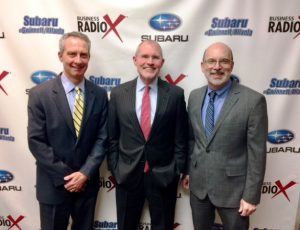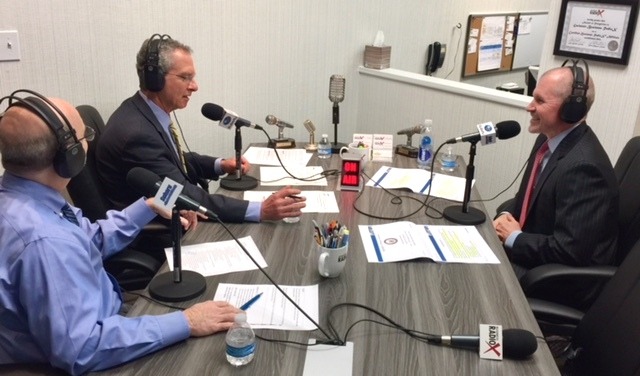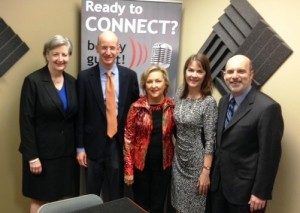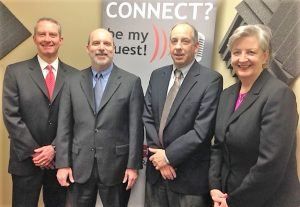

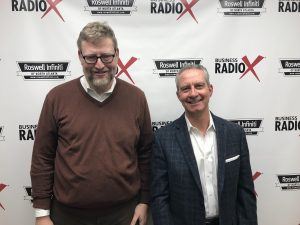
Decision Vision Episode 49: Should I Sue My Financial Advisor? – An Interview with Robert Port, Gaslowitz Frankel LLC
Should I sue my financial advisor? What factors should I assess in making this decision? The answers to these questions and much more come out of this interview with Robert Port, Gaslowitz Frankel LLC. The host of “Decision Vision” is Mike Blake and the series is presented by Brady Ware & Company.
Robert Port, Gaslowitz Frankel LLC

Robert Port is a business litigation attorney with Gaslowitz Frankel LLC. He has extensive experience in general commercial litigation and fiduciary disputes involving wills, trusts, estates, guardianships and conservatorships. Robert also has significant experience representing investors harmed by the misconduct of their stockbroker, investment advisor, insurance agent, or other trusted advisor. This includes matters arising from inappropriate investment strategies, unsuitable sales of annuities and life insurance products, failed or unlawfully offered private placements, real estate investment trusts (REITs) and other complex investment products, excessive trading (churning), unauthorized trading, sale of unregistered securities, and losses suffered as a result of Ponzi schemes.
Robert graduated with honors from the University of North Carolina at Chapel Hill with Bachelors of Science in Political Science and Psychology. He then went on to receive his J.D. with honors from University of North Carolina at Chapel Hill.
Gaslowitz Frankel LLC specializes in all aspects of fiduciary disputes, representing individuals, executors, trustees, investors, shareholders, and financial institutions in complex fiduciary disputes involving wills, estates, trusts, guardianships, businesses, and securities.
Michael Blake, Brady Ware & Company

Michael Blake is Host of the “Decision Vision” podcast series and a Director of Brady Ware & Company. Mike specializes in the valuation of intellectual property-driven firms, such as software firms, aerospace firms and professional services firms, most frequently in the capacity as a transaction advisor, helping clients obtain great outcomes from complex transaction opportunities. He is also a specialist in the appraisal of intellectual properties as stand-alone assets, such as software, trade secrets, and patents.
Mike has been a full-time business appraiser for 13 years with public accounting firms, boutique business appraisal firms, and an owner of his own firm. Prior to that, he spent 8 years in venture capital and investment banking, including transactions in the U.S., Israel, Russia, Ukraine, and Belarus.
Brady Ware & Company
Brady Ware & Company is a regional full-service accounting and advisory firm which helps businesses and entrepreneurs make visions a reality. Brady Ware services clients nationally from its offices in Alpharetta, GA; Columbus and Dayton, OH; and Richmond, IN. The firm is growth minded, committed to the regions in which they operate, and most importantly, they make significant investments in their people and service offerings to meet the changing financial needs of those they are privileged to serve. The firm is dedicated to providing results that make a difference for its clients.
Decision Vision Podcast Series
 “Decision Vision” is a podcast covering topics and issues facing small business owners and connecting them with solutions from leading experts. This series is presented by Brady Ware & Company. If you are a decision maker for a small business, we’d love to hear from you. Contact us at decisionvision@bradyware.com and make sure to listen to every Thursday to the “Decision Vision” podcast. Past episodes of “Decision Vision” can be found here. “Decision Vision” is produced and broadcast by the North Fulton studio of Business RadioX®.
Visit Brady Ware & Company on social media:
LinkedIn: https://www.linkedin.com/company/brady-ware/
Facebook: https://www.facebook.com/bradywareCPAs/
Twitter: https://twitter.com/BradyWare
Instagram: https://www.instagram.com/bradywarecompany/
Show Transcript
Intro: [00:00:02] Welcome to Decision Vision, a podcast series focusing on critical business decisions brought to you by Brady Ware & Company. Brady Ware is a regional full-service accounting and advisory firm that helps businesses and entrepreneurs make visions a reality.
Mike Blake: [00:00:20] Welcome to Decision Vision, a podcast giving you, the listener, a clear vision to make great decisions. In each episode, we discuss the process of decision making on a different topic from the business owners or executives’ perspective. We aren’t necessarily telling you what to do, but we can put you in a position to make an informed decision on your own and understand when you might need help along the way.
Mike Blake: [00:00:39] My name is Mike Blake and I’m your host for today’s program. I’m a director at Brady Ware & Company, a full-service accounting firm based in Dayton, Ohio, with offices in Dayton, Columbus, Ohio, Richmond, Indiana, and Alpharetta, Georgia, which is where we are recording today. Brady Ware is sponsoring this podcast. If you like this podcast, please subscribe on your favorite podcast aggregator and please consider leaving a review of the podcast, as well.
Mike Blake: [00:01:03] And so, today’s topic is understanding if your financial adviser is truly working for you. And if you think that they’re not, what steps can you take to either correct that scenario or if there have been losses that have resulted from a financial adviser not doing what they’re supposed to be doing for you, how you might go about recovering them or securing some kind of restitution. And I want to be clear about a couple of things about this topic.
Mike Blake: [00:01:35] It’s easy to kind of look at the title of this podcast and say that while this is just going to be a hatchet job on financial advisers. And that’s not really the goal. I know many financial advisers and wealth planners and actually hold the CFA Charter, which is an accreditation that some wealth managers decide to pursue. And I’ll tell you, I have nothing but respect for the financial advisory profession as a whole. And I’ve told people this offline, I tell them all the time, I think it’s actually one of the hardest, if not the hardest profession in finance, because it is highly regulated.
Mike Blake: [00:02:17] It is a business in which the sales cycle typically is measured in years, not days and months. And it requires a different kind of skill set than most financial people have, like, you know, I couldn’t do it. I’m a quant jock that sits behind a spreadsheet all day. And developing the kinds of relationships and that result in somebody entrusting you with their wealth, often, their life’s savings or maybe the savings of several generations of their family in some cases is an extremely hard thing to do.
Mike Blake: [00:02:58] And so, you know, I think the days of, you know, the typical kind of stockbroker dialing for dollars, boiler room kind of thing, Wall Street kind of thing, you know, the movies kind of put those out there, but, you know, they don’t really match reality. I don’t think anymore, although maybe our guests will have something to say about that. But at the same time, I think that this topic is important because a piece of advice I often give clients and anybody else who cares to listen is that, you know, if something’s really important and if you hire an expert to help you with it, it’s not a bad idea to get a second expert to look over the shoulder of the first expert.
Mike Blake: [00:03:40] Because you don’t really know if that expert is doing a great job for you, because they’re the expert, you’re not. You’re entrusting them with your relationship with whatever task or mandate that you’re giving to them, right? And I’ll put myself out there as an example, I’m a business appraiser. And you could argue that a business appraiser doesn’t even understand what we do, but what we do is a very complex thing, a complex task. We sometimes do a good job of communicating what we’ve done and how we’ve done it, sometimes, we don’t.
Mike Blake: [00:04:16] But, you know, the fact of the matter is, is I can tell you from my experience in over half the cases, a client decides I’ve done a good job or not a good job if my number comes out to what they thought the number was coming in. And so, if they thought their business is worth a million dollars and I say, “Yeah, your business is worth a million dollars, I’m a genius. “On the other hand, if they thought it was a million dollars and I come in, I say it’s $3 million, then, you know, I’m an idiot, “I can’t believe that I hired you”, et cetera, right?
Mike Blake: [00:04:48] But the fact of the matter is that the most clients are not in a position really to assess my work. And so, in my field of profession, there actually is now another industry of people that do reviews of what I do. And I hold that accreditation called the Credit and Business Appraisal Review, whose job it is and whose role it is to come in behind the appraise and tell the client, “Yeah, they did what they’re doing. They’re doing a good job”, because as a client, you don’t necessarily have the skill set to make that assessment on your own.
Mike Blake: [00:05:22] It’s really no different than if you’re being told that you need to have a kidney taken out and you decided to get a second or maybe third opinion, right? Because you can’t really tell, you don’t have the medical training. And this applies to the financial advisory space as well. If you entrust your wealth, whether it’s in part or in whole, you know, how do you know whether that person is doing a good job or not? And usually, you only find out if they’re doing a bad job if something happens.
Mike Blake: [00:05:54] You look at your brokerage statement one day and there’s a lot less value there than there should be, for whatever reason, or there may be other triggers that we’ll talk about, right? But the reality is that event may be years or even decades in the making, depending on how comfortable you are with following your brokered statements, how engaged you are with managing your wealth and not all clients are that engaged in management. And that’s the value proposition, right?
Mike Blake: [00:06:24] “Turn over me. You can go out and play golf. You don’t have to pay attention to this necessarily, we’ll touch base every few months”, and off you go. And that’s fine as far as it goes. But what it also does, it puts the client in a tremendously vulnerable position. And again, I can’t emphasize this enough. I know many wealth advisers. And the ones that I know, I would not hesitate to refer clients out to them, I think they play a very important role in society and in the economy, because managing wealth is an important and complex thing to do.
Mike Blake: [00:07:02] But because it’s important and complex, you know, I think you, as a listener, need to understand how do you evaluate the job that the financial advisers are doing. In particular, to make sure that you’re not being taken advantage of in a vulnerable situation. And if it turns out that you are being taken advantage of, what is your recourse? And just as importantly, and we’ll talk about this in the interview, you know, just because you lose money, that doesn’t mean that your financial adviser screwed you.
Mike Blake: [00:07:35] Sometimes, investments just don’t work out, that, you know, there’s just no guarantee of that, right? And so, it’s equally important to understand that just because you lost money, that doesn’t mean the next thing you do is you get on the phone with an attorney and start throwing lawsuits around and complaints at the SEC around, you know, the market take it and the market give it and take it away. So, with that as kind of the background of setting the stage, I’d like to introduce our guest today, my friend Robert Port, who is a partner with the Atlanta law firm of Gaslowitz Frankel LLC.
Mike Blake: [00:08:14] The firm focuses on all aspects of fiduciary disputes representing individuals, executors, trustees, investors, shareholders, and financial institutions in complex fiduciary disputes involving wills, estates, trusts, guardianships, businesses, and securities litigation and arbitration. Robert has significant experience representing investors harmed by the misconduct of their stockbroker, investment adviser, insurance agent, or other trusted adviser. Robert is AV rated by Martindale-Hubbell. Maybe he’ll tell us what AV means and has been repeatedly selected as a Georgia super lawyer.
Mike Blake: [00:08:46] I think he left the cape in the car in the practice areas of securities litigation and fiduciary litigation. Robert is a frequent speaker on fiduciary litigation and securities litigation and arbitration before a variety of audiences, including the Georgia Institute of Continuing Legal Education, the Atlanta Bar Association, and Strafford CLE seminars, the National Association of Personal Financial Advisors, the Georgia Society of CPAs, and the National Business Institute. He has appeared on many media outlets, ones that are far more prominent and important than this one. So, I’m very grateful today that Robert has agreed to come on our little program. Robert, welcome.
Robert Port: [00:09:26] Well, thank you very much for inviting me, Mike. Excellent, excellent introduction. You touched on a lot of things that I think are very important in evaluating what I do and how I approach potential cases in this area.
Mike Blake: [00:09:41] So, let’s jump right into that. So, your role, how do you describe your role in that discussion?
Robert Port: [00:09:52] All right. Let me step back a little bit and talk about what I think about when a potential client calls. So, a call will come in and someone will tell me, you know, I think I have an issue with my adviser or my account to is X. Now, it’s X minus Y or they sold me something I didn’t understand, whatever the case may be. And one of the things that I need to do is approach it as though I were an adviser. I’m not licensed in that area, but I need to know enough to determine whether the investments that the adviser recommended if it was a recommendation situation or if the adviser had discretion.
Robert Port: [00:10:37] Meaning, the adviser had the right to buy and sell things without seeking approval beforehand, whether the investments that the adviser put together are appropriate, suitable is often a word used, for the particular individual. So, that is sort of the benchmark and there is no black and white area here. But generically, you have to look at somebody’s age, experience, income, net worth, their needs, their own personal risk tolerance to try and get a sense of what was suitable and appropriate for them. So, to paint a sort of broad-brush picture, my two boys who are in their 30s have a different risk profile than I do in my 60s. They may not want to, but theoretically, they can tolerate more risk.
Mike Blake: [00:11:36] They can put money into the company that turns peanut butter in a jet fuel.
Robert Port: [00:11:41] Absolutely. And I hope they do. And I hope they make zillions of dollars and this can support dad in his retirement. So, that’s the first thing I need to do. And going back to one of the points you made in the introduction is you are correct that a lot of people hear what I do. And in this area of securities litigation and arbitration and the impression is, “All right. You know, we’re going to sue somebody. My Apple stock went down $2 yesterday”, run down to the courthouse. Clearly, not the case for a whole bunch of reasons.
Robert Port: [00:12:17] One of which is I need to maintain my own credibility in this area. So, going back to my prior point, the first thing I need to think about is, what is the appropriate investment profile for the person who’s calling? And without getting too much into the weeds, looking at various other investments, you can get a sense over the time period that they’re concerned about how an investment would have performed. And what I try and look at is generically, if you can do a profile of what somebody would have been invested and how would that have turned out?
Robert Port: [00:13:00] It may have gone up. It may have gone down. And then, you compare that to where they actually ended up. And the mere fact that you’ve lost money, even substantial money, does not necessarily mean you have a legal case. And the perfect example of that was what people call the Great Recession in ’07, ’08, where generically, a basket of securities comprising a fair mix of the S&P 500 and some bonds, as best I recall, would have been down 35, 40%. Now, that’s a lot to go down. That’s a third of your value.
Robert Port: [00:13:42] But for a vast majority of investors, it was entirely appropriate that they have investments like that. And as a result, it was entirely, I wouldn’t say appropriate, but reasonable that their portfolio would have lost that much. On the other hand, I had cases during that era with, I recall one case with a widow who was in her 70s whose portfolio lost 80% during that period. You know, that alone does not indicate that there’s a case, but it’s certainly a red flag to dig further and see whether what happened was inappropriate for her.
Mike Blake: [00:14:30] So, it’s one thing, you know, in the Great Recession, pretty much everybody lost money, right? The question was how much.
Robert Port: [00:14:36] Right.
Mike Blake: [00:14:37] But the red flag is, well, this one person who probably should have had a lower risk profile, why do they lose twice as much money as most everybody else, right? That’s the red flag?
Robert Port: [00:14:48] Right. And in that particular case, as I recall, and that’s been about 10 years ago now, her adviser had put her in. What we’d call, you know, penny stocks and more risky investments. Now, if she had been in, you know, people talk about blue chip stocks, you know, the names we all know, I’m not going to say any here, because I’m not going to do anything that sounds like a recommendation, but the names who we all know that have been around for a while and pay dividends, those went down as well. And in fact, some well-known names stopped paying dividends, but that would have been appropriate for her. And if she had called and said, “My portfolio’s down 25%”, I would have said, as politely as possible, “You’re lucky, you know. You went down less than everybody else.”
Mike Blake: [00:15:40] Right.
Robert Port: [00:15:40] So, the point is, as an attorney, the first thing I need to do is determine whether or not there are legally recognizable damages and to articulate that in words rather than numbers, from my perspective, as someone who represents investors, that legally cognizable damage number is the difference between where they should have been with a portfolio that was suitable or an appropriate versus where they are. It’s the difference. And let me also add to that. Many lay people and this goes to your comments about getting expertise and having knowledge, I enjoy this stuff. I know everybody else. A lot of folks don’t. It’s just gobbledygook. They don’t open up their statements, because they don’t understand them. That’s not exactly what I like to see, but it’s a fact.
Mike Blake: [00:16:39] Yeah.
Robert Port: [00:16:39] It happens.
Mike Blake: [00:16:39] Yeah, people are people.
Robert Port: [00:16:42] People are people. And so, one of the things is many folks will look at their statements or talking to their friends and they will see that their portfolio is up X, but here, that their neighbor, whose adviser are on their own, was lucky enough to buy, pick a name, Google when it was 2 cents and it’s now whatever it is, they made a fortune.
Mike Blake: [00:17:09] Not a recommendation.
Robert Port: [00:17:09] Not a recommendation. But the point there is in hindsight, it is entirely inappropriate to say, “Well, I would have picked only things”, or, “My advisers should have picked things that only went up.” No one knows what the future holds. Your adviser’s obligation at the time they make the recommendation or exercise their discretion to purchase something for you is, again, to do something that reasonably matches your own personal risk profile, your needs, what you’ve told the adviser or what you want. And the last point on that I’d make is sort of this analogy.
Robert Port: [00:17:55] When we go shopping for clothes, you go to the store and there are different sizes, there are different styles. And that is because the old saying, one size does not fit all. And that’s true in investments. One size does not fit all. What your neighbor has may or may not be right for you. And one of the red flags I’d caution people to think about or keep an eye on is an adviser who seemingly has the same solution for everyone, all right? You see them, they sell you or trying to sell you the same variable annuity that your neighbor has or their other clients have or this portfolio or this fund or whatever it is. Investments need to be tailored to the individual.
Mike Blake: [00:18:48] And that segues actually nicely into the next question, because there’s an important piece of vocabulary in this world that I want to make sure the listener understands, and that is the term fiduciary, right? What is the term fiduciary mean and where does that enter into this discussion that you’re describing?
Robert Port: [00:19:11] Well, the word fiduciary in legal terms means that the person who acts as a fiduciary is supposed to take your interests, your best interests into account in making decisions to avoid conflicts of interest and to do solely what is in your best interest. Think of someone who is a trustee of a trust. They’re not supposed to self-deal, they’re only supposed to do what’s right and appropriate as directed by the trust documents. And the same thing, in my view, with respect to financial advisers, the advice they have to give, in my view, is only what is in your best interest.
Robert Port: [00:19:58] They should not be motivated by the fact that they might earn a lot of commissions by selling you a mutual fund or annuity or if you’re dealing with an insurance person a insurance policy. Now, if I can get into the weeds a little bit, one of the things that lay people generally don’t understand is that there is a distinction in the law, and certainly, the investment community understands this, between what are generally known as stockbrokers versus what are called financial advisers.
Robert Port: [00:20:36] And in the law, financial adviser is actually an important term. A financial adviser who is registered under what’s called the 1940 Investment Advisers Act has an obligation to act as a fiduciary, as a matter of statutory law in the Supreme Court case law. In contrast, a stockbroker, depending upon their licensing, is obligated to only adhere to what’s called a suitability standard, which is a lesser standard than a fiduciary. And in fact, and this is a debate I often have in cases with the attorneys who are on the other side of the case, I believe that even a stockbroker has a fiduciary obligation.
Robert Port: [00:21:25] I believe there’s a case law that supports that, but to be candid, there are arguments that can be made that a stockbroker only has an obligation of suitability, which is generally described as an obligation to only recommend investments that are suitable based on the customer’s age, income, risk tolerance, and things like that. And the distinction, you know, sort of lawyerly, it may sound to some people like we’re arguing over, what’s the phrase, the head of a pin or something like that.
Mike Blake: [00:22:00] Like dancing on the head of a pin.
Robert Port: [00:22:01] Dancing on the head of a pin, the distinction is that the suitability obligation is a lesser obligation than the fiduciary obligation. So, someone can recommend something that is arguably suitable but is not in the client’s best interest. Stockbroker could, for example, recommend an investment that has higher fees to the client, earns them higher commissions, where there would be an argument that if they were acting as a fiduciary, that wouldn’t be the case, that they can’t do that.
Robert Port: [00:22:33] So, to the extent I have a recommendation as a lawyer, I would only use a financial adviser who forthrightly acknowledges that they have a fiduciary obligation and that technically means they need to work for an entity that is a registered investment advisor, RIA. And that means that they, as individuals, are an investment adviser representative, an IAR. Those people, there are no guarantees, even fiduciary is messed up. But to the extent that people willingly and knowingly take on that obligation, whatever the opposite of a red flag is, that’s a-
Mike Blake: [00:23:25] Green light.
Robert Port: [00:23:25] Green light, that there is a probability that they may well, in fact, understand what they’re doing, have the expertise that Mike spoke about in his introduction. And again, a probability, only a probability, nobody can give you any guarantees that they will do what is right for you and in your best interests.
Mike Blake: [00:23:46] Now, in this discussion, there’s also a distinction between a prudent person, you speak of a prudent man, I think, a prudent person is now the term of art, and a prudent expert. Are you familiar with that or am I-
Robert Port: [00:23:59] I’m not.
Mike Blake: [00:23:59] Okay.
Robert Port: [00:24:00] But Let’s explore it.
Mike Blake: [00:24:01] Okay.
Robert Port: [00:24:01] Sounds interesting.
Mike Blake: [00:24:02] So, I’m curious if you’ve run into this. So, it does come up in the CFA curriculum and a prudent person is when they’re in a position of making decisions on behalf of somebody. If, say, they’re an executor of a trust, but they’re not necessarily a trustee, but they have been entrusted with a certain role, but you’re not necessarily an expert. Like, say, you know, somebody who works in retail suddenly is put in a position, maybe they didn’t realize that they’re put in a position of managing their family’s assets, their parents passed away, the will named that person as the executor and now, this person, you know, may have experience handling assets, perhaps, doesn’t, right?
Mike Blake: [00:24:47] As I understand it, maybe not legal standard, but the professional standard to which that person is held is a prudent person, meaning that you’re supposed to be a reasonably intelligent person. You’re supposed to apply common sense in how you manage those assets. But because you weren’t holding yourself out as an expert, that doesn’t mean that you’re necessarily competent, but it does mean that you’re logical and you’re trying to basically do the right thing, as opposed to a prudent expert.
Mike Blake: [00:25:16] And I’ve seen this in cases where I’ve worked with one case I had a few years ago, where a family asset went into conservatorship. And the conservator, as it turned out, was the business owner’s daughter who was a CPA. And she was very unhappy about this. So, she wants to get rid of this like it’s a grenade with the pin pulled out, I can tell you that. But she was put in the position of being a prudent expert because she held a CPA license. And therefore, was assumed to have a greater body of knowledge around finance that another person may not necessarily have.
Mike Blake: [00:25:54] And so, I guess that’s a long preamble to making an observation of which I would like you to comment, that sometimes, financial advisers are, in fact, accidental, right? You don’t realize you’re going to be put in that position. All of a sudden, you are, right? And in that case, does the law provide for additional leeway when you say, “Look, I didn’t sign up for this. I kind of did the best I could, but, you know-
Robert Port: [00:26:23] Right. No, I’ve got it. And that’s fantastic. I’ve never actually heard of the prudent expert concept, and I’d have to think about that a little bit, but—
Mike Blake: [00:26:33] It may not be a legal term—
Robert Port: [00:26:34] Yeah.
Mike Blake: [00:26:34] … may just be in my professional standards.
Robert Port: [00:26:36] Right. But what your comment made me think of is this, Georgia and a lot of states have a trust code and under the trust codes, someone who takes on the position of being a trustee, either voluntarily or because they’re thrust into it, because maybe even unbeknownst to them, a relative or somebody wrote in their will or in the trust that, “When I die or when I become incompetent under my trust, you’re my trustee”, and the law imposes an obligation of prudence, I forgot exactly what the precise terminology is, but it’s essentially what you’ve described.
Robert Port: [00:27:20] So, again, without giving detailed thought to it, I don’t believe you get much of a pass if you take on that role, which under the law means you’re a fiduciary, whether you want it to be or not, I would say you don’t get a pass, because, you know, I don’t know a stock from a kumquat. I don’t know anything about investing. If you take on that role or thrust into it, it seems, to me, entirely reasonable to insist that you either resign and get someone to do it or seek the assistance of someone who knows what they’re doing. And, you know, a lot of answers to questions that people ask me about the law are it depends.
Mike Blake: [00:28:16] Yeah.
Robert Port: [00:28:17] Which is a reference to, you know, what are the background facts? You know, there’s a lot of things in the law that aren’t black and white, they’re shades of gray. And so, this is one where, again, if I were writing on a clean slate and I’m thinking of some of the cases my firm does in the area of trust and estates litigation, where clearly, I have one going on now, someone without the expertise to be a trustee has been handling a trust and has caused hundreds of thousands of dollars’ worth of damage in our view.
Robert Port: [00:28:56] And I am pursuing the case under the assumption, an argument that it really doesn’t matter that he didn’t have the expertise. And if I can, that’s a segue for me to mention this, I am, by nature, very adverse to, adding what Warren Buffett sometimes calls, all the helpers. You know, the CPAs, the attorneys, the financial advisers, everybody is getting a little piece of the action. By my nature, I’m not thrilled with that.
Robert Port: [00:29:38] On the other hand, I have learned in this practice dealing with fiduciary disputes in the wills, trust, and estates area and in the securities area, that it is well worth the cost, presuming the costs are reasonable and appropriate, to get the expertise that Mike has described, to get a professional fiduciary. There are entire companies of substantial worth whose business is to manage assets. And the way I view those fees is the fees you will pay for doing that, which are generally a percentage of assets under management, I view that as an insurance policy to avoid having assets managed by someone who does not know what they are doing and the risk of that.
Robert Port: [00:30:29] That is like an insurance premium. And most of the cases we see in the trust and estates area, almost all of them are lay people who’ve been thrust in these roles. You know, the oldest son who’s the attorney, the daughter who’s a CPA, the son who’s the doctor, and mom and dad think, “Yeah, sure. They’re smart, they can handle this.” And either intentionally or unintentionally, they don’t have a clue of what they’re doing. And that can range from mere negligence to essentially outright embezzlement.
Mike Blake: [00:31:12] And, you know, the funny thing about embezzlement and white collar—
Robert Port: [00:31:17] Not to the person that’s being embezzled.
Mike Blake: [00:31:19] Yeah, that’s true. But not funny, humorous, but funny, strange, is-
Robert Port: [00:31:24] Yeah.
Mike Blake: [00:31:24] Especially if you’re a lay person and you’re not used to this, I think many of those crimes are committed quasi-accidentally and that they don’t understand kind of where the line necessarily is. Now, what you bring up in that scenario is interesting because it actually applies to me. So, you know, my parents wanted me initially to be the trustee of their estate, which with my financial background, I am fully qualified to do. But perfectly candid, I do not get along very well with my sister. And so, what I told them was that if you do that, the returns on the estate will be great and there’ll be a lot of very happy lawyers, right?
Mike Blake: [00:32:05] Because I just know the way that relationship’s going to go. So, you know, even in that particular case, because one thing you have to look at is family dynamics, too. Just because I’m technically qualified, that doesn’t necessarily mean that I’m the best person for that job and somebody independent, I think, and that thankfully, my parents ultimately saw the wisdom of that, providing for an independent trustee is going to go a long way to making sure that the wealth does what it’s supposed to do.
Robert Port: [00:32:35] Yeah, you’re a very wise son. And you raise one other issue, which we see in our practice. And sometimes, folks will ask, “Well, what’s a bit of advice you give to people?” And this is true I think generically with dealing with family money is, to the extent possible, transparency, disclosure, and explaining to your heirs or whomever needs to know why it is you’re making the decisions you’re making.
Robert Port: [00:33:09] What’s been interesting to me is to realize that even people of nominal means over a lifetime can accidentally accumulate a meaningful amount of money, you know, seven figures is not unusual if you’re middle class, you don’t burn through your money, and it just sits there and accumulates. And what is interesting is for some reason in our society, talking about money is taboo. And mom and dad don’t want the kids to know that, “When I die, you guys are going to split one million, two million, five million.”.
Robert Port: [00:33:51] And surprise, we’re both gone and now, you’ve got to wrestle with it. So, we advocate within the extent possible to have some disclosure, to have some transparency if there are, for example, a reason you want to give one child more than the other, explain that. If you want to leave the marital home or the vacation home to one child or the other or give it all to the ASPCA. Whatever it i, explain that.
Robert Port: [00:34:20] It may not eliminate the disputes, but to the extent your heirs can understand your rationale, it’s very helpful. And when you couple that with, as you have wisely done for the circumstances you’ve described, have a third party in there, it has the probability of tamping down disputes. Now, you know, your family members may get into a dispute with the third party, but, you know, you’ve done what’s appropriate and hopefully, they have executed their duties appropriately.
Mike Blake: [00:34:57] So, I want to come back to the primary topic, because there’s one question I want to make sure that we get kind of out there, which is, you know, if I’m not happy with my portfolio, what are kind of the signs that, as somebody who’s an investor, I might see my portfolio that might lead me to conclude that there is something amiss, some sort of malfeasance, as opposed to, “It’s just my tough luck, a loss”, right?
Mike Blake: [00:35:32] How can I triage initially to make sure I’m not just sort of running to you every time I lose 2% where, right? As opposed to, you know, “This is really bad. I shouldn’t have taken 10% of my portfolio and invested in his brother’s alpaca farm”, right? It’s typically not that egregious. So, in your experience, what are kind of the breadcrumbs that say, you know, you really ought to think about talking to somebody to see if there was something amiss?
Robert Port: [00:36:02] Sure. I think the first thing to think about is reflect back on your initial discussions with your adviser. Did he or she take as much of a deep dive as they could into learning about you? You know, what are your needs? Do you have kids that need to go to college? Are you worried about your retirement? Do you have aging parents who might have to support? Are you going to lie awake at night if you see in the paper that the stock market’s gone down, you know, X percent today or tomorrow?
Robert Port: [00:36:37] Reflect back on whether you feel that the adviser got a good picture of who you are. And that goes back to what I said before, which is one size does not fit all. You know, if you’re dealing with an adviser whom is uninterested in any of that or doesn’t appear to be and doesn’t really find out about you, I think that’s a red flag. If you can, not to get started, but if you’re there, reflect back on that.
Robert Port: [00:37:10] The other thing, there’s a number of other things that come to mind, I would get an understanding as to whether or not the investments seem to be, I’ll say, ordinary and boring or that stocks and bonds and mutual funds or are they calling you about hedge funds and real estate investments and annuity abuse, particularly, variable annuities and what’s called equity-indexed annuities are a problem. You know, do the investments sound overly complicated?
Robert Port: [00:37:52] And one way to think about this is this is your money, you’ve worked a lifetime or your working career to accumulate it, if you can’t explain to, you know, a child who is 10 years old what your money is doing and where it is, you ought to ask yourself whether that ought to be the case. If you don’t understand what’s happening with your money, that’s potentially a red flag. Now, you know, Mike talked about expertise and I often make analogies, too, to going to the doctor.
Robert Port: [00:38:29] You know, you go to the doctor and here, she says, “Well, you have this issue and you need this operation or take this medicine.” And hopefully, they explain it enough, so you understand what the problem is. And think about that with your own adviser and with your investments as well, you know. You may not be able to talk about PE ratios and, you know, Delta and all the other ways that someone like Mike knows how to measure investment performance, but you should have an understanding, generically, how much of my portfolio is exposed to stocks, how much is exposed to bonds. What else is going on? Do I need investment income, dividends, and things like that?
Robert Port: [00:39:17] I would also be concerned about something that Mike alluded to, which is, you know, is the adviser suggesting you invest in things that are, if you will, offline. You know, this adviser call, I’ve had cases where the adviser says, “Well, you know, I’m getting into rental housing and, you know, I need some investors”, or, you know, “My brother-in-law’s alpaca farm” or, you know, “My buddy is starting a hedge fund and, you know, needs some money and, you know, I think it’s a great investment.” And another one is there are no guarantees against loss, I guess, except maybe if you buy government bonds.
Mike Blake: [00:40:09] Right.
Robert Port: [00:40:09] There’s a debate about loss there. But if you hold them to the end, you know, unless the world blows up, you’ll get your principal back.
Mike Blake: [00:40:15] Nominally, you’ll get your principal back.
Robert Port: [00:40:16] Right. So, be concerned if an adviser says, “Oh, it’s guaranteed.” That doesn’t necessarily apply to annuities. They’re backed by insurance companies and you get your money back. But on annuities, and again, I’m talking about particular types of annuities, immediate annuities are generally not an issue, but when you’re sold an annuity, for example, there is a prospectus, that may not be the exact right word for annuities, but generally, a thick document written by a whole room full of lawyers explaining how this thing works.
Mike Blake: [00:40:56] Explaining in quotations.
Robert Port: [00:40:59] Yeah, in air quotes. That’s exactly right. And I have had cases where these are incomprehensible. I had one case where I hired an expert who has something like a PhD from MIT in mathematics. And he said it took him and his three colleagues, who also have similar credentials like a week to figure out how this thing worked.
Mike Blake: [00:41:21] Jesus.
Robert Port: [00:41:23] And it goes back to what I said before, if you can’t read and understand what’s happening with your money, even though, you know, you may find out later, you could have tripled your money in two weeks, don’t do it. And that sort of leads me to something else. And I can obviously go on and on here. But one of the principal things, I think, folks need to understand is, what is a reasonable rate of return?
Robert Port: [00:41:52] One of the things that Ponzi schemes and you can think about Bernie Madoff, if you will, as an example, is that they promise folks unreasonable rates of return. And I’m speaking from memory here, but one of the things to think about, is what is a fair rate of return, unreasonable investments right now? So, if I’m recalling correctly, if you were to buy government bonds right now, you might get, what? One-and-a-half, 2% a year?
Mike Blake: [00:42:24] Yeah. Give or take the term, yes.
Robert Port: [00:42:26] Right. If you buy generically all of the stocks in the S&P 500, you know, historically, depending upon what numbers you use, including dividends or not, you know, maybe 7, 8% and so on and so forth. So, if someone comes to you and says, and I’ve seen this, 15% per month guaranteed, it might happen, but there’s no free lunch, return is not without risk. And to me, you know, that sort of screams some sort of fraud. So, I’ve talked about bench marking before in terms of figuring out your damages.
Robert Port: [00:43:09] One other thing in terms of figuring out whether you are in a place that you ought to be is if your adviser is guaranteeing returns, guaranteeing against loss of income, what return is he or she guaranteeing? You know, Bernie Madoff’s brilliance, if I can use that word, is that he structured his Ponzi scheme, so he returned 10% essentially per year, year-after-year, which interestingly enough, comes very close to a little bit more risky investment portfolio, which is not outrageous. So, he sort of slipped under the radar there. But what a lot of lay people didn’t realize was that it is almost impossible to have annual returns like that year-after-year.
Robert Port: [00:44:02] You know, I said a moment ago, the S&P returns, maybe, you know, 7, 8%. That’s not year-after-year-after-year. That’s over 20, 30 years. You know, it might go up 15% one year, down 20% the next. And that is an average. So, you know, be careful out there. Understand what you’re getting into. Be able to explain it. Don’t believe that you’re special and you’re getting these fabulous returns. Because candidly, one of the things that I often think about is if, in fact, there was an investment that had, you know, 15% per month returns, I don’t know why anyone would sell that to anyone else, I’d keep that all to myself.
Mike Blake: [00:44:53] Absolutely.
Robert Port: [00:44:54] And I’d benefit from that. And I wouldn’t be selling it to people for a small commission on getting them into it.
Mike Blake: [00:45:02] You know, what you’re talking about, these Ponzi schemes remind me, and you would have gotten a kick out of this, you know, I started my career in Russia and I started at a point where they were going through privatization. You may recall they had vouchers where you basically got a certificate from the government that basically said you had equity in the state’s assets. That was the way they tried to privatize. But the problem is, 150 million Russians have these vouchers.
Mike Blake: [00:45:34] On an individual basis, they really weren’t worth a whole lot, right? And that was not a society that accumulated a lot of wealth. It was designed to prevent that, right? Communism. And so, I still remember there are commercials for this company, at the time, it was called MMM Invest. And this was before they had our kind of securities laws in terms of disclosures, what you can say and what you can’t say. And they would brazenly come on and say, “If you invest your voucher with us and we’re guaranteeing, you know, a 30% rate of return every quarter.”.
Mike Blake: [00:46:08] And they’d have these people come on and saying, “I invested my voucher with MMM Invest and now, I’m driving a Rolls Royce”, that kind of thing, right? And it just shows, you know, their securities laws have since evolved somewhat, I’m not sure at our level, but it was it was interesting to see when you kind of take the safeties off of the regulations, right? You don’t see that on TV here. But without regulations, you’d see that all the time.
Robert Port: [00:46:36] Well, that’s a fascinating story. I’ve always wondered about the transition from communism to whatever it’s become. But I will say this, if you hearken back to right before the Great Depression, your listeners may recall the commercials on TV, where someone’s invested with ABC company and now, they’re on a yacht and now, they’re sitting on a beach with their broker in front of their presumably fancy second, third, or fourth home.
Robert Port: [00:47:09] So, you know, they may not come on TV and say 30% per year, but they’re saying, “Well, trust us and we’ll turn your money into this.” And that actually made me think of one other thing that is important to me and in fact, how I think about investing for me personally, and again, I’m not an adviser, but this this is the way I think about it, there is nothing wrong with batting for average, all right? Going back to what I said before, you know, a basket of securities broadly invested across stocks and bonds over the last, you know, 30, 40, 50 years, yes, there have been terrible ups and downs.
Robert Port: [00:48:00] And if you go back even further to the Great Depression, you know, it was horrific. But over long periods of time, if you can stomach the ups and downs and that goes to what’s reasonable and appropriate for you, you will get a fair average return or I won’t say you will, because that’s predicting, but you have. Nobody knows what the future holds. And what’s interesting is there are study-after-study that demonstrate that, but also, at the same time, have looked at actual investors’ returns.
Robert Port: [00:48:39] You know, taking into account the people who watch TV and buy this, sell this, and they trade and they incur commissions and tax costs and just sort of, I don’t recall the exact numbers, but let’s say over the last 20 years, the S&P diversified portfolio, let’s say, has return, I’ll pick a number, 7%. What they find is people who think they can predict the market and buy and sell or do different things, they generally, on average, I think that the differential is, you know, something like 5 or 4%.
Robert Port: [00:49:17] You know, they’re losing conceptually 3% a year because they’re trading and because they think they know the future. So, A, bat for average. B, understand that no matter how brilliant your adviser is or you think they are, they don’t know what the future holds. And one way to think about this, in my mind, is lots of folks will point to, “Well, Warren Buffett has earned these fabulous returns.” I forget what they are, but it’s approaching, what, 15, 20% year over year over year since the ’50s?
Mike Blake: [00:49:56] Yeah, although the last two years have not been kind to Berkshire Hathaway. But until then, yes.
Robert Port: [00:50:00] Okay. But the point I’d leave your listeners with is that’s fine. Mike, as a numbers guy, will understand what I say, that there is a probability that people like Warren Buffet exist, what they would call outliers, they get more than average returns. The question for any investor, I think, is what is the probability of the hundreds of thousands of advisers out there? What’s the probability that today, you’re going to pick the adviser who will 20 or 25 years from now be the next Warren Buffett? And I’d respectfully suggest that probability is approaching zero.
Mike Blake: [00:50:45] It is. I often characterize Warren Buffett, and I call Warren, he calls me, who the hell are you? But I characterize him as Mozart.
Robert Port: [00:50:54] Yeah.
Mike Blake: [00:50:55] Right. And there’s only one Mozart in several generations. Even Warren Buffett has said, “If you wake up in the morning and you look in the mirror and somebody besides me is staring back at you, you ought to be in index funds.”
Robert Port: [00:51:07] That’s exactly right.
Mike Blake: [00:51:10] Robert, we’re running out of time. There’s one other question I want to ask before we let you go, because we talked about some kind of the smoking gun elements where maybe, there’s something that somebody might come to you and ask a question about and I want to ask specifically about a lot of account activity, right? And you talked about the people that do their own churning, they’re day traders, and, you know, maybe you beat the market by 2%, but you’ve paid 4%, so you’re really not even on that.
Robert Port: [00:51:37] Well, plus taxes.
Mike Blake: [00:51:37] Plus taxes, right? So, my question is, if they have an actively managed account, they open their broker’s statement and see there’s a lot of activity, is that often a smoking gun?
Robert Port: [00:51:52] Well, thank you for raising that. Yes, it can be. And what’s important to understand in this day and age is the manner in which funds are invested now by investors is a little different than it used to be. So, Mike used the word churning and the concept in the law is a lot of buying and selling in your account to generate commissions for the broker that may or may not be good for you. So, yes, lots of activity in the account can be an indication that there’s a problem.
Robert Port: [00:52:33] But the caveat is that many brokerage firms, in particular, and indeed other advisers are going to what are called the managed accounts now, where your funds are actually placed with another investment management fund and they do, in fact, trade, as best I can tell, every day. And the way some of those are structured is you will get a statement, I’ve seen these, where, you know, it’ll be pages and pages and pages because the transaction’s done in what’s called the managed account flow through to you.
Robert Port: [00:53:12] That might not be a problem if, in fact, the setup is a managed account run by an independent adviser, where the fee is simply computed on assets on their management and they’re not taken a commission on every trade. But the bottom line is, yes, lots of activity can indicate a problem, it could indicate your broker is churning your account because his kid needs to go to college or he wants a new boat or he wants to compete with the broker down the hall who just got a new Maserati, whatever the case may be.
Robert Port: [00:53:47] So, you know, look at that. Is it a black and white issue? Sometimes, it is. And just a short story years ago, I represented an elderly widow whose account had what we call turnover rate of 21 annually. And what that meant was, and Michael could explain how that’s done, because I had someone other than me do it, but when you do the math, functionally, what was happening is her entire account was bought and sold every other week.
Robert Port: [00:54:29] Right. And she started with, I think the numbers were $160,000. And over the course of a year, when she came to me, she had $1,500 dollars left and the broker had earned $40,000 in commission. Now, that’s probably one of the most egregious cases I will see, but that goes to churning. So, bottom line is, yes, lots of activity, particularly, if you have not given your adviser what we call discretion or authorization to trade without calling you, that can be very much of a problem.
Mike Blake: [00:55:14] Robert, we’re out of time, but there are lots more questions that we could ask and somebody may have, how can somebody reach you if they want to learn more about this?
Robert Port: [00:55:22] Sure. The name of our law firm is Gaslowitz, that’s G-A-S-L-O-W-I-T-Z, Frankel, F-R-A-N-K-E-L. You can find us on the web at gaslowitzfrankel.com. My phone number is 404-892-9797. And if you want to shoot me an email, it’s rport@ga, for Georgia, gadisputes.com.
Mike Blake: [00:55:50] And that’s going to wrap it up for today’s program. I’d like to thank Robert Port so much for joining us and sharing his expertise with us today. We’ll be exploring a new topic each week, so please tune in so that when you’re facing your next executive decision, you have clear vision when making it. If you enjoy this podcast, please consider leaving a review with your favorite podcast aggregator. It helps people find us so that we can help them. Once again, this is Mike Blake. Our sponsor is Brady Ware & Company. And this has been the Decision Vision podcast.