Business RadioX ®

  • Home
  • Business RadioX ® Communities
    • Southeast
      • Alabama
        • Birmingham
      • Florida
        • Orlando
        • Pensacola
        • South Florida
        • Tampa
        • Tallahassee
      • Georgia
        • Atlanta
        • Cherokee
        • Forsyth
        • Greater Perimeter
        • Gwinnett
        • North Fulton
        • North Georgia
        • Northeast Georgia
        • Rome
        • Savannah
      • Louisiana
        • New Orleans
      • North Carolina
        • Charlotte
        • Raleigh
      • Tennessee
        • Chattanooga
        • Nashville
      • Virginia
        • Richmond
    • South Central
      • Arkansas
        • Northwest Arkansas
    • Midwest
      • Illinois
        • Chicago
      • Michigan
        • Detroit
      • Minnesota
        • Minneapolis St. Paul
      • Missouri
        • St. Louis
      • Ohio
        • Cleveland
        • Columbus
        • Dayton
    • Southwest
      • Arizona
        • Phoenix
        • Tucson
        • Valley
      • Texas
        • Austin
        • Dallas
        • Houston
    • West
      • California
        • Bay Area
        • LA
        • Pasadena
      • Colorado
        • Denver
      • Hawaii
        • Oahu
  • FAQs
  • About Us
    • Our Mission
    • Our Audience
    • Why It Works
    • What People Are Saying
    • BRX in the News
  • Resources
    • BRX Pro Tips
    • B2B Marketing: The 4Rs
    • High Velocity Selling Habits
    • Why Most B2B Media Strategies Fail
    • 9 Reasons To Sponsor A Business RadioX ® Show
  • Partner With Us
  • Veteran Business RadioX ®

How to Avoid HR Problems

May 28, 2021 by John Ray

HR Problems
Dental Law Radio
How to Avoid HR Problems
Loading
00:00 /
RSS Feed
Share
Link
Embed

Download file

HR Problems

How to Avoid HR Problems (Dental Law Radio, Episode 6) 

From an HR perspective, Covid-19 has changed everything for a dental practice; the issues, regulations, and consequences of non-compliance are more complicated than ever. Host Stuart Oberman reviews the “must have” processes needed to avoid HR problems.  Dental Law Radio is underwritten and presented by Oberman Law Firm and produced by the North Fulton studio of Business RadioX®.


TRANSCRIPT

Intro: [00:00:02] Broadcasting from the Business RadioX Studios in Atlanta, it’s time for Dental Law Radio. Dental Law Radio is brought to you by Oberman Law Firm, a leading dental-centric law firm serving dental clients on a local, regional, and national basis. Now, here’s your host, Stuart Oberman.

Stuart Oberman: [00:00:25] Hello everyone and welcome to Dental Law Radio. Oh, our topic today, H.R., H.R., H.R. So, near and dear to our hearts. So, through this whole process, COVID-19, I think it taught us a lot. It let us take a look at what our doctors were and were not doing. And it really exposed a lot of problems. So, you know, what happened in the last year? What happened in the last five years?

Stuart Oberman: [00:00:59] So, anyone who owns a dental practice, works in a dental practice, knows for a fact that H.R. is changing every single day. There are more rules and regulations for employees than we ever had before. There’s more regulatory matters. There’s more problem employees. Employees are harder to deal with. Our doctors are fed up, discouraged with H.R. They can’t find employees. Employees are quitting. Employees are complaining. Tight economic conditions.

Stuart Oberman: [00:01:30] So, you know, where are we at? So, we have to look back at what happened this past year. It really brought a lot of things to the forefront. So, I would tell you, 2020, COVID-19 changed everything in H.R. Pre-COVID-19, what was ignored is now absolutely mandatory. We have states that are getting involved in H.R. like we never seen before. Federal Law is changing daily, it seems like, National Labor Relations Board, EEOC, Federal guidance, IRS, tax changes. You know, it’s a wonder that a lot of our doctors who’ve been practicing for some time, we’ll get these calls and they’ll say, “I’m done. I don’t want to put up with OSHA. I don’t want to put up with HIPAA. I can’t handle the H.R. I’m out of compliance. I need to go.”

Stuart Oberman: [00:02:27] So, what happens is, is that they’re frustrated, and we get it. So, I want to offer a couple of things. We put out a mandatory checklist for our clients. And I would encourage you to send us an email and we’ll send that mandatory checklist for you to you if you email us and request it. So, that’s mandatory checklists review, what you need on a daily basis to review.

Stuart Oberman: [00:03:04] So, another thing that we looked at is the hiring process, H.R. This exposed a lot of things. We had some practices that had a 70 to 80 percent turnover rate. If you don’t have an H.R. process and onboarding process in place, and you’ve got turnover at 70, 80 percent, for whatever reason, you are in a world of hurt, as we say. You’ve got to have an onboarding process. So, what we’ve developed is a new employee checklist. Again, at the end of today’s podcast, I’ll give information out on how to reach out to us and get that from us requested. If you need it, it’s there for you. If you need a mandatory checklist, it’s there for you.

Stuart Oberman: [00:03:51] So, the H.R. process we talked about, you know, in prior podcasts is a simple, simple process. I don’t want our guys to – I say our guys – I want our dentists to really go out on a deep end because it’s simple things, small things. You eat an elephant one bite at a time. You can’t overhaul a massive system. You’ve got to have a guideline on how to do this.

Stuart Oberman: [00:04:19] So, one of the things we stressed before, employee manual, got to have it. There’s no question you’ve got to have it. We mentioned before, social media, cell phone, internet policy, nondisclosure agreements, non- solicitation agreements. If you think your employees, if you think your associates, if you think your hygienist won’t steal your information from you when you leave or when they leave the practice, you are sadly mistaken. Because I will assure you, those are the first things that go. So, all those have got to be buttoned up and they got to be tight.

Stuart Oberman: [00:04:53] Employee files – I can’t stress this enough – you got to keep track of your employee files, reviews, negative, positive, review process. Do you even have a process in place for reviewing employees? And I know I said this before and I’ll say it many times through this podcast series, employees should never ever, in a million years, have control of their personnel files. Because I will guarantee you, you get an employee fired, that file goes with them. You’ll never see that file again. You need to have a limited access on your personnel files.

Stuart Oberman: [00:05:32] And I say that because our doctors call us all the time, you know, “John left. Mary left. They were fired,” or “we terminated them.” Great. So, where’s their file? Let’s see it. “Well, we can’t find it. We don’t know where they all went to.” That’s a huge problem. You’ve lost a battle. Period.

Stuart Oberman: [00:05:54] So, what are your practice policies? Internal operations? What are your processes? Success? You have people, processes, and systems. What’s the process? Again, do you have a recruiting or hiring process? What does that look like? Do you have an on boarding process? How are you recruiting? How are you handling complaints? Do you have a reporting process? Do you have a mechanism for them to file complaints against you internally before it goes to a third party?

Stuart Oberman: [00:06:38] Classifications, we talked about this earlier, previous podcast. Are you an employee? Are you an independent contractor? You’ve got to know these classifications because they’re detrimental to your practice if you don’t. What are the benefits? How are they being distributed? Are they equal? What is your OSHA and HIPAA policy? Are your manuals out of date? All these are compliance issues. All those things that you absolutely need to know.

Stuart Oberman: [00:07:09] So, on our are mandatory checklists that we have for review – I’ll be glad to send them out. Just let us know if you want one – that’s a pretty detailed process for what you need to review internally and a new employee checklist. So, I want to touch on new employees real quick. So, we all hear about the dental practices that recycle employees. If you go to some websites and you type in a name today that you saw, you’re going to see that same name in a year, six months. There is a whole mechanism for employees that are really bad, but they’re being recycled. The problem with that is, you could see who’s hiring them is not doing their due diligence. They’re not doing the background checks.

Stuart Oberman: [00:07:59] We had a particular employee – I’m sorry – employer that we discovered they hired employee without coming in with a full background check. We said, “We came in too late. You need to do a background check and have a process in place.” So, they did a letter of offer. They went ahead and offered the person the position. Come to find out, three days later a report comes back, they got a bankruptcy, they got a couple of felonies, assaulting an officer, drugs. Now, what do you do? Do you tell the employee who just told their employer that I’m no longer offered a job. What do you do?

Stuart Oberman: [00:08:51] So, those are things you’ve got to control. You’ve got to have an on boarding process. You know, why have an employee that has embezzled four other practices and you’re hiring them for accounting? Check the resumes, check the resources, do the background checks. For $100 dollars, you can make your life very, very easy. And our doctors don’t do that. And they hire because they need a body and that’s a disaster waiting to happen. That’s an H.R. nightmare.

Stuart Oberman: [00:09:25] So, you know, I want to go off topic a little bit. But if you got a disgruntled employee that’s leaving, put that employee under wraps, if you will. That employee needs to be given a severance, especially if they got dirt on the practice. You need to get them to sign a release. So, once they are paid X, Y, Z, dollars, whatever it is, as a severance. “Well, they’re not due a severance.” I get that. But what are you going to do if they got dirt on the practice and all of a sudden they start making inklings that they’re going to go to OSHA, HIPAA, Department of Labor, because you’re not paying them for overtime, they’re misclassified, they’re not exempt, they’re exempt.

Stuart Oberman: [00:10:10] So then, what do you do? You need to shut down that employee. You need to go ahead and get them under release. So, once they have been compensated, they sign a release, they can’t go forward with any other claims. And if they have a claim that has been withdrawn, they can’t go on social media, provided that you even have a social media policy. If you don’t, then the release will cover that. These are things you’ve got to do. In today’s world, these are the check downs that you have to have. And if you don’t, then, all of a sudden, we get these calls, and the cycle starts. And then, it’s damage control. Then, we’ve got things going on the internet, which we’re going to talk about in subsequent podcasts. And it becomes a snowball effect.

Stuart Oberman: [00:10:58] So, these are the basic things. Again, before COVID-19, you know, our doctors weren’t necessarily exposed unless something happened. But COVID-19 hits, now, we’ve got all these regulatory issues. We’ve got all these problem employees. We’ve got employees refusing to come to work. Employees that quit. We’ve got turnover. We’ve got H.R. problems. And, now, it’s exposed. The curtains down. So, you’ve got to make sure that you’ve got all the stuff done, checked down, in compliance. Because we’re in a different world, we’re in different time, and it’s not going to get any better. It’s not going to get any better. And you have to have a system in place as we go forward. People, processes, and systems, got to have it to avoid trouble in today’s world. It’s getting tough. It’s getting tougher every day.

Stuart Oberman: [00:11:43] So, again, as I say, 10,000 foot view. You know, this is a whole topic for an hour discussion, but we’re going to break it down to some things we think that are really needed in today’s market. So, anyway, if you have any questions, please call us, 770-554-1400. Visit us online, obermanlaw.com, stuart@obermanlaw.com, S-T-U-A-R-T@obermanlaw.com. And reach out to us, ask for the checklist, we’ll be glad to send it out, get you on a mailing list, keep you up to date. So, I’d like to wish everyone a fantastic day. And we look forward to having you join us on subsequent podcasts. Thanks a lot. Bye.


About Dental Law Radio

Hosted by Stuart Oberman, a nationally recognized authority in dental law, Dental Law Radio covers legal, business, and other operating issues and topics of vital concern to dentists and dental practice owners. The show is produced by the North Fulton studio of Business RadioX® and can be found on all the major podcast apps. The complete show archive is here.

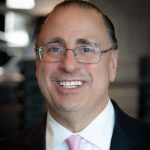
Stuart Oberman, Oberman Law Firm
Oberman Law Firm
Stuart Oberman, host of “Dental Law Radio”

Stuart Oberman is the founder and President of Oberman Law Firm. Mr. Oberman graduated from Urbana University and received his law degree from John Marshall Law School. Mr. Oberman has been practicing law for over 25 years, and before going into private practice, Mr. Oberman was in-house counsel for a Fortune 500 Company. Mr. Oberman is widely regarded as the go-to attorney in the area of Dental Law, which includes DSO formation, corporate business structures, mergers and acquisitions, regulatory compliance, advertising regulations, HIPAA, Compliance, and employment law regulations that affect dental practices.

In addition, Mr. Oberman’s expertise in the health care industry includes advising clients in the complex regulatory landscape as it relates to telehealth and telemedicine, including compliance of corporate structures, third-party reimbursement, contract negotiations, technology, health care fraud and abuse law (Anti-Kickback Statute and the State Law), professional liability risk management, federal and state regulations.

As the long-term care industry evolves, Mr. Oberman has the knowledge and experience to guide clients in the long-term care sector with respect to corporate and regulatory matters, assisted living facilities, continuing care retirement communities (CCRCs). In addition, Mr. Oberman’s practice also focuses on health care facility acquisitions and other changes of ownership, as well as related licensure and Medicare/Medicaid certification matters, CCRC registrations, long-term care/skilled nursing facility management, operating agreements, assisted living licensure matters, and health care joint ventures.

In addition to his expertise in the health care industry, Mr. Oberman has a nationwide practice that focuses on all facets of contractual disputes, including corporate governance, fiduciary duty, trade secrets, unfair competition, covenants not to compete, trademark and copyright infringement, fraud, and deceptive trade practices, and other business-related matters. Mr. Oberman also represents clients throughout the United States in a wide range of practice areas, including mergers & acquisitions, partnership agreements, commercial real estate, entity formation, employment law, commercial leasing, intellectual property, and HIPAA/OSHA compliance.

Mr. Oberman is a national lecturer and has published articles in the U.S. and Canada.

LinkedIn

Oberman Law Firm

Oberman Law Firm has a long history of civic service, noted national, regional, and local clients, and stands among the Southeast’s eminent and fast-growing full-service law firms. Oberman Law Firm’s areas of practice include Business Planning, Commercial & Technology Transactions, Corporate, Employment & Labor, Estate Planning, Health Care, Intellectual Property, Litigation, Privacy & Data Security, and Real Estate.

By meeting their client’s goals and becoming a trusted partner and advocate for our clients, their attorneys are recognized as legal go-getters who provide value-added service. Their attorneys understand that in a rapidly changing legal market, clients have new expectations, constantly evolving choices, and operate in an environment of heightened reputational and commercial risk.

Oberman Law Firm’s strength is its ability to solve complex legal problems by collaborating across borders and practice areas.

Connect with Oberman Law Firm:

Company website | LinkedIn | Twitter
Tagged With: Dental Law Radio, HR, Human Resources, Oberman Law Firm, Stuart Oberman

Aubrey Livingston, G&A Partners

May 24, 2021 by John Ray

Aubrey Livingston
Nashville Business Radio
Aubrey Livingston, G&A Partners
Loading
00:00 /
RSS Feed
Share
Link
Embed

Download file

Aubrey Livingston

Aubrey Livingston, G&A Partners (Nashville Business Radio, Episode 12)

As regional sales director in Nashville for G&A Partners, Aubrey Livingston shared stories about the resiliency of Nashville businesses in the last twelve months and how G&A helps their clients respond and thrive through times of change.  “Nashville Business Radio” is produced virtually from the Nashville studio of Business RadioX®.

G&A Partners

From payroll administration to HR assistance, G&A creates scalable service offerings that meet the needs of an organization today and have the flexibility to adapt accordingly as a business grows. By identifying a client’s greatest needs and addressing their biggest challenges, they can build a team and a customized solutions package that sets them up for success.

At G&A, superior client service is part of their DNA, and their dedication to serving clients and their employees results in faster response times, proactive support teams, and higher-value strategic HR services. No matter the need, request, or concern, clients have access to a dedicated Client Advocate and a team of experienced specialists committed to fully understanding clients.

With everything involved in managing human resources, the most important element can sometimes get lost: Humans. Behind every paycheck, medical plan, time clock, and safety program is a person—a unique individual whose skills and talents contribute to the success of your business.

HR solutions that take a standardized approach don’t account for the individual goals and needs of the extraordinary parts that make up your whole—the people that make it all work. From the day their doors opened, G&A has stood firm to its commitment to put people first. That means they take the time to get to know a client’s business and its employees—their goals and unique challenges—and G &A builds a customized, flexible plan to meet those needs.

G&A approaches every client relationship as a longtime partnership. As such, they have built an organization with fully comprehensive HR capabilities and expertise—one that can scale, grow and adapt as a company’s needs change. Regardless of the current size of a business or its stage of growth, G&A has the HR solutions, experts, and tools that can help weather any storm or reach the next level of development—all the while keeping employees happy and healthy, organizations compliant, and business primed for success.

Company website | LinkedIn | Facebook | Twitter

Aubrey Livingston, Regional Sales Director – Nashville, G&A Partners

Aubrey Livingston
Aubrey Livingston, Regional Sales Director – Nashville, G&A Partners

Sales Leader with 14+ years of experience fostering business-to-business sales in areas such as HCM solutions, payroll, ERP, software integration services, PEO, IT recruiting, time & attendance, employer benefits solutions, applicant tracking, and HR consulting services.

Aubrey’s experience in all these areas increases her passion for the plight of entrepreneurs who want to grow, competitively… need to attract the best talent, ensure they remain an employer of choice—all while stabilizing costs.

Aubrey has a Master’s in Education from Western Kentucky University.

LinkedIn

Questions and Topics in this Interview

  • Who is G&A Partners?
  • The resiliency of businesses in Nashville
  • How G&A has helped businesses during difficult times
  • What G&A is doing now to help businesses return to work, continue remote work, hybrid, etc.
  • Discuss post-pandemic workplace trends you see for the future

“Nashville Business Radio” is hosted by John Ray and produced virtually from the Nashville studio of Business RadioX®.  You can find the full archive of shows by following this link. The show is available on all the major podcast apps, including Apple Podcasts, Spotify, Google, Amazon, iHeart Radio, Stitcher, TuneIn, and others.

Tagged With: Aubrey Livingston, G&A Partners, HR expertise, HR services, Human Resources

Workplace MVP: Patrick Lynch, President of SHRM-Atlanta

May 6, 2021 by John Ray

Patrick Lynch
Minneapolis St. Paul Studio
Workplace MVP: Patrick Lynch, President of SHRM-Atlanta
Loading
00:00 /
RSS Feed
Share
Link
Embed

Download file

Patrick Lynch, SHRM-Atlanta

Workplace MVP: Patrick Lynch, President of SHRM-Atlanta

Beyond his “day job” as VP of Global Operations at Careerminds, Patrick Lynch serves as the 2021 President of SHRM-Atlanta, one of SHRM’s largest and most active chapters. He joined host Jamie Gassman to discuss SHRM-Atlanta’s recent activities, including HR For Change, the organization’s initiative to positively impact change in areas of racial equity and social justice, workforce issues addressed in SHRM-Atlanta’s recent annual symposium, REAL HR, and much more.  “Workplace MVP” is underwritten and presented by R3 Continuum and produced by the Minneapolis-St.Paul Studio of Business RadioX®.

Patrick Lynch, VP Global Operations, Careerminds, and President, SHRM-Atlanta

Patrick Lynch
Patrick Lynch, VP Global Operations, Careerminds

As Vice President of Global Operations, Patrick is responsible for building an international network of consultants to help Careerminds with the demands of its growing list of global accounts.

Before Careerminds, Patrick was the Southeast President for CMP and the President of The Frontier Group, a firm he founded and merged with CMP. Patrick also has held senior leadership roles in marketing and sales with leading consumer product companies, such as Georgia Pacific, Kao Brands, Kraft/General Foods, and The HON Company.

Patrick is the President of SHRM-Atlanta, the premier professional community for those in Human Resources and people management.

Patrick also serves as the Chairman of the Board for Special Pops Tennis: a non-profit that offers an adaptive tennis program specifically designed to share the sport with children and adults with intellectual disabilities.

Patrick holds an M.B.A. from Michigan State University and a B.A. from the University of Michigan.

LinkedIn

Careerminds

Careerminds is a global outplacement and career management partner that cares about you, your employees, and your company’s brand. We combine cutting-edge technology with personalized, one-on-one career coaching, which allows us to deliver an 80% or above engagement rate, a less than 12-week average time to land, and customized services to anyone, anywhere at a lower cost than traditional firms.

We promise to support participants throughout the whole process by working with them until they are placed in a new, meaningful role.

Getting your employees back to work is our mission and our guarantee.

Company website | LinkedIn | Facebook | Twitter

SHRM – Atlanta

SHRM-Atlanta is the premier professional community for those in Human Resources and people management. Their mission is to empower Atlanta’s HR professionals and people managers to create best-in-class Atlanta workforces and workplaces by enhancing their HR skills and knowledge, developing their business acumen, and increasing their leadership capacity.

SHRM-Atlanta is proudly affiliated with the national Society for Human Resource Management, and their 2,000+ members include Professional Practitioners, Professional Consultants, Faculty, Attorneys, Professional Associates, Students, and Honorary members who represent more than 1,300 businesses in Metro-Atlanta of all sizes.

SHRM Atlanta website | LinkedIn | Facebook | Twitter

 About “Workplace MVP”

Every day, around the world, organizations of all sizes face disruptive events and situations. Within those workplaces are everyday heroes in human resources, risk management, security, business continuity, and the C-suite. They don’t call themselves heroes though. On the contrary, they simply show up every day, laboring for the well-being of employees in their care, readying the workplace for and planning responses to disruption. This show, “Workplace MVP,” confers on these heroes the designation they deserve, Workplace MVP (Most Valuable Professionals), and gives them the forum to tell their story. As you hear their experiences, you will learn first-hand, real life approaches to readying the workplace, responses to crisis situations, and overcoming challenges of disruption. Visit our show archive here.

“Workplace MVP” Host Jamie Gassmann

In addition to serving as the host to the Workplace MVP podcast, Jamie Gassmann is the Director of Marketing at R3 Continuum (R3c). Collectively, she has more than fourteen years of marketing experience. Across her tenure, she has experience working in and with various industries including banking, real estate, retail, crisis management, insurance, business continuity, and more. She holds a Bachelor of Science Degree in Mass Communications with special interest in Advertising and Public Relations and a Master of Business Administration from Paseka School of Business, Minnesota State University.

TRANSCRIPT

Intro: [00:00:01] Broadcasting from the Business RadioX studios, it’s time for Workplace MVP. Workplace MVP is brought to you by R3 Continuum, a global leader in workplace behavioral health and security solutions. Now, here’s your host, Jamie Gassmann.

Jamie Gassmann: [00:00:22] Hi, everyone. Your host, Jamie Gassmann here, and welcome to this edition of Workplace MVP. Today, we have a wonderful MVP to celebrate. We have with us Patrick Lynch, the Vice President of Global Operations for Careerminds, and he’s also the current President of SHRM Atlanta. For anyone listening not familiar with SHRM, that is the Society of Human Relations Management. Welcome to the show, Patrick, and thank you for joining us today.

Patrick Lynch: [00:00:49] Thank you. Jamie.

Jamie Gassmann: [00:00:51] Let’s start off now with you telling me a little bit about yourself and the career journey that you’ve had.

Patrick Lynch: [00:00:56] Oh, boy. Well, yeah, how many hours do we have now? My name’s Patrick Lynch. I’m the Vice President of Global Operations for a company called Careerminds. We are a global outplacement provider that helps organizations across the world with managing their employees when they have to do workforce reductions. So, in the case of a company that has a layoff, they will assign their employees to my firm, and then we have consultants help them find new employment, new opportunities as quickly as possible.

Patrick Lynch: [00:01:40] My specific role is I manage all of the global consultants around the world. So, basically, anything outside of the US is what I do. And so, when our client companies have needs for employees and whatever continent it will be, my job is to get those people connected with the right consultants, and then get them reemployed as quickly as possible.

Jamie Gassmann: [00:02:10] Great. And you’re also involved in a number of various nonprofit organizations, along with the role that you hold at SHRM Atlanta. Can you share with us about some of the additional work that you do in your free time?

Patrick Lynch: [00:02:22] Yeah, yeah. You know, I just have an affinity to to just give back and be part of something else. SHRM Atlanta has been a wonderful opportunity in terms of being in the volunteer leadership for over 10 years. And we’ll talk more about SHRM in a moment. And I’m just very fortunate right now to be the president for 2021 in this unique pandemic year that we’re going through.

Patrick Lynch: [00:02:55] I’m also the chairman of the board of a nonprofit called Special Pops Tennis. Special Pops Tennis is a tennis program for the adaptive needs’ community. We’re the largest adaptive needs tennis program in the United States. And we just connect the sport of tennis with adaptive needs of young adults, adults that want a chance to get out, play a sport that’s fun, connect with their friends, and just live life, play tennis and make friends. We’re not a training academy. We’re really more about just connecting the adaptive needs’ community with the mainstream community to get everybody to kind of get to know each other better. And then, I don’t know, it’s just like other things that just kind of really get me interested as I’ve been a basketball coach for Special Olympics for a number of years. And unfortunately, with Special Olympics, they’ve been shut down now for well over a year. So, we haven’t been able to get together.

Patrick Lynch: [00:04:12] And then, I guess because, you know, there’s a spot on the calendar, I decided that I wanted to get involved in my local city government. And I live in Duluth, Georgia, and I’m on the zoning commission. So, we get to hear all kinds of different zoning requests. And it just is nice to get plugged in with local government, learn more about how your city is run. And I encourage anyone that has the time to do that, to become part of it, because your respect for government, what it is and what services they provide will just grow astronomically when you just see all the talented people that are running your city government and doing all kinds of things for its citizens.

Jamie Gassmann: [00:05:03] Wow. Sounds like a great mix of different organizations to be involved. And great advice on the local government. That’s fascinating. So, with SHRM Atlanta, last month, you had a conference.

Patrick Lynch: [00:05:18] Yes.

Jamie Gassmann: [00:05:18] So, what were some of the common themes? Obviously, I’m sure being an HR conference, there were probably a lot of common things that were popping out at that conference from over the last year. What were some of the main things that you were discussing and educating HR leaders on at that conference?

Patrick Lynch: [00:05:37] Yeah. I’ll tell you, Jamie, one of the first things wasn’t necessarily related to content, but it was really interesting in that like the whole world, everything’s been done virtually. And in SHRM, one of the biggest components of SHRM is community and HR people being able to connect with their peers and just share best practices, network, grow professionally. And it just becomes a bit of a challenge when you do this all virtually. And what we noticed was that attendance at our events, our chapter meetings that turned to virtual meetings, it was in soft decline from the middle of last year to the first quarter of this year.

Patrick Lynch: [00:06:30] Well, we ran the REAL HR, which is the name of our symposium, in late March. And we’re real conservative in terms of how many people that we expected to see, and it ended up being 200% higher than what we had planned. And it told us that people just really want to connect, and it’s just one that this pandemic-induced virtual world that we’re in, it becomes just something that where you need to be able to just interact and connect with people.

Patrick Lynch: [00:07:16] And we have a great virtual platform that we use, so that people can participate in real time. And one thing I noticed was that – and it’s different than just going to a live meeting where you’re in an audience listening to people here. You’ll see a presenter and they’ll be presenting. But then, along the right side, there’ll be a chat window where people are just writing comments and asking questions. And what we’ve seen is the level of engagement has substantially increased as a result.

Patrick Lynch: [00:07:53] And so, we had a lot of really engaging presentations and content. Big things that were there, one is legal. I mean, there’s just, do you require vaccinations? How do you safely bring people to work? All these things that are legal. Our membership is just always looking for answers because it’s moving very fast. Obviously, we have a new administration that’s come in, and there’s been a lot of new changes that they have implemented and plan to implement. So, what does that mean for HR and their decision makers?

Patrick Lynch: [00:08:39] There’s also everything that’s kind of the fast-moving societal change. So, you have so many things – the murder of Jorge Floyd, racial injustice, income inequality, just MeToo movement. How does that impact the workplace? And as an HR leader, how do you manage all of that? So, that was another interesting theme and content that came up.

Patrick Lynch: [00:09:12] Last one, and we’ll talk a little more about this, but culture. And, now, what we’ve seen is everybody’s working virtually, and coming out of the pandemic, there’s that element of work from home, work anywhere you want, that is going to stay with us. And that, in a way, is very liberating, it’s great, but, now, how do you maintain a culture and maintain engagement when you don’t have everybody under one roof, and you can rally everybody together, and you have now this separation. And it’s a lot of HR decision makers’ minds in terms of just how we’re going to kind of keep this all together when you have people that are working who knows where.

Jamie Gassmann: [00:10:10] Yeah. And who knows what time if they’re not on an hourly clock, right? Yeah.

Patrick Lynch: [00:10:14] Oh yeah. Well, being in global operations, I’m talking to people all the time in all kinds of time zones. So, yeah, if I look tired, there’s a reason.

Jamie Gassmann: [00:10:28] Yeah. And so, I got to imagine with some of those different areas that you mentioned with the DE&I – diversity, equity and inclusion – as well as like cultural, like how do you keep that culture of your work environment, from your perspective with all of those, what impact does that have on that current climate with your HR leaders?

Patrick Lynch: [00:10:54] Yeah. Well, there’s a few things. Like with societal change, I can kind of address that. After with the pandemic. George Floyd, there’s a number of other unfortunate situations that came after that, it just seemed like that you can’t just separate the outside world from the workplace. It was all starting to come together. We saw that at SHRM Atlanta, and we started creating conversations where we have a member connect online community that we just started organizing group chats where people could safely talk, and just kind of try and gain an understanding, and just better connect, and just find some answers, some solace, just things that will just help them get through this.

Patrick Lynch: [00:12:03] One of the things that came out of that was that we created a group called HR for Change. And this committee now is a commission to help us as a chapter, as an organization be proactive and be connected in terms of when there’s societal changes that are going on that we are going to not just wait and react; we will have a point of view, and we will be able to move on these. And it’ll always be there as a forum for our membership to come and be able to speak out.

Patrick Lynch: [00:12:48] And just really, really fortunate that one of the leaders in Atlanta, Dr. Ayanna Cummings, has agreed to come on and be the chair for HR for Change. And her along with Jackie Choice, who’s our Business Development Director, I have kind of co-partnered in terms of making this thing happen. And it’s just wonderful in terms of the things that they’re doing in terms of being able to get out and talk about this because, Jamie, this is going to be just a major trend. It’s going to impact the world of work now and well into the future.

Patrick Lynch: [00:13:41] I mean, I just read a blog over the weekend that the CEO – it’s a project management software called Basecamp – wrote a message to all of his employees just saying, “I’d like everyone to stop commenting on anything political using company email. I want all employee communication to just be business.” And all of a sudden here, 40% of his employees quit. And it’s like, “Well, I didn’t quite expect that outcome.” And the point was that they have something on their mind, they want to be able to speak that, yes, you can’t let it derail operations, and you can’t let it stop the company in terms of what it’s trying to do for its business goals, but nevertheless, this is something that is not easily compartmentalized, and you just put it in a box outside the office door, and then come in. And so, that’s where you just see HR for Change is going to be something that I just really feel is going to be important, and it’s going to be something to give people that opportunity to talk about.

Jamie Gassmann: [00:15:13] Yeah, absolutely, because, obviously, the one thing we know that’s a guarantee has changed. So, I think that’s a great concept that you’ve established there. And looking at change and other, obviously, concerns that have come that HR leaders face on a daily, what are some of the more common challenges or the current challenges that HR leaders are trying to overcome right now?

Patrick Lynch: [00:15:41] A big one is what a return to work is going to look like. So, the pandemic just, more or less, mandated everyone work virtually, unless it was something that the nature of your job was essential and you needed to be in. But for professional people, people in offices, all of a sudden, now, everybody was virtual. And then, from call of March last year to where we are today, there’s been a slow return. But with that return, there’s a lot of complexity because, now, how do you go and create a safe workspace? How do you ask or mandate that all employees who return be vaccinated? Do you need to, now, retrofit your office space to have things become safer? So, you have like dividers, spacing. just all these, it’s cost complexity in terms of just what you need to make a safe workspace.

Patrick Lynch: [00:17:06] And then, the one thing COVID did is it accelerated trends. And distributed work was a trend that was taking place; it was just slowly. But then, all of a sudden, it took a five-year trend and it happened upon us in one month. And now, what you’re looking at is just, do you really need all the office space that you require? And so, what do you do? I just read IHG, which is a wonderful company here in Metro Atlanta, they have 200,000 plus square feet, great space in Ravinia over by the perimeter area. Now, they’re reevaluating just how much of that space do we really need upon the return? And they’ll go and look at, potentially, subletting some of that space with the eventual goal that it goes away.

Patrick Lynch: [00:18:11] So, now, suddenly you have these organizations with smaller footprints and more distributed people. And then, now, you look at a distributed workforce. I mentioned, as far as that how do you maintain as far as culture, and engagement, and making sure that people feel connected because any of us who have been doing all of our work for the past 12 months over a Zoom meeting screen, realized that, yeah, it only goes to a certain level connection talking to people over a computer screen. And so, what do you do to make people really start to feel connected and belong?

Patrick Lynch: [00:19:00] And then, you start looking at some of the things that come out of that, Jamie, like, now, when you recruit and do talent, you do need to be geographically bound? I mean, if you have an open HR manager role, can that person be can be in Tennessee, or Austin, Texas and do their job effectively? I mean, do you really start to rethink where your employees need to be?

Patrick Lynch: [00:19:33] And on the flipside, I’m just thinking in the future, how career path and advancement is going to take place if people are all distributed because the facts are that a lot of advancement comes with not just skills, but the relationships you build. And those relationships are so much easier when you’re in a centralized workspace, you interact with people, you have hallway conversations, you’re in a conference room, and you’re standing up and presenting, and people get to know you and what you are. And now, all of a sudden, everybody’s off, and the only interaction is through a computer. Will that slow a career as far as career growth for people? I don’t know. It’s going to be interesting in terms of where all this heads. So, some fascinating stuff ahead of us.

Jamie Gassmann: [00:20:38] Yeah, definitely. And I mean, I feel it myself in interacting with coworkers, and it’s all by Zoom. I think you have to readjust that when you get into the workplace that it’s almost like your whole work environment is shifting a second time.

Patrick Lynch: [00:20:52] Absolutely.

Jamie Gassmann: [00:20:54] Yeah. So, on that same vein and looking at challenges, what are some of the advantages that HR leaders have right now because I always look at like, what is the optimistic side of it, some of the things that are good that HR leaders have that maybe they didn’t before?

Patrick Lynch: [00:21:08] Well, we met. We did talk one as far as that kind of the distributed workforce does open up talent pools in terms of, now, you don’t have to necessarily think that everybody has to live within your geography, commute to the office in order to attract new talent. That is going to be just a big opportunity.

Patrick Lynch: [00:21:37] I think, also, it’s a big opportunity in terms of looking at the upskilling, reskilling, new scaling of their employees, and really start to bring back the whole talent development part of work because the demands of every workplace. I’ve heard the saying and it really does ring true that every job, in a way, is a tech job now. And I mean, my daughter, she’s a box office manager for a theater company, but the first thing that they will look at is her ability to use the software that they use for ticketing, and patron management and everything. And so, in some ways, a tech job, and that’s what the world of work is very much becoming.

Patrick Lynch: [00:22:47] And so, with that, HR is going to be looking at, “Okay, how can we make sure that we have the skills that we need?” Because Jamie, it breaks my heart when you always hear about all these open or these unfilled jobs, and they just can’t find the right people. And yet, then, my company will see people that are made redundant and are laid off. And so, somewhere, is there a way to connect those two dots and find these new streams where people can get redeveloped, reskilled, and be able to be ready for the demands of the new world?

Jamie Gassmann: [00:23:36] Think of a way to channel those transferable skills. They might have been in one industry, but what have they established as as an employee that can be utilized in maybe a different industry? Interesting.

Patrick Lynch: [00:23:50] Absolutely. And I look at my career. Prior to being in the HR and outplacement space, I was in a career in marketing. And it was basically, I’ll call it consumer products marketing. And then, within that, I started out in food products, but then moved to health and beauty aids. Then, moved to office products. And the one common theme was that these all were products that a consumer had a need for. So, whether it was a soap, a lotion, carbonated bath tablet – that’s a story unto itself – but steel safes, office paper, office furniture, there was always that common theme and there was that transferability that once you built a marketing skill stack, I could then come into a new situation and apply it. And that goes with everybody in the workplace that you go and start thinking about the skill stack that you are building and be very aware of it.

Patrick Lynch: [00:25:18] I had a chance, gosh, this goes back, now, almost two years ago to do a presentation for the Rising Leader group at SHRM Atlanta. And these are all people under 35 and under. So, their careers are just more or less starting. And they asked me to talk about that, about building a skill stack. And some of it’s deliberate, some of it isn’t. But all of a sudden, you look, and you say, “Okay. I got a degree in History as an undergrad,” but then, you think, “That didn’t really help me.” And well,, it taught you to write, it taught you to research. And Jamie, you see where this is going. You start to think, “Okay, here’s this skill on top of this skill, on top of this skill. Now, it gives me the value that I can come into in your organization and help you with fill in the blank.”

Jamie Gassmann: [00:26:19] Yeah, absolutely. So, it gets me to my next question, which is looking at your career and looking at over the course of your career, has there been like a situation or a challenge that you faced either in your marketing role or in HR role that prepared you for navigating this last year or navigating what’s to come? Like, just that gave you some really good experience that you could share as kind of an example to HR leaders of how you’ve grown and been able to utilize maybe some of that learning?

Patrick Lynch: [00:26:56] Yeah. My career path is one that I mentioned. I had a career in consumer products marketing. But then, I had like, in a two-year period, a situation where my job at one company was eliminated. I moved to a second company. I’m there two years. And then, they want me to relocate, and I just couldn’t. So, I end up exiting. And then, I went through a pivot, and I thought, “Okay, where do I really want to go? And is this a time for me to do something different?” And that’s how I entered the HR space and the outplacement space. And that’s 10 years now that I’ve been in it.

Patrick Lynch: [00:27:50] And what I’ve had while here is that I’ve just learned that as far as the adaptability and being able to just shift, so that you always have a strategy, so that you’re moving ahead with a plan, but you don’t just stop and ignore what’s going on around you just so you can stick to your strategy.

Patrick Lynch: [00:28:23] And great quote from Mike Tyson, the world philosopher, that “Everybody has a plan until they’re punched in the face.” And so, I think that’s what a lot of us saw in the past 12 months in terms of, “Okay, what did happen?” And my heart goes out to all the people who are in industries that were impacted due to no fault of their own. And I mentioned my daughter. She’s in theater. Well, live theater ended, and that was a really hard on her coworkers. And they’re just now climbing back up, but it’s okay. Now, it’s not like what events happen to you. It’s what you do as a result of what the events have as a result of the events.

Patrick Lynch: [00:29:23] And so, that’s where everybody has to be looking and thinking about new ways to just kind of reinvent themselves or try and, “Okay, maybe this is the change I needed to go and try something different.” I mean, there’s been a whole host of great inspiring stories that I’ve seen from people. And outplacement participants, clients that have reached out to me just over the years in terms of things they’ve done that really changed and made a profound impact on their lives. So, yeah, I think if we’re looking at a theme on this one, Jamie, it’s change. I think that that’s probably that. Just know that it’s there, embrace it, and do the best you can with it.

Jamie Gassmann: [00:30:22] Yeah, great. Great advice. So, real quick, we’re going to have a word from our show sponsor as the Workplace MVP is sponsored by R3 Continuum. Ensuring the psychological and physical safety of your organization and your people is not only normal, but a necessity in today’s ever-changing and often unpredictable world. R3 Continuum can help you do that and more with their continuum of behavioral health, crisis and security solutions tailored to meet the unique challenges of your organization. Learn more at www.r3c.com.

Jamie Gassmann: [00:31:01] So, just a few more questions for you, Patrick. So, there’s something that you’re involved with at SHRM Atlanta that I’ve been told you’re quite proud of, something that you’ve done within your term as president there. Wondering if you might be able to share with us what that is.

Patrick Lynch: [00:31:20] Can you give me – is it…

Jamie Gassmann: [00:31:23] It must have been like some type of a program or something that you started or worked that you guys have done at SHRM Atlanta?

Patrick Lynch: [00:31:30] Spoiler alert, I think we already talked about as far as the HR for Change, which is great. I think the other one that I really- and we talked HR for Change pretty thoroughly, but the other one, Jamie, that I have been very proud was creation of a program called SHIFT, which is Start Having Intentionality For Transforming your Career. But what SHIFT did was there was a one-day event, and it was the first time where SHRM Atlanta collaborated with NAAAHR-Atlanta, which is the National Association of African-Americans in HR. So, our two groups jointly put on this event. And so, there was just the ability to just all of us to get to know each other, build relationships.

Patrick Lynch: [00:32:33] And we built an event that was basically for people that were in HR that were in transition, looking for new careers, looking to make as far as like an advancement in their career or new to Atlanta. So, we had a one-day event, just content all built around just career transformation, career development. And two years running, it was a sell-out. I think probably the biggest thing wasn’t necessarily the sell-out, but it was the relationships that we were able between SHRM Atlanta and NAAAHR-Atlanta, that those relationships that were developed and continue to this day was just something that really will stay with me forever.

Patrick Lynch: [00:33:35] And it’s like one of those things in where it was a lot of hard work, but I would always look forward to it. It would be like a five-month intensive to get us to the finish line, and I had a smile every day. And I think it was the people, and the relationships, and knowing that we were really helping a lot of people in our community. So, yeah, that would be the thing that along with HR for Change, which is kind of now the present day, and I’m most happy with in terms of leaving any kind of legacy for SHRM Atlanta.

Jamie Gassmann: [00:34:24] Wonderful, wonderful. And I know SHRM, at a national level, has different programs that they’ve been launching as well. I think I heard about like a ParagonLabs. So, can you share a little bit about that, about some of the other maybe programs that whether it be SHRM Atlanta or SHRM National have in place?

Patrick Lynch: [00:34:45] Yeah, sure. And one thing is that SHRM National is 300,000 members and it’s a strong and effective lobbyer here in Washington DC for all things around the workplace. And it’s got just a ton of smart people and innovative programs. And they’ve been very supportive of SHRM Atlanta. We are one of the chapters then of SHRM National. And so, SHRM Atlanta is one of the top six chapters across the country, and we all roll up to National.

Patrick Lynch: [00:35:34] You mentioned ParagonLabs, which was a really interesting initiative that SHRM National has done, where they, basically, are creating a startup incubator for HR tech companies. And they’re looking specifically for HR tech companies that will make the workplace better. So, not necessarily the slickest software, but if it’s going to have a positive impact in terms of how to make workplaces more diverse, just more engaged, just create something where people are going to be more productive.

Patrick Lynch: [00:36:27] And so, what ParagonLabs did this year was they had like a shark tank kind of event where they had startups in all these various major metro areas come and present their ideas. And then, a small panel of judges would rate them, and the top three moved on to like a second round, which ultimately is going to lead to a group of finalists that are going to go to SHRM National in September at the SHRM National Las Vegas Conference. And we’ll have like final judges.

Patrick Lynch: [00:37:17] I got a chance to sit as being one of the Atlanta judges. And Jamie, it’s just so impressive meeting these. And they’re startups, and they’re just people, they have an idea, they got a passion, they’re running with it, they have to come and make a pitch. And yeah, I think I was more of the Paula than the Simon in terms of trying to be encouraging to them. And I’ve been impressed. And ParagonLabs, it’s run by a really smart guy, Guillermo Corea, and he’s finished all the – gosh, I can’t tell you how many different contests that they’ve had across the country. But now, they’re in the process of moving people the next round, and I really look forward to seeing the finalists in Las Vegas in September.

Jamie Gassmann: [00:38:22] Oh, that sounds amazing. What a great way to use kind of a concept that’s out there, but putting it into a business context and using it as a way to have a little fun with that rewarding people who have those great ideas. That’s great.

Patrick Lynch: [00:38:38] Absolutely.

Jamie Gassmann: [00:38:39] And I know you mentioned SHRM National Las Vegas in September. What other events and resources or tools are available to members or even non-members at SHRM?

Patrick Lynch: [00:38:54] Well, for us, please go to shrmatlanta.org, and that’s the website for my chapter. And you’ll find in the events tab all kinds of events that we have coming up. We’re doing our first like live in-person event in June at the Atlanta Zoo. So, it’ll be outside. And so, we’ll be able to talk HR, be a little Dr. Doolittle, and talk HR amongst the animals. We’re going to also have an August in-person event at the Aquarium. And so, that that’ll be our chance to start to get back to normalcy and meeting, which is kind of one of our strengths. Our annual meeting is in September. It’s the 21st to the 23rd. And so, that’s a great multiday event that we’ll have at the Cobb Galleria.

Patrick Lynch: [00:40:05] And then, just, if you check out our site, there’s just a lot of really great opportunities and reasons to become a member. I mentioned the Rising Leaders, anybody that’s 35 and under that wants to accelerate their network and meet a lot of smart people that are rising in the profession, here’s a chance with this group to meet on a monthly basis and learn and grow. We have an accomplished leader exchange where senior HR leaders for companies – we have two groups, one from companies that have 250 to 1000 employees, they all get together and have peer-to-peer networking, best practice sharing, ability to really learn from others that share similar experiences to your own.

Patrick Lynch: [00:41:07] And then, we have an accomplished leader exchange for HR leaders with companies over a thousand, because, now, you’re getting into the enterprise level firms, and they just have different needs and challenges, and they get a chance also to interact and benefit from their peer-to-peer connection.

Patrick Lynch: [00:41:30] We just wrapped up a great program on mentoring, where as part of our members, we connect senior HR leaders with people that are rising their career, mid-career, and just wanting to connect with somebody to get mentoring advice, whatever it is. Kind of a lot of it’s around career advancement. And so, we created a cohort where we basically do kind of like speed dating. So, it’s not on your phone, you have to swipe right or anything like that to meet somebody. We make it real easy and connect people. And that’s just been just a great member benefit. And all of the things here are all built around that community, building your network, and really just getting smarter in the areas of HR. And you, see my voice goes up a half octave when I’m talking about it because, I mean, it’s just a lot of great things we have going on.

Jamie Gassmann: [00:42:48] Wonderful. Sounds like it. And what a great way to be involved, and the people that are fellow leaders like yourself and enjoying kind of the same line of work, and learning off of each other. If somebody wanted to get in contact with you or connect with you, how would they be able to go about doing that?

Patrick Lynch: [00:43:07] Well, my email is plynch@careerminds.com, and just email me. You can always find me on LinkedIn and connect with me. I love making new connections. And I mentioned, as far as any information around SHRM Atlanta, that’s shrmatlanta.org. And Careerminds, we’re at careerminds.com. And so, I encourage anyone to reach out to me, and we’ll talk about anything.

Jamie Gassmann: [00:43:45] Wonderful. Well, thank you so much for letting us celebrate you today, Patrick. It was great hearing your stories and getting your advice that we can share with our listeners. And we appreciate you. And I’m sure your organizations and employees do as well.

Jamie Gassmann: [00:43:59] And we also want to thank our show sponsor, R3 Continuum for supporting the Workplace MVP Podcast. And to our listeners, thank you for tuning in. If you’ve not already done so, make sure to subscribe, so you get our most recent episodes and other resources. You also can follow our show on LinkedIn, Facebook and Twitter, @WorkplaceMVP. If you are a workplace MVP or know someone who is, we want to know. Email us at info@workplace-mvp.com. Thank you all for joining us and have a great rest of your day.


Tagged With: Careerminds, HR For Change, Human Resources, Patrick Lynch, people management, racial equity, REAL HR, shrm, SHRM Atlanta, social justice

Workplace MVP: Geoff Topping, Challenger Motor Freight, and Sara Rose, Hennepin Healthcare

April 8, 2021 by John Ray

Challenger Motor Frieght
Minneapolis St. Paul Studio
Workplace MVP: Geoff Topping, Challenger Motor Freight, and Sara Rose, Hennepin Healthcare
Loading
00:00 /
RSS Feed
Share
Link
Embed

Download file

Hennepin Healthcare

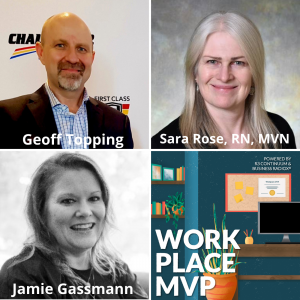
Workplace MVP: Geoff Topping, Challenger Motor Freight and Sara Rose, RN, MVN, Hennepin Healthcare

The pandemic created unique and acute workplace challenges for both trucking and healthcare enterprises. Geoff Topping, Challenger Motor Freight, and Sara Rose, Hennepin Healthcare, joined host Jamie Gassmann to reflect on their experiences of both difficulty and hope over the past year. “Workplace MVP” is underwritten and presented by R3 Continuum and produced by the Minneapolis-St.Paul Studio of Business RadioX®.

Geoff Topping, Vice President of People & Culture, Challenger Motor Freight Inc.

Geoff Topping, Challenger Motor Freight

Geoff Topping has been in the trucking industry for over 25 years and has held many roles in that time. Geoff started his career as a Driver and has since held positions in Operations, Sales, Recruiting and Human Resources. Currently, Geoff is Vice President of People & Culture including Safety, Recruiting and Risk Management for Challenger. Geoff has also served Industry associations such as the Truck Training Schools of Ontario where he acted as the Chair of the Carrier committee and is currently the co-chair of the Recruiting, Retention and HR committee at TCA as well as a Commissioner for the Niagara Bridge Commission. In 2018 Geoff was awarded the HR Leader of the year by Trucking HR Canada and is 2017 was also recognized as the HR Innovator.

Challenger Motor Freight Inc.

Challenger Motor Freight is a total supply chain provider to a large and diverse customer base in Canada, United States, and Mexico. Challenger employs more than 1,500 people with locations in Toronto, Montreal, Vancouver, Atlanta, Chicago, Dallas, and Long Beach.

Since its inception in 1975, Challenger Motor Freight Inc. has continually set new standards of quality and performance. Their unwavering commitment has earned us some of the highest accolades in the transportation industry and an impressive record of customer satisfaction.

From its earliest days, Challenger has made innovation a part of its corporate culture. The Challenger team has always been on the forefront of operational and technological advancements that have significantly changed the nature of the transportation industry. These innovations continue to take them in new directions by allowing the company to offer enhanced services to meet their customer’s increasingly diversified needs.

With a full range of transportation, warehousing, and logistics services, Challenger can meet client requirements and transport your goods between Canada and anywhere in North America.
Their modern fleet serves truckload, less-than-truckload, special commodities and expedited needs. A team of professionally trained drivers and state-of-the-art electronic monitoring and on-board tracking systems help ensure the highest quality standards and timely arrivals.

At Challenger, they are proud of our history and excited about their future, but their greatest pride lies in helping customers reach new heights.

Leading the Way. Challenger Motor Freight is a company that shares your drive to outperform the competition.

Company website | LinkedIn | Facebook

Sara Rose, RN, MSN, Hennepin Healthcare

Hennepin Healthcare
Sara Rose, RN, MVN, Hennepin Healthcare

Sara Rose is an energetic and visionary hospital leader with thirty-two years of healthcare experience including fourteen years in a nursing leadership role. Sara has experience in smaller critical access hospitals as well as urban, academic medical center environments. Sara is passionate about maintaining a strong focus to provide support and well-being resources for her teams. She sees staff as the most valuable resource in any healthcare organization.

LinkedIn

Hennepin Healthcare

Hennepin Healthcare is a network of inpatient and outpatient services across the Twin Cities in Minnesota.

Their flagship, Hennepin County Medical Center (HCMC), is a 400-bed Adult and Pediatric Trauma Center, Comprehensive Stroke Center, Verified Burn Center, and Verified Bariatric Center in the heart of Minneapolis.  As an academic medical center and safety net hospital, their mantra is “Every Life Matters.”  The Critical Care and Heart and Vascular divisions oversee adult intensive care and cardiology services.  HCMC is accredited by the Joint Commission.

Company website| LinkedIn |Facebook | Twitter

About “Workplace MVP”

Every day, around the world, organizations of all sizes face disruptive events and situations. Within those workplaces are everyday heroes in human resources, risk management, security, business continuity, and the C-suite. They don’t call themselves heroes though. On the contrary, they simply show up every day, laboring for the well-being of employees in their care, readying the workplace for and planning responses to disruption. This show, “Workplace MVP,” confers on these heroes the designation they deserve, Workplace MVP (Most Valuable Professionals), and gives them the forum to tell their story. As you hear their experiences, you will learn first-hand, real life approaches to readying the workplace, responses to crisis situations, and overcoming challenges of disruption. Visit our show archive here.

“Workplace MVP” Host Jamie Gassmann

In addition to serving as the host to the Workplace MVP podcast, Jamie Gassmann is the Director of Marketing at R3 Continuum (R3c). Collectively, she has more than fourteen years of marketing experience. Across her tenure, she has experience working in and with various industries including banking, real estate, retail, crisis management, insurance, business continuity, and more. She holds a Bachelor of Science Degree in Mass Communications with special interest in Advertising and Public Relations and a Master of Business Administration from Paseka School of Business, Minnesota State University.
TRANSCRIPT

Intro: [00:00:04] Broadcasting from the Business RadioX Studios, it’s time for Workplace MVP. Workplace MVP is brought to you by R3 Continuum, a global leader in workplace behavioral health, crisis, and security solutions. Now here’s your host, Jamie Gassmann.

Jamie Gassmann: [00:00:26] Hi, everyone. Your host, Jamie Gassmann, here. And welcome to this edition of Workplace MVP. Every day around the world, workplaces of all sizes face disruptions, such as loss of employees, business interruptions, natural disasters, workplace violence. And, yes, a pandemic. Within those workplaces are everyday heroes whose role calls for them to ready the workplace for and respond to those disruptions. This show features those heroes we call Workplace MVP’s, otherwise known as Most Valuable Professionals. While we celebrate their inspiring work, we also hope to learn from their experiences as well.

Jamie Gassmann: [00:01:09] Today, we have two wonderful MVP’s to celebrate. Geoff Topping, Vice President of People and Culture from Challenger Motor Freight, and Sara Rose, Senior Director, Critical Care from Hennepin County Medical Center, also known as HCMC. They will be sharing with us today the amazing work they have done for their organizations and their people as they navigated the twists and turns brought on by the various challenges of 2020.

Jamie Gassmann: [00:01:35] Our first workplace MVP is Geoff Topping, Vice President of People and Culture at Challenger Motor Freight. Hi there, Geoff.

Geoff Topping: [00:01:43] Good morning.

Jamie Gassmann: [00:01:45] So, you’ve been named the accidental H.R. Manager. Can you share with me how you got that title?

Geoff Topping: [00:01:51] Yeah. Absolutely. So, I am the Vice President of People and Culture here at Challenger. That kind of came about in a strange way. I started my career in the trucking industry at the age of 18 as a driver. I was a driver and owner-operator. I worked in operations and I worked in sales. And then, back in, I guess, it was about 2016 or 2015, somewhere in there, I was kind of tapped on the shoulder and asked to move in to the recruiting and retention side of the trucking business.

Geoff Topping: [00:02:26] And it was kind of an odd thing for me because I don’t have any postsecondary education in H.R. I had never worked in the H.R. field. In fact, I used to pick on the H.R. people, I called it the hug department, actually, lots of times. And so, it was kind of an odd thing for me to be put into the H.R. role. Yeah, it was a very unconventional way of getting here. But I think I’m pretty proud of the way things have turned out. It’s been an exciting time. And we’re going to talk a bit about that a little more as we go through things here today.

Geoff Topping: [00:02:58] But I’ve often said now, I wish it was what I’d done all my career was working the H.R. side of things. But it’s been pointed out to me by many people, a couple of mentors that I have that, you know, if I hadn’t done all the different roles I have within the industry and within the school of hard knocks, I guess we’ll call it, then I wouldn’t be able to fulfill the role the way I do. So, kind of a weird pattern or way to get here, but it’s been exciting.

Jamie Gassmann: [00:03:24] Definitely. So, tell me a little bit about, you know, the career journey you’ve had. You know, your mentors pointed out that it helped you in your current role. In your opinion, how has that helped you be more effective at what you do?

Geoff Topping: [00:03:37] Well, I think in our industry, because I’ve worked in basically all areas of our industry, I can really empathize with the drivers, with the mechanics, with the people in the operations floor, the people in the admin sections of the business. I’ve done a lot of the same roles they are currently doing. I’ve faced a lot of the same challenges, it gives me a good perspective of what they might be dealing with.

Geoff Topping: [00:04:03] It’s also really helped where I can relate and kind of tell the story, or I joke and call it translate. I can translate what the other departments might be dealing with. You know, when you put in an order, for example, you’re putting in an order for a load to pick up somewhere. That information that’s put in there is not only important to the driver, it can be important to the billing department. It can be important to the safety department. It can be important to the risk department. And because of all my different roles, I’m able to kind of share with everybody what you do and how it affects other people throughout the supply chain.

Jamie Gassmann: [00:04:36] Great. Now, over the last year, I’m sure it helped out a lot to have some of that background, but what were some of the hardest parts of your role over this last year?

Geoff Topping: [00:04:48] Since the pandemic started in March the 11th at about 1:15 in the afternoon – I’ll never forget it – in 2020, getting people answers has been the hardest part, I think. People were dealing with fear in a lot of ways. I mean, if we look at Maslow’s Hierarchy of Needs, you know, those basic needs were in question for a lot of people. They didn’t know if they were going to have a job. They didn’t know what this might mean for their health. They didn’t know what it might mean for their loved one’s health. And so, there was a lot of fear. And, you know, we still go through waves of that as the pandemic continues. And we’re in wave 3 of it here now in the Province of Ontario.

Geoff Topping: [00:05:33] But I think getting people answers was the hardest thing because people were scared. They were having emotions that they didn’t understand. I mean, none of us have been through a pandemic before. This is something new and unprecedented. So, coming up with answers fast enough for people and ones that weren’t going to change, I mean, this was a very fluid situation. The health care professionals, which we have one of them on the line here with us today, we’re learning about this virus. It was a changing virus and still changes to this day. So, how it was being handled, what the medical professionals, what the the boards of health or the Departments of Health were requiring was constantly changing. And I think just getting people the answers to make them feel safe and make them feel comfortable was the biggest challenge.

Jamie Gassmann: [00:06:25] Now, you’ve mentioned fear and we’re going to talk a little bit more about that in a little bit. But tell me a little bit about what was it like for your staff? What were you experiencing? You know, you’ve heard stories of every employee kind of responded differently. Some were really afraid. Some were not. Kind of like almost like a spectrum of fear. What was it like for your staff over this last year with all of the different twists and turns, cases rising, cases falling? What was it like for your team?

Geoff Topping: [00:06:59] It’s been a time of constant change, I’ll say that. I could not be more proud of the way our organization has handled it. I mean, from the frontline, the drivers out on the road, the mechanics, all the admin staff back here in the offices supporting everybody, people have handled it amazingly. I mean, the challenges they faced have been things we’ve never dealt with before.

Geoff Topping: [00:07:25] And, you know, I take the drivers, for example, out on the road. That’s a tough job to start with. You’re away from home. It’s a lot of hours. You’re dealing with different weather, different traffic, all those kind of things. But the drivers had a real interesting challenge. Again, I can’t be more proud of the way the organization handled it. But the drivers, you know, restaurants were closed for a long time. They didn’t have access to restaurants. So, they were having to pack extra food with them or eat fast food out of their truck. Getting into shippers and receivers was an issue. They weren’t allowed on the dock. They weren’t allowed in the office. They couldn’t use the washroom facilities due to COVID. I mean, for those drivers, it was a real tough situation.

Geoff Topping: [00:08:11] I mean, all of us back in our offices or working from home, sure, we had all those fears to deal with as well. But we had some comfort and we were going home at the end of every shift or we were at home. Well, the drivers were living on the road in a very fluid situation with, you know, again, lack of access to rest areas, to washrooms, to restaurants. It was a tough time for them.

Jamie Gassmann: [00:08:37] So, we kind of have talked about the fear of the employees and, obviously, the struggles that all the drivers went through. Talk to me about, in your role, how did you support the well-being and encouraged self-care? Because obviously those are some trying times. How did you help them to kind of keep their mental health as well as their physical health intact through this?

Geoff Topping: [00:09:04] Yeah. Sure. So, communication, I think, was the biggest thing. And we started right away. Back on March the 11th, 2020, we started a communication plan that still continues to this day. We’re actually working on COVID communication number 73, we started working on it this morning. Then, they were going out kind of every other day for a little while. Then, we switched it to weekly, then biweekly, and as needed. But very detailed communication that went out. We sent it out to all the drivers in the trucks. We have the satellite system. We sent it to every drivers’ email. We sent it to every employees’ email. We sent it to all of the mechanics. We posted it on our social media pages.

Geoff Topping: [00:09:47] But a very detailed communication that kind of explained what’s happening, what’s changed since last week, here’s what we’re hearing in dealing with the various levels of government, various industry associations. We really tried to keep people up to date on what we knew at the time with the caveat that, you know, this is a very fluid situation that changes and we’ll update you as we can.

Geoff Topping: [00:10:10] Mental health is something I’m concerned about, for sure, still to this day. I kind of refer to it as the mental health hangover, that could come from this pandemic. And we’ve tried to share a lot of resources with people, resources that our EAP providers gave us, resources that are available online for people, whether that be just websites with information or access to virtual counseling, virtual doctors, to get medical appointments, all those kind of things. For the drivers, that’s certainly something that’s helped them a lot because they can’t always get home to get to the doctor at a certain time.

Geoff Topping: [00:10:49] But every one of those communications, we not only shared what we’re doing, health and safety wise just to reiterate all the protocols and safety measures, but we tried to share as many resources as we could for people to access to help them or their family or their friends. We also sent out messages to the leadership team and the managers on a biweekly basis during the initial phases of the pandemic with how to help manage your team or how to help coach your team through this situation. We just tried to provide a lot of extra information.

Geoff Topping: [00:11:26] We also made a point of doing management by walking around, I’m a big fan of that. And I tried and still do try to take a lot of the the full building at least once a day and just kind of check in with the various departments, see how people are doing, and kind of keep my ear to the ground of what might be the pinch points so that we can address that in those communications as well. In a time like this, communication, I think, is the key. I’m sure we’ve over communicated in some ways, but I felt it was important to keep people up to date on what’s going on.

Jamie Gassmann: [00:12:01] So, what is something that you’re most proud of within your career? It could be something maybe over the last year that you’ve done or just in your career in general, you know, within your role at Challenger Motor Freight or other roles that you’re just most proud of, you know, of your accomplishment.

Geoff Topping: [00:12:23] I hate kind of talking about myself, but I think one of them would be when I first got into the recruiting and retention role of things on the H.R. side. I was asked to be the face or the voice of our culture change program. And we’d done a lot of work as a company on focusing on our culture. And we believe there’s three pillars to a business, and that’s people, customer, and profit. And if we take care of the people, they’ll take care of the customers, and that will ultimately take care of the profit.

Geoff Topping: [00:12:57] And we did a a good to great – we call it – a good to great journey, where we went out and did a discovery where we met with about 40 different people one-on-one, and did intense interviews with them on what they thought was going well with the company and what they thought needed improvement. We did about 25 sessions at all days, hours, and shifts where anybody could attend any role in the company and ask those same questions. Through the help of a consultant, we boiled all that down into the main themes that we needed to address. And then, we went back out and did another road show where we said, this is what we heard, this is what we can do about it today, this is what we’re going to work on next year, the year after, et cetera. I still think that’s one of my most proudest accomplishments was working on that.

Geoff Topping: [00:13:48] And I had a lot of support. It was by no means a one man effort. You know, it was a team of people. But I got to be the voice of it, which I felt pretty privileged of. And it’s been something that’s worked very well. I think that all put us in a great spot for what we had to deal with during the pandemic, because we had proven to people that we’ll go out and ask for your opinions. We might not be able to change everything exactly the way you want, but we will give you an answer on what we’re going to do, what we can do, or what we, unfortunately, might not be able to do to affect something. So, I think combine those two, the first one put us in a great spot to handle the pandemic and the situation that we’re in today.

Jamie Gassmann: [00:14:28] Wonderful. Well, thanks, Geoff, for all that great information. We’re going to come back to you after we talk with Sara Rose now. So, our next Workplace MVP is Sara Rose, Senior Director, Critical Care, Heart and Vascular at Hennepin County Medical Center. We’ll be referring to Hennepin County Medical Center throughout the rest of the show as HCMC. So, welcome, Sara.

Sara Rose: [00:14:53] Hi, Jamie. Thanks for having me.

Jamie Gassmann: [00:14:55] So, you oversee a number of areas at HCMC, can you walk us through what those areas are and your role within the hospital?

Sara Rose: [00:15:04] Sure. I’m a nurse and I’m a patient care director, so I have several departments that report up through me in, actually, two divisions. In the Critical Care Division, I have the Adult ICUs, and the Burn Unit, and Respiratory Therapy. We are a Level 1 Trauma Center, so those are very busy areas. In the Heart and Vascular Division, I have all the procedural areas that report up through cardiology. So, the cardiac cath lab, where you might go if you have a heart attack, the echocardiography lab, and those smaller departments.

Jamie Gassmann: [00:15:47] Great. So, looking at the last year, obviously health care has been hit pretty hard in terms of being the frontline responding to patients with COVID, what for you has been the hardest part of your role over this last year?

Sara Rose: [00:16:03] Yeah. Well, I can echo some of what Geoff said too. You know, I think the hardest part was asking staff to trust us and be flexible as we moved forward. It was a year where we didn’t have the answers. And in health care, we like to have those answers. Things were changing with our personal protective equipment every day. They were changing in the way we isolated patients with COVID, the medications we gave them, the protocols, and the treatments. And that was the hardest part, really. Health care is an environment where you’re asked to change all the time, but we are very protocolized. And that’s how we keep patients safe. We have standard work and we follow it. And so, turning on a dime is not our strong suit. But staff did, we all got through it together.

Jamie Gassmann: [00:17:05] Yeah. And so, talk to me a little bit about the staff. I know when we talked earlier, you know, you shared kind of some of the ups and downs and the changes. Talk to me a little bit of what was the last year like for your staff?

Sara Rose: [00:17:21] Well, it started out before the shutdown. We knew this was coming. I don’t think any of us knew the tsunami that we were headed for. But we started by looking at our elective procedures and we started shutting those down. And focusing on what was absolutely necessary to do. So, during that time, we had furloughs, we had a loss of business because we were shutting down those elective procedures and staff went home. And at the same time, the other half of the organization was really busy building up for what was to come, building out extra care spaces to take care of overflow patients. So, it was a real dichotomy. Nurses were asked to work in different areas. Maybe your area was shut down, but you’re a critical care nurse and you could be utilized in the ICU. So, again, we were asking staff to be very flexible.

Sara Rose: [00:18:27] Then, when we hit our first surge around the March or April timeframe, it was crazy. We did not have enough staff. We were out taking care of patients in areas we hadn’t cared for them before. And we were working with our local business partners, the other hospitals, to try to load level and make sure that none of us were overly burdened, while others were status quo. It was a crazy time.

Sara Rose: [00:19:00] And going into the summer, we saw the COVID numbers go down a little bit. People were outside. However, there was a lot of civil unrest in our community that took the violent injuries up quite a bit. And so, we saw, I think, about 300 percent increase in our penetrating trauma over the summer. And so, that was another stress on the staff.

Sara Rose: [00:19:34] Then, we had another surge in October where we were asked again to change our nursing ratios, do things differently to accommodate the influx of patients. So, it’s been a real roller coaster from feast or famine. And that creates a lot of emotional drag on staff, and I can still feel it today.

Jamie Gassmann: [00:20:01] Sure. So, you kind of touched on it a little bit with the unexpected patient increases, obviously, in the violent injuries. What other increases did you see as a result of people kind of changing how they live? A lot of people working remote, maybe being home all day. What were some of the other areas that also increased along with, obviously, COVID patients at your hospital?

Sara Rose: [00:20:30] You know, mental health resources in this country are really stretched. And we saw that there were an increase in demand for counseling. And we shut down a lot of our group therapies and had to do those on line. So, we saw people getting sicker with their mental health. But we also saw across the country and at HCMC an increase in the burns, especially in the pediatric population. Parents working from home, trying to homeschool their kids, young kids maybe not being as supervised, so coffee burns. And this was a country-wide phenomenon.

Jamie Gassmann: [00:21:18] Interesting. And those were the things that we weren’t really hearing about because there’s so many other things to report on. So, it’s interesting that both you and Geoff shared areas that we maybe hadn’t thought about as increases or challenges that each of your industries faced. So, you kind of touched on this a little bit, your hospital is located in downtown part of Minneapolis. So, how has the civil unrest impacted your team? I know you mentioned the increase in violent injuries, but what other impacts have you had to manage as a result of that civil unrest being so close to home?

Sara Rose: [00:21:57] Well, we’re a very multicultural and diverse organization. And so, you know, what goes on in our community is often brought inside our doors because we live and work in the community. There’s been a lot of anxiety. As a leader, my job is to make sure that people are safe and that patients are safe, that staff can get to and from their cars safely, and that the patients we’re taken care of inside our walls are safe. You know, there have been necessary conversations that have been sparked because of the civil unrest. And so, emotions are raw. But, again, these are things that we have to go through.

Sara Rose: [00:22:46] I’m really proud as an organization that from the top down, we’re really committed to equity in the care we deliver and how we treat each other. And so, we’re on the road on that journey actively pursuing it. But I would say in wrapping up this question, it’s an emotional time and we’re trying to understand each other. And I think we need to have these conversations, but they’re hard in the midst of a busy workday.

Jamie Gassmann: [00:23:20] Evidently. So, now, your team on a normal workday – and year – see a lot due to being a Level 1 Trauma Center. This last year, as you kind of mentioned, is a roller coaster, especially taxing, so what approaches have you used to support the well-being and encourage self-care within your team?

Sara Rose: [00:23:42] Much like Geoff, we have a portfolio of offerings for staff. We have employee assistance and we have online trainings. We also have a critical incident support team that we can call on to come and help our staff members get through a crisis or a critical time, something that’s really affecting them in the moment. I think we struggle a little more looking back and saying we realize people need help, but what do we do for them? And that’s really where we are today.

Sara Rose: [00:24:21] For me, it’s important for me to show up. I think a leader shows up for their team even on a day that they don’t want to be face-to-face with people. And Geoff alluded to it as well, getting out there and walking around. It’s so important to staff that they know that we know what they do. Right? And so, for me, being present, stepping up, having an open door policy. But I still feel like we have some room for improvement in really getting to our team members and making sure that they’re doing okay. And that’s a passion of mine and something I hope that we can continue to work on here at HCMC in my career time.

Jamie Gassmann: [00:25:13] Great. And so, what is something that you are most proud of within your career and your role at HCMC?

Sara Rose: [00:25:23] I’ve always been proud of the teams I’ve worked with. I can look back on every team, whether I was a staff member or a leader, and I’ve been proud to be part of those teams. But I would say, especially in this last year, everyone in this hospital, from environmental services, to nursing, to respiratory therapy, to facilities, we really pulled together. And I’m proud of the team we became. We became a different team. A team that had no bounds and no barriers. And we just worked to get the job done. No politics. No long conversations. We just did the work. And looking back, I wouldn’t want to go through it again. But looking back, I’m very proud of them and I would work with that team any day. And I’m fortunate to be here still working with them.

Jamie Gassmann: [00:26:22] Wonderful. So, real quick, we’re going to a little word from our Workplace MVP’s underwriter, R3 Continuum. R3 Continuum is a global leader in providing expert, reliable, responsive, and tailored behavioral health crisis and security solutions to promote workplace well-being and performance in the face of an ever changing and often unpredictable world. Learn more about how R3 Continuum can tailor a solution for your organization’s unique challenges by visiting www.r3c.com today.

Jamie Gassmann: [00:26:57] So, now, I’d like to open up a conversation with both of our MVP’s. So, first question I have for the two of you is, looking at your employees today, a year after the start of the pandemic, what would you say are some of the challenges that you might be still facing or are new challenges that you’re facing as a result of the last year or just as we continue to move forward into 2021, having started the year out with some of the same of what we went through in 2020? So, I’ll open up with whoever wants to kickoff that answer.

Geoff Topping: [00:27:32] I can go ahead first. I guess the first thing I wanted to say before we get into that was, a big thank you to Sara and her team and all the health care professionals across Canada, the U.S. and, really, everywhere. I know we’re all stressed in this time, but I think the health care professionals are doing an amazing job of keeping us all safe, keeping us all healthy, and helping everybody navigate through it. So, my hat is off to you and everyone that does the kind of work you do. So, thank you.

Sara Rose: [00:28:01] Thanks, Geoff.

Geoff Topping: [00:28:01] I think the biggest thing now that people are still dealing with is not work related issues as much as it is personal issues and home issues. There’s compound stress due to kids being at home from school, online learning. People haven’t been able to see their family. They haven’t been able to take vacations. All those things that we kind of take for granted on a normal level. So, I think the stress outside of work is probably the biggest thing, I think, that we still need to focus on and help people deal with. And that comes back to mental health for sure. But all of those things are compounding on people.

Geoff Topping: [00:28:39] In the climate where I live and where Sara is, there’s that whole thing called winter. That certainly doesn’t help the situation. You know, it’s hard for people to get outside. It’s hard for them to get fresh air and sunlight and those kind of things. So, it’s really helping people kind of live their whole life, I think is the important thing right now. Work is a part of it for sure. We all spend a lot of hours at work everyday. But there’s more to a person than just them being at work. We need to make sure that the people are getting the tools and resources they need to help them with the other parts of their life, which I think is where the bigger stresses are right now.

Sara Rose: [00:29:18] And I can say for me, my staff, they’re just starting to bounce back. Resilience is an issue. We felt a large lift when we started getting vaccinated. You could almost feel the tempo or the temperature. People were a little more relaxed just knowing that we were getting vaccinated. But, still, we have a lot of emotional baggage that we’re carrying around and a lot of emotional injury.

Sara Rose: [00:29:53] As an organization and across the Twin Cities, we’re really trying to judge when is the best time for us to open up to visitors. This has been hard. The caregivers at the bedside, really have had to be the family for patients because family hasn’t been able to come in. And so, when is it safe to open up? And there’s a whole bunch of emotions attached to that. We want families here, and yet we’re afraid, you know, to have possible COVID positive people walking through our doors. So, yeah, they’re struggling, but I see glimmers of hope. People supporting each other and high fives and elbow bumps and all the things, you know, that you can do when you walk into work that really start the day off well.

Jamie Gassmann: [00:30:44] So, over this last year, what do you feel has helped you to navigate the year successfully? You know, even though, obviously, there’s hardships with the various challenges, but what would be something that helped you to navigate it?

Geoff Topping: [00:31:00] I think the big thing for us was the communication, keeping people informed and sharing communication over and over and over. The other thing that really helped was, we did have a crisis management team in place prior to this. And I know many people thought I was being a little too serious and taking things a little too far by pushing having that crisis team in place. But we had put that in place a-year-and-a-half, two years ago with members of each department. And information on teams that people could access remotely, phone numbers, procedures, plans, all those kind of things. And I think having that in place really proved successful and proved that we could hit the ground running as soon as it started.

Geoff Topping: [00:31:47] And that was a huge team effort. I mean, there was people from every department, every office, every location we have that really jumped in and and did what needed to be done. And to serious point, there wasn’t long conversations. It was, “This is what we know right now. This is what we’re going to do.” What we know ten minutes from now might be totally different, but we have to act. We have to act swiftly and we need to get going right away. So, that was really helpful.

Jamie Gassmann: [00:32:13] How about you, Sara?

Sara Rose: [00:32:14] Yeah. I agree with a lot of what Geoff said, that resonates with me. Personally, you know, I had to remain grounded to show up for my team. So, the shelter in place was really a gift to me. It afforded me the time that I needed to recharge at the end of the day. And as an organization, you know, I think the biggest thing was having a psychology presence on each of our units. The psychologists went above and beyond. They have patients to see and they’re hired to see patients. But they actually took care of the staff, too. And we had them somewhat embedded in our units so that staff could talk at huddles or at any time of the day and reach out to this person. And I think that was a huge help going forward to keep us moving.

Jamie Gassmann: [00:33:16] Great. So, a question that I have for the both of you as well is, you know, we talk a lot about employee well-being and self-care, but we also know that it’s important for leaders themselves to be following some of those same guidelines. So, across the last year, what were some of the approaches you did for yourself as a leader so that you could, as you say, show up and be present for your staff? You know, what types of self-care and well-being did you do for yourself throughout the year or continue to do?

Geoff Topping: [00:33:47] So, one of the things I’ve tried to do is, I mean, obviously, it’s more difficult to get to gyms and fitness facilities. So, I’ve tried to make sure I, at least, get out and walk every day and try to get a half-hour in weekdays and maybe do a couple of those everyday on the weekend. And I think being out and some fresh air certainly helps. The exercise helps. I have a theory, you can’t walk and worry at the same time. So, it kind of takes your mind away from things. Try to eat as healthy as I can. And I really believe in taking some quiet time every morning to sit and read something, sit and meditate, sit and think, whatever you want to call that. And I believe everybody has their own version of what they like to do that.

Geoff Topping: [00:34:32] And one of the things I do and I know some people kind of think it’s kind of funny or hokey, but I think a gratitude journal has massively helped me. It’s something I did on and off prior to the pandemic. But as I was doing some research, you know, I was under a lot of pressure and still am, and by no means it isn’t just me. Everybody’s under a lot of pressure right now. And I was reading about doing a gratitude journal again and picked up the habit and really focused hard on it. And I believe that has really helped me. It’s helped me first thing in the morning put a positive spin on my life and on my day, and give me some good thoughts to get the day started.

Sara Rose: [00:35:13] I agree, Geoff. I mean, nature for me is very healing. So, I tried to be active, get out in the woods, get to the spots in my life that really fill my cup. I, too, do some meditation. I know not everyone can meditate and so I think it’s important for people to just do what fills them up. And quite frankly, there were nights that I came home and went to bed at 6:00 p.m. and slept until I got up the next day, and that was what was needed.

Jamie Gassmann: [00:35:47] Yes. I think we’ve all had those nights for sure.

Geoff Topping: [00:35:51] Well, it wasn’t just me.

Sara Rose: [00:35:52] No.

Jamie Gassmann: [00:35:52] Definitely. Wonderful. So, if you were going to give one piece of advice to our listeners, what would that piece of advice be?

Geoff Topping: [00:36:06] During the pandemic?

Jamie Gassmann: [00:36:08] During the pandemic or just in general leading through kind of a crisis situation or challenging situations, what would that be?

Geoff Topping: [00:36:16] Mine would be just be honest, be empathetic to people. Try and understand the things from their point of view and what they’re going through, because everybody is going through something a little different. And be honest with what you know. And I know sometimes people are disappointed that you can’t give them the answer they want or sometimes you can’t even give them an answer, but give them a time when you’re going to have them an answer. And say, “I’ll look into this and I’ll get back to you with something at X, Monday at noon, Tuesday at noon,” whatever that might be.

Geoff Topping: [00:36:47] Again, during this time, it was so fluid. Things were changing so fast that it was hard to give those answers. But I believe being honest like that lets people know that you will give them an answer when you can and that you’re not going to make something up. And to make something up in a situation like this, it could spiral out of control terribly. It just would not be the right thing to do.

Sara Rose: [00:37:12] I agree, Geoff. Authentic leadership is really important. For me, I guess, I wouldn’t be able to leave this podcast as a health care provider and not say my advice would be get vaccinated. It’s the way out of the pandemic. Get vaccinated and wear your mask.

Jamie Gassmann: [00:37:37] Great. Well, you both are amazing. And, you know, a big thank you for letting me celebrate you, letting us celebrate you, and for all of the hard work and tenacity that you guys went through over the last year in keeping things moving in both your respective industries. And for sharing your stories and giving great advice with our listeners. We appreciate you. And I’m sure your organizations and staff do as well.

Jamie Gassmann: [00:38:06] So, you can find Geoff Topping and Sara Rose on LinkedIn, if you would like to connect with them both. We also want to thank our show underwriter, R3 Continuum for supporting the Workplace MVP podcast. And to our listeners, thank you for tuning in. If you have not already done so, make sure to subscribe so you get our most recent episodes and our other resources. You can also follow our show on LinkedIn, Facebook, and Twitter, @Workplace MVP. If you are a Workplace MVP or know someone who is, we want to know. Email us at info@workplacemvp.com. Thank you all for joining us and have a great rest of your day.


Tagged With: Challenger Motor Freight, Geoff Topping, healthcare industry, Hennepin Healthcare, Human Resources, human resources support, Jamie Gassmann, R3 Continuum, Sara Rose, trucking industry, workplace culture

Introduction to “Workplace MVP,” with Host Jamie Gassmann

April 1, 2021 by John Ray

Workplace MVP
Minneapolis St. Paul Studio
Introduction to "Workplace MVP," with Host Jamie Gassmann
Loading
00:00 /
RSS Feed
Share
Link
Embed

Download file

Workplace MVP

Introduction to “Workplace MVP,” with Host Jamie Gassmann

Every day, around the world, organizations of all sizes face disruptive events and situations. Within those workplaces are everyday heroes in human resources, risk management, security, business continuity, and the C-suite. They don’t call themselves heroes though. On the contrary, they simply show up every day, laboring for the well-being of employees in their care, readying the workplace for and planning responses to disruption. This show, “Workplace MVP,” confers on these heroes the designation they deserve, Workplace MVP (Most Valuable Professionals), and gives them the forum to tell their story. As you hear their experiences, you will learn first-hand, real life approaches to readying the workplace, responses to crisis situations, and overcoming challenges of disruption. Join us as they share their stories of hope, courage, and tenacity:  www.workplace-mvp.com.

“Workplace MVP” is underwritten and presented by R3 Continuum and produced by the Minneapolis-St.Paul Studio of Business RadioX®.

TRANSCRIPT

Intro: [00:00:04] Broadcasting from the Business RadioX studios, it’s time for Workplace MVP. Workplace MVP is brought to you by R3 Continuum, a global leader in workplace behavioral health, crisis, and security solutions. Now, here’s your host, Jamie Gassmann.

Jamie Gassmann: [00:00:28] Hello, everyone. And welcome to episode zero of our new show, Workplace MVP. I am your host, Jamie Gassmann, and I’d like to share a story with you. Picture a large retailer in the midst of the COVID-19 pandemic, while other businesses have shut down, this retailer must remain open as it is considered an essential source of food and other household necessities in communities across the United States. Their employees are called upon to work amid rising COVID cases; thereby, increasing their exposure to and potential for catching the virus. Meanwhile, these same employees are dealing with mounting personal stressors, such as kids at home adjusting to distance learning, fear of losing loved ones to the virus, anxiety about bringing COVID home to family members, anxiety about not being able to care for and/or visit elderly relatives, familial job loss and much more.

Jamie Gassmann: [00:01:25] Now, in this case, the company’s HR leaders responded to the crisis and the many workplace challenges it created by intentionally and proactively putting the psychological and physical safety of their employees first. The result, employees felt heard, cared for, safer and appreciated. And in turn, those employees empowered by this support from their company stood on the front lines and served customers while stores remained open. A pandemic may have created extraordinary conditions, which received much more notice, but it’s work like this, which top HR leaders have always done, often in circumstances which don’t get much attention. These leaders hire, train, encourage, protect, advocate for and help create the conditions necessary for employees to succeed in serving customers, fellow employees and the overall company.

Jamie Gassmann: [00:02:24] Doug Conant, former President and CEO of the Campbell Soup Company, notes that the soft stuff, the essential people-focused work, which HR professionals engage in each day, is indeed the hard stuff. So, when in the marketplace, Conant once said, “You must first win in the workplace.” This podcast showcases the impact of those HR, security, risk, continuity and senior leadership professionals who propel their companies to wins in the workplace, so, in turn, their company can win in the marketplace. We call them workplace MVPs, most valuable professionals. Conscientious leaders, who put people first and work to innovatively support their employees in our complex and challenging world. It’s stories like the one I just told you, which we’ll be featuring on Workplace MVP. And they’ll be shared directly with you by the executives, HR professionals, risk managers, security directors, and other organizational leaders who’ve experienced them and had direct accountability and planning for, responding to and leading recovery efforts in the face of crisis and disruption.

Jamie Gassmann: [00:03:35] The reality is that every day, workplaces face disruption, be it the death of an employee or a leader, natural disasters, workplace violence, workplace accidents, robbery, layoffs, pandemic, civil unrest and more. And every day, there are heroic workplace MVPs who respond to those challenges by providing multilevel support and taking proactive steps to prepare for future disruption. Together, we’ll learn lessons, gain inspiration and hope exploring best practices and new approaches.

Jamie Gassmann: [00:04:09] Welcome to Workplace MVP, the source of inspiring stories and best practice approaches to preparing for, responding to and overcoming the challenges of disruption in the workplace. Thank you for joining us and make sure to subscribe, so you see our most recent episodes and supporting resources. If you’re an MVP with a story to share, please email us at workplacemvp@r3c.com. We would love to connect with you.

“Workplace MVP” Host Jamie Gassmann

In addition to serving as the host to the Workplace MVP podcast, Jamie is currently the Director of Marketing at R3 Continuum (R3c). Collectively, she has more than fourteen years of marketing experience. Across her tenure, she has experience working in and with various industries including banking, real estate, retail, crisis management, insurance, business continuity, and more. She holds a Bachelor of Science Degree in Mass Communications with special interest in Advertising and Public Relations and a Master of Business Administration from Paseka School of Business, Minnesota State University.
Show Underwriter

R3 Continuum (R3c) is a global leader in workplace behavioral health and security solutions. R3c helps ensure the psychological and physical safety of organizations and their people in today’s ever-changing and often unpredictable world. Through their continuum of tailored solutions, including evaluations, crisis response, executive optimization, protective services, and more, they help organizations maintain and cultivate a workplace of wellbeing so that their people can thrive. Learn more about R3c at www.r3c.com.

Connect with R3 Continuum:  Website | LinkedIn | Facebook | Twitter

Tagged With: business continuity, C-Suite, employee well-being, employee wellness, Human Resources, Jamie Gassmann, preventing workplace violence, R3 Continuum, Risk Management, stress in the workplace, workplace, workplace mental health, Workplace MVP

McMinn HR and HPISolution: No Longer the Unconscious Conscious Capitalists – a Chat About Company Culture and Beyond E8

March 25, 2021 by Karen

McMinn-HR-and-HPISolution-No-Longer-the-Unconscious-Conscious-Capitalists-a-Chat-About-Company-Culture-and-Beyond-feature
Phoenix Business Radio
McMinn HR and HPISolution: No Longer the Unconscious Conscious Capitalists - a Chat About Company Culture and Beyond E8
Loading
00:00 /
RSS Feed
Share
Link
Embed

Download file

McMinn-HR-and-HPISolution-No-Longer-the-Unconscious-Conscious-Capitalists-a-Chat-About-Company-Culture-and-Beyond-E8

McMinn HR and HPISolution: No Longer the Unconscious Conscious Capitalists – a Chat About Company Culture and Beyond E8

Jeremy and Sarah had an extremely impactful conversation about company culture, employees shifting in the workplace, recognition from the leaders to the employees, and workplace engagement. We love when our guests have stories to share, with examples that showcase good company culture as well as some that are not so great. Company culture is something that both Ginny and Jerry support in their companies. Supporting employees directly relates to growing the company and making profit as well. Jerry directly points out that, “Without profit there is no business.”

As they progress through the conversation and the stories continue, we hear great examples and data to support the need for leadership to acknowledge and provide recognition to their employees. This means supporting employees during a pandemic and the rest of the time as well.
“Change has happened so we might as well acknowledge that and see where we go from here,” Ginny mentions as they discuss the changes and variety of ways that leaders can support their staff and help them to feel recognized even from home. Supporting the company culture is extremely important as we continue to work remotely as well as starting to shift back into working in the office again.

We were able to hear a variety of examples from Ginny on the HR side of things and how it is evolving. Back in the day, the role of the HR department was to “make sure our employees don’t sue.” HR departments are now one of the main parts that support driving and growing a good company culture. It has become more important to companies to have a strong culture, to support their staff, and to make sure their staff is fully engaged.

Both Ginny and Jerry have been running their companies in ways that align with the tenants of Conscious Capitalism, without knowing that this movement was even a thing until recently. There is a tremendous amount of alignment with Conscious Capitalism and both Jerry and Ginny’s companies, passions, and experiences that the listeners are able to hear through the conversation.

This podcast is a great one to listen to if you have read about the tenants of conscious capitalism and feel that you align but want to hear a little more. This podcast allows listeners to hear from two individuals that have been running businesses in a conscious way and have finally found their tribe of people that align with those similar tenants. Jerry and Ginny are two more leaders that we can add to the list of individuals that started out with this community as “unconscious conscious capitalists” and we are excited to have them in our community to join our tribe.

HPI Solutions logo_CMYK

HPISolutions was organized in July 1992 as an organization dedicated unlocking the power of human potential. The organization’s purpose statement is; to enable behavior change in individuals and teams so that people and organizations can realize their highest potential.

HPISolutions accomplishes this purpose by focusing on business and process consulting, team development, assessment analytics on human behavior, HR Services, and professional coaching. The leadership team and independent partner network believe in approaching all people with Mutual Benefit, Respect and Trust and in a Trusted Advisor Relationship with their clients.

Jerry-Moon-People-and-ProfitJerry Houston is the CEO and Founder of HPISolutions. More than 28 years ago, in the Chicago, Illinois area, the company was born in a tiny one room office and has grown and prospered, serving almost 1000 client organizations.

Jerry is a life long advocate of equality and fairness in opportunities for individuals regardless of race, creed, color or sexual orientation. He has dedicated his life to tireless work on behalf of disabled people, homeless women and their children, the native population and victims of the AIDS pandemic in the Country of South Africa, among others in need.

Jerry spent 24 years engaged in operations management for a variety of organizations, in as many industries. He has managed thousands of employees and his focus has been in seeking the right people for the right position based on skills, experience, education, and most important, who they are as a human being.

Jerry is fully certified in a wide range of behavioral sciences. Jerry recently authored his first book, The Eccentric Entrepreneur, which was published on Amazon in October 2020. Jerry was also a recipient of the Trusted Advisors Network Lifetime Achievement Award, as well as TTI Success Insights International Award for Lifetime Achievement in 2020.

Jerry is working on his second book, Business of People – Unlocking the Power of Human Potential, which should publish in late 2021. Houston, now in his seventies, continues leading the HPISolutions team with the same energy and passion as he has displayed over almost 30 years in the human development industry.

Follow HPISolutions on LinkedIn, Facebook, Twitter and Instagram.

McMinnHRLogo

McMinn HR™ provides organizations with a full range of Human Resources consulting, training design and delivery, and HR services including coaching for small business owners and company leaders. McMinnHR™ celebrates its 33rd business anniversary this year.

McMinnHR™ is located in Gilbert, Arizona, and is a woman’s business enterprise, registered in Arizona.

Ginny-McMinn-People-and-ProfitGinny McMinn’s experience includes over 40 years in a variety of nationwide human resource responsibilities, multiple industries and a diverse client base. Her passion is taking complex topics and workplace issues and creating understanding and lasting solutions through training and practical workplace processes.

She brings a wealth of background and experience to you and your organization: teaching, counseling, training, program development and implementation, policy formation and implementation, along with the basic human resource responsibilities of hiring, training and development, wage and salary, recordkeeping, equal employment opportunity/affirmative action, safety, benefits, recruiting, employee relations and preventive labor relations, employee communications, planning, budgeting, organizational assessment and productivity improvement.

Her training includes a MS in Industrial Relations (MSIR), from Loyola University of Chicago; BA in English Education from the University of Illinois at Urbana; Employee Relations Law Certificate; and Mediation Certificate in Arizona. She has been honored with Lifetime Accreditation as a Senior Professional in Human Resources (SPHR).

Connect with Ginny on LinkedIn, Facebook and Twitter.

About Our People and Profit Co-Hosts

Sarah-McCrarenSarah McCraren is an Arizona native with a strong sense of community. Sarah spent many years in the corporate finance world specializing in the operational analysis, measurement and accountability systems, project management and software implementations. However, Sarah wanted to do work which was meaningful and would positively impact her community.
She found that saving lives and reducing injuries through comprehensive safety programs fit that bill. Sarah currently leads the McCraren Compliance team by keeping everyone focused on their primary purpose, creating workplaces where we all watch out for each other, and balancing the needs of all their stakeholders.

Sarah serves on the Boards for Conscious Capitalism Arizona and the Society for Mining, Metallurgy and Exploration Tucson Chapter, and is also active with the Arizona Builders Alliance, Arizona Rock Products Association , Arizona Transportation Builders and Women in Mining Az.

Sarah McCraren
Part of an Awesome Team
www.McCrarenCompliance.com
Creating Workplaces Where We All Watch Out for Each Other

JeremyDeisHostConsciousCapitalismEp1-e1539612502706No arm twisting is required to get Jeremy Neis, a CC Arizona leadership team member, to engage in conversation with impassioned business minds on the topic of leveraging enterprise to create long lasting advancements for humanity.
His two plus decades of entrepreneurial experience, leading strategic initiatives and tailoring solutions for organizations, families and individuals has led to a strong appreciation of the profound impact business wields over the people it serves and relies upon.

It is his delight to explore with inspiration, show guests their experiences, observations and approaches to doing business in a people centered manner.

About Our Sponsor – Conscious Capitalism Arizona

Business has the potential to be a powerful force for good. 

Free enterprise capitalism has served to lift more people out of poverty than any other socio-economic system ever conceived – empowering social cooperation, human progress, and elevating humanity. Conscious-Capitalism-Arizona-as-studio-sponsor-for-Phoenix-Business-RadioX

Good business is the answer to many of the global issues that humankind is facing. This is what we will dive into on the show.

We are working to change the capitalism narrative by shining a bright light on good business – telling the stories of conscious Arizona companies and encouraging others to follow in their footsteps.

Tagged With: Business and Process Consulting, employee conflicts, Employee Engagement, employee issues, HR, Human Resources, Leadership, professional development, Training and Development

Maxwell Wolk with Raymond James and Nancy Herrington & Sarah Senior with Insperity

February 18, 2021 by Mike

Gwinnett Business Radio
Maxwell Wolk with Raymond James and Nancy Herrington & Sarah Senior with Insperity
Loading
00:00 /
RSS Feed
Share
Link
Embed

Download file

Sarah Senior, Max Wolk and Nancy Herrington

Maxwell Wolk/Raymond James

When Bob James founded Raymond James, he did so based on a belief that clients deserved more than help with investment decisions. They needed advice that considered their entire financial picture.

Today, that client-focused approach has extended to serve client accounts through 8,200 financial advisors in the United States, Canada and overseas. Further, the company has expanded through the years to serve corporations, institutions and municipalities through significant capital markets, banking and asset management services.

Their deliberate nature and thoughtful approach to financial planning has led to a history of strength and steady, stable growth. The company’s conservative approach began in 1962 when Robert James put the word “Investments” after his name. Since then, Raymond James advisors have been crafting meticulously tailored, holistic financial plans to help ensure their clients can retire and realize their individual financial goals.

Nancy Herrington & Sarah Senior/Insperity

Insperity is a full-service HR Company that helps clients strengthen and streamline their business. Their proven approach helps better manage costs and minimize risk, helping businesses get ready-to-use HR infrastructure that they need to be more efficient and profitable, while showing them how to maximize their performance and productivity.

Gwinnett Business Radio is presented by

Tagged With: amanda pearch, business podcast, business radio, Business RadioX, Entrepreneurs, Entrepreneurship, financial planner, gwinnett business, gwinnett business podcast, Gwinnett Business Radio, Gwinnett Business RadioX, gwinnett businesses, gwinnett online radio, gwinnett radiox, hr company, Human Resources, Insperity, max wolk, maxwell wolk, nancy herrington, online radio, podcast, Radiox, raymond james, regions bank, sarah senior, small businesses, sonesta, sonesta gwinnett place, sonesta hotel, steven julian, subaru, subaru of gwinnett, subaru radio studio

The Power of an Awakened Leader and Enabled Talents E13

December 22, 2020 by Karen

The-Power-of-an-Awakened-Leader-and-Enabled-Talents-E13-feature
Phoenix Business Radio
The Power of an Awakened Leader and Enabled Talents E13
Loading
00:00 /
RSS Feed
Share
Link
Embed

Download file

The-Power-of-an-Awakened-Leader-and-Enabled-Talents-E13

The Power of an Awakened Leader and Enabled Talents E13

In this episode, Chris Yap featured the Managing Director of HR & Co, Ticki Favaroth. Ticki discussed the importance of awakening company leaders while enabling talents to transform organizations and optimize growth. Ticki emphasized the importance of inclusion and diversity in any organization, as well as the importance of awarding and recognizing the performances of people.

This episode will provide leaders in private and government organizations an overview of how leadership awakening and talent enablement transform organizations and optimize growth.

HR&Co. is a human resources provider and advisory services firm to growing organizations and government agencies. Our clients are continually seeking ways to maximize their business, operations and people resources.

At HR&Co., we know what it’s like to lead organizations, people and processes. Backed by our dedicated team of people experts, broad perspectives, and industry knowledge, we help our clients deliver results.

Our human resources services enable organizations to achieve optimal results by providing the tools, solutions, knowledge, and expertise that allows companies to flourish.

Our success comes through being partners, advisors, problem-solvers, solution builders, and partnering with you by providing end-to-end tailored human resources.

Ticki Favaroth is a senior global human resources and talent leader with over 17 + years of strategic industry and global experience guiding senior executives to achieve organizational results through a holistic approach to human capital.

Through strong partnerships with business leaders and a solid understanding of their business model, lead teams in developing comprehensive people and organizational strategies, designing aligned policies, and implementing operational processes.

Driving results to achieve a balance between a complex set of priorities and contributing to an engaged, high performing, and sustainable workforce committed to the organizations’ mission.

About From Zero 2 Revenue

FROM ZERO 2 REVENUE is an avenue for successful entrepreneurs around the world to tell their stories on how they transformed their vision into reality.  We’ll learn about their products and services; and, the passion and character behind the leadership of the organization.  The show is designed to inspire and encourage struggling and future entrepreneurs to pursue their entrepreneurial dreams.

At the end of each episode, our listeners can expect plenty of takeaways! As the late Stephen Covey said, “All things are created twice – first in the mind, then in reality”.

About Our Host

Gabtech-Global-CEO-Chris-YapChris Yap is a seasoned BPO executive with over 17 years experience in the industry. Chris came to the US in 2005 to actively promote the Philippines, a preferred outsourcing destination of the world. In doing so, Chris was able to help generate over 40,000 jobs in the Philippines for companies like Dell, Covergys and West Teleservices, which are now consolidated with other large BPO companies in the world.

Chris has been happily married to Eizel for over 16 years and is blessed with 3 wonderful boys. In addition to his passion for business, Chris is also very passionate about helping to solve the child poverty problem. He is doing this by partnering with Food For The Poor where his company sponsors the feeding of children ages 5 and below on a monthly basis.

Connect with Chris on LinkedIn.

About Our Sponsor

Gabtech Global is a business process outsourcing company based in Glendale, Arizona with a fulfillment center in Bohol, Philippines.gabtech300x300

Gabtech Global specializes in providing affordable outsourced customer support, after hours and overflow call center services, link building and Virtual Assistant Services.

They work with companies making $100,000 a year in revenue to companies making $100,000 a day in revenue.


Tagged With: HR, HR&Co., Human Resources

Decision Vision Episode 88: Should I Mix My Faith With Business? (Part Two) – An Interview with Soumaya Khalifa, Khalifa Consulting, Inc.

October 22, 2020 by John Ray

Khalifa Consulting
Decision Vision
Decision Vision Episode 88: Should I Mix My Faith With Business? (Part Two) - An Interview with Soumaya Khalifa, Khalifa Consulting, Inc.
Loading
00:00 /
RSS Feed
Share
Link
Embed

Download file

Decision Vision Episode 88: Should I Mix My Faith With Business? (Part Two) – An Interview with Soumaya Khalifa, Khalifa Consulting, Inc.

Khalifa Consulting CEO Soumaya Khalifa joins host Mike Blake to discuss how she integrates her Islamic faith with her work and business, as well as her community-building work with the Islamic Speakers Bureau. “Decision Vision” is  presented by Brady Ware & Company.

Soumaya Khalifa, Khalifa Consulting, Inc.

Soumaya Khalifa founded Khalifa Consulting, a strategic intercultural and leadership consulting firm, in 2007. Her career spans more than 25 years in human resources, management, business management and ownership, non-profit and entrepreneurship. Khalifa Consulting specializes in helping executives and organizations succeed when doing business across cultures by providing them the most relevant, practical and up to date cross cultural coaching and training. In addition, Khalifa Consulting offers training and coaching on global virtual teams. Soumaya and team apply this work to a broad range of clients, from large established national and global organizations to startups.

Prior to founding Khalifa Consulting, Soumaya served in several leadership roles in U.S.-based Fortune 100 companies in human resources, leadership development and diversity and inclusion. An alumnus of the University of Houston and Georgia State University, Soumaya is a board member of the Society of Intercultural Education, Training and Research (SIETAR) and the Atlanta Interfaith Broadcasters (AIB). She is also an adjunct professor at Emory University Center for Continuing Education and at the Federal Executive Institute. Soumaya is the author of Diversophy Egypt and has contributed to several publications.

Along with a group of Atlantans, Soumaya launched the Islamic Speakers Bureau (ISB) of Atlanta in August 2001. As the current Executive Director of ISB, she serves the Muslim and wider community by building bridges of understanding, creating interfaith partnerships, developing community leaders, and creating spaces for mutual understating and respect. Under Soumaya’s leadership, the ISB has developed its core programming and launched other key initiatives, including ISB Leadership Institute (ISBLI), 100 Influential Georgia Muslims, and 40 Under 40 Georgia Muslims.  In 2017, Soumaya created a partnership with the Atlanta Mayor’s Office to host the ISB’s first ever Ramadan Iftar hosted at Atlanta’s City Hall and in 2018, the second Atlanta Mayor’s Iftar was attended by over 250 people.

Soumaya has received many awards and recognitions for her work with the ISB, including:

  • 2019 Academy of Women Achievers, YWCA
  • 2018 Arab American High Achiever Award, Alif Institute
  • 2017 City of Atlanta Phoenix Award, presented by Mayor Kasim Reed
  • 2012 FBI’s Community Leadership Award
  • Citizen Diplomat for the U.S. State Department
  • 2012 Invited to the annual White House Iftar hosted by President Barak Obama
  • 2015 Inducted into the College of Ministers and Laity

To learn more on Khalifa Consulting, follow this link.

Michael Blake, Brady Ware & Company

Mike Blake, Host of the “Decision Vision” podcast series

Michael Blake is Host of the “Decision Vision” podcast series and a Director of Brady Ware & Company. Mike specializes in the valuation of intellectual property-driven firms, such as software firms, aerospace firms and professional services firms, most frequently in the capacity as a transaction advisor, helping clients obtain great outcomes from complex transaction opportunities. He is also a specialist in the appraisal of intellectual properties as stand-alone assets, such as software, trade secrets, and patents.

Mike has been a full-time business appraiser for 13 years with public accounting firms, boutique business appraisal firms, and an owner of his own firm. Prior to that, he spent 8 years in venture capital and investment banking, including transactions in the U.S., Israel, Russia, Ukraine, and Belarus.

Brady Ware & Company

Brady Ware & Company is a regional full-service accounting and advisory firm which helps businesses and entrepreneurs make visions a reality. Brady Ware services clients nationally from its offices in Alpharetta, GA; Columbus and Dayton, OH; and Richmond, IN. The firm is growth minded, committed to the regions in which they operate, and most importantly, they make significant investments in their people and service offerings to meet the changing financial needs of those they are privileged to serve. The firm is dedicated to providing results that make a difference for its clients.

Decision Vision Podcast Series

“Decision Vision” is a podcast covering topics and issues facing small business owners and connecting them with solutions from leading experts. This series is presented by Brady Ware & Company. If you are a decision maker for a small business, we’d love to hear from you. Contact us at decisionvision@bradyware.com and make sure to listen to every Thursday to the “Decision Vision” podcast.

Past episodes of “Decision Vision” can be found at decisionvisionpodcast.com. “Decision Vision” is produced and broadcast by the North Fulton studio of Business RadioX®.

Visit Brady Ware & Company on social media:

LinkedIn:  https://www.linkedin.com/company/brady-ware/

Facebook: https://www.facebook.com/bradywareCPAs/

Twitter: https://twitter.com/BradyWare

Instagram: https://www.instagram.com/bradywarecompany/

Show Transcript

Intro: [00:00:01] Welcome to Decision Vision, a podcast series focusing on critical business decisions. Brought to you by Brady Ware & Company. Brady Ware is a regional, full-service accounting and advisory firm that helps businesses and entrepreneurs make visions a reality.

Mike Blake: [00:00:20] And welcome to Decision Vision, a podcast giving you, the listener, clear vision to make great decisions. In each episode, we discuss the process of decision making on a different topic from the business owners’ or executives’ perspective. We aren’t necessarily telling you what to do, but we can put you in a position to make an informed decision on your own and understand when you might need help along the way.

Mike Blake: [00:00:39] My name is Mike Blake, and I’m your host for today’s program. I’m a Director at Brady Ware & Company, a full-service accounting firm based in Dayton, Ohio, with offices in Dayton; Columbus, Ohio; Richmond, Indiana; and Alpharetta, Georgia. Brady Ware are sponsoring this podcast, which is being recorded in Atlanta per social distancing protocols. If you like this podcast, please subscribe on your favorite podcast aggregator and please consider leaving our view of the podcast as well.

Mike Blake: [00:01:04] So, today’s topic is actually a continuation of a prior topic or a previously recorded topic, which is, should I mix my faith with my business? And this will be part two. In part one, we had, I thought, a tremendous discussion with Bill Leonard and Jonathan Minnen, who are from the Christian and Jewish faiths, respectively. And really, I really appreciate it, and I hope you, as listeners, appreciated the fact that they were very open about how they came to approach mixing their faith with their business, how it impacts their business, what that decision process looks like. And I think that we learned a lot.

Mike Blake: [00:01:53] But to be candid, in an ideal world, I wanted to have this be a little bit broader than that because there’s another faith. I mean, you could say there are many faiths that are missing, but I think a faith that was obviously missing – and that was due simply to scheduling constraints – is Islam. And Islam, I think … I’m not going to claim to be particularly knowledgeable about it. I know what I’ve read, I know what I studied in college five million years ago, but that’s about it. But Islam has a different or, certainly, a very identifiable place in American society.

Mike Blake: [00:02:39] And it’s different. I think it’s much more prominent now in the United States than it was, say, 50 years ago or even 30 years ago. And I think that people who practice Islam face different challenges and maybe even different rewards. We’ll find out from our guests. But I think there’s a different relationship with business, in general. I think there’s a different relationship with Islam and mainstream American society than the Jewish and Christian faith have.

Mike Blake: [00:03:08] So, to be perfectly candid, I just felt like this conversation was not complete without getting a view from the Muslim perspective. And I hope you’ll agree that it’s worthwhile. So, we’ve never done a two-parter before. We didn’t necessarily have a cliffhanger or anything, but I do think that this is necessary to have a more comprehensive and complete discussion.

Mike Blake: [00:03:33] So, joining us today is Soumaya Khalifa, who founded Khalifa Consulting, a strategic intercultural and leadership consulting firm back in 2007. Her career spans more than 25 years in human resources management, business management and ownership, nonprofit and entrepreneurship. Khalifa Consulting specializes in helping executives and organizations succeed when doing business across cultures by providing them with the most relevant, practical and up-to-date cross-cultural coaching and training.

Mike Blake: [00:04:07] Along with a group of Atlantans, Soumaya launched the Islamic Speakers Bureau of Atlanta back in August 2001. We’ll talk about that. That’s an interesting date. As the current executive director of ISB, she serves the Muslim and wider community by building bridges of understanding, creating interfaith partnerships, developing community leaders, and creating spaces for mutual understanding and respect. Under Soumaya’s leadership, the ISB has developed its core programming and launched other key initiatives, including ISB Leadership Institute, 100 Influential Georgia Muslims, and 40 under 40 Georgia Muslims.

Mike Blake: [00:04:44] In 2017, Soumaya created a partnership with the Atlanta Mayor’s Office to host ISB’s first ever Ramadan Iftar hosted at Atlanta City Hall. And in 2018, the second Atlanta mayor Iftar was attended by over 250 people. Soumaya has received many awards and recognitions for her work with the ISP, including Academy of Women Achievers of the YWCA, the Arab-American High Achiever Award of the Alif Institute, City of Atlanta Phoenix Award, the FBI’s Community Leadership Award. That’s interesting. We’ll have to get back to that. She’s a citizen diplomat for the US State Department and numerous other recognitions, but you get the idea. She’s highly accomplished and highly recognized for those accomplishments. And we are fortunate. And I am so glad she agreed to come on the podcast. Soumaya, thank you for coming on the program.

Soumaya Khalifa: [00:05:36] Mike, it’s my pleasure and honor. Thank you so much for having me.

Mike Blake: [00:05:40] So, before we get into this, I want to ask because I think this is really important, the FBI’s Community Leadership Award. Tell us about what led to being recognized. I assume it’s the FBI, like what I recognized, Federal Bureau of Investigation, or some other acronym. What led to that?

Soumaya Khalifa: [00:06:03] Yeah. So, that was quite an experience. I got to actually travel to their headquarters and receive the award by then FBI Director Mueller. And it was quite an experience being there, and touring their facility and just seeing what’s there. I was part of their outreach, diversity and inclusion outreach team that we had for several years many years ago. And they recognized the work that the ISB does here in Atlanta in terms of building bridges, and they felt like that was something that is much needed, and they recognized me for the work. So, I was, again, very fortunate and gotten a lot of awards and recognitions that I wouldn’t have dreamt of many years ago. So, again, very lucky and very fortunate.

Mike Blake: [00:06:57] Well, congratulations and thank you for your service to our society. So, I’ve studied Islam about as much as I needed to to graduate from college with a Liberal Arts degree. I know it’s a highly complex religion, but how would you describe your faith? I think you can do a much better job than I ever could.

Soumaya Khalifa: [00:07:22] Yeah. So, it’s not any more complicated than Christianity or Judaism. The three faith traditions are monotheistic religions and they’re Abrahamic traditions. So, there are a lot of similarities between the three. In terms of the essence of Islam in the word itself, it means peace, submission to the will of God, and creating peace in the world. And the person, even Muslims, when they greet each other, they have a covenant that they say to each other, and that is, “May peace be upon you,” which means that you will not get anything from me but peace, whether it’s in interactions, or talking about you, or anything at all, it’s peace.

Soumaya Khalifa: [00:08:09] So, it is a misunderstood religion. It is a religion, unfortunately, that a lot of people associate terrorism with. And I love talking to groups and asking them, “You know what comes to mind when you hear the word “Islam” and “Muslims?” And sometimes, people don’t want to say, and I say, “Hey, how about the T word, does that come to mind? Do you hear it?” And yeah, they do.

Soumaya Khalifa: [00:08:33] So, the two misconceptions about Islam that I hear all the time is that Islam is associated with terrorism, all Muslims are terrorists, and the other one is that all women are oppressed. And I have a lot of fun with the second one because I ask audiences and people, do you think I’m oppressed? And they look at me and they say, “Well.” “So, you should ask my husband.” And we have a little fun with that.

Soumaya Khalifa: [00:08:58] But absolutely, it is. It’s a religion that people don’t know about. And a lot of times, when they hear about it, it is in a very negative sense. There isn’t a face of Islam that is carried throughout our country and our communities that portrays the good that Muslims do. And Muslims, like any other group of people, Christians included, Jews and Hindus and others, there is the good, the bad and the ugly.

Mike Blake: [00:09:28] So, you made an interesting decision and a conscious one, not just to really connect your faith with your business but to build a business, if you will, around your faith. A lot of it is around educating individuals, companies, organizations about Islam, about inclusiveness with people who practice that faith and others. I know it’s not just limited to that, but certainly it is sort of the headline. So, what drew you to that? I mean, you’re a very capable person. You could have done, I’m sure, anything that you wanted. What drew you to make that your mission?

Soumaya Khalifa: [00:10:11] Sure. I just want to make a distinction here. I wear a couple of scarves, if you will. So, I have a nonprofit (versus hats). There’s the nonprofit that I started in 2000 right along with a group of people who wanted to do something about building bridges of understanding because what we saw then, and it’s still happening right now, is that people speak about Islam and Muslims, and they have not a good idea and not a correct idea about Islam and Muslims. They don’t know about our community. So, we wanted to train people within the First Amendment guidelines of teaching and not preaching to be able to speak about Islam and Muslims to have embody they’re my neighbor, they’re my coworker, et cetera, and really building that connection between people.

Soumaya Khalifa: [00:10:57] And so, that is one thing that was started in 2001. And at the time, I was in corporate America doing human resources. So, thinking back about that journey and what I did then, I just can’t even comprehend how I did that while having a full-time job in corporate America. So, that’s one thing that I felt like was necessary to build bridges of understanding. And it wasn’t about promoting the religion. It was just to understand each other and build a stronger community where people don’t fear others. So, that’s one of the things that I do.

Soumaya Khalifa: [00:11:29] The other one is a business, and that is Khalifa consulting. And as you mentioned in the introduction, it’s to help people understand the business they’re getting into, to understand the culture for them to be successful. Khalifa Consulting has many consultants that cover the whole wide world. So, if we have a client that’s going to Germany, we have somebody who can do Germany. China, Russia, what have you, there’s that network of consultants who cover the whole wide world.

Soumaya Khalifa: [00:12:00] Because of my own background, my own cultural background, my own upbringing, I offer the training, and the consulting and the coaching on the Arab world. And as you know, the majority of the Arab world is Muslim. And so, we talk about Islam, and how it impacts their business, and what do they need to be aware. Of anything from gift giving, don’t do pork or alcohol, to the holidays, to how people communicate. And that’s not religion; it’s more culture.

Soumaya Khalifa: [00:12:31] So, those are the two distinctions in terms of the business piece and the nonprofit work. But it’s like you said, both of them are about helping people understand in different circumstances. With the ISB, it’s more about community and community building. And Khalifa Consulting is about the business world and helping individuals, leaders and organizations be successful as they interact with different cultures.

Mike Blake: [00:13:00] So, yeah and understood. There’s a cultural component, religious component. And while they are certainly separate, they frequently are quite closely linked. And so, what I’d be curious to understand from you is this, is that, are there ways in which the way you conduct business is maybe different from what kind of a garden variety, if this can even be said, but a garden variety American business is conducted because of your desire and the importance to you of being true to your faith? Does it manifest itself in the business? Does Islam manifest itself in the business itself? I hope I have asked that question in a way that you understand

Soumaya Khalifa: [00:13:49] Yeah. I think each and every one of us has a moral compass. And the moral compass is the faith tradition that we adhere to. And whether we realize it or not, it kind of helps us navigate through things. For instance, holding true to your word, keeping the individual, valuing the customer, valuing yourself, telling the truth. And I don’t think this is just to Islam, but I think it’s due to many faith tradition, treating people with dignity and respect, not cheating people, et cetera, et cetera.

Soumaya Khalifa: [00:14:30] And again, this is in Islam ,as well, I’m sure, as Christianity, and Judaism, and other faith traditions as well. So, it is my moral compass. It’s probably unconscious, but it’s there. It’s how I’m kind of wired. And again, I believe that that’s not just particular to me, but it’s to everyone else.

Mike Blake: [00:14:54] So, you chose to name your firm Khalifa Consulting. And I think to most people that they may understand that that’s your last name or your family name or not. But it clearly sounds like a name that comes from a region that practices a lot of Islam, at least fairly widely. Was that a conscious decision in the branding? And whether it was or not, have you found that it evokes any kind of maybe preconceptions or stereotypes? Does it help you within the Islamic community? Does it create barriers elsewhere? Talk about kind of how that’s impacted the business. If it has at all?

Soumaya Khalifa: [00:15:43] I love the question. So, I’m going to tell you a story. There was an event in Atlanta and a high-up person in the Gulf State was here to speak about their country and how opportunities are there, et cetera. And I attended, and I walked in, and people saw my name who are not part of that country’s entourage, if you will. And they saw my name, and I was like given the royal treatment. And I was just saying, “What in the world is that?” I was just like not really comprehending what was going on. But they saw my name and they thought I was part of the royal clan for that country. And they just took care of me. And after a while, I realized what happened.

Soumaya Khalifa: [00:16:30] But, yeah, I think the reason that I chose Khalifa Consulting is because when I started out, I was not sure how it was going to go in terms of what my business is going to focus on because I have a wide variety of things that I provide and do, all the way from consulting, coaching, executive coaching, and human resources, and the intercultural world diversity and inclusion. So, I wanted something that kind of was an umbrella name that brought all those things under it. So, that’s the reason. I don’t know whether it was a smart way of doing it or not, but that’s how I started. And because I started that way and I’ve been known in the marketplace as that, I’m just continuing with it. Is there a better name? Maybe, but moving forward with Khalifa Consulting.

Mike Blake: [00:17:23] So, I’m going to ask you a completely off-the-wall question because I’m a language junkie and probably a lot of our listeners will roll their eyes, but that’s okay, it’s my show. And that is, I’m curious-

Soumaya Khalifa: [00:17:35] Go for it.

Mike Blake: [00:17:35] I’m curious if the name Khalifa, is at all related to the term chalice, which implies some sort of of Ducci, or county, or something of that nature.

Soumaya Khalifa: [00:17:47] Yeah. Khalifa means Vice Gerente or the ruler. And so, within the Islamic tradition, the Khalifa is the leader of the group, or the family, or  I’m just really lucky to have that name. I feel like, “Hey, all right, I need to live up to it,” but yeah. Khalifa means a responsible person, right? So, it’s a godsend human beings to be His vice gerente on earth, so human beings could take care of the earth, et cetera. So, it has like a title of of leadership, but it also has a title of true responsibility.

Mike Blake: [00:18:31] Well, good. Thank you for that. So, that’ll be our duo-lingo diversion for the day. So, do you ever run into any kind of conflict? Do you ever have to make any conscious decisions of where your faith starts and ends, where your business starts and ends? Do you find yourself having to make decisions that maybe today, I want to be less obvious or open about my faith, or another day in another situation, I want to be more open about my faith? So, do you ever have to make those kinds of decisions? And if so, what goes into that?

Soumaya Khalifa: [00:19:06] Yeah. I really don’t think about it that way at all. I am who I am. And I struggle with that for a long time, and it was a journey. I was born in Egypt, came to Texas as a teenager. I went to middle school and high school. And throughout my early years, I really struggled with my identity, and I struggled with my Egyptianness, if you will, my Muslimness and my Americanness. And it was like three people in one. And those three people in one did not come out as three people in one told people. I would reveal parts of me that I thought people were comfortable with.

Soumaya Khalifa: [00:19:47] So, until I took that journey of being comfortable with who I was that I said, “Hey, world, here I am,” and this is when I started covering my hair. It was shortly thereafter that I started the Islamic Speakers Bureau. This is when I really embraced who I was. It was not an easy journey. It was much, much easier not to wear a headscarf and to just kind of try to build in and assimilate, but I felt like part of me was being lost. That, besides the nagging of my mom. When are you going to cover your hair, right? When are you going to cover your hair?

Mike Blake: [00:20:24] Parents. Well, parents will always have a big influence on that.

Soumaya Khalifa: [00:20:27] They sure do.

Mike Blake: [00:20:28] So, I’m curious, and if this question is out of bounds, weigh it out, but was there one particular incident that pushed you over and said, “You know what? Yeah, I want to embrace this identity. I’m going to wear the headscarf and let strangers know that I’m a practitioner of Islam”?

Soumaya Khalifa: [00:20:51] Yeah. I think it was more than a journey versus a one incident that happened that kind of got me to do that. I was listening to religious tapes about how women are supposed to do that. And by the way, women who do not cover their hair, who are Muslim, it does not mean they are less religious. It’s just they choose not to. So, it was just that, plus my mom, plus I just felt like, “Hey, I’m not getting any younger, I need to do something about it.” And I did.

Soumaya Khalifa: [00:21:18] And I have to tell you, that was just like the most uncomfortable decision I ever made in my life. I did not know how to put the headscarf on. I remember, at the time I was working, I just finished my MBA, and I was working as an intern for a major company, and one day, I went with my hair. And then, the following Monday, I went in with the head covered, and people did not know what to make of me, and I had to do a lot of explanation. And as that was going on, my scarf fell off because I did not know how to put it on. And it was just like a real ordeal.

Soumaya Khalifa: [00:21:55] And even though it’s a piece of cloth, it’s a lot of psychological getting used to and being able to be comfortable with it. And I wasn’t comfortable with it for a long time. And I felt like people were staring at me and the whole nine yards until I embraced it myself and started shopping for different headscarves. And there was something more to shop for. I got very excited about that. And that’s when I became okay with it.

Mike Blake: [00:22:23] Now, we had a previous conversation. You said something that I think is fascinating and I just did not know is that not all scarves are alike. And the way that one wears it, you can identify somebody’s origin from the Muslim world or how they practice Islam by virtue of how their scarf is is worn, correct?

Soumaya Khalifa: [00:22:46] Yes, yes, yes, absolutely. And even what age category they might be from. It’s fascinating. It’s a fascinating observation just to sit there and kind of look at women’s scarfs, and how they tie them, and what color, what’s the material, et cetera. Now, I’ve discovered something since we talked. I discovered there’s a COVID scarf. And the COVID scarf is a scarf where people could put their masks on while having a scarf on. So, the regular scarf that I used to wear would not allow me to put this really easily. And so, this is now my COVID scarf because it allows us to put on the mask and take it off easily.

Mike Blake: [00:23:26] Well, one adapts, right? So, Islam has been around a long time. So, it’s gone through many adaptations. This is another one of those adaptations, I guess. So, you led off by kind of pointing out the elephant in the room.

Mike Blake: [00:23:44] So, I want to put a bright light on it. And that is it strikes me that having a business that is associated with Islam is different from one that’s associated with Christianity or Judaism, not only because it’s less common and also more concentrated, I think, in certain regions of the country but, of course, America itself has had a troubled, and frankly – and I’m not going to get into the reasons why, but you cannot deny there’s a violent relationship with, say, certain elements of Islam, I guess, for lack of a better term or, at least, conflict with individuals who have decided to brand themselves under the name of Islam in order to accomplish whatever social and political goals that they’re accomplishing. And that’s a little bit different, right? You’re operating in a country that in some cases, recently, has been in a state of war with Islamic countries.

Mike Blake: [00:24:54] And I will say this. I thought George Bush the first did a really good job of trying to make clear that we were at war with states that happen to have governments that claim to espouse Islam, and we are not pursuing war against the Muslim people. It’s a very sort of dancing on the head of a pin there. But I do think he made a good faith effort to try to communicate that. But I mean, it’s got to be different, right?

Mike Blake: [00:25:21] I mean, America right now does not have a military conflict with a Christian-dominated or a Jewish-dominated nation, but America has had that. I think it necessarily creates, I think, certain tensions, certain preconceptions. I think even, unfortunately, among certain people, a starting point of suspicion and hostility. One, I guess, do you agree with that observation? And two, if so, how do you work within that? How do you survive mentally in that kind of environment, because I can only imagine how difficult that must be?

Soumaya Khalifa: [00:26:16] Yeah. In terms of the conflict between the US and Muslim majority countries, that is a debate that people can have. Is it really a conflict, or we talked about weapons of mass destruction in Iraq, and after so many years, we found that there were no weapons of mass destruction? And so, there are a lot of debate going on about about the validity of the conflicts that we are part of and claimed for it to be because of whatever. So, let’s put that aside.

Soumaya Khalifa: [00:26:50] But what I want to say, what’s really here and now that is a very troublesome is the Muslim ban. When we have a Muslim ban, and I walked down the street with the headscarf on, that puts me and my fellow 12 million Muslims, American Muslims, in jeopardy because people are getting a message from the highest office in this land saying Muslims are a danger to our country and our society. So, that is truly something that hits very close to home, and I can talk for a long time about that.

Soumaya Khalifa: [00:27:25] But in terms of the business itself, it’s not about just Islam and Muslims. Khalifa Consulting, it’s about cultural understanding for the whole wide world. And it’s not just me. I have about 10 or 12 colleagues who cover, again, the entire world. But when it comes to the part of the world that I handle, which is the Arab world and the US, people want to come to us because we know how to help them to navigate in that part of the world, in the business world, so they could be successful.

Soumaya Khalifa: [00:27:58] I have worked with so many different organizations, US organizations, that their market in the US is basically shrinking, and the only way for them to expand is to go to emerging markets, what they call emerging markets. And the Arab world with over 300-400 million people, it’s a very opportune place for many of the businesses, whether it is in the car business, or the automotive business, or defense, or food. So, it’s a business decision. It’s not about the faith. It’s not about anything.

Soumaya Khalifa: [00:28:39] We talk about the faith that’s part of them understanding what they’re getting into because you don’t want them to schedule meetings for Friday. Why weren’t the Saudis, or the Egyptians, or, or, or coming to our meetings on Fridays? Because it’s their holidays. It’s their weekly weekend. And so, you don’t do that. And this is just a very simplistic example of seeing people who don’t understand the different ways of communication.

Soumaya Khalifa: [00:29:07] Americans tend to be more direct communicators. When you go to the Arab world, it’s about saving face. It’s to not put anybody in an embarrassment position. So, how do we understand indirect communicators, and how do we bridge that gap between the two cultures to run the business, to get to the bottom line, to add to the bottom line and be successful? So, it’s not all about religion. It’s about being successful in a different culture that is very different for many people to navigate through.

Mike Blake: [00:29:43] Before we recorded our show, I got dressed because we’re doing video. I had originally put on a T-shirt that said “Got bacon,” and my wife said, “Aren’t you doing that interview about Islam today?” I go, “Yeah.” She says, “Are you really sure you want to wear that for this video?” “No. Maybe you’re right. Maybe I’ll do a quick change here.” So-

Soumaya Khalifa: [00:30:10] But there is turkey bacon too. So, there are always options. It’s not all pork. There’s turkey bacon.

Mike Blake: [00:30:16] Oh! I haven’t thought of that. I had a chance to win an argument with my wife and I blew it. Ugh! Okay. Well, at any rate, but-

Soumaya Khalifa: [00:30:16] You should have called me, Mike.

Mike Blake: [00:30:28] Sure, I should have. I should have. So, let me ask this. The thing about … actually, this actually segues to one of the questions I really wanted to make sure I got to. So, bearing what you just described in mind, and to me, it reminds me of maybe a little bit of what it might have been like to be a Russian immigrate here during the height of the Cold War, right? You’re here, but you’re obviously from “the other side.” And I have to imagine that that also had its own challenges. Now, the timeline for Khalifa Consulting was you started it in August of 2001, correct?

Soumaya Khalifa: [00:31:15] That’s the ISB.

Mike Blake: [00:31:16] ISB, sorry. The ISB in 2001.

Soumaya Khalifa: [00:31:18] Yeah, yeah.

Mike Blake: [00:31:18] That’s right. Khalifa was 2007. So, you started that. And then, a month later, the attacks of September 11th, 2001.

Soumaya Khalifa: [00:31:30] Three weeks.

Mike Blake: [00:31:30] And so, I mean, walk through as as somebody who just launched an Islamic commercial venture, and feel free if you want to just comment on being a practitioner of Islam at that time, what’s going through your head? How does your life experience change? What are you thinking about your business?

Soumaya Khalifa: [00:31:57] When you were talking about that, my whole body felt like I was there in September 11th, 2001. It was a nonprofit that I launched. It was into businesses, and non-profit, educational outreach. We had our training on August the 18th, which was approximately three weeks before 9/11 happened. We had just trained people to speak about Islam and Muslims within the First Amendment guidelines. They took their test, and we were getting ready to launch.

Soumaya Khalifa: [00:32:30] When the morning of 9/11, I went to my job, and I was in downtown Atlanta in the high-rise up on a very high floor. I heard the news about what happened in New York and in Washington. And I was scared. I was very scared. I was sad. I was angry. I had no idea what was going on. I was just thinking the people who were killed. Are people like me who went to their work in the morning, and they were waiting to get home to their kids and their family? And guess what? They did not make. And what was the reason for that? And it was a very, very tough day, I had three children at the time. I still have them, Thank God. They were in daycare and what have you. I was very worried about them. I was very worried about my husband.

Soumaya Khalifa: [00:33:28] They were talking about the terrorists were going to hit Atlanta because of CNN. We were very close to CNN. They pulled us all into a conference room to watch what’s going on. And I mean, I’m talking about right now, and just my whole body feels the same way. It was just very, very, very angry, very scared, very just in despair. Why did that happen? How can anybody do this?

Soumaya Khalifa: [00:34:02] And then a few days later, we find out who did it. And I got even angrier because the people not only killed 3000 people for no reason at all, innocent people, but they also hijacked a whole religion at 1.5 billion people. And so, anger. It got even worse because what they did to a religion in people. And we’re still paying the price of the horrendous, stupid act that they did. I can’t tell you how angry I am still. And I hope they get what they deserve in the hereafter because human life is very sacred in Islam, and taking innocent life is just one of the worst ever transgressions in the religion. Nobody could call themselves a Muslim and do that.

Mike Blake: [00:35:10] Yeah. As an observer, you try to put yourself, and as an interviewer, you try to put yourself in the shoes of the person that you’re interviewing. And I can hear in your voice how tremendously upsetting that must have been and continues to be. And like the rest of us as a country, we’ve had to move on, and the Islamic community has had to move on and attempt to build bridges. And in our society, some people have moved on, I would characterize, more successfully than others.

Mike Blake: [00:35:55] And let’s move on beyond that. In spite of that, I’m curious kind of in the wake of that attack, there must have been – I would hope that there was – maybe even a rise of interest in the Islamic Speakers Bureau because I think a lot of us … I grew up in the ’80s and the ’70s. So, when I was a child, I remember the conflict with Iran, the Iranian hostage crisis. I remember that there was a spate of hijacks of American aircraft, but the September 11th attack was, of course, an entirely different animal.

Soumaya Khalifa: [00:36:43] It was in our land.

Mike Blake: [00:36:44] Yeah. And in our land against one of the most important symbols, I think, of American economic strength in many ways, you could say, and at the heart of the country, short of an attack on the White House or Congress or something. I don’t want to belabor, but the point is that I think a lot of us were kind of left why. And some of us seek answers in the why. We want to know who’s responsible, right? Who overlooked opportunities to stop this? And there are many reports, and conspiracy theories and whatnot. I’m not going to discuss those today.

Mike Blake: [00:37:22] But I wonder and I hope that maybe you saw a surge of interest in speakers after the attack as people kind of want to understand, okay, this is horrible, and it’s probably going to lead to worse things down the road because you know the United States is not going to just not respond. You know there’s going to be a significant response. Did you see an increase in interest in people wanting to get your take in some expert opinion as to kind of what’s going on here?

Mike Blake: [00:37:55] Yeah. So, absolutely. When we realized who did it, et cetera, the board of the newly found Islamic Speakers Bureau or ISB, we kind of talked about what do we do? Do we kind of backtrack like we didn’t exist or do we move forward? And the decision was made, fortunately, that we needed to move forward. And we started receiving calls, and emails, and a lot of interest in people wanting to meet a Muslim, wanting to understand better, and wanting to understand their neighbors, et cetera.

Soumaya Khalifa: [00:38:34] And one of the stories that happened right after 9/11 is when an Episcopal pastor in Fayetteville – we used to live in Fayetteville – who reached out. He called. He called the number for the ISB and said, “This is so and so. And I’m driving up to the mountains, but I want to invite a speaker to come on.” And he gave his numbers, but it was so mumbly towards the end, it was a bad connection that the last three numbers didn’t come through. And I remember trying all possible three number combinations until I was finally able to get through to him.

Soumaya Khalifa: [00:39:17] And that friendship has lasted all through the years. He has moved on to different parts of the country, but we still stay in touch and communicate very often. So, there are a lot of silver linings from 9/11, as well as the tragedy, and the heartache, and the sadness that also came out of it. So, absolutely, there was and still is a silver lining from that.

Mike Blake: [00:39:47] So, I’m going to switch gears here. Sometimes, you can see in some face that people can use faith opportunistically in business. And I’ve certainly seen it. I speculate that you’ve seen it, but I don’t know. But I’m curious, so I’m going to ask you that question. Have you seen – and it doesn’t even have to be related to Islam, I guess, but since that was where your expertise lies, I imagine that’s going to be your perspective. Is there a temptation or have you encountered where people have tried to somehow capitalize kind of overtly on presenting a faith because they think it’s going to ingratiate themselves to a particular community, and therefore allow them to address what they think is an attractive market?

Soumaya Khalifa: [00:40:48] Yeah. I don’t believe in that. I don’t.

Mike Blake: [00:40:55] Right, I’m sure you don’t, but I’m sure, but have you seen it.

Soumaya Khalifa: [00:40:59] I’m sure I’ve seen it. I just can’t think of an example right now. But I am of the opinion and of the practice that everybody’s free to believe in whatever they want to believe. All that matters to me is how you treat me and you treat others around you. And pushing anybody’s faith on anybody else, I think that is so disrespectful. I really do. I believe that people are smart enough to think through what’s important to them and how they want to believe or not believe.

Soumaya Khalifa: [00:41:31] In the business that I’m in, whether it’s the non-profit or the consulting, it’s whoever feels that I’m a good fit for them and could provide the services that they need, then let’s let’s talk about it. But I don’t feel like it’s the right thing to use the business or the faith to be opportunistic.

Mike Blake: [00:41:56] Are there-

Soumaya Khalifa: [00:41:56] Did I answer your question?

Mike Blake: [00:41:58] Yeah. No, you did. You did.

Soumaya Khalifa: [00:42:00] Okay.

Mike Blake: [00:42:00] You did because I have seen it. I guess I bring it up because I have overtly seen people, for example, that they’ll go to a Bible study circle. And I know for a fact they do that because they think that that’s a way to generate prospects. And that strikes me as, frankly, repugnant, and repulsive, and immensely disrespectful to the religion.

Mike Blake: [00:42:36] And really, what I’m trying to get at is my hope is that that would be a unique case, but I’m not quite certain that it is. And in some religions and some religious communities, I think that there is a temptation to present a certain faith because they think that’s going to drive the business, but they aren’t necessarily themselves people of faith. And it bothers me. I’ve only seen that really in certain communities. I’m just curious because I have somebody here who’s embedded very much in the Muslim community, if that’s a phenomenon that you’ve ever witnessed.

Soumaya Khalifa, Khalifa Consulting: [00:43:23] Yeah.

Mike Blake: [00:43:24] Basically, it’s a universal temptation.

Soumaya Khalifa, Khalifa Consulting: [00:43:27] Got it. So, for instance, do real estate agents who happened to be Muslim go to a mosque, so they could pass out their card, et cetera? I’m sure that happens all the time. But for my own business, actually, my clients are not within the Muslim community itself, whether it’s the nonprofit or for my consulting. It’s people who are doing business outside the United States or talking about diversity and inclusion, and having Muslims in the workplace, and what are the reasonable accommodations, and how do we do that, and how do we understand them? How do we make sure everyone under our roof as an organization feels comfortable, valued and they belong? So, those are the clients that I’m looking for, people who need my help and find me to be the most competent person to help them get to where they want to go.

Mike Blake: [00:44:20] So, we’re talking to Soumaya Khalifa today of Khalifa Consulting and the Islamic Speakers Bureau. And we’re doing a part two of our podcast on Should I Mix My Faith With My Business? And we’re running out of time, but I do have a couple more questions that I’d like to to squeeze in here. And one is, is there a company that you admire that is Islamic facing – it doesn’t even have to be an American company. But is there a company that you admire that you think really gets it right, that maintains its commitment to its faith, but at the same time, doesn’t shy away from its faith, and at the same time, it’s commercially successful?

Soumaya Khalifa, Khalifa Consulting: [00:45:08] That is a really good question. Locally, here we have Chick-fil-A. And I haven’t been really associated with them on a professional level but their food is great, right? And people love their food. And for me, lemonade, their lemonade is really awesome. But I think diversity and inclusion – and I believe that faith comes under that – is a journey. It’s not that, “Hey, I’ve done this, and this, and this. Now, we are there.” There was never there, right? It’s always trying to get to being better, and better, and better.

Soumaya Khalifa, Khalifa Consulting: [00:45:46] And so, I know there are many, many, many organizations throughout the country that are striving to be the best that they can be, but they will never get there because it’s always changing. The environment is always changing. With the recent Black Lives Matter and many other things that are going on, companies had to pivot. They had to understand where they’re at, where they’re going, and what does the market need, and what do the employees need. And so, it’s a constant, constant journey. I don’t think anybody would say, “I made it and I’m there.”

Mike Blake: [00:46:22] So, this has been a great discussion. I want to thank you so much for being willing to come on and discuss some tough topics and answer, I think, some challenging questions. I’m sure people would like to learn more about you, your business, and maybe even want to ask more about this. I have a feeling we have listeners that practice Islam and are wrestling with this question. Can people contact you for more information? And if so, what’s the best way to do that?

Soumaya Khalifa, Khalifa Consulting: [00:46:52] Absolutely. Would love to hear from the listeners. My email address, soumaya@khalifa.consulting. There is no dot com. So, soumaya@khalifa.consulting. And the phone number is 678-523-5080. And our website is khalifa.consulting. For the Islamic Speakers Bureau, its isbatlanta.org. Again, isbatlanta.org. And again, looking forward to staying connected. Mostly in LinkedIn and Facebook. So, find me whichever way that makes sense to you.

Mike Blake: [00:47:38] Thank you so much. That’s going to wrap it up for today’s program. And I’d like to thank Soumaya Khalifa so much for joining us and sharing her expertise with us. We’ll be exploring a new topic each week. So, please tune in, so that when you’re faced with your next executive decision, you have clear vision when making it. If you enjoy this podcast, please consider leaving a review of your favorite podcast aggregator. It helps people find us that we can help them. Once again, this is Mike Blake. Our sponsor’s Brady Ware & Company. And this has been the Decision Vision Podcast.

Tagged With: Brady Ware, Brady Ware & Company, cross cultural coaching, faith and business, faith in business, Human Resources, Islamic Speakers Bureau, Khalifa Consulting, Mike Blake, Soumaya Khalifa

  • « Previous Page
  • 1
  • …
  • 5
  • 6
  • 7
  • 8
  • 9
  • …
  • 11
  • Next Page »

Business RadioX ® Network


Our Most Recent Episode

CONNECT WITH US

  • Email
  • Facebook
  • LinkedIn
  • Twitter
  • YouTube

Our Mission

We help local business leaders get the word out about the important work they’re doing to serve their market, their community, and their profession.

We support and celebrate business by sharing positive business stories that traditional media ignores. Some media leans left. Some media leans right. We lean business.

Sponsor a Show

Build Relationships and Grow Your Business. Click here for more details.

Partner With Us

Discover More Here

Terms and Conditions
Privacy Policy

Connect with us

Want to keep up with the latest in pro-business news across the network? Follow us on social media for the latest stories!
  • Email
  • Facebook
  • Google+
  • LinkedIn
  • Twitter
  • YouTube

Business RadioX® Headquarters
1000 Abernathy Rd. NE
Building 400, Suite L-10
Sandy Springs, GA 30328

© 2025 Business RadioX ® · Rainmaker Platform

BRXStudioCoversLA

Wait! Don’t Miss an Episode of LA Business Radio

BRXStudioCoversDENVER

Wait! Don’t Miss an Episode of Denver Business Radio

BRXStudioCoversPENSACOLA

Wait! Don’t Miss an Episode of Pensacola Business Radio

BRXStudioCoversBIRMINGHAM

Wait! Don’t Miss an Episode of Birmingham Business Radio

BRXStudioCoversTALLAHASSEE

Wait! Don’t Miss an Episode of Tallahassee Business Radio

BRXStudioCoversRALEIGH

Wait! Don’t Miss an Episode of Raleigh Business Radio

BRXStudioCoversRICHMONDNoWhite

Wait! Don’t Miss an Episode of Richmond Business Radio

BRXStudioCoversNASHVILLENoWhite

Wait! Don’t Miss an Episode of Nashville Business Radio

BRXStudioCoversDETROIT

Wait! Don’t Miss an Episode of Detroit Business Radio

BRXStudioCoversSTLOUIS

Wait! Don’t Miss an Episode of St. Louis Business Radio

BRXStudioCoversCOLUMBUS-small

Wait! Don’t Miss an Episode of Columbus Business Radio

Coachthecoach-08-08

Wait! Don’t Miss an Episode of Coach the Coach

BRXStudioCoversBAYAREA

Wait! Don’t Miss an Episode of Bay Area Business Radio

BRXStudioCoversCHICAGO

Wait! Don’t Miss an Episode of Chicago Business Radio

Wait! Don’t Miss an Episode of Atlanta Business Radio