Business RadioX ®

  • Home
  • Business RadioX ® Communities
    • Southeast
      • Alabama
        • Birmingham
      • Florida
        • Orlando
        • Pensacola
        • South Florida
        • Tampa
        • Tallahassee
      • Georgia
        • Atlanta
        • Cherokee
        • Forsyth
        • Greater Perimeter
        • Gwinnett
        • North Fulton
        • North Georgia
        • Northeast Georgia
        • Rome
        • Savannah
      • Louisiana
        • New Orleans
      • North Carolina
        • Charlotte
        • Raleigh
      • Tennessee
        • Chattanooga
        • Nashville
      • Virginia
        • Richmond
    • South Central
      • Arkansas
        • Northwest Arkansas
    • Midwest
      • Illinois
        • Chicago
      • Michigan
        • Detroit
      • Minnesota
        • Minneapolis St. Paul
      • Missouri
        • St. Louis
      • Ohio
        • Cleveland
        • Columbus
        • Dayton
    • Southwest
      • Arizona
        • Phoenix
        • Tucson
        • Valley
      • Texas
        • Austin
        • Dallas
        • Houston
    • West
      • California
        • Bay Area
        • LA
        • Pasadena
      • Colorado
        • Denver
      • Hawaii
        • Oahu
  • FAQs
  • About Us
    • Our Mission
    • Our Audience
    • Why It Works
    • What People Are Saying
    • BRX in the News
  • Resources
    • BRX Pro Tips
    • B2B Marketing: The 4Rs
    • High Velocity Selling Habits
    • Why Most B2B Media Strategies Fail
    • 9 Reasons To Sponsor A Business RadioX ® Show
  • Partner With Us
  • Veteran Business RadioX ®

Decision Vision Episode 88: Should I Mix My Faith With Business? (Part Two) – An Interview with Soumaya Khalifa, Khalifa Consulting, Inc.

October 22, 2020 by John Ray

Khalifa Consulting
Decision Vision
Decision Vision Episode 88: Should I Mix My Faith With Business? (Part Two) - An Interview with Soumaya Khalifa, Khalifa Consulting, Inc.
Loading
00:00 /
RSS Feed
Share
Link
Embed

Download file

Decision Vision Episode 88: Should I Mix My Faith With Business? (Part Two) – An Interview with Soumaya Khalifa, Khalifa Consulting, Inc.

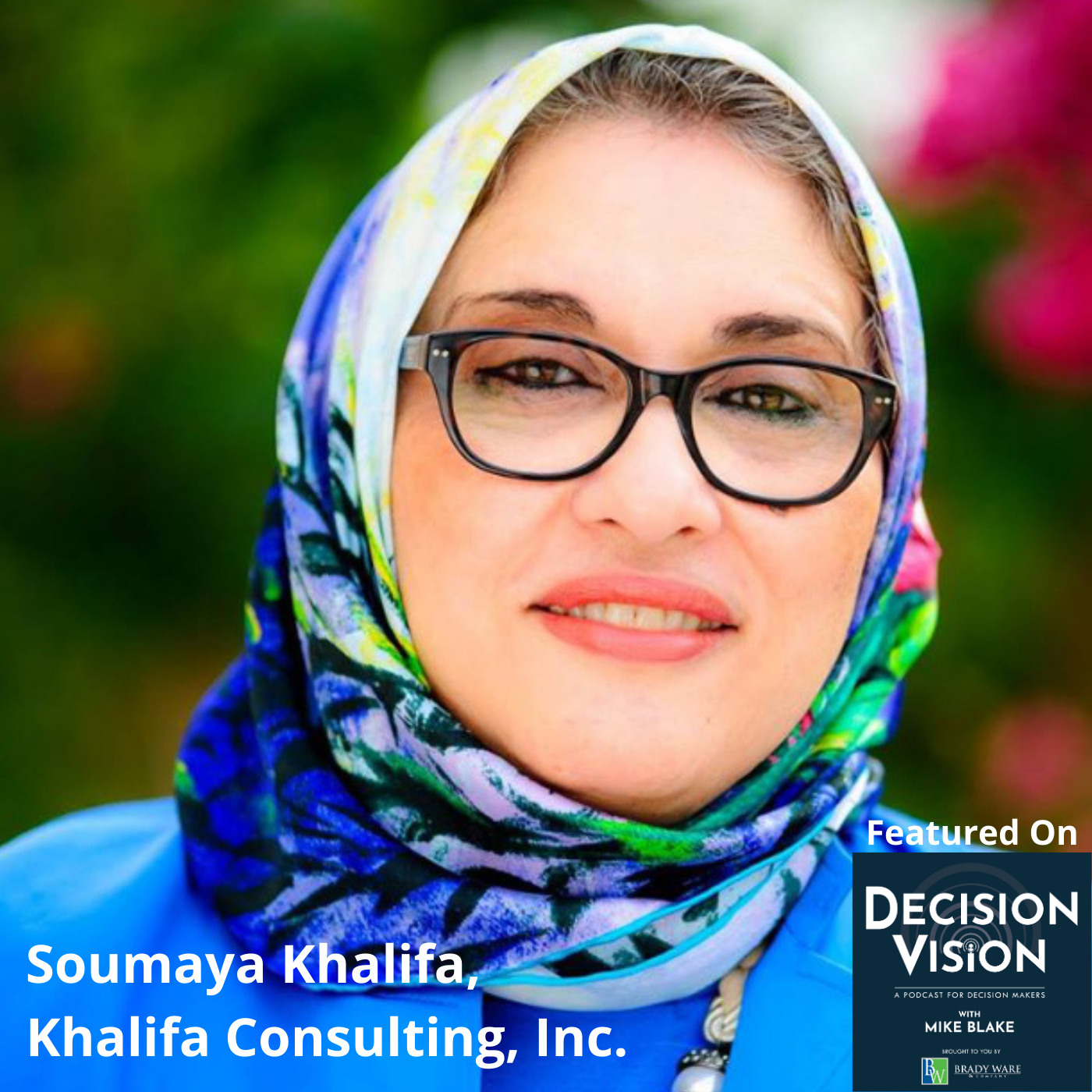
Khalifa Consulting CEO Soumaya Khalifa joins host Mike Blake to discuss how she integrates her Islamic faith with her work and business, as well as her community-building work with the Islamic Speakers Bureau. “Decision Vision” is  presented by Brady Ware & Company.

Soumaya Khalifa, Khalifa Consulting, Inc.

Soumaya Khalifa founded Khalifa Consulting, a strategic intercultural and leadership consulting firm, in 2007. Her career spans more than 25 years in human resources, management, business management and ownership, non-profit and entrepreneurship. Khalifa Consulting specializes in helping executives and organizations succeed when doing business across cultures by providing them the most relevant, practical and up to date cross cultural coaching and training. In addition, Khalifa Consulting offers training and coaching on global virtual teams. Soumaya and team apply this work to a broad range of clients, from large established national and global organizations to startups.

Prior to founding Khalifa Consulting, Soumaya served in several leadership roles in U.S.-based Fortune 100 companies in human resources, leadership development and diversity and inclusion. An alumnus of the University of Houston and Georgia State University, Soumaya is a board member of the Society of Intercultural Education, Training and Research (SIETAR) and the Atlanta Interfaith Broadcasters (AIB). She is also an adjunct professor at Emory University Center for Continuing Education and at the Federal Executive Institute. Soumaya is the author of Diversophy Egypt and has contributed to several publications.

Along with a group of Atlantans, Soumaya launched the Islamic Speakers Bureau (ISB) of Atlanta in August 2001. As the current Executive Director of ISB, she serves the Muslim and wider community by building bridges of understanding, creating interfaith partnerships, developing community leaders, and creating spaces for mutual understating and respect. Under Soumaya’s leadership, the ISB has developed its core programming and launched other key initiatives, including ISB Leadership Institute (ISBLI), 100 Influential Georgia Muslims, and 40 Under 40 Georgia Muslims.  In 2017, Soumaya created a partnership with the Atlanta Mayor’s Office to host the ISB’s first ever Ramadan Iftar hosted at Atlanta’s City Hall and in 2018, the second Atlanta Mayor’s Iftar was attended by over 250 people.

Soumaya has received many awards and recognitions for her work with the ISB, including:

  • 2019 Academy of Women Achievers, YWCA
  • 2018 Arab American High Achiever Award, Alif Institute
  • 2017 City of Atlanta Phoenix Award, presented by Mayor Kasim Reed
  • 2012 FBI’s Community Leadership Award
  • Citizen Diplomat for the U.S. State Department
  • 2012 Invited to the annual White House Iftar hosted by President Barak Obama
  • 2015 Inducted into the College of Ministers and Laity

To learn more on Khalifa Consulting, follow this link.

Michael Blake, Brady Ware & Company

Mike Blake, Host of the “Decision Vision” podcast series

Michael Blake is Host of the “Decision Vision” podcast series and a Director of Brady Ware & Company. Mike specializes in the valuation of intellectual property-driven firms, such as software firms, aerospace firms and professional services firms, most frequently in the capacity as a transaction advisor, helping clients obtain great outcomes from complex transaction opportunities. He is also a specialist in the appraisal of intellectual properties as stand-alone assets, such as software, trade secrets, and patents.

Mike has been a full-time business appraiser for 13 years with public accounting firms, boutique business appraisal firms, and an owner of his own firm. Prior to that, he spent 8 years in venture capital and investment banking, including transactions in the U.S., Israel, Russia, Ukraine, and Belarus.

Brady Ware & Company

Brady Ware & Company is a regional full-service accounting and advisory firm which helps businesses and entrepreneurs make visions a reality. Brady Ware services clients nationally from its offices in Alpharetta, GA; Columbus and Dayton, OH; and Richmond, IN. The firm is growth minded, committed to the regions in which they operate, and most importantly, they make significant investments in their people and service offerings to meet the changing financial needs of those they are privileged to serve. The firm is dedicated to providing results that make a difference for its clients.

Decision Vision Podcast Series

“Decision Vision” is a podcast covering topics and issues facing small business owners and connecting them with solutions from leading experts. This series is presented by Brady Ware & Company. If you are a decision maker for a small business, we’d love to hear from you. Contact us at decisionvision@bradyware.com and make sure to listen to every Thursday to the “Decision Vision” podcast.

Past episodes of “Decision Vision” can be found at decisionvisionpodcast.com. “Decision Vision” is produced and broadcast by the North Fulton studio of Business RadioX®.

Visit Brady Ware & Company on social media:

LinkedIn:  https://www.linkedin.com/company/brady-ware/

Facebook: https://www.facebook.com/bradywareCPAs/

Twitter: https://twitter.com/BradyWare

Instagram: https://www.instagram.com/bradywarecompany/

Show Transcript

Intro: [00:00:01] Welcome to Decision Vision, a podcast series focusing on critical business decisions. Brought to you by Brady Ware & Company. Brady Ware is a regional, full-service accounting and advisory firm that helps businesses and entrepreneurs make visions a reality.

Mike Blake: [00:00:20] And welcome to Decision Vision, a podcast giving you, the listener, clear vision to make great decisions. In each episode, we discuss the process of decision making on a different topic from the business owners’ or executives’ perspective. We aren’t necessarily telling you what to do, but we can put you in a position to make an informed decision on your own and understand when you might need help along the way.

Mike Blake: [00:00:39] My name is Mike Blake, and I’m your host for today’s program. I’m a Director at Brady Ware & Company, a full-service accounting firm based in Dayton, Ohio, with offices in Dayton; Columbus, Ohio; Richmond, Indiana; and Alpharetta, Georgia. Brady Ware are sponsoring this podcast, which is being recorded in Atlanta per social distancing protocols. If you like this podcast, please subscribe on your favorite podcast aggregator and please consider leaving our view of the podcast as well.

Mike Blake: [00:01:04] So, today’s topic is actually a continuation of a prior topic or a previously recorded topic, which is, should I mix my faith with my business? And this will be part two. In part one, we had, I thought, a tremendous discussion with Bill Leonard and Jonathan Minnen, who are from the Christian and Jewish faiths, respectively. And really, I really appreciate it, and I hope you, as listeners, appreciated the fact that they were very open about how they came to approach mixing their faith with their business, how it impacts their business, what that decision process looks like. And I think that we learned a lot.

Mike Blake: [00:01:53] But to be candid, in an ideal world, I wanted to have this be a little bit broader than that because there’s another faith. I mean, you could say there are many faiths that are missing, but I think a faith that was obviously missing – and that was due simply to scheduling constraints – is Islam. And Islam, I think … I’m not going to claim to be particularly knowledgeable about it. I know what I’ve read, I know what I studied in college five million years ago, but that’s about it. But Islam has a different or, certainly, a very identifiable place in American society.

Mike Blake: [00:02:39] And it’s different. I think it’s much more prominent now in the United States than it was, say, 50 years ago or even 30 years ago. And I think that people who practice Islam face different challenges and maybe even different rewards. We’ll find out from our guests. But I think there’s a different relationship with business, in general. I think there’s a different relationship with Islam and mainstream American society than the Jewish and Christian faith have.

Mike Blake: [00:03:08] So, to be perfectly candid, I just felt like this conversation was not complete without getting a view from the Muslim perspective. And I hope you’ll agree that it’s worthwhile. So, we’ve never done a two-parter before. We didn’t necessarily have a cliffhanger or anything, but I do think that this is necessary to have a more comprehensive and complete discussion.

Mike Blake: [00:03:33] So, joining us today is Soumaya Khalifa, who founded Khalifa Consulting, a strategic intercultural and leadership consulting firm back in 2007. Her career spans more than 25 years in human resources management, business management and ownership, nonprofit and entrepreneurship. Khalifa Consulting specializes in helping executives and organizations succeed when doing business across cultures by providing them with the most relevant, practical and up-to-date cross-cultural coaching and training.

Mike Blake: [00:04:07] Along with a group of Atlantans, Soumaya launched the Islamic Speakers Bureau of Atlanta back in August 2001. We’ll talk about that. That’s an interesting date. As the current executive director of ISB, she serves the Muslim and wider community by building bridges of understanding, creating interfaith partnerships, developing community leaders, and creating spaces for mutual understanding and respect. Under Soumaya’s leadership, the ISB has developed its core programming and launched other key initiatives, including ISB Leadership Institute, 100 Influential Georgia Muslims, and 40 under 40 Georgia Muslims.

Mike Blake: [00:04:44] In 2017, Soumaya created a partnership with the Atlanta Mayor’s Office to host ISB’s first ever Ramadan Iftar hosted at Atlanta City Hall. And in 2018, the second Atlanta mayor Iftar was attended by over 250 people. Soumaya has received many awards and recognitions for her work with the ISP, including Academy of Women Achievers of the YWCA, the Arab-American High Achiever Award of the Alif Institute, City of Atlanta Phoenix Award, the FBI’s Community Leadership Award. That’s interesting. We’ll have to get back to that. She’s a citizen diplomat for the US State Department and numerous other recognitions, but you get the idea. She’s highly accomplished and highly recognized for those accomplishments. And we are fortunate. And I am so glad she agreed to come on the podcast. Soumaya, thank you for coming on the program.

Soumaya Khalifa: [00:05:36] Mike, it’s my pleasure and honor. Thank you so much for having me.

Mike Blake: [00:05:40] So, before we get into this, I want to ask because I think this is really important, the FBI’s Community Leadership Award. Tell us about what led to being recognized. I assume it’s the FBI, like what I recognized, Federal Bureau of Investigation, or some other acronym. What led to that?

Soumaya Khalifa: [00:06:03] Yeah. So, that was quite an experience. I got to actually travel to their headquarters and receive the award by then FBI Director Mueller. And it was quite an experience being there, and touring their facility and just seeing what’s there. I was part of their outreach, diversity and inclusion outreach team that we had for several years many years ago. And they recognized the work that the ISB does here in Atlanta in terms of building bridges, and they felt like that was something that is much needed, and they recognized me for the work. So, I was, again, very fortunate and gotten a lot of awards and recognitions that I wouldn’t have dreamt of many years ago. So, again, very lucky and very fortunate.

Mike Blake: [00:06:57] Well, congratulations and thank you for your service to our society. So, I’ve studied Islam about as much as I needed to to graduate from college with a Liberal Arts degree. I know it’s a highly complex religion, but how would you describe your faith? I think you can do a much better job than I ever could.

Soumaya Khalifa: [00:07:22] Yeah. So, it’s not any more complicated than Christianity or Judaism. The three faith traditions are monotheistic religions and they’re Abrahamic traditions. So, there are a lot of similarities between the three. In terms of the essence of Islam in the word itself, it means peace, submission to the will of God, and creating peace in the world. And the person, even Muslims, when they greet each other, they have a covenant that they say to each other, and that is, “May peace be upon you,” which means that you will not get anything from me but peace, whether it’s in interactions, or talking about you, or anything at all, it’s peace.

Soumaya Khalifa: [00:08:09] So, it is a misunderstood religion. It is a religion, unfortunately, that a lot of people associate terrorism with. And I love talking to groups and asking them, “You know what comes to mind when you hear the word “Islam” and “Muslims?” And sometimes, people don’t want to say, and I say, “Hey, how about the T word, does that come to mind? Do you hear it?” And yeah, they do.

Soumaya Khalifa: [00:08:33] So, the two misconceptions about Islam that I hear all the time is that Islam is associated with terrorism, all Muslims are terrorists, and the other one is that all women are oppressed. And I have a lot of fun with the second one because I ask audiences and people, do you think I’m oppressed? And they look at me and they say, “Well.” “So, you should ask my husband.” And we have a little fun with that.

Soumaya Khalifa: [00:08:58] But absolutely, it is. It’s a religion that people don’t know about. And a lot of times, when they hear about it, it is in a very negative sense. There isn’t a face of Islam that is carried throughout our country and our communities that portrays the good that Muslims do. And Muslims, like any other group of people, Christians included, Jews and Hindus and others, there is the good, the bad and the ugly.

Mike Blake: [00:09:28] So, you made an interesting decision and a conscious one, not just to really connect your faith with your business but to build a business, if you will, around your faith. A lot of it is around educating individuals, companies, organizations about Islam, about inclusiveness with people who practice that faith and others. I know it’s not just limited to that, but certainly it is sort of the headline. So, what drew you to that? I mean, you’re a very capable person. You could have done, I’m sure, anything that you wanted. What drew you to make that your mission?

Soumaya Khalifa: [00:10:11] Sure. I just want to make a distinction here. I wear a couple of scarves, if you will. So, I have a nonprofit (versus hats). There’s the nonprofit that I started in 2000 right along with a group of people who wanted to do something about building bridges of understanding because what we saw then, and it’s still happening right now, is that people speak about Islam and Muslims, and they have not a good idea and not a correct idea about Islam and Muslims. They don’t know about our community. So, we wanted to train people within the First Amendment guidelines of teaching and not preaching to be able to speak about Islam and Muslims to have embody they’re my neighbor, they’re my coworker, et cetera, and really building that connection between people.

Soumaya Khalifa: [00:10:57] And so, that is one thing that was started in 2001. And at the time, I was in corporate America doing human resources. So, thinking back about that journey and what I did then, I just can’t even comprehend how I did that while having a full-time job in corporate America. So, that’s one thing that I felt like was necessary to build bridges of understanding. And it wasn’t about promoting the religion. It was just to understand each other and build a stronger community where people don’t fear others. So, that’s one of the things that I do.

Soumaya Khalifa: [00:11:29] The other one is a business, and that is Khalifa consulting. And as you mentioned in the introduction, it’s to help people understand the business they’re getting into, to understand the culture for them to be successful. Khalifa Consulting has many consultants that cover the whole wide world. So, if we have a client that’s going to Germany, we have somebody who can do Germany. China, Russia, what have you, there’s that network of consultants who cover the whole wide world.

Soumaya Khalifa: [00:12:00] Because of my own background, my own cultural background, my own upbringing, I offer the training, and the consulting and the coaching on the Arab world. And as you know, the majority of the Arab world is Muslim. And so, we talk about Islam, and how it impacts their business, and what do they need to be aware. Of anything from gift giving, don’t do pork or alcohol, to the holidays, to how people communicate. And that’s not religion; it’s more culture.

Soumaya Khalifa: [00:12:31] So, those are the two distinctions in terms of the business piece and the nonprofit work. But it’s like you said, both of them are about helping people understand in different circumstances. With the ISB, it’s more about community and community building. And Khalifa Consulting is about the business world and helping individuals, leaders and organizations be successful as they interact with different cultures.

Mike Blake: [00:13:00] So, yeah and understood. There’s a cultural component, religious component. And while they are certainly separate, they frequently are quite closely linked. And so, what I’d be curious to understand from you is this, is that, are there ways in which the way you conduct business is maybe different from what kind of a garden variety, if this can even be said, but a garden variety American business is conducted because of your desire and the importance to you of being true to your faith? Does it manifest itself in the business? Does Islam manifest itself in the business itself? I hope I have asked that question in a way that you understand

Soumaya Khalifa: [00:13:49] Yeah. I think each and every one of us has a moral compass. And the moral compass is the faith tradition that we adhere to. And whether we realize it or not, it kind of helps us navigate through things. For instance, holding true to your word, keeping the individual, valuing the customer, valuing yourself, telling the truth. And I don’t think this is just to Islam, but I think it’s due to many faith tradition, treating people with dignity and respect, not cheating people, et cetera, et cetera.

Soumaya Khalifa: [00:14:30] And again, this is in Islam ,as well, I’m sure, as Christianity, and Judaism, and other faith traditions as well. So, it is my moral compass. It’s probably unconscious, but it’s there. It’s how I’m kind of wired. And again, I believe that that’s not just particular to me, but it’s to everyone else.

Mike Blake: [00:14:54] So, you chose to name your firm Khalifa Consulting. And I think to most people that they may understand that that’s your last name or your family name or not. But it clearly sounds like a name that comes from a region that practices a lot of Islam, at least fairly widely. Was that a conscious decision in the branding? And whether it was or not, have you found that it evokes any kind of maybe preconceptions or stereotypes? Does it help you within the Islamic community? Does it create barriers elsewhere? Talk about kind of how that’s impacted the business. If it has at all?

Soumaya Khalifa: [00:15:43] I love the question. So, I’m going to tell you a story. There was an event in Atlanta and a high-up person in the Gulf State was here to speak about their country and how opportunities are there, et cetera. And I attended, and I walked in, and people saw my name who are not part of that country’s entourage, if you will. And they saw my name, and I was like given the royal treatment. And I was just saying, “What in the world is that?” I was just like not really comprehending what was going on. But they saw my name and they thought I was part of the royal clan for that country. And they just took care of me. And after a while, I realized what happened.

Soumaya Khalifa: [00:16:30] But, yeah, I think the reason that I chose Khalifa Consulting is because when I started out, I was not sure how it was going to go in terms of what my business is going to focus on because I have a wide variety of things that I provide and do, all the way from consulting, coaching, executive coaching, and human resources, and the intercultural world diversity and inclusion. So, I wanted something that kind of was an umbrella name that brought all those things under it. So, that’s the reason. I don’t know whether it was a smart way of doing it or not, but that’s how I started. And because I started that way and I’ve been known in the marketplace as that, I’m just continuing with it. Is there a better name? Maybe, but moving forward with Khalifa Consulting.

Mike Blake: [00:17:23] So, I’m going to ask you a completely off-the-wall question because I’m a language junkie and probably a lot of our listeners will roll their eyes, but that’s okay, it’s my show. And that is, I’m curious-

Soumaya Khalifa: [00:17:35] Go for it.

Mike Blake: [00:17:35] I’m curious if the name Khalifa, is at all related to the term chalice, which implies some sort of of Ducci, or county, or something of that nature.

Soumaya Khalifa: [00:17:47] Yeah. Khalifa means Vice Gerente or the ruler. And so, within the Islamic tradition, the Khalifa is the leader of the group, or the family, or  I’m just really lucky to have that name. I feel like, “Hey, all right, I need to live up to it,” but yeah. Khalifa means a responsible person, right? So, it’s a godsend human beings to be His vice gerente on earth, so human beings could take care of the earth, et cetera. So, it has like a title of of leadership, but it also has a title of true responsibility.

Mike Blake: [00:18:31] Well, good. Thank you for that. So, that’ll be our duo-lingo diversion for the day. So, do you ever run into any kind of conflict? Do you ever have to make any conscious decisions of where your faith starts and ends, where your business starts and ends? Do you find yourself having to make decisions that maybe today, I want to be less obvious or open about my faith, or another day in another situation, I want to be more open about my faith? So, do you ever have to make those kinds of decisions? And if so, what goes into that?

Soumaya Khalifa: [00:19:06] Yeah. I really don’t think about it that way at all. I am who I am. And I struggle with that for a long time, and it was a journey. I was born in Egypt, came to Texas as a teenager. I went to middle school and high school. And throughout my early years, I really struggled with my identity, and I struggled with my Egyptianness, if you will, my Muslimness and my Americanness. And it was like three people in one. And those three people in one did not come out as three people in one told people. I would reveal parts of me that I thought people were comfortable with.

Soumaya Khalifa: [00:19:47] So, until I took that journey of being comfortable with who I was that I said, “Hey, world, here I am,” and this is when I started covering my hair. It was shortly thereafter that I started the Islamic Speakers Bureau. This is when I really embraced who I was. It was not an easy journey. It was much, much easier not to wear a headscarf and to just kind of try to build in and assimilate, but I felt like part of me was being lost. That, besides the nagging of my mom. When are you going to cover your hair, right? When are you going to cover your hair?

Mike Blake: [00:20:24] Parents. Well, parents will always have a big influence on that.

Soumaya Khalifa: [00:20:27] They sure do.

Mike Blake: [00:20:28] So, I’m curious, and if this question is out of bounds, weigh it out, but was there one particular incident that pushed you over and said, “You know what? Yeah, I want to embrace this identity. I’m going to wear the headscarf and let strangers know that I’m a practitioner of Islam”?

Soumaya Khalifa: [00:20:51] Yeah. I think it was more than a journey versus a one incident that happened that kind of got me to do that. I was listening to religious tapes about how women are supposed to do that. And by the way, women who do not cover their hair, who are Muslim, it does not mean they are less religious. It’s just they choose not to. So, it was just that, plus my mom, plus I just felt like, “Hey, I’m not getting any younger, I need to do something about it.” And I did.

Soumaya Khalifa: [00:21:18] And I have to tell you, that was just like the most uncomfortable decision I ever made in my life. I did not know how to put the headscarf on. I remember, at the time I was working, I just finished my MBA, and I was working as an intern for a major company, and one day, I went with my hair. And then, the following Monday, I went in with the head covered, and people did not know what to make of me, and I had to do a lot of explanation. And as that was going on, my scarf fell off because I did not know how to put it on. And it was just like a real ordeal.

Soumaya Khalifa: [00:21:55] And even though it’s a piece of cloth, it’s a lot of psychological getting used to and being able to be comfortable with it. And I wasn’t comfortable with it for a long time. And I felt like people were staring at me and the whole nine yards until I embraced it myself and started shopping for different headscarves. And there was something more to shop for. I got very excited about that. And that’s when I became okay with it.

Mike Blake: [00:22:23] Now, we had a previous conversation. You said something that I think is fascinating and I just did not know is that not all scarves are alike. And the way that one wears it, you can identify somebody’s origin from the Muslim world or how they practice Islam by virtue of how their scarf is is worn, correct?

Soumaya Khalifa: [00:22:46] Yes, yes, yes, absolutely. And even what age category they might be from. It’s fascinating. It’s a fascinating observation just to sit there and kind of look at women’s scarfs, and how they tie them, and what color, what’s the material, et cetera. Now, I’ve discovered something since we talked. I discovered there’s a COVID scarf. And the COVID scarf is a scarf where people could put their masks on while having a scarf on. So, the regular scarf that I used to wear would not allow me to put this really easily. And so, this is now my COVID scarf because it allows us to put on the mask and take it off easily.

Mike Blake: [00:23:26] Well, one adapts, right? So, Islam has been around a long time. So, it’s gone through many adaptations. This is another one of those adaptations, I guess. So, you led off by kind of pointing out the elephant in the room.

Mike Blake: [00:23:44] So, I want to put a bright light on it. And that is it strikes me that having a business that is associated with Islam is different from one that’s associated with Christianity or Judaism, not only because it’s less common and also more concentrated, I think, in certain regions of the country but, of course, America itself has had a troubled, and frankly – and I’m not going to get into the reasons why, but you cannot deny there’s a violent relationship with, say, certain elements of Islam, I guess, for lack of a better term or, at least, conflict with individuals who have decided to brand themselves under the name of Islam in order to accomplish whatever social and political goals that they’re accomplishing. And that’s a little bit different, right? You’re operating in a country that in some cases, recently, has been in a state of war with Islamic countries.

Mike Blake: [00:24:54] And I will say this. I thought George Bush the first did a really good job of trying to make clear that we were at war with states that happen to have governments that claim to espouse Islam, and we are not pursuing war against the Muslim people. It’s a very sort of dancing on the head of a pin there. But I do think he made a good faith effort to try to communicate that. But I mean, it’s got to be different, right?

Mike Blake: [00:25:21] I mean, America right now does not have a military conflict with a Christian-dominated or a Jewish-dominated nation, but America has had that. I think it necessarily creates, I think, certain tensions, certain preconceptions. I think even, unfortunately, among certain people, a starting point of suspicion and hostility. One, I guess, do you agree with that observation? And two, if so, how do you work within that? How do you survive mentally in that kind of environment, because I can only imagine how difficult that must be?

Soumaya Khalifa: [00:26:16] Yeah. In terms of the conflict between the US and Muslim majority countries, that is a debate that people can have. Is it really a conflict, or we talked about weapons of mass destruction in Iraq, and after so many years, we found that there were no weapons of mass destruction? And so, there are a lot of debate going on about about the validity of the conflicts that we are part of and claimed for it to be because of whatever. So, let’s put that aside.

Soumaya Khalifa: [00:26:50] But what I want to say, what’s really here and now that is a very troublesome is the Muslim ban. When we have a Muslim ban, and I walked down the street with the headscarf on, that puts me and my fellow 12 million Muslims, American Muslims, in jeopardy because people are getting a message from the highest office in this land saying Muslims are a danger to our country and our society. So, that is truly something that hits very close to home, and I can talk for a long time about that.

Soumaya Khalifa: [00:27:25] But in terms of the business itself, it’s not about just Islam and Muslims. Khalifa Consulting, it’s about cultural understanding for the whole wide world. And it’s not just me. I have about 10 or 12 colleagues who cover, again, the entire world. But when it comes to the part of the world that I handle, which is the Arab world and the US, people want to come to us because we know how to help them to navigate in that part of the world, in the business world, so they could be successful.

Soumaya Khalifa: [00:27:58] I have worked with so many different organizations, US organizations, that their market in the US is basically shrinking, and the only way for them to expand is to go to emerging markets, what they call emerging markets. And the Arab world with over 300-400 million people, it’s a very opportune place for many of the businesses, whether it is in the car business, or the automotive business, or defense, or food. So, it’s a business decision. It’s not about the faith. It’s not about anything.

Soumaya Khalifa: [00:28:39] We talk about the faith that’s part of them understanding what they’re getting into because you don’t want them to schedule meetings for Friday. Why weren’t the Saudis, or the Egyptians, or, or, or coming to our meetings on Fridays? Because it’s their holidays. It’s their weekly weekend. And so, you don’t do that. And this is just a very simplistic example of seeing people who don’t understand the different ways of communication.

Soumaya Khalifa: [00:29:07] Americans tend to be more direct communicators. When you go to the Arab world, it’s about saving face. It’s to not put anybody in an embarrassment position. So, how do we understand indirect communicators, and how do we bridge that gap between the two cultures to run the business, to get to the bottom line, to add to the bottom line and be successful? So, it’s not all about religion. It’s about being successful in a different culture that is very different for many people to navigate through.

Mike Blake: [00:29:43] Before we recorded our show, I got dressed because we’re doing video. I had originally put on a T-shirt that said “Got bacon,” and my wife said, “Aren’t you doing that interview about Islam today?” I go, “Yeah.” She says, “Are you really sure you want to wear that for this video?” “No. Maybe you’re right. Maybe I’ll do a quick change here.” So-

Soumaya Khalifa: [00:30:10] But there is turkey bacon too. So, there are always options. It’s not all pork. There’s turkey bacon.

Mike Blake: [00:30:16] Oh! I haven’t thought of that. I had a chance to win an argument with my wife and I blew it. Ugh! Okay. Well, at any rate, but-

Soumaya Khalifa: [00:30:16] You should have called me, Mike.

Mike Blake: [00:30:28] Sure, I should have. I should have. So, let me ask this. The thing about … actually, this actually segues to one of the questions I really wanted to make sure I got to. So, bearing what you just described in mind, and to me, it reminds me of maybe a little bit of what it might have been like to be a Russian immigrate here during the height of the Cold War, right? You’re here, but you’re obviously from “the other side.” And I have to imagine that that also had its own challenges. Now, the timeline for Khalifa Consulting was you started it in August of 2001, correct?

Soumaya Khalifa: [00:31:15] That’s the ISB.

Mike Blake: [00:31:16] ISB, sorry. The ISB in 2001.

Soumaya Khalifa: [00:31:18] Yeah, yeah.

Mike Blake: [00:31:18] That’s right. Khalifa was 2007. So, you started that. And then, a month later, the attacks of September 11th, 2001.

Soumaya Khalifa: [00:31:30] Three weeks.

Mike Blake: [00:31:30] And so, I mean, walk through as as somebody who just launched an Islamic commercial venture, and feel free if you want to just comment on being a practitioner of Islam at that time, what’s going through your head? How does your life experience change? What are you thinking about your business?

Soumaya Khalifa: [00:31:57] When you were talking about that, my whole body felt like I was there in September 11th, 2001. It was a nonprofit that I launched. It was into businesses, and non-profit, educational outreach. We had our training on August the 18th, which was approximately three weeks before 9/11 happened. We had just trained people to speak about Islam and Muslims within the First Amendment guidelines. They took their test, and we were getting ready to launch.

Soumaya Khalifa: [00:32:30] When the morning of 9/11, I went to my job, and I was in downtown Atlanta in the high-rise up on a very high floor. I heard the news about what happened in New York and in Washington. And I was scared. I was very scared. I was sad. I was angry. I had no idea what was going on. I was just thinking the people who were killed. Are people like me who went to their work in the morning, and they were waiting to get home to their kids and their family? And guess what? They did not make. And what was the reason for that? And it was a very, very tough day, I had three children at the time. I still have them, Thank God. They were in daycare and what have you. I was very worried about them. I was very worried about my husband.

Soumaya Khalifa: [00:33:28] They were talking about the terrorists were going to hit Atlanta because of CNN. We were very close to CNN. They pulled us all into a conference room to watch what’s going on. And I mean, I’m talking about right now, and just my whole body feels the same way. It was just very, very, very angry, very scared, very just in despair. Why did that happen? How can anybody do this?

Soumaya Khalifa: [00:34:02] And then a few days later, we find out who did it. And I got even angrier because the people not only killed 3000 people for no reason at all, innocent people, but they also hijacked a whole religion at 1.5 billion people. And so, anger. It got even worse because what they did to a religion in people. And we’re still paying the price of the horrendous, stupid act that they did. I can’t tell you how angry I am still. And I hope they get what they deserve in the hereafter because human life is very sacred in Islam, and taking innocent life is just one of the worst ever transgressions in the religion. Nobody could call themselves a Muslim and do that.

Mike Blake: [00:35:10] Yeah. As an observer, you try to put yourself, and as an interviewer, you try to put yourself in the shoes of the person that you’re interviewing. And I can hear in your voice how tremendously upsetting that must have been and continues to be. And like the rest of us as a country, we’ve had to move on, and the Islamic community has had to move on and attempt to build bridges. And in our society, some people have moved on, I would characterize, more successfully than others.

Mike Blake: [00:35:55] And let’s move on beyond that. In spite of that, I’m curious kind of in the wake of that attack, there must have been – I would hope that there was – maybe even a rise of interest in the Islamic Speakers Bureau because I think a lot of us … I grew up in the ’80s and the ’70s. So, when I was a child, I remember the conflict with Iran, the Iranian hostage crisis. I remember that there was a spate of hijacks of American aircraft, but the September 11th attack was, of course, an entirely different animal.

Soumaya Khalifa: [00:36:43] It was in our land.

Mike Blake: [00:36:44] Yeah. And in our land against one of the most important symbols, I think, of American economic strength in many ways, you could say, and at the heart of the country, short of an attack on the White House or Congress or something. I don’t want to belabor, but the point is that I think a lot of us were kind of left why. And some of us seek answers in the why. We want to know who’s responsible, right? Who overlooked opportunities to stop this? And there are many reports, and conspiracy theories and whatnot. I’m not going to discuss those today.

Mike Blake: [00:37:22] But I wonder and I hope that maybe you saw a surge of interest in speakers after the attack as people kind of want to understand, okay, this is horrible, and it’s probably going to lead to worse things down the road because you know the United States is not going to just not respond. You know there’s going to be a significant response. Did you see an increase in interest in people wanting to get your take in some expert opinion as to kind of what’s going on here?

Mike Blake: [00:37:55] Yeah. So, absolutely. When we realized who did it, et cetera, the board of the newly found Islamic Speakers Bureau or ISB, we kind of talked about what do we do? Do we kind of backtrack like we didn’t exist or do we move forward? And the decision was made, fortunately, that we needed to move forward. And we started receiving calls, and emails, and a lot of interest in people wanting to meet a Muslim, wanting to understand better, and wanting to understand their neighbors, et cetera.

Soumaya Khalifa: [00:38:34] And one of the stories that happened right after 9/11 is when an Episcopal pastor in Fayetteville – we used to live in Fayetteville – who reached out. He called. He called the number for the ISB and said, “This is so and so. And I’m driving up to the mountains, but I want to invite a speaker to come on.” And he gave his numbers, but it was so mumbly towards the end, it was a bad connection that the last three numbers didn’t come through. And I remember trying all possible three number combinations until I was finally able to get through to him.

Soumaya Khalifa: [00:39:17] And that friendship has lasted all through the years. He has moved on to different parts of the country, but we still stay in touch and communicate very often. So, there are a lot of silver linings from 9/11, as well as the tragedy, and the heartache, and the sadness that also came out of it. So, absolutely, there was and still is a silver lining from that.

Mike Blake: [00:39:47] So, I’m going to switch gears here. Sometimes, you can see in some face that people can use faith opportunistically in business. And I’ve certainly seen it. I speculate that you’ve seen it, but I don’t know. But I’m curious, so I’m going to ask you that question. Have you seen – and it doesn’t even have to be related to Islam, I guess, but since that was where your expertise lies, I imagine that’s going to be your perspective. Is there a temptation or have you encountered where people have tried to somehow capitalize kind of overtly on presenting a faith because they think it’s going to ingratiate themselves to a particular community, and therefore allow them to address what they think is an attractive market?

Soumaya Khalifa: [00:40:48] Yeah. I don’t believe in that. I don’t.

Mike Blake: [00:40:55] Right, I’m sure you don’t, but I’m sure, but have you seen it.

Soumaya Khalifa: [00:40:59] I’m sure I’ve seen it. I just can’t think of an example right now. But I am of the opinion and of the practice that everybody’s free to believe in whatever they want to believe. All that matters to me is how you treat me and you treat others around you. And pushing anybody’s faith on anybody else, I think that is so disrespectful. I really do. I believe that people are smart enough to think through what’s important to them and how they want to believe or not believe.

Soumaya Khalifa: [00:41:31] In the business that I’m in, whether it’s the non-profit or the consulting, it’s whoever feels that I’m a good fit for them and could provide the services that they need, then let’s let’s talk about it. But I don’t feel like it’s the right thing to use the business or the faith to be opportunistic.

Mike Blake: [00:41:56] Are there-

Soumaya Khalifa: [00:41:56] Did I answer your question?

Mike Blake: [00:41:58] Yeah. No, you did. You did.

Soumaya Khalifa: [00:42:00] Okay.

Mike Blake: [00:42:00] You did because I have seen it. I guess I bring it up because I have overtly seen people, for example, that they’ll go to a Bible study circle. And I know for a fact they do that because they think that that’s a way to generate prospects. And that strikes me as, frankly, repugnant, and repulsive, and immensely disrespectful to the religion.

Mike Blake: [00:42:36] And really, what I’m trying to get at is my hope is that that would be a unique case, but I’m not quite certain that it is. And in some religions and some religious communities, I think that there is a temptation to present a certain faith because they think that’s going to drive the business, but they aren’t necessarily themselves people of faith. And it bothers me. I’ve only seen that really in certain communities. I’m just curious because I have somebody here who’s embedded very much in the Muslim community, if that’s a phenomenon that you’ve ever witnessed.

Soumaya Khalifa, Khalifa Consulting: [00:43:23] Yeah.

Mike Blake: [00:43:24] Basically, it’s a universal temptation.

Soumaya Khalifa, Khalifa Consulting: [00:43:27] Got it. So, for instance, do real estate agents who happened to be Muslim go to a mosque, so they could pass out their card, et cetera? I’m sure that happens all the time. But for my own business, actually, my clients are not within the Muslim community itself, whether it’s the nonprofit or for my consulting. It’s people who are doing business outside the United States or talking about diversity and inclusion, and having Muslims in the workplace, and what are the reasonable accommodations, and how do we do that, and how do we understand them? How do we make sure everyone under our roof as an organization feels comfortable, valued and they belong? So, those are the clients that I’m looking for, people who need my help and find me to be the most competent person to help them get to where they want to go.

Mike Blake: [00:44:20] So, we’re talking to Soumaya Khalifa today of Khalifa Consulting and the Islamic Speakers Bureau. And we’re doing a part two of our podcast on Should I Mix My Faith With My Business? And we’re running out of time, but I do have a couple more questions that I’d like to to squeeze in here. And one is, is there a company that you admire that is Islamic facing – it doesn’t even have to be an American company. But is there a company that you admire that you think really gets it right, that maintains its commitment to its faith, but at the same time, doesn’t shy away from its faith, and at the same time, it’s commercially successful?

Soumaya Khalifa, Khalifa Consulting: [00:45:08] That is a really good question. Locally, here we have Chick-fil-A. And I haven’t been really associated with them on a professional level but their food is great, right? And people love their food. And for me, lemonade, their lemonade is really awesome. But I think diversity and inclusion – and I believe that faith comes under that – is a journey. It’s not that, “Hey, I’ve done this, and this, and this. Now, we are there.” There was never there, right? It’s always trying to get to being better, and better, and better.

Soumaya Khalifa, Khalifa Consulting: [00:45:46] And so, I know there are many, many, many organizations throughout the country that are striving to be the best that they can be, but they will never get there because it’s always changing. The environment is always changing. With the recent Black Lives Matter and many other things that are going on, companies had to pivot. They had to understand where they’re at, where they’re going, and what does the market need, and what do the employees need. And so, it’s a constant, constant journey. I don’t think anybody would say, “I made it and I’m there.”

Mike Blake: [00:46:22] So, this has been a great discussion. I want to thank you so much for being willing to come on and discuss some tough topics and answer, I think, some challenging questions. I’m sure people would like to learn more about you, your business, and maybe even want to ask more about this. I have a feeling we have listeners that practice Islam and are wrestling with this question. Can people contact you for more information? And if so, what’s the best way to do that?

Soumaya Khalifa, Khalifa Consulting: [00:46:52] Absolutely. Would love to hear from the listeners. My email address, soumaya@khalifa.consulting. There is no dot com. So, soumaya@khalifa.consulting. And the phone number is 678-523-5080. And our website is khalifa.consulting. For the Islamic Speakers Bureau, its isbatlanta.org. Again, isbatlanta.org. And again, looking forward to staying connected. Mostly in LinkedIn and Facebook. So, find me whichever way that makes sense to you.

Mike Blake: [00:47:38] Thank you so much. That’s going to wrap it up for today’s program. And I’d like to thank Soumaya Khalifa so much for joining us and sharing her expertise with us. We’ll be exploring a new topic each week. So, please tune in, so that when you’re faced with your next executive decision, you have clear vision when making it. If you enjoy this podcast, please consider leaving a review of your favorite podcast aggregator. It helps people find us that we can help them. Once again, this is Mike Blake. Our sponsor’s Brady Ware & Company. And this has been the Decision Vision Podcast.

Tagged With: Brady Ware, Brady Ware & Company, cross cultural coaching, faith and business, faith in business, Human Resources, Islamic Speakers Bureau, Khalifa Consulting, Mike Blake, Soumaya Khalifa

Don Alix with Insperity

October 8, 2020 by Karen

Don-Alix-with-Insperity
Phoenix Business Radio
Don Alix with Insperity
Loading
00:00 /
RSS Feed
Share
Link
Embed

Download file

Insperity-LogoHR-Difference-TagRGB

Don Alix with Insperity

Insperity®, a trusted advisor to America’s best businesses for more than 34 years, provides an array of human resources and business solutions designed to help improve business performance.

Offering the most comprehensive suite of products and services available in the marketplace, they deliver administrative relief, better benefits, reduced liabilities and a systematic way to improve productivity through its premier Workforce Optimization® solution. Additional company offerings include Traditional Payroll and Human Capital Management, Time and Attendance, Performance Management, Organizational Planning, Recruiting Services, Employment Screening, Retirement Services and Insurance Services.

With 2019 revenues of $4.3 billion, Insperity supports more than 100,000 businesses with over 2 million employees nationwide. For more information, call 800-465-3800 or visit http://www.insperity.com.

Don-Alix-InsperityDon Alix joined Insperity in 2015 as a district manager in Phoenix.

He has more than 25 years of sales experience and is a former business owner. Alix earned a bachelor’s degree in marketing from Arizona State University.

Follow Insperity on LinkedIn, Facebook and Twitter.

Tagged With: full-service HR, HR Solutions, Human Resources, peo, Workforce optimization

J.D. Grogan and Terri Etheredge, intHRaction

June 29, 2020 by John Ray

intHRaction
North Fulton Business Radio
J.D. Grogan and Terri Etheredge, intHRaction
Loading
00:00 /
RSS Feed
Share
Link
Embed

Download file

 intHRaction

J.D. Grogan and Terri Etheredge, intHRaction (North Fulton Business Radio, Episode 250)

Performance reviews are typically dreaded within most organizations by both managers and employees alike.  J.D. Grogan and Terri Etheredge, Co-Founders of intHRaction, have launched a SaaS-based service which turns performance reviews into a crowd-sourced, collaborative, and continuous process providing real-time feedback. “North Fulton Business Radio” is produced virtually by the North Fulton studio of Business RadioX® in Alpharetta.

intHRaction

intHRaction is a company crowd sourced data platform that captures the day to day interaction of employees and provides visibility to all levels of an organization. It is a quantum shift in the Performance Management process. Engagement, Objective and Career metrics paired with intHRaction feedback from connected members of an organization provides critical information to proactively and frequently assess and communicate employee and organizational performance. It’s the tool that every employee deserves!

intHRaction gathers daily real-time information about employee performance by capturing small data points at the completion of meetings or intHRactions with peers regarding meeting participation and collaboration.

This information is in turn used to periodically gather performance information about employees through goal and objectives feedback from their co-workers.  It simplifies the information gathering and reporting associated with the traditional Performance Review process and ensures that all members of an organization provide feedback on the individuals they intHRact with.

Employees, Managers, Human Resources and Senior Leaders all have the ability to see real-time feedback and gauge where everyone stands within the organization. Managers have the ability to understand the intHRactions that are taking place in daily meetings and use that information in 1 on 1’s, Coaching Sessions and Performance Reviews.

Goal and Objective tracking paired with feedback from all members of the organization that an employee intHRacts with provides the critical information needed to proactively and frequently assess and communicate employee performance.

To learn more, visit the company website.

J.D. Grogan, Co-Founder and CEO

 intHRaction
J.D. Grogan

J.D. Grogan is the C0-Founder and CEO of intHRaction. An experienced and successful entrepreneur, business developer, IT leader and mentor with significant experience in systems and process design and development, process automation, financial services, fin-tech, risk management, field-force automation, sales and sales force management, marketing, vehicle remarketing, data center management, business re-engineering and value creation. A dynamic and visionary force for change, innovation and growth.

J.D. is currently building intHRaction, a collaborative performance management platform striving to make the Performance Management process fair and easy for all through a subscription based SaaS model. The platform addresses the needs of employees, managers, HR and leadership to provide realtime feedback addressing the needs of all users in the organization.

Prior to the founding of intHRaction, he was a senior executive with DataScan, located in the city center of Alpharetta. Prior to joining JM Family Enterprises / DataScan in 2013, J.D. co-founded both Launch Technologies and Field-Logic located in the Crabapple Business District. Both companies focused on Risk Management in the Wholesale Finance Industry. Launch built Floorplan Audit Technologies and Field-Logic provided Floorplan Audit Services with a company employed nationwide field force. Launch was started in 2005 and Field-Logic in 2007. In December of 2013, DataScan purchased both Launch Technologies and Field-Logic. As part of the transition, J.D. served as Assistant Vice President of Field Services overseeing operations of both DataScan Field Services and Field-Logic’s Floorplan Audit Services. Early in 2015, J.D. was asked to take responsibility for DataScan’s Technology Operations and Wholesale Management System’s development as the Vice President of Technologies.

In 1998, J.D. served as the co-founder and President of AutoVIN, The Automated Vehicle Information Network, which provides floorplan auditing and vehicle inspection services to banks, wholesale finance companies, automotive OEMs and wholesale auctions. J.D. maintained overall responsibility for AutoVIN from 1998 until 2004. Under his direction, AutoVIN became the leading provider audit and inspection services in North America, serving more than more than 20 nationally recognized customers with a staff of 250 employees. In 2000, AutoVIN was sold to ADESA Auto Auctions.

Prior to the creation of AutoVIN, J.D. served as Director of Operations for Aucnet USA, where he held a number of management positions over a five-year period. Aucnet USA was a satellite-based wholesale auto auction company that originated in Japan. J.D. began his professional career in Los Angeles as a Real Estate Manager for Shimizu Development Corporation, a Japanese International Construction and Development Company.

Terri Etheredge, Co-Founder and President

intHRaction
Terri Etheredge

With over 20 years of experience in the HR profession, Terri Etheredge is driven to elevate the value-add capabilities of Human Resources.  Areas of expertise include Strategic WorkForce Planning, Organizational Design, Organizational Effectiveness, Strategic Consulting, Leadership Development, Talent Planning, Change Management and Performance Management.  Professional highlights include Mergers, Acquisitions, Organizational Transformations, Risk Mitigation, Technology Implementations and multiple ROI Human Capital Initiatives.

Her HR career includes 18+ years at Atlanta-based Coca-Cola Enterprises and 10 years at Fortune ranked, JM Family Enterprises ($16.3 billion diversified automotive company-  2019 Fortune rankings include Top 100 Companies to Work For (#17), Best Workplace for Millennials (#29), Manufacturing & Production (#2), Women (#42), Parent (#28), Diversity (#23). She is an active SHRM-ATL and SHRM-National member, a mentor for HR professionals and leads a Women In Leadership team.

She has supported operations teams in all 50 States, as well as all Provinces in Canada.  Her experiences in all levels of HR are what helped create the intHRaction product you will come to love!  From an HR Business Partner to an HR Manager to an HR Strategist, she understands the work of HR, the value of HR, the challenges of HR and the potential of HR.

Terri’s inspiration for Co-Founding intHRaction began with the idea that we are “more” in our work-lives than what can truly be captured by traditional performance review processes and we have hindered our ability as Business Leaders to maximize the skills, abilities and talents of our Greatest Competitive Advantage- Our People- due to a lack of performance data!


North Fulton Business Radio” is produced virtually from the North Fulton studio of Business RadioX® in Alpharetta. You can find the full archive of shows by following this link. The show is available on all the major podcast apps, including Apple Podcasts, Spotify, Google, iHeart Radio, Stitcher, TuneIn, and others.

Renasant Bank has humble roots, starting in 1904 as a $100,000 bank in a Lee County, Mississippi, bakery. Since then, Renasant has grown to become one of the Southeast’s strongest financial institutions with over $13 billion in assets and more than 190 banking, lending, wealth management and financial services offices in Mississippi, Alabama, Tennessee, Georgia and Florida. All of Renasant’s success stems from each of their banker’s commitment to investing in their communities as a way of better understanding the people they serve. At Renasant Bank, they understand you because they work and live alongside you every day.

Tagged With: employee performance, HR, hr strategy, Human Resources, intHRacts, J.D. Grogan, John Ray, North Fulton Business Radio, performance management, performance reviews, Terri Etheredge

Decision Vision Episode 66: Should I Fire My Underperforming Employee? – An Interview with Peter Rosen, HR Strategies & Solutions

May 21, 2020 by John Ray

fire underperforming employee
Decision Vision
Decision Vision Episode 66: Should I Fire My Underperforming Employee? - An Interview with Peter Rosen, HR Strategies & Solutions
Loading
00:00 /
RSS Feed
Share
Link
Embed

Download file

fire underperforming employee

Decision Vision Episode 66: Should I Fire My Underperforming Employee? – An Interview with Peter Rosen, HR Strategies & Solutions

If I decide to fire my underperforming employee, how should I go about it? How do I mitigate the risks? Experienced HR professional Peter Rosen joins “Decision Vision” to discuss these questions and much more with Host Mike Blake. “Decision Vision” is presented by Brady Ware & Company.

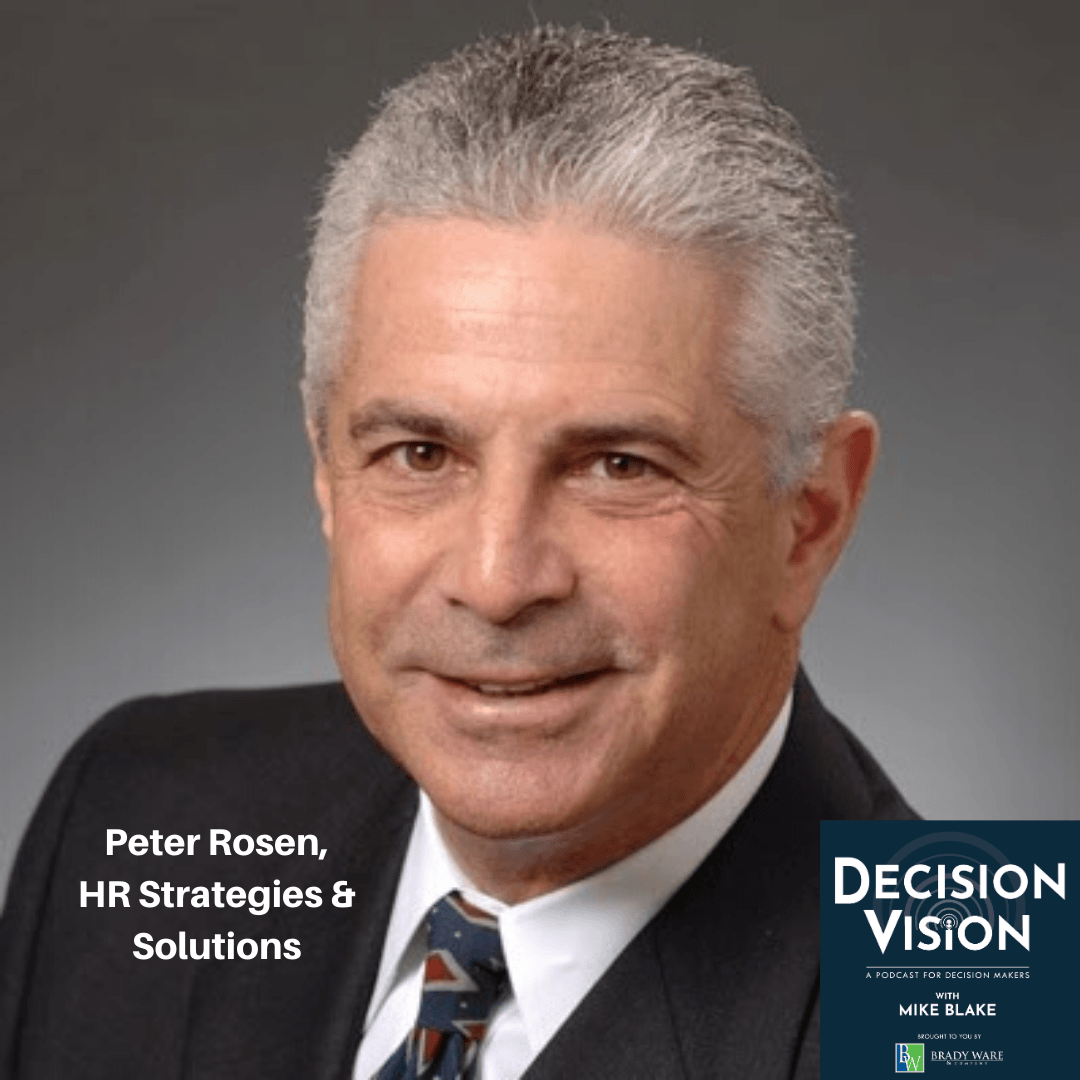
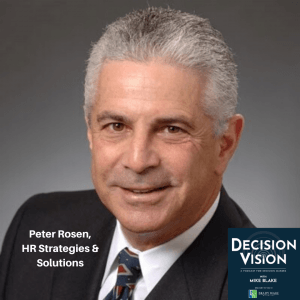
Peter Rosen, HR Strategies & Solutions

fire underperforming employee
Peter Rosen

Peter Rosen is the Founder and President of HR Strategies & Solutions. Known for his ability to quickly build trust and credibility with his clients and colleagues, Peter Rosen, a thoughtful and practical human resources executive and consultant, has a unique capacity to understand and assimilate into a variety of corporate cultures at different stages of the corporate lifecycle. With over 25 years of experience in both domestic and international companies, he is able to tailor his approach to specific HR situations and translate his larger corporate experience into start-up and growing environments. His contagious enthusiasm and optimism make working with him a pleasurable experience. Peter’s easy-going manner and hands-on approach helps him connect with people, understand their needs, and gain buy in for strategies that strengthen both organizations and individuals.

Peter uses a practical, business-focused approach to HR issues based on both theory and experience. He has built human resources capability and the infrastructure to support it in a variety of environments, from start-ups to Fortune 500 companies in the financial services, consumer products, technology, healthcare, and staffing industries. He has held strategic roles in established companies like The Coca-Cola Company, SmithKline Beecham Clinical Laboratories, Norrell Corporation, Alexander and Alexander, Capital One Financial Services and TeamStaff. As the founder and owner of a boutique human resources consulting firm, he now focuses on helping growing companies establish and implement HR infrastructure and works with their senior executives on strategic HR issues.

An expert in strategic planning, employee relations, independent investigations of employee complaints, executive coaching, business development, culture building, and team building, Peter has made significant contributions to companies throughout his career and has enhanced both individual and team effectiveness. He has developed and executed strategic human resources action plans, improved executive teams’ communication and performance, led the successful integration of acquisitions, worked collaboratively with dozens of labor unions, designed and gained acceptance for new departmental organizational structures, created and implemented new benefits programs, and successfully led change initiatives.

Peter’s reputation is one of integrity, trust, innovation, and common sense, backed up by solid experience, a strong educational background, sound business judgment, and self-awareness. He possesses a Bachelor of Science in Industrial and Labor Relations from Cornell University and a J.D. from St. John’s University School of Law with an emphasis on employment law. Peter is a member of the New York and Georgia Bars and is certified in the Marshall Goldsmith Executive Coaching Process, the Prosci Change Management Process and Tools, and the Myers-Briggs Type Indicator.

Michael Blake, Brady Ware & Company

Mike Blake, Host of the “Decision Vision” podcast series

Michael Blake is Host of the “Decision Vision” podcast series and a Director of Brady Ware & Company. Mike specializes in the valuation of intellectual property-driven firms, such as software firms, aerospace firms and professional services firms, most frequently in the capacity as a transaction advisor, helping clients obtain great outcomes from complex transaction opportunities. He is also a specialist in the appraisal of intellectual properties as stand-alone assets, such as software, trade secrets, and patents.

Mike has been a full-time business appraiser for 13 years with public accounting firms, boutique business appraisal firms, and an owner of his own firm. Prior to that, he spent 8 years in venture capital and investment banking, including transactions in the U.S., Israel, Russia, Ukraine, and Belarus.

Brady Ware & Company

Brady Ware & Company is a regional full-service accounting and advisory firm which helps businesses and entrepreneurs make visions a reality. Brady Ware services clients nationally from its offices in Alpharetta, GA; Columbus and Dayton, OH; and Richmond, IN. The firm is growth minded, committed to the regions in which they operate, and most importantly, they make significant investments in their people and service offerings to meet the changing financial needs of those they are privileged to serve. The firm is dedicated to providing results that make a difference for its clients.

Decision Vision Podcast Series

supplier diversity program“Decision Vision” is a podcast covering topics and issues facing small business owners and connecting them with solutions from leading experts. This series is presented by Brady Ware & Company. If you are a decision maker for a small business, we’d love to hear from you. Contact us at decisionvision@bradyware.com and make sure to listen to every Thursday to the “Decision Vision” podcast. Past episodes of “Decision Vision” can be found here. “Decision Vision” is produced and broadcast by the North Fulton studio of Business RadioX®.

Visit Brady Ware & Company on social media:

LinkedIn:  https://www.linkedin.com/company/brady-ware/

Facebook: https://www.facebook.com/bradywareCPAs/

Twitter: https://twitter.com/BradyWare

Instagram: https://www.instagram.com/bradywarecompany/

Show Transcript

Intro: Welcome to Decision Vision, a podcast series focusing on critical business decisions. Brought to you by Brady Ware & Company. Brady Ware is a regional, full-service accounting and advisory firm that helps businesses and entrepreneurs make vision a reality.

Mike Blake: And welcome to Decision Vision, the podcast giving you, the listener, clear vision to make great decisions. In each episode, we discuss the process of decision making on a different topic from the business owner’s or executive’s perspective. We aren’t necessarily telling you what to do, but we can put you in a position to make an informed decision on your own and understand when you might need help along the way.

Mike Blake: My name is Mike Blake and I’m your host for today’s program. I’m a Director at Brady Ware & Company, a full-service accounting firm based in Dayton, Ohio, with offices in Dayton; Columbus, Ohio; Richmond, Indiana; and Alpharetta, Georgia. Brady Ware is sponsoring this podcast, which is being recorded in Atlanta per social distancing protocols. If you like this podcast, please subscribe on your favorite podcast aggregator, and please consider leaving a review of the podcast as well.

Mike Blake: So, today’s topic is, Should I fire my Underperforming Employee? And we’re getting back to a little bit to normal topics. We still do have a couple of COVID-related business topics that are along the way. But every once in a while, it is nice to, at least, sort of pretend that we’re back to normal. And at some point, this whole thing is going to end. We are going to return to work. We are going to reopen restaurants, and cafes, and bars, and hotels. And God help us, so to actually get back on cruise ships as well.

Mike Blake: But we do have businesses to run. And although something like a quarter of the economy, maybe almost a third has an effect and had the pause button put on on it, that still means that two-thirds or three-quarters of the economy is still running in some fashion. And my hope is that most of you that are listening are in that two-thirds to three-quarters that are still functioning. But if you’re not, we certainly wish you a speedy transition to whatever positive outcome awaits you over the horizon.

Mike Blake: And speaking of positive outcomes, today’s topic is, Should I Fire My Underperforming Employee? And why do I say that that’s a positive outcome? Well, we’re going to learn just how important it is to make a decision as to whether or not an employee is going to make it because one of the things you learn as you as you hire and manage people is that certain underperforming employees represent a disproportionate draw of management, time and energy, employee morale, and overall organizational effectiveness.

Mike Blake: And it actually reminds me of a verse from an Elton John song called Empty Garden, which was put out in 1982 as a song about the assassination of John Lennon. And one of the lyrics that song written by Bernie Taupin is “It’s funny how one insect can damage so much grain.” And an underperforming employee can indeed damage a ton of grain. If you have a hundred employees, and one person is just not making it, it’s more than a 1% in overall effectiveness of the organization.

Mike Blake: And this topic is is particularly poignant today because as I sit here recording this, or we sit here recording this on April 10th, we have seen something on the order of 12 million people in the last four weeks declare themselves unemployed. And that’s probably undercounting because the phone lines are jammed up like a talk show host basically, and you can’t get in. So, all of a sudden, the music stopped, and we found out there are a lot fewer chairs than there are people that want to fill them.

Mike Blake: And then, it’s hard to ignore the reality that almost four years ago, we elected a president, whether you love him or not love him, the fact of the matter is his claim to fame in the last 20 years has been the catchphrase, “You’re fired,” right? And I think that has created a lot of mystique around him and really shows just how important it is to fire people, the right people at the right time because I think a lot of the appeal of that catch phrase and the show, The Apprentice, is that everybody has worked with somebody in their career that just is desperately begging to be fired.

Mike Blake: And when they’re not, and when it takes a long time for that person to be fired, if they ever are, I mean, the Peter Principle would say that they’re promoted, but that person can be so toxic to the organization. And people who’ve had to live with, work around accommodates somebody who just is not a constructive part of the team, whether it’s due to personality, temperament, professional competence, or some cocktail of the three, that makes life miserable for people who come to a job every day that they otherwise like.

Mike Blake: And I think it’s that visceral connection with having to put up with somebody who doesn’t belong in the organization, but the people who are running the organization may not necessarily be as be close to that situation. And so, that scenario is allowed to fester. And therefore, when you see that play out on TV, I think there are a lot of people that sort of stand up and cheer. Now, I’ve never actually seen the show. I’m sort of going on on what I’ve heard about it, but I do think there’s something to that mindset and, we’ll see how it goes.

Mike Blake: Joining us today to help us kind of work through this is is Peter Rosen. And I’m so glad we have him on. And now I’ll introduce him formally in a second. But firing an employee is a traumatic experience, right? Even though it’s necessary. I think any cancer patient – and I have not been one, thank God – will tell you that that exercising and removing a tumor, particularly if it’s of any size, is a traumatic experience. It is painful. It can take a long time to recover from that. And even though it is necessary for the ongoing health of the body, it is still a difficult thing to do.

Mike Blake: And it probably should be a difficult thing to do. I don’t think it’s a good idea for businesses or employers to take a cavalier attitude to firing people. That’s not a good idea either because it creates a highly politicized environment in the organization. It leads to mistrust. It leads to management by fear. And management by fear can work for a small amount of time, but it generally does not work well in the long run. And I’m highly suspicious of anybody who claims that they’re very comfortable firing people. It usually means they’ve done that a lot. And if people find they have to fire employees a lot, the problem may not lie with the employees. But we’ll get to that in a second.

Mike Blake: So, joining us today is my friend, Peter Rosen, who is President of HR Strategies and Solutions, a boutique consultancy firm addressing the unmet human resource and organizational needs of companies from startups to large organizations. Human Resources Strategies and Solutions provides human resources, leadership and expertise. They enable growth, improve efficiency, and prevent problems. From human resource strategy development to human resource recruitment, they do it all. Their clients recognize the importance of having a strong culture resulting in an aligned, motivated and engaged workforce. They’re committed from the very top to doing the right thing and to doing doing things right.

Mike Blake: Known for his ability to quickly build trust and credibility with his clients and colleagues, Peter Rosen, a thoughtful and practical human resource executive and consultant, has a unique capacity to understand and assimilate into a variety of corporate cultures at different stages of the corporate lifecycle. With over 25 years of experience in both domestic and international companies, he’s able to tailor his approach to specific HR situations and translate his larger corporate experience into startup and growing environments. His contagious enthusiasm and optimism make working with him a pleasurable experience. Peter’s easygoing manner and hands-on approach helps them connect with people, understand their needs, and gain buy-in for strategies that strengthen both organizations and individuals. But he’s going to bring the goods today. Peter, thanks so much for coming on the program.

Peter Rosen: Oh, you’re very welcome. Thanks for mentioning that. I wasn’t going to miss this for for anything.

Mike Blake: So, before we get started, I noticed something today as I was preparing for the show. You and I have something in common, and that we are both big east guys. You actually hold a Law Degree from St. John’s University, do you not?

Peter Rosen: I do.

Mike Blake: So, you and I harken back to the days of big east basketball actually meant something. I’m a Hoya myself. So, we go back to the days of Chris Mullin and Patrick Ewing battling it out in the Big East. Later, Alonzo Mourning and so forth. But that was a different time. So, do you find that your law degree comes into play at all anymore with what you do in human resources?

Peter Rosen: Yes, absolutely. It was interesting because when my career got started, I was actually a trial attorney down here with the federal government, with the Equal Employment Opportunity Commission.

Mike Blake: Oh.

Peter Rosen: And I was a litigator. In a sense, litigating charges of discrimination brought by employees of companies like Georgia Power Company, a lot of the big organizations back at the time. And unbeknownst to me, there was another large corporation here called the Coca-Cola Company who was beginning to experience some of the strains of discrimination, affirmative action, and they were looking to start, at at the time, it was called an EO department. And somebody reached out to me, and I interviewed, and I got hired in the position, ended up being in the HR department, not the legal department. So, over the years, I have always kept up my legal knowledge. And I was a member – I’m, now, I’m inactive member of the bar because I get a lot of referrals from employment lawyers. And so, I don’t compete with them whatsoever. But I think my last five years at Coca-Cola, I was the head of HR for Europe and Africa. So, that’s how I got into the human resource piece of things.

Mike Blake: Well, I’ll say I did not know that. So, I’m glad you brought some color to that. So, you’re a bigger expert than I thought. So, again, thanks for coming on the program. The first question, I want establish kind of a foundation here for the rest of our conversation. And so, let’s start off with this. Why do companies find or managers find that they have to fire people?

Peter Rosen: You have about two hours for me to list the reasons why companies could decide to fire somebody.

Mike Blake: I’ve got the time if you do. It’s not like there’s a restaurant we can go get lunch at.

Peter Rosen: That’s why I have my coffee right here next to me. It could be anything from performance, a bad hire. The company made a mistake in hiring. It could be the person is a total jerk, which, by the way, is very often, the reason why companies would fire somebody. They could be toxic. They could be a bully. They are violating company policy. They could be sexually harassing. So, there are just so many reasons why a company would want to or choose to fire somebody.

Mike Blake: And the common thread among all those things is that they pose an effective, clear and present danger to the ongoing viability of the companies. Is that a fair way to wrap that up?

Peter Rosen: Yes. And the smaller the company, the bigger the impact. With larger companies, a lot of these toxic employees or poor performers may be in a particular department, the accounting department, marketing department. So, that’s the group that typically would be impacted, but it’s not the whole corporation.

Mike Blake: So, most the people that I interface with, work with, worked for, to a person, thankfully, I think they find it very difficult to fire people. We’ll come back to why that isn’t necessarily the best thing in the world. But does anybody find firing easy?

Peter Rosen: I would hope not, first of all. I would hope nobody finds firing-

Mike Blake: I am going to guess it’s the odd psychopath out there that just sort of just likes firing people, I guess. But I think people approach firing from a place of a lot of consternation, right?

Peter Rosen: A very insecure boss or ego-driven person, actually, would probably enjoy it. but it’s their only way to avoid conflict or avoid challenge because they’re insecure. That’s when they may like doing it.

Mike Blake: So, for those of us who are maybe – I don’t want to say those of us. It gets misinterpreted. What are the dangers or risks of firing somebody? I want to ask this sort of a two-dimensional perspective. One is, what do most people think the dangers and risk of firing someone is or are? And then, what are they in actuality?  Are the risks and dynamics of firing somebody, in actuality, do they meet up with kind of the anxiety that somebody feels before they’re going to pull the trigger on that?

Peter Rosen: It really depends on how the firing occurs. And there are risks to firing somebody. There are probably greater risks to not firing somebody if, in fact, it’s appropriate. And we can get into it later, the different ways you can accommodate somebody that you want to fire. But given our legal environment and the risks of that, there are ways to address it to minimize but not eliminate the risks.

Mike Blake: So, there’s a widely used expression of hiring slowly and firing quickly. I think I heard it coined out in Silicon Valley, but that may not necessarily be the origin. But can you describe kind of what that means? I’m sure you’re familiar with the expression. And do you agree with that philosophy?

Peter Rosen: I am familiar with the expression. I generally do agree with it. The most important thing is the hiring process. And I work with a lot of my clients on developing a more robust hiring process to really better assess candidates, to really understand what you are looking for for a person to bring to the organization. And we don’t slow it down, but we make it very robust. And I’m actually involved in the final interviews with a lot of my clients. And I also make it very clear that the CEOs and business owners agree that the hiring manager is the one that’s actually responsible for the decision to hire. What the process is doing is giving them more information and more data on which to make their decision. And they’re not doing it based on they just like the person or they’re referred by somebody. So, it’s a very thorough process.

Peter Rosen: So, that’s where the term comes, “Hire slow, fire quick.” Now, fire quick seems a little – I’m not sure I agree with that terminology, but I have been a student of terminations and firings pretty much my whole career. And there are studies out there too where when any time there’s a big change in an organization, or you ask a business owner or a CEO, “Okay, you’ve had a great career. What would you have done differently in your career? What would be one of the biggest mistakes or things you would have done differently?” And inevitably, it’s, “I should have gotten rid of certain people a lot quicker.”

Mike Blake: Now, interesting. On the hiring practice, I thoroughly agree with that practice. Even when I bring in somebody that is as junior, very junior in our organization, I still do like to have them meet a lot of people. And so, my colleagues do look at me like I’m an escaped mental patient when I’m using partner time to have them interview and spend a day for what is in effect an entry level position. But I agree with your observation. Just having different perspectives, different information, lots of information, I think makes the likelihood of a successful hire so much greater.

Mike Blake: And you also you also learn something about an applicant to when you take a slow hiring process, I think. And maybe this will be a different topic in a program, but I think you learn a little bit about how committed the employee is to pursuing the process, your learn about their patience, you learn about their mental toughness and their mental stamina, you learn about their emotional stability. And I think you correctly point it out, it’s not about hiring slowly but it’s about hiring thoroughly. But hiring thoroughly necessitates slowing things down just a little bit, I guess.

Peter Rosen: Yes. And again, it becomes very logistical. You can move fairly quickly because I have found, again, for the hiring manager, the debriefing sessions because, also, I am a big advocate of what I call group interviews – more than two, or three, or four people from the company interviewing the candidate at the same time. [1], that’s more efficient. [2], it avoids a candidate going from person to person being asked the same questions by people that are not really very good at interviewing. And that could turn off a good candidate to the company.

Peter Rosen: The other thing too is that there’s an exercise we can get in to later that I work with my business owners and executives. It’s called the ABC Exercise. But let’s just, for now, an A player is your top player, he person that represents the culture, they’re performing, everybody loves working with them. The only people you want in interviews are your A players because the B and C players are going to end up being threatened by good – and it comes across. It’s amazing how it comes across in an interview where they start challenging the person, and it becomes very uncomfortable. So, setting up the hiring process is the key to reducing the need to fire people.

Mike Blake: So, I think in most cases, and we’ll talk about the other scenario in a second, but in most cases, the decision to fire, usually, comes. And, again, we’re talking about firing somebody for underperformance, not because of economic necessity that just creates a mass layoff scenario but for performance. Most companies do try to give an employee an opportunity to make corrections before firing them. Part of that, I think, is a legal consideration. Part of that, I think, is a good business practice. In your experience, how much time or, for lack of a better term, how much rope should you give an employee to make those corrections before you decide, “Well, this just isn’t going to work out. We got to make a change here”?

Peter Rosen: It really depends on the performance issue. Let’s use an example of somebody that is just has a history of getting things, projects, or whatever part of a project they’re working on late. They’re late in getting things done. They don’t meet deadlines. That is worth confronting directly saying, “From now on, if you’re not going to meet a deadline, you need to let us know,” because they hadn’t been letting them know, and you’re basically on final warning ’cause we can’t afford. It’s not fair to anybody else. You give them the chance. You give them whatever meager, 30 days. And the first time during that 30 days, if they’re late, you say, “Listen, we already warned you. It’s time to move on.”

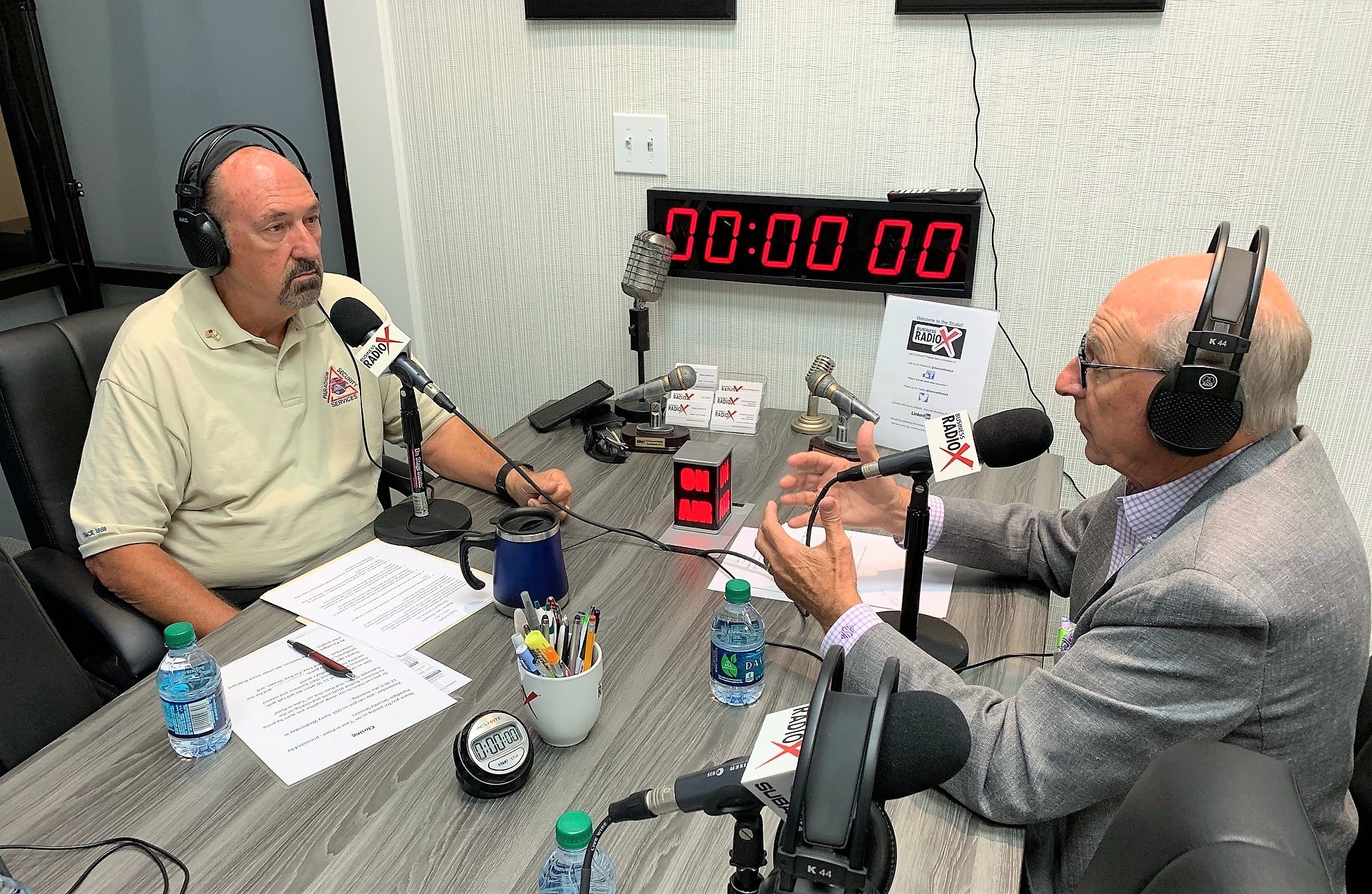
Mike Blake: So, that brings to mind, the depends, I think, brings to mind different scenarios. One scenario, it seems like, is there’s an issue of performance in terms of how you go about your business. That’s sort of behavioral, right, whether it’s time management, whether it’s communication, as you point out here. And then, there can be underlying issues where maybe the person has good “work habits,” but maybe they don’t have quite the skill set that you thought they did when you interviewed them and they walked through the door, right? Maybe there’s a flaw in interviewing, or bad job description, or something happened, right? And maybe the issue is … or maybe it is a behavioral issue but training is required. Does that timeline get altered perhaps if it’s an issue that you think might be remediated with training versus, “Hey, this is not going well. Fix it”?

Peter Rosen: If it is a particular process or skill set that training could lend itself to, as long as the person has a good attitude, it’s worth trying it. But if the company made a mistake in hiring the person, they thought the … and this happens a lot in smaller companies. They thought they were really looking for this when, in fact, they really needed that. And if they made a mistake, what you do is you sit down with the employees and, “Listen, this is not working out. We want to be fair to you. We’ll give you 30 days of severance to help you look for another role, but we do need to part ways.”

Mike Blake: So, let’s go back to the first issue where there’s a fundamental issue. It’s not necessarily a hiring mistake, but it’s something that is fundamental to the way the employee approaches their job. And if you’ve done things right, you’ve issued some kind of warning. There’s been some kind of review process that makes it known to the employee that there’s, I guess, for lack of a better term, an effect on notice. I’m curious, in that scenario, how often is it that employees actually then take that and are able to make the meaningful corrections that stick versus once you get to that point, do a lot or most employees really kind of never make it? Does that question make any sense?

Peter Rosen: Yeah. Well, I think statistically, and I will not swear to this, but statistically, for my experience, I would say more employees don’t make it than make it. And again, I work with-

Mike Blake: That’s my belief too.

Peter Rosen: And I think, probably, if there’s data out there, and there probably is, it’s going to support that. With performance reviews, and I work with a lot of my companies too, and there are a lot of good performance reviews systems out there or HR systems that have performance reviews built into them. And one in particular, which I really like, but it includes quarterly peer feedback, and it is so eye opening to hear the peers talk about it. You sit down, you’d be subtle and be discreet. You can say, “Hey, Bob said this about you,” but it gives the manager, “Hey, wait a second. This person has really not been working well with the graphics department,” or this and that. And then, you have to deal with that. And if it’s not addressed, then, again, I think most times, it’s not. I mean, it’s addressed but not corrected, then you have the documentation and the reason to make the move.

Mike Blake: And I want to touch upon something that you mentioned because I think this is very important. When it becomes necessary to fire an employee, and if he can’t look back and do a postmortem, if you will, or after-action analysis, how often is it that the employee may well have been fine, but the employer just simply made the wrong hire? Maybe they made a poor evaluation, they didn’t ask the right interview questions, or maybe they just tried to take shortcuts. Talking again about hiring too quickly. Maybe they didn’t do the diligence, such as checking references. How often is it the company’s fault that they’ve got a square peg in the round hole?

Peter Rosen: I would say it happens frequently.

Mike Blake: And do you agree that that happens frequently because … is it because … I mean, a few reasons. And sometimes, I see this, there’s a danger of, even in my own firm. I’m not going to tell you that it’s actually true, but I know there’s a danger here.  Does it happen because when you feel like you’re understaffed that people think about just sort of the warm body, and we’ll figure it out, or do employers have underdeveloped talent acquisition  skills or some other systemic issue within the firm that leads to these outcomes?

Peter Rosen: I would say that there is a lacking of recognizing the importance of doing it right. I mean, a lot of the type, especially in professional service firms like you, like your firm, there are a lot of people, a lot of consultants, and I worked for Capital One for a number of years, and they were made up of all these McKinsey and Boston Consulting Group people that got paid to be right. And when the hiring decision, when somebody in a professional services firm, they just trust their own judgment rightfully or wrongfully. “I’m right. I made my assessment,” and that value, the input that they would get from so many other sources. They just want to get it done. And then, when it’s on the back end, that’s when the problems occur. And another benefit of having a little more robust hiring process is you give the candidate more time to really see the culture in the organization. So, they ultimately can make a better decision for themselves.

Mike Blake: I think there’s a lot too. I think there’s there’s a lot to that self-selection. I think it comes in two places. One, if you’d like a candidate to kind of withdraw if they see that there is not a good fit in advance. And I also think, going back to the negative review,  I would like an employee, particularly if the employee thinks are doing a good job, right, and then you tell them that they’re not, I would like to see an employee then kind of put their resumé out on the street at that point because it’s one thing. And the people who can’t be self-aware and you say, “Hey, look. You’re not doing things one, two and three. You need to fix them.” And there are people that will deny and say, “No, I’m doing a great job.” No, you’re out of order. But on the other hand, there are people that say, “I think I’m okay. But this, really, is a warning shot. And maybe I’m just going to make everybody’s job easier and find a better fit for myself.” Do you think there’s something to that?

Peter Rosen: Yes, it happens very often. And I have a couple of clients, those owners or the CEO will work with somebody and say, “Listen, you’re a good person. This is just not working out,” they’ll start looking for a job. Maybe we’ll limit their function a little bit because we don’t want them to continue where they’re not performing and do the right thing. And especially when other employees in that organization really know that this person has been trying hard, they’re a decent person because every time you fire or don’t fire a person, there are a lot of repercussions within the organization.

Mike Blake: Yeah. And in our industry in accounting, we have a term called counseling out. For the most part, we try to avoid the Dr. Evil scenario where you push a button and the person just adheres through a trapdoor on the floor, and there’s fire that sort of burns them on the way out, but we try to have that conversation and say, “Look, for whatever reason, it’s not working out, but let’s do this discreetly and give you some time to find something new,” ’cause it’s easier to find a job when when you already have one. And it doesn’t mean the person’s a bad person.

Mike Blake: In our industry, public accounting is hard. And public accounting, particularly for a busy season, the mental and physical rigors of 55 plus billable hours from January 1st to April 15th, that is not for everyone. And for some reason, entry level, you may think you’re ready for it, but you don’t know if you’re ready for it until it actually happens. And for other people, maybe you’re ready for it when you’re aged 23. But then, you’re aged 27, you’re married, and you have a kid, life changes, right? And maybe you have decided that accounting is not going to be your thing. You don’t want to take part. It doesn’t make you a bad person. It doesn’t make you incompetent. It just means that a mismatch has developed from the demands of the job versus what you’re able and willing to provide to it. And so, I think that model of counseling people out, I think, is one that works well for us.

Peter Rosen: There is so many different ways to have a person leave. And that’s why it becomes so situational and so dependent on the organization, the culture, the person. And you remember, I know you remember Jack Welch.

Mike Blake: Yeah.

Peter Rosen: And Jack Welch had this matrix. Yeah, I think it was called the Culture Performance Matrix. And like if you have an employee that was performing really well, and they were really a great guy that they lived the culture, that’s a no-brainer, that person, you need to figure out a way to keep them. Then, you have, on the other hand, the person that’s totally underperforming and they’re a jerk, that also becomes very simply, you get rid of them. The questions, the difficulty becomes the person that is – and this happens very often in sales, they’re a rainmaker, performing like gangbusters, but they are abusive, they’re toxic, they have high turnover. I mean, I don’t find it that difficult, by the way, to make that decision, but a lot of business owners who’s dependent on the revenue would have some difficulty making that decision. And then, there is the person that is really, again, lives the culture, accepts the values, everybody loves working with them, but they’re just in the wrong job. That’s the person you give another shot to to try to find another role for them.

Mike Blake: Yeah, essentially, you’re bringing up the sales role because it’s so hard to walk away from revenue, right? The key worry, I think, in every business leader’s mind is, “Am I going to be generating enough revenue?” The thing that I wake up every morning worried about is, do I have enough projects to keep my people busy, and engaged, and to generate ROI of our department? The thing worry about when I wake up in the morning, the thing I worry about before I go to sleep at night. And in addition, because it’s so hard to hire a competent salesperson, I do think that employees probably wind up giving salespeople a lot more leeway than, perhaps, they should because of the perceived scarcity of that skill set of someone who can actually sell and wants to do it.

Mike Blake: But that other part of the matrix brings a question up that I want to ask anyway. So, it’s a great segue, which is what about the employee that isn’t an obvious fire, right? That’s in the lower-left hand quadrant, but it seems like a worthwhile person has sort of the right attitude, is smart, are there realistic alternatives to firing that person? Maybe it’s finding him a new job. Maybe it’s additional training. Maybe it’s something else, right? Are there other alternatives that can be looked at, so that you can salvage that asset?

Peter Rosen: The answer is yes and no. On my website in one of my articles, and I didn’t write the article, but I’ve contributed towards it, it was called the Transfer Trap. And back in the old day, and I think it’s still occurring now, if somebody was an issue, they just moved him to a different department and let that other department deal with it. That’s usually in larger corporations. That’s the transfer trap. And that person, because they didn’t want to fire him because they were uncomfortable, conflict-avoidant, or fearful of legal risks, whatever the reason may be, all you’re doing is taking a toxic particle and exposing it to more parts of the organization.

Mike Blake: Yeah. So, just shifting a problem from one person to another, basically. And maybe because you don’t have the guts to pull the trigger yourself.

Peter Rosen: And back in the day, and I hope it’s not done as much anymore, but the receptacle for problem employees was HR.

Mike Blake: Yeah.

Peter Rosen: And if you remember, during the FBI issue, I don’t know, three years ago, it was struck or something, one of them was taken out of his role and was assigned to the human resources department.

Mike Blake: Really?

Peter Rosen: Yes. So, I guess it still occurs.

Mike Blake: Interesting. So, one of the things that I think most business owners and executives are familiar with, at least, is the need for some kind of documentation prior to firing an employee, right? Because there is some legal exposure that we have to be aware of. You’ve been on the prosecuting end of some of that as I just learned at the start of this interview. How much documentation do you need to protect yourself prior to firing an employee?

Peter Rosen: The most documentation that you need is consistent for every employee that gets terminated. The amount of documentation also decreases the higher up you are in the organization. If somebody is performing more day-to-day tasks that can be measured, then you need to document not getting things in on time and things like that. But as long as you end up letting the person know, and you’re consistent in how you apply it through all your organizations with all your people, you should be fine. That doesn’t mean you’re not going to get a charge or a lawsuit against you, but the point is you’re just doing it the right way. And the higher you are, usually, it’s a personality issue, it’s a bullying issue, it’s communications issue, it’s more interpersonal the higher you go, typically.

Mike Blake: So, now, in an ideal world, you want to kind of have some sort of documentation that presumably describe … again, you’re talking about having a consistent firing process. I imagine, also, there’s some documentation to document that you have communicated concerns about performance prior to firing somebody, right?

Peter Rosen: Yes.

Mike Blake: And it’s important to point out that a lawsuit is always … I think a lawsuit is always a risk, right? Because at the end of the day, all you need to levy a lawsuit is a lawyer and a judge is willing to take the case. And if you get those two things, it can be a lawsuit regardless of the merits of the case. It’s rare to get them dismissed. But what if you don’t have the documentation? And that may arise for a number of reasons, and I want to get to one in a minute, but maybe you’re just a small organization or maybe you just, frankly, are not that great at HR, or you’ve expanded very rapidly and, again, you just don’t have the documentation, does that mean that the problem employee gets a free pass because you don’t have the documentation to back it up, or you have to wait until documentation can catch up? And if you’re in that position, what is that decision process look like now?

Peter Rosen: Okay. Well, since the company put themselves in that position, you have to adapt. And one way to adapt is saying, “Okay, do I want a lawsuit or an EEOC charge, whatever it may be – age, race, sex, whatever it may be, or do I want to pay some severance pay and offering this person knowing that, ‘Hey, I screwed up as a company, therefore it’s going to cost me, but it’s going to cost me a lot less than if I have to deal with a lawsuit?'” So, you just have to pay for it in a different way.

Mike Blake: So, I want to ask a question about a so-called zero tolerance policy. And I think we’ve heard that term a lot in the in the Me Too Movement, but you hear that you hear the term pop up a lot elsewhere. And the question I want to ask is this is, is a zero tolerance policy truly sustainable or more than anything, is that just sort of a buzzword that, in reality, gets nuanced somewhat?

Peter Rosen: Probably. Now, there is a niche of my business that I had not mentioned, which is I do a third-party, independent investigations of employee complaints.

Mike Blake: Oh.

Peter Rosen: Because of my background and whatever, I’m brought either by the employment lawyer themselves or by the company. So, as you mentioned, zero tolerance. If there is an allegation, zero tolerance can go as far as an allegation of can you get rid of them. But that, to me, is a horrible culture of the organization. What you do is you take an allegation seriously. You have it investigated either internally or through somebody like me. And then, I would end up making a recommendation, a third-party recommendation, because very often you’re going to find out that this was an isolated incident or there’s a pattern of it. So, you’re really not dealing with zero tolerance. Actually, the investigation is enabling you to dig deeper into the pattern or lack of pattern. So, I don’t agree. I don’t support in any way zero tolerance. But if somebody is found to have done something egregious after you’ve investigated it, then I would definitely support termination.

Mike Blake: Peter, so, what you’re talking about is interesting because I hadn’t I really thought about it this way, but I think it makes sense. When companies use the term zero tolerance policy, what they really mean is presumption of guilt on the part of the person that’s accused. And that’s not the same thing necessarily. I mean, I guess it is a zero tolerance policy but it’s a hyper zero tolerance policy as opposed to a much more more constructive application of zero tolerance policy in which there’s an actual fact-finding process and trying to ascertain whether or not there actually is merit to the accusations rather than just simply assuming they’re true and firing somebody, creating exposure that you don’t necessarily need to do.

Peter Rosen: It’s a company that is committed to taking employee complaints or allegations very seriously, but yet, at the same time, will bring in an independent investigator to dig deeper and provide the company with the facts that they need to know the weather on how they’re going to respond.

Mike Blake: So, we’re going to wrap up here. We’re running out of time. I want to be respectful. I know you have a lot of other things you got to do today. But a question I want to make sure that I sneak in here is, should you fire an employee for one mistake? We’ve seen the TV shows, somebody makes one mess up, and they wind up getting let go. Does that happen? Is there a case for that to happen in the real world? Or is that just something that makes good TV theater?

Peter Rosen: It’s like anything else, it depends. But generally, my answer would be we all make mistakes. Now, if somebody makes a mistake, and it’s an obvious mistake, and they don’t have the emotional intelligence, or the self-awareness to accept the fact that they made a mistake and learned from it, that’s a whole other issue. So, I would generally say no, firing for one mistake. Again, it’s an outburst where somebody punches somebody in the workplace, that is probably a determination for one mistake is appropriate.

Mike Blake: Yeah. So, as we have this interview on on April 10th, 2020, we’re in an unprecedented economy and unprecedented labor market, and one that there’s a lot of imbalance. As I mentioned at the outset, we have a lot of people that suddenly found themselves jobless through no fault of their own or even their businesses. And on the other hand, if you’re in the right industry, you cannot hire people fast enough and there’s a perception that maybe you do need just sort of warm bodies. In that kind of environment, does that change the firing dynamics in any way? Does an underperforming employee perversely have unusual leverage because you just sort of have to have a pair of hands doing things? So, what’s your view on that?

Peter Rosen: I would be consistent to the culture that you’ve been wanting to have in your organization. And again, it varies. The answer to that question really varies on the level of the employee. Now, if you were talking about a customer service rep that is maybe not as fast or as efficient as you would like because it’s so difficult to find people, then maybe you put up with it for a while. But if you have a manager of a call center or a manager of customer service reps that is not a very good manager and causing turnover, I would still you act and you address that situation.

Mike Blake: Peter, it has been a great conversation. I think our listeners are going to get a lot out of it. Everybody wrestles with this problem from from time to time. The only people who doesn’t is somebody who’s never managed, or fired or hired somebody. If somebody was to learn more about this topic, maybe get some advice from you, how can they contact you?

Peter Rosen: Well, there are two ways. The two best ways would be my email address, which is peter.rosen@hrsas.com. And my website is hrsas.com.

Mike Blake: So, that’s going to wrap it up for today’s program. I like to thank Peter Rosen of HR Strategies and Resources so much for joining us and sharing his expertise with us. We’ll be exploring a new topic each week. So, please tune in, so that when you’re making your next executive decision, you have clear vision when making it. If you enjoy this podcast, please consider leaving a review with your favorite podcast aggregator. It helps people find us, so that we can help them. Once again, this is Mike Blake. Our sponsor is Brady Ware & Company. And this has been the Decision Vision Podcast.

Tagged With: Brady Ware, Brady Ware & Company, firing, firing employees, HR, HR Strategies & Solutions, hr strategy, Human Resources, Michael Blake, Mike Blake, Peter Rosen, terminating an employee

LEADERSHIP LOWDOWN Joe Beers with Integrity Outsource and Rinny Dyar with Valley Towing

February 19, 2020 by Karen

LEADERSHIP-LOWDOWN-Joe-Beers-with-Integrity-Outsource-and-Rinny-Dyar-with-Valley-Towing-2
Phoenix Business Radio
LEADERSHIP LOWDOWN Joe Beers with Integrity Outsource and Rinny Dyar with Valley Towing
Loading
00:00 /
RSS Feed
Share
Link
Embed

Download file

LEADERSHIP-LOWDOWN-Joe-Beers-with-Integrity-Outsource-and-Rinny-Dyar-with-Valley-Towing-3

LEADERSHIP LOWDOWN Joe Beers with Integrity Outsource and Rinny Dyar with Valley Towing

Integrity Outsource is a Professional Employer Organization that does back office employment administration for Arizona Companies. They handle payroll, employment and benefit administration with an average ROI exceeding 20%. Clients gain access to expertise, decrease compliance exposure and offer better benefits to their employees. IntegrityOutsourceWithTagLine

Integrity was selected as the 2020 Best of HR Services by ClearlyRated based exclusively on ratings provided by clients. Their Net Promoter Score of 78% reflects world class service.

They believe in keeping the Human in HR by offering high tech solutions combined with friendly, helpful professionals. They serve with integrity to improve the quality of life for Arizona’s employers and their employees.

Joe-Beers-on-Phoenix-Business-RadioXJoe Beers has been a veteran and leader in the Professional Employer Organization (PEO) industry in Arizona since 1996. Prior to launching Integrity Outsource Mr. Beers served as a key executive in two other Arizona PEOs. He is currently the Arizona Leadership Council Chairman for the National Association of PEOs (NAPEO).

Beers spearheaded the only two pieces of PEO Legislation passed in Arizona history, benefitting PEOs and small business owners in Arizona. Mr. Beers has been a featured speaker at industry conferences, has been a contributing author to PEO Insider Magazine, and has published numerous other articles on the PEO Industry and other business topics. His expertise in sales, marketing, organizational excellence and growing a company is an integral part of Integrity Outsources’ success.

Mr. Beers has extensive community service involvement including Sigma Chi International Fraternity, the Boys & Girls Clubs, Valley Leadership and the Boy Scouts. He was appointed by the Governor of Arizona and currently serves as Vice Chairman of the Arizona State Personnel Board. He is a member of the Executive Association of Greater Phoenix (EAGP). Mr. Beers is married and has two children.

Connect with Joe on LinkedIn, Facebook, Twitter and Instagram.

Valley-Towing

Valley Towing is a family operated, female-owned business. Founded in 1963, 57 years ago, by Robert & Karen Dyar, Rinny’s parents.

Valley Towing provides towing service for Light, Medium, and Heavy Duty Towing. Serving Arizona and its surrounding states, available anytime, anywhere, with our 24-hour customer care standing by to take your call.

Rinny-Dyar-on-Phoenix-Business-RadioXRinny Dyar has worked with his family since he was 10 years old. That’s 51 years. He learned the business watching and riding with company tow operators, and his father, until the day he could go out on his own.

Over the years, he has learned to drive and operate all vehicles within the fleet. Today, he guides his managers and oversees all Valley’s operations.

Follow Valley Towing on Facebook and Instagram.

The Leadership Lowdown was created to share the REAL story behind valley leaders’ rise to the top, and the truth about what it takes to TRULY succeed in life and business. Hear the raw stories of these leaders’ journeys…the pitfalls, the victories, and all of the heartaches and triumphs in between.

ABOUT YOUR HOST

Jodi-Low-Leadership-LowdownJodi Low is an accomplished corporate trainer, inspirational speaker, and the Founder and CEO of U & Improved. Jodi has trained thousands of entrepreneurs and executives on how to build a booming business, master a mindset for success, and achieve the lifestyle they desire through heart-fueled leadership.

Through U & Improved—an award-winning personal and professional leadership development company based in Scottsdale—Jodi has redefined traditional leadership training by creating a sustainable and actionable model that is personal, challenging and meaningful to each and every individual who enrolls in any of the two-and-a-half-day experiential training classes. She and her elite training team have advanced the charge in heart-based leadership
development and empower U & Improved graduates with knowledge, tools and awareness to immediately be more effective and responsive leaders at work, home and within their communities. U & Improved

Among her many accomplishments as a Valley leader, Jodi launched a teen leadership program in 2014 to empower young adults to become more confident, motivated and focused stewards of our future. In 2016, she founded a non-profit arm of the company—the U & Improved Leadership Foundation—that makes the program more accessible to deserving teens.

Jodi has been recognized by industry publications and organizations for her work in leadership development and serves as a source of inspiration within the community. In 2015, she was honored as an “Outstanding Women in Business” by the Phoenix Business Journal and by the Phoenix Suns and National Bank of Arizona with the “Amazing Women” award. She has received both the prestigious “Diversity Leader of the Year” and the Scottsdale Chamber of Commerce’s “Sterling Award.” She was also awarded a Silver Stevie Award for Female Entrepreneur of the Year 2015 and was a finalist for the Junior League of Phoenix’s Valley Impact Award. Jodi is a devoted single parent who volunteers her time at her daughters’ school programs and with organizations such as Angel Mamas, where she’s served on the board for three years.

Tagged With: heavy duty towing, Human Resources, motorcycle towing, outsourcing, payroll, peo, professional employer organization, Towing, truck towing phoenix, vehicle towing phoenix

THE DAY BEFORE MONDAY Shannon Teixeira with Waste Management and Lindsay Moellenberndt with AZ Biz Link

October 1, 2019 by Karen

THE-DAY-BEFORE-MONDAY-Shannon-Teixeira-with-Waste-Management-and-Lindsay-Moellenberndt-with-AZ-Biz-Link1
Phoenix Business Radio
THE DAY BEFORE MONDAY Shannon Teixeira with Waste Management and Lindsay Moellenberndt with AZ Biz Link
Loading
00:00 /
RSS Feed
Share
Link
Embed

Download file

THE-DAY-BEFORE-MONDAY-Shannon-Teixeira-with-Waste-Management-and-Lindsay-Moellenberndt-with-AZ-Biz-Link

THE DAY BEFORE MONDAY Shannon Teixeira with Waste Management and Lindsay Moellenberndt with AZ Biz Link

Waste Management is the largest comprehensive waste and environmental services and recycler company in North America. Founded in 1968, the company is headquartered in Houston, Texas.

The company’s network includes 346 transfer stations, 293 active landfill disposal sites, 146 recycling plants, 111 beneficial-use landfill gas projects and six independent power production plants. WMLogo

Waste Management offers environmental services to nearly 21 million residential, industrial, municipal and commercial customers in the United States, Canada, and Puerto Rico.

With 26,000 collection and transfer vehicles, the company has the largest trucking fleet in the waste industry including the largest fleet of natural gas heavy-duty truck fleet of its kind in North America.

We’re always working toward a more sustainable tomorrow. Their focus is on maximizing resource value while minimizing impact in order to further both economic and environmental sustainability for their customers, shareholders and the planet.

Shannon-Teixeira-on-Phoenix-Business-RadioXShannon Teixeira is a designer & builder of Modern HR who is deeply passionate about impacting people, business, communities. She fuses both business and people performance transforming to unified, aligned, collaborative and purpose driven workplaces for employees to be at their best and do their best work.

Her background has straddled between design, operations, marketing and HR working in companies from start-ups and Fortune 500 which has given her the ability to use innovative ways of thinking and doing to drive strategy into high performing organizational outcomes. She considers herself agile and thrives in growing, evolving and collaborative environments. She leads by showing up authentically, mentoring, teaching and having fun.

She is currently leading the people strategy for regional operations unit within WM with revenues exceeding $1B and over 3100 employees across five states. In addition she is part of a core team designing and implementing a new HR operating structure across all of Waste Management focused on a driving a people -first culture.

Shannon is co-founder of AZ Talent coop an organization focused on bringing together all of the people focused organizations across Greater Phoenix, is a past president of SHRM of Greater Phoenix and currently sits on the Advisory board for AZ Biz Link. She is also a Phoenix Business Journal past award recipient for HR Innovation.

Connect with Shannon on LinkedIn.

AZ Biz Link spends our time and efforts on what fuels companies – their workforce and their leadership. We strive to understand what topics companies and individuals are curious about and develop thoughtful education events that answer those questions. AZBLLogofullcolor

We love to tackle tough topics and provide non-political responses. We keep it real and focus on bringing the right community leaders to the table to help all of us navigate specific topics that relate to our personal and professional lives.

Ready to take your personal life and career to the next level? Join us for a future event.

Lindsay-Moellenberndt-on-Phoenix-Business-RadioXLindsay Moellenberndt is a real estate expert with a passion for connecting people and businesses with resources for growth. Throughout her career in commercial real estate and regional economic development she has helped friends, clients, colleagues and community members identify ways to elevate their businesses.

Lindsay founded AZ Biz Link in 2017, a professional development organization focused on facilitating discussions around today’s modern workforce and leadership challenges, while creating solutions and driving real positive change in the workplace.

Lindsay latest hobby includes hosting the AZ Biz Link podcast where she interviews local leaders to discuss all the great people, places, services & companies that exist in our community that can help set one up for personal and professional success.

Connect with Lindsay on LinkedIn and follow AZ Biz Link on Facebook and Instagram.

ABOUT THE DAY BEFORE MONDAY PODCAST

An encouraging and practical podcast giving you the tools to have a happier “work” experience. We tend to do our best work in a healthy environment with/for people we respect, and this podcast will help you to identify and navigate toward the more fulfilling work you crave.

ABOUT YOUR HOST, BRENDA M. CUNNINGHAM

Brenda-CunninghamA former engineer and project manager within corporate America, Brenda M. Cunningham now runs Push Career Management and helps super smart professionals get back to work, get positioned for promotions, and get paid what they’re worth.

She is the President of the Resume Writers’ Council of Arizona, served on the board of the National Resume Writers’ Association, and holds credentials in resume writing, career management, and job search strategy (CPRW, CCM, and CJSS).

Working with corporations to provide more personal outplacement services, Brenda has already made an impact for several companies in manufacturing, retail sales, R&D, and financial services facing reductions in force (layoffs).

An author, public speaker, career strategist, and unapologetic encourager…Brenda is on a mission to make sure no one is limited by boundaries in their own career. You can connect with Brenda at LinkedIn.com/BrendaMCunningham.

ABOUT OUR SHOW’S SPONSOR

Push Career Management, LLC, is a Career Transition firm that works with professionals who are ready for promotion or who are eager to get back into quality positions in the workforce. They provide corporate outplacement services, 1:1 portfolio development (resume, LinkedIn profile, cover letter, etc…), and job search/interview coaching.

Their clients get a huge surge of confidence after working with them. Their signature Discovery Process helps them to extract the things that make their clients marketable so they can demand and get paid what they’re worth…while accelerating their transitions. To find out more, visit pushcareermanagement.com and schedule a complimentary consultation or a more in-depth strategy session.

PUSH-logo

Tagged With: Human Resources, Leadership, professional development

OD Harris with Ready Set Go Sharise Erby with PWEN and Wendy McClellan with Structure for Success

September 11, 2019 by Karen

OD-Harris-with-Ready-Set-Go-Sharise-Erby-with-PWEN-and-Wendy-McClellan-with-Structure-for-Success
Phoenix Business Radio
OD Harris with Ready Set Go Sharise Erby with PWEN and Wendy McClellan with Structure for Success
Loading
00:00 /
RSS Feed
Share
Link
Embed

Download file

OD-Harris-with-Ready-Set-Go-Sharise-Erby-with-PWEN-and-Wendy-McClellan-with-Structure-for-Success

OD Harris with Ready Set Go Sharise Erby with PWEN and Wendy McClellan with Structure for Success

Ready Set Go Foundation, nonprofit based in Tempe, AZ, helps entrepreneurs start their business. Wisdom Tax & Business Consulting helps business and owners maximize their deductions to minimize their tax liability.

Event Information: 2019RSGELIEventFlyer

The National Ready Set Go Foundation’s 5th Annual “Entrepreneurs & Leaders Ignite”
Friday, September 27
11:30 am – 11 pm
Location: The Arizona Biltmore Waldorf Astoria Resort
2400 E. Missouri Avenue, Phoenix

Description: Aspiring U.S. veterans and women entrepreneurs will learn how to launch a successful business from high-profile experts at the National Ready Set Go Foundation’s (RSG) 5th Annual “Entrepreneurs & Leaders Ignite” (ELI) on Friday, September 27! Featuring presentations from corporate and nonprofit founders, interactive workshops, Mastermind sessions, networking, vendors and exclusive after-party with entertainment.

Topics include “Personal Branding in a Social Age,” “Go Global or Stay Local, “Sales Matter,” “Woman Up! Gender in the Workplace,” and how-to sessions on obtaining Minority-Owned Business Certification and financing, strategies to build influence in the community and other important information and coaching for new entrepreneurs.

Speakers at press time are Nick Sheppard, former player for the NBA LA Lakers and Phoenix Suns; Michael Bankston, former NFL player for the Arizona Cardinals and owner of Bankston Ventures; Sharise Erby-Castle, the founder of the Phenomenal Woman Empowerment Network; Dr. Angela Allen with Banner Alzheimer’s Institute; Jaysie Sheppard, former WNBA Player for the Phoenix Mercury; Pat Gilliam, founder of the Sisterhood Extravaganza Network; Norris Thomas, Fox Sports News Anchor, among other successful local and national business leaders

Company/Organization Information:

Phone Number: (623) 252-0784
Website: www.readysetgofoundation.com
Facebook: www.facebook.com/rsgfoundation/
Twitter: @rsgfoundation
Instagram: www.instagram.com/readysetgofoundation
Other information: YouTube Ready Set Go Foundation

OD-Harris-on-Phoenix-Business-RadioXOD Harris is an entrepreneur, an author, philanthropist, an award-winning authority in business leadership, and has served as an advisor for small to large businesses for the past 20 years. As veteran of the United States Army, OD has discovered the keys to unlocking his life’s purpose. He has the unique ability to synchronize faith and financial freedom personally and for those he develops. The scope of OD’s expertise is capacious, ranging from formation and development of business, to the advancement of individuals through personal and spiritual mentorship.

Mr. Harris has nationally impacted the lives of many as the CEO of the nationally awarded Ready, Set Go Foundation (RSG) which focuses on changing the status quo in business and entrepreneurship by closing the gap on economic depravity; offering programming that builds economic development. Ready, Set Go Foundation has helped over 700 veterans and entrepreneurs establish and execute their businesses and has given over 1 million dollars in financial service scholarships to assist with necessary requirements for business start-ups. Platinum Recording Artist Adina Howard praises RSG and OD for the work he does in the community and how she was a beneficiary of his program. RSG has been endorsed by AZ Representative, Reginald Bolding and US Congressman, Ruben Gallego.

OD Harris Media is a cutting-edge media company offering the trifecta of mass communication with an emphasis on providing meaningful content to audiences that encourages and inspires.  OD Harris Media has covered major media productions from the Grammys to the Golden Globes; and has created content for 20th Century Fox, and StARZ. Red carpet events, radio, television, photography and film, this company provides stellar services to its clients.

As the 2018 40 under 40 award recipient, OD Harris has been acknowledged both publicly and privately for his work in the community and business.  His book, Unlocking Your Purpose takes its readers on a journey through the life of Mr. Harris, and provides tips and tools on how he built a successful accounting business- Wize Tax and Accounting, in 2003, with zero working capital. Within its first year, Wize Tax and Accounting grew rapidly by OD acquiring national and global clientele- successfully breaking even the first year. This led to a profitable second year, allowing OD to open multiple offices.

In 2012, OD decided to sell his operation (34 locations & 7 States) to his office managers and a private equity firm. He later changed his business model to create a Home-base eco-system that uses innovation to assist individuals looking to start their own accounting practice; and used it to expand his platform to revolutionize the world of business and entrepreneurship.

Connect with OD on Facebook, Twitter and Instagram.

Phenomenal Woman Empowerment Network’s (PWEN) mission is to meet women right where they are personally, professionally, and spiritually to provide them with the resources and tools to take their success to the next level and be emPOWERed, encouraged, equipped, and elevated.

PWEN achieve’s their mission through around the year programming, which consists of workshops, seminars, conferences, webinars, coaching and mentoring. Since 2013, PWEN has had the privilege of being part of the next level success of just over 11,000 women and a growing population of men.

PWEN enjoys serving the entrepreneurial movement through bootcamps, workshops, coaching and mentoring. PWEN has also added specific career training to our development mission and now are positioned to help women who may be struggling with finding work or a career to become a vibrant business owner while creating their own economy.

Sharise-Erby-on-Phoenix-Business-RadioXFor over 25 years Sharise L. Erby-Castle has been coaching, leading, teaching, ministering, and speaking into the lives of women and a “few good men” in her community, her church, at conferences, on her job, in a parking lot, or wherever she feels the tugging of her spirit. Her mission is to speak next level success into the lives of those within her sphere of influence. She has a unique way of getting your attention and speaking to your heart!

Sharise is the visionary founder of Go Tell It Communications & Publishing, LLC., the Phenomenal Woman Empowerment Network Inc. with chapters in Phoenix, AZ and Tulsa, OK, which hosts the Annual Phenomenal Woman Empowerment Conference, she is the Economic Development Co-Chair for the Maricopa County Branch of the NAACP, and has now authored two powerful inspirational books, Just Do You and Whole Women Win, Unleashing the Winner from Within, and the Social Media Come Up For Entrepreneurs workbook.

She has been recognized as a “Woman Rising Up” by Women on a Mission, and is the recipient of the 2016 Black Wall Street’s Community Leadership Award. Sharise has been seen and heard on KGUN, TV7, RightThisMinute, Carrying the Message Talk Show, Cz the Day w/ Susan F. Moody, and a host of prominent radio shows. It’s time to level up with Sharise L. Erby-Castle.

Connect with Sharise on LinkedIn.

Wendy-McClellan-on-Phoenix-Business-RadioXFounded by Wendy McClellan, Structure for Success is an HR, business development consulting firm offering an integrated approach to growing small to mid-size businesses.

With more than 25 years’ experience in executive leadership, Wendy McClellan’s forte is hiring the right person for the right job and turning employees into managers, and managers into leaders. She removes uncertainty from the workplace, and believes that strong relationships and communication are the keys to successful leadership.

To pay it forward, Wendy serves on the GCU Honors College Advisory board, and recently served on the boards of the Women’s Enterprise Foundation and the National Association of Women Business Owners. Wendy regularly speaks on leadership, communication, personal empowerment, employee support, and business development. She is a Kolbe-certified consultant and an instructor at ASU’s Lodestar Center.

Follow Structure for Success on LinkedIn, Facebook and Twitter.

Tagged With: consulting, Creating Your Own Economy, Human Resources, Phenomenal Woman Empowerment Network, PWEN, Ready Set Go Foundation, Structure for Success, women business owners, Women Empowering Women

Raymer Sale of E2E Benefits Services

August 21, 2019 by Garrett Ervin

Case In Point
Case In Point
Raymer Sale of E2E Benefits Services
Loading
00:00 /
RSS Feed
Share
Link
Embed

Download file

Raymer Sale and Rick Strawn

Raymer Sale/E2E Benefits Services

Payroll, employee benefits and healthcare are complicated, expensive and time-consuming. E2E Benefits Services partners with clients to offer appropriate and affordable solutions to help them comply with complex federal laws, rules and regulations. Plus, their secure 24/7 web-based technology is easy to use and convenient.

E2E offers a 360° approach for employers to increase efficiency and reduce costs associated with payroll administration, human resources support, and employee benefits programs. Plans and processes along with the technology are explained by their team of experts for everyone’s education and support.


Tagged With: e2e benefits, e2e benefits services, e2e resources, employee benefits, employee benefits company, healthcare benefits, healthcare benefits company, hr company, HR services, Human Resources, human resources support, Paradigm Security, Paradigm Security Services, payroll administration, payroll company, payroll services, raymer sale, Rick Strawn

LEADERSHIP LOWDOWN AmeriSource HR Consulting Group with Camille French and RealWorld Marketing with Jenny Lang

February 6, 2019 by Karen

LEADERSHIP-LOWDOWN-AmeriSource-HR-Consulting-Group-with-Camille-French-and-RealWorld-Marketing-with-Jenny-Lang1
Phoenix Business Radio
LEADERSHIP LOWDOWN AmeriSource HR Consulting Group with Camille French and RealWorld Marketing with Jenny Lang
Loading
00:00 /
RSS Feed
Share
Link
Embed

Download file

LEADERSHIP-LOWDOWN-AmeriSource-HR-Consulting-Group-with-Camille-French-and-RealWorld-Marketing-with-Jenny-Lang

LEADERSHIP LOWDOWN AmeriSource HR Consulting Group with Camille French and RealWorld Marketing with Jenny Lang

AmeriSource HR Consulting Group provides full- scale outsourced human resource services and solutions. What makes AmeriSource HR unique is our customization. We base our involvement on what works for our clients’ HR business needs. Whether we become your complete HR department, or a resource for your already amazing team of HR experts, AmeriSource is well equipped to provide anything and everything HR, from tactical to strategic initiatives. Our team of experts walk and talk our core values of being spectacular, passionate, real and doing it together! AmeriSourceHRConsulting

Camille-French-on-Phoenix-Business-RadioXCamille French is a senior level strategic human resources professional with many years of experience in multi-state, multi-industry environments. She is an active member of the Society for Human Resource Management (SHRM) and holds a senior level professional certification in Human Resources (SPHR), SHRM-SCP as well as a Master’s Degree in Business Administration (MBA). Spanning nearly two decades, her career has been devoted to partnering with professionals and business owners of small to medium sized organizations. She has achieved success in helping them understand how crucial human resources is to the organization’s competitive position and overall strategic initiative. With her wealth of experience, knowledge, and locally recognized expertise, Camille founded AmeriSource HR Consulting Group.

AmeriSource HR was founded to support two of her passions: one, to partner with growing companies who strive to build a strong employee culture. Companies that have a desire to maintain compliance while staying up-to-date on the HR trends and technology solutions of today, and two, to provide a platform for other passionate, educated HR professionals to get out of the day- to-day mundane role in one organization and flourish in providing an HR partnership with many organizations. Due to Camille’s leadership and business mind, AmeriSource has begun expansion of additional offices in other states.

In addition to her professional success, she is very involved in the community and proud to serve as a Board Director for Big Brothers Big Sisters of Arizona as well as the Executive Association of Greater Phoenix.

Follow AmeriSource on LinkedIn and Facebook.

RealWorld Marketing is a full-service agency with a special focus on automotive marketing. As a Tier 2 marketing agency for Acura and Honda dealer associations, their clients are spread throughout the country. They always do their homework to research each new market they enter, so they can produce unique creative catered to the needs and lifestyle of each region so customers can relate to the product. RWMLogo1dropcopy-1

Jenny-Lang-on-Phoenix-Business-RadioXJenny Lang is the Managing Director for RealWorld Marketing. Located in Scottsdale, Arizona. RealWorld Marketing is a full-service agency with a special focus on automotive marketing. As a Tier 2 marketing agency for Acura and Honda dealer associations, their clients are spread throughout the country. They always do their homework to research each new market they enter, so they can produce unique creative catered to the needs and lifestyle of each region so customers can relate to the product.

Jenny most currently was the Chief Operating Officer for the Henry Brown Auto Group. As well as General Manager for the Chrysler, Dodge, Jeep, Ram and Chevrolet brands. Previously, she was the General Manager for Acura North Scottsdale, part of the Penske Automotive Group.

Jenny has 27 years of experience in the automotive business. Under her leadership, Acura North Scottsdale was a 9 time recipient of the Acura Precision Team Award. Acura North Scottsdale has won one of the best places to work through the Phoenix Business Journal for several years. She had served on the Executive Board for the Valley of the Sun YMCA, as well as the committee chair for the Financial Development Committee. She had also served as the President of the Acura Dealers Association for 9 years..

Prior to the Penske Automotive Group, Jenny spent over a decade working for the Lewis Brothers, a privately family owned dealer group based out of Kansas. She started out as a car sales person and worked her way through all of the positions in the dealership to achieve her first General Management job at 28 years old.

Follow RealWorld Marketing on Twitter, Facebook and Instagram, and connect with Jenny on LinkedIn.

The Leadership Lowdown was created to share the REAL story behind valley leaders’ rise to the top, and the truth about what it takes to TRULY succeed in life and business. Hear the raw stories of these leaders’ journeys…the pitfalls, the victories, and all of the heartaches and triumphs in between.

ABOUT YOUR HOST

Jodi Low is an accomplished corporate trainer, inspirational speaker, and the Founder and CEO of U & Improved. Jodi has trained thousands of entrepreneurs and executives on how to build a booming business, master a mindset for success, and achieve the lifestyle they desire through heart-fueled leadership.

Through U & Improved—an award-winning personal and professional leadership development company based in Scottsdale—Jodi has redefined traditional leadership training by creating a sustainable and actionable model that is personal, challenging and meaningful to each and every individual who enrolls in any of the two-and-a-half-day experiential training classes. She and her elite training team have advanced the charge in heart-based leadership
development and empower U & Improved graduates with knowledge, tools and awareness to immediately be more effective and responsive leaders at work, home and within their communities. U & Improved

Among her many accomplishments as a Valley leader, Jodi launched a teen leadership program in 2014 to empower young adults to become more confident, motivated and focused stewards of our future. In 2016, she founded a non-profit arm of the company—the U & Improved Leadership Foundation—that makes the program more accessible to deserving teens.

Jodi has been recognized by industry publications and organizations for her work in leadership development and serves as a source of inspiration within the community. In 2015, she was honored as an “Outstanding Women in Business” by the Phoenix Business Journal and by the Phoenix Suns and National Bank of Arizona with the “Amazing Women” award. She has received both the prestigious “Diversity Leader of the Year” and the Scottsdale Chamber of Commerce’s “Sterling Award.” She was also awarded a Silver Stevie Award for Female Entrepreneur of the Year 2015 and was a finalist for the Junior League of Phoenix’s Valley Impact Award. Jodi is a devoted single parent who volunteers her time at her daughters’ school programs and with organizations such as Angel Mamas, where she’s served on the board for three years.


Tagged With: employment law, full-service advertising agency, grassroots marketing, HR, HR consulting, Human Capital, Human Resources, Media Buying, Outsourced HR

  • « Previous Page
  • 1
  • …
  • 6
  • 7
  • 8
  • 9
  • 10
  • 11
  • Next Page »

Business RadioX ® Network


Our Most Recent Episode

CONNECT WITH US

  • Email
  • Facebook
  • LinkedIn
  • Twitter
  • YouTube

Our Mission

We help local business leaders get the word out about the important work they’re doing to serve their market, their community, and their profession.

We support and celebrate business by sharing positive business stories that traditional media ignores. Some media leans left. Some media leans right. We lean business.

Sponsor a Show

Build Relationships and Grow Your Business. Click here for more details.

Partner With Us

Discover More Here

Terms and Conditions
Privacy Policy

Connect with us

Want to keep up with the latest in pro-business news across the network? Follow us on social media for the latest stories!
  • Email
  • Facebook
  • Google+
  • LinkedIn
  • Twitter
  • YouTube

Business RadioX® Headquarters
1000 Abernathy Rd. NE
Building 400, Suite L-10
Sandy Springs, GA 30328

© 2026 Business RadioX ® · Rainmaker Platform

BRXStudioCoversLA

Wait! Don’t Miss an Episode of LA Business Radio

BRXStudioCoversDENVER

Wait! Don’t Miss an Episode of Denver Business Radio

BRXStudioCoversPENSACOLA

Wait! Don’t Miss an Episode of Pensacola Business Radio

BRXStudioCoversBIRMINGHAM

Wait! Don’t Miss an Episode of Birmingham Business Radio

BRXStudioCoversTALLAHASSEE

Wait! Don’t Miss an Episode of Tallahassee Business Radio

BRXStudioCoversRALEIGH

Wait! Don’t Miss an Episode of Raleigh Business Radio

BRXStudioCoversRICHMONDNoWhite

Wait! Don’t Miss an Episode of Richmond Business Radio

BRXStudioCoversNASHVILLENoWhite

Wait! Don’t Miss an Episode of Nashville Business Radio

BRXStudioCoversDETROIT

Wait! Don’t Miss an Episode of Detroit Business Radio

BRXStudioCoversSTLOUIS

Wait! Don’t Miss an Episode of St. Louis Business Radio

BRXStudioCoversCOLUMBUS-small

Wait! Don’t Miss an Episode of Columbus Business Radio

Coachthecoach-08-08

Wait! Don’t Miss an Episode of Coach the Coach

BRXStudioCoversBAYAREA

Wait! Don’t Miss an Episode of Bay Area Business Radio

BRXStudioCoversCHICAGO

Wait! Don’t Miss an Episode of Chicago Business Radio

Wait! Don’t Miss an Episode of Atlanta Business Radio