Business RadioX ®

  • Home
  • Business RadioX ® Communities
    • Southeast
      • Alabama
        • Birmingham
      • Florida
        • Orlando
        • Pensacola
        • South Florida
        • Tampa
        • Tallahassee
      • Georgia
        • Atlanta
        • Cherokee
        • Forsyth
        • Greater Perimeter
        • Gwinnett
        • North Fulton
        • North Georgia
        • Northeast Georgia
        • Rome
        • Savannah
      • Louisiana
        • New Orleans
      • North Carolina
        • Charlotte
        • Raleigh
      • Tennessee
        • Chattanooga
        • Nashville
      • Virginia
        • Richmond
    • South Central
      • Arkansas
        • Northwest Arkansas
    • Midwest
      • Illinois
        • Chicago
      • Michigan
        • Detroit
      • Minnesota
        • Minneapolis St. Paul
      • Missouri
        • St. Louis
      • Ohio
        • Cleveland
        • Columbus
        • Dayton
    • Southwest
      • Arizona
        • Phoenix
        • Tucson
        • Valley
      • Texas
        • Austin
        • Dallas
        • Houston
    • West
      • California
        • Bay Area
        • LA
        • Pasadena
      • Colorado
        • Denver
      • Hawaii
        • Oahu
  • FAQs
  • About Us
    • Our Mission
    • Our Audience
    • Why It Works
    • What People Are Saying
    • BRX in the News
  • Resources
    • BRX Pro Tips
    • B2B Marketing: The 4Rs
    • High Velocity Selling Habits
    • Why Most B2B Media Strategies Fail
    • 9 Reasons To Sponsor A Business RadioX ® Show
  • Partner With Us
  • Veteran Business RadioX ®

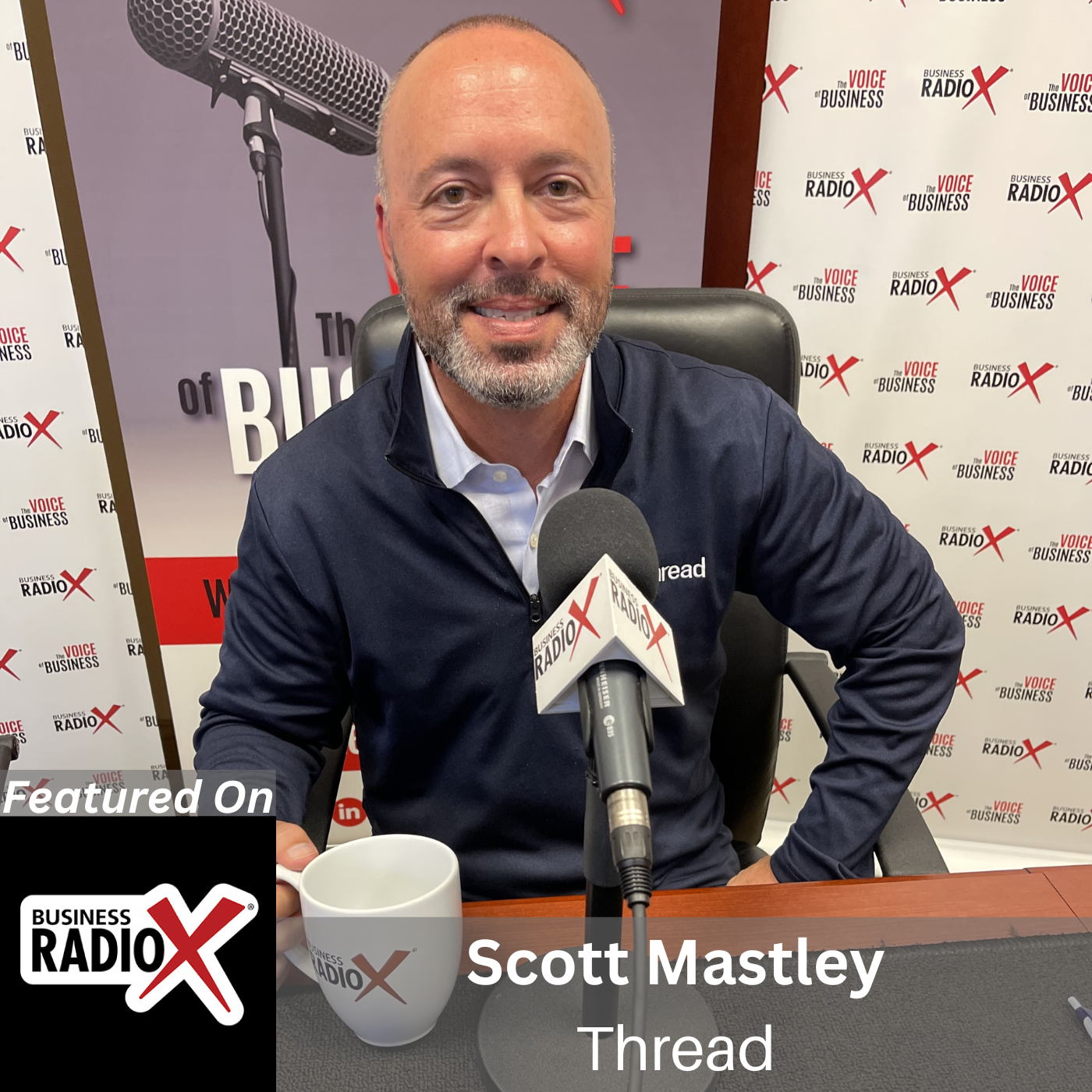
Navigating HR Challenges, with Scott Mastley, Thread HCM

November 6, 2024 by John Ray

Navigating HR Challenges, with Scott Mastley, Thread, on North Fulton Business Radio with host John Ray
North Fulton Business Radio
Navigating HR Challenges, with Scott Mastley, Thread HCM
Loading
00:00 /
RSS Feed
Share
Link
Embed

Download file

Navigating HR Challenges, with Scott Mastley, Thread, on North Fulton Business Radio with host John Ray

Navigating HR Challenges, with Scott Mastley, Thread HCM (North Fulton Business Radio, Episode 814)

In this episode of North Fulton Business Radio, host John Ray interviews Scott Mastley, Chief Human Relations Officer at Thread HCM. The discussion delves into Thread’s HR software and services, emphasizing their focus on efficiency, top-tier payroll technology, and unique HR consulting services. Scott shares his unconventional journey into HR, the importance of personal and proactive client relationships, and the evolving landscape of HR regulations, including multi-state compliance and remote work challenges. He also touches on trends like unlimited PTO and cannabis regulations, offering practical advice for business owners. Scott’s insights provide valuable guidance for small to medium-sized businesses looking to enhance their HR practices.

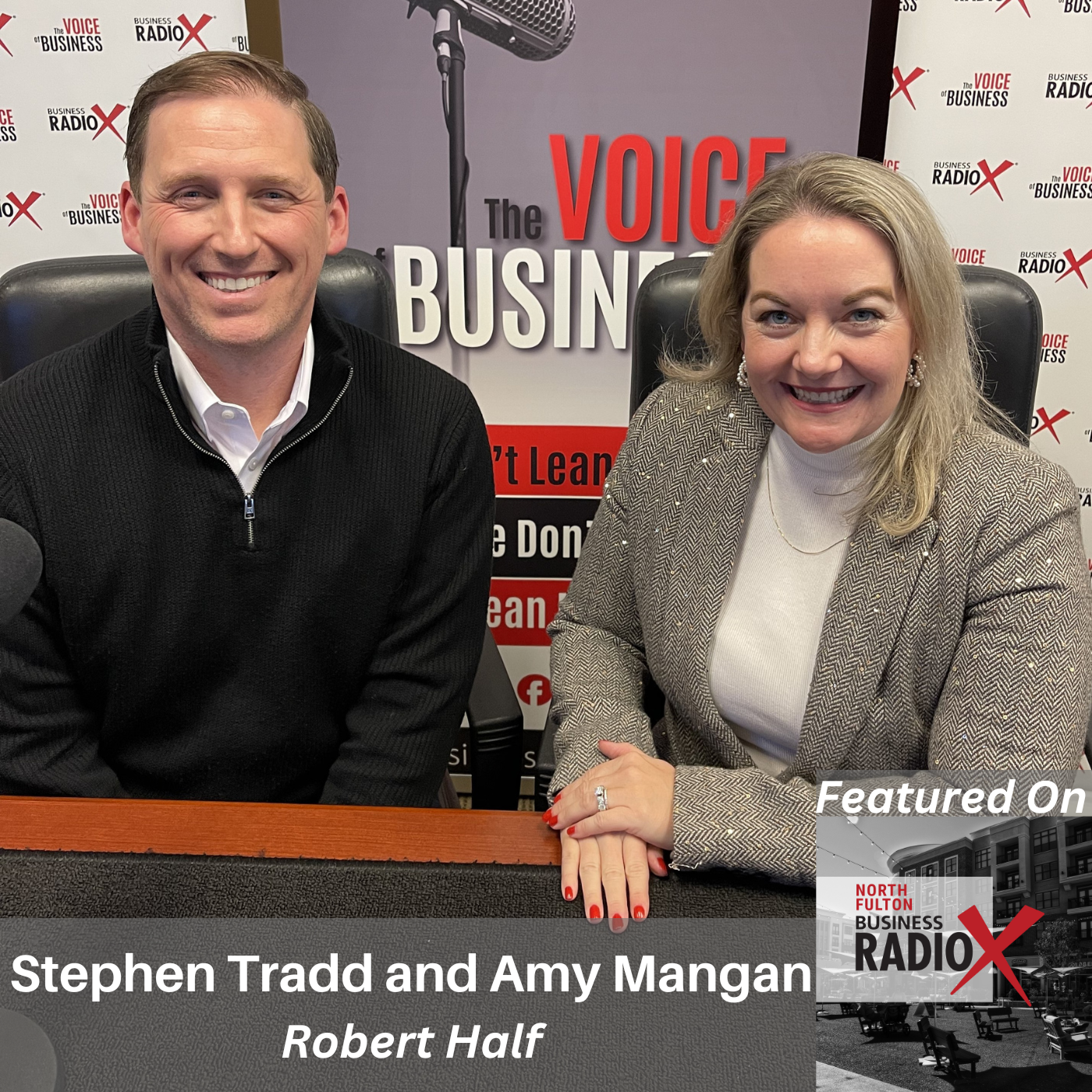
John Ray is the host of North Fulton Business Radio. The show is recorded and produced by the North Fulton affiliate of Business RadioX® inside Renasant Bank in Alpharetta.

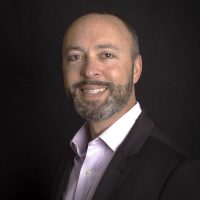
Scott Mastley, Chief Human Relations Officer, Thread HCM

Scott Mastley, Chief Human Relations Officer, Thread HCM

Scott joined Thread in 2019 to develop and manage our HR Consulting services. Scott is a double Dawg with undergraduate and MBA degrees from UGA, and he is passionate about simplifying HR to support engagement.

Scott is interested in your challenges and enthusiastic about finding solutions and proactively preventing future issues. His confidence comes from 25 years of hands-on consulting, HR work, and leading HR teams with clients across multiple industries.

LinkedIn

Thread HCM

Thread offers a way for businesses to make HR an advantage. The company believes in better workplaces, engaged employees, and peace of mind for the C-Suite.

At its core, Thread offers a top-tier technology platform that over 100,000 businesses trust and that serves over 5,000,000 employees. This all-in-one solution offers a superior approach to hiring, managing, and growing teams. With a scalable system and a variety of offerings, the iSolved platform is designed to grow alongside its clients.

Thread offers a partner relationship approach to working with clients, backed by quick, individualized service from a support team that is familiar with each business. The company believes time is valuable and doesn’t intend to waste any of it. Live response times and NPS Customer Satisfaction ratings are posted right on its website.

Lastly, Thread is a business like its clients. With a team of amazing people doing great work for their clients, Thread achieves success in turn. As a recipient of GPTW awards several years in a row, Thread aims to be a company its employees love and where candidates are eager to join. The company wants that same success for its clients and their teams too.

Website | LinkedIn | Facebook | Instagram | X (Twitter)

Topics Discussed in this Episode

00:00 Introduction and Welcome to North Fulton Business Radio
00:36 Guest Introduction: Scott Mastley from Thread
02:46 Scott’s Journey into HR
04:20 HR Consulting at Thread
07:10 Challenges in HR: Multi-State Regulations
12:19 Cannabis in the Workplace
15:13 Remote Workforces Post-Pandemic
16:17 Effective Communication in Remote Work
17:28 Maintaining Productivity and Connection
18:27 Hybrid Work Models and Their Benefits
21:31 Challenges of Unlimited PTO Policies
24:04 Upcoming Salary Threshold Changes
26:15 Client Success Stories and Services
29:22 Contact Information and Closing Remarks

Renasant Bank supports North Fulton Business Radio
Renasant BankRenasant Bank has humble roots, starting in 1904 as a $100,000 bank in a Lee County, Mississippi, bakery. Since then, Renasant has become one of the Southeast’s strongest financial institutions, with over $17 billion in assets and more than 180 banking, lending, wealth management, and financial services offices throughout the region. All of Renasant’s success stems from each of their banker’s commitment to investing in their communities as a way of better understanding the people they serve. At Renasant Bank, they understand you because they work and live alongside you every day.

Website | LinkedIn | Facebook | Instagram | X (Twitter) | YouTube

About North Fulton Business Radio and host John Ray

With over 800 shows and having featured over 1,200 guests, North Fulton Business Radio is the longest-running podcast in the North Fulton area, covering business in our community like no one else. We are the undisputed “Voice of Business” in North Fulton!

The show welcomes a wide variety of business, non-profit, and community leaders to get the word out about the important work they’re doing to serve their market, their community, and their profession. There’s no discrimination based on company size, and there’s never any “pay to play.” North Fulton Business Radio supports and celebrates business by sharing positive business stories that traditional media ignore. Some media leans left. Some media leans right. We lean business.

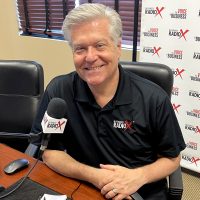
John Ray, Business RadioX - North Fulton, and Owner, Ray Business Advisors
John Ray, Business RadioX – North Fulton, and Owner, Ray Business Advisors

John Ray is the host of North Fulton Business Radio. The show is recorded and produced from the North Fulton studio of Business RadioX® inside Renasant Bank in Alpharetta. You can find the full archive of shows by following this link. The show is available on all the major podcast apps, including Apple Podcasts, Spotify, Google, Amazon, iHeart Radio, and many others.
The studio address is 275 South Main Street, Alpharetta, GA 30009.

John Ray, The Generosity MindsetJohn Ray also operates his own business advisory practice. John’s services include advising solopreneurs and small professional services firms on their value, their positioning and business development, and their pricing. His clients are professionals who are selling their expertise, such as consultants, coaches, attorneys, CPAs, accountants and bookkeepers, marketing professionals, and other professional services practitioners.

John is the national bestselling author of The Generosity Mindset: A Journey to Business Success by Raising Your Confidence, Value, and Prices.

Tagged With: Cannabis, HR consulting, Human Resources, hybrid work, John Ray, North Fulton Business Radio, remote work, remote workforce, Scott Mastley, Thread, Thread HCM, unlimited PTO

Esther Weinberg, The Ready Zone

September 28, 2022 by John Ray

The Ready Zone
Business Leaders Radio
Esther Weinberg, The Ready Zone
Loading
00:00 /
RSS Feed
Share
Link
Embed

Download file

The Ready Zone

Esther Weinberg, The Ready Zone

Esther Weinberg, Founder and Chief Leadership Development Officer of The Ready Zone, joined host John Ray on Business Leaders Radio to discuss the changes in workplace culture over the last few years, reorganizations, why they succeed or fail, advice for leaders navigating change, and much more.

Business Leaders Radio is produced and broadcast by the North Fulton Studio of Business RadioX® in Atlanta.

The Ready Zone

After 20+ years of working with organizations in the media and technology industries, Esther Weinberg has observed that when leaders cultivate and nurture a high level of alignment, especially during chaotic and uncertain times, they deliberately—and intentionally—create an engaged, powerful, and profitable workplace culture despite of change or unforeseeable circumstances.

And by extension, when these organizations operate with a mindset whereby valuing one another is not only a high priority, it’s as “measured” and valued as the bottom line, they are operating in what she defines as The Ready Zone: An environment in which the leader, the team, the employees, and the organization as a whole, are 100% committed to people feeling valued for who they are, their contribution, their humanity, and the value they bring to the table by being themselves. And this is exponentially more important in a virtual environment. Creating this culture facilitates leaders to step into being ready to powerfully take on the opportunities and challenges in front of them.

Through executive coaching and a series of comprehensive change management programs, Ready Zone leaders are empowered to elevate 6 key Zone Performance Indicators (ZPIs).

Company website | LinkedIn | Twitter

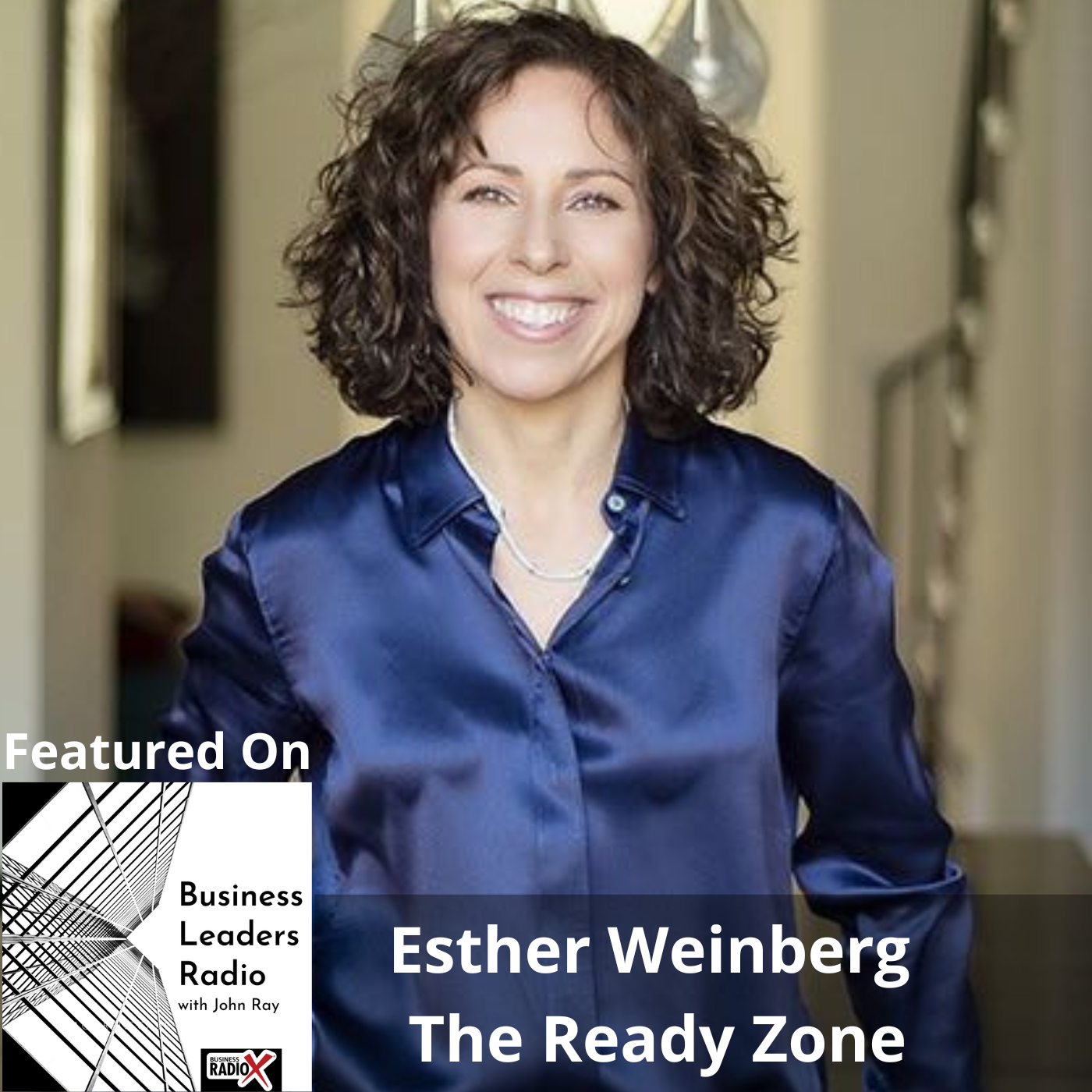
Esther Weinberg, Founder and Chief Leadership Development Officer, The Ready Zone

Esther Weinberg, Founder and Chief Leadership Development Officer, The Ready Zone

Esther Weinberg is a business growth accelerator that equips executives in high-growth media and technology industries to create game-changing breakthroughs, increase profitability in declining markets and create successful and sustainable “portable” virtual cultures with executives, leaders, and teams.
As Founder & Chief Leadership Development Officer of The Ready Zone, she moves leaders through change with proven systems to create big pivots, big impact, and big returns. Esther’s strategies assist companies through such impactful conditions as planning and executing reorganizations; moving employees from burnout and exhaustion to empowered, innovative, and driven; and implementing clear priorities and strategies for growing a virtual and global workforce.
Esther provides proven, transformative, yet practical tools and systems that help benchmark and measure results. Despite uncertain times, Esther is not afraid to tell eye-opening truths that dives deeply into the impact of change and consolidation. She does so to create the access and opportunity for meaningful dialogue and action to develop workplace cultures of trust, respect and safety. In fact, she rolls-up-her-sleeves, authentically and methodically helping organizations build sustainable company cultures that thrive vs. survive. From the fundamentals behind developing a collective philosophy of readiness to take on any industry challenge, to coaching leaders on how to reframe, refocus, and realign, Esther is a true powerhouse.

Esther is the author of the eBook on The Ready Zone’s unique framework entitled, Better Leaders. Better People. Better Results: 6-Eye Opening Strategies to Thrive Through Change You Didn’t Ask For. With over 20 years’ experience, her innovative strategies have assisted clients to grow, scale and thrive during the worst and best of times including Netflix, NBCUniversal, Microsoft, ESPN, WarnerBros., Discovery, CNN, DreamWorks Animation, Disney, IMAX, National Geographic, TelevisaUnivision, and Sony.

A respected thought-leader with first-hand experience, Esther has held executive positions at Disney and Fox, as well as stood in the shoes of C-Suite executives as an interim CEO and leader at numerous organizations. Esther’s drive for developing global leaders stems from her work abroad, including Botswana, Israel and Uganda.

Esther is the Co-Founder of the Being Me Foundation along with her wife, Lin. The organization’s mission is to create breakthroughs through global Ontological coaching and leadership programs that redefine diversity, equity, inclusion, and belonging for LGBTQIA+ young adults.
She is a graduate of New York University and a member of Harvard’s Institute of Coaching at McLean Hospital. Esther is a member of the Forbes Coaches Council and a contributor to Forbes.

LinkedIn | Twitter 

Questions and Topics

  • What is the biggest mistake organizations make during times of change? How can they resiliently overcome it?
  • What is the one skill leaders undervalue that’s needed more than ever now?
  • I’ve heard of so many reorganizations failing. How can organizations approach this in a more thoughtful way?
  • How have reorganizations impacted the way people work today?
  • What are the new skills leaders now need to powerfully lead permanent, ever-evolving change?
  • How do leaders need to better prepare people to be resilient?
  • What advice would you give to leaders to do first who are leading change?
  • What are the most common costly mistakes that derail organizations from staying relevant and powerful?

Business Leaders Radio is hosted by John Ray and produced virtually from the North Fulton studio of Business RadioX® in Alpharetta.  The show can be found on all the major podcast apps and a full archive can be found here.

Tagged With: Business Leaders Radio, Change, Esther Weinberg, hybrid work, John Ray, Leaders, leadership development, reorganization, resilience, The Ready Zone, workplace culture, ZPI

Workplace MVP: Robyn Smith, Jackson Healthcare

August 25, 2022 by John Ray

Jackson Healthcare
Minneapolis St. Paul Studio
Workplace MVP: Robyn Smith, Jackson Healthcare
Loading
00:00 /
RSS Feed
Share
Link
Embed

Download file

Jackson Healthcare

Workplace MVP: Robyn Smith, Jackson Healthcare

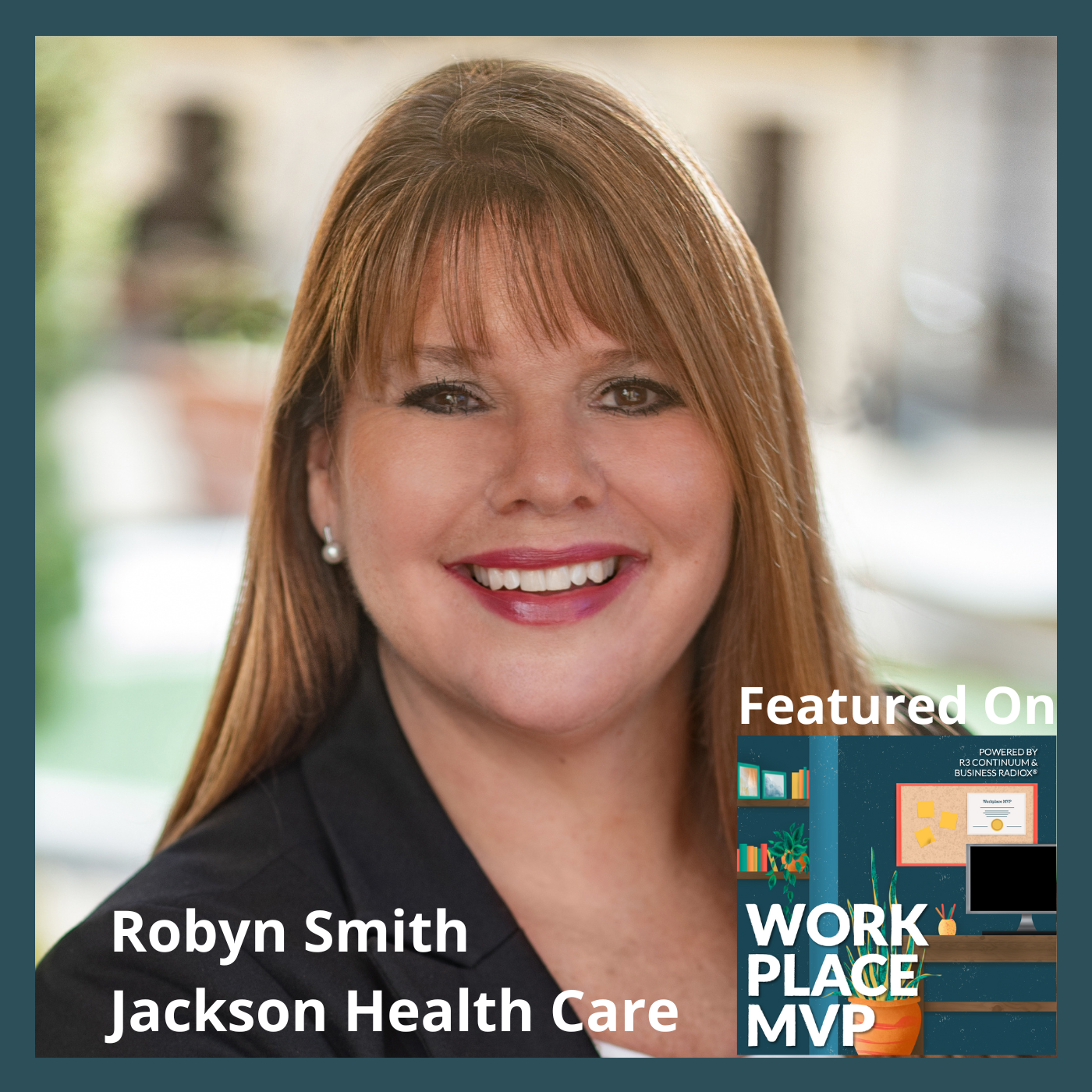
Robyn Smith, Executive Vice President of Human Resources for Jackson Healthcare, was the Workplace MVP on this episode. Robyn detailed the challenges Jackson Healthcare has faced throughout the pandemic and those that are ongoing, and the steps her company took to support the mental and physical well-being of its associates. She and host Jamie Gassmann discussed the creative solutions Jackson Healthcare has implemented, including virtual events, in-person events when they returned to the office, support for the challenges associates may be facing, the need for empathy, and much more.

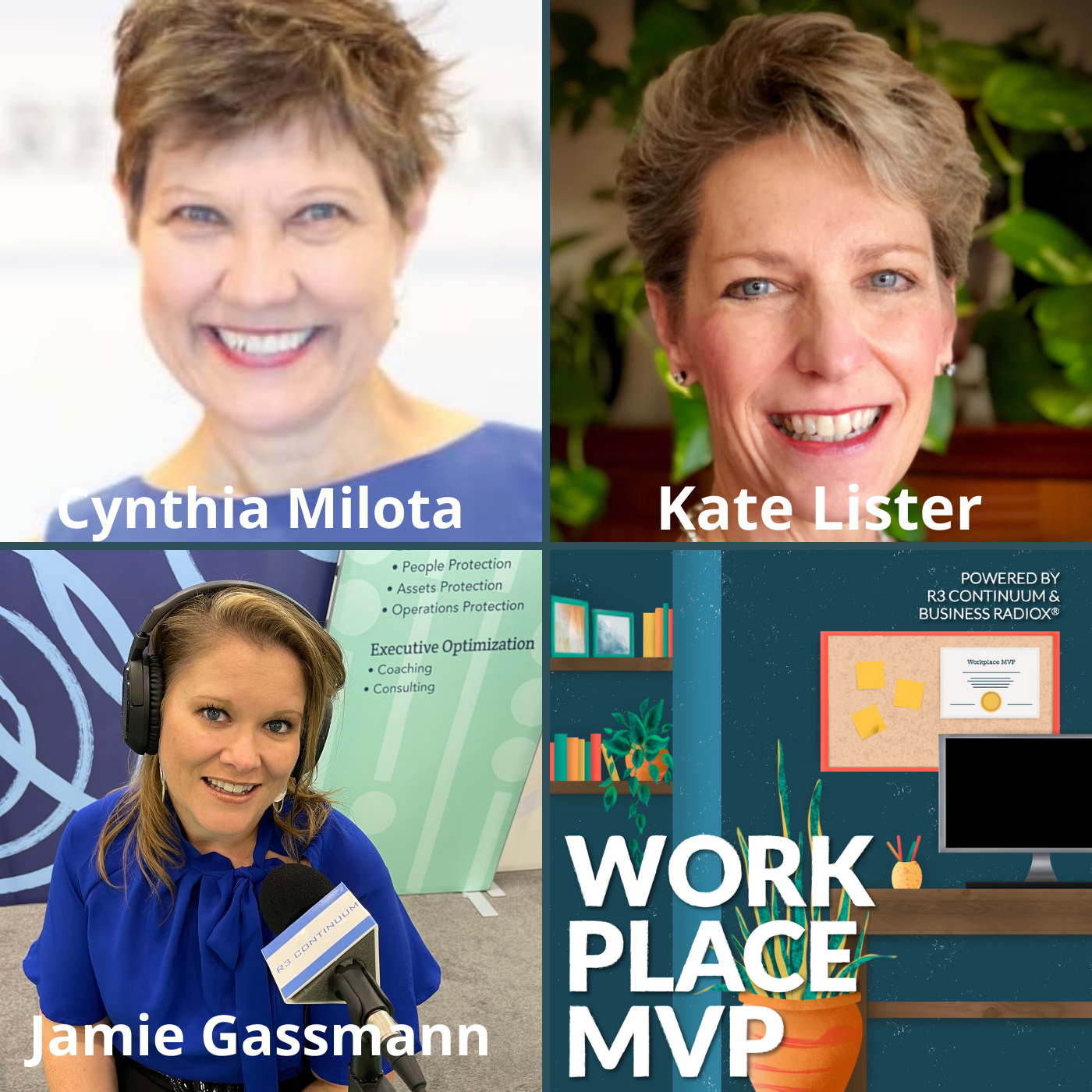
Workplace MVP is underwritten and presented by R3 Continuum and produced by the Minneapolis-St.Paul Studio of Business RadioX®.

Jackson Healthcare

The Jackson Healthcare companies provide healthcare systems, hospitals, and medical facilities of all sizes with the skilled and specialized labor and technologies they need to deliver high-quality patient care and achieve the best possible outcomes — while connecting healthcare professionals to the temporary engagements, contract assignments, and permanent placement employment opportunities they desire.

Headquartered in metro Atlanta, they’re powered by more than 1,700 associates and over 15,000 clinician providers covering all 50 U.S. states.

Their mission is to improve the delivery of patient care and the lives of everyone we touch. This includes the patients, clinicians, and healthcare executives they work with through their companies every day, as well as their communities, the nonprofit organizations they support and each associate who is part of their family.

Company website | LinkedIn | Facebook | Twitter

Robyn Smith, Executive Vice-President of Human Resources, Jackson Healthcare

Robyn Smith, Executive Vice-President of Human Resources, Jackson Healthcare

As executive vice president of human resources, Robyn Smith brings more than 25 years of experience to her role leading Jackson Healthcare’s corporate HR team. In her position, she sets strategy for talent acquisition, benefits, training and development, career pathing, succession planning, compensation, reward programs, and workplace policies. Since joining the organization, she has been a driving force in expanding its extensive associate professional and well-being offerings. During her tenure, Jackson Healthcare became Great Place to Work certified, has appeared in consecutive years on Fortune’s Best Workplaces in Healthcare and debuted as a Best Workplace for Women and Best Workplace for Millennials.

In 2020, Robyn received the “Great Place to Work For All Leadership Award” – and on the speaker circuit, she addresses wellness and culture topics at various events each year. She serves on the board of Connections Homes, is active in Peer 150’s Human Resources Group and Atlanta CHRO leadership, and volunteers with Open Hand Atlanta and Junior Achievement.

Robyn joined Jackson Healthcare following a successful HR career in the enterprise software space and in national healthcare and staffing firms. She is a graduate of Kennesaw State University and serves on the board of Coles Business School.

LinkedIn

About Workplace MVP

Every day, around the world, organizations of all sizes face disruptive events and situations. Within those workplaces are everyday heroes in human resources, risk management, security, business continuity, and the C-suite. They don’t call themselves heroes though. On the contrary, they simply show up every day, laboring for the well-being of employees in their care, readying the workplace for and planning responses to disruption. This show, Workplace MVP, confers on these heroes the designation they deserve, Workplace MVP (Most Valuable Professionals), and gives them the forum to tell their story. As you hear their experiences, you will learn first-hand, real-life approaches to readying the workplace, responses to crisis situations, and overcoming challenges of disruption. Visit our show archive here.

Workplace MVP Host Jamie Gassmann

Jamie Gassmann, Host, “Workplace MVP”

In addition to serving as the host to the Workplace MVP podcast, Jamie Gassmann is the Director of Marketing at R3 Continuum (R3c). Collectively, she has more than fourteen years of marketing experience. Across her tenure, she has experience working in and with various industries including banking, real estate, retail, crisis management, insurance, business continuity, and more. She holds a Bachelor of Science Degree in Mass Communications with special interest in Advertising and Public Relations and a Master of Business Administration from Paseka School of Business, Minnesota State University.
R3 Continuum

R3 Continuum is a global leader in workplace behavioral health and security solutions. R3c helps ensure the psychological and physical safety of organizations and their people in today’s ever-changing and often unpredictable world. Through their continuum of tailored solutions, including evaluations, crisis response, executive optimization, protective services, and more, they help organizations maintain and cultivate a workplace of wellbeing so that their people can thrive. Learn more about R3c at www.r3c.com.

Company website | LinkedIn | Facebook | Twitter

TRANSCRIPT

Intro: [00:00:04] Broadcasting from the Business RadioX Studios, it’s time for Workplace MVP. Workplace MVP is brought to you by R3 Continuum, a global leader in workplace behavioral health and security solutions. Now, here’s your host, Jamie Gassmann.

Jamie Gassmann: [00:00:23] Hi, everyone. Your host, Jamie Gassmann, here and welcome to this episode of Workplace MVP. Since early 2020 and now into 2022, the workforce and work environments continue to experience shifts and changes. And that shifting and changing, for some, continues at a rapid or frequent pace. And some industries, such as healthcare, are experiencing shortages of staff and a limited candidate pool. While other industries are experiencing a delayed great resignation or, as some have called it, a reshuffle.

Jamie Gassmann: [00:00:56] Disruption has become a constant in our workplaces, resulting in leaders having to take a closer look at the support and resources they’re making available to employees. The workforce is not the same as it was pre-pandemic. Their view on work-life balance has shifted. Their expectations of their employer have grown. And what they need for support from their work life is different than what they would have needed pre-pandemic.

Jamie Gassmann: [00:01:22] How can employers keep up with the changes and move to a work environment employees can thrive in? How can they be creative to ensure the resources and tools they are making available to employees feels a value and appreciated?

Jamie Gassmann: [00:01:34] Well, joining us today to share the out-of-the-box resources and tools her workplace has put into place for their workforce is Workplace MVP and Executive Vice-President of Human Resources at Jackson Healthcare, Robyn Smith. Welcome to the show, Robyn.

Robyn Smith: [00:01:50] Great. Thank you. It’s so wonderful to be with you today, Jamie. Thanks for having me.

Jamie Gassmann: [00:01:55] Yeah. We absolutely appreciate you being on. And I just want to start out by having you kind of walk us through your career journey, share with us how you got into H.R. and kind of that journey you’ve taken to becoming the Executive Vice-President of Human Resources at Jackson Healthcare.

Robyn Smith: [00:02:11] Sure. So, when I graduated from college, I always knew that I wanted to be in human resources. My mother was in human resources, and I loved people, so I thought that would be a great career for me. So, I started out my career in the staffing industry, and then I moved from there into the medical field and worked for a large physician group here in Atlanta doing a lot of merger and acquisition work. And then, I moved to an international publicly traded software company, and I had a large international team and we were in 17 different countries, so that was a wonderful experience.

Robyn Smith: [00:02:56] Then, the opportunity at Jackson Healthcare came up and I just thought, what a great match for me having the staffing industry experience, having the medical industry experience, and then having software and high tech experience. So, to me, it was the perfect marriage.

Jamie Gassmann: [00:03:15] Yeah, it sounds like it. And so, talk to me a little bit about what Jackson Healthcare does. What does it provide your clients with?

Robyn Smith: [00:03:22] Jackson Healthcare is a family of highly specialized healthcare, staffing search and technology companies. The mission is to improve the delivery of patient care and the lives of everyone we touch. Our companies provide hospitals and healthcare systems with the labor and technologies they need to deliver high quality patient care and achieve the best possible outcomes, while also connecting healthcare professionals to employment opportunities that they desire. Each year, we help thousands and thousands of healthcare facilities serve more than ten million patients across all 50 states.

Jamie Gassmann: [00:04:04] Wonderful. And so, looking at kind of the conversation you and I had before, your organization, you’ve seen a lot of growth over the last few years, even before COVID. And I think you’ve even had some even more growth since COVID. So, can you talk a little bit about what that growth has looked like and the impact that’s had in your role at Jackson Health?

Robyn Smith: [00:04:27] Sure. You know, being in the healthcare industry, the needs have been more and more, especially over the last two years specifically. And our business continues to grow. And I’ve been blessed to work for an organization that continues to grow. Since I’ve been here, Jackson has tripled in size. And so, what it means for our people, it’s just wonderful to see them grow and learn new things and new skills and prosper and share that. And we’re continuing to grow because healthcare is not going away. And if anything we’ve learned in the last couple of years, is, it’s at the forefront of everything.

Jamie Gassmann: [00:05:13] Yeah. And, you know, when I start these conversations with a new guest, I’m always looking at areas that really inspire passion and get you excited about the work that you do in kind of driving these conversations. And when we were talking in our pre-show call, you talked about being really proud of the work that your team has done. And there’s a lot of great work that you shared, and we’re going to be touching a lot on it as we kind of move through the show. But tell me a little bit about the work that you’re most proud of with your team. Let’s talk a little bit about that.

Robyn Smith: [00:05:50] Sure. I am unbelievably proud of our people, and our clinicians, and our physicians that we put to work each and every day. A lot of our associates and clinicians worked around the clock. And our people worked to deploy physicians and nurses to the frontline. They were actually saving lives. These were unprecedented times. And they continue to go above and beyond to help the physicians and the clinicians get to where they needed to be to help their coworkers. Everyone leaned into the process and they worked quickly to pivot from what maybe their normal day to day job was.

Robyn Smith: [00:06:34] We found new ways to meet ongoing needs and growing needs. A few examples of this is that we had receptionists, and because the business closed for a couple of months, we cross trained them to credential clinicians and put more and more clinicians out to work on the frontlines. And other associates took on multi-specialties in the healthcare arena so that they could ramp up quickly and get more clinicians to work to care for more patients.

Robyn Smith: [00:07:09] And then, our frontline workers, they were just amazing. They worked shift after shift, overtime, just helping when the pandemic hit its peak. Not complaining. They are our unsung heroes and we owe so much to them.

Robyn Smith: [00:07:31] Our mission is to improve patient care and the lives of everyone we touch. We met our mission on patient care and pivoting to saving patient’s lives each and every day. And during COVID, we really saw the impact of all this great work that was going on.

Robyn Smith: [00:07:49] Some of the things we did, we were first to set up an emergency department outside of a hospital in the epicenter in Georgia, which the outbreak was in Albany. We set up the World Congress Center for Overflow from hospitals for more patients. We set up drive-thru vaccine centers. All of these things have never been done, so we are learning and deploying and executing at real time each and everyday.

Robyn Smith: [00:08:20] The word proud does not do it justice for all of our people and everything that they have done. Their unyielding dedication and commitment to taking care of patients and saving lives has been unprecedented.

Jamie Gassmann: [00:08:35] Wow. That’s just really impressive. And the innovation, and the project management, and the kind of forward thinking and the immediate thinking that you had to do during that time to pull that off is is absolutely impressive. I can see where it’d be something you’d be proud to say you were a part of and able to support. That’s incredible.

Jamie Gassmann: [00:08:58] And so, looking at it and in addition to that, I mean, all the great work that your employees were doing as an organization, you were all so heroic in being able to put some amazing benefits in place to support your employees so that you could keep them helping with that by giving them aid for the school.

Robyn Smith: [00:09:22] I think you said that you brought in some tutors for the children for the schoolwork. And then, you had daycares that were shut down. Can you talk through the educational and childcare resources that you did put in place for your employees, that support that you gave them to kind of lift that strain off of them as they were navigating that so that they could stay focused on supporting patients.

Robyn Smith: [00:09:51] Sure. Sure. You know, when the pandemic first started, things were changing daily, sometimes hourly. And we realized very quickly that we really needed to lean in and help our associates and their families.

Robyn Smith: [00:10:07] So, what we did is we added part-time and drop in hours at our onsite childcare center. We had some extra space available, so that’s where we set up little pods so they could bring in tutors to help. There was a cluster of three or four or six students that they could learn, of course, social distancing. But the cubes were set up enough that they could do that, that they could help each other.

Robyn Smith: [00:10:39] We deployed teachers into associates’ home from our childcare center, which had never been done in the history of that company. So, we really worked hard to get that done because we needed to continue to deploy clinicians and physicians to the frontline. Our people still needed to work but their kids needed to be taken care of. We reserved spots at distant learning centers for older students so that they could continue to learn and be in a safe environment.

Robyn Smith: [00:11:10] We did Zoom calls to engage children who were home. There were stories that came out of this. We did story time. We did arts and crafts. We did kids yoga at a specific time every week so the parents could learn to depend on that time that their children would be occupied. So, if they had an important call to be scheduled or something along those lines, that would take care of it for them. We waived tuition and offered reimbursement for added virtual school costs.

Robyn Smith: [00:11:47] You know, nobody could have anticipated any of this. So, our workforce is 70 percent female, so we have a lot of families. And so, it was really important to us to pivot and come up with creative, out-of-the-box ways to think about things and think about it differently.

Jamie Gassmann: [00:12:06] Wow. I know when we talked and I’ve shared this with you, you know, I have school-aged children and I was that working mom juggling. And, of course, my spouse was home as well. But juggling that schoolwork, and learned very quickly that was not my calling to be a teacher. I do have a whole new level of appreciation for that job.

Jamie Gassmann: [00:12:31] But just the thought of having that lift, it brought back memories to me of navigating that. And then, I teared up just thinking of how wonderful that had to have been for the employees to be able to have that lift off their shoulders and they could just focus on their work. So, kudos to you. I think that’s absolutely impressive and amazing.

Robyn Smith: [00:12:53] Thank you.

Jamie Gassmann: [00:12:54] So, additionally, in your tenure at Jackson Healthcare, you had a clinic put onsite. So, I know you talked a little bit about the clinical resources that you’ve had onsite, but you put a clinic onsite, how did that help with supporting your employees during the highest point of COVID outbreak? And even now, what are you experiencing by having that clinic put onsite? How does that come to fruition of this support system that you probably maybe didn’t think of when you initially had the idea of putting that onsite?

Robyn Smith: [00:13:24] That’s absolutely correct. We put the clinic in a few years ago, and the onsite clinic, it provides both primary and preventive care to our associates and their families. So, as we pivoted into COVID and not knowing what we were dealing with everyday and, not only finding it difficult to get into the hospitals, but some doctor’s offices even closed.

Robyn Smith: [00:13:52] And so, we made a conscious decision early on that we wanted a safe place for our associates and their families to come that was non-COVID, if you will, so they could continue to get their prescriptions filled for their maintenance meds. If they had something other than COVID, they could come and they could be treated. And they were familiar with the staff. And so, even when the office closed for just a couple of months, the utilization on the clinic stayed up around 85 percent, which is just unheard of. And so, those clinicians came in everyday to serve our population.

Robyn Smith: [00:14:37] We also offered 24/7 telemedicine services. The clinic had to pivot to some telemedicine services, and they would do COVID diagnosis over telemedicine so that they could keep seeing the other patients in the actual clinic itself. And this allowed the associates and their families to connect with the physicians from home. And so, I think it really propelled the telemedicine journey forward.

Robyn Smith: [00:15:13] We were very purposeful not to provide COVID testing in the clinic. I bet I got that question everyday, why don’t we have COVID testing. And once again, it was because we wanted a safe place for our associates and their families to get continuous, ongoing care during the time when options were very, very limited.

Robyn Smith: [00:15:35] And then, when the vaccine came out, we started offering the Moderna vaccine to associates and their families, as well as the boosters. So, that was the only thing that we pivoted on with COVID is to help them, because in the early days, it was hard to get the vaccine. So, we were constantly looking at different things that we could do to provide more services to our associates and their families.

Jamie Gassmann: [00:16:03] And has putting that in place and kind of keeping it as a clinic that people can go to that’s non-COVID, has that helped to keep your utilization of it up at this point now too? I mean, did it create kind of knowledge of it?

Robyn Smith: [00:16:22] Yes. Yeah. So, it stays around 80 to 85 percent. It’s probably one of the number one benefits that we have here on campus, because there’s just such value. And we have a partnership with a local pharmacy, so if the physician or the clinician write a prescription, they can get a same day delivery of their prescription. So, it’s not like they have to leave work and go out and pick it up because that takes a lot of time to do that. And sometimes if they’re really busy, they’ll deliver twice a day so that they’re getting the medications that they need.

Jamie Gassmann: [00:17:06] Wow. So, there’s been other creative and out-of-the-box measures that you’ve put in place to show support for your people. So, can we talk about some of those approaches? I know some of them was like therapy dogs, counselors onsite, a COVID response team. You also were prepping your managers. Can you dive into a little bit of some of these other out-of-the-box measures that you’ve done?

Robyn Smith: [00:17:30] Sure. Sure. So, we also have an onsite fitness center, so we reopened that as soon as we possibly could with limited availability and COVID-19 protocols put in place to provide the associates with the opportunity to safely exercise. Because if you think about it, everything was shut down. And so, part of our philosophy is mind, body, and spirit, and working out is part of that as well.

Robyn Smith: [00:17:59] We added some emotional wellbeing webinars, and we broke it up. We did one for the associates to talk about what issues they may be addressing. We had our onsite counselors actually do this via Teams call and answer any questions that they might have. And then, we also had a session for the managers. Because these were unprecedented times, how do you manage through all of this? How do you support your associates? And so, the counselors really speaking towards that and helping them.

Robyn Smith: [00:18:40] And we also did recorded webinars with local and national experts on topics ranging from stress management and emotional wellbeing tied to nutrition and physical health. And how parents can help their children receive better emotional support and health during this pandemic.

Robyn Smith: [00:19:02] So, there were multiple layers in there, and we just kept our pulse on it through spot surveys and kind of seeing how people were actually doing to see if we needed to add more sessions or we needed to pivot to a new topic.

Robyn Smith: [00:19:20] The executive team, we met every morning to talk about, “Okay. What’s going on today? What do we need to address today?” We also reimagined our Jackson Healthcare University, which included traditional professional development, leadership training, networking, and cultural awareness, sensitivity curriculum to better serve our associates during the pandemic. So, we moved everything to virtual and on demand. And we saw participation rate increase of up to 16 percent compared to other years. So, they were hungry for the knowledge and so we just needed to pivot and get it to them in a means that they could digest it.

Robyn Smith: [00:20:06] We also recognized the need to help our associates stay emotionally connected during the physical separation. We — our traditions. We launched virtual events and activities. We had a virtual Halloween costume contest, and we judged it, and gave away awards that we later sent to people’s homes online. We had virtual holiday decor. We did Zoom pictures with Santa, that was very creative. So, we were constantly looking at what was in our normal DNA and how could we adapt it to our associates.

Robyn Smith: [00:20:54] Also, our associates worked diligently from the onset of the pandemic to help ensure that our healthcare professionals were mobilized nationwide to provide critical lifesaving care for patients suffering from COVID-19. We looked at ways to say thank you and show appreciation for one another. And in recognition of the work our associates were doing to fight against the pandemic, we mailed a COVID-19 response team item to them. They can have a hat or a t-shirt or some type of memorabilia. And it was neat because on a lot of the Zoom or the Teams calls, they would be wearing their memorabilia very proudly that they were part of that COVID response team.

Robyn Smith: [00:21:43] We held town hall meetings with one of our physicians, the medical director from our onsite clinic. And he answered a lot of the science behind COVID because things were changing rapidly, you know, when we were thinking about coming back. Why do we have to wear masks? What’s the purpose of a mask? Why do we have to quarantine? And then, when the vaccine came out, well, what’s the best vaccine? Why do we need the vaccine? Which is constantly ongoing, whatever the flavor of the week might have been. So, we were just trying to educate and adjust for their needs and to help get the latest and greatest out to them. And our medical director was on the frontline. He was also practicing. So, he was giving real life examples of what was going on.

Robyn Smith: [00:22:44] We also decided to set up a privacy officer to report exposures or cases. And we hired a registered nurse to do this because we wanted to take it out of the hands of H.R. or managers because we’re not medical professionals. We actually wanted the nurse making those decisions. So, by August of 2021, we had over 6,000 COVID questions or inquiries that had been answered by the nurse, and she was amazing from that.

Robyn Smith: [00:23:21] Some of the other things, we talked about the Halloween costume contest, we also had an online pumpkin carving contest. So, we just tried to think about things that we could do differently. And this year, we added onsite pet therapy. So, they bring in the dogs and that’s to support the mental and wellbeing of our associates.

Robyn Smith: [00:23:47] Our company also signed the Global Mental Health Pledge through the Society for Human Resource Managers and Thrive Global, reaffirming our long standing commitment to mental health and wellbeing of our associates. And that’s really taken off.

Jamie Gassmann: [00:24:03] Wow. That’s a big list. You’ve done a lot. That’s impressive. In looking at them, you mentioned spot surveys to kind of get a gauge of employees response to that and really identify if there’s other areas that you might need to be looking into. So, how have your employees responded to that support and the continued support? You know, what are you seeing amongst your employees?

Robyn Smith: [00:24:30] Yeah. So, I’d say from my observation, for the most part, it’s been welcomed and positive. You know, when we first started to come back on campus, there were still some fear factor around that. Because, listen, some people had some extenuating medical conditions, and for those that were still unsettled, we made accommodations. There was an accommodation form they had to fill out for the nurse. And if the nurse needed to ask more medical questions, which was totally confidential, we did not have any of that information. Then, the nurse could make a proper call on what they needed.

Robyn Smith: [00:25:09] But we really tried to meet people where they were and what they were experiencing. Because then, all of a sudden, you might have had other family members living with you, other people other than your children that you were having to take care of. So, we were constantly adapting.

Robyn Smith: [00:25:28] But once we got started coming back on campus, we heard more positive feedback because they just missed each other. They missed that connectivity, that human interaction. And our campus was built around collision points just to have an impromptu conversation or an impromptu meeting. And so, a lot of that started to come back after that.

Jamie Gassmann: [00:25:59] Wow. I know. I’m in the office today and I generally am working from home still myself, but being able to be around people, it does make a difference. You know, we had lunch together. It was fantastic. I haven’t done that for a while. So, you really see things that you appreciated about that in office setting when you’ve been out of it for a while.

Jamie Gassmann: [00:26:19] So, we’re going to take a break here and hear from our sponsor. So, Workplace MVP is sponsored by R3 Continuum. R3 Continuum is a leading expert in providing behavioral health support to people and organizations facing disruption and critical incidents. Through our evidence-based interventions, specialized evaluations, and tailored behavioral health programs, R3C promotes individual and collective psychological safety and thriving. To learn more about how R3 Continuum can help your workplace make tomorrow better than today by helping your people thrive, visit www.r3c.com today.

Jamie Gassmann: [00:26:59] So, I know in talking with you in our pre-show call, you talked about a mix of employees, some working from home and some who have come back into the office. And this has kind of just shifted and changed kind of throughout the pandemic. What does your current office mix look like now?

Robyn Smith: [00:27:16] Well, it’s still a mix. So, we empower the presidents to make the decision for each one of their companies. And it’s a mix, and I would say most people are in the office Monday through Thursday. And we see a lot of uptick probably Tuesday, Wednesday, and Thursday. But I think in this day and age, it’s always going to be a hybrid model from this point forward.

Robyn Smith: [00:27:50] But, you know, back to those collision centers, they rely upon each other to get their jobs done. And when you’re credentialing a physician or a provider to go to work, there’s multiple steps, and you’ve got to find housing, and you’ve got to get their credentials done. And so, it takes a team to get that done. And so, they are really enjoying being connecting, but then they still have some times that they can work from home as well.

Jamie Gassmann: [00:28:22] So, what’s interesting about the hybrid model that we’re seeing today or the remote work versus people in the office, if you think back to before COVID, so many workplaces were strictly in the office. There was no remote work. There were no hybrid. But then, you had some where it was like, “Okay. These people can work from home because they live in a different state” or “You’ve been here a while, we’ll let you work Fridays.” You know, the reality is similar to a lot of things, I think that this was already probably something that was coming our direction and that COVID just expedited the implementation of it, really.

Robyn Smith: [00:29:00] Yes.

Jamie Gassmann: [00:29:00] I’d be interested in your thoughts on that, because we’ve already kind of had some of that happening before and this just, like, basically, you didn’t have a choice but to get comfortable with it, really.

Robyn Smith: [00:29:13] Yeah. And I think you’re right, I think it accelerated everything. But, you know, we got really good at it because we had to in a short period of time. And so, we’ve continued to refine it and perfect it, if you will. And I think you’ve got to meet your people where they’re at and you’ve got to listen to them as well. It’s important.

Jamie Gassmann: [00:29:39] Yeah. I mean, I think that the generation of workers now across the mix, if you look at people in work settings, in a lot of cases, they’re not even going to apply for a job unless they’ve got that flexibility because they know they can go somewhere else to get it. So, it’s definitely become a different work environment.

Robyn Smith: [00:29:58] Yes. I think you’re right on that. And, also, what we’re seeing is that you either have some people, to your point, that want 100 percent remote. But then, there’s a lot of people on the flip side of that that want that connectivity and need that human interaction. And that’s a real thing.

Jamie Gassmann: [00:30:17] Absolutely. And so, kind of this leads into my next question. You know, you made a comment in our call earlier, and I loved the comment, because you mentioned that we need to think out-of-the-box that this new workforce is not the workforce of pre-COVID. So, we had to look at it, kind of think out-of-the-box of how we approach that. So, can you share your thoughts and perspectives around that?

Robyn Smith: [00:30:55] Yeah. I think it’s a new day. What worked three years ago or two years ago is not working now. And to get people to return to the office and make it an enjoyable and easy experience for them, we started a Better Together Campus Connection event. And when we first came back, we did a family reunion. And we set up tables and it was all outside. And we had food and a band just to start to reconnect. We had a photo booth that they could use the different things and take pictures with people that they hadn’t been together with in a long time.

Robyn Smith: [00:31:49] We’ve done other events where we’ve brought food trucks onsite. We have a not-for-profit partnership fair that we did. We did it outside in the atrium so they could just go from place to place and ask about the nonprofits and see if they wanted to partake and volunteer there. We have done a celebration for a great place to work. We brought back Family Fun Day, which was like a carnival onsite and everybody could bring their families. We’ve done things for Earth Day and Farmer’s Market.

Robyn Smith: [00:32:31] We’re having ongoing focus groups. We listen to our associates, what they want, what’s changing, what needs to make their transition easy. And that’s one of the reasons we started with the therapy dogs, too. We just started that this past May, and now it’s a permanent fixture once a month. Everybody loves when the therapy dogs are coming.

Robyn Smith: [00:32:58] I think I talked a little bit earlier about we do pulse surveys just to see what’s going on. We do skip level meetings to see how people are feeling. We also recently launched a new initiative to help associates that are facing unexpected financial hardships. It’s called the LoveLifts Associate Relief Fund, and associates can contribute to that fund to help their fellow associates in their time of need.

Robyn Smith: [00:33:30] Unfortunately, we had an associate that passed away very unexpectedly, and they’re using that fund to help pay for some of the funeral expenses because they didn’t anticipate that. And a lot of that was feedback from our associates and what they wanted to do and what they needed.

Jamie Gassmann: [00:33:49] Wow. Like a work family and taking care of each other and really reconnecting with each other. That’s like if you go to your first family get together. You know, I can just visualize it. I bet that’s a lot of fun.

Jamie Gassmann: [00:34:05] Listening to all the different things that you’ve put into motion, a lot of your out-of-the-box thinking, for organizations, for leaders that might be listening to this who don’t have an exponential amount of resources or the finances that are available to put some of those ideas into motion, what would you say they could do at an absolute minimum, you know, that is maybe a lower cost or lower resource intensive that would be your recommendation for where they can even start to do some of that out-of-the-box ideas?

Robyn Smith: [00:34:39] There’s a few things that don’t cost any money. Listen to your people and follow through. If there’s an ask, follow through with the ask. Be authentic on your core values of your organization, that’s the lens that you view everything through. Lead with empathy. I mean, you just don’t know what that person is going through personally. You’re only seeing parts of it.

Robyn Smith: [00:35:12] Some of, maybe, the tactical things that you can do, flex the work hours or the work day. Write handwritten notes of affirmation or thanks. Giving them opportunities to connect to something bigger, like volunteer work. Give them some time off to serve at a charity of their choice. So, there’s quite a few things that you can do if you don’t have money in the budget. And lead with kindness also.

Jamie Gassmann: [00:35:44] Yeah. Kindness and empathy. I just saw a post on LinkedIn, somebody had the picture of an iceberg of leading with empathy and the importance of that. And it shows the top of the iceberg is what you can see. But what’s down below is all the things you don’t know that your employee might be going through. And just being really aware that there might be a lot of things they’re not willing to share with you.

Robyn Smith: [00:36:08] Absolutely.

Jamie Gassmann: [00:36:09] So, you’re hitting spot on with a lot of what I’ve seen other leaders really kind of honing in on, especially recently. I mean, a lot of people are still navigating interesting challenges that are kind of lingering as we continue to move into this. You know, we’re halfway through 2022, but just some things that still continue to peak for people.

Robyn Smith: [00:36:32] And then, looking at your opinion, what is the impact if you have a organizational leadership team that isn’t focusing on their work environment or monitoring that emotional state of their teams, what is the impact that they’re likely to face in today’s current kind of work environment?

Robyn Smith: [00:36:53] Yeah. Listen, the pandemic changed everything for employers and employees. And monitoring your people’s mental wellbeing is mission critical more now than ever. They’re dealing with so much more and we need to give them ongoing tools in their toolbox to be able to maneuver work, life, everything that is going on. And as the workforce is shrinking overall, we need to continue to monitor the wellbeing of employees. I think that’s going to set you apart and be a differentiator and that’s what people are looking for. I think it’s a huge miss and they’ll go seek employment elsewhere if you’re not looking out for their mental being.

Jamie Gassmann: [00:37:44] Yeah. And they’re not even holding back anymore with that. You have people just resigning without anything in place so that they can make that move. And then, along with that, you kind of touched a little bit on it, you know, the benefits to a workplace of being conscious and intentional about caring for their employees. You mentioned that you become like an employer of choice, and it really is a differentiator for you. What are some of the other benefits? I know that you’ve probably experienced from all the great work that your team has done.

Robyn Smith: [00:38:16] Yeah. So, when you focus on it, everyone reaps the rewards of those actions and those behaviors. It’s the right thing to do. A little caring goes a long, long way. And it does help you become and stay at a great place to work, which is advantageous for your associates and your customers. So, the whole ecosystem benefits from all of that, you know, from all the caring that you do.

Robyn Smith: [00:38:47] And I’ve seen it throughout the years. I’ve been in H.R. for quite a few years, and the people who have always benefited most, and even more so after the pandemic, is those that lead with the empathy and the kindness and the caring. I think that is spot on what we all need to be continuing to do ongoing.

Jamie Gassmann: [00:39:11] Yeah, absolutely. And so, if a leader is listening in, you know, looking at this constant continued disruption and challenges that workplaces are facing, what piece of advice would you give them about this new workforce that they need to be aware of or intentional in supporting?

Robyn Smith: [00:39:31] I would say, be intentional about how you lead. Servant leadership is what people are seeking. Be open to listening and really hearing what your people are saying. Look for the verbal and the nonverbal and what they mean. And lead with empathy. Your people are the most important part of your organization. Ensuring they know that you care about them and you care about them as a leader, you cannot go wrong with it.

Jamie Gassmann: [00:40:10] Yeah. Great words of advice. This has been such a great conversation, Robyn. If our listeners wanted to get a hold of you or get more information about some of the great kind of ideas and resources you’ve put in place for your team, how can they go about doing that?

Robyn Smith: [00:40:28] Thanks, Jamie. It’s been my pleasure. They can reach out to me on my email, it’s rsmith@jacksonhealthcare.com.

Jamie Gassmann: [00:40:38] Yes. Awesome. Well, again, thank you so much for being on our show and letting us celebrate that great work that you and your team have done through the pandemic and even into today. There’s just some great ideas and wonderful out-of-the-box thinking that I know I appreciated listening and learning from. But I’m sure your employees very much appreciated that level of support that you give and continue to give. So, thank you for being a part of our show and being a guest.

Jamie Gassmann: [00:41:05] And we also wanted to thank our show sponsor, R3 Continuum, for supporting the Workplace MVP podcast. And to our listeners, thank you for tuning in. If you’ve not already done so, make sure to subscribe so you get our most recent episodes and other resources. You can also follow our show on LinkedIn, Facebook, and Twitter at Workplace MVP. And if you are a workplace MVP or you know someone who is, we want to hear from you, email us at info@workplace-mvp.com. Thank you all for joining us and have a great rest of your day.


Tagged With: COVID-19, Disruption, empathy, Healthcare, Human Resources, hybrid work, Jackson Health Care, Jamie Gassmann, remote work, Robyn Smith, Workplace MVP

Workplace MVP: Whitney Hoffman-Bennett, CallRail

June 9, 2022 by John Ray

CallRail
Minneapolis St. Paul Studio
Workplace MVP: Whitney Hoffman-Bennett, CallRail
Loading
00:00 /
RSS Feed
Share
Link
Embed

Download file

CallRail

Workplace MVP: Whitney Hoffman-Bennett, CallRail

In this episode of Workplace MVP, host Jamie Gassmann and guest Whitney Hoffman-Bennett, VP of Talent and Culture at CallRail, looked at unlimited PTO as CallRail has implemented it and what their experience has been. How do you structure it and how do you manage misuse? Whitney discussed how CallRail came to establish unlimited PTO, the “guardrails” they implemented with it, how the employees responded and adjusted to it, the need for leaders to model it, variations on the idea such as a sabbatical program, planning for future growth, and much more.

Workplace MVP is underwritten and presented by R3 Continuum and produced by the Minneapolis-St.Paul Studio of Business RadioX®.

CallRail

CallRail is a lead intelligence platform that makes it easy for businesses of all sizes to turn more leads into better customers.

Serving more than 200,000 businesses and integrating with leading marketing and sales software, CallRail’s marketing analytics and business communications solutions deliver real-time insights that help customers market with confidence.

Company website | LinkedIn | Facebook

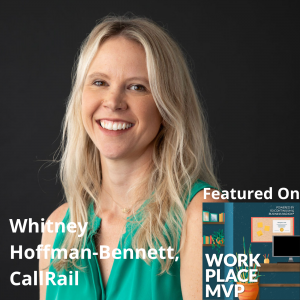
Whitney Hoffman-Bennett, PHR, SHRM-CP, Vice President of Talent & Culture, CallRail

Whitney Hoffman-Bennett, PHR, SHRM-CP, Vice President of Talent & Culture, CallRail

Whitney Hoffman-Bennett is the VP of Talent & Culture at CallRail. With a decade of experience in human resources and a specialty in rapidly growing SaaS start-ups, Whitney expertly balances the needs of employees with the needs of the business.

She is passionate about fostering a culture where people are excited about the work they do and the team they’re working with. Prior to CallRail, she gained experience at Ingenious Med, Vocalocity, and LPL Financial.

Whitney earned a Bachelor of Arts in marketing at Kennesaw State University.

LinkedIn

About Workplace MVP

Every day, around the world, organizations of all sizes face disruptive events and situations. Within those workplaces are everyday heroes in human resources, risk management, security, business continuity, and the C-suite. They don’t call themselves heroes though. On the contrary, they simply show up every day, laboring for the well-being of employees in their care, readying the workplace for and planning responses to disruption. This show, Workplace MVP, confers on these heroes the designation they deserve, Workplace MVP (Most Valuable Professionals), and gives them the forum to tell their story. As you hear their experiences, you will learn first-hand, real-life approaches to readying the workplace, responses to crisis situations, and overcoming challenges of disruption. Visit our show archive here.

Workplace MVP Host Jamie Gassmann

Jamie Gassmann, Host, “Workplace MVP”

In addition to serving as the host to the Workplace MVP podcast, Jamie Gassmann is the Director of Marketing at R3 Continuum (R3c). Collectively, she has more than fourteen years of marketing experience. Across her tenure, she has experience working in and with various industries including banking, real estate, retail, crisis management, insurance, business continuity, and more. She holds a Bachelor of Science Degree in Mass Communications with special interest in Advertising and Public Relations and a Master of Business Administration from Paseka School of Business, Minnesota State University.
R3 Continuum

R3 Continuum is a global leader in workplace behavioral health and security solutions. R3c helps ensure the psychological and physical safety of organizations and their people in today’s ever-changing and often unpredictable world. Through their continuum of tailored solutions, including evaluations, crisis response, executive optimization, protective services, and more, they help organizations maintain and cultivate a workplace of wellbeing so that their people can thrive. Learn more about R3c at www.r3c.com.

Company website | LinkedIn | Facebook | Twitter

TRANSCRIPT

Intro: [00:00:04] Broadcasting from the Business RadioX studios, it’s time for Workplace MVP. Workplace MVP is brought to you by our R3 Continuum, a global leader in workplace behavioral health and security solutions. Now, here’s your host, Jamie Gassmann.

Jamie Gassmann: [00:00:26] Hi, everyone. Your host, Jamie Gassmann here. And welcome to this episode of Workplace MVP. The option of unlimited paid time off or PTO is a forward-thinking benefit that some industries and employers have begun adopting. According to Metlife’s 2019 US Employee Benefit Trends Study that interviewed 2675 full-time employees, 72% expressed interest in receiving unlimited paid time off. Some organizational leadership feel this approach is more of a marketing ploy for recruitment efforts; while others, including our guest today, see this as a way to ensure employees are taking their much needed mental wellness breaks.

When thinking of the option of incorporating an unlimited PTO program, I think it naturally presents concerns of overuse of time off and under use of time off. So, kind of a mixed variety. So, what are the benefits to incorporating this type of PTO benefit into your organization? And what are the watchouts and key learnings to be aware of? Well, joining us today to share her experience with us and navigating an unlimited PTO benefit, among other forward-thinking benefits, is Workplace MVP and Vice President of Talent and Culture of CallRail, Whitney Hoffman-Bennett. Welcome to the show, Whitney.

Whitney Hoffman-Bennett: [00:01:47] Thanks, Jamie. Happy to be here.

Jamie Gassmann: [00:01:49] So, let’s start off with you sharing with me and our audience your career journey to date and becoming the Vice President of Talent and Culture at CallRail.

Whitney Hoffman-Bennett: [00:02:00] So, it’s funny. I actually started my career in sales, which is important later. Quickly learned that sales could not do it. Like some people think HR is stressful. I feel like I can handle the people stress all day long, but the stress of restarting quota every month, not for me. So, I left where I was doing sales. It was actually a startup. So, I did learn a lot about startups there and moved to another country — not another country, another company where I actually was in an admin position, saw a need for HR. And the great thing about startups is they said, “Okay, let’s do that and I’m going to support you to do it.”

And I got my PHR and my other certifications, grew to be director there, and stayed there for about eight years. And then, someone at my sales job actually reached out to me and said, “Hey, I’m at this new company. They need HR. Are you interested?” So, full circle moment. And I joined CallRail in 2018 as the Director of Talent and Culture, their first director of talent and culture. And within a year, had been promoted to Vice President and I have been here for four years now.

Jamie Gassmann: [00:03:12] Wonderful. It’s interesting. A lot of the HR professionals that I speak with on this show, and in other conferences, and other locations that I get the opportunity to connect, they have similar stories of falling kind of into the work. So, it’s great. It’s interesting to hear that you kind of have a similar story and, you know, finding that passion, and being able to support the people within your organization. It’s very cool. So, tell me a little bit about what CallRail does, just to kind of give some background to our audience on what the organization serves.

Whitney Hoffman-Bennett: [00:03:47] Yeah. So, we are a marketing attribution software that makes it easy for businesses of all sizes to turn more leads into better customers. We serve more than 200,000 businesses, and we integrate with marketing and sales software. And our marketing, analytics and business communication solutions delivers those real-time insights that help our customers market with confidence.

Jamie Gassmann: [00:04:13] Great. And I know, in looking at the unlimited PTO program and us talking before, this was a program that was already in place when you started at CallRail. So, talk to me about some of the concerns that you identified early on with the program when you joined CallRail, you know, about what they were experiencing, that you were like, “Ooh, we need to correct that.” So, tell me a little bit more about that.

Whitney Hoffman-Bennett: [00:04:36] It’s funny because the place I was previous to CallRail, our CFO kept saying, “Maybe we should do unlimited PTO.” And I was like, “That doesn’t work. We can’t do that. People will take advantage.” And then, I got to CallRail, and I was like, “Whoa! Unlimited PTO. Let’s see what this is about,” because it was already in place. And what’s funny is our CEO actually posted an internal blog, and it was a tweet that said “Name a scam.” And the response was unlimited PTO. And so, he posted that to say, “Let’s be real. Let’s talk about this. What’s working? What’s not working?” And we gave employees the option to give us feedback, what were they seeing, what did they like, what did they not like? And then from that, he and I got together and kind of made changes from the policy based on the feedback from our employees.

Jamie Gassmann: [00:05:28] Yeah, because you had kind of a mix going on. If I recall from our conversation that some were taking it, some were not taking it, some are abusing it. I mean, you just kind of had kind of a mix all over the place. Is that pretty accurate?

Whitney Hoffman-Bennett: [00:05:42] It was definitely a mix. It was difficult for our customer-facing teams to figure out when could they actually go on PTO because they had to hit their numbers. If they were on sales, if they were in support, they had to be able to serve our customers. And then, people really didn’t know what does this mean? Like, how much can I take off? And what if I’m sick? Or What if I have a baby? Like, there was so many things that were muddying the waters that we really need to segment things in order for it to be successful.

Jamie Gassmann: [00:06:09] Yeah. So, when looking at that surveying and kind of pulling the company to hear from your employees, what were some of like — you kinda mentioned guardrails. What did they share with you that they — from that polling, what did you discover?

Whitney Hoffman-Bennett: [00:06:24] So, a lot of employees were saying that they worked really hard, and it’s not that they felt like they couldn’t take time off, but they just didn’t. They didn’t think about it. Or they’d make a couple of long weekends, but that’s all they take off. And so, we had said, “Would it be helpful if we required some sort of minimum?” And they were like, “Yes, that would be very helpful. If it was out there as a statement, it would feel like it was something we had to do,” so to speak. We wanted to make very sure to separate mental wellness from taking PTO. If you’re sick physically or mentally, don’t worry about your PTO. Within that, let’s focus on sick time, other time, keep that separate. So, that was something that was really important. And then, I think sharing the average that people were taking. So, you knew. Like just because this is an average doesn’t mean this is how much you have to take, but it gives you a good guide of this is what other people around you are doing, so you could try to be equitable in that.

Jamie Gassmann: [00:07:22] Yeah, because I would imagine there’s probably some employees that feel bad taking PTO. I know, sometimes, I’ve seen that in my management career where the employee’s like, “I’m really sorry, but I need to request some time off,” and it’s like, “Well, that’s your benefit. I want you to take time off, so never feel sorry about it.” So, I think that’s — I’m sure the truth — that’s probably the same within your organization, those employees going, “Oh, well, that’s good. The average is that. So, I won’t be going any more than what other people are doing.”

Whitney Hoffman-Bennett: [00:07:49] Yeah. And I think even like when I interviewed for my role at CallRail, I interviewed with the CFO, and I was like, “What’s your paternity/maternity policy? Like, what do you do for family leave?” And he actually he was like, “I don’t know, but we have unlimited PTO.” And in my head I was like, “That’s a nightmare. Like, you can’t — then, I’ll just never come back.” So, you have to clarify what that looks like. And that was another thing we said too. We’re like, “It’s not actually unlimited. If you are gone for six months, you’re probably not going to have a job anymore.” Like you can’t just leave for an indeterminate amount of time.

Jamie Gassmann: [00:08:25] Right. So, looking at, you know, the feedback from the employees, kind of some of the key learnings, you know, what kind of edits did you make to the program that you haven’t already shared that helped it to be improved? But then also, how did you communicate that to the employees? And then, ultimately, how did that enhance their utilization of PTO and kind of changes that they made?

Whitney Hoffman-Bennett: [00:08:48] So, we did say call out very plainly, sick time is not vacation. And this was in 2018-2019. So, we’re like, “If you’re sick, stay at home.” Well, everyone stays home. But if you’re sick, stay at home. If you’re really sick, stay at home and don’t work. Like there’s no prize for being hard core and taking the rest of us down with you. Do not do that. And we do call out in our employee handbook now, if you are sick, if you are grieving, if there are things going on, you can be gone for two consecutive weeks before we need to talk about other types of leave. And that’s just for like one instance, two weeks. You can also, if you need a long weekend because you have a cold, that’s separate from those two weeks. So calling that out.

We did call that everyone should take, at least, one continuous week of vacation a year. Do this. You can’t recharge in a long weekend. Take a full week off a year. Another thing we said that I think a lot of people don’t think about when they are developing unlimited PTO is that three-day weekends can be very low impact if you do your part. Don’t disappear and leave your team hanging, but a well-executed three day weekend should never take a project off schedule. Nobody should work 10 to 12-hour days consistently. But if you want a free three-day weekend or personal day, give it a shot for four days, go hard Monday through Thursday, and then go take your long weekend. And you can do that multiple times without it being super disruptive.

Another thing was don’t expect people to check the calendar. We, before I came, did not have HRIS. So, along with this, I implemented an HRIS, and we told people, “You got to start putting it in.” Like it’s approved, but you got to put it in. I don’t know. And honestly, with everything, what we say is just be cool, so we don’t have to make a ton of rules and policy this to death. Like everyone here is an adult. We hire you to be an adult, get your work done, take your vacations, live your life.

And then, I think the final thing is just one of our cultural statements is turn it off. And so, we made it very clear, if you’re on vacation, disconnect, stop checking slack, set an out of office and don’t check your email. If our world is truly on fire, someone will know how to get in touch with you. Beyond that, go have fun.

Jamie Gassmann: [00:11:19] Yeah, that is so important. I see a lot of people, you know, “Oh, I’m going to be on vacation,” and the next thing you know, you’ve got emails rolling in from them. You know, you’re on PTO, be on PTO. It’s kind of one of my rules. I always let my staff know I’m accessible if you need me, but I’m not going to be actively checking, so.

Whitney Hoffman-Bennett: [00:11:37] And I think that’s important as a leader to model that, so other people do it. My out-of-office typically says, “I am practicing our culture value of turn it off. I’m spending an uninterrupted time with my family. Reach out to these people. I will get back to you next week.”

Jamie Gassmann: [00:11:54] Yeah, I think that’s so important, especially now. I mean, I think, you know, you kind of mentioned COVID where, you know, people aren’t coming into work sick. That was something I actually mentioned to a coworker. I’m like, “Well, gone are the days of coming in hacking up a storm and thinking that you’re going to get through your week like that.”

Whitney Hoffman-Bennett: [00:12:12] Can you imagine?

Jamie Gassmann: [00:12:12] It’s not happening anymore.

Whitney Hoffman-Bennett: [00:12:14] We used to do that all the time. And it’s okay

Jamie Gassmann: [00:12:16] Oh my, gosh, yes. You’re at work with a fever. Just, you know, making it work. Yeah. Doesn’t happen anymore. Interesting. So, you know, in looking at this, I mean, I love that, you know, you’ve created kind of this environment where you’re allowing them to be adults, and be respectful with each other, and mindful of each other from a culture perspective, but how do you manage misuse of PTO or the challenge of balancing between the employees? Or do you not have concerns of that where they’re respecting kind of that boundary, if you will? Talk to me about that.

Whitney Hoffman-Bennett: [00:12:51] Yeah. I don’t have a ton of concerns about it. I know I said it before, and it sounded like I was joking, but we really do with most of our policies or things. It’s like, “Can you just be cool? Just be cool.” I will say we did call out, you know, plan early and often. If you’re going to be out for a week, please plan it a month or two in advance. If you’re going to be out for two weeks or more, your team and manager should know this several months in advance. So, it’s more like letting people know, so it wasn’t last minute, “Oh, I forgot. I’m going to be gone for two weeks.”

Be respectful. That’s another one of our value statements is respect everyone. So, in that vein, make sure people are prepared. I will say for our customer-facing teams, we did have to do a little bit more for them, so there would be enough people to manage the incoming calls from our customers. But beyond that, if managers come to me and say, “Hey, it feels like this person’s taking too much PTO,” I remind them of what the average is that we’ve said that people take. And if it is beyond that, remind them, say, “Hey, the average is this. You’re sitting a little bit more above this. Do you know what it’s looking like for the rest of the year and your vacation?” And just have a conversation with them about it.

Jamie Gassmann: [00:14:03] Just to make sure there isn’t too much misuse, that somebody isn’t pulling their weight on a project or within an area. So, looking at it from the sick time, I know you kind of mentioned, and I remember, you know, I’ve worked in corporate America long enough where there were the times of, you know, here’s how many sick days you have a year and here’s how many PTO days you have. You know, now, a lot of organizations have gone to combining that. Thinking of sick time, you know, how are you balancing that? Because I know you mentioned it’s not part of PTO. Do you track it or is it just something that leaders have to keep an eye on? You know, what are — how do you manage that different than the PTO part?

Whitney Hoffman-Bennett: [00:14:45] So, that’s an interesting one. I think most employees know the two weeks. And if they know it’s going to go beyond that, they reach out to us and say, “Hey, let’s talk about leave.” That’s why I think it’s also important to have other benefits like short-term disability, or long-term disability, or family leaves. So, if people have those bigger life things they need to take care of, they have other options once they’ve exhausted that two continuous weeks. And nine times out of ten, we can work with people, and we’re like, “Okay, like your two weeks is up. But realistically right now, what can you do? Is it part-time? Is it just one day a week? Is it maybe not on calls, but you’re able to get other work done?” And then, we’re able to figure out something.

Jamie Gassmann: [00:15:28] So, for the employees, just curiosity, in terms of this unlimited PTO, have they made commentary around like enjoying the fact that they don’t really have to track it, like, as tight and closely as some other organizations might have to if they had like, you know, you have a bank of hours and this is what you get to use? You know, what kind of feedback do you get on that or what does the overall kind of, you know, I don’t know if it’s structure, like, you know, structure, but how do they feel about it?

Whitney Hoffman-Bennett: [00:16:00] I think there’s two camps. It’s people that come from other tech companies and are like, “Well, of course, you have unlimited PTO.” Like, that’s table stakes for them because they come from other tech companies. And then, we have people who have never had unlimited PTO and are used to kind of having to negotiate PTO as part of their offer. And we’re like, “No, no, you don’t have to do that. Like, we’re good.” I think the fact that we have the guidelines help people a lot because it lays out expectations very clearly. Know when they can take it, when they can’t take it. And then I think for the customer-facing teams, we have given them the tools that they need for them to really take time off. And those are the teams that question it the most, like customer support and sales are like, “No, but really how much time off can I take?” And we have levers in place, so they can enjoy the same thing that everyone else can.

Jamie Gassmann: [00:16:52] Yeah, absolutely. Because, you know, having coverage for those customers is so important.

Whitney Hoffman-Bennett: [00:16:56] Yes.

Jamie Gassmann: [00:16:56] So, looking at mental wellness overall with employees, and obviously we all see taking time off and PTO as kind of a way for self-care, and you mentioned requiring that full week, which I think is such an interesting — I just love that idea because you’re right when you say a long weekend doesn’t really give you that time to check out fully. So, I love that culture statement that you’ve coined, you know, the turn-it-off time. So, how do you see this helping the overall health of your organization? You know, are you seeing a good impact on that? You know, what does retention levels look like? You know, what are kind of some of the measurements you’re seeing in terms of this being helpful overall?

Whitney Hoffman-Bennett: [00:17:39] I will say, as far as like the sick time and the mental wellness, we are a company that is very open and transparent about mental wellness, mental health, how important it is. It’s Mental Health Awareness Month now, May is, and we have four weeks of different things every week reminding people to take care of themselves. And we’re focusing on it holistically. Last week was financial week or financial health. This week is burnout and how to deal with stress. Like there’s different things every-

So, in addition to PTO, we’re giving people the tools that they need internally. And I think a combination of all that really helps with engagement and also retention, because all of that can be done in a hybrid environment. And so, even if you’re not in the office, you’re still getting the benefits of everything that someone in the office is getting with the different programming. And I think it’s a one time — one thing to have unlimited PTO, but then it’s another thing for leaders to model it. And for us as a company to talk about PTO and for us as a company to talk about mental wellness. So, I don’t necessarily know that it’s successful if you just throw it up and say, “Yeah, it’s unlimited. Do what you want.” Those are the places that are going to have to policy something to death.

Jamie Gassmann: [00:18:55] Yeah. So, it’s a component of kind of an overall structured approach.

Whitney Hoffman-Bennett: [00:19:01] Yeah.

Jamie Gassmann: [00:19:01] Which is great. And I love when you mentioned the leaders having to model it. I mean, that’s so true in so many different areas of business and kind of self-care, and as vulnerability and, you know, open communication that’s — I mean the leadership has to be such a great demonstrator of that, where employees then can model and follow that behavior. Very cool.

So, we’re going to take a moment and hear from our show sponsors. So, Workplace MVP is sponsored by R3 Continuum. R3 Continuum is a global leader in empowering leaders to effectively support and help their employees thrive during disruptive times through their tailored workplace behavioral health support, disruption response and recovery, and violence mitigation solutions. They can help you create a work environment where your employees can feel psychologically and physically safe. To learn more, visit r3c.com today.

So, shifting gears a little bit. Another area that you as a leader are passionate about and another forward-thinking benefit that you’ve put into motion is family leave benefits for all. Can you tell our listeners about your program, and how you’ve implemented that, and what that all entails.

Whitney Hoffman-Bennett: [00:20:15] For sure. So, this is something that, personally, to me, means so much. I have three young children, and people getting time to bond with children, regardless of how they come into your family, is so important. And I remember when I worked at my previous job, I was at a meeting with people internally, people externally, and they were like, Well, it’s fine for women to have time off, but men don’t need that.” Like it’s, “Men don’t need that.” And it was kind of hand-waving. They’re fine. And I was like, “I had a C-section. I couldn’t, like, function well. I couldn’t pick up my baby on my own. Like I needed my husband there and it was important for us.” And so, I am seeing that companies are starting to change. I think society is a little bit starting to realize that it’s just not all on women.

And something that’s really important to CallRail is being an inclusive environment and making sure that our benefits mirror that. So, we give you 12 weeks paid of family leave regardless of how a child comes in. So, if you adopt, if you foster, if you give birth. And this is for people that identify as men and women. So, everyone gets it. And then, we also let you have — you come back, you transition back. So, for those first four weeks, you’re paid full time, but you work part time. So, you only work three days a week. You have two days where you’re not working, so you can figure out what new normal looks like with this child in your life and you going back to work, and you can really ease in, so you don’t feel that pressure to immediately be a fully functioning human again.

Jamie Gassmann: [00:21:51] Yeah, that’s so amazing. I have two children myself, and I still remember home on leave with the second one, you know, and having both of them there, and my husband leaving to go to work, and being like, “Oh my, gosh. So overwhelming.”

Whitney Hoffman-Bennett: [00:22:05] It’s impossible. I felt that way leaving the hospital. Like, “Are you-”

Jamie Gassmann: [00:22:05] Yeah.

Whitney Hoffman-Bennett: [00:22:05] I came in here with no children, and you’re just giving me a baby, and saying, “Goodbye.” Like, what?

Jamie Gassmann: [00:22:14] Yeah. Actually, this is funny because I’m all about transparency. I actually asked the nurse if I had to now change the diapers in the hospital because I was so exhausted. And she looked at me like I was crazy going, “Yes, you do.” That was like, “Oh! Oh my God, I’m so tired.”

Whitney Hoffman-Bennett: [00:22:30] But how do I feed this-

Jamie Gassmann: [00:22:32] Yes.

Whitney Hoffman-Bennett: [00:22:32] And when do I sleep? And what do I do? No one tells you.

Jamie Gassmann: [00:22:35] No, no. There isn’t like a handbook, as my mom always tells me, so. But I love that the benefits for the husband or the dad as well, because I think that that allows them to be able to have that presence within that, you know, early time of the infant. And I think that’s a really important shift that you’re starting to see in some work environments.

So, looking at your program, I know you mentioned the easing back into work. You know, looking at back at it when coming back from work, I know I just came back full time, and just that transition, to your point, you’re so tired and still trying to navigate all of that, how does that help your employees as they transition back? What have you seen, you know, by having this type of kind of an easing back in? You know, kind of talk a little bit about some of the experience you’ve seen with that.

Whitney Hoffman-Bennett: [00:23:29] Yeah, there was probably a month or two ago, I ran into a colleague who had just come back, and she was on her transition month. And she teared up and was like, “It’s just, I’ve done this before and not have the transition. And it’s so impactful because I don’t necessarily have to send my baby to daycare. I can figure out something else for those three days.” So, she has another full month at home. “And I can feel like I’m doing something for myself,” because she is someone who really likes her job. So, she’s like, “I can feel like I’m doing something for myself, but then I can still go home and spend those two more full days.”

And I think even for me personally, because I have had one baby here at CallRail, and the transition back, it was so overwhelming to come back in and try to catch up. You’re so much more tired than you realize. So, just having those two additional days to not have to use your brain a ton, and be able to just focus on you and your baby and continue to bond is super meaningful. I think, of course we could give more time off and America, as a society, should give more time off, but I would almost rather have that transition because either way, you’re going right back into the fire.

Jamie Gassmann: [00:24:39] Yeah, absolutely. No, I can see that being just, you know, so beneficial, and just looking back in the past on when I transitioned back in years ago. So, looking at other benefits, I mean, you’re really a forward-thinking organization and adopting some of these benefits that other organizations have maybe looked at but haven’t actually moved forward on, there’s another one that you’re looking at implementing or kind of observing you shared that I think was really interesting. You kind of mentioned in our conversation, you know, exploring, you know, doing a sabbatical type program within your organization. What might that look like or, you know, what have you seen other organizations do that present some of the benefits to implementing that within your work environment?

Whitney Hoffman-Bennett: [00:25:25] Yeah, this is something that I would love to implement. I feel like I have to preface this if any of our employees are listening, nothing has been approved yet. This is just in my head, but I do see more and more companies doing a sabbatical program. And if you think about unlimited PTO, sure, it’s unlimited, but you can’t necessarily walk away from your job for six weeks in this unlimited PTO without a ton of planning. And then, also, I’m sure a lot of people would be like, “Well, you have, you know, 12 weeks off when you get a baby. Isn’t that a vacation?” No, no, it is not. No, it is not. But when is any other time that you can take a substantial amount of time off? It doesn’t exist.

And so, I think giving people six weeks off, giving them some kind of stipend to do something during that time, and then being able to really just turn it off. I would also love to marry this, and now I’m getting really big here, but if we could do some kind of program where before the person leaves on sabbatical, there’s someone else shadowing them, and then they take over pieces of their job while they’re gone, and then they can learn a new skill. They can see if they like it or don’t like it. So, marrying it with career growth, and then the other person gets to go away, and their stuff is handled, like that is my ideal state.

Jamie Gassmann: [00:26:49] Yeah.

Whitney Hoffman-Bennett: [00:26:50] Nothing has been approved. Can I say that?

Jamie Gassmann: [00:26:51] No, it’s kind of just – it’s forward thinking and just kind of looking at possibilities. I mean, there’s other –like educational industry is known for the sabbatical programs, right? And allowing, you know, a teacher to go and learn or study abroad a different trade or different, you know, something around the education that they’re looking, they’re inspired by, you know. And it allows somebody to kind of grow as an individual. And I imagine it could benefit the organization depending on what it is that they do.

And I love that mirroring it with career growth opportunity, where somebody can step into the shoes of somebody else for a moment to kind of, you know, expand their horizons. It’s very interesting. And again, forward thinking, but very kind of visionary, right?

Whitney Hoffman-Bennett: [00:27:39] Yes.

Jamie Gassmann: [00:27:39] I just think it was fun to talk about because it just shows that, you know, you’ve got the unlimited PTO, you’ve implemented this great family leave benefit for all, regardless of how the child came into their life. So, it just shows that you’re constantly thinking of ways that you can kind of expand that horizon of benefits for employees, which I think is wonderful. So, looking at like a leader, so let’s just say that there’s a leader looking to incorporate an unlimited PTO program into their organization, what advice would you give to them for where they should start, how do they do that? You know, what are some of your thoughts around where would you guide them to doing that?

Whitney Hoffman-Bennett: [00:28:19] It’s funny because I shared at the top, I was at a company before that wanted to do unlimited PTO and I said no. And the reason I said no was because of the culture. I didn’t think it would work. And not that the culture was bad. It just wasn’t a culture that I think could sustain unlimited PTO. I don’t think there was that foundation of trust with a lot of employees. So, that’s the most paramount is what does the culture look like, and do you think your culture can handle this? You can still have a very generous PTO policy without making it unlimited, and everyone can be happy. So, culture, I think, is the most important thing.

And then, thinkin of — thinking future state. Okay, maybe we’re 50 employees now. When we’re 200 employees, what are some of the roadblocks that might come up? And what are the guardrails we need to put in place now? Because it’s much easier to build it as you intend to be instead of piecemealing it until you get there.

Jamie Gassmann: [00:29:17] Yeah, very good. I mean, it brought me to a question of like, you know, is it a right fit for everyone? And you kind of answered that by saying you really have to look at the culture of the organization, and is it going to be a right fit? That’s kind of your first step. And then, looking at, like, implementing the family leave program that you’ve put in place, how would you advise somebody looking to explore that? What should they do first?

Whitney Hoffman-Bennett: [00:29:43] Yeah, and this is honestly something I could talk about all day long because I think we should have much more leave than we do. For employers that are concerned, like, “Oh my God, I can’t lose them for 12 weeks. What am I going to do?”, they are going to be more loyal to you and want to stay at your organization if you take care of them during that time in their life. So, I think that’s the first, like, mental thing to get over because people are like, “Oh my God, they can’t leave.” Well, what if they leave forever because you don’t take care of them? So, I think that’s important.

And then, also, making sure it is equitable. Not everybody’s going to take it. And that’s just a function of where we are, but it should be available for everyone. And I think that is really important because a lot of companies talk about equity and diversity, but when you look through their policies, they’re not equitable to the full organization. And so, making sure that again, if it’s within your culture, it fits with what you’re saying. And also, like, really leave people alone when they’re on leave. Don’t bother them.

Jamie Gassmann: [00:30:51] Yeah, don’t call them to ask them a question about a project that they’re going to be doing when they come back?

Whitney Hoffman-Bennett: [00:30:56] No.

Jamie Gassmann: [00:30:57] No, no. That’s really interesting because you bring up a good point. You know, I’ve heard that in a couple of my other episodes, you know, and one that we did a talking about second chance hiring. And you know, sometimes, you know, putting some of these initiatives in place. Yeah, there might be that concern of, “Well, gosh, if they use the whole time, then what?” But to your point of that, loyalty is so important. I mean, you know, not every employer offers this type of support. So, you, as an employer, being kind of forward thinking, and offering it, and giving them that flexibility, they’re not going to forget that. And you’re right, they’ll come back a lot more appreciative, especially during that trying time. Sure.

Whitney Hoffman-Bennett: [00:31:36] Yeah. And I think it’s important when you look at hiring as well, in general, I don’t think we should be so judgmental of resume gaps. But if you get parents and there’s a resume gap, maybe we don’t be so judgmental about because let’s think about what the policies were or what their options were when they had that baby. So, I think it’s, like, just a big picture thing that people need to be more cognizant of.

Jamie Gassmann: [00:31:58] Yeah, I mean, you might see those resume gaps as people come back into the workplace after the COVID resignations we’ve seen where they had no choice but to stay home-

Whitney Hoffman-Bennett: [00:32:09] They had no choice

Jamie Gassmann: [00:32:09] … to take care of the kiddos and help them with their schooling. So, yeah, that’s an interesting point because I’m sure we’ll start to see some of that transition in a few years where there really is a gap on their resume, but it comes back down to that. So interesting. Any other advice you would want to leave our listeners with as it relates to these programs or things that they should be looking forward to, you know, for better up-and-coming kind of new approaches that, you know, why they should explore them if they haven’t already?

Whitney Hoffman-Bennett: [00:32:45] I think if you’re hesitant about any of these policies, it’s more like look internally and determine the why, and then maybe solve for that before you put the policies in place. But it is — I mean, it’s 2022. We’re coming out of, hopefully, a pandemic. The way we work is changing, and companies have to meet employees where they are, or they won’t be able to retain people. So, I think that’s just really important. You hired adults; treat them like. adults.

Jamie Gassmann: [00:33:15] Yeah. No, great advice. So great conversation. So, if our listeners wanted to get a hold of you to get more information, or ask questions, or kind of learn from you a little bit more around how you’ve been able to manage these programs, how can they do that?

Whitney Hoffman-Bennett: [00:33:33] I am on LinkedIn at Whitney Bennett PHR. And so, people can reach out there. Yeah. And I’m happy to talk about any of these things. Obviously, I have a lot of opinions about them.

Jamie Gassmann: [00:33:44] Lots of passion, which is great. No, that’s — it’s you know — and they’re new for some organizations. So, I think, you know, it’s learning and kind of exploring them. So, I love that you shared that with us. So, thank you so much for being on our show, and for letting us celebrate you, and sharing, you know, your great advice and kind of key learnings with our listeners.

Whitney Hoffman-Bennett: [00:34:04] Thank you so much. It was fun.

Jamie Gassmann: [00:34:06] Yeah. So, we also want to thank our show sponsor, R3 Continuum, for supporting the Workplace MVP podcast. And to our listeners, thank you for tuning in. If you’ve not already done so, make sure to subscribe, so you get our most recent episodes and other resources. You can also follow our show on LinkedIn, Facebook and Twitter at Workplace MVP. If you are a Workplace MVP or you know someone who is, we want to know. Email us at info@workplace-mvp.com. Thank you so much for joining us and have a great rest of your day.


Tagged With: CallRail, family leave, hybrid work, Jamie Gassmann, R3 Continuum, remote work, sick leave, unlimited PTO, vacation, Whitney Hoffman-Bennett, Workplace MVP

The R3 Continuum Playbook: Employee Wellbeing in 2021 and What to Expect in 2022

January 6, 2022 by John Ray

Employee wellbeing
Minneapolis St. Paul Studio
The R3 Continuum Playbook: Employee Wellbeing in 2021 and What to Expect in 2022
Loading
00:00 /
RSS Feed
Share
Link
Embed

Download file

Employee wellbeing

The R3 Continuum Playbook: Employee Wellbeing in 2021 and What to Expect in 2022

In this excerpt from a webinar conducted in December 2021, Dr. George Vergolias, Medical Director at R3 Continuum, covered issues and pain points of employee wellbeing in 2021 and looked ahead at workplace trends to expect in 2022. He discussed the disruptive factor of hybrid work and how it will evolve, the challenges of staffing and labor, the growing disconnect between leadership and employees, the toll of virtual work and how it may impact creativity, and much more. The R3 Continuum Playbook is presented by R3 Continuum and is produced by the Minneapolis-St.Paul Studio of Business RadioX®. R3 Continuum is the underwriter of Workplace MVP, the show which celebrates heroes in the workplace.

Other R3 Continuum webinars can be found here.

TRANSCRIPT

Intro: [00:00:00] Broadcasting from the Business RadioX studios, here is your R3 Continuum Playbook. Brought to you by Workplace MVP sponsor, R3 Continuum, a global leader in workplace behavioral health, crisis and security solutions.

Shane McNally: [00:00:14] Hi, there. My name is Shane McNally, Marketing Specialist for R3 Continuum. As 2022 begins, it’s important to look ahead and recognize the trends that may be seen throughout the year regarding employee wellbeing. This information is provided by Dr. George Vergolias, Medical Director at R3 Continuum. Reflecting on 2021, there has been a shift between different priorities, work environments, mental health and overall wellbeing importance and more. Dr. George Vergolias is going to dive in and offer eight things that he foresees will be trending in 2022. This information is gathered from various reports and trends we’ve seen in years past.

Shane McNally: [00:00:50] Dr. George Vergolias oversees and leads R3C’s clinical risk, threat of violence and workplace violence programs. He’s directly assessed or manage over 1000 cases related to threat of violence or self harm, sexual assault, stalking and communicated threats. He brings over 20 years of experience as a forensic psychologist and certified threat manager to bear in an effort to help leaders, organizations, employees and communities heal, optimize and ultimately thrive during and after disruption. Thank you for being with us, Dr. Vergolias. So, let’s start off today’s webinar by asking a question, what drives human thriving?

Dr. George Vergolias: [00:01:29] Okay. Thank you, Shane, for that warm introduction. And what’s interesting is, so you heard a little bit about my bio, forensic psychologist, I’ve done a ton of threat work, a ton of hostility management work and so on. But a big part of that is also understanding resilience and understanding the flip side of wellbeing because wellbeing, when you are functioning well emotionally, intellectually, when you’re living your best life, you’re really functioning in a way and at a level that is diametrically opposed to being violent.

Dr. George Vergolias: [00:02:03] So, I’ve had to be forced to become an expert in understanding resilience and wellbeing, and what is it that allows people to pull through hard times; whereas, other people decide to go on a violent trajectory? So, my larger role is Medical Director for R3. I oversee all of our services. And a big part of that is understanding the wellbeing and resilience aspect.

Dr. George Vergolias: [00:02:25] And so, back to Shane’s question, what drives human thriving? And what I want to do is I want to talk about one of my favorite stories of all time. And it’s a true story about Margaret Mead. Margaret Mead, arguably one of the best most famous anthropologists, at least in the United States. She was giving a lecture in Oxford 70 some years ago, and a student in the lecture hall had raised – I’m assuming it’s a he but these are her hand. I believe it was a young man, and he asked Margaret Mead, when does she think civilization began? What were the first signs of civilization?

Dr. George Vergolias: [00:03:01] And the students and the other faculty that were there, they expected an answer around something like the first time we carbon dated finding pottery, or weapons, or an arrowhead or some kind of structure that was built, or a vase or some kind of structure that carried water, whatever it would be. Cooking tools, eating tools, whatever it may be. And that’s not what she said at all. She said, “We know civilization began around the time that we were able to backdate, carbon back date, a broken femur bone, a human leg bone that had healed.” And a lot of people in the auditorium looked puzzled.

Dr. George Vergolias: [00:03:41] And she went on to explain that in the animal kingdom, when you break your leg, you’re done. It’s game over. There’s no other animal that sits and stays with you. And if you have a broken leg, it doesn’t naturally heal on itself by the time that you either starve or you die of dehydration or some other predator takes you. But once they found that femur bone that had healed, they knew that somebody, some other creature, arguably another human, had stayed there and protected that person, and brought them sustenance, and kind of nursed them through the healing process till they at least can get up and get moving.

Dr. George Vergolias: [00:04:17] So, the point is that we are best, we are most human and we are at our best when we are assisting and helping one another. And that’s what we’re going to talk about in terms of trends through 2021 and into 2022. But I want that story to anchor us.

Dr. George Vergolias: [00:04:33] So, let’s first look backwards. It’s always a good time to kind of take stock and look back at the past year. What impacted employee wellbeing the most in 2021? And what we saw at the end of 2020, going into 2021, is we saw some trends that did indeed pan out. And one of them was from the Fortune Deloitte 2021 CEO Survey. This was done at the back end of 2020, looking forward into 2021. And what they found is 98% of CEOs reported that mental health was a priority for them going into this current year, 2021.

Dr. George Vergolias: [00:05:10] They also find that the pandemic had significantly accelerated various types of digital transformation, most notably what we’re doing now. Quite often, even though we did webinars through telepresence before, that has markedly accelerated through the pandemic and over this past year as well. And then, the pandemic was fostering information around or formation of new partnerships, new alliances and new creative ways of doing business and working together over remote distances.

Dr. George Vergolias: [00:05:43] And what we saw in this past year is many companies, not all, but many companies made good on those promises, and many CEOs made good on those promises, and we saw an acceleration of that going through the year. And that’s been largely a good thing. There have been a few things that have created some pain points, and I’m going to get at that in just a second.

Dr. George Vergolias: [00:06:06] We saw a few other things. One is that COVID 19, COVID, the epidemic or pandemic, rather, it created tensions, and it tested the limits of the worker-employer relationship. And early on, we saw certain pain points around concerns of safety. Later on, we saw pain points around mask mandates. And then, we saw and are still seeing pain points around vaccination requirements, and we’re seeing different businesses handle that differently. But what that is doing is it really is testing those boundaries of where does an employer’s reach and where does their due diligence then begin in terms of creating safe environments for their workforce?

Dr. George Vergolias: [00:06:54] And from a legal perspective – and again, full disclaimer, I’m not a lawyer, I work a lot in conjunction with the legal world as a forensic psychologist – what we’re seeing is there really isn’t still any court or legal precedent around handling COVID risk as an employer, as well as COVID restrictions. So, all of this is still at play, and I think we’re all still trying to figure out what is that balance. And what makes it even more confusing is that balance is going to be different for different industries and different employers. And in some cases, across the same employer, it might be different at different locations. So, that’s one thing.

Dr. George Vergolias: [00:07:34] The second thing we saw is the adoption of what I’m calling telepresence everything. So, another kind of disclaimer here, for 19 years, I’ve had a private practice that is focused on doing telemedicine for emergency departments in North Carolina. Just the practice I’ve had on the side, it keeps me vibrant, keeps me accessible and it keeps me sharp clinically. I’ve spent the last 10 years trying to get hospitals, and clinicians and outpatient clinics to adopt telepresence and telehealth. COVID changed all that almost overnight in terms of the forced and accelerated adoption of going to telehealth, and both providers and recipients – patients – being those on the receiving side, being open to it and being flexible with it, including boards, changing licensure requirements, payers and insurance, changing their payment requirements to allow this.

Dr. George Vergolias: [00:08:30] And we are not going back. I’m not saying we won’t begin to go back to more clinic-based therapy in some ways, but there is a large swath of the population that has found that telepresence or telehealth has been functional, it has been helpful, it has been effective, and useful and has broken down regional barriers to proper care.

Dr. George Vergolias: [00:08:52] So, we’re seeing that, but we’re also seeing, again, what we’re doing right now, and I imagine if we were in a room and I did a show of hands of how many of us have been on a Microsoft Teams or Zoom call this week for business, almost everybody would raise their hand in terms of being involved in that in the last week or two. So, we’ve seen a huge adoption of that. And I’m going to talk about the pros and cons of that as well.

Dr. George Vergolias: [00:09:15] The other thing that we’ve seen is that wellbeing, although, as I said in the last slide, has been a huge initiative, there are some barriers and pain points in terms of the impact of that. What we’re seeing now based on the Harvard Business Review study that was done just a couple of months back, 89, almost 90% percent of employees are saying that their work/life balance is getting worse – I’ll talk a little bit about that in a minute – 85% are reporting well-being has worsened in general; 56% indicated that their job demands have increased since the onset of the pandemic, and particularly over the past year; and 19% of women – so, we’re seeing some specific population issues – are reporting that they felt their job was at risk. And a lot of this was particularly around many of them being in a position where they can’t stop also being kind of a primary caretaker at home. Whether they’re a single mother or even if they’re in a married relationship, some of those older traditional gender roles, none of that has stopped, while they also have an accelerated adoption of being on conference calls and continuing to have increased productivity.

Dr. George Vergolias: [00:10:24] What’s really interesting is another pain point I’m going to get into. I’m just laying out the metrics. 40% – and this is at a global level – of the workforce is considering a change going in to the back end of 2021 and into 2022. A change in jobs, basically. So, talent acquisition is an issue, and I’ll be talking more about that in a second. So, as a segue, so that’s kind of the landscape that we’re now just emerging out of. 2019 or 2020 had its challenges with the onset of the COVID pandemic. 2021 was okay, we’re getting our legs under us, but still trying to figure out a lot of these issues with all their attendant pain points. Now ,the question is, what does 2022 have in store? So, these are predictions, these are speculations, but they’re based on trends and they’re based on what we kind of know in terms of not only our own experience consulting with those in the C-suite and upper management, but looking at the trends across a number of reports and where the workforce is going around issues of wellbeing and thriving.

Dr. George Vergolias: [00:11:32] So, let’s start with what our leaders concerned about, because I think that’s a good barometer, at least, of understanding that at the top. In the beginning of this past year, many CEOs, many leaders, especially in the Deloitte survey, which is a kind of an industry standard, were talking about this as the year of hope. As we started entering into mid-2021 with the Delta variant beginning — well, not beginning but when it was beginning in the mid part of the year to kind of start raging and a few other supply chains still not back online, there were other pain points going on, they moved to have more bold plans about growth, innovation and digital transformation all based out of necessity. All of that was needed.

Dr. George Vergolias: [00:12:16] Another big key component, there was there was a lot of initiatives around, how do we transform our talent networks? How do we recruit, and develop and train people differently? Good news is over 75% of CEOs still remain bullish on 2022. They still are looking at positive growth, they’re looking at innovation, and they’re really thinking the business community is going to continue to thrive and adapt to the changes ahead. That all is good. That’s a positive message. But we also are seeing is what we saw a year ago, mental health and wellbeing remain prominent as focused areas for leaders and CEOs in particular. So, there’s a lot of focus on that, and there’s a lot of resources and initiative being put in that direction. Again, different companies will differ on this dimension, but as a whole, there’s a big momentum in place that continues to ride us into 2022.

Dr. George Vergolias: [00:13:08] Well, we’re also seeing is D&I issues. Diversity, inclusion, these are rapidly accelerating in focus. In January of 2021, so just a little under a year ago, 94% of CEOs said D&I issues and initiatives was a strategic priority. By June, by midyear, 50% were actually making good on those promises. They were prioritizing those initiatives for inclusion and talent adoption strategy or talent attraction; they were setting clear goals to measure the impact of their D&I initiatives and priorities; and they were communicating those metrics back to their employees in a way that there could be a feedback loop about what is working and what isn’t working. So, again, another positive change that we’re starting to see develop through 2021, and we’re expecting that to continue in 2022.

Dr. George Vergolias: [00:14:08] And by the way, these initiatives are not just for marginalized groups. There’s a large — I don’t want to say majority, but there’s a large swath of people that are not in disenfranchised groups but strongly identifying in an ally shift way with those groups who are supporting those initiatives. And in the end, those are tending. The research is showing those are tending to make more cohesive and innovative work groups across a number of different sectors.

Dr. George Vergolias: [00:14:42] So, now, what I want to do is take those high level metrics. Again, we talked about 2021, talked about 2022, and I want to go in just seven specific trends that I think we can expect going into this new year. Again, these are born out of various data points, various reports, we make reference to these in the slide if you want to go do a deeper dive. And they are a little bit — I mean, these are predictive trends. These are things that we’re looking towards based on where we’ve just come out of, but they wouldn’t be in this presentation if I didn’t feel quite confident that we’re going to see some of these or each of these in some capacity as we navigate forward.

Dr. George Vergolias: [00:15:25] So, the first is that the biggest disruption that we can expect this next year is hybrid work and trying to figure out, what does that mean? What does that mean for us? What we’re seeing – now, this is based off the Microsoft Work Trends report from March, and they did a little bit of a follow-up just recently; I believe it was in November. But what they were saying is 66% of leaders of their company, they’re considering redesigning their office space for hybrid work. Almost three-quarters of employees want flexible remote work options, and over over two-thirds of employees want more in-person work or collaboration post-pandemic. So, what’s interesting — I’m sorry, employers. I mean employees want more in-person work.

Dr. George Vergolias: [00:16:14] So, what do we see here? What we’re seeing is kind of a split in both directions, right? Leaders are definitely responding and trying to create workspaces that can adapt to more remote and hybrid work environments; three-quarters of workers want flexibility to work from home and from the office; and yet, two-thirds are also saying we still want that in-person engagement for collaboration post-pandemic. And again, different companies are going to adopt this at different levels based on their financial tolerance, their risk tolerance and other issues, but this is going to be a disruptive factor as we move forward, and companies are going to have to figure out a plan to navigate that in a way that works for their culture, their industry, and at some level, their bottom line as well. That all has to be factored in.

Dr. George Vergolias: [00:17:05] Second big issue is talent acquisition. This is going to rapidly change. We’ve already seen it, but we’re seeing more. Questions of attracting talent, retaining talent and then developing internal talent will continue to be massively disrupted as we go forward. There’s a quote on your screen there, I’m not going to read the whole thing, but I’m going to highlight a few points, and this comes from the Deloitte — I’m sorry, the Deloitte Insights report from July. What we saw in 2020 is 80% of job losses were among the lowest quarter of wage earners, and many of them were working in the service sector. A new study shows that 100 million global low-wage workers will need to find a different occupation by 2030. That is a massive shift in the job market.

Dr. George Vergolias: [00:17:50] In addition to that, we are continuing to see acceleration of robotic impact in the workforce, which disproportionately affects lower wage or labor-based type occupations or jobs. And we’re seeing that the demand for skilled workers at the same time that this is happening, skilled workers is also growing, with 7 in 10 employers globally saying they’re struggling to find workers. For any of us that are interested in selling a home, buying a home, building a home, or even just trying to get some remodeling done, we know the labor shortage in the skilled labor and construction and remodeling world. So, we’re already seeing that. So, there’s going to be massive impact.

Dr. George Vergolias: [00:18:34] What’s also interesting with this is at the same time that all of these data points are happening out of necessity, you might say, and I’m not saying — what I mean by necessity is the job market is moving, so people or the labor force is moving and evolving, we also have a disproportionate number of white-collar workers. So, people with higher degrees working more white collar jobs, who are just fed up with their current arrangement of working in corporate America. They want to live remotely, they want flexible hours, they want to be their own boss. So, we’re seeing a higher proliferation of people leaving traditional jobs where they have good positions. They’ve been at a firm, a law firm or one of the big four accounting firms for a number of years and moved up, and they’ve just decided — to put it in my terms, they’re kind of done with the rat race, and they just want to get out.

Dr. George Vergolias: [00:19:29] We’re also seeing younger workers from Gen Z and millennials who are developing a whole new — well, not new because these have been around for a while, but they’re developing a deeper sense of what they want out of a job. It’s no longer advancement and a good paying salary. I want to feel rewarded, I want to feel supported, I want to feel like I’m making a difference, I want to be part of a company that’s making a difference in the world. All of these are different things that are occurring that’s forcing us as business leaders and talent acquisition leaders to rethink, how do we attract, retain and develop people in our companies and in our organizations? So, it’s going to be a challenge as we navigate forward.

Dr. George Vergolias: [00:20:17] So, sadly, I talked earlier about a lot of the CEOs talking about it’s the year of hope this past year and remaining bullish on 2020, and wellbeing, and D&Y, initiatives all being part of the priority. And that’s all wonderful news. There’s still a disconnect. Leaders are still generally out of touch. This is also coming from the Microsoft Trends report. It, also, is backed up by some of the findings from the Deloitte Insights report as well. But from the Microsoft report, 61% of leaders are reporting themselves as thriving and accelerating their thriving through 2021 versus only 38% of their employees are reporting that. That is a disconnect.

Dr. George Vergolias: [00:21:01] Now, some of the best organizations are kind of evolving and thriving together from top to bottom, but the norm is that leaders increasingly think that they’re doing well, and thriving and growing; employees are not. And so, there is a disconnect. Unfortunately, I don’t know exactly what that disconnect is. There’s a number of factors that I think are related. The next bullet point captures one of them. We’re exhausted. When I say we, I mean the workforce in general. And it’s masked by high productivity.

Dr. George Vergolias: [00:21:33] So, here’s an interesting finding we’re seeing not only at the beginning of 2021, but growing through the year, and we’re actually expecting this to continue to grow into 2022, and there’s a blessing and a curse here. 85% of employees report the same or higher productivity from the prior year. So, 2021 was just as productive or more productive than 2020, except 53% more feel overworked, and 39% more feel exhausted from the prior year. So, yes, we’re doing more, but we’re paying a high, high toll on employees’ wellbeing.

Dr. George Vergolias: [00:22:13] And when you marry that or abridge that into the talent dilemma, that is a real concern. It’s a real recipe for disaster because if we have a core constituency, you might say, of the workforce that either they’re forced to move on because they’re semi-skilled role is being outsourced or not available or higher skilled workers or more educated workers are just deciding, “I’ve had it with the rat race,” and they’re feeling “I’m more productive than eve, and yet I’m more exhausted, and I’m not doing well, and I’m overworked,” that creates an environment that more people want to leave and more people want to start jumping to other opportunities around them. So, it’s going to be a really interesting year to see how we, as a business community and in roles of leadership and management, and HR, navigate that going forward.

Dr. George Vergolias: [00:23:07] Another consideration is that the digital intensity of our engagement and life balance, there’s been a creep. There’s been an increased impact of that over time. So, a few bullet points there. Microsoft Teams, just the occurrence of the number of teams that the average person sits in – meaning conference call teams or meetings – is up two times than it was a year ago. The average meeting is up 10 minutes longer than it was a year ago. The average user is sending 45% more chats through Microsoft Teams.

Dr. George Vergolias: [00:23:41] And the problem that — well, actually, I’m going to jump ahead real quick because there’s one more visual I want to share with you, and then I’ll get to not my final slide, but a conclusion point there. What we’re also seeing – and again, all of this is from the Microsoft Work Trend report, which is really interesting because they could call all of this anonymized data from MS teams, particularly if your organization opts in for that data sharing.

Dr. George Vergolias: [00:24:07] So, meetings, weekly meeting time has more than doubled for team users and is still rising all through 2020, but also continuing to go into 2021. This trend hasn’t gone away. Again, this study was from March of 2021, but this trend continues. There’s been an increase in the number of emails delivered in February of 2021 versus February of 2020, and there’s indications that this has continued to increase. I already mentioned that 45% more chat is occurring. And this is interesting, the number of people working on office documents is up 66% over the same year.

Dr. George Vergolias: [00:24:46] Now, on the one hand, if we’re all going remote, we would expect some of this to increase. And that all makes some sense because we’re not — I’m going to hop back here. Because we’re not together, we don’t have the ability to go have lunch together downstairs at the little café, or talk in the break room, or even just meet at the watercooler. Those opportunities are not there, so we have to chat more, we have to email more. And all of that makes a little bit of sense organically. Here’s the trouble is what we’re finding is we’re getting huge digital fatigue. It is just draining to feel like we are constantly on.

Dr. George Vergolias: [00:25:25] What’s interesting is there was a study done, and I wish I would have added it to the slide, but I’ll just comment on it real quickly. I believe I saw it in Inc Magazine, but prior to that, I believe it was in Forbes. And what they looked at is, what is the kind of the lit reality of being in meetings in lived time, in-face, or in-person, and being on a screen? Well, the oddity is right now, of this multiple hundred, three or four hundred people watching this right now, I don’t know how many are looking at me right now. So, if I want to stop and take a glass drink of water, and I’m going to do that because I’m thirsty, it’s kind of a bit of an awkward moment, right? It’s a pause, it’s silent. Even if I’m not talking – of course, I’m presenting, so I have to be talking now – I’m not sure who’s looking at me.

Dr. George Vergolias: [00:26:17] But when you’re in a room with people, and you can see that 12 other people or 15 other people are looking at the speaker, you could kind of turn off for a second. And I don’t mean you turn your attention away, but you can relax, you can scratch your nose, you can fix your hairline, you can adjust in your seat, you could quickly check a text if you are afraid your kids are texting you that they got off the bus, whatever the issue is. When we have this platform, there is this kind of subtle paranoia that forms of feeling like we always have to be on, and engaged, and focused. And it’s tremendously draining to have that. And we don’t have that in our normal face-to-face meetings because we get numerous micro breaks when we notice everyone else is focusing on the screen, or this talker, or that talker.

Dr. George Vergolias: [00:27:08] So, again, that — and then, you’re in my home. So, I have to constantly worry about, are people judging my background? Is my office clean? The kids are off right now, they’re going to come in, and I’ve had to warn them not to bother me because I’m giving a presentation right now. This has an emotional and psychological drain, and it’s kind of a cognitive load over time. So, it’s something else we’re going to have to be mindful of as we go forward.

Dr. George Vergolias: [00:27:35] What I’ve heard about and what we’ve implemented at R3 to some good effect is leaders, we’ve encouraged leaders to empower and encourage people to fade their background if they want. We literally have some workers that for any number of reasons, take calls from their bedroom. They don’t want you in their bedroom. Even if you went over to their house for a barbecue, they wouldn’t invite you into their bedroom. And yet you’re in their bedroom during an account meeting or a sales meeting or whatever. So, we encourage them, use the muted background, so no one can see where you are in your home or use one of the other template backgrounds.

Dr. George Vergolias: [00:28:11] We also encourage people, if you need to go off camera for a little bit, go off camera. There’s no judgment there. Everyone may need to do that. If you need to mute, go ahead and do that. Because where we are in our lives, our work life and our personal life, are now a little more blended. And we have to be more mindful about where those boundaries land and empowering people to use those boundaries and set those up, so they can still promote a sense of wellbeing, and no one to emotionally and psychologically turn off. So, we want to keep that in mind as we navigate forward.

Dr. George Vergolias: [00:28:49] Okay. You know what, I lied to you guys, and I didn’t mean to. There’s actually eight trends. So, let me get through those. And then, it might be a good time to pause and see if we have a few other additional questions.

Dr. George Vergolias: [00:29:02] So, trend number six, collaboration and productivity, they might be harmed by shrinking social networks. The jury is a little bit out here, and we’re still trying to figure this out. So, on the one hand, we are more — I’ve already made the case, the data doesn’t lie, we are much more interactive than we’ve ever been. And that has been very, very useful in terms of — well, it’s been out of necessity, but we are communicating. We’re communicating more. We’re using more tools, chat, email, again, telepresence or teleconferencing. And in one way, that has kept us connected, which has been useful because if we didn’t have any of that in 2020 and 2021, that would have been big trouble for business productivity and innovation.

Dr. George Vergolias: [00:29:50] Here’s the problem. Because of that, we are continuing to lack the lived social experience of being in presence with somebody. And I call that magic of innovation that happens when you’re interacting with somebody in a room. I had the pleasure of having a very good friend, still do, who was a really good jazz musician. He’s not famous, but he plays with a lot of famous jazz musicians. I mean, he’s just amazing in terms of his talent. And what’s funny is when COVID started, a lot of jazz musicians, among other artists, had to move into the studio, and they were doing studio work remotely. It was all digitized. The problem with jazz, just like the problem with most good music, there’s an innovative back and forth. There’s a dance, there’s a flow that people get into. And what we are finding is even on the business side, the innovative side, sales, marketing, developing new products, bringing them to the market, all of that has been stifled a bit by that lack of innovative magic of being reasonably in the presence of one another.

Dr. George Vergolias: [00:31:02] So, again, don’t know what the answer is to there. Hopefully, the answer is we get a handle on things. Hopefully, Omicron isn’t — we certainly know it’s more contagious than Delta. Hopefully, it’s not as severe in its symptomatology. And hopefully, we can get a handle on it in a way that maybe we can start getting back into face-to-face interactives. Many of us, maybe all of us have been to virtual conferences in the last year, I can’t speak for everybody, but I can tell you I’ve been to some good ones, and I’ve been to many where it’s not even close to the lived experience of being in-person with somebody. So, these are things that we’re going to have to adapt to.

Dr. George Vergolias: [00:31:42] Now, there’s a paradox here. And the paradox is at the same time that that has increased our interaction but decrease that kind of magical innovation that gone on and on for five minutes about that, there is at the same time what we’re seeing an increase in authentic engagement. And the authentic engagement is if we were in a conference call, some people would be asking me turning to the wrong direction about my boxing gloves. Those are my dad’s boxing gloves. He fought Golden Gloves when he was a young man in Chicago. That would never come up if we were in the office. And then, “Oh, you’re from Chicago,” or “Oh, your dad boxed. Did you learn to box?” These are little moments where we kind of — whether we mean to or not, we let people into our lives and we become a little more engaging. It’s a little more of an authentic interaction. And the paradox is we’re not doing this in person.

Dr. George Vergolias: [00:32:32] So, the time we’ll be able to tell or only time can tell, I should say, of how is that going to play out. On the one hand, there’s something kind of artificial about this digital interaction. On the other hand, over time, you’re getting to see my — I mean, again, if these were regular calls, eventually you’d meet my dog. Shane has heard my dog bark so many times, he probably can recognize the bark. Shane has met my kids – he never would have probably met my kids – because they burst in when they get home from school, even though I tell them not to sometimes. That creates an authentic engagement where our humanness is shown and it comes through.

Dr. George Vergolias: [00:33:13] So, it’s going to be really interesting to see how six and seven bounce off each other as we continue to navigate forward in 2022, particularly around issues of humor, and vulnerability and so on.

Dr. George Vergolias: [00:33:27] All right. Number eight, and you might have already suspected this when I was talking quite a bit about the talent dilemma, but in a suddenly remote hybrid world – and when I say sudden, yes, it evolved over a year, 12 months, 18 months, but if you look at the history of any of our organizations, like go back 20, 30, 50, 60 years, some of us maybe are in organizations that go back a hundred years, you go back and look at the history of modern work since the industrial age began, 18 months is a blip. It is a blip on the map. That is a very rapid change. So, in a suddenly remote hybrid world, the talent pool is going to be global. We’re already seeing that. We already were trending that way, but now that so many of us have adapted to remote hybrid work, we’ve now eliminated that barrier.

Dr. George Vergolias: [00:34:24] Now, some employers, some leaders are saying, “I want people back in the office and I want to hire people that live — I’m in Raleigh, North Carolina, so I want people that live around here, so they can come in the office.” That’s a choice. But what most organizations have, at least, been able to say or prove is that some of what we do can be not outsourced, but it can be off-sourced, it can be off the site, it could be at home, or remote or hybrid. And what that means is, now, when I’m looking for that account manager, or sales exec, or that head clinician, or that clinical program manager, I can now look in California, or Arizona, or New England. I don’t only have to look in Raleigh. So, that expands the talent pool.

Dr. George Vergolias: [00:35:07] But what it also does to the talent, it means their options are expanding as well. So, if they join my group and they find after a year, “I don’t like the fit. I don’t like the mission. I don’t like the support I’m getting. I don’t like the level of development and mentoring I’m getting. I don’t like the company’s approach to D&I and inclusion-based issues or wellbeing, I now can look for a job in California, and Arizona and New England.” So, again, this is a dilemma that we all are going to have to navigate as we continue to move forward.

Dr. George Vergolias: [00:35:41] Okay. All right. This might be a good time to take a quick pause. Shane, are there any questions that came through?

Shane McNally: [00:35:50] Yeah. We have one here that I think was pretty relevant. We had it in one of the first slides. So, with the move to more hybrid and work-from-home situations, do you forecast a rise in domestic violence? And what are companies doing to ensure they meet the duty of care obligations to provide a safe work environment in a remote world?

Dr. George Vergolias: [00:36:10] Wow, that is a great question. And it’s a hard one to absolutely answer, but I’m gonna do my best. And it’s one I kind of know the area of. So, we’ve already seen an uptick in domestic violence already in 2021. I would expect that to be the same, maybe a slight uptick into 2022. And some of these issues can get very complex, but just because for sake of time, I won’t go into all the variables from a risk angle, but it really comes down to when you are in an environment of hostility, where there’s an abuser and a victim, leaving for eight hours a day and separating isn’t a bad thing. The first thing most of us will do when we see a fight brewing, whether it’s at the Thanksgiving table or, unfortunately, if it’s at a Little Little League game, or if you’re a police officer responding to a situation, you separate. Leaving the house every day and going into work is, at least, a forced separation. Now, that’s all at home. That separation isn’t occurring. So, it doesn’t have to be a hotbed, but it increases the risk of flashpoints, of volatile flashpoints that can emerge into violence. So, I do think there’s a significant risk there.

Dr. George Vergolias: [00:37:27] In terms of what are people doing, this is varied significantly, greatly. The best companies are really trying to do a job of reaching out, letting their employees know that they have domestic violence support resources, they’ve got mental health support resources, they have counseling, anonymous counseling resources, they have threat of violence services available to help people navigate a potentially violent or hostile situation. The best ones are doing that.

Dr. George Vergolias: [00:37:57] What they’re also doing is trying to create cultures by which employees feel comfortable coming forward and sharing concerns about another employee, even if it’s anonymous, such that at least we can try to get people delivered or connected rather to the help that they may need. In terms of due diligence or duty, that gets tough now. And again, I think an employment lawyer would be better to ask in terms of where does the employer’s reach end. Yes, you’re working from home now, and yes, there is some kind of responsibility, but to what degree, as your employer, am I responsible for keeping your home environment safe? And at what point am I infringing on your personal life and your personal rights if I go too far with that?

Dr. George Vergolias: [00:38:51] I can say because I deal a lot with domestic violence, I deal a lot of threat of violence, and that intersects with legal and law enforcement, the jury is out on where those boundaries are. Again, this is a very new arena for us in terms of trying to figure out due diligence, duty to warn. And then, the question of how do courts, how does litigation in courts view that? So, it’s a really good question. I would say continue just to monitor how HR groups, security groups and certainly legal groups are talking about this issue, and particularly employment lawyers as we evolve through 2022. 2022, I think, is going to be a seminal year to determine how do we figure out or how do we manage these? And then, what are the courts say about it in terms of our responsibilities as leaders, managers and employers? Great question. Shane, do you want me to continue here, or do you want to do another question? What do you think?

Shane McNally: [00:39:48] Yeah, I think let’s keep it rolling because I think one of the questions may actually be answered in the next coming slides. So, I think let’s keep rolling with it. And if we have some more time, we’ll answer some more at the end.

Dr. George Vergolias: [00:39:59] Perfect. And my goal is to get through these next slides in about eight minutes. I’m not going to do a deep dive because again, all of you are probably from different backgrounds, you might be from different industries, you might have different resources available or not available, different size organizations. So, we’re kind of hitting this with a broad brush stroke.

Dr. George Vergolias: [00:40:18] So, we talked about trends, 2021 and 2022. We talked about eight specific trends, both positive things but also some pain points. So, this is where I get into, okay, what do we do about it? What do we do? How do we support mental health and wellbeing in a way that’s effective and with accessible resources. I’m going to say it again, in this next year, it’s all about people. They are our greatest asset. They certainly should be considered your greatest asset. And the CEOs in the Deloitte study, and even the Microsoft study, have both talked about that. It’s talent in every form. That is the goal. For those of us that remember, I think it was the Bill Clinton, Ross Perot, even before Ross Perot and George H. Bush, the old saying, “It’s taxes, stupid” or “It’s about taxes,” well, my mantra this year is, “It’s about the people, stupid.” Not that people are stupid, but it’s all about the people. It’s about your talent – attracting them, hiring them, developing them, retaining them and so on. It’s key.

Dr. George Vergolias: [00:41:24] One thing we’re all going to have to do better is we’re going to have to expand our toolbox in terms of resources, and we’re going to have to get out of siloed thinking in terms of how we handle problems. Historically, a lot of this has been dumped on HR. Maybe some of it’s been dumped on security if it’s a threat or risk issue. And then, in some cases, it might be dumped on legal if you have a legal team internally or maybe you have an ad hoc external legal team. The problem is, is we need to expand the dilemma. Most companies, if you go back pre-COVID, they basically had a hammer in the toolbox. And if you had a nail, great; they had a hammer. And if you had a screw, they had a hammer. And if you had something else, if you needed to glue something, they had a hammer. We need to expand the toolbox in terms of the resources that we have available to us.

Dr. George Vergolias: [00:42:21] Part of that process is — sorry, I missed. I didn’t forward some of the slides. That’s the CEO slide. That’s a toolbox slide. Now, I’m caught up. I’m sorry about that.

Dr. George Vergolias: [00:42:32] We need to also, I believe, strongly have a conceptual shift from looking at dealing with the behaviors of concern from a perspective of adversarial and contentious to collaborative and supportive. Now, that doesn’t mean there are times that we don’t need to exit somebody from our organization. That happens. But we can do it in a way that we still are trying to maximize a supportive engagement with that person. So, we want to engage people from end to end. A lot of times, people – I do a lot of hostile terminations. I don’t personally, but I help navigate them, I should say. People ask me after the termination, when do you start mitigating a hostile termination? When does it begin? When do you really start doing it?

Dr. George Vergolias: [00:43:20] And I always say, managing a hostile termination begins the day you hire that person. I don’t care if it’s 10 years ago. The day you hire them, the way you want to award them, the way you try to be supportive, and fair and equitable, the way you engage them with respect and dignity, and how you’ve done that, whether it’s three months or three years or 30 years, sets the tone for how you’re going to deal with that when things get ugly at the back end. So, it’s an engagement process end to end. We want to educate people on that process, each step, what resources do we have available, how do we help them. We want to have a general message of support to people all through the process. And we want to align what resources we do have beyond the intervention is a singular event. View it as a process of intervening.

Dr. George Vergolias: [00:44:09] Now, none of this means that if somebody does something egregious at your workplace that they don’t need to be exited. Not at all. Sometimes, people need to be exited. But can we do it in a way that maximizes support, in a way that they can look forward in their life and not look backward with a sense of anger and resentment, and in some cases, vengeance? So, that’s one of the keys.

Dr. George Vergolias: [00:44:30] Again, I talked about the singular event. Get away from that and move it into an engaged process. And that process begins with the first time I sit you down and say, “I’m going to give you an informal, non-official verbal coaching session. That’s where it starts. And I’m doing it because I want to help you get better and I want you to develop. But it’s your choice to develop. Are you going to take the help or not? And then, over time, it could escalate to the point that I have to let you go. But that process is going to be a process. It’s not going to be a singular event.”

Dr. George Vergolias: [00:45:03] Another thing to consider, one of the dilemmas is that all the old behaviors of concern haven’t gone away. Many of these have even exacerbated if you look over the past year or two. Various levels of emotional crisis, we know depression is up threefold. Anxiety is up fourfold. And this is across the general population. Suicide threats, anger, hostility, inclusion, diversity and inclusion issues, violence threats, domestic violence, all of these issues are not — some are growing, some are neutral or the same that they were a couple of years ago, but here’s what’s different, the average worker is more aware of these issues, and they’re more aware of when they’re struggling. That doesn’t mean they’re coming forward. They may not feel safe coming forward, but they’re more aware of that, which means, as leaders, we are kind of beholden to try to do something about these. We can’t put our heads in the sand and just play like it’s an ostrich. So, we have to be aware of what these issues are as much, if not more than ever, and still try to navigate them with all the pain points I’ve also talked about.

Dr. George Vergolias: [00:46:12] So, how do we do this? Well, we move towards a continuum of service support. And there’s a number of key offerings. And what we want to do here is we want to do these, not — I’ll say it better. We don’t want to be siloed in how we handle these. By the way, this is not exhaustive. Human resources, management, meaning just management at all levels, evaluation options. Does somebody need fitness for duty? Do we need to employ pre-employment screens on the front end? Do people need substance abuse support, or counseling, or evaluations? Do people need performance coaching or other types of performance coaching or enhancement? Mentoring? EDP support services, engagement and treatment providers for those individuals that need that, whether temporary or long-term. And obviously, we need to engage legal because there’s risk involved from the business perspective. Vocational services in some cases. Benefit and leave options, which is kind of a wing, if you will, of HR. All of these are key offerings, and it’s important because when all of these are working together, and they’re not siloed, that creates an environment in which the person, the employee, feels engaged, they feel supported. And again, supported doesn’t mean I’m going to stay here forever, but it means we’re maximizing the chance that I can get back to thriving and get my life back in a way that it’s a win/win.

Dr. George Vergolias: [00:47:40] I often will say to my personal team at R3, my ultimate goal as a manager, as a leader is to help you thrive, whatever that may be, bring mentoring, bring guidance, bring support. I do not hit that goal every day. I have stressful days. I have busy days given the nature of my role as medical director that I do not live up to that promise. That’s my goal. But here’s the other part of the goal is I want to maximize that I can do all of that while you’re still with R3. If I can’t, and you go on, and you thrive somewhere else, great, I’m going to be happy for you as a colleague, and a friend, and a professional. But my goal is to try to maximize that internally. And that’s part of that engagement process as we navigate through this.

Dr. George Vergolias: [00:48:29] So, I’m going to talk briefly here about leadership strategies. And then, we’re going to wrap up with probably about 10 minutes worth of questions if we have them. So, as leaders — and by the way, when I say leaders, you could be leader of a three-person team or you could be the CEO of a Fortune 500 company. These apply. These apply to your Little League team, frankly, both on the parents and on the kids. First is champion and behavioral health at the top. If we are not modeling – and when I say modeling behavioral health, I don’t mean I am perfect and I’m living my best life every day. I’m not talking about living in an Instagram kind of visual life, which is often fake. I’m talking about champion support for behavioral health. And as leaders, sometimes, that means even admitting our own vulnerabilities or our own need to pursue our own resources. Now, self-disclosure is something that can be tricky. I’m not saying everyone should do that, but however you need to champion it, please do so as a leader.

Dr. George Vergolias: [00:49:26] Foster open and clear communication. I often say this fear and anxiety level a vacuum, it’s important that we fill that vacuum to understand what is our company’s mission, what is our value towards behavioral health, and how are we going to support people? Engage your employees. Get to know them. Reach out to them. Don’t be distant as best you can. Model strength and vulnerability. How do you do that? Well, bottling strength isn’t just about being strong all the time. The problem, if you’re strong all the time as a leader, you give the impression, even if you don’t mean to, that your workers should be strong all the time. There’s something okay about stumbling because every time we stumble, we have to get back up. And to me, that’s the true modeling of the vulnerability from which strength comes from. It’s that “Yes, I had struggles.”

Dr. George Vergolias: [00:50:15] Someone said to me recently, and I love this quote, “You’re having a bad day. You’re not having a bad life.” So, there’s times that I will tell my folks, “I’m in a really crappy place today, but I’m going to get through it, and this is what I’m doing to get through it.” I am modeling the getting back up; I am not modeling being perfect all the time because none of us are.

Dr. George Vergolias: [00:50:36] Know thyself and assess thyself. Again, this goes for organizations, it goes for teams, and it goes for individuals. Constantly looking at ourselves of how do we better ourselves, how do we improve? Know you’re lane. Now, this is organizationally. So, when outside of your lane, consultant an expert. If you don’t have internal legal, and you get up to a point where you need legal consultation, know who to go to. If you’re dealing with a threat mitigation situation, and you don’t deal with that regularly, reach out. I mean, a huge part of what I do as I sit on threat teams as an external ad hoc member and help them navigate hostility issues at their workplace because they’re not big enough or for many reasons, they don’t have an internal expert. That’s fine. Whatever the issue may be, is know your expertise, shine in that, and then know what are the other things you want to pursue.

Dr. George Vergolias: [00:51:29] And be bold. If you look at the pain points that I talked about this this past hour, and if you look at what those are, and the challenges ahead, and in many ways, I’m going to say organizations have never been through this kind of accelerated revolutionary change, probably since early in the industrial revolution. We have to be bold. We have to be, to come up with solutions that are going to push us through into whatever the next normal is going to be on the back end of this, whether it’s a year, or two, or three years from now.

Dr. George Vergolias: [00:52:10] So, in closing, and then we’ll get to some questions, one of my favorites, Brene Brown, I imagine many of you have seen or know of her, there’s a lot of research and thought leadership on vulnerability, and growth, and intimacy and so on, this quote sums it for me – and I’m adding employees to the mix because I think there’s accountability on all sides here – “Leaders and employees must either invest a reasonable amount of time trying to manage fears and feelings now or squander an unreasonable amount of time trying to manage ineffective and unproductive behavior later.” So, we are going to pay now or later in terms of time, and change, and effort. I think it’s better to do that on the front end and help develop people, especially given the trends that I’ve talked about today and then pain points. Doing that now versus doing that later in a crisis mode and a purely reactive mode.

Dr. George Vergolias: [00:53:06] So, with that, I want to thank you for your time and I want to open it up for questions. For the last — I’ve got about six or seven minutes here.

Shane McNally: [00:53:14] Yeah, yeah, perfect. So, we do have a few minutes. We do have a quite a few questions that have come in as well. So, this is great. Before we hop into the questions, I just want to invite everybody to our next webinar, it’ll be our first one of 2022, and it’ll be on January 18th. This webinar will be taking a look at personal stress, and how it can affect our business life, and figuring out ways to mitigate that disruption. So, that webinar is also pending approval for one PDC credit through that SHRM recertification program we mentioned earlier, and more information is to come on that in the future.

Shane McNally: [00:53:48] So, with the few minutes we have remaining, let’s get started with a few questions, Dr. Vergolias. The first one here, there seems to be a lot of people celebrating remote work, but do you think they are underestimating the negative impact being remote has on their mental health and social health?

Dr. George Vergolias: [00:54:07] That’s a great — that’s an astute question, and I do. I do. I think — let me give you a quick example. I’ve been working remote with R3 for 10 years, and I did fine. And when the pandemic hit, everything changed, and it changed because everyone else was working remote. And when everyone else shifted, what I found is that my day didn’t end cleanly anymore. It’s just kind of evolved. There was never an off. And what’s odd is I should have been a master at this. But the environment, the context shifted, and I needed to shift with it.

Dr. George Vergolias: [00:54:43] So, I do think there’s a lot of people that are either not aware or they’re aware and they’re struggling. One of the biggest things I do is that — so, I’m going to wrap this up in a few minutes. I got about another hour and a half or so. And every day, I change what I’m wearing. I get out of whatever — because whatever I’m wearing to during the day is my work clothes, and I change. And I literally consciously make a transition. I also try not to do a lot of non-business work in this room. This is my work office. Don’t always hit that goal. So, those are the kind of things that I think are important. And I think that’s a really, really astute question. Thank you.

Shane McNally: [00:55:24] Perfect. The next one here, you mentioned that leaders were still looking forward to 2022, but a large margin of employees may not feel that way. How can you tell if your employees are feeling unhappy in their position?

Dr. George Vergolias: [00:55:39] So, two things. One, and this is going to sound really like sophomoric, so excuse me, but ask them. Ask them. Do it in an anonymous way, so they don’t feel threatened. And then, listen to the input. And then, reflect it back, whether it’s a town hall, whether it’s a one-on-one discussion, a team discussion. And whatever leadership you are — I mean, a CEO can’t have discussions with everybody in the company, typically, but whatever level of leadership you might be showing, ask them what those concerns are, really convey you’ve heard them, share them back in a way that conveys you’ve heard them, and then try to come up with some solutions that can attest or, I’m sorry, that can attend to what those needs might be. Start with that. And if you start with that alone, you’re going to be ahead, I think, of 75% of the organizations out there.

Shane McNally: [00:56:37] All right, the next one here. How important is it for employers to have a 24-hour employee assistance program?

Dr. George Vergolias: [00:56:49] You know, I think it’s important to have, at least, access to resources. It really depends on your organizational culture, the size, and to what degree you feel your organization needs that level of support. And I know that is a very murky statement, but this is where the type of intervention and the scope really depends on the kind of organization that you have. What I will say is emotional crises do not happen 9:00 to 5:00. And anyone that’s in HR listening today is probably nodding your head. And they tend to happen at 4:30 on a Friday, but they don’t happen 9:00 to 5:00. And so, if we’re going to model and convey a true sense of support and wellbeing, it’s important, at least, to have available resources.

Dr. George Vergolias: [00:57:42] Now, that doesn’t mean you’re spending $3 million a year for a 24/7, 365 EAP response. It might be that you’re simply letting people know in their given work area, what are the local resources for mental health? Can we engage with those resources in other ways. Can we can we ally in some way, make allies or make connections with them? There’s some creative ways to do this, but I do think it’s important to convey that degree of support.

Shane McNally: [00:58:14] All right. And I think we have time for just one more question here, and this one came in right near the beginning. Other than the healthcare industry, what industry do you think has been hit the hardest over the last two years?

Dr. George Vergolias: [00:58:27] That’s a good question. I’d have to say the service sector industry just because of forced closures, reduction in patrons, just general service. It could be restaurants, it could be bars, it could be food, various types of food, hotels, they’ve just been so impacted. But what’s hard is that there’s a ripple effect. The other flip side is all the people that are stocking shelves and the trucker industry, and those that run trains and work at the port authorities on the supply chain, they’ve had the opposite effect of needing to do triple, quadruple time. So, it’s tough, but there’s been a number of those sectors. Those are the two that come to mind, one with no business, and one with an insane amount of over business, if you will. Amazon, those types of roles.

Shane McNally: [00:59:26] Yeah, absolutely. Well, so that will be the top of the hour for this webinar today. So, as a reminder to everyone, you can find more resources under our resource tab. You’ll be able to find our upcoming webinars, our recent webinars that you can watch on demand, which will shortly include today’s webinar as well.

Shane McNally: [00:59:45] As we’ve heard from Dr. Vergolias, 2022 is going to be a year that we’ll see some changes going forward and the importance of employee wellbeing. R3 Continuum can help to ensure your employee wellbeing program is offering the right level of behavioral health support by tailoring solutions to fit the unique challenges of your workplace. Learn more about R3 Continuum services and contact us at www.r3c.com or email us directly at info@r3c.com.


Show Underwriter

R3 Continuum (R3c) is a global leader in workplace behavioral health and security solutions. R3c helps ensure the psychological and physical safety of organizations and their people in today’s ever-changing and often unpredictable world. Through their continuum of tailored solutions, including evaluations, crisis response, executive optimization, protective services, and more, they help organizations maintain and cultivate a workplace of wellbeing so that their people can thrive. Learn more about R3c at www.r3c.com.

R3 Continuum is the underwriter of Workplace MVP, a show which celebrates the everyday heroes–Workplace Most Valuable Professionals–in human resources, risk management, security, business continuity, and the C-suite who resolutely labor for the well-being of employees in their care, readying the workplace for and planning responses to disruption.

Connect with R3 Continuum:  Website | LinkedIn | Facebook | Twitter

Tagged With: Dr. George Vergolias, employee mental health, employee well-being, employee wellness, hybrid work, labor shortage, R3 Continuum, teleHealth, wellness in the workplace, Workplace MVP

Workplace MVP: Cynthia Milota, Ware Malcomb, and Kate Lister, Global Workplace Analytics

October 21, 2021 by John Ray

Ware Malcomb
Minneapolis St. Paul Studio
Workplace MVP: Cynthia Milota, Ware Malcomb, and Kate Lister, Global Workplace Analytics
Loading
00:00 /
RSS Feed
Share
Link
Embed

Download file

Ware MalcombWorkplace MVP:  Cynthia Milota, Ware Malcomb, and Kate Lister, Global Workplace Analytics

While many companies adapted to a fully remote work model last year, shifting to a hybrid, in-person/remote workplace this year raises many questions. Creating equitable arrangements among employees and bottom-line implications are just two of the considerations. Cynthia Milota, Ware Malcomb, and Kate Lister, Global Workplace Analytics, joined host Jamie Gassmann to outline issues employers must address, potential solutions, the responsibility of leaders, and much more. Workplace MVP is underwritten and presented by R3 Continuum and produced by the Minneapolis-St.Paul Studio of Business RadioX®.

Ware Malcomb

Established in 1972, Ware Malcomb is a contemporary and expanding full-service design firm providing professional architecture, planning, interior design, civil engineering, branding, and building measurement services to corporate, commercial/residential developers and public/institutional clients throughout the world. With office locations throughout the United States, Canada and Mexico, the firm specializes in the design of commercial office, corporate, industrial, science & technology, healthcare, retail, auto, public/institutional facilities and renovation projects. Ware Malcomb is recognized as an Inc. 5000 fastest-growing private company and a Hot Firm by Zweig Group. The firm is also ranked among the top 15 architecture/engineering firms in Engineering News-Record’s Top 500 Design Firms and the top 25 interior design firms in Interior Design magazine’s Top 100 Giants.

Company website

Cynthia Milota, Director of Workplace Strategy & Change Management, Ware Malcomb

Cynthia Milota, Director of Workplace Strategy & Change Management, Ware Malcomb

Cynthia is the Director of Workplace Strategy & Change Management for the architecture firm, Ware Malcomb. Her practice focuses on employees and experience-based work environments.  She partners with clients to formulate their unique objectives: mindful of wellness, culture, talent strategy and success measures. She has held roles as the consultant and as the workplace strategist for a Fortune 500 financial services firm. She has published and presented her research at academic and professional conferences, held adjunct faculty positions, served on juries and editorial review teams.

LinkedIn

Global Workplace Analytics

Global Workplace Analytics (GWA) is a research-based consulting organization that helps employers and communities create and communicate the people, planet, and profit business case for strategies that involve workplace flexibility, mobile work, telecommuting, activity-based working, hoteling, well-being, and more.

In partnership with a handful of global product and service organizations, GWA provides on-call research and develops custom ROI calculators, white papers, e-books, and other authoritative content.

GWA’s specialties include: Workplace Strategy, ROI Analyses, Consulting, Writing, Stakeholder Engagement, Speaking, Research, Advocacy, Remote Work, Telework, Telecommuting, Activity-Based Working, Hoteling, Well-Being, Infographics, Marketing, Publicity, and more.

Company website

Kate Lister, President, Global Workplace Analytics

 Kate Lister, President, Global Workplace Analytics

Kate Lister is a recognized thought leader on trends that are changing the who, what, when, where, and how of work. She is president of Global Workplace Analytics, a research-based consulting firm that has been helping communities and organizations optimize the employer, employee, and environmental outcomes of flexible and distributed workplace strategies for nearly two decades.

Kate has written or co-authored five business books including, the U.S. chapter of “Telework in the 21st Century” (Edward Elgar, 2019), a multi-country peer-reviewed study on remote work. She is a trusted source of insights about the future of work for news outlets including the New York Times, Washington Post, Wall Street Journal, Newsweek, and dozens of others.

As a recognized thought leader, Kate was one of only three witnesses invited to testify before a U.S. Senate committee regarding the potential for remote work in government once the pandemic ends.

LinkedIn

R3 Continuum

R3 Continuum is a global leader in workplace behavioral health and security solutions. R3c helps ensure the psychological and physical safety of organizations and their people in today’s ever-changing and often unpredictable world. Through their continuum of tailored solutions, including evaluations, crisis response, executive optimization, protective services, and more, they help organizations maintain and cultivate a workplace of wellbeing so that their people can thrive. Learn more about R3c at www.r3c.com.

Company website | LinkedIn | Facebook | Twitter

About Workplace MVP

Every day, around the world, organizations of all sizes face disruptive events and situations. Within those workplaces are everyday heroes in human resources, risk management, security, business continuity, and the C-suite. They don’t call themselves heroes though. On the contrary, they simply show up every day, laboring for the well-being of employees in their care, readying the workplace for and planning responses to disruption. This show, Workplace MVP, confers on these heroes the designation they deserve, Workplace MVP (Most Valuable Professionals), and gives them the forum to tell their story. As you hear their experiences, you will learn first-hand, real life approaches to readying the workplace, responses to crisis situations, and overcoming challenges of disruption. Visit our show archive here.

Workplace MVP Host Jamie Gassmann

In addition to serving as the host to the Workplace MVP podcast, Jamie Gassmann is the Director of Marketing at R3 Continuum (R3c). Collectively, she has more than fourteen years of marketing experience. Across her tenure, she has experience working in and with various industries including banking, real estate, retail, crisis management, insurance, business continuity, and more. She holds a Bachelor of Science Degree in Mass Communications with special interest in Advertising and Public Relations and a Master of Business Administration from Paseka School of Business, Minnesota State University.

TRANSCRIPT

Intro: [00:00:03] Broadcasting from the Business RadioX Studios, it’s time for Workplace MVP. Workplace MVP is brought to you by R3 Continuum, a global leader in workplace behavioral health and security solutions. Now, here’s your host, Jamie Gassmann.

Jamie Gassmann: [00:00:24] Hi, everyone. Your host, Jamie Gassmann, here, and welcome to this episode of Workplace MVP.

Jamie Gassmann: [00:00:30] Making decisions on how flexible and accommodating a workplace is willing to be with remote or hybrid work is not a new decision that is exclusive to the COVID-19 pandemic. What the pandemic has done is made that decision even easier or more complex for organizations. Easier in that they discovered over the last year that their workforce can remain productive and thrive in a remote work environment, which is something that may have been an underlying concern pre-COVID. And, for others, they may be looking at organizationally leadership wanting something different than what their employees are wanting. And, how do you strike the balance? How can you approach this decision strategically with the best interests of everyone involved? Is there really a balance here and how can you obtain that?

Jamie Gassmann: [00:01:23] And, with us today to share their expertise and educated thoughts on the return-to-office opportunities and challenges, our SHRM 2021 presenters and Workplace MVP’s Cynthia Milota, Director of Workplace Strategy of Ware Malcomb, and Kate Lister, President of Global Workplace Analytics. Welcome to the show, Cynthia and Kate.

Cynthia Milota: [00:01:45] Great to be here.

Jamie Gassmann: [00:01:48] So, we’re going to go ahead and get started with our first Workplace MVP, Cynthia Milota, Director of Workplace Strategy of Ware Malcomb. Hi, Cynthia.

Cynthia Milota: [00:01:58] Hey, Jamie. Thanks for having me.

Jamie Gassmann: [00:02:00] So, let’s start out with you walking us through your career journey.

Cynthia Milota: [00:02:06] Well, I studied undergraduate in interior design in Cincinnati, and really the first half of my career I spent in corporate office planning and design. But after graduate school, my focus really shifted to strategy and change. I worked as a global strategy for a strategist for a financial services firm. And, now at Ware Malcomb, I lead the strategy and change practice where we’re really helping our clients navigate what’s best for their people and for the business. And, luckily, those two things generally align.

Jamie Gassmann: [00:02:34] Great. And so, can you share a little bit with our listeners about Ware Malcomb and what they’re known for?

Cynthia Milota: [00:02:41] Well, Ware Malcomb is an architecture and design firm with 800 people, and we have some 20 offices around North America. Our interiors practice specializes in workplace, which is the arena I’m in, as well as health care, science and tech, and retail. And, our architecture team is known for their industrial and their cold storage building types.

Jamie Gassmann: [00:02:59] Great. And so, in your opinion, looking at this last year with the COVID-19 pandemic and how it’s impacted workplaces, why is it an important time now for workplaces to be exploring new ways of working?

Cynthia Milota: [00:03:14] Well, I’m not the first to say that COVID has accelerated what was really already underway for the past decade. Many, many pre-COVID studies indicated that people wanted the choice and flexibility to work from home, even if only on occasion.

Cynthia Milota: [00:03:27] The fact that business really carried on without much disruption during this global lockdown was really the litmus test that executive leadership needed. COVID primed that pump for change and really an acknowledgement that many knowledge workers and many knowledge work jobs could be really accomplished, you know, outside of the office. So, we’re really encouraging our clients to keep this momentum of change going and really explore what’s next specific to their organization.

Jamie Gassmann: [00:03:55] And, you know, so in looking at your clients and kind of the recommendations, what should they be considering as they explore these new ways of working?

Cynthia Milota: [00:04:05] Well, let’s start by saying, let’s not underestimate the power of choice, not only for where to work, but when to work. More and more, we’re seeing our clients are setting up something called the core hours of operation, where you have to be available between certain times of the day but then they allow flexibility outside of those core hours.

Cynthia Milota: [00:04:24] We’re really working also on the equitability of the experience in and out of the office, fighting things like presence bias or gender inequality. Women want to work from home 50% more than men. No surprise. Yet, we know that out of sight can be damaging to career advancement. So, we’re asking and working with our clients to examine their culture to not penalize or stigmatize remote workers.

Cynthia Milota: [00:04:48] We’re also looking at planning for teams to be in the office, not just individuals, thinking about what’s the setting for people to do their best work. It might not always be in the office, but when it is in the office, we want to make sure that the workplace is really a destination. It’s memorable. Because right now the office is competing with all those amenities and conveniences of home and in your home neighborhood.

Jamie Gassmann: [00:05:10] Well, and a lot of workers are almost demanding that opportunity to have that choice. So, it really is putting, kind of, employers under a little bit of pressure to make a decision and really almost make a decision in favor of those employees to some degree.

Jamie Gassmann: [00:05:26] So, you know, when you talk about the employee experience, you mentioned that it’s important. Can you talk us through what makes that so important? What is it and what should employers really be thinking about when they’re looking at that employee experience?

Cynthia Milota: [00:05:44] Well, we would like to take the broad view of employee experience, and really, it’s essentially how people think and feel about their work journey, their interaction with their organization. It’s no surprise people cost ten times more than real estate. So, how can companies provide the best employee experience for, really, their most important asset?

Cynthia Milota: [00:05:44] In many studies, Gallup has made the notion of engagement famous but other aspects of employee experience include authenticity, optimism, purpose, and meaning. We know the younger generations are super interested in that, social connections and belonging. Employee experience is going to be especially important because of this phrase they’re calling the great resignation.

Cynthia Milota: [00:06:27] You know, Microsoft’s 2021 Work Trend Index indicated that about 40% of the global workforce is considering leaving their employees. So, employers need to look at employees as individuals with different likes, different needs, preferences and really gather insights and turn that into action. It’s not going to be a one-size-fits-all solution.

Jamie Gassmann: [00:06:48] So, what are some approaches that they can do to gain those insights? I mean, I know obviously that they can take a survey. Aut are there other ways that they can engage that employee in, you know, establishing transparency so they feel comfortable sharing with their employer their preferences?

Cynthia Milota: [00:07:05] Right. And, of course, there’s lots of ambiguity and uncertainty going on right now. So, the [inaudible] of employee sentiment are continuing to shift. But if we fall back on that old adage, you know, if you can’t measure it, you can’t improve it. Let’s just go out and collect some data and just start building a database.

Cynthia Milota: [00:07:20] So, you’re right, it’s everything from employee surveys to badge data who are really coming into the office, all manners of interviews and focus groups. It’s really been a bit more challenging gathering some of that data from the home workforce. But mobile tools are one way that we’re using. People might answer questions using their phones, or they may take some photographs.

Cynthia Milota: [00:07:45] But in any of these data gathering techniques, we’re really careful to set expectations with the stakeholders, right? You kind of ask the right questions. You don’t ask what you want but you ask what you need to do your job. And, I guess the most important thing is to be sure that you’re reporting back. There’s nothing more damaging to a change initiative than taking a survey and then never hearing anything about the results.

Cynthia Milota: [00:08:06] And, the last thing I’d like to say is that we’re doing lots of pilot plans to help them road test what some of these recommendations are. And, this level of transparency has really helped answer that question. How is this going to impact me, an employee, in these pilots? Employees have a firsthand ability to have some skin in the game by proactively commenting. And so, that’s been a super positive way.

Jamie Gassmann: [00:08:30] Yeah. If you want to influence the change, you got to speak up, right?

Cynthia Milota: [00:08:34] Exactly, exactly.

Jamie Gassmann: [00:08:36] So, in looking at new ways of working, you know, you mentioned this on a previous call that there’s been some environmental impacts as a result of more people staying at home, you know. What are some of the things that you’re seeing good or bad from that?

Cynthia Milota: [00:08:54] Sure. Well, the obvious positive environmental impact is that we’re driving less. You don’t need a study to understand that. And, obviously, we’re reducing greenhouse gas emissions and the consumption of fossil fuels. In 2020, the offsets for the reduction of the greenhouse gas emissions translated into planting 91 million trees just for that year. So, it’s pretty formidable. But we’re also printing less to the tune of 247 trillion sheets of paper, less paper printed in 2020. Or, you could just look at your procurement records for all the paper plates and the napkins and the plastic silverware that didn’t get purchased during COVID, right, and all that stuff never found its way to a landfill. So, that’s all good.

Cynthia Milota: [00:09:35] As for energy consumption, right, when you’re at home, you automatically turn off the bathroom light. But when you’re at the office, most of the time, right, you can’t do that. There’s been a really nice study done by Sun Microsystems found that the energy consumption was nearly twice as high at the office as compared to at home.

Cynthia Milota: [00:09:52] So, you know, not surprisingly, buildings account for 40% of CO2 emissions, and so, the fewer buildings that we have, the less emissions that we have and certainly the fewer buildings that we’re building and occupying. So, from an environmental standpoint, hybrid work is all good.

Jamie Gassmann: [00:10:09] Yeah. So, it sounds like, you know, from comparing the environmental to looking at the workplace experience to looking at just that great resignation, how do you find ways to keep the employees, you know, engaged in at your worksite, employers need to be looking at more than just productivity levels and getting things done. They need to be looking at a bigger picture, correct?

Cynthia Milota: [00:10:35] Absolutely. I mean, all of those are just pieces to a larger puzzle. And, you really have to look at what makes sense for your organization, what makes sense for your employees. You know, don’t get roped into the benchmarking [inaudible], you know, other companies and organizations are doing this or that but what makes sense for you, not what makes sense for someone else.

Jamie Gassmann: [00:10:57] Yeah, absolutely. Great feedback and advice there. So, now, we’re going to just shift gears to our next Workplace MVP, Kate Lister, President of Global Workplace Analytics. Welcome, Kate.

Kate Lister: [00:11:11] It’s great to be here. And, boy, Cynthia, great job. You said everything I would have said.

Jamie Gassmann: [00:11:17] Great minds think alike, right?

Cynthia Milota: [00:11:22] Great, right.

Jamie Gassmann: [00:11:23] Yeah. So, Kate, talk us through your background and your career journey.

Kate Lister: [00:11:28] Sure. Well, I started out as a banker, and I think that that really shaped how I look at the world, or maybe that’s why I became a banker, to begin with, you know, nature and nurture. But it also gave me the language of the C-suite, the language of talking to executives in terms.

Kate Lister: [00:11:46] I’ve run a number of businesses. I wrote three boring business books and kind of stumbled into this business almost two decades ago. After writing the last book, it was a consumer title on remote work, and when I’d first gone to John Wiley & Sons and proposed a title on remote work, I wanted it to be a business title. And, they said, “No, we don’t think that’ll be of any interest to anybody.”

Kate Lister: [00:12:12] But it was in doing the research for that book that I realized that nobody had made the business case to the C-suite for remote work. And, the more I looked at it, it wasn’t just about remote work that really H.R. and corporate real estate weren’t talking to the C-suite in terms that they understood. They needed a way to quantify what the expenditures on things like remote work or flexibility or health and wellness. What did that – what would that really do for the company and what would it do for the bottom line? You know, what’s in it for me?

Jamie Gassmann: [00:12:49] Great. And, Global Workplace Analytics, what type of services do you provide to them?

Kate Lister: [00:12:57] Well, things have shifted a bit in the last two years. As I said, I’ve been working in pushing that remote work rock uphill for about 20 years and it really has been a lot of that. And then, in the last two years, it’s kind of been chasing me down the other side.

Kate Lister: [00:13:15] So, working with large companies, 3000 employees, and over to, well, from the beginning of the pandemic, you know, just surviving, figuring out what technologies we need, figuring out how are we going to do this kind of triage almost through the last year of just making work work. And then, in 2021, hear more about, okay, now that we’ve done this, now that we’ve learned some lessons, what are we going to take forward? How are we going to operate going forward? What have we learned? What’s worked? What hasn’t worked? How do we get the best of both and then bring them into the office or not? You know, who do we want to return to the office? When are we going to do it? And, that’s kind of, like, the very right now question.

Kate Lister: [00:14:08] Last week it was vaccinations, but then the president answered that one. So, this week it’s return-to-office. Most of my clients had set a return-to-office date of January, and then that got moved out to September, then that got moved out to July and then that got moved out to September and then October. And, now most of them are really in the throes of deciding whether or not that’s going to move to beginning of next year.

Jamie Gassmann: [00:14:35] Wow. Yeah. Constant changes over this last year for sure in navigating that. So, you know, in talking about your clients, what, from your perspective, is keeping them up at night these days, if you will?

Kate Lister: [00:14:50] Yeah. As I said, it’s kind of a moving target. But really a lot of them, as Cynthia said, have now gotten over the question of will my people be working? You know, can they be productive? Can we continue to be profitable? And, this has been historically the way it’s worked. Once a manager has had the opportunity to work remotely themselves, then they’re much more accepting to it.

Kate Lister: [00:15:19] So, we’ve gotten over one really big hurdle for the most part. It’s still out there. We’re still making the business case, but it’s become a whole lot easier. And, you know, I guess what’s keeping them up at night, they’re thinking about all that empty real estate. They’re thinking about those big buildings that they’ve been paying for the last year and a half, almost two years, and practically nobody’s in them. So, what are we going to do about that going forward?

Jamie Gassmann: [00:15:52] Yeah, I suppose. Have any of your clients made decisions on that? I’ve been thinking the same question with, you know, thinking of some of the skyscrapers in my area and going, “Oh my goodness, they’ve got to be sitting empty.”

Kate Lister: [00:16:03] Yeah, yeah. All have decided that they’re going to go to some form of hybrid, that it’s going to be much more extensive use of remote work going forward. But they’re taking their time on the decision about getting rid of real estate, I mean, unless there’s, you know, a lease coming up this year that they have to make a decision on.

Kate Lister: [00:16:25] They understand that what people say and what they do is often very different. What people say they want and what they actually do is often very different. So, while 80% of the workforce now says they want to work from home at least one day a week, are they going to really? The ones that say they are going to come into the office. The 20% that say they want to be all in the office or at least largely in the office, are they going to come in the office? How are teams going to collaborate? How are we going to deal with some of the hybrid issues that Cynthia talked about?

Kate Lister: [00:17:05] So, really, taking kind of a wait-and-see attitude about, do we need to? Can we get rid of – excuse me. Can we get rid of real estate? Should we get rid of real estate? Do we need to restructure our real estate? Most are realizing that, you know, home is going to be the place for focus work and office is going to be the place for collaborative work and for community and for socializing.

Kate Lister: [00:17:31] But that’s not the way offices were built. Offices were built with primarily, you know, I’d say, probably in the 70-30, 80-20, the high number for heads-down work and then the other for social so that pendulum may swing and that may mean that we need to reconstruct those office spaces. A lot of my clients also are looking at the potential to go to hoteling where employees don’t have an assigned seat at the office. They reserve a space on their iPhone or on their desktop when they come in, or there are drop-in spaces when they come in. As Cynthia said, these were all trends that were happening before the pandemic. But now there’s this acceleration. Some of my companies even sent all of their employees’ stuff home last year. They just cleared out the offices, got rid of it, with the intent of perhaps moving to this hoteling approach.

Jamie Gassmann: [00:18:33] Interesting. So, in terms of, like, how they would prepare for that, you know, and thinking, I mean, obviously, they keep, you know, a number of your clients, you mentioned, are extending their return-to-office date. You know, what are some of the things that might be happening in the background in terms of preparing for that date? Because I know it’s probably feeling like a moving target, but eventually it’s going to stick and it’s going to be one that now it’s implementing that return to office. So, how do they get ready for that?

Kate Lister: [00:19:02] It’s kind of been just – it’s been a bit of a breather for me thinking that we might actually get to wait until the beginning of next year because we have just been rushing through the change process when companies, I mean, I’ve got one client that accelerated a program that probably we would have done prior to the pandemic but what probably would have rolled out over six months to a year, maybe even more, and we had to accelerate it into eight weeks. So, you know, it was a bit of a crunch and everybody’s kind of in that bit of a panic to meet that next deadline.

Kate Lister: [00:19:38] One of the things that I think has really been maybe a silver lining is that it has lofted this whole conversation about people and place to the C-suite. Before the pandemic, companies were either allowing remote work, kind of on an ad hoc basis. You know, we’ll let Jamie do it. We’ll let Cynthia do it. But not really in any formal way. And, either that or they were deploying it tactically kind of as a solution to the problem du jour.

Kate Lister: [00:20:09] So, if the problem was trying to reduce your costs, then real estate handled it and then they were running the show. If it was about attracting and retaining talent, then that went through H.R. and they were running the show, but they didn’t really talk to each other.

Kate Lister: [00:20:24] And, now that we’ve got the C-suite involved and they’re saying, no, we see this not tactically. We see this as a new way, a new strategy for working in the future. All of those functional areas are coming together. So, one of the things that you know we do as soon as we get into an organization is to form that cross-functional team that includes H.R., I.T., real estate, but also marketing, sustainability, risk management, finance. They all have to be at the table. Everybody has a stake in this, and it’s only when they’re talking together are we going to get the sort of optimal solutions.

Kate Lister: [00:21:02] So, as Cynthia said, you know, we’re looking at the across cross-functional teams at leadership readiness. So, we’re doing interviews with the leaders and seeing where they sit. You know, how open are they? How ready are they? Because, if the leaders don’t buy in, and we’ve known this for decades, it’s just not going to happen. I mean, they can’t just talk the talk even. They’ve got to walk the walk. They’ve got to live the vision.

Kate Lister: [00:21:36] For the employees, we are typically deploying a company-wide survey and getting higher participation than companies have ever seen in their employee surveys because this is something that they are really passionate about. I mean, we’ve been getting as high as 90% participation in surveys. In one company, they actually did a contest to see which group would get the highest and they were going to get an extra day off, which was cool.

Jamie Gassmann: [00:22:02] A great incentive.

Kate Lister: [00:22:04] Yeah, exactly if this group won. And, they came in with 100%. They got 100% of their people to participate. Then, we go in and we actually get talking to the people. We sit them down in focus groups. We ask them, what’s working? What isn’t working? What training do you need? What training does your manager need? Do you want to come back? How often do you want to come back? So, that we have a kind of a read on the whole organization, and with that we recommend a strategy and put together policies and put together change management and communications to keep employees informed and involve them in decisions, to be part of the decisions. And, you know, going forward than looking at how will they actually use the space. And, you know, that’ll be the next step.

Jamie Gassmann: [00:22:56] Interesting. Yeah, I’ve spoken to other business leaders and there is definitely power in involving those employees into some of that decision-making. You know you get it almost like instant buy-in if you will.

Kate Lister: [00:23:12] It’s being done with you and not at you. And, unfortunately, most organizations don’t share the findings of their surveys with the employees, and that’s terribly frustrating.

Kate Lister: [00:23:25] Another thing that I’m seeing companies do that is just a huge mistake is failure to communicate. At first, for the first six months, they were doing town halls. They were doing, you know, weekly conversations with the CEO. They were really on it. But that’s kind of gone by the wayside in 2021 for the most part, and it’s really showing. You just can’t leave that ambiguity out there of, am I going to come back? When am I going to come back? Are you going to force me into the office?

Kate Lister: [00:23:55] And, It’s not until the CEOs start seeing the people leave, you know, because they don’t. If they can jump to something where they know they’re going to have the flexibility they want when they have an answer, then they’re going to do that. I mean, even if CEOs don’t have the answer, it’s just critical that they say, “Hey, look, we don’t have the answer, but these are the things that we’re looking at. And, here’s, you know, here’s what, here’s how we’re trying to make those decisions. You know, bear with us.”

Jamie Gassmann: [00:24:26] Yeah, interesting. So, in looking at, you know, hybrid versus remote, you had indicated previously in a conversation we had earlier that hybrid is harder than remote. Can you talk me through what makes it that much more harder?

Kate Lister: [00:24:45] Sure. I guess. Let’s take meetings as an example. We’re all these same squares on the screen. You know, it’s become very egalitarian. It’s even become more empathetic because you’re seeing the CEO in kind of their home setting with their dog on their lap or their kids running through the background or whatever. And, it’s kind of brought us together on an even playing field.

Kate Lister: [00:25:13] Now, we go to hybrid and we’ve got 10 people sitting in a conference room and 10 people or three people that are not there. I’ll actually give you an example. I was just wrapping up an engagement with a 65,000-person manufacturing company and we’d gone all through those things that I talked to you about the change management, training, and all that. And, I was presenting to the board of directors what our findings were, you know, kind of closing out the engagement. And, 12 of them were in the conference room and I was not. And, at the end of the meeting, I said, okay, I think we should rate this meeting. Everybody gets to rate this meeting, but I go first. I’m going to give it a three. And, here’s why. You were all in the room. You all could all see each other, but none of you had your laptops open so I couldn’t see you. I couldn’t see your faces. I couldn’t see how you were responding to what I was saying. I mean, I was talking for 40 minutes. You only had one screen in the conference room and all you could see were my slides, so you couldn’t see my face, you know. You couldn’t see me gesticulating. You couldn’t see when I wanted to say something.

Kate Lister: [00:26:26] In fact, there was a question that was asked that I had an answer to. And, I couldn’t get a word in edgewise. I wound up texting the CEO or the chairman and say, “Hey, you know, I’d like to answer that question.” And then, he brought me into the conversation. You all took a break for five minutes and you turned off the sound. I got excluded there.

Kate Lister: [00:26:52] And, you know, it was just an altogether bad experience for me. The room went a little silent for a minute, and then one of the directors said, “You know what? Didn’t we just go through a consulting engagement that told us how to have better hybrid meetings? And, I think we talked about all these things.” And, we all had a good laugh about it.

Kate Lister: [00:27:13] But, I mean, it just demonstrates how intentional it has to be. This is not something that comes naturally. Inclusiveness, including the people that are not in the room, and that’s just in meetings. The bigger issue goes to, am I going to be passed over for promotion if I’m a remote worker or if I’m a possible remote worker? And, am I going to get the same salary or compensation? Am I going to get the same projects if I don’t walk down the hall and see Jamie, and say, “Jamie, oh, you’re just the person I need to see.”

Kate Lister: [00:27:47] So, all of those things make it very difficult to be hybrid. You know, we were doing it before. Sure. I mean, people were working outside the office. We’re global organizations. We’re talking across the world, but not to this extent. And so, we just have to be very, very intentional when we go back of keeping that in mind that we all are, you know, one organization and we need to treat one another as such.

Jamie Gassmann: [00:28:16] Yeah, interesting. And, some of those things that you described, did that meeting happen pre-COVID? But it wasn’t unlike, to your point, the scale of the number of individuals that we would be working through that. Now, it’s you’re on mute, unmute your –

Kate Lister: [00:28:29] Exactly.

Jamie Gassmann: [00:28:30] And, it happens at least two or three people in a call, you know, every day, right?

Kate Lister: [00:28:34] You know, doughnuts. We don’t get any doughnuts here at home. You’ve got that wonderful plate of doughnuts in the middle of the table. I want a doughnut.

Jamie Gassmann: [00:28:43] That’s the truth. You’re like, really? Oh, I’ll go heat up my, you know, my lunch meal while you guys eat, you know, the nice, fresh stuff that just came in.

Jamie Gassmann: [00:28:52] And, if you had, so, speaking of like, you know, talking to that C-suite and some of the CEOs and chairmen, I’ve seen in some articles where there’s some that are just really, you know, hard-set on, their people are going to come back into the office. This is going to be the model. But then we’ve got this, you know, the people that are speaking and saying, that’s not what we want. How do you talk to that CEO? How do you convince them to have more of this open mindset into either a hybrid or a remote working environment?

Kate Lister: [00:29:31] Well, my natural instinct is to just slap him or her. But I can’t do that because I wouldn’t get very good reviews. So, I go back to the business case. It’s got to be, you know, what’s in it for them.

Kate Lister: [00:29:46] Typically, there are two things that that person’s worried about. It’s a control thing. You know, they want to feel like they have some control over the organization. I picture the supervisor standing on the balcony, looking down over his minions, all working on the factory floor, and we still sort of have that mindset even after almost two years of doing that. So, it’s kind of getting to those fears. What is it that this person is afraid of?

Kate Lister: [00:30:17] Another thing that I’ve seen and there have been some very public cases of this, CEO just lives in their own world. They in fact believe that everybody wants to come back. They believe that everybody is like them, and it’s not until you show them the numbers.

Kate Lister: [00:30:36] I won’t mention the name, but a very large company of CEO came out and said, “No, we’re all going back to work. This is just the worst thing, this remote work thing. We’re all going back to work.” I happen to have the person, head of H.R., on a podcast that I was doing the next day. And, before we got on, I said, “Am I allowed to ask you about this? Because, you know, here you are talking about workplace flexibility, but your CEO just said no way.” And, she said, “Yeah, well, we had a bit of a conversation about that.” And, truly, he did not realize. He thought everybody was like him and wanted to be back in the office. And, when they showed him the surveys, you know, he was just blown away. He had no idea.

Kate Lister: [00:31:22] So, sometimes it’s really just, you know, bringing them back to reality. And, you know, if they don’t, and showing them what’s there is to lose and what there is to lose is good people and what that means is a real hit to their bottom line. And, that’s the language of the C-suite.

Jamie Gassmann: [00:31:45] Yeah, interesting. Yeah. And, a lot of them probably don’t because they may be not as in the thick of the day-to-day as much or kind of in the details to see what some of the people in their organization are actually feeling and thinking at that time, you know.

Jamie Gassmann: [00:32:01] And, looking at, you know, we talk a lot about the productivity and the inclusiveness and engagement. Let’s talk a little bit about innovation and the remote work environment. Do you feel from your opinion that being in a remote or hybrid setting will impact or hurt innovation?

Kate Lister: [00:32:23] I try not to speak from opinion. I speak from research, and the research just does not prove that face-to-face improves innovation, has any impact on innovation. The New York Times, just maybe two or three weeks ago, had a large article that says there is no proof, and I’ve been saying that for years. But now the New York Times said it. So, that’s great.

Kate Lister: [00:32:52] There are two parts to innovation. First is creativity and the second is innovation. So, creative concept. People are most creative when they’re in private. You know, think about when you’re at your most creative, in the shower, in the car, when you’re walking in the woods. And so, even in all of the surveys that we’re doing, people are saying that they’re more creative working at home. Innovation often, you know, that means taking that creative thought [inaudible].

Kate Lister: [00:33:27] It’s often done in groups. So, there are two parts to it, but not necessarily. There are a lot of lone inventors, and it doesn’t necessarily mean face-to-face interaction with groups. Innovation is really founded on trust. It’s do you trust the people that you’re working with enough to throw out a crazy idea and not feel like you’re going to be told that’s a crazy idea. That’s what’s really fundamentally needed with a team. And, once they’ve got that trust, once they have that trust bond, they can do it remotely, just as easy as they can in person.

Jamie Gassmann: [00:34:08] Great. So, we’re going to take a word from our sponsor. Workplace MVP is sponsored by R3 Continuum. R3 Continuum is a global leader in providing expert, reliable, responsive, and tailored behavioral health, crisis, and security solutions to promote workplace well-being and performance in the face of an ever-changing and often unpredictable world. Learn more about how our R3 Continuum can tailor a solution for your organization’s unique challenges by visiting www.r3c.com today.

Jamie Gassmann: [00:34:41] So, now, I’m going to bring Cynthia back into the conversation, and I have some questions for the two of you. Starting out with as workplaces move to making decisions on their new work approach, how can they make the business case from a financial perspective that supports their decision? And so, let’s start with you, Cynthia. Can you talk us through kind of your thoughts on that?

Cynthia Milota: [00:35:05] Well, I’m going to start with a couple no-brainers that are really easy to start, and then we’ll let Kate talk about some of the great financial measurement tools that she offers. But I’m sure you’ve been a part of many conversations about work-from-home stipends. And, as employees are really sort of settling in for the long run on this home-office gig, they’re looking to upgrade. No one wants to be sitting at the dining room table anymore, and there’s been lots of, lots of studies about all the success that people are having, depending on where they’re working. So, clearly, we need to upgrade where we’re sitting at home.

Cynthia Milota: [00:35:40] So, we like to talk about the idea of monitors and a good ergonomic chair at home. That’s sort of the low-hanging fruit that a lot of these work-from-home stipends talk about. So, if you just take a break-even approach regarding providing dual monitors, assuming each one costs a hundred bucks, they have a three-year lifespan. If the monitor saves someone 95 minutes a year, which translates into 23 seconds a day, it’s worth the investment. So, we really are advising our clients. And, I know at the beginning of the pandemic, many people brought their monitors home from the office, and now some of those monitors are being recalled. Folks are asking them to bring them back, but we’re advising our clients just to allow folks to have monitors at home.

Cynthia Milota: [00:36:27] The second thing is the idea of a chair. So, if you look at, put it in the context of a workman’s comp. That an average workman’s comp claim is $28,000. So, if you assume a chair is $500, it has a five-year life, you could purchase 1400 chairs if you avoided one workman’s comp claim. Like, the math is definitely there. So, when we also – I think there’s also sort of a sustainable circularity thing, right? We don’t want people buying chairs, you know 100-dollar chairs from the office supply store, which are just going to break and go into the landfill. But we want to get higher quality, good products so that it withstands the test of time.

Cynthia Milota: [00:37:15] So, employers that do provide some significant or/and significant work-from-home stipends I think really are going to help the planet as well as their workforce. But Kate, I’m going to let you talk about some of the financial tools, measurement tools that you guys are doing with clients.

Kate Lister: [00:37:32] Yeah. This is where we really got started emerging. The banker in me came out, trying to figure out what the bottom-line impact of remote work is. About 12 years ago, maybe more, we came up with a remote work savings calculator. We called it the Telework Savings Calculator at the time that shows a typical employer can save about $11,000 per halftime remote worker per year. And, that is a combination of increased productivity, reduced turnover, reduced absenteeism, and reduced real estate costs, also the continuity of operations being able to operate in the event of a disaster. And, in our standard model, it included one day a year, like one snow day a year, that people would be able to work other if they weren’t able to get to the office. Never did we consider putting in 700 whatever days.

Kate Lister: [00:38:35] Just imagine what dent on global productivity if we hadn’t been able to make this transition. And, that calculator, about six years ago, the federal government came to me and they were responding to an inquiry from Congress who wanted to justify the amount of money that the government was saving in their telework program. And, they were asked to find tools that could help them do that. So, they asked and I gave them a peek behind the curtain of what’s behind the calculator. We’ve got 125 variables and 600 calculations, and they went back to Congress and said that it was comprehensive and thoroughly researched.

Kate Lister: [00:39:20] So, that was a very good endorsement for us. It’s available free on our website. It has been for, as I say, more than a decade. So, companies can quantify their own impact, not just on the employer but on the employee who typically saves 11 days a year when half-time remote work, the time they would have otherwise spent commuting and typically saves between three and $5000. And, it also calculates the environmental impact, as we talked about earlier.

Jamie Gassmann: [00:39:54] Interesting. And, you know, when you think of the ergonomics, I can give a personal testament. I was sitting at my kitchen table and I’m a runner and I started to have really weird leg cramps and I switched to my ergonomically, you know, I brought my chair from my office, actually rolled it out the elevator and took it home, and the leg cramp stopped. So, there is definitely something behind having an appropriate chair when you’re sitting for the amount of time that we sit for work.

Jamie Gassmann: [00:40:26] So, it’s really interesting to hear some of the financial savings that these organizations can have just by simply these easy modifications that can help those employees at home, especially now that it’s become a lot more of a long term solution as opposed to the short term solution that it was probably back in March of last year for a lot of these organizations. And, I know, we’ll put that link to Kate’s financial tool on our page, on the Business RadioX page, as well as on the Workplace MVP page, so our listeners can access that.

Jamie Gassmann: [00:41:04] So, looking at the benefits to hybrid remote work and back office, you know, what are your thoughts around the benefits of each of those that employers should be considering?

Kate Lister: [00:41:19] It’s funny. For years, the conversation has been polar. People, particularly in the media, it’s you know, “Oh, remote work, it’s going to ruin the world,” and, “Oh, nobody likes the office.” It’s both. One’s good for one thing, one’s good for another thing. So, the best of both is to allow people the flexibility to work at home some of the time if they want to and there’s about 15-20% of the population that typically does not want to and to come to the office for the kinds of things that are better done in person.

Kate Lister: [00:41:58] One of the things we learned from a number of the surveys during the pandemic was that people felt they could collaborate just as easily, just the same remotely as they did in the office. But they preferred doing it in the office so, you know, we can get it done. We can have our meetings, but we would really prefer to be in person. So, it’s really just taking the best of both.

Jamie Gassmann: [00:42:23] Great. How about from your perspective, Cynthia?

Cynthia Milota: [00:42:30] I think our clients are understanding this is a unique opportunity to embrace hybrid. You’re right, we’ll talk a little bit more. We have talked about the difference between the C-suites perspective and the average employee’s perspective, but we are encouraging and I would say, by and large, they understand that they’re at a unique time right now and they’re moving forward.

Jamie Gassmann: [00:42:55] Interesting. So, as an organization, you know, if they have differences to what you just kind of alluded to, Cynthia, you know that work environment preference between senior leadership, you know, and what they’re looking for versus what the employers are looking for, how can they approach it and find a balance between both sides that really benefits the entire organization? So, we’ll start with you, Cynthia.

Cynthia Milota: [00:43:23] Yeah. Well, I guess I’d like to pick up on something that Kate said. Let’s go back to the data, right? Perhaps some executives have a command and control thing going on. Perhaps they’re in their walnut row and they don’t see it, but we’ve done a few executive listening sessions, which are a really great start, right. It’s almost – and that has sort of opened the eyes, as we’ve said before. And, I think every H.R. person on the planet now is telling their C-suite, 40% of the workforce is considering changing jobs added at the cost of between one and three times your salary to replace every position, depending on the nature of the job. Employees are really emboldened. They have the upper hand to have their voice being heard. And, I think most of the C-suite is getting it. So, I don’t know, Kate, if you want to add anything to my perspective.

Kate Lister: [00:44:20] Yeah. I mean, it also opens the opportunity for a whole new talent pool, you know. I’ve got a law firm that I’m working with right now and finding top law talent is really difficult. The law firms are poaching one another like crazy.

Kate Lister: [00:44:38] But, now, they don’t have to limit themselves to somebody that’s near their San Francisco office or their Philadelphia office, or whatever it is. They can hire somebody from all over the world. They can also hire a better opportunity to hire disabled military spouses, people living in rural areas that, you know, didn’t always have the opportunity for these kinds of jobs. So, it really does, not only stop people from leaving but opens up the talent pool so much more.

Jamie Gassmann: [00:45:15] Yeah. Did you ever [inaudible] you wanted to add to that?

Cynthia Milota: [00:45:18] No, I’m good.

Jamie Gassmann: [00:45:18] Oh, okay. Yeah. No, I would agree. I mean, that’s kind of – in a previous episode, we were talking about that, you know, how, really, there are no boundaries anymore to where you can obtain your employees when you have that remote work environment. So, it really does open up the prospects of different candidates that they could have across, you know, not just the U.S. but really the globe. And, you know, and I love the point you made about military spouses and others that maybe wouldn’t have had that flexibility before and now being able to give that opportunity to have a career themselves where previously they maybe wouldn’t have been able to. So, that’s a great point to make on that.

Kate Lister: [00:46:01] I also typically show them a spreadsheet of what their competitors are doing. A little peer pressure never hurts and not just their direct competitors, you know, so that if I’m talking to an insurance company, I’m not just showing them what other insurance companies are doing but what tech companies are doing, because the people that they’re trying to hire these days are getting, you know, have to be more and more tech-savvy and jobs are getting more and more tech-oriented. So, they’re not just competing with the guy across the street. They’re competing with Silicon Valley and some of those other places, too.

Jamie Gassmann: [00:46:41] Yeah. Very interesting. I bet that’s a very effective approach to show kind of that kind of data. So, looking at our listeners, what can they do today? What are some simple approaches that can make a difference with their workforce and with the organization?

Kate Lister: [00:47:00] For me, the word sludge comes to mind. Get rid of the sludge. There are so many things that we do that keep us from doing our best work, not the least of which is doing stuff that we’re not good at or that we don’t like. You know, I’m waiting for the day when I’m doing a PowerPoint presentation and my keyboard starts to jiggle and it says, you know, you’re not very good at this. Did you know we have 10 contractors that are already vetted that are better at doing this than you are? And, by the way, do you know that Joe, you know over in the other department, just did a presentation on this? Maybe you should talk to Joe.

Kate Lister: [00:47:33] That’s not something they can do immediately, but it is something that’s coming, kind of the disaggregation of work so that we can all work on what we’re best at. But just the little things, the meetings, and how stressful meetings are, and how much of the day they occupy. Start to think about. Does everybody really need to be here at this meeting? Does it have to be a meeting at all? I’ve got one executive who said, “If there’s more than nine people in a meeting, it shouldn’t be a meeting. It should be something that I record and they can listen to.”

Kate Lister: [00:48:06] One of the things that all remote companies, you know, companies that are all remote get right is using asynchronous versus synchronous behaviors. And, this is something that the companies that Cynthia and I are working with are just learning.

Kate Lister: [00:48:22] So, you don’t always have to have a meeting. Maybe you just need to send a memo. Maybe you only need a few people in that meeting and you can record it and other people can listen at another time. Maybe they’re in a different time zone. They don’t have to get up at 4:00 in the morning to be a part of this meeting. When to use chat, when to use email, when to use Slack, and when, you know how to use those tools so that we’re more efficient in how we work.

Kate Lister: [00:48:51] I’m looking at – and this is also a time for looking at every process and every practice. I think one of the stressors out there right now is that we’re trying to work in new ways, using old processes, practices, and technologies. And, it just drives me batty when I hear somebody say we need to replicate the water cooler. It’s like, who said the water cooler was that great to begin with? First of all, it excludes everybody who’s not at the water cooler. So, you know, we need to use technologies to do things better, not to replicate things that were broken to begin with. Like, people always talk about, “Oh, it’s been really hard onboarding during the pandemic.” Excuse me, 60% of people quit in the first two years, and half of them quit in the first six months. So, let’s not say that onboarding was working that great before the pandemic. Let’s find out, let’s figure out a better way to do things.

Kate Lister: [00:49:46] And, you know, even for just some very, very simple tips. When you’re having a hybrid meeting, everybody has to have their cameras on. Assign somebody in the room to somebody that’s out of the room, kind of a buddy system, so that they can chat back and forth if one person feels like they aren’t being heard. Call on every person. Use polls instead of, you know, hands up and that kind of thing.

Kate Lister: [00:50:17] One of the things that we’ve learned during the pandemic is that introverts are performing better. I’m an introvert and, you know, I don’t think as quickly as extroverts. You know, when I’m in a meeting, you know, people are blurting out their thoughts and their answers to questions. I take time. I think about it after we get off the meeting. And, that means that we’re not hearing a lot of voices and I think there are opportunities that we can exploit in what we’ve learned over the last couple of years that can really bring more equality to the voices in the room and make sure that everybody’s heard.

Jamie Gassmann: [00:50:58] Great. That’s great feedback. I love that. Cynthia, how about you?

Cynthia Milota: [00:51:03] I guess I would go back to the employee experience and I would go at it from two perspectives. One is the stakeholders. I know many of our clients are engaging their stakeholders, but it seems like many that you [inaudible] are not. Leadership has made some plan and they’re going to send a bunch of memos and say, this is how we’re going to do it.

Cynthia Milota: [00:51:25] So, for sure, it’s more complicated. For sure, it’s fraught with more complexities. But the more we have stakeholders involved, the better that’s going to help, the bigger change, whatever it ends up being. So, that’s the first thing.

Cynthia Milota: [00:51:25] And then, I guess the second thing is don’t stop collecting data, right? Don’t stop, you know, even once. You know, in my world, we do something called the post-occupancy evaluation, which is like, you did it like three months after people moved in and then you close that off, and then you’re done with it. Really, we’re seeing continuously collected data whether it be pulse study, pulse surveys. Now, technologically, there’s a tremendous amount of data, everything from badge data to utilization data and I know we’re not doing that much because we’re not in the office much. But once we’re back, I think data informing decisions is going to be the future of what’s happening, and I think we can’t, again, have that data without communicating to our stakeholders what it is that we’re learning and how that’s going to potentially impact and let them have a seat at the table. So, that’s where I’d like to leave it.

Jamie Gassmann: [00:52:37] Fantastic. Great advice and thoughts to leave our audience with. So, if any of our listeners wanted to get a hold of you. And, I’ll start with Cynthia, how can they do that?

Cynthia Milota: [00:52:49] Well, I’m on LinkedIn, so search me on LinkedIn. My email’s on there and my company is Ware Malcomb. If you go to the Ware Malcomb website, you can get my phone number and my email that way too.

Jamie Gassmann: [00:53:01] Great. And, how about you, Kate?

Kate Lister: [00:53:03] I’m there on LinkedIn, as well. I’d be happy to link in with anyone. You can message me. You can also email me at kate@globalworkplaceanalytics.com. And, we have probably a dozen white papers on our website that say things more elegantly than I do in person, so you could just download them there.

Jamie Gassmann: [00:53:27] They’re fantastic. Well, thank you both so much for letting us celebrate you. I’m sure your presentation at SHRM went really well and was well-received, and thank you for sharing your stories and your great advice with our listeners. And, we appreciate you and we’re sure that your organization and your staff do as well. So, thank you so much for being a part of our show. We also – yeah, thank you.

Jamie Gassmann: [00:53:52] We also want to thank our show sponsor, R3 Continuum, for supporting the Workplace MVP podcast. And, to our listeners, thank you for tuning in. If you’ve not already done so, make sure to subscribe so that you get our most recent episodes and other resources. You can also follow our show on LinkedIn, Facebook, and Twitter at Workplace MVP. And, if you are Workplace MVP or know someone who is, please let us know. Email us at info@workplace- mvp.com. Thank you all for joining us and have a great rest of your day.


Tagged With: Cynthia Milota, Global Workplace Analytics, hybrid work, Jamie Gassmann, Kate Lister, R3 Continuum, remote work, remote workers, Ware Malcomb, Workplace MVP

Reen Baskin, Baskin Strategies, LLC

June 28, 2021 by John Ray

Baskin Strategies
Nashville Business Radio
Reen Baskin, Baskin Strategies, LLC
Loading
00:00 /
RSS Feed
Share
Link
Embed

Download file

Baskin Strategies

Reen Baskin, Baskin Strategies, LLC (Nashville Business Radio, Episode 20)

Reen Baskin and Baskin Strategies proved to be ahead of their time when the pandemic hit, as the need for their work–designing flexible workspace and hybrid work models–was affirmed. Reen joined host John Ray to discuss the shifts in workstyle in 2020, how businesses should measure the productivity of remote workers, factors a company should consider in any flexible work plan, and much more.  Nashville Business Radio is produced virtually from the Nashville studio of Business RadioX®.

Baskin Strategies, LLC

Baskin Strategies was founded on the principle that employee satisfaction, right-sizing your real estate, and cost savings can ALL be achieved.

They know that significant cost savings can occur when an organization places the emphasis on benefiting its employees and better serving its customers, followed by reducing its unnecessary real estate square footage.

Baskin aligns people, technology and workspace with business objectives to create a better working environment.  They partner with states, municipalities, and companies to truly assess their organizational needs, prior to making a real estate change.

At Baskin Strategies, they flip the norm.  Workspace design and real estate needs are determined by employee function and how it can be more efficiently performed.  They prioritize the people and partner to right-size your real estate accordingly.  They know that when employees are provided a workspace that fits their task at hand, increased productivity, engagement, and enthusiasm result.

Company website | LinkedIn

Reen Baskin, Co-founder and Principal, Baskin Strategies, LLC

Baskin Strategies
Reen Baskin, Co-founder and Principal, Baskin Strategies

Reen co-founded Baskin Strategies in 2018 with the goal of benefiting states, municipalities, and private organizations with Leading Work Solutions. Since its inception, Baskin Strategies has provided flexible work opportunities for employees and recommended square footage and modernized workspace options for large and small multi-purpose organizations across the Southeast.

From 2011 to 2018, Reen established herself as a leader within Tennessee State Government. Serving within the executive branch, she focused on increasing customer service, streamlining process efficiencies, and reducing taxpayer costs. She served her last year in The Office of the Governor, as Governor Bill Haslam’s Director of Communications.

During her time in Tennessee State Government, Reen served as Deputy Director of Customer Focused Government, providing consultation services to the departments of the Executive Branch. Reen developed the State of Tennessee’s Alternative Workplace Solutions initiative, where she became the state’s first Director of Alternative Workplace Solutions, leading the strategic implementation throughout multiple state agencies. Alternative Workplace Solutions produced largely successful outcomes at Tennessee, including but not limited to:

Better customer service to its citizens,
Boosted employee mobility, flexibility, and productivity,
Improved recruitment and retention of employees,
Improved and modernized workspace use, and
Reduced total occupancy and real estate cost, saving taxpayer dollars.

Reen first served the citizens as Deputy Commissioner and Chief Operating Officer for the Department of General Services. As a member of the Executive Leadership Team, she established direction, developed strategies, and created short-term and long-term goals which resulted in transformative change for the Department. She also led collaborative, enterprise-wide initiatives that incorporated business best practices into government including Master Planning, Facility Assessment & Facility Management improvements, Transforming Tennessee for Tomorrow (Project T3), and Statewide Shared Videoconferencing.

Prior to her service with the State of Tennessee, Reen was an Associate Attorney with Farris Mathews Bobango, PLC in Nashville. Reen was honored in 2011 as one of Nashville’s Top 30 Under 30 Honorees, and in 2017 as one of Nashville’s Top 40 Under 40 Award Recipients.

LinkedIn

Questions and Topics in This Interview

  • What inspired you to start your own business around promoting workforce flexibility and reduced square footage need?
  • Did the COVID-19 pandemic make you re-think anything?
  • Where do you see the future of remote work going? What does it look like?
  • What are the three most important things companies need to consider when implementing a successful remote work program?
  • What would you tell a company CEO who operates “old school” (i.e. believing that every employee needs to be in the office 8 am-5 pm)?
  • What are some mistakes that you see businesses making when coming back into the office after the pandemic and a year of working from home?

“Nashville Business Radio” is hosted by John Ray and produced virtually from the Nashville studio of Business RadioX®.  You can find the full archive of shows by following this link. The show is available on all the major podcast apps, including Apple Podcasts, Spotify, Google, Amazon, iHeart Radio, Stitcher, TuneIn, and others.

Tagged With: Baskin Strategies, flexible work, flexible workspace, hybrid work, Reen Baskin, work at home

Business RadioX ® Network


Our Most Recent Episode

CONNECT WITH US

  • Email
  • Facebook
  • LinkedIn
  • Twitter
  • YouTube

Our Mission

We help local business leaders get the word out about the important work they’re doing to serve their market, their community, and their profession.

We support and celebrate business by sharing positive business stories that traditional media ignores. Some media leans left. Some media leans right. We lean business.

Sponsor a Show

Build Relationships and Grow Your Business. Click here for more details.

Partner With Us

Discover More Here

Terms and Conditions
Privacy Policy

Connect with us

Want to keep up with the latest in pro-business news across the network? Follow us on social media for the latest stories!
  • Email
  • Facebook
  • Google+
  • LinkedIn
  • Twitter
  • YouTube

Business RadioX® Headquarters
1000 Abernathy Rd. NE
Building 400, Suite L-10
Sandy Springs, GA 30328

© 2025 Business RadioX ® · Rainmaker Platform

BRXStudioCoversLA

Wait! Don’t Miss an Episode of LA Business Radio

BRXStudioCoversDENVER

Wait! Don’t Miss an Episode of Denver Business Radio

BRXStudioCoversPENSACOLA

Wait! Don’t Miss an Episode of Pensacola Business Radio

BRXStudioCoversBIRMINGHAM

Wait! Don’t Miss an Episode of Birmingham Business Radio

BRXStudioCoversTALLAHASSEE

Wait! Don’t Miss an Episode of Tallahassee Business Radio

BRXStudioCoversRALEIGH

Wait! Don’t Miss an Episode of Raleigh Business Radio

BRXStudioCoversRICHMONDNoWhite

Wait! Don’t Miss an Episode of Richmond Business Radio

BRXStudioCoversNASHVILLENoWhite

Wait! Don’t Miss an Episode of Nashville Business Radio

BRXStudioCoversDETROIT

Wait! Don’t Miss an Episode of Detroit Business Radio

BRXStudioCoversSTLOUIS

Wait! Don’t Miss an Episode of St. Louis Business Radio

BRXStudioCoversCOLUMBUS-small

Wait! Don’t Miss an Episode of Columbus Business Radio

Coachthecoach-08-08

Wait! Don’t Miss an Episode of Coach the Coach

BRXStudioCoversBAYAREA

Wait! Don’t Miss an Episode of Bay Area Business Radio

BRXStudioCoversCHICAGO

Wait! Don’t Miss an Episode of Chicago Business Radio

Wait! Don’t Miss an Episode of Atlanta Business Radio