Business RadioX ®

  • Home
  • Business RadioX ® Communities
    • Southeast
      • Alabama
        • Birmingham
      • Florida
        • Orlando
        • Pensacola
        • South Florida
        • Tampa
        • Tallahassee
      • Georgia
        • Atlanta
        • Cherokee
        • Forsyth
        • Greater Perimeter
        • Gwinnett
        • North Fulton
        • North Georgia
        • Northeast Georgia
        • Rome
        • Savannah
      • Louisiana
        • New Orleans
      • North Carolina
        • Charlotte
        • Raleigh
      • Tennessee
        • Chattanooga
        • Nashville
      • Virginia
        • Richmond
    • South Central
      • Arkansas
        • Northwest Arkansas
    • Midwest
      • Illinois
        • Chicago
      • Michigan
        • Detroit
      • Minnesota
        • Minneapolis St. Paul
      • Missouri
        • St. Louis
      • Ohio
        • Cleveland
        • Columbus
        • Dayton
    • Southwest
      • Arizona
        • Phoenix
        • Tucson
        • Valley
      • Texas
        • Austin
        • Dallas
        • Houston
    • West
      • California
        • Bay Area
        • LA
        • Pasadena
      • Colorado
        • Denver
      • Hawaii
        • Oahu
  • FAQs
  • About Us
    • Our Mission
    • Our Audience
    • Why It Works
    • What People Are Saying
    • BRX in the News
  • Resources
    • BRX Pro Tips
    • B2B Marketing: The 4Rs
    • High Velocity Selling Habits
    • Why Most B2B Media Strategies Fail
    • 9 Reasons To Sponsor A Business RadioX ® Show
  • Partner With Us
  • Veteran Business RadioX ®

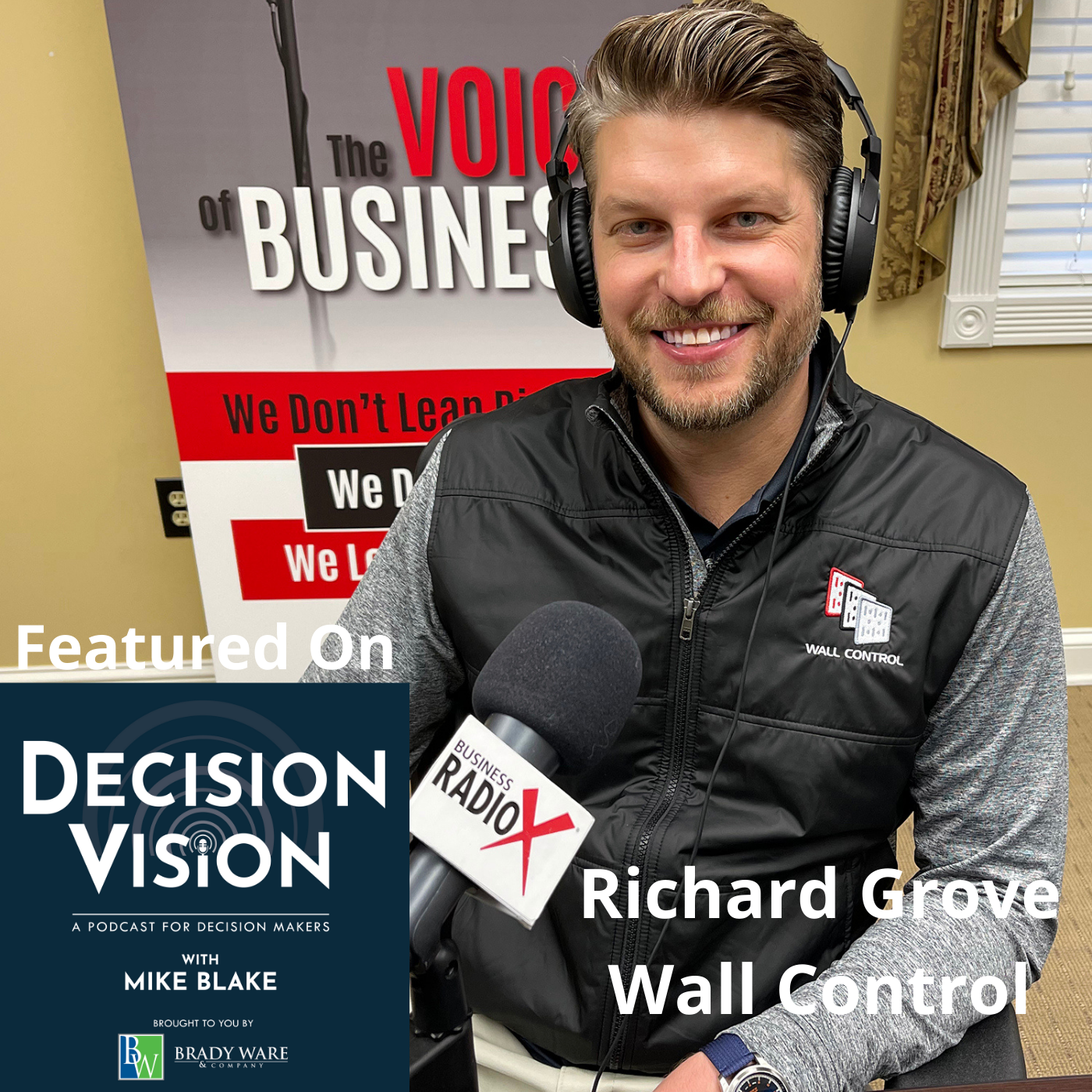
Decision Vision Episode 160: Should I Use Influencer Marketing? – An Interview with Richard Grove, Wall Control

March 17, 2022 by John Ray

Wall Control
Decision Vision
Decision Vision Episode 160: Should I Use Influencer Marketing? - An Interview with Richard Grove, Wall Control
Loading
00:00 /
RSS Feed
Share
Link
Embed

Download file

Influencer Marketing

Decision Vision Episode 160: Should I Use Influencer Marketing? – An Interview with Richard Grove, Wall Control

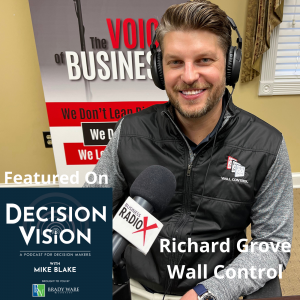
On this episode of Decision Vision, host Mike Blake looked at influencer marketing and its efficacy. He was joined by Richard Grove, COO of Wall Control, who shared his company’s approach to influencer marketing. Richard discussed how Wall Control learned to use influencer marketing, how to organically cultivate relationships with brand ambassadors, the potential return on investment, how it fits into their company’s overall marketing strategy, and much more. Decision Vision is presented by Brady Ware & Company and produced by the North Fulton studio of Business RadioX®.

Wall Control

The Wall Control story began in 1968 in a small tool & die shop just outside Atlanta, Georgia. The first of three generations began their work in building a family-based US manufacturer with little more than hard work and the American Dream.

Over the past 50+ years, this family business has continued to grow and expand from what was once a small tool & die shop into an award-winning US manufacturer of products ranging from automobile components to satellite panels and now, the best wall-mounted tool storage system available today, Wall Control.

The Wall Control brand launched in 2003 and is a family-owned and operated business that not only produces a high-quality American Made product but sees the entire design, production, and distribution process happen under their own roof in Tucker, Georgia. Under that same roof, three generations of American Manufacturing are still hard at work creating the best tool storage products available today.

Company website | Facebook | Instagram

Richard Grove, Chief Operating Officer, Wall Control

Richard Grove, Chief Operating Officer, Wall Control

Richard Grove’s background is in engineering but what he enjoys most is brand building through relationships and creative marketing. Richard began his career with the Department of Defense as an engineer on the C-5 Galaxy Engineering Team based out of Warner Robins. While Richard found this experience both rewarding and fulfilling, he always knew deep down that he wanted to return to the small family business that originally triggered his interest in engineering.

Richard came to work for the family business, Dekalb Tool & Die, in 2008 as a Mechanical Engineer. At the time Wall Control was little more than a small ‘side hustle’ for Dekalb Tool & Die to try to produce some incremental income. There were no “Wall Control” employees, just a small warehouse with a single tool and die maker that would double as an “order fulfillment associate” on the occasion that the original WallControl.com website, which Richard’s grandmother built, pulled in an order.

In 2008, it became apparent that for the family business to survive they were going to have to produce their own branded product at scale to ensure jobs remained in-house and for the business to continue to move forward. Richard then turned his attention from tool and die to Wall Control to attempt this necessary pivot and his story with Wall Control began. Since that time, Richard has led Wall Control to significant growth while navigating two recessions.

Richard is also the host of Organization Conversation.

LinkedIn

Mike Blake, Brady Ware & Company

Mike Blake, Host of the “Decision Vision” podcast series

Michael Blake is the host of the Decision Vision podcast series and a Director of Brady Ware & Company. Mike specializes in the valuation of intellectual property-driven firms, such as software firms, aerospace firms, and professional services firms, most frequently in the capacity as a transaction advisor, helping clients obtain great outcomes from complex transaction opportunities. He is also a specialist in the appraisal of intellectual properties as stand-alone assets, such as software, trade secrets, and patents.

Mike has been a full-time business appraiser for 13 years with public accounting firms, boutique business appraisal firms, and an owner of his own firm. Prior to that, he spent 8 years in venture capital and investment banking, including transactions in the U.S., Israel, Russia, Ukraine, and Belarus.

LinkedIn | Facebook | Twitter | Instagram

Brady Ware & Company

Brady Ware & Company is a regional full-service accounting and advisory firm which helps businesses and entrepreneurs make visions a reality. Brady Ware services clients nationally from its offices in Alpharetta, GA; Columbus and Dayton, OH; and Richmond, IN. The firm is growth-minded, committed to the regions in which they operate, and most importantly, they make significant investments in their people and service offerings to meet the changing financial needs of those they are privileged to serve. The firm is dedicated to providing results that make a difference for its clients.

Decision Vision Podcast Series

Decision Vision is a podcast covering topics and issues facing small business owners and connecting them with solutions from leading experts. This series is presented by Brady Ware & Company. If you are a decision-maker for a small business, we’d love to hear from you. Contact us at decisionvision@bradyware.com and make sure to listen to every Thursday to the Decision Vision podcast.

Past episodes of Decision Vision can be found at decisionvisionpodcast.com. Decision Vision is produced by John Ray and the North Fulton studio of Business RadioX®.

Connect with Brady Ware & Company:

Website | LinkedIn | Facebook | Twitter | Instagram

TRANSCRIPT

Intro: [00:00:03] Welcome to Decision Vision, a podcast series focusing on critical business decisions. Brought to you by Brady Ware & Company. Brady Ware is a regional, full-service, accounting and advisory firm that helps businesses and entrepreneurs make visions a reality.

Mike Blake: [00:00:23] Welcome to Decision Vision, a podcast giving you, the listener, clear vision to make great decisions. In each episode, we discuss the process of decision making on a different topic from the business owners’ or executives’ perspective. We aren’t necessarily telling you what to do, but we can put you in a position to make an informed decision on your own, and understand when you might need help along the way.

Mike Blake: [00:00:45] My name is Mike Blake, and I’m your host for today’s program. I’m a director at Brady Ware & Company, a full-service accounting firm based in Dayton, Ohio, with offices in Dayton; Columbus, Ohio; Richmond, Indiana; and Alpharetta, Georgia. I am Managing Partner of the Strategic Valuation and Advisory Services Practice, which brings clarity to the most important strategic decisions of business owners and executives face by presenting them with factual evidence for such decisions. Brady Ware is sponsoring this podcast, which is being recorded in Atlanta per social distancing protocols.

Mike Blake: [00:01:18] If you would like to engage with me on social media with my Chart of the Day and other content, I’m on LinkedIn as myself and @unblakeable on Facebook, Twitter, Clubhouse, and Instagram. I also recently launched a new LinkedIn group called Unblakeable’s Group That Doesn’t Suck, so please join that as well if you would like to engage. If you like this podcast, please subscribe on your favorite podcast aggregator, and please consider leaving a review of the podcast as well.

Mike Blake: [00:01:46] Today’s topic is, Should I use influencer marketing? According to influencermarketinghub.com, a global influencer marketing market is expected to reach $16.4 billion in 2022. YouTube’s top earner in 2021 was Ryan Kaji , who made $29.5 million. So, it’s a thing now. And, you know, this is a topic I’ve wanted to do for a while, but haven’t really found the right person to help us with it until now.

Mike Blake: [00:02:21] You know, it’s funny as I watch my kids grow up, they don’t watch movies anymore, they don’t watch T.V. shows anymore. It’s my generation, Generation X, the sort of binge watches, and I think only the Baby Boomers left will actually watch real T.V. with commercials and stuff anymore. But when a commercial comes on during a sporting event, my kids think something’s wrong with the television. And it just goes to show you how our watching habits or viewing habits have changed so rapidly, almost overnight, to me, but I’m sure it’s taken longer than that.

Mike Blake: [00:03:02] And influencers to us, to outsiders – I consider myself an outsider as sort of a late GenXer or an older GenXer – on the surface, they seem to be people that are basically famous for being famous. But we sort of forget, again, that on channels, such as YouTube and Facebook Video and TikTok and Instagram, they are celebrities. They’re simply celebrities in a medium that just isn’t the place where I normally hang out. That doesn’t make it worse. It just makes it different. And, in fact, it probably makes it increasingly attractive to marketers. So, I’m looking forward to learning more about this because I don’t know as much about it as I would like and should, and I hope you’ll get a lot out of it as well.

Mike Blake: [00:03:50] So, joining us today is Richard Grove, who is the Chief Operating Officer of Wall Control, a family-owned and operated brand of wall storage and organization systems ranging from garage tool storage to kitchen wall organizers, and even industrial tool organizational systems for industry leading Fortune 100 companies across the globe.

Mike Blake: [00:04:10] Richard’s background is in engineering, but what he enjoys most now is brand building through relationships and creative marketing, as well as implementing scalable solutions for growing his businesses. Richard began his career with the Department of Defense as an engineer on the C-5 Galaxy Engineering Team based out of Warner Robins. While Richard found this experience both rewarding and fulfilling, he always knew deep down that he wanted to return to the small family business that originally triggered his interest in engineering.

Mike Blake: [00:04:38] Richard came to work for the family business, Dekalb Tool & Die, in 2008 as a mechanical engineer. At the time, Wall Control was a little more than a small side hustle for Dekalb Tool & Die to try to produce some incremental income. There was no Wall Control employee, just a small warehouse with a single tool and die maker that would double as an order fulfillment associate on occasion at the original wallcontrol.com website, which Richard’s grandmother built, pulled in, in order.

Mike Blake: [00:05:06] Today, Wall Control is responsible for the employment of 50 employees and occupies over 60,000 square foot physical footprint of its own while still growing rapidly. Wall Control is also proud to say that they are now Dekalb Tool & Die’s biggest customer by volume sold through their shop. Richard Grove, welcome to the program.

Richard Grove: [00:05:43] Thanks, Mike. It’s my pleasure to be here. So, I appreciate the intro and kind of your background, what you want to get out of the conversation, and what you’d like your audience to get out of it. I think it’ll be a fun one.

Mike Blake: [00:05:54] Great. So, let’s start off because not everybody may be necessarily familiar with the term, when we say or when you say influencer marketing, what does that mean?

Richard Grove: [00:06:05] So, I mean, for me, just in that one question, there’s a ton of stuff we can unpack in our conversation. So, I think you nailed on what comes to mind when people think influencer marketing. If they do have any preconceived notion of it, they think it’s somebody who’s famous for being famous, a million or more Instagram followers pushing products out to their audience.

Richard Grove: [00:06:05] We think about it a little bit differently in that, influencer marketing is really any third party voice that is suggesting to an audience they should use a product or check out a brand, and that that audience is receptive to that message. So, you know, you do have your famous for being famous Instagram folks who have massive audiences who can promote a product and people will go check it out.

Richard Grove: [00:06:53] But an influencer could also be your Great Aunt Ethel, who’s got 30 really close friends that she plays bridge with, who, if she posts something on Facebook, a product she likes, maybe four of them will check it out and purchase it. So, anything in between that, in our opinion, can be defined as influencer marketing.

Mike Blake: [00:07:14] But when did influencer marketing start to gain traction? And to really just sort of put it very bluntly, at what point did influencer marketing become a thing, not just sort of a cute little side hustle or a cute little thing that people did, but became a really serious business activity?

Richard Grove: [00:07:30] From my perspective, I would say, probably, around ten years ago, it started to gain traction. And the “influencer” community started to think more in terms of monetizing their influence. And then, over really the last five to ten years, it’s really kind of picked up steam. But our experience began, probably, about 2015 is when we started kind of getting in those waters and giving it a try and allocating some marketing budget to experimenting with it.

Mike Blake: [00:08:05] So, I made an observation in my intro that I’m curious if you agree or disagree with, and please feel free to disagree, what is the relationship or the link, if any, between influencer marketing and what we might have called celebrity endorsements? How are they connected? How are they different?

Richard Grove: [00:08:25] I think there’s a lot of crossover, so there’s a lot of similarities, but there’s also a lot of differences. So, the way we look for a partner – and we don’t call them influencers. We call them partners or brand ambassadors. Because the term influencer can be a little reductionist – for instance, our product is tool storage systems. The people who use our product that have influence are tradesmen, craftsmen, makers, really skilled DIY folks. And so, those people have an audience because they’re good at what they do and their audience respects what they do. And so, if they’re to tell our audience about our product and endorse it, it carries a lot more weight.

Richard Grove: [00:09:11] So, that’s very different than just, “Hey, Kanye West. Can you sell this for me? I’ll give you however much money and we’ll make you a partner if you just push it on your channel.” So, they’re both by definition influencer marketing. It’s just in our experience, and for the size of company that we are, and the relationships that we want to build, it’s a lot better for us to start with the person who had the skill, that built the audience with the skill, and then go from that direction.

Mike Blake: [00:09:44] And I wonder if also sort of a different sort of driver behind the evolution, you know, one thing that strikes me is, most celebrity endorsements are quick hits. Think about a priceline.com, William Shatner, Kaley Cuoco – I don’t know if that’s still a thing anymore – but they were cute commercials. I’ll be the first to admit I’m just in the tank for William Shatner. I just love the guy.

Mike Blake: [00:10:11] But influencer marketing, to me, is almost they’re infomercials. You know, the people that I follow on YouTube – I’m big into tech – so I follow Linus Tech Tips and Luke Miani and some other people that are particularly in the Macintosh platform. Lisa Gade of MobileTechReviews is also excellent, and Dave2D.

Mike Blake: [00:10:35] And they’re getting up there, and they’re demonstrating products for, like, a-half-an-hour. And I’m watching them, and if I’m honest, I’m watching them do a 30 minute commercial that they may or may not be being paid for. Somehow, those influence marketers do their thing in a way that makes me want to watch a commercial for 30 minutes. It’s bizarre.

Richard Grove: [00:11:04] Absolutely. One of our biggest things when we get reached out to is what are the deliverables, what do you expect from us. And the first thing we say is we want it to be organic content. We want you to be in your shop building something and then you’re using your Wall Control system and it comes up that way versus just shoehorning something in that looks like a commercial.

Richard Grove: [00:11:26] So, like you said, you could do a whole video on how to use it, and it could actually be informative and bring value to the viewer beyond just trying to sell the product. And maybe the product is not even being sold, it’s just making them aware of what you can do, “I happen to use this system”. And, to me, that’s a very powerful message because you haven’t told anybody to buy anything, but you’ve told them this is a valuable thing to do, here’s the thing I found to be the best at it. I think that resonates a lot more than, “So and so sent me this and let me tell you about it.”

Richard Grove: [00:11:59] I mean, it’s a really subtle but big difference between a product review. I think the thing that came before the influencer marketing were, “Send me a free product and I’ll do a product review for you.” So, we saw a lot of that. And, again, it’s very subtle, but that didn’t seem to move the needle very much for us.

Richard Grove: [00:12:22] And some people would take our product out of the box. They wouldn’t even install it or use it. They would just talk about it. And so, if I’m a viewer, I’m not influenced by that. I just think you got something for free or you got paid a little to promote something on a YouTube channel.

Richard Grove: [00:12:40] And I think the good ones, too, their audience has respect for them. They don’t think they’re going to get up and just hustle something to make a buck. It’s actually something that they think will bring value to their viewer.

Mike Blake: [00:12:52] So, somebody listening to this conversation now may be thinking, “Okay. Influencer marketing is a thing. It seems like it’s growing. It’s here to stay. It’s not just a passing fad.” How did you arrive at the conclusion that influencer marketing would be useful to you? And can you tell us a little bit of the story about how you implemented or acted upon that?

Richard Grove: [00:13:13] For sure. Yeah. So, people would reach out for product review, “Pay us this and we’ll review this product.” And I forget what year, probably around 2015, the first one that we really worked with, his name is Lazy Guy DIY on Instagram. And he’s a super close partner to us now. And he reached out – and it’s a funny story we tell – he said, “If you send me a free product, I can use it in my shop and talk about it when it makes sense.” And we we’re like, “No. Why would we do that?” And he had a solid following and all that, we didn’t understand the value proposition of it like we do now.

Richard Grove: [00:13:52] And so, after a little while of building a relationship, and I think he actually bought some products, too, when we see someone do that, it really tells us they’re committed to our product line. So, we ended up sending him some product and started to slowly – I think the key is slowly for people – started to build that trust in this process and started to see results from it. And since then, there’s all kinds of creative marketing things that we’ve done together. He runs our Wall Control Instagram account. Our Brand Ambassador Program, he manages that.

Richard Grove: [00:14:27] So, we’ve brought on these partners, some we work super closely with, and some of them it is just a free product, let’s see what you can do with it kind of thing. So, I’m not sure if that helps answer the question. But, yeah, from there it started to snowball. He was able to bring in his other friends in the community.

Richard Grove: [00:14:44] And I think that’s another point, is, if you pick the right partners, they introduce you and your brand to their community. And that’s where the greatest value comes from, not just the potential consumer, but other “influencer partners” that they happen to have in their network. So, it’s as much networking as it is trying to sell product through a lot of eyeballs on any given social channel.

Mike Blake: [00:15:13] So, I want to pause on that because, nowadays, there’s no shortage of these potential influencers. That’s a thing, a lot of kids now would love to become influencers. That’s like the thing they want to do when they grow up. And I’m sure that even back when you started this, you had no shortage of potential choices. How did you settle on that particular person? What were the criteria, either explicitly or looking back implicitly, you used to select that person or maybe others, you may have increased your portfolio of partners, to decide that they are the people you wanted to represent your products in the marketplace?

Richard Grove: [00:15:57] Yeah. That’s a great question. And there was no specific criteria at the time. And we do have some criteria now, but it is still very person to person and situational that we make these decisions. But I think what happened there was, we couldn’t send free product. We had never done this before. We didn’t know what the ROI was going to look like.

Richard Grove: [00:16:18] So, we maybe gave him a discount and he bought on his own. So, he put his own money in it. He started using the product. We followed him on his channel, so we could see it in the background. He would reach out and ask us questions about it, and give us feedback on ways to improve it. And that relationship developed before we were kind of in “business together”.

Richard Grove: [00:16:38] And I think that’s an example of ideally what we look for is somebody who is aware of our product, either uses it on their own already, or has some experience with it, and really wants to develop a longer term relationship versus just paper posts, “Give me however much and I’ll do an Instagram post about it”.

Richard Grove: [00:17:00] So, it’s kind of hard to articulate, but you really start to get a feel for it after you’ve been doing it for a little bit and you have a good partner. So, once you have a good partner, you kind of know what the opposite of flash in the pan, hit or miss opportunity is going to be. And you can kind of tailor it in the right direction once you start to get a handle for it.

Mike Blake: [00:17:21] Now, I think you said that this particular partner, at least at the time when you started that relationship, was particularly active on Instagram. Is that where most of the influencer marketing hangs out? Or are there other channels that are useful as well? And does that choice of channel at all impact who you’re going to choose to partner with?

Richard Grove: [00:17:50] Definitely. I think Instagram is a good kind of barometer or thermometer to gauge the temperature of what that influencer might be able to deliver. Follower count is certainly an important criteria, but it’s not the be all, end all. So, if someone has a solid following on Instagram and they have some other channels, like a YouTube channel, or what’s really good are blogs, that’s another great thing, that’s a solid partner.

Richard Grove: [00:18:17] We’re not super interested in just the Instagram folks. And the reason being is what we’ve seen really moves the needle is evergreen content. So, content that stays online and gets indexed and shows up in search results, you know, month after month, year after year.

Richard Grove: [00:18:33] So, somebody might have a really small Instagram account and someone might overlook it, but maybe their blog has hundreds of thousands of clicks every month, well, if they’re going to do an article about us, that’s going to stay up forever, potentially. So, that could very well be far worth it than just somebody who’s got half-a-million Instagram followers and does one post that slowly or quickly starts to fall down their feed, only seen one time. So, it’s kind of a balancing act.

Richard Grove: [00:19:03] And, again, Instagram is great. And that seems to be – especially you talk about young folks trying to get out and make a name for themselves – where they want to build their audience. But I think that what we’re looking for are those influencers who have taken the step of moving their brand off of that platform and taking ownership themselves. So, they have a website and they have their brand across multiple channels.

Mike Blake: [00:19:31] I think that’s really interesting you mentioned blogs. You know, I would not have expected that, and you’d think I’d learned by now. Because blogs come up often, they’re so easy to forget. You know, we’re so enamored of video and podcasts and the so-called dynamic or rich audio visual multimedia content, whatever you want to call it. And what keeps coming up over and over in conversations like this in terms of digital marketing, is that blogs still matter. And I think a lot of people forget that. So, can you talk a little bit about your experience with blogs in terms of how they relate to your influencer marketing strategy?

Richard Grove: [00:20:15] It’s funny you mention it, because it’s like we say untapped, but it has been tapped. It’s almost like people forgot about it. And it’s like what’s old is new again. And so, we really like that because, I mean, if you do a Google search for our product and someone writes a solid blog article and it’s got perfect SEO, it’s going to show up, and it’s going to take a spot in indexing, and it’s going to bring benefit to our customer.

Richard Grove: [00:20:42] The other thing we like about it is – and we can get into this a little more wherever you want to go with it – we use an affiliate link program where they can embed affiliate links and get a commission on the traffic that they send to us. Some of our older, longer, stronger relationships of brand ambassadors, we make this available to them. And so, when they have a blog and we get traffic, that’s really solid evidence that what they’re doing is helping our brand. And it’s a lot easier for us to partner with them at a deeper level, higher, bigger projects, more spend, because we know we’re going to get that ROI. Whereas, again, if it’s just Instagram, the the analytics are not great for us knowing what our return on investment was.

Mike Blake: [00:21:25] So, was there anything that you had to do to kind of get ready to successfully leverage influencer marketing? Were there things you had to do differently, think about differently? Or were you kind of ready made to step into that and be successful from day one?

Richard Grove: [00:21:40] We have totally learned as we went along. There was nothing in place. And that’s what I would say to anybody listening, is, just start trying. There’s no right way to do it. There’s probably some wrong ways, but there’s really no right or wrong. Just whatever works for you and your brand and the partners is going to be your next best step. So, we’ve learned as we’ve went along. We definitely had to put some guardrails in there as time went along.

Richard Grove: [00:22:10] Again, we don’t want to go strictly by follower count. It’s not a really good indicator of what sort of influence they have. That’s another thing we could get into, is, what their engagement looks like. But it does set some guardrails and it allows us to start some conversations as far as vetting who we’re going to partner with.

Richard Grove: [00:22:27] Especially for everybody, budget is a factor. Lately, raw materials, supply chain issues have made product scarcity problem. So, who you send product to is much more impactful than it used to be because it’s expensive and hard to get. So, I think you’ve got to just start and you’ve got to play around with it and you’ve got to iterate quickly and go where it takes you.

Mike Blake: [00:22:54] And my understanding is your company sells both consumer and industrial grade products. You’re in the B2B and B2C, is that right?

Richard Grove: [00:23:05] Yes .Exactly. Yes.

Mike Blake: [00:23:07] So, when you started, did you have in mind that you’d be using or leveraging or investing in influencer marketing to address the consumer market or the business market or both? Or did that just sort of fall out of experimentation as well?

Richard Grove: [00:23:24] Yeah. At first, it was definitely the consumer market. But then, we started to see added benefit in the business market because a lot of our influencer partners were involved in these other programs as well for the big box stores. So, there was a lot of crossover there. And then, just by nature of all the eyeballs that are on them, get eyeballs on your potential retail partners and buyers.

Richard Grove: [00:23:50] So, say, Partner A is having a conversation with his audience. Well, the buyer for Home Depot or whatever big box store happens to watch him as well, becomes aware of your product and you can kind of work that angle to get the business to business model going.

Richard Grove: [00:24:07] So, it’s kind of weird. I mean, it goes in all kinds of different directions, and it’s been super cool just watching how things evolve. And how every single partnership, there’s been different things that have come from it. There’s certainly no straight path to where you want to go. But, yeah, we started with the end user consumer in mind, but I’ve definitely seen it benefit both sides of our business and continues to do so.

Mike Blake: [00:24:37] And I think that’s sort of evolving. When I think influencer market, I certainly think B2C. And the most important categories of influencer marketing do seem to be lifestyle, health and beauty, things of that nature, at least if the data that I see is to be believed. But I think as an increasing number of business decision makers are spending time on the Instagrams and YouTubes and so forth, it has become already and will continue to be a more important channel for B2B marketing as well.

Richard Grove: [00:25:11] I think B2B – at least our B2B – is selling to an end user or some customer who’s going to just buy a product and put it up. So, when they see all the eyeballs on our product, that tells them they want to have it on their shelves. So, it used to be – and it still is this way – you want to have a product that is an obvious best seller with higher reviews and does well across multiple channels. That was usually how you get your foot in the door with a big box store.

Richard Grove: [00:25:43] Well, now, you can also point to your social following and the people that they use to sell to their audience that are using our product already. So, it’s a really organic way to move that conversation, “Hey, I see you work with Partner X,Y,Z over there. Well, they already use our system.” All their eyeballs are your customers too. It’s an easy sell for you. It’s already there. Let’s see what we can do as far as putting something together there.

Mike Blake: [00:26:12] This may be not a fair question, but we specialize in unfair questions here on the Decision Vision podcast.

Richard Grove: [00:26:17] No problem.

Mike Blake: [00:26:19] And that question is, in your mind, as you sort of have thought about this so much, are there any industries that don’t lend themselves well to influencer marketing? There are certain kinds of industries where it’s sort of square peg, round hole kind of thing.

Richard Grove: [00:26:36] I’ll say yes, there’s some that are probably less than others, but it could be different. So, for instance, our manufacturing plant, it’s a tool and die shop, so their customer is going to be an automotive manufacturer. It’s not anything you’re going to see on Instagram. Nobody is going to buy car parts from us for an assembly line because they saw it on Instagram or using it, and there’s no way they could anyways.

Richard Grove: [00:27:03] But the way it can be leveraged is, one of our biggest challenge on the manufacturing side is finding skilled workers and finding people who want to come in and take the time to learn the trade. I mean, it’s very lucrative, but it’s just not something you hear a lot of. And so, we can use Instagram there to show what we do and make it cool, because it already is cool.

Richard Grove: [00:27:26] So, it’s the same thing with our partners we work with that are in the trades, they’re showing kids that this is cool stuff to do. If you don’t want to go to college and you want to go learn a trade, there is a path where you can be an influencer in some tool and die shop or in a woodworking shop. So, I think that influencer marketing can be used in those environments, not to sell product, but to sell your business to potential employees, which is kind of, I guess, a new way to look at it. And we’re starting to kind of play around with that too by opening up our doors and showing people on Instagram what we do and making it cool.

Mike Blake: [00:28:09] I think that’s a really smart point, is, we’re in a – in my lifetime – unprecedented period where there’s just an unusually tight labor market that appears to be structural in nature, it’s not temporary, it’s not a fad. It looks like we’ve had two seismic shift. And influencer marketing may no longer just be about selling product, but it’s also wanting to attract the best and the brightest to come work for you.

Richard Grove: [00:28:40] Yeah. I mean, if we have a solid following and we say, “Come work for us,” and maybe we have them, “You could start an Instagram account that’s semi-professional. It’s going to be you, personally, but you can show the work you’re doing in the shop,” assuming there’s no NDA or something related to it. And then, we can promote you on our channel so we can build you up. Like, if you want to be an influencer, we can try to help you a little bit along the way. So, it’s kind of leveraging our audience to help the employee do what they want to do while also performing the job.

Mike Blake: [00:29:15] Can you work with multiple influencers at once? One thing that I think might differentiate celebrity endorsements from influencer marketing is that celebrity endorsements tend to focus on one or two people at most. You have the face for your product. Is that also the case in influencer marketing? Or can you have a broader portfolio of people that are your brand ambassadors? Can you have in effect a state department as brand ambassadors for your product?

Richard Grove: [00:29:51] I think you definitely can and that’s what we do. If we had an issue, it would be, maybe, a big box store issue. Like, one big box store had this bucket of influencers and the other big box store had another bucket of brand ambassadors and they didn’t want crossover there. But because our product is sold in multiple big box stores, that’s usually not an issue. So, for us, that’s not something we really have to spend any sort of issue for where there is some sort of conflicting interest behind the scenes there.

Richard Grove: [00:30:24] Going back to kind of how we partner with them, I’ll bring back Adam from Lazy Guy DIY. He’s a good example. So, because he’s a woodworker and he’s used to our product, we figured let’s let him design a woodworking value kit. So, something we could private label under his name that he can promote on his channels and earn a commission on. And so, if you look on our website under value kits, you’d find the Lazy Guy DIY Woodworking Kit. So, he would get paid on the sale of each of those units.

Richard Grove: [00:30:58] And one of the cool things, too, it became very easy to move that into the woodworking stores because they’re familiar with his work and his name is on it, so it’s an easier sell for them. The other thing, too, they know they can tag him, that’ll get re-shared to their audience. So, there’s a lot of creative ways to go with that.

Richard Grove: [00:31:18] But that would probably be the closest thing we might run across where we couldn’t have multiple places selling that one thing because woodwork in Distributor A isn’t happy with woodwork in Distributor B selling the same product. But even with that, we’ve never run into any kind of problem or any sort of restrictions.

Mike Blake: [00:31:41] Now, of course, most, if not all, companies have finite marketing budgets. We’d love to spend endless dollars on it if we could, but we can’t. What are you finding, if anything, you’re doing less of so that you make room for influencer marketing? What is it replacing in your portfolio of marketing activities?

Richard Grove: [00:32:02] Well, that’s a good question, and it’s evolving, for sure. So, the iOS 15 update, the most recent one Apple released, very heavy on the consumer privacy. So, we’re seeing with our email marketing, our pay per click marketing, it’s becoming a little harder to track and target our ideal customer. So, the ROI there is starting to fall off a little bit. We’re still heavily involved in that and we’ll continue to.

Richard Grove: [00:32:33] But we’re starting to try to funnel some of that money away from there and into the influencer marketing space because we know their audience and their audience is our potential customer. So, we don’t have to guess. We don’t have to try to hope that they have agreed to cookie tracking and all that. We can actually know that the people they’re talking to are our potential buyers.

Mike Blake: [00:32:55] And you said something that I think is important that I want to kind of pause on it and drill into it a little bit, is that, you know your audience. Another maybe strength of influencer marketing versus broader celebrity endorsements, is, celebrity endorsements – in my impression, anyway – is that they’re blasted out to a large audience. Super Bowl commercials, for example. And you hope that you just sort of reach enough of them by sheer large numbers.

Mike Blake: [00:33:24] Influencer marketing allows you to target very specific audience. And I think – correct if I’m wrong – there’s also a lot more data available to be able to analyze the impact or at least potential impact of what you’re doing. So, you can make empirically fact-based decisions on how you spend your dollars.

Richard Grove: [00:33:47] Exactly. And just like any experiment, if you set one variable up, it’s easier to see what impact it has. So, for instance, our product line will go in a lot of different places. It goes in a woodshop. It goes in a home gym. It goes in a kitchen. So, maybe one month – for us – we’re just going to focus on home gyms and see how the needle moves speaking directly to that audience. And then, the next month move to another target audience.

Richard Grove: [00:34:17] Again, Instagram is a little tricky because we can’t really track their audience to our website unless it’s like a direct link. And the other thing, too, is we sell through retailers. So, if somebody sees our product on Instagram, they could go pick it up at a retail store, and we would never know that that’s what influenced their purchase. But if we segment our targeting, we can look over time and say, “Okay. When we were running this campaign, we really sold a lot of these.” So, let’s assume that that delta between the month before was because we were targeting that audience.

Mike Blake: [00:34:53] One concern, I imagine, is arising with some of the people listening to the program is that, “Boy, this sounds expensive.” Some of these YouTube marketers are making serious money and they’re not even going to talk to us for a level that’s outside of our budget. And it’s sort of the barrier to entry of celebrity endorsements all over again. Is that true or are there ways to kind of dip your toe in this and still have some kind of effect?

Richard Grove: [00:35:29] For sure. And I would say full disclosure, we have never been a pay for post company. That’s not how we engage with our partners, our brand ambassadors, and especially not at the very beginning. So, what we’ve always done is free product for exposure based on what that audience size looks like.

Richard Grove: [00:35:47] And we should also talk about an influencer is not an influencer, is not an influencer. There’s the micro-influencer, which you would define – we’ll just talk Instagram numbers just because it’s easy – somewhere around 10,000 followers would kind of be in that category. I say 10,000 to 100,000 followers. And then, beyond that, you start getting into the folks who have the agencies that they want you to work with and they want to be paid.

Richard Grove: [00:36:14] So, what I would do if I was starting from scratch, I’d try to find somebody who I see in the community I would like to target who seems to be knowledgeable, start following them. Maybe reach out on Instagram or send a DM on some other platform and say, “Hey. We like what you’re doing. We think our product might be a benefit to you. Would you mind if we sent you some free products?” And that’s a pretty organic way to just start a conversation and you can kind of see where that goes.

Richard Grove: [00:36:41] And then, from there, what we would do, basically kind of our playbook, is, we start with a free product and we see how that goes. From there, we see where the relationship goes and then we can talk about paid engagements after that.

Richard Grove: [00:36:56] And the other thing, too, our product line is heavy. It’s expensive to produce and ship. So, if we’ve already got the initial investment in a shop, it’s easier for us to come up with some creative ways to actually pay money to the influencer to help market our product.

Richard Grove: [00:37:11] And another creative way that we’ve found works really well, our affiliate programs. There’s a really good plug and play APIs that can plug into almost any website’s backend where you can easily track these conversions and pay your influencer partner a commission off of all the sales that they generate from traffic they send to your website. So, that’s how we do it and how we got started. And I think it’s a pretty easy way to kind of dip your toe into it.

Richard Grove: [00:37:38] The other thing, too – I keep going back to follower count – you don’t want to just look at that. You really want to look at engagement, and it doesn’t take very long to figure out if it’s there or not. So, if somebody has 200,000 followers on Instagram, but their post only gets ten likes and no comments, that’s probably not going to give you a big bang for your buck. Whereas, maybe somebody got 5,000 followers, but every post gets a thousand something likes and a bunch of comments. That’s a really engaged audience who’s going to be much more receptive to the content they put out.

Mike Blake: [00:38:11] I’m talking with Richard Grove. And the topic is, Should I use influencer marketing? So, you touched on something that I think is really important I want to make sure that we cover today. And that is, how are influencers typically compensated? Is it commission? I mean, I’m truly ignorant about this. How does that payment structure typically work?

Richard Grove: [00:38:39] I mean, a lot of different ways. So, typically, I would say your micro-influencer is probably not compensated. It’s probably just a side hustle for them, is usually what we see. And I can’t speak to all brands, but their first year of compensation for us would be that commission paid out based on sales that they send our way. That would be kind of the base level. Then, if that’s going really well and say they want to really put some time and energy into something like a blog post or a YouTube video, we could talk about what that pay structure would look like.

Richard Grove: [00:39:18] And the other thing, too, is, because it’s so hard to attribute sales in this way, it’s even more important for a company to be aware of what their typical customer acquisition cost looks like and what kind of return they’re getting across other platforms. Because that’ll give you some structure to talk about with an influencer partner.

Richard Grove: [00:39:42] So, say, we have a new product we’re rolling out and we were going to make our own internal YouTube video, there’s going to be some cost inherent to that. We’re going to have to pay our employee. We’re going to have to spend some time doing it. So, whatever costs we would spend doing that, I’m cool with paying one of our partners to do it. And we’re going to get more traction because they have a bigger audience and it’s coming from a third person perspective, so it’s going to hit a little different than if we’re telling you our product is great, go buy it. So, that’s one way to do it.

Richard Grove: [00:40:10] And another thing to keep in mind is – just like that – look for creative ways to monetize your partner. It’s going to probably be different for every brand and every industry. Even if it’s one off, that’s fine too. Don’t think that if you do it for this one person, you’ve got to do it for this other person, and it has to be totally scalable. I would work it on a partner by partner basis and then slowly refine what your criteria is as you go along. And don’t be afraid to make mistakes there either, because that’s really the only way you’re going to learn what steps to take next.

Mike Blake: [00:40:50] We touched on this a little bit, but I want to make sure we hit it, and that is, one of the benefits of influencer marketing and digital marketing, in general, is that we get much more relevant data, in some cases, effectively real time. What are the KPIs or key performance indicators you look at in measuring the effectiveness of your investment in influencer marketing?

Richard Grove: [00:41:17] So, we look at it as a whole. We look at the program as a whole. I don’t want to give all of our criteria, but we typically say that in order to send free product, we’d like for you to have 10,000 followers on at least one social channel. Because we found that based on our average order size and customer acquisition costs, that tends to be a good return on investment for us.

Richard Grove: [00:41:51] If it’s less than that, what we’ll usually do is provide some heavy discount code. And we have an incubator program that will put folks in that bucket. While they grow their audience, we’ll try to help them grow their audience through our audience as well. And develop a relationship so that when they hit these certain thresholds, it makes more sense to open up the product giveaways and we can open up the actual monetary spend.

Richard Grove: [00:42:19] So, what we do is we try to look at the program as a whole and we use the analytics that come in from our affiliate network to try to gauge what sort of return on investment we’re seeing there. And, again, it gets muddy because of the retail network. But we tend to see that rising tides lift all ships. And so, if we were running a campaign, we, generally, can tell what impact that had on our overall sales and attribute that back to the partners we working with, and what sort of budget we moved over into that bucket. Does that help answer the question?

Mike Blake: [00:42:51] Yeah, I think it does. Richard, you’ve been so generous with your time and your knowledge today, and I don’t want to abuse that. We’re running up against our time limit today. And I’m sure there are questions we either didn’t cover or our listeners would have wished that we had gone into more depth with. If people have questions about this topic about influencer marketing and want to get some feedback from you, can they contact you? And if so, what’s the best way to do that?

Richard Grove: [00:43:19] Yeah. If they want to just reach out on social media, I’m MrWallStorage on Twitter and on Instagram, and then we can go from there.

Mike Blake: [00:43:30] That’s going to wrap it up for today’s program. I’d like to thank Richard Grove so much for sharing his expertise with us.

Mike Blake: [00:43:37] We’ll be exploring a new topic each week, so please tune in so that when you’re faced with your next business decision, you have clear vision when making it. If you enjoy these podcast, please consider leaving a review with your favorite podcast aggregator. It helps people find us so that we can help them.

Mike Blake: [00:43:53] If you would like to engage with me on social media with my Chart of the Day and other content, I’m on LinkedIn as myself and @unblakeable on Facebook, Twitter, Clubhouse, and Instagram. Also, check out my new LinkedIn group called Unblakeable’s Group That Doesn’t Suck. Once again, this is Mike Blake. Our sponsor is Brady Ware & Company. And this has been the Decision Vision podcast.

 

Tagged With: Brady Ware & Company, brand ambassadors, Decision Vision, influencer marketing, Influencers, marketing, Mike Blake, Richard Grove, Wall Control

Klippit Founder Chike

July 22, 2020 by angishields

Chike-Klippit
Atlanta Business Radio
Klippit Founder Chike
Loading
00:00 /
RSS Feed
Share
Link
Embed

Download file

OnPay-Banner

Klippit-logo

Klippit is influencer marketing done right. For marketers, we help them create influencer marking campaigns that can be measured, and scaled. For influencers, we help them get compensated for the exposure they give brands across various platforms.

Chike-KlippitChike founded Klippit with the belief that everybody is an influencer regardless of your follower count on social media.

Born and raised near Washington DC, Chike received a BA in Economics from the University of Maryland.

Follow Kippit on Twitter and Instagram.

About Our Sponsor

OnPay’sOnPay-Dots payroll services and HR software give you more time to focus on what’s most important. Rated “Excellent” by PC Magazine, we make it easy to pay employees fast, we automate all payroll taxes, and we even keep all your HR and benefits organized and compliant.

Our award-winning customer service includes an accuracy guarantee, deep integrations with popular accounting software, and we’ll even enter all your employee information for you — whether you have five employees or 500. Take a closer look to see all the ways we can save you time and money in the back office.

Follow OnPay on LinkedIn, Facebook and Twitter.

Tagged With: daily deals, influencer marketing, Influencers, online shopping, restaurants

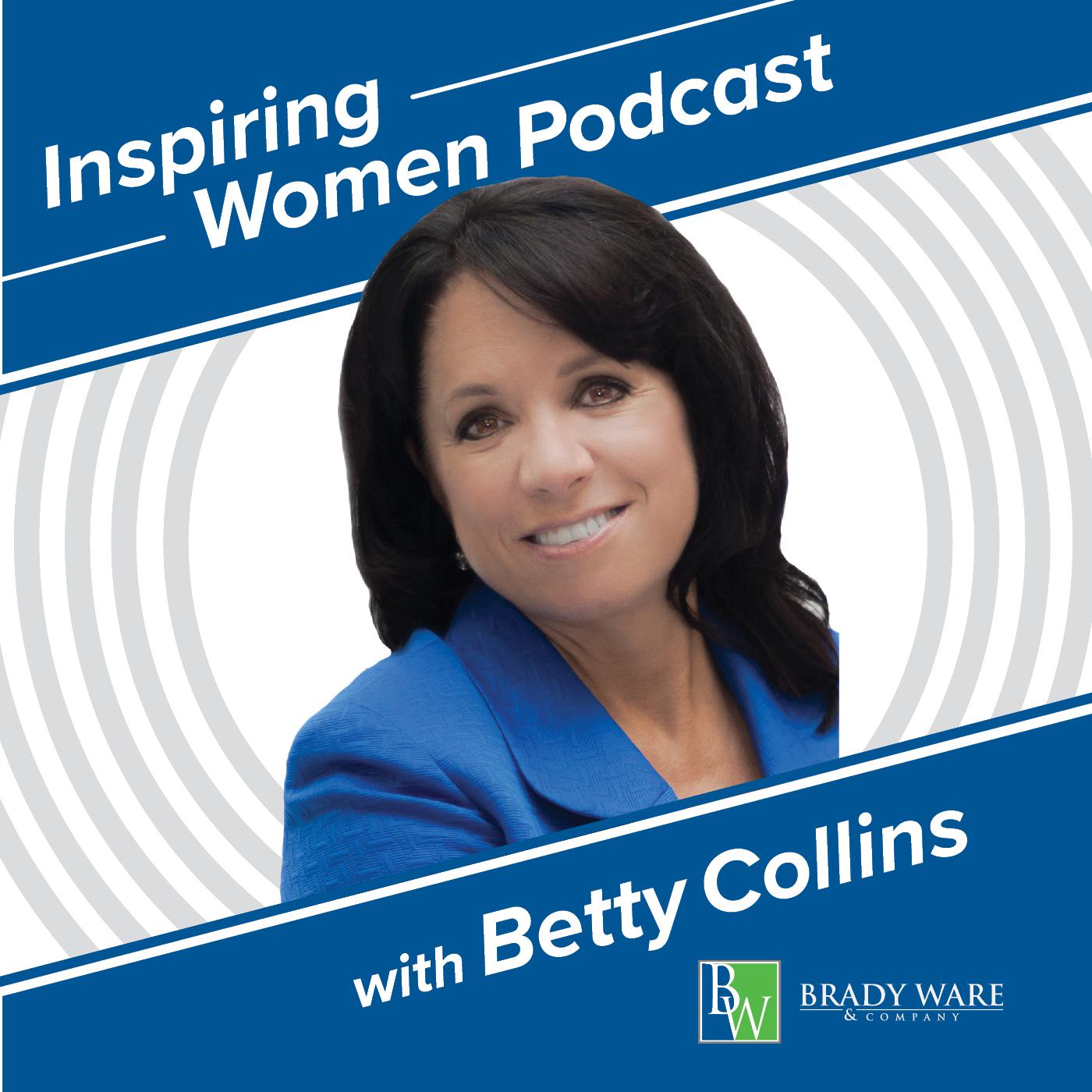
Inspiring Women, Episode 16: Becoming a Woman of Influence

December 11, 2019 by John Ray

Betty Collins, Brady Ware
Inspiring Women PodCast with Betty Collins
Inspiring Women, Episode 16: Becoming a Woman of Influence
Loading
00:00 /
RSS Feed
Share
Link
Embed

Download file


Betty Collins, Brady Ware
Betty Collins, Brady Ware & Company

Inspiring Women, Episode 16:  Becoming a Woman of Influence

Influence is merely the capability to have an effect on the character, development or behavior of something. Do you want to be that woman of influence? Host Betty Collins discusses what it takes to expand your influence on this edition of “Inspiring Women,” presented by Brady Ware & Company.

Betty Collins, CPA, Brady Ware & Company and Host of the “Inspiring Women” Podcast

Betty Collins, Brady WareBetty Collins is the Office Lead for Brady Ware’s Columbus office and a Shareholder in the firm. Betty joined Brady Ware & Company in 2012 through a merger with Nipps, Brown, Collins & Associates. She started her career in public accounting in 1988. Betty is co-leader of the Long Term Care service team, which helps providers of services to Individuals with Intellectual and Developmental Disabilities and nursing centers establish effective operational models that also maximize available funding. She consults with other small businesses, helping them prosper with advice on general operations management, cash flow optimization, and tax minimization strategies.

In addition, Betty serves on the Board of Directors for Brady Ware and Company. She leads Brady Ware’s Women’s Initiative, a program designed to empower female employees, allowing them to tap into unique resources and unleash their full potential.  Betty helps her colleagues create a work/life balance while inspiring them to set and reach personal and professional goals. The Women’s Initiative promotes women-to-women business relationships for clients and holds an annual conference that supports women business owners, women leaders, and other women who want to succeed. Betty actively participates in women-oriented conferences through speaking engagements and board activity.

Betty is a member of the National Association of Women Business Owners (NAWBO) and she is the President-elect for the Columbus Chapter. Brady Ware also partners with the Women’s Small Business Accelerator (WSBA), an organization designed to help female business owners develop and implement a strong business strategy through education and mentorship, and Betty participates in their mentor match program. She is passionate about WSBA because she believes in their acceleration program and matching women with the right advisors to help them achieve their business ownership goals. Betty supports the WSBA and NAWBO because these organizations deliver resources that help other women-owned and managed businesses thrive.

Betty is a graduate of Mount Vernon Nazarene College, a member of the American Institute of Certified Public Accountants, and a member of the Ohio Society of Certified Public Accountants. Betty is also the Board Chairwoman for the Gahanna Area Chamber of Commerce, and she serves on the Board of the Community Improvement Corporation of Gahanna as Treasurer.

“Inspiring Women” Podcast Series

“Inspiring Women” is THE podcast that advances women toward economic, social and political achievement. The show is hosted by Betty Collins, CPA, and presented by Brady Ware and Company. Brady Ware is committed to empowering women to go their distance in the workplace and at home. Other episodes of “Inspiring Women” can be found here.

Show Transcript

Betty Collins: [00:00:00] Today, becoming a person of influence … In fact, today, because this is Inspired Women, I’m going to say becoming a woman of influence, right? I’m going to start with this. I love a certain movie, and I bet I’ve watched this a hundred times; I’m not kidding. My husband will come home and can’t believe I still have this on, but it’s “Two Week Notice,” with Sandra Bullock, who plays Lucy Kelson, and Hugh Grant, who plays George Wade. Sandra Bullock is an activist and she is a “cause” – I’m putting that in quotes – per Hugh Grant in the movie.

Betty Collins: [00:00:32] He says that, at some point. She is very passionate about architecture and preserving historical buildings that have meaning. They’ve been in the community forever. How dare you take this down? Right? On the other hand, he’s a developer, and he tears down buildings, and he puts up new ones that are nothing like the historical buildings, of course, that she loves. He’s that big corporate America; she works for all these legal aid things and does all the good work. They are night and day. He grew up wealthy. She grew up poor. I mean, they have nothing in common, really.

Betty Collins: [00:01:08] Needless to say, her method is that she would protest, and take her protesters, and they would stand in front of buildings when they were trying to tear them down. For a while, it would work, and all three people that she had protesting with her … Then they would take them, and she would go into jail, and her parents would bail her out. One of those times, the parents were- they were coming, of course, out of the building- or out of jail, actually. The parents had paid her bail, and she looked at her parents and said, “Did they tear the building down?” They didn’t say yes. They didn’t have to. She just looked at her parents and said, “I’m just not getting through.” They said, “Let’s just go to dinner …” She goes, “No. I gotta go home and think about this one.” That line stayed with me – “I’m just not getting through.” In other words, she wasn’t influencing anything.

Betty Collins: [00:02:03] How many times have you had that passion, something in your heart and soul, right? And you have no results? You have that “I’m not getting through.” In reality, no influence. Influence can be applied to many things. Maybe you to influence and have a following. Maybe you want to push an agenda, be impactful. You have a passion. You have a cause, like Lucy Kelson. Today, we’re going to talk about becoming that person of influence.

Betty Collins: [00:02:31] Influence is merely … It’s the capability to have an effect on the character, development, or behavior of something. Do you want to be that woman of influence? I hope so. We’re counting on you, actually. The movie is not real life, of course it’s not. It’s not. It’s fictional. But Sandra Bullock acted out and was determined to have influence about historical buildings. She really wanted the community center where she grew up to stay intact. But she had enough insight in that moment, when she saw her parents look that they had torn down another building, that it was not working, so she changed the way or the approach to influence her agenda of historic preservation.

Betty Collins: [00:03:18] I don’t know what your historic preservation issue is, but I’m sure there’s something out there that you would like to have more influence on. Well, the approach was very uncomfortable, and she had a mindset change to her method to her madness. Instead of having her and three people go protest, she ends up approaching Hugh Grant, as George Wade; the rich kid, the playboy, the guy who’s kind of everything she can’t stand. She ends up working for the guy who’s tearing down the buildings. Now, it’s a movie, and I get that, and I would call … But if that was real life, and you decided, “I’m going to now get in and get with that person,” like I talked in my last podcast – the decision maker, the person who makes things happen – that’s exactly what she did. It was bold. It was tenacious. She wasn’t comfortable. Confidence- she was confident in her passion, but it took a lot of … She’d be courageous now.

Betty Collins: [00:04:18] Okay, it’s a movie, but it could be real if you applied it to your situation. How are you going to change your mindset? How are you going to change your method? Are you going to do something a little more bold and tenacious to make it happen? Of course, Lucy Kelson did that. More on Lucy Kelson later. But before we continue, I want to think about the influence you have now or that you would like to have. Are you just not getting through to some aspect of your life or a situation, maybe in your family, with your kids? You know how that is. Bosses, customers, the career path. Think on it. Don’t just listen to my podcast, but really think on it. Define it, put it on the table, write it down, and then say it out loud. “I want to influence …” and make some change to becoming that influencer, so you get through where you need to.

Betty Collins: [00:05:12] To influence others, in other words, it’s not really optional to do these things, and it’s a lot. So, listen closely and get the transcript on these next few things, because this is not for the weak; it is not for the weary. You must go beyond general expectations, and you must reach for limits above the norm. You must have total confidence in yourself and what you are attempting to achieve, but you also have to be courageous. It’s one thing to be confident, but to stand up in the room and say what you need to say, that takes courage. You’ve got to provide words and wisdom to others who are seeking to obtain it. Then, you have to understand the impact, yourself, of maybe that historical preservation/community center staying. I don’t know. Show others that these things can be realized. Again, this is not for the weak, and it is not for the weary.

Betty Collins: [00:06:07] I’m going to give you some tips on how do I get through? How do I become that woman of influence? Well, first, you’ve got to focus on resonating with the audience. You’ve got to know the person or the group you’re trying to influence. I think, in the movie, that’s what she was doing. “I’ve got to get to know George Wade, and who he is, and get beside him …” Of course she got … It’s a movie, so it’s kind of … Go watch it, and you’ll see what I’m talking about. In her case, she said, That’s what I got to do. It’s no longer enough. I got to get to know this person and figure it out.”

Betty Collins, Brady Ware: [00:06:40] Begin with your audience and create generosity for them. I know that when I speak publicly, if I don’t get to know that audience, I will not connect, I will not resonate, and they will be on their phones. You have to benefit. You have to give them some kind of positive experience. That’s really just called you’ve got to make a resignation. Here’s a great quote, when you’re figuring out that audience or that person of who you’re trying to get to. “If you talk to someone about themselves, they’ll listen for hours.” I’m going to say that again: “If you talk to someone about themselves, they’ll listen for hours.” People will immediately like you, if you show interest in them first. We don’t do that well, often, today.

Betty Collins: [00:07:27] You’ve got to learn about who they are, what they are, what they dislike, what their favorite sports are. Make yourself more likable, and maybe you’ll gain some trust. I have a great example that. I was interviewing a very large client, and I really wanted this client. I went in there not really having any ability to resonate with this person. The more I tried to sell myself, and sell my company, and talk about myself and all those things, the interview was over before it started. Fortunately, I was perceiving that. I had good perception.

Betty Collins: [00:08:12] Then, I realized I just need to wind this down. She’s not interested. I saw two pictures on her desk, and one of them was … It looked like a place I had gone to. So, I said, “Hey, do you travel a lot?” She goes, “We love to travel. We live to travel.” I said, “Oh, is that St. Lucia? She goes, “It is.” Completely different conversation. We talked travel for 10 minutes, and we talked about everywhere we had been. She talked about all over, and it was personal for her, because it was with her husband, and her children, and a lifetime of those things. I was able to now resonate with that audience. I made a connection. Then, at the end, she said, “Get me the contract, and let’s get started.” It was the most bizarre thing I’ve ever …

Betty Collins, Brady Ware: [00:09:01] But I learned from that, that first thing, I went in … I try to do this now. I look around the room. What is the audience? Even if it’s one person, what is in their office? What are they – what resonates with them? If you want to influence, you’ve got to resonate. You got to know your stuff. If you want to be an influential person, you’ve got to know your stuff, and you’ve got to be incredible.

Betty Collins: [00:09:23] Lucy Kelson, played by Sandra Bullock, knew her stuff about historical preservation. She just did. She could go on, and on, and on about it. Now, Hugh Grant didn’t hear her, but she knew her stuff. She gained knowledge. She knew her research. When it really came to the moment where she could actually work for somebody like him and be there, he then began to go, “She knows. She’s credible. She might be a liberal, and I’m a conservative. She might be frugal, and I’m excessive,” but she knew her stuff; she had credibility; that took her a long way, and it kind of- she gained some authority because of that.

Betty Collins: [00:09:58] It’s funny, in the movie, now, he can’t make a decision without her. Everything is what she thinks, right? But knowing and research, you have to do that. You have to know, if you want to be an influencer, and it doesn’t matter what it is. If you want to help someone at your church, and you want them to know the Bible; if you don’t know it, it means nothing that you’re trying to help them. If you are in a situation where you’re trying to help someone sell something, and you’ve never sold anything in your whole life; doesn’t help. You’ve got to know your stuff to be credible.

Betty Collins, Brady Ware: [00:10:27] It’s our nature to listen to those who know more. It also is our nature to not listen to people who know more. Sometimes, the smartest person in the room is “the expert,” and they get attention because you’re stuck with them, because they’re expert. You don’t want to be in that but know your stuff and be credible.

Betty Collins: [00:10:47] Build your strategy and process first. To become influential, you’ve got to be intentional. I’m sure you’ve heard that. But those who plan, influence; those who think first, influence; those who are paralyzed by the plan, don’t influence, by the way, so don’t get too wrapped up in that, because if the plan sits on a shelf and collects dust, it means nothing. In order to have a real plan, you’ve got to think it through, but then you’ve got to go, “Here’s how I’m going to process this,” and then you will influence.

Betty Collins: [00:11:16] I know in Brady Ware, with our women’s initiative, I really did sit back and go, “What is the purpose? What is the mission? How do I want this to go? What is it I really want to achieve at the end of the day?” Then, I began executing things in pieces, and in five years, Brady Ware can’t believe how we’ve grown this to what it is. But it took a lot of that. Now, I’m pretty influential in Brady Ware, when I go in and say, “I think we should do this for women.” A lot of times, it’s just a given, because I’ve done my homework, I know my stuff, and I have a credible reputation. But then, I build a strategy, and I continue to change the strategy.

Betty Collins, Brady Ware: [00:11:53] The other piece is you’ve got to find your unique voice, when you want to influence. You can be the norm. You can be like everybody. You can be a copy, or you can be original. You’ve probably heard that. The key difference between influencers who make it and those who don’t is really not about how hard you work. That’s good stuff. It may not be that you are the big producer … People wear that badge of honor and thump their chest – “I’m the biggest! I’m the best! I’m doing all this!” – but it doesn’t mean that they are always going to be heard. In fact, sometimes people don’t want to hear about how hard you work and how good you are. They will be inspired by you, if you have a unique voice or method in how you communicate or how you do something.

Betty Collins: [00:12:38] There’s a funny part in the movie. It’s the envelope part of the movie. Now, of course, Hugh Grant can’t make one decision without Sandra Bullock. She knows her stuff. She’s credible. She’s on it. She’s gained his trust. On and on … So ,he brings her these two envelopes, and she’s like, “These are the same envelopes. I don’t know what the debate is?” He’s describing it to her, and she’s still going, “I don’t know what the debate is? They’re both not made with recycled paper, so I wouldn’t buy either of them.”

Betty Collins: [00:13:07] Then she goes, and she licks the envelopes, and see how they seal. He goes, “What are you doing?” And she goes, “Well, you’ve got to see if they seal well,” and she’s licking to see how they taste. He was like, “I’ve asked a hundred people this same question, and you’re the only one who came up with this answer.” That stuck with me, because I just think about these things. I don’t know why … She just had a unique way of helping him make decisions or getting him to where he needed to go. Again, it’s a movie, but the principle is there. Never underestimate the uniqueness of how you leverage; your voice will be heard differently, versus just, “I work hard, so I should be heard,” or, “I’m the biggest producer, I should be heard.” Those are things that are out there.

Betty Collins: [00:13:48] You’ve got to be consistent, period. To create trust and connection, you’ve got to be consistent. Deviation is okay, but consistent rules the day. I’m sure you’ve heard this – if you want to be influenced … You want to be the influencer, and not be influenced. Not that that’s bad but being authentic and building trust; you’ve got to be the real deal. People can read through that. It’s critical to stay that way. It’s critical to be transparent. People want to connect with people who are the real deal and are trustworthy. I see that in all levels and positions at Brady Ware. When you have somebody who just- you know that they are going to be authentic, and you can trust them, you’ll deal with them a lot more, you’ll use them a lot more, and you’ll probably support them when they need it a lot more.

Betty Collins, Brady Ware: [00:14:37] Another thing I didn’t … As I was doing my research for this podcast today, focusing on the metrics that matter … It seems like all I hear about right now are metrics and measuring, but influencers having impact need to measure metrics, and they need to measure the right ones. My good friend, Sheri Jones, she has a company, Measurement Resources, that measures outcomes. She has convinced me, over and over, it’s important, and it’s valuable, because I see results with it. But, at times, as an influencer, you think if you are dealing with metrics like ‘I have this many employees, and my company’s bigger, and now I’ve gotten to this revenue; my office is now the corner, and it’s the biggest; or my LinkedIn connections have hit 1,500; or, hey, I make more money …’

Betty Collins: [00:15:27] Those are all good metrics and things to shoot for. But you probably will have better results as an influencer if you focus on two things. Engagement; engagement with employees, engagement with customers, people that totally … You’re engaged and, no matter what, there’s a strength in that. So, engagement is huge. You can do all you want for employees; if they aren’t engaged and own it, and they’re … It’s not nearly as effective. So, measuring engagement is proven to be something that’s huge. It’s not just that I saw five people and have five contacts; It’s did I engage with them? Did I make a connection with them? Going again back to I knew my audience, and I was able to talk about St. Lucia, and it all came to full circle. That’s engagement; not talking about what I do, and how hard I work, and what we can do for you.

Betty Collins: [00:16:20] Then, the return on your investment. There are things that you can do in any organization, where you might put a lot of metrics on volume and sales. If it’s the wrong sale, and you don’t make any money, it doesn’t matter. So, measure what is bringing back to you. I can make this much money on these things, so obviously, it’s adding to my cash, or paying off my debt, or it’s I now have reinvestment money. People who are pretty influential measure those things that matter. The two metrics are engagement, and the other one is return on investment.

Betty Collins: [00:16:59] You’ve got to be vulnerable but smart. Opening up about your struggles and fears; some people do that better than others, but it’s tough. Doing so, though, helps you connect to that audience. It definitely humanizes you, because we all are. I’m not saying that you need to tell your life story every day. Please don’t. The difficulties you share could be really relatable to that person. You never know. It also can be real negative, if you overdo it.

Betty Collins: [00:16:59] In the movie, Hugh Grant, who is more of a playboy, not over-serious, successful, living on his dad’s money, but yet, he’s influential because he’s successful. Of course, the activist of Sandra Bullock’s very harsh about him. Then, in this one moment in the movie, they’re in her favorite place, and they’re talking about expectations, and they’re going on and on. Then Hugh Grant just says, “Or maybe no one having any expectations at all …”

Betty Collins: [00:17:59] She understood, in that moment, because her parents had such high- that his parents probably had such low, so no wonder he didn’t get it. He didn’t get what she was totally driven with, right? I just found that an interesting line, because she heard him, and, at that point in the movie – again, this is not real – but she listened to him differently. She treated him differently, because she saw something in him. For her, for parents, or anyone around you to not have expectations of you was very, very foreign to her, because that was all her parents were about. So, she heard, and it changed her view – again, influence.

Betty Collins: [00:18:42] Don’t take shortcuts when you’re trying to be an influencer. In fact, it might put you three steps forward, two steps back. You can’t do it faster and easier. It has to be at a pace that works. Don’t put your reputation at risk. Definitely don’t do that. To become an influencer, you probably have built a lot of authority and trust that we’ve talked about. Do not lose that investment by going rogue or just dipping into something that you shouldn’t. In this movie, both characters were so opposite, but they really never compromised who they were, at the end; they just didn’t. She loved historical buildings, and he loved new ones, and there was nothing wrong with either side. They didn’t ever put their reputation at risk, because that’s who they are and it’s what they did.

Betty Collins: [00:19:28] Lastly, but not leastly, it’s not about you. When you’re trying to influence, it cannot be about you. It may be about you, in the end; it might be somebody you’re trying to influence to build a bigger company or influence your family to be a better- all those things. But it really is about the person. It’s less about you, and it’s more about cheering on the cause, or cheering on the people that you’re trying to influence. Becoming a woman of influence is not for the weary. It is not just for the strong, either. I’ve seen all kinds of women in all kinds of positions in all stages of life influence.

Betty Collins: [00:20:01] These are just a few quotes that I found. I always love to find quotes, and so I’m out there googling, but I thought some of them were interesting. “If you’re going to influence, associate yourself with people of good quality, for it’s better to be alone than in bad company.” Two, “You can be much more influential if people are not aware of your influence.” Again, I go back to my friend Caroline Worley, who’s such a master at being political savvy and such a master at influence and using it for the good. She was fantastic. “Influence is like a savings account. The less you use, the more you got.” Let that sink in. And, “The ability to influence people without irritating them is probably the best skill that you can ever learn.”.

Betty Collins: [00:20:45] So, today I’ve said a lot. Get the transcript. Get my notes, because there’s a lot there that you need to dig into. Influencing, becoming that person of influence is something that you can do. It takes work, and it takes intentionality, but it would be worth it in the end of whatever that you’re trying to accomplish. I’m Betty Collins. Thank you for listening today.

Tagged With: CPa, CPA firm, Dayton accounting, Dayton business advisory, Dayton CPA, Dayton CPA firm, influence, Influencers, Inspiring Women, Inspiring Women podcast, woman owned business, women entrepreneurs, Women in Business, women of influence, women-owned businesses

Inspiring Women, Episode 15: Being Politically Savvy

November 16, 2019 by John Ray

Inspiring Women with Betty Collins album cover
Inspiring Women PodCast with Betty Collins
Inspiring Women, Episode 15: Being Politically Savvy
Loading
00:00 /
RSS Feed
Share
Link
Embed

Download file

Inspiring Women with Betty Collins album cover

Being Politically Savvy

How do you successfully navigate office politics? On this edition of “Inspiring Women,” host Betty Collins discusses the skills needed to be politically savvy. “Inspiring Women” is presented by Brady Ware & Company.

Betty Collins, CPA, Brady Ware & Company and Host of the “Inspiring Women” Podcast

Betty Collins, Brady Ware & Company

Betty Collins is the Office Lead for Brady Ware’s Columbus office and a Shareholder in the firm. Betty joined Brady Ware & Company in 2012 through a merger with Nipps, Brown, Collins & Associates. She started her career in public accounting in 1988. Betty is co-leader of the Long Term Care service team, which helps providers of services to Individuals with Intellectual and Developmental Disabilities and nursing centers establish effective operational models that also maximize available funding. She consults with other small businesses, helping them prosper with advice on general operations management, cash flow optimization, and tax minimization strategies.

In addition, Betty serves on the Board of Directors for Brady Ware and Company. She leads Brady Ware’s Women’s Initiative, a program designed to empower female employees, allowing them to tap into unique resources and unleash their full potential.  Betty helps her colleagues create a work/life balance while inspiring them to set and reach personal and professional goals. The Women’s Initiative promotes women-to-women business relationships for clients and holds an annual conference that supports women business owners, women leaders, and other women who want to succeed. Betty actively participates in women-oriented conferences through speaking engagements and board activity.

Betty is a member of the National Association of Women Business Owners (NAWBO) and she is the President-elect for the Columbus Chapter. Brady Ware also partners with the Women’s Small Business Accelerator (WSBA), an organization designed to help female business owners develop and implement a strong business strategy through education and mentorship, and Betty participates in their mentor match program. She is passionate about WSBA because she believes in their acceleration program and matching women with the right advisors to help them achieve their business ownership goals. Betty supports the WSBA and NAWBO because these organizations deliver resources that help other women-owned and managed businesses thrive.

Betty is a graduate of Mount Vernon Nazarene College, a member of the American Institute of Certified Public Accountants, and a member of the Ohio Society of Certified Public Accountants. Betty is also the Board Chairwoman for the Gahanna Area Chamber of Commerce, and she serves on the Board of the Community Improvement Corporation of Gahanna as Treasurer.

“Inspiring Women” Podcast Series

“Inspiring Women” is THE podcast that advances women toward economic, social and political achievement. The show is hosted by Betty Collins, CPA, and presented by Brady Ware and Company. Brady Ware is committed to empowering women to go their distance in the workplace and at home. Other episodes of “Inspiring Women” can be found here.

Show Transcript

[00:00:01] So today I’ve chosen kind of an interesting topic. Maybe when you hear the title, you’ll understand politically savvy. Oh, yes. Politics. You know, today it’s always had a negative tone. But in today’s environment. Wow. Just not good, right? But, you know, if you take politics in in politically correct or just say politically savvy, maybe I’ll get you to listen. Politically savvy. The why and the how. I will tell you, is it really necessary? Because some people really don’t like that idea of that. I’m going to say a firm. Yes. If you truly want to get where you want to go, you’ve got a you’ve got to learn the art of being politically savvy. So let me set the stage. The term politics is based on words, Polly, and ticks. Poly meaning many and ticks, meaning blood-sucking parasites, totally fits in today’s environment, right? It’s why we don’t like it maybe I don’t know. But whenever people’s priority, their values and their interests come together, chances are some type of politicking is going to take place. So where are your priorities right now? Can you easily define those values? Hopefully it should be quick, you know. What are your interests? So, yeah, you know, it’s necessary if you’re going to make sure that those priorities, values and interests are really going to become reality. Being politically savvy just might have to be in order.

[00:01:36] But no matter where, you know, your office, family, maybe you maybe you volunteer a nonprofit, you’re involved in your local community, talk about politics or politics, politicking. It’s just inevitable. And they involve intentional acts to you and by you to influence and enhance, you know, protect those priorities and those values and interests. So we’re going to talk about today. So, yeah, it’s necessary to be politically savvy to have as the best desired outcomes that you’re looking for. I think the major intention of office politics is about. It’s about positioning yourself. It’s about vested rights that can be dangerous, maybe resources and careers, influence and power. And when all those things are done the right way, it can be really amai amazing. And when it’s done the wrong way with wrong motives, though, it can be pretty dangerous. So be careful when you’re talking in wanting to position yourself, investing yourself and tapping into resources, advancing your career, which can all lead to some good influence and power. Political savvy is the only way to go and it’s a positive connotation. Necessary, my opinion totally the true secret to being politically savvy is that it’s a secret skill. To be successful if the best it’s the best trader ability you have that’s just kind of natural and and you don’t talk about being politically savvy and nobody talks about it.

[00:03:07] e-justice. It’s who you. It’s it’s who you are. It’s how you can can work the room and work the situation to do what you need to do. Navigating an office or, you know, an organization, even your own household. You know, you got to get comfortable with and then duty, you know, those unknowns. Right? You’ve got to get comfortable with some alliances. Not everyone is easy to align with and be authentic with. That’s why you got to be political savvy. By the way, you know, the thing that we don’t really see a lot in today’s politics is, is those things that people are trying to come together with. But with practice, you know, you can decipher what is often unspeakable and not easy. If you decide the right course of action and just a side note, authenticity is not telling the truth without spilling every single. Your gut every single time. That’s not an authenticity. But truth always wins and it doesn’t have to be dramatic. So as we talk about political competence today and being politically savvy. Really, political competence is the ability to understand what you can and cannot control. You’ve got to know when you take action. And you’ve got to figure out who’s going to resist your agenda.

[00:04:25] I remember it being in a class once for CPE and it was a long, long time ago in my career and she was such a dynamic speaker. If you can imagine, all of us really love talking about managing compilations. OK. Not an exciting subject, but she or I never have forgotten this for her. She said Always figure out who’s going to resist what you want to do when you’re managing. Always figure out and be prepared for it because it will happen. So I’ve always remember that advice from this woman. I couldn’t tell you who it is on compilations of how exciting. You have to know who’s on your side. Absolutely. You know, there is that saying out there, keep your friends close, keep your enemies closer. So there’s some truth in that. But you really do have to know who’s on your side, who’s in that circle that will help you through it. And then you have to know about how to navigate through that, the map, the political terrain where you are to get others on your side. So, you know, I’ve said a lot of things that you probably already knew, but being politically savvy is really, you know, for me, I’ve got to make sure that if I’m going to get what I want or I’m going to get what I think the organization needs or do what’s best and align my values and all those things, I’ve just got to learn this skill set. So how do I do that? I’m going to give you some Howse today. Here’s the number one think before you speak. Let me say that again. Think before you speak. You know, to be truly politically skilled. You’ve got to have some impulse control even over this past weekend. I had a situation where I got a a face book message, p_m_, whatever it’s called.

[00:06:01] And it was a very I could have taken that message a hundred ways, but I stepped back and said, nope, I’m going to think about this and try to not hash it over all weekend. But before I speak, I’m going to take my time. It kind of paid off because when I actually had the conversation and step back and wait for a real conversation, not text, it turned into something different.

[00:06:24] So you need to choose your organizational battles wisely. You know, those conversations that size things up before you decide how you’re going to present to others. You have to consider whether or not to voice a thought or a feeling. And timing is everything. Have you ever seen someone try to get something done because they’re passionate. They want to do it. They’re ready. They’re prepared. It’s just not the right time because the person maybe or the situation they’re trying to change. It’s not time. It’s not a good time. You’ve got to think before you speak and you’ve got to think there’s going to be a time when I can do this.

[00:06:58] You have to consider that your communication of yourself, your ideas, your opinions, sometimes look back and see where you said something. And in that prior time, it worked and learned from that. Probably it was the circumstance and the timing that made it work.

[00:07:17] The result that you can have can be pretty ideal if you wait and think before you speak. And chances are you’re probably not going to go off and be real rogue or this situation goes rogue. And you definitely are politicking at that point, but the results are likely be more positive when you think before you speak. Especially when it’s not something simple, especially when it’s something that could be controversial or it could go either way in. So be careful too. You got to manage up to some point. When you are savvy, you must be able to skillfully communicate with the layers above you.

[00:07:52] What does layers mean then? Sound very fun, does it? But it’s your boss, the supervisor. Sometimes I’m referring to even higher up decision makers. Your boss might not be the decision maker, but then you have to look at that layer and say, boy, if I go to his boss or her boss, is that going to be good? So you’ve got to figure out how to manage up to a point. I was just in a meeting where there were two people with the same position and they both had such different approaches. They both managed up, but two to one really did it to the wrong person and one did it to the right person and that person who knew skillfully enough to go, Hey. Think before you say say it, well, that person was making such more headway than the other person over here thinking, I’ve chosen the right person, I’m going to work the room over here and I’m going to. I’m gonna be savvy on this side on the right person to be savvy with. So you have to think about those things.

[00:08:48] Also, political skill involves maintaining good relationships with people, though, in the entire organization. Nearly as good as that team around you. We always hear that.

[00:08:57] So I’m not saying put all your all your energy and your resource in layers above you, because if you don’t have the layer below you, that makes it all work as well. You may end up neglecting that entire team around you. So, you know, when you’re trying to be politically savvy, trying to work through your family organization, your church, your community office, your careers. Think before you speak and manage up to a point. Make sure everyone around you that’s involved is treated well, because those people may they may one day rise up above you. You never know. You have to practice influence. How do you do that? I mean, what does that really mean? Because my next podcast is on influence and becoming that so effective influencers. They build strong interpersonal communication and relationships and they have good rapport with other people. When you are skilled, politically, politically savvy, people are comfortable with those interpersonal communications and skillsets that can be somebody that’s very intimate setting. It can be something that’s one on one. But you have to practice that influence. There’s a really good saying that sometimes influences like a savings account. The more you don’t draw out, the more you have.

[00:10:13] So sometimes throwing influence around doesn’t help you. I really got to witness somebody who’s very good at influence and being politically savvy and having really good impact. And that would be Caroline Warley. She’s an attorney in Columbus, Ohio. She has helped tremendous amounts of women’s organizations start from scratch, get them going. And what she really does well with those things is she connects people to the right people because she is a very connected person. She practices her influence. But you don’t even know it. You know, she’s bringing those people in and she’s she’s making sure that they are connected to the right thing for the greater good, not for Caroline morally necessarily. It’s okay that sometimes it’s for Caroline Worthy. Right. But she practices that influence in all kinds of situations and areas in her life. People who practice influence, they tend to have some good judgment about when they assert themselves and that results in cooperative relationships around them. So skilled influences are not always overly political. They just know how to play the game. Don’t you hate that? But it’s true. There are people out there who really know how to do that.

[00:11:26] Number four, this could be an entire podcast. Hone your power of perception. Don’t you love the person in the room that has no, I dieser just. They think they do, but they don’t. So I love number four. What a statement. Really, it’s an action or trait that is key to being skillfully politically savvy. You have to understand that.

[00:11:52] That when you can know what’s going on and be perceptive, there is power in that can, that’s an entire podcast. One day I was in a meeting and room full of great people and I walk in and they said, Here’s your meeting. I sat down and. And I’m pretty personable. So I start talking to everyone because, you know, I think I am in the right meeting. I have no idea that I’m completely in the wrong meeting until I realized and I said out loud, I’m in the wrong meeting.

[00:12:23] Everybody laughed because there’s a dozen people, but they were very entertained. But it didn’t dawn on me till probably three to five minutes into this meeting. I had no idea I was in the wrong meeting, too. I really then started seeing these people had no clue. I’m hitting out my cards to everybody. The funny part of that story was two years later, somebody hired me from that meeting because I handled it so well. Wish them all a good day. Walked out of there completely humiliated, but I laughed all the way out the door.

[00:12:51] So having the ability to understand now, that was a funny situation, obviously, but people who can hone in and have that perception have some. There’s power in it. And you understand you’ve got to. It’s a skill. This is really a natural characteristic in somebody. I think it’s a hard skill to learn. If you can’t see it, you just can’t. And so if you really have that problem where you’re not being able to work a room, well, get someone to help you with that. You’ve got to know who is around you and what this what the circumstances is. But it really is part of being really good savvy. That’s for sure. You got to learn to network. There’s networking and then there’s networking. Right. Actually, my friend Betty Clark at CPM Media says all the time there’s networking and then there’s connecting. So I could go to lunch three times a day. Sometimes I feel like I have or there’s really where you’re connecting with somebody. And so when you’re being savvy, if you are a person who helps small business, but you are meeting with big time, the large client, middle market bankers, that’s that’s networking. It’s not connecting. So you have to learn the difference a little bit and get in there. And of course, it’s not who you are. It’s who you know. That’s just a fact in life. Effective networking goes well beyond passing out your business cards and smoothing. You know, people who possess a strong networking ability, they build friendships and they see that going to be beneficial for both of you. It’s not about networking with a big name. So you can say you networking the big name. What can you do for them and what can they do for you? Skilled networkers know when to call on others and they’re willing to reciprocate.

[00:14:41] There has to be benefit between the two. The relationships have to benefit. Otherwise, it truly is just having lunch. It’s not networking connecting. So you have to invest in them and they will invest in you. Those are just various things that you can do to get that good politically savvy people are. They think before they speak. They manage up to they manage up to a point, but then they practice influence, they hone the power of perception and then they learn to network. Those are things that you have to take those five subject matters and dive into where you don’t have strength. But really, those who demonstrate political intelligence, they probably have a basic strategy. Of course, I’m a CPA and I’m a practical person. So strategy is great. I love it. If it sits down, if it’s in a book that sits on a shelf, it doesn’t really mean anything.

[00:15:33] So when I talk about they demonstrate political intelligence, they’re actually doing something with this strategy. But these are the things that they do. They partner with their boss. Unless you have a unique and irreplaceable knowledge or skill, which very few people do, actually your boss has much more power than you do. Probably your manager has much more access to those key decision makers. So it’s better to have a boss as a cheerleader than as an adversary. And again, I go back to managing up and you find those relationships. If you really want to get to the CEO of a company or a vice president level. You’re probably not going to find that by partnering with the accounts payable clerk of the company. You know, you’ve got to understand partnering with whether it’s a customer or a prospect or in your own company, partner with the boss. The person who’s up. The person who is the decision person. But at the same time, you’ve got to be a team, a 360 team player, which, you know, what does that really mean? I think it means it’s full circle. You must have a wide network of relationships with in your organization. Missy Heimer, who is a director at Brady, where when she first came to Brady, where which is probably 13, 14 years ago, she was a staff accountant. She kind of had started her career later in life.

[00:16:46] But she was very adamant of wanting to be a director and own a company one day. And one of the people gave her great advice. Young, you know, when she became a senior, she started seeing things happen. Get to know every director of Brady where and not just in the office you work in, but in other offices, because one day you’re in need, all those relationships around you. And so, you know, when it came time to vote for her to be a director, she knew everybody shouldn’t work for them necessarily. She she didn’t have that much interaction, but she definitely had this full circle. And on top of that, she made sure all the managers around staff, everyone, she was a kind of a hub centralized person. The other reason had to be a 360 team player and know kind of everyone within your organization. I mean, our Columbus office has 30 people in it. The more you know and have relationships in and work those rooms, guess what? You’re going a better understand what’s going on in the Columbus office. You’re going to know the things that are happening. And you won’t be maybe surprised then when you get those circles in those teams all collaborating. You can do anything. And that’s part of being politically savvy for sure. Then you have to understand the power map. Organizations are pop power hierarchies, right. And from time to time, those things shift.

[00:18:08] So you might have had the relationship with this person for ever and ever thinking that would hold you there. Well, what happens when that person goes? I learned this early on in my career as I was, you know, trying to know more and more people. And I loved one of my partners, which was with the payroll company. And this person gave me a lot of business and I gave them a lot of business. It was great until all the sudden three into three years. Guess what? They go on to something else, like selling medical something. Well, I had no other contacts at that point to refer to me or me refer to them. And so you have to kind of understand that at sometimes, no, that’s not a hierarchy person, but everywhere you have to. I if I would have known his boss, the boss would’ve probably brought me out one of his better reps if I wouldn’t. You know, CEOs come and go, accountants come and go. And you’re in. Really, you’re working for the owner of the company, not the CFO. You have to make sure that your understanding that power map of who has the influence, where you are and where you want to be and making sure that you will always leverage that things could change. So I’ve got to be able to change along with it.

[00:19:16] Then you have to practice subtle self-promotion. That would not be Betty Collins. I tell people on my podcast all the time. And really, if I don’t mean why wouldn’t I promote that? I mean, I work hard at it. It takes time to do. I was at a lunch and we were with a table, people we didn’t know. And so we’re going around introducing ourselves.

[00:19:38] And so one of the women said, oh, ah. I asked her, actually, I said, so how do you like being in the Narva organization? And she goes, Oh, I love it. And so the person next to her said, Oh, you’re with norvo. And I said, Yeah, you know, I’m on the board and I’m involved. And everyone started laughing at the table that was with me. They said, she’s the president of norvo. I don’t know why she’s not telling you that. And they all kind of laughed about it, you know. But the person I was across the table from actually was a really great connection. And so now I have kind of something she’s going to remember buying. I gave her my card and we talked. I could have just said, yeah, I’m very involved. I love the organization and so much so that I’m on the board and I’m the president right now, blah, blah, blah. And go on into those things. So sometimes you have to do those things and we don’t always do that well. Of course, there are those people that do it way too often and it’s very annoying.

[00:20:29] So politically savvy people can share their information, but chances are they’re going to self-promote and no-one’s. It’s not going to be obnoxious. People are gonna be good with it. OK. Here’s one. And you’ll go, why did you put this in here? Connect with the power people. Well, the big decisions about your career, you know, your company or even in the community will be made by people who endorse you. It’s just true. I mean, it can actually other day with someone because I was a link. She’s a LinkedIn friend. You know, we run in circles, but I’ve never done a business with her until she. She. Person who was trying to get her business said, well, we have a common person that I know. And can you call her? And she will give me a reference. I’m not going to tell her that I’m calling. And she said, we made this connection. And these were pretty high up. Well, I we consider high a powerful people. I up now having. Thank you for giving me a good reference. And by the way, here’s a client for you, because now I learn more about you and the person who I’d really like to get declined that she knows. Now, we had a great conversation about just business in general vs. other things that that I usually talk with her about. So those decision-maker people who endorse you.

[00:21:49] People who will make you happen. That was just a simple thing. But in the case of your company, maybe it’s your boss, you know, in your business, maybe it’s getting to that bigger client or smaller ones. You know, I’d rather have 10 big clients than 100 smaller ones. It depends on what you do. But in your community, you know, it’s one thing to note city council members. It’s another thing to know the mayor. You’re probably going to get a lot more done when you know the mayor. You may not know the mayor to, you know, council, though. So you have to look at both of those politically savvy people. Enjoy talking to folks who have the power, of course. It’s not like sucking up and using their coattails to drag along, but the people who are endorsed, you know, they’re going to help you be politically savvy. Again, remember memory, I started this podcast. I said you don’t really want to be seen as politically savvy. Just wanted to have it be happening. And then you got to commit to the business of the day that you do the passion that you’re doing, the organization that you’re in. Nobody likes an apathetic attitude. No one has ever press with, well, you know, I like the commercial that’s out right now where they say, yeah, my French is just okay. And of course, they interpret French as completely wrong.

[00:22:56] So if you want decision makers to think well of you, you need to be pretty interested and excited in what you do and false cheer will get you. So it will only get you so far. So you have to have some politically savvy. You really got to have the why and the what so that the what is simple in your life. But you’ve got to be committed to whatever it is you’re trying to politically savvy navigate through. So knowing the rules of this unwritten, invisible world politically savviness that no one wants to talk about because no one wants to say they’re political. It will help you gain recognition. It will help you get promotion in. It will get you where you probably want to go. Here’s some other things where you can think of. I’m going to be politically savvy, not sleazy. Right. You find the geek gatekeepers. Keep your eyes and ears open. Who are the real people of influence? Who do you need to get to? Who’s going to really make the difference? Often it’s just like any game you need to connect with the person who shuffles the cards. You have to be careful in that, too, because you can’t just try to get to the top first. I had a very interesting person in my my district ran for mayor. Anybody can run for mayor, but the person had never been on council.

[00:24:04] They’d never even been in the chamber. They had never been in CVB volunteering throughout the city. It was really kind of strange. So politically savvy, you know, when we’re talking about a find the gatekeeper. Sometimes you got a fine before you get there. You got to listen. Listed the coffeemaker. Gossip is a bad thing, right? It’s hard. It should be anyways. But tidbits of information sometimes can get you right to the right person. So sometimes just again, listening, kind of when I talked in the beginning of think before you speak. Right. Know when to be quiet. Tom Cruise is the perfect example of this in Jerry Maguire. So in the beginning, he has this epiphany, right? He writes this big story. Right. He goes in and gives everybody the story. And the whole place is quiet and within, you know, an hour of entering that office. Guess what? He was walking out of that office, had a really lot of good things to say and passion that he wanted to do and influence and change. But, man, he just didn’t know when to be quiet. Really blew it as far as I was concerned. And then building strategic alliances. You know, it’s not all about numbers. It’s not about how many people like you on Facebook. It really is probably gathering up your own board of directors.

[00:25:17] That is about your agenda. Whatever it is to politically savvy, savvy, navigate through. That’s better than well, I know all these people now and you don’t really know them. And they’re liking something good for you.

[00:25:30] And then trust your instincts. You know, learn what pushes your buttons and do it. Do something about it. Navigating office politics means getting comfortable with that ambiguity, the unknowns, alliances and authenticity, I talked about that at first and with practice you can decipher was often pretty unspeakable and decide the right course of action. So gonna end with this statement to be human is to be political. Inspired people help you build the right required skills to navigate, navigate politically in organization. And so make sure that as you start this venture of I’m going to become politically savvy, take hard. Get the transcript, because I just gave you a ton of information about trying to navigate through through being politically savvy, it’s not easy to do, but it’s necessary in the world you live in, probably. I’m Betty Collins. Thanks for listening today.

Tagged With: CPa, CPA firm, Dayton accounting, Dayton business advisory, Dayton CPA, Dayton CPA firm, Influencers, Inspiring Women, Inspiring Women podcast, organizational culture, perception, politically savvy, politics, power hierarchies, power map, woman owned business, women entrepreneurs, Women in Business, women-owned businesses

Inspiring Women, Episode 1: Are Your “Nevers” Your Opportunities?

May 22, 2019 by John Ray

Inspiring Women PodCast with Betty Collins
Inspiring Women, Episode 1: Are Your "Nevers" Your Opportunities?
Loading
00:00 /
RSS Feed
Share
Link
Embed

Download file

Betty’s Show Notes

The “nevers” became my opportunities once I chose to consider them. Why do we say “never” first?

1) Youth and inexperience
2) Lack of confidence
3) Easy is easier
4) No guidance
5) Fear is paralyzing

My “nevers” included:
Never going to use my accounting degree.
Never going to be a CPA.
Never going to be the employer, content with being an employee.
Never going to merge.

My “never” became “Maybe, OK, Probably” and finally “Yes” due to influencers and facing my challenges.

What are your challenges?
Do you value who you are – no one will ever value you as much as YOU
Are you leveraging your uniqueness?
Are you paralyzed by fear?
When and how you do say NO – that is not a never!

“Nevers” just may be your opportunities.
Be more aware of the people in your life. Ask more questions versus acceptance.  No one will value you more than you. Paralyzed by fear, you will miss your moment.  Leverage your uniqueness, it is your journey.

“Inspiring Women” Podcast Series

“Inspiring Women” is THE podcast that advances women toward economic, social and political achievement. The show is hosted by Betty Collins, CPA, and presented by Brady Ware and Company. Brady Ware is committed to empowering women to go their distance in the workplace and at home. Past episodes of “Inspiring Women” can be found here.

Show Transcript

Betty Collins: [00:00:06] So here I am 30 years later and I’m a shareholder and a director of a CPA firm. We’re regional with about 20 owners. We hover in that area. Probably 150 plus employees. I’ve been elected to the board of directors in my company by my peers. And then a year ago I was appointed to be lead of one of our offices. So we have four of those people in our office. But the fun thing probably the energy that fuels me to do what I do is I get to direct a Women’s Initiative. 60 percent of our employees are women in Brady Ware.

Betty Collins: [00:00:56] And so it’s not about entitlement, it’s about empowerment. So that’s why I get a lot of energy from that. I love what I do every day. Probably what makes the “Why” for me is I’m a business owner advising business owners. I wish I would have had that a long time ago in my own life as a small business owner. So it’s really my passion because I believe that the marketplace is huge and the business community plays a role in making sure that employers have employees who are families and households. And so I get to do that every day. And then I get to give back. I support a really great organization, the WSBA, which is about women in business. Small, accelerating, moving along. And then I’m the president elect for NAWBO, which is the National Association of Women Business Owners. And the Columbus chapter is the largest in the country. So that’s 30 years later. So I go “Wow, how did I get here? Why am I here?”.

Betty Collins: [00:02:04] And here’s my story. And really it comes down to all the “Nevers.” Everything I said never to really became my opportunity. And if it would have not been open after I said “Never” I would have never been where I am right now. So what I want to do is is kind of go back 30 years ago and talk about the process of those “Nevers.”

Betty Collins: [00:02:30] You know I’m a practical thinker. My world is really small which a lot of us live in. But the greatest thing along the way was others saw in me what I didn’t see. And that’s a good thing. And it’s a bad thing. But I’ll talk about that later. But generally I would start a sentence “I would never do that.” Now any time I say never I go “I shouldn’t be saying never. What am I missing?”

Betty Collins: [00:02:56] My “Nevers” were this. I was never going to be an accountant. Even though I had a college degree to do that. I was never going to get a CPA. It was “Who cares about that? Right?” I don’t want to take a test and go through all that agony. Let alone own a CPA firm or stay in public accounting or now go to a big company merge into a company. Every one of those things I said no to. Never an accountant. Never a CPA. Never an owner. And never going to merge. And those four things were the catalyst to all my opportunities.

Betty Collins: [00:03:34] So “Never” going to use my accounting degree. I chose accounting because I had to choose a major. It was not a passion. It was a good way to get a job, right?! Fortunately, I did find that when I was 50 that accounting can be passionate and I can be passionate about what I’m doing. I definitely see that in my two kids who at 20 chose college majors because it’s what they wanted to do in life. I didn’t do that till 50. So I took the first job, of course, that’s offered to me. Now I have a job and I have that paycheck every two weeks. And it took me to an upstate New York town called Rochester. And I loved it. Except I was a Buckeye at heart and want to be back in Ohio. So I came back. And how I came back was, my neighbor of my parents owned a CPA firm and said I can give you a job tomorrow. But I go I don’t want to be an accountant. But I need a job to get back to Ohio. So my second choice was that I would come and be an accountant. But I said I’m only staying for a while. This is not what I want to do. So no passion, no dream, everything was logical. Those types of things.

Betty Collins: [00:04:40] So I came back, started working there and I actually kind of liked it. But I was “Never” going to be a CPA. He challenged me over and over to do and I didn’t want to do it. And then he moved on and another owner came into play. And he said, “You act like an owner, why wouldn’t you be one?” I said, “Well, I don’t want to be a CPA.” I didn’t really want to be an accountant. I’m “never” going to be a CPA because I “never” want to own the company. And so he made me a great offer and said, “You act like an owner. I’ll make you one immediately if you just get your CPA.” How do you turn that down? Because most people had to have clients and build rapport. I didn’t have to do that. So I said okay fine, I’m going to be an accountant for a little bit longer and I’ll go get my CPA and maybe become an owner. And so in 2009, I became that owner. And for 10 years we built an amazing business. I was content. It was a good thing.

Betty Collins: [00:05:38] Well then people started calling saying “Hey, would you like to merge?” Of course I “never” going to merge. I’ve got a nice little gig. I know my next 10 years. I live in a small world. Remember I’m a logical person. And so I said this is what I’m going to do. I don’t want to merge. So my partner at that time said I think you need to meet Brian Carr of Brady Ware. I said bring him on. I will be glad to meet him. I’ll see what he’s like. And we immediately had this synergy.

Betty Collins: [00:06:08] And so I said I guess I could merge. I mean, if I can be a CPA and I can own a business, I guess I can merge. And so that’s what I did. So it was those “Nevers” that was like “Wow.” But I didn’t want the pressure of making payroll. I just wanted to be paid. I didn’t want to take risks. That isn’t comfortable for me. And I wanted to work for clients not find clients. That’s two very different things. So all of this went against my little small world. All of this went against the things I didn’t think I wanted to do. But yet I started this podcast with “This is what I’m doing today.” So I’m certainly glad that I now can look back and think if I would have said never and stuck with that I would not have this opportunity that I have right now.

[00:06:58] So you have to go. What are the things I’m saying “Never” to? And I don’t care what age you are. Because the “Maybe,” the “OK,” the “Probably,” and finally the “Yes,” may really just turn into something that’s amazing.

Betty Collins: [00:07:14] So how did that happen for me? Because I look at this as I just evolved into this and now hindsight shows me this along the way. So I want to make sure people know you don’t have to go and evolve and hope it all works out. So influencers are the biggest thing about your “Nevers.” Because there are times you need to say no. There are times it’s just absolutely no.

Betty Collins: [00:07:41] But I have great influencers. So Jane Davis was probably really my first mentor. And she, in the 70s, went through things, like divorce, when it wasn’t popular. And she married a guy named Randy Nipps. He was the first accounting firm that I worked for that merged into Nipps Brown Collins, eventually Brady Ware. But Jane was a big huge influencer. And when you look at the influencers right now in your life. what are they influencing you in?

Betty Collins: [00:08:12] So my first boss was Austin Swallow, who showed me that integrity and faith could be drivers and you could still be a business person and make money. So it’s all OK.

Betty Collins: [00:08:24] The second one was Randy Nipps who showed me the value of your employees. You don’t have that, you can’t continue to grow, you can’t grow at all. They’re your biggest asset.

Betty Collins: [00:08:36] Gary Brown showed me loyalty and focus. Those are the things that drive you to next levels. And he had a passion for his client which are people with disabilities. That was always the underline of everything he did.

Betty Collins: [00:08:49] And then Brian Carr, who is now the CEO I work for. He’s a person of vision. He’s always thinking about something bigger and that there’s always more. And I worked for each one of these men. And I was always the “Never.” And they were going you need to say yes. So I was lucky that I had that. They saw in me what I didn’t see. And while that’s all sounds great, what if I would have seen it? Then I could have had maybe a little more control of my destiny. Not that I needed to but you have to look back and ask that, right? So if I would just say yes on my own instead of yes to maybe what somebody else was saying I should be, I might have gone further and farther. I don’t know. So I look at that and say great, I had these influencers and these were the different things. However, I needed to see in me that I could do this. They saw it. But there were challenges with like anything in any career. And now I want to make sure that people don’t go through the challenges, the things that I went through.

Betty Collins: [00:09:55] You have to value who you are. It can’t be somebody else valuing you. You have to do it. You have to leverage your uniqueness. I’m surrounded by experts. I’m surrounded by technicians. I’m surrounded by people with really big careers. Yet I have things that they don’t. Which is I’m very personable and very passionate. I make sure I find the right technician because they’re everywhere. And I have a relationship with a client because I’m a business owner helping business owners. And I can see that the business marketing community has to have us in order to have those households that form communities. So I have a uniqueness of looking at things differently.

Betty Collins: [00:10:44] Paralyzed by fear will get you nowhere, even if you say yes to your opportunity. When I first came to Brady Ware, the first day I was downtown in my big office I could see The Scioto Mile on one side and the Capitol on the other. And I had the same computer, the same mouse, the same software, the same employees. And I sat there having no idea what to do. I was paralyzed by fear because I’m surrounded by experts and big career and now I’m in a big company. So I said yes but yet I’m paralyzed for the opportunity. So I left that day knowing what to do, which was go to lunch. And I went to lunch and I came back, because I talked to my husband he said, “This is your moment don’t miss it. Are you kidding? This is your moment.” So I didn’t. I did not let fear paralyze me once I said the “Yes.” And so again the opportunity came out. But there are times you have to understand there’s a “Yes” which promotes the opportunity but there’s “No” which means you didn’t go down the wrong path. And sometimes you just need someone to help you understand which ones those are.

Betty Collins: [00:11:51] So hopefully what your takeaway is today from the things of my story to you, because we all have a story, is “Nevers” just may be your opportunity. So take a mental note of when did I say never today. Or just even how many times you’ll say “Never” and “No” in a day. You’ll be surprised.

Betty Collins: [00:12:13] You have to be more aware of the people in your life, the influencers you are with right now. How are they influencing you? Are they the things you really believe? Are they the things that want to drive you? I mean I had great people of integrity and loyalty and vision and big picture. You have to ask more questions before you accept something. And women don’t do that. They just accept the circumstance. Men always ask questions.

Betty Collins: [00:12:39] No one will ever value you more than you. Don’t let somebody dictate your worth. And don’t let somebody take advantage of what you’re worth. Because they will.

Betty Collins: [00:12:51] Don’t be paralyzed by that fear, because you’ll miss your moment. And others saw my value and directed my path. My next 10 years I’m directing my path and I’m never going to say never. Ha. It’s a mindset. I only want opportunity if I choose to take it.

Tagged With: Dayton accounting, Dayton business advisory, Dayton CPA, Dayton CPA firm, faith, FOCUS, Influencers, integrity, Leadership, loyalty, National Association of Women Business Owners, NAWBO, NAWBO Columbus Chapter, opportunities

Sales Influencers Radio 08-25-15 Show Host: Jeff Sheehan with Guest Tonni Bennett with Terminus – Buckhead Business Radio

August 25, 2015 by angishields

Buckhead Business Radio
Sales Influencers Radio 08-25-15 Show Host: Jeff Sheehan with Guest Tonni Bennett with Terminus - Buckhead Business Radio
Loading
00:00 /
RSS Feed
Share
Link
Embed

Download file

11232023_1627172954209365_2524681459080317859_n
“Click on Photo to View All Show Photos!!”

Tonni Bennett/Terminus

Director of Sales

Tonni Bennett is the Director of Sales at Terminus, a fast-growing startup in Buckhead, Atlanta. Tonni comes from a background in Marketing and Sales Technology. She was in sales positions with both Pardot, and SalesLoft before joining Terminus to lead the revenue-generation team.

www.Terminus.com | LinkedIn | Twitter


Tagged With: Influencers, peachtree offices, Rich Casanova, Sales, Sales Influencers, Sheehan, Sheehan Marketing Strategies, Show, Tech Village, Terminus, Tonni Bennett

Sales Influencers Radio 08-04-15 Show Host: Jeff Sheehan, Guest: Chris Conlin with Coaches Studio – Buckhead Business Radio

August 4, 2015 by angishields

Buckhead Business Radio
Sales Influencers Radio 08-04-15 Show Host: Jeff Sheehan, Guest: Chris Conlin with Coaches Studio - Buckhead Business Radio
Loading
00:00 /
RSS Feed
Share
Link
Embed

Download file

Chris Conlin (Coaches Studio) Ryan McPherson (Producer) Jeff Sheehan (Host)

Click Here to View all Show Photos!


Chris Conlin/Coaches Studio, LLC

Chief Operating Officer

11017434_1616794138580580_7570409210547346341_nChristopher Conlin, Chief Operating Officer of Coaches Studio and an independent management advisor, is a senior executive with 30 years experience working with startups, large NYSE registered public companies and Fortune International 1000 firms in the electronics, semiconductor and wireless industries. Chris has held the positions of President & CEO, Vice President & General Manager Operations and Vice President Marketing & Sales.

Chris is accountability and results driven with a strong bent toward delegation, development and mentor ship. Hes successfully structured global organizations, defined and implemented business expansion strategies, pitched to investors for secondary stock offerings, raised start-up venture capital and exceeded expectations in challenging, turn-around environments.

Chris has an undergraduate degree in structural engineering from Fairleigh Dickinson University and an MBA from Emory University and is an active member of Atlanta Technology Angels. He is married with three children and enjoys baseball, softball, boating and photography.

www.CoachesStudio.net | LinkedIn | Twitter | Facebook


Click Here to View all Show Photos!


Tagged With: Influencers, peachtree offices, Rich Casanova, Sales, Sales Influencers, Sheehan, Sheehan Marketing Strategies, Show

Sales Influencers Radio 07-28-15 Show Host: Jeff Sheehan, Guests: John Fitzpatrick with Force Marketing and Kenny Zail with Kenny Zail and Associates – Buckhead Business Radio

July 28, 2015 by angishields

Buckhead Business Radio
Sales Influencers Radio 07-28-15 Show Host: Jeff Sheehan, Guests: John Fitzpatrick with Force Marketing and Kenny Zail with Kenny Zail and Associates - Buckhead Business Radio
Loading
00:00 /
RSS Feed
Share
Link
Embed

Download file

Jeff Sheehan (Host), Amy Farley, John Fitzpatrick and Kenny Zail

Click Here to View all Show Photos!!


John Fitzpatrick/Force Marketing

CEO and President

11222053_1616857415240919_6041064213882466210_nJohn W. Fitzpatrick is the CEO and President of automotive multi-channel marketing company Force Marketing. He co-founded the company in 2007, and since then it has grown to boast a team of nearly 100 employees with headquarters in Atlanta and an office in NYC.

Force Marketings clients include large dealer groups, Tier II ad associations and OEMs throughout North America. For six consecutive years, it has landed on Inc. magazines 500|5000 list of the fastest-growing companies in the U.S. It has also earned spots on the Atlanta Business Chronicles Pacesetter Awards list and Atlantas 101 Best & Brightest Companies to Work For.

The Force team is proud to provide its automotive clients with ROI-driven, technology-enabled services that are innovative, trackable and proven to achieve results. Fitzpatrick resides in Atlanta with his wife Kristina, and is an avid fan of travel, basketball and his alma mater, the Florida Gators.

www.ForceMarketing.com | LinkedIn | Twitter | Facebook


Kenny Zail/Kenny Zail and Associates

Owner

11233079_1616857225240938_5355364982815476058_nKenny Zail is owner of Kenny Zail & Assoc. He firmly believes that we become the best when we find our passion and enjoy the process. His company creates interactive activities that focus on networking and team building.

After attending Trine University in Indiana, Kenny became a professional drummer and drum instructor for 15 years. He wrote a drum instruction book and backed up performers from stage, screen and recording artists.

Afterwards Kenny became a buyer and sales manager for JC Penney, where his philosophies lead his sales team to win various sales awards.   Kenny has served on the boards of The National Speaker Association, National Association of Catering and Events, and Meeting Professionals International. He is also an alumnus of Kappa Sigma Fraternity.

www.KennyZail.com


Click Here to View all Show Photos!!


Tagged With: Force Marketing, Influencers, Kenny Zail, Kenny Zail and Associates, peachtree offices, Rich Casanova, Sales, Sales Influencers, Sheehan, Sheehan Marketing Strategies, Show

Sales Influencers Radio 07-14-15 Show Host: Jeff Sheehan, Guests: Barbara Giamanco with Social Centered Selling and Rob Armstrong with InsideView – Buckhead Business Radio

July 14, 2015 by angishields

Buckhead Business Radio
Sales Influencers Radio 07-14-15 Show Host: Jeff Sheehan, Guests: Barbara Giamanco with Social Centered Selling and Rob Armstrong with InsideView - Buckhead Business Radio
Loading
00:00 /
RSS Feed
Share
Link
Embed

Download file

11709460_1610786322514695_7124631591861731327_n


Barbara Giamanco/Social Centered Selling

Speaker, Author, Advisor

Barb Giamanco heads up Social Centered Selling. Shes the co-author of The New Handshake: Sales Meets Social Media and authored the Harvard Business Review article Tweet Me, Friend Me, Make Me Buy. Known internationally as a thought leader in Social Selling, Barb is a sought after Sales and Social Media Advisor and Speaker. She has won numerous sales awards and was named a Top Sales Influencer by Top Sales World for the 3rd year in a row.

Barb has a proven, 30-year track record in generating sales and capped a corporate career at Microsoft, where she led sales teams. Barb and her team at Social Centered Selling have trained over 30,000 sellers and her company was recently named one of the Top 25 Social Selling Companies in the United States.

www.SCS-Connect.com | www.BarbaraGiamanco.com | LinkedIn | Twitter


Rob Armstrong/InsideView

Alliance Director

RobRob Armstrong is an experienced and accomplished sales leader who leverages established relationships, interpersonal skills, commitment to integrity and teamwork to achieve business objectives. After a 25 year career in Telecom, Rob moved into software solutions about 8 years ago. He is currently responsible for running the Channel Alliance at InsideView for data partner, Equifax He is passionate about selling in the B2B space and understanding how harnessing the power of big data helps his customers tackle sales and marketing challenges.

www.InsideView.com | LinkedIn | Twitter


Show Host: Jeff Sheehan/Sheehan Marketing Strategies

Buckhead Business RadioX 04_29_14 Jeff Sheehan

Jeff is a marketing consultant and job search mentor, as well as the volunteer director of the Holy Spirit Catholic Church Career Ministry in Atlanta.

Jeff ranks in the top 1% of people on LinkedIn and over 310,000 followers on Twitter.

He has been recognized as the #1 Marketer In The World To Follow On Twitter  #2 in Social Media and #1 in Sales. Ranked number 6,481 out of 554,000,000 users on Twitter, Jeff is ranked number 23rd in Atlanta right after The Weather Channel, ahead of both Diet Coke and the music group Collective South. He co-authored the book: “HIRED! Paths to Employment in the Social Media Era.”

www.SheehanMarketingStrategies.com   Linkedin   Twitter


Tagged With: Influencers, InsideView, peachtree offices, Rich Casanova, Rob Armstrong, Sales, Sales Influencers, Sheehan, Sheehan Marketing Strategies, Show, Social Centered Selling

  • 1
  • 2
  • Next Page »

Business RadioX ® Network


Our Most Recent Episode

CONNECT WITH US

  • Email
  • Facebook
  • LinkedIn
  • Twitter
  • YouTube

Our Mission

We help local business leaders get the word out about the important work they’re doing to serve their market, their community, and their profession.

We support and celebrate business by sharing positive business stories that traditional media ignores. Some media leans left. Some media leans right. We lean business.

Sponsor a Show

Build Relationships and Grow Your Business. Click here for more details.

Partner With Us

Discover More Here

Terms and Conditions
Privacy Policy

Connect with us

Want to keep up with the latest in pro-business news across the network? Follow us on social media for the latest stories!
  • Email
  • Facebook
  • Google+
  • LinkedIn
  • Twitter
  • YouTube

Business RadioX® Headquarters
1000 Abernathy Rd. NE
Building 400, Suite L-10
Sandy Springs, GA 30328

© 2025 Business RadioX ® · Rainmaker Platform

BRXStudioCoversLA

Wait! Don’t Miss an Episode of LA Business Radio

BRXStudioCoversDENVER

Wait! Don’t Miss an Episode of Denver Business Radio

BRXStudioCoversPENSACOLA

Wait! Don’t Miss an Episode of Pensacola Business Radio

BRXStudioCoversBIRMINGHAM

Wait! Don’t Miss an Episode of Birmingham Business Radio

BRXStudioCoversTALLAHASSEE

Wait! Don’t Miss an Episode of Tallahassee Business Radio

BRXStudioCoversRALEIGH

Wait! Don’t Miss an Episode of Raleigh Business Radio

BRXStudioCoversRICHMONDNoWhite

Wait! Don’t Miss an Episode of Richmond Business Radio

BRXStudioCoversNASHVILLENoWhite

Wait! Don’t Miss an Episode of Nashville Business Radio

BRXStudioCoversDETROIT

Wait! Don’t Miss an Episode of Detroit Business Radio

BRXStudioCoversSTLOUIS

Wait! Don’t Miss an Episode of St. Louis Business Radio

BRXStudioCoversCOLUMBUS-small

Wait! Don’t Miss an Episode of Columbus Business Radio

Coachthecoach-08-08

Wait! Don’t Miss an Episode of Coach the Coach

BRXStudioCoversBAYAREA

Wait! Don’t Miss an Episode of Bay Area Business Radio

BRXStudioCoversCHICAGO

Wait! Don’t Miss an Episode of Chicago Business Radio

Wait! Don’t Miss an Episode of Atlanta Business Radio