Business RadioX ®

  • Home
  • Business RadioX ® Communities
    • Southeast
      • Alabama
        • Birmingham
      • Florida
        • Orlando
        • Pensacola
        • South Florida
        • Tampa
        • Tallahassee
      • Georgia
        • Atlanta
        • Cherokee
        • Forsyth
        • Greater Perimeter
        • Gwinnett
        • North Fulton
        • North Georgia
        • Northeast Georgia
        • Rome
        • Savannah
      • Louisiana
        • New Orleans
      • North Carolina
        • Charlotte
        • Raleigh
      • Tennessee
        • Chattanooga
        • Nashville
      • Virginia
        • Richmond
    • South Central
      • Arkansas
        • Northwest Arkansas
    • Midwest
      • Illinois
        • Chicago
      • Michigan
        • Detroit
      • Minnesota
        • Minneapolis St. Paul
      • Missouri
        • St. Louis
      • Ohio
        • Cleveland
        • Columbus
        • Dayton
    • Southwest
      • Arizona
        • Phoenix
        • Tucson
        • Valley
      • Texas
        • Austin
        • Dallas
        • Houston
    • West
      • California
        • Bay Area
        • LA
        • Pasadena
      • Colorado
        • Denver
      • Hawaii
        • Oahu
  • FAQs
  • About Us
    • Our Mission
    • Our Audience
    • Why It Works
    • What People Are Saying
    • BRX in the News
  • Resources
    • BRX Pro Tips
    • B2B Marketing: The 4Rs
    • High Velocity Selling Habits
    • Why Most B2B Media Strategies Fail
    • 9 Reasons To Sponsor A Business RadioX ® Show
  • Partner With Us
  • Veteran Business RadioX ®

Growing a Process-oriented IT Company: Insights from Gurmeet Judge, President and CEO, Encompass Solutions

December 26, 2023 by John Ray

Gurmeet Judge, Encompass Solutions
Business Leaders Radio
Growing a Process-oriented IT Company: Insights from Gurmeet Judge, President and CEO, Encompass Solutions
Loading
00:00 /
RSS Feed
Share
Link
Embed

Download file

Gurmeet Judge, Encompass Solutions

Growing a Process-oriented IT Company: Insights from Gurmeet Judge, President & CEO, Encompass Solutions

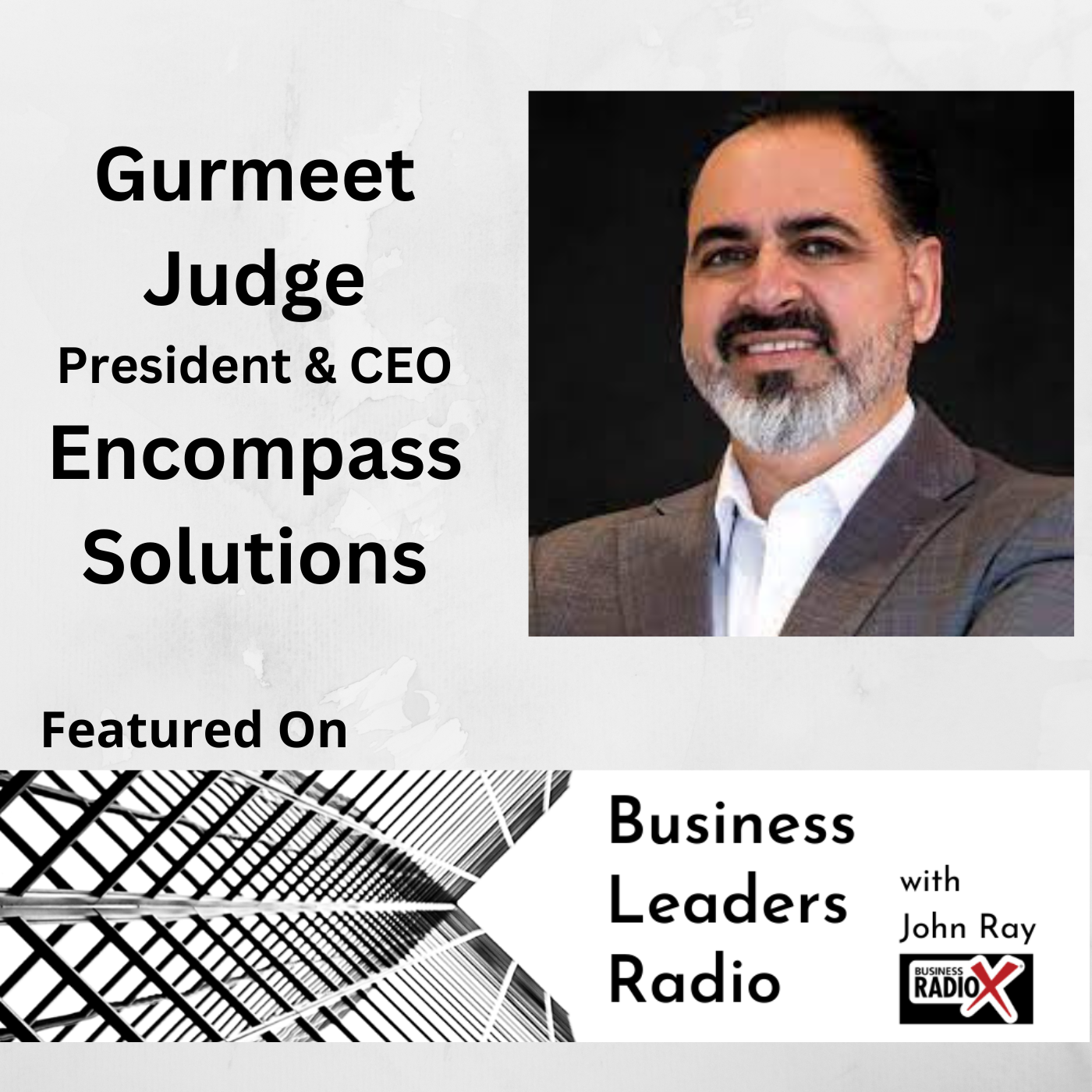
On this edition of Business Leaders Radio, host John Ray spoke with Gurmeet Judge, President and CEO of Encompass Solutions, about the crucial role of IT services in small and large businesses. Judge shares his journey from software development into establishing and leading his own IT firm. He highlights the importance of understanding client goals, the impact of company culture, and the evolving role of AI in businesses. He also talks about the importance of setting up IT processes that allow for measurable results and how Encompass Solutions addresses talent challenges in its forward-looking growth plans.

Gurmeet Judge, President & CEO, Encompass Solutions
Gurmeet Judge, President & CEO, Encompass Solutions

Gurmeet Judge is the President and CEO of Encompass Solutions. Gurmeet founded the company in 2015.

Encompass Solutions is an innovative provider of powerful, practical, and cost-effective technology and consulting services focused on “Aligning Technology with Business Process” and the belief that technology should deliver consistent, expected business results.

Working closely with their technology partners, Encompass’s staff is on a mission to become a world-class IT service provider, delivering excellent customer service, improving business performance, and controlling technology costs for our clients. Their strong history of building and supporting large infrastructure means they have the experienced teams necessary to deliver on the toughest of problems. Our commitment to optimizing IT processes for business means we solve problems efficiently.

Encompass has decades of experience building mission-critical IT infrastructure across a variety of industries. Their strengths primarily exist in designing, building out, supporting, and solving problems around large-scale IT infrastructures. Key to their skill sets has been the creative integration of new technologies into the customer environment and our focus on drastically controlling costs. Their depth of experience in municipal and financial environments illustrates a partner who understands the integration of various technologies in the public sector.

Connect with:

Gurmeet Judge: LinkedIn

Encompass Solutions: Website | LinkedIn | Facebook

Topics in this Interview

00:02 Introduction and Welcoming Guest
00:25 Understanding Encompass Solutions and Its Services
01:27 Gurmeet’s Journey to Becoming a CEO
03:17 Transition from Software Developer to Entrepreneur
05:32 Challenges and Surprises in the Business Journey
07:42 Understanding Client Base and Their Mindset
12:44 Aligning Personal Goals with Company Goals
27:52 The Role of AI in Business
31:15 Future Plans and Challenges for Encompass Solutions
32:46 Conclusion and Contact Information


Business Leaders Radio is hosted by John Ray and produced virtually from the North Fulton studio of Business RadioX® in Alpharetta.  The show can be found on all the major podcast apps and a full archive can be found here.
 

Tagged With: AI, Business Leaders Radio, company culture, Encompass Solutions, Gurmeet Judge, Information technology, IT processes, it services, John Ray, technology services provider

Workplace MVP LIVE from SHRM 2022: Shari Arends, Rollout Systems

August 10, 2022 by John Ray

Rollout Systems
Minneapolis St. Paul Studio
Workplace MVP LIVE from SHRM 2022: Shari Arends, Rollout Systems
Loading
00:00 /
RSS Feed
Share
Link
Embed

Download file

Rollout Systems

Workplace MVP LIVE from SHRM 2022: Shari Arends, Rollout Systems

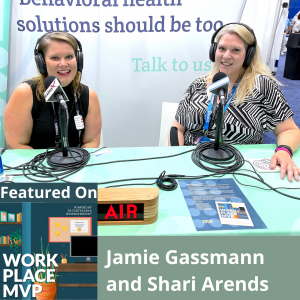
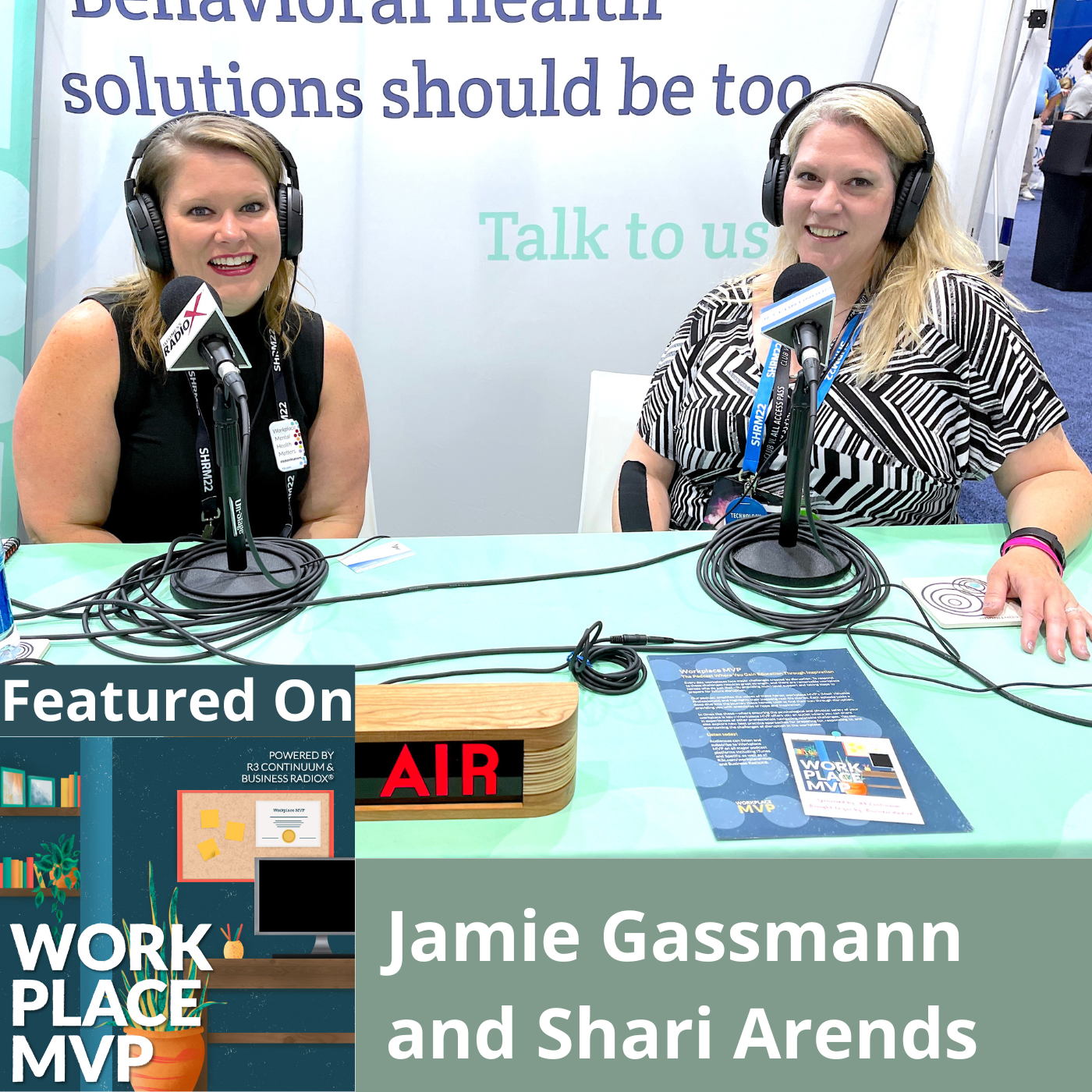
At her third SHRM conference, Shari Arends visited with Jamie Gassmann in the R3 Continuum booth. Shari is Human Resources Manager for Rollout Systems and has been in HR for seven years. She talked with Jamie about her journey in HR and her passion for it, her work with SHRM, the sessions she attended, and much more.

Workplace MVP is underwritten and presented by R3 Continuum and produced by the Minneapolis-St.Paul Studio of Business RadioX®.

This show was originally broadcast live from the 2022 SHRM Annual Conference held at the New Orleans Convention Center in New Orleans, Louisiana.

Shari Arends, SHRM-CP, aPHR, Human Resources Manager, Rollout Systems

Shari Arends, SHRM-CP, aPHR, Human Resources Manager, Rollout Systems

Shari Arends is the Human Resources Manager at Rollout Systems. She has been involved with HR for seven years.

Currently, she sits on the board of the Human Resource Association of Southern Maryland (HRASM), her local Chapter which is an affiliate of SHRM, and the MD SHRM board as the MD State HR Conference Committee Chair.

She volunteers at her church, the local rescue squad as a fundraiser, and manages the squad store.

LinkedIn

Rollout Systems

Rollout Systems is a California, Maryland-based, highly regarded information technology and training solutions provider specializing in Cyber Security, Application Development, Network Operations, Cloud Services, and Mission-Focused Training Support. Rollout Systems is an agile government technical services provider; delivering cost-effective solutions in rapidly changing technology and warfare landscapes.

They continue to provide innovations through in-depth experience in global and complex enterprise environments and their mission-critical technical capabilities.

Founded in 2001, Rollout Systems has operating offices nationwide (Northern VA, San Diego CA, PAX River MD) with approximately 65 employees throughout the U.S.

Website | LinkedIn | Twitter

About Workplace MVP

Every day, around the world, organizations of all sizes face disruptive events and situations. Within those workplaces are everyday heroes in human resources, risk management, security, business continuity, and the C-suite. They don’t call themselves heroes though. On the contrary, they simply show up every day, laboring for the well-being of employees in their care, readying the workplace for and planning responses to disruption. This show, Workplace MVP, confers on these heroes the designation they deserve, Workplace MVP (Most Valuable Professionals), and gives them the forum to tell their story. As you hear their experiences, you will learn first-hand, real-life approaches to readying the workplace, responses to crisis situations, and overcoming challenges of disruption. Visit our show archive here.

Workplace MVP Host Jamie Gassmann

Jamie Gassmann, Host, “Workplace MVP”

In addition to serving as the host to the Workplace MVP podcast, Jamie Gassmann is the Director of Marketing at R3 Continuum (R3c). Collectively, she has more than fourteen years of marketing experience. Across her tenure, she has experience working in and with various industries including banking, real estate, retail, crisis management, insurance, business continuity, and more. She holds a Bachelor of Science Degree in Mass Communications with special interest in Advertising and Public Relations and a Master of Business Administration from Paseka School of Business, Minnesota State University.

R3 Continuum

R3 Continuum is a global leader in workplace behavioral health and security solutions. R3c helps ensure the psychological and physical safety of organizations and their people in today’s ever-changing and often unpredictable world. Through their continuum of tailored solutions, including evaluations, crisis response, executive optimization, protective services, and more, they help organizations maintain and cultivate a workplace of wellbeing so that their people can thrive. Learn more about R3c at www.r3c.com.

Company website | LinkedIn | Facebook | Twitter

TRANSCRIPT

Intro: [00:00:02] Broadcasting live from SHRM 2022 at the New Orleans Convention Center, it’s time for Workplace MVP. Brought to you by R3 continuum, a global leader in helping workplaces thrive during disruptive times. Now, here’s your host.

Jamie Gassmann: [00:00:19] Hi, everyone. Your host, Jamie Gassmann here, coming to you from SHRM 2022’s Exhibit Hall and I am in R3 Continuum, our show sponsor’s booth. And joining me is Shari Arends from Rollout Systems. Welcome to the show, Shari.

Shari Arends: [00:00:35] Hi. Thank you. It’s good to be here.

Jamie Gassmann: [00:00:37] So, tell me a little bit about your background in getting into H.R. and a little bit about Rollout Systems, the company that you work for.

Shari Arends: [00:00:46] So, I’ve been in H.R. for a little over seven years. My husband was about to retire from the Navy and I was a stay-at-home mom and it was like, “Okay, it’s time to do something else now. Time to go back to work.” And kids were in school full day, and a friend of mine worked for a company that was looking for an H.R. generalist. So I got talking with her and she became my mentor and the company hired me on and I’ve been with them since, Rollout Systems, a government contractor. We have 66 employees today working in seven states.

Jamie Gassmann: [00:01:17] Wow! That’s an interesting story because I can totally relate. I grew up an Army brat and so my mom was that stay-at-home Army mom and, and then went into banking. You know, my dad wasn’t retired, but went into banking when we got into grade school. So, that’s very interesting. So, now you’re here at SHRM. So, is this your first time coming to the conference or is this – have you come multiple times or?

Shari Arends: [00:01:39] This is my third conference. I went last year, we were in Vegas, it was just in September. And then, a few years ago we had the conference in D.C. So that was my first time. That one was overwhelming. You’ve got to experience it once, just like eyes open, deer in headlights, kind of like, wow.

Jamie Gassmann: [00:01:53] Yeah.

Shari Arends: [00:01:55] It’s huge with just thousands of people and hundreds of exhibitors and all of these things to learn. And so, being here now, it’s like, okay, they have the app that makes it a lot easier. You walk around, you meet people. I’ve connected with people from my home state here that I’ve never met before and met people from all over the country.

Jamie Gassmann: [00:02:16] Yeah. And you’re really involved in SHRM if you wear several hats within the SHRM community. So, tell me a little bit about some of the different things that you’re involved with and that you do for the organization.

Shari Arends: [00:02:29] So, I work with my local chapter in Southern Maryland, Charles, St. Mary’s and Calvert County. We’re in a group called HRASM. It’s a lovely acronym, Human Resource Association of Southern Maryland. And I am the membership director with them. I sit on the board. So, I help, you know, drag in people to come and and sit with us and hang out with us and learn and network. And we recently had a conference too for that, so that was awesome. And then, I also work with the State Council as the chairman for the state conference for Maryland SHRM.

Jamie Gassmann: [00:03:04] You seem very busy in that SHRM kind of H.R. space, which is great.

Shari Arends: [00:03:08] I do, yeah. It’s a lot of fun. I get to work with amazing people from all over the state and we put on a great conference in October, so really looking forward to it.

Jamie Gassmann: [00:03:20] So now, obviously, at SHRM, there’s like so many different types of sessions, lots of different topics in between benefits and FMLA and DE&I and mental health. So, what are some of the challenges that you’re here to learn more about for your organization?

Shari Arends: [00:03:38] So, I sat through earlier today a really good conversation on influence, how to speak and how to direct the conversation to focus on the positives rather than the negatives. You can do anything from choosing a new platform service, you know, to having communication with an employee who may be not doing so well in their work. You know, why? Why are they – why is it that way? Have conversations, dig deeper and show empathy. And so, a lot of things that we do, my company right now, is mostly remote. So then, there’s engagement, keeping people engaged, keeping people involved, keeping them connected, not just to us but to one another with their teams when they’re working from home in various locations.

Jamie Gassmann: [00:04:28] That remote work, you know, making sure they’re coming into a meeting on your Zoom call and prepared and productive.

Shari Arends: [00:04:34] Yes, absolutely.

Jamie Gassmann: [00:04:36] So along with influence, are there other areas that you’re exploring here at the show? Because there’s so much.

Shari Arends: [00:04:44] Yeah. So, I have several different types of sessions that I’ve selected to attend, and it’s everything from FMLA to, you know, communicating better and trying not to be too dry, but, you know, following the laws, right? You gotta follow the laws.

Jamie Gassmann: [00:05:07] Yeah. Well, and they keep changing over the last three years.

Shari Arends: [00:05:07] It’s important, right?

Jamie Gassmann: [00:05:07] Yeah.

Shari Arends: [00:05:08] There’s a special session just for California employees, which we have. And so, you know, it’s just important to keep up to date on all of those things. And with employees living and working in eight states total but contracts in seven states, it’s a lot to keep track of. It’s a lot to manage. It’s a lot to do. But I love it. Yes, it’s a great work every day. And then, my volunteer work on top of that, it’s just – it’s very satisfying.

Jamie Gassmann: [00:05:37] Yeah. You find your passion and work. Yeah.

Shari Arends: [00:05:39] Yeah, yeah.

Jamie Gassmann: [00:05:39] Very cool.

Shari Arends: [00:05:40] One of my swag badges says I heart H.R.

Jamie Gassmann: [00:05:43] Love it. Yeah. That’s awesome. You know, it’s a great badge to have it sounds like. And we’re so excited that you joined us on the show today and shared your expertise and your background and what you’re excited for here at the show and all that great involvement that you do. Thanks for joining us.

Shari Arends: [00:05:58] Thank you. I appreciate being here.

Outro: [00:06:04] Thank you for joining us on Workplace MVP. R3 Continuum is a proud sponsor of this show and is delighted to celebrate most valuable professionals who work diligently to secure safe workplaces where employees can thrive.


Tagged With: HR, Human Resources, Information technology, Jamie Gassmann, R3 Continuum, Rollout Systems, Shari Arends, SHRM 2022, Workplace MVP

Jasmine Miller with Per Scholas

August 28, 2020 by angishields

Per-Scholas-logo
Atlanta Business Radio
Jasmine Miller with Per Scholas
Loading
00:00 /
RSS Feed
Share
Link
Embed

Download file

OnPay-Banner

Jasmine-MIllerJasmine Miller serves as Managing Director with Per Scholas Atlanta. She joined the team in August of 2016. She is a Licensed Master Social Worker, from Montreal, Canada and holds a MSW from McGill University in Montreal.

Jasmine’s experience includes 20 plus years of results-focused work in the nonprofit sector in the areas of program development, program management, staff development, domestic violence training and education. She is a voice, leading thinker and advocate in building pathways to opportunity for low-income individuals and families.

In her role, she is responsible for and oversees the overall strategic direction and operational progression of the Atlanta Per Scholas site. On a daily basis Per Scholas is preparing motivated and curious adult learners with technical and business skills to launch successful careers in the Information Technology industry.

Prior to Per Scholas, Jasmine served as Chief Operating Officer at The Center for Working Families in Atlanta, GA, joining the team in January of 2012. In her role, she oversaw and was responsible for the overall strategic and operational responsibility for all program areas.
Volunteer Leadership

For the past 25 years Jasmine has dedicated her time and resources as a strategist, community champion and a change agent. Jasmine enjoys serving as an advisor, change agent, volunteer leader and most importantly a mentor. Jasmine is an effective communicator who has served as a workshop presenter for national organizations, youth groups, women empowerment organizations.

Jasmine is a member of American Express Leadership Academy class of 2018, Atlanta Leaders for Results class of 2013, Leadership DeKalb, Class of 2006. In addition to Jasmine’s work in the sector, she has served on Boards for several nonprofits including E’Ryn Foundation, Men Stopping Violence, GA Coalition Against Domestic Violence, and a 2018 nominee and finalist for Woman of the Year Non Profit Category, Women in Technology.

Follow Per Scholas on LinkedIn, Facebook and Twitter.

What You’ll Learn in This Episode

  • Why a student chooses to go to Per Scholas. Why a business chooses to partner with them.
  • The kinds of issues Per Scholas addresses and how it benefits students
  • How Per Scholas is different from other skills training organizations in the space
  • The kind of job opportunities a Per Scholas graduate can expect to find
  • How COVID-19 has affected their skills training model.How they have adapted and the challenges they’ve had
  • Steps the organization is taking to address the digital divide, and remedy the issue of communities not having access to tech
  • How Per Scholas is specifically working with underserved communities in Atlanta, especially BIPOC and impoverished people

About Our Sponsor

OnPay’sOnPay-Dots payroll services and HR software give you more time to focus on what’s most important. Rated “Excellent” by PC Magazine, we make it easy to pay employees fast, we automate all payroll taxes, and we even keep all your HR and benefits organized and compliant.

Our award-winning customer service includes an accuracy guarantee, deep integrations with popular accounting software, and we’ll even enter all your employee information for you — whether you have five employees or 500. Take a closer look to see all the ways we can save you time and money in the back office.

Follow OnPay on LinkedIn, Facebook and Twitter.

Tagged With: Information technology, Per Scholas

Decision Vision Episode 38: Should I Outsource My IT? – An Interview with Tony Rushin, Network 1 Consulting

October 31, 2019 by John Ray

Decision Vision
Decision Vision
Decision Vision Episode 38: Should I Outsource My IT? – An Interview with Tony Rushin, Network 1 Consulting
Loading
00:00 /
RSS Feed
Share
Link
Embed

Download file

Mike Blake and Tony Rushin

Decision Vision Episode 38:  Should I Outsource My IT? – An Interview with Tony Rushin, Network 1 Consulting

Will outsourcing my IT increase my cybersecurity? What’s a human firewall and how does a managed services provider help me with this aspect of my IT? In this episode of “Decision Vision,” host Mike Blake explores these questions and much more with Tony Rushin, Network 1 Consulting. “Decision Vision” is presented by Brady Ware & Company.

Tony Rushin, Network 1 Consulting

Tony Rushin

Tony Rushin is a Vice President, Sales & Marketing, with Network 1 Consulting.

Network 1 Consulting is a 21-year-old, IT Support company in Atlanta, GA. They become – or augment – the IT department for law firms, medical practices and real estate & construction companies. Their IT experts can fix computers, but what their clients value most are the industry-specific best practices we bring to their firms. This is especially important with technology, along with regulations and cyber threats, changing so rapidly. They take a proactive approach to helping our clients use technology to gain and keep their competitive advantage.

For more information, go to the Network 1 Consulting website, or contact Tony directly by email.

Michael Blake, Brady Ware & Company

Mike Blake, Host of “Decision Vision”

Michael Blake is Host of the “Decision Vision” podcast series and a Director of Brady Ware & Company. Mike specializes in the valuation of intellectual property-driven firms, such as software firms, aerospace firms and professional services firms, most frequently in the capacity as a transaction advisor, helping clients obtain great outcomes from complex transaction opportunities. He is also a specialist in the appraisal of intellectual properties as stand-alone assets, such as software, trade secrets, and patents.

Mike has been a full-time business appraiser for 13 years with public accounting firms, boutique business appraisal firms, and an owner of his own firm. Prior to that, he spent 8 years in venture capital and investment banking, including transactions in the U.S., Israel, Russia, Ukraine, and Belarus.

Brady Ware & Company

Brady Ware & Company is a regional full-service accounting and advisory firm which helps businesses and entrepreneurs make visions a reality. Brady Ware services clients nationally from its offices in Alpharetta, GA; Columbus and Dayton, OH; and Richmond, IN. The firm is growth minded, committed to the regions in which they operate, and most importantly, they make significant investments in their people and service offerings to meet the changing financial needs of those they are privileged to serve. The firm is dedicated to providing results that make a difference for its clients.

Decision Vision Podcast Series

“Decision Vision” is a podcast covering topics and issues facing small business owners and connecting them with solutions from leading experts. This series is presented by Brady Ware & Company. If you are a decision maker for a small business, we’d love to hear from you. Contact us at decisionvision@bradyware.com and make sure to listen to every Thursday to the “Decision Vision” podcast. Past episodes of “Decision Vision” can be found here. “Decision Vision” is produced and broadcast by the North Fulton studio of Business RadioX®.

Visit Brady Ware & Company on social media:

LinkedIn:  https://www.linkedin.com/company/brady-ware/

Facebook: https://www.facebook.com/bradywareCPAs/

Twitter: https://twitter.com/BradyWare

Instagram: https://www.instagram.com/bradywarecompany/

Show Transcript

Intro: [00:00:02] Welcome to Decision Vision, a podcast series focusing on critical business decisions, brought to you by Brady Ware & Company. Brady Ware is a regional, full-service accounting and advisory that helps businesses and entrepreneurs make visions a reality.

Michael Blake: [00:00:20] And welcome to Decision Vision, a podcast giving you, the listener, clear vision to make great decisions. In each episode, we discuss the process of decision making on a different topic. Rather than making recommendations because everyone’s circumstances are different, we talk to subject matter experts about how they would recommend thinking about that decision.

Michael Blake: [00:00:37] My name is Mike Blake, and I’m your host for today’s program. I’m a director at Brady Ware & Company, a full-service accounting firm based in Dayton, Ohio, with offices in Dayton; Columbus, Ohio; Richmond, Indiana; and Alpharetta, Georgia, which is where we are recording today. Brady Ware is sponsoring this podcast. If you like this podcast, please subscribe on your favorite podcast aggregator. And also, please, consider leaving a review of the podcast as well.

Michael Blake: [00:01:01] Our topic today is, should I outsource my IT or information technology functions? And you know, I think this is a question that companies wrestle with quite a lot. In fact, I know companies that kind of do the IT two-step where they’ll insource it, and then outsource it for a while then. And then, thrilled to kind of bring it back, and then send it out again. And, you know, it’s really sort of the Texas two-step information technology style. And, you know, having been a business owner myself, I had to face that decision.

Michael Blake: [00:01:32] Now, as an anecdote, when I had my firm for a while, Arpeggio Advisors, our family at that time had started out as a Windows platform family. And then, something like three weeks into my trying to launch my company where my blood pressure was at a fairly high level, all of a sudden, my wife’s computer crashes and my oldest son’s computer crashed. Basically a race time when they can’t do anything and we’ve got to figure it out. And I’ve spent an entire day getting them back up and running, which I eventually did. But I said I’m just never doing that again.

Michael Blake: [00:02:16] So, on Saturday, I don’t know if Apple salespeople work on commission or not. But whoever—if they did, they made a lot of money on me that day because that day all the PCs are out. Macs were in. Never had trouble since. And this is not meant to be an Apple infomercial. I mean I do actually still have Windows machines for some things, but it’s indicative of how IT can be disruptive to a business, even if you’re a sole practitioner or even if you’re a home based business. That when you—when you’re infrastructure doesn’t work well, it is a real pain in the neck. It’s one of those things. It’s kind of like an umpire in baseball. You don’t notice and necessarily they do great. But boy, when they fail, you notice the heck out of them.

Michael Blake: [00:03:02] And IT is like that one. When your technology fails you, I can tell you from my perspective, I feel betrayed when my technology does not work. So, I feel like, you know what? I’m doing my my job. Right. Why is Apple, why is Microsoft, why is whoever not sort of holding up their end of the bargain? And so, the IT function in a company in the 21st century is every bit as important, if not more important than sales, than an accounting product delivery. You know, it’s right up there. But I don’t think that there’s as much controversy or consternation on whether or not to to keep that function or to outsource it or maybe if there’s, you know, identify kind of where that inflection point is, where you should consider that—you should consider that decision.

Michael Blake: [00:03:59] And so, as is often the case, you know, I’m not qualified to advise you on how to make that decision. So, I’ve brought in somebody who is qualified to help you make that decision. And joining us today is my friend Tony Rushin, who is vice president of Network 1 Consulting. Spending 30 years in high technology sales and marketing from IBM to startups, Tony brings his broad experience and business development marketing in IT business strategy to Network 1’s leadership team clients and partners. His passion is to help people achieve greatness and however they define it. And by the way, if your Atlanta Braves fan, you will appreciate this. He does run it out when the ball is hit into the gap in the outfield. Unlike some of our players here.

Michael Blake: [00:04:38] Network 1 delivers I-T managed services exclusively to businesses in Metro Atlanta. Since 1998, Network 1 becomes or augments the IT department for companies. Network 1’s IT experts fix computers for what their clients really values, the industry best practices they bring to the firm. It’s especially important with technology, along with regulations and cyber threats, which are changing rapidly.

Michael Blake: [00:05:02] With over 30 employees, Network 1 has built a culture that attracts and retains network and desktop professionals who know their stuff and have an outstanding desk side. Man, that is not easy to do. They find a fixed root causes instead of putting a Band-Aid on issues. Network 1 delivers proactive planning, so their clients avoid problems and gain competitive advantage. They’re not just a cost function. Network 1 is a fractional chief information officer, a support desk network engineer and everything in between. Tony, welcome to the program.

Tony Rushin: [00:05:32] Well, glad to be here, Mike. Thank you.

Michael Blake: [00:05:34] So many of us encounter outsource support when we need to fix our computer in sort of a robot vacuum. Is outsourced IT support simply hiring day from India. What does that look like?

Tony Rushin: [00:05:49] Well, no offense today from India, but if that’s all outsourced, IT support would be, there wouldn’t be much outsourced IT. So, it’s much more than that. But, you know, it can be confined to that, too. It really runs the gamut as far as what companies need, and then what they go out and get.

Michael Blake: [00:06:08] So, you know, what if a company happens to have a lot of people who are relatively computer uncomfortable, does that change the equation? Not every company necessarily has or needs people who are power users at every desk, right? Does that at all impact the decision on whether or not you should keep that function in-house versus outsourcing it?

Tony Rushin: [00:06:29] Great question. We’ve got 120 clients around Metro Atlanta. And I would say most of the users we support are relatively uncomfortable with technology and yet they still have a job to do. And their threshold for when they need help is much lower than that, power user often. And some of those that are uncomfortable with technology are also in some form the rainmakers. It could be a salesperson. It could be a managing partner in a law firm. And so, we haven’t found any correlation to whether or not you outsource to the how comfortable or uncomfortable people are with technology.

Michael Blake: [00:07:15] So, let’s back up. I probably should have made this the first question but too late. But there’s a term people hear a lot and I’m not sure they understand what it means. What—when we say managed services, what does that mean?

Tony Rushin: [00:07:27] Yeah. Managed services. It can mean something different to different IT support companies. What it means for Network 1, and in general I think we’re aligned with the industry, it’s the ongoing and always up to date services that are delivered by your outsourced IT company. So, what does that mean? And not all outsourced IT is—includes managed services.

Tony Rushin: [00:07:53] But, for instance, basic security. Well, that’s antivirus. Well, making sure it’s the latest version and it’s on everyone’s desktop or laptop. Well, that kind of infers that desktops and laptops need to be monitored to make sure that the latest is on there. It could be advanced security suite that’s got more tools and solutions in there to protect and prevent bad guys from getting in, but also detecting them when they get in. It can be managing a firewall. So, it always has the latest firmware and software involved in the company that is being managed on behalf. Never has to worry about it, never has to buy the hardware, it just gets supplied. So, think of it as baked in.

Michael Blake: [00:08:40] And so, in effect, is it fair to kind of characterize managed services for the most part as just a turnkey solution to some IT operation that needs to happen?

Tony Rushin: [00:08:50] Yeah, great, great summary of it. Turnkey and but typically it’s also based on a menu. Hey, I need this, that and the other and I don’t need those other things.

Michael Blake: [00:08:59] Okay. So, I think—in fact, I know a question on a lot of business owners and executives minds. As you know, we both understand the importance of IT to an organization. Right. And when IT doesn’t work, an organization can stop dead. And we’ve seen, we’ve heard of those those things. How do you overcome as an executive this notion or the idea or the fear that if I don’t own my IT department, really own them, right, they’re employees and I can, I don’t know, yell at them or fire or throw rocks at them, whatever, right, that that just leaves me more vulnerable to a disaster?

Tony Rushin: [00:09:42] Yeah. You know, it’s great you do this podcast because you’re getting advisors in here that have some experience and yet some in your audience that own businesses will say, yeah, I hear that but I think I have a better way. And so, we don’t do too much to educate people. We let the marketplace educate them for them. What I mean by that is the common sense of one business owner might be, I need IT in-house and it could be going great because let’s say there are financial advisory company and they’ve got 15 people and they’ve got an IT guy. That’s good. He’s customer-oriented. He’s focused. He runs around. He helps fix issues. And then, he gets sick or he quits or he’s not so good and he’s spotty.

Tony Rushin: [00:10:36] That’s the education of the owner like, oh, wait a minute, he is who he is. And by the way, the dynamic of the marketplaces, if he is really good, and I say he because most of them are guys, then he won’t be satisfied forever at a 15 person financial advisory company. He’ll want colleagues. He’ll want more challenges, whatever it is. And so, if someone chooses to bring it in-house, it could work great. My guess is for a small size business, say under 50 employees, it will bite them in some way, in some form or fashion.

Michael Blake: [00:11:17] You bring up something I want to make sure that I talked about because I do think it’s important. You know what was not intended to create innuendo here, but I think size really does matter. Right? I mean, I think there’s a—is it fair to speculate on my part that there’s maybe a sweet spot where, you know, can an organization get so big that having outsourced IT just isn’t—at least entirely, is no longer practical and maybe even on the small end, right, outsourced IT may kind of even be overkill, right? If you only wanted two people and you know your way around a computer, maybe it should just kind of do that. Is that fair?

Tony Rushin: [00:11:57] It is fair. And I’ll talk in generalities because it’s different depending on the kind of business it is. Some are highly regulated. I use financial advisory as an example and some are less regulated for instance. In the marketplace over time—and Network 1’s 21 years old. I’ve been there almost 10 years. I’ve seen almost a physics of size and when they need certain IT support. And if you’re less than 10 employees or or less than 8, you can often get away with some kind of as needed IT support. So, the opposite of managed services. You simply pick up the phone and call somebody if you need their help, only when you have an issue. And sometimes that can be done internally if you got a smart guy. And hey, I’ll fix it for you, right.

Tony Rushin: [00:12:52] Sometime between 5 and 10 employees, if they’re doing it with a smart person in-house and they’re growing, they might say, hey, wait a minute, it’s better to have Sally get out there and get new clients than fix our computers, and she’s really good at getting new clients, for instance. And so, that’ll happen. And they’ll say, well, let’s get someone that can fix things when they break. Often at about that 10 employees standpoint up to say 50, they’ll say, hey, look, I need—it would be better if there was someone more proactive and all inclusive delivering these services, not just when my hair’s on fire. Because when my hair’s on fire, I need him here now. And you can always get him here now. Whereas if they’re fixing little things along the way, it can avoid the big thing.

Tony Rushin: [00:13:42] So, really, for companies less than 50 employees, but 10 to 50, we don’t find a lot of in-house IT people. They’re outsourcing everything. Somewhere between 50 and 100, typically, we see them get their first IT person and that can actually be worked really well with an outsourced firm. We love working with an internal IT person because no matter how good our support desk is and they’re really good, I mean, they get to every issue within on average, seven minutes.

Michael Blake: [00:14:16] Wow.

Tony Rushin: [00:14:16] But the person on site can beat that every time. Now, not if he’s helping Joe and Susie down the hall needs him at the same time.

Michael Blake: [00:14:26] Right. That just assumes a personal sort of waiting for the phone to ring and that phone lights up and all of a sudden-

Tony Rushin: [00:14:32] Yeah.

Michael Blake: [00:14:32] … you’re rushing up to that person, right?

Tony Rushin: [00:14:34] Yeah. But between that 50 and 100 people, they typically have a person onsite. And then, if they get to that issue where, hey, we have multiple people and you know, our IT guy can’t get to them all, they’ll often bring in someone like us and say, hey, look, is there a way we can streamline, so that they take what they can? But if it’s over their technology knowledge or if they’re flat out, you know, covered up with a couple different issues or you know what, the dang employee wants vacation once in a while, go figure, right. They’ll have a relationship with someone like us, a managed service company, and says, look, we want to escalate or we want to hand off whenever we need to. So, that’s about 50 to 100.

Tony Rushin: [00:15:19] And then, when you get multiple people in I.T., then they have colleagues, then they can internally go on vacation or go to a class and still have someone to back fill. And we find that typically when there’s more than 100 employees.

Michael Blake: [00:15:35] So, I think there’s an important point there that I want to make sure we highlight is that this choice may or may not necessarily be an either or. Right. It very well could be an and, right. You may have, you know, one IT resource that is captive. Right. But then some firm like yours might then be available to augment that. It could be as needed, it could be strategic, whatever. Right. So, maybe in some cases it’s a fault—you can have your cake and eat it, too.

Tony Rushin: [00:16:09] Yeah. Really, it ends up being managing the business risk and managing the ongoing productivity of the employees on a fundamental level. The business risk is I have one IT guy and he gets sick. He leaves, he goes on vacation, whatever. And, of course, Murphy says that’s when the bad things gonna happen. And you need help.

Michael Blake: [00:16:28] Absolutely.

Tony Rushin: [00:16:29] And if you wait till then to have this outsourced relationship, well, the company you bring in doesn’t know your system. And so, they’re doing the best they can. But at best, it’s triage learning the systems. Oh, was it documented? Oh, you don’t even know passwords. Well, then they’re hacking into your system.

Michael Blake: [00:16:48] Right. It’s like an emergency room visit.

Tony Rushin: [00:16:50] Exactly. Whereas if you do it when everything’s quiet, you’ve got your IT person, they’re part of the solution of bringing in the company. They’re actually even getting, hey, what’s my style? What’s the style of the person to work with? Do they work with me well? Then they’re part of the solution. And it works fine for when those emergencies come up.

Michael Blake: [00:17:12] So, you mentioned something else I want to make sure to underline, because I think one of the arguments somebody might have to maintain a captive IT resource is that notion that while I own most of the service, the response time is going to be instantaneous. Right. But, you know, that’s not necessarily the case. And if you work with the right partner, you may very well find that you get, you know, assuming it doesn’t necessarily need to be an onsite because most of these—most computer issues can be addressed remotely now that you aren’t necessarily making that sacrifice of responsiveness that you thought you might.

Tony Rushin: [00:17:47] Yeah, it all depends. It depends a lot on how customer service oriented is the person you hire. And, you know, people can be really good in interviews, and then you get what you get. But let’s say they’re great, you know, and they know their technology and they’re really customer service oriented. You still run into, oh, my gosh, the rainmaker’s on the road and his laptop failed and yet they’re addressing a server down issue in the other part of your company, they can’t do two things at once. But that’s part of the business dynamic. I think companies get there on their own, get their meaning. Oh, we need to augment the current person we have in site simply from enduring enough IT issues that, you know, the person can’t clone themselves.

Michael Blake: [00:18:36] So, I would have to imagine that you’re having many more conversations about cyber security now than you were, say, 10 years ago, 5 years ago, right. So, how does—how do concerns about cyber security impact that decision of outsourcing IT functions? On the one hand, I could see an argument that’s well, again, if I have this captive asset, I own it, it’s ostensibly a closed cycle that should be nominally more secure. On the other hand, maybe it’s by outsourcing your brain and expertise, you could not possibly afford to hire cause cyber security experts are—they’re as well paid as a senior software engineer, if not more, at this point. Where do you kind of fall in that? Where—how do you kind of look at that, that many decision within the decision process?

Tony Rushin: [00:19:27] Yeah, great question. I don’t think overall it really affects the fundamental of do I outsource or do I bring it, have it in-house. What it has done—and really we’ve seen the acceleration rapidly in the last three years, you know, where cyber security, it’s gone from reading about it in the newspaper like, oh, it happened to someone else, to people—oh, it happened in my company or my next door neighbor’s company and I know him personally and I think that’s what’s accelerated it.

Tony Rushin: [00:20:00] You kind of set it up really well with if it’s that single in-house person and you’re keeping them really busy, how much time do they have to do that proactive. Hey, what new solutions are in the marketplace that might protect us better? Do they have colleagues already in-house that they can pick up the phone and just have a brainstorm sounding board conversation about, hey, we got this bad malware, how did you guys prevent it? It’s hard to find that really tactically good computer broke, fix it fast, person. And have that same person be that strategic, always looking forward, hey, what’s on the horizon? What do the bad guys do and what do the good guys do and what solutions should I be looking at? Oh, I should bring it in and vet it and do a pilot on it. Oh, wait a minute, this guy’s computer broke. That’s where I have to spend my time. And that’s the reality of what that single shingle person is involved with. And so, it ends up driving more people, I think driving more outsourced I.T.’s conversations, whether you keep that internal person and if he’s good, you should or whether you simply want to outsource all of it.

Michael Blake: [00:21:15] So many companies now are also using cloud services or putting all their data up in the cloud, whether that’s One Drive, Dropbox, something like that. Does that impact a need to—does that impact at all kind of the decision as to whether or not you outsource versus keep in-house, given that by definition, when you’re putting your data in a cloud, you’re already taking a step to outsource anyway, right?

Tony Rushin: [00:21:41] Yeah. Yeah. And a lot of things that are bundled into that, you know, cloud solution are what a company like us would do if you had it running on a server internally, meaning the servers in that cloud solution if you picked a good one, right. Not one that’s really in someone’s basement, but, you know, Microsoft or, you know, Office 365 or something like-

Michael Blake: [00:22:10] Josvpn.com.

Tony Rushin: [00:22:12] Right. They’re going to have redundancy built in. They’re going to have backups built in. And they’re going to make sure that everything is designed in a way where the application is not going to go down. Or if it goes down, it’s gonna be minutes and, you know, like that, not two days. So, all of that is a real big step up where we find that people—I mean you still need—you still have users and you still have them. I mean, I’ll flip it around, ask you question. Do people still go to the wrong websites?

Michael Blake: [00:22:47] All the time.

Tony Rushin: [00:22:47] Do they still get tricked by that e-mail, that phishing e-mail, and they might click on something?

Michael Blake: [00:22:53] You better believe that.

Tony Rushin: [00:22:55] Do they still forget to run the updates when their computer says run these updates?

Michael Blake: [00:23:00] Especially with Windows, I think many people actively avoid it.

Tony Rushin: [00:23:04] Yeah, because then, you know, you got a reboot or hey, the update might cause a problem.

Michael Blake: [00:23:09] And takes a minute.

Tony Rushin: [00:23:10] Takes a minute. So, it’s the user issues that are still the same. In fact, maybe they’re more complicated because you’re not going to pick up the phone if Office 365’s not working right and call Microsoft and actually get a response.

Michael Blake: [00:23:23] Right. Not unless you’re a really big user.

Tony Rushin: [00:23:25] Right.

Michael Blake: [00:23:26] Or you’ve really paid for their Cadillac plan, which they will sell you. Right. But then are you really saving anything, right?

Tony Rushin: [00:23:31] Right.

Michael Blake: [00:23:32] You know, I want to go back to those questions you just asked because they’re so important. You know, speaking of spear phishing attack, a friend of mine who was a CFO fell prey to a spear phishing attack and lost her job.

Tony Rushin: [00:23:52] Wow.

Michael Blake: [00:23:52] Within two days, gone. Right. Now, I do not believe it was her fault. The organization had never trained her or anybody to recognize spearfishing. There are no policies, rules, procedures, right? Yes, there’s human error. But to me, that was human error that was set up by an organizational failure to be prepared. So, my question for you is, beyond kind of the nuts and bolts of of keeping a machine running and keeping software update and so forth, can an outsourced IT function, if it’s not you, maybe somebody else, also help kind of establish those rules, procedures, create awareness? Because the end of the day, you do still need your end users to be smart about this thing.

Tony Rushin: [00:24:37] Yeah, and it’s interesting. The biggest weakness in any network is still the human firewall.

Michael Blake: [00:24:44] Yeah.

Tony Rushin: [00:24:44] It’s that person. And you hit the nail on the head. Well, how do you make that human firewall more secure? It’s through education. It’s through training. It’s through—and not one time events. Right. It’s like, hey, security is important. And that’s the day that you hired him, and then you never talk about it again. Well, that doesn’t work.

Michael Blake: [00:25:06] Right. This isn’t sensitivity training. OK, just kidding, just kidding, hold your e-mails.

Tony Rushin: [00:25:11] Right. So, the—first of all, we, as the outsourced IT or any outsourced IT can influence the leadership of the company to take security seriously and make it part of their employee handbook, make it part of their regularly ongoing employee training. But at the end of the day, if they don’t—if the leadership doesn’t step up to lead it and say this is important and this is what we’re doing, we can only influence, right.

Tony Rushin: [00:25:51] But let’s say it is a company that they care. It’s like, look, I want this to care. Then, yeah, we can advise. Well, then here are the steps, the processes, the training that you should incorporate into your culture. And here’s the frequency at which you should do it. So, I think most companies that are like us and helping those smaller companies can at least advise, influence, give some examples of processes and procedures to put in place to raise up their security. And solutions are put in place. If they need—if they’re in a regulated industry and they need something more robust than you’ve got those paid as much as a software developer kind of people that are consultants to put whole company assessments in place around security, physical and online security and put, you know, really extensive processes and procedures in place.

Michael Blake: [00:26:53] I mean, that—yeah, and that security space has has evolved into sort of the neurosurgery, I think of the IT world. Partially because I’m glad about the regulations, because, you know, financial statement, audit rules are now directly addressing this. Right. Your data security. In my world now, you know, I am—although badly I am now asking customers, not customer, I’m asking clients, why appraise their business? What are they doing about data security? How many records do they have that are potentially exposed, right, to do business in Europe where GDPR becomes effective or in California where their roles become effective? Because I don’t think that if you’re—if you ignore that, you’re really missing a big potential risk, right?

Tony Rushin: [00:27:38] Yeah.

Michael Blake: [00:27:39] So—but it’s become so specialized that, you know, if you’re a generalist, you just can’t cover it, right. And if you’re really sensitive, if you’ve got high sensitivity, that maybe another IT function that needs to ultimately be outsourced and just part of the cost of doing business. Right?

Tony Rushin: [00:27:56] Yeah. And the good news is. When you look at the tools of the technology that’s available to also help protect and prevent and detect security breaches, in this day and age, they are very affordable for small businesses. And especially if they outsource because what they also get the benefit of, let’s say with us, is a 50 person company pays a 50 person price for whatever licenses they might get of Cisco umbrella that protects them way out on the Internet side, or Huntress Labs, which is a cool piece of software that doesn’t protect you. But it always scans to check and detect if something made it through because something’s going to get through no matter how good your protection is.

Tony Rushin: [00:28:51] Well, those things for a 50 person company might cost them, say, $40 per computer per month. Well, a company like us will buy 2000 nodes for all our clients, and then we’ll offer it to our clients for $10 a computer a month. Plus, by the way, you know, we’ll get an alert when something happens and we’ll dig into it. You don’t even have to know about it. So I wanted to bring in costs because it’s important. These solutions typically start with big companies. And then, over the years, more competition comes in or that same company will develop a price point that is very palatable for small businesses.

Michael Blake: [00:29:37] And interestingly enough, I see the same thing, but from a different angle. I see that also occurring because small companies, most of them at some point would like to be bought by a larger company. And I have seen deals get stopped dead or at least get dragged through the mud and prices go down because the larger acquirer that does have kind of “best practices”, I think they do. Right. And they’re reaching down into this small company that is farther behind. Right. And it’s like trying to buy a house and you realize you’ve got to put a million dollars to get up the code and the deal can fall apart.

Michael Blake: [00:30:18] So, you know, I think a best practice for many companies is to make your IT as best practice as you can afford if you want to be acquired, because an information officer will say, look, this is too risky.

Tony Rushin: [00:30:33] Right.

Michael Blake: [00:30:33] Either they’ve got to go through and get a real grown up IT audit and a clean bill of health from your national firm or it just doesn’t make sense. An Exhibit A was the Verizon Yahoo! deal. Right. I remember when Verizon bought Yahoo! a while ago. And in the middle of that deal, they discovered a breach and it shaved billions of dollars off the acquisition price. I mean that’s an extreme example, but it happens all the time.

Tony Rushin: [00:30:57] Yeah. And I want to play off that a couple different ways. And in your example, it doesn’t mean the small company has to spend big company money. I mean, at the end of the day, you have to be more secure than your neighbor, just like physical security with your house.

Michael Blake: [00:31:13] Run faster than the other guy when you’re running from there.

Tony Rushin: [00:31:16] Exactly. And so, no one’s asking them to, you know, spend what Yahoo! or Verizon spent. In fact, no matter how much they’re spending, they can’t keep themselves safe. So, if the bad guys want to get you, they’re going to get you. What you want to do is button down things, so when they knock on your door from a cyber standpoint, oh, no one’s home. Go to the next. I checked the windows, can’t get in and they quickly go to the next. And so, you don’t have to spend that kind of price. You just have to pay attention to it appropriately.

Tony Rushin: [00:31:51] And going back to outsourcing, if you’re a single small business, you may not know what’s available out there in your price point or what are best practices without overspending for a company that’s 40 people. Whereas a company like us has one hundred and twenty clients that are that size and we work in there all day. And by default then because we earn a living doing this, we understand what best practice is or what’s appropriate and what’s available for that sized company.

Michael Blake: [00:32:23] Now, correct me if I’m wrong. If I’m not mistaken, a lot of your clients are law firms and accounting firms.

Tony Rushin: [00:32:30] They’re law firms and financial advisors.

Michael Blake: [00:32:31] Financial advisors, okay.

Tony Rushin: [00:32:32] Yeah, not quite accounting firms.

Michael Blake: [00:32:34] So, is that because those kinds of firms tend to lend themselves better to outsourced IT than do others? And are there other kinds of firms that say, you know what, this kind of firm probably really needs to just have staff in-house?

Tony Rushin: [00:32:51] So, way back in our history, 21 years, our founder married an attorney and the daughter of an attorney. So, it’s not rocket science why we got law firms at the beginning. We got referred in by people that knew our-

Michael Blake: [00:33:05] Right. Fair enough.

Tony Rushin: [00:33:06] And then, we built enough reputation there for being good. We call it that side manner to be able to explain things to an attorney or their staff that wasn’t tech talk and to be empathetic and to be responsive. And so, we got more law firms and attorneys. So, truth be told. Now, are some better outsourced than others? No, pretty much we find across the board any business can benefit from it. The ones we found actually—I say any. The ones that don’t seem to be quite as good a fit is that technology company that part of their offering is delivered through technology that’s facing for their client.

Tony Rushin: [00:33:52] Think of Amazon when they were really little. Well, when they were really little, they’re structured the same way as they are now and their technology was really client facing. Click here and go on and order a book. Well, if you outsource the IT support for that, you may not—that’s a critical function to their business. Those critical functions or the family jewels, if you will, you typically want to have in-house. So, that’s not quite a fit. But any others, we haven’t seen the correlation.

Michael Blake: [00:34:29] So, what does—what are the economics of outsourcing IT typically look like? And what I mean by that in a more specific way is, is pricing typically done on a monthly retainer? Is it on a per incident basis, done on an hourly basis, some other basis? How does that typically work?

Tony Rushin: [00:34:53] Yeah. Well, the good news for that small business owner is it’s a highly competitive marketplace. In Metro Atlanta alone, there’s over 800 IT support companies.

Michael Blake: [00:35:07] Wow.

Tony Rushin: [00:35:07] Yeah.

Michael Blake: [00:35:08] I thought I had competition.

Tony Rushin: [00:35:09] That’s a real number. And now, granted, 780 of those 800 are one, two or three-man shops. But the good news is that business owner, you brought up examples, you know, is it on a monthly retained basis, is it per incident, is it this or that? The answer’s yes.

Michael Blake: [00:35:26] Got it.

Tony Rushin: [00:35:26] You can find a provider that works with any of those models.

Michael Blake: [00:35:31] And what about you guys? Is it—do you find that you kind of tailor your pricing to the particular needs and wants of that customer as while? Do you sort of have—or do you have kind of a more of a fixed model?

Tony Rushin: [00:35:44] It’s both. We have three different basic plans, and then we have these managed services that, oh, you don’t need the advance security suite in your environment. Okay, don’t get that. Or you don’t need the the backup and recovery with disaster recovery built into it or at least it’s not at your price point. Great, let’s not do that. So, it’s some of both smorgasbord and fixed plans.

Tony Rushin: [00:36:10] We, in particular, won’t take a client that merely wants to call us when their hair’s on fire. That’s the as needed only. However, we’ve been around Atlanta for 21 years. So, if we find someone or if someone’s referred to us and say this is the kind of plan I want, we’ll simply say, well, that doesn’t fit us but we know two people that are really good at that. And would you like their names. Yes, we would. All right. Go call them. We found—we—I’ve been there 10 years. And for the first three years of me being there, we tried to serve both kind of client and we found we simply couldn’t because our monthly retained clients are where we put all our resources. And then, that person with their hair on fire calls and it’s like, do we take this engineer off this client that pays us every month? No, of course, we don’t. And then, we’d never be responsive enough for the hair on fire guy.
Michael Blake: [00:37:00] Right. That makes sense. And it would be like working at, you know, at a car company. And they have this assembly line, that’s their model, and then all of a sudden the CEO wants a custom car built, right? It would break everybody. Right. You wouldn’t get a very good custom car and it would disrupt the entire assembly line, too. Tony, this has been great. We’re running out of time, so we’re gonna need to wrap up. But if somebody wants to contact you with questions about this decision, how can they do that?
Tony Rushin: [00:37:31] Yeah, a lot of ways to contact. It’s trushin, R-U-S-H-I-N, @network1consulting.com. And that’s the numeral 1. So, that’s long the first time you type it. You know, just put me in as a contact. You can find me on LinkedIn, Tony Rushin. We’ve got a website. You know, we do tweet and we do Facebook. Personally, I’m not on those too much cause our—I’m on LinkedIn mostly cause that’s where business people are.

Michael Blake: [00:37:56] Right.

Tony Rushin: [00:37:57] Yeah.

Michael Blake: [00:37:58] Well, good. Well, that’s going to wrap it up for today’s program. I’d like to thank Tony Rushin so much for joining us and sharing his expertise with us. We’ll be exploring a new topic each week. So, please tune in, so that when you’re faced with your next business decision, you have clear vision when making it. If you enjoy these podcasts, please consider leaving a review with your favorite podcast aggregator. It helps people find us, so that we can help them. Once again, this is Mike Blake. Our decision—our sponsor is Brady Ware & Company and this has been the Decision Vision podcast.

Tagged With: CPa, CPA firm, Dayton accounting, Dayton business advisory, Dayton CPA, Dayton CPA firm, Decision Vision, firewall, Information technology, information technology strategies, IT managed services, it outsourcing, managed IT services, managed IT support, Managed Service Provider, managed services, Michael Blake, Mike Blake, Network 1 Consulting, outsourced it, outsourced IT services, outsourcing IT, Tony Rushin

TALES FAILS and ALES Enterprise Client Partner Zach Anderson and Lisa Jensen with Mindful Talent Solutions

December 8, 2018 by Karen

Phoenix Business Radio
TALES FAILS and ALES Enterprise Client Partner Zach Anderson and Lisa Jensen with Mindful Talent Solutions
Loading
00:00 /
RSS Feed
Share
Link
Embed

Download file


TALES FAILS and ALES Enterprise Client Partner Zach Anderson and Lisa Jensen with Mindful Talent Solutions

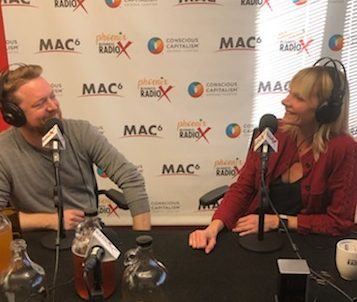
Join Jennifer Burwell and Kyle McIntosh for the monthly rendition of Tales, Fails, & Ales . . . where we drink ales and tell tales about fails.  We represent MAC6, a company dedicated to the success of entrepreneurs and sharing their stories.  Our hope is by forcing these leaders to share their biggest fuck ups, that we can realize our greatness is always just on the other side of adversity.  Tune in monthly and enjoy hearing from the latest fuck ups, and be inspired by their tenacity to push through and make it happen.

Zach-Anderson-on-Phoenix-Business-RadioXZach Anderson is a seasoned enterprise account executive. He began his career working in consumer lending and has been in digital ad sales since 2011. His experience has ranged from selling to independent SMBs to executives at Fortune 50 companies. 

Mindful Talent Solutions is a recruiting business founded on the principles of integrity, quality, and common courtesy. With more than 20 years’ industry experience, they serve as trusted advisers to business leaders who are building high- performing, culture-driven teams. MindfulTalentSolutionsLogotransparentbkgrd

They specialize in placing Accounting, Finance and Information Technology professionals in businesses ranging from small, established startups to multi-national, large corporations.

Lisa-Jensen-on-Phoenix-Business-RadioXLisa Jensen embarked on her journey into the recruiting industry after ditching Iowa winters for Phoenix’s sun and palm trees in 1990. While she lacked formal work experience, a college degree, transportation, and money, she possessed a relentlessly positive attitude and the tenacity to create something from nothing.

It was in her first recruiting role with a mom & pop staffing agency that she’d successfully completed lots of projects, that she discovered the incredible opportunity to connect with people, make a positive impact and solve problems.

Since then, she completed her degree and began gathering “career capital” by taking on roles recruiting for, and managing client relationships on behalf of; staffing companies, niche search firms, and consulting firms serving professionals in the Accounting, Finance, IT, Engineering, Sales and Construction Management spaces. Additionally, she gained experience in resume consulting and career transition coaching.

Seeing a real need for an “uplift” in the reputation of the recruiting industry, Lisa’s experience, coupled with her natural inclination to connect with and help others, motivated her to start her own business and raise the bar in what people experience when they work with a recruiter.

Connect with Lisa on LinkedIn

ABOUT TALES FAILS and ALES

Tales, Fails & Ales is brought to you by MAC6, Conscious Capitalism Arizona, Phoenix Business Radio X, Crush Craft Cider, and Lyft.  Remember to keep your fuck ups in the board room and not on the road.

ABOUT YOUR CO-HOSTS

KyleMcIntoshWith a background in marketing, in various for profit and not for profit companies, Kyle McIntosh wondered, “How can I pair the passion and commitment to community progress of a non-profit with the sustainability and reach of a for profit company?” From this question and perspective a mission evolved to tear down the false distinction between the two sectors and to promote companies with Conscious Capitalism® business models through MAC6.

Kyle is the President and Creative Excitant of MAC6.  Day to day, his main operational role is on the “spaces” side of the business, focusing on creating thriving communities in the commercial office buildings, the co-working space, and the co-manufacturing space.  The other role that he plays is that of EOS implementer, working with clients to bring the Entrepreneurial Operating System, from the book Traction® to their businesses.  Additionally, he sits on the boards of Conscious Capitalism Arizona, telling the stories of good businesses in Arizona, and The Tempe Chamber of Commerce, sustaining Tempe’s quality of life and keeping our community and economy vibrant.

Kyle loves Arizona and wants to see us all collectively find great success based on the awesome things that are happening here every day.

Follow MAC6 on Facebook and Twitter.

Jennifer-BurwellJennifer Burwell, joined MAC6 in 2013. Jennifer is their VP and Director of Programs. She uses her experience in real estate, team development and management to seamlessly integrate each of the MAC6 business units to assure they are all focused on the long-term company vision. She is also a student of human behavior.

As a Certified Professional Behavioral Analyst, she uses her knowledge to facilitate culture focused leadership programs with organizations of all sizes to integrate the company’s values and create higher performing teams.

To learn more about MAC6 Communities, call 480-293-4075 or find them on Facebook

Tagged With: executive search, Information technology, Recruiting

E17 Thor Thomsen and Jim Watkinson from THORFeed and Jeanne Barry from RGP

October 22, 2018 by Karen

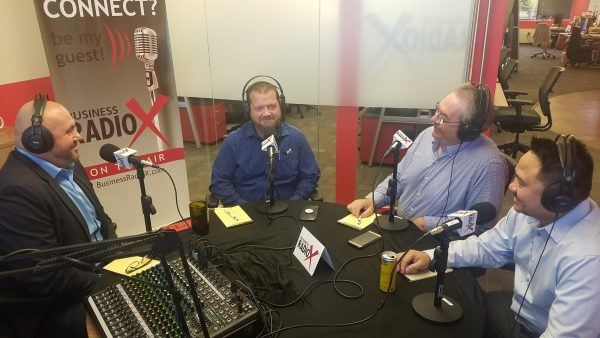
PROJECT-MANAGEMENT-OFFICE-HOURS-Operations-Leader-Jim-Watkinson-with-THOR-Feed-and-Jeanne-Barry-with-RGP1
Phoenix Business Radio
E17 Thor Thomsen and Jim Watkinson from THORFeed and Jeanne Barry from RGP
Loading
00:00 / 59:30
RSS Feed
Share
Link
Embed

Download fileDuration: 59:30

PROJECT-MANAGEMENT-OFFICE-HOURS-CEO-Thor-Thomsen-and-Operations-Leader-Jim-Watkinson-with-THOR-Feed-and-Jeanne-Barry-with-RGP

E17 Thor Thomsen and Jim Watkinson from THORFeed and Jeanne Barry from RGP

In this episode of Project Management Office Hours, Joe Pusz, PMO Joe has a great discussion with special guests Thor Thomsen and Jim Watkinson from THORFeed and Jeanne Barry from RGP.

We don’t often think about Project Management within the Farming industry. However, in this episode we get insights from Thor and Jim about the benefits, challenges, and growth opportunities farmers are experiencing through use of project management principles. Jeanne shares her experiences within traditional project management and compares those to the stories shared by Thor and Jim.

Requirements gathering, planning, monitoring and execution are discussed, but when working with farmers who haven’t been exposed to project management principles unique challenges are identified. This is a fantastic episode to understand the wide reach and benefits project management provides to business across all industries.

Tune in for upcoming shows with Project Management leaders discussing a wide range of current topics and events! Our next show will be November 1st.

THOR Feed’s purpose is to simplify and transform. We help organizations improve operations and reduce costs. Our current focus market is farming and we have established the THOR Feed solution as the leading farm inventory solution provider starting with farm feed inventory. Cattle and dairy farms single largest expense is feed. This expense is approximately 50% of operating cost. Unfortunately, feed loss (called ‘feed shrink’) occurs from feed planting to storage to feeding The University of Wisconsin, Kansas and other leading universities show an average 18%. THORFeedLogoLowering shrink a few percentage points can reduce costs on improving farm profitability. THOR Feed provides the farmer with the following key operating metrics using smart devices on Windows, iOS and Android platforms:

  • Accurate inventory for all feed.
  • Near real time inventory status.
  • Precise feed utilization rates
  • Projected depletion dates for each feed and feed class.
  • Dynamic reporting

The THOR Feed solution provides benefits to farms in the following areas:

  • Reduced ‘backup’ feed is purchased, due to improved feed accuracy
  • Wise purchase based upon true need(s).
  • Improved negotiating power (lower costs) due to a longer lead times on future depletion dates
  • Less time to gather and report information (improved people productivity) with smart devices
  • Lower interest rates on feed loans from lending institutions due to detailed monthly reports
  • Reduced feed shrink due to improved planning with THOR Feed team regarding harvest, storage and herd feeding processes

ThorThomsenonPhoneixBusinessRadioXThor Thomsen grew up on a farm in Wisconsin, served in the United States Marine Corps’ special operations unit, married and entered the family entrepreneurial occupation.

Thor’s first business, Risk Management Planning, LLC, involved responding to hazardous chemical accidents around the globe using a unique subscription and consulting model. The service grew predominantly from companies and involved emergency management, first responders, schools, hospitals and even major sporting venues. Risk Management Planning expanded into another product line and simplified emergency response between first responders and various venues.

Stepping away from the family and businesses, Thor worked for Versar Inc. and eventually Thomsen Security. Services included security and safety in the water and food industry. The major program was establishing and building the United States DoD Food defense program which entailed securing the food supply chain from Field-to- Fork® around the globe. Thor conducted over 2,729 risk and vulnerability assessments, hundreds of reports and consulted with military and civilian food supply chain entities.

Thor established ThroughPoint Solutions which developed an assessment and reporting tool for the United Stated DoD and has been most recently adapted as a farm inventory solution, utilized by over 13 farms with over 32,000 head of cattle and in excess over $80 million dollars in feed inventory.

Jim-Watkinson-Phoenix-Business-RadioXJim Watkinson is a widely-traveled IT and project management mentor with experience in large (IBM, Unisys, Ports America) and several start-up tech companies, as well as non-tech companies seeking tech improvement. A key strength is introducing new IT functionality to industries (such as: ATMs to banks, Point-of-Sale to retail, satellite networking to energy companies, remote office communication to insurance, scheduling systems in supply chain & logistics.)

Much of Jim’s work involved process improvement in the above-mentioned industries. As a PMP and ACP, Jim enjoys thoroughly evaluating an ongoing organization, then (if needed) developing and presenting a plan to improve operations. Once, given the approval, Jim would lead the desired changes in a project management capacity.

Jim’s main purpose is to help individuals and organizations reach their top level of potential. As a team player, working along-side teams, Jim will coach, critique, appraise and recommend. Once a team finds a pace and rhythm toward reaching their potential, he moves on to the next adventure needing IT technology.

Follow THOR Feed on LinkedIn, Facebook, Twitter and Instagram.

RGP (NASDAQ: RECN), Resources Global Professionals is a multinational professional services firm that helps business leaders execute internal initiatives. Partnering with business leaders, RGP drives internal change across all parts of a global enterprise – accounting, finance, risk management and internal audit, corporate advisory, strategic communications and restructuring, information management, human capital, supply chain management, healthcare solutions, and legal and regulatory services.

Jeanne-Barry-Phoenix-Business-RadioXJeanne Barry is a seasoned Project Manager with 20+ years experience in the IT field with PMP, CSM, and MBA credentials. She has worked mainly on multi-million dollar infrastructure and information security projects and programs with a smattering of Development/SCRUM PM projects under her belt. She’s also worked as a Business Analyst and QA Test Lead, giving her a well rounded background in the IT field.

Before joining RGP (a former division of Deloitte and Touche) in 2017 as an IT Project Management consultant, she worked in the banking industry for 18 years, mainly on Information Security projects. She’s currently one of the PM’s managing projects in a PCI Program for a large client in Scottsdale who is in the process of obtaining their much coveted PCI AOC (Payment Card Industry Attestation of Compliance). Her PMO background is vast; fortuitously helping with the creation of PMOs in highly successful organizations, namely KeyBank and Data Management, Inc.

In her spare time, Jeanne is a semi-professional singer (she used to perform in a popular pop/rock covers band in town called Superhero), as well as a volunteer at Feed My Starving Children in Mesa (one of her most favorite charitable organizations). She loves to travel locally – especially to San Diego and Sedona). She attends holistic events around town and enjoys working on her new house she just purchased in May. As a Reiki Master, she also offers energy work clearings and healings to balance and harmonize herself and those around her.

Connect with Jeanne on LinkedIn, and follow RGP on LinkedIn, Facebook and Twitter.

ABOUT PROJECT MANAGEMENT OFFICE HOURS SERIES

Project Management Office Hours is intended to provide Project Management professionals a place to drop in and discuss Success Stories, Best Practices, and Lessons Learned.  Project Management Consultant Joy Gumz has shared with us, “Operations keep the lights on, strategy provides the light at the end of the tunnel, but project management is the train engine that moves the organization forward.”  

Each of us has a unique story to tell, but collectively we share a message that organizations who embrace Project Management Best Practices perform better than those which don’t.  Organizations which align Projects to Strategy perform better.  Organizations with Engage Executive Sponsors deliver better results.  Organizations which measure Project Management performance outperform those which don’t.

During our Project Management Office Hours, we hear directly from Industry leaders how to make an impact in our profession. How we, collectively, will Advance Project Management Best Practices, One Listener at a time! 

Project Management Office Hours is powered by The PMO SQUAD.


ABOUT YOUR HOST

Joe Pusz started THE PMO SQUAD to bring real world PMO Leadership experience to the consulting space and to advocate for Project Management through his blog PMOJOE.com. The old saying is “Do what you love and you’ll never work a day in your life.” Following this mindset Joe left Corporate America in 2013 to start THE PMO SQUAD and work with fellow Natural Born Project Managers to advance Project Management Best Practices.

THE PMO SQUAD focuses exclusively on PMO and Project Management consulting. Corporate America is full of Accidental Project Managers running projects who haven’t been trained to be PMs. To help solve this problem THE PMO SQUAD is on the Leading Edge with PMO As a Service. PMO As a Service allows our clients to focus on their respective core competencies while THE PMO SQUAD delivers Project Management expertise. Contact Joe at 678-591-7868. Follow The PMO Squad on LinkedIn, Twitter and Facebook.

Tagged With: farming, Feed, information management, Information technology, Inventory, it Consultant, it services, Manage, Managed Service Provider, Measure, PMO JOE, Pro table, project management, Shrink, Simplify, THE PMO SQUAD, Transform

Outsourcing Professionals as an Integral Part of Your Team with Paul Quinn Chris Yap Neil Chitel and Chris Curley

June 18, 2018 by Karen

Paul-Quinn-with-Chris-Curley-Neil-Chitel-andChris-Yap-on-Phoenix-Business-RadioX
Phoenix Business Radio
Outsourcing Professionals as an Integral Part of Your Team with Paul Quinn Chris Yap Neil Chitel and Chris Curley
Loading
00:00 /
RSS Feed
Share
Link
Embed

Download file

Paul-Quinn-with-Chris-Curley-Neil-Chitel-and-Chris-Yap-on-Phoenix-Business-RadioX

Outsourcing Professionals as an Integral Part of Your Team with Paul Quinn Chris Yap Neil Chitel and Chris Curley

Running a successful business requires your attention on so many levels. Outsourcing lets you focus on core activities and helps you stay in your lane when it comes to your area of expertise. Finding the right outside support can help you gain a competitive edge and promote efficiency while, at the same time, saving you time and money! Listen in as we discuss the benefits of outsourcing with four professionals who have a wealth of knowledge, expertise and success stories in their respective businesses.

PaulQuinnRKProfessionalEnterprises-logo-1

RKPE provides businesses with simplified staffing solutions especially in the fields of Engineering, IT, Sales-Marketing, and Financial Service. RKPE is one of the the only staffing companies owned and operated by an Engineer, nationwide. o remain competitive in today’s economy, Companies must have the best talent available, in a tight labor market. We simplify this process for our clients. We have a clear understanding of their requirements and source, recruit and interview on our clients behalf, saving them time and money. the best talent within Engineering, Information Technology and Finance, and unlimited recruiting resources, the process is simplified and affordable.

Paul-Quinn-with-R-and-K-Professional-Enterprises-on-Business-RadioXPaul Quinn started his career as a CNC Machinist, returned to post education to earn his degree in Engineering-CAD/CAM Technology. Paul has designed several bridges in the US and Taiwan. Paul moved into a role with an engineering outsourcing company which he and his colleagues built up from 1 Million in revenue to 25 million in revenue in a 5 year time frame.  Paul’s expertise in engineering allow him to fully screen and interview applicants prior to the client meeting them. Over the past 2 decades Paul has become a professional in the areas of Engineering, IT, Finance and Sales-Marketing. In mid-2015 Paul placed his 10,000th professional.

Connect with Paul on LinkedIn and follow RKPE on Facebook.

ChrisYapGabtechGloballogo

Gabtech is the brain-child of Chris Yap, a global business developer, a seasoned sales and marketing professional.  From multi-million dollar, IT and BPO deals to commodity trading, capital raising to consumer branding, Chris Yap has been at the forefront of market development, project management, product and brand development. With 20 years of experience in strategic business Chris-Yap-with-GabTech-on-Business-RadioXdevelopment, Chris has been known to his peers and clients as a man of integrity, strategic thinking, getting things done and being tenacious in achieving every business objectives.

Gabtech was established to help fellow entrepreneurs leverage the power of outsourcing, may it be for a lead generation, telesales, customer service, appointment setting, data entry or bookkeeping.  Gabtech has helped numerous companies grow its revenue and profitability through outsourced processes since 2009. Over the years, Gabtech has evolved to helping small to medium-sized companies get financing for working capital, equipment acquisition, and real estate acquisition.

At present, Chris is very passionate in helping start-up and growing companies achieve hyper growth while also helping the lesser fortunate break the vicious cycle of poverty. Chris established his success in the discipline of business development through hard work, dedication, perseverance and relentless pursuit of continuous personal development.

Chris Yap is a dedicated father to his 3 fine young boys Gabby, Nico and Noah and a devoted husband to his amazing wife of 14 years, Eizel.  Chris and family currently reside in Peoria, Arizona.

Connect with Chris at 602-882-821 and follow Gabtech on LinkedIn

NeilChitelManageStaffLogo

ManageStaff, Inc. is a Professional Employer Organization (PEO) providing over a decade of Human Resource knowledge and expertise to a variety of industries, large and small. The difference between a good PEO and an excellent PEO is measured by the efficiency of its staff.

ManageStaff, Inc. strives to establish unique partnerships with its clients, promising accuracy, confidentiality and exceptional client service, while managing the responsibilities associated with Human Resources for today’s industrious business owner.

Neil-Chitel-with-ManageStaff-on-Business-RadioXNeil Chitel has worked for Managestaff for the past 15 years. He started as an Account Executive and has worked up the ranks to Sr. Business Development.  

Neil has a Bachelors of Science in Business Marketing Degree from University of Phoenix. 

Connect with Neil on Twitter, and follow ManageStaff on Twitter and Facebook.

ChrisCurleyTriple-helix

Triple Helix Investigations offers hiring solutions for all industries. Triple Helix can provide background screenings, drug testing and aptitude assessments for potential and current employees.

The background screenings are FCRA compliant and can be completed electronically making the process faster and more efficient. There are no annual fees you only pay for what you search. Triple Helix provides all categories of background checks including those to assist property managers.

Drug testing is completed at a lab and they offer both 5 and 10 panel tests.

Aptitude assessment testing assists employers in getting the right person in the right position the first time. These industry specific test take approximately twenty minutes to complete and give the employer a plethora of information about their applicants.

Chris-Curley-with-Triple-Helix-on-Business-RadioXChris Curley, CEO of Triple Helix Investigations, began his professional career in law enforcement. Chris was first a member of the San Diego Police Department where he worked patrol. After a year and a half, Chris decided to move closer to family and joined the Phoenix Police Department. During his 22 years with the Phoenix Police Department, Chris worked patrol, school resource, property crimes and metal theft investigations.

From 2001 to 2014, Chris was a detective on the Internet Crimes Against Children Task Force. Chris conducted both proactive and reactive online investigations involving the luring and sexual exploitation of a minor. Chris received numerous commendations during his time with the task force and was an important part of creating the investigative process for these types of cases.

In 2015, Chris retired from law enforcement. In 2016, Chris started Triple Helix Investigations in an attempt to help businesses and property managers with their employee concerns.

Connect with Chris on LinkedIn, and follow Triple Helix on Twitter and Facebook.

Tagged With: drug testing, employee benefits, Employee Guidance and Handbooks, engineer, engineering, finance, headhunter, Human Resources, Information technology, payroll, Sales and Marketing, staffing, tenant checks

Rick Higgins with TeamLogic IT

April 12, 2018 by Mike

Gwinnett Business Radio
Rick Higgins with TeamLogic IT
Loading
00:00 /
RSS Feed
Share
Link
Embed

Download file

Steven Julian and Rick Higgins

Rick Higgins/Team Logic IT

TeamLogic IT is a full-service IT managed service provider. They have over 140 offices in every major city in the U.S. and can provide single-source IT management across multiple cities. TeamLogic IT has serving the Atlanta market for seven years and they work in every business vertical.

In less than a decade, TeamLogic IT has grown into the nationwide network businesses rely on for Managed IT Services. Their success is driven through one core mission: to leverage technology to your advantage. Thousands of businesses across North America are taking advantage of their ability to deliver highly available, secure, and flexible IT systems, filling the void in the market for a trusted technology advisor.

Tagged With: flexible IT systems, Gwinnett Business Radio, Information technology, IT, managed IT services, Proactive Payroll, Rick Higgins, secure IT systems, single source IT management, sonesta gwinnett place atlanta, steven julian, subaru of gwinnett, TeamLogic IT

Matt Hyatt with Rocket IT

April 5, 2018 by Mike

Beyond The Cupola
Beyond The Cupola
Matt Hyatt with Rocket IT
Loading
00:00 /
RSS Feed
Share
Link
Embed

Download file

Matt Hyatt and Mike Sammond

“Beyond the Cupola” allows invited customers, community, and team members of Oconee State Bank to have an opportunity to share their stories of success and inspiration, and/or how the Remarkable culture of Oconee State Bank has inspired them to mark lives in their own right.

Matt Hyatt/Rocket IT

Rocket IT is the IT department for other organizations. Think of them as the company that does both the strategy and support to help people thrive. Their approach focuses on increasing efficiency, decreasing risk, and increasing revenue, which has been recognized with the Gwinnett Chamber’s Overall Impact Regional Business Award, garnered Rocket IT a place on the Inc 5000, and resulted in a 23-year track record of helping people thrive.

Tagged With: Information technology, information technology strategies, it services, IT strategies, matt hyatt, Mike Sammond, Oconee State Bank, Oconee State Bank in Gwinnett County, rocket it

  • 1
  • 2
  • Next Page »

Business RadioX ® Network


Our Most Recent Episode

CONNECT WITH US

  • Email
  • Facebook
  • LinkedIn
  • Twitter
  • YouTube

Our Mission

We help local business leaders get the word out about the important work they’re doing to serve their market, their community, and their profession.

We support and celebrate business by sharing positive business stories that traditional media ignores. Some media leans left. Some media leans right. We lean business.

Sponsor a Show

Build Relationships and Grow Your Business. Click here for more details.

Partner With Us

Discover More Here

Terms and Conditions
Privacy Policy

Connect with us

Want to keep up with the latest in pro-business news across the network? Follow us on social media for the latest stories!
  • Email
  • Facebook
  • Google+
  • LinkedIn
  • Twitter
  • YouTube

Business RadioX® Headquarters
1000 Abernathy Rd. NE
Building 400, Suite L-10
Sandy Springs, GA 30328

© 2025 Business RadioX ® · Rainmaker Platform

BRXStudioCoversLA

Wait! Don’t Miss an Episode of LA Business Radio

BRXStudioCoversDENVER

Wait! Don’t Miss an Episode of Denver Business Radio

BRXStudioCoversPENSACOLA

Wait! Don’t Miss an Episode of Pensacola Business Radio

BRXStudioCoversBIRMINGHAM

Wait! Don’t Miss an Episode of Birmingham Business Radio

BRXStudioCoversTALLAHASSEE

Wait! Don’t Miss an Episode of Tallahassee Business Radio

BRXStudioCoversRALEIGH

Wait! Don’t Miss an Episode of Raleigh Business Radio

BRXStudioCoversRICHMONDNoWhite

Wait! Don’t Miss an Episode of Richmond Business Radio

BRXStudioCoversNASHVILLENoWhite

Wait! Don’t Miss an Episode of Nashville Business Radio

BRXStudioCoversDETROIT

Wait! Don’t Miss an Episode of Detroit Business Radio

BRXStudioCoversSTLOUIS

Wait! Don’t Miss an Episode of St. Louis Business Radio

BRXStudioCoversCOLUMBUS-small

Wait! Don’t Miss an Episode of Columbus Business Radio

Coachthecoach-08-08

Wait! Don’t Miss an Episode of Coach the Coach

BRXStudioCoversBAYAREA

Wait! Don’t Miss an Episode of Bay Area Business Radio

BRXStudioCoversCHICAGO

Wait! Don’t Miss an Episode of Chicago Business Radio

Wait! Don’t Miss an Episode of Atlanta Business Radio