Business RadioX ®

  • Home
  • Business RadioX ® Communities
    • Southeast
      • Alabama
        • Birmingham
      • Florida
        • Orlando
        • Pensacola
        • South Florida
        • Tampa
        • Tallahassee
      • Georgia
        • Atlanta
        • Cherokee
        • Forsyth
        • Greater Perimeter
        • Gwinnett
        • North Fulton
        • North Georgia
        • Northeast Georgia
        • Rome
        • Savannah
      • Louisiana
        • New Orleans
      • North Carolina
        • Charlotte
        • Raleigh
      • Tennessee
        • Chattanooga
        • Nashville
      • Virginia
        • Richmond
    • South Central
      • Arkansas
        • Northwest Arkansas
    • Midwest
      • Illinois
        • Chicago
      • Michigan
        • Detroit
      • Minnesota
        • Minneapolis St. Paul
      • Missouri
        • St. Louis
      • Ohio
        • Cleveland
        • Columbus
        • Dayton
    • Southwest
      • Arizona
        • Phoenix
        • Tucson
        • Valley
      • Texas
        • Austin
        • Dallas
        • Houston
    • West
      • California
        • Bay Area
        • LA
        • Pasadena
      • Colorado
        • Denver
      • Hawaii
        • Oahu
  • FAQs
  • About Us
    • Our Mission
    • Our Audience
    • Why It Works
    • What People Are Saying
    • BRX in the News
  • Resources
    • BRX Pro Tips
    • B2B Marketing: The 4Rs
    • High Velocity Selling Habits
    • Why Most B2B Media Strategies Fail
    • 9 Reasons To Sponsor A Business RadioX ® Show
  • Partner With Us
  • Veteran Business RadioX ®

Monetizing Your Firm’s Hidden IP with AI, with Mike Blake, High Score Strategies

March 12, 2025 by John Ray

Monetizing Your Firm’s Hidden IP with AI, with Mike Blake, High Score Strategies, on The Price and Value Journey podcast with host John Ray
North Fulton Studio
Monetizing Your Firm’s Hidden IP with AI, with Mike Blake, High Score Strategies
Loading
00:00 /
RSS Feed
Share
Link
Embed

Download file

Monetizing Your Firm’s Hidden IP with AI, with Mike Blake, High Score Strategies, on The Price and Value Journey podcast with host John Ray

Monetizing Your Firm’s Hidden IP with AI, with Mike Blake, High Score Strategies (The Price and Value Journey, Episode 124)

In this episode of The Price and Value Journey, host John Ray welcomes back Mike Blake, CEO of High Score Strategies, to explore the untapped potential of intellectual property (IP) for professional services firms. The discussion centers on the significant value that firms often overlook in their accumulated data and institutional knowledge. Mike explains the importance of structured data and how firms can monetize it through consulting services, thought leadership, and even AI-driven insights. The conversation delves into practical steps for firms of all sizes to start leveraging their data, the potential impediments, and the broader implications for firm valuation and exit strategy. Whether an accounting firm, law firm, or any other professional practice, Mike offers actionable advice to transform data into a valuable, saleable asset.

The Price and Value Journey is presented by John Ray and produced by the North Fulton affiliate of Business RadioX®.

Mike Blake, High Score Strategies

Mike Blake, High Score Strategies

Mike is the CEO of High Score Strategies (HSS), a consultancy devoted to guiding clients to understand the value of their businesses and intangible assets for acquisition, investing, capital raising, disposition, and succession planning.

Investors and owners rely on Mike’s “information over validation” advisory approach, understanding that the questions he asks unearth hard but crucial answers that support their next transformative step or business stage.

Mike’s background spans 20+ years in valuation and 8 years in venture capital and investment banking. Before founding HSS, he served as Managing Partner with Brady Ware Arpeggio, Director of Valuation Services with Aprio (formerly Habif, Arogeti, & Wynne), and Managing Director with Adams Capital.

He is also a Special Lecturer at Georgia Tech, where he teaches graduate students about the valuation of emerging technologies and intellectual property, with a focus on Monte Carlo simulations and real options theory.

Mike founded and ran Startup Lounge, a nonprofit in Atlanta that helped connect hundreds of investors and startups over a decade. He currently serves on the board of the BVIUK (Business Valuation Institute UK).

He has coached six teams to victory in business plan competitions, leading to over $300,000 in cash prizes and nearly $2 million in services—including an entrepreneur who secured funding through ABC’s Shark Tank.

A highly engaging and deeply knowledgeable speaker, Mike has delivered 100+ presentations on a range of topics, including startup valuation, business appraisal, risk management, intellectual property, and emerging tech valuation.

He holds an MBA from Georgetown University and a BA from Franklin & Marshall.

Mike is multilingual, speaking fluently in English, Ukrainian, Russian, and French, and is conversant in Portuguese, German, and Spanish.

He currently lives with his family in Caldas Da Rainha, Portugal, about an hour outside of Lisbon.

Website | Mike’s LinkedIn | Firm LinkedIn | YouTube | Facebook

Topics Discussed in this Episode

00:00 Introduction and Recap
00:50 Reintroducing Mike Blake, High Score Strategies
02:40 The Value of Intellectual Property in Professional Services
04:09 Monetizing Data and Information in Professional Services
10:46 Leveraging AI for Data Analysis
14:33 Challenges and Opportunities in Data Utilization
27:09 The Cost of a Conservative Mindset in Accounting
28:41 The Overwhelming Task of Data and Information Management
29:18 Leveraging AI for Competitive Advantage
32:22 Challenges and Solutions for Small Firms
40:06 Creating Value Through Structured Data
48:39 Prioritizing Data Management in Your Firm
52:19 Conclusion and Contact Information
23:19 Guidance for Business Owners
28:40 Success Stories and Impact
30:49 Conclusion and Contact Information

About The Price and Value Journey

The title of this show describes the journey all professional service providers are on: building a services practice by seeking to convince the world of the value you offer, helping clients achieve the outcomes they desire, and trying to do all that at pricing that reflects the value you deliver.

If you feel like you’re working too hard for too little money in your solo or small firm practice, this show is for you. Even if you’re reasonably happy with your practice, you’ll hear ways to improve both your bottom line and the mindset you bring to your business.

The show is hosted and produced by John Ray and North Fulton Business Radio, LLC, an affiliate of Business RadioX®. The show can also be found on all the major podcast apps. The complete show archive is here.

John Ray, Host of The Price and Value Journey

John Ray, Author of The Generosity Mindset and Host of The Price and Value Journey

John Ray is the host of The Price and Value Journey.

John owns Ray Business Advisors, a business advisory practice. John’s services include business coaching and advisory work, as well as advising solopreneurs and small professional services firms on their pricing. John is passionate about the power of pricing for business owners, as changing pricing is the fastest way to change the profitability of a business. His clients are professionals who are selling their expertise, such as attorneys, CPAs, accountants and bookkeepers, consultants, coaches, marketing professionals, and other professional services practitioners.

In his other business, John is a podcast show host, strategist, and the owner of North Fulton Business Radio, LLC, an affiliate of Business RadioX®. John and his team work with B2B professionals to create and conduct their podcast using The Generosity Mindset® Method: building and deepening relationships in a non-salesy way that translates into revenue for their business.

John is also the host of North Fulton Business Radio. With over 850 shows and having featured over 1,300 guests, North Fulton Business Radio is the longest-running podcast in the North Fulton area, covering business in its region like no one else.

John’s book, The Generosity Mindset: A Journey to Business Success by Raising Your Confidence, Value, and Prices
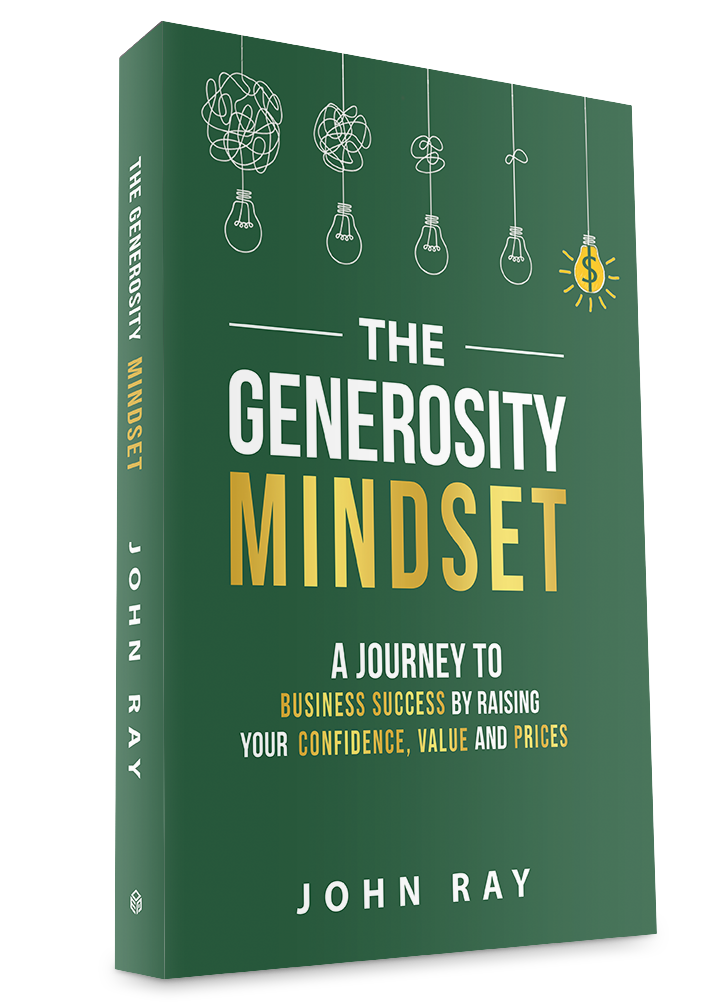
The Generosity Mindset, by John RayJohn is the #1 national best-selling author of The Generosity Mindset: A Journey to Business Success by Raising Your Confidence, Value, and Prices.

If you are a professional services provider, your goal is to do transformative work for clients you love working with and get paid commensurate with the value you deliver to those clients. While negative mindsets can inhibit your growth, adopting a different mindset, The Generosity Mindset™, can replace those self-limiting beliefs. The Generosity Mindset enables you to diagnose and communicate the value you deliver to clients and, in turn, more effectively price to receive a portion of that value.

Whether you’re a consultant, coach, marketing or branding professional, business advisor, attorney, CPA, or work in virtually any other professional services discipline, your content and technical expertise are not proprietary. What’s unique, though, is your experience and how you synthesize and deliver your knowledge. What’s special is your demeanor or the way you deal with your best-fit clients. What’s invaluable is how you deliver great value by guiding people through massive changes in their personal lives and in their businesses that bring them to a place they never thought possible.

The combination of all these elements is quite different for you compared to any other service provider in your industry. Therein lies your value, but it’s not the value you see. It’s the value your best-fit customers see in you.

If pricing your value feels uncomfortable or unfamiliar to you, this book will teach you why putting a price on the value your clients perceive and identify serves both them and you, and you’ll learn the factors involved in getting your price right.

The book is available at all major physical and online book retailers worldwide. Follow this link for further details.
Connect with John Ray:

Website | LinkedIn | Twitter

Business RadioX®:  LinkedIn | Twitter | Facebook | Instagram

Tagged With: 360 Pest & Food Safety Consulting, AI, artificial intelligence, intellectual property, Ip, John Ray, Mike Blake, professional service firms, professional services, The Price and Value Journey

Consulting in the Digital Age, with Prof. Joe O’Mahoney

February 26, 2025 by John Ray

Consulting in the Digital Age, with Prof. Joe O'Mahoney, on The Price and Value Journey podcast with host John Ray
North Fulton Studio
Consulting in the Digital Age, with Prof. Joe O'Mahoney
Loading
00:00 /
RSS Feed
Share
Link
Embed

Download file

Consulting in the Digital Age, with Prof. Joe O'Mahoney, on The Price and Value Journey podcast with host John Ray

Consulting in the Digital Age, with Prof. Joe O’Mahoney (The Price and Value Journey, Episode 123)

In this episode of The Price and Value Journey, host John Ray welcomes Professor Joe O’Mahoney, a leading authority on the consulting industry. They discuss significant shifts in the consulting field, including industry growth, client sophistication, and the impact of AI on consulting processes and pricing. Joe highlights the importance of managed knowledge and systems in consulting firms and how firms can leverage AI to improve efficiency. They also touch on issues like value-based pricing, the role of luck in business success, and how consultants can build reliable, scalable models for long-term growth. Joe shares insights from his latest book, Growth: Building a Successful Consultancy in the Digital Age, making a compelling case for why modern consulting firms must embrace both digital transformation and personalized client relationships.

The Price and Value Journey is presented by John Ray and produced by the North Fulton affiliate of Business RadioX®.

Prof. Joe O’Mahoney

Joe is a leading authority on the consulting industry and a consultant to boutiques and small consulting firms. His research on the profession has won several prestigious awards and publications and resulted in leadership of high-profile government-funded research into the profession. Joe’s textbook on management consulting, Management Consultancy (published by Oxford University Press) was the best-selling book of its kind in Europe and his academic research has been published in the top international journals. His most recent, evidence-based book on growing consulting firms in the digital age, Growth: Building a Successful Consultancy in the Digital Age (published by Routledge), is the “go-to” growth text for consulting CEOs and managing partners all over the world.

Joe also practices what he preaches: he has been a corporate consultant, an internal consultant and a solo consultant. He has spent fifteen years providing advisory services to small consulting firms on growth and, in 2007, sold his own company, StayMobile Technology Ltd. In addition to his private practice, he is the founder of Repair Café Wales CIC and Consulting Mastered Ltd.

Joe has taught and coached over 2,000 executives and MBA students about management consultancy and helped hundreds of students gain places at leading consulting firms. Joe’s work has been recognized by awards from the British Academy of Management, the Centre for Consulting Excellence, the ESRC and several university prizes.

Joe studied history at Oxford University and obtained his PhD and MSc at Warwick University. He lives within Cardiff with his wife, Hannah, and two sons.

Website | LinkedIn

Topics Discussed in this Episode

00:00 Welcome and Introduction to Prof. Joe O’Mahoney
01:36 Big Shifts in Consulting
04:08 Myths and Outdated Beliefs in Consulting
08:03 Scaling and Growth Challenges
14:23 Managed Knowledge and Intellectual Property
19:46 Artificial Intelligence in Consulting
23:35 Implementing AI for Long-Term Success
25:25 Strategizing with AI: Efficiency vs. Personalization
26:45 Leveraging Off-the-Shelf Solutions for Process Improvement
28:20 AI’s Role in Consulting: Current Capabilities and Future Potential
30:12 The Impact of AI on Consulting Pricing Models
36:19 Building Value and Trust in Client Relationships
44:50 The Role of Luck in Consulting Success
48:34 Conclusion and Contact Information

About The Price and Value Journey

The title of this show describes the journey all professional service providers are on: building a services practice by seeking to convince the world of the value we offer, helping clients achieve the outcomes they desire, and trying to do all that at pricing that reflects the value we deliver.

If you feel like you’re working too hard for too little money in your solo or small firm practice, this show is for you. Even if you’re reasonably happy with your practice, you’ll hear ways to improve both your bottom line and the mindset you bring to your business.

The show is hosted and produced by John Ray and the North Fulton studio of Business RadioX®. The show can also be found on all the major podcast apps. The complete show archive is here.

John Ray, Host of The Price and Value Journey

John Ray, Author of The Generosity Mindset and Host of "The Price and Value Journey"
John Ray, Author of The Generosity Mindset and Host of The Price and Value Journey

John Ray is the host of The Price and Value Journey.

John owns Ray Business Advisors, a business advisory practice. John’s services include business coaching and advisory work, as well as advising solopreneurs and small professional services firms on their pricing. John is passionate about the power of pricing for business owners, as changing pricing is the fastest way to change the profitability of a business. His clients are professionals who are selling their expertise, such as attorneys, CPAs, accountants and bookkeepers, consultants, coaches, marketing professionals, and other professional services practitioners.

In his other business, John is a podcast show host and producer and owns the North Fulton (Georgia) affiliate of Business RadioX®. John and his team work with B2B professionals to create and conduct their own podcast using The Generosity Mindset™ Method: building and deepening relationships in a non-salesy way that translates into revenue for their business.

John is also the host of North Fulton Business Radio. With over 840 shows and having featured over 1,300 guests, North Fulton Business Radio is the longest-running podcast in the North Fulton area, covering business in its region like no one else.

John’s book, The Generosity Mindset: A Journey to Business Success by Raising Your Confidence, Value, and Prices

The Generosity Mindset, by John RayJohn is the #1 national best-selling author of The Generosity Mindset: A Journey to Business Success by Raising Your Confidence, Value, and Prices.

If you are a professional services provider, your goal is to do transformative work for clients you love working with and get paid commensurate with the value you deliver to those clients. While negative mindsets can inhibit your growth, adopting a different mindset, The Generosity Mindset®, can replace those self-limiting beliefs. The Generosity Mindset enables you to diagnose and communicate the value you deliver to clients and, in turn, more effectively price to receive a portion of that value.

Whether you’re a consultant, coach, marketing or branding professional, business advisor, attorney, CPA, or work in virtually any other professional services discipline, your content and technical expertise are not proprietary. What’s unique, though, is your experience and how you synthesize and deliver your knowledge. What’s special is your demeanor or the way you deal with your best-fit clients. What’s invaluable is how you deliver great value by guiding people through massive changes in their personal lives and in their businesses that bring them to a place they never thought possible.

The combination of all these elements is quite different for you compared to any other service provider in your industry. Therein lies your value, but it’s not the value you see. It’s the value your best-fit customers see in you.

If pricing your value feels uncomfortable or unfamiliar to you, this book will teach you why putting a price on the value your clients perceive and identify serves both them and you, and you’ll learn the factors involved in getting your price right.

The book is available at all major physical and online book retailers worldwide. Follow this link for further details.

Connect with John Ray:

Website | LinkedIn

Tagged With: AI, consulting, consulting industry, intellectual property, Joe O'Mahoney, John Ray, pricing, process improvement, professional services, The Price and Value Journey, value pricing

Trademark and Intellectual Property Protection for Service Providers, with Trademark Attorney Katie Moore

July 17, 2024 by John Ray

Trademark and Intellectual Property Protection for Service Providers, with Trademark Attorney Katie Moore, Katherine Moore Law, LLC
North Fulton Studio
Trademark and Intellectual Property Protection for Service Providers, with Trademark Attorney Katie Moore
Loading
00:00 /
RSS Feed
Share
Link
Embed

Download file

Trademark and Intellectual Property Protection for Service Providers, with Trademark Attorney Katie Moore, Katherine Moore Law, LLC

Trademark and Intellectual Property Protection for Service Providers, with Trademark Attorney Katie Moore, Katherine Moore Law LLC (The Price and Value Journey, Episode 109)

In this episode of The Price and Value Journey, host John Ray discusses the importance and process of protecting intellectual property with trademark attorney Katie Moore from Katherine Moore Law LLC. They cover the distinctions and value of trademarks and copyrights and emphasize the significance of protecting intellectual property for service providers. Katie explains the steps involved in obtaining a trademark, from initial consultations to federal applications, and addresses common misconceptions about protectable intellectual property. She also highlights the business and legal returns of investing in trademark protection and provides practical advice on using and maintaining trademarks effectively. Additionally, John shares insights from his own experience of trademarking “The Generosity Mindset,” offering a real-world example of the considerations and benefits involved.

The Price and Value Journey is presented by John Ray and produced by the North Fulton studio of Business RadioX®.

Katie Moore, Founder, Katherine Moore Law, LLC

Katie Moore, Katherine Moore Law, LLC

Katie Moore is the founder and principal attorney of Katherine Moore Law, LLC, a business law firm specializing in trademark and intellectual property matters. With a focus on helping business owners protect and grow their enterprises, Katie expertly guides clients through legal requirements and practices related to intellectual property.

As a trademark attorney, Katie assists clients in safeguarding their brand identities and creative assets. Her services include trademark searches, applications, and enforcement, as well as other aspects of intellectual property protection. Katie’s passion lies in empowering businesses to establish and maintain strong legal foundations for their brands and innovations.

Katie’s approach to law is characterized by her dedication to providing personalized attention and tailored solutions to each client’s unique needs.

Website | LinkedIn

Topics Discussed in this Interview

00:00 Introduction and Book Announcement
00:15 Engaging a Trademark Attorney
01:26 Meet Katie Moore: Trademark Attorney
02:53 Understanding Trademarks for Service Providers
04:36 The Generosity Mindset: A Case Study
07:43 Trademark Application Process
08:52 Legal and Business Considerations
10:08 Classes and Categories in Trademarking
11:25 Intent to Use and Timing
22:22 Intellectual Property Types
31:47 Protecting Your Trademark
33:54 Conclusion and Contact Information

About The Price and Value Journey

The title of this show describes the journey all professional service providers are on:  building a services practice by seeking to convince the world of the value we offer, helping clients achieve the outcomes they desire, and trying to do all that at pricing that reflects the value we deliver.

If you feel like you’re working too hard for too little money in your solo or small firm practice, this show is for you. Even if you’re reasonably happy with your practice, you’ll hear ways to improve both your bottom line and the mindset you bring to your business.

The show is hosted and produced by John Ray and the North Fulton studio of Business RadioX®. The show can also be found on all the major podcast apps. The complete show archive is here.

John Ray, Host of The Price and Value Journey

John Ray, Author of The Generosity Mindset and Host of "The Price and Value Journey"
John Ray, Author of The Generosity Mindset and Host of The Price and Value Journey

John Ray is the host of The Price and Value Journey.

John owns Ray Business Advisors, a business advisory practice. John’s services include business coaching and advisory work, as well as advising solopreneurs and small professional services firms on their pricing. John is passionate about the power of pricing for business owners, as changing pricing is the fastest way to change the profitability of a business. His clients are professionals who are selling their expertise, such as attorneys, CPAs, accountants and bookkeepers, consultants, coaches, marketing professionals, and other professional services practitioners.

In his other business, John is a Show Host and Producer and owns the North Fulton (Georgia) studio of Business RadioX®. John and his team work with B2B professionals to create and conduct their own podcast using The Generosity Mindset™ Method:  building and deepening relationships in a non-salesy way that translates into revenue for their business.

John is also the host of North Fulton Business Radio. With over 780 shows and having featured over 1,200 guests, North Fulton Business Radio is the longest-running podcast in the North Fulton area, covering business in its region like no one else.

John’s book, The Generosity Mindset: A Journey to Business Success by Raising Your Confidence, Value, and Prices

The Generosity Mindset, by John RayJohn is the #1 national best-selling author of The Generosity Mindset: A Journey to Business Success by Raising Your Confidence, Value, and Prices.

If you are a professional services provider, your goal is to do transformative work for clients you love working with and get paid commensurate with the value you deliver to those clients. While negative mindsets can inhibit your growth, adopting a different mindset, The Generosity Mindset™, can replace those self-limiting beliefs. The Generosity Mindset enables you to diagnose and communicate the value you deliver to clients and, in turn, more effectively price to receive a portion of that value.

Whether you’re a consultant, coach, marketing or branding professional, business advisor, attorney, CPA, or work in virtually any other professional services discipline, your content and technical expertise are not proprietary. What’s unique, though, is your experience and how you synthesize and deliver your knowledge. What’s special is your demeanor or the way you deal with your best-fit clients. What’s invaluable is how you deliver great value by guiding people through massive changes in their personal lives and in their businesses that bring them to a place they never thought possible.

The combination of all these elements is quite different for you compared to any other service provider in your industry. Therein lies your value, but it’s not the value you see. It’s the value your best-fit customers see in you.

If pricing your value feels uncomfortable or unfamiliar to you, this book will teach you why putting a price on the value your clients perceive and identify serves both them and you, and you’ll learn the factors involved in getting your price right.

The book is available at all major physical and online book retailers worldwide. Follow this link for further details.
Connect with John Ray:

Website | LinkedIn | Twitter

Business RadioX®:  LinkedIn | Twitter | Facebook | Instagram

Tagged With: intellectual property, Intellectual Property Law, John Ray, Katherine Moore Law LLC, Katie Moore, The Generosity Mindset, The Price and Value Journey, trademark law, trademarks

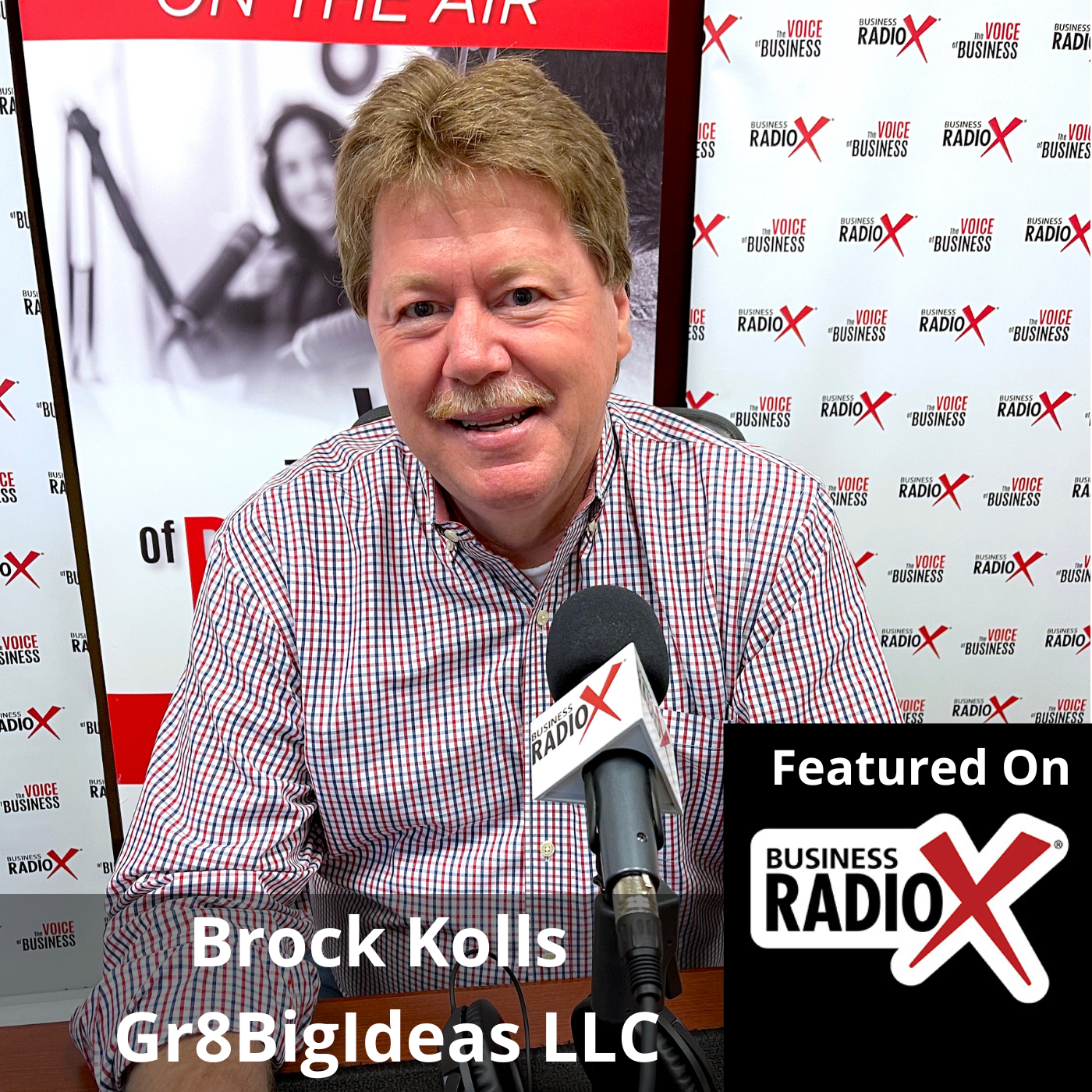
Brock Kolls, Gr8BigIdeas LLC

August 2, 2022 by John Ray

Brock Kolls
North Fulton Business Radio
Brock Kolls, Gr8BigIdeas LLC
Loading
00:00 /
RSS Feed
Share
Link
Embed

Download file

Brock Kolls

Brock Kolls, Gr8BigIdeas LLC (North Fulton Business Radio, Episode 482)

Brock Kolls, Owner and Patent Agent at Gr8BigIdeas LLC, discussed the patent process for entrepreneurs. He and host John Ray talked about how Brock got into specializing in intellectual property and patents, products he helped develop at Coca-Cola and elsewhere, ways to protect your intellectual property, his connection with the tech community, types of patents, and much more.

North Fulton Business Radio is broadcast from the North Fulton studio of Business RadioX® inside Renasant Bank in Alpharetta.

Gr8BigIdeas LLC

Entrepreneurs, startups, and innovative companies have lots of ideas and can move through product development at a fast pace.

Protecting ideas is important, but ideas often evolve during product development. So how best to protect the early ideas as well as the final product?

Think differently about intellectual property. Embed a patent professional in your product development cycle or team to collaborate, capture, and create IP.

Change the way your company identifies new products and market opportunities. Think bigger and more disruptive. Act on insights.

Leverage fractional professional IP services to add in-house patent capabilities to your company. Invent more, pay less.

Get your talent involved in the patent creation process to patent smarter.

Working with private equity and venture capital firms, Gr8BigIdeas can support, mentor, and build IP for your portfolio companies.

They use a patent strategy that includes mentoring entrepreneurs and startups about the patent process. This approach engages the product developers and inventors to participate in refining ideas and collaborating in the development of patent applications.

They also integrate designing the patent applications into the product development cycle so that early ideas, the final product, as well as product variations for the future are all protected. They call it Bootstrap Patenting and they do it on a shoestring budget because that is how startups and entrepreneurs operate.

Company website | LinkedIn

Brock Kolls, Owner and Patent Agent, Gr8BigIdeas LLC

Brock Kolls, Owner and Patent Agent, Gr8BigIdeas LLC

Brock Kolls is a registered US Patent Agent with more than 20 years of patent experience and a prolific inventor with more than 100 patents.

He founded Gr8BigIdeas to help entrepreneurs, startups, and innovative companies patent their ideas and assist corporates who are seeking to innovate in the technical community. He has startup experience raising more than $120 million in funding and a successful exit on NASDAQ.

In his startup, Brock invented a wireless cashless payment technology that is widely used today. He then became a member of Coca-Cola R&D. At Coke, he led a team of innovators in the design of cold drink equipment. One such innovation was the Coca-Cola Freestyle dispenser. After Freestyle, Brock successfully grew Coca-Cola’s open innovation program. The program scouted for technologies to meet Coke’s business needs worldwide.

LinkedIn

Questions and Topics in this Interview:

  • Patents from a tech community perspective
  • Different types of patents
  • When to file, how to budget/manage costs
  • Unique needs and pitfalls to avoid for entrepreneurs and startups
  • The tech community in North Fulton
  • Non-tech ideas

North Fulton Business Radio is hosted by John Ray and broadcast and produced from the North Fulton studio of Business RadioX® inside Renasant Bank in Alpharetta. You can find the full archive of shows by following this link. The show is available on all the major podcast apps, including Apple Podcasts, Spotify, Google, Amazon, iHeart Radio, Stitcher, TuneIn, and others.

RenasantBank


Renasant Bank has humble roots, starting in 1904 as a $100,000 bank in a Lee County, Mississippi, bakery. Since then, Renasant has grown to become one of the Southeast’s strongest financial institutions with over $13 billion in assets and more than 190 banking, lending, wealth management and financial services offices in Mississippi, Alabama, Tennessee, Georgia and Florida. All of Renasant’s success stems from each of their banker’s commitment to investing in their communities as a way of better understanding the people they serve. At Renasant Bank, they understand you because they work and live alongside you every day.


Special thanks to A&S Culinary Concepts for their support of this edition of North Fulton Business Radio. A&S Culinary Concepts, based in Johns Creek, is an award-winning culinary studio, celebrated for corporate catering, corporate team building, Big Green Egg Boot Camps, and private group events. They also provide oven-ready, cooked from scratch meals to go they call “Let Us Cook for You.” To see their menus and events, go to their website or call 678-336-9196.

Tagged With: A&S Culinary Concepts, Brock Kolls, Gr8BigIdeas, Innovation, intellectual property, North Fulton Business Radio, Patents, provisional patent, renasant bank, tech community

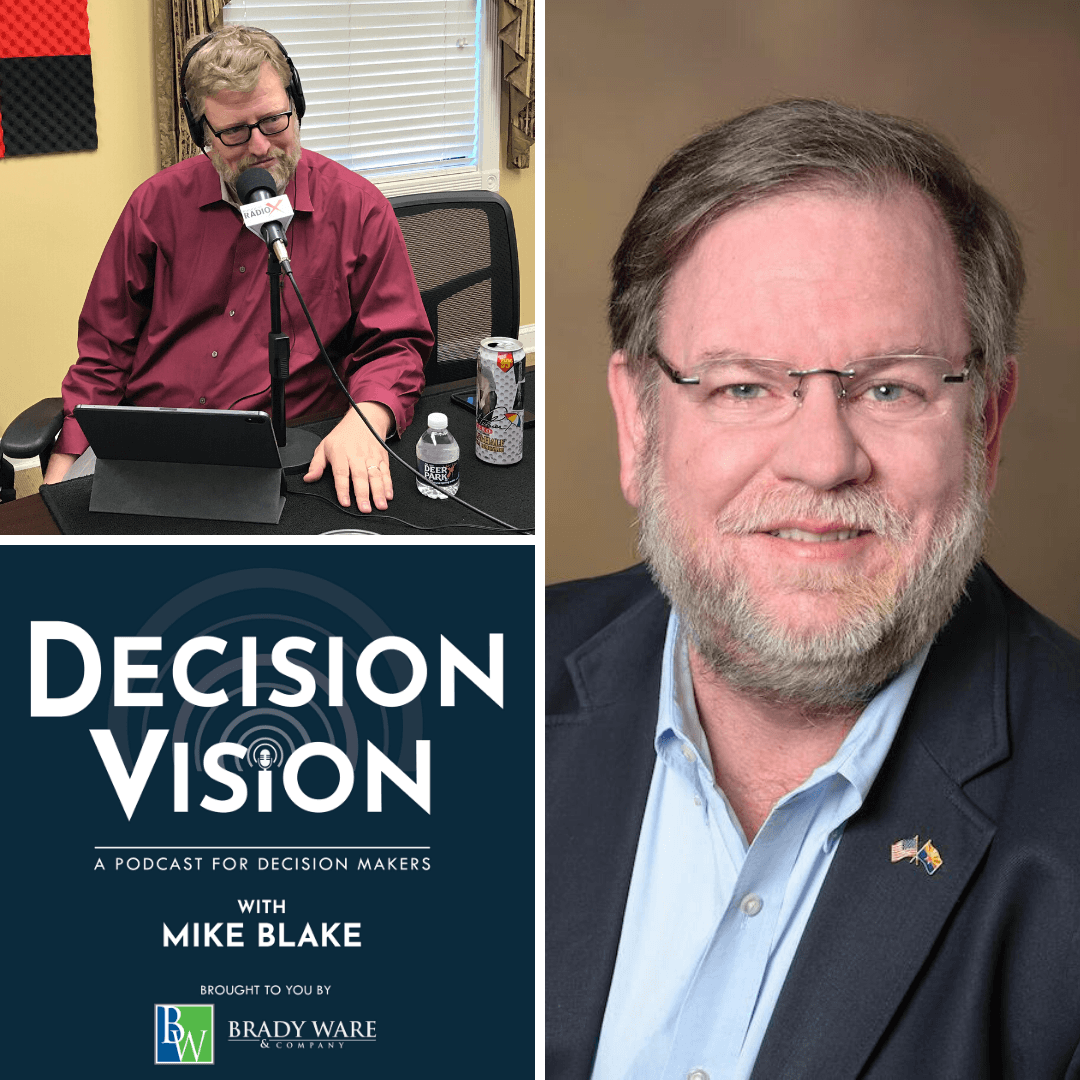
Decision Vision Episode 147:  Should I License My Intellectual Property? – An Interview with Andrew Innes, Anomia Press

December 16, 2021 by John Ray

Anomia Press
Decision Vision
Decision Vision Episode 147:  Should I License My Intellectual Property? - An Interview with Andrew Innes, Anomia Press
Loading
00:00 /
RSS Feed
Share
Link
Embed

Download file

Anomia Press

Decision Vision Episode 147:  Should I License My Intellectual Property? – An Interview with Andrew Innes, Anomia Press

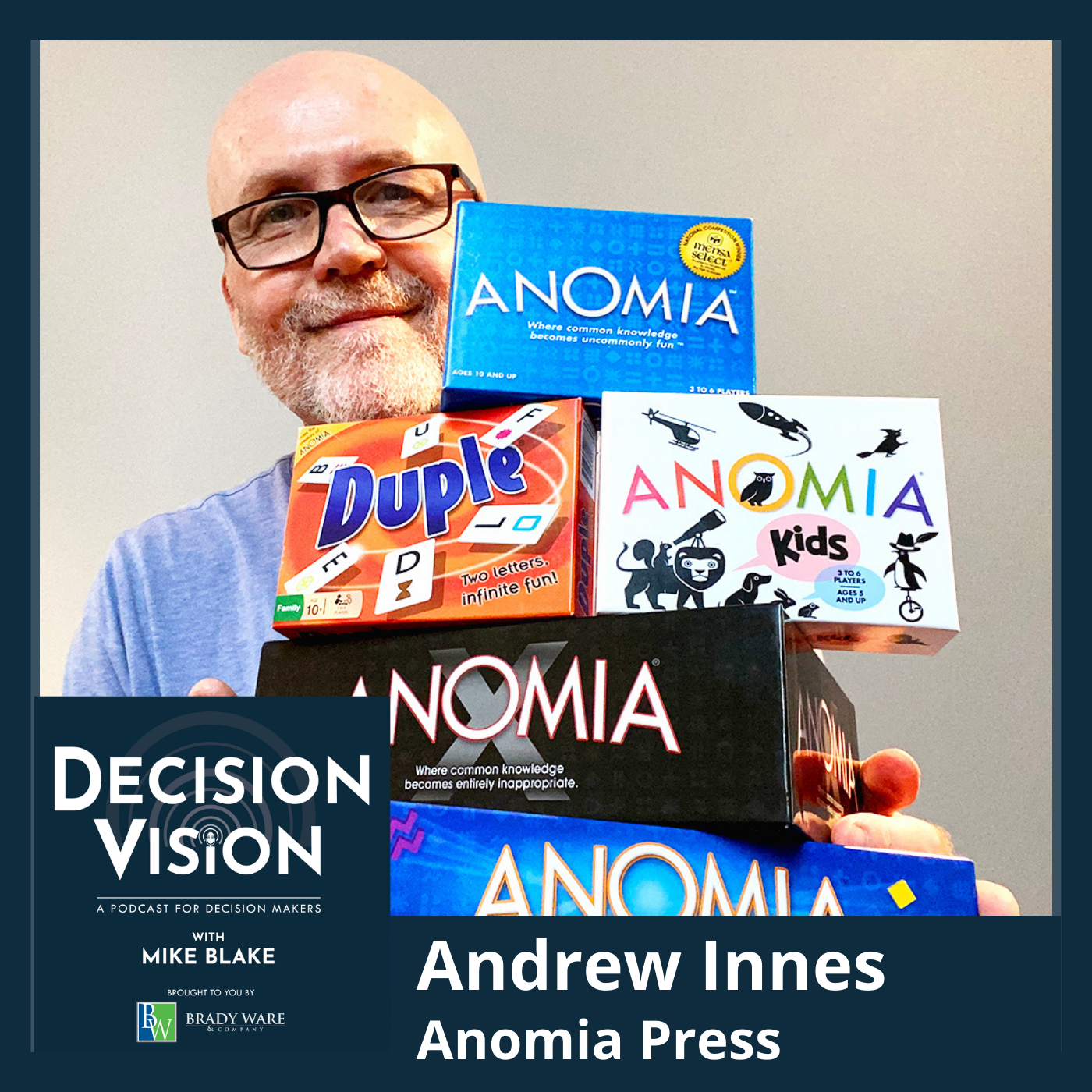
Is licensing intellectual property “easy money” or is there more to it than that? How do you go about getting IP licensed? Andrew Innes, designer of the game ANOMIA and CEO of Anomia Press, joined host Mike Blake to discuss his journey to licensing his games, how and why one might decide to license, marketing and distribution, and much more. Decision Vision is presented by Brady Ware & Company.

Anomia Press

Anomia Press publishes the award-winning and highly-addictive card games Anomia and Duple which have sold over a million copies and have been translated into more than 15 languages around the world.

Company website | Facebook | Twitter

Andrew Innes, CEO & Founder, Anomia Press

Anomia Press
Andrew Innes, CEO & Founder, Anomia Press

Andrew started Anomia Press in May of 2009. However, a lot happened before that.

When he was 12 years old, Andrew came up with an idea for a game.  Mostly, the concept just rattled around in his head, nagging at him for years and years. Many years later, in his early 30’s, he decided to finally try and make a prototype of my idea. Five prototypes and many, many play-testing sessions later (not to mention a full-time job, a wedding, a baby, a move from Brooklyn to Boston, and another baby) Andrew realized his game, ANOMIA, was finally done.

In the spring of 2009, Andrew started Anomia Press and set out to raise enough money to pay for the first printing of ANOMIA. By the end of July 2009, he had pre-sold over 500 copies of ANOMIA and had succeeded in raising all the money needed to go into production.  The games arrived in mid-November and all 500+ copies were shipped out just in time for the Thanksgiving holidays. Word spread quickly, and Andrew sold an additional 500 copies between Thanksgiving and Christmas.

The momentum continued and by the end of 2010, ANOMIA had sold over 25,000 copies, won some major toy industry awards, and had been picked up by hundreds of stores across the United States, Canada, and Australia.

In December 2010, Andrew’s wife, Jody Burr, came on board to help with both marketing and design, not to mention Quickbooks. They have subjected their kids (and their friends) to tons of play-testing sessions, truly making Anomia Press a family business.

LinkedIn

Mike Blake, Brady Ware & Company

Mike Blake, Host of the “Decision Vision” podcast series

Michael Blake is the host of the Decision Vision podcast series and a Director of Brady Ware & Company. Mike specializes in the valuation of intellectual property-driven firms, such as software firms, aerospace firms, and professional services firms, most frequently in the capacity as a transaction advisor, helping clients obtain great outcomes from complex transaction opportunities. He is also a specialist in the appraisal of intellectual properties as stand-alone assets, such as software, trade secrets, and patents.

Mike has been a full-time business appraiser for 13 years with public accounting firms, boutique business appraisal firms, and an owner of his own firm. Prior to that, he spent 8 years in venture capital and investment banking, including transactions in the U.S., Israel, Russia, Ukraine, and Belarus.

LinkedIn | Facebook | Twitter | Instagram

Brady Ware & Company

Brady Ware & Company is a regional full-service accounting and advisory firm which helps businesses and entrepreneurs make visions a reality. Brady Ware services clients nationally from its offices in Alpharetta, GA; Columbus and Dayton, OH; and Richmond, IN. The firm is growth-minded, committed to the regions in which they operate, and most importantly, they make significant investments in their people and service offerings to meet the changing financial needs of those they are privileged to serve. The firm is dedicated to providing results that make a difference for its clients.

Decision Vision Podcast Series

Decision Vision is a podcast covering topics and issues facing small business owners and connecting them with solutions from leading experts. This series is presented by Brady Ware & Company. If you are a decision-maker for a small business, we’d love to hear from you. Contact us at decisionvision@bradyware.com and make sure to listen to every Thursday to the Decision Vision podcast.

Past episodes of Decision Vision can be found at decisionvisionpodcast.com. Decision Vision is produced and broadcast by the North Fulton studio of Business RadioX®.

Connect with Brady Ware & Company:

Website | LinkedIn | Facebook | Twitter | Instagram

TRANSCRIPT

Intro: [00:00:02] Welcome to Decision Vision, a podcast series focusing on critical business decisions. Brought to you by Brady Ware & Company. Brady Ware is a regional full-service accounting and advisory firm that helps businesses and entrepreneurs make visions a reality.

Mike Blake: [00:00:22] Welcome to Decision Vision, a podcast giving you, the listener, clear vision to make great decisions. In each episode, we discuss the process of decision-making on a different topic from the business owners’ or executives’ perspective. We aren’t necessarily telling you what to do, but we can put you in a position to make an informed decision on your own and understand when you might need help along the way.

Mike Blake: [00:00:44] My name is Mike Blake, and I’m your host for today’s program. I’m a director at Brady Ware and Company, a full-service accounting firm based in Dayton, Ohio, with offices in Dayton; Columbus, Ohio; Richmond, Indiana; and Alpharetta, Georgia. My practice specializes in providing fact-based strategic risk management advice to clients that are buying, selling, or growing the value of companies and their intellectual property. Brady Ware is sponsoring this podcast, which is being recorded in Atlanta per social distancing protocols.

Mike Blake: [00:01:14] If you would like to engage with me on social media with my Chart of the Day and other content, I’m on LinkedIn as myself and @unblakeable on Facebook, Twitter, Clubhouse, and Instagram. I also recently launched a new LinkedIn group called A Group That Doesn’t Suck. So, please join that as well so that if you would like to engage with me, that’s your opportunity to do so. If you like this podcast, please subscribe on your favorite podcast aggregator and please consider leaving a review of the podcast as well.

Mike Blake: [00:01:45] Today’s topic is, Should I license my intellectual property? And, as I look back on the history of this program and we’re now recording show number 140 something, I’m stunned that we have not covered this topic.

Mike Blake: [00:01:59] Intellectual property is such an important facet of our economy. There’s data that suggests that the value of our economy as a whole may be 90% to 95% comprised of intellectual property, certainly intangible assets. And, you know, conversely, the world in which I, at least partially, live, accounting does a terrible job of measuring the value of intellectual property gap. It’s just bad at measuring the value of intangible assets, intellectual property, which is why I so-called value investors, such as Warren Buffett, have not really done all that well the last few years because so much value just doesn’t fall into that bucket anymore.

Mike Blake: [00:01:59] And according to IBISWorld, intellectual property licensing is a 54-billion dollar industry in the United States, and this is a recent data point. This is actually as of their October 2021 report. Interestingly, the biggest player in this market is Disney. And, the most actively licensed form of intellectual property franchises at 39.8% of the market. But that doesn’t mean there isn’t a whole lot of active intellectual property licensing elsewhere.

Mike Blake: [00:03:25] And, here to join us to discuss this topic is Andrew Innes, who is a tabletop game designer based in my hometown of Boston, Massachusetts. He came up with the idea for his first game when he was 12 years old. Anomia Press, his company, publishes the award-winning and highly addictive card games, Anomia and Duple, which have sold over a million copies and have been translated into 15 languages around the world.

Mike Blake: [00:03:54] Now, I’m going to struggle very hard to maintain some sort of focus on this episode because I’m a gamer myself. I love games. I played Dungeons & Dragons with people last night, and I just freely admit that the nerd shall inherit the Earth. So, I love this. But I promise we’ll get around to a business topic at some point during this podcast.

Mike Blake: [00:04:15] Andrew, welcome to the Decision Vision podcast.

Andrew Innes: [00:04:19] Thank you, Mike. Thanks for having me. Pleasure to be here.

Mike Blake: [00:04:23] So, let’s start. When we talk about an intellectual property license, what does that mean to you? How would you define that?

Andrew Innes: [00:04:36] Well, I guess, you know, it can mean a lot of things, I suppose. I mean, in my case, it means that, you know, I came up with this idea for a game and initially I self-published it and was manufacturing it and distributing it myself. And then, after a while, you know, meanwhile, I was, you know, still had a full-time job and had two young kids and, you know, busy life.

Andrew Innes: [00:05:08] When I got an offer to license Anomia, it sort of came at a time where I was, you know, struggling to deal with the growth of Anomia Press and also faced with the issue of managing, you know, selling to retailers and trying to get paid by them and managing to have enough money to make my next batch of games and, you know, we grew kind of fast, so it was a little bit painful. And, you know, I had to borrow some money, et cetera.

Andrew Innes: [00:05:08] So, you know, in that moment, for me, licensing was a nice option because it took away a lot of the problems I had, which were, like, how to deal with the growth, how to deal with, you know, selling to retailers and maintain my career at the time and not just be like an insane person.

Andrew Innes: [00:06:04] So, you know, I guess in a nutshell, licensing means like, you know, taking – you know, putting some value on an idea you have typically in some kind of tangible form, like – and like in the form, in this case, of a game and then giving the rights to somebody else, another company to manufacture and distribute that.

Mike Blake: [00:06:27] Now, I think this is a commonly held perception of licensing IP that it’s so-called mailbox money, where you sign a licensing deal, somebody else does all the work. You put your feet up. You binge-watch Game of Thrones for the third time or something and you wait for the checks to roll in. Is that what happened to you or did you sign a couple of licensing deals and you’re just sort of living the good life and don’t have to work anymore? How does that work?

Andrew Innes: [00:06:53] Well, I did binge-watch Game of Thrones, so maybe. I don’t know. I mean, you know, your mileage may vary, I guess is the best way to put it. Like, Anomia has been very successful. And, you know, I think our situation may not be, you know, anybody else’s situation. It’s always going to vary, you know.

Andrew Innes: [00:07:26] So, I mean, on one hand, like the reason that I chose to license was, like I said, I was juggling a lot of stuff, young kids, another career, and I was sort of thinking like, well, what do I – you know, this is something I say to people when they’re considering this, I’m like, “What? You know, what do you want to do with your time? Like, what do you want to be spending your time on?” And for me, it was – I had this vision for Anomia. I wanted to see it grow to multiple products, the multiproduct line. And, I, you know, at the time, I was still, you know, focused on my other career. I mean, I’ve since left that career and I’m focused on this stuff full time.

Andrew Innes: [00:08:08] So, licensing for me in large part was about, like, making a decision about how I wanted to spend my days and what I wanted to do was grow the product line, and what I didn’t want to do was chase down 25 retailers who were past due.

Andrew Innes: [00:08:30] And, you know, also, a big, big part of this was my partner, my licensing partner. You know, they had a great distribution network, way bigger than what I had, and they had relationships with large chain stores and big box stores and the mid-tier stores and all the mom-and-pop shops. And so immediately, you know, I had already been working with them. They had been a distributor for me, you know, for I don’t know how long, maybe six to eight months or something like that. And then, they approached me with an offer to license. So I, you know, had an existing relationship with them.

Mike Blake: [00:09:14] But, yeah, so it was all about what I wanted to spend my time doing. I mean, if you want to, like, grow your business from the ground up and retain full control of everything, then you know, licensing may not be for you. If you want to take advantage of another business’s distribution network or other, you know, depending on what your product is, or, then it might make sense to consider licensing.

Mike Blake: [00:09:42] Now, I’m curious, you said when you licensed it first, you had another job. I’m curious what that was. You know, it’s well – if you’re in the roleplaying gaming community, for example, Gary Gygax, one of the founders of Dungeons & Dragons, was an insurance salesman until they got for enough for him. What was your primary hustle before you moved into gaming?

Andrew Innes: [00:10:06] Sure. So, well, at the time, my last full-time job was with the Harvard Business Review, and I did product development for them, mostly in the digital space. So, I did like app development and some mobile web development, mostly like as a sort of product manager and project and product manager type role. So, basically finding ways to take their content and then repackage it, repurpose it in a digital context.

Andrew Innes: [00:10:43] I mean, I started there right around the time the first iPhones were coming out. So, you know, we were getting into that. And prior to that, I had worked in publishing. I worked for a company called Source Media, which was a financial publisher in Manhattan. And, you know, I started there actually in print production, and that was kind of awesome because those skills were really helpful and I was first prototyping Anomia, like knowing my way around the desktop publishing software.

Andrew Innes: [00:11:16] But after a few years there, I worked there for about 10 years, and so I worked in print production like putting out a daily newspaper for a few years. And then, I moved over to their web group and I was editing, you know, an editor on the website. And then, I became a product manager there for one of their main websites. And then, over time, I took on. I think I had about five websites that were, you know, two daily papers, two monthly magazines, and, like, a weekly newspaper as well.

Andrew Innes: [00:11:47] So, just doing, basically, you know, interfacing between tech development, editorial, advertising, marketing, customer service and sort of, you know, helping all of those different parts of the business interact with and improve the website and things like that.

Mike Blake: [00:12:09] So, of the two games you have licensed, which is the one you developed first? Was it Anomia?

Andrew Innes: [00:12:15] Yeah. So, Anomia, and there’s four currently in the market. There’s four versions of Anomia app, but the original game was a small blue box with two decks, and that was the first one.

Mike Blake: [00:12:27] So, when you develop that, how did you – how developed was that game when you started to approach potential licensees? You must have had, I guess, at least a basic prototype. Was it highly polished? Was it kind of a rough prototype just to let people know generally where you were headed? How far did you have to have that product developed before you felt like you could take it to licensees and be taken seriously?

Andrew Innes: [00:12:55] Well, I mean, in my case, I actually had a product. You know Anomia was in the market. So, I had worked on it for a number of years refining it. Then, I sort of did my own version of – this was maybe, you know, right around the same time Kickstarter was beginning. But I did my own Kickstarter where I, you know, my own version of it. Like, I spammed everybody I knew and asked them to pre-purchase copies of the game, and I raised enough money to print my first print run. And then, I, you know, was able to fulfill, you know, all the orders for the people who had pre-purchase copies, and then I, you know, sold a bunch more right after that.

Andrew Innes: [00:13:39] But so, yeah, and then I started the sort of slow process of getting it out into stores and getting it, you know, learning more about the toy industry. But basically, you know, I had been sitting on this idea for so long. Like, I literally – I had had the idea for, you know, Anomia when I was a kid and then I kind of sat on the idea. I kept coming back to it over the years and then finally, I was like, “Maybe, maybe I should prototype this.” And so, I did. I started playing with friends and then I kind of playtested it for three or four years with a lot of different people and refined it further.

Andrew Innes: [00:14:13] And then, at a certain point, I was like, “Okay, it’s done. I don’t need to do anymore. Like, now what?” And so, the first thing was to just – I didn’t want to license it right away. I wanted to bring it to market first and see what happened and then go from there.

Andrew Innes: [00:14:28] So basically, I had a product in the market, you know, and it was selling well. Like, I mean, you know, we sold a thousand games our first year, but really, that was like the last two months of the first year. And then, we sold like 20 something thousand games the following year. And it was in that year that we were approached by another company saying like, “Hey, would you consider licensing this to us?”

Andrew Innes: [00:14:57] So, now there’s up and downsides to that approach. Like, one is if you’ve got an idea I mean, it’s very common in the toy industry and the tabletop game industry for an inventor to come up with an idea, make a rough prototype. It doesn’t need to have any, you know, like, fancy design or anything. It’ll be super basic, but enough so that you can show how does the game play, what are the components of the game, et cetera.

Andrew Innes: [00:15:28] And then, like, you know, part of what happens, say, at an industry event like Toy Fair, which is our big international trade event in February in New York City, where, you know, designer, game designers come and they booked meetings with different companies and they go around and they pitch their ideas to companies and people say, “Oh yeah, that looks cool. I’ll want to license that for you,” or “No, we’re going to pass on. That doesn’t really fit our product line or whatever.”

Andrew Innes: [00:15:56] So, I mean, I had actually gone to Toy Fair many times with my prototype in my bag, never showed it to anyone because I was terrified somebody would, like, steal my idea, you know.

Mike Blake: [00:16:06] Really?

Andrew Innes: [00:16:12] So, you know, so the upside of bringing your product to market first is that if you have some success, then when you’re, you know, negotiating your licensing deal, you often can get a better percentage for your royalties. If you have an –

Mike Blake: [00:16:32] I think that’s right.

Andrew Innes: [00:16:32] If you have an unproven product, like, you just have this cool idea and people like the idea, but they have no idea how it does in the market, you know, you’re going to get probably more of the standard licensing, like what’s standard for whatever industry you’re in, so.

Mike Blake: [00:16:47] If you even get that. I think that’s a really important point because –

Andrew Innes: [00:16:52] And, if you’re getting it at that rate.

Mike Blake: [00:16:53] The licensing – the most successful licensed stores I have met and worked with are ones that did bring their inventions to the market first in some fashion, proved market traction, right, proved that they could. Maybe they didn’t want you, right, but at least you theoretically could bring it to the market on your own. And that gives you a lot of leverage because you don’t have to just sort of take whatever a licensee is willing to pay. You do have at least the option. Even if in the back of your mind you’re saying, “God, I hope they take this deal because I don’t want to do this anymore.” Right?

Andrew Innes: [00:17:32] Right, right.

Mike Blake: [00:17:32] If you’re at least a modicum of a decent poker player and you cannot show that in the negotiation, then you do have this fallback position. “Okay. If you don’t like it, I’ll just keep selling it,” right, and you’ll just keep losing out on the income.

Mike Blake: [00:17:47] And so, as opposed to what I think many inventors and property, intellectual property developers romanticize about that you can put an idea down on a piece of paper, maybe even get something patented, trademarked, copyrighted, or whatever, there’s some sort of protection of something there. There’s a hope that, “Hey, if I just go to a deep-pocketed entity with a big idea, they’re just going to license it.” I think that is very much the exception rather than the rule at any price.

Andrew Innes: [00:18:22] Yeah. And, also, you know, licensing comes with some other challenges. Like, you know, when I was not licensing, you know, when it was all under my control, you know, for better or worse than I was, you know, [inaudible] the buck stopped with me and also any kind of marketing. Like, you know, I had more flexibility around marketing or where I could sell, et cetera.

Andrew Innes: [00:18:47] And now, I mean, I feel lucky with my current partner because I’ve actually maintained a lot of control over, you know, creative control over packaging, and also I do all the marketing. Like, they’re happy – you know, they’re super happy to be like the awesome distribution channel that they are and distributor, and, like, that’s what they do. They’re great at it and, like – and so I’ve, you know, over the years taken on more of a marketing role. And, basically what I do now is product development and marketing. So, I’m – and you may or may not be able to do that depending on your relationship with your license or, you know, or your licensee.

Andrew Innes: [00:19:36] So, you know, also going into it with them, I had to be really clear in my head. Like, they weren’t going to market it. You know, that’s not their job. They’re not marketing to consumers. They sell to stores, you know. They don’t sell to consumers.

Andrew Innes: [00:19:50] So, you know, when I talk to other people, I often consult with people in the game space because, you know, some friend of a friend, it’s like, “Oh, my friend made a game. Like, what should they do next?” And so, I often will meet with folks like that.

Andrew Innes: [00:20:06] And, you know, I’m always upfront about that. Like, you know, if you license your game to another company, depending on the company and their approach, you know, some game companies do market to consumers. They do have a social media presence. They do this and they do that, but some don’t. And so, you have to consider, and also know that, like, you know, my licensee, they have – they distribute, you know, for Hasbro and for Mattel. Like, my product is like one of thousands, you know. It’s one of thousands of other products and, you know, they love the game and all that. But, like, I’m not – you know, you got to go into it with your eyes open. Like, often if a larger company is taking on your product, they have other considerations. Like, they’re going to consider your product but it’s one small piece of their business, and it’s not going to get the personal attention that you may feel it needs. And so, you really need to make sure that you can deal with that or – and maybe you can deal with that by being a marketing voice for your product, you know.

Andrew Innes: [00:21:10] Like, I go to conventions. I, you know, exhibit at conventions and I’m sitting there demoing games all day, you know, to thousands of people. And, you know, I’ve got an email list I’m promoting too and websites and running contests on my website, et cetera. Like, I’m doing all of that stuff, you know, because no one else is going to do it, so.

Mike Blake: [00:21:31] And, you know, that’s exactly a point I wanted to kind of tease out of you in this conversation in that, again, I think there’s a widely held view that if you license your IP, you sign a license, you start watching TV and just let the royalty checks roll in. But the reality is that, you know, I think if you want to maximize your revenue or come close to maximizing your income from that relationship, you’ve got to help now your licensee be successful. You have to –

Andrew Innes: [00:22:04] Right.

Mike Blake: [00:22:04] You should – you need to, in some, if what you’re good at is marketing, you need to be out there and market it. Right? If you have – if you’re kind of an influencer, then you need to influence, right, whatever it is.

Andrew Innes: [00:22:15] Whatever you can do. Yeah. I mean, again, it’s going to vary from situation to situation and what your industry is, what your licensor is or what your licensee is, you know, interested in you doing.

Andrew Innes: [00:22:27] Some – you know, it’s pretty frequent that like a game designer, my license to a company and then the company doesn’t really want to deal with them. You know, they don’t – they don’t want to – they don’t want to deal with, you know, listening to all of your ideas about, you know, [inaudible] to do, so.

Mike Blake: [00:22:48] Inventors can be very hard to listen to because it’s their baby and –

Andrew Innes: [00:22:54] Yeah. They’re excited about their idea and they think it’s the best thing ever.

Mike Blake: [00:22:57] And, now they’ve been validated with one licensing agreement, and it can –

Andrew Innes: [00:23:01] Right.

Mike Blake: [00:23:02] It can be easy to fall into the trap then because you have that one agreement, you now think you have 38 other awesome ideas that everybody can be a fool not to listen to.

Andrew Innes: [00:23:10] Right. Exactly. Yeah, yeah.

Mike Blake: [00:23:14] And so, the point is, you know, you still have a business. The business model may be different, but you do still have a business when you’re licensing your IP.

Andrew Innes: [00:23:26] Yeah. I mean, it’s different in terms of the day-to-day. Like, you don’t – it’s not the same where I was, you know, shipping games and chasing down people for payment and, you know, trying to do this and trying to do that. Like, it’s a very different kind of business, you know.

Mike Blake: [00:23:46] When you started – when you took your game to market and they started appearing on retail shelves, were you hoping, were you positioning yourself in such a way that you are hoping to attract a licensee, or did that relationship kind of happen serendipitously?

Andrew Innes: [00:24:07] No, that was serendipitous. Like, I was distributing myself in the United States. I had been approached by a distributor in Canada and then I had been approached by a distributor in Australia. So, I had sort of set up – you know, I was taking care of the U.S., and then I was working with this Canadian distributor and an Australian distributor. And then – I mean, when I set out with Anomia like I didn’t, I didn’t – I think my vision was more about like, “Oh, I’ll sell a lot on Amazon and I’ll get it into some stores.” And, I didn’t really know what, you know – I didn’t know a ton about the toy industry. I didn’t – you know, there was a lot I didn’t know. So, I didn’t really have any sense of – I mean, I say it’s like after, you know, my first [inaudible] I did 2500 units and, you know, I pre-sold 500 of those, as you know, for the people who helped support that, that first printing. And then, those came – those went out right around, actually just this time in it was November 2009. And then, I sold another 500 copies, like, between November and December because of the holidays. Like, people were into the game. And, you know, some people [inaudible] for gifts and stuff.

Andrew Innes: [00:25:30] And then, in January of 2010, I had 1500 games left and they were sitting in my attic, and just above my – right above my bedroom. And, I was always worried, you know, they’d come crashing through the floor and kill me in my sleep. And, I was like, “What am I going to do with all of these games? I have so many games in my attic and I have no idea how to sell all of them. Am I going to sell them one by one? Am I going to sell them to a store?” I think I had gotten it into about three stores.

Andrew Innes: [00:26:08] And, yeah, so, I really didn’t know what I was going to do. Like, that was the next big problem. The first big thing was just getting the game made, you know. And then, the second big problem was, “All right. I made my game. Like, what do I do now?” And, I mean, I knew that I had wanted to just produce it myself initially before trying to license it.

Andrew Innes: [00:26:38] So, that’s where I was, you know, sitting there in January, going and scratching my head, trying to figure out what was next. So, I didn’t have a big vision for it and certainly not like the vision I have for it now.

Mike Blake: [00:26:52] So, what did that conversation look like? When ultimately some licensees approached you, what kind of questions did they ask? What kind of due diligence did they go through with you?

Andrew Innes: [00:27:06] I mean, they wanted to – they – I mean, they love the game, so they knew the product already and they saw, you know, they saw an opportunity there, and they asked me. You know, I had to provide them with details about, like, what I had sold, you know, basically how much I had sold over that time period.

Andrew Innes: [00:27:31] So, I think that was probably the bulk of their, you know, what they were – what they wanted to know. They wanted to know, you know, like, how many units I sold and where had I sold them and where was I getting it printed and that kind of thing. And, yeah, so those are the kinds of questions. I mean, it was a long time ago now, so.

Mike Blake: [00:27:56] Did it take – was it your impression – I mean, how quickly did those deals come together? Do you have – do you remember?

Andrew Innes: [00:28:04] I mean, pretty quickly. I think, you know, we went back and forth for a few months, like, you know, redlining the agreement. And, I worked with a lawyer and, you know, just trying to make sure that we are – you know, everything was covered on our end and that we got the percentage that we wanted, et cetera, so.

Mike Blake: [00:28:25] In those conversations, did it ever – did the topic ever come up of potentially simply selling your IP outright?

Andrew Innes: [00:28:36] No, no, not to my recollection. I mean, it’s something I think about now, but again, like, I have this vision for what I want the line to be. And so, I’m kind of working towards realizing that. And, I kind of, you know, I don’t – I’m not really sure what if my kids are going to be interested in this business down the road or they’re both just entering their eighth and ninth grade. So, you know, I could imagine it would be at least 10 to 15 years before if one of them was interested that they would potentially get involved, but like, you know.

Andrew Innes: [00:29:18] So, I think – I’m 52, so, you know, I’m starting to think about retirement in 12, 13 years and, you know, or not. I mean, like, if I can maintain this business as it is. Like, I can imagine doing this for quite a while past that point. But, you know – but I am thinking about like, “Okay, I want to have 15 products. I want to have x number of social media followers, x number on my email list. I want to have presence in these stores around the country and I want to translate it into, you know, five more languages or, you know, whatever.”

Andrew Innes: [00:29:57] So, you know, I kind of think about that stuff in terms of maybe one day selling off the IP. Like, I remember when I was just getting started around that time, Trivial Pursuit was sold to, I think, Hasbro for $80 million, and I was like, “Wow! That’s kind of amazing,” you know.

Andrew Innes: [00:30:24] So, you know – so, yeah, it’s definitely something to think about. I mean, it’s also, I feel like even though I’ve licensed it, it’s still kind of my baby and I’m – and I feel very much like the face of the game, you know, in terms of like a public marketing effort, so.

Andrew Innes: [00:30:45] When you negotiated the terms of these licensing deals, how difficult did you find it? You’d never – presumably you never negotiated a deal like this, how did you kind of come to a point where you thought the deal that was put in front of you was fair? How did you push back on certain terms? How did you know how to navigate that or did you?

Andrew Innes: [00:31:09] Yeah. Well, I mean, I had a good lawyer and that was very, very helpful and I wanted to – there were certain things I wanted. Like, I wanted to control – I saw already that there was an option, an opportunity to make more versions of the game, you know, different thematic extensions. So, I wanted to make sure that I had control over things like packaging, package design, and I wanted to be able to, you know, audit their books if I wanted to make sure that they were really doing what they said they were doing. And I wanted to – what was the other thing that was? Well, I want –

Mike Blake: [00:31:59] What about if they didn’t, weren’t successful, right? Sometimes [inaudible] rights.

Andrew Innes: [00:32:04] Right. We had a minimum – you know, they had to hit a minimum, you know, base – minimum units sold annually. And then, I also wanted – I wanted marketing stock. I wanted to be able to have games to use for marketing purposes. So, I wanted – like, we put that into the contract like I get x number of games every year and to use, you know, to use for marketing.

Andrew Innes: [00:32:36] So, you know, basically for me, like having the creative control on the packaging and the product development. You know, one thing I gave up at the time was like selling – was selling on, you know, somewhere like Amazon and which, you know, which I understood. And – but, you know, but I did have – I did maintain an e-commerce presence on my site, though it was fairly, you know, it wasn’t a big operation.

Mike Blake: [00:33:09] And, I’m curious. I may be stepping out of bounds here, but I’ll try to be as vague as I possibly can because I think the answer will be potentially of interest to our listeners. And that is, are your deals straight royalty? Are there any maintenance or milestone payments involved? Is it all just based on sales or is there any kind of fixed component to your deals?

Andrew Innes: [00:33:32] So, they’re all typically based on sales. In the case of – so I’ve been speaking mostly about my North American licensing so far, but, you know, we do have – you know, our games are in 15 languages, so we have licensing deals in many other countries. And, often those deals are sort of prefaced with a – what do you call it? You know, there’s an upfront fee which gets paid. I’m spacing on the name. An advance, sorry. Thank you. So, there’s an advance, and then typically, the licensee will then sell against that advance, or, you know, then you don’t really make any money until they’ve passed that number in sales, you know, so.

Andrew Innes: [00:34:33] So, it’s like a good faith, a token of good faith. Like, we’re going to give you x amount, and then after we’ve sold enough games to recoup that, we’ll then start paying you, you know, quarterly or annually or whatever the deal is, so.

Mike Blake: [00:34:50] And, you know, how did you ensure that your intellectual property was properly protected? Is it for what you do as copyright, as a trademark, or is it something else?

Andrew Innes: [00:35:03] It’s copyright and trademark.

Mike Blake: [00:35:04] Okay.

Andrew Innes: [00:35:05] Basically, so. And, even that, I mean, it’s goofy in the game industry because, you know, I mean, the classic example of this is Apples to Apples and Cards Against Humanity. Like, apples – you know, Cards Against Humanity is Apples to Apples. It’s the exact same game, exactly down to the nitty, fine detail and maybe nitty-gritty fine details. However, the content is very different. So, it can be its own game and obviously has a very different audience and a very different – you know, it’s sold – you know, they both have sold millions of copies. But, you know, they’re very different kinds of games.

Andrew Innes: [00:35:48] And similarly, now I see with Anomia, like there’s two knockoffs in the market now where people have taken the idea and, you know, tweaked it slightly. And, I get, you know – it’s really annoying to me. But it’s also, like, just that’s just what happens, you know. It’s why there’s McDonald’s and Burger King and, you know, so, Coke and Pepsi.

Mike Blake: [00:36:17] If – you’ve been licensing – you’ve been licensing your games for how long now?

Andrew Innes: [00:36:24] Not – licensing, about 10 years.

Mike Blake: [00:36:30] Okay. So, in that decade, what, if anything, has surprised you that you weren’t expecting from your licensing relationships?

Andrew Innes: [00:36:47] I mean – sometimes – well, I’m always really – I’m always really amused. You know, Anomia is a funny name. And so, in other countries, we often have to change the name of the game because they just are like, “We can’t deal with this name, it’s weird.” And so, I’m always, like, surprised at the names that people come up with. You know, they don’t always mean anything to me because I’m not a native language speaker of whatever the language is.

Andrew Innes: [00:37:23] Also, we had one licensee who wanted to change the game, you know, not in a huge way, but like they wanted to add this other element to it. And, you know, they were a big company and we let them do it because we thought, “Oh, they must know what they’re doing.” You know, like, they’re a big successful game company. And, you know, fast forward to now, like, we’ve ended our license with them and we’re looking for somebody else in that territory because the game didn’t do great and they didn’t – I think they screwed it up, frankly, so.

Andrew Innes: [00:37:56] You know, Anomia is a super simple, like, very elegant in its simplicity type of game. It’s not a complicated game. So, like, adding more elements, like, doesn’t really do anything to the gameplay or it doesn’t do anything for the gameplay, I should say.

Andrew Innes: [00:38:10] And so, yeah, I’m always surprised, like, you know, the names that people come up with or – and also, you know, one thing that’s super interesting is that like how the North American market is like the, you know, the massive, you know, juggernaut that it is. And then, when you add up all the sales from all the other languages, it’s like, you know, maybe equivalent to like what you’re doing in North America, but actually probably not even half as much. You know, it’s like the North American market is just this monstrous thing. And, yeah.

Mike Blake: [00:38:47] That makes sense. I mean, you know, when I’m doing – when I’m doing an intellectual property appraisal, I’ll absent specific data to the contrary. I’ll often assume that there’s the United States and then there’s sort of the rest of the world that equals the United States market. And, I’ve rarely, if ever, run into trouble with that assumption.

Andrew Innes: [00:39:14] Yeah. I’d say I don’t – I couldn’t really say exactly, but I don’t think what we sell across the rest of the world is, you know, dollars to dollars. Well, also our percentages are different in every territory, so it’s not Apples to Apples, but you know. But I should go look at that unit for unit and see how it compares. That would be pretty interesting.

Mike Blake: [00:39:40] Now, you touched on this a little bit, but it’s such an important point. I want to come back and make it explicit, even at the risk of sounding repetitive. And that is making sure that you’re paid what you’re owed. When you license a property to somebody else, you’re probably not gaining access to their internal accounting systems so you’re having to kind of rely on the kindness of strangers, if you will, or the integrity of the licensee to report revenue correctly and pay you what you’re actually owed.

Andrew Innes: [00:40:13] Yeah.

Mike Blake: [00:40:14] How do you make sure that that’s true? Or, can you, do you just sort of have to trust your partner and hope it works out?

Andrew Innes: [00:40:23] I mean, I think it’s a mixture of, like, you know, we have some language in our contract that says, you know, we can come and look at your books and see, you know, as best as possible. I mean, not to say that if they were really devious, they could probably cook up something to show us that, you know, but – I mean, you know, part of it is just good faith.

Andrew Innes: [00:40:45] In the case of the international licensing, it’s a little bit even trickier because, you know, we’ve certainly gone, you know, two, three or four quarters without getting paid from some companies, and we have to just hound them and, you know, I have a person that helps me with my international licensing. So, they’ve got – you know, one they know if this is a good company, if they’re trustworthy. Like, they’ve got the inside scoop on, like, who’s worth working with and who’s not. So, like, usually when I get a deal to license then I know going in like these people are worthy, you know, because these people that I work with to help me find the international licenses, like, they’re – I mean, the game industry and toy industries, it’s a – I mean, it’s a huge industry, but it’s also, like, it’s like everybody knows everybody, you know, so.

Mike Blake: [00:41:42] Especially in gaming.

Andrew Innes: [00:41:46] Yeah, in gaming. So, you can, you know, you can, as long as you have – like, I wouldn’t be able to do necessarily all these international deals without the folks that basically they’re like sales reps for me. Like, they go and they find and help me maintain those relationships. So, they’re plugged into that whole international network.

Mike Blake: [00:42:09] So, are your licenses exclusive? And, is that what the licensees ultimately wanted, or did you think about multi exclusivity? What’s your exclusivity situation [inaudible]?

Andrew Innes: [00:42:25] They’re typically exclusive. Like, in Europe, it’s a little funny because, like, you know, if you make the German version, then you can sell that across Europe. It’s not like you can only sell it in Germany, but you can only sell the German version, you know. You can’t go make a French version and sell that across Europe too. Like, that’s for the French licensee. So typically, they’re exclusive in a given territory, in a specific territory, and, yeah.

Mike Blake: [00:42:56] Now, have you ever had any kind of dispute with any of your licensees where, you know, it got serious?

Andrew Innes: [00:43:05] Nothing too – nothing too bad. We had – you know, we’ve had some, you know, some kind of gray area stuff, where one company kind of got into bed with another company, and then it wasn’t clear. Like, we’re we still with them or were we with this new company? You know, like, stuff like that. But nothing has gotten particularly bad, you know. Mostly, yeah, yeah, it’s been – we’ve been –

Mike Blake: [00:43:35] And what about the length of your licenses? Do they have a – do they have a finite length? Do they have automatic renewal or are they just perpetual? How does the time frame of your licenses work?

Andrew Innes: [00:43:45] They typically – they’re all different, but they often have some kind of like either a time, like a time frame in which will reconsider the license. I mean, always my approach with this stuff is to give a lot of benefit of the doubt to the business because they know their market and they know – so, like, if they want to – you know, things are going well, like I’m probably going to stay with them. You know, even if like you missed your numbers by a thousand units, but, you know, probably still going to stay with you at least for another term so that you have a chance to, you know – like, you know, I’m not going to pull the plug on someone because they didn’t sell all their units in, like, during COVID or something. You know, there’s like reality, you know. So, you know, there’s ups and there’s down.

Andrew Innes: [00:44:47] But typically there’s either a number. Like, you got to hit this many units. And, you know, you’re over here. If you’re really not hitting your numbers, then okay we’ll move on, but, you know, but we’ll work with you and give you that chance.

Mike Blake: [00:45:07] We’re talking with Andrew Innes and the topic is, Should I license my intellectual property?

Mike Blake: [00:45:14] This probably doesn’t apply to you. But on the other hand, they still have to have instructions on the side of a can of paint that you shouldn’t drink paint. So, I shouldn’t – I guess I shouldn’t assume anything. Are there any issues of liability in terms of somehow, somebody, I don’t know, injures their selves with a card cut or something? Probably, standard boilerplate, but –

Andrew Innes: [00:45:38] Not so far. I mean, you have to get your products tested in the toy industry, especially if they’re being manufactured elsewhere.

Mike Blake: [00:45:47] Right.

Andrew Innes: [00:45:47] You know, make sure there’s no lead. Make sure if they’re small parts, it’s got to have labels for, you know, little kids and, you know, there’s all that stuff. So, all that stuff’s got to happen and all the licensees have to do it, so.

Mike Blake: [00:46:00] And, who’s responsible for that? Do you do that or does the licensee do that? That test.

Andrew Innes: [00:46:07] The licensee typically does it, though – excuse me, I got a phone ringing in the background. Yeah, the licensee typically does it for their territory.

Mike Blake: [00:46:24] Got it. And, do your licenses have the right to sublicense? If they find somebody else who wants to license to them, can they do that, or do all new licenses have to come to you as kind of the mothership?

Andrew Innes: [00:46:37] Yeah. I know there’s no sublicense.

Mike Blake: [00:46:40] Okay. Andrew, we’re getting to the end of our time, and I want to be respectful of your time because I know you’ve got more games to develop. They’re going to be awesome.

Andrew Innes: [00:46:52] [Inaudible].

Mike Blake: [00:46:53] We probably have not covered everything that a listener would have wanted, or maybe we didn’t go into as much depth as they would have liked. If somebody wants to contact you, maybe for a little bit of additional advice to follow up after this podcast, would you be willing to talk to help them? And if so, what’s the best way for them to contact you?

Andrew Innes: [00:47:13] Yeah, sure. I’m always happy to talk about any of this stuff. I guess probably the best way is to just go to our website and use the contact us form. That’ll come to me which and the website is anomiapress.com. It’s A-N-O-M-I-A, P as in Paul, R-E-S-S, .com.

Mike Blake: [00:47:37] That’s going to wrap it up for today’s program. I’d like to thank Andrew Innes so much for sharing his expertise with us.

Mike Blake: [00:47:43] We’ll be exploring a new topic each week, so please tune in so that when you’re faced with your next business decision, you have clear vision when making it. If you enjoy these podcasts, please consider leaving a review with your favorite podcast aggregator. It helps people find us so that we can help them. If you’d like to engage with me on social media with my Chart of the Day and other content, I am on LinkedIn as myself and @unblakeable on Facebook, Twitter, Clubhouse, and Instagram. Also, check out my new LinkedIn Group, A Group That Doesn’t Suck. Once again, this is Mike Blake. Our sponsor is Brady Ware and company. And, this has been the Decision Vision podcast.


Tagged With: Andrew Innes, Anomia, Brady Ware & Company, Decision Vision podcast, Duple, game designer, gaming, intellectual property, Mike Blake

The Business Side of Name, Image, and Likeness Rights in College Sports, with Bruce Siegal, Taylor English

March 30, 2021 by John Ray

Taylor English
North Fulton Business Radio
The Business Side of Name, Image, and Likeness Rights in College Sports, with Bruce Siegal, Taylor English
Loading
00:00 /
RSS Feed
Share
Link
Embed

Download file

Taylor English

The Business Side of Name, Image, and Likeness Rights in College Sports, with Bruce Siegal, Taylor English (North Fulton Business Radio, Episode 346)

Pending state and federal legislation will allow collegiate athletes the ability to hire agents and monetize their name, image, likeness (NIL). Sports trademark and IP veteran Bruce Siegal of Taylor English joined host John Ray to discuss the business issues involved with NIL. “North Fulton Business Radio” is produced virtually from the North Fulton studio of Business RadioX® in Alpharetta.

Taylor English

Taylor English Duma LLP is a full-service law firm composed of experienced, results-driven lawyers. Their model is purpose-built around their clients and designed to seek new opportunities for them.

They deliver superior service through…

1. Efficiency. They focus our resources more on client work and less on corporate overhead. As a result, their clients think of them as a business-building investment, not a corporate expense.

2. Partnerships. Their clients’ businesses are as important to them as their own. Taylor English’s belief in long-term relationships is more than talk; it is the basis of everything they do.

3. Results. They are creative problem solvers. That’s why their infrastructure is built to deliver as much value as possible, as they achieve the results that will best support their clients.

Taylor English works each day to provide timely, creative, and cost-effective counsel to help clients solve problems and achieve goals. They represent all types of clients—from Fortune 500 companies to start-ups to individuals. A majority of their lawyers carry vast experience from years of front-line work with top firms and leading businesses, including many who served as in-house and general counsels. In addition, a number of their members have worked outside of the practice of law, including in the start-up and management of businesses. Combining diverse talents in an environment that promotes efficiency and eliminates big-firm trappings, they provide a full array of legal services at a fraction of the cost.

Company Website | LinkedIn

Bruce B. Siegal, Senior Counsel, Taylor English

Taylor English
Bruce Siegal, Senior Counsel, Taylor English

Bruce B. Siegal is a member of Taylor English’s Intellectual Property and Entertainment, Sports and Media Departments. Mr. Siegal has more than 30 years of experience as Senior Vice President and General Counsel for the Collegiate Licensing Company (CLC) and its related sports licensing entities. He focuses on sports brand protection and enforcement, licensing, contract negotiation, marketing and business operations, helping brand owners maximize IP value thru licensing, sponsorship and endorsement agreements, and assisting licensees navigate the licensing marketplace through utilizing a vast network of industry contacts.

As the SVP and General Counsel of CLC, Mr. Siegal oversaw all litigation matters, trademark enforcement actions, and anti-counterfeiting efforts. He established CLC as a founding member of CAPS, a trademark protection and enforcement alliance among CLC and the professional sports leagues such as the NFL, MLB, NBA, and NHL. He played an essential role in establishing and managing the CLC legal department, implementing company-wide systems, policies and risk management procedures. Mr. Siegal advised on issues related to contests, social media initiatives and promotions. Additionally, he negotiated and drafted contracts, including agency, license, and sponsorship agreements with clients, licensees, and sponsors in the collegiate business, and for related sports and entertainment clients.

Mr. Siegal played an integral part devising programs to protect the trademark rights of numerous sports clients, including organizing systems to protect the NCAA Final Four and College Football Playoff marks by clearing the marketplace of counterfeit and unlicensed merchandise in coordination with the event organizers, investigators, and law enforcement officials.

In addition, Siegal developed and guided the implementation of CLC’s labor code of conduct and monitoring program, and worked with collegiate institutions and licensees to implement Corporate Social Responsibility programs designed to ensure that licensed product bearing collegiate trademarks are produced under safe and fair working conditions.

During his career, Mr. Siegal has written numerous publications on trademark and licensing protection, as well as anti-counterfeiting best practices, especially surrounding sports branding and special events.

He earned his law degree and BA from the University of Alabama.

LinkedIn

Questions and Topics in this Interview:

  • Background including being a founding member of CLC
  • collegiate institutions protecting and licensing their marks
  • Trademark protection and enforcement, including NCAA
  • Why is NCAA reforming its rules regarding name, image, likeness (NIL)
  • What is NIL
  • State legislation
  • Federal legislation
  • Legal cases (including upcoming Supreme Court review of NCAA v. Alson; arguments 3/31)
  • What does this mean for student athletes?
  • What does this mean for college athletic departments?
  • Ongoing educational efforts
  • Future of college sports

“North Fulton Business Radio” is hosted by John Ray and produced virtually from the North Fulton studio of Business RadioX® in Alpharetta. You can find the full archive of shows by following this link. The show is available on all the major podcast apps, including Apple Podcasts, Spotify, Google, Amazon, iHeart Radio, Stitcher, TuneIn, and others.

Renasant Bank has humble roots, starting in 1904 as a $100,000 bank in a Lee County, Mississippi, bakery. Since then, Renasant has grown to become one of the Southeast’s strongest financial institutions with over $13 billion in assets and more than 190 banking, lending, wealth management and financial services offices in Mississippi, Alabama, Tennessee, Georgia and Florida. All of Renasant’s success stems from each of their banker’s commitment to investing in their communities as a way of better understanding the people they serve. At Renasant Bank, they understand you because they work and live alongside you every day.

Tagged With: Bruce Siegal, college sports, Collegiate Licensing Company, intellectual property, name image and likeness, NCAA, NCAA v. Alson, NIL, Taylor English, trademarks

Decision Vision Episode 56: Should I Partner with a Technology Transfer Office? – An Interview with Stephen Fleming, University of Arizona

March 19, 2020 by John Ray

technology transfer office
Decision Vision
Decision Vision Episode 56: Should I Partner with a Technology Transfer Office? - An Interview with Stephen Fleming, University of Arizona
Loading
00:00 /
RSS Feed
Share
Link
Embed

Download file

technology transfer office

Decision Vision Episode 56: Should I Partner with a Technology Transfer Office? – An Interview with Stephen Fleming, University of Arizona

Why and how should a business work with a university’s technology transfer office? How does the ownership and use of intellectual property work? These questions and much more are addressed by Stephen Fleming, University of Arizona, in this edition of “Decision Vision.” The host of “Decision Vision” is Mike Blake and this series is presented by Brady Ware & Company.

Stephen Fleming, University of Arizona

technology transfer office
Stephen Fleming, University of Arizona

Stephen Fleming is with the University of Arizona and serves as Vice President, Strategic Business Initiatives.

Stephen was originally trained as a physicist, and spent 15 years in operations roles at AT&T Bell Laboratories, Nortel Networks, and a venture-funded startup. He has 25 years of experience as a technology-focused venture capitalist and angel investor. Stephen is the former general partner of a $260-million early-stage venture capital firm responsible for 18 investments, 16 board seats and 13 successful exits.

After retiring from venture capital, he served at Georgia Tech as Vice President, Economic Development and Technology Ventures, Executive Director of the Enterprise Innovation Institute, as well as Director of the Advanced Technology Development Center (ATDC).

In 2017, Stephen moved to Tucson in 2017 to join the University of Arizona, where he focuses on improving the university’s engagement with the private sector. He is an investor in eleven private aerospace startups, was a founding member of the Space Angels Network, and has recently organized the Arizona Space Business Roundtable.

Michael Blake, Brady Ware & Company

Mike Blake, Host of “Decision Vision”

Michael Blake is Host of the “Decision Vision” podcast series and a Director of Brady Ware & Company. Mike specializes in the valuation of intellectual property-driven firms, such as software firms, aerospace firms and professional services firms, most frequently in the capacity as a transaction advisor, helping clients obtain great outcomes from complex transaction opportunities. He is also a specialist in the appraisal of intellectual properties as stand-alone assets, such as software, trade secrets, and patents.

Mike has been a full-time business appraiser for 13 years with public accounting firms, boutique business appraisal firms, and an owner of his own firm. Prior to that, he spent 8 years in venture capital and investment banking, including transactions in the U.S., Israel, Russia, Ukraine, and Belarus.

Brady Ware & Company

Brady Ware & Company is a regional full-service accounting and advisory firm which helps businesses and entrepreneurs make visions a reality. Brady Ware services clients nationally from its offices in Alpharetta, GA; Columbus and Dayton, OH; and Richmond, IN. The firm is growth minded, committed to the regions in which they operate, and most importantly, they make significant investments in their people and service offerings to meet the changing financial needs of those they are privileged to serve. The firm is dedicated to providing results that make a difference for its clients.

Decision Vision Podcast Series

“Decision Vision” is a podcast covering topics and issues facing small business owners and connecting them with solutions from leading experts. This series is presented by Brady Ware & Company. If you are a decision maker for a small business, we’d love to hear from you. Contact us at decisionvision@bradyware.com and make sure to listen to every Thursday to the “Decision Vision” podcast. Past episodes of “Decision Vision” can be found here. “Decision Vision” is produced and broadcast by the North Fulton studio of Business RadioX®.

Visit Brady Ware & Company on social media:

LinkedIn:  https://www.linkedin.com/company/brady-ware/

Facebook: https://www.facebook.com/bradywareCPAs/

Twitter: https://twitter.com/BradyWare

Instagram: https://www.instagram.com/bradywarecompany/

Show Transcript

Intro: [00:00:01] Welcome to Decision Vision, a podcast series focusing on critical business decisions brought to you by Brady Ware & Company. Brady Ware is a regional full-service accounting and advisory firm that helps businesses and entrepreneurs make visions a reality.

Mike Blake: [00:00:20] Welcome to Decision Vision, a podcast giving you, the listener, clear vision to make great decisions. In each episode, we discuss the process of decision making on a different topic from the business owners’ or executives’ perspective. We aren’t necessarily telling you what to do, but we can put you in a position to make an informed decision on your own and understand when you might need help along the way.

Mike Blake: [00:00:40] My name is Mike Blake and I’m your host for today’s program. I’m a director at Brady Ware & Company, a full-service accounting firm based in Dayton, Ohio, with offices in Dayton; Columbus, Ohio; Richmond, Indiana; and Alpharetta, Georgia, which is where we are recording today. Brady Ware is sponsoring this podcast. If you like this podcast, please subscribe on your favorite podcast aggregator and please consider leaving a review of the podcast as well.

Mike Blake: [00:01:05] So, today, we’re talking about technology transfer offices and when it might make sense to partner up with one. And I think this is an interesting topic for a lot of reasons. One, I think this is an underutilized and underappreciated asset among companies in the tech sector broadly. And in some cases, you don’t even need to necessarily be a technology company to benefit from these kinds of relationships. But also, not many people know this because the early part of my career is convoluted and would take a podcast episode to really explain in detail.

Mike Blake: [00:01:05] But the bottom line is that my first job out of school full-time was to work for Brown University’s technology transfer office, which was called the Brown University Research Foundation. And until I had done that, I did not know what a technology transfer office was. So, you know, why did they hire me? The reason was, at the time, they were doing a lot of stuff with Russian universities. And because I was a Russian speaker that was willing to work for peanuts, they saw me as a good fit.

Mike Blake: [00:02:13] But I’m not a scientist by any stretch of the imagination. But that made a lasting impression upon me in terms of what tremendous impact a technology transfer office and generally, what private academic partnerships, and sometimes, those are public academics, sometimes, those are private academic partnerships, can do in terms of supporting the private sector and promoting economic and social development, generally.

Mike Blake: [00:02:46] So, you know, if you are a technology-related company and you feel like you may need help or maybe there’s some universities you think are working on some cool things, but you’re wondering about how to take advantage of that, and most universities are looking very actively to partner with the private sector, that’s a major priority for just about every university that I’ve spoken to over my career. I think this podcast will at least give you some understanding as to how to approach that conversation and do so in a way that’s intelligent and productive.

Mike Blake: [00:03:20] So, as is always the case, I can have a five-minute conversation about any topic we put on, but we’re going to introduce an expert in. Today, I’m delighted to introduce my friend, Stephen Fleming, who is currently Vice President, Strategic Business Initiatives at the University of Arizona. And that’s strange to say. He and I were just talking about this. And he’s a native Atlanta guy going back, I think, five or six generations.

Mike Blake: [00:03:47] And I think at least until three years ago, if you prick him, he’d bleed golden black. But now, he’s with the University of Arizona, which is ranked among the top 20 public research universities nationwide in areas such as the environment, optics, space sciences, bio sciences and southwest border issues. They’re among the best in the world. Stephen himself is a highly successful senior executive with leadership experience in startups, multinationals, private equity and university-based economic development.

Mike Blake: [00:04:18] Recognized as a thought leader for innovation entrepreneurship, including selection, as one of the first principal investigators funded by the National Science Foundation to help create the I-Corps program. Most recently, he led the Economic Development Entrepreneurship Initiatives at the Georgia Institute of Technology. There’s that golden black I told you about. He’s the former general partner of a $260-million early-stage venture capital firm responsible for 18 investments, 16 board seats and 13 successful exits.

Mike Blake: [00:04:46] I’m going to pause for that. 18 investments, 13 successful exits, that’s a high batting average, folks. Previously led introduction of residential broadband products such as DSL and cable modems. I remember DSL at Nortel Networks, vice president of product management marketing at LICOM, which is a venture-funded startup. And started his career as a bench scientist at AT&T Bell Labs. He’s an active angel investor, at least he has been, community leader and mentor to local entrepreneurs and generally just a good egg. Stephen Fleming, thanks for coming on the program.

Stephen Fleming: [00:05:22] Like I always hate listening to that intro because it seems like I can’t keep a job. But I’ve had a lot of fun and a great run so far.

Mike Blake: [00:05:31] I think the bigger issue is that they can’t keep you. I didn’t realize that you had 18 investments and 13 successful exits. How in the hell did the venture capital industry not keep you in there as a lifer?

Stephen Fleming: [00:05:48] Well, you know, I tried retiring. It was my own choice. And it turns out I have zero retirement skills. And about the time that I was realizing that I don’t golf and I don’t fish and I don’t do anything else you’re supposed to do in retirement, Georgia Tech started sinking its hooks into me as a volunteer. I was an entrepreneur and resident at ATDC, which actually, I wound up running that. I got on a couple of advisory boards and I just slowly got absorbed into the body of Georgia Tech and wound up running the group that I had there, which was actually about 200 people at the peak. And so, yeah, I loved the venture business. I enjoyed it. It’s the greatest job in the world. But honestly, I’ve been an academia now for, gosh, lasted the amount, 17 years. And this is fun, too. I love being part of a major public research university. It’s a great gig.

Mike Blake: [00:06:47] So, what I like to do with most of these podcasts, and it certainly applies here, is I want to set a vocabulary for the listener because the listener may not have heard the term technology transfer office. It doesn’t necessarily come up every day. So, can you describe for us and define what is meant by a university technology transfer office?

Stephen Fleming: [00:07:09] There’s a general set of terms that would fit just about everybody and then, you know, many universities will have their own unique spin or their own unique interpretation. But in general, a research university is going to have faculty and staff and students working on research projects which may, and the result of that research, create intellectual property. And in this case, we’re almost always talking about patents. There are other forms of intellectual property as Mike well knows, but here, we’re going to talk mostly about patents.

Stephen Fleming: [00:07:46] And if you are creating patentable technology, the law in the United States for the last 40 years, if that research was funded by the federal government, then the university has the option to assert title to that intellectual property. So, the university can patent that within the universities name. Well, yay, that means the university owns the patent, which is a piece of paper. And that by itself is basically worthless.

Stephen Fleming: [00:08:16] In order to make that have impact on society and to have economic value, that needs to be transferred to the private sector. And so, technology transfer is just that, it’s taking the intellectual property developed by the university and moving it into some sort of licensing agreement or some sort of arrangement with a private sector entity. That private sector could be an individual in the case of a consulting operation.

Stephen Fleming: [00:08:46] It frequently is a startup company, which could be created around or adjacent to that intellectual property or it could be a large company, you know, a Microsoft or Boeing or a Pfizer to license it and take it toward as part of a big company. But in all those cases, you’re transferring the technology from the research university into a place where the private sector can pick up the ball, run with it, and hopefully create value and create a positive impact on the community and on the world.

Mike Blake: [00:09:18] So, I mean, you know, sort of brass tacks, why does a university care about any of that? When we look at universities, we think about academics to sort of do their thing. You know, why do they take an interest in transitioning these technologies outside of the academic universe?

Stephen Fleming: [00:09:40] Well, let me first make it clear why we don’t do—or a reason we don’t do it. We’re not doing this to make money. A lot of people have that misconception that, you know, we’re selling off this intellectual property and we have a Scrooge McDuck money bin that we dive into and swim around in. That really isn’t true. Most major research universities lose money on intellectual property and technology transfer. It’s the cost of doing business. There are a number of reasons why we do it, none of which are financial.

Stephen Fleming: [00:10:14] The one which people may not really accept this, which is true, is that we feel it’s our obligation. This is research which is being done, especially in public universities, but it’s true as well at private universities like Emory or Stanford or MIT. You know, we feel that creating this technology and letting it sit on a shelf and gather dust is not the honorable thing to do. There should be a path forward to make this happen.

Stephen Fleming: [00:10:45] And if we can do that, and hopefully not lose too much money in the process or ideally break even in the process, then we’re fulfilling kind of a public duty. That is true, but if you don’t believe it, there are some more tangible reasons. We, the university, tend not to make money on this, but the professors individually very well can. There are some professors out there, you know, driving Ferraris based on technology transfer agreements with their university because of creation they’ve ushered through their laboratory.

Stephen Fleming: [00:11:18] And so, we are competing for good faculty and we’re always competing for good faculty. The fact that we’ve got a supportive technology transfer office and all the community around that is one of the table-stake items to recruit and retain excellent faculty. So, it’s part of, you know, building our intellectual standing. And then, finally, it’s a great way to help out our students because even though I suspect those professors who drive Ferraris, like those cars, most professors are not really driven by money, they would have probably made different career choices if they were.

Stephen Fleming: [00:11:59] They’re really driven by making their students successful. And by having these sort of technology transfer agreements and licensing offices and so forth, it’s a way to give multiple path forward to their students if the student wants to start a company based on that work in the laboratory or join a company based on the work in that laboratory or if we want to license that technology to a big company and that student wants to go work for that big company. It’s a way of helping the careers of those students that we’ve spent so much of our time and effort in supporting.

Mike Blake: [00:12:34] So, you know, that’s interesting even with the exposure I’ve had to tech transfer offices, I’ve not heard it exactly in that way. So, I’ve learned something so at least one listener learned something. I think it’s reasonable to put out there that universities are going to have a reputation for doing very, you know, so-called primary or, you know, basic research, research that is fundamental to science, but may not have a short path or even a clear path to any kind of commercialization. Is that fair and is that something the private sector has to then bridge or are universities better at producing something closer to market-ready science and maybe generally believed?

Stephen Fleming: [00:13:28] The answer to almost any reasonably complex question is it depends. So, the answer, it depends. In general, you know, your instincts are right. You know, if you look at the research and development continuum, universities are typically going to be big are a little deep. You know, we’re working on the fundamental research, the fundamental science. And, you know, much less focused on how do you develop that into a product or service that you could put in a catalog and sell to somebody. We do some of that. But really, our emphasis is on the earlier stages.

Stephen Fleming: [00:14:01] And corporations or even startups are kind of the flip side of that. They are like, you know, we have to believe the science works, but now, how do we build the sales channels? You know, how do we do pricing? How do we go through regulatory relief and things like that? So, there is this, I mean, you can always hear people calling various things, the valley of death or the chasm or what have you that needs to be bridged between the early-stage activity of university and the later-stage activity of the marketplace.

Stephen Fleming: [00:14:30] Those are some of the ancillary functions that tend to get wrapped around a technology transfer office. But I’ll also note that that chasm between fundamental research and commercial deployment can vary dramatically based on the sector of science and technology that you’re working in. If you’re doing human pharmaceutical drug development, you know, that gap can be decades, okay?

Mike Blake: [00:14:57] Yeah.

Stephen Fleming: [00:14:58] If you’re doing software and, you know, augmented reality, that gap can be months. You know, that can actually go very, very quickly. And other things, you know, advanced materials or things like that will be somewhere in between. So, just because it’s early and fundamental doesn’t mean that it’s a long wait. It depends on the sector. And, you know, the closer you get to putting something in a pill that goes into the body, the longer it takes.

Mike Blake: [00:15:25] So, of course, what we’re talking about, technology transfer offices, which are associated with academic institutions. And I think you would agree that academic institutions culturally, structurally, fundamentally are different animals than the typical corporate organism. And I guess my question is that, you know, should private companies have an amount of concern or trepidation in trying to cooperate with an academic institution, given that those cultures and sometimes the fundamental objectives are so foundationally different?

Stephen Fleming: [00:16:06] The cultures are different. There’s no doubt about that. And the role of a good tech transfer office and commercialization office and other functions, a lot of times, is to do impedance matching and, you know, making sure that the expectations are aligned and appropriate for both parties. So, the clock tends to tick slower in academia. The professor will look at something and say, you know, “Gee, I can’t get to that this semester. I can do that next semester.”

Stephen Fleming: [00:16:39] And the corporate partner, especially with the startup, says, “You know, I don’t know what a semester is, but can I have something by Tuesday?” And those are just fundamentally different. So, it’s a matter of managing expectations. It’s a matter of, you know, understanding that if you’re looking for something that’s going to go into production in your factory in the next 90 days, you probably are not going to get that out of the university.

Stephen Fleming: [00:17:04] If you’re looking for something which is going to completely obsolete what’s in your factory right now and make you build a new factory, that very well may be coming from the university. And the earlier you get a start on that, the better. Now, given that, I will say, a lot of the grief that universities get for being slow and stubborn and hard to deal with and so forth, a lot of that is anecdotal. Sometimes, that’s self-serving on the part of the non-university partners.

Stephen Fleming: [00:17:37] A lot of universities, including the two that I’ve been closely involved with, Georgia Tech and now, University of Arizona, have gotten a lot better at this in the last couple of decades. So, if you’re hearing horror stories of that in the world, you know, back in the day, I had this, you know, situation, “Well, you know, find out when back in the day it was”, because yeah, in the 1980s and even 1990s, universities were pretty bad at this. This whole area of practice of university technology transfer is only 40 years old. The whole idea of university tech transfer really only emerged with the Bayh-Dole Act of 1980.

Stephen Fleming: [00:18:22] And most universities didn’t establish tech transfer offices until the late ’80s or early ’90s. So, in the early days, yeah, we were pretty bad at this. Now, we’ve gotten good at it. We have templates, we have guidelines. We have, you know, a lot of test cases with, you know, clear crisp delineations of what we can and cannot do. And so, I think it’s much more efficient and much more—I’ll say, a much less painful process for a company to work with a university than it may have been even a decade ago.

Mike Blake: [00:18:57] And I imagine, too, one of the ways in which the offices have evolved is that they hire people candidly like you who have been in the business world and speak business. And in your case, you’re bilingual, you speak both business and academia. And that’s an important element.

Stephen Fleming: [00:19:17] That’s true. And people like me didn’t exist 20 years ago because nobody had done both sides of it. So, now, universities will have people who can help out in intelligent ways. And also, you know, we can make it really clear, you know, hey, “Well, you know, this is not our first rodeo. You know, we’ve done licenses like this frequently. You know, here’s the points which are negotiable and let’s negotiate. And here’s the points we just aren’t, you know, we’re a public university. There’s things that are a matter of law that we can’t change.”

Stephen Fleming: [00:19:52] And let me give an example. One that, you know, frequently comes up in negotiations with either startups or with big companies is around the issue of ownership of intellectual property. Well, under federal law, if we’ve asserted title to the intellectual property, you know, we have to maintain that title in the name of the university. So, basically, we cannot sell you our patent. Now, through a licensing arrangement, we can arrange for you to have exclusive worldwide sub-dividable, sub-licensable, non-recourse, non-fee control of that intellectual property, which, for all intents and purposes, is identical to ownership.

Stephen Fleming: [00:20:43] Because if your focus is not really you want to use it, you want to make sure that nobody else can use it. Well, that’s ownership. We can make that happen. We just can’t sell you the patent. We can’t transfer title, but we can give you all of the benefits of ownership. And for the companies who’ve done this before and understand that, we can actually reach an agreement very, very rapidly. If we’re working with a first-timer that has been through this that has to get educated about, “So, we’re going to hand you money and you’re not going to hand us titles or VIP. Why is that a good idea?”

Stephen Fleming: [00:21:18] We have to go through an educational process. Now, again, the good news is over the last, I will say, 40, certainly 30 years, we’ve done this enough, we’ve gotten better at the educational process. But, you know, 30 and 20 years ago, we weren’t even good at that. And there are a lot of people that got kind of crossways and got upset about the way things were being handled. We’ve gotten better at that.

Mike Blake: [00:21:41] So, we sort of danced around it, but I want to make sure we hit this very directly because it is central to the theme of the podcast. And that is, you know, as you go out into the market, make your pitch to the private sector to cooperate with University of Arizona by I think tech offices, transfer offices generally, you know, why should companies be thinking about that? Why is that something that’s worth a company to invest in?

Stephen Fleming: [00:22:08] Well, even when I worked at Bell Laboratories, that’s before divestiture, which goes to your podcast, listeners won’t even know what I’m talking about, but there, you see this wonderful emerald city called Bell Laboratories which had some of the smartest people in the world working there. You know, I had three Nobel Prize winners, you know, working within a mile of my office, at different buildings. Even then, most of the smart people in the world didn’t work for my company. And that’s even more true today. Most of the smart people don’t work for you.

Stephen Fleming: [00:22:42] And if you’re in a business where your product or service is going to depend on having the best ideas and the best technology and the best science behind them, you’re going to want to get those wherever you can. And sometimes, that’ll be from inside your own skunkworks operation in your own laboratories. Sometimes, that will be from startup companies that you go off and acquire. Sometimes, that will be from universities where you go off and make license arrangements for intellectual property.

Stephen Fleming: [00:23:14] Sometimes, that might be with national laboratories like Oak Ridge or Lawrence Livermore or something like that, which also have tech transfer offices. So, you know, you as a company, you’re going to be in search for the best ideas, the best science, the best technology, the best implementation. And you need to have processes in place to chase those ideas wherever they live. And if they happen to be at universities, you need to have processes and structures in place where you can easily incorporate those into your product and service planning without breaking your old system.

Mike Blake: [00:23:53] Now, that’s a very interesting answer because I didn’t expect it. I would have thought that the first answer when it comes to cost is that in your case, the taxpayers of the State of Arizona and to a lesser extent, federal taxpayers have funded research that’s gotten it to a certain point, so you’re able to piggyback on resources that have already been spent by somebody else. And maybe that’s true. And I’ll ask you to comment on that in a minute. But interestingly, what you’re really leading with is expanding your in- effect network of intellectual capital because, you know, even, as you said, Bell Labs can’t house it all in one place.

Stephen Fleming: [00:24:39] Right. And to, you know, replied to your approach, you’re not wrong. I mean, the taxpayer is paying, you know, country-wide, billions of dollars for this research, which your company can’t afford those billions of dollars. But the truth of the matter is, you know, going to a university tech transfer as a cost reduction strategy is probably misguided because if you’re kind of—I’m thinking for from a big company’s perspective right now, so a big company, you know, your cost is basically all payroll.

Stephen Fleming: [00:25:16] You know, everything else is a rounding error. I don’t care how many electron microscopes you’ve got and, you know, whatever other people, the test equipment you got, your cost is going to be the cost of people. And you’re going to pay those people, whether they’re working on good ideas or whether they’re working on bad ideas. So, what you want to do is maximize the time they’re working on good ideas.

Stephen Fleming: [00:25:39] And if you can jump-start them with a piece of intellectual property or maybe you just hire a really great graduate student and there’s no licensing arrangement that comes with it, you’re just hiring a great grad student and you’re jump-starting that very expensive payroll you’ve got to work on better ideas faster. You know, that’s how you go into the marketplace and compete and win. It’s not because, you know, we’ve got this wonderful, you know, gas chromatograph that you’re able to use for a cheap rate because the taxpayers paid for it. We’re happy to do that, but that’s not going to make you win.

Mike Blake: [00:26:11] So, you touched upon something at the start of the interview and I want to come back to that. Are there certain fields of science that lend themselves better to a technology transfer relationship than others?

Stephen Fleming: [00:26:28] The relationships can be different. I’d say pretty much, you know, all of the, you know, science and engineering related work that is done at the university, you know, can all be transferred. Some will transfer faster than others. What I would say is that different ones lend themselves to different structures. And let’s take the two extremes. You know, let’s take drug development and let’s take software. You know, software is very easily transferable to startups because you have essentially no capital requirements, use a couple of laptops and an internet connection.

Stephen Fleming: [00:27:07] You have, you know, very few, perhaps too few, regulatory requirements. So, you can set up shop as a startup with a license to university intellectual property, you know, very, very quickly, very, very cheaply. If you’re working in drug development, there’s an enormous amount of regulatory burden, perhaps too much, that’s a different conversation. There’s enormous amount of capital requirements. There’s enormous amount of overhead required and creating and developing channels to market. It’s a hugely expensive proposition.

Stephen Fleming: [00:27:43] And it’s very unusual that a startup company would be able to take that all the way to the marketplace. You might start with a startup company with the intention of having that startup company acquired by a Pfizer or GlaxoSmithKline or somebody like that later on. So, I’d say that, you know, all areas of technology have interesting leading-edge work being done at universities. All of that can be transferred, but you wouldn’t necessarily use the same cookie-cutter template depending on what business you’re in.

Mike Blake: [00:28:21] Yeah. And, you know, interestingly that, you know, you did cite two extremes and those two, in spite of the fact those are extreme cases, the cases for that kind of collaboration is readily visible either way, right? If it is going to a longer, more expensive process for pharmaceutical development, but that’s just the way pharmaceutical development works, whether it’s private or academic.

Stephen Fleming: [00:28:48] Right. And just the way that works because you’re putting substances in human bodies and we, as a culture, have decided we’re going to have certain rules about that. And following those rules takes a lot of time, money and talent. That’s not saying it’s a bad thing. It’s just saying that you need to know that, you know, when you’re starting a company in that sector or launching a product for a big company in that sector.

Mike Blake: [00:29:13] So, we’ve touched upon one particular model, which is technology licensing or what you’ve described sounds to me like, effectively, a sort of synthetic ownership transfer. Are there other models out there that companies can consider or does it have to be that kind of licensing model?

Stephen Fleming: [00:29:36] Well, there’s different kinds of licenses. And the fundamental, you know, dividing in two is exclusive and non-exclusive. And an exclusive license is, you know, this is mine. You know, one way or another, I paid for it and I want to control it and I want to make sure that nobody else can use it. And we’re happy to create exclusive licenses like that. They cost a little bit of money. If that’s not critical to you and what you really want is freedom to operate and just to make sure that no one else can come and say, “You have to stop doing what you’re doing” because now, they have control or ownership of the piece of intellectual property, you know, that can be a non-exclusive license.

Stephen Fleming: [00:30:25] And so, something that we grant all the time is called, the acronym is NERF, nonexclusive royalty free license. And that’s basically saying, you know, we, the university, own this piece of intellectual property for various bits of compensation, which can vary depending on the deal. You know, you’ve given us good and sufficient reason that we’re granting you a non-exclusive royalty free license, which means you can use that in your product and service and you don’t have to pay us any additional for that because you’ve paid us something upfront.

Stephen Fleming: [00:31:01] But at the same time, you can’t stop, you know, Brand X from using it and you can’t stop us from licensing it to Brand X, Y and Z under other arrangements. And that’s actually a great utility especially to some folks in the hardware-related businesses because, you know, they’re not looking to build the product around this particular way of building semiconductors. They want to build a semiconductor to put them into a laptop and sell laptops.

Stephen Fleming: [00:31:34] And that’s really what they want to do. And so, what they want is freedom to operate to know that they’re safe from getting a tap on the shoulder or a nasty letter from a lawyer saying, “You can’t do that anymore.” So, there’s a whole range of different arrangements. At the University of Arizona, we’ve got a couple of templates called the Arizona Choice, which you can look up on the website if you want to. And those are kind of the two versions, is if you really think you’re going to want an exclusive, you can pay us upfront and we’ll make sure that nobody else even gets a look at that technology.

Stephen Fleming: [00:32:11] If you just want freedom to operate, you can pay us a little less, actually a lot less and you can have that. You can also be in-between. You could say, “Look, I want to non-exclusive with a certain amount of period of time to decide if I want to negotiate an exclusive and pay more money.” We can make that happen. So, you know, we can be pretty flexible within the bounds of federal law and IRS regulation and things like that, but we can’t change within those boundaries because we’re doing this as a service to our faculty and to our students and to the community. And we’re not, you know, trying to make money off this. We’ll be as flexible as we can be.

Mike Blake: [00:32:52] So, what you’re describing to me is something that sounds to me of a highly transactional nature, which is, you know, let’s say, you know, UA has developed technology X and company A thinks that technology X is pretty cool. Tech company A says, “I’d like to have technology X.” And then, you work out some model that makes sense for you by which company A does have access to technology X. My question is this, are there other more expensive models out there? For example, purely hypothetical, but I’m going to use this example because I know you know this sector very well. You know, let’s take Boeing and they’ve had, literally, a disaster of a product launch and they’re still trying to figure out how to get that thing flying, right?

Stephen Fleming: [00:33:47] And not just on the 737 Max, I mean, they’ve had troubles in a lot of places. They’ve had a bad year.

Mike Blake: [00:33:52] They have.

Stephen Fleming: [00:33:53] Go ahead.

Mike Blake: [00:33:53] For sure, right? And, you know, if I were they, and maybe they’re already doing this, I don’t know, but I would want to go to some—I would at least think about, is there someone that we can partner with? Maybe there’s some people in spite of Boeing being Boeing and who they are and how many people. There are lots of smart engineers and all that. But is there somebody that can just help us figure this darn thing out, so we get the planes back flying again and people being willing to fly on them? Are there models where there’s this sort of an effect, I guess, a joint venture available, where, you know, that company may want to just—may not have the answer, maybe they don’t think the university itself has the answer either, but probably has the resources to help them figure out the answer. Does that make any sense to you?

Stephen Fleming: [00:34:47] Yeah. And let’s make sure to make it very clear. I’m not talking specifically about Boeing because by the time you get to the situation they’re in, I mean, they’re in an issue where it’s a public relations crisis, it’s a stock price crisis. I mean, you don’t want to get to that point.

Mike Blake: [00:35:04] Right.

Stephen Fleming: [00:35:05] And we, universities in general, really are not in the fix-it-up business. You know, we’re not turnaround specialists. And because our clock does tick slower, you know, if you’re trying to figure out how to get the stock price back up the next 90 days, we’re not going to be the ones to solve that problem. But to answer the deeper question, you know, are there other relationships? Yes, absolutely.

Stephen Fleming: [00:35:34] What you can find is certain companies will look at certain universities with particular specialties and say, “You know, there’s just a lot of great activity going on there. We’re not looking to license any specific piece of intellectual property”, which as you correctly noted is transactional. “We just want to be in the conversation with these folks to kind of figure out what’s coming next and how that’s going to affect our business and, you know, what should we be thinking about four or five years out?”

Stephen Fleming: [00:36:09] Not 90 days out, but five years out. And there, we’ve got a couple of models. We, the universities in general, have a couple of models. One of which is just, you know, a bilateral agreement between the university and a big company to say, “Hey, look, let’s come sponsor some research. Let’s do some sabbaticals for your faculty. Let’s do some internships for our grad students. Let’s just have this free-flowing set of discussions between the two of us, so we can help color your perception of what you’re working on next.”

Stephen Fleming: [00:36:46] And oh, by the way, these graduate students doing internships with you, you’re going to want to hire them. And so, we do a conveyor belt of talent to them. That would be kind of a bilateral research agreement. We can also do the multilateral and we can say, you know, “We’re working on what can be seen as pretty competitive technology or non-competitive technology and let’s put together a consortium.” And sometimes, we’ll do that purely with university partnership with companies.

Stephen Fleming: [00:37:21] Sometimes, we’ll get federal dollars to help make that happen through a National Science Foundation grant or something like that. And this brings us up to one of the important roles of a major research university, especially a public research university, is we can act as a convener. And, you know, you’ll never get Coke and Pepsi to cooperate, but you can get both Coke and Pepsi to join a university consortium to look at issues of, let’s say, you know, how—I’m making this up.

Stephen Fleming: [00:37:58] This is not a real project, but, you know, how can we minimize water use in making our soft drinks in areas where they’re under water stress, that there’s a drought or because of climate change or what have you? You know, that’s not going to be a competitive advantage for Coke nor for Pepsi. You know, they’re not going to go advertise, “Hey, we’re using less water in our production process.” It would save them money.

Stephen Fleming: [00:38:24] It would be a good thing for them, but it’s not necessarily a head-to-head competitive issue. So, that’s one where you could see—and again, this is purely hypothetical, you could see both of those companies coming together and working with the university and saying, you know, “How are the best ways to do this? And by the way, here’s some things we, as Coke, have tried” and “Here are some things we, as Pepsi, have tried.”

Stephen Fleming: [00:38:49] And the university, here are some things we, as the university, have tried. And let’s start trying to find best of breed.” And so, that sort of research consortium is not focused on a license, is not focused on a transaction, but it’s focused on moving the chains for everybody in the industry. And again, that’s something which, really, can only be done at a major research university. There are really not other entities that are able to do that very well.

Mike Blake: [00:39:18] So, we’re running up against the clock here. There’s time for a couple more questions. But one I want to make sure I get out there is, you know, let’s say a listener has become convinced that at least exploring a relationship with a tech transfer office is worthwhile. What are the first couple of steps to get started on that?

Stephen Fleming: [00:39:43] Well, first is picking the right university. And there can be lots of reasons why it’s right. The best one is that university is working on the technology that you specifically are interested in. You want to go find the leaders in that. You know, the other might be their neighbors down the street. And there’s a certain value that you shouldn’t discount the value of being able to be local to your local research university because you may find out that they’re not working on a particular widget you’re interested in, but they’ve got people who could be.

Stephen Fleming: [00:40:13] And if you were to sponsor research in that area, they could suddenly become a very strong leader in that area with just a little bit a nudge and a little bit of resource. But you need to have a thesis. You need to have a reason for why you’re talking to a particular university or a particular set of universities because there are, you know, 100 tier-one universities in the country and, you know, hundreds more in the lower tiers. You can’t talk to all of them.

Stephen Fleming: [00:40:39] So, first, you know, you pick the ones you want to talk to. After that, I would have had different advice 20 years ago. But right now, in the year 2020 and thereafter, what I would say is, you know, look up their technology transfer office online and call them or send them an email. And they’ll have lots of different sorts of names, technology transfer office, technology licensing office, office of industry engagement, I think, was the name they use down at Georgia Tech, doesn’t matter.

Stephen Fleming: [00:41:16] You know, you’ll quickly be able to poke around the website and find out who owns the licensing process because these days, any substantial research universities, and probably anyone that you’re going to want to work with, they’re going to have people whose job it is to talk to you. So, they’re waiting for that phone call or that email because that’s their job, is to do outreach. And so, in the current environment, it’s actually a very, very easy conversation to get started.

Stephen Fleming: [00:41:48] You go to the web page, you find the right link to click on or number to pick up a phone call, what have you, talk to those people and they can start navigating you through the process as it exists at that university because the basics will be the same anywhere. But some of the specifics will be different depending on what the university policy is, whether they’re public or private, how they’re structured, blah blah blah, there’s lots of reasons. But those people in the tech transfer office can act as your native guide, you know, through that process and make sure that it’s successful for you.

Mike Blake: [00:42:26] So, Stephen, to wrap up, this is obviously a complex issue and I’m sure there are going to be listeners that could very well have more questions. If they’re interested in either collaborating with the University of Arizona or just tech transfer, in general, would it be okay if they contacted you? And if so, what’s the best way to do so?

Stephen Fleming: [00:42:50] Oh, absolutely, I’m happy to talk to any of your listeners. I’m easy to find, it’s my first name and last name, stephenfleming@arizona.edu and Google find that easily. But also, you know, make sure they do talk to their local university if they got questions, even if that’s not the one they want to talk to. There also is a trade organization, AUTM, which used to stand for American University of Technology Managers. But then, the non-American started joining. So, now, AUTM just stands for AUTM. And they have publications, they have conferences and they welcome non-university participants.

Stephen Fleming: [00:43:31] So, if you decide to get serious about this, you know, go to an AUTM meeting or, you know, they have a regional, it’s not necessarily having to fly across the world to do it. You get a chance to meet a lot of people, hear about a lot of different models. Because it is a transactional business, it only survives if there are transactions. So, therefore, there are people who are motivated to make sure transactions happen. So, you’ll find that there’s many, many people anxious to work with you if this is something that makes sense for your business.

Mike Blake: [00:44:02] Well, that’s going to wrap it up for today’s program. I’d like to thank Stephen Fleming so much for joining us and sharing his expertise with us. We’ll be exploring a new topic each week. So, please tune in so that when you’re facing your next executive decision, you have clear vision when making it. If you enjoy these podcasts, please consider leaving a review with your favorite podcast aggregator. It helps people find us so that we can help them. Once again, this is Mike Blake. Our sponsor is Brady Ware & Company. And this has been the Decision Vision podcast.

Tagged With: intellectual property, Michael Blake, Mike Blake, Stephen Fleming, technology transfer office, University of Arizona

Steve Wigmore, YourPatentExpert.com

December 20, 2019 by John Ray

Steve Wigmore
North Fulton Business Radio
Steve Wigmore, YourPatentExpert.com
Loading
00:00 /
RSS Feed
Share
Link
Embed

Download file

Steve Wigmore
John Ray and Steve Wigmore

North Fulton Business Radio, Episode 186:  Steve Wigmore, YourPatentExpert.com

Steve Wigmore, YourPatentExpert.com, shares his journey into intellectual property law, how his time working as a U.S. Patent Office examiner helps him better serve his clients, and much more. “North Fulton Business Radio” is hosted by John Ray and is broadcast from the North Fulton Business RadioX® studio inside Renasant Bank in Alpharetta.

Steve Wigmore, YourPatentExpert.com

Steve Wigmore
Steve Wigmore

Steve Wigmore designed and developed YourPatentExpert.com. This is a website geared for Start-Up companies and Inventors / Entrepreneurs. This website describes the patenting process in simple terms which should be easy to understand. Steve discovered that many existing websites do not provide good information about the patenting process and which are easy to understand.

In his law practice, Steve supports a wide range of patent clients: from entrepreneurs to large Fortune 100 Companies. Steve counsels start-up companies as well as individual inventors on how to build their intellectual property portfolios. He also advises clients on how to maintain and enforce mature portfolios. Steve serves both American and International (non-U.S.) clients seeking to protect their innovations and ideas in the United States.

Steve’s prior experience as a former USPTO Utility Patent Examiner has given him unique insights on how to secure patents very efficiently from the USPTO as well as other patent offices throughout the world. Steve finds it interesting that the patent process has not changed that much over time compared to when he was a Utility Patent Examiner over two decades ago.

Steve helps companies and individual inventors secure patents from the U.S. Patent & Trademark Office and other Patent Offices throughout the World. He has successfully represented clients in appeals of their patent cases to the Board of Patent Appeals and Interferences (BPAI). Steve has also prosecuted several trademark applications successfully to registration.

His experience has also included preparing and negotiating license agreements for patents, trademarks, and copyrights. Steve has also supported many corporate transactions by conducting due diligence projects to assess large intellectual property portfolios and performing background work needed for intellectual property related opinions. He has prepared patent invalidity, patent non-infringement, and freedom to operate opinions as well as public protests against patent applications in connection with his due diligence support and other matters.

More on Steve at his LinkedIn profile or at YourPatentExpert.com. You can call him direct at (678) 775-8788.

North Fulton Business Radio” is broadcast from the North Fulton studio of Business RadioX®, located inside Renasant Bank in Alpharetta. Renasant Bank has humble roots, starting in 1904 as a $100,000 bank in a Lee County, Mississippi, bakery. Since then, Renasant has grown to become one of the Southeast’s strongest financial institutions with approximately $12.9 billion in assets and more than 190 banking, lending, wealth management and financial services offices in Mississippi, Alabama, Tennessee, Georgia and Florida. All of Renasant’s success stems from each of their banker’s commitment to investing in their communities as a way of better understanding the people they serve. At Renasant Bank, they understand you because they work and live alongside you every day.

Tagged With: copyrights, intellectual property, intellectual property protection, inventors, North Fulton Business Radio, patent application, patent attorney, patent protection, patent search, patented invention, Patents, startups, Steve Wigmore, trademark registration, trademarks

Katie Sparks, Herbert Legal Group, and Bill McDermott, McDermott Financial Solutions

June 4, 2019 by John Ray

North Fulton Business Radio
Katie Sparks, Herbert Legal Group, and Bill McDermott, McDermott Financial Solutions
Loading
00:00 /
RSS Feed
Share
Link
Embed

Download file

Host John Ray, Katie Sparks, and Bill McDermott

Katie Sparks, Herbert Legal Group

Katie Sparks, Herbert Legal Group

Katie Sparks is an attorney with Herbert Legal Group in Roswell. Her practice includes all aspects of business and corporate law. She has a particular interest in trademark law and enjoys helping her clients to develop and protect their valuable brands.

Katherine is a graduate of the University of Georgia where she graduated with a double major in History and French. She earned her law degree from The Catholic University of America in Washington, DC.

Katherine is a member of the Alpharetta Business Association and Roswell Attorney Project. She is mother to a young daughter and in her spare time enjoys reading, cooking and traveling.

Bill McDermott, McDermott Financial Solutions

Bill McDermott, McDermott Financial Services

Bill McDermott is the founder and CEO of McDermott Financial Solutions. As a “recovering” banker of 32 years, Bill got to see first hand thousands of companies struggle with all kinds of issues pertaining to people, process, strategy, execution and money. Less than 10% of all companies were really hitting on all cylinders.  These days, he’s known as The Profitability Coach℠.  He helps business owners make Profits on Purpose℠ by putting the building blocks in place for financial success.  By utilizing EOS, Bill helps leadership teams to get on the same page and crystallize their vision, gain more Traction to execute on that vision and become a more healthy cohesive team.

“North Fulton Business Radio” is broadcast from the North Fulton studio of Business RadioX®, located inside Renasant Bank in Alpharetta. Renasant Bank has humble roots, starting in 1904 as a $100,000 bank in a Lee County, Mississippi, bakery. Since then, Renasant has grown to become one of the Southeast’s strongest financial institutions with approximately $12.9 billion in assets and more than 190 banking, lending, wealth management and financial services offices in Mississippi, Alabama, Tennessee, Georgia and Florida. All of Renasant’s success stems from each of their banker’s commitment to investing in their communities as a way of better understanding the people they serve. At Renasant Bank, they understand you because they work and live alongside you every day.

Tagged With: execution, Herbert Legal Group, improving cash flow, intellectual property, Intellectual Property Law, intellectual property protection, Katherine Sparks, Katie Sparks, Leadership, legal services, McDermott Financial Solutions, profitability, profitability coach, Profits on Purpose, recovering banker, strategy, The Profitability Coach, trademark, trademark law, trademarks

  • 1
  • 2
  • Next Page »

Business RadioX ® Network


Our Most Recent Episode

CONNECT WITH US

  • Email
  • Facebook
  • LinkedIn
  • Twitter
  • YouTube

Our Mission

We help local business leaders get the word out about the important work they’re doing to serve their market, their community, and their profession.

We support and celebrate business by sharing positive business stories that traditional media ignores. Some media leans left. Some media leans right. We lean business.

Sponsor a Show

Build Relationships and Grow Your Business. Click here for more details.

Partner With Us

Discover More Here

Terms and Conditions
Privacy Policy

Connect with us

Want to keep up with the latest in pro-business news across the network? Follow us on social media for the latest stories!
  • Email
  • Facebook
  • Google+
  • LinkedIn
  • Twitter
  • YouTube

Business RadioX® Headquarters
1000 Abernathy Rd. NE

Building 400, Suite L-10
Sandy Springs, GA 30328

© 2025 Business RadioX ® · Rainmaker Platform

BRXStudioCoversLA

Wait! Don’t Miss an Episode of LA Business Radio

BRXStudioCoversDENVER

Wait! Don’t Miss an Episode of Denver Business Radio

BRXStudioCoversPENSACOLA

Wait! Don’t Miss an Episode of Pensacola Business Radio

BRXStudioCoversBIRMINGHAM

Wait! Don’t Miss an Episode of Birmingham Business Radio

BRXStudioCoversTALLAHASSEE

Wait! Don’t Miss an Episode of Tallahassee Business Radio

BRXStudioCoversRALEIGH

Wait! Don’t Miss an Episode of Raleigh Business Radio

BRXStudioCoversRICHMONDNoWhite

Wait! Don’t Miss an Episode of Richmond Business Radio

BRXStudioCoversNASHVILLENoWhite

Wait! Don’t Miss an Episode of Nashville Business Radio

BRXStudioCoversDETROIT

Wait! Don’t Miss an Episode of Detroit Business Radio

BRXStudioCoversSTLOUIS

Wait! Don’t Miss an Episode of St. Louis Business Radio

BRXStudioCoversCOLUMBUS-small

Wait! Don’t Miss an Episode of Columbus Business Radio

Coachthecoach-08-08

Wait! Don’t Miss an Episode of Coach the Coach

BRXStudioCoversBAYAREA

Wait! Don’t Miss an Episode of Bay Area Business Radio

BRXStudioCoversCHICAGO

Wait! Don’t Miss an Episode of Chicago Business Radio

Wait! Don’t Miss an Episode of Atlanta Business Radio