
Business RadioX ®

  • Home
  • Business RadioX ® Communities
    • Southeast
      • Alabama
        • Birmingham
      • Florida
        • Orlando
        • Pensacola
        • South Florida
        • Tampa
        • Tallahassee
      • Georgia
        • Atlanta
        • Cherokee
        • Forsyth
        • Greater Perimeter
        • Gwinnett
        • North Fulton
        • North Georgia
        • Northeast Georgia
        • Rome
        • Savannah
      • Louisiana
        • New Orleans
      • North Carolina
        • Charlotte
        • Raleigh
      • Tennessee
        • Chattanooga
        • Nashville
      • Virginia
        • Richmond
    • South Central
      • Arkansas
        • Northwest Arkansas
    • Midwest
      • Illinois
        • Chicago
      • Michigan
        • Detroit
      • Minnesota
        • Minneapolis St. Paul
      • Missouri
        • St. Louis
      • Ohio
        • Cleveland
        • Columbus
        • Dayton
    • Southwest
      • Arizona
        • Phoenix
        • Tucson
        • Valley
      • Texas
        • Austin
        • Dallas
        • Houston
    • West
      • California
        • Bay Area
        • LA
        • Pasadena
      • Colorado
        • Denver
      • Hawaii
        • Oahu
  • FAQs
  • About Us
    • Our Mission
    • Our Audience
    • Why It Works
    • What People Are Saying
    • BRX in the News
  • Resources
    • BRX Pro Tips
    • B2B Marketing: The 4Rs
    • High Velocity Selling Habits
    • Why Most B2B Media Strategies Fail
    • 9 Reasons To Sponsor A Business RadioX ® Show
  • Partner With Us
  • Veteran Business RadioX ®

Keely McNeal with Remax Legends and Mallely Then with Keller Williams Realty Atlanta Partners

April 13, 2022 by Mike

Gwinnett Studio
Gwinnett Studio
Keely McNeal with Remax Legends and Mallely Then with Keller Williams Realty Atlanta Partners
Loading
00:00 /
RSS Feed
Share
Link
Embed

Download file

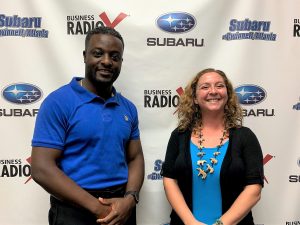
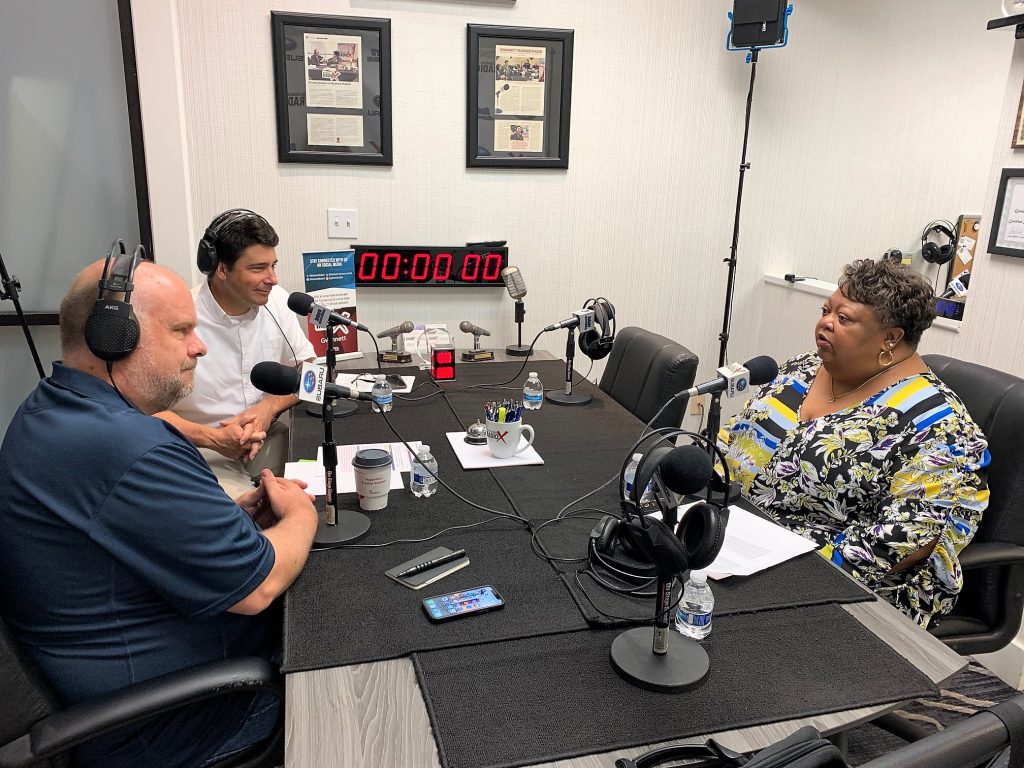
Bruno Taillefer, Mallely Then, Brian Peart and Keely McNeal

Keely McNeal/Remax Legends

As a RE/MAX agent, Keely McNeal is dedicated to helping her clients find the home of their dreams. Whether you are buying or selling a home or just curious about the local market, she would love to offer her support and services. She knows the local community — both as an agent and a neighbor — and can help guide you through the nuances of the local market. With access to top listings, a worldwide network, exceptional marketing strategies, and cutting-edge technology, Keely works hard to make your real estate experience memorable and enjoyable.

Mallely Then/Keller Williams Realty Atlanta Partners

Becoming a realtor was always the career aspiration for Mallely Then. Though it did not happen sooner, her time is now, and she is on her journey to connect with people, and make their dream come true with the perfect property. Mallely thrives on interacting with and helping people, and has exceptional attention to detail.
Top Realtors of Atlanta is proudly presented by


Tagged With: atlanta top realtors, brian peart, bruno taillefer, commercial capital limited, commercial real estate, keely mcneal, Keller Williams, kw atlanta partners, mallely then, real estate, real estate agents, realtors, remax legends, Taillefer Commercial Group, top realtors, top realtors of atlanta, top realtors podcast

Jeff Hammond of SVN-Creviston Realty and Tim Husted of Taillefer Commercial Group

March 29, 2022 by Mike

Gwinnett Studio
Gwinnett Studio
Jeff Hammond of SVN-Creviston Realty and Tim Husted of Taillefer Commercial Group
Loading
00:00 /
RSS Feed
Share
Link
Embed

Download file

Jeff Hammond, Brian Peart, Tim Husted, Bruno Taillefer

Jeff Hammond/SVN Creviston Realty

The SVN brand was founded in 1987 out of a desire to improve the commercial real estate industry for all stakeholders through cooperation and organized competition. SVN is now a globally recognized commercial real estate brand united by a shared vision of creating value with clients, colleagues and their communities. When you choose SVN, you mobilize the entire SVN organization of experts and all their trusted relationships to act on your behalf. This shared network is the SVN Difference.

Tim Husted/Taillefer Commercial Group

The Taillefer Commercial Group brings industry knowledge, integrity, and high level of communication to every client and project. Researching every customer’s need to ensure Taillefer Commercial Group is bringing only the best options for their investors, business owners, and clients. No matter what your timeline or daily schedules consists of, Taillefer’s group of agents can assist in making any site visits, meetings and closings work for their clients.

Top Realtors of Atlanta is proudly presented by
Tagged With: brian peart, bruno taillefer, commercial capital limited, commercial real estate, Creviston Realty, Jeff Hammond, Keller Williams, real estate, real estate agents, realtors, svn, SVN Creviston Realty, Taillefer Commercial Group, Tim Husted, top realtors, top realtors of atlanta, top realtors podcast

The S&N Team and The Baylis Group

March 8, 2022 by Mike

Gwinnett Studio
Gwinnett Studio
The S&N Team and The Baylis Group
Loading
00:00 /
RSS Feed
Share
Link
Embed

Download file

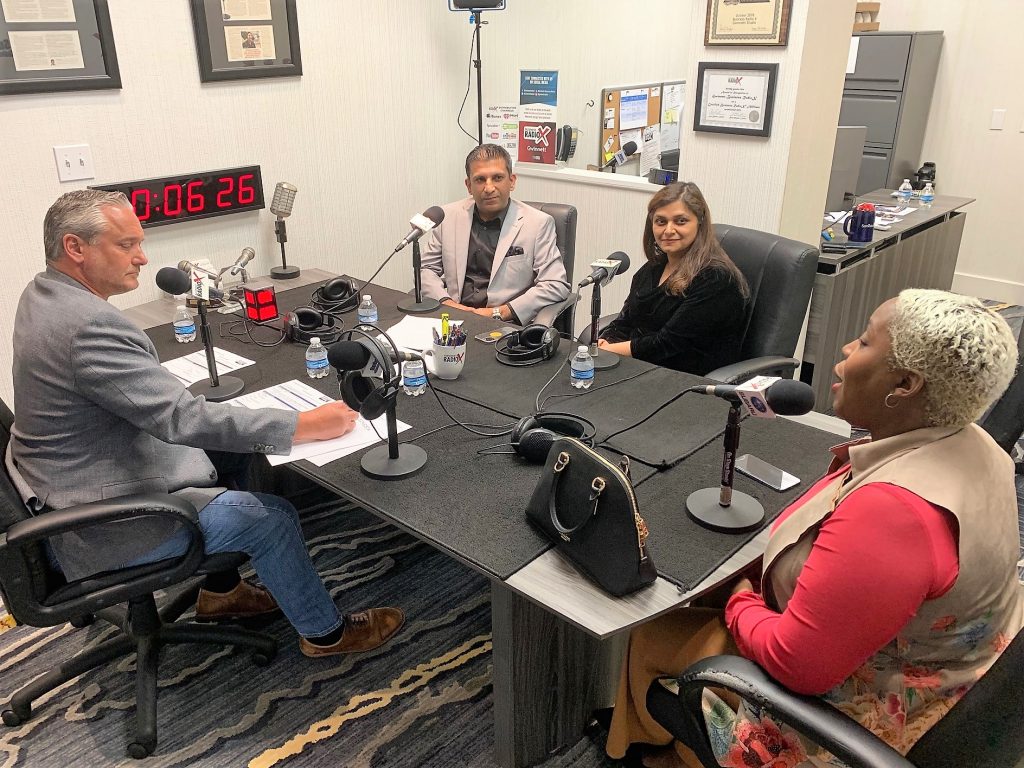
Bruno Taillefer, Nitin Arora, Surabhi Arora, Shana Baylis and Brian Peart

Nitin & Surabhi Arora/The S&N Team (Keller Williams)

The S&N Team is helping you make new memories. Turning their passion into their profession, Nitin and Surabhi Arora were eagerly researching real estate properties for their family and also helping their friends find the best homes when a good friend suggested they get a real estate license. Since then, they have become the husband-and-wife team in the real estate business who are passionate about helping people find the best homes and create new memories in them.

Sincerity, diligence, and integrity have been their working values and they were soon recognized as one of the top agents in the north Atlanta area. Their areas of expertise include first-time home buyers as well as in-state and out-of-state buyers and investors. Their team is growing and continuously helping families buy and sell their homes. Through their clients’ thoughtful reviews, they are committed to guiding people to make informed decisions in today’s real estate market.

Shana Baylis/The Baylis Group (Keller Williams)

The Baylis Group is a real estate company that is changing lives through real estate. They help their clients achieve their real estate dreams by offering the best service, communication, and skills with their expert home selling specialists. They are here to impact, empower, and serve their clients, agents, and the community.

Top Realtors of Atlanta is proudly presented by

 

Tagged With: Baylis Group, brian peart, bruno taillefer, commercial capital limited, commercial real estate, Keller Williams, Nitin Arora, real estate, real estate agents, realtors, residential real estate, S & N Team, Shana Baylis, Surabhi Arora, Taillefer Commercial Group, top realtors, top realtors of atlanta, top realtors podcast

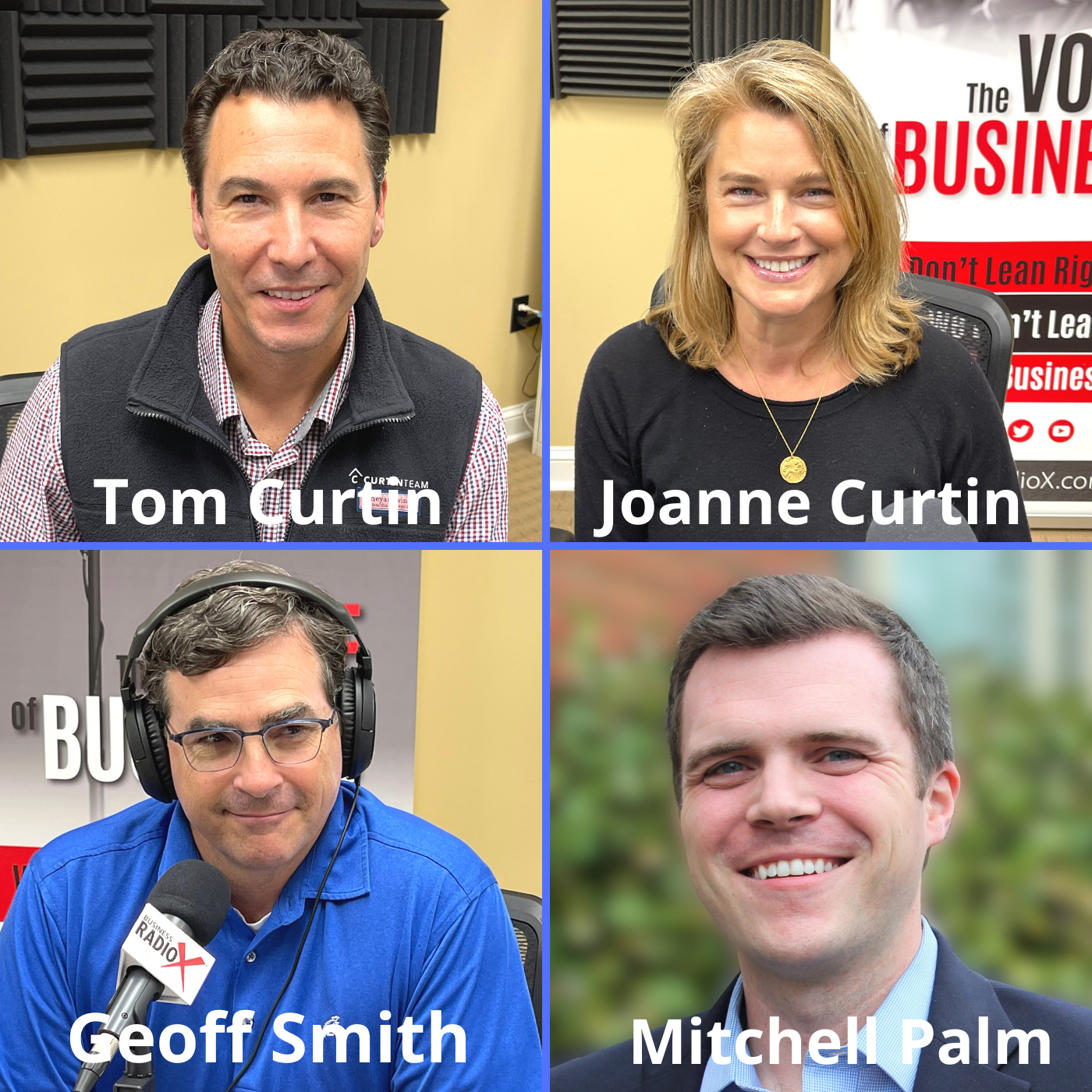
ATL Developments with Geoff Smith: Mitchell Palm, Smart Real Estate Data, and Tom Curtin & Joanne Curtin, Curtin Real Estate Team

November 15, 2021 by John Ray

Curtin Real Estate Team
North Fulton Business Radio
ATL Developments with Geoff Smith: Mitchell Palm, Smart Real Estate Data, and Tom Curtin & Joanne Curtin, Curtin Real Estate Team
Loading
00:00 /
RSS Feed
Share
Link
Embed

Download file

Curtin Real Estate Team

ATL Developments with Geoff Smith: Mitchell Palm, Smart Real Estate Data, Tom Curtin & Joanne Curtin, Curtin Real Estate Team

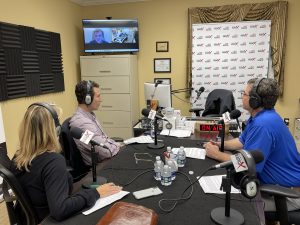
Tom and Joanne Curtin founded the Curtin Real Estate Team twenty years ago and have excelled in the local real estate market both professionally and as community members. Also joining host Geoff Smith was Mitchell Palm, who discussed some of the recent market data and what those trends may indicate for future activity. Mitchell, Tom and Joanne, and Geoff reviewed what’s working in property sales and purchases, what’s ahead for 2022, and much more. ATL Developments with Geoff Smith is broadcast from the North Fulton studio of Business RadioX® inside Renasant Bank in Alpharetta.

Mitchell Palm, President of Business Development, Smart Real Estate Data

Mitchell Palm, President of Business Development, Smart Real Estate Data

Since 1996, Smart Real Estate Data has been the premier source for residential real estate information in the Southeast, providing timely and accurate data to the nation’s top builders, developers, appraisers, suppliers, brokers, investors, and banking professionals. Smart Real Estate Data was the only company used for analysis to extend the 2010 housing stimulus in the US Senate at the request of Senator Johnny Isakson.

Since arriving at Smart Real Estate Data, Mitchell has run market due diligence and consulted on hundreds of residential real estate developments throughout the Southeast. He is the primary consultant and account representative for over 70 different real estate companies, including many Fortune 500 companies. His work has been featured on news publications and has been a regular guest on numerous radio shows.

Company website | LinkedIn

Curtin Real Estate Team

Founded in 2001 by Joanne and Tom Curtin, The Curtin Team is a top-rank and award-winning real estate team headquartered in Roswell, GA.

Since its start, the Team has over $620 million in home sales volume and 1850 clients served.

In addition to attending training throughout the year, their team hosts educational workshops on a variety of topics from real estate investing, home trends, and teaching other Realtors best practices.

They truly operate as a Team at Curtin.  Each of their Agents and staff members specializes in their core competencies, ensuring the process runs smoothly and clients receive the best service.  Currently, the Curtin Team consists of 12 Team members, including a Home Transformation Manager, seasoned support staff, and a top-notch Team of agents.

Company website | LinkedIn | Facebook | YouTube

Tom Curtin, CEO, Curtin Real Estate Team

Tom Curtin, CEO, Curtin Real Estate Team

Tom is the CEO of the Curtin Real Estate Team. Tom began his real estate career in 2001, building the operations side of the Curtin Team with his wife Joanne.
He applies knowledge from previous marketing positions to the real estate business. Together they have built a successful Team of agents with over $500 million in sales and 1700 transactions and consistently ranked one of the top Teams. Tom also operates a Property Management Company, manages a real estate portfolio in North Atlanta and teaches others to create wealth through real estate. Tom is passionate about investing and helping others realize financial freedom. Tom and Joanne helped launch the Keller Williams Realty Roswell Market Center which is one of the top offices in the Southeast Region. Prior to real estate, Tom managed corporate marketing and sales for DirecTV. Because of their mutual ambition, Joanne and Tom work together in building their business and family life. They strongly believe in work-life integration and coach others to do the same. Tom has a business degree from the prestigious Honors Program at the University of Georgia and is a Roswell High Scholl alum. When not at the office, you can find Tom hiking, watching his son play soccer, or traveling.

LinkedIn

Joanne Curtin, Co-Founder, Curtin Real Estate Team

Joanne Curtin, Co-Founder, Curtin Real Estate Team

Joanne started her career as an Elementary school teacher. Early into her teaching career, Joanne became curious about investing and building wealth. After reading the Rich Dad, Poor Dad series, she made the bold decision to leave her teaching post and move into the real estate business. Soon after, she joined Keller Williams with agents thinking big about their careers.

The Curtin Team began with Joanne selling houses in North Atlanta in 2001 and with husband Tom, they grew it into a team. From it’s start, the Team has over $500 million in home sales volume and 1700 clients served. Growing a real estate team grew into launching a brokerage office. Joanne and Tom earned the opportunity to co-own the Keller Williams Realty Consultants Roswell Market Center after just one year with the company. That eventually grew into a mega agent team office location in the heart of their local town.

In 2018, Joanne co-founded Curtin Team Cares, a non-profit organization, as a way to assist the community in times of need. This passion for helping her local neighborhoods drives the mission to provide local support when it’s needed most and give back to her community.

Joanne is a graduate of the University of Georgia with a Master’s in Education. She continues her teaching in the real estate community. Originally from Dalton, Georgia Joanne resides with Tom, their two beautiful children, and dogs Fluff and Charlie in Milton.

LinkedIn

Geoff Smith, Host of ATL Developments with Geoff Smith

Geoff Smith, Host of ATL Developments with Geoff Smith

ATL Developments with Geoff Smith covers all things economic development in the Atlanta Metro area. From everything inside the Beltline to Avalon and beyond, Geoff Smith interviews the movers and shakers making the ATL one of the best places to live, work and play. An archive of past episodes can be found here.

Geoff Smith is a mortgage banker with Assurance Financial working with Real Estate agents and homebuyers to help them get happily to their closing table. Geoff is an authority on the latest economic development trends shaping the Atlanta Metro area. His interviews reveal an inside perspective at how things get done in the ATL.

Geoff is an active member of his community serving on the Board of Directors of the Greater North Fulton Chamber of Commerce, as well as holding the position of chairman for the Chamber’s Education Committee. He is also Secretary of the Roswell Youth Baseball Association and coaches his sons in football, baseball and basketball. Geoff enjoys golf, camping and traveling with his wife and two sons. He is a graduate of the University of Georgia.

Tagged With: ATL Developments, Atlanta Developments, Curtin Real Estate Team, Geoff Smith, Joanne Curtin, Keller Williams, Mitchell Palm, North Fulton Business Radio, residential real estate, Smart Real Estate Data, Tom Curtin, zillow

Realtor Andre Wigfall and Yasmine Jandali with Starwood Business Group

August 19, 2021 by Mike

Gwinnett Business Radio
Realtor Andre Wigfall and Yasmine Jandali with Starwood Business Group
Loading
00:00 /
RSS Feed
Share
Link
Embed

Download file

Andre Wigfall and Yasmine Jandali

Andre Wigfall/Andre Wigfall Realty (Keller Williams)

Andre Wigfall Realty helps families sell or find their dream home within their “real world capacity”. Helping others is Andre’s passion. His slogan is: “Your Dream. Our Purpose.”


Yasmine Jandali/Starwood Business Group & Atlanta Business Brokers

Since 2005, Starwood Business Group has helped hundreds of business owners successfully sell their companies. Voted the “Best Business Brokers of Atlanta” for 2021, SBG can help you navigate the sales process professionally and confidentially. SBG founder and Managing Broker is Yasmine Jandali, one of less than 500 brokers in the world to earn the prestigious Certified Business Intermediary (CBI) designation. Reach out today for your free, no-obligation business consultation.

Gwinnett Business Radio is presented by

Tagged With: andre wigfall, andre wigfall realty, atlanta business brokers, business broker, business podcast, business radio, Business RadioX, gwinnett business, gwinnett business podcast, Gwinnett Business Radio, Gwinnett Business RadioX, gwinnett businesses, gwinnett online radio, gwinnett radiox, Keller Williams, online radio, podcast, Radiox, real estate, regions bank, selling a business, small businesses, sonesta gwinnett place, Starwood Business Group, steven julian, subaru, subaru of gwinnett, subaru radio studio, Yasmine Jandali

Tad Leithead with Leithead Consulting & Lilburn CID, and Tyler Weant with Legendary Home Team @ Keller Williams

February 25, 2021 by Mike

Gwinnett Business Radio
Tad Leithead with Leithead Consulting & Lilburn CID, and Tyler Weant with Legendary Home Team @ Keller Williams
Loading
00:00 /
RSS Feed
Share
Link
Embed

Download file

Tad Leithead and Tyler Weant

Tad Leithead/Leithead Consulting & Lilburn CID

Founded in 2018, Leithead Consulting uses its resources and in-depth network to identify properties that are outside of the boundaries of current Community Improvement Districts (CIDs) in order to expand their boundaries. Through this process, Leithead Consulting helps CIDs increase their revenue while also increasing their geographical size.

Leithead Consulting also assists in the creation of a Community Improvement District and supports the administrative and legal paperwork and processes required for a CID’s creation plan or expansion. The firm also finds and identifies properties that may have been overlooked, locates the building owners, and secures contact information to update a CID’s database of current and potential members.

The Lilburn Community Improvement District (CID) is a quasi-governmental entity whose members are commercial property owners. The membership voluntarily increases their property taxes to invest in local infrastructure and improvement projects.

Tyler Weant/Legendary Home Team @ Keller Williams

Tyler Weant, Founder of Legendary Home Team @ Keller Williams, has over 16 years of real world real estate experience that allows him to best assist buyers, sellers, and investors in successfully completing transactions to gain the best value for their specific needs. He moved to Sugar Hill, GA in 2019 with his wife and two children because they love the area, the weather, and the wonderful people who live there. Tyler enjoys calling this area home and enjoys helping others to discover what living in Gwinnett County has to offer.

Prior to being in Real Estate in the Gwinnett area full time, Tyler was the Owner/Operator of a real estate acquisition & management company, as well as a termite & pest control company in North Carolina. Successfully selling the pest management company allowed him the opportunity to relocate to Georgia and dedicate his attention and expertise solely to the real estate profession. Leading and managing both of these corporations contributed to a vast and comprehensive knowledge of building and construction types, materials, risk factors, problem solving and conflict resolution, and the development of negotiation skills that aid in real estate transactions.

Tyler has a passion for helping people succeed. For that reason, he is dedicated to volunteering at local schools to mentor at risk youth, assisting with the cub scouts to help develop future leaders, and assisting individuals in finding the right home for their needs. Tyler is well equipped with the skills, knowledge and expertise to assist you in successfully concluding your next real estate transaction.

Gwinnett Business Radio is presented by

Tagged With: business podcast, business radio, Business RadioX, Entrepreneurs, Entrepreneurship, gwinnett business, gwinnett business podcast, Gwinnett Business Radio, Gwinnett Business RadioX, gwinnett businesses, gwinnett online radio, gwinnett radiox, gwinnett realtor, Keller Williams, Legendary Home Team @ Keller Williams, Leithead Consulting, lilburn cid, Lilburn Community Improvement District, online radio, podcast, Radiox, realtor, regions bank, small businesses, sonesta, sonesta gwinnett place, sonesta hotel, steven julian, subaru, subaru of gwinnett, subaru radio studio, Tad Leithead, tyler weant

Home of Hope Fall Classic Golf Tournament

September 16, 2020 by Mike

The Home of Hope Fall Classic Golf Tournament was held on September 15, 2020 at the Lanier Islands Legacy Golf Course.

For more than two decades, the Kiwanis Club of North Gwinnett has been organizing golf fundraisers for various kid-based community projects. In 2020, for the first time, the organization teamed up with the Home of Hope at Gwinnett Children’s Shelter to raise money and help local kids move from homelessness to permanent loving homes. The golf tournament was a way for local golfers and businesses to give to an amazing organization while enjoying a fun day of golf among friends.

Business RadioX was on site providing live radio updates and interviewing the organizers, sponsors and golfers. All of the interviews were presented by Legendary Home Sales Advantage and Realtor Tyler Weant.

 

Tyler Weant/Legendary Home Sales Advantage

https://businessradiox.com/wp-content/uploads/2020/09/TylerWeant.mp3


Phil Olsen/Kiwanis Club of North Gwinnett


https://businessradiox.com/wp-content/uploads/2020/09/PhilOlsen.mp3


Oren Bar/Rebalansing Health

https://businessradiox.com/wp-content/uploads/2020/09/OrenBar.mp3


Joan Williams/Kiwanis Club of North Gwinnett

https://businessradiox.com/wp-content/uploads/2020/09/JoanWilliams.mp3


John Slappey/Peggy Slappey Properties

https://businessradiox.com/wp-content/uploads/2020/09/JohnSlappey.mp3


Clint Dixon/Clint Dixon for State Senate

https://businessradiox.com/wp-content/uploads/2020/09/ClintDixon.mp3


Pastor Avery Headd/Poplar Hill Baptist Church

https://businessradiox.com/wp-content/uploads/2020/09/PastorAveryHeadd.mp3


Doug Meyer/Home of Hope at Gwinnett Children’s Shelter

https://businessradiox.com/wp-content/uploads/2020/09/DougMeyer.mp3


Greg Edwards/My Sauce

https://businessradiox.com/wp-content/uploads/2020/09/GregEdwards.mp3


Keith Howell/Homestar Financial

https://businessradiox.com/wp-content/uploads/2020/09/KeithHowell.mp3


Scott Snedecor/Ace Hardware

https://businessradiox.com/wp-content/uploads/2020/09/ScottSnedekar.mp3


Maureen Kornowa & Tyler Weant/Home of Hope at Gwinnett Children’s Shelter

https://businessradiox.com/wp-content/uploads/2020/09/MaureenKornowaandTylerWeantFinal.mp3


About Home of Hope at Gwinnett Children’s Shelter:

The new “Home of Hope” at The Gwinnett Children’s Shelter was born out of necessity along with the support of many helping hands in the community and beyond. The Home of Hope is a nonprofit residential care facility which provides services for homeless children from 0-17 years of age along with their young mothers. They also provide care and services for homeless girls aging out of the foster care system at 18 years of age. They provide customized “Life Plans” that are designed around the physical, emotional and educational needs of the children, while helping mom get a plan of action to get back on her feet.

Their goal is not simply to be a place of refuge, but a “next step” towards independence. They take their guests from homelessness, to hopeful, to a home of their own.

About Kiwanis Club of North Gwinnett:

The Kiwanis Club of North Gwinnett is a civic organization dedicated to serving the local community by empowering and uplifting children. Members are volunteers changing the world through service to children and communities. Kiwanis members help shelter the homeless, feed the hungry, mentor the disadvantaged, and care for the sick. Through various fundraising projects, they work together to provide scholarships to local high schools as well as donations to numerous children’s charities.

A little secret… it’s also a lot of fun! Join them at the Buford Community Center for lunch at noon on any Tuesday. They have also started an after-hours program – Kiwanis After Dark – for those who cannot attend the lunch meetings.

All Interviews on Business RadioX
from the Home of Hope Fall Classic Golf Tournament
presented by:

Tagged With: ace hardware, avery headd, clint dixon, doug meyer, greg edwards, gwinnett children's shelter, gwinnett kiwanis, home of hope, home of hope at Gwinnett childrens shelter, Home of Hope Fall Classic Golf Tournament, joan williams, john slappey, keith howell, Keller Williams, kiwanis club of north gwinnett, legendary home sales, legendary home sales advantage, maureen kornowa, my sauce, north gwinnett kiwanis club, oren bar, pastor avery headd, peggy slappey properties, phil olsen, scott snedecor, tyler weant

Customer Experience Radio Welcomes: Jay Papasan with Papasan Properties Group

July 30, 2020 by angishields

JayPapasanheadshot
Customer Experience Radio
Customer Experience Radio Welcomes: Jay Papasan with Papasan Properties Group
Loading
00:00 /
RSS Feed
Share
Link
Embed

Download file

Jay-Papasan

CER

JayPapasanheadshotJay Papasan [Pap-uh-zan] is a bestselling author that serves as the vice president of learning for Keller Williams Realty International, the world’s largest real estate company.

He is also vice president of KellerINK and co-owner, alongside his wife Wendy, of Papasan Properties Group with Keller Williams Realty in Austin, Texas.

He was born and raised in Memphis, TN.

After attending the University of Memphis he spent several years working abroad in Paris before attending New York University’s graduate writing program. Upon graduating he found work at HarperCollins Publishers, where he helped piece together such bestselling books as Body-for-Life by Bill Phillips and Go for the Goal by Mia Hamm.

After moving to Austin, Jay joined Keller Williams Realty International, and in 2003 he co-authored The Millionaire Real Estate Agent, a million-copy bestseller, alongside Gary Keller and Dave Jenks.

His most recent work with Gary Keller on The ONE Thing has sold over 2 million copies worldwide and garnered more than 500 appearances on national bestseller lists, including #1 on The Wall Street Journal’s hardcover business list and has been translated into 39 different languages.

Follow Papasan Properties Group on LinkedIn and Facebook.

Transcript

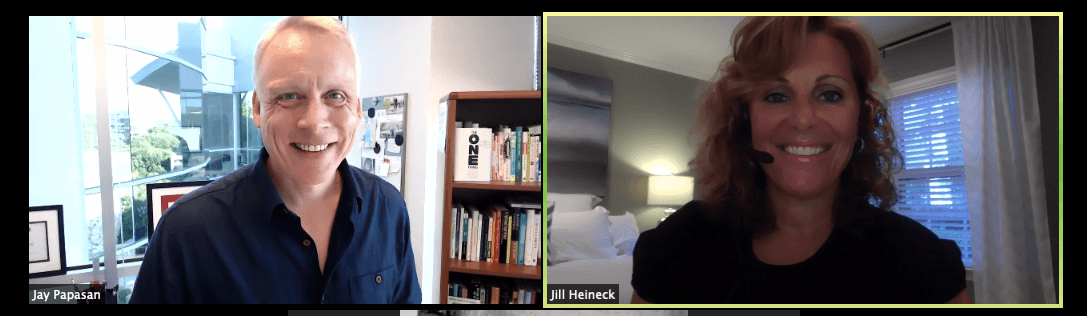
Jill Heineck: [00:00:12] Welcome everyone to this very special edition of Customer Experience Radio. I’m your host, Jill Heineck. And I’m a business owner, real estate adviser, and customer experience enthusiast. Some of you may not know that I helped start the southeast region of Keller Williams Realty International back in 1999. It’s the world’s largest real estate company, by the way. It has been a wild ride ever since, which is why I’m super excited about our guests today.

Jill Heineck: [00:00:38] Jay Papasan is a best selling author that serves as the vice-president of Learning for Keller Williams Realty, as well as vice-president of Keller Inc., and is co-owner alongside his wife, Wendy, of Papasan Properties with Keller Williams Realty in Austin, Texas. In 2003, Jay co-authored The Millionaire Real Estate Agent, a million copy bestseller. And for some of us, a business Bible whether you’re with Keller Williams or not. He wrote this alongside the great Dave Jenks, who was once my coach back in the day, and Gary Keller, co-founder and current CEO of Keller Williams Realty International.

Jay Papasan: [00:01:11] Jay’s most recent work with Gary on The One Thing has sold over two million copies worldwide and garnered more than 500 appearances on national bestseller lists. The premise of the book is to give the reader tools on how to become laser focused on The One Thing that will propel your business, marriage, life, family, et cetera, forward. Perfect for today’s discussion. Welcome, Jay.

Jay Papasan: [00:01:33] Thank you, Jill. I’m really happy to be here.

Jill Heineck: [00:01:37] I’m so excited to talk to you. So one of the biggest attractions for me when I came to work with Keller Williams was that Gary’s commitment, even early on then, was to encourage agents to build their brand under the Keller WIlliams umbrella and really deemed us as agent partners. And so, for this discussion today around customer experience, we’re talking about really the internal customer from this perspective. And I kind of wanted to get an idea of if you could give us a little bit more about the leadership journey and what the discussions were around this concept.

Jay Papasan: [00:02:12] From Keller Williams Realty, we think of the agent as our customer and not the buyer or seller. Is that what you’re referring to?

Jill Heineck: [00:02:15] Right. Exactly.

Jay Papasan: [00:02:17] Absolutely. And what’s weird is our actual legal customer is the franchisee. So, there’s a little wormhole of land renting customers here. But the reality is, we’re a franchise company. So, the broker, the franchisor is our customer. But Gary understood pretty early on that success on a local level was about the reputation and quality of the local agent and the business they brought. So, he made all of his success measures if we become this the company of choice for the best agents, then everything else will follow. The franchisees will attract the best agents. They’ll have the most buyers and sellers.

Jay Papasan: [00:02:54] So, it was very much a one thing principle before The One Thing was around. But the first domino is how do we attract, how do we get in business with the highest quality, the most successful agents, and just the most of them. Because a lot of times the quality comes from the quantity as well. So, that’s where that philosophy comes from in everything. I mean, we prize people who’ve been in the real estate business. My wife runs one of the top real estate teams in the country. You know, we want people with direct experience, with the agent experience so that we’re always creating the best tools for them. It’s a deeply embedded philosophy here.

Jill Heineck: [00:03:29] That’s what has been, you know, really an eye opener for me as I talk to agents from other companies, whereas, there might be some things that are going on internally that a lot of things that can happen that fall on deaf ears. And what I’m finding is that we have had such a phenomenal – even in the last five years, the biggest changes have been the agents have spoken and leadership has responded. And so, when I talk about the customer experience, I’m talking about my experience as an agent within Keller Williams and how that’s enabling me to bring the best experience possible to my end user, the buyer and the seller.

Jill Heineck: [00:04:04] So, I’d love for you to touch a little bit more on how internally you all are working on trying to keep the franchisors, giving them the best tools they can to provide the rest of us the tools that we need for the end. You know, is there anything fine or is there are one thing that you like to share with us about what’s happening behind the scenes?

Jay Papasan: [00:04:24] So there’s a lot happening behind the scenes. I think when I first really got to know Gary – this move me back in summer of 2002 – I had worked in the company for a couple of years. I bumped into him in the bathroom and I broached the topic that “I hear you’re writing a book,” because I’d come from publishing, and that sparked a whole conversation. And the thing I remember is that day was the day he dedicated it. And back in the early 2000s, at least two days a month, he would spend all day just talking to our top agents. So, he would carve out a huge amount of time to have one- on-one conversations with our top performers.

Jay Papasan: [00:05:02] And, you know, you hang around with Gary and he’s like, “Jill, what are the big challenges that you’re facing? What’s working well for you?” Lots and lots of curiosity. So, he’s always leaned in to what are they experiencing? What do they need? So, the closer you get to the field, the people who are doing a 100 – I mean, back then 100 transactions was a lot. We had about five agents who are doing over a thousand transactions now. Right? So, you talk to those people, they have a deep sense of what’s needed. And so, it started with, I would call it entrepreneurial conversations. That was just Gary being Gary, a great entrepreneur.

Jay Papasan: [00:05:38] Now, we’ve ensconce, we call them labs. But we actually have a whole division of our company – a lot of other companies would call it focus groups. But we actually designed all of our products, whether they be education or technology, we bring the best of the best in and we say, what is it you’re looking for? And I’ve been in these rooms and they’ll literally hand out, like, 11 by 17 paper with a blank screen of computers on it or blank screens of mobile phones on it and saying, “Let’s draw the experience.” So if you opened up your phone and you were trying to host an open house on your phone, what would that look like?

Jay Papasan: [00:06:14] And granted, I mean, there’s a huge gap between what the average person thinks technology should be and the technologist. But having the technologist in the room with top performers has been a game changer for us. And it’s also allowed us to set, I think, better and better expectations with our customers because we understand what their pain point is. We can communicate it back to them clearly. We’ve heard from them what we think the solution is. And we use our expertise to translate that to actually a best practice.

Jay Papasan: [00:06:43] So, from direct conversations with your customers, now, we have very formal ones. We call them labs. I think that that is the test kitchen. The big secret behind a lot of our success is our willingness to take longer to ask the question, what do we need? And then, go all in on those solutions and really be dedicated. Our current technology platform – I mean, we’re just coming into the light. In my mind, we’re five years into this journey. I mean, that takes a huge commitment when you’re already number one to blow up your business and say let’s recreate it from the ground up. But that’s Gary Keller. That’s who we work for.

Jill Heineck: [00:07:20] And I am a beneficiary of that. And I really appreciate where that has come from. And I know that no matter what, nothing’s perfect. But we certainly have come light years from where we were, like you said, five years ago or even five years before that. But I think I’m seeing a lot of – we’re talking a lot about pivoting during this this pandemic time. We’re talking a lot about how can we continue to serve and still have these opportunities for agents to grow, even though we’re still in a learning phase, right, with labs? It’s just going to continue to evolve.

Jay Papasan: [00:07:57] I think it’s a discipline for the business. I don’t think it’s a phase. I think, I see it as an evolution to Gary. I mean, he started that practice in the early 90s of spending a few days a month with his top people and then masterminding four times a year. We’ve just taken that process and made it a business practice and ask how do we get more of our top people in the building who are designing products and courses really in tune with what’s happening in the field so that we can keep our products really, really relevant.

Jay Papasan: [00:08:27] And here’s the trick, like you said, it’s not perfect. The joke in the building is like, “Jill, if you don’t like it, you and your peers helped design it. So, how do we fix it?” And it’s part of our culture, right? It’s a we culture, not an I and they. And we’re going to do it together. And we’re going to share the blame when it doesn’t work. And we’re going to be accountable when it doesn’t work. And we’re going to fix it together.

Jay Papasan: [00:08:50] And that’s just been a fairly unique hallmark of our culture, this willingness of people that are paying to be in business with us, to roll up their sleeves and say, “I want to have a voice in this process. I want to have agency so that I can help make this experience even better for me and my customers.” It’s fairly unusual, I think, in business.

Jill Heineck: [00:09:11] I agree. And so, I’d love to dive in a little bit deeper regarding what you mentioned about franchisors ,and, you know, when someone is looking to Keller Williams as a possible option. I mean, is there one or two or top three things that you would have that person really bear in mind when they’re approaching Keller Williams about becoming a franchisor?

Jay Papasan: [00:09:37] I think it’s not for everyone. I think that it used to be we’ve never had a franchise sales department, I think early on, when Gary was selling – and this is the early ’90s when he was selling – we got in business with the wrong people. So, now it’s much more of a selection process. So, I think come from curiosity, unlike a lot of franchises, I don’t consider it a passive investment. It is, I think, a very complex business instrument our franchise. We run a big model. Our average number of agents in one of our market centers is around 170. The closest competitor is going to be about 60. So, we run a very much kind of like a Walmart, but with a lot of the perks you would think from the higher end stores.

Jay Papasan: [00:10:22] We have good margins. I think, 95 percent of our franchises are profitable in an annual basis. It goes up and down plus or minus two percent, but it’s extremely high percentage. But I don’t think it’s not something you just buy and let your third cousin run for you. You want to be actively engaged if you want to get the most out of it. And I think you really want to look hard at our culture. Is this the culture I want to be a part of? I think that’s the thing that most people who love our company love the most about it.

Jay Papasan: [00:10:52] But I also admit it’s not for everyone. We’re a team. We’re interdependent on each other versus being independent. Even though as independent franchise owners, they have a lot of independence but they choose to give some of that up. So I don’t know. It’s a quirky place. I think it’s a fabulous business to own.

Jay Papasan: [00:11:10] I own part of the franchise in my hometown of Memphis. And it’s got a fabulous rate of return and it’s gotten a lot of my family involved. My sister’s now an assistant team leader in that office, which makes me so happy to see my big sister getting into leadership in the company I’m so fond of. But it is a special place and we’re growing worldwide. I don’t know, we’re in 40 countries now. That culture has really attracted a lot of people. And I think that’s why, in terms of the number of agents who want to be in business with us, we’ve been number one for a while. And I think the culture is number one.

Jay Papasan: [00:11:44] So, it’s not a passive investment. It’s not for everyone. Just because you can write a check doesn’t mean you get one. And you should definitely check out the culture and say, “Is this something I want to be a part of?” Most people fall in love pretty quickly, then you’ll know, like, this is worth pursuing.

Jill Heineck: [00:12:00] Right. And I noticed that early on in the late ’90s that, you know, there were a lot of people throwing checks around and a lot of people got them thrown back right at them. So, it was really interesting to top players, which is not even – it wasn’t even a conversation. So, I find that to be very attractive because the selection process does make a huge difference and that does impact the culture, right?

Jay Papasan: [00:12:24] Absolutely. Well, you know that. You helped run one of the regions, right? I mean, who you’re in business with matters. That is one of our really big cultural values that we will get out of business with high performers that don’t match our culture.

Jill Heineck: [00:12:38] Right. And we’ve seen that happen on the local level here. What would you say the definition of the the customer or agent experiences for Keller Williams when we’re talking about lab [inaudible].

Jay Papasan: [00:12:51] Oh, even though you sent me that question in advance and I struggled with it. And it’s because it’s always evolving. I think that we have a philosophy that every great business has three essential components. You have a value proposition. You have a service plan to deliver on your value proposition. So, it’s not just a false promise. So, here’s what we do for you that’s special. Here’s how we do it consistently. And then, you know this, we believe in the database. The power of the database that we’re going to run a relationship business and stay in touch.

Jill Heineck: [00:13:23] So, I’ve seen our value proposition to the agents change. When I first joined the company, we were a profit sharing company. Very quickly thereafter, when we launched MAPS Coaching, which is now the largest coaching company in the industry even though they can only coach KW people. We, for many years, said that we were a coaching and training company. And on that, I mean, the profit share – let’s just toss it. We’ve given out $1.4 billion historically in terms of profit share. So that’s no false promise. We made as of last month –

Jill Heineck: [00:13:56] I can attest to that.

Jay Papasan: [00:13:56] As of last month, we’ve made 90 millionaires just from that one program. And that’s the direct benefits. We have no idea if they reinvested that money for more.

Jay Papasan: [00:14:07] As a training and coaching company, we were named number one by Training Magazine so many times. We’re now in the Training Magazine Hall of Fame. So, it was kind of like when they created the children’s hardcover book list in The New York Times because they were so tired of seeing Harry Potter taking all the spots in the fiction. So they just created a whole new list. And today we’re a technology company and it evolves.

Jay Papasan: [00:14:31] And I think if you’re going to stay relevant, it’s a particularly dangerous thing when you become number one. You think that how we got here is how we stay here. It’s very disruptive too. If you’re constantly blowing up your value proposition, but you have to ask, what is the next generation need? What is the next – here’s the really morose question, but it’s a great business question for everyone listening. What does the company that puts us out of business look like? And how do I become that tomorrow? And Gary is always asking, like, who is the biggest threat to us and how do we just become that instead of let them attack us? And we would do that within reason. We wouldn’t become something that didn’t match our values.

Jay Papasan: [00:15:17] We asked that question about five years ago. And everyone was like, “Well, look at Zillow, look at Trulia, look at Redfin, or whatever.” It’s going to be a tech company most likely in ten years that’s dominant. So like, “Great. Let’s go become one.” So, I think when you ask what is the definition of the customer experience, you have to ask that question every year. That would be my answer. I wish I could give you, “And here’s the formula.” But the formula is always be adapting so that you’re always relevant to your customers.

Jill Heineck: [00:15:48] And again, it goes back to what you’re saying, you know, what is your value prop, how are you delivering the value prop, and then how are you delivering it, like, in 2020, in 2021, in 2022? So it will evolve and change it. But as long as you are stating this and being transparent with the customer, I think that that’s where these top producing agents and franchises are doing well. And how often – I mean, do you really see a market center go away because they just lost it? They lost the culture. They’ve lost kind of momentum. I mean, how often does that really happen?

Jay Papasan: [00:16:26] You know, we have about – I don’t know – 850 franchise offices. We call them market centers, if someone’s listening and doesn’t know what that means. Maybe one a year. I mean, it’s at the very tail end and that almost always comes from – always rises and falls with leadership. That there was some massive mistake with leadership. The culture went awry and that created a situation.

Jay Papasan: [00:16:51] And a lot of times what we do is either those offices do sometimes close. Or we’ll just merge them in, say, “Look, why don’t you take a smaller portion of a better run office so you all merge.” And a lot of times what we see is the people who fled, maybe, the bad atmosphere, will then coalesce around the new opportunity and we can quickly right that situation.

Jill Heineck: [00:17:14] Right. Which I think, you know, fantastic. It’s not like just somebody just loses. They can at least, potentially, have another option.

Jay Papasan: [00:17:21] Yeah. It doesn’t always happen that way, right? But I do think that one of the people who is looking to get in business with us hired an attorney to look into our litigious backgrounds. And for a company our size – the report is out there on the web somewhere. He ended up publishing it. Like, it’s some of the least litigious places ever. And we’ve had our fair share. You know, we’ve gone through a couple of CEOs in the last five years. We’ve had our turmoil. We’ve had our moments. But we generally get it right in the end.

Jay Papasan: [00:17:50] And I think one of the values of we don’t want to have to go to court. We don’t want to have our corporate attorneys enforce these things. Find a win- win. Win-win is the first thing in our value system. Win-win or no deal. Every win is not equal. It’s not like you get 50 and I get 50. It might be you get 25 and I get 75, but you didn’t get zero. So I think that they’re always looking for how can we make this a win. Because I got to tell you, over the long run, just avoiding the litigation makes being a little bit generous in all those situations, even for people who may not completely deserve it is absolutely a great best practice.

Jill Heineck: [00:18:31] Absolutely. So pick an internal customer, what is the one thing that you would do to improve the internal customer experience at the moment?

Jay Papasan: [00:18:41] You said the magic words, the one thing. Our book is The One Thing. And every training that we’ve ever created around this, everything I’ve learned, this goes all the way back to my parents, if you want to have an amazing customer experience, everything, rides and falls, and how you set expectations. If we set expectations properly, the customer experience will go well.

Jay Papasan: [00:19:03] And it’s so funny, my wife, you know, they do a couple of hundred transactions a year. And I’m married to a realtor, so we’re always kind of on, right? She’ll get a call. We’re driving around. Like, in corona, one of the things that we do sometimes is we need to take the dog for a long walk in the afternoons or sometimes we’ll go, “We never drive our cars anymore.” You just want to drive around the neighborhood and we’ll get a call. And it’s so funny.

Jay Papasan: [00:19:30] Almost all of the challenges we have with consumers can be traced back to a poor setting of expectations. Even when things go wrong, “Hey, Jill. The reason I’m calling you today is we got bad news from the appraiser and here’s what we’re going to do to handle it.” But when we don’t communicate exactly what’s happening and what will happen and the way that our customers can hear it and actually internalize it, we’re always going to be – though we deliver, we’ll be faced with maybe a poor customer experience. So to me, it’s all about how do we set expectations? How can we do it better in the future?

Jill Heineck: [00:20:05] That’s right. And I found that each time that I don’t set the expectation with the client or if I deviate from what I normally do, like having both decision makers at the initial appointment or from the initial call, any time there’s deviation there, almost always we’ll have a hiccup or ten. And then, you’re backpedaling and trying to fix it. So, that I appreciate so much and I agree 100 percent.

Jill Heineck: [00:20:30] So, now when we’re talking about, you know, you’re on the – there’s the technology team, there is the learning team, there’s the ops team. So how are you coaching your teams internally to really deliver on the customer experience, to whomever we’re discussing whether it’s the franchisee, or the agent, et cetera?

Jay Papasan: [00:20:52] So, you know, our president is Josh Team. He comes from a software background. And he wants things to be predictable. He wants things to be measurable. I mean, he’s like a chess champion kind of smart guy. So he can do a lot of the stuff in his head. His intuition is very smart. But he really looks to data. So one of the things, without it also being like this chore, what we try to do is be really clear going into a new initiative is, what’s going to be our success measure. And I think with a lot of entrepreneurs, we know a good idea when we hear it. And because we’re entrepreneurs, we’re good at pivoting quickly and moving to it. And I think Keller Williams is incredibly agile.

Jay Papasan: [00:21:35] In the last couple of years, though, under Josh’s leadership – we have an executive leadership team that I get to be a part of – we work together. And say, “Look, we have some corporate initiatives that we know our top four or five. Does this new thing actually serve those or are we just doing something because it’s new? So, I think a little bit of it’s not can we do it. It’s should we do it. And if we do it, how will we know we’re successful? And asking that question up front forces us to build in some sort of tracking mechanism.

Jay Papasan: [00:22:08] You know, it might be – like, I know a lot of agents, you know, who do, like, a net promoter score. I mean, anything super simple. On a scale of one to ten, how likely are you to refer me to one of your friends? It’s just one question, but it gives them kind of a canary in the coal mine so they know when things are going off the rails. And they also know when they can sit back and go, “You know, this is good. And I can look at my key metric. That’s my leading indicator of success that’s working.” So, we try to do that as much as we can without it becoming burdensome.

Jay Papasan: [00:22:37] Because I’ll also say, if you have everybody on your team, you know, constantly checking things off on a Google spreadsheet, that becomes a chore that takes some of the joy out of it. So, if we can track it automatically, that’s the beauty of our tech platform. More and more of this is getting automated, but we still rely on surveys. So, I think that, one, should we be doing this? Is it truly something that we need to be getting into? And if so, what is the higher goal that it serves and how will we know we’re successful?

Jay Papasan: [00:23:05] I think if you just ask a couple of questions before you die, then that helps everybody on the team. One, they know what we’re doing, why we’re doing it, and how they can be successful. If we know that the measure exists then how do we make that measure go up? That’s how Southwest Airlines, right? So much of their model came from the low cost airlines. They were very clear that one of their goals was to be the low cost airlines because they wanted people to be able to travel.

Jay Papasan: [00:23:33] And that’s why we had the cattle calls, that’s why they only serve snacks, that’s why, I mean, frankly, a lot of their airline flight attendants are practically comedians. Because they’re not going to wine and dine you, they’re just going to have to make it fun. And so, I think when everybody knows what we’re doing and why we’re doing it, it allows some innovation to bubble up to make those things happen faster, too.

Jill Heineck: [00:23:59] Absolutely. I think that during this time, this crazy time we’re in, have you seen a change in attitude in your teams regarding delivering? Or are you able to continue to pump them up from Zoom and whatever else we’re using to keep everybody engaged?

Jay Papasan: [00:24:19] Well, I’m an introvert. A lot of people don’t know that. But I am a writer, fundamentally. I like to create things. So, I like to live in my cave. I’m here in the office. I’m one of, like, two people on this whole floor and I’m happy. I close my door. I’m very effective. So pumping people up is not necessarily my style. I want to communicate that it’s a mission. Like, you know, a lot of my staff, I’ve got our video team. I’ve got our publishing team. And our, you know, instructional design team, which is the course writing. They’re crafts people. And what they want and value is to know that they made great work and they had an impact.

Jay Papasan: [00:24:58] So, for me, it’s no harder or easier through this medium of Slack and Zooms. Just remind them that, like, this is a mission moment. Like, when we went into this, I kind of gathered the troops and said, “Learning is what is going to get people through this. They’re going to have to adapt their businesses or they’re going to go out of business.” Like, it’s really life or death for a lot of small businesses right now. This is our moment. So, as hard as it is for us with our kids at home, we’re afraid for our parents and our grandparents, we’re dealing with the same things. But we get a paycheck every 15 days. They are relying on a sales commission that is not guaranteed. So we have a duty. We have a mission.

Jay Papasan: [00:25:41] And I saw a lot of people rally around the mission because we have a job to do. And now is the time that we get to write the story. My coach, Abe Shreve – I don’t know if you know him – but you had Dave Jenks as your coach, so you know what a great coach does for you. A lot of times they just ask great questions. They don’t even give you the answers.

Jay Papasan: [00:26:00] But probably two weeks into this, we were curating about 40 live courses a week because we wanted to offer it to the industry. We started up a Facebook Group that grew from zero to 77,000, like, in a-month-and-a-half. It became the second largest Facebook Group in our industry, like, overnight. And we were just sharing free education. He said to me, “What is the story you want to tell about this time when it’s done?” He goes, “Right now is the time you get to author that, so be very clear. Are you going to talk about how you got in great shape? How you cleared out all of your Netflix series that you wanted to watch?” There are a lot of people that are writing this out on the couch, and that’s okay. That might be exactly what they need to do. But he asked me, “What’s the story that you want to write?” And I asked that of my team and we said, “We want to make a difference.”

Jay Papasan: [00:26:57] So, I think that there’s a lot of challenges to working remotely. I think that, ironically, people are far more productive, but they’re also teetering on burnout much faster. Because the kind of work – like, there’s no transition time. You drop one screen, you open another. There’s no transition between your home’s workspace and your workspace. So, people are kind of at work all the time if they’re not careful. So, there’s really good things in productivity. There’s very bad things, like how do we on board new people? How do we teach them culture? There’s all these challenges.

Jay Papasan: [00:27:32] But the net is we can still do our job and we have a mission. It’s not just a job. We have a mission to fulfill. That’s what we’ve been rallying around. And I’ve seen great realtors do it, too. I mean, people have never been more aware of their homes than they are right now. They’re trapped in it, right? Wow. I never thought I would need two home offices, but now maybe I need a bigger space.

Jill Heineck: [00:27:55] That’s exactly what’s happening. And I will tell you that, again, I’m a beneficiary of the amazing training that started right when we were coming in to coronavirus. And every single morning I’m listening to you, and Gary, and these amazing agents who are sharing what they’re doing during this time. And I think that it’s made a big impact on how I’m pivoting for 2021. So, kind of 2020 is still here. So, don’t get me wrong. We’re still working here. But for 2021, we’re going to be in a prime position.

Jill Heineck: [00:28:32] So thank you because I know you guys have been working really hard behind the scenes. And as an agent customer, I appreciate that so much. And I know my office will talk once a week on what KWRI is doing for us. And who is benefiting from it and who can share what they learned. Maybe I didn’t get on all the calls they did. So kudos to you and your team. You’re doing a fantastic job.

Jay Papasan: [00:28:56] Well, kudos to you and your leadership, too. I think that we look at the market and I think we’re down overall about 30 percent. But when I talked to our top people, a lot of them are at least matching last year’s numbers or better. And when you think about a 30 percent drop in the market and you’re still doing as good as you did last year, that’s a big increase.

Jay Papasan: [00:29:13] And what we talked about – we wrote in a book called SHIFT about this – the time to grab market share is in a down market. This is the opportunity. And we usually just admonish people. It’s like it’s an equal opportunity sport, but it has unequal rewards. So, go get your unfair share of the market right. Get your unfair share. And when the last recession happened, we went into it number four and came out of it number one. So, we’ve lived this multiple times.

Jay Papasan: [00:29:41] So, I just think that if you have the right leadership and we can focus on the opportunity – like, I love what you said 2021 – the work that you’re doing in our industry, the work that you do today at best is laying a platform for income 90 days down the road, right? Sixty to 90 days. But the reality is that, when you work for tomorrow’s dollars instead of today’s dollars, you know, we talk about internet leads, only two to five percent of those convert. Only two to five percent of those convert in the first 12 months. But over a five year period, virtually 100 – I mean, people move every seven years, 80 percent of those will.

Jay Papasan: [00:30:18] If you’re playing the long hay and laying a foundation, that is the key. And that was the thing I asked Gary. I was with him, believe it or not, in the 2000s. He started this company in the early ’80s. And I was with him when he took his first million dollars out of the business. And I said, “Are you kidding me?” Because I know franchisees that have taken a billion dollars in a year out of their business. And he’s like, “Nope.” And he goes, “I was intent on laying a bigger and bigger foundation. And every time I thought I could just take the money and do something with it, I realized I could invest in another person. I can invest in another something. And that would lay just a bigger foundation for the future.”

Jay Papasan: [00:30:56] And that platform from ’96 to, I think, 2006, our company grew by 40 percent on average year over year. Like, it laid a foundation for pretty unparalleled growth. So my admonition is to do like Jill, if you’re laying a foundation for your 2021, that is our opportunity. Can we protect the best talent in our business? Can we wrap our arms around the best, most loyal customers? And know that this year is – the goals that we set in January, just chuck those out the window. We may be laying a foundation for something really great next year.

Jill Heineck: [00:31:28] I absolutely agree with that. I’ll be interested to hear what has been a recent surprise and delight story that you’ve experienced, either with a company or with a service person, anything off the top of your head.

Jay Papasan: [00:31:42] Yeah. I thought about this. Like, I always go back if you’ve ever read – there’s a book by Derek Sivers called Anything You Want. It’s a real short book. He started a company in, I think, 1999 called CD Baby. And the thing that made him famous is he’s running this little shop where he’s just got a couple of workers and they’re packaging up CDs for artists and putting them in the mail. He wrote a really exquisite thank you letter when someone made a purchase. It’s like, “Hey, you know, our team is carrying a picture of you around the office. And like, it was really funny and it was really cute.” He took what was a – you know, here’s your order number and tracking to something that was actually really fun. Laugh like wow. Laugh out loud experience. And I loved it when I find moments that should be mundane. But a great customer service advocate has said, “Can we just make this fun?”

Jay Papasan: [00:32:34] So we shop at the local co-op. So this is all set up. We have a cooperative called the Wheatsfield Co-op. It’s a really old grocery store in Austin that used to be run by hippies. It’s run just a little bit better now. But we go in for the organic food and stuff. And Wendy and I go shopping. And, you know, those little dots they put on the floor just so that you know that you’re six feet apart. I look down at the dot, right? You don’t even read it anymore. You know what it is. And it said, “Please stay six feet apart.” Approximately the width of majungasaurus or twelve breakfast tacos. And it just cracks me up. I was like, they did that little extra thing. They put a picture of a dinosaur on there and they reminded us – because Austin’s a breakfast taco town. That’s part of our image. So they took something ordinary. No one would spend any time and they gave you just a little bit of delight. So I love those moments.

Jay Papasan: [00:33:28] I love it when I hear that our realtors do that. And they find ways to make a closing, which is a big moment. Right? But what about the first time you meet someone, can you make that a special moment? That first email you get, how do we make those kind of throwaway moments special? Because no one else is focused on it. No one else put that effort into that dot. And that’s what made that experience stand out and be worthy of talking about. If you only focus on the milestones that everybody else does, you’re competing with them. So, you know, in baseball, they say hit them where they ain’t. That’s how you get a baseball hit.

Jay Papasan: [00:34:02] So our top agents often do this with lead generation too. If everybody is stopping with postcards, they amp up their postcards. We saw that in the last shift. Nobody could afford them. So our top agent said, “Hey, I’m not just going to send postcards. I’m going to spend eight by eleven-and-a-half like glossies. I’m going to stand out.” So look for ways that not just that you can provide an interesting service, but provide an interesting service that’s worthy of conversation.

Jill Heineck: [00:34:31] I love it. I love it. I mean, I think that’s where we close out our conversation because I don’t even know how you could top that, honestly.

Jay Papasan: [00:34:41] Okay. It’s the breakfast tacos, right? It’s the breakfast tacos.

Jill Heineck: [00:34:43] Well, first of all, I’m starving now. But that is, I think, an excellent piece of advice for our listeners. Jay, you’ve been absolutely incredible. I really appreciate your time and your leadership. And, you know, all the sharing that you have done on your podcast is great. So I’m a big Jay fan. I appreciate it.

Jill Heineck: [00:35:07] And I want to thank everyone out there for listening. I’m proud to share with you these stories. Prioritize the customer experience as a legit business strategy. Reminding us that no matter what business you are in, whether it be real estate, consulting, marketing, writing, the customer experience should always be the heart of the business.

About Your Host

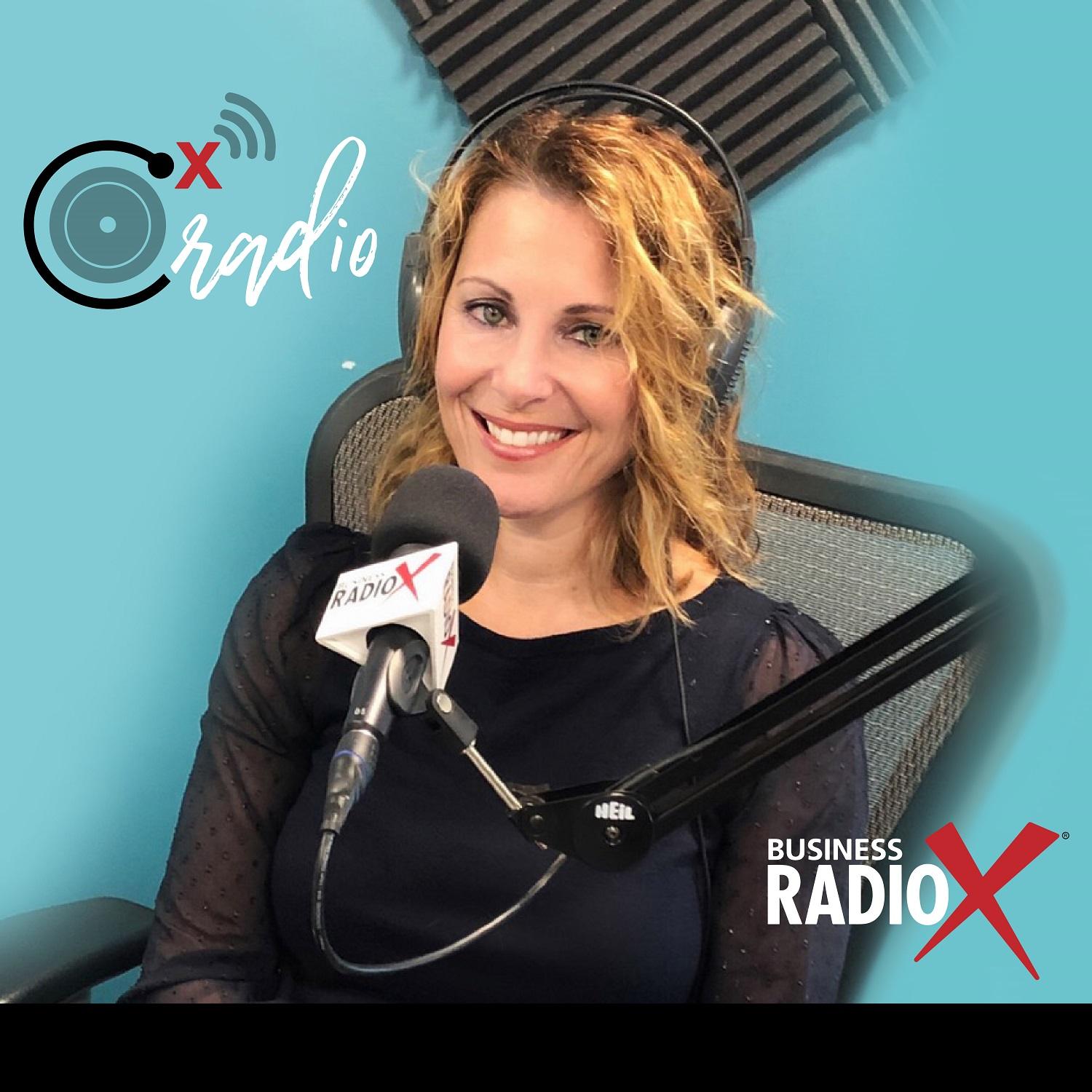
Jill-Heinick-Customer-Experience-RadioJill Heineck is a leading authority on corporate relocations, and is highly sought after for her real estate industry acumen and business insights. As a published author, frequent panelist and keynote speaker, Jill shares her experience and perceptions with people from around the globe.

Jill is a founding partner of Keller Williams Southeast, established in 1999, and the founder and managing partner of Heineck & Co. Her real estate practice specializes in corporate relocations, individual relocations, luxury residential, and commercial properties. Jill’s analytical approach to problem-solving, along with her expert negotiation skills and sophisticated marketing, deliver superior results to her clients. Her winning strategies and tenacious client advocacy have earned her a reputation for excellence among Atlanta’s top producers.

While Jill has received many accolades throughout her career, she is most gratified by the personal testimonials and referrals she receives from her clients. Jill’s unwavering commitment to the customer experience, and her focus on the unique needs of each client, serve as the foundation of her success.

Follow Jill Heineck on LinkedIn.

Tagged With: Keller Williams, KellerINK, Papasan Properties Group

Decision Vision Episode 68: Should I Invest in Real Estate? – An Interview with Tara Winslow, Keller Williams

June 4, 2020 by John Ray

Decision Vision
Decision Vision
Decision Vision Episode 68: Should I Invest in Real Estate? - An Interview with Tara Winslow, Keller Williams
Loading
00:00 /
RSS Feed
Share
Link
Embed

Download file

should I invest in real estate
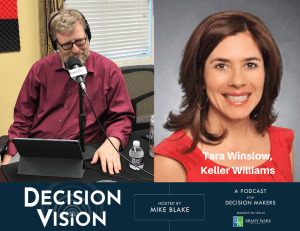
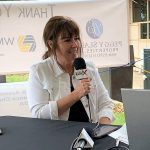
Host Mike Blake and Tara Winslow, Keller Williams Realty

Decision Vision Episode 68:  Should I Invest in Real Estate? – An Interview with Tara Winslow, Keller Williams

As an individual, should I invest in real estate? How does the Covid-19 environment change anythign? Real estate authority Tara Winslow joins “Decision Vision” to discuss these questions and much more with your host, Mike Blake. “Decision Vision” is presented by Brady Ware & Company. (Listener note:  “Decision Vision” normally covers questions related to the business itself. This episode covers personal real estate investment. If you’re interested in the question of whether your business should purchase real estate, go to Decision Vision Episode 43.)

Tara Winslow, Keller Williams

should I invest in real estate
Tara Winslow, Keller Williams Realty

Tara Winslow is a real estate agent with Keller Williams Realty. As a native Atlantan, she has vast insight into the Atlanta real estate market. Tara works from the Keller Williams Realty Peachtree Road office in Brookhaven. Her office has sold over $1 Billion every year since 2015 and is ranked as the top realty company in Atlanta. She loves being a business owner, which allows her to help make decisions important to her clients.  Tara is committed to her clients, values long-term relationships and strives to exceed expectations. She has a deep understanding of the real estate process and knows what it takes to get her clients into the home of their dreams. Tara takes pride in her business and earns the trust of her clients who call on her for advice.

For more information on Tara, go to https://www.tarawinslowhomes.com/, or you can email her directly.

Michael Blake, Brady Ware & Company

Mike Blake, Host of the “Decision Vision” podcast series

Michael Blake is Host of the “Decision Vision” podcast series and a Director of Brady Ware & Company. Mike specializes in the valuation of intellectual property-driven firms, such as software firms, aerospace firms and professional services firms, most frequently in the capacity as a transaction advisor, helping clients obtain great outcomes from complex transaction opportunities. He is also a specialist in the appraisal of intellectual properties as stand-alone assets, such as software, trade secrets, and patents.

Mike has been a full-time business appraiser for 13 years with public accounting firms, boutique business appraisal firms, and an owner of his own firm. Prior to that, he spent 8 years in venture capital and investment banking, including transactions in the U.S., Israel, Russia, Ukraine, and Belarus.

Brady Ware & Company

Brady Ware & Company is a regional full-service accounting and advisory firm which helps businesses and entrepreneurs make visions a reality. Brady Ware services clients nationally from its offices in Alpharetta, GA; Columbus and Dayton, OH; and Richmond, IN. The firm is growth minded, committed to the regions in which they operate, and most importantly, they make significant investments in their people and service offerings to meet the changing financial needs of those they are privileged to serve. The firm is dedicated to providing results that make a difference for its clients.

Decision Vision Podcast Series

“Decision Vision” is a podcast covering topics and issues facing small business owners and connecting them with solutions from leading experts. This series is presented by Brady Ware & Company. If you are a decision maker for a small business, we’d love to hear from you. Contact us at decisionvision@bradyware.com and make sure to listen to every Thursday to the “Decision Vision” podcast. Past episodes of “Decision Vision” can be found here. “Decision Vision” is produced and broadcast by the North Fulton studio of Business RadioX®.


Visit Brady Ware & Company on social media:

LinkedIn:  https://www.linkedin.com/company/brady-ware/

Facebook: https://www.facebook.com/bradywareCPAs/

Twitter: https://twitter.com/BradyWare

Instagram: https://www.instagram.com/bradywarecompany/

Show Transcript

Intro: Welcome to Decision Vision, a podcast series focusing on critical business decisions brought to you by Brady Ware & Company. Brady Ware is a regional, full-service accounting and advisory firm that helps businesses and entrepreneurs make visions a reality?
Mike Blake: And welcome to Decision Vision, a podcast giving you, the listener, clear vision to make great decisions. In each episode, we discuss the process of decision making on a different topic from the business owners’ or executives’ perspective. We aren’t necessarily telling you what to do, but we can put you in a position to make an informed decision on your own and understand when you might need help along the way.

Mike Blake: My name is Mike Blake and I’m your host for today’s program. I’m a director at Brady Ware & Company, a full-service accounting firm based in Dayton, Ohio, with offices in Dayton; Columbus, Ohio; Richmond, Indiana; and Alpharetta, Georgia. Brady Ware is sponsoring this podcast, which is being recorded in Atlanta per social distancing protocols. If you like this podcast, please subscribe on your favorite podcast aggregator and please consider leaving a review of the podcast as well.

Mike Blake: So, the topic we’re discussing today, the decision we’re discussing today is, should I invest in real estate? And full disclosure, but I’m not a real estate guy. You know, I do business appraisals for a living. And, you know, we know our cousins who do real estate appraisals for a living, but the two really don’t meet. They’re separate. They’re related, but very much separate disciplines. And all candor, I’m not even a very good monopoly player.

Mike Blake: My kids kicked my ass all the time, and really, are not very good winners about it either. I did not know my 18-year-old could dance so much as to when I land on his hotel on Boardwalk, which I think is a bad neighborhood, by the way, but whatever. So, real estate to me has always had something of a mystique to it. And you almost can’t get away from real estate in a certain perspective. You know, I think particularly in America, a lot of people are enamored of real estate.

Mike Blake: Of course, our president made his fortune in real estate before he became a reality TV star, and then 45th president of the United States. And, you know, I do hear from time to time from people that have either invested in real estate or they’re thinking of investing in real estate. A lot of the work that I do involves the appraisal, what’s called a real estate limited partnership, which is a vehicle where usually, a family, but often as well, multiple individuals invest in a particular vehicle. That vehicle is a holding entity for a real estate.

Mike Blake: And then, sometimes, that shares or that entity are then gifted or left via a state to future generations. And there are certain tax advantages to doing it that way. As I’ve said many times in this podcast, I’m not a CPA. I’m not going to opine on what’s a good tax thing to do or not, except I think you should pay them if you owe them. But beyond that, I’m not comfortable offering any advice. And we’ve talked about real estate on this program before.

Mike Blake: We’ve had people come on and talk about, you know, what does commercial real estate from an operational perspective look like in a coronavirus world, right? I think a lot of us are starting to come to the realization that real estate is going to be different. I really don’t know if we’re going to need more real estate because we now need to have about 50 feet in between people inside the office, or if it’s going to be less because nobody is going to come into the office at all because we think it’s basically a virus-driven kill box, or if it’s going to be somewhere in between. I truly don’t know.

Mike Blake: And if you do know, you know, feel free to send us an email and and give us your view on that. And then, we’ve also had another podcast, which I really enjoyed, where we had an expert come on and talk about whether a business should buy its own real estate. And that’s a question I am asked frequently. You know, I’ve got a business, and in some cases, I’m going to raise money to buy my own real estate because, you know, even if the business sort of goes completely, at least the real estate asset is there that may appreciate sort of as a form on value.

Mike Blake: And, you know, one of the things we talked about there is and the conclusions that we drew is, you know, unless you want real estate management to become a core part of your business, you know, just keep renting. It isn’t necessarily all that and a bag of chips. And I imagine right now, if you did pull the trigger and bought real estate for your own business and, you know, you may be wondering about that decision, especially if you’ve had to lay people off, as many companies have to do.

Mike Blake: And as we record this today, the most recent unemployment report shows that we’re at 14.5%, which frankly is better than I thought it would be. So, I guess I’m the eternal pessimist. But we’re going to look at real estate from a different angle, which is from more of a personal investment perspective. And this is breaking a little bit from tradition in terms of what we normally do on Decision Vision because we typically look at a flat-out hardcore business decision.

Mike Blake: But, you know, at the same token, owners and executives do have their own portfolios. They are looking at investing in real estate. And quite frankly, you know, as we record this on May the 8th, and happy VE Day, by the way, you know, I think everybody is at least thinking about their portfolio. They’re thinking about risk. They’re thinking about diversification. You know, just as we went through the roller coaster ride back in ’08 and ’09 with our 401(k)s and our investment portfolios, you know, we’re doing that now as well.

Mike Blake: Maybe the barf bag is even bigger for this ride. It really kind of remains to be seen where we’re going to end up. And I think it’s natural to kind of think about where does real estate factor into this, right? You know, worst comes to worst, at least, you know, I own something. And, you know, unless you own beachfront property somewhere in Florida, you know, that land is never going away. So, I hope you’ll find that it’s an interesting topic, even though I’m being a little bit indulgent on the topic.

Mike Blake: But, you know, if you’re an executive, if you’re a business owner, you have a portfolio, I think a lot of you are already thinking about this. So, as I said, it was not really through any false modesty, as a reporting of fact, I am not a real estate guy. I don’t know anything about it. And as you know, as is the format for our show, we bring on somebody who actually does know what they’re talking about. And joining us today is my friend Tara Winslow, who is a realtor with Keller Williams. As a native Atlantan, and believe it or not, they actually do exist, they are not urban legends, she has vast insight into Atlanta real estate market.

Mike Blake: She has her practice at Keller Williams Realty piece. She wrote office in Brookhaven, which is about two-and-a-half miles down the street from where I’m recording today. Her office has sold over one billion dollars every year since 2015 and holds the number one realty company standing in Atlanta. She loves being a business owner, which allows her to help make decisions important to her clients. There’s that decision connection again. Tara is committed to her clients, values long-term relationships, and strives to exceed expectations.

Mike Blake: She has a deep understanding of the real estate process and knows what it takes to get her clients into the home of their dreams. Tara takes pride in her business, and there is a trust of her clients who are calling her for advice. And she and I met originally about two years ago. And I’m normally a very hard person to get along with, but I have to tell you, I took an instant liking to Tara, which is rare. I normally take an instant disliking to most people. So, it is a delight and a privilege to have her on the program. Tara, thanks for joining us today.

Tara Winslow: Thank you so much, Mike. I appreciate it and thankful that you invited me as a guest.

Mike Blake: So, I guess, you know, before we get started, I mean, how are you holding up sort of living in a slow-moving B horror show?

Tara Winslow: Well, you know, real estate is still moving pretty quickly. So, contrary to what you might see in the news, we are still doing business. Buyers, and sellers, and investors are out there every day seeing properties. So, things are going really great. And, you know, we’re just balancing working from home like everybody else, and having kids at home, and doing the best that we can in both areas.

Mike Blake: You know, it’s interesting, you mentioned that real estate is still moving. Just about the time when my community of Chamblee, Georgia decided to go on lockdown, pretty much following the rest of DeKalb County, you know, our neighbors put their house up for sale. And my wife and I kind of looked at each other, said, “Really? I’m not sure this is the time when people are necessarily buying.” And true to my preamble here that I know nothing about real estate, the darn thing is sold within three days, and had sold for a price that I was jumping for joy because our house is much larger than theirs, so we’re doing all right.

Mike Blake: But if you’re a tax assessor for DeKalb County, I didn’t mean any of that. So, clearly, you know, there’s still a market out there. And, you know, now that you mention it, let’s get into—I’m just going to go off script right away because I know you can catch up to a curve ball. So, why is it? Why is a lot of the rest of the world, sort of freeze thing in place, the day the world’s stood still, and real estate is chugging along? Why did that house next to us sell for a pretty good sum, and quickly?

Tara Winslow: Yeah, that’s a great question. And just to let you know, I’ve been tracking the statistics, which I’m a very fact-based realtor. And I’ve been tracking the statistics since March 22nd. So, looking at the new listings that went on the market in Metro Atlanta yesterday, within a 24-hour period, you’re looking at 525 or sellers deciding to put their house on the market yesterday. And for some reason, people are still continuing to transition.

Tara Winslow: You know, those transitions in life continue. You’re still getting married, some now virtually online. Many people are doing that. Divorces, children, you’re having more children. And while we’re sitting at home quarantining, I mean, how many Facebook posts have you seen about people wishing they had a pool, or wishing they had that office, or wishing they had a basement to send their kids down there, you know. So, people’s minds are really turning over real estate and it continues.

Mike Blake: Yeah. And I’m curious, too, because one of the things that I’ve observed in the real estate market, in particular, on residential, is historically, there’s been a lack of properties for sale, right? That’s been a big issue holding up the market and particularly starter properties.

Tara Winslow: Yes.

Mike Blake: Now, I kind of wonder if, and maybe this is this is partially profiting off of the misfortune of others, but you have to talk about the elephant in the room. Is there, is there more inventory now coming into the system because people are having to rethink their own housing because their income situation has changed or is it largely driven by what you just said, is that man, if I spend another day in this 2,200 square foot or this 1,500 square foot house with my kids, it’s going to be this deal, where four go out and two come back kind of thing?

Tara Winslow: Yeah. And I think there isn’t really a hard black or white answer on this one. There’s still a shortage of inventory. We have a plethora of buyers on the sidelines right now waiting to pull the trigger. And it’s happening every day. I have three buyers that went under contract just this week alone. So, I don’t know if there’s like one specific end-all-be-all answer, but we do still have a shortage of inventory, at least speaking from the Atlanta market and the millions of people that are moving into Atlanta over the next couple of years. You know, the home affordability is a whole different topic you may want to consider down the road because people are having to move further out on the outskirts of Atlanta to afford a house.

Mike Blake: Yeah. And again, I promise we’ll eventually get to the questions that I have to ask, but we’ve jumped into such an interesting topic. I can’t let go of it, you know. And that whole dynamic of distance sounds like it’s going to change, right? Fewer people are going to need to commute. Fewer people are going to want to commute, right? I don’t know what Atlanta has decided or is deciding, but I have read that other large cities are effectively shutting down their mass transit systems, right? Because every bus is going to basically be a COVID incubator on wheels, right? And the same thing for subway, right? So, commuting is not going to be realistic, which means that people can perhaps explore moving farther away from the city center than they might have done four months ago. And I can see you nodding, nobody else can, but it sounds like there may be something to that.

Tara Winslow: Yeah. I mean, you know, look up north in Forsyth County. People are moving in droves in Forsyth County. I had a listing there. We had over 11 showings in two days and multiple contracts. So, you get a great big house there for a regular-sized family, finished basement for a great price. And you have some space in the backyard. I mean, it’s booming there and they continue to build. New construction continues all over around Atlanta. So, I think that’s-

Mike Blake: Eleven showings in two days.

Tara Winslow: Yeah.

Mike Blake: And then, how long did it take to get a contract in that house or is it still pending?

Tara Winslow: Well, you know, I was the listing agent, I was stalling a little bit because I was waiting to see what kind of offers were going to come in to best represent my seller. We would go contract within 24 hours, but we let it go a little bit longer to maximize my seller’s return.

Mike Blake: Good for you and good for your client.

Tara Winslow: Yeah.

Mike Blake: Okay. So, let’s then jump in. I think that’s a really good, helpful background.

Tara Winslow: And you mentioned the commercial market.

Mike Blake: Yeah.

Tara Winslow: You know, I have friends in commercial real estate. And when you talk about commercial real estate and residential, there are really two different entities going on. And what the effects that are happening to both of those are very different. And I think you mentioned when you began speaking about commercial real estate, is really seen—I mean, they’re taking a hit right now. So, I just wanted to kind of confirm also what you are saying about that.

Mike Blake: Yeah. Let’s come back to that because of my understanding that that is an important distinction. But before we get there, let’s talk about what makes real estate special. You know, I’ve been fortunate. I’ve traveled abroad. I’ve lived abroad. I’ve never been any place in the world where real estate sort of has this romance to it, as in the United States. And, you know, it still seems to be a notion that you’ve “made it” if you’re a real estate owner. And do you agree with that observation? If you do, why do you think that is?

Tara Winslow: Goodness. Great question. You know, I think it allows people to think and dream about the life that they want. And I was just talking to a potential client yesterday, and he’s looking in a specific area up to 1.6, and you know what he says to me yesterday? He’s like, I’m not even going to go up to 1.6. I’m at 1.2, but I’m just looking at these beautiful homes, and thinking about my lifestyle, and how that would work. And I think it’s really therapeutic.

Tara Winslow: And particularly right now in the world that we live in, when you’re dealing with challenges, people want to look online, and envision their life in a new city or a new country, and doing something different. And I think that that’s part of the mystique and the edge that pulls you in. And I also think it releases dopamine in your head when you’re doing that, you know, and it stimulates the habit of wanting to go back and get that good feeling.

Mike Blake: So, you know, I’m thinking about looking at real estate as an investment perspective and, you know, owning a physical property as an investor. How does somebody like you help me get started? And is that process a little different from the process of trying to find a piece of real estate that I actually plan to live in?

Tara Winslow: Yeah. You know, from an investing standpoint, the end-all, be-all is what you want to achieve. So, what is your goal when you’re investing? And that’s really the big question that needs to be answered upfront. And during our consultation together, we really need to ferret out what your end game is. And that’s going to take us down different avenues of where you want to go in terms of, do you want to buy, fix, sell? Do you want to buy, fix, hold? Do you want to buy, fix, rent? So, what and how long are you going to be doing this? What are you going to be using the funds for down the road? Is it going to be for your kid’s college tuition in 15 years, if you have a three-year-old? So, it’s really important to kind of nail down and get clarity around what the end game is.

Mike Blake: And, you know, is all real estate alike? I mean, there is real estate that’s residential, there’s real estate that’s commercial, there’s real estate that’s industrial. You know, can you lump that all in or do each of those have like a different market, a different model, and maybe a different suitability from an investment standpoint?

Tara Winslow: Yeah, I mean, for me, you specialize in something, they come to you because you specialize in what you do and you’re great at it. And someone who specializes in residential real estate, like myself, I don’t specialize in commercial real estate. And I have plenty of commercial partners to refer my clients and friends to, which I do, because, you know, I don’t think that you can represent someone to the best of your ability if you don’t specialize in it and commercial gets broken out into so many different areas.

Tara Winslow: Are you wanting to purchase land? Are you wanting to purchase a physical entity? Are you wanting to lease office space? So, even within commercial, when I talk to my partners, they all specialize in certain areas of commercial. And I think it’s important for the person considering one or the other, commercial or residential, to really make sure you have a specialist in that field.

Mike Blake: Now, even in residential real estate, there are certain distinctions, right? I understand there’s a distinction, for example, from single-family to multifamily residential as well. Is that distinction important? By multifamily, I think that means you’re buying an apartment building, basically, or condo building with multiple families in it, maybe something else, too. Is that an important distinction?

Tara Winslow: I think it is because if you’re buying an apartment building, you’re going to be renting it to tenants. And you need to have that experience and look at the different rates of return, what your investment is, what are you going to be getting from a rental standpoint? So, I do think that they’re very different. And then, you know, single family, then you have condos and townhouses.

Tara Winslow: So, you have attached living and you have detached living. And then, you have HOA, you know, fees, Homeowners Association fees in some, and not at all. So, there’s a lot of different distinctions going on. And you do learn about all these things in your career, you know, over time. So, it just depends, again, what person, what your client’s wanting to do, and what their expectations are.

Mike Blake: So, I think there’s a perception that investing in real estate is for big shots, right? You’ve already got to be sitting on a pile of cash. If I’m going to make a real estate investment again, not my home, we’ll get to the home as investment in a little while, but I think there’s a perception, well, I bet I need to be sitting on a pile of cash, 100, 200 million dollars before I even think about undertaking a real estate investment. Is that true? And if so, is there a minimum threshold? And if not, then what is kind of the financial threshold where somebody can realistically start thinking about becoming a real estate investor?

Tara Winslow: Yeah. I mean, I think that many people make themselves wealthy and they have financial wealth when they invest in real estate. And if you look at some of the big people, for instance, Gary Keller, who is the CEO and founder of my company, Keller Williams, he wasn’t where he was today when he first invested. And typically, it’s a lot of people who want to follow a process, and a system, and make money. And they know that right now, they need to be doing a little bit at a time to have this really big portion of real estate and wealth.

Tara Winslow: So, do I think that you can invest and you have to be wealthy and have a ton of cash? I think that that’s maybe more of a myth understanding than being able to really sit down, again, and line up—where are your avenues to get different things? And maybe you have a private lender or you have someone you can get a loan from. There are a lot of different methods. Maybe you can put something on a credit card temporarily until you get a tenant in there.

Tara Winslow: So, you don’t need a big down payment right now. In lending, Mike, who you choose as a lender is also very critical. There are a lot of lenders that specifically work with investors that can help you tremendously and offer different packages to you. So, again, it’s really using a resource and finding that specialist who can open, you know, their contacts to where you want to go and you help them get there. And it can absolutely happen.

Mike Blake: Well, let’s talk about that because I think the lending part, I mean, I don’t think you can talk about real estate without talking about the lending environment, right? Because that’s typically how these things are capitalized. And it’s such a multidimensional question, we’ll spend some time on this. I guess, first, are banks typically real estate investment lenders or is it going to be somebody that’s in the non-traditional, non-depository market that typically is going to provide the capital for a real estate investment?

Tara Winslow: Well, when I hear banks, I think of Bank of America, Wells Fargo, Chase. When you use that word, is that what you’re thinking?

Mike Blake: Well, I mean, it could be. But, you know, you and I are both aware there are smaller banks as well and community banks can be a little bit more cuddly, a little bit more user-friendly. I think we’ve certainly found that through the whole PPP exercise. You know, you’re much more likely to successfully secure a loan through a smaller community bank than you are, a larger bank. So, I’m going to deliberately leave that open-ended. And maybe your question has two answers depending on the kind of bank.

Tara Winslow: I agree. Definitely. There are a lot of local lenders here. I have several to suggest to my clients who, all they do is mortgage lending. So, they have different programs and each lender has a different program or specializes in different programs. And again, it may be that you need to talk to two or three to kind of tell them what your plan is and see if their program fits best for you.

Tara Winslow: But they are lending. And I get updates. We are on calls every week with our lender that is in our office and they are updating us weekly on the different trends, what they’re hearing, what they can still offer. And right now, they are offering all of their packages and offerings, are still the same. They have not changed like the traditional bigger banks. They have tightened up their belts.

Mike Blake: Now, I think that’s worth underscoring. And that’s a big difference. For those of us who are old enough to remember the ’08 and ’09 recession, that was a balance sheet recession. And the banks basically just slammed on the brakes and some of them didn’t slam on the brakes quickly enough, and they fell over the cliff, right? And so, for a while, you just could not get a loan, frankly, unless you didn’t need one, right?

Mike Blake: And even then, it was difficult. It seems to me like that part of it at least is a little bit different. My own analysis, the banks are in much better shape now than they were 10, 12 years ago. They have just turned a lot of fees by processing this PPP program. So, that has helped them capitalize as well. So, it does seem like that the banks are more open for business than we might expect. Sounds like you think the same, you see the same thing?

Tara Winslow: Yeah, I think so. Yeah. I totally agree with what you just said. I think that they’re ready to do business and they’re moving as business as usual.

Mike Blake: And how are they reacting? And we’re recording this on May 8th. And we are in a very strange economic environment, where, frankly, the Federal Reserve is doing things that when I was getting my economics degree, said that we were basically to blow up the planet. And the planet has not blown up yet, but we do have interest rates that in some cases are at double-take loans, like, really, it’s that low, right? I did not think I’d ever refinance my mortgage again because I thought I had such a great rate, and yet, here I am. But also, I’m hearing that that’s not necessarily kind of uniform and it’s kind of bumpy. How is the interest rate environment being reflected in bank’s willingness in terms of lending right now?

Tara Winslow: Well, from a high-level, because I always lean on my lending partners to really get into the guts of the lending piece of it, but from a high level, historically low interest rates is what is continuing to keep people, buyers, in the game and ready to go. And the forecasting that I’ve been hearing is that they will continue to stay fairly low, at least through the end of the year, is what I’m hearing from a forecast standpoint, which is great for people to continue to take advantage of these rates. Just think how much equity you already have when you purchase something five, 10 years down the road with this interest rate that you’re going to get today.

Mike Blake: Well, that’s right. And that’s the attractive, anytime you can borrow money, right? By simply surviving another month, you add value, basically.

Tara Winslow: Yeah.

Mike Blake: And I haven’t exactly done—and of course, depends on the length of the mortgage, too. But, you know, if it’s a 15-year mortgage, you’re hitting that inflection point pretty quickly where you’re paying more principal rather than interest, right? And then, every month, that’s just survive and advance. Every month you make a payment, you’re adding—regardless of what the markets or almost regardless, you’re adding more value.

Tara Winslow: Yeah. And if you rent out your home-

Mike Blake: Like a savings account with somebody else’s money.

Tara Winslow: Yeah. Right. And if you’re renting your investment, then someone’s paying your mortgage. So, it’s kind of a double—you’re getting like a two-things-for-one here.

Mike Blake: So, we hear a lot about the notion that somebody’s home is their investment, right? And I’m curious, I’ve been reading a lot, and I know if you’ve seen the same thing, but I’ve read more than I’ve ever recalled reading in my lifetime, where the notion of the home being an investment is now being challenged, where commentators, I don’t know if they’re experts or not, they’re published in places, their position is kind of experts, but I’m just calling them commentators because I can say that safely and factually, where they’re saying, well, you know, you might actually be better off continuing to rent.

Mike Blake: And then, you know, whatever you’re saving in terms of home taxes, and maintenance, and so forth, you know, just invest that in the stock market or invest that in publicly-traded real estate holding companies, something like that. I imagine you have a viewpoint on that. I’m sure you’ve heard that argument before. So, let me open the microphone here, and step back, and let you kind of respond to that.

Tara Winslow: There are so many responses in your loaded question. From our renting perspective, I don’t see any benefit to a person continuing to rent if you can buy a home. Rental rates in Atlanta continue to increase. So, if you want to live in Midtown and you’re paying $2,500 a month in rent for to pay off someone else’s investment, it just seems crazy to me to do that. Why not build your own wealth? You have an opportunity to build your own wealth for you and your family and whoever you want to leave your investments to. So, that’s one thing that comes to my mind. And you mentioned there was kind of a second piece of what you are asking.

Mike Blake: It’s about whether or not you’re simply better off. There are sort of, I guess, not hidden, but there are ancillary costs of homeownership, right? There are taxes. There is, you know, maintenance and upkeep. Things break, you got to fix, you got to maintain, so forth. And maybe in some cases, you know, instead of taking on the called burden of homeownership, you’re better off taking some of that money and simply generating return by investing in the S&P 500.

Tara Winslow: Yeah. And I’m an investor in the S&P 500, okay? And I believe in what I’ve learned throughout my life, is to be diversified in my portfolio. So, I’m doing multiple things. And that includes real estate as well. And I think that’s one of the best ways you go, because, you know, look, let’s look back 30 days, right? We’re in the month of March. People are losing, whatever money that you have invested, that’s a lot of money to you, if it’s 10,000, hundreds of thousands, millions of dollars that you’re losing.

Tara Winslow: Now, when you think about real estate, you’re in a house, and the only way that you really lose this investment is if it burns down, and then you have insurance, right? So, when you look at something stable and sturdy like that versus kind of the roller coaster of the market that many of us are dealing with, including myself, I just don’t see how real estate wouldn’t be an option for you to add into your portfolio. The benefits outweigh the maintenance of buying a HVAC every 20 years for yourself.

Mike Blake: So, what do you think? I mean, have you worked with home flippers? And if so, what do you think of flipping is an investment strategy?

Tara Winslow: Well, I think that flipping is a solid investment strategy. I think that the Atlanta market, to find flipping opportunities for my investors, it’s a really tight market, meaning that they want to make a certain amount of money and there’s only a certain amount of properties. And we’ve already talked about shortage, right? The shortage of inventory. So, between the shortage of inventory, then all of their cost, their holding costs, the margins are really getting tight for flippers in the marketplace. Can you find them? Yes, you can.

Tara Winslow: And there is a great opportunity. I’d also suggest that instead of maybe flipping, that you are investing and turning it into a rental because rentals are still hugely needed. There is so much demand for a rental home, an Airbnb home. And again, with a lot of people, there are a lot of people in distress right now with job changes, and losses, and job reduction, hours and reduction, that people are going to be making some changes and it may be, a rental property is more comfortable for them right now. So, I would have someone think about it from a little bit different from a longer-term strategy than maybe from a flipping perspective in today’s market.

Mike Blake: So you brought something up, and we’ve kind of touched upon this, but I want to hit it hard because I think it’s a very important point, which is, you know, is there an environment now where maybe bargain hunting is more feasible today than it might have been four to six months ago, right? You brought up Airbnb and something I’ve been reading a lot is that market is in a lot of trouble, right?

Mike Blake: Because nobody’s traveling, right? Who in their right mind wants to stay in a stranger’s house for a lot of reasons, right? And I think Airbnb just laid off a whole bunch of their staff as well. So, if you bought a property as an investor, and you’re banking on Airbnb income, that’s not there anymore. And that may lead to an opportunity where somebody just wants to pull the ripcord, and get out, and reshuffle the deck. Well, what do you think about that?

Tara Winslow: Well, I have a couple of comments. You know, the Airbnb community is pivoting and how they’re pivoting, and it’s in the works right now, they’re pivoting from a cleanliness standpoint and they’re following the guidelines of the CDC to get certified cleanliness for their houses. So, that’s going on right now, okay?

Mike Blake: Yeah.

Tara Winslow: That’s about all that I have in terms of information on that piece. But in terms of rentals, I mean, I think that they’re continuing to go up in price. And, you know, that’s a tricky question, Mike. Overall, prices are stable, okay? Overall, we’re getting multiple offers. And the strategy has not changed. If a house is in great condition and it’s priced correctly, it’s going to have multiple offers. So, in terms of that buyer looking to steal that house, it’s really still not going to happen. If you’re looking for a house to do work on, that is probably your best investment. You put equity into the home, and then either sell it, live in it, or rent it. And that’s where you might find a better deal. But it’s really a needle in a haystack still.

Mike Blake: So, if I’m going to do that, you know, do I need to be a DIY home builder, Bob The Builder kind of junkie, where I just know how to fix everything, and I’m like my grandfather who can go in, and take apart my water boiler, so he can replace a six-dollar part with nine hours of effort. I mean, do you need to have that kind of building acumen to do that?

Tara Winslow: You know, buyers are so smart these days, okay? And to put junkie work into a house, they see it. So, I would hire a professional and I would also hire a professional property management company, will eat into some of your profit, yes, but you’re going to get the clientele that you want renting your house, you know, if that’s the route that we’re talking about going. So, do a great job, hire someone professionally, and get the money. That way, you’re going to net more money when the work is done professionally than someone sees, do it yourself, an inspector goes in there and there’s tape around the plumbing, you know.

Mike Blake: Yeah. Now, as a realtor and I’m going to come back to that term in a second because there’s a question I’m dying to ask. But as a realtor, can you sit down and help somebody kind of work through and crunch the numbers as to whether or not that investment property makes sense, right? Because again, no, there’s no false modesty here, I’m not a real estate guy, but if I’m, myself, thinking about, hey, you know, I think I could probably sustain a piece of real estate, the investment thesis makes sense, but, you know, I’m not even allowed to have power tools.

Mike Blake: My insurance writer will not allow it because that’s how incompetent I am. You know, can somebody like you help me work through the numbers of, you know, what is it going to cost to bring a property up to code or make it rentable basically, and work through the numbers to see if it’s, you know, more likely than not going to be profitable, or do I need to hire another specialist, or a CPA, or, you know, something like that?

Tara Winslow: Yeah. I mean, we can do a Zoom call. I was going to say sit down for a cup of coffee, but yeah, let’s break out the Excel spreadsheet down and dirty, put in all the cost, let’s see what you’re looking at. And are you okay with the outcome in the return on investment? This would be my discussion I’m having with my client. And if that’s what they’re looking for, their rate of return, then great. There aren’t going to be surprises because we’re going to pad in a little of potential surprise or maybe extra holding costs, but that piece of it’s pretty black and white when you’re looking at the numbers. So, I say that piece is pretty easy to do.

Mike Blake: Sitting there for coffee sounds so February. So, I have to ask you this, totally off script.

Tara Winslow: Yeah.

Mike Blake: As a realtor and people who do what you do, are you like told off the TV show Modern Family, where the main character, Phil Dunphy, is a realtor?

Tara Winslow: I don’t watch that show, so I’m not-

Mike Blake: You don’t?

Tara Winslow: I don’t. I don’t watch a lot of TV.

Mike Blake: Oh, wow. Yeah, that explains why you’re smart. So, if you do, watch Modern Family, I got to think that one of the main characters is a realtor, and really spends a lot of time talking about sort of the real estate industry, and he’s really into it. So, I had to take a shot in the dark and see if you’re familiar with the show. But now, on the other side, you know, what are some common mistakes that are made by investors in real estate? I mean, this is not a slam dunk. There are some risks to it.

Tara Winslow: Yes.

Mike Blake: Where is it most likely you can make a mistake, where you really step in it.

Tara Winslow: Yeah. From an investing standpoint, this is the best way I can say it. Don’t put lipstick on a pig, okay? The buyers are too smart. Don’t think you can go in there and put a new carpet, new paint, and expect to get top dollar, and it’s not going to come out in the inspection that you, you know, hit a leak. Just go in there, do the work, get a great reputation because realtors like me are going to come back to you and say, hey, what do you got coming down the pike?

Tara Winslow: I got a buyer ready to go. And you build your reputation like that. You know, I had an interesting thing happen this week. One of my buyers went with an investor property and we had an inspection. And small world, this inspection company, it’s a small inspection company, about five inspectors, one of their teammates had just inspected this same house, three days before, and also gave it a bad inspection.

Tara Winslow: So, what’s the likelihood of the same inspection company going to the same house with all, the thousands of houses in Atlanta, right? And the inspector said, “And they still didn’t fix anything that we had recommended from the first inspection. And so, we terminated it.” And, you know, am I going to go back to that investor? I know how they work now. So, do a good job, and you’re going to get a great reputation, and you’re going to sell more of your properties. That would be my advice.

Mike Blake: That’s a really interesting answer. I pause because it’s totally not what I expected that you would say, which is great. Again, reveals my ignorance.

Tara Winslow: It’s a real-life example, right?

Mike Blake: Yeah. No, sure. I mean, you know, when I sat down, I wrote that question from the perspective of, I don’t know, you buy the wrong property, you talk yourself into buying something, yes, pretty generic stuff. It hadn’t occurred to me that your behavior as an investor on the exit side is so important, right? And developing a reputation because, you know, at least Atlanta, we all call it a big, small town. And it really is, right? We have seven million people here, but everybody knows everybody who’s worth knowing. Let’s face it.

Tara Winslow: That’s right.

Mike Blake: And a bad reputation is very tough to shake in this town, right?

Tara Winslow: Agreed.

Mike Blake: But I have not thought of the risk of becoming known as basically, a purveyor of damaged goods, and that most sellers would want to avoid that reputation, basically, unless you’re planning on fleeing the country the next week, right? That’s pretty much-

Tara Winslow: And that’s not a good business model, right?

Mike Blake: Especially now, where are you going to go?

Tara Winslow: Right.

Mike Blake: Mozambique, I think, has many people, and that’s about it. So, we’re running out of time. We’re going to wrap this up, but there’s one last question, is, you know, I think we would both agree real estate investing is not necessarily for everybody. Who should not be investing in real estate, right? Is there an economic profile or a psychological profile of some of those, just, you know, this really is not the kind of vehicle that’s right for you, you ought to think about doing something else?

Tara Winslow: Well, you know, Gary Keller says, when’s the best time to buy real estate? Yesterday, right?

Mike Blake: Yeah.

Tara Winslow: So, I’m of the same mindset. I think everyone should invest in real estate. But to answer your question, you know, I do come across certain clients who, on a scale of one to 10, their risk taking may be a one which is a low side, and that’s fine. And if that’s where it is, I would recommend investing, there may be other ways we can handle real estate and not necessarily invest and rent, or flip, or one of those options, you know, that maybe you purchase a duplex and you live in one side of the duplex, and then you rent out the other side, you know. Taking baby steps, sometimes, with a little bit more risk-adverse personalities, I think is probably the best way to go.

Mike Blake: Okay.

Tara Winslow: Yeah.

Mike Blake: And I’ll highlight here, just so everybody understands, neither of us is offering investing advice, we’re just covering a particular asset class. But everybody’s risk profile, everybody’s return needs, liquidity needs are different. You know, evaluate your own investments, whether it’s real estate, or taking your own circumstances into account. And, you know, if you don’t work with an investment adviser, you know, you probably ought to consider using one. I’m a big fan of investment advisers, because if you don’t do this stuff for a living, it can be gobbledygook. And even if you do, do it for a living, having somebody that’s going to help you will be useful. Tara, this has been a great interview and you’ve shared a lot of great information for our listeners. How can people contact you for more information?

Tara Winslow: Sure. They can contact me via email at tara.winslow@kw.com. My website is tarawinslowhomes.com. I’m on Instagram as, Tara Winslow Homes, LinkedIn, Facebook, any way. My phone number is all on those sites. Happy to provide a consultation if you just want to pick my brain about real estate.

Mike Blake: Well, great. That’s going to wrap it up for today’s program. I’d like to thank Tara Winslow of Keller Williams so much for joining us and sharing your expertise with us. We’ll be exploring a new topic each week, so please tune in so that when you’re faced with your next executive decision, you have clear vision when making it. If you enjoy these podcasts, please consider leaving a review with your favorite podcast aggregator. That helps people find us so that we can help them. Once again, this is Mike Blake. Our sponsor is Brady Ware & Company. And this has been the Decision Vision podcast.

Tagged With: Brady Ware, Brady Ware & Company, buying real estate, Decision Vision, Keller Williams, Keller Williams Realty, Michael Blake, Mike Blake, real estate investing, residential real estate, Tara Winslow

  • « Previous Page
  • 1
  • 2
  • 3
  • Next Page »

Business RadioX ® Network


Our Most Recent Episode

CONNECT WITH US

  • Email
  • Facebook
  • LinkedIn
  • Twitter
  • YouTube

Our Mission

We help local business leaders get the word out about the important work they’re doing to serve their market, their community, and their profession.

We support and celebrate business by sharing positive business stories that traditional media ignores. Some media leans left. Some media leans right. We lean business.

Sponsor a Show

Build Relationships and Grow Your Business. Click here for more details.

Partner With Us

Discover More Here

Terms and Conditions
Privacy Policy

Connect with us

Want to keep up with the latest in pro-business news across the network? Follow us on social media for the latest stories!
  • Email
  • Facebook
  • Google+
  • LinkedIn
  • Twitter
  • YouTube

Business RadioX® Headquarters
1000 Abernathy Rd. NE
Building 400, Suite L-10
Sandy Springs, GA 30328

© 2025 Business RadioX ® · Rainmaker Platform

BRXStudioCoversLA

Wait! Don’t Miss an Episode of LA Business Radio

BRXStudioCoversDENVER

Wait! Don’t Miss an Episode of Denver Business Radio

BRXStudioCoversPENSACOLA

Wait! Don’t Miss an Episode of Pensacola Business Radio

BRXStudioCoversBIRMINGHAM

Wait! Don’t Miss an Episode of Birmingham Business Radio

BRXStudioCoversTALLAHASSEE

Wait! Don’t Miss an Episode of Tallahassee Business Radio

BRXStudioCoversRALEIGH

Wait! Don’t Miss an Episode of Raleigh Business Radio

BRXStudioCoversRICHMONDNoWhite

Wait! Don’t Miss an Episode of Richmond Business Radio

BRXStudioCoversNASHVILLENoWhite

Wait! Don’t Miss an Episode of Nashville Business Radio

BRXStudioCoversDETROIT

Wait! Don’t Miss an Episode of Detroit Business Radio

BRXStudioCoversSTLOUIS

Wait! Don’t Miss an Episode of St. Louis Business Radio

BRXStudioCoversCOLUMBUS-small

Wait! Don’t Miss an Episode of Columbus Business Radio

Coachthecoach-08-08

Wait! Don’t Miss an Episode of Coach the Coach

BRXStudioCoversBAYAREA

Wait! Don’t Miss an Episode of Bay Area Business Radio

BRXStudioCoversCHICAGO

Wait! Don’t Miss an Episode of Chicago Business Radio

Wait! Don’t Miss an Episode of Atlanta Business Radio