Business RadioX ®

  • Home
  • Business RadioX ® Communities
    • Southeast
      • Alabama
        • Birmingham
      • Florida
        • Orlando
        • Pensacola
        • South Florida
        • Tampa
        • Tallahassee
      • Georgia
        • Atlanta
        • Cherokee
        • Forsyth
        • Greater Perimeter
        • Gwinnett
        • North Fulton
        • North Georgia
        • Northeast Georgia
        • Rome
        • Savannah
      • Louisiana
        • New Orleans
      • North Carolina
        • Charlotte
        • Raleigh
      • Tennessee
        • Chattanooga
        • Nashville
      • Virginia
        • Richmond
    • South Central
      • Arkansas
        • Northwest Arkansas
    • Midwest
      • Illinois
        • Chicago
      • Michigan
        • Detroit
      • Minnesota
        • Minneapolis St. Paul
      • Missouri
        • St. Louis
      • Ohio
        • Cleveland
        • Columbus
        • Dayton
    • Southwest
      • Arizona
        • Phoenix
        • Tucson
        • Valley
      • Texas
        • Austin
        • Dallas
        • Houston
    • West
      • California
        • Bay Area
        • LA
        • Pasadena
      • Colorado
        • Denver
      • Hawaii
        • Oahu
  • FAQs
  • About Us
    • Our Mission
    • Our Audience
    • Why It Works
    • What People Are Saying
    • BRX in the News
  • Resources
    • BRX Pro Tips
    • B2B Marketing: The 4Rs
    • High Velocity Selling Habits
    • Why Most B2B Media Strategies Fail
    • 9 Reasons To Sponsor A Business RadioX ® Show
  • Partner With Us
  • Veteran Business RadioX ®

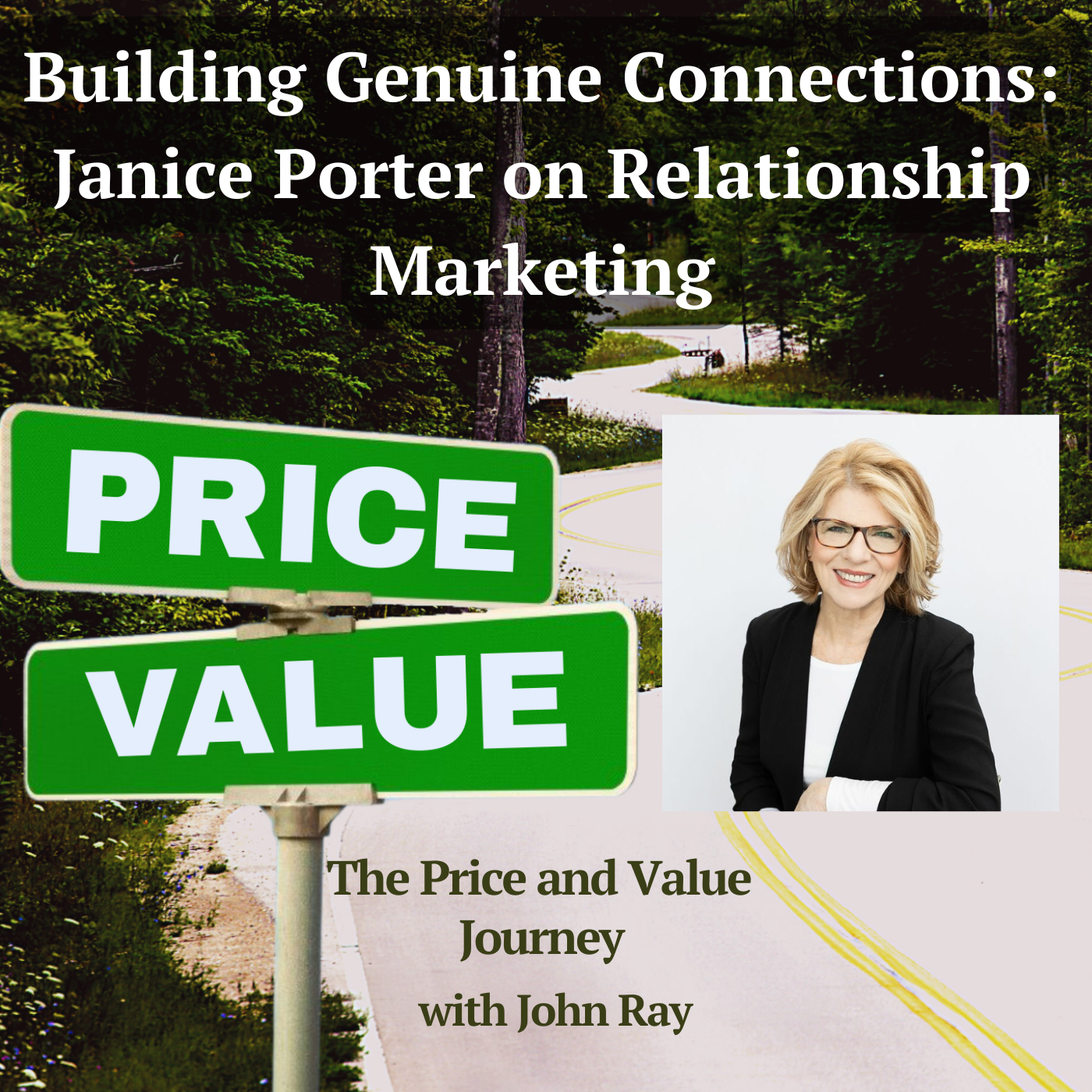
Building Genuine Connections: Janice Porter on Relationship Marketing

April 2, 2025 by John Ray

Building Genuine Connections: Janice Porter on Relationship Marketing, on The Price and Value Journey podcast with host John Ray
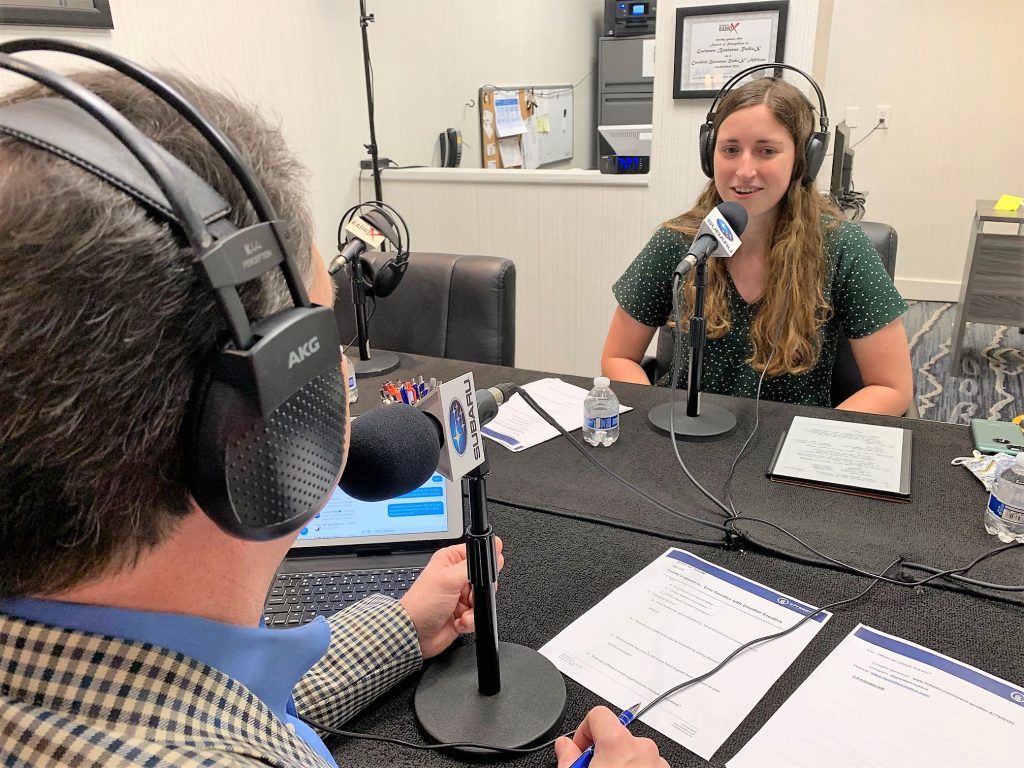
North Fulton Studio
Building Genuine Connections: Janice Porter on Relationship Marketing
Loading
00:00 /
RSS Feed
Share
Link
Embed

Download file

Building Genuine Connections: Janice Porter on Relationship Marketing, on The Price and Value Journey podcast with host John Ray

Building Genuine Connections: Janice Porter on Relationship Marketing (The Price and Value Journey, Episode 127)

In this episode of The Price and Value Journey, host John Ray welcomes Janice Porter, a relationship marketing specialist, LinkedIn trainer, and host of the Relationships Rule podcast. Janice shares her unique approach to building genuine and lasting relationships through LinkedIn and tangible touches, such as sending personalized cards and making thoughtful connections. She emphasizes the importance of starting with service and generosity, nurturing existing relationships, and the strategic aspect of offering value without undervaluing oneself. Janice also discusses her journey from teaching to entrepreneurship, the mindset shifts needed to overcome limiting beliefs, and the surprising benefits of authentic relationship marketing. Tune in for valuable insights and practical tips on how to grow your business through meaningful connections.

The Price and Value Journey is presented by John Ray and produced by the North Fulton affiliate of Business RadioX®.

Janice Porter

Janice Porter
Janice Porter

Janice Porter is a renowned relationship marketing consultant and LinkedIn trainer with extensive experience in helping businesses build strong relationships and leverage LinkedIn for growth. She is the founder of Janice Porter & Associates, where she has been working since 2003. Her expertise lies in teaching business owners, entrepreneurs, and sales professionals how to create, nurture, and build lasting relationships using both online and offline strategies. She works with both introverts and extroverts, focusing on making connections that lead to referrals and loyal customers.

Janice is deeply committed to being a connector for others, leveraging her extensive network to link like-minded individuals for mutual benefit. She values her friendships and business associations, always considering how she can support others. Her mantra, “How may I support you?” reflects her service-driven philosophy.

Janice has a background in education, having earned a Bachelor of Education from The University of British Columbia. She has also taught networking skills at institutions like Capilano University and Douglas College.

Janice is recognized for her innovative approach to using LinkedIn, emphasizing the importance of nurturing connections beyond the platform through personal gestures like greeting cards and gifts. She hosts a podcast called Relationships Rule, further highlighting her focus on interpersonal connections in business.

Website | LinkedIn | Facebook | Instagram | Relationships Rule podcast

Topics Discussed in this Episode

00:00 Welcome and Introduction to Janice Porter
01:32 Janice’s Journey into Relationship Marketing
02:55 Understanding Relationship Marketing
05:05 The Importance of Genuine Connections
08:52 Effective LinkedIn Strategies
16:54 Tangible Touches and Follow-Up Techniques
25:05 Using Audio and Video Messaging on LinkedIn
25:48 LinkedIn App Features
26:04 The Power of Asking, “How May I Support You?”
26:38 Building Connections and Networking
28:10 The Journey of Podcasting
30:14 Supporting Introverts in Networking
35:10 Balancing Generosity and Business
40:32 Client Success Stories
44:56 Conclusion and Contact Information

About The Price and Value Journey Podcast

The title of this show describes the journey all professional service providers are on: building a services practice by seeking to convince the world of the value you offer, helping clients achieve the outcomes they desire, and trying to do all that at pricing that reflects the value you deliver.

If you feel like you’re working too hard for too little money in your solo or small firm practice, this show is for you. Even if you’re reasonably happy with your practice, you’ll hear ways to improve both your bottom line and the mindset you bring to your business.

The show is hosted and produced by John Ray and North Fulton Business Radio, LLC, an affiliate of Business RadioX®. The show can also be found on all the major podcast apps. The complete show archive is here.

John Ray, Host of The Price and Value Journey

John Ray, Author of The Generosity Mindset and Host of The Price and Value Journey

John Ray is the host of The Price and Value Journey.

John owns Ray Business Advisors, a business advisory practice. John’s services include business coaching and advisory work, as well as advising solopreneurs and small professional services firms on their pricing. John is passionate about the power of pricing for business owners, as changing pricing is the fastest way to change the profitability of a business. His clients are professionals who are selling their expertise, such as attorneys, CPAs, accountants and bookkeepers, consultants, coaches, marketing professionals, and other professional services practitioners.

In his other business, John is a podcast show host, strategist, and the owner of North Fulton Business Radio, LLC, an affiliate of Business RadioX®. John and his team work with B2B professionals to create and conduct their podcast using The Generosity Mindset® Method: building and deepening relationships in a non-salesy way that translates into revenue for their business.

John is also the host of North Fulton Business Radio. With over 850 shows and having featured over 1,300 guests, North Fulton Business Radio is the longest-running podcast in the North Fulton area, covering business in its region like no one else.

John’s book, The Generosity Mindset: A Journey to Business Success by Raising Your Confidence, Value, and Prices
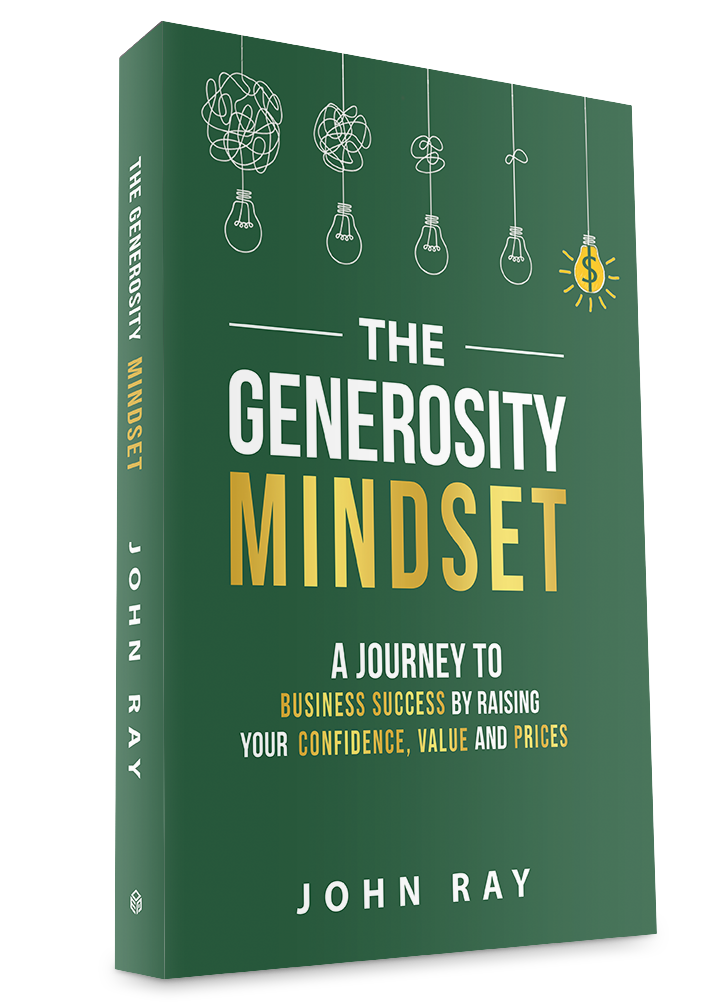
The Generosity Mindset, by John RayJohn is the #1 national best-selling author of The Generosity Mindset: A Journey to Business Success by Raising Your Confidence, Value, and Prices.

If you are a professional services provider, your goal is to do transformative work for clients you love working with and get paid commensurate with the value you deliver to those clients. While negative mindsets can inhibit your growth, adopting a different mindset, The Generosity Mindset™, can replace those self-limiting beliefs. The Generosity Mindset enables you to diagnose and communicate the value you deliver to clients and, in turn, more effectively price to receive a portion of that value.

Whether you’re a consultant, coach, marketing or branding professional, business advisor, attorney, CPA, or work in virtually any other professional services discipline, your content and technical expertise are not proprietary. What’s unique, though, is your experience and how you synthesize and deliver your knowledge. What’s special is your demeanor or the way you deal with your best-fit clients. What’s invaluable is how you deliver great value by guiding people through massive changes in their personal lives and in their businesses that bring them to a place they never thought possible.

The combination of all these elements is quite different for you compared to any other service provider in your industry. Therein lies your value, but it’s not the value you see. It’s the value your best-fit customers see in you.

If pricing your value feels uncomfortable or unfamiliar to you, this book will teach you why putting a price on the value your clients perceive and identify serves both them and you, and you’ll learn the factors involved in getting your price right.

The book is available at all major physical and online book retailers worldwide. Follow this link for further details.
Connect with John Ray:

Website | LinkedIn | Twitter

Business RadioX®:  LinkedIn | Twitter | Facebook | Instagram

Tagged With: building relationships, connections, Janice Porter, John Ray, LinkedIn, making connections, networking, podcasting, professional services, professional services providers, relationship marketing, relationships, The Price and Value Journey

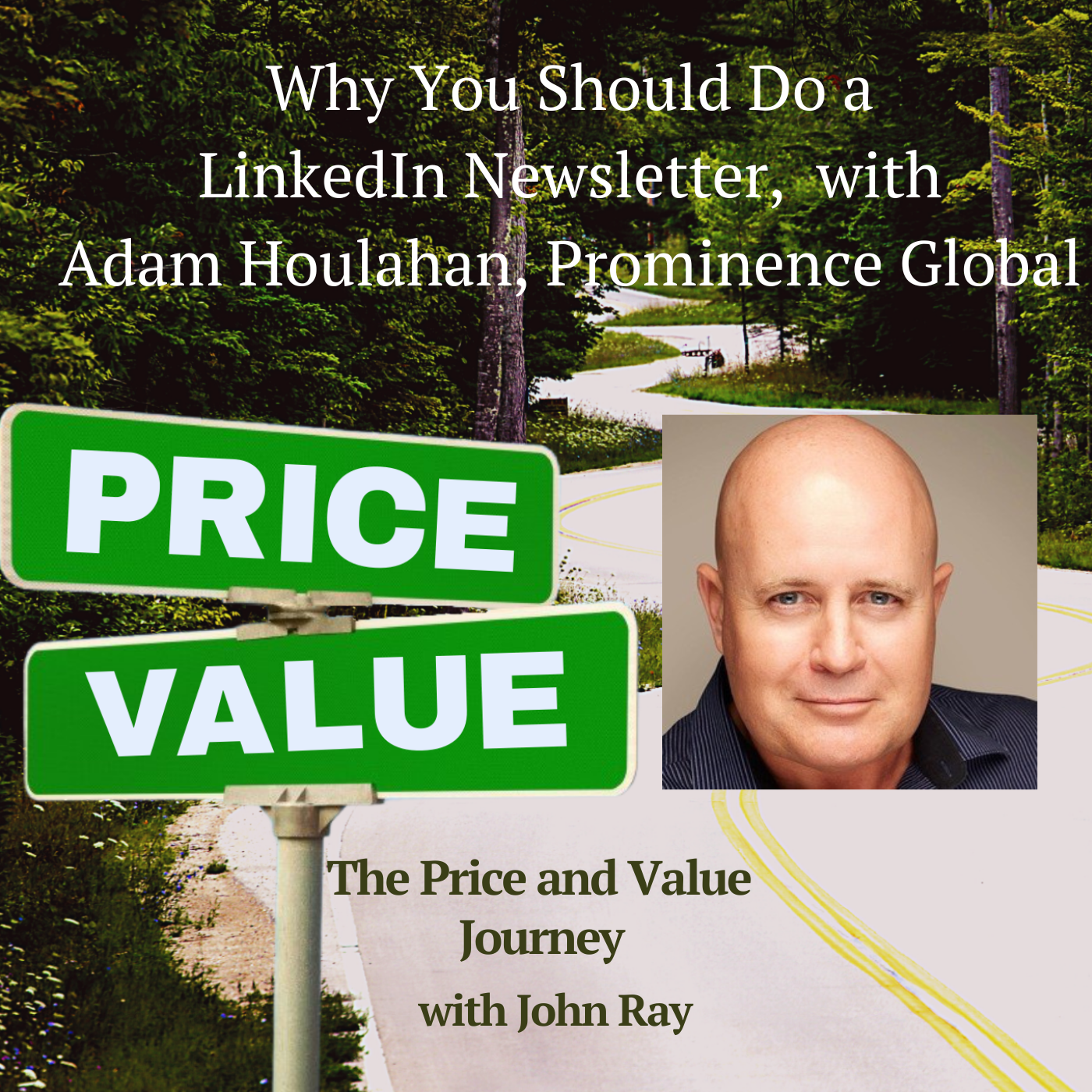
Why You Should Do a LinkedIn Newsletter, with Adam Houlahan, Prominence Global

June 1, 2023 by John Ray

Adam Houlahan
North Fulton Studio
Why You Should Do a LinkedIn Newsletter, with Adam Houlahan, Prominence Global
Loading
00:00 /
RSS Feed
Share
Link
Embed

Download file

Why You Should Do a LinkedIn Newsletter

Why You Should Do a LinkedIn Newsletter, with Adam Houlahan, Prominence Global

Adam Houlahan, CEO of Prominence Global and best-selling author, was the guest on this edition of The Price and Value Journey, discussing why you should do a LinkedIn newsletter. He and host John Ray covered how to make them impactful, what makes a LinkedIn newsletter unique, how often to post a newsletter, repurposing content, aligning with LinkedIn’s current algorithm, and much more.

The Price and Value Journey is presented by John Ray and produced by the North Fulton studio of Business RadioX®.

Prominence Global

Prominence Global is, you’ll find, very different. They help their clients position themselves as industry leaders who are the envy of their peers.

Their mantra is authenticity They create intelligent strategies that cut through the noise that is social media. They do that by being authentic, courageous, and committed to make a difference in their world too. They value transparency More is learned from their mistakes than successes, sharing both is their commitment to honesty and truth. They operate with Integrity Ethics in marketing is in their DNA, they are not afraid to say ‘no’.

Prominence Global seeks continuous improvement through innovation They’re constantly curious in growing themselves, their team and the service they provide. They’re personal. They understand there is no cookie-cutter program that suits every business. They develop solutions that are as individual as their clients are.

They make a positive difference. They believe real and meaningful change comes through the world’s entrepreneurs. They create a powerful on-line presence for each client that grows & accelerates their global footprint, so that together they really can make a huge impact.

Through their Premium Partnership with the global giving movement www.B1G1.com they impact the lives of millions of people in need just by doing what they do every day.

They developed a range of support services to cater to every need. ☞ Free web events ☞ Free Community you can join ☞ Free Profile Optimisation Course ☞ Inner Circle Solo ☞ Inner Circle Academy ☞ Inner Circle Legends.

Their programs are an intensive ‘deep dive’ — a superb, results-producing methodology that creates a cutting-edge, lead generation sales funnel for almost any industry.

The difference is simply how much support you need from their team of dedicated professionals.

Company website | LinkedIn

Adam Houlahan, CEO, Prominence Global

Adam Houlahan, CEO, Prominence Global

Adam Houlahan is an International Keynote Speaker specializing in LinkedIn strategies for entrepreneurs, and CEO of the highly successful LinkedIn agency, Prominence Global.

He hosts arguably the world’s largest free on-line LinkedIn training event with thousands of people registering every 10-weeks and is considered to be one of Australia’s leading experts in harnessing the power of LinkedIn for business.

Adam is also the author of three Amazon best-selling books Social Media Secret Sauce, The LinkedIn Playbook, and Influencer. Adam co-authored a fourth international best-seller Better Business, Better Life, Better World. His purpose is to positively impact 12 million people in need and has surpassed 10 million on the way to that target.

LinkedIn

TRANSCRIPT

John Ray: [00:00:05] And hello again, everyone. I’m John Ray on the Price and Value Journey. Today, we’re going to talk about whether and why you should have a LinkedIn newsletter. It’s a rather narrow topic, but one that I got interested in, thanks to Adam Houlahan.

Adam is an international keynote speaker who specializes in LinkedIn strategies for entrepreneurs, and he’s the CEO of the highly successful LinkedIn agency Prominence Global. He hosts arguably the world’s largest free online training event, with thousands of people registering every ten weeks. And he’s considered to be one of Australia’s leading experts in harnessing the power of LinkedIn for business. I think it’s beyond Australia, but that’s just my opinion.

Adam is also the author of three Amazon bestselling books, Social Media Secret Sauce, which I have not read, but I have read the LinkedIn Playbook and Influencer, both of which I recommend. Adam co-authored a fourth international bestseller called Better Business, Better Life, Better World. And that comes from his belief that real and meaningful change comes through the world’s entrepreneurs. His purpose is to positively impact 12 million people in need, and he has surpassed 10 million on the way to that target. Wow. Adam, thank you for coming on the show.

Adam Houlahan: [00:01:36] John, it’s an absolute pleasure and really looking forward to today.

John Ray: [00:01:40] Yeah. Thank you so much. And thank you again for your work. And before we get into LinkedIn, though, I want to just give you a shout out for your work here on the positive impact you’re trying to make on a worldwide basis. So describe that for everyone so they know exactly what we’re talking about.

Adam Houlahan: [00:01:59] Yeah, sure. I think it’s one of those things, John, that all of us, small to medium sized business owners understand. Our governments aren’t really going to make a significant change in the world, and it’s up to us to do what we can to effect that change. And right from day one, when we started Prominence Global, we had an alignment with an organization called B1G1.

And through those guys, we make sure that everything we do, so every, like you mentioned, the events that we host, every time someone comes to one of those events, we make sure a child gets access to a day’s education. When people join some of our programs, we build wells for families, so they’ve got access to drinking water. All those types of things, lots of great things, environmental things, all aligned with the Sustainable Development Goals for 2030.

So we feel like we’re just doing our little bit to make a bit of an impact in achieving that Sustainable Development Goals on time in 2030.

John Ray: [00:02:57] Thank you for that. And I would encourage those of you listeners who are interested, go to the Prominence Global website. You can see it all detailed there and see it all counting almost live. So it’s pretty cool. So thank you for that work, Adam. Yeah.

So let’s get into talking about Prominence Global, specifically in terms of your LinkedIn expertise and how you’re serving entrepreneurs and executives that want to amp up their LinkedIn presence.

Adam Houlahan: [00:03:30] Sure. And like you mentioned at the start, John, yeah, today we’re mostly talking about a very niche topic of newsletters for LinkedIn, as LinkedIn is a multi-faceted platform, serves lots of different needs. Again, as far as us as an agency, we’re very niche. We don’t work with sales teams or people looking for new jobs or people recruiting for jobs, that type of thing.

We very much focus on how business owners or leaders can use LinkedIn to create a really highly engaged personal brand and how they use that personal brand to then generate new business and revenue for their businesses. Very, very niche within the big sphere of what LinkedIn can do.

John Ray: [00:04:13] Yeah. And you’re pretty tied in to LinkedIn in terms of the features that are coming and knowing a lot about kind of what the architecture of LinkedIn and what their overall business strategy is, which gives you an advantage, right?

Adam Houlahan: [00:04:32] It’s something we choose to make sure we keep on top of. Within our team, we have a team that that’s all they do. They just continually monitor all the changes. LinkedIn, you might be surprised, John, we’re like, what, halfway through 2023 and there’s been almost 90 updates to the platform already. The only thing is LinkedIn doesn’t come out and tell us all about them. They create these new tools and things and then leave us all to work it out for ourselves.

So yeah, we see it as a great, great way to just keep the LinkedIn community updated on those changes. And that’s what those events are about, is there’s enough changes every ten weeks to host an event that lots of people choose to come along to.

John Ray: [00:05:14] Yeah, for sure. So as you mentioned, this is a pretty niche topic. And here’s the irony of the topic. I got — I’m a subscriber to your newsletter. I got interested in the topic in part because of your newsletter. One of which was should I have a LinkedIn newsletter? So let’s talk.

And there were some interesting points in that made me think this would make a really good topic for this audience of solo and small professional services providers to hear about LinkedIn newsletters. but let’s do some definitions before we dive in further detail. So what’s the difference between a regular post and a LinkedIn newsletter?

Adam Houlahan: [00:06:02] Yeah. It’s a great question. Good place to start. So think of it like your normal status post, which is probably if you’re checking through your feed, that’s what you’re going to see the most of. And that will consist of might be a short bit of text-based content with maybe an image attached. It might be like a video, a bit of copy attached. It’s all fairly short form content.

A newsletter is different in two important ways. One, it’s actually long form content. So as far as your audience, there’s some of them that like just that short, punchy bite size content and then when they really buy into what you or your business is about, they will definitely be interested in a longer form of article and just you have a blog on your website. They’re going to be somewhere in that 800 to 1200 words, and your newsletter on LinkedIn can be exactly the same. It can be longer, John, but I wouldn’t go longer than that. That’s probably about the sweet spot for them.

Second really important part, as you just mentioned, you subscribe to my newsletter. So people can actually, apart from just being connected with you on LinkedIn, they can actually subscribe to that newsletter. And that means that whenever you upload a new article, they’re going to get notified in their notifications on LinkedIn, but also by email that you’ve released something new. And of course, the visibility of people engaging on that as a general rule is always higher.

John Ray: [00:07:34] Yeah. And so are there any particular individuals, professions that should have a LinkedIn newsletter? Are there some that shouldn’t even worry about it? Let’s qualify those that really ought to have one.

Adam Houlahan: [00:07:50] Yeah. Basically, if you’re going to share content on LinkedIn, and I should preface that by saying high value, highly niched content. So there’s a lot of people that — just to maybe give you some rough numbers, John. Current, we’re coming close to 950 million members on LinkedIn right now. Of that 950 million, only one percent share content on a regular basis. By regular, say, once a week.

But only one percent of that one percent create content that’s niched within a very narrow field of expertise and that’s the content LinkedIn really likes. They want you to create content that just stays in the narrow lane because it makes it really easy for them to know who in the link of those 950 million people likely to be interested in it.

And that’s what they’re trying to do. They’re trying to get our newsfeeds filled with the type of content we really like. Newsletters give a lot of signals to LinkedIn as to how engaged you are on that content, and that allows them to organically show that content under the right circumstances to a much wider audience than maybe just your first-degree connections or the subscribers to your newsletter.

John Ray: [00:09:07] Yeah. And before I started, in part because of the newsletter you wrote about LinkedIn newsletters before, I’ve had a newsletter now for, I guess, five or six editions. I went and looked at a lot of them and they vary widely in terms of quality, like anything else. So let’s talk about that. What makes for a high quality LinkedIn newsletter?

Adam Houlahan: [00:09:36] Yeah, it’s a good question. So the first part is it’s just copywriting 101. Good headline, good imagery, things that capture people’s attention. And then, as I said, probably something in that 800 to 1200 word count. If you make it too short, then of course, you’re not providing the value that a newsletter is able to provide, which is that deeper insight onto a topic. Go too long and, of course, people get a little turned off. Staying somewhere in that 800-to-1200-word character count, word count I should say, a few visual, exactly the same as you do on your own personal blog. You’re going to have a few images that highlight the points.

And the most important thing always, John, is a call to action at the end of it, give people a next step that they should take. And as on the end of those, we will say, look, here’s a few other ways we can help you and links off to other resources that just like these events that we run and other free resources that people can go and consume.

And of course people, if they’ve enjoyed or found value in the content that you’ve shared, then they’re very likely to want to know more and go deeper into what it is that you offer. And I’m sure we’ve all heard the old 711 principle of seven people need to have at least seven touch points and probably 11 hours of content sort of thing before they’re really invested in you and who you are. So the more you can get people engaging off one piece of content into another, the more you deepen that know like trust factor that people tend to have in you.

John Ray: [00:11:12] For sure. Now, Adam when you — the term high quality, I guess, is a term that everybody’s got their own opinion of what high quality is, right? So I think what — and this is a question. I think what you’re getting at is it’s not the place to put a press release. It’s not the place to put something that’s something less than generously helpful content, right? It’s not the promotional piece of it, if you want to call a call to action, promotional is at the very end where if people want to engage with that, they can, but you lead with what’s helpful.

Adam Houlahan: [00:11:54] Oh, exactly. And further to that, John, is probably more high value, probably a way we could, a better way we could say that is highly niched. And if I use my letter as an example and as I mentioned earlier, we don’t have solutions for people using LinkedIn for job search or recruitment or all those other things that the platform can do.

So none of our content is ever talking about those things. We serve the smallest small to medium business owners who use that platform for personal branding and lead generation. And so our content just always stays in that lane. So that’s probably a better way of saying high value is highly niched.

John Ray: [00:12:38] Yeah. It’s like in your case too, it’s not confusing. I mean, if you did a post on or a newsletter on Instagram influencers, that would throw everybody off, right? What’s Adam doing here?

Adam Houlahan: [00:12:50] Exactly. And we all probably are on multiple platforms, but I never profess to be an expert or know a lot about Instagram or Facebook or TikTok or any other platforms. I know how to leverage LinkedIn really well, and that’s why I just stay in that lane. And I never, newsletters or any other content for that matter, ever talk about anything other than how you can get as a small to medium business owner, how you can get value out of the LinkedIn platform.

John Ray: [00:13:18] So I’m sure there are a lot of folks that listen to this conversation and wonder, hey, I’ve got an existing newsletter. It seems like people are reading it. Why should I start a LinkedIn newsletter?

Adam Houlahan: [00:13:35] Yeah. So you most likely should and should have a newsletter or blog or whatever on your website. But your — and you can definitely have like one newsletter on your personal profile on LinkedIn and you can also have one on your company profile. If there’s a reason for you to ever need to talk about more than one thing, that’s how you can split that into two different topics.

But the reality is there’s a certain market that knows how to find and interact on your personal newsletter or your blog, and you’ve got a whole another LinkedIn community who most likely there will be some crossover, of course, but the high majority of them probably never go to your website or your blog for that matter. So you’re just exposing information, good information to a whole new audience.

John Ray: [00:14:25] And let’s say I decide I want to get started. Do I need a certain number of followers to make it work or a certain amount of reach? When should I start?

Adam Houlahan: [00:14:39] John, it’s a wonderful old saying is when was the best time to start? It’s probably like three years ago. When’s the next best time to start? Today. If we wait until all the ducks are aligned, we’ll never get started. So the point being, yes, obviously, if you had more followers or whatever, then it’s going to get more immediate impact. But it doesn’t mean to say if you don’t have a lot of followers, you shouldn’t start one today.

One little thing you should know, or your audience should know is that when the very first time you create your newsletter on LinkedIn, LinkedIn will send a notification to everybody you’re connected to on LinkedIn and say, “Hey, Adam. John’s just started a new newsletter about this. Would you like to subscribe to it?” So they give you this one off nice little boost of visibility. So you’ll pretty much guarantee that you’re going to get a few followers right out of the gate.

The second thing is, now, this wasn’t the case when they first started, but all new people that follow or connect with you from now on also get that, not a mass one like the very first one, but individual by individual. You get an invitation from LinkedIn to follow your newsletter if they’re following you or following you. So you will build a following.

Now, of course, what that really should be a red flag to everyone is make sure that very first newsletter that you put out is your best stuff because that’s the first one people are going to see and where you’ll get this influx of new people.

We’ve had some of our clients, John, and in fairness they probably have 10,000 connections or whatever on LinkedIn or maybe more. And when we help them first launch their new newsletter, got 1500 to 3000 followers to that newsletter within seven days. And that’s because of LinkedIn doing that initial big push for you.

John Ray: [00:16:34] Yeah, that’s fantastic. And by definition, they opt in, so everyone opts in. Unlike folks, your email newsletter, which may or may not have opt ins. Let’s be honest about this. You may be emailing folks that really didn’t ask to be put on your email list, but LinkedIn does not allow that.

Adam Houlahan: [00:17:01] No, they don’t. And so that’s the thing that people that opt in for your newsletter, they’ve made a willing decision to do that. As the author of your newsletter, you kind of have an obligation to serve those followers in a powerful way. I see it personally. I see it as an absolute privilege to be able to have people want to follow my newsletter and engage on that content. I’ll be honest, John, it just inspires me to give them my best stuff and that’s where they’ll always find it.

John Ray: [00:17:30] Yeah. And how often do you do your newsletters? Biweekly, is that correct?

Adam Houlahan: [00:17:35] Yeah, biweekly. Look, there’s no right or wrong. There is a wrong, it’s never. And I think to be honest, John, I feel once a week is actually too much for a long content. I think biweek — look, this is just my personal opinion. I think biweekly is the best cadence.

However, I’ll be fair, I’d say that’s one of those questions you could ask 10 different experts and get 11 different responses. But in my opinion about biweekly is a good cadence for that good long. And keep in mind that there’s a bit of work in putting together a good quality piece of information like that. So don’t put a noose around your neck of having to create that every single week.

John Ray: [00:18:12] Yeah, for sure. Now, in making that decision, does it make a difference in terms of how often you post? Would that play into how often you do a newsletter? In other words, you’re posting every day, right? Or every weekday? What’s your cadence on posting generally?

Adam Houlahan: [00:18:32] Yep. So again, our sort of recommendation and what all of our clients work to and we do as well is three times per week. So Monday, Wednesday, Friday. And on a calendar month, John, that’s 13 pieces of content. And so two of those are going to be newsletters. So we don’t add more. We just have that as part of our overall 13 pieces of content that we share every month.

John Ray: [00:18:57] Gotcha. Gotcha. And but the most important thing I take it is not the number, it’s the consistency.

Adam Houlahan: [00:19:07] A hundred percent. That’s it. Consistency wins every single time. I would rather see people start with once per month and then build that up to biweekly when it suits. Equally with the rest of their content. So when we say three times per week, we don’t necessarily say start, try and start there. Start at once per week. And then when you’ve got a bit of a rhythm around that, then you can move to twice a week and then eventually three.

But the key thing is, what a big mistake I often see made is people come out of the gate really hard, find it’s really hard to maintain that and then become inconsistent. And it’s very interesting. I wanna share a very quick story with you, John. I was in a meeting on the weekend just gone down in Melbourne, which is a couple of hours flight from where I live.

And one of the people that was there said, oh, by the way, I got a message from someone the other day because I normally post a video on a Friday and I was getting ready for this meeting and I forgot to post it and I got a message saying, oh, I was looking out for your video because I know you post every Friday.

So if you start creating really good content, people will know the cadence of where you post it. Now, some people will love your newsletter, some people will love your videos, some people will love your other content. Rarely will they love all of it. Sometimes they do, but they will know the cadence of your newsletter. And if you start getting inconsistent, then their desire to keep interacting on it will drop away.

John Ray: [00:20:39] Let’s talk about the interplay between if you have an email newsletter now, your blog, and your LinkedIn newsletter. So should you repurpose the content that you are already developing for your blog? Or even more importantly, your email newsletter? Can you put that both places?

Adam Houlahan: [00:21:01] Yeah, 100 percent. Again, remember, you probably have different audiences that consume that content in different places, so not all of your LinkedIn audience are going to see your newsletter. Not all of your email database are going to see all of your email newsletters or your blog. So a good way — you’re going to take a bit of effort to create a good quality newsletter. So by all means, repurpose it across a couple of channels.

Now the key thing there, John, is you probably say, for example, what we do is we’ll post it onto our company blog first. And then a month or so later, we will repurpose it onto our LinkedIn newsletters. So don’t post them at the same time. There’s a bit of a SEO play there as well, so it’s okay to repurpose it. Just give it a good four to six weeks in between different platforms.

John Ray: [00:21:53] Got it. And are LinkedIn newsletters indexed, speaking of SEO, indexed by Google? And are there any preferences that Google has toward LinkedIn newsletters versus post?

Adam Houlahan: [00:22:07] Yeah, 100 percent. They will index on Google and every piece of content that you create on LinkedIn now has its own unique URL. So part of that is the reason for indexation. So yeah, look, definitely because your newsletter is long form, it is going to index better than your standard posts because as hopefully your audience knows, Google has a preference for longer form content than really short punchy stuff.

So yeah, one, yes, it will index. And two, it will index better than your other content because of its longer form, which is again one of those reasons why you don’t want to go short. Don’t short your newsletter, so to speak. Give it enough algorithmic juice so that Google wants to index it.

John Ray: [00:22:56] Yeah. So how do I know that my newsletter is resonating with my target audience, this niche that I’ve put a flag in, if you will, for myself?

Adam Houlahan: [00:23:07] Yeah, it’s pretty reasonably easy. One, you’ll see that, month after month, your people subscribing to the newsletter will grow. And of course, part of that growth comes to promotion as well. So one, when you put out your newsletter, it is getting seen by not only your subscribers, but people will come across it in your feed. And you might want to, if you’re doing some email marketing, you certainly want to at times share about a link to your newsletter, that type of thing. But growth in subscribers is one way to tell that.

The second is, of course, LinkedIn will give you some analytics on that. It’ll show you how many impressions, how many people have liked it or comment on it or shared it. So just, you would gauge that by the growth in those things. To be honest, I don’t get too concerned about likes and shares. LinkedIn is not a big lover of shared content because it’s already on the platform.

Now, having said that, it’s no downside to us if people share our content, it’s great, but the real metrics you want to follow is the subscriber rate that that’s growing. And what I really follow is the number of people that are interacting on the newsletter and like commenting on it and leaving their opinions.

To me, that’s the biggest indicator of anything, is if people are starting to interact on your content by going out of their way to leave their views or thanking you for sharing it or whatever. That’s one of the best indicators for sure.

John Ray: [00:24:35] One of the things — I think I’m hearing a lot of things here, which is very helpful. Thank you. But one of the things that strikes me, Adam, is I think a lot of people have the notion because they get an invitation to a newsletter pretty frequently right now. Is that, hey, there are so many newsletters around, right, why should I start one? And the stats that you quoted right at the top of this episode would indicate there’s still a lot of folks that may never do a newsletter a lot more than or doing one.

Adam Houlahan: [00:25:12] Oh, 100 percent. That’s definitely right. LinkedIn’s own goals are to have about 3 billion members on the platform, so they’re only about A one-third of the way there themselves. So it’s like I said, when was the best time? A little while ago. When’s the next best time? Today. Yeah, just start.

John Ray: [00:25:29] Yeah, for sure. I would be remiss if I didn’t ask you to just talk in general about what you’re seeing on LinkedIn today, what some of the things that people need to pay particular attention to. I noticed you were talking about some enhancements to Sales Navigator that were pretty interesting. But talk about what’s on your mind these days and what you’re sharing with your clients about LinkedIn.

Adam Houlahan: [00:25:57] Yeah, look, it’s a never ending learning curve. There’s no doubt about that. Though, having said that, obviously those changes transcend all parts of LinkedIn. So you don’t need to be staying across all of those 90 changes that have happened in the last six months. But the things to really focus on is I think the most important thing is to start with an end goal.

Why are you on the platform? What is it you want to do? Who is it you want to be interacting with? And do you want to be seen as a marketer or as a, the term we like to use, John, is a sage. The term most people use is thought leader. I think that term is a little overdone these days. And but the reality is, I think the real value is to be seen as that real authority within your field of expertise.

You don’t have to dominate the whole LinkedIn platform. You don’t have to be Gary Vaynerchuk or Elon Musk or those people who transcend all audiences. You just need to be known and liked and trusted within your area of expertise. And if you can do that job done and LinkedIn wants to help you do that and how they help you, that is still LinkedIn probably gives better organic traction on content than any other platform as long as you understand the rules, so to speak. And if you stick by them.

In simple terms, what that rule is stay very, very niche. Don’t be trying to talk about all things to all people, and that helps LinkedIn to understand who’s your audience. Remember, they know a lot of information about all of us, so they know what you’re interested in. They want to give you content in your feed that is really interesting to you, where what might be in my feed would be completely different to yours.

And that’s okay, because if we’re all getting fed the information that we like and enjoy, we’re more likely to stay on the platform. So the end goal, in my opinion, is to align with LinkedIn’s goals. If you can align your goals with theirs, then it’s a win-win. And LinkedIn is very good at supporting those who support them, if that makes sense.

John Ray: [00:28:10] No, it makes perfect sense. And just to encourage those folks out there that really have not participated on LinkedIn, it occurs to me back to the newsletters that starting a newsletter may be a great way to put your toe in the water. If you’re already developing content for an email newsletter, why not get your toe in the water and start a newsletter on LinkedIn and see where it goes?

Adam Houlahan: [00:28:35] Absolutely, John. The other thing is that, and this is a reasonably new release from LinkedIn, is that you can actually schedule your newsletter. So around consistency, you don’t have to — there’s a little bit of work in formatting your email newsletter or your blog, and it’s the same on LinkedIn. But you can do that in advance, and you can schedule it so that — let’s say you’re doing it biweekly.

You can say, I want this to go out on exactly this time and this day in the future. And so that’s how you can keep that consistency and your audience knows, gets to know when you’re going to post. I think it literally has only been available — by the way, you can do that for all your other content types on LinkedIn as well, but only very new in the last month or so where you’ve been able to do it for newsletters.

John Ray: [00:29:22] We’re getting to the end of this interview, and I want to give you a chance for a call to action. So talk about what you’ve got going right now that our listeners might want to know about and might want to dive into and learn more about you and your work, how you can help them.

Adam Houlahan: [00:29:38] Sure. There’s two things, really easy. Either go to our website, which is prominence.global or just follow me on LinkedIn. That’s where we’re always going to let you know when we’ve put out, we have lots of free events and things where we just love to help the LinkedIn community. There’s literally probably almost one every month of different formats, but we’ll always let you know if you’re following us on there. And that’s the easiest way to make sure that you stay up to date with every, not every single change that’s happening on LinkedIn, but the important ones relative to small to medium business owners.

John Ray: [00:30:15] Terrific. Adam Houlahan from Prominence Global. Adam, thank you so much for taking the time to come on and share your expertise. We appreciate you. And again, I encourage everyone out there to follow you.

Adam Houlahan: [00:30:28] Thank you, John. As I said, it’s an absolute pleasure to be with you again today. And I look forward to doing it again sometime very soon.

John Ray: [00:30:36] Something tells me we’ll have a reason to — LinkedIn will give us a reason to, right?

Adam Houlahan: [00:30:41] For sure.

John Ray: [00:30:41] Yeah, for sure. Thank you again. And folks, just a quick reminder as we wrap up here, that if you want to know more information on this podcast, this series, go to pricevaluejourney.com. You can find our show archive there. You can also, of course, find it on your favorite podcast app.

And you can also sign up to receive updates on a book I have coming out this year. I’m trying to catch up with Adam, 2023, later in 2023. It’s called The Price and Value Journey, Raising Your Confidence, Your Value and Your Prices Using the Generosity Mindset Method. If you want to know more about that book that’s coming and I’m featuring some little pieces on that in my email newsletter, by the way, go check it out.

So for my guest, Adam Houlahan, I’m John Ray. Join us next time on the Price and Value Journey.


About The Price and Value Journey

The title of this show describes the journey all professional services providers are on:  building a services practice by seeking to convince the world of the value we offer, helping clients achieve the outcomes they desire, and trying to do all that at pricing which reflects the value we deliver.

If you feel like you’re working too hard for too little money in your solo or small firm practice, this show is for you. Even if you’re reasonably happy with your practice, you’ll hear ways to improve both your bottom line as well as the mindset you bring to your business.

The show is produced by the North Fulton studio of Business RadioX® and can be found on all the major podcast apps. The complete show archive is here.

John Ray, Host of The Price and Value Journey

John Ray The Price and Value Journey
John Ray, Host of “The Price and Value Journey”

John Ray is the host of The Price and Value Journey.

John owns Ray Business Advisors, a business advisory practice. John’s services include advising solopreneur and small professional services firms on their pricing. John is passionate about the power of pricing for business owners, as changing pricing is the fastest way to change the profitability of a business. His clients are professionals who are selling their “grey matter,” such as attorneys, CPAs, accountants and bookkeepers, consultants, marketing professionals, and other professional services practitioners.

In his other business, John is a Studio Owner, Producer, and Show Host with Business RadioX®, and works with business owners who want to do their own podcast. As a veteran B2B services provider, John’s special sauce is coaching B2B professionals to use a podcast to build relationships in a non-salesy way which translate into revenue.

John is the host of North Fulton Business Radio, Minneapolis-St. Paul Business Radio, Alpharetta Tech Talk, and Business Leaders Radio. house shows which feature a wide range of business leaders and companies. John has hosted and/or produced over 2,000 podcast episodes.

Coming in 2023:  A New Book!

John’s working on a book that will be released in 2023:  The Price and Value Journey: Raise Your Confidence, Your Value, and Your Prices Using The Generosity Mindset Method. The book covers topics like value and adopting a mindset of value, pricing your services more effectively, proposals, and essential elements of growing your business. For more information or to sign up to receive updates on the book release, go to pricevaluejourney.com.

Connect with John Ray:

Website | LinkedIn | Twitter

Business RadioX®:  LinkedIn | Twitter | Facebook | Instagram

Tagged With: Adam Houlahan, John Ray, LinkedIn, LinkedIn Newsletters, Price and Value Journey, pricing, professional services, professional services providers, Prominence Global, Social Media, solopreneurs, The Price and Value Journey, value, value pricing

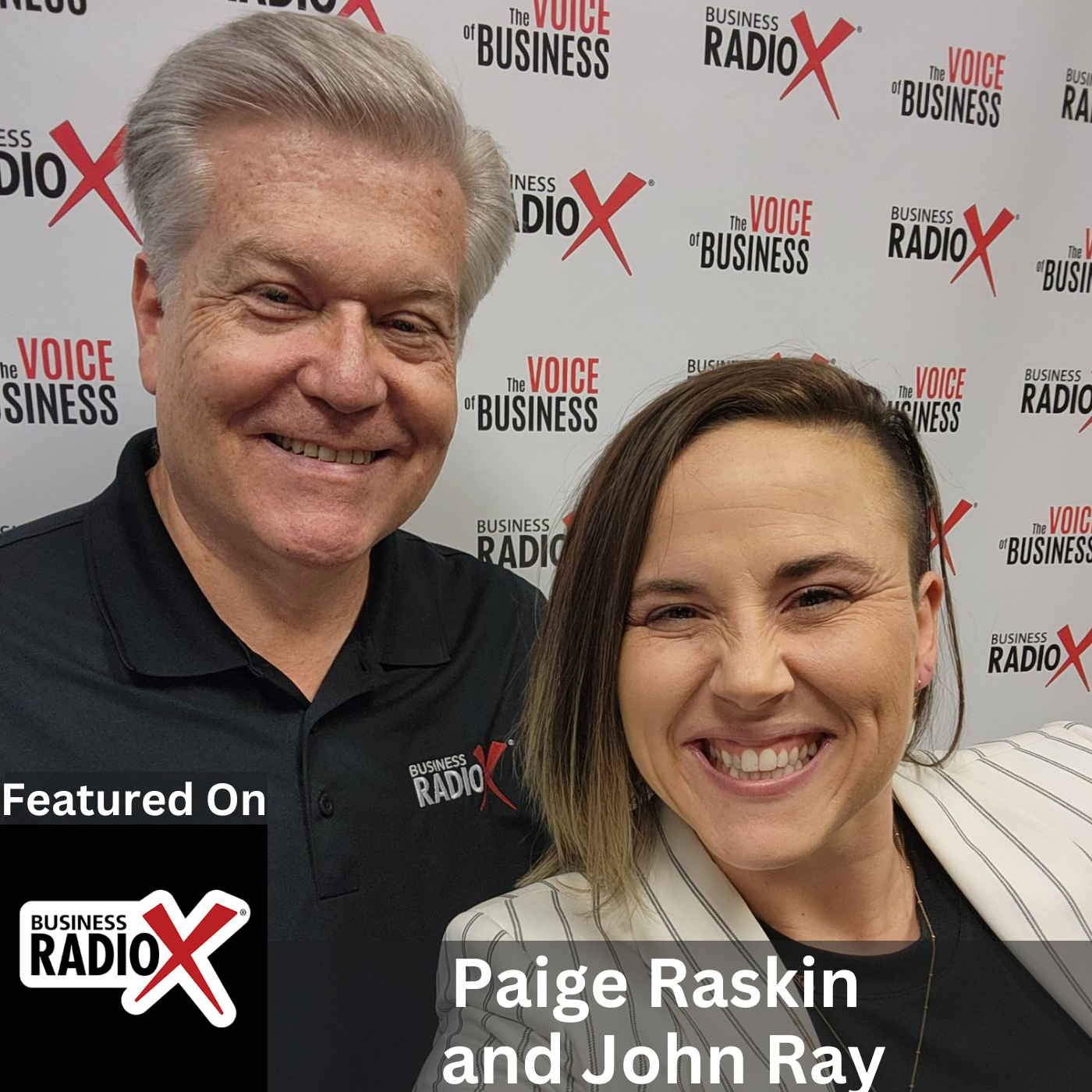
Paige Raskin, Office Angels

March 8, 2023 by John Ray

Paige Raskin, Office Angels
North Fulton Business Radio
Paige Raskin, Office Angels
Loading
00:00 /
RSS Feed
Share
Link
Embed

Download file

Paige Raskin, Office Angels

Paige Raskin, Office Angels (North Fulton Business Radio, Episode 617)

On this edition of North Fulton Business Radio, Paige Raskin, Social Media Strategist at Office Angels, joined host John Ray to discuss why businesses need social media, what works and doesn’t work and why it differs depending on the platform, why you don’t have to post dance videos to be effective on social media, why engagement with your audience is vital, and much more. 

North Fulton Business Radio is broadcast from the North Fulton studio of Business RadioX® inside Renasant Bank in Alpharetta.

Office Angels

Since 2000, Office Angels® has been restoring joy to the life of small business owners, enabling them to focus on what they do best. At the same time, we honor and support at-home experts who wish to continue working on an as-needed basis. Not a temp firm or a placement service, Office Angels matches a business owner’s support needs with Angels who have the talent and experience necessary to handle work that is essential to creating and maintaining a successful small business. Need help with administrative tasks, bookkeeping, marketing, presentations, workshops, speaking engagements, and more? Visit us at https://officeangels.us/.

Website | LinkedIn

Paige Raskin, Social Media Strategist, Office Angels

Paige Raskin, Social Media Strategist, Office Angels

Office Angels’ newest Angel…..

After spending a decade in the hospitality and athletics industry Paige Raskin has found a way to incorporate everything she loved about her job into a career that she’s passionate about for an organization that is equally passionate about what they do.

Paige loves creating beautiful digital pieces and exciting content that supports her client’s goals and objectives. She offers clients everything from Social Media support to content writing, platform maintenance, and digital ad creation.

LinkedIn | Instagram


Questions and Topics

  • Do businesses really need to utilize social media?
  • Do they have to dance?
  • How do they properly use social media platforms to grow their business, brand, or organization?
  • Why do people need help if they already know how to post on Instagram and LinkedIn?
  • What does a Social Media Strategist even do?

North Fulton Business Radio is hosted by John Ray and broadcast and produced from the North Fulton studio of Business RadioX® inside Renasant Bank in Alpharetta. You can find the full archive of shows by following this link. The show is available on all the major podcast apps, including Apple Podcasts, Spotify, Google, Amazon, iHeart Radio, Stitcher, TuneIn, and others.

RenasantBank


Renasant Bank has humble roots, starting in 1904 as a $100,000 bank in a Lee County, Mississippi, bakery. Since then, Renasant has grown to become one of the Southeast’s strongest financial institutions with over $13 billion in assets and more than 190 banking, lending, wealth management, and financial services offices in Mississippi, Alabama, Tennessee, Georgia, and Florida. All of Renasant’s success stems from each of their banker’s commitment to investing in their communities as a way of better understanding the people they serve. At Renasant Bank, they understand you because they work and live alongside you every day.

Since 2000, Office Angels® has been restoring joy to the life of small business owners, enabling them to focus on what they do best. At the same time, we honor and support at-home experts who wish to continue working on an as-needed basis. Not a temp firm or a placement service, Office Angels matches a business owner’s support needs with Angels who have the talent and experience necessary to handle work that is essential to creating and maintaining a successful small business. Need help with administrative tasks, bookkeeping, marketing, presentations, workshops, speaking engagements, and more? Visit us at https://officeangels.us/.

Tagged With: content creation, Content writing, instagram, John Ray, LinkedIn, North Fulton Business Radio X, North Fulton Radio, Office Angels, Paige Raskin, renasant bank, Social Media, social media for business, social media marketing, Social Media Strategist

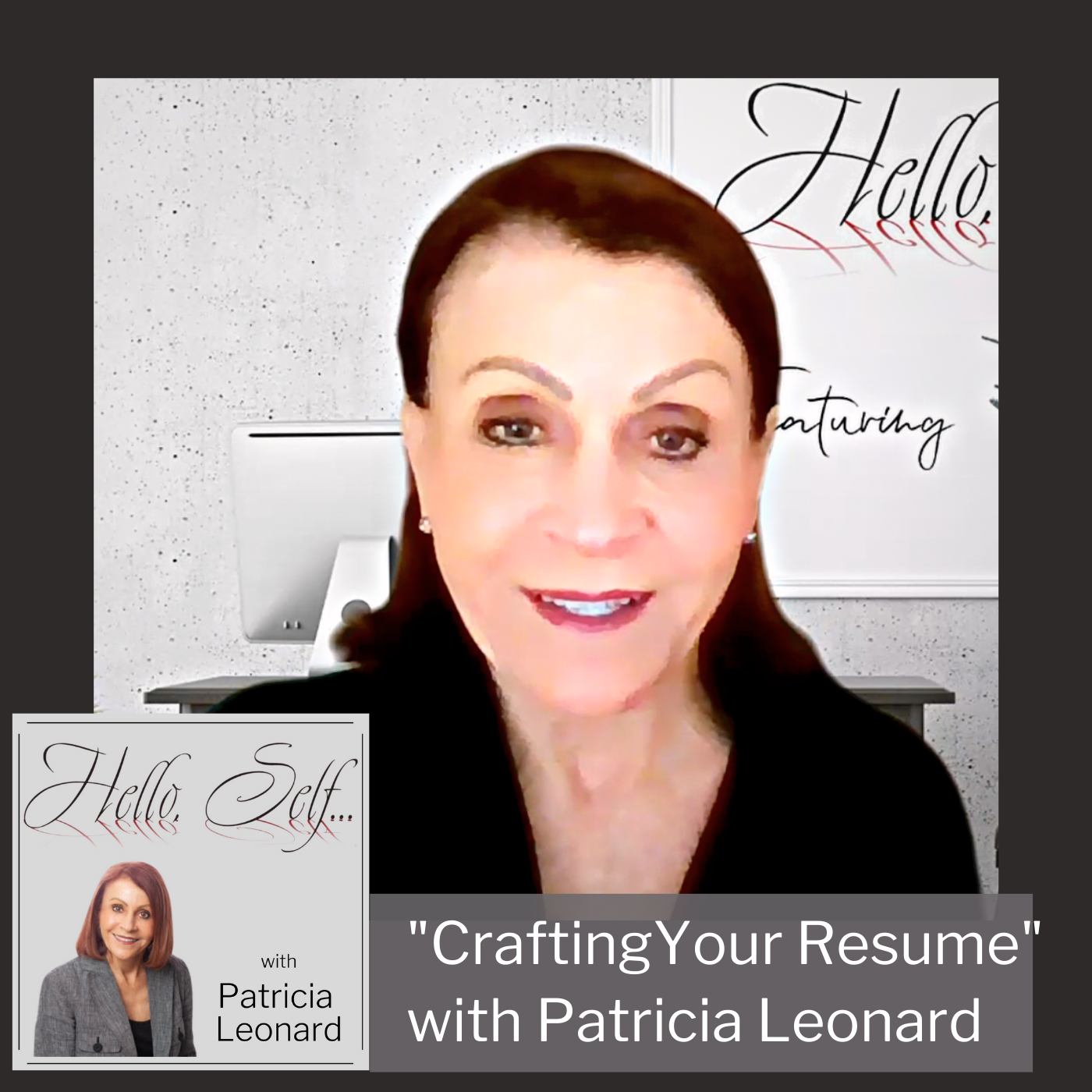
“Crafting Your Resume,” with Patricia Leonard

March 1, 2023 by John Ray

Crafting Your Resume
Hello, Self . . .
"Crafting Your Resume," with Patricia Leonard
Loading
00:00 /
RSS Feed
Share
Link
Embed

Download file

Crafting Your Resume

“Crafting Your Resume,” with Patricia Leonard (Hello, Self… Episode 14)

Host Patricia Leonard presents “Crafting Your Resume”, a class she has taught to hundreds of people privately and in large organizations. Patricia takes great care to lay out the reasons a current resume is so valuable, how it benefits you regardless of where you are in your career journey, and  the importance of having it on your LinkedIn profile.

Patricia details each section of the resume and its critical elements, as well as guidance on finding and making the most of opportunities. Throughout the class are nuggets of wisdom about owning your talents and skills, taking ownership of your work, effective communication, and building confidence.

You can find a hardcopy of Patricia’s presentation for download here.

This class is also a video, found here on her YouTube channel.

Hello, Self… is presented by Patricia Leonard & Associates  and produced by Arlia Hoffman in association with the North Fulton studio of Business RadioX®.

TRANSCRIPT

[00:00:00] Welcome to Hello Self. It’s a podcast focused on turning your cant’s into cans and your dreams into plans. I am your host, coach, and author, Patricia Leonard.
[00:00:21] Well, hello and welcome to Hello Self podcast. I am your host, Patricia Leonard. And if you remember, this is the podcast or if this is your first time. This is a podcast that is designed to help you get those dreams and goals off that someday shelf. And turn your cans into cans and get started on living the life you want.
[00:00:51] Now, normally in my Hello Self podcast, I will have guests that share their story or their life and career story and specifically talk about Hello self moments that really changed the trajectory of their life or their career. Just wake up moments, if you will, or hello self kind of things that said, wow, I’m really not happy.
[00:01:19] I wanna do this. Or, you know, I said to myself five years ago that I was going to do this and I haven’t even started. So that’s a kind of a wake up. And the individuals that I have on his guest will share those kind of moments that really help them see that they were ready for another level of their journey, whether it was career or life.
[00:01:45] So what I want to do today, since I don’t have guests, I’m going to be running this podcast myself and sharing with you a tool that is very important to life and the, the intent of making this change in the podcast this time is that, The wake up calls are good. The hello self moments are good, and we want all of those, but we want to take it to the next step.
[00:02:17] Remember we said it’s about getting those dreams and goals off and manifesting them. So this workshop is to get you on the runway to that success. So it’s starting to move you forward with a very significant tool called the resume.
[00:02:37] Now, you may be looking at me and saying, well, I’m not looking for a job. That’s okay. You may say, I’ve already got a resume, I had it professionally done. That’s okay. You may say I’m retired and I don’t want another job. That’s okay. There’s always a reason to have a good resume ready and updated and on file in case something comes up.
[00:03:09] , I designed this to help you do it yourself. So it’s a DIY resume workshop. Do it yourself and that way you’ll know what you want and then you’ll know how it needs to be laid out if you need to update it. But I’m saying I think you should update it right now and we’ll talk more about how a resume needs to be.
[00:03:37] You need to have it ready all the time cause we just never know what might happen in your life or some decisions you might make. Or a volunteer piece of work that you wanna do, and they say, Patricia, could we get a bio of you? A good solid resume helps you to create a bio that can serve you in your life.
[00:04:00] Whether you’re working in your church doing something or you’re volunteering in the community, or you’re looking for a job or you’re not, your resume may even open doors. Some things that I say, say about a resume, it is there to sell you. So that’s what we’re gonna do is create a resume that says, how can I sell myself?
[00:04:24] How can I market myself? It helps you understand what your competencies and skills are. If nothing else, it elevates one’s self-esteem. I have to tell you a story. I always like to tell stories, but I had this one client. and we were updating his resume, and we have at the top, and we’ll be covering this today, something called the career summary.
[00:04:56] So we developed his career summary, and then I read it out loud and I said, let me read this out loud to you. Would you hire this person? I ask him, and he said, well, who is it? And I said, that is you. We just created a career summary for you that is marketing your competencies and your skills and the experiences that you’ve had.
[00:05:28] So if nothing else, it elevates your self-esteem about who you are, even if you’re not ready to do anything. Sometimes it opens doors that you’re not expecting. You’re saying, no, I’m retired, I’m not gonna do anything. And then somebody sees your resume on LinkedIn, and that’s another thing that you need on this Runway to Success is once you get your resume done, it needs to be uploaded on LinkedIn.
[00:05:58] So your resume needs to be out there because who knows, somebody may see that and say, you know, I’m going to start a business and I’d like to talk to you about some possibilities in that.
[00:06:12] So I. Whether you see this or not as something at this point, I would recommend that you go ahead after we’ve had the workshop and create one, because then if nothing else, you could help others. You could help your son. You could help your daughter to have a resume that’s going to open some doors for them.
[00:06:34] So come with me now as we go through this resume uh, layout and workshop that starts to show you how do you create state-of-the-art resume that really sells who you are. I think I predict you’re going to learn many things about yourself that you didn’t even know, just by following through on this resume workshop.
[00:07:05] So now let me go to share screen, share that PowerPoint so you can see step by step while I’m what I’m talking about.
[00:07:15] Okay. Here we are the resume and it is I say it is part of your career puzzle. And so that’s what we’re going to do today. We’re going to take the resume piece by piece and put it together like a puzzle. and you’ll see how those pieces come together and market you in a way that you’ve never thought about yourself that’s going to talk about competencies and talents in a way that you’ve never maybe thought that you had.
[00:07:52] And set a framework in place, if you will, to add all the pieces in. So it is a puzzle like that we’re creating today. And let’s go to the next piece of that.
[00:08:11] A successful career transition, and we’ve talked about that. This workshop is intended to help you get those dreams and goals off that someday shelf, even if you don’t think you need a resume to get those dreams and goals off. I guarantee you, whether you wanna franchise, wanna start your own business, wanna work for somebody else, wanna do volunteer work for a church, wanna do some fundraising for some, or a career resume outlining your career transition is something somebody’s going to ask for and it’s gonna be very helpful to you.
[00:08:47] So it’s really shows your transitions or your entire career journey and it serves as a marketing tool for you. Anything that you, that people wanna know about you, one of the things that you have as your tool is, The resume. It not only talks about your skills and competencies, but there are splashes of who you are as a professional, as a human being in there.
[00:09:18] So it’s more than just a document that we create just so we can get a job. It’s much more than that, and you’ll see that as we go along. I, again, I am Patricia Leonard. I’m an inspirational speaker, a workshop leader empowerment coach. And I have designed, as I mentioned earlier, this do-it-yourself resume workshop because I believe that each individual can create their own resume.
[00:09:51] Better than somebody else who’s trying to do it from afar and maybe just some words that you, you write down about what you’ve done. You know, I had a re, I had a client one time, he had a resume that had been created by a professional. I’m not saying the resume was not a good resume. What I am saying, somebody else had created that resume and there was an acronym in there and I said, what do these letters stand for?
[00:10:21] These, this acronym? And he said, let me see it. And he looked at it on the piece of paper and he said, I don’t know. I, I, I really don’t know. That was a great trigger for me to tell him, go in there and write out those things and if somebody else is putting your resume together, you’re not going to understand as much as if you go through these steps that I’ve laid out here and do it yourself.
[00:10:53] So you’re going to be more authentic in your resume if you’ve done it yourself. And then when you’re asked about it, you already know, yes, that’s what I did here, or that stands for this. I believe a step-by-step process makes it possible for everyone to create an excellent resume, and that’s why I’ve done this.
[00:11:17] Besides getting a resume done professionally can be an expensive encounter, and you can create one yourself just based upon what I’m going to give you today, or if you decide to get somebody to do it professionally. At least you know what you want in and how you want the format to be laid out. Here’s what we will cover.
[00:11:44] we’ll talk about the resume types. We’ll talk about the value of a resume. What is the true value? It just seems like something on a piece of paper. We’ll talk much more about what that is, what is, what a resume is and is not. There are some things that it is not, and that really does not market you or sell your skills and competencies.
[00:12:08] We’ll talk about a P D F and a Word document and where you use each of those documents. We’ll discuss the parts in depth, the parts of the resume because that is very important to understand how the flow of your resume. , it’s going to make it easier for somebody reading your resume, and that is your whole goal of putting a resume.
[00:12:35] Not the whole goal, but one of the main goals is to lay it out in a way that it is easy to read by the recruiter, the hiring manager somebody that might be wanting you to participate in an organization. It, it’s it really is a vehicle for the flow being easy to read and easy to understand and make a lot of sense.
[00:13:05] People will read it if it’s easy to read. So that’s your whole goal. Make it easy to read and valuable to the person that may be looking at it. And then we’ll talk about choices and options that you have. In this workshop. Okay. We said, we talk about the resume types. Basically there is the functional resume and then the chronological, the functional resume, I say, is less popular simply because the chronological follows the career trajectory where the functional resume is laid out more based upon functions and the responsibilities you had and the accomplishments you had.
[00:13:54] And then it talks about the companies you worked for and the movement of your career through that. So it’s a little bit more to. A little bit more difficult to follow, but some people do it, especially if they’ve had breaks in their career. They’ve taken off, a mother took off to stay home with their children or a man took some went back to school and got his college degree or her college degree.
[00:14:24] So if there’s breaks in the flow, sometimes they’ll do it like this, lay it out with the competencies and the qualifications more in paragraph form or in category form, like management. All the things they had of management, training and coaching, all the things they had under, under training and coaching.
[00:14:45] That’s much more focused on function and not so much the flow of the career journey. The chronological is the flow of the career journey. And it is also the company. It lays out the companies you work for the timeframes that you were there. And it starts in reverse order. So the good thing is when the reader is looking at the resume, they’re going to be seeing your most recent position and your most recent responsibilities in that position.
[00:15:23] Because a chronological is laid out in reverse order. The job you have now, or the career you have now, or the place you are in, your career history is going to come first. So that’s the difference in each one. I think for most people, the chronological is the one that is most used. The values of a resume.
[00:15:52] and I think sometimes we don’t realize the real value of a resume. It can make or break you. I can tell you about a story that one of my clients told me one time he played golf with a c e o of a small company. He was in a career transition and he asked the c e o when they were out on the golf course one day.
[00:16:16] Hey, I, I’d be interested in seeing what you might have in your organization that I could help you with and may I give you my resume? The CEO said, send your resume into my human resource director and she will get back with you. So a couple of months later, they were playing golf one day and the gentleman said to the CEO have you talked to the human resource person or have, have, has she said anything about receiving my resume?
[00:16:49] He said, yes, as a matter of fact, she did. And he said, here’s the reason she hasn’t called you in your resume. You had talked about the importance of quality doing it right the first time, and in a quality way. As she read through your resume, there was a typo. You had typed manager instead of management in a statement.
[00:17:19] But if you say that a qual, that quality is one of your focuses and then you send in a resume that’s got a typo on it, it’s very, very telling. And it may not even be true.
[00:17:33] It could be an accident, but those are the kind of things you can see in that third paragraph down, professionalism of a job seeker is judged by the resume format, the grammar in there, the spelling, the neatness, and the flow. That’s why one of our most important things in putting a resume together is making it easy to read for the recruiter or the hiring manager or whoever might be reading it.
[00:18:05] That’s why I really like to use bullet points and just basic statements instead of paragraphs of information. So it’s very important that you get your resume accurate with grammar and with spelling. I, I think this is what I do in my own writing, and let me tell you, I, when I write books, I read them over and over and over till I almost dream about them, but I read it out loud.
[00:18:38] So my suggestion to you to make sure that your resume is as accurate as possible, read it out loud to yourself and perhaps even read it out loud to someone else because I think that that’s an opportunity to hear what the resume’s saying because the eyes can sometimes overlook things. I have that happen all the time.
[00:19:04] The resume is a document for highlighting the job seekers career journey and responsibilities. Like we said earlier, it shows what you’ve been responsible for and what you’ve been doing, how you’ve made contributions and some of the key attributes that you can bring to the organization that is viewing your resume.
[00:19:28] The resume reflects potential areas of contribution. That’s a job seeker, just like I was saying. They may be having a job posted that you applied for and they have another job that you didn’t know about, so they may read your resume and say, well, this person is more qualified. For this other position we have open, a lot of times they don’t post all of the jobs at one time, let’s say six months from now, they may be opening another position, but when they’re out there recruiting and interviewing, if they see somebody that could possibly fit that, your resume will go in the file and they’ll call you later.
[00:20:15] It takes an enormous amount of time to do recruiting and interviewing, so they’re going to maximize it as much as they can, and you may not have known that they were going to open the job, or that they have a second job open that you could fit into. The resume serves as an excellent resource during the interview. If the interviewer looks at your resume, which they will, and ask you a specific question from the resume, then you
[00:20:51] can pinpoint, well, I did that in x, y, Z company when they were going through a major re-engineering or a transition in physical locations, or I helped them with a startup. So then you can use it as a way to pinpoint exactly where you did that and how long ago it was. So the resume is a great reference for the interviewer and the seeker.
[00:21:20] Or if you’re not looking for a job just to be explaining what you have done and how you’ve done it and selling yourself or marketing yourself, the resume is not, and that’s what we’re going to be talking about here. What is a resume and what is it not? We talked a little bit about what it should be doing.
[00:21:41] In the previous slide, a resume is not a document for inserting words that match a specific job posting. And this is something that I think most people do. They’ll just take the job posting and then they’ll create those words in their resume because they think, oh, that’s going to give me a better opportunity.
[00:22:04] And we’ve been told that when they scan resumes, they’ll be looking for those words. I can tell you that you might get the resume up scanning, but when you are interviewed, it could be a totally different story. So sell who you are, because when you’re interviewed, you’re going to be much better at defining what you’ve done selling your.
[00:22:32] and getting the job, the career opportunity or the business opportunity or the volunteering opportunity or the consulting, whatever you’re looking for you’re going to be better at marketing yourself than if you create a resume that just matches the job description. And besides, I’ve done recruiting and interviewing for years and coaching individuals for years, for over 30 years.
[00:23:03] And what we notice is if everything on the resume looks a lot like that job description, we can bet that you have just added those words in. And that’s not really you, I’m not saying you don’t have the skills, but you haven’t taken any time to really think about how to, how can I sell myself and. Giving a great picture of who you are.
[00:23:29] A resume is not a list of job responsibilities, but with nothing but specific accomplishments to with nothing. Okay? So it’s not just a list of responsibilities, okay? That looks like the job description, right? Okay. This is what the job requires. This is what specific accomplishments, but you do wanna have your accomplishments on there, but it’s just not a list of job responsibilities.
[00:23:56] It’s saying, what did you do in that job? What I, if you implemented a computer system, what kind of system was it? Was it for tracking inventory? Did it save the company money? So you wanna talk about what some of the specific accomplishments were. That you made in those job responsibilities. A resume is not the entire book of the job responsibilities.
[00:24:24] I like to think that your resume is cliff notes. It makes me want to read the rest of the resume to find out if it’s interesting enough. It’s kind of like reading your bio, if you will. That is what but it’s like finding out a lot more about you. And that’s what Cliff notes are. It gives you the overview or the picture, if you will, and not all the details, but it’ll give you the picture of who this person is.
[00:24:55] We say that two pages are the appropriate length. I know a lot of people try to crowd it in one page and they’ll make the font type 10 or 11 just so they can squeeze in a bunch of stuff. And I say use font size 12. because we don’t want it to see all jammed up because it’s not fun to read something that isn’t laid out nicely.
[00:25:21] So I think two pages is the appropriate length of the resume. And it’s fair to you. It makes it easy to read and then it’s fair to you in giving a good picture of who you are and what you have to offer. A resume is not loaded with a bunch of fluffy words or overused words, and this is what we do so much.
[00:25:45] We take the words that we’ve said before, like, I’m a hard worker, I’m a good listener, I’m a fast learner. Oh, I’m a multitasker. We want to put in words that add value, like training, coaching, inventory management. So we don’t wanna put these fluffy words in because. , they don’t get paid for. They expect you to come in and be a good listener.
[00:26:12] They expect you to work hard and get the job done, actually work smarter, but be self-starter. They expect all those things. So those are not things that they’re going to see as major contributors or skills and competencies. They’re much more adjectives that describe who, what you do. And they, we don’t pay for them.
[00:26:38] It, it’s just should be who you are. You should be a good listener. You should be a quick learner. You should be somebody who can manage the task. Multitasking has been proven that people are less e. in multitasking and less takes less quality, gets less quality. So the effectiveness and the efficiency is lost a lot of times by working on so many things at once.
[00:27:07] So some of the thing, the, the buzzwords that we’ve used in the past really were buzzwords and now we’re expecting much more from our people in marketing who they are. If you want a good job, work on a good resume and then work on your interviewing skills, and we’ll have a workshop on that in the future.
[00:27:34] The next thing that we had said that we were gonna cover were P D F and Word documents. and you need to have both in your career file. I think I kind of covered this in the early stages of getting on your runway to success. The word document is for you to make changes on an update, and I would go in there and look when you do something new or you’ve had a new experience or you’ve gone to a workshop, keep it up to date because you’ll end up forgetting those things.
[00:28:08] Who’s most important? , you keep your profile up. And even if you’re in a job in a company, and this is another thing that I see a lot of times people are very lax at. They go into a company and then they never update their resume. . Now, if you want to grow your career either vertically or horizontally, I would say that you periodically look at your resume.
[00:28:38] It doesn’t mean that you are going to lead the company. It simply means that you might be interested in another area or you might be able to add value in another area. I had a client that worked in a warehouse and managed the inventory control and the warehouse shipments and that kind of thing, the movement of the product out of the organization.
[00:29:06] And he had set up his organization in such a way that he didn’t really have to do any work anymore. His people, that’s a sign of a good leader too. His people were. Doing the operation day in and day out and making things happen that needed to happen. And so even though he was the director of the warehouse, he was ready for something else, and that’s all he had basically done.
[00:29:36] He had started in the warehouse and then worked his way to the top in the distribution process. So I was coaching him and I suggested, why don’t you look at something else? What is the organization going to be doing over the next year? Well, he went to one of the meetings and the c e o was saying, we’re going to expand to another state, and we’re going to be doing that at least by the end of next year.
[00:30:08] We want to have those warehouses open. So my client came back and told me that, and I said, I want you to call the CEO and tell him that the next time he is in town, he was in Chicago, and the next time he’s in town, you’d like for him to come by your office. You have an idea that you’d like to run by him, a business idea.
[00:30:32] So he did. When the CEO was in town the next time he stopped and said, what do you got on your mind? And this warehouse director said, I’m interested in negotiating the merger of those warehouses, staffing it, and setting up the computerized system. So guess what? He had been a supervisor over the warehouse, well, had moved up to director, but guess what?
[00:31:02] He end up doing the startup of that operation. So that added another skill to his competencies and it gave him, got him out of his bored feeling that there’s nothing for me to do anymore. So look around and see what you’d like to do and keep your resume up to date. The P D F, so the word document is for updating.
[00:31:25] The P D F is to be used anytime you share your resume with another, because the P D F maintains its format. So when you apply for a job, you use a P D F. When you put your profile together on LinkedIn and you add your updated resume in there, you put in a P D F. So you’ll insert the PDF in the LinkedIn profile.
[00:31:56] You if you have references and you will, you wanna send your references and friends a copy of your resume so that they can help you find a job. Or if you’re in job search, they could send it out to somebody else. And you want it not to be distorted. So you want it to be in the format that you created it in.
[00:32:21] So be sure and send that P D F to the people, and your references. Make sure you send it to them so when somebody calls them, they’ve got the updated resume right there in front of them. Okay, now the parts of a resume, that’s what we’re going to now, and if you can look in the black box, we’ve got the heading, the summary, the employment history or career.
[00:32:48] Highlights, experiences, education. Certificates. So you see we’ve got categories that flow down through the resume and naturally the resume will start with your name and your information. City and state, phone number, email, LinkedIn address. Remember, I’m really big on LinkedIn because that’s where a major portion of recruiting and getting to know who you are resides on social media.
[00:33:24] Then the next thing is the summary, and we’re gonna go into detail on each of these. The summary is specific skills and expertise, so it’s a summary, if you will, of all that you’ve done and what you could bring to an organization, your skills and your experiences. The professional experience then goes down, where did I do that?
[00:33:50] what were the years I did that? So it starts to lay out the chronological flow of your resume or if you’ve got a functional it, it can lay out the categories of experience that you have, like management training. But for now, I’m laying this out in a chronological resume format. So you’ve got the city, the company, the city and state, and the year.
[00:34:20] If it was 2021 to 2023, then that’s how you would put it in there. Then you’ve got your job title and responsibilities that you’ll have next on your layout. And then education. Any languages, and we’ll go more into detail on each of these and your military, if you’ve got military. Or other categories, and we’ll hit these now in each category and go into more detail.
[00:34:51] So you ready to get started on creating your resume? We’re going to start working now on the layout of the resume and what you say. What is the content you put in there? So we’re gonna spend more time on the details of the content. Your next step is to complete your resume sections that we just talked about.
[00:35:17] So again, on your resume, we will have these categories and these steps laid out independently. We’ll go through the heading the summary and highlight in each of those categories or each of those sections on your resume in more detail. The resume heading. The first thing is your name. Now if you’ve got some kind of certification, an MBA or some kind of special license, you could put that up there right after your name, Jane Jones, m b a, or Jane Jones, c d l license or whatever.
[00:35:58] I mean, you can do whatever you want. The next thing is the city, state and zip code. And you’re maybe looking at that, excuse me. You may be looking at that and saying, Hey, you left out my street address. Well, that’s one thing that has changed on resumes. We don’t use that anymore. It’s not necessary until they’re ready to hire you. So the city state zip code, your telephone number, and if you have a website, you can see Jane Jones had a website, but you use your email.
[00:36:37] Jane Jones has a website that she put in, so if you’ve got one, put it in and then of course your LinkedIn address because that’s very important. If they see that your resume is out there, they’ll click on your LinkedIn just to see. What did they say on the profile? Have they kept the profile up to date?
[00:37:00] What does their resume look like on there? So they’re gonna be real judgemental because here’s what happens. People get a job in a company and then they get lazy. They don’t do anything to stay current themselves. They do the job and they get lost in their comfort zone in there. And forget about taking the next steps that can open doors for themselves, even though they may, well, it’s a job.
[00:37:27] I should be happy to have a job. They’ll tell themselves that, or they just get lazy about the, they, they’ll do a good job, but get lazy about taking care of themselves. The runway to success is intended to get you your dreams off that someday shelf and turn those can’ts into cans. And one thing that is important in doing that is keeping your resume current.
[00:37:57] So that basically is covering the heading piece. So now let’s go to the next, which is a summary. And if you can see there in the black box, it’s a concise paragraph and you can see I’m going to give you several samples and you can see what it is. It’s not a bunch of fluffy words, it’s ba basically it’s talking about career experiences.
[00:38:24] It can have some personal attributes in it, and I’ll show you those. It’s areas of expertise and accomplishments that you can market yourself with and introduce your value to a recruiter. So it’s a quick glance, if you will, at. what you’ve got to offer. And if I like what I see, then I’ll take the time to read the resume, if not next.
[00:38:51] So this is very critical. It is the piece that says, are they gonna spend any more time with you? It’s the piece that begins to see what your value is to that company from a contribution standpoint, as well as a dollar amount, and as well as a title. So you can see that this one, and I’ll go through some of them in a bit, a bit of a detail, but I wanna show you the diversity.
[00:39:21] And remember, you can take these resumes and or summaries that I’ve got here and you can steal lines from it. Take the lines from this, that. you want to use, you may say, I like that line. It says, I’m a leader with proven success in whatever your proven success is. This one happens to be management, organization change, and new business startups.
[00:39:49] So if you like a line in here, then take it and use it in your resume if it’s appropriate, because you don’t wanna have anything in there that if you are asked about it, you can’t validate. The it, what we did here, the senior human resource and corporate training professional, so we started out with basically titles.
[00:40:13] I don’t always start out with titles, and one of the reasons I don’t is I don’t sometimes if you introduced yourself as that, , then that’s who they begin to see you as. I want them to look at your summary and look at the breadth of what you could offer, because titles in each company are a little different.
[00:40:35] What might be a manager in one company might be a director or a vice president, and another, you just never know. So I’m not big on always adding titles and levels of the, the professional. But this one is expertise in executive and staff coaching. So they’ve got coaching experience, leadership development, and that’s what everybody wants, is to help their employees grow.
[00:41:04] And that’s why employees stay with companies. Retention is so important if they see that they’ve got opportunities. And the same with you. , if you wanna have opportunities, be able to sell yourself in whatever the company is doing, and add value because that’s going to see them or help them see how you could move up the ladder and develop you more.
[00:41:32] They may even have you cover for them when they’re gone. So this is one type of summary and you can, I like the last line too. A strategic visionary focused on the mission. They want you, I don’t care what level you are in an organization, if you’re a, an associate, a brand new entry in a certain de deposit or depart.
[00:41:58] Focus on, find out what their mission is, find out what their year yearly goal is, and then maybe let me help you do that. Here’s something that I think I could add, but show an interest in their mission and their profitability and their efficiency and quality. Here’s another summary. You could start out a results focused, and they may ask you in the interview, I see that you say your results focused.
[00:42:30] What does that mean to you? What does that mean? And you may respond, I believe in doing a job right the first time and meeting the deadlines because if I have to do it three or four times over, it may not meet the deadline that we need to make. So results focused can say something about who you are as a professional.
[00:42:57] and what’s important to you with background in leadership? So you’re, you’re starting to see some similar kind of words coming out. These are the type of words that they pay for, not the fluffy stuff of good learner, fast learner, good listener, good communicator, no, put things like this in that you have done, because that indicates right there you must have been a good listener.
[00:43:26] You must have been someone who believes that quality is important. So it, it starts to these competencies start to sell who you really are without using those fluffy words. A team member. So this person is a team member committed to quality, so they may be part of a larger team. and they build productive relationships.
[00:43:53] If there’s one thing the world needs now and businesses need, it’s building relationships and building productive relationships, relationships that work together, it seems like that a lot of things have moved toward opposites. You’re either good or you’re bad. You can’t do this, or you can do this. You know what?
[00:44:16] We can all do more than we think we can if we’re shown how to do it. So work with each other to build relationships. If the department that you get your product from is not meeting the timeframe that, and it causes you to get behind, don’t start to play the blame game. Work with them and say, you know what?
[00:44:39] We need to do something. Can we sit down and have a conversation about this? This thing of blaming? and trying to be a victim. Well, you know, I get my job done if I could, it’s over. It needs to be over because it does nothing to build effectiveness and to build a successful business and a successful career.
[00:45:03] Here’s another one, and I want you to pay attention to this. You see, I started out a bilingual professional because two of the critical things that we’re looking for in marketplace, in the marketplace anymore are bilinguals. We’re a global society, and the second thing that gets one of the first glances is a veteran.
[00:45:26] So if they start out with a bilingual, you’re going to get somebody to pause on that a lot, a lot longer than if you say a professional with career experience doesn’t mean that it’s all gonna be closed to everybody that doesn’t have. Or doesn’t speak another language, but it simply says that if they’ve got entities internationally, this might be something that’s very critical, so it’ll cause them to pause.
[00:45:54] So and speaking another language is really, really getting to be more of a critical skill and they’ll pay more for it because it doesn’t mean that everybody has one. I do know a company that actually ended up giving their, some of the employees that they had within giving them a six week crash program on The language of the country that they were opening a business in, opening up another location in.
[00:46:26] So I’m not saying it will close the door totally, but it’s going to be an opportunity that gets a second glance, perhaps effective in building relationships, collaborative teams, and winning without win, working for out win-win outcomes. And that’s what I was just talking about. Instead of playing the blame game or the victim game, I can’t do my job because so-and-so can’t sit down, build a relationship and talk together about how you can both become winners and in the work you do, expertise in interviewing and onboarding.
[00:47:02] You know, I had a, a young man that worked on the assembly line. And I used him in an interviewing process when they were going to be hiring some people that would be working with him, who is better at being able to explain the real job and get down to the nitty gritties. And the good thing about that, most people that are applying for a job like to talk to the person if they have the opportunity that really knows what the job is.
[00:47:36] And what would be some of the key attributes that they could bring to that specific position? A leader committed to ensuring timely delivery. Very important. And it doesn’t mean a leader is a title. Everybody in a company is a leader. And so are you a leader? Are you committed to do what the organization needs?
[00:47:58] Are you committed to meet timely results? If you’re a fundraiser for a organization, or let’s say you’re a, you have a, a leadership role in organization in your community. So a leader, do you step up and get done what needs to be done or do you complain about it? So a leader says something about who you are, and they may ask you,
[00:48:25] I see you have a leader on here. What does that mean? And what do you do that makes you a good leader? So I think you’re, if you’ve got these things in your resume, you may have to answer them in an interview or you may have to think about, am I really a good leader when you’re putting your resume together.
[00:48:46] Patricia will be right back. This episode is brought to you by Runway to Success, a division of Hello Self. Runway to Success offers personal development, career transition, resume coaching and support to help you reach your goals. Contact Patricia today to turn your can’ts into cans and your dreams into plans.
[00:49:17] Remember I said that a resume can build self-esteem too. It can build awareness, a wake up call that, geez, I’m more than I thought I was. I didn’t realize these kind of things. Remember the young man I told you, I read his summary to him and, and, and read it out loud? after we got done. And I don’t, I think I told you that, but anyway, I was putting a resume together for this young man and then afterwards we read the summary out loud and I said, would you hire this person?
[00:49:54] He said, absolutely. I said, do you know who that is? No, that’s you. So I think that we’ll, we can put together a resume on a summary that makes us feel good about ourself, which highlights more about who we are, and gives us confidence in ourself and builds our self, ex esteem. And we do a better job in the interview.
[00:50:22] We do a better job in explaining who we are. We do a better job in life because we feel good about ourselves. And then I like that last one too because this is something I, the last line, I always call myself a cheerleader because I’ve always been an encourager and motivator of others. I’ve always said, you know, you can do it.
[00:50:45] That’s why I became a coach and a human resource professional. I hired a lot of people young people out of college, right out of college. And I remember this one young lady that I hired, and I really, this is I shouldn’t say this probably, but this is exactly what I did. I played on a softball team.
[00:51:08] I was the pitcher, and I like to win. I played on the softball team and this young lady that I was interviewing from college had played college ba softball. and I thought, oh my goodness, she’d be such an asset to our team. So I have to say that I looked at that as one of her key competencies, , to come into the organization.
[00:51:35] But I think I expected a lot of her. And here’s what she said to me. After about three months, I said to her, you are doing an outstanding job. And she said to me, Ms. Leonard, I couldn’t fail because I would be feeling like I was failing you. You had so much belief in me that you just put me in jobs and said, this is what you need to do.
[00:52:10] and then you would walk away and let me do it. And she said, you gave me that responsibility and I felt like I needed to walk in those shoes. So, you know, I think encouraging and motivating others, they can step up to things that they would never even think they could or they could step up to things that we didn’t even think as their managers that they could accomplish and they walked right through it.
[00:52:36] So encouraging and motivating is a real asset in building a strong, collaborative, efficient team and organization in general. Here’s another one, A team associate with background in warehousing, manufacturing and retail industries. I remember a young. That I had in one of the organizations that I was working with, they were downsizing.
[00:53:05] He was affected, he was a forklift driver in a warehouse. And I told him, you know what you need to do? Is he, he wasn’t very articulate and was very private and didn’t communicate a lot. I said, well, one of the things you need to do is to get on LinkedIn because it’ll speak for you. And he said, no, I’m not getting on any of that social media stuff.
[00:53:33] I don’t believe in that. Well, after a month out in the job market, and he hadn’t found anything, he asked me, what was that place you told me to get on? This is a true story. It was right here in Nashville, Tennessee. He finally got on, created his LinkedIn profile, uploaded his resume. And the job that he was looking for and hoping for and bidding on was a forklift driver because he did not want to have to interact with a lot of people.
[00:54:07] He was very private and he liked dealing with accuracy, like keeping the stock. I mean he was just, it was just he knew everything about where they were located and how many we had. Naturally we had a computer system to keep that, but he was meticulous about putting it in. So he had been driving about an hour to work every day when he was downsized, and he was very sad about losing his job, but he wanted another forklift driver position.
[00:54:41] That’s what he wanted. And this is very interesting. Two weeks after he put his resume out on LinkedIn. He got a call. He said, Ms. Leonard, somebody just called me. I said, did you apply for a job? No, I didn’t. I said, well, what are they looking for? They said they were looking for a forklift driver and they saw that I had that experience.
[00:55:04] I said, well call them back . And so he called them back. He got an interview, but he did not get the job. I was not surprised in a way because he was not an outstanding communicator. And so about another week passed and he got another call from a different organization and he called me again and I said, now I want you to talk this time and I want you to sell what’s on your resume and just believe that you’re gonna get this job because there may not be another forklift driver job right away.
[00:55:43] This is a true story. He got the job. and it was 10 minutes from his home. So what a blessing, huh? He got the job he wanted and it was not the long commute that he had had for like 16 years coming into Nashville to fulfill the job there in the company. So, you know, go after what you want and don’t settle if you, but put it out there if you like warehousing, put it out there.
[00:56:17] If you like manufacturing, because the thing I like about this, this team associate had background in warehousing, manufacturing and retail industries. You see the diversity of industries they had worked in. So they had a flavor and an understanding that each industry has different systems and processes that they use.
[00:56:41] So that is a real asset. To another company, especially if it’s a industry that maybe he hadn’t worked in before, or if it’s a manufacturing industry, he knows a little bit about one form of manufacturing systems. So you, you just never know what people are looking for, but just be true to yourself about where your talent lies and what it is you’re looking for.
[00:57:10] And this last line, I’m not gonna go on this anymore, but the last line, very, very important. Remember I said the summary says a little bit about your skills and competencies, and a little bit about you. It says, respected by management and peers. That is one of the strongest things. If it’s true. , if it’s true that you’re respected by management and peers, that is a great selling point for you.
[00:57:41] And they may ask you, why do you think that’s true? What are some of the things you do that pleases management? What are some of the things you do that helps you work in a collaborative team environment with your other, with your peers? So you see, those are great selling points too. An administrative professional.
[00:58:04] So this might be a person who supports a director or a vice president or a supervisor, or maybe they do administrative functions in a small company. And so they start out like that. But anything administrative, it can go right to the top of an organization, or it could be at the ground level of the organization.
[00:58:29] Could be managing an office for somebody that they’re the front person that everybody sees when they come in because the rest of the operation is run by the c e o and the, the professionals in the organization or you might be responsible to put together an event for that office. And that’s another administrative kind of function, budget execution.
[00:58:55] You may say, well, an administrative professional wouldn’t do that. Sure. They order the supplies for running the office, paper ink for the printers, things like that. A leader. , it’s a person that’s out front all the time, meeting the public or meeting the customers that come in. So a leader, making sure that the customer is getting what they are asking for, the people they’re asking for.
[00:59:25] So again, I’ve put respected by management and peers there because sometimes they may be the only people in the office while the salespeople and the CEO is out strumming up business and the salespeople are out talking to potential clients. So all these positions are very important, so you can
[00:59:47] steal lines from any of them that you want. Now on this next slide, I’ve got expand your summary with additional skills and competencies, and I wanna show you how to do that. What I have put in those summaries may not be totally who you are or may not fit who you are. So additional skills must be highlighted at the top of the resume as part of the summary.
[01:00:14] So that’s what I, and I’m gonna show you how to lay this out, but first I wanted to give you a list of possible additional skills and competencies. Customer service, doesn’t every organization need that. You’ve got skills that can transfer to any job that you want, and you just got to talk to them about how that transfers.
[01:00:39] Every company needs customer service. Every company is looking at training. Product launch. So these are skills that you may have that we didn’t list up there that you want to add in. You may have been part of mergers or you may have negotiated contracts. You may have broker’s license in real estate, but you’re going to work for a interior design organization or someplace that it could be facilities management analysis, audit auditing.
[01:01:12] So you see these are just additional competencies that you may have that were not mentioned in those others. So I wanted to give you something that would make your mind start working about other competencies that they pay for. Now here’s how we would use those if you were adding additional skills.
[01:01:37] you see the bullet points under there. The first thing we start with that career summary, and it’s about five lines, something like that. Four or five lines. And it’s the things that we just went through, all the different summaries that we went through. But you say, I’ve got more skills, I’ve got more things that I wanna put in there, because we just don’t wanna list a bunch of stuff up there.
[01:02:03] We want to highlight your best competencies in the four or five lines. Then you come down here and you put in additional skills and competencies that you have. You may even have a bullet point that says you’re a photographer. It doesn’t mean that you’ve done that in a company, but you do that as a side business.
[01:02:27] So you could add that in. I had one person that was a counselor. and she said, should I put that in there? Absolutely. When you are working with individuals and teams in an organization, counseling is, and coaching is so important because we’re human. We have things that we don’t understand. We have times that we’re sad and depressed.
[01:02:58] We have issues at home. So those are kind of skills that can work in organizations too. So we have to think about what kind of the job are we looking for, and then highlight those skills and competencies. And this is the way them, they, you lay them out is just put bullet points under that paragraph.
[01:03:21] Here’s a sample of how it would look after you add some additional skills. So it can really be a quick glance and that’s what you wanna do. It’s a quick glance to get them, it’s a teaser. It’s just a teaser about what you can do for that company. Then it causes them to go down in to the details of the resume and see where you did it and what you were able to contribute in doing those things.
[01:03:55] The next thing is resume employment history, and that’s your professional experience. Or you might say job history or what career history or whatever you want to say, but we’re gonna talk about a sample layout and then the value of the bullet points.
[01:04:13] So the professional experience area, you would first list the company you worked for.
[01:04:19] The last one, remember, because we go in reverse order on the chronological resume, if that’s what you’re doing. And that’s basically what this layout is about. So, company, city and state, and year two year. So 2021 to 2022. Now, one thing I do wanna highlight here, if you’ve worked only one year with the company, you don’t say 2022 to 2022, you simply say 2022.
[01:04:53] So it wouldn’t be a dash year or anything. Another thing that you may be noticing is that we don’t put months on there anymore. It just takes up space and it’s not, it doesn’t really add value. So then the next thing under that line is the job title. Then there’s a couple of ways that you can do. This chronological listing of your career flow.
[01:05:22] So you could have a brief of job responsibility. So you could have a one line or no more than two sentence. Highlight that or brief that talks about what you were respon I was responsible for managing the day in, day out up the day in day activities of this office. So that could be a brief responsibility statement.
[01:05:45] Then the bullet points would talk about what you do under there. Now, here’s something that I really want to highlight that is very important. After every bullet point, you see I’ve got an action word. So directed, led. Researched. So this starts to say something about who you are. You directed an operation, you led a project, you researched them.
[01:06:13] So it begins to talk about not only what you were responsible for, but the outcomes directed. The operation of a three location company that was elect was given an award for organization of the year for some reason, you know, I don’t know what, but all you need to really entice them to look for more is directed the operation of something, led a project on re-engineering the company, or led a project on implementing a computerized inventory system.
[01:06:53] I don’t care what it is, it’s not important at this point. The thing that is really important is the action word. The next thing is I wanna lay out is simply the same thing repeated, except we didn’t put in a responsibility statement. Remember, that is optional. In my own resume, I go straight to the bullet point.
[01:07:18] So again, action words. Managed, responsible for, coached and trained. So you see, don’t waste my time with a bunch of fluff and stuff up front and never, never, never use an I or me pronoun in a resume. That’s not, I manage the no, start with the action word. Manage the operation. I see so many people using I and me, even in the summary.
[01:07:48] No, we don’t need that. That’s not the place to have it. This is a professional resume. So the highlight here is either a responsibility statement and. Or no responsibility statement, and then the bulleted points, starting with an action word. Very critical. What I’ve done here is given you some more action words that you could start out with.
[01:08:15] Increased sales, decreased errors on the line. Zero zero defect is our goal. Coached facilitated training sessions, hired employees for a certain project. Developed training sessions planned the next steps of our proc improvement process program. So you see budgeted within, budgeted the organization.
[01:08:55] Budgeted the expense to stay within our organization’s financial goals. So resolved, contracted, supervised. So these are simply action words that you can use as you develop your resume. Now, there are many more. I only wanted to give you some to jumpstart your thinking. Then we go into the remaining pieces of the resume, and you can see what that is.
[01:09:28] Education. If you don’t have a formal education, you can put in the information high school or some school that you may have taken a class in and got a certification in a program. The education category put most recent is what you want. So if you’ve got a bachelor’s degree that you received 10 years ago, have you done anything since then?
[01:09:56] From an education standpoint, you may have taken a skill trade school program. So you may have done a lot of things that you could add as part of education. Then below that is if you’ve got college, your, your degree university of Michigan, where that degree was in the city and state. The date of that graduation is not necessary.
[01:10:22] And I know a lot of people say that, and I see a lot of people put their education upfront. , there is nobody in that is out there in the marketplace anymore, that hasn’t done some kind or has achieved some kind of work experience. Start your work experience and don’t put your education right upfront. If they wanna look at the education, they could go to the back and see that, but in most cases, not every case, but in most cases, what they wanna know is what you have done.
[01:10:59] And you may have held jobs while you were going to college. I had one young man, we were filling out his resume and he was, he was just outta college. And I said, so let’s look at your summary and what work experience. He said, well, Ms. Leonard, I haven’t worked Well, I really don’t have any experience except, well, I guess I did.
[01:11:21] I worked at McDonald’s. I said,, you got customer service, you worked at McDonald’s. You what else did you do at McDonald’s? Well sometimes I would have to run the cash register. That’s a competency right there. What else have you done at McDonald’s? Well, sometimes when the boss would leave, he would have me set, that’s assistant management kind of experience.
[01:11:49] So you don’t have to lie about it, but you have to be truthful that you’ve done those kind of things. And then tell what you did. It wasn’t that you had the title, but your manager felt competent enough in you, or confident enough in you that they could say, take over. I have to be gone for a couple of hours, or put you up front with the customer or had you make change and, and take people’s order.
[01:12:19] So it may have, you may have been a cook meeting the requirements of what the special orders might be. That’s a customer service. So I don’t care what you have done. You’ve got some skills and competencies, certifications license and affiliation. So if you’ve got some in there, you can combine that with education if you want.
[01:12:44] You could put education slash certification slash licenses, so you could put that all together. You don’t have to separate it out. I’ve just done that to show you if you do have them, are they current and what are they specifically the next category that you might use. And these are not required. These are your choosing languages.
[01:13:11] If you said a bilingual, this is the place where you note. what the specific language is. Define it, Spanish, French, whatever. Put that down here and what level of fluency you have in that. You may say, I took it in high school and I’ve well, you wouldn’t say I, but you may have high school classes, you may have extracurricular classes in Spanish, so you may have something like that.
[01:13:46] Military, remember, bilingual and military are getting the first glances in a lot of cases now. So if you put a veteran with professional background in, then you wanna talk about what specific branch of the military were you in, and maybe the positions that you held in that role, and then volunteering.
[01:14:11] Nobody in a community anymore is not volunteering in some way. I remember when my son was in grade school, I worked helping the recreation department. I coached his hockey. I coached his soft baseball. I coached his football and I loved it. I loved it. I’m just a jock at heart. Anyway, , because I played a lot of softball myself.
[01:14:39] But so there’s a lot of functions. You may have been a fundraiser in there that helps you to say, I’ve done fundraising, because that could be one of your competencies that you add up front or you’ve been a leader in an organization, you were the president of that organization. So those functions are things that talk about who you are not only in the community, but the experiences and the skills that you have.
[01:15:11] Now what we’re going to look at now is the resume after it’s done so that you can get an idea of how it looks in the flow. Because remember, the format is very important. Remember that one person that typed one word wrong instead of management, he had manager on there. And then the format, the format. I am not a big advocate of templates because I think a lot of times they crowd in stuff and it doesn’t always help with the flow.
[01:15:45] So I’m not a big advocate, but I’m not saying don’t do it. I’m just saying make sure that you market, that they market yourself those templates, market yourself. But this is the, the typical flow that I like that really. Makes it easy for the reader to glass. The first page is most important in a resume because if you haven’t hooked them by then, the people that are reading it.
[01:16:15] If you haven’t hooked their interest by then probably they’re not gonna look at the next page unless they’re only looking for education. And that might even be on your first page cuz you might have had Jane Doe mba. So this is the flow your career summary and any competencies that you wanna add under that.
[01:16:38] Then your professional experience, you can see how it lays out. I like to capitalize and bold the company name. and you can see that there. And then go down to regular type for the city and state. It’s just my preference. It doesn’t mean it’s right or wrong, but I think you should have a resume that looks like a masterpiece.
[01:17:05] So it’s not just blase, it’s got a little bit of ooph from someplace. And so I think the boldness and the capital letters can kind of indicate, oh, okay. We’ve come to an new company, we’ve come to a new job area, and then under there we’ve got bullet points. Now, the very last job, remember everything’s in reverse order.
[01:17:31] The, the job that you had most recent is first, and you can see that I may have a few more bullet points under that first job simply because, , you may have taken on greater responsibility as you moved up the ladder, and then the rest of them, four, five are bullet points are about what we recommend.
[01:17:55] Three as you move down. So less and less, I see so many people have a million bullet points under their job. And truthfully, I think what it really is is just what they took off of the job description that they had at that time. Be truthful to yourself and talk about what you did and how you added value to the company.
[01:18:18] So the format, this format allows a recruiter or an interviewer to get a quick snapshot. What your experiences are and the responsibilities you’ve had. Now, page two, I wanna talk a little bit about that. You can see at the top again, Jane Doe. If you had M B A on that first page, you might have comma, m b, a, and then in the center, or wherever you put it, is two, simply says it’s page two.
[01:18:50] Then you’ve got your phone number and your email here. Remember on the first page you had your LinkedIn and you could put it here, but it’s real important to have on the first page. And the thing here is real important to have your email and your phone number. So again, we com continue with the jobs that you held, and then we go down to education.
[01:19:19] And if there’s any other categories you’re putting in, you go down, this person happened to put down professional development and affiliations that they had been part of, like the president of Women in film or leader of the fundraising for a, a certain organization or something like that.
[01:19:42] And then any training that you may have taken that supports your career growth. Because being on the runway to success is about taking advantage of those opportunities that give you more skills and experiences perhaps even. Tips and reminders about page two. I may have covered most of these when I was going through that on page two, header of is it, you’d use it, the header from the page one, and you pull off a lot of the same things except that you’ve got the page number on page two, so people will know, oh, there’s another page in case they have a paper copy and they get lost.
[01:20:31] When sharing your resume, be sure, I just wanna reemphasize to send a P D F copy to anybody, or when you apply online, do not list references on the resume. We used to put references up on request. We don’t do that anymore. First of all, they don’t really need your references unless they’re interested in.
[01:20:55] Hiring you, making you an offer. However, some of the job descriptions today are still requesting and requiring that you have a reference on there or two or three. So what I would suggest you do is talk to the people that have said they would be your references and ask them if it’s okay if you put your name, your email, and their phone number on that open document because it would be there for people to see.
[01:21:30] I know we say we don’t let other people, but just give them the choice. Give them the choice. Do not use I or me. I have already reiterated that a couple of times, but I just wanna say, don’t do that. It just shows that you don’t understand what a real resume is about. . If you make a copy, a paper copy to give to somebody, then what you want to, and I don’t think we use those much anymore, but if you do, we recommend white resume paper.
[01:22:06] It’s easier to copy and doesn’t look so dark. And then again, I want to reemphasize the font size is a 12 pitch simply because we have people in the marketplace working longer and they’re not as much fun to read. When you’ve got those that you have to squint and get down and almost put a magnifying glass on to read the resume, if you have a website or title designation added in the header, and we’ve talked about that, don’t use abbreviations.
[01:22:41] If you remember, we said that too. Not everybody may not know the acronyms that are unique to your. Company or to your work. So spell out at least the first time, spell out what that acronym or that unique term is. These were just reminders. We’ve already covered them, but remember the correct tenses in jobs.
[01:23:06] And I think I see that that is a real issue. Remember we talked about grammar as one of the things that people will watch. And in your most recent job, you’re going to use probably in Gs, providing, researching. And then in the jobs past that you’re going to use ED because they’re past tense. Directed, managed, coached.
[01:23:34] But in the present job, you, if you’re still out there looking now, if you are in the market looking, you can go ahead and the job that you just left, you can have eds there. And that’s okay because you’re no longer in that job. But if you’re in the job market and you’re doing a job now, then you, it probably makes sense to use the I N G providing coaching, directing.
[01:24:05] Okay. Bravo . Congratulations. You have completed the state of the Art resume workshop, and I’m hoping that you begin to see that these are important things to get you on the runway to success, to create those dreams and goals, and to manifest them and to start turning your plans into your cans, into plan.
[01:24:36] because it is real important that we just don’t talk about it, but we start doing it and we can listen. Like I said in the podcast, I have guests most of the time we can listen to their stories and to say, I’d really like to do that. No, I am saying get a resume together about who you are and get out there and do that.
[01:25:01] Have a Hello Self moment. Say, you know what? I’m gonna quit talking about it and I’m going to start doing it. I’m gonna start manifesting it. I had a woman recently, she was a c p with a local health organization. She came to me through a referral and I think it was interested, and she said, Patricia, I went to college to get a c p a to do all the accounting stuff and all of that.
[01:25:35] because my parents said, that’s a great place to get a job. You’ll, you know, the marketplace always needs that. And she said, it wasn’t what I wanted. I really wanted to get up from a desk and be out there socializing and be around other people. I thank human resources or some kind of recruiting or something like that would be more fun for me.
[01:26:01] So we looked at her resume, had a lot of transferrable skills to take her to those. Then the next question I ask her, what are, what are some organizations in this town that you would like to work in? We started identifying those. We updated her LinkedIn and put this new resume on there. Of course, , she had a c p a title.
[01:26:27] But that doesn’t mean every organization can use that in some way because it is about looking at the bottom line. But what she wanted to do now, and we didn’t highlight that, like starting out as a C P A, we started out as a professional with experience as a C P A and then hiring and some of the other things that she had on her resume.
[01:26:55] So the last question before we left that session, I said to her, so you’re ready to find a new job, right? She said, yes. That’s why I came to you. I, I’ve been ready for the last six months. And I said, so when are you going to leave that job? You have to make some commitments to yourself. that you’re going to do it and give yourself deadlines.
[01:27:20] Just like you have to give yourself a deadline that I’m going to update my resume because of this workshop. Or guess what time flies. I always say that if we don’t act on commitments made, things will just get undone or never done. So I said to her, so when are you going to leave this job that you’re on now that you don’t like?
[01:27:47] And she said, well, Ms. Leonard, I’d like to be out of there within. I said, wait a minute. Did you hear my question? That was not the question I asked. The question was, when are you going to leave this job? That’s creating a deadline. That’s creating a deadline to get your resume updated. That’s creating a deadline to get those dreams and goals,
[01:28:13] one of them off of that shelf and she said, Okay, I’ll tell you the truth. I’m going to leave this job in two weeks. Now. I have thought, woo boy, I hope I didn’t create a monster here. So about two and a half weeks later, I got a call and she said, Ms. Leonard, I have to share something. I just took a new job today and I love it.
[01:28:43] It’s recruiting for an organization that does recruiting for corporations. Look at her background. It’s going to all serve her now because she’ll have companies that she’s looking for people for, and she did it in two weeks. And I know you’re go, or, or two and a half weeks, and I, I know you’re gonna say, oh yeah, that’s just a story you made up.
[01:29:07] No. Guess what? Out of the clear blue sky, a young man that she had gone to college with had seen her. On LinkedIn and said, oh my gosh, I was reminded of our days in college and I just thought I’d follow up and see what you’re doing and where you’re living now, because she was not from Nashville originally.
[01:29:27] And in the process of their conversation, he said, what are you doing? And she said, well, I just resigned from a company a week ago. And he said, so are you looking for a career opportunity? He said, oh my goodness, I work for this recruiting. That’s how she got the job. So if we act on commitments made, things will happen.
[01:29:51] So I just had to say that it’s not about the, it’s not about the resume, but it is about the resume because getting your resume up to date take you out of a depression state and say, you know what? I can stay here, or I don’t have to stay here. Or, I’ve been wanting to move to Colorado and now I’ve got a good resume to do it.
[01:30:11] Just get it done. Nike says it best, just do it. . I think that’s still their motto, but congratulations, you’ve completed the workshop now. So that’s one commitment I hope that you made and you have completed. You didn’t leave me . If you are, you can’t hear this. Now, I mentioned that the, one of the other things that you would have would be options and choices.
[01:30:38] So let’s look at what those are. If you decide you would like to have your finished resume, you’ve gone through this workshop and you’ve completed your own resume in your own way, if you want to have somebody review that finished resume and give you some feedback, you can do that in a 20 minute session for a slight fee.
[01:31:03] Not anything like getting a complete resume done. If you decide after completing this training that you would prefer to have your resume done entirely by a resume coach, that option is available too. So the good thing about having completed the workshop, even if you have a professional do it, is you know what you want now.
[01:31:27] And it’s not a bunch of fluff and stuff and fancy words that a lot of them use. It’s clear now what you want. So even if you don’t wanna do it yourself, you know when you’ve got a good resume and when you haven’t, and you know when you have a resume that’s going to market you and give you the opportunities you want.
[01:31:49] So if you decide either of those options, to request a resume review or a resume to be completed by a coach, you can email me at patricia@patricialeonard.net.. I just wanna say thank you. This was a different look at our Hello Self podcast, but it’s still really very much about Hello Self because when you get your resume done, you’ll be saying like that young man that I read that summary out loud, yes, I’d hire that person.
[01:32:31] You can look at that resume and say, yes, I would hire this person. And you’re gonna feel better about yourself. Even if you stay in the position you are in now, you’ll, you’ll have made a choice. And even if you decide to stay in the same company, but you want to grow vertically in that company. Take that completed
[01:32:54] resume up to the human resources or the manager of the area you’d like to be in and say, I’d like to talk to you about opportunities in your area or human resources. I’d like to talk to you about what I need to do to get opportunities. So you see, doing a resume can empower you to feel better about yourself and take some steps to enhance your overall satisfaction with your work, your career, and your life.
[01:33:33] And again, I just wanna remind you, the Runway to Success is a division of Hello Self. It’s actually my website and Hello Self is a piece of what I’ve used in that runway to success is what I believe in. Get on the runway, don’t become complacent. So when you look at my website, it’ll say Runway to Success.
[01:34:01] And then my podcast is, Hello Self. And that’s a way to wake yourself up. I do a lot of things on my website that perhaps can help you, but I want to say one thing. We’ll be doing more of these. I have one that I am going to share with you on entrepreneur or one page business plan, and then on interviewing.
[01:34:28] So we’ll do these kind of things periodically. And I hope you like it. Let me know by emailing me if this is something that you found benefit in, I would really like to know that. And again, I just want to remind you, I am Patricia Leonard. I am your Hello Self host and as always in my sign off. Thank you for listening to Hello Self podcast
[01:34:56] and remember, keep dreaming.
[01:35:00] Thank you for joining Hello Self today and may it offer insights and inspire you to stay on your runway to success. Like share and subscribe and remember this, keep dreaming..


About Hello, Self…

Hello, Self… is a biweekly podcast focused on inspiring stories of turning dreams into reality. Join coach and author Patricia Leonard and her guests as they share life-changing Hello, Self… moments.

Hello, Self… is brought to you by Patricia Leonard & Associates and is based on the new book by Patricia Leonard, Hello, Self.., available here.

The show is produced by Arlia Hoffman in association with Business RadioX®. You can find this show on all the major podcast apps. The complete show archive is here.

Patricia Leonard, Host of Hello, Self…

Patricia Leonard, Host of Hello, Self…

Patricia Leonard is President of RUNWAY TO SUCCESS, a division of Patricia Leonard & Associates located in Nashville, TN.  She is a MESSAGE ARTIST speaker, career & business coach, author and magazine columnist.  Patricia consults with clients on leadership, empowerment, career management, entrepreneurship and the power of language.  Her work is focused on helping clients find their runway to success!

She has a professional background in management, human resources, corporate training, business consulting and talent development.   Patricia has worked with companies in the service, music, banking, manufacturing, publishing, warehousing, healthcare, academic, retail and financial industries, and has taught management classes as an adjunct professor.

Patricia has a degree in Human Resource Management, is certified as a Career Coach and Consulting Hypnotist and is MBTI qualified.

Her volunteer energies are focused on Women in Film and Television-Nashville, where she is a Board Vice President; Dress for Success as the Advisory Board President; and International Coaching Federation-Nashville where she held Board roles for several years.

Patricia is the author of Wearing High Heels in a Flip Flop World, BECOMING WOMAN…a journal of personal discovery, THE NOW, HOW & WOW of Success, Happenings, a full year calendar of inspirational messages and a spoken word album titled, I AM…

She enjoys songwriting, creating poetry and has written a one-woman show and artistic speech she performs titled Hello, Self…, about a woman in midlife reinventing herself, which led to her new book by the same name, available here.

On the personal side, Patricia, describes herself as a woman, lover of life, mother, grandmother, career professional and message artist; AND in that order!  Her goal is to continue inspiring others, of any age, to START NOW creating and expanding their Runway to Success.

She believes that life is a gift, the way we wrap it is our choice.

Connect with Patricia:

Website| LinkedIn | Facebook | Twitter | Instagram

Tagged With: career transition, crafting your resume, Hello Self Podcast, Hello Self..., LinkedIn, Patricia Leonard, Patricia Leonard & Associates, resume, resume coaching, Runway To Success

Rae Greenip, The Customer Relationship Solutionist

January 4, 2023 by John Ray

Rae Greenip
Hello, Self . . .
Rae Greenip, The Customer Relationship Solutionist
Loading
00:00 /
RSS Feed
Share
Link
Embed

Download file

Rae Greenip

Rae Greenip, The Customer Relationship Solutionist (Hello, Self… Episode 10)

Rae Greenip, The Customer Relationship Solutionist, talked with host Patricia Leonard about being a successful entrepreneur. She and Patricia discussed how she began the business, challenges and lessons she’s learned along the way about herself, and advice for other entrepreneurs about using social media and honoring your own gifts.

Hello, Self… is presented by Patricia Leonard & Associates  and produced by Arlia Hoffman in association with the North Fulton studio of Business RadioX®.

Rae Greenip, The Customer Relationship Solutionist

Rae Greenip, The Customer Relationship Solutionist

Rae has owned her own business since October 2018. After a twelve-year corporate career based in international business creating, developing, and sustaining lasting mutually beneficial partnerships, she re-located to the Nashville area from New Jersey and transferred her skills to helping service-based business with websites, content and customer relationship management.

Since April, 2020 Rae has also been the Chief Experience and Marketing Officer for a Boutique LinkedIn Marketing SAAS company called Amptek Growth. In her tenure there, she has optimized LinkedIn Profiles and implemented business development strategies for 300+ professionals.

Rae’s calling is to create experiences for people that evoke inspiration and/or positive emotion. She shares her innate gifts and the knowledge and skills developed over 20+ years managing business relationships to benefit service-based businesses by implementing the tools and strategies needed to never leave money on the table again.

As The Customer Relationship Solutionist, Rae combines elements of marketing, service design and customer experience to customize solutions in the following areas:
*Customer Relationship Management (CRM) tools, processes, automations and integrations
*Websites
*LinkedIn expertise & optimization
*Social media strategy & management
*Email retention sequences, list management and campaigns
*Process design, management and training for client and staff
*Ongoing support and CRM administration services

Rae’s website | LinkedIn

About Hello, Self…

Hello, Self… is a biweekly podcast focused on inspiring stories of turning dreams into reality. Join coach and author Patricia Leonard and her guests as they share life-changing Hello, Self… moments.

Hello, Self… is brought to you by Patricia Leonard & Associates and is based on the new book by Patricia Leonard, Hello, Self.., available here.

The show is produced by Arlia Hoffman in association with Business RadioX®. You can find this show on all the major podcast apps. The complete show archive is here.

Patricia Leonard, Host of Hello, Self…

Patricia Leonard, Host of Hello, Self…

Patricia Leonard is President of RUNWAY TO SUCCESS, a division of Patricia Leonard & Associates located in Nashville, TN.  She is a MESSAGE ARTIST speaker, career & business coach, author and magazine columnist.  Patricia consults with clients on leadership, empowerment, career management, entrepreneurship and the power of language.  Her work is focused on helping clients find their runway to success!

She has a professional background in management, human resources, corporate training, business consulting and talent development.   Patricia has worked with companies in the service, music, banking, manufacturing, publishing, warehousing, healthcare, academic, retail and financial industries, and has taught management classes as an adjunct professor.

Patricia has a degree in Human Resource Management, is certified as a Career Coach and Consulting Hypnotist and is MBTI qualified.

Her volunteer energies are focused on Women in Film and Television-Nashville, where she is a Board Vice President; Dress for Success as the Advisory Board President; and International Coaching Federation-Nashville where she held Board roles for several years.

Patricia is the author of Wearing High Heels in a Flip Flop World, BECOMING WOMAN…a journal of personal discovery, THE NOW, HOW & WOW of Success, Happenings, a full year calendar of inspirational messages and a spoken word album titled, I AM…

She enjoys songwriting, creating poetry and has written a one-woman show and artistic speech she performs titled Hello, Self…, about a woman in midlife reinventing herself, which led to her new book by the same name, available here.

On the personal side, Patricia, describes herself as a woman, lover of life, mother, grandmother, career professional and message artist; AND in that order!  Her goal is to continue inspiring others, of any age, to START NOW creating and expanding their Runway to Success.

She believes that life is a gift, the way we wrap it is our choice.

Connect with Patricia:

Website| LinkedIn | Facebook | Twitter | Instagram

Tagged With: crm, email lists, email marketing, Entrepeneur, Hello Self Moments, Hello Self Podcast, Hello Self..., LinkedIn, Patricia Leonard, Patricia Leonard & Associates, personal awareness, Rae Greenip, social media strategy, The Customer Relationship Solutionist, websites

LinkedIn For Professional Services Providers: An Interview with Gregg Burkhalter, The “LinkedIn Guy”

April 14, 2022 by John Ray

LinkedIn
North Fulton Studio
LinkedIn For Professional Services Providers: An Interview with Gregg Burkhalter, The "LinkedIn Guy"
Loading
00:00 /
RSS Feed
Share
Link
Embed

Download file

Gregg Burkhalter The LinkedIn GuyLinkedIn for Professional Services Providers: An Interview with Gregg Burkhalter, The “LinkedIn Guy”

Gregg Burkhalter, dubbed “The LinkedIn Guy” by his clients, joined host John Ray to share his advice about effective relationship building and personal branding on LinkedIn. Gregg talked about successful LinkedIn strategies for time-starved professional services providers, creating and sharing content, the value of being genuinely helpful without an agenda, and much more. The Price and Value Journey is presented by John Ray and produced by the North Fulton studio of Business RadioX®.

Gregg Burkhalter, Personal Branding, LinkedIn Training, Speaker

Gregg Burkhalter
Gregg Burkhalter, Personal Branding, LinkedIn Training, Speaker

It is very important to have a strong personal brand. Companies understand that their employees’ brand contributes largely to the company’s success.

Everyone has a personal brand. Your brand is built one of two ways: 1) By default: do nothing and you have to settle for how it turns out, or 2) By design: if you consistently focus on developing and building your brand, you can help shape the outcome.

LinkedIn has over 770 million users and is the digital home of your personal brand. LinkedIn is also a great place to build relationships and grow your professional network.

When you set up your LinkedIn profile, you’re defining what you’d like your brand to be. It is not your personal brand until others believe it. 

Gregg Burkhalter is a recognized authority on personal branding and LinkedIn. He has helped countless professionals in the U.S. and around the world define and grow their personal brand using LinkedIn.

Gregg is known by many as “The LinkedIn Guy”. He provides Personal Branding Coaching and LinkedIn Training via one-on-one and group training sessions, corporate presentations, and webinars.

Website | LinkedIn

TRANSCRIPT

John Ray: [00:00:00] Hello again, friends. I’m John Ray on The Price and Value Journey. I’m delighted to welcome an old friend today, Gregg Burkhalter. Gregg is known as the LinkedIn Guy, and that’s actually a name his clients and friends have given him because Gregg, in their eyes and I think you’ll hear as we go along on this show, is a recognized authority on personal branding and LinkedIn.

John Ray: [00:00:25] He has helped countless professionals in the U.S. and around the world define and grow their personal brand using LinkedIn. Gregg spent the first part of his professional career behind the mic at radio stations in Savannah, Jacksonville, Charleston, and Atlanta. And following his radio years, Gregg worked in national music marketing and distribution.

John Ray: [00:00:48] And as I mentioned today, Gregg is known by many as the LinkedIn Guy. He provides personal branding, coaching, and LinkedIn training via one-on-one and group training sessions, corporate presentations, and webinars. And he does this for clients and groups all around the world. Gregg Burkhalter, welcome.

Gregg Burkhalter: [00:01:09] John Ray, thank you for having me on your podcast. It’s great to see you again. And I’ve got to tell you, I’m a fan of your podcast, as are a lot of people right now. And I’ve noticed the guests that respect your knowledge so much, they get on your podcast. I’m honored to be among those guests. Thank you.

John Ray: [00:01:26] Well, I’m delighted to have you. And this is a topic that when we started the show, I immediately marked down – and immediately marked you for it, of course – because LinkedIn is so important for small professional services providers, for solopreneurs that are mostly B2B services, so we want to talk to those folks.

John Ray: [00:01:52] But before we get into some of the details of that, I want to talk about you and a little bit more about your journey because you’ve got an advisory practice. So, talk about how you built that practice around the use of LinkedIn.

Gregg Burkhalter: [00:02:05] Correct. Well, my early career, as you alluded to, was in music and broadcasting. And like most professionals, you don’t usually work your entire career in the same job. You usually have some kind of pivot or transition.

Gregg Burkhalter: [00:02:17] Well, my pivot occurred a little over eight years ago when the company I worked for, my dream job, kind of disappeared. And I started my period of discovery to see what is the next chapter in the Gregg Burkhalter life. And, fortunately, that chapter unfolded without me actually searching heavily for it. I found myself, on occasion, doing some speaking on LinkedIn to some social groups or some community groups in the area. And what do you know? Within, like, a short period of time, I started having people ask me, “Would you come talk to my group about LinkedIn?”

Gregg Burkhalter: [00:02:48] Of course this would not have happened had I not had the courage – thanks to a friend – to set up my very first LinkedIn profile and began using it. And I began using it with a strategy that proved to be correct. So, now that I’ve started my consulting business, I’ve watched it grow, I’ve watched others get impact from the strategy and advice I share with them. And I’m on a run right now that I’m really enjoying this facet in my career. And I would love to see others be able to experience what a service provider journey looks like when you have a strategy and a focus on helping others being of value and providing a service that others want.

John Ray: [00:03:27] For you, it’s hard to separate LinkedIn versus your practice, because LinkedIn is your practice. I mean, for the rest of us, LinkedIn is just a tool for us in our practice. But just talk about, I guess, just the building of your practice and maybe what you’ve learned as a solopreneur, what you’ve learned along the way in terms of how you’ve done what you’ve done and how you’ve been successful.

Gregg Burkhalter: [00:04:02] Well, I can tell you, step number one is building relationships. Because you can’t do it on your own. And that is why LinkedIn is so valuable. LinkedIn is a great tool – as you said, tool – for building and nurturing those relationships. That’s the beginning process. Then, the next step is probably beginning to decide what is your message? What value do you bring to your service area? How do you want to present yourself? And then, once you kind of get that voice down, then you begin using LinkedIn to become part of the community.

Gregg Burkhalter: [00:04:36] Again, while you’re spreading your message, you’re not becoming a one trick pony where it’s all about you. Because LinkedIn, in all reality, is not about you. It’s about the value you bring to the community. And it’s about building and nurturing professional relationships that will create ongoing opportunities for you throughout your business and your career.

Gregg Burkhalter: [00:04:56] So, LinkedIn, for me, I can tell you personally is more than a tool. It allows you to feel more fulfilled as a person because it allows me in the most effective way possible to help other people and to accomplish what I’m trying to do.

John Ray: [00:05:10] So, before you were the LinkedIn Guy and you started that profile, you opened that profile, what you brought was a relationships first mentality to the platform. It seems like your philosophy of being in the world and doing business really meshed with what LinkedIn is. That’s not necessarily true for everyone that’s on the LinkedIn, though, of course.

Gregg Burkhalter: [00:05:36] That’s correct.

John Ray: [00:05:37] I mean, most – I won’t say most – a lot of folks that are on LinkedIn, it’s about either they’re on there to get a job, which there’s nothing dishonorable about that. A lot of us have been on there for that. Or they’re on their cell, whatever they’ve got, their service or whatever it is. But you really came to the platform with the relationships first mentality. And I guess it was just your way of looking at the world, your philosophy of the world, just happened to hit the right platform.

Gregg Burkhalter: [00:06:14] Well, I can tell you that it actually helped my business grow at a rapid fashion. Because if you’re getting on LinkedIn and you’re nothing but a sales pitch machine, you might get lucky every now and then and maybe land a client, but your chances for long term success is not very good. Because relationships, not only with your clients, but with the community, is going to help you continue to do your business.

Gregg Burkhalter: [00:06:38] So, there’s two ways you can really use LinkedIn, in fact, just like hunting and fishing. I started out as a fisherman. I started fishing. I started trying to fish for relationships that I could nurture and grow. And then, once I got that traction going, I put on my hunter’s hat, and I started hunting for people that might be potential clients. Not to send them a one off sales pitch, but to decide I may want to nurture that relationship for future opportunities. So, it’s really a mix of both. But I can tell you if you’re only game plan is hunting, that is not a successful long range game plan.

John Ray: [00:07:15] Okay. Well, let’s dive into this right now, because I’m sure people are thinking because I’m thinking this. You went after people that you wanted to develop a relationship with. What does that look like for you? You go out after someone that you think is a great target for you – I hate to use that word – a great relationship for you to have, how do you nurture the relationship without being salesy?

Gregg Burkhalter: [00:07:42] Well, first of all, let me tell you, a potential client is not your only target on the relationship you’re looking for.

John Ray: [00:07:48] Oh, come on.

Gregg Burkhalter: [00:07:49] When you look for a potential client, that’s one particular person that you have on your radar. The one that people miss all the time is finding that person who already has a well-established brand who has a network of people who enjoys introducing and connecting people. That’s the relationship that will replicate sale after sale, intro after intro for you. So, that’s the two you should be going for.

Gregg Burkhalter: [00:08:16] But as for your approach, please do not just push the connect button on LinkedIn and expect me to grovel all over you and the services you provide. You’re not talking to me. You’re treating me like I’m just a number. Well, the next step is, maybe you write me a note. That’s a perfect thing to do. Write me a note. Explain to me why you’re reaching out to connect. What is the commonality that led you to want to connect with me and connect with me.

Gregg Burkhalter: [00:08:41] But please don’t give me a copy paste sales pitch immediately after we connect. Or in the original invitation you’re sending me, don’t send me a link to your calendar to schedule a time to talk. You’ve got to give time for that relationship to grow. And that is not usually in the first one or two conversations on LinkedIn. There’s more to it than that.

Gregg Burkhalter: [00:09:05] You’ve got to bring some value, value that you’re not expecting anything in return for to start nurturing that relationship. And that value might even be introducing your client to someone you already know who provides a different service that might be a good source for them. This is adding value. There’s ways you add value and just soliciting them to buy your product is not the top way to add value.

John Ray: [00:09:32] So, beyond introducing connecting people, which I can hear folks thinking, “Well, I don’t really want to connect someone I just connected with on LinkedIn who I don’t know to my clients,” so how do I add value to that person I’ve just connected with sort of connecting them with my clients?

Gregg Burkhalter: [00:09:55] Well, first of all, you can start figuring out exactly what your client’s needs are, what they’re looking for, what kind of resources they might get to utilize. And maybe you could maybe send them a link to an article that they would like to read. Or maybe invite them to something going on in the business community that maybe they would like to attend, and you’re going to be there, you’d like to say hello to them.

Gregg Burkhalter: [00:10:17] Or like I said earlier, maybe connecting with someone that once you speak with them, you say, “You know what? There’s some commonality here between these two.” They need to know each other. Create a synergy connection with somebody in your network that would be of value to them.

John Ray: [00:10:30] So, not necessarily a client, just a referral partner or someone that you think they ought to know for synergy reasons or what have you. Let’s talk about comments and how you make helpful comments that create connection.

Gregg Burkhalter: [00:10:47] I got to tell you, John, commenting on posts right now is one of the most valuable ways, most efficient ways, to create brand exposure for yourself. It’s also a very volatile way, if done incorrectly, to create brand damage.

John Ray: [00:11:03] Say more on that.

Gregg Burkhalter: [00:11:05] So, for example, say you see an article on LinkedIn by somebody you know or someone who’s respected in your industry, and you want to add a comment to give yourself a little brand exposure. If you type in “Great article,” don’t even waste your time. That’s phoning it in. There’s nothing there. So, if you’re going to comment, at least read the article. Find something in the article that you want to read the accent on, maybe add a little different perspective to.

Gregg Burkhalter: [00:11:32] But for goodness sake, please don’t either try to hijack the comment to promote yourself, or make a comment that would devalue what the person who’s posting is saying. You don’t want to grandstand. This is about helping others create brand exposure. And when you do that, believe it or not, you create brand exposure for yourself.

Gregg Burkhalter: [00:11:53] And commenting right now is one of the fastest ways to do that on LinkedIn. In fact, I tell a lot of my clients, if you’re not comfortable posting just yet, let’s become part of the community. Let’s find some people that you respect the content they share, that you admire, you like their message. And let’s start interacting with those people. If you do that, you’re going to jump start your branding on LinkedIn.

John Ray: [00:12:15] Yeah. I was going to ask you about those folks. So, the stats are -and I think I got this from you somewhere along the way – that there’s 90, 95 percent, maybe more, of LinkedIn users that get on and never make a comment. They never make a post. They rarely make one. They may get on and surf the feed a little bit and then they get off. And maybe they do that because they don’t know what to post or whatever the reason is. But can you build a strategy on LinkedIn around simply offering genuinely helpful comments to others and celebrating their work.

Gregg Burkhalter: [00:13:01] By the way, the person you just described, John, I use the term digitally dormant. It’s kind of like having a home phone nowadays, that phone is not going to ring. You’ve got a phone, but it’s not ringing. That’s what happens when you have a LinkedIn account and you don’t use it, it’s a home phone. Doesn’t happen.

Gregg Burkhalter: [00:13:19] So, yes, absolutely. That’s what I like about LinkedIn, is that LinkedIn allows you to even comment on people’s posts outside of your normal network. And the way you do that, by the way, is you can follow people on LinkedIn that are thought leaders way high above your branding stature, but you can follow these people and interact with those people and become part of the conversation. I call it getting out of the LinkedIn pond into the LinkedIn ocean.

Gregg Burkhalter: [00:13:47] But, again, if you’re going to comment, please read the article. There’s nothing worse than commenting on something. And when the viewer reads your comment, they say that comment has nothing to do with the article. Again, if you’re going to take time to comment, let’s take time to make sure that it’s a valid comment.

John Ray: [00:14:04] Right. Right. Yeah. That’s the minimum viable comment right there. And I think the other one – this is a personal pet peeve of mine – is what you mentioned earlier about hijacking comments and comments that are superficially helpful, but what they really are, are referential back to the writer of the comment. And people can see through that and it does damage, I think, to people that do that that they don’t see.

Gregg Burkhalter: [00:14:40] You’re talking about the person that tags a comment that says, “When I work with my clients, I tell them this. And by the way, I have a workshop coming on Tuesday where I’m going to reinforce this.”

John Ray: [00:14:49] Yeah. That person. That’s who I’m talking about.

Gregg Burkhalter: [00:14:53] That person really doesn’t understand what they’re doing. They think they’re walking that line of being humble and they’re so far over that humble line. It’s unbelievable.

John Ray: [00:15:00] Yeah. So, if you’re the victim of a comment like that, what do you suggest you do about that?

Gregg Burkhalter: [00:15:09] You’ve got to decide, is this person going to continue to do that over and over again? Maybe this person doesn’t need to be in your network. I mean, if they’re not interested in helping you grow your brand and be successful while you do it, that’s not one of their concerns, then maybe they don’t need to be part of your community.

Gregg Burkhalter: [00:15:24] And there’s a few ways that you can kind of solve that issue. One of the fastest ways is maybe you remove the connection on LinkedIn. But the ultimate way to fix that problem is you can block people on LinkedIn. That’s what I love about the platform is I can control the noise around my brand. And some people do not respect my brand at the level that I think they should, and they treat it like it’s a stepping stone to what they want to do. Those people you can block.

Gregg Burkhalter: [00:15:50] And if you block people on LinkedIn, basically they disappear from your LinkedIn community, you disappear from their LinkedIn community. And that particular problem of negativity or hijacking, it’s gone. So, that’s the highest level of getting rid of it. And I got to tell you, during COVID, a lot of the salespeople got extremely aggressive on LinkedIn, and my block people list grew rapidly. So, you can actually block up to 1,400 people.

John Ray: [00:16:18] Oh, really?

Gregg Burkhalter: [00:16:19] And right now I’m probably in the 300 range because, again, I avoid negativity. I don’t like self-promoters who are disrespectful of other people. I don’t like people who post comments that actually are negative towards certain people. I get rid of negativity and noise if it gets to loud.

John Ray: [00:16:37] Folks were chatting with Gregg Burkhalter. Gregg is the LinkedIn Guy, and he is a recognized authority on personal branding and on LinkedIn, and growing your personal brand through LinkedIn.

John Ray: [00:16:52] Gregg, I want to talk to those folks – and there’s a lot more of those folks – the people that really don’t use LinkedIn than the ones that are using it. Those folks that are early in their business and they’re saying, “Look, I’m trying to build a business. You know, I don’t have time for the fishing approach. I don’t have time to put my line in the water and just wait for things to happen. I mean, I’ve got to make things happen.” Respond to that individual?

Gregg Burkhalter: [00:17:25] Well, first of all, you’ve got to take your LinkedIn profile seriously. Because here’s why. John – I was telling someone the other day – most contacts that come to your company via email or a phone call, that first contact is not the first time someone’s heard of you. Because everybody nowadays, including myself, the first moment they consider doing business with someone and want to validate someone, what do we do? We go to Google and we type in their name. And you can guess what shows up at number one or number two, that is your LinkedIn profile.

Gregg Burkhalter: [00:17:57] So, your LinkedIn profile in reality is one of the first interests people have of you. And on LinkedIn, as a general rule, nobody is going to get to your LinkedIn company page unless they see something done by one of your team on the personal page that attracts them to you. So, that’s why you at least have to have a page that represents you well.

Gregg Burkhalter: [00:18:19] And what I see happen a lot of times is, people kind of have the attitude of that guy, the infomercial guy, Ron Popeil, the guy that does the rotisserie chicken, the guy that says, “Just set it and forget it”. That’s what they do. I mean, they set up their LinkedIn profile and they move away. Their career evolves. Their business evolves. And their LinkedIn profile is still stuck seven years before.

Gregg Burkhalter: [00:18:42] And one of the things I’ve noticed is, a lot of the service providers generally start their own business a lot of times the latter part of their career. And what they do is they never fully address on their LinkedIn profile the pivot that’s just occurred.

Gregg Burkhalter: [00:18:57] For example, you may go to a new service provider company, maybe led by an executive that used to work at an I.T. firm. You go to the person’s profile, and their profile reads like somebody looking for a job. So, they wrote their profile originally in job search mode. And, now they’re in client search mode and they haven’t changed their voice.

Gregg Burkhalter: [00:19:19] So, your LinkedIn profile should be a client attracting profile with the words below your name, how you present yourself in the About section, how you describe the services you provide, and who you provide those services to. That should be there. Not just a work history. I mean, we want to know what value would you bring should I engage with you. That should be prevalent in your LinkedIn profile. That’s the minimum.

Gregg Burkhalter: [00:19:44] In other words, I don’t even want you being active on LinkedIn if your LinkedIn profile does not represent you well. Because your purpose for being active on LinkedIn is to become part of the community, but it’s also to attract people to your page on LinkedIn. And if you get them there and there’s a derail, then you haven’t served your purpose. So, get your profile buttoned up first, then we can look at becoming more active.

John Ray: [00:20:08] So, what I hear you saying is that, it’s not about simply just give, give, give without any hope of getting anything back. It’s giving and being generous, maybe to a fault sometimes in the eyes of some. But that generosity comes back in ways you would never forecast, from places that you would never forecast.

Gregg Burkhalter: [00:20:37] That is correct. I mean, in the early part of your career, development for your company or growing your company, the giving is even more important. Because you’ve got to start helping other people in giving, and giving people an opportunity to realize there’s a value in what you do. And networking is part of that giving, sharing posts and content on topics that would be of interest to people that they may want to read.

Gregg Burkhalter: [00:21:02] By the way, please don’t post on LinkedIn about how you’re providing quality content, and then you give me the link to your web page and the post. I mean, every post you do should not have lead generation in the focus. It’s okay to have one that has a subtle lead generation, but it can’t be every one of them. It’s all about the percentage of what you do that is helping the community as opposed to what you’re doing and tried to help yourself.

Gregg Burkhalter: [00:21:30] And I would say the general mix is, if you’re just starting to use LinkedIn as a tool to grow your brand in business, I would say 75 percent of what you’re doing on LinkedIn has no direct input on generating a direct sales lead for you. You’ve got to make sure you give, give, give, and then you can take a little bit. Just give, give, give first.

John Ray: [00:21:52] Right. So, let’s talk about folks that hire other people to post for them on LinkedIn. Talk about the opportunities and the pitfalls.

Gregg Burkhalter: [00:22:06] Okay. There’s a couple of ways you can have people post for you. One is you can use a service like, say, Hootsuite, or Buffer, or one of these auto-publish services on LinkedIn. That happens all the time. I actually recommend that or actually say it’s okay to use those services for your company page. That doesn’t really bother me.

John Ray: [00:22:25] Your company page or your personal page?

Gregg Burkhalter: [00:22:26] You can use some for your personal page. But here’s my fear, if you automate your posting, you may think that you’ve done all you need to do on LinkedIn and you don’t become part of the community. So, posting is not the way initially to grow. It’s about being part of the community. Posting is an aspect. It’s not the most important thing.

Gregg Burkhalter: [00:22:47] Now, the thing you don’t want to do is hire someone to pretend to be you. In other words, it’s against LinkedIn rules to hire someone to log into your LinkedIn account and pretend to be you. That is against LinkedIn rules. It’s also against LinkedIn rules to use some sort of outside software like a bot or something like that to automate processes inside of LinkedIn that are normally done manually. For example, inviting people to connect, looking at LinkedIn profiles. These kind of things go against LinkedIn terms and service.

Gregg Burkhalter: [00:23:24] But the real problem is this, though, rules aside, you got to put some skin in the game. You can’t fake relationships. People see through it. We’re in the digital age. Social media has been around long enough. LinkedIn has been around long enough. We’ve seen it all. We can pretty well sense when something is genuine or when something is being phoned in.

Gregg Burkhalter: [00:23:46] So, to really be successful in growing your brand, growing your network, and using LinkedIn for long term success, you’ve got to have some skin in the game and that’s investing time yourself in the platform.

John Ray: [00:23:59] You know, you and I spoke about this offline when we were getting ready to do the show, and I’m going to bring it up here. I may post on it at some point. But I had a person who reached out to me, it was obviously automated. And I realized that now after talking to you. Folks, I’m going to read it. It said, “Hi, John. Excellent work at Ray.” That really turned me on right there. “I am really impressed by your experience in the medical industry.” Thank you. “Recently helped another chiropractor, like you, increase their monthly sales by 40 percent using Google ads. Do you have time this week for a quick call?”

Gregg Burkhalter: [00:24:54] There’s no chance that was generated by a bot or a computer, correct? That was not copy-paste. That was a handwritten, well-thought out –

John Ray: [00:24:59] That was so personalized, right?

Gregg Burkhalter: [00:25:02] You can tell.

John Ray: [00:25:04] And the problem is that – I’m not going to mention who this person is – I bring it up because folks need to know what these automations are capable of and what it makes their brand look like if they hire people to do this kind of stuff and those people don’t know what they’re doing.

Gregg Burkhalter: [00:25:24] Correct. In fact, if you have somebody who is actually helping you, maybe post content on your company page or on occasion maybe they’re auto publishing something to your personal profile, don’t accept what they’re doing. You need to go in and review what’s going on. You cannot turn your brand over to someone and just assume everything is going well. You’ve got to monitor. You’ve got to be part of the process.

Gregg Burkhalter: [00:25:48] And like I said, having that human aspect, that personal touch, even if you are using some auto-publish tools on occasion, just that human touch of that comment, or that like, or that interaction you can do publicly on LinkedIn, that’s what creates that emotional connection. It’s not the marketing material. It’s that emotional interaction with other people that creates that connection.

John Ray: [00:26:11] So, Gregg, we’ve talked about the negative, let’s talk about the positive. Let’s talk about, first of all, the right way to use LinkedIn. What I’ve noticed about you over the years, which you do extraordinarily great work in curating great content on LinkedIn, that’s not all you post, but that’s a lot of what you post. Talk about the right way to use it, why that works for you, why that may not work for others.

Gregg Burkhalter: [00:26:42] Okay. People ask me all the time, “Gregg, what is the proper way of using LinkedIn?” There is no specific proper way. The proper way depends on you. I know in my particular business there are certain things I’m looking for. I want to have time to build and nurture relationships. I want to have time to be part of the community and help other people. I don’t have a whole lot of time to sit and write a lot of content, because my time is focused on relationships and what I want to accomplish. That is one of the reasons why a lot of my focus when I’m finding stuff to post on LinkedIn is curated content.

Gregg Burkhalter: [00:27:18] But I got to tell you, John, even though it’s curated content, you’d be amazed how many people reach out to me to tell me how much they enjoy the stuff I share. So, even curated content, if it’s the proper quality stuff, it’s stuff that can add value to your community and to your brand. So, that could be that too. But the proper way on LinkedIn, it’s all on what you’re trying to do. There’s no proper way. The key thing is have a strategy, ease into it, don’t get too loud too fast.

Gregg Burkhalter: [00:27:46] This happens all the time. When I’ll speak to a group of people, they’ll get so jazzed up, they will leave there and they go from being not on LinkedIn to loud on LinkedIn. I mean, you got to ease into it. So, once you decide to be present on LinkedIn, start building up your exposure slowly. Don’t get too loud too fast.

Gregg Burkhalter: [00:28:06] John, you’re a great writer. I mean, you have the ability to take out a piece of paper and really lay down some thoughts in a real fluid manner, in a timely manner. That’s why I believe you writing content is so important to your brand. That’s part of the John Brand.

John Ray: [00:28:22] Thank you.

Gregg Burkhalter: [00:28:22] And likewise, there’s some people who make great video presentations. They can use video in there. But because video works for one person doesn’t mean the person who doesn’t make a good on screen appearance should have videos their number one tool. It all depends on the person.

John Ray: [00:28:37] Right. Right. And do you advise people on that?

Gregg Burkhalter: [00:28:42] Yeah. I would say, first of all, if –

John Ray: [00:28:44] I mean, in your work. When you work with someone, do you advise them on what to do?

Gregg Burkhalter: [00:28:48] Yeah. I kind of get a feel for what their strengths are. On your LinkedIn profile, as you probably are aware, you can actually put video on your LinkedIn profile. It’s up by your photo area. It’s called a Profile Video. But if you don’t make a good on screen appearance, I recommend my clients don’t do that. If it doesn’t represent you well or you don’t feel confident, don’t do that.

Gregg Burkhalter: [00:29:08] But there’s other things you can do. Like you can put your voice on your profile that’s a little bit less intense, that may add a little emotional side to your profile, you can do that. If you do use video, I’m going to recommend that unless video is the item you’re selling, I’m going to recommend you use it sparingly. Because just because a video is a powerful tool doesn’t mean every time I see you, I see a video of you.

Gregg Burkhalter: [00:29:34] Because in my opinion, video is the most high profile “Look at me. I have something to say” presentation way you can present on LinkedIn. So, if you come from nowhere, not being active, to all of a sudden you’re the video person, that’s a really high profile “Look at me” from not being anywhere. So, I think video is the kind of thing you use sparingly, but use it as part of your mix. It shouldn’t be everything you do.

John Ray: [00:30:00] And the other problem with video, and audio, too, for that matter, is, you can’t scan it and see is this something I want to spend time with? I mean, that’s part of the other problem. And so, you know, I’ve found for myself, when I post audio versus when I post something that’s written or an article that I’ve curated, those are two different responses.

Gregg Burkhalter: [00:30:27] That’s why audio podcast are so big now because you can take them with you.

John Ray: [00:30:31] No. Well, that’s true. But you can’t preview them. You really can’t preview them and scan them just like you would scan a post real quick to see, “Hey, I want to stay with this and dig into it.”

Gregg Burkhalter: [00:30:46] I think when you post a video and instead of just posting a video, it would help to have a proper introduction, maybe spotlighting some of the things that you talk about in the video. And, hey, here’s an idea, how about a time cue? Maybe do a little cue, “At 00:01:10, I talk about this”. I mean, there’s ways you can kind of help the viewer decide if they want to engage and to go right to what they need, if they want to. That’s an idea, maybe, when you post a video.

John Ray: [00:31:10] Yeah. No, that makes sense. I’m curious – you don’t have to mention names – just the circumstances behind folks that you have seen build not just their brand, because I think people think brand and they think that’s some ethereal attention getting thing that doesn’t have anything to do with their building their business, and they’re looking to build their bottom line.

John Ray: [00:31:44] I’m talking about folks that maybe they built their brand, not on purpose, but what they’ve done at the same time is they’ve really built their business out of LinkedIn and how they’ve been able to do that. And, again, I’m speaking right to those folks that may not even listen to this podcast, frankly, but those ones that are not on LinkedIn, not spending time on LinkedIn, but are missing out on the potential of it for building their business. I want to encourage those folks.

Gregg Burkhalter: [00:32:17] LinkedIn is the center of the B2B universe. There’s so many business conversations occurring on there daily. There’s endless opportunities of discovering new people to, maybe have as a potential client in the future, maybe to help along their journey. Just so many things you could do.

Gregg Burkhalter: [00:32:37] And what you have to realize about LinkedIn for small or medium sized entrepreneur companies, your personal brand is the driving force for your company brand. If you don’t have a solid personal brand and you’re leading a company in a certain industry, a service provider company, then the chance of that company being successful are greatly reduced. Because, again, until you build up traction and recognition for your company, you are the brand.

Gregg Burkhalter: [00:33:09] Like, people all the time hear me speak, but they never ask me, “Gregg, what is the name of your company?” Because they’re not buying my company. They’re buying the Gregg Burkhalter knowledge base. So, my company, I do have a company name, but I don’t drive my business based on what my company knows, it’s driven based on what Gregg Burkhalter knows and what folks around me in my community say about what I do.

Gregg Burkhalter: [00:33:35] So, yeah, if you’re not on LinkedIn, again, I go back to the home phone, it’s not going to ring. I mean, you’re not building digital proof. And more importantly, you’re not digitizing your business relationships. Yes, relationships have always been very important.

Gregg Burkhalter: [00:33:53] But if you haven’t digitize those relationships where you can groom those and nurture those in the digital realm, you are slowly losing those relationships. And LinkedIn is the public platform where you can do just that. And you can do it with ease. And you can do it while providing value to the community.

Gregg Burkhalter: [00:34:14] In fact, here’s another thing I’ll tell you about LinkedIn. If you get on LinkedIn and you clearly define your brand and you start getting traction, it’s a tremendous confidence builder. It also can actually make you happier, because LinkedIn, if you build your brand and start growing your business with a branding strategy, it builds clarity on what you do.

Gregg Burkhalter: [00:34:37] LinkedIn is going to force you when you’re writing your profile. You’re going to be forced to figure out what you’re about. And what you sorted out, kind of put it on your LinkedIn profile, and start that journey of sharing content and interacting with content around this particular topic, it builds confidence and clarity that you don’t have unless you make that journey.

Gregg Burkhalter: [00:34:59] If you’re not on LinkedIn, you’re marketing. We’re beyond marketing messages. It’s about communication, conversation. It’s about emotional connection to your company through your employees and your message through your employees. It’s not about what somebody is sending you marketing material-wise, that doesn’t convert. It’s the connection that converts.

John Ray: [00:35:24] And see, again, I think this is where some people are on LinkedIn, they think LinkedIn is marketing. If I’m on LinkedIn, that’s my marketing. And so, they’ve got that mentality as opposed to what we’ve been talking about, probably ad nauseum for folks, is being there to be part of a community.

Gregg Burkhalter: [00:35:45] Yes. They’re marketing self-promoting. Is that what it is? I mean, if what they’re doing on LinkedIn is self-promoting, then that’s self-promoting marketing. But if they’re on LinkedIn to build those relationships, bring value to the community, use LinkedIn for the purpose it was created, which, by the way, LinkedIn was created basically to help you connect and strengthen your professional relationships, learn skills that will help you be better at what you do. I mean, this is actually in LinkedIn’s terms of service. What is LinkedIn? In the first sentence or two, it talks about relationships. I mean, that’s what LinkedIn says it does.

John Ray: [00:36:22] You know, you sent this to me, and I want to read this or part of it. I’m not going to read all of it. But it says, “LinkedIn is the world’s largest professional network on the internet. You can use LinkedIn to find the right job or internship, connect and strengthen professional relationships.” There you go. “And learn the skills you need to succeed in your career.” I guess, LinkedIn learning is what they’re referring to there. But there it is, connect and strengthen professional relationships. So, that’s the way the platform is built. They put it right there right upfront.

Gregg Burkhalter: [00:37:02] Correct. But you’ve got to realize that LinkedIn as a business, okay? Microsoft bought LinkedIn. LinkedIn is a business. It’s doing well. So, LinkedIn has kind of expanded a little bit on that original description of LinkedIn. And, now, are offering some sales tools for companies to kind of help them in their sales process.

Gregg Burkhalter: [00:37:23] But what you’ve got to realize, sales tools or no sales tools, the center of what LinkedIn is about, building relationships is the center of LinkedIn. So, selling as a first strategy without the consideration of others and building relationships is marketing, and that’s old school. The new school is conversation, value, connection, validation, digital proof. Those are all parts of the new thing. It’s not just what you say, it’s what I can see about what you say, and what do others say, and what can I validate online about you. That’s where the conversions occur.

John Ray: [00:38:05] Now, speaking of LinkedIn being a business, should I have the paid version of LinkedIn.

Gregg Burkhalter: [00:38:16] LinkedIn has its value at the paid version. But let me just kind of tell you the different version of LinkedIn briefly. I’m on the free version. I’ve been on the free version since day one. Could I use the paid version and maybe get some extra benefits? Yeah, I probably could. So, why don’t I have it? Well, I just want to prove to people that buying something doesn’t necessarily make it work.

Gregg Burkhalter: [00:38:38] So, if you’re looking to build relationships on LinkedIn, share content for the community, grow your network, that kind of stuff, and you’re not really doing a lot of hunting, the free version of LinkedIn will be fine for you. But if you’re part of a sales team and you’re actually trying to identify potential customers, then getting the paid version of LinkedIn will have some extra value for you.

Gregg Burkhalter: [00:39:00] In fact, something most people don’t know is this, if you’re on LinkedIn and you either have the free version of LinkedIn or you have LinkedIn Career or LinkedIn Business, if you have one of those three versions, when you search for something on LinkedIn, the results you’re seeing are only your first, second, and third level connections.

Gregg Burkhalter: [00:39:21] So, if you’re a person with 300 connections and you do a search for a particular topic and I do a search for the same topic, my search results are vastly more extensive than yours. Likewise, if somebody in LinkedIn does a search for the service you provide and you have a very small network, you may not show up in their first, second, or third level result.

Gregg Burkhalter: [00:39:43] So, that’s why growing your network and to continuing growing your network is so important to creating brand exposure for you. But I bring this up to tell you that there’s only one way that you can search LinkedIn and actually search all 800 members of LinkedIn community. And that is with a paid version of LinkedIn called LinkedIn Sales Navigator. It is strictly focused on sales lead generation.

Gregg Burkhalter: [00:40:09] But what you need to know is, any activity you do inside of Sales Navigator, all the conversations you have inside of Sales Navigator, any of those conversations you have, if you ever change your mind and decide you don’t want to use Sales Navigator anymore, you will lose all those conversations.

Gregg Burkhalter: [00:40:25] So, that’s why I recommend that if you are going to use Sales Navigator, let’s start building those relationships, creating those conversations inside of the regular version of LinkedIn, and then maybe use the Sales Navigator to identify potential people you want to talk to. But let’s have the bulk of your conversations be inside of regular LinkedIn, so you have a documentation like a CRM of that whole relationship.

John Ray: [00:40:49] You know, one thing that I think some people have a real problem with is, they’re victims of the sector that they’re in, the business line that they’re in. Let me give you an example. If I help coaches build their business and I go out on LinkedIn and I want to build relationships and I go to connect with someone, then – I know it’s true for me. I’ve talked to you about it. I think true for you as well – when you have people that you connect with you and you read that profile, the cynicism measure goes way up real fast when you see someone that says I help coaches build their business through this. Because you’re expecting to get pitched when you connect with that person.

John Ray: [00:41:48] So, let’s give advice to those folks. How do they go build their network on LinkedIn – a financial advisor is another good example, an insurance salesman professional is a great example too – people are expecting to get pitched when they connect with that person. So, how do you build your network? And even though you’re in an area where others have given it a bad name.

Gregg Burkhalter: [00:42:18] Got you. Well, first of all, any time anybody sees you on LinkedIn, whether you invite them to connect or whatever, they see three things about you, your face, your name, and the words below your name. So, if the words below your name say something like, “I could sell ice to an Eskimo, the number one salesperson in America,” you may not want to connect with that person because they’re all about selling.

Gregg Burkhalter: [00:42:43] But if their headline or the words below their name say, “Improve operational efficiency, save 30 percent per year,” that might have interest. But to be sold to, we’ve all witnessed that so much in the last couple of years, we don’t like that.

Gregg Burkhalter: [00:43:00] And you were talking about the stigma, sometimes certain industries have certain stigmas. I read an article a few months ago and it really hit home with me about when somebody first hears about you or has a conversation with you, their mind goes through three brand filtering processes.

Gregg Burkhalter: [00:43:22] First of all, if they know nothing about you, they don’t know anything about your company or they know nothing about you, your brand and their opinion of you is based entirely on the industry you work in and the contacts they’ve had with people in that industry. So, if they don’t know the company you work for and your insurance, they don’t know who you are, you are an insurance agent, and in their mind, you’re the same person as every insurance agent they’ve ever met.

John Ray: [00:43:49] The next filter is, do they know your company? And do they respect what your company does? If they do, then you’ve gotten above that industry filter to now they sort of respect what you do because of your company. They know your company is good. But the ultimate filter is if they know about you, what you do, the skill with which you do it, that trumps all the other stuff. That is the ultimate tool for building trust with people and getting your brand and your message across in the manner you want.

John Ray: [00:44:26] Gregg Burkholder, folks. Gregg is the LinkedIn Guy. I think you know that by now if you didn’t already. And he is quite the authority on building your personal brand through LinkedIn. Greg, I’ve got to ask you, because we’re The Price and Value Journey, we talk a lot about pricing on this podcast, talk about the effect that being proficient on LinkedIn, building your brand on LinkedIn, your authority on LinkedIn, has with your pricing.

Gregg Burkhalter: [00:45:05] It’s amazing. I mean, if you want to attract the best customers who recognize your value, and respect your value, and are willing to pay you what it’s worth, if not even more than what you think it’s worth, a personal brand and a strong digital presence can do that for you.

Gregg Burkhalter: [00:45:25] Because the way business happens nowadays is people are going to validate you digitally. They’re going to look online for digital proof about you. They’re going to search your name and look for proof. And if they can find stuff online, either in your voice or from client voices or your activity in the community just shows that you’re a respected authority at what you do, if they can find that, if your brand has that kind of credibility, and they call you or email you for the first time, they are well on their way to doing business with you. That’s the value of having a strong brand, digital proof, and a community around you supporting and validating that you are the person you say you are.

Gregg Burkhalter: [00:46:06] It opens doors faster. It closes doors on sales faster. And it creates ongoing opportunities on LinkedIn because even though mentally you’re focused on the client at hand or maybe the client or two that maybe you have on your radar, but if you’re using LinkedIn properly, you are attracting numerous other clients out there that at this point you don’t know it’s happening.

Gregg Burkhalter: [00:46:30] So, just don’t ever assume that something’s not happening. Because if you’re using LinkedIn strategically, consistently, and with the proper attitude, you are always attracting people. I don’t know how far up the pipeline they are, but they are out there listening to your message.

John Ray: [00:46:49] And that in turn impacts your pricing and your ability to price.

Gregg Burkhalter: [00:46:53] Again, if they perceive your value and they recognize you as a thought leader or an authority on your subject, price does not usually even come up in the conversation. Initially, it’s are you available and how do I engage with you, that’s generally the conversation.

John Ray: [00:47:08] Oh, that’s music to everyone’s ears, for sure. Well, Gregg, as we close, this has been awesome, and I want to get to your contact information for folks that want to be in touch in just a second. But talk about the future of LinkedIn. I mean, what does that look like for you as you look through the crystal ball? And there’s lots of changes that keep happening in LinkedIn, what does the future look like for people that are active on the platform or want to be active on the platform?

Gregg Burkhalter: [00:47:37] Well, if you’re not active on the platform right now, you’re rapidly, rapidly getting behind the eight ball here. So, you’ve got to be on the platform. Linkedin is not going anywhere. It’s only going to get bigger. With the support of Microsoft and the vast database that LinkedIn has built up of business entail about your companies, employees, and stuff, there’s just so much information, and information is value. So, LinkedIn is only going to continue you to grow.

Gregg Burkhalter: [00:48:04] Yes, you’re going to see more people getting on LinkedIn. And, yes, you’re going to see people getting on LinkedIn that don’t understand how you’re supposed to look at LinkedIn. And they’re going to end up burning their brand and they’re going to leave after a while. I call those people LinkedIn opportunist. LinkedIn is not an opportunist platform. It’s more about long term.

Gregg Burkhalter: [00:48:24] So, if you get on LinkedIn and you say, “I think I’m going to try it for about 90 days,” don’t even try it. It’s not like that. It’s just a continual, consistent, everyday thing you do that you never let up on. And the good thing about it is if you use that strategy of being consistent, and authentic, and on their everyday, after about six months or so of doing that, nobody’s going to have to push you to do it.

Gregg Burkhalter: [00:48:47] You’re going to start seeing things happening that would not have happened had you not been on LinkedIn. And you’re going to start getting that confidence and that zeal for what the value of LinkedIn has. And by a year end, they’d have to force you to not get on LinkedIn because you know there’s so much good stuff there.

Gregg Burkhalter: [00:49:03] So, yeah, LinkedIn is going to continue to grow, continue to build. It’s going to involve. You’ve probably noticed all the changes. There’s more multimedia. There’s new features happening all the time.

Gregg Burkhalter: [00:49:12] In fact, thank you, LinkedIn, for always rolling out features and never telling anybody. It helps keep me in business. Because LinkedIn, I will log on one morning and everything is different and I start the discovery process. But that’s what I do. I kind of help people around me through the LinkedIn learning curve. So, yeah, LinkedIn is a place to be. Get on it or you’re going to get left behind.

John Ray: [00:49:33] And you do an awfully great job with that. I’ve relied on you for years in my journey on LinkedIn. And I would encourage folks to be in touch, if you’re interested, in the services Gregg has to offer in this regard. Or maybe you’ve got groups that could benefit from hearing what he has to say on LinkedIn and building your brand on LinkedIn. So, Gregg, let’s get to that important question, how folks can be in touch with you.

Gregg Burkhalter: [00:50:02] I would love for anyone listening to this podcast, if they would like to, to invite me to connect on LinkedIn, go to my profile, drop me a note, tell me you heard this podcast. I would love to have you to my network. You can also find out more information about what I do and kind of my talking points and my strategy by looking at the bottom of my LinkedIn profile under the Publications area, you’ll see several interviews and podcasts there.

Gregg Burkhalter: [00:50:26] And for more information, you can visit my website, which, of course, is my name, greggburkhalter.com. So, I would welcome the opportunity to connect with you, maybe have a conversation with you, and help you with what you’re trying to do on LinkedIn. Again, it’s a community. We’re all in this together. I’ll be glad to be of assistance any way I can.

John Ray: [00:50:44] Gregg Burkhalter, the LinkedIn Guy. Gregg, always a lot of fun. Thank you for coming on.

Gregg Burkhalter: [00:50:49] John, again, congratulations on your success of The Price and Value Journey. Great to be with you. Hope to see you again soon.

John Ray: [00:50:54] Oh, yeah. Absolutely. On LinkedIn. Folks, just a quick reminder that past episodes of this series, The Price and Value Journey, can be found at pricevaluejourney.com. And if you’d like to connect with me directly, you can email me, john@johnray,co. Thank you for joining us.


About The Price and Value Journey

The title of this show describes the journey all professional services providers are on:  building a services practice by seeking to convince the world of the value we offer, helping clients achieve the outcomes they desire, and trying to do all that at pricing which reflects the value we deliver.

If you feel like you’re working too hard for too little money in your solo or small firm practice, this show is for you. Even if you’re reasonably happy with your practice, you’ll hear ways to improve both your bottom line as well as the mindset you bring to your business.

The show is produced by the North Fulton studio of Business RadioX® and can be found on all the major podcast apps. The complete show archive is here.

John Ray, Host of The Price and Value Journey

John Ray The Price and Value Journey
John Ray, Host of “The Price and Value Journey”

John Ray is the host of The Price and Value Journey.

John owns Ray Business Advisors, a business advisory practice. John’s services include advising solopreneur and small professional services firms on their pricing. John is passionate about the power of pricing for business owners, as changing pricing is the fastest way to change the profitability of a business. His clients are professionals who are selling their “grey matter,” such as attorneys, CPAs, accountants and bookkeepers, consultants, marketing professionals, and other professional services practitioners.

In his other business, John a Studio Owner, Producer, and Show Host with Business RadioX®, and works with business owners who want to do their own podcast. As a veteran B2B services provider, John’s special sauce is coaching B2B professionals to use a podcast to build relationships in a non-salesy way which translate into revenue.

John is the host of North Fulton Business Radio, Minneapolis-St. Paul Business Radio, Nashville Business Radio, Alpharetta Tech Talk, and Business Leaders Radio. house shows that feature a wide range of business leaders and companies. John has hosted and/or produced over 1,100 podcast episodes.

Connect with John Ray:

Website | LinkedIn | Twitter

Business RadioX®:  LinkedIn | Twitter | Facebook | Instagram

Tagged With: build a personal brand, gregg burkhalter, John Ray, LinkedIn, personal brand, personal branding, pricing, professional services, professional services providers, solopreneurs, the linkedin guy, The Price and Value Journey, value

Gregg Burkhalter, “The LinkedIn Guy”

August 18, 2021 by John Ray

Gregg Burkhalter
North Fulton Business Radio
Gregg Burkhalter, "The LinkedIn Guy"
Loading
00:00 /
RSS Feed
Share
Link
Embed

Download file

Gregg Burkhalter

Gregg Burkhalter, “The LinkedIn Guy” (North Fulton Business Radio, Episode 379)

Gregg Burkhalter, “The LinkedIn Guy,” joined host John Ray to address recent developments in LinkedIn which users need to know, including why hashtags have become so important, new video meeting functionality, and more. Gregg also discussed his increased work with corporations and universities across the United States and internationally. North Fulton Business Radio is broadcast from the North Fulton studio of Business RadioX® inside Renasant Bank in Alpharetta.

Gregg Burkhalter, Personal Branding, LinkedIn Training, Speaker

Gregg Burkhalter
Gregg Burkhalter, Personal Branding, LinkedIn Training, Speaker
It is very important to have a strong personal brand. Companies understand that their employees’ brand contributes largely to the company’s success.

Everyone has a personal brand. Your brand is built one of two ways: 1) By default: do nothing and you have to settle for how it turns out, or 2) By design: if you consistently focus on developing and building your brand, you can help shape the outcome.

LinkedIn has over 770 million users and is the digital home of your personal brand. LinkedIn is also a great place to build relationships and grow your professional network.

When you set up your LinkedIn profile, you’re defining what you’d like your brand to be. It is not your personal brand until others believe it. 

Gregg Burkhalter is a recognized authority on personal branding and LinkedIn. He has helped countless professionals in the U.S. and around the world define and grow their personal brand using LinkedIn.

Gregg is known by many as “The LinkedIn Guy”. He provides Personal Branding Coaching and LinkedIn Training via one-on-one and group training sessions, corporate presentations, and webinars.

Website | LinkedIn

Questions and Topics in This Interview

  • It’s been a while since you’ve been in the studio. How is everything in your world and in the world of LinkedIn?
  • You appear to be doing a lot more corporate and collegiate LinkedIn training sessions these days. Why is this?
  •  Should we be using hashtags? If so, how, where, and how many?
  • In addition to hashtags, what other new LinkedIn features do we need to know about?
  • As LinkedIn has evolved, has your daily strategy changed along the way?
  • What would you say is the biggest mistake people make on LinkedIn?
  • So what should folks be doing on LinkedIn?

North Fulton Business Radio is hosted by John Ray, and broadcast and produced from the North Fulton studio of Business RadioX® inside Renasant Bank in Alpharetta. You can find the full archive of shows by following this link. The show is available on all the major podcast apps, including Apple Podcasts, Spotify, Google, Amazon, iHeart Radio, Stitcher, TuneIn, and others.

RenasantBank


Renasant Bank has humble roots, starting in 1904 as a $100,000 bank in a Lee County, Mississippi, bakery. Since then, Renasant has grown to become one of the Southeast’s strongest financial institutions with over $13 billion in assets and more than 190 banking, lending, wealth management and financial services offices in Mississippi, Alabama, Tennessee, Georgia and Florida. All of Renasant’s success stems from each of their banker’s commitment to investing in their communities as a way of better understanding the people they serve. At Renasant Bank, they understand you because they work and live alongside you every day.

Tagged With: gregg burkhalter, How to use hashtags on LinkedIn, John Ray, LinkedIn, LinkedIn training, North Fulton Business Radio, personal branding, Personal Branding Coach, personal branding coaching, the linkedin guy

Jeff Smith with Code Conspirators

July 15, 2021 by Mike

ePresence
ePresence
Jeff Smith with Code Conspirators
Loading
00:00 /
RSS Feed
Share
Link
Embed

Download file

Jeff Smith and Mark Galvin

Jeff Smith/Code Conspirators

Code Conspirators is a results-oriented web development agency. They help organizations like yours improve ROI from their digital marketing efforts by increasing top of funnel leads, optimizing conversion, automating business processes and integrating business systems. The professionals at CC have been satisfying digital needs of their clients since 2004, providing expertise in web design, custom application development, and analytics. Everything they do meets a direct need for a specific client, and specifically addresses their requests. You won’t find a one-size-fits-all approach at Code Conspirators!

Mark Galvin/ePresence

ePresence provides personal branding services for individuals, executives and entrepreneurs. They leverage social media on an individual level since that is where the audience is most engaged. Mark Galvin, CEO and Founder of ePresence, is a personal social media expert with 29 years of business management and hotel industry experience including stops with Marriott, Hyatt, Omni and IHG.

Tagged With: business branding, business podcast, business radio, Business RadioX, Code Conspirators, digital marketing, epresence podcast, epresence radio, How's Your ePresence?, hows your espresence, Jeff Smith, LinkedIn, linkedin branding, Mark Galvin, online branding, Radiox, Social Media, social media marketing, social media podcast, web development

Bill Courtright with mPowered IT

June 17, 2021 by Mike

ePresence
ePresence
Bill Courtright with mPowered IT
Loading
00:00 /
RSS Feed
Share
Link
Embed

Download file

Bill Courtright and Mark Galvin

Bill Courtright/mPowered IT

mPowered IT is the most responsive and caring IT company delivering the mPowered Experience throughout the Atlanta area and beyond. They will keep your systems running and proactively fix issues before you are even aware of them. When things do go wrong, they respond to your service request in 15 minutes or less. You will never be left hanging wondering if issues are being addressed, and you will never worry about your systems again. You can finally focus on your business, trust your network, and trust your IT partner.

Mark Galvin/ePresence

ePresence provides personal branding services for individuals, executives and entrepreneurs. They leverage social media on an individual level since that is where the audience is most engaged. Mark Galvin, CEO and Founder of ePresence, is a personal social media expert with 29 years of business management and hotel industry experience including stops with Marriott, Hyatt, Omni and IHG.

Tagged With: Bill Courtright, business branding, business podcast, business radio, Business RadioX, epresence podcast, epresence radio, How's Your ePresence?, hows your espresence, LinkedIn, linkedin branding, Mark Galvin, mPowered IT, online branding, Radiox, Social Media, social media marketing, social media podcast

  • 1
  • 2
  • 3
  • …
  • 5
  • Next Page »

Business RadioX ® Network


Our Most Recent Episode

CONNECT WITH US

  • Email
  • Facebook
  • LinkedIn
  • Twitter
  • YouTube

Our Mission

We help local business leaders get the word out about the important work they’re doing to serve their market, their community, and their profession.

We support and celebrate business by sharing positive business stories that traditional media ignores. Some media leans left. Some media leans right. We lean business.

Sponsor a Show

Build Relationships and Grow Your Business. Click here for more details.

Partner With Us

Discover More Here

Terms and Conditions
Privacy Policy

Connect with us

Want to keep up with the latest in pro-business news across the network? Follow us on social media for the latest stories!
  • Email
  • Facebook
  • Google+
  • LinkedIn
  • Twitter
  • YouTube

Business RadioX® Headquarters
1000 Abernathy Rd. NE

Building 400, Suite L-10
Sandy Springs, GA 30328

© 2025 Business RadioX ® · Rainmaker Platform

BRXStudioCoversLA

Wait! Don’t Miss an Episode of LA Business Radio

BRXStudioCoversDENVER

Wait! Don’t Miss an Episode of Denver Business Radio

BRXStudioCoversPENSACOLA

Wait! Don’t Miss an Episode of Pensacola Business Radio

BRXStudioCoversBIRMINGHAM

Wait! Don’t Miss an Episode of Birmingham Business Radio

BRXStudioCoversTALLAHASSEE

Wait! Don’t Miss an Episode of Tallahassee Business Radio

BRXStudioCoversRALEIGH

Wait! Don’t Miss an Episode of Raleigh Business Radio

BRXStudioCoversRICHMONDNoWhite

Wait! Don’t Miss an Episode of Richmond Business Radio

BRXStudioCoversNASHVILLENoWhite

Wait! Don’t Miss an Episode of Nashville Business Radio

BRXStudioCoversDETROIT

Wait! Don’t Miss an Episode of Detroit Business Radio

BRXStudioCoversSTLOUIS

Wait! Don’t Miss an Episode of St. Louis Business Radio

BRXStudioCoversCOLUMBUS-small

Wait! Don’t Miss an Episode of Columbus Business Radio

Coachthecoach-08-08

Wait! Don’t Miss an Episode of Coach the Coach

BRXStudioCoversBAYAREA

Wait! Don’t Miss an Episode of Bay Area Business Radio

BRXStudioCoversCHICAGO

Wait! Don’t Miss an Episode of Chicago Business Radio

Wait! Don’t Miss an Episode of Atlanta Business Radio