Business RadioX ®

  • Home
  • Business RadioX ® Communities
    • Southeast
      • Alabama
        • Birmingham
      • Florida
        • Orlando
        • Pensacola
        • South Florida
        • Tampa
        • Tallahassee
      • Georgia
        • Atlanta
        • Cherokee
        • Forsyth
        • Greater Perimeter
        • Gwinnett
        • North Fulton
        • North Georgia
        • Northeast Georgia
        • Rome
        • Savannah
      • Louisiana
        • New Orleans
      • North Carolina
        • Charlotte
        • Raleigh
      • Tennessee
        • Chattanooga
        • Nashville
      • Virginia
        • Richmond
    • South Central
      • Arkansas
        • Northwest Arkansas
    • Midwest
      • Illinois
        • Chicago
      • Michigan
        • Detroit
      • Minnesota
        • Minneapolis St. Paul
      • Missouri
        • St. Louis
      • Ohio
        • Cleveland
        • Columbus
        • Dayton
    • Southwest
      • Arizona
        • Phoenix
        • Tucson
        • Valley
      • Texas
        • Austin
        • Dallas
        • Houston
    • West
      • California
        • Bay Area
        • LA
        • Pasadena
      • Colorado
        • Denver
      • Hawaii
        • Oahu
  • FAQs
  • About Us
    • Our Mission
    • Our Audience
    • Why It Works
    • What People Are Saying
    • BRX in the News
  • Resources
    • BRX Pro Tips
    • B2B Marketing: The 4Rs
    • High Velocity Selling Habits
    • Why Most B2B Media Strategies Fail
    • 9 Reasons To Sponsor A Business RadioX ® Show
  • Partner With Us
  • Veteran Business RadioX ®

Discussing Mergers and Acquisitions with Brett Bond of Regions Bank

July 1, 2022 by Mike

Orlando Studio
Orlando Studio
Discussing Mergers and Acquisitions with Brett Bond of Regions Bank
Loading
00:00 /
RSS Feed
Share
Link
Embed

Download file

Scott Wall and Brett Bond

A new podcast series, “Regions Business Radio Orlando”, covers financial topics such as banking and lending, mortgages, wealth management, and more, while also introducing you to many of the top executives with Regions Bank in the Orlando market.

Hosted by Scott Wall, Commercial Banking Leader with Regions, all episodes of “Regions Business Radio Orlando” are available for download on Apple iTunes, iHeartRadio, Spotify, Google Podcasts, or wherever you enjoy your favorite podcasts.

Brett Bond/Regions Bank

Mergers and acquisitions (M&A) is a general term that describes the consolidation of companies or assets through various types of financial transactions, including mergers, acquisitions, consolidations, tender offers, purchase of assets, and management acquisitions. This process combines two companies into one. The goal of combining two or more businesses is to try and achieve synergy – where the whole (new company) is greater than the sum of its parts (the former two separate entities).

Mergers occur when two companies join forces. Such transactions typically happen between two businesses that are about the same size and which recognize advantages the other offers in terms of increasing sales, efficiencies, and capabilities. The terms of the merger are often fairly friendly and mutually agreed to and the two companies become equal partners in the new venture. Acquisitions occur when one company buys another company and folds it into its operations. The end result of both processes is the same, but the relationship between the two companies differs based on whether a merger or acquisition occurred.

About Regions:

Regions Financial Corporation (NYSE:RF), with $145 billion in assets, is a member of the S&P 500 Index and is one of the nation’s largest full-service providers of consumer and commercial banking, wealth management, and mortgage products and services. Regions serves customers across the South, Midwest, and Texas, and through its subsidiary, Regions Bank, operates approximately 1,400 banking offices and 2,000 ATMs. Regions Bank is an Equal Housing Lender and Member FDIC. Additional information about Regions and its full line of products and services can be found at www.regions.com.

Regions-Business-Radio

This information is general in nature and is provided for educational purposes only. Regions makes no representation as to the accuracy, completeness, timeliness, suitability or validity of any information presented and Regions does not accept liability for any direct or indirect loss stemming from the application of any material. Information provided and statements made by employees of Regions should not be relied on or interpreted as accounting, financial planning, investment, legal or tax advice. Regions encourages you to consult an appropriate professional concerning your specific situation and irs.gov for current tax rules.

Tagged With: brett bond, M&A, mergers, Mergers and Acquisitions, regions bank, regions business radio, regions business radio orlando, scott wall

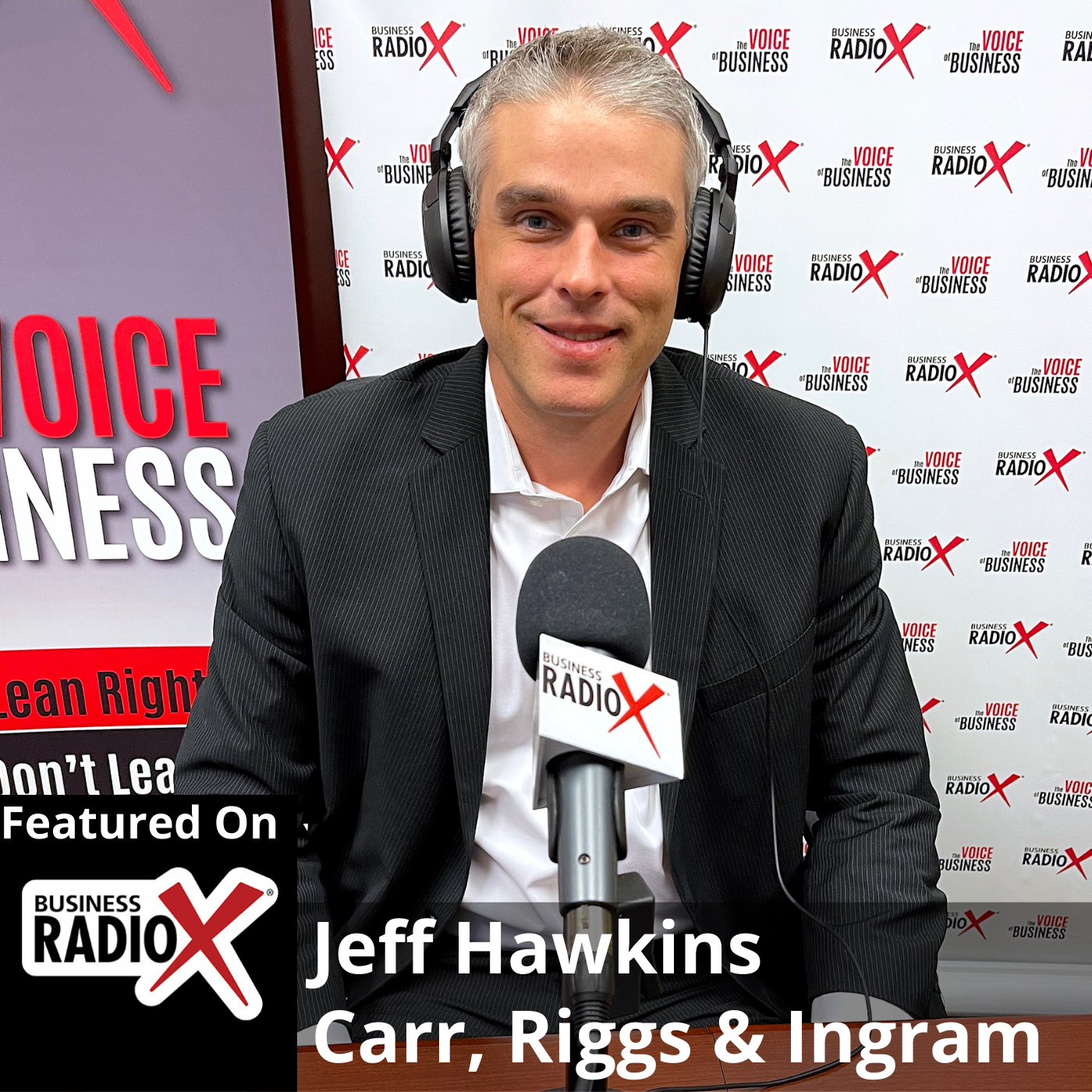
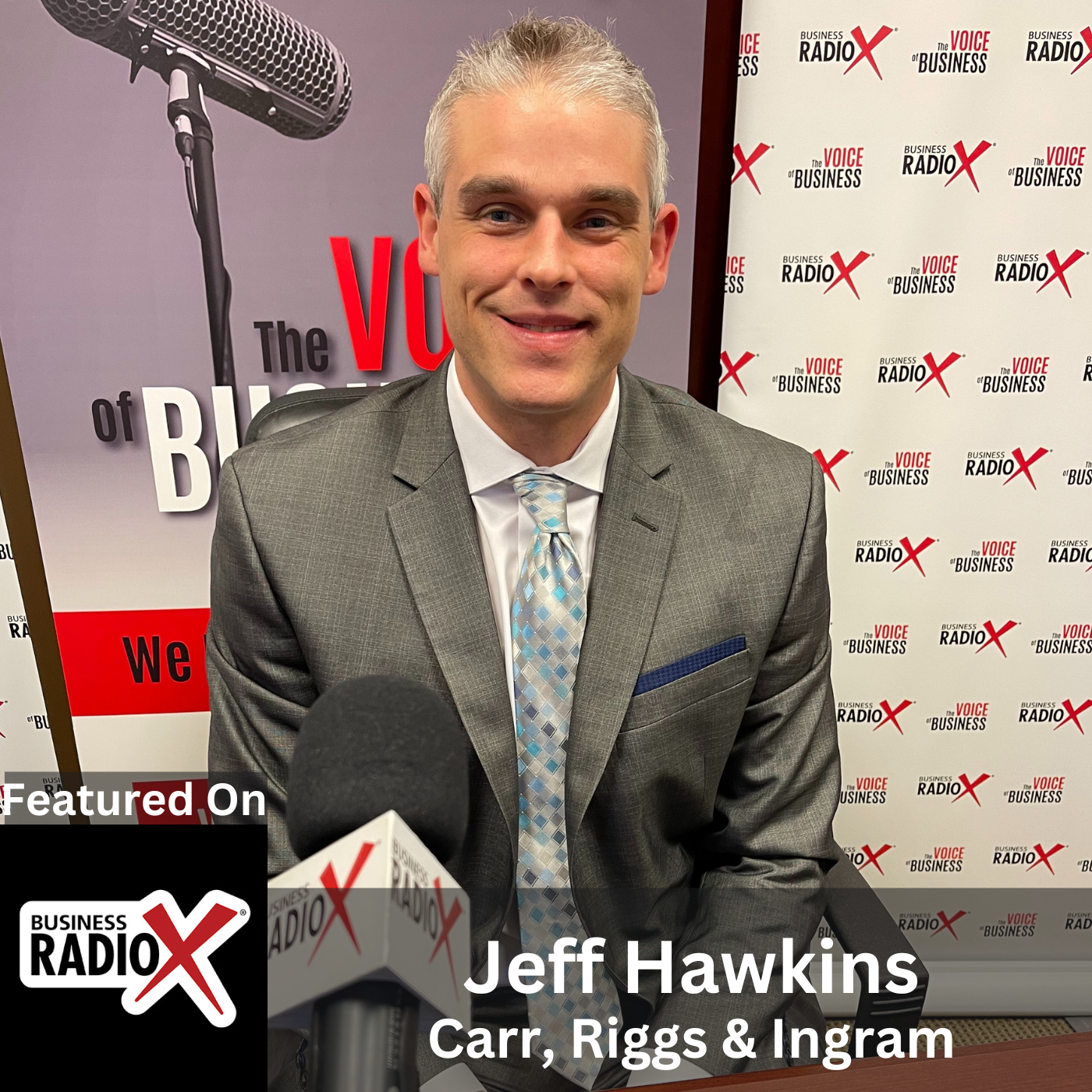
Jeff Hawkins, Carr, Riggs & Ingram

May 24, 2022 by John Ray

Jeff Hawkins
North Fulton Business Radio
Jeff Hawkins, Carr, Riggs & Ingram
Loading
00:00 /
RSS Feed
Share
Link
Embed

Download file

Jeff Hawkins

Jeff Hawkins, Carr, Riggs & Ingram (North Fulton Business Radio, Episode 458)

Jeff Hawkins, Transaction Advisory Partner with Carr, Riggs & Ingram, joined host John Ray to discuss the environment for selling middle market businesses and the mergers & acquisitions environment generally. . Jeff covered the pandemic’s effect on M&A activity in the last two years, including the wave of sales at year end 2021. He discussed the due diligence process a seller will encounter, a Quality of Earnings Report, the role of audited financials, and much more.

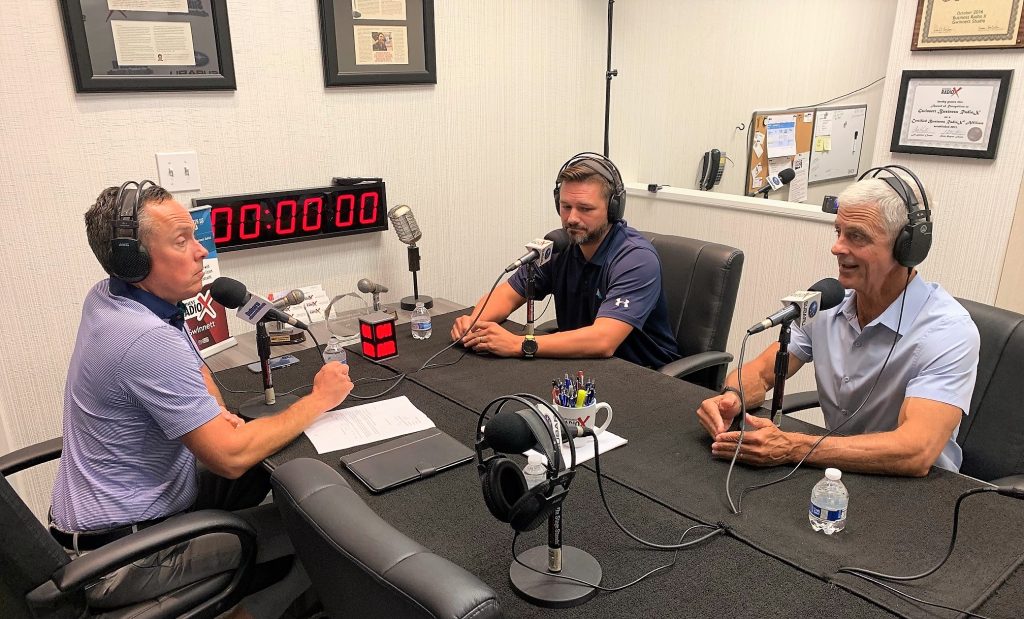
North Fulton Business Radio is broadcast from the North Fulton studio of Business RadioX® inside Renasant Bank in Alpharetta.

Carr, Riggs & Ingram

Carr, Riggs & Ingram (CRI) is a Top 25 nationally ranked accounting and advisory firm driven by relationships to cultivate growth.

From traditional accounting services to leading-edge business support, technology resources, and assurance offerings, CRI’s breadth and depth of expertise take you from compliance to competitive advantage.

Today, after 25 years of consistent growth since our formation, Carr, Riggs & Ingram is among the Top 25 firms nationally with no plans of slowing anytime soon. Despite this growth and the technological and automation disruption of the accounting industry, they still pride themselves on delivering actionable insights and solutions based on their founding principles of tailored client service, respect for all, and unyielding integrity.

Company Website |LinkedIn | Facebook

Jeff Hawkins, Transaction Advisory Partner, Carr, Riggs & Ingram

Jeff Hawkins, Transaction Advisory Partner, Carr, Riggs & Ingram

Jeff provides attest services for middle to lower-middle market, privately held companies. He also leads the Transaction Advisory Services team (TAS) in CRI’s Atlanta office for quality of earnings, target working capital, and other due diligence projects. He works closely with dealerships and provides consumer and business services.

Jeff’s clients enjoy working with him because of his experience working with businesses in varying industries and his willingness to stay involved in every engagement.

LinkedIn

Questions and Topics in this Interview:

  • The current state of the M&A world
  • Why was 2021 so busy
  • Impacts of labor constraints on professionals in M&A
  • Current trends in M&A

North Fulton Business Radio is hosted by John Ray and broadcast and produced from the North Fulton studio of Business RadioX® inside Renasant Bank in Alpharetta. You can find the full archive of shows by following this link. The show is available on all the major podcast apps, including Apple Podcasts, Spotify, Google, Amazon, iHeart Radio, Stitcher, TuneIn, and others.

RenasantBank


Renasant Bank has humble roots, starting in 1904 as a $100,000 bank in a Lee County, Mississippi, bakery. Since then, Renasant has grown to become one of the Southeast’s strongest financial institutions with over $13 billion in assets and more than 190 banking, lending, wealth management and financial services offices in Mississippi, Alabama, Tennessee, Georgia and Florida. All of Renasant’s success stems from each of their banker’s commitment to investing in their communities as a way of better understanding the people they serve. At Renasant Bank, they understand you because they work and live alongside you every day.

 

Special thanks to A&S Culinary Concepts for their support of this edition of North Fulton Business Radio. A&S Culinary Concepts, based in Johns Creek, is an award-winning culinary studio, celebrated for corporate catering, corporate team building, Big Green Egg Boot Camps, and private group events. They also provide oven-ready, cooked from scratch meals to go they call “Let Us Cook for You.” To see their menus and events, go to their website or call 678-336-9196.

Tagged With: Carr Riggs and Ingram, CPa, Jeff Hawkins, M&A, mergers & acquisitions, North Fulton Business Radio, quality of earnings, quality of earnings analysis, quality of earnings study, renasant bank, selling a business

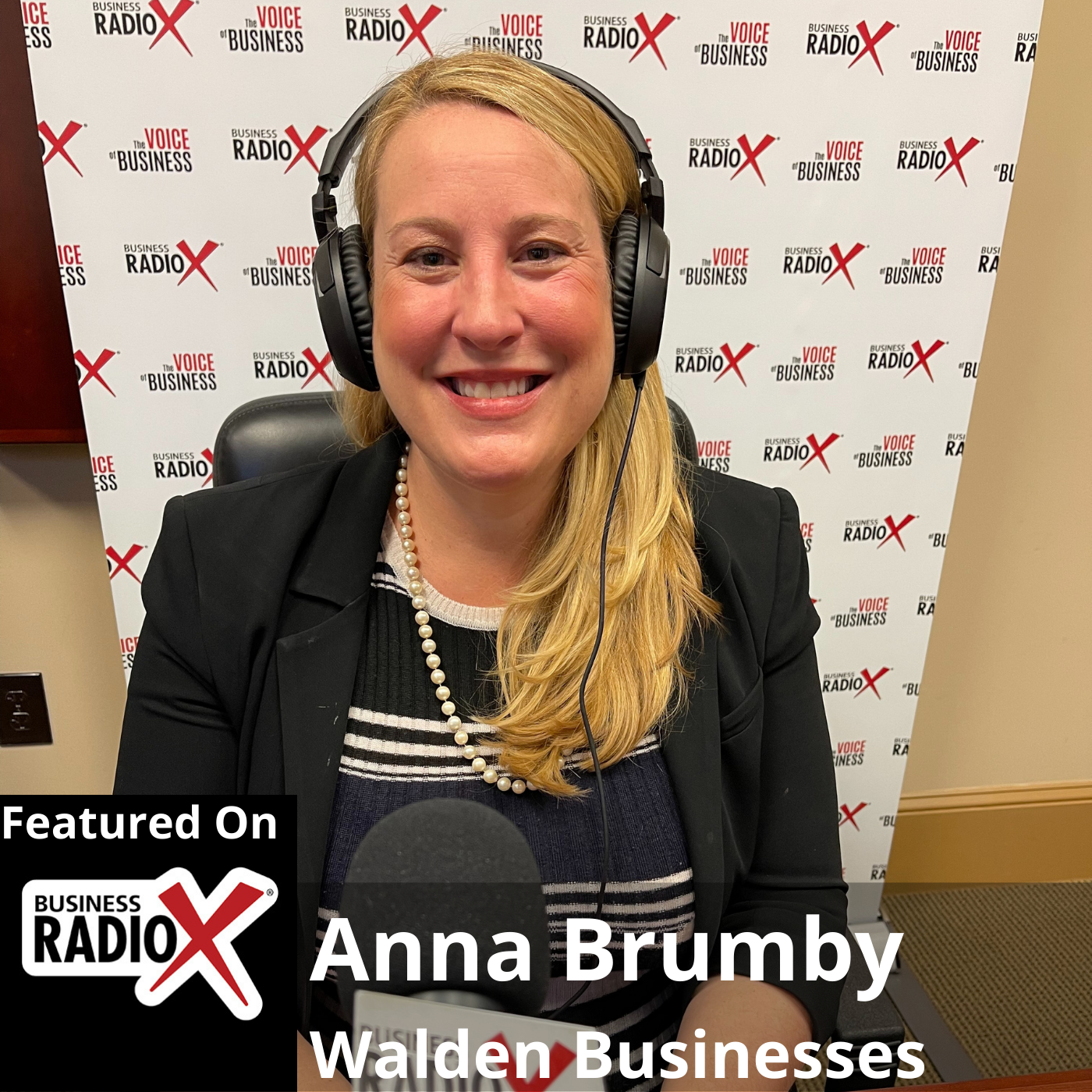
Anna Brumby, Walden Businesses

May 2, 2022 by John Ray

Anna Brumby
North Fulton Business Radio
Anna Brumby, Walden Businesses
Loading
00:00 /
RSS Feed
Share
Link
Embed

Download file

Anna Brumby

Anna Brumby, Walden Businesses (North Fulton Business Radio, Episode 453)

Anna Brumby, a principal at Walden Businesses, joined host John Ray to cover various aspects of her work as a business broker and intermediary. She had advice on what to look for in a business broker, how to prepare your business for sale, stepping back from day-to-day leadership, getting a valuation, and much more.

North Fulton Business Radio is broadcast from the North Fulton studio of Business RadioX® inside Renasant Bank in Alpharetta.

Walden Businesses

Walden is a results-oriented business intermediary.

The firm’s focus is on introducing the client’s business to prospects that are serious, qualified, and capable of completing the business transaction.

An owner’s identity and business information are not compromised. Discretion and attention to detail are the cornerstones of Walden’s success.

The firm’s reputation for completing transactions with high-quality companies is a market advantage. Many of Walden’s clients are pre-qualified and referred by accountants and attorneys who are aware of Walden’s impeccable credentials.

Walden’s professionals are dedicated to assisting clients in achieving their goals.

Walden offers the following services to its clients:

  • Sell-Side Representation
  • Buy-Side Representation
  • Consulting Services
  • Valuation Services

If you are reviewing your company’s strategic alternatives and seeking professional advice, or wish to learn more about our process for optimizing your financial goals, please contact us or give one of our principals a call at 678-277-9951.

Company Website |LinkedIn

Anna Brumby, Principal, Walden Businesses

Anna Brumby, Principal, Walden Businesses

Anna Brumby brings over 20 years’ experience to Walden Businesses as an influential business leader working with Fortune 500 companies and small businesses on multiple continents. Anna is an experienced professional with an extensive background in sales strategy development, contract negotiations, marketing strategies, financial analysis, and communication development.

Anna spent years working with the largest credit processing company on global expansion strategies including acquisition targeting and evaluation for the mergers and acquisition team. Additionally, she led a high-growth sales team working to expand the corporate footprint across the US and into new international markets. For the last decade, Anna has worked with small business owners on acquisition strategies and growth plans to increase their revenues and expand business operations.

Certified as a Mergers and Acquisition Professional (CM&AP) through the Kennesaw State University, Coles College of Business – Executive Education Program, Anna has focused her efforts on exit strategy planning for her clients to ensure they receive the maximum value for their businesses when preparing to sell. Anna is recognized as a trusted business strategist and has been a frequent public speaker at international conferences, universities, and professional business organizations. As an ongoing advocate for small business owners, Anna has been a frequent guest on Fox Business News, 11-Alive, and WSB Atlanta.

She holds a dual BS degree in both Political Science and Accounting from Presbyterian College and an MBA in Marketing from the University of Georgia, Terry College of Business.

LinkedIn

Questions and Topics in this Interview:

  • When do you start preparing your business for sale and the top three steps to take
  • How do you build the value of your company so it’s ready to sell?
  • Do you understand the sales process and the best way to prepare?
  • What professional support services will I need to help me during the sales process?
  • How do I prepare for after the business has sold?


North Fulton Business Radio is hosted by John Ray and broadcast and produced from the North Fulton studio of Business RadioX® inside Renasant Bank in Alpharetta. You can find the full archive of shows by following this link. The show is available on all the major podcast apps, including Apple Podcasts, Spotify, Google, Amazon, iHeart Radio, Stitcher, TuneIn, and others.

RenasantBank


Renasant Bank has humble roots, starting in 1904 as a $100,000 bank in a Lee County, Mississippi, bakery. Since then, Renasant has grown to become one of the Southeast’s strongest financial institutions with over $13 billion in assets and more than 190 banking, lending, wealth management and financial services offices in Mississippi, Alabama, Tennessee, Georgia and Florida. All of Renasant’s success stems from each of their banker’s commitment to investing in their communities as a way of better understanding the people they serve. At Renasant Bank, they understand you because they work and live alongside you every day.


Special thanks to A&S Culinary Concepts for their support of this edition of North Fulton Business Radio. A&S Culinary Concepts, based in Johns Creek, is an award-winning culinary studio, celebrated for corporate catering, corporate team building, Big Green Egg Boot Camps, and private group events. They also provide oven-ready, cooked from scratch meals to go they call “Let Us Cook for You.” To see their menus and events, go to their website or call 678-336-9196.

Tagged With: Anna Brumby, business broker, business intermediary, M&A, M&A transactions, North Fulton Business Radio, renasant bank, selling a business, valuation services, walden businesses

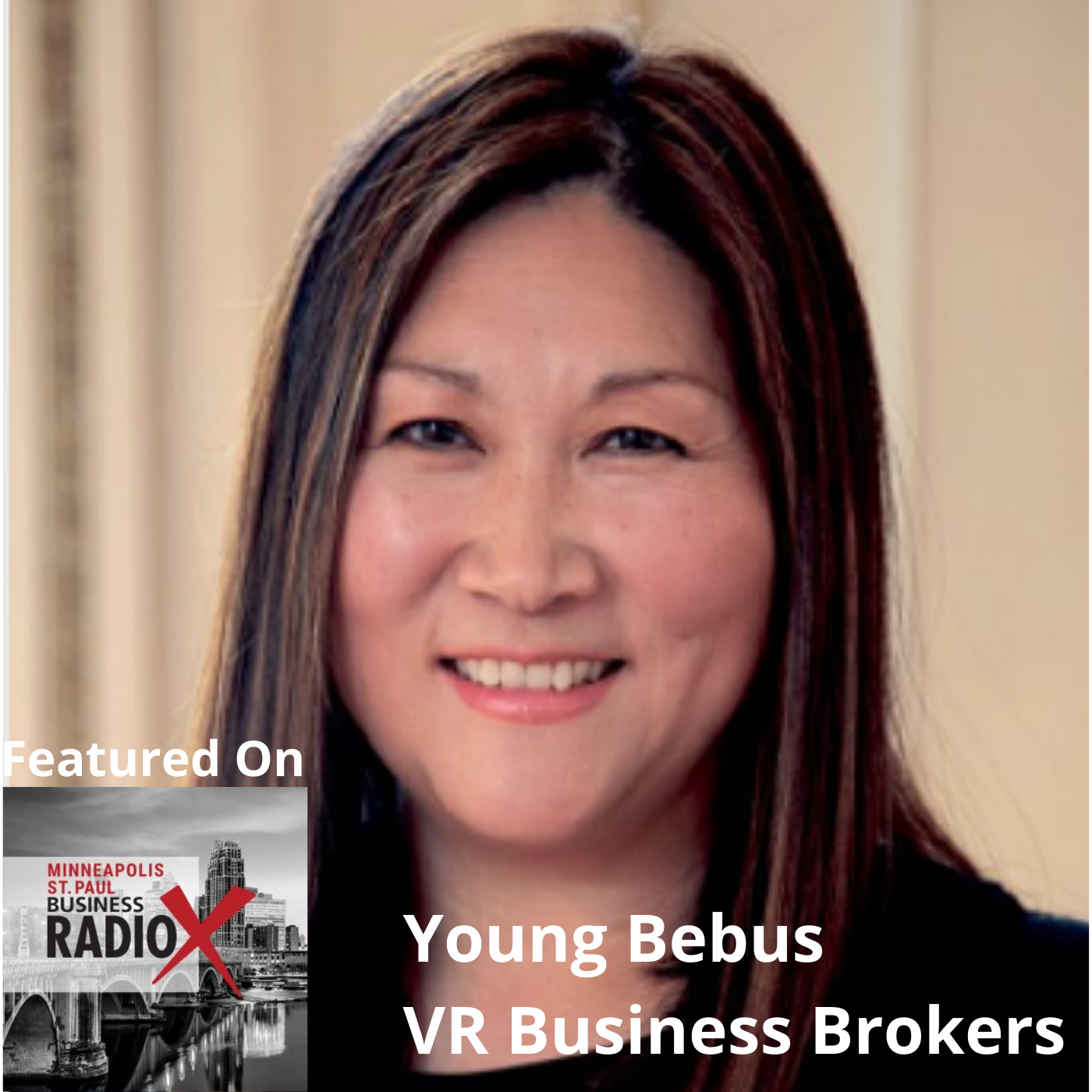
Young Bebus, VR Business Brokers

June 10, 2021 by John Ray

Young Bebus
Minneapolis St. Paul Business Radio
Young Bebus, VR Business Brokers
Loading
00:00 /
RSS Feed
Share
Link
Embed

Download file

VR Business Brokers

Young Bebus, VR Business Brokers (Minneapolis-St. Paul Business Radio, Episode 9)

Finding she loved the mergers and acquisition side of business, Young Bebus leapt from healthcare operations into owning her own business brokerage. In a conversation with host John Ray, Young discussed the market for businesses today, why the hard part of selling a business goes deeper than just receiving the letter of intent, what buyers need to think about in purchasing a business. and much more. Minneapolis-St. Paul Business Radio is produced virtually by the Minneapolis St. Paul studio of Business RadioX®.

VR Business Brokers

VR has been the industry leader for over 35 years. It has set the highest quality standards in the industry, provides the most extensive training program for its’ intermediaries, maintains the largest national database of sold businesses to assist in business valuations, and has been rated the number one Business Brokerage in the world.

VR was founded in 1979 to fill the void for quality service that existed between the Real Estate Industry and Investment Banking Representation to buyers and sellers of main street, upper main street and middle-market businesses that had remained under-serviced.

VR has always been light years ahead of its industry, and continues to pave the path that others continue to follow. VR’s continual drive to improve and achieve has led to the creation of several divisions designed to meet the rapidly changing needs of its’ business clients around the world. The past few years has seen the highly successful deployment of VR.

VR’s components of its’ success are the strength, professionalism and commitment of VR’s Network of Intermediaries working diligently with every client, not as business brokers merely trying to make a sale, but rather as advocates providing a comprehensive consultative approach to each and every business transaction. You will find that VR provides you with exactly the same level of service and professional resources that a large institutional client receives from the finest investment bank.

VR continues to be the leading force within the industry as it moves into the future, always developing new and innovative practices of buying and selling businesses, protecting client interests, and refining the level of services every small and mid-size business owner should expect to receive.
Company website | LinkedIn  | Facebook

Young Bebus, Managing Broker, VR Business Brokers

Young Bebus, Managing Broker, VR Business Brokers

Young Bebus, Principal Broker, BCA (Business Certified Appraiser), CM&AP (Certified M&A Professional) Young Bebus brings combined over 20 years of experience in M&A, valuation, real estate, management, operations, marketing, consulting while holding various positions as director, regional director, and healthcare operations COO in Corporate America and as a small business owner.

She holds her MBA from Carlson School of Management, Business Certified Appraiser designation from ISBA (International Society of Business Appraisers), and CM&AP (Certified Mergers and Acquisitions Professional) designation from Coles College of Business, (EDLI) Executive Leadership Certification from Erickson School of Business, Minnesota Real Estate Broker, and is a Member of IBBA (International Business Brokers’ Association), M&A Source, ISBA (International Society of Business Appraisers), Chamber of Commerce.

Young is named as one of 2020 Top Women in Finance Honorees by Finance & Commerce and teaching Business Start-up course for SCORE South Metro, MN.

Young’s areas of expertise include business appraisal, M&A, exit plan and growth strategy, health care services and products, senior long-term and assisted living facilities, information technology, and contractor services.

LinkedIn

Questions and Topics in this Interview

  • The trend in business sales and M&A space
  • You were in healthcare operations. What got you into this line of work?
  • Why do owners seek out the business brokers, M&A advisors FAQs by business owners
  • How is VR different and what can the company offer?
  • How does VR handle business sales and the process?

Minneapolis-St. Paul Business Radio is hosted by John Ray and produced virtually from the Minneapolis St. Paul studio of Business RadioX® .  You can find the full archive of shows by following this link. The show is available on all the major podcast apps, including Apple Podcasts, Spotify, Google, Amazon, iHeart Radio, Stitcher, TuneIn, and others.

Tagged With: business broker, business brokerage, buying a business, M&A, mergers & acquisitions, selling a business, VR Business Brokers, Young Bebus

Decision Vision Episode 21: Do I Need an Investment Banker? – An Interview with Roger Furrer, Brady Ware Capital

June 27, 2019 by John Ray

Decision Vision
Decision Vision
Decision Vision Episode 21: Do I Need an Investment Banker? - An Interview with Roger Furrer, Brady Ware Capital
Loading
00:00 /
RSS Feed
Share
Link
Embed

Download file

Roger Furrer, Director of Brady Ware Capital

Do I Need an Investment Banker?

Do I need an investment banker to sell my company? How does the sale process work? What’s the difference between an investment banker and a business broker? Roger Furrer, Director of Brady Ware Capital, answers these questions and much more in a interview with Michael Blake, Host of “Decision Vision.”

Roger Furrer, Brady Ware & Company

Roger Furrer is a Director at Brady Ware Capital, the investment banking arm of Brady Ware & Company. Roger joined Brady Ware in 2016, and prior to that served as COO and Managing Partner at Bannockburn Global Forex, LLC. Additionally, Roger enjoyed over 30 years in the banking industry in which he held various senior management positions, including leading teams focused on middle-market companies.

Roger leverages this expertise to help family-owned businesses and management teams maximize the value of their investments. He guides business owners through the sale of their business, or assists them in securing the liquidity needed to grow their business.

For more information, contact Roger at rfurrer@bradyware.com or at 937-238-9401.

Michael Blake, Brady Ware & Company

Mike Blake, Host of “Decision Vision”

Michael Blake is Host of the “Decision Vision” podcast series and a Director of Brady Ware & Company. Mike specializes in the valuation of intellectual property-driven firms, such as software firms, aerospace firms and professional services firms, most frequently in the capacity as a transaction advisor, helping clients obtain great outcomes from complex transaction opportunities. He is also a specialist in the appraisal of intellectual properties as stand-alone assets, such as software, trade secrets, and patents.

Mike has been a full-time business appraiser for 13 years with public accounting firms, boutique business appraisal firms, and an owner of his own firm. Prior to that, he spent 8 years in venture capital and investment banking, including transactions in the U.S., Israel, Russia, Ukraine, and Belarus.

Brady Ware & Company

Brady Ware & Company is a regional full-service accounting and advisory firm which helps businesses and entrepreneurs make visions a reality. Brady Ware services clients nationally from its offices in Alpharetta, GA; Columbus and Dayton, OH; and Richmond, IN. The firm is growth minded, committed to the regions in which they operate, and most importantly, they make significant investments in their people and service offerings to meet the changing financial needs of those they are privileged to serve. The firm is dedicated to providing results that make a difference for its clients.

Decision Vision Podcast Series

“Decision Vision” is a podcast covering topics and issues facing small business owners and connecting them with solutions from leading experts. This series is presented by Brady Ware & Company. If you are a decision maker for a small business, we’d love to hear from you. Contact us at decisionvision@bradyware.com and make sure to listen to every Thursday to the “Decision Vision” podcast. Past episodes of “Decision Vision” can be found here. “Decision Vision” is produced and broadcast by the North Fulton studio of Business RadioX®.

Visit Brady Ware & Company on social media:

LinkedIn:  https://www.linkedin.com/company/brady-ware/

Facebook: https://www.facebook.com/bradywareCPAs/

Twitter: https://twitter.com/BradyWare

Instagram: https://www.instagram.com/bradywarecompany/

Show Transcript

Intro: [00:00:06] Welcome to Decision Vision, a podcast series focusing on critical business decisions. Brought to you by Brady Ware & Company. Brady Ware is a regional, full-service accounting advisory board that helps businesses and entrepreneurs make visions a reality.

Michael Blake: [00:00:24] And welcome to Decision Vision, a podcast giving you, the listener, clear vision to make great decisions. In each episode, we discuss the process of decision making on a different business topic. But rather than making recommendations because everyone’s circumstances are different, we talk to subject matter experts about how they would recommend thinking about that decision.

Michael Blake: [00:00:43] My name is Mike Blake, and I’m your host for today’s program. I’m a Director at Brady Ware & Company, a full-service accounting firm based in Dayton, Ohio, with offices in Dayton; Columbus, Ohio; Richmond, Indiana; and Alpharetta, Georgia, which is where we are recording today. Brady Ware is sponsoring this podcast. If you like this podcast, please subscribe on your favorite podcast aggregator, and please also consider leaving a review of the podcast as well.

Michael Blake: [00:01:10] Today, we’re going to talk about hiring an investment banker. And I think this is an important subject because investment banks, I think, oddly enough, have a lot of mystery around them. In many cases, particularly if you’re a small business, you may only use an investment banker once in your entire life. Maybe even hopefully once in your entire life. You do one exit, you make a boatload of money, and then you get on your yacht, or you go to your mountain villa or your Italian Sicilian hideaway, and never have to do anything again. And one of the parties that kind of makes that possible for that lucrative exit is the investment banker.

Michael Blake: [00:01:56] Now, I happen to have a lot of respect for investment bankers because early in my career, I did the investment banking thing. And let me tell you – I’ll get on my soapbox a little bit, and I have no problem with that – for all the for all the junk that investment bankers take, and you hear investment bankers brought up in Congress that they don’t pay enough taxes and whatnot, I challenge any of them to walk in the shoes of a successful investment banker for two years and see kind of how they do with that.

Michael Blake: [00:02:38] It is not a 9:00 to 5:00 job, unless your definition of 9:00 to 5:00 is 9:00 in the morning to 5:00 in the morning. It is not a Monday-through-Friday job. It is an always-on job. And I can tell you for a fact that those folks, if they’re a success at all, really earn their fees. And if you don’t kind of live that lifestyle, you just are not in the business very long. That’s just all there is to it.

Michael Blake: [00:03:06] And so, I washed out, and I took a step back, and I went into business valuation, which is, let’s say, a much more work/life balance-friendly profession. Although, sometimes, my wife will wonder about that. But I wanted to kind of get that on the table because when you hire an investment banker, it’s a very important decision. If they’re any good at all, they ain’t cheap. And they can often be the difference between an exit that makes you comfortable for a while, and maybe pays for a vacation, or some of your kids education, versus retiring, or possibly leaving or creating legacy wealth.

Michael Blake: [00:03:50] So, with that, let’s kind of introduce our guest here. I have with us Roger Furrer, who is a director at Brady Ware Capital, which is our firm’s captive mergers and acquisitions specialized business unit. And they help business owners and entrepreneurs understand, increase, and unlock the value of their businesses. Business owners, often, find that managing the complexities of transaction’s an overwhelming experience. So, they can even find it overwhelming when they have help, I can tell you that for a fact. And you need an advocate that’s going to be out there representing you aggressively in the marketplace and helping you find not just an opportunity, not just Mr. Right or Mrs. Right, Mrs. Right now, but Mr. or Mrs. Right.

Michael Blake: [00:04:37] And that’s what Brady Ware does. And they help ease those challenges and let you continue running your business successfully throughout that transaction. That part’s really important because I can tell you, having worked on a lot of transactions myself, not in the investment banking capacity but as the advisor, selling your business is so physically and emotionally consuming that it can be difficult to actually continue running your business and sort of forget. You can easily lose sight of the fact that until that money hits escrow or until money hits your bank account, you get a wire confirmation, that deal is not done. And if you are not paying attention, all of a sudden, you may be left with a less valuable business than what you started with. But we’ll get into that.

Michael Blake: [00:05:24] Roger joined Brady Ware’s mergers and acquisition team in 2016. As I said, he’s a director. He has more than 30 years of experience in banking – i.e. 15 times more than I do – where he led teams focused on middle market companies. He leverages his banking experience as middle market companies to help family-owned businesses and management teams maximize the value of their investments. Specifically, he guides business owners through the sale of their business or assist them in securing the liquidity needed to grow that business. And with that, Roger, thank you so much and welcome to the program.

Roger Furrer: [00:06:00] Thank you, Mike, I appreciate being a part of the discussion.

Michael Blake: [00:06:03] So, Roger, let’s start with some basic vocabulary because I’m not sure everybody knows what an investment banker does. I think there’s an image out there of what an investment banker is, but I think there’s a misconception. So, kind of in your own words, if you had to kind of describe your job, what is it?

Roger Furrer: [00:06:26] Well, sure. One of the things that people misconstrue about the term is when they hear investment, they think it revolves around stocks, and bonds, and that type of thing. So, that’s one thing that we’re not. So, I would say investment bankers do a multitude of things. Some have more well-rounded services than others. At Brady Ware Capital, we help companies evaluate their strategic options around how do you liquidate or transition your business and discuss possible selling options for them. But we, also, help them uncover, perhaps, opportunities to acquire other companies or merge with other companies, and analyze the returns around that. At Brady Ware Capital, too, we also help companies raise the appropriate bank debt, or subordinate it, or mezzanine debt for the situation that they’re dealing with.

Michael Blake: [00:07:30] Okay, yeah. And so, when we say investment banker, one, I mean, you’re not lending money yourself, but you may be an intermediary to the folks who are lending money. And that first job description that you put out there, really, is more of a wealth or financial advisor when you’re dealing with analyzing stocks and bonds. And the exception may be if you’re the kind of investment bank that is taking companies public, and you’re dealing with public securities but that isn’t you guys. And for the most part, that’s not going to be our listener base. So, we can probably set that definition to the side, at least, for the moment.

Michael Blake: [00:08:09] So, one thing — and I have to confess, I don’t really know the answer to this question in a very clear way. So, I’m very curious to hear your answer to this. And that is, what is the difference, if there is any, between an investment banker and a business broker? Because you hear those terms both used a lot, but I also know many investment bankers that bristle a little bit if you call them a business broker and vice versa. So, I’m curious, is the difference meaningful enough? If so, how would you characterize it?

Roger Furrer: [00:08:41] Well, first of all, Mike, I’d say that there’s a lot of overlap in the term. So, I think, when people define a broker, they think about a transaction being completed, a commercial real estate property, a residential property, a broker being someone that executes the trade of a stock or a bond. So, I would say that I am a business broker, but I would prefer to be identified as an investment banker more so that also helps bring a transaction to fruition. So, I think, in in our terms and in the markets that we deal with, I think, business brokers, generally, deal with smaller-sized companies, and typically list the business for sale, and identify an asking price for that business, much like you would with a piece of a real property.

Roger Furrer: [00:09:48] I think the difference between an investment banker, I believe, is in a higher strategic value proposition, if you will, where when we’re representing a company for sale, we go about an entire marketing process and identify who we see as the best strategic and financial buyers for that entity, so that we’re able to drive the highest and best value for that company. I hope that helps you from a differentiation perspective.

Michael Blake: [00:10:26] It does. And not the suck up to because I’m not, it’s actually the best definition I’ve actually heard. The best distinction I’ve actually heard between the two. So, for the first time, I think I can actually explain it to somebody else, which is the definition of a good understanding. So, what is the investment banker-client relationship look like if it’s a very good one? I think, when clients sign onto to pursue a strategic transaction, we use that generic term deliberately for the moment, I sometimes wonder, particularly if they’ve never been in that kind of transaction environment before, if clients really, frankly, know what it is that they’re getting into. So, maybe could you kind of shed some insight and give us some of the inside baseball in terms of what that relationship looks like on a day-to-day, in a month-to-month basis?

Roger Furrer: [00:11:28] Sure. Maybe to define an ideal relationship, I kind of start by saying the process to sell a business and to discuss the strategic options leading up to selling a business could be a 6, to 9, to 12-month process. So, with that being said, you’re going to spend a lot of time as the business owner with the investment banker that you choose to work with. So, I think it’s very important that you have a degree of chemistry with those folks, that everybody likes working with each other, and that the investment banker is able to also work effectively with the management team of the company and work with other outside advisors, such as their attorney, or accountant, et cetera that’s going to be working through this process.

Roger Furrer: [00:12:19] And the reason that is important, it’s not so much the time frame, but it’s the intensity during that time period. I might talk with my customer daily, twice a day, many times a day, depending on where we’re at in the process. So, there is a tremendous amount of interaction that you’re dealing with during the course of the process of selling that business.

Roger Furrer: [00:12:45] I think, the other thing that I would suggest that that somebody look for in an investment banker, and I’m I’m sucking up a little bit and touting some of my background, but I think somebody that has some experience, a multitude of experience in different business environments because there are technical, legal, accounting, financial, emotional, all kinds of issues that come up during the course of the process. And so, I think, dealing with somebody with a well-rounded background is also very important in the process.

Michael Blake: [00:13:27] I’ll underscore that because that’s also important in what I do. As you know, and if our listeners have listened to these other podcasts, I specialize in technology businesses and professional services firms, – i.e. businesses that have mostly intangible assets. And the process of selling/buying a business and those industries is candidly very different from, say, buying or selling an orthopedic practice, or even a manufacturing company, or a high-tech engineering situation, or the engineering professional services. But the point is all these kinds of transactions or businesses have their own little nuances that have to be figured out and anticipated, preferably, well in advance. And there’s a lot of value to having seen a lot of stuff because every deal will have a surprise or two that’s just unavoidable, but you’d like to keep those those surprises down to a minimum to a dull roar.

Roger Furrer: [00:14:39] And the ability to draw back on past experience and be able to connect the situation from one experience to another and say, “In this situation, this is how it was dealt with,” as kind of a starting point in understanding the discussion.

Michael Blake: [00:14:55] Yes. As I like to say, there needs to be some benefit, in my case, to having gray hair and two arthritic ankles. And what you get in exchange for that is a little bit of experience, and been there, done that, and got the T-shirt. So, one thing that I think a lot of folks don’t know if they haven’t worked in the investment bank yet is that there’s a difference between sell side and buy side transactions. Of course, a sell side transaction, meaning that you’re working for the seller, and a buy side transaction, meaning that you’re working for a buyer. And most investment bankers I know, and I truly don’t know if this is the case for you – I should, but I don’t – but most investment bankers have a preference to work on sell side transactions. So, I guess, my two-part question is, is that the case for you guys at Brady Ware Capital? And if so, why is that? Why is there a preference to work on the sell side?

Roger Furrer: [00:15:59] Well, it’s interesting that you bring this up, Mike. This morning, I was talking to another investment banker that we have a strategic alliance with, and we were introducing ourselves to another party, and they asked if he does buy side engagements, and he said, “No, I flat out refused them.” So-

Michael Blake: [00:16:19] Yeah, I’ve heard that.

Roger Furrer: [00:16:21] So, first of all, Brady Ware Capital’s preference is most certainly to do with sell side engagements. We do take on a limited amount of buy side engagements when the situation seems right for ourselves and the client. But the reason for the preference is — and this may seem a little bit strange at first, but with a sell side engagement, you know you have one willing party to start with. You have someone that has engaged you to go find a buyer, they’re ready to sell. When you do a buy side engagement, the buyer says that they want to grow from strategic acquisition or otherwise, but in many cases, it’s very difficult to define what it is that they’re looking for and trying to identify the right party to be a participant on the other end of the transaction.

Roger Furrer: [00:17:20] And if you’re able to find the perfect fit, and talk to, and find, and get financials, and identify the right selling party for that transaction, well, they work for sale when you call them, so you kind of flip the leverage in terms of the monetary value that was going to be exchanged. You kind of flip that leverage over to them because you reached out to them and created a situation that they weren’t ready for. So, it would be the same thing if I showed up at your doorstep and your house wasn’t for sale, but I said that I wanted to buy it because it was the perfect fit for me. And you kind of take a step back and go, “Well, it’s not that really for sale, but if you paid me 50% over market value, it might be for sale.”

Michael Blake: [00:18:13] Yeah, that’s right.

Roger Furrer: [00:18:13] And so, when that happens, right now, my buyer, who was a willing participant, says, “Well, wait a minute, I’m not going to pay that for that company.” So, it’s very difficult to find the perfect fit in a buy side engagement.

Michael Blake: [00:18:29] It’s like trying to solve one equation with two unknowns, I guess. And for the most part, at least larger companies, they won’t hire a buy side investment banker representative, and that’s why they’ll hire instead of vice president of business development, they’ll have a corporate development team if they’re large enough. And that’s kind of their job to go out there and hunt for those businesses to acquire. And that’s probably the more common model, wouldn’t you say?

Roger Furrer: [00:19:00] I would definitely agree with that, Mike.

Michael Blake: [00:19:02] Yeah. So, how do folks like you, frankly, get paid? In my practice, 90% of my fees are on a fixed basis. I don’t think the investment banking world really works that way. So, how are investment banking fee structures on a sell side engagement typically put together?

Roger Furrer: [00:19:30] Well, I wouldn’t have answered it this way, except for how you stated it with yours are 90% percent. Ours are probably 90% variable. So, for the most part, we are compensated when success happens. And back to your introduction, that’s when the wire transfer goes through. So, most investment bankers will receive a retainer at the beginning of a sale process, and they might receive another retainer or two throughout the course of the engagement at various stages in the process. But, again, most of our fees come from the transaction success actually happening. And those fees would range from roughly a few percentage points on up to maybe 7% or 8% of the sale, depending on the size of the transaction.

Michael Blake: [00:20:26] And the risk level, I would imagine as well, correct? In other words, if you think the deal is going to be easier to do, the fee might be a little bit less. Or does it matter? Maybe it doesn’t.

Roger Furrer: [00:20:40] I’ll say I’ll answer that a couple ways, Mike. One is by our very nature, and kind of the structure of our pricing is built around success, the idea is to identify projects that we would work on that we feel that we’re going to achieve success. And that’s a mutually determined between ourselves and our client. In other words, if we value the business, I’ll just use a number of 5 million, and our customer says that, “I’m not going to sell for anything less than 10,” then we probably don’t see a pathway to success with that. At that juncture, we might work with the customer more about how to achieve a valuation of $10 million at that point in time. So, if we don’t see a pathway to success, I’d say there’d be two things that we would do. One is not become engaged; or secondly, if the client wants us to continue through a process, we would probably change the pricing structure, so that it’s more fixed versus variable.

Michael Blake: [00:21:54] Got it, okay. And the way you described that just made me realize something, and it goes back to the previous question of buy side versus sell side. If your compensation is going to be a factor of or driven by the size of the deal, and you’re working on a buy side engagement, you’re kind of working against yourself, right, because you’d be trying to drive down a price, but in so doing, driving down your fees. Now, that would be a pretty hard balancing act to sustain in any event.

Roger Furrer: [00:22:26] Yeah, we’re a little bit — and our pricing structure, we like to be in neutral lockstep with our clients, so that we’re not in a situation like that where we’re not trying to drive the price down, so we drive our fee down. Correct.

Michael Blake: [00:22:44] All right.

Roger Furrer: [00:22:44] And, also, back to your buy side situation, because I described before that it’s difficult to identify and achieve success with it, and that’s the nature and structure of our compensation system is based on success, you don’t want to get into a lot of situations where you don’t see a pathway to success.

Michael Blake: [00:23:05] Yeah. That’s a good way to not be in business very long.

Roger Furrer: [00:23:09] Correct.

Michael Blake: [00:23:13] So, take us through a sales process. Let’s say somebody has been — you’re now engaged, and you’re ready to put a business on the market for sale at some point. I’m guessing there’s some preparation that goes into the process, but I don’t want to answer that question. I’ll let you answer that question. What does that process look like?

Roger Furrer: [00:23:37] Sure. Maybe before getting engaged, I’d like to take a step back and discuss the process of getting engaged. So, I mean, it sounds a little bit like a marriage here. So, what are you trying to accomplish, business owner? What are your objectives? Are you trying to transition your business to your management team? Are you trying to transition your business to relatives, cousins, daughters, sons, whatever it might be? Or are you trying to exit 100% of the business on sale to a strategic party? A financial party? Are you trying to retain some ownership and partner with somebody to take you further and help you grow your business in another direction, perhaps, geographically or from product diversification, whatever that might be? So, I think the first part in thinking about a sale process is really identifying and discussing, what are you trying to do with this? What’s the right solution for you? Because that’s going to drive the marketing process that we go through.

Michael Blake: [00:24:54] So-

Roger Furrer: [00:24:55] Is that helpful?

Michael Blake: [00:24:56] No, no, it is. I’m glad you brought us back to that point because I think it’s very important. I’m guessing the process where or the number of clients that you, or any good investment banker has, or if someone just sort of calls you up and says, “Hey, an investment bank,” “Great. I’ll send you a letter. Sign it.” Next thing you know, you’re engaged. I’ll bet that’s pretty close to zero, right?

Roger Furrer: [00:25:20] That would be less than zero, yes.

Michael Blake: [00:25:22] Yeah, right. So, you’ve had months of of conversations. This is something a lot of people don’t realize about investment banking is folks like you invest a ton of time, energy, and expertise in that pre-engagement relationship-building period where you’re trying to understand (A), business, and (B), the goals of the owners, and make sure those are something that you can realistically accomplish.

Roger Furrer: [00:25:55] That’s correct. And as part of that process, it’s also identifying a value range of that business, so that you understand what the potential outcome could be as a result of the marketing process. So, back to my example of the $5 million valuation where the business owner feels that 10 is their exit number, now, we’ve got to step back and talk about ways to get that business valuation up. So, I digress a little bit from your question on the sales process and what happens when you get engaged, but I thought that was a good backdrop.

Roger Furrer: [00:26:32] With that being said, so to directly answer your ,question through an engagement process, and we describe it as a several different steps that we go through throughout that 6 to 9-month process that we discussed before, where we literally write marketing material on the business by gathering financial data, understanding the products, the markets, the sales process, whatever it might be that are positioning the business as to why this is an outstanding investment consideration for a potential buyer to look at. So, we go through the entire marketing process and understanding the business.

Roger Furrer: [00:27:21] And then, as part of that process, we set down and identify who we see as potential buyers for this business. And how we do that is we review companies that might be direct competitors of the customer. They might have ancillary businesses associated with this particular business. They could be large suppliers to the business or have other strategic interests that could align with purchasing of a particular company that we’re representing.

Roger Furrer: [00:28:00] We also identify what we’ll call financial buyers, who, broadly speaking, would be identified as private equity groups or, perhaps, family offices that engage in private equity transactions. Private equity can be a very powerful option for people, especially who are interested in retaining some ownership and continuing on a go-forward basis. Typically, these financial buyers also have a strategic interest in an industry. So, a private equity firm that has a specialty in managing manufacturing companies probably isn’t going to be interested in a retailing business, as an example, but it’s usually something that’s tangential to the business that they’re already in. So, those are the things that we go through at the start of that process. And then, we literally do hand-to-hand combat outreach to the leadership team of these prospective buyers and send marketing material to them in an attempt to get them interested in this company.

Michael Blake: [00:29:22] Yeah. I like the way that you mentioned that hand-to-hand combat. And just as an aside, you mentioned, you bring up family offices because I think that’s a relatively new trend. When many of us think about private equity — I’m sorry, financial buyers, we go right to private equity. But as you know, I’m doing an increasing amount of work with family offices and dynastic wealth, and they’re starting to become a more important player as a financial buyer of buying operating businesses. At least, I’m seeing that. Are you seeing the same thing?

Roger Furrer: [00:30:00] We are. They, too, like others, are looking for profitable ways to deploy the capital that they have to invest, and they see this as one of the avenues that they might allocate a portion of their portfolio.

Michael Blake: [00:30:18] So, typically — just, let’s do a rain show. I don’t want to nail you down, but I still think it’s important in terms of managing expectations. When you and a client agree to work together – excuse me – how do you set expectations or what expectations you typically set in terms of how long it will take from, “We’re signing this engagement letter,” until you’re going to sell the business, and money wire transfers go through.

Roger Furrer: [00:30:52] Sure. I’ll start with the end answer, and I’ll break it down in stages for you, Mike. The end answer is probably six to eight months from the start of the process to the wire transfer clearing. We say it’s about a month doing our market preparation and marketing material. Another month to six weeks in terms of executing the marketing process, and identifying potential buyers, and outreach, and getting indications of interest from those buyers. Another six weeks or so in terms of providing additional information, hosting those companies on site for visits, and ultimately picking the right party and negotiating a letter of intent that we all agree on. So, that’s about — I’ll call that maybe four months total there. And then, it could be another three months or so to develop documentation, do the due diligence research that the buyer is going to do, and ultimately get to the closing process.

Michael Blake: [00:31:59] So, there’s a question I want to make sure that I — a conversation I want to make sure I have with you because I think this is very important for our listeners, and I’m sure that you’ve addressed it. And that is part of the compensation model is there is a retainer involved. And to be candid, I actually advise clients that hiring an investment banker that requires a retainer, I think, is a good thing, because that’s what helps keep the investment banker interested, especially when the deal isn’t particularly active as opposed to — and we know business brokers tend to be more like this, so they’ll operate without that retainer where there’s a purely a success fee out there, and you’re going to get the very definition of ADHD, and that whichever deal happens to be getting transact – I’m sorry – traction today is the one that’s going to get your attention. That means that yours is going to go to the bottom of the pile. Can you comment on that? Does that make any sense to you?

Roger Furrer: [00:33:09] Well, I would say what went through my mind, Mike, is I’ve seen investment bankers that charge a monthly retainer. I’m not a big fan of that. And in advising a client, I would advise a client against that because that just keeps the meter running and doesn’t necessarily drive one to success. The retainer fees that we have and the way that we restructure it is around hitting certain benchmarks, so that there is demonstrated progress in the work that we’re doing.

Roger Furrer: [00:33:48] Now, it doesn’t necessarily mean that we’re going to close the transaction, but, for example, having a retainer that hits when the letter of intent is signed, that shows that work was done, and progress was made, and this keeps us engaged and kind of covers our expenses, and time, and effort in working through to the closing process. So, I’m a big fan of retainers that way that are benchmark-driven. I’m not a big fan of retainers that are driven by the turn of the calendar.

Michael Blake: [00:34:21] Okay, good, good. So, have you ever run into a scenario where a prospect kind of raises the question of, “Well, my law firm says they know buyers, and my CPA firm says they know buyers, and maybe I can just let them sell my business and not have to pay the fee”? Do you ever encounter that? And if you do, how do you respond to that?

Roger Furrer: [00:34:50] We encounter it frequently. And the way that we address it is a number of ways. First of all, there’s many great accountants and attorneys that I’ve worked with through these processes, and many of them may have the capabilities to do these. I’ll call them one-off transactions from time to time, where buyer reaches out directly to the seller to get a transaction completed. That could work. I don’t advise that you should approach it that way, but that could work. I find it, I don’t know, I’ll use the term laughable, that accountants and attorneys would do outreach to identify potential buyers, and try and get them interested, and do the work that we do.

Roger Furrer: [00:35:46] So, they certainly have some skill sets that help in the process. But the other thing I’d say is that they’re rarely staffed to handle those steps to do it. I mean, we work constantly on a deal. Constantly, we might spend half a day for six months on a particular deal. I don’t see an accountant or an attorney having the ability to do that based on the other workloads that they have. So, we always hear about the realtors sale, the FSBO, the for sale by owner. I certainly don’t think that is the recommended approach.

Roger Furrer: [00:36:23] Independent of the advisors, here’s the other thing that I think is the critical piece of this. So, it’s a very specialized and, at times, sensitive process, which I’ve just articulated, but the business owner and the management team needs to focus on running the business and maintaining the value of the business. If you devote an inordinate amount of time to the selling process itself and the business suffers, guess what, you just diminish the value that you thought you were saving by not paying the investment banker fee. So, how is the expression? What’s the saying? “If you act as your own attorney, you have a fool for a client.” I think this is pretty similar to that.

Roger Furrer: [00:37:15] You’ve used the term before about trying to do this cheaply. Well, we certainly believe a thousand percent of the time that the process, and the effort, and the marketing approach that we do is way, way more offset. Our costs are way, way more offset by the value that we drive in the business. So, first of all, don’t do it yourself because your business is going to suffer. If you’re in a situation where you can spend six to nine months working on the selling process, I challenge that that just doesn’t happen in business very often that you can establish a new role for yourself and not do your current job. So, don’t do that is my huge advice with that.

Michael Blake: [00:38:11] So, the bullet point here is do not try this at home.

Roger Furrer: [00:38:13] Yeah, no.

Michael Blake: [00:38:15] And I agree with that, and I’ve seen it happen even with an investment banker involved. And I think, frankly, one of the values that you guys bring to the table is understanding how to manage your clients’ time to make sure they are still managing their business because there’s the dynamic of work that if your eyes off the ball on the business, that’s one thing. Over time, you could probably recover it. But the other part that, I think, is extremely hard to recover from is psychological. It’s that once your mind is kind of one foot out the door, and you’re thinking more about that condominium in Costa Rica than you are your business on a day-to-day basis, I think it’s very hard for you to snap yourself out of that and get back into full on business non-exit mode.

Roger Furrer: [00:39:15] I would completely concur with that. And I think one of the things that we do in the process is the coaching aspect of it about making sure that the business is still performing. Now, obviously, these situations occur where that doesn’t happen, but the idea is to make sure that people are maintained and maintained in their focus on where they should be to maintain the value of the business during this six to eight-month cycle.

Michael Blake: [00:39:49] So, we are talking to our Roger Furrer of Brady Ware Capital. And we’re talking about whether you should hire an investment bank. I’ve just got a couple more questions, and I want to let you go because I know you’ve got deals that you’re working on right now. But one question I want to make sure that we do cover is investment banks such as Brady Ware Capital are not just about buying and selling businesses, are they? There are other kind of ancillary — I don’t want to say ancillary because that sounds like they’re not important, but there are other important services that you offer to clients as well, as do other many investment banks. Could you talk about that for a minute?

Roger Furrer: [00:40:30] Yeah. I think a couple of things that we do well also. And I think having Brady Ware Capital being a part of Brady Ware, the accounting practice, gives us the unique capabilities of being able to work with what we would call transaction specialists that are able to be participants in a due diligence process and identifying issues that might arise in the financials of a target company, as an example, or preparing the seller for issues that might come up with their target company. So, I would broadly categorize that as transaction services type of work.

Roger Furrer: [00:41:14] Additionally, we also participate in what I would call corporate finance, which would be helping companies analyze potential cash flow and return on equity metrics for an investment that they’re making, an acquisition that they’re making, those types of things to make sure that they’re on the right path from a financial perspective. And finally, I believe I mentioned before, we do assist in capital raises. Most traditionally we have worked in the area of bank debt and other mezzanine debt that would assist the company with their capital structure.

Michael Blake: [00:41:58] Now, you mentioned debt. Sort of noticeably absent in that conversation then is equity. Does that mean that you’re not as aggressively pursuing transactions where you might help somebody raise equity capital?

Roger Furrer: [00:42:14] We do not do that as a routine. No, Mike. It’s almost one of those situations that I would parallel with the buy side discussion in that trying to find the right fit of equity participants with a particular equity need is maybe needle in a haystack type of approach. I would say, more typically. from an equity raise perspective would be around the potential transition of some of the ownership, maybe a minority ownership perspective, to provide liquidity to the primary owner or perhaps to engage in some expansion activity or acquisition activity. There is a fair amount of private equity groups that do specialize in taking a minority ownership position. So, when that scenario arises, that might be something that would be part of a process in an equity capital raise. But rarely do we do one-off type, if you will, for smaller dollar amounts to bring equity into a business.

Michael Blake: [00:43:34] So, if Wiley Coyote is coming to you, and he’s trying to raise venture capital for his roadrunner catching machine, that’s not a good fit.

Roger Furrer: [00:43:43] I know Wiley Coyote had some great Acme machine that I remember as a kid. We might invest in that.

Michael Blake: [00:43:50] Now, there you go.

Roger Furrer: [00:43:52] But yes, that is not one of our strong suits.

Michael Blake: [00:43:57] All right. So, Roger, this has been great. There’s other questions we could ask, but I know we’ll let you get back to it. If somebody wants to contact you and learn more about investment banking, and how investment banks can help a company from a strategic perspective, and maybe a bit more about Brady Ware Capital, how can they best find you?

Roger Furrer: [00:44:21] Well, I’ll tell you that, but before I do, I think there’s one other point that I think that we should talk about with the listeners. A lot of times, we’ve talked about a party not doing it at home yourself type of thing and doing it for sale by owner. When people get outreach from a buyer who calls them directly and thinks that they should engage in an acquisition discussion, investment bankers are very useful in that process as well in that the first thing that we do is help with the identification of what the value of that business should be. And, also, kind of go back to the starting point that we had before is, what are you trying to accomplish, business owner, around your goals and objectives with transition? So, I just thought that was worthwhile to bring up to before actioning.

Roger Furrer: [00:45:19] With that said, in answer to your question on how to get a hold of me, my email address is rfurrer@bradyware.com or anyone may reach me on my cell at area code 937-238-9401.

Michael Blake: [00:45:43] Okay, Roger, thanks very much for that. I think there’s a lot of good content for someone who’s thinking about whether or not they need to retain an investment bank. Chances are if you’re thinking about it, you’re probably doing. And Roger’s a great place to start.

Michael Blake: [00:45:58] That’s going to wrap it up for today’s program. I’d like to thank Roger Furrer so much for joining us and sharing his expertise with us. We explore a new topic each week. So, please tune in so that when you’re faced with your next business decision, you have clear vision when making it. If you enjoy this podcast, please consider leaving a review with your favorite podcast aggregator. It helps people find us, so that we can help them. Once again, this is Mike Blake. Our sponsor’s Brady Ware & Company. And this has been the Decision Vision Podcast.

Tagged With: Dayton accounting, Dayton business advisory, Dayton CPA, Dayton CPA firm, due diligence, engagement, family offices, financial buyer, investment bank, investment banker, investment banking, investment banking engagement, letter of intent, M&A, M&A transaction, M&A transactions, merger, merger consulting, mergers & acquisitions, private equity, private equity firms, private equity funds, retainer, Roger Furrer, sell side, sell side engagement, sell side transaction, selling a company, strategic acquisition

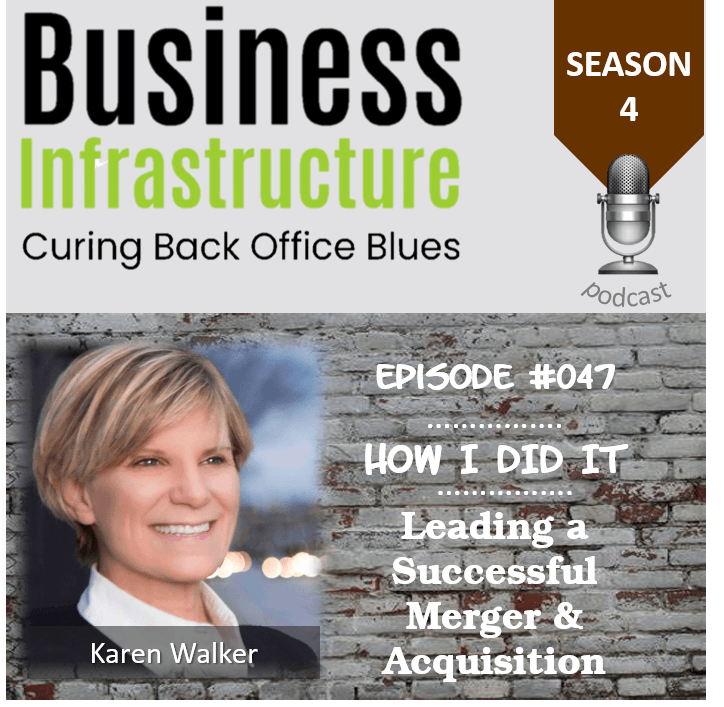
Episode 47: Leading a Successful Merger & Acquisition with Karen Walker

May 28, 2019 by Mike

https://stats.businessradiox.com/30013.mp3


Buy or build?  One way to quickly scale a company and dramatically increase market share is via a Merger & Acquisition (M&A) with/of another company.  However, improper alignment and conflicting objectives can turn that M&A into an M&D (Merge & Destroy), warns Karen Walker, a proven M&A strategic advisor.

Having been part of a team that led one of the fastest growing American companies to $1 billion in revenue, Karen shares how she leads successful integrations using an example of a tech company.  In this episode, you’ll learn: 1) why an M&A is a process and not an event, 2) the role business infrastructure plays in leveraging the strengths of another company to diversify your company’s portfolio, and 3) the differences between an M&A, strategic alliance and joint venture.

Special Guest: Karen Walker, Founder & CEO of One Team Consulting

Location: Jupiter, FL  USA

Show Notes:

  • No Dumbing Down: A No Nonsense Guide for CEO’s on Organization Growth: Karen’s book
  • Perennial Seller: the Art of Making and Marketing Work that Lasts: book by Ryan Holiday
  • Elements of Power: Lessons on Leadership and Influence: book by Terry Bacon
  • Built to Last: Successful Habits of Visionary Companies: book by Jim Collins and Jerry I. Porras
  • Influence: The Psychology of Persuasion: book by Robert Cialdini, Ph.D
  • Harvard Business Review: an online and print business magazine for leaders and executives

Tagged With: karen walker, M&A, m&d, one team consulting

Decision Vision Episode 14: CEO Peer Groups – An Interview with Marc Borrelli, Vistage Worldwide

May 9, 2019 by John Ray

Decision Vision
Decision Vision
Decision Vision Episode 14: CEO Peer Groups – An Interview with Marc Borrelli, Vistage Worldwide
Loading
00:00 /
RSS Feed
Share
Link
Embed

Download file

Marc Borrelli, Vistage Worldwide, and Michael Blake, Host of “Decision Vision”

CEO Peer Groups

What’s a CEO peer group all about? Should I join one? What’s the return on the investment of participating in such a group? In this edition of “Decision Vision” host Michael Blake, interviews Marc Borrelli, Chair of Vistage Worldwide.

Marc Borrelli, Vistage Worldwide

Marc Borrelli, Vistage Worldwide

Marc Borrelli arranges and chairs Vistage Peer Advisory Groups, which have about 16 CEOs in them, meet on a monthly basis to discuss issues and opportunities the members face to provide advice, challenge assumptions, prevent hubris, and then hold the members accountable for the commitments they have made.  The members discuss all kinds of issues in these meetings from profits and cash flow, strategic planning, acquisitions, and sales, and challenges with other owners. The members get the benefit of 15 other CEOs helping them, who are not beholden to them for anything, other than being helped themselves. Members come from a wide variety of industries and the only rules are not customers or suppliers. Vistage has 23,000 members worldwide and 17,000 in the US.

Michael Blake, Brady Ware & Company

Mike Blake, Host of “Decision Vision”

Michael Blake is Host of the “Decision Vision” podcast series and a Director of Brady Ware & Company. Mike specializes in the valuation of intellectual property-driven firms, such as software firms, aerospace firms and professional services firms, most frequently in the capacity as a transaction advisor, helping clients obtain great outcomes from complex transaction opportunities. He is also a specialist in the appraisal of intellectual properties as stand-alone assets, such as software, trade secrets, and patents.

Mike has been a full-time business appraiser for 13 years with public accounting firms, boutique business appraisal firms, and an owner of his own firm. Prior to that, he spent 8 years in venture capital and investment banking, including transactions in the U.S., Israel, Russia, Ukraine, and Belarus.

Brady Ware & Company

Brady Ware & Company is a regional full-service accounting and advisory firm which helps businesses and entrepreneurs make visions a reality. Brady Ware services clients nationally from its offices in Alpharetta, GA; Columbus and Dayton, OH; and Richmond, IN. The firm is growth minded, committed to the regions in which they operate, and most importantly, they make significant investments in their people and service offerings to meet the changing financial needs of those they are privileged to serve. The firm is dedicated to providing results that make a difference for its clients.

Decision Vision Podcast Series

“Decision Vision” is a podcast covering topics and issues facing small business owners and connecting them with solutions from leading experts. This series is presented by Brady Ware & Company. If you are a decision maker for a small business, we’d love to hear from you. Contact us at decisionvision@bradyware.com and make sure to listen to every Thursday to the “Decision Vision” podcast. Past episodes of “Decision Vision” can be found here. “Decision Vision” is produced and broadcast by Business RadioX®.

Visit Brady Ware & Company on social media:

LinkedIn:  https://www.linkedin.com/company/brady-ware/

Facebook: https://www.facebook.com/bradywareCPAs/

Twitter: https://twitter.com/BradyWare

Instagram: https://www.instagram.com/bradywarecompany/

Show Transcript

Intro: [00:00:01] Welcome to Decision Vision, a podcast series focusing on critical business decisions, brought to you by Brady Ware & Company. Brady Ware is a regional, full-service accounting and advisory firm that helps businesses and entrepreneurs make visions a reality.

Michael Blake: [00:00:20] And welcome back to Decision Vision, a podcast giving you, the listener, clear vision to make great decisions. In each episode, we discuss the process of decision making on a different topic. Rather than making recommendations because everyone’s circumstances are different, we talk to subject matter experts about how they would recommend thinking about that decision.

Michael Blake: [00:00:38] My name is Mike Blake, and I’m your host for today’s program. I’m a Director at Brady Ware & Company, a full-service accounting firm based in Dayton, Ohio, with offices in Dayton; Columbus, Ohio; Richmond, Indiana; and Alpharetta, Georgia, which is where we are recording today. Brady Ware is sponsoring this podcast. If you like this podcast, please subscribe on your favorite podcast aggregator and please also consider leaving a review of the podcast as well.

Michael Blake: [00:01:02] So, today we’re going to talk about CEO/executive peer study groups. And these are groups that are entities that have like-minded or ostensibly like-minded decision makers where they, kind of, have group therapy, study issues together, and learn from one another. And there are number of groups that are all over the place, literally, worldwide.

Michael Blake: [00:01:27] And it’s an interesting model because being CEO of any organization is a very lonely place, and everyone expects you to have the answers, sometimes, even unrealistically. And just like we’ve kind of asked, “Who does the therapist talk to when they’re feeling depressed?” who does the decision maker turn to when they need some help making important decisions, but they don’t necessarily know who to turn to, and maybe not warrant engaging in consulting, or may require a different relationship than what a consultant could provide? And it’s a big decision. I know these groups help a lot of people. And for other people, it’s not necessarily the right fit.

Michael Blake: [00:02:10] And joining us to help us work through this is Marc Borrelli. Marc Borrelli arranges and chairs Vistage Peer Advisory Groups, which have about sixteen CEOs in them. They meet on a monthly basis to discuss issues and opportunities the members face to provide advice, challenge assumptions, prevent hubris, and then hold the members accountable for the commitments they have made. The members discuss all kinds of issues in these meetings from profits, to cash flow, strategic planning, acquisitions, and sales, and challenges with other owners. Not necessarily among the other owners, just challenges among the other owners.

Michael Blake: [00:02:46] The members get the benefit of 15 other CEOs helping them who are not beholden to them for anything other than being helped themselves. Members come from a wide variety of industries. And the only rules are not customers or suppliers. Vistage has 23,000 members worldwide and 17,000 in the United States. Marc has 30 years of strategy and investment banking experience. Marc is expertly positioned to offer a range of unique advisory services, and he’s worked across Europe, Africa, and the United States, closing more than 100 transactions worth over $3 billion, and is perhaps best known for his fluency in the language of numbers.

Michael Blake: [00:03:23] He is a current chair of the Technology Association of Georgia’s Corporate Development Board, which basically means M&A advocacy, and is a CFA charter holder. Marc is a sharp, sharp guy who is not afraid to tell you what he thinks and why. And that’s why he’s going to be a great interview today. Marc, thanks for coming on.

Marc Borrelli: [00:03:41] Thank you for having me.

Michael Blake: [00:03:43] So, Marc, you’ve done all this stuff. You do deals, doing deals of very intense, fast-paced, sort of, all out kind of profession. And then, you decide to go and become an educator. Why?

Marc Borrelli: [00:03:57] So, I think, to cut this long story short, way back, when I started my own M&A firm, somebody from Vistage approached me and said, “Are you interested in joining a Vistage Group?” And being a very conceited, young 40-year-old, I turned around and said, “God, no. I know everything. I don’t need you. I’m an M&A expert.” Fast forward about — Actually, I was in my mid-30s. And fast forward 10 years, and I was in my mid-40s, I’d just gone through a divorce. I was in a child custody battle. My business was on the ropes. And another person came along and asked the same question, and I grabbed the lifeline with both hands before I drowned.

Marc Borrelli: [00:04:31] So, I think, yes. I think everybody gets — and I was in the group for years, and then I decided to come and do this. And it’s not really — I like your term educate. I don’t think it’s an educator. And, I think, truly, the groups you get into, the benefit I always say is challenging the assumptions and truly finding out what the underlying question is. It’s not there to provide magic answers. It’s not like we lift up the Magic 8 ball at every meeting and say, “Okay, this is what you have to do.” But it’s really asking questions and deep questions to find out what the real issue is, and then getting the person to commit to do something, and then holding them accountable.

Marc Borrelli: [00:05:07] And that’s what I love about it. I love seeing people succeed and grow. I think the people who don’t like it in a lot of cases, or like I was in my mid 30s, they think they know it all, I always say, to be a great Vistage member, you have to have experienced pain, and suffered, and you realize you don’t know it all, and you need help every day.

Michael Blake: [00:05:25] So, you need to be broken down before you’re ready to join Vistage.

Marc Borrelli: [00:05:28] Absolutely, absolutely. Yes.

Michael Blake: [00:05:33] You mentioned asking the right questions, and it calls to mind an Einstein quote that goes something like, “”Finding solutions is easy. It’s asking the right questions that’s the hard part.” Right?

Marc Borrelli: [00:05:45] Absolutely.

Michael Blake: [00:05:46] And I think that’s what’s drawn me to you and our friendship over the years is that you do ask great questions, and you don’t take anything for granted. Even if it’s something that maybe we thought was true two years ago, that doesn’t necessarily mean it’s true today, right?

Marc Borrelli: [00:06:02] No. And I think that’s the hardest thing for business members, business owners, and CEOs, and for myself is the world is changing so fast. I’ll give you an example. I recently gave every one of my Vistage members Tom Friedman’s book, Thank You for Being Late, which is about how much the world has changed, and technology is changing, everything. And the speed of change is affecting every area of our business. Whatever model got us to here — it’s a great book. What got you to here won’t get you to there. And that’s why we need others to challenge us, and make us think, and just digressing slightly. The common complaint I hear is, “Damn, these millennials, how do we work with them?” And it’s like they’re now the biggest sector of the working population. You got to figure this out.

Michael Blake: [00:06:42] Right.

Marc Borrelli: [00:06:43] You can complain about them, but if you don’t figure out how to make them happy and keep them, you’re going to lose, not them.

Michael Blake: [00:06:48] Right. Really, they’re saying, “Damn, how we’re going to work with these Gen Xer’s and late baby boomers, right?

Marc Borrelli: [00:06:53] Exactly.

Michael Blake: [00:06:54] That’s really the conversation that’s going on. We’re going to be in a position where we’ve got to justify ourselves to them, and we probably seem clinically insane too many of them.

Marc Borrelli: [00:07:04] Totally, yes.

Michael Blake: [00:07:05] And maybe they’re not wrong.

Marc Borrelli: [00:07:07] No. And I think it’s very interesting for those of us, we’re about the same age, we grew up in an environment where you’ve joined a company, you paid your dues, you worked hard, nobody thanked you, and you just accepted that was the norm. And it was interesting in the Vistage Group, somebody posed the question, you have the most perfect employee sitting across from you that you’re interviewing that you really want, and they look at you and say, “Why should I join your organization?” And nobody could answer the question. I mean, they all said, “Because we’re a great company.” And the person who raised it said, “So, all the other companies will say ‘We’re really bad companies. Come here and be abused.'” No, they all say they’re great. So, how do you sell this?

Marc Borrelli: [00:07:45] And I think that’s the challenge that we have to deal with, and that’s what I love about it. It’s always new, and it’s always interesting, and helping people try, and just do it better.

Michael Blake: [00:07:55] I’ve got to have some discipline because if I take the conversation the way I want to, we’ll be here three hours later, and they’re going to cut us off. So, I got to stay on topic. It’s just so hard with you. There’s so many peer executive types of groups out there. Vistage is one. There are others. Some are just informal. Others are formalized. What do you think sets Vistage apart from those other groups, if anything?

Marc Borrelli: [00:08:17] So, I think if you look at all four groups, they all have some component of four things. They’re either networking groups, they are social groups, they are personal improvement groups, and they’re business improvement groups. As I tell people, Vistage is not a networking group. We don’t encourage you doing business with each other. We’re not a BNI group. We don’t want that.

Marc Borrelli: [00:08:39] We’re not really a social group. Yeah, we do get together a couple of times a year, but it’s not our key thing. YPO is probably the greatest and best social group. We are a business improvement and a personal improvement. That’s what we focus on. So, I think when you’re looking it, what do you want out of the group? And then, of course, there are some groups that have specific categories like religious affiliations, which we don’t have. We’re open. We believe the more diverse the members, the better input you get, and the better results you get. But I think that’s what you look at is what is it you want out of the group.

Michael Blake: [00:09:12] So, what kinds of topics have you been covering in your group over the last year? Can you talk about that, or is it confidential?

Marc Borrelli: [00:09:20] No, absolutely. Well, I won’t give names away, so it’s not confidential. So, on some of the more simple things we’ve been talking about is getting lines of credit available and making sure you well banked, so if a downturn comes you can get through it financially. How do we challenge clients who are not paying us on a timely basis and get our receivables down? Some people are looking for a COO to help them grow the business through the next stage, which comes into things like technology systems, implementing ERP systems, for advice on that.

Marc Borrelli: [00:09:54] A common one is my exit strategy. Your exit strategy might be you’re the owner, and you’re going to exit at some point, or even more simply, I’m the key person in the private equity own group, and I don’t want to be sold with the company at the next sale. So, how do I build my exit? Some people, it’s as simple as what does success mean for you in your organization. They haven’t really thought that through. And then, we get into some of the more personal ones. And I’m not going to give names, but I’ve had people deal with issues like children with drug problems, abuse issues. So, we cover a wide gamut of things.

Michael Blake: [00:10:29] So, that’s interesting. So, your discussions do bleed over into the personal-

Marc Borrelli: [00:10:34] Oh totally.

Michael Blake: [00:10:34] … as life part of the work life.

Marc Borrelli: [00:10:36] I come from the assumption that we’re here to help you with anything that affects your business. And as I tell people, having been through a divorce and, now, proudly wear the t-shirt, for a year, you’re useless. Your mind is not focused, you’re distracted, you cannot put the attention you need in. And if that’s one of your issues, or you’ve got a dying parent, or child going through some trauma, you are heavily distracted, which affects your business. Now, we’re not therapists. I’m not going to claim we provide therapy, and we’re not going to tell you, but we’re going to try and give you coping mechanisms.

Marc Borrelli: [00:11:08] So, for instance, one of my members is going through a serious litigation at the moment, very distracted by it, and it’s just simple things like the members reach out to him on a regular basis, see if they can help him. Remind him, “Are you meditating? Are you getting a break from it? Because if you don’t do these things, it will consume you.” And as one member said to him, “Look, don’t worry about the litigation, beat them at business. If you beat them at business, you’ve won.” So, it’s just helping people come at it from different perspectives.

Michael Blake: [00:11:34] So, your group then must get pretty tight pretty quickly I would imagine.

Marc Borrelli: [00:11:41] Yes. You’d definitely see there are two types of people that come in the group, those that get tight, and they get together socially. And I encourage that because you’re not going to care about other people and take care of them unless you know them. And then, there’s some that never really get socially involved for whatever reason, and they tend to drift off.

Marc Borrelli: [00:11:58] So, yes, I try and encourage my group. This is a personal thing. Every Vistage Group is different. As of this year, we try and get together four times a year for dinners. Twice a year, we have spouses. We do retreats, I’m going on a retreat with another group next week. I believe the more you’re entangled with each other, the more you care about each other, the more you’re going to help each other. And that’s what this is about.

Michael Blake: [00:12:21] Okay. Now, obviously, although you’re providing it good, it is a commercial exercise.

Marc Borrelli: [00:12:25] Absolutely.

Michael Blake: [00:12:25] So, if I’m thinking about, “This sounds interesting, I might be able to make use of it,” what are the economics look like? What are the costs look like?

Marc Borrelli: [00:12:36] So, basically, in my main Vistage Groups, it’s about $1600 a month to be a member. It has a 90-day termination clause. So, it’s not payable for a whole year upfront. You just pay monthly. And then, once a month, you have to host a meeting, which means you have to provide all the food and the facilities. Now, we also do retreats and dinners where everybody pays their share. So, if I’m looking at all those numbers, you’re just over 20 grand a year.

Marc Borrelli: [00:13:01] A lot of people look at me and say, “Oh my God. I could never afford that.” Being a business person and investment banker, my mind automatically goes to numbers, as you mentioned. So, I’m looking at it, and I say, “Well, what’s the ROI on it? And if you’re the CEO of a business, what’s your average decision? Now, hopefully you’re not just deciding on paper clips, but if you’re deciding on hiring senior people or new market stand, your average decisions got to be over 100 grand a year. And if the group helps you make one good decision a year, the ROI is 500%. So, where can you go wrong with this?”

Marc Borrelli: [00:13:35] Now, some people say, “Well, the group didn’t help me with their decisions.” And I was like, “Well, you didn’t bring a good question to the group,” or “If you just want them to pat you on the back, that’s not using them effectively,” but yes. So, I think there is cost, as you said, but there should be a return on it.

Michael Blake: [00:13:49] And how many groups do you have?

Marc Borrelli: [00:13:51] I have two CEO groups. My one group is from a million to about 8 million in revenue. My other groups 8 million to 50 million in revenue. And I’ve split them because the bigger companies just have more employees and a different type of issue. And then, I have a third group, which is less expensive, but it’s not for CEOs, it’s for senior executives within organizations that are coming up.

Michael Blake: [00:14:12] Okay. And so, that’s a peer group to help them from a career counseling standpoint?

Marc Borrelli: [00:14:16] Correct, yes.

Michael Blake: [00:14:19] Okay. So, did you have a chance to meet other — is your official title a facilitator? Are you a group leader, are you-

Marc Borrelli: [00:14:29] I’m called the Chair.

Michael Blake: [00:14:29] … the ayatollah?

Marc Borrelli: [00:14:30] I am called the Chair of the group. And I guess if you wanted to say anything, I’m a facilitator.

Michael Blake: [00:14:37] Okay. So, as the chair/facilitator of the group, do you have a chance to meet other chair facilitators? And if so, how much do you differ, or do you tend to have a very kind of consistent profile?

Marc Borrelli: [00:14:52] No, I think we’re all very different. And, at least, I meet within the Vistage community. All the chairs get together once a month to discuss best practices and different things. I think we’re all different. We all bring different skill sets because of our background to the table. I bring a financial background. Other people run HR companies, so they bring an HR background. We’re all different.

Marc Borrelli: [00:15:12] I think having spoken to people who were in other organizations, which didn’t have a “facilitator” or somebody in charge, and they took turns, they have said to me that they didn’t find the issues we run as well because nobody is trained to do it. My job is not to jump and tell everybody the answer. My job is just to keep the conversation, draw people out, and make sure everybody gets — I herd the cats.

Michael Blake: [00:15:36] So, do you find then that you tend to draw people that already have an affinity for numbers, data, analytics, finance, or is it the opposite? Do you tend to draw people that know that that’s a weakness of theirs, and they’re hoping that you’re going to plug that or somehow fill that gap?

Marc Borrelli: [00:15:55] I wish I could say it was one or the other, but it doesn’t seem to be either. I have people who are very numerate, and I have people who have no clue, and I’m trying to educate those that don’t. But, again, it comes back to what do you really want to learn? And, often, I tell people, “Look, as a CEO, it’s not so much what you have to learn on the finance side. It’s actually just knowing the numbers you need to look at to make sure your business is operating.”

Marc Borrelli: [00:16:19] So, I encourage all the CEOs that I work with to get custom dashboards built for them that, at one glance, they can tell what’s going on in their business. They should get them every week or less depending on — I mean, more often than that, depending on what their business is, but they should not be delving into Quickbooks or whatever the accounting package they have spending hours looking at reports.

Michael Blake: [00:16:39] That’s probably got to be music to many of their ears?

Marc Borrelli: [00:16:44] It is, but they can’t resist.

Michael Blake: [00:16:45] Yeah.

Marc Borrelli: [00:16:45] They get sucked back into Quickbooks. And I see them all playing with reports, and I’m like, “You shouldn’t be doing this. This is not good return on your time.”

Michael Blake: [00:16:52] Problem with so many business owners, they’re very heavily — they’re type A detail-oriented people.

Marc Borrelli: [00:16:57] Yes.

Michael Blake: [00:16:57] And, I guess, sometimes, you have to tell them like, “What are you doing this for?” Right?

Marc Borrelli: [00:17:00] Right.

Michael Blake: [00:17:02] Now what about like personality of the facilitator. Would you say they are different personalities? Maybe some are what we call sort of an American football coach, and others are more kind of nurturing, or is there a spectrum of personalities as chair facilitators?

Marc Borrelli: [00:17:18] That’s an interesting question. I think there is a variety. And some chairs have been coaches, and some chairs are maybe more touchy-feely. But I think at the end of the day, we’re encouraged to through Vistage, and I think what really works, is we’re what we call carefrontational. We care about you. We want you to succeed, but we’re not going to let you off the hook. We’re going to hold your feet to the fire. You said you were going to do this. Why haven’t you done it?

Marc Borrelli: [00:17:43] And as I always tell people, in Vistage, there’s no public flogging, but humiliation in front of your peers on a regular basis, it will destroy you. So, you got to stand up. And it’s very hard to turn around to a group of people who are also CEOs and say, “Well, I didn’t do it because I’m busy.” And you just get these looks like, “Really? Tell me about it.”

Michael Blake: [00:18:02] We’re recording this right before April 15th, and I don’t ever use the phrase, “I am busy inside of my firm.” I’ll simply be thrown out of our third=floor window.

Marc Borrelli: [00:18:13] Right.

Michael Blake: [00:18:17] What kind of time commitment is required? Now, we’ve talked about the cost, right? So, I guess you have monthly meetings. Is that right?

Marc Borrelli: [00:18:23] Correct. So, our group meets once a month as a group. And then, I meet with every member for an hour to an hour and a half during the month. What I tell my members is, “Look, there are 12 meetings a year. I expect you to make nine. People have business trips, family events, you get sick, client unexpected issues arise, you make nine.”.

Marc Borrelli: [00:18:43] But your time commitment is, I think, the most interesting question because speaking to those that I think are really engaged, and want to get the most out of it, and those that do get the most out of it actually invest the time preparing for the meeting. So, they think about the issue they want to bring. They think about all the information they need to present to the group. And so, when they come in, they’re prepared, and they think about, “If there’s a speaker, what do I want to learn from it?” So, they do a lot of upfront preparation. And afterwards, they spend time implementing it.

Marc Borrelli: [00:19:10] Those that don’t get much out of it don’t spend any preparation, walk into the meeting, haven’t thought about anything except they’re just walking in. They don’t really have a good issue. They are sure as heck they can’t give you any information about it, and they don’t really pay attention afterward. And, again, I herd the cats, I can’t make them. But I always say to them, “Look, you’ve spent money on this. If you’re meeting with your lawyer or your accountant, would you just walk into the room with no papers, no backup, and sit there, and know that they’re charging you by the hour to sit there and say nothing?” And they say, “No.” And I said, “Well, why don’t you do that? This is your board. These are your advisers. They’re here to help you. If you invest the time, you will get a greater return.” So, I think people should.

Michael Blake: [00:19:50] And probably the people that don’t prepare, that’s probably a symptom of something else.

Marc Borrelli: [00:19:55] Absolutely.

Michael Blake: [00:19:56] Right? Chances are that’s not the only thing in their business life for which they’re routinely systematically unprepared?

Marc Borrelli: [00:20:04] I would say that’s true, but I would say there is a culture, especially in the US, but it’s infecting the rest of the world, is we’re busy, we believe we’re successful. And I’m really fighting that culture to say-

Michael Blake: [00:20:17] I think, that’s right.

Michael Blake: [00:20:17] I think busy is not a sign of success. Success is thinking, if you’re the leader, you don’t need to be busy, you need to be thinking, you need busy people under you, but you need to be thinking about where the ship is going, and how you’re going to get it there. And getting caught up in the daily minutia is not helping. I try encourage members, the best thing you can do is take two weeks off at a time, and go let your brain regenerate.

Michael Blake: [00:20:40] It’s a very interesting point. And I have to admit, I fall into that trap that I think that being busy is ipso facto good, and it isn’t necessarily. And I think it just comes from this puritanical streak that we have as Americans that idle hands are the devil’s playground et cetera, et cetera. But you’re right, being able to sort of take us a step back, it’s amazing what your mind can do if you force it to do nothing.

Marc Borrelli: [00:21:14] Exactly. Well, I think on that. I’m going to throw two things out that I tell my members, and some do, and some don’t, is you should have an automatic reply in your e-mail that says I’ve received your e-mail, I will revert to you within 48 hours.

Michael Blake: [00:21:25] Ha!

Marc Borrelli: [00:21:26] Because all people want to know is, did you get the e-mail? That’s the main thing. And if you give yourself two days to think about it, you will probably come to a better solution than if you just shoot something off on the spur of the moment without giving it true deep thought.

Marc Borrelli: [00:21:42] And then the second thing I say to them is when you go on holiday, putting out of office e-mail which doesn’t just say, “I’m out of the office,” but says, “I will be gone for this date and this date. I’ll check email once a day, but I’m not checking this address. Please email me at this new address.” And the new address is, “I’m terribly sorry to interrupt your personal family vacation at…” whatever your alias. Nobody will ever send you an e-mail to that address. And we just copy people, we send this stuff out, and we all become slaves, and jump to it. And I think it’s a waste of our mental energy and our physical energy.

Michael Blake: [00:22:11] That’s a great point. That’s something I’ve learned and one of the few benefits of getting gray hair and two arthritic ankles is a little bit of wisdom and realizing you don’t have to respond to every email as it comes in, right? And I can’t tell you how many times I felt like I had a much better response by just stepping away, sleeping on it, and often just say, “Look, I got it.” That’s what most people want. What annoys people if you don’t respond and don’t even acknowledge that you’ve got it.

Marc Borrelli: [00:22:43] Correct.

Michael Blake: [00:22:43] If you acknowledge that you received the e-mail, the person that sent it then knows they are in the queue. You’re, at least, important enough to respond in that way. And then, they know they’re not being ignored. Being ignored really pisses people off when you get right down to it.

Marc Borrelli: [00:22:56] Exactly. But as you said, rushed answers are bad. One last point on this is I try and say to people, “Look, when you finish a meeting, don’t rush into the next meeting. Can you set yourself 30 minutes just to reflect on what truly happened, and what’s really important, and what you need to do?” Because we rush, and I’m guilty, I rush all day from meeting to meeting, and I get to the end of the day, I forgot what I promised at the first meeting. And it’s something I’m working on to try and be more effective with my time.

Michael Blake: [00:23:20] Not to mention, the emotional tenor from meeting to meeting may be entirely different, right?

Marc Borrelli: [00:23:25] Right.

Michael Blake: [00:23:25] But if you go from a dispute mediation into a sales meeting, can you imagine? You can’t handle those. Oh sorry, you just wanted the proposal? Got it. Okay.

Marc Borrelli: [00:23:37] Yeah, yeah.

Michael Blake: [00:23:37] So, you’re right, having that time to sort of kind of reset and center, that is part of time management is giving yourself that space to then, kind of, reset because in a different meeting, you have to play a different role, right?

Marc Borrelli: [00:23:51] Correct.

Michael Blake: [00:23:53] So, are there sorts of personalities that tend to do well in peer groups or ones that don’t do well in peer groups? I guess, know-it-all isn’t great.

Marc Borrelli: [00:24:03] I would say, the ones that don’t do well are know-it-alls and people who don’t care about others. You have to go in saying, “Look, I’m going to get stuff out of this, but what I really want to do is help everybody else.” And if you go in there with either, “I’m superior to everybody else, I know more than everybody else, and I don’t really care about these people,” you’re not going to work out. If you go in there saying, “I can learn from everybody…”

Marc Borrelli: [00:24:27] We have a guy in my group, and those who know him would recognize from his description. He has the worst ADHD of anybody I’ve ever met but has more interesting ideas than any human I ever met. He’s who’s got more patents in process. And the more you get to know this character, the more amazing he is. But a lot of people wrote him off in the beginning because he’s all over the place, and he’s not focused, and you think, “How does this guy get by?” But then, as you get to know him, when you peel back the onion, like this is truly an amazing person.

Marc Borrelli: [00:24:55] And so, I think, there are those that come in saying, “I’ve built my business to X, and I don’t need to talk to anybody else because I’ve done it, and I’m so great.” And I think it’s those that have realized that there are great people in many different guises, and they can all add something who will truly benefit from.

Michael Blake: [00:25:12] Now, what does it take when you — presumably, you prepare extensively for one of these meetings, what does your preparation routine look like?

Marc Borrelli: [00:25:23] So, it depends on the meeting. What I try and do is when I meet with my members one on one is to find out what issues are going on in their life. So, if I find an issue, I will say, “You should bring this issue to the group. And here’s a form. This what you need to write down. Try and bring all this information to the group.” I’ll think of exercises to do with them.

Marc Borrelli: [00:25:45] So, to give you an example of one I’m doing right now, and a number of Vistage Chairs are doing it, And I’ll go back to the beginning, Vistage has an event once a year for all the chairs. And Jim Collins who wrote Good to Great was there, and he spoke about Good to Great and the 12 questions for leadership, and we thought this is great.

Marc Borrelli: [00:26:01] So, I’m sitting down with all my group going through each of the questions. So, we start out with the flywheel. What is your flywheel? Define how your flywheel works? How do you confront the brutal facts? How do you know you have the right people regardless where on the bus they are? And then, you put them in. So, thinking through these things, sending them out links to documents, YouTube videos on this stuff, and then saying, “Okay. This is what we’re going to discuss.” And carving aside, anybody presents it. And then, we challenge each other. And I always say, “You’re open to challenge.” So, yeah, things like that.

Michael Blake: [00:26:32] Are there particular industries that you think CEO peer groups tend to serve better than others, or can it be adapted to any industry, whether it’s high tech, e-commerce, or janitorial services?

Marc Borrelli: [00:26:49] I think it can be adapted to any industry. The only place I think it has a bit of a problem, and maybe I’m wrong, because there are people in groups from these companies, but I think a large professional partnership is sometimes more difficult because nobody, even the managing partner, as a managing partner of an accounting firm once said to me, “We have all the responsibility and no authority.” So, they find it hard.

Marc Borrelli: [00:27:11] But I have a lawyer in one of my groups, and he said to me, “Why should I join? I’m a lawyer. I don’t know about selling and marketing.” And I said, “Well, you should. I mean, today, we all have to sell, we have to market, we have to collect. So, yes, your expertise may be in another area, but you still got to do all these business functions to get ahead, and build your model, and think of a different way of doing business.” So, I think everybody can benefit if you go in with an open mind.

Michael Blake: [00:27:36] Yeah. And that advice of having to sell, I mean, I long learned there are people in my industry and finance that are sufficiently technical. They can just be the technical nerd in the corner and thrive. I ain’t that smart. So, I have to develop other skills as a survival path. All right. So, how long does the meeting last?

Marc Borrelli: [00:27:59] That’s an all-day meeting.

Michael Blake: [00:28:00] All-day meeting. So, what happens? Kind of go through the order of battle in a given meeting.

Marc Borrelli: [00:28:07] So, eight times a year, we have a speaker. So, the speaker will come in in the morning. They will talk for about 3-3.5 hours on a subject matter area of expertise to them. And if we don’t have a speaker, we’ll think of either we’ll do what I’m going to describe next for the rest of the meeting, or I may present a topic of discussion.

Marc Borrelli: [00:28:29] So, aside from the speaker, what we’d usually do, we have what we call a check-in. Everybody goes around, says what’s happened since the last meeting personally and privately in their lives, what’s good, what’s bad. Then, we have a host of the meeting who I mentioned is responsible. They get an hour to present their business, their issues, and tell us about what they’re thinking, what are their three-year plans, what’s the business plan, what’s their exit, what challenges they’re facing. And that’s usually an in-depth discussion.

Marc Borrelli: [00:28:58] And then, the rest of the meeting, really, is everybody writes up issues or opportunities they’re facing. And we sit down, and we go through our process of asking, probing questions. When we’ve got no more questions, we then go around and ask everybody what they would recommend they would do if they were the person with the issue.

Marc Borrelli: [00:29:12] When everybody’s told them what they would do – and during this time, they’re not allowed to say anything, they just listen – we basically turn to them and say, “So, what are you going to do?” And they could say, “I like what John said,” or “I like what Mary said,” or “I think you’re all a bunch of idiots, and I’m going to do something else.” And we don’t really care, but we say. “Okay, So, you’re going to do X, and when are you going to do it by?”.

Marc Borrelli: [00:29:31] And when you come to the meeting next month, “Did you do it?” And if you didn’t do it, then we’ll say, “Well, do you want somebody in the group to be a wingman, and remind you, and lead you through it?” And if you repeatedly don’t do it, then there’s an issue that you haven’t really gone into.”

Michael Blake: [00:29:42] Right, there’s a deeper issue. I guess.

Marc Borrelli: [00:29:44] Exactly.

Michael Blake: [00:29:45] So, you have a buddy system, almost like alcoholics anonymous, right?

Marc Borrelli: [00:29:48] Oh totally. There’s a joke in Vistage where AA is for CEOs.

Michael Blake: [00:29:52] Oh, is that right?

Marc Borrelli: [00:29:53] Yeah. Because they need somebody. And the thing I found, and I speak for myself knowing this as my own behavior, is when we’re stressed, we revert back to what we like to do because it’s comfortable. And CEOs, like everybody else, get stressed. They’ve got big decisions, and they don’t know what to do with them. So, they revert back into their comfort zones.

Marc Borrelli: [00:30:12] I have one member who’s very stressed with things going on. I spoke to him the other day, and I’m like, “What have you been doing?” And he’s like, “I was rebuilding our website.” And I’m like, “Why are you rebuilding? You should not be rebuilding a website. This is not your time.” But that’s where he’s comfortable. And so, he’s reverting back. And I think where the group is there is to help pull you out and focus on.

Michael Blake: [00:30:30] Are there certain kinds of questions or challenges that you found a group like this is not particularly adept at addressing?

Marc Borrelli: [00:30:42] I would say the hardest thing with a bunch of CEOs, and this is reflective, again, of being CEOs is you have to train them to go through their probing questions. They’re all ready to jump in and tell you the answer. And it’s only through the questions we truly find the issue and think about what it is. So, the hardest thing when the group starts, and even you’ve got to keep reminding them, “Guys, this is not the time for solutions. We’re working on questions. Wait. Think about it.” And it’s that old adage that we all fall victim to, “When you ask a question. actually, listen to the answer. Don’t prepare your next question.”

Michael Blake: [00:31:17] It sounds like that age old Mars, Venus thing, right?

Michael Blake: [00:31:20] Yeah, absolutely.

Marc Borrelli: [00:31:21] You want to try to solve the problem, but, in fact, until you’ve asked enough questions, you don’t really know what the problem is.

Marc Borrelli: [00:31:28] Exactly.

Michael Blake: [00:31:28] Right.

Marc Borrelli: [00:31:28] Yeah. So, that in itself on that, some of your members may struggle with initially, and that is a skill that they develop.

Marc Borrelli: [00:31:39] Yes.

Michael Blake: [00:31:39] Right? Because if they carry that into their business life, that means they can then seek better and more input in a more honest and vulnerable way from their other resources. It could be their subordinates, their other officers board, and can be more effective in that way too, right? The sort of a sneaky little personality business skill that gets inculcated there.

Marc Borrelli: [00:32:01] Yeah. And hopefully, some of them do. But there are still a bunch who, “I’m the boss.” It reminds me of the classic scene when we’re talking about age things. It’s the Italian Job movie with Michael Caine, the original version. It came out the ’60s. And there’s a great line, and he says, “This job requires team effort, which means you all do exactly what I say.” And it’s breaking that and making them here.

Marc Borrelli: [00:32:23] The thing I found with CEOs, and I’m making a huge generalization, but most of them have one or two skills or both. They either invent something, or they’re great salesman, or they’re great salesmen and they invented it, which means they know their products, and they know their best customers. They have no idea what’s happening in the finances. HR is a mess. Legal doesn’t exist. I’m trying to arrange them to be slightly broad and understand these other parts, especially the HR side. It’s the most common areas motivating people, retaining, people, culture.

Marc Borrelli: [00:32:51] I heard a great line the other day, “Is you’re onboarding process more akin to waterboarding?” And I love that because I think we hire people, we don’t do anything, then we wonder why they leave. It’s this new environment. We’re talking about millennials.

Michael Blake: [00:33:05] We put you through our process. What’s the problem?

Marc Borrelli: [00:33:07] Right, exactly.

Michael Blake: [00:33:07] I mean, yeah, you got waterboarded, but I mean, it’s that sunny area, tropical weather, beach front property you can see.

Marc Borrelli: [00:33:16] Right.

Michael Blake: [00:33:17] Right. So, you mentioned that one of your groups is $1 to $8 million in revenue. And the other is $8 and above basically. I infer from that then, do you need to have a company with a million bucks of revenue to be involved in a Vistage group, or is that just sort of where you’ve carved out your delineations?

Marc Borrelli: [00:33:35] No, you don’t need to be a million bucks and above. But I do find the companies under a million bucks find the financial commitment and the time commitment very hard. Now, the companies that do come in under a million bucks are, usually, professional groups like lawyers, accountants, maybe some engineers, architects, but because they’re more — and I’m not knocking saying the others aren’t professional, but they had that structure, and they have a lot of systems in place.

Marc Borrelli: [00:33:59] But under a million bucks, even my group that’s a million to eight, what I refer them to is my entrepreneurial group or entrepreneurial management group. And what I mean is all spokes feed into the center. And then, my larger group has more of a professional management where they have various functions under them, and the CEO is truly being a CEO. And those where the CEO has everybody feed into them, they’re very distracted, they’re very hard to focus. And, again, companies under a million, the CEO is just getting yanked. They don’t show up for most the meetings. They’re always about the numbers. They’ll sell anything and promise anything. I mean, they’re the people who need it the most, but most can’t commit to it.

Michael Blake: [00:34:37] Probably because they’re so and probably necessarily involved in the tactical-

Marc Borrelli: [00:34:42] Correct.

Michael Blake: [00:34:44] … that they just don’t have the bandwidth to address the strategic.

Marc Borrelli: [00:34:48] Exactly.

Michael Blake: [00:34:48] Right?

Marc Borrelli: [00:34:49] Yeah.

Michael Blake: [00:34:52] Yeah. You don’t think about, “How I’m going to put in a new sprinkler system?” when there’s a four-alarm fire right in front of you, I guess.

Marc Borrelli: [00:34:58] Right.

Michael Blake: [00:34:59] So, let’s say there’s a listener now that that is listening to this thing, “I merely thought about this, but I think I’d like to learn more,” is there a system or a path where somebody can perform due diligence on a peer group before making that commitment? It doesn’t sound like the kind of thing that sells itself, well, kind of shrink-wrapped and off the shelf, right? It sounds like it’s got to be the right fit. So, how can a business owner figure out if a group is right for them without sort of making the big upfront commitment?

Marc Borrelli: [00:35:36] Well, I think, first of all, every group is different. So, there’s no standard. But what I do with my potential members, if I meet somebody that’s interested, I’ll say, “Okay.” First of all, I meet with them, learn about their business tone, learn about Vistage. At the end of that meeting, if I think they’d be a good member, then I say, “Okay. We need another meeting. You cannot sign up today. I’m not selling you anything.”

Marc Borrelli: [00:35:58] I then, go back, and we have a much longer meeting, probe more deeply, and there are questions I want to find out about their caring side, how much they’re willing to try new things. I always ask them. “When was the last time you did something new for the first time?” If you’re not learning and pushing yourself, you’re probably not a good fit.

Marc Borrelli: [00:36:15] If they get through that meeting, then I say to them, “Look, I’m interested. I think you’d be a good member. Now, you have to come and meet the group. While they’re not the final authority, they have a huge input into whether or not you come into this group. And because you have to fit with them, and (A), they have to like you, but (B), you also have to like them.”.

Marc Borrelli: [00:36:33] So, I usually get them to come to a meeting, and they sit through a meeting. And at the end of the meeting, I’m like, “Okay, you can wait, and I’ll ask the group if they want you. And then if they say you’re in, and you decide you want in, then you’re in. And if you’re not, go away and enjoy your life.”

Michael Blake: [00:36:49] Okay.

Marc Borrelli: [00:36:49] And I usually find it helpful too, if they come to a meeting to have the present an issue. I’m like, “Really come with an issue. Present it, and get feedback, and learn new things.”

Michael Blake: [00:37:00] Okay. Now there are probably people out there that have maybe tried a peer group like this in some fashion that, for whatever reason, didn’t work out. Maybe they weren’t emotionally ready to handle it, maybe the company wasn’t mature enough, whatever, or just life happens. Is it possibly worth them circling back and revisiting the issue? Maybe the second time around will be different.

Marc Borrelli: [00:37:25] I think so. I think the best way I can describe it is groups like ours are necessary but not urgent. And so, people put them off or say, “Well, I didn’t have the time.” I think if you put the time and the effort, you will find the reward huge. And it’s like having a gym membership. You got to go, and you got to work hard to make it worthwhile; otherwise, it’s not.

Marc Borrelli: [00:37:48] What happens is people sign up, but they’re passive members, and they don’t get anything out of it. So, if you truly want to be a leader, there are competitors out there all the time. Everybody’s challenging your business. If you want to stay ahead of the crowd, a group like this will help you, but you’ve got to put in the effort and the time.

Michael Blake: [00:38:05] Is there any kind of success story that comes to mind, someone that’s been in one of your Vistage groups, and they’re just a great example of somebody that’s been helped in a clear fantastic way?

Marc Borrelli: [00:38:17] There are quite a few. I think, I look at one gentleman who’s in my Vistage group. He was in a different type of peer group, but he came to Vistage because he wanted a strict facilitator. He said, “We used to meet, but it had no direction.” And he’s basically got to the point. He says, “In seven years, I don’t want to work anymore. That doesn’t mean I’ve sold my business. It just means I don’t want to work. And I’m putting in place all the steps.” So, we met recently, he’s got a COO, he’s got a CFO, he’s putting on an ERP system. His business is growing 30% a year. And his goal is that in seven years, he will not work, but the money will keep coming in. To me, that is a great success story.

Marc Borrelli: [00:38:57] There’s another guy I know who wasn’t in one of my groups but a Vistage member. And he brought in a present, and he said to me, “I have a house out in the country. I’m in my house, country house, Monday through Thursday. I come into Atlanta on Fridays. Meet with the president of my company, figure out what the issues are that we need to discuss, if any. And then, I spend the weekend socializing with my wife and friends. And on Monday morning, I go back to the country and do the stuff I like on my farm.” And he said I make more money now than I ever made before. He sold his private equity group recently and did incredibly well.

Marc Borrelli: [00:39:28] So, I think, yes. I think there’s definitely help there, and people have had great things. There are other people in my group who’d tell you they’ve got more out of this, and it’s saved them more, and helped them more than they can ever imagined.

Michael Blake: [00:39:39] Well, very good. I think you’ve made a very compelling case for why one would consider joining a group like this. How can people contact you to learn more about this?

Marc Borrelli: [00:39:49] The easiest is to reach out to me, marc@marcborrelli.com, which I know is a lot.

Michael Blake: [00:39:55] Two Rs, two Ls.

Marc Borrelli: [00:39:56] Correct.

Michael Blake: [00:39:57] I have to remind myself of that.

Marc Borrelli: [00:39:58] Yeah, or you just go to marcborrelli.com. And there’s information on how to set up a meeting with me. I’d love to meet anybody. If you don’t feel it’s not a fit after we’ve talked, that is perfectly okay. I only want people who are willing to come in and work hard.

Michael Blake: [00:40:14] Okay. Well, very good, Marc. Thanks for joining us. That’s going to wrap it up for today’s program. I’d like to thank Marc Borrelli so much for joining us and sharing his experience with us.

Michael Blake: [00:40:23] We’ll be exploring a new topic each week. So, please tune in, so that when you’re faced with your next business decision, you have clear vision when making it. If you enjoy this podcast, please consider leaving a review with your favorite podcast aggregator. It helps people find us, so that we can help them. Once again this is Mike Blake. Our sponsor is Brady Ware & Company. And this has been the Decision Vision Podcast.

Tagged With: CPA Alpharetta, Dayton accounting, Dayton business advisory, Dayton CPA, Dayton CPA firm, executive coaching, executive coaching group, exit strategy, exit strategy planning, financial dashboard, flywheel, M&A, Marc Borrelli, mastermind groups, Michael Blake, Mike Blake, millennials, peer executive group, peer to peer executive group, personal improvement, probing questions, quickbooks, return on investment, time management, Vistage, Vistage Chair, Vistage International, Vistage Peer Advisory Group, Vistage Worldwide

Decision Vision Episode 10: Should I Have a Quality of Earnings Report Done? – An Interview with Teresa Snyder, Brady Ware & Company

April 11, 2019 by John Ray

Decision Vision
Decision Vision
Decision Vision Episode 10: Should I Have a Quality of Earnings Report Done? – An Interview with Teresa Snyder, Brady Ware & Company
Loading
00:00 /
RSS Feed
Share
Link
Embed

Download file

Teresa Snyder, Brady Ware & Co., and Mike Blake, Host of “Decision Vision”

Should I Have a Quality of Earnings Report Done?

What is a quality of earnings report? Why would I want one done for my business? How does a quality of earnings report help as I’m getting ready to make an acquisition or sell my company? These questions and more are answered in this episode of “Decision Vision,” as host Michael Blake, Director of Brady Ware & Company, interviews Teresa Snyder, Director of Brady Ware & Company.

Teresa Snyder, Brady Ware & Company

Teresa Snyder, Brady Ware & Company

Teresa Snyder is a Director of Brady Ware & Company. Teresa has over twenty-five years of experience in public accounting and private industry. Her experience includes not-for-profit organizations, professional service firms, wholesalers, manufacturing and importers/exporters of various industries. Teresa has assisted her clients in a broad range of general management and financial consulting services, accounting systems design, and accounting and financial reporting issues.

In addition to providing client service, Teresa serves as the Atlanta Audit Leader for the firm. She has earned the AICPA IFRS Certificate. Prior to joining the firm, Teresa specialized in software consulting and implementation of fully integrated accounting software for various types of organizations including wholesalers and manufacturers, and importers/exporters.

Teresa is a CPA in Georgia and a member of the American Institute of Certified Public Accountants and the Georgia Society of Certified Public Accountants. Teresa has served as a coach for youth sports and is involved in a variety of not-for-profit organizations where she holds leadership positions.

Michael Blake, Brady Ware & Company

Mike Blake, Host of “Decision Vision”

Michael Blake is Host of the Decision Vision podcast series and a Director of Brady Ware & Company. Mike specializes in the valuation of intellectual property-driven firms, such as software firms, aerospace firms and professional services firms, most frequently in the capacity as a transaction advisor, helping clients obtain great outcomes from complex transaction opportunities. Mike is also a specialist in the appraisal of intellectual properties as stand-alone assets, such as software, trade secrets, and patents.


He has been a full-time business appraiser for 13 years with public accounting firms, boutique business appraisal firms, and an owner of his own firm. Prior to that, he spent 8 years in venture capital and investment banking, including transactions in the U.S., Israel, Russia, Ukraine, and Belarus.

Brady Ware & Company

Brady Ware & Company is a regional full-service accounting and advisory firm which helps businesses and entrepreneurs make visions a reality. Brady Ware services clients nationally from its offices in Alpharetta, GA; Columbus and Dayton, OH; and Richmond, IN. The firm is growth minded, committed to the regions in which they operate, and most importantly, they make significant investments in their people and service offerings to meet the changing financial needs of those they are privileged to serve. The firm is dedicated to providing results that make a difference for its clients.

Decision Vision Podcast Series

Decision Vision is a podcast covering topics and issues facing small business owners and connecting them with solutions from leading experts. This series is presented by Brady Ware & Company. If you are a decision maker for a small business, we’d love to hear from you. Contact us at decisionvision@bradyware.com and make sure to listen to every Thursday to the Decision Vision podcast. Past episodes of Decision Vision can be found here. Decision Vision is produced and broadcast by Business RadioX®.


Visit Brady Ware & Company on social media:

LinkedIn: https://www.linkedin.com/company/brady-ware/

Facebook: https://www.facebook.com/bradywareCPAs/

Twitter: https://twitter.com/BradyWare

Instagram: https://www.instagram.com/bradywarecompany/

Show Transcript:

Intro: [00:00:01] Welcome to Decision Vision, a podcast series focusing on critical business decisions, brought to you by Brady Ware & Company. Brady Ware is a regional, full-service, accounting and advisory firm that helps businesses and entrepreneurs make vision a reality.

Michael Blake: [00:00:20] And welcome back to Decision Vision, a podcast giving you, the listener, clear vision to make great decisions. In each episode, we’ll discuss the process of decision making on a different topic. Rather than making recommendations because everyone’s circumstances are different, we’ll talk to subject matter experts about how they would recommend thinking about that decision.

Michael Blake: [00:00:40] Hi. This is Mike Blake. And I’m your host for today’s program. I’m a Director at Brady Ware & Company, a full-service accounting firm based in Dayton, Ohio with offices in Dayton; Columbus, Ohio; Richmond, Indiana; and in Alpharetta, Georgia, which is where we are recording today. Brady Ware is sponsoring this podcast. If you like this podcast, please subscribe on your favorite podcast aggregator, and please also consider leaving a review of the podcast as well.

Michael Blake: [00:01:04] So, today, we’re going to talk about something called quality of earnings reports. And this an important topic. We’re, right now, at a high point over the last 10 years of merger and acquisition activity, which in English means that businesses are being bought and sold all over the place, and valuations are very attractive, financing is out there. Whether you think it’s back to the good slash battle days of 2006 -2007, I’ll leave it to you to make that determination. But the fact of the matter is that buying businesses is definitely back, and it’s back in style.

Michael Blake: [00:01:42] And as it turns out, a lot of that or a lot of my practice in the business appraisal happens to be in the M&A world. And my job is to help a client figure out the appropriate price and, to a certain extent, the terms associated with the transaction. But within that process of examining a transaction, there’s this thing that we call due diligence. And due diligence, when we really get down to it, is really just trying to answer the question, is this business what the seller says the business is? It’s really all that and a bag of chips basically.

Michael Blake: [00:02:22] That due diligence process, if it’s done well, is typically very involved and a very engaged process. It sometimes takes 30 days. Usually, it takes 60 to 90 days. And I’ve seen it go as far or as long as 180 days if it’s a particularly complicated transaction. And the due diligence process will involve everything from legal due diligence, intellectual property, customer due diligence, and so forth. And to be perfectly candid, from the seller’s perspective, it’s about as comfortable as your garden variety colonoscopy. But if you want to sell your business, you want to get the right price for it, that’s what you got to do. There’s just no alternative to it.

Michael Blake: [00:03:07] Now, financial due diligence, of course, is an important part of this entire kind of investigation and, sort of, crunching the numbers. And what we’re going to learn about today is, kind of, a specialized portion of that financial due diligence that’s called quality of earnings. And what quality of earnings means at the end of the day is that not all earnings are alike. Accounting is a funny thing. Accounting is a language. And like any language, a word or a term can mean different things depending on the context, depending on the syntax of that conversation.

Michael Blake: [00:03:47] And so, quality of earnings can mean different things to different people, to different buyers. And looking at quality of earnings has become much more in vogue. I’ve seen it come much more in vogue in, say, the last 10 years where a specific exercise is done, not just to, kind of, validate the numbers that are presented, but really dig into what do those numbers mean, is the financial performance of the company sustainable, is it telling us the story of what we would like to do.

Michael Blake: [00:04:19] But, of course, with performing additional due diligence, that means extra expense, extra time, extra fees. So, the question comes up, does it make sense to perform or have a quality of earnings report done on this particular transaction?

Michael Blake: [00:04:35] And for those of you who have listened before, I am not qualified to tell you that. I’m not an accountant. I’m not a CPA. I don’t even do my own taxes. But I have somebody here today who is qualified to help us answer that question. And she is my friend and business partner, Teresa Snyder.

Michael Blake: [00:04:50] Teresa is an audit partner with with Brady Ware. She has over 25 years of experience in public accounting and private industry. Her experience includes not-for-profit organizations, professional services firms, wholesalers, manufacturing, and importers/exporters of various industries. Teresa has assisted her clients in a broad range of general management and financial consulting services, accounting systems design, and accounting and financial reporting issues.

Michael Blake: [00:05:17] In addition to providing clients service, Teresa serves as the Atlanta Audit Leader for the firm. She has earned the AICPA IFRS, which means international gap certificate. Prior to joining the firm, Teresa specialized in software consulting and implementation of fully-integrated accounting software for various types of organizations, including wholesalers, and manufacturers, and importers/exporters. Now, until I looked this up, I did not know you are that much of a tech head. You’ve been holding out on me.

Michael Blake: [00:05:44] Teresa is a CPA in Georgia and a member of the American Institute of Certified Public Accountants and the Georgia Society of Certified Public Accountants. Teresa has served as a coach for youth sports and is involved in a variety of not-for-profit organizations in which she holds leadership positions. Teresa, thank you so much for coming on the program today.

Teresa Snyder: [00:06:05] Thank you, Mike. Happy to be here.

Michael Blake: [00:06:07] So, let’s, sort of, before we get into it, I’d like to learn a little bit more and let our listeners learn a little bit more about your role at Brady Ware. When we say that you’re the Director of the Audit Leader of the Atlanta office of Brady Ware, what does that mean? What does somebody who hears that take away from it?

Teresa Snyder: [00:06:28] Well, our team provides audit and review services that help our clients in meeting their financial reporting obligations to investors and bankers. We also serve as advisors to our clients in a variety of business transactions, which include M&A transactions.

Michael Blake: [00:06:47] Okay. And one of the services that you provide out of this office is a quality of earnings analysis.

Teresa Snyder: [00:06:54] Yes, that’s correct.

Michael Blake: [00:06:55] So, somebody is buying a company, and they’re really interested, but they think that they would like to kind of do that deep dive into the financials. That’s something that you do through your practice, correct?

Teresa Snyder: [00:07:11] Yes, that’s right.

Michael Blake: [00:07:12] So, what is a quality of earnings analysis exactly? What is a client buying?

Teresa Snyder: [00:07:18] Well, it’s a detailed analysis of all the components of the company’s revenue and expenses, their operating cash flows, and their assets and liabilities. Typically, we’re going to look at a period of about 24 to 36 months of financial data, so that we can assess the accuracy of the historical data and consider the sustainability of future operations.

Michael Blake: [00:07:42] So, I’d like to hone in a little bit on the sustainability. What are the kinds of things that make operations or make earnings sustainable versus not sustainable?

Teresa Snyder: [00:07:52] Well, we’re looking for transactions such as non-recurring items. They might be non-recurring revenue. It might be a one-time revenue opportunity that a company had and is not present in the future on an ongoing basis.

Michael Blake: [00:08:09] Now, one thing, actually, I’m engaged, and I’m working on right now, I’ve got client who’s thinking about buying a company. And then, all of a sudden, their expenses went down conveniently right before the transaction is supposed to take place. And we’re kind of suspecting, but we don’t know that what’s happened is they’ve delayed their expenses to make that look good. And then, those expenses will wind up popping up after the transaction. Is that something that a quality of earnings analysis can bring to light for a client?

Teresa Snyder: [00:08:39] Yes, it should. It should be part of that analysis. So, you’re going to be looking at expenses as well and trying to determine, are there understated expenses for a variety of reasons? It could be someone postponing. It could be an unfilled position. For instance, an executive position that’s not filled for a time period, and so your expenses come in understated

Michael Blake: [00:09:01] Okay. So, if I’m a — we both know that doing a transaction is not cheap-

Teresa Snyder: [00:09:10] Right.

Michael Blake: [00:09:10] … if you want it done well, right. If you want to go into it blindly, it’s very cheap. It’s not cheap to do it well. On top of all the other fees we got going on, paying somebody like me for appraisals, tax advice, investment bankers, lawyers, everything else, when does it make sense to think about adding a quality of earnings study onto that to-do list or onto that venue?

Teresa Snyder: [00:09:36] Well, I think, the quality of earnings study, going through that process, part of it is to normalize your EBITDA. That’s your earnings before interest, taxes, depreciation, and amortization.

Michael Blake: [00:09:51] And that’s often a proxy for cash flow, right?

Teresa Snyder: [00:09:54] Correct. And so, then, once you normalize your EBITDA for the time period that you’re looking at, then you’re also going to start looking for those one-time transactions. And, generally, they’re going to be add-backs. They might involve owner transactions that wouldn’t be present in the future operation. There could be a variety of of add-backs to that number. And you’re trying to — once you normalize the EBITDA, that becomes your basis for establishing the multiple, which is your selling price. So, it’s very important. That number is critical in the sales transaction.

Michael Blake: [00:10:32] So, I want to touch upon — so, it’s not uncommon, it sounds like, that for even a seller to have a quality of earnings done on their own company, right? Almost like having a private investigator investigate yourself.

Teresa Snyder: [00:10:46] Correct. So, there can be two different approaches. Typically, the buyer is the one that’s going to commission the quality of earnings study. They’re going to use it for their own purposes to decide if what they’re looking at buying has a sustainability that they’re looking for. But a seller could also — and I have seen that, a seller might commission a quality of earnings study in preparation for going to market, or a buyer has come to them, and they want to see what it looks like, and are they being offered a fair price.

Michael Blake: [00:11:19] And I think that’s a smart thing to do because selling a business, in addition to being expensive, is hard. It’s complex. You and I both know the business owners, and they’re selling a business. It’s both an exciting and stressful time.

Teresa Snyder: [00:11:38] Yeah, exactly.

Michael Blake: [00:11:39] And the stress often comes from when a buyer starts pointing out, “Face of the baby is not as pretty as you think it is.”

Teresa Snyder: [00:11:47] Right.

Michael Blake: [00:11:48] Right? So, you’re getting very constructive, very practical criticism about the business. And that’s a lot easier to react to in a constructive way if you already know that criticism is coming, right. And maybe even, you’re in a scenario where you know that criticism is coming, but because you had that study done before the seller even finds out about it, maybe it discloses them proactively. And that can create a positive impression, create trust in the conversation. But the minute, at least, then, you’re prepared for it, right?

Teresa Snyder: [00:12:21] Yes.

Michael Blake: [00:12:21] So, you don’t you don’t react to it in a panic, right. Is that a fair way to think about it?

Teresa Snyder: [00:12:25] Yeah, I think so. And even if you back up and take even a longer-term view, and you go through this process or some version of this process, then you can react to it and act on opportunities that you might be missing or make corrections in areas that need to be corrected before you ever go into the marketplace.

Michael Blake: [00:12:46] Interesting. So, can you think of examples of those, kind of, opportunities that might surface if you do this preemptive, proactive QoE or quality of earnings? And if I understand you correctly, it sounds like you don’t necessarily have to wait until there’s a pending transaction. You may just do it as a matter of good management. Is that fair to say?

Teresa Snyder: [00:13:05] Correct.

Michael Blake: [00:13:06] Okay.

Teresa Snyder: [00:13:06] If you’re anticipating that you want to sell at some point in the future, and again you may not go through the full level of the quality of earnings analysis, you might do — there are some other engagements and agreed-upon procedures. And a lot of business owners know if they have a problem area. And so, that could be something that a business owner might enter into to help construct what are our challenges here, and perhaps what are some things that we can do to correct that.

Michael Blake: [00:13:38] Okay. So, a question I hear a lot is, what if the firm’s financial statements are already audited, right? There’s a perception, which I’m not sure is entirely right, but there’s a perception that because an audit has been done, automatically, they’re going to catch these things. And we had one of our colleagues, Randy Domigan on a few weeks ago and talked about forensic accounting. And audits don’t necessarily catch fraud, for example. Is it reasonable to assume that because there’s a gap compliance audit with a clean opinion or an unqualified opinion, is it reasonable to assume that there’s a quality of earnings report kind of baked in, or do you really need to kind of parse that out and separate that out because that’s a more separate detailed exercise?

Teresa Snyder: [00:14:32] That’s a great question. And there is absolutely added value to a quality of earnings study on top of an audit. So, an audit or even a review, which is a lower level of service, either one of those are a great tool to enter into a transaction or enter into discussions. Adding the quality of earnings study, it has a lot more key details of what’s occurring in the business. Those details are not going to be contained in the audit, and you won’t go through that process of normalizing the EBITDA and looking through what those add-back items might be that might be unique to your business but not necessarily to the industry.

Michael Blake: [00:15:20] Now, as a buyer, I might be thinking to myself, “I’m retaining attorneys, and I’m paying the 400-500 bucks an hour or more. I’m working with investment bankers, and they’re doing their thing. They’re getting their fees, and all kinds of advisors.” Aren’t they already doing this? Isn’t this already part of their normal scope?

Teresa Snyder: [00:15:45] No, they’re not. Everyone works in their specialized areas. And so, the attorneys are focused on the legal due diligence issues. The investment bankers are looking at how to market your company, and how to negotiate your selling price, and how to represent you in that particular transaction. So, the CPA is the accounting advisor as a part of that team. And putting that team together can help you successfully navigate a transaction and, hopefully, navigate — or excuse me, but, hopefully, to achieve your maximum selling price.

Teresa Snyder: [00:16:23] So, it does cost a lot of money for all of these professional services. But, again, going back to the CPA, the other part of the team is looking to them for their expertise and applying gap, which is generally accepted accounting principles. That’s what’s used in the audits and the reviews. And once you start applying gap, you’re taking that company, and you are measuring the transactions of applying consistency, and comparability, and reliability to the numbers in their financial statements.

Michael Blake: [00:16:58] Okay. Now, as we know, not every business acquisition is a financially-driven transaction. We can see this in some of the price multiples that are paid. Maybe there’s a strategic customer, or maybe there’s a piece of technology, maybe they just want to hire some of the talent. The only way they can do that is through an acquisition. In that case, does a quality of earnings report still make sense?

Teresa Snyder: [00:17:23] It possibly could from a buyer perspective. It really depends. They may want to look at the historical transactions and use that as a measure of not only the sustainability but the future predictions of what they anticipate doing with that business.

Michael Blake: [00:17:43] Okay. So, what are the most common issues you see that come up in a quality of earnings report? What is, sort of, on your checklist?

Teresa Snyder: [00:17:53] Well, the top one is inconsistency in financial reporting. And this goes back to the gap financial statements. Not all companies are preparing GAP financial statements. They don’t necessarily have to in terms of their tax compliance. So, even though their work might be going through a CPA for tax preparation, it doesn’t necessarily mean their financial statements are in accordance with gap. And so, inconsistency is a big thing. The gap part of that process is comparability and consistency of the financial statements and the reporting.

Teresa Snyder: [00:18:31] You also have, again, the non-recurring items or the understated expenses. If you’re trying to defer expenses in accordance with gap, you’re going to accrue that. The businesses is incurring those expenses. They just haven’t paid for them yet. So, again, you also identify related party relationships, and transactions, and owner items. That’s all a part of that process.

Michael Blake: [00:18:57] So, when you say inconsistencies, what’s an example of something that you might find an inconsistency and that winds up being material potentially to the transaction?

Teresa Snyder: [00:19:07] There, generally, are — cutoff is a big issue for a lot of companies, especially smaller businesses. So, the proper timing and recording of sales transactions, and the allocation of expenses, or the matching of expenses to those revenues generated, those are generally your two top areas where you’ve got cutoff and maybe not consistency and reporting.

Michael Blake: [00:19:33] Now, have about revenue? How about the way in which revenue is recognized? I see that in an area that’s near and dear to my heart, which is technology. And what about revenue recognition? Can you, sometimes, see inconsistencies there and how revenue recognition is applied?

Teresa Snyder: [00:19:50] Absolutely. Revenue recognition is different among different industries. And technology is unique to some other industries or other businesses. So, yes, you can see differences in revenue recognition. And, of course, the standards are changing for that as we speak. They’re going into effect this year for private companies. And so, that may present a challenge to some private companies for transactions over the next two years is working through the revenue recognition issues.

Michael Blake: [00:20:25] So, on, sort of, the other side of this process, you go through a quality of earnings process. Have you seen it? Have you seen instances where it’s actually kind of changed the price in terms of a deal? The deal typically starts with the letter of intent, which we both know is varying degrees of not that binding. It’s really just a place holder. Have you seen it since where the QoE basically changed the parameters of the deal?

Teresa Snyder: [00:20:56] Yes, it can. It can start reducing that multiple of the EBITDA. So, a seller who enters into a transaction, and they have their financial reporting house in order, so to speak, and they are able to substantiate all of the information that they’ve reported, they’re generally able to hold on to that initial selling price and not face the adjustments.

Michael Blake: [00:21:25] Now, another concern that I wonder if clients have, particular if a transaction is ongoing, we all know good transactions take a long time to unfold. When there are millions of dollars involved, grownups are careful making decisions around millions of dollars. And so, a concern might be, “Oh boy, we’re already doing X, Y, and Z. We’re negotiating. We’re doing the due diligence. If we inject a quality of earnings report into this discussion, am I going to drag this thing out yet more months and might just never going to sell this business?” I mean, how do you frame that conversation, or is that even a legitimate concern?

Teresa Snyder: [00:22:08] The due diligence process is lengthy. And I think you described it accurately. And it can be a painful exercise for you’re still trying to run the business, but at the same time, you’ve got to address all of the due diligence items in this transaction. And they do take a lot of time. And you’re addressing, again, your legal diligence, your tax diligence. There’s so many issues. Your customers, your HR, the culture. There are many, many aspects of it.

Teresa Snyder: [00:22:39] So, it’s all running concurrently, and you’re hitting all of these fronts at the same time as you’re going through this process. The quality of earnings study could potentially add time to it. It may depend on the complexity of your revenue and expense streams. Again, if the house, if your financial reporting is in order, if your books are current, and they’re accurate, and you’re able to quickly respond to questions, then it’s going to speed up that process. But if you’re asked a question, for instance, to produce an accounts receivable report, and, now, you’ve got to take some time to put one together because you haven’t been maintaining it, those things just keep adding time from the seller’s perspective.

Michael Blake: [00:23:32] Okay. So, one of the things I think, also, a client has to think about, and certainly in the appraisal world, it’s t’s very important because gathering data is the lifeblood of what we do. And, sometimes, I wonder if the client wonders who’s working for whom sometimes.

Teresa Snyder: [00:23:52] That is true.

Michael Blake: [00:23:54] I’ll get 50 questions from me. And, all of a sudden, they find out they have to blow a whole morning, or an afternoon, or sometimes more getting us the data. Does a quality of earnings look like that? And if I’m a client, I’m signing up for this, I’m not just signing up for the money but also the time I got to invest, how much of the client’s time or typically at what level of the organization does that time need to be spent?

Teresa Snyder: [00:24:18] I guess, the answer to that depends on the kind of team that you have in place. So, if you have an accounting and a finance team in your organization, obviously, they’re going to be able to field most of the questions when it comes to quality of earnings study. The owner potentially may need to get involved in terms of explaining some things, but it depends on the quality, and the training, and the experience of the accounting team that that you have.

Michael Blake: [00:24:46] Okay. Now, do you find that the quality of earnings makes a difference in terms of the impression on the parties in the transaction, the advisors in the transaction? Maybe you’re a seller, and you’ve already got a QoE, you’re ready to go, or maybe your buyer, and you want to buy the business, but you still have to get the thing financed. Do other parties appreciate kind of having the quality of earnings report ready to go, done, kind of part of the package, or are they a little maybe a little bit more blasé about that, and they kind of think, “Well, we’ll get to it when we get to it”?

Teresa Snyder: [00:25:21] Like many answers in our business, I think, that depends. Some buyers may not rely on a quality of earnings report that you provide to them. They may want to have their own report commissioned. Sometimes, depending on the complexity and, obviously, the dollar value of the transaction, sometimes, they will want to see national firms conduct the quality of earnings study.

Teresa Snyder: [00:25:48] So, again, it depends. They might read it and decide if they question that report or the credibility of that report. And they may decide to accept it if they’re satisfied with what they see, and it’s consistent with the information that you’re providing. So, that’s hard to say. If you’ve gone through it on your own and in advance of entering into a sales transaction, and you have to go through it a second time, it’s certainly not going to be as painful because you have the information. You know what it is and what they’re looking for.

Michael Blake: [00:26:24] So, another question that kind of comes up, and I see this in my world, sometimes, a client is reluctant to have their business appraised because, then, it can be asked for in the due diligence of the locker to say, “Well, I’m not going to provide that to you.” But on the other hand, it feels like you’re in a poker game, but you have to show the other person your cards-

Teresa Snyder: [00:26:45] Right.

Michael Blake: [00:26:45] … before the bets are in, right. So, that’s a delicate thing that I have to work around on my practice. I’m curious, does that come up on your end to where maybe somebody doesn’t want to do the buyer’s work for them and at their expense and kind of risk exposing anything in advance? Again, is that a reasonable concern to have?

Teresa Snyder: [00:27:09] I guess it could be. I think it depends on how much they know and understand their business, I guess, and, perhaps, what they think the buyer is looking for or might find. Generally, if they’re trying to hide something somewhere it’s going to come out at some level. So, that’s generally not advisable. The buyer, if a buyer commissions a report, which is what we’ve seen historically, they don’t necessarily have to share that information. Now, they may choose to, but they don’t have to share that information with the seller.

Teresa Snyder: [00:27:48] And, again, I think from the seller’s perspective, it’s their option if they want to share that with the buyer. They may want to share it in the hopes that they don’t have to go through the process again or, you know what I mean, it can be very positive information that comes out of that quality of earnings report. And so, it could be to their advantage to share it.

Michael Blake: [00:28:08] There’s certainly something to be said for getting out in front of the entire discussion.

Teresa Snyder: [00:28:14] I think so on many levels. And I think the seller, if they commissioned a quality of earnings study, no matter at what point they are in the process that they would want to share that with their investment bankers because their investment bankers are the ones that are cued up and ready to represent them and help them present their business in its best light and, also, provide advice to them throughout the process.

Michael Blake: [00:28:39] So, running out of time. We got one last question. and I’ll have to wrap it up. And I know, for you, it’s also busy season, so we do want to keep you away from it too long. The deliverable of the quality of earnings report, how is that typically used? Does it kind of automatically get sent out as part of the sales package, as a part of maybe the offering memorandum, or is it kept in the data room for part for the due diligence exercise? How have you most typically seen that used?

Teresa Snyder: [00:29:10] I think that would depend on the investment banker and probably the results of that quality of earnings study and how they might present that. They may decide to take the time, and make some corrections, make some improvements in the business operations, and then update a quality of earnings. I haven’t personally participated in that, but I could conceive of that happening.

Michael Blake: [00:29:37] Okay. So, if someone wants to contact you because we’re running out of time, but somebody who may have other questions, if somebody would like to contact you and learn more about this quality of earnings process whether the buy side or the sell side, how can they reach you?

Teresa Snyder: [00:29:51] Sure. You can find me on our website. That’s bradyware.com. My email is tsnyder@bradyware.com. And, also, my direct line is 678-350-9510.

Michael Blake: [00:30:11] All right. Well, thank you so much. That’s going to wrap it up for today’s program. I’d like to thank Teresa Snyder so much for joining us and sharing her expertise with us. We’ll be exploring a new topic each week. So, please tune is that when you’re faced with your next business decision, you have clear vision when making it. If you enjoy this podcast, please consider leaving a review with your favorite podcast aggregator. It helps people find us that we can help them. Once again, this is Mike Blake. Our sponsor’s Brady Ware & Company. And this has been the Decision Vision Podcast.

Tagged With: Dayton accounting, Dayton business advisory, Dayton CPA, Dayton CPA firm, due diligence, earnings sustainability, ebitda, financial statement review, financial statements, legal due diligence, M&A, M&A transaction, merger, Michael Blake, Mike Blake, normalized cash flow, normalized EBITDA, one-time revenue, operations sustainability, quality of earnings, quality of earnings analysis, quality of earnings study, revenue recognition, sustainability, Teresa Snyder, understated expenses

Businesses With Integrity

March 30, 2016 by angishields

Midtown Business Radio
Businesses With Integrity
Loading
00:00 /
RSS Feed
Share
Link
Embed

Download file

integrity
Bo Wilkins and Steve Hunter

Businesses With Integrity

I continued our series with Life University’s Dr. Gilles LaMarche, focusing on business leaders with integrity.  The series is a lead-in to Life University’s Life Talks World Congress event coming up May 12-13.  The 2 day event will be featuring numerous subject matter experts on relationships, personal and professional, and various aspects of our lives where we can improve how we experience others and how they experience us.  Last year’s event was very popular with its attendees, with many proclaiming it to have made significant impact on their lives for having gone.

Gilles introduced us to Chuck Papandrea, of Life Leadership (unrelated to Life University).  His firm works with businesses seeking to increase morale, productivity, and customer satisfaction through improved communication and leadership.  He has seen his small- to mid-sized business clients experience major turn-arounds in morale and employee retention, coupled with growing revenues as employees begin to truly personalize their work and the company.

integrity
Chuck Papandrea and Dr. Gilles LaMarche

Bo Wilkins of SoundRiver advisors works with business owners and entrepreneurs to help them plan and execute transition of their business through successful sales or migration to heirs/family.  He talked about how challenging it can be for a busy owner to effectively manage the business and coordinate what is a multi-person team who needs to be evaluating and in some cases modifying elements of the business’s financial plan and execution.

Bo explained how important it is to begin planning for a transition 3-5+ years ahead of an anticipated move to sell or transfer the company, as it can take that long to have all elements lined out that affect sale value and pay-outs, viability of the business after the owner moves aside, etc.

He introduced us to Steve Hunter, of Greene, Holcomb, and Fisher.  With offices in Minneapolis, Phoenix, Seattle and Atlanta, is an investment banking firm that specializes in mergers and acquisitions, private placements and financial advisory services for the middle market.

At Greene Holcomb Fisher, experience from nationally prominent investment banks and leading law firms is blended with senior-level attention and entrepreneurial ingenuity to deliver creative services to high quality companies.  The firm’s investment bankers specialize in the Consumer, Food & Agribusiness, Healthcare, Industrial Products & Services, Business & Education Services, Technology and Energy & Infrastructure sectors.  Greene Holcomb Fisher provides global reach through Clairfield International.  For more information, please visit www.ghf.net and www.clairfield.com.

J Cornelius of Nine Labs stopped by to talk about how his company helps companies insure they are effectively projecting their brand across digital platforms such as website and social media, and mobile devices.  The company also provides consulting services that seek to clearly identify the client’s true customer base such that messaging will be appropriate to meet the needs of that customer, who is often not who the business initially thought they were.

With a complement of experts in branding, digital media, and web design, J’s team at Nine Labs help companies to know the time and revenue invested in their website and branding is actually achieving the desired goal and allowing it to create the ROI that should come with such efforts.

Sabetay Palatchi, of Just Military Loans shared information about their service, providing active duty and military veterans with access to needed capital through small loans and other options.  He talked about some of the challenges military personnel face getting access to loans such as frequently moving and/or being deployed, which occasionally results in negative credit events.  Just Military Loans is able to work with military personnel with a personalized approach that helps them re-establish their good credit and take care of personal business in need of funds.

Special Guests:

Dr. Gilles LaMarche, DC, VP of Professional Relations at Life University  youtube logo linkedin_small1  twitter_logo_small-e1403698475314  facebook_logo_small3  smugmug LOGO

Life University

Chuck Papandrea, Member, Life Leadership  youtube logo  twitter_logo_small  Pinterest-logo  linkedin_small1  instagram-logo-transparent-png-i11 (16x16)  google-plus-logo-red-265px  facebook_logo_small3  

integrity

Bo Wilkins, Partner, SoundRiver Advisors  Linkedin    

SoundRiver Advisors

Steve Hunter, Managing Director, Greene, Holcomb, Fisher  linkedin_small1  twitter_logo_small

integrity

J Cornelius / Nine Labs Linkedin Twitter

integrity

Sabetay Palatchi, Partner, Just Military Loans  linkedin_small1  

integrity

Tagged With: CW Hall, digital strategy, Gilles Lamarche, Greene Holcomb & Fisher, J Cornelius, Life Leadership, Life Talk World Congress, Life University, M&A, Mergers and Acquisitions, military loans, mobile strategy, NineLabs, Sabetay Palatchi, sale of a business, SoundRiver Advisors, Steve Hunter, transition planning, web design

  • « Previous Page
  • 1
  • 2
  • 3
  • Next Page »

Business RadioX ® Network


Our Most Recent Episode

CONNECT WITH US

  • Email
  • Facebook
  • LinkedIn
  • Twitter
  • YouTube

Our Mission

We help local business leaders get the word out about the important work they’re doing to serve their market, their community, and their profession.

We support and celebrate business by sharing positive business stories that traditional media ignores. Some media leans left. Some media leans right. We lean business.

Sponsor a Show

Build Relationships and Grow Your Business. Click here for more details.

Partner With Us

Discover More Here

Terms and Conditions
Privacy Policy

Connect with us

Want to keep up with the latest in pro-business news across the network? Follow us on social media for the latest stories!
  • Email
  • Facebook
  • Google+
  • LinkedIn
  • Twitter
  • YouTube

Business RadioX® Headquarters
1000 Abernathy Rd. NE
Building 400, Suite L-10
Sandy Springs, GA 30328

© 2025 Business RadioX ® · Rainmaker Platform

BRXStudioCoversLA

Wait! Don’t Miss an Episode of LA Business Radio

BRXStudioCoversDENVER

Wait! Don’t Miss an Episode of Denver Business Radio

BRXStudioCoversPENSACOLA

Wait! Don’t Miss an Episode of Pensacola Business Radio

BRXStudioCoversBIRMINGHAM

Wait! Don’t Miss an Episode of Birmingham Business Radio

BRXStudioCoversTALLAHASSEE

Wait! Don’t Miss an Episode of Tallahassee Business Radio

BRXStudioCoversRALEIGH

Wait! Don’t Miss an Episode of Raleigh Business Radio

BRXStudioCoversRICHMONDNoWhite

Wait! Don’t Miss an Episode of Richmond Business Radio

BRXStudioCoversNASHVILLENoWhite

Wait! Don’t Miss an Episode of Nashville Business Radio

BRXStudioCoversDETROIT

Wait! Don’t Miss an Episode of Detroit Business Radio

BRXStudioCoversSTLOUIS

Wait! Don’t Miss an Episode of St. Louis Business Radio

BRXStudioCoversCOLUMBUS-small

Wait! Don’t Miss an Episode of Columbus Business Radio

Coachthecoach-08-08

Wait! Don’t Miss an Episode of Coach the Coach

BRXStudioCoversBAYAREA

Wait! Don’t Miss an Episode of Bay Area Business Radio

BRXStudioCoversCHICAGO

Wait! Don’t Miss an Episode of Chicago Business Radio

Wait! Don’t Miss an Episode of Atlanta Business Radio