Business RadioX ®

  • Home
  • Business RadioX ® Communities
    • Southeast
      • Alabama
        • Birmingham
      • Florida
        • Orlando
        • Pensacola
        • South Florida
        • Tampa
        • Tallahassee
      • Georgia
        • Atlanta
        • Cherokee
        • Forsyth
        • Greater Perimeter
        • Gwinnett
        • North Fulton
        • North Georgia
        • Northeast Georgia
        • Rome
        • Savannah
      • Louisiana
        • New Orleans
      • North Carolina
        • Charlotte
        • Raleigh
      • Tennessee
        • Chattanooga
        • Nashville
      • Virginia
        • Richmond
    • South Central
      • Arkansas
        • Northwest Arkansas
    • Midwest
      • Illinois
        • Chicago
      • Michigan
        • Detroit
      • Minnesota
        • Minneapolis St. Paul
      • Missouri
        • St. Louis
      • Ohio
        • Cleveland
        • Columbus
        • Dayton
    • Southwest
      • Arizona
        • Phoenix
        • Tucson
        • Valley
      • Texas
        • Austin
        • Dallas
        • Houston
    • West
      • California
        • Bay Area
        • LA
        • Pasadena
      • Colorado
        • Denver
      • Hawaii
        • Oahu
  • FAQs
  • About Us
    • Our Mission
    • Our Audience
    • Why It Works
    • What People Are Saying
    • BRX in the News
  • Resources
    • BRX Pro Tips
    • B2B Marketing: The 4Rs
    • High Velocity Selling Habits
    • Why Most B2B Media Strategies Fail
    • 9 Reasons To Sponsor A Business RadioX ® Show
  • Partner With Us
  • Veteran Business RadioX ®

Powerful Partnerships and Networks for Women Leaders

August 13, 2021 by John Ray

Powerful-Partnerships-Inspiring-Women
Inspiring Women PodCast with Betty Collins
Powerful Partnerships and Networks for Women Leaders
Loading
00:00 /
RSS Feed
Share
Link
Embed

Download file

Powerful-Partnerships-Inspiring-Women

Powerful Partnerships And Networks For Women Leaders (Inspiring Women, Episode 35)

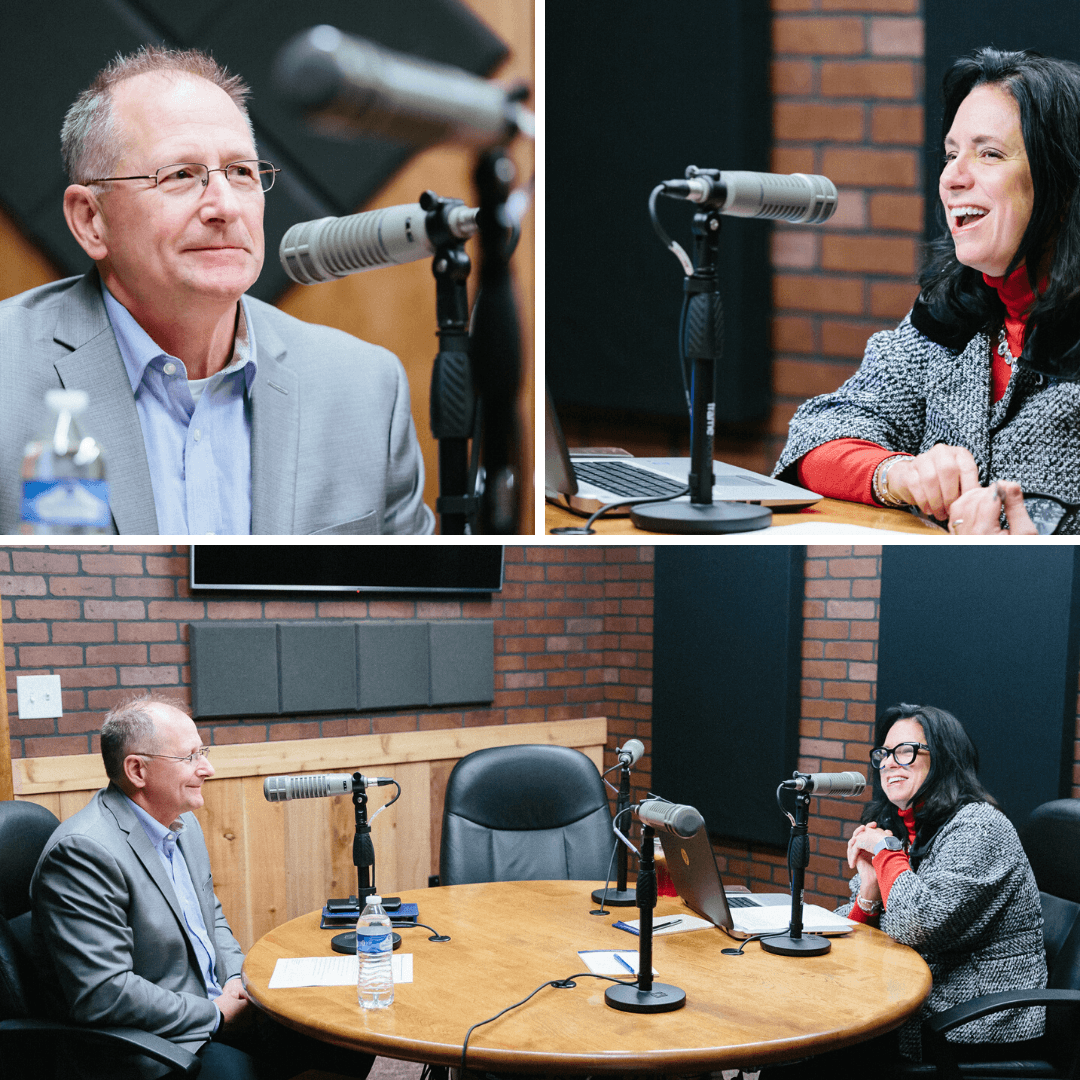
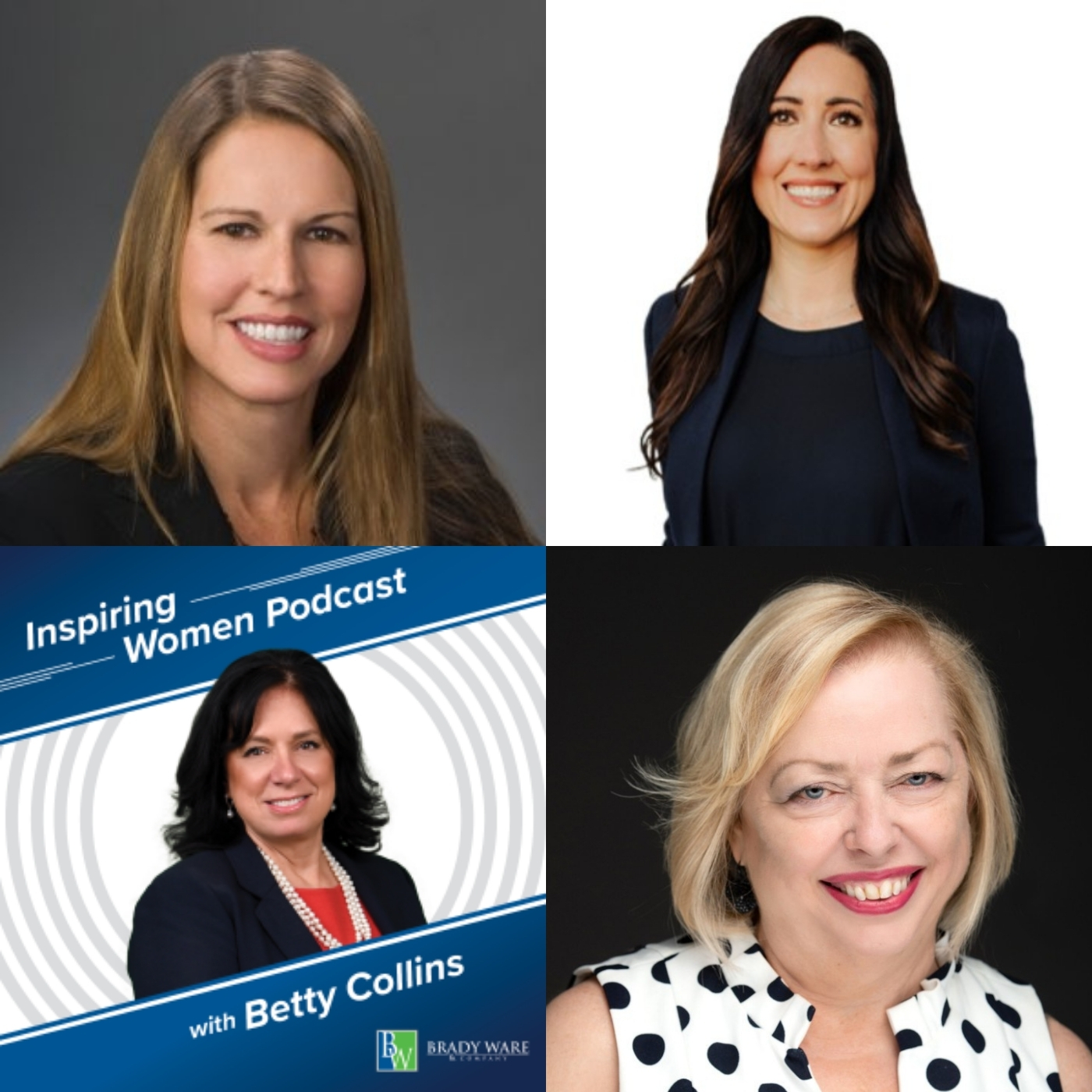
The relationships which spring from powerful partnerships and networks are vital for both professional success and personal growth. On this edition of Inspiring Women, host Betty Collins assembled a mastermind group of dynamic leaders to discuss the power of partnerships:  Mary McCarthy, Women’s Small Business Accelerator, Michelle Casper, NAWBO Columbus, and Rachel Winder, Benesch Law. Inspiring Women is presented by Brady Ware & Company.

Betty’s Show Notes

The underlying issue of this topic is that partnering means that you are not alone while trying to build your career, your business.

My greatest times, professionally and personally, have been when I started these powerful partnerships and networks for women. It continues to play a major role in my life as a leader.

I wish I knew this when I was 20 something, even in my 30s. But I didn’t really get it until I was in my late 40s.

No matter what age you are, or at any point you are in your professional career, it’s really key to have powerful partnerships and networks.

And by the way, it’s not just a professional thing. This continues to be so huge for me personally.  Be open to making sure you’re establishing these types of relationships.

Less is better with relationships, because they’ve got to be correct for you. They need to be strategic, lining up with your why.

I’m not talking about connecting with big names people. I’m talking about people who have similar goals and ethics as you. And they get out there, and they influence.

Never underestimate the power of those partnerships. It takes work and commitment. You’ll need to be consistent and persistent to build these relationships. But the dividends are huge in your personal and professional development and impact.

With me on the episode is Mary McCarthy, Co-founder and President of the Women’s Small Business Accelerator.

The Women’s Small Business Accelerator (WSBA) is a non-profit accelerator founded by successful women business owners for women business owners. They provide education, peer support, mentoring, and accountability to help women on their entrepreneurial journey – to start and grow their own businesses.

I am also joined by Michelle Casper, past President and board member of NAWBO Columbus.

Established in 1996, NAWBO Columbus has a longstanding history in the greater Columbus area. They are currently the largest chapter in the nation and pride ourselves in elevating women business owners through connections, advocacy, and mentorship.

And last, but not least, I am honored to have Rachel Winder, Government Relations Manager with Benesch Law, on this episode. She is the advisor for the Columbus chapter of NAWBO.

Benesch is an AmLaw 200 business law firm and limited liability partnership with offices in Chicago, Cleveland, Columbus, Hackensack, San Francisco, Shanghai and Wilmington.

The firm is known for providing highly sophisticated legal services to national and international clients that include public and private, middle market and emerging companies, as well as private equity funds, entrepreneurs, and not-for-profit organizations.

These three women are willing to give, with a blind eye to how it helps them.

This is THE podcast that advances women toward economic, social and political achievement. Hosted by Betty Collins, CPA, and Director at Brady Ware and Company. Betty also serves as the Committee Chair for Empowering Women, and Director of the Brady Ware Women Initiative. Each episode is presented by Brady Ware and Company, committed to empowering women to go their distance in the workplace and at home.

TRANSCRIPT

[00:00:00] Betty Collins
So, today, we’re going to talk about powerful partnerships and networks for women in business, women leaders, women who own businesses, women in general. And I’ve got just a really, really cool guest, I think you’re going to like them. But I want to talk about powerful partnerships and networks. When I say that, it sounds so mighty, like you could conquer whatever is brought your way. Then this mightiness, on top of that, is just really for women.

[00:00:31] Betty Collins
Even better, right? So, I want to have this podcast today for all of you, because this has been so impactful in my professional and personal life. The underlying issue of this topic is that, partnering implies not being solo or by yourself. My greatest times, professionally and personally, have been when I started these powerful partnerships and networks for women. It has played, and continues to play this major role in my life as a leader. So, I wish I knew this when I was 20 something, hey, even in my 30s.

[00:01:07] Betty Collins
But I did not really get this, and be part of it till my late 40s. So, I really want to communicate to my audience today, to the women in the audience, no matter what age you are, or at the point you are in your professional career, it’s really key to have powerful partnerships and networks. And by the way, it’s not just a professional thing. It has been so huge for me personally. So, really, be open to making sure you’re establishing these types of relationships.

[00:01:41] Betty Collins
And I’ve been in all types of networking groups, we’re not talking about networking today, throughout my career, but it was more like the right thing to do, which is part of my job. It really wasn’t that impactful, but powerful partnering is not having 1200 Facebook friends. It’s not name-dropping. That’s just called connecting or fantasizing that you know all these people. Less is better with relationships, because they got to be correct, and they got to be strategic, and they’ve got to line up with your why.

[00:02:12] Betty Collins
Betty Collins’ why is, when the marketplace works in this country, the world works. And when I know that employers can pay those employees, those are households and families that make up communities. So, my partners have to line up with that. And because women are so, right now, the ones starting businesses, and such a dominant presence in the marketplace, it all comes together. So, today I want to talk to you, first, why powerful. Powerful means to me, it’s not having this great power or prestige, but its influence.

[00:02:50] Betty Collins
I’m not talking about big names, I’m talking about people, the ones who have my similar goals and ethics, and they get out there, and they influence. Powerful, meaning to me, that they don’t know just- that they support my why and my purpose. So, today, I want to talk to you about three organizations that have had powerful partnerships in my life. And the impact has been overwhelming, I am extremely grateful. Partnering with these organizations is, really, partnering with its members. It’s developing relationships within the organization, one relationship leads to another, and that’s why I can add the word powerful to it.

[00:03:30] Betty Collins
My company in 2012 merged into Brady Ware, and I met these two women, Caroline Worley and Mary McCarthy. These women have been powerful partnerships, and introduced me to an entire network of women. I’m very grateful for them. And they also founded the Women’s Small Business Accelerator, which is an organization that is pretty easy to understand. It’s women in small business accelerating. And so, today, Mary McCarthy is going to join us.

[00:03:57] Betty Collins
Then they introduced me to the Columbus chapter of the National Association of Women Business Owners in 2014. And I will tell you that my world changed, not because I was a member of this organization, but because of the members, and what the organization stood for. And so today, Michelle Casper, who is the current president of our chapter, will join us. And then lastly, I met Rachel Winder of Benesch who advocates for women. She is the advisor for the Columbus chapter of NAWBO.

[00:04:31] Betty Collins
I was so awed by her connection and networking, got really hooked when I went to Advocacy Day in Washington, DC, when I was the president of NAWBO in June of ’19; when Washington, DC was a fun place to go do so. But during COVID-19, she just started this Friday call. And I will let her talk about that, and in that Friday call, became this organization, the Ohio Women’s Coalition. I’m going to call it, I have a powerful panel today that represent these three wonderful partnerships and networks for women leaders in Columbus, Ohio, and really outside; all of the state of Ohio, for some of them. We give our time, and our treasure, and our talent to them, and it’s all good, but I really am Betty Collins today because of them.

[00:05:19] Betty Collins
And never underestimate the power of those partnerships. It takes work and commitment, you got to be consistent to have these relationships, but the dividends are huge in development and impact. And by the way, my business also just happened to triple as I started being in these groups. But that is a byproduct. So, I’m not talking about powerful partnerships that you can network and grow business.

[00:05:43] Betty Collins
Oh, by the way, that happens. I’m talking about powerful partnerships that really get to your core, they help you with that why, they have impact, and you get some clients along the way, and have some fun. So, we’re going to just talk about these organizations, and we’re going to start with Mary. Mary, just give me your 30 seconds, if you can, it probably is going to go longer, on the WSBA, and then expand on the impact it’s had on you as a leader. So, welcome, Mary.

[00:06:15] Mary McCarthy
Hey, Betty. Thanks for having me on the podcast. So, the Women’s Small Business Accelerator. What we do is we empower women to dream, and to dream big. And then we help them achieve that dream. So, that’s a really important statement, it goes beyond just wanting to be a business owner, but being successful at it. So, we accomplish this by providing tools. And the tools include our education, our training or mentoring, and even the most important, our ongoing support, so that they can be very successful. Our end goal is to monetize our business culture, so that it meets every woman’s big-picture dream of caring for themselves, their families, and their communities.

[00:07:00] Mary McCarthy
So, when you’re talking partnership on this podcast, that’s a very important part of what we do, because we do not believe you should struggle alone. So, we encourage all women, regardless of income, or education level, to include us as a partner in their business ownership success. So, how does this impact me as a leader? It’s very interesting when you think about what leadership means. It means looking at the big picture, surrounding yourself with like-minded people that can help you accomplish your goals, and most importantly, asking for help. So, you believe in that as well, Betty, right?

[00:07:43] Betty Collins
I do, I do.

[00:07:43] Mary McCarthy
We like to think that we can do it all ourselves as women, but the more we ask for help, the more we accomplish.

[00:07:51] Betty Collins
And I know that I have actually utilized the services of the WSBA, because I was a mentee and I needed a mentor. Betty Collins just doesn’t know everything, I know that’s hard to believe, but it’s true. And I really- it was impactful to have this woman who could see my world differently, and then help me understand it. It was really good. So, explain a little bit more, how has this organization impacted you, Mary, as a woman leader?

[00:08:21] Mary McCarthy
There are a number of things that, throughout my career, have impacted me as a leader. And I think that’s an important point we always have to remember. But how did it really help me? When I first realized the desire to create this organization. I took my own advice, and I reached out into the community, and asked people what they thought, what were the needs, what could they use if an organization was created. And by listening, it was amazing to me, all of the incredible ideas that were brought forth, all of the needs that were uncovered. And I have to say, we’ve been around for eight years now, and the incredible women that have supported us, and shared that what we’re doing has really helped so much. It’s amazing to me, but I’m leading by listening.

[00:09:16] Betty Collins
Well, I appreciate your thoughts. We’re going to move on to Michelle Casper, who is the NAWBO president, and she is an attorney. So, Michelle, give us your 30 seconds, if that’s possible, it might take longer, on NAWBO Columbus. And tell us about that first day you walked into that lunch, I always love to hear you talk about that, and then the impact that it’s had on you as a leader.

[00:09:39] Michelle Casper
Thanks, Betty. And thank you for having me on this podcast. I’m really excited to be here, and I’m excited to be in the company of other great women. And I love this question about the first day you walked into a NAWBO lunch, so let me set the stage. This was about five or six years ago. I had moved from Chicago, where I was, at the time, an associate in a Midwest law firm. Moved to Columbus, Ohio. It was an out-of-the-blue move that came with a job opportunity for my husband.

[00:10:09] Michelle Casper
We packed up our young family, we moved to Columbus, Ohio. I knew not a single person. There was nobody in the city that I knew, other than my husband. And a colleague in my Indianapolis office said to me, “Hey, there’s this organization called NAWBO. I think you should go and check it out.” And I said, “Okay, great. I don’t know anybody. I’ve got to start to get to know some people.”

[00:10:33] Michelle Casper
And I was a little nervous, because I didn’t know anyone, and I was going to go to this event. So, I called up a friend of mine and I said, “Hey, let’s go to this NAWBO event.” It was a good-to-great event. So, our good-to-great is when we bring together inspiring, influential women in the community, and we give other business owners, and women in business an opportunity to roundtable with them. So, I remember that day so distinctly, and I walked into the room knowing nobody, with my friend by my side, and people just started coming up to me, people that I didn’t know.

[00:11:11] Michelle Casper
And they’d say, “Hi, my name’s Sue. What’s your name? What’s your business? Tell me about your life. How can we help you?” And this happened over and over at this meeting. And I left there, and I was just so blown away, and so inspired. And when I look back at that meeting, I realize that it taught me why it’s so important to give as a leader. And I think when we’re in a leadership position, and we have built up those connections and partnerships, we gain more by sharing them.

[00:11:45] Michelle Casper
We gain more by connecting people through introductions, strategic alliances. And I think when you get to that point as a leader, it’s really important to listen to what people need, and Mary touched on that a little bit. And it’s important to provide a path for them, that perhaps, they didn’t know existed. And that was really what was done for me when I walked into that first NAWBO meeting. And quite honestly, it solidified my belief and my passion in the organization.

[00:12:14] Michelle Casper
And it’s why I’m sitting where I am now as the president, trying to get back. It’s because somebody gave to me in the first place. And when we look back, we really have no idea, the power of our kindness, and our time, and our resources until we start to give them away. And that was really the foundation of building powerful partnerships in my life here in Columbus, where I knew no one. And now fast forward five, six years later, we just opened up our very first office here in Columbus, Ohio, for my firm, Smith Ahmanson. And these things would not be possible had I not walked into that NAWBO meeting, and started to meet the women that would really change the path for me.

[00:12:57] Betty Collins
And you know what I love with the first two of you? First of all, by the way, Michelle is the president of NAWBO during a pandemic. She has just really been this amazing leader through this time, but anyway. But what you’re hearing from the first two guests, and you’ll hear from the third is, when they’re talking about powerful partnerships, they didn’t bring up that, “My book of business grew.” They didn’t bring up that, “Hey, look what I got.” They’re talking about the giving factor, which is awesome.

[00:13:28] Betty Collins
So then we go to Rachel Winder. And Rachel is, I don’t know anyone who doesn’t know Rachel in Columbus, Ohio, or in the state, because she is such an advocate for women and what we could-. We have a long way to go, and she’s just really in the fight with that. And I met her through NAWBO as well, and then we attended the advocacy day together. So, Rachel, give the audience a feel on how this Friday’s at noon, during a pandemic, we formed this amazing organization.

[00:14:00] Rachel Winder
Absolutely, yeah. Thank you, Betty. Thanks so much for having me. So, this all happened organically in the middle of a pandemic. It was March of 2020, and the Ohio governor, Governor DeWine, had, basically, shut down the economy here in Ohio to help keep us healthy. But he put together a commission coalition of individuals that were called the Economic Recovery Committee, or Economic Recovery Commission. It’s a group of businesses that were going to help open up the economy back up.

[00:14:41] Rachel Winder
A number of organizations were concerned that the individuals that were serving on this economic recovery committee weren’t necessarily representative of the businesses in Ohio. There were zero micro businesses, or businesses that had less than twenty employees. There were limited women that served on this recovery committee, and there were limited minorities that served on this recovery committee, and that wasn’t right. And there were a number of organizations that were concerned and wanted to, for lack of a better word, put out a scathing letter condemning the acts of the governor.

[00:15:21] Rachel Winder
And they came to NAWBO Colombus, and I’m so fortunate I’m the public policy adviser for NAWBO Columbus. And they asked our opinion, do we want to join this letter? Do we want to sign on? And it was of my opinion and many others that, “Hey, why don’t we pull back? Why don’t we see if we can find a seat at the table? Why don’t we find a way if our voices can be heard? Instead of just complaining or being upset that they’re not, let’s just make sure that they are.”

[00:15:51] Rachel Winder
And so, I called the governor’s office, and I managed to get somebody who was willing to talk with us, who was an adviser to the governor that was putting together this economic recovery. And all of these organizations came together on a Zoom call. This was when Zoom- this, maybe, was my second Zoom call ever. But all of these organizations came together, and we had this individual from the governor’s office. And all of a sudden, the light bulb went off that, “Holy moly, look how energized we are. Look how powerful we are. Look at all of us together here in this room making our voices heard, in this virtual room.”

[00:16:36] Rachel Winder
But anyways, it was so inspiring, and so successful that- it happened to be Friday at 11 o’clock that week. And we immediately were like, “Well, who else could we get to join this call? Who else needs to hear our voice?” And lo and behold, every Friday at 11 o’clock, we started inviting people to the room, and what was so, and almost surprising to me, was that they came. And another light bulb moment was when, I hate to be surprised that they came, but I was surprised that they came. I’m no longer surprised, now I expect them to be there.

[00:17:15] Rachel Winder
But we asked a division of the Development Services Agency, which is a cabinet in the governor’s office. And there’s a small division inside of it. And we asked that director to join us, and they instead, bumped us up to the governor’s cabinet member, Director Lydia Mihalik, and said, “She should be on this call, not me.” And that, again, was a light bulb moment, like, “Holy moly, I cannot believe we’ve been bumped up to the director.” Normally, I’m bumped down to the assistant, to the assistant.

[00:17:46] Rachel Winder
So, here we are getting bumped up, and we realize the power of this collective voice. And so, long story short, we incorporated, and we became the Ohio Women’s Coalition, and we’re the first statewide organization fighting for women’s economic growth and women’s businesses on a statewide level. And I’m so proud of Betty and Mary on this call, both who have joined the board, and who are there with me fighting all the way.

[00:18:22] Betty Collins
So, those are three of my favorite organizations, the WSBA, NAWBO Columbus, and the Ohio Women’s Coalition. These are organizations and partnerships. This is not networking. These are partnerships, powerful ones that you get to have impact, supports your why, and you do get to meet more people and network with the right people. So, I have some questions for each one of them.

[00:18:51] Betty Collins
So, thank you, first of all, for describing your organizations. I wanted people to get a feel for that. So, I’ll go to Michelle. Michelle, and probably, if I ask all three of you this question, you answer it fairly same. So, give me your definition of a powerful partnership and network. Outside of NAWBO, you’ve described that, but give me that definition.

[00:19:12] Michelle Casper
So, I really think this goes back to people who are willing to give, particularly when they don’t see what they may gain in return. And when I think about a powerful partnership and network, that’s something that takes time to grow and cultivate, it doesn’t happen overnight. And it’s really much like a deep friendship; you have to grow it over time through trust, devotion and care, and it can’t be one-sided.

[00:19:41] Michelle Casper
When I think about the partnerships and networks that I’ve developed over the years, I see the growth over time, and how I grew that mutual respect. And I really had to take the time to do more listening in the beginning. And to a large extent, that still rings true today; we have to listen to learn. So, when I think about a powerful partnership, I think that that is a group of individuals who have your back, but who also challenge you to be better than who you were the day before.

[00:20:12] Michelle Casper
The people that have been really instrumental in my life have pushed me out of my comfort zone, and they’ve pushed me to places that, maybe, I didn’t even think was possible in my own head. And I think if you ask really successful people what their secret is, that’s a common topic among top executives and top women in their field. “What’s your secret? How did you get there?” They almost always tell you a story about someone else great who believed in them, and who helped them build a powerful network. And I think that’s especially true for women. The mentors that we can develop through these partnerships and networks can really change our path.

[00:20:53] Betty Collins
That’s really good. Great points in there for sure. Rachel, when you’re looking for that partner or, “Hey, let’s go build a coalition.” What characteristics must be there in the people that you’re bringing together?

[00:21:10] Rachel Winder
So, I thought about this. Three came to mind, but there’s lots. But the top three that I thought about right away were, passion. Just listening to the three of you, you all have such passion for what you do, it’s so obvious. I have to have that in my network, so I have to know that they’re passionate. I need to know that there’s authenticity, that it’s an authentic belief in what you’re doing, for the right reasons

[00:21:44] Rachel Winder
Like Michelle was talking about, just giving back. How Betty is so generous with her time, Mary creates organizations to help people. You have to be authentic about what you’re doing, and why. And then, also, I need to be inspired. So, I need to- I think I’m, just by nature, a little bit lazy. So, I really need to be inspired to action.

[00:22:11] Rachel Winder
I need to just- you need to- so, I guess that’s part of the passion and part of the authenticity, but I just need to be inspired by what the organization is doing. I need to just believe that they are doing it for the right reasons, and it’s the right fit for me.

[00:22:28] Betty Collins
Well, Michelle and Mary, do you see Rachael as being lazy?

[00:22:35] Mary McCarthy
Did you hear me chuckle in the background?

[00:22:37] Betty Collins
I did. I did.

[00:22:40] Mary McCarthy
No, Rachel. I think you’re the only one that sees that in you.

[00:22:44] Betty Collins
Yeah. Yeah.

[00:22:45] Rachel Winder
Wow, that’s nice. Well, thank you.

[00:22:48] Betty Collins
Well, knowing Mary in the partnership of the three of us, or the four of us on the phone today, I gave this question to her because she can do things so well. And so, you’ll like the question; when do you not partner and network, and how do you politely divorce yourself? I think only Mary can do that well. So, what would you say? Because there’s times you don’t want to partner and network, right?

[00:23:10] Mary McCarthy
So, Betty, first of all, I cracket up because that’s the question that you gave me of the three, right? So, I’m going to say, I love what I was hearing from everybody, such great advice so far. And you’re right, there are times that we need to either not partner or we need to, maybe, decide that we need to move on. And like everybody else on this call, I’m a very strong believer in partnerships; together we can be unstoppable.

[00:23:41] Mary McCarthy
But if we find that a partnership is not working or that, maybe, we’re not going in the same direction, then the best advice that I can give, truly, is just to be honest. So, start with communicating, and see if you can work out the differences. Because oftentimes, we think we’re communicating, when we’re not really saying the same things to each other. So, we have to listen to what the other person is saying, to make sure we’re on the same page.

[00:24:12] Mary McCarthy
And if we can resolve that first, then great. But if we can’t resolve it, then we do need to look at, potentially, moving on. There’s a really great book that I read, it’s my all time favorite, and I recommend it to everyone. It’s called Essentialism, The Disciplined Pursuit of Less, by Greg McKeown.

[00:24:33] Betty Collins
Great book. Love that one.

[00:24:34] Mary McCarthy
Isn’t it? A fabulous book. He talks about being realistic with your time. Because sometimes partnerships don’t work just because you’ve overcommitted, and you’ve added one more thing to your to-do list, that you really just don’t have the time to do. So, if it doesn’t fit- so, his concept is not less, but more, it’s less, but better. What can we be/do that we can be the best at? So, if we’re going to partner, we want a partner well.

[00:25:03] Mary McCarthy
We want to communicate clearly, and we want to really make sure that we work together to the hit end goals. And if it’s not working, and the communication doesn’t work, then we just have to, again, honestly communicate and say, it just doesn’t work. And you need to move on. So, you don’t want to be passive aggressive, you don’t want to just disappear and not communicate, because then they don’t understand. So, as long as you communicate honestly, they may still be mad at you, but that’s okay, because at least you communicated, and with a positive intent.

[00:25:36] Betty Collins
This year, one of my themes in my life is, for my mental state, is you’ve got to know the difference between branches and twigs. Branches give life, and twigs are good for firewood, and they burn and they’re done. And I think it even speaks for itself, but you do have to make those decisions sometimes, of this is just not- this isn’t lining up for me.

[00:25:57] Betty Collins
And then you waste a lot of time in a partnership or in a network that’s not alignment, and time is too precious. So, Rachel, can you give us an example of your best powerful partner? And you don’t have to say NAWBO, and you don’t have to say- but it could be a person, it could be whatever. But who is that best that you’ve had, and why?

[00:26:19] Rachel Winder
Wow. So, I hope this isn’t cheating, but it is NAWBO.

[00:26:24] Betty Collins
Okay, good. Michelle we like that, right?

[00:26:27] Rachel Winder
Absolutely.

[00:26:29] Michelle Casper
Yes, we do.

[00:26:30] Rachel Winder
It’s absolutely NAWBO Colombus. They introduced me to just finding that passion. Before I was introduced to NAWBO, I’ve done lobbying my entire career, and most of my career was lobbying for the large Fortune 50 telecommunications companies. And they were great jobs, don’t get me wrong, great opportunities, telecommunications are really important, but I don’t think I ever realized I was missing something from that opportunity.

[00:27:05] Rachel Winder
And in 2014, I had the opportunity to work with NAWBO Columbus, and it was from you all that I just learned about how inspiring, and exciting, and fun it is to accomplish something, and be passionate about it. And the Organization of Women, I have a similar story to you, Michelle. My first time walking into a NAWBO meeting, it blew me away. Mine was a big visionary award event, it was unbelievable, I’ll never forget it. But it’s absolutely NAWBO Columbus.

[00:27:36] Betty Collins
Thank you so much. It’s been extremely impactful for all of us on this call, for sure. But that’s a good example. Michelle, we’re in 2021. What powerful partnerships and network is going to help women in leadership today, outside of the three that we’ve talked about? Maybe something else that you’re familiar with.

[00:27:59] Michelle Casper
So, I’m going to pivot this one a little bit, and answer it with almost a question, but I’m going to tell you why. So, I think this is a great question. And I really sat with it for a long time, as I prepared for today. And the three organizations that we’ve highlighted on this call are just influential, wonderful organizations, and places where women who are developing leadership, growing their businesses can absolutely look to, and get involved in, to really further what they’re trying to do in their lives.

[00:28:31] Michelle Casper
And I think women, in particular, and I think that this is highlighted since the pandemic hit, are facing an incredible shift in the demands placed upon us. And it’s absolutely affecting us disproportionately to men. I saw a statistic that in December of just this past year, we lost 140,000 jobs. And all of those were jobs that women lost. And even more alarming is that the job losses disproportionately affected black and Latino women, far more than they did white women. But the job losses didn’t affect men. They actually gained in jobs.

[00:29:09] Michelle Casper
And when we think about what we need for women in 2021, I think we need to start talking more about how we provide resources to women to help them grow, both successful careers and successful families. Back in the 1960s, when the women’s lib movement was really taking root, and we saw these women slip on their heels, and go out to work, and become professionals, what we didn’t see was society and government provide the support that they needed; things like family leave, help with childcare, flexible work hours.

[00:29:44] Michelle Casper
These are all things that we continue to struggle for, and they’re the reasons that we see a lot of women, especially since this pandemic hit, leaving their current jobs. Because we’re really having to juggle a lot with our careers and with our families. And I say that from the perspective of a woman in her early 40s, who has young children at home, with virtual school going on, and really trying to balance a lot, being a partner in my law firm, the managing partner of our Columbus office.

[00:30:14] Michelle Casper
So, when I think about what leadership women need in 2021 and moving forward, I believe, very strongly, that we need flexible options, and we need to start having some conversations about what employers and government support can give to that flexibility, to give us a real shot at not having to choose between family and career. And that’s the question that I leave for the group; what organization is best poised to have those tough conversations, to make sure that the gains that we’ve made as women in business are not something that we lose with all that we’re juggling, especially now during this time, and in our history?

[00:30:55] Betty Collins
Really awesome pivot. Really, really good. I’m going to let Mary and Rachel, do you want to add to that, or respond to that? Because that’s just perfect.

[00:31:06] Rachel Winder
I’m still sad about the statistic, and that we just keep, continuously, being hit, and we’re not getting the support that we need. I tell this story, but if you look at the state budget, which is a two-year 41-billion-dollar budget, two years ago, women were only mentioned in relation to rape crisis centers, and domestic violence, and infant mortality. And so, the support we’re getting from the state is, all these social issues where we’re victims.

[00:31:43] Rachel Winder
And maybe if they invested a little bit up front to help women in businesses and to help this network of organizations that support these, provide direct support services for women’s economic growth, if they just, maybe, looked at the front-end a little bit, it could make a big difference.

[00:32:01] Betty Collins
Any insight, Mary?

[00:32:03] Mary McCarthy
I’m going to join in on that one as well. I think, Michelle, you just said it so beautifully, and Rachel brought up a really good point. And I hear [INAUDIBLE] a statistic that I haven’t run across. And the statistics stated that one percent growth in entrepreneurship can decrease poverty by two percent.

[00:32:25] Betty Collins
Wow.

[00:32:26] Mary McCarthy
Right? So, when we think about what Michelle was saying, the greatest challenge for women is trying to balance all of these different things. And well, my children are growing, because I can work from home, I’m now babysitting. So, along with Michelle, I’m trying to work, and take care of kids, and help with the school work.

[00:32:48] Mary McCarthy
And I’m lucky that I can help, but what do you do if you don’t have that support system, so the majority of things still fall on us, and women have been disproportionately impacted by the current situation, and the businesses that are closing the most are women’s businesses. And when you think about the term lifestyle, they say that most women create lifestyle businesses, as if that’s a negative thing.

[00:33:20] Mary McCarthy
Well, the definition of lifestyle is a business that cares for the business owner, their family and their community. I think that’s a great thing to create a lifestyle business, if you can accomplish those three things. But there are the stylists, the massage therapists, the caterers, and they have been really harmed in this situation. And we have to look at what we can do to support them, because it supports their families, which supports our communities.

[00:33:49] Betty Collins
Well, I could stay on with you ladies all day, but we do have to go. And I cannot thank you enough; the WSBA, NAWBO Columbus, as well as NAWBO National, and the Ohio Women’s Coalition for being here today, first of all, for sharing your perspective, and sharing that impact that it had on you as well as our communities. I’m truly grateful. You all are part of my powerful partners and network, and certainly made me better, professionally and personally.

[00:34:25] Betty Collins
And my leadership skills and influence have, hopefully, had some impact, and I can’t thank you guys enough. And I want to end on one thing that was so positive, that I would challenge anyone who’s listening today. Amanda Gorman, who spoke at Joe Biden’s inaugural, I have read her poem over and over. And I look at that 22-year-old and say, the powerful connection and partnerships that she probably developed that day, but in her life, there’s just impact that will happen.

[00:35:02] Betty Collins
That’s what it is all about. And by the way, you get to know people, you get to have lifetime friendships, you get to have a business that grows. And then you, really, can look back and go, “Yeah, this was really a cool ride.” So, I really appreciate all you guys coming on today.
[00:35:19] Betty Collins
I am Betty Collins, and I’m glad that you joined me. Inspiring women is just what I do, and I leave you with this; being strong speaks of strength, but being courageous speaks to have a will to do more and overcome.

Betty Collins, CPA, Brady Ware & Company and Host of the “Inspiring Women” Podcast
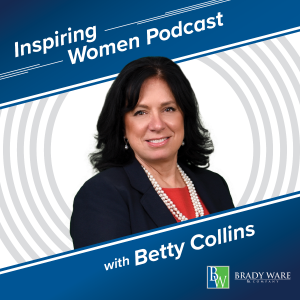
Betty Collins is the Office Lead for Brady Ware’s Columbus office and a Shareholder in the firm. Betty joined Brady Ware & Company in 2012 through a merger with Nipps, Brown, Collins & Associates. She started her career in public accounting in 1988.

Betty is co-leader of the Long Term Care service team, which helps providers of services to Individuals with Intellectual and Developmental Disabilities and nursing centers establish effective operational models that also maximize available funding. She consults with other small businesses, helping them prosper with advice on general operations management, cash flow optimization, and tax minimization strategies.

In addition, Betty serves on the Board of Directors for Brady Ware and Company. She leads Brady Ware’s Women’s Initiative, a program designed to empower female employees, allowing them to tap into unique resources and unleash their full potential.  Betty helps her colleagues create a work/life balance while inspiring them to set and reach personal and professional goals.

The Women’s Initiative promotes women-to-women business relationships for clients and holds an annual conference that supports women business owners, women leaders, and other women who want to succeed. Betty actively participates in women-oriented conferences through speaking engagements and board activity.

Betty is a member of the National Association of Women Business Owners (NAWBO) and she is the President-elect for the Columbus Chapter. Brady Ware also partners with the Women’s Small Business Accelerator (WSBA), an organization designed to help female business owners develop and implement a strong business strategy through education and mentorship, and Betty participates in their mentor match program.

She is passionate about WSBA because she believes in their acceleration program and matching women with the right advisors to help them achieve their business ownership goals. Betty supports the WSBA and NAWBO because these organizations deliver resources that help other women-owned and managed businesses thrive.

Betty is a graduate of Mount Vernon Nazarene College, a member of the American Institute of Certified Public Accountants, and a member of the Ohio Society of Certified Public Accountants. Betty is also the Board Chairwoman for the Gahanna Area Chamber of Commerce, and she serves on the Board of the Community Improvement Corporation of Gahanna as Treasurer.

“Inspiring Women” Podcast Series

This is THE podcast that advances women toward economic, social and political achievement. The show is hosted by Betty Collins, CPA; Betty is a Director at Brady Ware & Company. Betty also serves as the Committee Chair for Empowering Women, and Director of the Brady Ware Women Initiative. Each episode is presented by Brady Ware & Company, committed to empowering women to go their distance in the workplace and at home. For more information, go to the Resources page at Brady Ware & Company.

Remember to follow this podcast on Apple Podcasts and Google Podcasts. And forward our podcast along to other Inspiring Women in your life.

The complete “Inspiring Women” show archive can be found here.
Tagged With: Betty Collins, Inspiring Women with Betty Collins, networking, networks, partnerships, Powerful Partnerships And Networks For Women Leaders, Women in Business, women leaders

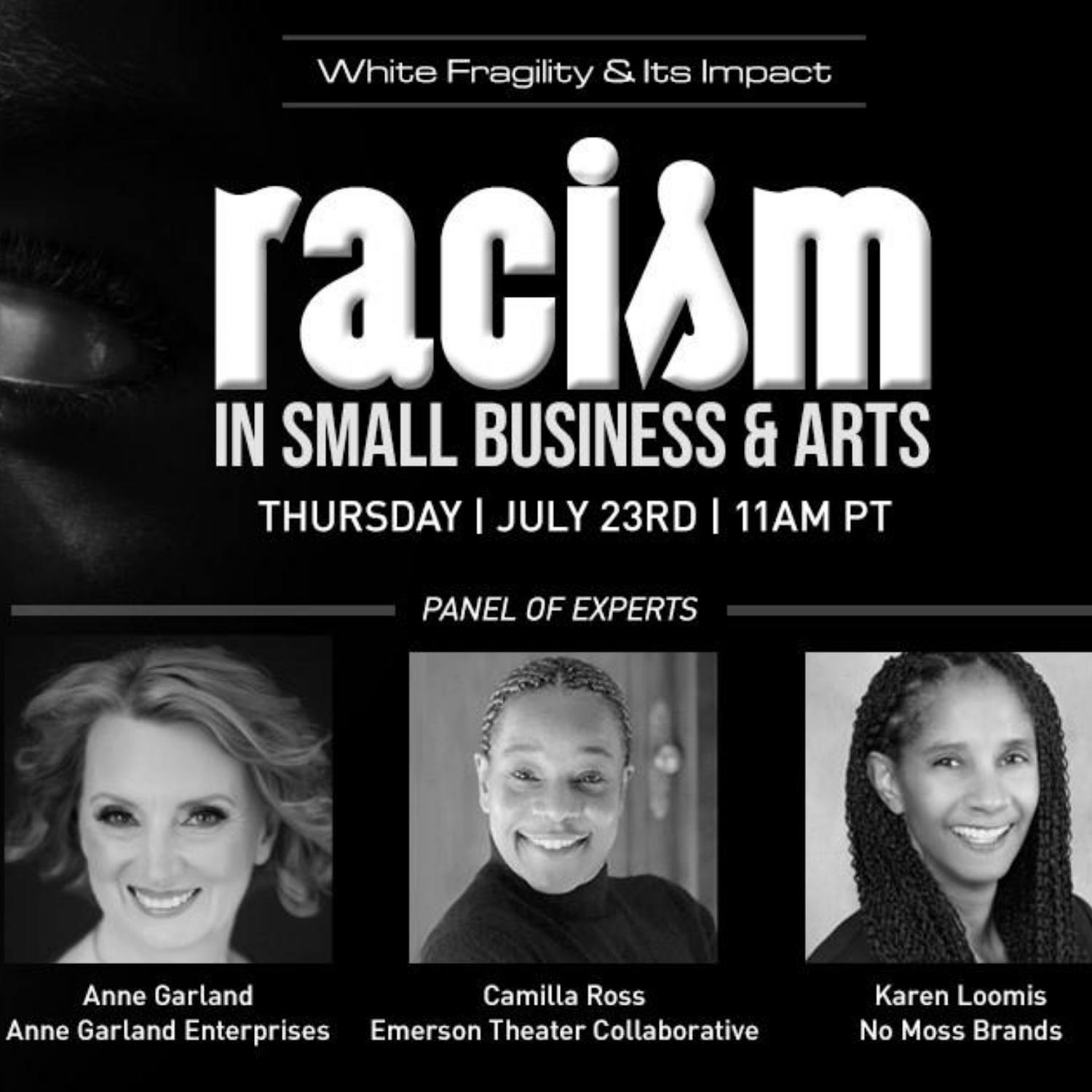
White Fragility and Its Impact | E3

July 29, 2020 by Karen

Phoenix Business Radio
White Fragility and Its Impact | E3
Loading
00:00 /
RSS Feed
Share
Link
Embed

Download file

Racism-in-small-business-andarts

White Fragility and Its Impact | E3

“Always Expect the Unexpected.” That is the motto of Anne Garland Enterprises, LLC. For over 20 years they have taken great pride in creating innovative experiential events for women. Career, body/health, and spirit is the focus as women network with other like-minded women while being inspired to discover and grow through their interactive lifestyle experiences. AGLogoGrayHiRes

Watch for her Virtual Mastery Speaker Series launching in September 2020.

Anne-GarlandAnne Garland (pronounced Annie), a leader for individuals and businesses adapting to change in today’s fast-paced world. Combining decades of sales and marketing experience with her creative expertise in interior design, Fortune 100 know-how infused with sensitivity of heart. With this rare combination she produces and creates extraordinary experiences for women.

Anne joined 19 other women to author Make Your Connections Count. Her soon to be released new book, “Secrets of a Serial Networker”. Launching summer of 2020 is a must for women who want to step out of the shadows and move toward center stage with more confidence and stronger networking skills.

Recently Anne stepped into the role as NSA-CT’s, President of the National Speakers Association, Connecticut Chapter 2020-2021.

Connect with Anne on LinkedIn and follow AG Enterprises on Facebook, Twitter and Instagram.

The Emerson Theater Collaborative (ETC) is a 501(c)(3) non-profit organization whose mission is to serve youth, under-represented communities and artists with an emphasis on diversity, by producing innovative and thought-provoking theater both in southeastern Connecticut and Sedona, Arizona. One such example is a wonderful play called Vivian’s Music 1969 by Monica Bauer that was a featured program at ETC in February 2020.

Camilla-Ross-on-Phoenix-Business-RadioXCamilla Ross is the President and Chairman of Emerson Theater Collaborative, Inc., Producer and Actress (Portray’s Harriet Tubman – Harriet Tubman’s Dream written by Lisa Giordano). She is also the President and Chairman of the Sedona Arts Academy.

“To be a catalyst for social change is really where it’s at for me,” Camilla said. “I believe theater should always be a venue for social change. I love the art of live theater and love what it does to the human soul and spirit. It moves us to look at life differently. To leave off the rose-colored glasses and really see the human condition.”ETC is a shining example.

Founded in 2008 to give voice to actors’ innate talent for character development, Camilla has since produced more than 20 inspired, original performances. Emerging and professional cast and crew have blossomed under her guidance. And together they’ve created profound, can’t-ever-forget shows that illuminate social issues, and transform audience curiosity into concern and action. ETC_Logo_CMYK

Camilla has a deep well of experience and mentorship to tap into for her ETC roles—from her days at Emerson College and then in regional theaters and commercials. Among her favorite portrayals? Capturing the heart, spark, and essence of Harriet Tubman in the one-woman show Harriet Tubman’s Dream. Camilla is also deeply involved with youth, their visions for social change, and the desire to see the world as a stage of peace. To that end, she’s a tireless advocate for children and adults with Asperger’s Syndrome. She gives kids and teen real-life theatrical experience through ETC’s Summer Youth Program and enlivens their eagerness to learn about the history and genuine heroes through ETC’s school programs. Camilla is a steadfast suicide prevention advocate too, helping teens and adults avoid this tragedy and move forward to a happier, more positive future.

Camilla has taught business courses part-time at Three Rivers Community College since 2005, Sat on the Emerson College Alumni Board for ten years, and is past president of the Connecticut Alumni Chapter. In May 2014 Camilla was honored by the Writer’s Block of New London, Conn., for her past work as an instructor. In June 2013 she was named Woman of The Year by the Women’s Network of Southeastern Connecticut, and she’s been featured in many periodicals for her community service. In 2019 Emerson Theater Collaborative was nominated as Collaborator of the year in Sedona AZ. A veteran of the U.S. Navy and member of Kappa Beta Delta, Camilla earned her BA in Performing Arts: Acting from Emerson College in 1985 and her MBA in Finance from Baker College in Michigan.

Connect with Camilla on LinkedIn and follow ETC on Facebook, Twitter and Instagram.

Karen-Loomis-on-Business-RadioXKaren Loomis, Oracle and Founder of No Moss Brands, is no stranger to the impact of racism; not only in her personal life, but professional life as well. In 2000, Karen moved from Spokane, Wa to Phoenix, AZ to find better opportunities as promised by the fifth largest city in the U.S. With only 2% AA, Spokane proved to be a challenging environment, as is Phoenix, with only 6% AA.

Karen has never shied away from the many barriers racism presented. She has always felt her extensive education and professional experiences could overcome these often invisible challenges.Unfortunately, institutional racism has proven to be too big of a hurdle for one person to take on. Using No Moss Brands as the vehicle, Karen will use her voice to open the eyes of others who are willing to join all People of Color on this journey to change. You in?

Connect with Karen on LinkedIn and follow No Moss Brands on Twitter and Facebook.


Tagged With: networking, networking events, Virtual Mastery Events, Women in Business, Women's Events

GWBC Radio: Eleshia Cash with Jackson HR & Administrative Services

May 28, 2020 by angishields

Jackson-HR
GWBC Radio
GWBC Radio: Eleshia Cash with Jackson HR & Administrative Services
Loading
00:00 /
RSS Feed
Share
Link
Embed

Download file

Elishia-CashEleshia V. Cash, CEO of Jackson HR and Administrative Services, is an outstanding woman who is well respected as a community and spiritual leader as well as an HR professional. She has hosted various HR Professional Workshops, Women’s Empowerment Conferences, and Job Networking Meetings.

Eleshia is known for being The Collaborator across many platforms. She is a dynamic speaker, trainer, and contributor of content who is well- respected as a community and spiritual leader as well as an HR professional. She is a truly unique individual that wears many ‘hats’ and has made her mark in the community due to her passion for women, her church, her business, and her own non-profit organization which promotes Young Women in Leadership.

Eleshia is also the author of the Little Red Networking Book (Women’s Empowerment 1st Edition) and the Little Red Networking Book Companion Planner which offers a one of a kind blend of tips to assist women with building a strong network of connections.

Connect with Eleshia on LinkedIn and follow Jackson HR on Twitter and Facebook.

Show Transcript

Intro: [00:00:04] Broadcasting live from the Business RadioX studios in Atlanta, Georgia, it’s time for GWBC Radio’s Open for Business. Now, here’s your host.

Lee Kantor: [00:00:18] Lee Kantor here. Another episode of GWBC’s Open for Business. And this is going to be a fun one. Today, I have with me Eleshia Cash. And she is with Jackson HR and Administrative Services. Welcome, Eleshia.

Eleshia Cash: [00:00:31] Hello, everyone. Thank you so much for having me today.

Lee Kantor: [00:00:34] Well, before we get too far into things, tell us about Jackson. How are you serving folks?

Eleshia Cash: [00:00:40] Well, Jackson HR and Administrative Services was initially a marriage between providing human resources services, as well as administrative services to small and medium-sized businesses. And so, we brought those two skills together because many businesses may need some type of partnership around providing those specific services to help their businesses navigate through their employee and HR needs. And so, right now, in this current space, we’re figuring out ways to pivot and do things differently with business services but, traditionally, those are the type of things that we provide.

Lee Kantor: [00:01:24] Now, how’d you get into this line of work?

Eleshia Cash: [00:01:27] Well, I have over 20 years of human resources experience  an administrative services. And so, I’ve always been great at doing things administratively, just something naturally and I get that I was able to do. And I wanted to bring those two passions and those two skill set together. And that’s how the business started with bringing those services together.

Lee Kantor: [00:01:51] And then, now, your work has shifted because of the pandemic we’re in, you’ve had to make some changes. Can you talk about those and what you’re doing now?

Eleshia Cash: [00:02:00] Yes, the needs and the clients have changed. And so, now, with over … I believe we’re up to 30 million people out of jobs right now, the services have changed to service that clientèle to workforce development. How do we support these people who was navigating in their careers? So, we’re providing workshops for them, professional self-profiles, redoing resumé workshops, and teaching them how to pivot into different careers, supporting them in their networking initiative, teaching them how to network online in a virtual space. And so, just providing a lot of support for workforce development at this time.

Lee Kantor: [00:02:44] So, now, one of the, I guess, kind of core values of your organization is leveraging the power of networking. Can you talk about the Little Red Networking Book and how that impacts your business?

Eleshia Cash: [00:02:59] Yes. Well, one of the things that we try to teach people to do is network before you really need the network. It’s so important for people to look at the network that they already have, people they may have gone to school with. If anybody’s gone to high school, there’s some type of mommy association, or college, or alumnae, or people that you’ve worked with. Teaching them how to network on different platforms such as LinkedIn. These are avenues and vehicles that could help you within your career and  land use your next best opportunity.

Eleshia Cash: [00:03:35] And so, within our human resources services, we begin using our networking platforms to teach people the skills of networking. So, that’s what we talk about in the Little Red Networking Book. We found that especially women have not mastered the skill of networking. We know how to socialize, but we haven’t mastered the skill of networking, which is something totally different. So, within the Little Red Networking Book, we talk about how to develop your net-connect strategy, which is a combination of networking and connection and building those strategic relationships.

Lee Kantor: [00:04:15] And each of the different platforms has a different style, right? Like, what’s acceptable in one environment may be unacceptable in another. And you’ve got to kind of know the lay of the land and the language of each of those groups, right?

Eleshia Cash: [00:04:29] Exactly. We find out a lot of people don’t necessarily know that. And so, teaching people how to nurture your network will help you develop, and create, and start a networking strategy. We talk about even the virtual events right now that are on so many different platforms since the COVID-19. Be strategic in the ones that you’re going to. Make sure that you are putting yourself in a position to be in a circle around other people that have the same goals and missions that you have. Do the research on the speakers. Find out who’s presenting that day, and how they could help you, or how you can help them. Teaching people not to approach individuals during this time on, “Oh, how can you help me?” but finding out a way of how you can help them or how you can start because it’s in the helping that you begin to network, and meet different people, and expand your network.

Lee Kantor: [00:05:30] And then, if you do that right and you create those win/win opportunities for all parties, then you really have something, right? That’s when your organization can really expand and grow.

Eleshia Cash: [00:05:42] You use my keyword, which is the win/win. I talk about that so much about strategic partnerships. You know that you had developed a network when it’s a win/win for both parties. When it’s something that you’re giving, and you’re helping them with, and they can turn around and help you, that is a win/win connection. And so, you have net-connected when you’ve done that.

Lee Kantor: [00:06:06] And then, sometimes when you do that right, that’s additional ways to make revenue in ways that maybe you hadn’t considered previously, right?

Eleshia Cash: [00:06:16] Exactly. It’s about the support, promote, and refer piece of it. When you couldn’t make that win/win connection, you never know. You become a connector when you may connect two individuals together, or you become a supporter when you’re supporting someone. And then, you become the promoter where you end up promoting that person. Then, that person turns around and does that same thing for you. Then, that’s when the strategic partnership or the strategic connection is made, and you start seeing the revenue coming in due to those connections because you made a power move in connecting and networking.

Lee Kantor: [00:06:57] Now, speaking of power moves and powerful organizations, can you tell us about GWBC? How has that organization impacted your work?

Eleshia Cash: [00:07:07] Oh, it has impacted my words tremendously. It has allowed me to connect with some powerhouse women who are making great strides in their businesses to network with them, to learn from them, especially during this pandemic to even lean on them, to find out what are they doing in regards to the different stimulus packages that have been provided, and how they’ve navigated the trajectory of their business. And a lot of them are having to make changes, and it’s great to have the support of different women to lean on for guidance on making those changes.

Lee Kantor: [00:07:50] And that’s something that’s important in any network, right? It can always be about, “What’s in it for me?” You’ve got to really have a lot of empathy and look at things through the eyes of the other people in the group. And if you emphasize serving, and helping, and supporting, a lot of magical things can happen.

Eleshia Cash: [00:08:12] Exactly. One of the things that I talk tremendously about is the state of collaboration. And what I’ve noticed during this time, it has been easier for me to use that word and use that verb again, and people have been happier to embrace collaborative effort. Now, we’re in a phase where we’re able to lean on one another for ideas, and for support, and to go after things together. And so, yes, having this network has been very phenomenal to allow us to navigate such a time of this where there’s a lot of loss with businesses and uncertainty. So, to have the women business enterprise support, providing the resources, then to put in the tools and guidance has been so great to my network professionally.

Lee Kantor: [00:09:06] So, now, who is your ideal client? And how can we help you find them and let them know about the work you’re doing?

Eleshia Cash: [00:09:14] My ideal client, of course, right now, are women who are trying to learn how to network, who would like guidance in networking and in establishing strategic partnership. There are a lot of people out there that are introverts, and they just have a hard time getting started. They don’t know how to approach the networking component. And they know that networking correctly can really bring in strategic partnership that help revenue come in and to be ongoing revenue that’s continuous. And so, women is our ideal client. And also, people that are looking for employment right now. Anyone that needs help with their professional profiles, we’re doing resume, interview workshop, any of those things is going to prepare them professionally for their next career opportunity. Jackson HR and Administrative Services is here to support them.

Lee Kantor: [00:10:16] Now, in your work, is there any opportunity to partner with maybe affiliate programs or different ways that you can create those win/win opportunities with your ecosystem?

Eleshia Cash: [00:10:31] Yes, there are. Because we believe in nurturing your network, we are open to affiliate programs and partnering with other organizations and programs. Yes. So, contact us at Jackson HR Administrative Services, and we’ll be happy to work on that mission with you.

Lee Kantor: [00:10:50] So, that’s something where if somebody has a complementary service that’s not exactly what you do, but maybe adjacent to what you do, where you can work together, and there can be some sort of a revenue share or client share?

Eleshia Cash: [00:11:04] Yes. Yes, exactly.

Lee Kantor: [00:11:07] And then, if somebody wanted to learn more about what you’re up to, or network with you, or hire you, is there a website?

Eleshia Cash: [00:11:16] It sure is. We can be down at jacksonhrservice.com. My email address is jacksonhrservice@gmail.com. So, either one of those avenues or websites or email, you can contact us directly, and we could provide more information about our service or opportunities to connect, collaborate and work together.

Lee Kantor: [00:11:40] Thank you so much for sharing your story today.

Eleshia Cash: [00:11:44] Thank you so much for having me.

Lee Kantor: [00:11:46] All right. This is Lee Kantor. We’ll see you all next time on GWBC Open for Business.

About Your Host

Roz-Lewis-GWBCRoz Lewis is President & CEO – Greater Women’s Business Council (GWBC®), a regional partner organization of the Women’s Business Enterprise National Council (WBENC) and a member of the WBENC Board of Directors.

Previous career roles at Delta Air Lines included Flight Attendant, In-Flight Supervisor and Program Manager, Corporate Supplier Diversity.

During her career she has received numerous awards and accolades. Most notable: Atlanta Business Chronicle’s 2018 Diversity & Inclusion award; 2017 inducted into the WBE Hall of Fame by the American Institute of Diversity and Commerce and 2010 – Women Out Front Award from Georgia Tech University.

She has written and been featured in articles on GWBC® and supplier diversity for Forbes Magazine SE, Minority Business Enterprise, The Atlanta Tribune, WE- USA, Minorities and Women in Business magazines. Her quotes are published in The Girls Guide to Building a Million Dollar Business book by Susan Wilson Solovic and Guide Coaching by Ellen M. Dotts, Monique A. Honaman and Stacy L. Sollenberger. Recently, she appeared on Atlanta Business Chronicle’s BIZ on 11Alive, WXIA to talk about the importance of mentoring for women.

In 2010, Lewis was invited to the White House for Council on Women and Girls Entrepreneur Conference for the announcement of the Small Business Administration (SBA) new Women Owned Small Business Rule approved by Congress. In 2014, she was invited to the White House to participate in sessions on small business priorities and the Affordable Care Act.

Roz Lewis received her BS degree from Florida International University, Miami, FL and has the following training/certifications: Certified Purchasing Managers (CPM); Certified Professional in Supplier Diversity (CPSD), Institute for Supply Management (ISM)of Supplier Diversity and Procurement: Diversity Leadership Academy of Atlanta (DLAA), Negotiations, Supply Management Strategies and Analytical Purchasing.

Connect with Roz on LinkedIn.

About GWBC

The Greater Women’s Business Council (GWBC®) is at the forefront of redefining women business enterprises (WBEs). An increasing focus on supplier diversity means major corporations are viewing our WBEs as innovative, flexible and competitive solutions. The number of women-owned businesses is rising to reflect an increasingly diverse consumer base of women making a majority of buying decision for herself, her family and her business. GWBC-Logo

GWBC® has partnered with dozens of major companies who are committed to providing a sustainable foundation through our guiding principles to bring education, training and the standardization of national certification to women businesses in Georgia, North Carolina and South Carolina


Tagged With: empowerment, Hr Needs, Needing Promotion Materials, networking, resources, support

Tisha Marie Pelletier with Tisha Marie Enterprises E14

May 26, 2020 by Karen

Tisha-Marie-Enterprises
Phoenix Business Radio
Tisha Marie Pelletier with Tisha Marie Enterprises E14
Loading
00:00 /
RSS Feed
Share
Link
Embed

Download file

Tisha Marie Pelletier with Tisha Marie Enterprises E14

Networking is one of the many marketing tools that should be used to grow a business. It is important to choose the right organizations to be a part of in order to network with the right people. If it is done right, networking can be one of the best business development tools.

Hear some pro tips about networking from Tisha Marie Pelletier, our featured guest, on in this episode of Lawgitimate, sponsored by X Firm Law, PLLC. She reveals some great do’s and don’ts for anyone who is looking to network and grow their business.

Tisha-Marie-Pelletier

Tisha Marie Enterprises empowers entrepreneurs, both established and in the startup phase, to get out of their own headspace and make their vision happen through business mentoring/consulting, personal brand strategy, professional/keynote speaking engagements, and live quarterly events, Social Connect PHX and Connecting through Community.

Tisha-Marie-PelletierConfident. Witty. Approachable. Authentic with a touch of badass. Tisha Marie Pelletier is the type of entrepreneur who walks the talk and rolls with the punches.

She is the president and chief experience officer of Tisha Marie Enterprises empowering entrepreneurs to make their vision happen through business consulting, personal brand strategy, and her quarterly signature event, Social Connect PHX.

Tisha is also an inspirational speaker, host of The Success over Struggle Podcast, mentors startups at ASU’s Entrepreneurship and Innovation Department and is an author. Her latest book What Are the Odds – A mom shares her good, bad and what the f*ck moments can be found on Amazon and Audible.

Connect with Tisha on LinkedIn, Facebook, Twitter and Instagram.

About Your Hosts

LAWGITIMATE-Rochelle-Poulton-on-Phoenix-Business-RadioXRochelle Poulton is an attorney and owner of X Firm LLC. Rochelle has been helping people with Credit and Debt issues since 2012, owns several small businesses, and has nearly 20 years of real estate experience.

Rochelle created Lawgitimate to bring in a network of awesome people to raise awareness and educate people about the litany of legal issues she faces everyday at X Firm LLC.

Connect with Rochelle on Linkedin, Facebook and Instagram.

LAWGITIMATE-Mike-Poulton-on-Phoenix-Business-RadioXMike Poulton, with Poulton & Noroian,  draws on his knowledge and experience in other fields to serve his clients. As an experienced science researcher, Mike understands technical issues that many other attorneys cannot, and applies that knowledge for his clients’ benefit. His construction management experience also provides him with a broad knowledge base not only in construction law, but also in regulatory compliance, worker safety, and negotiation.

Michael is licensed to practice law in Arizona and is admitted to practice before the U.S. Federal District Courts in Arizona.

Connect with Mike on LinkedIn.

About X Firm PLLC

We help clients improve their financial lives through strategic financial transaction planning. Whether you want to buy a car, a home, or a building, X Firm can help you reach your goals in 3 easy steps.

We are small but mighty and love helping people get back on track financially. Learn more about us at XFirmLaw.com.

Tagged With: Author, business mentor, keynote speaker, networking, personal branding, podcast, Social Connect PHX, Success over Struggle

Deborah Schwartz Griffin, Creative Connector

April 14, 2020 by John Ray

Deborah Schwartz Griffin
North Fulton Business Radio
Deborah Schwartz Griffin, Creative Connector
Loading
00:00 /
RSS Feed
Share
Link
Embed

Download file

Deborah Schwartz Griffin
Deborah Schwartz Griffin, Creative Connector

“North Fulton Business Radio,” Episode 217 : Deborah Schwartz Griffin, Creative Connector

Deborah Schwartz Griffin loves to tell the stories of her clients and make connections which build their business. She joined “North Fulton Business Radio” to discuss the work she does as a “creative connector” and some of her success stories. The host of “North Fulton Business Radio” is John Ray and the show is produced virtually by the North Fulton studio of Business RadioX® in Alpharetta.

Deborah Schwartz Griffin, President and Founder, Creative Connector

Deborah Schwartz is a proven strategic business development and consultative sales leader with more than 25 years of experience generating revenue and fueling growth for companies and organizations. Known as The Creative Connector™, Deborah brings a wide range of skills to the table, including the ability to build trusted relationships and alliances, identify clients’ needs and develop quantifiable results.

Deborah engages with and serves clients as a consultant and coach through the business she founded in 2001, DSG & Associates LLC. Within each engagement, she works with the client organization as its vice president of strategic business development. In this role, she takes a holistic approach with clients — uncovering their pain points and priorities, as well as the impact those factors have on their business, and helping them develop a plan that drives business revenue and growth and generates a return on investment for all. With that approach, Deborah helps her clients continue to build and enhance their organization’s brand, and access a new network of strategic connections and alliances that furthers their strategic business goals and helps them reach the tipping point in their business success.

Her subject-matter expertise includes the following industries and business sectors: restaurants and franchises; foodservice equipment and supplies; hospitality; business advisory accounting, with a focus on finance and operations; trade associations; nonprofits; event production; print, graphic design and social media; and broadcast sales, television news and production.

Deborah’s list of client success stories includes helping a Savannah, Georgia-based print, graphic design and social media company, Creative Approach, open its second location in Atlanta. She created a business development, sales and marketing plan and executed it, along with a strategic networking process that significantly strengthened the company’s overall presence and generated new customers in the Atlanta market.

Working with the Women’s Foodservice Forum, Deborah retained existing partnerships and generated new and incremental business resulting in more than $100K in revenue during a five-month assignment. While helping an accounting advisory and solutions firm, Trusted CFO Solutions, she created and implemented a sales and marketing strategy and action plan that helped gain a prominent multi-unit restaurant client, which led to gaining more clients in the restaurant and hospitality sectors. In another capacity, she helped the largest dealer of foodservice equipment and supplies in the Southeast, Atlanta Fixture & Sales Company, increase its revenue by 20 percent.

During the six years that she worked with the Georgia Restaurant Association, Deborah started as an independent contractor to develop a strategy for growth and to recruit and retain restaurant, allied and corporate sponsor members. Soon after, she was hired full time and later promoted to vice president of membership and sponsorship sales, where she led business development and sales efforts with her team that doubled revenue during her tenure and grew membership tenfold. She also worked for the leading television station in the Southeast, WSB-TV, for 12 years. Through roles in broadcast sales and as business development/co-op/vendor specialist, she helped pioneer cooperative marketing campaigns that generated over $4 million in new business and nontraditional media revenue from clients in the higher education, homebuilding, associations, health care and retail industries.

Accolades received over the years include an Appreciation Award from the YWCA of Greater Atlanta for her dedication as board member from 2003-2010; a spot on the Women Looking Ahead, 100s list; a Special Recognition Award from the Atlanta Women’s Network, where she previously served as president; a Broadcast Sales Excellence Award and a “Woman Who Made a Difference Award” from WSB-TV; and a Women in Communications Clarion Award for her work as producer on a five-part television series while in Cleveland, Ohio, at WJKW-TV.

As a thought leader, Deborah enjoys speaking to business and nonprofit audiences about strategic business development, relationship selling and more. She also has made guest appearances on numerous TV broadcasts and radio shows and at business leadership conferences.

A passionate volunteer, Deborah currently serves on the board of directors of the nonprofit Star-C and is an active member of the Georgia Restaurant Association, the Metro Atlanta Chamber of Commerce, the Atlanta Convention and Visitors Bureau, OnBoard and the United Way of Greater Atlanta’s Cole Society. Previously she served on the board of directors of the Northside Hospital Foundation and the Greater Atlanta Homebuilders Association Sales and Marketing Council. Volunteering at the Atlanta Community Food Bank, The Giving Kitchen and the Atlanta Classical Academy is also a priority for her.

Deborah earned a bachelor’s degree in broadcast journalism at The Ohio State University. She starts her mornings with focus, discipline and persistence, running 15 to 20 miles per week and lifting weights. She also competes throughout the year in 5K and 10K races, and in 2016 competed in her first Publix Half Marathon. Deborah lives in Atlanta with her husband Jim.

Find out more at the Creative Connector website or call Deborah directly at 404-630-5535.

*DSG & Associates, LLC d/b/a Creative Connector.

North Fulton Business Radio” is produced virtually from the North Fulton studio of Business RadioX® in Alpharetta. You can find the full archive of shows by following this link. The show is available on all the major podcast apps, including Apple Podcasts, Spotify, Google, iHeart Radio, Stitcher, TuneIn, and others.

Renasant Bank has humble roots, starting in 1904 as a $100,000 bank in a Lee County, Mississippi, bakery. Since then, Renasant has grown to become one of the Southeast’s strongest financial institutions with over $13 billion in assets and more than 190 banking, lending, wealth management and financial services offices in Mississippi, Alabama, Tennessee, Georgia and Florida. All of Renasant’s success stems from each of their banker’s commitment to investing in their communities as a way of better understanding the people they serve. At Renasant Bank, they understand you because they work and live alongside you every day.

Tagged With: connections, creative connector, dealmaking, deborah schwartz griffin, DSG & Associates, networking

Jay Litton and Katherine Simons, RUMC Job Networking

April 10, 2020 by John Ray

RUMC Job Networking
North Fulton Business Radio
Jay Litton and Katherine Simons, RUMC Job Networking
Loading
00:00 /
RSS Feed
Share
Link
Embed

Download file

RUMC Job Networking

“North Fulton Business Radio,” Episode 215: Jay Litton and Katherine Simons, RUMC Job Networking

RUMC Job Networking has touched literally thousands of lives in the well over two decades of its existence. Jay Litton and Katherine Simons, co-leaders of this ministry of Roswell United Methodist Church, join the show to talk about how they have morphed their programming to a virtual platform, advice they’d offer job seekers in this economic climate, and much more. The host of “North Fulton Business Radio” is John Ray and the show is produced virtually from the North Fulton studio of Business RadioX® in Alpharetta.

RUMC Job Networking

For over 25 years RUMC Job Networking has been providing employment workshops, ‘mini’ job fairs, and evening dinners with keynote speakers to those in need of employment or job readiness. RUMC Job Networking exists to teach job seekers how to begin and sustain a job search while providing emotional support and encouragement. They provide this support through mentoring, community prayer partners (all faiths and denominations), and support groups.

Since 2010, they have been training on job readiness while making states and other countries aware of the need for Job Networking including: Holland, Singapore, Portugal and London. The impact of this program has reached the attention of ABC World News, Fox 5 News, the Wall Street Journal, and the Atlanta Journal. Their interview on National Public Radio discussed how a community works together to help the unemployed. They have developed close relationships with the state and federal departments of labor and have attended events hosted by the White House and the Community Partnerships for Faith Based Programs. They have reinforced that we are filling a gap they cannot serve.

RUMC Job Networking meets the 2nd and 4th Mondays of the month. During the coronavirus pandemic they have gone virtual, still meeting on the 2nd and 4th Mondays of the month, so they can stay engaged with job seekers during their job search.

To connect with RUMC Job Networking, visit their website to find their next meeting and agenda.

Jay Litton

RUMC Job Networking
Jay Litton

Jay Litton is a Senior Enterprise Account Executive at Sumo Logic. He is a seasoned enterprise sales/sales management executive with a track record of success as both an individual contributor and in sales leadership roles. During his career, Jay has achieved top performing status during at both start ups and multi-billion dollar organizations.

He has been providing career advice at RUMC Job Networking since inception of the ministry. With Katherine Simons, he co-leads a team of over 300 volunteer professionals who donate their time with an eight-hour agenda twice each month. Jay is also known as the creator of the WoW! Interview™ having taught over 10,000 professionals in career transition.

Jay previously appeared on Business RadioX® in 2017; you can find that episode here.

Katherine Simons

RUMC Job Networking
Katherine Simons

Katherine Simons is the previous owner of DDS Staffing Resources specializing in the temporary and permanent staffing of medical and dental staff . She also partnered with her son-in-law Tim Rush, in ownership of a Healthcare Job Board, Healthcare Staffing Innovations, LLC which features www.advancedpracticejobs.com, the largest and most successful job board highlighting nurse practitioners and physician assistants.

In addition to co-leading RUMC Job Networking with Jay, Katherine has served as Chairperson for New Members and Assimilation at Roswell United Methodist Church, a 6000 member congregation, She serves on the Board of Directors for the Greater North Fulton Chamber of Commerce and on the HomeStretch Board of Directors.

Katherine is author of Loving Your Neighbor, A Faith Community’s Response to the Unemployment Crisis, written in 2010, but so timely in our current environment.

Show Notes from Jay and Katherine:

  • Stay Positive, Move Forward and Keep the Faith…
    Stay Positive by…..
    1.  Keep your energy level high through diet, exercise, rest, and positive thinking
    2.  Surround yourself with friends who have a good story to tell.  Stay away from “downers”
    3. Trust that God has a Plan for your life and it is up to you to see and hear it.  Be willing to try new things.  It could lead to his plan.
    4.  Be like Thomas Edison….see every “no” as that much closer to a “yes” answer.  Learn from the “no’s”
    5.  Go places where you find positive people .  Today, there are many ways to connect with positive ideas on-line.
    6.  Be ready everyday for a virtual interview.  Be dressed.  Look the part.
    Move Forward by…
    1.  Continuing to learn and try new job search techniques
    2.  Connecting with people in your industry
    3.  Practice and prepare for company interviews PPQ
    4.  Track how many calls you need to make to accomplish a result.  A result may be a conversation, an introduction, a new direction, an interview.  Once you know how many calls it takes to get to one of these results, schedule every day to make the necessary calls.
    5.  Treat the process like an Adventure.  You never know what’s around the next corner.
    6.  Keep a notebook of all successes and lessons learned.
    7.  Clear up conflicts that would cause references to be less than stellar.  Never give reference for a job without calling person first to ask and explain the opportunity.  A positive or negative reference can make or break the next step.
    Moving Forward…
    1. Learn LinkedIn like never before.
    2. Learn Zoom – interview yourself on camera with a free Zoom subscription
    3. Research – Get daily emails from the Atlanta Business Chronicle and other information rich sources that are locally based.
    Keep the Faith by…..
    1. We believe that you should not do your job search alone. God should included through prayers.
    2. Take our Crossroads Career class which covers 7 steps of the job search and shows how God is in every step.
    3. Consider taking a bible study via a free Zoom subscription with a few friends.
    4. See God work in other people by listening to others and see where you can help.
     
    Final comments…
    1. Notice that people are being hired. We just received an email on Wednesday from an excited job seeker that attended one of our recent mini job fair.
    2. Believe it is not “if” but “when” you will go on next interview
    3. Continue to stay in shape….work head, heart, and body muscles
    4. Where can you volunteer your time…even virtually to help others or a nonprofit group that helps others.
    5. Biggest surprise? Lots of layoffs but companies are hiring.
    6. Biggest concern? The layoffs mean quality people are hitting the market. You need great job search skills and persistence to win.
    Taking Action!
    1. Attend our virtual RUMC Job Networking meeting on Monday, April 13th and our upcoming meeting agenda. Visit the RUMC Job Networking website for details.
    2. Subscribe to our email Groups called Groups.io. to get the job leads submitted to us by employers and volunteers.

RUMC Job Networking

North Fulton Business Radio” is produced virtually from the North Fulton studio of Business RadioX® in Alpharetta. You can find the full archive of shows by following this link. The show is available on all the major podcast apps, including Apple Podcasts, Spotify, Google, iHeart Radio, Stitcher, TuneIn, and others.

Renasant Bank has humble roots, starting in 1904 as a $100,000 bank in a Lee County, Mississippi, bakery. Since then, Renasant has grown to become one of the Southeast’s strongest financial institutions with over $13 billion in assets and more than 190 banking, lending, wealth management and financial services offices in Mississippi, Alabama, Tennessee, Georgia and Florida. All of Renasant’s success stems from each of their banker’s commitment to investing in their communities as a way of better understanding the people they serve. At Renasant Bank, they understand you because they work and live alongside you every day.

Tagged With: Jay Litton, job networking, job search, Katherine Simons, LinkedIn, networking, RUMC Job Networking, virtual interview

Inspiring Women, Episode 19: Stop Networking and Start Connecting (An Interview with Frank Agin)

March 10, 2020 by John Ray

Frank Agin
Inspiring Women PodCast with Betty Collins
Inspiring Women, Episode 19: Stop Networking and Start Connecting (An Interview with Frank Agin)
Loading
00:00 /
RSS Feed
Share
Link
Embed

Download file

Frank Agin
“Inspiring Women” Host Betty Collins, CPA, and Frank Agin

Stop Networking and Start Connecting

In this edition of “Inspiring Women,” host Betty Collins encourages connecting (knowing people more) over networking (knowing more people). The show also includes an interview with master networker Frank Agin.

Betty’s Show Notes

Networking is about knowing more people. Something amazing happens when you network and connection happens. That is the moment of success because . . .connecting is about knowing people more.

What is your goal when you network? When you make connections?

Most connected people are often the most successful. Statistics support that statement. When you invest in your relationships — professional and personal — it can pay you back in dividends throughout the course of your career. The key word was “Investment”. That means you are going to give or put forth effort and resources FIRST, then ROI.

Who is the goal for you in networking and connections?

The what determines the who. Most importantly – figure out who matters. Sometimes you have to network with many to find the few solid connections. Think about the relationships you have right now that started with a person you met one year ago, five years ago, 20 years ago. How you network to make true connections is key.

Frank Agin, the President and Owner of AmSpirit, is just simply the best at networking and connecting. I have learned so much from him over the past 19 plus years. The number one thing I learned? Networking is more about connecting and engagement than to “know” everyone or be known. I am so thankful to have him as a guest on this podcast.

Are you networking, or are you connecting. There is a difference—make sure you know.

Frank Agin, AmSpirit Business Connections

Frank Agin
Frank Agin

Frank Agin is the founder and president of AmSpirit Business Connections, where he works to empower entrepreneurs, sales representatives and professionals around the country to become more successful through networking. In addition, he is a sought after speaker and consultant to companies and organizations on topics related to professional networking and business relationship development.

Frank has written numerous articles on professional networking and is the author of several books, some of which include Foundational Networking: Building Know, Like and Trust to Create a Lifetime of Extraordinary Success, The Champion: Finding the Most Valuable Person In Your Network, and Chase Greatness: Life Lessons Revealed Through Sports. He is also the host of the weekly Networking Rx podcast, which provides insights and advice for becoming more successful through networking as well as the host of the daily micro podcast Networking Rx Minute, which provides short messages of inspiration and recommended action.

Frank has a law degree and MBA from the Ohio State University, a B.A. in Economics and Management from Beloit College, and continues his professional development through a variety of programs and sources.

For further information on Frank or to be in touch, go to his website.

Betty Collins, CPA, Brady Ware & Company and Host of the “Inspiring Women” Podcast

Betty Collins, CPA

Betty Collins is the Office Lead for Brady Ware’s Columbus office and a Shareholder in the firm. Betty joined Brady Ware & Company in 2012 through a merger with Nipps, Brown, Collins & Associates. She started her career in public accounting in 1988. Betty is co-leader of the Long Term Care service team, which helps providers of services to Individuals with Intellectual and Developmental Disabilities and nursing centers establish effective operational models that also maximize available funding. She consults with other small businesses, helping them prosper with advice on general operations management, cash flow optimization, and tax minimization strategies.

In addition, Betty serves on the Board of Directors for Brady Ware and Company. She leads Brady Ware’s Women’s Initiative, a program designed to empower female employees, allowing them to tap into unique resources and unleash their full potential.  Betty helps her colleagues create a work/life balance while inspiring them to set and reach personal and professional goals. The Women’s Initiative promotes women-to-women business relationships for clients and holds an annual conference that supports women business owners, women leaders, and other women who want to succeed. Betty actively participates in women-oriented conferences through speaking engagements and board activity.

Betty is a member of the National Association of Women Business Owners (NAWBO) and she is the President-elect for the Columbus Chapter. Brady Ware also partners with the Women’s Small Business Accelerator (WSBA), an organization designed to help female business owners develop and implement a strong business strategy through education and mentorship, and Betty participates in their mentor match program. She is passionate about WSBA because she believes in their acceleration program and matching women with the right advisors to help them achieve their business ownership goals. Betty supports the WSBA and NAWBO because these organizations deliver resources that help other women-owned and managed businesses thrive.

Betty is a graduate of Mount Vernon Nazarene College, a member of the American Institute of Certified Public Accountants, and a member of the Ohio Society of Certified Public Accountants. Betty is also the Board Chairwoman for the Gahanna Area Chamber of Commerce, and she serves on the Board of the Community Improvement Corporation of Gahanna as Treasurer.

“Inspiring Women” Podcast Series

“Inspiring Women” is THE podcast that advances women toward economic, social and political achievement. The show is hosted by Betty Collins, CPA, and presented by Brady Ware and Company. Brady Ware is committed to empowering women to go their distance in the workplace and at home. Other episodes of “Inspiring Women” can be found here.
Frank Agin

Show Transcript

Betty Collins: [00:00:00] Today, we’re going to talk about a topic called networking, right? Well, I’m going to say stop networking and make connections. What does that mean? Well, networking is really about knowing more people, and connecting is knowing people more. I’m going to just say that again – networking is about knowing more people and connecting is about knowing people more. You need to think about that as we talk today.

Betty Collins: [00:00:29] Networking, some people think bigger is better. How many friends, how many likes, how many business cards, what’s your contacts like? For some businesses, that’s not the worst. You want volume; you want a ton of followers, especially when you’re really transactional. Networking is not always easy for people. It can be pretty awkward and, sometimes, just draining. You’re in entertainment mode way too much. Networking is- it’s often associated with just selling; so, if you don’t think you can sell, you don’t think you can network.

Betty Collins: [00:01:03] There truly is power in having a strong network, especially when you’re in business, and you’re in the marketplace. Something really amazing happens, when you network and connection happens. This is the moment of success because true connections- when you really connect with someone, you’re going to make up a community.

Betty Collins: [00:01:25] When you think of your community that you live in, or maybe the camaraderie of your office place, or maybe the associations we’re in, the ones that are the best are kind of like Mayberry; everybody gets along; everyone is in it together; they want success; there’s relationships; there’s mutual trust; there’s respect, which all has to be earned, but that’s the kind of network, and it becomes an actual connection. When I say stop networking and making connections, that’s kind of what I’m trying to get you to think about.

Betty Collins: [00:02:01] You have to really look at what is the goal for you in networking connections. Is it name recognition? Are you trying to just generate revenue? You get into hanging with the big dogs because you’re a little pup, right? How about you want introductions to certain people, or maybe you want to be at the table? There’s nothing wrong with any of those things, but you have to go, “What is the goal?” Because you could be consumed, out in the marketplace, networking all day long.

Betty Collins: [00:02:32] It’s shown that most people that are connected are generally more successful … Not bigger networks. People who are connected are often more successful. When you invest in your relationships, whether they’re professional or personal, it usually can pay a pretty big dividend back throughout the course of your career, but you have to realize what I just said – investment. That means you have to put the effort; you have to probably give first; and then, you’re going to get some return on that giving.

Betty Collins: [00:03:04] One of the missed goals, when you’re thinking about what is the goal of connecting and networking, is you can develop and improve your skill sets, when you do that, and you’re out in the marketplace, and you’re seeing how other people do things, or challenged by something you just didn’t think about.

Betty Collins: [00:03:23] Another goal, when you’re out networking, and connecting, and making those connections, is you’ve got to probably stay on the top of those latest trends, whether it’s in the market, or in your industry. I was recently at an event where they talked about the different aspects of Columbus and what was going on in the Columbus market. Of course, within probably a couple days, we were announced that we were the number-one place in the country …

Betty Collins: [00:03:48] I was able to just take a few of those tidbits, when I was out talking with people or trying to have conversations with clients. They looked at me like, “How did you know this?” Maybe it was something they didn’t know. Just like when I was at the marketing event, and I didn’t know that.

Betty Collins: [00:04:05] I think another missed goal, when you’re thinking about this whole thing of networking connection, is it keeps a pulse on the job market because you never know when you’re going to need that. I always go back to- I love this one guy who was in … He was a payroll rep for ADP, years, and years ago. He was like a lifer, because he had been there three or four years. I completely relied just on him. One day, he leaves. Now, I had nobody to really … I had no other relationships. I didn’t have any- I was not on the pulse of those connections. So, keeping the pulse on the job market, I look at that as, too, the [contact] market, when you’re trying to connect with people, but most certainly, you meet prospectives, and mentors, and partners.

Betty Collins: [00:04:48] The other thing we miss in goals, sometimes, with networking, and connecting, is your clients can gain access to your network, and then that gives them some necessary resources that will definitely foster a long relationship with them. Again, you have to go, what is the goal? Do you have one? If you don’t, you probably need to really rethink that. What am I doing? As we end the decade, and you go into 2020, what is the goal going to be for me in networking, so that I can make connections?

Betty Collins: [00:05:22] Then, after you determine that – it’s not like it’s a hard exercise, right? – who is the goal for you in networking? Who is the goal that you want to actually have connections with? Of course, the what determines the who, right? So, most importantly, but you have to figure out who matters in your network. I have a fairly large network. It’s always funny when I get happy birthday on LinkedIn. I’m like, “Now, who is this, and why did I accept this relationship? I don’t even know who they are.” You have to figure out, though, who matters in your relationship.

Betty Collins: [00:05:54] I always use this example – if you are servicing small clients, then why are you meeting with bankers who service large clients? Who is important? Who is going to meet your goals with you? Chances are, that probably isn’t, except that you could say, “I met with this big banker,” or “I know this big banker that everyone knows and wants to know.”

Betty Collins: [00:06:16] Now, there are times that you have to network before you find some really solid connections. You might have to meet a lot of people before you do. Think about, now, the relationships you have right now that started with a person, and now you don’t even know that person that connected you. I have plenty of those in my life, where it’s like, man, if I wouldn’t have met so-and-so, I wouldn’t know so-and-so, who introduced me to so-and-so.”

Betty Collins: [00:06:39] So, I don’t want to minimize the fact of liking everybody and connecting with a ton of people because you never know where that’s going to lead you, but it still has to go back … Who is the goal that you are trying to make a real connection with and have community? Also, when you’re thinking about your goal of who that is, it’s not just an external relationship, who your audience should be. I would tell you, very clearly, you need to internally make sure, in your organization …

Betty Collins: [00:07:07] I work for a organization that has 150 people, and I have four offices. I can’t just know the person sitting next to me. I’ve got to know more people in my company, especially as I’m navigating through … Because one day, I just might need people to be helping me with something, or I might want to be growing, and all the sudden, I only know this person.

Betty Collins: [00:07:28] It’s simple things about taking advantage of lunches with those internal people. Welcoming the new people. You might welcome a new person much more than someone else. It’s easier to kind of be with who you know, but you never know who that person is going to be and how they’re going to fit into the mix; into your outside and inside place.

Betty Collins: [00:07:47] I would accept and be part of office invites. It’s interesting when you’re linked to your peers. That’s one way I do with Brady Ware. I’m a link to a lot of the different offices, and then I kind of see what they’re involved with, in Atlanta, or Richmond, Indiana. When you’re thinking about networking and setting connections, you really need to think about the internal ones, not just the external. Maybe you work for five people. It’s a little bit easier. When you work for 150, it’s kind of different.

Betty Collins: [00:08:17] So, how … We talked about what is the goal, and who is the goal, and you’re defining those things. Now, it’s how do you network? How do you make those true connections? I could go to lunch three times a day, year round. Well, I don’t need lunch three times a day … You have to make it well worth your time, because, in my industry, client service is really important in my industry, making sure that the bigger I become with that, I have to really watch how much time I’m out having lunches, versus really making connections. It really comes down to I could eat lunch anywhere, but the connection part is what’s important.

Betty Collins: [00:08:54] I would suggest to you to really look at your calendar. I do it three weeks out, to go, “Why am I meeting with this person? Why is this calendar invite here? Should I even be taking the time to do that? Maybe it’s a better relationship for someone else around me than me,” and you try to do some of that.

Betty Collins: [00:09:12] The other thing is when you’re at an event, you need to look around and determine is this who I want to be around? If you’re at an event where you really don’t fit in; you’re not comfortable; you’re kind of out of the loop; or this isn’t my client; this isn’t my sweet spot; this is not connected to my industry, then you just went to another event that was really cool.

Betty Collins: [00:09:34] So, I just went to an event recently that was very interesting. It was on a Friday, and they made it very clear in the invitation, “Please be casual. This is really going to be just a time of getting to know some people in our network.” What they made sure happened was … First, there was a whole slew of professionals that they use. But the other part they did was the location was awesome. It was at the Italian Club – I think is what it was called – downtown. Cool place. Very cool. The food was easy, but phenomenal. You were carbed out on a Friday afternoon. There was no ‘fold the napkin, use the right fork’ situation. There were no suits on in the room.

Betty Collins: [00:10:14] The greatest thing they did was they brought clients that would really benefit the professionals. Then, they brought professionals that would really benefit the clients. It was really a lunch that was worth going to because there was such connection and there was such synergy. The room was filled with who you wanted to be with. That’s a really important thing, when you’re looking at events, and as you’re signing up to go.

Betty Collins: [00:10:43] I’ve been in public accounting since 1988, so I’ve been in the marketplace a long time, but I didn’t start networking till 2000; 12 years later. I was really good inside. I was really good with running … My firm, at that time, was small. I was good with just being behind my computer, talking with people that I already knew. Then, I became a shareholder. “Oh, you need to go get business.” Oh? I have no clue … Most of you who know me would think, “Oh, well, that would be simple for you. That would be easy for you.” No. There’s very few people, I think, in the marketplace that just love the idea of, “I’m going to go out and get new clients today and make relationships. I’m going to close the deal,” and the art of the deal, and all those things. That’s not usually the comfort level of people.

Betty Collins: [00:11:28] So I did join a group called AmSpirit Business Connections. It was the first time I had to tell people who I was, and what I did, and what I liked, and it was very nerve-wracking. I just was like, “Oh, my goodness!” I had to really think through that, “30-second commercial,” let alone just demonstrate to a group of people that I could take care of their clients. Never had to do that before. Never was out there. Don’t wait 12 years into your career to do that.

Betty Collins: [00:11:56] It took me a few years, too, to be comfortable. It wasn’t all success from day one. I still connect with people from that group. I’m not currently in AmSpirit Business Connections, but Frank Agin, the president and owner of AmSpirit, is just simply the best at networking that I’ve known. I’ve learned a lot from him over the last 19-20 years. The number-one thing I learned is more about connecting engagement than “knowing” everyone or to be known. It was really about be engaging and work on your relationship, not get to know everyone as much as you can.

Betty Collins: [00:12:35] I kind of went to the next level, when I joined a local chamber in Gahanna; became very involved. Then, I also got involved with NAWBO. Those two places were places where it became definitely connections. I was connected to it. This became relationships. Gahanna is my community, where I live, so there was a little bit more ownership there. It just really got me out.

Betty Collins: [00:13:00] In that organization, people started asking me to speak or be on panels, which was something I was just terrified of. But that really helped me become connected, and networking, and connected with people. So, it was really kind of a gift, even though, at the time, it was like, “Oh, my goodness!” The more I networked that led to actual connection, I began having, finally, success in the marketplace; in building my business, and connecting my clients to the right people. And just, then, at the end of the day, having a different kind of impact.

Betty Collins: [00:13:32] What were the lessons I learned over that timeframe? Again, I go back to if you serve small clients, why are you networking with bankers who serve large ones? You follow up. You thank the person you met that you really want to have a connection with. If you don’t have more than one meeting, you’re probably not going to make …  It’s not probably going to be a connection, as much as it’s just going to be, “I networked today.” If you got somebody’s business card, and met him once, would you …?  If you got my business card and met me once, would you say, “I’m going to be … I’m going to do accounting with her”? Probably not.

Betty Collins: [00:14:08] Then, I really learned to quit focusing on the sale aspect. You always know when you’re selling too much because people immediately retreat. If you’re perceptive at all, you kind of see it. Then, some connections, you know what? They’re just not meant to be. It’s okay. I’ve gone to some things, where I’m like, “Oh, my gosh, that was awful.” Even when they emailed me back and said, “Can I have an appointment?” sometimes you ignore them, and you delete them. I just know enough, now, who I am going to spend time with and who I’m going to really make a connection with.

Betty Collins: [00:14:41] Tips, to me, that take networking to connection levels, where you’re really making some connections? You’ve got to be yourself. You’ve got to be fairly open. Let me rephrase that – you’ve got to connect … You’ve got to be yourself, and open, but do not be telling your life story the first time you meet somebody. Be infectious, when you’re personable, which is really spreading your influence in a pretty rapid manner, and people are drawn to you. That kind of takes time to develop. If you’re too infectious- again, if you’re too personal, if you’re too much in selling, all those things backfire on you.

Betty Collins: [00:15:19] Be inquisitive. It’s not all about you. Here’s the typical question – “So, who do you work for?” or, “Hey, what do you do?” You could say, “How do you like working for your company?” and, “Well, tell me a little bit more about your company.” Of course, if they say, “I don’t like working there,” then you probably need to move on. “How did you get in this position? What drew you to this field?” Think about a different way to ask some questions, where it’s a little more inquisitive, and it really reflects on them. You could even take it a step further and ask them some advice in their industry; see what they’re made of on their feet like that.

Betty Collins: [00:15:54] Be generous when you’re out there. When I meet someone that I pretty, pretty connect with really well, and I could see a future in that relationship, I try to be generous, and like give them tickets to events. How many events do you have in your life, where you’re trying to get rid of a ticket? I did this with NAWBO lunch. I mean, guests are $20. When there’s a really good event, I try to take a couple people for 20 bucks, and they get to be in a roomful of 100 women. They may not even know who NAWBO is, let alone think they can afford that, or maybe they can’t afford it. You take them. You be generous in that, and they’ll be grateful. They’ll give something back to you, probably; or it’s just another way to make connection with them.

Betty Collins: [00:16:37] I would tell you that speaking, being on panels, or getting people in speaking gigs, or getting them on panels only when they have something really good to say, and they can say it well. Do not recommend somebody that cannot get out there and do it. Trust me, it’s never, never good because the reflection is on you when they really get on front of the stage, and they’re horrible; or they’re on a panel, and they don’t stick to a two-minute response time. But it is a good way to network. That is a way to make connection, where you’re placing people in the right place.

Betty Collins: [00:17:11] Then, think people. Get over positions. Sometimes, it’s, “I want to know the CEO of that company.” Maybe you need to know the children of the CEO in the company, because if you’re the same age as that person, guess what? They could be retiring a lot sooner than you maybe, or not be there as long. Sometimes, getting some younger people in your network, where you’re helping them, and they love your knowledge, and they love what they’re getting from you. They kind of think you’re a big dog, right? If you help them with certain steps in their career, or in their business that has lasting impact, you’re going to have some different generations behind you, as well. It’s a great way to go, plus, it gives you a little energy; gives you a little step, versus hanging out with the old people like us, right?

Betty Collins: [00:17:59] You help them because you know what to do. They have to want the help, but it could end up being a lifetime relationship for you, for sure. As I get older, my clients are selling, so if I don’t have some younger client behind me, to some degree, or younger people surrounding me, or younger connections who are starting to retire, your network could easily shrink pretty quickly. So, think position, yeah, but, really, I would think the person. Think the people.

Betty Collins: [00:18:26] This is one … You all know somebody like this. Stop treating the schmoozing like your busines-card contest collection. Start over with some new goals and think about quality over quantity. I look at that person and think they really are into, “I’ve got this collection of business cards, and I know everyone in town.” And then, you talk to that person in town, and they’re like, “Who are you talking about?” Name droppers; people who are totally about the collection – those are people you probably don’t want to connect with. If you are that person, you need to probably really go back to the who, the what, and say, “Let’s set some new goals with quality over quantity.”

Betty Collins: [00:19:11] Networking or connecting? Networking that leads to good connection … There is a difference, and you need to make sure you know that. You’re either green and growing, or you are ripe and you’re rotting. There is a difference. When you’re out there in the marketplace trying to make connections, and trying to grow, and trying to be different, you have to think differently. Knowing what to do and doing it are not the same thing. So, I would challenge you, today, to change your mindset on networking or connecting.

Betty Collins: [00:00:00] I hope you enjoyed the podcast today on “Stop Networking, Start Connecting.” I did this podcast because I could network and be out and about all day long but have no fruits from it; no results that I like. When I talk about the connection piece, I’m really talking about it’s got to … Networking is not a bad thing. It’s not like you stop that, obviously, but it’s got to make a connection that goes into a relationship.

Betty Collins: [00:00:30] There’s no one who can talk about this better than Frank Agin, who is the president and founder of AmSpirit Business Connections. Over my career, for sure, and through my business journey, Frank has been very influential in my networking and connection abilities. He’s simply the best at it. His organization and all the connections that have led to relationships have been there. So, I welcome you today, Frank, and thank you for taking the time to spend with me today. First, why don’t you just tell about you, the organization – that 30-second commercial thing that we talk about.

Frank Agin: [00:01:03] Sure.

Betty Collins: [00:01:04] It can go longer. It can go longer.

Frank Agin: [00:01:05] Yeah, I used to be an attorney, and I got into a networking organization … I’ll make the long story really short. I got into a networking organization; liked it so much, I bought it. I haven’t practiced law since 2004; it’s been a long time. What we do at AmSpirit Business Connections is we help entrepreneurs, sales reps, and professionals get more referrals through networking. It’s a for-profit membership-based type organization, where they come together with other like-minded individuals on a consistent basis to go through a consistent meeting program to learn about each other, and establish relationships, and exchange referrals.

Betty Collins: [00:01:47] I know I’ve benefited greatly from it. I can remember my first meeting, going back to those days, and I just thought, “I’ve never had to tell anyone a thing about myself, let alone ask anything.” Most people would think that Betty Collins could do this in her sleep; she’s personable, and on and on. It was a huge challenge for me. But, all the sudden, business development became this top, top thing that I had to do. So, it really, truly helped me through those times. I have some of my younger generation now in AmSpirit from Brady Ware, and they’re really enjoying it, for sure. I talk about stop networking and start connecting, but I want you to tell me what you think all that means. Tell me the difference between networking, connection, and leading to relationships.

Frank Agin: [00:02:34] Networking gets a bad rap. It does. People kind of think of networking as the aluminum-siding sales guy, used-car salesmen, or … We’re picking on men here. Perfect show for it, right? It gets a bad rap because people think of it so much as sales. They really kind of align those two. I look at networking this way – networking is a verb. It’s an action. Networking is really about getting out there and being amongst other people. From that, you make connections. People that you learn their names, they learn you, but really, the end game to it all is establishing relationships.

Frank Agin: [00:03:14] We do business with those that we know, we like, and we trust. All things being equal, we do business with those sorts of people. All things being unequal, and the example I always use is insurance … I pay too much … Well, I could pay less for my car insurance. I know I could. I just know I could, but I really like my auto-insurance guy. He’ll go to bat for me. He will do things. I can speak to lots of professionals in my life that I have this relationship with them. I can get it cheaper, but I wouldn’t have the relationship. There’s something about that relationship that just kind of pulls us together. So, it’s really about the relationships.

Betty Collins: [00:03:55] Sure, sure. I have had this same scenario. From the very first AmSpirit group I was in, my car-insurance guy has been there, and my house … I’ve never had a reason to change, and it was just because there was a relationship that was forged. I don’t have a reason to go look for 10 bucks a month or call an 800 number. Generally, who is the successful networker/connector? Who is that? What do they look like?

Frank Agin: [00:04:27] I don’t know about actual look. It’s more actions, and it’s really people who are focused on trying to help others, providing value to the world, providing value to others. In their mind, they ask … We all ask this question- the question we ask when we meet somebody new is, “What’s in it for me?” That’s very primitive. That’s a very primitive question to ask: “Okay, I’ve met this person. What’s in it for me?” Because we’re in a survival mode.

Frank Agin: [00:04:55] But the person who’s successful in networking is able to push beyond that question and ask the second question. The second question is, “What can I do for this person? What can I do for the person I’m meeting?” If you stop and think about it, everybody I encounter, probably about two percent will benefit me. Two percent can be a member of my organization, or a franchisee, or client, however you want to look at it. But 100 percent, I can help somehow, some way. The successful networkers, they’re kind of driven by that. I can tell, when I talk to somebody, it doesn’t take long to find out, by the questions they ask, where their mind is. If it’s constantly, “Hey, what’s in it for me? What’s in it for me?” I know they’re not a good networker. Doesn’t mean they’re a bad person, just that they’re not operating at that networking level.

Betty Collins: [00:05:42] Right. Well, I know that was probably the thing I learned the most is you … Especially when you’re saying, “What am I going to do for this person?” That’s the mindset you have to be in. It can be simple things, such as inviting them to events, or getting them on a panel, or getting them a speaking gig, or any of those type of things. It’s not necessarily leading to business, but you’re helping them get there. It’s not getting me any business because I got someone on a panel. But you just never know where that will lead to, because it’s truly helping them to connect where they need to be, or a place that they could really help your client, and that’s valuable to the client.

Frank Agin: [00:06:23] Right.

Betty Collins: [00:06:23] I just recently had somebody who … I said, “Who’s your …” They’re frustrated all the time with the bank, and I said, “Well, who’s your banker?” They go, “We love the teller.”.

Frank Agin: [00:06:35] Yeah, that’s the problem.

Betty Collins: [00:06:37] I said, “Who’s your banker? You want loans, and you want lines of credit, and you want these things, and you don’t have a banker.” So, I got them connected to a banker, and they have just been so grateful. I didn’t get anything out of that … You’re right in the terms of ‘but it helped my client.’ It definitely helped them. So, what are those common mistakes in networking …? I have those moments where I dread going to networking things because I know who’s going to be there, and I don’t want to deal with that.

Frank Agin: [00:07:07] Right.

Betty Collins: [00:07:07] Help the audience understand – this is probably what you shouldn’t do when you’re trying to network, and connect, and making that relationship really work.

Frank Agin: [00:07:17] Well, I think some of the common mistakes that people run into and probably the reason that keeps people away from networking events is they go in with the mindset of, “Okay, what am I going to try and get out of this?”  What I always say … I call it my cloak of invincibility; when I walk into a networking event, I am there to help people. I’m a superhero. I’m here to help. If you don’t want my help, that’s okay, but very few people are going to reject somebody who’s trying to help them.

Frank Agin: [00:07:45] People get stuck with small talk; don’t know how to make small talk because they’re always so worried about what they have to say. What I tell people is, “Don’t worry about what you have to say. Get them talking. Allow them to talk; explore where they’re coming from.” Then you can just relax and let it come to you. I think people have, with respect to networking, they just- they think it’s got to work according to some preordained schedule, and you just don’t know. You know, in your life, there are things that have come out of the woodwork that you set in motion years ago. I hear that’s a common theme. “I ran into this person at a wedding 10 years ago. Now, they’re finally a client.” That happens.

Betty Collins: [00:08:30] Well, I know I was appreciative for some of those things that I learned early on, when I realy had to get into the business-development world. Now, I’m kind of in a world where I want to have impact more. I say the word ‘legacy’ probably too much because I’m 56 but having connections and relationships where you can really have some impact is huge. It’s not even just about building my business at this point. That’s why it’s so important to just stop the networking thing. Utilize that as a venue to make real connections that end up in lasting relationships. So, wrap it up for me. What is the takeaway, today, to the audience, that you would love to communicate to them?

Frank Agin: [00:09:13] You need to find ways to help other people. One of my many sayings … My kids will roll their eyes if they hear this. One of my many sayings is that everything you get out of life is tied to what you do in life. You just can’t see the string. It’s so true because things will happen, and you don’t know how they were set in motion.

Frank Agin: [00:09:33] You just need to focus on trying to find ways to help other people. I’m not talking about pulling your wallet out of your pocket and giving to charity. I’m talking about being encouraging to others. Introducing to people that don’t know each other is huge. Me being on this show is huge. There’s lots of ways that we can help one another. Just focus on helping one another, and don’t worry how it all pieces together. You just have to kind of trust the process. It does work.

Betty Collins: [00:09:59] Well, I appreciate you being here today, taking the time to be part of my podcast. I will tell you, if you’re an entrepreneur, or a sales rep, a professional, and you would like to generate a greater percentage of your business from referrals, you should consider AmSpirit Business Connection as an option for doing that. If you’d like to become better at building your network and making those connections that end up building relationships, you need to reach out to Frank, via his LinkedIn, or through his website, FrankAgin.com. Agin is A-G-I-N, And it’s all one word. So, FrankAgin.com. I can’t encourage you enough to stop networking. Make connections that build relationships.

Tagged With: connections, effective networking, Frank Agin, Inspiring Women, Inspiring Women podcast, Inspiring Women with Betty Collins, networking

Decision Vision Episode 53: Should I Join a Chamber of Commerce? – An Interview with Deborah Lanham, Alpharetta Chamber of Commerce

February 27, 2020 by John Ray

should I join a chamber of commerce
Decision Vision
Decision Vision Episode 53: Should I Join a Chamber of Commerce? – An Interview with Deborah Lanham, Alpharetta Chamber of Commerce
Loading
00:00 /
RSS Feed
Share
Link
Embed

Download file

should I join a chamber of commerce
Mike Blake and Deborah Lanham

Decision Vision Episode 53: Should I Join a Chamber of Commerce? – An Interview with Deborah Lanham, Alpharetta Chamber of Commerce

Should I join a chamber of commerce? How should I maximize the benefit of my chamber membership? Answers to these questions and much more come from host Mike Blake’s interview with Deborah Lanham, President and CEO of the Alpharetta Chamber of Commerce. “Decision Vision” is presented by Brady Ware & Company.

Deborah Lanham, Alpharetta Chamber of Commerce

should I join a chamber of commerce
Deborah Lanham

Deborah Lanham is the President and CEO of the Alpharetta Chamber of Commerce.

The mission of the Alpharetta Chamber of Commerce is to promote a vibrant business climate and economy while enhancing the quality of life within our surrounding community.

The Alpharetta Chamber of Commerce was established in November 2013 by a group of business leaders who wanted to build a business identity for Alpharetta much like the Chambers in Johns Creek, Sandy Springs, and Roswell Inc. do for their cities. The goal was to create an organization that Alpharetta businesses would be proud to be a member of, and use to grow its current and prospective business base.

For further information on the Alpharetta Chamber of Commerce, go to their website.

Michael Blake, Brady Ware & Company

Mike Blake, Host of “Decision Vision”

Michael Blake is Host of the “Decision Vision” podcast series and a Director of Brady Ware & Company. Mike specializes in the valuation of intellectual property-driven firms, such as software firms, aerospace firms and professional services firms, most frequently in the capacity as a transaction advisor, helping clients obtain great outcomes from complex transaction opportunities. He is also a specialist in the appraisal of intellectual properties as stand-alone assets, such as software, trade secrets, and patents.

Mike has been a full-time business appraiser for 13 years with public accounting firms, boutique business appraisal firms, and an owner of his own firm. Prior to that, he spent 8 years in venture capital and investment banking, including transactions in the U.S., Israel, Russia, Ukraine, and Belarus.

Brady Ware & Company

Brady Ware & Company is a regional full-service accounting and advisory firm which helps businesses and entrepreneurs make visions a reality. Brady Ware services clients nationally from its offices in Alpharetta, GA; Columbus and Dayton, OH; and Richmond, IN. The firm is growth minded, committed to the regions in which they operate, and most importantly, they make significant investments in their people and service offerings to meet the changing financial needs of those they are privileged to serve. The firm is dedicated to providing results that make a difference for its clients.

Decision Vision Podcast Series

should I join a chamber of commerce“Decision Vision” is a podcast covering topics and issues facing small business owners and connecting them with solutions from leading experts. This series is presented by Brady Ware & Company. If you are a decision maker for a small business, we’d love to hear from you. Contact us at decisionvision@bradyware.com and make sure to listen to every Thursday to the “Decision Vision” podcast. Past episodes of “Decision Vision” can be found here. “Decision Vision” is produced and broadcast by the North Fulton studio of Business RadioX®.

Visit Brady Ware & Company on social media:

LinkedIn:  https://www.linkedin.com/company/brady-ware/

Facebook: https://www.facebook.com/bradywareCPAs/

Twitter: https://twitter.com/BradyWare

Instagram: https://www.instagram.com/bradywarecompany/

Show Transcript

Intro: [00:00:02] Welcome to Decision Vision, a podcast series focusing on critical business decisions brought to you by Brady Ware & Company. Brady Ware is a regional full-service accounting and advisory firm that helps businesses and entrepreneurs make visions a reality.

Michael Blake: [00:00:20] And welcome to Decision Vision, a podcast giving you, the listener, a clear vision to make great decisions. In each episode, we discuss the process of decision making on a different topic from the business owners’ or executives’ perspective. We aren’t necessarily telling you what to do, but we can put you in a position to make an informed decision on your own and understand when you might need help along the way.

Michael Blake: [00:00:39] My name is Mike Blake and I’m your host for today’s program. I’m a director at Brady Ware & Company, a full-service accounting firm based in Dayton, Ohio, with offices in Dayton, Columbus, Ohio, Richmond, Indiana, and Alpharetta, Georgia, which is where we’re recording today. Brady Ware is sponsoring this podcast. If you like this podcast, please subscribe on your favorite podcast aggregator and please consider leaving review of the podcast as well.

Michael Blake: [00:01:01] So, we’re recording here in Alpharetta on February 14th and you’re probably going to be listening, somewhere around Leap Day, probably, something like that. So, it’s odd because of the time delay we have here. I’m dressed in red. Others in the studio are dressed in red. So, I feel awkward if I don’t wish people a happy Valentine’s Day, even though by the time somebody listens to this, it will be irrelevant. But it’s the internet, so we can play fast and loose with this, assuming.
Michael Blake: [00:01:33] Today, we’re going to talk about chambers of commerce. And should your company consider joining one or staying in one? And I chose this topic, because as most of our listeners know, I hang out a lot with entrepreneurs, have long been fascinated with startups. I’ve done a share of startups. And, you know, one of the things that you read a lot when you read some advice on, you know, what do you do when you start your business, start marketing?

Michael Blake: [00:02:03] One of the things they tell you as a go-to item is, well, make sure you find out what your chamber of commerce says and join it. And I think, you know, larger companies, I kind of do that as a matter of course and we’ll talk about the varying motivations. You know, some do it because there’s a direct path to business. Others do it because they feel like it’s the right thing to do as a corporate citizen. And there are other kind of kind of motivations.

Michael Blake: [00:02:30] But, you know, chambers of commerce are not all alike, and not everybody’s experience are alike. And I think if you talk to a lot of people that have either participated in chambers of commerce or at least have studied chambers of commerce with any level of depth, you’re going to get a wide range of answers in terms of how useful an exercise that is. And frankly, there is no simple answer. I live in a town called Chamblee, Georgia, which is a suburb about 10 miles north and east of Downtown Atlanta.

Michael Blake: [00:03:09] And we have a chamber of commerce. It’s fine. I just never go. But they’re very active. They meet, they’ve been around for about three, four years, split off from Dunwoody. But that particular chamber of commerce just doesn’t do the things that I particularly find of interest and doesn’t really have a client base for me. But my company, Brady Ware is a member, I believe, of the Greater North Fulton Chamber of Commerce, I’m not sure for member of Alpharetta. I have to find out about that.

Michael Blake: [00:03:37] But the point is that this is something that comes up, I think, often. And so, I hope you’ll find this to be an interesting topic. I know that that I will. And since I’m doing the interview, I guess I get to decide that. But joining us today is my friend, Deborah Lanham, I’ve not seen in ages. But she is the brand-new CEO or president, I guess, for the Alpharetta, Georgia Chamber of Commerce. And Alpharetta is a city about 20 miles north of Downtown Atlanta.

Michael Blake: [00:04:06] It’s one of the fastest growing cities, not just in the state, but in the country, actually. And the Alpharetta Chamber is also relatively new. Established in 2013, has a mission of promoting a vibrant business climate and economy while enhancing the quality of life within the surrounding community. Deborah served as a top executive with the Greater North Fulton Chamber of Commerce for nearly eight years, the last four as vice president of business development.

Michael Blake: [00:04:29] During her successful tenure at the Greater North Fulton Chamber of Commerce, she promoted diversity and inclusion in all levels of the organization while achieving record-breaking growth in individual business and corporate memberships. She also helped expand business-focused programs and services in the areas of technology, women in business, and young business professionals. After leaving the Greater North Fulton Chamber of Commerce in 2018, Deborah launched Sufficient Imagination, LLC, a successful business development consultancy that assisted a number of startup and established companies in launching, expanding, and growing new revenue opportunities.

Michael Blake: [00:05:05] Born in Arizona and raised in Michigan, Deborah worked in Metro Detroit before relocating to the Alpharetta area 22 years ago. She has decades of business, volunteer, and community experience in Metro Atlanta. She currently sits on the Technology Association of Georgia North Metro Advisory Board and has served on the Tech Alpharetta Board of Directors, United Way of Greater Atlanta, North Fulton Advisory Board, and North Fulton Mental Health Collaborative. Deborah, thanks for coming on the show.

Deborah Lanham: [00:05:31] Oh, my goodness. Thank you so much. Great to be with you today.

Michael Blake: [00:05:35] I didn’t realize that you’ve really moved around a lot.

Deborah Lanham: [00:05:38] I have.

Michael Blake: [00:05:38] Arizona and Michigan and here to the greater Atlanta area, you’re almost at that magical 25-year point where people actually consider you non-transient.

Deborah Lanham: [00:05:49] It’s kind of scary.

Michael Blake: [00:05:50] Right. So, congratulations.

Deborah Lanham: [00:05:51] Thank you.

Michael Blake: [00:05:52] I’m at 17 years, so I have eight more years to go before I get that medal.

Deborah Lanham: [00:05:55] Well, thank you, Michael. And you are my friend as well. And it’s great to be with you. It has been a bit of time since we’ve been together and converse. But thank you for having me on your show today.

Michael Blake: [00:06:05] So, we’ll get into the formal interview for a second. But I’m curious. You left the chamber of commerce game after a long, successful tenure doing that. You did your own thing. And now, you came back as a brand—January 1st, I think, was your first day. So-

Deborah Lanham: [00:06:22] Yeah, January 15.

Michael Blake: [00:06:23] January 15.

Deborah Lanham: [00:06:24] I was in the door.

Michael Blake: [00:06:24] Right. So, it has the new job smell and everything, right?

Deborah Lanham: [00:06:28] It does.

Michael Blake: [00:06:28] So, why did you come back into this industry?

Deborah Lanham: [00:06:32] Great question. And when the opportunity presented itself to me—and let me back up a little bit. Sufficient Imagination, I just love that name. And it was really, you know, wanting to spend more time with creatives and helping creatives in the area of business development. So, in a-year-and-a-half after leaving the Greater North Fulton Chamber, I had the opportunity be a part of some business development teams and found myself working with global technology companies who were also developing not necessarily startups, maybe four or five years already at it, but just learned a ton in a-year-and-a-half.

Deborah Lanham: [00:07:11] And then, the call came that there was an opportunity at the Alpharetta Chamber. And because there was more than one call and it was my peers in the community that were saying, “Take a look at this. And would you consider?” And in doing so, I found that this would be too hard to pass up. And I actually went to my sons. They’re all grown, but we have a lot of conversation. And I said, “What do you guys think”, you know? And one of my sons, Trent, said, “Mom, it just seems as though you weren’t done yet in what you were able to accomplish in the industry.” And so, here I am. I’ve accepted this position. I’m excited. And it’s the Alpharetta Chamber of Commerce that has Alpharetta in the name. So much possibility.

Michael Blake: [00:07:53] And I’m grateful for it, because now that I work for Brady Ware and I’m at least in the office one or two times a week, this is now sort of my second home. So, I’m sure we’re going to get a chance to work more together. So, you’ve been in the chamber game for a long time, probably almost a decade, really, all combined. So, I don’t think there’s anybody better qualified to answer this question. What is a chamber of commerce? We hear of a chamber commerce, what exactly is it? And generally speaking, if you can talk about that, what are they supposed to do?

Deborah Lanham: [00:08:28] Yeah. Great question. And basically, a nonprofit organization that is member-driven and to promote and provide resources and tools for business in a particular community.

Michael Blake: [00:08:42] And so, what are some other broad themes of the kinds of tools and facilities and resources that most chamber of commerce does have in common in terms of their offerings?

Deborah Lanham: [00:08:53] I think so. Really understanding that we are going to be, you know, bringing in those community partners to help us deliver some of this, because we have score here. We have our Small Business Administration housed in Atlanta. And we also, you know, have the universities and colleges that are here that provide some offerings of, you know, tools, resources as well to help businesses. So, we will put all of this community partners together and create what we think.

Deborah Lanham: [00:09:24] And I say we, chambers have different partners themselves and can decide what they want for Alpharetta. It would be working with a SCORE. And these are free tools and coaches that are the experts that come in and volunteer their time to teach and provide those resources and tools. Besides those partnerships, I was going to say, also then and kind of start walking down the aisle of, you know, programming and the kinds of events we plan, then that’s also considered part of those resources to put businesses first.

Michael Blake: [00:10:00] And SCORE is Service Corps of Retired Executives, correct?

Deborah Lanham: [00:10:03] Exactly.

Michael Blake: [00:10:04] Right. And as I recall, that is also a nonprofit of retired folks that serve on a pro bono basis as mentors to small business people, budding entrepreneurs, that sort of thing.

Deborah Lanham: [00:10:17] Exactly.

Michael Blake: [00:10:18] Okay.

Deborah Lanham: [00:10:18] Right here and right in Alpharetta and housed in local business and here and available to coach.

Michael Blake: [00:10:25] So, I can sense that you’re very excited about having this, being Alpharetta Chamber of Commerce and separate from Greater North Fulton, right? Which historically, Greater North Fulton sort of encapsulated Alpharetta. So, I’m going to go off the script a little bit. But why are you so excited that there’s an Alpharetta Chamber of Commerce? Why is it important that a Chamber of Commerce have a local flavor to it?

Deborah Lanham: [00:10:49] Well, it’s, again, a great question, because here we are, almost seven years old now in the community, but it’s the way we see the growth in the city alone. What has happened in Alpharetta? You mentioned earlier, I came down from Detroit 22 years ago. We moved into kind of Alpharetta township, because there there wasn’t the City of Milton, which now exists, the City of Johns Creek. So, we’ve seen the formation of cities all around the area. And Alpharetta has been here for many years and has a rich history. But it didn’t have a downtown epicenter. It didn’t have a place for businesses or the community to really gather.

Deborah Lanham: [00:11:28] And that’s the transformational activity that has taken place in the 22 years I’ve been here. And I mentioned I have sons. They went through—the Milton High School was right Downtown Alpharetta. There wasn’t anywhere they could walk after school to go enjoy, you know, fellowship with their friends. And now, we see this transformation. So, I am excited, because the tech industry alone has brought over 700 businesses in the Alpharetta’s, you know, lineup. And it’s just incredible what has happened. So, I think this is a perfect time for local to be a superstar.

Michael Blake: [00:12:08] Okay. So, I want to give you a chance to address this, because it’s such a unique opportunity, given that you’re just starting this role, walking in, giving your creative proclivities, what is your vision for that Alpharetta Chamber walking in?

Deborah Lanham: [00:12:25] It really needs to be that premier local chamber of commerce. And again, the name Alpharetta, it means, something now. And so, when we start to launch our new marketing strategy, it will involve the name Alpharetta. And someone came up to me the other day and said, you know, I had a sweatshirt on that said Alpharetta, I was walking through an airport in Dallas and I was stopped, “Oh, are you from Alpharetta, Georgia? We’ve heard about Alpharetta. That’s exciting.” So, my vision is to not only get us in position. So, that means some internal strategy and organization to be as efficient as possible. We’re small-staffed, but then, the plan to grow. And it really can be that premier chamber of commerce that will be a gathering of business in the city.

Michael Blake: [00:13:16] So, small business owners are going to be encouraged to join a chamber of commerce. What does that mean? Does that mean the same thing to everybody in every case?

Deborah Lanham: [00:13:31] Small business?

Michael Blake: [00:13:32] Yeah.

Deborah Lanham: [00:13:34] Well, I think the businesses that we serve, that business category that all chambers of commerce serve best would be the small businesses. They seem to be the ones that have the most need. And I would say, and encourage small business. The minute you decide to start a business, open a restaurant, you should absolutely be thinking about joining the chamber of commerce, because you don’t want to wait until now, the revenue isn’t coming in. You’re having a hard time finding employees. And now, you join your chamber and expect that this is going to turn things around for you.

Michael Blake: [00:14:11] Right.

Deborah Lanham: [00:14:11] So, it should be a plan as a part of and we teach SCORE to also like walk them over to us. We want to make sure that if you’re getting them first, that they understand the value of a chamber of commerce. And certainly, for small business. There are levels, too. And when you’re joining, you start and have a pretty reasonable rate as a small business to come in. But then, we also think about the other side of that, where we need those strong supporters that will allow us to do even more to strengthen our community, where the small business will benefit from that investment as well.

Michael Blake: [00:14:45] So, if I decide that I’m going to join the chamber of commerce, whatever it is, I pay my annual due, presumably, that’s how most of them work, I think, right? Is that where the commitment and engagement end or as a member of the chamber, do I need to be doing other things?

Deborah Lanham: [00:15:05] Well, that’s a great question, because it shouldn’t end there. Yes, you’re going to invest, but there’s an engagement meeting we would have with every single member joining. And that is to share what this pathway now looks like to come into the chamber and how to navigate your way through and how to make the most out of that membership and to see a return on that investment. And so, yeah, as a small business coming in, we’re going to make sure that you’re educated and that—you know, we we say you need to be engaged. You need to attend events. But you also need to be realistic about the kind of time you can devote to that membership.

Deborah Lanham: [00:15:46] Because what we don’t want to see happen is someone saying, “I can never get there”, and not make a commitment. So, we will help you walk through, navigate your way, and find those events that are most meaningful to you and that the connections and relationships you desire not only to help you grow your business, but also to be referring business to you. That’s what it’s all about. So, I think that that has to happen or you’re not going to feel at the end of a year that you got anything out of that membership.

Michael Blake: [00:16:16] So, it’s more than just having a plaque on your wall or a little badge on your website that says, “Proud member of the Alpharetta Chamber of Commerce”, right? There’s a time and energy commitment. There’s a personal investment that has to be made.
Deborah Lanham: [00:16:29] I think that’s important. But at the same time, there are those that would rather be a part of a chamber of commerce than be noted on a Better Business Bureau, because that usually is seen maybe of businesses in trouble and companies call the Better Business Bureau to investigate or to see how this business is scoring.
Michael Blake: [00:16:48] Yeah.

Deborah Lanham: [00:16:48] It’s important to align yourself with an organization that is pro-business and is going to promote your business. And we even do something like exchanging logos. You know, we’ll put your logo on our website and you should be putting your chamber of commerce logo on your website showing the association. That’s powerful when the outside world is looking in to see what it is you do and how are you rated, you know, in your community as a business owner or a business, in general.

Michael Blake: [00:17:19] So, you talked about one piece of advice you’ve already given, is when you’re starting a business or when the first opportunity arises, join the chamber of commerce early, right? And I get that. And to me, the philosophy there is don’t wait until you’re hungry to start planting seeds, right?

Deborah Lanham: [00:17:39] Exactly.

Michael Blake: [00:17:39] Because it’s going to take too long. As a business owner or executive and I’m weighing in my mind whether I should join a chamber of commerce, what are realistic objectives that I should have in mind as I contemplate joining a chamber?

Deborah Lanham: [00:17:58] Well, again, it’s going to be growing your network. I feel that if you’re a leader, you’re an executive, you should have a circle of influence. You should have a leader quality network. And if you don’t, if that’s lacking, a chamber of commerce is going to help you develop that network. So, that’s one objective. The other would be that you are promoting your business. We’re here to help you promote. And there’s a variety of ways we can do that.

Deborah Lanham: [00:18:21] And it may cost a little in terms of an investment in a sponsorship, that kind of thing, but those are real returns that when you’re out there and you’re the expert in the room and people see that of you and your business is in the front supporting the work of a chamber of commerce at whatever event it might be, that’s another great way for you to get the recognition and then, to also get those leads that will help you turn, you know, into business.

Deborah Lanham: [00:18:47] So, not only network promoting and then, also, I would say refining. We talked about the small business. A lot of times, they just need to refine the business plan, refine the marketing strategy, enhance those strategies. And so, we are going to, as a chamber of commerce, also provide that. And that’s very important. Especially in the day and age now with social media, some business owners haven’t, even today, engaged in much of that. And we will show you how to become more relevant as a business.

Michael Blake: [00:19:20] So, one of the things that I think we’re teasing out here and I want to make sure that we underscore this, because I think it’s such an important point, is yeah, there’s business to be generated through a chamber of commerce, but there’s also learning and educational opportunities, right? And for small business people or even for somebody like myself, I’ll divert here a little bit, because I think it’s instructive, as it turns out, I hold an MBA. And I had my own shingle for a couple of years or so. And that company did fine before Brady Ware acquired it.

Michael Blake: [00:19:58] But one of the things that struck me was, you know, most MBAs do not train you on how to be an independent small business person. They’re great at having you work for McKinsey or Bain or someplace in Wall Street and look at billion-dollar deals, right? But working out of your basement and guerilla marketing and how do you get clients when you have a marketing budget of 500 bucks a month, right? That is not something they put in a Harvard Business School case study, right? Things like joining chambers of commerce. I think even for somebody who thinks they have a pretty strong business education, I think help a lot with that sort of thing, the tactical roll your sleeves up, day-to-day running of a business. Is that fair?

Deborah Lanham: [00:20:41] It is fair. And, you know, what’s beautiful about chambers of commerce, again, is it’s the partnerships that a chamber is going to surround itself. So, for example, you mentioned I served on the Tech Alpharetta Board and I’m now on the Technology Association of Georgia’s North Metro Advisory Board. Well, I have the ability to meet and connect with those experts. And I can bring them into the chamber. They’re probably already members of our organization. But it’s collaborative. Now, suddenly, I am surrounded by those individuals who are in the business to educate business.

Michael Blake: [00:21:21] Yeah.

Deborah Lanham: [00:21:21] And I have in my past and will be doing this at the Alpharetta Chamber, is bringing in that kind of content to events, where you are learning and you’re also networking and then, you’re just in community with one another. So, that is fair. And, you know, you think about college students go and they get, like you were mentioning, your MBA. You go and you get a great education, but they’re coming out of there and unable to do their own finances. And so, we find that even in business, we are going to have financial experts, are going to help you get your business in line.

Deborah Lanham: [00:21:55] I can’t tell you how many businesses are not yet using—not a plug for QuickBooks, but QuickBooks Online is an amazing tool and some are still using the desktop version. So, it’s not something to be afraid of, but to embrace. And so, that’s just one small example of how we collaborate with those experts and provide that training, that education for businesses of all sizes to be able to continue to grow not only as a business, but as an individual and a professional. So, come on over, Michael.

Michael Blake: [00:22:27] All right. I will. You can count on it. But let’s now talk about the flip side. Not everybody who joined the chamber of commerce stays until the end of time, right? And people do sort of leave and they leave, because obviously, they feel like for whatever reason, they’re not getting value out of that particular membership, at that particular period of time. So, my question is this, are there expectations that some members or potential members might have of a chamber of commerce that are not realistic, right?

Michael Blake: [00:23:05] For example, you talked about the time to join the chamber of commerce is not when you’re starving for customers or clients, but, well, in advance, right? So, it seems to me that an unrealistic expectation is you join your chamber of commerce, you pay $500, $1,000, whatever it is and then, there’s just this fire hose of clients that just comes your way. That seems unrealistic, right? So, A, is that true? And then, you know, B, are there other kind of expectations that some folks may have of a chamber of commerce that are unrealistic and maybe there are other resources they need to look at instead or in conjunction with being a member?

Deborah Lanham: [00:23:43] And you’re articulating that well. I think the conversations that I have had in the past provides me the knowledge and how to do a better job going forward, because chambers try to be all things to every business member that comes in there. And it’s just not possible. We are a nonprofit organization and that usually translates into, you don’t have a large staff to get all of this done. So, that’s why you provide committee opportunities for service board. You know, all of that engagement is important.

Deborah Lanham: [00:24:15] And so, I think on those levels, especially your executive board and your board of directors, it is engaging businesses that really are committing to the chamber and the work of the chamber and the community that they’re in business in. And so, that means longevity. But I have had conversations where a business will come in, sit down with me in a conference room and say, “Oh, yeah, yeah, that’s all great”, because we go over the membership information. “That’s all. Okay. I need the short cut.”

Michael Blake: [00:24:40] Right.

Deborah Lanham: [00:24:42] “I need the short cut.”

Michael Blake: [00:24:42] Right.

Deborah Lanham: [00:24:42] And I, you know, answer politely, “There isn’t a shortcut.” But we also are in community together with other organizations. And there are many. And there’s many options. And it’s friendly. If this isn’t a good fit for you, then find what is, but it’s important that you are belonging to something. You know, you can join a country club and belong to a club and you enjoy that. You’re going to invest, you’re going to spend money, and you understand what that club is going to offer you.

Deborah Lanham: [00:25:12] You’re going to play a great round of golf. You’re going to have some food. And you’re going to sit around with other club members and enjoy those contacts and engagement. Chambers of commerce are the same way. You’re engaging in a membership that provides you those things that are going to be known. What are those programs and events? What are the business tools and resources I’m going to be getting? And what is this network like? And is it valuable?

Deborah Lanham: [00:25:35] And is it, you know, enhancing my business, because I am not only getting business out of it, but I have people that I know and trust that I can go to and tell them, “I’m having a particular problem in this area and they’re going to, you know, work on my behalf to find and provide a solution”? So, I hope that answers what your thought and question is, but we’re okay if you come and say, “Look, this didn’t work out so well for me. No offense, I’m going to move on.” And we say, “Let us help you. What is it that you really are needing that we weren’t able to provide?”

Deborah Lanham: [00:26:08] But I will tell you this, across this nation, if you don’t like change as a chamber of commerce, you’re going to need to love irrelevance, because you need to be relevant and you need to change your lineup as a chamber of commerce to what those needs are. And it’s changing. And part of that change is embracing our young professionals. And that’s a big part of what we’re doing now, is these are our next leaders. And so, we’re working hard to make sure, yes, we’ve got our established business centers, but we’ve young professionals that are now interested and are coming in and we’re embracing them as well.

Michael Blake: [00:26:42] Well, let’s talk about that. I’m going to pull a Tom Keenan, Bloomberg and sort of rip up the script here for a second. Because I think that’s a really interesting point.

Deborah Lanham: [00:26:51] Sure. I love it.

Michael Blake: [00:26:51] So, a funny thing happened and that is I’m starting to get old and decrepit. And by becoming old and decrepit, millennials are suddenly not skateboard-riding, pot-smoking hipsters that have 9,000 participation trophies in a box someplace. But they’re now becoming decision makers and executives and business owners, right?

Deborah Lanham: [00:27:19] Exactly.

Michael Blake: [00:27:19] And they’re in that smartphone, always-on, remote relationship, 10,000 Facebook friends or TikTok or Instagram generation.

Deborah Lanham: [00:27:29] Yes.

Michael Blake: [00:27:29] All right.

Deborah Lanham: [00:27:29] Yes.

Michael Blake: [00:27:30] And I won’t say struggle, we’re grappling with this at Brady Ware, right? How do we serve our traditional clients and how do we serve this new wave of clients who want entirely different client and customer experience? Entirely different. You must be facing that same thing. So, what are some of your thoughts walking in? You had a clean slate at Alpharetta Chamber of how you’re going to address that market. I think that’s really interesting, because, you know, quite frankly, the younger people are the more likely to be listening to a podcast.

Deborah Lanham: [00:27:59] Yeah. And I have a millennial that is on staff, Caitlin. Amazing. And young and talented. And that’s what I looked to. And she is leading our young professionals, Alpha Pro or Alpha Professionals Group and that’s exciting.

Michael Blake: [00:28:15] I love that.

Deborah Lanham: [00:28:15] Yeah.

Michael Blake: [00:28:16] I love that name.

Deborah Lanham: [00:28:17] Yeah. Alpha Professionals.

Michael Blake: [00:28:17] Sounds so testosterone. Alpha Pro.

Deborah Lanham: [00:28:20] Alpha Pro. Yeah. That’s a good name. We better use that. I like that too. But that’s what you do as an organization. You allow your young professionals to gather those other young professionals, their peer group. And then, you weigh in, you know, in those informative meetings as you’re putting together whatever the programs are. But that’s the way I address it and how I’m approaching it. And certainly, being a part of a larger organization and being involved in that work, it’s important that, you know, as it relates to the skill gaps, the work gaps, the employment issues that we know we’re having, it takes all of us.

Deborah Lanham: [00:28:58] And so, I don’t want to see a room full of unemployed 50 and 60-year olds who are viable and still some, you know, experts that we need to lean into. How do we get them employed? Because they’re out there and they don’t want to be unemployed at this stage. And yet, also embracing our young professionals who have a lot to offer. And so, there are companies that we have listened to that are doing both. They’re not only keeping their senior employees, but they are hiring the young and they’re bringing them all together.

Deborah Lanham: [00:29:31] And they’re finding. And this, you know, comes to the diversity and inclusion piece that it’s more of a business opportunity. Not so much about the diversity of us in our color and our background and all of that, it’s our business diversity and it makes these teams more successful and more productive. And it’s a business opportunity in terms of revenue, because you have all of those individuals in place that weigh in on whatever the particular, you know, strategy is or work that needs to get done. Much more effective.

Michael Blake: [00:30:07] So, I’m actually reading a book right now called Super Forecasting. And it’s a book that talks about—and I’m not all the way through it, but the first half of what I’m through, I like and I think had some interesting things to say. And one of the things that they talk about, the authors have run experiments on forecasting and what creates sort of sort of super people who are better at forecasting than others. And one of the drivers that seems to produce superior forecasting outcomes are crowd-sourced forecasting.

Michael Blake: [00:30:41] And the more diverse range of opinions, viewpoints, experiences you have in the room, the more likely that the average forecast is going to wind up being accurate in the long-term, right? And the reason for that is because it gets rid of the confirmation bias. You always have someone in the room saying, “Well, what if you’re wrong? And I think that’s one of the biggest benefits you get from diversity, is somebody’s going to say, “What if you’re wrong?” And just asking that question, it turns out, leads to much better predictive outcomes. But I digress.

Deborah Lanham: [00:31:17] Excellent. And I wrote that down. I want to read that book. It sounds very interesting.

Michael Blake: [00:31:20] Yeah, so far so good.

Deborah Lanham: [00:31:20] Excellent.

Michael Blake: [00:31:22] But as far as I know, the butler did it. But-

Deborah Lanham: [00:31:25] Well, I think about attending a tag event and the speaker was with GE and just talk about how technology was a disruptor. We’ve heard that word a lot over the last few years. But because it was such a gigantic organization and to move it, it was just slow in moving that, the technology leak fraud. And it’s just so hard to catch up. And we are so aware now of what we are embarking on with our young professionals coming out of millennials. And we see it with every generation.

Deborah Lanham: [00:31:59] You know, there another name for the next generation. But we absolutely do need to look like the community we serve. So, the Alpharetta Chamber will be very engaged with our young professionals, because they’re here and they’re eager and they have a lot to offer. But I’m serious, we need to make sure that we are getting our 50-plus year experienced professionals back to work, too. And that’s our challenge.

Michael Blake: [00:32:27] So, one thing I suppose has got to be something that you’re then thinking about, is that it seems to me that as this younger generation takes hold and becomes more important, I’ll bet your location becomes less important. One of the things at Metro Atlanta Chamber of Commerce, which I think dates back to pre-Civil War. I’m not sure, but I think it’s one of the old chambers in the United States. They had, you know, downtown, next to Centennial Park, that huge building for forever, right? And they finally did vacate it. And I think that’s always been kind of one of the trappings of “real chamber of commerce”, you had your own dedicated facility, event space, things like that. I would have to imagine that has to shift now. That can’t be quite as important, as attractive now that, you know, in particular, younger generations embrace a virtual relationship pattern.

Deborah Lanham: [00:33:26] Interesting. You know, I answer that this way, in touring an office a couple of years ago down in midtown and walking around beanbag chairs and young professionals with iPads and the room was darkened and there were no offices. And, you know, I was really amazed that you could get anything done.

Michael Blake: [00:33:51] Yeah. Yeah.

Deborah Lanham: [00:33:52] That wouldn’t be how I needed to have my environment for me to be able to get my work done, but it works. And I don’t know with the explosion of even e-sports and just seeing how there’s just so much out there and more tools available. And it is technology-driven that, you know, that’s where we’re at. But does it work for everybody? No. And is that what the future continues to look like? I don’t think so. I think it’s ever-changing and we continue to learn.

Deborah Lanham: [00:34:22] I think the virtual piece, you know—one thing that I mentioned in my first board meeting with the Alpharetta Chamber is that we need to embrace the technology and use everything that we have, you know, access to right now, just because we’re in Alpharetta and it’s the tech hub of the south. And let’s just make sure that we’re embracing it, but not embracing it just for the sake of embracing it and following a trend, but that it’s meaningful and our, you know, businesses are successful as a result. Otherwise, it just weighs you down and there’s no point in it.

Michael Blake: [00:34:59] Yeah. So, now, I don’t know if that’s the case for Alpharetta, you can tell me, but many chambers have events that are open to members and to non-members, right? So, I mean, to be perfectly blunt, you can, to a certain extent, freeload, right? You can go to events as a non-member. Maybe you pay more to attend that event. That’s usually the model, right?

Deborah Lanham: [00:35:22] Exactly. Yeah.

Michael Blake: [00:35:22] But certainly, you can collect some of the benefits of chamber association without actually being a member, right? So, in your mind, what’s the value proposition of stepping up from being a non-member participant to actually then committing to becoming a member?

Deborah Lanham: [00:35:40] Great question. Well, again, I talk about belonging and being a part of something. People know when you’re not a member. And, you know, when you’re with the members and you, yet, had not made that decision. Not to mention I strong-arm you. I make sure I see you continue to come. No. Everyone is welcome. They do pay that non-member rate. But, you know, I think that individual that business knows that, “I am on the fence and I need to make a decision one way or the other.” Because really, you do want to be a part of what’s happening and be a member. But, you know, there are going to be those individuals that can’t commit.

Deborah Lanham: [00:36:15] And so, they’re welcome to come. I just don’t think there’s a way to really regulate that other than to say it’s important. And the value of being a member is far greater because you are belonging. It means something to be a part of this association. And your investment allows us to continue to do what we do in our community as a business organization. And we are going to help you when it comes to connecting with city hall and the leaders in the community. And there are a lot of nonprofits in our community and people care about that work as well. And so, it’s just a good thing to do. And the value comes in that you feel like you are being a responsible, you know, business center in your community.

Michael Blake: [00:36:59] A common concern or even criticism or yeah, downside of joining a chamber of commerce is I might look at it and say, “You know what”, and this is for trade associations, too, “I’m just going to run into a bunch of my competitors”, right? Most chambers of commerce are not exclusive. Don’t just have one accounting firm, for example. You know, why do I want to hang out with a bunch of my competitors, potentially even help a competitor? What is the argument to that? What is the response to that?

Deborah Lanham: [00:37:31] It’s true. And I do hear that from time to time. I think that there are certain industries, there’s many professionals that are in that industry, whether they’re entrepreneurs or out on their own or they’re a part of an organization that has like, for example, an insurance or financial services, wealth management, that kind of thing, real estate. But again, that that is where you get to excel and explain what is the difference. I have to do that as a team chamber executive.

Deborah Lanham: [00:37:59] What’s the difference between your organization and the organization, you know, down the street or in another community? Professionals need to do that, too. And I think having that variety is important. I also feel it’s important in my responsibility to make sure that I look at the business categories and the members that are in this organization. And that’s what I’m doing right now, is taking this 90-day audit of the chamber and how we look all through our work, including the membership.

Deborah Lanham: [00:38:27] If I’m lacking in a particular category of industry of business, it’s important, because it exists in the community and it’s a part of the Alpharetta business community that I invite them to come in and be a part of that and join. Because it makes then that overall networking more successful and more valuable. Because we’ve taken the time to make sure, hey, are we reaching out to X company or X industry and getting them in here?

Michael Blake: [00:38:51] So, not all chambers are alike. And, you know, just in our area, you could plausibly join a dozen or more chambers, right? If you live and work in Alpharetta, you could join the Alpharetta Chamber, plus you could join Greater North Fulton, you could join the Metro Atlanta Chamber, you could join the Georgia Chamber, the American Chamber of Commerce. The list goes on and on. How do you decide which one—you can’t do them all. Most people can’t do. Well, some people, they can, but they’re probably clinically insane. How do you choose which one is right for you?

Deborah Lanham: [00:39:27] I think you’re right. And the reason you can’t be a part of all of them is budget won’t allow you to be a part of all of them. Where budget isn’t necessarily an issue for an organization, then they have the ability to be very strategic about where they put their people. And so, they may join all of their large county chambers. You have, you know, the Metro Atlanta Chamber, you have Cobb and Gwinnett. And then, we have, you know, the Georgia Chamber of Commerce, our large state chamber.

Deborah Lanham: [00:39:55] So, that is a great smart thing to do as a business organization to assign your people and usually has to do with where do they start their day or end their day, because we know it’s difficult for my employee to get all the way over into Cobb and then, drive all the way back home over into Forsyth County. So, I think that’s a strategy that a business would come up with. If you’re in a community and it’s, you know, a small company or a mid-sized company, and Alpharetta is your home, Alpharetta is where your business is located, then it makes sense to be a part of your Alpharetta Chamber.

Deborah Lanham: [00:40:29] And it’s not taxing on your time or on your budget. And it makes sense, because there is value and you’re going to grow your business. And let me just add, the partnerships that chambers have with one another. You know, I’m very connected to the Georgia Chamber. I’ve known Hala Moddelmog as a part of the Metro Chamber and worked with Jack Murphy there. And obviously, the Greater North Fulton Chamber of Commerce right here in our footprint as well, a regional chamber over the North Fulton region. And so, these are important strategic partnerships that we have one another.

Deborah Lanham: [00:41:06] I worked very closely with Vince DeSilva over at the Gwinnett Chamber, who’s now with TAG. And it’s great to see him in a new role with the Technology Association of Georgia. But these are relationships that you have with individuals and it strengthens the work in it’s whole. And that’s why I think it’s important that these organizations are aligned and working together and our partners for the greater good of not only our communities, but our state. And we have such a wonderful state with all of this business coming to Georgia right now. It’s just been incredible.

Michael Blake: [00:41:39] So, we’re running out of time. We’ll just have time for a couple more questions here. But one I want to make sure I ask is, I do not know if this is true for Alpharetta, but most chambers have varying levels of membership, right? And there’s usually some form of metal, right? Ranging from zinc, I guess, to platinum. And I guess my question is, how do you decide if you want to kind of step up your membership to that more precious metal, if you will, right? What’s the value proposition that’s being offered there?

Deborah Lanham: [00:42:15] We do. We have multiple levels to join. And I’m going to be simplifying some of that right now. So, what you would see on my website will be enhanced or changed in some way or form. But still, there’s an entry level for small business and it’s, you know, one or five employees and then, you start at that $300 level. But yeah, I have a $10,000 visionary level, which is special for that business, that professional who wants to engage on our board, who wants to be a part of the life of the chamber and the community it serves and wants to get more involved in Alpharetta, for example, for us.

Deborah Lanham: [00:42:54] And so, I would say, you know, when we look at those levels and the members that are at these different levels, there may be an opportunity to talk to someone whose mid-grade membership might be able to be enhanced. And then you start applying some of the—for example, at a $10,000 or even a $5000 chairman circle, now, you’re going to be able to roll in the costs of the breakfast every month or rolling costs so that you’re paying one time and then, you’re able to, in that membership, enjoy events, some sponsorship possibly, and even serve on our board.

Deborah Lanham: [00:43:31] So, those are things that we like to discuss individually with each member. But those opportunities are available for those businesses who do want to. I would say at that visionary level, that’s very special. That’s a business that’s saying we really want to engage in the Alpharetta Chamber, in our community and have more of a presence here and want, for the greater good of our community, support and advance your work as a chamber of commerce.

Michael Blake: [00:43:57] Deborah, we’ve learned a ton over the 45 minutes or so. We could do another hour, as is the case with most of these episodes, so this is no exception. But if people want to learn more about whether it’s the Alpharetta Chamber of Commerce or maybe they live in Nebraska and they just are curious about the Omaha Chamber of Commerce and is joining a chamber right for them, can they contact you? And if so, how could they do that?

Deborah Lanham: [00:44:20] Absolutely. I would love to hear from you and email is a great way to connect with me. It’s deborah, D-E-B-O-R-A-H, @alpharettachamber.com. And would love to hear from you. And I know people in Omaha.

Michael Blake: [00:44:37] Okay. Very good. So, that’s going to wrap it up. Maybe Warren Buffett is listening. So, that’s going to wrap it up for today’s program. I’d like to thank Deborah Lanham so much for joining us and sharing her expertise with us today. We’ll be exploring a new topic each week. So, please tune in so that when you’re faced with your next executive decision, you have clear vision when making it. If you enjoy this podcast, please consider leaving a review with your favorite podcast aggregator. It helps people find us so that we can help them. Once again, this is Mike Blake. Our sponsor is Brady Ware & Company. And this has been the Decision Vision podcast.

Tagged With: Deborah Lanham, Mike Blake, networking, promoting business

James Barber with Training of Champions

October 1, 2019 by Beau Henderson

North Georgia Business Radio
James Barber with Training of Champions
Loading
00:00 /
RSS Feed
Share
Link
Embed

Download file

Beau Henderson and James Barber

James Barber/Training of Champions

Training of Champions offers training classes, motivational speaking and keynote speaking for companies of all sizes. They can train on various topics such as traits of champion networkers, effective communication, customer service and a plethora of business dynamics.


Tagged With: customer service, Dr. bill lampton, effective communication, James Barber, keynote speaking, motivational speaking, networking, north georgia business radio, professional speaking, public speaking, speech coach, speech coaching, Training of Champions

  • « Previous Page
  • 1
  • 2
  • 3
  • 4
  • 5
  • 6
  • …
  • 8
  • Next Page »

Business RadioX ® Network


Our Most Recent Episode

CONNECT WITH US

  • Email
  • Facebook
  • LinkedIn
  • Twitter
  • YouTube

Our Mission

We help local business leaders get the word out about the important work they’re doing to serve their market, their community, and their profession.

We support and celebrate business by sharing positive business stories that traditional media ignores. Some media leans left. Some media leans right. We lean business.

Sponsor a Show

Build Relationships and Grow Your Business. Click here for more details.

Partner With Us

Discover More Here

Terms and Conditions
Privacy Policy

Connect with us

Want to keep up with the latest in pro-business news across the network? Follow us on social media for the latest stories!
  • Email
  • Facebook
  • Google+
  • LinkedIn
  • Twitter
  • YouTube

Business RadioX® Headquarters
1000 Abernathy Rd. NE
Building 400, Suite L-10
Sandy Springs, GA 30328

© 2025 Business RadioX ® · Rainmaker Platform

BRXStudioCoversLA

Wait! Don’t Miss an Episode of LA Business Radio

BRXStudioCoversDENVER

Wait! Don’t Miss an Episode of Denver Business Radio

BRXStudioCoversPENSACOLA

Wait! Don’t Miss an Episode of Pensacola Business Radio

BRXStudioCoversBIRMINGHAM

Wait! Don’t Miss an Episode of Birmingham Business Radio

BRXStudioCoversTALLAHASSEE

Wait! Don’t Miss an Episode of Tallahassee Business Radio

BRXStudioCoversRALEIGH

Wait! Don’t Miss an Episode of Raleigh Business Radio

BRXStudioCoversRICHMONDNoWhite

Wait! Don’t Miss an Episode of Richmond Business Radio

BRXStudioCoversNASHVILLENoWhite

Wait! Don’t Miss an Episode of Nashville Business Radio

BRXStudioCoversDETROIT

Wait! Don’t Miss an Episode of Detroit Business Radio

BRXStudioCoversSTLOUIS

Wait! Don’t Miss an Episode of St. Louis Business Radio

BRXStudioCoversCOLUMBUS-small

Wait! Don’t Miss an Episode of Columbus Business Radio

Coachthecoach-08-08

Wait! Don’t Miss an Episode of Coach the Coach

BRXStudioCoversBAYAREA

Wait! Don’t Miss an Episode of Bay Area Business Radio

BRXStudioCoversCHICAGO

Wait! Don’t Miss an Episode of Chicago Business Radio

Wait! Don’t Miss an Episode of Atlanta Business Radio