Business RadioX ®

  • Home
  • Business RadioX ® Communities
    • Southeast
      • Alabama
        • Birmingham
      • Florida
        • Orlando
        • Pensacola
        • South Florida
        • Tampa
        • Tallahassee
      • Georgia
        • Atlanta
        • Cherokee
        • Forsyth
        • Greater Perimeter
        • Gwinnett
        • North Fulton
        • North Georgia
        • Northeast Georgia
        • Rome
        • Savannah
      • Louisiana
        • New Orleans
      • North Carolina
        • Charlotte
        • Raleigh
      • Tennessee
        • Chattanooga
        • Nashville
      • Virginia
        • Richmond
    • South Central
      • Arkansas
        • Northwest Arkansas
    • Midwest
      • Illinois
        • Chicago
      • Michigan
        • Detroit
      • Minnesota
        • Minneapolis St. Paul
      • Missouri
        • St. Louis
      • Ohio
        • Cleveland
        • Columbus
        • Dayton
    • Southwest
      • Arizona
        • Phoenix
        • Tucson
        • Valley
      • Texas
        • Austin
        • Dallas
        • Houston
    • West
      • California
        • Bay Area
        • LA
        • Pasadena
      • Colorado
        • Denver
      • Hawaii
        • Oahu
  • FAQs
  • About Us
    • Our Mission
    • Our Audience
    • Why It Works
    • What People Are Saying
    • BRX in the News
  • Resources
    • BRX Pro Tips
    • B2B Marketing: The 4Rs
    • High Velocity Selling Habits
    • Why Most B2B Media Strategies Fail
    • 9 Reasons To Sponsor A Business RadioX ® Show
  • Partner With Us
  • Veteran Business RadioX ®

HR Hiring & Onboarding Considerations

April 7, 2023 by John Ray

HR Hiring & Onboarding Considerations
Advisory Insights Podcast
HR Hiring & Onboarding Considerations
Loading
00:00 /
RSS Feed
Share
Link
Embed

Download file

HR Hiring & Onboarding Considerations

HR Hiring & Onboarding Considerations (Advisory Insights, Episode 38)

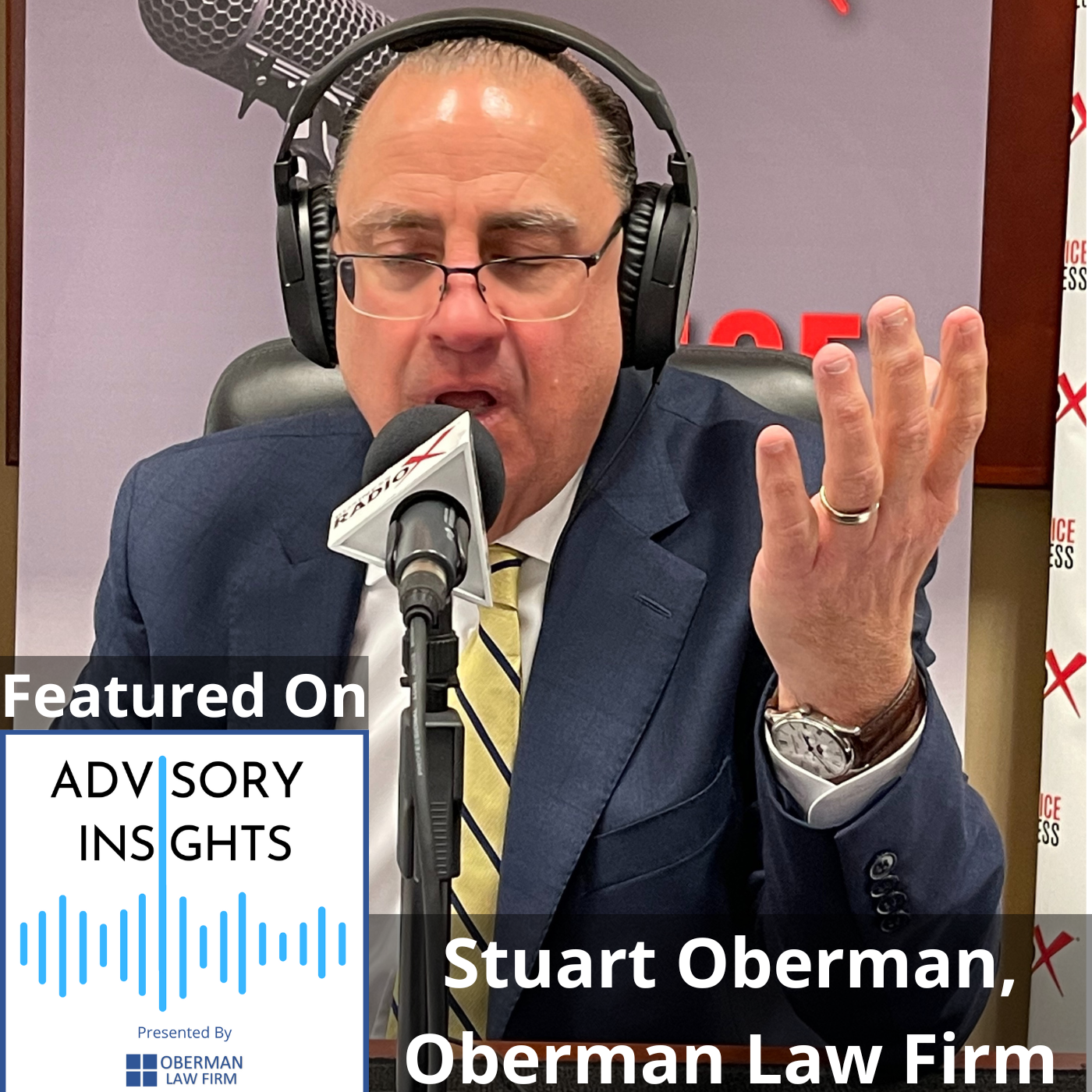
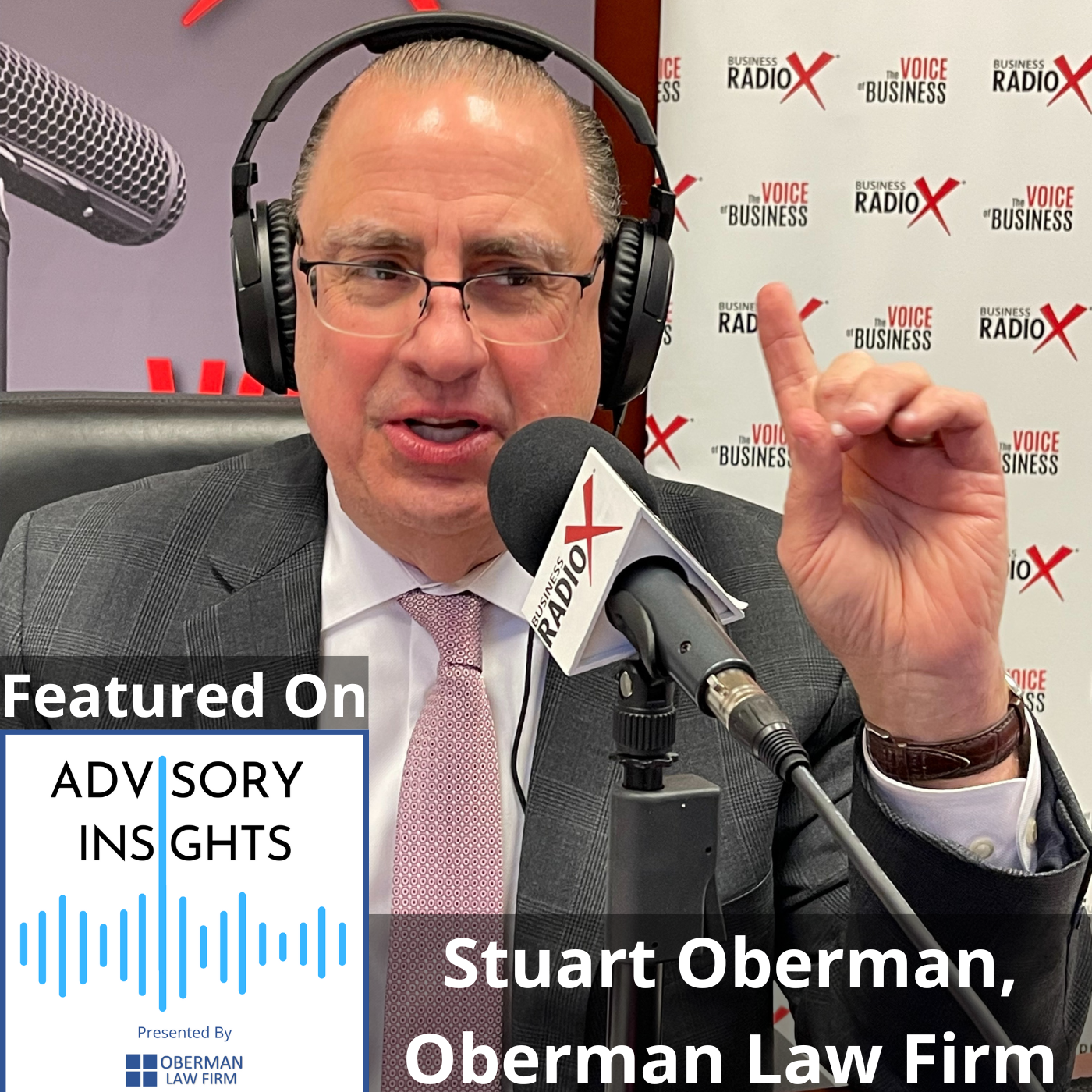
On this episode of Advisory Insights, Stuart Oberman of Oberman Law Firm discussed the importance of establishing and maintaining an onboarding process for new employees. Stuart outlines some of the considerations that businesses need to consider when designing their process, including background checks, protecting proprietary information, complying with the Fair Credit Reporting Act, and much more.

Advisory Insights is presented by Oberman Law Firm and produced by the North Fulton studio of Business RadioX®. The series can be found on all the major podcast apps. You can find the complete show archive here.

TRANSCRIPT

Intro: [00:00:01] Broadcasting from the studios of Business RadioX, it’s time for Advisory Insights. Brought to you by Oberman Law Firm, serving clients nationwide with tailored service and exceptional results. Now, here’s your host.

Stuart Oberman: [00:00:20] Hello everyone. Welcome to Advisory Insights. Your host, Stuart Oberman here. I want to talk HR. I want to talk onboarding. Today’s topic, HR Hiring and Onboarding Considerations.

Stuart Oberman: [00:00:33] First and foremost, I don’t care if you got one employee that you’re hiring or 400 or 4,000, you got to have an onboarding process. It is amazing to me how companies will hire their employees and have absolutely zero onboarding process. New employee comes in first day, nothing, nothing.

Stuart Oberman: [00:01:00] So, I want to walk through what we feel is some good onboarding processes from what we discovered. In our firm, we do a substantial amount of HR. We do a lot of compliance issues in hiring and, unfortunately, firing, some not under the best circumstances from our clients. So, I want to take a look at HR and onboarding process.

Stuart Oberman: [00:01:27] New employees, critical process that has to be managed. You can’t just say you have this new employee. I want our employers, our business owners to take proactive steps immediately when that new employee is hired to protect their proprietary information. What does that mean? That means if you don’t want your information on the cover of The New York Times, you better protect it. Because, otherwise, it will end up in someone else’s hands, your competitors, and it is never, ever, ever a pretty sight.

Stuart Oberman: [00:02:05] So, when you hire someone, always look at the end result, employees leave or employees are fired. So, when you hire that new employee, what prevents that employee from taking proprietary information?

Stuart Oberman: [00:02:23] Or let’s look at it another way, folks. So, you hire this great rock star employee and they’re bringing over information from a competitor or another employer, how do you ethically handle that? They bring over their client list, their customer list, all proprietary data, forms from XYZ company. What do you do? How do you handle it? How do you stay out of trouble? You have to have an onboarding process for that.

Stuart Oberman: [00:02:54] So, let’s even take a look at before we get to the onboarding process. One, what are the permissible questions in the application and hiring process? That’s foremost, right? So, most of our clients, they leave it to a person who is ill prepared to answer these questions. Do you have a background check? Are you in compliance with the Fair Credit Reporting Act, which is an absolute moving target? There’s a lot, a lot of transparency issues going on, on a national basis that you’ve got to know regarding reporting requirements.

Stuart Oberman: [00:03:34] So, have you reviewed all of the documents that your new employees will sign? What are those? What’s the blueprint? When do they sign those? Do you have a software program for managing those? You know, so many times our clients just throw things in a stack. They throw them on a server, they throw them somewhere on a computer, a platform, and they can’t even find the darn things. So, how do you manage that? And then, how do you manage what violations occur? All these are onboarding process information you need to know.

Stuart Oberman: [00:04:13] So, again, what’s the risk of not soliciting these obligations? What is the risk? It’s huge. Again, before the onboarding process, non-competes. You bring on a rock star, you want them to have non-competes. Now, all of a sudden, we got the FTC, we have the National Labor Relations Board. Are you prepared to deal with that? Again, onboarding process has to be reviewed. This is an extremely hot topic.

Stuart Oberman: [00:04:48] Non-solicitation agreements, do your employees sign those? Nondisclosure agreements, do your employees sign those? Again, onboarding. “Stuart, all this is part of your onboarding?” Yes. This is day one. Actually, this is before day one because all these things should be signed before the starting date.

Stuart Oberman: [00:05:09] So, I want to walk through a little bit of a checklist here, onboarding checklist. I want you to make a list of what you need prior to the employee’s arrival. What do you need? What’s the list? What’s the first week? Well, before we get to the first week, what’s the first day? What are they signing? What goes on the first week? Is it mapped out? Are they familiar with your departmental policies? Are they familiar with your security? The first day, are they familiar with your sexual harassment policies?

Stuart Oberman: [00:05:47] Are the new policies relevant that you implemented to your employee’s position? If not, you’ve got to revamp those prior to that person getting onboarded. Are they working remote? Next question, do you have a remote policy? “Well, no, no. They’re just working at their home.” Well, what information do they have access to? Your entire database of information. And all of a sudden, their son, Johnny, is playing on the computer, answers a wrong email, and next thing you know, you’re hacked. What’s the policy working remote?

Stuart Oberman: [00:06:26] Do you have professional standards, dress code, code of ethics, office culture? “Well, we’ll just go with the flow.” No, no, no. There’s no such thing in the world anymore. HR, you don’t go with flows. Flows sink you. What’s your first month look like? What’s your first three months look like? What’s your first year look like? Is there an assessment periodically? Is there mandatory training?

Stuart Oberman: [00:07:01] These are things you have to look at from an onboarding process that, frankly, most of our employers do not. And then, when they have an employee who is terminated, fired, discharged, whatever it may be, then they scramble. Well, why scramble when I’ve just given you an outline of multiple things you need to take a look at prior to the engagement, at the time of engagement, and after the engagement of the new employee with the year?

Stuart Oberman: [00:07:29] That’s a lot of information. But, again, it’s not the huge things that get you in trouble. It’s the little things. The little things. Tighten it up, implement it, review it, revise as needed.

Stuart Oberman: [00:07:42] Folks, that’s our quick podcast for today, HR Hiring and Onboarding Considerations. Thanks for joining us. Advisory Insights. Stuart Oberman here, your host. If you have any questions, please feel free to give us a call, 770-886-2400, or email me at stuart, S-T-U-A-R-T, @obermanlaw.com. Thanks everyone. Have a fantastic day.

Outro: [00:08:07] Thank you for joining us on Advisory Insights. This show is brought to you by Oberman Law Firm, a busines-centric law firm representing local, regional, and national clients in a wide range of practice areas, including health care, mergers and acquisitions, corporate transactions, and regulatory compliance.

About Advisory Insights Podcast

Presented by Oberman Law Firm, Advisory Insights Podcast covers legal, business, HR, and other topics of vital concern to healthcare practices and other business owners. This show series can be found here as well as on all the major podcast apps.

Stuart Oberman, Oberman Law Firm

Stuart Oberman
Stuart Oberman, Founder, Oberman Law Firm

Stuart Oberman is the founder and President of Oberman Law Firm. Mr. Oberman graduated from Urbana University and received his law degree from John Marshall Law School. Mr. Oberman has been practicing law for over 25 years, and before going into private practice, Mr. Oberman was in-house counsel for a Fortune 500 Company. Mr. Oberman is widely regarded as the go-to attorney in the area of Dental Law, which includes DSO formation, corporate business structures, mergers and acquisitions, regulatory compliance, advertising regulations, HIPAA, Compliance, and employment law regulations that affect dental practices.

In addition, Mr. Oberman’s expertise in the healthcare industry includes advising clients in the complex regulatory landscape as it relates to telehealth and telemedicine, including compliance with corporate structures, third-party reimbursement, contract negotiations, technology, healthcare fraud, and abuse law (Anti-Kickback Statute and the State Law), professional liability risk management, federal and state regulations.

As the long-term care industry evolves, Mr. Oberman has the knowledge and experience to guide clients in the long-term care sector with respect to corporate and regulatory matters, assisted living facilities, and continuing care retirement communities (CCRCs). In addition, Mr. Oberman’s practice also focuses on healthcare facility acquisitions and other changes of ownership, as well as related licensure and Medicare/Medicaid certification matters, CCRC registrations, long-term care/skilled nursing facility management, operating agreements, assisted living licensure matters, and health care joint ventures.

In addition to his expertise in the healthcare industry, Mr. Oberman has a nationwide practice that focuses on all facets of contractual disputes, including corporate governance, fiduciary duty, trade secrets, unfair competition, covenants not to compete, trademark and copyright infringement, fraud, and deceptive trade practices, and other business-related matters. Mr. Oberman also represents clients throughout the United States in a wide range of practice areas, including mergers & acquisitions, partnership agreements, commercial real estate, entity formation, employment law, commercial leasing, intellectual property, and HIPAA/OSHA compliance.

Mr. Oberman is a national lecturer and has published articles in the U.S. and Canada.

LinkedIn

Oberman Law Firm

Oberman Law Firm has a long history of civic service, noted national, regional, and local clients, and stands among the Southeast’s eminent and fast-growing full-service law firms. Oberman Law Firm’s areas of practice include Business Planning, Commercial & Technology Transactions, Corporate, Employment & Labor, Estate Planning, Health Care, Intellectual Property, Litigation, Privacy & Data Security, and Real Estate.

By meeting their client’s goals and becoming a trusted partner and advocate for our clients, their attorneys are recognized as legal go-getters who provide value-added service. Their attorneys understand that in a rapidly changing legal market, clients have new expectations, and constantly evolving choices, and operate in an environment of heightened reputational and commercial risk.

Oberman Law Firm’s strength is its ability to solve complex legal problems by collaborating across borders and practice areas.

Connect with Oberman Law Firm:

Company website | LinkedIn | Twitter
Tagged With: employment law, employment law firm, employment lawyer, hiring, HR, Oberman Law, Oberman Law Firm, onboarding, Stuart Oberman

LIVE from SOAHR 2023: Rob Dubin, Motivational Speaker

April 6, 2023 by John Ray

LIVE from SOAHR 2023: Rob Dubin, Motivational Speaker
North Fulton Business Radio
LIVE from SOAHR 2023: Rob Dubin, Motivational Speaker
Loading
00:00 /
RSS Feed
Share
Link
Embed

Download file

LIVE from SOAHR 2023: Rob Dubin, Motivational Speaker

LIVE from SOAHR 2023: Rob Dubin, Motivational Speaker (North Fulton Business Radio, Episode 632)

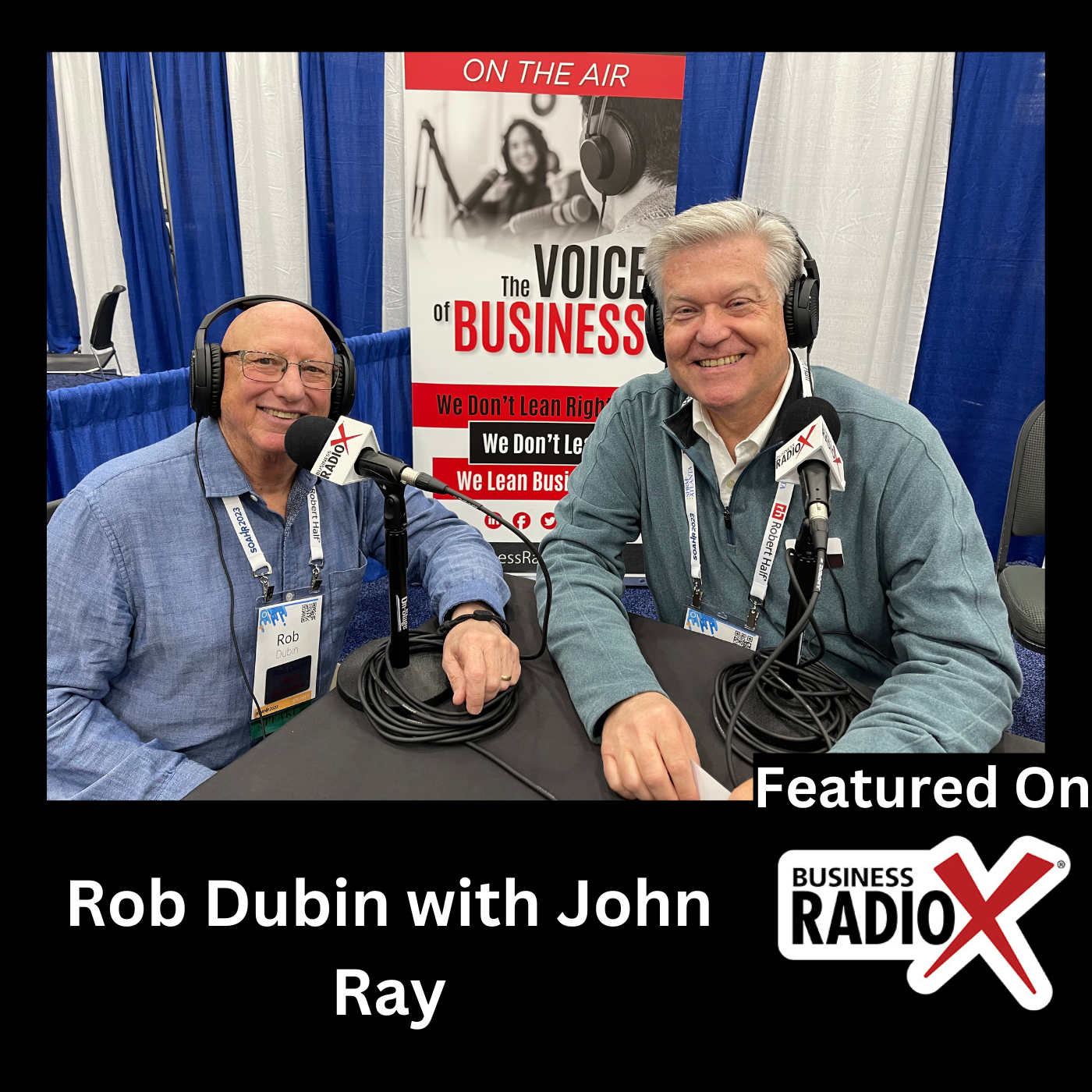
Motivational Speaker Rob Dubin joined North Fulton Business Radio host John Ray LIVE at the Business RadioX® remote at SOAHR 2023. Rob talked about his work as a motivational speaker, teaching happiness, the science of happiness, how investing in your employee’s happiness helps combat quiet quitting, and much more.

This show was originally broadcast live from SOAHR 2023, the annual conference of SHRM-Atlanta, held at the Gas South District Convention Center, Duluth, Georgia on March 28th and 29th, 2023. This series of interviews was underwritten by Oberman Law Firm, your legal guide to workplace complexities.

North Fulton Business Radio is broadcast from the North Fulton studio of Business RadioX® inside Renasant Bank in Alpharetta.

Rob Dubin, Motivational Speaker

Rob Dubin, Motivational Speaker

Rob Dubin has studied and mastered the art and science of human happiness.

He was an award-winning filmmaker who traveled the world making TV programs and commercials for Fortune 500 companies.  He is also a serial entrepreneur who created multiple 7 figure businesses.  At the age of 42 Rob and his wife retired, sold their home, moved onto a 40’ sailboat, and spent the next 17 years sailing around the world studying human happiness and fulfillment.

Today Rob gives back by teaching courses in employee happiness which increase engagement, reduce resignations, and combats quiet quitting. Rob combines lessons learned while sailing around the world with the science of human happiness to deliver sound strategies audience members can implement immediately to better relate to their teams and become happier people themselves.

He has been married to Dee, his business and life partner for 40 years.  When not motivating others Rob spends his time skiing, mountain biking, kayaking, and flying his gyroplane near his home in the Rocky Mountains.

Whether speaking on stage with Tony Robbins to an audience of thousands or conducting intimate executive training, Rob connects with audiences. Your audience is sure to find inspiration and transformation in his unique programs.

Website | LinkedIn | Facebook

Questions and Topics in this Interview:

  • Rob’s work as a motivational speaker and in teaching happiness
  • The Science of Happiness
  • How investing in your employee’s happiness helps combat quite quitting

North Fulton Business Radio is hosted by John Ray and broadcast and produced from the North Fulton studio of Business RadioX® inside Renasant Bank in Alpharetta. You can find the full archive of shows by following this link. The show is available on all the major podcast apps, including Apple Podcasts, Spotify, Google, Amazon, iHeart Radio, Stitcher, TuneIn, and others.

The “LIVE from SOAHR 2023” Series is proudly underwritten by Oberman Law Firm

Stuart Oberman
Stuart Oberman, Founder, Oberman Law Firm

Oberman Law Firm has a long history of civic service, noted national, regional, and local clients, and stands among the Southeast’s eminent and fast-growing full-service law firms. Oberman Law Firm’s areas of practice include Business Planning, Commercial & Technology Transactions, Corporate, Employment & Labor, Estate Planning, Health Care, Intellectual Property, Litigation, Privacy & Data Security, and Real Estate.

By meeting their client’s goals and becoming a trusted partner and advocate for our clients, their attorneys are recognized as legal go-getters who provide value-added service. Their attorneys understand that in a rapidly changing legal market, clients have new expectations, and constantly evolving choices, and operate in an environment of heightened reputational and commercial risk.

Oberman Law Firm’s strength is its ability to solve complex legal problems by collaborating across borders and practice areas.

Connect with Oberman Law Firm:

Company website | LinkedIn | Twitter
 

Tagged With: Employee Mental Well-Being, employee retention, happiness, Human Resources, John Ray, mental wellness, North Fulton Business Radio, North Fulton Radio, Oberman Law, Oberman Law Firm, Rob Dubin, SHRM Atlanta, SOAHR 2023, Stuart Oberman

LIVE from SOAHR 2023: Dr. Aisha Wright-Burke, ADP

April 6, 2023 by John Ray

North Fulton Business Radio
LIVE from SOAHR 2023: Dr. Aisha Wright-Burke, ADP
Loading
00:00 /
RSS Feed
Share
Link
Embed

Download file

LIVE from SOAHR 2023: Dr. Aisha Wright-Burke, ADP

LIVE from SOAHR 2023: Dr. Aisha Wright-Burke, ADP (North Fulton Business Radio, Episode 631)

Dr. Aisha Wright-Burke, Director of Global Talent Planning and Development for ADP, joined North Fulton Business Radio host John Ray LIVE at the Business RadioX® remote at SOAHR 2023. Aisha discussed her work at ADP, how to plan for changes, initiatives companies can take to develop employees, and much more.

This show was originally broadcast live from SOAHR 2023, the annual conference of SHRM-Atlanta, held at the Gas South District Convention Center, Duluth, Georgia on March 28th and 29th, 2023. This series of interviews was underwritten by Oberman Law Firm, your legal guide to workplace complexities.

North Fulton Business Radio is broadcast from the North Fulton studio of Business RadioX® inside Renasant Bank in Alpharetta.

ADP

At ADP, what they do is about people. Although they have a strong history of providing solutions for human resource challenges, ADP strives to do more than that. They challenge themselves to anticipate, think forward, and take action in a way that empowers us to shape the changing world of work.

For over 70 years, they’ve led the way in defining the future of business solutions. ADP is proud to be named to FORTUNE Magazine’s “World’s Most Admired Companies®” list for 16 consecutive years*.

ADP is a comprehensive global provider of cloud-based human capital management (HCM) solutions that unite HR, payroll, talent, time, tax, and benefits administration, and a leader in business outsourcing services, analytics, and compliance expertise. Their unmatched experience, deep insights, and cutting-edge technology have transformed human resources from a back-office administrative function to a strategic business advantage.

Website | LinkedIn| Facebook | Twitter

Dr. Aisha Wright-Burke, Director of Global Talent Planning and Development, ADP

Dr. Aisha Wright-Burke, Director of Global Talent Planning and Development, ADP

Dr. Aisha Wright-Burke is the Director of Global Talent Planning and Development at ADP.

She is an expert in Human Resources and has worked with ADP for over 13 years.

LinkedIn


Questions and Topics in this Interview:

  • About ADP
  • Planning for changes ahead of time
  • Developing employees

North Fulton Business Radio is hosted by John Ray and broadcast and produced from the North Fulton studio of Business RadioX® inside Renasant Bank in Alpharetta. You can find the full archive of shows by following this link. The show is available on all the major podcast apps, including Apple Podcasts, Spotify, Google, Amazon, iHeart Radio, Stitcher, TuneIn, and others.

The “LIVE from SOAHR 2023” Series is proudly underwritten by Oberman Law Firm

Stuart Oberman
Stuart Oberman, Founder, Oberman Law Firm

Oberman Law Firm has a long history of civic service, noted national, regional, and local clients, and stands among the Southeast’s eminent and fast-growing full-service law firms. Oberman Law Firm’s areas of practice include Business Planning, Commercial & Technology Transactions, Corporate, Employment & Labor, Estate Planning, Health Care, Intellectual Property, Litigation, Privacy & Data Security, and Real Estate.

By meeting their client’s goals and becoming a trusted partner and advocate for our clients, their attorneys are recognized as legal go-getters who provide value-added service. Their attorneys understand that in a rapidly changing legal market, clients have new expectations, constantly evolving choices, and operate in an environment of heightened reputational and commercial risk.

Oberman Law Firm’s strength is its ability to solve complex legal problems by collaborating across borders and practice areas.

Connect with Oberman Law Firm:

Company website | LinkedIn | Twitter
 

Tagged With: ADP, benefits administration, Dr. Aisha Wright-Burke, HR, Oberman Law, Oberman Law Firm, payroll, SHRM Atlanta, SOAHR 2023, Stuart Oberman, talent, Tax, time

LIVE from SOAHR 2023: Robin Stenzel, Chief People Officer, Sparq, and 2023 Board Chair, SHRM-Atlanta

April 3, 2023 by John Ray

Robin Stenzel
North Fulton Business Radio
LIVE from SOAHR 2023: Robin Stenzel, Chief People Officer, Sparq, and 2023 Board Chair, SHRM-Atlanta
Loading
00:00 /
RSS Feed
Share
Link
Embed

Download file

Robin Stenzel

LIVE from SOAHR 2023: Robin Stenzel, Chief People Officer, Sparq, and 2023 Board Chair, SHRM-Atlanta (North Fulton Business Radio, Episode 628)

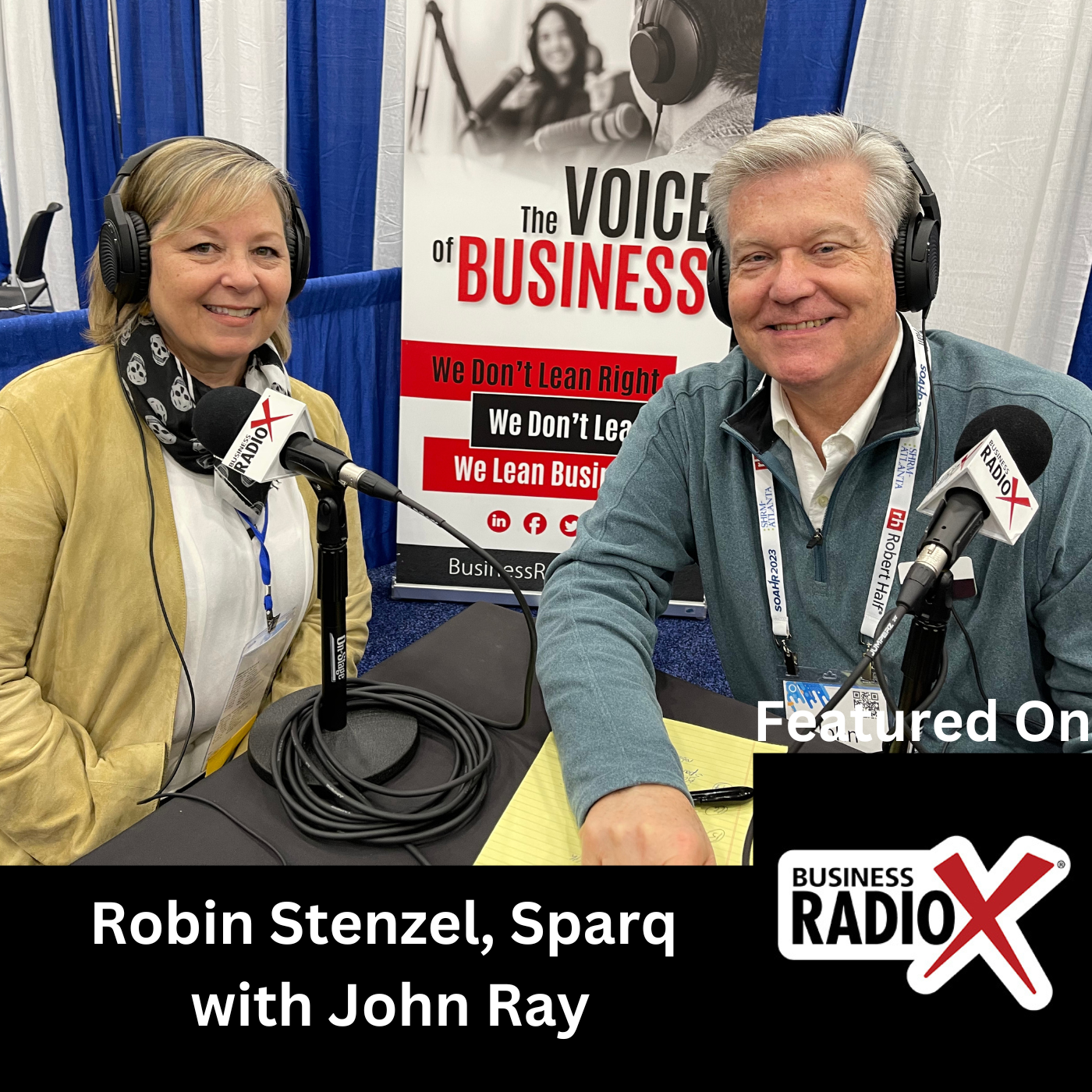
Robin Stenzel, Chief People Officer at Sparq and SHRM-Atlanta’s 2023 Board Chair, joined North Fulton Business Radio host John Ray LIVE at the Business RadioX® remote at SOAHR 2023. Robin discussed Sparq, remote work at Sparq and how culture is built and maintained, the success of the SOAHR 2023 conference, what’s in store for SHRM-Atlanta members for the rest of 2023, and more.

This show was originally broadcast live from SOAHR 2023, the annual conference of SHRM-Atlanta, held at the Gas South District Convention Center, Duluth, Georgia on March 28th and 29th, 2023. This series of interviews was underwritten by Oberman Law Firm, your legal guide to workplace complexities.

North Fulton Business Radio is broadcast from the North Fulton studio of Business RadioX® inside Renasant Bank in Alpharetta.

SHRM-Atlanta

SHRM-Atlanta is one of the largest chapters of SHRM and shares its purpose of elevating the HR profession. As a leader in the Atlanta metro business community, SHRM-Atlanta strives to be the premier resource for those working in and supporting the human resource function. SHRM-Atlanta’s predominant goal is to be the voice of HR in metro Atlanta and be the first contact for those seeking information and solutions.

This will be achieved through the growth and diversity of members, education, and delivery of content, and by strengthening partnerships with organizations that share its vision.

Website | LinkedIn | Facebook | Instagram | Twitter

Robin Stenzel, Chief People Officer, Sparq, and 2023 Board Chair, SHRM-Atlanta

Robin Stenzel, Chief People Officer, Sparq and Board Chair, SHRM-Atlanta

Robin is Chief People Officer at Sparq and the Board Chair for SHRM-Atlanta.

Backed by Bain Capital Double Impact, Sparq is the leading U.S.-based digital engineering consultancy for building, deploying and supporting digital applications, products and experiences. Sparq assembles trusted software engineering teams that collaboratively solve challenges with creativity and rigor. Their experts know how to work together—with each other and with clients—generating momentum, velocity and success.

Company website | Company LinkedIn | Robin’s LinkedIn


Questions and Topics in this Interview:

  • About Sparq
  • Who works with Sparq
  • Advantages of being fully remote
  • Creating culture while being remote
  • Cohort and Community
  • Sparq’s areas of focus
  • SHRM-Atlanta

North Fulton Business Radio is hosted by John Ray and broadcast and produced from the North Fulton studio of Business RadioX® inside Renasant Bank in Alpharetta. You can find the full archive of shows by following this link. The show is available on all the major podcast apps, including Apple Podcasts, Spotify, Google, Amazon, iHeart Radio, Stitcher, TuneIn, and others.

The “LIVE from SOAHR 2023” Series is proudly underwritten by Oberman Law Firm

Stuart Oberman
Stuart Oberman, Founder, Oberman Law Firm

Oberman Law Firm has a long history of civic service, noted national, regional, and local clients, and stands among the Southeast’s eminent and fast-growing full-service law firms. Oberman Law Firm’s areas of practice include Business Planning, Commercial & Technology Transactions, Corporate, Employment & Labor, Estate Planning, Health Care, Intellectual Property, Litigation, Privacy & Data Security, and Real Estate.

By meeting their client’s goals and becoming a trusted partner and advocate for our clients, their attorneys are recognized as legal go-getters who provide value-added service. Their attorneys understand that in a rapidly changing legal market, clients have new expectations, constantly evolving choices, and operate in an environment of heightened reputational and commercial risk.

Oberman Law Firm’s strength is its ability to solve complex legal problems by collaborating across borders and practice areas.

Connect with Oberman Law Firm:

Company website | LinkedIn | Twitter
 

Tagged With: corporate culture, Human Resources, North Fulton Business Radio, Oberman Law Firm, people officer, remote work, SHRM Atlanta, SOAHR 2023, Sparq, technology consulting

Corporate Internal Investigations

March 31, 2023 by John Ray

Corporate Internal Investigations
Advisory Insights Podcast
Corporate Internal Investigations
Loading
00:00 /
RSS Feed
Share
Link
Embed

Download file

Corporate Internal Investigations

Corporate Internal Investigations (Advisory Insights, Episode 37)

On this episode of Advisory Insights, Stuart Oberman of Oberman Law Firm discusses the do’s and don’ts of corporate internal investigations. Stuart covers topics such as the importance of developing an effective internal investigation process, handling whistleblowers and their complaints, expectations for reporting and documentation for compliance initiatives, and ethical considerations, and much more.

Advisory Insights is presented by Oberman Law Firm and produced by the North Fulton studio of Business RadioX®. The series can be found on all the major podcast apps. You can find the complete show archive here.

TRANSCRIPT

Intro: [00:00:02] Broadcasting from the studios of Business RadioX, it’s time for Advisory Insights. Brought to you by Oberman Law Firm, serving clients nationwide with tailored service and exceptional results. Now, here’s your host.

Stuart Oberman: [00:00:20] And welcome everyone to Advisory Insights. Stuart Oberman here. And I want to talk a little bit about small, medium, large-sized businesses. The title of today’s podcast is Corporate Internal Investigations: Do’s and Don’ts.

Stuart Oberman: [00:00:37] At some point, no matter what size company you are, you are going to have to investigate something internally. It could be a big problem. It could be a small problem. But at some point, you’re going to have to investigate a certain course of conduct. Now, our clients range anywhere from small to global, so we’ve really had a wide, wide range of investigations that we do all the way from fraud, to Department of Justice matters, to felonies, white collar crime.

Stuart Oberman: [00:01:16] And I want to cover a couple of things because there’s rules regarding corporate compliance and oversight that you have to know. Again, it doesn’t matter whether you’re small, medium, large, but you have to be able to promote and maintain an ethical corporate culture no matter how small or big you are, because it is paramount and the complexities are so integral that, again, it’s the same scenario no matter what size you are. So, I don’t care how big you are, you need to develop or have some kind of structure for the development of an effective internal investigation process.

Stuart Oberman: [00:02:01] So, when you start this process and you have a compliance program, again, you got five employees or 500 or 5,000, it doesn’t matter. We’re talking basics here. Every business with employees should have a compliance program.

Stuart Oberman: [00:02:19] And what are the expectations of the reporting and documentation for compliance initiatives? All kind of Federal, you got OSHA, you got HIPAA for medical, State, Federal, we got all kinds of regulatory matters that you just have to know. What are the risk assessments? How do you develop the internal investigations? What do you involve in white collar prosecutions? What’s the evolving role of your board, if you have a board, if you’re that big? So, you’ve got all kinds of considerations.

Stuart Oberman: [00:02:53] And I want to take a look at the start of the internal investigations. Again, I don’t want to go down a rabbit hole with these because it really, really can, but I want to get some basics down on the wire, if you will.

Stuart Oberman: [00:03:04] So, first, you got to decide whether or not you’re going to conduct an internal investigation. What is done? What’s the extent? And how deep do you need to roll with that? When you start the investigation, first and foremost, you have to define a goal. What is the end result you want to achieve? How do you get there? How do you gather the evidence? How do you interview the employees? Are the employees under the corporate attorney-client privilege? Have you instructed them to get their own counsel? And then, who do you report to? What is the reporting requirements? Are the reporting requirements attorney-client privileged?

Stuart Oberman: [00:03:44] If you’re investigating someone or something on behalf of a corporation, who’s your client? You have to define that because that may determine whether or not your results are discoverable. Discoverable. And who do you disclose the investigation reports to? Is it a person or, again, a board? Or is it an outside auditor who’s hired you? Is it the business’ CPA?

Stuart Oberman: [00:04:18] Again, all areas you need to look at. You have to have a blueprint with this. You can’t just go in blind and start swinging the hammer in investigations because that will absolutely end in a disastrous result.

Stuart Oberman: [00:04:33] So, first and foremost, we’ve also got to take a look at the corporate compliance governing employment and privacy laws. Does the company have a code of ethics? If not, I would encourage you to draft a code of ethics. Is it a form? Is it a holistic approach? That’s an individual corporate matter. But you have to have a corporate code of conduct. I don’t care how big you are, you have to define.

Stuart Oberman: [00:05:01] And this goes back to my earlier podcast, and I speak so many times, do so many podcasts, Where is your employee manual? This all leads up to what the employee manual is. I want you to take a look at your code of conduct regarding discrimination, harassment, business gifts, restrictive covenants, non-competes. Goodness gracious, the whole world is going against non-competes. We got the FTC. We got the National Labor Relations Board. What is your conduct?

Stuart Oberman: [00:05:35] Do you have a drug free workplace policy? What happens if you have an employee that goes into a state that is marijuana or cannabis friendly, what do you do? How do you deal with it? How do you investigate that?

Stuart Oberman: [00:05:50] Whistleblower. So, you’re asking, “Stuart, what’s a whistleblower?” So, is there a person in your organization who reports to you or to the Federal Government, State Government problems, irregularities, or violations? And do you have a hotline for that? So, you got 20 employees and you have an employee who wants to report something to you. Obviously, if you’re the owner of the business, they’re going to be very, very hesitant about coming to you. My suggestion would be to have an anonymous hotline for company code of conduct violations.

Stuart Oberman: [00:06:33] Next question is data security. Where are you storing that sensitive data that if leaked, if hacked, if discovered can have a damaging, damaging effect on your business? So, again, privacy laws, data compliance, what platform, how secure is that?

Stuart Oberman: [00:06:54] So then, I want to take a look at some some really ethical considerations in any kind of investigation. Ethical considerations. So, you’ve got conflict management, you’ve got employees, and then you’ve got corporations. Who was your client? Is it the employees? What if your employees that you’re interviewing have some very, very negative things to say about the corporation, what do you do with the information? Who are you representing?

Stuart Oberman: [00:07:23] Is the information that you receive subject to attorney-client privilege? That, you’ve got to know right off the bat who your client is, because that will determine how you process information, how much is that protected. And then, how do you ethically manage your corporate clients or your outside client, how do you manage those? What’s the guidelines? So then, what are your ethical considerations in the internal investigation?

Stuart Oberman: [00:07:50] And these are all questions, and I’ve given you guys more questions than answers because these things I want you to consider. I want you to review managing multiple jurisdiction employment compliance initiatives. What if you have ten locations in different states? What are your handbooks? Are you a global company or local? Code of Conduct, hotline, HR Policies? Goodness gracious, I probably did a million podcasts regarding HR cross border matters.

Stuart Oberman: [00:08:27] Benefits, equity, and what are your incentive plans for reporting violations, if there are any HR issues? In a merger and acquisition and you discover things after the fact, how do you deal with that? How do you divest yourself of that information? And, again, I’ll go back to data privacy laws. Where is that information kept?

Stuart Oberman: [00:08:52] Folks, that’s a lot of information. Again, a lot of times on some podcasts, I’m giving you more information than I’m asking. But in this case, I’m asking much more information because I want you to understand the ramifications if you don’t go into these investigations with a clear blueprint of where you’re at, where you’re going, who your clients are, what’s the data, how is it going to be handled, how is it stored, what’s the end result.

Stuart Oberman: [00:09:21] Folks, that’s our podcast for today. Stuart Oberman here, Advisory Insights. Thank you so much for joining us. If you need to reach us, please feel free to give us a call, 770-886-2400, or email, stuart, S-T-U-A-R-T, @obermanlaw.com. Thanks everyone and have a fantastic day.

Outro: [00:09:43] Thank you for joining us on Advisory Insights. This show is brought to you by Oberman Law Firm, a business-centric law firm representing local, regional, and national clients in a wide range of practice areas, including health care, mergers and acquisitions, corporate transactions, and regulatory compliance.

About Advisory Insights Podcast

Presented by Oberman Law Firm, Advisory Insights Podcast covers legal, business, HR, and other topics of vital concern to healthcare practices and other business owners. This show series can be found here as well as on all the major podcast apps.

Stuart Oberman, Oberman Law Firm

Stuart Oberman
Stuart Oberman, Founder, Oberman Law Firm

Stuart Oberman is the founder and President of Oberman Law Firm. Mr. Oberman graduated from Urbana University and received his law degree from John Marshall Law School. Mr. Oberman has been practicing law for over 25 years, and before going into private practice, Mr. Oberman was in-house counsel for a Fortune 500 Company. Mr. Oberman is widely regarded as the go-to attorney in the area of Dental Law, which includes DSO formation, corporate business structures, mergers and acquisitions, regulatory compliance, advertising regulations, HIPAA, Compliance, and employment law regulations that affect dental practices.

In addition, Mr. Oberman’s expertise in the healthcare industry includes advising clients in the complex regulatory landscape as it relates to telehealth and telemedicine, including compliance with corporate structures, third-party reimbursement, contract negotiations, technology, healthcare fraud, and abuse law (Anti-Kickback Statute and the State Law), professional liability risk management, federal and state regulations.

As the long-term care industry evolves, Mr. Oberman has the knowledge and experience to guide clients in the long-term care sector with respect to corporate and regulatory matters, assisted living facilities, and continuing care retirement communities (CCRCs). In addition, Mr. Oberman’s practice also focuses on healthcare facility acquisitions and other changes of ownership, as well as related licensure and Medicare/Medicaid certification matters, CCRC registrations, long-term care/skilled nursing facility management, operating agreements, assisted living licensure matters, and health care joint ventures.

In addition to his expertise in the healthcare industry, Mr. Oberman has a nationwide practice that focuses on all facets of contractual disputes, including corporate governance, fiduciary duty, trade secrets, unfair competition, covenants not to compete, trademark and copyright infringement, fraud, and deceptive trade practices, and other business-related matters. Mr. Oberman also represents clients throughout the United States in a wide range of practice areas, including mergers & acquisitions, partnership agreements, commercial real estate, entity formation, employment law, commercial leasing, intellectual property, and HIPAA/OSHA compliance.

Mr. Oberman is a national lecturer and has published articles in the U.S. and Canada.

LinkedIn

Oberman Law Firm

Oberman Law Firm has a long history of civic service, noted national, regional, and local clients, and stands among the Southeast’s eminent and fast-growing full-service law firms. Oberman Law Firm’s areas of practice include Business Planning, Commercial & Technology Transactions, Corporate, Employment & Labor, Estate Planning, Health Care, Intellectual Property, Litigation, Privacy & Data Security, and Real Estate.

By meeting their client’s goals and becoming a trusted partner and advocate for our clients, their attorneys are recognized as legal go-getters who provide value-added service. Their attorneys understand that in a rapidly changing legal market, clients have new expectations, constantly evolving choices, and operate in an environment of heightened reputational and commercial risk.

Oberman Law Firm’s strength is its ability to solve complex legal problems by collaborating across borders and practice areas.

Connect with Oberman Law Firm:

Company website | LinkedIn | Twitter
Tagged With: Advisory Insights, Advisory Insights Podcast, attorney, Corporate Internal Investigations, employment law, employment lawyer, Oberman Law, Oberman Law Firm, Stuart Oberman

What You Must Know When Forming an LLC, Partnership, or Corporation

March 24, 2023 by John Ray

What You Must Know When Forming an LLC, Partnership, or Corporation
Advisory Insights Podcast
What You Must Know When Forming an LLC, Partnership, or Corporation
Loading
00:00 /
RSS Feed
Share
Link
Embed

Download file

What You Must Know When Forming an LLC, Partnership, or Corporation

What You Must Know When Forming an LLC, Partnership, or Corporation (Advisory Insights Podcast, Episode 36)

On this episode of Advisory Insights, Stuart Oberman of Oberman Law Firm discussed some of the key considerations for businesses when forming an LLC, partnership, or corporation. He stressed the importance of having a well-designed agreement in place that covers key topics such as arbitration provisions, buy/sells, and valuation methods.

Advisory Insights is presented by Oberman Law Firm and produced by the North Fulton studio of Business RadioX®. The series can be found on all the major podcast apps. You can find the complete show archive here.

TRANSCRIPT

Intro: [00:00:01] Broadcasting from the Studios of Business RadioX, it’s time for Advisory Insights. Brought to you by Oberman Law Firm, serving clients nationwide with tailored service and exceptional results. Now, here’s your host.

Stuart Oberman: [00:00:20] Hello, everyone. Stuart Oberman. Welcome, welcome to Advisory Insights. All right. We’re going to have some great stuff. As we start going quickly, quickly, quickly into 2023, I want to make sure that everyone is structurally prepared internally for their corporations, partnerships, LLCs.

Stuart Oberman: [00:00:39] We do a substantial amount of entity formations, buy-ins, buyouts, partnerships, formations for global companies, local companies, regional companies. Last year, we did about 145 transitions, mergers, acquisitions, probably total about $450 million worth of revenue on those, total practice values, and everything, business values.

Stuart Oberman: [00:01:05] So, I want to run quickly through some items that we noticed time and time and time again on some problems. So, first and foremost, whenever you’re forming a corporation, you got to look at a couple areas. So, you have to know, and your advisors have to know, your CPAs have to know, your attorneys have to know what are the best practices. Each state is completely different as to what the requirements are. You have to know what your documents are. You have to know what the record keeping is. You have to understand what your corporate responsibility is document-wise. You have to understand what the LLC documents are. You have to understand whether or not you have to have a publication involved.

Stuart Oberman: [00:01:49] And, also, what are the valuations. When you form an entity, when you form a corporation, you form an LLC, what is what we call a capital contributions? What are you bringing to the table? Is it $1? Is it your services rendered? It has to be an accounting process for this because it has to go into the operating agreement. It has to go into the corporate documents. And I’m going to get into a list of corporate documents a little bit later in this particular podcast.

Stuart Oberman: [00:02:18] So, one area we have to look at is, of course, an entity selection. What is best for you? There are no right or wrong entities necessarily. It’s just what is your structure? So, of course, you’ve got your corporations, right? Now, people get confused. I want to be a Sub-S. I want to be a C-Corp. So, those are tax elections. They’re not “corporate structures.”

Stuart Oberman: [00:02:50] So, there’s only really one kind of corporation. Depending on your state, you could have a professional corporation, you can have a PLLC, professional liability corporation. So, you’ve got a lot of things but, basically, you’re looking at the corporation. Then, you have limited liability company. Again, depending on your state, you can have a PLLC, you can have variations of these.

Stuart Oberman: [00:03:16] So then, you look at what are your partnerships. That’s a whole different world. Partnerships. They’re like a marriage. They’re easy to get in. They are a disaster to get out. If you’re even contemplating a partnership, who’s going to own their respective shares? You got two owners, individually or is each owner going to have their own entity, LLC, if you will, and then you have a master – what we call – mothership LLC. Again, those are very, very specific things you’ve got to really take a look at.

Stuart Oberman: [00:03:53] Then, you’ve got joint ventures. So then, you’ve got partnerships on joint ventures. Then, you have joint ventures LLCs. You got operating agreements. You’ve got, again, buy-ins, buy outs. So, those are all extremely technical areas you really, really have to know.

Stuart Oberman: [00:04:12] So then, you’ve got to look at what entity is going to protect the owners or owner of the companies. What are the rights and obligations of the owners? Again, internal documents. Easy to get in, hard to get out. You’ve got to know how you go into a marriage and how you’re getting out, what are the breakups, what are the wind downs, how are you going to break up the the assets, if you will. So, again, determine the entity status.

Stuart Oberman: [00:04:39] So then, this is where your advisors come in. You’ve got to look at really the benefits and pitfalls of establishing each entity. You can’t just jump and say, I want to be this or I want to be that. You have to figure out the end game, taxes, liability, crossing jurisdictional matters. What may work in Texas is not going to work in Maine. What’s going to work in Maine is not going to work in Washington. So, again, look at those things.

Stuart Oberman: [00:05:08] Tax issues. So, you’ve got a couple areas to look at. One is the S-Corp. That is best place for small businesses. Your CPA will be very familiar with that. There are certain time limits that that has to be election-wise with the IRS once you are set up. Your C-Corps, you’ve got to be really careful on that, because if you go to sell your business and you’re a C-Corp you have some problems with some tax, some goodwill matters.

Stuart Oberman: [00:05:40] And the partnerships, is it going to be a mothership scenario where you’ve got owners filing their own LLCs? Is it going to be taxed, again as a partnership, how is each entity going to be taxed? Is this particular partner going to be a S-Corp? Again, very, very complex. So, you look at the formation. You look at your operation. And you look at the termination.

Stuart Oberman: [00:06:06] Pitfalls. Who’s going to get the tax ID number, state and federal? So, when your federal, someone in the organization has to file for a tax ID number. Whose Social Security number is that going to be filed with? Because if it’s under your tax, if it’s under your Social Security number, you are essentially going to be responsible for a lot of tax matters. What’s the tax efficiency? What’s the best tax structure? Is it a tax exempt? Certain areas are tax exempt, state, federal.

Stuart Oberman: [00:06:43] Again, you’ve got to look at your CPA for these things. You’ve got to look at your financial advisors. And they have to be familiar with business. Some CPAs are not familiar with business structures. It’s just the way it is. So, again, pick your advisors carefully.

Stuart Oberman: [00:06:56] A couple of documents – as we’re sort of near closing – we should really take a look at. So, corporation’s bylaws, minutes, LLCs and corporations, consents LLC and corporations, operating agreement primarily generally in your LLC formations, that will get you started on everything from how you run the business, tax consequences, how you wind it down, what the partnerships distributions are. That is your structure.

Stuart Oberman: [00:07:32] With any joint venture, you have to have or should have a joint venture agreement. Any business that has more than one owner or partnership should have, in my recommendation, a very strong buy-in. Is it going to have arbitration provisions? Is it going to be a buy/sells? Are you going to have sort of a baseball arbitration where if one person can’t agree on the valuation, then the other person hires another appraiser, then all of a sudden you’ve got the two appraisers that are going in and equally dividing the difference between the two appraisals and come up with a number? Again, you can’t assume all this. This has to be the structure that you have to look at.

Stuart Oberman: [00:08:18] Well, folks, I know that’s a quick podcast today, but these are so many things that you just have to look at. I could literally probably talk on each topic for probably 30, 40 minutes. But this is an overall, really, really basic scenario generality that we run into. Again, it’s not the complex issues. Sometimes it’s the simplest things that get our practice owners, our business owners, our small business guys in trouble.

Stuart Oberman: [00:08:49] So, anyway, folks, thanks for joining us on the podcast today, Forming Corporations, Partnerships, LLCs, What you must know. If you have any questions, please feel free to give us a call, 770-886-2400, Oberman Law firm. Or email me at stuart, S-T-U-A-R-T, @obermanlaw.com Thanks folks, and have a fantastic day.

Outro: [00:09:14] Thank you for joining us on Advisory Insights. This show is brought to you by Oberman Law Firm, a business-centric law firm representing local, regional, and national clients in a wide range of practice areas, including healthcare, mergers and acquisitions, corporate transactions, and regulatory compliance.

About Advisory Insights Podcast

Presented by Oberman Law Firm, Advisory Insights Podcast covers legal, business, HR, and other topics of vital concern to healthcare practices and other business owners. This show series can be found here as well as on all the major podcast apps.

Stuart Oberman, Oberman Law Firm

Oberman Law Firm

Stuart Oberman is the founder and President of Oberman Law Firm. Mr. Oberman graduated from Urbana University and received his law degree from John Marshall Law School. Mr. Oberman has been practicing law for over 25 years, and before going into private practice, Mr. Oberman was in-house counsel for a Fortune 500 Company. Mr. Oberman is widely regarded as the go-to attorney in the area of Dental Law, which includes DSO formation, corporate business structures, mergers and acquisitions, regulatory compliance, advertising regulations, HIPAA, Compliance, and employment law regulations that affect dental practices.

In addition, Mr. Oberman’s expertise in the healthcare industry includes advising clients in the complex regulatory landscape as it relates to telehealth and telemedicine, including compliance with corporate structures, third-party reimbursement, contract negotiations, technology, healthcare fraud, and abuse law (Anti-Kickback Statute and the State Law), professional liability risk management, federal and state regulations.

As the long-term care industry evolves, Mr. Oberman has the knowledge and experience to guide clients in the long-term care sector with respect to corporate and regulatory matters, assisted living facilities, and continuing care retirement communities (CCRCs). In addition, Mr. Oberman’s practice also focuses on healthcare facility acquisitions and other changes of ownership, as well as related licensure and Medicare/Medicaid certification matters, CCRC registrations, long-term care/skilled nursing facility management, operating agreements, assisted living licensure matters, and health care joint ventures.

In addition to his expertise in the healthcare industry, Mr. Oberman has a nationwide practice that focuses on all facets of contractual disputes, including corporate governance, fiduciary duty, trade secrets, unfair competition, covenants not to compete, trademark and copyright infringement, fraud, and deceptive trade practices, and other business-related matters. Mr. Oberman also represents clients throughout the United States in a wide range of practice areas, including mergers & acquisitions, partnership agreements, commercial real estate, entity formation, employment law, commercial leasing, intellectual property, and HIPAA/OSHA compliance.

Mr. Oberman is a national lecturer and has published articles in the U.S. and Canada.

LinkedIn

Oberman Law Firm

Oberman Law Firm has a long history of civic service, noted national, regional, and local clients, and stands among the Southeast’s eminent and fast-growing full-service law firms. Oberman Law Firm’s areas of practice include Business Planning, Commercial & Technology Transactions, Corporate, Employment & Labor, Estate Planning, Health Care, Intellectual Property, Litigation, Privacy & Data Security, and Real Estate.

By meeting their client’s goals and becoming a trusted partner and advocate for our clients, their attorneys are recognized as legal go-getters who provide value-added service. Their attorneys understand that in a rapidly changing legal market, clients have new expectations, constantly evolving choices, and operate in an environment of heightened reputational and commercial risk.

Oberman Law Firm’s strength is its ability to solve complex legal problems by collaborating across borders and practice areas.

Connect with Oberman Law Firm:

Company website | LinkedIn | Twitter
Tagged With: Advisory Insights, Advisory Insights Podcast, Corporation, Forming a Corporation, Forming a Partnership, Forming an LLC, LLC, Oberman Law, Oberman Law Firm, Partnership, Stuart Oberman, What to Know

Employer Personal Appearance Policies Should Be Reviewed

March 17, 2023 by John Ray

Employer Personal Appearance Policies Should Be Reviewed
Advisory Insights Podcast
Employer Personal Appearance Policies Should Be Reviewed
Loading
00:00 /
RSS Feed
Share
Link
Embed

Download file

Employer Personal Appearance Policies Should Be Reviewed

Employer Personal Appearance Policies Should Be Reviewed (Advisory Insights Podcast, Episode 35)

On this episode of Advisory Insights, Stuart Oberman of Oberman Law Firm urges employers to review their employee manuals for potentially discriminatory personal appearance policies. He cites the recent CROWN Act as an example of legislation that prohibits discrimination based on hairstyle or hair texture.

Advisory Insights is presented by Oberman Law Firm and produced by the North Fulton studio of Business RadioX®. The series can be found on all the major podcast apps. You can find the complete show archive here.

TRANSCRIPT

Intro: [00:00:01] Broadcasting from the Studios of Business RadioX, it’s time for Advisory Insights. Brought to you by Oberman Law Firm, serving clients nationwide with tailored service and exceptional results. Now, here’s your host.

Stuart Oberman: [00:00:20] And welcome everyone to Advisory Insights. This is Stuart Oberman. And here we go, folks, a little H.R., H.R., H.R. So, we do a substantial amount of employment law in our firm, Oberman Law Firm, and we review on a local, national, regional basis employee manuals.

Stuart Oberman: [00:00:44] So, I don’t ever remember reading an employee manual that did not have some kind of policy in place regarding personal appearance. Now, I want you to stop right there. Before you do anything else today, I want you to take out that policy. I want you to review it. And I want you to take a look at, one, is it discriminatory? Two, if this ever got out in public and it’s on the front page of The New York Times, or three, if this hits social media, would you be embarrassed by your policy? Or does it have a specific job related function?

Stuart Oberman: [00:01:31] So, the reason why I say that is because incidences are constantly hitting our desk, the news regarding potentially discriminatory and really utterly ridiculous policies and procedures that have nothing to do with work, quality of work, but they all relate to personal appearance – personal appearance.

Stuart Oberman: [00:02:01] Now, life is what it is, and everyone has their own personal appearance. Some are not as fortunate as others. Some come from different backgrounds, race, color, creed, sex, origin. Nothing is the same when we deal with appearance. But I want you to look to make sure these policies and procedures are not discriminatory.

Stuart Oberman: [00:02:26] And I want to take one example. So, a published report came out not too long ago regarding a particular company that, essentially, prohibited the hiring of applicants that have missing, broken, or badly discovered teeth, that, in all likelihood, is unrelated to a disability. Now, my question is, why would my employers have that in their employee manual? What could possibly be the reason for that?

Stuart Oberman: [00:03:11] Now, again, things happen, life happens, and people are in bad accidents, and people go through rough times in life. I want you to take a look at whether or not your policies and procedures take those circumstances into account. If a person is in an accident, how do you enforce this? If a person is a great candidate, but for some reason they don’t have that million dollar smile, and they don’t have that Hollywood look, what is your policy on that? Is it written? And first of all, why do you have a policy on that? Do you realize how much trouble that can get an employer in if they have that?

Stuart Oberman: [00:03:56] I don’t want to necessarily spend a whole lot of time on this because, again, we look at so many things regarding this particular issue, but this comes to the forefront of are you reviewing your policies and procedures? One. Two, do you have an appearance policy in your manual? Now, it’s different if you have a policy that says if you have a tattoo covered up, I get that. Is that fine? Absolutely. That’s fine.

Stuart Oberman: [00:04:27] But, you know, you’ve got to take a look at personal appearance in relation to medical, cultural, and religious reasons. Let me go through that. When you review your policy and procedures as far as appearance goes, and personal conduct and appearance, are you accommodating those persons based upon medical, cultural, or religious reasons. And then, we all know what happens to legislation that occurs.

Stuart Oberman: [00:05:05] So, in a recent legislation, the CROWN Act, which was essentially a congressional bill, prohibited discrimination based upon a person’s hair texture or hairstyle, and that style or culture is commonly associated with a particular race or national origin. Now, that failed to pass in 2022. Now, the fact that that even became a bill in Congress is an issue. But what’s happened is, states have taken their own version of that and enacted that.

Stuart Oberman: [00:05:55] So, if you have that particular legislation in your state, you have to look at your policies and procedures and make sure it does not have discrimination based upon medical, cultural or religious reasons. Because if it does, you’re going to have a world of problems going down the road. And, again, do you really want that manual provision to hit social media? Because if it does, it doesn’t come off social media.

Stuart Oberman: [00:06:30] Folks, again, I could spend all day on that topic. But top of mind, again, I want our employers to look at what’s going on in their employee manuals and their H.R. and compliance.

Stuart Oberman: [00:06:41] Folks, Advisory Insights. Thanks for joining us. Stuart Oberman here as your host. If you have any questions, please feel free to give us a call, 770-886-2400 or stuart, S-T-U-A-R-T, @obermanlaw.com. Folks, thanks for joining us. Have a fantastic day.

Outro: [00:07:01] Thank you for joining us on Advisory Insights. This show is brought to you by Oberman Law Firm, a business-centric law firm representing local, regional, and national clients in a wide range of practice areas, including health care, mergers and acquisitions, corporate transactions, and regulatory compliance.

About Advisory Insights Podcast

Presented by Oberman Law Firm, Advisory Insights Podcast covers legal, business, HR, and other topics of vital concern to healthcare practices and other business owners. This show series can be found here as well as on all the major podcast apps.

Stuart Oberman, Oberman Law Firm

Oberman Law Firm

Stuart Oberman is the founder and President of Oberman Law Firm. Mr. Oberman graduated from Urbana University and received his law degree from John Marshall Law School. Mr. Oberman has been practicing law for over 25 years, and before going into private practice, Mr. Oberman was in-house counsel for a Fortune 500 Company. Mr. Oberman is widely regarded as the go-to attorney in the area of Dental Law, which includes DSO formation, corporate business structures, mergers and acquisitions, regulatory compliance, advertising regulations, HIPAA, Compliance, and employment law regulations that affect dental practices.

In addition, Mr. Oberman’s expertise in the healthcare industry includes advising clients in the complex regulatory landscape as it relates to telehealth and telemedicine, including compliance of corporate structures, third-party reimbursement, contract negotiations, technology, health care fraud, and abuse law (Anti-Kickback Statute and the State Law), professional liability risk management, federal and state regulations.

As the long-term care industry evolves, Mr. Oberman has the knowledge and experience to guide clients in the long-term care sector with respect to corporate and regulatory matters, assisted living facilities, continuing care retirement communities (CCRCs). In addition, Mr. Oberman’s practice also focuses on health care facility acquisitions and other changes of ownership, as well as related licensure and Medicare/Medicaid certification matters, CCRC registrations, long-term care/skilled nursing facility management, operating agreements, assisted living licensure matters, and health care joint ventures.

In addition to his expertise in the health care industry, Mr. Oberman has a nationwide practice that focuses on all facets of contractual disputes, including corporate governance, fiduciary duty, trade secrets, unfair competition, covenants not to compete, trademark and copyright infringement, fraud, and deceptive trade practices, and other business-related matters. Mr. Oberman also represents clients throughout the United States in a wide range of practice areas, including mergers & acquisitions, partnership agreements, commercial real estate, entity formation, employment law, commercial leasing, intellectual property, and HIPAA/OSHA compliance.

Mr. Oberman is a national lecturer and has published articles in the U.S. and Canada.

LinkedIn

Oberman Law Firm

Oberman Law Firm has a long history of civic service, noted national, regional, and local clients, and stands among the Southeast’s eminent and fast-growing full-service law firms. Oberman Law Firm’s areas of practice include Business Planning, Commercial & Technology Transactions, Corporate, Employment & Labor, Estate Planning, Health Care, Intellectual Property, Litigation, Privacy & Data Security, and Real Estate.

By meeting their client’s goals and becoming a trusted partner and advocate for our clients, their attorneys are recognized as legal go-getters who provide value-added service. Their attorneys understand that in a rapidly changing legal market, clients have new expectations, constantly evolving choices, and operate in an environment of heightened reputational and commercial risk.

Oberman Law Firm’s strength is its ability to solve complex legal problems by collaborating across borders and practice areas.

Connect with Oberman Law Firm:

Company website | LinkedIn | Twitter
Tagged With: Advisory Insights, Advisory Insights Podcast, CROWN Act, employee discrimination, employee policies, employment law, Oberman Law, Oberman Law Firm, Personal Appearance Policies, Stuart Oberman

EEOC Guidance on Hearing Impaired Applicants and Employees

March 10, 2023 by John Ray

EEOC Guidance on Hearing Impaired Applicants and Employees
Advisory Insights Podcast
EEOC Guidance on Hearing Impaired Applicants and Employees
Loading
00:00 /
RSS Feed
Share
Link
Embed

Download file

EEOC Guidance on Hearing Impaired Applicants and Employees

EEOC Guidance on Hearing Impaired Applicants and Employees (Advisory Insights Podcast, Episode 34)

On this episode of Advisory Insights, Stuart Oberman of Oberman Law Firm discussed the EEOC’s guidance on how employers must deal with hearing impaired job candidates and employees. The EEOC is looking at modifications which should be made during the job application and interview process, as well as providing reasonable accommodations once they are hired. Safety concerns must also be considered when making decisions about accommodations.

Advisory Insights is presented by Oberman Law Firm and produced by the North Fulton studio of Business RadioX®. The series can be found on all the major podcast apps. You can find the complete show archive here.

TRANSCRIPT

Intro: [00:00:01] Broadcasting from the Studios of Business RadioX, it’s time for Advisory Insights. Brought to you by Oberman Law Firm, serving clients nationwide with tailored service and exceptional results. Now, here’s your host.

Stuart Oberman: [00:00:20] And welcome everyone to Advisory Insights Podcast. Stuart Oberman here, your host. All right. We’re going to be off and running with some more federal regulation. You’ve got to love these, guys. So, a little known and little talked about guidance here, in January of 2023, the EEOC issued extensive guidance as to what is considered and what employers must do regarding hearing impaired workers and employees.

Stuart Oberman: [00:00:58] So, the EEOC in their published guidance updated the Americans with Disabilities Act, which is quite extensive, which contains information about how the law applies to job applicants and employees who may be hearing impaired, such as deaf, hard of hearing, or have other hearing conditions. Now, this is extremely broad because this particular guidance – which is quite extensive, I might add. I’ve had a chance to review this – is regarding applicants and employees.

Stuart Oberman: [00:01:36] And before we jump into what this is, I want to give an up to date scenario. So, in good faith, you should never put on your application any kind of disability issues, do you have this disability, do you have that disability, are you hearing impaired, those kind of things. That’s an absolute no, no.

Stuart Oberman: [00:02:00] But what do you do if you have an applicant that comes in, extremely qualified on paper, you love this applicant. And then, all of a sudden they’re meeting with you and H.R. people, whatever it is, and you discover that they’ve got a hearing impairment, either they’re deaf, using sign language, or they’re extremely hard of hearing. What do you do?

Stuart Oberman: [00:02:24] There’s a million scenarios that will pop through your mind during that interview. Do you cancel the interview? Do you have that interview only for five minutes knowing you’re not going to hire that candidate for whatever reason? Or do you reschedule that interview and give a good faith interview with an interpreter, if needed, or some kind of software that will assist that applicant with the interview. Or what if you discover you have an employee that’s hearing impaired? What accommodations do you make for that particular employee?

Stuart Oberman: [00:03:08] Look, life happens. You know, things happen. People become blind. People become deaf. They have hard of hearing. I mean, we’re talking about disabilities here. And what do you do? Do you have a mechanism in place for that? Do you have a policy in place? How do you deal with that? These are critical questions.

Stuart Oberman: [00:03:23] So, in the EEOC’s guidance, they answer questions regarding pre and post job offer inquiries, technologies that may enable free or low costs or reasonable accommodations. You know, and you can’t put a dollar amount on this. You can’t say, “Well, I want the cheapest software I can find to accommodate that employee.” You can’t do that. What are the safety concerns regarding this employee? And what are new and potentially updated scenarios? Again, I just gave you some scenarios. But these are much more broader scenarios of potential discrimination that address, again, in this guidance, technologies such as video conferencing software.

Stuart Oberman: [00:04:15] So, here’s a great example. In the world of video conferencing – I don’t want to mention any bigger names or whatever it is. We all know who they are – we all know that remote changed the world and you have video conferencing technology. Are you adapting that technology to employees that have certain potential disabilities or impairments? How are you addressing that on a job interview, where you don’t want that candidate to come in for whatever reason? Let’s say, you want to do a 5 minute, 10 minute, 15 minute interview over a network video conferencing system, how do you handle that? When you get on an interview and you discover that the applicant has a hearing impairment or disability, how do you handle that?

Stuart Oberman: [00:05:03] I think you’ve got to have policies in place. I think you’ve got to have hiring policies in place for this. I think you have to have hiring policies in place to figure out what you need to do to make sure you’re not in violation of EEOC and the ADA for, not only the applicants, but your employees. And I think that your H.R., whether it’s small or large departments, have got to be at the forefront of this, and it’s top down driven. It’s top down driven.

Stuart Oberman: [00:05:33] So, that is a brief, brief podcast, folks, today regarding complex EEOC guidance regarding employees and candidates and applicants that have hearing impairments, disabilities, whatever it may be. Again, folks, it’s a wide topic. I want to have it top of mind. I want to make sure that our H.R. employers are looking at this.

Stuart Oberman: [00:06:00] So, folks, thanks for joining us today, Advisory Insights. Much more legislation to come, I’m sure, regarding the federal issues down the road on this topic. If you have any questions, give us a call at 770-886-2400 or stuart@obermanlaw.com. This is Stuart Oberman, your host, and thanks for joining us and have a fantastic day.

Outro: [00:06:26] Thank you for joining us on Advisory Insights. This show is brought to you by Oberman Law Firm, a business-centric law firm representing local, regional, and national clients in a wide range of practice areas, including health care, mergers and acquisitions, corporate transactions, and regulatory compliance.

About Advisory Insights Podcast

Presented by Oberman Law Firm, Advisory Insights Podcast covers legal, business, HR, and other topics of vital concern to healthcare practices and other business owners. This show series can be found here as well as on all the major podcast apps.

Stuart Oberman, Oberman Law Firm

Oberman Law Firm

Stuart Oberman is the founder and President of Oberman Law Firm. Mr. Oberman graduated from Urbana University and received his law degree from John Marshall Law School. Mr. Oberman has been practicing law for over 25 years, and before going into private practice, Mr. Oberman was in-house counsel for a Fortune 500 Company. Mr. Oberman is widely regarded as the go-to attorney in the area of Dental Law, which includes DSO formation, corporate business structures, mergers and acquisitions, regulatory compliance, advertising regulations, HIPAA, Compliance, and employment law regulations that affect dental practices.

In addition, Mr. Oberman’s expertise in the healthcare industry includes advising clients in the complex regulatory landscape as it relates to telehealth and telemedicine, including compliance of corporate structures, third-party reimbursement, contract negotiations, technology, health care fraud, and abuse law (Anti-Kickback Statute and the State Law), professional liability risk management, federal and state regulations.

As the long-term care industry evolves, Mr. Oberman has the knowledge and experience to guide clients in the long-term care sector with respect to corporate and regulatory matters, assisted living facilities, continuing care retirement communities (CCRCs). In addition, Mr. Oberman’s practice also focuses on health care facility acquisitions and other changes of ownership, as well as related licensure and Medicare/Medicaid certification matters, CCRC registrations, long-term care/skilled nursing facility management, operating agreements, assisted living licensure matters, and health care joint ventures.

In addition to his expertise in the health care industry, Mr. Oberman has a nationwide practice that focuses on all facets of contractual disputes, including corporate governance, fiduciary duty, trade secrets, unfair competition, covenants not to compete, trademark and copyright infringement, fraud, and deceptive trade practices, and other business-related matters. Mr. Oberman also represents clients throughout the United States in a wide range of practice areas, including mergers & acquisitions, partnership agreements, commercial real estate, entity formation, employment law, commercial leasing, intellectual property, and HIPAA/OSHA compliance.

Mr. Oberman is a national lecturer and has published articles in the U.S. and Canada.

LinkedIn

Oberman Law Firm

Oberman Law Firm has a long history of civic service, noted national, regional, and local clients, and stands among the Southeast’s eminent and fast-growing full-service law firms. Oberman Law Firm’s areas of practice include Business Planning, Commercial & Technology Transactions, Corporate, Employment & Labor, Estate Planning, Health Care, Intellectual Property, Litigation, Privacy & Data Security, and Real Estate.

By meeting their client’s goals and becoming a trusted partner and advocate for our clients, their attorneys are recognized as legal go-getters who provide value-added service. Their attorneys understand that in a rapidly changing legal market, clients have new expectations, constantly evolving choices, and operate in an environment of heightened reputational and commercial risk.

Oberman Law Firm’s strength is its ability to solve complex legal problems by collaborating across borders and practice areas.

Connect with Oberman Law Firm:

Company website | LinkedIn | Twitter
Tagged With: Advisory Insights, Advisory Insights Podcast, EEOC, employment law, Hearing Impaired, Oberman Law, Oberman Law Firm, Stuart Oberman

New Federal Protections for Pregnant and Nursing Workers

March 3, 2023 by John Ray

New Federal Protections for Pregnant and Nursing Workers
Advisory Insights Podcast
New Federal Protections for Pregnant and Nursing Workers
Loading
00:00 /
RSS Feed
Share
Link
Embed

Download file

New Federal Protections for Pregnant and Nursing Workers

New Federal Protections for Pregnant and Nursing Workers (Advisory Insights Podcast, Episode 33)

On this episode of Advisory Insights, Stuart Oberman of Oberman Law Firm discussed the Pregnant Workers Fairness Act (PWFA) and the PUMP Act, two new pieces of legislation that aim to protect pregnant and nursing workers in the United States. The PWFA requires employers to provide reasonable accommodations to pregnant workers, while the PUMP Act amends the Fair Labor Standards Act to provide protections for nursing mothers during employment.

Advisory Insights is presented by Oberman Law Firm and produced by the North Fulton studio of Business RadioX®. The series can be found on all the major podcast apps. You can find the complete show archive here.

TRANSCRIPT

Intro: [00:00:01] Broadcasting from the Studios of Business RadioX, it’s time for Advisory Insights. Brought to you by Oberman Law Firm, serving clients nationwide with tailored service and exceptional results. Now, here’s your host.

Stuart Oberman: [00:00:20] Hello everyone. Stuart Oberman here, Advisory Insights Podcast. Welcome. Welcome. All right. We’re going to touch base today on some new federal legislation that is geared to protect pregnant workers and nursing workers on the job site.

Stuart Oberman: [00:00:38] So, let’s just briefly take this down a little bit. So, recently, as part of the Federal Omnibus Spending Bill, President Biden recently signed into legislation – I think some great legislation – the Pregnant Workers Fairness Act, which acronym is PWFA, and Providing Urgent Maternal Protections for Nursing Mothers Act, PUMP Act. It’s easier to say the PUMP Act, folks. Expanding federal legislation for the protection of pregnant and nursing workers.

Stuart Oberman: [00:01:19] So, let’s take a look at the PWFA first. So, what does this do? This creates an obligation for employers to grant reasonable accommodations to pregnant workers. This will go into effect in June 2023. So, you got a little bit of time yet. So, this affects 15 or more employers that will be required to provide reasonable accommodations.

Stuart Oberman: [00:01:45] Now, I will tell you this, Federal Law is not the most clear on reasonable accommodations for qualified employees and job applicants with temporary physical or mental limitations due to pregnancy and childbirth related conditions. There’s a lot to that act. I just want to bring that act to everyone’s attention.

Stuart Oberman: [00:02:12] So, for the employees and the applicants that are qualified, without a reasonable accommodation can perform the functions of the current position. So, you got to take a look at what’s reasonable, what’s accommodation, what’s needed. So, with the PWFA, like the Americans with Disabilities Act, it obligates the employers to provide reasonable accommodations. Unless – this is key – unless doing so would impose an undue hardship. Now, that is going to be a business by business, case by case basis. The Federal Law provides a little bit of guidance as undue hardship. But here’s the key, is the PWFA incorporates the ADA, Americans with Disabilities Act, concept on this interaction process.

Stuart Oberman: [00:03:20] So, I think you need to be aware of that if you have 15 or more employees. I think you have to be aware of what the reasonable accommodations are. I think you have to be aware of when it takes effect and what your limitations are.

Stuart Oberman: [00:03:33] Now, I want to jump into Protection for Nursing Moms during employment. So, the PUMP Act essentially amends the Fair Labor Standards Act. What’s right then and there is very broad. So, the acronym FLSA. Again, this is such a broad topic, but I want to bring this to the forefront of top of mind issues. So, it requires employers to provide a reasonable break time – what’s reasonable is an individual basis, I will tell you that – for employees so that they can go ahead and provide breastmilk each time the employee has a need to express such milk during their first year of childbirth.

Stuart Oberman: [00:04:28] So, the employer must provide a place, other than a bathroom, that is shielded from view and free from intrusion of other employees. So, if you’re a small office and you are jammed to the hilt with space, you have no rooms. You’ve got to find a room, folks. If you’ve got an employee that needs to take this kind of action, you have to find a place.

Stuart Oberman: [00:05:08] So, again, this is another key thing, is that the PUMP Act extends to all employees, whether it is exempt and non-exempt. All employees. It doesn’t matter full, part-time. All employees.

Stuart Oberman: [00:05:26] So, I didn’t want to spend too much time on this because, again, this is a whole project in and of itself. But I wanted to make all of our employers aware and our employees aware who are listening regarding the Pregnant Workers Fairness Act and the Protection for Nursing Mothers, the PUMP Act, and how this relates to the Americans with Disabilities Act, how this relates to the Fair Labor Standards Act, and what the accommodations are for expecting mothers and for mothers who are nursing on the job site.

Stuart Oberman: [00:06:00] Folks, that’s all I’m going to provide commentary on this today. Again, it could be a wide range topic, but I just want to bring it top of mind. Folks, thanks for listening to Advisory Insights, Stuart Oberman. If you have any questions, please feel free to give us a call at 770-886-2400 or email, stuart@obermanlaw.com. Folks, thanks for joining us. Have a fantastic day.

Outro: [00:06:26] Thank you for joining us on Advisory Insights. This show is brought to you by Oberman Law Firm, a business-centric law firm representing local, regional, and national clients in a wide range of practice areas, including health care, mergers and acquisitions, corporate transactions, and regulatory compliance.

About Advisory Insights Podcast

Presented by Oberman Law Firm, Advisory Insights Podcast covers legal, business, HR, and other topics of vital concern to healthcare practices and other business owners. This show series can be found here as well as on all the major podcast apps.

Stuart Oberman, Oberman Law Firm

Oberman Law Firm

Stuart Oberman is the founder and President of Oberman Law Firm. Mr. Oberman graduated from Urbana University and received his law degree from John Marshall Law School. Mr. Oberman has been practicing law for over 25 years, and before going into private practice, Mr. Oberman was in-house counsel for a Fortune 500 Company. Mr. Oberman is widely regarded as the go-to attorney in the area of Dental Law, which includes DSO formation, corporate business structures, mergers and acquisitions, regulatory compliance, advertising regulations, HIPAA, Compliance, and employment law regulations that affect dental practices.

In addition, Mr. Oberman’s expertise in the healthcare industry includes advising clients in the complex regulatory landscape as it relates to telehealth and telemedicine, including compliance of corporate structures, third-party reimbursement, contract negotiations, technology, health care fraud, and abuse law (Anti-Kickback Statute and the State Law), professional liability risk management, federal and state regulations.

As the long-term care industry evolves, Mr. Oberman has the knowledge and experience to guide clients in the long-term care sector with respect to corporate and regulatory matters, assisted living facilities, continuing care retirement communities (CCRCs). In addition, Mr. Oberman’s practice also focuses on health care facility acquisitions and other changes of ownership, as well as related licensure and Medicare/Medicaid certification matters, CCRC registrations, long-term care/skilled nursing facility management, operating agreements, assisted living licensure matters, and health care joint ventures.

In addition to his expertise in the health care industry, Mr. Oberman has a nationwide practice that focuses on all facets of contractual disputes, including corporate governance, fiduciary duty, trade secrets, unfair competition, covenants not to compete, trademark and copyright infringement, fraud, and deceptive trade practices, and other business-related matters. Mr. Oberman also represents clients throughout the United States in a wide range of practice areas, including mergers & acquisitions, partnership agreements, commercial real estate, entity formation, employment law, commercial leasing, intellectual property, and HIPAA/OSHA compliance.

Mr. Oberman is a national lecturer and has published articles in the U.S. and Canada.

LinkedIn

Oberman Law Firm

Oberman Law Firm has a long history of civic service, noted national, regional, and local clients, and stands among the Southeast’s eminent and fast-growing full-service law firms. Oberman Law Firm’s areas of practice include Business Planning, Commercial & Technology Transactions, Corporate, Employment & Labor, Estate Planning, Health Care, Intellectual Property, Litigation, Privacy & Data Security, and Real Estate.

By meeting their client’s goals and becoming a trusted partner and advocate for our clients, their attorneys are recognized as legal go-getters who provide value-added service. Their attorneys understand that in a rapidly changing legal market, clients have new expectations, constantly evolving choices, and operate in an environment of heightened reputational and commercial risk.

Oberman Law Firm’s strength is its ability to solve complex legal problems by collaborating across borders and practice areas.

Connect with Oberman Law Firm:

Company website | LinkedIn | Twitter
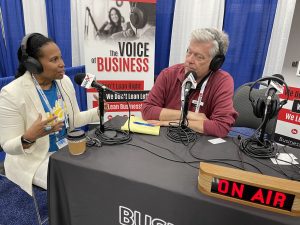
Tagged With: Advisory Insights, Advisory Insights Podcast, employment law, federal protections, nursing employee, Oberman Law, Oberman Law Firm, pregnant employee, Stuart Oberman

  • « Previous Page
  • 1
  • 2
  • 3
  • 4
  • …
  • 10
  • Next Page »

Business RadioX ® Network


Our Most Recent Episode

CONNECT WITH US

  • Email
  • Facebook
  • LinkedIn
  • Twitter

  • YouTube

Our Mission

We help local business leaders get the word out about the important work they’re doing to serve their market, their community, and their profession.

We support and celebrate business by sharing positive business stories that traditional media ignores. Some media leans left. Some media leans right. We lean business.

Sponsor a Show

Build Relationships and Grow Your Business. Click here for more details.

Partner With Us

Discover More Here

Terms and Conditions
Privacy Policy

Connect with us

Want to keep up with the latest in pro-business news across the network? Follow us on social media for the latest stories!
  • Email
  • Facebook
  • Google+
  • LinkedIn
  • Twitter

  • YouTube

Business RadioX® Headquarters
1000 Abernathy Rd. NE
Building 400, Suite L-10
Sandy Springs, GA 30328

© 2025 Business RadioX ® · Rainmaker Platform

BRXStudioCoversLA

Wait! Don’t Miss an Episode of LA Business Radio

BRXStudioCoversDENVER

Wait! Don’t Miss an Episode of Denver Business Radio

BRXStudioCoversPENSACOLA

Wait! Don’t Miss an Episode of Pensacola Business Radio

BRXStudioCoversBIRMINGHAM

Wait! Don’t Miss an Episode of Birmingham Business Radio

BRXStudioCoversTALLAHASSEE

Wait! Don’t Miss an Episode of Tallahassee Business Radio

BRXStudioCoversRALEIGH

Wait! Don’t Miss an Episode of Raleigh Business Radio

BRXStudioCoversRICHMONDNoWhite

Wait! Don’t Miss an Episode of Richmond Business Radio

BRXStudioCoversNASHVILLENoWhite

Wait! Don’t Miss an Episode of Nashville Business Radio

BRXStudioCoversDETROIT

Wait! Don’t Miss an Episode of Detroit Business Radio

BRXStudioCoversSTLOUIS

Wait! Don’t Miss an Episode of St. Louis Business Radio

BRXStudioCoversCOLUMBUS-small

Wait! Don’t Miss an Episode of Columbus Business Radio

Coachthecoach-08-08

Wait! Don’t Miss an Episode of Coach the Coach

BRXStudioCoversBAYAREA

Wait! Don’t Miss an Episode of Bay Area Business Radio

BRXStudioCoversCHICAGO

Wait! Don’t Miss an Episode of Chicago Business Radio

Wait! Don’t Miss an Episode of Atlanta Business Radio