Business RadioX ®

  • Home
  • Business RadioX ® Communities
    • Southeast
      • Alabama
        • Birmingham
      • Florida
        • Orlando
        • Pensacola
        • South Florida
        • Tampa
        • Tallahassee
      • Georgia
        • Atlanta
        • Cherokee
        • Forsyth
        • Greater Perimeter
        • Gwinnett
        • North Fulton
        • North Georgia
        • Northeast Georgia
        • Rome
        • Savannah
      • Louisiana
        • New Orleans
      • North Carolina
        • Charlotte
        • Raleigh
      • Tennessee
        • Chattanooga
        • Nashville
      • Virginia
        • Richmond
    • South Central
      • Arkansas
        • Northwest Arkansas
    • Midwest
      • Illinois
        • Chicago
      • Michigan
        • Detroit
      • Minnesota
        • Minneapolis St. Paul
      • Missouri
        • St. Louis
      • Ohio
        • Cleveland
        • Columbus
        • Dayton
    • Southwest
      • Arizona
        • Phoenix
        • Tucson
        • Valley
      • Texas
        • Austin
        • Dallas
        • Houston
    • West
      • California
        • Bay Area
        • LA
        • Pasadena
      • Colorado
        • Denver
      • Hawaii
        • Oahu
  • FAQs
  • About Us
    • Our Mission
    • Our Audience
    • Why It Works
    • What People Are Saying
    • BRX in the News
  • Resources
    • BRX Pro Tips
    • B2B Marketing: The 4Rs
    • High Velocity Selling Habits
    • Why Most B2B Media Strategies Fail
    • 9 Reasons To Sponsor A Business RadioX ® Show
  • Partner With Us
  • Veteran Business RadioX ®

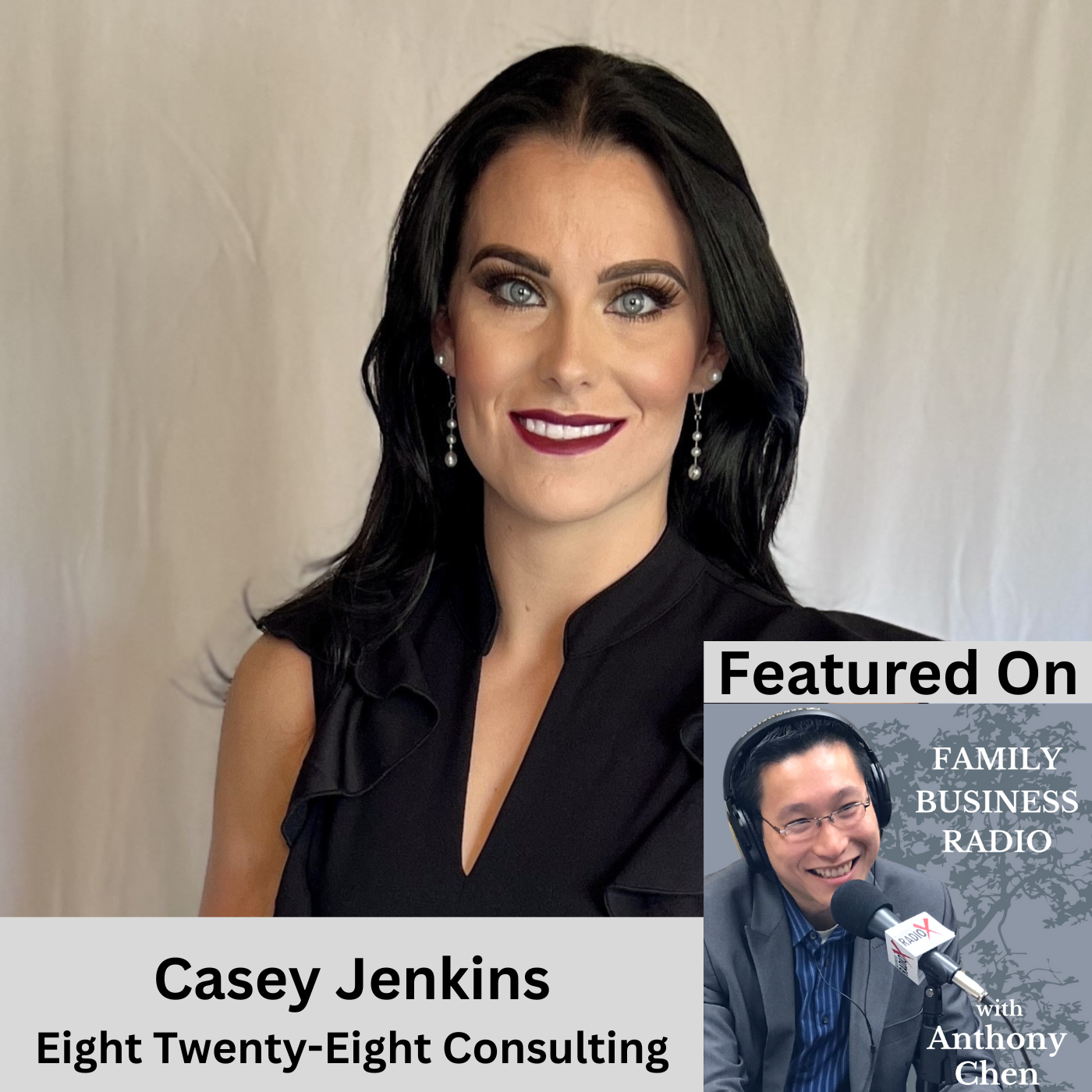
Casey Jenkins, Eight Twenty-Eight Consulting

January 11, 2024 by John Ray

Casey Jenkins, Eight Twenty-Eight Consulting
Family Business Radio
Casey Jenkins, Eight Twenty-Eight Consulting
Loading
00:00 /
RSS Feed
Share
Link
Embed

Download file

Casey Jenkins, Eight Twenty-Eight Consulting

Casey Jenkins, Eight Twenty-Eight Consulting (Family Business Radio, Episode 52)

On this episode of Family Business Radio, host Anthony Chen welcomed Casey Jenkins, CEO of Eight Twenty-Eight Consulting. Casey shared her journey from aspiring to be a meteorologist to falling into the supply chain industry by chance and staying by choice. Casey shared insights on managing processes and disruptions in supply chain business, emphasizing the significance of understanding the sequence of operations. She highlighted the need for companies, particularly small businesses, to identify their core capabilities and take incremental steps towards improvement. Furthermore, she underscored the importance of having a risk management plan to navigate different potential business disruptions.

Host Anthony Chen closed the show with a brief commentary on the value of taking just one small step in financial planning.

Family Business Radio is underwritten and brought to you by Anthony Chen with Lighthouse Financial Network.

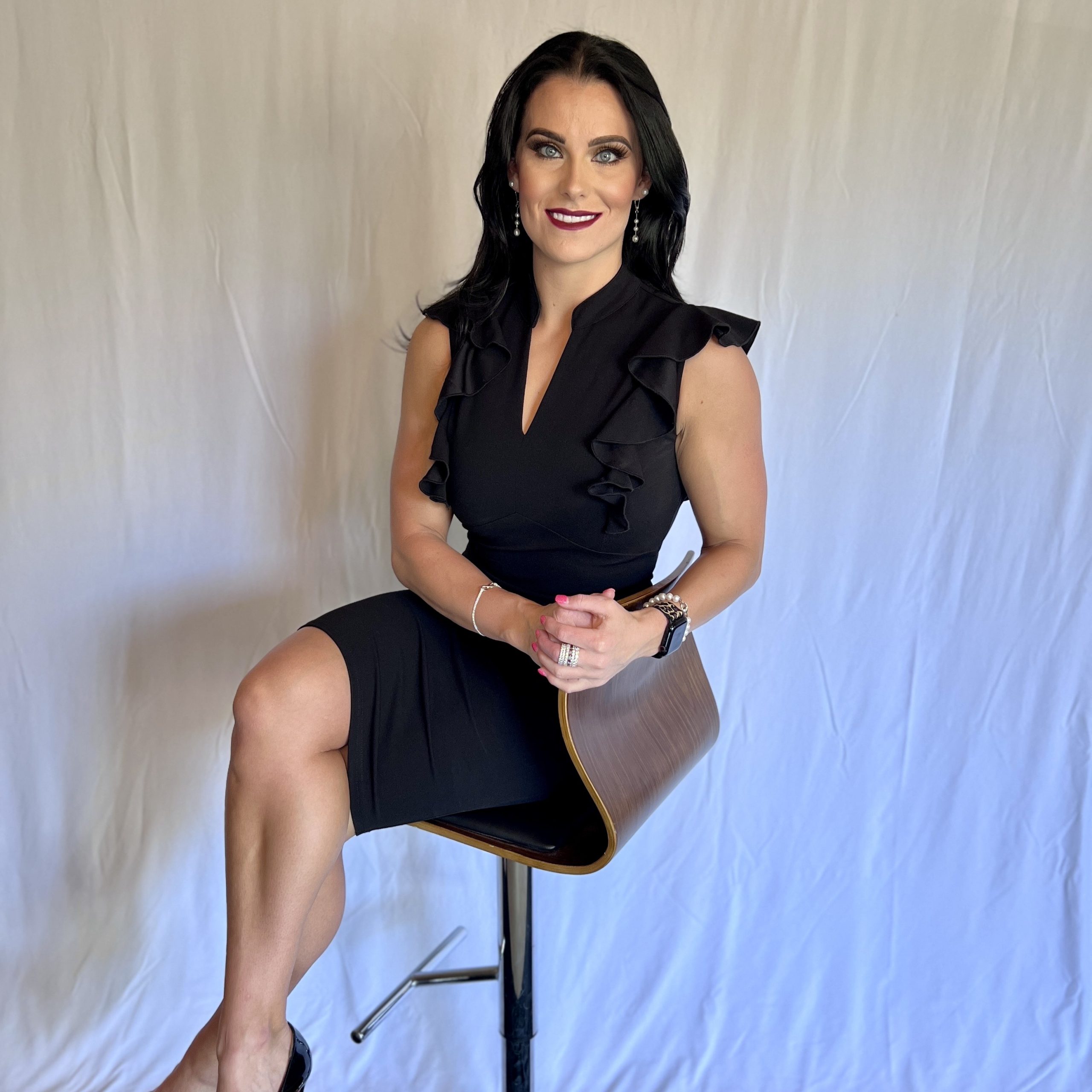
Casey Jenkins, Founder and CEO, Eight Twenty-Eight Consulting
Casey Jenkins, Eight Twenty-Eight Consulting

Casey Jenkins (CJ), the Owner of Eight Twenty-Eight Consulting LLC, stands out as a results-oriented business professional specializing in supply chain and process improvement. With a rich background encompassing over a decade of diverse supply chain experience, Casey holds dual master’s degrees in Supply Chain Management and Project Management, accompanied by a Black Belt in Lean Six Sigma. She adeptly combines her educational prowess and hands-on experience to navigate and resolve intricate supply chain challenges, consistently achieving maximum results and operational excellence.

A demonstrated track record in the strategic execution of various project types across numerous industries serves to highlight Casey’s expertise. Notably, she has successfully generated approximately $15 million through key initiatives and the completion of over 20 projects throughout her career.

In the ever-evolving landscape of the supply chain industry, Casey remains committed to staying ahead of emerging trends and technologies. Her pursuit of a Doctor of Business Administration in Supply Chain Management and Logistics, which will begin in January 2024, exemplifies her commitment to lifelong learning. Casey thrives on collaboration and actively engages in networking to enhance her knowledge.

Beyond her professional endeavors, Casey is an active community member in Savannah, GA, participating in volunteer work and church activities. A fitness enthusiast, she commits to twice-daily gym sessions. Casey shares her life with two Mini-Aussiedoodles, Skye and Enzo, whom she cherishes spending time with when not immersed in her professional pursuits.

LinkedIn

Eight Twenty-Eight Consulting LLC

With a mission to propel businesses and supply chains forward, Eight Twenty-Eight Consulting is your strategic partner in supply chain and process improvement. Employing a distinctive blend of execution-style methodology, strategic expertise, and elevated interactions, solutions are crafted with a forward-thinking mindset.

Eight Twenty-Eight Consulting transcends beyond a one-time transaction; it’s about lasting support and tailored solutions that enhance your core capabilities. Drawing on over a decade of experience and a rich educational background, forward-thinking solutions are delivered that are easy to implement, sustainable through company growth, and evolve seamlessly with industry changes.

As a catalyst for success, Eight Twenty-Eight Consulting challenges the status quo, recognizing the uniqueness of every organization.

Reach out today to find out how to Take Your Company to the Summit.

Website | LinkedIn | Instagram | YouTube

Topics Discussed in this Episode

00:06 Introduction to Family Business Radio
00:29 Meet the Guest: Casey Jenkins
00:42 Casey’s Journey into Supply Chain Management
02:33 Demystifying Supply Chain
04:25 The Intersection of Meteorology and Supply Chain
06:14 The Impact of COVID-19 on Supply Chain
07:27 Understanding ‘Just in Time’ and ‘Just in Case’
09:53 How 828 Consulting Helps Businesses
15:48 The Importance of Risk Management
32:21 Managing Stress in the Supply Chain Industry
37:18 When to Seek Help for Your Business
39:49 Conclusion and Contact Information

Anthony Chen, Host of Family Business Radio

Anthony Chen, Host of Family Business Radio

This show is sponsored and brought to you by Anthony Chen with Lighthouse Financial Network. Securities and advisory services are offered through Royal Alliance Associates, Inc. (RAA), member FINRA/SIPC. RAA is separately owned, and other entities and/or marketing names, products, or services referenced here are independent of RAA. The main office address is 575 Broadhollow Rd., Melville, NY 11747. You can reach Anthony at 631-465-9090, ext. 5075, or by email at anthonychen@lfnllc.com.

Anthony Chen started his career in financial services with MetLife in Buffalo, NY, in 2008. Born and raised in Elmhurst, Queens, he considers himself a full-blooded New Yorker while now enjoying his Atlanta, GA, home. Specializing in family businesses and their owners, Anthony works to protect what is most important to them. From preserving to creating wealth, Anthony partners with CPAs and attorneys to help address all of the concerns and help clients achieve their goals. By using a combination of financial products ranging from life, disability, and long-term care insurance to many investment options through Royal Alliance, Anthony looks to be the eyes and ears for his client’s financial foundation. In his spare time, Anthony is an avid long-distance runner.

The complete show archive of Family Business Radio can be found by following this link.
Tagged With: Anthony Chen, business processes, Casey Jenkins, Eight Twenty-Eight Consulting, Family Business Radio, just in time, Logistics, Operations, Risk Management, Supply Chain, supply chain management

How Clear Processes Add Value, with Marie Mills, Clear Solutions, LLC

February 7, 2023 by John Ray

Clear Solutions
How to Sell a Business
How Clear Processes Add Value, with Marie Mills, Clear Solutions, LLC
Loading
00:00 /
RSS Feed
Share
Link
Embed

Download file

Clear Solutions

How Clear Processes Add Value, with Marie Mills, Clear Solutions, LLC (How To Sell a Business Podcast, Episode 10)

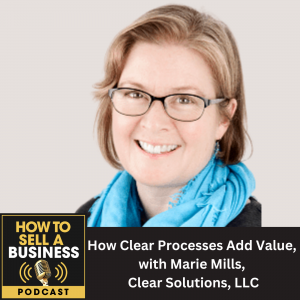
Marie Mills, Owner of Clear Solutions, LLC, is an experienced business process analyst, and she joined host Ed Mysogland to talk about the value of documenting processes for a business. Marie discussed the importance of clear and efficient processes regardless of the industry or size of business. They also covered how to get started, why two weeks isn’t enough time to create documentation, who should do it, the return on the investment, the impact on the sale of the business, and much more.

How To Sell a Business Podcast is produced and broadcast by the North Fulton Studio of Business RadioX® in Atlanta.

Clear Solutions, LLC

Whether you’re ready to scale, preparing to sell, or simply tired of putting out fires, clarifying your processes is key to success.

Clear Solutions works with you and your team to capture the knowledge and expertise that is key to running your business well. They show you how to shift from running your business out of your head to running it from clear and user-friendly instructions and information, written at the right level of detail.

Marie’s method takes a structured approach to ensure your documentation and processes support you as your business grows and shifts. Most documentation efforts fail because they don’t include the framework to effectively build, manage, and maintain the work. Clear content is key and the framework will keep it going.

The process: Clear Solutions uses any existing documentation as the foundation. They focus on your top priority processes. They provide templates that will make the documents easy to find, easy to use, and easy to build upon. They transform your detailed knowledge and vision of how you want your business to run into clear instructions for everyone on your team.

As you work together, you can take on as much or little of the work as you want. They track the work and keep it moving forward.

Company website | LinkedIn | Facebook

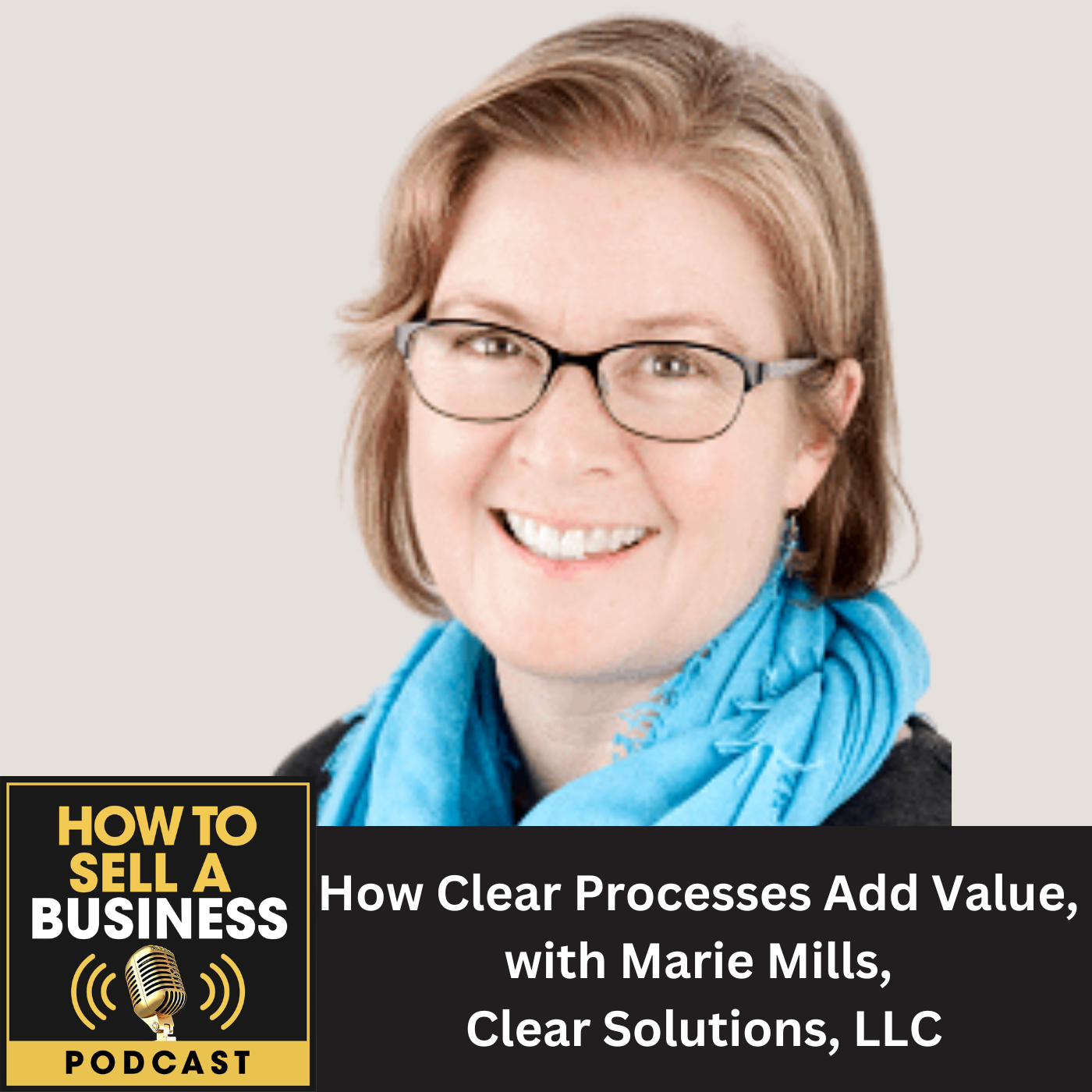
Marie Mills, Owner, Clear Solutions, LLC

Marie Mills, Owner, Clear Solutions, LLC

Marie Mills has over 15 years of experience helping organizations capture and clarify their processes to create a shared understanding and improve efficiencies.

She has a passion for understanding the nuts and bolts of business operations. Launching two small businesses prior to starting Clear Solutions provided her with first-hand experience running a business and all the challenges that go with it.

As a business process analyst, Marie learned how to ask the right questions to understand the work at a detailed level. She worked with employees in a variety of roles, in small, medium, and large businesses, across different industries. She developed a practical approach to capturing the process details, in plain language, that worked every time.

Clear Solutions helps business owners succeed by freeing up their time for what they do best – running their business.

LinkedIn

Ed Mysogland, Host of How To Sell a Business Podcast

Ed Mysogland, Host of “How To Sell a Business”

The How To Sell a Business Podcast combines 30 years of exit planning, valuation, and exit execution working with business owners. Ed Mysogland has a mission and vision to help business owners understand the value of their business and what makes it salable. Most of the small business owner’s net worth is locked in the company; to unlock it, a business owner has to sell it. Unfortunately, the odds are against business owners that they won’t be able to sell their companies because they don’t know what creates a saleable asset.

Ed interviews battle-tested experts who help business owners prepare, build, preserve, and one-day transfer value with the sale of the business for maximum value.

How To Sell a Business Podcast is produced virtually from the North Fulton studio of Business RadioX® in Alpharetta.  The show can be found on all the major podcast apps and a full archive can be found here.

Ed is the Managing Partner of Indiana Business Advisors. He guides the development of the organization, its knowledge strategy, and the IBA initiative, which is to continue to be Indiana’s premier business brokerage by bringing investment-banker-caliber of transactional advisory services to small and mid-sized businesses. Over the last 29 years, Ed has been appraising and providing pre-sale consulting services for small and medium-size privately-held businesses as part of the brokerage process. He has worked with entrepreneurs of every pedigree and offers a unique insight into consulting with them toward a successful outcome.

Connect with Ed: LinkedIn | Twitter | Facebook

TRANSCRIPT

Intro: [00:00:00] Business owners likely will have only one shot to sell a business. Most don’t understand what drives value and how buyers look at a business. Until now. Welcome to the How to Sell a Business podcast, where, every week, we talk to the subject matter experts, advisors, and those around the deal table about how to sell at maximum value. Every business will go to sell one day. It’s only a matter of when. We’re glad you’re here. The podcast starts now.

Ed Mysogland : [00:00:36] On today’s episode, I had the opportunity to interview Mary Mills. And great timing, you know, we’re having some turnover, and it’s one of those things of – oh, my gosh – as far as what I don’t know about the role that I’m trying to fill. And it was just awesome and so fortuitous for me to talk to Mary Mills of Clear Solutions. That’s what she does. She is all about documenting procedures and processes.

Ed Mysogland : [00:01:13] And from a business value standpoint, one of the things I really believe is that a business that has documented processes and you can hand those to a buyer is a more valuable business. And Marie, she hit it out of the park as far as how this process works, why perhaps you shouldn’t do it yourself, how your employees might react if you started down that path of documentation, and a whole host of other things. Out of all of the niche businesses, I think she’s got a great one. And I hope that you’ll – in fact, I shouldn’t say I hope. I know that you’ll enjoy this conversation I had with Mary Mills of Clear Solutions.

Ed Mysogland : [00:02:01] I’m your host, Ed Mysogland. I interview buyers, sellers, dealmakers, and other professional advisors about what creates value in a business and how that business is effectively sold at a premium value. On today’s show, you have no idea how excited I am to have Marie Mills of Clear Solutions.

Ed Mysogland : [00:02:22] So, like I said in the introduction, Marie helps businesses clarify, and prove, and document processes in plain language so the business can run consistently and efficiently. She’s been doing this for over 15 years, and has provided this service through her own business, Clear Solutions, for the past six years. So, Marie, welcome to the show. It’s great to have you.

Marie Mills: [00:02:47] Thank you. Great to be here, Ed.

Ed Mysogland : [00:02:51] So, I’m in this now with a situation where we have a team member that is leaving and, you know, I’m stuck. I know how to do her job. I have done her job. And I’m the guy. And here I am, how fortuitous that you and I are talking. You know, you have quite a niche, but can you tell a little bit more about Clear Solutions and just the organization, how you work, and where you’re working.

Marie Mills: [00:03:33] Yeah. You bet. So, I work with a number of different companies, big, small, different industries, what industry they work in is really not that important. They could be making about 200,000 a year. They could be making over 20 million. All of those have been my clients. They might have zero employees and they might have over 150 employees. So, what they all have in common is they have some issues, they have some challenges running their business that has to do with process, that has to do with the lack of clear and efficient process. And that’s where I come in and that’s where I help them.

Ed Mysogland : [00:04:19] Well, like I was saying, in my situation, I don’t want to say I’m stuck, but as a practitioner, I’m sitting here going, “All right. You know, this is not that big of a deal.” But whether it be preparing for this podcast or all the other things that I have to do today, I’m now focused on, “All right. I got to think about this onboarding or hiring and then onboarding this person.” And, boy, wouldn’t it be great if I had, you know, here’s kind of the playbook on your position. And I’ve been doing it for 30 years. So, I guess that’s kind of where I want to start, is, am I alone?

Marie Mills: [00:05:00] You’re definitely not alone. I mean, I have got a few panicked calls from businesses like, “Hey. My key person is leaving. They’ve been here 5 years, 10 years, 15 years, and they just gave two weeks notice. And they’ve always kept things running smoothly and now they’re leaving. And believe it or not, I don’t actually know what they do.” And that’s in addition to the I have to hire, I have to onboard, I have to do all those things. And if you don’t have a clear process, now you know, it’s a lot. Now, you have to think of the process as you need it.

Ed Mysogland : [00:05:39] Yeah. And the funny thing is, you know, you don’t think of the process complexity until you start being empathetic to the next person. And you take for granted all of the experience, all of the reps that you’ve had, either doing it or overseeing it or whatever role you’re playing. Now, all of a sudden, it’s a different animal, where someone coming is in cold. They have a working knowledge of the industry, but they have no idea how to work in your environment.

Ed Mysogland : [00:06:21] So, I know there wasn’t a question there. I’m crying on your shoulder, really. So, one of the things that we talked about or we wanted to talk about is the difference between process and procedure. So, what’s the difference?

Marie Mills: [00:06:37] Yeah. Great question, there’s a lot of confusion around that. And I like to keep things simple whenever possible to avoid confusion. I think, technically, if you talk to people who are really into process, they’ll say, “Well, a process is more general. It’s higher level. And in a big company, it will cross multiple departments. And a procedure is more of the step by step instructions.”

Marie Mills: [00:07:02] So, with the work I do, I think keeping it simple is really the best approach. So, I use the terms interchangeably. I’ll say process, procedure. And people talk about their SOPs or their standard operating procedures. I’m like, “Yeah. It’s all the same thing.” Define it. What is it? It’s like you’re following a series of steps to achieve a desired outcome. So, if you weren’t following a process or you didn’t have a process, you would be working randomly and just kind of doing it however every single time. So, the whole point is to have a series of steps to that desired outcome.

Ed Mysogland : [00:07:42] So, I was forced to think about how I am going to do this. I have options. I could I could dump it into the other staff members, kind of divide the roles. But you can’t grow doing that. And we’re always constantly trying to grow our business. And by saying, “Okay. We have a hole here, we’ll just kind of divide roles because it’s the easy way and they have an understanding of the process.”

Ed Mysogland : [00:08:24] So, where I’m heading with this is from a development standpoint, like I said earlier, if I could just hand somebody, “This is the playbook.” So, how do I do that? Because I was thinking about, “All right. Here’s what I’ll do. I’m going to strap on my dictation machine and I’m just going to talk through this. And then, I’m going to memorialize it, this is how you do it.” But I suspect that’s probably not the way this whole thing goes.

Marie Mills: [00:09:00] Well, it’s not a bad idea of how it goes. I mean, so you start with finding out who understands how the job works, like whatever the individual tasks that’s involved. And then, for each task, each process, what are you trying to do and how do you do it. And then, you need to write it down because it’s not enough just to have it in your head. That doesn’t work very well. It’s too easy to have misunderstandings. So, you write it down.

Marie Mills: [00:09:29] So, you could get your dictation machine on and you could speak into it, and then you could have somebody just dictate it word for word. And that would be a good start. And that’s what I would call the brain dump. That’s your initial brain dump. So, first you’ve identified what it is you’re going to document. And then, you go to each piece and you do the initial brain dump of how it works.

Marie Mills: [00:09:51] Now, the difference between how it’s going to come out of your mouth and how easy it is for somebody else to read that and understand it – that’s the next step – you’ve got to organize it. You have to organize it so that you could hand that document to somebody, and with relatively little explanation from you, you want to provide some basic context, but relatively little explanation. Now, they can read that and understand what is it they’re trying to do and how do they do it, and how do they know that they’ve done it correctly in the end.

Marie Mills: [00:10:24] And so, when I work with companies, that’s basically what I’m doing. I’m sitting down and I’m saying, “What are the issues you’re facing? Okay. So, these processes aren’t clear. Let’s start talking about each process individually, and then let’s get really clear on that until it’s done.”

Ed Mysogland : [00:10:45] Okay. So, your role is one of scrutinizing the clarity of the process. Is that a fair statement or no?

Marie Mills: [00:10:54] Yes, it is. And it’s also capturing it. It’s capturing it. Because many, many businesses, they don’t really have the processes written down. Somebody comes in, they’re trained. There might be a few notes here and there. It’s what I call the oral tradition. You’re just passing it down through oral tradition. And it’s from my head, now it’s in your head. And maybe you understood what I said, maybe you didn’t, maybe you remembered everything I told you, maybe you didn’t, probably you didn’t.

Marie Mills: [00:11:26] And so then, I’m helping them really capture all the details. And then, as we do it, as we’re capturing all the details, that initial brain dump, it’s like, “Okay. Let’s go through and organize this and see where’s the sequence, where are the handoffs, who else is involved in this, and how do you go from the beginning to the end, and what’s the end and all that.” So, it’s the capturing and the clarifying and the organizing.

Ed Mysogland : [00:11:56] I get it. So, who does this? You know, is it the business owner that documents it and oversees it? Or do you say, “You know what? Valued employee, I need your help here. Just in case you get run over by a bus, we need to figure out how to keep going.” Is it fair to ask them to help at this initial stage?

Marie Mills: [00:12:27] Yeah. Absolutely. Because they are like the keepers of the knowledge. They’re the ones that know how this works. So, they’re the subject matter experts. So, now, you’ve identified which processes you need to write down and who’s the subject matter expert. And then, you go talk to them and you could start. It’s a great thing to ask your people to write down what they do. And that is, again, a great start.

Marie Mills: [00:12:54] It will only take you so far, because usually the people who are really good at doing the work aren’t necessarily really good at writing down what they do. So, not everybody is a great writer. Not everybody is great at organizing information.

Marie Mills: [00:13:09] And the other thing is it’s kind of counterintuitive. But the more you know, the more likely you are to leave a detail out. Because all these assumptions, you know, we’re so used to doing this, “Oh, yeah. I forgot you wouldn’t know that. Oh, yeah. I forgot not everybody would know that.”

Marie Mills: [00:13:28] So then, the subject matter expert – absolutely – they could start by writing it down. And then, you want somebody who’s more objective, who’s not actually the expert to come in and read it, and then start saying, “Well, wait a minute. What did you mean by this? And what does this acronym mean?” And then, that’s how you refine it. Sometimes that’s the owner and sometimes it’s the person doing it. It’s whoever’s doing the most familiar.

Ed Mysogland : [00:13:58] I wonder whether the employee feels threatened, like, “Here. Write the playbook for how you do your job. Just in case.”

Marie Mills: [00:14:15] “Just in case. And get it done within two weeks, if you don’t mind.” This comes up a lot. And so, when I work with a company, usually there’s one main point person. It could be the owner or it could be somebody else who’s in charge of a division. And I work with them, so they’re my primary liaison between me and all the people I’ll talk to. And I first want to make sure that everybody understands why we’re doing this. And it’s not because we’re going to then replace you or take away your job. And then, when I work with them directly, I let them know that.

Marie Mills: [00:14:54] And it’s not just saying we’re doing this because we want to run more efficiently. It’s really showing the advantages of doing it. It’s like, This should make your job easier. This will make it easier for somebody to fill in if you want to go on vacation. This is going to make it easier for you to go on vacation because somebody else is going to know how to fill in for you when they need to.

Ed Mysogland : [00:15:17] Sure. No, that’s a great point.

Marie Mills: [00:15:20] And, also, oftentimes when you get these employees and they’ve been around for a long time, it’s not so much – I won’t to say taken for granted, but people, they’re used to that person really handling all this work. And then, when you write it down, I’ve had managers and owners just go, “Oh, my gosh. I had no idea how valuable this employee is and how much they did.” And the employee will say the same thing, “I didn’t realize I did so much.” So, really, it’s like a way of recognizing all their hard work.

Ed Mysogland : [00:15:58] Yeah. Let’s visit at my next review about just how valuable I am.

Marie Mills: [00:16:03] Exactly. Right?

Ed Mysogland : [00:16:04] Oh, my goodness. Right.

Marie Mills: [00:16:05] Yeah. Exactly.

Ed Mysogland : [00:16:07] So, how do you prioritize? I mean, where do you start? I mean, I’m sitting here, for me, I’m going to say, “All right. I started the money and work backwards. Whatever gets me closest to being able to pay the bills is where I probably should start.” Is that right or no?

Marie Mills: [00:16:25] Okay. So, oftentimes, there’s many, many processes that need to be documented and improved, so you can start by looking at what is a priority for the business right now. Now, if you have an employee who just gave two weeks notice and they’re a key employee and there’s a lot that employee knows that maybe somebody else doesn’t know, that’s a priority right there, that person’s job.

Marie Mills: [00:16:54] And then, within that job, to be perfectly honest, two weeks is not enough time to document what somebody knows. So, you’re not going to be able to even capture everything that they know. So then, you’re going to say, What are those things that, if you walked away tomorrow, and nobody else knew that could really cripple a business or at least cost a lot churn and scrambling to reinvent the wheel? Those are the kinds of things. And so, I start by trying to get an outline of what are the tasks that you do and what are the most important ones.

Marie Mills: [00:17:32] And if you’re not used to documenting processes, I also recommend don’t pick the easiest and don’t pick the hardest. Pick something in between and start warming up to what this is going to take.

Ed Mysogland : [00:17:49] Well, I know a lot of business owners that we’re bumping into these days are using Loom, and this is a video. And to me, I don’t think it’s any different than the dictation illustration I used earlier. I mean, you can show me but somebody’s got to document it. You know, what I thought was super easy as far as procedural, it may not be for the next person. You can watch that video over and over and over again and kind of get the gist. But the finer points, I’m with you. I don’t think that’s the best way to say it. I like Loom. It may be great for here’s kind of an example at a high level of how this works. But as a replacement for my SOP, probably not. Do you agree?

Marie Mills: [00:18:55] I agree. I think video has its place. Like things that are highly visual, like if you’re going through a complicated software procedure, trying to write that line by line, that’s not easy to follow. But if you have a little video about that, that’s good. But, yeah, I mean, having context and having the outline of what you’re doing is most helpful in most cases.

Ed Mysogland : [00:19:22] I get it. Well, earlier, you had talked about capturing and clarifying the process. Can you talk a little bit about why that works so well?

Marie Mills: [00:19:36] Why it’s so important to capture and clarify it?

Ed Mysogland : [00:19:39] Yeah. So, the best approach was capturing and clarifying a process is an iterative approach. And I’m just wondering what makes that approach work so well? Because I’m assuming, this is a living document that, once you get it down, you’re constantly tweaking it and updating it, right?

Marie Mills: [00:20:08] Yes. Right. Yes. That’s a really good point. So, it’s not a one and done. Your process documentation is living documentation that needs to be updated as your business changes. And capturing it, initially, I found that an iterative process is really the most efficient way to go, because there’s usually more to it than you think. When you go into it, you say, “Oh. I’m going to document this. This is so easy. It’s going to take me an hour. And then, we’ll do a review and then it’ll be done.”

Marie Mills: [00:20:42] And the reality is, again, going back to kind of the curse of excellency or whatever, where somebody knows it so well, they write it down, they say I think this is everything. And then, somebody else reads it and go, “Wait a minute. I don’t quite understand this or this.”

Marie Mills: [00:21:00] And so, the iterative approach is where you start with a brain dump and then you have somebody else review it and organize it. And then, you go back and let’s review the draft. Now, here’s our questions. Now, expand on it again. And you just keep doing that. And the key point is that you walk away from it for a while. Because you’re going to come back to it with fresh eyes and that’s where the things that don’t quite make sense and aren’t completely explained, that’s where you’re going to catch that.

Ed Mysogland : [00:21:33] That’s a great point. I guess this is a long term process. And for someone like me that is scrambling now trying to document a 40 year old business and all the processes that we have implemented over the years, that’s a big ask. And for people that are looking at selling their business, something is better than nothing. But at the same time, I don’t think that you’re going to see the value benefit by just throwing together a Google Doc and thinking that this is my SOP, and, oh, by the way, we wrote it a month ago.

Ed Mysogland : [00:22:30] And that’s kind of my next question, is, from a value standpoint – I know this is kind of a loaded question – I know from where I sit that a business is more valuable that has documentable processes. You read it in Michael Gerber’s E-Myth, the whole franchise world, they’re about that. Let the system be the expert, not the people.

Ed Mysogland : [00:23:09] I mean, I want to ask you about value, but I’m not really certain how to ask the question, other than you’ve been to different businesses, you’ve seen it, can you tell the difference pre and post implementation of this process? You know what I mean? Because I’m certain you worked with them on a long term basis. And I know that was the longest question that you’ve ever heard, but you know where I’m going with it, right?

Marie Mills: [00:23:42] Yeah. It’s an investment for sure. It’s an investment. And then, how does it pay off? How soon can you get the payoff? Obviously, it depends on the situation, but I almost always see a payoff right away. Because one of the biggest benefits to doing this, is that, yes, you have clear documented processes, but you’ve also had the discussion.

Marie Mills: [00:24:09] It generates a discussion that is so valuable. Because people come in and they just do the work and why did they do that. “Well, I’ve always done it this way.” And then, when you sit down and say, “Hey, I really want to make this clear and write this down,” it generates a discussion about why do we do it that way, why do we do it that way.

Marie Mills: [00:24:28] And I’ll tell you a story, a true story. So, I was working with a company and I was documenting the receiving processes. And the guy is telling me, “This packet comes in, we check it off, blah, blah, blah. We take the packing list and then we walk over to accounting and we put it in their inbox.” “What does accounting do with it?” “Oh, I have no idea. That’s just what I was told.”

Ed Mysogland : [00:24:52] So, later, I go down to accounting and I said, “Hey, you know, that packing list that receiving gives you, what do you do with it?” And they go, “Oh, yeah. I put it in the recycle bin.” And I said, “Why do you think they give it to you?” “Well, I don’t know. They always did so I just let them do it.” And so, I said, “Well, we should talk.” And we all got in the room and kind of talked it out and we all had a really good laugh.

Marie Mills: [00:25:14] But it’s that kind of thing, you know, that’s a small thing, but you take that and then you multiply it by all your different processes, now you’ve got time wasted, energy wasted.

Ed Mysogland : [00:25:29] A hundred percent. That’s a great example. Because the same kind of thing, I mean, if you came in our business, you would see the same thing. It was like, “Well, that’s how we do it. What do you mean?” Ignore the efficiency. This is just how we do it.

Marie Mills: [00:25:53] This is just the way it is.

Ed Mysogland : [00:25:55] And the funny thing is – and I know I’m asking you some questions that we didn’t really talk about – for the older folks, the older sellers, let’s take 60 and up, I’m trying to figure out whether this is an easy process to sell them or not. You know what I mean?

Ed Mysogland : [00:26:28] Because we talk to a lot of business owners that are getting ready to sell and they’re saying, “Hey. What can I do in order to prepare and maximize value?” And, certainly, this is on the list. But at the same time, I’m not certain they buy into it. Maybe I’m wrong. But I mean, the people you work with based on age – and sorry, I’m kind of in that camp – how do you work through that?

Marie Mills: [00:27:02] Yeah. So, I don’t know if it’s so much about age or if it’s just about kind of mindset about how the business runs. But I think one thing I see – I’ve seen this several times – is that the owner manager says, “Yeah. Yeah. This is what my people do.” Well, guess what? That’s not what their people do. Their people do something else, and they don’t know that until it’s written down.

Marie Mills: [00:27:33] And so, if you’re preparing to sell your business, what comes to mind is a couple of things. You want to be informed. You don’t want to show up to sell your business and say, “Oh, by the way, I had no idea that’s what we did.” That’s not going to look good. You want to know how your business is currently running.

Marie Mills: [00:27:57] And my understanding when you sell a business, isn’t there some kind of transition period from the old owner to the new owner and training. So, what are you going to do? Just fill, like, 100 million phone calls from the new owner or you could have your processes.

Ed Mysogland : [00:28:14] You know what? That’s a great example. And to be honest with you, one of the things why a business owner would want to do this is that it lessens the amount of time they have to work with the buyer post-sale. Because that could be a one to three year process. I mean, it takes time to transition the business. So, having all of this knowledge out of people’s heads onto paper, and then it becomes clarifying, like you said, clarifying the process, do you understand how we operate then, then it’s a matter of getting out. So, if I’m a business owner, I’m like, “Man, if I could reduce the amount of transition time, this is a really good investment.” That’s a great point. Go ahead.

Marie Mills: [00:29:11] And I was also going to say that you might meet a business buyer who buys the business, and then they’re saying, “Hey. How does this work?” And you say, “Well, this is how we do it.” And they’re like, “Why do you do it that way? That doesn’t seem to make much sense.” And I don’t know if you ever get into some debate about that, but if you have a written process, there’s a credibility there. You have taken the time to write this down, and to vet it, and to make sure this is a good way of doing the work. Then, you have more credibility when you’re in that transition phase and less debate.

Ed Mysogland : [00:29:46] Well, it’s funny you say that, because there’s some guys that are buying up foundries and that’s their thing, that they are way into process and efficiency and retooling, for lack of a better word, an antiquated industry. I mean, they’re just killing it just because of that. I mean, there is just an antiquated way of doing things. And you start documenting that one work in one particular business, and you take that playbook and you put it on the next acquisition, you’re miles ahead and your ROI is happening so much quicker.

Ed Mysogland : [00:30:34] One of the things I would love to know, and I have no way of quantifying it, is the increase in value. In valuation, it’s more about earnings and risk. And so, when you look at a franchise, all things being equal, you’re buying a process. I have to believe that by doing something like this, you are buying the business owner’s process and that lowers the risk and that increases your value. Wouldn’t you agree? I think so.

Marie Mills: [00:31:22] Absolutely. Yeah, absolutely. And, again, let me talk a little bit more about the explicit benefits of doing this. And so, there are a lot of benefits. So, I was trying to narrow it down and make it easy to understand. So, the first thing is, when you document your processes, when you clarify them, you are creating a shared understanding in the business.

Marie Mills: [00:31:49] So, you don’t have opposing points of view of what you’re doing and how it’s supposed to get done. You get everybody on the same page and you create that transparency. So, like I had said before, the employees are more aware of what they’re doing, the managers are more aware of what the employees are doing. So, you have this shared understanding.

Marie Mills: [00:32:14] And so, I had this experience working with the business, and their business had to do with event planning. They had a long term employee, the salesperson, and she was great. Sales were coming in. There was no reason to question the process. But they wanted this documented because she was leaving the company.

Marie Mills: [00:32:37] And so, I went to talk to her and document it. It turns out, from the time they got the initial inquiry from a potential customer to when the deal was closed was about three months. And so, I wrote this down and got it all organized, reviewed it with the owners, and their jaws just dropped. “Three months? Three months to close a sale? We want that sale closed in three weeks.”

Marie Mills: [00:33:06] So, there you go. Now, you have a shared understanding when it’s written down. There’s not, like, an assumption of how it’s happening. You have the guidelines written up. This is how we want it to happen. So, that’s one main benefit.

Marie Mills: [00:33:22] The other we’ve talked about a little bit, what you’re kind of experiencing, the dependence or being overly dependent on a single employee. And that employee has knowledge that nobody else in the business knows. And this is a real risk. And sometimes you can figure out what they know pretty easily and sometimes you cannot. It depends on how complex. And that is a problem.

Marie Mills: [00:33:51] And my story there is about a company that did a lot of shipping. And then, somebody retires. And a few weeks later, the postage machine runs out of postage. And now you got three guys standing around the postage machine staring at it trying to figure it out. Because nobody knows how to refill the postage machine. Something really simple, right?

Marie Mills: [00:34:16] Often, it’s much more complicated than that. I mean, you probably can find that on the internet, but a lot of stuff you can’t. Either way, it’s a waste of time. It’s not a good deal.

Ed Mysogland : [00:34:31] A hundred percent. And it’s like you’re in our shop, because just a couple of days ago, I was trying to figure out how to print out the year-end postage by person who spent what. And I’m like, “Good, God. How do you do this?” And you’re right, I can’t tell you how much time I spent monkeying with that silly thing.

Marie Mills: [00:34:59] Because it’s rocket science, right? It’s just rocket science. And the thing is, people think, “Well, it’s so simple. I don’t have time to write it down.” But, actually, if you don’t know it, you don’t know it. It takes time to figure it out.

Ed Mysogland : [00:35:13] Yeah. And at the same time, you’re talking about employees, I’m looking at business owners too, what do you do. And we probably shouldn’t minimize their role because a lot of reasons the businesses don’t sell is because they believe that the business is the owner. So, if you can document the owner’s role, this is what I do every single day, there are certain duties that a business owner has on a regular basis, that, to me, will lessen the potential value penalty that the business owner may incur.

Marie Mills: [00:36:03] So, the funny thing, and I can hear the people talking, is, if these processes are so important to the business, why don’t I do this myself? I mean, why don’t I take the time? I mean, I know that they’re important. So, what advice do you have for those business owners that are listening to this going, “You know what? They actually have a point.” And they want to dip their toe into this world.

Marie Mills: [00:36:44] Yeah. Yeah. So, it is challenging for businesses to do this completely on their own. First of all, I hear this from pretty much every client I’ve ever had. They show up and they’re embarrassed, “I should have been able to do this myself. I should have been able to do it myself.” It’s very straightforward, but it’s not as easy as it looks.

Marie Mills: [00:37:07] And so, we’ve talked about not everybody is process-oriented, not everybody is really good at writing or organizing information. It takes time. People do not like doing it. Number one reason, “I hate writing processes.” I love writing processes that’s why I’m in this business. But most people don’t. And you don’t know where to start. You don’t know where to put it. So, guess what? You write a process. You put it out there. You can’t find it. You rewrite it. Now, you’ve got multiple versions. Now, what are you going to do?

Marie Mills: [00:37:44] So, it’s not just the documentation, it’s also there has to be a system for managing it. There has to be a system for managing it. It’s like a lot of things. It’s so beneficial when you do it, but it doesn’t make it any easier to do it.

Ed Mysogland : [00:38:03] Yeah. Go ahead. I’m sorry.

Marie Mills: [00:38:08] So, I was going to say, but I forgot the advice part. So, what’s the advice? The thing is, like we talked about, it’s not a one and done. It really needs to be a habit. And it needs to be a habit that’s integrated into doing your everyday work. And so, if you schedule, if you have each one of your people schedule some time out every single week, and all you get to do during that time is you work on your processes, even if you don’t make really fast headway, you’re now creating this habit. And it gets people thinking about, not just doing the work, but thinking about the work and starting to write it down.

Ed Mysogland : [00:38:53] Yeah. That part is really good. And from the standpoint, if I’m a business owner, I’m sitting here going, “When do I call Marie? Am I supposed to do this at myself and start here and then call her?” Do you start and you coach the whole process? How do you work?

Marie Mills: [00:39:27] Yeah. No, that’s great. So, I would say, if you have any questions, like, don’t hesitate to call. So, we’ll jump on a discovery call first. And the first thing I want to do is I want to make sure that the problem that you’re having really is process related. I actually have had somebody who wanted to hire me, and they’re like, “Yeah. This person is not doing the process.” And it’s like, “Well, do you have a process?” “Yes.” “Did you train them on it?” “Yes.” “They just don’t want to do it?” “Yes.” Okay. That’s not a process problem. That’s a performance problem.

Marie Mills: [00:39:59] So, now let’s clarify that the problem really is that you don’t have clear processes. And not that you have them, but people just aren’t using them. So, when I work with people, I can do all the writing. I can do some of the writing. I can coach you to do the writing. I can coach you through the whole process of writing your processes. So, every engagement is customized and it’s individual to your budget, and to what you need, and how willing and ready and interested you are in doing some of the work yourself.

Marie Mills: [00:40:34] And it can vary. It doesn’t have to be we decide that at the very beginning. We’ll decide like, let’s just jump in, document something together. Now, you get a sense. You want to write more, perfect. You don’t want to write more, perfect. I can work with any of that.

Ed Mysogland : [00:40:49] I got it. So, one of the questions we were talking about is how to overcome resistance when someone doesn’t want to adopt the new process. Because this is the way we’ve always done it. And aside from just the sheer embarrassment in doing this podcast and telling you all the things that are going wrong in my life, I could hear our staff going, “Well, this is the way we’ve always done it.” So, how do we overcome that?

Marie Mills: [00:41:25] Yeah. So, when there’s resistance, the first thing I always say is find out why. Because people always do things for a reason, even if they don’t think they do. They do it for a reason. Find out why they are resistant, what is behind it. If it is, in fact, it’s just we’ve always done it this way and I kind of am a lazy person and I don’t really want to change or whatever, that’s one thing. And a way to deal with that is, really, you got to get people thinking like this is best for the business. And if it’s good for the business, it’s going to be good for you ultimately.

Marie Mills: [00:42:00] So, we never want to ask you to do something just to do it a certain way just because or because that’s what I told you to do. There should be a good reason for why the process is being done a certain way. So, try to get them onboard by showing them that this is in their own benefit. This is in their own interests to work efficiently.

Marie Mills: [00:42:23] Now, let’s say that’s not the reason, but there’s some resistance. There’s some reason they’re not following the process – and I’ve had this happen. Again, you find out why. So, I had a fellow and he was working in H.R. and he was responsible for offboarding and terminating employees when they left the company, you know, terminating their access. And so, we had this process to make sure that the access was shut down, and it wasn’t happening.

Marie Mills: [00:42:52] And I went back to this guy and I said, “Are you following the process?” And he said, “Yeah.” I said, “Well, can I watch you?” “Okay.” And then, I watched him and I watched him skip a key step. So, he was shy to admit that he wasn’t following it. So, I got to find out what’s that about. And it turned out the way the process was written, he was sending an email to a manager and saying, “I need you to tell me what the termination date and time is.” Well, the manager and the manager’s worldview has better things to do with this time. So, he wasn’t replying.

Marie Mills: [00:43:33] And this is a cultural issue. This is like an internal cultural issue that you have to deal with. You’re not going to solve it with the process. So, I informed the right people and they can deal with that in their own way. But what I ended up doing is we rewrote the process so that he sends the email to the manager and he says, “If I do not hear from you by such and such date, I will assume the termination date and time is this and this.” Now, the responsibility is on the manager. And that worked much better with that particular dynamic in that particular culture. So, always find out first why they’re resistant to it.

Ed Mysogland : [00:44:15] Well, to be honest with you, I would foresee that or I would assume that there is a certain level of being threatened. Threatened that someone’s going to find out that there’s greater throughput, I could be doing more.

Marie Mills: [00:44:36] Yeah, yeah, yeah.

Ed Mysogland : [00:44:37] I could see that.

Marie Mills: [00:44:42] That’s more of a performance issue. And I mean, it is threatening. Even when there’s nothing bad to discover, it is a little bit unsettling to your employees when someone comes in. It takes a really confident employee for somebody to come in from the outside and say, “Hey, tell me everything you do. I’m going to write it down.” And then, we’ll all know that you said it and this is the way you work. And I think you just have to be very gentle with people and very supportive and make sure that everybody understands this is for the sake of efficiency and clarity.

Ed Mysogland : [00:45:17] Yeah. And I think that as a business, you have to probably have the communication and culture dynamics down. Because I was trying to formulate one of my last questions of, you know, from a timing standpoint, throwing this on somebody, I think, puts them in a defensive position. But if you work on the culture and communication and what are some of the problems, here’s a solution that, collectively, will benefit all of us if we can document our work. Because if someone leaves, “Oh, by the way, Joe, you’re the guy that’s going to backfill all of the responsibilities that the outgoing employee has.” Don’t you think?

Marie Mills: [00:46:14] Yeah. Right, it can happen. I mean, I think that you just have to be very transparent as to the reasons of why you’re doing this, and to really help the employee know. And I had a brilliant thought there, it flew away out of my head. And maybe it’ll come back, but maybe not. Okay. I know what I was going to say.

Marie Mills: [00:46:40] So, it does help. It does help. This is another reason why you might want to bring in somebody from the outside. I have worked with dynamics where the manager employee dynamic is not good. And you know what the manager will say? “I need to know what this person does and I don’t want to ask. It’s not going to go well if I ask.” They may not even tell me the whole thing. I want you to ask.

Marie Mills: [00:47:01] Now, the employee knows that I’ve been hired by the manager or by the owner. But if I approach it neutrally, which I’m always going to, because my job is to show up and to understand, it’s not to judge. That’s not going to happen when I’m working there. Now, employees are much more willing and able to open up and talk to me because I am a neutral person, and I am an interested person, and I’m not going to judge them.

Ed Mysogland : [00:47:30] I get it. Well, I appreciate you going a little over talking to me. And at the end of every episode, I always ask, what’s the one piece of advice that you could give listeners that would have the greatest impact on their business. For you, what would that be?

Marie Mills: [00:47:48] Well, I would say, don’t wait for your employees to give two weeks notice. Start now. Start next week. Don’t wait. Don’t wait.

Ed Mysogland : [00:47:56] You had to jam that to me, didn’t you?

Marie Mills: [00:47:58] I know you don’t want to hear it. That is the thing, though, don’t wait.

Ed Mysogland : [00:48:05] Okay. So, where can we find you? And you do work all across the country, right?

Marie Mills: [00:48:12] I work all across the country. I don’t know if I mentioned earlier, I do all my work on Zoom. I do not need to be onsite. I have a process that works virtually.

Ed Mysogland : [00:48:25] So, what’s the best way we can connect with you?

Marie Mills: [00:48:27] So, I have a website, clearsolutionsbymarie.com. I’m on LinkedIn. I would love to LinkedIn with anybody who wants to LinkedIn.

Ed Mysogland : [00:48:37] Well, we will have every way that someone can possibly get in touch with you on in the show notes, on the website, and on your favorite podcast player. So, Marie, there’s different businesses that you see that are niched, and I got to tell you, you have one fascinating business. And to be honest with you, how I wish I would have known you so much sooner than now. So, I appreciate your time. I thoroughly enjoyed our conversation.

Marie Mills: [00:49:16] Yeah. Me, too. Thank you so much for having me on your show.

Outro: [00:49:21] Thank you for joining us today on the How to Sell your Business Podcast. If you want more episodes packed with strategies to help sell your business for the maximum value, visit howtosellabusinesspodcast.com for tips and best practices to make your exit life changing. Better yet, subscribe now so you never miss future episodes. This program is copyrighted by Myso, Inc. All rights reserved.


Tagged With: Business Owners, business sale, Clear Solutions LLC, documentation, Ed Mysogland, Entrepreneurs, How to Sell a Business Podcast, Marie Mills, Operations, process documentation, processes, salable, valuation

Jason Prentice with Outcomes COO

June 8, 2021 by Karen

Jason-Prentice-with-Outcomes-COO-feature
Phoenix Business Radio
Jason Prentice with Outcomes COO
Loading
00:00 /
RSS Feed
Share
Link
Embed

Download file

Jason-Prentice-with-Outcomes-COO

Jason Prentice with Outcomes COO

Jason-Prentice-on-Phoenix-Business-RadioXJason Prentice is the founder of Outcomes COO. Outcomes COO is able to offer something genuinely unique to Visionary CEO’s.

Building healthy and robust businesses is what he loves doing. With decades of experience and formal training in coaching and leadership, he can foster efficient, healthy, and, most importantly, happy teams that ensure we all achieve our goals.

The team is the backbone, but operations, finance, sales, and marketing are just as necessary. The ability to strategically plan and prioritize is critical, and we’re experts at marshaling the resources when and where they are most effective. This blend of team and efficiency enables extraordinary results.

Jason is an Integrator & Self-Implementer for companies running EOS®. He’s a forward-focused Executive with a strong ability to identify opportunities for revenue growth.

He loves building high-performance teams to accomplish corporate objectives. He’s passionate about identifying and implementing strategies to reduce costs, increase revenue, strengthen customer relationships, improve business practices, and drive profitable growth. Jason is adept at mentoring staff and encouraging a team environment leading to high employee confidence and satisfaction.

Jason began his career in automotive engineering, traveling and living around the world, working on some of the most popular consumer vehicles on the market. He’s started and sold several businesses ranging from a chain of Subways to a high-end woodworking and furniture business.

With experience scaling companies, he excels when working with ambitious Visionary’s and Leadership teams to achieve the seemingly unachievable. With several years of experience practicing EOS®, Jason enjoys expertly harmonizing the vision, the tools, and the team to consistently meet and exceed the goals.

When not working, Jason spends time outdoors and traveling with his wife and two boys. He’s also a certified USA Hockey coach, playing and coaching ice hockey keep him cool during the hot Arizona summers.

Connect with Jason on LinkedIn.

About Our Special Guest Co-Host

Derick-Brownell-on-Phoenix-Business-RadioXDerick Brownell is the Director of Sales and Business Development with The PMO Squad.

He enjoys spending time with his wife and two children, their dogs, and coaching youth soccer in the Arizona Olympic Development program.

Connect with Derick on LinkedIn.

Tagged With: EOS, Integrator, Operations, visionary

Scott Romeo Vince Hilyard and Al Loveland with THE STRATEGY EXPERT®

June 14, 2020 by Karen

Scott-Romeo-Vince-Hilyard-and-Al-Loveland-with-THE-STRATEGY-EXPERT
Phoenix Business Radio
Scott Romeo Vince Hilyard and Al Loveland with THE STRATEGY EXPERT®
Loading
00:00 /
RSS Feed
Share
Link
Embed

Download file

Scott-Romeo-Vince-Hilyard-and-Al-Loveland-with-THE-STRATEGY-EXPERT1

Scott Romeo Vince Hilyard and Al Loveland with THE STRATEGY EXPERT®

THE STRATEGY EXPERT® is a management consulting firm that helps clients get from where they are today to where they want to be tomorrow. They do that by providing customized solutions in the areas of strategic planning, cash flow optimization, performance management and implementation, operational excellence, sales leadership, marketing, legal and technology solutions for sustained success.

THE STRATEGY EXPERT® is not your typical business and management firm. Their team members are not traditional consultants; they are highly skilled Subject Matter Experts in their respective fields of expertise. In fact, collectively, their SME’s have over 225 years’ experience working with clients all over the world. They write, teach, consultant, coach, speak and train on their individual topics of expertise.

Scott-Romeo-on-Phoenix-Business-RadioXScott Romeo is known throughout the world as THE STRATEGY EXPERT®. For the past 27 years, Scott has helped clients all over the world develop strategies to become more successful. He has worked in over 50 industries throughout the U.S. and Southeast Asia. Along the way he wrote one of the first plans approved for a charter school in Arizona.

He created the strategy and wrote a plan that was approved by the IRS as a $200M tax shelter. He was the Lead Consultant for the largest federally funded migrant worker study in Arizona; covering a population of 82,000 people dispersed over 7,000 square miles. He helped the world’s largest premium cable and satellite network expand in 14 countries in Asia.

He worked with the world’s sixth largest pharmaceutical company on strategic relationships out of their Singapore office. He worked with the only Fortune Global 500 Company in Thailand. He worked with the analytics team of a large healthcare system with over 50,000 employees. In 2019, Scott served on the Board of Examiners for the Baldrige National Quality Award (U.S. Department of Commerce). For the past 19 years he has served as Professor of Business and Management at the university level.

Scott is the author of three books on strategic planning: How to Become a Strategic Mastermind (2018); Creating Successful Strategic Decision Makers (2018) and Strategic Planning: Using Diamond Eyes to See the Future (2014).

Scott’s personal activities have included: hiking to the top of Machu Picchu and walking the Inca Trail in Peru; zip lining from the top of the 240 meter high Pattaya Tower in Pattaya, Thailand; serving as the Chair Umpire for the Men’s 30’s National Tennis Championship; touring the Taj Mahal in India; crawling through the Chu Chi tunnels in Vietnam; having dinner with a sitting Caribbean Prime Minister and completing a self-walking tour of Vientiane, Laos.

Vince-Hilyard-on-Phoenix-Business-RadioXVince Hilyard is an accomplished financial professional with experience driving growth, performance, and profitability across multiple industries in highly competitive markets. Although his expertise is in cash flow, he has extensive experience in business development and marketing.

He managed a complex project that resulted in increased revenue of $500,000. He managed a $1 billion budget for the State of Arizona. He has lead teams that improved processes that resulted in a 99% cost reduction and he has generated revenue increases up to 300%.

Vince’s unique blend of critical thinking, strategic mindset and problem-solving abilities has allowed him to work with industry-leading organizations such as FedEx, IBM, US Foods, Cox Communications and Paychex. As the past Chairman and Treasurer and Secretary for a non-profit organization, Vince is a dedicated volunteer, mentoring low-income youth with their academic and personal development in order to achieve educational success.

Al-Loveland-on-Phoenix-Business-RadioX1Al Loveland spent nearly 15 years at JP Morgan Chase as a manager where he led teams of up to 500 people on a daily basis where he helped implement the strategic plan for the bank. He is exceptionally good at bridging the gap between the strategic and the operational/functional areas of the organization.

Al’s specialty is the 3Ps – making sure the right People are generating the right Processes in order to achieve the required Performance. He helps design KPI’s and then works directly with personnel to align their behavior with the strategy, using the KPI’s as measures of success. Al has a master’s degree in Management.

Follow THE STRATEGY EXPERT® on LinkedIn and Twitter.

Tagged With: Cash Flow, Operations, Sales and Marketing, strategic planning, strategy

Frazier & Deeter’s Business Beat: John Hightower, Arch + Tower, an FD Company

March 18, 2020 by John Ray

Arch+Tower
Business Beat
Frazier & Deeter’s Business Beat: John Hightower, Arch + Tower, an FD Company
Loading
00:00 /
RSS Feed
Share
Link
Embed

Download file

Arch+Tower
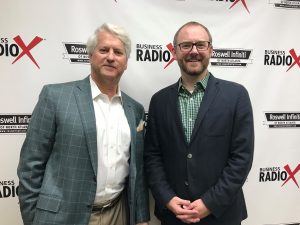
Roger Lusby and John Hightower

Show Summary

John Hightower of Arch+Tower joined this edition of “Business Beat” to discuss the interplay of customer experience, employee experience, and operational excellence. Roger Lusby, CPA is the host of “Business Beat” and the series is presented by Alpharetta CPA firm Frazier & Deeter.

John Hightower, Arch + Tower

Arch+Tower
John Hightower, Arch+Tower

John Hightower is the CEO of Arch + Tower. Arch + Tower, an FD Company, helps their clients win in the Experience Economy. We are helping close the experience gaps for clients’ – Customers and Employees – delivered with Operational Excellence. They call it their CX/Ex/Ox Framework(tm).

They work with business leaders by creating solutions that help clients bridge gaps, stand up under the weight of growth, and build for the future, hence the name Arch + Tower.

Their team partners with clients to deploy proven methodologies and a comprehensive approach – technology, data, people, processes – to deliver excellence within an organization.

Arch + Tower has served companies like Chick-fil-A, ChenMed, Peak Campus, Sunstate Equipment, Thrive Farmers, and others planning to scale solutions across multiple locations.

Arch + Tower has joined the Frazier & Deeter family of companies. They are excited to be helping to improve customer and employee experiences as part of an award-winning accounting and advisory firm with offices across the US and the UK.

Visit www.archandtower.com to discover the ways their team can help you span gaps and see farther with your people and projects.

Frazier & Deeter

The Alpharetta office of Frazier & Deeter is home to a thriving CPA tax practice, a growing advisory practice and an Employee Benefit Plan Services group. CPAs and advisors in the Frazier & Deeter Alpharetta office serve clients across North Georgia and around the country with services such as personal tax planning, estate planning, business tax planning, business tax compliance, state and local tax planning, financial statement reviews, financial statement audits, employee benefit plan audits, internal audit outsourcing, cyber security, data privacy, SOX and other regulatory compliance, mergers and acquisitions and more. Alpharetta CPAs serve clients ranging from business owners and executives to large corporations.

Roger Lusby
Roger Lusby, Partner in Charge of Alpharetta office, Frazier & Deeter

Roger Lusby, host of Frazier & Deeter’s “Business Beat,” is an Alpharetta CPA and Alpharetta Office Managing Partner for Frazier & Deeter. He is also a member of the Tax Department in charge of coordinating tax and accounting services for our clientele. His responsibilities include a review of a variety of tax returns with an emphasis in the individual, estate, and corporate areas. Client assistance is also provided in the areas of financial planning, executive compensation and stock option planning, estate and succession planning, international planning (FBAR, SFOP), health care, real estate, manufacturing, technology and service companies.

You can find Frazier & Deeter on social media:

LinkedIn: https://www.linkedin.com/company/frazier-&-deeter-llc/
Facebook: https://www.facebook.com/FrazierDeeter
Twitter: https://twitter.com/frazierdeeter

An episode archive of Frazier & Deeter’s “Business Beat” can be found here.

Arch+Tower

Tagged With: customer experience, CX, Employee Engagement, employee experience, Frazier & Deeter's Business Beat, Frazier Deeter, Operational Excellence, Operations, Partner at Frazier & Deeter, Roger Lusby, Roger Lusby CPA

ATDC Radio: Edward Black with OncoLens

December 18, 2019 by angishields

ATDC-Oncolens
ATDC Radio
ATDC Radio: Edward Black with OncoLens
Loading
00:00 /
RSS Feed
Share
Link
Embed

Download file

ATDC-Oncolens

Ed Black is responsible for day to day operations of Oncolens, with a focus on ensuring successful customer onboarding and continued success in using our solution. Previous to this role, Ed held various client facing positions at Ingenious Med, a medical professional fee charge capture software solution company.

As the VP of Implementations and Training, Ed played a key role in scaling the company through an explosive growth period. He also held positions as the VP of Specialty Solutions and Strategic Account Manager.

Prior to working at Ingenious Med, Ed served in the United States Air Force where he was a C-130 pilot. He also served in various senior staff positions including at a US Embassy abroad and with the Space Shuttle Program.

Ed has a Master’s Degree in Management from Embry Riddle Aeronautical University and a Bachelor of Science from The United States Air Force Academy. He is a certified Project Management Professional and member of the Project Management Institute (PMI) and the American Health Information Management Association (AHIMA).

In his free time, Ed enjoys spending time with his wife trying to keep up with their teenagers, fly fishing, woodworking, and exercising.

Follow Oncolens on LinkedIn and Facebook.

Tagged With: Innovators, Leadership, Operations, Startup, thought leaders, Tumor-Boards

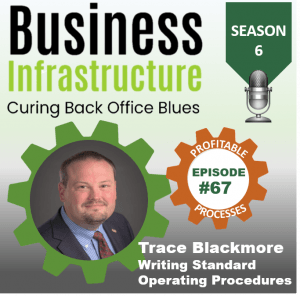
Episode 67: Trace Blackmore’s Documenting SOPs Process

October 22, 2019 by Mike

Business Infrastructure
Episode 67: Trace Blackmore’s Documenting SOPs Process
Loading
00:00 /
RSS Feed
Share
Link
Embed

Download file

When Trace Blackmore started getting information out of his head and onto paper, great things happened in his business. His 16-year-old industrial water treatment company has defied the small business failure odds and he attributes some of that longevity to having procedures that remove guesswork and promote high standards. In this episode, Trace shares his process for identifying and documenting key standard operating procedures (SOPs) and more importantly, hacks for getting people to actually follow them.

Special Guest: R. Trace Blackmore, Founder & CEO – Blackmore Enterprises

Location:  Lawrenceville, GA  USA

Show Notes:

  • Scaling Up! H2O: Trace’s podcast dedicated to the water treatment industry.
  • Traction: Get a Grip on Your Business: book by Gino Wickman (chapter on processes).
  • Scaling Up: How a Few Companies Make It…and Why the Rest Don’t, Rockefeller Habits 2.0: book by Verne Harnish.
  • The Checklist Manifesto: How to Get Things Right: book by Atul Gawande.
  • OneNote: Microsoft’s digital tool for note-taking.
  • Kanban Cards: tools for visually managing various types of processes.
  • 4 Methods for Optimizing Inventory: an article by UPS
  • Draw Toast: A Primer on Systems Thinking: a FREE guide on implementing the techniques discussed in the famous How to Make Toast TED Talk.

Tagged With: Leadership, Operations, podcast, small business, SOP, standard operating procedure

THE DAY BEFORE MONDAY La’Vista Jones with 31 Marketplace

August 26, 2019 by Karen

THE-DAY-BEFORE-MONDAY-LaVista-Jones-with-31-Marketplace1
Phoenix Business Radio
THE DAY BEFORE MONDAY La'Vista Jones with 31 Marketplace
Loading
00:00 /
RSS Feed
Share
Link
Embed

Download file

THE-DAY-BEFORE-MONDAY-LaVista-Jones-with-31-Marketplace

THE DAY BEFORE MONDAY La’Vista Jones with 31 Marketplace

31MarketplaceLOGO

31 Marketplace is a consultancy focused on operational efficiencies. It was founded in 2005 and they specialize in conducting system audits and creating customized step-by-step implementation plans that save their clients time and money.

LaVistaJones-on-Phoenix-Business-RadioXLa’Vista Jones, CLBC is a certified coach and business strategist. She’s also an author, speaker and community builder.

Before launching her company, 31 Marketplace, she served as an Assistant Vice President at the nation’s third largest financial institution. She uses her former corporate experience and acumen to support other entrepreneurs.

Her desire is to help business owners set foundations for sustainability and growth. La’Vista helps other entrepreneurs get ‘ish done without burning themselves out by bringing order to the overwhelm that many experience in business. Her work focuses on streamlining processes, identifying operational gaps and outsourcing opportunities.

La’Vista’s creative approach to business analysis and implementation saves her clients valuable time. In 2018 La’Vista founded and began hosting Boss Talk, a local and online community for entrepreneurial women. It was created to fulfill a need she saw in the marketplace – a safe and supportive space to communicate business needs and to share stories.

The Boss Talk culture is rooted in one of her core believes that no matter what stage your business is in, we are all connected through our experiences – and we support and learn from one other by sharing the stories about our entrepreneurial journeys.

La’Vista is a native of Ohio, but currently resides in Arizona. She is married to her college sweetheart, and they have a son, publicly known as The Cub. They share their home with their Mastiff fur baby, Bull Dozer.

As a busy wife, mom and business owner, La’Vista prioritizes her self-care routines and helps her clients do so as well. She believes that to truly fulfill the vision, you must take purposeful care of the visionary.

Connect with La’Vista on LinkedIn, Facebook and Instagram.

ABOUT THE DAY BEFORE MONDAY PODCAST

An encouraging and practical podcast giving you the tools to have a happier “work” experience. We tend to do our best work in a healthy environment with/for people we respect, and this podcast will help you to identify and navigate toward the more fulfilling work you crave.

ABOUT YOUR HOST, BRENDA M. CUNNINGHAM

Brenda-CunninghamA former engineer and project manager within corporate America, Brenda M. Cunningham now runs Push Career Management and helps super smart professionals get back to work, get positioned for promotions, and get paid what they’re worth.

She is the President of the Resume Writers’ Council of Arizona, served on the board of the National Resume Writers’ Association, and holds credentials in resume writing, career management, and job search strategy (CPRW, CCM, and CJSS).

Working with corporations to provide more personal outplacement services, Brenda has already made an impact for several companies in manufacturing, retail sales, R&D, and financial services facing reductions in force (layoffs).

An author, public speaker, career strategist, and unapologetic encourager…Brenda is on a mission to make sure no one is limited by boundaries in their own career. You can connect with Brenda at LinkedIn.com/BrendaMCunningham.

ABOUT OUR SHOW’S SPONSOR

Push Career Management, LLC, is a Career Transition firm that works with professionals who are ready for promotion or who are eager to get back into quality positions in the workforce. They provide corporate outplacement services, 1:1 portfolio development (resume, LinkedIn profile, cover letter, etc…), and job search/interview coaching.

Their clients get a huge surge of confidence after working with them. Their signature Discovery Process helps them to extract the things that make their clients marketable so they can demand and get paid what they’re worth…while accelerating their transitions. To find out more, visit pushcareermanagement.com and schedule a complimentary consultation or a more in-depth strategy session.

PUSH-logo

Tagged With: Operations, self care, strategy, Systems

Technology in the Trucking Industry

August 14, 2019 by Mike

Gwinnett Studio
Gwinnett Studio
Technology in the Trucking Industry
Loading
00:00 /
RSS Feed
Share
Link
Embed

Download file

Rebecca Brewster and Bryan Mulligan

Rebecca Brewster/American Transportation Research Institute

The American Transportation Research Institute (ATRI) has been engaged in critical transportation studies and operational tests since 1954. ATRI is a 501(c)(3) not-for-profit research organization headquartered in Arlington, VA with offices in Atlanta, Minneapolis, Sacramento, and New York.

ATRI’s primary mission is to conduct transportation research, with an emphasis on the trucking industry’s essential role in a safe, efficient and viable transportation system. ATRI’s research focus includes: Congestion and Mobility; Economic Analysis; Safety and Security; Technology and Operations; Environment; and Transportation Infrastructure.

ATRI’s extensive experience covers a broad range of commercial vehicle operations including leadership and/or participation in numerous national freight analyses, technology research initiatives and field operational tests.

CLICK HERE to watch the video of this episode.

Tagged With: Operations, Rebecca Brewster, roadway congestion, safety, security, Technology, traffic, transportation infrastructure, TravelSafely, TravelSafely with Bryan Mulligan, trucking

Business RadioX ® Network


Our Most Recent Episode

CONNECT WITH US

  • Email
  • Facebook
  • LinkedIn
  • Twitter
  • YouTube

Our Mission

We help local business leaders get the word out about the important work they’re doing to serve their market, their community, and their profession.

We support and celebrate business by sharing positive business stories that traditional media ignores. Some media leans left. Some media leans right. We lean business.

Sponsor a Show

Build Relationships and Grow Your Business. Click here for more details.

Partner With Us

Discover More Here

Terms and Conditions
Privacy Policy

Connect with us

Want to keep up with the latest in pro-business news across the network? Follow us on social media for the latest stories!
  • Email
  • Facebook
  • Google+
  • LinkedIn
  • Twitter
  • YouTube

Business RadioX® Headquarters
1000 Abernathy Rd. NE
Building 400, Suite L-10
Sandy Springs, GA 30328

© 2025 Business RadioX ® · Rainmaker Platform

BRXStudioCoversLA

Wait! Don’t Miss an Episode of LA Business Radio

BRXStudioCoversDENVER

Wait! Don’t Miss an Episode of Denver Business Radio

BRXStudioCoversPENSACOLA

Wait! Don’t Miss an Episode of Pensacola Business Radio

BRXStudioCoversBIRMINGHAM

Wait! Don’t Miss an Episode of Birmingham Business Radio

BRXStudioCoversTALLAHASSEE

Wait! Don’t Miss an Episode of Tallahassee Business Radio

BRXStudioCoversRALEIGH

Wait! Don’t Miss an Episode of Raleigh Business Radio

BRXStudioCoversRICHMONDNoWhite

Wait! Don’t Miss an Episode of Richmond Business Radio

BRXStudioCoversNASHVILLENoWhite

Wait! Don’t Miss an Episode of Nashville Business Radio

BRXStudioCoversDETROIT

Wait! Don’t Miss an Episode of Detroit Business Radio

BRXStudioCoversSTLOUIS

Wait! Don’t Miss an Episode of St. Louis Business Radio

BRXStudioCoversCOLUMBUS-small

Wait! Don’t Miss an Episode of Columbus Business Radio

Coachthecoach-08-08

Wait! Don’t Miss an Episode of Coach the Coach

BRXStudioCoversBAYAREA

Wait! Don’t Miss an Episode of Bay Area Business Radio

BRXStudioCoversCHICAGO

Wait! Don’t Miss an Episode of Chicago Business Radio

Wait! Don’t Miss an Episode of Atlanta Business Radio