Business RadioX ®

  • Home
  • Business RadioX ® Communities
    • Southeast
      • Alabama
        • Birmingham
      • Florida
        • Orlando
        • Pensacola
        • South Florida
        • Tampa
        • Tallahassee
      • Georgia
        • Atlanta
        • Cherokee
        • Forsyth
        • Greater Perimeter
        • Gwinnett
        • North Fulton
        • North Georgia
        • Northeast Georgia
        • Rome
        • Savannah
      • Louisiana
        • New Orleans
      • North Carolina
        • Charlotte
        • Raleigh
      • Tennessee
        • Chattanooga
        • Nashville
      • Virginia
        • Richmond
    • South Central
      • Arkansas
        • Northwest Arkansas
    • Midwest
      • Illinois
        • Chicago
      • Michigan
        • Detroit
      • Minnesota
        • Minneapolis St. Paul
      • Missouri
        • St. Louis
      • Ohio
        • Cleveland
        • Columbus
        • Dayton
    • Southwest
      • Arizona
        • Phoenix
        • Tucson
        • Valley
      • Texas
        • Austin
        • Dallas
        • Houston
    • West
      • California
        • Bay Area
        • LA
        • Pasadena
      • Colorado
        • Denver
      • Hawaii
        • Oahu
  • FAQs
  • About Us
    • Our Mission
    • Our Audience
    • Why It Works
    • What People Are Saying
    • BRX in the News
  • Resources
    • BRX Pro Tips
    • B2B Marketing: The 4Rs
    • High Velocity Selling Habits
    • Why Most B2B Media Strategies Fail
    • 9 Reasons To Sponsor A Business RadioX ® Show
  • Partner With Us
  • Veteran Business RadioX ®

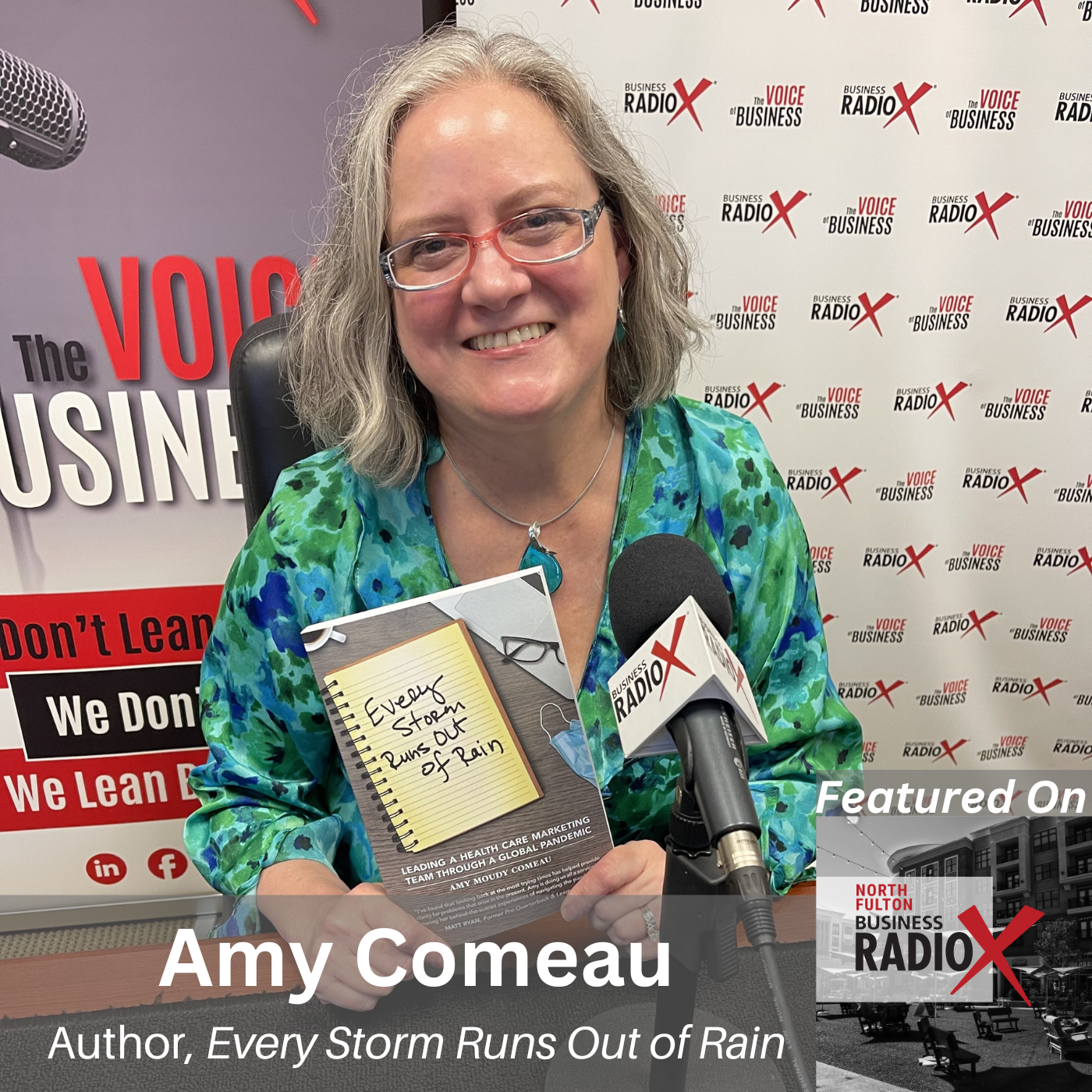
Leading Through Chaos and Finding Clarity in Change, with Amy Comeau, Author of Every Storm Runs Out of Rain

May 22, 2025 by John Ray

Leading Through Chaos and Finding Clarity in Change, with Amy Comeau, Author of Every Storm Runs Out of Rain, on the North Fulton Business Radio podcast with host John Ray
North Fulton Business Radio
Leading Through Chaos and Finding Clarity in Change, with Amy Comeau, Author of Every Storm Runs Out of Rain
Loading
00:00 /
RSS Feed
Share
Link
Embed

Download file

Leading Through Chaos and Finding Clarity in Change, with Amy Comeau, Author of Every Storm Runs Out of Rain, on the North Fulton Business Radio podcast with host John Ray

Leading Through Chaos and Finding Clarity in Change, with Amy Comeau, Author of Every Storm Runs Out of Rain (North Fulton Business Radio, Episode 874)

In this episode of North Fulton Business Radio, host John Ray speaks with Amy Comeau, consultant, speaker, and author of Every Storm Runs Out of Rain. Amy shares the story behind her book, a leadership memoir drawn from her experience leading a healthcare marketing team through the early days of the COVID-19 pandemic.

She discusses the power of reflection, the importance of communication during uncertainty, and the lessons leaders can draw from moments of upheaval. Amy explains how leaders can stay focused on what truly matters, manage change in a way that builds trust, and maintain clarity even when nothing feels certain. The conversation touches on emotional resilience, practical leadership tools, and the difference between reacting and responding when everything is shifting.

This episode is a thoughtful resource for anyone navigating organizational change or seeking to lead with intention during uncertain times.

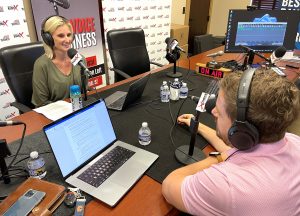
John Ray is the host of North Fulton Business Radio. The show is produced by John Ray and North Fulton Business Radio, LLC, an affiliate of Business RadioX®, and is recorded inside Renasant Bank in Alpharetta.

Key Takeaways from this Episode:

  • Leadership Is Grounded in Presence: Amy’s practice of writing weekly emails created stability and connection for her team during crisis.
  • Focus on the “Squiggly Middle”: Great leaders direct energy toward what truly matters and what they can control—not the chaos around them.
  • Reflection Builds Clarity: Sharing real-time thoughts helped Amy process the moment and lead more effectively.
  • Change Is Constant: The lessons she shares apply beyond the pandemic and offer a framework for any chaotic or transitional season.
  • Simple Tools Have Power: Whiteboarding exercises and asking better questions are small actions that produce strategic clarity.

Topics Discussed in this Episode

00:00 Introduction and Welcome to North Fulton Business Radio
00:29 Guest Introduction: Amy Comeau
01:44 Amy’s Background and Book Overview
02:36 Leadership Lessons from the Pandemic
06:13 Managing Change and Team Dynamics
08:11 Balancing Control and Responsibility
18:20 Burnout and Personal Reflections
20:22 Recovering from Burnout
21:02 Burnout and Grief: Unexpected Similarities
22:19 Finding Joy in Dark Times
23:08 Recognizing Non-Clinical Healthcare Workers
26:07 The Importance of Every Role in Healthcare
29:50 Consulting Through Chaotic Change
32:53 The Therapeutic Power of Writing
35:02 Where to Find Amy’s Book
36:17 Final Thoughts and Gratitude

Author, Consultant, and Speaker Amy Comeau
Amy Moudy Comeau, MBA, is an acclaimed and award-winning marketing executive with decades of experience leading marketing teams in health care, education and the arts.

A graduate of Northwestern University and Goizueta Business School at Emory University, Comeau is a respected thought leader in marketing, health care, and leadership.

She is the author of the award-winning book Every Storm Runs Out of Rain: Leading a Health Care Marketing Team Through a Global Pandemic, and she currently speaks and consults on marketing, communications, and leadership.

She resides in Conyers, Georgia, with her family and is a proud Buffalo native.

Website | LinkedIn

About North Fulton Business Radio and host John Ray

With over 870 shows and having featured over 1,300 guests, North Fulton Business Radio is the longest-running podcast in the North Fulton area, covering business in our community like no one else. We are the undisputed “Voice of Business” in North Fulton!

The show invites a diverse range of business, non-profit, and community leaders to share their significant contributions to their market, community, and profession. There’s no discrimination based on company size, and there’s never any “pay to play.” North Fulton Business Radio supports and celebrates businesses by sharing positive stories that traditional media ignore. Some media lean left. Some media lean right. We lean business.

John Ray, host of  North Fulton Business Radio, and Owner, Ray Business Advisors

John Ray is the host of North Fulton Business Radio. John and the team at North Fulton Business Radio, LLC, an affiliate of Business RadioX®, produce the show, and it is recorded inside Renasant Bank in Alpharetta.

The studio address is 275 South Main Street, Alpharetta, GA 30009.

You can find the full archive of shows by following this link. The show is available on all the major podcast apps, including Apple Podcasts, Spotify, Google, Amazon, iHeart Radio, and many others.
John Ray, The Generosity MindsetJohn Ray also operates his own business advisory practice. John’s services include advising solopreneurs and small professional services firms on their value, their positioning and business development, and their pricing. His clients are professionals who are selling their expertise, such as consultants, coaches, attorneys, CPAs, accountants and bookkeepers, marketing professionals, and other professional services practitioners.

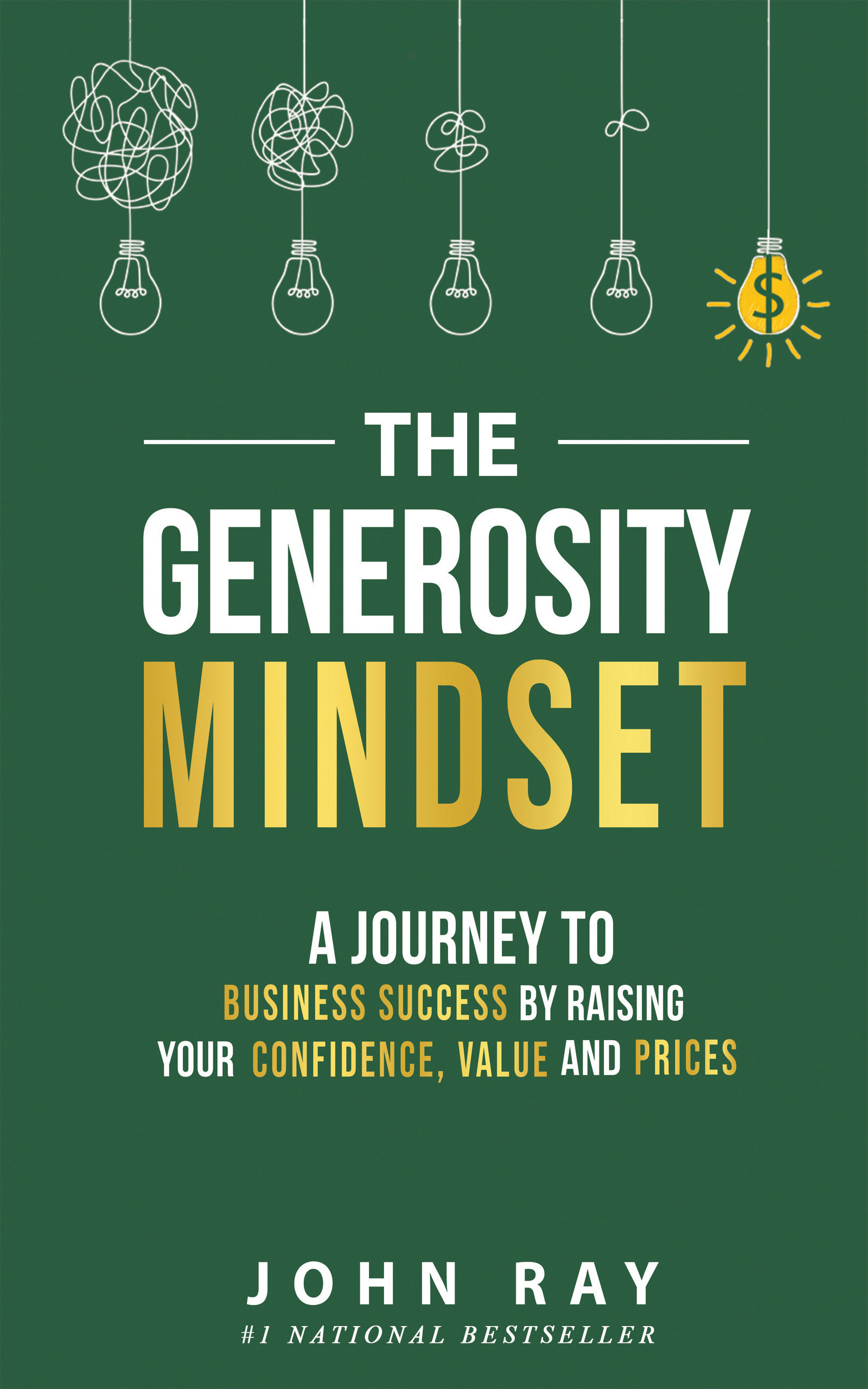
John is the national bestselling author of The Generosity Mindset: A Journey to Business Success by Raising Your Confidence, Value, and Prices.


Tagged With: Amy Comeau, Author, burnout, dealing with burnout, Healthcare, healthcare leadership, healthcare marketing, John Ray, Leadership, Leadership Lessons, North Fulton Business Radio, pandemic, team dynamics

Mastering Enterprise Risk Management with Steven Lustig, Lustig Global Solutions

February 10, 2025 by John Ray

Mastering Enterprise Risk Management with Steven Lustig, Lustig Global Solutions, on North Fulton Business Radio with host John Ray
North Fulton Business Radio
Mastering Enterprise Risk Management with Steven Lustig, Lustig Global Solutions
Loading
00:00 /
RSS Feed
Share
Link
Embed

Download file

Mastering Enterprise Risk Management with Steven Lustig, Lustig Global Solutions, on North Fulton Business Radio with host John Ray

Mastering Enterprise Risk Management with Steven Lustig, Lustig Global Solutions (North Fulton Business Radio, Episode 843)

In this episode of North Fulton Business Radio, host John Ray interviews Steven Lustig from Lustig Global Solutions. The discussion delves into the critical importance of enterprise risk management (ERM) for small and medium-sized businesses. Steven shares his extensive experience in engineering and operations, highlighting how managing risk can improve business outcomes. He explains the concept of ERM, addressing both negative risks and opportunities, and dispels myths about risk management. The conversation covers practical steps for companies to identify, prioritize, and mitigate risks effectively. Steven emphasizes the customizable and scalable nature of ERM, making it accessible for businesses of all sizes. He also shares real-life success stories of implementing ERM and its benefits. Listen to this episode to learn how a structured risk management approach can safeguard your business’s future.

John Ray is the host of North Fulton Business Radio. The show is recorded and produced by the North Fulton affiliate of Business RadioX® inside Renasant Bank in Alpharetta.

Steven Lustig, Lustig Global Solutions

Lustig Global Consulting enhances company value, profitability, and cash flow while addressing key risks that they face by establishing robust, effective supply chain and manufacturing solutions and enterprise risk management programs.

Steven Lustig is a strategic operations executive with 20+ years of experience who held leadership positions in supply chain, project management, manufacturing, and new product introduction at companies ranging from a start-up to a Fortune 100 firm.

Steven has earned Enterprise Risk Management Certified Professional and Six Sigma Green Belt certifications and the Project Management Professional (PMP) designation. He holds a BSME from MIT and MSME and MBA degrees from Georgia Tech.

Website | LinkedIn

Topics Discussed in this Episode

00:00 Introduction and Welcome to North Fulton Business Radio
01:50 Meet Steven Lustig: The Risk Management Expert
04:19 Understanding Enterprise Risk Management
06:57 Common Myths About Risk Management
12:39 Real-World Risk Examples and Lessons from the Pandemic
19:38 How to Engage with a Risk Management Consultant
30:00 Success Stories and Final Thoughts
32:47 Closing Remarks and Announcements

Renasant Bank supports North Fulton Business Radio

Renasant BankRenasant Bank has humble roots, starting in 1904 as a $100,000 bank in a Lee County, Mississippi, bakery. Since then, Renasant has become one of the Southeast’s strongest financial institutions, with over $17 billion in assets and more than 180 banking, lending, wealth management, and financial services offices throughout the region. All of Renasant’s success stems from each banker’s commitment to investing in their communities as a way to better understand the people they serve. At Renasant Bank, they understand you because they work and live alongside you every day.

Website | LinkedIn | Facebook | Instagram | X (Twitter) | YouTube

About North Fulton Business Radio and host John Ray

With over 800 shows and having featured over 1,200 guests, North Fulton Business Radio is the longest-running podcast in the North Fulton area, covering business in our community like no one else. We are the undisputed “Voice of Business” in North Fulton!

The show invites a diverse range of business, non-profit, and community leaders to share their significant contributions to their market, community, and profession. There’s no discrimination based on company size, and there’s never any “pay to play.” North Fulton Business Radio supports and celebrates business by sharing positive business stories that traditional media ignore. Some media lean left. Some media lean right. We lean business.

John Ray, Business RadioX - North Fulton, and Owner, Ray Business Advisors
John Ray, Business RadioX – North Fulton, and Owner, Ray Business Advisors

John Ray is the host of North Fulton Business Radio. The show is recorded and produced from the North Fulton studio of Business RadioX® inside Renasant Bank in Alpharetta. You can find the full archive of shows by following this link. The show is available on all the major podcast apps, including Apple Podcasts, Spotify, Google, Amazon, iHeart Radio, and many others.

The studio address is 275 South Main Street, Alpharetta, GA 30009.

John Ray, The Generosity MindsetJohn Ray also operates his own business advisory practice. John’s services include advising solopreneurs and small professional services firms on their value, their positioning and business development, and their pricing. His clients are professionals who are selling their expertise, such as consultants, coaches, attorneys, CPAs, accountants and bookkeepers, marketing professionals, and other professional services practitioners.

John is the national bestselling author of The Generosity Mindset: A Journey to Business Success by Raising Your Confidence, Value, and Prices.
Tagged With: enterprise risk management, John Ray, Lustig Global Solutions, mitigate risk, North Fulton Business Radio, pandemic, Risk Management, Steven Lustig

Angela Alea, LASSO

September 20, 2023 by John Ray

LASSO
Executive Perspective
Angela Alea, LASSO
Loading
00:00 /
RSS Feed
Share
Link
Embed

Download file

LASSO

Angela Alea, LASSO

Angela Alea, President and Chief Revenue Officer at LASSO, joined Danny Vander Maten to talk sales, leadership, and business. Angela discussed how she’s spent her career in sales despite her initial wariness of the field, how LASSO serves event companies, the impact of the pandemic on their industry, how LASSO survived and deepened client relationships during that difficult period, how she practices servant-leadership, and much more.

Executive Perspective is broadcast and produced by the North Fulton studio of Business RadioX® inside Renasant Bank in Alpharetta.

LASSO

LASSO is the all-in-one platform where event companies work.

They provide project management, inventory, logistics, proposals, and workforce management software that helps event companies:

⇢ Grow revenue ⇢ Streamline operations ⇢ Control costs ⇢ Minimize risk ⇢ Get real-time insights ⇢ Attract AV talent ⇢ Produce successful events.

Their mission is to inspire change for forward-thinking companies in the event and entertainment industry by bringing transformative solutions to the people that make exceptional performances happen.

Company website

Angela Alea, President & Chief Revenue Officer, LASSO

Angela Alea, President & Chief Revenue Officer, LASSO

Angela Alea is the president and chief revenue officer of LASSO, the platform where event companies work. LASSO has been recognized on Inc 5000 for the last two years, has been named Best & Brightest Place to work 5 years in a row, and was celebrated as a Technology Fast 500 company by Deloitte.

Although she swore she would never do sales, she has spent the last 20 years in revenue producing roles doing everything from sales, sales training, sales operations, and revenue management.

When she isn’t redefining what sales is, and more importantly what it isn’t, you can find her hanging with her husband, two kids, and their dogs in Alpharetta, a suburb of Atlanta.

LinkedIn

About Executive Perspective

Executive Perspective features executives and business leaders from a wide variety of sectors. Host Danny Vander Maten and his guests cover industry trends, insights, challenges, success strategies and lessons learned.  Executive Perspective is underwritten and presented by Cresa. The show series is produced by the North Fulton studio of Business RadioX® and can be found on all the major podcast apps. A complete show archive can be found here.

Danny Vander Maten, Host of Executive Perspective

Danny Vander Maten, Vice President – Tenant Representation, Cresa, and Host of Executive Perspective

Danny joined Cresa in the Spring of 2016 and brought a diverse background with nearly 10 years of experience in finance, business operations, and strategy to his client’s real estate transactions.

At Cresa, Danny’s primary responsibilities include strategic planning, lease analysis, negotiations, and cost mitigation. As a registered Certified Public Accountant with an active license in the state of Georgia, Danny provides unique financial insight into every critical aspect of the transaction.

Cresa is the world’s most trusted occupier-centric commercial real estate firm. They strategize for the best possible results for occupiers everywhere. Cresa thinks beyond space. Partner without conflict. And apply their integrated expertise to make your business better.

Connect with Danny: LinkedIn | Twitter

Connect with Cresa: Website | LinkedIn | Facebook | Instagram | Twitter

Tagged With: Angela Alea, commercial real estate, Danny Vander Maten, Entertainment Industry, Event Management, Executive Perspective, Lasso, Leadership, pandemic, project management, Servant Leadership

John Hipes, Hipes & Belle Isle, LLC, and Councilman, City of Alpharetta

June 27, 2023 by John Ray

John Hipes
North Fulton Business Radio
John Hipes, Hipes & Belle Isle, LLC, and Councilman, City of Alpharetta
Loading
00:00 /
RSS Feed
Share
Link
Embed

Download file

John Hipes

John Hipes, Hipes & Belle Isle, LLC, and Councilman, City of Alpharetta (North Fulton Business Radio, Episode 675)

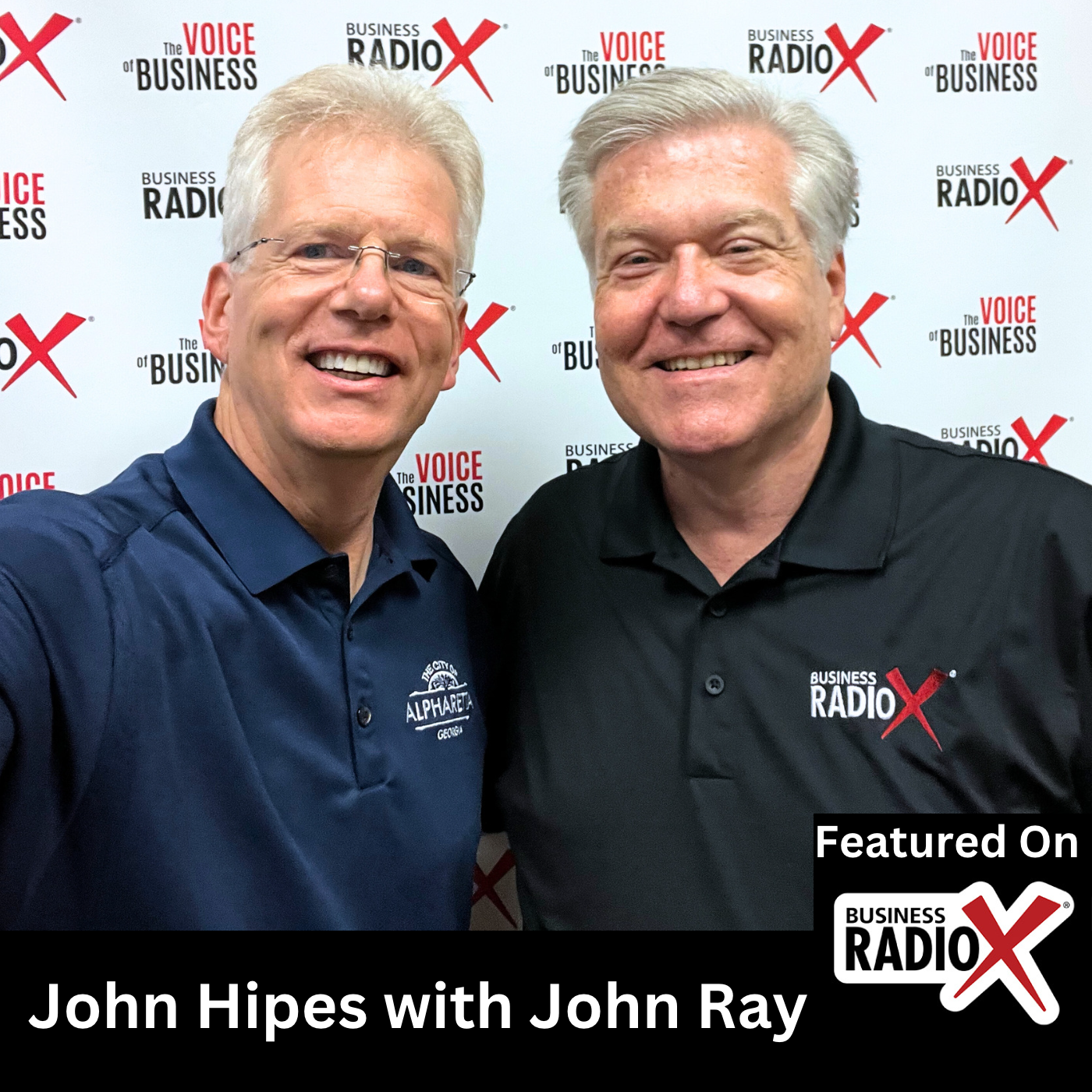
John Hipes, attorney and owner of Hipes & Belle Isle, LLC, was the guest on this episode of North Fulton Business Radio. He and host John Ray talked about the firm and its evolution, how he prepares clients for litigation, legal success stories, why he serves on the Alpharetta City Council, what makes Alpharetta such a superb place to work, live, and play, and much more.

North Fulton Business Radio is broadcast from the North Fulton studio of Business RadioX® inside Renasant Bank in Alpharetta.

Hipes & Belle Isle, LLC

Hipes & Belle Isle, LLC provides expert legal assistance, advice, and representation to businesses of all sizes.

Their attorneys have the experience, knowledge and judgment to handle your legal matters and protect your company’s interests to the fullest extent of the law. They have highly skilled, ethical and successful negotiators, courtroom litigators, real-estate experts and business advisors who provide prompt, aggressive and reasonably priced legal services.
When a complex legal question demands knowledge and experience in several areas, Hipes & Belle Isle offers single-source convenience by providing legal services in:

  • Business Litigation
  • Commercial Real Estate Law
  • Construction Law
  • Employment Law
  • Insurance Law

At Hipes & Belle Isle, they are also proud of their success and standing within the legal, professional and civic communities. They look forward to even greater achievements as they meet and address the legal challenges of our rapidly evolving society, but most importantly we look forward to serving you with experience, expertise and integrity.

Website| LinkedIn | Facebook| Twitter

John Hipes, Attorney and Owner, Hipes & Belle Isle, LLC

John Hipes, Attorney and Owner, Hipes & Belle Isle, LLC

John Hipes is from Muncie, Indiana. He received his B.A. cum laude from Wake Forest University (Winston-Salem, North Carolina) in 1981 and his J.D. magna cum laude from Georgia State College of Law (Atlanta) in 1988, where he served as senior editor for the Georgia State University Law Review. He authored Abusive Litigation in Georgia, Georgia State Univ. L. Rev., Vol. 3, 1987.

John has practiced law for 33 years. He began his law practice in 1988 with Smith, Gambrell & Russell LLP and then with Morris, Manning & Martin (both in Atlanta) before forming Hipes & Norton, P.C. (Alpharetta) in 1996. In 2004, John helped to form Bach, Dewberry & Hipes, LLC (Alpharetta). In 2013, John founded Hipes & Belle Isle, LLC.

John practices commercial litigation, including insurance coverage and interpretation, construction, real estate, employment, partnership and shareholder disputes, and tort and injury law. He has successfully resolved and tried numerous lawsuits on behalf of residential and commercial policyholders, including issues involving bad faith, unfair claims practices, fraud, arson, theft, cancellation procedures, protective safeguard endorsements, and coverage interpretation.

John is a member of the State Bar of Georgia. He is admitted to practice in all Georgia courts, including State and Superior, the Georgia Court of Appeals, and the Georgia Supreme Court. He is also admitted in the United States District Court, Northern District of Georgia and the United States Court of Appeals, Eleventh Circuit. John is a Past-President of the North Fulton Bar Association for 2011-2012.

John is an Alpharetta City Councilman and liaison to the Alpharetta Public Safety Department and the Alpharetta Municipal Court. He has been an active member of the Rotary Club of Alpharetta since 1997, served as President in 2008-2009, and was founder of the Alpharetta Memorial Day Tribute. He serves on the boards of North Fulton Community Charities and the Alpharetta Public Safety Foundation. John previously served on the Alpharetta Planning Commission, the Board and Executive Committee of the Greater North Fulton Chamber of Commerce, and the Board of the Ed Isakson Alpharetta YMCA. He is a member of the Leadership North Fulton Class of 2000, Alpharetta Chamber of Commerce, and Alpharetta Business Association.

John is an active member of the Alpharetta First United Methodist Church. He has participated in many humanitarian and mission trips to Africa, Central and South America with Rotary and AFUMC. John resides in Alpharetta with his wife Karen.

LinkedIn

Questions and Topics in this Interview:

  • Overview of Hipes & Belle Isle legal practice
  • Legal success stories
  • Community involvement
  • Why Alpharetta is a great place to operate a business
  • What’s happening in Alpharetta and what lies ahead

North Fulton Business Radio is hosted by John Ray and broadcast and produced from the North Fulton studio of Business RadioX® inside Renasant Bank in Alpharetta. You can find the full archive of shows by following this link. The show is available on all the major podcast apps, including Apple Podcasts, Spotify, Google, Amazon, iHeart Radio, Stitcher, TuneIn, and others.

RenasantBank


Renasant Bank has humble roots, starting in 1904 as a $100,000 bank in a Lee County, Mississippi, bakery. Since then, Renasant has become one of the Southeast’s strongest financial institutions with over $13 billion in assets and more than 190 banking, lending, wealth management, and financial services offices in Mississippi, Alabama, Tennessee, Georgia, and Florida. All of Renasant’s success stems from each of their banker’s commitment to investing in their communities as a way of better understanding the people they serve. At Renasant Bank, they understand you because they work and live alongside you every day.

Since 2000, Office Angels® has been restoring joy to the life of small business owners, enabling them to focus on what they do best. At the same time, we honor and support at-home experts who wish to continue working on an as-needed basis. Not a temp firm or a placement service, Office Angels matches a business owner’s support needs with Angels who have the talent and experience necessary to handle work that is essential to creating and maintaining a successful small business. Need help with administrative tasks, bookkeeping, marketing, presentations, workshops, speaking engagements, and more? Visit us at https://officeangels.us/.

Tagged With: Alpharetta, Alpharetta City Council, attorney, civil litigation, civil litigator, Hipes & Belle Isle, John Hipes, North Fulton Business Radio, Office Angels, pandemic, renasant bank

Mental Health Professionals Roundtable: Dr. Laronta Rush, Healthy Minds Psychology Assoc., Dr. Brooke Jones, Fresh Start for the Mind, Dr. Brianna Gaynor, Peace of Mind Psychological Services, and Kristen Fraser, LPC, Canton Counseling 

June 19, 2023 by John Ray

Mental Health Professionals
North Fulton Studio
Mental Health Professionals Roundtable: Dr. Laronta Rush, Healthy Minds Psychology Assoc., Dr. Brooke Jones, Fresh Start for the Mind, Dr. Brianna Gaynor, Peace of Mind Psychological Services, and Kristen Fraser, LPC, Canton Counseling 
Loading
00:00 /
RSS Feed
Share
Link
Embed

Download file

Mental Health Professionals

Mental Health Professionals Roundtable: Dr. Laronta Rush, Healthy Minds Psychology Assoc., Dr. Brooke Jones, Fresh Start for the Mind, Dr. Brianna Gaynor, Peace of Mind Psychological Services, and Kristen Fraser, LPC, Canton Counseling  (ProfitSense with Bill McDermott, Episode 46)

On this edition of ProfitSense with Bill McDermott, four independent mental health professionals joined host Bill McDermott. Dr. Laronta Rush, Dr. Brooke Jones, Dr. Brianna Gaynor and Kristen Fraser, LPC discussed their friendship and how they came together, supporting each other as business owners and mental health professionals, how they navigated changes during the pandemic, a major mental health issue of teens and social media, and much more.

ProfitSense with Bill McDermott is produced and broadcast by the North Fulton Studio of Business RadioX® in Alpharetta.

Healthy Minds Psychology Associates

Healthy Minds Psychology Associates is a group practice providing comprehensive mental health services, including psychological and educational assessments, individual, family and couples counseling, and executive function coaching.

They strive to provide their patients with a superior experience, and this means selecting well-trained clinicians and ensuring the highest quality of service to their patients. Their patient-centered approach is critical to their success, and they pride themselves on excellence in every form.

Website | Facebook

Dr. Laronta Rush, Founder & Director, Healthy Minds Psychology Associates

Dr. Laronta Rush, Founder & Director, Healthy Minds Psychology Assoc.

Dr. Rush is the Founder and Director of Healthy Minds. She specializes in psycho-educational and psychological evaluation to help identify the presence of neuro developmental disorders in children as well as learning and emotional/behavioral disorders in adults. She has well over a decade of experience in assessing symptoms related to learning disabilities, autism spectrum disorders, anxiety disorders, depression, bipolar disorder, and developmental disabilities.

Dr. Rush has particular interest and clinical expertise in the evaluation and diagnosis of dyslexia and other learning disabilities, ADHD/ executive functioning difficulties, as well as anxiety and mood disorders. Through her early career work as a School Psychologist, Dr. Rush has developed a broad base of knowledge of empirically supported, and developmentally appropriate interventions for common childhood problems, associated school based services/ accommodations, and works closely with parents as they navigate the special education, 504 accommodation, or Student Support Team (SST) process.

In addition, Dr. Rush provides expert testimony for cases involving special education or other school-based services for children with disabilities and conducts psychological testing that is used to inform legal cases.

Dr. Rush is an approved psychologist for metro Atlanta school systems to perform Independent Educational Evaluations (IEEs). She also works closely with several special education attorneys to assist them in obtaining the best outcomes for their clients.

Fresh Start for the Mind

Fresh Start for the Mind is a mental health group practice that offers psychological services to children, adolescents, and adults. They provide psychological evaluations, counseling services, medication management, and diet and nutrition support. With three locations (in Canton, Suwanee, and Stockbridge), Fresh Start has an impeccable reputation for offering quality and effective services.
Website | Facebook

Dr. Brooke Jones, Owner & Clinical Psychologist, Fresh Start for the Mind

Dr. Brooke Jones, Owner & Clinical Psychologist, Fresh Start for the Mind

Dr. Jones is a licensed psychologist specializing in psychological evaluations for children, adolescents, and adults. Dr. Jones takes pride in offering comprehensive and thorough assessments, considering all areas of functioning, including physical health and environmental/cultural issues that may mimic underlying psychological disorders.

Dr. Jones earned her doctorate degree and M.A in Clinical Psychology at the Georgia School of Professional Psychology (Argosy University Atlanta) and completed her undergraduate degree in Psychology at Hampton University in Virginia. In 2009, she completed an APA-approved internship in Chicago, IL, while completing her dissertation. She has also held clinical positions in group practices and taught undergraduate studies in psychology.

LinkedIn

Peace of Mind Psychological Services

Peace of Mind Psychological Services is a mental health practice which focuses on individual therapy, support groups, and psychological evaluations. They treat patients starting from age 5-65 for various concerns including depression, anxiety, behavioral issues, trauma, and divorce.

They also conduct evaluations for children and adults for learning disorders, emotional concerns, parental fitness, and behavioral problems. Their goal is to support those they serve through all areas of life through therapy, assessment, and educational workshops.

Website | Facebook | LinkedIn

Dr. Brianna Gaynor, Licensed Psychologist, Peace of Mind Psychological Services

Dr. Brianna Gaynor, Licensed Psychologist, Peace of Mind Psychological Services

Dr. Brianna Gaynor has a passion for mental health and has noticed time and time again, the healing effects of her work. Dr. Gaynor has been licensed as a psychologist in the state of Georgia since May 2011 and received her doctorate degree from the Georgia School of Professional Psychology in 2009.

Her training while in graduate school focused primarily on the treatment of children, adolescents, and families. During her internship year she was also trained in faith based therapy and, although not a traditional Christian counselor, has learned how to incorporate faith based techniques for those clients who express a willingness to hear the word of God. She has also worked in various settings, including outpatient, residential, and a mental health hospital.
What Dr. Gaynor enjoys most is the opportunity to connect with people and help encourage them through their troubles. Currently, she works at her own private practice, Peace of Mind Psychological Services, where much of her work focuses on the diagnosis and treatment of various mental health disorders, including depression, anxiety, trauma, and behavioral disorders through psychological evaluations. Peace of Mind also specializes in helping the whole family “find peace in every circumstance” by providing therapy services starting at age 3 through adulthood.


Dr. Gaynor has a unique way of connecting with others through humor and kindness and her goal in every encounter is to help others to “find peace in every circumstance.”

LinkedIn

Canton Counseling

We all need support in dealing with life’s challenges, but sometimes just asking for help can feel as overwhelming as the problems for which we are seeking support. The task of finding the right therapist can be difficult. Who can I trust? Will I be heard and understood? Will they work well with my children and/or family?

Canton Counseling understands these concerns and work to create a compassionate therapeutic environment to help clients grow and change. Whether you are looking to learn new ways of dealing with a behavioral or relationship pattern, or are seeking support for your child or family, they offer their clients a compassionate and supportive, yet challenging environment in which to achieve their full potential. When talking with adolescents, Canton Counseling works to create a space where the adolescent feels supported and safe while also incorporating some fun!

Their goal is to always meet each young person where they are both developmentally and emotionally. They are committed to providing understanding, education, coping strategies, and support to help others find hope and healing for the challenges of life.

Website | Facebook

Kristen Fraser, LPC, Owner & Clinical Director, Canton Counseling

Kristen Fraser, LPC, Owner & Clinical Director, Canton Counseling

Everyone faces conflict and difficult situations in their lives at one time or another. Kristen believes some experiences hit us a little harder than others and we need support in overcoming those challenges. Dealing with and overcoming those conflicts will allow you to grow into a stronger and more capable person. Life transitions typically mark the end of one phase of your life and can allow you the opportunity to replace the old way of being with something new.

Kristen sees therapy as an empowering opportunity for self-development that provides you with a safe place to openly express and explore your thoughts and feelings. She is committed to working with people to help them find meaning and fulfillment in their lives. Her greatest strengths are working with individuals (pre-teens, teens, and adults) and couples.

Every journey begins with a single step, and finding the right support is the first step. Theoretical Orientation: Client Focused Therapy, Cognitive Behavioral Therapy (CBT), and Gottman Method Couples Counseling.

LinkedIn

About ProfitSense and Your Host, Bill McDermott

Bill McDermott
Bill McDermott

ProfitSense with Bill McDermott dives into the stories behind some of Atlanta’s successful businesses and business owners and the professionals that advise them. This show helps local business leaders get the word out about the important work they’re doing to serve their market, their community, and their profession. The show is presented by McDermott Financial Solutions. McDermott Financial helps business owners improve cash flow and profitability, find financing, break through barriers to expansion, and financially prepare to exit their business. The show archive can be found at profitsenseradio.com.

Bill McDermott is the Founder and CEO of McDermott Financial Solutions. When business owners want to increase their profitability, they don’t have the expertise to know where to start or what to do. Bill leverages his knowledge and relationships from 32 years as a banker to identify the hurdles getting in the way and create a plan to deliver profitability they never thought possible.

Bill currently serves as Treasurer for the Atlanta Executive Forum and has held previous positions as a board member for the Kennesaw State University Entrepreneurship Center and Gwinnett Habitat for Humanity and Treasurer for CEO NetWeavers. Bill is a graduate of Wake Forest University and he and his wife, Martha have called Atlanta home for over 40 years. Outside of work, Bill enjoys golf, traveling, and gardening.

Connect with Bill on LinkedIn and Twitter and follow McDermott Financial Solutions on LinkedIn.

Tagged With: Bill McDermott, Brianna Gaynor, Brooke Jones, Business Owners, business relationships, Canton Counseling, Fresh Start for the Mind, Healthy Minds Psychology Assoc., Kristen Fraser, Laronta Rush, mental health professionals, networking, pandemic, Peace of MInd Psychological Services, ProfitSense with Bill McDermott, Social Media, teens, teleHealth, The Profitability Coach

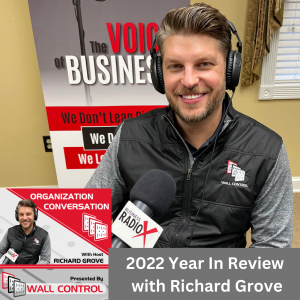
2022 Year in Review, with host Richard Grove

January 4, 2023 by John Ray

2022
North Fulton Studio
2022 Year in Review, with host Richard Grove
Loading
00:00 /
RSS Feed
Share
Link
Embed

Download file

2022

2022 Year in Review, with host Richard Grove (Organization Conversation, Episode 53)

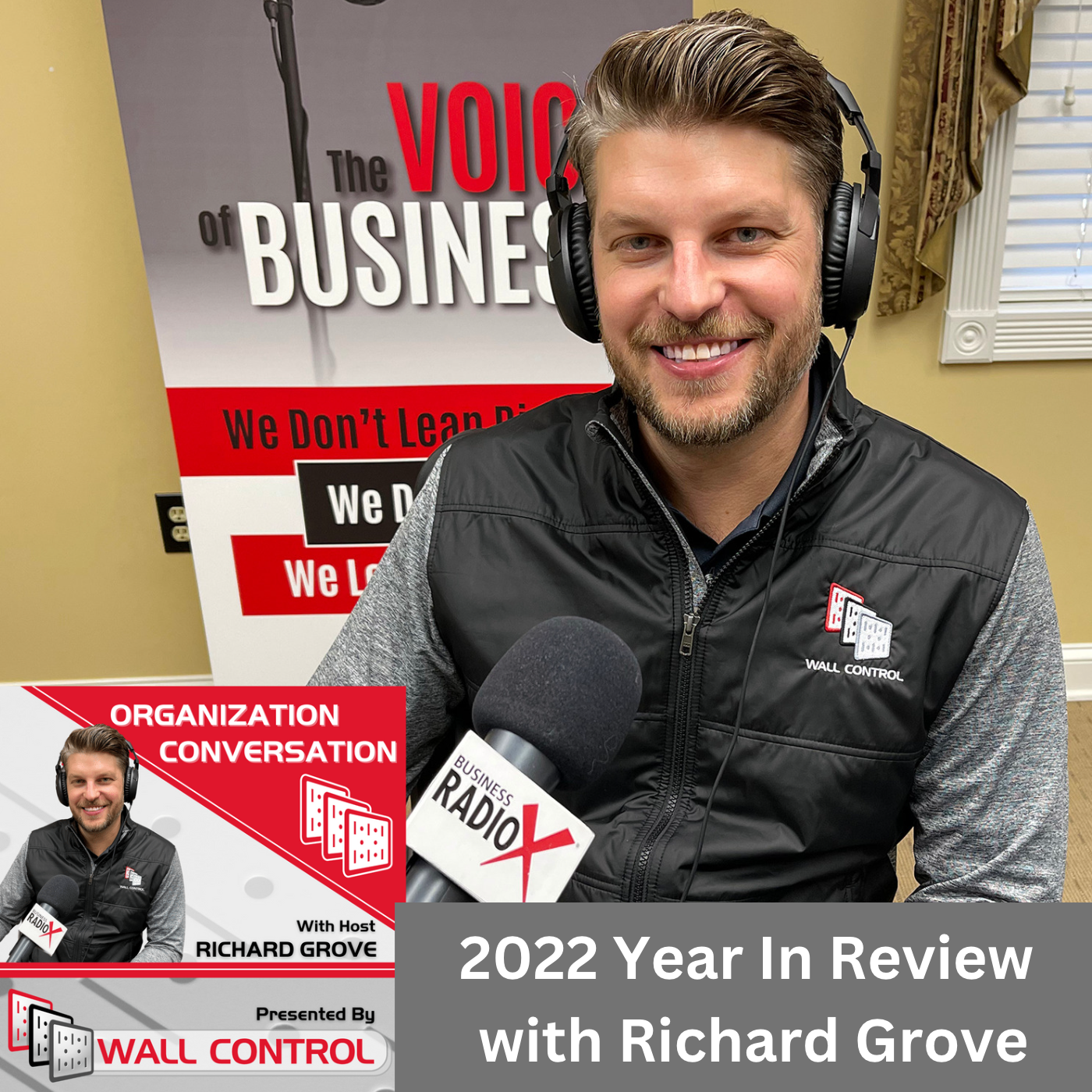
Richard Grove, the host of Organization Conversation, wraps up 2022 by reviewing the first year of the podcast, the guests, and the live remotes at the WORKBENCHcon and HAVEN conferences. He also discussed the impact of the pandemic on Wall Control, what the business has seen during 2022, projects coming in 2023, and much more.

Organization Conversation is broadcast from the North Fulton studio of Business RadioX® inside Renasant Bank in Alpharetta.

About Organization Conversation

Organization Conversation is hosted by Richard Grove and broadcast and produced from the North Fulton studio of Business RadioX® inside Renasant Bank in Alpharetta. You can find the full archive of shows by following this link. The show is available on all the major podcast apps, including Apple Podcasts, Spotify, Google, Amazon, iHeart Radio, Stitcher, TuneIn, and others.

Richard Grove, Wall Control

Richard Grove, Host, Organization Conversation

Richard Grove‘s background is in engineering but what he enjoys most is brand building through relationships and creative marketing. Richard began his career with the Department of Defense as an engineer on the C-5 Galaxy Engineering Team based out of Warner Robins. While Richard found this experience both rewarding and fulfilling, he always knew deep down that he wanted to return to the small family business that originally triggered his interest in engineering.

Richard came to work for the family business, Dekalb Tool & Die, in 2008 as a Mechanical Engineer. At the time Wall Control was little more than a small ‘side hustle’ for Dekalb Tool & Die to try to produce some incremental income. There were no “Wall Control” employees, just a small warehouse with a single tool and die maker that would double as an “order fulfillment associate” on the occasion that the original WallControl.com website, which Richard’s grandmother built, pulled in an order.

In 2008, it became apparent that for the family business to survive they were going to have to produce their own branded product at scale to ensure jobs remained in-house and for the business to continue to move forward. Richard then turned his attention from tool and die to Wall Control to attempt this necessary pivot and his story with Wall Control began. Since that time, Richard has led Wall Control to significant growth while navigating two recessions.

Outside of Richard’s work at Wall Control he enjoys helping other business owners, operators, and entrepreneurs along their own paths to success by offering personal business coaching and advising through his website ConsultantSmallBusiness.com. Richard has developed an expansive and unique skillset growing and scaling Wall Control through a multitude of challenges to the successful brand and company it is today. Richard is happy to share his knowledge and experience with others who are looking to do the same within their own businesses.

Connect with Richard:

Instagram | Twitter | LinkedIn | Richard’s Website

About Wall Control

The Wall Control story began in 1968 in a small tool & die shop just outside Atlanta, Georgia. The first of three generations began their work in building a family-based US manufacturer with little more than hard work and the American Dream.

Over the past 50+ years, this family business has continued to grow and expand from what was once a small tool & die shop into an award-winning US manufacturer of products ranging from automobile components to satellite panels and now, the best wall-mounted tool storage system available today, Wall Control.

The Wall Control brand launched in 2003 and is a family-owned and operated business that not only produces a high-quality American Made product but sees the entire design, production, and distribution process happen under their own roof in Tucker, Georgia. Under that same roof, three generations of American Manufacturing are still hard at work creating the best tool storage products available today.

Connect with Wall Control:

Company website | Facebook | Instagram

Tagged With: 2022, business, conferences, Guests, HAVEN 2022, Haven Conference, metal pegboard, Organization Conversation, pandemic, Richard Grove, Wall Control, WORKBENCHcon, WORKBENCHcon 2022

Navigating A Recession

August 31, 2022 by John Ray

Navigating A Recession
North Fulton Studio
Navigating A Recession
Loading
00:00 /
RSS Feed
Share
Link
Embed

Download file

Navigating A Recession

Navigating A Recession

It’s a mistake to do business planning based on the predictions of economists. A better approach to navigating a recession, or any other economic environment for that matter, is to stay close enough to your clients to understand the value they perceive in your service. More in this episode.

The Price and Value Journey is presented by John Ray and produced by the North Fulton studio of Business RadioX®.

TRANSCRIPT

John Ray: [00:00:00] Hello. I’m John Ray on The Price and Value Journey. Navigating a recession or any other major economic event, for that matter, there’s lots of talk right now about recession and some conflicting views about whether we’re in one. Paul Samuelson, a Nobel Prize winner in economics, wrote that the stock market had predicted nine of the past five recessions. What he failed to point out is that economists have a similar track record, if not worse.

John Ray: [00:00:34] Asking whether we’re in a recession to determine what business moves to make in our individual businesses is the wrong question. The better consideration each of us must weigh is whether our clients perceive value which is in excess of the price they pay us for our services. When there’s a major economic shift, business owners face what you might call a value decision point on everything that they buy.

John Ray: [00:01:02] They’ll reassess their perception of the value they think they are receiving from the goods and services they purchase and compare that new perceived value to the price they’re paying. These value decision points come repeatedly over the life of a client relationship. Sometimes without us as service providers even knowing it’s happened.

John Ray: [00:01:26] Value decision points most certainly occur in a down cycle of business conditions, but they occur across the spectrum of macroeconomic events, whether it’s a recession, an inflationary period, a pandemic, or when the pendulum swings back toward prosperity. Sometimes value decision points result in changes to client perception of value, which are very minor. Other times, of course, they can be momentous, or, often, they are somewhere in between. Shifts at the micro level bring business owners to a value decision point as well.

John Ray: [00:02:04] One example is when you announce a price increase. The business owner or manager will naturally assess whether the value they believe they are receiving from the professional relationship they have with you still exceeds the new higher price. Another example is when there’s a service offering change, such as a change in personnel that are doing the work. It could also be that the micro level change has nothing to do with you, such as when there’s been a major internal blow to the business.

John Ray: [00:02:36] If you’re a solopreneur or a small firm professional services firm owner, the question is not whether we’re in a recession. The question for you is whether your client’s perception of the value they receive from your firm remains more than what you’re being paid. And that’s always the question in all economic cycles.

John Ray: [00:03:00] I’m John Ray on The Price and Value Journey. Past episodes of this series can be found at pricevaluejourney.com. If you’d like to connect with me directly with an email, send me a note, john@johnray.co. Thank you for joining me.


About The Price and Value Journey

The title of this show describes the journey all professional services providers are on:  building a services practice by seeking to convince the world of the value we offer, helping clients achieve the outcomes they desire and trying to do all that at pricing which reflects the value we deliver.

If you feel like you’re working too hard for too little money in your solo or small firm practice, this show is for you. Even if you’re reasonably happy with your practice, you’ll hear ways to improve both your bottom line as well as the mindset you bring to your business.

The show is produced by the North Fulton studio of Business RadioX® and can be found on all the major podcast apps. The complete show archive is here.

John Ray, Host of The Price and Value Journey

John Ray The Price and Value Journey
John Ray, Host of “The Price and Value Journey”

John Ray is the host of The Price and Value Journey.

John owns Ray Business Advisors, a business advisory practice. John’s services include advising solopreneur and small professional services firms on their pricing. John is passionate about the power of pricing for business owners, as changing pricing is the fastest way to change the profitability of a business. His clients are professionals who are selling their “grey matter,” such as attorneys, CPAs, accountants and bookkeepers, consultants, marketing professionals, and other professional services practitioners.

In his other business, John is a Studio Owner, Producer, and Show Host with Business RadioX®, and works with business owners who want to do their own podcast. As a veteran B2B services provider, John’s special sauce is coaching B2B professionals to use a podcast to build relationships in a non-salesy way which translate into revenue.

John is the host of North Fulton Business Radio, Minneapolis-St. Paul Business Radio, Alpharetta Tech Talk, and Business Leaders Radio. house shows which feature a wide range of business leaders and companies. John has hosted and/or produced over 1,500 podcast episodes.

Connect with John Ray:

Website | LinkedIn | Twitter

Business RadioX®:  LinkedIn | Twitter | Facebook | Instagram

Tagged With: economic recession, John Ray, pandemic, Price and Value Journey, pricing, professional services, professional services providers, recession, solopreneurs, value, value pricing

The R3 Continuum Playbook: The Interplay of Stress and Burnout: What they are, How they Relate, and How to Combat Them

May 10, 2022 by John Ray

Stress and Burnout
Minneapolis St. Paul Studio
The R3 Continuum Playbook: The Interplay of Stress and Burnout: What they are, How they Relate, and How to Combat Them
Loading
00:00 /
RSS Feed
Share
Link
Embed

Download file

Stress and Burnout

The R3 Continuum Playbook: The Interplay of Stress and Burnout: What they are, How they Relate, and How to Combat Them

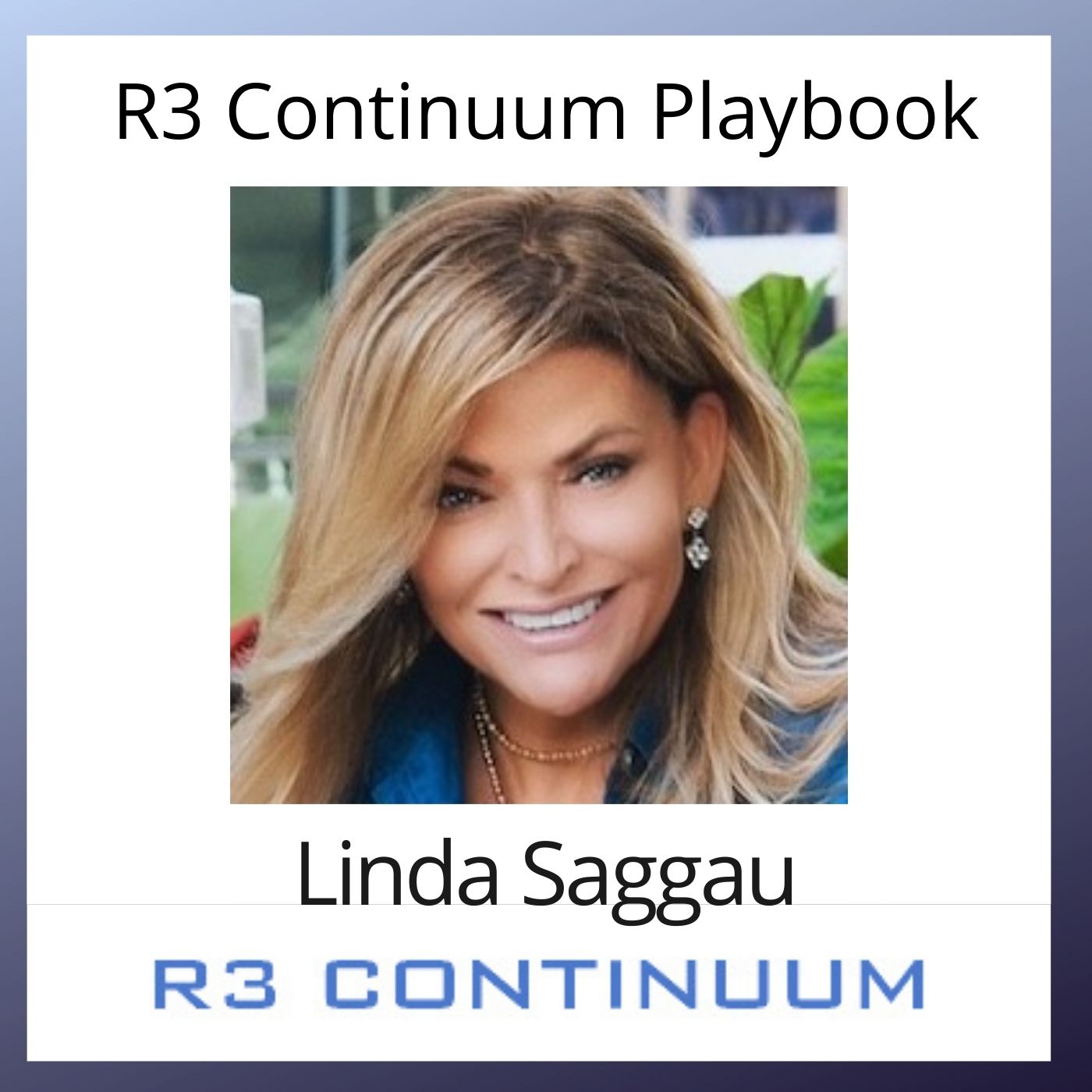
Linda Saggau, Chief of Staff and Chief Strategy Officer at R3 Continuum, is the presenter in this webinar excerpt on the intersection of stress and burnout.  While some stress can be positive, negative stress can lead to health impacts: both physical and mental. Stress also directly correlates to burnout. Although they are different, the two often go hand in hand. Linda highlighted the differences between the two, explained the magnitude of burnout and its impact, and more.

The full webinar can be found here.

The R3 Continuum Playbook is presented by R3 Continuum and is produced by the Minneapolis-St.Paul Studio of Business RadioX®. R3 Continuum is the underwriter of Workplace MVP, the show which celebrates heroes in the workplace.

TRANSCRIPT

Shane McNally: [00:00:00] Broadcasting from the Business RadioX studios, here is your R3 Continuum Playbook. Brought to you by Workplace MVP sponsor, R3 Continuum, a global leader in workplace behavioral health, crisis, and security solutions.

Shane McNally: [00:00:13] Hi there. My name is Shane McNally, Digital Marketing Project Lead at R3 Continuum. On this episode of The R3 Continuum Playbook, we’re going to hear a segment from a recent webinar that was done with R3 Continuum Chief of Staff and Chief Strategy Officer, Linda Saggau. This webinar was titled The Interplay of Stress and Burnout: What They Are, How They Relate, and How to Combat Them. It may not be widely understood the differences between stress and burnout as they often go hand in hand, but they can have some significant differences. This webinar highlighted these differences and took a deeper look into the impact and effect that burnout can have on your employees and your organization as a whole.

Shane McNally: [00:00:53] And kind of like on that of doing self-assessments, we’re seeing it in other people, can you kind of go over what like the magnitude of all of burnout is in the workplace?

Linda Saggau: [00:01:04] Yeah, for sure. We put together this little slide for you all. The sources are stated down below. But this is pretty recent. This is research over the last maybe a couple of years. So, now that we understand what burnout is, it’s just important that you understand the magnitude. So, 75% of workers have experienced this. My guess, it’s probably more. The pandemic didn’t help, right? 40% specifically said they experienced it during the pandemic.

Linda Saggau: [00:01:40] So, you think about what our frontline healthcare workers have faced, again, burnout is complete exhaustion due to repeated exposure to emotionally demanding situations. Think about what they’ve been going through, and if you are one of them, thank you for everything you do, everything you’re going through, everything you’ve experienced. If you are experiencing burnout, don’t dismiss it.

Linda Saggau: [00:02:12] Take time to take care of yourself and put together a strategy to ensure that you can get out of it. 67% of workers said that increased over the pandemic. I can’t imagine why. Fortunately, my son was launched off to college, but so many of my coworkers had a new puppy, two children that they were homeschooling, cooking and household chores increased. There weren’t offices to have two people or two partners doing their conference calls.

Linda Saggau: [00:02:49] There were a lot of emotionally demanding situations over the pandemic, and they continue. We still have to be very, very cautious. And then, managers and individual contributors, they saw the pressure increase as well and their burnout increased as well. So, there was a quarter of them pretty equally that reported burnout. And as we look at the convergence of what’s going on, the news is emotionally demanding. Give yourself permission to take a rest from it.

Linda Saggau: [00:03:28] It doesn’t mean that we bury our heads to the needs of other people and the issues going on in the world, but give yourself permission to step away. Give yourself permission to step away from this thing and stop scrolling on Twitter, or Instagram, or LinkedIn, or whatever it is. There’s a moment where you’ve got to put it down. Pay attention to your sleep hygiene. If you can, resist the urge to bring this thing into bed with you. It’s one of the best things you can possibly do.

Shane McNally: [00:03:59] I absolutely—go ahead.

Linda Saggau: [00:04:00] Go ahead. Sorry.

Shane McNally: [00:04:01] I was going to say, I absolutely agree with the news and the Twitter. I was going to bring up Twitter, because sometimes, even I’ll catch like I’ll read something on there, and be like, nope, I can’t go into this, I can’t go down that rabbit hole type of thing, and give myself a break. I think that’s very relevant to me. So, I thought that was funny, you brought that up. So, we see obviously the magnitude, 75% of workers have experienced burnout. Can you kind of talk to us a little bit about the impact that that’s truly having?

Linda Saggau: [00:04:29] Yeah. Well, we’re seeing it in the great resignation, right? Not all of our companies, but we’re seeing it in many organizations. So, almost three times, well, I round up easily, 2.6 times, if you’re burned out, to seek a different job, and what these folks probably don’t understand is that their burnout is going to go with them, because the behaviors and the habits, maybe not taking care of oneself or whatever, are just going to go with them.

Linda Saggau: [00:05:03] So, you might want to consider, if there are good things about your job, and you’re being treated fairly and compensated fairly, you might want to stay there and just see like, okay, what happens if I deploy a self-care or burnout strategy? 63% are more likely to take a sick day and 23% are more likely to visit the emergency room. So, workplace stress and burnout costs a lot, and globally, it costs over 500 billion per year and there’s 550 million workdays lost. So, it is not only a devastating thing for people, but it’s a devastating thing for organizations, and our communities, and our economies.

Linda Saggau: [00:05:54] So, again, I kind of like to—when I talk about this topic, whoo, tempting to boil the ocean, but I want to just remind you that the change actually starts with you, taking care of yourself, noticing your own signs and symptoms, and kind of educating others when it’s appropriate, and helping them understand what they can do to help themselves. And then, they get to share and they get to share, they get to share, because waiting to see change to happen is not going to get at this problem. We just have to look at this as individuals in our communities, our workplaces, our families, and have productive, healthy conversations about it.

Shane McNally: [00:06:47] Yeah, absolutely. And I think it’s really interesting hearing the sharing pattern, it’s that trickle effect. It’s, I’m not a clinician, but here I am listening to you, and now, I’m understanding things and I can go tell my buddy that’s in healthcare that I know is struggling, but he’s just continuing to go. And now, you don’t have to be a clinician, I know you mentioned armchair therapists and all that, but you can lead them to different resources that we’ve kind of discussed throughout this as well. So, I appreciate that comment, too.

Linda Saggau: [00:07:17] Right. And that’s really the core of things like mental health first aid, it’s about sitting down with somebody, and saying, hey, I care about you. And I’ve noticed that it appears that you might not be doing well. How are you? And then, the opportunity is just to gently make suggestions to doors for help that people can walk through. And it’s how we serve others, but also if I ever slid into burnout again and I needed to have an intervention, I would hope that my colleagues, Shane, no pressure, would pull me aside, and say, hey, I’ve noticed, and it’s always done with the greatest care and compassion.

Linda Saggau: [00:08:10] It’s not about judging somebody. And I’ve literally seen people do those gentle interventions at work with their families and do them without judgment, and it’s actually helped people get closer. It’s not driven wedges. It actually helps people get closer, because you’re actually expressing care and concern, and you’re leading people to resources that are viable. You don’t want to send people to any resources that are not viable.

Shane McNally: [00:08:47] I’m sure most of us can relate to feeling stress while working. In fact, it’s very normal. Over time, however, if that stress is growing little by little, it can slowly lead to burnout. It’s important to understand how burnout can impact your organization and what can happen if it’s left unaddressed. R3 Continuum can help. Connect with us and learn about our services at www.r3c.com or email us directly at info@r3c.com.


Show Underwriter

R3 Continuum (R3c) is a global leader in workplace behavioral health and security solutions. R3c helps ensure the psychological and physical safety of organizations and their people in today’s ever-changing and often unpredictable world. Through their continuum of tailored solutions, including evaluations, crisis response, executive optimization, protective services, and more, they help organizations maintain and cultivate a workplace of wellbeing so that their people can thrive. Learn more about R3c at www.r3c.com.

R3 Continuum is the underwriter of Workplace MVP, a show which celebrates the everyday heroes–Workplace Most Valuable Professionals–in human resources, risk management, security, business continuity, and the C-suite who resolutely labor for the well-being of employees in their care, readying the workplace for and planning responses to disruption.

Connect with R3 Continuum:  Website | LinkedIn | Facebook | Twitter

Tagged With: burnout, Linda Saggau, pandemic, R3 Continuum Playbook, stress, Workplace MVP

Workplace MVP: Jim Mortensen, R3 Continuum

September 30, 2021 by John Ray

Jim Mortensen
Minneapolis St. Paul Studio
Workplace MVP: Jim Mortensen, R3 Continuum
Loading
00:00 /
RSS Feed
Share
Link
Embed

Download file

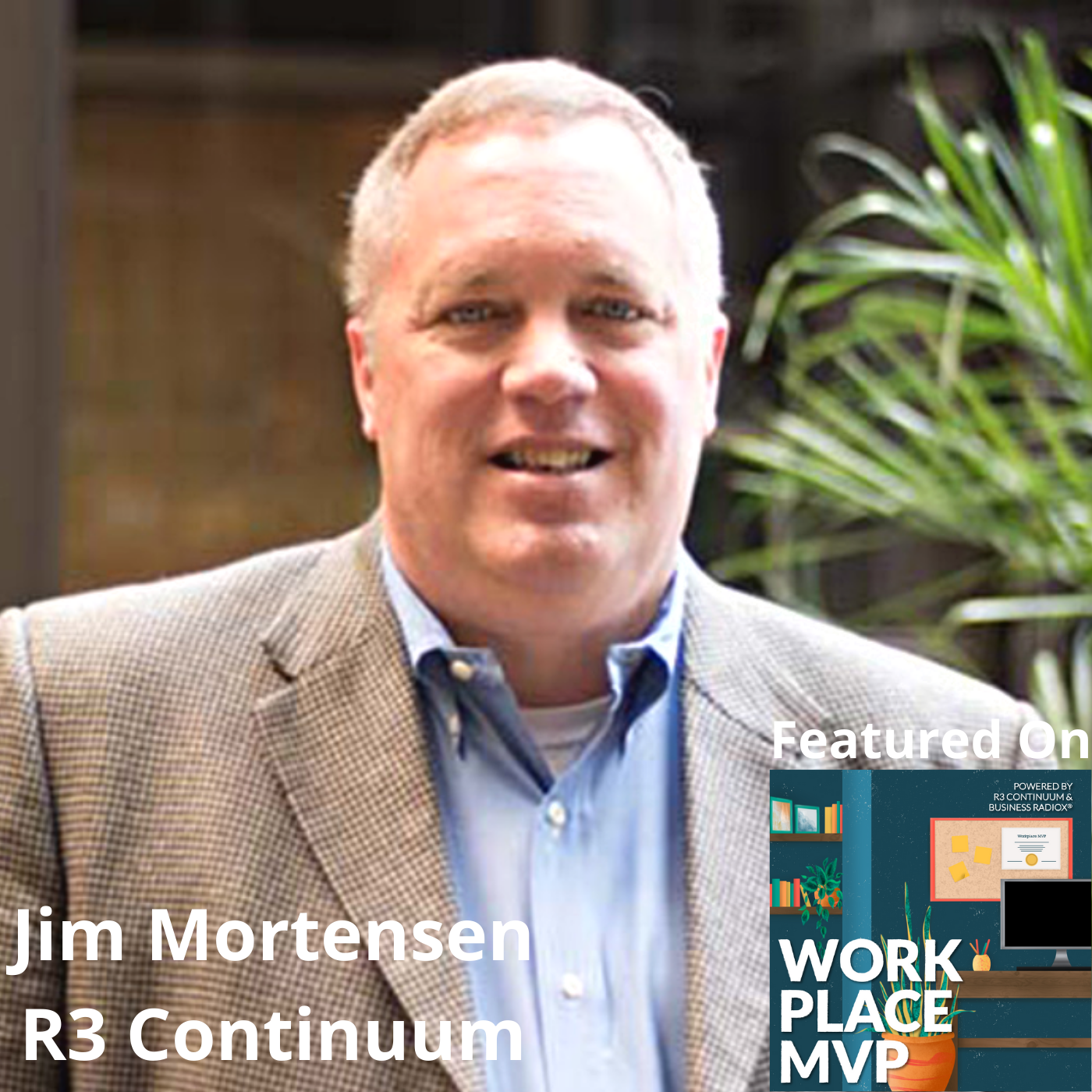
Jim Mortensen

Workplace MVP:  Jim Mortensen, R3 Continuum

Noting not only parallels but lessons to be learned, Jim Mortensen, President of R3 Continuum, reflected on his experience of the September 11th terrorist attacks and the current pandemic. He and host Jamie Gassmann discussed how business culture was impacted by 9/11, the actions leaders can take during traumatic events, how what was learned after 9/11 helped him better address the leadership challenges of the pandemic, and much more. Workplace MVP is underwritten and presented by R3 Continuum and produced by the Minneapolis-St.Paul Studio of Business RadioX®.

Jim Mortensen, President, R3 Continuum

Jim Mortensen, President, R3 Continuum

Jim Mortensen is President of R3 Continuum (R3c), a global leader in behavioral health and security solutions to cultivate and protect workplace wellbeing in a complex and often dangerous world. R3c’s continuum of tailored support services includes crisis prevention, preparedness & response, specialized consulting, evaluations, employee outreach, training, protective services, and more.

Jim is responsible for all facets of the business, including Sales, Marketing, Quality, Clinical Behavioral and Medical Services, Business Development, HR, and Client Services.

Prior to joining R3c in 2013, Jim was a vice president at Benesyst where he was responsible for Client Relationships, Product Development and Operations. Jim has an extensive background in the Health Care and Financial Services industries, including time spent at Ameriprise and UnitedHealth Group. He has a passion for leading growing organizations to provide outstanding service.

In addition to his experience in product development and operations, Jim has an MBA in Finance and is both a Certified Public Accountant (inactive) and a Certified Internal Auditor.

LinkedIn

R3 Continuum

R3 Continuum is a global leader in workplace behavioral health and security solutions. R3c helps ensure the psychological and physical safety of organizations and their people in today’s ever-changing and often unpredictable world. Through their continuum of tailored solutions, including evaluations, crisis response, executive optimization, protective services, and more, they help organizations maintain and cultivate a workplace of wellbeing so that their people can thrive. Learn more about R3c at www.r3c.com.

Company website | LinkedIn | Facebook | Twitter

About Workplace MVP

Every day, around the world, organizations of all sizes face disruptive events and situations. Within those workplaces are everyday heroes in human resources, risk management, security, business continuity, and the C-suite. They don’t call themselves heroes though. On the contrary, they simply show up every day, laboring for the well-being of employees in their care, readying the workplace for and planning responses to disruption. This show, Workplace MVP, confers on these heroes the designation they deserve, Workplace MVP (Most Valuable Professionals), and gives them the forum to tell their story. As you hear their experiences, you will learn first-hand, real life approaches to readying the workplace, responses to crisis situations, and overcoming challenges of disruption. Visit our show archive here.

Workplace MVP Host Jamie Gassmann

In addition to serving as the host to the Workplace MVP podcast, Jamie Gassmann is the Director of Marketing at R3 Continuum (R3c). Collectively, she has more than fourteen years of marketing experience. Across her tenure, she has experience working in and with various industries including banking, real estate, retail, crisis management, insurance, business continuity, and more. She holds a Bachelor of Science Degree in Mass Communications with special interest in Advertising and Public Relations and a Master of Business Administration from Paseka School of Business, Minnesota State University.

TRANSCRIPT

Intro: [00:00:04] Broadcasting from the Business RadioX Studios, it’s time for Workplace MVP. Workplace MVP is brought to you by R3 Continuum, a global leader in workplace behavioral health and security solutions. Now, here’s your host, Jamie Gassmann.

Jamie Gassmann: [00:00:25] Hi, everyone. Your host, Jamie Gassmann, here and welcome to this special edition of Workplace MVP. Over this last month, as we have all, at some point, reflected as a nation on the events of 9/11, it is common for most of us to recall where we were and what we were doing when we first heard the news of the attacks. I know I vividly remember where I was. And I have had conversations with many others over the last 20 years that have had the same types of recollection.

Jamie Gassmann: [00:00:53] Looking back on September 11th, 2001 and jumping forward to now, 2021, and the world we live in today with the COVID-19 pandemic, and hearing how employers are increasing and focusing efforts on providing mental health support for their employees, it leaves me wondering, how did employers respond and support employees in the immediate moments, days, weeks, and now years following the events of 9/11? How did the attacks change how business leaders react and respond to disruption in their workplace, particularly as it relates to supporting the well-being of their employees?

Jamie Gassmann: [00:01:30] Well, with us today to share his experience and key learnings as a business leader during 9/11 is Workplace MVP Jim Mortensen, who is the President for our show sponsor, R3 Continuum. Welcome to the show, Jim.

Jim Mortensen: [00:01:44] Thanks, Jamie. Glad to be here.

Jamie Gassmann: [00:01:47] So, let’s start out with you walking our listeners through your career journey and how you came to be the president at R3 Continuum.

Jim Mortensen: [00:01:55] Okay. Well, sometimes I talk about my career as kind of a testament to transferable skills. So, my educational background is in accounting and finance. And that’s usually where I would start in a company because it’s the most obvious kind of skill that people can grab onto. But what I would do was, I was in finance and then I went into project management, product development, client service.

Jim Mortensen: [00:02:30] And what I found was the reality is, is that, product development, client service, and finance have to work together all the time. But they really don’t know what the other one is talking about. And since I had been in all three, I kind of coalesce and get people unified in the goals that they were going for.

Jim Mortensen: [00:02:54] So, frequently, product development, people go to client service and say, “Here’s what we want to do.” And client service rolls their eyes and says, “You have no idea what you’re asking.” I’d throw some client service in ops terms out there just to say, “Yeah. I know exactly what I’m doing to you. So, let’s figure out how to to make this work.” And with that, I worked in various large companies like American Express and UnitedHealth Group.

Jim Mortensen: [00:03:24] But I, also, through all of that, would look for kind of the small entrepreneurial groups within those large companies, because what I really love to do is go into an area that is either really falling down and/or is experiencing explosive growth. And what I would consistently see happen is, when you’re going from that kind of small boutique into a mainline business, the volumes are crushing you. And they have largely succeeded and thrived almost through a lack of process. They’re very hands-on. They adjust to everything that’s going. And the challenge is, when the volumes get that high, if you don’t change how you’re doing it, you won’t continue.

Jim Mortensen: [00:04:15] So, I really love going in there and talking about we’re going to preserve the core, but to preserve that core and remain client focused and nimble, we have to change how we do that. And that’s incredible both from a tactical standpoint and from a culture standpoint. It’s a very challenging time, and I found that I just really love that kind of approach.

Jim Mortensen: [00:04:44] Well, after being in big companies, I then moved into small to midsized companies. And really, when you’re leading in that kind of an organization, the whole company is kind of a boutique entrepreneurial group and they need people who can move across processes. So, it really was a good fit for me, and that’s how I transitioned into smaller companies.

Jim Mortensen: [00:05:09] And then, when I heard about R3 and what they did, it was just such a core, in Simon Sinek’s “why”, it just really fit for me. So, I just have a passion for what R3 does.

Jamie Gassmann: [00:05:24] Great. And it fits well within our description of our show today in talking about 9/11 and where you were at, you know, career-wise during that timeframe, because R3 was a big responder to 9/11 in terms of the psychological first aid for employees and other victims.

Jim Mortensen: [00:05:42] Sure.

Jamie Gassmann: [00:05:42] So, let’s kind of dive into that a little bit and talk about, you know, on the day of 9/11 – and I know you’ve mentioned American Express – you’re working at American Express Financial Advisors. Can you share with us what was your role at that time? Where were you officed? How many employees did you have? You know, where were they located? And kind of just share a background on that.

Jim Mortensen: [00:06:03] Sure. Sure. As you said, I was at American Express Financial Advisors, and I was, at that time, leveraging my finance background. I was in charge of forecasting and budgeting for that company, which I think at that time was about 700 million a year in revenue. And I had just recently taken over that job. I had just recently gotten a new boss, who, ironically, was commuting from Toronto at the time. And I had about five employees. We were all based in the IDS Center in Downtown Minneapolis.

Jim Mortensen: [00:06:40] I was driving to work when I heard on the radio that the plane had crashed into the World Trade Center. And I think, like a lot of us, I was kind of in shock. And I remember on the drive, they were reporting about the first one hitting and I thought, “What a horrible accident.” And then, the second one hit, and we kind of all realized this isn’t just a random accident. So, I think I spent most of that day kind of in shock.

Jamie Gassmann: [00:07:11] And you heard about it driving to work and knowing the towers were the largest towers, I believe, in the country. The IDS is one of the largest towers in Minneapolis, so were there any feelings that you were feeling as you continue to your commute in? Or any thoughts that ran through your mind?

Jim Mortensen: [00:07:32] Yeah. And, in fact, we sent everybody home by about noon, in part because, to your point, the IDS Tower was one of the tallest towers in the Midwest, so we felt like we could be a target. I mean, it’s kind of like the early days of COVID, nobody really knew what was going on. And I think, also, a lot of us – I had two elementary school aged kids and my wife was at work in the schools – I think we all just wanted to be home and close to our families at that time. So, it’s a combination of that and a real concern about the security that our whole company just shut down and sent people home.

Jamie Gassmann: [00:08:23] Interesting. So, you know, with the employees – I know you mentioned that you shut it down and everybody went home to be with their families – what were some of the communications that were going out to your employees at the time? As a leader, what were some of the things that you were asked to do from the organization?

Jim Mortensen: [00:08:45] Sure. Well, at least in the early days, I think, we made a call that’s probably not correct, but was fairly common then, is that, there was one response for the people in New York, where our headquarters were, and a very different response for the rest of the country. So, the CEO of American Express, I think, got really good press for how he handled 9/11, because he was out there and talking and communicating with employees and creating new spots for people to work. Because the American Express Tower actually was connected via tunnels to the World Trade Center, and they used the same heating and HVAC systems.

Jim Mortensen: [00:09:42] So, actually, for a while there, we assumed everything in the American Express Tower may have been incinerated by the heat coming through. But, actually, when the towers came down, it tore off the external skin of the American Express Tower. That’s how close they were to the World Trade Center. So, there was a lot of focus on trying to find all our employees.

Jim Mortensen: [00:10:06] I remember being in conference calls in the days after that. And you’d just be waiting for everybody to check in and wondering are they all still alive. And it was really kind of a weird scenario. You know, it’s not, “Gee. Is this person late to the meeting?” It’s “Is this person still alive?” We were quite fortunate, I think the only American Express employees who were killed that day was a group of five to seven people in our travel company who actually worked onsite for one of the companies in the tower.

Jamie Gassmann: [00:10:47] Interesting. So, with your employees here in the Minneapolis area, you know, what was the feeling like when you returned to the office and knowing that there were employees that were in the tower and that there were employees that were close to the vicinity of the towers? You know, what were some of the feelings that were going through that work environment? And how did you show support to them and how did you navigate that?

Jim Mortensen: [00:11:16] Yeah. There was a lot of confusion. And, again, where I think we fell down as there wasn’t a lot of communication to the non-headquarters people, so we found out about it in drips and drabs. And, again, while I think the company did an amazing job of working with the people directly impacted, I think back at that time, it took a long time before people realized this really impacted employees across the country. And even if they did realize it, I think back in that time, there wasn’t a lot of understanding of how you help and support employees during that time.

Jim Mortensen: [00:12:03] I mean, I remember for weeks, my boss, whose family was still in Toronto – if you remember, you couldn’t fly – he’s stuck in the U.S. And I started to think, from his family’s standpoint, their dad is working in a foreign country that’s been attacked. And, finally, after a few weeks, he rented a car and drove home just to go see his family. And I just think we all just really didn’t understand completely how to deal with that. So, again, we did a great job with the people we knew were directly impacted and a lesser job, frankly, for the people who were indirectly impacted.

Jamie Gassmann: [00:12:48] Yeah. Did the organization, let’s say, like fast forward to some of the anniversaries passed in the first year or even maybe in the immediate? I know you kind of mentioned that there’s a lot of support that was provided kind of in that New York area and that concentration of employees that were more directly impacted. Did they eventually kind of catch on to some of the support that might have been needed? And if they did, how did that look and feel as they kind of progressed in their learning of everything?

Jim Mortensen: [00:13:21] Yeah. I think what they did a lot of is, as they started to recover the tower – and the tower for months afterwards was actually used as a staging area for the fire and police, et cetera – American Express had abandoned the tower and put people out to remote offices and such. So, as they started to regain the tower, they did a lot of work with people around, “Will you feel comfortable coming back to work in Downtown New York and within sight of where the World Trade Center was?” And I think they had a real understanding of that’s going to be traumatic for people. And some people desperately want that in order to recover their normal. And some people don’t want that reminder.

Jim Mortensen: [00:14:17] And, again, I see a lot of parallels to today. If you think about it, I mean, we’re having the same dialogues today, do people feel safe coming back to the office. And people love working from home, but they miss their coworkers. And I think that’s some of the same impacts we’re seeing today. I just think we’re a lot more aware of mental health issues and aware of why the employer should care and be engaged in that. As opposed to, “Well, that’s really a personal issue. We shouldn’t be involved.” Does that make sense?

Jamie Gassmann: [00:14:55] It does. Yeah. And it’s interesting, I’ve heard in some of the other interviews and kind of stories I’ve heard from the 9/11 during this anniversary timeframe where they’ve mentioned that that was really kind of the turning point for the mental health focus in workplaces. That that really was kind of where employers realized there was another part to business continuity that wasn’t just systems and operations. That it was really, you know, your people. And it sounds like you saw very much something similar within the Ameriprise that they did have to make that shift over to looking at their people.

Jim Mortensen: [00:15:31] Well, some of my experience was impacted by the fact that I was in finance and in charge of budgeting and forecasting. And what happened on 9/11 had some pretty severe impacts on Ameriprise from a financial standpoint. As I recall, every one percent movement in the market impacted our bottom line by a million dollars a year. So, I spent a horrendous amount of time post-9/11 focused on reforecasting the company over and over and over again.

Jim Mortensen: [00:16:10] And at that time, particularly in that area, it wasn’t, “How are you dealing with what just happened?” It’s, “Work lots of hours and figure out how we keep the company going.” And that’s not bad people. That’s just the way things were back then. It’s like, “Okay. Well, that happened. Now, what’s our revenue going to be next month?” That’s kind of the approach.

Jamie Gassmann: [00:16:42] Yeah. It sounds similar to our interview with Col. Williams talking about his experience in the Pentagon during 9/11 and having to go back on a plane that following Monday back at it to work. So, very much during that timeframe, it sounds like it was very similar amongst other industries as well.

Jim Mortensen: [00:17:01] Yeah. And there was nothing intentional or negative about it. It’s just kind of the culture back then and the lack of understanding of how it’s impacting. And I guess in some ways, it’s also a way some people do recover well. I think it helped me to not focus on that and instead focus on work. That’s a certain approach of maintaining my normal. It was to bury back into work again.

Jamie Gassmann: [00:17:30] Yeah. Absolutely. So, we’re going to take a moment and hear from our sponsor. So, Workplace MVP is sponsored by R3 Continuum. R3 Continuum is a global leader in providing expert, reliable, responsive, and tailored behavioral health, crisis, and violent solutions to promote workplace wellbeing and performance in the face of an ever changing and often unpredictable world. Learn more about how R3 Continuum can tailor a solution for your organization’s unique challenges by visiting r3c.com today.

Jamie Gassmann: [00:18:02] So, now, looking at you as a leader during 9/11, in your perspective looking back on that, what would be some of the changes or impacts that you had in your leadership style or how you lead or view leadership today?

Jim Mortensen: [00:18:18] It’s a great question. I think one of the things I’ve really learned, both from 9/11 and also, frankly, from working where I work now is, in periods of stress, whether it be work stress or, certainly, even more so non-work trauma, it’s really important for leaders to be visible. I think like all of us, there are times during events like that, or even death of a coworker, or something we’ve had that happen here, all of us, as individuals, get struck with the, “I don’t know what to say. What’s the right thing to say right now?” And a fairly natural reaction to not knowing what to say is to say nothing.

Jim Mortensen: [00:19:13] And leaders, in particular, to go hide in your office and say nothing is the worst thing you can do. You’ve got to be out. You’ve got to be visible. And in certain events like 9/11, like the death of a coworker, leaders have to understand that that’s a time not to put your leader face on. It’s a time people want to see you as a human being. So, it’s okay to cry, or to show emotion, or to link with people that way. That’s what people are looking to their leaders for how to handle this situation, and they want to know that their leader cares.

Jim Mortensen: [00:19:57] And I think that’s part of what I really learned from 9/11, is, those kind of events require leaders to step out, step into it, and just be visible, and be human, and deal with you have to help people understand, meet, and, frankly, accept that this is a highly emotional time. It’s a very disruptive time. And we have to work through that before we can be productive again.

Jim Mortensen: [00:20:36] And then, the other thing that I’ve really learned through it all is, people have different ways of dealing with it. So, a question I’ve gotten from employees as well, how do we help someone so during this? And the answer is, “Well, you ask them what they’re needing. And then, you believe what they tell you.” So, the idea that you’ve got to go through grief a certain way is really kind of old school. Most people are not in denial. They’re just working through it in their own way. So, you ask them what they need and you believe them when they tell you what they’re needing. Did that kind of get out what you’re wanting to know?

Jamie Gassmann: [00:21:20] Yes. Absolutely. And I think what’s interesting about that is, really, what you’re sharing is, is that a leader has to demonstrate, just similar to any other cultural type nuance within an organization, whether it be “I really want a positive atmosphere”, well, the leader has to demonstrate that. And when you’re going through crisis or a traumatic event, like 9/11, it’s really no different. You showing them it’s okay to have that emotion, it’s okay to feel that way, I think probably provides just a sense of comfort in itself to those employees in knowing they can handle it and kind of work through it the way that is best for them.

Jim Mortensen: [00:21:59] Yeah. Before people can be productive, they have to feel both physically and psychologically safe. So, in R3, during the pandemic, the commitment has been, as long as there are not performance issues, we will not require you to be on work at the office unless and until you feel physically and psychologically safe being here.

Jim Mortensen: [00:22:26] Now, we’re in a unique position where we can do that. Not every company can. But the point is, ignoring the physical and psychological safety will not get people productive faster. It will slow it down. So, you got to start there before you can get the business going again.

Jamie Gassmann: [00:22:47] Yeah. It’s kind of like when you think of the great resignation that a lot of organizations are facing. Some of that is a reflection of that employee looking at their work life and going, “Yeah. It doesn’t really fit me anymore.” But you make a valid point that by being able to meet that employee where it’s comfortable for them and it feels safe for them, both physically and psychologically, you’re able to create that atmosphere that helps them to know this is a good place for you. You know, it probably helps with that movement.

Jamie Gassmann: [00:23:18] So, from your perspective – you know, you talked a lot about kind of culturally and just how work was back during the 9/11 timeframe – thinking about it now – obviously, it’s been 20 years we’ve got, I believe, two new generations to the workforce in that timeframe – what do you think has changed in terms of an employee’s expectation of leadership when events of this magnitude and that level of disruption happen in a workplace?

Jim Mortensen: [00:23:52] Another great question. I think even beyond big events, the whole view of what companies should deal with and what’s appropriate to deal with at work has shifted dramatically, both through the generations and through time. So, kind of I’m a late boomer and lots of things that are discussed every day in the workplace, it’s not that those aren’t topics that are important to general society. It’s that those topics have nothing to do with the business so they’re not issues for the business to take on. Well, I even realized how out of date that sounds when I say it. I mean, it’s kind of the same as the ledger paper I used to foot and cross foot because we didn’t have Excel at that time.

Jim Mortensen: [00:25:00] So, there’s been quite an evolution about what topics companies can and should be addressing. And employees expect their employers to address these issues. And some of that is, you know, “What are my behavioral health needs? I’m feeling burned out. I’m stressed out.” And they expect their employer to help with that.

Jim Mortensen: [00:25:26] And I think the flip side, if you want to be a pure what’s the return on investment of doing this? I think that has shown to be a false idea that ignoring that is because it has no impact on the business. It has a huge impact on the business, both in terms of short term productivity and, frankly, in terms of retention of employees. Employees want to know they’re cared about. Employees want to know that their company is doing things that are helpful and productive in society.

Jim Mortensen: [00:26:07] And to the extent employers do that, they garner more than just somebody working for a paycheck. And they get their passion and their commitment and their retention. And so, I think the whole shift, certainly, 9/11 started some of that. But there’s a lot of things going on that have made a dramatic shift during my career of what is expected of companies.

Jamie Gassmann: [00:26:38] Yeah. And so, with that, kind of keeping on to some of that same vein, if you were to provide some type of piece of guidance to our listeners for how they could effectively lead when an incident occurs, whether it’s a massive event like 9/11 or even smaller scale incidents can have a similar impact on a workplace when there’s, maybe, a death of an employee or coworker that was well-liked or loved – even sometimes customers, I’ve heard, can have a big impact on those work environments – if you were going to give guidance to a leader that’s listening right now on what they can do to have that impact on an employee, what would you leave them with?

Jim Mortensen: [00:27:25] Well, obviously, the business we’re in is helping employers and leaders with that. So, getting a counselor to come onsite and help employees with that, I think, is incredibly helpful. We went through it at one point where one of our employees was killed in a car accident on the weekend. I’m fortunate enough that I could pick up the phone and call one of our employees who’s probably the global expert in these kinds of things and have him guide me through it. And we brought a counselor onsite, and a lot of what it is, is just gathering people up and meeting them where they’re at.

Jim Mortensen: [00:28:10] And I remember the meetings we had, and some of it was really sad, and some of it was really funny as we would recall fun stories about the person, and a lot of it is – they call it – normalizing your reaction, just kind of meeting people where they are and letting them process.

Jim Mortensen: [00:28:27] So, I think what you don’t want to do is force people to pretend things are normal before they’re ready to. So, again, I think it’s being very in place, be out there, talk to your people. It’s a lot tougher right now with people working remote. And we see a lot of articles about how do you find out how people are doing when they’re all remote. It’s toughed right now. But just because it’s tougher doesn’t mean it’s not needed.

Jamie Gassmann: [00:29:01] Yeah. So, how have some of the employers that R3 has worked with, you know, handled this mass shift to remote and still being able to provide that support? What are some of the approaches that maybe R3 has built into their programming or their service delivery that has helped to make sure that employers can still reach them where they’re at?

Jim Mortensen: [00:29:25] Well, one of the things we’ve developed is an ability to do – we call it – onsite response. Typically, when something happens in the workplace, we will send a counselor onsite to talk with the employees. That’s not so effective if the people aren’t onsite. So, in hospitals, we’re still going in and working with the people in the emergency departments, in the ICU.

Jim Mortensen: [00:29:50] But if it’s an office where everybody’s remote, what we’ve developed then is an ability to do that through Zoom calls and things like that, so that we can still help the people process and help them process with their coworkers through the same vehicles that they use for other meetings. And, in that way, the fact that they’re not all in one spot doesn’t prevent the ability to reach out.

Jim Mortensen: [00:30:18] We’ve also, for a long time, for companies that have very few people onsite, so retailers who only have a couple of people onsite during a robbery, going onsite isn’t viable for them. We have an ability to to do that telephonically. So, we just use the technology tools we have in order to continue to provide the service. We believe onsite and in person is always the best response, but it isn’t the only response. And while the other responses may not be as effective, it’s better than not doing it. So, you try to reach people in the best way that you can.

Jamie Gassmann: [00:31:04] Fantastic. So, in looking at your career and you look at kind of over your career journey, if you had to choose one thing or accomplishment that you’re most proud of, what would you choose?

Jim Mortensen: [00:31:21] I think the thing I’m most proud of is the way we dealt with last year. Last year was, by far, the most challenging time for any company and any set of leaders. And if you think back to the start of COVID how rapidly things were changing. I remember mid-one week, people raising, “Are we going to send people home and work remote?” And I wondered why people were overreacting so much. And by Monday of the next week, we had 100 percent of our people at home. And I felt like we were too slow to react. And it was just things were changing that rapidly.

Jim Mortensen: [00:32:13] And the thing I’m proud of is that the company was able to react and respond that quickly. And through the weeks and months following, we went through a period that was the busiest we’ve ever had. And then, probably six months of the business being very, very slow. And we didn’t do layoffs. We managed to just tough it out and get through that. And we kept finding out what do people need and getting support to them.

Jim Mortensen: [00:32:48] We reached out to families and asked what their kids needed. And we had days where one person would just take over and do Zoom calls with a bunch of kids and do crafts to take some of the pressure off of working parents. We had food delivered. We had counselors available. Just all the different things the company was able to bring to the table to help our employees while our employees were providing critical support to the infrastructure of our country. So, that’s what I’m proudest of is what we were able to do during that time.

Jamie Gassmann: [00:33:31] Yeah. Fabulous. Like, you were delivering on what you promised to your customers, to your employees, which is very honorable in terms of a lot of companies offer a lot of services, but sometimes don’t always return it back to those employees delivering it. So, that’s fantastic. So, if our listeners wanted to get a hold of you, how can they do that?

Jim Mortensen: [00:33:54] Well, I’m on LinkedIn. My email address is jim.mortensen@r3c.com. And you can look at our website. I’m happy to talk to anybody about what they’re facing and what their needs are.

Jamie Gassmann: [00:34:13] Well, thank you so much for being on the show with us today, Jim, and letting us celebrate you, and for sharing your stories and great advice with our listeners. We appreciate you and I know for sure that the organization does as well and as does your staff. So, thank you so much for being a part of our show.

Jamie Gassmann: [00:34:31] And we also want to thank our show sponsor, R3 Continuum, for supporting the Workplace MVP podcast. And to our listeners, thank you for tuning in. If you’ve not already done so, make sure to subscribe so you get our most recent episodes and other resources. You can also follow our show on LinkedIn, Facebook, and Twitter at Workplace MVP. And if you are a workplace MVP or know someone who is, we want to know. Email us at info@workplace-mvp.com. Thank you all for joining us and have a great rest of your day.


Tagged With: 9/11, crisis communications, crisis leadership, employee behavioral health, Jamie Gassmann, Jim Mortensen, Leadership, leading business during pandemic, pandemic, R3 Continuum, stress in a pandemic, Workplace MVP, workplace wellness

  • 1
  • 2
  • 3
  • Next Page »

Business RadioX ® Network


Our Most Recent Episode

CONNECT WITH US

  • Email
  • Facebook
  • LinkedIn
  • Twitter
  • YouTube

Our Mission

We help local business leaders get the word out about the important work they’re doing to serve their market, their community, and their profession.

We support and celebrate business by sharing positive business stories that traditional media ignores. Some media leans left. Some media leans right. We lean business.

Sponsor a Show

Build Relationships and Grow Your Business. Click here for more details.

Partner With Us

Discover More Here

Terms and Conditions
Privacy Policy

Connect with us

Want to keep up with the latest in pro-business news across the network? Follow us on social media for the latest stories!
  • Email
  • Facebook
  • Google+
  • LinkedIn
  • Twitter
  • YouTube

Business RadioX® Headquarters
1000 Abernathy Rd. NE
Building 400, Suite L-10
Sandy Springs, GA 30328

© 2025 Business RadioX ® · Rainmaker Platform

BRXStudioCoversLA

Wait! Don’t Miss an Episode of LA Business Radio

BRXStudioCoversDENVER

Wait! Don’t Miss an Episode of Denver Business Radio

BRXStudioCoversPENSACOLA

Wait! Don’t Miss an Episode of Pensacola Business Radio

BRXStudioCoversBIRMINGHAM

Wait! Don’t Miss an Episode of Birmingham Business Radio

BRXStudioCoversTALLAHASSEE

Wait! Don’t Miss an Episode of Tallahassee Business Radio

BRXStudioCoversRALEIGH

Wait! Don’t Miss an Episode of Raleigh Business Radio

BRXStudioCoversRICHMONDNoWhite

Wait! Don’t Miss an Episode of Richmond Business Radio

BRXStudioCoversNASHVILLENoWhite

Wait! Don’t Miss an Episode of Nashville Business Radio

BRXStudioCoversDETROIT

Wait! Don’t Miss an Episode of Detroit Business Radio

BRXStudioCoversSTLOUIS

Wait! Don’t Miss an Episode of St. Louis Business Radio

BRXStudioCoversCOLUMBUS-small

Wait! Don’t Miss an Episode of Columbus Business Radio

Coachthecoach-08-08

Wait! Don’t Miss an Episode of Coach the Coach

BRXStudioCoversBAYAREA

Wait! Don’t Miss an Episode of Bay Area Business Radio

BRXStudioCoversCHICAGO

Wait! Don’t Miss an Episode of Chicago Business Radio

Wait! Don’t Miss an Episode of Atlanta Business Radio