Business RadioX ®

  • Home
  • Business RadioX ® Communities
    • Southeast
      • Alabama
        • Birmingham
      • Florida
        • Orlando
        • Pensacola
        • South Florida
        • Tampa
        • Tallahassee
      • Georgia
        • Atlanta
        • Cherokee
        • Forsyth
        • Greater Perimeter
        • Gwinnett
        • North Fulton
        • North Georgia
        • Northeast Georgia
        • Rome
        • Savannah
      • Louisiana
        • New Orleans
      • North Carolina
        • Charlotte
        • Raleigh
      • Tennessee
        • Chattanooga
        • Nashville
      • Virginia
        • Richmond
    • South Central
      • Arkansas
        • Northwest Arkansas
    • Midwest
      • Illinois
        • Chicago
      • Michigan
        • Detroit
      • Minnesota
        • Minneapolis St. Paul
      • Missouri
        • St. Louis
      • Ohio
        • Cleveland
        • Columbus
        • Dayton
    • Southwest
      • Arizona
        • Phoenix
        • Tucson
        • Valley
      • Texas
        • Austin
        • Dallas
        • Houston
    • West
      • California
        • Bay Area
        • LA
        • Pasadena
      • Colorado
        • Denver
      • Hawaii
        • Oahu
  • FAQs
  • About Us
    • Our Mission
    • Our Audience
    • Why It Works
    • What People Are Saying
    • BRX in the News
  • Resources
    • BRX Pro Tips
    • B2B Marketing: The 4Rs
    • High Velocity Selling Habits
    • Why Most B2B Media Strategies Fail
    • 9 Reasons To Sponsor A Business RadioX ® Show
  • Partner With Us
  • Veteran Business RadioX ®

The R3 Continuum Playbook: The Ripple Effect of Disruption

September 2, 2021 by John Ray

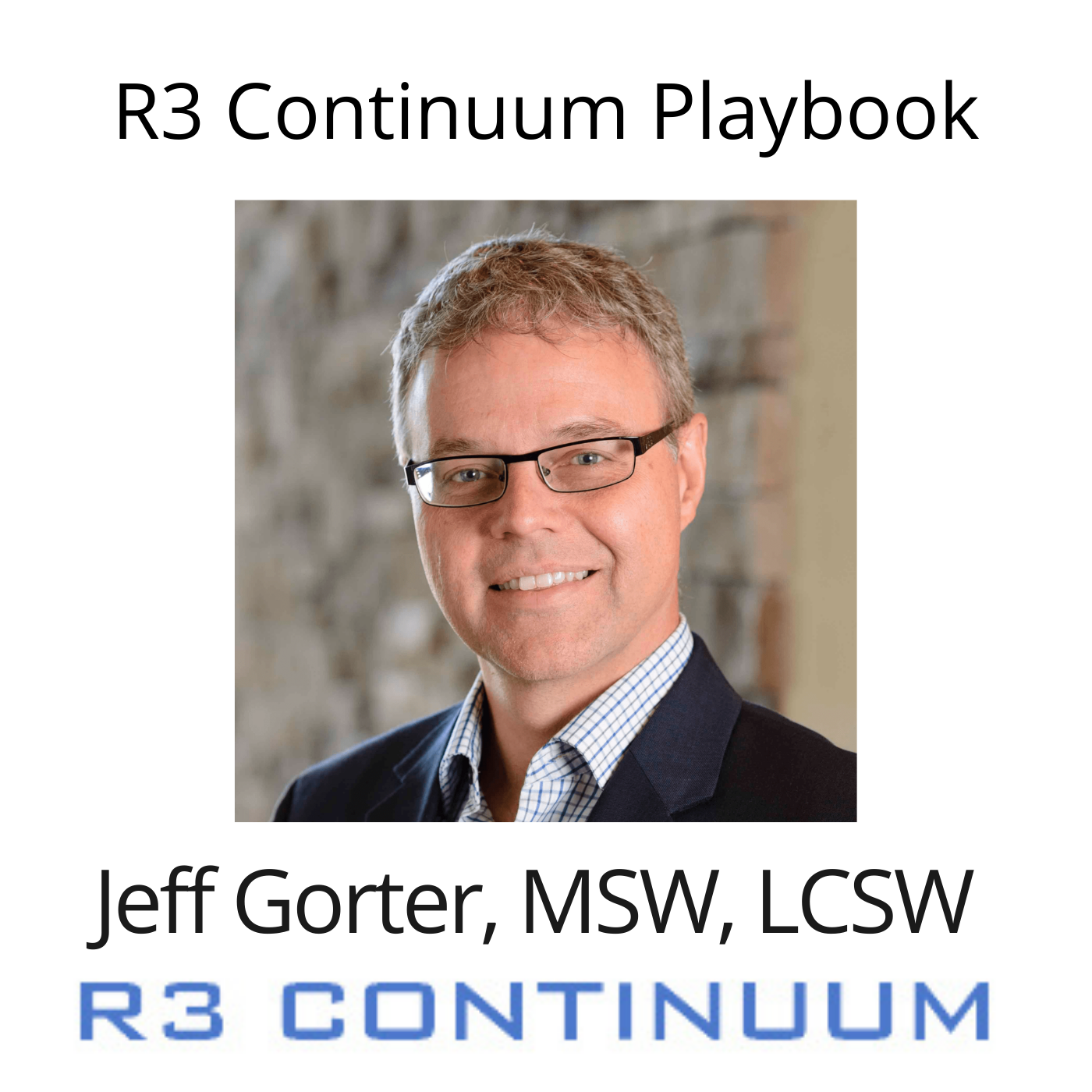
Jeff Gorter
Minneapolis St. Paul Studio
The R3 Continuum Playbook: The Ripple Effect of Disruption
Loading
00:00 /
RSS Feed
Share
Link
Embed

Download file

Disruption

The R3 Continuum Playbook: The Ripple Effect of Disruption

Marking twenty years since the tragic September 11th terrorist attacks, Jeff Gorder, Vice President of Clinical Crisis Response at R3 Continuum, discusses the ripple effects disruptive events have on individuals. Jeff recommends five essential elements as best practices to follow immediately following a disruptive or potentially traumatic event.  The R3 Continuum Playbook is presented by R3 Continuum and is produced by the Minneapolis-St.Paul Studio of Business RadioX®. R3 Continuum is the underwriter of Workplace MVP, the show which celebrates heroes in the workplace.

TRANSCRIPT

Intro: [00:00:00] Broadcasting from the Business RadioX studios, here is your R3 Continuum Playbook. Brought to you by Workplace MVP sponsor, R3 Continuum, a global leader in workplace behavioral health, crisis and security solutions.

Jeff Gorter: [00:00:14] Hello, my name is Jeff Gorter, Vice President of Clinical Crisis Response at R3 Continuum. Today, I would like to discuss the ripple effect of disruption and how employers can support employees, both immediately following a disruptive or traumatic event, as well as during the anniversary of the event later on in time. This information is particularly pertinent in relation to the 20th anniversary of the 9/11 terrorist attacks, which is upcoming this month in September 2021.

Jeff Gorter: [00:00:49] It’s common for employees to feel emotions such as grief, sadness, loneliness, fear and anger immediately following a disruptive event and, possibly, even for years to come. This can impact their ability to remain productive and thrive at work as there are certain triggers – some obvious, some unexpected – that may remind them of the trauma. The healing process for trauma is not necessarily linear, not a straight direct line. Meaning that the impact can be more of a ripple effect that comes in waves, a waxing-and-waning effect that can resurface in the future for some employees.

Jeff Gorter: [00:01:30] Let’s begin at the beginning. Immediately following an event, the trauma impact depends on the person’s proximity to the event itself. For example, did they see the event? Were they in direct danger themselves? Were they exposed to graphic visual scenes? Were they involved in efforts to take care of the victims perhaps? This kind of exposure is intuitively obvious, but it is only one determinant of their ultimate trajectory.

Jeff Gorter: [00:02:02] Something that’s interesting to note is that PTSD is not necessarily based on how powerful the event was, as if there’s an automatic threshold of trauma, and PTSD is somehow inevitable. This condition is often actually based more upon how well the person was doing emotionally before the event. So, if the impacted individual was not doing well prior to the event, if they were already stressed or wrestling with challenging dynamics unrelated to the event, they are more likely to develop PTSD or other related conditions.

Jeff Gorter: [00:02:40] It may also surprise some to discover, particularly when we’re thinking about the impact of 9/11, that PTSD was not the dominant trajectory for most New York residents following the terrorist attacks of 9/11. In a landmark study conducted by researchers at Columbia University specific to New York recipients, it was found that resilience was actually the dominant trajectory for the majority of people at six months and, again, at one year out, despite having experienced an unthinkable, horrible tragedy. Again, the vast majority did not meet the criteria for a PTSD diagnosis despite their exposure, contrary to what many people feared and even what some experts expected.

Jeff Gorter: [00:03:32] Now, to be clear, this is not to say that it was easy or that the journey wasn’t difficult; far from it, but it is worth noting that we are stronger than we give ourselves credit for. Now, while this is certainly encouraging, it’s still crucial that employees are adequately supported and supplied with targeted resources to process the difficult emotions following the disruption, particularly after a mass event like 9/11. Otherwise, the event can impact the employees’ behavioral health and impair their ability to do their job, or it may simply prolong the struggle needlessly.

Jeff Gorter: [00:04:15] So, let’s look at this a little more closely. International researchers and current best practice recommend focusing on five essential elements immediately following a disruptive or potentially traumatic event. These elements are critical to early intervention and to the overall resilience of the person as they cope with the event. First, the impacted individual needs to feel safe, both physically and emotionally. During a disruptive event, this feeling of safety was likely reduced or challenged in some way. So, in order to begin the recovery process, safety must be restored. Until safety has been assured and reasserted, it’s human nature to remain on high alert with a heightened sense of fear, anxiety and reactivity. Safety is job one from a physical and mental health perspective.

Jeff Gorter: [00:05:15] Once safety is being reasserted, the second element is that an individual must feel connected. It’s important to help an employee realize that they are part of a community, a group, a company of people who went through the same experience and are walking the same journey. Often, trauma can make someone feel isolated and that they are alone in the way they’re feeling as if they’re the only ones in the world who feel like this. It can help them to know even just the simple fact that they’re not alone, that their reactions are common and shared by other co-workers, and that they can draw and contribute to the strength of their collective work group. We are stronger together.

Jeff Gorter: [00:06:02] Third, an individual needs to feel a sense of calm, of being able to reassert control over their own body. With the adrenaline rush that usually comes with experiencing a survival threat or a disruptive event, it’s critical that the person is able to regain control over their body and be able to focus their thoughts, control their breathing again, to relax their muscles, and to come off the adrenaline-fueled high alert that I mentioned earlier. Regaining a sense of calm and control over their own body opens the door to making the next right decision, to taking the next right step, and the one after that, and the one after that and so on.

Jeff Gorter: [00:06:46] The fourth essential element is self-efficacy, a sense of confidence. It’s common to feel helpless or hopeless following a crisis event, a situation where I couldn’t control the outcome. It can help when the person is able to feel as if they can make good choices on their own behalf again or on behalf of their loved ones or their co-workers once again. If the person could not prevent the event, realizing where it goes from here is up to me is a powerful step forward. This taking back of control over their own power and their own decisions can help them to know they are not helpless in determining their future, and it restores their sense of personal agency following this event.

Jeff Gorter: [00:07:33] The fifth and final essential element that a person needs is hope. They need to feel hopeful for their future, able to envision this for themselves to know that this crisis is not how it’s always going to be, or that they’re not always going to feel like this and that a more positive future is possible. Without hope, there’s no moving forward. Workplaces have a tremendous power to help employees feel this kind of hope by providing predictability, purpose, stability, and by offering them skilled behavioral health support immediately following the event.

Jeff Gorter: [00:08:13] Now that we’ve covered some of the ways that employers can support employees immediately following disruption, it’s important to discuss how employees might feel on the anniversary of an event. Anniversaries can make employees feel anxious or jittery, in addition to making them feel less safe and less connected. And this makes sense as it’s part of our primitive built-in survival mechanism. See, that survival mechanism remembers the past threat, remembers this time, remembers the event, and it’s seeking to prepare you should a threat arise again. This may lead some employees to have an exaggerated response to certain triggers, certain memories, certain discussions around the event, and that can bring up complex emotions.

Jeff Gorter: [00:09:03] From an employer perspective, particularly one who has employees that may be struggling on an anniversary, it’s important to acknowledge the solemnity, the power of this day itself, and to recognize the difficult feelings employees may have on that day, letting them know that you get it, that you understand that this day is different from other days, and that it has significance to you helps them feel understood and validated.

Jeff Gorter: [00:09:33] It is also important to make sure employees know that they have access to a wide range of resources and behavioral health support should they choose it. In most cases, people want to be able to share their experiences about this anniversary because it helps them feel less alone, more connected, as we discussed earlier. They may or may not want to talk about it, but it’s important to give them the space to do so if they choose.

Jeff Gorter: [00:10:01] In the case of 9/11, many of us have constructed a narrative, a story of where we were, what happened next, where we are now. Many individuals have made some level of peace with their stories now that it’s 20 years following the event, but not all of us. It can be helpful for them to share their narratives, the ongoing story, because they’re able to see the event as an event that occurred in the past, as something in which they are able to exercise some control over. This helps the person to see themselves as a survivor, even perhaps a thriver, and no longer a victim, as if that tragedy is continuing to happen today in the present.

Jeff Gorter: [00:10:49] Being at work on the day of anniversaries can be beneficial to employees impacted by a disruptive event, as there is surprising power in the mundane and the ordinary, even some comfort in the normal, the predictable day-to-day that we look forward to and that structures our lives. Going about their everyday lives can provide them with a sense of control and helps them to get through the day, keeping a balanced perspective on the significance of the past, the reality of the present and the hope for the future.

Jeff Gorter: [00:11:26] Now, while the ripple effect of disruption can impact employees and their daily lives, employers have the power to support their employees through these feelings that may arise as impacted individuals continue their journey of healing from the trauma, both immediately after an event and in the years following. As the 20th anniversary of 9/11 approaches, R3 Continuum can help organizations to do this with consultation, educational resources, and with onsite and virtual behavioral health support. On our website at r3c.com, we provide resources under the Our Resources tab to learn more about how we can support your organization. Contact us today.


Show Underwriter

R3 Continuum (R3c) is a global leader in workplace behavioral health and security solutions. R3c helps ensure the psychological and physical safety of organizations and their people in today’s ever-changing and often unpredictable world. Through their continuum of tailored solutions, including evaluations, crisis response, executive optimization, protective services, and more, they help organizations maintain and cultivate a workplace of wellbeing so that their people can thrive. Learn more about R3c at www.r3c.com.

R3 Continuum is the underwriter of Workplace MVP, a show which celebrates the everyday heroes–Workplace Most Valuable Professionals–in human resources, risk management, security, business continuity, and the C-suite who resolutely labor for the well-being of employees in their care, readying the workplace for and planning responses to disruption.

Connect with R3 Continuum:  Website | LinkedIn | Facebook | Twitter

Tagged With: Crisis Response, Disruption, disruptive events, Jeff Gorter, post-traumatic stress disorder, R3 Continuum, trauma, Workplace MVP

To Your Health With Dr. Jim Morrow: Episode 13, Medical Marijuana in Georgia, An Interview with Justin Hawkins and Dr. Scott Cooper, Acreage Compass, LLC

July 24, 2019 by John Ray

North Fulton Studio
North Fulton Studio
To Your Health With Dr. Jim Morrow: Episode 13, Medical Marijuana in Georgia, An Interview with Justin Hawkins and Dr. Scott Cooper, Acreage Compass, LLC
Loading
00:00 /
RSS Feed
Share
Link
Embed

Download file

Dr. Scott Cooper, Dr. Jim Morrow, and Justin Hawkins

Episode 13, Medical Marijuana in Georgia

How does the new Georgia law (HB 324) allowing prescribed use of medical marijuana work? Is medical marijuana a slippery slope to recreational marijuana use? In a conversation with host Dr. Jim Morrow, Justin Hawkins and Dr. Scott Cooper of Acreage Compass LLC answer these questions and more. “To Your Health” is brought to you by Morrow Family Medicine, which brings the CARE  back to healthcare.

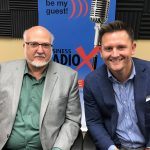
Justin Hawkins and Dr. Scott Cooper, Acreage Compass, LLC

Dr. Scott Cooper and Justin Hawkins, Acreage Compass, LLC

Justin Hawkins is the General Manager and Dr. Scott Cooper is the Medical Affairs Director of Acreage Compass LLC. Acreage Compass is jointly owned by Compass Neuroceutical, Inc., a Georgia-based team of physicians, advocates, and patients, and Acreage Holdings, the largest vertically integrated, multi-state owner of cannabis licenses and assets in the United States. Through Acreage Compass, Compass Neuroceutical and Acreage Holdings are partnering to bring safe and consistent medical cannabis oil to patients in the state of Georgia.

For more information go to their website or email Justin Hawkins at justin@compassneuro.com.

About Morrow Family Medicine and Dr. Jim Morrow

Morrow Family Medicine is an award-winning, state-of-the-art family practice with offices in Cumming and Milton, Georgia. The practice combines healthcare information technology with old-fashioned care to provide the type of care that many are in search of today. Two physicians, three physician assistants and two nurse practitioners are supported by a knowledgeable and friendly staff to make your visit to Morrow Family Medicine one that will remind you of the way healthcare should be.  At Morrow Family Medicine, we like to say we are “bringing the care back to healthcare!”  Morrow Family Medicine has been named the “Best of Forsyth” in Family Medicine in all five years of the award, is a three-time consecutive winner of the “Best of North Atlanta” by readers of Appen Media, and the 2019 winner of “Best of Life” in North Fulton County.

Dr. Jim Morrow, Morrow Family Medicine, and Host of “To Your Health With Dr. Jim Morrow”

Dr. Jim Morrow, Morrow Family Medicine, and Host of “To Your Health With Dr. Jim Morrow”

Dr. Jim Morrow is the founder and CEO of Morrow Family Medicine. He has been a trailblazer and evangelist in the area of healthcare information technology, was named Physician IT Leader of the Year by HIMSS, a HIMSS Davies Award Winner, the Cumming-Forsyth Chamber of Commerce Steve Bloom Award Winner as Entrepreneur of the Year and he received a Phoenix Award as Community Leader of the Year from the Metro Atlanta Chamber of Commerce.  He is married to Peggie Morrow and together they founded the Forsyth BYOT Benefit, a charity in Forsyth County to support students in need of technology and devices. They have two Goldendoodles, a gaggle of grandchildren and enjoy life on and around Lake Lanier.

Facebook: https://www.facebook.com/MorrowFamMed/

LinkedIn: https://www.linkedin.com/company/7788088/admin/

Twitter: https://twitter.com/toyourhealthMD

Show Transcript

Intro: [00:00:06] Broadcasting live from the North Fulton Business RadioX Studio, it’s time for To Your Health with Dr. Jim Morrow. To Your Health is brought to you by Morrow Family Medicine, an award winning primary care practice, which brings the care back to health care.

Dr. Jim Morrow: [00:00:23] Hello! This is Dr. Jim Morrow. I’m with Morrow Family Medicine. We have offices in Cumming and Milton, Georgia. We’re a primary care practice, where we utilize state-of-the-art technology and old-fashioned ideas to bring you the best care we possibly can. We believe that in Morrow Family Medicine, you’ll feel both cared for and appreciated. And we do realize that you have many choices as to where you receive your care, and we hope you’ll find that Morrow Family Medicine is a good place for you.

Dr. Jim Morrow: [00:00:51] I’m here in the studio at Renasant Bank on Windward Parkway in Alpharetta, Georgia with John Ray, my cohort. John’s running the board. How are you doing, John?

John Ray: [00:00:59] I’m great. I hope you’re well today.

Dr. Jim Morrow: [00:01:01] I’m good. It’s not too hot outside today. So, those are pretty good.

John Ray: [00:01:04] Perfect in Alpharetta and Milton

Dr. Jim Morrow: [00:01:07] Always sunny in Alpharetta, right?

John Ray: [00:01:09] Yeah, you got it.

Dr. Jim Morrow: [00:01:11] So, we’re here today for another podcast. We want you to know that you can reach out to us by e-mail at drjim@toyourhealth.md or or you can tweet us, @toyourhealthmd.

Dr. Jim Morrow: [00:01:24] So, we’re here today to talk about cannabis oil and low-THC oil, what some people refer to as medical marijuana in the State of Georgia. And I’m honored to have two guests with me today from Acreage nchorage Compass LLC. We have Justin Hawkins, the General Manager, and Dr. Scott Cooper, who’s the Medical Affairs Director. Hello, gentlemen. How are you today?

Dr. Scott Cooper: [00:01:48] Doing well, thank you.

Justin Hawkins: [00:01:49] I’m good. How are you? I, actually, have both of my doctors here. So, I don’t know if this is an intervention or an interview, but it’s good to be here.

Dr. Jim Morrow: [00:01:55] We’re going to get into that later, Justin. You can count on it. You can count on it. So, this whole thing has started up in Georgia fairly suddenly. If you haven’t been following the news and haven’t followed the path of low-THC oil in Georgia, there is a bill, House Bill 324 that was passed by the state legislature and signed by the governor at the beginning of April of this year. So, Justin, tell us something about House Bill 324.

Justin Hawkins: [00:02:23] Yes. So, House Bill 324 is a piece of legislation that has been tried over the last six years. And we were successful this year in 2019 under the leadership of Brian Kemp. And what House Bill 324 does is it allows the cultivation, and processing, and distribution of low-THC oil, which is 5% THC in cannabis oil, also referred to as medical marijuana.

Justin Hawkins: [00:02:46] The reason that we wanted to push House Bill 324 is because over the last six to seven years, medical cannabis oil was legal for possessions for qualified patients under the Georgia Department of Health, but there was no real legal access for these patients under these 17 indication list to actually acquire the medicine.

Justin Hawkins: [00:03:06] And so, although medical cannabis is actually illegal under federal law, we’ve seen across the entire country that in over 33 — over 43 states across the country that in-state cultivation is a way that provides medicine to patients, also, by abiding by state law. And so, that’s what House Bill 324 does specifically.

Dr. Jim Morrow: [00:03:25] Well, why was it able to be passed this year when it wasn’t able to be passed the other year?

Justin Hawkins: [00:03:30] So, we were fortunate for a couple of different reasons. Georgia Hope is an organization founded by parents. A lot of the times, they’re parents of these kids who suffer from pediatric epilepsy, mitochondrial disease, autism, and they have really led the fight over the last six years. Fortunately, under the leadership, the new leadership, of Governor Brian Kemp and Jeff Duncan, along with public opinion and the way that we’ve seen the research of these in-state cultivation programs being analyzed, all of that came together in a positive way that said, you know, in-state cultivation is a way for kids, and veterans, and all other patients to get medicine. It’s not going to change the culture of Georgia. And I think between that and between organizations like the one Dr. Cooper and I founded, all of us coming together and moving in one step, really, it was everything coming together at once and we were thankful for it.

Dr. Jim Morrow: [00:04:21] Super. And the law allows for specifics about who can grow this, and cultivate it, and produce it, and so forth. Can you talk some about who, and what, and how many companies, and so forth are going to be involved in it?

Justin Hawkins: [00:04:37] Yeah, we anticipate there’s going to be a lot of interest. Georgia is the eighth most populous state in the nation. It has a huge market, and there’s a lot of patients that are on the registry – 10,000 when we passed the bill, 300 we’re adding per month with no change to the legislation. So, we do believe that in the market of Georgia, it’s a large market. So, from an industry standpoint, there’s going to be a lot of companies and employers interested. What the bill allows specifically, it allows two class 1 organizations with a higher financial stipulation to prove to the state that they have. And it also allows four class 2, which are for smaller entities, small business across the state of Georgia. Those are six private licenses. Now, aside from that, they did allow two university programs to research, and develop, and cultivate. And that’s what the University of Georgia and Fort Valley State University down the south of Atlanta. And so, when you combine, a total of eight enterprises, public and private, that’s who will be the structure of Georgia medical cannabis.

Dr. Jim Morrow: [00:05:38] Interesting. So Georgia’s law, being one of the newer ones, can you tell me how this law is different from the laws in these other states that you mentioned?

Justin Hawkins: [00:05:47] Yeah. So, for instance, I’d like to take the obvious, which is Colorado. So, when you look at Colorado, which passed medical cannabis back in 2000-2001, the way we were different and the largest way that I can contrast between is horizontal versus vertical. And what I mean by that is when you look at Colorado, they allowed a horizontal structure, which means they allowed growers, processors, and distributors, all being separate silos, so to speak. What we did in Georgia is not only do we put a THC cap of no more than 5%, which is very low THC, but what we also did is we allowed vertical integration, which means that the companies vying for these class 1 and class 2 licenses is that they grow, they process, and they distribute their own product.

Justin Hawkins: [00:06:30] And why we feel like that’s very valuable for the State of Georgia is it allows high-quality control. It allows players and companies that know what they’re doing. They have a track record across the country. It allows us to not have price increases with middlemen. So, we’re allowed to go directly to the patient. Obviously, you guys are doctors. You guys know how the pharmaceutical industry works. So, it’s almost like if Johnson & Johnson or Amgen had their own pharmacies, that’s what our company is vying to do.

Dr. Jim Morrow: [00:06:58] Okay. And you called it low-THC oil. And a lot of listeners hearing THC, they’re going to think that this is something that’s going to act and function like marijuana. So, Dr. Cooper, what exactly is low-THC oil?

Dr. Scott Cooper: [00:07:13] It restricts how much THC is in the compound. And let me read you something from the AMA since you bring that up.

Justin Hawkins: [00:07:22] While he’s doing that, I can give you kind of an overview. So, when it comes to low-THC oil, what we have is we have hemp-derived oil, and we have cannabis-derived oil. Hemp-derived oil is what’s often referred to as CBD. And so, you see CBD on the market because hemp CBD oil is now federally legal with the Farm Bill that was passed a couple months ago. With cannabis, you have cannabis oil. And so, when you have natural cannabis, it can be as high as 90%. And so what Dr. Cooper will talk about specifically is that when we form cannabis oil from the actual cannabis plant, then we’re restricting that THC down to 5% per milliliter. And so, that’s what allows us to have different indications. And he’ll speak more to that.

Dr. Scott Cooper: [00:08:05] Sorry for that delay. I didn’t have it prepared for you. So, this is a quote from the FDA stating that it is THC and not CBD that’s the primary psychoactive compound of marijuana. And they approved a medication with low THC for specific seizure disorders, primarily in children. And they approved, and I quote, “They’re committed to this kind of careful scientific research and drug development, continuing to support rigorous scientific research on potential uses of medical marijuana-derived products.” So, we’re not talking about something that is psychoactive. This compounds specifically for specific and, in the case of Georgia, 17 discrete different disease states.

Dr. Jim Morrow: [00:08:51] And these are disease states that have had faulty, not effective medications and treatment methodologies previously pretty much.

Dr. Scott Cooper: [00:09:00] Absolutely. They have done studies with veterans, as well as studies with geriatric patients and chronic pain syndrome. And they found that even in senior citizens, it reduced the opiate use by over one-third. So, we’re looking for a safe medication without the side effects and addictive properties of current therapies that we have for different disease states right now.

Justin Hawkins: [00:09:25] And we say this all the time, it’s not a miracle drug. Dr. Cooper, you’re great at saying this. It’s more of an adjunct. And so, we see a lot of combined with pharmaceutical drugs, it really does make a difference.

Dr. Scott Cooper: [00:09:35] Yeah, this is not going to be replacing every medication that somebody is out there taking right now. This is to help them get over the hump to really control whatever disease state we’re talking about.

Dr. Jim Morrow: [00:09:45] So, in Georgia, the process for acquiring a card, which as I understand is what you have to have to get this, tell me a little bit about the process for going through that.

Dr. Scott Cooper: [00:09:57] Well, the physician, (1), who’s prescribing it has to be registered with the state. So, that’s the first hurdle. Not every physician wants to participate in the program. Then, (2), they have specific paperwork that needs to be filled out and sent in to the Georgia Department of Health. The patient has to be registered, and the patient gets a registration card. And it’s presumed right now it’s not definitely set, but we suppose that this is going to be similar to other states where there will little bit discreet dispensaries specifically for CBD products, and the patient has to present that card to be able to achieve and get the medication.

Dr. Jim Morrow: [00:10:38] And there’s a limit, I’m sure, on how much any particular person can have in their possession at any one time.

Dr. Scott Cooper: [00:10:44] Absolutely. Not just how much they can have at one time in their possession, but how much they can purchase over a 30-day period. And you would have to drink gallons of this stuff to try to get high. So, if you’re going to spend over $100 per bottle, you’re better off doing something illegally if you’re in search of something that’s psychoactive. If high is your goal, you’re not going to get it here.

Dr. Jim Morrow: [00:11:08] So, you take the THC oil, in the case of seizures, let’s say it helps to control the seizures. Do we know how that works in the brain?

Dr. Scott Cooper: [00:11:17] No, we don’t. Yeah, I wish we did. There are a lot of different cannabidiol receptors. We know that what’s available now commercially for these two seizure types, the Epidiolex, does not work for pain disorders or tic disorders. There are two compounds right now in Europe and in Canada that are used for multiple sclerosis-associated pain, as well as cancer-associated pain. And it’s within that realm of cannabis, but it’s a different level of THC. So, there have to be different products specifically developed for different disease states. But yet, we’re at the stage where we know it works, but we don’t know how at this point.

Dr. Jim Morrow: [00:12:01] Well, the results that you see and the stories that you hear about the most heart-wrenching ones are children with disease processes and seizures is a great example are just absolutely mind blowing when you see what this medicine can do for them and what their traditional medicines have not done for them. So, I think it’s a very exciting time.

Dr. Scott Cooper: [00:12:24] That’s absolutely right. I’ll be honest, I was a skeptic when this first came out and was not willing to endorse it, and had patients that were acquiring from other states illegally. And they came in, and their seizures were dramatically reduced. Not controlled, but reduced, such that I could reduce some of the medications that were both expensive, as well as having side effects. And then, saw other patients with autism. Their behavior improved. Parkinson’s disease, tremor improved. Alzheimer’s disease, behavior improved. And that’s when I started looking into it more, and then became an advocate.

Dr. Jim Morrow: [00:13:01] So, the law gets passed. The science says this will work for a variety of different instances. You mentioned 17 different diagnoses that it can be used for. So, along comes Justin and Scott Cooper. And how does this happen that you ended up being in this push to, now, produce and to distribute THC?

Justin Hawkins: [00:13:25] As we were talking earlier, when you look at anybody in this industry, they have a touchpoint. Either they have a family member, or they have a neighbor, or they have a patient that comes to them, and you see them suffering. So, for me, my brother served overseas in Iraq and Afghanistan, and I saw him come back from overseas, and work with the VA. And instead of being on a medication, like a tool like low-THC oil, he was on opiates. And that led to a whole different battle of its own.

Justin Hawkins: [00:13:51] And so, I was very interested from that point. And so, in 2018, Dr. Scott Cooper, and myself, and six other partners around the State of Georgia formed Compass Neuroceutical, which was an advocacy group, all Georgia-based, with a single focus, which was to pass House Bill 324. In doing so, because we were successful with one other company in supporting Georgia Hope, which was the organization with parents, patients, and advocates that have been fighting for this for six years, we all came together. We were successful in passing it.

Justin Hawkins: [00:14:19] Simultaneously, we were talking to national leaders about partnering and having a specific partnership within the State of Georgia to to be a licensed holder and to lead the way in Georgia, so that we could be the standard bearer for the country. And in doing so, we talked to many of the national leaders, and we were fortunate to choose a company known as Acreage Holdings, which is the largest multi-state owner and operator in the United States. They have a great executive leadership team with the board of directors, folks like the former Speaker of the House, John Boeher, former Prime Minister of Canada, Brian Mulroney, governors and former CEOs of international companies.

Justin Hawkins: [00:14:57] And why that matters is you see in this industry, and I tell people all the time, they think I’m joking, but I’m really serious, this industry is either Warren Buffett all the way to-

Dr. Jim Morrow: [00:15:06] Thomas Leary.

Justin Hawkins: [00:15:10] Thomas Leary. All the way to Willie Nelson and in between. And so, the industry is very wide. So, we do a lot of different things. We have good governance and integrity, and we keep stupid away. But on top of that, we have a proven track record of owning more licenses. 20 states, we have 88 licenses across the country. And because we’re the largest, we know how to get safe, reliable product in a quick and efficient manner to patients. And so, with that partnership, we have created what’s now called Acreage Compass LLC, which will be vying for a Class 1 license in the State of Georgia.

Dr. Scott Cooper: [00:15:41] Yeah, if I could add that Georgia Hope was the main thrust behind this. As Justin said, we were able to work with them to finally get it over the finish line. And all of these companies are just drooling over starting business in Georgia. And we were approached by numerous corporations that are in the industry. And we selected the one that we thought had the same vision we do because there are others that are out there that are just interested as this is a bridge to recreational marijuana, and that they really saw medical marijuana as a stepping stone, but they weren’t very interested in the cultivation and in studying which drug combination was going to be best for which disease state. And Acreage has integrity, which is something you don’t see in every partner that was searching out their.

Dr. Jim Morrow: [00:16:31] So, with the passage of the bill, the State is creating this commission, the Cannabis Commission, basically, that will choose these companies. What’s that process like for being chosen? I know you’re doing an awful lot of work, both of you, with Acreage Compass right now in hopes of being selected, but nothing’s written in stone. So, tell me about the process, the timeline, and how you expect all that to happen.

Justin Hawkins: [00:16:56] Yeah. We’re kind of on hold now. I know, Governor Brian Kemp, Lieutenant Governor Jeff Duncan, Speaker David Ralston are doing a whole lot behind the scenes to make sure that a commission is set up in an appropriate way that really has the spear in the integrity of the bill. And so, as of now, the commission is set up – three appointed by the governor, two appointed by the lieutenant governor, and two appointed by the speaker. So, a total of seven appointees to the commission.

Justin Hawkins: [00:17:20] Within the three that the governor has, one of those will be the chair of the commission. In doing so, the commission creates one position under them immediately as the executive director of the commission, which handles the daily functions. This whole commission will be under the Secretary of State’s office as the regulator moving forward in the future.

Justin Hawkins: [00:17:39] So, we’re on hold right now. None of the commission members have been selected. We anticipate from our talks. Of course, this can change between August and September of the appointees being selected. From that process. when they’re selected, they really start from ground up, which means they create the rules and regulations, the application, the criteria. And then, from that point, then private companies are able to do the application, which is a very stringent process. Some are even over 3000 pages from that timeline. Then, three to six months after the applications are submitted, we anticipate the state will then choose which licence holders they feel are competent based on a variety of factors.

Dr. Jim Morrow: [00:18:20] So, you mentioned 10,000 people on the registry now, adding about 300 a month. So, I think, earlier, when we were talking, you said the expectation is a quarter million people on the registry.

Justin Hawkins: [00:18:33] I was talking, when Representative Micah Gravley spoke at our Rotary Club not too long ago, I went out to dinner with him the night before to talk about the different things we could do to work together and other stakeholders. And he had relayed, and we feel very strongly that by the end of next year, we’re almost going to see 50,000 patients in the registry. And it just shows — you saw a lot before House Bill 324 passed that many patients in the 17 indication list were not even registering because there was no real access to acquire this medication. With that, we had 645 doctors as soon as we passed House Bill 324 that were on the registry.

Justin Hawkins: [00:19:11] So, we anticipate both those numbers will dramatically increase. I would argue that about a quarter of a million patients will be registered in Georgia over the next four to five years. And I would even say that’s a conservative estimate. And that’s not to say that this program gets out of control. That’s to say that these, from mitochondrial disease, to autism, to pediatric epilepsy, to PTSD, these are disease states that are large, so to speak. And I know Dr. Cooper can speak to that, but we believe that Georgia is a large market, and it’s been underserved over the last 10 years.

Dr. Scott Cooper: [00:19:47] Yeah, I would have to agree with that. I’d say that, at least, one or two times a day, I have patients that are telling me either they’re already on it, and how do they get a card, or how do they acquire it? People are asking about it. And there were some opponents to the bill who said, “Well, you only have so many people on the registry, so it’s not going to be used.” And I likened that to saying, “Well, the bill hadn’t been passed yet.” So, that’s like saying, “Okay, I see a sign saying Kroger is opening up. When are they opening? And you’re assuming only the people who asked about the sign are going to be future customers.” And the store opens, and, suddenly, you have 100,000 customers. Right. So, I think that once we have the distribution set up and the physicians signed up, that we’re going to see easily well over 100,000 patients within the first year.

Dr. Jim Morrow: [00:20:35] And the patients, those patients will be for these disease processes that are already approved. What does the future of cannabis oil and cannabis, in general, look like medically?

Dr. Scott Cooper: [00:20:46] There are more and more studies that are going on all the time. A lot of them under federal funds. And then, you’ve got the two colleges, universities that will be pursuing some research. Right now, the Georgia Department of Health is the one that regulates which disease states are approved and how many. And they went from seven in one year to 17 the next year. I’m sure, as we gain more experience, we’re going to see future applications beyond what we have right now.

Dr. Jim Morrow: [00:21:15] Okay. So, we’re talking with Justin Hawkins and Dr. Scott Cooper from Acreage Compass, LLC. And Justin, I want to ask you before we go, is  there a way that people can do their own research? Is there a way they can learn something about your company and the business in general?

Justin Hawkins: [00:21:32] Yeah, absolutely. We have our own website, compassneuro.com. That will have information coming out in the next weeks. And then, also acreageholdings,com, which kind of gives you a layout of who Acreage is. We’re in over 20 states across the entire country. We have a public potential merger with a company called Canopy Growth, which is the largest cannabis company in the entire world. And so, the proprietary information that we have, the assets, and the intellectual property, and knowledge is second to none. And so, those two websites are great resources. Dr. Scott Cooper and I live in the Atlanta area. So, we’re always around to answer questions. We’d like to meet patients. We see all the time these children and parents who have been suffering, don’t know what to do. And so, if there’s any of that case, we’re here to to help any way we can.

Dr. Jim Morrow: [00:22:21] Super. John, you’ve been awfully quiet over there. And we have anybody that sent us any questions or comments during our time here?

John Ray: [00:22:32] You’ve got them all stirred up again.

Dr. Jim Morrow: [00:22:34] I like that.

John Ray: [00:22:36] Yeah,.

Dr. Jim Morrow: [00:22:36] If it’s not disease, this or vaccine.

John Ray: [00:22:37] Vaccines. I thought vaccines hit the high watermark, but I think you got it going again today. So, several questions about the — is this a slippery slope to recreational use?

Dr. Jim Morrow: [00:22:52] That’s a great question. Scott, I’ll send that to you. What do you think? If people start using THC, it will going out behind the Wal-Mart and looking for marijuana to buy?

Dr. Scott Cooper: [00:23:03] Well, not only is this my opinion, but actually a study was just published with over 1.4 million people that were surveyed throughout the entire United States. And in the 33 states, plus the District of Columbia, there was not a single area geographically that there seemed to be a breakthrough for low THC, and then they convert over to recreational. This has been disproven conclusively that this is not a gateway drug to tempt people to, then, go to recreational drugs such as marijuana or other types of substance abuse.

Justin Hawkins: [00:23:40] And if I could add one thing, we did one thing different than a lot of states. And Micah Gravley, who’s the author of House Bill 324, with Senator Matt Brass, really pushed this with Governor Brian Kemp. And it was a great way to contrast ourselves to other states who have gone to recreation. If you look at every state that started as a medical program that goes to recreation, they had one thing in their program that Georgia does not. And that’s the ability to have smokable flower. So, with states like Colorado, or California, or Oregon, or Washington, they had smokable flower in their medical program. Not only does Georgia not allow smoking smokable flower, but we don’t allow vaping as well. So, that’s a main difference that we saw, a common denominator.

Dr. Jim Morrow: [00:24:24] Super. That’s a great question, John.

John Ray: [00:24:27] I only ask great questions.

Dr. Jim Morrow: [00:24:31] We’ll talk about that off the air!

John Ray: [00:24:31] Yeah, okay. I’ve got one more if I can try again.

Dr. Jim Morrow: [00:24:35] Sure.

John Ray: [00:24:35] Let’s see if this is a great one too.

Dr. Jim Morrow: [00:24:37] Yeah.

John Ray: [00:24:37] So, the question relates to side effects. So, all medications have some sort of side effects. Are there any other side effects noted in the use of this THC oil?

Dr. Scott Cooper: [00:24:51] If you read the print out for Tylenol, you’ll see a yard-full of potential side effects. You do not need to monitor any blood tests routinely with this low-THC oil. It can have a little bit of a calming side effect and, sometimes, a little bit of sedation, but that’s about it. So, it’s not the high THC that you see with recreational, so you’re not going to get the munchies.

Dr. Jim Morrow: [00:25:18] That’s good.

Dr. Scott Cooper: [00:25:21] As opposed to other drugs, either a lot of marijuana or methamphetamines that lower the seizure threshold, this actually treat seizures.

Dr. Jim Morrow: [00:25:31] Well, that’s wonderful. If you have a medicine that can treat the things we’re talking about that are difficult to treat, and it doesn’t affect your liver, your kidneys, it’s not mood altering or habit-forming, they don’t drug test for in a workplace, that kind of thing, then I think that’s great. And, of course, there’s a new drug test for it, but with the prescription card, is a negative drug screen.

Dr. Jim Morrow: [00:25:48] So, I think that’s a fantastic thing. And I’m very excited as a practicing physician about seeing where this will go. And I’m very excited as a businessman by seeing where you guys go. So, I really appreciate you all being here very much. I think, John, we’re going to wrap it up for today.

John Ray: [00:26:04] Sounds good.

Dr. Jim Morrow: [00:26:05] All right. This is To Your Health.

Tagged With: Crohn's disease, Cumming family doctor, Cumming family medicine, Cumming family physician, Cumming family practice, Cumming md, Dr. Jim Morrow, Dr. Scott Cooper, end stage cancer, epilepsy, GA House Bill 324, Georgia Access to Medical Cannabis Commission, Georgia's medical marijuana law, Hemp, hemp-derived oil, in hospice program, intractable pain, low-THC oils, medical cannabis, Medical Marijuana, medical marijuana prescription, medical marijuana program, Milton family doctor, Milton family medicine, Milton family physician, Milton family practice, Milton md, Mitochondrial Disease, Morrow Family Medicine, Parkinsons Disease, post-traumatic stress disorder, recreational marijuana use, seizures, tetrahydrocannabinol, Tourette's syndrome

Functional Neurology – Top Docs Radio

July 3, 2015 by angishields

Life University
Top Docs Radio
Functional Neurology - Top Docs Radio
Loading
00:00 /
RSS Feed
Share
Link
Embed

Download file

Life University
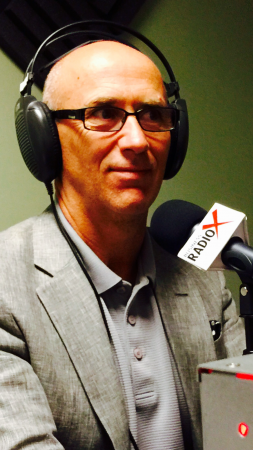
Dr. Gilles LaMarche of Life University

Carrick Brain Centers

Functional Neurology

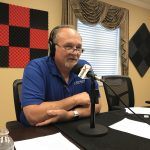
This week on Top Docs Radio I sat down with Doctors of Chiropractic, Dr. Gilles LaMarche, and Dr. Jake Shores.  Gilles is the VP of Professional Relations for Life University, in Marietta, GA.  The college is home to the largest chiropractic medicine schools in the world.

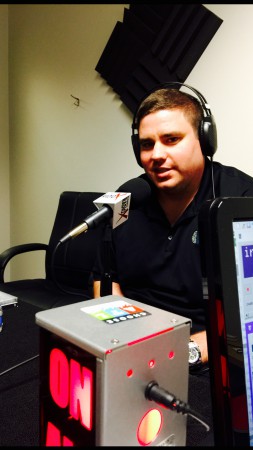
Jake is Clinical Director for Carrick Brain Centers, with offices in Dallas, TX, and Marietta, GA.  Carrick Brain Centers employs a functional neurology approach to treating patients with traumatic brain injuries (TBI), Post Traumatic Stress Disorder (PTSD), and other neurologic problems.

We talked about how the body has an innate capacity to heal itself if it’s given proper nutrition and when therapeutic approaches tap into that self-healing power.  The Functional Neurology Society defines functional neurology this way: “Functional Neurology is based on the principles of neuroplasticity. The various parts of your nervous system can be altered to work more efficiently and even regenerate. The goal of a Functional Neurologist is to optimize this remarkable ability.”

Jake shared how the Carrick Brain Centers utilize the concept of neuroplasticity to help their patients work around previous neurologic injuries and challenges through a variety of movements and activities that help activate pathways in the brain that reawaken areas that have not been functioning to their capacity.

We talked about some patient examples that highlight how this approach can help people gain or regain function that was thought to be improbable elsewhere.

Gilles discussed the various health-related fields of study Life University offers, ranging from kinesiology to functional neurology, vitalistic nutrition, business, and others, including some masters-level degrees.

Life University also offers a number of men’s and women’s athletic sports and they’re competing on a high level—the men’s 15 man rugby team won the National Championship this year.  The school is working to nearly double their enrollment by 2018 from 3000 students to at least 6000.

Special Guests:

Gilles LaMarche, DC, VP of Professional Relations at Life University  youtube logo linkedin_small1  twitter_logo_small-e1403698475314  facebook_logo_small3  smugmug LOGO

Life University

  • Doctor of Chiropractic, Canadian Memorial Chiropractic College
  • Author, The ART of Responsibility, Insight Publishing 2012
  • Certified Six Advisors Coach, Six Advisors Coaching Academy
  • Previous Vice President, Parker College of Chiropractic

Jake Shores, DC, Clinical Director at Carrick Brain Centers  linkedin_small1  twitter_logo_small-e1403698475314  facebook_logo_small3  google-plus-logo-red-265px  youtube logo  feed logo

Carrick Brain Centers

  • Doctor of Chiropractice, Life University
  • Functional Neurology, The Carrick Institute
  • Diplomate, American Chiropractic Neurology Board
  • Board Certified Specialist in Neurology

Tagged With: CW Hall, functional neurology, Gilles Lamarche, Healthcare, Jacob Shores DC, Life University, neuroplasticity, post-traumatic stress disorder, ptsd, tbi, traumatic brain injuries, vitalism

Dick Caillouet with Safari Club International

June 3, 2014 by angishields

Midtown Business Radio
Dick Caillouet with Safari Club International
Loading
00:00 /
RSS Feed
Share
Link
Embed

Download file

Wounded Warriors with PTSD
Dick Caillouet of Safari Club International talks about their humanitarian program for wounded warriors suffering with PTSD.

In this episode we learned about Safari Club International and the humanitarian outreach program they offer for wounded warriors who are suffering from PTSD (post-traumatic stress disorder).  This program collaborates with the wounded warrior evaluation program at Fort Benning to identify veterans who are suffering significant decreased quality of life due to PTSD.  They bring them together with other similar veterans and a group of professionals and volunteers to take them on excursions to let them experience nature and positive, compassionate people who help to show them that there is value and hope in their lives; that they can return to a life that is closer to “normal” for them.  In this way these veterans begin to regain a sense of worth and purpose to carry on in spite of their past traumatic experiences.

As a non-profit organization, this program relies heavily on financial support from corporate sponsors who can help them expand the project and allow them to reach and help more of these heroes.  Great guest and information.


Dick Caillouet Facebook

Veteran of Viet Nam Conflict

President-Elect — Safari Club International 

Georgia Chapter & Chairman — Wounded Veterans Events


Tagged With: CW Hall, Dick Caillouet, Fort Benning, post-traumatic stress disorder, ptsd, Safari Club International, soldier, soldiers, suicidal, Suicide, Veteran, Veterans, veterans with ptsd

Business RadioX ® Network


Our Most Recent Episode

CONNECT WITH US

  • Email
  • Facebook
  • LinkedIn
  • Twitter

  • YouTube

Our Mission

We help local business leaders get the word out about the important work they’re doing to serve their market, their community, and their profession.

We support and celebrate business by sharing positive business stories that traditional media ignores. Some media leans left. Some media leans right. We lean business.

Sponsor a Show

Build Relationships and Grow Your Business. Click here for more details.

Partner With Us

Discover More Here

Terms and Conditions
Privacy Policy

Connect with us

Want to keep up with the latest in pro-business news across the network? Follow us on social media for the latest stories!
  • Email
  • Facebook
  • Google+
  • LinkedIn
  • Twitter

  • YouTube

Business RadioX® Headquarters
1000 Abernathy Rd. NE
Building 400, Suite L-10
Sandy Springs, GA 30328

© 2025 Business RadioX ® · Rainmaker Platform

BRXStudioCoversLA

Wait! Don’t Miss an Episode of LA Business Radio

BRXStudioCoversDENVER

Wait! Don’t Miss an Episode of Denver Business Radio

BRXStudioCoversPENSACOLA

Wait! Don’t Miss an Episode of Pensacola Business Radio

BRXStudioCoversBIRMINGHAM

Wait! Don’t Miss an Episode of Birmingham Business Radio

BRXStudioCoversTALLAHASSEE

Wait! Don’t Miss an Episode of Tallahassee Business Radio

BRXStudioCoversRALEIGH

Wait! Don’t Miss an Episode of Raleigh Business Radio

BRXStudioCoversRICHMONDNoWhite

Wait! Don’t Miss an Episode of Richmond Business Radio

BRXStudioCoversNASHVILLENoWhite

Wait! Don’t Miss an Episode of Nashville Business Radio

BRXStudioCoversDETROIT

Wait! Don’t Miss an Episode of Detroit Business Radio

BRXStudioCoversSTLOUIS

Wait! Don’t Miss an Episode of St. Louis Business Radio

BRXStudioCoversCOLUMBUS-small

Wait! Don’t Miss an Episode of Columbus Business Radio

Coachthecoach-08-08

Wait! Don’t Miss an Episode of Coach the Coach

BRXStudioCoversBAYAREA

Wait! Don’t Miss an Episode of Bay Area Business Radio

BRXStudioCoversCHICAGO

Wait! Don’t Miss an Episode of Chicago Business Radio

Wait! Don’t Miss an Episode of Atlanta Business Radio