
Business RadioX ®

  • Home
  • Business RadioX ® Communities
    • Southeast
      • Alabama
        • Birmingham
      • Florida
        • Orlando
        • Pensacola
        • South Florida
        • Tampa
        • Tallahassee
      • Georgia
        • Atlanta
        • Cherokee
        • Forsyth
        • Greater Perimeter
        • Gwinnett
        • North Fulton
        • North Georgia
        • Northeast Georgia
        • Rome
        • Savannah
      • Louisiana
        • New Orleans
      • North Carolina
        • Charlotte
        • Raleigh
      • Tennessee
        • Chattanooga
        • Nashville
      • Virginia
        • Richmond
    • South Central
      • Arkansas
        • Northwest Arkansas
    • Midwest
      • Illinois
        • Chicago
      • Michigan
        • Detroit
      • Minnesota
        • Minneapolis St. Paul
      • Missouri
        • St. Louis
      • Ohio
        • Cleveland
        • Columbus
        • Dayton
    • Southwest
      • Arizona
        • Phoenix
        • Tucson
        • Valley
      • Texas
        • Austin
        • Dallas
        • Houston
    • West
      • California
        • Bay Area
        • LA
        • Pasadena
      • Colorado
        • Denver
      • Hawaii
        • Oahu
  • FAQs
  • About Us
    • Our Mission
    • Our Audience
    • Why It Works
    • What People Are Saying
    • BRX in the News
  • Resources
    • BRX Pro Tips
    • B2B Marketing: The 4Rs
    • High Velocity Selling Habits
    • Why Most B2B Media Strategies Fail
    • 9 Reasons To Sponsor A Business RadioX ® Show
  • Partner With Us
  • Veteran Business RadioX ®

Erika Nicholson, Restored Cosmetics, and Todd Callen, AcSellerate Sales Advisor

May 16, 2023 by John Ray

Erika Nicholson, Restored Cosmetics, and Todd Callen, AcSellerate Sales Advisor
Family Business Radio
Erika Nicholson, Restored Cosmetics, and Todd Callen, AcSellerate Sales Advisor
Loading
00:00 /
RSS Feed
Share
Link
Embed

Download file

Erika Nicholson, Restored Cosmetics, and Todd Callen, AcSellerate Sales Advisor

Erika Nicholson, Restored Cosmetics, and Todd Callen, AcSellerate Sales Advisor (Family Business Radio, Episode 44)

On this episode of Family Business Radio, host Anthony Chen welcomed business leaders Erika Nicholson and Todd Callen. Erika Nicholson talked about her work as a paramedical tattoo artist, saline tattooing, permanent makeup, and much more. Todd Callen discussed why business owners and CEOs may struggle to scale their sales efforts, the difference between sales and sales foundation, the most common mistake one can make when creating and managing a sales team, and much more. Anthony closed the show with a commentary on planning and your purpose and passions.

Family Business Radio is underwritten and brought to you by Anthony Chen with Lighthouse Financial Network.

Restored Cosmetics

Restored Cosmetics, in Alpharetta, Georgia goes beyond just providing exceptional Paramedical and cosmetic tattoo services.  It is important that clients leave feeling empowered, confident, and beautiful.

With a focus on creating a welcoming and peaceful environment, Erika and her team strive to make sure that every client feels special and heard. Restored Cosmetics works with Top-rated Plastic & Reconstruction Surgeons in and around the metro Atlanta area.

Additionally, clients travel across the nation seeking wholeness after such surgeries for scar camouflaging, breast tattooing, and more!

Website | Facebook | Instagram | LinkedIn

Erika Nicholson, Owner/Founder/Artist, Restored Cosmetics

Erika Nicholson, Owner/Founder/Artist, Restored Cosmetics

Erika Nicholson thought she found her niche several years ago when she made her mark in the medical travel insurance industry.

As many experiences firsthand, COVID caused things in the world to completely stop – traveling being one of them. There was no timeframe to know if or when things would get back to normal. “It was time for me to reinvent myself! I wanted something fun, exciting, and fulfilling,” Erika said.

Today, she has done just that! Erika Nicholson, now a multi-certified Paramedical and cosmetic tattoo artist, owns and operates Restored Cosmetics, LLC. She and her skilled team help individuals look and feel beautiful every single day by restoring their confidence in and through Paramedical and cosmetic tattoo procedures.

LinkedIn

AcSellerate Sales Advisor LLC

AcSellerate Sales Advisors is focused on helping companies achieve consistent sales growth through the improvement of all aspects of a sales organization. They help companies achieve sales targets across a range of industries by building successful sales plans, building a disciplined sales approach, and aligning sales teams.
AcSellerate Sales Advisors takes a proven results-oriented strategic and tactical approach to turn underperforming sales teams into revenue-producing market leaders. Their focus is on people, processes, systems, and messaging to achieve maximum results.

Website

Todd Callen, President, AcSellerate Sales Advisor

Todd Callen, President, AcSellerate Sales Advisor

Todd Callen’s passion is helping small and mid-sized businesses rapidly grow their sales! Todd works with business owners as a Sales Advisor and Fractional VP of Sales.

Todd has over 25 years of Sales and Revenue leadership experience, working with companies to aggressively grow the sales and revenue engine to achieve hypergrowth. He views sales as a blend of the quantitative (the sales numbers, the forecast, the pipeline, the close rates) and the qualitative (how “effective” our positioning, value proposition, and ability to convey and persuade).

LinkedIn

Anthony Chen, Host of Family Business Radio

Anthony Chen, Lighthouse Financial, and Host of “Family Business Radio”

This show is sponsored and brought to you by Anthony Chen with Lighthouse Financial Network. Securities and advisory services are offered through Royal Alliance Associates, Inc. (RAA), member FINRA/SIPC. RAA is separately owned and other entities and/or marketing names, products, or services referenced here are independent of RAA. The main office address is 575 Broadhollow Rd. Melville, NY 11747. You can reach Anthony at 631-465-9090 ext 5075 or by email at anthonychen@lfnllc.com.

Anthony Chen started his career in financial services with MetLife in Buffalo, NY in 2008. Born and raised in Elmhurst, Queens, he considers himself a full-blooded New Yorker while now enjoying his Atlanta, GA home. Specializing in family businesses and their owners, Anthony works to protect what is most important to them. From preserving to creating wealth, Anthony partners with CPAs and attorneys to help address all the concerns and help clients achieve their goals. By using a combination of financial products ranging from life, disability, and long-term care insurance to many investment options through Royal Alliance. Anthony looks to be the eyes and ears for his client’s financial foundation. In his spare time, Anthony is an avid long-distance runner.

The complete show archive of “Family Business Radio” can be found at familybusinessradioshow.com.
Tagged With: AcSellerate Sales Advisor, AcSellerate Sales Advisor LLC, Anthony Chen, cosmetic tattoo artist, Erika Nicholson, Family Business, Family Business Radio, financial goals, financial planner, financial planning, fractional VP of sales, Lighthouse Financial, Lighthouse Financial Network, Paramedical, passions, purpose, Restored Cosmetics, sales advisor, sales team, sales training, Todd Callen

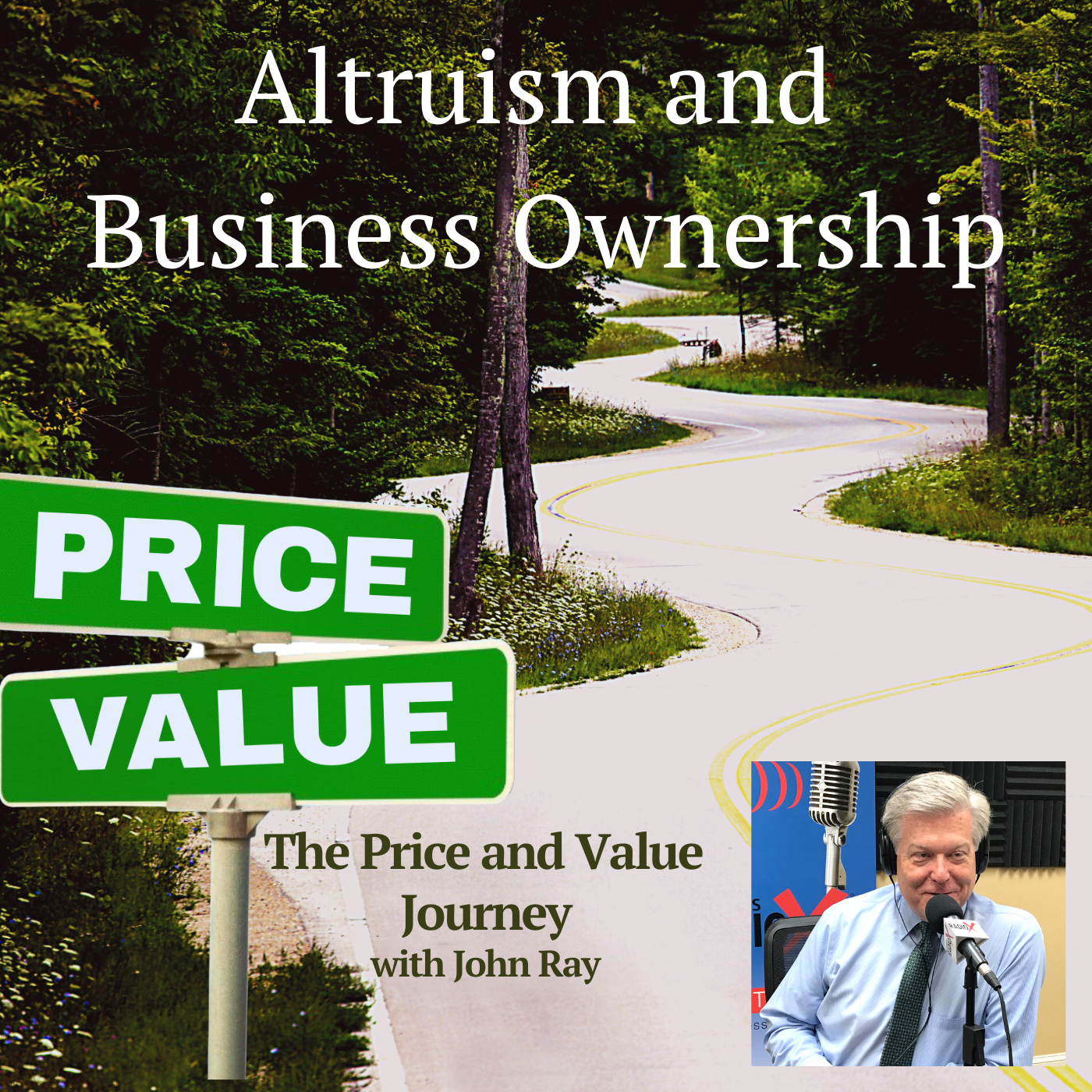
Altruism and Business Ownership

January 23, 2023 by John Ray

Altruism and Business Ownership
North Fulton Studio
Altruism and Business Ownership
Loading
00:00 /
RSS Feed
Share
Link
Embed

Download file

Altruism and Business OwnershipAltruism and Business Ownership

Entrepreneurs today want a purpose in their business which goes beyond just making money. Reminding clients of that purpose is a vital way we are often called, as advisors, to deliver value to them.

The Price and Value Journey is presented by John Ray and produced by the North Fulton studio of Business RadioX®.

TRANSCRIPT

John Ray: [00:00:00] Hello. I’m John Ray on the Price and Value Journey. I recently ran across a quote from the Dalai Lama who said, “Idealistic as it may sound, altruism should be the driving force in business, not just competition and a desire for wealth”. Well, the Dalai Lama was in many ways kind and maybe even cute to some people. But what does he know about business? Quite a lot. I think if this quote attributed to him is accurate.

Let’s think about what altruism means. One definition I found calls altruistic behavior, a desire to benefit someone other than oneself for that person’s sake. Some will read that definition and claim that fulfilling such a desire is impossible in business. Those people would be flat out wrong. They’ve either never run a small business, not spent much time around business owners, or their experience in business is scarred by knowing the worst possible examples of business owners. In the latter case, the ones who are almost sociopathic in their disregard for others.

I work with and regularly talk with a wide variety of small and medium sized business owners. I have that privilege because of the pricing and other business advisory work that I do. And I also regularly interview a wide variety of guests as part of my work in the North Fulton Studio of Business RadioX. Between the guests I’ve interviewed myself and the guests of the shows we produce, we’ve had over 2000 business owners and leaders over the past almost seven years and counting.

So, my sample size is quite large, you might say. And I’m no wide eyed, idealistic novice either. These business owners span a wide variety of demographic categories. Some have always lived a life of entrepreneurship, and others started their businesses later in life after a career in corporate. One thing I have found over the years is that the overwhelming preponderance of business owners I’ve encountered have a purpose for their business, which goes well beyond the profit and loss statement.

There’s a bigger idea in mind. Maybe they’ve got a cause that’s important to them they want to contribute to. They’ve got some difference they want to make in their community. It could be rooted in their faith. Sometimes they want to establish a charitable legacy which lives on after they’re gone. For some, they’re simply motivated to be of service to everyone they meet, and that service just happens to be found in their business. They see themselves as servants to their employees, clients, vendors, and their community.

I was with a client recently and we were heads down together on several pressing issues. At one point, the conversation shifted toward purpose in his business. He restated that purpose. One I’d heard many times before and one that’s larger than himself. And he observed that if that purpose wasn’t the objective, then dealing with the problems we were talking about just wasn’t worth it. In a recent interview that I did with a personal injury attorney, he talked about the practice of law and his fundamental desire to help people. If it’s all about money, he said, you’ll never be satisfied with your business.

I see and hear altruism in small and medium sized business owners all the time. This theme is just part of the world that we live in today. People want purpose in their business or they don’t want to be in that enterprise. Here’s the thing, though. A business doesn’t have to get exceptionally large to start having a complex set of issues. If you’re a solo or small firm professional services provider, you work with a variety of small and medium sized business owners who are dragged down by the day-to-day problems and just the plain old crap that’s involved in running a business. All those issues can obscure the larger goals or make them seem far away.

Sometimes your job is simply to help your clients raise their vision, to remind them of why they’re dealing with all the junk they have on their plate. You don’t necessarily have to deliver brilliant insights or solve all their problems. You just need to bring back that vision of service they had when they got into business. When you reinvigorate their spirit by reminding them of what’s behind today’s clouds in their business, you are offering tremendous value. And that’s an honorable calling that you have as a professional services provider.

I’m John Ray on the Price and Value Journey. If you’d like to know about this series and some of the work that I do, you can go to pricevaluejourney.com. You’ll find there a link back to the show archive of this series. And if you’re not already subscriber on your favorite podcast app, I’d be honored if you would do that. You can find the series on all the major podcast apps. When you go to pricevaluejourney.com, you can find a link where you can sign up to receive more information on my upcoming book, which is called The Price and Value Journey, Raise Your Confidence, Your Value and Your Prices to Grow Your Business Using the Generosity Mindset. If you’d like to email me directly, you can do so at John@johnray.co. Thank you for joining me.



About The Price and Value Journey

The title of this show describes the journey all professional services providers are on:  building a services practice by seeking to convince the world of the value we offer, helping clients achieve the outcomes they desire, and trying to do all that at pricing which reflects the value we deliver.

If you feel like you’re working too hard for too little money in your solo or small firm practice, this show is for you. Even if you’re reasonably happy with your practice, you’ll hear ways to improve both your bottom line as well as the mindset you bring to your business.

The show is produced by the North Fulton studio of Business RadioX® and can be found on all the major podcast apps. The complete show archive is here.

John Ray, Host of The Price and Value Journey

John Ray The Price and Value Journey
John Ray, Host of “The Price and Value Journey”

John Ray is the host of The Price and Value Journey.

John owns Ray Business Advisors, a business advisory practice. John’s services include advising solopreneur and small professional services firms on their pricing. John is passionate about the power of pricing for business owners, as changing pricing is the fastest way to change the profitability of a business. His clients are professionals who are selling their “grey matter,” such as attorneys, CPAs, accountants and bookkeepers, consultants, marketing professionals, and other professional services practitioners.

In his other business, John is a Studio Owner, Producer, and Show Host with Business RadioX®, and works with business owners who want to do their own podcast. As a veteran B2B services provider, John’s special sauce is coaching B2B professionals to use a podcast to build relationships in a non-salesy way which translate into revenue.

John is the host of North Fulton Business Radio, Minneapolis-St. Paul Business Radio, Alpharetta Tech Talk, and Business Leaders Radio. house shows which feature a wide range of business leaders and companies. John has hosted and/or produced over 1,700 podcast episodes.

Coming in 2023:  A New Book!

John’s working on a book that will be released in 2023:  The Price and Value Journey: Raise Your Confidence, Your Value, and Your Prices to Grow Your Business Using The Generosity Mindset. The book covers topics like value and adopting a mindset of value, pricing your services more effectively, proposals, and essential elements of growing your business. For more information, contact John below.

Connect with John Ray:

Website | LinkedIn | Twitter

Business RadioX®:  LinkedIn | Twitter | Facebook | Instagram

Tagged With: altruism, business ownership, John Ray, Price and Value Journey, pricing, professional services, professional services providers, purpose, solopreneurs, value, value pricing

LIVE from the GNFCC 2022 Women in Leadership Summit: Dawn Stargell Moore, Moore 2 Life Consultants

November 16, 2022 by John Ray

LIVE from the GNFCC 2022 Women in Leadership Summit: Dawn Stargell Moore, Moore 2 Life Consultants
North Fulton Business Radio
LIVE from the GNFCC 2022 Women in Leadership Summit: Dawn Stargell Moore, Moore 2 Life Consultants
Loading
00:00 /
RSS Feed
Share
Link
Embed

Download file

LIVE from the GNFCC 2022 Women in Leadership Summit: Dawn Stargell Moore, Moore 2 Life Consultants

LIVE from the GNFCC 2022 Women in Leadership Summit: Dawn Stargell Moore, Moore 2 Life Consultants (North Fulton Business Radio, Episode 573)

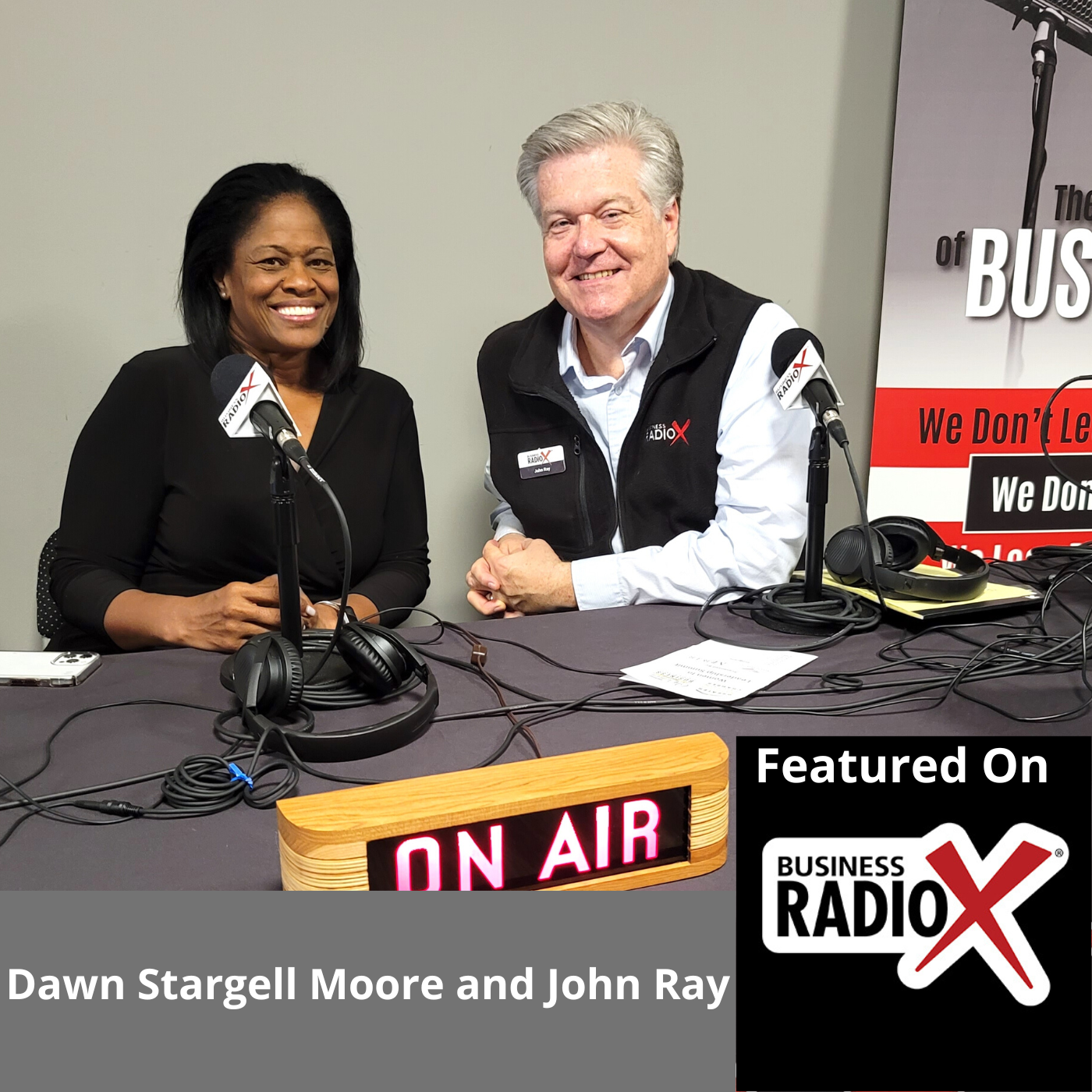
Dawn Stargell Moore with Moore 2 Life Consultants joined host John Ray LIVE from the GNFCC 2022 Women in Leadership Summit. They talked about Dawn’s work at Moore 2 Life Consultants, purpose, GNFCC’s Women INfluencing Business Committee, her workshop at the Women in Leadership Summit, and much more.

This show was originally broadcast live from the GNFCC 2022 Women in Leadership Summit held at  The Commons at Phase in Alpharetta, Georgia.

North Fulton Business Radio is produced and broadcast by the North Fulton studio of Business RadioX® inside Renasant Bank in Alpharetta.

Dawn Stargell Moore, Founder & CEO, Moore 2 Life Consultants

Dawn Stargell Moore, Founder & CEO, Moore 2 Life Consultants

Dawn Stargell Moore is the Founder and CEO of Moore 2 Life Consultants, LLC and has over two decades of strategic leadership experience in leading customer sales, service and educational fields. It was as a working professional that she completed her Bachelor of Science in Management, Master of Business Administration, both from Shorter University and most recently her Master Certificate in Big Data Analytics from Keller Graduate School of Management and Diversity, Equity and Inclusion Certificate from the University of South Florida.

Dawn enjoys making a difference in the lives of others and volunteers her time with Women in Technology, lending her knowledge and guidance to teens and young adults pursuing STEAM career paths.

Dawn currently serves as the Chairman of Board of Directors for the 7 Cords Foundation and Paradigm 360 Foundation Boards in additional to Executive Leadership Roles for Computer Information Systems, Business and Management Advisory Boards of institutions within the Technical College System of Georgia.

She is also an active member the Education, Economic Development and Diversity and Inclusion Committees with the Chambers of Commerce.

Website | Facebook | Instagram | Twitter

GNFCC 2022 Women in Leadership Summit, presented by the Women INfluencing Business Committee

The 2022 Women in Leadership Summit, organized by the Women INfluencing Business Committee of the Greater North Fulton Chamber of Commerce, was held on November 2, 2022, at the Commons at Phase in Alpharetta, Georgia.

Powered by the Greater North Fulton Chamber of Commerce (GNFCC), the Women INfluencing Business Committee strives to engage female leaders and enhance the standing of professional women within the community. Its annual awards program recognizes women with exceptional vision who have implemented innovative ideas in both the workplace and community and who inspire others.

Website

Questions and Topics in the Interview

  • Moore 2 Life Consultants
  • Purpose
  • Women INfluencing Business Committee
  • Women in Leadership Summit

North Fulton Business Radio is hosted by John Ray and broadcast and produced from the North Fulton studio of Business RadioX® inside Renasant Bank in Alpharetta. You can find the full archive of shows by following this link. The show is available on all the major podcast apps, including Apple Podcasts, Spotify, Google, Amazon, iHeart Radio, Stitcher, TuneIn, and others.

RenasantBank


Renasant Bank has humble roots, starting in 1904 as a $100,000 bank in a Lee County, Mississippi, bakery. Since then, Renasant has grown to become one of the Southeast’s strongest financial institutions with over $13 billion in assets and more than 190 banking, lending, wealth management and financial services offices in Mississippi, Alabama, Tennessee, Georgia and Florida. All of Renasant’s success stems from each of their banker’s commitment to investing in their communities as a way of better understanding the people they serve. At Renasant Bank, they understand you because they work and live alongside you every day.

Since 2000, Office Angels® has been restoring joy to the life of small business owners, enabling them to focus on what they do best. At the same time, we honor and support at-home experts who wish to continue working on an as-needed basis. Not a temp firm or a placement service, Office Angels matches a business owner’s support needs with Angels who have the talent and experience necessary to handle work that is essential to creating and maintaining a successful small business. Need help with administrative tasks, bookkeeping, marketing, presentations, workshops, speaking engagements, and more? Visit us at https://officeangels.us/.

Tagged With: consulting, Dawn Stargell Moore, executive coaching, GNFCC, Moore 2 Life Consultants, North Fulton Business Radio, Office Angels, Phase Commons, purpose, renasant bank, Women in Leadership, Women In Leadership Summit 2022, Women Influencing Business

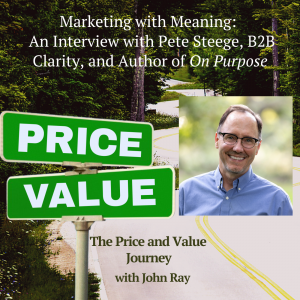
Marketing with Meaning: An Interview with Pete Steege, B2B Clarity, and Author of On Purpose

October 10, 2022 by John Ray

Pete Steege
North Fulton Studio
Marketing with Meaning: An Interview with Pete Steege, B2B Clarity, and Author of On Purpose
Loading
00:00 /
RSS Feed
Share
Link
Embed

Download file

Pete Steege

Marketing with Meaning: An Interview with Pete Steege, B2B Clarity, and Author of On Purpose

If you’re the CEO of a B2B company and feel like your marketing efforts are broken, you’re not alone. Many of your peers see marketing as an overwhelming and complex field with too many solutions to choose from. Pete Steege knows this to be the case after having interviewed about 400 B2B C-Suite executives.

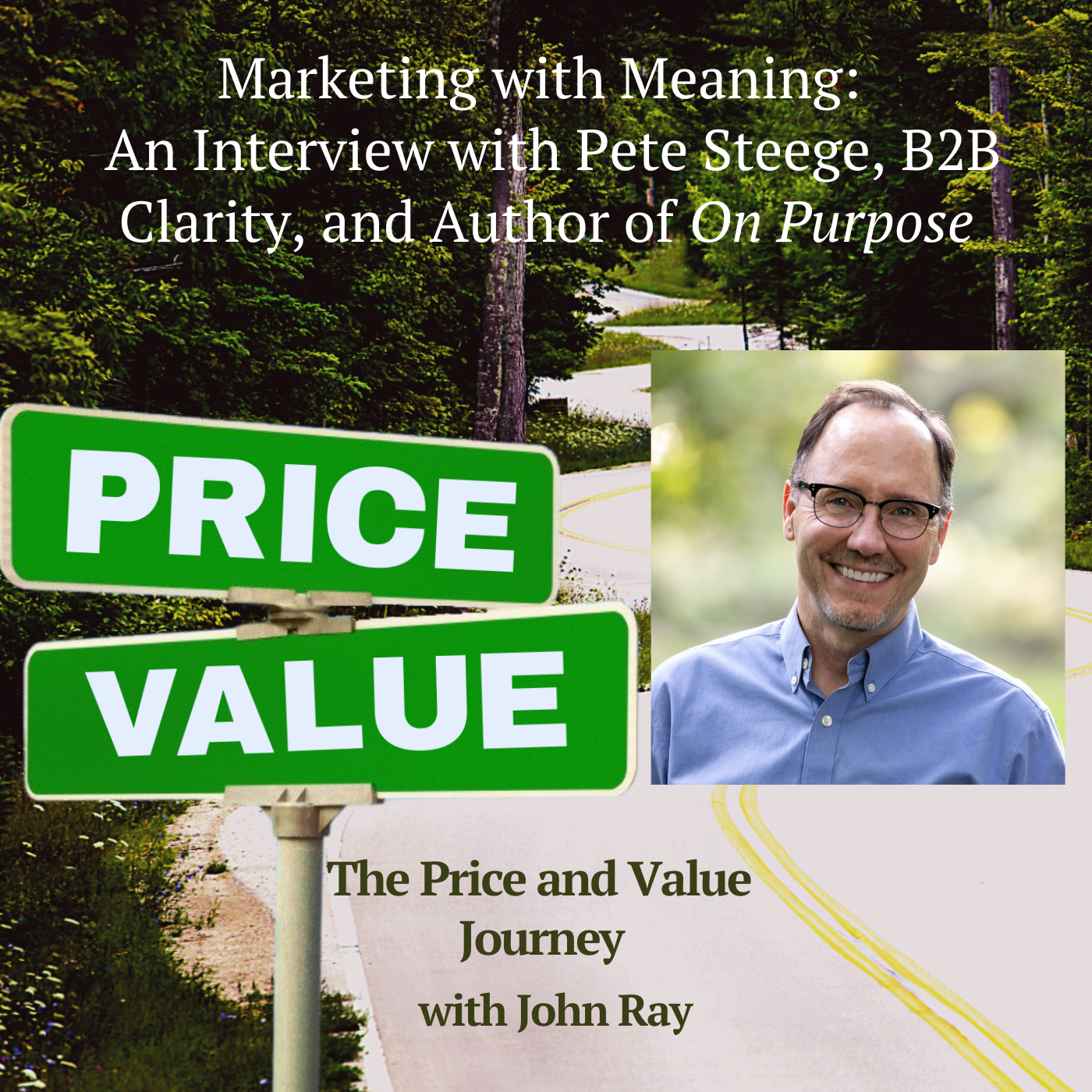
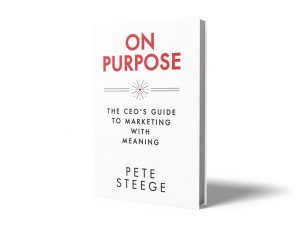
In this interview with host John Ray, Pete Steege discussed his newly released book, On Purpose: The CEO’s Guide to Marketing with Meaning. Pete shared the three “superpowers” of marketing: authenticity, intention, and generosity, why less is more in successful marketing, why your most powerful message isn’t about you, and much more.

The Price and Value Journey is presented by John Ray and produced by the North Fulton studio of Business RadioX®.

TRANSCRIPT

John Ray: [00:00:00] Hello again, everyone. I’m John Ray on the Price and Value Journey. And folks, I’m here today with Pete Steege. Pete is with B2B Clarity and he is also the author of a newly released book called “On Purpose: The CEO’s Guide to Marketing with Meaning”.

Pete is a 30-year marketing veteran. He’s got a wide range of B2B technology and manufacturing business experience, working from Silicon Valley startups all the way to Fortune 500 firms. And he’s got global experience as well in North America, Europe and Asia. And all that experience gives him a wide breadth of perspective and experience he’s going to bring to this interview. But certainly, in his book, which I have read, folks, I have read so, and I’m delighted to say that because it was worth every minute of it. Pete Steege, welcome to The Price and Value Journey.

Pete Steege: [00:01:04] Thanks so much, John. Really happy to be here.

John Ray: [00:01:06] Hey, I’m delighted to have you. Talk about — let’s first of all, just give everyone a quick introduction to what I missed in your business. Tell everyone how you’re serving folks at B2B Clarity, then we’ll get to the book.

Pete Steege: [00:01:21] You know, John, I think you summed it up pretty good. As you said, I’ve been a marketer for a long career. And these last two years have been a big change for me and just a great change where I’m on my own helping B2B business owners and CEOs. And it’s been — it’s just been really, really exciting and satisfying change for me. But yeah, that’s what I do now is I just — I’m able to use some of that, you know, gray hair, I guess, and help people solve problems. I really enjoy it.

John Ray: [00:01:55] One of the aspects to this book that you state right up front is that you believe that most CEOs, B2B CEOs, look at their marketing function and their marketing efforts and they see that as broken. Why?

Pete Steege: [00:02:16] It’s absolutely true. More often than not, they are not satisfied with their marketing. And it’s usually not, oh yeah, it could be better. It’s usually a pain point for them. And I think there’s a couple of things at work there. One is, I think if you’re at all in the business world, you know what a overwhelming space marketing is. I like to call it the marketing industrial complex. There’s so many businesses and agencies and consultants and software applications all fighting for your mindshare and saying that they have the greatest thing since sliced bread to solve your marketing problems.

As a matter of fact, there’s this really interesting number factoid. There’s a guy that tracks it’s called Chief MarTec is the organization, and he’s been tracking since 2011 the number of marketing technology solutions available in the market. And he creates a landscape, right? 2011, the first one, 150. 2022, 9,938 of them.

John Ray: [00:03:32] Oh, wow.

Pete Steege: [00:03:32] So, there’s this overwhelming wealth of solutions, I’ll say, right. So, that’s a problem because no one can get anywhere near to choosing. All of them are even a collection of them. You’re going to have to choose what you’re going to do. And that coupled with the fact that there’s this idea that, oh, I’m just going to choose this thing to do. Some people call it random acts of marketing. You know, hey, we need a video,

John Ray: [00:04:07] Right.

Pete Steege: [00:04:07] Hey, let’s go to the big show this year. You know, this kind of arbitrary thoughts that are emotional sometimes or that feels good, it sounds good. Maybe it sounds fun even sometimes, or your competitor is doing it, right. There’s all these reasons to do them. But you take this wealth of options and couple it with this idea that you can choose one and that it would be just as good by itself versus part of a bigger plan or strategy. And that doesn’t work. It’s like throwing stuff at the wall and your customers are getting these blips of information from you and they’re not consistent when they do get them and you cancel yourself out.

So, basically, a lot of that effort, a lot of the money you are spending is almost — is often just a waste of time because it’s not helping you get closer to your customers.

John Ray: [00:05:09] I’m curious about — I mean, CEOs of larger B2B firms in general, they certainly are — they’re the chief strategy officer, right. And so, this is really a matter of getting their attention diverted toward a tactic, a video, or whatever that tactic, whatever form that tactic takes. Instead of focusing on the strategy and executing the strategy, kind of understand it from a smaller firm point of view, you know, an entrepreneur that’s kind of overwhelmed and can easily maybe get their attention distracted. But the CEO is a bigger firm. I mean, why does this happen? What’s your view on that? You’ve talked to a lot of them, by the way, that was –.

Pete Steege: [00:05:57] I know.

John Ray: [00:05:57] Yeah. So, cite more about that, maybe first.

Pete Steege: [00:06:01] So, I like the fact that I started — when I started my business, I kept track of my meeting. I went out and wanted to talk to CEOs, right. Obviously to find customers, but also to kind of validate as a corporate marketer versus being a solution provider for a CEO, it doesn’t translate, right. So, I had, I think I say in the book, 397 meetings, right. Not all CEOs, but all CEO related people, related to this challenge. And yeah, so a lot of data points and a lot of commonality in that.

And to answer your question, why do the larger companies, strategic CEOs let’s say, ones with a big budget and maybe even a marketing team, they wouldn’t have this problem, right? Guess what? A lot of the places I worked over 30 years were those organizations and I was in those marketing teams. And there is a core problem here that I talked about before that CEOs or their marketing leader or their sales leader tend to bite off more than they can chew with marketing. For the reasons we said, there’s a lot of things you could choose to do, and they tend to try to do more than they can get done, that they can be successful with.

So, even at the larger organizations, I remember one not too long ago where I worked over a hundred marketers on this company’s team and they had big plans and they were sophisticated plans, but they often didn’t finish these sophisticated projects because they were so busy with so many plates spinning. It just scales up, whoever you are. It’s a mindset issue. It’s a problem with thinking of marketing as the more the better. And activity is good versus there’s a less is more theme here and a strategy before tactics.

It’s less important how many things you do and it’s more important why you do them and that you finish, that you finish what you — you do it well, right. That’s really an important part that translates up to — I can’t speak for multibillion dollar companies. Probably a different issue. But certainly, you know, for a wide range of company sizes, this is a challenge for those organizations and the leaders of those organizations to get focus and to follow through and thoughtfully deliver on a purposeful marketing plan.

John Ray: [00:09:00] Pete, one of the things that you talk about in the book is not just, I guess, maybe marketing overload, taking on too many tactics, too many initiatives, but you talk about mindset a lot and that the problem is a mindset of meaning. Explain what you’re talking about there.

Pete Steege: [00:09:28] Yeah. That’s the core of the book, really. What my observation is, there’s a really important hierarchy in marketing. And most businesses, most CEOs know two of the three levels, and they don’t even know the third level exists. The first level, which we all know is tactics. It’s all the stuff you do in marketing. We all know what they are. There’s website, SEO, email, PR, all these things you do. So, these are the things that have a budget line item.

As I said, often, there’s some chaos around the activities, the tactics. And the more incoherent they are, the less valuable they are because they are all out there and your customers are picking them up and they’re busy. And if they don’t hear this common story, it’s a problem, right. So, tactics can be a real and it’s hard to deliver on them. The more you get, you get overloaded, right.

So, the next level is really important, and it really helps solve that problem and that strategy, marketing strategy. Bunch of books out there. You know, we all have our favorites probably if you’re a CEO or a executive. And that helps bring order and priority to these tactics and consistency can really help rein in the chaos. Absolutely. And for a lot of people, that’s where it starts. That’s marketing. You got your tactics, and you got your strategy.

John Ray: [00:11:02] Sure.

Pete Steege: [00:11:03] I strongly believe that there’s a really important element above that, which is mindset. Strategy without mindset, without purpose, without direction — there are almost as many strategies now as there are tactics, right? And there are often multiple strategies that you need to apply to your business marketing, your marketing approach. There are strategies that have to align with your sales strategies and your customer support strategies and your product development so you can — companies that think of strategy as a means to an end that are that — if I just come up with a really smart way to look at this, it’s going to solve all my problems.

They end up with a well, maybe more ordered group of tactics, but I would say in a way they’re almost lifeless, right. They’re mercenary. Their goal is to get, get. Their goal is to get, right, to win the order, maximize profit, change mind perception. All those things are a good outcome. But if those are the destination and there’s not a tie to why you created your business or why you are getting up every day to manage this thing, what’s the vision? What’s the value of your organization.

If your marketing is cut off from that, it doesn’t work. It’s a lot more visible in activity, but it doesn’t change the hearts and minds of your crazy busy clients that are hesitant to come on board with somebody new. And it’s that mindset of meaning that says my — first, I need to start with, okay, why are we in business?

This isn’t a marketing thing. This is why we come here every day. And who is it that we’re here to help? Because a business that gets — you may say, oh, my goal is to make a lot of money. Well, you can’t make a lot of money if you’re not solving a problem for somebody. And knowing that mission is the first step to marketing that works. Because if you know that mission and then you say marketing isn’t a by itself set aside tactic, it’s actually part of us creating the bond with our relationship with our customers that make it work. And so, a little bit of a side topic here.

John Ray: [00:13:57] Yeah.

Pete Steege: [00:13:57] My definition of marketing is optimizing the relationship between your business and your customers. So, it’s relationship. One word, marketing is relationship.

John Ray: [00:14:10] Oh, wow. I love that. And you talk a lot about that in the book too, to be clear. Because those sound like two separate things, mindset and relationship. But they’re not in your world, in your mind.

Pete Steege: [00:14:32] No. And the reason why is picture yourself and your customer, right? There’s these two — it’s a company, yourself as your company, right? But it’s people in your company and then you have your customers. And if your goal is a relationship, I believe that the only way — the way you make that relationship happen, the way you spark it, the way you turn it on and activate it, is meaning. Meaning for them and meaning for you. If you’re doing things at them without a purpose, for the bigger purpose, they can tell.

John Ray: [00:15:10] Right.

Pete Steege: [00:15:11] If they are listening to you or they are interrupted by you and there’s no good reason in their mind why they should talk to you, if there’s not a purpose to that. Meaning, they’re not going to take the time to do it. So meaning back to the word, right, mindset of meaning. Meaning is what makes marketing create that relationship.

John Ray: [00:15:36] So, Pete, let’s talk about — I want to dive into relationship just a little more. You know, for smaller firms, I think they think of that as one-to-one and very personal. They’ve got the capacity to handle one-to-one relationships. As firms get bigger, it gets a little trickier because suddenly you’ve got sales forces and you’ve got layers of folks in your organization. And how are you talking? How do you talk about in the book, you talk about how to create relationships and how those relationships start and how they deepen, cover that force, if you would.

Pete Steege: [00:16:27] Sure. First thing I’ll say is that I like to call them the three superpowers of marketing. So, there are three traits that you as a CEO need to have in your culture and in your organization, that if you do, if those are there, then those relationships happen, but it’s like the essential ingredients of relationship. And what they are is the first one is authenticity. Being transparent and truthful and real with your team and your clients, right, with your world. That’s one authenticity.

The second is intention. Being intentional. We already talked about that, right. That’s having a strategy before you choose your tactics. That’s doing less but doing it better. Choosing, being purposeful, being — doing things with the end in mind. That’s intention, right. That’s the second.

And then the third is generosity. The first two I’ve heard of in a marketing sense or really authenticity, you know, that makes sense.

Pete Steege: [00:17:45] Oh, yeah.

Pete Steege: [00:17:45] Intention, Absolutely, right. Being operationally good and all that. You don’t hear generosity mentioned very often when it comes to marketing, but I am convinced that it is a total — it is absolutely a superpower. And it’s one of the three ingredients. You need all three, but it’s often the missing one.

John Ray: [00:18:07] Well, I want to get to that in a minute, because when I read your book, I had a comment for you on that, that I want to get to. But I think it’s counterintuitive for folks when you talk about the intention piece and you’re talking about let’s do less. I mean, people don’t want to do less, right.

Pete Steege: [00:18:26] Right.

John Ray: [00:18:26] I mean they want to do more because they think pressing on the accelerator is going to what — is what’s going to get them to whatever their goal is for their company. And that’s just counterintuitive and hard for anybody to get their head around.

Pete Steege: [00:18:41] It is. Let me help a little bit with that. There’s a key dynamic in marketing. And I can’t speak to other functions, but it’s absolutely true in marketing that there is a critical mass that you need to reach with a marketing program often, that until you get there, you get kind of zero results from it.

So, let’s say you decide to start posting on LinkedIn and you dabble in it, or you do a poor job of it, or it’s confusing, whatever. You spend a lot of effort on posting on LinkedIn, but it never clicks. Nobody really — it does — it’s not like the more you do, it’s incrementally more result for you and more exposure to your clients. There’s a certain level you have to get to where you reach, escape velocity, and your campaign starts to make a difference and move the needle.

Marketing is that way. A lot of things, okay. So, what often people do is they’re so — they feel so much pressure to do all these things that everybody’s doing around marketing that they — none of them have the mindshare or enough effort available to them to get to that critical mass. So, there’s lots of activity going on, but very little of it is moving the needle. If you force yourself to first say what are — what is important, right. If I had to choose three things, that three programs, tactics, campaigns, that would move the needle for my marketing, I should start with the biggest pain points, right?

So, the first step is understanding that. But when you do and if you can resist the temptation to do the other dozen things now and say, we’re going to solve these three, we’re going to launch these three things, and move the needle in these three ways and check to see if we did, right. That’s part of that intention is be thoughtful and check your work and see if it worked. Your odds of success go way up because you’re able to spend the right amount of time, your team or you or your agency, whatever it might be. You have the time and money needed to do it well, right.

So, those two things. It moves the needle, but also now you’re a brand that does things well. You start to look like you’re good at what you do. And communicating and making relationships is part of what you do, right. So, that’s — I hope that helps with the less is more.

But it’s true in so many factors, it’s true with how much content you put on your website. B2B companies, especially tech B2B, they tend to try to explain everything on their website and put a lot of acronyms on there. So, that’s another example of less is more, right.

John Ray: [00:21:40] Right.

Pete Steege: [00:21:41] Don’t try to explain it all because they don’t have time to grasp it. Another example is your priorities with your team, right? Does your team on board with what’s important right now? Are they all rowing the same direction? Often, people have multiple priorities that confuse their team.

And here’s maybe the most important one, companies need one story. I like to call it the true story, their true story. But they need one story about who they are, whom they serve, how that target benefits from them. And you tell them a lot of different ways, but you got to have that one story. So, that’s another less is more example.

John Ray: [00:22:33] Okay. Now, I’m going to get myself in trouble here. I might get you in trouble here. Let’s see where this goes, but —

Pete Steege: [00:22:40] Let’s do it.

John Ray: [00:22:40] Yeah, okay. Let’s dive into this, because this, the less is more is not where the, I’ll say a lot of the outside marketing firms and really even the inside marketing folks end up, right. I mean because —

Pete Steege: [00:23:01] Right.

John Ray: [00:23:01] And so, there’s a lot of pressure on the CEO or the owner of a business from their own marketing people on this, right. And that’s what I think is so hard for them. I mean, let’s — am I — is it just the marketing people I run into? Or do you see that out there as well?

Pete Steege: [00:23:26] Well, I do see it out there and it’s totally understandable, John.

John Ray: [00:23:31] Yeah.

Pete Steege: [00:23:33] There — you know, it’s their job, right. And more is the shorter path to looking like your progress, right. Because you can quickly point to the activity.

John Ray: [00:23:48] Right.

John Ray: [00:23:50] It’s also more budget that comes with more sometimes.

John Ray: [00:23:53] Well, yeah, that’s where I was going, right. I mean —

Pete Steege: [00:23:56] Oh, it is?

John Ray: [00:23:56] Yeah.

Pete Steege: [00:23:58] And it’s not that people are, you know, their intent isn’t good but there’s a lot of just natural impulse situation here that it’s understandable why it happens so much, right. Because it is counterintuitive and it doesn’t always — sometimes the rewards are delayed, right. This delayed gratification.

Because there’s another connection here, which I’m sure you’ve heard, which I’ve heard from a lot of CEOs, is I just need leads. I need leads and I need them now and I need more. And what can you do to get me those leads next month? Sometimes, there’s a fun, surprising little tweak that does something like that. But most of the time I think you’ve picked up, from my view at least, marketing is an ecosystem.

Marketing is a relationship building engine and it doesn’t happen overnight. And there is — to set up that right environment with your team and your customers and your prospects, it takes time for it to play out. And those leads come more organically usually. Throwing money at a Google Ads, the more you put in, doesn’t mean the more good leads you get out and the more revenue you get out.

There are — like I said, sometimes you get lucky and there’s an opportunity in the market and you want to be ready for those opportunities. But that comes after you’ve understood this — the needs here, right, and the journey your customer is on. And that’s when you see the opportunity. It doesn’t happen, which I see so often where CEOs hire a vendor to do that one tactic, one off in a vacuum, and they say you’re going to mint money with this thing. Wow. This is going to be awesome. It doesn’t happen very often for all the reasons I just said.

John Ray: [00:25:56] Okay. So, Pete, we talked about authenticity. I think we’ve covered intention. So, let’s get to my favorite part in your book, Generous Marketing. And I have to tell folks when I read Pete’s book, I wrote him a note and said you need to name this book, Generous Marketing. And to his credit, he ignored my advice. So, because he knows what he’s doing.

Pete Steege: [00:26:22] Tell me in my next book.

John Ray: [00:26:24] Okay. There you go. And I’ll read that one as well. I loved that concept. And let’s define that in your words. What is generous marketing?

Pete Steege: [00:26:39] So, for me, I like to describe it as customer centricity on steroids, right. This is — we’ve all heard about customer first, and that’s a standard platitude and obvious reasons. Of course, we want to put our customers first. Generous marketing is taking that to another level where putting your customer first isn’t a means to an end. It’s not something you do so you can make more money. It’s the paradox of really believing and wanting what’s best for your customer and changing the behavior of your organization to maximize maximize that. And in a Zen way, magically, that’s where the most success comes, because customers can tell.

And it’s organic, right? It’s deep in their bones that they can tell that you are trying to help them. And that draws them to you more than any persuasive thing you can come up with saying, right. So that’s part — that’s the essence of it. And it shows itself often in a couple of things. One is it’s not about you, right. So, when people aren’t generous, they care about their customers. Of course, they do. But they’re just so excited about what they do to help their customer that that’s what they talk about. Look at how good we are. Look, we are so — we are the best provider for you. And they sincerely — they are, they’re sincere.

But your customer doesn’t want to hear about you. They want to hear about how you can help them. So, the story needs to start with their problem and relieving it. And it just so happens that it’s that thing you do so well that does that. And it’s a subtle difference, but they notice. They notice and they will be drawn to you with your solution for their problem more than they will with your skill and your expertise.

John Ray: [00:28:58] I think it’s so important what you just said about how there’s a subtle difference to this. And it’s so subtle that I’m not sure a lot of companies and marketing gurus, marketing executives, and CEOs get the difference. I think everybody thinks their marketing is helpful, right. We’re trying to help. I think most people think that. But there is a difference that the client can see. So, dive into that a little more.

Pete Steege: [00:29:36] Yeah. So, I think I totally agree with you. It’s subtle, right, and but powerful. And just maybe a couple of other insights along the way that may help people make sense of this. Let me paint a picture.

John Ray: [00:29:51] Yeah.

Pete Steege: [00:29:54] Some things that generous marketing is not. So, persuasion is one thing. Persuasion is an interesting topic for me. When I was early in my — actually, my favorite example is I used to say I’m a marketer. I used to say, oh my gosh, I hate sales. I would never be a salesperson. And my memory is going door to door as a junior high, a 12-year-old or whatever, selling raffle tickets and having to knock on somebody’s door and interrupt their life and say, would you buy these things for me knowing that they had no, I didn’t believe in this was going to help make their life better.

And I — since then I’m realizing what I didn’t like about that wasn’t selling. What I didn’t like about that was putting myself first, right. And trying to talk them — and that’s where persuasion comes in. The best marketing doesn’t have to convince a client of something that they don’t already know or already want. The best marketing finds the people that they truly can help the people that need them and shares the good news about the solution that they have for them.

John Ray: [00:31:08] Right.

Pete Steege: [00:31:09] It’s more of an awareness and an education opportunity. Three things, awareness, education and a gift, right. It’s — do the — start giving. This is another subtle difference here. You may say, we believe it, we want our customers to succeed. I will ask you a tough — a hard question. Ask yourself this. Is your motive — in your mind, is your motive how do I maximize my revenue from this client? Or is your motive how much can I give away before I have to charge them?

Now, those are extremes. But I believe that if you truly could find a way to have that second perspective, and an example of that in the B2B tech world is thought leadership and content, where you’re an expert at what you do. Again, you’re looking for people that need how you can help them because you want to help them, right?

John Ray: [00:32:08] Right.

Pete Steege: [00:32:09] And you say, you know what, I have this service for them that someday hopefully they’ll let me do for them and they’ll pay me. But in the meantime, I have these tips, or I have this framework, or I have this how to guide that will help — as they read this, their life’s going to be better today. They’re going to solve a problem that I know they have because I’m an expert on what they — what that problem is. I can give that to them for free. And they’re going to be — that helps me eventually because they, again, they got it for free.

And if I don’t do that, if I start with rather than giving them something for free, I start with, hey, I’m going to ask you to give me something for free, maybe your email address or have a meeting with me, and my only message is, yeah, I just want you to — do me a favor almost is what it almost ends up being like, right?

John Ray: [00:33:09] Right.

Pete Steege: [00:33:10] Step back from that for a minute. Is that right? Do you really want to ask your customer to pay you first? Generous marketing gives first. And then as long as you can, and again that’s where you look at, free demo. What is it? What is it we can give? Is it free trial? And of course, the math needs to work. You can do it in such a way that it pays for itself.

And I will use an example. I’ll use an extreme example. Apple. Obviously, everyone knows the Apple story. I’m a happy Apple user and no, they’re not perfect, but and I pay a lot for their hardware, and their services, and their subscriptions. I pay more than I could for other people because I feel like I’m getting more than I’m paying. It’s — yeah, I don’t feel like I’m getting skinflint at along the way, you know.

John Ray: [00:34:12] You’re getting value.

Pete Steege: [00:34:14] Getting value consistently.

John Ray: [00:34:17] Right.

Pete Steege: [00:34:17] And it’s not like I got — I looked for a deal and I got one over on them, right. Again, it’s a trusted relationship where I know what I — that’s back to brand, right? I have an expectation of value from my provider. You have the opportunity as a generous marketer to focus first on the relationship by giving in ways that will connect them with you because you know you can help them and that’s a profitable relationship long-term. Just trust it. Make — invest in the relationship and that’s how you build that expectation, that expected value brand over time.

John Ray: [00:34:58] So, Pete, you know, I think a lot of the response a lot of folks have to what you’re talking about is if I give everything away, because I think what they hear is it’s all or nothing when you —

Pete Steege: [00:35:16] Right.

John Ray: [00:35:17] Right. When I give everything away, then why are they going to hire me? Right. I mean, so respond to that thought that I think is going around in some heads out there.

Pete Steege: [00:35:30] If everything you have to offer them, everything they need, everything they value that you can offer them, they can get it from that content or email, you probably need to rethink your product offering. I believe that if you are not this — and this doesn’t work for commodities, I’ll say it right upfront. But if you’re in the business, where you — back to that beginning, you’ve identified that your company has a unique reason to exist, something you do, nobody else can offer them, and you know who it is that has that need that only you can offer, I have found that companies that give without limit within economic reality, right. Of course, at some point you charge. But if you don’t, don’t try to hold back because maybe they won’t need you. If you’ve truly found that product market fit, they absolutely will, the ones that are going to be profitable long-term customers, they want help, right?

You’re the expert. You’ve just made the case from your help that one, you’re trusted. Two, you know your stuff because I’m using your ideas.

John Ray: [00:36:56] Right.

Pete Steege: [00:36:57] And you’re really good at this. And this is important to my business. So, I’m going to get some more of that goodness from you. I need to sign up. Tell me about what you can — how else you can help me. And back to what I said. If your answer is well, it’s pretty much what I shared with you in that spreadsheet, you haven’t thought through your value proposition and your service offering or your product offering because you have more to give them than what you can give them in a quick piece of content.

John Ray: [00:37:29] Well, let me put it a way that I’m going to let you either agree or disagree and tell me where you disagree. You know, if — let’s take your book, for example. I mean, somebody thinks, well, I can get all Pete’s secrets by reading his book, right, because you’re a generous marketer, so you’re going to put it all in the book. The problem with that line of thinking and then being, let’s call it stingy or whatever you want to term you want to give it.

The problem with that line of thinking is what it discounts is the fact that if I read your book and I’m a CEO and I agree with what you’re saying, hiring you is going to help me get there much faster. I mean, I’m going to have to you know, I buy into everything you say. Okay, you’ve laid it all out for me, but I’m going to get there much faster by hiring you and my results are much more assured, right?

Pete Steege: [00:38:36] Right. Another way to say that. Agreed. Another way to say that is I’m a CEO of a business. If you’re — if my client is a CEO of a business, they have a lot more to think about than the marketing.

John Ray: [00:38:50] Right.

Pete Steege: [00:38:50] And they’re looking — as you said, they’re looking for help that starts with some ideas in the book. Give them that. I also do videos on LinkedIn, which again, it’s a way for me to give them three or four minutes of ideas and they can quickly just, oh, okay, that’s something to think about. Both the book and the videos share what’s possible. But to your point, I’m in the business of helping CEOs transform their marketing and create an ecosystem that runs, right, that it keeps going.

John Ray: [00:39:26] Right.

Pete Steege: [00:39:26] And there may be some out there. Just to be clear, there may be some small business owners, some founders, where DIY is their solution. And you know what? I’m good with that. I believe that there’s — my market is rich enough that I can give some stuff away and nobody is going to ever need and some of those people will never need any more for me. But there’s enough CEOs and businesses out there that, as you said, they see — the idea is just plant a seed for them, right, and they need help to implement it. And that’s my opportunity to really move the needle with them.

John Ray: [00:40:07] Yeah. And B2B services provider out there, I’m using Pete as an example here. You know, look at yourself the same way. I mean it — and what you’ve got to offer the same way. That DIY as you brought up, I think it’s a great point, Pete. They’re never going to hire you, anyway, right? So, it really doesn’t matter what the message is to that particular group of clients, they’re never going to hire you. So. So don’t worry about them.

Pete Steege: [00:40:39] Can I add to that?

John Ray: [00:40:40] Please.

Pete Steege: [00:40:41] Those DIYers that may not hire you, could be a lot of them. They’re not going to hire you. But what they might do is be at a dinner party, say, I just read the most interesting book colleague of mine that’s also a business owner. It was really interesting. I got something out of it, right. So that’s — to me, that’s better marketing than anything I could, right, to that person they know at the dinner party is that their friend that they trust, suggesting that there’s value for me. And that person might be the right one that I could help.

John Ray: [00:41:20] So, I have to come back to one point that you’ve made so many great points here that it’s hard for me to keep up with them all, Pete. Sorry about that. But one — you talked about always trying to persuade and that being a problem. So, I take it that all these lead pages I see and all these posts I see that are always trying to get me to sign up for the latest webinar or the, you know, the latest sales coaching, whatever. I mean, you know, you’re not really in favor of that kind of thing.

Pete Steege: [00:41:57] I’m going to disagree with that.

John Ray: [00:41:59] Okay. I’m glad I brought it up then.

Pete Steege: [00:42:02] Yeah. If I have done — if I’ve done the work to understand the strategy as I talked about and I know what my ideal customer journey is, there’s a point on that journey where that webinar — a webinar is another way to help, right?

John Ray: [00:42:23] Mm hmm.

Pete Steege: [00:42:23] So, if there’s a point on that journey where giving them some tools or some some perspective or a case study or something about their problem is helps, then that’s a great thing to do. Maybe what you’re saying and you mentioned the persuasion thing.

John Ray: [00:42:42] Yeah.

Pete Steege: [00:42:43] It’s not tricking them into going. Again, being authentic and generous and saying, hey, people out there, wherever you can find them, maybe it is email, maybe it’s a web ad, could be. But it’s got to be value. It’s a valuable offer. It’s not clickbait, right.

John Ray: [00:43:05] Right.

Pete Steege: [00:43:05] You’re not trying to deceive them into coming and deceive them into the value of your webinar. To me, best marketing is authentically sharing the good news of I have this thing that will be valuable for you, you can come for free. Come to my webinar. Here’s a way to do it. Make it as easy as — again, it’s about them, what’s easy, what’s valuable. And then yes, so there’s a role for that.

John Ray: [00:43:31] Terrific. Now, Pete, we could go on for a while, but I probably ought to let you get back to working with the clients. But when — lets some this up, you know. I definitely encourage folks read the book. But sum it up for us, Pete. I mean, in terms of just you talked about the takeaways. The takeaways that a B2B services or product company ought to think about.

Pete Steege: [00:44:05] So, if I had to summarize it, what I would encourage CEOs and other business owners out there to do is take the time. When it comes to marketing, take the time to set aside what you’re doing and do some do some soul searching. And think about these three things. Is my marketing authentic? My marketing and my team and my culture, is it authentic? Is it intentional? o we have a reason for everything we’re doing? Is it generous? All the things we talked about there?

And if it’s not, you know, I’d encourage you to consider it. Considering it is a different approach. And, you know, in marketing, any time you can do something different than everybody else is doing, something to think about because standing out is a good thing in this world, right. So, I hope CEOs out there, you know, go to a quiet place for a couple of hours and just maybe think through those ideas and see how they apply to you. And there might be some real gems of opportunity for your business with this kind of a mindset of meaning as a reason for what you’re doing in your marketing.

John Ray: [00:45:29] Yeah. And it sounds like folks ought to think about getting some different perspective on this, right? Because their own perspective may be a little jaded. They may think they’re more generous than they really are. They think they’re more intentional or authentic than they really are. So, maybe some third-party perspective, maybe asking their employees, right.

Pete Steege: [00:45:50] Yes.

John Ray: [00:45:51] I mean, so get more ideas on this than just what you come up with over a weekend.

Pete Steege: [00:46:00] I’m going to follow up with what you said.

John Ray: [00:46:02] Please.

[00:46:03] I love what you said. Here’s an even easier than taking that introspection time. Take a little time and do a poll of your employees, as you said, ask them some open-ended questions. Why do you think we’re in business? What’s the most important? What’s our most important message? What do we tell people? Something simple like that, you might be very surprised at the variety of answers you get. Two problems there. One is they’re not the answers you want.

John Ray: [00:46:37] Right.

Pete Steege: [00:46:38] And two is everybody’s got a different answer.

John Ray: [00:46:40] Mm hmm.

Pete Steege: [00:46:40] It’s a good starting place to say I think I need to put a little effort into this purpose thing.

John Ray: [00:46:47] Wow. Lots to think about, folks from Pete Steege. He is the author of On Purpose: The CEO’s Guide to Marketing with Meaning. And he’s also the founder and CEO of his own firm, B2B Clarity.

Pete, this has been great. And I would love it if you could share some coordinates with folks because I can’t imagine there aren’t some folks that would like to be in touch.

Pete Steege: [00:47:15] Sure. And John, thanks so much for the opportunity. It was a great chat today.

John Ray: [00:47:19] Thank you.

Pete Steege: [00:47:19] People can reach me. I find the easiest way is on LinkedIn. Pete Steege, S-T-E-E-G-E, or my website B2Bclaritymarketing.com.

John Ray: [00:47:30] Terrific. And you can find the book on all the usual outlets, folks. So, again, do check it out. I’ve read it and it’s terrific. And it’s a quick read, but dense with a lot of things to take away. So, check it out, On Purpose: The CEO’s Guide to Marketing with Meaning. Pete Steege. Pete, thanks again for coming on.

Pete Steege: [00:47:55] Thank you, John.

John Ray: [00:47:56] Hey, folks, I just want to remind you that you can find previous episodes of this show, The Price and Value Journey. Just go to pricevaluejourney.com. And if you’d like to connect with me directly, just you can email me, john@johnray.co. Thank you for joining us.

B2B Clarity

B2B businesses are drowning in marketing activities that aren’t proving their worth.

Marketing effectiveness is below 50% for most organizations. By rightsizing your marketing to fit your organization and your goals, you can:

  • Rise above the noise with fewer, more impactful marketing projects

  • Connect all your marketing investments to your business purpose

  • Avoid the “bright shiny objects” that dilute your limited marketing resources

  • Create highly efficient marketing programs, sized for your business

  • Measure every marketing effort – and learn from them all

B2B Clarity’s unique fractional approach gives you the savvy and experience of a CMO for a fraction of the price. Your marketing works without your constant attention, freeing you to spend more on your most critical priorities.

Company website | LinkedIn | Twitter | YouTube

On Purpose, by Pete Steege

Many B2B CEOs carry a dark secret: their marketing is broken—and they don’t know how to fix it.

Pete Steege’s groundbreaking book, On Purpose, offers an unexpected solution: focus first on why you are marketing, and the results will follow. He reframes B2B marketing around a purposeful mindset that helps business leaders right-size their campaigns, align their teams, and have more impact with less angst and effort.

Using this accessible and usable guide, you will learn:​

  • What marketing can and can’t do for your business.

  • How much you should spend on marketing—and where.

  • Which marketing tactics are right for your company.

  • How doing less can actually deliver more results.

  • Why your most powerful message isn’t about you.

Steege shares his experience from three decades as a global marketing leader for innovative companies, ranging from Silicon Valley startups to large corporations. On Purpose will change how you think about marketing—and help you and your business achieve your boldest goals.

Amazon

Pete Steege, President, B2B Clarity

Pete Steege, President, B2B Clarity

Pete Steege is a B2B marketing expert with more than 30 years of experience in a wide range of B2B technology and manufacturing businesses, from 50-person Silicon Valley startups to Fortune 100 firms. He has lived and worked extensively in North America, Europe, and Asia.

Pete holds an MBA degree in marketing and strategic management from the Carlson School at the University of Minnesota, and a bachelor’s degree in electrical engineering from Iowa State University.

He is the founder and president of B2B Clarity, helping CEOs of B2B businesses without a marketing leader, make their marketing work.

LinkedIn | Twitter

TRANSCRIPT

John Ray: [00:00:00] Hello again, everyone. I’m John Ray on the Price and Value Journey. And folks, I’m here today with Pete Steege. Pete is with B2B Clarity and he is also the author of a newly released book called “On Purpose: The CEO’s Guide to Marketing with Meaning”.

Pete is a 30-year marketing veteran. He’s got a wide range of B2B technology and manufacturing business experience, working from Silicon Valley startups all the way to Fortune 500 firms. And he’s got global experience as well in North America, Europe and Asia. And all that experience gives him a wide breadth of perspective and experience he’s going to bring to this interview. But certainly, in his book, which I have read, folks, I have read so, and I’m delighted to say that because it was worth every minute of it. Pete Steege, welcome to The Price and Value Journey.

Pete Steege: [00:01:04] Thanks so much, John. Really happy to be here.

John Ray: [00:01:06] Hey, I’m delighted to have you. Talk about — let’s first of all, just give everyone a quick introduction to what I missed in your business. Tell everyone how you’re serving folks at B2B Clarity, then we’ll get to the book.

Pete Steege: [00:01:21] You know, John, I think you summed it up pretty good. As you said, I’ve been a marketer for a long career. And these last two years have been a big change for me and just a great change where I’m on my own helping B2B business owners and CEOs. And it’s been — it’s just been really, really exciting and satisfying change for me. But yeah, that’s what I do now is I just — I’m able to use some of that, you know, gray hair, I guess, and help people solve problems. I really enjoy it.

John Ray: [00:01:55] One of the aspects to this book that you state right up front is that you believe that most CEOs, B2B CEOs, look at their marketing function and their marketing efforts and they see that as broken. Why?

Pete Steege: [00:02:16] It’s absolutely true. More often than not, they are not satisfied with their marketing. And it’s usually not, oh yeah, it could be better. It’s usually a pain point for them. And I think there’s a couple of things at work there. One is, I think if you’re at all in the business world, you know what a overwhelming space marketing is. I like to call it the marketing industrial complex. There’s so many businesses and agencies and consultants and software applications all fighting for your mindshare and saying that they have the greatest thing since sliced bread to solve your marketing problems.


As a matter of fact, there’s this really interesting number factoid. There’s a guy that tracks it’s called Chief MarTec is the organization, and he’s been tracking since 2011 the number of marketing technology solutions available in the market. And he creates a landscape, right? 2011, the first one, 150. 2022, 9,938 of them.

John Ray: [00:03:32] Oh, wow.

Pete Steege: [00:03:32] So, there’s this overwhelming wealth of solutions, I’ll say, right. So, that’s a problem because no one can get anywhere near to choosing. All of them are even a collection of them. You’re going to have to choose what you’re going to do. And that coupled with the fact that there’s this idea that, oh, I’m just going to choose this thing to do. Some people call it random acts of marketing. You know, hey, we need a video,

John Ray: [00:04:07] Right.

Pete Steege: [00:04:07] Hey, let’s go to the big show this year. You know, this kind of arbitrary thoughts that are emotional sometimes or that feels good, it sounds good. Maybe it sounds fun even sometimes, or your competitor is doing it, right. There’s all these reasons to do them. But you take this wealth of options and couple it with this idea that you can choose one and that it would be just as good by itself versus part of a bigger plan or strategy. And that doesn’t work. It’s like throwing stuff at the wall and your customers are getting these blips of information from you and they’re not consistent when they do get them and you cancel yourself out.

So, basically, a lot of that effort, a lot of the money you are spending is almost — is often just a waste of time because it’s not helping you get closer to your customers.

John Ray: [00:05:09] I’m curious about — I mean, CEOs of larger B2B firms in general, they certainly are — they’re the chief strategy officer, right. And so, this is really a matter of getting their attention diverted toward a tactic, a video, or whatever that tactic, whatever form that tactic takes. Instead of focusing on the strategy and executing the strategy, kind of understand it from a smaller firm point of view, you know, an entrepreneur that’s kind of overwhelmed and can easily maybe get their attention distracted. But the CEO is a bigger firm. I mean, why does this happen? What’s your view on that? You’ve talked to a lot of them, by the way, that was –.

Pete Steege: [00:05:57] I know.

John Ray: [00:05:57] Yeah. So, cite more about that, maybe first.

Pete Steege: [00:06:01] So, I like the fact that I started — when I started my business, I kept track of my meeting. I went out and wanted to talk to CEOs, right. Obviously to find customers, but also to kind of validate as a corporate marketer versus being a solution provider for a CEO, it doesn’t translate, right. So, I had, I think I say in the book, 397 meetings, right. Not all CEOs, but all CEO related people, related to this challenge. And yeah, so a lot of data points and a lot of commonality in that.

And to answer your question, why do the larger companies, strategic CEOs let’s say, ones with a big budget and maybe even a marketing team, they wouldn’t have this problem, right? Guess what? A lot of the places I worked over 30 years were those organizations and I was in those marketing teams. And there is a core problem here that I talked about before that CEOs or their marketing leader or their sales leader tend to bite off more than they can chew with marketing. For the reasons we said, there’s a lot of things you could choose to do, and they tend to try to do more than they can get done, that they can be successful with.

So, even at the larger organizations, I remember one not too long ago where I worked over a hundred marketers on this company’s team and they had big plans and they were sophisticated plans, but they often didn’t finish these sophisticated projects because they were so busy with so many plates spinning. It just scales up, whoever you are. It’s a mindset issue. It’s a problem with thinking of marketing as the more the better. And activity is good versus there’s a less is more theme here and a strategy before tactics.

It’s less important how many things you do and it’s more important why you do them and that you finish, that you finish what you — you do it well, right. That’s really an important part that translates up to — I can’t speak for multibillion dollar companies. Probably a different issue. But certainly, you know, for a wide range of company sizes, this is a challenge for those organizations and the leaders of those organizations to get focus and to follow through and thoughtfully deliver on a purposeful marketing plan.

John Ray: [00:09:00] Pete, one of the things that you talk about in the book is not just, I guess, maybe marketing overload, taking on too many tactics, too many initiatives, but you talk about mindset a lot and that the problem is a mindset of meaning. Explain what you’re talking about there.

Pete Steege: [00:09:28] Yeah. That’s the core of the book, really. What my observation is, there’s a really important hierarchy in marketing. And most businesses, most CEOs know two of the three levels, and they don’t even know the third level exists. The first level, which we all know is tactics. It’s all the stuff you do in marketing. We all know what they are. There’s website, SEO, email, PR, all these things you do. So, these are the things that have a budget line item.

As I said, often, there’s some chaos around the activities, the tactics. And the more incoherent they are, the less valuable they are because they are all out there and your customers are picking them up and they’re busy. And if they don’t hear this common story, it’s a problem, right. So, tactics can be a real and it’s hard to deliver on them. The more you get, you get overloaded, right.

So, the next level is really important, and it really helps solve that problem and that strategy, marketing strategy. Bunch of books out there. You know, we all have our favorites probably if you’re a CEO or a executive. And that helps bring order and priority to these tactics and consistency can really help rein in the chaos. Absolutely. And for a lot of people, that’s where it starts. That’s marketing. You got your tactics, and you got your strategy.

John Ray: [00:11:02] Sure.

Pete Steege: [00:11:03] I strongly believe that there’s a really important element above that, which is mindset. Strategy without mindset, without purpose, without direction — there are almost as many strategies now as there are tactics, right? And there are often multiple strategies that you need to apply to your business marketing, your marketing approach. There are strategies that have to align with your sales strategies and your customer support strategies and your product development so you can — companies that think of strategy as a means to an end that are that — if I just come up with a really smart way to look at this, it’s going to solve all my problems.

They end up with a well, maybe more ordered group of tactics, but I would say in a way they’re almost lifeless, right. They’re mercenary. Their goal is to get, get. Their goal is to get, right, to win the order, maximize profit, change mind perception. All those things are a good outcome. But if those are the destination and there’s not a tie to why you created your business or why you are getting up every day to manage this thing, what’s the vision? What’s the value of your organization.

If your marketing is cut off from that, it doesn’t work. It’s a lot more visible in activity, but it doesn’t change the hearts and minds of your crazy busy clients that are hesitant to come on board with somebody new. And it’s that mindset of meaning that says my — first, I need to start with, okay, why are we in business?

This isn’t a marketing thing. This is why we come here every day. And who is it that we’re here to help? Because a business that gets — you may say, oh, my goal is to make a lot of money. Well, you can’t make a lot of money if you’re not solving a problem for somebody. And knowing that mission is the first step to marketing that works. Because if you know that mission and then you say marketing isn’t a by itself set aside tactic, it’s actually part of us creating the bond with our relationship with our customers that make it work. And so, a little bit of a side topic here.

John Ray: [00:13:57] Yeah.

Pete Steege: [00:13:57] My definition of marketing is optimizing the relationship between your business and your customers. So, it’s relationship. One word, marketing is relationship.

John Ray: [00:14:10] Oh, wow. I love that. And you talk a lot about that in the book too, to be clear. Because those sound like two separate things, mindset and relationship. But they’re not in your world, in your mind.

Pete Steege: [00:14:32] No. And the reason why is picture yourself and your customer, right? There’s these two — it’s a company, yourself as your company, right? But it’s people in your company and then you have your customers. And if your goal is a relationship, I believe that the only way — the way you make that relationship happen, the way you spark it, the way you turn it on and activate it, is meaning. Meaning for them and meaning for you. If you’re doing things at them without a purpose, for the bigger purpose, they can tell.

John Ray: [00:15:10] Right.

Pete Steege: [00:15:11] If they are listening to you or they are interrupted by you and there’s no good reason in their mind why they should talk to you, if there’s not a purpose to that. Meaning, they’re not going to take the time to do it. So meaning back to the word, right, mindset of meaning. Meaning is what makes marketing create that relationship.

John Ray: [00:15:36] So, Pete, let’s talk about — I want to dive into relationship just a little more. You know, for smaller firms, I think they think of that as one-to-one and very personal. They’ve got the capacity to handle one-to-one relationships. As firms get bigger, it gets a little trickier because suddenly you’ve got sales forces and you’ve got layers of folks in your organization. And how are you talking? How do you talk about in the book, you talk about how to create relationships and how those relationships start and how they deepen, cover that force, if you would.

Pete Steege: [00:16:27] Sure. First thing I’ll say is that I like to call them the three superpowers of marketing. So, there are three traits that you as a CEO need to have in your culture and in your organization, that if you do, if those are there, then those relationships happen, but it’s like the essential ingredients of relationship. And what they are is the first one is authenticity. Being transparent and truthful and real with your team and your clients, right, with your world. That’s one authenticity.

The second is intention. Being intentional. We already talked about that, right. That’s having a strategy before you choose your tactics. That’s doing less but doing it better. Choosing, being purposeful, being — doing things with the end in mind. That’s intention, right. That’s the second.

And then the third is generosity. The first two I’ve heard of in a marketing sense or really authenticity, you know, that makes sense.

Pete Steege: [00:17:45] Oh, yeah.

Pete Steege: [00:17:45] Intention, Absolutely, right. Being operationally good and all that. You don’t hear generosity mentioned very often when it comes to marketing, but I am convinced that it is a total — it is absolutely a superpower. And it’s one of the three ingredients. You need all three, but it’s often the missing one.

John Ray: [00:18:07] Well, I want to get to that in a minute, because when I read your book, I had a comment for you on that, that I want to get to. But I think it’s counterintuitive for folks when you talk about the intention piece and you’re talking about let’s do less. I mean, people don’t want to do less, right.

Pete Steege: [00:18:26] Right.

John Ray: [00:18:26] I mean they want to do more because they think pressing on the accelerator is going to what — is what’s going to get them to whatever their goal is for their company. And that’s just counterintuitive and hard for anybody to get their head around.

Pete Steege: [00:18:41] It is. Let me help a little bit with that. There’s a key dynamic in marketing. And I can’t speak to other functions, but it’s absolutely true in marketing that there is a critical mass that you need to reach with a marketing program often, that until you get there, you get kind of zero results from it.

So, let’s say you decide to start posting on LinkedIn and you dabble in it, or you do a poor job of it, or it’s confusing, whatever. You spend a lot of effort on posting on LinkedIn, but it never clicks. Nobody really — it does — it’s not like the more you do, it’s incrementally more result for you and more exposure to your clients. There’s a certain level you have to get to where you reach, escape velocity, and your campaign starts to make a difference and move the needle.

Marketing is that way. A lot of things, okay. So, what often people do is they’re so — they feel so much pressure to do all these things that everybody’s doing around marketing that they — none of them have the mindshare or enough effort available to them to get to that critical mass. So, there’s lots of activity going on, but very little of it is moving the needle. If you force yourself to first say what are — what is important, right. If I had to choose three things, that three programs, tactics, campaigns, that would move the needle for my marketing, I should start with the biggest pain points, right?

So, the first step is understanding that. But when you do and if you can resist the temptation to do the other dozen things now and say, we’re going to solve these three, we’re going to launch these three things, and move the needle in these three ways and check to see if we did, right. That’s part of that intention is be thoughtful and check your work and see if it worked. Your odds of success go way up because you’re able to spend the right amount of time, your team or you or your agency, whatever it might be. You have the time and money needed to do it well, right.

So, those two things. It moves the needle, but also now you’re a brand that does things well. You start to look like you’re good at what you do. And communicating and making relationships is part of what you do, right. So, that’s — I hope that helps with the less is more.

But it’s true in so many factors, it’s true with how much content you put on your website. B2B companies, especially tech B2B, they tend to try to explain everything on their website and put a lot of acronyms on there. So, that’s another example of less is more, right.

John Ray: [00:21:40] Right.

Pete Steege: [00:21:41] Don’t try to explain it all because they don’t have time to grasp it. Another example is your priorities with your team, right? Does your team on board with what’s important right now? Are they all rowing the same direction? Often, people have multiple priorities that confuse their team.

And here’s maybe the most important one, companies need one story. I like to call it the true story, their true story. But they need one story about who they are, whom they serve, how that target benefits from them. And you tell them a lot of different ways, but you got to have that one story. So, that’s another less is more example.

John Ray: [00:22:33] Okay. Now, I’m going to get myself in trouble here. I might get you in trouble here. Let’s see where this goes, but —

Pete Steege: [00:22:40] Let’s do it.

John Ray: [00:22:40] Yeah, okay. Let’s dive into this, because this, the less is more is not where the, I’ll say a lot of the outside marketing firms and really even the inside marketing folks end up, right. I mean because —

Pete Steege: [00:23:01] Right.

John Ray: [00:23:01] And so, there’s a lot of pressure on the CEO or the owner of a business from their own marketing people on this, right. And that’s what I think is so hard for them. I mean, let’s — am I — is it just the marketing people I run into? Or do you see that out there as well?

Pete Steege: [00:23:26] Well, I do see it out there and it’s totally understandable, John.

John Ray: [00:23:31] Yeah.

Pete Steege: [00:23:33] There — you know, it’s their job, right. And more is the shorter path to looking like your progress, right. Because you can quickly point to the activity.

John Ray: [00:23:48] Right.

John Ray: [00:23:50] It’s also more budget that comes with more sometimes.

John Ray: [00:23:53] Well, yeah, that’s where I was going, right. I mean —

Pete Steege: [00:23:56] Oh, it is?

John Ray: [00:23:56] Yeah.

Pete Steege: [00:23:58] And it’s not that people are, you know, their intent isn’t good but there’s a lot of just natural impulse situation here that it’s understandable why it happens so much, right. Because it is counterintuitive and it doesn’t always — sometimes the rewards are delayed, right. This delayed gratification.

Because there’s another connection here, which I’m sure you’ve heard, which I’ve heard from a lot of CEOs, is I just need leads. I need leads and I need them now and I need more. And what can you do to get me those leads next month? Sometimes, there’s a fun, surprising little tweak that does something like that. But most of the time I think you’ve picked up, from my view at least, marketing is an ecosystem.

Marketing is a relationship building engine and it doesn’t happen overnight. And there is — to set up that right environment with your team and your customers and your prospects, it takes time for it to play out. And those leads come more organically usually. Throwing money at a Google Ads, the more you put in, doesn’t mean the more good leads you get out and the more revenue you get out.

There are — like I said, sometimes you get lucky and there’s an opportunity in the market and you want to be ready for those opportunities. But that comes after you’ve understood this — the needs here, right, and the journey your customer is on. And that’s when you see the opportunity. It doesn’t happen, which I see so often where CEOs hire a vendor to do that one tactic, one off in a vacuum, and they say you’re going to mint money with this thing. Wow. This is going to be awesome. It doesn’t happen very often for all the reasons I just said.

John Ray: [00:25:56] Okay. So, Pete, we talked about authenticity. I think we’ve covered intention. So, let’s get to my favorite part in your book, Generous Marketing. And I have to tell folks when I read Pete’s book, I wrote him a note and said you need to name this book, Generous Marketing. And to his credit, he ignored my advice. So, because he knows what he’s doing.

Pete Steege: [00:26:22] Tell me in my next book.

John Ray: [00:26:24] Okay. There you go. And I’ll read that one as well. I loved that concept. And let’s define that in your words. What is generous marketing?

Pete Steege: [00:26:39] So, for me, I like to describe it as customer centricity on steroids, right. This is — we’ve all heard about customer first, and that’s a standard platitude and obvious reasons. Of course, we want to put our customers first. Generous marketing is taking that to another level where putting your customer first isn’t a means to an end. It’s not something you do so you can make more money. It’s the paradox of really believing and wanting what’s best for your customer and changing the behavior of your organization to maximize maximize that. And in a Zen way, magically, that’s where the most success comes, because customers can tell.

And it’s organic, right? It’s deep in their bones that they can tell that you are trying to help them. And that draws them to you more than any persuasive thing you can come up with saying, right. So that’s part — that’s the essence of it. And it shows itself often in a couple of things. One is it’s not about you, right. So, when people aren’t generous, they care about their customers. Of course, they do. But they’re just so excited about what they do to help their customer that that’s what they talk about. Look at how good we are. Look, we are so — we are the best provider for you. And they sincerely — they are, they’re sincere.

But your customer doesn’t want to hear about you. They want to hear about how you can help them. So, the story needs to start with their problem and relieving it. And it just so happens that it’s that thing you do so well that does that. And it’s a subtle difference, but they notice. They notice and they will be drawn to you with your solution for their problem more than they will with your skill and your expertise.

John Ray: [00:28:58] I think it’s so important what you just said about how there’s a subtle difference to this. And it’s so subtle that I’m not sure a lot of companies and marketing gurus, marketing executives, and CEOs get the difference. I think everybody thinks their marketing is helpful, right. We’re trying to help. I think most people think that. But there is a difference that the client can see. So, dive into that a little more.

Pete Steege: [00:29:36] Yeah. So, I think I totally agree with you. It’s subtle, right, and but powerful. And just maybe a couple of other insights along the way that may help people make sense of this. Let me paint a picture.

John Ray: [00:29:51] Yeah.

Pete Steege: [00:29:54] Some things that generous marketing is not. So, persuasion is one thing. Persuasion is an interesting topic for me. When I was early in my — actually, my favorite example is I used to say I’m a marketer. I used to say, oh my gosh, I hate sales. I would never be a salesperson. And my memory is going door to door as a junior high, a 12-year-old or whatever, selling raffle tickets and having to knock on somebody’s door and interrupt their life and say, would you buy these things for me knowing that they had no, I didn’t believe in this was going to help make their life better.

And I — since then I’m realizing what I didn’t like about that wasn’t selling. What I didn’t like about that was putting myself first, right. And trying to talk them — and that’s where persuasion comes in. The best marketing doesn’t have to convince a client of something that they don’t already know or already want. The best marketing finds the people that they truly can help the people that need them and shares the good news about the solution that they have for them.

John Ray: [00:31:08] Right.

Pete Steege: [00:31:09] It’s more of an awareness and an education opportunity. Three things, awareness, education and a gift, right. It’s — do the — start giving. This is another subtle difference here. You may say, we believe it, we want our customers to succeed. I will ask you a tough — a hard question. Ask yourself this. Is your motive — in your mind, is your motive how do I maximize my revenue from this client? Or is your motive how much can I give away before I have to charge them?

Now, those are extremes. But I believe that if you truly could find a way to have that second perspective, and an example of that in the B2B tech world is thought leadership and content, where you’re an expert at what you do. Again, you’re looking for people that need how you can help them because you want to help them, right?

John Ray: [00:32:08] Right.

Pete Steege: [00:32:09] And you say, you know what, I have this service for them that someday hopefully they’ll let me do for them and they’ll pay me. But in the meantime, I have these tips, or I have this framework, or I have this how to guide that will help — as they read this, their life’s going to be better today. They’re going to solve a problem that I know they have because I’m an expert on what they — what that problem is. I can give that to them for free. And they’re going to be — that helps me eventually because they, again, they got it for free.

And if I don’t do that, if I start with rather than giving them something for free, I start with, hey, I’m going to ask you to give me something for free, maybe your email address or have a meeting with me, and my only message is, yeah, I just want you to — do me a favor almost is what it almost ends up being like, right?

John Ray: [00:33:09] Right.

Pete Steege: [00:33:10] Step back from that for a minute. Is that right? Do you really want to ask your customer to pay you first? Generous marketing gives first. And then as long as you can, and again that’s where you look at, free demo. What is it? What is it we can give? Is it free trial? And of course, the math needs to work. You can do it in such a way that it pays for itself.

And I will use an example. I’ll use an extreme example. Apple. Obviously, everyone knows the Apple story. I’m a happy Apple user and no, they’re not perfect, but and I pay a lot for their hardware, and their services, and their subscriptions. I pay more than I could for other people because I feel like I’m getting more than I’m paying. It’s — yeah, I don’t feel like I’m getting skinflint at along the way, you know.

John Ray: [00:34:12] You’re getting value.

Pete Steege: [00:34:14] Getting value consistently.

John Ray: [00:34:17] Right.

Pete Steege: [00:34:17] And it’s not like I got — I looked for a deal and I got one over on them, right. Again, it’s a trusted relationship where I know what I — that’s back to brand, right? I have an expectation of value from my provider. You have the opportunity as a generous marketer to focus first on the relationship by giving in ways that will connect them with you because you know you can help them and that’s a profitable relationship long-term. Just trust it. Make — invest in the relationship and that’s how you build that expectation, that expected value brand over time.

John Ray: [00:34:58] So, Pete, you know, I think a lot of the response a lot of folks have to what you’re talking about is if I give everything away, because I think what they hear is it’s all or nothing when you —

Pete Steege: [00:35:16] Right.

John Ray: [00:35:17] Right. When I give everything away, then why are they going to hire me? Right. I mean, so respond to that thought that I think is going around in some heads out there.

Pete Steege: [00:35:30] If everything you have to offer them, everything they need, everything they value that you can offer them, they can get it from that content or email, you probably need to rethink your product offering. I believe that if you are not this — and this doesn’t work for commodities, I’ll say it right upfront. But if you’re in the business, where you — back to that beginning, you’ve identified that your company has a unique reason to exist, something you do, nobody else can offer them, and you know who it is that has that need that only you can offer, I have found that companies that give without limit within economic reality, right. Of course, at some point you charge. But if you don’t, don’t try to hold back because maybe they won’t need you. If you’ve truly found that product market fit, they absolutely will, the ones that are going to be profitable long-term customers, they want help, right?

You’re the expert. You’ve just made the case from your help that one, you’re trusted. Two, you know your stuff because I’m using your ideas.

John Ray: [00:36:56] Right.

Pete Steege: [00:36:57] And you’re really good at this. And this is important to my business. So, I’m going to get some more of that goodness from you. I need to sign up. Tell me about what you can — how else you can help me. And back to what I said. If your answer is well, it’s pretty much what I shared with you in that spreadsheet, you haven’t thought through your value proposition and your service offering or your product offering because you have more to give them than what you can give them in a quick piece of content.

John Ray: [00:37:29] Well, let me put it a way that I’m going to let you either agree or disagree and tell me where you disagree. You know, if — let’s take your book, for example. I mean, somebody thinks, well, I can get all Pete’s secrets by reading his book, right, because you’re a generous marketer, so you’re going to put it all in the book. The problem with that line of thinking and then being, let’s call it stingy or whatever you want to term you want to give it.

The problem with that line of thinking is what it discounts is the fact that if I read your book and I’m a CEO and I agree with what you’re saying, hiring you is going to help me get there much faster. I mean, I’m going to have to you know, I buy into everything you say. Okay, you’ve laid it all out for me, but I’m going to get there much faster by hiring you and my results are much more assured, right?

Pete Steege: [00:38:36] Right. Another way to say that. Agreed. Another way to say that is I’m a CEO of a business. If you’re — if my client is a CEO of a business, they have a lot more to think about than the marketing.

John Ray: [00:38:50] Right.

Pete Steege: [00:38:50] And they’re looking — as you said, they’re looking for help that starts with some ideas in the book. Give them that. I also do videos on LinkedIn, which again, it’s a way for me to give them three or four minutes of ideas and they can quickly just, oh, okay, that’s something to think about. Both the book and the videos share what’s possible. But to your point, I’m in the business of helping CEOs transform their marketing and create an ecosystem that runs, right, that it keeps going.

John Ray: [00:39:26] Right.

Pete Steege: [00:39:26] And there may be some out there. Just to be clear, there may be some small business owners, some founders, where DIY is their solution. And you know what? I’m good with that. I believe that there’s — my market is rich enough that I can give some stuff away and nobody is going to ever need and some of those people will never need any more for me. But there’s enough CEOs and businesses out there that, as you said, they see — the idea is just plant a seed for them, right, and they need help to implement it. And that’s my opportunity to really move the needle with them.

John Ray: [00:40:07] Yeah. And B2B services provider out there, I’m using Pete as an example here. You know, look at yourself the same way. I mean it — and what you’ve got to offer the same way. That DIY as you brought up, I think it’s a great point, Pete. They’re never going to hire you, anyway, right? So, it really doesn’t matter what the message is to that particular group of clients, they’re never going to hire you. So. So don’t worry about them.

Pete Steege: [00:40:39] Can I add to that?

John Ray: [00:40:40] Please.

Pete Steege: [00:40:41] Those DIYers that may not hire you, could be a lot of them. They’re not going to hire you. But what they might do is be at a dinner party, say, I just read the most interesting book colleague of mine that’s also a business owner. It was really interesting. I got something out of it, right. So that’s — to me, that’s better marketing than anything I could, right, to that person they know at the dinner party is that their friend that they trust, suggesting that there’s value for me. And that person might be the right one that I could help.

John Ray: [00:41:20] So, I have to come back to one point that you’ve made so many great points here that it’s hard for me to keep up with them all, Pete. Sorry about that. But one — you talked about always trying to persuade and that being a problem. So, I take it that all these lead pages I see and all these posts I see that are always trying to get me to sign up for the latest webinar or the, you know, the latest sales coaching, whatever. I mean, you know, you’re not really in favor of that kind of thing.

Pete Steege: [00:41:57] I’m going to disagree with that.

John Ray: [00:41:59] Okay. I’m glad I brought it up then.

Pete Steege: [00:42:02] Yeah. If I have done — if I’ve done the work to understand the strategy as I talked about and I know what my ideal customer journey is, there’s a point on that journey where that webinar — a webinar is another way to help, right?

John Ray: [00:42:23] Mm hmm.

Pete Steege: [00:42:23] So, if there’s a point on that journey where giving them some tools or some some perspective or a case study or something about their problem is helps, then that’s a great thing to do. Maybe what you’re saying and you mentioned the persuasion thing.

John Ray: [00:42:42] Yeah.

Pete Steege: [00:42:43] It’s not tricking them into going. Again, being authentic and generous and saying, hey, people out there, wherever you can find them, maybe it is email, maybe it’s a web ad, could be. But it’s got to be value. It’s a valuable offer. It’s not clickbait, right.

John Ray: [00:43:05] Right.

Pete Steege: [00:43:05] You’re not trying to deceive them into coming and deceive them into the value of your webinar. To me, best marketing is authentically sharing the good news of I have this thing that will be valuable for you, you can come for free. Come to my webinar. Here’s a way to do it. Make it as easy as — again, it’s about them, what’s easy, what’s valuable. And then yes, so there’s a role for that.

John Ray: [00:43:31] Terrific. Now, Pete, we could go on for a while, but I probably ought to let you get back to working with the clients. But when — lets some this up, you know. I definitely encourage folks read the book. But sum it up for us, Pete. I mean, in terms of just you talked about the takeaways. The takeaways that a B2B services or product company ought to think about.

Pete Steege: [00:44:05] So, if I had to summarize it, what I would encourage CEOs and other business owners out there to do is take the time. When it comes to marketing, take the time to set aside what you’re doing and do some do some soul searching. And think about these three things. Is my marketing authentic? My marketing and my team and my culture, is it authentic? Is it intentional? o we have a reason for everything we’re doing? Is it generous? All the things we talked about there?

And if it’s not, you know, I’d encourage you to consider it. Considering it is a different approach. And, you know, in marketing, any time you can do something different than everybody else is doing, something to think about because standing out is a good thing in this world, right. So, I hope CEOs out there, you know, go to a quiet place for a couple of hours and just maybe think through those ideas and see how they apply to you. And there might be some real gems of opportunity for your business with this kind of a mindset of meaning as a reason for what you’re doing in your marketing.

John Ray: [00:45:29] Yeah. And it sounds like folks ought to think about getting some different perspective on this, right? Because their own perspective may be a little jaded. They may think they’re more generous than they really are. They think they’re more intentional or authentic than they really are. So, maybe some third-party perspective, maybe asking their employees, right.

Pete Steege: [00:45:50] Yes.

John Ray: [00:45:51] I mean, so get more ideas on this than just what you come up with over a weekend.

Pete Steege: [00:46:00] I’m going to follow up with what you said.

John Ray: [00:46:02] Please.

[00:46:03] I love what you said. Here’s an even easier than taking that introspection time. Take a little time and do a poll of your employees, as you said, ask them some open-ended questions. Why do you think we’re in business? What’s the most important? What’s our most important message? What do we tell people? Something simple like that, you might be very surprised at the variety of answers you get. Two problems there. One is they’re not the answers you want.

John Ray: [00:46:37] Right.

Pete Steege: [00:46:38] And two is everybody’s got a different answer.

John Ray: [00:46:40] Mm hmm.

Pete Steege: [00:46:40] It’s a good starting place to say I think I need to put a little effort into this purpose thing.

John Ray: [00:46:47] Wow. Lots to think about, folks from Pete Steege. He is the author of On Purpose: The CEO’s Guide to Marketing with Meaning. And he’s also the founder and CEO of his own firm, B2B Clarity.

Pete, this has been great. And I would love it if you could share some coordinates with folks because I can’t imagine there aren’t some folks that would like to be in touch.

Pete Steege: [00:47:15] Sure. And John, thanks so much for the opportunity. It was a great chat today.

John Ray: [00:47:19] Thank you.

Pete Steege: [00:47:19] People can reach me. I find the easiest way is on LinkedIn. Pete Steege, S-T-E-E-G-E, or my website B2Bclaritymarketing.com.

John Ray: [00:47:30] Terrific. And you can find the book on all the usual outlets, folks. So, again, do check it out. I’ve read it and it’s terrific. And it’s a quick read, but dense with a lot of things to take away. So, check it out, On Purpose: The CEO’s Guide to Marketing with Meaning. Pete Steege. Pete, thanks again for coming on.

Pete Steege: [00:47:55] Thank you, John.

John Ray: [00:47:56] Hey, folks, I just want to remind you that you can find previous episodes of this show, The Price and Value Journey. Just go to pricevaluejourney.com. And if you’d like to connect with me directly, just you can email me, john@johnray.co. Thank you for joining us.


About The Price and Value Journey

The title of this show describes the journey all professional services providers are on:  building a services practice by seeking to convince the world of the value we offer, helping clients achieve the outcomes they desire, and trying to do all that at pricing which reflects the value we deliver.

If you feel like you’re working too hard for too little money in your solo or small firm practice, this show is for you. Even if you’re reasonably happy with your practice, you’ll hear ways to improve both your bottom line as well as the mindset you bring to your business.

The show is produced by the North Fulton studio of Business RadioX® and can be found on all the major podcast apps. The complete show archive is here.

John Ray, Host of The Price and Value Journey

John Ray The Price and Value Journey
John Ray, Host of “The Price and Value Journey”

John Ray is the host of The Price and Value Journey.

John owns Ray Business Advisors, a business advisory practice. John’s services include advising solopreneur and small professional services firms on their pricing. John is passionate about the power of pricing for business owners, as changing pricing is the fastest way to change the profitability of a business. His clients are professionals who are selling their “grey matter,” such as attorneys, CPAs, accountants and bookkeepers, consultants, marketing professionals, and other professional services practitioners.

In his other business, John a Studio Owner, Producer, and Show Host with Business RadioX®, and works with business owners who want to do their own podcast. As a veteran B2B services provider, John’s special sauce is coaching B2B professionals to use a podcast to build relationships in a non-salesy way which translate into revenue.

John is the host of North Fulton Business Radio, Minneapolis-St. Paul Business Radio, Nashville Business Radio, Alpharetta Tech Talk, and Business Leaders Radio. house shows that feature a wide range of business leaders and companies. John has hosted and/or produced over 1,100 podcast episodes.

Connect with John Ray:

Website | LinkedIn | Twitter

Business RadioX®:  LinkedIn | Twitter | Facebook | Instagram

Tagged With: authenticity, B2B Clarity, generosity, intention, John Ray, marketing, marketing with meaning, On Purpose, Pete Steege, purpose, The Price and Value Journey

LIVE from SOAHR 2022: Tino Mantella, Turknett Leadership Group

August 5, 2022 by John Ray

Tino Mantella
North Fulton Business Radio
LIVE from SOAHR 2022: Tino Mantella, Turknett Leadership Group
Loading
00:00 /
RSS Feed
Share
Link
Embed

Download file

Tino Mantella

LIVE from SOAHR 2022: Tino Mantella, Turknett Leadership Group (North Fulton Business Radio, Episode 485)

Tino Mantella, President and CEO of Turknett Leadership Group and a longtime friend of the show, joined host John Ray for a conversation LIVE from SOAHR 2022. Tino discussed conscious capitalism, a topic which he addressed during a conference panel discussion, and why and how HR leaders can work to implement conscious capitalism in their companies. He also talked about the leadership development work of Turknett, recent changes in their coaching practice, and more.

This show was originally broadcast live from SOAHR 2022, the annual conference of SHRM-Atlanta, held at the Cobb Galleria Centre in Atlanta, Georgia on July 27th and 28th, 2022.

North Fulton Business Radio is broadcast from the North Fulton studio of Business RadioX® inside Renasant Bank in Alpharetta.

Turknett Leadership Group

Psychological, organizational, and business dynamics collectively influence teams. TLG understands the why and how of team dynamics. While general management consultants generally do not understand individual and organizational dynamics, and psychologists generally do not understand business dynamics, TLG recognizes both and integrate these factors into their work with every client.

Bob and Lyn Turknett formed TLG over thirty years ago. They have led by example while building the organization’s culture and services around the principles set forth in their Leadership Character Model™. The firm’s team has remained ahead of the curve with respect to incorporating the latest proven methods and services into their practice. Leadership has methodically built a team of coaches and consultants who bring a depth and breadth of experience to our clients by combining their expertise in behavioral science with practical business solutions.

The TLG’s Leadership Character Model™ is a set of principles that guide their work. Their experience has proven that strong leadership character is the critical foundation for high performance in individuals, teams, and companies.

Website | LinkedIn | Twitter

Tino Mantella, President & CEO, Turknett Leadership Group

Tino Mantella, President & CEO, Turknett Leadership Group

Tino Mantella joined Turknett Leadership as President and CEO in October of 2018. Over the course of his career, he has led some of the nation’s largest non-profit organizations as well as for-profit companies in diversified fields such as human and social services, health, and technology.

Under his guidance, the Technology Association of Georgia and the YMCA of Metropolitan Chicago became the largest institutions of their kind in North America. His track record of accelerating impact related to the lives of people, the congruity of teams, and the effectiveness of organizations is evident in his national publication recognized reputation of being a versatile, innovative leader. His current focus is on seeing that the Turknett mission of ‘spreading leadership character around the globe’ is carried out to its fullest extent to impact a greater number of people and leaders.

LinkedIn 

Questions and Topics in this Interview:

  • Turknett Leadership Group
  • Coaching shifts from the pandemic
  • Conscious capitalism
  • ROI on conscious capitalism
  • How HR professionals can create movement towards conscious capitalism
  • What Turknett offers

North Fulton Business Radio is hosted by John Ray and broadcast and produced from the North Fulton studio of Business RadioX® inside Renasant Bank in Alpharetta. You can find the full archive of shows by following this link. The show is available on all the major podcast apps, including Apple Podcasts, Spotify, Google, Amazon, iHeart Radio, Stitcher, TuneIn, and others.

RenasantBank


Renasant Bank has humble roots, starting in 1904 as a $100,000 bank in a Lee County, Mississippi, bakery. Since then, Renasant has grown to become one of the Southeast’s strongest financial institutions with over $13 billion in assets and more than 190 banking, lending, wealth management and financial services offices in Mississippi, Alabama, Tennessee, Georgia and Florida. All of Renasant’s success stems from each of their banker’s commitment to investing in their communities as a way of better understanding the people they serve. At Renasant Bank, they understand you because they work and live alongside you every day.


Special thanks to A&S Culinary Concepts for their support of this edition of North Fulton Business Radio. A&S Culinary Concepts, based in Johns Creek, is an award-winning culinary studio, celebrated for corporate catering, corporate team building, Big Green Egg Boot Camps, and private group events. They also provide oven-ready, cooked-from-scratch meals to go they call “Let Us Cook for You.” To see their menus and events, go to their website or call 678-336-9196.

Tagged With: Conscious Capitalism, Great Resignation, purpose, remote work, SHRM Atlanta, SOAHR 2022, Tino Mantella, Turknett Leadership Group

Building Company Culture Through Transparency, Committment and Goals E21

March 30, 2022 by Karen

Building-Company-Culture-Through-Transparency-Committment-and-Goals-feature
Phoenix Business Radio
Building Company Culture Through Transparency, Committment and Goals E21
Loading
00:00 /
RSS Feed
Share
Link
Embed

Download file

Building-Company-Culture-Through-Transparency-Committment-and-Goals

Building Company Culture Through Transparency, Committment and Goals E21

On this podcast, we do a deep dive into companies that are crushing it with a great company culture and this show was no different. We matched up two great companies that are doing amazing things in their companies to grow their company cultures. APS and Co: Collective were the star companies on the show.

Whether it’s a company that has been around for over 100 years like APS or over 11 years like Co: Collective, they understand that growing culture is vital and at the root of continuing to grow a successful company overall. We discuss the importance of growing this culture on the inside, with employees, and on the outside with customers and clients. The culture should be transparent and consistent from all angles. One of the ways Co: Collective does this is by bringing the clients “into the sandbox” to build with them and be part of the process.

The journey and the process is key in growing a good culture. The first step in the process is self transformation which can then drive into company growth and transformation. APS does this through growth mindset focus when growing and adapting in new areas.

This is a great episode to listen to if you are another “company culture” guru that is loving to learn new ways to grow company culture. You can hear the passion and experience in Kit and Leila’s voices, as well as the knowledge that Derek brings from his Cultural Anthropology background.

This show discusses the need for company’s to set bold goals that they will try and achieve. APS has set the goal to be 100% clean by 2050. This is a goal that they are in the process of aiming towards now. Similar to the goal that Black Rifle Coffee set to hire 10,000 veterans, these are large goals but important to help lead the companies in the direction that is supportive of their company culture.

It was great to hear the thoughts, suggestions, examples, and passion from Leila, Kit, and Derek, that it might just be easier to listen and hear for yourself. Enjoy!

co: is a creative and strategic transformation partner for purpose-led businesses. We blend strategic and creative thinking to solve problems, marrying robust, logical, fact-based insights with creative, disruptive, intuitive thinking.

We provide our clients with a set of insights, tools, and processes to spur action around their Quests. By defining and subsequently capitalizing on “right space” opportunities, we help expand footprints, open up new markets, and create businesses.

We believe building a successful brand doesn’t begin and end with the marketing department. It starts from the inside out with daily actions, small and large, across the entire business. That’s why we engage relevant stakeholders along the way and help mobilize and socialize teams around the Quest. We work with clients to develop milestone moments that not only inform but engage the entire business.

Derek-Newberry-Phoenix-Business-RadioXDerek Newberry is an organizational development consultant who specializes in helping leaders build great cultures and drive transformational change.

Prior to joining co:, Derek was an Expert Consultant at BCG, where he worked with Fortune 500 clients to design and implement culture and capability-building programs to support large scale operating model transformations. As a thought leader in BCG’s People Strategy team, he also drove the creation of new offerings and frameworks in the culture and change space, including supporting the development of BCG’s approach to defining the future of work.

Derek is also affiliated faculty in liberal and professional studies at the University of Pennsylvania, where he received his Ph.D. in Cultural Anthropology. Derek delivers workshops on leadership influence, team-building and culture change at the Wharton School’s Aresty Institute for Executive Education. He was a faculty director for the organizational anthropology certificate in Penn’s online bachelor’s degree program, the first in the Ivy League. He also co-developed and launched a series of Coursera courses on team culture that have been taken by over 10,000 learners.

Derek is co-author of The Culture Puzzle: Harnessing the Forces that Drive Your Organization’s Success (Berrett-Koehler) and Committed Teams: Three Steps to Inspiring Passion and Performance (Wiley Press), a Soundview Best Business Book.

Derek hails from Oakland, CA and currently lives in Manhattan, NY with his wife and two daughters.

Connect with Derek on LinkedIn.

Kit-Krugman-Phoenix-Business-RadioXKit Krugman is the Head of Organization & Culture Design at co:collective, a creative and strategic transformation consultancy.

Kit has 10 years of experience designing, managing, and growing teams at creative organizations. She has worked on Future of Talent/Future of Work projects for clients like IBM, LinkedIn, and Microsoft and designed organizational change initiatives for diverse communities including schools, design firms, and publishing companies.

In addition to her role at co:collective, Kit is the Global Executive Director of WIN: Women in Innovation – a global nonprofit dedicated to closing the gender gap in innovation by providing concrete learning & resources to women innovators.

Kit is deeply committed to building more inclusive communities and organizations. She has been published in INC, Fast Company, and the Huffington Post and spoken at DisruptHR, Talent2030, and Adobe’s 99U on numerous topics including women in leadership, new organizational models and building a culture of inclusion and innovation.

In addition to her subject matter expertise in organizational psychology and change leadership via a M.A. from Columbia University, Kit brings a deep understanding of narrative and design theory from her B.A. in Literature and Studio Art from Yale. Kit began her career as a K-12 art teacher and is a certified yoga teacher.

Connect with Kit on LinkedIn.

APSNLOGOGradientjpg

Arizona Public Service (APS) is working to meet business needs with practices that balance a healthy environment, a vibrant economy and strong communities for current and future generations. They provide our nearly 1.3 million customers with clean, reliable and affordable energy today and are committed to power Arizona’s future with electricity that is 100% clean and carbon-free by 2050.

APS also is the operator and co-owner of the Palo Verde Generating Station – the largest nuclear plant and the single-largest generator of carbon-free electricity in the U.S.

Beyond electricity, Arizona is our home and giving back is an important part of our culture. Their employees volunteer hundreds of thousands of hours to support causes and non-profits important to them. And, this company contributes to teachers and charitable organizations, assists our communities with economic development, and provides millions of dollars in direct financial assistance to customers struggling to pay their bills.

Leila-Zaghloul-Daly-Phoenix-Business-RadioXLeila Zaghloul-Daly grew up in Phoenix, Arizona.

She is a second generation APS employee and has held various positions in HR at many Fortune 500 companies.

She holds a Ph.D. in Industrial/Organizational Psychology and her current role is as the manager of culture, learning, and inclusion at APS.

About Culture Crush

Culture is not just a tag word to be thrown around. It is not something you throw in job descriptions to draw people to applying for jobs within a company.

According to Marcus Buckingham and Ashely Goodall in their book Nine Lies About Work, “Culture is the tenants of how we behave. It’s like a family creed. This is how we operate and treat each other in the family.”CultaureCrushKindraBanner2

As a growing company- Culture Crush Business Podcast is THE culture improvement resource that supports companies and leaders.  Our Mission is to improve company cultures so people WANT to go to work. Employees and leaders should like where they work and we think this is possible.

Within the company: Culture Crush has Vetted Resources and Partnerships with the right people and resources that can help improve your company culture.

On this podcast:  We focus on everything surrounding businesses with good company culture. We will talk with company leaders to learn about real-life experiences, tips, and best practices for creating a healthy work environment where employees are finding joy and satisfaction in their work while also striving and growing within the company.  We also find the companies that offer resources to help improve company culture and showcase them on the show to share their tips and tricks for growing culture.

About the Host

ABHOUTHOSTHEADSHOT

Kindra Maples  is spartan racer, past animal trainer, previous magician’s assistant, and has a weakness for Oreo cookie shakes. Her journey working with people actually started working with animals as a teenager (don’t worry we won’t go that far back for her bio).

She worked for over 15 years in the zoo industry working with animals and the public. Her passion of working with animals shifted into working with people in education, operations and leadership roles. From there her passion of leadership and helping people develop has continued to grow.

Then came the opportunity for leading  the Culture Crush Business Podcast and she jumped on it. Leadership, growth, and strong company cultures are all areas that Kindra is interested in diving into further.

Shout Outs

We want to thank a few people for their behind the scenes effort in helping this relaunch to come to life. James Johnson with Tailored Penguin Media Company LLC.– It is a small, but powerful video production company with a goal to deliver the very best by articulating the vision of your brand in a visually creative way. Gordon Murray with Flash PhotoVideo, LLC. -Flash Gordon has been photographing since high school and evolving since then with new products that will equip, encourage, engage, and enable. Renee Blundon with Renee Blundon Design – She is not only one of the best free divers (that’s not how she helped with the podcast) but she is great with graphics design and taking the direction for the vision that you have while also adding creative ideas to bring to your vision to life.

These are just a few of the folks that supported the relaunch of the podcast. If you would like to be part of the Culture Crush team or would like to support underwriting the show- please reach out: info@culturecrushbusiness.com

Tagged With: Arizona Public Service (APS), business transformation, Leadership, purpose, strategy

Greg Sloan, Go Beyond

March 17, 2022 by John Ray

Go Beyond
North Fulton Business Radio
Greg Sloan, Go Beyond
Loading
00:00 /
RSS Feed
Share
Link
Embed

Download file

Go Beyond

Greg Sloan, Go Beyond (North Fulton Business Radio, Episode 442)

Greg Sloan, cofounder of Go Beyond, points to research that shows that the shift from a paycheck to purpose has been going on for years, not just since the pandemic. He joined host John Ray to discuss these trends, as well as how his firm has created the technology and process needed to assist an organization’s people find their purpose and fulfillment in the workplace. North Fulton Business Radio is broadcast from the North Fulton studio of Business RadioX® inside Renasant Bank in Alpharetta.

Go Beyond

Go Beyond helps businesses grow by integrating purpose into your culture and process. Their technology and content, contained in The Purpose Journey, boosts wellness and engagement by helping your people find fulfillment at work.

Company website | LinkedIn | Facebook | Twitter | Instagram

Greg Sloan, Cofounder, Go Beyond

Greg Sloan, Cofounder, Go Beyond

Greg Sloan is a serial entrepreneur with many failures and one exit. He is the co-founder of Go Beyond, a Talent Development platform that combines Science and Technology to Create a more Prosperous Workforce.

Greg spent 25 + years in the financial service industry including launching, growing, and exiting his own boutique wealth management firm. During the first 15 years of his career, Greg relied on spreadsheets, algorithms, and cash flow models, focusing on growing his client base to grow his business. After a few years of running his own firm, he realized that to truly build a great company, he needed to Grow his People to Grow his Business.

This pivot allowed him to triple the value of his firm and exit to a national RIA firm in January 2020. Greg maintains his CERTIFIED FINANCIAL PLANNER ™ and Certified Exit Planning Advisor designations.

He lives in Atlanta, GA with his wife of 29 years and has three adult children.

LinkedIn

Questions and Topics in this Interview:

  • Tell us about your purpose. How did you discover it?
  • How are you integrating your purpose into your life?
  • How are you helping other people discover and integrate their purpose through technology?
  • How are you helping other people through technology mediums?
  • What comes first: identity or purpose?
  • How can people discover and integrate their purpose in their lives?
  • When did you discover you were an entrepreneur?

North Fulton Business Radio is hosted by John Ray and broadcast and produced from the North Fulton studio of Business RadioX® inside Renasant Bank in Alpharetta. You can find the full archive of shows by following this link. The show is available on all the major podcast apps, including Apple Podcasts, Spotify, Google, Amazon, iHeart Radio, Stitcher, TuneIn, and others.

RenasantBank


Renasant Bank has humble roots, starting in 1904 as a $100,000 bank in a Lee County, Mississippi, bakery. Since then, Renasant has grown to become one of the Southeast’s strongest financial institutions with over $13 billion in assets and more than 190 banking, lending, wealth management and financial services offices in Mississippi, Alabama, Tennessee, Georgia and Florida. All of Renasant’s success stems from each of their banker’s commitment to investing in their communities as a way of better understanding the people they serve. At Renasant Bank, they understand you because they work and live alongside you every day.


Special thanks to A&S Culinary Concepts for their support of this edition of North Fulton Business Radio. A&S Culinary Concepts, based in Johns Creek, is an award-winning culinary studio, celebrated for corporate catering, corporate team building, Big Green Egg Boot Camps, and private group events. They also provide oven-ready, cooked from scratch meals to go they call “Let Us Cook for You.” To see their menus and events, go to their website or call 678-336-9196.

Tagged With: Go Beyond, Greg Sloan, North Fulton Business Radio, organizational culture, purpose, renasant bank, The Purpose Solution

John Coleman, Author of HBR Guide to Crafting Your Purpose

February 16, 2022 by John Ray

John Coleman
Business Beat
John Coleman, Author of HBR Guide to Crafting Your Purpose
Loading
00:00 /
RSS Feed
Share
Link
Embed

Download file

John Coleman

Frazier & Deeter’s Business Beat: John Coleman, Author of HBR Guide to Crafting Your Purpose

John Coleman, author of HBR Guide to Crafting Your Purpose and Managing Partner at Sovereign’s Capital, discussed with host Roger Lusby his firm’s work investing in redemptive companies. John also covered themes from his new book, including why finding purpose runs deeper than just the “hero’s journey,” the elements of a life that build meaning, why relationships are a cornerstone of purpose, the role of purpose in the workplace, and much more. Business Beat is presented by Alpharetta CPA firm Frazier & Deeter.

John Coleman, Author of HBR Guide to Crafting Your Purpose

John Coleman, Author of HBR Guide to Crafting Your Purpose

John Coleman is an investor, writer, and public speaker. A frequent contributor to Harvard Business Review, John and his work have been featured in Forbes, the Washington Post, the New York Times, the Financial Times, and the Los Angeles Times among other publications. He previously published Passion & Purpose (HBP, 2011) and How to Argue Like Jesus (Crossway, 2009). A frequent public speaker, John has addressed hundreds of audiences on college campuses, at conferences, and for corporations and non-profits.

In January 2022, John published HBR Guide to Crafting Your Purpose. John debunks three misconceptions about purpose at work: that purpose is found, that you have only one, and that it remains the same over time. Packed with tips and advice for how you can cultivate more meaning in your life and at work, this book teaches you how to endow everything you do with purpose each day.

John is a Managing Partner at Sovereign’s Capital, which invests in public equities, private equity, and venture capital. He has prior experience at McKinsey & Company, Invesco, and Bridgewater Associates, among others. He’s active in the community, with current or prior experience on the boards of Berry College, the DeKalb County School System, the Georgia Student Finance Commission, the Georgia Charter Schools Association, and the Georgia Independent College Association. He’s been recognized as a Term Member at the Council on Foreign Relations, a Presidential Leadership Scholar, and as one of both Georgia Trend’s and the Atlanta Business Chronicle’s “40 Under 40.”

John is a summa cum laude graduate of Berry College, where he was the student commencement speaker. He’s an MBA graduate with High Distinction from the Harvard Business School, where he was Class Day Speaker and a Dean’s Award Winner. And he’s an MPA graduate of the Harvard Kennedy School, where he was a George Fellow and a Zuckerman Fellow.

John lives in Atlanta with his wife Jackie, their four young children, and a menagerie of small animals, including a bearded dragon affectionately named “Bruce Willis.”

John’s Website | LinkedIn

Sovereign’s Capital

Sovereign’s Capital provides capital and strategic partnership to values-driven, market-leading companies and funds with potential for outsized returns for all stakeholders.

Sovereign’s has four main practices: early-stage venture capital, lower middle-market private equity, fund of funds, and public markets.

Sovereign’s is distinct in its capacity to match values-motivated entrepreneurs with aligned investors, its ability to hold investments long term, its willingness to customize solutions to owner needs, and the excellence with which it executes through disciplined strategic, operational, and financial partnership.

Company website | LinkedIn

Frazier & Deeter

The Alpharetta office of Frazier & Deeter is home to a thriving CPA tax practice, a growing advisory practice and an Employee Benefit Plan Services group. CPAs and advisors in the Frazier & Deeter Alpharetta office serve clients across North Georgia and around the country with services such as personal tax planning, estate planning, business tax planning, business tax compliance, state and local tax planning, financial statement reviews, financial statement audits, employee benefit plan audits, internal audit outsourcing, cyber security, data privacy, SOX and other regulatory compliance, mergers and acquisitions and more. Alpharetta CPAs serve clients ranging from business owners and executives to large corporations.

Roger Lusby, Partner in Charge of Alpharetta office, Frazier & Deeter
Roger Lusby, Partner in Charge of the Alpharetta office of Frazier & Deeter

Roger Lusby, host of Frazier & Deeter’s Business Beat, is an Alpharetta CPA and Alpharetta Office Managing Partner for Frazier & Deeter. He is also a member of the Tax Department in charge of coordinating tax and accounting services for our clientele. His responsibilities include a review of a variety of tax returns with an emphasis in the individual, estate, and corporate areas. Client assistance is also provided in the areas of financial planning, executive compensation and stock option planning, estate and succession planning, international planning (FBAR, SFOP), health care, real estate, manufacturing, technology, and service companies.

You can find Frazier & Deeter on social media:

LinkedIn | Facebook | Twitter

An episode archive of Frazier & Deeter’s Business Beat can be found here.


Tagged With: Business Beat, finding purpose, Frazier and Deeter, HBR Guide to Crafting Your Purpose, John Coleman, purpose, redemptive companies, redemptive investing, Roger Lusby, Sovereign's Capital

Caroline Jacobsson and Dominique Jara, SidebySide Solutions

May 11, 2021 by John Ray

SidebySide Solutions
Nashville Business Radio
Caroline Jacobsson and Dominique Jara, SidebySide Solutions
Loading
00:00 /
RSS Feed
Share
Link
Embed

Download file

SidebySide Solutions

Caroline Jacobsson and Dominique Jara, SidebySide Solutions (Nashville Business Radio, Episode 10)

What’s the difference between purpose, mission, and vision? How do you find your purpose as an organization and then turn that into action? How does acting from an effective statement of purpose improve organizational effectiveness? Caroline Jacobsson and Dominique Jara, cofounders of SidebySide Solutions, answer these questions and much more in a conversation with host John Ray. Nashville Business Radio is produced virtually from the Nashville studio of Business RadioX®.

SidebySide Solutions

SidebySide Solutions is a Social Impact Consultancy that works with companies and nonprofits to successfully develop their Purpose and to create effective strategies to increase employee, stakeholder, and community engagement. SidebySide Solutions

The company was founded by Dominique Jara and Caroline Jacobsson, two senior strategists; experts in marketing and communications with experience at well-known and respected American and Global companies and nonprofit organizations.
As a social enterprise consultancy, they enable businesses and nonprofits to grow, while increasing their social and environmental impact.

Based in Nashville, they bring the global experience home.

Areas of expertise

Strategic Planning:  Insight gathering, qualitative & quantitative research and data analysis, concept development, evaluation & effectiveness

Marketing & Communications:  Content development, copywriting, creative concepting & design, omnichannel marketing

Purpose Journey & Monitoring:  Partnership development, stakeholder engagement, account management.

Company website | LinkedIn |Facebook |  Instagram

Dominique Jara, Co-Founder

Dominique Jara, Co-founder, SidebySide Solutions

Dominique Jara is a high-performing Marketing Strategy Leader with 20+ years experience working with B2C and B2B brands including Land O’ Lakes and Andersen Windows Inc.

LinkedIn


Caroline Jacobsson, Co-Founder

Caroline Jacobsson, Co-founder, SidebySide Solutions

Caroline Jacobsson is a senior communications strategist with 15+ years’ experience working for some of the world’s most respected and renowned non-profit organizations, such as Amnesty Intl., Greenpeace Intl., and Oxfam Intl

LinkedIn


Questions and Topics in this Interview

  • About SidebySide Solutions
  • What is Purpose and how does it differ from Vision & Mission
  • Why “start” with Purpose
  • Five steps to developing a company Purpose:
  • Reasons why Purpose doesn’t work
  • How SidebySide can help

“Nashville Business Radio” is hosted by John Ray and produced virtually from the Nashville studio of Business RadioX®.  You can find the full archive of shows by following this link. The show is available on all the major podcast apps, including Apple Podcasts, Spotify, Google, Amazon, iHeart Radio, Stitcher, TuneIn, and others.

Tagged With: Caroline Jacobsson, Dominique Jara, marketing communications, purpose, Purpose Journey & Monitoring, SidebySide Solutions, Social Impact Advisor, social impact consultant, strategic planning

  • « Previous Page
  • 1
  • 2
  • 3
  • Next Page »

Business RadioX ® Network


Our Most Recent Episode

CONNECT WITH US

  • Email
  • Facebook
  • LinkedIn
  • Twitter
  • YouTube

Our Mission

We help local business leaders get the word out about the important work they’re doing to serve their market, their community, and their profession.

We support and celebrate business by sharing positive business stories that traditional media ignores. Some media leans left. Some media leans right. We lean business.

Sponsor a Show

Build Relationships and Grow Your Business. Click here for more details.

Partner With Us

Discover More Here

Terms and Conditions
Privacy Policy

Connect with us

Want to keep up with the latest in pro-business news across the network? Follow us on social media for the latest stories!
  • Email
  • Facebook
  • Google+
  • LinkedIn
  • Twitter
  • YouTube

Business RadioX® Headquarters
1000 Abernathy Rd. NE
Building 400, Suite L-10
Sandy Springs, GA 30328

© 2025 Business RadioX ® · Rainmaker Platform

BRXStudioCoversLA

Wait! Don’t Miss an Episode of LA Business Radio

BRXStudioCoversDENVER

Wait! Don’t Miss an Episode of Denver Business Radio

BRXStudioCoversPENSACOLA

Wait! Don’t Miss an Episode of Pensacola Business Radio

BRXStudioCoversBIRMINGHAM

Wait! Don’t Miss an Episode of Birmingham Business Radio

BRXStudioCoversTALLAHASSEE

Wait! Don’t Miss an Episode of Tallahassee Business Radio

BRXStudioCoversRALEIGH

Wait! Don’t Miss an Episode of Raleigh Business Radio

BRXStudioCoversRICHMONDNoWhite

Wait! Don’t Miss an Episode of Richmond Business Radio

BRXStudioCoversNASHVILLENoWhite

Wait! Don’t Miss an Episode of Nashville Business Radio

BRXStudioCoversDETROIT

Wait! Don’t Miss an Episode of Detroit Business Radio

BRXStudioCoversSTLOUIS

Wait! Don’t Miss an Episode of St. Louis Business Radio

BRXStudioCoversCOLUMBUS-small

Wait! Don’t Miss an Episode of Columbus Business Radio

Coachthecoach-08-08

Wait! Don’t Miss an Episode of Coach the Coach

BRXStudioCoversBAYAREA

Wait! Don’t Miss an Episode of Bay Area Business Radio

BRXStudioCoversCHICAGO

Wait! Don’t Miss an Episode of Chicago Business Radio

Wait! Don’t Miss an Episode of Atlanta Business Radio