Business RadioX ®

  • Home
  • Business RadioX ® Communities
    • Southeast
      • Alabama
        • Birmingham
      • Florida
        • Orlando
        • Pensacola
        • South Florida
        • Tampa
        • Tallahassee
      • Georgia
        • Atlanta
        • Cherokee
        • Forsyth
        • Greater Perimeter
        • Gwinnett
        • North Fulton
        • North Georgia
        • Northeast Georgia
        • Rome
        • Savannah
      • Louisiana
        • New Orleans
      • North Carolina
        • Charlotte
        • Raleigh
      • Tennessee
        • Chattanooga
        • Nashville
      • Virginia
        • Richmond
    • South Central
      • Arkansas
        • Northwest Arkansas
    • Midwest
      • Illinois
        • Chicago
      • Michigan
        • Detroit
      • Minnesota
        • Minneapolis St. Paul
      • Missouri
        • St. Louis
      • Ohio
        • Cleveland
        • Columbus
        • Dayton
    • Southwest
      • Arizona
        • Phoenix
        • Tucson
        • Valley
      • Texas
        • Austin
        • Dallas
        • Houston
    • West
      • California
        • Bay Area
        • LA
        • Pasadena
      • Colorado
        • Denver
      • Hawaii
        • Oahu
  • FAQs
  • About Us
    • Our Mission
    • Our Audience
    • Why It Works
    • What People Are Saying
    • BRX in the News
  • Resources
    • BRX Pro Tips
    • B2B Marketing: The 4Rs
    • High Velocity Selling Habits
    • Why Most B2B Media Strategies Fail
    • 9 Reasons To Sponsor A Business RadioX ® Show
  • Partner With Us
  • Veteran Business RadioX ®

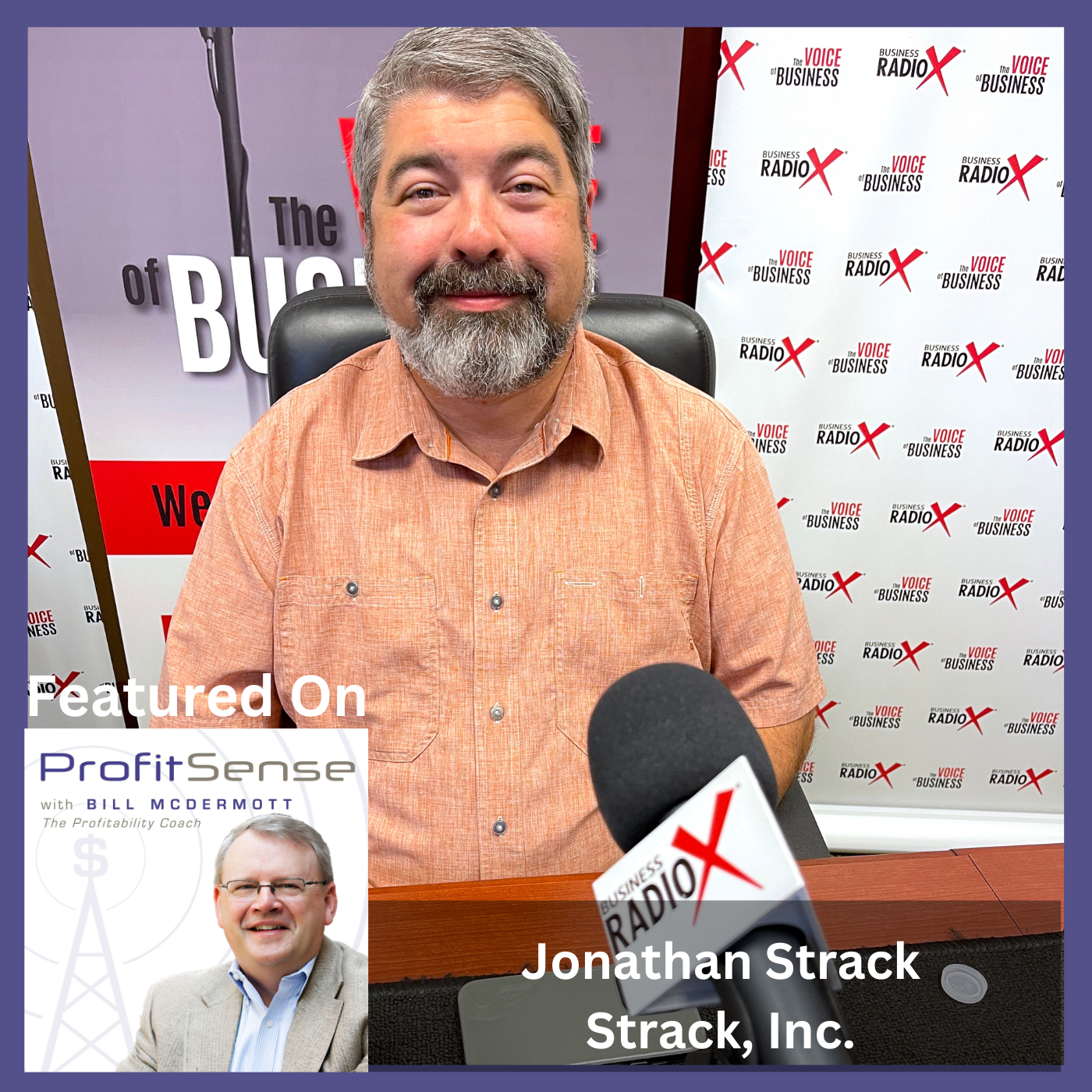
Using Social Media in the Construction Industry, with Jonathan Strack, Strack, Inc.

July 20, 2023 by John Ray

social media
North Fulton Studio
Using Social Media in the Construction Industry, with Jonathan Strack, Strack, Inc.
Loading
00:00 /
RSS Feed
Share
Link
Embed

Download file

social media

Using Social Media in the Construction Industry, with Jonathan Strack, Strack, Inc.

Jonathan Strack: In our industry, my view was stay off social media because you don’t want to attract any needless attention to what you’re doing. It’s already risky business.  But anything that’s on a social media platform, that’s your best attraction and retention tool. And that really legitimizes what you’re doing now.

We’ve gotten business based off our social media presence, especially when we started grading, we’d been primarily a pipe contractor, most of my life. And as we started doing earthwork, that was a definite change in perception for the industry. And. as we were trying to win some work, I’d have conversations with really large clients and said, Hey, we see what you’re doing on social media, you look like, you know what you’re doing, we trust you, you’ve been in business 70 something years.

And we’ve worked with you before in other places. Hey, come on we’re willing to give you a shot. And that really perked me up and surprised me. So I’ve become. A lot more open to exposing ourselves to what we do. And I think, the other piece is, you got to be willing to accept some failure and learn from it.

Sure. That we’ve definitely had some of that along the way.

Listen to Jonathan’s full ProfitSense with Bill McDermott interview here. 


The “One Minute Interview” series is produced by John Ray and the North Fulton studio of Business RadioX® in Alpharetta. You can find the full archive of shows by following this link.

Renasant Bank has humble roots, starting in 1904 as a $100,000 bank in a Lee County, Mississippi, bakery. Since then, Renasant has grown to become one of the Southeast’s strongest financial institutions with over $13 billion in assets and more than 190 banking, lending, wealth management and financial services offices in Mississippi, Alabama, Tennessee, Georgia and Florida. All of Renasant’s success stems from each of their banker’s commitment to investing in their communities as a way of better understanding the people they serve. At Renasant Bank, they understand you because they work and live alongside you every day.

Tagged With: Construction, Jonathan Strack, One Minute Interview, ProfitSense with Bill McDermott, Social Media, Strack Inc., talent attraction, talent retention

Jonathan Strack and Eric Cooley, Strack, Inc., and Chris Smith, CB Smith & Associates

July 14, 2023 by John Ray

Strack Inc.
North Fulton Studio
Jonathan Strack and Eric Cooley, Strack, Inc., and Chris Smith, CB Smith & Associates
Loading
00:00 /
RSS Feed
Share
Link
Embed

Download file

Strack Inc.

Jonathan Strack and Eric Cooley, Strack, Inc., and Chris Smith, CB Smith & Associates (ProfitSense with Bill McDermott, Episode 47)

On this edition of ProfitSense with Bill McDermott, Jonathan Strack and Eric Cooley from Strack, Inc., and Chris Smith, CB Smith & Associates, joined host Bill McDermott for a discussion on building their respective businesses and adapting to the digital age. Jonathan and Eric talked about cultivating a company culture, getting outside their comfort zone to recruit talent and market their business, growing the skills of their people, and more. Chris discussed the ways his firm is leveraging technology and AI, how they support their clients through tax planning, new tax laws, and more.

Bill concluded the episode with comments on the one liquidity rule every business owner should know.

ProfitSense with Bill McDermott is produced and broadcast by the North Fulton Studio of Business RadioX® in Alpharetta.

Jonathan Strack and Eric Cooley, Strack, Inc. 

Eric Cooley and Jonathan Strack, Strack, Inc.

Founded in 1948, Strack, Inc. is a heavy civil contractor focused on delivering value-driven project solutions, advanced industry training, and workforce development in the Southeast. Strack provides grading & excavation, pipeline construction, trenchless boring, design build, railroad construction and drilling and blasting services.

With a focus on the residential, municipal, industrial, and commercial markets, Strack is committed to delivering quality infrastructure built by an equipped and empowered team of nearly 600 employees. At Strack, they foster a relationship-driven culture and are driven by living out their core values of Better Every Day, Mindful in Everything, Humble Hearts Open Hands, and Everyone Matters in everything they do.

Jonathan Strack is CEO and President of Strack, Inc. He is a  3rd generation Strack, who has led the way for growth and provided vision for the future of Strack Inc., unlike anyone else. Under his leadership, Strack has more than quintupled in revenue all while expanding into new market segments and construction disciplines. Jonathan was awarded Construction Equipment’s ‘Under 40 in Construction Equipment Award’ for 2020.

Eric Cooley joined Strack as Chief Financial Officer in June 2019. Eric has more than two decades of experience serving in construction financial management roles. Over his career, Eric has had the privilege of building and developing many successful teams in the areas of finance, accounting, HR, IT, project management, training, and recruiting.

He holds a BS in Business Administration from Longwood University and an MBA from Campbell University. He is also a Certified Construction Industry Financial Professional (CCIFP) and IMA Certified Management Accountant (CMA). During his career, Eric has gained a mix of public, private, and private equity experience with company revenues from $100 million to $4 billion. Eric enjoys working collaboratively across the organization to strategically solve business problems, create structure, and develop systems.

Website | Facebook| Instagram

CB Smith & Associates

CB Smith & Associates is a Georgia-based business advisory and CPA firm that delivers big-firm expertise and acumen with small-town thoughtfulness and warmth. We help bring to light the stories that numbers tell — about the health of your business, the soundness of your financial or tax plan, and the options that can lead you to a path of success. We believe that awareness makes opportunity visible.

Website | Facebook | LinkedIn

Chris Smith, President, CB Smith & Associates

Chris Smith, President, CB Smith & Associates

With over 30 years of financial experience, Chris Smith is passionate about his work. Since founding the accounting firm in 2003, he has led the firm’s growth from one to three office locations in Georgia to include 35 employees with a solid team of certified public accountants and other tax professionals.

CB Smith & Associates is a business advisory and full-service accounting firm that works in tandem with its sister company, Reliance Payroll LLC, a full-service payroll and human resources outsourcing firm.

Prior to starting his own firm, Chris was a corporate controller. He earned a degree in accounting from Georgia State University’s J. Mack Robinson College of Business, is active in local community groups such as the Rotary Club and numerous CPA groups.

LinkedIn

About ProfitSense and Your Host, Bill McDermott

Bill McDermott
Bill McDermott

ProfitSense with Bill McDermott dives into the stories behind some of Atlanta’s successful businesses and business owners and the professionals that advise them. This show helps local business leaders get the word out about the important work they’re doing to serve their market, their community, and their profession. The show is presented by McDermott Financial Solutions. McDermott Financial helps business owners improve cash flow and profitability, find financing, break through barriers to expansion, and financially prepare to exit their business. The show archive can be found at profitsenseradio.com.

Bill McDermott is the Founder and CEO of McDermott Financial Solutions. When business owners want to increase their profitability, they don’t have the expertise to know where to start or what to do. Bill leverages his knowledge and relationships from 32 years as a banker to identify the hurdles getting in the way and create a plan to deliver profitability they never thought possible.

Bill currently serves as Treasurer for the Atlanta Executive Forum and has held previous positions as a board member for the Kennesaw State University Entrepreneurship Center and Gwinnett Habitat for Humanity and Treasurer for CEO NetWeavers. Bill is a graduate of Wake Forest University and he and his wife, Martha have called Atlanta home for over 40 years. Outside of work, Bill enjoys golf, traveling, and gardening.

Connect with Bill on LinkedIn and Twitter and follow McDermott Financial Solutions on LinkedIn.

TRANSCRIPT

Intro: [00:00:03] Broadcasting from the Business RadioX Studio in Alpharetta, it’s Time for ProfitSense with Bill McDermott.

Bill McDermott: [00:00:16] Good morning. Welcome to ProfitSense. This podcast dives into the stories behind some of Atlanta’s successful businesses, and business owners, and the professionals that advise them. We help local business leaders get the word out about the important work they’re doing to serve their market, their community, and their profession, as well as discuss current issues that business owners are facing today across a wide variety of industries.

Bill McDermott: [00:00:43] I’m your host, Bill McDermott. And this show is presented by The Profitability Coach. When business owners want to increase their profitability, they often don’t have the expertise to know where to start or what to do. I leverage my knowledge and relationships from 32 years in banking to identify the hurdles getting in the way and create a plan to deliver profitability they never thought possible.

Bill McDermott: [00:01:07] We have three great guests on the show today and I just want to welcome each one of them. Jonathan Strack with Strack, Inc. Jonathan, welcome to ProfitSense.

Jonathan Strack: [00:01:17] Thank you very much.

Bill McDermott: [00:01:18] And Eric Cooley also with Strack. Eric, welcome to ProfitSense today.

Eric Cooley: [00:01:23] Thank you, Bill.

Bill McDermott: [00:01:24] And then, Chris Smith. Chris, welcome to ProfitSense. So glad you’re here.

Chris Smith: [00:01:28] Yeah. Thank you, Bill. Thanks for having me.

Bill McDermott: [00:01:30] So, Jonathan and Eric, I’m going to start with you. You know, we all know there’s a war for talent out there in the industry, especially in the construction industry. But I think across the board, it’s really hard to find great people. But you and your management team have done a fabulous job of building the business over a period of time. So, you know, I don’t want you to reveal any trade secrets here, but you’ve been in business for 75 years, how do you use that to attract top talent to the company? Jonathan?

Jonathan Strack: [00:02:08] Yeah. Just being in business for 75 years, you’ve got great relationships, you’ve got stability. We’ve got a really good long running reputation for quality, treating people well, doing a good job, and being fair. So, from that regard, it helps us sell ourselves.

Jonathan Strack: [00:02:27] But, you know, trying to find talent, you’re competing against everybody in a really saturated market. So, we really had to rethink how we went about attracting and retaining folks. We had to get used to being on social media and hire some additional staff we’ve never had before. So, that’s just part of an evolution of 75 years of business and changing times.

Bill McDermott: [00:02:53] Sure. And, Eric, I know there was a time, I want to say, maybe five or six years ago when you joined Strack, and I’m sure with your background and experience, you could probably go just about anywhere. What attracted you to Strack to become CFO there?

Eric Cooley: [00:03:10] For me, it was the longevity of the company, the reputation, and the marketplace. It’s the family feel. It really has a strong family culture. Again, we’ve doubled in size over the last three years. We’re nearly 600 employees at this point. But it’s just this feeling that you’re not just a number there. You mean something to the team no matter where you sit in the organization. So, just that culture, it’s hard to find that. I have a background in the corporate side. I’ve done some private equity. And so, just having this feeling of like a belonging there was important to me.

Bill McDermott: [00:03:44] Yeah. Yeah. I could understand why. And so, I know certainly there is a huge benefit of working for a privately held company. Core values typically come into play there. And so, I know, Jonathan, many employers do focus on their core values to be sure they find and retain the right people. So, how does Strack use that in their hiring process?

Jonathan Strack: [00:04:19] Well, we had to really sit down and define who we were as we grew. We had a set of well-known core values that were known by everybody that had been in the business, because that flowed from the family, we had long running employees. We were not typically a fast growing company, so it learned through osmosis or tribally, and it got handed down effectively well.

Jonathan Strack: [00:04:47] One of the things we figured out as we started to grow is how do you replicate you into all these folks that you’re bringing on board and make sure you’re still a special place to be. So, we sat down to find our core values so we’re better every day, mindful in everything, humble hearts, open hands, and everyone matters. Those are our core values. And trying to really teach the team right now to make every decision around that framework of those core values.

Jonathan Strack: [00:05:22] So, you know, it kind of went hand-in-hand with attraction or attracting and retaining talent and recruitment. And what we came up with was we decided we wanted to do our own management training, our own leadership training. We came up with our own leadership training program. We call it Frontline Leadership Training. It’s six days of training with cohorts of 20 to 30 people. And we’re going to put everybody in the business from pretty much a lead man up through a CEO. We’re all going to go through the training together.

Jonathan Strack: [00:06:03] And what it’s about is really two halves of the coin. It’s teaching what’s our standard professionally. We take a job from acquisition, we schedule it, we track it, we close it out. So, everybody in the business gets some appreciation for every other position in the company.

Jonathan Strack: [00:06:23] Like, our first one we did, we did a bid wedding. So, we had guys that they may run a Finnish crew, they may run a skid steer and a dozer and a couple of guys, and they’re having to bid on a job all of a sudden. So, they get a lot of appreciation for what the guys in the office have to do and disseminate a whole lot in a hurry.

Jonathan Strack: [00:06:45] But the other half of the coin is the personal side, the soft skill side. We want to relate to some household budget. You know, if your household finances at home are in disarray, how do we expect you to take care of our dollars? We want to do some career coaching, some goal setting, teach folks about how to properly communicate on the job, written, spoken, how to do an interview. Definitely, we’ve got a culture that is not typical. And we want to make sure that gets reflected by all our leadership. So, it’s really six days of teaching who we are and what’s our standard from professional standard attitude and ethics.

Bill McDermott: [00:07:33] Eric, from your perspective, similar question, how do you find that you, as CFO, are embodying those core values that Jonathan mentioned in your hiring process?

Eric Cooley: [00:07:48] Yeah. I mean, a lot of this obviously, as Jonathan said, we use that as a filter as we’re looking to hire folks. I think there’s always some of the professional stuff you can teach, but finding the right person with that character that shares those values with you is really important. And so, you know, if I evaluate talent on my team, that’s something we look at and try to coach around. And I try to embody those things to the best of my ability on an every day. And it’s just about being intentional about it and trying to recognize it.

Eric Cooley: [00:08:17] One thing I do talk to my team about is that we’re not an accounting company that also does construction. We’re really here to serve the construction business. So, we’re a construction company. We happen to be a piece of the wheel. And I think just recognizing where you fit in the organization is important. You know, looking at mindful and everything, that’s talking about, not just worrying about what’s going on in accounting, but think about these folks have other responsibilities they have to look at and serve, and so just working through that.

Bill McDermott: [00:08:46] And I think I’ve found, Eric, once you start sharing those core values in the interviewing process, a lot of times you find people that just don’t feel a fit and they’ll self-select out as well. Has that been your experience as well?

Eric Cooley: [00:09:01] That has been some, historically, yes. So, I think it’s important if you kind of talk about, “Hey. These are the things we’re doing,” then you get someone else talking about, “Hey. I really want to advance quickly or I really want money,” then it pretty much doesn’t line up. We’re not just about making money at Strack. It’s about the culture, about the fit.

Bill McDermott: [00:09:19] Sure. Sure. Excellent points. Jonathan, as you have built the organization, are there any particular hiring methods that seem to work well at Strack, Inc.?

Jonathan Strack: [00:09:33] Well, as we started growing six or seven years ago, pretty heavily, one of the things I had to get used to was social media. Typically, in our industry, my view was stay off social media because you don’t want to attract any needless attention to what you’re doing. It’s already a risky business. But, really, anything that’s on a social media platform, that’s your best attraction and retention tool. And that really legitimizes what you’re doing now.

Jonathan Strack: [00:10:05] We’ve gotten business based off our social media presence, you know, especially when we started grading. We’d been primarily a pipe contractor most of my life. And as we started doing earthwork, that was a definite change in perception for the industry.

Jonathan Strack: [00:10:22] And as we were trying to win some work, I’d have conversations with really large clients that said, “Hey, we see what you’re doing on social media. You look like you know what you’re doing. We trust you. You’ve been in business 70 something years and we’ve worked with you before in other places. So, hey, come on, we’re willing to give you a shot.” And that really perked me up and surprised me. So, I’ve become a lot more open to exposing ourselves to what we do.

Jonathan Strack: [00:10:51] And I mean, the other piece is you’ve got to be willing to accept some failure and learn from it. We’ve definitely had some of that along the way.

Bill McDermott: [00:11:00] Growing up in an era where there were no mobile phones, no internet, let alone no social media, like you, I have my own stories about social media. And thank goodness I’ve got one or two people that are in their 30s and can guide me in those processes. But like you, I struggled with Instagram and all the things that have to do with social media.

Jonathan Strack: [00:11:34] Yeah. And I think, you know, for construction, just changing our perception of who we are and what we are is a big deal. I mean, we’re not well-thought of by the public. I mean, when you think of construction, a lot of people think about the home remodeling guy that ran off with the work half done with all their money. And that’s not us.

Jonathan Strack: [00:11:55] And trying to really expose ourselves to high school students, college students, even middle and elementary school students and explain, “Hey. You know, we’ve got marketing folks, we’ve got accounting folks, we’ve got surveying folks. Any other legitimate business that has all these positions, we have them, too.”

Jonathan Strack: [00:12:17] I mean, I had a young man, he runs our lube truck and he’s 22 or 23, and he just was not feeling it. He says, “Look, you know, I don’t know where my path is.” But he has this passion for photography. I said, “Well, we spend a lot of money every year paying for a photographer to come out and document our stuff, make social media content for us, you obviously know what you’re doing. What do you want? Make me a wish list. I’ll buy the equipment and let’s work you into a full time position. I already paid for it anyway. You’re here. You love it. You know us. You represent us well. You and your brother work for us. Come on, let’s do it.”

Bill McDermott: [00:13:02] Wow. Wow. That’s a great story. I do know construction has a reputation. I can so relate because I come from a banking background, and bankers are challenged. There are some great bankers out there, but also banking in general is just kind of a hard process to go through.

Bill McDermott: [00:13:28] Eric, it’s one thing to attract top talent, but how, in your view, does Strack retain that talent in the company?

Eric Cooley: [00:13:37] Yeah. So, retention has been tough just in this market, particularly in the field. I think a lot of construction has high turnover and we’re not that different as it comes to that. And that’s one thing we really focused on, as we’ve tried to grow, we’ve also had to replace. But I think the key things we look at is, you know, we start training from day one.

Eric Cooley: [00:13:58] So, a lot of folks from an orientation perspective, they may come in, have you just sign some papers. We’re running a four day orientation program right now. You come in. You learn the standard operating procedures for the company. You get safety training. You have an opportunity to go through. We’ve got equipment simulators to get familiarization with the equipment. And so, you know, really making that investment starting in day one.

Eric Cooley: [00:14:21] And I think living out our core values, that’s something that’s key to trying to retain them. If we’ve sold them on something, it’s important that we live that out and they’re able to see that demonstrated to hold on to them.

Eric Cooley: [00:14:33] I think Jonathan touched a little bit on the training. So, we’ve got this frontline leadership training program we’ve built. We’re also building an Operator Training Program, where we’ve promoted four guys from inside the business and they’re going to go out and help on the job sites to help train and really bring up the level of experience and understanding to some of the newer employees. Because part of this, you know, attracting new talent means we might be looking at folks from other industries. And so, part of that’s just trying to help increase the knowledge base out there.

Eric Cooley: [00:15:06] And then, you know, some other things we’ve done is we’ve got Marketplace Chaplains. So, we have a chaplain service to really demonstrate the care. And at this point, Jonathan’s not able to talk to every employer. Historically, he could take calls consistently. But at this point, it’s making sure that that message is out there, we care and how can we help you there.

Bill McDermott: [00:15:25] We had that at a bank that I worked at, too, and that made a world of difference because there was a point in time when I had lost my father and was going through a grieving process. And so, that is wonderful.

Eric Cooley: [00:15:37] And I think something else that is kind of unique here is we have a charitable gift matching. So, any employee, any charitable gift giving they make, the company will match that. And there is a limit set for just normal charities. As it comes to tithing, it’s unlimited. So, just really pushing further on the values and demonstrating from our actions that we’re going to live those out.

Bill McDermott: [00:15:58] Yeah, that’s awesome. We’re talking today with Jonathan Strack and Eric Cooley with Strack Inc. Founded in 1948, Strack Inc. is a heavy civil contractor focused on delivering value driven project solutions, advanced industry training and workforce development in the southeast. They provide grading and excavation, pipeline construction, trenchless boring, and many other things. They’re committed to delivering quality infrastructure built by and equipped and empowered team of nearly 600 employees.

Bill McDermott: [00:16:31] And, Jonathan, what a great legacy that you’re continuing to leave and will do into future generations. But I’m curious, how, in your view, have your hiring and retention processes evolved through the years?

Jonathan Strack: [00:16:49] Well, most of your hiring in years past was either referral, and you still have a fair bit of that. But it used to be you’d have guys walk in your front door, want to fill out an application. It was a very organic process. You might put an ad out in the local newspaper or in the Atlanta Journal Constitution.

Jonathan Strack: [00:17:10] But, now, you get very few people that way. And if they’re coming in the front door, those are probably not the guys you want to hire, honestly, in today’s environment. I’m not saying that doesn’t ever happen, but by and large like I talked about earlier, you’ve got social media platforms, you do paid ads. We actually have a human resources software now that helps us post some of our jobs. We’ve gotten a lot of traction that way. We have a full time recruiter on staff, full time that calls and vets folks before we really ever get into an interview.

Jonathan Strack: [00:17:53] And the team itself, they pretty well supply the needs to the recruiter. And between HR and recruitment, they disseminate the needs back out to the guys as they do interviews. We’ve got paid billboard advertisements right now. I mean, we’re trying things we’ve never tried before just to get some attention to us. I mean, we’ve got three or four billboards at the I-85 Corridor right now.

Eric Cooley: [00:18:22] We do. Yes.

Jonathan Strack: [00:18:22] I’ve never, never thought I would do that. I never liked talking about us. You know, we’re pretty humble as a whole. And that always used to appear arrogant to me. But now, it’s out of necessity. I’ve got to try whatever I can, regardless of what I may or may not be comfortable with, because we don’t know what works right now. We’re having to learn.

Bill McDermott: [00:18:46] So, Eric, I think if you say it, sometimes it can be taken as bragging. But I’m sure if your employees are saying it, that’s testimony. And so, I’m wondering from your perspective, how do you maybe engage your workforce in looking for people just like them to send your way as well?

Eric Cooley: [00:19:13] Right. Yeah. A lot of that is giving our employee that experience so they do want to do the referrals. And then, we do have an Employee Referral Program to where the employees are rewarded for bringing new employees onboard.

Eric Cooley: [00:19:26] We’re working on an internal communications app. It’ll actually be an application on your phone. And I think given that connectivity, you know, the consistent message all the way throughout the organization will help the employees that may not get to see everything or be aware of everything to really make them more aware of what’s going on in the company, and then want to invite their friends or other other folks to join them. So, I think that communication is big. And, really, the encouragement to bring folks, more like yourself, to come to the company is how I see that.

Bill McDermott: [00:19:55] Sure. Sure. Absolutely. So, just in case we have any potential great employees who might be out there, let’s use the ProfitSense Podcast too. Jonathan, Eric, what’s the best way if there’s someone interested in coming to work for a great company like Strack, Inc., how should they get in touch with you?

Jonathan Strack: [00:20:14] I’ll take it. Yeah. I mean, the best way, you can get on the website and put an app in. You can always message us on any social media platform. That’s monitored full time by folks we have on staff. So, really, any public facing portal we have, whether it’s LinkedIn, Facebook, website, shoot us a message, put in an application, and we’ll call you back pretty promptly.

Bill McDermott: [00:20:42] And, Eric, what’s the website address for the company?

Eric Cooley: [00:20:45] It’s www.strackinc.com.

Bill McDermott: [00:20:49] Great. Jonathan and Eric, thanks so much for coming on ProfitSense today and sharing your experience and your expertise. And congratulations on building a company with an employee base of 600 people. That’s quite an accomplishment. Congratulations.

Eric Cooley: [00:21:05] Thank you for inviting us.

Jonathan Strack: [00:21:06] Thank you.

Bill McDermott: [00:21:09] And so, Chris Smith, Chris is with CB Smith & Associates. Chris, so glad to have you. For our listeners, tell us a little bit about CB Smith & Associates. You’ve got a headquarters in Alpharetta, but also Macon and the Lake Oconee area. As an accounting and business advisory firm, what do you do for businesses and individuals?

Jonathan Strack: [00:21:34] Yes. Thanks, Bill.

Chris Smith: [00:21:36] So, CB Smith is celebrating their 20th year being in business. I started CB Smith in the Cumming area back in 2003. And we’ve slowly grown over the years. Today, we’re a full service firm. I have a partner at the firm, his name is Tim Whittemore. And as you mentioned, we have offices in Macon and here in Alpharetta, and we have a satellite office in the Lake Oconee area. Today, we’re a full service firm. We do audit work. We do reviews. We do tax planning, business advisory services, and, of course, tax compliance work for our clients.

Chris Smith: [00:22:19] But one of the areas that we’ve really focused in – gosh – since 2007 timeframe is moving accounting into a paperless environment. And once accounting gets into a paperless environment, it’s all X’s and O’s. And then, you can do things like process automation, really automate processes, and improve collaboration amongst team members. And, hopefully, help to make a business more scalable.

Chris Smith: [00:22:51] From a philosophical standpoint, I’m a big believer in the things that got you out of Egypt are not the same things that will get you to the Promised Land.

Bill McDermott: [00:23:00] Well said.

Chris Smith: [00:23:03] We love working with businesses that are at that stage. They’ve hit a ceiling of complexity and they’re trying to figure out what are those things that will get us to the Promised Land. And so, we help them by implementing and retooling the accounting function. We’re a big believer that the accounting function shouldn’t be an anchor on the business. It should be a driver of growth. And so, we try to work with our clients from that standpoint.

Chris Smith: [00:23:29] So, we’ve got some young folks at the firm that are taking advantage of these no code, low code solutions that are out there, power apps, mostly for the Microsoft platform that takes those X’s and O’s or those ones and zeros, and, really, starts to build a better process for our clients and their business processes, improves internal controls in the business. And, hopefully, that leads to growth and that’s where we come in and help them from a tax planning standpoint.

Bill McDermott: [00:24:09] Now, you’re preaching to the choir here when you start talking about processes. One of the things that I found in working with my clients is rarely do I see processes in writing. And if they’re in writing, are they being followed? And so, when you started talking about business process automation, that’s like documented processes on steroids. But tell us a little bit more about that, because I think you’ve really carved a niche in the marketplace with business process automation, haven’t you?

Eric Cooley: [00:24:41] Yeah. Yes. Certainly, we really love working with our clients from that standpoint and putting everything on its side. You know, the documents as an example, having an SOP document and all the binders and everything to that effect, we integrate it into the process. That documentation is the process. So, if someone gets to a form and how do I fill this out or what am I doing with this, you can have a Help Menu item that just shows up. And it is, “Here’s our policy. This is how this works.” So, we integrate it into the tools that are in place.

Chris Smith: [00:25:18] You know, historically speaking, you have your software and then you have your policy document. And so, now the software and the policy document become one. And with the low code and no code development that can be done just by accountants, you’re able to now integrate those things together. And it’s flexible. It’s agile. As the business changes, the environment for the business changes. You can change your policies and integrate it right into the app right at the same time.

Chris Smith: [00:25:49] It also eliminates so much human error that may be in place, especially if you do have a document. A lot of times they come in electronically as it is. But even if they’re scanned in, you can OCR. Artificial intelligence sometimes can be scary for folks but it’s here and leverage it.

Chris Smith: [00:26:07] And so, if you have an AI that can sit there and read a document and know it’s an invoice from a particular vendor, and knows where to go look on that invoice for the amount, when it’s due, so on and so forth, use the AI. And then, your people, instead of becoming data entry clerks, they’re reviewing what the AI does, make sure it’s good.

Chris Smith: [00:26:26] And once that’s in there and, again, ones and zeros, you don’t have any room for human error later on down the road. The integrity of your data really improves. And there’s a lot of benefits in terms of efficiency so the business can focus in on what it does and reduce its administrative costs accordingly.

Bill McDermott: [00:26:48] Yeah. I can really see the benefit of not only improving efficiency, but also improving effectiveness. I can’t talk to a CPA without talking about taxes. Taxes come up. And so, I’m going to insert a little personal bias here. So, businesses that have a tax strategy that minimizes taxable income make them very difficult to bank lending customers, coming from a banking background. So, that’s my bias there I have to get over.

Bill McDermott: [00:27:26] But I do know tax planning is a big part of your business. What do you see as tax planning? How do you do it? And then, why is it important for small businesses to do tax planning?

Chris Smith: [00:27:41] Our first philosophy is, first off, we’re going to be your advocate for our clients. Tax planning is important, but tax planning isn’t the end all, be all. Improving your wealth is the end all, be all. And so, we’re not going to implement or suggest a tax solution that isn’t necessarily in line with improving our client’s overall financial well-being. And so, that’s always secondary to financial well-being. But it’s a very important piece.

Chris Smith: [00:28:15] We’re in a segment. We’re not a large national firm, so we don’t have a lot of clients that are publicly traded or anything like that. Our clients don’t have investors to impress. They’ve got to impress the bank every once in a while. You know, so our focus is going to be on tax planning. It’s a heavy part of our relationships with our clients. And, you know, that is the business we’re in, by the way, is the relationship business. We may be accountants, but that’s what it is.

Chris Smith: [00:28:43] And so, we’re going to work with our clients to ensure their financial well-being is in place. And they’re doing it as a tax efficient manner as possible. And if they need a source of funding because of some sort of, you know, new business plan, new venture that they’re going to move into, then we’ll work with our clients and we’ll work with the bankers. And make sure the bankers understand these are things that we’re doing from a tax perspective, so let’s make some adjustments accordingly so you can get a better picture of what the cash flow would be for the organization, so you can make better lending decisions from that standpoint.

Bill McDermott: [00:29:25] Yeah, it makes perfect sense. So, the baby boomer generation business owners are retiring in droves. They’ve been successful. They’re wanting to exit. So, talk a little bit about how CB Smith & Associates helps business owners with succession planning.

Chris Smith: [00:29:45] Yeah, certainly. There is a time frame. Each business sits at a different life cycle and all businesses are different. We’re dealing with clients that are startups, that are on that front end stage, cash is really tight, they’re in a high growth environment. We’re trying to help them with business process automation to leverage the tools that are out there.

Chris Smith: [00:30:07] And then, we have clients that maybe are at that little more mature stage, but they’re ready to go another 10, 15 years. And so, that’s where tax planning comes into play. That’s where we’re thinking about, “Okay. How can we minimize your tax as much as possible?” So, that’s available cash to reinvest in the business or harvest from the business.

Chris Smith: [00:30:29] And then, we have clients that are very mature, you know, multi-generational businesses and they’re dealing with other issues where they’ve just got more pieces of the pie that they have to spread out, and so how do they manage growth from that standpoint.

Chris Smith: [00:30:46] But then, we have folks that they’re not ready to pass it on to the next generation. They’re looking for some sort of a succession plan. And the key to them is planning ahead of schedule. It’s a five year look. That’s where we change our strategy. We’re not necessarily interested in maximizing the tax benefits that they may be receiving, but we’re interested in making sure that business looks like a nice rose on the bush and it’s ready to be plucked off.

Chris Smith: [00:31:16] So, we’re going to help our clients from that standpoint. We’re going to make sure that maybe we don’t take those deductions as benefits that you have been taking in the past. Let’s see what we can do to improve the cash flow from the business to the owners. We often refer to it as EBITDA.

Chris Smith: [00:31:35] And sometimes it’s different. It depends on the business. It could be a heavy asset business, got a lot of assets to it, or it could be a business that doesn’t have much of a balance sheet at all and it’s more of a service business. So, we’re going to look at those aspects and make sure that that business is in a good position so they can maximize value out of it.

Chris Smith: [00:31:53] What are they doing from a management standpoint? Bill, you know this really well. What are they doing from a management standpoint so the business is not defined by the owner. It’s defined by the team. And so, that really enhances value of that business from that standpoint. And that’s a philosophy you should have even if you’re not looking to sell the business. Make the business work for you. You not work for the business. But we’re going to work with them and make sure that they have the right mindset in terms of what they’re doing.

Chris Smith: [00:32:27] And then, we’ll have conversations with them, they are going to cash it. How do you handle that? What’s the estate going to look like? What are we looking at in terms of the value of the estate and how is that going to go? How are those assets going to get passed on? How is it going to get taxed when you die? Having some conversations on that.

Chris Smith: [00:32:49] Also, having conversations of do you want to sell it to a competitor or do you want to sell it to your employees. We’re working with a company right now. It’s a civil engineering firm. And we’re working with them to potentially have a tax free sale through an ESOP. And so, we’re going to have those conversations with the clients, here are the benefits, this is how much of a squeeze you need to make to get the juice out of the fruit, per se. This is what’s going to be involved administratively to be able to get those benefits.

Chris Smith: [00:33:22] We had another client that was in the chemical business that they’re getting ready to be bought out by a competitor right now. And there was a big discussion as to whether it was going to be a stock sale or an asset sale. And an asset sale was going to cost them about an additional $800,000 in tax. And so, that’s an important conversation to have with your client in saying, “Hey, we need to have an understanding of this.” And that may be a renegotiation that you have with the buyer that says, not only do we have $800,000 in tax associated with an asset sale, but we also have capital gains on that $800,000. So, we probably need to have close to $1 million of additional compensation from the sale of the business. And, fortunately, it was a nice business, so the buyer agreed to that.

Bill McDermott: [00:34:12] Yeah. That’s great. We’re talking today with Chris Smith, who’s president of CB Smith & Associates. Chris has over 30 years of financial experience, passionate about his work since founding the accounting firm in 2003. He’s led the firm’s growth from one to three offices in Georgia to include 35 employees with a solid team. CB Smith & Associates is a business advisory and full service accounting firm that works in tandem with its sister company, Reliance Payroll, which is a full service payroll and human resources outsourcing firm.

Bill McDermott: [00:34:48] Chris, last question. Today, what are some tax law changes in Georgia that individuals or businesses need to know this year?

Chris Smith: [00:35:00] Certainly. Thanks for asking that question. There have been some recent tax law changes here in Georgia. And, you know, we just had a little internal, we have a First Friday Program with all of our staff. The first Friday of every month, everyone gets together and we talk about recent changes.

Chris Smith: [00:35:19] So, we, literally, just last Friday had a conversation about some tax law changes here in Georgia. So, it’s kind of still somewhat fresh in my head. The big piece that we have – there’s a couple pieces – one is, last year, Georgia passed what was called a Pass-Through Entity Election Law that allowed for S-corporations, in particular, and some partnerships to elect to be treated as a C-corporation for Georgia tax purposes.

Chris Smith: [00:35:51] And the benefit to that has to do with the S-corporation and partnership owners’ personal tax returns, because state taxes, when you itemize your deductions on the federal return, state taxes are limited to $10,000. And so, if you have a business of any worthiness that you can quickly exceed that, especially if you own a house and you’ve got property taxes of $5,000, $6,000, before you know it, you’ve hit that $10,000 threshold.

Chris Smith: [00:36:20] So, what this election does is it allows the Georgia income to be taxed at the entity level and it becomes a deduction for trade and business purposes purposes. And it eliminates it from your itemized deductions. And, of course, the income on your personal Georgia return that was taxed at the entity level is excluded from your income on your personal return. So, there’s a lot of benefits to that.

Chris Smith: [00:36:46] One problem we had with this is that it was limited. The partnerships that could participate in that was limited. You had to have certain qualifications in order to be able to do that. And so, Georgia has amended that law, I think it’s House Bill 415 that did that. So, they have amended House Bill 415 to allow all partnerships to participate in that election beginning in 2023, the 2023 tax year. So, that’s a big benefit for some of those businesses that were out there that there was a partnership arrangement they couldn’t do it. We had a couple of clients that just couldn’t do it from that standpoint, just due to the nature of the partners or in their partnership.

Chris Smith: [00:37:29] The other change that was been made and, of course, this is good news if you are one that likes paying less tax to the state of Georgia. House Bill 454 was just passed. And with that, the individual rate is going down. In prior years, the Georgia tax rate for both corporations and individuals was 5.75 percent. And Georgia’s individual rate is going to go down to 5.49 percent in 2024. And then, every year after that, it will go down another 10th of a point and it will rest in 2029 at 4.99 percent. So, that’s a good benefit for a lot of individuals.

Chris Smith: [00:38:16] The other things that changed for individuals is the Georgia Standard Deduction for filing married, filing jointly individuals has gone to $24,000. And the standard deduction for all others filing single, married, single head of household has moved over to $12,000. So, those are some of the changes that, just in the last legislative session, have been passed. And so, we’re going to see some benefits from that going forward.

Bill McDermott: [00:38:47] Yeah. Wow. Tax rates actually going down a little bit. What a concept. Chris, if someone has accounting questions or needs to get in touch with you for some accounting advice, what’s the best way for them to get in touch with you?

Chris Smith: [00:39:01] Yeah. So, website is a great place to go to. You can be a very small business just getting started, you’re trying to conserve every dollar you can, go to our website, sign up for a newsletter. We send out articles. We do blog posts monthly on various topics. A lot of great articles on our website about starting a business.

Chris Smith: [00:39:26] If you’re at a different stage in your business and tax is becoming a problem, business is growing, you know, feel free to reach out to us. There’s a couple links on the website to inquire with us and one of our senior level tax managers will call you up and have a conversation about how we can help you and how we can build a relationship with you from that standpoint.

Bill McDermott: [00:39:50] That’s great. And that web address is?

Chris Smith: [00:39:52] Yes. It’s CB Smith and Associates, so it is www.cbsmithcpa.com. That’s our website. And, of course, as your previous guests here had mentioned, we are also looking for talent in the area. And we work with a lot of the universities and schools, but we’re also looking for senior level talent as well that would help fuel our growth.

Chris Smith: [00:40:19] We’re a big believer that the players bring the fans. And so, the quality of our employees bringing clients and help us with growth. And so, we encourage anyone that may be interested in joining the team to go out to our website as well. You can go to About Us, and there’s a link there for joining the team, and we’d love to have an opportunity to speak with you.

Bill McDermott: [00:40:38] That’s great. Chris, thanks so much for coming on ProfitSense today.

Chris Smith: [00:40:42] Thank you.

Bill McDermott: [00:40:45] I want to take a minute to talk a little bit about liquidity. You’ve heard the idea that cash is king, and there is one liquidity rule that I think every business owner should know. Every business owner understands that cash is critical to running a business. But knowing how much cash is needed leaves many business owners confused and frustrated.

Bill McDermott: [00:41:08] I worked with a professional services firm that has a practice with three locations. Their revenue came from professional services that were reimbursed by insurance – insurance companies, as we all know, are notoriously slow in this practice – found themselves with at least half of their receivables over 90 days. No one was accountable for collections and they were forced to borrow from very expensive lending sources just to fund payroll.

Bill McDermott: [00:41:34] Quickly, we put the internal accountant in charge of collections. She blocked time on her calendar daily to make collection calls. In the next six weeks, the amount of over 90 day receivables was reduced to about 10 percent of the total, that was $100,000 cash impact to that firm. And the firm’s cash balance doubled because of it. They no longer had to borrow and saved a significant amount of interest expense.

Bill McDermott: [00:41:59] Now, the firm who works in the manufacturing space was able to increase their cash balance simply by requiring a 50 percent deposit for their product upfront. That way, they weren’t fronting all of their costs.

Bill McDermott: [00:42:14] No matter how you achieve it, my recommendation is that 15 to 20 days sales is a good number. Take your annual sales, divide it by 360, then divide that number into your cash balance. So, if you have $5 million in revenue, that’s about $14,000 a day to have 15 days sales and cash, your cash balance would need to average about $210,000. If you’re struggling with liquidity, work with your finance person to find out how to improve your cash balance and take action.

Bill McDermott: [00:42:49] If you want to keep up with the latest in pro business news, follow us on LinkedIn and Instagram at The Profitability Coach. If you want to listen to past or future ProfitSense episodes, you can find us on profitsenseradio.com. This is ProfitSense with Bill McDermott signing off. Make it a great day.


Tagged With: Accounting, AI, Bill McDermott, CB Smith & Associates, Chris Smith, Eric Cooley, Jonathan Strack, ProfitSense with Bill McDermott, retaining talent, Social Media, Strack Inc., talent aquisition, tax law, The Profitability Coach

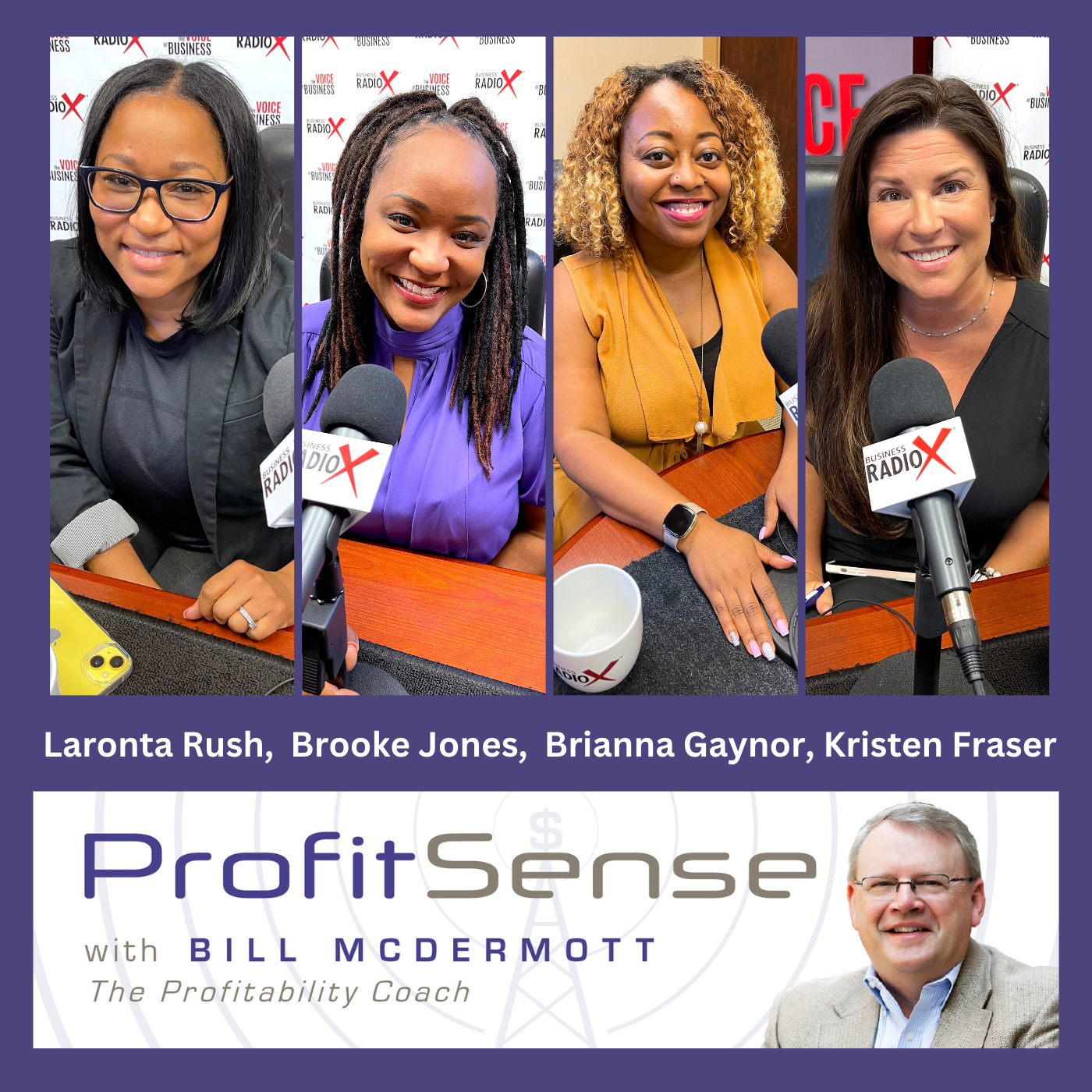
Mental Health Professionals Roundtable: Dr. Laronta Rush, Healthy Minds Psychology Assoc., Dr. Brooke Jones, Fresh Start for the Mind, Dr. Brianna Gaynor, Peace of Mind Psychological Services, and Kristen Fraser, LPC, Canton Counseling 

June 19, 2023 by John Ray

Mental Health Professionals
North Fulton Studio
Mental Health Professionals Roundtable: Dr. Laronta Rush, Healthy Minds Psychology Assoc., Dr. Brooke Jones, Fresh Start for the Mind, Dr. Brianna Gaynor, Peace of Mind Psychological Services, and Kristen Fraser, LPC, Canton Counseling 
Loading
00:00 /
RSS Feed
Share
Link
Embed

Download file

Mental Health Professionals

Mental Health Professionals Roundtable: Dr. Laronta Rush, Healthy Minds Psychology Assoc., Dr. Brooke Jones, Fresh Start for the Mind, Dr. Brianna Gaynor, Peace of Mind Psychological Services, and Kristen Fraser, LPC, Canton Counseling  (ProfitSense with Bill McDermott, Episode 46)

On this edition of ProfitSense with Bill McDermott, four independent mental health professionals joined host Bill McDermott. Dr. Laronta Rush, Dr. Brooke Jones, Dr. Brianna Gaynor and Kristen Fraser, LPC discussed their friendship and how they came together, supporting each other as business owners and mental health professionals, how they navigated changes during the pandemic, a major mental health issue of teens and social media, and much more.

ProfitSense with Bill McDermott is produced and broadcast by the North Fulton Studio of Business RadioX® in Alpharetta.

Healthy Minds Psychology Associates

Healthy Minds Psychology Associates is a group practice providing comprehensive mental health services, including psychological and educational assessments, individual, family and couples counseling, and executive function coaching.

They strive to provide their patients with a superior experience, and this means selecting well-trained clinicians and ensuring the highest quality of service to their patients. Their patient-centered approach is critical to their success, and they pride themselves on excellence in every form.

Website | Facebook

Dr. Laronta Rush, Founder & Director, Healthy Minds Psychology Associates

Dr. Laronta Rush, Founder & Director, Healthy Minds Psychology Assoc.

Dr. Rush is the Founder and Director of Healthy Minds. She specializes in psycho-educational and psychological evaluation to help identify the presence of neuro developmental disorders in children as well as learning and emotional/behavioral disorders in adults. She has well over a decade of experience in assessing symptoms related to learning disabilities, autism spectrum disorders, anxiety disorders, depression, bipolar disorder, and developmental disabilities.

Dr. Rush has particular interest and clinical expertise in the evaluation and diagnosis of dyslexia and other learning disabilities, ADHD/ executive functioning difficulties, as well as anxiety and mood disorders. Through her early career work as a School Psychologist, Dr. Rush has developed a broad base of knowledge of empirically supported, and developmentally appropriate interventions for common childhood problems, associated school based services/ accommodations, and works closely with parents as they navigate the special education, 504 accommodation, or Student Support Team (SST) process.

In addition, Dr. Rush provides expert testimony for cases involving special education or other school-based services for children with disabilities and conducts psychological testing that is used to inform legal cases.

Dr. Rush is an approved psychologist for metro Atlanta school systems to perform Independent Educational Evaluations (IEEs). She also works closely with several special education attorneys to assist them in obtaining the best outcomes for their clients.

Fresh Start for the Mind

Fresh Start for the Mind is a mental health group practice that offers psychological services to children, adolescents, and adults. They provide psychological evaluations, counseling services, medication management, and diet and nutrition support. With three locations (in Canton, Suwanee, and Stockbridge), Fresh Start has an impeccable reputation for offering quality and effective services.

Website | Facebook

Dr. Brooke Jones, Owner & Clinical Psychologist, Fresh Start for the Mind

Dr. Brooke Jones, Owner & Clinical Psychologist, Fresh Start for the Mind

Dr. Jones is a licensed psychologist specializing in psychological evaluations for children, adolescents, and adults. Dr. Jones takes pride in offering comprehensive and thorough assessments, considering all areas of functioning, including physical health and environmental/cultural issues that may mimic underlying psychological disorders.

Dr. Jones earned her doctorate degree and M.A in Clinical Psychology at the Georgia School of Professional Psychology (Argosy University Atlanta) and completed her undergraduate degree in Psychology at Hampton University in Virginia. In 2009, she completed an APA-approved internship in Chicago, IL, while completing her dissertation. She has also held clinical positions in group practices and taught undergraduate studies in psychology.

LinkedIn

Peace of Mind Psychological Services

Peace of Mind Psychological Services is a mental health practice which focuses on individual therapy, support groups, and psychological evaluations. They treat patients starting from age 5-65 for various concerns including depression, anxiety, behavioral issues, trauma, and divorce.

They also conduct evaluations for children and adults for learning disorders, emotional concerns, parental fitness, and behavioral problems. Their goal is to support those they serve through all areas of life through therapy, assessment, and educational workshops.

Website | Facebook | LinkedIn

Dr. Brianna Gaynor, Licensed Psychologist, Peace of Mind Psychological Services

Dr. Brianna Gaynor, Licensed Psychologist, Peace of Mind Psychological Services

Dr. Brianna Gaynor has a passion for mental health and has noticed time and time again, the healing effects of her work. Dr. Gaynor has been licensed as a psychologist in the state of Georgia since May 2011 and received her doctorate degree from the Georgia School of Professional Psychology in 2009.

Her training while in graduate school focused primarily on the treatment of children, adolescents, and families. During her internship year she was also trained in faith based therapy and, although not a traditional Christian counselor, has learned how to incorporate faith based techniques for those clients who express a willingness to hear the word of God. She has also worked in various settings, including outpatient, residential, and a mental health hospital.

What Dr. Gaynor enjoys most is the opportunity to connect with people and help encourage them through their troubles. Currently, she works at her own private practice, Peace of Mind Psychological Services, where much of her work focuses on the diagnosis and treatment of various mental health disorders, including depression, anxiety, trauma, and behavioral disorders through psychological evaluations. Peace of Mind also specializes in helping the whole family “find peace in every circumstance” by providing therapy services starting at age 3 through adulthood.

Dr. Gaynor has a unique way of connecting with others through humor and kindness and her goal in every encounter is to help others to “find peace in every circumstance.”

LinkedIn

Canton Counseling

We all need support in dealing with life’s challenges, but sometimes just asking for help can feel as overwhelming as the problems for which we are seeking support. The task of finding the right therapist can be difficult. Who can I trust? Will I be heard and understood? Will they work well with my children and/or family?

Canton Counseling understands these concerns and work to create a compassionate therapeutic environment to help clients grow and change. Whether you are looking to learn new ways of dealing with a behavioral or relationship pattern, or are seeking support for your child or family, they offer their clients a compassionate and supportive, yet challenging environment in which to achieve their full potential. When talking with adolescents, Canton Counseling works to create a space where the adolescent feels supported and safe while also incorporating some fun!

Their goal is to always meet each young person where they are both developmentally and emotionally. They are committed to providing understanding, education, coping strategies, and support to help others find hope and healing for the challenges of life.

Website | Facebook

Kristen Fraser, LPC, Owner & Clinical Director, Canton Counseling

Kristen Fraser, LPC, Owner & Clinical Director, Canton Counseling

Everyone faces conflict and difficult situations in their lives at one time or another. Kristen believes some experiences hit us a little harder than others and we need support in overcoming those challenges. Dealing with and overcoming those conflicts will allow you to grow into a stronger and more capable person. Life transitions typically mark the end of one phase of your life and can allow you the opportunity to replace the old way of being with something new.

Kristen sees therapy as an empowering opportunity for self-development that provides you with a safe place to openly express and explore your thoughts and feelings. She is committed to working with people to help them find meaning and fulfillment in their lives. Her greatest strengths are working with individuals (pre-teens, teens, and adults) and couples.

Every journey begins with a single step, and finding the right support is the first step. Theoretical Orientation: Client Focused Therapy, Cognitive Behavioral Therapy (CBT), and Gottman Method Couples Counseling.

LinkedIn

About ProfitSense and Your Host, Bill McDermott

Bill McDermott
Bill McDermott

ProfitSense with Bill McDermott dives into the stories behind some of Atlanta’s successful businesses and business owners and the professionals that advise them. This show helps local business leaders get the word out about the important work they’re doing to serve their market, their community, and their profession. The show is presented by McDermott Financial Solutions. McDermott Financial helps business owners improve cash flow and profitability, find financing, break through barriers to expansion, and financially prepare to exit their business. The show archive can be found at profitsenseradio.com.

Bill McDermott is the Founder and CEO of McDermott Financial Solutions. When business owners want to increase their profitability, they don’t have the expertise to know where to start or what to do. Bill leverages his knowledge and relationships from 32 years as a banker to identify the hurdles getting in the way and create a plan to deliver profitability they never thought possible.

Bill currently serves as Treasurer for the Atlanta Executive Forum and has held previous positions as a board member for the Kennesaw State University Entrepreneurship Center and Gwinnett Habitat for Humanity and Treasurer for CEO NetWeavers. Bill is a graduate of Wake Forest University and he and his wife, Martha have called Atlanta home for over 40 years. Outside of work, Bill enjoys golf, traveling, and gardening.

Connect with Bill on LinkedIn and Twitter and follow McDermott Financial Solutions on LinkedIn.

Tagged With: Bill McDermott, Brianna Gaynor, Brooke Jones, Business Owners, business relationships, Canton Counseling, Fresh Start for the Mind, Healthy Minds Psychology Assoc., Kristen Fraser, Laronta Rush, mental health professionals, networking, pandemic, Peace of MInd Psychological Services, ProfitSense with Bill McDermott, Social Media, teens, teleHealth, The Profitability Coach

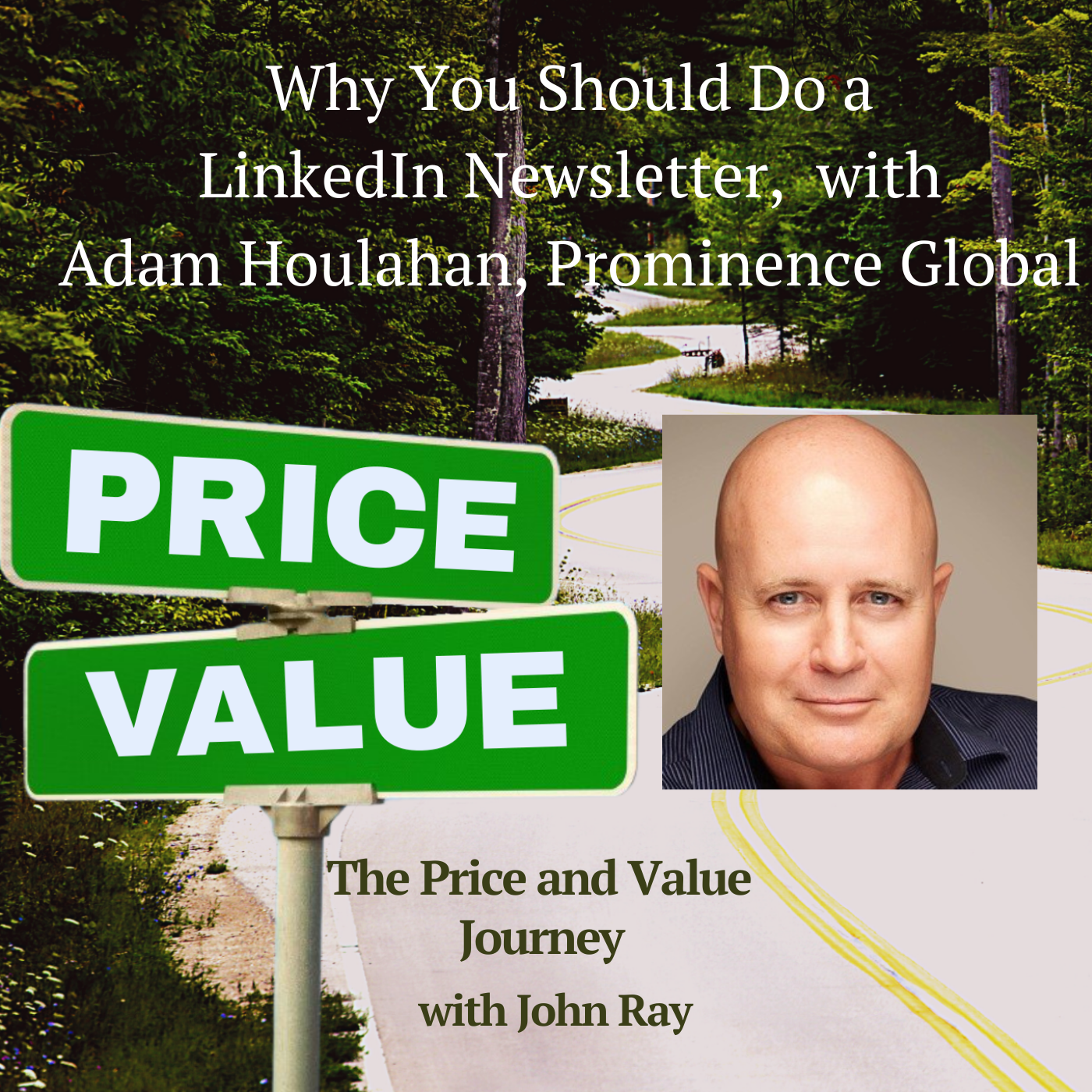
Why You Should Do a LinkedIn Newsletter, with Adam Houlahan, Prominence Global

June 1, 2023 by John Ray

Adam Houlahan
North Fulton Studio
Why You Should Do a LinkedIn Newsletter, with Adam Houlahan, Prominence Global
Loading
00:00 /
RSS Feed
Share
Link
Embed

Download file

Why You Should Do a LinkedIn Newsletter

Why You Should Do a LinkedIn Newsletter, with Adam Houlahan, Prominence Global

Adam Houlahan, CEO of Prominence Global and best-selling author, was the guest on this edition of The Price and Value Journey, discussing why you should do a LinkedIn newsletter. He and host John Ray covered how to make them impactful, what makes a LinkedIn newsletter unique, how often to post a newsletter, repurposing content, aligning with LinkedIn’s current algorithm, and much more.

The Price and Value Journey is presented by John Ray and produced by the North Fulton studio of Business RadioX®.

Prominence Global

Prominence Global is, you’ll find, very different. They help their clients position themselves as industry leaders who are the envy of their peers.

Their mantra is authenticity They create intelligent strategies that cut through the noise that is social media. They do that by being authentic, courageous, and committed to make a difference in their world too. They value transparency More is learned from their mistakes than successes, sharing both is their commitment to honesty and truth. They operate with Integrity Ethics in marketing is in their DNA, they are not afraid to say ‘no’.

Prominence Global seeks continuous improvement through innovation They’re constantly curious in growing themselves, their team and the service they provide. They’re personal. They understand there is no cookie-cutter program that suits every business. They develop solutions that are as individual as their clients are.

They make a positive difference. They believe real and meaningful change comes through the world’s entrepreneurs. They create a powerful on-line presence for each client that grows & accelerates their global footprint, so that together they really can make a huge impact.

Through their Premium Partnership with the global giving movement www.B1G1.com they impact the lives of millions of people in need just by doing what they do every day.

They developed a range of support services to cater to every need. ☞ Free web events ☞ Free Community you can join ☞ Free Profile Optimisation Course ☞ Inner Circle Solo ☞ Inner Circle Academy ☞ Inner Circle Legends.

Their programs are an intensive ‘deep dive’ — a superb, results-producing methodology that creates a cutting-edge, lead generation sales funnel for almost any industry.

The difference is simply how much support you need from their team of dedicated professionals.

Company website | LinkedIn

Adam Houlahan, CEO, Prominence Global

Adam Houlahan, CEO, Prominence Global

Adam Houlahan is an International Keynote Speaker specializing in LinkedIn strategies for entrepreneurs, and CEO of the highly successful LinkedIn agency, Prominence Global.

He hosts arguably the world’s largest free on-line LinkedIn training event with thousands of people registering every 10-weeks and is considered to be one of Australia’s leading experts in harnessing the power of LinkedIn for business.

Adam is also the author of three Amazon best-selling books Social Media Secret Sauce, The LinkedIn Playbook, and Influencer. Adam co-authored a fourth international best-seller Better Business, Better Life, Better World. His purpose is to positively impact 12 million people in need and has surpassed 10 million on the way to that target.

LinkedIn

TRANSCRIPT

John Ray: [00:00:05] And hello again, everyone. I’m John Ray on the Price and Value Journey. Today, we’re going to talk about whether and why you should have a LinkedIn newsletter. It’s a rather narrow topic, but one that I got interested in, thanks to Adam Houlahan.

Adam is an international keynote speaker who specializes in LinkedIn strategies for entrepreneurs, and he’s the CEO of the highly successful LinkedIn agency Prominence Global. He hosts arguably the world’s largest free online training event, with thousands of people registering every ten weeks. And he’s considered to be one of Australia’s leading experts in harnessing the power of LinkedIn for business. I think it’s beyond Australia, but that’s just my opinion.

Adam is also the author of three Amazon bestselling books, Social Media Secret Sauce, which I have not read, but I have read the LinkedIn Playbook and Influencer, both of which I recommend. Adam co-authored a fourth international bestseller called Better Business, Better Life, Better World. And that comes from his belief that real and meaningful change comes through the world’s entrepreneurs. His purpose is to positively impact 12 million people in need, and he has surpassed 10 million on the way to that target. Wow. Adam, thank you for coming on the show.

Adam Houlahan: [00:01:36] John, it’s an absolute pleasure and really looking forward to today.

John Ray: [00:01:40] Yeah. Thank you so much. And thank you again for your work. And before we get into LinkedIn, though, I want to just give you a shout out for your work here on the positive impact you’re trying to make on a worldwide basis. So describe that for everyone so they know exactly what we’re talking about.

Adam Houlahan: [00:01:59] Yeah, sure. I think it’s one of those things, John, that all of us, small to medium sized business owners understand. Our governments aren’t really going to make a significant change in the world, and it’s up to us to do what we can to effect that change. And right from day one, when we started Prominence Global, we had an alignment with an organization called B1G1.

And through those guys, we make sure that everything we do, so every, like you mentioned, the events that we host, every time someone comes to one of those events, we make sure a child gets access to a day’s education. When people join some of our programs, we build wells for families, so they’ve got access to drinking water. All those types of things, lots of great things, environmental things, all aligned with the Sustainable Development Goals for 2030.

So we feel like we’re just doing our little bit to make a bit of an impact in achieving that Sustainable Development Goals on time in 2030.

John Ray: [00:02:57] Thank you for that. And I would encourage those of you listeners who are interested, go to the Prominence Global website. You can see it all detailed there and see it all counting almost live. So it’s pretty cool. So thank you for that work, Adam. Yeah.

So let’s get into talking about Prominence Global, specifically in terms of your LinkedIn expertise and how you’re serving entrepreneurs and executives that want to amp up their LinkedIn presence.

Adam Houlahan: [00:03:30] Sure. And like you mentioned at the start, John, yeah, today we’re mostly talking about a very niche topic of newsletters for LinkedIn, as LinkedIn is a multi-faceted platform, serves lots of different needs. Again, as far as us as an agency, we’re very niche. We don’t work with sales teams or people looking for new jobs or people recruiting for jobs, that type of thing.

We very much focus on how business owners or leaders can use LinkedIn to create a really highly engaged personal brand and how they use that personal brand to then generate new business and revenue for their businesses. Very, very niche within the big sphere of what LinkedIn can do.

John Ray: [00:04:13] Yeah. And you’re pretty tied in to LinkedIn in terms of the features that are coming and knowing a lot about kind of what the architecture of LinkedIn and what their overall business strategy is, which gives you an advantage, right?

Adam Houlahan: [00:04:32] It’s something we choose to make sure we keep on top of. Within our team, we have a team that that’s all they do. They just continually monitor all the changes. LinkedIn, you might be surprised, John, we’re like, what, halfway through 2023 and there’s been almost 90 updates to the platform already. The only thing is LinkedIn doesn’t come out and tell us all about them. They create these new tools and things and then leave us all to work it out for ourselves.

So yeah, we see it as a great, great way to just keep the LinkedIn community updated on those changes. And that’s what those events are about, is there’s enough changes every ten weeks to host an event that lots of people choose to come along to.

John Ray: [00:05:14] Yeah, for sure. So as you mentioned, this is a pretty niche topic. And here’s the irony of the topic. I got — I’m a subscriber to your newsletter. I got interested in the topic in part because of your newsletter. One of which was should I have a LinkedIn newsletter? So let’s talk.

And there were some interesting points in that made me think this would make a really good topic for this audience of solo and small professional services providers to hear about LinkedIn newsletters. but let’s do some definitions before we dive in further detail. So what’s the difference between a regular post and a LinkedIn newsletter?

Adam Houlahan: [00:06:02] Yeah. It’s a great question. Good place to start. So think of it like your normal status post, which is probably if you’re checking through your feed, that’s what you’re going to see the most of. And that will consist of might be a short bit of text-based content with maybe an image attached. It might be like a video, a bit of copy attached. It’s all fairly short form content.

A newsletter is different in two important ways. One, it’s actually long form content. So as far as your audience, there’s some of them that like just that short, punchy bite size content and then when they really buy into what you or your business is about, they will definitely be interested in a longer form of article and just you have a blog on your website. They’re going to be somewhere in that 800 to 1200 words, and your newsletter on LinkedIn can be exactly the same. It can be longer, John, but I wouldn’t go longer than that. That’s probably about the sweet spot for them.

Second really important part, as you just mentioned, you subscribe to my newsletter. So people can actually, apart from just being connected with you on LinkedIn, they can actually subscribe to that newsletter. And that means that whenever you upload a new article, they’re going to get notified in their notifications on LinkedIn, but also by email that you’ve released something new. And of course, the visibility of people engaging on that as a general rule is always higher.

John Ray: [00:07:34] Yeah. And so are there any particular individuals, professions that should have a LinkedIn newsletter? Are there some that shouldn’t even worry about it? Let’s qualify those that really ought to have one.

Adam Houlahan: [00:07:50] Yeah. Basically, if you’re going to share content on LinkedIn, and I should preface that by saying high value, highly niched content. So there’s a lot of people that — just to maybe give you some rough numbers, John. Current, we’re coming close to 950 million members on LinkedIn right now. Of that 950 million, only one percent share content on a regular basis. By regular, say, once a week.

But only one percent of that one percent create content that’s niched within a very narrow field of expertise and that’s the content LinkedIn really likes. They want you to create content that just stays in the narrow lane because it makes it really easy for them to know who in the link of those 950 million people likely to be interested in it.

And that’s what they’re trying to do. They’re trying to get our newsfeeds filled with the type of content we really like. Newsletters give a lot of signals to LinkedIn as to how engaged you are on that content, and that allows them to organically show that content under the right circumstances to a much wider audience than maybe just your first-degree connections or the subscribers to your newsletter.

John Ray: [00:09:07] Yeah. And before I started, in part because of the newsletter you wrote about LinkedIn newsletters before, I’ve had a newsletter now for, I guess, five or six editions. I went and looked at a lot of them and they vary widely in terms of quality, like anything else. So let’s talk about that. What makes for a high quality LinkedIn newsletter?

Adam Houlahan: [00:09:36] Yeah, it’s a good question. So the first part is it’s just copywriting 101. Good headline, good imagery, things that capture people’s attention. And then, as I said, probably something in that 800 to 1200 word count. If you make it too short, then of course, you’re not providing the value that a newsletter is able to provide, which is that deeper insight onto a topic. Go too long and, of course, people get a little turned off. Staying somewhere in that 800-to-1200-word character count, word count I should say, a few visual, exactly the same as you do on your own personal blog. You’re going to have a few images that highlight the points.

And the most important thing always, John, is a call to action at the end of it, give people a next step that they should take. And as on the end of those, we will say, look, here’s a few other ways we can help you and links off to other resources that just like these events that we run and other free resources that people can go and consume.

And of course people, if they’ve enjoyed or found value in the content that you’ve shared, then they’re very likely to want to know more and go deeper into what it is that you offer. And I’m sure we’ve all heard the old 711 principle of seven people need to have at least seven touch points and probably 11 hours of content sort of thing before they’re really invested in you and who you are. So the more you can get people engaging off one piece of content into another, the more you deepen that know like trust factor that people tend to have in you.

John Ray: [00:11:12] For sure. Now, Adam when you — the term high quality, I guess, is a term that everybody’s got their own opinion of what high quality is, right? So I think what — and this is a question. I think what you’re getting at is it’s not the place to put a press release. It’s not the place to put something that’s something less than generously helpful content, right? It’s not the promotional piece of it, if you want to call a call to action, promotional is at the very end where if people want to engage with that, they can, but you lead with what’s helpful.

Adam Houlahan: [00:11:54] Oh, exactly. And further to that, John, is probably more high value, probably a way we could, a better way we could say that is highly niched. And if I use my letter as an example and as I mentioned earlier, we don’t have solutions for people using LinkedIn for job search or recruitment or all those other things that the platform can do.

So none of our content is ever talking about those things. We serve the smallest small to medium business owners who use that platform for personal branding and lead generation. And so our content just always stays in that lane. So that’s probably a better way of saying high value is highly niched.

John Ray: [00:12:38] Yeah. It’s like in your case too, it’s not confusing. I mean, if you did a post on or a newsletter on Instagram influencers, that would throw everybody off, right? What’s Adam doing here?

Adam Houlahan: [00:12:50] Exactly. And we all probably are on multiple platforms, but I never profess to be an expert or know a lot about Instagram or Facebook or TikTok or any other platforms. I know how to leverage LinkedIn really well, and that’s why I just stay in that lane. And I never, newsletters or any other content for that matter, ever talk about anything other than how you can get as a small to medium business owner, how you can get value out of the LinkedIn platform.

John Ray: [00:13:18] So I’m sure there are a lot of folks that listen to this conversation and wonder, hey, I’ve got an existing newsletter. It seems like people are reading it. Why should I start a LinkedIn newsletter?

Adam Houlahan: [00:13:35] Yeah. So you most likely should and should have a newsletter or blog or whatever on your website. But your — and you can definitely have like one newsletter on your personal profile on LinkedIn and you can also have one on your company profile. If there’s a reason for you to ever need to talk about more than one thing, that’s how you can split that into two different topics.

But the reality is there’s a certain market that knows how to find and interact on your personal newsletter or your blog, and you’ve got a whole another LinkedIn community who most likely there will be some crossover, of course, but the high majority of them probably never go to your website or your blog for that matter. So you’re just exposing information, good information to a whole new audience.

John Ray: [00:14:25] And let’s say I decide I want to get started. Do I need a certain number of followers to make it work or a certain amount of reach? When should I start?

Adam Houlahan: [00:14:39] John, it’s a wonderful old saying is when was the best time to start? It’s probably like three years ago. When’s the next best time to start? Today. If we wait until all the ducks are aligned, we’ll never get started. So the point being, yes, obviously, if you had more followers or whatever, then it’s going to get more immediate impact. But it doesn’t mean to say if you don’t have a lot of followers, you shouldn’t start one today.

One little thing you should know, or your audience should know is that when the very first time you create your newsletter on LinkedIn, LinkedIn will send a notification to everybody you’re connected to on LinkedIn and say, “Hey, Adam. John’s just started a new newsletter about this. Would you like to subscribe to it?” So they give you this one off nice little boost of visibility. So you’ll pretty much guarantee that you’re going to get a few followers right out of the gate.

The second thing is, now, this wasn’t the case when they first started, but all new people that follow or connect with you from now on also get that, not a mass one like the very first one, but individual by individual. You get an invitation from LinkedIn to follow your newsletter if they’re following you or following you. So you will build a following.

Now, of course, what that really should be a red flag to everyone is make sure that very first newsletter that you put out is your best stuff because that’s the first one people are going to see and where you’ll get this influx of new people.

We’ve had some of our clients, John, and in fairness they probably have 10,000 connections or whatever on LinkedIn or maybe more. And when we help them first launch their new newsletter, got 1500 to 3000 followers to that newsletter within seven days. And that’s because of LinkedIn doing that initial big push for you.

John Ray: [00:16:34] Yeah, that’s fantastic. And by definition, they opt in, so everyone opts in. Unlike folks, your email newsletter, which may or may not have opt ins. Let’s be honest about this. You may be emailing folks that really didn’t ask to be put on your email list, but LinkedIn does not allow that.

Adam Houlahan: [00:17:01] No, they don’t. And so that’s the thing that people that opt in for your newsletter, they’ve made a willing decision to do that. As the author of your newsletter, you kind of have an obligation to serve those followers in a powerful way. I see it personally. I see it as an absolute privilege to be able to have people want to follow my newsletter and engage on that content. I’ll be honest, John, it just inspires me to give them my best stuff and that’s where they’ll always find it.

John Ray: [00:17:30] Yeah. And how often do you do your newsletters? Biweekly, is that correct?

Adam Houlahan: [00:17:35] Yeah, biweekly. Look, there’s no right or wrong. There is a wrong, it’s never. And I think to be honest, John, I feel once a week is actually too much for a long content. I think biweek — look, this is just my personal opinion. I think biweekly is the best cadence.

However, I’ll be fair, I’d say that’s one of those questions you could ask 10 different experts and get 11 different responses. But in my opinion about biweekly is a good cadence for that good long. And keep in mind that there’s a bit of work in putting together a good quality piece of information like that. So don’t put a noose around your neck of having to create that every single week.

John Ray: [00:18:12] Yeah, for sure. Now, in making that decision, does it make a difference in terms of how often you post? Would that play into how often you do a newsletter? In other words, you’re posting every day, right? Or every weekday? What’s your cadence on posting generally?

Adam Houlahan: [00:18:32] Yep. So again, our sort of recommendation and what all of our clients work to and we do as well is three times per week. So Monday, Wednesday, Friday. And on a calendar month, John, that’s 13 pieces of content. And so two of those are going to be newsletters. So we don’t add more. We just have that as part of our overall 13 pieces of content that we share every month.

John Ray: [00:18:57] Gotcha. Gotcha. And but the most important thing I take it is not the number, it’s the consistency.

Adam Houlahan: [00:19:07] A hundred percent. That’s it. Consistency wins every single time. I would rather see people start with once per month and then build that up to biweekly when it suits. Equally with the rest of their content. So when we say three times per week, we don’t necessarily say start, try and start there. Start at once per week. And then when you’ve got a bit of a rhythm around that, then you can move to twice a week and then eventually three.

But the key thing is, what a big mistake I often see made is people come out of the gate really hard, find it’s really hard to maintain that and then become inconsistent. And it’s very interesting. I wanna share a very quick story with you, John. I was in a meeting on the weekend just gone down in Melbourne, which is a couple of hours flight from where I live.

And one of the people that was there said, oh, by the way, I got a message from someone the other day because I normally post a video on a Friday and I was getting ready for this meeting and I forgot to post it and I got a message saying, oh, I was looking out for your video because I know you post every Friday.

So if you start creating really good content, people will know the cadence of where you post it. Now, some people will love your newsletter, some people will love your videos, some people will love your other content. Rarely will they love all of it. Sometimes they do, but they will know the cadence of your newsletter. And if you start getting inconsistent, then their desire to keep interacting on it will drop away.

John Ray: [00:20:39] Let’s talk about the interplay between if you have an email newsletter now, your blog, and your LinkedIn newsletter. So should you repurpose the content that you are already developing for your blog? Or even more importantly, your email newsletter? Can you put that both places?

Adam Houlahan: [00:21:01] Yeah, 100 percent. Again, remember, you probably have different audiences that consume that content in different places, so not all of your LinkedIn audience are going to see your newsletter. Not all of your email database are going to see all of your email newsletters or your blog. So a good way — you’re going to take a bit of effort to create a good quality newsletter. So by all means, repurpose it across a couple of channels.

Now the key thing there, John, is you probably say, for example, what we do is we’ll post it onto our company blog first. And then a month or so later, we will repurpose it onto our LinkedIn newsletters. So don’t post them at the same time. There’s a bit of a SEO play there as well, so it’s okay to repurpose it. Just give it a good four to six weeks in between different platforms.

John Ray: [00:21:53] Got it. And are LinkedIn newsletters indexed, speaking of SEO, indexed by Google? And are there any preferences that Google has toward LinkedIn newsletters versus post?

Adam Houlahan: [00:22:07] Yeah, 100 percent. They will index on Google and every piece of content that you create on LinkedIn now has its own unique URL. So part of that is the reason for indexation. So yeah, look, definitely because your newsletter is long form, it is going to index better than your standard posts because as hopefully your audience knows, Google has a preference for longer form content than really short punchy stuff.

So yeah, one, yes, it will index. And two, it will index better than your other content because of its longer form, which is again one of those reasons why you don’t want to go short. Don’t short your newsletter, so to speak. Give it enough algorithmic juice so that Google wants to index it.

John Ray: [00:22:56] Yeah. So how do I know that my newsletter is resonating with my target audience, this niche that I’ve put a flag in, if you will, for myself?

Adam Houlahan: [00:23:07] Yeah, it’s pretty reasonably easy. One, you’ll see that, month after month, your people subscribing to the newsletter will grow. And of course, part of that growth comes to promotion as well. So one, when you put out your newsletter, it is getting seen by not only your subscribers, but people will come across it in your feed. And you might want to, if you’re doing some email marketing, you certainly want to at times share about a link to your newsletter, that type of thing. But growth in subscribers is one way to tell that.

The second is, of course, LinkedIn will give you some analytics on that. It’ll show you how many impressions, how many people have liked it or comment on it or shared it. So just, you would gauge that by the growth in those things. To be honest, I don’t get too concerned about likes and shares. LinkedIn is not a big lover of shared content because it’s already on the platform.

Now, having said that, it’s no downside to us if people share our content, it’s great, but the real metrics you want to follow is the subscriber rate that that’s growing. And what I really follow is the number of people that are interacting on the newsletter and like commenting on it and leaving their opinions.

To me, that’s the biggest indicator of anything, is if people are starting to interact on your content by going out of their way to leave their views or thanking you for sharing it or whatever. That’s one of the best indicators for sure.

John Ray: [00:24:35] One of the things — I think I’m hearing a lot of things here, which is very helpful. Thank you. But one of the things that strikes me, Adam, is I think a lot of people have the notion because they get an invitation to a newsletter pretty frequently right now. Is that, hey, there are so many newsletters around, right, why should I start one? And the stats that you quoted right at the top of this episode would indicate there’s still a lot of folks that may never do a newsletter a lot more than or doing one.

Adam Houlahan: [00:25:12] Oh, 100 percent. That’s definitely right. LinkedIn’s own goals are to have about 3 billion members on the platform, so they’re only about A one-third of the way there themselves. So it’s like I said, when was the best time? A little while ago. When’s the next best time? Today. Yeah, just start.

John Ray: [00:25:29] Yeah, for sure. I would be remiss if I didn’t ask you to just talk in general about what you’re seeing on LinkedIn today, what some of the things that people need to pay particular attention to. I noticed you were talking about some enhancements to Sales Navigator that were pretty interesting. But talk about what’s on your mind these days and what you’re sharing with your clients about LinkedIn.

Adam Houlahan: [00:25:57] Yeah, look, it’s a never ending learning curve. There’s no doubt about that. Though, having said that, obviously those changes transcend all parts of LinkedIn. So you don’t need to be staying across all of those 90 changes that have happened in the last six months. But the things to really focus on is I think the most important thing is to start with an end goal.

Why are you on the platform? What is it you want to do? Who is it you want to be interacting with? And do you want to be seen as a marketer or as a, the term we like to use, John, is a sage. The term most people use is thought leader. I think that term is a little overdone these days. And but the reality is, I think the real value is to be seen as that real authority within your field of expertise.

You don’t have to dominate the whole LinkedIn platform. You don’t have to be Gary Vaynerchuk or Elon Musk or those people who transcend all audiences. You just need to be known and liked and trusted within your area of expertise. And if you can do that job done and LinkedIn wants to help you do that and how they help you, that is still LinkedIn probably gives better organic traction on content than any other platform as long as you understand the rules, so to speak. And if you stick by them.

In simple terms, what that rule is stay very, very niche. Don’t be trying to talk about all things to all people, and that helps LinkedIn to understand who’s your audience. Remember, they know a lot of information about all of us, so they know what you’re interested in. They want to give you content in your feed that is really interesting to you, where what might be in my feed would be completely different to yours.

And that’s okay, because if we’re all getting fed the information that we like and enjoy, we’re more likely to stay on the platform. So the end goal, in my opinion, is to align with LinkedIn’s goals. If you can align your goals with theirs, then it’s a win-win. And LinkedIn is very good at supporting those who support them, if that makes sense.

John Ray: [00:28:10] No, it makes perfect sense. And just to encourage those folks out there that really have not participated on LinkedIn, it occurs to me back to the newsletters that starting a newsletter may be a great way to put your toe in the water. If you’re already developing content for an email newsletter, why not get your toe in the water and start a newsletter on LinkedIn and see where it goes?

Adam Houlahan: [00:28:35] Absolutely, John. The other thing is that, and this is a reasonably new release from LinkedIn, is that you can actually schedule your newsletter. So around consistency, you don’t have to — there’s a little bit of work in formatting your email newsletter or your blog, and it’s the same on LinkedIn. But you can do that in advance, and you can schedule it so that — let’s say you’re doing it biweekly.

You can say, I want this to go out on exactly this time and this day in the future. And so that’s how you can keep that consistency and your audience knows, gets to know when you’re going to post. I think it literally has only been available — by the way, you can do that for all your other content types on LinkedIn as well, but only very new in the last month or so where you’ve been able to do it for newsletters.

John Ray: [00:29:22] We’re getting to the end of this interview, and I want to give you a chance for a call to action. So talk about what you’ve got going right now that our listeners might want to know about and might want to dive into and learn more about you and your work, how you can help them.

Adam Houlahan: [00:29:38] Sure. There’s two things, really easy. Either go to our website, which is prominence.global or just follow me on LinkedIn. That’s where we’re always going to let you know when we’ve put out, we have lots of free events and things where we just love to help the LinkedIn community. There’s literally probably almost one every month of different formats, but we’ll always let you know if you’re following us on there. And that’s the easiest way to make sure that you stay up to date with every, not every single change that’s happening on LinkedIn, but the important ones relative to small to medium business owners.

John Ray: [00:30:15] Terrific. Adam Houlahan from Prominence Global. Adam, thank you so much for taking the time to come on and share your expertise. We appreciate you. And again, I encourage everyone out there to follow you.

Adam Houlahan: [00:30:28] Thank you, John. As I said, it’s an absolute pleasure to be with you again today. And I look forward to doing it again sometime very soon.

John Ray: [00:30:36] Something tells me we’ll have a reason to — LinkedIn will give us a reason to, right?

Adam Houlahan: [00:30:41] For sure.

John Ray: [00:30:41] Yeah, for sure. Thank you again. And folks, just a quick reminder as we wrap up here, that if you want to know more information on this podcast, this series, go to pricevaluejourney.com. You can find our show archive there. You can also, of course, find it on your favorite podcast app.

And you can also sign up to receive updates on a book I have coming out this year. I’m trying to catch up with Adam, 2023, later in 2023. It’s called The Price and Value Journey, Raising Your Confidence, Your Value and Your Prices Using the Generosity Mindset Method. If you want to know more about that book that’s coming and I’m featuring some little pieces on that in my email newsletter, by the way, go check it out.

So for my guest, Adam Houlahan, I’m John Ray. Join us next time on the Price and Value Journey.


About The Price and Value Journey

The title of this show describes the journey all professional services providers are on:  building a services practice by seeking to convince the world of the value we offer, helping clients achieve the outcomes they desire, and trying to do all that at pricing which reflects the value we deliver.

If you feel like you’re working too hard for too little money in your solo or small firm practice, this show is for you. Even if you’re reasonably happy with your practice, you’ll hear ways to improve both your bottom line as well as the mindset you bring to your business.

The show is produced by the North Fulton studio of Business RadioX® and can be found on all the major podcast apps. The complete show archive is here.

John Ray, Host of The Price and Value Journey

John Ray The Price and Value Journey
John Ray, Host of “The Price and Value Journey”

John Ray is the host of The Price and Value Journey.

John owns Ray Business Advisors, a business advisory practice. John’s services include advising solopreneur and small professional services firms on their pricing. John is passionate about the power of pricing for business owners, as changing pricing is the fastest way to change the profitability of a business. His clients are professionals who are selling their “grey matter,” such as attorneys, CPAs, accountants and bookkeepers, consultants, marketing professionals, and other professional services practitioners.

In his other business, John is a Studio Owner, Producer, and Show Host with Business RadioX®, and works with business owners who want to do their own podcast. As a veteran B2B services provider, John’s special sauce is coaching B2B professionals to use a podcast to build relationships in a non-salesy way which translate into revenue.

John is the host of North Fulton Business Radio, Minneapolis-St. Paul Business Radio, Alpharetta Tech Talk, and Business Leaders Radio. house shows which feature a wide range of business leaders and companies. John has hosted and/or produced over 2,000 podcast episodes.

Coming in 2023:  A New Book!

John’s working on a book that will be released in 2023:  The Price and Value Journey: Raise Your Confidence, Your Value, and Your Prices Using The Generosity Mindset Method. The book covers topics like value and adopting a mindset of value, pricing your services more effectively, proposals, and essential elements of growing your business. For more information or to sign up to receive updates on the book release, go to pricevaluejourney.com.

Connect with John Ray:

Website | LinkedIn | Twitter

Business RadioX®:  LinkedIn | Twitter | Facebook | Instagram

Tagged With: Adam Houlahan, John Ray, LinkedIn, LinkedIn Newsletters, Price and Value Journey, pricing, professional services, professional services providers, Prominence Global, Social Media, solopreneurs, The Price and Value Journey, value, value pricing

Paige Raskin, Office Angels

March 8, 2023 by John Ray

Paige Raskin, Office Angels
North Fulton Business Radio
Paige Raskin, Office Angels
Loading
00:00 /
RSS Feed
Share
Link
Embed

Download file

Paige Raskin, Office Angels

Paige Raskin, Office Angels (North Fulton Business Radio, Episode 617)

On this edition of North Fulton Business Radio, Paige Raskin, Social Media Strategist at Office Angels, joined host John Ray to discuss why businesses need social media, what works and doesn’t work and why it differs depending on the platform, why you don’t have to post dance videos to be effective on social media, why engagement with your audience is vital, and much more. 

North Fulton Business Radio is broadcast from the North Fulton studio of Business RadioX® inside Renasant Bank in Alpharetta.

Office Angels

Since 2000, Office Angels® has been restoring joy to the life of small business owners, enabling them to focus on what they do best. At the same time, we honor and support at-home experts who wish to continue working on an as-needed basis. Not a temp firm or a placement service, Office Angels matches a business owner’s support needs with Angels who have the talent and experience necessary to handle work that is essential to creating and maintaining a successful small business. Need help with administrative tasks, bookkeeping, marketing, presentations, workshops, speaking engagements, and more? Visit us at https://officeangels.us/.

Website | LinkedIn

Paige Raskin, Social Media Strategist, Office Angels

Paige Raskin, Social Media Strategist, Office Angels

Office Angels’ newest Angel…..

After spending a decade in the hospitality and athletics industry Paige Raskin has found a way to incorporate everything she loved about her job into a career that she’s passionate about for an organization that is equally passionate about what they do.

Paige loves creating beautiful digital pieces and exciting content that supports her client’s goals and objectives. She offers clients everything from Social Media support to content writing, platform maintenance, and digital ad creation.

LinkedIn | Instagram


Questions and Topics

  • Do businesses really need to utilize social media?
  • Do they have to dance?
  • How do they properly use social media platforms to grow their business, brand, or organization?
  • Why do people need help if they already know how to post on Instagram and LinkedIn?
  • What does a Social Media Strategist even do?

North Fulton Business Radio is hosted by John Ray and broadcast and produced from the North Fulton studio of Business RadioX® inside Renasant Bank in Alpharetta. You can find the full archive of shows by following this link. The show is available on all the major podcast apps, including Apple Podcasts, Spotify, Google, Amazon, iHeart Radio, Stitcher, TuneIn, and others.

RenasantBank


Renasant Bank has humble roots, starting in 1904 as a $100,000 bank in a Lee County, Mississippi, bakery. Since then, Renasant has grown to become one of the Southeast’s strongest financial institutions with over $13 billion in assets and more than 190 banking, lending, wealth management, and financial services offices in Mississippi, Alabama, Tennessee, Georgia, and Florida. All of Renasant’s success stems from each of their banker’s commitment to investing in their communities as a way of better understanding the people they serve. At Renasant Bank, they understand you because they work and live alongside you every day.
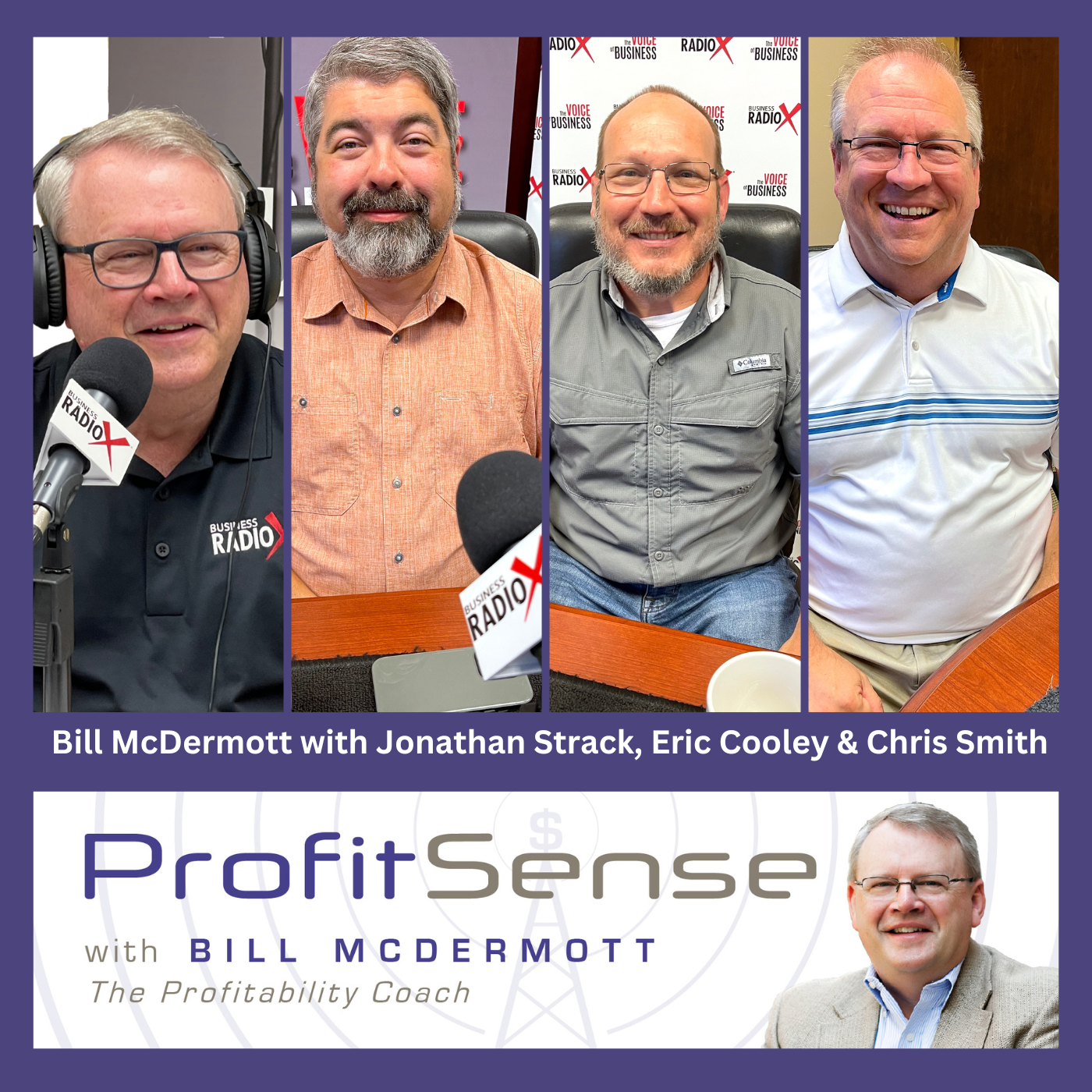
Since 2000, Office Angels® has been restoring joy to the life of small business owners, enabling them to focus on what they do best. At the same time, we honor and support at-home experts who wish to continue working on an as-needed basis. Not a temp firm or a placement service, Office Angels matches a business owner’s support needs with Angels who have the talent and experience necessary to handle work that is essential to creating and maintaining a successful small business. Need help with administrative tasks, bookkeeping, marketing, presentations, workshops, speaking engagements, and more? Visit us at https://officeangels.us/.

Tagged With: content creation, Content writing, instagram, John Ray, LinkedIn, North Fulton Business Radio X, North Fulton Radio, Office Angels, Paige Raskin, renasant bank, Social Media, social media for business, social media marketing, Social Media Strategist

Paul Zanardo, Zanardo Dezignz LLC

November 15, 2022 by John Ray

Zanardo Dezignz
North Fulton Business Radio
Paul Zanardo, Zanardo Dezignz LLC
Loading
00:00 /
RSS Feed
Share
Link
Embed

Download file

Zanardo Dezignz

Paul Zanardo, Zanardo Dezignz LLC (North Fulton Business Radio, Episode 571)

Paul Zanardo, Founder and CEO of Zanardo Dezignz, LLC, is a graphic designer and website developer with a commitment to quality and detail. Paul joined North Fulton Business Radio host John Ray to discuss logos, websites, social media, the services his firm offers, and much more.

North Fulton Business Radio is produced and broadcast by the North Fulton studio of Business RadioX® inside Renasant Bank in Alpharetta.

Zanardo Dezignz LLC

Paul Zanardo, founder of Zanardo Dezignz, is a website developer, graphic designer, and social media marketer with an eye for dynamic concepts. Zanardo develops high-ranking SEO websites with device-responsive versions included.

Their logos are digitally designed in Adobe Illustrator to stand the test of time with your vision in mind. If it’s graphic design related, they design it; everything from business cards, banners, flyers, and book and magazine layouts.

Zanardo has corporate accounts with wholesale print shops to get you the best deal on all your printed marketing materials. They also consult, coach, and manage social media pages such as Facebook, Instagram, Snapchat, Twitter, and LinkedIn to ensure the success of your brand in a digital era.
Over 20 years of experience in sales management and marketing gives them a huge insight into how to help grow your business. They believe in integrity, honest business practices, providing a reliable turnaround time, and listening to client’s needs down to the very last detail.

SERVICES OFFERED

Website Development – Designed with high-ranking SEO, smooth user experience, device responsive optimization, web hosting, web maintenance, intelligent user interface, and streamlined designs that drive leads into sales.

Graphic Design – Attention to detail and knowledge of current branding trends helps us bring your vision to life. Stand the test of time with logo design, brochures, business cards, flyers, magazine/book layouts, POP displays, and all types of marketing materials. Your brand will be an experience that adds value to the marketplace.

Social Media Marketing – Posting unique and helpful content about what sets you apart will boost your search results page ranking. They consult on and manage the platforms that will generate the most business to ensure success. Each platform is different, but the common theme is engagement for the biggest impact on brand awareness.

Printed Marketing Materials – Corporate accounts with many large wholesale print shops enable them to provide you with the best value on all your printed marketing and merchandising needs, everything from business cards to outdoor promotional materials. If they can’t print it, they will find out who can!

Company website | LinkedIn | Instagram | Facebook

Paul Zanardo, Founder & CEO, Zanardo Dezignz LLC

Paul Zanardo, Founder & CEO, Zanardo Dezignz LLC

Paul Zanardo is the owner and founder of Zanardo Dezignz.  He has over 20 years of sales management and marketing experience. He excelled in these fields but often thought about how he could improve the overall customer experience, and he desired to spend more time with his family.

After lots of prayer, he decided to go back to school and get a degree in graphic design with an understudy in website development. Zanardo Dezignz is now quickly approaching 8 years of serving others. Amy Zanardo, Paul’s wife, is the lead designer and content editor. She earned this position by helping Paul study for his degree and collaborating with him through the entire process.

They have a son, Anthony, who is a sweet, creative 7-year-old that keeps them extremely busy!

LinkedIn

Questions and Topics in the Interview

  • Have you always been interested in the creative field?
  • What services does Zanardo Dezignz provide?
  • What makes you unique?
  • What other services do you provide?
  • How is your pricing structure set up?
  • Are your clients residential or commercial?

North Fulton Business Radio is hosted by John Ray and broadcast and produced from the North Fulton studio of Business RadioX® inside Renasant Bank in Alpharetta. You can find the full archive of shows by following this link. The show is available on all the major podcast apps, including Apple Podcasts, Spotify, Google, Amazon, iHeart Radio, Stitcher, TuneIn, and others.

RenasantBank


Renasant Bank has humble roots, starting in 1904 as a $100,000 bank in a Lee County, Mississippi, bakery. Since then, Renasant has grown to become one of the Southeast’s strongest financial institutions with over $13 billion in assets and more than 190 banking, lending, wealth management and financial services offices in Mississippi, Alabama, Tennessee, Georgia and Florida. All of Renasant’s success stems from each of their banker’s commitment to investing in their communities as a way of better understanding the people they serve. At Renasant Bank, they understand you because they work and live alongside you every day.
Since 2000, Office Angels® has been restoring joy to the life of small business owners, enabling them to focus on what they do best. At the same time, we honor and support at-home experts who wish to continue working on an as-needed basis. Not a temp firm or a placement service, Office Angels matches a business owner’s support needs with Angels who have the talent and experience necessary to handle work that is essential to creating and maintaining a successful small business. Need help with administrative tasks, bookkeeping, marketing, presentations, workshops, speaking engagements, and more? Visit us at https://officeangels.us/.

Tagged With: graphic design, North Fulton Business Radio, Office Angels, Paul Zanardo, renasant bank, Social Media, website design, Zanardo Dezignz LLC

T. Collie with Vantage Sales Partners

July 21, 2022 by Mike

ePresence
ePresence
T. Collie with Vantage Sales Partners
Loading
00:00 /
RSS Feed
Share
Link
Embed

Download file

Mark Galvin and T. Collie

T. Collie/Vantage Sales Partners

Want your sales department to perform like Fortune 500 teams – for a fraction of the cost? Vantage Sales Partners has a solid history of building and leading sales teams to exceed goals in direct and indirect channels for both B2B and B2C companies. Their expertise comes from working in direct sales, business development, account management, and sell-through opportunities in a wide range of organizations – from start-ups, to small businesses, to Fortune 50 companies.

Mark Galvin/ePresence

ePresence provides personal branding services for individuals, executives and entrepreneurs. They leverage social media on an individual level since that is where the audience is most engaged. Mark Galvin, CEO and Founder of ePresence, is a personal social media expert with 29 years of business management and hotel industry experience including stops with Marriott, Hyatt, Omni and IHG.

Tagged With: business branding, business podcast, business radio, Business RadioX, digital marketing, epresence podcast, epresence radio, fractional sales, How's Your ePresence?, hows your espresence, linkedin branding, Mark Galvin, online branding, Sales, Social Media, social media marketing, social media podcast, T. Collie, Thomas Collie, Vantage Sales Partners

Decision Vision Episode 175: Should I Overhaul My LinkedIn Profile? – An Interview with Angela Dunz, Cowgirl Creative Consulting

June 30, 2022 by John Ray

Angela Dunz
Decision Vision
Decision Vision Episode 175: Should I Overhaul My LinkedIn Profile? - An Interview with Angela Dunz, Cowgirl Creative Consulting
Loading
00:00 /
RSS Feed
Share
Link
Embed

Download file

Angela Dunz

Decision Vision Episode 175: Should I Overhaul My LinkedIn Profile? – An Interview with Angela Dunz, Cowgirl Creative Consulting

Angela Dunz of Cowgirl Creative Consulting says that even though LinkedIn is the smallest social platform, 72% of the time it’s the place a potential client will contact you. Given the efficacy of the platform, is it worth the work to overhaul your profile? Angela and host Mike Blake look at the effectiveness of LinkedIn, how to know if it is working for you, how to make the most of it, and much more.

Decision Vision is presented by Brady Ware & Company and produced by the North Fulton studio of Business RadioX®.

Cowgirl Creative Consulting

Cowgirl Creative Coaching is inspired by the spirit of adventure and grit that both cowgirls and entrepreneurs have.

It takes speed and agility to get your ideas to market.

Safety and success for horses is in the herd. More eyes, more wisdom. Small business is the same. Together we thrive and create rich communities of collaboration and innovation. Small business is the backbone of what carries great communities. Cowgirl Creative has the grit and spirit to shift quickly in response to changing needs and conditions. They have the boots on the ground ability to address short-term situations. And, the vision and creativity to shape the future. They help their clients see beyond what they think is possible.

Angela works with coaches, consultants, and small businesses building a personal brand and business development using LinkedIn. What does that mean? Establishing a strong brand, building your networks, expanding your influence, increasing opportunities, strengthening referral partnerships, and discovering new ways to reach your ideal audience with connection and content strategies that get results. Her personal mission is to change the awkwardness of “self-promotion” to an act of service.

Company website | LinkedIn | YouTube

Angela Dunz, Owner, Cowgirl Creative Consulting

Angela Dunz, Owner, Cowgirl Creative Consulting

Angela works with coaches, consultants, and small businesses, building a personal brand and business development using LinkedIn. What does that mean? Establishing a strong brand, building your networks, expanding your influence, increasing opportunities, strengthening referral partnerships, and discovering new ways to reach your ideal audience with connection and content strategies that get results.

Angela’s personal mission is to change the awkwardness of self-promotion to an act of service. Angela is a former high school rodeo champion. She is a rock climbing guide and a current NFL fan, and she’s a big fan of the Packers.

LinkedIn

Mike Blake, Brady Ware & Company

Mike Blake, Host of the “Decision Vision” podcast series

Michael Blake is the host of the Decision Vision podcast series and a Director of Brady Ware & Company. Mike specializes in the valuation of intellectual property-driven firms, such as software firms, aerospace firms, and professional services firms, most frequently in the capacity as a transaction advisor, helping clients obtain great outcomes from complex transaction opportunities. He is also a specialist in the appraisal of intellectual properties as stand-alone assets, such as software, trade secrets, and patents.

Mike has been a full-time business appraiser for 13 years with public accounting firms, boutique business appraisal firms, and an owner of his own firm. Prior to that, he spent 8 years in venture capital and investment banking, including transactions in the U.S., Israel, Russia, Ukraine, and Belarus.

LinkedIn | Facebook | Twitter | Instagram

Brady Ware & Company

Brady Ware & Company is a regional full-service accounting and advisory firm which helps businesses and entrepreneurs make visions a reality. Brady Ware services clients nationally from its offices in Alpharetta, GA; Columbus and Dayton, OH; and Richmond, IN. The firm is growth-minded, committed to the regions in which they operate, and most importantly, they make significant investments in their people and service offerings to meet the changing financial needs of those they are privileged to serve. The firm is dedicated to providing results that make a difference for its clients.

Decision Vision Podcast Series

Decision Vision is a podcast covering topics and issues facing small business owners and connecting them with solutions from leading experts. This series is presented by Brady Ware & Company. If you are a decision-maker for a small business, we’d love to hear from you. Contact us at decisionvision@bradyware.com and make sure to listen to every Thursday to the Decision Vision podcast.

Past episodes of Decision Vision can be found at decisionvisionpodcast.com. Decision Vision is produced by John Ray and the North Fulton studio of Business RadioX®.

Connect with Brady Ware & Company:

Website | LinkedIn | Facebook | Twitter | Instagram

TRANSCRIPT

Intro: [00:00:01] Welcome to Decision Vision, a podcast series focusing on critical business decisions. Brought to you by Brady Ware & Company. Brady Ware is a regional, full-service accounting and advisory firm that helps businesses and entrepreneurs make visions a reality.

Mike Blake: [00:00:21] Welcome to Decision Vision, a podcast giving you, the listener, clear vision to make great decisions. In each episode, we discuss the process of decision making on a different topic from the business owners’ or executives’ perspective. We aren’t necessarily telling you what to do, but we can put you in a position to make an informed decision on your own and understand when you might need help along the way.

Mike Blake: [00:00:44] My name is Mike Blake, and I’m your host for today’s program. I’m the managing partner of Brady Ware Arpeggio, a data-driven management consultancy which brings clarity to owners and managers of unique businesses facing unique strategic decisions. Our parent, Brady Ware & Company, is sponsoring this podcast. Brady Ware is a public accounting firm with offices in Dayton, Ohio; Alpharetta, Georgia; Columbus, Ohio; and Richmond, Indiana.

Mike Blake: [00:01:08] If you would like to engage with me on social media with my Chart of the Day and other content, I’m on LinkedIn as myself and @unblakeable on Facebook, Twitter, Clubhouse, and Instagram. I also host a LinkedIn Group called Unblakeabble’s Group That Doesn’t Suck, so please join that as well if you would like to engage.

Mike Blake: [00:01:25] So, today’s topic is, Should I overhaul my LinkedIn profile? And I’ll be very candid with you listeners. I wasn’t necessarily planning to do this topic. It’s not something that I sort of woke up and said three weeks ago, I got to do this topic. But then, last week I heard our guest speak and I attended her webinar, and I was just blown away by how good it is and how informative it is.

Mike Blake: [00:01:56] I say this in the perspective of somebody who’s been on LinkedIn for quite a long time. I actually generate a lot of business over LinkedIn, thankfully, and develop a lot of important relationships over LinkedIn. And, nevertheless, I thought I was pretty good at this stuff until I heard her speak. And then, I realized, “Oh my God. I’m probably leaving all this business on the table.” And I didn’t want to keep it to myself, frankly. And so, I wanted to bring her on and, thankfully, she agreed to do so.

Mike Blake: [00:02:29] And so, it is my pleasure to introduce Angela Dunz, who’s founder of Cowgirl Creative Consulting. And we’re going to learn why Cowgirl in a second. But they’re inspired by the spirit of adventure and grit that both cowgirls and entrepreneurs have. It takes speed and agility to get your ideas to market. Safety and success for horses is in the herd. More eyes, more wisdom. Small business is the same. Together, they thrive and create rich communities of collaboration and innovation.

Mike Blake: [00:02:59] Small business is the backbone of what carries great communities. They have the grit and spirit to shift quickly in response to changing needs and conditions. They have the boots in the ground ability to address short term situations and the vision and creativity to shape the future. Cowgirl Creative Coaching helps their clients see beyond what they think is possible.

Mike Blake: [00:03:19] Angela works with coaches, consultants, and small businesses, building a personal brand and business development using LinkedIn. What does that mean? Establishing a strong brand, building your networks, expanding your influence, increasing opportunities, strengthening referral partnerships, and discovering new ways to reach your ideal audience with connection and content strategies that get results.

Mike Blake: [00:03:39] Angela’s personal mission is to change the awkwardness of self-promotion to an act of service. Angela is a former high school rodeo champion. We have never had a rodeo champion on this program, and this is podcast number 174. She is a rock climbing guide and a current NFL fan, and she’s a big fan of the Packers – a team that broke my heart as a Patriots fan back in 1996. She is also the author of Conversations with Skunks #LinkedInBadAss, which I just love. LinkedIn Badass, Angela Dunz, welcome to the Decision Vision podcast.

Angela Dunz: [00:04:13] What an intro that was. And thank you so much for the comments about the webinar, Mike. I find that to be true about a lot of people. We don’t know what we don’t know if we don’t stay on top of things.

Mike Blake: [00:04:27] Well, it really was fantastic. Not good. Great. And LinkedIn is now such an important tool. I think the pandemic certainly underlined how important social selling is. And I’m going to use Brandon Lee’s term, he was a guest on our program about 20 weeks back. It’s such an important tool. And it starts with your profile, doesn’t it? I mean, that is sort of your shingle, that is sort of the doorway into the restaurant, so to speak.

Angela Dunz: [00:05:00] Yes. That is where you start to make an impression. So, if somebody Googles your name, the first thing that’s going to come up is your LinkedIn profile. So, often, their very first impression of you is whatever they see on your profile. And you only get five seconds before they decide “Yes. I want to look further” or “No. This isn’t the person.”

Mike Blake: [00:05:24] So, there are, of course, skeptics out there of social media. There are skeptics out there of LinkedIn. Make the case that LinkedIn is so important today.

Angela Dunz: [00:05:39] LinkedIn is the smallest social media platform out there. The smallest.

Mike Blake: [00:05:45] Huh? I didn’t know that.

Angela Dunz: [00:05:47] They are about 15 times smaller than YouTube. If you take all the traffic driven by social media put together, more is driven from LinkedIn, 52 percent of all social traffic to websites comes from LinkedIn, the smallest platform. HubSpot does not even include LinkedIn in their top ten platforms for social media. It’s too small.

Mike Blake: [00:06:17] And so, that enables you to stand out, I guess. And it truly is still fairly business focused, we’re going to get to that a little bit later if we have time. But it still is pretty business focused.

Angela Dunz: [00:06:27] It is. You know, personalization has definitely changed the way we look at professionalism. And communication has changed a lot in the newsfeed. But the reason why driving traffic to your website or a calendar link is so important is because, when we’re on LinkedIn, we have that “I will not be sold to” face on. And so, driving traffic to some place they’re more likely to make a purchasing decision is really what you want LinkedIn to do for you.

Mike Blake: [00:06:59] And I’d like to talk about what LinkedIn can do for me. And I know we’re talking about profiles, but I think we also have to make the case that LinkedIn is an exercise worth doing before we talk about investing in the profile. And I think LinkedIn sort of gets a bad rap, and I’m sure you’ve heard this a million times. I have. I’ve been on LinkedIn for six years. I’ve never gotten a bit of business on it. What have you actually done with it? Nothing. But I’ve never gotten any business, so therefore it’s a waste of time.

Mike Blake: [00:07:30] And I know you coach a lot of clients in this, so what is a realistic set of expectations for what LinkedIn can do as a business development tool? It’s not exactly just sort of set up your profile and then just sort of aggressively wait for the phone to ring or emails to pop-up, right?

Angela Dunz: [00:07:49] Right. Right. And that’s an excellent question. But statistics say that 72 percent of your potential referral partners and prospects look at your LinkedIn profile first. So, number one use is attraction. You want to make sure that you’re getting them to your profile. And once they’re there, your profile is not about you, but it’s client focused. It’s talking about what you can do for that client.

Angela Dunz: [00:08:18] Another thing that LinkedIn can help with is visibility. You know, there’s a lot of traffic in the newsfeed, but are you in the mix providing value and staying top of mind with your referral partners and your prospects?

Angela Dunz: [00:08:34] There’s quite a few things that LinkedIn can do for you. Thought leadership is definitely an entire strategy. And then, using influencers to expand your brand. So, find out who are the movers and shakers in your field, and then go to their posting, and comment and join the conversation. Definite credibility builder.

Mike Blake: [00:09:00] And so, there are so many ways we can go, we can go with this. I want to start with this because I think this is a really important point, that writing the LinkedIn profile from the clients’ or customers’ perspective, extremely important. But in my experience, also deceptively hard to do. And I hope you’re laughing because you agree. Maybe it’s –

Angela Dunz: [00:09:28] Yes.

Intro: [00:09:29] As I’ve tried to do that with my LinkedIn profile and copy in our website, it is painful to do, not because I don’t believe in client centrism, I do, but we’ve all been trained in sort of an egocentric method of, “Not here’s what you need, but here’s what I am. Do you want some?” Writing in that way from the second person – we’re not even trained in school to think about second person perspective. It’s first or third – it’s really hard. It’s a challenge to write in that client perspective, isn’t it?

Angela Dunz: [00:10:03] Yes, it is. And, you know, I’m an introvert and I’ve been a marketer forever. And I’m of the school of thought that you should never be allowed to write your own copy. Because sometimes we’re so close to it, it’s hard to be objective. And market research is just so critical. It’s like, “What is the problem that you’re really solving for your client?” Because it may not be obvious to you, it may be something altogether different. So, you really want to find out what are the things that keep your clients up at night, and how is it that you’re solving that problem for them?

Angela Dunz: [00:10:44] Your LinkedIn profile is not about you until you can communicate clearly to your client. Who is your client? Name that audience. And then, number two, tell them what results you can bring for them and what problem you’re going to solve for them. That’s really what it’s all about.

Mike Blake: [00:11:05] So, I mean, a LinkedIn profile, is it reasonable to even consider hiring somebody to write your LinkedIn profile for you? Because you’re suggesting that somebody trying to write their own collateral material, that’s just very difficult to do. Does a LinkedIn profile rise to the level of potentially even outsourcing that copy?

Angela Dunz: [00:11:30] Well, it really depends. That’s an awesome question. And it’s one of those things where it depends. I work jointly with my clients on writing that profile, so it’s something that we craft together. And I sort of trick them into the kind of copy that’s going to be client focused with a writing activity that I have them do. And they don’t even realize that it makes it easier for them to start talking about the problems that they solve. And then, we incorporate that into the About section.

Angela Dunz: [00:12:08] So, the About section, that very first paragraph really has to be client focused. And I have two ways I like to have people start that. You either use some qualifying questions so that they can say, “Oh, yes. That’s me.” Or you tell a story. What was the challenge that you solved for somebody, and what were the results that they were able to enjoy because of working with you. Anybody can read themselves into a story and stories are memorable.

Mike Blake: [00:12:39] And that’s sort of next level writing, right? I mean, frankly, not everybody can write a story to begin with.

Angela Dunz: [00:12:47] It’s a joint project.

Mike Blake: [00:12:50] Yeah. So, you’ve actually started to answer the next question, but I want to make that explicit. Is the name of the game on LinkedIn to position yourself as the best at what you do or simply differentiate it in some way?

Angela Dunz: [00:13:07] Great question. And I really think – I’m of the school of thought, again – that there is an unlimited number of people who want to work with you. You know, it’s not I’m not taking business away from somebody else by attracting business to me. What LinkedIn is really good for is what is your special something, something.

Angela Dunz: [00:13:29] Now, I belong to a networking group that has four immigration attorneys in it. And a lot of people would say, “That’s insane.” But they each work on different pieces of the pie. One of them works on people who want to get married. And that’s very different than people who are trying to get visas.

Angela Dunz: [00:13:48] So, there’s lots of LinkedIn consultants. One of my specialties is optimization. So, if what you’re looking for is more inbound inquiries and people finding you for the right thing, then I’m the person you want to talk to. Now, if you’re a job seeker, I’m not going to be your best bet. There are other people that are much better at that. So, it’s two pronged, Mike. You want to make sure that people are creating an emotional attachment to you that you’re a real person and you’re very clear about what your specialty is.

Mike Blake: [00:14:31] So, I want to switch tacks here, because one of the challenges of all social media platforms, LinkedIn is certainly no exception, is that their algorithms will change periodically. And some would even argue, just when you think you got the thing figured out, bam, they’re going to change it up on you. But at least LinkedIn is fairly good about announcing major changes to its algorithm. Places like Facebook/Meta will just sort of do it, then you got to figure it out. When LinkedIn makes an announcement like that, should that prompt all of us to run back to our profiles and make sure that it’s now consistent with what the algorithm is going to find?

Angela Dunz: [00:15:17] And that’s another question where the answer is it depends. So, they did a major shift on algorithms for the newsfeed about a year ago, and one of the things that they had been doing is if you re-shared third party articles, like Harvard Business Review or E Ink, it was not going to get as spread around as something that was original material.

Angela Dunz: [00:15:45] Now, Harvard Business Review and E Ink said, “Hey, you attracted us exclusively to post our content on your platform and now you’re penalizing us?” They said, “That’s not playing fair.” So, they evened the board. So, I told all my clients that are sharing content, “Go ahead and share third party articles now because you’re going to get the same juice that you do from original content.” So, yes, adapt to the changes with that.

Angela Dunz: [00:16:13] Now, the way profiles are served up in searches doesn’t change significantly. Where the algorithms change the most is definitely the way content is served up in the newsfeed. And that’s some place where you do want to anecdotally observe what’s going on and adapt to those changes. But I wouldn’t say every time something changes, run out and change your profile significantly.

Mike Blake: [00:16:40] Okay. So, LinkedIn in the last year, I believe – I think it was late last year – introduced something called Creator Mode. And has Creator Mode changed either the opportunities or at least best practices in terms of how we position our LinkedIn profiles? And if so, how?

Angela Dunz: [00:17:01] I don’t think it’s made that big of a difference, to tell you honestly. Because for all the people that I do social media posting for, I kept all kinds of KPIs on exactly what was happening with their profiles and I did not see a significant change. Now, where I think the advantage of Creator Mode is, is that when people read your headline, just below it, are your five quintessential hashtags. Now, if you read that, that should really tell me the flavor of who you are.

Angela Dunz: [00:17:36] So, for me, I don’t work with job seekers, and that’s not included in my Creator Mode hashtag. So, you’ll very quickly be able to differentiate me from another LinkedIn consultant and what they do. So, Creator Mode, I think it has given us an opportunity to be more clear about what it is that we do. And it definitely is a part of the optimization. If somebody uses one of those search terms to find you, you’re going to get served up preferentially for that specific hashtag or those keywords, either way.

Angela Dunz: [00:18:17] So, there are three places in the profile that are more heavily weighed for keywords, Headline, Creator Mode, and the Skill Section. So, that’s where you really want to focus your optimization efforts.

Mike Blake: [00:18:32] So, let’s sort of open the floodgates here. In your mind, what are the most important best practices for creating and maintaining a great LinkedIn profile?

Angela Dunz: [00:18:48] Get some wonderful optimization and use every single one of the pieces and parts of the optimization. That is going to increase your inbound. So, any keyword that’s anywhere in your profile for something that you don’t do any longer, find a way to change that, so that you’re found for the current things that you do by the right people. So, the optimization would be the number one thing that I would work on for someone.

Angela Dunz: [00:19:18] The second thing that I would think about is –

Mike Blake: [00:19:20] Can I pause you there? Can I pause you there because I want to ask a follow up question on that? Sorry to interrupt, but if I don’t ask you now, I’ll forget. When you describe optimization, it sounds a lot like web page optimization, SEO optimization, is that a fair statement?

Mike Blake: [00:19:39] And if so, is building an optimized LinkedIn profile – and I sort of touched this before, but I think it’s worth going back to – a sophistication around LinkedIn search engine now becoming such that there may be a cottage industry, just like there is for SEO and web page optimization of optimizing your LinkedIn profile? Because this is starting to seem like a lot of stuff that’s away from the pay grade of the typical outside of the realm of technical capability for the typical LinkedIn user.

Angela Dunz: [00:20:12] It is a fair analogy. I mean, I try to explain to people that LinkedIn is kind of like an internet, because they have their own formulas for how people are served up in searches. Now, just like SEO, it’s a very complex formula. Density, do you have media, and video, and photos, and infographics incorporated into your featured section and your work experience? Those are really big pieces.

Angela Dunz: [00:20:45] You know, if you imagine your LinkedIn profile is just words, texts, the crawlers don’t care about that so much. It’s looking for density. Do you have video there? Do you have chunky stuff that are going to be so much more attractive to the crawlers and you’re going to get served up more quickly? So, it is a complex formula, and you’re right.

Angela Dunz: [00:21:12] You know, I have a friend who schedules an appointment with herself once a quarter to work on her LinkedIn profile. And that’s one of the first things that she does. Now, for my social media clients, every single week I add more media to their featured section. I add something new. Because it’s very similar to a website, you add a blog, and Google is like, “Ooh, fresh content. We’re going to go get us some of that.” So, there are similar things. You just have to think about it from a different point of view on LinkedIn. It’s not the same as a website, but it’s very similar.

Mike Blake: [00:21:52] That’s interesting. I think that’s an important learning point. So, I did interrupt you. So, after optimization best practices, you’re about to start a number two.

Angela Dunz: [00:22:00] And there is professional branding. You know, if somebody looks at your profile, are they going to ghost you forever or are they going to actually be attracted and engaged by your profile? If you are winning this optimization game, once they arrive at your profile, you want to stay there. So, do you have a profile photo that is up to date, and friendly and approachable, and professional looking? Are you using that banner space in an appropriate way to really draw people in? And if it’s really just a logo or words, no one cares. You want to try to incorporate people in. It’s the biggest piece of real estate on LinkedIn, use it well.

Angela Dunz: [00:22:49] And then, your Headline. Are you speaking directly to your entry level ideal client and piercing them through the heart with the problem that they have? And then, the About section, are you talking to them about what their problems are and how you can fix that? So, that is definitely number two.

Angela Dunz: [00:23:11] And then, are you staying visible? Linkedin’s best use is as a relationship building tool. It is an extension of networking. And whatever you’re doing to attract prospects and referral partners, it’s an extension of that. It’s social. Are you using it in a personalized social way to stay top of mind? And a lot of people think, “Oh, I post every day.” Well, if it’s generic posting, no one’s paying any attention. If you’re not saying, “Hey, happy work anniversary” or “I saw that you just got an award for the chamber,” or whatever it is, that’s personal. Posting every day is not personal.

Mike Blake: [00:23:58] And, again, it’s also egocentric, right? So, when you post every day that’s transactional. But when you’re engaging with somebody else, that’s relationships.

Angela Dunz: [00:24:05] Yes. Yes.

Mike Blake: [00:24:08] So, we talked about the good. Let’s talk about the bad. What are some things that are just obvious Linkedin profile killers? Things you look at and you just say, “Oh, my gosh. That’s just a minute of my time I’m not getting back.”

Angela Dunz: [00:24:25] Well, my biggest pet peeve is the people who are extreme extroverts, and it’s just all about them. You know, you’ve got their profile photo and their banner has six more pictures of them. Those are usually pretty much a killer. Or, “I just won this award. And I just appeared on TEDx,” and all of that. The killers are really talking about yourself.

Angela Dunz: [00:24:55] I think that the pandemic has changed LinkedIn forever. You know, you never used to see really personal posting and really personal things on LinkedIn. And, now, it’s part of the hyper-personalization. So, you really want to be careful about how far you go into the compassion and empathy and speaking directly to your ideal client. But you also do not want to be egocentric and bragging about everything that you do.

Angela Dunz: [00:25:25] The focus is, are you adding value to that person or are you wasting that one minute that they spent looking at your profile? Is there a resource in the featured section that’s actually going to be something that either inspires them, or educates them, or causes them to take some sort of action? Those are rules of thumb that are really good for, Are you wasting people’s time or are you actually engaging with them?

Mike Blake: [00:25:54] And, you know, you bring up a really interesting point, and I’m intrigued by how you link that to the pandemic. That doesn’t mean that I’m arguing with you at all, just I hadn’t thought that through. But I have noticed in the last six months to a year, and it may be happening longer, but this is just my noticing it, that Linkedin is kind of becoming a little bit more Facebook-y. And you’re seeing people share things that border on TMI. You’re seeing people that are now more willing to share political views, which, to me, I think is putting a fork in a toaster while standing in a rain puddle, by the way.

Angela Dunz: [00:26:36] They have no place on LinkedIn, in my opinion.

Mike Blake: [00:26:38] But why do they do that? And I speculate they’re doing that because a lot of those people are being canceled on Facebook. Or they, themselves, are leaving Facebook because, for whatever reason, they can’t take it. Some people see LinkedIn as more of a captive audience, where you don’t want to shrink your network, you don’t want to abandon the platform because of the professional ramifications. Or is it something totally different? What do you think is going on there?

Angela Dunz: [00:27:07] I think it’s something totally different. And I’ll give you a couple of examples. Right after the pandemic started, one of my friends said, “Well, I guess we’re all going to be stuck at home for a while, I’m just going to give you a little video tour of my work from home desk. Here’s the birthday card I got from my mom last week. Here’s my plants.” I thought it was so endearing. And she had thousands of views. And people shared videos of their own. It was touching people in a way. Now, that is a very ephemeral thing. It only has a window of a couple of minutes. It was the beginning of the pandemic. But it was business people connecting with each other in a way that was real.

Angela Dunz: [00:27:55] Now, I’m going to give you another example, and I hope this will help. I post once a week video on LinkedIn, and some of them, I think, are like golden nuggets of LinkedIn tips. And I don’t get that many views. I just don’t. I wish it was a lot more. But the people that do watch actually look.

Angela Dunz: [00:28:18] Now, same week, I can post a pixelated picture of my sister and I snowboarding, and talk about passion and commitment and get 4,000 views on that post. It was me sharing something personal in a business context. And I got business from that post, which is shocking to me. It’s taken me a long time to be able to share on a personal basis.

Angela Dunz: [00:28:48] Now, the other day, I saw a post that really knocked me back in my seat. A woman had gone to a conference in Chicago from out here on the West Coast. And as soon as she got off the plane, they told her to go back home because her son had died. Now, she has not gone back to this specific conference in three years. So, she posted on LinkedIn what happened.

Mike Blake: [00:29:16] I read that. I read that exact post.

Angela Dunz: [00:29:19] And what she did was she said, “Please talk to me about this situation. I’m giving you permission to use my son’s name. I’m so excited to come back and reconnect with all the people that I miss.” She was informing people of what appropriate etiquette was for her in this situation. And for most of us, we don’t want to be wrong and we don’t want to be awkward, but invariably we are. And it was just a really good use of PMI, but in a way that was proactive and informative.

Mike Blake: [00:30:07] Yeah. I thought that was a very interesting post and it was so raw. And as a parent myself, I just think there but for the grace of God go I. So, you cannot imagine that. But I thought that was fascinating that rather than going to that conference and having people sort of stay away because I don’t even know how to start that conversation, like, “How are you doing?” “Terrible.” Or it’s a silly question.

Mike Blake: [00:30:41] By getting in front of that, that’s the opportunity to sort of basically have a virtual sandwich board saying, “Okay. We’re just getting this all out now. And now I’m trying to move on with my life, please help me do that, feel comfortable doing that.” Now, that post could have gone very wrong.

Angela Dunz: [00:31:03] In a hundred ways.

Mike Blake: [00:31:05] And that’s sort of the courage behind it. But as a LinkedIn expert, I’m curious, do you think that that individual had somebody reading it before they posted it? Do you think maybe they sat on it, marinade for two weeks before they did it? Or maybe it was just, “You know what? I’ve had a couple of glasses of wine, I’m getting on this thing at 11:00 at night. Because if I sober up tomorrow morning, I’ll never type this out.” What do you suspect went on there? And what do you think is best practices if somebody in the audience thinks they want to post something similar to that?

Angela Dunz: [00:31:40] All of the above. I would definitely write it out and probably have one of my besties look at it and give me a second opinion. I would probably sit on it for several days and not pull the trigger until I had a glass of wine or a good whiskey before I actually sent it out at midnight and went to bed.

Angela Dunz: [00:32:11] And I’ve done all of the above. And I’ve done all of the above on the same post. But I think it’s good to get opinions about things like that that are potentially oversharing, and vulnerable, and sensitive. But I’ll bet you, there are hundreds of parents that appreciated that share because it informed them about how they could possibly respond in similar awkward situations and not be isolated in whatever they were going through.

Mike Blake: [00:32:51] The topic here, Should I overhaul my LinkedIn profile, which presumes that we want to overhaul it because we think it’s not working very well. What are some signs that the LinkedIn profile is not working well, is not performing as well as it could be?

Angela Dunz: [00:33:09] Well, you know, the bottom line is, are you getting referrals? And, in marketing right now, we say that we don’t know anything. We really don’t. Because consumer behavior has changed so dramatically. We know nothing seriously. We just don’t know what is inspiring people and motivating people to purchase anything these days. We’ve gotten so much more discriminating and so much more sophisticated about all of that.

Angela Dunz: [00:33:37] But I would say, and we also say, it’s 12 to 20 touches before somebody picks up the phone to get a hold of you. Linkedin is one of those touches in many cases, 72 percent of the time it’s the number one place that they touch with you. So, you want to make sure that you’re asking people, How did you find out about me? Did you look at my LinkedIn profile?

Angela Dunz: [00:34:07] Now, sure indicators that LinkedIn is not working for you is you have very few profile views. So, the Who’s viewed your profile? is something that I look at all the time. And if nobody’s viewing your profile, then you haven’t been networking, you’re not adding new people, you’re not getting out and about. No one’s engaging with you. You’re not posting whatever it is. You have to stay visible in one way or another.

Angela Dunz: [00:34:33] Now, the second thing I like to look at is Search appearances. That tells me whether the optimization is working or not. If you’re coming up in a lot of searches and they’re the right searches, then your optimization is working fantastic. But if you’ve got just a few searches and they’re not the right people, you’ve got some work to do.

Angela Dunz: [00:34:56] Now, the other indicator that I like to look at is the social selling index. And it’s interesting because, today, I sent out my newsletter and I explained the importance of all three of those little KPIs that I use with clients. The social selling index is mostly for people who are in sales. But I find that solopreneurs and small firms, business development people, get a lot of great information from the four different categories in the SSI score.

Angela Dunz: [00:35:27] But at the end of the day, it’s, Are you getting inbound inquiries in some way, shape, or form? Is somebody picking up the phone? Is somebody sending you a message? Are they going to your website from LinkedIn? And Google gives us analytics for that.

Mike Blake: [00:35:47] You know, you brought something up here that I think I want to make sure that we hit because I think it’s important. The LinkedIn profile is a keystone to a larger strategy, right?

Angela Dunz: [00:36:02] I like to call it the centerpiece.

Mike Blake: [00:36:04] Okay. The centerpiece. Great. We’ll use your term because you know more about it than I do. So, it’s important to understand the limitations of a LinkedIn profile could be awesome. But if there’s no other activity behind it, it’s unlikely to generate a whole lot of results. It’s part of a broader commitment to the platform itself, right?

Angela Dunz: [00:36:26] Yes. And, you know, there are so many different ways to look at the LinkedIn profile. For attorneys, their end users, the client, usually don’t come to them directly. It’s usually a referral from another attorney. And so, for them, I have a different strategy than I do for coaches. Because they just need one that’s adequate that really lets people know, “Hey, I’m credible. I’m a leader in my field.” So, when the client actually looks at their profile, that they’re not being repelled, they’re being attracted, or they at least say, “Oh, he’s adequate. And he’s been recommended to me, so it’s going to be okay.”

Angela Dunz: [00:37:06] Now, a coach is a completely different situation. They have to establish immediate rapport. And have that person know, like, and trust them well enough to put their vulnerable self in a coach’s hand to solve a specific problem.

Mike Blake: [00:37:23] Well, let me rephrase this, my observation is I think LinkedIn as a platform is becoming a bit spammier than it has been in the past. I’m receiving more connection requests, more Inmail, more, frankly, people that I have to block. Because it’s okay if you want to sell to me, but at least be honest about it. Don’t tell me how interesting I am, connect, and then start to sell me whatever. Do you see the same thing? And is there anything that you can do to your LinkedIn profile that might deter spam?

Angela Dunz: [00:38:07] There isn’t a lot that you can do to deter it other than what you mentioned, the blocking. And I applaud you for doing that. They are repeat offenders. These are very aggressive people. Now, LinkedIn last year limited the number of invitations that can be sent in a week. It used to be 100 a day. It has been reduced to 100 per week per profile. And part of that was to eliminate third party automation and the spray and pray method of trying to get a hold of people.
Angela Dunz: [00:38:43] Now, I think that everyone should have a connection strategy. So, if you take five seconds and you look at who it is that sent you an invitation and you think that they’re going to tell you, “I’m going to make you a seven figure coach within the next nine weeks,” it’s an automatic no. But everybody should have a connection strategy. If they’re not a potential client or referral partner or just an influencer in your field, then it’s a no.

Angela Dunz: [00:39:13] And blocking them is very helpful because if somebody gets X number of blocks, and I believe it’s ten, they get their profile pulled for three days. They go in LinkedIn jail. So, by taking the time to actually block some of these repeat offenders, you’re doing all of us a favor.

Mike Blake: [00:39:35] Okay. I’m glad I’m contributing to the common good by doing that because I do like blocking people that annoy me. So, let me ask you this question, this is probably going to be it depends answer, but that’s okay. I found that one of the stronger features or more useful features of LinkedIn is a LinkedIn Navigator program, because I can see who’s visiting my profile. It ain’t cheap, 80 bucks a month is not an inexpensive investment. But on the other hand, for me, I find just knowing in terms of KPI, and then if there’s somebody that I could actually actively follow up on, it’s worth the price of admission. But I’m curious what you think of it as a true LinkedIn expert.


Angela Dunz: [00:40:26] Sales Navigator, if you are a sales professional, it’s an absolute must. There is no stronger tool for sorting through things on LinkedIn and really drilling into a specific industry, a specific type of relationship.

Angela Dunz: [00:40:44] You know, when I used to teach sales training, I would say, “Go back to anybody who lists some place that you used to work at as one of their former places that they worked, you’ve automatically got a connection. You have a permission to speak to that person sort of situation. There’s so many strategies that are so successful once you make the investment for Sales Navigator.

Angela Dunz: [00:41:15] Now, Sales Navigator is not a CRM. You want to use it in conjunction with something that really helps you sort through your different buckets of ideal clients, and where is that person at on the client journey. So, those are really helpful tags and things that you want to use to segment your lists. But there is no stronger tool than Sales Navigator.

Mike Blake: [00:41:42] Now, it’s my observation that LinkedIn, like almost every other social media platform, is increasingly promoting video content. For whatever reason, they’re doing that, and I’m not a social media expert. Tell our listeners, is there a way to actually integrate video into your profile. And if so, is that a worthwhile undertaking?

Angela Dunz: [00:42:10] Yes. And there are a number of ways that you can do that. Actually, I think it’s two years ago, you can actually add a video to your profile photo and you could say, “Welcome to my profile and I’m so glad that you’re here. And please make sure that you read my About section,” or something like that. It’s a 30 second – I think it’s actually 29 – and you can only do it on your phone. So, that is one excellent way to include video. It adds some chunkiness to your profile.

Angela Dunz: [00:42:46] The other way is I really encourage people to add video to their Featured section, and add it to your posting, add it to your work experience. You know, it’s just like a welcome video on YouTube. You want to let them know who you are, who you work with, what you’re all about, and what problems you solve. And video is the fastest way to know, like, and trust.

Angela Dunz: [00:43:14] I love it when clients come to me and they say, “I watched a couple of your videos,” because I know that that appointment is probably going to be a slam dunk. They already trust me. They’ve already decided that the way I think and the way I operate is going to resonate with them.

Mike Blake: [00:43:36] So, I want to switch gears here. I think my sense is that one of the most overlooked components of the LinkedIn profile is the background image. And I think part of it is that it’s actually not all that easy to put a background image in. There are licensing issues. You’ve got to have the exact dimensions of the photo correctly. It takes some effort. Is it worth the effort?

Angela Dunz: [00:44:05] It is more than worth the effort. It is one of the most converting pieces of your LinkedIn profile. And best practices for that is pictures of people. And interestingly enough, the SSI score, one piece of that is, are you using that banner and are you using it well? So, LinkedIn, themselves, thinks that that is important enough to put into their Social Selling Index. And it is the biggest piece of real estate that you have on LinkedIn. You know, that is your first opportunity to create an emotional connection with your ideal client. So, if you can incorporate the know, like, and trust factor, that is an excellent use of that banner space. It is a very odd size. It’s really hard to get that right. But when it’s well done, it’s amazing.

Mike Blake: [00:45:07] I’m talking with Angela Dunz. And the topic is, Should I overhaul my LinkedIn profile? What about putting your complete contact information on the LinkedIn profile, is that a safe thing to do? Should you put your cell phone on there or limit it to a generic work phone number, for example? What in your mind is best practices in terms of contact information on the LinkedIn profile?

Angela Dunz: [00:45:33] One of the things that I advise my clients is, if you don’t feel comfortable sharing your phone number, make sure that you keep it out of the contact information. It is the little extra box that you click. If you put it there, it is a little more likely to get scraped by people who are scraping LinkedIn. So, if you want to keep it more secure, I have clients that actually put their cell phone number in their headline, and put it in as a call to action in the About section. It’s a little safer place to put your contact information.

Angela Dunz: [00:46:11] But what I recommend to most of my clients is a call to action that’s appropriate is a calendar link. And if they don’t share enough information or answer your questions, that might be a red flag for you. So, a calendar link is sort of keeping things a little bit removed from actually getting a hold of your cell phone number.

Mike Blake: [00:46:33] Okay. And one of the question I want to get to is, one thing that LinkedIn makes very easy, and I’m not sure this is good or bad or not, it’s very easy to update and to edit most of your profile. And I know people, and I am probably one of them, I am a serial tweaker of my LinkedIn profile. Is that a healthy thing? Or how much tweaking or updating is too much, if there is such a thing?

Angela Dunz: [00:47:03] I don’t think there is such a thing. And tweaking your profile, changing things, fresh content refreshes the algorithms. So, I don’t think there’s a downside. And I think there’s a huge upside to that. Now, people that don’t update their profile for a year or two, they’re just not coming up in searches. When I start working with the client, that’s the first thing I do, is I do a search of their name or I do a search of what their main function for their job is. And if they don’t come up, we have some serious work to do together.

Mike Blake: [00:47:40] So, that’s interesting. I mean, that gets back to really just old fashioned SEO is that fresh content is content. Everything else is constant. That’s going to be what gets to the top of the list. So, it sounds like that even a fair amount of tweaking or updating is actually a healthy thing, potentially.

Angela Dunz: [00:47:59] Yes.

Mike Blake: [00:48:01] Well, that’s cool. I would not have guessed that, so I learned something today as I expected to do. Angela, this has been a great conversation, a deep conversation on a fairly narrow topic. But, nevertheless, one that I think applies to a very broad audience. I’m sure there are people that wish I would have asked different questions or maybe that we would have spent more time on a particular question. If somebody wants to follow up with you for advice on how to improve their LinkedIn profile, can they do so? And if so, what’s the best way to do that?

Angela Dunz: [00:48:35] Well, of course, I would love for them to connect with me on LinkedIn, and send me a personal message that they listened to this podcast and that they’d like to ask some further questions. And your URL on LinkedIn needs to be a clean URL. Mine is my name spelled exactly the way I say, no dots, no dashes, no spaces. So, that’s the easiest way for somebody to get a hold of me. The second easiest way is to go to my website, angeladunz.com.

Mike Blake: [00:49:09] That’s going to wrap it up for today’s program. And I’d like to thank Angela Dunz so much for sharing her expertise with us.

Mike Blake: [00:49:15] We’ll be exploring a new topic each week, so please tune in so that when you’re faced with your next business decision, you have clear vision when making it. If you enjoy these podcasts, please consider leaving a review with your favorite podcast aggregator. It helps people find us that we can help them.

Mike Blake: [00:49:31] If you would like to engage with me on social media with my Chart of the Day and other content, I’m on LinkedIn as myself and @unblakeable on Facebook, Twitter, and Instagram. Also, check out my LinkedIn group called Unblakeable’s Group That Doesn’t Suck. Once again, this is Mike Blake. Our sponsor is Brady Ware & Company. And this has been the Decision Vision podcast.


Tagged With: Angela Dunz, Brady Ware & Company, brand building, Decision Vision, LinkedIn Badass, linkedin marketing, marketing, Mike Blake, Social Media

Nancy Tao with Tao Communications

June 16, 2022 by Mike

ePresence
ePresence
Nancy Tao with Tao Communications
Loading
00:00 /
RSS Feed
Share
Link
Embed

Download file

Mark Galvin and Nancy Tao

Nancy Tao/Tao Communications

Nancy Tao is the Tao in Tao Communications. A strategic PR professional fueled by creativity, intention, and a natural ability to persuasively communicate through the craft of a good story and mad word skills, Nancy is grounded in more than two decades of good old-fashioned work ethic. She counts her blessings for the opportunity to work with one-of-a-kind brands, visionary entrepreneurs, fearless leaders, trailblazers, and wonder women.

Mark Galvin/ePresence

ePresence provides personal branding services for individuals, executives and entrepreneurs. They leverage social media on an individual level since that is where the audience is most engaged. Mark Galvin, CEO and Founder of ePresence, is a personal social media expert with 29 years of business management and hotel industry experience including stops with Marriott, Hyatt, Omni and IHG.

Tagged With: business branding, business podcast, business radio, Business RadioX, digital marketing, epresence podcast, epresence radio, How's Your ePresence?, hows your espresence, linkedin branding, Mark Galvin, Nancy Tao, online branding, Social Media, social media marketing, social media podcast, Tao Communications

  • « Previous Page
  • 1
  • 2
  • 3
  • 4
  • …
  • 15
  • Next Page »

Business RadioX ® Network


Our Most Recent Episode

CONNECT WITH US

  • Email
  • Facebook
  • LinkedIn
  • Twitter
  • YouTube

Our Mission

We help local business leaders get the word out about the important work they’re doing to serve their market, their community, and their profession.

We support and celebrate business by sharing positive business stories that traditional media ignores. Some media leans left. Some media leans right. We lean business.

Sponsor a Show

Build Relationships and Grow Your Business. Click here for more details.

Partner With Us

Discover More Here

Terms and Conditions
Privacy Policy

Connect with us

Want to keep up with the latest in pro-business news across the network? Follow us on social media for the latest stories!
  • Email
  • Facebook
  • Google+
  • LinkedIn
  • Twitter
  • YouTube

Business RadioX® Headquarters
1000 Abernathy Rd. NE
Building 400, Suite L-10
Sandy Springs, GA 30328

© 2025 Business RadioX ® · Rainmaker Platform

BRXStudioCoversLA

Wait! Don’t Miss an Episode of LA Business Radio

BRXStudioCoversDENVER

Wait! Don’t Miss an Episode of Denver Business Radio

BRXStudioCoversPENSACOLA

Wait! Don’t Miss an Episode of Pensacola Business Radio

BRXStudioCoversBIRMINGHAM

Wait! Don’t Miss an Episode of Birmingham Business Radio

BRXStudioCoversTALLAHASSEE

Wait! Don’t Miss an Episode of Tallahassee Business Radio

BRXStudioCoversRALEIGH

Wait! Don’t Miss an Episode of Raleigh Business Radio

BRXStudioCoversRICHMONDNoWhite

Wait! Don’t Miss an Episode of Richmond Business Radio

BRXStudioCoversNASHVILLENoWhite

Wait! Don’t Miss an Episode of Nashville Business Radio

BRXStudioCoversDETROIT

Wait! Don’t Miss an Episode of Detroit Business Radio

BRXStudioCoversSTLOUIS

Wait! Don’t Miss an Episode of St. Louis Business Radio

BRXStudioCoversCOLUMBUS-small

Wait! Don’t Miss an Episode of Columbus Business Radio

Coachthecoach-08-08

Wait! Don’t Miss an Episode of Coach the Coach

BRXStudioCoversBAYAREA

Wait! Don’t Miss an Episode of Bay Area Business Radio

BRXStudioCoversCHICAGO

Wait! Don’t Miss an Episode of Chicago Business Radio

Wait! Don’t Miss an Episode of Atlanta Business Radio