Business RadioX ®

  • Home
  • Business RadioX ® Communities
    • Southeast
      • Alabama
        • Birmingham
      • Florida
        • Orlando
        • Pensacola
        • South Florida
        • Tampa
        • Tallahassee
      • Georgia
        • Atlanta
        • Cherokee
        • Forsyth
        • Greater Perimeter
        • Gwinnett
        • North Fulton
        • North Georgia
        • Northeast Georgia
        • Rome
        • Savannah
      • Louisiana
        • New Orleans
      • North Carolina
        • Charlotte
        • Raleigh
      • Tennessee
        • Chattanooga
        • Nashville
      • Virginia
        • Richmond
    • South Central
      • Arkansas
        • Northwest Arkansas
    • Midwest
      • Illinois
        • Chicago
      • Michigan
        • Detroit
      • Minnesota
        • Minneapolis St. Paul
      • Missouri
        • St. Louis
      • Ohio
        • Cleveland
        • Columbus
        • Dayton
    • Southwest
      • Arizona
        • Phoenix
        • Tucson
        • Valley
      • Texas
        • Austin
        • Dallas
        • Houston
    • West
      • California
        • Bay Area
        • LA
        • Pasadena
      • Colorado
        • Denver
      • Hawaii
        • Oahu
  • FAQs
  • About Us
    • Our Mission
    • Our Audience
    • Why It Works
    • What People Are Saying
    • BRX in the News
  • Resources
    • BRX Pro Tips
    • B2B Marketing: The 4Rs
    • High Velocity Selling Habits
    • Why Most B2B Media Strategies Fail
    • 9 Reasons To Sponsor A Business RadioX ® Show
  • Partner With Us
  • Veteran Business RadioX ®

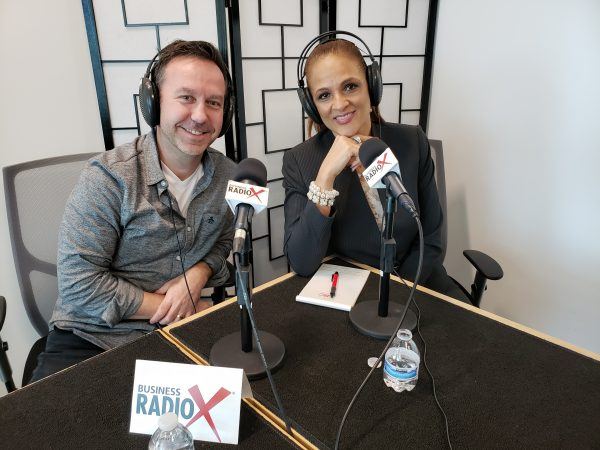
Sheryl LaPlace with Insperity and Troy Deus with Drum

November 25, 2019 by angishields

ABR-Feature-11-25
Atlanta Business Radio
Sheryl LaPlace with Insperity and Troy Deus with Drum
Loading
00:00 /
RSS Feed
Share
Link
Embed

Download file

ABR-Group-11-25

Sheryl LaPlace is senior human resource specialist with Insperity, a trusted advisor to America’s best businesses for more than 33 years. Insperity provides an array of human resources and business solutions designed to help improve business performance.

Insperity® Business Performance Advisors offer the most comprehensive suite of products and services available in the marketplace. Insperity delivers administrative relief, better benefits, reduced liabilities and a systematic way to improve productivity through its premier Workforce Optimization® solution. Additional company offerings include Traditional Payroll and Human Capital Management, Time and Attendance, Performance Management, Organizational Planning, Recruiting Services, Employment Screening, Expense Management, Retirement Services and Insurance Services.

Insperity business performance solutions support more than 100,000 businesses with over 2 million employees. With 2018 revenues of $3.8 billion, Insperity operates in 78 offices throughout the United States.

Follow Insperity on LinkedIn, Twitter and Facebook.

Troy Deus is the Co-founder and head of product at Drum, where he is focused on delivering powerful products that enable any business to stand up an on-demand salesforce using brand promoters called Drummers.

Troy graduated with a degree in digital design and 3-D animation from the University of Georgia. Since graduating, Troy watched as product design, development and user experience gained prominence as a key revenue driver. Troy comes to Drum by way of years of managing design, UX, and product teams in interactive television, mobile, and marketing automation.

In 2011, Rob Frohwein invited Troy to join the scrappy new finance technology startup Kabbage. Troy spent the next 8 years growing the Kabbage, brand, experience, and product. Since then, Kabbage has empowered over 200,000 businesses with funding and has provided over $7 Billion in loans. For the next chapter of Troy’s career, he plans to empower everyone across the globe with the means to earn money promoting the businesses they believe in with Drum.
Follow Drum on LinkedIn and Facebook.

Tagged With: customer acquisition, digital marketing, gig economy, marktetplace, Performance Driven, Preferred Employers, small businesses, Solutions-focused, Startup, Strategic and Successful, trusted advisor, values-driven

Decision Vision Episode 28: Should I Raise Angel Capital? – An Interview with Charlie Paparelli, Paparelli Ventures

August 15, 2019 by John Ray

Decision Vision
Decision Vision
Decision Vision Episode 28: Should I Raise Angel Capital? – An Interview with Charlie Paparelli, Paparelli Ventures
Loading
00:00 /
RSS Feed
Share
Link
Embed

Download file

Mike Blake and Charlie Paparelli

Should I Raise Angel Capital?

What are the steps involved in raising angel capital? What traits are angel investors looking for in the founder of a startup? Noted angel investor and startup mentor Charlie Paparelli answers these questions and more in a wide-ranging interview with host Mike Blake. “Decision Vision” is presented by Brady Ware & Company.

Charlie Paparelli, Paparelli Ventures

Charlie Paparelli, Paparelli Ventures

Charlie Paparelli is a twenty-five year professional angel investor focused on helping entrepreneurs achieving their dream of starting and growing their own company. Five years ago, he began sharing his experiences in a twice-weekly blog to entrepreneurs and angel investors at paparelli.com. In addition to his writing, he is a speaker and a coach helping founders and their new teams build enormously valuable companies.

He invested in over 35 entrepreneurs over the last 25 years. He is the Angel in Residence at Georgia Tech’s Atlanta Technology Development Center. He is also a mentor at the Atlanta Tech Village. He is Chairman of the Atlanta High Tech Prayer Breakfast. The Breakfast is in its 28th year. It is the largest networking event in Atlanta technology, and it is an evangelical outreach. He has held many community leadership roles during his 40 year career in Atlanta technology.

Charlie is married to Kathy for 42 years. They have four children and three grandchildren with another on the way. They are members of Church of the Apostles in Atlanta. Charlie is an avid motorcyclist whose current ride is a 2019 BMW R1250RT.

Michael Blake, Brady Ware & Company

Mike Blake, Host of “Decision Vision”

Michael Blake is Host of the “Decision Vision” podcast series and a Director of Brady Ware & Company. Mike specializes in the valuation of intellectual property-driven firms, such as software firms, aerospace firms and professional services firms, most frequently in the capacity as a transaction advisor, helping clients obtain great outcomes from complex transaction opportunities. He is also a specialist in the appraisal of intellectual properties as stand-alone assets, such as software, trade secrets, and patents.

Mike has been a full-time business appraiser for 13 years with public accounting firms, boutique business appraisal firms, and an owner of his own firm. Prior to that, he spent 8 years in venture capital and investment banking, including transactions in the U.S., Israel, Russia, Ukraine, and Belarus.

Brady Ware & Company

Brady Ware & Company is a regional full-service accounting and advisory firm which helps businesses and entrepreneurs make visions a reality. Brady Ware services clients nationally from its offices in Alpharetta, GA; Columbus and Dayton, OH; and Richmond, IN. The firm is growth minded, committed to the regions in which they operate, and most importantly, they make significant investments in their people and service offerings to meet the changing financial needs of those they are privileged to serve. The firm is dedicated to providing results that make a difference for its clients.

Decision Vision Podcast Series

“Decision Vision” is a podcast covering topics and issues facing small business owners and connecting them with solutions from leading experts. This series is presented by Brady Ware & Company. If you are a decision maker for a small business, we’d love to hear from you. Contact us at decisionvision@bradyware.com and make sure to listen to every Thursday to the “Decision Vision” podcast. Past episodes of “Decision Vision” can be found here. “Decision Vision” is produced and broadcast by the North Fulton studio of Business RadioX®.

Visit Brady Ware & Company on social media:

LinkedIn:  https://www.linkedin.com/company/brady-ware/

Facebook: https://www.facebook.com/bradywareCPAs/

Twitter: https://twitter.com/BradyWare

Instagram: https://www.instagram.com/bradywarecompany/

Show Transcript

Intro: [00:00:01] Welcome to Decision Vision, a podcast series focusing on critical business decisions, brought to you by Brady Ware & Company. Brady Ware is a regional, full-service, accounting and advisory board that helps businesses and entrepreneurs make vision a reality.

Michael Blake: [00:00:20] And welcome to Decision Vision, a podcast giving you, the listener, clear vision to make great decisions. In each episode, we discuss the process of decision making on a different topic. Rather than making recommendations because everyone’s circumstances are different, we talk to subject matter experts about how they would recommend thinking about that decision.

Michael Blake: [00:00:37] My name is Mike Blake, and I’m your host for today’s program. I’m a Director at Brady Ware &Company, a full service accounting firm based in Dayton, Ohio, with offices in Dayton; Columbus, Ohio; Richmond, Indiana; and Alpharetta, Georgia, which is where we are recording today. Brady Ware is sponsoring this podcast. If you like this podcast, please subscribe on your favorite podcast aggregator, and please also consider leaving a review of this podcast as well.

Michael Blake: [00:01:01] Our topic today is seeking angel capital. And for those of you who don’t know me, most of you don’t because you’re out somewhere on the internet, I’ve been a cheerleader and advocate in the angel capital world for really as long as I can remember. My first job out of school actually was helping entrepreneurs in the former Soviet Union and in Russia. And at that time, there wasn’t even a term for angel capital. It’s kind of fascinating because the whole business vocabulary was evolving at that time.

Michael Blake: [00:01:34] And  when I moved to Atlanta about 15 years or so ago, I got a taste of the early stage capital scene here. And the one theme that was recurring was you can’t get a deal done here, there’s no angel capital, et cetera, et cetera, et cetera. If you live in Atlanta, it’s tedious. If you don’t, this is news to you. And the thing I, sort of, thought was, well, I saw people making investments in Minsk. And I can’t imagine that investing in Atlanta is harder than investing in Minsk. Maybe I’m wrong, but I can’t imagine it’s that big a difference. There’s got to be something kind of going on here. And as it kind of got more into the community, I was very fortunate, the community embraced me very quickly. I started to learn about the gears and cogs about this.

Michael Blake: [00:02:21] And as I start to learn more about angel capital and early stage investing, in general, and with the travels I’ve had abroad, I came to a conclusion that for all the things that we, as Americans, think make us unique, I’m not sure anything makes us more unique than the angel and venture capital sectors. I’m not sure anything makes us more unique than the way that we support startups. And if you look at at the word “entrepreneurship” in other languages, if you directly translate them, they almost have a sense of doing something semi-devious. If you’re enterprising, that’s not necessarily a good thing. But in the United States, we have a unique cultural facet where the entrepreneur is folk hero. And I can’t think of any other place in the world where we elevate the entrepreneur to that status.

Michael Blake: [00:03:13] And one of the things that makes the entrepreneurial sector go is angel capital. You can’t bootstrap a new car company. You can’t bootstrap a new airplane company, right. And many of the largest companies, the most important inventions in the world that we think of today, at some point, were funded by angel capital. Columbus’s expedition to the new world was funded by Angel Capital called The Royal Family of Spain. Thomas Edison-

Charlie Paparelli: [00:03:53] Queen Isabella.

Michael Blake: [00:03:53] King Ferdinand, who’s with Queen Isabella, right?

Charlie Paparelli: [00:03:56] Yeah.

Michael Blake: [00:03:56] I was going to say King Ferdinand. I knew that was not right, so I choke. It’s Queen Isabella. Thank you. Thomas Edison was funded for the light bulb and for General Electric by a guy named JP Morgan. And so, angel capital pervades almost everything that we think about in terms of the American economic story. And I think if you don’t understand angel capital, you don’t understand a big part about how American business works.

Michael Blake: [00:04:24] And so, here to talk about that is somebody that I’ve known, and, for a long time, I’ve come to respect. He doesn’t even know this, but he’s a spiritual mentor to me. If you don’t ― if you haven’t listened to his or read his emails, get on his email list. There’s how many? I think three times a week. They’re just phenomenal. Not good – great. Required reading. And his name is Charlie Paparelli.

Michael Blake: [00:04:47] Charlie is a 25-year professional angel investor focused on helping entrepreneurs in achieving their dream of starting and growing their own company. Five years ago, he began sharing his experience at a twice-weekly blog – so, it’s twice weekly, just assuming – to entrepreneurs and angel investors at paparelli.com. In addition to his writing, he is a speaker and a coach helping founders and their new teams build enormously valuable companies. He invested in over 35 entrepreneurs over the last 25 years. And we’re going to come back to that.

Michael Blake: [00:05:16] He is the Angel-in-Residence at Georgia Tech’s Atlanta Technology Development Center. He is also a mentor at the Atlanta Tech Village. He is chairman of the Atlanta High Tech Prayer Breakfast, which is the largest pre-6:00 a.m. start event on the Atlanta calendar. Now, that may be a small list, but it is a big deal. That breakfast is in its 28th year. It is the largest networking event in Atlanta technology, and it is an evangelical outreach. And as an aside, whenever I remember, I’ve been to about three or four of those, and one of them was an executive from Apple. Charlie will remind his name. But he’s an executive from Apple who had to come on and talk, I think, a day or two after Steve Jobs passed away, as I recall. And that was some powerful stuff. That was as raw as it gets.

Michael Blake: [00:06:11] Charlie has helped many community leadership roles during his 40-year career in Atlanta technology including Angel Lounge, which is an offshoot of Startup Lounge that serves to educate current and aspiring angel investors in the Atlanta community. Charlie is married to Kathy for 42 years. They have four children and three grandchildren, with another on the way. They are members of Church of the Apostles in Atlanta. And Charlie is an avid motorcyclist whose current ride is a 2019 BMW R125. Nope, that’s wrong. R1250 RT. Got it. That’s a lot of letters and numbers.

Charlie Paparelli: [00:06:46] That’s what it is, yeah.

Michael Blake: [00:06:48] Charlie, thank you so much for coming on the program. I’ve been looking forward to this since we started talking about it several weeks ago.

Charlie Paparelli: [00:06:53] Same here, Mike. I always love the work that you were doing. We started Angel Lounge as an offshoot, as you said, a startup lounge. I wanted to be a part of what you were doing. You’re saying we’re missing this piece. And that’s where we came up with the idea of Angel Lounge.

Michael Blake: [00:07:06] And I think due to that, I think there’s more capital available in Atlanta than there has been because I think you’re making people feel safer and more confident about making those commitments.

Charlie Paparelli: [00:07:17] Yeah. Angel Lounge, we focused Angel Lounge instead of trying to march more companies in front of people, it took us a while to get to the right formula. But the formula that we’re using is, really, our mission is to just help angel investors or those who are interested in becoming angel investors to help make them better investors by sharing each other’s stories and experience with them.

Michael Blake: [00:07:39] So, I’d like to start this podcast with the basic vocabulary question, because I think not everybody knows what angel investing is. They may think it’s venture capital, but angel investing and venture capital are related, but they’re not quite the same, are they?

Charlie Paparelli: [00:07:53] No, they’re very different. If you think about when we ― venture capital, basically, is mutual funds for high-risk investments, all right. So, if you know how mutual funds work, I mean, you have a mutual fund manager, and he has partners, and they raise money to, then, invest that money for other people in mostly public stocks. Public stocks, things that you can get in and out of pretty quickly. So, they might put in 1% to 5% of their own money into that big mutual fund. So, venture capitalists, the difference between them is they’re investing in companies that are privately held companies. And as privately held companies, you can’t get in and out of them quickly. Once you’re in, you’re in forever, okay.

Michael Blake: [00:08:47] Right. That door makes a loud slamming noise.

Charlie Paparelli: [00:08:48] It does, yeah. It’s all ― so, we’re all excited to get in. And then, next thing we’re doing is looking for exits, and we’re driving along the highway, and there are none. You’re just on there, and you hope you don’t run out of gas till you get to that last exit. So, venture capitalists, hopefully, people put money in venture capitalists, and big pension funds put money there simply because it’s a high-risk, high-reward alternative. So, you’ll find some of these big pension funds who will put in maybe up to 3% to 5% of their total fund into high-risk alternatives, of which venture is one of those.

Charlie Paparelli: [00:09:23] Angel investing, on the other hand, that’s like your own money. So, it’s like running your ― it’s like taking whatever money that you thought you wanted to put into higher risk ventures, whether it be $100,000, or $250,000, or some cases, it could be multiple millions of dollars, and you say, “No, I want to be an angel investor. I want to be on the ground. I want to invest in these early-stage startups. I want to work with these entrepreneurs. And I’m willing to risk my personal fortune on this one segment.” So, you have a lot less people, a lot less company — fewer companies that you’ll be spreading that risk across. And so, that makes the risk even higher as an angel investor versus venture capital.

Michael Blake: [00:10:08] Now, I want to clarify one thing just because you happen to be the guest, it only happens to be called an angel investor because that’s a term of art. It has nothing to do with a religious affiliation. Even though you happen to be very open about your faith, there are plenty of people who aren’t that way that are angel investors, right? There’s not a a Christian element to it, necessarily.

Charlie Paparelli: [00:10:28] There’s no Christian element to it. In fact, the term angel investor goes back to people in New York on Broadway who actually wanted to get their shows funded, their new ideas for Broadway shows. And people would come in, and they would ― very wealthy people would liked the idea, and they would fund the show. And those people were called by the producers of those shows angel investors. And that’s where the term ― that’s the genesis of the term angel investor.

Michael Blake: [00:11:00] I had no idea. I did not know that. And the producers, the people who funded Springtime for Hitler were actually angel investors.

Charlie Paparelli: [00:11:07] Oh, you would bring up that example, but, yes, that’s true. Yeah.

Michael Blake: [00:11:10] Well, my wife is Jewish. She’s a big Mel Brooks fan. And I will say, as an aside, by the way, the funniest six minutes in cinema is Springtime for Hitler. Only Mel Brooks can make the Nazis funny. So, we often hear about friends and family as investors. Do they qualify as angels too, or are they sort of a different animal?

Charlie Paparelli: [00:11:29] No, I would call — friends and family, there’s a term called the 3Fs, okay? Family, friends, and fools, okay, are those very, very early stage investors. And when you’re — when an entrepreneur is raising money, the first thing that he’s raising money around or on, as a foundation, is his credibility. Well, the first people that find the person, the entrepreneur, to be credible, especially if it’s his first time being an entrepreneur, is his family. If his family doesn’t think that he or she could do it, then why should anybody else think they should — they’d be able to do it?

Charlie Paparelli: [00:12:11] So, I think that the first round is always friends and family, because they’re other people that say, “Oh, my God. If Mike Blake is starting this company, and Mike is so smart, and I think he’s going to be able to build something great. I have no idea what his idea is. I don’t know what the market is. I don’t know anything. But I know Mike, and I’ll put money behind Mike.” So, I think they are angels. They’re the — they’ve been called fools, but I think what they’re doing — I know what they’re doing. They’re betting on the individual because they have a very deep and long personal relationship with them.

Michael Blake: [00:12:44] So, you bring something up that I want to make sure that we cover because there’s a timeline of maturity here, right? And that friends and family round, if you will, that investment is really banking on the credibility, which means there isn’t a business yet, right. There’s there’s a hope, an idea, right? A story, I guess-

Charlie Paparelli: [00:13:05] Yeah. Just somebody-

Michael Blake: [00:13:05] … in most cases?

Charlie Paparelli: [00:13:06] Most of the time, somebody will come to you and say, “Yeah, this is something that I’ve been doing. I’ve been working for such and such a company for a while.” These are the kind of people that I’ve gotten — I’m attracted to. “I’ve been working in this industry for a while, working for this company for a while. I’m 35 years old. I’ve been through… ” — either “I developed an expertise as a programmer” or “I developed an expertise as a salesperson,” or whatever. “But I know this industry, and I have this idea, and I brought it to my bosses, and no one’s interested in it. And I just can’t let loose of it. And I really want to start a company around it, but I have no idea how to do that. But I think a lot of people will buy whatever I’m going to build or sell.” And that’s kind of how it gets started.

Charlie Paparelli: [00:13:56] And then, the first place they have to go is they have to go to somebody. So, that’s all they have. They have this story. There’s interest and that they — it’s this passion. It’s, sort of, like a God-given idea they can’t let loose of, but they need to be able to feed — they’re 35. They need to be able to feed their family, and they need to start putting money away for college, and all this for the kids, and everything that we all do. They have houses, cars. They’ve got it all. How do they survive? Well, that’s where the angel comes in and says, “We can help you meet your personal expenses at the beginning while you develop — while you unhook from the corporation and your salary,” which is step one. And then, you start building out this idea.

Michael Blake: [00:14:38] You brought something up. I’m going to deviate from a script here because I think that’s — I think it’s important. That 35-year-old, the most — the iconic entrepreneur is somebody who’s in their 20s. To us, they’re basically kids, right. But they actually don’t start most companies, do they?

Charlie Paparelli: [00:14:57] No. You say iconic. What do you mean the iconic?

Michael Blake: [00:14:59] An iconic. Iconic, like the Mark Zuckerbergs, the Bill Gates of the world, Steve Jobs.

Charlie Paparelli: [00:15:05] Oh, I see what you’re saying, yeah.

Michael Blake: [00:15:05] In some case, they actually drop out of school, so they can start whatever it is they’re going to start. But actually, most entrepreneurs look like that 35-year-old, don’t they?

Charlie Paparelli: [00:15:14] Yeah, I think the statistics proved out that it’s somewhere between 35 and 38. And my statistics actually prove out this companies that were successful for me that I invested in, that’s exactly how old people were. So, they have enough. Really, like when I got out of college, I grew up, my father was a middle — he was a train man on the Jersey Central Railroad for 38 years. When I sat around the dinner table, we didn’t talk about business. In fact, I remember I was the first one in my family, first male in my family to actually get a degree from college. And I was getting an accounting degree, and they told us we need to read The Wall Street Journal. I’m reading The Wall Street Journal, and I didn’t even know what I was reading. It didn’t make any sense to me because I had no context or understanding of basic business.

Charlie Paparelli: [00:16:01] So, it’s really, when you come out of school, what do you know about business? What do you know about building a company? What do you know about the disciplines of building a product, the disciplines of launching a product? How to gain — how to hire people? How to do business reviews or reviews for people? Okay. How to properly give a presentation? You don’t know any of this stuff. You have to learn it. And so, that’s why I think those 15 to 18 years out of college, that’s the foundation where you have to prove out your functional expertise, as well as your management expertise.

Michael Blake: [00:16:38] I think the only thing I knew about business was what I remembered from watching that Michael J. Fox movie, The Secret of My Success. That was pretty much it.

Charlie Paparelli: [00:16:46] I don’t remember that.

Michael Blake: [00:16:47] Yeah, nor does anybody else. That’s-

Charlie Paparelli: [00:16:49] Okay.

Michael Blake: [00:16:49] Yeah. So, let’s, sort of, then, now get into the seat of that person that thinks they’ve got that idea, right, and they’re convinced that idea’s got legs, and the company they’re working for is not going to buy it. They sit down, they take you out to lunch, or they sit down for your own office hours at the ATDC. What do you tell them in terms of they’re if going to embark on a venture — I’m sorry, angel capital raising process, what should that entrepreneur be prepared to do?

Charlie Paparelli: [00:17:21] In order to?

Michael Blake: [00:17:24] To raise capital? I’ve got an idea. I need somebody to write me a bigger check than I can write myself. What is that process going to look like?

Charlie Paparelli: [00:17:34] All right. So, I’m going to speak beyond the friends and family.

Michael Blake: [00:17:37] Yeah.

Charlie Paparelli: [00:17:37] So, friends and family is going to provide that bridge to get you from a weekly payroll or weekly salary, if you will, to being an entrepreneur or starting your own business, in effect, okay. So, now, your future and your family’s future is dependent upon you making money. So, tell me again, what are you looking for in this?

Michael Blake: [00:18:03] I’m just looking for the process of raising angel capital, right. I’ve decided I’m going to raise angel capital. What do those steps look like to get from want to raise angel capital to having a check in the bank?

Charlie Paparelli: [00:18:18] All right. Part of this myth, I mean, you talked about entrepreneurs as folk heroes. And there’s a myth around the folk hero that soon as I come up with an idea, the next step is to actually raise capital, okay? Really, the next step is to start building a business. Capital is attracted to businesses. Capital isn’t just attracted to purely ideas, all right. I look back at Facebook, for example. So, when Zuckerberg — what happened with Zuckerberg, he started Facebook, basically, as a freshman at Harvard, I believe was Harvard.

Michael Blake: [00:18:58] I think so, yeah.

Charlie Paparelli: [00:18:59] Yeah. And, sort of, a nerdy guy, wanted to meet people, introvert. He didn’t want to meet people. He want to meet girls. So, what he did is he put together this little site to have people meet each other over this internet. And it was only open to the freshman class at Harvard. And he started to gain traction because there’s a lot of nerds, I guess, that go to Harvard.

Michael Blake: [00:19:30] I think that’s fair.

Charlie Paparelli: [00:19:31] Yeah. And they don’t-

Michael Blake: [00:19:32] I only drove by Harvard when I lived up in Boston, but I think that’s correct.

Charlie Paparelli: [00:19:35] Yeah, all right. Well, they needed to meet each other. So, they didn’t know how to do it. So, they started doing it over the web, this new medium, if you will. And then from there, it started to kind of take off. So, he met people. He became, sort of, a little bit of a rock star in his freshman class and other people in the college. And Harvard said, “Well, what about us as sophomores, and juniors, and seniors, and all that?” And, of course, we always know that seniors always like to pick up freshmen girls, right? That’s kind of how that works. And so, he opened it up, and it just became for Harvard. And then from Harvard, other people started to contact him, and said, “Hey, we’re at MIT. We want to do the same thing. Can you open it up?” So, he started to open up these silos where they couldn’t talk to each other. You can only talk within your educational institution. And from there, it’s sort of just expanded.

Charlie Paparelli: [00:20:27] At some point, people said — he said, “I need to — this thing is so popular now. I need to kind of get some money here, so I can live on and continue to build it out.” And that’s when he got his first venture capital. And by then, he had exposed — he had expanded to high schools, again, siloed. And when he first got some capital in there, it was probably angel money to start with, is they said to him, “Look, why are you doing this siloed approach? Why don’t you just kind of open it up horizontally to anybody who wants to be part of this?” And that was the beginning of Facebook.

Charlie Paparelli: [00:21:00] And that so — he started to build out the attractiveness of the idea and the business model, and that’s what it was. And he had no idea what the business model was going to be when he started. But later, it came about that it was going to be advertising-based because he had captured all of our data, and he was able to sell it to all of the advertisers.

Michael Blake: [00:21:18] Yeah.

Charlie Paparelli: [00:21:19] It worked out really well for him. But the first step, really, is for these — is to think, “I have to build a business.” Don’t think, “I have to raise capital. I have to build a business.” If you build something that looks like it’s going to be a business, that, actually, there’s some buyers out there for whatever service or product that you’re selling, then an angel investor like myself can come in and say, “It looks like this can turn into a big business,” or “This can turn into a $500,000 business, max,” or “Maybe it’s going to be a $5 million business,” then we can size what type of investment it would require. And then, we could figure out what kind of returns that we might possibly get based on the investment we put in.

Michael Blake: [00:22:00] And you and I, I think, both know and have met entrepreneurs that, I think, I’ve gotten that backwards where their business seems to be raising capital.

Charlie Paparelli: [00:22:09] Yeah.

Michael Blake: [00:22:11] That doesn’t work very well, does it?

Charlie Paparelli: [00:22:12] Yeah. One of the things I worry about in our community and other communities is we don’t celebrate. We don’t seem to celebrate the progress that a company makes in their marketplace. But what the news covers is how much money they raised on the last round. Money doesn’t build companies, people build companies.

Michael Blake: [00:22:34] Yeah.

Charlie Paparelli: [00:22:34] So, we should be celebrating, “Oh, my gosh, they did a deal with AT&T.” That should be the news, not that they raised $50 dollars in the last round at a $200 million valuation.

Michael Blake: [00:22:48] Yeah, I agree with that.

Charlie Paparelli: [00:22:50] Yeah, you’re right. So, the end point, what we celebrate is some milestone in the process as opposed to the business successes themselves.

Michael Blake: [00:23:03] So, to  raise money for a small business, angel capital is not necessarily the only game in town. It’s not necessarily the best route to go, right? You could — for example, you might be able to obtain a small business loan, right, or you may be to finance things through credit cards. Can you talk a little bit about what differentiates one opportunity that makes it appropriate for angel capital and what maybe makes another opportunity more appropriate for a small business loan kind of scenario?

Charlie Paparelli: [00:23:34] Yeah. Small business loans and credit cards, they all kind of fall in the same bucket. They’re probably 25% interest type loans.

Michael Blake: [00:23:43] Yeah.

Charlie Paparelli: [00:23:43] So, you’ve got to think of them more like working capital loans. So, I need some — I’m invoicing my — I’m doing a service company, so I’m invoicing my customers. I’ve got a 45 to 60-day, sort of, window before that money comes back in. So. maybe I can use credit cards, and I can use these business loans, if you will, to kind of finance that. But for longtime financing, 25% interest is gonna be quite a burden as you go forward. So, I see those as working capital loans.

Charlie Paparelli: [00:24:17] The angel, the other side is banking. Can I go to a bank and get a loan? Well, if you’ve got enough assets, enough collateral, and enough money in the bank, they’re willing to give you a loan. But most of these people don’t have the credit worthiness to get any meaningful sized loan that’s going to kind of move the needle for the business. So, it forces you into selling stock in your company as opposed to just accumulating debt to kind of go forward. So, with stock, you don’t have debt. You have — you’ve sold off a piece. But, now, you have a partner. And that’s what an angel investor is. They’re a financial partner in the company. So you’ve sold off 30%, or 50%, or whatever the number might be depending upon how early stage you are of your company to this investor who’s now going to be hanging out with you for a very long time.

Michael Blake: [00:25:12] And the timing issue, I think, is so important that an angel investor, if they’re experienced – and not all of them are – understands that doors are slammed shut, and you’re on a highway for a while, right? The bank, maybe they understand the door’s slammed shut, but if you’re going to be on that highway for a long time, that meter runs really quickly, right, as that interest kind of piles up. And it takes cash out of the business. But if you can pay that back fairly quickly, maybe that does make sense. If you have enough cash flow initially to kind of — as you said, as you sell through your inventory or whatnot, maybe it makes sense to do that.

Charlie Paparelli: [00:25:54] Yeah. It depends upon — I guess there’s a couple of things to consider is, what kind of business am I building? If I have to spend a lot of time in order to build out a product, a bank loan is probably not gonna be a good way to go. But if I’m doing a services company, or if I’m a reseller of some type of other products, so I’m really looking to just buy product, and then resell product, bank loans make a heck of a lot of sense because you can keep moving them. You can pay them back, you can take them down, you can do it that way. But if I have this long-term investment that I have to make in order to get set up to build my company, well, bank loans, like you said, accrued interest kind of grows very, very rapidly. And then, you’re kind of under water.

Charlie Paparelli: [00:26:44] The other thing to consider is that, do you know enough about what you’re doing to build a company? So, this is where angels come in too. They’re just not people who come with money, but they come with expertise and network. So, if you could find those kind of what I’ll call smart money angels, then they could bring a lot of value to the business to increase your chances of success and mitigate your risk.

Michael Blake: [00:27:11] I want to drill down on that because I know in your model, I think, your smart money is involved. I think you are involved with a greater degree because you do fewer deals, right? I think, in the intro, I think it said you did 30 deals over 25 years, something of that nature, right?

Charlie Paparelli: [00:27:28] Right.

Michael Blake: [00:27:28] So, you are not — you, yourself, you’re not spreading thin. You are going deep into one or two deals at any given point in time. And correct me if I’m wrong, but I think that’s, sort of, on the deeper end of the spectrum. Not all angels are as involved on a day-to-day basis as an intimate partner as are you. Is that fair?

Charlie Paparelli: [00:27:50] That’s very fair.

Michael Blake: [00:27:52] And then, there’s a spectrum. And then, on the other side — and I’ll just share with the listeners some insider baseball. We often call those doctor and dentist deals, right? Nothing against doctors or dentists, but there’s a stereotype that they have money but not the experience of being angel investors. Often, they’ll make an investment but not be involved, right.
Charlie Paparelli: [00:28:16] But the other side of the reason that doctors and dentists get involved too is there’s a jealousy that the business guys are making all the money.

Michael Blake: [00:28:26] Okay.

Charlie Paparelli: [00:28:26] So, they want to become a business guy and that becomes an easy, sort of, on-ramp angel investing, but it’s a quick way to kind of lose some of their hard-earned, sort of, cash flow too.

Michael Blake: [00:28:37] Yeah. Yeah. Oh, sure. That’s a great way to lose money, right?

Charlie Paparelli: [00:28:40] Yeah.

Michael Blake: [00:28:40] But as somebody who’s seeking angel capital, right, on the one hand, what you’re offering, you’re offering experience, you’re offering expertise, you’re offering support. The other edge of that sword is I got to share the steering wheel, right? There’s built-in, day-to-day, in-your-face accountability with which not everybody in the world is necessarily comfortable, right? And some capital seekers will say, “You know what? You’re telling me this dumb money is just going to write me $100,000 check, and then not bother me? Great. Where do I sign?” What does that funding seeker not getting right? What are they overlooking or what are — yeah. What are they failing to see because they see that “free money?”

Charlie Paparelli: [00:29:29] Yeah. I have people — I had a call just the other day, in fact, somebody who was saying to me this is their third time, actually, starting a company. And, actually, the first two companies, they had exits. So, they figured they had the formula down, they’re just going to be successful. So, this is a guy that has total exits that were equal to $37 million in exit. So, this is a pretty successful guy in health care, in the health care vertical. And he’s saying to me, “You know and understand. You understand how to price these deals out. I don’t have revenue yet in this one. I do have a lot of experience. I’ve got good track record. I think that people should pay a much higher amount of money as angel investors for the stock than I’m going to sell in this company at this stage.”

Charlie Paparelli: [00:30:16] And I said, “Well, you’ve got a choice. If you want people who are going to come in, who are going to add to the credibility of your new company, your idea, and also lock arms with you for any future, sort of — be of value add for any future funding that you’re going to do,” I said, “you’re going to have to — you’re selling to professional angel investors who are going to be asking for — they’re looking for good returns, and they understand how hard it is to build companies. So, you’re going to be pricing your company lower than you would with inexperienced – the doctors and dentists.” You go to doctors and dentists, and they say, “Oh, well, I’m pricing this brand new company, never raised money before, has no revenue, hasn’t built the product yet. We’re going to price it at $10 million.” Okay. And from the outside, you might say, “Wow, that’s a really good deal, $10 millions because I look at the stock market and all those companies have billion dollar valuations. So, this is a great deal.”

Charlie Paparelli: [00:31:14] Whereas an angel investor would probably say, “What did you raise money on your last deal for that first round?” He said, “Well, they got an outsized return because I priced it at $2 billion pre-money.” And I said, “Well, that’s what it was worth. And they didn’t get a ridiculously high sign.” I said, “What was the returns they got?” He said, “They got a 10-time return on their money.” I said, “So, what? So, what? Why does that bother you? You were a success. You made millions of dollars because of these people that put this money in.” He said, “Well, I think that I could make even more.” I said, “Well, how much more money do you want to make?” And he said, “Well, it’s not about the money. It’s about fairness.” And I said, “Oh, so it’s about greed, but it’s not about the money.” You know what I mean? It’s like a ridiculous conversation. So, I would say-

Michael Blake: [00:32:00] This is why I don’t argue with you, by the way.

Charlie Paparelli: [00:32:02] So, what do you like? Yeah. So, what you’re missing out on if you get what we’ll call as inexperienced money as opposed to using the pejorative term, is you’re missing out on the experience. I mean, I’ve been an entrepreneur in my earliest days. We built companies from scratch. We did exits. I worked for corporations. I know what it is to to build leaders. I know how to hire people. I know to help. I have a network of people I can bring to the company. I can make introductions to executives. That’s very valuable. Well, if you’ve got a doctor, and he’s not going to do any of that, he’s going to call you up and say, “So, what happened last week?”

Michael Blake: [00:32:44] Right.

Charlie Paparelli: [00:32:44] You know.

Michael Blake: [00:32:44] Unless somebody faints at the board meeting, that’s great. But otherwise, he’s not going to bring that much to the table, right?

Charlie Paparelli: [00:32:49] Exactly.

Michael Blake: [00:32:49] So-

Charlie Paparelli: [00:32:49] So, that’s what you miss out.

Michael Blake: [00:32:51] And you said something that  I want to touch on because I think this is really important. That 10x return, I don’t think that’s really an outsized return when you consider the risk that’s being taken, right? So, I just posted two days ago on my chart of the day, when you look at venture returns, which is more mature than angel, right, 65% of those deals don’t make their money back, right?

Charlie Paparelli: [00:33:14] Right.

Michael Blake: [00:33:14] So, it’s up to a 1.0x return, which means that’s cash and cash. Best scenario, you get your money back, which means that two-thirds of deals lose money, right?

Charlie Paparelli: [00:33:27] Right.

Michael Blake: [00:33:27] Two-thirds of deals in the S&P 500 do not lose money if you’re just sort of in a broad index, right?

Charlie Paparelli: [00:33:32] Right.

Michael Blake: [00:33:32] So, it’s kind of like drilling for oil that the deals that are successful also kind of got to pay for the deals that weren’t, right? The well that strikes oil also has to pay for the drills you put in that didn’t strike oil.

Charlie Paparelli: [00:33:46] Right.

Michael Blake: [00:33:47] And so, if you’re successful, perhaps you’re thinking, “Boy, you know, 10x returns seems rather greedy.” But from the investor’s standpoint, you got to have that, or you’ve got to have that aspirationally. You have to hit it once in a while or the economics, given the risk and the failure rate, just don’t work out, right?

Charlie Paparelli: [00:34:06] Yes. So, what you wind up with, I think that the average angel that has been doing it for some — let’s say, a 10-year period, I think their returns are somewhere — somebody — this is somebody that presented at Angel Lounge. I think those returns were somewhere around 3% to 6% as an internal rate of return.

Michael Blake: [00:34:26] Oh, my gosh.

Charlie Paparelli: [00:34:26] Well, that’s an awful lot of risk and an awful lot of work, okay, to get those kind of returns. And what happens is when you’re speaking with entrepreneurs, every entrepreneur know his company is going to be a great success, and it’s going to be worth a lot of money. What he doesn’t have is any kind of context to say, “As an angel investor, I’m looking at 20 people that look like you, okay, and I’m seeing — I really understand where the risk is because I’ve talked to people at all different levels. You seem to be the most attractive, but there’s no guarantee that you’re going to be successful.”.

Charlie Paparelli: [00:35:05] That guy I talked about in health care, I said, “You’ve got millions of dollars.” He says — I said, “Why don’t you put your money into this thing if it’s such a good deal?” And he said, “Well, I’ve already put $200,000 in.” And I said, “Well, $200,000 to you is nothing based on the exits that you had. So, you’ve got to be worth more than $15 million.” He goes, “Well, I’m not going to tell you what I’m worth, but you’re not far off.”

Charlie Paparelli: [00:35:28] And then I said, “Well, if this is such a great deal, if it’s so low risk that you’re going to be a success, why would you want to share it with anybody?” And he said, “Well, there’s always a chance that it’s going to fail.” I said, “Well, you didn’t say that in the first 20 minutes of our conversation, you know.” But you see, this is the reality of it. So, I want to take no risk, and I want all the risk to be put on the investors. And I don’t think they should get more than a three-time return if it works.” And I said to him, “Would you invest in that deal?” And he didn’t answer me. But you see, it’s crazy the way these deals get positioned.

Michael Blake: [00:36:06] Well, you know, I think in fairness, it’s sort of in a symmetry of kind of how you look at it. From the entrepreneur’s deal, they have one deal, and that’s it, right? But I want to build on something that you said. Even the deals you invest in, let’s say — I know you don’t do this, but let’s say you’re an angel that’s got money in six deals, right?

Charlie Paparelli: [00:36:26] Yeah.

Michael Blake: [00:36:28] When you put money in those six deals, you didn’t think any of them were going to fail individually. You wouldn’t have put your money in, right? You think that all of them are going to be successful when you put your money in, but you know that four of them are not, or five of them are not, or maybe all six of them are going to lose. You just don’t know which ones.

Charlie Paparelli: [00:36:45] You know, it’s funny that you say that, the four of the six will not be okay. There is such a deep sense of denial. Even me who has been through this that I still think I’ll be six for six. Okay? That’s why we do these deals. You know, I mean, you can’t be an angel investor, and not be idealistic, outsized, idealistic, and outsized hopeful. Otherwise, you wouldn’t do these things.

Michael Blake: [00:37:10] Right.

Charlie Paparelli: [00:37:11] So, that’s what happens.

Michael Blake: [00:37:11] Nobody would ever enlist for the army if they thought they’re the one that’s going to get shot.

Charlie Paparelli: [00:37:15] That’s right. That’s right.

Michael Blake: [00:37:16] You got to have that going in. It just doesn’t make any sense, right? So, how much lead time? I mean, how long do you think — how long does it normally take? Let’s say there’s a successful angel funding process that takes place. As an entrepreneur is thinking about their business plan, how long does that process usually take?

Charlie Paparelli: [00:37:39] Well, it’s a hard question to answer, but if I’d say in general terms, I would say 90 days.

Michael Blake: [00:37:47] Okay.

Charlie Paparelli: [00:37:47] Okay. But it’s highly dependent. If we’re speaking to entrepreneurs and business people here, it’s highly dependent upon the quality of your business. If you are sitting here, and you don’t really have anything, and the idea doesn’t really even solve a clear business problem, you can spend the next two years trying to find the first person that’s going to put money behind that. And in that two years, you’re going to change, change, change, improve, do better until you hit on some business that makes sense based on your expertise. And then, the 90 days will kick in.

Michael Blake: [00:38:23] Right.

Charlie Paparelli: [00:38:23] All right. So, it could be forever to never, okay? Or if you really do, in fact, have something, it could be as quick as 30 days, okay? That happens if you get the first person who has high credibility as an angel in the deal, then it’s a pile-on. Everybody’s got to be in the deal, right, because the credibility went up. If Charlie thinks that Mike has got a really good shot at this, and Charlie’s done a lot of these deals, I’ll put money in that deal. Well, what’s the deal? I don’t even know what it is, but Charlie’s on the deal. I’m going to do the deal. You know, that’s the old thing that we had about the t-shirt for Sig Mosley, right, who was sort of the godfather of angel investing in Atlanta that said “Sig said no.”

Michael Blake: [00:39:08] Yeah.

Charlie Paparelli: [00:39:10] Right? If Sig said no, you were dead.

Michael Blake: [00:39:12] That was already a horse head in your bed, basically.

Charlie Paparelli: [00:39:13] Yeah, exactly. That’s what it was. But if he said yes, everybody wanted in on the deal. They don’t even know what they were investing.

Michael Blake: [00:39:20] Right.

Charlie Paparelli: [00:39:21] That’s the [crosstalk].

Michael Blake: [00:39:22] It could have been alpaca as a service. And if Sig was in, you’re in.

Charlie Paparelli: [00:39:26] That’s it.

Michael Blake: [00:39:26] Now,  saddle me up, right.

Charlie Paparelli: [00:39:28] That was it.

Michael Blake: [00:39:29] So, what do you think about angel groups? There are angel groups out there. We have won the Atlanta Technology Angels, which, as my editorializing, some years are great; some years, you don’t quite know where they are. I don’t think you’ve ever been a very active member as an investor of angel groups, if I’m — correct me if I’m wrong, obviously. But do you have an opinion of angel groups as a place for somebody to go to look for capital?

Charlie Paparelli: [00:39:55] Yeah, I think that angel groups have been — angel groups have been through a process here over the last, I would say 20 years. And it’s taken them that long to get to a model that actually works. And what they’re serving is not entrepreneurs. What they’re serving as passive investors. And passive investors, I always say that wealthy — the passive investors are independently wealthy people. And my definition, personal definition of independently wealthy is I can do whatever I want, whenever I want, which means I have complete control over my time. Well, I might say as a wealthy individual, “I want to be an angel investor.” Well, if all of a sudden, I create a relationship with the entrepreneur, and I put money in, and he sees value in me, well, I might start getting calls like on Saturday morning, which is when I play golf, that this guy lost a big deal, and he just has to meet me for breakfast.

Charlie Paparelli: [00:41:00] Well, what happens is we have all these people that want to do it, but they don’t want to put time in. So, they need somebody to kind of represent them. So, what happened is over the years, these models went from sort of loosely-goosey, “Let’s have a meeting and see who wants to invest,” to actually putting putting in paying dues and paying a group of people to actually vet the deals, present the deals, do the due diligence on the deals, put the terms sheets together, negotiate the term sheets, and then present them to these passive investors. That’s where these groups have gone now. So, if you look at AIM, A-I-M-

Michael Blake: [00:41:38] Yeah, familiar with them.

Charlie Paparelli: [00:41:38] Right? Down in Birmingham. And then, you look also at Matt Dunbar Venture South in Greenville, they have adopted that model. It took them a while to get there, but they’ve adopted the model, and it works because it satisfies the needs and interests of the passive angel investors. So, they have these huge networks of people.

Michael Blake: [00:42:02] And they are funding deals. I know AIM would probably be one of the most active angel investors in Georgia, I think.

Charlie Paparelli: [00:42:10] They are one of. In fact, they started a group here in Atlanta.

Michael Blake: [00:42:16] Oh, okay. I didn’t know that.

Charlie Paparelli: [00:42:17] Yeah, they have their own group. And ATA, the Atlanta Technology Angels, like you said, they’ve had their ups and downs. And so, they haven’t quite had the leadership to kind of build something out longer term. So, they have ebbed and flowed, but they’ve been at a few good deals, you know. Even with this sort of loosey-goosey unstructured model that they have.

Michael Blake: [00:42:38] So, I want to ask you a question I get asked a lot. And that is, from your perspective, how much do business plans and financial models matter? Are they overrated? Are they underrated?

Charlie Paparelli: [00:42:52] Well, I’m a very early stage investor.

Michael Blake: [00:42:55] Right.

Charlie Paparelli: [00:42:55] Right? So, for me, they’re not rated, all right? So, what I look for is my business plan, where we kind of get started, is to say, “Let’s do a three-month forecast. Let’s start with how much money you’re going to spend over that three months.”

Michael Blake: [00:43:11] Got it.

Charlie Paparelli: [00:43:11] “And is there any opportunity for any kind of revenue in that time?” So, really, we’re very granular, okay?  But to sit here and say, “Well, here’s my five-year plan,” I say, “The first thing we need to do is we need to be able to get to cash-flow positive. Then, we can have a plan going forward. But if we can’t get the cash flow positive, that deficit is going to be make up by investors, and investors are going to be part of this drag on you as you try to kind of go forward.” So, I don’t know.

Michael Blake: [00:43:43] And that’s why you like — I mean, in your model, you like to kind of be the only guy, because I think it’s less of a distraction, right?

Charlie Paparelli: [00:43:50] Well, what I’ve done is always — it’s been me and maybe two or three other guys.

Michael Blake: [00:43:56] Okay.

Charlie Paparelli: [00:43:56] But they’re people that I trust. People don’t even know they exist. But I bring them along in some cases. Like one guy, I invite invested in a sales tax business that was selling to telecom, and there was a sales tax prep business, who I called it the ADP of sales tax. Well, I didn’t know telecom buyers. Well, I brought a fellow that’s a very good friend of mine who was a telecom executive, worked for AT&T, fast track guy. I brought him in. He walked me into two deals. Just walked in. One call, boom, we went in, they bought the stuff. Well, that’s really high value.

Michael Blake: [00:44:31] Yeah.

Charlie Paparelli: [00:44:31] So, he knew telecom, and he knew the buyers. So, I understand how to build companies from scratch, and I understand building leadership teams. He was on the other hand. He was the industry expertise that kind of brought us, and he had network like that. Sometimes, I’ll bring in somebody who’s a sales expert in the particular channel, and that would be another guy to kind of bring along that would be very helpful in the deal. So, everybody I bring along has got to be additive to the deal-

Michael Blake: [00:44:59] Okay.

Charlie Paparelli: [00:44:59] … to mitigate the risk and increase chances of success.

Michael Blake: [00:45:04] All right. So, we’re running out of time, but I have two questions I want to ask before we get you out of here and get you back to doing your angel investing. Three founder traits that turn you on?

Charlie Paparelli: [00:45:16] Three founder traits that turn me on. One is that this is the time for this company to start in this person’s life. So, I look at an idea as an arc, and I look at a person’s life as an arc, okay? So, I look at this intersection between where you are in your life as an entrepreneur, and this idea, and where it is in the marketplace. And if there looks like there’s an intersection, I call that, it’s almost like a God moment. It’s a miracle has happened, okay? It’s not artificial. It’s like it had to happen. And I think if we look back at companies like Apple, and Amazon, and Facebook, those are all those kind of moments. And I’m not saying I’ve ever invested in billion-dollar kind of companies, but that’s what I look for in an entrepreneur because it’s very personal. So, it’s not just, “Oh, I was walking down the street, and I came up with this idea.” It has to fit in their life.

Charlie Paparelli: [00:46:12] Secondly is they have to have — for me, they have to have the industry expertise. So, they are 35. So, they do have expertise in a particular functional area. And they also have a lot of experience in that marketplace. So, they have customers they can call on. They have employees who would like to come along with them because they respect them. So, that mitigates risk.

Charlie Paparelli: [00:46:35] And then, lastly, I look for character. And the character I look for, for me, which has been easy to just look for somebody who has a Christian foundation. And the reason for that is, at least, I know what they are supposed to stand for, all right?

Michael Blake: [00:46:54] I know why you’re saying it like that. Okay.

Charlie Paparelli: [00:46:55] There is some level. We’re all hypocrites, we’re all sinners, okay? But there has to be some level of integrity that we can count on. There’s a reason for your [indiscernible]. I say there’s two types of entrepreneurs. There’s those entrepreneurs who believe that there is a God, and it’s them. And there’s other entrepreneurs who realize there is a God, and it’s not them. I invest in the people who know there’s a God, and it’s not them. So, there’s higher level moral authority effect that speaks into their life. When everything’s going well, everybody’s honest, and everybody’s hard working, and everybody believes in helping the other guy. When things get tough, that’s when the values show up. So, I try to get — that last piece of character is very important to me.

Michael Blake: [00:47:41] That’s a great note to kind of wrap things up on. Can people contact you if they have more questions about this angel investing thing?

Charlie Paparelli: [00:47:50] They could write me. That would work.

Michael Blake: [00:47:52] How would they write you?

Charlie Paparelli: [00:47:53] They could send an e-mail to charlie@paparelli.com.

Michael Blake: [00:47:57] Okay.

Charlie Paparelli: [00:47:58] But sign up for the blog at paparelli.com.

Michael Blake: [00:48:03] Yeah.

Charlie Paparelli: [00:48:03] That would be great.

Michael Blake: [00:48:04] Do sign up for it. I kid you not, when it comes out, I read it. I don’t — I can’t remember the last time. It was late. It may have been late once or twice. And when it is, I miss it. So, keep doing. I’m very glad that you do it. It’s very inspirational.

Charlie Paparelli: [00:48:16] Thank you for your support.

Michael Blake: [00:48:16] So, that’s going to wrap it up for today’s program. I’d like to thank Charlie Paparelli so much for joining us and sharing his expertise with us today. We’ll be exploring a new topic each week. So, please tune in, so that when you’re faced with your next business decision, you have clear vision when making it. If you enjoy this podcast, please consider leaving a review with your favorite podcasts aggregator. It helps people find us, so that we can help them. Once again, this is Mike Blake. Our sponsor’s Brady Ware & Company. And this has been the Decision Vision Podcast.

Tagged With: CPa, CPA firm, Dayton accounting, Dayton business advisory, Dayton CPA, Dayton CPA firm, Decision Vision, early stage startups, investing in startups, Michael Blake, Mike Blake, Paparelli Ventures, Startup, startup investing, startups, Venture South

Decision Vision Episode 3: Should Our Firm Have an App? – An Interview with Scott Burkett, Incursus

February 21, 2019 by John Ray

Decision Vision
Decision Vision
Decision Vision Episode 3: Should Our Firm Have an App? - An Interview with Scott Burkett, Incursus
Loading
00:00 /
RSS Feed
Share
Link
Embed

Download file

Scott Burkett and Michael Blake

Should Our Firm Have an App?

Michael Blake, Director of Brady Ware & Company and Host of the Decision Vision podcast, interviews Scott Burkett on the decision process for building an app, understanding the business problems an app will solve, working with an app developer, and more.

Scott Burkett, Incursus

Scott Burkett is the Founder & CEO of Incursus.

Demonstrating a passion and commitment to quality and process improvement, Scott holds a certification in Six Sigma, and is a former director on the Board of the Carnegie-Mellon sponsored Software Process Improvement Network (SPIN). He played an instrumental role in a key client (AT&T Universal Card Services) winning the Malcolm Baldrige National Quality Award, as well as a 2,000+ person consulting firm achieving Ford Motor Company’s Q1 Quality Certification. An original contributor to the Linux kernel, Scott co-authored The Linux Programmer’s Guide, The New Linux Book, and Linux Programming Whitepapers. He was also a key contributor to the now legendary comp.lang.c USENET group.

Scott has been featured, quoted, or published in Money Magazine, The Wall Street Journal, Computerworld, TechJournal South, Datamation, WebSmith Magazine, The Linux Journal, and TechLINKS. He has been featured as a lecturer/speaker at events sponsored by such organizations as Georgia Institute of Technology (Georgia Tech), The University of Georgia, ATDC, Draper-Fisher Jurveston, NASAGA, APRA, ACPI, The Kettering Executive Network, ExecuNet, 400 Technology Connection, and i-Compass.

Incursus, Inc. is a boutique creative-design and open-source software solutions studio headquartered in Atlanta, Georgia. In short, “We Create Thingz®,” as they like to say! The Incursus team focuses on four key areas: creative design, custom application development, managed cloud services, and technical due diligence. Additionally, they have a program for startup companies aimed to help them affordably satisfy their technology needs.

They do not aspire to be the biggest provider of these services in the world. They simply aim to be the best. Period.

The Latin word Incursus — which can be translated into “raid”, “attack”, or “invasion” — represents their attitude towards their work — with swift forward movement into projects to get them done efficiently with skill and finesse.

Michael Blake, Brady Ware & Company

Michael Blake is Host of the Decision Vision podcast series and a Director of Brady Ware & Company. Mike specializes in the valuation of intellectual property-driven firms, such as software firms, aerospace firms and professional services firms, most frequently in the capacity as a transaction advisor, helping clients obtain great outcomes from complex transaction opportunities. Mike is also a specialist in the appraisal of intellectual properties as stand-alone assets, such as software, trade secrets, and patents.

He has been a full-time business appraiser for 13 years with public accounting firms, boutique business appraisal firms, and an owner of his own firm. Prior to that, he spent 8 years in venture capital and investment banking, including transactions in the U.S., Israel, Russia, Ukraine, and Belarus.

Brady Ware & Company

Brady Ware & Company is a regional full-service accounting and advisory firm which helps businesses and entrepreneurs make visions a reality. Brady Ware services clients nationally from its offices in Alpharetta, GA; Columbus and Dayton, OH; and Richmond, IN. The firm is growth minded, committed to the regions in which they operate, and most importantly, they make significant investments in their people and service offerings to meet the changing financial needs of those they are privileged to serve. The firm is dedicated to providing results that make a difference for its clients.

Decision Vision Podcast Series

Decision Vision is a podcast covering topics and issues facing small business owners and connecting them with solutions from leading experts. This series is presented by Brady Ware & Company. If you are a decision maker for a small business, we’d love to hear from you. Contact us at decisionvision@bradyware.com and make sure to listen to every Thursday to the Decision Vision podcast. Past episodes of Decision Vision can be found here. Decision Vision is produced and broadcast by Business RadioX®.

Visit Brady Ware & Company on social media:

LinkedIn: https://www.linkedin.com/company/brady-ware/

Facebook: https://www.facebook.com/bradywareCPAs/

Twitter: https://twitter.com/BradyWare

Instagram: https://www.instagram.com/bradywarecompany/

Show Transcript:

Intro: [00:00:02] Welcome to Decision Vision, a podcast series focusing on critical business decisions brought to you by Brady Ware & Company. Brady Ware is a regional full-service accounting and advisory firm that helps businesses and entrepreneurs make visions a reality.

Michael Blake: [00:00:22] And welcome to Decision Vision, a podcast giving you, the listener, clear vision to make great decisions. In each episode, we’re discussing the process of making decisions on a different topic, rather than making recommendations because everyone’s circumstances are different. We will talk it to subject matter experts about how they would recommend thinking about that decision.

Michael Blake: [00:00:40] My name is Mike Blake, and I’m your host for today’s program. I’m a director at Brady Ware & Company, a full-service accounting firm based in Dayton, Ohio, with offices in Dayton; Columbus, Ohio; Richmond, Indiana; and Alpharetta, Georgia, which is where we are recording today. Brady Ware is sponsoring this podcast. If you like this podcast, please subscribe on iTunes, and please consider leaving a review of the podcast as well.

Michael Blake: [00:01:02] So, today we’re going to talk about building an app, and not just the process of building an app. We, probably, won’t talk a lot about the process at all, but rather a decision of getting an app. So, lots of companies, now, are thinking that they’re kind of left out. They’re not in the cool kids club anymore if they don’t have an app. And so, everybody kind of wants one. But is that really the right — Is that the right decision? Is that the right place to put management time? Is that the right place to make investment? And is it really all it’s cracked up to be?

Michael Blake: [00:01:34] So, how do we go about making that decision? And to help us with that decision, I’ve invited my good friend, Scott Burkett. Scott is a 30-year veteran of the technology industry. He’s the Founder and Chief Executive Officer of Incursus Inc., a boutique creative design and open source software solutions studio headquartered in Atlanta. Incursus focuses on four key areas: creative design, custom application development, managed cloud services, and technical due diligence. Team Incursus, also, recently launched ticketburner.com, a web-based platform that focuses on customer service delivery by helping companies automate their business processes.

Michael Blake: [00:02:14] Prior to founding Incursus and TicketBurner, Scott served as a Chief Technology Officer for several companies, including MFG.com and Apto Solutions. Scott was also the founder of wwetcanvas.com, a large online community for visual artists, which is now owned by F+W Publishing, one of the largest privately-owned media groups in the country. Additionally, Scott has been very involved in the Atlanta area startup community for the past 15 years and was a Co-Founder of startuplounge.com, one of the early advocates for fast-growth entrepreneurship in the southeast. So, it’s my great pleasure to welcome to the program and recently released from prison-

Scott Burkett: [00:02:52] That’s right.

Michael Blake: [00:02:52] … Scott Burkett.

Scott Burkett: [00:02:53] Thank you. Thanks for — Thanks for being here, Mike.

Michael Blake: [00:02:56] Well, I’m [crosstalk].

Scott Burkett: [00:02:56] But the StartupLounge is here when we had our podcast.

Michael Blake: [00:02:59] This is sort of a role reversal. We did that podcast, you sort of drove this, and I was the foil. So-

Scott Burkett: [00:03:04] Well, that’s okay.

Michael Blake: [00:03:06] How does it feel to be Dean Martin now?

Scott Burkett: [00:03:08] Weird. I’m like Dean Martin without the drink.

Michael Blake: [00:03:11] Well, if you say so.

Scott Burkett: [00:03:13] Yeah, exactly.

Michael Blake: [00:03:15] So, let’s talk about, even the word “app” is kind of a new term in the English language, right?

Scott Burkett: [00:03:20] Right, yeah.

Michael Blake: [00:03:20] So, let’s make sure we have the right vocabulary when we start. What is an app? And when you think of an app or one of your clients thinks of an app, what are we talking about here?

Scott Burkett: [00:03:28] Well, generally speaking, when you hear someone use the word “app,” they tend to be referring to mobile devices, right. Your smartphone, download this app, download that app, or whatever, or maybe even your tablet or something like that. But I’m a software engineer by trade, so it kind of irks me when I hear app only being used that way. A lot of folks will refer to an app that way, but an app can be anything. It can be a web-based software product. It can be a desktop app, an application for your desktop. So, it’s a pretty broad term, but, yeah, it tends to get more love on the mobile side these days.

Michael Blake: [00:04:03] And so, is that where that’s now headed? Is every app a mobile app, or-

Scott Burkett: [00:04:07] No, not at all.

Michael Blake: [00:04:08] … do you see that there’s not an end for apps on a more conventional sense?

Scott Burkett: [00:04:11] I think, it’s hard to argue that the growth of mobile hasn’t played a role in this, right. I mean, there’s more mobile devices, phones, laptops, whatever, tablets than there are desktops. Just people aren’t buying desktop. They’d rather buy a smartphone and a tablet than buy a desktop. Unlike I’m a hardcore gamer, as you are as well.

Michael Blake: [00:04:31] You’re more of a game historian, I think, at this point. It’s true.

Scott Burkett: [00:04:34] But I still play them.

Michael Blake: [00:04:35] Long live Atari, baby.

Scott Burkett: [00:04:36] Exactly, but I’ll still have a high-end gaming rig at home and use desktop stuff, but most of the work that we do is on laptops or mobile devices these days. So, that’s a big shift.

Michael Blake: [00:04:48] So, when somebody comes to you and says, “We think we want to have an app for our company,” did you kind of walk them through the process? Is that the right path for them to go? Or how do you find the clients who are thinking about that? What does that decision tree look like?

Scott Burkett: [00:05:04] Well, it’s complicated because every situation is different, right. The first thing that we try to do at Incursus is dig into what the business problem is they’re trying to solve with it, right. We were talking at lunch here earlier about the cool factor behind apps. And that’s certainly out there, but the reality is 99.9% of our clients are going to come to us and say, “We need to build something to solve this particular set of problems.” And it could be to extend a web application to the mobile device, or it could be just greenfield app itself on a mobile device.

Scott Burkett: [00:05:37] So, you want to understand those business problems, right. And once those things line up, then you can kind of dive into what’s the next step. How do we prioritize these? How do we dig into them? And to make sure that their understanding of what a return on that investment is going to be is the same as your understanding of it because, at the end of the day, it has to drive some sort of value and trying to put that-

Michael Blake: [00:05:57] You’d like to [crosstalk]-

Scott Burkett: [00:05:58] Yeah, back to the-

Michael Blake: [00:05:59] Although it is cool just to have my logo on my phone.

Scott Burkett: [00:06:02] You have the light saber app, don’t you?

Michael Blake: [00:06:03] I do.

Scott Burkett: [00:06:04] I do, yeah. Hey, it’s at sword fight mode. We could actually-

Michael Blake: [00:06:06] We could, but it doesn’t work as well as audio.

Scott Burkett: [00:06:08] Yeah. I was going to make a bad crossing swords joke, but I’m not-

Michael Blake: [00:06:11] That’s all right.

Scott Burkett: [00:06:11] Did I just make a bad crossing swords joke?

Michael Blake: [00:06:12] It’s not that kind of podcast.

Scott Burkett: [00:06:14] That’s right. Family-friendly.

Michael Blake: [00:06:17] So, every sort of situation is different, which is kind of what we expect. So, is it fair to say that there are kind of two categories of apps? One is kind of outward-facing. You’re trying to have an app that is client-focused, client-facing, maybe let clients interface with your company a different way. And then, kind of, an internal app, something that makes the way your company works or operates more effective and more efficient. Is that a fair distinction?

Scott Burkett: [00:06:44] That is fair. The thing with the App Store is it’s a public utility effectively at this point, right. You go into it, and you find what you want. You pay for it or you get it for free. You download it. Most companies are probably not going to want you to download their internal applications from the app store, but we do see both. We do see both.

Scott Burkett: [00:07:01] I think, the biggest trend over probably the past, I’d say, the best decade, really, as the shift to mobile happened was you had successful web applications like Facebook, for instance, or LinkedIn, those kinds of sites, social media type sites in general that didn’t, initially, have a mobile app. And the mobile adoption is a lot greater now than it was when those companies were founded.

Scott Burkett: [00:07:22] So, the mobile strategy kind of came in later for them, but that became a way to interface with a larger platform on the desktop effectively. It’s the same product, right, but you’re limited to a certain set of features and certain experience on a mobile device that’s a little smaller in footprint than what you’d get on a desktop, for instance, right. But, yeah, that shift is definitely there.

Michael Blake: [00:07:44] Are we at a point now where you can realistically have an app that doesn’t have a mobile companion?

Scott Burkett: [00:07:50] Well, in that context do, we talked about web applications, right. On the B2B side, if you’re successful, you need to have a mobile app. It’s just your users are going to demand it. In fact, if you don’t eventually have a mobile app in your B2B type web application, your customers are going to go find another solution somewhere else because mobile’s that important in the enterprise now, right.

Scott Burkett: [00:08:13] My UPS guy who comes to the house and drops off packages, first thing he does is he pulls out his mobile device, and he’s got access to all this back in functionality at UPS that he’s like flipping around and doing all this stuff. I try to sign my name, it looks like my kindergartener signs it when I do my finger, but all that functionality is all on a mobile device. That’s a great example of an enterprise application on a mobile device right there. Not something you can download from the app store, but they have it. So, yeah.

Michael Blake: [00:08:39] So, apps, I mean, back in the old days, we used to call them software applications or programs. So, the words changed, but what we’re creating is largely the same. Does an app have to be something grandiose, like PowerPoint or Microsoft Word? Is this something that can be fairly slim? Walk us through that. Does an app have to be big, and hairy, and complex to be valuable? Are there ways to do something relatively quick and painless?

Scott Burkett: [00:09:10] I can tell you that 99% of the stuff that’s on my smartphone, my iPhone here, was put there by my kids. And the vast majority of things that are on there are simple silly things that add zero value to my life. So, the short answer is it doesn’t really matter, right. There’s an app for anything these days, you want to track your weight loss or whatever. And you’re still doing all the work, by the way. It’s not like you stand on the iPhone-

Michael Blake: [00:09:34] I don’t need an app for that by the way, but the math there is not that complicated or fast.

Scott Burkett: [00:09:37] You don’t stand on your iPhone. I want to write a trick app that it’s a scale for your iPhone, and you just stand on your iPhone, and I wonder how many people would do that. But there are apps for everything, small, large whatever. I don’t think people have to have a vision of something being grandiose or lightweight. I think they have to have a vision that their app — And I’m speaking more in a business context here — solves some kind of problem or fulfill some sort of need in a marketplace, right.

Scott Burkett: [00:10:06] So, it could be a game. It could be just pure entertainment or just a boredom breaker kind of a thing. And those things tend to be kind of lightweight. But when we start talking about business-to-business enterprise type integration, those things tend to lean towards the hairy side just by their very nature, right.

Michael Blake: [00:10:22] Got it.

Scott Burkett: [00:10:22] So, yeah.

Michael Blake: [00:10:23] All right. So, somebody comes to you and says, “Scott, we think we want an app. We’d like to have you build it.” Open the hood a little bit, what does that process kind of look like?

Scott Burkett: [00:10:33] Well, the first thing I do is I get out my incense burner. No, I’m kidding.

Michael Blake: [00:10:38] No, that’s what we do in valuation.

Scott Burkett: [00:10:39] no. The interesting thing about technology is that while technology has changed a lot over the past 20 years – let’s just say 20 years. It’s really longer than that. About 30 years, I guess, at this point. God, we’re getting old – the process by which you build it has nominally changed, right? Certainly, we have faster tools we have better tools, and libraries, and integrated environments that we can build all these great things in.

Scott Burkett: [00:11:04] And that’s condensed the timeframe for delivery of building something like that, but the process is still largely the same. You got to understand the requirements. Are there requirements? What are you trying to build? If you just have an idea you’ve got a lot more work to do. You could come to me with an idea, that’s great. I’m happy to help you walk through kind of flashing that out.

Scott Burkett: [00:11:21] But, at some point, you’ve got to put pen to paper, or well, we used to do that, but put your fingers on the keyboard, as it were, and type up your requirements. Well, what are the problems it’s going to solve? How is it going to solve? What are the benefits to the user? What are they going to reap by using this particular application? And it doesn’t matter if it’s on the web, or if it’s on a desktop, or if it’s a mobile app, the same principles still apply.

Michael Blake: [00:11:41] Now, having known you as long as I have, I know you’re a very creative guy. You’ve done-

Scott Burkett: [00:11:45] A few things, I guess.

Michael Blake: [00:11:47] You’ve done literally done art websites.

Scott Burkett: [00:11:50] That’s true, that’s true.

Michael Blake: [00:11:51] So, when you have that conversation or when somebody — I want to depersonalized a little bit. Is it reasonable to expect that if I’m looking for someone to help me develop my app, is the app developer going to, then, maybe interact with me and help flesh out what the business case might actually be, suggest additional functionalities, or is it more like an order-taking process where, “I need an app that does A, B, C, and D,” “Here it is, go”?

Scott Burkett: [00:12:17] Well, to the latter, there’s a million people that can do that, right? You can go to upwork.com, find a freelancer offshore somewhere, send them a bulleted list of stuff that you want to build, and they’ll build exactly that.

Michael Blake: [00:12:31] Okay.

Scott Burkett: [00:12:31] Okay. And it will be cheaper. By and large, it will be cheaper to do that. The problem is if your development team isn’t completely aligned with your business drivers, and in those sessions, and on the white board, and trying to understand how your business is evolving, and not just in a bulleted list, these are the things that are important to us, but understanding your customers and what they want. You’re going to paint yourself into a corner as a founder. You’re making an investment. Ostensibly, it’s a chunk of your savings, or you’ve raised some money maybe in a seed round or something like that, and you’re trying to build something. The last thing you want to do is know that you just wasted $100,000, or $50,000, or whatever it is by giving somebody a bulleted list because you think you’ve got all the answers, and you think that’s all they need. There’s always more to it than that.

Scott Burkett: [00:13:18] If I took a pile of building supplies and dropped them off on a lot that you owned, and said, “We’re going to build a house.” And you came to me and you said, “Okay. Here’s what I want. I want three bedrooms, and I want two baths, and I want a sunken den. That’s all it. That’s my main thing. I just got to have these things.” We’ll build it. We’ll build the house. It will have three bedrooms, two baths, and a sunken den. And then, you’re going to realize that you wanted brick, and you wanted one bedroom upstairs, and not all three. You didn’t want a ranch house, right? So, the house is still built. I did my job, right?

Michael Blake: [00:13:46] Yeah, yeah.

Scott Burkett: [00:13:48] And so, you run into situations like that. And more importantly, you run into situations where you realize you can’t add an extra room to your house because of the way the house was initially built, right? It wasn’t built to be extensible. We took up all of the real estate on that lot by building this house, right?

Michael Blake: [00:14:02] If we add here, that’s a support thing.

Scott Burkett: [00:14:04] That’s right, that’s right. That’s a load-bearing wall. We can’t take that down. So, you think about that from a development standpoint, developers, there’s something called technical debt, which may come up later in the show here. But technical debt is one of those things where it’s the — You’re familiar with monetary debt, right?

Michael Blake: [00:14:20] Of course.

Scott Burkett: [00:14:21] So, it’s financial debt, right? It’s very akin to that. When you’re building an application, and a developer takes the easy route, if you give me a bulleted list, I’m taking the easy route and implementing all this because I don’t know what you’re going to want to do a year from now or two years from now because I’m not in line with your business. So, I’m going to build those things, and I’m going to take the easiest fastest way for me to accomplish those tasks, and I’m going to do it. Okay.

Michael Blake: [00:14:43] Just satisfy the statement of work.

Scott Burkett: [00:14:44] That’s right, just satisfy the statement of work. So, fast forward a year from now, your business is pivoting, or you’re changing, you’re getting into a new market, you got a new partner that you want to integrate with or something like that. And all of a sudden, you realize you can’t do that because you have technical debt. You have to now re-factor, and take all the easy stuff out, and do it the right way where you can open those doors into integration with other companies and things like that in your code.

Scott Burkett: [00:15:07] So, when you think about giving someone a bulleted list, if anybody’s listening to this that is in that mode, don’t do that. Don’t give someone a bulleted list and a check and say, “Let me know when you’re done.” That’s absolutely the worst possible thing you could do.

Michael Blake: [00:15:23] So, one of the decision points, then, is do I, as a person who wants the app, do I have enough time myself to engage in this process, so that I get what I want? When you put an addition in your house, a great way to make sure you’re unhappy is just send the contractor off.

Scott Burkett: [00:15:39] That’s right. That’s right.

Michael Blake: [00:15:40] Not oversee the work, not get progress updates.

Scott Burkett: [00:15:41] That’s right.

Michael Blake: [00:15:41] It’s sounds like it’s the same thing there. You can’t just throw it over a wall.

Scott Burkett: [00:15:42] There’s basically there — I guess, three ways of looking at building an app, or three reasons, or drivers behind it. One is you’re writing something for yourself, which happens a lot with techies. Us, geeks, like to write tools that we use, and we think are cool. And that’s fine. You’re the only user of it, and you’re happy. That’s a success, right? Or you’re trying to monetize it, and actually grow business out of it, and turn it into something that’s a little bit more longer lasting than just you using a tool. And then the third one is the hobby market. You’re making something for other developers to use or other tool builders to use as a part of their applications.

Scott Burkett: [00:16:21] When you look at the second one, that example that you just gave about, “Am I going to have time to engage in this?” Well, if you’re writing it for yourself, and you don’t have time to engage in it, then I don’t even know what’s going on there. The third one is a hobby. It kind of falls back to the first one, which if you’re not willing-

Michael Blake: [00:16:35] You either do it or you don’t.

Scott Burkett: [00:16:36] Either do it or you don’t. If you’re trying to monetize it and build a business around it, you either find the time or you don’t. And if you don’t find the time, you’re just wasting your money.

Michael Blake: [00:16:43] Okay.

Scott Burkett: [00:16:44] Right? You have to engage. I think you absolutely have to engage with your developer. IT people and techies are not the same as they were even 20 years ago. They have business degrees now. They understand sales and marketing. They understand how companies work, at least, on the surface, right? They can understand those business drivers and apply them to how are we going to integrate with those partners in our app down the road. Things like that are going to open up for them. So, I think you absolutely have to find the time to engage with your development team no matter what you’re building.

Michael Blake: [00:17:12] Okay. So, I mean, apps sound great. It’s the way of the future. It’s all cool. Why doesn’t everybody have one?

Scott Burkett: [00:17:20] A lot of people don’t have a mobile strategy upfront. And we’re seeing this is a little bit different now because, I think, mobile strategy is one of the first things an investor is going to ask you, especially if you’re in the business-to-business side or building a web application that’s going to have a lot of users. What’s your integration strategy? What’s your mobile strategy? That’s one of the things they’re going to want to know. And if you don’t have one it’s going to be a strike against you. You’re not thinking big enough. You’re not thinking outright.

Michael Blake: [00:17:44] Right, because that’s where most of the devices are.

Scott Burkett: [00:17:47] Exactly. And that’s how we consume content, by and large, these days. I mean, I get my news from my smartphone. I don’t watch the news at night. Who does that anymore?

Michael Blake: [00:17:53] I can’t remember the last time I watched the news.

Scott Burkett: [00:17:55] Exactly.

Michael Blake: [00:17:55] Do you even do that anymore?

Scott Burkett: [00:17:56] Is Walter Cronkite still alive. No. Yeah, right. That’s the last news that I saw, right?

Michael Blake: [00:18:01] Right.

Scott Burkett: [00:18:02] Paul Harvey and Walter Cronkite, right? So, yeah. Someone’s listening to this going, “They’re Googling Walter Cronkite right now.”

Michael Blake: [00:18:08] Exactly.

Scott Burkett: [00:18:09] “Who is Walter Cronkite?”

Michael Blake: [00:18:09] Exactly. Going to the biography channel.

Scott Burkett: [00:18:09] How do you spell his name? Yeah. So, no, and people consume content on their mobile devices. So, mobile strategy is important. I think maybe a decade ago, 15 years ago, mobile was — I don’t want to say it was optional, but it was sort of like gravy. In fact, a lot of investors back then probably we’ll look at you and say you’re thinking too big. What’s this mobile thing? I mean, the world has changed. Obviously, it’s evolved. So, if they don’t have an app, then there’s either one of couple of obvious reasons for it. One is they don’t want to fund it. That can happen, right?

Michael Blake: [00:18:40] Yeah.

Scott Burkett: [00:18:41] They don’t see the value, in which case you want to short their stock, I think, at this point, right?

Michael Blake: [00:18:45] Got it.

Scott Burkett: [00:18:45] Certainly, if it’s an enterprise type company. And on the social side, I think any sort of social media app these days, application on the web is going to have a mobile component. If not designed kind of in counterpart with the web platform, it’s going to be built like shortly thereafter once they get all their integration points and everything is sort of in place where the mobile devic can communicate to the web app.

Scott Burkett: [00:19:06] So, I mean, when LinkedIn and Facebook first launched, they didn’t have mobile apps. This came along later. So, I don’t know how Facebook is now, but it’s probably 15 years old or something like that maybe.

Michael Blake: [00:19:18] It’s something like that, yeah.

Scott Burkett: [00:19:19] Something like that.

Michael Blake: [00:19:20] I mean they went public in — Went public in — Actually fairly recently. It went public in like ’13 or something. So, looking around 2006.

Scott Burkett: [00:19:28] Right. So, yeah. Yeah. So, there you go.

Michael Blake: [00:19:32] So, is there kind of a tale to this? It’s one thing to sort of build an app, but I have a feeling an app is not something you just buy once and put away, right?

Scott Burkett: [00:19:42] That’s right.

Michael Blake: [00:19:43] You put it online, and you’ve got to maintain it. Apps tend to get updated if they’re going to be around for long. So, is that the case that when budgeting and figuring out if an app is right for you? Do you have to think about six months from now, a year from now, kind of, what long-term commitment you’re going to make to it?

Scott Burkett: [00:20:00] Any business has to think about that. It doesn’t matter what your business is, you have to think about, “Okay, I know I’m going to raise this much money, maybe nothing. And I know that whatever I have is going to get me to a certain point at which, hopefully, I’ll have a product.” And there’s a revenue ramp. And at some point, your revenue is going to go up and then you can afford to pay the bills.

Scott Burkett: [00:20:21] What a lot of young entrepreneurs tend to do – and I see this unfortunately more often than I want to admit – they just assumed that once they get that revenue ramp going that it’s just cruise control from there. And they just basically are printing money. And that never works. It never works. When’s the last time-

Michael Blake: [00:20:40] It’s not that easy to become a billionaire?

Scott Burkett: [00:20:42] No, it’s not.

Michael Blake: [00:20:42] Oh, shocks.

Scott Burkett: [00:20:43] It’s absolutely not, but think about your — My iPhone, I turn it on. Every day, there’s updates to my apps, right. The ones that don’t get updated are going to become deprecated over time. Users are going to abandon them, and this could be mobile, but it could also be on the web as well. It could be on the desktop as well. I mean Word Perfect went under. Remember Word Perfect?

Michael Blake: [00:21:02] Sure.

Scott Burkett: [00:21:02] Yeah, it was great. It was great. Well, Microsoft Office came along with its auto updates, and then everybody said, “Hey, this is great. They’re adding new features to this incrementally. It’s getting better. It’s improving.” Word Perfect went the way of the dinosaur and had a horrible interface. They never did anything to fix it. It’s an antiquated analogy, but, still, it’s one of the examples.

Michael Blake: [00:21:20] No, it’s true. Once the old lawyers died out, that-

Scott Burkett: [00:21:21] That’s right.

Michael Blake: [00:21:22] Because the lawyers were the last stronghold-

Scott Burkett: [00:21:24] And they loved it, that’s right.

Michael Blake: [00:21:25] … for Word Perfect. And once they died out and retired, the new generation grew up with Microsoft Office or, now, Google Docs.

Scott Burkett: [00:21:31] That’s right.

Michael Blake: [00:21:32] That’s what they’re using, right?

Scott Burkett: [00:21:32] Users are going to demand a couple of things. They’re going to demand that the bugs get fixed. And there’s always bugs in software. It’s written by humans. Right? So, we’re going to have those problems. Bugs get addressed in a timely fashion. The product evolves. As new opportunities and new technologies arrive in the marketplace, your product, if it’s applicable, has to be in a position to take advantage of those things and incorporate those into your application as well.

Scott Burkett: [00:22:00] I’m just thinking out loud here, but I just bought a device called the AirServer, which is a little embedded device that allows me to stream Chromecast, and AirPlay, and Miracast from a PC, a Mac, a Smartphone. Any sort of device, I can screen cast directly to my TV. Well, before I learned about this product, you had to have the right laptop. You had to have the right TV.

Michael Blake: [00:22:24] Apple with AirPlay.

Scott Burkett: [00:22:25] That’s right, that’s right.

Michael Blake: [00:22:25] Apple TV.

Scott Burkett: [00:22:26] Exactly, right. So, something better came along. And it’s one of those things that something better is always coming along in this day and age. I mean, my Twitter feed is full of it. Every day, it’s just 20 new things that are launching that didn’t exist yesterday. And some of those things are going to fall out by the wayside. It’s just law of averages, right? But the ones that make it, the ones that have long-lasting ability in the marketplace are the ones you have to take advantage of. And how do I integrate with it?

Scott Burkett: [00:22:51] It may not be applicable to everyone, but when certain things come along — Like single sign-on is another great example of that, right. Interfacing with single sign-on, does your app want to take advantage of that? You see apps now that lets you login with Google or Facebook, right? Easy. You just click the button and you’re done, right?

Michael Blake: [00:23:06] Thank God.

Scott Burkett: [00:23:07] It’s great.

Michael Blake: [00:23:07] Just typing all those things with my fingers on the phone, it’s a nightmare.

Scott Burkett: [00:23:11] And it takes you eight times to get your password right. Then, you locked yourself out.

Michael Blake: [00:23:14] Exactly.

Scott Burkett: [00:23:14] But it’s one of those things that — Just think about this, if your product was in the marketplace, and you didn’t have that capability, it’s a seemingly inane feature. Okay. It shouldn’t be a make or break decision, but I can guarantee you, people will say, “Why do I have to keep logging into this when I can just — Why can’t I just click on the Facebook button and authenticate me that way?”

Michael Blake: [00:23:32] Especially if it’s just a subscription to Reuters. I don’t care if somebody pirates that account.

Scott Burkett: [00:23:37] That’s right. That’s right. You don’t really care.

Michael Blake: [00:23:38] I’m not paying anything. I can’t post anything. It’s not a high-leverage discussion.

Scott Burkett: [00:23:43] Absolutely right. So, I think you have to — Getting back to the question, I think, as a founder, you’ve got a budget for the incremental advancement and evolution of your app, okay. Be it on the desktop, the web, mobile device, it doesn’t matter, you have to constantly be thinking, how is this going to get better? Because that’s what makes your business better at the end of the day anyway. How are you going to evolve as a business? Well, that involves dragging your product along, hopefully, right?

Michael Blake: [00:24:05] Yeah.

Scott Burkett: [00:24:06] So, there you go.

Michael Blake: [00:24:07] All right. So now, It’s the time in the program to go negative.

Scott Burkett: [00:24:11] Uh-oh.

Michael Blake: [00:24:11] And what I mean by going negative is I like to talk about times when people and customers or, not even customers, companies have built apps that have just failed.

Scott Burkett: [00:24:21] Okay, sure.

Michael Blake: [00:24:22] Why do apps fail? And what can we learn from that where maybe it’s just not a good decision on the part of that company to commission the app in the first place?

Scott Burkett: [00:24:33] Well, we’re speaking here, obviously, in the business context. If you’re writing it for yourself, and it fails that you don’t even use your own tool, then that’s your problem. That’s not a world problem. But there’s a couple of things that it comes down to. If a company’s generating or building an app, we’ll just use a mobile app in this particular case, and maybe it mirrors their web application, right? They’re not seeing the adoption rate, for instance, going up.

Scott Burkett: [00:24:58] Now, if you’re web app is successful, and your mobile app is not, that’s a different problem, okay. That tells you that the core product that you have is valuable, and people are using it on the web, but they’re not using your mobile app. Maybe the interface stinks, maybe the usability stinks, it’s not worth it, there could be bugs, things like that that need to be addressed.

Scott Burkett: [00:25:18] But it all comes down, at the end of the day, to outreach and marketing, getting your app on the mobile side, the same exposure that your web application is getting in that particular instance. And when we say a business context, that’s generally what we’re talking about. It’s Facebook with a website or a web application, and they’ve got a mobile component to it as well, that type of pattern. So, they’ve got to look hard in the mirror and ask themselves why it’s not working, why it’s not getting the adoption.

Michael Blake: [00:25:44] And that’s true on the internal side too, right?

Scott Burkett: [00:25:46] That’s right.

Michael Blake: [00:25:46] If you want your app for internal use, you got to make sure people know about it.

Scott Burkett: [00:25:49] That’s right.

Michael Blake: [00:25:50] There’s got to be an incentive for them to use it.

Scott Burkett: [00:25:51] A policy. Crate a a policy, right?

Michael Blake: [00:25:53] It could be a policy, It could be you remove whatever process there was before, so they’re forced to use it,

Scott Burkett: [00:25:59] Right.

Michael Blake: [00:25:59] But-

Scott Burkett: [00:26:00] The worst thing you could hear as a developer, as s a software engineer, is that people aren’t using your app. They’d rather use email. That’s like the worst thing.

Michael Blake: [00:26:08] Really?

Scott Burkett: [00:26:09] Yeah. It’s too clunky, it does this, it’s too slow, whatever. It’s just easier to send the guy an email. Okay. So, that’s what they do, right?

Michael Blake: [00:26:16] Right.

Scott Burkett: [00:26:16] And email is like — Everybody wants to kill — Everybody has been trying to kill email for 20 years.

Michael Blake: [00:26:22] They have. It’s died more often than Rasputin.

Scott Burkett: [00:26:24] Exactly. I know, right? He’s on his 12th life at this point, right? But the reality is when that’s your fallback, your fallback is, “It’s just easier to send an email,” yeah, you got some issues with your app that you need to sort out.

Michael Blake: [00:26:37] And that brings up — I’m not going to attribute the name. I don’t necessarily have permission, but I was at a conference-

Scott Burkett: [00:26:41] Oh, come on.

Michael Blake: [00:26:43] I was at a conference a couple months ago, and there’s a venture capitalist there. One thing that he said that I’ll never forget, it was a great advice, is that, “Already good will always beat might be better, or good enough will always beat might be better.”

Scott Burkett: [00:27:02] Is there a question in there, or do you want to-

Michael Blake: [00:27:03] No, I’m asking for a reaction. If it’s something you’ve got, like email is already good enough, something that has, now, a learning curve that has some risk to it, if it’s not clearly better, it’s just going to get dumped off on the side of the road. They’ll go back, like you said, the email.

Scott Burkett: [00:27:20] Well, I think any founder would agree that their business plan paints a perfect picture of how things could be better or should be better. No business owner is going to say, “Well, my business plan does a poor job of telling you how great this product is going to be.” They’d probably go too far in that regard, if anything.

Scott Burkett: [00:27:36] I think that’s applicable sometimes. I mean, if it ain’t broke, don’t fix it Kind of mantra, but there’s certainly been plenty of applications that have come along that have made getting tasks done, or achieving certain goals, accomplishing something, adding value in ways that were it was easier than before. Case in point, look at LinkedIn, right. Before LinkedIn, I either knew you or I didn’t. I either could call you on the phone or send you an e-mail because I had that information. And email contacts were closely guarded, like that was your rolodex, right?

Michael Blake: [00:28:12] Yeah.

Scott Burkett: [00:28:12] Like the little black book that we used to have in the ’80s with all the phone numbers written down on. It was the same thing, you guarded your contacts. The business development people made a killing because they would go from one company to the next, and they bring basically their book of business with them because they had all their contacts, right?

Michael Blake: [00:28:26] Yeah.

Scott Burkett: [00:28:27] Well, that’s gone now. By and large, it’s gone. Still relationship-driven and a lot of industries are, but if you think about LinkedIn, if I wanted to connect with someone to ask them a question, or invite them to come on to a panel, or speak at an event, or whatever my reason is for reaching out, I can probably get to them within a day. I can probably get my message in front of them pretty, pretty quickly, right?

Michael Blake: [00:28:49] Sure.

Scott Burkett: [00:28:50] So, before LinkedIn came along, that didn’t exist. That capability didn’t exist. Now, imagine yourself as an investor, and it’s hard now because LinkedIn is just part of the fabric now. Everyone uses it but think about maybe 15-20 years ago as an investor, and some guy, Reid Hoffman, comes to you in California and says, “I’ve got this great idea. We’re going to connect the world on the internet.” “What? Okay. It’s a big idea. I get it, but-”

Michael Blake: [00:29:16] No, you burn them for witchcraft.

Scott Burkett: [00:29:18] Exactly. It’s heresy. “What do you mean? These are my contacts. I’m not going to share them with other people,” and that kind of thing. Well, the world’s changed. So, I think there’s some applicability to what that investor told you, either way though.

Michael Blake: [00:29:29] Yeah. So, a lot of apps are now made offshore. I don’t know if your company uses offshore.

Scott Burkett: [00:29:35] No.

Michael Blake: [00:29:36] Not so relevant to the discussion. But if I go to a shop, and they say that they tend to use a lot of offshore labor, wherever it is, it could be India, it could be Ukraine, it could be Philippines, should I be concerned? Should that in my mind be a disqualifying feature in terms of selecting who my developer should be?

Scott Burkett: [00:30:00] I think, it’s going to come down to one key factor here and that’s money.

Michael Blake: [00:30:04] Okay.

Scott Burkett: [00:30:05] Okay. You can certainly find a country that will build your app, probably off of a bulleted list, like we cautioned about earlier, and you save some good money if you find the right company in the right country. But I will tell you a story not so awful long ago, there was a Japanese software company that had offshored, outsourced some of its development on its key product to China. Okay. Well, China, hopefully, the Chinese politico is not listening to this right now, and they’re going to hunt me down or something, but China doesn’t really have a great track record in not stealing things. I mean, China has-

Michael Blake: [00:30:42] Always since Marco Paul.

Scott Burkett: [00:30:43] That’s right, yes. China has a wee bit of a reputation for reverse engineering things and just outright lifting things.

Michael Blake: [00:30:51] Adopting them as their own.

Scott Burkett: [00:30:52] Adopting them as their own. Look at our new stealth fighter, right. Yeah, right, whatever. So, this Japanese company was so paranoid about China, these developers in China working on their product, they actually had five different Chinese offshore companies, and they gave each one of them a piece of it. They wouldn’t give the entire thing to one company. So, what does that tell you?

Michael Blake: [00:31:12] I think Apple does that, if I’m not mistaken.

Scott Burkett: [00:31:14] They could, they could.

Michael Blake: [00:31:14] They don’t let everybody have the whole formula.

Scott Burkett: [00:31:15] The keys to the kingdom, right?

Michael Blake: [00:31:17] Yeah.

Michael Blake: [00:31:17] And I’m not here to say that all offshore is bad. It’s not. I’ve had some successes with offshore development in the past, and I’ve had some that were not as successful. Ultimately, it came down to the ones that were successful were the ones that were fully engaged with the team, the larger team, the business team throughout the development process. They took the time to understand the drivers behind it, and where we’re we going, and best practices. And there was a liaison on the business team that ensured that the development team were using best practices and things of that nature, so not to paint you into a corner.

Scott Burkett: [00:31:52] So, I think, it goes without saying that you should probably go into it with eyes wide open, if you do it. But to be fair, I would approach it here in the United States as well the same way. I’d do it the same way. I wouldn’t necessarily give it to five different companies to work on like the Japanese company I mentioned did. But I would certainly — Over here, we’re protected by NDAs and other things, IP agreements, and things like that, and, of course, the US Code of Law, which helps a lot.

Michael Blake: [00:32:19] There is that, yeah.

Scott Burkett: [00:32:20] The minute you put it offshore — And I’m not an attorney by any stretch of the imagination. Though, I have given a free legal advice before.

Michael Blake: [00:32:27] Don’t let that stop you.

Scott Burkett: [00:32:28] That’s right. But I think you should probably consult maybe some fellow entrepreneurs that have had successes building things offshore, and maybe kind of learn from them, specifically, who they’re dealing with, and are they reputable. That referrals always going to go a long way.

Michael Blake: [00:32:44] So, a recurring theme we’re hearing here is that the business side of the business has to be very closely involved with the technology side. This is not just something you hand over a bunch of nerds-

Scott Burkett: [00:32:55] That’s right.

Michael Blake: [00:32:55] … and say, “Have us build something.” I mean, you’ll get something.

Scott Burkett: [00:32:57] You’ll get something.

Michael Blake: [00:32:58] It just won’t be what you want most likely.

Scott Burkett: [00:33:00] Or the technical would be off the chart.

Michael Blake: [00:33:02] All right. Well, we’re running out of time, unfortunately. We could talk about this and other things-

Scott Burkett: [00:33:06] That true.

Michael Blake: [00:33:06] … for a long time. So, any concluding comments, anything that I should have asked but didn’t, or something else that our listeners need to know about the app decision process whether to build that app?

Scott Burkett: [00:33:19] I haven’t even got to my belly dancing bit.

Michael Blake: [00:33:22] Probably for the video version of the podcast.

Scott Burkett: [00:33:24] Okay. I think when you decide you want to build something, I think you have to make a commitment to the project. It doesn’t matter if you’re a solo founder, a single founder, or you’re a small team, or you’re a company that’s looking to build an application. Again, it doesn’t matter if it’s a desktop, web, or mobile.

Scott Burkett: [00:33:41] I think you’ve got to apply those fundamental business practices to it, take those practices, and basically force feed the development team with those business drivers because if you don’t, like you said, you’re going to get something back, but it may or may not — it may do everything on the list functionally, but it may or may not solve the problem at hand. And, I think, aligning those things is a very key factor that people should go into it with knowing that, so.

Michael Blake: [00:34:07] Okay. Well, this has been great. I’m sure somebody listening to this this podcast will want to learn more. How do people find you?

Scott Burkett: [00:34:15] Unfortunately, I’m fairly easy to find on the web. So, you can just Google my name, Scott Burkett, I suppose, or just go to scottburkett.com, and all my links are there somewhere. I think so.

Michael Blake: [00:34:27] Yeah. you are not hard to find.

Scott Burkett: [00:34:28] I’m, unfortunately, not hard to find.

Michael Blake: [00:34:30] All right. Well, that’s going to wrap it up for today’s program. I’d like to thank Scott again so much for coming and sharing his expertise.

Scott Burkett: [00:34:36] Thanks for having me.

Michael Blake: [00:34:36] This has been great. I’ve learned a lot. And we’ll be exploring a new topic each week. So, please tune in so that when you are faced with your next business decision, you have a clear vision when you’re making it. Once again, this is Mike Blake. Our sponsor is Brady Ware & Company. And this has been the Decision Vision Podcast.

Tagged With: custom app, custom app development, custom application development, Dayton accounting, Dayton CPA, Dayton CPA firm, Decision Vision, Decision Vision podcast, Decision Vision podcast series, LinkedIn, Michael Blake, Mike Blake, mobile app, offshore app development, offshore development, open source software, Startup, startup company

Neerja Bharti with GeniusMesh and Asif Lakhani with Atlanta Tech Park

January 15, 2019 by John Ray

North Fulton Business Radio
Neerja Bharti with GeniusMesh and Asif Lakhani with Atlanta Tech Park
Loading
00:00 /
RSS Feed
Share
Link
Embed

Download file

John Ray, Neerja Bharti, and Asif Lakhani

Neeerja Bharti with GeniusMesh

Neerja Bharti is the Founder and CEO of GeniusMesh. GeniusMesh is a global network of experienced MBAs from top schools such as MIT, Kellogg, Columbia, Emory, Georgia Tech which helps MBAs connect, share, and explore opportunities with each other in a confidential setting. GeniusMesh restricts its focus to unpublished jobs at the executive level. The marketplace offers proprietary advanced algorithms and career advancement tool to help companies hire top talent faster.

Asif Lakhani with Atlanta Tech Park

Asif Lakhani is the Marketing Coordinator for Atlanta Tech Park. Atlanta Tech Park is a state-of-the-art startup accelerator located in Peachtree Corners, GA. Founded by Robin Bienfait, the facility features premium office and co-working spaces as well as an event space that can hold up to 600 people and an auditorium that seats 100 comfortably.

In addition to top notch workspaces, Atlanta Tech Park happily connects its members to a larger network of innovation and resources as part of our Emnovate (embrace + innovation) program.Those interested in joining the Atlanta Tech Park ecosystem can become Insiders for just $20/month.

To learn more about Atlanta Tech Park, book a tour on their website at www.atlantatechpark.com


Tagged With: coworking, coworking in Peachtree Corners, educational programs for startups, EMBA, Emory University Goizueta Business School, event space, executive search, Georgia Tech, hiring, Ivy League schools, Kellogg, MBA, member only events, MIT, Neerja Bharti, networking, office space, peachtree corners, podcast studio, Recruiting, start-up accelerator, Startup, startup accelerator, startups, talent search, Tech Alpharetta, women in wireless

CULTURE CRUSH RX Andy Maurer with The Phoenix Counseling Collective and Heidi Jannenga with WebPT

November 28, 2018 by Karen

CULTURE-CRUSH-RX-Andy-Maurer-with-The-Phoenix-Counseling-Collective-and-Heidi-Jannenga-with-WebPT1
Phoenix Business Radio
CULTURE CRUSH RX Andy Maurer with The Phoenix Counseling Collective and Heidi Jannenga with WebPT
Loading
00:00 /
RSS Feed
Share
Link
Embed

Download file

CULTURE-CRUSH-RX-Andy-Maurer-with-The-Phoenix-Counseling-Collective-and-Heidi-Jannenga-with-WebPT

CULTURE CRUSH RX Andy Maurer with The Phoenix Counseling Collective and Heidi Jannenga with WebPT

In this episode of Culture Crush Rx,  Deb is joined by Heidi Jannenga, co-founder and president of WebPT, and Andy Maurer, a licensed therapist with the Phoenix Counseling Collective. Andy introduces the concept of trauma-informed leadership and how our past experiences can influence how we work, while Heidi shares valuable insights about cultivating a culture where employees feel valued, nurtured and safe to be who they are. It’s a conversation every leader who wants to show up with more positive impact will definitely want to hear.

Andy-Maurer-on-Phoenix-Business-RadioXAndy Maurer is an associate level licensed therapist at The Phoenix Counseling Collective, which is a group of counselors and consultants who are rooted in the city of Phoenix and committed to walking alongside others to know their story, come face to face with their humanity, and grow as persons. Their hope is that as therapists and individuals work together that individuals will live life more deeply, experience greater freedom, and make choices that authentically connect with how they were made. To do this, this practice helps individuals uncover the connections between where they have been and today’s struggles, unpack the impact of the past and current relationships, and explore your engagement with the divine.

Andy speaks to and trains founders, CEOs, entrepreneurs, and business leaders, equipping and educating them on the issue of trauma and its impact on their work and relationships.

Deeply integrated into the startup and entrepreneur community, Andy is seeking to create a movement where mental health issues, and especially trauma, is talked about and addressed so that founders and CEOs, as well as the individuals they lead, can receive the resources and support they need, in order to heal and transform their stories, relationships, and companies.

As a licensed trauma therapist Andy works primarily with founders, CEO’s, business leaders, adults, and couples who have experienced trauma or abuse. Having previously been a college professor, he taught courses on marriage, family, and sport psychology. He earned both a Master of Divinity in Professional Counseling from Phoenix Seminary and a Masters in Marital Family Therapy from Fuller Theological Seminary.

WebPT is the country’s leading rehab therapy software platform for enhancing patient care and fueling business growth. To fulfill its mission of empowering the rehab therapy community to achieve greatness in practice, WebPT provides cloud-based documentation, billing, scheduling, patient engagement, and practice management software. WebPTLogoCMYK

Launched in 2008, the company is based in downtown Phoenix’s historic Warehouse District. It has ranked on the Inc. 5000 list of the nation’s fastest- growing companies six years in a row.

Even as they’ve expanded tenfold over the last ten years, growing to a team of 500 employees, WebPT has stayed true to defining values like service, accountability, community, and work ethic. They live by team-developed commitments, hire based on cultural fit and praise those who exemplify WebPT’s core values in their work every day.

Heidi-Jannenga-on-Phoenix-Business-RadioXDr. Heidi Jannenga, PT, DPT, ATC, is the co-founder and president of WebPT, the country’s leading rehab therapy EMR platform for enhancing patient care and fueling business growth. Since the company’s launch in 2008, Heidi has guided WebPT through exponential growth. Today, it’s the fastest-growing physical therapy software in the country, employing nearly 500 people and serving more than 83,000 therapy professionals at more than 12,000 clinics. WebPT has also ranked six consecutive times on the prestigious Inc. 5000 list and twice on the Inc. 500. Heidi has been recognized as one of Health Data Management’s Most Powerful Women in Healthcare IT, a Most Admired Leader and Tech Titan by the Phoenix Business Journal, among other accolades.

Prior to co-founding WebPT, Heidi practiced as a physical therapist for more than 15 years. Today, she regularly speaks as a subject-matter expert at local and regional technology, entrepreneurship, and leadership events, as well as at national PT industry conferences.

Heidi serves on the boards of numerous organizations, including the Arizona Science Center, Support My Club, the Physical Therapy Political Action Committee (PT-PAC), the Institute for Private Practice Physical Therapy, Conscious Capitalism AZ Chapter, and the Arizona Community Foundation. She also dedicates time to mentorship within WebPT (through her women’s empowerment group PropelHer) and in the broader community (through her work with physical therapy students and local entrepreneurs).

Follow WebPT on LinkedIn, Facebook, Twitter and Instagram.

ABOUT CULTURE CRUSH Rx

Culture Crush Rx is an exploration of what makes a great company culture, how successful leaders create it, and how it affects the overall success of the company. We highlight the companies in our community who are crushing it with culture and get practical tips from local experts on how to do the same.

Each episode, we dive into real-life experiences, tips, and best practices for creating a healthy work environment in which everyone is functioning at their highest level and finding joy and satisfaction in their work. Whether you’re a top-level leader, a startup entrepreneur, or part of team, we aim to provide you with valuable insights to help make your work enjoyable and your life well-rounded.

If company culture isn’t consciously created, it will still be created.

ABOUT YOUR HOST

Deb Caron is the owner and principal consultant of Anahata Marketing, a Phoenix-based marketing and brand communication consultancy that focuses on empathic listening and content creation to foster real connection between businesses and the customers they serve. She hosts Culture Crush Rx as part of her personal passion for helping people live healthier, more fulfilling, well-rounded lives. Deb is also a registered yoga teacher and she truly enjoys sharing her knowledge and love for the practice with her community. Deb can be reached at deb@anahatamarketing.com and on Linkedin.

Anahata Marketing

Tagged With: Entrepreneurs, mental health, Phoenix, Phoenix Tech Company, physical therapy, Rehab Therapy Software, Startup, trauma

Trauma Informed Businesses with Andy Maurer and Brandon Clarke and Kate Stephensen Rogers

October 29, 2018 by Karen

Therapist-Andy-Maurer-Phoenix-Counseling-Collective-StartupAZ-Co-founder-Brandon-Clarke-CEO-CoVibe-Kate-Stephensen-Rogers1
Phoenix Business Radio
Trauma Informed Businesses with Andy Maurer and Brandon Clarke and Kate Stephensen Rogers
Loading
00:00 /
RSS Feed
Share
Link
Embed

Download file

Therapist-Andy-Maurer-Phoenix-Counseling-Collective-StartupAZ-Co-founder-Brandon-Clarke-CEO-CoVibe-Kate-Stephensen-Rogers

Trauma Informed Businesses with Andy Maurer and Brandon Clarke and Kate Stephensen Rogers

AndyMaurerhsAndy Maurer is an associate level licensed therapist at The Phoenix Counseling Collective, which is a group of counselors and consultants who are rooted in the city of Phoenix and committed to walking alongside others to know their story, come face to face with their humanity, and grow as persons. Their hope is that as therapists and clients work together that individuals will live life more deeply, experience greater freedom, and make choices that authentically connect with how they were made. To do this, this practice helps individuals uncover the connections between where they have been and today’s struggles, unpack the impact of the past and current relationships, and explore their engagement with the divine.

Andy speaks to and trains founders, CEOs, entrepreneurs, and business leaders, equipping and educating them on the issue of trauma and its impact on their work and relationships. 

Deeply integrated into the startup and entrepreneur community, Andy is working to create a movement where mental health issues, and especially trauma, is talked about and addressed so that founders and CEOs, as well as the individuals they lead, can receive the resources and support they need, in order to heal and transform their stories, relationships, and companies.

As a licensed trauma therapist he works primarily with founders, CEO’s, business leaders, adults, and couples who have experienced trauma or abuse. Having previously been a college professor, he taught courses on marriage, family, and sport psychology. He earned both a Master of Divinity in Professional Counseling from Phoenix Seminary and a Masters in Marital Family Therapy from Fuller Theological Seminary.

Connect with Andy on LinkedIn.

StartupAZ exists to inspire connectivity and generosity among Arizona’s most innovative young companies; helping them grow and give back. StartupAZCMYK

Brandon ClarkeBrandon Clarke is a founder, mentor and community builder, having spent nearly 15 years starting companies and advising entrepreneurs. In 2015, Brandon co-founded the StartupAZ Foundation; a nonprofit collaborative fund that exists to inspire connectivity and generosity among Arizona’s most innovative young companies; helping them grow and give back. In 2016 Brandon launched CRADL, a research and design lab that evaluates and develops products, media, and services that impact the lives and learning of children.

Brandon is a native Phoenician living in north-central Phoenix with his wife and three children.

Connect with Brandon on LinkedIn and Instagram, and follow StartupAZ on Twitter.

CoVibe partners with Founders, Co-Founders and CEO’s to build their companies with a people-first mindset. She prides herself in building and shaping businesses through culture, developing and enhancing programs that empower people, building authentic teams and coaching new managers/founders as their businesses scale and grow. We focus on building companies people love.

CoVibe-Logo-01

KateStephensenRogersKate Stephenson Rogers is passionate about people, building companies & communities and inspiring others to harness their unique strengths and potential, both in and out of the office. She has been working with startups since 2005 and has served as the Head of Talent and People for companies based in Silicon Valey, Boston, Austin, Denver, New York and Phoenix. Kate lends her time and talent to supporting many local nonprofit and community organizations or entrepreneurs. She is proud to be Co-Lead of PHX Startup Week for 2019. 

Outside of her work, she is also the proud mother of a 5-year-old who is a constant reminder of the importance of inspiring the next generations of future leaders and innovators and celebrating the daily joys of life. She’s known for her approachability, authenticity, enthusiasm and natural ability to bring out “the fun” in groups she is leading.

Connect with Kate on LinkedIn and Twitter.

With our special guest Co-Host, Mike Jones

It’s Mike Jones‘ mission to see brands grow and succeed – to reach their full potential. He believes every brand, like every person, has DNA that’s remarkable, but not every brand knows how to act like it (and communicate it to the world). It’s not about what’s trendy, whatever consumers are demanding, or whatever will turn the fastest profit. It’s about the long game – building real relationships with your customers and your community.

Connect with Mike on LinkedIn, Facebook, Twitter and Instagram, and follow Resound on Facebook, Twitter and Instagram.


Tagged With: Entrepreneurs, mental health, Phoenix, Startup, trauma

LEADERSHIP LOWDOWN with Tom Hatten of Mountainside Fitness and Russ Yelton of Yelton and Associates

March 10, 2018 by Karen

Phoenix Business Radio
LEADERSHIP LOWDOWN with Tom Hatten of Mountainside Fitness and Russ Yelton of Yelton and Associates
Loading
00:00 /
RSS Feed
Share
Link
Embed

Download file

LEADERSHIP LOWDOWN with Tom Hatten of Mountainside Fitness and Russ Yelton of Yelton and Associates

It all started with an idea. An idea to be the friendliest gym in town. To know their members’ names, not just their numbers. To offer free towel service, even if that meant doing laundry at his apartment until two in the morning. This was the beginning of Mountainside Fitness.

In 1991, founder and CEO, Tom Hatten, began Mountainside Fitness while a junior at Arizona State University. Together with his family and friends, Tom brought his dream to life. From welding gym equipment to painting walls to selling memberships, the early years were true sweat equity in every sense of the word. Mountainside Fitness was founded on community and value, and those continue to be at the company’s core as they grow into 16 locations and over 80,000 members this year.

In November of 2005, Mountainside Fitness Centers was voted 1 of 10 “hottest growing” companies in Arizona by Biz AZ magazine when 5 clubs were added to the chain. Tom has also received various awards and accolades throughout his career, including being voted 1996 Entrepreneur of the Year by the Business Journal/USA Today, being the Cover story of Entrepreneur Magazine July 2004, and being featured in Forbes Magazine, US News and World Report, Club Solutions Magazine, Paradise Valley Magazine, and Club Insider Magazine.

In addition to growing his company, Tom is a motivational speaker to many business organizations, colleges, high schools and churches. His topics range from entrepreneurship, economics, and corporate community involvement. Hatten is also featured in the college textbook titled Entrepreneurship: A Practice Based Approach co-written by authors: Christopher Neck (Management Professor Arizona State University), Heidi Neck (Entrepreneurship Professor Babson College), Emma Murray (Consultant). And he is currently working on another book Dream On: An Entrepreneurs desire to overcome which is due out in Spring 2018.

Hatten at one time co-hosted the mid-day all fitness request hour for local KZZP FM radio. Tom strongly values the community and has dedicated his time and resources, not only to helping people live healthier lifestyles, but also to social responsibility. Some of the highlights of his commitment to the community include:

2016 Honoree – Teen Lifeline Foundation
2016 Honoree – Muscular Dystrophy Association
2016 Chairman of the board – Make-A-Wish Arizona
2017 Honored as one of the Most Admired Leaders by the Phoenix Business Journal
2017 Board member – AZ Special Olympics
2017 Board member – AZ Diamondbacks Foundation

Tom is also a Founding Board member of AZ Bank & Trust, member of the YPO (Young Presidents Organization) Scottsdale, and member of the International CEO’s against cancer. Born in Austin, Minnesota, he has lived in Arizona for all but 6 months of his life. Favorite charitable organizations include: Make-A-Wish Arizona, Arizona Diamondbacks Foundation, Special Olympics and MDA of AZ.

Tom@MountainsideFitness.com
MountainsideFitness.com
Tom Hatten on Linkedin

Russ Yelton served as  Chairman  of the AZBio Board of  Directors from January 2015 to December 2017.  He has been an active board members since being elected in 2009.

He is currently president of Yelton and Associates.  The firm provides economic development services as well as early stage business solutions. Yelton and Associates has experience both domestically and internationally and has assisted thousands of entrepreneurs to raise funding and bring their products to a variety of markets. The firm  also has a long history of assisting municipalities with the development of co-w0rk, incubators and accelerators as well as loan funds, student focused entrepreneurial programming as well as shared facilities.

As a Board Member at Pinnacle Transplant Technologies, Inc., Yelton provides executive level leadership to a rapidly expanding tissue bank and medical device company. Yelton served as Pinnacle Transplant’s CEO from 2014 to 2017.

Pinnacle Transplant Technologies is a multi-service tissue bank dedicated to ethical participation in the donate life process. U.S. Food and Drug Administration (FDA) registered and American Association of Tissue Banks (AATB) accredited, Pinnacle only works with federally chartered Organ Procurement Organizations (OPOs) and agencies accredited by AATB to help safeguard our employees, provide superior allografts for transplantation and assure reverence to our donor families.

Prior to joining Pinnacle Transplant Technologies, Yelton was  President and CEO of the Northern Arizona Center for Entrepreneurship and Technology   located in Flagstaff.  NACET is a business incubation program that assists companies with commercializing their technologies in both domestic and international markets.  NACET is supported by the City of Flagstaff and Northern Arizona University where it functions as the Technology Transfer Office for NAU.  Clients in NACET’s program received individual business consulting, access to mentors, venture and angel capital and domestic and international student research teams.

Prior to coming to Arizona in 2009, Yelton oversaw the creation of a business incubation program in Asheville, North Carolina in an abandoned 141,000 sq feet former BASF manufacturing plant.  That program, located at a community college, included a commercial food kitchen, biotechnology space with wet, dry and core laboratories, light manufacturing and executive offices.

Yelton received his Bachelor of Science in Business Administration at Appalachian State University, a Masters of Business Administration from Western Carolina University and Doctoral studies in Educational Leadership also at WCU.  In addition, he received a European Union Grant in 2008 to complete Evaluation of Sustainability Training from Vienna University of Economics and Business Administration.

Russ@YeltonandAssociates.com
PinnacleTransplantTechnologies
Russ Yelton on Linkedin

The Leadership Lowdown was created to share the REAL story behind valley leaders’ rise to the top, and the truth about what it takes to TRULY succeed in life and business. Hear the raw stories of these leaders’ journeys…the pitfalls, the victories, and all of the heartaches and triumphs in between.

ABOUT YOUR HOST

Jodi Low is an accomplished corporate trainer, inspirational speaker, and the Founder and CEO of U & Improved. Jodi has trained thousands of entrepreneurs and executives on how to build a booming business, master a mindset for success, and achieve the lifestyle they desire through heart-fueled leadership.

Through U & Improved—an award-winning personal and professional leadership development company based in Scottsdale—Jodi has redefined traditional leadership training by creating a sustainable and actionable model that is personal, challenging and meaningful to each and every individual who enrolls in any of the two-and-a-half-day experiential training classes. She and her elite training team have advanced the charge in heart-based leadership
development and empower U & Improved graduates with knowledge, tools and awareness to immediately be more effective and responsive leaders at work, home and within their communities.

Among her many accomplishments as a Valley leader, Jodi launched a teen leadership program in 2014 to empower young adults to become more confident, motivated and focused stewards of our future. In 2016, she founded a non-profit arm of the company—the U & Improved Leadership Foundation—that makes the program more accessible to deserving teens.

Jodi has been recognized by industry publications and organizations for her work in leadership development and serves as a source of inspiration within the community. In 2015, she was honored as an “Outstanding Women in Business” by the Phoenix Business Journal and by the Phoenix Suns and National Bank of Arizona with the “Amazing Women” award. She has received both the prestigious “Diversity Leader of the Year” and the Scottsdale Chamber of Commerce’s “Sterling Award.” She was also awarded a Silver Stevie Award for Female Entrepreneur of the Year 2015 and was a finalist for the Junior League of Phoenix’s Valley Impact Award. Jodi is a devoted single parent who volunteers her time at her daughters’ school programs and with organizations such as Angel Mamas, where she’s served on the board for three years.


Tagged With: creating highly effective work teams, creating leaders, Dream On, Dream On book, early startups, economic development, family business success story, family success in business, Flagstaff, human tissue bank business, incubation, Leader in Professional Growth and Development, Leadership, leadership development, Leadership LowDown, listening to your employees, Maricopa Sports Authority, MCC microeconomics, mentorship, Mountainside Fitness, municipalities economic development, opportunity base, owner occupy real estate theory, personal development program in Phoenix, Phoenix leadership training, Pinnacle Transplant Technologies, professional development in Arizona, Regenerative medicine, Russ Yelton, SBA Loan, Startup, stem cell, Tom Hatten, U & Improved, U and Improved, U the leader, U&Improved, Yelton and Associates

LEADERSHIP LOWDOWN Drena Kusari GM with Lyft and Kyle McIntosh President with Mac6

February 26, 2018 by Karen

Phoenix Business Radio
LEADERSHIP LOWDOWN Drena Kusari GM with Lyft and Kyle McIntosh President with Mac6
Loading
00:00 /
RSS Feed
Share
Link
Embed

Download file

LEADERSHIP LOWDOWN Drena Kusari GM with Lyft and Kyle McIntosh President with Mac6

Drena Kusari oversees growth strategy, marketing and operations and under her leadership, Lyft added over $140 million in Phoenix in the last eighteen months. During Drena’s tenure as the Southwest GM, Lyft grew over 6x in rides, drivers and passengers.
Drena is adamant about engaging Lyft in the community. She propels Lyft’s mission by forging partnerships to support community initiatives and fundraise for underserved communities, women, minorities and LGBTQ. She and her team have worked with 60+ nonprofits, organized food drives, and offered financial education and literacy classes. Drena has developed programs to increase the availability and accessibility of rides partnering with Maricopa County, City of Phoenix, State of Arizona and ASU.  Moreover, Drena has been the key driver of a series of partnerships with iconic brands in Arizona, such as The Phoenix Suns and Mercury, Barrett-Jackson, Phoenix Rising, etc.
Drena was awarded the Young Professional ATHENA, was recognized as Phoenix’s 40 Under 40 and was one of the 2018 Outstanding Women in Business honorees.
Website: https://www.lyft.com/cities/phoenix-az
Facebook: https://www.facebook.com/lyft/
Twitter: https://twitter.com/ridelyftphx
LinkedIn: https://www.linkedin.com/in/drena-kusari-a40a322/
Instagram: @drenakusari
Kyle McIntosh is the President and Creative Excitant of MAC6, which he co-founded in 2011.  MAC6 provides both collaborative work spaces and culture focused leadership programs to businesses looking to break through ceilings, its purpose being to build better communities where people and businesses thrive.  Additionally, Kyle sits on the board of Conscious Capitalism Arizona, a local chapter of the global Conscious Capitalism movement, working to bring the articulation of Conscious Capitalism and business as a force for good into education.  Kyle and MAC6 are active investors in early stage high growth potential businesses, which are creating commensurate impact in the world.
Websites: http://mac6.com/
Facebook: https://www.facebook.com/MAC6Communities
Twitter: https://twitter.com/MAC6Communities

The Leadership Lowdown was created to share the REAL story behind valley leaders’ rise to the top, and the truth about what it takes to TRULY succeed in life and business. Hear the raw stories of these leaders’ journeys…the pitfalls, the victories, and all of the heartaches and triumphs in between.

ABOUT YOUR HOST

Jodi Low is an accomplished corporate trainer, inspirational speaker, and the Founder and CEO of U & Improved. Jodi has trained thousands of entrepreneurs and executives on how to build a booming business, master a mindset for success, and achieve the lifestyle they desire through heart-fueled leadership.

Through U & Improved—an award-winning personal and professional leadership development company based in Scottsdale—Jodi has redefined traditional leadership training by creating a sustainable and actionable model that is personal, challenging and meaningful to each and every individual who enrolls in any of the two-and-a-half-day experiential training classes. She and her elite training team have advanced the charge in heart-based leadership
development and empower U & Improved graduates with knowledge, tools and awareness to immediately be more effective and responsive leaders at work, home and within their communities.

Among her many accomplishments as a Valley leader, Jodi launched a teen leadership program in 2014 to empower young adults to become more confident, motivated and focused stewards of our future. In 2016, she founded a non-profit arm of the company—the U & Improved Leadership Foundation—that makes the program more accessible to deserving teens.

Jodi has been recognized by industry publications and organizations for her work in leadership development and serves as a source of inspiration within the community. In 2015, she was honored as an “Outstanding Women in Business” by the Phoenix Business Journal and by the Phoenix Suns and National Bank of Arizona with the “Amazing Women” award. She has received both the prestigious “Diversity Leader of the Year” and the Scottsdale Chamber of Commerce’s “Sterling Award.” She was also awarded a Silver Stevie Award for Female Entrepreneur of the Year 2015 and was a finalist for the Junior League of Phoenix’s Valley Impact Award. Jodi is a devoted single parent who volunteers her time at her daughters’ school programs and with organizations such as Angel Mamas, where she’s served on the board for three years.


Tagged With: coworking space, creating highly effective work teams, creating leaders, doing business for the social good, Drena Kusari, early stage investors, everyday lessons in business, focus on teams development, From Boston to Phoenix, Girl Scouts and Lyft, Goldman Sachs, growing people, gut feel in business, Harvard Business School Graduate, infusionsoft, Instant Credibility, keeping business fun, Kyle McIntosh, leaders volunteering, leadership development, leadership development for high performing teams, Leadership LowDown, Lyft, Lyft brand, Lyft customer service, Lyft driver experience, Lyft General Manager, Lyft growth, Lyft partnerships, Mac 6, Mac 6 Co-Founders, MAC6, manufacturing shared space, MBA Graduate, MBA Graduate Success Story, Occidental College Graduate, partnering with Lyft, personal development program in Phoenix, Phoenix leadership training, positive impact on employees, power of business partnerships, professional development in Arizona, public transportation, quiet occupancy work space, ride sharing, rising to the occasion, serving, space for arizona manufacturers, Startup, team assessments, team tools, tipping point, transportation industry, U & Improved, U and Improved, U the leader, U&Improved, University of Arizona

Pensacola Business Radio: Startup Sensei’s Good Reads

July 1, 2017 by angishields

Startup Sensei.fw


http://stats.businessradiox.com/27019.mp3


Startup Sensei is your source for the sharing of knowledge with an emphasis on living the startup life and entrepreneurial path.

Filed Under: Uncategorized Tagged With: Family Business Radio, Good Reads, Keith Hoffert, Pensacola Business Radio, Sensei's, Startup, Startup Sensei's

  • « Previous Page
  • 1
  • 2
  • 3
  • Next Page »

Business RadioX ® Network


Our Most Recent Episode

CONNECT WITH US

  • Email
  • Facebook
  • LinkedIn
  • Twitter
  • YouTube

Our Mission

We help local business leaders get the word out about the important work they’re doing to serve their market, their community, and their profession.

We support and celebrate business by sharing positive business stories that traditional media ignores. Some media leans left. Some media leans right. We lean business.

Sponsor a Show

Build Relationships and Grow Your Business. Click here for more details.

Partner With Us

Discover More Here

Terms and Conditions
Privacy Policy

Connect with us

Want to keep up with the latest in pro-business news across the network? Follow us on social media for the latest stories!
  • Email
  • Facebook
  • Google+
  • LinkedIn
  • Twitter
  • YouTube

Business RadioX® Headquarters
1000 Abernathy Rd. NE
Building 400, Suite L-10
Sandy Springs, GA 30328

© 2025 Business RadioX ® · Rainmaker Platform

BRXStudioCoversLA

Wait! Don’t Miss an Episode of LA Business Radio

BRXStudioCoversDENVER

Wait! Don’t Miss an Episode of Denver Business Radio

BRXStudioCoversPENSACOLA

Wait! Don’t Miss an Episode of Pensacola Business Radio

BRXStudioCoversBIRMINGHAM

Wait! Don’t Miss an Episode of Birmingham Business Radio

BRXStudioCoversTALLAHASSEE

Wait! Don’t Miss an Episode of Tallahassee Business Radio

BRXStudioCoversRALEIGH

Wait! Don’t Miss an Episode of Raleigh Business Radio

BRXStudioCoversRICHMONDNoWhite

Wait! Don’t Miss an Episode of Richmond Business Radio

BRXStudioCoversNASHVILLENoWhite

Wait! Don’t Miss an Episode of Nashville Business Radio

BRXStudioCoversDETROIT

Wait! Don’t Miss an Episode of Detroit Business Radio

BRXStudioCoversSTLOUIS

Wait! Don’t Miss an Episode of St. Louis Business Radio

BRXStudioCoversCOLUMBUS-small

Wait! Don’t Miss an Episode of Columbus Business Radio

Coachthecoach-08-08

Wait! Don’t Miss an Episode of Coach the Coach

BRXStudioCoversBAYAREA

Wait! Don’t Miss an Episode of Bay Area Business Radio

BRXStudioCoversCHICAGO

Wait! Don’t Miss an Episode of Chicago Business Radio

Wait! Don’t Miss an Episode of Atlanta Business Radio