Business RadioX ®

  • Home
  • Business RadioX ® Communities
    • Southeast
      • Alabama
        • Birmingham
      • Florida
        • Orlando
        • Pensacola
        • South Florida
        • Tampa
        • Tallahassee
      • Georgia
        • Atlanta
        • Cherokee
        • Forsyth
        • Greater Perimeter
        • Gwinnett
        • North Fulton
        • North Georgia
        • Northeast Georgia
        • Rome
        • Savannah
      • Louisiana
        • New Orleans
      • North Carolina
        • Charlotte
        • Raleigh
      • Tennessee
        • Chattanooga
        • Nashville
      • Virginia
        • Richmond
    • South Central
      • Arkansas
        • Northwest Arkansas
    • Midwest
      • Illinois
        • Chicago
      • Michigan
        • Detroit
      • Minnesota
        • Minneapolis St. Paul
      • Missouri
        • St. Louis
      • Ohio
        • Cleveland
        • Columbus
        • Dayton
    • Southwest
      • Arizona
        • Phoenix
        • Tucson
        • Valley
      • Texas
        • Austin
        • Dallas
        • Houston
    • West
      • California
        • Bay Area
        • LA
        • Pasadena
      • Colorado
        • Denver
      • Hawaii
        • Oahu
  • FAQs
  • About Us
    • Our Mission
    • Our Audience
    • Why It Works
    • What People Are Saying
    • BRX in the News
  • Resources
    • BRX Pro Tips
    • B2B Marketing: The 4Rs
    • High Velocity Selling Habits
    • Why Most B2B Media Strategies Fail
    • 9 Reasons To Sponsor A Business RadioX ® Show
  • Partner With Us
  • Veteran Business RadioX ®

Three Essential Cybersecurity Protections for Small Business, with Rick Higgins, TeamLogic IT

November 30, 2020 by angishields

Rick-Higgins
North Fulton Studio
Three Essential Cybersecurity Protections for Small Business, with Rick Higgins, TeamLogic IT
Loading
00:00 /
RSS Feed
Share
Link
Embed

Download file

Rick-Higgins

Three Essential Cybersecurity Protections for Small Business, with Rick Higgins, TeamLogic IT

John Ray: [00:00:00] Hey, hello again, everyone, I’m John Ray with Business RadioX. And I’m here with Rick Higgins. Rick is with TeamLogic IT. And Rick, my question for you is, what are the three essential cybersecurity protections for small businesses?

Rick Higgins: [00:00:16] Thanks, John. Great question. Number one – and this is not an order of priority – but no one is the firewall. And the way to think about the firewall for a small business is that’s your front-door security. You got to keep that locked, and keep it set up and protected enough, so that the bad guys are moving on past your house, so to speak, and moving on to somewhere else. You don’t want to be the low-hanging fruit.

Rick Higgins: [00:00:42] The second thing is endpoint protection. And that’s just a fancy nerd speak word or phrase for malware protection, and ransomware protection and virus protection. Of course, viruses are not really the concern or the fear so much these days as ransomware and malware is. And again, this is just to keep you from being the low-hanging fruit and keep you out of trouble with those bad guys.

Rick Higgins: [00:01:07] And then, the third thing – and we have found that most of our competition doesn’t do this, so this is really a differentiator for us – is email security filtering. And I’m talking about some real robust stuff to keep you out of trouble with spoofers, and spammers, and scammers that are trying to get to you through email. Last year, 40 percent of all ransomware that got into the small to medium business market came in by way of email. So, that just lets you know that the standard stuff that’s out there from Microsoft and whatnot just isn’t getting the job done.

Rick Higgins, President, TeamLogic IT

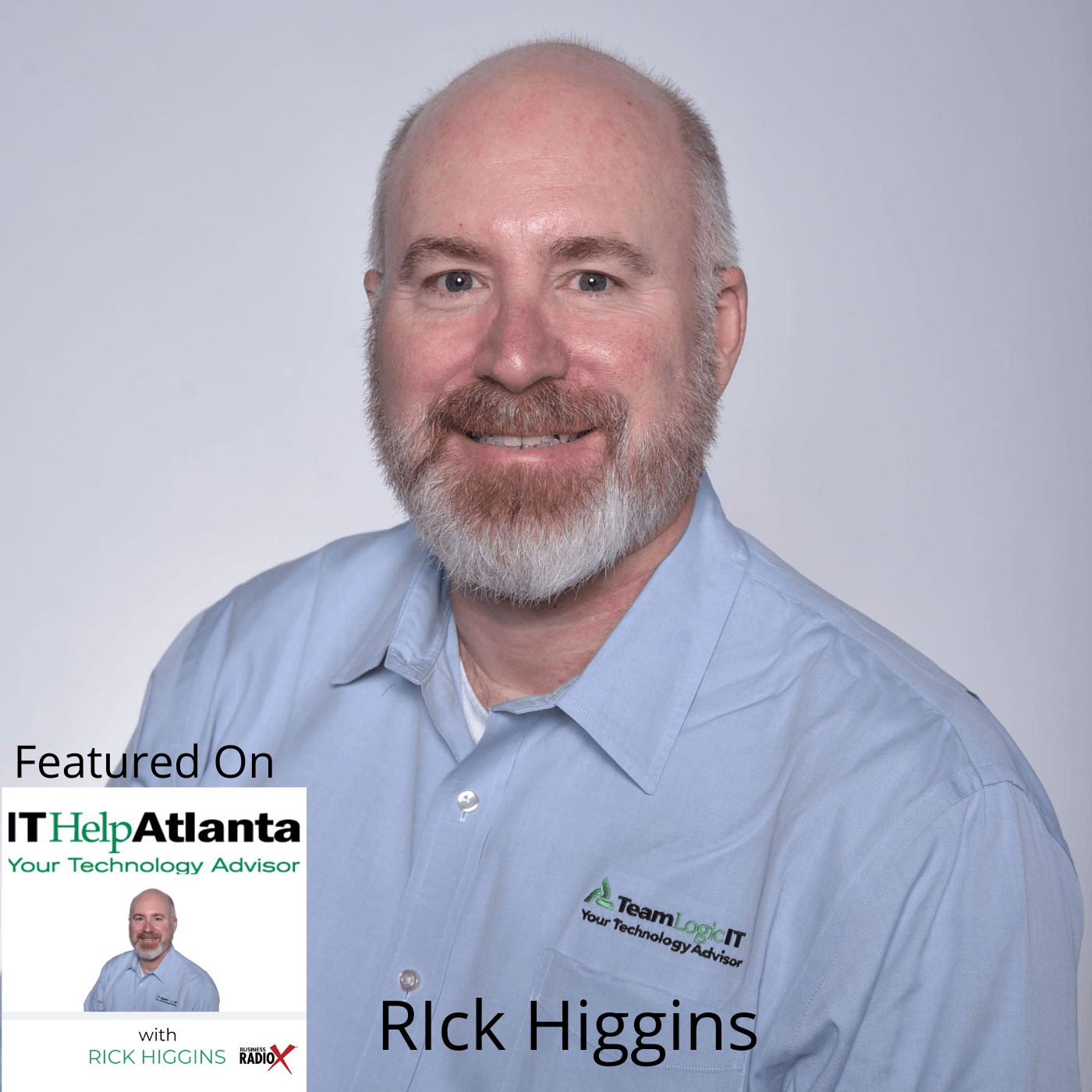
Rick Higgins is Owner and President of TeamLogic IT of Dunwoody, GA. Rick’s firm is part of a national network of locally-owned service businesses, providing comprehensive IT services to the small-medium sized business market.

They offer managed service for networking, cyber security, data and email, as well as hardware and software support in addition to a variety of consultation and preventative maintenance services. Rick’s personal and corporate philosophy is simple: Stand up, be bold, and tell the truth.

Connect with Rick on LinkedIn and Twitter, and follow TeamLogic on Facebook.

Rick Higgins is the host of “IT Help Atlanta.” You can find the show archive here. 


The “One Minute Interview” series is produced by John Ray and in the North Fulton studio of Business RadioX® in Alpharetta. You can find the full archive of shows by following this link.

Renasant Bank has humble roots, starting in 1904 as a $100,000 bank in a Lee County, Mississippi, bakery. Since then, Renasant has grown to become one of the Southeast’s strongest financial institutions with over $13 billion in assets and more than 190 banking, lending, wealth management and financial services offices in Mississippi, Alabama, Tennessee, Georgia and Florida. All of Renasant’s success stems from each of their banker’s commitment to investing in their communities as a way of better understanding the people they serve. At Renasant Bank, they understand you because they work and live alongside you every day.
Tagged With: IT Help Atlanta, TeamLogic IT

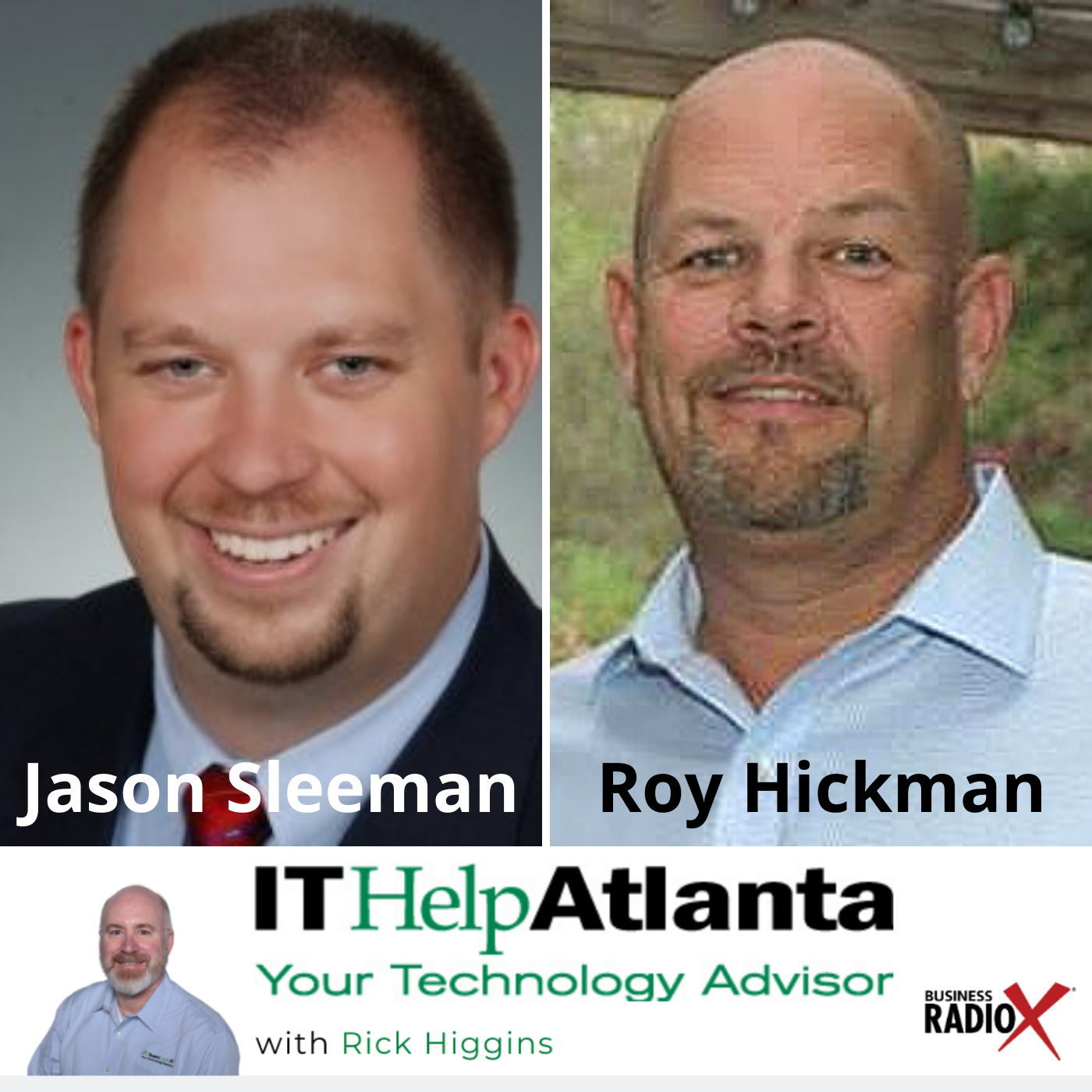
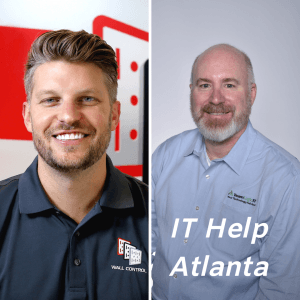
Jason Sleeman, United Community Bank, and Roy Hickman, Accent Graphics (IT Help Atlanta, Episode 10)

October 29, 2020 by John Ray

Jason Sleeman
IT Help Atlanta
Jason Sleeman, United Community Bank, and Roy Hickman, Accent Graphics (IT Help Atlanta, Episode 10)
Loading
00:00 /
RSS Feed
Share
Link
Embed

Download file

Jason Sleeman

Jason Sleeman, United Community Bank, and Roy Hickman, Accent Graphics (IT Help Atlanta, Episode 10)

On this edition of “IT Help Atlanta,” host Rick Higgins welcomes Jason Sleeman to discuss his work with craft breweries nationwide, the characteristics of successful craft breweries, and more. Roy Hickman also joins the show to discuss how his “hands on” printing business enables him to deliver faster, more personal service than online, impersonal competitors. “IT Help Atlanta” is brought to you by TeamLogic IT, your technology advisor.

Jason Sleeman, Vice President- Craft Beverage Lending, United Community Bank

United Community Banks Craft Beverage Group provides nationwide funding to Breweries throughout the United states. They also provide funding to distillery and wineries with a focus in the banks footprint states.

Jason Sleeman has worked on many brewery, winery, and distillery projects developing an understanding of the specific needs of these businesses and what roadblocks can happen in the lending process. No matter the stage, start-up, expansion, or acquisition, Jason can help you deliver on your lending needs.

He works with my clients to be a true banking advisor, finding a Win-Win solution that addresses their financial needs. Jason introduces partners in his network to clients, providing executive insight, strategic planning, and discussion to add value to the company.

You can connect with Jason on LinkedIn.

Roy Hickman, Owner / President, Accent Graphics

Roy Hickman, Accent Graphics

Accent Graphics is a 34 year old printing and graphic design company. They have been in the same location for 34 years. Their main product is printing on paper by 3 means: offset, digital and large format. They have the right equipment to fit and size print job. Additionally, they help clients with graphic design, signs, banners, trade show graphics, wearable’s and ad specialty products. If it’s printed, they probably do it.

Roy Hickman founded Accent Graphics in 1987 as a commercial offset printing facility catering to local businesses and individuals. They broadened our sales territory to include regional and nationwide clientele and stayed at the forefront of the rapidly changing printing industry by adding graphic design, digital and large format print capabilities. Rick expanded company services with wholesale partners to include trade show displays, wearables and advertising specialties.

Today, he manages the day to day operations at Accent Graphics including sales, sales team, customer service, procurement and office administration. Roy is always motivated to seek efficient and effective ways to produce high quality printed pieces while helping clients manage their printing projects and budget.

About the Show

“IT Help Atlanta” profiles small to mid-market businesses and highlights how those companies use technology to succeed. An archive of previous shows can be found here.

About Your Host

Rick-Higgins-2019Rick Higgins is Owner and President of TeamLogic IT of Dunwoody, GA. Rick’s firm is part of a national network of locally-owned service businesses, providing comprehensive IT services to the small-medium sized business market.

They offer managed service for networking, cyber security, data and email, as well as hardware and software support in addition to a variety of consultation and preventative maintenance services. Rick’s personal and corporate philosophy is simple: Stand up, be bold, and tell the truth.

Connect with Rick on LinkedIn and Twitter, and follow TeamLogic on Facebook.

Tagged With: Accent Graphics, craft brewers, Jason Sleeman, Rick Higgins, Roy Hickman, TeamLogic IT, United Community Bank

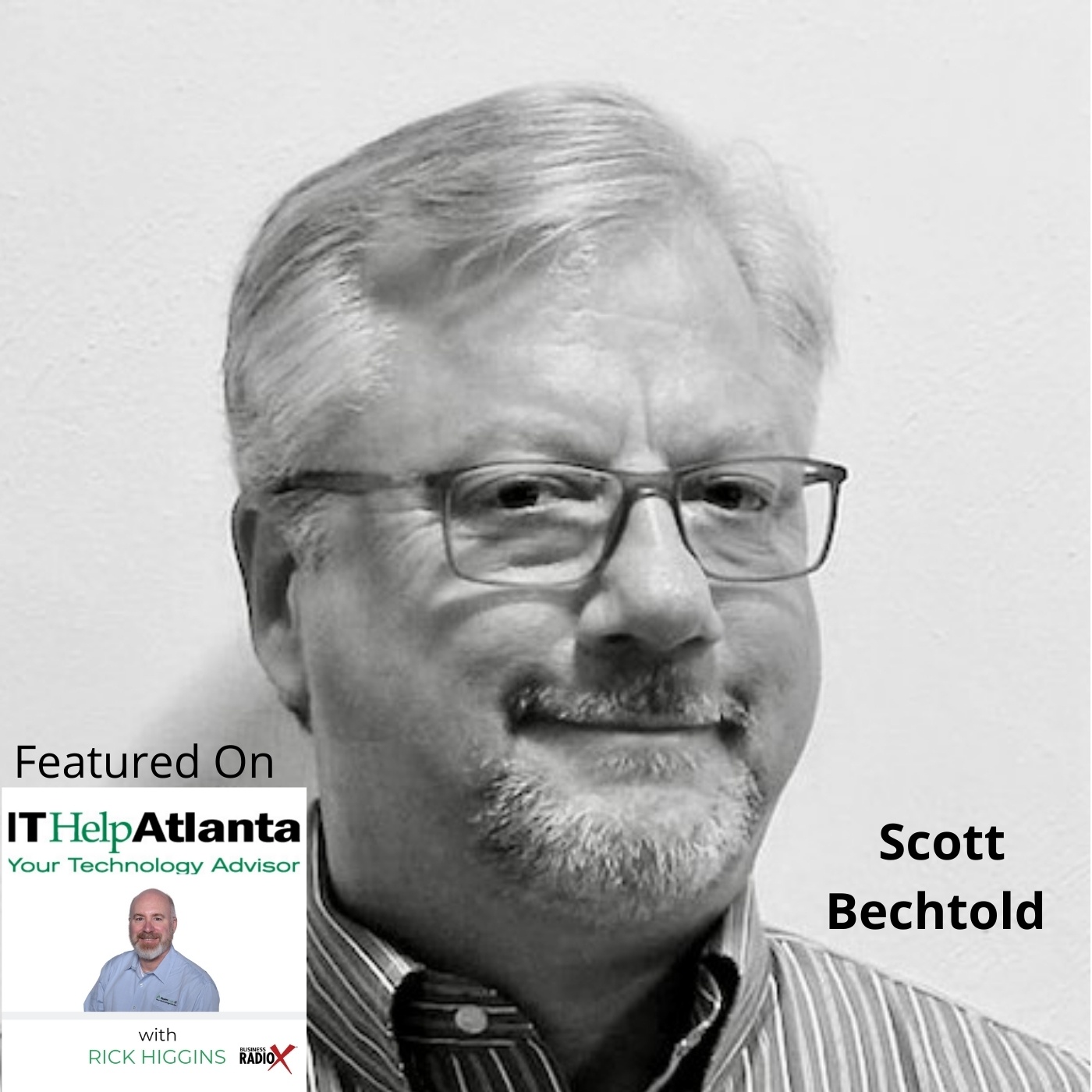
Cloud Computing for Atlanta Small Business – An Interview with Scott Bechtold, Agility IT (IT Help Atlanta, Episode 9)

October 16, 2020 by John Ray

Scott-Bechtold-Nerdio
IT Help Atlanta
Cloud Computing for Atlanta Small Business - An Interview with Scott Bechtold, Agility IT (IT Help Atlanta, Episode 9)
Loading
00:00 /
RSS Feed
Share
Link
Embed

Download file

cloud computing for Atlanta small business

Cloud Computing for Atlanta Small Business – An Interview with Scott Bechtold, Agility IT (IT Help Atlanta, Episode 9)

Host Rick Higgins speaks with Scott Bechtold, Agility IT, on cloud computing for Atlanta small business, what to look for in a cloud services provider, the difference between private cloud and public cloud, and much more.  “IT Help Atlanta” is brought to you by TeamLogic IT, your technology advisor.

About the Show

“IT Help Atlanta” profiles small to mid-market businesses and highlights how those companies use technology to succeed. An archive of previous shows can be found here.

About Your Host

Rick-Higgins-2019Rick Higgins is Owner and President of TeamLogic IT of Dunwoody, GA. Rick’s firm is part of a national network of locally-owned service businesses, providing comprehensive IT services to the small-medium sized business market.

They offer managed service for networking, cyber security, data and email, as well as hardware and software support in addition to a variety of consultation and preventative maintenance services. Rick’s personal and corporate philosophy is simple: Stand up, be bold, and tell the truth.

Connect with Rick on LinkedIn and Twitter, and follow TeamLogic on Facebook.

Tagged With: Agility IT, cloud computing, cloud services provider, IT, IT Help Atlanta, Rick Higgins, TeamLogic IT

IT Help Atlanta with Rick Higgins: Barry Adams, Peachtree Awnings, and Eric Mintz, EM Squared

August 27, 2020 by John Ray

Peachtree Awnings
IT Help Atlanta
IT Help Atlanta with Rick Higgins: Barry Adams, Peachtree Awnings, and Eric Mintz, EM Squared
Loading
00:00 /
RSS Feed
Share
Link
Embed

Download file

IT Help Atlanta with Rick Higgins Episode 7: Barry Adams, Peachtree Awnings, and Eric Mintz, EM Squared

Peachtree Awnings’ Owner Barry Adams and Eric Mintz of EM Squared both started their companies from scratch. Host Rick Higgins speaks with each of them about the ups and downs of their entrepreneurial journeys and how they achieved their current success. “IT Help Atlanta” is brought to you by TeamLogic IT, your technology advisor.

Barry Adams, Owner, Peachtree Awnings

Barry Adams, Peachtree Awnings

Peachtree Awnings is one of the premier manufacturers of custom residential & commercial awnings and canopies in the southeast. they specialize in fabric awnings and metal canopies of all kinds. They have a branch in the Nashville area as well….Tennessee Awnings. Barry Adams is the founder and owner of Peachtree Awnings located in Norcross, GA and Tennessee Awnings located in Smyrna, Tennessee. Barry opened Peachtree Awnings in 2005 which serves the metropolitan Atlanta area and other parts of the southeast. Barry purchased an existing awning company in the Tennessee location in 2012 which serves Nashville and most of middle Tennessee. Prior to getting in the awning business, Barry had 18 years of experience in the electrical distribution industry in sales and sales management. Barry got his undergraduate degree from Tulane University in 1985 and his MBA from Kennesaw State University in 2004. Barry is the most recent past chair of the Southwest Gwinnett Chamber of Commerce and the current chair of the Professional Awning Manufacturer’s Association (PAMA). Barry enjoys concerts and live music and resides in Norcross, GA.

Company Website

Barry on LinkedIn

Eric Mintz, CEO, EM Squared

Eric Mintz, EM Squared

EM Squared provides leading edge custom software and IoT solutions with a focus on solving problems.

They streamline, automate, and evolve business. They redesign business processes and tune existing systems to work better. They automate, build applications, and integrate sensor technology. They streamline workflows and eliminate frustration to better enable your employees. EM Squared adds or improves eCommerce to better satisfy their client’s customers.

Company Website

Eric on LinkedIn

About the Show

“IT Help Atlanta” profiles small to mid-market businesses and highlights how those companies use technology to succeed. An archive of previous shows can be found here.

About Your Host

Rick-Higgins-2019Rick Higgins is Owner and President of TeamLogic IT of Dunwoody, GA. Rick’s firm is part of a national network of locally-owned service businesses, providing comprehensive IT services to the small-medium sized business market.

They offer managed service for networking, cyber security, data and email, as well as hardware and software support in addition to a variety of consultation and preventative maintenance services. Rick’s personal and corporate philosophy is simple: Stand up, be bold, and tell the truth.

Connect with Rick on LinkedIn and Twitter, and follow TeamLogic on Facebook.

Show Transcript

Announcer: Broadcasting from the Business RadioX studios in Atlanta, it’s time for “IT Help Atlanta,” brought to you by TeamLogic IT, your technology advisor. Now here’s your host, Rick Higgins.

Rick: Hey, good morning, everybody, and welcome to “IT Help Atlanta.” The podcast and radio show that profiles small businesses and highlights how those companies use technology to succeed. “IT Help Atlanta” is brought to you by TeamLogic IT, your managed services advisor, specializing in cybersecurity and cloud solutions. TeamLogic IT leverages cutting edge technology to solve all types of business problems. We make technology work for business. Go to ithelpatlanta.com for audio archives of this radio show and to learn more about our sponsor, TeamLogic IT. I’m your host today, I’m Rick Higgins, and today’s special guests are Barry Adams of Peachtree Awnings and Eric Mintz of EM Squared. Good morning, gentlemen.

Barry: Hey, good morning, Rick.

Eric: Good morning.

Rick: So, we’re going to start. We’re gonna do kind of a one-at-a-time scenario on the interview process and we wanna start with Barry. Barry, you’re the founder of Peachtree Awnings. Tell us in your own words who you are and what do you do?

Barry: Well, Rick, we are a manufacturer of custom commercial and residential awnings and canopies in the Atlanta metro area. We actually, we serve the entire Southeast. Our projects go from Central Florida down in Tampa, Orlando, up to Greenville, Birmingham. And then actually, I’m physically sitting at our location in Nashville, Tennessee right now. So, I’ve got a location in Nashville, and I got a location in Atlanta. We started the business in 2005, so we’ve been 15 years in business and yeah, we sell shade and it’s a lot of fun in this COVID era to help people enjoy their time and their staycations in their home. So yeah, we really enjoy that.

Rick: Thank you. Fifteen years, good for you, Barry. That’s really an amazing accomplishment. When you think back to prior to founding the company, you think back to all the reasons that you’ve thought about and what went into being an entrepreneur. What have you learned since then that’s been a really pleasant surprise, or something that’s been fulfilling to you that you just didn’t expect when you were first thinking about starting the business?

Barry: Well, it’s been a labor of love, Rick. I think for all small business people, it is a labor of love, and one of the things I’ve really come to appreciate about my business is that my business is my ministry. You know, I know there’s a lot of faith-based businesses out there but one of the pleasant surprises for me is we happen to be in the awning and canopy business, but I really enjoy helping people to become better people, you know, helping people to fulfill their potential in life, financially and professionally, and become better people. And I found that out after a number of years that I just really enjoy helping people move along a pathway of their choosing. And, it’s challenging. Some people come willingly and some people don’t participate fully, but my business is my ministry and I really enjoy what comes back to me. Whatever I put into it, it seems to come back to me times four, times five. It’s very rewarding in that respect.

Rick: Well, and learning how to get work done through others and managing those people, it really truly is the most difficult thing that a small business person can deal with, right?

Barry: Yeah.

Rick: Because you are the HR department. You know, you are the accounting department, you are the everything department, and sometimes you are the internal counselor to your people as well, right?

Barry: No question, and you have to be a bit of a renaissance man or renaissance person certainly in this day and age. You got to wear, I wear my marketing hat some days and I wear my HR hat some days, and sometimes it’s moment by moment. And I wear my financial, my CFO hat some days, and it changes literally moment by moment. The good news is that as you grow in size, then, of course, then the resources that you can hire or put in place to address some of those, you know, increases, it doesn’t necessarily relieve you of the responsibility of overseeing that part of your operation. But certainly, the old adage “Hiring people that are smarter than you” comes into play, and I was… I don’t know if it was Steve Jobs or somebody else who said that but, you know, hiring people that are smarter than you. And I’ve been blessed to bring people into my organization that were really, in their specific jobs, were really better than me, better than I could do it. And it’s gotten to a size, you know, I used to be able to wrap my arms around just about every problem or every situation that I encountered. But as we’ve gotten larger, I’ve had to make sure I have people in place that can do that.

And it’s gotten larger than me. And so it’s both exciting and terrifying at the same time to say that I’m not the person that can handle… I have more questions than answers every day. And it’s relieving in a sense that as a business owner, I don’t have to have the answers. I really have to, and my role and now is to pose the questions that cause us to get better. And it’s still challenging, by the way, to come up with the questions, but we come up with the questions and it’s a collaborative effort. And those things that we get accomplished, we get accomplished together and I like to say all of us know more than any of us. And so, in every regard, it is a collaborative team effort at Peachtree Awnings, so.

Rick: So, I recently read a four-page spread article on you and your company in a magazine in which you are on the cover. It’s a trade organization and the magazine’s called “Specialty Fabrics Review Magazine.” So, congratulations on that profile and that spread. There was a couple of really interesting nuggets that I pulled out of there that I’d like to ask you to talk about and unpack. And one of them just, I really highlighted it and I’m gonna read it here where you said in your business, it’s almost like being an architect. Could you discuss that and explain what you meant by that?

Barry: Yeah, sure. Well, again, one of the pleasant surprises about being in the awning and canopy business, it’s a custom business and every project that we tackle, even…two awnings or two canopies that look alike, I promise you, they’re not fabricated the same. And so it’s very, very custom work. So I like to say that, in my business, that we spend equal times… A third of the time, I’m a manufacturer, a third of the time, I am a contractor, and a third of the time, I’m an artist. So, equal parts manufacturing because it’s a shop-based business and we manufacture what we install. So, a third of the time, I’m a manufacturer, third of the time is spent out in the field, installing the stuff that we manufacture and that certainly has its challenges as well if you’ve ever been involved with a company or an operation that does field work. That is probably the most unpredictable job environment that you could possibly work in. You get anything and everything thrown at you every day.
Rick: No doubt.

Barry: So that is…yeah, that is really, really challenging. And especially in a thriving metropolitan area like Atlanta and Nashville, the variety of projects that we get involved with is pretty vast. And then a third of the time, I’m an artist. I’m creating a vision for somebody else. Quite frequently, we show up and there’s not a set of plans. You know, I’m meeting with a business owner, and they just have some kind of vision in their mind about what they want this piece or their storefront, or a courtyard, or what they want a certain area to look like, or how they want it shaded, or how they want it protected from rain or the elements. And so we have to create that vision almost from scratch. So it’s like baking, yeah, like baking from scratch. And you have to really be very adept at all three parts of the business in that regard to be successful, I think.

And so we’ve tried to do that at Peachtree Awnings. Never focusing on one of those disciplines to the exclusion of any other is really, really important and trying to develop yourself and develop your team in that way and deliver a very high level of customer service. Obviously, that’s what it’s all about. So, if there’s ingredients to the secret-secret sauce in the awning and canopy business, perhaps, that’s kinda it. That’s been my recipe, anyway.

Rick: Yeah. And that’s good advice for anybody in any vertical or any type of business. So, the other nugget, to use that word again, that I pulled out of here is you made a really interesting general comment about being an owner. And you said, “You have to work on your business rather than in your business.” Could you unpack that a little bit for us?

Barry: Sure, Rick. I think it’s a little counterintuitive for most of us. The more control you try to take, the more you wrap your arms around your business, actually, the less control you have. It’s, for all of us, I think our businesses are a baby, you know, and I try to treat my business literally like a living, breathing entity. And if you treat your living, breathing entity, your business with love and care and concern and nurture it, then it will return to you what you’ve put into it. But the more I try to control that by wrapping my arms around the things that I always used to do, right, I mean, when I started my business in 2005, there was three of us, I called it “the tripod” because it was me, a welder, and a seamstress. That was it, that was three of us. And now there’s 25 in the organization. Still small by anybody’s measure, but the more you wrap your arms around the functions and the things that you do in your business, the less control that you have, and the more that you give up, the more you’ll be able to grow your business. You know, there’s a continuum that we all operate on. And most of us start, it’s operator, owner-operator, owner, right? There’s a continuum there and we start as operator, we all most of us start as operator, many people never get out of that phase of operator. Not to pick on any one discipline or tradesperson, but there’s plenty of plumbers, electricians, painters that only stay in the operator phase.

And then we try to move a distance to owner-operator and I’m still kind of in that…still in that phase, but maybe starting to move a little bit more toward owner. And as we move in that continuum toward owner, then we can really work on our business rather than working in our business. And that is a very, very difficult transition to make. It’s not easy. And you’ve got to give up as much as you take on or you’ll never have that ability to grow. And so, I find that to be challenging for any small business owner.

Rick: It’s the only way to scale. I mean, an individual can only do so much as an operator, you cannot scale unless you can let go. And learning to let go is really, really tough. I just…maybe offline over a lunch or something, I wanna unpack that a little bit more with you to talk to you about exactly how you’re going through that transition.

Barry: Well, and it’s been pleasant to watch you, Rick, because you started, I mean, we started just, you know, maybe a few, I’d say a few years apart. I’ve watched you at TeamLogic IT do the same thing. It was you driving the bus and now you’ve got some really capable people working with you, and so it’s been a joy for us both as our businesses run in their life evolution somewhat in parallel and that’s been a pleasure. That’s been a pleasure to watch.

Rick: So, full disclosure to the listening audience, Barry and Peachtree Awnings are, what, a five-year client now of ours at TeamLogic IT?

Barry: Yeah, at least something like that. Yep.

Rick: Coming up on that.

Barry: Yeah, that’s right.

Rick: And likewise, we’ve really enjoyed working with you guys. Here’s one of my favorite questions, Barry. What is an aspect of your business that people don’t think about, but that you wish people would ask you about?

Barry: Well, these are trying times, and I’ve tried to be a leader in our business and in our community. I hope everybody who listens comes away with a sense that we, you know, we have a responsibility to the communities that we serve. It’s real easy to come in your office every day with your head on, kind of put your head down and start working, keep your head on the desk and stay on point. But we got a real opportunity to be business leaders once we embark on small business ownership, and so, I become the face of my business in the community. And we try to get involved in some philanthropic activities whether that’s the, used to be called the Norcross Cooperative Ministry, now it’s, I think, called the Neighborhood Co-Op, or, and different aspects that we can give back to the community because it’s given so much to us and provides our livelihood. And so, I hope…it’s difficult right now. I think a lot of nonprofits have suffered through the pandemic just because people are not wanting to be in close proximity to each other, but it’s really, really important for us to be strong community leaders and stand up and be recognized and have our people be honest as well.

Rick: You’ve done that, Barry, and I know you won’t mention it yourself so I’m gonna mention it for you. Folks, Barry Adams is the president of one of our local chambers of commerce here in North Metro Atlanta. He’s also the chairman of the board of the main trade organization that he works with, the nonprofit. So, congratulations, Barry, because it’s not just, for you, it’s not just talk, you really are pulling it off with your effort and those of us in small business understand what kind of effort that really takes. So, thank you for that service.

Barry: Thanks, Rick. I appreciate the recognition. Thank you so much.

Rick: Well, I wanna wrap up with you, Barry, but before I do, well, you tell the audience how to get in touch with you and find your business online or otherwise.

Barry: Yeah, absolutely. Thanks, Rick. Yeah, I mean, we can be found, www.peachtreeawnings.com, or, likewise, www.tennesseeawnings.com in the Metropolitan Nashville area and we’re moving to a new location in Lawrenceville in mid-September. So, yeah, we’ll be in a new facility about a mile from Sugarloaf Mills just off of Duluth Highway 120. Yeah, we’ll be in the new facility in mid-September. So, it’s an exciting time for us.

Rick: That second domain was tennesseeawnings.com because I think it broke up a little bit on the audio, so I wanna repeat that for the audience.

Barry: Yeah, tennesseeawnings.com.

Rick: Gotcha. Gotcha. Barry, thank you so much.

Barry: Thanks, Rick. Really enjoyed it. Thank you so much for having me.

Tagged With: awnings, Barry Adams, canopies, eCommerce, EM Squared, Eric Mintz, fabric awnings, IoT, IT Help Atlanta, metal canopies, Peachtree Awnings, Rick Higgins, sensor technology, TeamLogic IT, Tennessee Awnings

Cloud Computing: A Special Edition of IT Help Atlanta with Rick Higgins

July 28, 2020 by John Ray

Rick-Higgins
IT Help Atlanta
Cloud Computing: A Special Edition of IT Help Atlanta with Rick Higgins
Loading
00:00 /
RSS Feed
Share
Link
Embed

Download file

cloud computing

Cloud Computing: A Special Edition of IT Help Atlanta with Rick Higgins

Cloud computing is the focus on this special edition of “IT Help Atlanta.” Rick Higgins addresses various aspects of cloud computing, including why it continues to grow so rapidly, why cloud computing is much more secure than on-premises IT, and much more. “IT Help Atlanta” is brought to you by TeamLogic IT, your technology advisor.

Question/Topics Covered in this Show:

  • Rick addresses the growing cloud computing trend(s) and why technology is progressing in that manner. 
  • What is the cloud?
  • Is the cloud more secure than an on premise system?
  • Why is cloud computing important to small or medium businesses?
  • What’s driving this trend?
  • What are the types of cloud solutions that TeamLogicIT offers?

About the Show

“IT Help Atlanta” profiles small to mid-market businesses and highlights how those companies use technology to succeed. An archive of previous shows can be found here.

About Your Host

Rick-Higgins-2019Rick Higgins is Owner and President of TeamLogic IT of Dunwoody, GA. Rick’s firm is part of a national network of locally-owned service businesses, providing comprehensive IT services to the small-medium sized business market.

They offer managed service for networking, cyber security, data and email, as well as hardware and software support in addition to a variety of consultation and preventative maintenance services. Rick’s personal and corporate philosophy is simple: Stand up, be bold, and tell the truth.

Connect with Rick on LinkedIn and Twitter, and follow TeamLogic on Facebook.

Show Transcript

Announcer: Broadcasting from the Business RadioX studios in Atlanta, it’s time for ”IT Help Atlanta” brought to you by TeamLogic IT, your technology advisor. Now, here’s your host, Rick Higgins.

John: Hello, everyone. I am not Rick Higgins. I’m John Ray sitting in for Rick today and I’m sitting in for Rick so we can actually talk to Rick and we’re gonna put him on the other side of the table today. Rick Higgins.

Rick: Hey, John.

John: Rick, yeah. Hey, welcome to your own show, pal.

Rick: Oh yeah. Well, thank you. Thank you so much for doing this. This is a really interesting thing we’re trying to do today, where we’re gonna talk specifically about cloud computing and the trends in the industry and why the technology is progressing in that fashion and in that manner.

John: Absolutely, I’ve been looking forward to us doing this so I can learn a few things. But folks, before we get into discussing cloud computing, I just wanna remind you that ”IT Help Atlanta” is brought to you by TeamLogic IT, your managed services technology advisor, specializing in cyber security cloud and business continuity solutions. Team IT leverages cutting edge technology to solve all types of business problems. And go to ithelpatlanta.com for audio archives of both this show and all the rest of the shows in the series and to learn more about TeamLogic IT.

So Rick, thanks again, and thanks for joining us with your expertise on this. So let’s talk about the growing cloud computing trends. We hear the word cloud a lot and why is technology progressing in this direction?

Rick: I think that there’s a few things that are the main driving forces behind the trend. And this is not in order of priority, but all of it’s coming together at this time and place that we are right now here in the year 2020. And one thing is that mobile computing is becoming a real important to people to be untethered from their wired network within their office to whether they wanna work from home or on Wi-Fi in a hotel room or a coffee shop or whatever. That combined with the rapid expansion in internet connection speeds on both hardwired connectivity and Wi-Fi has really made the demand…has really increased the demand for this type of computing.

And so when you have a mobile device, even though they’re extremely powerful, they don’t really need to be as powerful with the tool and the power of cloud computing, because most of the computation, most of the heavy lifting associated with the work is happening on a server in a data center somewhere. And that’s what the cloud is. So people ask me all the time, what is the cloud? And the simple answer is it’s a server and a data center and that’s all it is.

John: Yeah. And that’s really important because you hear this word cloud and you really don’t know. Sometimes, I mean, I don’t know what that means, and it sounds pretty ethereal, but it’s pretty hardwired in a sense, I mean, not hardwired, but it’s real technology sitting out there somewhere to be able to access. Correct?

Rick: You know, back in the day, it used to be the computers were all these big giant mainframes, and the way we accessed the computers was through what we called at the time dumb terminals or dummy terminals that didn’t really have any memory in the local function. Everything was just to access through hardwired connectivity, access to the mainframe. Well, that model is really what we’re reverting back to with the cloud. We’re in the heavy lifting associated with the servers, which are, you know, the diesel engines of our computing environment. All that computation and the heavy work is happening at the server level, almost all of it.

John: So Rick, let’s talk about security because that’s really at the top of everyone’s mind or should be with all the issues that are going on out there. I mean, is the cloud actually more secure than having an on-premise system?

Rick: There’s no more secure way to compute on this planet than in the cloud. It’s absolutely the safest way to compute when someone who’s concerned about their data, someone who’s concerned about access to their application or to their internal network. So here’s why. So consider a few things, consider the physical security aspect of a data center itself and compare that to the physical security of your office, where you may have an on-premise server. It would be very, very difficult for any CPA firm or engineering firm or any business, quite frankly, services firm or otherwise, to replicate the physical security aspect that is inherent in all data centers right now.

I think the last time I was in a data center, I had to have my eyeball scanned, my hand printed on a screen. And this is after I’d already gone through some fingerprinting the previous time that I was there. They also weigh me in an airlock system.

John: Really?

Rick: Yeah. I’m in an interim airlock system and they’re weighing me. So I had to tell them that I was, I had to put my briefcase on a special table, so that didn’t get included in my way. And so they were making sure I wasn’t coming in with some kind of a hidden device or something like that. So I had to go through all that before I could physically get into the data center.

Then once I got in, I was, you know, reminded of all the multiple levels of redundant power, the electricity that’s available, just to backup power, but the redundant feeds that are in there, redundant internet backbone access into that center so that should there be a major power interruption or for any reason, let’s say a tornado, you know, worst-case scenario, flood, tornado-type of thing, or earthquake that the system, in particular the stuff that I was working with was replicated in another data center in another city.

So trying to think about that in terms of security, and to try to replicate that in an on-premise server in an office somewhere would be very, very expensive. So cloud computing is expensive, but you know, if your system has to be up and it has to be secure, there’s no better way to do it.

And the other thing is it’s a different way to pay for it too, right? So it’s kind of, you pay by the drink or you pay on a monthly basis. So it’s part of your P&L as opposed to being something that you’re carrying on your balance sheet as an asset that you’re depreciating. You’re not really buying hardware so much as you’re leasing it. So that’s true whether you’re subscribing to an application or whether you’re doing a Desktop as a Service, which is something that we do at TeamLogic IT.

John: So since you’re subscribing, you’re always up-to-date because that’s what you’re subscribing to, right? Is the latest and the greatest, as opposed to you buy a piece of hardware software and it continually, I guess, depreciates in its quality over time, right? I mean, did I get that right?

Rick: Let’s just say you’re subscribing to an application that’s sitting on a server. Well, that server is a physical server in that data center. But the data center engineers are watching that hardware and making sure that they’re keeping the memory current, that they’re keeping the operating system current and all the security aspects associated with the operating system are current and up-to-date. And so they’re watching that.

And as that hardware ages, they’ll replace that, and that replacement will be invisible to you. You’ll never have to have somebody coming into your office to say, “Hey, it’s now time to…this server’s three or four years old. It needs to be changed out.” Well, that’s happening real time and/ or in the middle of the night. You’ll just never see it. You’ll never know, and it’ll be invisible to you. And you’ll basically just enjoy the continued and increased actual security and the continued and increase capability and performance of the application that you’re working with.

John: Folks, we’re chatting with Rick Higgins. He’s normally the host of ”IT Help Atlanta.” And I’m John Ray, I’m sitting in for him and getting the chance to talk to Rick about cloud computing. Rick, you work with small to medium-sized businesses mostly, why is cloud computing so important to small and medium-sized businesses particularly?

Rick: Well, we’ve talked about the security aspect. But I think the other thing that’s become very relevant in today’s time because here we are it’s July of 2020, we’re in the middle of, well, hopefully at the end, but I’ll just say we’re in the middle of the pandemic, the COVID situation, and the ability to have a remote working capability has never become more important. With folks not being allowed to come back to the office, kind of, depending on where they live in the country, I think California’s, has started another shutdown now.

Here in Georgia, we are allowed to go back to work, but some companies are still deciding to not let their people come back, or if they do, they can only come back every other day or in phases and stages. I know my wife’s company is doing that. So you still wanna get productivity out of your staff. You don’t wanna have to lay people off and if you can help it and you want them to be able to work. Well, that means remote working. So there’s no better way to do it than cloud computing and providing those capabilities and the security that’s inherent with that.

John: I think you’ve addressed some of this, but I’m just curious about what other drivers that you see in this trend toward cloud computing?

Rick: Well, the thing that I would revisit and that I talked about up front was the internet connectivity speeds. Right now, there are just tons and tons… And I’m talking specifically about Metro Atlanta. And my assumption is that it’s similar in every major city in the country, if not the whole world. But there’s tons and tons of telecom companies that are just digging up the roads and running fiber everywhere. And they’re starting to run it into residential neighborhoods as well. So it’s not just in areas that are commercial-centric.

But I don’t know really of too many commercial areas where office space is available or even industrial space is available where there’s not more than one fiber option for connectivity. And because of that rapid expansion of the connections and the cables and the fibers that are running everywhere, the pricing has come down.

So the speed is going up at the same time that the pricing is coming down. What that does for the application developers out there is it allows them to make their software more and more complex because heavier duty, higher iterations and heavy computation requirements are still able to run across that increased bandwidth. And then the end-user company can afford it because the prices are coming down because of competition. That’s what we’re seeing in Atlanta.

I’ve had clients request pricing on fiber, which is something that we do at TeamLogic IT. And then they, for whatever reason, they put that decision on hold, come back to me four to six months later and ask for an updated pricing. And we’re seeing as much as 25% reductions over that six months. Yeah. So and I tell people, I say, ”Look, you know, you need this and go ahead and do this deal, but let’s just do a 12-month deal because chances are this pricing is gonna be better in 12 months.” And that’s been the trend for the last five years.

John: So let’s get specific about how TeamLogic IT helps. So, you know, what kind of cloud solutions do you offer and do you work with your clients on?

Rick: So almost all of our clients are in at least some kind of hybrid cloud environment. But for fully cloud, for full-cloud capabilities, we have two different options. And the first one is we just call it a full application server with a Desktop as a Service. And what that means is that that client requires some kind of line of business application, whether it’s QuickBooks or their customer resource management tool, their CRM is required to be on a server of some kind or it could be an ERP solution, if it’s a manufacturing site, and it’s required to be on a server and because the software that they’re working with is not natively available on cloud yet as a subscription.

So we’ll put them on our cloud server and then we’ll create what is in effect, dumb terminals for their laptops and desktops to access that and we call that Desktop as a Service. All of the computation is occurring at the data center, on the server at the data center, very, very little local computation occurring on the local machines.

The neat thing about that as they can access that from a device as simple and benign as their cell phone or a tablet. They can be anywhere in the world. They need to be somewhere in the world. They can’t be off planet, right? It’s anywhere in the world. And if they have a web browser with connectivity on even just a low bandwidth, a really slow speed, they can get access to their desktop through any browser. And it’s very secure. As long as they have their login name, username, and password, they can get in. So it’s an extremely powerful tool. And we have, I would say, three quarters of my cloud clients use this particular tool and it’s full application server with Desktop as a service.

Our second option, which is not quite as expensive and obviously not as powerful is what we call the TeamLogic IT Cloud Drive. And that is basically for clients that don’t have any kind of application, line of business application, that’s required to be on a server. So everything they do, they’re already subscribing to cloud solutions for their line of business software. They’re using QuickBooks online for instance, or something along those lines. And if they don’t have the need to have their line of business Software on a Server that is already, you know, in the cloud, then the cloud drive is a really good option. And this is the neat thing about it.

And now, you can harken back to your days when the old file servers that everybody had in their office. So that’s effectively what our cloud drive is. It’s a file server in the cloud. And you can set up the governance for that particular set of data so that people can have access to drives and sub-drives in such a way that…or if they’re in like a collaboration sub-directory and they’re working on a specific file, if they’re using it, it locks out all the other users similar to the way that you old file servers used to do. You just can’t get that same kind of functionality with say a OneDrive or Dropbox or Box or anything like that, or even a Google Drive.

So it’s a really neat system. I think the last, let’s see five out of the last seven cloud deals that I’ve done have just been specific for the TeamLogic IT Cloud Drive. I see that actually as a trend in what we’re doing. And it’s been a lot of fun because we’re giving people some…at a really important time, we’re giving people remote work capabilities, and we’ve had clients that are telling us that we’re saving their company by what we’re doing.

John: Really?

Rick: Yep.

John: Wow.

Rick: And I do have an interesting success story that that would be fun to talk about.

John: Yeah, please share.

Rick: So for whatever reason, about 25% of our client base is CPA firms. I don’t know why that is. Anecdotally, I just attribute it to the fact that CPA’s are numbers people. They really understand the value proposition of what we were doing. And I had a client telling me last month that, you know, he’s just so grateful for what we were doing for him with cloud. And he saw his…when he got his bill and he approved it each month from us, which is, you know, always a level set bill, he saw that as an investment that’s directly attributing to his profit. So he didn’t really see that as a cost center so much as an investment that he was making in his company.

He’s able to quantify that, you know. Again, being the CPA, he’s able to do stuff like that with the numbers. But he looked at that and he was able to quantify the time saving, the savings that we’re providing him, the ability for him to work remotely, not just in his several offices of which he has more than one, but also to work onsite at his client.

So he’s the type of CPA that likes to go to his clients with his computer and work in their office with them. And the ability for him, as long as they give him Wi-Fi access or even hardwired access, it doesn’t matter. But the ability for him to do that without having to walk in with 100 pounds worth of paper files under his arm has been… And I think that was the actual example that he used. He goes, you know, I used to have to try to take my entire office with me, but I don’t have to do that anymore. I can take everything with me with just my laptop that weighs less than three pounds.

John: Well, and the pandemic hit in mid-March, which was right in the middle of tax season. So this was, for a CPA firm, boy, what a time to realize the value of cloud computing, right? I mean, because all of a sudden, all these firms are at home and all these people are separated from each other and from clients. And to have that access secured is awesome, right?

Rick: He knew it and he knew it going in. And we knew it going in. You know, when we realized that we were gonna have the shelter-in-place rules come down the line from the governor in Georgia, we were expecting, and we were right. We got an onslaught of help desk tickets and we just went into triage mode to get to everybody, to set up the remote working capabilities.

But John, this is the interesting thing that happened. And our client base is about half and half cloud services and otherwise. And we did not get one single help desk ticket from the half of our client base that has cloud service solutions. Nobody because they were already prepared. They already had made the investment. They were already all set up.

Now, we did convert some of our non-cloud clients to cloud. In the last few months, we’ve done some of that. And that’s been a big help to them because they’re…you know, it’s the unknown, right? Because here we are in Q3 of the dumpster fire of 2020. And it looks like it’s possible that we may have another shelter in place or shutdown scenario. I know that, like I mentioned, I mentioned California, you know, tried to go back and then now they’re back into their shelter-in-place rules or and who knows if we get to that in Georgia. So people are seeing that it’s a wise investment to get that put in place.

John: Sure.

Rick: So I, you know, and it’s an unfortunate thing, but who could have predicted this COVID situation, right? We were already in the trend and we were already seeing that more and more of our opportunities we’re cloud-centric, but this has really hammered at home.

John: Sure. Yeah. Yeah. And that’s an important point that you just made. It’s not that the pandemic has brought this on, it’s just, it’s accelerated it and made it clear that this is a trend worth taking advantage of for those small medium-sized businesses that have not.

Rick: That’s right.

John: Yeah. So this has been great, Rick. I’ve learned a lot and I think, just wrapping up here, I think it’d be great if you could give everyone that’s listening if they wanna be in touch, contact information. How do they get in touch with you and learn more, right?

Rick: So TeamLogic IT, the best way to get in touch with me is my phone number (678) 250-5312. And I’m extension 1 at that number. There’s an auto attendant that answers and tells you if you wanna talk to Rick Higgins, hit extension 1, and I want to talk to everybody who’s listening to this show. Email is rhiggins, that’s rhiggins@teamlogicit.com.

John: Rick Higgins has been our guest today and next time he’ll be back in the host chair here on ”IT Help Atlanta.” But just a reminder that this show’s brought to you by TeamLogic IT who is your managed services technology advisor. And they specialize in cybersecurity cloud and business continuity solutions. And TeamLogic IT leverages cutting edge technology to solve all types of business problems.

So once again, I’m John Ray, thanks again to Rick Higgins, our guest on this edition of IT Help Atlanta. Join us next time.

Tagged With: cloud computing, IT Help Atlanta, Rick Higgins, TeamLogic IT

IT Help Atlanta with Rick Higgins:  Honey Shaw, DeWoskin Law Firm and Chris McCaleb, Georgia Association of REALTORS

June 26, 2020 by John Ray

Georgia Association of Realtors
IT Help Atlanta
IT Help Atlanta with Rick Higgins:  Honey Shaw, DeWoskin Law Firm and Chris McCaleb, Georgia Association of REALTORS
Loading
00:00 /
RSS Feed
Share
Link
Embed

Download file

Georgia Association of Realtors

IT Help Atlanta with Rick Higgins: Honey Shaw, DeWoskin Law Firm and Chris McCaleb, Georgia Association of REALTORS

On this edition of “IT Help Atlanta,” host Rick Higgins welcomed Honey Shaw to discuss her law firm’s work on behalf of clients, and Chris McCaleb to address the work his association does on behalf of Georgia’s realtor community. “IT Help Atlanta” is brought to you by TeamLogic IT, your technology advisor.

Honey Shaw, Associate Attorney, Dewoskin Law Firm

Honey Shaw

DeWoskin Law firm is a small trial litigation firm based in Decatur, Georgia. They specialize in personal injury litigation but also handle criminal defense and consumer debt defense matters. They serve both Fulton and DeKalb counties as well as the surrounding metro areas. Honey Shaw is an associate attorney at the DeWoskin Law Firm.

Honey earned her Juris Doctorate from Georgia State University College of Law. In addition to her litigious work, Honey is a registered mediator with the Georgia Office of Alternate Dispute Resolution. Prior to her practicing law, Honey earned a Bachelor of Arts degree in International Affairs as well as a Bachelor of Arts in Spanish at the University of Georgia. When she is not working, Honey enjoys pickling vegetables, walking her dogs, and watching rugby.

You can reach Honey by email or visit the Dewoskin website to learn more.

Chris McCaleb, Director of IT, Georgia Association of REALTORS®

Chris McCaleb

The Georgia Association of REALTORS® is the largest trade association in the state, with more than 43,000 members across Georgia.

Chris McCaleb has been the GAR Director of IT since 2014.

Visit the Georgia REALTOR website to learn more or email Chris.


About the Show

“IT Help Atlanta” profiles small to mid-market businesses and highlights how those companies use technology to succeed. An archive of previous shows can be found here.

About Your Host

Rick-Higgins-2019Rick Higgins is Owner and President of TeamLogic IT of Dunwoody, GA. Rick’s firm is part of a national network of locally-owned service businesses, providing comprehensive IT services to the small-medium sized business market.

They offer managed service for networking, cyber security, data and email, as well as hardware and software support in addition to a variety of consultation and preventative maintenance services. Rick’s personal and corporate philosophy is simple: Stand up, be bold, and tell the truth.

Connect with Rick on LinkedIn and Twitter, and follow TeamLogic on Facebook.

Show Transcript

Rick: Welcome, everyone, to the “IT Help Atlanta” radio show, the show that profiles, small and medium, mid-market businesses, and highlights how those companies use technology to succeed. “IT Help Atlanta” is brought to you by TeamLogic IT, your managed services technology advisor, specializing in cybersecurity, cloud, and business continuity solutions. TeamLogic leverages cutting edge technology to solve all types of business problems. Go to ithelpatlanta.com for audio archives of this radio show and to learn more about our sponsor, TeamLogic IT.

I’m your host Rick Higgins, and today’s special guests are Chris McCaleb, the director of IT for the Georgia Association of Realtors, and Ms. Honey Shaw, an associate attorney for the DeWoskin Law Firm. Welcome, guys.

Chris: Hi, there.

Honey: Thank you.

Rick: Good morning to both of you. And thank you for being here. We’re gonna do the interview process. We’re gonna start with Chris. And Honey, if you’ll just hang on for a minute or so, and we’re gonna get to you. But Chris, let’s start in with you. Tell the audience who you are, and what do you do?

Chris: Okay, so, I’m Chris McCaleb. Happy to be here by the way. Thanks for having me on, Rick. I am the director of IT for the Georgia Association of Realtors. That’s the state association for anyone that’s a realtor in Georgia. Of course, realtors will have a local association, and then the state. And what we do for realtors is we provide the ongoing education that they need to have to maintain their realtor status, as well as a full set of legal forms and conference opportunities. So, I am the IT director for the association. And it’s actually, even though it’s for the entire state, it is a small business, because I support primarily a relatively small staff. So, that’s what I do.

Rick: So, that’s great, Chris, thanks. Give us the success story. How have you helped folks? And I know you help both, not just the folks that are internal within the Georgia Association of Realtors, but you help the clients as well.

Chris; Yeah. So, I think that one of the big things that we, which is probably common to a lot of companies, is that when I came into it, about eight years ago at this point, it was still kind of in the process. It was still, basically, a very traditional shop. It’s a small shop. It’s just got a lot of giant servers hanging out in a dark server room. And having gone through the process of moving incrementally into the cloud, and then having, you know, having the finance team or the leadership team say, “Hey, do we not have these expenses anymore of this hunk of metal in the closet?” And I say, “No, we don’t. It’s in the cloud.” And of course, there are expenses there. But it just opens a lot of stuff up for us.

And it’s ideal for what we are, for the smaller company. And still in the process of doing it, but…and to my happiness, they’re very open for that kind of change, too. So, that’s been a good experience.

Rick: You guys do normally, during normal times…you know, here we are, it’s June 24th, or some 16 to 17 weeks into the COVID situation. We’re not fully shut down here in Georgia, but we’re trickling back. I think that was the word you used earlier, are trickling back into work. And we’re seeing that in our client base as well. Are you guys at all back in your classroom for the in-class stuff?

Chris: We’re not. And it’s been an interesting transition, just like for everybody in the world. But for a company that essentially puts on events, you know, whether they’re education events or whatever, and like a lot of other companies, we have become experts in Zoom. I mean, Zoom has made…you know, the video conference company that we’ve centered on and they’ve made it incredibly easy. And, you know, the professional development team at our company has…frankly, they’ve always been on the forefront of that kind of thing even before me.

And so they were ready to pivot very quickly. There’s some regulatory stuff around it, around, you know, whether the continuing education credits will apply if you’re not in person, but they’ve navigated that. So, we’re not yet in the classroom fully yet. We’ve just done a couple of one-off events where people are spaced out very, you know…with a lot of distance, but…and I think that will be how it’ll continue for a while. And it’s also been interesting, too, to get the feedback from members who have said, “Wow, this really works out. We could have been doing this all along.”

You know, and, of course, there’s no substitute, of course, for…or it’s not the same, of course, as in person. But you know, this technology has been there for a long time. So, maybe that will be a very slight silver lining out of all of this.

Rick: Have you seen that your, and I know you guys watch this pretty closely, have you guys seen your roles, your membership roles, increase, decline, stay steady? What are you seeing on that?

Chris: I don’t think we’ve seen any kind of decline yet. It’s probably a little early to tell because, you know, just kind of the cycle of things like this. But it’s one of the things that, you know, we’ll be watching very, very closely, and of course, it’ll depend on the market, and that kind of thing, too. But leadership has been really working, you know, around every cycle to try to make sure that we can pivot to do what we need to do during these strange new times that we’re in.

Rick: So, that kind of covers your client base, and that they’re not back yet, quite yet. But what about your staff, your internal staff, what’s that process of coming back to work look like for you?

Chris: So, what we’re looking at right now, for the last two or three weeks, we’ve had skeleton staff in the office. And they have sort of staggered our hours. I think even down to the point where, and I was speaking to you about this earlier, of trying to kind of do the calculation of whose office is physically in proximity to another one. So, let’s not have two neighbors come in on the same day. So, we’ve been staggering just…either the head of the department, or one member of the department. And about two days a week, you know, depending on what the thing is. I’ve been working from home. I mean, it feels like 30 years, but I guess what has it been, 3 months? I don’t know.

Rick: I know.

Chris: Yeah, I’ve started to go in two days a week for the last I guess, whatever month. And, you know, I’m met at each door with masks and hand sanitizer, and we have a sort of a set of protocols. But we’re planning to open up a little bit more in July and, you know, have had a lot discussions around that. And there’ll be more people in. But leadership has, you know, made it clear that they want people to be comfortable, you know. And so yeah, it’s been a positive experience in terms of how they’ve set it up for us, I have to say.

Rick: You know, you said that you guys were able to pivot very quickly for remote with both your classroom activities and your staff. But, you know, that’s a credit to you, Chris, for the work that you’ve done. And, you know, full disclosure to the listening audience here, Chris is a client of ours, and we’ve known each other for some four years or so. You know, and the work that you did to prepare for that, did you find that you yourself and your project scopes, did you have to pivot at all on your projects? Did you have to bring something new in and change your mind? Or did you just continue to keep doing what you’re doing?

Chris: You know, I’m really lucky that I have the position that I do. I’m a one-man show. And I’m lucky that I have the position that the staff are very self-sufficient. A number of them were already working remotely. We have a government affairs staff, for instance, that primarily do work, you know, down at the capital and that kind of thing. So, they are, basically, remote already. So, my projects end up being sort of a lot of support, and development of sort of the web applications we have.

So, you know, that’s continued as it’s gone. What I found is that I have to do a lot of checking…just like anybody, I have to kinda do a lot of checking in online with people to make sure they’re doing okay. And then, of course, they do the same with me. So, I’ve been very lucky, and it hasn’t had to be a huge pivot to do that. Pretty much we were kind of on the road to do that, just kind of goose the accelerator a little bit on it.

Rick: Gotcha. So again, Chris, we’ve known each other for a while now, and I know a little bit about your background. I know that in your past, you’ve worked for very large companies. But the Georgia Association of Realtors, at the end of the day, really is a small business. How do you like the difference, or I should say this…I should ask you this way, what do you like about working for a small business compared to the big business environment?

Chris: Yeah, it won’t surprise you I bet to learn that you get to, not only because I’m the head of the department, but because it’s smaller, you can move a lot quicker. You can pivot a lot quicker, and you have because you know…and the needs are a lot smaller. So, there’s a lot less meetings, with your team, around an initiative that might be going on. And if you learn of something that’s a great idea, that you wanna bring on, or something that you need to phase out, you can move on it fairly quickly. And I’m extremely lucky that I have, like I’ve said, management that is…they trust me, and I’m also lucky that I’ve found some, to give you guys a plug, some really good allies.

You know, so I know that if I have gotten myself into a corner, or in over my head, I know who to call. And it’s just easier to do all that when it’s a smaller company. And, you know, it’s been a fantastic professional experience to come to something small from something big, because I’ve been in organizations that are global, and there’s so many advantages to that. But a lot of the decision making, a lot of the, you know, the big picture is just completely out of my field of vision. And you know, I have my own little hat, my own little corner of the world to deal with.

But coming into a smaller company after that, and sort of having been prepped for it, for being a generalist, I should say, I do everything from…I met somebody whose desktop to figure out why Excel is not working, and then I’m also, you know, developing web applications for the company. So, the large company gave me a very good background to come into a small company. And it was…you know, it’s been very good. It’s been very good to be able to try stuff out that I want to try out and get to do it very quickly.

Rick: That’s great. And thanks for the plug. Chris, what’s an aspect of your business that people don’t generally think about, but that you wish people would ask you about?

Chris: I think that, you know, when we had talked about this question earlier, I came at it from the perspective not just of this business, but I guess all of support. And this is to kind of focus on sort of the level…the part of it that I’ve been interested in is…you know, I love the geeky stuff, but I also love being able to just kind of help somebody personally out. That’s kind of help somebody out with their job. And the thing that I wish that people would ask me about, in a general sense, more is am I doing, whatever this process is that I’m doing at my desk, is there some way I could be doing it differently?

I think everybody kinda comes to working on a computer in a different way. And I’m kind of I’m always astounded at sort of like the assumptions, and sometimes the really strange labyrinths that people put themselves through to get some basic tasks done. And sometimes I think maybe I should just kinda sit behind them in their office for a while and watch how they do things. And some people are very savvy with computers, some people are not. And I wish, this is not a very high-level answer, but I wish people would say, “Hey, how can I be doing this better? Do I really need to go through 32 steps to create this spreadsheet or is there something simpler?”

Because there’s nothing better…to me, the best thing is when you’ve provided somebody with an answer or a tool that is just gonna make their job easier, so they can actually do their job and not have to worry about the tools of their job. So…

Rick: I think that is a high-level answer because you’ve just told us how you are fulfilled in your work. I mean, what’s [crosstalk 00:14:30]

Chris: Absolutely, yeah. And, you know, the people I work with are… When somebody is grateful to you for something that kind of is you didn’t even think it was, you know, an obstacle, it’s a really nice feeling, too. And you know, and some people…but some people just have their own process, too. And that’s okay as well. You know, you just wanna be there to help them if they need it.

Rick: Yeah. Yeah. Okay, great. Well, Chris, I wanna wrap up with you. But tell the audience how to get in touch with you. What are the best avenues for that?

Chris: Sure. If they wanna get in touch with me for any reason, the best thing, and just I won’t make anybody memorize an entire email address now, but our website is garealtor.com. That’s for Georgia Realtor, it’s garealtor.com. And I’m right there in the staff section. Can’t miss me. I’m the only guy in the IT department. And if you ever have any questions about any part of it, I’d love to answer them or get you to somebody that can.

Rick: Chris, thank you so much. I’m gonna wrap up with you, and pivot over to interview with Honey. But before I do that, I wanna read our commercial blog…blurb one more time. “IT Help Atlanta” is brought to you by TeamLogic IT, your managed services technology advisor, specializing in cybersecurity, cloud, and business continuity solutions. TeamLogic leverages cutting edge technology to solve all types of business problems. Go to ithelpatalnta.com for audio archives of this show, and to learn more about our sponsor, TeamLogic IT. So now, Miss Honey Shaw, the associate attorney for the DeWoskin Law Firm. Honey, tell the audience who you are and what do you do?

Honey: So, as you said, I am an associate attorney for the DeWoskin Law Firm. We’re based out of Decatur. We are a small trial litigation firm. We serve mainly DeKalb and Fulton Counties. But we go all over the metro area. And we handle three main practice areas. Our specialty is personal injury law, which I’ve been working in for about the past three years, three and a half years. And we also handle criminal defense cases and consumer debt cases. But mainly, we practice in plaintiff’s personal injury.

Rick: Honey, how do you guys find your clients, or how do they find you, I should say?

Honey: Well, I am lucky enough that the founder and partner at my law firm is one of the most popular men in DeKalb County, I would say. We can hardly walk into a courthouse, restaurants, you know, sometimes even the sidewalk, and everybody knows who Dan DeWoskin is. So, that’s a big contributing factor to our client base. But there’s three attorneys that make up our firm. We all network very heavily, and we try to, you know, put as much stock into the clients that we are currently seeing so that then those turn into more referrals. So, a big part of our client base is, you know, client to client referrals.

Rick: Gotcha. So, give us a success story. It doesn’t have to be anything recent, just something that you’re really proud of where you helped somebody.

Honey: Oh man, one of my first cases, one of my first criminal defense cases, was a juvenile case. And a big part of that, you know, you’ve got scared kids, you know, maybe made a mistake, and then definitely concerned parents. So, parents worried about college admissions, obviously, you know, maybe even jail time, but it’s just a lot of anxiety in those cases. So, I really appreciated the fact that I was able to get in and not only calm down, you know, the juvenile who was being charged with a criminal, you know, citation, but to also, you know, be able to be with his mom, both in and out of the courtroom and, you know, let her know that everything was gonna be fine.

We were working hard. She had a good kid. You know, we were able to sit down with the solicitor and his case and get everything cleared up for him. Everything dismissed. And I got a thank you card from both him and his mother. And a thank you card from, you know, a teenage boy was unexpected, but probably one of my favorite things that I’ve received to date from many of my cases because it just kinda shows that despite the results that we get, we do really put in the time for our clients, and we want them to feel that we’re paying attention to their case from point A, you know, to Z. And so just being able to be a resource and a calming presence for his whole family when he was going through that was one of my favorite, favorite stories to tell.

Rick: I’m really glad you picked that story to share because it profiles something really important about you, and that is that you don’t just do personal injury work, but you do criminal defense work as well.

Honey: Right. We like to say, we do specialize in personal injury, but we do like to say, “You know, if you wanna sue somebody, just give us a call, see what we can do for you.”

Rick: Yeah, I have a list of about 30 people I want to get with you after this call. I wanna sue [crosstalk 00:20:35]

Honey: Okay. We’ll do that.

Rick: No, I’m just kidding. Did you always wanna be an attorney?

Honey: I actually had no idea. I would say maybe even up until my third year of law school, I wasn’t sure. I definitely did not think that I was going to be a litigator. I was handling tax matters. When I was in school, I was working as a student attorney, and I was settling cases with the IRS. But even before law school, I thought I was gonna go into some sort of policymaking. And I think that I made the pivot from maybe legislative, government, or politic work when I was in that third year of law school after I’d finished constitutional law, and then when I had, you know, gotten a couple years of working in a law firm, working, you know, settling cases for people.

And getting that face to face interaction, I think is really what made me want to become an attorney is, you know, talking to people about, you know, for example, their tax issue. And then being able to interpret the law was just so incredible to me, because it seems like this, you know, almost, you know, other language to some folks? Because it is. I mean, it’s confusing. We call it legalese. And so I think it’s really great to be able to take somebody and say, “You know, you’re not stupid for not being able to understand this. You know, I still don’t understand a ton of the law that I don’t specialize in.” But being able to be that resource for people, really is what changed my mind, and made me want to pursue a career where I was working with people and, you know, advocating for their positions.

Rick: So, great answer. I know from some pre-interview work that you and I did, that you also work in mediation. How is being a mediator different from being an attorney and which kinda work do you prefer to do?

Honey: Oh, that’s a tough question. To answer the first one, mediation is entirely different from being an attorney, because you are not advocating for either party. You don’t represent a party, and you are not a decision-maker. So, a mediator is completely separate from an arbitrator. You know, you are effectively a go-between for parties to negotiate a, you know, mutual settlement. I really enjoy alternate dispute resolution. I think that it is a growing trend in the legal field. I think there used to be a lot of attorneys who would dig their heels in at the, you know, mention of mediation because you don’t have the opportunity to, you know, do all of the drama in the courtroom that you’ve been working so hard towards.

You know, you don’t get your day in court, and some clients really want that. But in some cases, and you know, as we see more today, especially in personal injury cases, you know, most of our clients, I would, you know, almost say, all clients are really not looking for that billboard $1.5 million settlement. People are looking, you know, to have their injuries taken care of, and not have to worry about some hulking, you know, hospital bill. And mediation is a really great tool to get both parties in and to say, “You know, look, this is what they’re dealing with. We only need this amount of money to cover this.”

And I think it just takes a big contentious factor out of, you know, negotiations. You lay eyes on people. You’re not just negotiating over the phone. You know, you’re talking to one another about what the actual stakes of that civil suit are. And then you’re able to reach a common, you know, decision, and it just takes a lot of that anger and emotion that can kind of come out in a trial out of it. And I do appreciate that part of mediation. But I am a bulldog when I need to be for my clients. So, it doesn’t mean that I don’t love litigating.

Rick: How has COVID affected you and your work? I know that you said you like to be, you know, in the room with people and, you know, working with people and looking them in the eye. But have you been able to do that here in the last 15, 16 weeks?

Honey: We have adapted very smoothly I think, and there’s the beginning when, you know, the supreme court order in Georgia has been extended twice now to keep courthouses closed. So, although we’re not able to do a whole lot from a filing and, you know, actually going to hearing standpoint, we are utilizing FaceTime, Zoom, Houseparty, every sort of visual communication tool that we can find, and making that work with our clients. And we’re also, you know, very kind of surprised at how everybody else has transitioned. You know, we just took a video call from the jail yesterday.

And we do miss the people part of it. I think that we could say for our whole firm, you know, people are the main reason why all of us do what we do. But we are making as many efforts as we can to, you know, keep in touch with our clients. And that has been one of the benefits, I think, is for all of us to, you know, get together on all of our cases. And although we do work very closely, on a lot of our cases together, you know, some things I handle myself, other things my partners handle, you know, on their own. So, this has been a kind of interesting and great time for us to get to know some of our clients that maybe we weren’t working with as much.

Rick: Great. So, DeWoskin Law Firm is, at the end of the day, is a very small business in terms of employees. What do you like best about working for a small business?

Honey: So many things. I love the other two attorneys that I work with and work for. They are two of the greatest attorneys I’ve ever met. They both have phenomenal backgrounds that I think really provides, you know, kind of rich background for our firm. And I fit really nicely between the two of them. So, it’s great that, you know, as I’m in the beginning of my legal career, that I have such phenomenal resources that I can work so closely with on, you know, a ton of variety of cases. And that’s also the benefit to our firm is that we can be a little more picky when we want to in choosing cases. And then we can, you know, choose what sort of things we want to bring to the firm.

And that was very early on expressed to me, you know, like, “Hey, we want to see you succeed, and we want you to help our firm succeed. And you know, if you think that this is gonna be successful, then speak up. So, it’s definitely a groupthink sort of environment. And I appreciate that we bring everybody into our, you know, discussions about strategy and how to approach things, you know, and our paralegal keeps us all running. I mean, she’s the greatest and the best and we would be nowhere without her and, you know, our office manager as well. So, it’s just everybody who is here is contributing an equal amount, you know, to our successes, and then everybody is there to, you know, share in the failures, and then to regroup and get back on the horse. So, it’s just a very kind of positive environment.

Rick: Yeah, failure is not about getting knocked down. It’s about getting back up because no one goes through life undefeated.

Honey: And especially not in my field.

Rick: Right, right. What is…? This is my favorite question, Honey. I always ask this question. What’s an aspect of your business that people don’t tend to think about, but that you wish people would ask you about?

Honey: I think that, you know, a lot of people forget to kind of ask who their attorneys are. I think that it’s just kind of like, “You’re an attorney. And that’s your only character trait.” And like I was just saying, you know, I wish folks would, when they came to do consults with us, you know, want to get to know kind of who we are without us throwing it in their face. And you know, because we don’t want it to come across as, you know, listen to all of our accomplishments and accolades.

But I think it’s a very important factor to consider when you’re choosing an attorney, you know, what sort of background does this person have? What are their specialties? What have they done, you know, previously? And I think that’s why we are such effective attorneys and advocates for our clients is because of the experience that we all bring, you know, by the other partner, Alex Merritt, is a former ADA for DeKalb County. So, he brings a total, you know, different perspective to criminal defense cases, than, you know, I would have. And Dan is a former and is still post certified sheriff’s deputy. So, you know, he brings an interesting perspective to things as well.

So, we have all of this kind of… And Dan and I were both in the same Georgia State mediation clinic. He just…I think 15 years before me. But we have that sort of background that helps us, you know, make decisions in our cases. And when you ask your attorneys what they have done previously, it kind of sheds light on maybe who do they know? Are they going to be in a… You know, are they familiar with this courthouse? Have they mediated before? You know, have they even taken other cases to mediation? So, just getting to know your attorney, I think, is just a wildly important thing. Because you’re gonna be working with them for a really long time. And that’s another thing that people don’t realize is how long litigation actually takes. And it’s a couple years. So, if you hate your attorney, or if you didn’t know something about them because you didn’t ask, it’s gonna make that process much more difficult for the both of you.

Rick: Well, I think that that aspect, that you just mentioned, is your number one biggest competitive advantage in this world, Honey, because nobody hates you. Everybody loves you.

Honey: I want you to follow me around everywhere, Rick. Tell everyone that.

Rick: And I’m not saying that to be funny. I’m genuinely saying that to the listening audience, and I compliment you on that aspect of your personality because you really are a genuine person.

Honey: I appreciate it. Thank you. Right. I do try my best, and I would definitely say the same for you.

Rick: Thank you. Honey, tell the audience how to get in touch with you.

Honey: So, it’s very easy. My email is honey@atlantatrial.com. But as our listeners can hopefully tell, now, I do love to talk. So, you can always call my office at 404-987-0026.

Rick: And the domain for the website of the company [crosstalk 00:33:04]

Honey: And it is atlantatrial.com. Very easy.

Rick: Okay, atlantatrial.com. No hyphens, no underscores.

Honey: No hyphens.

Rick: All right.

Honey: No nothing.

Rick: Right. Honey, thank you so much. So, that’s a wrap for the interview part of the show. Folks, go to ithelpatlanta.com for the audio archives of this radio show, and other radio shows that we’ve done in the past and to learn more about our sponsor, TeamLogic IT. For my guests, Chris McCaleb and Honey Shaw, I’m Rick Higgins, and join us next time on “IT Help Atlanta.”

Tagged With: Chris McCaleb, DeWoskin Law Firm, Georgia Association of Realtors, Honey Shaw, IT Help Atlanta, Rick Higgins, TeamLogic IT

IT Help Atlanta with Rick Higgins:  Warren McClellan, McClellan & Associates CPAs

May 29, 2020 by John Ray

McClellan & Associates CPAs
IT Help Atlanta
IT Help Atlanta with Rick Higgins:  Warren McClellan, McClellan & Associates CPAs
Loading
00:00 /
RSS Feed
Share
Link
Embed

Download file

McClellan & Associates CPAs
Left to Right: Rick Higgins and Warren McClellan

IT Help Atlanta with Rick Higgins:  Warren McClellan, McClellan & Associates CPAs

McClellan & Associates CPAs Founder Warren McClellan joins host Rick Higgins on “IT Help Atlanta” to discuss his firm’s special work with booster clubs and school systems, using the cloud to get client work done in a pandemic, and much more.  “IT Help Atlanta” is brought to you by TeamLogic IT, your technology advisor.

Warren McClellan, McClellan and Associates, CPAs

Warren McClellan

Warren McClellan is the Founder and CEO of McClellan & Associates CPAs. He has been a Certified Public Accountant for over 30 years, many of which he spent working with an international CPA firm providing services to a number of Fortune 100 companies. Warren observed the high demand for small CPA businesses that could access their accounts on a daily basis, like the largest companies could. This led him into creating McClellan & Associates CPAs.

​McClellan & Associates CPAs LLC was created in 1992 to provide reliable accounting services to individuals and corporations across all industries. The firm offers a wide range of services, many of which most accounting firms are unwilling or unable to provide. The professionals at McClellan & Associates strive not only to provide exceptional tax and accounting services, but to also build lasting client relationships through one-on-one guidance and counseling. The firm is a small team of CPAs, an Enrolled Agent, and financial experts who are always willing to go the extra mile for their clients’ accounting needs.

When Warren is not in the office or visiting clients, he will most likely be traveling with his wife, bike-riding, or grilling his infamous barbecue ribs. Warren also enjoys spending time with his children and grandchildren.

Visit the McClellan & Associates website to learn more.

About the Show

“IT Help Atlanta” profiles small to mid-market businesses and highlights how those companies use technology to succeed. An archive of previous shows can be found here.

About Your Host

Rick-Higgins-2019Rick Higgins is Owner and President of TeamLogic IT of Dunwoody, GA. Rick’s firm is part of a national network of locally-owned service businesses, providing comprehensive IT services to the small-medium sized business market.

They offer managed service for networking, cyber security, data and email, as well as hardware and software support in addition to a variety of consultation and preventative maintenance services. Rick’s personal and corporate philosophy is simple: Stand up, be bold, and tell the truth.

Connect with Rick on LinkedIn and Twitter, and follow TeamLogic on Facebook.

Show Transcript

Rick: Welcome everyone to the “IT Help Atlanta” radio show, the show that profiles small, and mid-market businesses and highlights how those companies use technology to succeed. “IT Help Atlanta” is brought to you by TeamLogic IT, your managed services technology advisor. Specializing in cybersecurity, cloud, and business continuity solutions, TeamLogic leverages cutting-edge technology to solve all types of business problems. Go to ithelpatlanta.com for audio archives of this radio show and to learn more about our sponsor, TeamLogic IT. I’m your host Rick Higgins. And today’s honored guests is Warren McClellan, the owner and founder of McClellan & Associates CPAs, located in Duluth and Johns Creek, Georgia. Welcome, Warren. How are you?

Warren: I’m great, Rick. Thank you so much for having me today.

Rick: We’re really glad you’re here. And we really appreciate you making time to come spend some time with us on the show. Warren, tell us who you are and what do you do?

Warren: Well, I’m Warren McClellan, I’m a CPA and have a practice that’s located in Duluth and Johns Creek. And it’s really a small business firm that’s focused on consulting in tax for individuals that own the businesses and individuals with complicated tax situations.

Rick: That’s great. Warren, give us a success story, maybe something that would be interesting of how you solved a tricky problem or how you helped someone. It doesn’t have to be anything recent or something that comes to mind that you’re really proud of.

Warren: Yeah, Rick, thank you. I mean, one of the things that we do is we work with a lot of nonprofit organizations as well as businesses and individuals. And we work with school systems around the state. And they hire us to speak to their booster clubs, and help the parents and it’s one of the things I’m very proud of what we do is that we help the parents to…well, along with a partner of mine help the parents to provide the extra stuff that the school systems can’t provide. And nonprofits are very complicated, and we try to break that down and help them establish and maintain those booster clubs. And we’ve had a lot of success in that area. And one of the things that I like is how it affects the children in their sports and in their extracurricular activities. So we do a lot of that and I feel like, because we do it so much around the state, we’ve made quite an impact on these children. Of course, right now with COVID this year, there’s not been a lot of activity in the spring, but I’m sure that as life gets back to normal, that will crank back up as well.

Rick: Warren, definitely I wanna circle back around and, you know, dive deeper on talking about COVID and how that’s affected your business. But can we unpack a little bit more about this new thing that you’re doing with nonprofits, because that’s not your main line of business, right? This is something that you’re dealing with another partner, in addition to your main CPA firm, correct?

Warren: Yeah, Rick, it really is. And basically what happened was my partner, Steve Kosmala and I, we’re parents. And we had kids and a new school didn’t have a booster club. And we looked around as to how to establish this thing right for their activity. And we started looking around, and we realized that a lot of people weren’t doing it right. And so we set it up properly, organized the parents, and developed a really good booster club and got that started and got the attention of Gwinnett County public schools and they started getting us to help them speak with their booster parents and help them work with that. And now it’s kind of gotten attention of a lot of people around the state.

We also help people with other nonprofits. And it’s kind of expanded and morphed to that, and we do a good bit of speaking as well, on governance, on how to be a board member. What you need to know before you go on to a board, and what you should really expect if you’re on a board, and in many ways is to give back to the team. [inaudible 00:05:32] obviously, we get paid in most situations, but really, we feel like it’s a huge impact for the community and it’s had an impact on the tax practice as well because a lot of these nonprofits come back to the tax practice and a lot of CPA firms don’t really operate that much in the nonprofit arena. They do it because they have to. They have a kid on the booster club as we did and they dabble in it, but my staff has kind of embraced it. And we do a lot of nonprofit accounting as well as significant corporate and individual accounting and tax.

Rick: I see why you’re proud of it, man. I understand it. And by the way, for the listening audience, full disclosure, Warren and McClellan & Associates is a client of ours at TeamLogic IT. I wanted to disclose that. So I do know a little bit about this line of work and this area of expertise, and it’s really a specialty. I don’t know anybody else that’s doing what you guys are doing in that area, Warren, do you?

Warren: I really don’t. Thank you, Rick. And a comment on being a client of yours, we have been a very happy client now for several years and that’s made a big impact on our firm. We’ve actually gone paperless under your assistance and it’s made a big impact on our being able to continue to operate this spring through what we all went through with COVID-19. So thank you very much.

Rick: Thanks Warren, for saying that one, appreciate it. So yeah, so here we are. It’s May 27th of 2020. We’re some 12 odd weeks into the, I guess the forced shut down or shelter in place rules and laws and whatnot. And strangely enough, these 12 weeks of…actually, maybe more, like, 14 or 15 weeks has been right in the height of the CPA busy season and busy time of the year. So I think more than anybody else, I’m hoping and I believe you’ve got a really interesting story to tell us about how COVID has affected your business. Did it really hit you at the most awkward time of all, didn’t it?

Warren: Oh, it really did. It was kind of a bizarre timing, not only for us, but for everyone. But our story with it is in mid-March was about where it hit, our firm as far as the corporate deadline had basically passed on March 15th. And so now we were looking full speed ahead at April 15th. And we have a deadline of about the end of the third week of March for our clients to get their information and it’s just not possible to adequately staff to do all the returns in the first two weeks of April. So we asked that our clients and through years we’ve helped them organize, get us everything that’s possible by about the third Friday in March. And that was about the time all of this hit. So we had everything in place that we were going to get done for the season.

Some of our employees went home and worked from home. Thanks to Rick and his team being able to make that possible and jumped through the hoops for us. But there were some of us working here. We didn’t allow clients in the office and we just worked away and finished our tax season pretty close to normal. Now what was really different was two things that happened. One was normally, the second week in April we would spend trying to get extensions for people. Well, that sounds pretty easy. You know, you just file the extension and you’re done. But for most of our clients, it’s a lot more complicated than that because the extension extends the time to file but not the time to pay. So you have to spend a good bit of time helping people organize and come up with a reasonable estimate of what they need to pay, communicate back and forth to get that information. Obviously, during that time, we don’t have the information. And so we’re working back and forth to do the best we can, communicate back to the client, help them figure out what they can pay and how they can pay. And that actually went away this year, and we’re working on it now. And a lot of those returns I think will be filed by the July 15th. So that was really the first thing that was the big change, was that second week in April not being so horrendous, jumping the hoops to get the extensions done.

Rick: Got you.

Warren: The second thing that had such a big impact on that was all the new legislation. And in particularly the PPP loans, and that’s really ongoing now. So first of all, we had to help our clients or we were asked to help our clients, many of them gathered the information to file for the PPP loans. We were kind of a central focus of information on this bank’s doing this, the bank’s doing that, how do we do it? You know, who got what and when? And then came down the, “Oh, do you really need it?” You know, if you don’t need it, you shouldn’t have got it. Maybe you should pay it back. Well, most of our clients, ultimately that came out and that if your loan was under $2 million, you have a safe harbor on that. Of course, you needed it. If your loan was over $2 million, then you’re going to have to do some serious justification and perhaps you should consider giving the loan back. So that made it very complex. So then we know there’s forgiveness of these loans if they’re spent right.

Well, they were required to give us the regulations from the SBA and the Treasury, within a month of when that loan was signed, which would have made that due about April 26th. So we got that information, very timely on about May 15th or so. So there were a lot of people that had eight weeks to spend the money and then it was really unclear as to how to spend that money in order to effectively get it forgiven.

And so now many of our clients are in certainly the second half of that eight-week period, I think most of them are. And so are there things that they need to do to appropriately spend that money so they can ensure forgiveness? And what are the calculations of the forgiveness? Which, again, we just really got last week. So we’re going through our clients and helping them do preliminary calculations based on what they’re spending and what they’re doing to make sure that they get that forgiven. So that along with all the new retirement rules that are out there, and all the other things, as well as the stimulus checks, where’s my stimulus check? All of those things, we were taking a million calls. So that actually made it very exciting. And while we didn’t always have the answer, we tried to maintain the latest information, so that when people called, we could help them and help them get on top of that. And so it certainly made it a very exciting year for us and hopefully, business gets back to normal and we’re all back to living our normal lives.

Rick: Well, everything that you just said, the thing that I just can’t get my mind wrapped around is how much of a moving target everything was that you were involved in, in your area of expertise and service to your clients. I mean, you were fielding calls non stop yet the answers were, again, a moving target almost constantly, right?

Warren: Absolutely. It really was. And my staff did great too. We would sit, and we would meet, we would talk things through. We watched videos from lots of law firms. We studied this thing. And again, it was very much a moving target and we were working during tax season. And some people were at home and some people were here. And so the good thing about it was, there really wasn’t much else to do during that time but work. So we all just buckled down and worked. And all the people talking about being bored, we just didn’t have that problem.

Rick: Well, good for you. And I guess the million dollar question then is do you think that the target’s done moving at this point? Is there going to be more guidance coming out with respect…I guess I’m focused on the PPP with respect to that question. Do you think that we’ve settled down on…?

Warren: No. I think we’re close on what we have on the PPP loans, but Congress is now considering making some changes that hopefully are just good changes and helpful changes, like considering changing the length of time to spend it from 8 weeks to 16 weeks. Again, that’s only a consideration. It is not a fact yet, but I think there will be some more things happening and, you know, I wouldn’t be surprised if there were more loans. I think that would be very helpful to small business. I think it was a very good law, at least for PPP loans because the clients that I’ve been involved with, were able to keep people employed during a very difficult time. Medical practices, for instance, have really struggled because, okay, they could do video appointments and people were putting things off. And I think overall, most people really their revenue was down, and the PPP loans enabled them to pay the rent, pay their utilities and most importantly pay their employees. So I’m a big fan of what was done there.

Rick: Okay, great. Switching gears with you a little bit, you had mentioned about going paperless. And I’m not sure if you mentioned cloud or not. I would like to dive a little bit into that because the, you know…part of our focus on the show is to talk about how small businesses use technology to succeed. Can you talk about, say life before the cloud solution and then life now with the cloud solution? What that means to you and what it’s been able to facilitate for you, whether it’s, you know, working from home or whatever?

Warren: Oh, absolutely. Rick, I appreciate the question. I honestly admit that has meant and means so much more to us than being able to work from home. Obviously, that’s a big deal, but being a CPA firm, we’ve just been all about the paper. And to say that we’re 100% paperless today is not really true. We’re certainly still paperless-ish and we may never be 100% paperless. But it certainly…

Rick: I like that one.

Warren: Thank you.

Warren: It’s certainly been a big boon to our business. So we’ve had a huge file room that’s actually a double office, but the room, the wall between was taken out and that the huge file were in here, and it has just been absolutely full, and we can keep about four years’ worth of information. And we had also offsite storage, dramatic offsite storage, some of it going back 25 years. And so ultimately, we were able to scan all of that into the cloud and appropriately shred, dispose of it. And now we get rid of the offsite storage. And we get rid of the file room, although we’re still scanning a little bit in there, but it’s going away, freeing up two more office spaces in our office, which is nice. But the movement of information, the being able to wake up on Saturday morning and say, “You know what, I’d really like to work and I don’t wanna drive into the office,” I can go in there, you can pull up everything, being able to work on a client site. We go to a lot of corporate clients, and we have to take a big box of physical files and sit there to be able to open up everything. I go in now, with my laptop, get on the cloud, and I’ve got everything, I’ve got my desk there. So I can look at everything and work with the client. It’s so much easier to have this tiny, little laptop that I take everywhere and I can just go and get what I want. I do not have to worry about somebody packing my bag, and, “Oh, they forgot this tax return or they forgot to pack this for me.” If it’s all there, I can just go and get it.

I think the step up here has made us much more efficient. Obviously there have been inefficiencies through the years of getting there, but now that we’re there, our automation is so much better. And I think that we’re exploring the possibility of going to even further automation where when somebody brings us a 1099, there’s software and sometimes 1099s are 50 pages because they have brokerage statements, and so to be able to automate that and actually pull the information off the 1099 and put it directly to the tax return. And we were exploring that. And obviously, even when that’s done automatically, all that we will take out of it is the data process, the professional effort will still be there, but they won’t be spending their time [inaudible 00:21:25] 50 pages worth of data into a tax return. And so the efficiencies that we’re gaining allow us to be so much more consultative and less data crunches for people. And so we can help get the returns prepared and help our clients understand it and have the information to make good decisions.

Rick: More strategic and less tactical, I guess.

Warren: Exactly.

Rick: That’s great. Warren, thanks for that. That was a deep dive. That was just really a great answer to an interesting question. I have a couple more questions for you. We’ve got a little bit of a time limit, but we’ve got plenty of time if you’re willing to go into a couple more questions here. One that I always like to ask…

Warren: Absolutely, Rick, thank you.

Rick: Okay, thank you. Thank you. One that I always like to ask on every show is a special question is, what is an aspect about your business that people don’t tend to think about, that you wish people would ask you about?

Warren: Rick, what I’d really like people to ask me is how can I better understand my business or my personal situation? How can I…? What do I need to know, Warren, about the tax aspects, the accounting aspects that allow me to have better discernment and make better decisions? So for instance, when I got started maybe 25 years ago, I left a very large firm and started this firm. And so I started working with companies at that point. QuickBooks was brand new. And it was a new program and I embraced it very quickly and started helping clients get set up. And those days, most everybody had a computer, at least on a desk in their office, and they would use it to create invoices and do mailings. And I’m like, “Let’s upgrade this. If we’re gonna use QuickBooks, let’s have it at your site and have good real-time information,” because the environment that I come out of, which was Fortune 500, Fortune 100 companies I was working with in those days had real time information. So the idea was to help them get up-to-date data. And what was happening with a lot of them, they kept a check book with invoices, send it off to some bookkeeping practice who would send them back financial statements, they didn’t understand, they didn’t know how to read. They meant nothing to them, but they were done because they had to have them. And so it’s like, “Wait, let’s use this as a tool.” So I started working with several people and helping them to automate their accounting in house with support from me and from my staff. Then I started working with the owners and helping them to understand what they had, to be able to read the financial statements, and to be discerning about them, and to make management decisions out of that. So that’s really what I really like to do and what my staff likes to do is help our clients to understand the information. And many of those people that I work with so many years ago are still clients, and have been highly successful. And I would like to think and I think many of them would say that my firm contributed to that by helping them have a good foundation and helping them get the accounting system started right and helping the owners to understand and to be able to use the accounting information that they had.

Rick: You know, one thing that we say in our business at TeamLogic is that you can’t manage something unless you can measure it. And I know we didn’t come up with that. That’s probably something that one of your CPA predecessors or something back in time came up with. That’s the essence of what you’re talking about, right?

Warren: Right. Exactly.

Rick: You’ve got to be able to measure it to manage it. Great, great answer. Thank you. One more question, then we’re gonna give you a chance to talk a little bit about how folks can find you. But before we do that, it’s my favorite question of all time. And that is that, you know, 25 years in business as a founder and a small business owner, what do you like best about being a small business owner?

Warren: I really like and I’m most turned on about making a difference for people. I truly think that… And it’s a surprise. I set out to start a business and I didn’t really anticipate that. But now with so many clients, so many people through the years, I’ve been able to see and told of the impact that we make. And that is probably the biggest thing. And especially going back to even the booster clubs, the parents, being able to see people comfortably being able to do that. The school systems, understanding and having comfort that their parents have the information that they need. The small businesses, helping them to make good decisions, helping them to have a good base. And the individuals that we serve, with their accounting and financial planning, helping them to do that and to have good information and make good decisions and feel like that their accounting is a good base for them. So I think that’s the biggest thing. And again, it was not something I anticipated but it truly turns me on to help people and make a difference.

Rick: That’s great, Warren. I just really, really love asking that question and that may be the best answer that I’ve ever gotten from anybody on that. Thank you for that. Thank you for…

Warren: Thank you for that.

Rick: So, we’re gonna go ahead and wrap up but before we do, tell the audience how to find you. How do we get in touch with you? How do we find McClellan & Associates CPA?

Warren: Well, probably the easiest way, the first thing is the website. And the website is fairly easy, and that it’s just mcclellancpa.com. But there are about 100 different ways to spell McClellan. So if you’ll let me do that I’ll put that out there so that you can find me and it is, mcclellancpa.com. That’s certainly the first place is to go to the website. If you’ll allow me I’ll also add our main telephone number as well. And we do our best to still answer the telephone. I can’t say that 100% of the time and during COVID we may have struggled with that but we try to answer it. Rather than dial 387 for this person, we try to get you a person at least on business days between 9:00 and 5:00. And that main phone number and it is for both offices is 770-497-9525. Again, 770-497-9525.

Rick: Thank you, Warren. Thank you for your appearance and time with us today. Folks, that’s a wrap. “IT Help Atlanta” is brought to you by TeamLogic IT, your managed services technology advisor, specializing in cybersecurity, cloud, and business continuity solutions. TeamLogic leverages cutting-edge technology to solve all types of business problems. Go to ithelpatlanta.com for audio archives of this radio show and to learn more about our sponsor, TeamLogic IT. Go to mcclellancpa.com, mcclellancpa.com to learn more about Warren’s wonderful company, McClellan & Associates CPA. For my guest, Warren McClellan, I’m Rick Higgins and join us next time on “IT Help Atlanta.”

Tagged With: Accounting, cloud computing, CPA firm, cpa's, enrolled agent, IT Help Atlanta, McClellan & Associates CPAs, Rick Higgins, TeamLogic IT, Warren McClellan

IT Help Atlanta with Rick Higgins:  Marc Apple, Forward Push, and Al Simon, Sandler Training by Simon Inc.

April 27, 2020 by John Ray

Forward Push
IT Help Atlanta
IT Help Atlanta with Rick Higgins:  Marc Apple, Forward Push, and Al Simon, Sandler Training by Simon Inc.
Loading
00:00 /
RSS Feed
Share
Link
Embed

Download file

Forward Push
Clockwise from Upper Left: Marc Apple, Forward Push, Al Simon, Sandler Training, and Rick Higgins, Host of “IT Help Atlanta”

IT Help Atlanta with Rick Higgins:  Marc Apple, Forward Push, and Al Simon, Sandler Training by Simon Inc.

On this edition of “IT Help Atlanta,” Host Rick Higgins welcomed Marc Apple, Forward Push, to talk about digital marketing for businesses. Al Simon of Sandler Training also joined the show to discuss his sales consulting and training practice. “IT Help Atlanta” is brought to you by TeamLogic IT, your technology advisor.

Marc Apple, Forward Push

Forward Push
Marc Apple, Forward Push

Marc Apple is the Owner and Inbound Marketing Specialist with Forward Push. Forward Push is an award-winning marketing agency that believes that you don’t have to grow your company alone. Through a team of creative thinkers and analytic problem solvers, Forward Push is ready to challenge the status quo while staying rooted in the research.

The team accomplishes this through specializing in content-driven strategies for small and medium-sized businesses. Based on your unique needs, Forward Push creates a custom strategy that takes account for the ever-changing landscape of digital marketing and looks to future developments. This approach includes website design and development, social media management, blogging, video production, digital advertising and branding.

Through this, Forward Push optimizes your online presence and propels you to your goals by implementing, testing, and refining so your brand is always leading, not following. It’s the Forward Push way. Learn more about their process at forwardpush.com or get in touch directly with Marc by email.

Al Simon, Sandler Training by Simon Inc.

Al Simon, Sandler Training by Simon

Al Simon is the President of Sandler Training by Simon Inc.

Sandler trainers have already had highly successful careers as sales and management professionals, and now use the Sandler sales methodology in their mission to train and mentor others to be successful. Other companies employ trainers who may have never actually sold or managed.

The Sandler sales methodology fosters an attitude of leadership, rather than just emphasizing technique. Reinforcement training facilitates the development of new and empowering behaviors, attitudes, and sales skills, mapping a unique road map to lasting success.

Over 250 local training centers in major U.S. cities and more than 27 countries, plus materials translated into 20 languages, allow us to support our clients almost anywhere in the world, whether you’re a small to mid-sized company or a large organization.

For more information, go to Al’s website or contact Al directly at 770-622-7000.

About “IT Help Atlanta”

IT Help Atlanta
Rick Higgins, Host of “IT Help Atlanta”

“IT Help Atlanta” profiles small to mid-market businesses and highlights how those companies use technology to succeed. The host of “IT Help Atlanta” is Rick Higgins.

“IT Help Atlanta” is brought to you by TeamLogic IT, your managed services technology advisor specializing in cybersecurity, cloud and business continuity solutions. TeamLogic IT leverages cutting edge technology to solve all types of business problems.

For more information, email Rick directly or go to ITHelpAtlanta.com.


Show Transcript

Announcer: Broadcasting from the Business RadioX studios in Atlanta, it’s time for IT Help Atlanta, brought to you by TeamLogic IT, your technology advisor. Now, here’s your host, Rick Higgins.

Rick: Hey, good morning, everybody. And welcome to the IT Help Atlanta radio show, the show that profiles small, and medium-sized market businesses and highlights how those companies use technology to succeed. IT Help Atlanta is brought to you by TeamLogic IT, your managed services technology provider. Specializing in cybersecurity, cloud, and business continuity solutions, TeamLogic IT leverages cutting-edge technology to solve all types of business problems. Go to ithelpatlanta.com for audio archives of this show and to learn more about our sponsor, TeamLogic IT. I’m your host Rick Higgins. And today’s special guest is Marc Apple with Forward Push. Good morning, Marc.

Marc: Morning, Rick. How are you today?

Rick: Oh, man, I’m doing great. Thanks. I’m really glad to have you on the show. Marc, tell us who you are, and what do you do?

Marc: Sure. Thank you for having me. My name is Marc Apple, and I am the founder of Forward Push. We are a marketing agency that specializes in helping small businesses and startups to get back to doing what they love to do, which is typically their job, and they don’t have time for marketing. That’s where we fill in. We are their marketing agency.

Rick: And Marc, you guys are so much more than that. I know that a big part of what you do is website work. Could you drill into that or lean into that and talk to us about what you do with website and how that works with your marketing?

Marc: Sure. There’s a good percentage of our clients that come to us because they have a need, just like you said for a website. We all know nowadays that it’s one of the first things that people do. So, they search, they needed something, they have a problem, they go to the Internet, and you lead them to your website. And that’s where our engagement starts with our clients. But you’re right, it is so much more. After that website is built, what are you gonna put on that website so it keeps engaging people? And that’s really where our work comes in.

So, for the small business owners and the startups. We’re writing their monthly blogs for them. We are doing infographics, design work. We’re doing videos. We’re creating their email newsletters. We’re running their Google ads, their Facebook campaigns. So, it’s a full-service agency. And the idea is that the small business owner is super busy. They don’t have time to do all of these things or maybe just some of these things. So, they’re able to work with us because we love working with them. So, it’s a smaller scale operation on how we work with them, but it’s a long-term thinking and it gives them the ability to compete with the bigger players in the market.

Rick: So, that actually leads me into my next question. And you say you work primarily or maybe even exclusively with small businesses. But can a small or local business compete with large competitors?

Marc: A hundred percent. A hundred percent. We find that day in and day out. It’s certainly a long-term strategy because if you’re going up against a billion-dollar company in your industry, they’re spending money like water, but that doesn’t mean that you have to spend money like water as a small business owner. So, what we tend to do is take a really hyper-local focus. Most small businesses, for the most part, are working in their neighborhoods or in a metro city location. And while those bigger companies certainly are working in those metro locations, they tend to be focused on, for an example here, the whole country. And we know that people like doing business with people. So, when you take that local attitude and that strategy, combining that with the know, like, and trust of working with someone local that you can see, that you can talk to, you can go into their store, they can come to your location, it makes it almost very easy to compete because we have a very tight focus on where we’re attracting clients to our clients.

Rick: Well, you talk about not spending money like water, and I know for all the small business people out there, myself included, they really appreciate that. How as a small business owner should I determine what my marketing budget should be? Is there like an ideal metric for that?

Marc: There is. And typically, we’re looking probably in the 10 to 15% of annual gross as a marketing budget. And so that 10 to 15%, it can be a wide range. Certainly, when we’re working with a small business owner, I like to say that we’re not looking for a big check right away. That’s not even in our plan. Our idea is to start, not conservative so that you’re not doing anything, but start so that you can get some movement, start gaining traction on the low-hanging fruit, and then you can move up that scale to spend more because you’re actually making more.

Rick: Right. So, that 10 to 15%, you’re talking about gross of a startup company or does that carry forward into a mature small business?

Marc: Mature business as well. So, that’s for this annual sales…

Rick: Gotcha.

Marc: …is a good number to start at. Yeah.

Rick: Okay. Well, thanks for that. Thanks for diving deep on that. Hey, Marc, give us a success story. And it doesn’t have to be anything recent. I mean, something that you’re really proud of. Talk to us about how you help someone or solved a particular problem with someone.

Marc: I think what I’ll do is I’ll touch on a story of something that’s happened recently since we’re kind of going through this pandemic. And it’s sort of hoarding small business owners, you know, and businesses across the country, not only here in Atlanta. But we work with a healthcare provider that does elective surgery. And basically, as soon as the pandemic started, they had to shut down. They weren’t allowed to see prospective patients or even patients or even provide the surgery at their location. So, it was almost an immediate shutdown for them, which is devastating to them. We were able to offer telemedicine to them, but in a unique way. So, if you go to their website now, one of the first things you see is that you can text message the doctor. And this actually goes through a HIPAA-compliant system that we have for them. So, you’re not actually text-messaging the doctor’s actual cell phone. It’s through, again, a HIPAA server.

And the doctor is able to converse with the prospect or a patient as if it’s a text message conversation. But to even make it better and where we’re seeing the success is that he can do consultations. You actually can click a button on your phone and you’re able to open your camera and you can have an actual conversation with the doctor. You can show the doctor the part of your body that you’re talking about. You can upload images to them. So, the doctor is now able to do consultations when he actually can’t be physically in front of anyone. The best part of it is that his schedule is completely booked out for next month on the condition that we’re gonna be able to see patients next month. So, it’s finding those ways when there is something that’s facing us that’s a real stumbling block, it’s a roadblock, and saying, “Okay. Well, how can we sort of maintain business as usual in these times where it’s not so unusual?

Rick: My key takeaway on that particular answer was that you put the system on a HIPAA-compliant server. Could you talk more about that and why that’s important?

Marc: Sure. So, it’s important because it has to do with the regulations of the healthcare industry. And when you start to fill out a form, in this case, on a website that has to do with a medical practice, your information is either secure or it’s not secure. So, a HIPAA-compliant server where that information that the person puts into the form, and that can be anything from your name to your date of birth to even saying, “I have a pre-existing condition,” or, “I have this condition,” is sensitive information. So, when you hit submit, if that’s not secure, that information can be hacked. And it basically can be out there for anyone to see. So, a HIPAA-compliant server allows the information to be secure. And when it reaches the doctor, the endpoint, they also have it secured on their side as well when they’re replying. So, it has to do with security, it has to do with the patients, their confidence, and making sure that their information stays secure.

Rick: That’s great. And Marc, I appreciate that deeper dive on that aspect because, you know, obviously, the show is about you and your company. But, you know, as you got from the intro is we definitely want to talk about how companies like yourself are using technology and, in this case, it seems like special technology to serve your client base. So, thank you for that.

Marc: You’re welcome.

Rick: So, you know, as a marketing company, what… I know that you talk the talk, but do you walk the walk with what you do? I mean, how do you find your clients?

Marc: Yeah. We certainly do walk the walk and the talk 100%. One of my rules for Forward Push is that we won’t recommend anything to a client without doing it ourselves first. So, if a new technology comes along, we’re the guinea pig. I’ll invest the money in that platform, in that software, in that marketing tactic first to figure it out, to see how it works. What are the opportunities? So, we’re doing everything from blogging consistently. We have an email newsletter that goes out a couple of different times a month. I also have my own podcast that turns into a video podcast that we put out. We also do our own social media. So, all of the things that we offer to our clients we’re doing ourselves. And when we see a change in what we’re doing or, again, maybe there’s a new platform coming out, we’re shifting just as we would tell one of our clients to do, following best practices.

Rick: Do you wanna give a plug and promote your video podcast right here?

Marc: Sure. Thank you very much. It’s called “Your Marketing Minute.” And that can be found on YouTube and if you listen to audio on any of the podcast channels.

Rick: That’s great. I’m definitely gonna check that out.

Marc: Thank you.

Rick: Here’s an interesting question for you, Marc. It’s one that I always like to ask and what’s an aspect about your business that people don’t generally think about, but that you wish people would ask you about?

Marc: That’s good. I love that question, Rick. Thank you for asking that. I think one of the things is that we all have this perception that the internet is instant, and in some cases, it is. You’re gonna record this podcast today. It literally can be upon your website this afternoon, right? In real-time, this could be a live stream. You could write a blog post this afternoon, hit submit, and it’s live on your website. So, things are instant, right? You can go on Amazon. You practically can have your groceries in a couple of hours if you wanted to. So, it is instant. The flip side of it when you talk about for a small business and marketing is things aren’t that instant. Certainly, you can do the same thing. Write that blog post and hit submit for that small business website. It doesn’t mean that Google is gonna all of a sudden start driving traffic to it.

And that’s one of the biggest misconceptions that I usually end up speaking to our clients about is that these things do just take time. So, it’s not only the blogging example, but you could start a pay-per-click campaign today on Google or you could start a Facebook advertising campaign. It takes these powerful algorithms and these powerful companies to figure out how to serve your ad best. Even in Facebook, if you were to run advertising, for the first couple of weeks or so, and that’s sort of a general until it’s starting to get enough data, it actually says in the ad portal learning, meaning that it’s still trying to figure out who best to serve your ad to. All the while it’s charging you for this learning experience.

Rick: Yeah. So, this is the algorithm that’s saying that it’s learned? Is that what’s going on?

Marc: Yes. Yes. So, that’s what’s going on. And so that also happens on Google with pay-per-click. So, it’s the instant of, I’m running ads, but the actual conversions or starting to see sales can take some time because there’s a lot of things that go into play, so a lot of moving parts. And that’s one of the questions that I think, for me, that I have to kind of make sure small business owners understand. So, it’s not one I get asked often, but it’s one that I’m giving the answer often.

Rick: Got it. I’m gonna lean into that a little bit more. Full disclosure to the audience here, Marc and I are friends. We’ve been friends and business associates for some time now. And, Marc, I’ve heard you talk before about how important the local aspect of internet and website marketing is as compared to national stuff. And you mentioned I think the statistic was that 40% of website clicks are for localized searches. Could you talk about that?

Marc: Yeah. I think you’re talking about a stat that you and I were conversing about that last year of all the Google searches, so all the searches, 48% had some local intent.

Rick: There you go.

Marc: Yeah. What that means by local intent, somebody put in a city name. So, they put in Atlanta or they put in the zip code 30341 with whatever they were looking for. So, it might have been a Chinese restaurant, Chamblee, Georgia. It’s a local intent versus putting Chinese restaurant. The same thing looking for a managed service IT provider. If you’re not putting in that city or zip, the results that you’re going to see are gonna be kind of scattered for the most part. There are some instances where you will sort of get the best local results, but just even think about your own habits, Rick. Probably when you’re searching whether it is that Chinese restaurant or a new place to go out to or whatever it is, you’re probably including some type of localization characters to get the best results for you.

Rick: You’re right. I do. I don’t even think about it. I just type it in. I might even type in just my zip code.

Marc: Yeah. And we see that a lot. The other thing that people are starting to do is even take it one step further and Google sort of has been encouraging this is that you start to type in, you know, Chinese restaurant and it starts to tell you, “Near me, nearby,” and that’s because we’re all searching on our phones nowadays. And as you know best, this phone is connected to a GPS system that knows exactly where I’m standing. So, when you do that search, and you do the near me, nearby, it knows exactly where you are. And it will tell you how many feet away you are from that restaurant or how many miles away, right?

Rick: A little bit scary.

Marc: A little bit scary, but also quite useful for a small business owner to realize that this is how, you know, the most powerful search engine in the world, Google, is steering how people find you. And if you don’t have a website that’s built on local intent, you can start missing out. And that’s the scary thing as well. I would say that’s almost scarier than, you know, a giant GPS system knowing where you’re standing.

Rick: Yeah. Yeah, you’re right. Marc, what do you like best about being a small business owner?

Marc: I like the independence of it. I come from a Fortune 500 background. I worked for some pretty big, well-known companies. And the reason I left it was, like, I kind of got fed up. I saw a lot of small business owners spending money with these big companies and not having success because they were sort of just another client. It’s different with me and how I act and how my team acts. So, for us, you know, every client we have, we know who their kids are, we know when their birthdays are, and we know a lot about their business. It kind of goes back to how we started this conversation, Rick. It’s like how we positioned Forward Push and the work we do is we are the marketing team for that small business. And that means that my team has to know sort of as much about the business as the owner does. And we’re working with a bunch of clients. So, for me, I just love knowing and working with a bunch of different business owners that all sort of have the same mentality. They all want success. That’s what every small business owner wants because they’re the ones writing the checks. When you start to work with the corporate clients, it’s just a person coming in there that’s got a spend budget that quarter, and they’re not really attached to the check. That’s the difference and that’s what makes me get up in the morning.

Rick: That’s great, Marc. That’s a great answer. Marc, tell the audience how to get in touch with you.

Marc: Yeah. The best place to find me is forwardpush.com. That’s our website. And if you’re on social media, all of our channels are under Forward Push.

Rick: That’s great. Marc, thank you so much for being a guest today on IT Help Atlanta. We really appreciate you. And folks, go to ithelpatlanta.com for audio archives of this show and learn more about our sponsor, TeamLogic IT. Go to forwardpush.com to learn more about Marc Apple and his wonderful company, Forward Push.


Tagged With: al simon, blogging, Branding, digital advertising, digital marketing, Forward Push, IT Help Atlanta, Marc Apple, marketing agency, Rick Higgins, Sales, sales training, sandler sales training, Sandler Training, Sandler Training by Simon, Sandler Training by Simon Inc., social media management, TeamLogic IT, website design

IT Help Atlanta with Rick Higgins: Richard Grove, Wall Control

March 26, 2020 by John Ray

IT Help Atlanta
IT Help Atlanta
IT Help Atlanta with Rick Higgins: Richard Grove, Wall Control
Loading
00:00 /
RSS Feed
Share
Link
Embed

Download file

IT Help Atlanta
Richard Grove, Wall Control, and Rick Higgins, TeamLogic IT and Host of “IT Help Atlanta”

IT Help Atlanta with Rick Higgins: Richard Grove, Wall Control

“IT Help Atlanta,” with host Rick Higgins, debuted with guest Richard Grove, Wall Control. Richard discussed how his company pivoted into new product lines which helped spur continued growth and much more. “IT Help Atlanta” is brought to you by TeamLogic IT, your technology advisor.

Richard Grove, Wall Control

Richard Grove,  COO, Wall Control

Wall Control’s story begins in 1968 in a small tool & die shop just outside Atlanta, Georgia. The first of three generations began their work in building a family based US manufacturer with little more than hard work and the American Dream. Over the past 50 years our patriarch has continued to grow and expand with what was once a fledgling tool & die shop into an award winning US manufacturer of products ranging from automobile components to satellite panels and now, the best wall-mounted tool storage system available today, Wall Control.

The Wall Control brand launched in 2003, and is a family owned and operated business that not only produces a high-quality American Made product but sees the entire design, production, and distribution process happen under our own roof in Tucker, Georgia. Under that same roof, you’ll still find 3 generations of American Manufacturing hard at work to bring you the best tool storage products available today. We certainly take pride in our history and heritage and that is reflected in the high quality products we work hard to bring you every day.
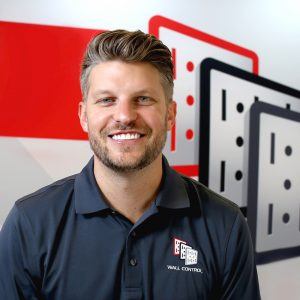
Our Commitment: Wall Control is committed to being the industry leader in pegboard style storage & organization. Simply put, no other tool storage system can match the quality, versatility, and value of the award winning Wall Control System. Their commitment to quality is not only reflected in our product but is also evident in our practices. We strive to do right by our customers every day, starting at product design conception and continuing through with superb product and customer support. Being committed to quality means keeping a close eye on product production to be sure that the Wall Control values are stamped into every panel and accessory that is produced. We achieve this by manufacturing our entire product line here, in the USA.

Our Product: The award winning Wall Control pegboard storage system solves five main wall-mounted storage challenges better than any other system available today; Durability, Strength, Versatility, Ease of Installation, and Attractive Appearance.

Durability – Our strong metal pegboard prevents the peg holes from fraying and wearing out over time. Traditional pegboard panels start out ugly, wear out quickly, and eventually the pegboard hooks no longer stay engaged in their peg hole and will fall out when the tool is removed. Our panel face, manufactured in the US from 20 gauge steel, ensures that Wall Control’s system will last a lifetime; many times longer than traditional pegboard products.

Strength – Traditional pegboard is weak by nature due to the material it is made from. The strength of steel, combined with a formed flange around the perimeter, make our metal pegboard panels over 10 times stronger than conventional pegboard. More strength equals more storage.

Versatility – Our unique “Combo” style panels allow the user the option of utilizing 1/4 in traditional pegboard hooks as well as our own patented, much more secure, “double offset” hook and slot design. Wall Control’s metal panels are also magnetic so you can attach all your magnetic accessories as well. Engineered for both secure engagement and ease of movement, Wall Control’s Hooks, Brackets, Shelves, and Accessories will install easily and stay put. The versatility of these storage panels is also highlighted by the all-steel shelving system that Wall Control panels support.Finally, a pegboard system that has the ability to support substantial weight on a matching, integrated shelving system.

Ease of installation – Wall Control installs in minutes. Ease of installation was a key criterion during the design phase of this pegboard system. Manufactured with a built-in flange on all four sides, the Wall Control storage panel requires no pre-built framework and mounts directly to any flat surface. The flange spaces the panel’s perforated face away from the wall so that the hooks, brackets, and shelves will engage with no wasted area. The convenient 16″x32″ standard size and modular design make it easy to handle and a snap to install. If you have traditional 16″ stud spacing, you can hit studs all the way down your wall with Wall Control’s brilliant mounting hole instructions. If not, have no worries, we include drywall anchors as well, so hitting studs is not required, although obviously preferred, if possible.

Attractive Appearance – Available in eight durable, scratch resistant, powder-coated colors as well as a very reflective and attractive metallic galvanized finish, Wall Control Storage Systems truly are suitable for use in any location wall-mounted storage is desired in the home, office, or workplace. These high quality finishes resist rust and stains and even wipe clean with a damp rag. When you combine sleek design with a high quality finish, you can’t go wrong. Wall Control storage systems are the industry leader when it comes to pegboard tool storage and organization, and for good reason, but don’t take our word for it. We encourage you to check out our online product reviews from reputable places like Amazon and Home Depot to see for yourself that our products truly are in a league of their own when it comes to quality, versatility, value, and ultimately, customer satisfaction.

Find out more on the Wall Control website. Connect with Richard by email or call 1-888-792-5266.

About “IT Help Atlanta”


IT Help Atlanta
Rick Higgins, Host of “IT Help Atlanta”

“IT Help Atlanta” profiles small to mid-market businesses and highlights how those companies use technology to succeed. The host of “IT Help Atlanta” is Rick Higgins. “IT Help Atlanta” is brought to you by TeamLogic IT, your managed services technology advisor specializing in cybersecurity, cloud and business continuity solutions. TeamLogic IT leverages cutting edge technology to solve all types of business problems.

For more information, email Rick directly or visit his website.


Show Transcript

Announcer: Broadcasting from the Business RadioX studios in Atlanta, it’s time for “IT Help Atlanta,” brought to you by TeamLogic IT, your technology advisor. Now, here’s your host Rick Higgins.

Rick: Good morning and welcome everyone to the “IT Help Atlanta” radio show, the show that profiles small to mid-market businesses and highlights how those companies use technology to succeed. “IT Help Atlanta” is brought to you by TeamLogic IT, your managed services technology advisor specializing in cybersecurity, cloud and business continuity solutions. TeamLogic IT leverages cutting edge technology to solve all types of business problems. Go to ithelpatlanta.com for audio archives of this radio show and to learn more about our sponsor, TeamLogic IT. I’m your host, Rick Higgins and today’s guest is Richard Grove, the chief operating officer of Wall Control. Good morning, Richard. How are you?

Richard: Morning, Rick. I’m doing good. How about you?

Rick: I’m really glad you’re here and we really appreciate your time. Richard…

Richard: Yeah, I’m glad to be here. Thanks for the invitation.

Rick: You bet. You bet. Richard, tell us about who you are and what do you do?

Richard: Yeah. So my name, like you mentioned, is Richard Grove. I run our brand, which is Wall Control. We’re a wall-mounted tool storage system. Well, just wall-mounted storage systems in general. Tools are kind of how we started, but we’ve gone into a lot of different applications at this point. We are also a family business. We were…my grandfather started a tool & die shop in the ’60s, and that’s grown and evolved. Over the years, that’s still alive and well, the business is strong. And in the early 2000s, things weren’t so great and things were slowing down. We were seeing a lot of our work go offshore. And so my grandfather and my dad had been kicking around this idea of Wall Control. And we actually built some prototypes for our own floor to have a nice solid metal pipe board system.

And when things slowed down, we had toolmakers that didn’t have work and, you know, trying to hold onto people as long as we can. Rather than lay them off, we tooled up to make this product line ourselves. We created the entity which is Wall Control, sought patents for the system and started, you know, putting the groundwork in to make a product to go to market with it. And then, not to get too long-winded, I came in in 2000 or 2000…yeah, 2008. And it was…it really wasn’t anything at the time because my dad and granddad both had, you know, irregular jobs doing tool & die, so this was my focus. My background is mechanical engineering. I worked for the Department of Defense before I came to Wall Control. And so, as an engineer, I was doing probably a mix of 50-50 tool & die/wall control.

And over the course of a year or two, it quickly became…you know, I was 100% Wall Control as the brand started to grow. And we’ve grown since then. We were…at the time we were in a…working out of the same building, sharing space. We’ve moved I think three times, three or four times, depending on how you count warehouses since then and now Wall Control is in its own 55,000 square foot facility completely independent from the tool & die shop. So kind of the history of me and where we started and where we’re at now.

Rick: Well, Richard, I really appreciate the way you honor your father and your grandfather with how Wall Control started and everything. But it really was when you came onboard and started running things and implementing different marketing and sales strategies and tactics is when Wall Control really took off, right? And tell us about that.

Richard: Yeah, I mean, it’s kind of a function of…you know, my granddad and my dad had…you know, they were tool & die designers, tool & die makers. So not that my background’s in marketing, but I just I could kind of see where that was lacking. And again, it’s no fault of their own, just not their specialty and kind of repackaging everything in a way that is appealing both to a consumer as well as a retail buyer was I think what I had a knack at and just, you know, it was kind of…I kind of found it…it was like a natural thing for me which was great. It worked out well and, you know, made Wall Control and me a really good fit. And so, just approaching things differently than what they had done.

Bless his heart, my dad would write handwritten letters and mail them to care of buyer at Home Depot, that kind thing and with explaining how great the product is. The thing I’ve learned is, you know, a good product is only about…I don’t know, it’s somewhere around 20% of the equation I think. The other 80% is the economics of it. And if you’re a buyer for a place, that’s pretty much what you care about. You’re not so concerned that it’s a good product. It needs to be a good product, but you kind of assume that if the economics of it bear itself out.

And so to approach it from that angle versus, “Look at how cool this is, look at all this fun stuff it’ll do.” It’s more like, “Look at this…you know, look at this opportunity here. Look at how you guys can grow your brand, we can grow our brand.” You know, you almost don’t even have to talk about the product. It’s just, you know, a widget to them really. And kind of taking that step back and making it not as personal like, “Look at this great product we came up with,” but really speaking their language is what I think helped, you know, get it off the ground when I came in the early days.


Rick: Well, the story is great and the growth curve that you guys have been on in the last, let’s say, 15 years is really amazing and impressive. What kind of, you know, year over year growth are you seeing in the last, say, two or three years?

Richard: We’re staying pretty consistent at about 20% year over year growth, which is…you know, as you start doing bigger numbers, that becomes more and more impressive. So we’ve had…you know, there’s been some years where we had massive growth, you know, to the tune of 40% and 50%. But again, as you grow and you get market saturation and you get in all these spaces, to expect that is just unrealistic. So our goal is we wanna be in that 10% to 20% range. And if we can do that, we’re happy.

And the other thing, too, is at the point we’re at, it’s really…it’s very dangerous to grow at a much greater rate than that because of how you can potentially overextend yourself from an overhead standpoint. So we like a good healthy 10% to 20% growth that’s manageable and, you know, our product and our service doesn’t suffer because we’re stretched too thin trying to do too much at once.

Rick: You gotta be careful with the growth because growth is expensive and you got a husband, your cash, no matter what size business you have.

Richard: Exactly. Yeah.

Rick: That’s right.

Richard: Yeah. We’re in that…you know, there are some pretty big investments we’re looking to make at the moment. And, you know, things had been kind of crazy the last few weeks for everybody, so that’s one whole curve ball we can talk about. But yeah, just trying to balance the when, and where, and why, and all that is definitely something to consider, but we tend to make it…we’re more of the…at this stage anyways, we’re more hesitant to make those big investments unless it’s an absolutely obvious thing that we need to be doing. And we have a few things that it’s gotten to that point. So we’ll be…you know, hopefully, this year settles down a little bit and then we can kind of get back on track as far as looking ahead at growth and where we need to spend our cash.

Rick: So, since you brought it up, let’s talk about that a little bit. Here we are, it’s March 25th and we’re in, you know, the second week of the Covid disaster, I’ll call it what it is. I think it is a disaster. And what are you seeing out there, just in the last couple of three weeks, with respect to sales and what really has been the impact to your business directly? And then, what do you see going forward when things kind of come back to normal?

Richard: Well, we’re fortunate that in the immediate, you know, here and now, we haven’t seen it negatively impact our sales. In fact, we’ve seen…from the Wall Control perspective, we’ve seen a pretty decent bump in the last week. And I think that’s a function of like right now people are at home. They still…you know, the work from home folks still have jobs and still have income. And our product is, you know, it’s for you to organize your home and your space, so people actually have time to tackle a bit of a DIY project. I mean, it’s super easy to install and use.

So we’ve seen, I mean, almost like Christmas time type business to consumer purchasing, which is pretty interesting. We have seen… As far as disruption goes, our biggest customer is Amazon as is a lot of people that sell online. And so, that’s our biggest disruption because last week Amazon announced, which completely understandably, that they were not taking in any non-essential supplies into their fulfillment centers so they could prioritize, you know, medical equipment and things like that. And so they’re purchasing from us on hold for the time being.

So we can still see the daily sales from inventory that they have on hand, and they have a good supply of our product, which is fortunate for us. So we can see that staying…that’s staying pretty even. They’re also having some supply issues. Like if you’re Prime, you can expect slower ship times. If you’re not Prime, it could be weeks before you get something. So they have their own internal issues, but because we’re so…because they’re such a big customer of ours, you know, their internal issues are also our issues. So on that side of it, you know, we see that, you know, coming back to normal in the coming weeks, hopefully. That’s the only area of concern for us in the here and now.

The future, that’s kinda hard. You know, I don’t know. You know, like I said, people still have their jobs, they’re working from home, but what happens when, you know, the Dominoes start falling and all those people…you know, in a month from now, is that gonna still be the case? And if they’re not, you know, our product is something you buy with discretionary income. If that starts to dry up, then what kind of situation are we in? So that’s kind of the here and now and then where, you know, the unknowns of what it’s gonna look like even just a month from now.

Rick: You know, it’s really interesting just knowing a little bit about your business just from having worked with you for a few years. In full disclosure to the audience, Richard is a client of mine at TeamLogic IT, and I guess it’s been roughly three years.

Richard: A very happy client.

Rick: Oh good. Thank you for that. And it’s been about three years or so that we’ve worked together, and I knew Amazon played a big part in what you did, but I just always assumed that Amazon was more the channel and that you direct ship, but you’re saying they’re actually a customer who buys and then resells?

Richard: Yeah, we have…so, Amazon, they have about really quite a few ways to sell on there, but really three main ones. One is what you were alluding to, it’s called fulfilled by merchant, so you would buy on Amazon. It would actually…you’d be buying a listing, but it would be buying from us and then we would fulfill that order directly. And we do do that to some extent, but that’s definitely not the bulk of it. The bulk of it is, Amazon, they send purchase orders for product and they buy it themselves and then they resell it for whatever price they wanna sell it at.

So the good news with that is we move a lot more volume, but we have a lot less control over our product because, technically, Amazon owns it and they’re doing with it whatever they wanna do. So, like in this instance, when they said, “We’re not sending purchase orders,” there’s nothing we can do about that. And then there’s kind of a middle ground, too, where you would send in your product, you would pay to send your product into Amazon, and then you pretty much sell it on consignment out of their fulfillment centers. And that way you get…it’s still Prime, but it’s sold by…it’s not sold by Amazon, so you could actually control, you know, the list price on the website and you have a little bit…or you have a lot more control over unit economics. And that moves…you know, that can be comparable to the sales velocity that you can get if Amazon’s buying it and selling it themselves.

So there’s also a lot of…how Amazon prioritizes that is all proprietary and they got their own algorithms that even they themselves don’t seem to know how they work when you’re talking to like a vendor manager. So, you know, I can’t help but think they prioritize their own inventory that they hold over inventory that isn’t costing them anything. But, you know, it’s just it’s kinda…it’s really like a product by product thing on which product does best in which fulfillment channel.

Rick: Very, very interesting. I’ve got…I wrote down some questions. I know we talked about some of this stuff prior to the show. One question I definitely wanna cover is what’s an aspect of your business that people tend to not think about that you’d like people to ask you about?

Richard: Yeah, so I guess I kind of mentioned a little bit when I was explaining the history of the business. So when people think pegboard, you know, they think garages, and tools, and, you know, the car guy kind of image comes to mind. And our products go in tons of applications. So, I mean, all the…we get pictures from customers of just crazy uses. We got one from the captain of a 100-foot mega luxury yacht with it in their engine compartment, storing all their things down there.

So, I guess, if people asked about or even looked on our website, we have multiple different, like, value kits that kind of get people started in certain areas like craft garden, obviously, there’s tools, kitchen, jewelry displays, closet organization. There’s, you know, all kinds of applications. So, it’s the unique ways it can be used, I guess, would be the thing that I don’t think people really think about and consider. But if you give it some thought or ask us about it, we can put you on some pretty cool applications.

Rick: And, you know, when you think about products manufacturing, you know, organization tools and stuff that’s a made through tool & die and cut and shipped and whatnot, just by default, I think the typical consumer thinks that that’s something that’s coming from Asia. But, in fact, your product’s 100% made here in the U.S., isn’t that right?

Richard: Correct. Yes. Yeah, they’re totally, you know, designed, engineered, made, stamped, everything is done here locally. So that’s… I should go back and say too, that’s one of the main reasons why Wall Control, if not the main reason why Wall Control exists is because in the early 2000s when we were seeing all these…our tools go offshore, we said we need something that’s our own product line that cannot leave our building. Because it tool & die, you don’t own any of the dies you make. Someone pays you to build them, you build them for them.

And then if they want you to run parts for them, then you can run parts for them. But if they call you and say, “Hey, we’re sending a truck tomorrow, we’re gonna pick up our tools and we’re gonna send them to Mexico,” there’s nothing you can do, they’re not yours. So this is one of those…you know, now we have, you know, dozens of dies that are property of Wall Control that we know will never leave our presence. That was really the driving factor for creating a product line that we owned.

Rick: Gotcha. And you mentioned the…you know, I wanna get into just a brief discussion about success story so that you can profile, you know, one or two. You mentioned the mega yacht, the big giant yacht and, you know, no one could…I mean, I would never think of that, right, as a fit for you. Is there any…and it doesn’t have to be a large scale thing, is there any success story that comes to mind where you really solved a major problem for someone and helped them out?

Richard: I would say…I wouldn’t say like an individual instance, but I would say we’ve had a lot of…we have a lot of things that we’re proud of, a lot of uses for our product that we know, you know, things it’s doing in the field that we just think are cool. So, for instance, SpaceX, NASA, the Navy, all these different places that we know use our product, you know, gives us pride to know we’re some small part of that. When you see a massive Falcon 9 rocket take off, you’re like, “We got Wall Control in there,” not on the rocket but in the shop that built the rocket. And it’s that little bit of it’s pretty cool.

You know, in the Navy we have, I mean, I would say probably thousands of panels on naval ships that have been purchased over the years. And, you know, that’s…I don’t know where they’re at. I mean, I’m sure it’s secretive. We’ve never seen pictures of it, but we just know, you know, we’re shipping thousands of panels to Puget Sound to go somewhere. You know, and they’re all tagged for these different you know, USS whatever. So, you know, they’re going on these awesome carriers and battleships, and so knowing that you were selected to solve that need is pretty cool for us.

Rick: That is really a great story. And thanks for sharing that.

Richard: Certainly.

Rick: Switching gears on here a little bit, wanted to give you a chance to be, I guess, I’d say introspective a little bit, but what do you like best about being a small business owner?

Richard: I think, well, kind of…you know, like the story we just talked about, those little things are pretty cool. Even from the tool & die side, we make a lot of parts that are on a lot of common things that people just don’t think about from John Deere riding lawnmower seats to, you know center columns in the old Ford F-250, just random weird stuff that we can look at and we can say, “Hey, either we built that or we built the tool that stamps those.” So that’s kind of a cool thing.

The other thing I really personally enjoy are the relationships and the, like, creative growth opportunity. So we have a really good brand ambassador program where we have a lot of great partners that use our product and it’s just cool. Those are very creative people and they can come up with some pretty cool collaborations that we can execute pretty quick because we’re small. We don’t have, like, a bunch of red tape and, you know, all these different marketing departments to have to approve things through. So being able to be versatile and, like, seizing really unique opportunities is something I enjoy and it’s something I get a lot of pleasure out of, like, trying to identify.

Rick: Well, I think we’re about to wrap up here, but I want you to, please, tell the audience what’s the best way to get in touch with you and or to learn more about Wall Control.

Richard: Yeah, I would definitely say the website wallcontrol.com, that would be the best place to go. And then you can email sales@wallcontrol.com. We have a bunch of contact us forms on our website, but definitely our website would be the resource to get you started.

Rick: Well, fantastic. Well, John, you wanna wrap us up?

John: Absolutely. I’m John Ray, Business RadioX. Rick, you knocked it out of the park, you with a great guest. Richard’s story is awesome. Great to have his story and great first show.

Richard: Thanks for having me. I also wanna say, you know, just as a customer, we appreciate your services, Rick. So, you know, if there’s people listening that are in need of any IT solution, I would definitely reach out to Rick. We started with, I think, like one little…I don’t even remember what we started with, some little thing we needed outsourced or serviced. And then over the years, we’ve just kept adding on to our product package because, you know, as we have needs in the space, you know, we’re not IT experts, so we need to let, you know, the pros handle that and it’s been a really good fit.

Rick: Well, thanks, Richard. We are most grateful for you guys as a client as well, and I appreciate those kind words.

Richard: Certainly.

Rick: So, John, can you wrap us up?

John: Awesome. Well, folks, thanks for being with us with the debut edition of IT Help Atlanta with Rick Higgins.

Tagged With: IT Help Atlanta, metal pegboard, pegboard, pegboard organizers, Richard Grove, Rick Higgins, TeamLogic IT, Wall Control, wall mounted storage

  • 1
  • 2
  • Next Page »

Business RadioX ® Network


Our Most Recent Episode

CONNECT WITH US

  • Email
  • Facebook
  • LinkedIn
  • Twitter
  • YouTube

Our Mission

We help local business leaders get the word out about the important work they’re doing to serve their market, their community, and their profession.

We support and celebrate business by sharing positive business stories that traditional media ignores. Some media leans left. Some media leans right. We lean business.

Sponsor a Show

Build Relationships and Grow Your Business. Click here for more details.

Partner With Us

Discover More Here

Terms and Conditions
Privacy Policy

Connect with us

Want to keep up with the latest in pro-business news across the network? Follow us on social media for the latest stories!
  • Email
  • Facebook
  • Google+
  • LinkedIn
  • Twitter
  • YouTube

Business RadioX® Headquarters
1000 Abernathy Rd. NE
Building 400, Suite L-10
Sandy Springs, GA 30328

© 2025 Business RadioX ® · Rainmaker Platform

BRXStudioCoversLA

Wait! Don’t Miss an Episode of LA Business Radio

BRXStudioCoversDENVER

Wait! Don’t Miss an Episode of Denver Business Radio

BRXStudioCoversPENSACOLA

Wait! Don’t Miss an Episode of Pensacola Business Radio

BRXStudioCoversBIRMINGHAM

Wait! Don’t Miss an Episode of Birmingham Business Radio

BRXStudioCoversTALLAHASSEE

Wait! Don’t Miss an Episode of Tallahassee Business Radio

BRXStudioCoversRALEIGH

Wait! Don’t Miss an Episode of Raleigh Business Radio

BRXStudioCoversRICHMONDNoWhite

Wait! Don’t Miss an Episode of Richmond Business Radio

BRXStudioCoversNASHVILLENoWhite

Wait! Don’t Miss an Episode of Nashville Business Radio

BRXStudioCoversDETROIT

Wait! Don’t Miss an Episode of Detroit Business Radio

BRXStudioCoversSTLOUIS

Wait! Don’t Miss an Episode of St. Louis Business Radio

BRXStudioCoversCOLUMBUS-small

Wait! Don’t Miss an Episode of Columbus Business Radio

Coachthecoach-08-08

Wait! Don’t Miss an Episode of Coach the Coach

BRXStudioCoversBAYAREA

Wait! Don’t Miss an Episode of Bay Area Business Radio

BRXStudioCoversCHICAGO

Wait! Don’t Miss an Episode of Chicago Business Radio

Wait! Don’t Miss an Episode of Atlanta Business Radio