Business RadioX ®

  • Home
  • Business RadioX ® Communities
    • Southeast
      • Alabama
        • Birmingham
      • Florida
        • Orlando
        • Pensacola
        • South Florida
        • Tampa
        • Tallahassee
      • Georgia
        • Atlanta
        • Cherokee
        • Forsyth
        • Greater Perimeter
        • Gwinnett
        • North Fulton
        • North Georgia
        • Northeast Georgia
        • Rome
        • Savannah
      • Louisiana
        • New Orleans
      • North Carolina
        • Charlotte
        • Raleigh
      • Tennessee
        • Chattanooga
        • Nashville
      • Virginia
        • Richmond
    • South Central
      • Arkansas
        • Northwest Arkansas
    • Midwest
      • Illinois
        • Chicago
      • Michigan
        • Detroit
      • Minnesota
        • Minneapolis St. Paul
      • Missouri
        • St. Louis
      • Ohio
        • Cleveland
        • Columbus
        • Dayton
    • Southwest
      • Arizona
        • Phoenix
        • Tucson
        • Valley
      • Texas
        • Austin
        • Dallas
        • Houston
    • West
      • California
        • Bay Area
        • LA
        • Pasadena
      • Colorado
        • Denver
      • Hawaii
        • Oahu
  • FAQs
  • About Us
    • Our Mission
    • Our Audience
    • Why It Works
    • What People Are Saying
    • BRX in the News
  • Resources
    • BRX Pro Tips
    • B2B Marketing: The 4Rs
    • High Velocity Selling Habits
    • Why Most B2B Media Strategies Fail
    • 9 Reasons To Sponsor A Business RadioX ® Show
  • Partner With Us
  • Veteran Business RadioX ®

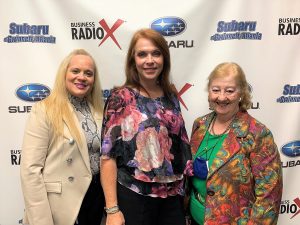
MOXIE AWARD WINNERS: Michelle Anglin, Jill Edwards and Lorri Christopher

September 21, 2021 by Mike

Gwinnett Studio
Gwinnett Studio
MOXIE AWARD WINNERS: Michelle Anglin, Jill Edwards and Lorri Christopher
Loading
00:00 /
RSS Feed
Share
Link
Embed

Download file

Michelle Anglin, Jill Edwards and Lorri Christopher

Major Michelle Anglin/Gwinnett County Police Department (Influence Award)

The Gwinnett County Police Department is the second largest police agency in Georgia with an authorized strength of 905 sworn officers, supported by 289 civilian employees, and is an agency with a long history of excellence, integrity, and fairness. The department enjoys a strong relationship with the diverse community it serves and continues to build that reputation by constantly engaging and interacting with the residents.

Jill Edwards/United Community Bank (Pay It Forward Award)

United Community Bank (NASDAQ: UCBI) is a bank holding company headquartered in Blairsville, GA, with executive offices in Greenville, SC. United is one of the largest full-service financial institutions in the Southeast, with $17.8 billion in assets, and 160 offices in Florida, Georgia, North Carolina, South Carolina and Tennessee. United Community Bank, United’s wholly owned bank subsidiary, specializes in personalized community banking services for individuals, small businesses and companies throughout its geographic footprint, including Florida under the brand Seaside Bank and Trust. Services include a full range of consumer and commercial banking products, including mortgage, advisory, treasury management, and wealth management.

Lorri Christopher/City of Peachtree Corners (Greater Good Award)

The City of Peachtree Corners, Gwinnett County’s newest city, is 10 years old and has a diverse population of over 43,000 residents. The city encompasses 17 square miles and is the home of Curiosity Lab and the test bed road for autonomous vehicles.


About the Moxie Awards:

Built for women who are bold in business, the Gwinnett Chamber of Commerce honored more than 90 finalists and seven winners at the 2021 Moxie Awards on Friday, Aug. 27. The Moxie Awards recognize women and organizations that are making it happen. Organizational awards highlighted companies that support the advancement of women, as well as those that are women-led. Individual awards honored those who are trailblazers in a male-dominated field, Gwinnett County champions, emerging leaders, professionals who are at the peak of their career and those who are generous with their time, talent, or resources.
Tagged With: City of Peachtree Corners, GCPD, gwinnett chamber, Gwinnett Chamber of Commerce, Gwinnett County Police Department, jill edwards, Lorri Christopher, Michelle Anglin, moxie awards, peachtree corners, United Community Bank, voice of business, voice of business podcast

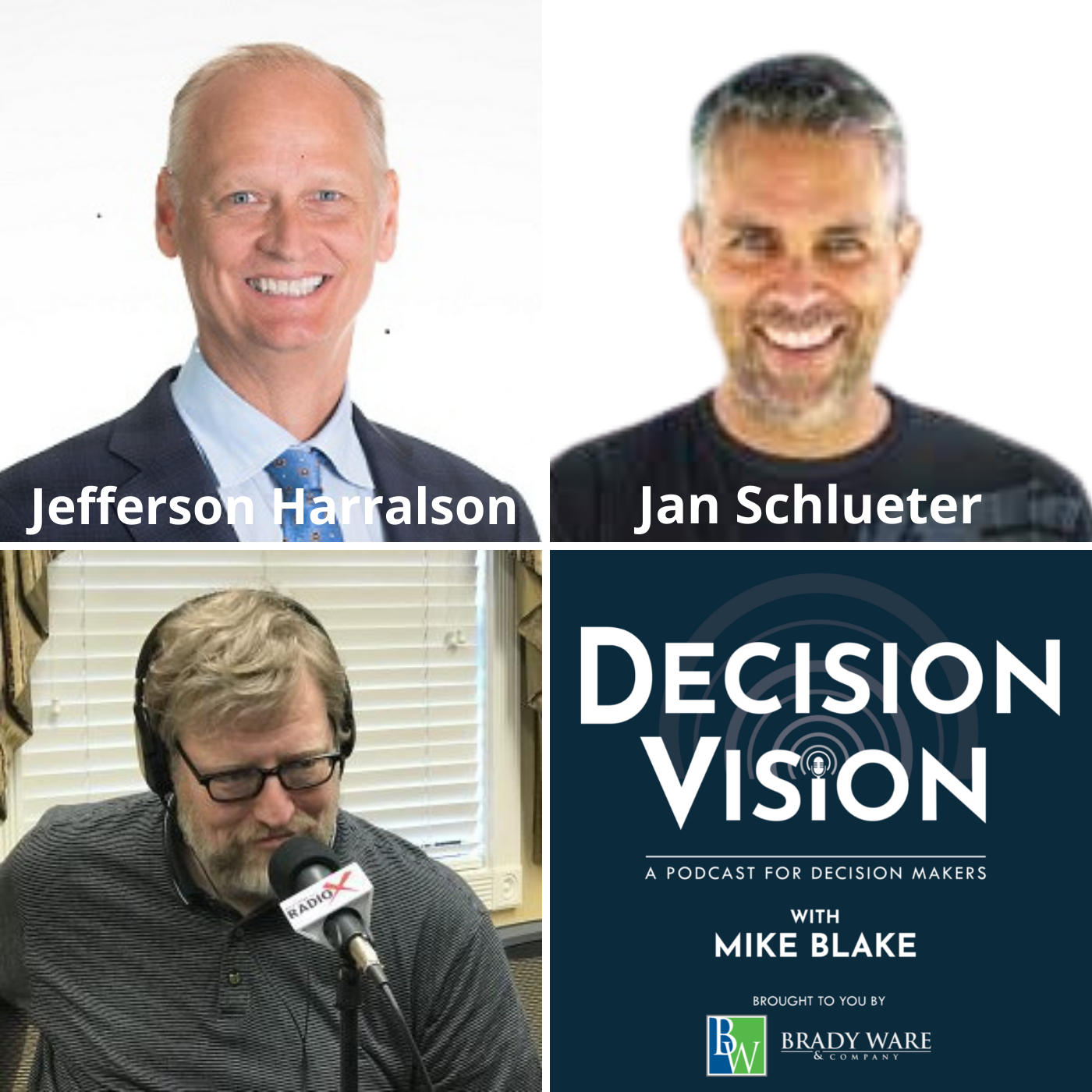
Decision Vision Episode 122: Should I Relocate my Business? – An Interview with Jefferson Harralson, United Community Banks, and Jan Schlueter, Darvis

June 24, 2021 by John Ray

Darvis
Decision Vision
Decision Vision Episode 122: Should I Relocate my Business? - An Interview with Jefferson Harralson, United Community Banks, and Jan Schlueter, Darvis
Loading
00:00 /
RSS Feed
Share
Link
Embed

Download file

Darvis

Decision Vision Episode 122:  Should I Relocate My Business? – An Interview with Jefferson Harralson, United Community Banks, and Jan Schlueter, Darvis

Some factors behind the choice to relocate a business or corporate headquarters are unique, yet all companies considering a move confront common decision points along the way. Bringing two entirely different perspectives, Jefferson Harralson, CFO of regional banking company United Community Banks, and Jan Schlueter, co-Founder of healthcare technology firm Darvis, joined host Mike Blake to contrast and compare their experiences in relocating their respective companies. Decision Vision is presented by Brady Ware & Company.

Jefferson Harralson, United Community Banks, Inc.

Jefferson Harralson, CFO, United Community Banks

Jefferson Harralson is Executive Vice President and Chief Financial Officer of United Community Banks Inc.  Jefferson has more than 25 years of experience in the financial services industry and has been with UCB since 2017.

United Community Banks, Inc. (NASDAQ: UCBI) (United) provides a full range of banking, wealth management and mortgage services for relationship-oriented consumers and business owners. The company, known as “The Bank That SERVICE Built,” has been recognized nationally for delivering award-winning service.

Headquartered in Greenville, South Carolina, United has $18.6 billion in assets, $2.7 billion market cap and 161 offices in Florida, Georgia, North Carolina, South Carolina and Tennessee along with a national SBA lending franchise and a national equipment lending subsidiary. In 2021, J.D. Power ranked United highest in customer satisfaction with retail banking in the Southeast, marking seven out of the last eight years United earned the coveted award. United was also named “Best Banks to Work For” by American Banker in 2020 for the fourth year in a row based on employee satisfaction.

Forbes included United in its inaugural list of the World’s Best Banks in 2019 and again in 2020. Forbes also recognized United on its 2021 list of the 100 Best Banks in America for the eighth consecutive year. United also received five Greenwich Excellence Awards in 2020 for excellence in Small Business Banking, including a national award for Overall Satisfaction.

Company website | UCBI LinkedIn | Harralson LinkedIn

Jan Schlueter, Darvis, Inc.

Darvis
Jan Schlueter, COO, Darvis, Inc.

Jan Schlueter is Co-Founder and Chief Operating Officer of Darvis Inc.  Darvis is a leading robotic process automation platform. They make organizations more efficient by simplifying and automating processes using computer vision and artificial intelligence.

By tracking situations and objects, Darvis turns the real world into useful data. Its mission is to enable continuous understanding and optimization of health care services.

Darvis, which stands for Data Analytics Real World Visual Information System, uses state of the art patented artificial intelligence-powered technology to give rooms and objects a voice, analyzing optical sensors to provide contextual insights that enable hospitals and care facilities to build and manage safe and optimal flows of medical equipment and services.

Company website | Darvis LinkedIn | Schlueter LinkedIn

Mike Blake, Brady Ware & Company

Mike Blake, Host of the “Decision Vision” podcast series

Michael Blake is the host of the Decision Vision podcast series and a Director of Brady Ware & Company. Mike specializes in the valuation of intellectual property-driven firms, such as software firms, aerospace firms, and professional services firms, most frequently in the capacity as a transaction advisor, helping clients obtain great outcomes from complex transaction opportunities. He is also a specialist in the appraisal of intellectual properties as stand-alone assets, such as software, trade secrets, and patents.

Mike has been a full-time business appraiser for 13 years with public accounting firms, boutique business appraisal firms, and an owner of his own firm. Prior to that, he spent 8 years in venture capital and investment banking, including transactions in the U.S., Israel, Russia, Ukraine, and Belarus.

LinkedIn | Facebook | Twitter | Instagram

Brady Ware & Company

Brady Ware & Company is a regional full-service accounting and advisory firm which helps businesses and entrepreneurs make visions a reality. Brady Ware services clients nationally from its offices in Alpharetta, GA; Columbus and Dayton, OH; and Richmond, IN. The firm is growth-minded, committed to the regions in which they operate, and most importantly, they make significant investments in their people and service offerings to meet the changing financial needs of those they are privileged to serve. The firm is dedicated to providing results that make a difference for its clients.

Decision Vision Podcast Series

Decision Vision is a podcast covering topics and issues facing small business owners and connecting them with solutions from leading experts. This series is presented by Brady Ware & Company. If you are a decision-maker for a small business, we’d love to hear from you. Contact us at decisionvision@bradyware.com and make sure to listen to every Thursday to the Decision Vision podcast.

Past episodes of Decision Vision can be found at decisionvisionpodcast.com. Decision Vision is produced and broadcast by the North Fulton studio of Business RadioX®.

Connect with Brady Ware & Company:

Website | LinkedIn | Facebook | Twitter | Instagram

TRANSCRIPT

Intro: [00:00:01] Welcome to Decision Vision, a podcast series focusing on critical business decisions. Brought to you by Brady Ware & Company. Brady Ware is a regional full service accounting and advisory firm that helps businesses and entrepreneurs make visions a reality.

Mike Blake: [00:00:21] Welcome to Decision Vision, a podcast giving you, the listener, clear vision to make great decisions. In each episode, we discuss the process of decision making on a different topic from the business owners’ or executives’ perspective. We aren’t necessarily telling you what to do, but we can put you in a position to make an informed decision on your own and understand when you might need help along the way.

Mike Blake: [00:00:41] My name is Mike Blake, and I’m your host for today’s program. I’m a director at Brady Ware & Company, a full service accounting firm based in Dayton, Ohio, with offices in Dayton; Columbus, Ohio; Richmond, Indiana; and Alpharetta, Georgia. Brady Ware is sponsoring this podcast, which is being recorded in Atlanta per social distancing protocols. If you’d like to engage with me on social media with my Chart of the Day and other content, I’m on LinkedIn as myself, and @unblakeable on Facebook, Twitter, Clubhouse, and Instagram. If you like this podcast, please subscribe on your favorite podcast aggregator, and please consider leaving a review of the podcast as well.

Mike Blake: [00:01:17] Today’s topic is, Should I relocate my business? And I don’t know that this topic gets talked about a lot. Actually, it’s kind of interesting as I was doing research for this program. But I think in the current period in which we find ourselves, and we’re recording this on June 22, 2021, there’s a lot of interest, I think, in relocating.

Mike Blake: [00:01:43] We’ve seen a number of American icons relocating their businesses. Notably Tesla relocating from California to Texas. Some of the big investment banks. I think it’s either J.P. Morgan or Morgan Stanley, I forget which one, one of the Morgans that is relocating or has relocated from New York to Florida. And other businesses are, of course, relocating as well.

Mike Blake: [00:02:14] And I think the pandemic is bringing this potential choice or decision much more sharply into focus, because I think one of the things the pandemic has done is it’s made many of us realize that location is important, but it’s probably important for reasons that are different than what we thought they were two years ago.

Mike Blake: [00:02:40] In some cases, you relocated to be close to town. And that’s one of the reasons Silicon Valley continues to thrive is because they have a critical mass of talent for writing code and building digital businesses and biotech as well. Or sometimes you want to relocate your headquarters because that’s where the locust of your customers is. And that’s one of the reasons, for example, that International Paper relocated from Stamford, Connecticut to Richmond, Virginia a few years back.

Mike Blake: [00:03:19] But I think we’re also seeing a lot of other reasons why companies may decide that the calculus that goes into their location is simply changing. It may be for tax reasons. It may be because they realized that they’re just as likely to have employees that are working from Montana as they are from Monterrey. It could be infrastructure. It could be something entirely different. And so, as companies are realizing that they perhaps are more mobile and workers are more mobile than we’ve come to accept them being in the past, I think more companies are encountering this decision on whether or not they should relocate. And if so, what does that relocation look like? Because I’ve never relocated a business myself. I suspect that it’s harder than simply boxing up all your China and your house, loading it onto a truck, and then moving.

Mike Blake: [00:04:18] But we have a couple of guests that have done it, and they’re going to tell us the ins and outs of what they did and why they did it. Maybe some things they would have done differently if they had to do it over again. So, we’re joined by two guests today, and in no particular order I’m going to start with introducing Jefferson Harralson, who is Executive Vice President and Chief Financial Officer of United Community Banks Inc. Jefferson has more than 25 years of experience in the financial services industry. United Community Banks is a publicly traded company. Their thicker as UCBI and the Nasdaq. They provide a full range of banking, wealth management, and mortgage services for relationship oriented customers and business owners. In fact, I think my mortgage is actually with you guys.

Mike Blake: [00:05:00] So, the company known as “The Bank That Service Built” has been recognized nationally for delivering award winning service. In 2021, J.D. Power ranks United highest in customer satisfaction of retail banking in the southeast, marking seven out of the last eight years United earned the coveted award. United was also named Best Banks to Work For by American Banker in 2020 for the fourth year in a row based on employee satisfaction. They’ve also won a bunch of other awards – I could be here all day. You want to learn more about that? Go check out their website. But they’re good.

Mike Blake: [00:05:35] Also joining us is Jan Schlueter, who is joining us actually from Germany – I think this is our first – no – it’s our second international podcast, first from Germany – who, for the last six-and-a-half years is the Co-Founder and Chief Operating Officer of Darvis Inc. And Darvis is a leading robotic process automation platform. Darvis makes organizations more efficient by simplifying and automating processes using computer vision and artificial intelligence. By tracking situations and objects, Darvis turns the real world into useful data. Their mission is to enable continuous understanding and optimization of health care services.

Mike Blake: [00:06:10] Darvis, which stands for Data Analytics Real World Visual Information System, uses state of the art patented artificial intelligence powered technology to give rooms and objects a voice, analyzing optical sensors to provide contextual insights that enable hospitals and care facilities to build and manage safe and optimal flows of medical equipment and services. Jefferson and Jan, welcome to the program.

Jan Schlueter: [00:06:33] Thank you, Mike, for having us or having me. Thanks.

Jefferson Harralson: [00:06:36] Thank you.

Mike Blake: [00:06:38] So, Jan, since you digitally traveled the farthest to be here, you’re six hours ahead of us, I like to invite you first. What is your relocation story? Where did you go? Where did you start from? And what were the drivers behind that decision for you?

Jan Schlueter: [00:06:54] So, yeah, we started as two founders from Germany in San Francisco, Silicon Valley. We did the the software play, let’s say, six-and-a-half years ago with a different approach. But we thought software and San Francisco and the Bay Area, that’s it. We have to be there. That’s why we founded Darvis with a different name in a, let’s say, segment of – what was it? – it was live streaming and virtual reality. Something completely different what you just said what Darvis is. But it has a lot of, let’s say, elements in it today.

Jan Schlueter: [00:07:39] And it was a great time. It was all good for starting a business. That’s the perfect spot to be. But as we grew in more markets like Germany, like the U.K., and of course in the U.S., we found out that it is getting, let’s say, too expensive to be bluntly here for hiring people of the skillset we need. So, we need AI engineers, engineers developers, all the people that have a really high, let’s say, compensation ask for getting onboard and just only a T-shirt and a cup of a branded coffee isn’t do the trick.

Jan Schlueter: [00:08:28] And it’s quite hard, let’s say, tier one. One of our former employers said, “Okay. This is a tier one place to be, but you also have to pay tier one salaries.” And that is quite hard when you are a thriving company and a growing company. And sometimes you need that money elsewhere than just paying the landlords in San Francisco the rent of your employees. So, that was just one big, I must say, aspect to have the decision made of relocating from San Francisco, in that respect, Nashville, Tennessee. So, that is one aspect. But, of course, we are very much business driven. So, as you might know, Nashville/Tennessee is the hotspot, the epicenter, of health care industry. That was a huge driver for us to make the decision to relocate.

Jan Schlueter: [00:09:30] And so many things on top happened. Let’s say, we were in the program of the Project Healthcare in the Nashville Entrepreneur Center. We had a very good relationship to the ambassadors of Tennessee – I don’t know the correct name right now – but there are people who are from the Chamber of Commerce, they reached out to us and said, “Hey, come to Nashville. Come to Tennessee. We love having you here.” And we got a very good talks, very good relations. And that, all in all, led to the decision. “Yeah, let’s do it in Nashville.” So, a very short story.

Mike Blake: [00:10:19] Okay. I mean, I don’t do a lot of healthcare, but I do a little bit of work in healthcare. Nashville is sort of a sneaky important healthcare hub now.

Jan Schlueter: [00:10:31] It is.

Mike Blake: [00:10:32] We think of healthcare, we often think of a place like Boston, or San Diego, or Minneapolis, or New Jersey. But Nashville has become really important in that regard. So, you’re clearly living proof of that.

Jan Schlueter: [00:10:43] Absolutely. And it was by accident that we found out that Nashville is the place to be. It’s drawing a lot of attention right now from, let’s say, the Bay Area in California. So, it’s doing a pretty damn good job of promoting itself as the place to be in terms of tech innovation and all that stuff. So, yeah, good for us.

Mike Blake: [00:11:10] So, Jefferson, how about you? You guys have also had a recent move. Tell us your move story.

Jefferson Harralson: [00:11:17] So, a smidge of history about the bank, it started in 1950 in a relatively small town, not even relatively an actual small town in North Georgia – Blairsville, Georgia. It’s a beautiful place to be. There are mountains. There’s lakes. United Community is a bank that’s in Blairsville that was growing very quickly and got to be about $6 billion in assets. And had a goal of being $20 billion in assets. And we found that if we were going to hire a head of audit or a [inaudible] team or the types of people that you need to be a $20 billion bank, you just were not going to be able to get them to come to Blairsville, Georgia and work there. So, we need lenders, we need treasury people, and it just wasn’t going to happen.

Jefferson Harralson: [00:12:11] And so, starting in 2012, ours is more gradual in a way. We hired our now CEO in 2012, he was the first person in Greenville, South Carolina. Now, we’re over 300 people in Greenville, South Carolina. And so, what we saw was a gradual growth towards Greenville. On July 1st, we will move our official headquarters to July 1st. But this has really been a six or seven year effort to move our business to the City of Greenville, South Carolina.

Jefferson Harralson: [00:12:50] If you don’t know, it is right on I85, it’s right between Atlanta and Charlotte. It’s one of the fastest growing and really nicest cities in the country, just written up in the Wall Street Journal. Clemson University is here. Other universities are here, Furman. So, it’s kind of a college formal manufacturing town that’s reinvented itself to financial services and a diverse great place to live.

Jefferson Harralson: [00:13:17] So, we found that by moving here, by moving the growth of our business here, we’re able to hire the people we need and we are indeed now just under $20 billion in assets.

Mike Blake: [00:13:28] So, I want to continue on that description, because I’m curious, you chose Greenville. There are other cities like Greenville to which you could have moved. And in effect, what you really did, you just sort of moved up the road, basically. What was it about Greenville? Why? I’m sure at least at some point discussion of Atlanta might have come up. You could have moved to a similar city like Chattanooga or maybe even Raleigh, Durham, something like that. What was it about Greenville that attracted you above other candidates?

Jefferson Harralson: [00:14:02] So, Greenville is the size of a market, especially versus Atlanta, that we believe that a $20 billion bank can come in and really make a difference. We believed that if we put our headquarters in Atlanta, where – in our bank verbiage – you need to be able to write $100 million check to be a player in Atlanta to compete with the BB&Ts, and SunTrust at the time, and the Wells Fargos. Now, we prefer cities like Chattanooga, Charleston, Raleigh, Myrtle Beach, even Orlando. We’re in Charlotte in Atlanta.

Jefferson Harralson: [00:14:40] But we really like these mid-tier cities where you can come in, know all the players in our market, and be a major player in the city. So, it kind of went hand-in-hand with where we think the strengths of our bank were. And we thought being in Atlanta would be kind of giving up that opportunity to take a great market and show a great presence in exactly the type of market that we want to be in.

Mike Blake: [00:15:06] So, Jan, I want to ask you a question, and I think you’re going to have an interesting perspective on it because you’re not a native of the United States. And that is, was there any kind of culture shock moving from San Francisco, which I speculate – I’ve only visited Germany. I have not spent much time there – San Francisco is a much more European kind of city, perhaps less culture shock. Nashville, maybe not so much. Nashville is no fooling Deep South, and it’s a big city, has a cosmopolitan element. But nobody confuses Nashville with San Francisco. And I’m curious, did you and maybe others from San Francisco, was there any kind of culture shock simply by moving from one part of the country that has a different set of social and economic and political priorities to a different part with ones that are very different?

Jan Schlueter: [00:16:04] Actually, yes. But, first, I would like to add something to Jefferson. So, I think it’s a good point to say I would like to be playing a bigger role in a smaller city than being a very small role in a huge city. And that applies basically as well to San Francisco. So, in San Francisco, there are the big ones, like, you name it, Amazon, and Facebook, and Google, and everyone. So, to grow there as a company with ambitions. And I think as for Jefferson’s company and as for Darvis, we have ambition. And I think in, let’s say, a smaller context, you can grow better like this.

Jan Schlueter: [00:16:51] And to answer your question, culture shock does not seem negative. So, there is a huge difference between the California Bay Area, San Francisco and the Tennessee, Nashville culture. But I don’t want to badmouth California. They are awesome. That’s a cool society there and it’s awesome. But it’s a little bit more familiar, more friendly, more hot welcoming in Nashville, Tennessee.

Jan Schlueter: [00:17:23] When you go to a barbershop and they are asking you, “Hey, what are you doing here? I’ve never seen you before.” When you’re telling a little bit what you’re doing, they say, “Oh. Welcome. It’s so cool that you are here.” I think it’s true meant a warm welcome from the culture in Tennessee than, the let’s say, more superficial, more I don’t care attitude in California.

Mike Blake: [00:17:51] That’s really interesting. And just to echo, it’s not necessarily one part of the country is better or worse than the other, sometimes a better fit, but they’re just different. And I think a lot of people like that element of the San Francisco culture is a go, go, go, go, go. And you’re focused on your one thing. But a place like Nashville – and I think Atlanta has this, too – is, you know, you can come to Atlanta, particularly, I think in technology. Financial services is different. I agree with Jefferson’s assessment. But in technology, it is sort of a smaller pond here. So, I get what you’re saying. Companies that have relocated to Atlanta from Silicon Valley say something very similar as to what you’re saying, Jan.

Mike Blake: [00:18:37] And, Jan, I want to ask another question, because Jefferson brought this up. He said that their planning was, in effect, seven or eight years in the making or at least there’s a lead up of seven or eight years in the making. Your company isn’t even seven or eight years old. So, I’m curious as to how long you’re planning process took.

Jan Schlueter: [00:18:58] Not that long, of course. Actually, it was within a year, I must say. So, when we applied for the Project Healthcare in Nashville and we went through this program that was, I think, outstanding, considering that it was the pandemic edition. In that case, it was 100 percent virtual. And I took all the classes from here, from Germany. And I felt connected, though. And during this year and due to, let’s say, some business aspects that arose, we made the decision within a year. And then, we executed it a couple of weeks ago.

Mike Blake: [00:19:42] So, those economic development offices from Nashville really did their job, I guess.

Jan Schlueter: [00:19:48] They did. They did. Yeah. We ran into open doors, like you say.

Jefferson Harralson: [00:19:55] Mike, I might add in there, because I’m attracted to Jan’s faster process in some ways because I just want to throw out one of the challenges of doing it gradual. So, as more and more things began coming to Greenville, it became clear, even though we had moved the headquarters here, but more and more of the tasks were coming here, the people and the employers still got sensitive sometimes to watching this task or that task move from one city or the other. And we were able to overcome that with a lot of communication. But there was just a lot of change happening and it was very gradual. And people were sensitive to very small changes, more than I would have guessed. So, I think both ways can work, but I think the faster move is probably preferable if you could do it.

Mike Blake: [00:20:51] Is it fair to say, Jefferson – and I appreciate what you’re saying -instinctively it does sound like the kind of decision that may be better started ripping off the Band-Aid than trying to take it off slowly. But on the other hand, it sounds to me, and correct me if I’m wrong, that your move almost sort of happened organically. I mean, no disrespect in the way I’m saying this, but it sounds like the momentum in a way carried the decision along for you. Is that fair to say?

Jefferson Harralson: [00:21:20] Yes. And by the time we actually “moved the headquarters”, it was really already moved. The CEO was here. I’m he CFO, I was here. Most of the team was here. So, by the time we actually – it’s actually happening on July 1st – moved the headquarters, everybody was kind of saying, “Well, it’s already been done. So, that was not a big shock. We didn’t move a lot of people. Really, the growth of the company just took us here, if you will.

Mike Blake: [00:21:51] So, my next question, I’m sure, is going to be near and dear to your heart. Well, you know, given your story, this may be a harded question to answer than I had anticipated, but I need to ask it anyway. And that is, you know, what were the costs or how large was the cost of actually making the move? But I now wonder, since it was so gradual and so organic, can you even really begin to quantify it?

Jefferson Harralson: [00:22:19] It’s really almost imperceptible because, in year one, we had one person, then we had ten, then we had 30. And a big piece of it happened in 2015, we bought a bank here called Palmetto Bank. They had more people. They had branches here. They had sort of a headquarters building here that we had moved into for a small amount of time. And so, that was a big jump that happened in 2016. But, really, had us move the headquarters – was something that Jan was just talking about, which was something you brought up, too, Mike – was taxes.

Jefferson Harralson: [00:23:00] We are planning on building a building. We had bought a lot. So, we have a headquarters building in mind. And if we were ever going to officially move the headquarters, now was the time because we can now go negotiate with the city, negotiate with the county, and negotiate with the state and say, “Hey, we’ll move our headquarters here if we have the right source of support here.” And everybody was very supportive. We’re very thankful. But that’s what kind of brought on the timing for us more than a number of people or organic growth. The building was the hurdle that kind of said, “Okay. Now, is the time.”

Mike Blake: [00:23:45] So, Jan, how about you? I suspect that your costs for moving were probably much more visible. Talk about that. We don’t have to get into round numbers. Was it very expensive? Was it moderately expensive? Maybe less expensive than you thought? How would you characterize the expense of switching locations?

Jan Schlueter: [00:24:06] It was not so expensive than expected because we are, first and foremost, a remote first company and we are already spread across the globe, Germany, UK, and the U.S. And we had not that many employees there. And one of them were leaving us because of saying, “Okay. No, I don’t want to go with you to a tier four city.” And that was the best decision ever because we got rid of someone who doesn’t appreciate the move. So, he was kind of stuck in the past of being there, need to be there. But this is a totally different story. But in the end, we started. So, if you include the costs of renting, let’s say, three-and-a-half thousand square feet AI warehouse test center, if you will, plus office space, if you include that, so it was, let’s say, over seeable. It was not that amount that is maybe with Jefferson.

Mike Blake: [00:25:20] Okay. Well, you bring something up that I want to talk about a little bit, too, and that, you know, we talked about the mobility of labor, of course, and work from anywhere, at least the United States. I can’t speak to elsewhere. But the United States, you know, I think it’s highly unlikely. We’re all just going back to offices. My team, I tell, “I don’t care. As long as you get your work done. You can do in Tahiti as far as I’m concerned.”

Mike Blake: [00:25:49] But we don’t talk about the fact that this also makes companies more mobile, doesn’t it? Because I suspect that in the past, one of the concerns about moving a company is you may lose critical talent. Because I live in San Francisco. My kids, you’re going to want to move them. So, the company moves, you have to find that new talent. But it just occurred to me, Jan, as you were saying that, that the mobility actually goes both ways is because of this. You know, companies can move more easily than they ever could as well.

Jan Schlueter: [00:26:24] Absolutely. And as I said, we are remote first company, ever been due to our philosophy that doesn’t have anything to do with the COVID pandemic. But every space that we are renting or planning to rent, it will have less space because, right now, we are offering space that the people can come and be there and meet there and do their job, but they are not obliged to do. And, therefore, we need just less space and not for everyone a certain square feet area that they need to have. And that is good for us because it is less costly and it’s the way we like to work.

Jan Schlueter: [00:27:13] So, just before we rented the office in Nashville or the whole, let’s say, warehouse/office space, we were asking the people who we are hiring – they are already there. So, we are, right now, eight people since the last six weeks. So, we are growing very much – “What do you think? Will you come frequently to the office? Or shall we make it more comfortable? You do not care.” And they said, “Yeah. I would like to show up two times max in the office.” And that’s it. And, for us, it’s fine. But it’s a good decision to do.

Mike Blake: [00:27:52] So, Jan, a follow up question – Jefferson, did you want to add something?

Jefferson Harralson: [00:27:59] Well, I’ll just add something super quick, because my story here is just so opposite of Jan. And I think it’s our businesses. The banking business, I view it as a team sport. It’s a collaboration sport. There’s a lot of mentorship. There’s a lot of apprenticeship. And we really believe that you need to be back in the office. And we’re watching our competitors to see, we don’t want to lose our employees because employees definitely want to be held more than they were before. And we’ve brought our employees back or, probably, 85 percent now working in the office. But we have a strong belief that working in the office is important and we’re trying to now balance it in the new world. But since it was so opposite to Jan, I just want to go ahead and lay that out there.

Mike Blake: [00:28:50] Yeah. It does underscore the model. The labor model is going to be different for everybody. And, clearly, in manufacturing and retail, you know, you can’t build cars from home. There are some that are just going to require physical presence, at least for the foreseeable future. And I can appreciate, Jefferson, in your world, banking is, I think, ideally a high touch process. I mean, there has been some digital transformation, but I think that can only kind of go so far.

Mike Blake: [00:29:33] And, frankly, I think that’s reflective of where you decided to move. As I understand it, you moved in a place where being a high touch kind of bank matters. As opposed to Atlanta, where I think it would matter less. It’s much more of a commodity, “I’m going to borrow from you because you’re giving me two hundredths of basis point better deal.” But everything’s exactly the same. That’s a different kind of competitive dynamic.

Jefferson Harralson: [00:30:00] Exactly.

Mike Blake: [00:30:04] One of the things that’s kind of interesting from listening to both is, neither of you have really mentioned taxes or regulation or even any kind of special incentives in the decision to move. And I’m curious about that. And maybe there’s no story to tell. But I want to ask that explicitly. So, Jefferson, let me start with you. Were there any regulations in Georgia, for example, that were irritating that you found yourselves not being constrained by in South Carolina? Were there tax incentives? Any of those kind of government regulatory dynamics that work there?

Jefferson Harralson: [00:30:44] So, there really wasn’t. Actually, we had to take a bit of a risk. Because we had very good regulatory relations with our Georgia State examiners, and to leave that to go to South Carolina, where we do not know the regulators, get to form our relationship, we don’t have a 70 year relationship with this organization. So, it was a bit of a risk for us to move. That was actually one of the reasons, I think, that kept us in Georgia longer is this great relationship we have with our regulatory bodies.

Mike Blake: [00:31:22] Now, Jan, how about you? I read a lot of stories about companies that are supposedly fleeing California because of the taxes and the regulation, et cetera. I don’t know how much of that is actually true versus just the media trying to get clicks. How big a factor was that in your decision?

Jan Schlueter: [00:31:43] Not a big factor, to be honest. Everything I told you before was the main driver. It’s business. It’s the hot spot of business we can do in Nashville, and the techs and everything that comes with it. We’re discussing with the Chamber of Commerce, and they are some nice, let’s say, incentives there. Yes. But they are just an add on, to be honest. So, it was not our main driver.

Mike Blake: [00:32:13] Well, I’m glad we covered this part because I think your responses run counter to the main narrative. Again, we hear – at least, I hear and read about – companies that are fleeing the West Coast or fleeing the northeast in order to find lower tax, lower regulation environments, particularly in the southeastern United States, to a lesser extent in the Midwest. And, you know, one of the things I advise my clients is, “Yes, go ahead and pay attention to taxes.” But I really wouldn’t make a major strategic decision based on taxes alone. That’s really wagging the dog. And I get it, taxes are irritating. But, you know, unless they’re just absurd, they really shouldn’t be driving the strategic decision, I think. It sounds like you both agree with that.

Jan Schlueter: [00:33:06] Absolutely. Yes.

Mike Blake: [00:33:08] So, Jefferson, a question I think applies more to you, when you announced that you are moving your headquarters to South Carolina, did the local authorities contact you and do anything to try to get you to stay? Because I imagine, you’re a fixture of that community for decades. And that must have gotten people’s attention when you said we’re moving headquarters. Did you get a phone call from the mayor or the local government trying to get you guys to reconsider?

Jefferson Harralson: [00:33:39] Definitely, some of the local leaders reached out. I don’t know if they really tried to had us reconsider, but they definitely reached out. I was a little surprised. I’m excited to hear Jan answer this question, too. But the State of Georgia, some of the the bigger statewide organizations, I was surprised, did not reach out to us. But we were also getting this big welcome into South Carolina and we’re getting reached out to by some very important people within the state. And I was a little surprised that we did not have the same thing in Georgia. So, no, we didn’t really get much pushback from the area that we left.

Jefferson Harralson: [00:34:27] That’s stunning to me, given how important you are in that part of the state where finance jobs don’t exactly grow on trees either. It’s stunning to me that there wasn’t some effort to kind of retain you guys in some way.

Jefferson Harralson: [00:34:44] There was not.

Mike Blake: [00:34:47] Jan, how about you? I knew you were kind of a smaller fish in a much larger pond, but I don’t want to assume your answer. So, I’ll ask the same question of you, was there any reaction trying to pull you and keep you in Northern California?

Jan Schlueter: [00:35:03] None.

Mike Blake: [00:35:04] Yeah. I mean, I would think the opposite might happen. Now that you are in Nashville, as you grow, if you ever consider relocating again, I suspect the likelihood of some kind of effort to retain you is much more likely in Nashville than it would be in San Francisco.

Jan Schlueter: [00:35:23] Absolutely. Because of the relationship, we are very much closer to the state officials than we have ever been before in California. So, there is a personal relationship on so many levels. We’ve been invited to some meetings, some events to learn more about the people who are in charge there. So, that didn’t happen ever before in California. So, I guess not.

Mike Blake: [00:35:52] Now, Jan, in your relocation thought process, did you ever consider maybe other alternatives such as, maybe simply opening a representative office, or a branch office, or a research and development facility as opposed to relocating the headquarters? Or was relocating the headquarters the only alternative that you considered?

Jan Schlueter: [00:36:15] No. Of course, we could have just opened an office there and kept the headquarters there. But it was, to be honest, kind of a contribution to their efforts to the relationship. And they are very, very thankful. It was, I don’t know, a gift that we sent them, or it was a sign, or a message, or whatever you can call it, that we made the decision to make headquarters move to Nashville. That was a move that we wanted to give them because they asked us, “Would you also consider relocating headquarters?” And for us, it was no big deal. So, yeah, to offer to build another office elsewhere in the U.S. would be then not a relocation of the headquarters. Just be then where business is, we would then considerably opened an office or branch office there.

Mike Blake: [00:37:16] So, I’m curious and I’m going to ask this question to both of you. I’ll start with Jefferson first. There are consultants out there who specialize in relocation. Did you ever use or consider using somebody like that to help you with the move?

Jefferson Harralson: [00:37:34] Not a consultant, but maybe this would fit into that box, we used our law firm to help us with this, especially to apply for the various taxes and the various grants. We didn’t know about all of them. So, that was very helpful because we also didn’t know South Carolina as well as to who, and what, and when, and how much. So, we definitely used our South Carolina law firm who knew how to maneuver around the tax issues better than we did. So, yes, we did have some helping us.

Mike Blake: [00:38:14] And Jan, how about on your end, did you have any outside advisers to help you with the relocation?

Jan Schlueter: [00:38:21] Yeah. We got advisers from the Entrepreneur Center. During the Project Healthcare on our site and through their network, we managed to do everything with them. But we had not an external relocation advisor or something like this. So, we did it with the network within the EC.

Mike Blake: [00:38:45] Now, Jan, I’ll stay with you on the next question. How important was public infrastructure to your decision to relocate to Nashville? Does it matter what condition roads and rails, airport access, Internet access? Were those things important or were they not a big factor in your decision?

Jan Schlueter: [00:39:07] They were not a big factor. Of course, we need Internet access and very big one, but everything else was not a driver for us.

Mike Blake: [00:39:17] Jefferson, how about you guys?

Jefferson Harralson: [00:39:18] I would say airport, probably, yes. Because from 2008 or ’09, our franchise was northern Georgia, western North Carolina. From 2012 on, we’ve added Charleston, Raleigh, Myrtle Beach, and now we’ve added Orlando, and most of the markets in Florida, Jacksonville. So, having access to airports, we could actually reach our franchise faster and maybe make it a day trip instead of a two day trip was important. And Greenville is also center to our franchise, where Blairsville is kind of more of the northwest side. So, we moved more center and became more mobile at the same time.

Mike Blake: [00:40:03] We’re talking to Jefferson Harralson and Jan Schlueter. And the topic is, Should I relocate my business? I’m running out of time. So, I want to make sure that I’m respectful of the things you need to get done with the rest of your day. Another question I’m curious about, when you decided to move, how big a factor was just the nature and the growth of the local economy in your decision to move? Jefferson, let me start with you on that.

Jefferson Harralson: [00:40:34] It was central to everything for us, really. I mean, a bank is really just a mirror of the economies that it serves. It’s a mirror of where the branches are. And so, to have our leadership headquartered here, I think, translates into a faster growth over time. So, it was very central to being a larger, more vibrant city for us.

Jefferson Harralson: [00:40:58] And Jan, how about you?

Jan Schlueter: [00:41:00] The same with us. So, to hire people from there, from the client’s ecosystem, healthcare industry, we need all sorts of sales, project management and developers, Tennessee itself has the resources to give it to us, if you will. It’s good.

Mike Blake: [00:41:24] So, Jan, let me start with you on this. Did anything surprise you about the relocation process? Was the only thing that came up that surprised you, either in a negative or positive way, regarding maybe how easy it was to relocate or something that may have been unexpected once you actually made the move?

Jan Schlueter: [00:41:47] The only thing that was astonishing is that you have to use the plastic card more often than you can pay with Apple Pay with your phone. That is the only thing I can recognize. Everything else was very, very smoothly, and well organized, and great.

Mike Blake: [00:42:07] Okay. Jefferson, how about you?

Jefferson Harralson: [00:42:10] Yes. I’ll go back to what I said earlier was, as ours was gradual and some parts of jobs are moving to Greenville, sometimes a whole job would move to Greenville, but it was all happening at one time. As an individual task moved over, I underestimated the sensitivity people would have to see this happening. But as it happened more and more, then it became an issue that, again, we needed to communicate more about. So, that was the only downside and the only real surprise. Besides that, it was as expected and has met all of our expectations.

Mike Blake: [00:42:52] Well, gentlemen, we’ve had, I think, a good conversation. We put out a lot of, I think, very specific and actionable information out there. If a listener wants to contact either one of you with a question, maybe to go deeper into something we talked about, or cover a topic that we didn’t cover today, you know, can they contact you with a question? And if so, what’s the best way to do that?

Jefferson Harralson: [00:43:16] So, I’ll start. Yes, absolutely. I’m at jefferson_harralson@ucbi.com,and I’ll be glad to respond to your question.

Jan Schlueter: [00:43:29] Absolutely. Here as well, so it’s js@darvis.com. That’s my email address.

Mike Blake: [00:43:37] Well, very good. That’s going to wrap it up for today’s program. I’d like to thank Jefferson Harralson and John Schlueter so much for joining us and sharing their expertise with us.

Mike Blake: [00:43:46] We’ll be exploring a new topic each week, so please tune in so that when you’re faced with your next business decision, you have clear vision when making it. If you enjoy these podcasts, please consider leaving a review with your favorite podcast aggregator. It helps people find us that we can help them. If you like to engage with me on social media with my Chart of the Day and other content, I’m on LinkedIn as myself, and @unblakeable on Facebook, Twitter, Clubhouse, and Instagram. Once again, this is Mike Blake. Our sponsor is Brady Ware & Company. And this has been the Decision Vision podcast.


Tagged With: company relocation, DARVIS, headquarters relocation, Jan Schlueter, Jefferson Harralson, relocation, United Community Bank

Jason Sleeman, United Community Bank, and Roy Hickman, Accent Graphics (IT Help Atlanta, Episode 10)

October 29, 2020 by John Ray

Jason Sleeman
IT Help Atlanta
Jason Sleeman, United Community Bank, and Roy Hickman, Accent Graphics (IT Help Atlanta, Episode 10)
Loading
00:00 /
RSS Feed
Share
Link
Embed

Download file

Jason Sleeman

Jason Sleeman, United Community Bank, and Roy Hickman, Accent Graphics (IT Help Atlanta, Episode 10)

On this edition of “IT Help Atlanta,” host Rick Higgins welcomes Jason Sleeman to discuss his work with craft breweries nationwide, the characteristics of successful craft breweries, and more. Roy Hickman also joins the show to discuss how his “hands on” printing business enables him to deliver faster, more personal service than online, impersonal competitors. “IT Help Atlanta” is brought to you by TeamLogic IT, your technology advisor.

Jason Sleeman, Vice President- Craft Beverage Lending, United Community Bank

United Community Banks Craft Beverage Group provides nationwide funding to Breweries throughout the United states. They also provide funding to distillery and wineries with a focus in the banks footprint states.

Jason Sleeman has worked on many brewery, winery, and distillery projects developing an understanding of the specific needs of these businesses and what roadblocks can happen in the lending process. No matter the stage, start-up, expansion, or acquisition, Jason can help you deliver on your lending needs.

He works with my clients to be a true banking advisor, finding a Win-Win solution that addresses their financial needs. Jason introduces partners in his network to clients, providing executive insight, strategic planning, and discussion to add value to the company.

You can connect with Jason on LinkedIn.

Roy Hickman, Owner / President, Accent Graphics

Roy Hickman, Accent Graphics

Accent Graphics is a 34 year old printing and graphic design company. They have been in the same location for 34 years. Their main product is printing on paper by 3 means: offset, digital and large format. They have the right equipment to fit and size print job. Additionally, they help clients with graphic design, signs, banners, trade show graphics, wearable’s and ad specialty products. If it’s printed, they probably do it.

Roy Hickman founded Accent Graphics in 1987 as a commercial offset printing facility catering to local businesses and individuals. They broadened our sales territory to include regional and nationwide clientele and stayed at the forefront of the rapidly changing printing industry by adding graphic design, digital and large format print capabilities. Rick expanded company services with wholesale partners to include trade show displays, wearables and advertising specialties.

Today, he manages the day to day operations at Accent Graphics including sales, sales team, customer service, procurement and office administration. Roy is always motivated to seek efficient and effective ways to produce high quality printed pieces while helping clients manage their printing projects and budget.

About the Show

“IT Help Atlanta” profiles small to mid-market businesses and highlights how those companies use technology to succeed. An archive of previous shows can be found here.

About Your Host

Rick-Higgins-2019Rick Higgins is Owner and President of TeamLogic IT of Dunwoody, GA. Rick’s firm is part of a national network of locally-owned service businesses, providing comprehensive IT services to the small-medium sized business market.

They offer managed service for networking, cyber security, data and email, as well as hardware and software support in addition to a variety of consultation and preventative maintenance services. Rick’s personal and corporate philosophy is simple: Stand up, be bold, and tell the truth.

Connect with Rick on LinkedIn and Twitter, and follow TeamLogic on Facebook.

Tagged With: Accent Graphics, craft brewers, Jason Sleeman, Rick Higgins, Roy Hickman, TeamLogic IT, United Community Bank

Jill Edwards, Senior Vice President with United Community Bank

July 17, 2020 by Mike

CPWTile
Celebrating Powerhouse Women
Jill Edwards, Senior Vice President with United Community Bank
Loading
00:00 /
RSS Feed
Share
Link
Embed

Download file

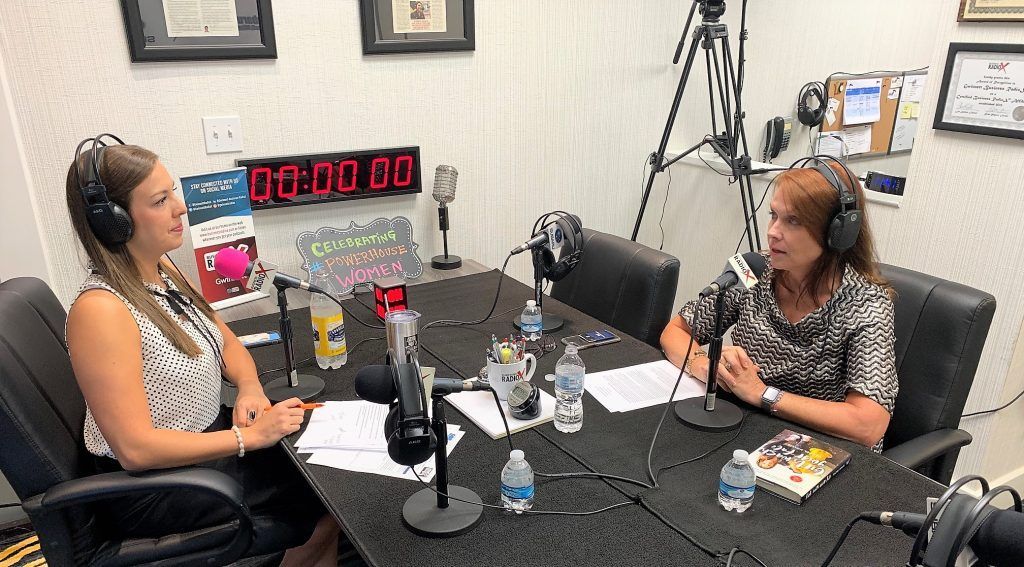
Amanda Pearch and Jill Edwards

Celebrating Powerhouse Women salutes and recognizes women who are making an impact, whether it’s in business, philanthropy, public service, or elsewhere.

This series is presented by C-A-B Incorporated. Since 1982, C-A-B Incorporated has been a pre-eminent leader in manufacturing and global sourcing of precision machined iron and steel products serving infrastructure, hydraulics, automotive, rail, and a variety of other industries. As a woman-owned company, C-A-B is proud to be the presenting sponsor of the “Celebrating Powerhouse Women” series, bringing focus to the many incredible women in our community making things happen.

Jill Edwards/United Community Bank

United Community Bank is a $15 billion southeast regional U.S. bank providing retail and corporate banking services. The bank was founded in Blairsville, GA in 1950 and now operates 150 banking offices in Georgia, South Carolina, North Carolina, and Tennessee and just completed the acquisition of Seaside Bank in Florida.

Respected national research firms consistently recognize United Community Bank for outstanding customer service. For six of the past seven years, J.D. Power has ranked UCB first in customer satisfaction in the Southeast, and most recently, awarded United the highest score in overall satisfaction in the Southeast for 2020. In 2019, Forbes magazine included UCB in its inaugural list of the World’s Best Banks, and in 2020, recognized United for the seventh consecutive year on its list of the “100 Best Banks in America”. United Community Bank also received the 2019 Greenwich Excellence Award for overall satisfaction in Middle Market Banking in the South and Small Business Banking Excellence Awards for both overall satisfaction and cash management in the South.

Official Presenting Sponsor of Celebrating Powerhouse Women


Also Brought To You In Part By

Cat-Rangers

Tagged With: amanda pearch, Business RadioX, CAB Incorporated, Cat Rangers, Celebrating Powerhouse Women, jill edwards, McCarthy Building Services, powerhouse women, successful women, United Community Bank, women business leaders, women business podcast, Women Empowerment, women executives

Steve Rawl and Craig Dowdy, United Community Bank

June 26, 2020 by John Ray

United Community Bank
North Fulton Business Radio
Steve Rawl and Craig Dowdy, United Community Bank
Loading
00:00 /
RSS Feed
Share
Link
Embed

Download file

United Community Bank

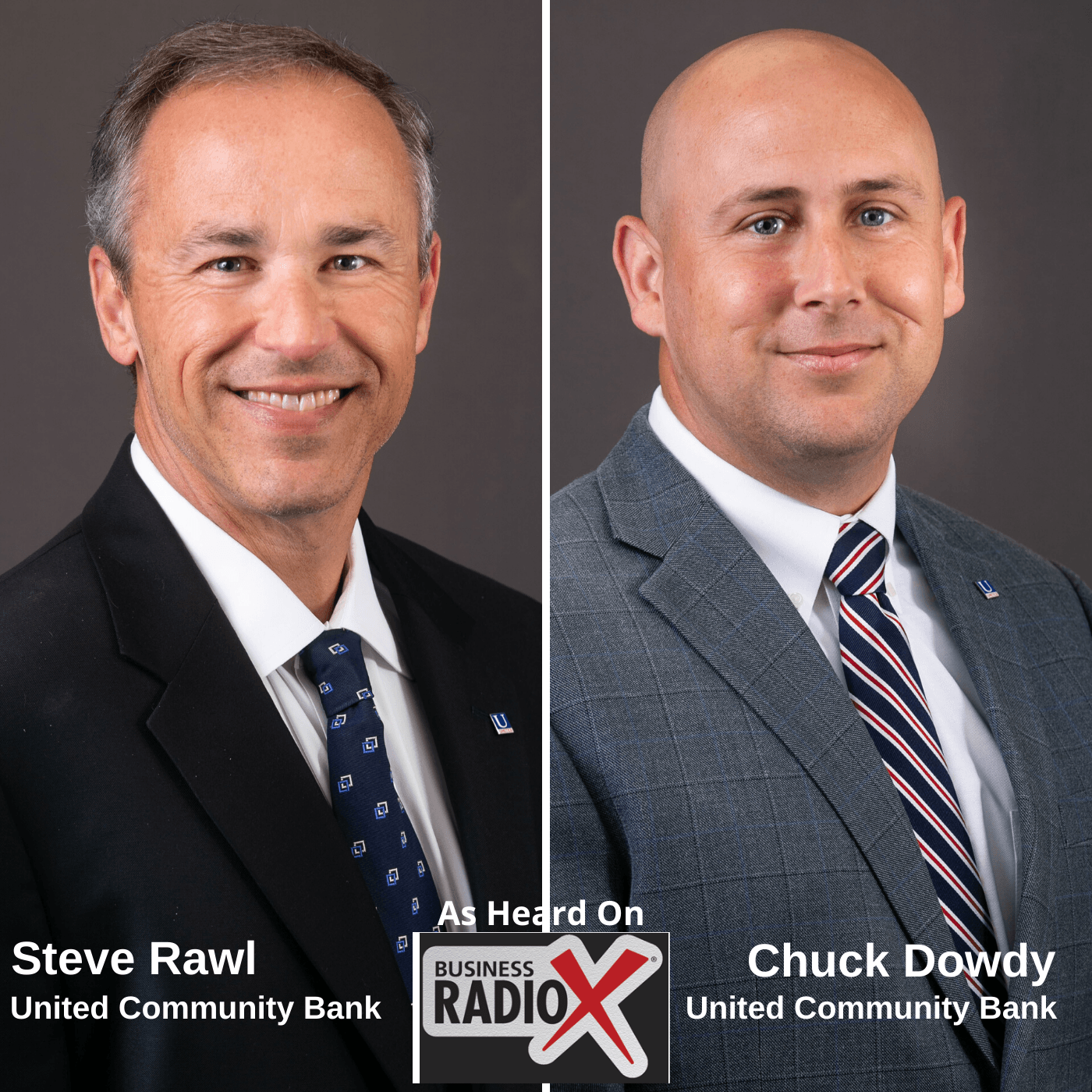
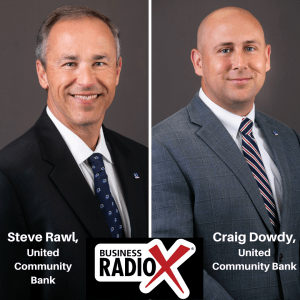
Steve Rawl and Craig Dowdy, United Community Bank (North Fulton Business Radio, Episode 249)

What happens when you’ve just left your megabank employer and a pandemic hits? You get busy serving the market by helping business customers who can’t get timely help from their own bank with PPP loans and you build relationships. At least that’s what Steve Rawl, Craig Dowdy, and their commercial banking colleagues did when they started work at United Community Bank in March. Steve and Craig joined host John Ray to tell their story, and it’s a good one. “North Fulton Business Radio” is produced virtually by the North Fulton studio of Business RadioX® in Alpharetta.

Steve Rawl and Craig Dowdy, United Community Bank

Steve Rawl and Craig Dowdy are senior executives in the Commercial Banking Division of United Community Bank.

Since 1950, United Community Bank has been known for excellent service. They are a service-first organization; it is part of their foundation and is one of their guiding principles. It’s who they are.

Banking is a people business. Their growth has, and will, lie heavily with the strength of the people of their bank.

United is a bank, but they’re more than that. They use attentive service and the right mix of products to bring solutions that don’t just impact the bottom line—they strive to make a meaningful difference. No promises or pledges are necessary, it’s just what they do.

Culture is not just what you say, it’s what you do. It must be authentic and it has to start at the top. Together, they create their culture. As an organization, they believe in the power of coming together for good. Whether that is to help their customers, develop their team or support their community, they believe in coming together for a positive outcome.

Their business is not about money—they understand you can deposit that anywhere. And, it’s also not about service, as every bank can promise to do that better. To them, it’s about knowing what they stand for and living it.

They’re committed to being there, for good. For the good of their customer, for the good of the community, for the good of each other. They are honest. To them that means, they’re consistently genuine, trustworthy and authentic. Customers can count on them to take time to understand their needs and to have their best interest at heart. They never forget that it isn’t about them, it’s about their customers and our community.

To best understand them, it’s often helpful to compare them to what they are not. They are honest, but not harsh. They are clear, but not stiff. They are familiar, but they do not make assumptions. They are positive, but not unrealistic. And, they are proud, but not selfishly so.

In addition to personal consumer banking products, they offer lending for renewable energy, medical, dentistry, franchises, owner-occupied commercial real estate, manufacturing and more. Their goal is to add one new line of business a year. In 2018, they introduced United Community Bank’s Navitas Equipment Financing Division. This subsidiary allows their customers to purchase the essential machinery or tangible assets needed to run their business. Their Commercial Business Solutions lines of business are fully staffed with industry experts who work together with their local community bankers to meet the lending needs of their customers while also originating independently nationwide.

Over the past 30 years, the banking industry has seen an increase in consolidation – around 63% of banks have disappeared. The least happy customers are ones that are digital-only. The happiest customers are ones that use a combination of digital and in-branch services. They are actively investing in assessing and meeting the digital needs of their customers while also prioritizing security. In a world where banking can get complicated, they talk like humans do—they are personable and approachable. They want to make banking and finances easier to understand.

They have been recognized as one of America’s Best Performing Banks by Forbes magazine for seven consecutive years.  In 2019, they were ranked one of the Best Banks in the World by Forbes, and #5 in the country. They have a strong presence in the growing perimeter communities of Atlanta and are well positioned in this rapidly growing market. They have added multiple new team members who will lead expansion efforts into the city.

Points of Contact:

Company website

LinkedIn URL:  https://www.linkedin.com/company/united-community-bank/

Facebook URL: https://www.facebook.com/unitedcommunitybank

Questions/Topics Discussed in this Show

  • Profile of United Community Bank and their operating philosophy
  • What sets the bank apart
  • PPP loans and how they approached and handled
  • How honest, timely communication set them apart from larger competitors
  • Clients they serve in UCB’s Commercial Banking Division

North Fulton Business Radio” is produced virtually from the North Fulton studio of Business RadioX® in Alpharetta. You can find the full archive of shows by following this link. The show is available on all the major podcast apps, including Apple Podcasts, Spotify, Google, iHeart Radio, Stitcher, TuneIn, and others.


Tagged With: business banking, business loans, commercial banking, Craig Dowdy, equipment financing, John Ray, North Fulton Business Radio, PPP loans, Steve Rawl, United Community Bank

Business RadioX ® Network


Our Most Recent Episode

CONNECT WITH US

  • Email
  • Facebook
  • LinkedIn
  • Twitter
  • YouTube

Our Mission

We help local business leaders get the word out about the important work they’re doing to serve their market, their community, and their profession.

We support and celebrate business by sharing positive business stories that traditional media ignores. Some media leans left. Some media leans right. We lean business.

Sponsor a Show

Build Relationships and Grow Your Business. Click here for more details.

Partner With Us

Discover More Here

Terms and Conditions
Privacy Policy

Connect with us

Want to keep up with the latest in pro-business news across the network? Follow us on social media for the latest stories!
  • Email
  • Facebook
  • Google+
  • LinkedIn
  • Twitter
  • YouTube

Business RadioX® Headquarters
1000 Abernathy Rd. NE
Building 400, Suite L-10
Sandy Springs, GA 30328

© 2025 Business RadioX ® · Rainmaker Platform

BRXStudioCoversLA

Wait! Don’t Miss an Episode of LA Business Radio

BRXStudioCoversDENVER

Wait! Don’t Miss an Episode of Denver Business Radio

BRXStudioCoversPENSACOLA

Wait! Don’t Miss an Episode of Pensacola Business Radio

BRXStudioCoversBIRMINGHAM

Wait! Don’t Miss an Episode of Birmingham Business Radio

BRXStudioCoversTALLAHASSEE

Wait! Don’t Miss an Episode of Tallahassee Business Radio

BRXStudioCoversRALEIGH

Wait! Don’t Miss an Episode of Raleigh Business Radio

BRXStudioCoversRICHMONDNoWhite

Wait! Don’t Miss an Episode of Richmond Business Radio

BRXStudioCoversNASHVILLENoWhite

Wait! Don’t Miss an Episode of Nashville Business Radio

BRXStudioCoversDETROIT

Wait! Don’t Miss an Episode of Detroit Business Radio

BRXStudioCoversSTLOUIS

Wait! Don’t Miss an Episode of St. Louis Business Radio

BRXStudioCoversCOLUMBUS-small

Wait! Don’t Miss an Episode of Columbus Business Radio

Coachthecoach-08-08

Wait! Don’t Miss an Episode of Coach the Coach

BRXStudioCoversBAYAREA

Wait! Don’t Miss an Episode of Bay Area Business Radio

BRXStudioCoversCHICAGO

Wait! Don’t Miss an Episode of Chicago Business Radio

Wait! Don’t Miss an Episode of Atlanta Business Radio