Business RadioX ®

  • Home
  • Business RadioX ® Communities
    • Southeast
      • Alabama
        • Birmingham
      • Florida
        • Orlando
        • Pensacola
        • South Florida
        • Tampa
        • Tallahassee
      • Georgia
        • Atlanta
        • Cherokee
        • Forsyth
        • Greater Perimeter
        • Gwinnett
        • North Fulton
        • North Georgia
        • Northeast Georgia
        • Rome
        • Savannah
      • Louisiana
        • New Orleans
      • North Carolina
        • Charlotte
        • Raleigh
      • Tennessee
        • Chattanooga
        • Nashville
      • Virginia
        • Richmond
    • South Central
      • Arkansas
        • Northwest Arkansas
    • Midwest
      • Illinois
        • Chicago
      • Michigan
        • Detroit
      • Minnesota
        • Minneapolis St. Paul
      • Missouri
        • St. Louis
      • Ohio
        • Cleveland
        • Columbus
        • Dayton
    • Southwest
      • Arizona
        • Phoenix
        • Tucson
        • Valley
      • Texas
        • Austin
        • Dallas
        • Houston
    • West
      • California
        • Bay Area
        • LA
        • Pasadena
      • Colorado
        • Denver
      • Hawaii
        • Oahu
  • FAQs
  • About Us
    • Our Mission
    • Our Audience
    • Why It Works
    • What People Are Saying
    • BRX in the News
  • Resources
    • BRX Pro Tips
    • B2B Marketing: The 4Rs
    • High Velocity Selling Habits
    • Why Most B2B Media Strategies Fail
    • 9 Reasons To Sponsor A Business RadioX ® Show
  • Partner With Us
  • Veteran Business RadioX ®

Tax Implications of a Practice Sale

September 23, 2022 by John Ray

Tax Implications of a Practice Sale
Advisory Insights Podcast
Tax Implications of a Practice Sale
Loading
00:00 /
RSS Feed
Share
Link
Embed

Download file

Tax Implications of a Practice Sale

Tax Implications of a Practice Sale (Advisory Insights Podcast, Episode 10)

On this episode of Advisory Insights, Stuart Oberman talked with Danielle McBride and Lauren Mansour, both Partners at Oberman Law Firm, on the tax implications of a practice sale. They covered letters of intent and what key provisions should be in them, common tax pitfalls, different classes of shares common with DSO acquirors, how to limit the tax consequences of Class C shares, and more.

Advisory Insights is presented by Oberman Law Firm and produced by the North Fulton studio of Business RadioX®. The series can be found on all the major podcast apps. You can find the complete show archive here.

Danielle McBride, Partner, Oberman Law Firm

Danielle McBride
Danielle McBride, Partner, Oberman Law Firm

Danielle McBride has been practicing law for over 21 years, and her primary focus is representing healthcare clients on a local, regional, and national basis. Ms. McBride regularly consults with clients regarding simple to complex healthcare transitions, including mergers and acquisitions, employment law, governmental compliance, tax strategies, practice valuations, DSO formation and structures, employee compensation, associate and partnership contracts, joint ventures, and partnership buy-in/buy-outs.

In addition, Ms. McBride brings a wealth of knowledge and experience preparing practice valuations for clients, as well as formulating simple to complex tax strategies, and entity formations.

Ms. McBride holds a Bachelor of Arts in Sociology/Criminology from The Ohio State University, a Juris Doctor (J.D.) from Ohio Northern University Pettit College of Law, and a Master of Laws (LL.M.) in Taxation from Case Western Reserve University.

LinkedIn

Lauren Mansour, Partner, Oberman Law Firm

Lauren Mansour, Partner, Oberman Law Firm

Lauren A. Mansour, Esq.’s practice is devoted to the representation of health care providers in various corporate and regulatory compliance matters. Lauren handles transactional matters for her clients, representing healthcare providers in joint ventures, mergers, and acquisitions. Ms. Mansour regularly counsels her clients on a range of compliance and regulatory matters, including anti-kickback and stark issues, fraud and abuse laws, state corporate practice of medicine doctrines, and state licensure laws.

Ms. Mansour’s expertise in the health care industry includes compliance of corporate structures, third-party reimbursement, contract negotiations, partnership agreements, commercial leasing, technology, health care fraud and abuse, professional liability risk management, federal and state regulations. Ms. Mansour has experience representing startups, seasoned professionals, and dental service organizations, and enjoys advising clients at every stage of practice ownership.

A graduate of the University of Georgia School of Law, Ms. Mansour joined Oberman Law Firm in 2010 and is licensed to practice law in Georgia and South Carolina.

LinkedIn

TRANSCRIPT

 Intro: [00:00:01] Broadcasting from the studios of Business RadioX, it’s time for Advisory Insights. Brought to you by Oberman Law Firm, serving clients nationwide with tailored service and exceptional results. Now, here’s your host.

Stuart Oberman: [00:00:20] Hello everyone and welcome to Advisory Insights Podcast. Well, today, we’ve got two special guests with us. There is a lot going on in the health care field for the mergers and acquisitions, whether it’s dental, vets, eye, it is all over the place. So, I got two of our great, great partners at the Oberman Law Firm today, and I want to introduce them, Lauren Mansour and Danielle McBride. Both of them do a tremendous job on mergers and acquisitions.

Stuart Oberman: [00:00:51] And I want to talk to Lauren a little bit first. And the key thing is letters of intent. I know if you’re an attorney, you do transactions, you always get, it seems, a signed letter of intent before you really, really have a chance to drill down on it. So, Lauren’s going to talk a little bit about letters of intent. And then, Danielle is going to talk about tax items that are really, really critical in a health care transition, whether it’s a private equity company or it is a private sale.

Stuart Oberman: [00:01:25] So, let’s start off, Lauren, tell you what, I want you to take me through some steps that our listeners need to know regarding LOIs. I mean, we’ve got stuff on holdbacks, real estate matters. I want you to drill down a little bit. Before I start, last year we did as a firm about 135 transactions totaling about 350 million. So, we’ve seen a lot of stuff come under the bridge, if you will, last year. And I think we saw a lot of things we don’t want to see happen again. So, Lauren, tell you what, talk to the audience, tell me a little bit about letters of intent, what you run into and your problems. And, hopefully, our listeners can pick up a couple of pointers.

Lauren Mansour: [00:02:12] Of course, happy to jump into this topic. So, a letter of intent kind of varies. Sometimes we see letters of intent that are a paragraph long, maybe half-a-page max, and sometimes they’re ten pages. And so, there’s definitely a lot of variance depending on the transaction.

Lauren Mansour: [00:02:31] I would say I was speaking with a buyer yesterday, even for just a simpler doctor to doctor transaction, I think it’s important to have a little bit more than half-of-a-page because you do want to flash out certain important concepts and just make sure that you and the seller or you and the buyer are on the same page, and you’re not both spending money on attorneys and bankers and CPAs, and spending time going through this process of negotiating a transaction, and you are never really on the same page to begin with.

Lauren Mansour: [00:03:08] So, I think that we don’t necessarily have to spend a whole lot of time on the letter of intent. But I think it’s important to make sure certain key items like, obviously, the purchase price, possibly even purchase price allocations, what does any post sale employment look like for the seller restrictive covenants, can we agree on those at the LOI stage, is there any real estate involved, and have terms been agreed upon. And if so, let’s include that.

Lauren Mansour: [00:03:39] For a buyer, it’s very important to have exclusivity language in the letter of intent, because you do want to make sure. Again, you’re kind of investing your time and money into the process and you want to make sure that the seller is not continuing to speak with other interested parties. And then, you also want to make sure there’s language that is clear that this document is not binding. I think most letters of intent will say that. But we have had clients in the past sign an LOI before we reviewed, and it was binding. And when they decided after diligence they wanted to walk away, they were facing legal action.

Lauren Mansour: [00:04:20] So, some important tips, I think that in larger transactions, so when our clients are selling, especially to a large group, these letters of intent can be very complex. And I was just looking at one the other day for a client that’s selling a group of practices, and she was looking at restrictive covenants that were not just around her practices, but statewide for any practice that the buyer group owned in any state, that entire state was wiped out for her.

Lauren Mansour: [00:04:56] And so, I think it’s important to kind of go through and make sure that you’re comfortable and you’re aware of the terms kind of before you move forward. Because with sellers, and if they’re talking with big group practices, you’re often courting several buyers. And so, if you can kind of flash out a lot of these concepts and make sure that you understand them, it’s more than just the purchase price. There’s now holdbacks and earnouts and equity involved.

Lauren Mansour: [00:05:31] And so, what do these holdbacks look like? So, sometimes we’ll have a very large transaction and it will briefly mention a holdback or the earnout, and what does that mean? Or the equity won’t be clearly spelled out, and so we have to ask questions. And it’s my opinion, better on the frontend to say, are there going to be any ties to any of this? Is the equity subject to forfeiture if employment terminates before a certain period? Or the earnout, what is it tied to? Do we have to just be employed or do we have to have certain collection levels that we have?

Stuart Oberman: [00:06:08] Can you explain, so you just hit really on a couple of points. One, have you seen a request on a national non-compete? Two, take our listeners through the process of what exactly is an earnout and a holdback.

Lauren Mansour: [00:06:26] I don’t know that I’ve seen a national non-compete. These are usually groups that are in several states that they’ll kind of limit to a region, but it definitely can be several states, and a lot of times it’s tied to equity. So, if you invest with the buyer group, they’ll tie you to think, “Okay. You need to be loyal to this group. Right now you’re invested with us, and so now, because of the equity, you have to not compete with us, not only around your practices, but around any practices we own. We don’t want you to work there.”

Lauren Mansour: [00:07:02] And so, sometimes there’s circles around every practice they own and sometimes there’s just statewide restrictions. If we own in this state, you cannot operate there. Which is sometimes not problematic when our clients are looking to retire. But other times it is, our clients are younger, they still want to work, there’s never any guarantees. And I think we have to look at things from the worst case scenario, just planning it. And so, it can be problematic.

Lauren Mansour: [00:07:32] With respect to your question on holdbacks or earnouts, in some occasions, a purchase price, let’s say, 80 percent of the purchase price is paid at closing, maybe there’s 20 percent that’s paid in an earnout. And that could be part of a purchase agreement or it could be part of an employment agreement.

Lauren Mansour: [00:07:53] But the earnout means, let’s say, it’s 100,000 a year for three years. And each year, in order to get $100,000, your practice has to continue to collect a certain level or it has to grow by a certain percent. And so, in order to get your 100,000 for the first year, your practice has to be at a certain collection level. And if it’s not, you do not receive that amount. Sometimes those earnouts are only tied to continued employment. So, as long as you’re working there, you would receive it. And we will try to negotiate things like, “Okay. Well, what if there’s death or disability? Would we get it in those events?” But that’s what the earnout looks like.

Lauren Mansour: [00:08:35] And then, holdbacks are similar. Sometimes holdbacks are just based on operating liability expenses to make sure that the seller didn’t leave anything unpaid that the buyer has to pay for. Other times they’re longer term holdbacks, they’re tied to either employment or some revenue metric, and you would receive that amount as long as the goal is met.

Stuart Oberman: [00:09:01] So, you mentioned a couple of things. One, invest in a group, is that where, let’s say, we’re talking about $100,000 deal, doctors will take $200 and invest that back into the private equity company?

Lauren Mansour: [00:09:21] Correct.

Stuart Oberman: [00:09:21] Let’s put that on $1,000,000 scale. So, the doctors are going to take $800,000 to put it in their pocket, and they are percentage. And the equity companies want to have the investment back into groups that are doctors putting in, essentially, $200,000 back into their pockets, if you will, whether it’s what? A or C shares you’re seeing, A or B share stock?

Lauren Mansour: [00:09:51] Right. So, there’s a portion of the purchase price that instead of you receiving that in cash at closing, you will invest it in an entity. And a lot of times with these groups, it may not be the actual buying entity. It may be a group that they formed where all of the doctors are investing into that specific entity. There’ll be an operating agreement. You’re governed by the terms of the existing agreements in place. There’s never any guarantees. Sometimes there’s discussion on the frontend.

Lauren Mansour: [00:10:22] I’ve actually seen it a couple of times recently and spoke with some of my colleagues about how it was actually in writing from a buyer that they expected it to be X amount. But, usually, they may tell you how much you may receive on a return or what they’re expecting. But, again, never any guarantee. The buyers will usually give you some timeframe that they are expecting to roll, so it may be, “We’re expecting within the next year or in two years. That’s when we’re going to do our equity event and you’ll be able to see some of this investment back.” But it’s generally variable, economy and what’s going on in terms of what the buyer pool will look like.


Stuart Oberman: [00:11:04] I mean, just great information. So, literally in 15 minutes, you’ve hit on some amazing topics, purchase price, holdbacks, earnouts, length of terms of employment contracts, real estate, restrictive covenants, equity earnouts, real estate exclusivity binding. I mean, this is a seven day conversation that we’re putting in to, like, 15 minutes. So, you did an enormous, enormous job outlining everything. Is there anything else you want to add that may be of importance to buyers or sellers on any kind of transaction regarding an LOI until we jump into our tax side of the sale?

Lauren Mansour: [00:11:49] I mean, I just think overall, regardless if you’re the buyer and you’re looking at terminating employment, maybe even before you sign a purchase agreement, which I think you need to be cautious about, I think it’s very important for a buyer to have a LOI that’s clearly spelled out so that you know both parties are on the same page with respect to most of the major terms.

Lauren Mansour: [00:12:11] And then, a seller, especially with these very complex group LOIs, I think it’s also important, one, just to understand everything and sometimes to flash things out a little more fully than they even are in that group. LOI, just because, again, I feel like at times you have more negotiation power at the LOI stage. So, once you’ve signed something, if you didn’t understand it or we think, “Oh, this isn’t really market, let’s see if we can change it,” it sometimes becomes more difficult.

Lauren Mansour: [00:12:41] And so, I think it’s a good idea to have that letter of intent reviewed and to fully negotiate it at that stage while the buyer is basically courting you versus after you’ve already signed. So, I think that would be my advice is definitely to pay attention, not to disregard the LOI and to make sure that you’re comfortable with all of the terms.

Stuart Oberman: [00:13:01] Yeah. That’s just great information. Like I said, this is a seven day conversation and we’re trying to boil it down into a relatively short period of time, if you will. Lauren, thank you very much on that.

Stuart Oberman: [00:13:12] And now I want to jump over to Danielle McBride, who does an enormous amount of transactions as does Lauren on a national basis. And Danielle is our resident tax attorney, also extraordinaire, she’s got a master’s in tax. And I know that this could be a 75 day conversation on tax, but there’s so many things that can really go sideways regarding tax issues in a merger and acquisition. And, Danielle, I want you to touch on a few of those sort of landmines, if you will.

Stuart Oberman: [00:13:49] And then, Lauren said to two things. I want to know the tax consequences on earnout and what that looks like. And, again, I know there’s so much information you can provide. But I want you to to discuss some of the tax issues that you run into through your training and experience. And you’ve been on both sides of the fence. You also done state planning for tax issues. So, you’ve got a well-versed bullpen, if you will. So, Danielle, take it away. I want to hear some things that our listeners want to hear about.

Danielle McBride: [00:14:27] Sure. I would just start off by saying I completely agree with Lauren, though, about consulting with your advisors on the letter of intent on some of these concepts, because if you don’t get them flashed out, you don’t understand them. And then, especially with a corporate sale, it becomes sometimes impossible to negotiate off of those things that are in the letter of intent with them.

Danielle McBride: [00:14:51] So, I do agree with her. It’s really important to look. Just because people tell you letters of intent are nonbinding, don’t skip that step in having it reviewed by your advisor because it makes the our job a lot more difficult and it could really change some of the tax consequences for you.

Danielle McBride: [00:15:10] So, as far as tax implications, there’s sort of some basic tax implications on these deals, whether it’s a private party or a corporate sale. You know, it gets more complex when you’ve got the corporate sales and the DSOs that are buying these, and you’ve got the rollover equity, and earnouts, and holdbacks, and those sorts of things. So, your basic tax consequences, you’re got a sale of assets, tangible assets, your fixed assets, and you’ve got your goodwill.

Danielle McBride: [00:15:43] The goodwill can be a big deal and there can be some tax traps there as far as is this professional personal goodwill, is it corporate owned goodwill, and how is that allocated. You know, there can also sometimes be some negotiation as to how much is allocated on the side of the goodwill versus the tangible assets. And there are a few differences between those tax implications and whether buyers and sellers, whether it’s private party or a corporate sale, how much are you going to allocate to either transaction.

Danielle McBride: [00:16:23] So, the complexity comes from the corporate sales and when you’ve got these holdbacks and rollover equity. So, a private party is pretty much going to pay you cash at closing. So, you’re going to have your tangible assets and your goodwill allocation. You’re going to have a portion that’s taxed at ordinary rates. You’re going to have a portion that’s taxed at capital gains rates. Usually, the bulk of that is capital gains for your goodwill allocation.

Danielle McBride: [00:16:48] But on a corporate deal, you’re not getting all cash at closing. You’re usually getting maybe 70 to 80 percent as cash at closing. And the rest is in these earnouts, holdbacks, and rollover equity, like Lauren mentioned.

Danielle McBride: [00:17:02] So, that rollover equity piece, earnouts, and holdbacks, those are usually taxed. They’re usually tied to compensation, performance triggers, and things like that. They’re paid over time. And a lot of times those are paid as compensation, and you get taxed at compensation rates, at ordinary income rates for those.

Danielle McBride: [00:17:22] Your rollover equity, though, you can get tax deferral on that rollover equity. So, you’re investing in a parent company or a holding company that one of these corporate buyers has. And so, you’re contributing assets in exchange for goodwill often. And so, you’re getting a tax deferral on this rollover equity under Section 721. And you don’t recognize any tax on that until you sell it later, until that company has what they call a liquidity event, or they bring in a new private equity buyer, or they sell the entire company.

Danielle McBride: [00:18:09] Some of these are scaling up and then they sell the entire business to someone new. That’s when you would wind up with your taxable event and recognize capital gains tax, usually, because your contribution of assets is typically goodwill contribute in exchange for that rollover equity.

Stuart Oberman: [00:18:32] I have one question for you. So, on the capital gains side, you mentioned 721. Now, you’ve got another podcast coming up where we’re actually going to touch even more on 721s, which are critical to the tax consequences. But one thing I want to know is, is investment in shares – our clients get letters of intent and it’s A shares, C shares – what is the difference on the tax consequences, if any, on those particular A shares or B shares or C shares?

Lauren Mansour: [00:19:07] Sure. Well, in most cases with a seller, they’re receiving A or B shares, typically it’s B shares. The A shares will be held by the members who created the entity. Those owners, the directors, the managers of that business, they may hold the A shares, which may mean that they have more authority, more management power. That’s usually the big difference between class A, class B shares. Class A shares can sometimes have a preferred return where money is paid out to those Class A shareholders first before the Class B shareholders, which are usually all your doctors.

Danielle McBride: [00:19:43] You can also have Class C shares where you don’t have a typical equity, but maybe you have an associate. Seller has an associate who they want to keep on board. Buyer wants them to stay on board so they offer some Class C shares that are really a profits interest in the business. And those can be subject to vesting requirements, and continued employment, hitting performance triggers, things like that, and they won’t get a return on those until they hit the four years that they have to work with them.

Danielle McBride: [00:20:21] So, those Class C shares, usually, they don’t share in the existing value of the practice. It’s usually just a go forward thing. So, once those shares vest, they will have a piece of the pie in any growth in the business, not in the existing value of the business, and those can get complicated.

Danielle McBride: [00:20:46] And, now, there’s something called an 83B Election that can come in, so you’re not getting taxed, so you can limit your tax consequences and get a substantial portion of this growth in capital gains versus ordinary income tax like compensation on these amounts. It can get very complicated.

Stuart Oberman: [00:21:06] 83B sounds like another podcast.

Danielle McBride: [00:21:09] Yes.

Stuart Oberman: [00:21:09] I think you just teed yourself up to another at bat here. I got you. I got you. Well, you know, the funny thing, I’m listening to you talking all this information, and it’s amazing to me how many -and I hate to say this – CPAs and financial advisors don’t understand this when they get into these transactions. And then, it becomes very complex when someone like you understands the absolute tax side of this has a financial adviser on the other side and doesn’t explain or can’t explain to the seller why it is so beneficial, yet risky to a certain extent, in the long run.

Stuart Oberman: [00:21:53] So, I’m sitting here listening to all this and these are the questions that our CPAs are asking us – they’re asking you, they’re not asking me.

Danielle McBride: [00:22:05] Yeah. Yeah. Definitely. They’re asking me in.

Stuart Oberman: [00:22:08] They ask me these questions, I’m getting you on speed dial, so we’re good with that. We’re good with that.

Danielle McBride: [00:22:12] Yeah. Yeah.

Stuart Oberman: [00:22:13] I tell you, like I say, we got another podcast coming up with you and I know we’re going to cover 721 and 83Bs. But, Danielle, thank you so much for this information. I think the information that you gave was just enough to let our clients know, our listeners know, or maybe they’re not even doing business with us but, yet, they’re going to get their financial advisors, their CPAs, and their lawyers involved. But, Danielle, extraordinary job. I look forward to our next podcast. And I know Lauren’s going to have some further input later on down the road on some of these podcasts.

Stuart Oberman: [00:22:54] But, folks, we are about to conclude the Advisory Insights podcast. My name has been Stuart Oberman, Oberman Law Firm. So, if you want to reach out to Lauren, please feel free to email Lauren at lauren, L-A-U-R-E-N, @obermanlaw.com. And danielle, D-A-N-I-E-L-L-E, @obermannlaw.com. A phone number for the firm is 770-886-2400.

Stuart Oberman: [00:23:23] Folks, thanks so much for listening in. Danielle, Lauren, thank you so much for your time. And I know it’s invaluable, invaluable information. Ladies and gentlemen, thanks a lot. Have a fantastic day.

Outro: [00:23:37] Thank you for joining us on Advisory Insights. This show is brought to you by Oberman Law Firm, a business-centric law firm representing local, regional, and national clients in a wide range of practice areas, including health care, mergers and acquisitions, corporate transactions, and regulatory compliance.


About Advisory Insights Podcast

Presented by Oberman Law Firm, Advisory Insights Podcast covers legal, business, HR, and other topics of vital concern to healthcare practices and other business owners. This show series can be found here as well as on all the major podcast apps.

Stuart Oberman, Oberman Law Firm

Oberman Law Firm

Stuart Oberman, Founder, Oberman Law Firm

Stuart Oberman is the founder and President of Oberman Law Firm. Mr. Oberman graduated from Urbana University and received his law degree from John Marshall Law School. Mr. Oberman has been practicing law for over 25 years, and before going into private practice, Mr. Oberman was in-house counsel for a Fortune 500 Company. Mr. Oberman is widely regarded as the go-to attorney in the area of Dental Law, which includes DSO formation, corporate business structures, mergers and acquisitions, regulatory compliance, advertising regulations, HIPAA, Compliance, and employment law regulations that affect dental practices.

In addition, Mr. Oberman’s expertise in the healthcare industry includes advising clients in the complex regulatory landscape as it relates to telehealth and telemedicine, including compliance of corporate structures, third-party reimbursement, contract negotiations, technology, health care fraud, and abuse law (Anti-Kickback Statute and the State Law), professional liability risk management, federal and state regulations.

As the long-term care industry evolves, Mr. Oberman has the knowledge and experience to guide clients in the long-term care sector with respect to corporate and regulatory matters, assisted living facilities, continuing care retirement communities (CCRCs). In addition, Mr. Oberman’s practice also focuses on health care facility acquisitions and other changes of ownership, as well as related licensure and Medicare/Medicaid certification matters, CCRC registrations, long-term care/skilled nursing facility management, operating agreements, assisted living licensure matters, and health care joint ventures.

In addition to his expertise in the health care industry, Mr. Oberman has a nationwide practice that focuses on all facets of contractual disputes, including corporate governance, fiduciary duty, trade secrets, unfair competition, covenants not to compete, trademark and copyright infringement, fraud, and deceptive trade practices, and other business-related matters. Mr. Oberman also represents clients throughout the United States in a wide range of practice areas, including mergers & acquisitions, partnership agreements, commercial real estate, entity formation, employment law, commercial leasing, intellectual property, and HIPAA/OSHA compliance.

Mr. Oberman is a national lecturer and has published articles in the U.S. and Canada.

LinkedIn

Oberman Law Firm

Oberman Law Firm has a long history of civic service, noted national, regional, and local clients, and stands among the Southeast’s eminent and fast-growing full-service law firms. Oberman Law Firm’s areas of practice include Business Planning, Commercial & Technology Transactions, Corporate, Employment & Labor, Estate Planning, Health Care, Intellectual Property, Litigation, Privacy & Data Security, and Real Estate.

By meeting their client’s goals and becoming a trusted partner and advocate for our clients, their attorneys are recognized as legal go-getters who provide value-added service. Their attorneys understand that in a rapidly changing legal market, clients have new expectations, constantly evolving choices, and operate in an environment of heightened reputational and commercial risk.

Oberman Law Firm’s strength is its ability to solve complex legal problems by collaborating across borders and practice areas.

Connect with Oberman Law Firm:

Company website | LinkedIn | Twitter

Tagged With: Advisory Insights, Advisory Insights Podcast, dental practices, employees, Oberman Law, Oberman Law Firm, Practice Sale, Stuart Oberman, Tax Implications, Taxes

LIVE from the GNFCC Grand Opening Celebration: Connor Griffin, Cortavo

September 23, 2022 by John Ray

Cortavo
North Fulton Business Radio
LIVE from the GNFCC Grand Opening Celebration: Connor Griffin, Cortavo
Loading
00:00 /
RSS Feed
Share
Link
Embed

Download file

Cortavo

LIVE from the GNFCC Grand Opening Celebration: Connor Griffin, Cortavo (North Fulton Business Radio, Episode 524)

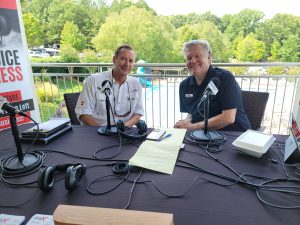
Connor Griffin, Sales Manager and Account Executive at Cortavo, joined host John Ray LIVE from the Greater North Fulton Chamber of Commerce Grand Opening Celebration. Connor discussed not only the IT solutions Cortavo solves for their clients, but some of the serious technology issues businesses are facing right now. Connor also talked about Cortavo’s membership in GNFCC, the GNFCC Small Business Awards, and much more.

This show was originally broadcast live from the Grand Opening celebration and ribbon cutting of the new offices of the Greater North Fulton Chamber of Commerce at the 10000 Building at Avalon in Alpharetta, Georgia, on August 18, 2022.

North Fulton Business Radio is produced and broadcast by the North Fulton studio of Business RadioX® inside Renasant Bank in Alpharetta.

Connor Griffin, Sales Manager and Account Executive, Cortavo

Connor Griffin, Sales Manager and Acount Executive, Cortavo

Headquartered in Atlanta, Georgia, Cortavo was founded in 2019 as a complete and affordable IT solution for small to mid-sized businesses.

Cortavo’s mission is to remove the complexity of business IT and provide everything businesses need to be successful. From cybersecurity, helpdesk support, networking equipment, and cloud data storage to hybrid workplace systems. Their all-inclusive IT plans and support are designed to scale as your business grows.

With Cortavo, all you have to do is focus on your business while they handle your IT.

Company website | LinkedIn | Facebook | Connor Griffin LinkedIn 

Questions and Topics in the Interview:

  • About Cortavo
  • Problems they have been solving for their clients
  • Connor’s involvement with GFNCC
  • GNFCC Small Business Awards

North Fulton Business Radio is hosted by John Ray and broadcast and produced from the North Fulton studio of Business RadioX® inside Renasant Bank in Alpharetta. You can find the full archive of shows by following this link. The show is available on all the major podcast apps, including Apple Podcasts, Spotify, Google, Amazon, iHeart Radio, Stitcher, TuneIn, and others.

RenasantBank


Renasant Bank has humble roots, starting in 1904 as a $100,000 bank in a Lee County, Mississippi, bakery. Since then, Renasant has grown to become one of the Southeast’s strongest financial institutions with over $13 billion in assets and more than 190 banking, lending, wealth management and financial services offices in Mississippi, Alabama, Tennessee, Georgia and Florida. All of Renasant’s success stems from each of their banker’s commitment to investing in their communities as a way of better understanding the people they serve. At Renasant Bank, they understand you because they work and live alongside you every day.


Special thanks to A&S Culinary Concepts for their support of this edition of North Fulton Business Radio. A&S Culinary Concepts, based in Johns Creek, is an award-winning culinary studio, celebrated for corporate catering, corporate team building, Big Green Egg Boot Camps, and private group events. They also provide oven-ready, cooked-from-scratch meals to go they call “Let Us Cook for You.” To see their menus and events, go to their website or call 678-336-9196.

Tagged With: A&S Culinary Concepts, Avalon, Connor Griffin, Cortavo, GNFCC, managed IT services, North Fulton Business Radio, renasant bank, small business awards

Edward Lindsey, Dentons

September 22, 2022 by John Ray

Dentons
Business Beat
Edward Lindsey, Dentons
Loading
00:00 /
RSS Feed
Share
Link
Embed

Download file

Dentons

Frazier & Deeter’s Business Beat: Edward Lindsey, Dentons

Edward Lindsey, head of the Georgia State Government Affairs team at Dentons, joined host Roger Lusby on “Business Beat,” and discussed the impact key issues like transportation, education, and healthcare have on Georgia’s status as the best state for doing business. Ed also talked about his role on the state election board, and the importance of making sure that people have confidence in the outcome of elections. Ed also offered advice to businesses on how to approach government officials about their issues, emphasizing the importance of understanding the other side’s perspective. If you want to get things done in politics, he said, today’s opponents may be tomorrow’s allies.

Business Beat is presented by Alpharetta CPA firm Frazier & Deeter and is produced by the North Fulton studio of Business RadioX®

Dentons

Dentons is the world’s largest law firm, delivering quality and value to clients around the globe. Dentons is a leader on the Acritas Global Elite Brand Index, a BTI Client Service 30 Award winner and recognized by prominent business and legal publications for its innovations in client service, including founding Dentons Global Advisors. Dentons’​ polycentric approach and world-class talent challenge the status quo to advance client interests in the communities in which we live and work.

Company website | LinkedIn

Edward Lindsey, Partner, Dentons

Edward Lindsey, Partner, Dentons

Edward Lindsey is a partner in Dentons’ Public Policy practice and serves as the head of the Firm’s Georgia State Government Affairs team. His focus is on advancing the public policy interests and objectives of clients in the transportation, infrastructure, health care and education sectors.

Edward has more than 38 years of legal, political, and leadership experience, including 10 years as a Georgia state representative and 3 terms as the House majority whip. He also served on the House Appropriations, Judiciary, Education, Ways and Means, and Rules Committees. In addition, he served as a member of the Uniform Law Commission and the Georgia Commission on Family Violence. James Magazine, a statewide political journal, recognized him as one of Georgia’s most influential legislators.

Immediately prior to joining Dentons in 2016, Edward was a partner and head of the litigation practice at Goodman McGuffey Lindsey & Johnson LLP, an Atlanta-based firm he co-founded in 1990.

LinkedIn

Frazier & Deeter

The Alpharetta office of Frazier & Deeter is home to a thriving CPA tax practice, a growing advisory practice and an Employee Benefit Plan Services group. CPAs and advisors in the Frazier & Deeter Alpharetta office serve clients across North Georgia and around the country with services such as personal tax planning, estate planning, business tax planning, business tax compliance, state and local tax planning, financial statement reviews, financial statement audits, employee benefit plan audits, internal audit outsourcing, cyber security, data privacy, SOX and other regulatory compliance, mergers, and acquisitions and more. Alpharetta CPAs serve clients ranging from business owners and executives to large corporations.

Roger Lusby, Partner in Charge of Alpharetta office, Frazier & Deeter
Roger Lusby, Partner in Charge of the Alpharetta office of Frazier & Deeter

Roger Lusby, host of Frazier & Deeter’s Business Beat, is an Alpharetta CPA and Alpharetta Office Managing Partner for Frazier & Deeter. He is also a member of the Tax Department in charge of coordinating tax and accounting services for our clientele. His responsibilities include a review of a variety of tax returns with an emphasis in the individual, estate, and corporate areas. Client assistance is also provided in the areas of financial planning, executive compensation and stock option planning, estate and succession planning, international planning (FBAR, SFOP), health care, real estate, manufacturing, technology, and service companies.

You can find Frazier & Deeter on social media:

LinkedIn | Facebook | Twitter

An episode archive of Frazier & Deeter’s Business Beat can be found here.


Tagged With: Business Beat, Dentons, education, Edward Lindsey, Frazier and Deeter, Government affairs, Healthcare, infrastructure, Public Policy, Roger Lusby, Transportation

LIVE from HAVEN 2022: Liberty, B4 and Afters

September 20, 2022 by John Ray

B4 and Afters
North Fulton Studio
LIVE from HAVEN 2022: Liberty, B4 and Afters
Loading
00:00 /
RSS Feed
Share
Link
Embed

Download file

B4 and Afters

LIVE from HAVEN 2022: Liberty, B4 and Afters (Organization Conversation, Episode 40)

Liberty with B4 and Afters Blog joined Richard in the Wall Control Booth at her first HAVEN Conference. She shared with Richard how she got into DIY blogging, her experience at HAVEN, the farmhouse she’s working to remodel now, her organization needs, and much more.

This show was originally broadcast live from the 2022 HAVEN Conference held at the Grand Hyatt Buckhead in Atlanta, Georgia.

Organization Conversation is broadcast from the North Fulton studio of Business RadioX® inside Renasant Bank in Alpharetta.

B4 and Afters

Liberty loves crafting things for herself, her home, and friends and family.  She is all about making her home more comfortable and pretty for those who live here and those who visit.

At their rancher, Liberty did a ton of projects by herself.  They have since moved to a 4 story farmhouse (including the basement and attic) on 3 acres and the work now sometimes involves her husband.

She also enjoys baking and making seasonal décor from discarded materials. You will find lots of colorful Patriotic and Christmas Décor, as well as other holidays in her blog.

Liberty began this blog to show you practical, frugal, and creative ideas that you can use as you put together handmade things for your home or for other people. She hopes that her home projects and crafty ideas inspire you to try your own ways of making your surroundings more enjoyable, more comfortable, more useful, and more beautiful!

Website | Instagram | Facebook | Pinterest | YouTube

Liberty, DIY Blogger, B4 and Afters

Liberty, DIY Blogger, B4 and Afters

Liberty is married to a talented machinist husband and has been a homeschooling mom of two children (a girl and a boy) since 2013.  She has a part-time office job, teaches piano lessons, and enjoys playing the piano and organ at her church.

In 2017 she trained for and accomplished a hike to the bottom of the Grand Canyon and back out in 2 days.  Liberty enjoys biking, baking, and gardening.  She works on before and afters in her free time–sometimes in the blessed quiet after everyone else has gone to bed.

And so she thinks about whether a life spent on projects is time well spent. This is what she realized: that it is good to enjoy life. You will find her enjoying life often by doing projects.  Maybe the way you enjoy life is different.  That is okay.  God made people differently.

LinkedIn

About Organization Conversation

Organization Conversation is hosted by Richard Grove and broadcast and produced from the North Fulton studio of Business RadioX® inside Renasant Bank in Alpharetta. You can find the full archive of shows by following this link. The show is available on all the major podcast apps, including Apple Podcasts, Spotify, Google, Amazon, iHeart Radio, Stitcher, TuneIn, and others.

About Richard Grove

Richard Grove, Host, Organization Conversation

Richard Grove‘s background is in engineering but what he enjoys most is brand building through relationships and creative marketing. Richard began his career with the Department of Defense as an engineer on the C-5 Galaxy Engineering Team based out of Warner Robins. While Richard found this experience both rewarding and fulfilling, he always knew deep down that he wanted to return to the small family business that originally triggered his interest in engineering.

Richard came to work for the family business, Dekalb Tool & Die, in 2008 as a Mechanical Engineer. At the time Wall Control was little more than a small ‘side hustle’ for Dekalb Tool & Die to try to produce some incremental income. There were no “Wall Control” employees, just a small warehouse with a single tool and die maker that would double as an “order fulfillment associate” on the occasion that the original WallControl.com website, which Richard’s grandmother built, pulled in an order.

In 2008, it became apparent that for the family business to survive they were going to have to produce their own branded product at scale to ensure jobs remained in-house and for the business to continue to move forward. Richard then turned his attention from tool and die to Wall Control to attempt this necessary pivot and his story with Wall Control began. Since that time, Richard has led Wall Control to significant growth while navigating two recessions.

Outside of Richard’s work at Wall Control he enjoys helping other business owners, operators, and entrepreneurs along their own paths to success by offering personal business coaching and advising through his website ConsultantSmallBusiness.com. Richard has developed an expansive and unique skillset growing and scaling Wall Control through a multitude of challenges to the successful brand and company it is today. Richard is happy to share his knowledge and experience with others who are looking to do the same within their own businesses.

Connect with Richard:

Instagram | Twitter | LinkedIn | Richard’s Website

About Wall Control

The Wall Control story began in 1968 in a small tool & die shop just outside Atlanta, Georgia. The first of three generations began their work in building a family-based US manufacturer with little more than hard work and the American Dream.

Over the past 50+ years, this family business has continued to grow and expand from what was once a small tool & die shop into an award-winning US manufacturer of products ranging from automobile components to satellite panels and now, the best wall-mounted tool storage system available today, Wall Control.

The Wall Control brand launched in 2003 and is a family-owned and operated business that not only produces a high-quality American Made product but sees the entire design, production, and distribution process happen under their own roof in Tucker, Georgia. Under that same roof, three generations of American Manufacturing are still hard at work creating the best tool storage products available today.

Connect with Wall Control:

Company website | Facebook | Instagram

Tagged With: B4 and Afters, crafting, DIY, farmhouse, Liberty Ruby, Organization Conversation, Richard Grove, Wall Control

Phillip Williams, P&P Business Solutions

September 20, 2022 by John Ray

P&P Business Solutions
North Fulton Business Radio
Phillip Williams, P&P Business Solutions
Loading
00:00 /
RSS Feed
Share
Link
Embed

Download file

P&P Business Solutions

Phillip Williams, P&P Business Solutions (North Fulton Business Radio, Episode 523)

Because of his long banking career, Phillip Williams brings tremendous skills and insights through P&P Business Solutions to business owners seeking better profitability, access to capital, and a path to exiting their business successfully. In this interview with host John Ray, Phillip discussed the issues involved in getting a business ready for sale, how taxes and inflation might impact business owners over the next few years, the current market for business sales, and much more.

North Fulton Business Radio is produced and broadcast by the North Fulton studio of Business RadioX® inside Renasant Bank in Alpharetta.

P&P Business Solutions

Established by Phillip Williams in 2015 to serve small business owners who are based in Metro Atlanta and St. Augustine, FL, P&P stands for Passion and Prosperity.

Generations of entrepreneurs like you have fueled the American Dream by their sheer passion to build businesses that, in turn, produced great prosperity.

Referrals from other professional service providers— including bankers, accountants, financial planners and attorneys —as well as satisfied customers fuel P&P Business Solutions. Yes, they champion entrepreneurial drive and enthusiasm, but countless examples from decades in banking prove that passion does not guarantee prosperity. Therefore, while helping you understand what your financials reveal about your company, P&P’s role is to uncover problems that are hindering your initiatives and to present opportunities that align with your goals.

Ultimately, their objective is to find viable solutions that enable you to be more profitable and stable, thereby fostering your prosperity.

Company website | LinkedIn

Phillip Williams, CEPA, President, P&P Business Solutions

Phillip Williams, CEPA, President, P&P Business Solutions

Throughout his 30-year commercial banking career, Phillip focused on the success of his commercial clients by expertly dissecting their financials and prudently advising them. Committed to his fiduciary role, Phillip established P&P Business Solutions to serve as a trusted advisor. After a long commercial banking career, he had the opportunity to work with hundreds of businesses and witnessed firsthand the key drivers that made his clients successful, as well as helping them avoid mistakes. This invaluable experience has provided the backbone for him to help you improve your business results today.

Guided by a passion for helping others, Phillip has spent many hours volunteering within his community. With a heart for serving, Phillip will prioritize your best interests above all else.

LinkedIn

Questions and Topics in the Interview:

  • When is a good time to sell my business?
  • Is now a good time to sell my business?
  • Why are business owners hesitant in selling their business?
  • What’s the difference between a “lifestyle” business vs an “enterprise” business?
  • Who would buy my business?

North Fulton Business Radio is hosted by John Ray and broadcast and produced from the North Fulton studio of Business RadioX® inside Renasant Bank in Alpharetta. You can find the full archive of shows by following this link. The show is available on all the major podcast apps, including Apple Podcasts, Spotify, Google, Amazon, iHeart Radio, Stitcher, TuneIn, and others.

RenasantBank


Renasant Bank has humble roots, starting in 1904 as a $100,000 bank in a Lee County, Mississippi, bakery. Since then, Renasant has grown to become one of the Southeast’s strongest financial institutions with over $13 billion in assets and more than 190 banking, lending, wealth management and financial services offices in Mississippi, Alabama, Tennessee, Georgia and Florida. All of Renasant’s success stems from each of their banker’s commitment to investing in their communities as a way of better understanding the people they serve. At Renasant Bank, they understand you because they work and live alongside you every day.


Special thanks to A&S Culinary Concepts for their support of this edition of North Fulton Business Radio. A&S Culinary Concepts, based in Johns Creek, is an award-winning culinary studio, celebrated for corporate catering, corporate team building, Big Green Egg Boot Camps, and private group events. They also provide oven-ready, cooked-from-scratch meals to go they call “Let Us Cook for You.” To see their menus and events, go to their website or call 678-336-9196.

Tagged With: A&S Culinary Concepts, access to capital, balance statements, business financials, exit planning, North Fulton Business Radio, P&P business Solutions, Phillip Williams, profitability, renasant bank

LIVE from the GNFCC Grand Opening Celebration: Lynn Jones, Golden Rule Hospice

September 19, 2022 by John Ray

Golden Rule Hospice
North Fulton Business Radio
LIVE from the GNFCC Grand Opening Celebration: Lynn Jones, Golden Rule Hospice
Loading
00:00 /
RSS Feed
Share
Link
Embed

Download file

Golden Rule Hospice

LIVE from the GNFCC Grand Opening Celebration: Lynn Jones, Golden Rule Hospice (North Fulton Business Radio, Episode 522)

Lynn Jones, Golden Rule Hospice, joined host John Ray LIVE at the Greater North Fulton Chamber of Commerce Grand Opening Celebration. Lynn shared the work Golden Rule does serving hospice patients at home throughout all of North Fulton. She discussed the services they offer, why she finds membership in GNFCC so valuable, and much more.

This show was originally broadcast live from the Grand Opening celebration and ribbon cutting of the new offices of the Greater North Fulton Chamber of Commerce at the 10000 Building at Avalon in Alpharetta, Georgia, on August 18, 2022.

North Fulton Business Radio is produced and broadcast by the North Fulton studio of Business RadioX® inside Renasant Bank in Alpharetta.

Lynn Jones, Golden Rule Hospice

Lynn Jones, Golden Rule Hospice

Golden Rule Hospice is the vision of two seasoned hospice veterans operating together as a single provider. Our focus is on respecting the dignity and choices of our patients and their caregivers while providing compassionate support.

  • They have decades of experience and have provided quality service to thousands of patients in Alpharetta and Atlanta. They have encountered a wide range of situations and are trained and equipped to handle diverse scenarios.
  • Their company is staffed with experienced personnel who have dedicated their life’s work to the care of hospice patients.
  • They are the only area hospice to offer five levels of care including Transitional Care. That means that they surpass the support provided by 90% of area hospices in the final 7 days of life.
  • They are a local company, not a national one. That means that their staff—including physicians and owners—are available to you anytime you have questions or concerns.
  • Golden Rule’s approach is holistic, incorporating physical, emotional, and spiritual support. They respect the choices and dignity of patients and caregivers and are dedicated to fulfilling those choices with compassion.

Website | LinkedIn | Facebook | Twitter | Lynn Jones’ LinkedIn

Questions and Topics in the Interview:

  • About Golden Rule Hospice
  • Services they offer
  • Long-term hospice
  • GNFCC

North Fulton Business Radio is hosted by John Ray and broadcast and produced from the North Fulton studio of Business RadioX® inside Renasant Bank in Alpharetta. You can find the full archive of shows by following this link. The show is available on all the major podcast apps, including Apple Podcasts, Spotify, Google, Amazon, iHeart Radio, Stitcher, TuneIn, and others.

RenasantBank


Renasant Bank has humble roots, starting in 1904 as a $100,000 bank in a Lee County, Mississippi, bakery. Since then, Renasant has grown to become one of the Southeast’s strongest financial institutions with over $13 billion in assets and more than 190 banking, lending, wealth management and financial services offices in Mississippi, Alabama, Tennessee, Georgia and Florida. All of Renasant’s success stems from each of their banker’s commitment to investing in their communities as a way of better understanding the people they serve. At Renasant Bank, they understand you because they work and live alongside you every day.


Special thanks to A&S Culinary Concepts for their support of this edition of North Fulton Business Radio. A&S Culinary Concepts, based in Johns Creek, is an award-winning culinary studio, celebrated for corporate catering, corporate team building, Big Green Egg Boot Camps, and private group events. They also provide oven-ready, cooked-from-scratch meals to go they call “Let Us Cook for You.” To see their menus and events, go to their website or call 678-336-9196.

Tagged With: A&S Culinary Concepts, end-of-life care, GNFCC, Golden Rule Hospice, hospice, hospice care, in home hospice, in-home care, Lynn Jones, North Fulton Business Radio, renasant bank

Work/Life Balance, with Dianne Grote Adams, Safex

September 19, 2022 by John Ray

Safex Dianne Grote Adams
Inspiring Women PodCast with Betty Collins
Work/Life Balance, with Dianne Grote Adams, Safex
Loading
00:00 /
RSS Feed
Share
Link
Embed

Download file

Safex Dianne Grote Adams

Work/Life Balance, with Dianne Grote Adams, Safex (Inspiring Women, Episode 50)

As a working mother juggling family and a career, Dianne Grote Adams felt a compulsion to start her company, Safex, with a core value of giving employees the opportunity to realize a better work/life balance. In this interview with Inspiring Women host Betty Collins, Dianne discussed the development of Safex, what role the focus on work/life balance has had in attracting and retaining talent, and much more.

The host of Inspiring Women is Betty Collins and the show is presented by Brady Ware & Company.

Betty’s Show Notes

Balancing your professional and personal life can be challenging, but it’s essential.

Often, work takes precedence over everything else in our lives. Our desire to succeed professionally can push us to set aside our own well-being.

Creating a harmonious work-life balance or work-life integration is critical, though, to improve not only our physical, emotional, and mental well-being, but it’s also important for our career.

My guest is Dianne Grote Adams. She is president of Safex, a health and safety consulting business, who started her company in 1992. As a working mom with a young family, she wanted to create a company that would respect the abilities of people in a technical career while also offering them some flexibility. From its beginning, Safex has offered flexible scheduling and benefits—vacation, insurance, and paid holidays—for anyone who works more than 25 hours.

Did you find that you attracted the right team around you because of that philosophy?

A lot of people, I think, have this myth that part-time workers aren’t committed.  And they say, well, they’re not really committed to their careers. And I found the opposite. They have time to do personal things. And guess what? They don’t make doctor’s appointments during work hours. They don’t make personal calls during work hours because they have other days to take care of that. So I find actually they are probably more committed because they knew they have a special opportunity that others might not have.

But there are people who maybe can’t handle flex time and flexibility. They need more structure. Do you find that sometimes that’s a challenge?

I think there are certain people who maybe need more guidance or more coaching to help them learn how to manage flex time. Many of us didn’t grow up with that as an option, right? Can everyone be successful? I don’t know. But you’ve got to be able to manage responsibility and accountability.

What would you tell employers who are starting businesses to get into this mindset today? How do you get started?

It has been a focus on what does that person. What is that person supposed to contribute, what are they supposed to do? And if you can put a good definition around that and they meet that, then why should you care what the exact hour is or whether they rode their bike for an hour at lunch or they left early to catch a concert?

So in your journey, what comes easy for you in the work-life balance?

For me, it’s really easy to tell someone else to go take the time off. I struggle still with that work ethic that I grew up with, that I need to be first in, last out, and yes, I need to on Sunday night to prepare for the upcoming week. I just don’t give myself that same grace.

Hosted by Betty Collins, CPA, and Director at Brady Ware and Company. Betty also serves as the Committee Chair for Empowering Women, and Director of the Brady Ware Women Initiative. Each episode is presented by Brady Ware and Company, committed to empowering women to go their distance in the workplace and at home.

For more information, go to the Resources page at Brady Ware and Company.

Remember to follow this podcast on Apple Podcasts and Google Podcasts.  And forward our podcast along to other Inspiring Women in your life.

TRANSCRIPT

[00:00:00] Betty Collins
I’m Betty Collins. And this is inspiring women. And today we’re going to go through a topic that all of us think about, all of us wish it were just easy. All of us some of us think it’s a it’s a myth. Some of us think it’s a lifetime journey of perfecting. But it really comes down to work life balance and knowing how to make that happen. And sometimes I do really well at it. Other times I’m like, okay, I’ve got to reset again and figure this out. So I think it’s a challenge. It’s all part of your journey. And then one day you figure out it’s probably is a little bit of a myth, but it’s something you can do if you’re intentional about it. It’s like everything intentionality makes it happen. So today I have a very special guest, Dianne Grody Adams, and she founded a company built this company for for quite a while and has and everything about it had in mind a work life balance. So we are just fortunate to have you today, Dianne. We are so glad that you are taking some time with us and the audience. And I know they’re going to be inspired by what you have to say. So the first thing I do want to do is just tell us a little bit about take a couple of minutes to tell us about Dianne Grote Adams.

[00:01:14] Dianne Grote Adams
Wow. Gosh, what is there to tell? So long time Columbus resident, born basically here and grew up here and started the company actually worth 30 years old this year. Very good. So but you’re right, work life balance was something that I aspired to when I was working and thus led me to start Safex. I started working back many years ago and obviously in the traditional workforce didn’t always have as much flexibility as I would have liked to have.

[00:01:49] Betty Collins
Correct. Today we’ve learned all about flexibility because you have a crisis come in and then everyone all of a sudden just went to flexibility. Right. But in 30 years ago, that wasn’t the case. So when you say you have something in mind for that, that you wanted to keep that at your forefront. Tell me just some specifics of what that would be back when you’re thinking through this has to happen, you know.

[00:02:14] Dianne Grote Adams
So I think the big part for me, the motivator for me was I had a professional career, I started a family and I couldn’t balance traveling full time and raising two sons and being a good wife and a good employee. Right. And I didn’t feel like I should have to sacrifice any of those things. So I looked for options and I found a part time job in my field, but it was not very fulfilling. The pay was terrible. There were no perks you got, as many of us probably have done. Hopefully it’s better now. But at that time, right. So as I started to start the business, I thought, well, why does it have to be that way? Why couldn’t I work less than 40 hours a week and still have benefits? Or why couldn’t other mothers or fathers that wanted to be caregivers? Or maybe they just were at a different point in their career and they didn’t want to work 40 or 50 hours a week. Right. Why couldn’t we model a company like that? So that was the intent.

[00:03:14] Betty Collins
Okay. Well, in those beginning stages was of of that and that was part of your culture, probably that was just part of the quote, the mission statement. That was part of how you thought. Did you find that you attracted the right team around you because of that?

[00:03:32] Dianne Grote Adams
That’s a great question, because a lot of people, I think, have this myth that part time workers aren’t committed.

[00:03:36] Betty Collins
Yeah.

And part time B, let’s define as less than 40 hours. And they say, well, they’re not really committed to their careers. And I found the opposite. Those of us who work there knew that we had something special, that we could come to work for three days a week, and then we could have time to do the personal things. And guess what? I didn’t make doctor’s appointments during my work hours. I didn’t make personal calls during my work hours because I had those other days to take care of that. So I found actually they were probably more committed because they knew they had a special opportunity that others might not have.

[00:04:13] Betty Collins
Right. And 30 years ago, this conversation would have been the extreme or it would have been on the out an outlier. It would have been like, okay, good. I’m good luck with that. Right? So you probably had a lot of critics at that point, but at the same time, you felt like you developed a great team that probably stayed with you a long time because of it. One of the things that I that I tell women is your seasons are different. So my twenties look nothing like my thirties. You know, my fifties weren’t my forties. I don’t know what 60 is, but it’s coming there. I’m going to find out pretty soon. Okay. And so sometimes when you look at work life balance, it’s just an easier time to make it happen versus other times. So as an employer and as that person that was building your team. That as far as the work life balance where you flexible as they tendered in came in and out of those seasons. So whether men or women it doesn’t matter.

[00:05:08] Dianne Grote Adams
Certainly and you’re right on and that we all have a different desire or need depending on where we are in our work journey. And sometimes it’s a young family that wants more flexibility. We’ve had other extreme where someone is in their sixties, wants to keep working, but they don’t want to be there five days a week. And so they would like the alternative as well. So I agree with you. It’s not limited to a certain demographic or a certain age group.

[00:05:37] Betty Collins
Right. And in today’s markets, completely different issues of the day. But I mean, people are really back to I want more flexibility. I got used to flexibility and now the things that in their seasons are become extremely important to them, which is not a bad thing. Right. So have you made we had this thing called COVID. You know, we had this thing called a pandemic. Have you made changes since COVID or, you know, as yet another generation is joining the workforce? How are you dealing in all of that? So 38 years ago, you were on the cutting edge. Now it’s like och post-COVID, millennials, all of that.

[00:06:14] Dianne Grote Adams
So actually what we’ve been saying to people is, you know, we’ve been doing this for 30 years. This for us isn’t something really new. But we did recently document our work, flex time, I guess for help for the younger people coming in. We actually got feedback from them is I like the thought here, but I think I need a better understanding and some. Boxes around what you want me to do and not do. Which I was kind of surprised because I was kind of like, Well, you got to take care of your customers and you’ve got to meet your client needs and your internal client needs. And other than that, if you need to run with the doctor under the doctor, but they wanted a little more structure around it. So we actually put it on paper and said, okay, here are your options and laid it out for them.

[00:07:03] Betty Collins
Right. So do you find that this model doesn’t, though, work for everyone? You know, because it’s like, oh, man, I get all this. But there are people who maybe can’t handle flex time and flexibility. They need more structure. Do you find that sometimes that’s a challenge?

[00:07:21] Dianne Grote Adams
I think there are certain people who maybe need more guidance or more coaching to help them learn how to manage flex time. Many of us didn’t grow up with that as an option, right? You went to school and you were expected to be there certain hours and you had homework and it was due a certain time in your first jobs if you’ve been working a while. We had very structured schedules, right? So I think some people need guidance on how do they manage that right now. Can everyone be successful? I don’t know. But you’ve got to be able to manage responsibility and accountability.

[00:07:59] Betty Collins
Right. And I think and I’m sure that you do this for Betty Collins. I do better when I’m in an office. I don’t know if it’s because I’ve always been in an office, but I know when I’m home, I’m like, I’ll just get one more thing done here and I’ll change one more laundry load and maybe I can just shop off to Kroger and then I’ll come back. So for me to go in and out like that, it’s not it’s not a good mindset. I need to stay focused and in there. But when I was raising my kids and that season of Sports and Youth Group and you name it, I could do it then. I can’t do it now. Like I could leave and go. I got to go to the game and then I’ll come back and fit and I was able to. So some of it has to do with the season, but for me, I know if I had I would have to still have a lot of structure around it. So but that’s just me. So when we’re balancing things, what do you find that people like to balance the most? I mean, for me, I look at my life and go, okay, this is the order. I have a spiritual life. I have a mental health life, a physical life. And then there’s this big category called The Routine of Life. And as long as I balance this first, I can handle routine fairly well. So when you’re finding people want that balance, is it that cut and dry? Because I’m a CPA and I’ve got four sections, you know, but when they talk about balance, what do you find your employees want to balance besides doctor appointments or or maybe that’s a lot of what it is.

I do think a lot of it is just life. Yeah. There are things you have to do, right? It’s part of that. Adulting. Yes. And it takes time. Yeah. And if all the people you need to make a phone call and appointments for work 8 to 5 and you work 8 to 5, that’s hard. So that is part of it. I think others I think it’s all over board depending on what their interests are. Right. I have some people who want to go use the gym for lunch or I have some people who want to go the grocery store before they pick a child up at childcare or somebody wants a long weekend to go hiking. So I think it’s really all over the board what those other things are, depending on what their personal interests are.

[00:10:01] Betty Collins
Yeah. So for you, you know, this is part of your culture. It’s been part of the why and the how, because it was personal to you 30 years ago that I need this in my life for people who still don’t grasp this, like maybe my older partners, they just don’t grasp it. What would you tell employers today or women who are starting businesses or anyone who’s starting a business, you know, to get this mindset, especially if it’s hard for them, like how do you really just get in there and go because this works? How do you get started? You know, how do you change that?

[00:10:40] Dianne Grote Adams
For us? I think it has been a focus on what does that person what is that person supposed to contribute, what do they is supposed to do? Right. And if you can put a good definition around that and they meet that, then why should you care what the exact hour is or whether they rode their bike for an hour at lunch or they left early to catch a concert? I mean, why should you care as long as you have our clearly communicating what the expectations are as consultants? I mean, it is a little easier. You have a certain amount of revenue you’re expected to generate and you have certain deadlines to meet with your clients. If you’re not meeting those, then it’s an obvious discussion that we have a problem. But if you are meeting those, should I really care?

[00:11:25] Betty Collins
Right. Right. And I mean so. So your company is very intentional about setting expectations. We are. Okay. So tell us a little bit about your company. So people kind of know that they might be going well, this is easy for her because. You know, what is it that Safex does?

[00:11:43] Dianne Grote Adams
So let me say first, I’m not going to say it’s easy. Well, and I grew up, as many of us did, with this work ethic that you’re in the office at seven, you’re the last to leave. And that’s what life is all about and that’s how you prove yourself. So that was the mindset I started with, and that is how I spent the first ten years of my career. So this was a mind shift for me, no question. And there were days I still have a little heartburn when I’m not sure that everybody has the client’s best interests at heart. But then you have to have a conversation, right? So that being said, because we are occupational safety and health partners with our customers, they often have a project and it has a known deadline. We have a budget. There are known hours to complete that project and each person knows how many hours of revenue they need to generate in a year. So you break that out month by month and then it’s easy, relatively easy to have a conversation about this is what you need to accomplish. And so if you have the open conversation and you share all that information and maybe that’s what helps us, we’re very transparent in our books, the revenue we generate, the hours that everybody is billing, the clients that are happy with us, the disappointments. And so that open communication perhaps reinforces the message of how much we trust you, but also the huge responsibility you have to maintain that trust.

[00:13:13] Betty Collins
So people really trying to to hear you today and go, I mean, I would love to get there. It all started with a Y and it was personal. But it also is your intentional. You’ve set expectations, communication being very open. So as I say in here, your flexibility cannot cause chaos to the overall client in your peer. Correct. And that’s just an expectation that has to be there from the beginning. So who have you seen do did you have a mentor or somebody that you saw in life that did this well or no? I was the mentor and I helped other people do this. It could be either way.

[00:13:56] Dianne Grote Adams
30 years ago, there weren’t a lot of people doing this right. I more went to This is not what we want to do. So how do we do this differently? Yeah, and it wasn’t just my desire for my life. My husband was working in consulting at the same time and he would often be out of town for ten straight days, back home for four gonn again ten. And he didn’t have a choice about that schedule. He was told, this is where you’re going. Yeah. And they expected him to figure out child care or whatever or they assumed he didn’t have to worry about it, that I would worry about it, whatever the case might have been 30 years ago. But then I also saw he came home. He was exhausted. Right. He didn’t have quality time at home. And then he still had to do his timecard and his marketing responsibilities and things. So those four days off really weren’t a four days off. Yeah. So I saw that as, okay, these are other things we can’t do, can’t dictate schedules. We can’t dictate. You have to go out of town this week. You’ve got to have a conversation with people on where they are in their life and who can we count on to travel this month or who can we travel on to next month? Or maybe you can travel next week, but the following weeks, not really good because your spouse is.

[00:15:09] Betty Collins
Gone, right?

[00:15:10] Dianne Grote Adams
And so those kind of conversations is what helped allow us to create that.

[00:15:15] Betty Collins
To create that. Yeah. Again, the flexibility can’t cause chaos, but let’s see what we can do to make it all work.

And there are days it doesn’t work. Yeah, we’re there more than we want to be or.

[00:15:27] Betty Collins
Right. Because if you.

[00:15:28] Dianne Grote Adams
Say we’re out of balance and we need to pull back and have a conversation about it, it happens.

[00:15:32] Betty Collins
Yeah. So. So for you, do you I mean I mean, you’ve had this incredible journey of a great company. You’re pretty known for it. Do you find that even though you’ve done this this long and I don’t like to make my podcast about about pandemics, but it was a pretty major thing. Was there any adjustment, though, even to that? Because now we can’t be maybe as flexible because clients we can’t be there when you know what I mean. There was definitely I know for us, for instance, auditors couldn’t just go on it, you know, and then all of our clients are doing these whole audits electronically, which they really didn’t want to do. And you’re doing safety. I mean, so was it Hey, we’ve been doing this, so we’re good to go. And the pandemic, or did you still find that challenging with with doing like everyone did?

[00:16:23] Dianne Grote Adams
There are certain things that we were probably more prepared for than others. Yeah, but no question, there are certain tasks that had never been done remotely that we either had to figure out, can this even be done remotely? Or is that something that’s going to have to wait? Yeah. So no, there’s still some adjustments that absolutely had to be made.

[00:16:45] Betty Collins
So this is a terrible question, but I’ll ask it anyway so you can say no. Edit this, take it out. So the question is so in your journey, what comes easy for you with work life and balance? But what comes hard? I mean, like, what’s the good and what’s the bad? And again, you don’t have to answer, but we’re waiting.

[00:17:03] Dianne Grote Adams
Oh, no, it’s okay. Yeah, there’s nothing to hide. Yeah, I struggle still with that work ethic that I grew up with, that I need to be first in, last out, and yes, I need to on Sunday night prepare for the upcoming week. I am so wired that way that I really struggle to not think about work on the weekend. Now that might be in part business owner and not just employee, a combination of the two. So that for me is still hard. Yeah, what is easy for me. A young man came to me yesterday and he said I got my work all caught up and I’m supposed to be here till the end of the day. But we have our new puppy and it has its first vet appointment. And I’m not a dog lover, so I didn’t really get it, but I’m like, okay, he’s all gushy about it, you know? And he says, I really want to go with my wife to see to the puppy’s first vet appointment. I said, So go. He goes, Really? I’m like, Yeah. Did you not read our flexible work policy? You can do that. You’ll work, you’ve met your needs. Go. So for me, it’s really easy to tell someone else to go do that. I just don’t give myself that same grace probably.

[00:18:18] Betty Collins
Well, it’s amazing to me and how I would answer is it’s the it’s the constant engagement that we have set ourselves up to be. And that first one is just the email, shut it down, quit having it on your watch, your phone everywhere round. That’s one that people you don’t really have your flexibility in my mind on the weekends if you’re getting emails from the person who wants to work all weekend and yet how you not you know and that one is the hardest for me and I’ve even learned I have ideas or emails that I draft and wait until Monday morning to send them all out. Good for you. You know, because you’re you may be wired to do this, but you’re your people maybe don’t want to do this or they don’t want to keep getting this stuff that engages them back in. And so as employers, we need to set a better example of that to me. But how did we ever do this? Because email, it’s hundreds a day. It can be where it wasn’t like I was on the phone all day in the eighties. But, you know, that’s one to me that’s a challenge for me and work life balance. Don’t answer email, shut it down. But then don’t send emails and think people will just come in on Monday and answer them. You put them in an anxious spot, right?

[00:19:39] Dianne Grote Adams
I agree. I resisted email on my phone long after. People are like, What do you mean you don’t check your email on your phone? I’m like, Because the minute I look at something, then my brain engages and I can’t disengage. But I don’t have a smartphone or a smartwatch because I don’t want email.

[00:20:00] Betty Collins
On my.

[00:20:01] Dianne Grote Adams
Wrist because I just will go nuts.

[00:20:04] Betty Collins
And I did turn off notifications because that does help at least. So then it is. If I don’t see a bunch of notifications on those two things, I’m not going to dig in to.

[00:20:14] Dianne Grote Adams
I have all my notifications off 100%.

Yeah.

[00:20:17] Dianne Grote Adams
Even in the office. Because if I’m focusing on something, I don’t need those little reminders that somebody has something to tell me. Right. Because sometimes what I’m. Doing is more important than whatever that person had to tell me at that moment. And if I’m engaging with a client, I need to be focused on what that client’s needs are. So I don’t use those at all. But you have a valid point.

[00:20:38] Betty Collins
It’s tough. It’s tough. So use the employer. If you’re really say you have work life balance and the weekend is yours, then don’t make it theirs. Don’t make it yours. I mean, you know, so the other thing I would ask, work life balance, we always think of it’s well, that’s the mom.

[00:20:53] Dianne Grote Adams
That’s for women, right?

[00:20:55] Betty Collins
It’s not for the dad or whatever. Maybe the dad is more of the caretaker or those type of things. How do your if you have a balance of men and women do men I mean, does it seem like it’s always geared to women and that’s what they think? Or are men going, no, I get this.

[00:21:14] Dianne Grote Adams
30 years ago when we started, we had some men who felt put out would probably be a good way to put it, that all of our women didn’t work full time and they worked like Monday through Friday every day, and that they had to take the really hard road. And we talked about it and got through it. But over time, no, it’s been men and women who have taken advantage of the part time at side effects. My husband joined us after a few years and he worked less than full time for a number of years because the our sons were in ball and it was perfect for him. Right. He got to leave at 230. When they got out of school, he went and helped coach. I mean, it was a great family environment and I would come later then and we’d have dinner together as a family. So for us, that worked great. I had he and another person came both men and at the end of their careers worked less than full time and we’re still able to mentor our young people, do productive work, feel good about themselves, but didn’t have to be there Monday through Friday. So I think it’s not just a woman’s issue, but it does take very strong men, I think, to be able to buck the tradition and be that less than full time person. And I think it’s more acceptable now than certainly 30 years ago.

[00:22:32] Betty Collins
Right.

[00:22:32] Dianne Grote Adams
And I’ll brag a little bit, my son is the primary caregiver of his two sons. And when right before he got married, he said, you know, Mom, what I would really like to do is be the stay at home dad. And I said, well, then talk to your wife to be about that. It may not happen for whatever reason, but that’s a conversation you two need to have. She’s an attorney. Her hours are not as flexible, and that’s a choice they’ve made. But he’s thrilled and he’s good at it. And so I think just giving all of our family members the option for whatever works for their family is what is that real work life balance.

[00:23:07] Betty Collins
What I really like is that your employees, your environment, your clients, whoever they solve from the top that it’s for, it’s for both. It’s for parents, not moms or it’s not the single dad who has to was you guys showed that example that this is how we want our work in life and balance to be. So then it gives people kind of the they see it and then they go, oh well maybe maybe I can do this right. So for women business owners who tend to go, everything is on me because it’s hard, right? And you’re and you take it all on. And one of the reasons I would say that women struggle in business more because men will start a business and it goes like this. Women are like this. You know, it’s the journey is a little bit longer. Doesn’t mean it’s wrong. It’s just they don’t and a lot of it is is because they think they have to do it all instead of you can have it all, you don’t have to do it all. So kind of our end today, I’d like to talk about how we inspire women to to think about that statement of you can have it all. You just don’t need to do it all. Can you kind of expand on that?

[00:24:27] Dianne Grote Adams
Sure. I think there’s two components to that, though. I’m not in business and this will upset some people. I’m not in business to see how much money I can make in a short period of time. I’m in business to provide a decent living for my family and for those that we work with. So my end game might be a little different than other business owners, so I didn’t need to go from 0 to 102 years. Right. So that being said, I might have a slightly different perspective, but it is hard, I think as a woman who was brought up, that you are the rock, right? I guess the core focus to be able to ask for help. And Betty knows I am a caregiver now and that is the hardest thing for me to do is to ask for help. And so I have been honest with our team that I can’t do what I use. To do, and it’s killing me in my soul because it’s still something I love. But I need other things for people to either pick up or if I ask you for help, it’s because I really need help. I’m not trying to quote unquote dump on you. Right. And I think, Ben, it’s back to that, just being honest and communicating. I don’t think anybody judges if you’re honest, I think we all think we’re being judged. Right. But if you have the conversation about it, I don’t really think people then are judging. It’s when you try to keep it a secret and they don’t understand that misconceptions maybe.

You’re guarding it close because oh my we can’t show that or but women business owners have a tendency to and not even the end game the end game they don’t see the full potential of who and what they could be because they’re wrapped up in in doing it all.
Because what you want to be and what you want to do might be completely different. At the end of the day. I mean, as a CPA, my goal is not to focus on your depreciation, and those things are all important. But the goal for me has always been if the marketplace is successful in this country, the world works, it just does. And when you get to be that employer you have, that means you have employees and you’re the provision, right? You’re the provision. And those are households and those households firm communities. And so how do I make sure that success happens and it’s not doing it all? Because, you know, there’s another balance and another world out there.

[00:26:57] Dianne Grote Adams
So one of our core values, we say, is equality. And that’s part of what we tell people when we first come is like, you have a different experience than me. You have a different skill set than me. None of us are better than the other. Without our collective skill set, we can’t be successful. Right. And so I think saying that does help a little bit and living that, not just saying it, but living that also helps you ask for help a little bit or say, you know what, your strength is really good in this area and I’m going to take 6 hours to do this because I am not good at this. I can do it, but I’m not good at it and being honest. And then that person picks it up, gets it done an hour, you’re like, Well, that was a much better use of time, right? And I’ll go do something that I’m better suited to do.

[00:27:43] Betty Collins
Yeah, well, today we’ve had Dianne Adams with Safex, and you have just been a delight. You have restored my. Maybe I don’t need to go through a big plan and reset. I just need to go know there is work life imbalance. It takes work, but it’s worth it. So we appreciate you coming with us today. We appreciate you talking to our audience and being part of this.

[00:28:06] Dianne Grote Adams
It’s my pleasure. I love to share our story and to hear from other women.

[00:28:11] Betty Collins
It’s a great story.

[00:28:12] Speaker1
It’s a wonderful part of being in business. Right. All right.

[00:28:16] Speaker1
Thank you very much.

Automated transcription by Sonix www.sonix.ai

Tagged With: Betty Collins, Brady Ware & Company, Dianne Grote Adams, Inspiring Women with Betty Collins, safety consulting, safex, work-life balance

LIVE from the GNFCC Grand Opening Celebration: Melvin Everson, Gwinnett Technical College

September 19, 2022 by John Ray

North Fulton Business Radio
LIVE from the GNFCC Grand Opening Celebration: Melvin Everson, Gwinnett Technical College
Loading
00:00 /
RSS Feed
Share
Link
Embed

Download file

Melvin Everson

LIVE from the GNFCC Grand Opening Celebration: Melvin Everson, Gwinnett Technical College (North Fulton Business Radio, Episode 521)

Melvin Everson, Gwinnett Technical College, stopped by to chat with North Fulton Business Radio host John Ray during the Greater North Fulton Chamber of Commerce Grand Opening Celebration. Melvin discussed Gwinnett Tech’s presence in North Fulton, recent developments at the college, why Gwinnett Tech is so active in GNFCC, and more.

This show was originally broadcast live from the Grand Opening celebration and ribbon cutting of the new offices of the Greater North Fulton Chamber of Commerce at the 10000 Building at Avalon in Alpharetta, Georgia, on August 18, 2022.

North Fulton Business Radio is produced and broadcast by the North Fulton studio of Business RadioX® inside Renasant Bank in Alpharetta.

Gwinnett Technical College

Gwinnett Tech has been providing career-focused education and training for our region for more than 35 years. Our programs focus on real-world education for real-world jobs and help you gain the knowledge you need to realize your dreams.

We offer more than 140 programs – degree, diploma and certificate options – that you can finish in two years or less. Programs in the fastest growing fields, plus emerging industries and technologies, where employers need a highly skilled workforce and our graduates are in demand.

Gwinnett Technical College is accredited by the Southern Association of Colleges and Schools Commission on Colleges to award the associate degree. Contact the Commission on Colleges at 1866 Southern Lane, Decatur, Georgia 30033-4097 or call 404-679-4500 for questions about the accreditation of Gwinnett Technical College.

Website | LinkedIn | Facebook | Twitter

Melvin Everson, Vice President, Economic Development, Gwinnett Technical College

Melvin Everson, Vice President, Economic Development, Gwinnett Technical College

Melvin Everson leads the College’s economic programming with a plethora of workforce development programs focused on training and education to grow businesses. He oversees continuing education, career services, and the Launch Pointe Center for Career Experience.

Everson brings more than 30 years of leadership and economic development in both the public and private sectors.

Everson mostly recently served as the College’s Director of Business and Industry Training. Prior to joining the College, he served as the Executive Director of the Governor’s Office of Workforce Development and Executive Director of the Georgia Commission of Equal Opportunity. Everson also served as a Georgia State Representative for House District 106, on the Snellville City Council, and in the United States Army. Everson holds a Bachelor of Science in Criminology from Albany State University.

LinkedIn

Questions and Topics in the Interview:

  • Gwinnett Tech
  • Recent developments
  • Gwinnett Tech’s connection to GNFCC

North Fulton Business Radio is hosted by John Ray and broadcast and produced from the North Fulton studio of Business RadioX® inside Renasant Bank in Alpharetta. You can find the full archive of shows by following this link. The show is available on all the major podcast apps, including Apple Podcasts, Spotify, Google, Amazon, iHeart Radio, Stitcher, TuneIn, and others.

RenasantBank


Renasant Bank has humble roots, starting in 1904 as a $100,000 bank in a Lee County, Mississippi, bakery. Since then, Renasant has grown to become one of the Southeast’s strongest financial institutions with over $13 billion in assets and more than 190 banking, lending, wealth management and financial services offices in Mississippi, Alabama, Tennessee, Georgia and Florida. All of Renasant’s success stems from each of their banker’s commitment to investing in their communities as a way of better understanding the people they serve. At Renasant Bank, they understand you because they work and live alongside you every day.


Special thanks to A&S Culinary Concepts for their support of this edition of North Fulton Business Radio. A&S Culinary Concepts, based in Johns Creek, is an award-winning culinary studio, celebrated for corporate catering, corporate team building, Big Green Egg Boot Camps, and private group events. They also provide oven-ready, cooked-from-scratch meals to go they call “Let Us Cook for You.” To see their menus and events, go to their website or call 678-336-9196.

Tagged With: A&S Culinary Concepts, Career Development, education, GNFCC, gwinnett tech, Gwinnett Technical College, Melvin Everson, North Fulton Business Radio, renasant bank, Workforce Development, workforce training

LIVE from the GNFCC Grand Opening Celebration: Cliff Wilcox, Rotary Club of North Fulton

September 19, 2022 by John Ray

Rotary
North Fulton Business Radio
LIVE from the GNFCC Grand Opening Celebration: Cliff Wilcox, Rotary Club of North Fulton
Loading
00:00 /
RSS Feed
Share
Link
Embed

Download file

Rotary

LIVE from the GNFCC Grand Opening Celebration: Cliff Wilcox, Rotary Club of North Fulton (North Fulton Business Radio, Episode 520)

In addition to owning his own insurance agency, Cliff Wilcox is the Public Image Chair, Past President, and a devoted member of the Rotary Club of North Fulton.  Cliff sat down with North Fulton Business Radio host John Ray during the Greater North Fulton Chamber Grand Opening Celebration, and discussed the work of his Rotary Club, why GNFCC is so important in his professional life, and much more.

This show was originally broadcast live from the Grand Opening celebration and ribbon cutting of the new offices of the Greater North Fulton Chamber of Commerce at the 10000 Building at Avalon in Alpharetta, Georgia, on August 18, 2022.

North Fulton Business Radio is produced and broadcast by the North Fulton studio of Business RadioX® inside Renasant Bank in Alpharetta.

Rotary Club of North Fulton

Cliff Wilcox, Rotary of North Fulton, and Agent, Cliff Wilcox State Farm

The Rotary Club of North Fulton unites leaders from all walks of life, amplifying their individual contributions to make our community, Atlanta and the world a better place to live and work.

  • Join Leaders: Connect with leaders from our community and the world
  • Exchange Ideas: Expand your network and your worldview
  • Take Action: Help create lasting change in our community and other communities around the world

Their meetings are on Tuesdays, 12:00 pm, at Brimstone Restaurant & Tavern.

2nd and 4th Tuesday 10595 Old Alabama Road Connector Alpharetta, GA 30022 

Website | Cliff Wilcox LinkedIn

Questions and Topics in the Interview:

  • Rotary Club of North Fulton
  • GNFCC
  • Rotary meetings

North Fulton Business Radio is hosted by John Ray and broadcast and produced from the North Fulton studio of Business RadioX® inside Renasant Bank in Alpharetta. You can find the full archive of shows by following this link. The show is available on all the major podcast apps, including Apple Podcasts, Spotify, Google, Amazon, iHeart Radio, Stitcher, TuneIn, and others.

RenasantBank


Renasant Bank has humble roots, starting in 1904 as a $100,000 bank in a Lee County, Mississippi, bakery. Since then, Renasant has grown to become one of the Southeast’s strongest financial institutions with over $13 billion in assets and more than 190 banking, lending, wealth management and financial services offices in Mississippi, Alabama, Tennessee, Georgia and Florida. All of Renasant’s success stems from each of their banker’s commitment to investing in their communities as a way of better understanding the people they serve. At Renasant Bank, they understand you because they work and live alongside you every day.


Special thanks to A&S Culinary Concepts for their support of this edition of North Fulton Business Radio. A&S Culinary Concepts, based in Johns Creek, is an award-winning culinary studio, celebrated for corporate catering, corporate team building, Big Green Egg Boot Camps, and private group events. They also provide oven-ready, cooked-from-scratch meals to go they call “Let Us Cook for You.” To see their menus and events, go to their website or call 678-336-9196.

Tagged With: A&S Culinary Concepts, Cliff Wilcox, insurance, North Fulton Chamber of Commerce, renasant bank, Rotary Club of North Fulton, state farm

  • « Previous Page
  • 1
  • …
  • 110
  • 111
  • 112
  • 113
  • 114
  • …
  • 276
  • Next Page »

Business RadioX ® Network


Our Most Recent Episode

CONNECT WITH US

  • Email
  • Facebook
  • LinkedIn
  • Twitter
  • YouTube

Our Mission

We help local business leaders get the word out about the important work they’re doing to serve their market, their community, and their profession.

We support and celebrate business by sharing positive business stories that traditional media ignores. Some media leans left. Some media leans right. We lean business.

Sponsor a Show

Build Relationships and Grow Your Business. Click here for more details.

Partner With Us

Discover More Here

Terms and Conditions
Privacy Policy

Connect with us

Want to keep up with the latest in pro-business news across the network? Follow us on social media for the latest stories!
  • Email
  • Facebook
  • Google+
  • LinkedIn
  • Twitter
  • YouTube

Business RadioX® Headquarters
1000 Abernathy Rd. NE
Building 400, Suite L-10
Sandy Springs, GA 30328

© 2025 Business RadioX ® · Rainmaker Platform

BRXStudioCoversLA

Wait! Don’t Miss an Episode of LA Business Radio

BRXStudioCoversDENVER

Wait! Don’t Miss an Episode of Denver Business Radio

BRXStudioCoversPENSACOLA

Wait! Don’t Miss an Episode of Pensacola Business Radio

BRXStudioCoversBIRMINGHAM

Wait! Don’t Miss an Episode of Birmingham Business Radio

BRXStudioCoversTALLAHASSEE

Wait! Don’t Miss an Episode of Tallahassee Business Radio

BRXStudioCoversRALEIGH

Wait! Don’t Miss an Episode of Raleigh Business Radio

BRXStudioCoversRICHMONDNoWhite

Wait! Don’t Miss an Episode of Richmond Business Radio

BRXStudioCoversNASHVILLENoWhite

Wait! Don’t Miss an Episode of Nashville Business Radio

BRXStudioCoversDETROIT

Wait! Don’t Miss an Episode of Detroit Business Radio

BRXStudioCoversSTLOUIS

Wait! Don’t Miss an Episode of St. Louis Business Radio

BRXStudioCoversCOLUMBUS-small

Wait! Don’t Miss an Episode of Columbus Business Radio

Coachthecoach-08-08

Wait! Don’t Miss an Episode of Coach the Coach

BRXStudioCoversBAYAREA

Wait! Don’t Miss an Episode of Bay Area Business Radio

BRXStudioCoversCHICAGO

Wait! Don’t Miss an Episode of Chicago Business Radio

Wait! Don’t Miss an Episode of Atlanta Business Radio