Business RadioX ®

  • Home
  • Business RadioX ® Communities
    • Southeast
      • Alabama
        • Birmingham
      • Florida
        • Orlando
        • Pensacola
        • South Florida
        • Tampa
        • Tallahassee
      • Georgia
        • Atlanta
        • Cherokee
        • Forsyth
        • Greater Perimeter
        • Gwinnett
        • North Fulton
        • North Georgia
        • Northeast Georgia
        • Rome
        • Savannah
      • Louisiana
        • New Orleans
      • North Carolina
        • Charlotte
        • Raleigh
      • Tennessee
        • Chattanooga
        • Nashville
      • Virginia
        • Richmond
    • South Central
      • Arkansas
        • Northwest Arkansas
    • Midwest
      • Illinois
        • Chicago
      • Michigan
        • Detroit
      • Minnesota
        • Minneapolis St. Paul
      • Missouri
        • St. Louis
      • Ohio
        • Cleveland
        • Columbus
        • Dayton
    • Southwest
      • Arizona
        • Phoenix
        • Tucson
        • Valley
      • Texas
        • Austin
        • Dallas
        • Houston
    • West
      • California
        • Bay Area
        • LA
        • Pasadena
      • Colorado
        • Denver
      • Hawaii
        • Oahu
  • FAQs
  • About Us
    • Our Mission
    • Our Audience
    • Why It Works
    • What People Are Saying
    • BRX in the News
  • Resources
    • BRX Pro Tips
    • B2B Marketing: The 4Rs
    • High Velocity Selling Habits
    • Why Most B2B Media Strategies Fail
    • 9 Reasons To Sponsor A Business RadioX ® Show
  • Partner With Us
  • Veteran Business RadioX ®

LIVE from WORKBENCHcon 2022: Nicole and Thure, When Geeks Craft

June 2, 2022 by John Ray

When Geeks Craft
North Fulton Studio
LIVE from WORKBENCHcon 2022: Nicole and Thure, When Geeks Craft
Loading
00:00 /
RSS Feed
Share
Link
Embed

Download file

When Geeks Craft

LIVE from WORKBENCHcon 2022: Nicole and Thure, When Geeks Craft (Organization Conversation, Episode 24)

Nicole and Thure with When Geeks Craft joined host Richard Grove at WORKBENCHcon 2022. They shared their work in 3-D printing, why they are known as “fantasy cartographers,” and their work in laser cutting, stained glass, and anything else that appeals to them. They mentioned that the learning aspect is important to them, not pigeonholing their crafting, how they create in their spare time, the value of continually being challenged, and more.

Organization Conversation is produced by the North Fulton studio of Business RadioX® inside Renasant Bank in Alpharetta.

Nicole and Thure, When Geeks Craft

Nicole and Thure, When Geeks Craft

Nicole, a Project Associate, and Thure, a Support Analyst, are a married couple from the United States. Together they work on multiple different projects with the help of their lazer cutter, 3D printer, and various other tools.

They have slowly worked to make their home into a functional maker space and recently renovated a bonus room into a dedicated workshop.

If you want to know more about them, send them a message. They like friends.

Connect with When Geeks Craft:  Website |Instagram | YouTube

About Organization Conversation

Organization Conversation features interviews with movers and shakers in storage and organization, from professional organizers to the creative and talented Brand Ambassadors who use Wall Control products every day. You’ll hear tips, tricks, and how-tos for storage and organization, as well as receive first access to Wall Control promotions. We talk with our suppliers and partners to give you a look behind the scenes at how we operate, what makes our family-owned and operated brand tick, and some of the fun and interesting insights that go into making our business run. We love our guests, as they are engaging and entertaining with interesting experiences to share. By focusing on those guests and the amazing stories they tell, we hope you will be enriched and find your time listening to the Organization Conversation podcast as time well spent.

Organization Conversation is hosted by Richard Grove and broadcast and produced from the North Fulton studio of Business RadioX® inside Renasant Bank in Alpharetta. You can find the full archive of shows by following this link. The show is available on all the major podcast apps, including Apple Podcasts, Spotify, Google, Amazon, iHeart Radio, and others.

About Richard Grove

Richard Grove, Host, Organization Conversation

Richard Grove‘s background is in engineering but what he enjoys most is brand building through relationships and creative marketing. Richard began his career with the Department of Defense as an engineer on the C-5 Galaxy Engineering Team based out of Warner Robins. While Richard found this experience both rewarding and fulfilling, he always knew deep down that he wanted to return to the small family business that originally triggered his interest in engineering.

Richard came to work for the family business, Dekalb Tool & Die, in 2008 as a Mechanical Engineer. At the time Wall Control was little more than a small ‘side hustle’ for Dekalb Tool & Die to try to produce some incremental income. There were no “Wall Control” employees, just a small warehouse with a single tool and die maker that would double as an “order fulfillment associate” on the occasion that the original WallControl.com website, which Richard’s grandmother built, pulled in an order.

In 2008, it became apparent that for the family business to survive they were going to have to produce their own branded product at scale to ensure jobs remained in-house and for the business to continue to move forward. Richard then turned his attention from tool and die to Wall Control to attempt this necessary pivot and his story with Wall Control began. Since that time, Richard has led Wall Control to significant growth while navigating two recessions.

Connect with Richard:

Instagram | Twitter | LinkedIn

About Wall Control

The Wall Control story began in 1968 in a small tool & die shop just outside Atlanta, Georgia. The first of three generations began their work in building a family-based US manufacturer with little more than hard work and the American Dream.

Over the past 50+ years, this family business has continued to grow and expand from what was once a small tool & die shop into an award-winning US manufacturer of products ranging from automobile components to satellite panels and now, the best wall-mounted tool storage system available today, Wall Control.

The Wall Control brand launched in 2003 and is a family-owned and operated business that not only produces a high-quality American Made product but sees the entire design, production, and distribution process happen under their own roof in Tucker, Georgia. Under that same roof, three generations of American Manufacturing are still hard at work creating the best tool storage products available today.

Connect with Wall Control:

Company website | Facebook | Instagram

Tagged With: 3D Printing, lazer cutter, makers, Nicole, Organization Conversation, resin, Richard Grove, Thure, Wall Control, When Geeks Crafts

NextGen Connects 2022 Chairs, Rachel Newcomer and Tukker Penrod

June 2, 2022 by John Ray

Summit Counseling Center
North Fulton Studio
NextGen Connects 2022 Chairs, Rachel Newcomer and Tukker Penrod
Loading
00:00 /
RSS Feed
Share
Link
Embed

Download file

Summit Counseling Center

NextGen Connects 2022 Chairs, Rachel Newcomer and Tukker Penrod (GNFCC 400 Insider, Episode 75)

Rachel Newcomer, Director of Development at Summit Counseling Center, and Tukker Penrod, Outreach Coordinator at Saprea, are the 2022 NextGen Connects Chairs. Rachel and Tukker joined host Tori Kerlin to discuss the work of NextGen Connects, why chamber leadership and involvement in the community offers both professional and personal benefits, the desire of young professionals for a better work-life balance, and much more.

The GNFCC 400 Insider is presented by the Greater North Fulton Chamber of Commerce and produced by the North Fulton studio of Business RadioX®.

Rachel Newcomer, Director of Development, Summit Counseling Center

Rachel Newcomer, Director of Development, Summit Counseling Center

Rachel Newcomer is Director of Development for Summit Counseling Center. Rachel is a native Atlantan and recently moved to Alpharetta from Buckhead. She previously spent ten years in community development for cancer organizations.

The Summit Counseling Center provides professional counseling, consultation and education services utilizing an integrated approach to care for the whole person – Body, Mind, Spirit, and Relationships.

Since 1990, Summit Counseling has been a trusted community partner; bringing hope, healing and restoration to children, teens, adults, couples and families.

Company website | Summit LinkedIn | Rachel Newcomer LinkedIn

Tukker Penrod, Outreach Director, Saprea

Tukker Penrod, Outreach Director, Saprea

Tukker Penrod is Outreach Director at Saprea. A longtime friend of and advocate for Saprea, Tukker Penrod joined the staff when Saprea expanded to Georgia for its East Coast presence.

Tukker began his career in construction project management. When he began looking for a place to serve, he connected with Saprea just after the organization was founded.

At Saprea, they aspire for a world that is free of child sexual abuse. In this pursuit, they apply clinically proven, research-based best practices in providing healing and prevention resources.

One in five children in the United States is sexually abused before the age of 18. The impacts of this trauma last long after the abuse has stopped. Saprea is leading the charge against child sexual abuse using proven, practical methods for confronting and overcoming child sexual abuse. All of their services and resources are free thanks to the generosity of their donors.

Company website | Facebook| Tukker Penrod LinkedIn


About GNFCC and The GNFCC 400 Insider

Kali Boatright, President and CEO of GNFCC

The GNFCC 400 Insider is presented by the Greater North Fulton Chamber of Commerce (GNFCC) and is hosted by Kali Boatright, President and CEO of GNFCC. The Greater North Fulton Chamber of Commerce is a private, non-profit, member-driven organization comprised of over 1400 business enterprises, civic organizations, educational institutions, and individuals.  Their service area includes Alpharetta, Johns Creek, Milton, Mountain Park, Roswell and Sandy Springs. GNFCC is the leading voice on economic development, business growth and quality of life issues in North Fulton County.

The GNFCC promotes the interests of our members by assuming a leadership role in making North Fulton an excellent place to work, live, play and stay. They provide one voice for all local businesses to influence decision-makers, recommend legislation, and protect the valuable resources that make North Fulton a popular place to live.

For more information on GNFCC and its North Fulton County service area, follow this link or call (770) 993-8806. For more information on other GNFCC events such as this North Fulton Mayors Appreciation Lunch, follow this link.

For the complete show archive of GNFCC 400 Insider, go to GNFCC400Insider.com. The GNFCC 400 Insider is produced by John Ray and the North Fulton studio of Business RadioX®.

Tagged With: Cancer, GNFCC, GNFCC 400 Insider, NextGen Connects, Nextgen Connects Mentor Match Program, Nonprofit, Rachel Newcomer, Saprea, Summit Counseling Center, Tori Kerlin, Tukker Penrod, young professionals

The Only Three Ways to Increase Revenue

June 2, 2022 by John Ray

The Only Three Ways to Increase Revenue
North Fulton Studio
The Only Three Ways to Increase Revenue
Loading
00:00 /
RSS Feed
Share
Link
Embed

Download file

The Only Three Ways to Increase Revenue

The Only Three Ways to Increase Revenue

There are only three ways to increase revenue. Most professional services providers focus on just two of those ways, even though the returns on those methods are smaller and less certain.

The Price and Value Journey is presented by John Ray and produced by the North Fulton studio of Business RadioX®.

TRANSCRIPT

John Ray: [00:00:00] Hello. I’m John Ray on The Price and Value Journey. There are only three ways you can increase your revenue. Only three. You can sell more of your stuff to new clients, and that’s more volume. You can sell more of your stuff to existing clients, that’s also more volume. Or you can raise your prices.

John Ray: [00:00:23] Now, those are your choices if you want to increase your revenue. That’s it. So, how much of your time, money, resources, and mindshare are you giving to each of these three? Two of them have to do with more volume. One of them, of course, has to do with your price.

John Ray: [00:00:44] My experience with most solo and small professional services firms is that they spend a disproportionate amount of resources on the first two, the volume choices, but give extraordinarily little regular attention to what opportunity they might have to modify prices for the better.

John Ray: [00:01:06] This choice of resource allocation is illogical. Acquiring new clients requires expenditure of marketing and sales resources, and there’s a delay in the return received on that investment, and that’s assuming there is a return. Price changes, on the other hand, have a nearly instantaneous impact on the bottom line. The effort needed to implement them is invariably much less than a fresh marketing or sales initiative. Sometimes the cost of implementing a price increase is near zero.

John Ray: [00:01:44] So, think about your resource allocation around growing your revenue. What is your allocation? And is it too heavily weighted in one direction?

John Ray: [00:01:56] I’m John Ray on The Price and Value Journey. Past episodes of this series can be found at pricevaluejourney.com or on your favorite podcast app, where you can subscribe, if you’re not already subscribed. And I would be honored if you would subscribe. If you’d like to send me questions or comments, I’d love to hear from you, john@johnray.co is how you can reach me. Thank you for joining me.


About The Price and Value Journey

The title of this show describes the journey all professional services providers are on:  building a services practice by seeking to convince the world of the value we offer, helping clients achieve the outcomes they desire and trying to do all that at pricing which reflects the value we deliver.

If you feel like you’re working too hard for too little money in your solo or small firm practice, this show is for you. Even if you’re reasonably happy with your practice, you’ll hear ways to improve both your bottom line as well as the mindset you bring to your business.

The show is produced by the North Fulton studio of Business RadioX® and can be found on all the major podcast apps. The complete show archive is here.

John Ray, Host of The Price and Value Journey

John Ray The Price and Value Journey
John Ray, Host of “The Price and Value Journey”

John Ray is the host of The Price and Value Journey.

John owns Ray Business Advisors, a business advisory practice. John’s services include advising solopreneur and small professional services firms on their pricing. John is passionate about the power of pricing for business owners, as changing pricing is the fastest way to change the profitability of a business. His clients are professionals who are selling their “grey matter,” such as attorneys, CPAs, accountants and bookkeepers, consultants, marketing professionals, and other professional services practitioners.

In his other business, John is a Studio Owner, Producer, and Show Host with Business RadioX®, and works with business owners who want to do their own podcast. As a veteran B2B services provider, John’s special sauce is coaching B2B professionals to use a podcast to build relationships in a non-salesy way which translate into revenue.

John is the host of North Fulton Business Radio, Minneapolis-St. Paul Business Radio, Alpharetta Tech Talk, and Business Leaders Radio. house shows which feature a wide range of business leaders and companies. John has hosted and/or produced over 1,300 podcast episodes.

Connect with John Ray:

Website | LinkedIn | Twitter

Business RadioX®:  LinkedIn | Twitter | Facebook | Instagram

Tagged With: increase revenue, John Ray, Price and Value Journey, pricing, professional services, professional services providers, revenue, revenue growth, solopreneurs, value, value pricing

Decision Vision Episode 171: Should I Allow My Company to Unionize? – An Interview with Jonathan Hyman, Wickens Herzer Panza

June 2, 2022 by John Ray

unionize
Decision Vision
Decision Vision Episode 171: Should I Allow My Company to Unionize? - An Interview with Jonathan Hyman, Wickens Herzer Panza
Loading
00:00 /
RSS Feed
Share
Link
Embed

Download file

unionize

Decision Vision Episode 171: Should I Allow My Company to Unionize? – An Interview with Jonathan Hyman, Wickens Herzer Panza

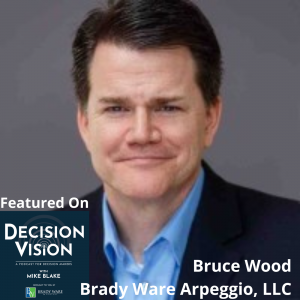
Jonathan Hyman revisits the Decision Vision podcast to talk with host Mike Blake about unions and how companies should navigate an attempt to unionize by their employees. Jonathan defined exactly what a union is, how it looks different than the established unions that peaked in the 1950s, why it’s on the rise again today, what is motivating today’s employees, the implications for companies today, and much more.

Decision Vision is presented by Brady Ware & Company and produced by the North Fulton studio of Business RadioX®.

Wickens Herzer Panza

Wickens Herzer Panza has been committed to providing sound legal guidance to businesses of Lorain & Cuyahoga Counties since 1932. Wickens Herzer Panza provides legal counsel to family- and privately-owned businesses in the areas of Business Organizations & Tax, Probate & Estate Planning, Elder Law, and Business Litigation.

They are more than legal counsel, too. They’re a business partnership, an advocate for their clients, and advisors who support, give advice and protect those they work with. They are their clients’​ trusted advisors and make it their mission to be responsive, accountable, proactive, and client-centered. They have offices in Avon, Ohio, and Sandusky, Ohio.

Company website | LinkedIn

Jonathan Hyman, Attorney, Wickens Herzer Panza

Jonathan Hyman, Attorney, Wickens Herzer Panza

Mr. Hyman is a member of the Firm’s Litigation Department and Employment & Labor practice group and serves on the Board of Directors. He focuses his practice on management-side labor and employment law, providing businesses proactive solutions to solve their workforce problems and reactive solutions when they find themselves litigating against an employee or group of employees.

Proactively, Mr. Hyman serves as outside in-house counsel for businesses. He is the voice on the other end of a phone when a business needs advice on firing an employee, a policy or agreement drafted, guidance on a leave of absence, disability accommodation, or internal complaint or investigation, or information on any number of other issues that plague human resources professionals and businesses daily. Mr. Hyman also has extensive experience on more specialized labor and employment law issues, such as wage and hour compliance, social media, cybersecurity, and other workplace technology concerns, affirmative action compliance, and union avoidance and labor relations.

Reactively, Mr. Hyman represents businesses in employment and labor litigation, including discrimination, retaliation, harassment, and claims, non-competition and trade-secret misappropriation disputes, wage-and-hour class and collective actions, and union certification and decertification matters.

He is also the author of the renowned and award-winning Ohio Employer Law Blog (www.ohioemployerlawblog.com, an American Bar Association Blawg Hall of Fame inductee), which he updates daily to provide businesses and human resources professionals breaking news and other updates on the ever-changing landscape of labor and employment law.

LinkedIn

Mike Blake, Brady Ware & Company

Mike Blake, Host of the “Decision Vision” podcast series

Michael Blake is the host of the Decision Vision podcast series and a Director of Brady Ware & Company. Mike specializes in the valuation of intellectual property-driven firms, such as software firms, aerospace firms, and professional services firms, most frequently in the capacity as a transaction advisor, helping clients obtain great outcomes from complex transaction opportunities. He is also a specialist in the appraisal of intellectual properties as stand-alone assets, such as software, trade secrets, and patents.

Mike has been a full-time business appraiser for 13 years with public accounting firms, boutique business appraisal firms, and an owner of his own firm. Prior to that, he spent 8 years in venture capital and investment banking, including transactions in the U.S., Israel, Russia, Ukraine, and Belarus.

LinkedIn | Facebook | Twitter | Instagram

Brady Ware & Company

Brady Ware & Company is a regional full-service accounting and advisory firm which helps businesses and entrepreneurs make visions a reality. Brady Ware services clients nationally from its offices in Alpharetta, GA; Columbus and Dayton, OH; and Richmond, IN. The firm is growth-minded, committed to the regions in which they operate, and most importantly, they make significant investments in their people and service offerings to meet the changing financial needs of those they are privileged to serve. The firm is dedicated to providing results that make a difference for its clients.

Decision Vision Podcast Series

Decision Vision is a podcast covering topics and issues facing small business owners and connecting them with solutions from leading experts. This series is presented by Brady Ware & Company. If you are a decision-maker for a small business, we’d love to hear from you. Contact us at decisionvision@bradyware.com and make sure to listen to every Thursday to the Decision Vision podcast.

Past episodes of Decision Vision can be found at decisionvisionpodcast.com. Decision Vision is produced by John Ray and the North Fulton studio of Business RadioX®.

Connect with Brady Ware & Company:

Website | LinkedIn | Facebook | Twitter | Instagram

TRANSCRIPT

Intro: [00:00:01] Welcome to Decision Vision, a podcast series focusing on critical business decisions. Brought to you by Brady Ware & Company. Brady Ware is a regional, full-service accounting and advisory firm that helps businesses and entrepreneurs make visions a reality.

Mike Blake: [00:00:21] Welcome to Decision Vision, a podcast giving you, the listener, clear vision to make great decisions. In each episode, we discuss the process of decision making on a different topic from the business owners or executives’ perspective. We aren’t necessarily telling you what to do, but we can put you in a position to make an informed decision on your own and understand when you might need help along the way.

Mike Blake: [00:00:42] My name is Mike Blake and I’m your host for today’s program. I’m the managing partner of Brady Ware Arpeggio, a data-driven management consultancy, which brings clarity to owners and managers of unique businesses facing unique strategic decisions. Our parent, Brady Ware & Company, is sponsoring this podcast. Brady Ware is a public accounting firm with offices in Dayton, Ohio; Alpharetta, Georgia; Columbus, Ohio; and Richmond, Indiana.

Mike Blake: [00:01:06] If you would like to engage with me on social media with my Chart of the Day and other content, I’m on LinkedIn as myself, and at @unblakeable on Facebook, Twitter, Clubhouse, and Instagram. I also host a LinkedIn group called Unblakeable’s Group That Doesn’t Suck, so please join that as well if you would like to engage.

Mike Blake: [00:01:22] Today’s topic is should I allow or gasp, even encourage, my company to unionize? And I think this is an important topic and a very timely topic. And as we have discussed at various points since the pandemic started 5,000 years ago, our relationship with work or our society’s relationship with work and labor, I think, has changed, and I think very few people debate that. I think the only debate is whether or not that change is a good one or a bad one, and we’re not going to debate that here. That’s not our role, and I’m not even sure that there’s a right answer to it.

Mike Blake: [00:02:10] But one of the ways in which the nature of work has changed is for the first time in a long time, maybe in my lifetime, and I’m 52 years old now, we are seeing an increased interest in unionization. For whatever reason, I suspect it has to do with a lot of things. I think it has to do with wage inequality. I think it has to do with a desire for people to self-actualize at work. I think it has to do with the fact that health care is tied to employment and other reasons as well, but there’s been an uptick in an interest to unionize.

Mike Blake: [00:03:02] One Amazon warehouse, I believe, in New York has successfully unionized or is on the verge of doing so, I’ve forgotten. Starbucks is, right now, fighting a mass unionization event, and the thought was that if they brought back their founder for a third time, Howard Schultz, that guy retires more than Brett Favre ever did, that they would be able to head off the unionization path, but that doesn’t seem to be cutting it.

Mike Blake: [00:03:29] And there does seem to be an uptick now in unionization, and for many of us, I think, particularly, if you’re under the age of 40 or maybe even 50, most of us don’t remember a world in which large parts of the economy were unionized. I’ve never worked in a union shop. I don’t think I’ve even had a client that has had a unionized labor force. Now, part of that is because I live in Georgia, so it’s a right to work state.

Mike Blake: [00:04:01] But the fact of the matter is—or at least just not the fact of that, my observation is that as unionization gains steam, I think we, as a society, are having to re-familiarize ourselves with unionization almost all over again. It’s been out there for government jobs, teacher’s unions, things like that. We encountered for good or ill with The Screen Actors Guild, oddly enough, Ronald Reagan was actually the chairman of The Screen Actors Guild for a while, and gosh, we sure do love it when professional sports leagues go on strike, and we just love their unions, and millionaires, and billionaires fighting over their vast sums of revenue.

Mike Blake: [00:04:43] But on a day-to-day basis, I think most of us don’t remember a world, and certainly, we’ve never had to manage a business in a world where unionization, for the most part, was a thing. And so, again, I’m not advocating for or against unionization, but I do think the topic is now timely, and we’re going to have to, as a society and as business people, come to grips with understanding what unionization is.

Mike Blake: [00:05:11] Is it fair to have a knee-jerk reaction, which many people do, that unions are automatically bad for business and they’re a disaster, or what does it actually mean? So, other than what I just told you, I don’t know very much about the topic, I’ve just spent the last five minutes basically revealing my ignorance.

Mike Blake: [00:07:24] So, joining us today and returning to the show, actually, is Jon Hyman, who’s a Partner at Wickens Herzer Panza. Jon is a nationally recognized author, speaker, blogger, and media source on employment and labor law. Jon’s legal practice provides proactive and results-driven solutions to employers’ workforce problems. He also works with businesses to help position them to best combat the ongoing risk of cyber crimes.

Mike Blake: [00:07:48] Jon serves as outside in-house counsel role for business. In this role, he drafts policies and handbooks, audits human resources and technology practices and procedures, advises companies on day-to-day human resource issues, and successfully litigate employee disputes. Jon has written two books, The Employer Bill of Rights and Manager’s Guide to Workplace Law, and Think Before You Click: Strategies for Managing Social Media in the Workplace.

Mike Blake: [00:08:14] Jon has appeared on the Fox Business Network, NPR, and locally on WEWS. He has also been quoted on workplace issues in publications such as the Wall Street Journal, NPR, msnbc.com, Business Insurance Magazine, Crain’s Cleveland Business, and The Cleveland Plain Dealer. Finally, Jon appeared on a November 1999 episode of Who Wants to Be a Millionaire, but sadly lacks the fastest fingers. Jon, welcome to the Decision Vision podcast.

Jon Hyman: [00:08:41] Thank you so much, Mike, both for the introduction and for the invite to have me back on. I really appreciate it.

Mike Blake: [00:08:47] So, we’re going to start really, really basic, because I don’t think this is necessarily obvious to everybody. What is a labor union?

Jon Hyman: [00:08:55] Yeah, it’s not obvious to everybody, and it’s a great starting question, because I think like you said in your intro, we live in a world where it’s something we haven’t thought about. Businesses haven’t thought about it. HR professionals haven’t thought about it. A lot of employees, frankly, haven’t thought about it. So, asking the very basic question like, what is a labor union? Great kind of foundational place to start.

Jon Hyman: [00:09:19] And at its most basic level, a labor union is an organization that a majority of employees in a unit within a business agree to join, and then on behalf of those employees, that organization engages in collective bargaining with those employees’ employer regarding their members’ wages, hours, benefits, other terms and conditions of their employment.

Jon Hyman: [00:09:57] But the key aspect of a union, a labor union, and their relationship with both the employees and the employer, is that the union, once they’re in, they are the exclusive representative of the employees that they’re representing for all those issues, wages, hours, benefits, terms, conditions of employment. They are exclusive. They speak on behalf of the employees, and they are, in almost all cases, the only entity that can speak on behalf of the employees on those issues.

Mike Blake: [00:10:33] So, at my age, I kind of remember unions being a thing growing up. There are strikes. The UAW is pretty powerful. The Teamsters are pretty powerful. But since then, unions have declined sharply to the point of being barely noticeable, in my opinion, anyway. Why did labor unions decline across the United States over the last four decades?

Jon Hyman: [00:11:00] Yeah, they peaked in the ’50s. The number that I see most often cited is around 35% of American workers were collectively bargained in the 1950s. By the early ’80s, that dropped to around 20%. And then, if you look for like a historical event that started the real decline of labor unions, it’s interesting that you mentioned Ronald Reagan in your opening, because in addition to being president of The Screen Actors Guild, he was also the president when the air traffic controllers went on strike in 1981, and he famously busted that strike by replacing all 11,500 and so on air traffic controllers.

Jon Hyman: [00:11:45] He just fired them all and permanently replaced them, which an employer can do during a labor stoppage. And I think if you look for kind of a historical snapshot in time as to what started the decline of organized labor, that’s probably the event that, at least I look at, is really starting organized labor’s decline in the US. But if you look at it, that’s kind of on the micro level.

Jon Hyman: [00:12:16] If you look at it more on the macro level, I think if you look at all of the kind of alphabet soup of employment laws that protect employees in the workplace on a day-to-day basis, Title VII, ADA, Americans with Disabilities Act, ADEA, Age Discrimination in Employment Act, FLSA, Fair Labor Standards Act, OSHA, Occupational Safety and Health Administration, plug in your kind of alphabet soup of letters that form some federal protection for employees, and there are dozens upon dozens of them.

Jon Hyman: [00:12:54] The question is, the question that I always come back to is like our unions, I mean, what purpose do they serve in today’s workplace? Are they relevant? Are they necessary to provide employees the same level of protections that employees needed when organized labor really started in the 1920s and people were working 80 hours a week in sweatshops for pittance wages? Do they still serve that purpose? And my answer is no. And I think by and large, I think employees, at least over the last three or four decades, have seen that as well, and have said to themselves, why pay a union dues, why bring someone else in to speak for us when we can do this for ourselves?

Jon Hyman: [00:13:44] We have all these protections. Whether inherently, implicitly, or explicitly, I think employees just feel that unions don’t serve the purpose that they’ve historically needed them to serve. And then, on top of that, employers have gotten in the last 30 or 40 years very, very aggressive in what they’ve done to combat unions when unions try to organize employees that have helped prevent unions from taking hold as well. So, I think unions are kind of getting it from both sides.

Mike Blake: [00:14:21] So, that’s really interesting. I hadn’t thought about how worker protections as legislated made labor feel that unions became somehow obsolete. I actually expected a different answer, but that’s fine, I learned something. So, why now? First of all, I guess do you agree with my observation that unions may be making a little bit of a comeback? I don’t want to overstate it, but I certainly hear more about union activity than I’m used to hearing. And if so, why now?

Jon Hyman: [00:14:55] Unions are definitely having their moment. I think it remains to be seen how much of a foothold they will ultimately grab as a result of the push and momentum that they have. Unions right now are, and I’m going to take public sector out of the equation, because it’s somewhat different set of rules and public sector unions never really declined the same way that private sector unions did.

Jon Hyman: [00:15:24] But in the private sector, unions sit at about 6% of American workers are organized in the private sector. It remains to see kind of where that goes, but they’re definitely having their moment. They are very high-publicity-organizing campaigns that have garnered a lot of headlines. The JFK facility in Staten Island, New York, the first Amazon facility to organize, grabbed huge headlines. Starbucks right now, as you said, at the outset is facing hundreds of organizing petitions and has had tremendous success in the elections that have been held so far in getting Starbucks stores organized.

Jon Hyman: [00:16:06] I think as to why now, I think there’s a couple of factors that have come together at once. I think the pandemic has really played into the types of union talking point issues, where union organizers start talking to employees, the issues they’re talking about are things like workplace safety, and does management listen to you, do you have a voice in how things occur in the workplace, culture, respect, all the issues that the pandemic really brought to the forefront in the workplace, and that led to employees feeling a tremendous amount of dissatisfaction with their employers over the last two years.

Jon Hyman: [00:16:58] That really plays into the hands of the talking points that unions often use to kind of get traction with employees. I think when you couple that with, and I always hate to make generational generalizations, it’s hard to say, generational generalizations, because stereotypes, I mean, they always have kind of some basis in reality, but they’re always often overexaggerated, but here, I think it is actually fairly instructive.

Jon Hyman: [00:17:32] A lot of what’s going on, if you look at Amazon, if you look at Starbucks, these are not your grandfathers, steel workers labor unions. These are organizing drives that are being led by and large by educated, younger workers. And you have Gen Z that, I think, largely skews, at least in their belief structure, take a look at like a Bernie Sanders rally, for example, like who’s in the crowd? It’s a lot of young people, right?

Jon Hyman: [00:18:05] Gen Z skews, by and large, a lot more socialist in their beliefs than capitalist, and you have a generation that, over the last couple of years, cut their teeth organizing not around workplace issues, but around societal issues, Black Lives Matter rallies, George Floyd protest, LGBTQ rights. You’re seeing it now around the Roe v. Wade issues as well. You have a generation that has really cut their teeth learning how to organize around societal issues and they are now focusing that lens inward on the workplace. So, when you put that generational attitude together with the issues that we’ve seen the pandemic highlight, it’s really made a perfect storm for the current wave in organizing that we’re seeing.

Mike Blake: [00:18:57] So, I think unions are often portrayed as being anti-business, maybe even anathema to business. Is that a fair characterization?

Jon Hyman: [00:19:10] I think so, but I’m also an advocate for business. I think union organizers might disagree with that, but I believe they are. I think when you look from management’s perspective, what happens when a union comes in, it definitely makes it more difficult to manage employees. You can’t talk directly to employees anymore. You have to go through a union rep. Oftentimes, kind of the lowest common denominator in the workplace from a performance standpoint is protected, because they have just cause protections and collective bargaining agreements, so you can’t just fire an employee without cause for doing so, and sometimes, that protects not always the best performers in the workplace.

Jon Hyman: [00:19:58] Things like seniority and longevity are often valued over things like merit in promotions, raises, transfers, and the like. And so, does it make it harder to manage your business and manage your workforce when it’s collectively bargained? I think objectively, the answer is yes, although I understand that if you had someone coming from the union side, I mean, they would certainly give you a much different answer to that question.

Mike Blake: [00:20:29] So, question I want to ask, because I think this is going to gain a lot more visibility, back in the early 20th century, the way that you prevented a union was you hired a bunch of guys that would come in and just beat up the labor, beat up the workers or shoot them outright, which has happened. Now, I don’t think we’re going to go back to that, but who knows the way society is going? But I’d love you to kind of just sort of be expositional in what are some common tactics that businesses will take to discourage unionization of their workplace? And then, I’d love to get into a discussion as to where is the line between—where is the ethical line, where maybe it’s legal to do that, but maybe it’s unethical?

Jon Hyman: [00:21:28] I mean, you can take a look at, for example, what Starbucks is doing. You talked about Howard Schultz being back in at Starbucks, and he is stridently anti-union, and they have taken a very aggressive stance to try to squash the campaign that’s going on across the country at all these various Starbucks stores, and I think their efforts have been largely unsuccessful, because they are doing things like—allegedly, right?

Jon Hyman: [00:21:55] And there are challenges filed at stores all over the country, retaliating against organizers, firing them, cutting their hours, and the like, holding what are called captive audience speeches that is putting everyone in a room, and you’re going to listen to us tell you why you shouldn’t join the union. These are all things that may have worked 40, 50, 60 years ago.

Jon Hyman: [00:22:21] They’re not working today, and they’re not working because they’re playing right into the hands of the reasons why these organizers are telling workers they need to form a union in the first place, right? You need job protections. Your management is out to get you. They don’t have your best interests at heart. You don’t have a voice at the table. They’re not listening to your concerns. As soon as you start firing organizers, cutting their hours, or trying to force them out the door, you’re playing right into the hands of why the unions are telling these people, you should vote for us in the first place.

Jon Hyman: [00:22:57] And so, in my view, this is a different type of organizing than what we’ve seen in the past because of the generational issues I talked about before. I think employers need to take a much different, much softer approach to how they’re opposing union organizing. And I’m not saying that softer approach means you need to open the door and welcome the labor unions in, some employers choose to do that. Fair State Brewing, for example, in Minneapolis was organized a number of years ago.

Jon Hyman: [00:23:36] They were one of the first craft breweries in the US to be organized by a union and they chose to voluntarily recognize the union. Their ownership saw it as their like obligation as a democratic business to promote fairness and equity across their workers, and they chose to voluntarily recognize the union. Most employers don’t do that. Most employers oppose organizing drives. They fight hard on first collective bargaining agreements, the first contract they’re going to reach with their employees.

Jon Hyman: [00:24:14] I just think that the retaliation, the heavy-handed tactics that have historically worked in the past, illegal, right? Some of them, right? You can’t retaliate, that’s illegal, but there have been—even though illegal have proved to be successful, because you scare employees off who don’t want to lose their jobs, those just aren’t working anymore. So, I think what is going to work for businesses is taking a more inward look at culture, why is the union here in the first place? What are we doing wrong? Where are we failing our workers?

Jon Hyman: [00:24:54] And you can’t—and again, there’s fine legal lines you have to walk here, you can’t make promises to employees to fix things during union organizing. That’s an illegal promise. But it doesn’t mean you can’t do it on your own without promising employees you’re going to do it. And so, you’ve got to figure out why employees are upset, and then striving to do better for your employees. Culture has always been kind of the best way to fight union organizing, and it’s even more important today, because it’s exactly the types of issues these organizers are hitting on.

Mike Blake: [00:25:34] So, with respect to unionization in companies, how can I put this? Yeah. My question is, how do companies sell to employees that they shouldn’t unionize? What are the arguments that the companies make? Because it seems on the surface of labor, it seems like—I’m surprised unionization sort of hasn’t come back. It seems like it’s so clearly in their self-interest, why don’t they? How are companies able to convince workers not to organize?

Jon Hyman: [00:26:12] Yeah. I mean, there’s a number of things you can do. And again, there’s a fine legal line you have to walk, because you can’t threaten workers. You can’t interrogate workers about their union beliefs or how they’re going to vote. You can’t make them promises, right? And you can’t spy on them or surveil them to figure out who’s meeting with whom, and what people are saying, and whatever.

Jon Hyman: [00:26:37] So, there is a fine line you have to walk in terms of what you can do legally, and what you can say legally, and what you can’t. But it is factual, for example, that if employees are telling you what—one of the union messages is that we need more money, it is factual to say, there is one pie that’s going to be divvied up and that pie is not going to get bigger just because of unions coming in.

Jon Hyman: [00:27:08] And in fact, your pie might get smaller, because in addition to the benefits that come out of your paycheck and other things, you’re paying union dues as well. You’re paying union dues whether you vote for the union, whether you support the union or not, right? And so, we just can’t magically create greater profits because a union comes in, and in fact, it’s reported to suggest that profits actually decrease when unions come in.

Jon Hyman: [00:27:41] There’s a number of reports, I was looking at one this morning by the National Bureau of Economic Research that suggests that share value, if you look at share value as a measure of profits, decreases 10 to 14% once a company is organized by labor. And so, if they’re coming in looking for money, for higher wages, for example, if our share value is going to decrease 10 to 14% if we organize, where is that extra money going to come from to pay wages?

Jon Hyman: [00:28:12] And on top of that, you’re going to be paying union dues on top of that to the union. And so, there are a number of talking points that you can’t threaten employees by saying we will decrease your wages if you organize, but there is an economic reality of the situation that employees need to understand as well. Telling employees that you’re not going to be able to talk to us anymore, you’re going to lose communication, because the labor union becomes your exclusive representatives, so we have to deal with the union.

Jon Hyman: [00:28:49] Now, Jennifer Abruzzo is the general counsel of the NLRB, is trying to take that talking point away from employers. She’s trying to make it illegal for employers to, among other things, tell employees, that they’ll lose the right to deal directly with an employer if a union comes in. Remains to be seen whether she’s able to prevail on the National Labor Relations Board to make that change in the law, but she’s at least making that argument.

Jon Hyman: [00:29:18] So, there are a number of talking points that prove successful, but employers are fighting an uphill battle here. Employees win, unions win a lot more elections than they lose. Annually, it’s anywhere between 60 and 70% of elections are won by the labor unions, not by employers. And we have historically the most pro-union National Labor Relations Board we’ve ever had.

Jon Hyman: [00:29:53] The NLRB, National Labor Relations Board, is the federal agency that governs union management relations. They are stridently, right now, pro-union. Jennifer Abruzzo, the general counsel, is trying to make a number of changes that would—a number of very aggressive pro-union changes that are going to make that number even higher. It’s going to make the union win percentage even higher. It’s going to make it that much more difficult for employers to oppose union organizing.

Mike Blake: [00:30:26] And one thing that has not come up in this conversation, and I’m a little surprised now that we’re about a half-an-hour into it is the threat of relocation. My misapprehension maybe or my understanding was I always kind of thought that management always had the nuclear option of saying, you know what, if unionization becomes a threat, we are simply going to move to, A, a right to work state, or we’re going to move out of the country to a low wage location. Am I overstating that threat or I’m not remembering, or for some reason, does that threat no longer carry the weight that it once did?

Jon Hyman: [00:31:08] You can’t make threats. So, a threat during union organizing is illegal. And so, you actually can’t—if you’re making a statement with the word will in it, we will do this, we will do that, the odds are pretty good the NLRB’s going to find that to be an unlawful or illegal threat and is going to find unfair labor practice. So, you can’t do that. One of the things that’s interesting, though, it’s interesting that you bring that up, and I think one of the things that’s fueling what’s going on in Starbucks, for example, is that’s not an—and the hospitality industry kind of at large is that you can’t relocate a Starbucks to China or to Mexico, right?

Jon Hyman: [00:31:56] Whether that threat is explicit and unlawful or implicit and somehow pass a scrutiny at the board, that threat carries no weight at a Starbucks at all, because that Starbucks that’s on that street corner, where is it going to move to, to the street corner across the street? It’s going to have the same issues, but it’s certainly not relocating to Mexico or to China, because that’s a long way to go for your morning coffee. So, when we talk about kind of what’s fueling the rise and organizing in industries like hospitality, where we’re seeing a lot of this push right now, that lack of an implied threat of relocation, I think, is fueling a lot of it, because there’s just nowhere else for these stores to go. They are where they are.

Mike Blake: [00:32:45] So, if a business interferes, I want to dive into this, because I think this is really interesting, getting really into brass tacks, and in some cases, brass knuckles, and that is, what are the penalties if the NLRB does find that a company has violated laws regarding impeding an organization effort? How are those fines calculated?

Jon Hyman: [00:33:11] Well, so if an employee is fired, for example, in retaliation, that’s going to be things like back pay and reinstatement for the terminated employee. If it’s something more systemic on the organizational level, like making an illegal threat to employees across the board, you might get a redo election where the board is going to say, we find—because the board requires that elections be held in what’s called laboratory conditions. So, think of a laboratory as sterile, clean, pristine. That has to be the conditions around which that election is held.

Jon Hyman: [00:33:47] And if the board finds those laboratory conditions did not exist because of unfair labor practices that took place during the campaign, the board could order a redo election. In the most egregious cases with egregious serial, repeat, unfair labor practices, the board could skip the election and could actually just order—can enter what’s called a bargaining order, and just say, you know what, we find that it’s impossible to reach laboratory conditions here, because these unfair labor practices were so severe, so pervasive, there’s nothing we can order that’s going to create those laboratory conditions on any redo election, so we’re just going to say union wins, employer, you must bargain with the union.

Mike Blake: [00:34:36] That’s fascinating, and I’m glad we touched upon this, because it strikes me that, taking Starbucks, for example, it would be hard to find Starbucks enough to make it worthwhile. And I kind of go back, when I lived in New York for a few years, I was struck by the fact that if you violated a traffic law, not only would there be a fine, but there would also be a court summons.

Mike Blake: [00:35:01] And the reason they do that is because there are enough rich people in Manhattan to say, you know what, 200 bucks, if I’m going to a meeting that may make me $1,000,000, I’ll double park and I’ll pay the 200-dollar fine, but you tell that person to show up in court and burn a day in court, that’s the deterrent, right? And I was curious if there is sort of an agent principle problem where you can sort of say, well, I’ll just take the flag, they can only find me once, but it sounds like that they actually have much stronger remedies, where in an egregious case, in effect, the government, by fiat, can just say, bam, you’re a union.

Jon Hyman: [00:35:38] They can, but the union’s just the first step. The second step is actually bargaining that first contract, and it’s the next arrow that an employer can pull out of its quiver if it wants to stay non-union, is that—I mean, you can’t bargain in bad faith, you have to bargain in good faith. But as long as you’re bargaining in good faith, you can bargain to an impasse. And if you bargain to a bona fide impasse, the employer can then take its last proposal and implement that as the terms and conditions of employment. And so, there’s always that kind of implied threat that hangs over the negotiations that we’re going to bargain to an impasse and the employer is going to do what it wants anyway.

Jon Hyman: [00:36:24] And so, there is a lot of—that’s where the employer’s ultimate leverage is in getting what it wants out of this, because the union’s making all these promises to employees, we’re going to get you a 10% raise, we’re going to get better benefits, we’re going to get better hours, better whatever, and the employer can just dig its heels in, and say, no, we can’t do that. And as long as they’re doing that in good faith, and we can talk about what good faith looks like and what it means, but as long as you’re doing it in good faith, there’s not a lot the union can do, because once you reach that impasse, then the employer can essentially do what it wants at that point.

Mike Blake: [00:37:05] So, in your opinion, or maybe a bit in your observation, are unions in the 21st century likely to look, act, behave differently than unions of the 20th century? And if so, how?

Jon Hyman: [00:37:18] Yes, they will, and we’re seeing that now, in that the unions that are driving the campaigns at Starbucks, the campaigns at Amazon, these are not your united steelworkers, united auto workers, your kind of legacy unions. These are unions that have been started by employees by and large. These are employee-started, employee-driven. Now, they’re being backed by large kind of legacy international corporate unions.

Jon Hyman: [00:37:59] And let’s not kid ourselves, I mean, unions are a business no differently than the businesses that are on the other side of the bargaining table with them are businesses. And these employee-driven campaigns are being backed by these legacy unions. They’re getting office space. They’re getting legal support. They’re getting business support. They’re definitely being helped. But these are not the unions that we’re used to seeing because these are largely started by, ran by, managed by the employees of these organizations, not by professional union business people.

Mike Blake: [00:38:49] So, I would suspect that union organizers and advocates for unionization in general will hold up the example of countries in Northern Europe, specifically Germany and the Nordic countries as examples of strong union involvement that has not been destructive to their economies. A, do you agree with that? And then, B, what is it about those unions or those relationships that allows those relationships to exist the way that they do, but still have economies that are still pretty productive, pretty competitive? And can that model realistically be replicated here?

Jon Hyman: [00:39:37] I’ll answer the last part first, which is no, and let me explain why. And it’s because the European unions are very different than the labor unions we have here in the States. In the States, we have, basically, enterprise-level labor unions. Unions organize business to business. Starbucks, obviously, it’s a coffee shop, but the employees that are organizing Starbucks, they’re not organizing Starbucks as a corporation. They’re organizing store by store.

Jon Hyman: [00:40:10] And so, we have hundreds of petitions filed at stores all over the country and there are individual elections that are being held on a store-by-store level. Europe doesn’t have—and depending on the business, a business might be organized by a union, but it might just be a piece of that business. You might have manufacturing employees in a facility that organized, but shipping and receiving, because they do different work, are not included in that bargaining unit and they remain non-union.

Jon Hyman: [00:40:44] So, you can have union workers working arm-in-arm with non-union workers in the exact same facility, just depends on how the units are divvied up. Europe doesn’t have these, by and large, doesn’t have these enterprise-level unions. Europe has sector-level unions. So, if it’s not, I’m going to use Starbucks as the example, because that’s what everyone’s talking about. It’s not Starbucks it’s organizing. It’s coffee shops that are organizing on the sector level.

Jon Hyman: [00:41:12] And so, they’re having one union that’s covering all employees in a particular sector. And so, when we say, why does it succeed in Europe, where it doesn’t succeed here? It succeeds because there’s no advantage or disadvantage to an individual business going union or non-union, because all the businesses in the same sector they’re competing against are also in the union once that sector unionizes. So, it’s just a very different model of how labor is organized in Europe versus how it’s organized here.

Mike Blake: [00:41:52] I’m talking with Jonathan Hyman, and the topic is, should I allow my company to unionize? If a union is successfully organized in a company, how does the company have to change? What changes are coming in store for management in terms of governance, how they operate, and so forth?

Jon Hyman: [00:42:16] You lose communication with employees. You can’t communicate directly with employees anymore. You have to go through the union. At least for the employees that are in the bargaining unit, you can’t give individual raises. All this needs to be bargained with the employer. Promotions, transfers, it’s all governed by the contract. The contract becomes the Bible for the employer-employee relationship.

Jon Hyman: [00:42:43] And you’ve got to follow what the contract says in terms of when raises are given, how raises are given, when and how employees can be disciplined, who gets promoted, who gets transferred, when, how, why, et cetera. You can’t make changes on anything that’s a mandatory subject of bargaining. It has to be bargained with the union. So, mandatory subject, anything that is essentially core to terms and conditions of employment, that has to be bargained with the employer or bargained with the employees through the union, an employer just can’t make a change to its employee handbook like it does in a non-union facility.

Jon Hyman: [00:43:28] And then, you better get used to sitting in grievance meetings with the union reps and possibly sitting in conference rooms with the arbitrators talking about discipline and termination decisions, because that’s what happens. When you discipline or fire someone, those decisions get challenged by the union, and as a manager, you oftentimes lose your ability to effectively control performance, discipline employees, because an arbitrator who live under their own rules of industrial justice might come in, and say, we find this decision was unfair, arbitrary, unreasonable, and we’re going to put this employee back to work. And so, it is a whole different way for employers as to how they choose to or how they’re able to manage their employees on a day-to-day basis.

Mike Blake: [00:44:31] Can you think of or imagine a scenario in which it would be to a company’s benefit to allow or even get on board with encouraging a unionization effort?

Jon Hyman: [00:44:44] I mean, we’re seeing it now with Starbucks. There are shareholders, large, large shareholders of Starbucks who are petitioning the board, saying, you’re hurting our share value by taking the aggressive anti-union stance that you are. You’re hurting the value of our investments, and so we’re urging you, maybe not necessarily to be pro-union, but at least adopt a union-neutral viewpoint, where you won’t welcome the union with open arms, but you’ll be stopped being aggressively anti-union and just let the vote happen or let employees have their choice without you actively trying to discourage employees from joining the union.

Jon Hyman: [00:45:31] And so, in a large, publicly traded company like Starbucks, where you have—I mean, these are shareholders with tens of millions of dollars of investment that’s on the line here, and they’re saying you are severely decreasing the value of our investment. I mentioned Fair State Brewing earlier, Minneapolis brewery, one of the first craft breweries in the country to organize, they said, their ownership said, we view this as essentially a social justice issue. And so, if the employees want to unionize, we’re going to welcome the union with open arms.

Jon Hyman: [00:46:12] We view that as part of our obligation to help further a fair and equitable society, right? So, they viewed it as a social justice issue. So, philosophically, there may be employers who think that way. Economically, there may be employers who potentially see being anti-union as significantly and materially diminishing the value of the company as maybe taking a less hostile position towards union. So, there are certainly situations where a company may decide either to welcome the union or at least be neutral with their position towards the union, but that’s largely going to be the minority view.

Mike Blake: [00:47:01] Jon, this has been a good conversation. I didn’t get through, I think, half the questions I’d hoped to ask, it’s just too big a topic, so there are likely questions that either our listeners would have wished that we’d spent more time on or just didn’t ask at all. If somebody wants to follow up with you and ask about addressing a unionization effort in their business, can they contact you? And if so, what’s the best way to do so?

Jon Hyman: [00:47:26] Absolutely. They can contact me. The best way is they can find me at my firm’s website, wickenslaw.com. They can contact me. They’ll find all my contact information there. I don’t hide online either, so if you just Google Jon Hyman, employment lawyer, you’ll find me, my blog, my LinkedIn, my Twitter, where I write about this stuff all the time. And then, in addition to my employment law practice, I also chair my firm’s craft beer practice. And so, you can also find me at ohiobeerlawyers.com, where you’ll find information about that practice, and that takes you to my contact information as well.

Mike Blake: [00:48:04] So, that’s going to wrap it up for today’s program. I’d like to thank Jonathan Hyman so much for sharing his expertise with us. We’ll be exploring a new topic each week, so please tune in, so that when you’re faced with your next business decision, you have clear vision when making it.

Mike Blake: [00:48:17] If you enjoy these podcasts, please consider leaving a review with your favorite podcast aggregator. It helps people find us that we can help them. If you would like to engage with me on social media with my Chart of the Day and other content, I’m on LinkedIn as myself, and @unblakeable on Facebook, Twitter, Clubhouse, and Instagram. Also, check out my LinkedIn group called Unblakeable’s Group That Doesn’t Suck. Once again, this is Mike Blake, our sponsor is Brady Ware & Company, and this has been the Decision Vision podcast.


Tagged With: Brady Ware & Company, collective bargaining agreements, Decision Vision, Jonathan Hyman, Labor Law, labor unions, Mike Blake, unionize, Wickens Herzer Panza

LIVE from RISKWORLD 2022: Shari Paul, Alliant

June 1, 2022 by John Ray

Alliant
Minneapolis St. Paul Studio
LIVE from RISKWORLD 2022: Shari Paul, Alliant
Loading
00:00 /
RSS Feed
Share
Link
Embed

Download file

LIVE from RISKWORLD 2022: Shari Paul, Alliant

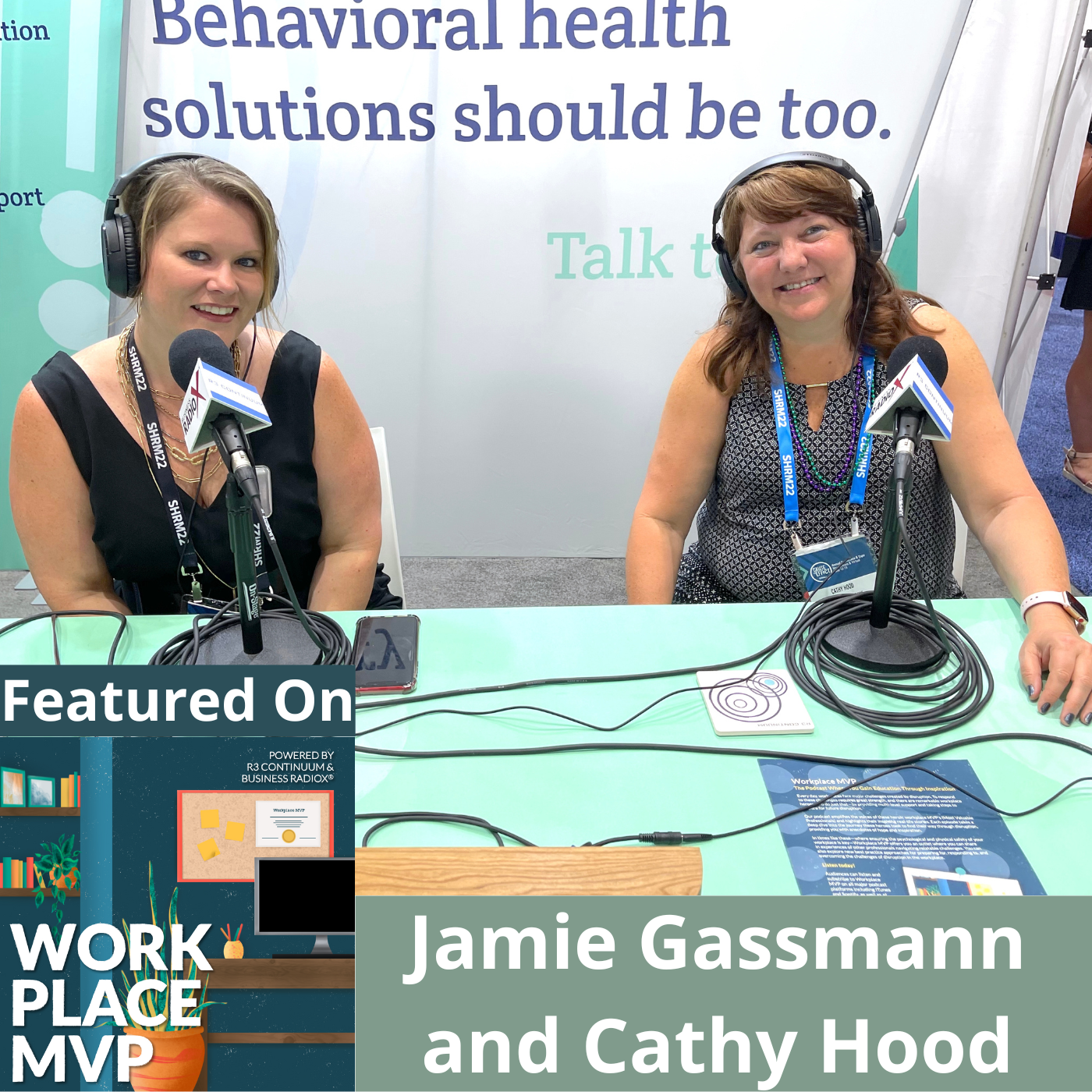
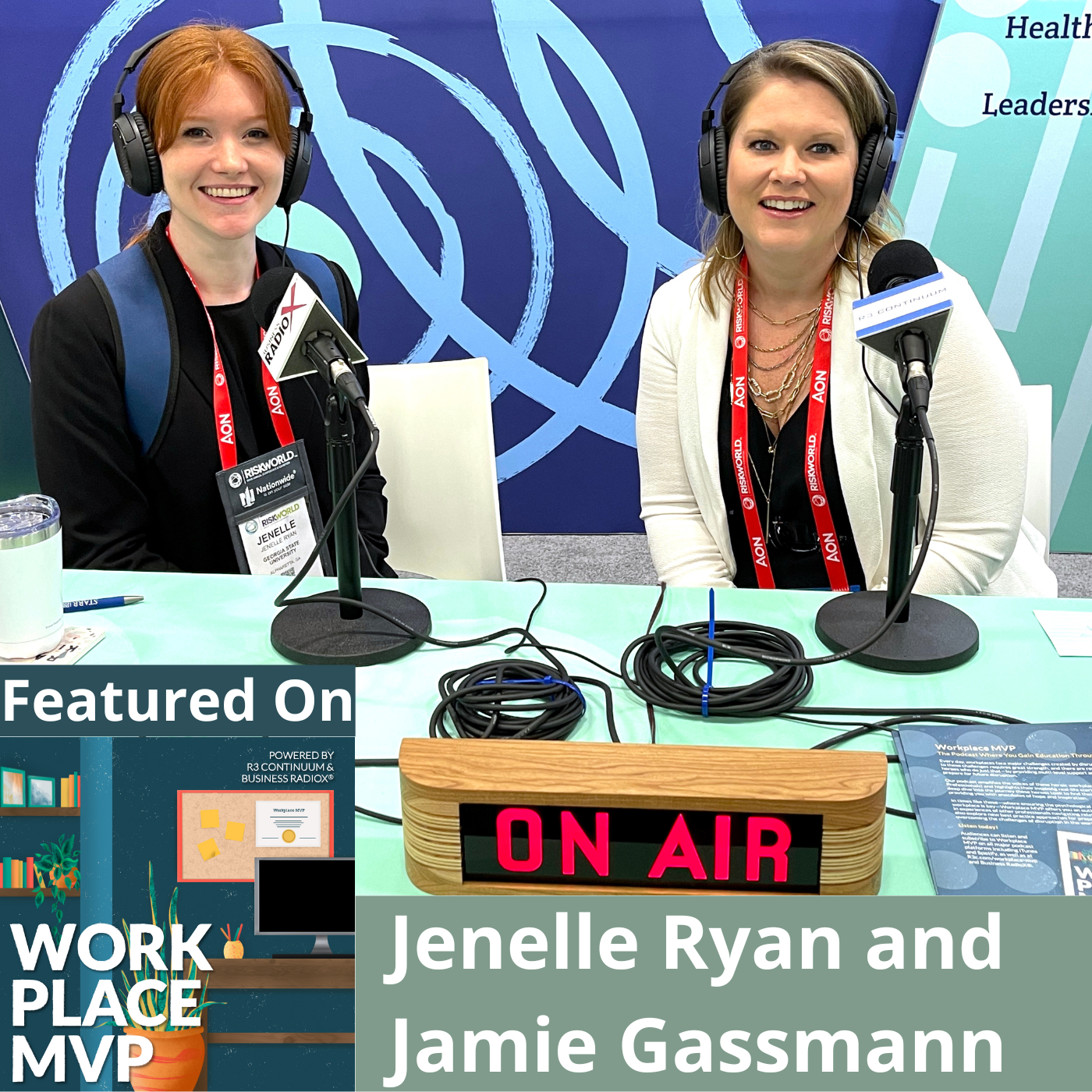
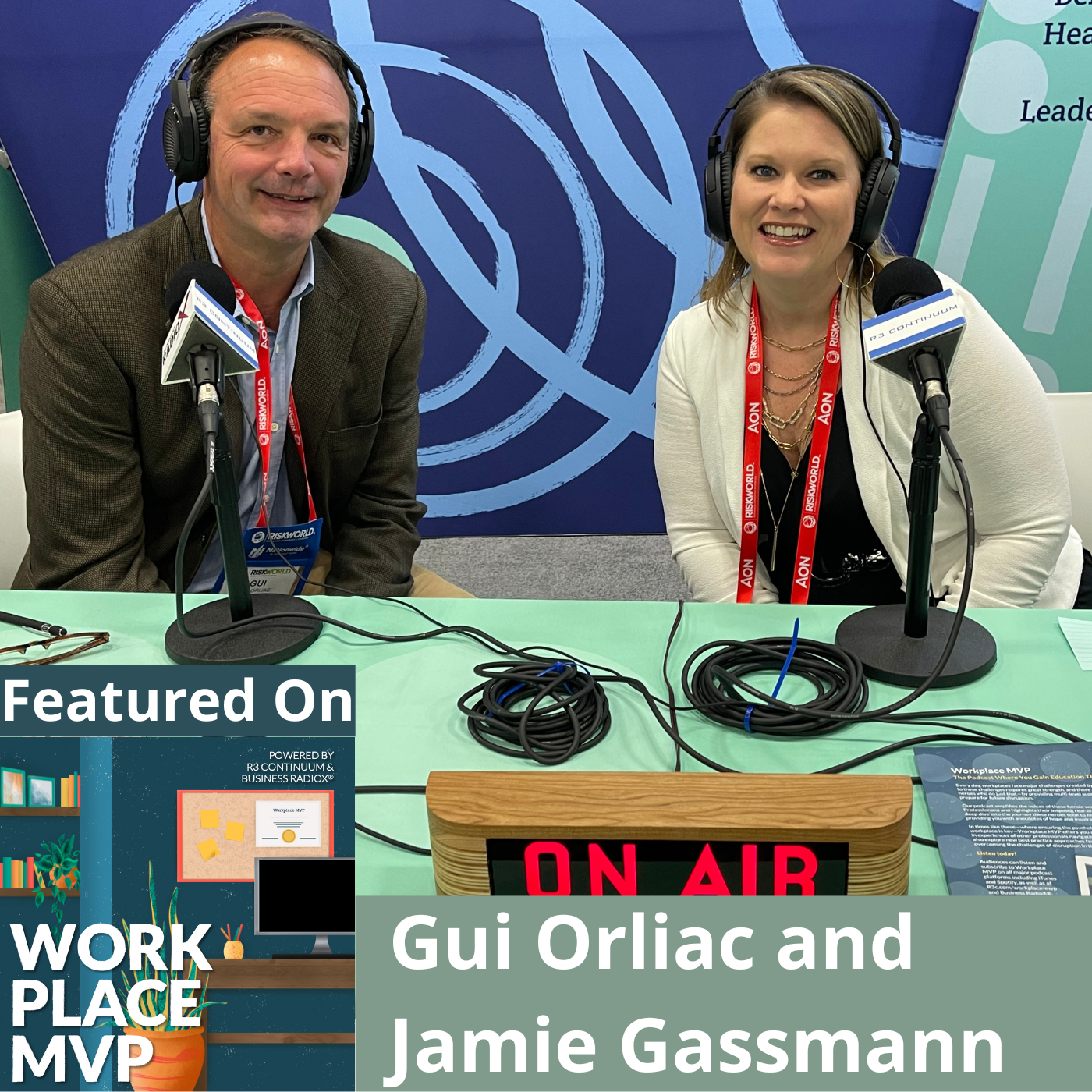
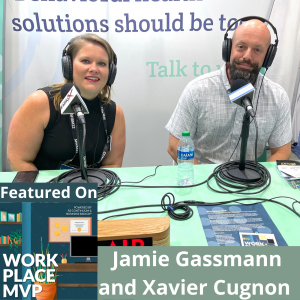
Shari Paul, First Vice President for Alliant, heads all of Alliant’s digital media and sat down with host Jamie Gassmann in the R3 Continuum booth at RISKWORLD 2022. They discussed the value of social media in the insurance industry, the multiple podcasts Alliant has, advice for effectively using social media, podcasting, and more.

Workplace MVP is underwritten and presented by R3 Continuum and produced by the Minneapolis-St.Paul Studio of Business RadioX®.

This show was originally broadcast from the RIMS 2022 RISKWORLD Conference held at the Moscone Center in San Francisco, California.

Shari Paul, First Vice President, Sr. Marketing Manager, Alliant

Shari Paul, First Vice President, Sr. Marketing Manager, Alliant

Shari Paul is First Vice President and Senior Marketing Manager for Alliant Insurance Services. Shari is a data-driven marketing and digital media communications professional with over 20 years of experience within a variety of industries focused on customer acquisition, satisfaction, and retention.

Alliant Insurance Services is among the largest and fastest-growing insurance brokerage and consulting firms in the United States. Fueled by entrepreneurialism and driven by results, Alliant operates on the belief that more is possible and expectations are meant to be exceeded.

Their clients and partners have profound confidence in them to deliver in all market climates through the design and delivery of innovative solutions and services across a broad range of industry verticals.

Alliant’s people stand as the backbone of the organization. They proudly employ a team of diverse, driven, and exceptional people and invest heavily in their success, giving our brokerage and consulting teams the freedom and resources they need to help their clients grow their businesses to remarkable heights. The result is a dynamic team of professionals who consistently perform at the highest level while caring and giving back to causes that impact their communities and the world at large.

Alliant is built on teamwork and collaboration, a philosophy that has guided its growth and evolution for almost 100 years. They rise together to meet challenges, think together to drive innovation, and thrive together in business and in the diverse communities where they operate.

As one of the top 10 largest insurance brokerage firms in the U.S., Alliant combines the power and breadth of big-company resources with a hyper-personalized approach that puts your interests above everything else.

Their culture of entrepreneurialism, collaboration, and innovation gives them the independence and accountability to create solutions that uniquely match your needs. Because when people come first, more is possible.

Company website | Company LinkedIn | Shari Paul LinkedIn

About Workplace MVP

Every day, around the world, organizations of all sizes face disruptive events and situations. Within those workplaces are everyday heroes in human resources, risk management, security, business continuity, and the C-suite. They don’t call themselves heroes though. On the contrary, they simply show up every day, laboring for the well-being of employees in their care, readying the workplace for and planning responses to disruption. This show, Workplace MVP, confers on these heroes the designation they deserve, Workplace MVP (Most Valuable Professionals), and gives them the forum to tell their story. As you hear their experiences, you will learn first-hand, real-life approaches to readying the workplace, responses to crisis situations, and overcoming challenges of disruption. Visit our show archive here.

Workplace MVP Host Jamie Gassmann

Jamie Gassmann, Host, “Workplace MVP”

In addition to serving as the host to the Workplace MVP podcast, Jamie Gassmann is the Director of Marketing at R3 Continuum (R3c). Collectively, she has more than fourteen years of marketing experience. Across her tenure, she has experience working in and with various industries including banking, real estate, retail, crisis management, insurance, business continuity, and more. She holds a Bachelor of Science Degree in Mass Communications with special interest in Advertising and Public Relations and a Master of Business Administration from Paseka School of Business, Minnesota State University.

R3 Continuum

R3 Continuum is a global leader in workplace behavioral health and security solutions. R3c helps ensure the psychological and physical safety of organizations and their people in today’s ever-changing and often unpredictable world. Through their continuum of tailored solutions, including evaluations, crisis response, executive optimization, protective services, and more, they help organizations maintain and cultivate a workplace of wellbeing so that their people can thrive. Learn more about R3c at www.r3c.com.

Company website | LinkedIn | Facebook | Twitter

TRANSCRIPT

Intro: [00:00:02] Broadcasting Live from RISKWORLD 2022 at the Moscone Center in San Francisco, it’s time for Workplace MVP. Brought to you by R3 Continuum, a global leader in helping workplaces thrive during disruptive times. Now, here’s your host.

Jamie Gassmann: [00:00:21] Hi, everyone. Jamie Gassmann here, your host of Workplace MVP, coming to you from RISKWORLD 2022. And with me is Shari Paul. Hi, Shari.

Shari Paul: [00:00:32] Hello.

Jamie Gassmann: [00:00:33] And welcome to the episode. Give me a little background of your role and who you’re with.

Shari Paul: [00:00:38] I am here with Alliant Insurance. We are one of the largest brokers in North America. And I do all of the digital marketing, digital media for the company.

Jamie Gassmann: [00:00:52] Wonderful. And I know you have a very specific topic. I think you guys even have your own podcast. What’s the name of your podcast?

Shari Paul: [00:00:58] We do. We have quite a few podcasts actually, because we have so many different specialties that there is – my gosh – The Financial R&R with Ron and Ryan. That’s one of the most popular ones. We’ve got Digging In with our agribusiness team. And then, just a blanket Alliant specialty podcast.

Jamie Gassmann: [00:01:23] Yeah, kind of covers a whole-.

Shari Paul: [00:01:25] Yes.

Jamie Gassmann: [00:01:25] … kind of-

Shari Paul: [00:01:25] Covers gamut.

Jamie Gassmann: [00:01:26] … gamut of different topics and area of conversations around the industry. And I know one of the things that we were talking about before we jumped on our mics mix was about the power of social media in this industry. So, what are some of your thoughts around that?

Shari Paul: [00:01:42] Absolutely. You know, what’s interesting about the insurance industry is that it’s not very social media — I don’t want to say savvy, but there — it’s hard to get someone on board with doing the social media or seeing the ROI or seeing the value in it. And what we discovered with the pandemic is that there was a lot of opportunities with doing podcasts, with doing the webinars, with doing different type of digital media and digital experiences that worked out phenomenally. So, that’s-

Jamie Gassmann: [00:02:18] Yeah. So, it’s almost like creating an ecosystem from your organization, basically, that extends out of just the in-person opportunities like a conference because, obviously, the last couple of years, it wasn’t as readily available.

Shari Paul: [00:02:31] Right.

Jamie Gassmann: [00:02:31] And you know, virtually, it’s tough to network on a conference virtually.

Shari Paul: [00:02:36] It is.

Jamie Gassmann: [00:02:36] It’s what I’ve found. So, talk to me about, like if somebody was really wanting to put together kind of — from a social media perspective, kind of a program and promoting that internally, how could they build that case internally to kind of get that kind of moving through the ranks?

Shari Paul: [00:02:50] Yeah. What’s great is to find your cheerleaders, right? To find those evangelists of social media. And we have quite a few that have gone out and actually started their own blogs, they post on social media, LinkedIn, Twitter, Instagram almost daily. And from that, what we have found, actually, is we’re getting a lot of press attention. So, we have gotten quite a few journalists reach out to us based on the topics that we’ve been putting out to do interviews. So, it’s actually been phenomenal.

Jamie Gassmann: [00:03:25] Yeah. So, it’s like almost like finding those thought leaders that are willing to present themselves as that in a very public way?

Shari Paul: [00:03:32] Right. I mean, you put a thought leadership piece out or, you know, an article or something like that, or press release, and it’s one dimensional. So, you don’t really get to go into the different thoughts or, you know, it’s just that at that one time. But when you’ve got a lot of people on talking about what’s going on, you get a lot more, I think, bang for the buck there.

Jamie Gassmann: [00:03:56] Yeah, absolutely. And like staying really current with industry trends, and things that you’re seeing and you know, people that might be looking they’re looking for something right now, you know.

Shari Paul: [00:04:05] Absolutely.

Jamie Gassmann: [00:04:05] Not that happened four years ago. They want to know what’s the current world. So, if you’ve got like somebody who maybe is a little hesitant in your organization, but, you know they’re brilliant, you know, what are some of the tactics you’ve used to convince them to get behind your microphone?

Shari Paul: [00:04:20] Constantly asking. Constantly, “Come on, I know you can do it. I know you can do it.” Yes, we’ve had a few that are reluctant, but once you get them going, and they get that first podcast under their belt, then they understand that it’s easy.

Jamie Gassmann: [00:04:35] Yeah. Once they get the taste of that media, right? And the attention.

Shari Paul: [00:04:40] Yeah.

Jamie Gassmann: [00:04:40] Just like all of us, right? We can, like, thrive on that in a way.

Shari Paul: [00:04:45] Absolutely.

Jamie Gassmann: [00:04:45] So, if there was one like leaving, you know, idea or advice or concept you wanted to leave on this episode for anybody that might be listening post-show, what would that be?

Shari Paul: [00:04:57] Just do it. Jump in and do it. You know, you don’t have to worry about equipment. There’s a million different ways to do it. There is lots of, you know, mics and things that you — I mean, we do ours on Zoom, you know. So, we do produce them afterwards. But, you know, just get in there and do it. There are so many topics and so many news items that just, you know, hit the airways, that you’ve got to get something out there quick, and having someone sit down and write something or try to respond to it, it’s not as – it just doesn’t work as well as doing a podcast or or a social media feed.

Jamie Gassmann: [00:05:39] Yeah, wonderful. Well, it’s been great to have you on an episode.

Shari Paul: [00:05:42] Thank you so much.

Jamie Gassmann: [00:05:43] Yes. Thank you so much for joining us. And if somebody wanted to get a hold of you to get more information from you, how can they reach you?

Shari Paul: [00:05:50] www.alliant.com or you can give me an email at shari.paul@alliant.com.

Jamie Gassmann: [00:05:59] Wonderful. Thanks again so much for joining us.

Shari Paul: [00:06:06] Thank you.

Outro: [00:06:06] Thank you for joining us on Workplace MVP. R3 Continuum is a proud sponsor of this show and is delighted to celebrate most valuable professionals who work diligently to secure safe workplaces where employees can thrive.


Tagged With: Alliant Insurance Services, insurance brokerage, Jamie Gassmann, podcasting, R3 Continuum, RIMS, Risk Management, RISKWORLD 2022, Shari Paul, Social Media, Workplace MVP

Introduction to Time Well Spent with Julie Hullett

June 1, 2022 by John Ray

Time Well Spent
North Fulton Studio
Introduction to Time Well Spent with Julie Hullett
Loading
00:00 /
RSS Feed
Share
Link
Embed

Download file

Time Well Spent

Introduction to Time Well Spent with Julie Hullett

Host Julie Hullett introduces her new podcast, Time Well Spent with Julie Hullett, brought to you by Julie Hullett Concierge, LLC. The show will feature stories from busy professionals who have created more time to do what they love, quick tips from Julie on time savings and time management solutions, and much more.

Time Well Spent with Julie Hullett is presented by Julie Hullett Concierge, LLC and produced by the North Fulton studio of Business RadioX®.

About Time Well Spent

Time Well Spent with Julie Hullett features stories from busy professionals who have created more time to do what they love. Every other week, your host and personal concierge Julie Hullett speaks with entrepreneurs, community leaders, and influencers to answer the question: What would you do if you had more time?

The show is produced by the North Fulton studio of Business RadioX® and can be found on all the major podcast apps. The complete show archive is here.

Julie Hullett, Host of Time Well Spent with Julie Hullett

Julie Hullet, Host of Time Well Spent with Julie Hullett

Julie Hullett is the host of Time Well Spent with Julie Hullett.

Julie Hullett is a personal concierge and entrepreneur in Nashville, TN. She founded Julie Hullett Concierge, LLC in 2011 to give people their time back so they can do more of what they love. No stranger to big ideas and pursuing passions, Julie left corporate America to create her business. She capitalized on her skills—multi-tasking, attention to detail, and time management, to name a few—to build a successful business that gives back. Her clients enjoy ample free time. They’ve travelled more, spent more time with those they love, and have even created their own businesses.

Connect with Julie:

Website|  LinkedIn | Instagram . Sign up to receive her newsletter.


Tagged With: Julie Hullett, Nashville, personal concierge, time management, time management solutions, Time Well Spent with Julie Hullett

LIVE from WORKBENCHcon 2022: Char, Woodenmaven

May 31, 2022 by John Ray

Char
North Fulton Studio
LIVE from WORKBENCHcon 2022: Char, Woodenmaven
Loading
00:00 /
RSS Feed
Share
Link
Embed

Download file

Char

LIVE from WORKBENCHcon 2022: Char, Woodenmaven (Organization Conversation, Episode 23)

Char, a woodshop teacher and maker, joined hosts Richard Grove and Stephanie from Uncommon Outpost in the Wall Control booth live at WORKBENCHcon 2022. Char talked about her passion teaching kids of all ages about woodworking, her move to Georgia and friendship with Stephanie, her experiences with negative comments and criticism, her perspective on being a maker, and more.

Organization Conversation is produced by the North Fulton studio of Business RadioX® inside Renasant Bank in Alpharetta.

Char, Woodshop Teacher, Woodenmaven

Char, Woodshop Teacher, Woodenmaven

Char enjoys creating things with her hands and inspiring others to create the life they want to live.

Char grew up in sunny California, spending her days running on the sandy beaches. As any young adult would do after living a structured life, she flew the nest and landed in Georgia.

In her junior year of college, she met her now-husband and they have four adorable and extremely witty children, the youngest of the brood are twins. Between the hilarity of their personalities and organizing their schedules, Char tries to find time to pursue her passions.  She also enjoys decorating cakes and photography.

Connect with Char:  Website |Instagram

About Organization Conversation

Organization Conversation features interviews with movers and shakers in storage and organization, from professional organizers to the creative and talented Brand Ambassadors who use Wall Control products every day. You’ll hear tips, tricks, and how-tos for storage and organization, as well as receive first access to Wall Control promotions. We talk with our suppliers and partners to give you a look behind the scenes at how we operate, what makes our family-owned and operated brand tick, and some of the fun and interesting insights that go into making our business run. We love our guests, as they are engaging and entertaining with interesting experiences to share. By focusing on those guests and the amazing stories they tell, we hope you will be enriched and find your time listening to the Organization Conversation podcast as time well spent.

Organization Conversation is hosted by Richard Grove, and broadcast and produced from the North Fulton studio of Business RadioX® inside Renasant Bank in Alpharetta. You can find the full archive of shows by following this link. The show is available on all the major podcast apps, including Apple Podcasts, Spotify, Google, Amazon, iHeart Radio, and others.

About Richard Grove

Richard Grove, Host, Organization Conversation

Richard Grove‘s background is in engineering but what he enjoys most is brand building through relationships and creative marketing. Richard began his career with the Department of Defense as an engineer on the C-5 Galaxy Engineering Team based out of Warner Robins. While Richard found this experience both rewarding and fulfilling, he always knew deep down that he wanted to return to the small family business that originally triggered his interest in engineering.

Richard came to work for the family business, Dekalb Tool & Die, in 2008 as a Mechanical Engineer. At the time Wall Control was little more than a small ‘side hustle’ for Dekalb Tool & Die to try to produce some incremental income. There were no “Wall Control” employees, just a small warehouse with a single tool and die maker that would double as an “order fulfillment associate” on the occasion that the original WallControl.com website, which Richard’s grandmother built, pulled in an order.

In 2008, it became apparent that for the family business to survive they were going to have to produce their own branded product at scale to ensure jobs remained in-house and for the business to continue to move forward. Richard then turned his attention from tool and die to Wall Control to attempt this necessary pivot and his story with Wall Control began. Since that time, Richard has led Wall Control to significant growth while navigating two recessions.

Connect with Richard:

Instagram | Twitter | LinkedIn

About Wall Control

The Wall Control story began in 1968 in a small tool & die shop just outside Atlanta, Georgia. The first of three generations began their work in building a family-based US manufacturer with little more than hard work and the American Dream.

Over the past 50+ years, this family business has continued to grow and expand from what was once a small tool & die shop into an award-winning US manufacturer of products ranging from automobile components to satellite panels and now, the best wall-mounted tool storage system available today, Wall Control.

The Wall Control brand launched in 2003 and is a family-owned and operated business that not only produces a high-quality American Made product but sees the entire design, production, and distribution process happen under their own roof in Tucker, Georgia. Under that same roof, three generations of American Manufacturing are still hard at work creating the best tool storage products available today.

Connect with Wall Control:

Company website | Facebook | Instagram

Tagged With: Char, Decatur Georgia, makers, Organization Conversation, Richard Grove, Uncommon Outpost, Wall Control, woodenmaven, woodshop teacher, WORKBENCHcon 2022

Michael Cohen, Synergy Financial Partners

May 31, 2022 by John Ray

North Fulton Business Radio
Michael Cohen, Synergy Financial Partners
Loading
00:00 /
RSS Feed
Share
Link
Embed

Download file

Synergy Financial

Michael Cohen, Synergy Financial Partners (North Fulton Business Radio, Episode 463)

As an insurance and annuity specialist, Michael Cohen with Synergy Financial Partners is focused on helping people financially prepare for unexpected events in life. He discussed with host John Ray what insurance with living benefits is, how it’s structured, the features of annuities, health insurance, and much more.

North Fulton Business Radio is broadcast from the North Fulton studio of Business RadioX® inside Renasant Bank in Alpharetta.

Synergy Financial Partners

Synergy Financial Partners (SFP) is an independent financial services company dedicated to changing the way Americans plan for the future.

By offering innovative concepts and products for its customers as well as an entrepreneurial-driven opportunity for its associates, SFP is the emerging leader in the financial services industry.

They believe a company represents a “culture.” At Synergy Financial Partners our culture is based on the coming together of people around a common set of values, beliefs, and purpose. It’s more than products and services, or commissions and income. It is about sharing a common cause. It is about our customers and our associates achieving peace of mind.

Their purpose is to inspire individuals, families, and businesses to seek the well-being and security that comes from being prepared and able to survive the financial challenges and emergencies, thereby offering them the peace of mind to live their life to its greatest potential.

Their goal is to connect with people who believe what we believe and then to work shoulder to shoulder with them in pursuit of a common goal; building a business that gives families the peace of mind that comes from knowing that you have a sound financial plan in place.

If these values and ideals resonate strongly within you, then Synergy Financial Partners is for you!

Company Website |LinkedIn | Facebook | Instagram

Michael Cohen, Insurance and Annuity Specialist, Synergy Financial

Michael Cohen, Insurance and Annuity Specialist, Synergy Financial

Michael Cohen grew up on Long Island and moved to Georgia in 1994.

He has six children ages 15-27 and 3 dogs. He was a DJ at my college radio station and did concert promotions for about 10 years.

He has been in the Logistics industry for over 30 years helping corporations save time and money on their freight expenditure and is a licensed Life, Health, and Annuity specialist with a focus on setting up the proper policies for individuals and families.

Michael Cohen tags himself as The Wealth Protector.

LinkedIn

Questions and Topics in this Interview:

  • Insurance with Living Benefits and its importance
  • Discuss the insurance policy that grows tax-free and can never lose money
  • Annuities
  • Health Insurance
  • Who are some of the people that your products work best for?

North Fulton Business Radio is hosted by John Ray and broadcast and produced from the North Fulton studio of Business RadioX® inside Renasant Bank in Alpharetta. You can find the full archive of shows by following this link. The show is available on all the major podcast apps, including Apple Podcasts, Spotify, Google, Amazon, iHeart Radio, Stitcher, TuneIn, and others.

RenasantBank


Renasant Bank has humble roots, starting in 1904 as a $100,000 bank in a Lee County, Mississippi, bakery. Since then, Renasant has grown to become one of the Southeast’s strongest financial institutions with over $13 billion in assets and more than 190 banking, lending, wealth management and financial services offices in Mississippi, Alabama, Tennessee, Georgia and Florida. All of Renasant’s success stems from each of their banker’s commitment to investing in their communities as a way of better understanding the people they serve. At Renasant Bank, they understand you because they work and live alongside you every day.


Special thanks to A&S Culinary Concepts for their support of this edition of North Fulton Business Radio. A&S Culinary Concepts, based in Johns Creek, is an award-winning culinary studio, celebrated for corporate catering, corporate team building, Big Green Egg Boot Camps, and private group events. They also provide oven-ready, cooked from scratch meals to go they call “Let Us Cook for You.” To see their menus and events, go to their website or call 678-336-9196.

Tagged With: A&S Culinary Concepts, annuities, health insurance, insurance, michael cohen, North Fulton Business Radio, renasant bank, Synergy Financial Partners

LIVE from RISKWORLD 2022: Claudia Schmiedhuber, EURAMI

May 31, 2022 by John Ray

Eurami
Minneapolis St. Paul Studio
LIVE from RISKWORLD 2022: Claudia Schmiedhuber, EURAMI
Loading
00:00 /
RSS Feed
Share
Link
Embed

Download file

Eurami

LIVE from RISKWORLD 2022: Claudia Schmiedhuber, EURAMI

At her first RISKWORLD conference, Claudia Schmiedhuber, Managing Director at EURAMI, joined Jamie Gassmann live in the R3 Continuum booth. Claudia shared why EURAMI decided to attend, what they do and who they serve, and more.

Workplace MVP is underwritten and presented by R3 Continuum and produced by the Minneapolis-St.Paul Studio of Business RadioX®.

This show was originally broadcast from the RIMS 2022 RISKWORLD Conference held at the Moscone Center in San Francisco, California.

Claudia Schmiedhuber, Managing Director, EURAMI

Claudia Schmiedhuber, Managing Director, EURAMI

Founded in 1992 the European Aero-Medical Institute e.V. – commonly known as EURAMI – is a nonprofit organization, with its base in Cologne, Germany. EURAMI has established itself as an indicator for Excellence, Quality and Safety in Aero-Medical Transportation. Founded by the leading aeromedical providers in the world, it has since developed into a globally recognized institution with more than 50 accredited providers worldwide.

EURAMI strives to increase and promote the best patient care by creating and publishing standards in the field of Fixed Wing Air Ambulance, Rotary Wing Air Ambulance as well as Commercial Airline Medical Escort.

EURAMI’s membership consists of accredited providers, associated members as well as individual and corporate members who are supporting their mission and development.

Claudia Schmiedhuber is Managing Director for EURAMI and lives in Vienna, Austria.

Company website | Company LinkedIn | Claudia Schmiedhuber LinkedIn

About Workplace MVP

Every day, around the world, organizations of all sizes face disruptive events and situations. Within those workplaces are everyday heroes in human resources, risk management, security, business continuity, and the C-suite. They don’t call themselves heroes though. On the contrary, they simply show up every day, laboring for the well-being of employees in their care, readying the workplace for and planning responses to disruption. This show, Workplace MVP, confers on these heroes the designation they deserve, Workplace MVP (Most Valuable Professionals), and gives them the forum to tell their story. As you hear their experiences, you will learn first-hand, real-life approaches to readying the workplace, responses to crisis situations, and overcoming challenges of disruption. Visit our show archive here.

Workplace MVP Host Jamie Gassmann

Jamie Gassmann, Host, “Workplace MVP”

In addition to serving as the host to the Workplace MVP podcast, Jamie Gassmann is the Director of Marketing at R3 Continuum (R3c). Collectively, she has more than fourteen years of marketing experience. Across her tenure, she has experience working in and with various industries including banking, real estate, retail, crisis management, insurance, business continuity, and more. She holds a Bachelor of Science Degree in Mass Communications with special interest in Advertising and Public Relations and a Master of Business Administration from Paseka School of Business, Minnesota State University.

R3 Continuum

R3 Continuum is a global leader in workplace behavioral health and security solutions. R3c helps ensure the psychological and physical safety of organizations and their people in today’s ever-changing and often unpredictable world. Through their continuum of tailored solutions, including evaluations, crisis response, executive optimization, protective services, and more, they help organizations maintain and cultivate a workplace of wellbeing so that their people can thrive. Learn more about R3c at www.r3c.com.

Company website | LinkedIn | Facebook | Twitter

TRANSCRIPT

Intro: [00:00:03] Broadcasting Live from RISKWORLD 2022 at the Moscone Center in San Francisco. It’s time for workplace MVP brought to you by R3 Continuum, a global leader in helping workplaces thrive during disruptive times. Now, here’s your host.

Jamie Gassmann: [00:00:22] Hi, everyone. Your host Jamie Gassman here. And I am broadcasting from RISKWORLD 2022 in R3 Continuum’s booth, our show sponsor. And joining me is Claudia Schmiedhuber. Welcome to our show, Claudia.

Claudia Schmiedhuber: [00:00:36] Thank you for having me.

Jamie Gassmann: [00:00:37] So, tell me, who are you with? What company are you with?

Claudia Schmiedhuber: [00:00:41] So, I’m with EURAMI. We’re the European Aero-Medical Institute. And we’re actually based out of Cologne, Germany. So, a long way from here.

Jamie Gassmann: [00:00:48] Yeah, it’s a long way from here.

Claudia Schmiedhuber: [00:00:50] It is, but we’re happy to be-

Jamie Gassmann: [00:00:50] How long was the flight?

Claudia Schmiedhuber: [00:00:51] Oh, it’s about like a 20-hour trip, but definitely worth it so far. So, I’m very happy to be here.

Jamie Gassmann: [00:00:57] Wonderful. And I know, you shared with me that this is your first time coming to a RIMS event.

Claudia Schmiedhuber: [00:01:02] It is, it is. And it’s very exciting to be here. And has been really great. And yeah, I’m very happy that I took that long trip.

Jamie Gassmann: [00:01:09] Yeah. So, now, have you been attending a lot of different sessions and kind of experiencing some of those different, like, educational opportunities?

Claudia Schmiedhuber: [00:01:17] Absolutely. I just joined the aviation session, which, for us, obviously, was a must go-to. And it was amazing and very, very interesting input and everything. And yeah, a lot of other good sessions on mental health. And I think it’s a good mixture. So, for me, meeting the people that I normally don’t meet because it’s the first time, and it’s not really the industry we normally operate in, combined with the educational factor, it’s just been amazing so far.

Jamie Gassmann: [00:01:41] Yeah. Any standouts that — I know you mentioned the aviation one and some mental health, but are there any particular, you know, takeaways or like a session you attended, and you’re like, “Oh, my gosh. That is — I’m going to bring that back and put that right into action”?

Claudia Schmiedhuber: [00:01:54] To be honest, almost everything, because our industry is such a niche industry, the aero medical industry that we operate in. And I know that the risk management industry, it’s actually something that I think we have a lot of synergies with, but we haven’t really been in contact so far. So, for me — and that’s also the reason why I wanted to attend RIMS for the first time is really to find out where we connect, and what we have in common together, and where the synergies lie.

So, it’s been really great. And I already briefed our board and said, “You know, this is really worth attending. And we’ll definitely try to get more involved for the next time, and then bring our industry and what we do,” which I think is a very good part and very important part of risk management when it comes to your staff, your employees, and then your health and duties of care and everything. So, yeah, I’m bringing back a lot. And also a lot of good goodies, so.

Jamie Gassmann: [00:02:43] Oh, absolutely.

Claudia Schmiedhuber: [00:02:44] We have alot-

Jamie Gassmann: [00:02:45] You can’t forget about the tchotchkes and swag on the table, right?

Claudia Schmiedhuber: [00:02:48] Oh, perfect. Yeah. They’re amazing.

Jamie Gassmann: [00:02:49] Awesome. I hope you brought a separate suitcase. So, I’ve seen some people grab a lot of stuff in the past.

Claudia Schmiedhuber: [00:02:54] Actually, I think I have to get another one because there’s a really good stuff here.

Jamie Gassmann: [00:02:58] Goodness.

Claudia Schmiedhuber: [00:02:58] Yeah, definitely.

Jamie Gassmann: [00:02:58] That’s fantastic. So, let’s spend a little bit of time talking about what your organization does. I know you’re seeing a really nice kind of connection with RIMS. So, can you tell me a little bit about what your organization does?

Claudia Schmiedhuber: [00:03:11] So, EURAMI or the European Aero-Medical Institute is basically a global accreditation organization for aeromedical transportation, which includes rotary wing, fixed wing and commercial airline medical escorts. So, we are the guys that bring you back when you’re injured, or sick, or needs transportation, needs support getting home from abroad, either when you’re on vacation or on a business trip, or when you’re simply an expatriate or for whatever reason when you’re not in your home country. So, our providers – and we have more than 55 all over the world – do support that and help people do that.

Jamie Gassmann: [00:03:49] Great. So, if I’m a customer of yours, and I’ve got an employee traveling to another country, talk me through kind of a scenario of when your services would be like most applicable and how that would benefit me.

Claudia Schmiedhuber: [00:04:01] So, EURAMI itself, we do not operationally bring anyone back. We do accredit our members. So, then, those members are providers that are the operation part of that. What we do is basically assure that if you work with an EURAMI provider, if you use a EURAMI provider, you get excellence, you get quality, and you got the utmost patient care that you can have. So, if you are abroad or sick, you always or should always have travel insurance, for example or if I send my staff abroad, you have expatriate insurance.

So, the first thing to do would be to call that assistance company, that medical assistance company that works with your insurance company. And then, they start the process by, first of all, evaluating like, how sick is that person? How injured is the person? Is the quality on-site really good enough? Is it sufficient? Does it have to be transported to another hospital or does it have to be transported back? And that’s where we come into place.

So, basically, once the medical assistance company, which is also a big part of our industry, and our the clients or our providers says, “Okay, this person’s fit to fly. We need to bring them back because there’s not sufficient medical care,” our providers step into action, and they basically arrange everything from flight permits, landing permits, to making sure that you have the adequate medication on board, you have the equipment on board.

It’s really a flying ICU. So, you’re only allowed to have very highly qualified staff, doctors, nurses, paramedic. And then, they step into the aircraft and fly wherever you are all around the world where that’s far away or where that’s very close. And they bring you back safely, and make sure that even though you’re in a horrible situation, you feel cared for, and you feel supported and that we make the situation a little bit better as much as we can.

Jamie Gassmann: [00:05:48] Wow. Because, you know, that’s obviously so scary for somebody who’s-

Claudia Schmiedhuber: [00:05:52] Absolutely.

Jamie Gassmann: [00:05:53] … in a, you know, a foreign country-

Claudia Schmiedhuber: [00:05:56] Absolutely.

Jamie Gassmann: [00:05:56] … and not sure of what kind of health care they might have available. They know they need something. And to to know they’ve got that opportunity to have somebody there is fantastic.

Claudia Schmiedhuber: [00:06:03] Absolutely. And I’ve worked as a flight paramedic myself. So, I started a few years back already. And really, it’s the most amazing feeling when you’re able to help someone, and you go there, and you really see grown-up men, and they just burst into tears when they see you because it’s such a stressful situation. You’re not only far away from home, but you’re suffering a horrible injury or, you know, sickness, and you don’t understand the language maybe, or just out of your comfort zone, and you’re not surrounded by your family and the support system you normally have. You don’t understand the medical system maybe there. And it’s really a very, very horrendous situation to be in. So, we’re really glad when we can help these people, and we can really support them, and we show them kindness and humanity, and make sure that we, as I said, make that horrible situation a little bit better.

Jamie Gassmann: [00:06:55] Yeah, that’s amazing. Well, I am so glad you joined us today, so we could hear about that. That’s one of the great things about coming to a show like this is to hear about services like what your organization helps to provide to carriers in helping to make sure they’ve got that access. So, that’s that’s fantastic.

Claudia Schmiedhuber: [00:07:12] Absolutely. Well, thank you for having me.

Jamie Gassmann: [00:07:13] Yeah.

Claudia Schmiedhuber: [00:07:13] It was a great pleasure.

Jamie Gassmann: [00:07:14] So, if somebody wanted to connect with you and kind of get a little bit more information or figure out how they could become a part of your group, how would they do that?

Claudia Schmiedhuber: [00:07:23] So, you can just Google us, EURAMI. So, this is just EURAMI just www.eurami.org, or simply look up my name, Claudia Schmiedhuber, which is very hard to pronounce probably for all English speakers, and just connect with us. But we are a European Aero-Medical Institute, so you should find us. We’re quite tech-savvy already. So, not hard to miss.

Jamie Gassmann: [00:07:48] Yeah. Wonderful. Well, thank you again for joining us. It’s been great chatting.

Claudia Schmiedhuber: [00:07:51] Thank you so much. And look forward to seeing you soon. Yes.

Outro: [00:07:59] Thank you for joining us on Workplace MVP. R3 Continuum is a proud sponsor of this show. And is delighted to celebrate most valuable professionals who work diligently to secure safe workplaces where employees can thrive.
 

Tagged With: air ambulance, Claudia Schmiedhuber, EURAMI, Jamie Gassmann, Medical Escort, medical transport, R3 Continuum, RISKWORLD 2022, Workplace MVP

  • « Previous Page
  • 1
  • …
  • 132
  • 133
  • 134
  • 135
  • 136
  • …
  • 276
  • Next Page »

Business RadioX ® Network


Our Most Recent Episode

CONNECT WITH US

  • Email
  • Facebook
  • LinkedIn
  • Twitter
  • YouTube

Our Mission

We help local business leaders get the word out about the important work they’re doing to serve their market, their community, and their profession.

We support and celebrate business by sharing positive business stories that traditional media ignores. Some media leans left. Some media leans right. We lean business.

Sponsor a Show

Build Relationships and Grow Your Business. Click here for more details.

Partner With Us

Discover More Here

Terms and Conditions
Privacy Policy

Connect with us

Want to keep up with the latest in pro-business news across the network? Follow us on social media for the latest stories!
  • Email
  • Facebook
  • Google+
  • LinkedIn
  • Twitter
  • YouTube

Business RadioX® Headquarters
1000 Abernathy Rd. NE
Building 400, Suite L-10
Sandy Springs, GA 30328

© 2025 Business RadioX ® · Rainmaker Platform

BRXStudioCoversLA

Wait! Don’t Miss an Episode of LA Business Radio

BRXStudioCoversDENVER

Wait! Don’t Miss an Episode of Denver Business Radio

BRXStudioCoversPENSACOLA

Wait! Don’t Miss an Episode of Pensacola Business Radio

BRXStudioCoversBIRMINGHAM

Wait! Don’t Miss an Episode of Birmingham Business Radio

BRXStudioCoversTALLAHASSEE

Wait! Don’t Miss an Episode of Tallahassee Business Radio

BRXStudioCoversRALEIGH

Wait! Don’t Miss an Episode of Raleigh Business Radio

BRXStudioCoversRICHMONDNoWhite

Wait! Don’t Miss an Episode of Richmond Business Radio

BRXStudioCoversNASHVILLENoWhite

Wait! Don’t Miss an Episode of Nashville Business Radio

BRXStudioCoversDETROIT

Wait! Don’t Miss an Episode of Detroit Business Radio

BRXStudioCoversSTLOUIS

Wait! Don’t Miss an Episode of St. Louis Business Radio

BRXStudioCoversCOLUMBUS-small

Wait! Don’t Miss an Episode of Columbus Business Radio

Coachthecoach-08-08

Wait! Don’t Miss an Episode of Coach the Coach

BRXStudioCoversBAYAREA

Wait! Don’t Miss an Episode of Bay Area Business Radio

BRXStudioCoversCHICAGO

Wait! Don’t Miss an Episode of Chicago Business Radio

Wait! Don’t Miss an Episode of Atlanta Business Radio