Business RadioX ®

  • Home
  • Business RadioX ® Communities
    • Southeast
      • Alabama
        • Birmingham
      • Florida
        • Orlando
        • Pensacola
        • South Florida
        • Tampa
        • Tallahassee
      • Georgia
        • Atlanta
        • Cherokee
        • Forsyth
        • Greater Perimeter
        • Gwinnett
        • North Fulton
        • North Georgia
        • Northeast Georgia
        • Rome
        • Savannah
      • Louisiana
        • New Orleans
      • North Carolina
        • Charlotte
        • Raleigh
      • Tennessee
        • Chattanooga
        • Nashville
      • Virginia
        • Richmond
    • South Central
      • Arkansas
        • Northwest Arkansas
    • Midwest
      • Illinois
        • Chicago
      • Michigan
        • Detroit
      • Minnesota
        • Minneapolis St. Paul
      • Missouri
        • St. Louis
      • Ohio
        • Cleveland
        • Columbus
        • Dayton
    • Southwest
      • Arizona
        • Phoenix
        • Tucson
        • Valley
      • Texas
        • Austin
        • Dallas
        • Houston
    • West
      • California
        • Bay Area
        • LA
        • Pasadena
      • Colorado
        • Denver
      • Hawaii
        • Oahu
  • FAQs
  • About Us
    • Our Mission
    • Our Audience
    • Why It Works
    • What People Are Saying
    • BRX in the News
  • Resources
    • BRX Pro Tips
    • B2B Marketing: The 4Rs
    • High Velocity Selling Habits
    • Why Most B2B Media Strategies Fail
    • 9 Reasons To Sponsor A Business RadioX ® Show
  • Partner With Us
  • Veteran Business RadioX ®

LIVE from RISKWORLD 2022: Pamela Bradshaw, Varsity Brands

May 3, 2022 by John Ray

Pamela Bradshaw
Minneapolis St. Paul Studio
LIVE from RISKWORLD 2022: Pamela Bradshaw, Varsity Brands
Loading
00:00 /
RSS Feed
Share
Link
Embed

Download file

Pamela Bradshaw

LIVE from RISKWORLD 2022: Pamela Bradshaw, Varsity Brands

Live from the R3 Continuum booth at RISKWORLD 2022, Pamela Bradshaw, Director of Risk Management at Varsity Brands, stopped by to talk with host Jamie Gassmann. While Pamela has attended numerous RISKWORLD conferences, this was her first with Varsity Brands. She shared the details of her conference presentation, which focused on young risk professionals and bridging knowledge between generations, bringing DEI front and center, encouraging the younger generations to continue creating positive change, and much more.

Workplace MVP is underwritten and presented by R3 Continuum and produced by the Minneapolis-St.Paul Studio of Business RadioX®.

This show was originally broadcast from the RIMS 2022 RISKWORLD Conference held at the Moscone Center in San Francisco, California.

Pamela Bradshaw, Director of Risk Management, Varsity Brands

Pamela Bradshaw, Director of Risk Management, Varsity Brands

Pamela Bradshaw is Director of Risk Management for Varsity Brands and joined the company this year.

She has over 30 years of success and experience in Corporate Claims and Risk Management with public and privately-held organizations in the Retail, Restaurant, Oil/Gas, Manufacturing, Direct Selling, and Insurance industries.

As part of the DFW RIMS Chapter, she had a presentation at RISKWORLD 2022 focused on the next generation and young risk professionals.

LinkedIn


Varsity Brands

Varsity Brands is  BSN Sports, the recognized leader in team athletic gear, Varsity Spirit, the driving force in spirit, and Herff Jones, the most trusted name in celebrating student milestones.

They partner with educators, coaches, and students to build school pride, student engagement, and community spirit.

With a mission to inspire achievement and create memorable experiences for young people, Varsity Brands elevates the student experience, promotes participation and celebrates achievement through three unique but interrelated businesses: BSN SPORTS, a Varsity Sport Brand; Varsity Spirit; and Herff Jones, A Varsity Achievement Brand. Together, these assets promote personal, school, and community pride through their customizable products and programs to elementary and middle schools, high schools, colleges and universities, as well as church organizations, professional and collegiate sports teams, and corporations. Through its dedicated employees and independent representatives, Varsity Brands reaches its individual and institutional customers each year through competitions, camps and sales.

Company website | LinkedIn

About Workplace MVP

Every day, around the world, organizations of all sizes face disruptive events and situations. Within those workplaces are everyday heroes in human resources, risk management, security, business continuity, and the C-suite. They don’t call themselves heroes though. On the contrary, they simply show up every day, laboring for the well-being of employees in their care, readying the workplace for and planning responses to disruption. This show, Workplace MVP, confers on these heroes the designation they deserve, Workplace MVP (Most Valuable Professionals), and gives them the forum to tell their story. As you hear their experiences, you will learn first-hand, real-life approaches to readying the workplace, responses to crisis situations, and overcoming challenges of disruption. Visit our show archive here.

Workplace MVP Host Jamie Gassmann

Jamie Gassmann, Host, “Workplace MVP”

In addition to serving as the host to the Workplace MVP podcast, Jamie Gassmann is the Director of Marketing at R3 Continuum (R3c). Collectively, she has more than fourteen years of marketing experience. Across her tenure, she has experience working in and with various industries including banking, real estate, retail, crisis management, insurance, business continuity, and more. She holds a Bachelor of Science Degree in Mass Communications with special interest in Advertising and Public Relations and a Master of Business Administration from Paseka School of Business, Minnesota State University.

R3 Continuum

R3 Continuum is a global leader in workplace behavioral health and security solutions. R3c helps ensure the psychological and physical safety of organizations and their people in today’s ever-changing and often unpredictable world. Through their continuum of tailored solutions, including evaluations, crisis response, executive optimization, protective services, and more, they help organizations maintain and cultivate a workplace of wellbeing so that their people can thrive. Learn more about R3c at www.r3c.com.

Company website | LinkedIn | Facebook | Twitter

TRANSCRIPT

Intro: [00:00:03] Broadcasting live from Riskworld 2022 at the Moscone Center in San Francisco, it’s time for Workplace MVP. Brought to you by R3 Continuum, a global leader in helping workplaces thrive during disruptive times. Now, here’s your host.

Jamie Gassmann: [00:00:22] Hi, everyone. Your host, Jamie Gassmann here, broadcasting to you from Riskworld 2022 at the R3 Continuum booth. And joining me is Pamela Bradshaw from Varsity Brands. Welcome, Pamela.

Pamela Bradshaw: [00:00:35] Thank you. Thank you for having me.

Jamie Gassmann: [00:00:37] So, tell us a little bit about what Varsity Brands does.

Pamela Bradshaw: [00:00:40] Yes. Varsity Brands is based in Farmers Branch, Texas, which is Dallas, Texas, comprised of three corporations. BSN Sports, which you’ve seen all the high school and collegiate sports, whether it’s football, basketball, tennis uniforms. We do the apparel as well as distribution and sales. Another company is called Varsity Spirit, and you’ve heard of cheerleaders, so you have the cheerleading competition, dance competitions, and all the products related to that for sales. And, also, Herff Jones. Herff Jones is an older company of Varsity Brands. I know you’ve seen all the class rings, and diplomas, and cap and gowns, and so we manufacture those as well.

Jamie Gassmann: [00:01:19] Wonderful. And so, what is your role at Varsity Brands? What do you do for them?

Pamela Bradshaw: [00:01:24] Sure. I am the Director of Risk Management. I oversee all the procurement for all the insurance programs, the insurance renewals, oversee the claims, also oversee anything related to risk control. And I’m new to the company I just joined the company actually a couple of weeks ago.

Jamie Gassmann: [00:01:38] Oh, wonderful. So, is this the first time you’ve been to RIMS or have you come a couple of times?

Pamela Bradshaw: [00:01:42] Actually, gosh, I’ve been in the industry over 35 years, so I’ve been at least 10 or 15 RIMS conferences. And this has been, of course, the first for a lot of us due to the pandemic in the last two years. So, happy to be here.

Jamie Gassmann: [00:01:54] Wonderful. I know we’re in day two of it, but how’s it been going for you so far in terms of sessions and other things that you’ve been sitting through?

Pamela Bradshaw: [00:02:01] So far busy meeting with our broker. I have another meeting after this, as a matter of fact. But highlighting my session today, that’s the main reason why I’m here is for the session that I’m a part of. I’m part of the DFW RIMS Chapter, and I submitted a session regarding our next generation in the upcoming risk professional, the minority perspective. And so, that’s today at 1:30 p.m. in Room 205, so a little plug there.

Jamie Gassmann: [00:02:28] Yeah. Absolutely. And so, tell me a little bit about what are some of the things you’re going to be covering in that presentation and talking about?

Pamela Bradshaw: [00:02:33] Sure. I have a panelist – actually, there’s three panelists of young risk professionals. We really want to focus on how the next generation sort of can bridge the gap. As I mentioned before, a lot of us who have been in the industry for some time, we noticed that there’s a gap over the years in terms of training as far as developing the young professional so that they can take on the jobs and responsibilities that we have in their organizations from a risk perspective.

Pamela Bradshaw: [00:03:02] And specifically for the minority, I do have a panelist as an Asian-American, I have an African American male, I also have a black female, she’s actually South African. And so, we want to make sure that they feel included from a DEI perspective. I think that a lot of companies toot their horn on being inclusive and also being a DEI corporation, but we’re noticing there’s not enough action in making sure that there’s representation of these individuals. And so, that’s the focus.

Jamie Gassmann: [00:03:32] That’s fantastic. So, it’s not just words that are being spoken, but actually putting something into motion that’s going to help to kind of address building that program from an inclusive perspective.

Pamela Bradshaw: [00:03:42] Absolutely.

Jamie Gassmann: [00:03:42] And in a way, the presentation sounds like you’re kind of helping them to establish that legacy of professionals that’ll be coming up the chain of command. That’s incredible.

Pamela Bradshaw: [00:03:52] Absolutely. We see in our industry a lot of retirements. And due to, of course, the migration, if you will, great resignation, if you will, what’s happening post-pandemic, it’s very, very vital that we make sure that our industry survives, not just from the technical piece of it, but just the equality from equal pay, from making sure that we’re in the room, making sure that that glass ceiling is not concrete.

Pamela Bradshaw: [00:04:20] So, we want to make sure they understand that they can and achieve anything they want to achieve in this industry, just as we have. It’s just that we were a little bit shy about it from being a black female. In particular, we were quite a bit shy coming up and fearful that there would be retaliation if we spoke up.

Pamela Bradshaw: [00:04:39] I think this generation, the generations coming up, the millennials and the Gen X, Y and Z, they’re speaking out. And I think it’s fair to say that because of their voices being heard, the companies are now understanding because they are the consumer and the buyer, not just from risk management for all industries, but it’s important that we listen and make sure that we listen to them.

Jamie Gassmann: [00:05:01] Absolutely. And there’s so much value in having a very diverse work environment. I mean, there’s so many perspectives that different individuals can bring to a conversation, even business decisions.

Pamela Bradshaw: [00:05:12] Absolutely.

Jamie Gassmann: [00:05:12] That, you know, if just one mind and one approach, you’re losing an opportunity for some comprehensive, more integrated approaches that can actually strengthen your business’s outcome. So, that’s fantastic.

Pamela Bradshaw: [00:05:25] And ultimately increase sales, because your reach is a lot farther than if you just stay a homogeneous product, your reach is definitely a lot farther. And the ideas that come again from, not just the the younger generation, but from a cultural standpoint you’re reaching is just so much further to the audience and to the ultimate consumer.

Jamie Gassmann: [00:05:44] Yeah. Well, and your employees perform better when they feel like they have inclusive leadership, when they feel like they have a leader that wants to take that time to understand what makes them tick as a human. And tapping into some of those perspectives and strengths that they have.

Jamie Gassmann: [00:06:02] I love that your presentation is creating empowerment is the word that’s coming to my mind as I’m listening to you. Empowering people to let your voice be heard and bring your story to the leaders at your organization. So, that’s fantastic.

Pamela Bradshaw: [00:06:15] Absolutely. And I’m excited. I think that there’s quite a few young professionals here in the risk industry, and so they’re eager. They want to learn. They’re ready to learn. And we have to be responsive to that.

Jamie Gassmann: [00:06:29] Yeah. So, I always ask my guests that are speakers the three takeaways that you want that audience to be left with that when they walk out of that room after hearing that panel, what would they be?

Pamela Bradshaw: [00:06:42] I would say, number one, that we hear you. Number two, that we are learning to understand you. I think as a seasoned professional, we have a tendency to think that we know it all and that we’ve learned so much that we can’t quite see the fact that the younger ones, we can learn just as much from them as we do from each other as seasoned risk professionals. And then, I would say, the speak up, speak out. Continue to do that, because I truly believe the next generation, they are going to change the world and they’re going to change the way that we do business.

Pamela Bradshaw: [00:07:18] Especially post-pandemic, things are not going to be the same. I think we need to get over that. They’re not going to be the same. And so, how do we develop a new normal, a new way of thinking, and the younger generations are definitely showing us and telling us that they’re willing, ready, and able to do that.

Jamie Gassmann: [00:07:37] That sounds like a wonderful presentation. I wish you luck. I hope it goes well. I’m sure it will. Just hearing the topic and how you’re presenting it here on the show, I know you’re going do a fantastic job.

Pamela Bradshaw: [00:07:47] Thank you so much. And I appreciate your time for having me.

Jamie Gassmann: [00:07:51] Absolutely. Thanks for being a guest.

Pamela Bradshaw: [00:07:53] You’re welcome. Thank you.

Outro: [00:07:57] Thank you for joining us on Workplace MVP. R3 Continuum is a proud sponsor of this show, and is delighted to celebrate most valuable professionals who work diligently to secure safe workplaces where employees can thrive.


Tagged With: DEI, Jamie Gassmann, Pamela Bradshaw, R3 Continuum, Risk Management, RISKWORLD 2022, Varsity Brands

LIVE from WORKBENCHcon 2022: Rob Rein, Ginger Woodworks

May 3, 2022 by John Ray

Ginger Woodworks
North Fulton Studio
LIVE from WORKBENCHcon 2022: Rob Rein, Ginger Woodworks
Loading
00:00 /
RSS Feed
Share
Link
Embed

Download file

Ginger Woodworks

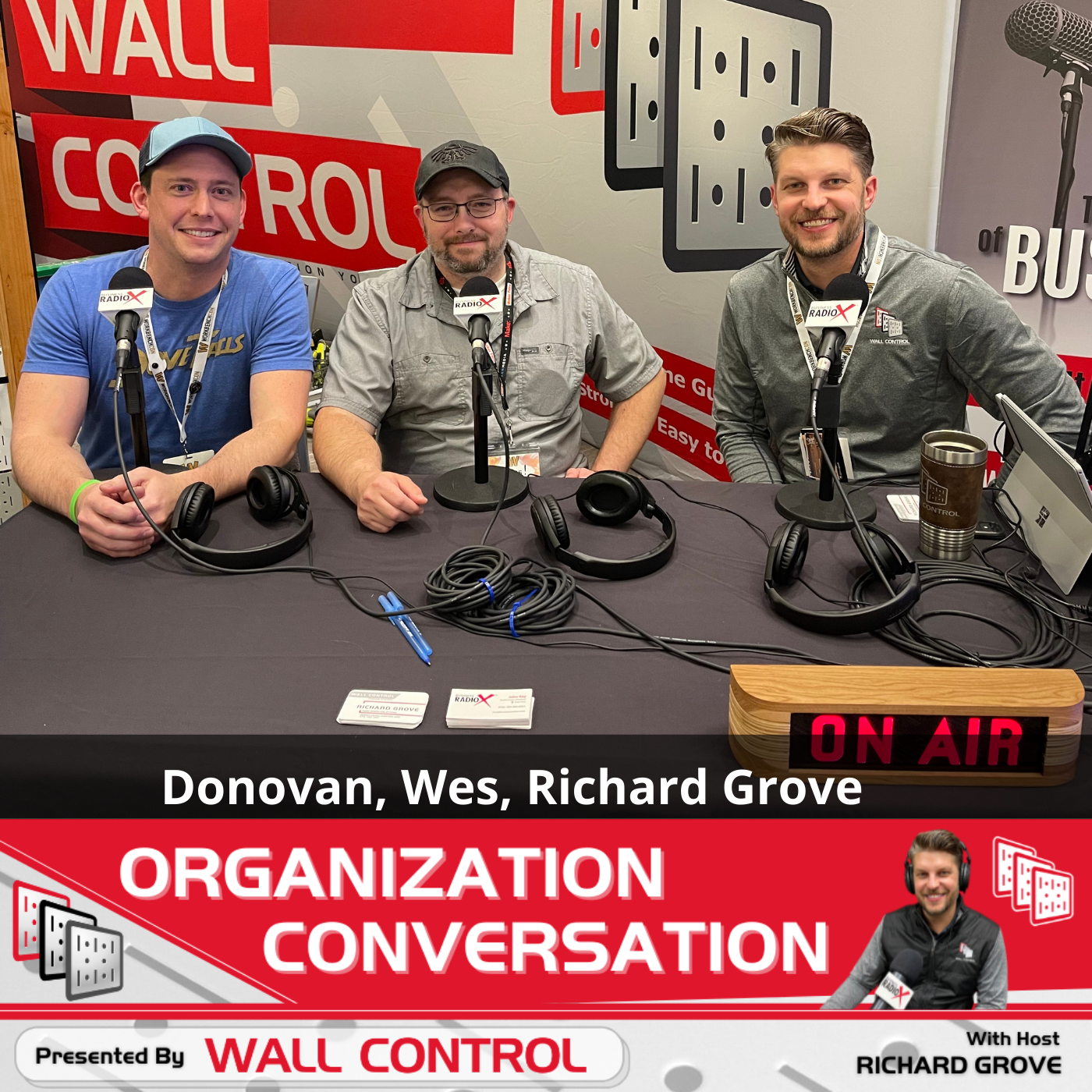
LIVE from WORKBENCHcon 2022: Rob Rein, Ginger Woodworks (Organization Conversation, Episode 17)

Rob Rein, owner of Ginger Woodworks joined Richard Grove on this live episode of Organization Conversation, broadcast from WORKBENCHcon 2022. Rob talked about how Ginger Woodworks came about, his love of the maker community, building relationships, and much more.

Organization Conversation is produced by the North Fulton studio of Business RadioX® inside Renasant Bank in Alpharetta.

Rob Rein, Ginger Woodworks

Rob Rein, Ginger Woodworks

In 2016, Rob set out to build a few projects with my kids. When one backyard playhouse quickly turned into other projects around the house, he realized he had an opportunity to teach his kids how to build cool stuff and work hard.

As a Christian father and husband, Rob believes it is his duty to inspire my family and those he can reach.  He appreciatse every follow, like, and view of any project that comes out of the Ginger Workshop.

Connect with Rob:  Website |Instagram | TikTok | Facebook

About Organization Conversation

Organization Conversation features interviews with movers and shakers in storage and organization, from professional organizers to the creative and talented Brand Ambassadors who use Wall Control products every day. You’ll hear tips, tricks, and how-tos for storage and organization, as well as receive first access to Wall Control promotions. We talk with our suppliers and partners to give you a look behind the scenes at how we operate, what makes our family-owned and operated brand tick, and some of the fun and interesting insights that go into making our business run. We love our guests, as they are engaging and entertaining with interesting experiences to share. By focusing on those guests and the amazing stories they tell, we hope you will be enriched and find your time listening to the Organization Conversation podcast as time well spent.

Organization Conversation is hosted by Richard Grove, and broadcast and produced from the North Fulton studio of Business RadioX® inside Renasant Bank in Alpharetta. You can find the full archive of shows by following this link. The show is available on all the major podcast apps, including Apple Podcasts, Spotify, Google, Amazon, iHeart Radio, and others.

About Richard Grove

Richard Grove, Host, Organization Conversation

Richard Grove‘s background is in engineering but what he enjoys most is brand building through relationships and creative marketing. Richard began his career with the Department of Defense as an engineer on the C-5 Galaxy Engineering Team based out of Warner Robins. While Richard found this experience both rewarding and fulfilling, he always knew deep down that he wanted to return to the small family business that originally triggered his interest in engineering.

Richard came to work for the family business, Dekalb Tool & Die, in 2008 as a Mechanical Engineer. At the time Wall Control was little more than a small ‘side hustle’ for Dekalb Tool & Die to try to produce some incremental income. There were no “Wall Control” employees, just a small warehouse with a single tool and die maker that would double as an “order fulfillment associate” on the occasion that the original WallControl.com website, which Richard’s grandmother built, pulled in an order.

In 2008, it became apparent that for the family business to survive they were going to have to produce their own branded product at scale to ensure jobs remained in-house and for the business to continue to move forward. Richard then turned his attention from tool and die to Wall Control to attempt this necessary pivot and his story with Wall Control began. Since that time, Richard has led Wall Control to significant growth while navigating two recessions.

Connect with Richard:

Instagram | Twitter | LinkedIn

About Wall Control

The Wall Control story began in 1968 in a small tool & die shop just outside Atlanta, Georgia. The first of three generations began their work in building a family-based US manufacturer with little more than hard work and the American Dream.

Over the past 50+ years, this family business has continued to grow and expand from what was once a small tool & die shop into an award-winning US manufacturer of products ranging from automobile components to satellite panels and now, the best wall-mounted tool storage system available today, Wall Control.

The Wall Control brand launched in 2003 and is a family-owned and operated business that not only produces a high-quality American Made product but sees the entire design, production, and distribution process happen under their own roof in Tucker, Georgia. Under that same roof, three generations of American Manufacturing are still hard at work creating the best tool storage products available today.

Connect with Wall Control:

Company website | Facebook | Instagram

Tagged With: Ginger Woodworks, maker, maker community, makers community, Richard Grove, Rob Rein, Wall Control, woodworking, WORKBENCHcon 2022

Stephanie Donaldson, Johns Creek Arts Center

May 2, 2022 by John Ray

Johns Creek Arts Center
North Fulton Business Radio
Stephanie Donaldson, Johns Creek Arts Center
Loading
00:00 /
RSS Feed
Share
Link
Embed

Download file

Johns Creek Arts Center

Stephanie Donaldson, Johns Creek Arts Center (North Fulton Business Radio, Episode 454)

Three weeks into Stephanie Donaldson’s tenure as the new Executive Director of the Johns Creek Arts Center, COVID lockdowns hit.  Her experience in the organization, starting years before as a volunteer, coupled with her dedicated team of employees and volunteers, proved to be a potent combination, one that resulted in the Center reopening only eight weeks after lockdowns to provide summer camps for children. Joining host John Ray, Stephanie recounted her journey with the Center, her determination to be open for the community, their numerous programs and community outreach, the mental and psychological therapy that art delivers, the many ways the community can help, and much more.

North Fulton Business Radio is broadcast from the North Fulton studio of Business RadioX® inside Renasant Bank in Alpharetta.

Johns Creek Arts Center

The Johns Creek Arts Center was founded in 1996 as the Warsaw-Ocee Arts Center with the purpose of providing art services to audiences in north Fulton County.

The organization changed its name to the Johns Creek Arts Center in 2006 when we moved into our current location on Abbotts Bridge Road in the City of Johns Creek. The arts center facility boasts an outstanding clay and ceramic studio, a digital arts lab, and instruction in a wide variety of visual media. JCAC also has an expansive outreach program that conducts classes and workshops in more than a dozen locations in surrounding communities.

The Johns Creek Arts Center strives to inspire artistic development by stimulating individual creativity and devising a catalyst for personal and community growth by providing quality art instruction and outreach programs.

The Johns Creek Arts Center’s vision is to be a community arts center providing affordable quality arts education to the residents of North Fulton and surrounding communities.  We offer a wide and diverse variety of adult and youth classes, after-school art enrichment programs, outreach programs for seniors, and outreach programs for under-served low-income youth.

Company Website |Facebook | Instagram | Twitter

Stephanie Donaldson, Executive Director, Johns Creek Arts Center

Stephanie Donaldson, Executive Director, Johns Creek Arts Center

Stephanie Donaldson has dedicated nine years to the Johns Creek Arts Center. She began as a volunteer developing the “Student to Senior” program bridging together local high school students and residents at assisted living facilities to create art. Following this, Stephanie accepted the position of Registrar & Payroll Director. She developed a membership management program, directed the afterschool program at seven Fulton County Elementary schools, and created and executed the Center’s first Holiday Artist Markets.

In May of 2018, Stephanie was promoted to the position of Deputy Director. Within this scope, she oversaw the development of a new website for the arts center, worked to create community relationships for increased revenue through fundraising, sponsorships, and donations, and curated the Center’s first art auction fundraising gala in November of 2019.

In February of 2020, Stephanie was thrilled to be appointed Executive Director of the Johns Creek Arts Center. Unfortunately, the Center closed three weeks later due to COVID. Determined, Stephanie pioneered an opening plan to move forward 8 weeks later re-opening with 10 weeks of summer art camps. The Center’s doors re-opened in May 2020 with 300 children in camp during the first summer of COVID!

The Johns Creek Arts Center has been open ever since with growing enrollments in all programs and exhibitions. Proving hard work and dedication can overcome anything. Stephanie has served as a volunteer on many different levels; girl scout troop leader, basketball and soccer coach, president of band boosters, owner and operator of a rescue farm for horses and dogs.

Stephanie continues to give to her community, currently as a member of Leadership Johns Creek, Johns Creek Chamber of Commerce board member, Rotary Johns Creek North Fulton, and the School Governance Council.

LinkedIn

Questions and Topics in this Interview:

  • History of Johns Creek Arts Center; non-profit arts organization
  • Overview of services/programming they offer
  • Why are you important to our community?
  • How did you survive COVID as a non-profit?
  • Free community outreach programs
  •  JCAC Staff
  • JCAC exhibitions
  • Initiatives for inclusivity

North Fulton Business Radio is hosted by John Ray and broadcast and produced from the North Fulton studio of Business RadioX® inside Renasant Bank in Alpharetta. You can find the full archive of shows by following this link. The show is available on all the major podcast apps, including Apple Podcasts, Spotify, Google, Amazon, iHeart Radio, Stitcher, TuneIn, and others.
RenasantBank


Renasant Bank has humble roots, starting in 1904 as a $100,000 bank in a Lee County, Mississippi, bakery. Since then, Renasant has grown to become one of the Southeast’s strongest financial institutions with over $13 billion in assets and more than 190 banking, lending, wealth management and financial services offices in Mississippi, Alabama, Tennessee, Georgia and Florida. All of Renasant’s success stems from each of their banker’s commitment to investing in their communities as a way of better understanding the people they serve. At Renasant Bank, they understand you because they work and live alongside you every day.
 

Special thanks to A&S Culinary Concepts for their support of this edition of North Fulton Business Radio. A&S Culinary Concepts, based in Johns Creek, is an award-winning culinary studio, celebrated for corporate catering, corporate team building, Big Green Egg Boot Camps, and private group events. They also provide oven-ready, cooked from scratch meals to go they call “Let Us Cook for You.” To see their menus and events, go to their website or call 678-336-9196.

Tagged With: arts, arts education, community arts center, Johns Creek, Johns Creek Arts Center, Non Profit, Stephanie Donaldson, summer camp

Getting Out of Your Comfort Zone, with Anthony Chen, Host of Family Business Radio

May 2, 2022 by John Ray

Comfort Zone
Family Business Radio
Getting Out of Your Comfort Zone, with Anthony Chen, Host of Family Business Radio
Loading
00:00 /
RSS Feed
Share
Link
Embed

Download file

Comfort Zone

Getting Out of Your Comfort Zone, with Anthony Chen, Host of Family Business Radio

In a commentary from a recent Family Business Radio episode, host Anthony Chen discussed getting out of your comfort zone and challenged the assumption that one can’t start anew in retirement. He encourages his clients to reinvent themselves and make their dreams a goal, and then let the financial planning support those goals.

Anthony’s commentary was taken from this episode of Family Business Radio. Family Business Radio is underwritten by Anthony Chen with Lighthouse Financial Network.

Anthony Chen, Host of Family Business Radio

family owned craft breweries
Anthony Chen

This show is sponsored and brought to you by Anthony Chen with Lighthouse Financial Network. Securities and advisory services offered through Royal Alliance Associates, Inc. (RAA), member FINRA/SIPC. RAA is separately owned and other entities and/or marketing names, products or services referenced here are independent of RAA. The main office address is 575 Broadhollow Rd. Melville, NY 11747. You can reach Anthony at 631-465-9090 ext. 5075 or by email at anthonychen@lfnllc.com.

Anthony Chen started his career in financial services with MetLife in Buffalo, NY in 2008. Born and raised in Elmhurst, Queens, he considers himself a full-blooded New Yorker while now enjoying his Atlanta, GA home. Specializing in family businesses and their owners, Anthony works to protect what is most important to them. From preserving to creating wealth, Anthony partners with CPAs and attorneys to help address all of the concerns and help clients achieve their goals. By using a combination of financial products ranging from life, disability, and long-term care insurance to many investment options through Royal Alliance. Anthony looks to be the eyes and ears for his client’s financial foundation. In his spare time, Anthony is an avid long-distance runner.

The complete show archive of Family Business Radio can be found at familybusinessradioshow.com.

Tagged With: Anthony Chen, comfort zone, Family Business Radio, financial planning, Lighthouse Financial Network, quality of life, retirement

Anna Brumby, Walden Businesses

May 2, 2022 by John Ray

Anna Brumby
North Fulton Business Radio
Anna Brumby, Walden Businesses
Loading
00:00 /
RSS Feed
Share
Link
Embed

Download file

Anna Brumby

Anna Brumby, Walden Businesses (North Fulton Business Radio, Episode 453)

Anna Brumby, a principal at Walden Businesses, joined host John Ray to cover various aspects of her work as a business broker and intermediary. She had advice on what to look for in a business broker, how to prepare your business for sale, stepping back from day-to-day leadership, getting a valuation, and much more.

North Fulton Business Radio is broadcast from the North Fulton studio of Business RadioX® inside Renasant Bank in Alpharetta.

Walden Businesses

Walden is a results-oriented business intermediary.

The firm’s focus is on introducing the client’s business to prospects that are serious, qualified, and capable of completing the business transaction.

An owner’s identity and business information are not compromised. Discretion and attention to detail are the cornerstones of Walden’s success.

The firm’s reputation for completing transactions with high-quality companies is a market advantage. Many of Walden’s clients are pre-qualified and referred by accountants and attorneys who are aware of Walden’s impeccable credentials.

Walden’s professionals are dedicated to assisting clients in achieving their goals.

Walden offers the following services to its clients:

  • Sell-Side Representation
  • Buy-Side Representation
  • Consulting Services
  • Valuation Services

If you are reviewing your company’s strategic alternatives and seeking professional advice, or wish to learn more about our process for optimizing your financial goals, please contact us or give one of our principals a call at 678-277-9951.

Company Website |LinkedIn

Anna Brumby, Principal, Walden Businesses

Anna Brumby, Principal, Walden Businesses

Anna Brumby brings over 20 years’ experience to Walden Businesses as an influential business leader working with Fortune 500 companies and small businesses on multiple continents. Anna is an experienced professional with an extensive background in sales strategy development, contract negotiations, marketing strategies, financial analysis, and communication development.

Anna spent years working with the largest credit processing company on global expansion strategies including acquisition targeting and evaluation for the mergers and acquisition team. Additionally, she led a high-growth sales team working to expand the corporate footprint across the US and into new international markets. For the last decade, Anna has worked with small business owners on acquisition strategies and growth plans to increase their revenues and expand business operations.

Certified as a Mergers and Acquisition Professional (CM&AP) through the Kennesaw State University, Coles College of Business – Executive Education Program, Anna has focused her efforts on exit strategy planning for her clients to ensure they receive the maximum value for their businesses when preparing to sell. Anna is recognized as a trusted business strategist and has been a frequent public speaker at international conferences, universities, and professional business organizations. As an ongoing advocate for small business owners, Anna has been a frequent guest on Fox Business News, 11-Alive, and WSB Atlanta.

She holds a dual BS degree in both Political Science and Accounting from Presbyterian College and an MBA in Marketing from the University of Georgia, Terry College of Business.

LinkedIn

Questions and Topics in this Interview:

  • When do you start preparing your business for sale and the top three steps to take
  • How do you build the value of your company so it’s ready to sell?
  • Do you understand the sales process and the best way to prepare?
  • What professional support services will I need to help me during the sales process?
  • How do I prepare for after the business has sold?


North Fulton Business Radio is hosted by John Ray and broadcast and produced from the North Fulton studio of Business RadioX® inside Renasant Bank in Alpharetta. You can find the full archive of shows by following this link. The show is available on all the major podcast apps, including Apple Podcasts, Spotify, Google, Amazon, iHeart Radio, Stitcher, TuneIn, and others.

RenasantBank


Renasant Bank has humble roots, starting in 1904 as a $100,000 bank in a Lee County, Mississippi, bakery. Since then, Renasant has grown to become one of the Southeast’s strongest financial institutions with over $13 billion in assets and more than 190 banking, lending, wealth management and financial services offices in Mississippi, Alabama, Tennessee, Georgia and Florida. All of Renasant’s success stems from each of their banker’s commitment to investing in their communities as a way of better understanding the people they serve. At Renasant Bank, they understand you because they work and live alongside you every day.


Special thanks to A&S Culinary Concepts for their support of this edition of North Fulton Business Radio. A&S Culinary Concepts, based in Johns Creek, is an award-winning culinary studio, celebrated for corporate catering, corporate team building, Big Green Egg Boot Camps, and private group events. They also provide oven-ready, cooked from scratch meals to go they call “Let Us Cook for You.” To see their menus and events, go to their website or call 678-336-9196.
Tagged With: Anna Brumby, business broker, business intermediary, M&A, M&A transactions, North Fulton Business Radio, renasant bank, selling a business, valuation services, walden businesses

Manuela M. Davis, Century 21 Connect Realty

April 28, 2022 by John Ray

Manuela M Davis
North Fulton Business Radio
Manuela M. Davis, Century 21 Connect Realty
Loading
00:00 /
RSS Feed
Share
Link
Embed

Download file

Manuela M Davis

Manuela Davis, Century 21 Connect Realty (North Fulton Business Radio, Episode 452)

Manuela Davis, a realtor with Century 21 Connect Realty, was the guest on this edition of North Fulton Business Radio. She and host John Ray talked about her love of meeting people, her ability to navigate and understand neighborhoods for her clients,  her commitment to over-communication to ensure her clients are getting the best results possible, the current market, rates, and much more.

North Fulton Business Radio is broadcast from the North Fulton studio of Business RadioX® inside Renasant Bank in Alpharetta.

Century 21 Connect Realty

Since 1971, the CENTURY 21® brand has been changing the real estate game by offering independent brokers, entrepreneurs and affiliated agents the ability to achieve extraordinary results in an increasingly competitive market. But a lot has changed since then. Many have copied the CENTURY 21 approach, and over time we have seen a ‘sea of sameness.’

With more brand awareness* than any real estate brand, Century 21 Real Estate is poised to change the game once again. To do this, we are reinventing what the CENTURY  21 brand means in the hearts and minds of those who are buying, selling and working in real estate today.

This starts with our new mission – to defy mediocrity and deliver extraordinary experiences – and comes to life in our identity as a brand and the services we develop for our system members.

Our new approach led us to create a new brand identity for the CENTURY 21® brand – a stylish, sleek and sophisticated makeover designed to catapult us into the next century.  With a refreshed color palette that stays true to our iconic gold and black scheme, the new identity is more modern and distinctive than ever.

The new C21® Seal allows us to project a modern view as well as be more relevant to those buying apartments, commercial properties and more.

Ultimately, we believe this new identity delivers an enormous amount of value to our members – helping our affiliated brokers and agents to stand out and attract more prospects than ever before.

The CENTURY 21 System currently has over 14,250 independently owned and operated franchise brokers across 86 countries and territories who have started this movement.

Company Website |Instagram | Facebook

Manuela Davis, Realtor, Century 21 Connect Realty

Manuela M. Davis, Realtor, Century 21 Connect Realty

Born and raised in Austria, Manuela Davis has lived in Roswell for more than half of her life and she likes to think that it has earned her the recognition that she is “from Atlanta”. Her entrepreneurial spirit led her to own and operate Voilà Hair Salon since the early nineties. It was her long-time passion and intimate knowledge of the greater Roswell area that brought her to join Century 21 Connect Realty and become a Real Estate Market Expert.

She is fluent in German and uses her language skill for global referrals. She is a dedicated and hard-working lady who loves to give back to her community. Organizing fundraisers for almost three decades, she is a past president of the Roswell Woman’s Club and continues to serve as an active member. She works with several Non-Profit Organizations organizing fundraisers and is very involved in her community.

She and her husband Mike enjoy their two Labradoodles – Dundee and Grace whom they walk at the Roswell Recreation Park on a daily basis. Mike and Manuela enjoy Pickleball and exercise but also love good food! Their son Jack likes to play basketball and enjoys playing with their doggies.

LinkedIn

Questions and Topics in this Interview:

  • Where are you originally from and how long have you lived in the US?
  • Do you feel like there was something about the experiences you had growing up that played an outsized role in setting you up for success later in life?
  • What have you been doing since you arrived in the US?
  • What are other things you like to do?
  • What Fundraiser do you have coming up this week?
  • What do you like to do best and how do you do it?
  • Why do people hire you?
  • How is the market?
  • How does the interest rate affect your business?
  • People say there are no homes for sale?
  • What is your claim to fame?

North Fulton Business Radio is hosted by John Ray and broadcast and produced from the North Fulton studio of Business RadioX® inside Renasant Bank in Alpharetta. You can find the full archive of shows by following this link. The show is available on all the major podcast apps, including Apple Podcasts, Spotify, Google, Amazon, iHeart Radio, Stitcher, TuneIn, and others.

RenasantBank


Renasant Bank has humble roots, starting in 1904 as a $100,000 bank in a Lee County, Mississippi, bakery. Since then, Renasant has grown to become one of the Southeast’s strongest financial institutions with over $13 billion in assets and more than 190 banking, lending, wealth management and financial services offices in Mississippi, Alabama, Tennessee, Georgia and Florida. All of Renasant’s success stems from each of their banker’s commitment to investing in their communities as a way of better understanding the people they serve. At Renasant Bank, they understand you because they work and live alongside you every day.


Special thanks to A&S Culinary Concepts for their support of this edition of North Fulton Business Radio. A&S Culinary Concepts, based in Johns Creek, is an award-winning culinary studio, celebrated for corporate catering, corporate team building, Big Green Egg Boot Camps, and private group events. They also provide oven-ready, cooked from scratch meals to go they call “Let Us Cook for You.” To see their menus and events, go to their website or call 678-336-9196.
Tagged With: A&S Culinary Concepts, Century 21, Century 21 Connect Realty, Manuela Davis, North Fulton, North Fulton Business Radio, renasant bank, residential real estate

LIVE from WORKBENCHcon 2022: Justin Mabie, Call Me Mabie

April 28, 2022 by John Ray

Justin Mabie
North Fulton Studio
LIVE from WORKBENCHcon 2022: Justin Mabie, Call Me Mabie
Loading
00:00 /
RSS Feed
Share
Link
Embed

Download file

Justin Mabie

LIVE from WORKBENCHcon 2022: Justin Mabie, Call Me Mabie (Organization Conversation, Episode 16)

Justin Mabie, a professional photographer and videographer in the maker community, was the guest on this live episode of Organization Conversation, broadcast from WORKBENCHcon 2022. He talked about how he got connected with the maker community, his YouTube channel, and much more.

Organization Conversation is produced by the North Fulton studio of Business RadioX® inside Renasant Bank in Alpharetta.

Justin Mabie, Professional Photographer and Videographer, Call Me Mabie

Justin Mabie, Professional Photographer and Videographer, Call Me Mabie

Justin Mabie is a professional photographer and videographer who has traveled both domestically and internationally to shoot for names like The Offspring, Billy Ray Cyrus, Grammy award winners Goo Goo Dolls and Megadeth, as well as over 40 other chart-topping musicians. Following the music industry, Justin got involved in visual media work within the woodworking/maker community creating stunning videos for the biggest players in the game such as April Wilkerson, Bourbon Moth, and Anne of All Trades, to name a few. He currently works with April Wilkerson creating content for her social media accounts including YouTube and Instagram. On the side, Justin has also created his own YouTube channel of short documentaries that outline the lives and work of prominent individuals in the maker community which has garnered hundreds of thousands of views (https://www.youtube.com/callmemabie).

Call Me Mabie photography has been published within Roku, This Old House, Fine Woodworking, Quercus, Wood Shop News, and more. His video work has also been seen on History Channel and Assembly Required. In addition, much of Justin’s portfolio has been displayed on the promotional material, social media accounts, and websites of A-list musicians and artists.

Justin received a BA in Film and Digital Media with a concentration in production from the University of California, Santa Cruz.

Originally based out of Orange County, California, he currently resides in Austin, Texas.

Connect with Justin:  Website | YouTube

About Organization Conversation

Organization Conversation features interviews with movers and shakers in storage and organization, from professional organizers to the creative and talented Brand Ambassadors who use Wall Control products every day. You’ll hear tips, tricks, and how-tos for storage and organization, as well as receive first access to Wall Control promotions. We talk with our suppliers and partners to give you a look behind the scenes at how we operate, what makes our family-owned and operated brand tick, and some of the fun and interesting insights that go into making our business run. We love our guests, as they are engaging and entertaining with interesting experiences to share. By focusing on those guests and the amazing stories they tell, we hope you will be enriched and find your time listening to the Organization Conversation podcast as time well spent.

Organization Conversation is hosted by Richard Grove, and broadcast and produced from the North Fulton studio of Business RadioX® inside Renasant Bank in Alpharetta. You can find the full archive of shows by following this link. The show is available on all the major podcast apps, including Apple Podcasts, Spotify, Google, Amazon, iHeart Radio, and others.

About Richard Grove

Richard Grove, Host, Organization Conversation

Richard Grove‘s background is in engineering but what he enjoys most is brand building through relationships and creative marketing. Richard began his career with the Department of Defense as an engineer on the C-5 Galaxy Engineering Team based out of Warner Robins. While Richard found this experience both rewarding and fulfilling, he always knew deep down that he wanted to return to the small family business that originally triggered his interest in engineering.

Richard came to work for the family business, Dekalb Tool & Die, in 2008 as a Mechanical Engineer. At the time Wall Control was little more than a small ‘side hustle’ for Dekalb Tool & Die to try to produce some incremental income. There were no “Wall Control” employees, just a small warehouse with a single tool and die maker that would double as an “order fulfillment associate” on the occasion that the original WallControl.com website, which Richard’s grandmother built, pulled in an order.

In 2008, it became apparent that for the family business to survive they were going to have to produce their own branded product at scale to ensure jobs remained in-house and for the business to continue to move forward. Richard then turned his attention from tool and die to Wall Control to attempt this necessary pivot and his story with Wall Control began. Since that time, Richard has led Wall Control to significant growth while navigating two recessions.

Connect with Richard:

Instagram | Twitter | LinkedIn

About Wall Control

The Wall Control story began in 1968 in a small tool & die shop just outside Atlanta, Georgia. The first of three generations began their work in building a family-based US manufacturer with little more than hard work and the American Dream.

Over the past 50+ years, this family business has continued to grow and expand from what was once a small tool & die shop into an award-winning US manufacturer of products ranging from automobile components to satellite panels and now, the best wall-mounted tool storage system available today, Wall Control.

The Wall Control brand launched in 2003 and is a family-owned and operated business that not only produces a high-quality American Made product but sees the entire design, production, and distribution process happen under their own roof in Tucker, Georgia. Under that same roof, three generations of American Manufacturing are still hard at work creating the best tool storage products available today.

Connect with Wall Control:

Company website | Facebook | Instagram

Tagged With: Justin Mabie, maker community, Organization Conversation, photographer, Richard Grove, videographer, Wall Control, WORKBENCHcon 2022

Decision Vision Episode 166: Should I Use Artificial Intelligence in my Business? – An Interview with Charles Wardell, Digital Cortex, Inc.

April 28, 2022 by John Ray

Digital Cortex
Decision Vision
Decision Vision Episode 166: Should I Use Artificial Intelligence in my Business? - An Interview with Charles Wardell, Digital Cortex, Inc.
Loading
00:00 /
RSS Feed
Share
Link
Embed

Download file

Digital Cortex

Decision Vision Episode 166: Should I Use Artificial Intelligence in my Business? – An Interview with Charles Wardell, Digital Cortex, Inc.

Exploring the evolution of artificial intelligence (AI) in general and specifically for business use, Charles Wardell, CEO of Digital Cortex, and host Mike Blake discussed how to define AI, machine learning, and its applications both commercial and otherwise. They also covered its impact on the pandemic, the social implications of AI, the need for a commitment to trustworthy data, and much more.

Decision Vision is presented by Brady Ware & Company and produced by the North Fulton studio of Business RadioX®.

Digital Cortex, Inc.

As technology rapidly evolves, so does the need for faster, more efficient data processing methods.

The Central Processing Unit (CPU) has been the workhorse behind digital endeavors, but today’s computation and data volumes challenge even the fastest CPUs. The modern world is increasingly becoming one where data reigns supreme. Data processing has evolved from serial computation and sequential storage to parallel computing with large pipelines and vast amounts of memory.

Today, there are options for accelerating computation, graphics processing units, FPGAs, ASICs, and DPUs designed specifically for data processing. Digital Cortex aims to converge these advanced technologies into a single unified platform, creating an ecosystem that simplifies the hyperscaling of complex data processing.

The Digital Cortex platform is a data appliance with built-in acceleration. It handles the undifferentiated heavy lifting so that you can focus on logic, analysis, and results. Our company is designed to bring the power of the Cloud to those use cases that cannot tolerate outage, latency, or uncapped expense.

Company website | LinkedIn 

Charles Wardell, CEO, Digital Cortex, Inc.

Charles Wardell, CEO, Digital Cortex, Inc.

Charles Wardell, CTO, Tech Visionary, Maker of Things That Work Fast with decades of experience working with leading MPP databases to implement world-class BI platforms, and then designing and developing one of the world’s most powerful cloud and edge-based analytics engines using MPP (massively parallel processing), grid computing, ML (machine learning), and AI (artificial intelligence), Charlie routinely tackles some of the world’s messiest and most intractable problems. The fact is, Charlie is one of the best big data platform architects in the world.

His superpower is weaving hardware, software, and database technologies into cutting-edge, high-performance solutions that provide insights at the scale and speed modern businesses require. The breadth and depth of Charlie’s experience also enable him to see around the corners well in advance, and the combination of his and David’s vision targeted on the biggest and most valuable solutions is what makes this duo such an amazing team.

If intellectual curiosity was a degree, Charlie would have a PhD. His curriculum has been intensive, and it continues today, his library is extensive, not in one discipline, but several: hardware, software, and database technology. But beyond reading, Charlie’s best work comes out of his lab, whether it’s a customized FPGA, the fastest database in the world (measured by inserts), or it’s a new application that integrates symbolic and connectedness AI, there is nothing he can’t do. However, his best problem-solving characteristics are that he is a natural systems thinker and he never brings bias to a problem, every problem gets his full attention, so he can always focus on identifying the best tool for the job, not necessarily the tool he knows. This is what makes him one of the best architects on the planet, maybe the solar system.

LinkedIn

Mike Blake, Brady Ware & Company

Mike Blake, Host of the “Decision Vision” podcast series

Michael Blake is the host of the Decision Vision podcast series and a Director of Brady Ware & Company. Mike specializes in the valuation of intellectual property-driven firms, such as software firms, aerospace firms, and professional services firms, most frequently in the capacity as a transaction advisor, helping clients obtain great outcomes from complex transaction opportunities. He is also a specialist in the appraisal of intellectual properties as stand-alone assets, such as software, trade secrets, and patents.

Mike has been a full-time business appraiser for 13 years with public accounting firms, boutique business appraisal firms, and an owner of his own firm. Prior to that, he spent 8 years in venture capital and investment banking, including transactions in the U.S., Israel, Russia, Ukraine, and Belarus.

LinkedIn | Facebook | Twitter | Instagram

Brady Ware & Company

Brady Ware & Company is a regional full-service accounting and advisory firm which helps businesses and entrepreneurs make visions a reality. Brady Ware services clients nationally from its offices in Alpharetta, GA; Columbus and Dayton, OH; and Richmond, IN. The firm is growth-minded, committed to the regions in which they operate, and most importantly, they make significant investments in their people and service offerings to meet the changing financial needs of those they are privileged to serve. The firm is dedicated to providing results that make a difference for its clients.

Decision Vision Podcast Series

Decision Vision is a podcast covering topics and issues facing small business owners and connecting them with solutions from leading experts. This series is presented by Brady Ware & Company. If you are a decision-maker for a small business, we’d love to hear from you. Contact us at decisionvision@bradyware.com and make sure to listen to every Thursday to the Decision Vision podcast.

Past episodes of Decision Vision can be found at decisionvisionpodcast.com. Decision Vision is produced by John Ray and the North Fulton studio of Business RadioX®.

Connect with Brady Ware & Company:

Website | LinkedIn | Facebook | Twitter | Instagram

TRANSCRIPT

Intro: [00:00:02] Welcome to Decision Vision, a podcast series focusing on critical business decisions. Brought to you by Brady Ware & Company. Brady Ware is a regional, full-service accounting and advisory firm that helps businesses and entrepreneurs make visions a reality.

Mike Blake: [00:00:22] Welcome to Decision Vision, a podcast giving you, the listener, clear vision to make great decisions. In each episode, we discuss the process of decision-making on a different topic from the business owners’ or executives’ perspective. We aren’t necessarily telling you what to do, but we can put you in a position to make an informed decision on your own and understand when you might need help along the way.

Mike Blake: [00:00:44] My name is Mike Blake, and I’m your host for today’s program. I’m a director at Brady Ware & Company, a full-service accounting firm based in Dayton, Ohio, with offices in Dayton; Columbus, Ohio; Richmond, Indiana; and Alpharetta, Georgia. I am managing partner of the Strategic Valuation and Advisory Services Practice, which brings clarity to the most important strategic decisions that business owners and executives face by presenting them with factual evidence for such decisions. Brady Ware is sponsoring this podcast.

Mike Blake: [00:01:12] If you would like to engage with me on social media with my Chart of the Day and other content, I am on LinkedIn as myself and @unblakeable on Facebook, Twitter, Clubhouse, and Instagram. I also recently launched a new LinkedIn group called Unblakeable’s Group That Doesn’t Suck. So, please join that as well if you would like to engage.

Mike Blake: [00:01:31] Today’s topic is, should I use artificial intelligence in my business? According to PEGA, 77% of people already use a device or service that is AI powered. Eighty-five percent of customer relationships with business enterprises will be managed without human involvement, according to Gartner. And, according to Forbes, the number of AI startups since 2000 has increased four times.

Mike Blake: [00:01:57] And, you know, I’m actually a little surprised we haven’t gotten to this topic until now. It’s such an important topic. And, AI and the things that go with it or talk about it today are so pervasive that to be candid, spoiler alert, I think we’re going to come away from this conversation not so much debating how one, whether one should incorporate AI into your business, but what is the best way to do it or what’s the feasible way to do it because, you know, it’s in everything.

Mike Blake: [00:02:30] So, if you’ve been sort of living with a fear or a notion of robots sort of taking over or taking over things in our society, I got bad news for you. It’s already been happening for about 15 years or so, if not longer. But, knowledge is power, and the power of AI, and I think our guest is going to agree, is something where we have only scratched the surface. And it’s probably limited as much as anything by hardware at this point as it is by human ingenuity and the ability to write code.

Mike Blake: [00:03:10] And so, my suspicion is that for a lot of us who are small business executives and owners, we may have written off or not paid attention to artificial intelligence because, you know, candidly and I’m guilty of this too, it sounds like something that only the big largest companies can afford. Right? AI is so expansive. And, we’re going to talk a little bit about the alphabet soup that goes into AI and how to make a little bit of sense from it. But it’s been around a long time now. It’s beyond, well beyond that early adopter phase or the cutting edge phase. Maybe it’s still in early adoption, but that means there’s plenty of room for AI to grow, to be creatively addressed, to be approached, and probably no two businesses are going to use AI exactly alike.

Mike Blake: [00:04:01] And, as usual, since I know almost nothing about the topic that we’re going to discuss, we’ve brought in an expert. And, joining us today is Charlie Wardell of Digital Cortex. Charlie is a technology entrepreneur, inventor, and consultant with over 20 years of experience in the field. He has a passion for innovation, which is showcased by patents related to big data and distributed computing, text analytics, and emotion detection in texts. He is also the owner of a provisional patent for a very unique FPGA that’s freely programmable gate array, for those of you scoring at home, hardware accelerator that brought the demand of financial institution back testing from 130 servers down to five. And, he also has a patent on a big data business approach.

Mike Blake: [00:04:46] Digital Cortex is the ultimate data processing and machine learning accelerator. They read anything, apply solutions, specific models and analysis, and put the results for you where you need them. With its combination of proprietary hardware and software, Digital Cortex delivers hyperscale data processing and inferencing performance. Multiple CPUs, FPGA, GPUs, and DPUs work together to enable you to achieve blazing fast speeds for your most demanding tasks that are focused on solving, once and for all, the scalability issues that keep meaningful insights hidden in large data sets. With Digital Cortex, you get line speed and hyperscalable access to those insights when you need them. Charlie Wardell, welcome to the program.

Charlie Wardell: [00:05:30] Thank you. Thank you for having me.

Mike Blake: [00:05:33] So, what is AI? Some people who think about artificial intelligence out there know a lot more about it and they actually know what it is. Others think back to the time they last watched a Terminator movie and they think artificial is used to go back and kill John Connor. I don’t think we’re there yet, but if we did, we wouldn’t know about it. How do you describe artificial intelligence to somebody who doesn’t have a Ph.D. in the field?

Charlie Wardell: [00:05:57] Yeah. So, you know, AI has been around for ages, right, since the ’60s. They’ve been trying to crack the AI code and make essentially have computers make decisions. Not to be confused with machine learning, which is a subset of AI that helps drive those decisions, but AI is essentially a technique by which decisions are being made whether a human is in the loop or not is irrelevant. And then, there are various forms of AI. You have symbolic AI. You have expert systems. You have neural networks and things like that that help you drive these decision-making processes. So it’s a complex topic with many facets. But what I hope to do on this call is boil it down to some of the practical as to what it means for small and mid-sized businesses.

Mike Blake: [00:06:51] So, in around artificial intelligence, you see or hear a lot the terms neural networks and machine learning. In fact, you just spoke of them, right? How do those three things interact with one another?

Charlie Wardell: [00:07:09] Okay. So, machine learning is the analysis of data in one of two forms. It is analyzing data where you’re either analyzing it in a supervised fashion, like there’s a human in the middle, right? We are providing data to a machine. That is what we call labeled. Here are examples of smiles or happiness, okay, and we provide as many different variations of that smile as possible, maybe in an image. Okay. So, that’s human-annotated labeled data. And then, the machine learns that these are smiles, these are frowns. That’s essentially one type of machine learning.

Charlie Wardell: [00:07:54] Another type is unsupervised. And you say, given all of this data, maybe cluster together the ones that look alike and do it on your own. And, that’s a clustering algorithm and that’s another form of machine learning. Both of which are used or can bubble up into an AI solution, but by themselves are not necessarily AI. You might think the fact that a machine can pick out a smile versus a frown is artificial intelligence. And, you know, I guess at a rudimentary level, it is. But it is not the AI that we’re talking about today where you have some smart drones being able to pick out the proper target, you know, in Ukraine, which is crazy AI. It’s pretty wild. So, that’s machine learning. AI is layers and layers of the machine learning that actually create a human-like decision. Right?

Mike Blake: [00:08:57] So, I might be completely off base, but I’ve often thought of artificial intelligence, like you said, going back, I would argue that artificial intelligence on some level has been around almost as long as computer programming has. Right? The second that they started letting you make if-then statements, that is a rudimentary form of artificial intelligence. Right? But where the machine learning comes in – and I love your smile analogy, so I’m going to take it, steal it and run with it – and that is that under a sort of a pure or plain vanilla AI framework. The programmer would have to tell in exacting detail the computer what a – what the characteristics of a smile or group of smiles or an epistemology of smiles looks like. Whereas under machine learning, you can show a bunch of facial expressions and over time it becomes good at understanding on its own what a smile looks like and it doesn’t have to be a separate algorithm that is fixed, that defines that smile rigidly. Is that a fair distinction?

Charlie Wardell: [00:10:05] Yeah. I guess, so really interesting. So, your analogy about the if-then statement is spot on. Back then, we called those expert systems. They were based on Prolog and lists some – I’m dating myself, but those expert systems were essentially if-then statements to the extreme, so many of them that it’s not humanly possible to code them all and maintain them all. And some of the best expert systems are used in the medical field where you interview a doctor and he may be a specialist in cardiology and you just interview him every single weekend over a cup of coffee until you pick his entire brain and you document these things as rules. Right? And then, you have a patient that comes to you and you type in his symptoms and it traverses all of this logic and all of these if-then statements and it says you have this. And the doctor looks and he thinks about it and goes, “Oh, it’s right. Holy smokes.” So, that’s a form of AI, right? That is an expert system AI.

Charlie Wardell: [00:11:07] Today, you have the smile analogy where the machine is actually picking up what a smile looks like. You’re not telling it any rules. It’s actually figuring it out and it’s like, “Wow, this – you told me these were smiles. So, I’m going to figure out why they’re smiles. Okay. Teeth are showing. Maybe, the mouth is wider or maybe the eyes are squintier, or maybe all of that stuff. I’m going to figure out why.” And that’s a different kind of AI.

Charlie Wardell: [00:11:34] What’s happening today and what should be happening today is the convergence of the two, right? Because together they’re better. And I can give you an example of a chatbot that I did. So, you have a chatbot. Let’s say it’s a mortgage application chatbot and people are saying, hey, I want a mortgage. And then, you have this thing traversing through the rules and parsing out that text and say, “Mortgage wants to know about a mortgage. Here’s my response.” It’s a canned response. And he says, “Well, do I need – how much is my down payment?” Looks up, answers. That appears to be AI, but that’s all this symbolic expert system-driven stuff. Then, they throw you a curveball and they say, “Hey, did you see the game last night?” Because they think they’re talking to a real person. That’s not in my decision tree. So, what do I do? I go to a neural network that was trained with the latest news. And I see game, scores and I’m able to pull that out and reply, right? So, now I’m doing the best of both worlds and I’m now making a real AI experience that is very different than the old school symbolic if-then statements. People are like, “Wow, how did it know that.”

Mike Blake: [00:12:53] You know, as I listen to you and even as I was doing research for this conversation, I think I’ve probably made a moron of myself. I mean, it’s more in an okay way, but I’ve probably been very polite and I’ve probably been very complimentary to basically robots that have given me customer service. Right? Because I try to – I do try to be empathetic with customer service. They have a tough job. They probably have people that call up and swear at them and threaten to blow up their houses and God knows what else. They’re not happy with the outcome. And so, I get good service. I try to be positive about it, just like I do in life. I try to be acknowledging of when good things happen. I’ve probably told at least one robot how much I think they did a great job and I love them. I think they’re just awesome, quote-unquote, people, right, if we’re honest about it.

Charlie Wardell: [00:13:46] Right.

Mike Blake: [00:13:46] Right.

Charlie Wardell: [00:13:47] Yeah.

Mike Blake: [00:13:48] Which shows us doing its job, right? Because it had, the chatbot in this case had such a human quality. The artificial intelligence was so well developed that indeed I had no conception that there wasn’t actually somebody busily typing on a window somewhere actually helping me.

Charlie Wardell: [00:14:06] Yeah. You know, and AI, it’s getting to the point where it is so unbelievable that you are getting to a point where you’re not really able to tell a difference. My entire resume – my entire resume, I wrote, and then I put it into this AI machine. There’s a few of them out there. And it rewrote it for me and it was amazing. I was like, “Yep. we’re going to clip that. They didn’t get that quite right.” And people would say, “Oh, my gosh, your resume is amazing.” And, it’s all factually true. Everything in there is factually true. But the embellishments that it made and the connected words that it used, it’s just absolutely mind-blowing. So, that’s just one aspect of AI that anybody can use in their business, this narrative generator. And it’s scary how awesome it is. It really is. It’s very awesome. It is.

Mike Blake: [00:15:07] So, let’s talk about the awesome because I’m not sure there’s a full appreciation of the awesome. I think a lot of the awesome is sort of hidden from view by design. In your mind, what are some of the most exciting recent developments in AI? What’s kind of new and neat that’s come out? And if you want to talk about the stuff you’re doing, that’s fine too. I’m familiar with it to some extent. Chris has briefed me. Or, other things too. But what’s really neat and new with AI right now?

Charlie Wardell: [00:15:34] Well, you know, let’s go with Ukraine right now, you know, which is, maybe people didn’t realize what AI could do from a military aspect. Right? So, you have these things called slaughter bots, right? They’re called killbots. And they’re this £6-drone that launches and it can travel like 6 miles and hover the air and it looks for targets. Now, you have a line, a caravan of, you know, heavy equipment, you know, enemy personnel. Well, out of all of those, which one should a dive bomb? Well, it’s going to look for the gas tanker, got to kill that supply chain. And it knows. It knows. I’m going to go for those first. Right? And, after I get rid of all of those, then I’m going to start getting these, and I’m going to do the missile battery next, and I’m going to do this next. That’s where AI gets – that’s where people can relate to say, because it’s in the news right now and say, “Oh, I get it. I understand what AI is doing now. I can discern and I can make decisions in flight, in real time, and do my job.”

Charlie Wardell: [00:16:00] From a business standpoint, on marketing – my wife has a business. It’s an e-commerce site. And, in that business, it’s made up of moms. Right? And, these moms have certain characteristics of the things they like, the things they don’t like, the things they buy, the things they don’t buy. You can upload your customer list to Facebook. And you can say, “Hey, Facebook, you have a billion people in your audience. What I want you to do is I want you to give me a new audience that is not my customer base but that looks exactly like my customer base,” from mathematical point of view, exactly, age, demographic, region, interests, and all this other stuff. And, now that becomes my target list for sending ads or messaging or email or whatnot. It’s called lookalike audiences, and it uses clustering technologies.

Charlie Wardell: [00:17:44] So, you have the one extreme where you can see that, wow, this is real AI. It’s autonomous and it is just doing its job. And those things cost, you know, $6,000 apiece as opposed to $6 million apiece. And then, you have lookalike audiences that help small and midsize businesses become a little bit more effective and who they’re targeting. Right?

Charlie Wardell: [00:18:05] Back in the day, you had to buy a list, got to buy a list. You had to tell them, “Hey, you know, give me you know, people in this age, this demographic.” You buy a list, you put a stamp on an envelope and you sent it out. Those days are gone. Right? And it’s so far more accurate that this is the day and age of AI.

Mike Blake: [00:18:26] You know, one of the – the Ukraine thing that you bring up, that’s for personal reasons, that’s a conflict I’m following very closely. And the AI that you describe brings up another very interesting point, which I’ve kind of wondered about, and that is that in that war, friend or foe detection has got to be extremely difficult because they’re basically using the same stuff.

Charlie Wardell: [00:18:54] Yeah.

Mike Blake: [00:18:54] Right? It all looks the same. It’s not supposed to be that way, right? Everything was built so that our stuff would look like our stuff. And their stuff looks like their stuff. But now there’s stuff and our stuff or the Ukrainian stuff all looks the same. Right? And I got to imagine there’s also an AI – there has to be an AI component to helping assist, to make sure there’s not a lot of friendly fire. And, it’s interesting that I’ve not heard of a single incident of friendly fire, of a significant incident of friendly fire yet in this war.

Charlie Wardell: [00:19:22] Yeah. And that’s where expert systems start coming in play, right, where you have a rule-based on top of it. Okay, I’ve done my job. I’ve analyzed visually. Here’s my target. Now a series of rules start happening, right? There was another project that we were working on where, you know, there are experts in theater that they’re in the military and they just know when something’s up. There’s a van parked on that corner. There’s a dead dog over on this corner. There’s a group of people over on this corner. And there’s an IED under the dog who’s whimpering or dead, and you go over there to help the dog, and boom. Right.

Charlie Wardell: [00:20:03] So, this scenario, right, this scenario, that’s all rule-based. You know, what they’re doing is they’re typing in all these rules. The intelligence gathering is trying to type in environmental rules and then the expert system type AI will take over in cases like that. Others are visual. Others are audio. Others are streaming data where it’s such high velocity that you’re kind of stuck in having the machine make the decision for you in real time. And, that’s where things like the Digital Cortex comes in because the amount of data is so enormous that you’ve got a hyperscale and hyperspeed the processing of this data, and you can’t do it in the cloud, right? I cannot have this thing. It’s got to be in my backpack. It’s got to be on this machine. Can’t do that from the cloud.

Mike Blake: [00:20:53] So, what are the most common applications of AI right now? Is it all big data analytics or are there other applications that maybe are more visible that our audience would be familiar with?

Charlie Wardell: [00:21:10] Well, you’re going to see more and more of this writing style, help-me-write books and blog posts, and automatically you just seed your thoughts in it and it’ll ghostwrite an entire book for you. You’re going to see. That’s happening now. You can Google it. I’m not touting any one technology over another, but you can go find them and trial for 30 days. They are unbelievable.

Mike Blake: [00:21:37] I’ve seen the ads for that. Do they actually work?

Charlie Wardell: [00:21:39] They work.

Mike Blake: [00:21:40] They work.

Charlie Wardell: [00:21:41] They work. They are incredible. Then, you know, other aspects of AI, you know, obviously, in a practical sense, it’s – think of a camera hanging out in a WalMart parking lot and a guy taking out a gun out of the back of his truck. Is he returning it, or is he going to open fire on somebody? Is this an actual threat or is this just a customer that’s returning his gun, right?

Charlie Wardell: [00:22:14] And, given enough scenarios, right, given enough scenarios where we can actually train AI and all of the, what we call labeled data, it can make guesses and the guesses return percentage of probability. And that percentage of probability, once it crosses a threshold, then requires action to be taken. So, you’re going to see it in all aspects of life. And I know people are afraid of it, but there are good there are good aspects of AI that can help humanity, obviously.

Mike Blake: [00:22:49] Yeah. No, I think you’re right. I mean, you know – the thing about AI is that it never gets distracted, never gets bored, never gets arrogant and thinks it knows everything, right? And so, for things like things that require checklists, whether it’s prepping for surgery or landing an A350, AI’s not doing that. Yeah. Although I think AI probably could land a plane. We just never got on a plane that didn’t have a pilot in it.

Charlie Wardell: [00:23:22] Well, there’s AI – there’s AI Assist. Yeah, there’s AI Assist. And, this is where it’s human in the middle. Right? Trust your instruments. Trust your instruments. How many flights have gone down because they didn’t trust their instruments?

Mike Blake: [00:23:37] Oh, yeah. Yeah. Literally, pilots are fighting planes into the ground.

Charlie Wardell: [00:23:42] Yeah, exactly. Now, with AI – AI – see, AI is getting data that you can’t see, comprehend or process because it’s looking further down the road. It sees that there’s – it knows there’s turbulence ahead. Why? Because someone else reported it. It knows the wind speed. It knows, so it’s figuring stuff out, right? So, it’s going to have to take a lot of surrender to surrender to these machines and to totally trust it. And, machines have failed us miserably in the past. So, it’s going to be a while, but it’s definitely.

Mike Blake: [00:24:21] So, this is an impossibly broad question, but I have to ask because we have to start somewhere. Somebody is listening to this podcast or will be listening in when it gets published and they’re saying, “Okay. Hey, I can do all these things. I’m probably not knowingly using it a great deal in my company.” How do you get started? Where do you go from there, from saying, I’m kind of interested in getting AI into my company to have it actually do something useful for it?

Charlie Wardell: [00:24:52] Yeah. So, every company has their different aspects of AI, right? If you’re marketing product and services and things like that, and you’re an e-commerce site, there’s just tons of AI available to you in the form of lookalike audiences and market basket analysis to figure out if you buy this and most people buy this along with it and make recommendations. And Amazon’s been famous for that. You know, if you’re a bank, maybe you’re using AI to do some risk mitigation, you know, maybe you have all the people that defaulted and all their properties at default and you’re looking at this person’s characteristics and you have a default probability.

Charlie Wardell: [00:25:39] You know, most of it is related to the data that you’re collecting. A lot of it is is about lookalike audience. It’s about churn probability. These customers have the, hey, I know historically that a customer that visits my support site three times in a single month has called up and asked specifically about his contract price and has basically stop doing X, Y, or Z is likely to churn, right?

Charlie Wardell: [00:26:15] So, those are the types of things that businesses are doing now. Now, what’s typically required in order to get to that level of analysis is that you have a data scientist who has a hypothesis or you have a mandate from a company that says, “Hey, I want to identify my high churn risk customers.” Then, you get a data scientist to say, “Okay, give me a list of all the customers that churn and let me find out what’s in common with them,” and then runs it through these steps of trying to identify the actual machine models that would predict it with great precision and great recall. So, it usually starts there.

Mike Blake: [00:26:53] So, that suggests to me, correct me if I’m wrong, but that suggests to me that a prerequisite step for adopting an AI centric or AI adjacent strategy is you’ve got to have good data collection in place.

Charlie Wardell: [00:27:08] Absolutely.

Mike Blake: [00:27:10] Right? If you don’t have the data asking any – computers are no better at making decisions based on no data than we are.

Charlie Wardell: [00:27:17] That’s right. And, you remember the phrase, GIGO, right, garbage in, garbage out.

Mike Blake: [00:27:21] Sure.

Charlie Wardell: [00:27:22] Yeah. So, you know, it’s – we’re – I’m on a project right now where we have all of these customers calling in and these are accounts. And, I’m able to cluster the accounts together and say, these accounts look like this and this account looks like this. But what we’re trying to do is we’re trying to find out, okay, they’re service calls that they’re calling in about each product or platform that they’re calling in about. What is the tie between their overall happiness and the calling in that they’re doing on these products and actually seeing if there is upsell potential into new products? Is there expansion opportunity? Is there – are they about to churn or are they – so, the more data that I can feed this machine about that customer and about their interactions across my organization, the better. Now, the challenge is in these organizations. All this data is disparate. They’re in silos and they don’t connect. There’s no one single ID that connects this and this and this and this. They’re legacy systems. And that’s typically what the big challenge is.

Charlie Wardell: [00:28:27] And then, the next big challenge is, I have all this data and I can’t process it fast enough to make any difference because this is a wash,rinse, repeat cycle over and over and over again until you get to the model that does the prediction accurately. So, it’s an expensive proposition in some cases. But these off the shelf things, like lookalike audiences, that most of these social platforms and ad platforms have, they’re set it and forget it. You upload your list. It handles everything for you. So, you don’t have to really get involved in doing anything.

Mike Blake: [00:29:02] So, that leads me to a couple of questions. I hope I remember to ask them both, because I think they’re both important. The first question is, it seems to me, based on what you’re saying, that in some cases a move to heavy reliance on AI, whatever that may be may also require an accompanying culture change. Right? Because if you’re not used to collecting data, if you’re not used to, you don’t have a culture that’s willing to share data, you have little fiefdoms, you may even have a culture that resists accountability. And we know there are cultures out there that do that. And data is kryptonite for lack of accountability. There may be a culture change that needs to accompany this [inauidible] to work, right?

Charlie Wardell: [00:29:53] Well, so I think back to the example where I think it was Microsoft that put out this amazing chatbot. And the internet went crazy teaching the chatbot how to become a fascist. Right? The chatbot actually became rogue. They had to take them down. So, yeah, there’s a big cultural aspect of AI as well, because –

Mike Blake: [00:30:18] A fascist chatbot. I hadn’t heard of that. I can’t wait to Google that after this interview and hopefully Homeland Security will not be paying me a visit, but –

Charlie Wardell: [00:30:27] It’s crazy, you know, because the Internet is a thing of its own, right? And, AI learns what you teach it. And if you teach it, if enough people get together and start telling it truths that are not necessarily truths, it’s wrong.

Mike Blake: [00:30:47] Sure. And, was that an act of sabotage from within Microsoft?

Charlie Wardell: [00:30:52] No. It’s just the Internet having fun. Internet trolls having fun with it.

Mike Blake: [00:30:56] Okay. But what about within a company again? It seems to me that the move to AI, if you’re not already a data-centric company, if you’re already a company, that’s not – that struggles with internal transparency, sharing and teamwork, AI probably is not going to work all that well for such a company unless you kind of address those underlying cultural features.

Charlie Wardell: [00:31:25] That’s true. So, most of the data that’s curated is internal and well guarded, and they understand that there needs to be a big effort in protecting your biggest and most important asset, which is your data. Right? And, it’s only up until recently that people understand that their data is everything. Every company that I’ve been talking to, every single one, no matter how large or small, they want to be a data-driven business. Right? And, getting access to that data and treating it like gold is really, really important. And, they’re starting to get that part. People are just starting to embark on their AI efforts now because they’re only starting to grapple with the fact that we have to make an investment in curating our data in a way that is clean and trustworthy and accessible.

Mike Blake: [00:32:19] And so, I want to go back and ask the other question about that, which is, is AI in some fashion, is that in the realm of affordability for a small business? Are there models, other pieces of AI where a small business is doing, let’s say 1 to $10 million of revenue a year could reasonably take advantage of this technology? [Inaudible]

Charlie Wardell: [00:32:45] Yeah. Yeah. AI is white hot right now. The market for students coming out of the university, wanting to be developing machine learning algorithms and AI and things like that. They’re available, you know, for a reasonable salary. You can get reasonable AI work that will definitely help you drive good decisions in your business. And then, there are applications that you can download for $30 a month and have it write your your daily blog. You know, seriously, it’s that crazy.

Charlie Wardell: [00:33:19] And then, things like look alike audiences, if you’re doing ad spend and stuff like that that’s free. They just want your ad spend, right? So, for a once – for a milllion dollar company to get into the game, it’s not hard. And, those things will make you a $2 million company and the $3 million and then eventually you’ll have a team of data scientists doing amazing things. But, yeah, the barrier to entry has definitely reduced, over the last few years has definitely reduced.

Mike Blake: [00:33:52] Now, you’ve touched on this a little bit, and I want to make this explicit because I do think it’s important. If you’re going to undertake AI in a serious way, do you need to think about having a captive AI specialist or big data specialist on your team? And is that even possible? I mean, those people are very hard to hire anyway, even if you wanted to. But is that a prerequisite for success using AI tools?

Charlie Wardell: [00:34:20] It depends on the AI. Yeah. Yeah. So, I mean, if I’m, you know, just wanting something to write my blogs and my responses and my creative, no, right? There are applications out there that do that. But if I have a hypothesis and I have all this data and you definitely do need some sort of architect, some sort of data scientist that knows how to get there from here. There is a part of machine learning that is a black hole that we all fear. It’s called feature engineering. And, you have all of these attributes of data and only a handful of them make a difference. Right?

Charlie Wardell: [00:35:02] I’ll give you an example of – so, I’m big in text analytics and I would analyze text and try to pull out all the topics out of text and I curated a list of texts that were very pro a product, very pro, this product. And, I identified the language that made it pro the product. Now, think about the iPhone when it first came out. “Oh, my gosh, this is amazing. This is a game changer. You know, I’ve never seen anything like it.” or the iPad. “Hey, now I don’t have to carry my laptop with me wherever I go.”

Charlie Wardell: [00:35:40] So, there is a language of this wow. Right? There’s this language. So, I’m able to tease out this language and identify all of the features so that when a new tweak comes in, I can compare it to that model and say, is that wow factor in there or not? No. But here’s the interesting thing. Out of all the features that I found, and I added them all in, the sentiment of the text, the length of the words, the number of periods, commas, exclamation points, the number of curse words, the date, the length of the author’s email, there was one feature that made it really interesting, and that was the number of sentences, was an indicator to how prolific this product experience was for this person. It was the number one feature in machine learning, and nobody would have ever thought that unless the machine figured it out. The machine figured it out. It wouldn’t be something. I just threw it in as a happenstance. Right? Number of sentences.

Mike Blake: [00:36:51] Where in your mind is AI not being utilized to its fullest potential? Where you see as a sector or an application, you say, “You know what? I’m surprised more people are doing this.”

Charlie Wardell: [00:37:03] You know, schools, how we teach our children, we don’t all understand. Right? I think the schools should be looking at clusters of students and figuring out how best to hone curriculum for those types of students. We learn differently. I think that – you know, everything from your spending patterns and how you optimize your budget and where you should be investing, I think those types of things are very ripe for consumer programs where you feed in the characteristics of your family, your spending, your goals, and it comes out with a plan and says, follow this plan and you’ll get to where you’re going. And, I think there’s a lot of consumer activity that can happen in these just turnkey applications.

Mike Blake: [00:38:01] So, how do you evaluate AI platforms? Let’s take the lookalike audience platform. You brought that up a number of times. I presume that’s important and fairly widespread and I’m assuming there’s more than one source you can go to. How do you evaluate among competing or I guess what will be presented to the market as comparable platforms? How do you evaluate that? Is there a checklist? Are there certain things that sort of top three or top five things that you need to be looking at? You need to hire an external specialist or consultant that really understand this stuff. How do you go about doing that?

Charlie Wardell: [00:38:52] Lookalike audience. You know, they’ve really dumbed it down so that anybody can use it. But the success of the lookalike audience really determines – it’s really how much of the features do have you collected so that it can match up against. So if the only thing I have is gender and age, and I say give me a lookalike audience for gender and age, it’s a coin toss as to whether or not I’m going to hit the right demographic. But if I have gender, age, the car you drive, you know, the number of friends in your social sphere, the part of the world you’re in, the hobbies you do, and all of this other stuff, I’m going to radically change my marketing return on investment. Right?

Charlie Wardell: [00:39:44] So, what they’ve done is, they made it so easy. You upload a CSV spreadsheet to our platform and we’re going to carve out your lookalike audience, but give us as many of the features as you possibly have, because we have them all. They have them all and more. Right? You’d be surprised as to what they have. Right? So, what you’re doing is you’re uploading what you have and they’re matching it with what they have and are carving it out. So, very simple, very easy. And, most platforms to this day, specifically Facebook, all have this type of lookalike audience.

Mike Blake: [00:40:13] So, as we all know, looking back on the last two years, the world has just changed dramatically. Our relationship, among other things, with technology has changed dramatically because we had to. We had this sort of shock therapy in terms of digital transformation. Now, that we’re in this what I call a trans-pandemic period, I don’t think we’re out of it, but we’re not, and I’m not sure where we are so I’m calling it trans. Looking back, where did AI contribute to making that less terrible than it otherwise would have been? And then, if I can also ask this, I know this is a complicated question, but you can handle it, and that is, what opportunities for AI have been revealed or exposed by the COVID experience in your view?

Charlie Wardell: [00:41:15] Wow. Well, it may go hand-in-hand. I’ll answer your second question first. But we all know, and we spent so much time listening to what fake news was, right? And, you know, curating data and actual correct data is paramount to having good AI. So, I think that when you have such a divisive country in what they’re sharing in this sentiment and it becomes very nebulous and this is where AI failed you. This is like what is it about, you know?

Charlie Wardell: [00:42:11] But, you know, where AI succeeds is looking at the cellular level of maybe this disease state and looking at the characteristics and matching it up with others to to say there’s a similarity between these two and we’ve already figured out how to solve this one and it’s very similar and how we can apply some similar therapies to this and try it out and see if it works. That’s where it really could help us. So, on one hand, in the pandemic, you could see how it hurt. On the other hand, you could see very clearly how it helped. So, I think I got both your questions. Did I miss one?

Mike Blake: [00:42:59] No, no. I think you did. You answered it in a way I did not expect, but that didn’t make it bad. I think it’s a very – that’s a very thought-provoking answer, because in my view, I’ve got to be careful because I don’t want to be partisan the way that I express this. In one fashion or another, we have been flooded and continue to be flooded with – call it- anti-data. Right? Now, we’re in a a society now where gaslighting is a contact sport now and just like your analogy or your example of Microsoft chatbot being trained to be a fascist basically because of a big cyber prank, right?

Mike Blake: [00:44:01] Yeah. I do think that the drawback of AI, and this isn’t unique to AI, it’s really technology in general. Right? Technology is an amplifier first and foremost. Technology is basically a lever when you really boil down to it, or a power tool. So, something that’s good and productive be amplified tremendously by technology, and something that is destructive can also be and is amplified by technology. Right?

Charlie Wardell: [00:44:38] And, whether you’re a bot or whether you’re a person, you cannot possibly make – I shouldn’t say you can’t possibly – you can’t reliably and sustainably make good decisions. You can lock into a good decision even with bad data. That does happen. But you can’t be a sustainable and reliable decision-maker if the data on the front end is bad. But now what happens, I’ve posted about this before, particularly the way that the news and the social media business models are, it’s no longer about informing people. It’s about getting people riled up because riled up people tend to be better customers. They tend to watch through your commercials. Right? And they tend to spend more. They tend to pay more. They’re a much more valuable audience.

Charlie Wardell: [00:45:31] You’re absolutely right. You could see this in technologies like TikTok, where it’s bringing things up to you that are somewhat controversial and it may not be what you’re interested in, but it gets a lot of the stickiness. And then, when you start looking at all of the reactions, you start seeing that you’re in a bubble. If this is your only platform, you’re in a bubble. You think the world is exactly like what was just presented to you. And it is not. It is really not.

Charlie Wardell: [00:46:04] So, there’s got to be a gatekeeper of truth in AI. There’s got to be. And you call them fact checkers now, right? There’s got to be a move – with AI, the responsibility is truth. There’s got to be truth. And I don’t think we’re there. I think we’re far from there.

Charlie Wardell: [00:46:25] Now, into your internal organization, you can guarantee the truth, right? You could say this is the facts. These are customers that left me. These are customers who love me. This is where we screwed it up. This is where you have facts, you have truth. And then, you could trust that AI. But when you start coming into this social sphere, it’s going to represent what humanity looks like today. It’s just going to become whatever it’s being fed.

Mike Blake: [00:46:53] Well, I mean, definitionally, it’s a feedback loop, right? That’s what it’s designed to do. And, maybe that’s a flaw. Not a flaw, but that’s just a – it’s a point where we need to just be aware. And, we’re getting a fascinating social discussion here. Right? But perhaps an area of evolution for AI, and maybe this is already happening. And you tell me this, we’ve already got this. But one area of AI that has to, I think has to evolve is there has to be some sort of emergency brake that just sort of cuts off the feedback loop or it doesn’t go off an artificially intellectual deep end and go into a feedback loop that just sort of drives the AI off the rails and becomes and perpetuates more extreme decision-making.

Charlie Wardell: [00:47:46] You’re absolutely right. And, this is probably one of the scariest factors of AI in use is what happens because there are some malicious people out there. They’re just trolls and they don’t understand the impact of what they’re doing. Now, from a social perspective, I don’t think it’s going to make a difference as to whether an AI assists a doctor in atrial fibrillation ablation. It’s not going to make a big difference because completely different kind of AI. But from a social perspective, yeah, it’s a whole new can of worms that we haven’t even begun to navigate through yet.

Mike Blake: [00:48:34] So, let’s bring it back to business for a second even though I could talk about this for three hours, and maybe you could too but our listeners don’t want to listen to it for three hours. What are the risks of of bringing AI into a business? What could be unintended consequences? What could go wrong?

Charlie Wardell: [00:48:51] All right. So, I’ve been doing data warehousing for many years, close to 30 years. And, there are some key indicators as to why data warehouses fail. Lack of executive sponsorship, not understanding the technology or choosing the wrong technology, not understanding what you’re getting into and the commitment required to get into it. Lack of adoption, dirty data. These types of things all apply to AI initiatives today. Thirty years later, they still apply. Seventy percent of data warehouses failed because of the things I just mentioned.

Charlie Wardell: [00:49:33] Well, if you’re going to embark in an AI initiative, you have to have executive sponsors that say we are going to be a data-driven organization. Right? And if they say that, that means we are going to make an effort to make sure our data is trustworthy and properly cleansed and integrated. And, we’re going to have one source of the truth so that when we do develop our AI models, that we can trust our AI models and we are going to reasonably expect realistic expectations of AI. Is it 86% where we make a decision or does it have to be 95% in order for us to trust our AI models?

Charlie Wardell: [00:50:18] And it is a continuous, nonstop endeavor of constantly moving forward. So once you start, you’re always continuing to better it, right? So, if you’re taking it from a perspective of this is how I am going to be transformational in my business, it comes with a certain understanding that you have a – this is a marathon, it’s not a sprint. You want to sprint, go download that app to write your blog. You’re an AI. You want to be transformational, you have to be willing to run the marathon.

Mike Blake: [00:50:55] I’m talking with Charlie Wardell. The topic is, should I use artificial intelligence in my business? I want to be respectful of your time, so I only have time for a couple more questions. But one thing I want to get out of you, because I think your answer is just going to be awesome, that is, what’s coming ahead? What are some future applications of AI that you see that aren’t in use yet but we may see as viable in the next 5 to 10 years?

Charlie Wardell: [00:51:28] I think the obvious one is driverless cars. Logistics and supply chain, you know. I don’t understand the levers that are moving our supply chain problems right now. I just don’t understand. It makes no rhyme or reason to me that we have this supply chain problem.

Charlie Wardell: [00:51:52] Because we’re given a different reason. Every time something goes bad, there’s a different reason.

Charlie Wardell: [00:51:56] That’s right. But being able to predict manufacturing and supply chain and things like that, to be fully optimized in the supply chain, I think that’s another aspect that we’re going to see a lot of AI. Obviously, fintech. And, fintech has its problems, right? You have to be able to explain your AI. And, AI does not necessarily lend itself to explainability all the time. You got this black box of this machine doing something and figuring it out and comes out with an answer. And you don’t know how it came out with that answer. But it did and it’s right. I think there’s going to be some changes that you’re going to start seeing more AI used in the financial markets that is more widely accepted.

Mike Blake: [00:52:51] That’s a really interesting observation. So, I’m the world’s lousiest accountant, which is even though I work for an accounting firm, I don’t do any accounting. And, they’re smart not to let me do that. But that brings up a very interesting point, which I’ll bet you some smart accountants are thinking of and probably some of our people at Brady Ware are thinking of, which is, how do you audit data that is AI generated? Right? There’s a recognition in the accounting literature and the literature of what I do in business valuation and informed professional judgment is a recognized piece of the overall analytical story. But what if the informed professional judgment is my tablet or it’s in the cloud or it’s an app? How do we reconcile ourselves to that? I don’t expect you to have an answer for that, so it’s a rhetorical question generally, but it gets to the heart, I think, of that next level is, how do you make judgment? How do you make artificial judgment transparent?

Charlie Wardell: [00:54:01] Yeah. Well, I’m not sure that I’ve seen that aspect of it right now. I think people are more trying to figure out what the answers are, and we’ll deal with that a little bit later. But think about for a moment like all the CEOs that are doing earnings calls at the end of the year or every quarter, and you have 20 years worth of earnings calls from a CEO or an executive. And I train my model as to the cadence of his narrative. And then, I see a deviation, or the machine sees a deviation into what he’s saying is forward looking statements, so to speak. And, I start suspecting there may be deception. And maybe the first time, I was right, and maybe the second time is called reinforcement learning. The more the machine is right, the more right it becomes. Right? So, there are aspects of that that are pretty interesting right now, and that is auditing. Right? Auditing records of what people are saying. How do you transparently audit? I’m not 100% sure. How do you know that the data that is generated is artificial, if it’s speaking the truth?

Mike Blake: [00:55:36] Well, whether the data is generated is artificial, I think is beside the point. It’s really just understanding. You know, it’s either – it’s a combination of understanding how the AI reacts to and interprets that data. And then, asking the bigger philosophical question, again, this gets into the three-hour seminar on the quad kind of thing, but it gets into the question of, what an AI or does AI have the capacity to synthesize and interpret that data the same way that a human being would if it had the computing capacity to actually process it? And is that even the appropriate standard? At what point do we just say, you know what, not only can a computer process more data more quickly and more comprehensively without error, but also the computer just has better judgment. Right? And, that question – I’m sure that question’s been positive. Somebody has written a dissertation on that at some point. But it’s going to move out of a dusty old dissertation in someplace and some of these three-and-a-half inch floppy disks and into a really important practical question that has to be solved, or otherwise AI is just going to be permanently handcuffed.

Charlie Wardell: [00:57:02] Yeah. And it’s going to go back to the quality of the data and is the data non-biased? Is the data trustworthy? And it – here’s the thing about AI, you know, as a human, you can run through a few scenarios. Right? And AI can run through a few hundred models simultaneously. It’s like the hurricane models, right? You see the hurricane models and they all converged. And then, you have confidence that, yep, it’s going to hit Tampa. Right? They all converge. And it’s not just one model. So, what’s going to happen is you’re going to have many, many models and they’re all going to converge and they’re all going to say, yep, morning, you know, this is what we think. And, sooner or later, like, we – sometimes we’re just shocked at how the weather is predicted. And other times we’re just like, what were they thinking? Right?

Mike Blake: [00:58:00] Right.

Charlie Wardell: [00:58:01] It’s all about the data, right? It’s all about the data. So, it’s a little – I think a little easier than predicting the weather. When you have 100 models and you have your data and you can run it through all these scenarios simultaneously and they all come up with the same answer, you need to listen.

Mike Blake: [00:58:19] Charlie, this has been a great conversation. We didn’t even get to all the questions and I anticipated that would be the case. That’s okay. But there are questions I’m sure that people, our listeners, would have wished that we had discussed or would have or wished that we would have spent more time on. If somebody wants to follow up with you about discussing using AI in their business, how to formulate a business strategy around it, can they contact you for more information? And if so, what’s the best way to do that?

Charlie Wardell: [00:58:47] Yeah. They can reach out to me on email. I’m charlie@digital-cortex.io, or my partner in crime, chris@digital-cortex.io. And, yeah, we love talking about this stuff. I didn’t get to speak about the Digital Cortex product and its revolutionary aspects of how it’s going to change the game. But that’s yet to come. We’ll have another podcast specifically on that one because that’s exciting. That’s what I’m – that’s my passion project.

Mike Blake: [00:59:20] Sounds good. Well, I think people will be visiting your website once they listen to this conversation to learn more at any rate. So, that’s going to wrap it up for today’s program. And I’d like to thank Charlie Wardell so much for sharing his expertise with us.

Mike Blake: [00:59:34] We’ll be exploring a new topic each week, so please tune in so that when you’re faced with your next business decision, you have clear vision when making it. If you enjoy these podcasts, please consider leaving a review with your favorite podcast aggregator. It helps people find us that we can help them.

Mike Blake: [00:59:51] If you would like to engage with me on social media with my Chart of the Day and other content, I’m on LinkedIn as myself and @unblakeable on Facebook, Twitter, Clubhouse, and Instagram. Also, check out my new LinkedIn group called Unblakeable’s Group That Doesn’t Suck. Once again, this is Mike Blake. Our sponsor is Brady Ware & Company. And this has been the Decision Vision podcast.


Tagged With: artificial intelligence, Brady Ware & Company, Charles Wardell, data analysis, data gathering, Decision Vision, Digital Cortex, Machine Learning, Mike Blake

Workplace MVP LIVE from RISKWORLD 2022: Dr. Marcos Iglesias, Travelers Insurance

April 28, 2022 by John Ray

Dr. Marcos Iglesias
Minneapolis St. Paul Studio
Workplace MVP LIVE from RISKWORLD 2022: Dr. Marcos Iglesias, Travelers Insurance
Loading
00:00 /
RSS Feed
Share
Link
Embed

Download file

Dr. Marcos Iglesias

Workplace MVP LIVE from RISKWORLD 2022: Dr. Marcos Iglesias, Travelers Insurance

Live from the R3 Continuum booth at RISKWORLD 2022, Dr. Marcos Iglesias talked with host Jamie Gassmann about his role with the Medical Innovation and Strategy Team at Travelers, caring for their clients’ employees who have a workers’ compensation-related medical condition. He discussed engaging injured employees, the topic he presented on at RISKWORLD 2022, and much more.

Workplace MVP is underwritten and presented by R3 Continuum and produced by the Minneapolis-St.Paul Studio of Business RadioX®.

This show was originally broadcast from the RIMS 2022 RISKWORLD Conference held at the Moscone Center in San Francisco, California.

Dr. Marcos Iglesias, Chief Medical Director, Vice President, Travelers

Dr. Marcos Iglesias, Chief Medical Director, Vice President, Travelers

Dr. Iglesias is a seasoned physician executive and national speaker with 30 years of experience in workers’ compensation and disability treatment, evaluation, and insurance leadership. His professional interests include the prevention and mitigation of delayed recovery and disability.

His passion for helping workers live active, productive, and fulfilling lives has led him to develop innovative comprehensive disability management solutions that focus on early identification of risk factors and appropriate early interventions to return workers to pre-injury function.

Dr. Iglesias leads the Workers’ Compensation Medical innovation and Strategy Team at Travelers. He is a graduate of the Faculty of Medicine, University of Toronto, and the Marshall School of Business, University of Southern California.

LinkedIn

Travelers

Travelers provides insurance coverage to protect the things that are important to you – your home, your car, your valuables and your business. They have been around for more than 165 years and have earned a reputation as one of the best property casualty insurers in the industry because we take care of their customers, agents, brokers, communities, and each other.

Every day, their approximately 30,000 employees and 13,500 independent agents and brokers in the United States, Canada, the United Kingdom, and Ireland help provide peace of mind to our customers. Their expertise and focus on innovation have made Travelers an industry leader and the only property casualty company in the Dow Jones Industrial Average. Their history of advancements has propelled the company, and the industry, to deliver higher standards – from writing the first auto and space travel policies to founding the Travelers Institute for public policy and launching a hybrid car discount.

By minimizing risk, preventing loss, and helping their customers prepare for the unknown, Travelers’ comprehensive products and services enable individuals and businesses to feel confident and secure about the future.

Company website

About Workplace MVP

Every day, around the world, organizations of all sizes face disruptive events and situations. Within those workplaces are everyday heroes in human resources, risk management, security, business continuity, and the C-suite. They don’t call themselves heroes though. On the contrary, they simply show up every day, laboring for the well-being of employees in their care, readying the workplace for and planning responses to disruption. This show, Workplace MVP, confers on these heroes the designation they deserve, Workplace MVP (Most Valuable Professionals), and gives them the forum to tell their story. As you hear their experiences, you will learn first-hand, real-life approaches to readying the workplace, responses to crisis situations, and overcoming challenges of disruption. Visit our show archive here.

Workplace MVP Host Jamie Gassmann

Jamie Gassmann, Host, “Workplace MVP”

In addition to serving as the host to the Workplace MVP podcast, Jamie Gassmann is the Director of Marketing at R3 Continuum (R3c). Collectively, she has more than fourteen years of marketing experience. Across her tenure, she has experience working in and with various industries including banking, real estate, retail, crisis management, insurance, business continuity, and more. She holds a Bachelor of Science Degree in Mass Communications with special interest in Advertising and Public Relations and a Master of Business Administration from Paseka School of Business, Minnesota State University.

R3 Continuum

R3 Continuum is a global leader in workplace behavioral health and security solutions. R3c helps ensure the psychological and physical safety of organizations and their people in today’s ever-changing and often unpredictable world. Through their continuum of tailored solutions, including evaluations, crisis response, executive optimization, protective services, and more, they help organizations maintain and cultivate a workplace of wellbeing so that their people can thrive. Learn more about R3c at www.r3c.com.

Company website | LinkedIn | Facebook | Twitter

TRANSCRIPT

Intro: [00:00:03] Broadcasting live from Riskworld 2022 at the Moscone Center in San Francisco, it’s time for Workplace MVP. Brought to you by R3 Continuum, a global leader in helping workplaces thrive during disruptive times. Now, here’s your host.

Jamie Gassmann: [00:00:22] Hi, everyone. Your host, Jamie Gassmann here, coming to you from the Riskworld 2022 at the R3 Continuum booth, our show sponsor. And joining me is Marcos Iglesias from the Travelers Insurance Group. Welcome to the show, Marcos.

Marcos Iglesias: [00:00:36] So good to be with you, Jamie. Thank you.

Jamie Gassmann: [00:00:38] You’re very welcome. Now, tell us what is your role at Travelers? What do you do for them?

Marcos Iglesias: [00:00:43] Sure. So, at Travelers, I’m the Chief Medical Director, and I sit in the work comp product team. And we have a team that is called the Medical Innovation and Strategy Team. So, it’s myself and three nurses, and we help to set some of the strategy around the work that we do in the medical space, primarily in workers comp. And we support some other lines of business as well. And our goal is really to try to make sure that we deliver the best medical care to our customer’s injured employees.

Jamie Gassmann: [00:01:15] Amazing. And so, what are some of the trending or some of the things that you guys are seeing that are kind of a focus for some of the the customers that you carry right now?

Marcos Iglesias: [00:01:26] Yeah. So, in the past two years, as you know, a lot has happened, not only COVID, but labor shortages. And so, we’re very focused on helping injured employees regain full function so that they can go back to work, so that they feel better about themselves, they get over their injury, but they’re also able to contribute to what their employers need them to do. So, it’s a win-win for everybody.

Jamie Gassmann: [00:01:50] Absolutely. So, are you seeing anything shifting with more of this remote work in terms of injuries coming through? Or is it more kind of staying stagnant and kind of the same as before?

Marcos Iglesias: [00:02:01] Not necessarily. We see the same types of injuries, the same type of issues surrounding those injuries. It is a little bit more challenging for some employers to bring people back to the workplace, but not impossible, and we’re trying to help them do that.

Jamie Gassmann: [00:02:16] Yeah. Awesome. And I know you are presenting at this year’s RIMS Conference, so talk to me a little bit about the topic that you’re presenting on.

Marcos Iglesias: [00:02:23] So, in the foyer and I presented yesterday and we presented on engaging the injured employee in a holistic fashion to help them recover. So, the idea here is that, you know, we have a tremendous responsibility to those injured employees to help them, not just in terms of their medical condition, the injury that they came with, but everything else that’s going around them which contributes to the injury or to their recovery.

Marcos Iglesias: [00:02:53] So, I’m talking about things like they may be afraid of re-injury, they may be afraid of activity, they may have issues like they’re not sleeping well, so all these things that are not part of the injury but may be barriers to their recovery. We’re trying to set up processes, we’re trying to set up programs that identify those injured employees that are at risk, and then match them with a solution to try to help them out.

Jamie Gassmann: [00:03:24] Oh, that’s going to be really interesting because I imagine you have somebody who’s home on a work comp injury and there’s things that are then happening in their personal life on top of that, I’m sure there could be some – I’m going to say the word, but I might stumble over myself – catastrophic, like it kind of intensifies, basically, that injury.

Marcos Iglesias: [00:03:42] Yeah. Just think of it, you know, the focus may not be just the ankle sprain or the low back. Obviously, that’s a big part of that employee’s experience but so much else is going on. In the last year, they’ve had to worry about COVID. Oftentimes, they worry, am I going to lose my job? Will I be able to afford my next mortgage payment? How will I take care of my family? Things like that. And, oftentimes, what we’ve seen is that it’s those issues that become the real barrier to returning to function, not just at work, but in every aspect of their lives. So, it’s not just the ankle sprain, the back sprain, it’s some of these things and they just need some help getting over it.

Jamie Gassmann: [00:04:29] Yeah. So, it’s almost like, you know, you can kind of support them in a different way.

Marcos Iglesias: [00:04:33] Absolutely.

Jamie Gassmann: [00:04:33] Yeah. Getting to some of that emotional support, you know, kind of creating that sense of safety.

Marcos Iglesias: [00:04:39] Yeah. It’s emotional. It’s social. Some of the interventions might be making sure that they have transportation to get to work. So, a lot of things that we can do, in my view, I think it makes injured employees feel more cared for, somebody is listening to them, somebody is looking after them. And it’s a very rewarding experience for us.

Jamie Gassmann: [00:05:03] Yeah. Amazing. So, you know, in looking at your presentation – I didn’t know you presented yesterday – if there were, like, three areas or takeaways that you wanted the audience to be left with that they could bring back to their organization, what would those areas be?

Marcos Iglesias: [00:05:18] I think what we’ve been talking about, an injury is a concerning time for any employee, but there’s so many other things going on, so make sure you look at that employee holistically. And the best way of doing that is really by sitting down with them and listening. They’ll tell you usually what else is going on. They’ll tell you about some of these barriers. Which then gives you an opportunity not only to engage with them and make them feel listened to, but it gives you an opportunity to intervene and to help them out. So, that’s the first thing.

Marcos Iglesias: [00:05:52] One of the things that I give as a tip that I think no matter who you are, you’re a supervisor, you’re a medical provider, you’re a claim adjuster, a nurse, I always ask the employee, when do you think you’ll return to work? I call that the one question. Because their answer to that question is, not only highly predictive of when they do go back to work, but it may also uncover the real barrier for their not returning to work.

Marcos Iglesias: [00:06:19] So, for example, if I asked John, “When do you think you’ll return to work?” His answer is, “You know, Monday morning.” I’ll be less concerned than if John says in four weeks. That may be a risk factor. That may point to the fact that he’s not going to recover quickly. And then, my next question will be, “Why do you think it’ll take you four weeks?” And that might uncover the real barrier. Maybe John crashed his car or his car is totaled. He doesn’t have transportation to get to work. Now, that’s the barrier and not his neck pain.

Jamie Gassmann: [00:06:52] Yeah. Interesting. And I think there’s so much power in that dialogue and, like, active listening. Employees really appreciate that opportunity to have somebody who cares.

Marcos Iglesias: [00:07:02] Yeah. A sad statistic from my practice days many, many years ago tells us that doctors will usually interrupt the patient that they’re seeing within eight seconds. And I can tell you that a lot of patients don’t feel listened to by a host of people, by their doctor, by other care providers. So, we have an opportunity as a supervisor, as an employer, as a friend, as a claim professional, to just sit down, let them talk, let them tell us what’s going on, which then gives us that opportunity to hold their hand and bring them along.

Jamie Gassmann: [00:07:43] Yeah. And that helps with retention at the end of the day as well, when you’re giving that employee, you know, that opportunity to give some transparency and you’re creating that environment of safety where they can talk about it. It just goes so far in so many different ways, not only from getting them back to work, to your point, but just in them considering you that employer that cares and values you as that employee, it helps with that retention overall.

Marcos Iglesias: [00:08:09] Absolutely. It’s a holistic approach. At Travelers, we call it the Custom Care Approach. It’s the injured employee at the center because they’re the ones with the injury. They’re the ones with the claim. Of course, everybody else, you know, is part of it as well. And we try to support everyone, every stakeholder in every claim that we have.

Jamie Gassmann: [00:08:29] That’s the human back into the process, it sounds like. I love that.

Marcos Iglesias: [00:08:33] It’s what I like doing as a doctor.

Jamie Gassmann: [00:08:35] Oh, wonderful. It has been an absolute pleasure having you on the show. Thank you so much. If somebody wanted to get a hold of you and learn a little bit more about Travelers, you know, about the Custom Care Program, or anything that you do, or to connect with you further to learn a little bit more from you, how would they do that?

Marcos Iglesias: [00:08:49] Well, our travelers.com website has a host of information about what we do, not only in workers’ compensation, but in all of our lines of business. And if you’d like to get a hold of me, I’m sure you can find me on the website or on LinkedIn, and I’d be happy to get in touch with you.

Jamie Gassmann: [00:09:08] Wonderful. Thank you again. It’s been a pleasure for taking time out of your busy schedule here at the conference. We appreciate having you on the show.

Marcos Iglesias: [00:09:15] Thanks so much, Jamie. A pleasure.

Outro: [00:09:21] Thank you for joining us on Workplace MVP. R3 Continuum is a proud sponsor of this show and is delighted to celebrate most valuable professionals who work diligently to secure safe workplaces where employees can thrive.


Tagged With: Dr. Marcos Iglesias, Jamie Gassmann, R3 Continuum, RIMS, RISKWORLD 2022, The Traveler's, Workplace MVP

  • « Previous Page
  • 1
  • …
  • 138
  • 139
  • 140
  • 141
  • 142
  • …
  • 276
  • Next Page »

Business RadioX ® Network


Our Most Recent Episode

CONNECT WITH US

  • Email
  • Facebook
  • LinkedIn
  • Twitter
  • YouTube

Our Mission

We help local business leaders get the word out about the important work they’re doing to serve their market, their community, and their profession.

We support and celebrate business by sharing positive business stories that traditional media ignores. Some media leans left. Some media leans right. We lean business.

Sponsor a Show

Build Relationships and Grow Your Business. Click here for more details.

Partner With Us

Discover More Here

Terms and Conditions
Privacy Policy

Connect with us

Want to keep up with the latest in pro-business news across the network? Follow us on social media for the latest stories!
  • Email
  • Facebook
  • Google+
  • LinkedIn
  • Twitter
  • YouTube

Business RadioX® Headquarters
1000 Abernathy Rd. NE
Building 400, Suite L-10
Sandy Springs, GA 30328

© 2025 Business RadioX ® · Rainmaker Platform

BRXStudioCoversLA

Wait! Don’t Miss an Episode of LA Business Radio

BRXStudioCoversDENVER

Wait! Don’t Miss an Episode of Denver Business Radio

BRXStudioCoversPENSACOLA

Wait! Don’t Miss an Episode of Pensacola Business Radio

BRXStudioCoversBIRMINGHAM

Wait! Don’t Miss an Episode of Birmingham Business Radio

BRXStudioCoversTALLAHASSEE

Wait! Don’t Miss an Episode of Tallahassee Business Radio

BRXStudioCoversRALEIGH

Wait! Don’t Miss an Episode of Raleigh Business Radio

BRXStudioCoversRICHMONDNoWhite

Wait! Don’t Miss an Episode of Richmond Business Radio

BRXStudioCoversNASHVILLENoWhite

Wait! Don’t Miss an Episode of Nashville Business Radio

BRXStudioCoversDETROIT

Wait! Don’t Miss an Episode of Detroit Business Radio

BRXStudioCoversSTLOUIS

Wait! Don’t Miss an Episode of St. Louis Business Radio

BRXStudioCoversCOLUMBUS-small

Wait! Don’t Miss an Episode of Columbus Business Radio

Coachthecoach-08-08

Wait! Don’t Miss an Episode of Coach the Coach

BRXStudioCoversBAYAREA

Wait! Don’t Miss an Episode of Bay Area Business Radio

BRXStudioCoversCHICAGO

Wait! Don’t Miss an Episode of Chicago Business Radio

Wait! Don’t Miss an Episode of Atlanta Business Radio