Business RadioX ®

  • Home
  • Business RadioX ® Communities
    • Southeast
      • Alabama
        • Birmingham
      • Florida
        • Orlando
        • Pensacola
        • South Florida
        • Tampa
        • Tallahassee
      • Georgia
        • Atlanta
        • Cherokee
        • Forsyth
        • Greater Perimeter
        • Gwinnett
        • North Fulton
        • North Georgia
        • Northeast Georgia
        • Rome
        • Savannah
      • Louisiana
        • New Orleans
      • North Carolina
        • Charlotte
        • Raleigh
      • Tennessee
        • Chattanooga
        • Nashville
      • Virginia
        • Richmond
    • South Central
      • Arkansas
        • Northwest Arkansas
    • Midwest
      • Illinois
        • Chicago
      • Michigan
        • Detroit
      • Minnesota
        • Minneapolis St. Paul
      • Missouri
        • St. Louis
      • Ohio
        • Cleveland
        • Columbus
        • Dayton
    • Southwest
      • Arizona
        • Phoenix
        • Tucson
        • Valley
      • Texas
        • Austin
        • Dallas
        • Houston
    • West
      • California
        • Bay Area
        • LA
        • Pasadena
      • Colorado
        • Denver
      • Hawaii
        • Oahu
  • FAQs
  • About Us
    • Our Mission
    • Our Audience
    • Why It Works
    • What People Are Saying
    • BRX in the News
  • Resources
    • BRX Pro Tips
    • B2B Marketing: The 4Rs
    • High Velocity Selling Habits
    • Why Most B2B Media Strategies Fail
    • 9 Reasons To Sponsor A Business RadioX ® Show
  • Partner With Us
  • Veteran Business RadioX ®

The R3 Continuum Playbook: Imposter Syndrome – How to Understand, Acknowledge, and Overcome It

April 7, 2022 by John Ray

Imposter Syndrome
Minneapolis St. Paul Studio
The R3 Continuum Playbook: Imposter Syndrome - How to Understand, Acknowledge, and Overcome It
Loading
00:00 /
RSS Feed
Share
Link
Embed

Download file

Imposter Syndrome

The R3 Continuum Playbook: Imposter Syndrome – How to Understand, Acknowledge, and Overcome It

Imposter Syndrome is not something new, but it is a current area of interest for those wanting to overcome the self-doubts that most people experience. In this excerpt from an R3 Continuum webinar, Dr. Tyler Arvig, Associate Medical Director, sheds light on exactly what Imposter Syndrome is, how it can impact your life and career if it is not addressed, and some ways to overcome it.

The full webinar, Imposter Syndrome – How to Understand, Acknowledge, and Overcome It, can be found here.

The R3 Continuum Playbook is presented by R3 Continuum and is produced by the Minneapolis-St.Paul Studio of Business RadioX®. R3 Continuum is the underwriter of Workplace MVP, the show which celebrates heroes in the workplace.

TRANSCRIPT

Intro: [00:00:00] Broadcasting from the Business RadioX Studios, here is your R3 Continuum Playbook. Brought to you by Workplace MVP sponsor, R3 Continuum, a global leader in workplace, behavioral health, crisis, and security solutions.

Shane McNally: [00:00:13] Hi there. My name is Shane McNally, Marketing Specialist for R3 Continuum. On this episode of the R3 Continuum Playbook, we’re featuring a segment from a recent webinar that was done with R3 Continuum’s Associate Medical Director, Dr. Tyler Arvig. This webinar was titled Imposter Syndrome: How to Understand, Acknowledge and Overcome It.

Shane McNally: [00:00:33] In this webinar, Dr. Arvig took a deeper dive into something that most of us have likely experienced at some point, but maybe didn’t even realize what it was. Imposter Syndrome. Imposter syndrome is defined as an internal experience of believing that you are not as competent as others perceive you to be. While it’s perfectly normal to feel this way, it can impact your mental well-being, job performance, and your ability to thrive within your career if it’s left unaddressed.

Shane McNally: [00:00:59] In this segment, Dr. Arvig provides expert advice into what you can do if you find yourself struggling with imposter syndrome.

Shane McNally: [00:01:07] What do you do if you are identifying with some of these traits?

Tyler Arvig: [00:01:12] Yeah. Well, first of all, realize that that’s normal. Humans have this wonderful ability to – we have frontal lobes and we can process things more intellectually and dig into things. But sometimes that can also have a downside, which is we overanalyze things. We worry too much about things. So, if you’re noticing these things in yourself, first of all, realize that it’s normal and it’s not pathological. We aren’t talking about pathology or you’re not sick. This isn’t an illness. It’s just your way of seeing yourself and seeing other people.

Tyler Arvig: [00:01:56] So, these are just some tips. They might work for you. They might not. But really just kind of think about these things as we talk about them. The first thing you do is show your feelings. Be transparent. If I’m having doubt in myself and what I’m feeling or my role or whatever, the first thing I can do is just, you know, talk to someone about that. Share that I’m feeling anxious or I’m feeling like I’m not maybe really part of this group or I’m not good enough. There’s something wrong with that. And everyone has those thoughts, but some people are reluctant to share them. But sharing those feelings can go a long way towards undoing what you might have built up in your mind about some of these things.

Tyler Arvig: [00:02:48] The second thing is, you know, assess your abilities. So, with imposter syndrome, what we’re talking about is, I don’t feel like I’m really good at doing what I’m doing. If the CEO – you know the CEO information that’s out there is interesting because you get these people that are heads of giant, multibillion-dollar corporations and, like, I’m not good enough to do this. Like, I’m not really that good. And, like, well, you must be because you got promoted to that level and that doesn’t happen by accident. But if we think of this as doubting our abilities, the second thing we can do is really assess our abilities. Objectively, how did I deal with that? Oh, actually, maybe I did pretty darn well with it. So, maybe some of my doubt in my abilities is misplaced.

Tyler Arvig: [00:03:46] Again, when it comes to confronting what we think of as faulty beliefs or beliefs that maybe don’t have a basis, in fact, the way you do that is by assessing facts, and then going, okay, here’s what I believe. Here’s what I actually did. What do they match up and what don’t they match up?

Tyler Arvig: [00:04:06] The third point here is to start small, which is don’t try and do everything all at once. Start with one thing. If I’m – I have – let’s say, I guess with this presentation, I’m like, oh, this presentation just didn’t go well. I feel like I didn’t know the topic and I was kind of fooling everyone and I didn’t really say anything that was intelligent. I could do a bunch of different things. I could go do a ton more research on the Internet and compare it to the slides I have and then talk to my boss and talk to this person, talk to that person. Or, maybe I just call Shane, be like, hey, Shane, how did that go? Like, did it go okay? Did it – start small. You don’t always need this big giant reaffirmation, but just a little affirmation. Chip away at it over time. And that can sometimes help to get you out of that mindset.

Tyler Arvig: [00:05:10] The fourth thing is question your thoughts. And if you’ve ever been involved in therapy or mental health treatment of any kind, one of the things we often do is when people have thoughts and those thoughts may or may not be based, in fact, the first thing we do is if someone says, “I think that this person doesn’t like me.” Okay. Well, look at that objectively. That thought, question it. Do I have any basis for that thought? What information confirms that thought? What information disconfirms that thought? Like, question it.

Tyler Arvig: [00:05:50] A thought is not a fact. A thought is thought. Right? So, start questioning your thoughts, especially those thoughts that lead to self-doubt or negativity, which, by the way, doesn’t mean you’re not going to do anything that’s wrong or the things might not happen that are negative because you will and they do. But one of the things we often do is one negative thing can happen, 99 positive things can happen. And what we walk away with is the one negative thing. We don’t walk away with all the other stuff that went really well. So, questioning your thoughts is one way of balancing out your mindset when it comes to some of these things.

Tyler Arvig: [00:06:33] Limiting social media is a big one, particularly when it comes to – well, I was going to say particularly when it comes to social, but I would say actually in relation to everything. I joke with my wife that no one posts on social media, yes, I got drunk last night and my marriage is falling apart, and this, and I’m losing my house. No one posts the bad stuff on social media. What you see is, you know, happy people and smiling people and people on vacation and people getting promotions and people doing this and people doing that. And there’s nothing wrong with that. That’s fine.

Tyler Arvig: [00:07:09] But what that can lead to is, you know, when I look at my life, I’m not happy with a lot of things and I look externally at social media and everyone’s happy about things. And then, you start to feel like you’re less than other people, or they have their stuff together and you don’t. Well, that’s not the case. It’s just, again, people post happy things. They don’t post negative things sometimes. But it leads to a comparison that’s not an accurate comparison. You know, if we get a true apples-to-apples comparison, we’re probably all kind of in the same boat. We have some stuff that’s good. We have some stuff that’s bad. And most of the time, we’re somewhere in the middle. But consuming constant social media is one way to really get yourself mentally in the wrong headspace when it comes to these comparisons with others and comparing your own abilities.

Tyler Arvig: [00:08:09] Don’t let it stop you. This might seem kind of obvious, but, you know, Tom Hanks said every – you know, the first week of every movie, he has his doubts and he thinks he is going to get fired. He doesn’t quit the movie in that first week. Right? He keeps working.

Tyler Arvig: [00:08:30] So, as with most things in our lives that are negative or negative thoughts pushing through, most of the time what we’re going to find is that what we think doesn’t come to fruition. And, we only can figure that out if we keep pushing through. If we stop every time we hit a barrier, we’re never going to move beyond that barrier.

Tyler Arvig: [00:08:57] Most things we worry about never happen, which as a quick aside for any trivia buffs, Tom Petty said the best line he ever wrote in a song is, is most things I worry about never happen anyway. It’s just we worry about things. That’s what we do. Most of the time, those things never happen. So, if we let it stop us, then we’ve created a problem for ourselves in our lives. If those CEOs and those sports stars and all those other people stopped in their tracks because they felt, I’m really a phony, I’m not going to make it, they wouldn’t make it. So, don’t do that. And then, I already talked in social media, really, about comparing ourselves to others, but there’s really not much value in it. So, try not to do that as well.

Shane McNally: [00:09:46] What I really find interesting about imposter syndrome is that it’s something that I think most people could probably relate to at some point, both in the work environment and in personal lives as well. Imposter syndrome can have a negative impact on mental well-being of employees if left unaddressed. R3 Continuum can help. Connect with us and learn about our services at r3c.com or email us directly at info@r3c.com.


Show Underwriter

R3 Continuum (R3c) is a global leader in workplace behavioral health and security solutions. R3c helps ensure the psychological and physical safety of organizations and their people in today’s ever-changing and often unpredictable world. Through their continuum of tailored solutions, including evaluations, crisis response, executive optimization, protective services, and more, they help organizations maintain and cultivate a workplace of wellbeing so that their people can thrive. Learn more about R3c at www.r3c.com.

R3 Continuum is the underwriter of Workplace MVP, a show which celebrates the everyday heroes–Workplace Most Valuable Professionals–in human resources, risk management, security, business continuity, and the C-suite who resolutely labor for the well-being of employees in their care, readying the workplace for and planning responses to disruption.

Connect with R3 Continuum:  Website | LinkedIn | Facebook | Twitter

Tagged With: Dr. Tyler Arvig, imposter syndrome, R3 Continuum, R3 Continuum Playbook, Workplace MVP

Heather Rogers and Mindy Sullivan, Simply Organized

April 6, 2022 by John Ray

Heather Rogers, Simply Organized
North Fulton Studio
Heather Rogers and Mindy Sullivan, Simply Organized
Loading
00:00 /
RSS Feed
Share
Link
Embed

Download file

Heather Rogers

Heather Rogers and Mindy Sullivan, Simply Organized (Organization Conversation, Episode 12)

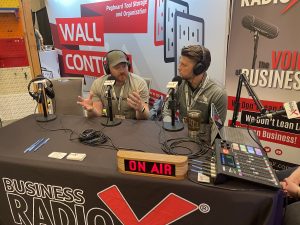
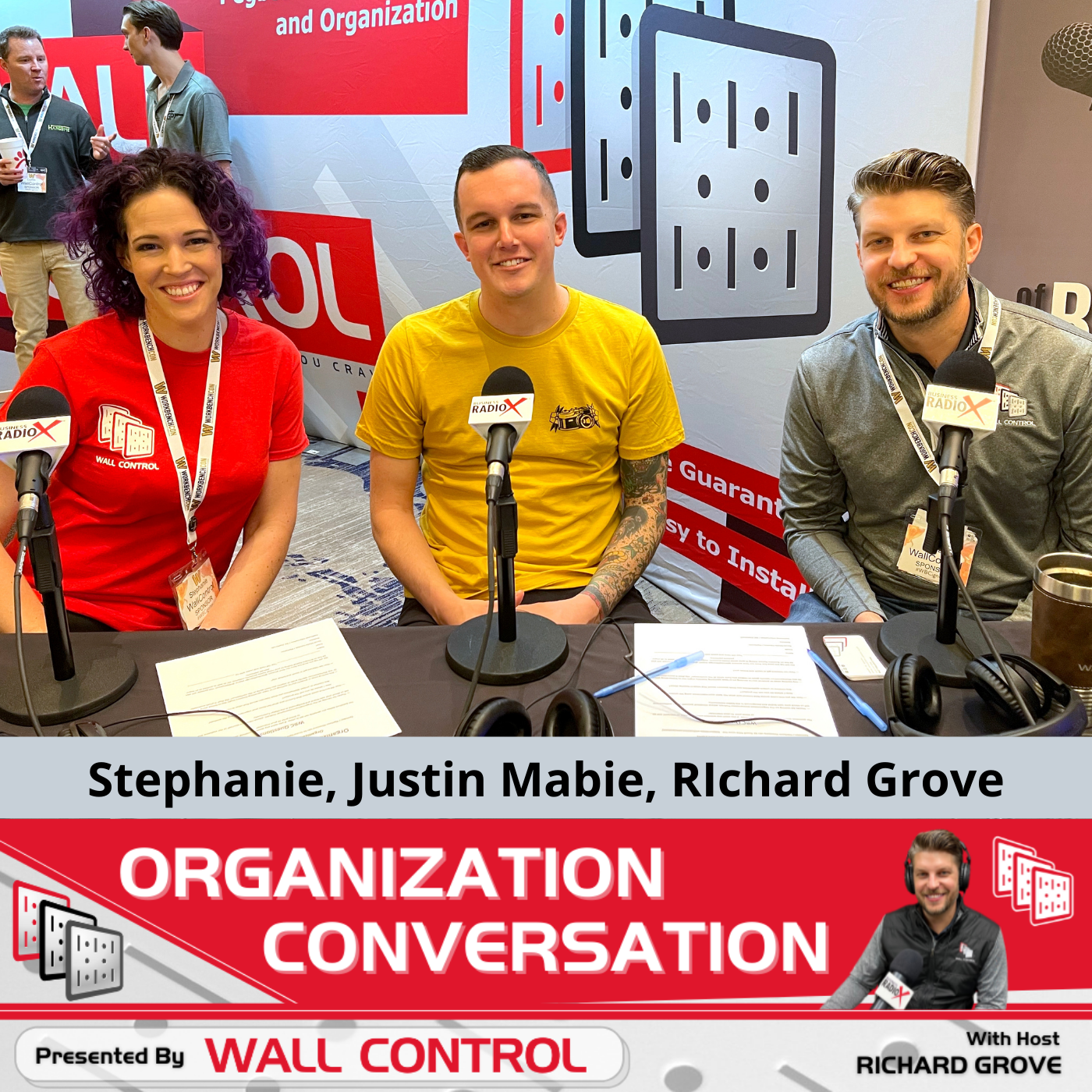
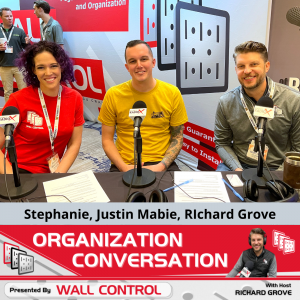
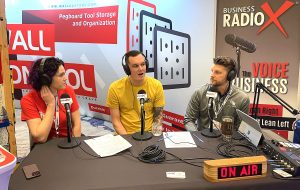
Heather Rogers, Owner, and Mindy Sullivan, Interior Designer, of Simply Organized joined Richard Grove and Stephanie of Uncommon Outpost on this episode of Organization Conversation. They discussed some common issues they encounter helping people organize their homes and moves, NAPO (the National Association of Productivity and Organizing Professionals), different applications for Wall Control in the home, common obstacles their clients face, when to get rid of possessions, and much more. Organization Conversation is broadcast from the North Fulton studio of Business RadioX® inside Renasant Bank in Alpharetta.

Simply Organized

Simply Organized was founded to help people simplify their lives. Their typical client usually feels overwhelmed in their home or office or wants more time in their day and less stress in their lives. Simply Organized

They specialize in helping people who work from home, anyone who is getting their home ready to sell, needs packing or unpacking help, and in time and routine management coaching. They serve the Atlanta metro area, including Cherokee, Cobb, Dawson, North DeKalb, Forsyth, North Fulton, Gwinnett, and Hall.

The Simply Organized team has the training and skills to help you organize everything from your hectic schedule, family, home, and office in all metro Atlanta areas. They only hire experienced professional organizers so you can be certain anyone from Simply Organized knows how to de-clutter, sort, pack, unpack, pre-stage, and help with spatial planning.

Company website | LinkedIn | Facebook

Heather Rogers, Owner, Simply Organized

Heather Rogers, Owner, Simply Organized

Heather Rogers is a professional organizer, owner of Simply Organized, and author of “A Simplified Life”. She and her team specialize in helping people decrease the clutter in their lives, create a more organized environment, manage their time more effectively, increase productivity and maintain calm in the midst of a busy life.

Her clients include professionals and entrepreneurs who work from home, anyone who is getting their home ready to sell, individuals and families who need help packing or unpacking, and busy professionals and families who need assistance with time management and space maintenance coaching.

A Georgia native, Heather has worked in the insurance and financial services industries, as well as in customer service and sales. She has a passion for helping people and a keen sense of spatial planning and organizing. Ironically, she earned a bachelor’s degree in risk management from the University of Georgia. Isn’t being disorganized one of the greatest risks in life?

She is the past president of the National Association of Professional Organizers Georgia (NAPO) and frequently speaks to groups about the benefits of time management and the costs of disorganization.

LinkedIn

Mindy Sullivan, Interior Design, Simply Organized

Mindy Sullivan, Interior Design, Simply Organized

Mindy Sullivan joined the Simply Organized team in 2020.  Mindy comes with 20 + years of interior design experience and an aptitude for organization and spatial planning. She has a great attitude and fantastic work ethic!

Mindy is a professional interior decorator for over 20 years with clients across the country. She loves nothing more than helping a client feel good in their own space and keep it that way!  Her design background is from the Art Institute of Atlanta fuels my ability to make a space make sense while looking good in the process. Whether it’s organizing drawers and closets or finding a place for all your beloved pet’s gear, you can be sure that you will be proud to show off every corner of your home.

LinkedIn

About Organization Conversation

Organization Conversation is hosted by Richard Grove, and broadcast and produced from the North Fulton studio of Business RadioX® inside Renasant Bank in Alpharetta. You can find the full archive of shows by following this link. The show is available on all the major podcast apps, including Apple Podcasts, Spotify, Google, Amazon, iHeart Radio, Stitcher, TuneIn, and others.

About Richard Grove

Richard Grove, Host, Organization Conversation

Richard Grove‘s background is in engineering but what he enjoys most is brand building through relationships and creative marketing. Richard began his career with the Department of Defense as an engineer on the C-5 Galaxy Engineering Team based out of Warner Robins. While Richard found this experience both rewarding and fulfilling, he always knew deep down that he wanted to return to the small family business that originally triggered his interest in engineering.

Richard came to work for the family business, Dekalb Tool & Die, in 2008 as a Mechanical Engineer. At the time Wall Control was little more than a small ‘side hustle’ for Dekalb Tool & Die to try to produce some incremental income. There were no “Wall Control” employees, just a small warehouse with a single tool and die maker that would double as an “order fulfillment associate” on the occasion that the original WallControl.com website, which Richard’s grandmother built, pulled in an order.

In 2008, it became apparent that for the family business to survive they were going to have to produce their own branded product at scale to ensure jobs remained in-house and for the business to continue to move forward. Richard then turned his attention from tool and die to Wall Control to attempt this necessary pivot and his story with Wall Control began. Since that time, Richard has led Wall Control to significant growth while navigating two recessions.

Connect with Richard:

Instagram | Twitter | LinkedIn

About Wall Control

The Wall Control story began in 1968 in a small tool & die shop just outside Atlanta, Georgia. The first of three generations began their work in building a family-based US manufacturer with little more than hard work and the American Dream.

Over the past 50+ years, this family business has continued to grow and expand from what was once a small tool & die shop into an award-winning US manufacturer of products ranging from automobile components to satellite panels and now, the best wall-mounted tool storage system available today, Wall Control.

The Wall Control brand launched in 2003 and is a family-owned and operated business that not only produces a high-quality American Made product but sees the entire design, production, and distribution process happen under their own roof in Tucker, Georgia. Under that same roof, three generations of American Manufacturing are still hard at work creating the best tool storage products available today.

Connect with Wall Control:

Company website | Facebook | Instagram

Tagged With: Heather Rogers, interior design, Mindy Sullivan, moving, napo, National Association of Professional Organizers, Organization Conversation, organizing, professional organizer, Richard Grove, Simply Organized, unpacking, Wall Control

Battling Imposter Syndrome: An Interview with Stacey Ruth, Unstoppable Leader

April 5, 2022 by John Ray

Stacey Ruth
North Fulton Studio
Battling Imposter Syndrome: An Interview with Stacey Ruth, Unstoppable Leader
Loading
00:00 /
RSS Feed
Share
Link
Embed

Download file

Stacey Ruth

Battling Imposter Syndrome: An Interview with Stacey Ruth, Unstoppable Leader

Anyone who has started their own professional services practice faces imposter syndrome at some point in their journey. What happens, though, when the stress of imposter syndrome is so severe that you find yourself on the bathroom floor, bleeding internally and suffering severe headaches and hair loss? In a frank, raw interview with host John Ray, Stacey Ruth, CEO of Unstoppable Leader, shared her battle with imposter syndrome, and how it affected not only her physical health but her professional services business as well. Stacey discussed the many ways imposter syndrome shows up, how to diagnose and deal with it, how imposter syndrome can become a diversity and inclusion issue, imposter syndrome and pricing, and much more.

To download the imposter syndrome workbook Stacey mentioned in the interview, follow this link.

The Price and Value Journey is presented by John Ray and produced by the North Fulton studio of Business RadioX®.

Stacey Ruth, CPC, CEO, Unstoppable Leader

Stacey Ruth, CPC, CEO, Unstoppable Leader

Stacey Ruth is unstoppable. She founded two multimillion-dollar agencies, has been among the Top 50 Entrepreneurs Under 50 in Atlanta, and twice awarded Top 100 “It” Agencies by Experiential Marketer.

As a novice entrepreneur, she made nearly every business decision mistake possible – and learned how to make the necessary personal transformations in order to thrive. Her businesses survived personal challenges, the fallout of 9/11, deep recessions, and her own health issues resulting from a battle with imposter syndrome.

Today she coaches other CEOs and executives on how to make faster and more accurate decisions, using their inner wisdom. She is a passionate advocate for women leaders claiming their own seat at the table they design for themselves.

Stacey delivers sustainable change, measurable results, and immediate impact for her clients. Her human-centered approach is designed to help ignite the transformational leadership every organization requires.

Her book, Own Your Own Shift is available on Amazon, and her new book, Inside Out Smart will be available April 19, 2022.

Website | Stacey’s books | LinkedIn | Instagram | YouTube | Twitter | Facebook

TRANSCRIPT

John Ray: [00:00:00] And hello again, everyone. I’m John Ray on The Price and Value Journey. Today, we’re going to talk about imposter syndrome. And I think that’s an important topic for anyone who sells what’s between their ears. Because what’s between your ears and imposter syndrome can get mixed up in a big way, particularly if you’re coming out of corporate. You’ve had this shelter of corporate, maybe the branding and the assistance that comes from corporate. And, suddenly, you’re out in your own practice trying to do all your own thing, comparing yourselves to everyone else out there that’s doing what you’re doing, and wondering whether you’re doing it right or whether you belong where you are.

John Ray: [00:00:50] And we’ve got a fantastic guest to talk about this important subject. Stacey Ruth is the CEO of Unstoppable Leader. Stacey founded two multimillion dollar agencies. She’s been among the top 50 Entrepreneurs Under 50 in Atlanta. And twice awarded the Top 100 It Agencies by Experiential Marketer.

Stacey Ruth: [00:01:14] As a novice entrepreneur, Stacey made nearly every business decision mistake possible – wow. And she learned how to make the necessary personal transformations in order to thrive – even bigger wow. Her businesses survived personal challenges, the fallout of 9-11, deep recessions, and her own health issues resulting from a battle with imposter syndrome.

John Ray: [00:01:41] Today, she coaches other CEOs and executives on how to make faster and more accurate decisions using their personal wisdom. She’s a passionate advocate for women leaders claiming their own seat at the table that they designed for themselves. She’s got a new book out, it’s her second book following her first one, and her new book is called Own Your Own Shift, and it’s available on Amazon. And as we record this, it’ll be out in a few weeks on April 19, 2022. Stacey Ruth, it’s a pleasure to have you on.

Stacey Ruth: [00:02:17] Absolutely a pleasure to be here. I think you’ve got a really, really great group of listeners who can really benefit from what we’re talking about today. This is going to be great.

John Ray: [00:02:27] Yeah. Thank you. I really appreciate you being willing to share what you’ve got to share about your own journey. But talk about how you started your practice and just the background of your practice. What led you to go out on your own?

Stacey Ruth: [00:02:44] That’s a great one, because I was actually in a corporate agency. We were the largest global production and event marketing agency in the world at one time. And I’ll say, it was pre-focused on diversity and inclusion. And it was very much a, I’ll say, male lily white type of environment, very much like Mad Men if anyone watches that. And I was very much seduced, if you will, by the excitement and being a part of it. And it was also a sweatshop and I was very exhausted. And couldn’t kind of keep up with the politics. We were buying a new company, literally, every week at the time. And so, I chose to take the leap out on my own. And it was still in an industry that was male dominated.

Stacey Ruth: [00:03:52] And I don’t know if you and your listeners are aware, but imposter syndrome is not just up to the moment term that people are using to describe self-doubt. It’s actually a diversity and inclusion issue. And it belongs to the people who are first only or different in an industry or in a business or an organization.

Stacey Ruth: [00:04:17] And I was a woman CEO of a fast growing agency, and what was at the time a male dominated field. And I immediately started experiencing this since I was young and I was female, that maybe I didn’t have what it took. And then, I started trying to shore myself up. And that’s when things went a little bit sideways.

John Ray: [00:04:47] Now, was this before you left to start your own firm, or was it during this big firm experience that you had, or both?

Stacey Ruth: [00:04:56] Well, both. The big firm experience kind of set me up to feel that I was down in power structure as a young female. And I talk about that in my upcoming book, Inside Out Smart. And we’re talking about biases. And we’re talking about assumptions. And we’re talking about how society shapes a lot of our beliefs about ourselves. And so, it’s shaped a lot of my beliefs about what I was and was not capable of, even though I’m a relatively gregarious and confident person. But in that context, I experienced a sense of maybe I don’t belong here and maybe they’ll find out I don’t know what I’m doing. And that just carried over into starting my own business.

John Ray: [00:05:54] So, how were you able to start your own business when you had imposter syndrome to begin with?

Stacey Ruth: [00:06:02] That’s great, because the idea behind being able to move forward is to be able to tap into our inner concept of our self, our inner wisdom. Some of that is intuition. Some of that is our ability to connect to our own purpose, our own values. And I had enough of that to be able to take the risk, to take the leap. And that’s true of most entrepreneurs. And we have a growing entrepreneurial culture going on right now.

Stacey Ruth: [00:06:41] But 84 percent of entrepreneurs self-identify with imposter syndrome. So, it’s not just women, it’s not just underrepresented demographics, it’s not just black or brown or gay, LGBTQ+, whatever it is. There are things that will lead us to believe that maybe we don’t have what it takes. And someone somewhere is going to find out and we’ll be outed.

John Ray: [00:07:15] So, talk about what happened with you as you built your own firm. What was that journey like? What was going on with the firm? And then, what was going on with this arc of imposter syndrome for you?

Stacey Ruth: [00:07:32] Oh, absolutely. And, you know, I’m going to be really real with you, because I was my own worst nightmare boss when I started the agency. And so, I did what a lot of individuals with imposter syndrome will do.

Stacey Ruth: [00:07:51] And when we talk a little bit about how people can contact me, I do have an imposter syndrome workbook where people can identify whether they have it. There’s some questions on there and then ways to deal with it.

Stacey Ruth: [00:08:05] But I was micromanaging, so I was hovering over the folks that worked with me. I brought in additional executives who were men, who were older than me, in order to shore up what I felt was lacking credibility. I also was over delivering, over performing. So, I was burning the candle at both ends. I was working around the clock, 80 hour workweeks. And it was never enough. It was never enough for me. And my employees could never do enough for me in that dynamic.

Stacey Ruth: [00:08:50] So, a lot of people who are solopreneurs can identify and then they can also experience what might be going on in their organizations if they have employees or vendor partners and suppliers.

Stacey Ruth: [00:09:02] And what wound up happening to me, I didn’t realize what was going on. That was just what I thought I had to do. And what wound up happening to me – and I share this when I speak on imposter syndrome – is there was a day when I found myself on the floor of the women’s bathroom. My hair had been falling out. I was having headaches 24/7. And, now, I was bleeding internally. And that’s the level of pressure and stress that imposter syndrome puts on us.

Stacey Ruth: [00:09:38] And I’ve heard other women leaders talk about similar kinds of health issues. Arianna Huffington talks about it. I know there’s a number of people that discuss it. So, if we internalize it rather than recognizing it and dealing with it, it can actually do some serious damage to our physical well-being.

John Ray: [00:09:59] Did you attribute at that time imposter syndrome to the physical symptoms you are having? Or did that take a time to make that connection?

Stacey Ruth: [00:10:11] No, I did not. It took time to make that connection. And one of the reasons that I’m so willing to share what I went through was I actually was reading what Arianna Huffington was going through. I was reading what other women with imposter syndrome were going through, because I was following other women leaders, like, what are they doing? And so, I was starting to hear these stories and I was like, “Oh. That’s me.” And so, it was this slow dawning by hearing other people share what they were going through and how they were dealing with it.

John Ray: [00:10:48] And so, you really didn’t know imposter syndrome was to blame for any of this until you really identified it in others.

Stacey Ruth: [00:10:59] Correct. And I mean, I’ve certainly studied it, immersed myself in it, so that I really can deal with it. And I think I’m on a mission to share it with others, because given that I am a lifelong entrepreneur, given that I do believe that entrepreneurship is crucial as a foundation for our entire economic structure, and 84 percent of entrepreneurs are dealing with this. I think it’s so important to get it out there and not let people just think, “Oh, well. I just doubt myself.” Oh, no. There’s more going on. And it’s possible to overcome it, and it’s not difficult once you recognize it.

John Ray: [00:11:47] But what you’re implying here – or you’re not implying. You’re saying it flat out – thank you – is that you can go on and function “normally” for years and suddenly hit a wall, because that’s what I think I hear you saying was it captures your experience with imposter syndrome.

Stacey Ruth: [00:12:13] Yes. And, in fact, the more you achieve and the higher you go, I’ll say, the rarer the air where you are, the more likely you are to experience imposter syndrome in a new role in an organization where there aren’t any others like you at the level at which you’ve achieved. So, that’s what really starts to trigger it, first, only different and high achieving.

John Ray: [00:12:49] So, you found yourself on the bathroom floor. You had all these physical symptoms that were so powerful. What happened? How did you take care of yourself physically, number one? And number two, when did that connection come? You know, did it take a while before you read about Miss Huffington and others that had this same issue?

Stacey Ruth: [00:13:15] Well, I think that it tends to be when we start to realize something’s wrong and we start looking around for what it could be, that we start to see things that were right there in front of our face that we never saw before. And that certainly was my experience. Now, I had already been through all of the physical tests and they couldn’t find anything physically wrong with me, with standard blood work and all. I even had an MRI.

Stacey Ruth: [00:13:44] But I did go get therapy help with what was going on because everyone pretty much settled on. It was stress. And as we were getting into that conversation, I started to realize that it was really my concept of what was necessary and what I deserved that was not being met. And I was the only one who could meet it. And, of course, I was seeing what other women were experiencing kind of in concert with that.

John Ray: [00:14:19] Right. Right. Say more about that, the part about what you deserved. I mean, what was your mindset there?

Stacey Ruth: [00:14:27] Well, my mindset was classic for imposter syndrome. And the definition of imposter syndrome is, no matter what you’ve achieved, you tend to dismiss it as luck, knowing the right people. It’s something outside of your control. It has nothing to do with the fact that you actually worked really hard for it. You were really qualified for it. You really did the work. You did the work and you got yourself there. So, I realized I was pushing away my own credibility and handing over my success to outside situations, people that they were supportive but they didn’t cause it, if that makes sense.

John Ray: [00:15:19] So, for you, what did the arc of recovery look like? Was it something that took a while? Was it something that you had on the other extreme, a moment of pure insight where you saw the light from the heavens and you knew you were worthy? I mean, talk about the arc of your recovery.

Stacey Ruth: [00:15:41] Well, the arc of my recovery was starting to apply a lot of the tools. And the tools, for the most part, they are self-awareness and mindset tools. So, was I picking up the tools going, “This will fix my imposter syndrome”? No, not exactly. The first thing I was trying to do was get my self back in balance. As I’m getting myself back in balance, what I’m doing is talking to other people about what I’m actually feeling inside.

Stacey Ruth: [00:16:18] As impostors, we don’t want to let others see how hard we’re paddling just underneath the surface. And being able to have someone that I trusted, who I didn’t feel like sharing with them was going to sabotage anything I was doing in my career was extremely powerful. So, being able to share what you’re going through is critical. It gets it out of your head and allows you to get perspective.

Stacey Ruth: [00:16:45] Another thing that’s very important was being able to let go of some perfectionism and let go of some of that micromanaging control, which was part of the work. The other thing – and this may sound a little woo-woo to your audience, but it is probably one of the most powerful tools for dealing with imposter syndrome – is to be able to shift our internal mantras. And one of the ones that imposters have, especially if they’re starting their own business, is, no one will pay that much for what I do.

John Ray: [00:17:22] Oh, yes.

Stacey Ruth: [00:17:25] And you can shift that into an affirmation. And my agency, initially, was notoriously under charging for our services. No one will pay that much for what we do. And when we flipped that and said, “No. We are charging fair market value for very valuable services.” So, when you do an affirmation, your brain has to believe it’s possible. So, the way out there, affirmations aren’t as effective as simply saying I provide a service that has real value, and owning the value that you provide.

Stacey Ruth: [00:18:17] So, those are some of the things that it’s not a grand sweeping shift. It’s making those micromovements that continue to assert, I deserve it, I’m worth it, and I bring something of value through my experience.

John Ray: [00:18:38] Folks, we’re here chatting with Stacey Ruth. She is the CEO of Unstoppable Leader. I want to circle back around to, I guess, the how I know I’ve got imposter syndrome. For you, it was more obvious than maybe it is for some others who maybe they don’t have the physical symptoms. Maybe they haven’t hit that wall yet. But how do they know that they’ve got something that’s serious that they better take care of?

Stacey Ruth: [00:19:11] Well, I think one of the easiest ways to get our brain around the symptoms are – and this comes out of the book, The Secret Thoughts of Professional Women by one of the kind of forerunner researchers on imposter syndrome in women, which was discovered in the early ’70s – she defines five personality types.

Stacey Ruth: [00:19:37] One of them is the super hero. And that’s the person who’s going to do it all and take on that one more thing. And people are like, “Oh, my gosh. How do you get that all done?” So, if that resonates with you, you might have imposter syndrome. Another one is the expert. That’s the person who always has to have one more degree, one more credential, one more certification. They have all of this knowledge, but they can’t quite get out of the gate. And, you know, a lot of coaches deal with that. But not just coaches, a lot of folks feel that need.

Stacey Ruth: [00:20:20] Another one is – and I don’t think she calls it this. Oh, yes. She does – the natural genius. And the natural genius has always learned things really easily and things come easily to them. So, they’re smart, they’re capable. And then, they bump up against that one thing that it doesn’t come as natural to them and they don’t really know how to learn something new because it’s always been so easy for them. And so, they start to doubt themselves because, “Why is this one hard?” So, that’s another one, if that resonates.

Stacey Ruth: [00:21:04] And then, there are the perfectionists, the person who’s always got to get it 100 percent right all the time or do nothing. So, there’s a fear of failure behind that, and that leads to a lot of procrastination, which can also be a hallmark of the imposter syndrome. [Inaudible].

John Ray: [00:21:23] Well, for those folks, if they ever get it sent out or hit send or hit publish, whatever, then they’re looking at all the errors in it that they should have caught. Right?

Stacey Ruth: [00:21:36] It’s what keeps a lot of people from writing that book. It keeps people from applying for that job. It keeps people from making their deadlines. Or – oh, my gosh. This one – that burst of energy that gets you across the finish line and the person says, “Oh, well. I’m really motivated when I have a deadline, so I’ll get it done.” And yet that’s actually not how our brains work. So, what actually happens is, yeah, you get it done, but it’s probably got a lot of mistakes in it. So, the procrastination and perfectionism which can go hand in hand can actually feed each other.

Stacey Ruth: [00:22:23] So, if any of those resonated, someone might be dealing with a case of imposter syndrome. Mine was classic and mine was intense. Not everyone’s is that classic or that intense. And yet, if it goes without being dealt with, it can build, which was also what happened for me.

John Ray: [00:22:46] Now, speaking of intense, I saw Sheryl Sandberg, formerly with Facebook and Google. She said that both men and women are susceptible to imposter syndrome, but that women tend to experience it more intensely and be more limited by it. What’s your perspective on that?

Stacey Ruth: [00:23:09] This is true. It was first identified in women and in the ’70s where women were coming into the workforce. And I said it earlier in the conversation, imposter syndrome is really a diversity and inclusion issue. Because we, as a society, tend to feel like if I’m the only woman or only fill in the blank, any underrepresented demographic – I’ll just use women because it was first discovered with women – then I feel like there’s no one I can relate to. And, therefore, I don’t belong.

Stacey Ruth: [00:23:53] So, there’s a sense of not belonging where we are, because when we look around in the landscape, we can’t identify with anyone else. So, that’s one reason that women and other underrepresented demographics will feel that way.

Stacey Ruth: [00:24:09] Another reason, especially for women, we feel like we might be betraying other responsibilities. So, we might be betraying because that’s still the way the society is structured, “I have the responsibility for the home. I have the responsibility for the kids.” And then, “I’m not being true to that responsibility.” And, also, “What about my peers? I’ve now left them behind.” So, all of those internal struggles can really feed it, especially for women.

John Ray: [00:24:44] Okay. I don’t want to get men off the hook here.

Stacey Ruth: [00:24:48] No. They’re not off the hook. No, no. Especially male entrepreneurs.

John Ray: [00:24:55] Yeah. Let’s pull them in here. So, what is the issue with men? Do they not have imposter syndrome as much? Do they not talk about it as much but they really do have it underneath the surface? What’s going on with men?

Stacey Ruth: [00:25:14] Well, again, I think that especially when men achieve a certain level within an organization, that high achieving man, the man who goes out on his own and starts a business, we have then put ourselves in a first only different situation. So, all the same feelings can apply, “I’ve left my peers behind. My peer group is back there, they’re behind me. Why am I so special? So, I don’t belong here.”

Stacey Ruth: [00:25:54] Maybe the guy was a the natural genius. And now suddenly, “I’m doing something I have no context for, no experience for, and I don’t know what to do. And I feel like somebody’s going to find out that I don’t know what I’m doing.” All the same rules apply.

John Ray: [00:26:14] I got it. So, let’s talk a little bit about, I guess, how you deal with it. And do you need a third party? You mentioned getting therapy, do you need a third party, a live person to be able to help? Maybe a trusted adviser or a coach, someone like that? And if so, how do you find that person? Because you’re at a moment of, obviously, doubt, how do you find a trusted person that you can walk that journey with?

Stacey Ruth: [00:26:54] Well, as a coach, I happen to believe that no one “needs a coach”. Now, all the coaches are going to cringe when I say this. I don’t believe anyone needs a coach. I believe that coaches accelerate what we’re ready to lean into. They give perspective, accountability, and all of those kinds of things that it just takes longer and it can be harder to do on our own.

Stacey Ruth: [00:27:26] So, can someone get over imposter syndrome on their own? Yes. Of course, they can. They can pick up the books. They can do the blogs. They can get all the information. Putting it into application is so much faster and easier when you do it with somebody who understands. So, that is possible with a mastermind support group. It’s possible with a coach, like myself. It’s possible with a mentor. It’s possible with a therapist. I mean, there’s a number of outlets that you can work through.

Stacey Ruth: [00:28:02] I think for CEOs, especially women CEOs, who especially deal with this, working with a coach who’s been there, done that, got the t-shirt, is a great way to accelerate getting through that because it does slow you down, limit your growth, and limit what kind of income you can generate.

John Ray: [00:28:27] Yeah. I want to get to that now because this is The Price and Value Journey and I’m all about pricing. And you brought that up earlier, so I want to get to income and pricing here in just a second.

John Ray: [00:28:42] But you mentioned the term get over it, getting over it, and I don’t know what the term is, do you ever really get over it? Or maybe it’s a bad analogy that once an alcoholic, you’re always an alcoholic. It’s just a matter of controlling it and dealing with it mentally, the mental aspect of it, and doing what you’ve got to do, whether you’re in AA or whatever, to walk that journey as an alcoholic. Are you always suffering from imposter syndrome or it’s just a matter of controlling it?

Stacey Ruth: [00:29:20] Well, that’s an interesting choice of analogy.

John Ray: [00:29:25] Maybe it’s a bad analogy, Stacey, but –

Stacey Ruth: [00:29:28] No. Actually, I don’t know that it is. Actually, I’m going to pause for a moment. I’m going to say something I really want your listeners to lean in and hear this.

Stacey Ruth: [00:29:45] If you’re dealing with imposter syndrome, it’s not your fault. Because a lot of people will take that on and say, “There’s something wrong with me. What’s going on?” It’s not your fault. You’re a product of the society and the society’s beliefs and values. You can change yours. So, choosing to change is the important thing.

Stacey Ruth: [00:30:12] And the reason I said that that’s not such a bad analogy with someone who’s dealing with addiction, whether it’s alcoholism, drug addiction, or any other kind of addiction, is, the 12 step programs say, the solution is actually to understand, have a self-awareness, a consciousness of who you are in the context of the greater whole. And change how you’re seeing yourself so that you don’t feel empty inside. That you don’t feel like you’re lacking something inside.

Stacey Ruth: [00:30:47] And they say it’s of a spiritual nature. Well, I believe spirituality is based on values, and purpose, and meaning. And a lot of people who are dealing with imposter syndrome have kind of disconnected from their internal guidance system, which is values-based, purpose-based, meaning-based. And we’re really measuring ourselves by these externals.

Stacey Ruth: [00:31:08] We’re constantly comparing ourselves to everyone else and looking for affirmation that we’re okay. They’re not going to kick us out of the club today because they didn’t find out that we don’t really belong here. So, instead, we can turn in to our own inner guidance system that says, “No. I’m perfect, whole, complete exactly the way I am and I can do this. And if I need help, that’s not an admission of weakness. That’s an admission of willingness to grow and learn.”

John Ray: [00:31:46] I mean, we talked extensively about your bathroom floor experience. I want to give you a chance to talk about the other side of that. And just as you’ve been able to recognize and then put that experience in the box it belongs in your life. What has been the result for you and your business and your life?

Stacey Ruth: [00:32:15] Oh, my gosh. Well, I will tell you, I stopped racing. I love that question. I stopped racing against myself. It felt like I was competing with people, competitors, the industry, other CEOs. I was trying to be better, stronger, faster, all of that. I was doing it at the expense of my poor body that was just trying to serve me.

Stacey Ruth: [00:32:51] And, by the way, I do want you to know that I am 100 percent healed physically from that. So, I feel more energetic. I feel more engaged. But mostly I feel more fulfilled. The money is great. I mean, here we are, price value, you know. The money is great. It doesn’t fill the gap of self-doubt that is created by imposter syndrome. It never is enough because it’s always external.

Stacey Ruth: [00:33:29] So, what happened is I got a lot more satisfaction and I’m like, “Well, hey, this is doing something that is really of service I really love, and I get paid good money for doing it. What more do you want?”

John Ray: [00:33:45] Great words and great story here from Stacey Ruth. She’s the CEO of Unstoppable Leader. So, Stacey, let’s talk about pricing. Let’s get there. So, for you, how did imposter syndrome affect your pricing? How did you get to a point where, again, you put that in the box and kept it from affecting how you communicate and talk about your value?

Stacey Ruth: [00:34:26] Yeah. Well, it’s interesting – let me collect my thoughts on this one. Imposter syndrome can continue to pop up even after you’ve done the work. You recognize it when it does. And one of the places that it popped up for me recently, in like the last three years, when I really leaned in to doing the executive coaching, which I had people asking me to coach them, so I said, “Well, there’s a need for this. I’d be happy to step in and do this and I love it. I absolutely love it.”

Stacey Ruth: [00:35:11] And that little impostor syndrome sitting on my shoulder whispered in my ear – this is classic imposter syndrome – “Who do you think you are to coach CEOs and executives who are more successful financially, hierarchy, all of that, than you are?” And so, I’m walking through this because the answer to that is, “I don’t need to be more powerful, more successful in order to be able to serve. What I’m able to do is help them bring out their own inner wisdom.”

Stacey Ruth: [00:35:58] That’s what coaches do. We ask powerful questions and we help people discover their own truth, and their own value, and their own worth. So, I don’t have to lord it over them. I’m not even supposed to. That’s not my job. And so, I know what my value is and so I could set that imposter syndrome off my shoulder and say, “No. No. Not today. We’re not going to do that because that’s not even the truth of the experience,” if that makes sense.

Stacey Ruth: [00:36:30] I’m not sure if I answered your question, but I felt like that was an important shift for people to be able to hear that. I can charge what an executive coach charges because I’m being an executive coach. I’m not being the executive.

John Ray: [00:36:43] Right. Right. And I think what I hear you saying is that you really switched in your head from thinking about making this comparison of externals, external position, power, authority, whatever, to the outcome that you’ll help foster in the person that you’re going to be working with. And that’s where the value is, right?

Stacey Ruth: [00:37:14] Correct. That’s where the value is. And I’ve been in other industries. I’ve been in marketing. And a lot of folks are starting all different kinds of marketing and sales type organizations right now just as rife with imposter syndrome and pricing is all over the highway. And a lot of startup businesses are nickeling and diming on things that really have more value.

Stacey Ruth: [00:37:49] And you can get something on Fiverr for $5. Why would I pay someone $1,200, $2,000 for the same thing I could get for $5 on Fiverr? And so, that leads to a lot of imposter syndrome. Why should I charge $2,000 for this? Well, because you are providing the service. You’re making sure it’s tailored and customized. Whatever is going on there that makes it a higher value, own it.

John Ray: [00:38:24] Well, people are making the wrong comparison, right? I mean, they’re looking at the competitors instead of looking at the outcome they bring about. And they may have done this – like you’re saying you may have done this – many times before, but that doubt and that, “Oh, they won’t pay that,” that voice that comes in your head, it still comes back. And so, do you treat it like a friend and just wave at it and say, “Okay. I see you,” and they keep going. Is that what you do? That’s what it sounds like.

Stacey Ruth: [00:38:58] A little bit. A little bit. And the steps I go through are awareness, “Oh, I recognize that voice. I know what that voice is about. Okay. We’re having an impostor moment. Let’s just have a moment.” And then, when that happens, “Okay. Is that true?” Questioning those thoughts is critical to shifting them, “Is that true?” If it’s not true or if I don’t know that it’s true, what’s an alternative? And then, pursuing the alternative and testing it. Being willing to test that alternative. And that’s really how the shift occurs. Individual variations, of course. But that’s the critical component is awareness and then questioning our thoughts about that.

John Ray: [00:39:57] You know, I’m so glad we could do this show because I work with folks a lot on their pricing, and what I recognized, the base problem for so many of them really is imposter syndrome. And that’s really the underlying problem. I’m not the psychologist. I’m not the coach like you are.

Stacey Ruth: [00:40:18] I’m not a psychologist, I just want to be clear. Neuroscience, yes. Psychologist, no.

John Ray: [00:40:24] Okay. Noted. But I guess what I would ask you, to submit to you, is, I think it’s dangerous for people to think about this in terms of, “Oh, I need to get what I’m worth, because that takes you down the internal conundrum that you’re going through and switch it toward outcomes I bring about.” And if you do that, it should help get you out of the whole business about thinking that it’s about you. It’s not about you. It’s about the outcomes you help foster with the work that you do.

John Ray: [00:41:15] And I realized for some people that may be a subtle difference. But that’s really the step folks need to take. That’s what I would think. Now, give me your reaction to that.

Stacey Ruth: [00:41:27] Well, it actually makes me think about something that a lot of new coaches are told, is, you’re not selling coaching. Coaching is what you do. It’s not who you are. And so, to be able to share the results that you create changes the entire conversation. So, helping someone get out of overwhelm, helping someone be able to get clarity around what next steps are, that’s what coaching does.

Stacey Ruth: [00:41:57] So, when somebody says, what do you do? I don’t say coaching. I say I help executives and CEOs who are dealing with exhaustion, overwhelm, a new position, a lot of change, and really help them get clarity and focus so they can grow their influence and impact. That’s what has value. That’s what creates the price value equation.

John Ray: [00:42:22] There you go. Yeah. I love it. I love it.

Stacey Ruth: [00:42:26] Yeah. Results are the deal. Results are the deal. And allowing yourself to own the results and not feel like you’re being full of yourself.

John Ray: [00:42:42] Yeah. I like it.

Stacey Ruth: [00:42:43] And to get the testimonials, to ask for the referrals, all of those things imposters will hold back on as well.

John Ray: [00:42:52] Great point. We could talk more about that, that’s for sure. But that’s a great way to end. Stacey Ruth, CEO of Unstoppable Leader. Wow. Stacey, I can’t tell you how much I appreciate you coming on and sharing your story in such a raw and real way. I really appreciate you.

John Ray: [00:43:16] And I just want to go back because I bungled your book when I mentioned your books.

Stacey Ruth: [00:43:21] All the books. All the books.

John Ray: [00:43:21] Yeah. That’s what happens when you release multiple books, right? So, Stacey’s first book was Own Your Own Shift.

Stacey Ruth: [00:43:32] Be careful how you say that. Yes.

John Ray: [00:43:35] That’s right. And I almost bungled that, too. But her new book is called Inside Out Smart. So, be on the lookout for Inside Out Smart.

Stacey Ruth: [00:43:45] Yeah. April 19th it launches.

John Ray: [00:43:46] Coming here in April 19, 2022. And Own Your Own Shift – I got that right – is out. It’s been out. You can get it right now. So, I wanted to clarify that for everyone. But, Stacey, again, thank you so much for coming on. Before we let you go, I would love it if you could, if you don’t mind, sharing your contact information so folks that are interested in hearing more about you and your work can be in touch?

Stacey Ruth: [00:44:15] Absolutely. I think one of the best places to reach me is through my website, unstoppable-leader.com. And you can find me all over social media, Facebook, Instagram, Twitter, Stacey Ruth Says, and that’s S-T-A-C-E-Y. So, I look forward to connecting with your listeners. You’re doing great work here.

John Ray: [00:44:42] Thank you, Stacey. I really appreciate you. And thanks again for coming on.

Stacey Ruth: [00:44:46] Thank you very much.

John Ray: [00:44:48] Folks, just a quick reminder, if you’re a newcomer to this series, you can find the full show archive at pricevaluejourney.com or on your favorite app. Just use that search term price value journey, you’ll find the show. And if you’d like to connect with me directly, just send me an email. john@johnray.co. Thank you for joining us.


About The Price and Value Journey

The title of this show describes the journey all professional services providers are on:  building a services practice by seeking to convince the world of the value we offer, helping clients achieve the outcomes they desire, and trying to do all that at pricing which reflects the value we deliver.

If you feel like you’re working too hard for too little money in your solo or small firm practice, this show is for you. Even if you’re reasonably happy with your practice, you’ll hear ways to improve both your bottom line as well as the mindset you bring to your business.

The show is produced by the North Fulton studio of Business RadioX® and can be found on all the major podcast apps. The complete show archive is here.

John Ray, Host of The Price and Value Journey

John Ray The Price and Value Journey
John Ray, Host of “The Price and Value Journey”

John Ray is the host of The Price and Value Journey.

John owns Ray Business Advisors, a business advisory practice. John’s services include advising solopreneur and small professional services firms on their pricing. John is passionate about the power of pricing for business owners, as changing pricing is the fastest way to change the profitability of a business. His clients are professionals who are selling their “grey matter,” such as attorneys, CPAs, accountants and bookkeepers, consultants, marketing professionals, and other professional services practitioners.

In his other business, John a Studio Owner, Producer, and Show Host with Business RadioX®, and works with business owners who want to do their own podcast. As a veteran B2B services provider, John’s special sauce is coaching B2B professionals to use a podcast to build relationships in a non-salesy way which translate into revenue.

John is the host of North Fulton Business Radio, Minneapolis-St. Paul Business Radio, Nashville Business Radio, Alpharetta Tech Talk, and Business Leaders Radio. house shows that feature a wide range of business leaders and companies. John has hosted and/or produced over 1,100 podcast episodes.

Connect with John Ray:

Website | LinkedIn | Twitter

Business RadioX®:  LinkedIn | Twitter | Facebook | Instagram

Tagged With: imposter syndrome, Inside Out Smart, John Ray, Own Your Own Shift, Price Value Journey, pricing, professional services, professional services practice, professional services provider, solopreneurs, Stacey Ruth, Unstoppable Leader, value

Nikki Rohloff, Rohloff Associates, LLC

April 4, 2022 by John Ray

Rohloff Associates
Minneapolis St. Paul Business Radio
Nikki Rohloff, Rohloff Associates, LLC
Loading
00:00 /
RSS Feed
Share
Link
Embed

Download file

Rohloff Associates

Nikki Rohloff, Rohloff Associates, LLC (Minneapolis-St. Paul Business Radio, Episode 36)

While most other CPAs are working eighty-hour weeks ahead of the April tax filing deadline, the team at Rohloff Associates is committed to fifty-hour weeks as well as eliminating hourly billing. It’s just two ways her firm defies the expectations of how a CPA firm can work, says managing partner Nikki Rohloff. Nikki joined host John Ray to discuss her CPA firm’s unique business model, how and why they integrate talent selection and team effectiveness into their service offering, and much more. Minneapolis-St. Paul Business Radio is produced virtually by the Minneapolis St. Paul studio of Business RadioX®.

Rohloff Associates, LLC

Rohloff understands that many CPA firms tout similar ideologies.

That would make complete sense considering numbers are numbers. However, they aspire to do things differently at Rohloff Associates. To them you aren’t just a number.

Their desire was and still remains to defy the expectations of how a CPA firm can work. Their story over nearly the past two decades is for their clients to know Rohloff Associates as their Relational CPA firm. In the effort to do so, they have removed the billable hour model which has opened the door to conversation with clients and their families on a level like no other.

Company website | LinkedIn | Facebook

Nikki Rohloff, Managing Partner, Rohloff Associates, LLC

Nikki Rohloff, Managing Partner, Rohloff Associates

Nikki Rohloff recognized at an early age that fostering relationships was a foundational building block. She continued to hone that skill as she acquired a Bachelor of Arts in Accounting & Sociology.

Nikki is the expert and friend you want by your side when the landscape of life is uncertain. Her responsibilities over the years have run the full spectrum. With a background in Sociology, Nikki’s warm personality and collaborative style foster an implicit foundation of trust with her clients. In her role as a Rohloff Associates Partner, she understands that there are often difficult conversations that need to be broached when planning for the future, but her can-do spirit readily navigates many of those moments.

LinkedIn

Questions and Topics Discussed in this Episode

  • What makes your firm different than other CPA firms?
  • How do team engagement and behavioral assessments make a difference to your clients?
  • What have clients been struggling with during the pandemic?
  • Why is hiring to your culture so imperative?

Minneapolis-St. Paul Business Radio is hosted by John Ray and produced virtually from the Minneapolis St. Paul studio of Business RadioX®.  You can find the full archive of shows by following this link. The show is available on all the major podcast apps, including Apple Podcasts, Spotify, Google, Amazon, iHeart Radio, Stitcher, TuneIn, and others.

Tagged With: accountant, accounting firm, CPa, hourly billing, Minneapolis St Paul Business Radio, Nikki Rohloff, P&L, Rohloff Associates, talent selection, Taxes, team facilitation

Our Intelligence is a Vulnerability

April 4, 2022 by John Ray

Our Intelligence is a Vulnerability
North Fulton Studio
Our Intelligence is a Vulnerability
Loading
00:00 /
RSS Feed
Share
Link
Embed

Download file

Our Intelligence is a Vulnerability

Our Intelligence is a Vulnerability

In our professional services practices, our intelligence is a vulnerability, but not because we don’t know what we’re doing. On the contrary, the sharper our intelligence, the more captive we can be to our biases. Further, and contrary to what we might like to think, our intelligence is not the primary reason we usually win business. The Price and Value Journey is presented by John Ray and produced by the North Fulton studio of Business RadioX®.

TRANSCRIPT

John Ray: [00:00:00] Hello again. I’m John Ray on The Price and Value Journey. I recently finished a book called We Need to Talk: How to Have Conversations That Matter by Celeste Headlee. It’s a book I highly recommend, by the way, for a number of reasons, a couple of which I’ll talk about here.

John Ray: [00:00:19] There’s some obvious human reasons why we all need to improve our ability to communicate with each other. But there are some business reasons as well, Headlee notes. And she references research by Nobel Prize winning psychologist Daniel Kahneman, and he’s the author of Thinking, Fast and Slow, another book I highly, highly recommend, by the way. She points out that in Kahneman’s research, he finds that most people would rather do business with someone that they like and trust than someone they dislike.

John Ray: [00:00:51] I realized that may seem like a no-brainer to you and to all of us, but get this, customers will choose a likeable person over a less likable person, even if the likable person’s product is lower quality and higher priced. Professional services providers, what this means is that our degrees and certifications don’t mean as much as we’d like to think. It’s not that they’re not important, it’s just that our expertise at a certain point is assumed. Further, our ability to price our services effectively is more closely tied to our likability than our expertise.

John Ray: [00:01:32] Let me say that again, our ability to price our services effectively is more closely tied to our likeability than our expertise. We’re given a lot of latitude and dollars by our prospects and clients if we are likable. A major piece of likability, too, is tied up, not in how well we express ourselves, but how well we listen.

John Ray: [00:01:59] Headlee goes on to point out a red light warning in all of this. The smarter you are, the more you’ll assume that you know your biases, and therefore are effective at self-assessment. In fact, Headlee observes the exact opposite is true. Research indicates that the belief that your intelligence protects you from erroneous assumptions may actually make you more vulnerable to them. Our intelligence actually works against us as we evaluate our likeability, objectivity, or our ability to listen.

John Ray: [00:02:40] So, here’s the question then, what do we do to put a check on our erroneous biases and assumptions about ourselves? Now, for me, it’s having a few individuals who I can trust to tell me not what I want to hear, but what I need to hear.

John Ray: [00:02:59] So, what works effectively for you or what do you need to introduce in your practice? It could be hiring a coach. It could be engaging a mentor. It could be having an unofficial board of directors. Whatever it is, though, you need to have some friendly yet frank objectivity coming from a trusted third party that will help you overcome the limits and the biases that are inherent in your intelligence.

John Ray: [00:03:29] I’m John Ray on The Price and Value Journey. Past episodes of this series can be found at pricevaluejourney.com. And if you’d like to connect with me, you can send me a note, john@johnray.co. Thank you for joining me.


About The Price and Value Journey

The title of this show describes the journey all professional services providers are on:  building a services practice by seeking to convince the world of the value we offer, helping clients achieve the outcomes they desire and trying to do all that at pricing which reflects the value we deliver.

If you feel like you’re working too hard for too little money in your solo or small firm practice, this show is for you. Even if you’re reasonably happy with your practice, you’ll hear ways to improve both your bottom line as well as the mindset you bring to your business.

The show is produced by the North Fulton studio of Business RadioX® and can be found on all the major podcast apps. The complete show archive is here.

John Ray, Host of The Price and Value Journey

John Ray The Price and Value Journey
John Ray, Host of “The Price and Value Journey”

John Ray is the host of The Price and Value Journey.

John owns Ray Business Advisors, a business advisory practice. John’s services include advising solopreneur and small professional services firms on their pricing. John is passionate about the power of pricing for business owners, as changing pricing is the fastest way to change the profitability of a business. His clients are professionals who are selling their “grey matter,” such as attorneys, CPAs, accountants and bookkeepers, consultants, marketing professionals, and other professional services practitioners.

In his other business, John is a Studio Owner, Producer, and Show Host with Business RadioX®, and works with business owners who want to do their own podcast. As a veteran B2B services provider, John’s special sauce is coaching B2B professionals to use a podcast to build relationships in a non-salesy way which translate into revenue.

John is the host of North Fulton Business Radio, Minneapolis-St. Paul Business Radio, Nashville Business Radio, Alpharetta Tech Talk, and Business Leaders Radio. house shows which feature a wide range of business leaders and companies. John has hosted and/or produced over 1,100 podcast episodes.

Connect with John Ray:

Website | LinkedIn | Twitter

Business RadioX®:  LinkedIn | Twitter | Facebook | Instagram

Tagged With: biases, intelligence, John Ray, likeability, Price and Value Journey, pricing, professional services, professional services providers, The Price and Value Journey, value

Iris Grimm, Dog-Gone Leadership

April 1, 2022 by John Ray

Dog-Gone Leadership
North Fulton Business Radio
Iris Grimm, Dog-Gone Leadership
Loading
00:00 /
RSS Feed
Share
Link
Embed

Download file

Dog-Gone Leadership

Iris Grimm, Dog-Gone Leadership (North Fulton Business Radio, Episode 446)

Iris Grimm, an executive and leadership coach for over two decades, developed a leadership program based on our relationships with dogs called Dog-Gone Leadership. She joined John Ray in the studio to share how this idea came to be, how she uses the metaphor of relationships with dogs to assist her clients, who she loves to work with, and much more. North Fulton Business Radio is broadcast from the North Fulton studio of Business RadioX® inside Renasant Bank in Alpharetta.

Iris Grimm (Master Performance Inc.)

For the past 21 years, Iris has guided executives, small business owners, and leaders in a variety of capacities and industries to reach the next level(s) of their success.

Their definition of success is as unique as their paths:

  • be more effective in their role as a leader, hence supporting their team better and having them be more engaged
  • start/expand their business or their career promotion in a purposeful way,
  • create more balance between work and personal life,
  • get out of their own way and show up at a better version every day and many more.

All these goals require an upgrade on inner leadership, trust in oneself and others, as well as letting go of unproductive habits, mindsets, and approaches.

Dog-Gone Leadership

Dog-Gone Leadership is a unique and innovative approach to optimizing performance in your company by utilizing canine relationships. Stop feeling resigned to the status quo and create better outcomes and connections with ease.

Dogs are not just (wo)men’s best friends. They can mirror our behavior and thinking. They reflect our leadership and energy. They can reveal our blind spots. They uplevel our performance and commitment.

Therefore, dogs are ideal partners for creating more conscious leaders, whether they are already in an official leadership position or not.

Dog-Gone Leadership with Iris Grimm steps outside of the conventional leadership development box.

  • Dogs shake off their stress with ease. Great leaders shake their stress off quickly and return to an emotional state that serves the situation best.
  • Dogs can read the energy of a room very quickly. Great leaders can read the energy in the room and adjust their style/approach accordingly.
  • Dogs let go of the past quickly (unless the humans get in the middle of it). Great leaders take nothing personally and let go of any grudges and conflicts swiftly.
  • Dogs reflect our leadership in vivid pictures and behaviors. Great leaders surround themselves with coaches and teachers who point out blind spots and challenge them to grow.

We take the boring out of leadership development and infuse playfulness, love, mindfulness, surrender, commitment, and many more leadership principles and skills that we can learn from dogs.

Dog-gone leadership is merging leadership performance with canine guardianship  – pulling out analogies, pointing out differences, and applying principles and skills with the dog that can be translated into the business world. This program is about bringing the best out of everyone – the leader, their team, and the dog.

As a result, participants transform their leadership with, from, and for their dogs – making this a win-win-win situation.

Company website | LinkedIn | Facebook

Iris Grimm, Executive/Leadership Coach & Trainer, Master Performance, Inc. and Dog-Gone Leadership

Iris Grimm, Executive/Leadership Coach & Trainer, Master Performance, Inc. and Dog-Gone Leadership

Iris Grimm has been in the coaching and training industry for over 20 years. Whether her clients are executives in larger companies, business owners, or entrepreneurs, she loves to support them in creating richer experiences in their lives and work.

Iris is also the founder of Dog-Gone Leadership, an experimental training program where her clients transform their leadership with, for, and from their dogs. Her love for dogs and her extensive experience with dogs, combined with her devotion to support people to perform better as leaders, makes her training programs engaging, practical, and life-changing.

When she is not meeting with her clients, Iris loves to hike with her dogs and spends time in nature.

LinkedIn

Questions and Topics in this Interview:

  • What is the focus of Dog-Gone Leadership?
  • How did you come up with this concept?
  • With the pandemic, many people finally adopted a dog since they work from home. And once they returned to the office, they felt reluctant leaving their dog at home by themselves. What is your opinion about pet-friendly workplaces?
  • When you present this program in companies, does every participant have to bring their dog?
  • Is having a dog a requirement to participate in the Dog-Gone Leadership program?
  • What lessons can we learn from dogs?

North Fulton Business Radio is hosted by John Ray and broadcast and produced from the North Fulton studio of Business RadioX® inside Renasant Bank in Alpharetta. You can find the full archive of shows by following this link. The show is available on all the major podcast apps, including Apple Podcasts, Spotify, Google, Amazon, iHeart Radio, Stitcher, TuneIn, and others.

RenasantBank


Renasant Bank has humble roots, starting in 1904 as a $100,000 bank in a Lee County, Mississippi, bakery. Since then, Renasant has grown to become one of the Southeast’s strongest financial institutions with over $13 billion in assets and more than 190 banking, lending, wealth management and financial services offices in Mississippi, Alabama, Tennessee, Georgia and Florida. All of Renasant’s success stems from each of their banker’s commitment to investing in their communities as a way of better understanding the people they serve. At Renasant Bank, they understand you because they work and live alongside you every day.


Special thanks to A&S Culinary Concepts for their support of this edition of North Fulton Business Radio. A&S Culinary Concepts, based in Johns Creek, is an award-winning culinary studio, celebrated for corporate catering, corporate team building, Big Green Egg Boot Camps, and private group events. They also provide oven-ready, cooked from scratch meals to go they call “Let Us Cook for You.” To see their menus and events, go to their website or call 678-336-9196.

Tagged With: Dog-Gone Leadership, dogs, executive coach, executive coaching, Iris Grimm, Leadership, leadership coaching, Master Coaching, North Fulton Business Radio, renasant bank

Jamie Cox, Brand Strategist and Designer

March 31, 2022 by John Ray

Jamie Cox
Nashville Business Radio
Jamie Cox, Brand Strategist and Designer
Loading
00:00 /
RSS Feed
Share
Link
Embed

Download file

Jamie Cox

Jamie Cox, Brand Strategist and Designer (Nashville Business Radio, Episode 40)

With a breadth of experience in the branding and marketing space, brand strategist and designer Jamie Cox took the leap in early 2020 to open her own business. Acknowledging that the timing wasn’t ideal, Jamie discussed her journey with host John Ray and shared how she made it work. She also talked about her approach to working with solopreneurs, the need for clients to keep an open mind, content creation, spin classes(!), and much more.  Nashville Business Radio is produced virtually from the Nashville studio of Business RadioX®.

Jamie Cox, Brand Strategist and Designer

Jamie Cox, Brand Strategist and Designer

Jamie Cox is a brand strategist and designer in Nashville, TN.

She works one-on-one with business owners and entrepreneurs to help them identify their brand purpose and share it with their target customers.

Jamie began her career as the Creative Services Manager at Visit Franklin. She started her business in what she thought was the middle of the COVID-19 pandemic, in May of 2020. She bet on herself—leaving her corporate career as a Creative Director to pursue something that would make her happy.

Named one of Destinations International’s 2017 30 Under 30, she graduated from Indiana University – Bloomington with a BS in Arts Management and a focus in Studio Art. She’s had the pleasure of speaking at conferences like Destinations International and the Wyoming Governor’s Conference on Tourism.

This isn’t her first business venture. From 2017 to 2019, Jamie ran a cookie company, The Ruby Cookie. Jamie has a lot of hobbies to keep her busy. In addition to her work as a consultant, she coaches spin classes at KrankFIT in Nashville. Always one to dabble in something new, Jamie’s latest project is restoring a 1920’s Chandler & Price Craftsman Press.

When she’s not working, spinning, or sleeping, Jamie can be found traveling with her husband, Cory, and cuddling with her rescue pups, Georgia and Snoop.

Company Website | LinkedIn | Instagram

Questions and Topics Discussed in this Episode

  • What is brand strategy and why it’s important for every business
  •  What it’s like to work with a brand strategist
  • Content creation and marketing to build a brand.
  • Leaving a corporate job and moving into consulting
  • What else are you up to?

Nashville Business Radio is hosted by John Ray and produced virtually from the Nashville studio of Business RadioX®.  You can find the full archive of shows by following this link. The show is available on all the major podcast apps, including Apple Podcasts, Spotify, Google, Amazon, iHeart Radio, Stitcher, TuneIn, and others.

Tagged With: Brand Strategist, Branding, Jamie Cox, marketing, Nashville Business Radio, Solopreneur, spin class

LIVE from WORKBENCHcon 2022: Ethan Abramson, THEBUILDwithETHAN

March 31, 2022 by John Ray

THEBUILDwithETHAN
North Fulton Studio
LIVE from WORKBENCHcon 2022: Ethan Abramson, THEBUILDwithETHAN
Loading
00:00 /
RSS Feed
Share
Link
Embed

Download file

Ethan Abramson

LIVE from WORKBENCHcon 2022: Ethan Abramson, THEBUILDwithETHAN (Organization Conversation, Episode 11)

Ethan Abramson from THEBUILDwithETHAN, host of Building a Furniture Brand and owner of Ethan Abramson Furniture, joined host Richard Grove on this live edition of Organization Conversation. They discussed his journey in building furniture, discovering the maker community, the benefits of staying organized, his social brand, and much more.  Organization Conversation is broadcast from the North Fulton studio of Business RadioX® inside Renasant Bank in Alpharetta.

Ethan Abramson, THEBUILDwithETHAN

Ethan Abramson, THEBUILDwithETHAN

THEBUILDwithETHAN showcases the lighter side of professional Furniture Maker Ethan Abramson. Through photos, videos, and articles, Ethan helps to highlight building skills, tool use, and general shop practices for his audience.

You can follow along with Ethan on his social channels, or see him in person as the host of many Woodworking, Tool, and Maker events.

Whether showcasing his furniture, sharing product and tool reviews, or at an event, Ethan is happy to help with any woodworking, tool, or shop question, so always feel free to ask. You can reach out here with any question you may have, or even to just say hey.

Ethan also loves partnering with brands, so if you are looking to showcase something, please contact him here.

Ethan’s podcast, Building a Furniture Brand, is here.

Connect with THEBUILDwithETHAN:  Website | Instagram | Youtube | TikTok

Ethan Abramson Furniture

Started in Brooklyn, NY in 2008, Ethan Abramson produces its own line of furniture as well as custom commissions for residential and commercial projects.

Owner and head designer Ethan Abramson’s creative process allows for the materials to influence designs as much as the function does. This balance leaves pieces with a true sense of origin and purpose, something rarely seen in mass-produced furniture.

“The process of building a piece of furniture is just as important to me as how it looks in the end. All the solid wood I use had a story before it came to my shop. My goal is to build on that story, to see the characteristics in the wood and what it wants to become. I think of my work not based in machines and numbers, but as a completely creative process, as if I am painting.”        — Ethan Abramson

Today the shop is located in Long Island, NY, but the guiding principles are still the same. All furniture is handcrafted on-site, built using a blend of classic and modern woodworking techniques. Wood from reclaimed sources or sustainable foresting is used whenever possible. Pieces are protected with a hand-applied all-natural finish. Designs and shop practices are built around the idea of minimal waste, re-purposing, and environmentally conscious production methods.

Company website

About Organization Conversation

Organization Conversation features interviews with movers and shakers in storage and organization, from professional organizers to the creative and talented Brand Ambassadors who use Wall Control products every day. You’ll hear tips, tricks and how-tos for storage and organization, as well as receive first access to Wall Control promotions. We talk with our suppliers and partners to give you a look behind the scenes at how we operate, what makes our family-owned and operated brand tick, and some of the fun and interesting insights that go into making our business run. We love our guests, as they are engaging and entertaining with interesting experiences to share. By focusing on those guests and the amazing stories they tell, we hope you will be enriched and find your time listening to the Organization Conversation podcast as time well spent.

Organization Conversation is hosted by Richard Grove, and broadcast and produced from the North Fulton studio of Business RadioX® inside Renasant Bank in Alpharetta. You can find the full archive of shows by following this link. The show is available on all the major podcast apps, including Apple Podcasts, Spotify, Google, Amazon, iHeart Radio, and others.

About Richard Grove

Richard Grove, Host, Organization Conversation

Richard Grove‘s background is in engineering but what he enjoys most is brand building through relationships and creative marketing. Richard began his career with the Department of Defense as an engineer on the C-5 Galaxy Engineering Team based out of Warner Robins. While Richard found this experience both rewarding and fulfilling, he always knew deep down that he wanted to return to the small family business that originally triggered his interest in engineering.

Richard came to work for the family business, Dekalb Tool & Die, in 2008 as a Mechanical Engineer. At the time Wall Control was little more than a small ‘side hustle’ for Dekalb Tool & Die to try to produce some incremental income. There were no “Wall Control” employees, just a small warehouse with a single tool and die maker that would double as an “order fulfillment associate” on the occasion that the original WallControl.com website, which Richard’s grandmother built, pulled in an order.

In 2008, it became apparent that for the family business to survive they were going to have to produce their own branded product at scale to ensure jobs remained in-house and for the business to continue to move forward. Richard then turned his attention from tool and die to Wall Control to attempt this necessary pivot and his story with Wall Control began. Since that time, Richard has led Wall Control to significant growth while navigating two recessions.

Connect with Richard:

Instagram | Twitter | LinkedIn

About Wall Control

The Wall Control story began in 1968 in a small tool & die shop just outside Atlanta, Georgia. The first of three generations began their work in building a family-based US manufacturer with little more than hard work and the American Dream.

Over the past 50+ years, this family business has continued to grow and expand from what was once a small tool & die shop into an award-winning US manufacturer of products ranging from automobile components to satellite panels and now, the best wall-mounted tool storage system available today, Wall Control.

The Wall Control brand launched in 2003 and is a family-owned and operated business that not only produces a high-quality American Made product but sees the entire design, production, and distribution process happen under their own roof in Tucker, Georgia. Under that same roof, three generations of American Manufacturing are still hard at work creating the best tool storage products available today.

Connect with Wall Control:

Company website | Facebook | Instagram

Tagged With: custom furniture, Ethan Abramson, furniture, Organization Conversation, reclaimed wood, Richard Grove, The Build with Ethan, Wall Control, woodworking

The R3 Continuum Playbook: The Aftermath of Disruption: How to Create an Emotionally Healthy Workplace

March 31, 2022 by John Ray

Emotionally Healthy Workplace
Minneapolis St. Paul Studio
The R3 Continuum Playbook: The Aftermath of Disruption: How to Create an Emotionally Healthy Workplace
Loading
00:00 /
RSS Feed
Share
Link
Embed

Download file

Emotionally Healthy Workplace

The R3 Continuum Playbook: The Aftermath of Disruption: How to Create an Emotionally Healthy Workplace

How can you maintain an emotionally healthy workplace which promotes positivity, hardiness, and healing? At the same time, how can you do so without diminishing productivity? In a recent webinar, Jeff Gorter, VP of Clinical Crisis Response at R3 Continuum, answered these questions and much more, including the best long-term strategies to support employees after a disruption.

The full webinar, Ask the Expert: The Aftermath of Disruption: How to Create an Emotionally Healthy Workplace, can be found here. The R3 Continuum Playbook is presented by R3 Continuum and is produced by the Minneapolis-St.Paul Studio of Business RadioX®. R3 Continuum is the underwriter of Workplace MVP, the show which celebrates heroes in the workplace.

TRANSCRIPT

Intro: [00:00:00] Broadcasting from the Business RadioX Studios, here is your R3 Continuum Playbook. Brought to you by Workplace MVP sponsor, R3 Continuum, a global leader in workplace behavioral health, crisis, and security solutions.

Shane McNally: [00:00:14] Hi there. My name is Shane McNally, Marketing Specialist for R3 Continuum. On this episode of the R3 Continuum Playbook, we’re featuring a segment from a recent webinar that was done with R3 Continuum’s Vice-President of Crisis Response Clinical Services, Jeff Gorter.

Shane McNally: [00:00:29] The webinar was titled The Aftermath of Disruption: How to Create an Emotionally Healthy Workplace. This was an ask the expert webinar, where Jeff was answering questions that the attendees submitted when they registered for the webinar. We discussed how to provide support to employees in the aftermath of a workplace disruption, how asset framing can change a company’s narrative, how to avoid negative group thinking, and how to create emotionally healthy support system within your workplace.

Shane McNally: [00:00:56] In this segment from the webinar, Jeff discusses long term strategies that organizations and leaders can implement into their work environment to help create an emotionally healthy workplace.

Jeff Gorter: [00:01:07] Some further best practices, some further long term strategies that organizations are incorporating is recognizing that safety concerns right now are paramount in this current phase, in this transition phase. And by safety, I mean both psychological and physical safety. Again, we may feel quite confident about where we stand, not only in our traditional safety operations, but also our safety measures we’ve taken to address COVID.

Jeff Gorter: [00:01:38] But that doesn’t necessarily mean automatically that people feel psychologically safe about that. They may still have questions. They may still wonder. And particularly if we are not communicating transparently to the workforce about what steps we’ve taken to address their safety needs, their safety concerns, you’re going to be constantly playing catch up.

Jeff Gorter: [00:02:02] And so, organizations communicating transparently about here’s what we are doing to address your safety concerns in a larger picture, all of that builds in the culture of health, all of that influences and facilitates that culture of health. That also engenders the trust and engagement of the organization. That reinforces the sense of strength, of hardiness, of perseverance before the next crisis occurs.

Jeff Gorter: [00:02:34] Knowing that we learned some things from the last crisis that we are stronger because of that. Remember that post-traumatic growth and post-traumatic depreciation, and those who recovered the quickest from the depreciation were those who grew the strongest because of that. The struggles we went through directly influences our growth.

Jeff Gorter: [00:02:57] And so, those organizations that are able to highlight here’s what we learned, here’s how we grew, here’s how we are taking additional steps for your psychological and physical safety, builds a culture of health that can withstand the next crisis that’s going to come. And we know there will be. We know there will be other crises. And so, that helps build the hardiness.

Jeff Gorter: [00:03:23] Prioritizing that culture of well-being by incorporating that asset framing approach and that appreciative inquiry, make that part of our standard business operations, make that part of our standard operating procedures. Being able to approach things from that asset perspective, that positive perspective, and asking questions that continue to build on influences that care.

Jeff Gorter: [00:03:53] And continually assessing, opening a regular dialogue with your employees regarding their needs and involving them in those improvement efforts, that kind of engagement gives them a voice. And having a voice is empowering. Think about it, having a voice, being able to have a sense of agency, of influence following two years in which I felt completely out of control, in which I felt like I had no agency, in which I wasn’t able to effectively change or influence things. It was kind of just getting by.

Jeff Gorter: [00:04:29] And so, being able to engage them in what are your needs, and how can we help them, and what suggestions do you have, that kind of improvement dialogue back and forth reinforces a sense of agency and a sense of control, which leads to an empowered and engaged workforce.

Shane McNally: [00:04:51] Creating and maintaining an emotionally healthy workplace can be difficult, but it’s incredibly important. Looking for more information on how to provide psychological and physical well-being to your employees? R3 Continuum can help. Learn more about our R3 Continuum services and contact us at www.r3c.com or email us directly at info@r3c.com.


Show Underwriter

R3 Continuum (R3c) is a global leader in workplace behavioral health and security solutions. R3c helps ensure the psychological and physical safety of organizations and their people in today’s ever-changing and often unpredictable world. Through their continuum of tailored solutions, including evaluations, crisis response, executive optimization, protective services, and more, they help organizations maintain and cultivate a workplace of wellbeing so that their people can thrive. Learn more about R3c at www.r3c.com.

R3 Continuum is the underwriter of Workplace MVP, a show which celebrates the everyday heroes–Workplace Most Valuable Professionals–in human resources, risk management, security, business continuity, and the C-suite who resolutely labor for the well-being of employees in their care, readying the workplace for and planning responses to disruption.

Connect with R3 Continuum:  Website | LinkedIn | Facebook | Twitter

Tagged With: Disruption, emotionally healthy workplace, Jeff Gorter, R3 Continuum, R3 Continuum Playbook, Workplace MVP

  • « Previous Page
  • 1
  • …
  • 143
  • 144
  • 145
  • 146
  • 147
  • …
  • 276
  • Next Page »

Business RadioX ® Network


Our Most Recent Episode

CONNECT WITH US

  • Email
  • Facebook
  • LinkedIn
  • Twitter
  • YouTube

Our Mission

We help local business leaders get the word out about the important work they’re doing to serve their market, their community, and their profession.

We support and celebrate business by sharing positive business stories that traditional media ignores. Some media leans left. Some media leans right. We lean business.

Sponsor a Show

Build Relationships and Grow Your Business. Click here for more details.

Partner With Us

Discover More Here

Terms and Conditions
Privacy Policy

Connect with us

Want to keep up with the latest in pro-business news across the network? Follow us on social media for the latest stories!
  • Email
  • Facebook
  • Google+
  • LinkedIn
  • Twitter
  • YouTube

Business RadioX® Headquarters
1000 Abernathy Rd. NE
Building 400, Suite L-10
Sandy Springs, GA 30328

© 2025 Business RadioX ® · Rainmaker Platform

BRXStudioCoversLA

Wait! Don’t Miss an Episode of LA Business Radio

BRXStudioCoversDENVER

Wait! Don’t Miss an Episode of Denver Business Radio

BRXStudioCoversPENSACOLA

Wait! Don’t Miss an Episode of Pensacola Business Radio

BRXStudioCoversBIRMINGHAM

Wait! Don’t Miss an Episode of Birmingham Business Radio

BRXStudioCoversTALLAHASSEE

Wait! Don’t Miss an Episode of Tallahassee Business Radio

BRXStudioCoversRALEIGH

Wait! Don’t Miss an Episode of Raleigh Business Radio

BRXStudioCoversRICHMONDNoWhite

Wait! Don’t Miss an Episode of Richmond Business Radio

BRXStudioCoversNASHVILLENoWhite

Wait! Don’t Miss an Episode of Nashville Business Radio

BRXStudioCoversDETROIT

Wait! Don’t Miss an Episode of Detroit Business Radio

BRXStudioCoversSTLOUIS

Wait! Don’t Miss an Episode of St. Louis Business Radio

BRXStudioCoversCOLUMBUS-small

Wait! Don’t Miss an Episode of Columbus Business Radio

Coachthecoach-08-08

Wait! Don’t Miss an Episode of Coach the Coach

BRXStudioCoversBAYAREA

Wait! Don’t Miss an Episode of Bay Area Business Radio

BRXStudioCoversCHICAGO

Wait! Don’t Miss an Episode of Chicago Business Radio

Wait! Don’t Miss an Episode of Atlanta Business Radio