Business RadioX ®

  • Home
  • Business RadioX ® Communities
    • Southeast
      • Alabama
        • Birmingham
      • Florida
        • Orlando
        • Pensacola
        • South Florida
        • Tampa
        • Tallahassee
      • Georgia
        • Atlanta
        • Cherokee
        • Forsyth
        • Greater Perimeter
        • Gwinnett
        • North Fulton
        • North Georgia
        • Northeast Georgia
        • Rome
        • Savannah
      • Louisiana
        • New Orleans
      • North Carolina
        • Charlotte
        • Raleigh
      • Tennessee
        • Chattanooga
        • Nashville
      • Virginia
        • Richmond
    • South Central
      • Arkansas
        • Northwest Arkansas
    • Midwest
      • Illinois
        • Chicago
      • Michigan
        • Detroit
      • Minnesota
        • Minneapolis St. Paul
      • Missouri
        • St. Louis
      • Ohio
        • Cleveland
        • Columbus
        • Dayton
    • Southwest
      • Arizona
        • Phoenix
        • Tucson
        • Valley
      • Texas
        • Austin
        • Dallas
        • Houston
    • West
      • California
        • Bay Area
        • LA
        • Pasadena
      • Colorado
        • Denver
      • Hawaii
        • Oahu
  • FAQs
  • About Us
    • Our Mission
    • Our Audience
    • Why It Works
    • What People Are Saying
    • BRX in the News
  • Resources
    • BRX Pro Tips
    • B2B Marketing: The 4Rs
    • High Velocity Selling Habits
    • Why Most B2B Media Strategies Fail
    • 9 Reasons To Sponsor A Business RadioX ® Show
  • Partner With Us
  • Veteran Business RadioX ®

E. Martin Davidoff, Prager Metis

March 9, 2022 by John Ray

Prager Metis
Business Leaders Radio
E. Martin Davidoff, Prager Metis
Loading
00:00 /
RSS Feed
Share
Link
Embed

Download file

Prager Metis

E. Martin Davidoff, Prager Metis

Marty Davidoff, Partner-in-Charge of the National Tax Controversy Practice with Prager Metis, joined host John Ray to cover several important tax issues for this tax season. They discussed this year’s different tax filing deadline, current challenges at the IRS, how to navigate payment of back taxes and estimates, little-known deductions, tax reporting challenges with cryptocurrency, and much more. Business Leaders Radio is produced virtually from the Business RadioX® studios in Atlanta.

Prager Metis

Prager Metis is a top international advisory and accounting firm with over 100 partners and principals, more than 600 team members, and twenty-four offices worldwide including New York, New Jersey, California, D.C. Metro, Connecticut, Florida, Massachusetts, Nevada, North Carolina, London, UK, Chennai, India and the Metaverse.

Clients come to Prager Metis for the expert advice that protects and grows the value of their world—whether that world is local or extends across international markets.

As one of the nation’s fastest-growing firms offering a full range of accounting, audit, tax, consulting, and international services, Prager Metis helps make Your World. Worth More.

Company website | LinkedIn | Twitter | Facebook | Instagram

E. Martin Davidoff, Partner-in-Charge, National Tax Controversy Practice, Prager Metis CPA

E. Martin Davidoff, Partner-in-Charge – National Tax Controversy Practice, Prager Metis CPA

E. Martin Davidoff is the Partner-in-Charge – National Tax Controversy Practice of Prager Metis CPAs, a member of Prager Metis International Group. He has been practicing in the accounting industry for over 40 years.

Marty is a renowned expert in IRS and State tax controversy resolution as well as State and Federal income tax matters and Federal tax lien withdrawals. He has written over 30 articles on IRS representation in CPA Magazine and spoken on various tax issues on platforms including Fox News, WPIX, and a number of radio shows. In addition, Marty is experienced in business start-ups, tax planning for both individuals and businesses, and the taxation of S-corporations and limited liability companies.

Marty’s extensive knowledge, contacts, and experience allow him to develop a thorough and comprehensive strategy to resolve tax controversies and deliver results effectively. Marty provided his clients with compassionate, reliable service and is willing to go to great lengths to get the possible outcomes. Clients who meet Marty on tax controversy matters receive Marty’s detailed notes and a specific plan of action prior to leaving the meeting, relieving stress and providing peace of mind.

His comprehensive client service approach has led Marty to win several awards, including Account Today’s 100 Most Influential People in Accounting for seven straight years. He has also previously been named by the US Small Business Administration as the Regional Advocate of the Year for small businesses and has participated in two White House conferences on Small Business.

In his spare time, Marty is dedicated to philanthropic endeavors, enjoying his grandchildren, and playing basketball, pickleball, and poker. Most notably, he is the Founder and Executive Director for Make A Smile Foundation Inc., a charity holiday shopping spree that benefits children in economic need.

Marty is also the owner of E. Martin Davidoff, Attorney at Law, which specializes in the resolution of Federal and State tax controversies, including representation before the IRS and in the United States Tax Court. Marty is admitted to practice law in the State of New York and New Jersey and has firm members or of counsel relationships allowing the firm to practice in 36 additional states.

LinkedIn

Questions and Topics

  • Tax Filing Due Date this year
  • Payment of estimated taxes and balances due 
  • What to do if you are audited?
  • What if you owe money to the IRS?
  • What about IRS matching notices (CP-2000s) how to deal with them.
  • Cryptocurrency: Should you be using it in your business? What are the tax impacts?
  • How to sell real estate with IRS Liens
  • Some overlooked deductions
  • State tax issues
  • Unemployment Fraud…got a 1099-G for unemployment but did not receive it. What to do.

Business Leaders Radio is hosted by John Ray and produced virtually from the North Fulton studio of Business RadioX® in Alpharetta.  The show can be found on all the major podcast apps and a full archive can be found here.

Tagged With: Business Leaders Radio, CPa, cryptocurrency, E. Martin Davidoff, estimated taxes, IRS, John Ray, Prager Metis, tax deductions, tax filing deadline

LIVE from WORKBENCHcon 2022 : Omar, eElectrons Home

March 9, 2022 by John Ray

eElectrons Home
North Fulton Studio
LIVE from WORKBENCHcon 2022 : Omar, eElectrons Home
Loading
00:00 /
RSS Feed
Share
Link
Embed

Download file

eElectrons Home

LIVE from WORKBENCHcon 2022: Omar, eElectrons Home (Organization Conversation, Episode 4)

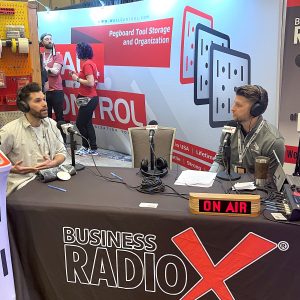
Live from WORKBENCHcon 2022, Omar from eElectrons Home joined Richard Grove in the Wall Control booth. Omar shared his passion for technology and woodworking and using that to help his customers create a home they love. He and Richard talked about his love of taking things apart and figuring out how they work, his upcoming projects, and much more.  Organization Conversation is broadcast from the North Fulton studio of Business RadioX® inside Renasant Bank in Alpharetta.

Omar from eElectrons Home

Omar is the owner of eElectrons Home.  It stands for the things he loves: eElectrons is for technology and science. The home part is for construction, woodworking, home decor, and renovation.

Omar is a woodworker and it is his passion. He is married and has four daughters. He is proud to be a girl dad.

Instagram | YouTube | Twitter

Organization Conversation is hosted by Richard Grove, and broadcast and produced from the North Fulton studio of Business RadioX® inside Renasant Bank in Alpharetta. You can find the full archive of shows by following this link. The show is available on all the major podcast apps, including Apple Podcasts, Spotify, Google, Amazon, iHeart Radio, Stitcher, TuneIn, and others.

About Richard Grove

Richard Grove, Host, “Organization Conversation”

Richard Grove‘s background is in engineering but what he enjoys most is brand building through relationships and creative marketing. Richard began his career with the Department of Defense as an engineer on the C-5 Galaxy Engineering Team based out of Warner Robins. While Richard found this experience both rewarding and fulfilling, he always knew deep down that he wanted to return to the small family business that originally triggered his interest in engineering.

Richard came to work for the family business, Dekalb Tool & Die, in 2008 as a Mechanical Engineer. At the time Wall Control was little more than a small ‘side hustle’ for Dekalb Tool & Die to try to produce some incremental income. There were no “Wall Control” employees, just a small warehouse with a single tool and die maker that would double as an “order fulfillment associate” on the occasion that the original WallControl.com website, which Richard’s grandmother built, pulled in an order.

In 2008, it became apparent that for the family business to survive they were going to have to produce their own branded product at scale to ensure jobs remained in-house and for the business to continue to move forward. Richard then turned his attention from tool and die to Wall Control to attempt this necessary pivot and his story with Wall Control began. Since that time, Richard has led Wall Control to significant growth while navigating two recessions.

About Wall Control

The Wall Control story began in 1968 in a small tool & die shop just outside Atlanta, Georgia. The first of three generations began their work in building a family-based US manufacturer with little more than hard work and the American Dream.

Over the past 50+ years, this family business has continued to grow and expand from what was once a small tool & die shop into an award-winning US manufacturer of products ranging from automobile components to satellite panels and now, the best wall-mounted tool storage system available today, Wall Control.

The Wall Control brand launched in 2003 and is a family-owned and operated business that not only produces a high-quality American Made product but sees the entire design, production, and distribution process happen under their own roof in Tucker, Georgia. Under that same roof, three generations of American Manufacturing are still hard at work creating the best tool storage products available today.

Connect with Wall Control:

Company website | Facebook | Instagram

Tagged With: eElectrons Home, Organization Conversation, Richard Grove, Wall Control, woodworking, WORKBENCHcon 2022

Bruce La Fetra, Eastwood Strategy Advisors

March 9, 2022 by John Ray

Bruce La Fetra
North Fulton Business Radio
Bruce La Fetra, Eastwood Strategy Advisors
Loading
00:00 /
RSS Feed
Share
Link
Embed

Download file

Bruce La Fetra

Bruce La Fetra, Eastwood Strategy Advisors (North Fulton Business Radio, Episode 439)

Bruce La Fetra, Owner of Eastwood Strategy Advisors, was dubbed The Client Whisperer by one of his clients when he was able to glean vital feedback for their business. Bruce joined host John Ray to explain how his method, Think Like Your Best Clients, produces results for his clients, impacts the bottom line, avoids the pitfalls of confirmation bias, and much more. North Fulton Business Radio is broadcast from the North Fulton studio of Business RadioX® inside Renasant Bank in Alpharetta.

Eastwood Strategy Advisors

Getting amazing results doesn’t require luck. With a shifted perspective, your team can accomplish amazing things.

Clients call Bruce La Fetra The Client Whisperer because he takes the guesswork out of professional services marketing. Think Like Your Best Clients allows legal, financial, and consulting professionals to grow revenue, build trust faster, accelerate sales and attract better projects. The secret to attracting more of your Best Clients going to the source and asking the right questions. Reverse-engineering actual relationships makes it easy to Think Like Your Best Clients.
Bruce has added millions to the bottom line for professional services firms and big companies like First Data, Adobe & Symantec by interviewing their clients. His client interviews allow positioning good firms to be great and attract better projects, faster. Reverse-engineering great relationships leads to repeatable actions that deliver predictable results. His clients are not afraid of change, but they don’t have time to screw around for the sake of change. No more random acts of marketing.

Company website | LinkedIn | Twitter | YouTube

Bruce La Fetra, The Client Whisperer, Eastwood Strategy Advisors

Bruce La Fetra, The Client Whisperer, Eastwood Strategy Advisors

Bruce La Fetra is The Client Whisperer. He works with the leaders of law, finance, and other professional services who can’t scale or can’t exit because they depend on a single rainmaker. Positioning their firm to attract more of their Best Clients sets in motion a virtuous cycle where more people generate business, profitability improves, and sales cycles shorten as the firm attracts more of its Best Clients.

Bruce’s Think Like Your Best Clients approach evolved from developing marketing strategy for dozens of firms and interviewing hundreds of their Best Clients over the past 20 years.

Bruce earned a BA in Economics from Claremont McKenna College and an MBA from The Tuck School of Business at Dartmouth College. He is also a trained facilitator.

LinkedIn

Questions and Topics in this Interview:

  • Why are you called The Client Whisperer?
  •  Give an example of where thinking like your Best Clients had a huge impact?
  • Why can’t people interview their own clients?
  • What makes you different from other marketing consultants and advisors?
  • What is the biggest mistake or challenge that your clients have?
  • What is a Virtuous Cycle of Marketing?
  • Who are your Best Clients?

North Fulton Business Radio is hosted by John Ray and broadcast and produced from the North Fulton studio of Business RadioX® inside Renasant Bank in Alpharetta. You can find the full archive of shows by following this link. The show is available on all the major podcast apps, including Apple Podcasts, Spotify, Google, Amazon, iHeart Radio, Stitcher, TuneIn, and others.

RenasantBank


Renasant Bank has humble roots, starting in 1904 as a $100,000 bank in a Lee County, Mississippi, bakery. Since then, Renasant has grown to become one of the Southeast’s strongest financial institutions with over $13 billion in assets and more than 190 banking, lending, wealth management and financial services offices in Mississippi, Alabama, Tennessee, Georgia and Florida. All of Renasant’s success stems from each of their banker’s commitment to investing in their communities as a way of better understanding the people they serve. At Renasant Bank, they understand you because they work and live alongside you every day.


Special thanks to A&S Culinary Concepts for their support of this edition of North Fulton Business Radio. A&S Culinary Concepts, based in Johns Creek, is an award-winning culinary studio, celebrated for corporate catering, corporate team building, Big Green Egg Boot Camps, and private group events. They also provide oven-ready, cooked from scratch meals to go they call “Let Us Cook for You.” To see their menus and events, go to their website or call 678-336-9196.


Tagged With: A&S Culinary Concepts, Bruce La Fetra, client surveys, Eastwood Strategy Advisors, North Fulton Business Radio, renasant bank, The Client Whisperer

A Real-Life Example of How Hourly Pricing Hurts Your Bottom Line

March 9, 2022 by John Ray

how hourly pricing hurts your bottom line
North Fulton Studio
A Real-Life Example of How Hourly Pricing Hurts Your Bottom Line
Loading
00:00 /
RSS Feed
Share
Link
Embed

Download file

how hourly pricing hurts your bottom line

A Real-Life Example of How Hourly Pricing Hurts Your Bottom Line

Hourly pricing or pricing by any increment of time is one of the red flags of inadequate pricing for professional services providers. Here’s a real-life example from a coaching call which illustrates how hourly pricing hurts your bottom line. The Price and Value Journey is presented by John Ray and produced by the North Fulton studio of Business RadioX®.

TRANSCRIPT

John Ray: [00:00:00] Hello. I’m John Ray on The Price and Value Journey. One of the red flags for me of inadequate pricing for professional services providers is pricing by the hour. Now, it’s not that hard once you dig into the details of a particular project or situation to prove it.

John Ray: [00:00:19] Here’s an example. Recently, I spoke with a professional about her pricing, and it was a service with significant value for the niche that she and her firm work in. They have comprehensive experience as both employees and consultants to several different organizations in this niche. They can cite case studies in which she has delivered demonstrable, hard dollar results. Their work delivered high six and low seven figure results for these organizations.

John Ray: [00:00:55] Now, one suggestion that she had received was to price her service at $150 per hour. Her first impulse was to wonder whether that was “too much”. So, let’s go through the math of this, I suggested to her, “Let’s take the example you mentioned of that $1 million result. How many hours did you spend on that project?” Well, after we chatted a bit, she decided it was about 25 hours.

John Ray: [00:01:24] I suggested we assume 50 hours for purposes of this exercise. So, double the number of hours and that we assume $150 per hour. The reason I suggested we double the number of hours is just to address the what if the project takes more hours objection that commonly occurs in these situations. So, in this exercise, which is hypothetical, but it’s based on actual results that she delivered, this provider’s total revenue would have been $7,500. So, that’s 50 hours of the project times $150 per hour.

John Ray: [00:02:04] So, let’s go back in time, I told her, to the point where you were proposing this project to the client. What would their reaction have been if you said you could deliver a $1 million result and that your fee for doing so would be $25,000? What would happen if you went on to ask them what they’d do if you only delivered $500,000? Wouldn’t they still believe the investment in you and your service was worth it? You’re still giving them a 20 times return on their investment, which is one indicator that that $25,000 might not be a high enough price, by the way.

John Ray: [00:02:48] Just in the side here, don’t ignore the fact that we’re just measuring hard dollar outcome that the client receives. We’re not measuring the intangible benefits to the organization and its leaders, which this outcome would also deliver. Those intangibles have value as well.

John Ray: [00:03:08] Further, I told her, by pricing your service in this way, you’re using your price to deliver a marketing signal to the client. A signal that indicates quality, your experience, you deliver results. Those results are demonstrable and you’re worth the investment on their part.

John Ray: [00:03:27] The question with getting off the hourly hamster wheel doesn’t even start with you. So, you start with the problems the client is experiencing that you solve. The friction in their business and their life that you can remove. And the consequent value, both tangible and intangible, you’re able to deliver back to your client. You think in those terms and you price to receive a slice of that value which still gives the client a substantial ROI. And there’s just one example of why when you price by the hour, your price is too low.

John Ray: [00:04:08] I’m John Ray on The Price and Value Journey. If you’d like to hear additional episodes of this podcast series, go to pricevaluejourney.com. And, of course, you can subscribe in your favorite podcast app. And if you’d like to connect with me directly, you can send an email to john@johnray.co. Thank you for joining me.


About The Price and Value Journey

The title of this show describes the journey all professional services providers are on:  building a services practice by seeking to convince the world of the value we offer, helping clients achieve the outcomes they desire and trying to do all that at pricing which reflects the value we deliver.

If you feel like you’re working too hard for too little money in your solo or small firm practice, this show is for you. Even if you’re reasonably happy with your practice, you’ll hear ways to improve both your bottom line as well as the mindset you bring to your business.

The show is produced by the North Fulton studio of Business RadioX® and can be found on all the major podcast apps. The complete show archive is here.

John Ray, Host of The Price and Value Journey

John Ray The Price and Value Journey
John Ray, Host of “The Price and Value Journey”

John Ray is the host of The Price and Value Journey.

John owns Ray Business Advisors, a business advisory practice. John’s services include advising solopreneur and small professional services firms on their pricing. John is passionate about the power of pricing for business owners, as changing pricing is the fastest way to change the profitability of a business. His clients are professionals who are selling their “grey matter,” such as attorneys, CPAs, accountants and bookkeepers, consultants, marketing professionals, and other professional services practitioners.

In his other business, John is a Studio Owner, Producer, and Show Host with Business RadioX®, and works with business owners who want to do their own podcast. As a veteran B2B services provider, John’s special sauce is coaching B2B professionals to use a podcast to build relationships in a non-salesy way which translate into revenue.

John is the host of North Fulton Business Radio, Minneapolis-St. Paul Business Radio, Nashville Business Radio, Alpharetta Tech Talk, and Business Leaders Radio. house shows which feature a wide range of business leaders and companies. John has hosted and/or produced over 1,100 podcast episodes.
Connect with John Ray:

Website | LinkedIn | Twitter

Business RadioX®:  LinkedIn | Twitter | Facebook | Instagram

Tagged With: Coaching, coaching call, hourly pricing, John Ray, Price and Value Journey, pricing, pricing by time, professional services firms, professional services providers, solopreneurs, The Price and Value Journey, value

The Go-Giver Philosophy: An Interview with Bob Burg

March 8, 2022 by John Ray

Bob Burg
North Fulton Studio
The Go-Giver Philosophy: An Interview with Bob Burg
Loading
00:00 /
RSS Feed
Share
Link
Embed

Download file

Bob Burg

The Go-Giver Philosophy: An Interview with Bob Burg

Bob Burg, coauthor of the best-selling book The Go-Giver and Hall of Fame keynote speaker, joined host John Ray to discuss the philosophy of being a go-giver, what it means, why giving and receiving are not opposites, why giving does not mean giving away services, how to view price and value, and much more. The Price and Value Journey is presented by John Ray and produced by the North Fulton studio of Business RadioX®.

To learn more about The Go-Giver Community Network, which Bob mentioned during the show, follow this link.

Bob Burg, Coauthor of The Go-Giver and Hall of Fame Keynote Speaker

Bob Burg, Coauthor of The Go-Giver and Keynote Speaker

Bob Burg shares how a subtle shift in focus is not only a more uplifting and fulfilling way of conducting business but the most financially profitable way, as well. For 30 years he’s helped companies, sales leaders, and their teams to more effectively communicate their value, sell at higher prices with less resistance, and grow their businesses based on Endless Referrals.

Bob has regularly addressed audiences ranging in size from 50 to 16,000 — sharing the platform with notables including today’s top thought leaders, broadcast personalities, Olympic athletes, and political leaders including a former United States President.

Although for years he was best known for his book Endless Referrals, it’s his business parable, The Go-Giver (coauthored with John David Mann) that captured the imagination of his readers.

The Go-Giver, a Wall Street Journal and BusinessWeek Bestseller, has sold over a million copies. Since its release it has consistently stayed in the Top 25 on Porchlight’s (formerly 800-CEO-READ) Business Book Bestsellers List. The book has been translated into 30 languages. It was rated #10 on Inc. Magazine’s list of the Most Motivational Books Ever Written and was on HubSpot’s 20 Most Highly Rated Sales Books of All Time.

Bob is the author of a number of books on sales, marketing, and influence, with total book sales approaching two million copies.

The American Management Association named Bob one of the 30 Most Influential Leaders and he was named one of the Top 200 Most Influential Authors in the World by Richtopia.

Bob is an advocate, supporter, and defender of the Free Enterprise system, believing that the amount of money one makes is directly proportional to how many people they serve.

He is also an unapologetic animal fanatic and served on the Board of Directors of Furry Friends Adoption and Clinic in his town of Jupiter, Florida.

Website | The Go-Giver Books | LinkedIn

TRANSCRIPT

John Ray: [00:00:00] And hello, everyone. I’m John Ray on The Price and Value Journey. And I am delighted today to have Bob Burg as a guest. Now, I have been a disciple of Bob’s – he doesn’t know this – because I’m one of those people that has read all his books, in some cases, twice. And if you haven’t done that, I would encourage you to do so.

John Ray: [00:00:22] If you don’t know Bob, he has for over 30 years been helping companies, sales leaders, and their teams to more effectively communicate their value, sell at higher prices with less resistance, and grow their businesses based on his book Endless Referrals.

John Ray: [00:00:44] But Bob is particularly known for The Go-Giver series, and that’s a series of books that he coauthored with John David Mann, and that have been bestsellers. And The Go-Giver, which is the anchor book of that series, has sold over a million copies at last count. It’s been one of the top motivational business books, really, of all time. So, I would encourage you to check those out.

John Ray: [00:01:14] And one other thing I’ll say about Bob, he’s an animal fanatic, and that’s one thing I love about Bob. So, congratulations on that work. Bob Burg, thank you so much for coming on The Price and Value Journey.

Bob Burg: [00:01:25] Hey. Thank you for having me, John. Great to be with you.

John Ray: [00:01:28] Yeah. Thank you. So, let’s talk a little bit about just the origins of The Go-Giver series and what led you to introduce that philosophy? And we’ll get more into that philosophy in just a second. But what led you to it?

Bob Burg: [00:01:49] Well, I guess the answer to what led me to that philosophy is just watching, and studying, and learning what successful people did. And I noticed that people who were sustainably successful always looked to how they could provide value to others. I think they understood something probably intuitively. That is something I say pretty much every conference where I speak, and that is to ask the audience, “How many of you agree with this statement, nobody’s going to buy from you because you have a quota to meet”?

Bob Burg: [00:02:32] How many of you believe that nobody’s going to buy from you because you need the money or just because you’re a really nice person? And it’s the same as a professional. You may not have a quota, but they’re still not buying from you because you would like them to. They’re going to buy from you, or do business with you, retain you, whatever it happens to be, however you want to call the sale, it’s going to be only because they believe that they will be better off by doing so than by not doing so. And that’s the only reason why anyone should do business with you, or with me, or with anyone else.

Bob Burg: [00:03:12] And what I noticed is the most successful people understood this. Now, again, they may have just known this intuitively or they may have learned this, but they understood it. And so, they knew that their job was to always find ways to bring value, immense value, to those they chose to do business with.

John Ray: [00:03:35] In your books, you say this is not religious, although these principles are contained in a lot of the world’s religions, one of the things that I’m curious about is, do you have to have a predisposition toward giving to be a go-giver? Because it is counterintuitive, as you say.

Bob Burg: [00:03:54] Yeah. I think that if you have a predisposition too. And you bring up a good point, too, and let’s first kind of define what we mean by giving in this context. I think people hear the title of The Go-Giver, and they may think it’s talking about giving money, or giving away your services, or not caring about making a profit. And it has nothing to do with those. When we say go-giver, we’re simply talking about understanding that shifting your focus from – and this is just your focus – getting to giving.

Bob Burg: [00:04:31] When we say giving in this context, we simply mean constantly and consistently providing immense value to others. Understanding that doing so is not only a more fulfilling way of conducting business, it is the most financially profitable way as well. And, again, not for any woo woo way out there, magical, mystical type of reasons. Not at all. It’s very rational. It’s very logical.

Bob Burg: [00:04:57] When you’re that person who can take your focus off of yourself and place it on serving others, moving off of yourself, and looking at how you can determine what they need, what they want, what they desire, when you can take your focus off of you and place it on helping another person solve their problems and challenges, well, people feel good about you. They want to get to know you. They like you. They trust you. They want to be in a relationship with you. They want to do business with you directly. And they want to tell others about you. So, when we talk about giving, that is what we what we mean.

Bob Burg: [00:05:35] So, do you have to have a predisposition to it? I think some people have a predisposition to wanting to be of value to others. Now, I think most of us do, actually. Most of us, when we get into business, it’s because it’s our way of expressing our values, our personal values.

Bob Burg: [00:05:55] If you’re an attorney, you want to help that other person. If you’re an architect, you want to help that other person. If you’re an accountant, you want to help that other person. You’re doing all these things through your business. But as human beings, we tend to have a desire to do something that makes a contribution.

Bob Burg: [00:06:19] Now, there’s nothing self-sacrificial about that, though, and it’s important to understand that. It’s through our contribution to others, through giving value to others, that we cause people to, again, want to do business with us. So, that’s why I say it’s not only in alignment with human nature, it’s very, very profitable.

Bob Burg: [00:06:43] Now, if someone does not have a predisposition to it, let’s say they are what we call a go-taker. A go-giver is someone who’s focused on providing immense value to others. A go-getter is someone who takes action. We love go-getters. A go-getter is not the opposite of a go-giver. The opposite of the go-giver is a go-taker. That’s that person who feels entitled to take, take, take without having added value to the person, to the process, to the situation.

Bob Burg: [00:07:10] Go-takers tend to be very frustrated because they rarely attain the kind of success they feel they deserve. But even when they do, and they do sometimes, it’s typically not as sustainable because it hasn’t really been built on a correct foundation. But there are also those go-takers who do, over time, build a financial empire, and they’re very good at what they do, and they make a lot of money, and it’s sustainable.

Bob Burg: [00:07:38] But, first, they’ve got to work awfully hard at it. They probably have some very specific talent that allows them to do that. But they make it as they do not because they’re a go-taker, it’s in spite of being a go-taker. Not to mention, typically, go-takers, even financially successful ones, tend to have awful personal relationships for obvious reasons.

Bob Burg: [00:08:05] So, we say be a go-getter and a go-giver, just not a go-taker. But if someone is by nature a go-taker, they can learn to become a go-giver. But they’ll have to understand why it’s in their best interest to actually focus on the other person.

John Ray: [00:08:23] There’s a moment in The Go-Giver where Joe, who’s the protagonist of the story, he has that moment where he figures it out. And it actually is not at his job, or his occupation, or, for the rest of us, in our business, it’s at home. So, talk about the significance of that, because that was striking to me. That’s when you talked about the law of influence.

Bob Burg: [00:08:54] Right. Exactly. And he realized that his relationship with his wife should not be a 50-50 proposition. It should simply be 100, with both of them looking to benefit the other person. Now, this should not be confused with a codependent type of thing, where one person is abusive and the other person is saying it’s okay. Not at all. That’s not we’re talking about.

Bob Burg: [00:09:22] We’re talking about that, at best, when two people, both, are focused on bringing happiness to the other. Well, now you’ve got a wonderful, wonderful situation. And what Joe realized was it wasn’t that he and Susan should be 50-50, but if he would focus on the 100 part and then as he saw, she did the same, and that’s what happened so often.

Bob Burg: [00:09:44] Well, the reason we put this into the story, because it is a business book and it’s through a business publishing house. But we also wanted to make the point that success principles – and we’re not talking about strategies or tactics necessarily because those do differ across the board – universal laws, they transfer, whether you’re talking about success financially, physically, spiritually, mentally, emotionally, socially, relationally.

Bob Burg: [00:10:10] And we wanted to show that, yeah, this isn’t just for business. It’s actually for all the aspects of life that are so important. But that, often, a principle that is utilized at home can be transferred to business. And a business principle can transfer to the home or to any other other areas. So, that’s why we included that.

John Ray: [00:10:35] You know, it strikes me, Bob, that you’re very familiar with Robert Cialdini and his Laws of Influence and Reciprocity. And I think some people misinterpret reciprocity, and they think it’s meant to plant something in someone else that creates an obligation. And you do a really good job of explaining that’s not what reciprocity is all about.

Bob Burg: [00:10:58] So, our law, Law Number 5, is the Law of Receptivity. Dr. Cialdini’s law is the Law of Reciprocity. And they’re two different things. They’re both fine principles. And they both have their time and place. Reciprocity – and this is in Dr. Cialdini’s book – is the very human need – so it’s an aspect of human nature – to want to return in-kind what someone else does for you. It’s just human nature. And it’s the same with all of us. If someone gives or does something for someone, we have a human need to want to give something to that person. But that’s just how it is.

Bob Burg: [00:11:44] Now, that can be used to manipulate another human being or it can be used just for very innocuous reasons. If you go about giving value to others without – what I call – an attachment to the result, so you’re not giving to this person for the idea that they have to then feel obligated to give back to you. You’re not doing it for that reason. You’re just giving value to others because that’s who you are and because that’s who you are, it’s what you do. You’re naturally creating that benevolent context for success where it will come to you.

Bob Burg: [00:12:20] Now, again, nothing magical, nothing mystical about it. And that when that happens, now is when receptivity comes in. Receptivity is simply the ability to receive that which comes your way.

John Ray: [00:12:36] Now, let’s talk more about that because, as you say in the book or you said somewhere along the way – I can’t remember if it’s in the book or not – that’s the hardest law for folks to wrap their heads around because I think it throws people off. First time readers, the first four laws are about giving and then we’re talking about receiving. Talk about why this is hard and what you counsel folks about that.

Bob Burg: [00:13:08] And you bring up a great point because as John David Mann – my fantastic co-author and really the lead writer storyteller in the series – as he says, the first four laws are like the fingers of a hand. The last law, the law of receptivity, is like the thumb. It brings it together, but it’s a little different. It’s different than the fingers. So, yeah, the fourth first four laws are all about the value you’re providing in certain ways. The fifth law says, okay, now when it comes to you, you need to be able to receive it, and this can be difficult.

Bob Burg: [00:13:40] The law of receptivity says the key to effective giving is to stay open to receiving. This really means nothing more than understanding that you breathe out, but you also have to breathe in. It’s not one or the other. You’ve got to do both in order to survive and in order to thrive. You breathe out carbon dioxide, you breathe in oxygen. You breathe out, which is giving; you breathe in, which is receiving. Well, giving and receiving are not opposite concepts. Yet the world around us gives us the message that they are.

Bob Burg: [00:14:15] And whether it’s a combination of upbringing, environment, schooling, news, media, television shows, movies, social media, political conversations, whatever, what do we hear all the time? That money is horrible, and the people who have money are bad, and they did it on the backs of others, and they this, and they that. You see it in every movie and on every T.V. show, the villains are always wealthy. Now, there are people in the world who certainly do things that are evil and bad and some of them make a lot of money.

Bob Burg: [00:14:44] But for those of us who are operating in a basically free market type economy – and when I say free market, I simply mean no one’s forced to do business with anyone else – the only way you can earn a very, very high income is by providing a lot of value to a lot of people. Because, remember, no one’s forced to do business with you. You have to earn it through the value you provide them.

Bob Burg: [00:15:12] But because of the horrible, not mixed messages, just the horrible negative messages, the anti-prosperity messages were hit with from everywhere around us. It can really get into a person’s head. And when I say in their head, I mean their unconscious, not the conscious part. That’s the most insidious thing of all. That, consciously, sure, everybody, we want to make a lot of money. Great.

Bob Burg: [00:15:35] But unconsciously, if you associate money with something evil, if you associate money with taking advantage of others, if you associate making money with being dishonest, and, again, it’s unconscious, then what you’re going to do is you’re going to push that away. You’re going to reject it unconsciously, but you’re going to do that. And that’s why people have such a difficult time.

Bob Burg: [00:15:56] And I can’t tell you how many people just wrote to us and said, that chapter is the first time I’ve ever felt it was okay to make a lot of money. Well, really, John, we didn’t go into detail in any way about that. It was very surfaced the way we handled it. And yet, still, people were able to kind of see. Because of that, what I would suggest people do is, if they have an issue with this, which most people do, and I certainly did at one time, and that is to make a study of prosperity. A study of prosperity.

Bob Burg: [00:16:36] So, there are people out there like Randy Gage. There are people out there like, well, the late Bob Proctor, who we just lost. There are people like Sharon Lechter and Ellen Rogan and Ken Honda and David Nagel. And there’s just a great book I just read by Derrick Kinney that just came out called The Good Money Revolution. And these people, they write, they speak, they blog, and they go into detail on the mental and emotional aspects of money. And 99 percent of what they talk about is the mental game. It’s how to get past all those blockages and allow the prosperity to come to you that you’ve earned.

John Ray: [00:17:21] You know, I think a lot of services providers have the perception that when you say adding value, that means giving away services to clients. And for you, I want you to say more on that, but it’s really bigger than clients and prospects, and giving value is much, much bigger than whatever your services are. In fact, it may not include anything about your services.

Bob Burg: [00:17:50] So, let’s look at the difference between price and value, because I think it begins there. And it’s important to understand that price is a dollar figure. It’s a dollar amount. It’s finite. It simply is what it is. Value, on the other hand, is the relative worth or desirability of something to the end user or beholder.

Bob Burg: [00:18:17] In other words, what is it about this thing, this product, service, concept, idea, what have you, that brings so much worth or value to another human being that they will willingly exchange whether it’s time, or money, or whatever it happens to be, for this and feel great about it while you make a very healthy profit.

Bob Burg: [00:18:40] Now, it would be like, let’s say, an accountant who does someone’s taxes and they charge the person $1,000. That’s their fee or price, $1,000. But what value are they providing their client in exchange for this $1,000? Well, through their work, their dedication, their getting to know this other person and their business, and what have you.

Bob Burg: [00:19:02] They’re able to save their client $5,000. They save them countless hours of time. They provide them and their family with the security and the peace of mind of understanding it was done correctly. They provide empathy in the process. They are able to work and teach this person how to be able to know that everything they’ve given, this value that they’ve given. They’ve given well over $5,000 in value, way over, in exchange for $1,000 fee.

Bob Burg: [00:19:35] So, the customer, the client feels great about it. But your accountant also made a very healthy profit because it was worth it to them to lease, if you will, or sell their time, their energy, their knowledge, their wisdom, their research, everything in exchange for this $1,000 fee. And maybe 900 of it was profit. And that’s exactly what they needed to make it worth their while.

Bob Burg: [00:20:01] So, in any market based exchange, there should always be two profits. The buyer should profit and the seller should profit. Because each of them comes away better off afterwards than they were beforehand. The more value you’re able to communicate, the more that you can charge, obviously. And most go-givers tend to be people who operate this way, tend to be at the higher end of the price scale, because they’re not selling on price. They’re selling on value. When you sell on low price, you’re a commodity. When you sell on high value, you’re a resource.

John Ray: [00:20:43] I love it. Bob, we’re coming to the end of our time, but I want to get to one other point, which is, you talk about in The Go-Giver Leader. And this is one of the books in your series that maybe solopreneur or small firm owners won’t necessarily read because they think they’re not leading a big team, but they ought to read it.

John Ray: [00:21:06] And one of the things you talk about is the biggest challenge that any organization has is the fear and doubt that swirls around in the minds of team members. And that a leader’s job is to hold fast to the big picture of that vision. Address, though, how do I keep holding that vision myself? Because I need to have it in myself before I can communicate it to my team members and to the world. How do I hold it in myself?

Bob Burg: [00:21:42] Well, the toughest thing for any business owner or any entrepreneur is that, when things are going sideways, which they do sometimes, is not getting so frustrated and scared and all the other emotions that come with it, that you just kind of throw up your hands because they’re looking at you to get your response. And so, we say the easy part is having the vision. Anyone can have a vision. The toughest part is holding the vision, especially as things are going wrong.

Bob Burg: [00:22:16] And so, I think it comes down to really two things. One, it’s that original desire or what they call your why. So, why are you doing what you’re doing? Why did you have that desire in the first place? What was it that caused you to create this business, knowing you were going to work long hours and probably use a lot of your own savings, or whatever you had to do? And so, you had a desire that was obviously very big in the first place. And that’s often not enough to hold it.

Bob Burg: [00:22:50] But I think when you combine that desire with belief, now, is where you’ve got it, in a couple of things. One is having a belief in yourself that you’ve got what it takes. But it’s also a belief in that vision that you’re holding. You’ve got to so believe in that vision and in your desire, the reason why you had that vision, in the first place. Because that’s what the desire is, the vision is the manifestation of that desire, what have you.

Bob Burg: [00:23:26] So, having the belief is what keeps you nine feet tall and bulletproof. It’s that belief that what you’re doing is bringing value to the world. It’s nudging the world forward. It’s doing what it’s supposed to do. And that it’s worth it. And I think when you have that, that’s what allows you to hold the vision. But without that desire being strong enough and that belief being strong enough, well, it’s very hard to hold the vision.

John Ray: [00:24:01] Great words here from Bob Burg. And, Bob, we’ve got to let you go and sprinkle more value around in the world like you always do. But before we let you go, for folks beyond just reading your books, how can people that are interested in your ideas engage with you further?

Bob Burg: [00:24:21] They could go to burg, B-U-R-G, .com, and pretty much everything’s there. One very exciting thing we have going is what’s called the Go-Giver Community. And this is where people all come together who have a business and they really just want to be with a whole community of people that believes in living their lives and conducting business the go-giver away. So, they’re focused on providing value to others and also willing to allow themselves to receive that which others wish to give to them. So, it’s a really, really great community. So, we invite people to come and take a look.

John Ray: [00:25:02] That’s great. Bob Burg, he along with his coauthor, John David Mann, is the author of The Go-Giver series of books. Bob, it’s been a pleasure and honor to have you on the show. Thank you so much for joining us.

Bob Burg: [00:25:16] Oh, thank you. It’s been a pleasure.

John Ray: [00:25:19] I want to thank Bob again so much for coming on The Price and Value Journey. I can’t think of anyone more qualified to talk about value than Bob Burg. If you want to know more about Bob and The Go-Giver philosophy, go to burg.com. You can find all his books there, including The Go-Giver. There’s an expanded edition that just came out in the last few years. He also has The Go-Giver Sell More, The Go-Giver Leader, and The Go-Giver Influencer. And I recommend all of those books, they’re terrific guides to success in business.

John Ray: [00:26:05] Bob mentioned his Go-Giver Community network, and if you’d like to know more on that opportunity, go to thegogivercommunity.com. That community is the answer to the question, What do I do now that I’ve read the books? What do I do now because I want to dive deeper? And that community is a great answer to that question if you’re interested in more.

John Ray: [00:26:29] I’m John Ray on The Price and Value Journey. And if you would like to check out our complete archive of shows, go to pricevaluejourney.com. And if you’d like to connect with me directly, send me a note at john@johnray.co. Thank you for joining us.


About The Price and Value Journey

The title of this show describes the journey all professional services providers are on:  building a services practice by seeking to convince the world of the value we offer, helping clients achieve the outcomes they desire, and trying to do all that at pricing which reflects the value we deliver.

If you feel like you’re working too hard for too little money in your solo or small firm practice, this show is for you. Even if you’re reasonably happy with your practice, you’ll hear ways to improve both your bottom line as well as the mindset you bring to your business.

The show is produced by the North Fulton studio of Business RadioX® and can be found on all the major podcast apps. The complete show archive is here.

John Ray, Host of The Price and Value Journey

John Ray The Price and Value Journey
John Ray, Host of “The Price and Value Journey”

John Ray is the host of The Price and Value Journey.

John owns Ray Business Advisors, a business advisory practice. John’s services include advising solopreneur and small professional services firms on their pricing. John is passionate about the power of pricing for business owners, as changing pricing is the fastest way to change the profitability of a business. His clients are professionals who are selling their “grey matter,” such as attorneys, CPAs, accountants and bookkeepers, consultants, marketing professionals, and other professional services practitioners.

In his other business, John a Studio Owner, Producer, and Show Host with Business RadioX®, and works with business owners who want to do their own podcast. As a veteran B2B services provider, John’s special sauce is coaching B2B professionals to use a podcast to build relationships in a non-salesy way which translate into revenue.

John is the host of North Fulton Business Radio, Minneapolis-St. Paul Business Radio, Nashville Business Radio, Alpharetta Tech Talk, and Business Leaders Radio. house shows which feature a wide range of business leaders and companies. John has hosted and/or produced over 1,100 podcast episodes.

Connect with John Ray:

Website | LinkedIn | Twitter

Business RadioX®:  LinkedIn | Twitter | Facebook | Instagram


Tagged With: Bob Burg, John Ray, law of receptivity, pricing, professional services provider, solopreneurs, The Go-Giver, The Price and Value Journey, value

Kaye Ginsberg, Peace of Mind Transitions

March 8, 2022 by John Ray

Peaceful Transitions
North Fulton Business Radio
Kaye Ginsberg, Peace of Mind Transitions
Loading
00:00 /
RSS Feed
Share
Link
Embed

Download file

Peace of Mind Transitions

Kaye Ginsberg, Peace of Mind Transitions (North Fulton Business Radio, Episode 438)

Moving is one of the top stressors of life, particularly for older adults. and those stresses can be exacerbated by health issues and family dynamics. Kaye Ginsberg, founder of Peace of Mind Transitions, joined this edition of North Fulton Business Radio to discuss her company’s comprehensive service offerings, which bring smiles of relief and take the worries out of moving. She and host John Ray discussed Kaye’s motivation for starting the company, the unique challenges of senior move management, why the listening skills and empathy her employees possess are so vital, current trends in senior living, selecting a mover, and much more. North Fulton Business Radio is broadcast from the North Fulton studio of Business RadioX® inside Renasant Bank in Alpharetta.

Peace of Mind Transitions

Peace of Mind knows how hard moving can be. Their company was created to take the stress out of moving for older adults and their families. They are here to take care of you from start to finish.

They treat each client as if they were family. They approach every job with compassion, respect, and a sense of humor. They LOVE what they do.

Their professional experience will help you save time, money and make your move stress-free. They use preferred, vetted partners to make your transition as smooth as possible. Let their expertise in senior home moving bring you “Peace of Mind.”

They begin with a complimentary meeting to get to know you and introduce Peace of Mind Transitions. This meeting typically lasts one to two hours so that they can walk through your home, explain our services, and determine how we can best work together.

Their trained team will carefully and professionally pack your belongings, so they arrive safe and sound. They bring all our own packing materials and supplies.

Peace of Mind Transitions works with several different movers who specialize in custom jobs. They will find the right moving company for you, manage them through the entire process and be there every step of the way to ensure that all parts of the move go according to plan.

You may need help beyond just the move. They are here to help in every way. You may need window treatments redone to fit the new home, additional tech support setting up computers, help transferring utilities, or a handyman to install bookcases or other home modifications. If Peace of Mind doesn’t do it – they know someone who can.

Company website | LinkedIn | Facebook | Twitter

Kaye Ginsberg, Founder & Owner, Peace of Mind Transitions

Peace of Mind Transitions
Kaye Ginsberg, Founder & Owner, Peace of Mind Transitions

Kaye didn’t realize it at the time, but her childhood in an Air Force family who moved every 2 or 3 years, was the perfect foundation for running a Senior Move Management company.

This discovery came later in life as Kaye’s early career was in Advertising and Publishing, including time in New York City as Marketing Director of Conde Nast Traveler Magazine. Kaye and her husband, Allen, moved to Atlanta in 1992, where she became a full-time mom to their three wonderful children while continuing to use her marketing skills in volunteer capacities.

In 2014, Kaye was introduced to the world of Senior Move Management when her out-of-state mother needed to move to a senior living community. Kaye began to investigate and then joined NASMM, the National Association of Senior & Specialty Move Managers, completed introductory training and started the company in June of 2016.

Kaye began Peace of Mind Transitions with the thought that it would be a small company with one or two of her friends helping as needed. But as time went on, demand for their services increased as the number of senior living communities in the Atlanta market took off and the communities appreciated the professional, quality work the company provided.

They now have a team of 25 people who are passionate about helping clients through what can be a difficult period in their lives.

LinkedIn

Questions and Topics in this Interview:

  • Understanding Senior & Specialty Move Management
  • Peace of Mind Transitions and the market you serve
  • Trends in senior living
  • Downsizing for older adults

North Fulton Business Radio is hosted by John Ray and broadcast and produced from the North Fulton studio of Business RadioX® inside Renasant Bank in Alpharetta. You can find the full archive of shows by following this link. The show is available on all the major podcast apps, including Apple Podcasts, Spotify, Google, Amazon, iHeart Radio, Stitcher, TuneIn, and others.

RenasantBank


Renasant Bank has humble roots, starting in 1904 as a $100,000 bank in a Lee County, Mississippi, bakery. Since then, Renasant has grown to become one of the Southeast’s strongest financial institutions with over $13 billion in assets and more than 190 banking, lending, wealth management and financial services offices in Mississippi, Alabama, Tennessee, Georgia and Florida. All of Renasant’s success stems from each of their banker’s commitment to investing in their communities as a way of better understanding the people they serve. At Renasant Bank, they understand you because they work and live alongside you every day.


Special thanks to A&S Culinary Concepts for their support of this edition of North Fulton Business Radio. A&S Culinary Concepts, based in Johns Creek, is an award-winning culinary studio, celebrated for corporate catering, corporate team building, Big Green Egg Boot Camps, and private group events. They also provide oven-ready, cooked from scratch meals to go they call “Let Us Cook for You.” To see their menus and events, go to their website or call 678-336-9196.


Tagged With: A&S Culinary Concepts, downsizing, Kaye Ginsberg, moving seniors, moving services, North Fulton Business Radio, organizing, Peace of Mind Transitions, renasant bank, senior move management, senior move manager, senior moves, seniors, seniors in transition

Nice, Kind, and Offering Value

March 7, 2022 by John Ray

Nice, Kind, and Offering Value
North Fulton Studio
Nice, Kind, and Offering Value
Loading
00:00 /
RSS Feed
Share
Link
Embed

Download file

Nice, Kind, and Offering Value

Nice, Kind, and Offering Value

You can always be kind, but being nice can sometimes inhibit your capacity to deliver value. Yes, there’s a difference between being nice and kind. A story and some thoughts on nice, kind, and offering value to clients and prospects in your professional services practice. The Price and Value Journey is presented by John Ray and produced by the North Fulton studio of Business RadioX®.

TRANSCRIPT

John Ray: [00:00:00] And hello again. I’m John Ray on the Price and Value Journey. As you manage relationships with prospects and clients in your professional services practice, it’s important to understand the difference between nice and kind. Yes, there is a difference between being nice and being kind.

John Ray: [00:00:24] Several years ago, I was invited by a local economic development official, I’ll call her Ann, to sit in on a meeting with an entrepreneur who was opening a new business concept. This project required a significant investment on his part, and this entrepreneur, who I’ll call Bob, he wanted feedback from several business professionals on his concept. Well, Ann asked me to be one of those professionals, and I sit in on a presentation of Bob’s plans. And he talked about the market for his service, the amount of investment, et cetera. And he went on and he went on and he went on. And I began to feel like my sole purpose in the meeting, along with everyone else who had been asked to join, was to serve as basically a potted plant, making the scene look tranquil, but to stay quiet and acquiescent and nodding my head.

John Ray: [00:01:24] Well, finally, I had an opening to ask a question and then another one and more after that. And the questions that I asked were about what I thought were holes and inconsistencies that I saw in his business plan. For some of the questions, Bob had thoughtful answers. For others, he scratched his head, took some notes, and said he’d have to do further work.

John Ray: [00:01:49] Now, our exchanges were direct but friendly. Well, that’s what I thought anyway. But Ann didn’t think so. She pulled me aside after the meeting. “Is there something wrong with you?” she said. I could tell by the way she asked the question she wasn’t really interested in my health and welfare. “No. Why?” “You asked questions which bordered on rude.” “Well, I thought we were here because Bob wanted feedback on his plans.” She replied, “But all your questions were negative. You didn’t have to get into everything that was wrong.” Ann never invited me to any meetings like this again.

John Ray: [00:02:30] But several years later, Bob called me. “I want to thank you,” he said. “For what?” “Well, I remember you and you stood out in that meeting we had because you were the only person who asked me any tough questions. What you asked made us think and helped us sharpen our plan, and we’re better off because of it.”

John Ray: [00:02:53] It would have been enough if he just called to tell me that. But here’s the reason he called me. He wanted to hire me for some consulting related to his pricing. He said he knew I’d tell him what he needed to hear which was good for the project instead of just what he wanted to hear. This guy, I thought to myself, is going to be successful. He’s a mature entrepreneur who understands that asking for feedback sometimes means receiving constructive criticism, which would be vital to honing his plans.

John Ray: [00:03:30] As a professional services provider, your job is not to be nice. The best clients, in fact, don’t want nice. There’s not a lot of value in nice. Their primary concern is the outcomes that you can help them deliver. They want you to diagnose and fix their problems and, yes, be kind while you do it. But the best clients don’t have time for a shallow backslapping, and they are willing to pay you fees commensurate with the value that you deliver.

John Ray: [00:04:08] You see, nice is what golden retrievers are for. My golden retriever, Cooper, is always ready whenever I’d like the nice treatment. And the economic development official, she thought Bob wanted a room full of golden retrievers wagging their tails at everything he offered up. On the contrary, Bob wanted value, yes, value delivered in a kind way, but he wanted value. What he wanted most of all was help getting to his desired outcomes. And he was willing to pay for that value. And, yes, as a result, his business has been successful.

John Ray: [00:04:51] I’m John Ray on the Price and Value Journey. If you’d like to find our show archive, you can go to pricevaluejourney.com. And if you’d like to connect with me directly, you can email me, john@johnray.co. Thank you for joining me.


About The Price and Value Journey

The title of this show describes the journey all professional services providers are on:  building a services practice by seeking to convince the world of the value we offer, helping clients achieve the outcomes they desire and trying to do all that at pricing which reflects the value we deliver.

If you feel like you’re working too hard for too little money in your solo or small firm practice, this show is for you. Even if you’re reasonably happy with your practice, you’ll hear ways to improve both your bottom line as well as the mindset you bring to your business.

The show is produced by the North Fulton studio of Business RadioX® and can be found on all the major podcast apps. The complete show archive is here.

John Ray, Host of The Price and Value Journey

John Ray The Price and Value Journey
John Ray, Host of “The Price and Value Journey”

John Ray is the host of The Price and Value Journey.

John owns Ray Business Advisors, a business advisory practice. John’s services include advising solopreneur and small professional services firms on their pricing. John is passionate about the power of pricing for business owners, as changing pricing is the fastest way to change the profitability of a business. His clients are professionals who are selling their “grey matter,” such as attorneys, CPAs, accountants and bookkeepers, consultants, marketing professionals, and other professional services practitioners.

In his other business, John is a Studio Owner, Producer, and Show Host with Business RadioX®, and works with business owners who want to do their own podcast. As a veteran B2B services provider, John’s special sauce is coaching B2B professionals to use a podcast to build relationships in a non-salesy way which translate into revenue.

John is the host of North Fulton Business Radio, Minneapolis-St. Paul Business Radio, Nashville Business Radio, Alpharetta Tech Talk, and Business Leaders Radio. house shows which feature a wide range of business leaders and companies. John has hosted and/or produced over 1,100 podcast episodes.

Connect with John Ray:

Website | LinkedIn | Twitter

Business RadioX®:  LinkedIn | Twitter | Facebook | Instagram


Tagged With: deliver value, John Ray, kind, nice, offering value, Price and Value Journey, pricing, professional services provider, professional services providers, solopreneurs, value

Kyle Schmidt and Jacob May, BIP Wealth

March 4, 2022 by John Ray

BIP Wealth
North Fulton Business Radio
Kyle Schmidt and Jacob May, BIP Wealth
Loading
00:00 /
RSS Feed
Share
Link
Embed

Download file

BIP Wealth

Kyle Schmidt and Jacob May, BIP Wealth (North Fulton Business Radio, Episode 437)

As former major league baseball players, Kyle Schmidt and Jacob May have a firsthand understanding of the unique challenges professional baseball players have in managing their financial situation. Kyle and Jacob joined host John Ray to discuss their work in the Baseball Division of BIP Wealth, which involves serving players from their initial contract through and into retirement. They discussed BIP Wealth’s history working with baseball players, how they help players learn wise financial practices for themselves and their families, the current situation with the collective bargaining agreement, and much more. North Fulton Business Radio is broadcast from the North Fulton studio of Business RadioX® inside Renasant Bank in Alpharetta.

BIP Wealth

Every investor should have a plan.  Markets will go up and down, but a solid plan prescribes, in advance, how to react.

For investments, BIP subscribes to the “buy low and sell high” approach.  But a plan goes beyond that.  Investors often need help figuring out how to reduce their tax burden, how to pass on assets to the next generation in an optimal manner, and how to protect against the risk of loss for all manner of unforeseen life events.

At BIP, they work with each client to help formulate a personalized life plan.  Over time, they constantly update client plans as life unfolds and markets change.  A core belief of their planning philosophy is the use of fairly pessimistic projections for the future.  They may be optimists at our core, but the objective of planning at BIP is to look for failure points.  So they plan for high taxes, reduced government entitlement outlays, and for clients to live longer than they ever expected.  Sometimes their plans may not produce results that are as rosy as those from other firms, but with BIP’s planning process you can be confident they’ve worked hard to account for the possible bad outcomes that could derail your financial success.

Company website | LinkedIn | Facebook | Twitter

Kyle Schmidt, CFP, Personal Wealth Advisory – Baseball Division, BIP Wealth

Kyle Schmidt, CFP, Personal Wealth Advisory- Baseball Division, BIP Wealth

A Certified Financial Planner®, Schmidt focuses on delivering BIP Wealth’s highly tailored wealth management services for professional athletes. 

Schmidt, who previously had a professional baseball career with the Baltimore Orioles prior to graduating from the University of Florida and entering the wealth management and financial services industries, was most recently an advisor for SunTrust Private Wealth.

While at SunTrust Private Wealth, Schmidt advised on and managed finances for private banking and wealth management clients. He also worked with ultra-high-net-worth families at GenSpring Family Offices (a division of SunTrust). As a member of its business development team, he advised individuals and their entities on a wide range of wealth management services ranging from investment and generational planning to philanthropic endeavors. Earlier in his career, Schmidt served as a financial advisor for both Wells Fargo Advisors and Morgan Stanley.

Schmidt is actively involved in the Atlanta community, including being a member of the board of directors for the Georgia Tech Fellowship of Christian Athletes (FCA). He and his wife reside in Roswell with their two daughters.

LinkedIn

Jacob May, Vice President of Business Development- Baseball Division, BIP Wealth

Jacob May, Vice President of Business Development- Baseball Division, BIP Wealth

Jacob May is in the Baseball Division as Vice President of Business Development.

Jacob May, who played professionally in the Chicago White Sox organization for six years, is the fourth former professional baseball player to join BIP Wealth’s Baseball Division, which has extensive experience in wealth management, along with a true understanding of the challenges and needs of ballplayers.

May was previously a Special Assets Officer at United Midwest Savings Bank in Columbus, Ohio. He’s currently on the Board of Directors for USA Baseball and serves as the primary representative for the U.S. Olympic and Paralympic Committee (USOPC) Athlete’s Advisory Council (AAC).

Linkedin

Questions and Topics in this Interview:

  • How long has BIP Wealth had a baseball division?
  • Why specifically baseball?
  • What is it about BIP Wealth that has attracted so many former pro baseball players to join the team and choose this path as a next step after leaving the league?
  • Does BIP Wealth have aspirations to open divisions in other sports?
  • Tell us a little bit about how you work with young players who are going through the draft?

North Fulton Business Radio is hosted by John Ray and broadcast and produced from the North Fulton studio of Business RadioX® inside Renasant Bank in Alpharetta. You can find the full archive of shows by following this link. The show is available on all the major podcast apps, including Apple Podcasts, Spotify, Google, Amazon, iHeart Radio, Stitcher, TuneIn, and others.

RenasantBank


Renasant Bank has humble roots, starting in 1904 as a $100,000 bank in a Lee County, Mississippi, bakery. Since then, Renasant has grown to become one of the Southeast’s strongest financial institutions with over $13 billion in assets and more than 190 banking, lending, wealth management and financial services offices in Mississippi, Alabama, Tennessee, Georgia and Florida. All of Renasant’s success stems from each of their banker’s commitment to investing in their communities as a way of better understanding the people they serve. At Renasant Bank, they understand you because they work and live alongside you every day.


Special thanks to A&S Culinary Concepts for their support of this edition of North Fulton Business Radio. A&S Culinary Concepts, based in Johns Creek, is an award-winning culinary studio, celebrated for corporate catering, corporate team building, Big Green Egg Boot Camps, and private group events. They also provide oven-ready, cooked from scratch meals to go they call “Let Us Cook for You.” To see their menus and events, go to their website or call 678-336-9196.


Tagged With: A&S Culinary Concepts, baseball players, BIP Wealth, Jacob May, Kyle Schmidt, Major League Baseball, mlb, North Fulton Business Radio, renasant bank

How a Higher Price Makes You More Competitive

March 4, 2022 by John Ray

Higher Price Makes You More Competitive
North Fulton Studio
How a Higher Price Makes You More Competitive
Loading
00:00 /
RSS Feed
Share
Link
Embed

Download file

Higher Price Makes You More Competitive

How a Higher Price Makes You More Competitive

As a professional services provider, don’t you have to lower your price to be more attractive to the marketplace? How does a higher price make you more competitive? Answers to these questions in this episode. The Price and Value Journey is presented by John Ray and produced by the North Fulton studio of Business RadioX®.

TRANSCRIPT

John Ray: [00:00:00] And hello again. I’m John Ray on the Price and Value Journey. How does a higher price make you more competitive? I was with the services provider the other day who I’ve had multiple visits with to talk about his pricing. “I raise my prices again,” he said. He went on to talk about the benefits he’d received from that move, including weeding out clients who aren’t a great fit. He also said it’s made me more competitive. Well, that comment raised my eyebrows as most entrepreneurs think higher prices make you less competitive, not more.

John Ray: [00:00:42] “How is higher pricing made you more competitive?” I asked him. “Well, it’s gotten me into larger companies,” he said. “The larger corporate clients I want to do business with see me as a serious player. They look at me and see me as a real company, which is what I am.”

John Ray: [00:01:01] If you’re a small business or solopreneur trying to break into the corporate market, pricing as a marketing signal becomes very important. The rationale keeping your price low because it’s easier for a corporate buyer to hire you is flat out wrong. Buyers inside corporations are invariably risk-averse. They fear missing the deliverable date on the project they’re working on. They fear the project getting screwed up by the vendor they hire, thereby incurring the wrath of not only their boss but the boss’s boss who comes down on both of them. Beyond looking incompetent, a bad decision could cost them a promotion or even their job.

John Ray: [00:01:45] This is one place where consultants, speakers, and other professional services providers get mixed up on what constitutes value. You’re so used to getting beat up by nickel-squeezing small business buyers that by the time you break into the corporate space, you don’t understand what’s valued. For a corporate buyer, there’s value in reliability in knowing the project will not just get done but will be done as agreed upon and completed on time.

John Ray: [00:02:17] Value comes in knowing a vendor has the resources to get and keep the project on track. There’s value in experience and reputation and consistency, evidenced in other corporate engagements successfully completed. By the way, it’s true for your best-fit clients among small businesses, too. The best ones, the ones you want to do business with don’t have time to penny-pinch. They’ve got big goals and they need vendors who can deliver. I’m not suggesting that price is unimportant. Price is always a consideration. Price, though, is just one factor as a risk-averse corporate buyer also weighs reliability, resources, experience, consistency, and reputation. It’s all these characteristics which make you competitive in the corporate market.

John Ray: [00:03:12] I’m John Ray on the Price and Value Journey. If you’d like to connect with me, go to johnray.co, or email me, john@johnray.co. Thanks for joining me.


About The Price and Value Journey

The title of this show describes the journey all professional services providers are on:  building a services practice by seeking to convince the world of the value we offer, helping clients achieve the outcomes they desire and trying to do all that at pricing which reflects the value we deliver.

If you feel like you’re working too hard for too little money in your solo or small firm practice, this show is for you. Even if you’re reasonably happy with your practice, you’ll hear ways to improve both your bottom line as well as the mindset you bring to your business.

The show is produced by the North Fulton studio of Business RadioX® and can be found on all the major podcast apps. The complete show archive is here.

John Ray, Host of The Price and Value Journey

John Ray The Price and Value Journey
John Ray, Host of “The Price and Value Journey”

John Ray is the host of The Price and Value Journey.

John owns Ray Business Advisors, a business advisory practice. John’s services include advising solopreneur and small professional services firms on their pricing. John is passionate about the power of pricing for business owners, as changing pricing is the fastest way to change the profitability of a business. His clients are professionals who are selling their “grey matter,” such as attorneys, CPAs, accountants and bookkeepers, consultants, marketing professionals, and other professional services practitioners.

In his other business, John is a Studio Owner, Producer, and Show Host with Business RadioX®, and works with business owners who want to do their own podcast. As a veteran B2B services provider, John’s special sauce is coaching B2B professionals to use a podcast to build relationships in a non-salesy way which translate into revenue.

John is the host of North Fulton Business Radio, Minneapolis-St. Paul Business Radio, Nashville Business Radio, Alpharetta Tech Talk, and Business Leaders Radio. house shows which feature a wide range of business leaders and companies. John has hosted and/or produced over 1,100 podcast episodes.

Connect with John Ray:

Website | LinkedIn | Twitter

Business RadioX®:  LinkedIn | Twitter | Facebook | Instagram


Tagged With: competitive, corporate, corporate market, higher price, John Ray, Price and Value Journey, pricing, professional services firms, professional services providers, solopreneurs, value

  • « Previous Page
  • 1
  • …
  • 148
  • 149
  • 150
  • 151
  • 152
  • …
  • 276
  • Next Page »

Business RadioX ® Network


Our Most Recent Episode

CONNECT WITH US

  • Email
  • Facebook
  • LinkedIn
  • Twitter
  • YouTube

Our Mission

We help local business leaders get the word out about the important work they’re doing to serve their market, their community, and their profession.

We support and celebrate business by sharing positive business stories that traditional media ignores. Some media leans left. Some media leans right. We lean business.


Sponsor a Show

Build Relationships and Grow Your Business. Click here for more details.

Partner With Us

Discover More Here

Terms and Conditions
Privacy Policy

Connect with us

Want to keep up with the latest in pro-business news across the network? Follow us on social media for the latest stories!
  • Email
  • Facebook
  • Google+
  • LinkedIn
  • Twitter
  • YouTube

Business RadioX® Headquarters
1000 Abernathy Rd. NE
Building 400, Suite L-10
Sandy Springs, GA 30328

© 2025 Business RadioX ® · Rainmaker Platform

BRXStudioCoversLA

Wait! Don’t Miss an Episode of LA Business Radio

BRXStudioCoversDENVER

Wait! Don’t Miss an Episode of Denver Business Radio

BRXStudioCoversPENSACOLA

Wait! Don’t Miss an Episode of Pensacola Business Radio

BRXStudioCoversBIRMINGHAM

Wait! Don’t Miss an Episode of Birmingham Business Radio

BRXStudioCoversTALLAHASSEE

Wait! Don’t Miss an Episode of Tallahassee Business Radio

BRXStudioCoversRALEIGH

Wait! Don’t Miss an Episode of Raleigh Business Radio

BRXStudioCoversRICHMONDNoWhite

Wait! Don’t Miss an Episode of Richmond Business Radio

BRXStudioCoversNASHVILLENoWhite

Wait! Don’t Miss an Episode of Nashville Business Radio

BRXStudioCoversDETROIT

Wait! Don’t Miss an Episode of Detroit Business Radio

BRXStudioCoversSTLOUIS

Wait! Don’t Miss an Episode of St. Louis Business Radio

BRXStudioCoversCOLUMBUS-small

Wait! Don’t Miss an Episode of Columbus Business Radio

Coachthecoach-08-08

Wait! Don’t Miss an Episode of Coach the Coach

BRXStudioCoversBAYAREA

Wait! Don’t Miss an Episode of Bay Area Business Radio

BRXStudioCoversCHICAGO

Wait! Don’t Miss an Episode of Chicago Business Radio

Wait! Don’t Miss an Episode of Atlanta Business Radio