Business RadioX ®

  • Home
  • Business RadioX ® Communities
    • Southeast
      • Alabama
        • Birmingham
      • Florida
        • Orlando
        • Pensacola
        • South Florida
        • Tampa
        • Tallahassee
      • Georgia
        • Atlanta
        • Cherokee
        • Forsyth
        • Greater Perimeter
        • Gwinnett
        • North Fulton
        • North Georgia
        • Northeast Georgia
        • Rome
        • Savannah
      • Louisiana
        • New Orleans
      • North Carolina
        • Charlotte
        • Raleigh
      • Tennessee
        • Chattanooga
        • Nashville
      • Virginia
        • Richmond
    • South Central
      • Arkansas
        • Northwest Arkansas
    • Midwest
      • Illinois
        • Chicago
      • Michigan
        • Detroit
      • Minnesota
        • Minneapolis St. Paul
      • Missouri
        • St. Louis
      • Ohio
        • Cleveland
        • Columbus
        • Dayton
    • Southwest
      • Arizona
        • Phoenix
        • Tucson
        • Valley
      • Texas
        • Austin
        • Dallas
        • Houston
    • West
      • California
        • Bay Area
        • LA
        • Pasadena
      • Colorado
        • Denver
      • Hawaii
        • Oahu
  • FAQs
  • About Us
    • Our Mission
    • Our Audience
    • Why It Works
    • What People Are Saying
    • BRX in the News
  • Resources
    • BRX Pro Tips
    • B2B Marketing: The 4Rs
    • High Velocity Selling Habits
    • Why Most B2B Media Strategies Fail
    • 9 Reasons To Sponsor A Business RadioX ® Show
  • Partner With Us
  • Veteran Business RadioX ®

Selling Your Business, with Cliff Bishop, Brady Ware Capital

February 21, 2022 by John Ray

Brady Ware Capital
Inspiring Women PodCast with Betty Collins
Selling Your Business, with Cliff Bishop, Brady Ware Capital
Loading
00:00 /
RSS Feed
Share
Link
Embed

Download file

Brady Ware Capital

Selling Your Business, with Cliff Bishop, Brady Ware Capital (Inspiring Women, Episode 42)

If you’re a business owner considering selling your business, this episode of Inspiring Women is for you. Cliff Bishop of Brady Ware Capital joined host Betty Collins to discuss the environment for selling a business, understanding what your business is worth, the toughest part of selling a business, and much more. Inspiring Women is presented by Brady Ware & Company.

Betty’s Show Notes

We’ve been starting this year with optimism.

My guest in my last episode was Randy Gerber from Gerber Clarity and we discussed first-generation wealth and wealth transfer.

In this episode, I speak with Cliff Bishop of Brady Ware Capital. Cliff is a good friend and colleague of mine. We talk about how he and Brady Ware Capital help business owners and entrepreneurs understand, increase, and unlock the value of their businesses. Cliff talks about how we can help you buy a business, sell a business, raise capital, understand the value of your business, and more. Is this a good time to sell your business?

2021 was an exceptional year. We see all the fundamentals being really strong for 2022. There’s just a lot of capital in the market looking for good companies. So the answer is yes!

What are the most important factors that drive the valuation of a business?

There are a lot of things that are going to drive the ultimate valuation, but a couple of things jump out. One is growth, and the second thing, no matter what the industry, is predictability and recurring or consistent revenue.

What is the toughest part of the selling process that you’ve experienced with business owners?

I think without a doubt, it’s the due diligence process. Just because it’s a very good time to be selling right now and there’s a lot of money out there, it’s not easy money.

What options does an owner have when they’re considering the sale and transaction of their business?

I think most business owners, there are a lot of business owners that envision that when they sell the business, they’re going to call her biggest competitor and they’re going to take over. And that the owner is going to clear out their desk and ride into the sunset. And that rarely happens.

Cliff goes on to talk about what a business owner is not supposed to do when selling their business. They make mistakes. What are those things that they fall into that can be avoided? And finally, what does a business owner need to do to prepare? And what’s the timeline?

This is THE podcast that advances women toward economic, social, and political achievement. Hosted by Betty Collins, CPA, and Director at Brady Ware and Company. Betty also serves as the Committee Chair for Empowering Women, and Director of the Brady Ware Women Initiative. Each episode is presented by Brady Ware and Company, committed to empowering women to go their distance in the workplace and at home.

For more information, go to the Resources page at Brady Ware and Company.

Remember to follow this podcast on Apple Podcasts and Google Podcasts.  And forward our podcast along to other Inspiring Women in your life.

TRANSCRIPT

[00:00:00] Betty Collins
I am so glad that you are joining us today. We’ve been starting this year with some, some different people and that are kind of really in an optimistic mode, and one of those was Randy Gerber with Gerber Financial and and he’s a guy who who loves the marketplace. I mean, he is optimistic for twenty twenty two, even though we all still kind of live on the edge because of twenty and twenty one, right? I mean, we all think maybe we could go back to two thousand nineteen, but that’s not what we’re going to do. Instead, we’re going to head into twenty two, and he was really optimistic. So I encourage you to listen to that podcast. It was about a lot of times that first generation business is who he really works with. But I have a guest today that works with not just first generation, second and third and the whole point of owning a business in for Betty Collins. As a shareholder of Brady, we’re and Schoenfeld is one day I’ll sell it right. One day I have stock and I can and I can pass it on to somebody instead of working for someone all my life. And so today I want to introduce you to someone who helps businesses do that when they get to that point of selling and or wanting to sell or wanting to buy or wanting financing to go all those things. So I’m with today the president of Brady, where capital who of course, is related to Brady, where in Schoenfeld and I’m going to let him talk a little bit. It’s Cliff Bishop. He has a great team around him. I would tell you to go to his website. He will direct you there to see his team of seasoned people on selling businesses, and we’re going to find out if twenty twenty two is a good time to buy and sell. He’s going to go into that. So Cliff, welcome today and just tell us a little bit about you and Brady. We’re capital.

[00:01:44] Cliff Bishop
Sure, Betty, thanks for having me. It’s good to join you on this. Brady, where capital? Just a quick overview is related to Brady. We’re in Schoenfeld, but we focus exclusively on transactions, mostly helping sellers sell part of a business. We also do some financing growth capital, and we work with some companies on growth strategies, helping them acquire other businesses. But there’s a group of seven of us. We have over one hundred and fifty years of experience with that group. And what we’ve really found over the years is that a successful transaction is not defined just by the dollar amount, which is always important and we focus on that. But it’s also the other things, including personal goals, the legacy of the business, protecting employees and things like that. So in addition to being financial people, we’re also consultants and psychologists sometimes and really enjoy working with entrepreneurs and business owners to to find out what works best for them.

[00:02:41] Betty Collins
Yes, and I’ve done several transactions with Cliff. We’ve worked through that. And when he says we’re sometimes counselors, they are always counselors. It’s a big deal to sell your business or to buy one. And so that’s where Brady, where capital gets you through this process.

[00:03:00] Betty Collins
So what I really want to know, though, and my audience wants to know and the whole world wants to know really is, is this a good time to sell your business?

[00:03:10] Cliff Bishop
Yes, I think it is. And of course, it depends on the specific business. But twenty twenty one was an exceptional year. We see all the fundamentals being really strong for twenty twenty two. Quite simply, very. There’s just a lot of capital in the market looking for good companies. Public companies have record amounts of cash. Many private companies have have high levels of cash due to good operations, but also to funds that they receive from the PPP program. Private equity groups have almost a trillion dollars invested money that they’re looking to put to work. And all of these companies, you know, if you’re going to grow right now, it’s kind of hard to do it organically. They’re looking to acquisitions as a main component of that growth strategy. So you’ve got all this money out there looking for for businesses and ways to put it to work.

Absolutely. I know as an accountant, as a CPA who looks at financials all day long, the balance sheets are solid. And so it’s obviously a great time to sell that really good balance sheet. But but when you have a good balance sheet, it’s a good time to buy as well. And it’s not just let’s talk beyond the balance sheet.

[00:04:21] Betty Collins
I mean, what are the most important factors that that drive the valuation of a business?

[00:04:26] Cliff Bishop
Yeah, that’s that’s a good question, Betty. And there’s a lot of things that are going to drive that the ultimate valuation, but a couple of things jump out. One is growth, and it’s not always just historical growth. So buyer is typically looking to double the size of a business in a three to five year period. They’re going to put a good value on it, so they’re going to look at the historical growth for the business. But more importantly, they’re going to look at what is the potential to grow once they acquire it. Many of our clients to the point in their business where they haven’t focused on growth recently. They built a very strong business, it’s very profitable, accomplishes all the goals that they have, and to kind of restart it and invest more money and time and effort. They don’t always do that. But what’s really important and we work with entrepreneurs to do this is to lay out a growth strategy for the people that might be acquiring it. So for instance, if you can say, Hey, this is where we are now, we could expand geographically or we could expand our product line or we could add more salespeople. Those are the things that you really need to do to to get the answers from potential buyers and maximize your valuation.

[00:05:35] Cliff Bishop
The second thing that we see that no matter what the industry that is really important is the predictability and our recurring or consistent revenue. So tech companies usually have very high multiples because their technology, but it’s really because most of their clients are sending sending payments in monthly or annually. And it’s the same clients month after month, year after year, so that more predictable and recurring revenue you have with with a large customer base is going to drive valuations. There’s there’s other things that go into it, but I think those two are the key things that some people don’t always focus on.

[00:06:13] Betty Collins
Yeah, they also don’t. What I find is they don’t focus on the team. You know, everyone thinks I’m selling my goodwill or, hey, I can make money. But the team that’s in place is also usually pretty huge. When you’re when you’re buying and selling it, it definitely if you have that team that you’ve developed that you can be the business owner and not be there because this team is so good right now, will they stay with the new buyer? There’s always a question, but but at the same time, that team is a crucial thing to be building.
When you’re looking at when I sell one day, I really want a good group that is there with me and that could stay on without me. And people kind of overlook that, you know, sometimes.

[00:06:59] Cliff Bishop
But I’m going to it down to that because I think that’s a that’s a great point is building a team is extremely important because most of the the owners that are selling want to either exit the business or at least reduce their involvement in it. And most of the buyers don’t have a lot of people on the bench that are going to parachute in and run the business. They want to supplement what’s already there with with that management team. So you know the perfect scenarios where the owner has kind of worked his or herself out of out of their job?

[00:07:28] Betty Collins
Right. So, you know, I would say to business owners, a lot of times you want to they want to be the smartest one in the room. They want to be the guy, they want to be the gal. They are it, they are it. But man, if you’re looking at the value of your business, it’s also really not just you, it’s the value of you not being there. It’s the value of that team that you could sell and be in place, and it makes that buyer so much easier to come in, right? So but but you know, we’re making it sound so easy that you just do these things and it all happens.

[00:08:02] Betty Collins
What is the toughest part of the selling process that you’ve experienced with business owners?

[00:08:08] Cliff Bishop
Yeah, I think I think without a doubt, it’s a whole due diligence process, so it’s a very good time to be selling right now and there’s a lot of money out there. It’s not easy money. And what we’ve seen over the last five years or less is that no matter what the size of the deal, the amount of due diligence now is more like it used to be if a public company was selling. So the buyer is going to bring in outside accountants, they’re going to bring in business strategies, they’re going to do background checks. Sometimes they bring in psychologists to say, Hey, do testing on employees and everything. It’s just a company that’s open to new ideas and things like that. So it’s really a gauntlet, and it’s for two reasons. I mean, the buyer really wants to know those things. But the second reason is they also use due diligence to try and beat price down. Sure. So being organized and due diligence, having all the numbers together, making sure that we have the experience to know what the due diligence looks like. And if you well prepared in your aggressive in that, you can usually usually get through it unscathed. But it is a process and every business owner we work with said, Wow, when we get done, they say, you told me that it was going to be tough, but I had no idea what you meant. Yeah.

I mean, this is these are people coming in and scrutinize everything you’ve ever done and built as a business, and now it’s being completely scrutinized. You know, and on top of that, as you and I have done some deals together and I’ve been part of merger and acquisition, one of the things that is really tough in the selling aspect is just as much as they want to go. They don’t know that they can’t go. Letting go and wanting to keep staying is also one of those things. That’s where the counseling comes in, right? That’s where you really play a role. So it’s not all just numbers and easy stuff in Evita. There’s so much to it. But, you know, in today’s market where there is a lot of capital and there’s a lot of options and there’s there’s buyers who are still very, Hey, let’s keep this going. There sellers who want to maybe get out, but they still like being in the game. You know, what are options?

[00:10:21] Betty Collins
What options does an owner have when they’re considering the sales and transaction of the business?

[00:10:28] Cliff Bishop
Well, Betty, this this is a fun part for me because I think most business owners, there are a lot of business owners and vision that when they sell the business, they’re going to call her biggest competitor and they’re going to take over and that the owner is going to clear out your desk and ride into the sunset. And that rarely happens. There’s all kinds of options that that that don’t require you to just just leave. Now, some people, if they want to exit, we can do that. But most of them, and probably over half the deals we’ve worked on in the last couple of years involve selling maybe 80 percent of the company, retaining 20 percent or some something in that range, and then focusing on helping the new owner grow the company. But they can get rid of a lot of the things that maybe weren’t so much fun. So all the air can be turned over so they don’t have to worry about employee problems or hiring or when there’s disputes on the floor. They may not have to deal with the banking or the insurance or regulatory environment, type things. So we’ve seen the entrepreneurs be able to focus on what they really like, which might be new business development. Product development might be focusing on trade shows and developing a bigger network.

[00:11:40] Cliff Bishop
And then they also have the capital of their new partners. So they’re not doing out with their own money. They’re not signing any bank notes or anything like that, right? They’re using somebody else’s money to really grow the business. And we’ve had, you know, I would say not all entrepreneurs are good employees, so it doesn’t always work. But many, many people that we’ve dealt with have really become reinvigorated and said, Boy, I thought I wanted to retire and get the heck out of this business where I’m having a lot of fun now and doing the things I like and I still have my identity with the business. Right. So that’s that’s one option. And then there’s other other options other than than selling completely. There’s transitioning of other family members, and we can help put together that financial roadmap for that. There’s management buyouts, which, you know a lot of times honestly sound good, but it’s hard to come up with the money for the management, but we work on that. And then there’s also the ESOP options. So really counseling the owners, and it’s really fun. The first time we go in and meet with somebody and say, Hey, do you want to sell? Let’s consider all these options and figure out what’s best for you and your business and your family.

[00:12:47] Betty Collins
Well, I can tell you that it isn’t just one. How do I say this? It isn’t just one size fits all. There are so many different ways you can do and sell and stay and leave and and you guys do some great stuff and get creative. And I’ve been part of those times where that happens and then everybody wins in the end. Now you’ve really talked about what you should do, what you’re not supposed to do, but what.

[00:13:15] Betty Collins
Let’s talk about what you’re not supposed to do or what are some of the typical business owners? They make mistakes when it comes to selling their business. What are those things that they fall into that can be avoided?

[00:13:28] Cliff Bishop
Yeah, another good question. I think I think the biggest thing is focusing only on price versus the whole. All the things that go into deal. And as I said earlier, price is always important and I don’t want to diminish that. But it’s not the only thing, and we try and encourage the seller to understand what’s going to make you live happily ever after. Is it just the money? No, probably not. It’s it’s a lifestyle. It’s other things that go along with that. But when you when you start negotiating a deal, a lot of owners focus only on the price. And if they don’t have somebody like us involved or their attorney involved, they miss some of the key deals. Key deal points. I’m sorry, you know, some money all going to be up front. It’s going to be paid over time. What types of guarantees is the seller going to have to give to the people coming in to buy I. One of the buyers that we got to know pretty well has already said all that your seller name, the price, whatever they want, as long as I get to make the terms. So, you know, they want $10 million fine, you give me 20 years to pay him that we got a deal. So the point is the mistake that people make is to is to not look at the the all the terms that go into the deal. And then I think that the second thing would be what what you referenced earlier would be not building, not building out a full team, you know, saying, Hey, I’m going to do everything, I’m going to run the sales, I’m going to have all the relationships, I’m going to run the operations. And it’s really the opposite thing that you need to do is counterintuitive. You need to work yourself out of those things to build value. But those mistakes are pretty typical because, you know, entrepreneurs are wired that way. Type A personalities aggressive, which are all good things, but they need to be tempered a little bit in a process.

Right? Right. You know, one of the things when I deal with clients, when they kind of are getting to this point and they start talking about it and I’m a CPA, I’m not a broker, I’m not a consultant. But the one thing I say to them is, would you buy you? And you’ve got to really take that question to heart and look and go, Would you buy you? And a lot of times they’re go, No, that’s why I want to sell. So don’t you know, if you’re just going to focus on price, you’re going to focus on what you get. You have to also say, would I buy me and fix those things that would make it differently? That would make you want to buy you? Not always an easy conversation because they have to. They have to really be honest and open with themselves and look in the mirror. But sometimes they don’t want to. They don’t want to face that. And my mom always said it’s as the sale price is what someone’s willing to pay at the end of the day, you know. And so when you’re too focused on price and you’re too focused on what am I going to get now, you could really lose especially a lifetime of hard work.

[00:16:18] Betty Collins
So you don’t want to be in those mistakes making those things just my common sense approach. Cliff, I’m not sad. You know, I’m not a big broker like this of President of Brady recapitalise. But you know, a lot of times people don’t want to. They want to sell, but they want to sell like, Oh, right now, let’s just get this done. I’m tired. Instead of going, I probably should have prepared for this moment because it’s kind of like you’re almost resigning to. I’m going to retire. And now I’m older, I’m I’m giving up. But really, it is. You’re preparing to sell a business to be the most successful sale of your, of your time, of your, of your lifetime work, or even maybe a second third generation. So to effectively sell something and really get that optimization for you, your family, whatever it is.

[00:17:15] Betty Collins
What is it that the business owner needs to do to prepare? And the second question on that is what? What’s the what’s the kind of the timeline? Is it one year, six months, two days, five years? You know, those are something that I think my audience needs to hear you talk about now.

[00:17:33] Cliff Bishop
That’s exactly right. You hit it on the head. I mean, I think the high level comment would be that you really want to start the process when you still have gas left in the tank where there’s still enthusiasm for the business. I’ll call it a runway where the owner doesn’t say, I have to be out of here 90 days or, you know, there’s health problems that necessitate them leaving. So the enthusiasm shows in the in the process. So if somebody waits too long, that becomes clear. And like you said, it seems like a fire sale and take this thing off my hands and let me go to the beach. We’ve done those transactions, but that’s not profitable. The biggest, excuse me. The biggest thing that can be done is to build a good team, which we’ve already hit on, but also built out the financial statements. And this goes back to also what we talk about the due diligence. You have no idea the depth and how deep people are going to dig on the financial statements. For instance, almost every buyer is going to ask not just what your top and bottom line is, but where where are you making your money? So give me revenue and gross profit by product. Let us see revenue and gross profit by customer. So if you’re a company may have a customer, that’s 50 percent of revenue the buyer wants to know is that 50 percent of gross profit, or 20 percent or 80 percent? And you know, most most businesses don’t have a handle on that.

[00:18:58] Cliff Bishop
So now they can get it fairly easily. So if they put together a team and work with their CPA and and other people, they can get those numbers, I think, and then also building the same thing on a legal side, making sure that everything’s in order with their attorney and all the records and things like that. So the timing can can be different. We met with some companies that are ready to go. You meet with them and say, Wow, your numbers are great, you have a good command of your business. You put together a good M&A type team. You know, we could get going in the next three months. There’s others we work three, four or five years with where the timing’s just not right. We can help them find the right people to come in and work on their numbers, put systems in place. And honestly, it’s usually not rocket science, it’s just a commitment to focus on that. The process itself, Betty, I mean, once a company is ready to go, it can go quicker than what most think. You know, from. We had one engagement letter that we signed in August of this past year and we closed at December thirty first. Most processes don’t take from the time they were to engage and really get going would take six to six to eight months.

[00:20:12] Betty Collins
Well, you know, one of the things I when I talk to business owners in twenty one was one of those years. I’m sure that you was a banner year. It was a huge year for people buying and selling mostly. There was a lot of fear. There’s a lot of unknown, right? What I tell people when you’re going to make decisions, especially like, Hey, I think I’m just going to sell because this legislation is going to get passed or there’s just there’s indicators out there in the market that tell you to not need your react, you know? And so I tell them, I get it that that the stock market was thirty seven thousand and now it’s thirty six and it’s going to thirty five something that’s not what you make your entire decision on your consumer price index, your interest rates, what is government in keeping a tax does play a role of how is that going to affect my buy or my sell when you’re making a decision of a lifetime business or hard work and you took the risk. There are so many factors that come into play before you just go make a decision that it’s time, you know, and I can’t emphasize that enough. And in talking with you over the years and certainly with Randy, it’s a great Randy Gerber.

It’s a great time to sell. Almost always, you know, I mean, you have those years, but there’s still a lot of good indicators out there and you’ve got to pay attention to those as well. When you’re making that, I’m ready now to make this decision, especially when you took the risk. You should get the reward and not make impulsive decisions. And that’s why I really wanted to have Randy Gerber and Brady worked capital on my podcast, talking about the good side. Talking about the optimism. Keeping that alive. One of the reasons I’m a business owner and I’m a CPA and I do what I do is because when the marketplace in this country works, the world works. And when employers can have employees, that means they’re there provision for households that form our communities. So it all plays a role and there’s all kinds of things you should be looking at as you’re making these decisions. So I know if you have questions and follow up and would like to get to know Cliff Bishop and Brady, we’re a little bit more.

[00:22:31] Betty Collins
Cliff, can you kind of direct us to the website as to where they can find you in your email?

[00:22:37] Cliff Bishop
Sure. The website is WW W Brady, Ware capital? And there’s also a link from the from the main Brady Ware site my email is. See Bishop Brady. Let’s see, I help at Brady. And my direct number is nine, three seven nine one three two five three eight, and I know if you want to contact that he she’ll be gracious enough to put us in contact as well. So really enjoy talking to entrepreneurs and look, even if you’re not ready to sell the business, you just want to talk about potential valuations and what’s going on in the market. We really enjoy those conversations. We have spent a time and we’ll love to talk to you. I personally enjoy hearing the stories that entrepreneurs have about how they’ve built their business and what they want to accomplish. So I really hope we get some, make some contacts and can help people make some good decisions.

[00:23:35] Betty Collins
Great. Cliff, again, thank you so much for taking time today, for joining my audience and everybody, you know, keep moving forward. Keep keep your optimism out there and grow. That business is the one thing that you control every day, right? For the most part, so buying and selling is something you need to be thinking about. And as an entrepreneur and I know that Brady Ware Capital can get you there. Have a great day.

Automated transcription by Sonix www.sonix.ai

Tagged With: Brady Ware Capital, buying a business, Cliff Bishop, raise capital, selling a business, value of your business

Melodie Carlson, Sunrise Banks

February 21, 2022 by John Ray

Sunrise Banks
Minneapolis St. Paul Business Radio
Melodie Carlson, Sunrise Banks
Loading
00:00 /
RSS Feed
Share
Link
Embed

Download file

Sunrise Banks

Melodie Carlson, Sunrise Banks (Minneapolis-St. Paul Business Radio, Episode 33)

Melodie Carlson, Chief Operating Officer for Sunrise Banks, reflected with host John Ray on the company’s human resources philosophies and practices, and how they have aided in the growth and development of the company. Melodie talked about flexibility in dealing with employees, how Sunrise managed the shift to remote work during the pandemic, employee communication, trusting employees and avoiding micro-management, her advice for work-from-home teams, and much more. Minneapolis-St. Paul Business Radio is produced virtually by the Minneapolis St. Paul studio of Business RadioX®.

Sunrise Banks

Sunrise Banks is a community bank headquartered in St. Paul, Minn. The bank offers traditional banking services while also partnering with fintechs to expand its reach nationally and across the globe. Sunrise is a certified B Corporation, a Community Development Financial Institution and a member of the Global Alliance for Banking on Values.

Company website | LinkedIn | Facebook

Melodie Carlson, COO, Sunrise Banks

Melodie Carlson, COO, Sunrise Banks

Melodie Carlson is Sunrise Banks’ Chief Operating Officer. Melodie’s role has evolved during her tenure at Sunrise and she has led many teams during her time with the bank. She currently leads the deposit operations, executive admin, facilities, fintech client relationships, fintech operations, human resources, internal audit, and retail banking departments.

Prior to joining Sunrise in 2015, Melodie spent 14 years at Target Corporation taking on additional responsibilities and leading teams in the internal audit, accounts payable, and payroll departments.

She started her career in public accounting at what is now called CliftonLarsonAllen (CLA), where she audited financial institutions and employee benefit plans.

 LinkedIn 

Questions and Topics Discussed in this Episode

  • How to communicate with employees while working from home.
  • 3 Steps to a Happy and Productive WFH Team
  • The benefit of one-on-one meetings with staff.
  • How to keep employees productive without micromanaging.
  • PPP loans and the mission of Sunrise Banks

Minneapolis-St. Paul Business Radio is hosted by John Ray and produced virtually from the Minneapolis St. Paul studio of Business RadioX® .  You can find the full archive of shows by following this link. The show is available on all the major podcast apps, including Apple Podcasts, Spotify, Google, Amazon, iHeart Radio, Stitcher, TuneIn, and others.

Tagged With: b corporation, Employee Engagement, employees, HR, Human Resources, Melodie Carlson, Minneapolis St Paul Business Radio, PPP loans, remote work, Sunrise Banks

The Pricing Journey of a Professional Concierge

February 21, 2022 by John Ray

Pricing Journey of a Professional Concierge
North Fulton Studio
The Pricing Journey of a Professional Concierge
Loading
00:00 /
RSS Feed
Share
Link
Embed

Download file

Pricing Journey of a Professional Concierge

The Pricing Journey of a Professional Concierge

On a recent show I hosted, Julie Hullett, a professional concierge based in Nashville, told the story of her pricing journey and how raising her pricing fundamentally transformed her business. The Price and Value Journey is presented by John Ray and produced by the North Fulton studio of Business RadioX®.

To connect with Julie, go to her website. The complete Nashville Business Radio episode on which she appeared can be found here.

TRANSCRIPT

John Ray: [00:00:00] Hello again, I’m John Ray on the Price and Value Journey.

John Ray: [00:00:04] Recently, I welcomed a professional concierge to one of my shows. Julie Hullett is her name. Julie Hullett Concierge is her business. She handles a wide range of personal concierge services for clients, everything from grocery shopping and delivery to paying bills, to running errands. She seems to do just about everything that a client might need to save time. She also does event planning and travel booking and has a relocation service. If you’re in Nashville, I encourage you to look her up. That’s where she’s based. She seems like she does a fantastic job for her clients.

John Ray: [00:00:42] Now, the interview we did was about her business and how she has grown, and she had a lot to say about how changing her pricing changed her business. Now, I didn’t bring this up. I didn’t ask the question. She brought it up on her own, which is telling, I think, because Julie understands how crucial raising her prices has been to the overall growth in her business.

John Ray: [00:01:06] Julie’s story illustrates the power of how changing your pricing can change your business for the better not just in terms of making more money, but in terms of working for clients who appreciate what you do, value it highly, and are willing to pay you for it. Let’s hear a little bit of my interview with Julie.

Julie Hullett: [00:01:26] Over time, my clientele has changed. Back to me running around and not making money, I wasn’t charging enough. And part of that, John, was because I didn’t understand the value of what I was offering. Right? And, as I saw that unfold and saw how much people appreciated it, I thought, “Well, maybe I’m missing something here.” And there was some fear around an increase because, you know, I think that’s natural with business owners.

John Ray: [00:01:53] Sure.

Julie Hullett: [00:01:53] But, guess what? I went up and my clientele changed, and I started getting a different set of clients who had different expectations and gave me bigger responsibilities. And I guess I kind of grew into the job, you know. And then, I became different. I evolved with it. And that’s pretty much my path. I mean, that’s how I got here.

John Ray: [00:02:15] And because of that change in your pricing, you attracted clients that valued what you do more.

Julie Hullett: [00:02:23] Correct. And that, you know, I realized what I had to offer people. Because, again, back to my very early comments, I’m really giving them their time back. That’s what they’re paying for. Because if I am doing the things we’re talking about like finding a therapist or taking the car to the emissions, then a dad gets to go to a soccer game with his son, right, or, the mom gets to take her mom out for a girls’ lunch and shopping. Or, you know, they’re doing things that are meaningful to them.

John Ray: [00:02:57] And you’re giving them something that’s priceless essentially is what you’re saying, right?

Julie Hullett: [00:03:03] Not to quote MasterCard, but, yeah, pretty much.

John Ray: [00:03:07] Let’s quote them. I love it.

John Ray: [00:03:12] So, what did we hear there? Well, Julie had a fear of raising her fees. That’s natural. We all have that. But she saw how her clients valued her services and she figured out where the client perceived value was and how much that value was relative to the low fees that she charged. Seeing that gap gave her the confidence to raise her prices. And then, that price increase actually attracted better clients.

John Ray: [00:03:40] Now, why would this be true? Because some clients may have looked at her early offerings, and maybe they thought the pricing was too good to be true. Or, maybe she hadn’t fully grasped the perceived client value, that time savings, and what they were able to do with that time. And she wasn’t talking about her services from that perspective.

John Ray: [00:04:02] She went on to explain the perceived client value quite well. It’s not that she is just giving time back, but she’s giving time back to do what? For dad to take, go to his kid’s soccer game or for a daughter to take mom out for a girls’ day out. It’s not just the abstract of getting time back, but the value of what clients are now able to do with that time, and those things that she described, those family times, they’re priceless.

John Ray: [00:04:35] You see, when you understand where clients perceive value, it makes it much easier for you to get over the fear of raising prices. And then, when you raise prices, you attract better clients.

John Ray: [00:04:51] Thank you, Julie, so much for sharing your story. Congratulations on your success. And keep up the great work.

John Ray: [00:04:58] Hey, and by the way, if you’re interested in Julie’s services, go to juliehulett.com. That’s julie, J-U-L-I-E, hullet, H-U-L-L-E-T-T, .com.


John Ray: [00:05:12] I’m John Ray on the Price and Value Journey. You can find our episode archive at pricevaluejourney.com. And if you’d like to get in touch with me directly, email me, john@johnray.co. Thank you so much for joining me.



About The Price and Value Journey

The title of this show describes the journey all professional services providers are on:  building a services practice by seeking to convince the world of the value we offer, helping clients achieve the outcomes they desire, and trying to do all that at pricing which reflects the value we deliver.

If you feel like you’re working too hard for too little money in your solo or small firm practice, this show is for you. Even if you’re reasonably happy with your practice, you’ll hear ways to improve both your bottom line as well as the mindset you bring to your business.

The show is produced by the North Fulton studio of Business RadioX® and can be found on all the major podcast apps. The complete show archive is here.

John Ray, Host of The Price and Value Journey

John Ray The Price and Value Journey
John Ray, Host of “The Price and Value Journey”

John Ray is the host of The Price and Value Journey.

John owns Ray Business Advisors, a business advisory practice. John’s services include advising solopreneur and small professional services firms on their pricing. John is passionate about the power of pricing for business owners, as changing pricing is the fastest way to change the profitability of a business. His clients are professionals who are selling their “grey matter,” such as attorneys, CPAs, accountants and bookkeepers, consultants, marketing professionals, and other professional services practitioners.

In his other business, John a Studio Owner, Producer, and Show Host with Business RadioX®, and works with business owners who want to do their own podcast. As a veteran B2B services provider, John’s special sauce is coaching B2B professionals to use a podcast to build relationships in a non-salesy way which translate into revenue.

John is the host of North Fulton Business Radio, Minneapolis-St. Paul Business Radio, Nashville Business Radio, Alpharetta Tech Talk, and Business Leaders Radio. house shows which feature a wide range of business leaders and companies. John has hosted and/or produced over 1,100 podcast episodes.

Connect with John Ray:

Website | LinkedIn | Twitter

Business RadioX®:  LinkedIn | Twitter | Facebook | Instagram


Tagged With: Concierge, John Ray, Julie Hullett, Price and Value Journey, pricing, professional concierge, professional services providers, solopreneurs, value

Bruce McFadden, Carr, Riggs & Ingram

February 18, 2022 by John Ray

Bruce McFadden
North Fulton Studio
Bruce McFadden, Carr, Riggs & Ingram
Loading
00:00 /
RSS Feed
Share
Link
Embed

Download file

Bruce McFadden

Bruce McFadden, Carr, Riggs & Ingram (The Exit Exchange, Episode 11)

As a CPA and Partner at Carr, Riggs & Ingram, Bruce McFadden has seen many missteps in how businesses handle an exit. He shares common mistakes, including not bringing the CPA into the process early enough. Bruce discussed ways to get the CPA on board early, questions to ask, quality of earnings statements, and much more. This episode of The Exit Exchange is co-hosted by Maria Forbes and Bob Tankesley and is produced virtually from the North Fulton studio of Business RadioX® in Alpharetta.

Carr, Riggs & Ingram

CRI is one of the fastest-growing CPA firms in the U.S., now a top 25 firm in the U.S. and a superregional firm in the S.E. they’ve been present and involved in the Atlanta market for over 40 years.

Providing traditional audit, accounting & tax services, and additionally consulting transaction advisory services in the M&A and exit planning space along with our portfolio companies. A very advisory approach.

Along with a number of professionals from their advisory teams at CRI, they are joined at the XPX Atlanta table by their portfolio companies: CRI Capital Advisory and Level Four.

Carr, Riggs & Ingram is pleased to be a gold sponsor of XPX Atlanta.

Company website | LinkedIn

Bruce McFadden, Partner, Carr, Riggs & Ingram

Bruce McFadden, Partner, Carr, Riggs & Ingram

Bruce has 40+ years of experience in public accounting, including audit and attest services for clients in the manufacturing, distribution, technology, retail, construction, and hospitality industries, as well as audits of employee benefit plans. Bruce is one of the CRI-Atlanta partners responsible for overseeing the office’s quality control, a member of the firm’s SEC Practice Committee, and serves or has served as engagement partner on some firm’s public registrant clients.

He has in-depth knowledge and experience with mergers and acquisitions, systems consulting, cash flow modeling, benchmark analyses, business consulting, and exit planning.

LinkedIn


The Exit Planning Exchange Atlanta

The Exit Planning Exchange Atlanta (XPX) is a diverse group of professionals with a common goal: working collaboratively to assist business owners with a sale or business transition. XPX Atlanta is an association of advisors who provide professionalism, principles and education to the heart of the middle market. Our members work with business owners through all stages of the private company life cycle: business value growth, business value transfer, and owner life and legacy. Our Vision: To fundamentally changing the trajectory of exit planning services in the Southeast United States. XPX Atlanta delivers a collaborative-based networking exchange with broad representation of exit planning competencies. Learn more about XPX Atlanta and why you should consider joining our community: https://exitplanningexchange.com/atlanta.

The Exit Exchange is produced by John Ray in the North Fulton studio of Business RadioX® in Alpharetta. The show archive can be found at xpxatlantaradio.com.

John Ray and Business RadioX are Platinum Sponsors of XPX Atlanta.

 

Tagged With: Bob Tankesley, Bruce McFadden, Carr Riggs and Ingram, CPa, CRI, exit planning, exit planning advisors, Maria Forbes, quality of earnings, The Exit Exchange, XPX Atlanta

Choices Are Powerful

February 18, 2022 by John Ray

Choices are Powerful
North Fulton Studio
Choices Are Powerful
Loading
00:00 /
RSS Feed
Share
Link
Embed

Download file

Choices are Powerful

Choices Are Powerful

Human beings prefer choices, and therefore choices are powerful. When you offer choices in proposals to clients, you’re not only harnessing that power to your advantage, but it’s better for the client, too. The Price and Value Journey is presented by John Ray and produced by the North Fulton studio of Business RadioX®.

TRANSCRIPT

John Ray: [00:00:00] And hello, I’m John Ray on the Price and Value Journey.

John Ray: [00:00:04] Choices are powerful. Human beings prefer choices which offer a sense of control versus receiving an ultimatum. If you’ve ever had teenagers, you know that’s true. It’s just the way we’re wired. It’s really true for all of us.

John Ray: [00:00:25] Here’s one area that this fundamental aspect of human behavior is playing out right now. That’s getting employees back to work or back to the office or whatever you want to call it. I suspect that a big explanation of why some companies are challenged by getting their employees back into the office has to do with a take it or leave it mandate that’s delivered from on high, the old command and control way of managing a firm. Conversely, it looks like those companies who are successfully dealing with those return-to-office issues are those that are offering options to their employees.

John Ray: [00:01:10] Options are powerful because they invite engagement. They invite a dialogue that’s focused on problem-solving between two parties. If command and control CEOs, instead of issuing edicts, asked questions and fostered communication, they might find workable solutions which engage their workforce. It’s one example for you as a professional services provider of why offering options is so powerful. Your proposal, now I prefer the term engagement options, but I’ll call it a proposal. Your proposal should have different options, three ideally, which provide varying levels of engagement. When you offer engagement options, you invite a dialogue which leads to better outcomes for both the client and for you.

John Ray: [00:02:10] Choices are powerful. Offering options is essential to maximizing the value you offer to clients.

John Ray: [00:02:21] I’m John Ray on the Price and Value Journey. If you’d like to connect with me directly, you can go to my website, johnray.co. You can also send me an email, john@johnray.co. If you’d like to subscribe to this podcast, you can find it on your favorite podcast app, and you can also find a complete show archive at pricevaluejourney.com. Thank you for joining me.


About The Price and Value Journey

The title of this show describes the journey all professional services providers are on:  building a services practice by seeking to convince the world of the value we offer, helping clients achieve the outcomes they desire, and trying to do all that at pricing which reflects the value we deliver.

If you feel like you’re working too hard for too little money in your solo or small firm practice, this show is for you. Even if you’re reasonably happy with your practice, you’ll hear ways to improve both your bottom line as well as the mindset you bring to your business.

The show is produced by the North Fulton studio of Business RadioX® and can be found on all the major podcast apps. The complete show archive is here.

John Ray, Host of The Price and Value Journey

John Ray The Price and Value Journey
John Ray, Host of “The Price and Value Journey”

John Ray is the host of The Price and Value Journey.

John owns Ray Business Advisors, a business advisory practice. John’s services include advising solopreneur and small professional services firms on their pricing. John is passionate about the power of pricing for business owners, as changing pricing is the fastest way to change the profitability of a business. His clients are professionals who are selling their “grey matter,” such as attorneys, CPAs, accountants and bookkeepers, consultants, marketing professionals, and other professional services practitioners.

In his other business, John a Studio Owner, Producer, and Show Host with Business RadioX®, and works with business owners who want to do their own podcast. As a veteran B2B services provider, John’s special sauce is coaching B2B professionals to use a podcast to build relationships in a non-salesy way which translate into revenue.

John is the host of North Fulton Business Radio, Minneapolis-St. Paul Business Radio, Nashville Business Radio, Alpharetta Tech Talk, and Business Leaders Radio. house shows which feature a wide range of business leaders and companies. John has hosted and/or produced over 1,100 podcast episodes.

Connect with John Ray:

Website | LinkedIn | Twitter

Business RadioX®:  LinkedIn | Twitter | Facebook | Instagram

Tagged With: engagement, John Ray, options, Price and Value Journey, pricing, professional services, professional services providers, proposals, solopreneurs, value

Supply Chain Obstacles in 2022, with Jason Haith, OEC Group Louisville

February 18, 2022 by John Ray

Jason Haith
Business Leaders Radio
Supply Chain Obstacles in 2022, with Jason Haith, OEC Group Louisville
Loading
00:00 /
RSS Feed
Share
Link
Embed

Download file

Jason Haith

Supply Chain Obstacles in 2022, with Jason Haith, OEC Group, Louisville

Jason Haith, Manager of the Louisville branch for OEC Group, joined host John Ray to discuss the myriad of issues creating supply chain obstacles in 2022. Jason discussed the increasing difficulty in the ports on the west coast of the US, the complications added by the Chinese New Year, the contract negotiations with the ILWU, how OEC is addressing their own issues moving cargo, and much more. Business Leaders Radio is produced virtually from the Business RadioX® studios in Atlanta.

OEC Group

Founded in 1981, OEC Group had a vision to provide comprehensive logistics services to clients.

Today OEC Group serves destinations throughout the world and has grown into one of the leading logistics providers from Asia to North America.

Their annual cargo volume has consistently put us in the top position for Transpacific Trade.

With offices in over fifty countries, they take pride in being close to your cargo at all times.

Proximity of their OEC logistics professionals to your cargo enables them to stay on top of relevant market trade intelligence. Their Asia offices bridge the connection between you and your supplier, bringing additional insight to the entirety of your supply chain.

Company website | LinkedIn | Twitter

Jason Haith, Manager, OEC Group, Louisville

Jason Haith, Manager, OEC Group Louisville

OEC Group is an incredibly dynamic International Logistics company specializing in the Asia and West Asia trade. OEC offers Full container, LCL, Airfreight, warehousing and Customs Compliance services.

Jason is the manager of the office in Louisville, Kentucky and has been with OEC since 2011.

Jason has a degree from The University of Kansas. He lives in Louisville.

LinkedIn

Questions and Topics

  • The impact of the pandemic and where we are now
  • The Chinese Lunar New Year and its effect on the supply chain
  • The negotiation with ILWU (Longshoreman and dock workers union)
  • What can importers do to face some of these issues?
  • Address the issues ahead for business owners and consumers
  • What services does OEC Group provide?

Business Leaders Radio is hosted by John Ray and produced virtually from the North Fulton studio of Business RadioX® in Alpharetta.  The show can be found on all the major podcast apps and a full archive can be found here.

RenasantBank


Renasant Bank has humble roots, starting in 1904 as a $100,000 bank in a Lee County, Mississippi, bakery. Since then, Renasant has grown to become one of the Southeast’s strongest financial institutions with over $13 billion in assets and more than 190 banking, lending, wealth management and financial services offices in Mississippi, Alabama, Tennessee, Georgia and Florida. All of Renasant’s success stems from each of their banker’s commitment to investing in their communities as a way of better understanding the people they serve. At Renasant Bank, they understand you because they work and live alongside you every day.

Tagged With: airfreight, Business Leaders Radio, cargo, dock workers, global supply chain, ILWU, importers, international shipping, Jason Haith, John Ray, longshoreman, OEC Group, Port of Savannah, renasant bank, Supply Chain, warehousing

John Brown, Ric Grove, and Richard Grove of Wall Control

February 17, 2022 by John Ray

Richard Grove
North Fulton Studio
John Brown, Ric Grove, and Richard Grove of Wall Control
Loading
00:00 /
RSS Feed
Share
Link
Embed

Download file

Richard Grove

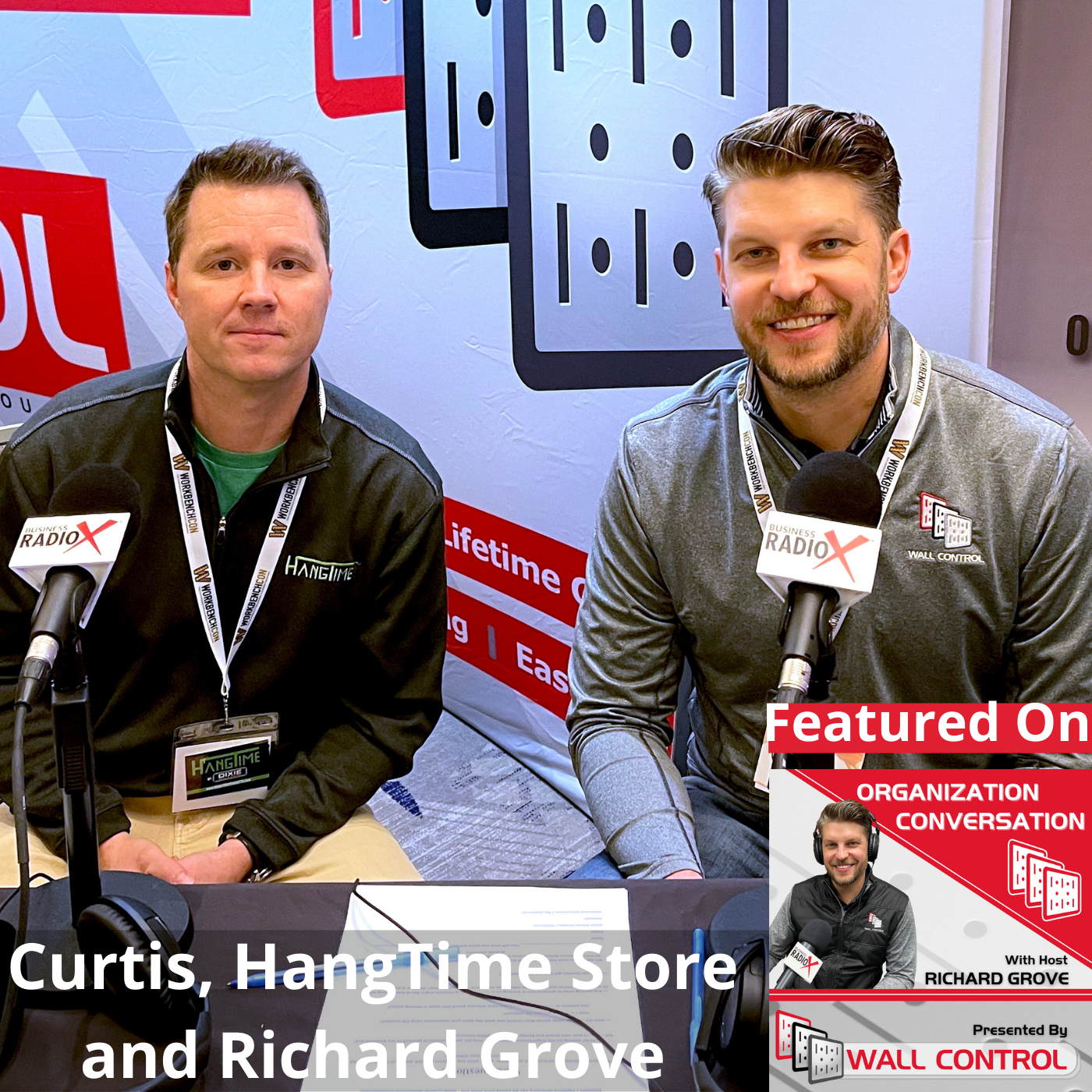
John Brown, Ric Grove, and Richard Grove of Wall Control (Organization Conversation, Episode 1)

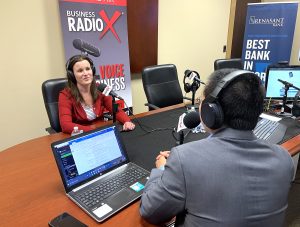
On the first episode of Organization Conversation, host Richard Grove is joined by his father and grandfather to share the story of Wall Control. They recall the history of their work in a tool and die company, developing the product that would become the Wall Control system, the struggles they experienced, when things began to turn around, the benefits of the products, the need for skilled labor, and much more. Organization Conversation is broadcast from the North Fulton studio of Business RadioX® inside Renasant Bank in Alpharetta.

Organization Conversation is hosted by Richard Grove, and broadcast and produced from the North Fulton studio of Business RadioX® inside Renasant Bank in Alpharetta. You can find the full archive of shows by following this link. The show is available on all the major podcast apps, including Apple Podcasts, Spotify, Google, Amazon, iHeart Radio, Stitcher, TuneIn, and others.

About Richard Grove

Richard Grove, Host, “Organization Conversation”

Richard Grove‘s background is in engineering but what he enjoys most is brand building through relationships and creative marketing. Richard began his career with the Department of Defense as an engineer on the C-5 Galaxy Engineering Team based out of Warner Robins. While Richard found this experience both rewarding and fulfilling, he always knew deep down that he wanted to return to the small family business that originally triggered his interest in engineering.

Richard came to work for the family business, Dekalb Tool & Die, in 2008 as a Mechanical Engineer. At the time Wall Control was little more than a small ‘side hustle’ for Dekalb Tool & Die to try to produce some incremental income. There were no “Wall Control” employees, just a small warehouse with a single tool and die maker that would double as an “order fulfillment associate” on the occasion that the original WallControl.com website, which Richard’s grandmother built, pulled in an order.

In 2008, it became apparent that for the family business to survive they were going to have to produce their own branded product at scale to ensure jobs remained in-house and for the business to continue to move forward. Richard then turned his attention from tool and die to Wall Control to attempt this necessary pivot and his story with Wall Control began. Since that time, Richard has led Wall Control to significant growth while navigating two recessions.

Outside of Richard’s work at Wall Control he enjoys helping other business owners, operators, and entrepreneurs along their own paths to success by offering personal business coaching and advising through his website ConsultantSmallBusiness.com. Richard has developed an expansive and unique skillset growing and scaling Wall Control through a multitude of challenges to the successful brand and company it is today. Richard is happy to share his knowledge and experience with others who are looking to do the same within their own businesses.

Connect with Richard:

Instagram | Twitter | LinkedIn | Richard’s Website

About Wall Control

The Wall Control story began in 1968 in a small tool & die shop just outside Atlanta, Georgia. The first of three generations began their work in building a family-based US manufacturer with little more than hard work and the American Dream.

Over the past 50+ years, this family business has continued to grow and expand from what was once a small tool & die shop into an award-winning US manufacturer of products ranging from automobile components to satellite panels and now, the best wall-mounted tool storage system available today, Wall Control.

The Wall Control brand launched in 2003 and is a family-owned and operated business that not only produces a high-quality American Made product but sees the entire design, production, and distribution process happen under their own roof in Tucker, Georgia. Under that same roof, three generations of American Manufacturing are still hard at work creating the best tool storage products available today.

Connect with Wall Control:

Company website | Facebook | Instagram

Tagged With: Family Business, Organization Conversation, Richard Grove, steel pegboard, Wall Control, wall systems

Susan Bonds-McCulloch, Dress For Success Atlanta

February 17, 2022 by John Ray

Dress For Success
North Fulton Business Radio
Susan Bonds-McCulloch, Dress For Success Atlanta
Loading
00:00 /
RSS Feed
Share
Link
Embed

Download file

Dress For Success

Susan Bonds-McCulloch, Dress For Success Atlanta (North Fulton Business Radio, Episode 434)

Much more than a clothes closet, Dress For Success Atlanta works to meet the deeper needs of the women they serve. Executive Director Susan Bonds-McCulloch joined host John Ray to detail the various programs they have and offer some of their success stories. Susan discussed Dressed For Success’s professional training, encouragement, Career Center, the annual Gala that helps keep the work going, and much more. North Fulton Business Radio is broadcast from the North Fulton studio of Business RadioX® inside Renasant Bank in Alpharetta.

Dress For Success Atlanta

The mission of Dress for Success Atlanta is to empower women to achieve economic independence by providing a network of support, career development tools, and professional attire to help women thrive in work and in life.

DFSA is not just a clothing closet, but also boasts a Career Center that is staffed with volunteer companies within our community. These professionals work with Dress for Success-Atlanta’s clients reviewing resumes, conducting mock interviews, helping with LinkedIn and other social media. The goal was for the business community to connect with the clients that Dress for Success serves in a meaningful way. There has been an overwhelming response to this corporate volunteer opportunity and the clients that Dress for Success serves continue to say how unexpected it is to work directly with a volunteer who has taken time out of their workday to help them achieve their goals!

Some of the companies that now work with Dress for Success-Atlanta include Delta Airlines, UPS, Masco, State Farm, Capital One, and many others. Dress for Success and its clients are truly overwhelmed by the desire of others in our community to help them succeed.

DFSA hosts several networking and educational programs such as Career KickStart, Inspire Success, Tools for Success, and Professional Workshops that are invaluable to the women they serve and the Atlanta Community as a whole.

The long-term goals for DFSA include a mobile unit and another Dress for Success location. DFSA’s desire is to help stem the cycle of poverty and to have a generational impact!

Company website | LinkedIn | Facebook | Instagram

Susan Bonds-McCulloch, President/Executive Director, Dress For Success Atlanta

Susan Bonds-McCulloch, President/Executive Director, Dress For Success Atlanta

Because of her passion to give back and help women, Susan Bonds-McCulloch joined Dress for Success-Atlanta (DFSA) as their Executive Director in October 2018. Prior to this Susan had a 20+ year career in the insurance industry as an Employee Benefit Broker working with companies to help them plan, design, and implement their benefit programs. Susan found that her passion was helping others when they needed it most…when they or a loved one needed care.

Since joining Dress for Success-Atlanta, Susan has implemented many changes with the goal to empower more women in our community. DFSA relocated and now boasts a bright welcoming location for the women they serve. DFSA held their very first Gala in November of 2019 and pivoted during 2020 to hold a virtual gala!! The 3rd annual event will be held on September 17th at the InterContinental Hotel in Buckhead. Without these signature events, DFSA could not continue to serve its community.

Susan loves to meet others who wish to be a part of and help with the mission of helping women in our community. This includes businesses that may wish to partner with DFSA along with individuals who may wish to work with DFSA on committees, through volunteerism, or by giving back monetarily.

In addition, Susan is a founding member of a women’s group the Women’s Introduction Group (WIG). WIG is a group designed by women for women to help them navigate their careers, network, and give back to our community. The goal is to always help another woman grow their career path.

LinkedIn 

Questions and Topics in this Interview:

  • Tell me about Dress for Success Atlanta? Who you are and the population you serve?
  • Have you always worked in a non-profit? What led you to Dress for Success?
  • It sounds like you do more than just dress women, can you tell me a bit more about the programs that you offer?
  • Can you tell me how the annual Gala event helps the women that Dress for Success Atlanta serves?
  • What is your 3 – 5 year plan for Dress for Success Atlanta?
  • What are some of your most urgent needs?

North Fulton Business Radio is hosted by John Ray and broadcast and produced from the North Fulton studio of Business RadioX® inside Renasant Bank in Alpharetta. You can find the full archive of shows by following this link. The show is available on all the major podcast apps, including Apple Podcasts, Spotify, Google, Amazon, iHeart Radio, Stitcher, TuneIn, and others.

RenasantBank


Renasant Bank has humble roots, starting in 1904 as a $100,000 bank in a Lee County, Mississippi, bakery. Since then, Renasant has grown to become one of the Southeast’s strongest financial institutions with over $13 billion in assets and more than 190 banking, lending, wealth management and financial services offices in Mississippi, Alabama, Tennessee, Georgia and Florida. All of Renasant’s success stems from each of their banker’s commitment to investing in their communities as a way of better understanding the people they serve. At Renasant Bank, they understand you because they work and live alongside you every day.


Special thanks to A&S Culinary Concepts for their support of this edition of North Fulton Business Radio. A&S Culinary Concepts, based in Johns Creek, is an award-winning culinary studio, celebrated for corporate catering, corporate team building, Big Green Egg Boot Camps, and private group events. They also provide oven-ready, cooked from scratch meals to go they call “Let Us Cook for You.” To see their menus and events, go to their website or call 678-336-9196.


Tagged With: A&S Culinary Concepts, Career counseling, Career KickStart, Clothes closet, Dress For Success Atlanta, empowering women, Inspire Success, North Fulton Business Radio, renasant bank, Susan Bonds-McCullouch, Tools for Success

Workplace MVP: Sally Spencer-Thomas and Dr. Jodi Frey

February 17, 2022 by John Ray

Workplace Suicide Prevention
Minneapolis St. Paul Studio
Workplace MVP: Sally Spencer-Thomas and Dr. Jodi Frey
Loading
00:00 /
RSS Feed
Share
Link
Embed

Download file

Workplace Suicide Prevention

Workplace MVP: Sally Spencer-Thomas and Dr. Jodi Frey

Sally Spencer-Thomas and Dr. Jodi Frey joined host Jamie Gassmann to discuss their work in raising awareness of the need for workplace suicide prevention programs. Both Sally and Jodi are tireless advocates and noted speakers on suicide prevention, and they were instrumental in creating the National Guidelines for Workplace Suicide Prevention. Each of them shared the work they do, their experiences in developing these programs, the challenging work of getting businesses on board, the National Guidelines and Workplace Suicide Prevention Pledge, and much more.

For more information, visit the website to find resources and the Workplace Suicide Prevention Pledge.

Workplace MVP is underwritten and presented by R3 Continuum and produced by the Minneapolis-St.Paul Studio of Business RadioX®.

Sally Spencer-Thomas, Owner, Sally Spencer-Thomas LLC

Sally Spencer-Thomas, Owner, Sally Spencer-Thomas LLC

Clinical psychologist, inspirational speaker, podcaster, and impact entrepreneur, Dr. Sally Spencer-Thomas sees the world of mental health from many perspectives. She began her innovative work in suicide prevention after her brother Carson died of suicide in 2004. After his difficult battle with a bipolar condition ended in tragedy, she searched for bold, gap-filling strategies to prevent what happened to Carson from happening to other people. Now known nationally and internationally as an innovator in social change, Spencer-Thomas has helped start multiple large-scale, gap-filling efforts to remove bias around mental health and ensure more people have access to the tools and assistance they need to thrive and stay alive.

In 2016, Spencer-Thomas was honored to accept an invitation to speak about men’s mental health at the White House. In her TEDX talk, Stopping Suicide with Story, she shares her goal of elevating the conversation to make mental health promotion and suicide prevention a health and safety priority in our schools, workplaces, and communities.

Her degrees include: • Doctorate in Clinical Psychology from the University of Denver • Masters in Non-profit Management from Regis University • Bachelors in Psychology and Studio Art with a Minor in Economics from Bowdoin College.

LinkedIn

Sally Spencer-Thomas LLC

Sally Spencer-Thomas LLC is a small, woman-owned company with a mission to empower people and systems to make resilience, mental health promotion, and suicide prevention a core priority. They do this through awareness building, influence, compassion, strategy development and collaboration.

Their aim is to implement bold, gap-filling actions that help prevent mental health emergencies and build vibrant communities by promoting the science, stories, and strategies that make our world a better place to live.

They envision a world that aspires to a zero suicide mindset where we live, learn and work and where leaders and communities are dedicated to sustaining compassionate societies and a passion for living — in short, a world where people help one another and get to live their best lives. They’ve worked internationally in Australia, South America, Asia, Europe and Canada. They’ve partnered with large multi-national tech companies, large industry professional associations, and labor unions, while also making space to support our most cherished non-profit partners.

Clients include Southwest Airlines, Google, the FBI, the National Hockey League’s Player Association, and several large construction companies. Their company offers keynote speeches for industry events, trainings for organizations and teams, and consulting on how to build effective strategies.

Company website |LinkedIn | Twitter

Dr. Jodi Jacobson Frey, PhD, LCSW-C, CEAP, University of Maryland

Dr. Jodi Jacobson Frey, PhD, LCSW-C, CEAP, University of Maryland

Dr. Jodi Jacobson Frey, PhD, LCSW-C, CEAP is a Professor at The University of Maryland, School of Social Work. Dr. Frey chairs the Social Work in the Workplace & Employee Assistance Sub-specialization (formerly EAP Sub-specialization) and the Financial Social Work Initiative. She is the Founder and Faculty Executive Director of the newly launched Behavioral Health and Well-Being Lab (BHWell Lab). She is also co-Chair of the University of Maryland Mental Health and Addiction Health Disparities Think Tank. Her MSW and PhD degrees were earned from the University of Maryland.

Dr. Frey’s research focuses on workplace behavioral health, including the impact of employee health and well-being on productivity and safety. She studies the effectiveness of employee assistance, work/life, and related programs for working-age adults and families. She has dedicated a significant portion of her research and advocacy to suicide prevention and crisis response in the workplace.

Recent refereed articles have been published in JAMA, American Journal of Addictions, Social Work, Journal of Career Development, Journal of Occupational and Environmental Medicine, Journal of Social Work Education, Journal of Workplace Behavioral Health, Research on Social Work Practice, and Suicide and Life-Threatening Behavior. Dr. Jacobson Frey has presented research findings at international conferences. She is the Co-Editor-in-Chief for the Journal of Workplace Behavioral Health. She is also the Co-Founder of the International Employee Assistance Digital Archive, housed at the University of Maryland, and which was awarded the Best Use of Technology in the Employee Assistance Field by the Employee Assistance Professionals Association (EAPA) in 2019.

Dr. Frey co-chairs the Workplace Suicide Prevention and Postvention Committee of the American Association of Suicidology where she leads the development and dissemination of the National Guidelines for Workplace Suicide Prevention. She is also a past chair of EAPA’s Subcommittee on Workplace Disaster Preparedness and Response. In 2006, she was the recipient of the EAPA President’s Award for Excellence, recognizing her work on this committee.

Prior to teaching, Dr. Frey provided employee assistance and work/life services to NASA, Goddard Space Flight Center, where she was recognized with several awards for her service to employees and family members. As an employee of COPE, Inc., and later as an EA professional in private practice, she worked for several years providing direct EAP, outpatient mental health, and crisis intervention services.

LinkedIn | Twitter

About Workplace MVP

Every day, around the world, organizations of all sizes face disruptive events and situations. Within those workplaces are everyday heroes in human resources, risk management, security, business continuity, and the C-suite. They don’t call themselves heroes though. On the contrary, they simply show up every day, laboring for the well-being of employees in their care, readying the workplace for and planning responses to disruption. This show, Workplace MVP, confers on these heroes the designation they deserve, Workplace MVP (Most Valuable Professionals), and gives them the forum to tell their story. As you hear their experiences, you will learn first-hand, real-life approaches to readying the workplace, responses to crisis situations, and overcoming challenges of disruption. Visit our show archive here.

Workplace MVP Host Jamie Gassmann

Jamie Gassmann, Host, “Workplace MVP”

In addition to serving as the host to the Workplace MVP podcast, Jamie Gassmann is the Director of Marketing at R3 Continuum (R3c). Collectively, she has more than fourteen years of marketing experience. Across her tenure, she has experience working in and with various industries including banking, real estate, retail, crisis management, insurance, business continuity, and more. She holds a Bachelor of Science Degree in Mass Communications with special interest in Advertising and Public Relations and a Master of Business Administration from Paseka School of Business, Minnesota State University.

TRANSCRIPT

Intro: [00:00:05] Broadcasting from the Business RadioX Studios, it’s time for Workplace MVP. Workplace MVP is brought to you by R3 Continuum, a global leader in workplace behavioral health and security solutions. Now, here’s your host, Jamie Gassmann.

Jamie Gassmann: [00:00:27] Hi, everyone. Your host, Jamie Gassmann, here, and welcome to this episode of Workplace MVP.

Jamie Gassmann: [00:00:33] Suicide is the 10th leading cause of death in the United States according to the National Institute of Mental Health. In 2019 alone, there were an estimated 3.5 million people who plan to suicide, 1.4 million who attempted suicide, and 47,511 who died by suicide, which averages out to approximately 130 suicides per day. The societal cost associated with suicide and suicide attempts are estimated at 93.5 billion dollars, which includes lifetime medical fees and the cost of lost work. But what you can’t put a price tag on is the emotional cost of grief, loss, guilt, and confusion that the families, friends, coworkers, and others will have in the aftermath of a loved one completing suicide.

Jamie Gassmann: [00:01:26] As business leaders, our employees are spending a good majority of their day at work. Work has become for some a home away from home and their coworkers become a work family. With that much time spent in the work environment, are there ways we can proactively look to help those that may be struggling or contemplating suicide? As a leader, are there programs or conversations that can be had to create an environment an employee would be comfortable discussing the struggles they’re having? And ultimately, is there more that can be done to help reduce the number of individuals who feel completing suicide is their only option out?

Jamie Gassmann: [00:02:05] Well, joining us today to share how business leaders can create a comprehensive approach to suicide prevention within their work environments is Workplace MVP’s Dr. Sally Spencer-Thomas, President of United Suicide Survivors International, and Dr. Jody Frey, Professor at University of Maryland, School of Social Work. Welcome to the show, Sally and Jody.

Sally Spencer-Thomas: [00:02:27] Yeah, thanks so much, Jamie. We’re really grateful to be here.

Jody Frey: [00:02:30] Yeah. Thank you.

Jamie Gassmann: [00:02:32] So, let’s start out with our first workplace MVP, Dr. Sally Spencer-Thomas, President of United Suicide Survivors International. So Sally, you personally have experienced the loss of a loved one to suicide. Can you share with us your story?

Sally Spencer-Thomas: [00:02:47] Sure. So, I’m a psychologist by training and I have been in the field of mental health approximately 16 years when my brother died by suicide on December 7th, 2004. And a lot of people have these before and after moments in their life where they say, like, this was my life before this happened and then this is my life afterwards. It’s something completely different. And, his death had that impact on me. We were incredibly close, and he happened to live with bipolar condition, which he managed very well throughout his young adult life. But for whatever reason, the summer of 2004, he had a full-blown episode of mania that totally destroyed everything that he held dear, his family, his work life, everything. And ultimately, it proved to be fatal.

Sally Spencer-Thomas: [00:03:36] So in the aftermath of his death, we were, our family, his friends, we were all in such shock and grief, and I learned things in those months that followed that no one ever taught me in graduate school. And, again, this was a while ago. But you know, no one ever told me that the majority of people who died by suicide were working-aged men. The majority of them had one attempt and it was fatal. And, the majority of them also never stepped foot in any kind of mental health resource.

Sally Spencer-Thomas: [00:04:05] So, that seemed like a pretty important gap to fill, and that’s gotten me on the trajectory to meet amazing people like Jody Frey and many others who are doing incredible work in this space to try to really empower workplaces to make this, make suicide prevention and mental health promotion a health and safety priority in their community and in their workplace.

Jamie Gassmann: [00:04:28] Yeah, yeah. This had to have been just a really hard experience to have gone through. And you’ve used that, you know, as you kind of mentioned, to help to inform and educate businesses and others about suicide and then the mental health aspect that, you know, with your brother and not getting support for it and, maybe he was getting support, but other men that maybe aren’t getting support for that so that other families don’t have to go through that again. Can you talk through about the work that you’ve done in spreading education and understanding around suicide prevention? Because I know you’re a well-known public speaker and you’re involved in a lot of various different organizations and foundations. Can you talk a little bit about some of that work?

Sally Spencer-Thomas: [00:05:08] Yeah. So, that was also like a really hard part of the journey because we got this clarity in 2005, 2006, it’s the workplace. Workplace is the most cross-cutting system we have. Everybody died by suicide or attempted was working or they were just working or they had an immediate family member who’s working, and the workplace doesn’t know what they don’t know and they’re not doing anything.

Sally Spencer-Thomas: [00:05:28] So, myself and another psychologist, Rick Ginsberg, we set out to make or do something in this space. And so, we created a program called Working Minds. And we were, like, when we finished it, it was a training and a strategy, and we were like, “Ta-dah!” We’re like, “Here we go. We’re going to save a bunch of lives. It’s going to be amazing,” and lead balloon. Like, no one, I say no one cared. It felt like no one cared. Because we were so passionate, we would be like, you know, knocking on all these employers’ doors like, “Hey, how about some suicide prevention in the workplace?” And they’d be like, “Oh, suicide? Mm-hmm. That’s a medical issue, right? People need to take that stuff up with their doctors. That’s nothing we can touch here. It’s like way beyond our thing. It’s not our lane.” Blah blah blah blah. And I’m like, “Yeah, but they’re not. They’re not reaching out to their doctors and they’re here. I promise you, they’re here. So, wouldn’t that be an important thing to tackle head-on?” No. We really had a hard time getting any traction in the early days.

Sally Spencer-Thomas: [00:06:24] But then things started to change because when – people never think it’s going to happen to him until it happens to them. When there’s a suicide death in a workplace community, people a lot of times have this oh my gosh moment, where why didn’t we see this coming? You know, people are in turmoil. It’s a crisis. And, you know, the really caring leaders say what could we have done differently? And so, we started to see people reaching out, you know, many years later, where they had had a high profile death that had really impacted their community. And, they said we don’t want this to ever happen again. How do we get in front of this? And that was the game-changer where some larger companies, some larger professional associations, larger unions started to reach out and say help us.

Sally Spencer-Thomas: [00:07:11] We have a story that I always like to share of this construction company whose COO and I were part of leadership Denver together. You’re part of these leadership groups. You go up for coffee. So, we were out for coffee one day. And, you know, he says, “You know, Sally, when you talk about who’s at risk for suicide, you’re talking about my folks.” And I said, “I know,” and he said, “Well, let’s do it. Give me all the tools.” And we’re about three months in, and he’s like the only one that we know of in the United States, anyway, that’s really kind of taking this at a deep level. And he comes back in three months and he says, “I had no idea. I had no idea how much my people were suffering. I had no idea how worried they were about their kids and their parents. I had no idea that our employee assistance program was so broken that people can’t access it and it doesn’t really work for them.” Like, this has got to go national.

Sally Spencer-Thomas: [00:07:57] And so, it was around that coffee meeting that kind of spun the whole things out. His foundation underwrote the development of a construction industry blueprint for suicide prevention. We got another partner involved and they got into all the trade publications. All of a sudden it was a conversation that the construction industry was having because of just a couple of people’s passion and influence.

Sally Spencer-Thomas: [00:08:20] And, today, you know, hundreds, hundreds of companies are really doing strategic work, you know, largely based on some of the strategy things that Jody and myself and our committee have been evolving over the last decade so that it’s gone from just a conversation to like a full strategy implementation, which is really exciting.

Jamie Gassmann: [00:08:41] Yeah. That sounds really great work. I mean, that’s, you know, you’re helping people. And especially I know in the construction industry, I’ve heard, is one of the higher known industries for having more common, you know, incidents of suicide that I’ve heard in some of the work that we’ve done at R3 Continuum.

Jamie Gassmann: [00:09:04] Quick question because, you know, it’s interesting. You say about the EAP system being broken and that’s how your contact in that construction industry felt. You know, I heard from someone in a different industry where they said when people are stressed out or burned out, they don’t reach out. Is that common from what you’ve seen in some of these others where, you know, they may have that resource but they may be just too fatigued or just, you know, too kind of worn down or whatever they might be feeling, where they just don’t have that energy to make that call? Have you seen that in any of the work that you’ve done?

Sally Spencer-Thomas: [00:09:42] Oh, yeah, 100%. Yeah. You think to any of our most overwhelmed days. Like, all we want to do is stay under the covers and not tackle this day head-on. And so, yeah, it certainly makes sense when people are shut down, whether it’s burnout or depression or, you know, the consequences of addiction. Like, there’s a whole bunch of reasons why it feels like the 500-pound phone is what we call it, like to make that call seems so hard. And I think, you know, especially in companies where mental health well-being, whatever you want to call it, was never part of the mission or vision or game plan. There’s just not a readiness or an awareness of how anything works. It’s just like this foreign thing.

Sally Spencer-Thomas: [00:10:24] And so even when, you know, company executives have an employee assistance program, they’ve kind of just checked the box. They don’t know what it entails. They don’t really know if anybody’s using it. They don’t know if it’s any good. They’re just like, “Well, I provided the benefit for my employees, but what do you want?” And I’m like, “Oh, a heck of a lot more.” Because especially in those areas, there’s just a million barriers that people have. Energy being one, the complication of a system that’s kind of hard to navigate even when you’re well. I mean, I try to access employee assistance work frequently and sometimes it’s, you know, three calls and then they call you back and it’s hard. You know, you have to have a certain level of energy and awareness to kind of get yourself through it.

Sally Spencer-Thomas: [00:11:06] And then, you know, when we have a top-tier program, there’s all kinds of support that can happen. But a lot of times people went to the lowest bidder, and so then they’re not getting quality service. And that’s very demoralizing for people. And then, the word gets out. Like, don’t even bother. It’s going to be too hard and then it’s not going to work out.

Sally Spencer-Thomas: [00:11:23] So, the EAP part of the overall strategy is one very important part that we like employers to understand because if the whole message is going to be a bridge to resources, you better be confident that those resources are going to support people in the way that they deserve. And you better know them more than just a 1800 number or a website. Like, call them, get to know how they work, and so forth. So, we do what we call a mental health resource audit with our partners to do a deep dive so that they can create a what to expect sheet for their workers and it’s a little easier road to travel down.

Jamie Gassmann: [00:12:03] Yeah, very – that’s great. And, you know, in looking at like, obviously, over the last couple of years and I know a lot of my episodes have brought this up, but the pandemic is still there and we’re still navigating it and, you know, the various challenges and complexities that have come from that. And, I know from looking at the different, you know, metrics that have been put out either by the CDC or some of the other groups that, you know, it’s had a huge impact on the mental health of our country. I mean, I think we all have felt it in some way. In your opinion, for workplaces, how has this impacted suicide and what do they need to be looking for and watching for, particularly in their employees and particularly employers that might tell people who are working remote and they don’t have as much of a connection point with them?

Sally Spencer-Thomas: [00:12:49] So, you hit it head on the fact that none of us on the entire planet escaped the emotional impact of the pandemic. You know, it was in one way or another impacting our well-being and for some people very intensely and for many people very long haul. The question about how it impacted suicide is a complex one. So when people started to predict that suicide rates would skyrocket, you know, very early on, you know, lots of anxiety, lots of disruption, you know, as we all experienced, people anticipated, “Oh, my gosh. The suicide rates are going to go through the roof.” And those of us in public health around suicide were like, “Hold on.” Just, like, wait and follow the data because human behavior surprises us a lot of times. And in large-scale disasters after 911, for example, historically around wartime, suicide rates actually dropped, which is surprising to the general public but not surprising to those of us in this work.

Sally Spencer-Thomas: [00:13:46] Because one of the things that happen in large-scale disasters, and you can probably remember this between like mid-March and mid-May, is that we tend to pull together. In our anxiety, we pull together and we just lean on each other. And so, if you remember back to those times, at least here in Colorado, we were like leaning our heads out the window at 8 p.m. at night, howling in support of all the essential workers. People were making masks and delivering food. Like, you had this sense of like, we’re scared, we’re overwhelmed many of us, and yet we’re going to pull together the best we can to live through this.

Sally Spencer-Thomas: [00:14:22] But then, what often happens again in large-scale disasters is there’s this tipping point where we’re past the honeymoon phase of her heroism and pulling together, and we’re exhausted and we are at each other. And you can remember, right, end of May, George Floyd’s murder was nothing but a freefall of discontent and conflict and so on that is still going on today, but really hard in those next several months, I would say, until, you know, the news of the vaccine started coming out. And then, we thought, there’s something hopeful here. But, you know, still up and down throughout the way.

Sally Spencer-Thomas: [00:14:58] So, isolation has been part of it and certainly, the divisiveness around all of the regulations has been a big part of people’s well-being. Suicide rates actually went down in 2020, which is surprising to people, but it’s not a clear-cut story. It went down about 3% as far as we can, you know, tell. There’s a lot of gray area in suicide data. That dip in suicide rates was largely offset by an increase in overdose and an increase in accidental death, which gray areas as far as many of us are concerned. So, there’s all of that to take in.

Sally Spencer-Thomas: [00:15:37] But the interesting part about suicide, in addition to it being offset by accidental death and overdose, is it didn’t go down for everybody. It largely went down for the highest risk group, which are mostly white men in the middle ages, but it did not go down for people of color. And again, if you can think about some of the particular things that were happening in 2020, a lot of communities of color were very, very much suffering. So, the story of the pandemic remains to be told.

Sally Spencer-Thomas: [00:16:04] The other piece that I’ll point out is that, you know, having this massive, massive long-term disruption to most all of our lives gave people pause to reflect on what’s important to them. And so, that’s where you have, you know, the mass resignation. Like, people are upending their lives because they realize life is short. And my family, my sense of, you know, going in and looking at the world or doing this important thing impact that I’ve always – like, I got to do it now because I might not have tomorrow.

Sally Spencer-Thomas: [00:16:34] And that’s not a bad thing, you know, for people to have that shakeup in their priorities. And I know for me, before the pandemic, I was on a plane two, three times a week, waking up in hotels. I didn’t know where I was. My family was having all these experiences without me. I felt very disconnected. The pandemic has let me be home and reconnect, and it’s been much better for my mental health. So, it didn’t – it wasn’t, while stressful for many, wasn’t necessarily something that was increasing risk for suicide per se.

Jamie Gassmann: [00:17:05] Yeah. Interesting. And looking out, you know, obviously, we shared that some of the ways, you know, if anybody is struggling with it, that there’s the 500-pound phone that you talked about. You know, they’re too tired to pick that phone up. Are there other reasons that, let’s say, somebody has something that’s been, you know, they’ve been dealing with through the pandemic or other things that they’re navigating and they’re really struggling internally? What are some of the other barriers that prevent them from getting some of the support and help that they do have accessible to them?

Sally Spencer-Thomas: [00:17:41] Yeah. There’s so many. I mean, a lot of people have been conditioned from birth to be problem solvers, to be the ones that people lean on. They don’t lean on other people or maybe they don’t want to take a resource away from someone they feel like might have a bigger problem than them. There’s all kinds of bias, too, and fears that are based in reality. Discrimination and prejudice is a real thing. And, people don’t always feel that their workplace is psychologically safe to disclose. They are concerned about the confidentiality. They are often rightly worried that their company will use this information against them and prevent them from getting promotions, getting certain types of security clearances, all these other things that are super important to their career, to their identity.

Sally Spencer-Thomas: [00:18:29] So, we have lots of cultural issues that are the bigger part of the iceberg underneath the systemic challenges of just trying to navigate resources that are probably even more powerful than, you know, I don’t know what number to call, is the fact that if I start this, maybe I lose all control over everything that’s important to me here and then I can’t get it back. And those are real fears.

Sally Spencer-Thomas: [00:18:56] So, again, working around shifting culture in an organization is an essential part of this. We have got to establish psychological safety so that people do feel like if they disclose something vulnerable about themselves that their organization is going to have their back, their organization is going to come forward with support. Because the truth of the matter is nobody gets out of this life without being brought to your knees by something. And, we all want to know that when that happens to us that somebody is going to be there for us.

Sally Spencer-Thomas: [00:19:27] And if the culture is no, then people are going to leave. They’re going to shut down, and that just doesn’t impact the well-being of the workforce. We know from data from Gallup, it also impacts errors, job site safety, turnover. Like, it has major cost impact on an organization. So, if you’re not going to do it because it’s the right thing to do, do it because it’s the right business thing to do as well. Shifting culture is really an important piece, and it really often starts with the leadership being able to talk about this in a matter-of-fact way and share some of their stories of things that they’ve gone through and how they’ve been helped.

Jamie Gassmann: [00:20:05] Oh, that’s really great advice, and I know we’re going to dive into that a little bit deeper a little bit later in the episode. So, quick question, in terms of – you do a lot of educating, speaking, and programming around suicide prevention. Is there something within the work that you’ve done that you are absolutely most proud of that has really just continued to resonate with you that what you’re doing is working and you’re getting the results that you’re looking for?

Sally Spencer-Thomas: [00:20:34] Well, I think, you know, when our committee established the national guidelines for workplace suicide prevention after like over a decade of trying to figure out what to do, that was a very pivotal moment I think for all of us because it was a call to action nationally and just watching again the construction industry move through the movement of this. At first, nobody knows it’s an issue or it’s not my problem, right? So then, first we got to get the awareness out there. Yes, this is an issue. And, yes, it is your problem. It’s everybody’s problem, right?

Sally Spencer-Thomas: [00:21:08] Then, we move to how do I help a person? Like, I have a person in my heart that I’m worried about or I’m worried about myself. So then we moved into that space and we saw a lot of programs coming up or, you know, resources, that kind of thing. And now, because of the national guidelines and because a lot of companies and other professional associations and organizations have set a precedent, people are moving to strategy, and strategy is really where the things are going to shift for good in a positive way. So, the national guidelines help with that, having large reputable companies say we get it, we can’t just do a one-off training or one-off awareness day and call it good. We’ve got to figure out how this is embedded in our entire health and safety culture. So, it’s just part of the fabric of what we do around here.

Sally Spencer-Thomas: [00:21:52] Having those stories to tell now, one of the things that I’m super excited about for the upcoming months is we’re having a summit in Colorado, where all of the early adopters in the construction space who’ve been working and trying things on and measuring impact, they’re all going to come together and they’re going to learn from each other. Like, here’s what’s working, here’s what’s not working, here’s what we need for the next three to five years. That’s where change becomes sticky, and that’s where we’re at, which is very, very exciting.

Jamie Gassmann: [00:22:20] Wonderful. Great. So, we’re going to shift over to our next workplace MVP for today’s episode, Dr. Jody Frey, Professor at University of Maryland, School of Social Work. Welcome, Jody.

Sally Spencer-Thomas: [00:22:33] Thank you, Jamie. Thanks for having me.

Jamie Gassmann: [00:22:35] Yeah. Absolutely. So, share with us your career journey and kind of your path that got you into kind of moving into working in the suicide prevention area.

Jody Frey: [00:22:45] Sure. And, it’s always just such a pleasure to hear Sally and her story. It’s just such an amazing professional in this space. Honored to be here with her. So, my journey is a little bit different. I entered the field as a clinical social worker, and to be honest, I had very little formal training in suicide assessment and response in my MSW program, which has gotten better over time. As Sally mentioned, both of us in our counseling programs weren’t, I would say, fully prepared. And, that’s probably being generous.

Jody Frey: [00:23:24] I really learned more of the work about suicide prevention, asking questions, providing support, access to resources in my fieldwork and ultimately in some of my first jobs. And I always thought, you know, this is not necessarily the way that we should be preparing folks. And, when we talk about the workplace and thinking about how to prepare leaders and coworkers to talk to employees that they’re concerned about, we can’t just let people go out there and expect that they know the right things to say and the right things to ask. And the lack of knowledge, I think actually is one of the biggest problems in our field because we don’t know so we don’t ask and we stay silent.

Jody Frey: [00:24:11] And so, when I started working in employee assistance, in the workplace, you know, similar to the trends that Sally was seeing in construction, I was in federal government, so, again, with an aging population, a lot of increased risk, suicide attempts, and deaths among working-aged men. And, we didn’t have anything about suicide in our workplace. Violence policy, we weren’t addressing this in our safety initiatives.

Jamie Gassmann: [00:24:40] And in fact, when I tried to bring this up to senior leadership in workplaces that I was engaged with as an EAP clinical social worker was very quick to be told, “Jody, that’s a personal problem. We’re very sad that that happened, but it really had nothing to do with the workplace. In fact, we heard, you know, that that person was going through a nasty divorce or had recently experienced some pretty significant financial problems.” And, it just was very quick to try to move on and not understand at all how a workplace could have a role in helping to prevent but also on the other side could be contributing and exacerbating the risk that we see.

Jody Frey: [00:25:27] So, as a social worker, I didn’t give up, you know. As I continue to try to bring these issues to light and see the potential actually, the opportunity for this untapped environment of a workplace to not only do education and awareness but intervention and more recently in my work, thinking about changing the systems that calls some of the increased risks and some of them are involved with work.

Jody Frey: [00:25:58] So, I kept going and I found folks like Sally that had similar ideas of how can we take what we’re seeing in our communities and in our workspaces, increasing the awareness and the training for folks that we refer to, but also building that bridge of how do we connect people with care, and how do we start the conversations so that we could think about employees asking, “Are you okay?” And, not asking it in a way like, “You’re okay, right?” But opening the door to conversation both from the workplace perspective and also from counselors.

Jody Frey: [00:26:42] And that’s another piece that I’ve been doing quite a bit of work on as well is how do I bring this into the training and the education of social workers and helping professionals so that they are also equipped to ask questions and when they ask the questions to sit and listen and be present with someone.

Jamie Gassmann: [00:26:59] Yeah, which leads me into my next question of how have you incorporated that into the curriculum that you’re teaching in your social work program?

Sally Spencer-Thomas: [00:27:08] A lot of different ways. And I think, you know, there’s still quite a bit of work to do. But one of the ways that we’re bringing this into social work and counseling and helping professions is to actually have classes on suicide and suicide prevention.

Jody Frey: [00:27:23] I actually created at the University of Maryland an interprofessional course, where I work with our School of Nursing, and we prepare clinicians, nurses, and social workers to think about how they can work as a team in different settings, community, hospital, health care, et cetera, to identify risk and to respond appropriately to risk. And, you know, when I first started doing this work, Jamie, I thought, well, everybody knows to ask a direct question, and I brought – I think the first time I entered this in social work because I brought a QPR, question persuade and refer, training into social work, and I thought, this is going to be too novice. Like, everybody, they’re all going to know this. And we did a randomized controlled trial, actually, and found that yes some people knew this and felt it was a great refresher and some people did not know. And, I think that is just so important to think about both in education but also the workplace, that people are still very concerned that if I ask, “Are you thinking about suicide? Are you thinking about death?” That I will somehow implant that idea in the person’s head and therefore we don’t ask.

Jody Frey: [00:28:37] And so being able to have basic trainings, both at counseling programs in the workplace and the community, is so critically important to reduce the stigma or the discrimination against suicide and to help people feel confident in the ability that by asking the question doesn’t actually implant some idea, but it opens a door to say, “You’re an ally. You’re a safe person that I can talk with because, yes, I am maybe having these thoughts and no one’s really asked me about them or will listen.” And then, being prepared to think about where do we refer to.

Jody Frey: [00:29:19] So, both in our master’s program and the research I do, we’re always bringing students into that capacity to think about broader spaces and places where we can provide bridges to care. Like, some of the work that I’m doing in Michigan and Washington County, Rhode Island, with man therapy, like getting social workers and researchers and practitioners to think about different interventions that they might not be evidence-based interventions and mindfulness and cognitive behavioral therapy but, like, how do we get out into the community which includes the workplace and maybe we need to communicate differently to try to connect particularly with men, with frontline workers, with working parents, folks that are not maybe accessing our traditional mental health resources as much as we would like.

Jamie Gassmann: [00:30:10] Yeah. And I think in the workplace, sometimes there’s that fear of litigation that if I bring up mental health or something to that degree, I’ve now set myself up, you know, as a leader for that employee to, you know, sue me or something to that effect. So, how – I think that educational point is important. How can workplaces figure out that balance between, you know, regulatory requirements around an employee’s health and creating kind of that, you know, ability to be able to have those conversations safely, you know, and show that you’re that ally for that employee?

Sally Spencer-Thomas: [00:30:47] Yeah. I think it’s very important that workplaces consider the culture of their organization. And, I think right now we’re seeing a lot of increased attention from employers when mental health and what can they be doing. But there’s still this notion, as Sally mentioned when talking about EAP, to check the box. Like, “Well, what training can I do? And, that will solve the problem.” Or, “What vendor can I use for a particular benefit? And that will solve the problem.”

Jody Frey: [00:31:17] And I think what is really needed, which then allows those conversations that you’re talking about to happen, is to take a broader view and approach of the culture of the workplace. Because some places, it is not safe to disclose vulnerabilities. And that is the reality that many workers are facing day in and day out.

[00:31:39] And so, in order to to have conversations, I think leaders need to do some work first and foremost and thinking about what do they want their workplace to look like. What does psychological safety look like and how does it work here? And do we have the resources to refer folks to should they express concerns? Because it is not the role of managers and supervisors to diagnose any kind of psychological problems, but it is their role to look at patterns of behavior and to show empathy when they have concerns to have the ability to ask “Are you okay?” and “I’m concerned about you because this is what I’m seeing,” and, “we also have the resources to take care of you.” We have to have a package deal. We cannot just offer, you know, someone to be vulnerable, and then we have nothing to offer them.

Jody Frey: [00:32:40] And, that goes beyond EAP. You know, one of the areas that I chat with employers quite a bit when they ask me, because I am an EPA expert, like, what program should we use? And, I say I will give you an answer. But first, you need to tell me what are you doing as a leader to change the culture of your workplace? And, what are you really willing to invest? Because you could have a wonderful mental health package, but if there’s no paid time off, you know if there’s no support for employees who are being harassed or discriminated in the workplace, we are continuing to put all the blame on the individual and say care for your mental health and your well-being, your self-care, when potentially this workplace is toxic or there’s aspects of it that really need some considerable change.

Jody Frey: [00:33:31] And so, I think if we start to address some of the culture, situations, and environments, then the conversations that an employer or a coworker could have are much more safe, both for the employee and for the employer. Because we’re really creating a culture of caring as compared to one that’s blaming and shaming and sending someone to a program that may or may not be connected to the resources and the overall culture of the workplace.

Jamie Gassmann: [00:34:00] Sure. You know, and I think that kind of brings up an interesting part about some of the challenges that, you know, overall might be being faced in helping to kind of slow suicide rates. From your perspective, where are some of the other challenges? I know, obviously, in the workplace, there are some things that need to be corrected. But what are some of the other challenges that individuals might be experiencing either getting help or just in general with society? You know, what does that look like in your perspective?

Jody Frey: [00:34:33] So, you know, a lot of attention, and even in some of my early work, has been training clinicians to assess and respond to suicide risk. And, that’s critically important. Sally and others, you know, have talked about, like, when you are sitting with someone who has serious suicide ideation and intensity, you need to bring your best as the crisis response. And, I know R3 does this very often in that position. We have to bring our best professional self forward and be there for that person.

Jody Frey: [00:35:05] But if we are able to get through that intense moment and step back, I think some of the bigger issues of why we’re really struggling to reduce suicide rates in a significant manner has much more to do with some of our basic needs. And so, in social work and other persons, we’re taught about Maslow’s hierarchy of needs, you know, which starts with safety and security at the bottom of that pyramid. And if we’re not feeling safe, if we’re not feeling secure, if we’re not feeling like we contribute to society, then all the mindfulness in the world is not going to help us. So, I often find that we have to step back.

Jody Frey: [00:35:48] I also teach psychological first aid, and sometimes my social workers are like, “Well, we want to jump into therapy,” and I’m like, “No, we need to hand out water right now.” That’s what’s needed. People are thirsty. People are tired. Counseling maybe can come later. Maybe, it’s not needed even.

Jody Frey: [00:36:04] But I think for suicide prevention, when we look at societal issues, social connection and isolation are critically important, but so are social determinants of health. And I really see issues of poverty, racism, financial security, housing stability, food insecurity, and couple that with feeling not connected or that or withdrawn and not having access to good quality health care. This is, you know, I think, where we see suicide risk really coming to ahead and why it’s so challenging to figure out. Like, what screening should we do or what programs should we offer or what training should we do? Those are all very important pieces of the puzzle. But the bigger table that the puzzle is sitting on has to do with our societal issues.

Jody Frey: [00:36:56] And I think that’s where the guidelines that Sally and I are involved with, the National Workplace Guidelines for Suicide Prevention. We’re always trying to think, how do we go more upstream? And that’s, you know, where we’re seeing a number of employers think about which has not happened when Sally and I first entered this field and there’s still quite a bit of work to go. But the idea is to think about preventing someone from getting to the point of crisis because these other situational factors are supported and taken care of. And, as our research demonstrates the disparities in health, mental health, social determinants, I think we need to think about not just identifying the disparities but changing the systems that cause and exacerbate those disparities. And, the workplace has a great opportunity to be part of the solution for suicide prevention in that way.

Jamie Gassmann: [00:37:59] Great. And I’m excited to dive into that here in a little bit on the workplace. But real quick, just like Sally, you too have done a lot of educating and speaking and programming around suicide prevention. What would you say is your most proud kind of moment in the work that you’ve done?

Sally Spencer-Thomas: [00:38:17] Well, definitely, ditto with the national guidelines. Sally and I used to see each other at conferences and we were just like, it was very hard to get traction. I remember trying to do my first grant on Workplace Suicide Prevention, and it got to like a week before being submitted and the workplace shut it down at a very high level saying if we do this program, more people are going to kill themselves and we’ll be held liable. And, the grant was never submitted and I couldn’t understand. I was so excited to have this comprehensive model that we were going to do and you would be the first workplace to lead the effort. And, I realized they don’t want to be the first. They don’t want to be recognized as having a problem with suicide. And, that was really hard for me during that time to just have that kind of thrown in my face with that recognition that the workplace didn’t want to lead.

Jody Frey: [00:39:16] So, I think being able to build back and look at what other countries are doing and learn from them and bring this to the U.S. has been a huge accomplishment on a more micro level I think teaching the class with social work and nurses. When I run into a student in the elevator and they said, “You know what, Dr. Frey, that class not only helped me be able to talk to my client last week, but actually my significant other or my sister express suicide ideation, and none of us knew what to do. And from the class that I took, I knew how to ask questions and I knew about resources that were going to be important not only for my family member but our whole family for healing.” And so there’s, you know, big examples of making change in workplace. And then there’s the small individual examples knowing that we just have to keep doing this work and we’re reaching more and more people, and more and more people are receiving the help they need. And, that’s very rewarding to me.

Jamie Gassmann: [00:40:21] Oh, absolutely. How powerful that is to be able to get that feedback from one of your students. That’s amazing.

Jamie Gassmann: [00:40:27] So, real quick, we’re going to hear a word from our sponsor. Workplace MVP is sponsored by R3 Continuum. R3 Continuum is a global leader in providing tailored behavioral health disruption, response and recovery, violence mitigation, and leadership support solutions. R3 Continuum is proud to have taken the Workplace Suicide Prevention Pledge to make suicide prevention a health and safety priority in their workplace.

Jamie Gassmann: [00:40:53] To learn more about the Workplace Suicide Prevention and take your pledge, visit workplacesuicideprevention.com. To learn more about R3 Continuum and their ability to create a tailored solution for the unique challenges of your workplace, visit r3c.com today.

Jamie Gassmann: [00:41:10] So moving in, I know you guys have touched on it a little bit in terms of leaders and creating this open environment, creating a culture that creates that psychological safety where employees feel like they can have those open dialogues and conversations or come to a leader for support. Let’s talk through about what are some of the ways that they can go about creating that environment and creating the, you know, creating programs or kind of that cultural feeling where it is okay to be open because I know a couple of you mentioned, you know, that there are some work environments where it’s just not. And so, how can we start kind of turning that? And, what can leaders learn today on this episode about ways that they can kind of start that process? So, we’ll go ahead and start with you, Sally, if you can share with us your thoughts on that.

Sally Spencer-Thomas: [00:41:59] Sure. I have two thoughts. One is going to back to what you were raising earlier. We really have to address the leader’s fears. Because if the leader is afraid, it’s really not going to go in the way that we need it to be. And a lot of times, you know, I do an anonymous and confidential survey with large groups that I train and I ask, “What are your top fears?” And, you know, the top ones are usually I’m afraid I’m going to make things worse. I’m afraid I don’t know what I’m doing. You know, that kind of stuff.

Sally Spencer-Thomas: [00:42:25] But pretty high up there, especially with what the top leadership is, this liability issue. And if that’s really at the heart of the fear blockade, they’re not going to be bold and they’re not going to fully embrace this. They’re going to kind of hold back. So, Jody and I have been working with a group of nationally known H.R. and employment lawyer folks to say how do we get, how do we get through this so that their legal counsel, their HR department, is saying, we understand this. And, one of the – we understand it and support it. And here’s why we should not be afraid. We need them on the team to help message that this is the right thing to do.

Sally Spencer-Thomas: [00:43:01] And, usually one of the ways that we bridge that is around talking about CPR. You know, most companies, especially in our safety-critical industries, CPR all the time, everybody gets it. We train everybody, you know, just to make it fresh and keep the skills sharp and all of this. We don’t expect people to be heart surgeons. We don’t expect them to be EMTs even. But we do expect them to be aware, be confident and confident moving in, supporting a life, and connecting to resources. So, it’s the same idea here. If you were afraid that somebody’s going to crack a rib and get sued, you would never train your people in CPR and a whole bunch of people would die. So, kind of making those arguments is a really important thing. And, soon we’re going to be publishing a white paper co-written by this task force to help decrease some of those fears so that we can go ahead and do the things that we know can be lifesaving.

Sally Spencer-Thomas: [00:43:50] The other piece that really addresses the culture issue is usually when we partner with companies, we do both the grasstops and the grassroots about the same time. So, we walk in with a small group of leaders and we say we need you to lead here. You can’t just bounce it off to your wellness department or your benefits team or your safety team. We need you out in front saying here’s why this is important for our mission, what we’re trying to do here as an organization, and very critically, here’s why it’s important to me. And, they have to have a very compelling reason why this needs to be a priority in the organization.

Sally Spencer-Thomas: [00:44:27] And so, we coach them on, you know, if you do have a story to tell about your own distress, we can help you share that story so you look strong. If that’s your fear that you’re going to be looking weak and people are going to second guess your mental well-being, don’t have that fear. Because what actually happens, Brene Brown’s research, right, you show vulnerability, people see you as even more authentic, more trustworthy, and stronger than people who only, you know, only share the strongest sides of themselves. So, helping our leaders be strong storytellers and model, “It’s okay to talk about it, Watch me. Here I go. I’m going to talk about it,” does more to shift culture than just about anything we do.

Sally Spencer-Thomas: [00:45:07] The other piece is for us to have listening sessions with the grassroots. This is something that, again, they’re very afraid of. They don’t want dirty secrets being aired, or I don’t even know all the fears that they have or they think they know what the problems are. And I said, even if you’re right, we should be listening. Because when we listen to people, they feel like they’re part of the process and they feel like this whole work is by them, about them, and for them. And, they’re going to be far more likely to engage than if you just took an off-the-shelf thing and jammed it into your training program. So, the leaders are very critical in this whole space.

Jody Frey: [00:45:41] And then one more thing, I just want to make sure that I don’t forget to say is that I talk a lot about construction. Most of the early-adopting communities have been the male-dominated communities, construction, extraction, manufacturing, transportation. And the reason why is because death data is clear and they’ve been hit hard. But I can tell you, there’s not a workplace here that hasn’t been impacted. It’s just sometimes the attempt data or the thought-related data is not as clear for a workplace, but it’s coming. Like, I can see other types of industries are trying to get up to speed because they know that many of their workers are suffering. So, I just want to make sure of that. It’s not just the male-dominated industries. Everybody is impacted.

Jamie Gassmann: [00:46:21] Yeah. Great, great information. How about you, Jody? What are your thoughts on this question?

Jody Frey: [00:46:27] Yeah. I think the leaders doing some looking in the mirror and really working with coaches and folks that are out there to help them, whether within their workplace or outside, to think about a strategy, to share a story perhaps, or to become a champion. I’ve seen – as a social worker, I’ve done grassroots efforts in the workplace, but they only get so far without buy-in from top leadership.

Jody Frey: [00:46:59] So, I think being able to create allies in the leaders is very important, and if they can share a story that demonstrates that they’re willing to share their own vulnerability and they’re willing to start the process to make the workplace safer, or perhaps change the culture of a workplace that hasn’t been safe for so many people. I think, you know, coaches could be in H.R. They could be in EAP. A lot of times folks need to rehearse and play and practice and be able to make mistakes in what they’re saying or they’re communicating.

Jody Frey: [00:47:40] So, not feeling alone, which, you know, I think a lot of leaders do feel like they’re on this island and it’s like all up to them to do this work but to make sure they’re using their team effectively and that they’re creating a team, a team that they’re able to be vulnerable and get feedback and continue to improve. Because turning a switch on to say, okay, we’re a psychologically safe workplace or, you know, a lot of people now are throwing equity into their language, like that doesn’t change the culture of workplace. You haven’t made it more equitable. You haven’t made it more safe. It starts the conversation and it’s critically important, but really then maximizing the resources and the assets that you have to start making real change.

Jody Frey: [00:48:23] And, one of the pieces that I would add to what Sally mentioned that I’m really encouraged to see is the intersection and the interweaving of mental health and DEI in the workplace. Now, I mean, another podcast could be why we’re seeing them interwoven. I’ve always thought that my work in mental health is DEI work. I don’t differentiate them. But what we’ve seen in workplaces is some folks have, you know, jumped in to communicate. We think about in 2020 kind of performative statements about DEI and it’s really coming back to be detrimental for workplaces that haven’t fully vested in worker well-being and changing the culture.

Jody Frey: [00:49:08] So, now I’m actually really optimistic about the workplace seeing the intersection and that if we’re going to be working on workplace suicide prevention, we need to be thinking about inclusion of our employees. We need to be thinking about equity in terms of access, in terms of opportunity, and we need to continue to value diversity and not as lip service. So, I think bringing those messages together is a great way that leaders can start to think about changing the culture of their workplace and to bring their teams together to help them to support the communication and to build more allies in this work.

Jamie Gassmann: [00:49:52] I know we’re running a little bit out of time, but there is one thing that I wanted to make sure I got mentioned on the show, and I know it was mentioned in the commercial for R3 Continuum in terms of taking the pledge. And, you both are volunteer co-chairs of the Workplace Suicide Prevention Committee that created and is working on disseminating the national guidelines for workplace suicide prevention and you both have mentioned those in some of your responses today.

Jamie Gassmann: [00:50:18] So, can you tell us a little bit about the program and the pledge that our sponsor, R3 Continuum, has taken in making suicide prevention a health and safety priority in the workplace? Because that could be really a good first step for some of these workplaces in terms of accessing tools and resources that they can use to kind of start having the dialogue or even building a program. So, Jody, do you want to start out with that? And then, Sally, we’ll have you kind of share your thoughts there as well.

Jody Frey: [00:50:49] Sure. The guidelines which, you know, R3 is a great example. So, the guidelines are online. They’re at workplacesuicideprevention.com. They’re freely available. We ask employers and professional organizations to take a pledge to make suicide prevention a health and safety priority. Now, sometimes that’s “Oh, my gosh. What does that mean?” And, some workplaces feel overwhelmed.

Jody Frey: [00:51:16] But what the beauty of the guidelines is that it provides a roadmap, you know, a toolkit with practices. Some, you’re already doing as R3 found out as an early adopter. And, you can start wherever you want. You know, maybe we start with a peer program and looking at our employee resource groups that are doing really active, great work and we build up there. Or, maybe we start because we’ve got a great champion in our leadership and we want to start with our communication and maybe doing an audit of what’s happening. You don’t have to take this all on. We’re not going to switch a light and tomorrow be a suicide-informed workplace. It’s a process, and it’s okay to take our time because changing culture takes a lot of time.

Jody Frey: [00:52:01] So, I think with the guidelines and the website itself has a ton of resources, from communication templates to where should I get training for my managers, to examples of other workplaces that are sharing best practices through videos. It’s just a wealth of information for someone to take the first step, to go online, and to probably be very pleased to say, “Hey, we’re already doing some of this work.” And as R3 recognized, they were willing to jump in and say, “I think we’re doing some of this. We are. And here’s some places where we can keep improving, keep this on our radar, and keep it moving forward.”

Jody Frey: [00:52:41] So, I definitely encourage every workplace and professional organization to take a look at the website and think about what is the right spot for you to start with and know that we’re here to support you as you’re thinking about what your next steps are.

Jamie Gassmann: [00:53:00] Great. How about you, Sally?

Sally Spencer-Thomas: [00:53:01] Yeah. Well, I will echo the shout-out to R3. Not only were they one of our very first pledge partners, but, you know, Jeff Gardere was instrumental in helping us develop the guidelines. You know, he’s been a part of their committee for four years, and so we’re just very, very grateful for the sponsorship and opportunities like this and other times where we had a chance to talk about the guidelines and their impact.

Sally Spencer-Thomas: [00:53:22] If you go to the website, workplacesuicideprevention.com, and you’re looking for a PDF where the guidelines are, you’re not going to find it. We also decided from the very beginning that this was not going to be a static thing that you would just – that would become outdated in five years. This is going to be an evolving thing because we’re going to learn a lot as people try practices and find out what else is missing and communities learn from each other and so forth.

Sally Spencer-Thomas: [00:53:46] So, what we have once you become a pledged partner, you become a registered pledge partner. Then, this world opens up to you where you can dive deeply into nine practices, nine buckets of areas to grow in your company that are guided by eight guiding principles. So, you can look at the principles and decide, does this – is this the true north of where we want to head? Is this direction better than the other? That kind of thing.

Sally Spencer-Thomas: [00:54:11] And, we have a badge process where after a certain number of practices are completed, you get a badge that starts to show your company’s investment in this effort in a public way. So, we try to make, you know, again recognizing reward, people who are taking action steps, give people some breadcrumbs to follow so they don’t feel like they’re lost in the woods, and then evolve together as we learn more and more.

Jamie Gassmann: [00:54:36] Great. And just real quick, you both shared some wonderful information, great tips. I know workplacesuicideprevention.com has been mentioned a couple of times on the show as a resource site. But if listeners wanted to get a hold of either of you, how can they go about doing that? Sally, do you have an email or LinkedIn or something that you’d like to share with the audience?

Sally Spencer-Thomas: [00:54:57] Yeah. I’m on all the social media platforms if you search my name. It’s easy to find me. My website is my name also, sallyspencerthomas.com.

Jamie Gassmann: [00:55:04] Okay. How about you, Jody?

Jody Frey: [00:55:06] And, yeah, I can be reached easily through the University of Maryland, jfrey@ssw.umaryland.edu. And like Sally, I’m also on all the social media. I think I’m @jodyfrey on Twitter and probably on there more than I should be. But I think it’s a great way for all of us to stay connected and share these resources and best practices. So, we hope everybody listening will take a look at the website and communicate with us, maybe even consider joining the committee. We’re always looking for new industry leaders to think about the challenges and also the opportunities to share our success story as well.

Jamie Gassmann: [00:55:47] Well, thank you both so much for being on our show. It’s such a pleasure and an honor to be able to have you both on and share the great work that you’re doing and to celebrate you for all that great work as well. So, I truly appreciate you being guests on our show.

Sally Spencer-Thomas: [00:56:01] Thank you, Jamie.

Jody Frey: [00:56:02] Thank you, Jamie. Thank you.

Jamie Gassmann: [00:56:04] We also want to thank our show sponsor, R3 Continuum, for supporting the workplace MVP podcast. And to our listeners, thank you for tuning in. If you’ve not already done so, make sure to subscribe so you get our most recent episodes and other resources. You can also follow our show on LinkedIn, Facebook, and Twitter, @WorkplaceMVP. If you are a workplace MVP or know someone who is, we want to hear from you. Email us at info@workplace-mvp.com. Thank you all for joining us and have a great rest of your day.


Tagged With: Dr. Jodi Frey, Jamie Gassmann, National Guidelines for Workplace Suicide, R3 Continuum, Sally Spencer-Thomas, Suicide prevention, suicide prevention programs, University of Maryland, Workplace MVP, workplace suicide prevention

  • « Previous Page
  • 1
  • …
  • 152
  • 153
  • 154
  • 155
  • 156
  • …
  • 277
  • Next Page »

Business RadioX ® Network


Our Most Recent Episode

CONNECT WITH US

  • Email
  • Facebook
  • LinkedIn
  • Twitter
  • YouTube

Our Mission

We help local business leaders get the word out about the important work they’re doing to serve their market, their community, and their profession.

We support and celebrate business by sharing positive business stories that traditional media ignores. Some media leans left. Some media leans right. We lean business.

Sponsor a Show

Build Relationships and Grow Your Business. Click here for more details.

Partner With Us

Discover More Here

Terms and Conditions
Privacy Policy

Connect with us

Want to keep up with the latest in pro-business news across the network? Follow us on social media for the latest stories!
  • Email
  • Facebook
  • Google+
  • LinkedIn
  • Twitter
  • YouTube

Business RadioX® Headquarters
1000 Abernathy Rd. NE
Building 400, Suite L-10
Sandy Springs, GA 30328

© 2026 Business RadioX ® · Rainmaker Platform

BRXStudioCoversLA

Wait! Don’t Miss an Episode of LA Business Radio

BRXStudioCoversDENVER

Wait! Don’t Miss an Episode of Denver Business Radio

BRXStudioCoversPENSACOLA

Wait! Don’t Miss an Episode of Pensacola Business Radio

BRXStudioCoversBIRMINGHAM

Wait! Don’t Miss an Episode of Birmingham Business Radio

BRXStudioCoversTALLAHASSEE

Wait! Don’t Miss an Episode of Tallahassee Business Radio

BRXStudioCoversRALEIGH

Wait! Don’t Miss an Episode of Raleigh Business Radio

BRXStudioCoversRICHMONDNoWhite

Wait! Don’t Miss an Episode of Richmond Business Radio

BRXStudioCoversNASHVILLENoWhite

Wait! Don’t Miss an Episode of Nashville Business Radio

BRXStudioCoversDETROIT

Wait! Don’t Miss an Episode of Detroit Business Radio

BRXStudioCoversSTLOUIS

Wait! Don’t Miss an Episode of St. Louis Business Radio

BRXStudioCoversCOLUMBUS-small

Wait! Don’t Miss an Episode of Columbus Business Radio

Coachthecoach-08-08

Wait! Don’t Miss an Episode of Coach the Coach

BRXStudioCoversBAYAREA

Wait! Don’t Miss an Episode of Bay Area Business Radio

BRXStudioCoversCHICAGO

Wait! Don’t Miss an Episode of Chicago Business Radio

Wait! Don’t Miss an Episode of Atlanta Business Radio