Business RadioX ®

  • Home
  • Business RadioX ® Communities
    • Southeast
      • Alabama
        • Birmingham
      • Florida
        • Orlando
        • Pensacola
        • South Florida
        • Tampa
        • Tallahassee
      • Georgia
        • Atlanta
        • Cherokee
        • Forsyth
        • Greater Perimeter
        • Gwinnett
        • North Fulton
        • North Georgia
        • Northeast Georgia
        • Rome
        • Savannah
      • Louisiana
        • New Orleans
      • North Carolina
        • Charlotte
        • Raleigh
      • Tennessee
        • Chattanooga
        • Nashville
      • Virginia
        • Richmond
    • South Central
      • Arkansas
        • Northwest Arkansas
    • Midwest
      • Illinois
        • Chicago
      • Michigan
        • Detroit
      • Minnesota
        • Minneapolis St. Paul
      • Missouri
        • St. Louis
      • Ohio
        • Cleveland
        • Columbus
        • Dayton
    • Southwest
      • Arizona
        • Phoenix
        • Tucson
        • Valley
      • Texas
        • Austin
        • Dallas
        • Houston
    • West
      • California
        • Bay Area
        • LA
        • Pasadena
      • Colorado
        • Denver
      • Hawaii
        • Oahu
  • FAQs
  • About Us
    • Our Mission
    • Our Audience
    • Why It Works
    • What People Are Saying
    • BRX in the News
  • Resources
    • BRX Pro Tips
    • B2B Marketing: The 4Rs
    • High Velocity Selling Habits
    • Why Most B2B Media Strategies Fail
    • 9 Reasons To Sponsor A Business RadioX ® Show
  • Partner With Us
  • Veteran Business RadioX ®

Decision Vision Episode 133: Should I Engage in Lobbying? – An Interview with Jennifer Grundy Young, Technology Councils of North America (TECNA)

September 9, 2021 by John Ray

Jennifer Grundy Young
Decision Vision
Decision Vision Episode 133: Should I Engage in Lobbying? - An Interview with Jennifer Grundy Young, Technology Councils of North America (TECNA)
Loading
00:00 /
RSS Feed
Share
Link
Embed

Download file

Jennifer Grundy Young

Decision Vision Episode 133:  Should I Engage in Lobbying? – An Interview with Jennifer Grundy Young, Technology Councils of North America (TECNA)

What is lobbying and should businesses be involved in it? Jennifer Grundy Young, CEO of TECNA, helped break down lobbying with host Mike Blake, why and when it’s necessary, what makes for effective lobbying, common misconceptions, and how businesses can use it for their benefit. Decision Vision is presented by Brady Ware & Company.

Technology Councils of North America (TECNA)

TECNA represents approximately 60 IT and Technology trade organizations that, in turn, represent more than 22,000 technology-related companies in North America.

TECHNA empowers regional technology organizations and serve as their collective voice in growing the North American technology economy. They strive to deliver valuable services to member organizations fostering collaboration, innovation, and the exchange of ideas.

Company website | LinkedIn | Facebook | Twitter

Jennifer Grundy Young, CEO, TECNA

Jennifer Grundy Young, CEO, TECNA

Jennifer Grundy Young is a seasoned association executive with an extensive background in representing organizations that serve the advanced manufacturing, technology and life sciences industries.

In her current capacity, Ms. Young serves as the Chief Executive Officer of the Technology Councils of North America (TECNA). TECNA represents 66 technology trade organizations from across the United States and Canada that collectively represent more than 22,000 technology related businesses. In this role, Ms. Young is tasked with advocating on behalf of the technology industry as well as creating a platform for the members of TECNA to share best practices.
Prior to joining TECNA, Ms. Young served as the Director of Policy and Public Affairs for Life Sciences PA, which is a statewide association that advocates on behalf of Pennsylvania’s diverse medical device, pharmaceutical, and life sciences-related industries. While there, Ms. Young worked closely with the Pennsylvania General Assembly to create policies to make the Commonwealth of Pennsylvania the best place for a life sciences business to start, grow and thrive.
Ms. Young served nearly 12 years as the Director of Government Relations and Industry Networks for the Pittsburgh Technology Council. During her time with the Council, Ms. Young worked extensively with the region’s advanced manufacturing, life sciences and information technology sectors to develop pro-growth public policies to advance those fast-growing segments of Pittsburgh’s economy.
Ms. Young gained her initial public policy experience serving as an aid to U.S. Congresswoman Melissa Hart, who represented Pennsylvania’s 4th Congressional District and served on the powerful Ways and Means Committee.
In her free time, Ms. Young is an avid runner and is an active volunteer and mentor in her community. She graduated from Westminster College and lives in Upper St. Clair, Pennsylvania, with her husband and two boys.
LinkedIn

Mike Blake, Brady Ware & Company

Mike Blake, Host of the “Decision Vision” podcast series

Michael Blake is the host of the Decision Vision podcast series and a Director of Brady Ware & Company. Mike specializes in the valuation of intellectual property-driven firms, such as software firms, aerospace firms, and professional services firms, most frequently in the capacity as a transaction advisor, helping clients obtain great outcomes from complex transaction opportunities. He is also a specialist in the appraisal of intellectual properties as stand-alone assets, such as software, trade secrets, and patents.

Mike has been a full-time business appraiser for 13 years with public accounting firms, boutique business appraisal firms, and an owner of his own firm. Prior to that, he spent 8 years in venture capital and investment banking, including transactions in the U.S., Israel, Russia, Ukraine, and Belarus.

LinkedIn | Facebook | Twitter | Instagram

Brady Ware & Company

Brady Ware & Company is a regional full-service accounting and advisory firm which helps businesses and entrepreneurs make visions a reality. Brady Ware services clients nationally from its offices in Alpharetta, GA; Columbus and Dayton, OH; and Richmond, IN. The firm is growth-minded, committed to the regions in which they operate, and most importantly, they make significant investments in their people and service offerings to meet the changing financial needs of those they are privileged to serve. The firm is dedicated to providing results that make a difference for its clients.

Decision Vision Podcast Series

Decision Vision is a podcast covering topics and issues facing small business owners and connecting them with solutions from leading experts. This series is presented by Brady Ware & Company. If you are a decision-maker for a small business, we’d love to hear from you. Contact us at decisionvision@bradyware.com and make sure to listen to every Thursday to the Decision Vision podcast.

Past episodes of Decision Vision can be found at decisionvisionpodcast.com. Decision Vision is produced and broadcast by the North Fulton studio of Business RadioX®.

Connect with Brady Ware & Company:

Website | LinkedIn | Facebook | Twitter | Instagram

TRANSCRIPT

Intro: [00:00:01] Welcome to Decision Vision, a podcast series focusing on critical business decisions. Brought to you by Brady Ware & Company. Brady Ware is a regional full-service accounting and advisory firm that helps businesses and entrepreneurs make visions a reality.

Mike Blake: [00:00:21] Welcome to Decision Vision, a podcast giving you, the listener, clear vision to make great decisions. In each episode, we discuss the process of decision making on a different topic from the business owners’ or executives’ perspective. We aren’t necessarily telling you what to do, but we can put you in a position to make an informed decision on your own and understand when you might need help along the way.

Mike Blake: [00:00:42] My name is Mike Blake, and I’m your host for today’s program. I’m a director at Brady Ware & Company, a full-service accounting firm based in Dayton, Ohio, with offices in Dayton; Columbus, Ohio; Richmond, Indiana; and Alpharetta, Georgia. Brady Ware is sponsoring this podcast, which is being recorded in Atlanta per social distancing protocols. If you’d like to engage with me on social media with my chart of the day and other content, I’m on LinkedIn as myself and @unblakeable on Facebook, Twitter, Clubhouse, and Instagram. If you like this podcast, please subscribe on your favorite podcast aggregator, and please consider leaving a review of the podcast as well.


Mike Blake: [00:01:18] Today’s topic is, Should I engage in lobbying? And it might seem like a strange topic for a business podcast, but not when you look at the numbers. According to CNBC, lobbying is now a three-and-a-half billion-dollar industry. That’s a larger industry than many industries venture capitalists will put money into. So, it’s a big deal.

Mike Blake: [00:01:42] And, of course, lobbying gets a lot of attention in the political arena, generally bad. If you want to win votes, you bash lobbyists, right? That’s just sort of the way the political game goes.

Mike Blake: [00:01:55] But on the other hand, the amount of lobbying that goes on continues to grow and become ever more sophisticated, ever more pervasive. So, somebody out there must like it and must think that it serves a useful purpose, or we wouldn’t be experiencing that.

Mike Blake: [00:02:14] And so, you know, in particular, since I have a background in technology, I think lobbying is interesting because technology companies, generally speaking, have been very late into the lobbying game. I think Silicon Valley and the companies born out of that, such as Microsoft, and Apple, and Facebook, and Amazon and so forth, I think really for a long time have thought themselves, frankly, to be above lobbying. That it was simply a practice that was beneath them.

Mike Blake: [00:02:49] But we’ve seen them really pivot on that over the last ten years as there have become increasing concerns about privacy. There have been increasing concerns about monopoly market power, worker conditions, and so forth, use of foreign labor. All of a sudden, those companies as well have decided that they’re all about lobbying.

Mike Blake: [00:03:12] And, frankly, I don’t understand lobbying. I’ve never been a lobbyist. I’ve never engaged in it, at least not to my knowledge. But I think it’s something that many companies are thinking about. And, you know, I suspect there’s a surprise or two in this conversation, because there may be some companies that have dismissed lobbying, but may already be doing so indirectly and didn’t even realize it. Or realized that lobbying may be something that they should consider and maybe something that’s much more in their reach that they previously imagined.

Mike Blake: [00:03:47] And helping us out today is Jennifer Grundy Young, who is a seasoned association executive with an extensive background in representing organizations that serve the advanced manufacturing technology and life sciences industries.

Mike Blake: [00:03:59] In her current capacity, she serves as Chief Executive Officer of the Technology Council of North America or TECNA. TECNA represents 66 technology trade organizations from across the United States and Canada that collectively represent more than 22,000 technology related businesses. In this role, she is tasked with advocating on behalf of the technology industry as well as creating a platform for the members of TECNA to share best practices.

Mike Blake: [00:04:25] Prior to joining TECNA, she served as Director of Policy and Public Affairs for Life Sciences PA, which is a statewide association that advocates on behalf of Pennsylvania’s diverse medical device, pharmaceutical, and life sciences related industries. While there, Ms. Young worked closely with the Pennsylvania General Assembly to create policies and make the Commonwealth of Pennsylvania the best place for a life sciences business to start, grow, and thrive.

Mike Blake: [00:04:51] And Pennsylvania is a place that’s near and dear to my heart as a graduate of Franklin and Marshall College in Lancaster. And then, for a year in Carlisle, which is down the street.

Mike Blake: [00:05:00] Miss Young gained her initial public policy experience serving as an aid to U.S. Congresswoman Melissa Hart, who represented Pennsylvania’s 4th Congressional District and served on the powerful Ways and Means Committee. In her free time, Ms. Young is an avid runner and is an active volunteer and mentor in her community. She graduated from Westminster College and lives in Upper St. Clair, Pennsylvania with her husband and two boys. Jennifer, welcome to the program.

Jennifer Grundy Young: [00:05:23] Thanks, Mike. It’s great to be here.

Mike Blake: [00:05:26] So, I want to start very basic here, because I’m not sure that I know what lobbying is exactly. I mean, I have an idea of what I think it is, and I freely acknowledge at the start of this conversation it may be completely inaccurate. So, at a minimum, please educate me and perhaps some of our listeners out there, what is lobbying exactly and how does it work?

Jennifer Grundy Young: [00:05:50] Well, it’s a big word. I think it encompasses a lot of things. And it really is anything. It is engaging in an activity where you are seeking to influence policy by influencing the policymaker, whether that’s somebody in the administration or a legislator. So, someone who’s actually crafting or has power over policy. And so, that’s who you would be lobbying. And that’s guaranteed in our First Amendment in the Constitution to do so.

Mike Blake: [00:06:20] And so, why does it occur? What purpose does it serve? And why has it become, at least economically, such a big deal?

Jennifer Grundy Young: [00:06:31] Well, kind of taking it out to a 30,000 foot view, the Federal Government is, to start with, the largest purchaser of goods in the world. And so, a lot of times you will hear about companies or entities lobbying for government contracts or for things like that. The government typically has a say in just about everything you do. How fast you drive on the road, whether you wear a seatbelt. What time you can purchase a glass of wine in a hotel lobby. Whether you’re allowed to drive a car. Whether you’re allowed to purchase a gun. Whether you’re allowed to wear shoes in a store or not. So, there is a lot of overarching into your life and into business.

Jennifer Grundy Young: [00:07:23] And so, typically, people lobby out of an interest that they have and perhaps seeing something different that is currently happening. Or to put something on the books or in regulation or in law that would be better to make things better through their eyes.

Mike Blake: [00:07:42] Perfectly candid and I imagine you’d agree with this, at least from afar, lobbying doesn’t have necessarily the greatest reputation, right? I’ve never seen a politician speech start out with, “Won’t somebody please think of the lobbyists? What about them?” You just don’t see that, right? But, nevertheless, it persisted. And I suspect that it probably persists from the earliest days of the republic and maybe even before. Therefore, it must serve some good purpose.

Mike Blake: [00:08:12] I simply refuse to believe that after 235 or 236 years or so, depending on when you think the country started independence or constitution, we’ve had ample opportunities to get rid of it. We’ve chosen not to. What is the useful purpose that lobbying serves in our society that it is able to persist in spite of the reputation that it generally holds?

Jennifer Grundy Young: [00:08:36] That’s a great question. So, lobbying has become kind of a necessary evil. And it’s not really a necessary evil. Actually, lobbyists are very useful and when used correctly, which they more often than not are. They serve a very important purpose in the government. So, take anything that are constitutionally recognized representatives, all of our representatives are not experts in everything. They’re not experts in health care or taxation. You might have a handful that’s an expert in foreign policy or trade. Or down on the state level, even all the way to a lot of what’s going on with COVID-19, with restrictions, and with the restaurant business.

Jennifer Grundy Young: [00:09:21] And so, when they’re looking to make policy, when legislators or regulators or administration officials are looking to make policy, oftentimes, they will reach out to those bodies first and say, “Here’s what we’re thinking -” we’ll use one that everybody knows – “- we want to raise the speed limit in Pennsylvania -” I used Pennsylvania. I’m based in Pennsylvania “- from 65 to 70.”

Jennifer Grundy Young: [00:09:47] So, in that, you’re going to have the special interest groups. You might have the triple AAA saying, “Let’s do it. You know, we’re going to get more people on the road. Let’s get it up to 70. We’re going to a lot more people going.” The Restaurant Association is going to say, “Definitely. We want more people to come to Pennsylvania.” They’re going to be lobbying for it. And then, they may call the emergency responder, the EMS, and say, “Is this a good idea?” And they say, “No. Because this, this, and this. And these are the reasons why. And these are the real data points as to why.” Or they may call the car manufacturers and say, “Can the cars sustain that kind of speed over time?”

Jennifer Grundy Young: [00:10:24] A really good example of this is something our organization specifically is working on right now, which is around highly skilled immigration reform. I mean – my gosh – talk about a humongous bucket of, probably, next to the tax code, I think, the hardest policy that exists out there is immigration. And, you know, when you think of immigration, you can think of about 50 things. It could be the border. It could be people coming in to work at a vineyard. It could be people coming in to work at hotels. It could be your neighbor who came to work as a software engineer at a company down the street. So, it’s humongous.

Jennifer Grundy Young: [00:11:03] And one of the issues the United States has currently is highly skilled immigration reform. We don’t have enough software engineers in this country to fill holes that we need to fill. So, our companies can’t hire any more American software engineers because there aren’t any more. We’ve hired them all. The colleges can only produce so many. They’re all gainfully employed. So, we need to find more in the world but we can’t bring them in legally right now because there’s a cap on the H-1B visas. Well, a lot of our elected officials don’t know that.

Jennifer Grundy Young: [00:11:35] So, they require lobbyists to go and say, “Here are the data points. Let me explain to you why this is important specifically to the tech industry. And here is the debating argument.” And they’ll bring people in that talk about that. And so, oftentimes, they are very important because they are the facts. The people who are able to relay the information. They’re actually the specialists in the industry.

Jennifer Grundy Young: [00:11:59] So, they get a bad name when the opposing force is saying the opposite and somebody else wins. And so, it’s easy to make an enemy out of the very same people that you are and say, “Well, it was the lobbying. It was the outside interest group that was doing it.” Well, there was an outside interest group that was pushing it the other way, too. And so, it’s an easy target, like lawyers.

Mike Blake: [00:12:24] And business appraisers, too. So, you touched on something that I actually want to pause on and dig in deeper. Because, you know, for example, raising the speed limit – I’m dating myself. I’m old enough to remember when Ronald Reagan basically put a cap on the speed limit – no. That wasn’t the speed limit. It was something else. It was the drinking age, that’s right. He withhold federal funding in order to make sure the drinking age stayed at 21, basically.

Mike Blake: [00:12:58] But in your case, you know, there’s one side that people driving faster means they’re more likely to drive a longer distance to patronize my business, whether it’s retail or restaurants, entertainment, whatever. And then, there’s the other side, as you mentioned, the paramedics that don’t want to scrape people off the pavement. And they’re pointing out the people who drives at higher speeds are more likely to get into an accident. I’m guessing. I haven’t seen the data. And when they get into one, it’s probably worse than when it happens.

Mike Blake: [00:13:25] So, when two lobbying groups kind of square off, how do you handicap who’s going to win? Is it more charisma? Is it more persuasive an argument? Is it showing that you have more votes behind you? Is it something else and not even thinking? How does one side kind of win over the other?

Jennifer Grundy Young: [00:13:53] That’s a really good question. A lot of it is, typically, who is in the majority in the legislature. So, you’ll know when certain issues are going to get done and be taken up because they’re popular among a particular political party. And that’s the time to do certain things you want to do. If you want to lower taxes, the time to go about that is when the Republicans are in control.

Jennifer Grundy Young: [00:14:22] Immigration reform is a great example. We’re looking to do that right now. We have an audience with a lot of the chairs of the committees who are in charge of that, because that is something that the Democrats on the Federal level are more in favor of. So, you know, that plays a big part of it.

Jennifer Grundy Young: [00:14:40] Also, how much money is it going to cost? Is it going to cost money? Is it going to cost the government money? Great. If it’s going to cost money, then you better figure out how to pay for it, too, as part of your argument. And if it’s going to bring money in, typically, people are pretty excited about that. You know, in the government, they’re going to be excited. Whatever you’re proposing or advocating for is going to bring money in, that’s usually an easier win than something that’s going to cost money. So, those are, typically, handicaps right out of the gate that you have something either on your side or not on your side.

Mike Blake: [00:15:10] Now, are lobbying organizations such as yours, are you guys permitted by law to make campaign contributions?

Jennifer Grundy Young: [00:15:18] Yes.

Mike Blake: [00:15:19] You are. Okay.

Jennifer Grundy Young: [00:15:21] It’s a tax status depending on what your tax registration is. But anybody can have a political action committee, and that’s how you would do that type of thing. And those are all done, whether it’s to the State, Local, or Federal level. Those are registered Political Action Committees or PACs. And that is typically how those types of contributions are made as well as individuals. And then, you know, depending on what level of government you’re at, whether there’s limits for particular offices, one cycles are, things like that. It’s pretty heavily regulated for the most part.

Mike Blake: [00:15:58] Now, your organization, if I’m not mistaken, is something of a lobbying aggregator, for lack of a better term or a more intelligent one. You represent 66 technology trade organizations who, in turn, represent over 22,000 technology related businesses. Explain kind of what the value is of that kind of model versus a company lobbying directly. Is there a choice to be made? Are they mutually exclusive? Are there members, for example, that also lobby on their own behalf? Maybe works through other organizations? Is it a direct line of sight? Is it a web of complex relationships? Can you kind of shed some light on how that kind of pans out?

Jennifer Grundy Young: [00:16:44] Yes to all of that. But, yes. So, our organization, we’re a trade association. And so, we represent other trade associations, other technology trade associations across the United States and Canada. They represent actual member companies. So, they are the ones who represent the 22,000 collectively that rolls up to us. So, they individually – sometimes yes, sometimes no – advocate on their own or lobby on their own. We will lobby on behalf of the group as a whole and represent that voice of 22,000 based on collective issues that we’ve decided.

Jennifer Grundy Young: [00:17:27] We have a policy agenda that our policy committee has developed and approved and voted on. And there are bigger buckets of things that are important to that collective audience as a whole. Where, you know, the majority of them are small companies in nature and don’t lobby on their own. They may have individual relationships with a couple of members of Congress or their general assembly in their state. But, generally speaking, the majority of them don’t lobby on their own because there maybe isn’t necessarily a need for them themselves. But, collectively, it’s important to them because there are larger issues that a larger voice can make a bigger impact on.

Mike Blake: [00:18:06] And I’m guessing there’s an element of economies of scale, too, right? If I’m a nine person software as a service startup, now I’ve got maybe a couple hundred grand of angel funding. I’ve got code to write. I’ve got to figure out a way to get and retain customers. There isn’t going to a big line item in my budget for lobbying. And, you know, this is the nature of our economy. This is grown up talk.

Mike Blake: [00:18:34] How much money you spend on lobbying can matter. It can impact the amount of lobbying that’s done, the level of which is done, the experience and connections of the person doing the lobbying. So, it seems to me also that if I’m running that small company and I think there’s something important in terms of government policy vis-a-vis technology, the only realistic way I can have a say is to join a trade organization that’s going to amplify my voice by pooling resources, if you will. And, hopefully, at least everybody’s directionally kind of trying to push for the same things.

Jennifer Grundy Young: [00:19:09] Exactly. And it behooves a lot of smaller companies to join in like-minded trade association. I mean, there are associations out there for just about any industry you can imagine. And so, it makes sense to do that. Because, honestly, when you’re a small entrepreneur, there aren’t enough hours in the day as it is already. And spending any amount of time, whether it’s one minute or 50 minutes of your day, your week, on lobbying, it has to be pretty darn important and either is going to make or break your business to spend that kind of Time on it.

Jennifer Grundy Young: [00:19:42] So, allowing someone else to do that and maybe taking one day out of your year to go to your state capitol or your nation’s capital to talk about your individual company, and that’s it, and allow your association to do it. It’s typically a better fit because you have a business to run. And it does behoove you to do that versus spending a lot of time.

Mike Blake: [00:20:03] So, I’m going to ask you a very loaded question, but I’m going to ask it anyway. You can handle it. And that question is, how effective is lobbying? You know, is it always effective? Is it sometimes effective? And can one expect results in a fairly short period of time? Or is lobbying more for the person or the company that’s playing the long game? How would you address that question?

Jennifer Grundy Young: [00:20:35] That’s a good question. It’s not for the faint of heart. And it’s definitely, typically, not a quick turnaround. If it’s ever a quick turnaround, I think a lot that has happened with COVID within the states over the last year has been some of the fastest moving stuff I’ve ever seen go through the government because it has to. As well as the Cares Act of last spring, that amount of money to go through the Congress that fast, I don’t know if it will ever happen again. So, that was a big deal.

Jennifer Grundy Young: [00:21:05] So, it’s definitely not for the faint of heart. It takes a long time, typically. It takes a lot of groundwork. And, you know, lobbyists, it is actually a specialty. And it is something that they’re good at doing and they know how to do it. And so, they know who to talk to. They know how to steer the conversation. They will typically help companies, associations understand who they should be talking to, and when, and why, and knowing when to move the needle in a calendar year, in a fiscal year. Those types of things.

Jennifer Grundy Young: [00:21:37] And so, there’s a reason that lobbyists do it when they do. It is typically all calculated. And it isn’t just a matter of saying, we’re just going to get this done and get it done. It is actually a very strategic way of doing things. And it’s not all contrived. It’s not all planned out. There definitely are things that come up.

Jennifer Grundy Young: [00:21:56] And, you know, encouraging businesses to understand or at least pay a little bit of attention to government. And asking some questions sometimes is really helpful. Because everything, like I said, the government does, does affect your business one way or another. And at least read the paper once a week or turn on the news every now and again and just pay attention to what’s happening, because it does affect you even though you don’t think it does, it will. But it doesn’t move fast. That’s a good thing, it doesn’t move fast.

Mike Blake: [00:22:26] Right. So, you don’t just, “Hey, there’s a bill coming up. There’s policy I’d like to have changed next week.” That does not define a lobbying thing. Not a realistic objective.

Jennifer Grundy Young: [00:22:40] That’s a long term goal. Right. Right.

Mike Blake: [00:22:43] So, you touched on something I wanted to make sure to ask you. And that is, how has the pandemic changed lobbying? I mean, has the fact that the nature of human contact, certainly for a year changed, and we may or may not go back to that in this inter-pandemic kind of world that we’re in. How has that changed? I mean, are these conversations happening through Zoom calls? I mean, it’s just going to be so weird, right? Because if one network catches you with your mask on, then you’re not a patriot. If one network catches you with no mask on, then you’re an idiot and you’re trying to kill babies. And it’s so complicated to do this stuff anymore. Has your industry been impacted by the pandemic?

Jennifer Grundy Young: [00:23:35] Yes. So, like everybody else, you know, the first – I don’t know – six, eight months of this was done, a lot of it was virtual and phone calls, which, you know, the phone calls already existed. But lobbying kind of goes back – and I think a lot of lobbyists function this way and believe this way – that it is one of those things where the transparency of what’s happening behind the closed doors of government and being there in person is really important. Because it’s a lot harder for any of the elected officials to kind of look you in the eye and say one thing and do something else in person than it is to do it on the phone or over Zoom.

Jennifer Grundy Young: [00:24:20] And so, some of the conversations I had with some of my peers, it would have been last May or June, we’re wondering when the capitols are going to open back up again. It was unnerving that they were passing budgets, state budgets, and things like that were happening. And there were no government affairs people in the building. Or people, for that matter. There weren’t just Pennsylvanians or there weren’t Ohioans. I mean, they weren’t even in the building. And that was bothersome because that had never happened before.

Jennifer Grundy Young: [00:24:45] And so, that’s one of those things that the transparency part of it. You know, I think there is the the part of checks and balances that lobbyists do help with, because they want to make sure even though there might be tit or tatting in each other, they also know they’re holding a very delicate balance in place, too, by making sure that honest work is being done, as honest as it can be, at least. So, that’s been weird.

Jennifer Grundy Young: [00:25:07] And I’ll tell you even more than the pandemic, you know, what happened in Washington at the beginning of January has been odd that there have been parts of Capitol Hill that we can’t get into still as groups. Individuals can. They have to be escorted in, approved by the Capitol Police. So, that’s weird, too. Because, you know, not being able to get in front of your elected officials is something that we’re guaranteed as Americans to be able to access the people we elected. And so, that’s been interesting. And I don’t think it’s going to last forever. I think that that’s going to be a thing that’s going to have to change.

Mike Blake: [00:25:41] That’s interesting. I had not even thought of that. But now that you mention it, I mean, it makes perfect sense. There’s always this balance that one has to try to decide on between security and access. That’s not just government officials. I mean, that’s a lot of things, like it’s a bank, it’s a post office, or a house. But it hadn’t occurred to me that, you know, I’m sure the security protocols have changed. And when they’ll change back, who knows?

Mike Blake: [00:26:19] Again, going back to the September 11th, 2001 attack, we didn’t used to have those barricades in front of the White House. You could just go right up to the fence and look through and whatnot. You don’t do that anymore. That’s just a change and an acknowledgement of the fact that the world has changed.

Mike Blake: [00:26:40] So, you know, it hadn’t occurred to me that because of social instability, that that’s going to change the game as well. And, you know, it remains to be seen if we’re out of the woods on that or not. Stay tuned, I guess, for 2024. So, that says I never thought about.

Mike Blake: [00:27:03] So, my understanding is that lobbying is actually a fairly regulated activity. But I think a lot of people don’t appreciate that. Lobbyists are not allowed to just run around with, you know, a briefcase full of unmarked bills and just buy votes. That’s the impression. But I don’t think that’s allowed. It’s certainly not considered good form. So, in your mind, how strict are the regulations for lobbying? Do they have an effect on what you do? Do you think they could even be stronger? Do you think maybe they’re even too strict in cases?

Jennifer Grundy Young: [00:27:44] Well, I think it gets difficult. I understand the point of it all, because the pendulum does swing. When you’re flying a group of congressmen to the Super Bowl to sit in a box, there’s that. Or the Caribbean to enjoy a nice weekend with your spouses. You know, there are levels to where it just doesn’t even make sense. Maybe you’re concerned about nickel and diming dinner or a conversation at a coffee shop or things like that, I think that does get difficult and really does impede on freedom of speech and things like that.

Jennifer Grundy Young: [00:28:23] But, again, it’s a difficult balance to find. I mean, where is the line? I don’t really know where the line is at. I can tell you that I’ve been a pretty conservative lobbyist. I don’t have buckets of cash to give anybody. So, the best I’ve got is my word and my time. So, I’ve never really had the luxury of being able to put people on a plane. But, you know, when you’re concerned about time, and you’re concerned about little things, and making sure you’re not breaking the law, sometimes it does get a little laborious to make sure that you’re not in terms of how many hours you’re doing this and how many hours you’re not.

Jennifer Grundy Young: [00:28:58] But I do think it is something that needs to be regulated because the pendulum always swings. Someone’s always going to take it to the full extreme on one end. But, again, I don’t think it is a bad industry. I can see how they get bad names, but I think it’s a very important thing that legislators spend time with lobbyists because there’s a lot of things they don’t know.

Mike Blake: [00:29:21] Yeah. Well, I’m lucky. You seem like a nice person. I don’t think that you would be a willing participant in an industry that is doing evil, basically. You know, you serve an important function of communicating to our democracy.

Mike Blake: [00:29:41] But, yes, speaking of that, actually, I am curious – and I’m not even sure if this is a fair question. I’m going to put it out there anyway – are there any clear examples in terms of lines that somebody considered an ethical lobbyist just simply won’t cross? Even regardless of regulation. You know, my world is regulation as well and there are things that I can do that are legal, but they’re not necessarily good for them and not the right thing to do.

Mike Blake: [00:30:10] And in your world, does that exist, too? And I think it’d be educational for me, I think it’d also be educational to our audience, to understand from your perspective, you know, what are some lines that most lobbyists that would be considered Professionals, with a capital P, that they generally would not cross?

Jennifer Grundy Young: [00:30:27] I mean, really, the law is written now that if you are functioning ethically as a human being, you don’t need to worry. So, I’m saying, “Hey, I will give you this car if you vote this way on this bill.” That’s not okay. You can’t do that. And that’s pretty obvious. But you probably wouldn’t do that with your kids school teacher either. So, those are some easy lines to not cross.

Mike Blake: [00:30:56] I don’t know. We’ve had a few actors have gone to jail because they did pretty much that. But yes, you’re right. Most wouldn’t.

Jennifer Grundy Young: [00:31:01] Right. You know, the way the law is written now, it’s not hard to just do the right thing and not misbehave. But they’re absolutely like anything else are. Bad actors in terms of bribery, in terms of funding, or just advocating for generally unethical policy that might benefit pocketbooks. That’s the most popular one, I think. I mean, I can’t think of any examples off the top of my head. But I’m sure if you Google it, you’ll find some bad actors who do that.

Jennifer Grundy Young: [00:31:31] And then, the general lobbying against things for your selfish interests, even if you know it’s not right. It might just be better to sit quiet. It’s like, again, your kid’s baseball team. “Well, I don’t want Timmy to get on because my son is not going to get on. So, I’m going to work really hard so Timmy doesn’t.” Like, no. You shouldn’t do that either. You might not be pleased with it. But just do the right thing and you won’t have any issues. You don’t really need to worry. They’re not after people trying to do the right thing. They’re after the ones trying to do the wrong thing.

Mike Blake: [00:32:05] In your mind, is it easier to lobby to change something? Or is it easier to lobby on behalf of keeping the status quo? Does one side have an advantage over another in your mind?

Jennifer Grundy Young: [00:32:19] Well, typically, the status quo is easier because it doesn’t involve any change of anything. When you’re looking to make change, you have to get allies on board. And you have to prove why you need to make the change. And make sure it doesn’t cost any money or save money. Or, you know, kind of all the bells and whistles that go along with it. It typically involves a lot more work.

Jennifer Grundy Young: [00:32:42] And there’s nothing wrong with the status quo. I mean, there have been plenty of visits – and we call it, often, good government relations – going into an elected official office and saying, “Hey, this policy on R&D tax credits is terrific. It works really well for innovation community. The right people are getting rewarded. They’re expanding business in the state. Don’t do anything with it. It’s perfect as it is. Brother, thanks so much. We really appreciate it.” And, you know, legislators typically really like those types of meetings. And you don’t make them work. They jokingly will say, “Hey, this is my favorite kind, we’re doing the right thing.”

Mike Blake: [00:33:15] You’re not asking for anything.

Jennifer Grundy Young: [00:33:17] Right. I love this. And it’s good to tell them that because the squeaky wheel is the one who gets the grease. So, if you’re walking in and saying, “This is great. Don’t fix it, it’s not broken.” Awesome. But the one that’s coming in and saying, “We shouldn’t be taking money and putting it towards tax credits for research and development. We should be putting it over here.” But nobody’s coming in and saying that the R&D tax credits are good. They may think they’re only bad. So, you know, the status quo is never a bad thing. If you like something, you should tell them that you like it because that’s good, too. Nothing wrong with that.

Mike Blake: [00:33:53] Now, we’ve been talking from the perspective of lobbying at the federal level. But lobbying takes place at other levels of government, too, does it not? So, for example, I don’t know if this may or may not be part of your mandate, but I imagine there are plenty of lobbyists that are hanging out in Harrisburg that are trying to influence some sort of Pennsylvania policy.

Jennifer Grundy Young: [00:34:19] Definitely. Yeah. And in Columbus and everywhere else across the country, there’s plenty of them all the time that are there.

Mike Blake: [00:34:28] And I’m thinking, you know, even at the municipal level, there’s probably some lobbying going on. You know, I live in a suburb of Atlanta, Georgia, called Chamblee. And, you know, we’re an old town of 40,000 people and we’re spunky and everything else. And we have a mayor that gets paid, like, minimum wage or something. I think the greeters at Walmart make more than he does at this point. But, you know, we have a city council and they pass ordinances. And there are zoning issues. And real estate is going gangbusters here because people want to develop everything. And, you know, I haven’t looked into it, but I suspect in some form or fashion, there’s lobbying going on in my very town as well.

Jennifer Grundy Young: [00:35:10] Absolutely. For sure. And you touched on, probably, the biggest one that local municipalities are lobbying on, and it’s anything that’s affecting the land or the real estate market or anything like that. Because you think of it as 30,000 or 15,100 feet. So, what’s really close to you is what your local people are regulating and talking about as it gets bigger. So, they’re talking about rights of way. They’re talking about drilling rights. They’re talking about zoning, and whether they’re going to let a commercial development come in, or if they’re going to stay residential. And there’s plenty of lobbyists that are there on behalf of the real estate industry or the energy industry, or you name it.

Jennifer Grundy Young: [00:35:54] Or, you know, I’ll go back to special interest groups. Energy industry, those types of things, or it could be the Sierra Club talking about don’t put a road here because it’s near an extinct particular type of worm that’s in the ground, which happens all the time. So, there’s a lot of that that goes on, on the local level.

Mike Blake: [00:36:15] So, in that respect, in some cases, lobbying may actually be very accessible to a relatively small business..

Jennifer Grundy Young: [00:36:23] Yeah, definitely.

Mike Blake: [00:36:25] Because you’re not necessarily going to have five or six players that are pouring hundreds of thousands or millions of dollars into a lobbying effort. It’s like, “Hey, you know, if I pay a couple thousand dollars, can you kiss city councilmen,” basically.

Jennifer Grundy Young: [00:36:39] Oh, my gosh. The schools are a perfect example right now. The public schools, the math mandates and what’s being taught. Those are all school boards. Those people are all elected. And so, you know, how you’re influencing your local elected school board -goodness gracious – that’s all over the place. And so, they can get lobbied just like everyone else, for sure.

Mike Blake: [00:37:01] We’re talking with Jennifer Grundy Young. And the topic is, Should I engage in lobbying? A few more questions before we let you go. But one question I’d like to ask is, are we in an age now where if you’re a business of any size, lobbying is probably a cost of doing business because government is so pervasive? It just seems to me if your business achieves some size – I don’t know what that size is, but I suspect there’s some size – where you just sort of can’t hide from the government. The government is just going to impact what you do. Is that just going to be a budget item for a business of any size going forward?

Jennifer Grundy Young: [00:37:45] Well, yes and no. I mean, I think that you can be paying attention to it. You can vote a lot of different ways by getting the right people in office. And, again, it’s not lobbying. That might be campaign contributions. It can be kind of making sure the people you want in office are there based off of what they believe and don’t believe. And, again, that’s more campaign work than it is lobbying. But it’s kind of the other end of lobbying. It’s getting them there first before you have to lobby them.

Jennifer Grundy Young: [00:38:15] But then, on the other side of lobbying, you can do something as simple and as great as joining an association. You have chambers of commerce that are really close to you. You have trade associations. All of our tech councils, many of them are regional in nature. They’re not statewide. They are, you know, in city areas, Kansas City, they’re in Chattanooga, they’re in Nashville, they’re in Greater Virginia, Northern Virginia. So, they’re not, you know, large national associations. They’re regional. And their members are typically just like you. And they’re dealing with a lot of the same things you are.

Jennifer Grundy Young: [00:38:52] So, when you bring something up to someone who works there and saying, “This is a huge problem to my business.” We say, “Yeah. We’ve heard that from ten other companies. So, this is great. We’re working on behalf of you. Go back to work and do what you need to do.” And, typically, those costs are not very much. It’s a couple hundred dollars, maybe a couple thousand tops in a year that you can do that. And you can get active without spending a lot of time too.

Mike Blake: [00:39:19] What do you think is the most misunderstood part of lobbying? What does the public think lobbying is about that’s just not right? If you’re an insider, you just know that the public’s perception just doesn’t meet reality.

Jennifer Grundy Young: [00:39:34] Well, I think going back even a step further, I think a lot of people don’t think that their voice is going to matter, generally speaking. You talk to a lot of people, “I don’t care. It doesn’t matter. They’re going to do what they want to do anyway.” Which, yeah, in probably a lot of cases it is true. But in a lot of cases, it’s not. And so, everybody has an elected member of Congress, and you’re a voter in their district, and you matter, and you should absolutely reach out to them and your state officials and your local, you know, your commissioners, your township supervisors, you can do that.

Jennifer Grundy Young: [00:40:08] Jokingly, a former colleague of mine used to always say, “It’s always better to make a deposit before you have to make a withdrawal.” And it’s a terrible way to put it because it has nothing to do with money. It’s much more the get to know them before you have to get to know them. So, get to know them before. You know, make sure they know your name, your company, what you do before you have to call them.

Jennifer Grundy Young: [00:40:28] They’re going to take away this regulation. I have a great example of a company for the member of Congress they used to work for. It was an organic personal products store. And this was, like, before organic stuff. This is early 2000s before the USDA organic seal was a big deal and everyone had the seal. Your product has to be 95 percent organic to have that seal on it. And they were taking that seal off of their soap just because they didn’t think soap needed to have it on it. Well, there were plenty of people that had allergies to all kinds of things that were in soap. And it was a big deal to them because it gave them access to a market like Whole Foods and different places that only held the organic seal.

Jennifer Grundy Young: [00:41:09] Well, they reached out to the congresswoman’s office, and it was as simple as writing a couple letters to the USDA. The USDA had no idea. They didn’t do it because they were being malicious. They just were doing it because they thought, “Well, who needs to be organic?” “Well, here’s why.” So, the fact was, my boss had toured the facility. My boss knew exactly who they were. She’s like, “Oh, my gosh. They took their seal off.” She didn’t need to go tour them. They picked the phone up and called her. She knew their names and got right on it. It was a matter of minutes.

Jennifer Grundy Young: [00:41:36] And versus, “Let me come out and see you in a couple of weeks. When my schedule clears, let me blah, blah, blah.” So, making a deposit before you have to make a withdrawal for anybody on any level of government is not a bad thing. It’s very helpful and good for you as an American.

Mike Blake: [00:41:49] I’m going to say, frankly, it sounds a lot like professional networking. I mean, the way you describe a lobbying is really just a very highly specialized form of professional networking when it comes right down to it.

Jennifer Grundy Young: [00:42:04] And that’s more relationship building. And as I mentioned before, good government relations. But it’s good to do. It’s always better to approach things from a friendly voice than from an angry one needing quick action on things.

Mike Blake: [00:42:25] So, a couple more questions. Does anybody ever stop lobbying once they start? It seems to me that once a company starts lobbying, engaged in lobbying, particularly if they have any kind of success with it, they probably don’t stop. I would think it’s one of these things that kind of once you’re in, you’re in. And it’s sort of hard to pull the plug on that and get rid of or forgo the benefits that you were getting from that. Right?

Jennifer Grundy Young: [00:43:01] I think it probably goes back to why you would do it in the first place. So, why your company is getting involved with it. If it is for personal gain, depending on what the personal gain is, which, you know, of course, you’re going to act on behalf of your selfish interests. But, typically, if you’re part of association, it is for the greater good for the most part. And will benefit lots of people.

Jennifer Grundy Young: [00:43:24] But let’s say you’re after maybe a government contract that requires congressional approval. Well, once you’ve got the contracts, if there’s nothing else you really are looking to lobby on behalf of, you know, you might stop. And depending on what your product is, if you make pieces for a Joint Strike Fighter, you’re not probably going to be lobbying on those anymore once they’ve approved that entire contract and that’s headed through. So, it depends on what you’re actually lobbying for.

Jennifer Grundy Young: [00:43:52] If it’s one of those things that you’re in an industry that’s super heavily regulated, like financial services, life sciences, things like that, depending on the size of your business, if you are a large business, a large pharmaceutical company, you probably don’t have a lot of choice in the matter. You really have to be paying attention all the time because a small change could make a huge impact on how you do business every day for better or for worse. And it could be done by people who don’t really know the implication of what they’ve done. So, that’s the fear oftentimes. And it’s, again, through no fault of their own. They’re supposed to be a jack of all trades when they’re trained lawyers or accountants or things like that. It’s just the way our country was set up.

Mike Blake: [00:44:35] Jennifer, this has been a neat conversation. And I’m sure we haven’t uncovered some questions that somebody in our audience had or maybe there are questions are audience wish we go a bit deeper on. If somebody has a question, can they contact you for follow up? And if so, what’s the best way to do that?

Jennifer Grundy Young: [00:44:52] Sure, you can go right on our website, tecna.org, T-E-C-N-A-dot-O-R-G. And my name and email are listed there – I’m sorry. My email and my phone number are listed there. But you can reach directly out to me at J-Y-O-U-N-G@tecna, T-E-C-N-A-dot-O-R-G. And our phone number is 412-545-3493. And I might be able to direct you to one of the members that are close to you that can be more helpful to you right in your hometown.

Mike Blake: [00:45:30] Well, thank you. That’s going to wrap it up for today’s program. I’d like to thank Jennifer Grundy Young so much for sharing her expertise with us today.

Mike Blake: [00:45:38] We’ll be exploring a new topic each week, so please tune in so that when you’re faced with your next business decision, you have clear vision when making it. If you enjoy these podcasts, please consider leaving a review with your favorite podcast aggregator. It helps people find us that we can help them. If you would like to engage with me on social media with my Chart of the Day and other content, I am on LinkedIn as myself and @unblakeable on Facebook, Twitter, Clubhouse, and Instagram. Once again, this is Mike Blake. Our sponsor is Brady Ware & Company. And this has been the Decision Vision podcast.


Tagged With: Brady Ware & Company, business association, Decision Vision, Jennifer Grundy Young, Lobbying, Mike Blake, Pittsburgh Technology Council, Technology Councils of North America, TECNA, trade organizations

Lionheart Radio

September 7, 2021 by John Ray

Lionheart Radio
North Fulton Business Radio
Lionheart Radio
Loading
00:00 /
RSS Feed
Share
Link
Embed

Download file

Lionheart Radio

Lionheart Radio (North Fulton Business Radio, Episode 390)

As one piece of the Lionheart Works program of The Lionheart School, Lionheart Radio is a 24/7 internet radio station staffed by Lionheart’s students and young adults who are interested in radio as a vocation. Several members of the Lionheart Radio team, along with their mentor, Jimmy Moore, joined host John Ray in the studio to talk about their work. Lionheart’s Abigail Patel also gave an overview of the Lionheart academic program. North Fulton Business Radio is broadcast from the North Fulton studio of Business RadioX® inside Renasant Bank in Alpharetta.

The Lionheart School

The Lionheart School is a non-profit 501(c)(3) organization founded in the year 2000 by a group of parents and professionals who created a supportive and nurturing environment for children with challenges of relating and communicating.

Lionheart started in a small cottage on the grounds of the Alpharetta Presbyterian Church and worked diligently to create a model program that focused on each child’s individual differences.

In 2010, with the support of families, friends, foundations and the community, Lionheart moved into a new building that was designed specifically for the population it serves. The Lionheart School emphasizes relationships, emotional intelligence, abstract critical thinking, problem-solving, and social cognition. The academic program integrates the principles of evidence-based practices for students with learning differences while always considering their individual profiles. Each student has an individual learning plan that considers interests, strengths, and preferences, as well as strategies to address targeted challenge areas.

Website | Twitter | Facebook  | Instagram | YouTube

Lionheart Works

Lionheart WORKS is a vocational training program for young adults ages 18 and up with autism and other neurodevelopmental differences who desire an individualized, person-centered program that prepares and supports them in the workforce.

The goal of Lionheart WORKS is to secure meaningful and sustainable employment by matching participants with their ideal work site while maximizing independence and natural supports on the job. Participants entering the WORKS program begin with a discovery process to identify affinities, abilities, and work readiness. Individualized vocational instruction, social thinking, and self-advocacy skill building, as related to the work environment, occur in the training center and at work sites. The program assigns trained job coaches who are specifically paired to individual participants based on their interests and needs.

Their worksites are businesses, organizations, schools, and churches in the north metro Atlanta area that want to train and employ our participants. Each worksite makes a commitment to the growth and vocational success of participants they employ with the goal of sustainable employment. Participants’ families, Lionheart WORKS staff, vocational counselors, and worksite supervisors form a team to encourage participants to attain their highest level of independence and happiness.

Lionheart Works staff comes from a variety of backgrounds including social work, speech and language pathology, psychology, education, recreation, and political science. They are ACRE (Association of Community Rehabilitation Educators) trained and members of TASH and APSE on the national level. Our staff participates in continuing education opportunities yearly.

Interested businesses can contact the school through the website and Instagram. Heather Wagner is the Director of Lionheart Works.

Website | Instagram

Lionheart Radio

Offering a variety of music and sports, Lionheart Radio is on 24/7 and is staffed by students at Lionheart Works and is led by Jimmy Moore. Mr. Moore is a retired YMCA director who is now the volunteer and radio mentor for Lionheart Radio.

Lionheart Radio

Abigail Patel, B.S., Teacher, The Lionheart School

Abigail joined Lionheart in 2012 after graduating from Lee University with a degree in Special Education: Mild to Moderate Disabilities (K-12) and is a certified Special Education Teacher. She is the Lead Teacher for Lionheart’s middle and high school students. Abigail also serves as our Pre-Vocational Coordinator in partnership with Lionheart WORKS. She cares deeply about these teenagers and young adults and is honored to be a part of each of their stories. She is passionate about their social and emotional journeys, their academics and life skills, and about building enriching and interactive environments that develop students into their best selves.

The Lionheart School

North Fulton Business Radio is hosted by John Ray, and broadcast and produced from the North Fulton studio of Business RadioX® inside Renasant Bank in Alpharetta. You can find the full archive of shows by following this link. The show is available on all the major podcast apps, including Apple Podcasts, Spotify, Google, Amazon, iHeart Radio, Stitcher, TuneIn, and others.

RenasantBank


Renasant Bank has humble roots, starting in 1904 as a $100,000 bank in a Lee County, Mississippi, bakery. Since then, Renasant has grown to become one of the Southeast’s strongest financial institutions with over $13 billion in assets and more than 190 banking, lending, wealth management and financial services offices in Mississippi, Alabama, Tennessee, Georgia and Florida. All of Renasant’s success stems from each of their banker’s commitment to investing in their communities as a way of better understanding the people they serve. At Renasant Bank, they understand you because they work and live alongside you every day.

Special thanks to A&S Culinary Concepts for their support of this edition of North Fulton Business Radio. A&S Culinary Concepts, based in Johns Creek, is an award-winning culinary studio, celebrated for corporate catering, corporate team building, Big Green Egg Boot Camps, and private group events. They also provide oven ready, cooked from scratch meals to go they call “Let us Cook for You.” To see their menus and events, go to their website or call 678-336-9196.

Tagged With: Abigail Patel, Autism, Heather Wagner, Jimmy Moore, John Ray, Lionheart Radio, Lionheart Works, neurodevelopmental differences, North Fulton Business Radio, The Lionheart School

KnowBe4’s “Jumpstart” Program Opens Employment Opportunities for Underserved Youth, with Erika Lance, KnowBe4

September 6, 2021 by John Ray

WMVPErikaLanceAlbum
North Fulton Studio
KnowBe4's "Jumpstart" Program Opens Employment Opportunities for Underserved Youth, with Erika Lance, KnowBe4
Loading
00:00 /
RSS Feed
Share
Link
Embed

Download file

WMVPErikaLanceAlbum

KnowBe4’s “Jumpstart” Program Opens Employment Opportunities for Underserved Youth, with Erika Lance, KnowBe4

Erika Lance: [00:00:00] So I worked a lot with local high schools, helping with some of their career committees and stuff like that. And I found that a lot of times people coming out of high school, especially in underrepresented communities, they don’t always have an option. It’s not always an option to go to college. Right? It’s not free. There’s not an option. And some don’t have the availability to do it. And they have to just start working. And the moment, you know, it’s the snake eating its own tail. You want somebody to come into the area, but they can’t come into the area unless they have experience, but they can’t get experience until they’re allowed into the area. And so if you don’t go, okay wait, we have to break this cycle. This doesn’t work. So we started with, we have three programs that we’re doing, but the first one was called Jump Start. And we’re taking kids that have either graduated from high school, or have gotten their GED already, that want to move into a technical type role, but have no experience. We didn’t expect them to have any work experience at all. Instead, we got references from teachers or volunteer groups they work with, or potentially religious leaders that they had that they maybe did some work with.

Erika Lance: [00:01:15] That’s where we got our references. And we’re starting from the beginning. It was supposed to be a program of six. We had seven because our recruiter got very excited and hired more than six. But we were like, okay, let’s do this. So they’re all doing really, really well. So that’s our first program where we’re bringing them in. They’re coming in at a slightly lower salary than our tier one tech support, because we’re seeing if they can move up to that. But at the end of the program, which is within six months, is they get to apply for one of our tech support positions and they will get paid what our tier one tech support get paid, because we believe in pay banding for a position, not the person. And the other thing they get is if they stay with the program, we’re giving them a two year degree. They can get an AA or an AS, and we partner with our local college to get that to happen. And it can be in whatever they they want to be when they grow up. But we want to give them the opportunity to expand their life.

Erika Lance, Chief Human Resources Officer, KnowBe4

With over 25 years of experience and prestigious awards such as the 2021 OnCon HR Professional of the Year Award and the 2018 Tampa Bay Business Journal’s People First Award, Lance is a distinguished leader in the Human Resources field. She has been promoted to chief human resources officer at KnowBe4 where she is responsible for leading the global HR team and developing new initiatives for recruiting, retention, company culture and diversity. Under her leadership throughout the last few years, the People Operations team has grown from 10 team members to over 50 team members in 11 countries across six continents. Lance is most well known for her radical transparency and her people-centric approach to Human Resources.

The OnCon Icon Awards recognize the top HR professionals and HR vendors in the entire world. Finalists were voted on by peers to determine the winners. Voting on finalists was open to the public and was based on the following criteria:

  • Made a considerable impact on their organization and/or previous organizations.
  • Made strong contributions to their professional community through thought leadership.
  • Innovate in their role/career.
  • Exhibit exceptional leadership.

“As HR leaders we’ve dealt with a lot of changes this year, and I’m sure there are still more to come,” said Lance. “The fact that we’re talking about and awarding the successes from this year just shows that we’re doing something right. We all adjusted to working from home. We all had to get used to this new way of life and hopefully we’ve all figured out ways to keep our employees happy, healthy and engaged while working remotely.”

Lance was recognized for spearheading new employee initiatives during COVID-19 pandemic to keep energy and morale high. Her leadership has directly positively influenced KnowBe4 and its employees.

LinkedIn

Listen to Erika’s full Workplace MVP interview here.


The “One Minute Interview” series is produced by John Ray and in the North Fulton studio of Business RadioX® in Alpharetta. You can find the full archive of shows by following this link.

Renasant Bank has humble roots, starting in 1904 as a $100,000 bank in a Lee County, Mississippi, bakery. Since then, Renasant has grown to become one of the Southeast’s strongest financial institutions with over $13 billion in assets and more than 190 banking, lending, wealth management and financial services offices in Mississippi, Alabama, Tennessee, Georgia and Florida. All of Renasant’s success stems from each of their banker’s commitment to investing in their communities as a way of better understanding the people they serve. At Renasant Bank, they understand you because they work and live alongside you every day.

Employer Job Interviews and Covid-19 Questions

September 3, 2021 by John Ray

EmployerJobInterviews18DLRAlbum
Dental Law Radio
Employer Job Interviews and Covid-19 Questions
Loading
00:00 /
RSS Feed
Share
Link
Embed

Download file

EmployerJobInterviews18DLRAlbum

Employer Job Interviews and Covid-19 Questions (Dental Law Radio, Episode 18)

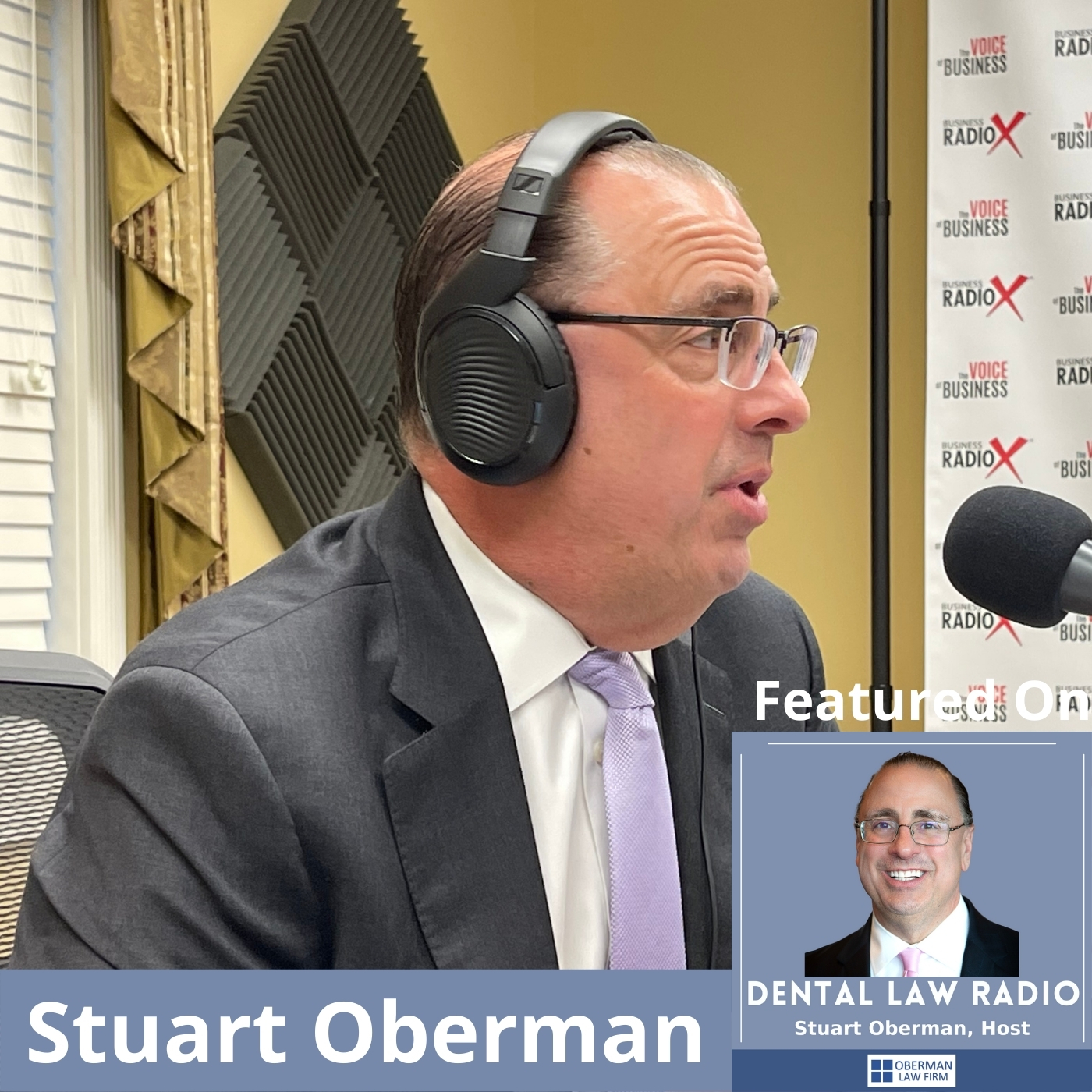
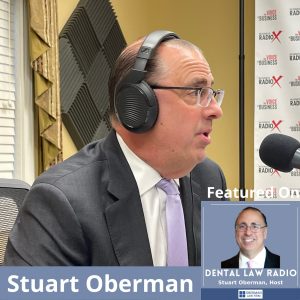
The hot question for dental practices seeking to hire is whether they can ask candidates about their vaccination status. The issue goes deeper than just a simple yes or no. As Stuart Oberman explains in this episode, he finds that HR is the biggest nightmare for dental practices, and that sloppy employer practices and documentation produce sweeping violations which go well beyond just one question in an interview. Dental Law Radio is underwritten and presented by Oberman Law Firm and produced by the North Fulton studio of Business RadioX®.

TRANSCRIPT

Intro: [00:00:01] Broadcasting from the Business RadioX studios in Atlanta, it’s time for Dental Law Radio. Dental Law Radio is brought to you by Oberman Law Firm, a leading dental-centric law firm serving dental clients on a local, regional and national basis. Now, here’s your host, Stuart Oberman.

Stuart Oberman: [00:00:26] Hello, ladies and gentlemen. And welcome to Dental Law Radio. Our previous segments have dealt specifically with COVID-19. We’re going to conclude this series with what happens regarding interviews. So, if we digress a little bit on our first segments, we went through complex governmental matters, employee resistance, mandates.

Stuart Oberman: [00:00:55] Now, what we’re seeing is that in this job market, we’re seeing a lot of turnover in our dental practices and, actually, across the board on our nondental clients. So, we’re getting a lot of questions. Again, this particular topic, employer job interviews, COVID-19 questions, that’s a whole another day – that’s a whole another day that we could speak about for another eight hours. But one thing that we want to do, we just want to touch on some pros and cons, some yes and nos, things you can and can’t do on interviews. Because I will tell you, in today’s world, if you think that the potential employees are not recording your conversations, your job interviews, you have another thing coming. I will assure you. And also, nowadays, we’re doing Zoom interviews, and we’re hiring people without even shaking the hands and kissing the babies. So, then, what do you do? Now, you’re on Zoom. And you don’t even know you’re being recorded on Zoom.

Stuart Oberman: [00:02:09] So, what happens is, is that, now, someone who’s not experienced in your office, it could be a wide variety of positions that do your “hiring and firing,” that are not HR-trained, that either have been the old front desk; or, now, we’ve got the hygienist who’s now interviewing; and now, we got the office manager who used to answer the phones three weeks ago, now, they’re doing the interviews. So, you’ve just opened up the door to huge potential problems if you do not – and I repeat – if you do not understand what you can and cannot do.

Stuart Oberman: [00:02:55] So, very, very succinctly. So, we get these questions, “Can I require vaccinations?” and tell people who I’m hiring, “You are now required to get a vaccination the first day”? The answer is yes. Now, that guidance is constantly changing. Last year when we started all this, COVID-19, the overall prevailing view was no because there is too much risk. Now, we’re seeing mandates on top of mandates, on top of mandates from employers. So, if you have procedures in place, if you have dotted all of your Is and crossed your Ts regarding compliance with the Americans with Disabilities Act, EEOC, the CDC, OSHA, EEO and the FDA, then, yes, there’s probably a pretty good likelihood that you will be able to require that new hires be vaccinated, but you can’t do it arbitrarily.

Stuart Oberman: [00:04:02] Now, I will say this that guidance from the ADA and EEOC, in many cases, is unsettled. So, the guidance today is yes, we can mandate, but we have to have very, very stringent federal law, state law, local law compliance on these policies. So, then, what happened is, is that let’s say you mandate that your hire does not want to get a vaccination. So, now, you’re in a couple areas. You’re in the ADA, American with Disabilities Act, EEOC because you love this new employee, this employee-to-be. So, you have to indicate that you’ve got an accommodation. medically and disability and religiously for that person because they do not and cannot get vaccinated for a wide variety of reasons.

Stuart Oberman: [00:05:12] Now, I will tell you, the sloppiest thing our dental practices do is try to maintain HR. HR is a nightmare for our dental practices. And I’ll say our employer clients, in general. So, one thing you cannot do is that you cannot intermingle the vaccination exemptions, protocols or compliance into the employer’s regular personnel file. These have to be treated as separate confidential medical records.

Stuart Oberman: [00:05:55] Now, we’ve had cases where the employers have literally given over the employee files to them to manage. That is literally like putting the fox in the henhouse. You cannot give your employees their own personnel files to manage, because I will guarantee you, if that employee is fired, leaves, discharged, that record is gone. And then, you’re going to ask me for advice. And I would say, “Where’s your file?” Are you going to say, “I don’t have it.” And I’m going to say, “Where is it at?” And then, you’re going to say, “The employee had it.” I’m going to say, “Great. At least, you had one but, now, we’re in a whole different ballgame.”

Stuart Oberman: [00:06:40] So, on the mandates, the EEOC provides guidance that employers may lawfully — a vaccination policies, even for those that are just starting. Now, the key is that’s a lot of variance there, that’s a lot of governmental guidance agency-wise. So, you have to constantly keep track of what’s going on with all these agencies. Again, I know I keep saying it, OSHA, CDC, EEOC, EO, FDA, all those will change guidance in a heartbeat, and you’ve got to keep track of that, and you have to adjust your written policies – and notice I said written policies – either way. You’ve got to stay on top of this. And honestly, you can’t leave it to one person in your office, HR to cover this. You can’t leave it to payroll. Half the time you’re lucky if you get your payroll correct from payroll companies; nevertheless, handled to HR on a complicated matter like this.

Stuart Oberman: [00:07:42] So, again, I will stress, stay on top of this. Stay on top of this. Seek counsel if you have any questions, concerns whatsoever. If you want to reach out to us, please feel free to email me directly at stuart@obermanlaw.com. We try to provide as much guidance as we can. You could get added to our newsletter. We try to put out publications as much as possible, at least a couple of times a month, on these kinds of issues, related to vaccination issues. We’ll be doing a lot of industry webinars and some live events. So, the resources are out there. Use them because this is an extremely difficult trap for the unwary.

Stuart Oberman: [00:08:37] So, that is really going to conclude our multipart segment on COVID-19, really for now, until the government issues additional guidance. Then, we’re going to have to, obviously, modify some things. So, let’s jump with thank you for joining us. It has been a pleasure. If you have any questions, concerns, please feel free to reach out to us. And have a great day. And we look forward to having you join us on subsequent Dental Law Radio podcasts. Have a great day.

About Dental Law Radio

Hosted by Stuart Oberman, a nationally recognized authority in dental law, Dental Law Radio covers legal, business, and other operating issues and topics of vital concern to dentists and dental practice owners. The show is produced by the North Fulton studio of Business RadioX® and can be found on all the major podcast apps. The complete show archive is here.

Stuart Oberman, Oberman Law Firm

Oberman Law Firm
Stuart Oberman, host of “Dental Law Radio”

Stuart Oberman is the founder and President of Oberman Law Firm. Mr. Oberman graduated from Urbana University and received his law degree from John Marshall Law School. Mr. Oberman has been practicing law for over 25 years, and before going into private practice, Mr. Oberman was in-house counsel for a Fortune 500 Company. Mr. Oberman is widely regarded as the go-to attorney in the area of Dental Law, which includes DSO formation, corporate business structures, mergers and acquisitions, regulatory compliance, advertising regulations, HIPAA, Compliance, and employment law regulations that affect dental practices.

In addition, Mr. Oberman’s expertise in the health care industry includes advising clients in the complex regulatory landscape as it relates to telehealth and telemedicine, including compliance of corporate structures, third-party reimbursement, contract negotiations, technology, health care fraud and abuse law (Anti-Kickback Statute and the State Law), professional liability risk management, federal and state regulations.

As the long-term care industry evolves, Mr. Oberman has the knowledge and experience to guide clients in the long-term care sector with respect to corporate and regulatory matters, assisted living facilities, continuing care retirement communities (CCRCs). In addition, Mr. Oberman’s practice also focuses on health care facility acquisitions and other changes of ownership, as well as related licensure and Medicare/Medicaid certification matters, CCRC registrations, long-term care/skilled nursing facility management, operating agreements, assisted living licensure matters, and health care joint ventures.

In addition to his expertise in the health care industry, Mr. Oberman has a nationwide practice that focuses on all facets of contractual disputes, including corporate governance, fiduciary duty, trade secrets, unfair competition, covenants not to compete, trademark and copyright infringement, fraud, and deceptive trade practices, and other business-related matters. Mr. Oberman also represents clients throughout the United States in a wide range of practice areas, including mergers & acquisitions, partnership agreements, commercial real estate, entity formation, employment law, commercial leasing, intellectual property, and HIPAA/OSHA compliance.

Mr. Oberman is a national lecturer and has published articles in the U.S. and Canada.

LinkedIn

Oberman Law Firm

Oberman Law Firm has a long history of civic service, noted national, regional, and local clients, and stands among the Southeast’s eminent and fast-growing full-service law firms. Oberman Law Firm’s areas of practice include Business Planning, Commercial & Technology Transactions, Corporate, Employment & Labor, Estate Planning, Health Care, Intellectual Property, Litigation, Privacy & Data Security, and Real Estate.

By meeting their client’s goals and becoming a trusted partner and advocate for our clients, their attorneys are recognized as legal go-getters who provide value-added service. Their attorneys understand that in a rapidly changing legal market, clients have new expectations, constantly evolving choices, and operate in an environment of heightened reputational and commercial risk.

Oberman Law Firm’s strength is its ability to solve complex legal problems by collaborating across borders and practice areas.

Connect with Oberman Law Firm:

Company website | LinkedIn | Twitter

Tagged With: COVID-19, Covid-19 Questions, employer liability, HR, Job Interviews, Oberman Law Firm, Stuart Oberman

Leticia and Harry Hutchins, Alma Coffee

September 3, 2021 by John Ray

Alma Coffee
North Fulton Business Radio
Leticia and Harry Hutchins, Alma Coffee
Loading
00:00 /
RSS Feed
Share
Link
Embed

Download file

Alma Coffee

Leticia and Harry Hutchins, Alma Coffee (North Fulton Business Radio, Episode 389)

Leticia and Harry Hutchins can trace their coffee heritage back at least five generations, and they have extended the family legacy with Alma Coffee. They source their beans from Leticia’s family’s farm and nearby farms in Honduras, delivering freshly roasted-to-order coffee from their Cherokee County roastery. Joining host John Ray, Leticia and Harry discussed the roasting process, sustainability, their cafe, custom gift options, and much more. North Fulton Business Radio is broadcast from the North Fulton studio of Business RadioX® inside Renasant Bank in Alpharetta.

Alma Coffee

Veteran & Women-Owned, Alma Coffee is a coffee roastery and retailer that focuses on specialty coffee from our farm and surrounding farms in Copan, Honduras! They focus on sustainability, fair trade, ethical sourcing, and highest quality. Their vision is to source ethically & sustainably, empower farmers, and roast amazing coffee! Their slogan, ‘for those who care’​ defines our vision perfectly. As farmers and roasters, they care about the coffee industry and are actively working to make it better throughout every step of the supply chain. They believe their customers will also live by this slogan, choosing to buy Alma coffee because they know the positive impact their purchase makes.

Company website | LinkedIn | Facebook | Instagram

Leticia and Harry Hutchins, Co-Owners, Alma Coffee

Leticia Hutchins

With a passion for coffee and making a difference, Leticia co-founded Alma Coffee, a specialty coffee roastery and retailer that focuses on direct trade coffee from her family’s farm and surrounding farms in Copan, Honduras. Leticia’s goals include empowering farmers in coffee and bringing recognition to women’s crucial and impactful role in the coffee industry.

With a diverse, multi-cultural background, Leticia graduated in 2016 from DePaul University with dual majors in Accounting (concentration in Internal Audit) and Management Information Systems. Leticia previously had a career in risk advisory at KPMG in Chicago.

LinkedIn

Harry Hutchins

Passionate about coffee and changing lives, Harry left his corporate career to pursue one in the specialty coffee industry. Along with his wife, Leticia, Harry founded Alma Coffee, a specialty coffee retailer that aims to bring the highest quality coffee from his family’s farm as well as neighboring farms in Honduras to customers who desire sustainable and ethically sourced coffee.

Harry’s goals are to disrupt the coffee industry for the better, and empowering farmers in the communities Alma Coffee sources from.

LinkedIn

North Fulton Business Radio is hosted by John Ray, and broadcast and produced from the North Fulton studio of Business RadioX® inside Renasant Bank in Alpharetta. You can find the full archive of shows by following this link. The show is available on all the major podcast apps, including Apple Podcasts, Spotify, Google, Amazon, iHeart Radio, Stitcher, TuneIn, and others.

RenasantBank


Renasant Bank has humble roots, starting in 1904 as a $100,000 bank in a Lee County, Mississippi, bakery. Since then, Renasant has grown to become one of the Southeast’s strongest financial institutions with over $13 billion in assets and more than 190 banking, lending, wealth management and financial services offices in Mississippi, Alabama, Tennessee, Georgia and Florida. All of Renasant’s success stems from each of their banker’s commitment to investing in their communities as a way of better understanding the people they serve. At Renasant Bank, they understand you because they work and live alongside you every day.

Special thanks to A&S Culinary Concepts for their support of this edition of North Fulton Business Radio. A&S Culinary Concepts, based in Johns Creek, is an award-winning culinary studio, celebrated for corporate catering, corporate team building, Big Green Egg Boot Camps, and private group events. They also provide oven ready, cooked from scratch meals to go they call “Let us Cook for You.” To see their menus and events, go to their website or call 678-336-9196.

Tagged With: Alma Coffee, coffee, coffee roastery, Harry Hutchins, John Ray, Leticia Hutchins, North Fulton Business Radio, sustainability

Hon. Gail Tusan, JAMS and The Pave Foundation

September 2, 2021 by John Ray

Pave Foundation
North Fulton Business Radio
Hon. Gail Tusan, JAMS and The Pave Foundation
Loading
00:00 /
RSS Feed
Share
Link
Embed

Download file

The Pave Foundation

Hon. Gail Tusan, JAMS and The Pave Foundation (North Fulton Business Radio, Episode 388)

Formerly a Senior Superior Court Judge in Fulton County, Judge Gail Tusan is quite active both professionally, with her mediation/arbitrator practice, and in the community. She joined host John Ray to break down the Alternative Dispute Resolution (ADR) process, how it serves to resolve legal disputes at a lower cost, and more. Judge Tusan also shared her passion for enriching the lives of African American girls, particularly by fostering STEAM (science, technology, engineering, arts, and mathematics) education and mentoring through The Pave Foundation. She also offered details on her upcoming “Tee Off with Team Tusan” fundraiser. North Fulton Business Radio is broadcast from the North Fulton studio of Business RadioX® inside Renasant Bank in Alpharetta.

The Honorable Gail Tusan, JAMS Inc.

The Pave Foundation
The Honorable Gail Tusan Washington, Senior Judge, JAMS Inc.

Gail S. Tusan, Senior Judge, brings more than 30 years of judicial service in various Georgia jurisdictions to her practice as an Arbitrator/Mediator/Special Master at JAMS. In April 2019, Judge Tusan retired from her sixth elected term as a Superior Court Judge in Fulton County. During her time on the superior court, Judge Tusan served two successful terms as Chief Judge and played an active role in the design and launch of the Family Division, where she also served for over a decade.

Prior to joining the bench, Gail practiced civil litigation in a variety of areas, including intellectual property, unfair competition, franchise law, family law and other general business matters. Her trial experience includes presiding over health care matters, business disputes, tort and contract disputes, family law and criminal law cases, petitions for injunctive relief and much more.

Gail’s multi-faceted career and extensive legal and community service have garnered her a reputation for building consensus during disputes and forging partnerships among the legal community, government, and the public they serve.

Gail regularly presents educational programs to the judiciary, attorneys, and law students on a variety of legal issues, especially those in the family law sector. She is a media contributor for Court TV, ALM and Attorney at Law Magazine where she hosts the podcast, Behind the Case with Judge Tusan. Gail is a Distinguished Visiting Instructor at Spelman College and an Adjunct Law Professor at Emory University School of Law. She currently serves as a member of the Georgia Leadership Institute for School Improvement and is a Past President of Buckhead/Cascade City Chapter of The Links, Incorporated. Gail serves as President of The Pave Foundation, Inc., which provides STEAM enrichment opportunities and mentoring to African American girls.

Among many other awards, Judge Tusan has received the Atlanta Bar Association Litigation Section’s coveted honor, The Logan E. Bleckley Award for Judicial Excellence, Distinguished Public Service in the Judiciary, Community Leader of Faith Award, Day1 and the MLK Center for Nonviolent Social Change’s Peace and Justice Award. Finally, Gail is a published author of two novels, Misjudged and Riley, The Judge’s Son (written under the pen name, Susan Washington), and a contributing author to the anthology Loving Wisdom by the Wisdom Whisperers (October 2020 Release).

Jams Website

LinkedIn

The Pave Foundation

The Pave Foundation, Inc. is committed to “paving the way” for African American girls to achieve success in STEAM (science, technology, engineering, arts and mathematics) careers by providing them with academic and enrichment opportunities that ignite their intellectual curiosity, develop self-confidence and instill a passion for protecting the planet by equitably distributing its resources.

Pave Foundation website


North Fulton Business Radio is hosted by John Ray, and broadcast and produced from the North Fulton studio of Business RadioX® inside Renasant Bank in Alpharetta. You can find the full archive of shows by following this link. The show is available on all the major podcast apps, including Apple Podcasts, Spotify, Google, Amazon, iHeart Radio, Stitcher, TuneIn, and others.

RenasantBank


Renasant Bank has humble roots, starting in 1904 as a $100,000 bank in a Lee County, Mississippi, bakery. Since then, Renasant has grown to become one of the Southeast’s strongest financial institutions with over $13 billion in assets and more than 190 banking, lending, wealth management and financial services offices in Mississippi, Alabama, Tennessee, Georgia and Florida. All of Renasant’s success stems from each of their banker’s commitment to investing in their communities as a way of better understanding the people they serve. At Renasant Bank, they understand you because they work and live alongside you every day.


Special thanks to A&S Culinary Concepts for their support of this edition of North Fulton Business Radio. A&S Culinary Concepts, based in Johns Creek, is an award-winning culinary studio, celebrated for corporate catering, corporate team building, Big Green Egg Boot Camps, and private group events. They also provide oven ready, cooked from scratch meals to go they call “Let us Cook for You.” To see their menus and events, go to their website or call 678-336-9196.

Tagged With: alternative dispute resolution, Gail Tusan, girls empowerment, JAMS Inc., John Ray, Judge Gail Tusan Washington, mediation, North Fulton Business Radio, STEAM, The Pave Foundation

The Value of Bringing in Another Perspective, with Anthony Chen, Host of Family Business Radio

September 2, 2021 by John Ray

Anthony Chen
Family Business Radio
The Value of Bringing in Another Perspective, with Anthony Chen, Host of Family Business Radio
Loading
00:00 /
RSS Feed
Share
Link
Embed

Download file

Anthony Chen

The Value of Bringing in Another Perspective, with Anthony Chen, Host of Family Business Radio

On a recent edition of Family Business Radio, host Anthony Chen reflected on a challenge all services providers encounter occasionally, being heard by clients or family, and when it may be important to bring in an outside perspective. Family Business Radio is underwritten by Anthony Chen with Lighthouse Financial Network.

Anthony’s commentary was taken from this episode of Family Business Radio.

Anthony Chen, Host of Family Business Radio

family owned craft breweries
Anthony Chen

This show is sponsored and brought to you by Anthony Chen with Lighthouse Financial Network. Securities and advisory services offered through Royal Alliance Associates, Inc. (RAA), member FINRA/SIPC. RAA is separately owned and other entities and/or marketing names, products or services referenced here are independent of RAA. The main office address is 575 Broadhollow Rd. Melville, NY 11747. You can reach Anthony at 631-465-9090 ext. 5075 or by email at anthonychen@lfnllc.com.

Anthony Chen started his career in financial services with MetLife in Buffalo, NY in 2008. Born and raised in Elmhurst, Queens, he considers himself a full-blooded New Yorker while now enjoying his Atlanta, GA home. Specializing in family businesses and their owners, Anthony works to protect what is most important to them. From preserving to creating wealth, Anthony partners with CPAs and attorneys to help address all of the concerns and help clients achieve their goals. By using a combination of financial products ranging from life, disability, and long term care insurance to many investment options through Royal Alliance. Anthony looks to be the eyes and ears for his client’s financial foundation. In his spare time, Anthony is an avid long-distance runner.

The complete show archive of “Family Business Radio” can be found at familybusinessradioshow.com.

Tagged With: Anthony Chen, external advice, Family Business Radio

Brendan Kamm, Thnks

September 2, 2021 by John Ray

Nashville Business Radio
Brendan Kamm, Thnks
Loading
00:00 /
RSS Feed
Share
Link
Embed

Download file

Thnks

Brendan Kamm, Thnks (Nashville Business Radio, Episode 30)

Whether it’s prospects, clients, employees, or coworkers, everyone loves to feel appreciated, and Thnks has created an effortless way to express gratitude. Co-Founder and CEO Brendan Kamm joined host John Ray to share how Thnks got started, the ROI of gratitude, why Thnks moved the company from New York City to the Nashville area, why passing out swag may not be the most thoughtful way to express gratitude, and much more. Nashville Business Radio is produced virtually from the Nashville studio of Business RadioX®.

Thnks

Thnks enables sales and customer success teams to build stronger business relationships through gratitude.Thnks

We provide a digital gratitude platform that enables users to send thoughtful gestures of appreciation that foster better connections, save hours of time, and lead to faster business growth. – A week of coffee to a prospect that doesn’t have time to meet – An Uber ride to a client on a rainy morning to help with their commute – A bottle of bourbon to wish a key client happy birthday.

They are the only relationship-building platform that provides full transparency, record-keeping and reporting, digitizing the entire process to ensure full financial and compliance control.

Company website | LinkedIn | Facebook

Brendan Kamm, Co-Founder and CEO, Thnks

Brendan Kamm, Co-Founder and CEO, Thnks

Brendan Kamm is Co-Founder and CEO of Thnks, a digital gratitude platform that empowers business professionals to build better relationships by sharing personalized gestures of appreciation in a thoughtful, efficient way.

LinkedIn

Questions and Topics in This Interview

  • How the company got started
  • Why gratitude? It’s not typically discussed in business.
  • What’s the ROI on gratitude?
  • Small frequent gestures of appreciation vs SWAG, business dinners or bigger ticket items
  • The psychology of giving/gratitude

Nashville Business Radio is hosted by John Ray and produced virtually from the Nashville studio of Business RadioX®.  You can find the full archive of shows by following this link. The show is available on all the major podcast apps, including Apple Podcasts, Spotify, Google, Amazon, iHeart Radio, Stitcher, TuneIn, and others.

Tagged With: Brendan Kamm, customer appreciation, employee appreciation, gratitude, Nashville Business Radio, thankful, thankfulness, Thnks

The R3 Continuum Playbook: The Ripple Effect of Disruption

September 2, 2021 by John Ray

Jeff Gorter
Minneapolis St. Paul Studio
The R3 Continuum Playbook: The Ripple Effect of Disruption
Loading
00:00 /
RSS Feed
Share
Link
Embed

Download file

Disruption

The R3 Continuum Playbook: The Ripple Effect of Disruption

Marking twenty years since the tragic September 11th terrorist attacks, Jeff Gorder, Vice President of Clinical Crisis Response at R3 Continuum, discusses the ripple effects disruptive events have on individuals. Jeff recommends five essential elements as best practices to follow immediately following a disruptive or potentially traumatic event.  The R3 Continuum Playbook is presented by R3 Continuum and is produced by the Minneapolis-St.Paul Studio of Business RadioX®. R3 Continuum is the underwriter of Workplace MVP, the show which celebrates heroes in the workplace.

TRANSCRIPT

Intro: [00:00:00] Broadcasting from the Business RadioX studios, here is your R3 Continuum Playbook. Brought to you by Workplace MVP sponsor, R3 Continuum, a global leader in workplace behavioral health, crisis and security solutions.

Jeff Gorter: [00:00:14] Hello, my name is Jeff Gorter, Vice President of Clinical Crisis Response at R3 Continuum. Today, I would like to discuss the ripple effect of disruption and how employers can support employees, both immediately following a disruptive or traumatic event, as well as during the anniversary of the event later on in time. This information is particularly pertinent in relation to the 20th anniversary of the 9/11 terrorist attacks, which is upcoming this month in September 2021.

Jeff Gorter: [00:00:49] It’s common for employees to feel emotions such as grief, sadness, loneliness, fear and anger immediately following a disruptive event and, possibly, even for years to come. This can impact their ability to remain productive and thrive at work as there are certain triggers – some obvious, some unexpected – that may remind them of the trauma. The healing process for trauma is not necessarily linear, not a straight direct line. Meaning that the impact can be more of a ripple effect that comes in waves, a waxing-and-waning effect that can resurface in the future for some employees.

Jeff Gorter: [00:01:30] Let’s begin at the beginning. Immediately following an event, the trauma impact depends on the person’s proximity to the event itself. For example, did they see the event? Were they in direct danger themselves? Were they exposed to graphic visual scenes? Were they involved in efforts to take care of the victims perhaps? This kind of exposure is intuitively obvious, but it is only one determinant of their ultimate trajectory.

Jeff Gorter: [00:02:02] Something that’s interesting to note is that PTSD is not necessarily based on how powerful the event was, as if there’s an automatic threshold of trauma, and PTSD is somehow inevitable. This condition is often actually based more upon how well the person was doing emotionally before the event. So, if the impacted individual was not doing well prior to the event, if they were already stressed or wrestling with challenging dynamics unrelated to the event, they are more likely to develop PTSD or other related conditions.

Jeff Gorter: [00:02:40] It may also surprise some to discover, particularly when we’re thinking about the impact of 9/11, that PTSD was not the dominant trajectory for most New York residents following the terrorist attacks of 9/11. In a landmark study conducted by researchers at Columbia University specific to New York recipients, it was found that resilience was actually the dominant trajectory for the majority of people at six months and, again, at one year out, despite having experienced an unthinkable, horrible tragedy. Again, the vast majority did not meet the criteria for a PTSD diagnosis despite their exposure, contrary to what many people feared and even what some experts expected.

Jeff Gorter: [00:03:32] Now, to be clear, this is not to say that it was easy or that the journey wasn’t difficult; far from it, but it is worth noting that we are stronger than we give ourselves credit for. Now, while this is certainly encouraging, it’s still crucial that employees are adequately supported and supplied with targeted resources to process the difficult emotions following the disruption, particularly after a mass event like 9/11. Otherwise, the event can impact the employees’ behavioral health and impair their ability to do their job, or it may simply prolong the struggle needlessly.

Jeff Gorter: [00:04:15] So, let’s look at this a little more closely. International researchers and current best practice recommend focusing on five essential elements immediately following a disruptive or potentially traumatic event. These elements are critical to early intervention and to the overall resilience of the person as they cope with the event. First, the impacted individual needs to feel safe, both physically and emotionally. During a disruptive event, this feeling of safety was likely reduced or challenged in some way. So, in order to begin the recovery process, safety must be restored. Until safety has been assured and reasserted, it’s human nature to remain on high alert with a heightened sense of fear, anxiety and reactivity. Safety is job one from a physical and mental health perspective.

Jeff Gorter: [00:05:15] Once safety is being reasserted, the second element is that an individual must feel connected. It’s important to help an employee realize that they are part of a community, a group, a company of people who went through the same experience and are walking the same journey. Often, trauma can make someone feel isolated and that they are alone in the way they’re feeling as if they’re the only ones in the world who feel like this. It can help them to know even just the simple fact that they’re not alone, that their reactions are common and shared by other co-workers, and that they can draw and contribute to the strength of their collective work group. We are stronger together.

Jeff Gorter: [00:06:02] Third, an individual needs to feel a sense of calm, of being able to reassert control over their own body. With the adrenaline rush that usually comes with experiencing a survival threat or a disruptive event, it’s critical that the person is able to regain control over their body and be able to focus their thoughts, control their breathing again, to relax their muscles, and to come off the adrenaline-fueled high alert that I mentioned earlier. Regaining a sense of calm and control over their own body opens the door to making the next right decision, to taking the next right step, and the one after that, and the one after that and so on.

Jeff Gorter: [00:06:46] The fourth essential element is self-efficacy, a sense of confidence. It’s common to feel helpless or hopeless following a crisis event, a situation where I couldn’t control the outcome. It can help when the person is able to feel as if they can make good choices on their own behalf again or on behalf of their loved ones or their co-workers once again. If the person could not prevent the event, realizing where it goes from here is up to me is a powerful step forward. This taking back of control over their own power and their own decisions can help them to know they are not helpless in determining their future, and it restores their sense of personal agency following this event.

Jeff Gorter: [00:07:33] The fifth and final essential element that a person needs is hope. They need to feel hopeful for their future, able to envision this for themselves to know that this crisis is not how it’s always going to be, or that they’re not always going to feel like this and that a more positive future is possible. Without hope, there’s no moving forward. Workplaces have a tremendous power to help employees feel this kind of hope by providing predictability, purpose, stability, and by offering them skilled behavioral health support immediately following the event.

Jeff Gorter: [00:08:13] Now that we’ve covered some of the ways that employers can support employees immediately following disruption, it’s important to discuss how employees might feel on the anniversary of an event. Anniversaries can make employees feel anxious or jittery, in addition to making them feel less safe and less connected. And this makes sense as it’s part of our primitive built-in survival mechanism. See, that survival mechanism remembers the past threat, remembers this time, remembers the event, and it’s seeking to prepare you should a threat arise again. This may lead some employees to have an exaggerated response to certain triggers, certain memories, certain discussions around the event, and that can bring up complex emotions.

Jeff Gorter: [00:09:03] From an employer perspective, particularly one who has employees that may be struggling on an anniversary, it’s important to acknowledge the solemnity, the power of this day itself, and to recognize the difficult feelings employees may have on that day, letting them know that you get it, that you understand that this day is different from other days, and that it has significance to you helps them feel understood and validated.

Jeff Gorter: [00:09:33] It is also important to make sure employees know that they have access to a wide range of resources and behavioral health support should they choose it. In most cases, people want to be able to share their experiences about this anniversary because it helps them feel less alone, more connected, as we discussed earlier. They may or may not want to talk about it, but it’s important to give them the space to do so if they choose.

Jeff Gorter: [00:10:01] In the case of 9/11, many of us have constructed a narrative, a story of where we were, what happened next, where we are now. Many individuals have made some level of peace with their stories now that it’s 20 years following the event, but not all of us. It can be helpful for them to share their narratives, the ongoing story, because they’re able to see the event as an event that occurred in the past, as something in which they are able to exercise some control over. This helps the person to see themselves as a survivor, even perhaps a thriver, and no longer a victim, as if that tragedy is continuing to happen today in the present.

Jeff Gorter: [00:10:49] Being at work on the day of anniversaries can be beneficial to employees impacted by a disruptive event, as there is surprising power in the mundane and the ordinary, even some comfort in the normal, the predictable day-to-day that we look forward to and that structures our lives. Going about their everyday lives can provide them with a sense of control and helps them to get through the day, keeping a balanced perspective on the significance of the past, the reality of the present and the hope for the future.

Jeff Gorter: [00:11:26] Now, while the ripple effect of disruption can impact employees and their daily lives, employers have the power to support their employees through these feelings that may arise as impacted individuals continue their journey of healing from the trauma, both immediately after an event and in the years following. As the 20th anniversary of 9/11 approaches, R3 Continuum can help organizations to do this with consultation, educational resources, and with onsite and virtual behavioral health support. On our website at r3c.com, we provide resources under the Our Resources tab to learn more about how we can support your organization. Contact us today.


Show Underwriter

R3 Continuum (R3c) is a global leader in workplace behavioral health and security solutions. R3c helps ensure the psychological and physical safety of organizations and their people in today’s ever-changing and often unpredictable world. Through their continuum of tailored solutions, including evaluations, crisis response, executive optimization, protective services, and more, they help organizations maintain and cultivate a workplace of wellbeing so that their people can thrive. Learn more about R3c at www.r3c.com.

R3 Continuum is the underwriter of Workplace MVP, a show which celebrates the everyday heroes–Workplace Most Valuable Professionals–in human resources, risk management, security, business continuity, and the C-suite who resolutely labor for the well-being of employees in their care, readying the workplace for and planning responses to disruption.


Connect with R3 Continuum:  Website | LinkedIn | Facebook | Twitter

Tagged With: Crisis Response, Disruption, disruptive events, Jeff Gorter, post-traumatic stress disorder, R3 Continuum, trauma, Workplace MVP

  • « Previous Page
  • 1
  • …
  • 183
  • 184
  • 185
  • 186
  • 187
  • …
  • 283
  • Next Page »

Business RadioX ® Network


Our Most Recent Episode

CONNECT WITH US

  • Email
  • Facebook
  • LinkedIn
  • Twitter
  • YouTube

Our Mission

We help local business leaders get the word out about the important work they’re doing to serve their market, their community, and their profession.

We support and celebrate business by sharing positive business stories that traditional media ignores. Some media leans left. Some media leans right. We lean business.

Sponsor a Show

Build Relationships and Grow Your Business. Click here for more details.

Partner With Us

Discover More Here

Terms and Conditions
Privacy Policy

Connect with us

Want to keep up with the latest in pro-business news across the network? Follow us on social media for the latest stories!
  • Email
  • Facebook
  • Google+
  • LinkedIn
  • Twitter
  • YouTube

Business RadioX® Headquarters
1000 Abernathy Rd. NE
Building 400, Suite L-10
Sandy Springs, GA 30328

© 2026 Business RadioX ® · Rainmaker Platform

BRXStudioCoversLA

Wait! Don’t Miss an Episode of LA Business Radio

BRXStudioCoversDENVER

Wait! Don’t Miss an Episode of Denver Business Radio

BRXStudioCoversPENSACOLA

Wait! Don’t Miss an Episode of Pensacola Business Radio

BRXStudioCoversBIRMINGHAM

Wait! Don’t Miss an Episode of Birmingham Business Radio

BRXStudioCoversTALLAHASSEE

Wait! Don’t Miss an Episode of Tallahassee Business Radio

BRXStudioCoversRALEIGH

Wait! Don’t Miss an Episode of Raleigh Business Radio

BRXStudioCoversRICHMONDNoWhite

Wait! Don’t Miss an Episode of Richmond Business Radio

BRXStudioCoversNASHVILLENoWhite

Wait! Don’t Miss an Episode of Nashville Business Radio

BRXStudioCoversDETROIT

Wait! Don’t Miss an Episode of Detroit Business Radio

BRXStudioCoversSTLOUIS

Wait! Don’t Miss an Episode of St. Louis Business Radio

BRXStudioCoversCOLUMBUS-small

Wait! Don’t Miss an Episode of Columbus Business Radio

Coachthecoach-08-08

Wait! Don’t Miss an Episode of Coach the Coach

BRXStudioCoversBAYAREA

Wait! Don’t Miss an Episode of Bay Area Business Radio

BRXStudioCoversCHICAGO

Wait! Don’t Miss an Episode of Chicago Business Radio

Wait! Don’t Miss an Episode of Atlanta Business Radio