
Business RadioX ®

  • Home
  • Business RadioX ® Communities
    • Southeast
      • Alabama
        • Birmingham
      • Florida
        • Orlando
        • Pensacola
        • South Florida
        • Tampa
        • Tallahassee
      • Georgia
        • Atlanta
        • Cherokee
        • Forsyth
        • Greater Perimeter
        • Gwinnett
        • North Fulton
        • North Georgia
        • Northeast Georgia
        • Rome
        • Savannah
      • Louisiana
        • New Orleans
      • North Carolina
        • Charlotte
        • Raleigh
      • Tennessee
        • Chattanooga
        • Nashville
      • Virginia
        • Richmond
    • South Central
      • Arkansas
        • Northwest Arkansas
    • Midwest
      • Illinois
        • Chicago
      • Michigan
        • Detroit
      • Minnesota
        • Minneapolis St. Paul
      • Missouri
        • St. Louis
      • Ohio
        • Cleveland
        • Columbus
        • Dayton
    • Southwest
      • Arizona
        • Phoenix
        • Tucson
        • Valley
      • Texas
        • Austin
        • Dallas
        • Houston
    • West
      • California
        • Bay Area
        • LA
        • Pasadena
      • Colorado
        • Denver
      • Hawaii
        • Oahu
  • FAQs
  • About Us
    • Our Mission
    • Our Audience
    • Why It Works
    • What People Are Saying
    • BRX in the News
  • Resources
    • BRX Pro Tips
    • B2B Marketing: The 4Rs
    • High Velocity Selling Habits
    • Why Most B2B Media Strategies Fail
    • 9 Reasons To Sponsor A Business RadioX ® Show
  • Partner With Us
  • Veteran Business RadioX ®

Ed Legum, Tennessee Business Brokers

June 29, 2021 by John Ray

Edmond Legum
Nashville Business Radio
Ed Legum, Tennessee Business Brokers
Loading
00:00 /
RSS Feed
Share
Link
Embed

Download file

Edmond Legum

Ed Legum, Tennessee Business Brokers (Nashville Business Radio, Episode 20)

Ed Legum, a ‘people, process, & profit’ expert with Tennessee Business Brokers, breaks down the involved process of selling a business into understandable elements.  Ed joined host John Ray to discuss when a business seller should engage a business broker, how asking prices get determined, what sellers can do to increase the value of the perceived value of their business, and much more. Nashville Business Radio is produced virtually from the Nashville studio of Business RadioX®.

Tennessee Business Brokers

Tennessee Business Brokers is a professional Business Brokerage Firm with a long history and experience working with businesses spanning from International Investment Banking clients on Wall Street to serving Main Street businesses in the Mid-South market with special focus on Tennessee and also serving Kentucky, Alabama, Mississippi, and Missouri.

Their key to success is their ability to inspire trust, their commitment to communication, their perseverance and also strong desire for “win-win” outcomes

They have the strong skills necessary to close deals honed over decades of corporate experience including financial analysis, marketing, due diligence, business valuations, intermediation, lending/underwriting, and negotiations.

They are seasoned business and community leaders with very extensive networking resources both locally and globally.

Company website

Ed Legum, Business Broker and Advisor, Tennessee Business Brokers

Edmond Legum
Edmond Legum, Business Broker and Advisor

Ed Legum is a Business Broker and Advisor with Tennessee Business Brokers. He is a ‘people, process, and profit’ expert. He’s a published business book author, blues harp player, teacher, world traveler, and grandfather. Ed is like a senior statesman. And he’s ready, willing, able, and eager to teach you the secrets. His detailed diagnoses of the myriad problems and challenges that often face a business are amazingly acute and are informed by keen and well-honed insights gleaned over his 45-year career. Ed helps business sellers unearth the impediments to their success, and then assists them in removing them.

Ed is the author of Being a Business Broker — The Art of Communicating with Buyers and Sellers. In short, what makes him so valuable is communication – his ability to distill complex messages down to bite-size chunks, that anybody can understand.

LinkedIn | Buy Ed’s Book

Questions and Topics in This Interview

  • What’s the big picture: Why do businesses need a business broker?
  • What do sellers want?
  • What is their business worth? How do you determine the asking price?
  • What the top three things sellers can do to increase the perceived value of their businesses?
  • Who are business buyers and what do they want?
  • What does it take to sell a business?

“Nashville Business Radio” is hosted by John Ray and produced virtually from the Nashville studio of Business RadioX®.  You can find the full archive of shows by following this link. The show is available on all the major podcast apps, including Apple Podcasts, Spotify, Google, Amazon, iHeart Radio, Stitcher, TuneIn, and others.
Tagged With: Being a Business Broker, business broker, business brokerage, Edmond Legum, mergers & acquisitions, Tennessee Business Brokers

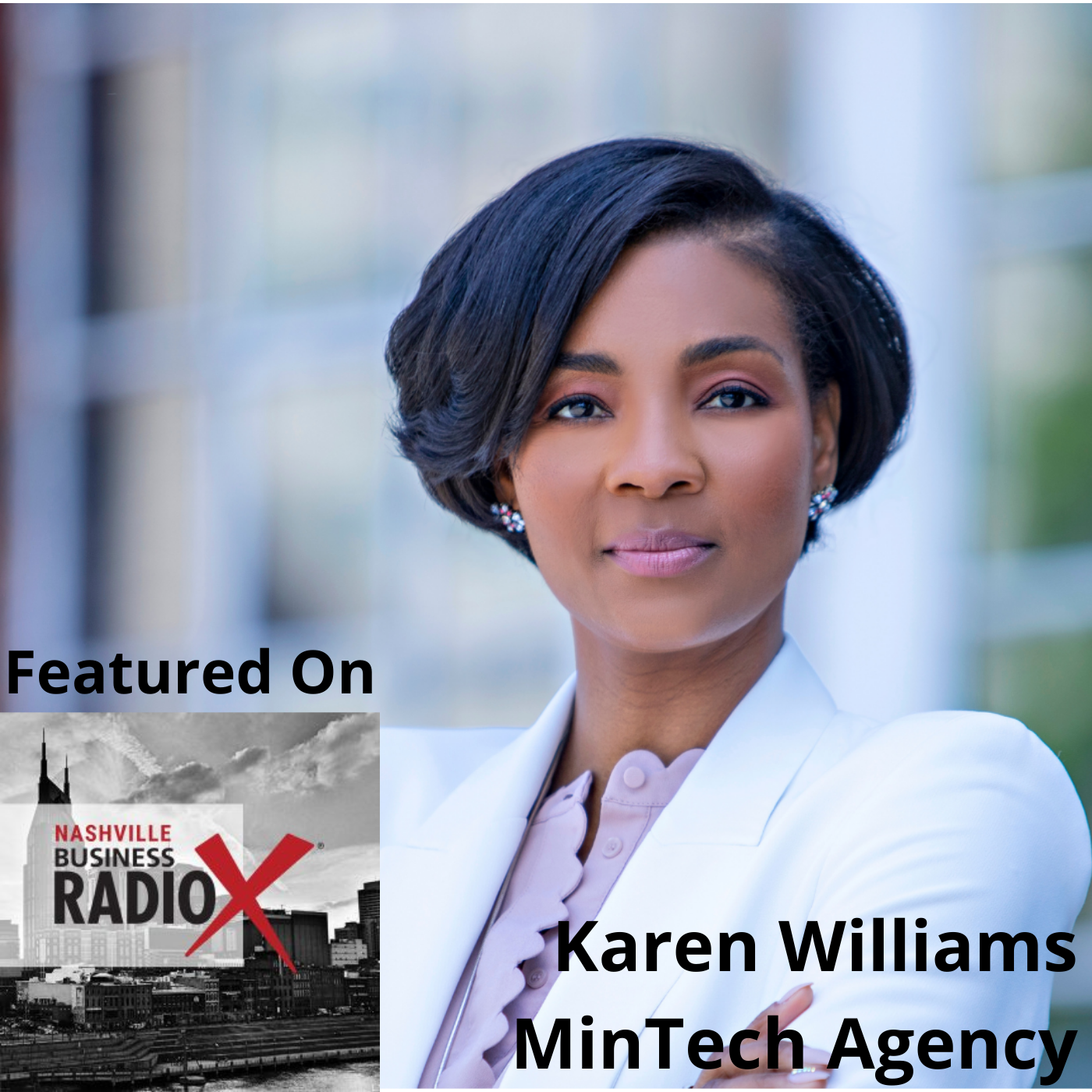
Veronica Burns and Karen Williams, MGMTinsight

June 29, 2021 by John Ray

MGMTInsights
Nashville Business Radio
Veronica Burns and Karen Williams, MGMTinsight
Loading
00:00 /
RSS Feed
Share
Link
Embed

Download file

MGMTInsight

Veronica Burns and Karen Williams, MGMTinsight (Nashville Business Radio, Episode 21)

The human resources side of the business presents complications for most owners, and it’s the mission of MGMTInsight to make it easier. As HR and legal professionals, co-founders Veronica Burns and Karen Williams joined host John Ray to discuss the maze of HR issues facing businesses currently and how MGMTInsight helps them avoid costly mistakes. Nashville Business Radio is produced virtually from the Nashville studio of Business RadioX®.

MGMTinsight

At MGMTinsight, their business is your people. They are passionate about providing focused, customized solutions to your unique employment challenges.MGMTInsight Their goal is to partner with you to help create a culture that maximizes productivity and meets compliance requirements.

Whether it’s employment selection, retention, workplace law, interpersonal conflicts, sexual harassment, or other workplace issues, MGMTInsight has the experience and the expertise to help you build and sustain a positive, diverse workplace culture. Your company’s culture reinforces your commitment to equity and inclusion while setting expectations for optimum productivity.

At MGMTinsight, they solve the day-to-day problems and operational issues that take you away from focusing on the work you love, helping you manage and improve your biggest investment – your staff.

Company website | LinkedIn | Facebook

Veronica Burns, Co-Founder and Partner, MGMTInsights

Veronica Burns, Co-Founder, MGMTInsights

Veronica Burns is a Chicago native.  She moved to Nashville in 1999. Veronica created an expert and influential Human Resource career in both cities.

 For twelve years Veronica Burns headed core functions of the Human Resources Department for Vanderbilt University and Medical Center. Her role was instrumental in restructuring the department and Veronica assumed leadership of Employee Relations, Recruiting, and Training. Veronica’s responsibilities were consistent with her strategic approach of developing a human resources partnership and business relationships.

Veronica has held influential human resources leadership positions across healthcare, finance, academia and non-for-profits for such esteemed organizations as: Mount Sinai Hospital in Chicago, Northwestern University, Harris Bank/Bank of Montreal and the United Methodist Pension Fund. Veronica Burns has a reputation as a problem-solver and a “go-to” professional. Her career has included coaching organizational leaders and guiding the success of many Human Resource professionals.

LinkedIn

Karen Williams, Co-Founder and Partner, MGMTInsights

Karen Williams, Co-Founder, MGMTInsights

Karen Williams is an attorney and experienced human resources professional with a deep appreciation and understanding of the rewards and struggles of running a small to medium-size business.

Her career includes paralegal work at Bass, Berry & Sims and attorney positions at the Tennessee State Employees Association, the Department of Safety, and the Tennessee Administrative Office of the Courts. She then moved to Vanderbilt University’s Human Resources division, followed by an HR position in Vanderbilt Medical Center’s Department of Pathology. After Vanderbilt, she took a leading human resources role at DCI Donor Services. These experiences provide Karen with expertise in working with professionals across industries. 

Karen enjoys building strong teams and partnerships. She works on resolving conflict as she has done throughout her career.

Karen earned her Bachelor of Arts at Vanderbilt University and her law degree from the University of Georgia.  She is also a mediator (Rule 31 listed General Civil Mediator under the Rules of the Supreme Court of the State of Tennessee).

LinkedIn

Questions and Topics in This Interview

  • What they enjoy doing and why they do this type of work, along with their backgrounds.
  • Why do entrepreneurs need your services?
  • While people (employees) are one of the most valuable assets of the business, people-related expenses are one the biggest costs to the bottom line. In addition to payroll, what other costs impact the bottom line?
  • Constantly changing HR laws and compliance issues small businesses don’t have time to track.
  • HR issues can be very time-consuming. When issues arise, how do small businesses find the expert resources to make the employment decisions that protect the company?
  • Nashville, like most of the country, is experiencing a tight job market. What factors affect turnover?
  • Diversity and Inclusion. What are they and why is it important?

Nashville Business Radio is hosted by John Ray and produced virtually from the Nashville studio of Business RadioX®.  You can find the full archive of shows by following this link. The show is available on all the major podcast apps, including Apple Podcasts, Spotify, Google, Amazon, iHeart Radio, Stitcher, TuneIn, and others.

Tagged With: HR Compliance, HR consulting, HR Law, HR services, Human Resources, Human Resources Consulting, Karen Williams, MGMTInsights, Veronica Burns

Leslie Vaillancourt, CheqrPay

June 29, 2021 by John Ray

CheqrPay
Minneapolis St. Paul Business Radio
Leslie Vaillancourt, CheqrPay
Loading
00:00 /
RSS Feed
Share
Link
Embed

Download file

CheqrPay

Leslie Vaillancourt, CheqrPay (Minneapolis-St. Paul Business Radio, Episode 13)

Fintech veteran Leslie Vaillancourt is committed to supporting the work of nonprofits through the company she founded, CheqrPay. Unlike other well-known payment applications which nonprofits have traditionally used, CheqrPay offers donors a frictionless giving experience, which in turn creates more potential donations for the charity. Leslie joined host John Ray to discuss CheqrPay and her entrepreneurial journey. Minneapolis-St. Paul Business Radio is produced virtually by the Minneapolis St. Paul studio of Business RadioX®.

CheqrPay

At the heart of CheqrPay is the desire to serve.  Their team has served countless hours volunteering with nonprofit organizations – large and small.

This experience led them to the belief that there had to be a better solution for small nonprofits who needed an uncomplicated and cost-effective way to collect donations while interacting with their patrons.  The answer is CheqrPay – an application that is easy to use and provides just what small organizations need without an overwhelming amount of features.  They keep transaction fees low by keeping the app simple.

Though made for small organizations, CheqrPay is a great tool for any nonprofit to have in their toolkit.  Their platform costs nothing to set up and only incurs a low transaction fee once you start using it.  Their hope is to make interactions with donors simple and easy, no matter where or when you choose to engage!

Keeping with their mission of strengthening the bottom line for small nonprofits, CheqrPay commits to returning 10% of their profits on an annual basis in the form of grants to select member organizations.  Look for more information on this program in 2021.

Company website | Facebook | Twitter | Instagram

Leslie Vaillancourt, Founder and CEO, CheqrPay

Leslie Vaillancourt, Founder and CEO, CheqrPay

Leslie Vaillancourt is the founder and CEO of CheqrPay, a Minneapolis-based software company that provides online fundraising services to nonprofit organizations.

Leslie has a background in finance and technology and a passion for working with nonprofit organizations to serve others. She volunteers as the Business Development Director for Women Entrepreneurs of Minnesota (WeMN) and donates time to local nonprofits providing technical support.

LinkedIn


Questions and Topics in this Interview

  • Let’s start with some history and an overview of your company? What services do you provide?
  • What was your inspiration for creating CheqrPay?
  • Who are your ideal customers and can you tell us some success stories?
  • What is your vision for the company? Tell us what it looks like in 10 years.
  • Can you tell us a little about your personal journey? What is your background? How did you transition into entrepreneurship?
  • What advice would you give to anyone that is thinking of starting their own company?

Minneapolis-St. Paul Business Radio is hosted by John Ray and produced virtually from the Minneapolis St. Paul studio of Business RadioX® .  You can find the full archive of shows by following this link. The show is available on all the major podcast apps, including Apple Podcasts, Spotify, Google, Amazon, iHeart Radio, Stitcher, TuneIn, and others.

Tagged With: Charity, CheqrPay, donation software, donors, FinTech, fintech innovation, giving, Leslie Vaillancourt, nonprofits

Reen Baskin, Baskin Strategies, LLC

June 28, 2021 by John Ray

Baskin Strategies
Nashville Business Radio
Reen Baskin, Baskin Strategies, LLC
Loading
00:00 /
RSS Feed
Share
Link
Embed

Download file

Baskin Strategies

Reen Baskin, Baskin Strategies, LLC (Nashville Business Radio, Episode 20)

Reen Baskin and Baskin Strategies proved to be ahead of their time when the pandemic hit, as the need for their work–designing flexible workspace and hybrid work models–was affirmed. Reen joined host John Ray to discuss the shifts in workstyle in 2020, how businesses should measure the productivity of remote workers, factors a company should consider in any flexible work plan, and much more.  Nashville Business Radio is produced virtually from the Nashville studio of Business RadioX®.

Baskin Strategies, LLC

Baskin Strategies was founded on the principle that employee satisfaction, right-sizing your real estate, and cost savings can ALL be achieved.

They know that significant cost savings can occur when an organization places the emphasis on benefiting its employees and better serving its customers, followed by reducing its unnecessary real estate square footage.

Baskin aligns people, technology and workspace with business objectives to create a better working environment.  They partner with states, municipalities, and companies to truly assess their organizational needs, prior to making a real estate change.

At Baskin Strategies, they flip the norm.  Workspace design and real estate needs are determined by employee function and how it can be more efficiently performed.  They prioritize the people and partner to right-size your real estate accordingly.  They know that when employees are provided a workspace that fits their task at hand, increased productivity, engagement, and enthusiasm result.

Company website | LinkedIn

Reen Baskin, Co-founder and Principal, Baskin Strategies, LLC

Baskin Strategies
Reen Baskin, Co-founder and Principal, Baskin Strategies

Reen co-founded Baskin Strategies in 2018 with the goal of benefiting states, municipalities, and private organizations with Leading Work Solutions. Since its inception, Baskin Strategies has provided flexible work opportunities for employees and recommended square footage and modernized workspace options for large and small multi-purpose organizations across the Southeast.

From 2011 to 2018, Reen established herself as a leader within Tennessee State Government. Serving within the executive branch, she focused on increasing customer service, streamlining process efficiencies, and reducing taxpayer costs. She served her last year in The Office of the Governor, as Governor Bill Haslam’s Director of Communications.

During her time in Tennessee State Government, Reen served as Deputy Director of Customer Focused Government, providing consultation services to the departments of the Executive Branch. Reen developed the State of Tennessee’s Alternative Workplace Solutions initiative, where she became the state’s first Director of Alternative Workplace Solutions, leading the strategic implementation throughout multiple state agencies. Alternative Workplace Solutions produced largely successful outcomes at Tennessee, including but not limited to:

Better customer service to its citizens,
Boosted employee mobility, flexibility, and productivity,
Improved recruitment and retention of employees,
Improved and modernized workspace use, and
Reduced total occupancy and real estate cost, saving taxpayer dollars.

Reen first served the citizens as Deputy Commissioner and Chief Operating Officer for the Department of General Services. As a member of the Executive Leadership Team, she established direction, developed strategies, and created short-term and long-term goals which resulted in transformative change for the Department. She also led collaborative, enterprise-wide initiatives that incorporated business best practices into government including Master Planning, Facility Assessment & Facility Management improvements, Transforming Tennessee for Tomorrow (Project T3), and Statewide Shared Videoconferencing.

Prior to her service with the State of Tennessee, Reen was an Associate Attorney with Farris Mathews Bobango, PLC in Nashville. Reen was honored in 2011 as one of Nashville’s Top 30 Under 30 Honorees, and in 2017 as one of Nashville’s Top 40 Under 40 Award Recipients.

LinkedIn

Questions and Topics in This Interview

  • What inspired you to start your own business around promoting workforce flexibility and reduced square footage need?
  • Did the COVID-19 pandemic make you re-think anything?
  • Where do you see the future of remote work going? What does it look like?
  • What are the three most important things companies need to consider when implementing a successful remote work program?
  • What would you tell a company CEO who operates “old school” (i.e. believing that every employee needs to be in the office 8 am-5 pm)?
  • What are some mistakes that you see businesses making when coming back into the office after the pandemic and a year of working from home?

“Nashville Business Radio” is hosted by John Ray and produced virtually from the Nashville studio of Business RadioX®.  You can find the full archive of shows by following this link. The show is available on all the major podcast apps, including Apple Podcasts, Spotify, Google, Amazon, iHeart Radio, Stitcher, TuneIn, and others.

Tagged With: Baskin Strategies, flexible work, flexible workspace, hybrid work, Reen Baskin, work at home

Using the 80/20 Rule in Your Business, with Peter Chatel, The Chatel Consulting Group

June 28, 2021 by John Ray

Chatel Consulting Group
North Fulton Studio
Using the 80/20 Rule in Your Business, with Peter Chatel, The Chatel Consulting Group
Loading
00:00 /
RSS Feed
Share
Link
Embed

Download file


Chatel Consulting Group

Using the 80/20 Rule in Your Business,” with Peter Chatel, The Chatel Consulting Group

Peter Chatel: [00:00:00] All my principles are pretty much common sense, let me tell you. But not everything matters equally. So, a disproportionately small number of things leads to a disproportionately large number of results. This is the Pareto Principle. This is the Law of Pareto. Most people know it as the 80/20 principle.

Peter Chatel: [00:00:26] Vilfredo Pareto was an economist in, I think, 1500 in Italy, studied the wealth in Italy. Surprise, surprise, found 20 percent of the people owned 80 percent of the wealth, 20 percent of landowners owned 80 percent of the land. And let’s not get too hung up on the the numbers, but I believe that this is a law of the universe that you disregard at your peril. And I also believe it can be repeating within itself. So, if you go 20 leads to 80, then 20 of 20, four leads to 64 percent, and 20 percent of four is one, one percent leads to 51 percent of your results.

Peter Chatel: [00:01:15] So, my mantra with the people I work with, both non-profits and profits, is, find your one percent. Because one percent leads to 51 one percent. So, I’ll give you an example. My wife danced for Alzheimer’s two years ago. She raised $117,000. She had 134 donors. The top five gave her 80 percent. Eighty percent of restaurants we eat at, we eat 80 percent of the time. Twenty percent of the roads in Atlanta, we travel 80 percent of the time. And you can get hung up on the 20/80. It’s just a disproportionately small number of things leads to a disproportionately large number of results.

Peter Chatel: [00:01:54] And so, this is where it’s important to know what are the activities that generate the results, and focus and do more of those activities. And the activities that don’t generate results, delegate or discard.

Peter Chatel, Founder, The Chatel Consulting Group

In April 2015, after 22 years with The Coca-Cola Company, Peter announced the formation of his consulting, training and coaching practice, The Chatel Consulting Group. Since “re-wiring” from The Coca-Cola Company, Peter joined The John Maxwell Team and was certified as a Speaker, Trainer and Coach. In April 2017, Peter became one of less than 100 people in the world certified to train and coach The ONE Thing. In 2020, he became a Certified Purpose Mentor through JourneyLife.

In 2020, Peter shifted the focus of his consulting practice to support nonprofits. He helps nonprofits lead, plan, and execute with excellence through teamwork that is purpose-led, people-centered, process-driven, and performance-focused — something he calls Petership©.

Over the past 5 years, Peter has worked with hundreds of organizations to establish and nurture Purpose-driven and Resilient Cultures where staff are more engaged, productive, and loyal; as well as healthier and happier. His work with nonprofit leadership teams focuses on their collaboration skills so they can improve and expand their impact. Through 1-on-1 coaching, group coaching, and workshops, Peter gets people inspired and focused on the path to profoundly positive performance.

Peter is married to Sarah and they have a blended family of five children and live with their two dogs.

LinkedIn | Twitter

You can find the complete North Fulton Business Radio interview here. 


The “One Minute Interview” series is produced by John Ray and in the North Fulton studio of Business RadioX® in Alpharetta. You can find the full archive of shows by following this link.

Renasant Bank has humble roots, starting in 1904 as a $100,000 bank in a Lee County, Mississippi, bakery. Since then, Renasant has grown to become one of the Southeast’s strongest financial institutions with over $13 billion in assets and more than 190 banking, lending, wealth management and financial services offices in Mississippi, Alabama, Tennessee, Georgia and Florida. All of Renasant’s success stems from each of their banker’s commitment to investing in their communities as a way of better understanding the people they serve. At Renasant Bank, they understand you because they work and live alongside you every day.
Tagged With: The Chatel Consulting Group

How to Respond to Negative Online Patient Reviews

June 25, 2021 by John Ray

DLREpisode9DSOsAlbum
Dental Law Radio
How to Respond to Negative Online Patient Reviews
Loading
00:00 /
RSS Feed
Share
Link
Embed

Download file

DLREpisode9DSOsAlbum

How to Respond to Negative Online Patient Reviews (Dental Law Radio, Episode 10)

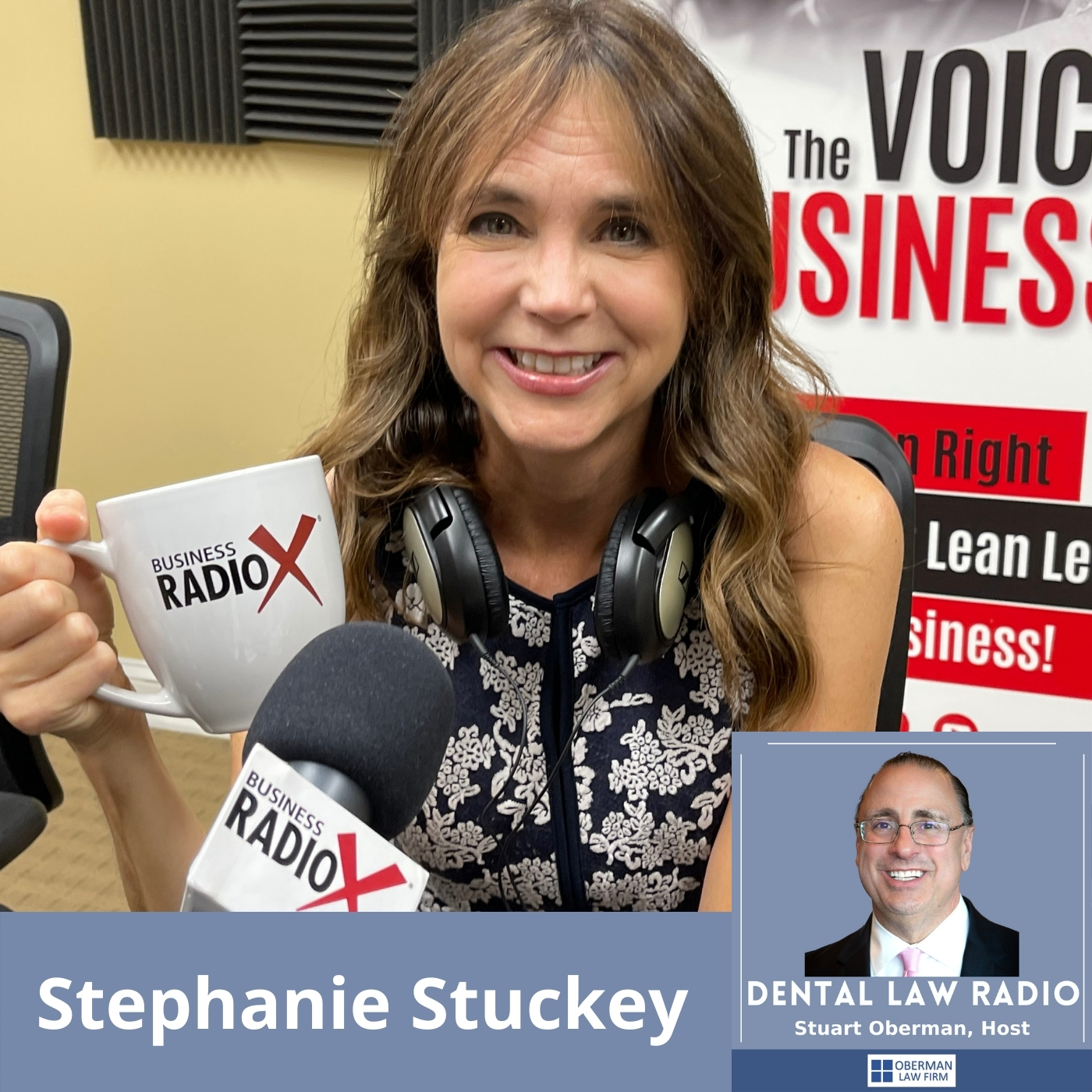
You work hard in your practice to create a great patient experience, and yet you wake up one morning to find a negative online patient review. The review is unfair and may even be written by someone who is not your patient. (Yes, that happens.) How do you respond in a logical way that’s best for your practice? Host Stuart Oberman weighs in on this emotional topic. Dental Law Radio is underwritten and presented by Oberman Law Firm and produced by the North Fulton studio of Business RadioX®.

TRANSCRIPT

Intro: [00:00:02] Broadcasting from the Business RadioX studios in Atlanta, it’s time for Dental Law Radio. Dental Law Radio is brought to you by Oberman Law Firm, a leading dental-centric law firm serving dental clients on a local, regional and national basis. Now, here’s your host, Stuart Oberman.

Stuart Oberman: [00:00:27] Hello, everyone, and welcome. Today’s topic, the ever growing concern, how to respond to negative patient reviews online? I cannot begin to tell you how many calls we get on a daily, weekly basis, monthly basis, “How do I respond to a negative patient review?” Well, first off, you’ve got to understand what occurs. So, there are times you will get a negative review from a patient that you’ve never seen. That patient reportedly who responded and prepared this negative online review has no idea who you are, has no idea where your office is at, has no idea what state you’re in. All they know is that someone told them about you, and they had nothing else to do but write a negative online review about you.

Stuart Oberman: [00:01:26] So, what happens is when this particular frenzy starts it, it multiplies quickly. So, all of a sudden, you get this negative review from this proposed patient in Georgia, and now, you’re getting negative reviews from someone in Seattle, California, Ohio, Nebraska. And you’re thinking to yourself, “Who in the world are these people?”

Stuart Oberman: [00:01:52] So, what happens is, is that when negative reviews go up, it just builds and builds and builds. And that is when our doctors will absolutely panic. That is where they do the wrong thing of react versus respond. So, when you see that review, you’re going to think to yourself, “I don’t know who it is, but I’m going to respond quickly and, basically, tell them they’re nuts, they’re crazy, I didn’t do anything, I don’t know who you are. And if I know you, here’s a treatment that you received, and here’s why you owe me money, and here’s why to continue your dental treatment.” The next you know, patient information is disclosed, names are disclosed, neighbors are disclosed. And now, you’ve got a huge governmental compliance issue.

Stuart Oberman: [00:02:51] So, the question is, how do I react or how do I respond? Two very, very different concepts. When you react, you’re going to have a knee-jerk reaction, you’re going to send your office manager to respond, and it’s going to be posted within like 15 minutes of you reviewing that negative review. And then, what’s going to happen is, then, you’re going to call our office and say, “Hey, I got this negative review on Google or Yelp. How do I respond because I’ve already responded? Now, what do I do?” And I’m going to say the first thing you did wrong was respond instead of call us first or call whoever you need to call – your consultant, your other turn, whoever it may be.

Stuart Oberman: [00:03:36] So, what do you do? First and foremost, I urge you that when you see a negative review, your face is going to turn absolutely red, and you’re going to go nuts. Take a step back, let that sink in. Do not do one thing in the world. Yes, you’re going to want to respond. Yes, you’re going to be upset. Yup, you’re going to be really, really ticked, and you’re going to want to lash out at everyone and let that SOB online let you know and let them know what’s going on.

Stuart Oberman: [00:04:11] Here’s what you have to do in reality. First and foremost, you got to analyze every negative review. How did it occur? Was it the result of miscommunication between you and the patient? Was there a miscommunication between you, your staff and the patient? You cannot, under any, any circumstances, take this personal. This has to be a business decision. It’s like buying a house. As soon as you get personal, you lost control. Soon as you look at buying a dental practice emotionally, you lost control. You cannot take this personally. That’s why you have to take a step back.

Stuart Oberman: [00:04:59] And there are times I even recommend sleeping on it. Well, I’m not going to sleep. Well, then, you rest on it because, otherwise, you’re going to do something you really regret and you can never, ever, ever get defensive. As soon as you get defensive, you lost control. First and foremost, you will never, ever gain the upper hand on an Internet negative review battle. You’re just not going to do that.

Stuart Oberman: [00:05:29] So, what happens is, of course, you can’t ignore negative reviews. You have to take a look at what was a patient experience. Are they justified? Not justified? Never, ever, ever respond in a public forum. Never post anything online in response to this personally. If you’re going to respond, you have to respond very carefully, very tactfully, under guidance, probably with a phone call. I would be very, very careful what you put in writing, because there’s a pretty good chance what you put in writing is going straight on the Internet.

Stuart Oberman: [00:06:15] We’ve had cases where we’ve sent out letters to patients who would put negative reviews on, and they will literally post, “I got a response from Dr. John’s attorney.” What you can never, ever do also is respond with any kind of patient information, period. Never put patient information on there. Never put any PHI information because that is a clear HIPAA violation. Any response that you have, or prepared, or will be responding to, or have responded to has to be made within governmental compliance.

Stuart Oberman: [00:07:00] So, one thing I would never do, I would never, ever say I’m sorry or I apologize. Again, no excuses online. What’s the recommendation? The high road. You thinking to yourself, “The high road?” This guy just tore me up on the Internet. I got people from Topeka, Kansas, who I never even met saying what a lousy doctor I am and I treat people horrible. And you’re expecting me to sit back and do nothing.” No. What I’m asking you to do is take a step back and respond professionally, rationally and spin it. Everything’s a spin. Politics is a spin. Internet is a spin. So, you have to spin it.

Stuart Oberman: [00:07:49] What does that mean, Oberman? So, that means to prepare a very carefully drafted corporate response. Well, how do you do that? Hire counsel, be careful that you put this venture onto your consultant. We receive a lot of negative, negative advice from consultants, some we would never follow. We have some that have their own marketing people, and they have their own perception as to what occurs. But I will tell you, from a lot of trials, a lot of experience that you have to be calculated on how you respond.

Stuart Oberman: [00:08:38] So, what to do? What do you do? You put the best foot forward for your practice in a very detailed response as to how you love your patients, about the practice, how you serve the community. And there’s a, again, very calculated way that you do this, but you cannot mix that kind of response in with, “I didn’t do anything.” So, again, you have to be very careful because once it goes on the Internet, I don’t care if you delete it three minutes later, someone has got a record of that post. So, you have to be calculated.

Stuart Oberman: [00:09:21] Again, I would wait, at least, a day before you respond. Yeah, it’s going to build up a little bit, but it may die down. So, then, the question is, “Well, what do I do with the person who posted it?” One, you have to know who it is. Two, you’ve got to make sure that you didn’t do anything wrong. So, it’s easy to point to fingers that that’s a negative review, but internally, if you see that you dropped the ball, bad treatment, bad communication, and you know what, it may be justified, but they shouldn’t have done it. That’s a whole different response. That’s a whole different review. So, you’ve got to take a look at whether or not you want to send out the letter to this particular person who responded. Sometimes, it would work. Sometimes, it won’t. It just depends on the circumstances.

Stuart Oberman: [00:10:17] So, then, this leads me to to sort of a different topic is, if I refund the patient money, does it admit liability? No, it does not. You have to have a very detailed release that outlines that if a settlement is made, they will withdraw anything is posted negative online, they will not post anything online, and, essentially, they have gone silent and will go silent.

Stuart Oberman: [00:10:50] So, we had an opportunity – I personally had an opportunity to review a lease – release, if you will – last week from an insurance company that was sent to one of our doctors that it was a fill in the blank, generic, send this to the person for the refund, and everything will be fine. So, I will tell you, I would have never, in a million years, sent that release to a patient without any kind of disclosure on that, that they would have not gone to line after I refunded their money and said negative things.

Stuart Oberman: [00:11:27] So, not only does it affect what you do now and treatment wise, but there has to be some kind of language that correlates to a settlement where the patient is not going to go back online and have negative reviews. So, again, it’s a wholesale approach. It’s a very emotional approach, but has to be very calculated, and you’ve got to have a third party, if you will, oversee this because you lose the vision, you lose the process, and you have to have a calculated response again.

Stuart Oberman: [00:12:05] I know I said that before but I can’t stress that enough. Take a step back and respond to it, because once you respond in the wrong way, it never, never goes away. And somewhere, there’s a record of a negative response and a bad response. And in today’s world where Google matters, Yelp matters, it really, really matters.

Stuart Oberman: [00:12:30] So, that is a very small analysis of a very big potential problem. But again, at some point, it’s going to happen. We always say it’s not if, but it’s when a crazy patient is going to either file a board complaint or file something online. So, you got to be prepared how to respond. Although you did nothing wrong, there has to be a calculated response to that.

Stuart Oberman: [00:12:57] So, hopefully this has helped out. Hopefully, you’ll take a step back if this ever occurs, which I never hope it does, but you’ll be prepared, and you respond to it in a very calculated way, and you will put the best foot forward for your practice, because that is what you do on a daily basis, you put your best foot forward every day, and people need to know that, and there has to be a way to respond to that. So, thank you again for listening and we look forward to providing you with additional information on our podcast. Thank you. And have a fantastic day.



About Dental Law Radio

Hosted by Stuart Oberman, a nationally recognized authority in dental law, Dental Law Radio covers legal, business, and other operating issues and topics of vital concern to dentists and dental practice owners. The show is produced by the North Fulton studio of Business RadioX® and can be found on all the major podcast apps. The complete show archive is here.

Stuart Oberman, Oberman Law Firm

Oberman Law Firm
Stuart Oberman, host of “Dental Law Radio”

Stuart Oberman is the founder and President of Oberman Law Firm. Mr. Oberman graduated from Urbana University and received his law degree from John Marshall Law School. Mr. Oberman has been practicing law for over 25 years, and before going into private practice, Mr. Oberman was in-house counsel for a Fortune 500 Company. Mr. Oberman is widely regarded as the go-to attorney in the area of Dental Law, which includes DSO formation, corporate business structures, mergers and acquisitions, regulatory compliance, advertising regulations, HIPAA, Compliance, and employment law regulations that affect dental practices.

In addition, Mr. Oberman’s expertise in the health care industry includes advising clients in the complex regulatory landscape as it relates to telehealth and telemedicine, including compliance of corporate structures, third-party reimbursement, contract negotiations, technology, health care fraud and abuse law (Anti-Kickback Statute and the State Law), professional liability risk management, federal and state regulations.

As the long-term care industry evolves, Mr. Oberman has the knowledge and experience to guide clients in the long-term care sector with respect to corporate and regulatory matters, assisted living facilities, continuing care retirement communities (CCRCs). In addition, Mr. Oberman’s practice also focuses on health care facility acquisitions and other changes of ownership, as well as related licensure and Medicare/Medicaid certification matters, CCRC registrations, long-term care/skilled nursing facility management, operating agreements, assisted living licensure matters, and health care joint ventures.

In addition to his expertise in the health care industry, Mr. Oberman has a nationwide practice that focuses on all facets of contractual disputes, including corporate governance, fiduciary duty, trade secrets, unfair competition, covenants not to compete, trademark and copyright infringement, fraud, and deceptive trade practices, and other business-related matters. Mr. Oberman also represents clients throughout the United States in a wide range of practice areas, including mergers & acquisitions, partnership agreements, commercial real estate, entity formation, employment law, commercial leasing, intellectual property, and HIPAA/OSHA compliance.

Mr. Oberman is a national lecturer and has published articles in the U.S. and Canada.

LinkedIn

Oberman Law Firm

Oberman Law Firm has a long history of civic service, noted national, regional, and local clients, and stands among the Southeast’s eminent and fast-growing full-service law firms. Oberman Law Firm’s areas of practice include Business Planning, Commercial & Technology Transactions, Corporate, Employment & Labor, Estate Planning, Health Care, Intellectual Property, Litigation, Privacy & Data Security, and Real Estate.

By meeting their client’s goals and becoming a trusted partner and advocate for our clients, their attorneys are recognized as legal go-getters who provide value-added service. Their attorneys understand that in a rapidly changing legal market, clients have new expectations, constantly evolving choices, and operate in an environment of heightened reputational and commercial risk.

Oberman Law Firm’s strength is its ability to solve complex legal problems by collaborating across borders and practice areas.

Connect with Oberman Law Firm:

Company website | LinkedIn | Twitter

Tagged With: Negative Online Patient Reviews, negative online reviews, Oberman Law Firm, Stuart Oberman

Tammy Mann, Harmony Cricket Farm

June 24, 2021 by John Ray

Harmony Cricket Farm
Minneapolis St. Paul Business Radio
Tammy Mann, Harmony Cricket Farm
Loading
00:00 /
RSS Feed
Share
Link
Embed

Download file

Harmony Cricket Farm

Tammy Mann, Harmony Cricket Farm (Minneapolis-St. Paul Business Radio, Episode 12)

In her search for high-quality protein to improve her own health, Tammy Mann learned about the health benefits of crickets. She tried cricket powder, and it was not love at first taste. But she persisted, eventually creating products, including Butterscotch and Chocolate Chip Cookie mixes, which taste delicious and are good for both the body and the planet. Tammy joined host John Ray to discuss the founding and growth of her company, Harmony Cricket Farm. Minneapolis-St. Paul Business Radio is produced virtually by the Minneapolis St. Paul studio of Business RadioX®.

Harmony Cricket Farm

Harmony Cricket Farm is a Women-Owned Food Brand dedicated to producing tasty gluten-free, nut-free foods fueled by crickets.

Crickets help you FEEL good with complete protein (all 9 amino acids) to build lean muscle, improve recovery and support metabolism. B12 to boost immunity and support healthier skin, hair and nails. Iron for growth, strength, brain development (plus energizes metabolism). Omega fatty acids to increase “Good” HDL Cholesterol and improve nerve function. Chitin Fiber supporting “good” bacteria in the gut. Non-dairy calcium for strong bones, teeth, muscle, and nerve function.

More yum, less yuck. Crickets have a mild, nutty flavor, so won’t affect the flavor of your favorite dishes. Also very versatile, ground cricket works great as an additional ingredient in most of your recipes; from smoothies to oatmeal, to grain bowls, to soups or chili. Also super easy to use in baking by simply replacing 1/3 of the ‘flour’ with cricket powder in any recipe. From smoothies and granola to soups, sauces and stews, these magical little “land shrimp” will tickle your tastebuds while boosting your health.

Company website | LinkedIn |  Facebook | Instagram

Tammy Mann, Founder and CEO

Harmony Cricket Farm
Tammy Mann, CEO, Harmony Cricket Farm

Tammy Mann is a mom, athlete, and the founder of Harmony Cricket Farm. After 25 years as a designer/creative director helping other brands build their story, Tammy discovered a story she felt needed to be shared and decided to make it her life mission: Crickets.

She launched her business in 2020 with a mission to change Americans’ perception of insects as food. Harmony does this by creating crave-worthy gluten-free, nut-free foods people already know and love and powering them with healthy clean protein provided by cricket flour. Better for you. Better for our planet.

LinkedIn

Questions and Topics in this Interview

  • What got you started on this path to crickets?
  • What’s your mission for Harmony Cricket Farm?
  • Why Cookies?
  • How do crickets taste?
  • Can I put the cricket flour in my baking?
  • Can you talk about the health benefits?

Minneapolis-St. Paul Business Radio is hosted by John Ray and produced virtually from the Minneapolis St. Paul studio of Business RadioX® .  You can find the full archive of shows by following this link. The show is available on all the major podcast apps, including Apple Podcasts, Spotify, Google, Amazon, iHeart Radio, Stitcher, TuneIn, and others.

Tagged With: cookies, Cricket Flour, Crickets, gluten free, Harmony Cricket Farm, insects as food, Tammy Mann

Workplace MVP: Sheri Foster, Atlanta Community Food Bank

June 24, 2021 by John Ray

Atlanta Community Food Bank
Minneapolis St. Paul Studio
Workplace MVP: Sheri Foster, Atlanta Community Food Bank
Loading
00:00 /
RSS Feed
Share
Link
Embed

Download file

Atlanta Community Food Bank

Workplace MVP: Sheri Foster, Atlanta Community Food Bank

Sheri Foster, Vice President of Human Resources, joined host Jamie Gassmann to share why the Atlanta Community Food Bank created employee-led work teams, the recommendations they solicited from these teams, which included pay and vacation policies, and how these teams have engendered increased employee engagement and aided the organization in navigating momentous change. Workplace MVP is underwritten and presented by R3 Continuum and produced by the Minneapolis-St.Paul Studio of Business RadioX®.

Atlanta Community Food Bank

Atlanta Community Food Bank works with more than 700 nonprofit partners—including food pantries, community kitchens, childcare centers, shelters, and senior centers—to distribute over 67 million meals to more than 1 million people estimated to be food insecure due to COVID-19 in 29 counties across metro Atlanta and north Georgia.

They are a member of Feeding America, the nation’s leading domestic hunger-relief charity.

Atlanta Community Food Bank partners with food pantries, community kitchens, childcare centers, night shelters, and senior centers that receive food and goods from us. In turn, these partners provide food and other critical resources for the more than 1 million people estimated to be food insecure due to COVID-19 in their service area who suffer from hunger and food insecurity.

Atlanta Community Food Bank’s mission is to fight hunger by engaging, educating, and empowering their community. While their core work is food distribution, their efforts extend far beyond that. Their mission is lived out every day by engaging, educating, and empowering both people in need and those who want to help. From volunteering to assisting people in finding economic security, the Atlanta Community Food Bank covers a wide range of opportunities for people to learn and get involved.

Company website |Facebook | Twitter | Instagram

Sheri Foster, PHR, Vice President, Human Resources, Atlanta Community Food Bank

Atlanta Community Food Bank
Sheri Foster, VP, Human Resources, Atlanta Community Food Bank

Sheri Foster is Vice President of Human Resources with the Atlanta Community Food Bank. She is a high-energy, transformational leader with extensive experience developing and implementing human capital strategies.

Sheri brings extensive Talent Management experience and has spent more than 15 years advising executive leaders. She has extensive knowledge and experience leading change initiatives that improve the employee work experience and support the achievement of business results.

She has been with Atlanta Community Food Bank since 2016.

LinkedIn

R3 Continuum

R3 Continuum is a global leader in workplace behavioral health and security solutions. R3c helps ensure the psychological and physical safety of organizations and their people in today’s ever-changing and often unpredictable world. Through their continuum of tailored solutions, including evaluations, crisis response, executive optimization, protective services, and more, they help organizations maintain and cultivate a workplace of wellbeing so that their people can thrive. Learn more about R3c at www.r3c.com.

Company website | LinkedIn | Facebook | Twitter

About Workplace MVP

Every day, around the world, organizations of all sizes face disruptive events and situations. Within those workplaces are everyday heroes in human resources, risk management, security, business continuity, and the C-suite. They don’t call themselves heroes though. On the contrary, they simply show up every day, laboring for the well-being of employees in their care, readying the workplace for and planning responses to disruption. This show, Workplace MVP, confers on these heroes the designation they deserve, Workplace MVP (Most Valuable Professionals), and gives them the forum to tell their story. As you hear their experiences, you will learn first-hand, real life approaches to readying the workplace, responses to crisis situations, and overcoming challenges of disruption. Visit our show archive here.

Workplace MVP Host Jamie Gassmann

In addition to serving as the host to the Workplace MVP podcast, Jamie Gassmann is the Director of Marketing at R3 Continuum (R3c). Collectively, she has more than fourteen years of marketing experience. Across her tenure, she has experience working in and with various industries including banking, real estate, retail, crisis management, insurance, business continuity, and more. She holds a Bachelor of Science Degree in Mass Communications with special interest in Advertising and Public Relations and a Master of Business Administration from Paseka School of Business, Minnesota State University.

TRANSCRIPT

Intro: [00:00:05] Broadcasting from the Business RadioX Studios, it’s time for Workplace MVP. Workplace MVP is brought to you by R3 Continuum, a global leader in workplace behavioral health, crisis, and security solutions. Now, here’s your host, Jamie Gassmann.

Jamie Gassmann: [00:00:25] Hi, everyone. Your host, Jamie Gassmann here, and welcome to this edition of Workplace MVP. Throughout businesses across the globe, leaders are tasked daily with making decisions for the betterment of the organization. These decisions could be strategic in nature or are a part of the normal course of business. At times, there are leaders who feel they need to navigate these decisions alone and that it is their sole responsibility to carry the weight of the decision on their shoulders. But they don’t have to shoulder that process alone. In fact, by including their employees into the decision making process can actually hold various benefits to the organization, its people, and ultimately the leader.

Jamie Gassmann: [00:01:05] With us today is Workplace MVP Sheri Foster, Head of Human Resources at Atlanta Food Bank. Roughly four years ago, Sheri was a part of implementing a program at the Atlanta Food Bank that leveraged their employees in what they call Work Teams. As part of their overall decision making and change management process, she is with us today to talk about how the concept evolved, its impact on the organization, and overall benefits she has seen in leveraging employee insights into key decision making. Welcome to the show, Sheri.

Sheri Foster: [00:01:39] Good morning. Thank you for having me.

Jamie Gassmann: [00:01:42] So, before we get started today in talking about the topic, tell me a little bit about yourself and share with us your career journey.

Sheri Foster: [00:01:53] Great. Well, the Atlanta Community Food Bank is a great place and a great organization to work for, partly, because we have great employees. A little about me, I’ve been working in that field for about 20 years. I started off at a small consulting firm where we worked with companies who outsource their H.R. That was a really great place for me to start this work because I had the opportunity to support different types of organizations on a wide range of projects and initiatives. After that, and over the course of the next 18 or so years, I have been working in the nonprofit space and have been supporting mission driven organizations ever since.

Jamie Gassmann: [00:02:37] Wonderful. Wonderful. So, before we dive in a little bit further in kind of looking at these different work teams, prior to implementing them at the Atlanta Food Bank, what was the team morale and overall productivity like, you know, within the organization?

Sheri Foster: [00:02:56] So, I think the food bank has always been an employer that cares about its employees and has tried to implement programs to support and nurture them. The employee survey scores told us that we had employees that were absolutely committed to the mission of the organization. But like most organizations, there were opportunities for us to make improvements that would enhance the work experience for our employees.

Sheri Foster: [00:03:22] For us, it wasn’t necessarily that we had concerns about productivity. It was more that our organization was navigating a lot of change. So, at that time, we had a new president, we were embarking on a new strategic plan, and we were beginning to think about new ways of measuring our success, both at the organizational level and at the employee level. That is a lot of change for employees to process, and we knew that.

Jamie Gassmann: [00:03:49] Yeah. Definitely. I always say, the one thing in life that I know is always going to be constant and a given is change. So, definitely good for your organization to be able to pick up on that and try to be proactive in finding a way to help your team to navigate it. So, it sounds like that’s what led you in creating this work team concept. Were there other elements or how did that come to be? Or, that idea, how was it generated?

Sheri Foster: [00:04:23] So, part of what we understood as a leadership team was that we needed employee input. Again, like we talked about, we were navigating a lot of change and we needed employee help and involvement to sort of helping us to navigate that change. And then, also, to help us come up with ideas to create positive change to affect the areas of opportunity that we had identified in our survey.

Jamie Gassmann: [00:04:54] Great. And it’s always fun when those ideas are generated. So, talk me through, how did you create those Work Teams? What was kind of the design process conversation around how do we build this, how do we roll it out? How did you structure that?

Sheri Foster: [00:05:15] So, I can’t say that when we started this that we had a great, solid framework for what we were doing. I think what we understood was that we wanted employees involved in some various projects, particularly as it related to creating great work experience within the food bank. We formed our first employee work teams in 2016, and that was following our employee survey that year. We have identified three areas where we wanted to create actions to help move the organization forward. We wanted to create meaningful change for employees. So, in order to do that, we needed their help. So, we essentially solicited volunteers, and those volunteers formed our first set of work teams.

Jamie Gassmann: [00:06:08] Wonderful. And I’m sure you’ve probably built off of that from some of the key learnings. And I know we’re going to get at that in just a little bit. But what were some of those key projects that you’ve done so far where the Work Teams were incorporated into the process? And then, tell me about the role that the Work Teams played in those projects.

Sheri Foster: [00:06:29] So, one of the areas that our inaugural Work Team tackled from about 2016 employee survey was around employee pay, benefits, and training. So, as an organization, we laid out some parameters to help guide their work. And then, each team had a leadership team sponsor. From there, though, they operated as a self-direct Work Team. And this particular group conducted some very thorough research on vacation and pay, and ultimately made recommendations to change or modify our vacation policy. And they also wanted to increase the starting pay at Food Bank.

Sheri Foster: [00:07:12] So, they presented their recommendations to the executive leadership team. And long story short, we adopted their recommendations. And so, we made changes to our vacation policy. And early 2017, I think, was when we increased the starting minimum pay rate to $15 an hour. It was really incredible to see how thoughtful and thorough the team was in preparing and presenting their recommendations.

Jamie Gassmann: [00:07:43] Wonderful. And, now, I know when we talked previously, you spoke about how you used these Work Teams last year while you were navigating the COVID-19 pandemic. Talk to me a little bit about how the work groups worked in that capacity as well.

Sheri Foster: [00:07:58] So, we have an ongoing Work Team that we call Team Builders that is responsible for creating engagement activities for the organization. So, we have that team, Team Builders. And then, we have also sort of an Employee Engagement Work Team that sort of collaborated. And so, when COVID hit, those teams really worked together to help continue to create engagement opportunities. And it was challenging because, with COVID, about half of our employees moved to working remotely. So, they were working from home. But then, of course, we still had the other half of our employees who were onsite. And then, in the middle of that, we had some sort of hybrid people, some people who were sort of doing both coming into the office.

Sheri Foster: [00:08:52] And so, their charge was to keep us engaged when we didn’t have everybody in the building. So, they did lots of virtual events. They created virtual coffee breaks. And with those coffee breaks, they asked individuals, including the Leadership Team, to participate in those. We would also walk around with iPads so that our warehouse employees could see and engage with the people who had been working virtually. They did some virtual mixology, where they’re creating different drinks. I mean, so various virtual events. So, it was really great.

Sheri Foster: [00:09:32] And then, we’re just now starting to slowly returning employees back to the building. And so, that group of people has also created activities and have planned activities, really, for over the next 90 days to help us re-engage with each other. So, they have just done a really fantastic job of doing that.

Jamie Gassmann: [00:09:56] Wonderful. Wonderful. It’s probably great to watch how they work together as a team to pull those components together and build on that engagement level while people are in different parts of working environments. So, when looking at a project, some of these projects you’ve mentioned, when you’re looking where you leverage those Work Teams and then thinking back to before you had Work Teams, maybe a project that you had, what are some of the differences in the outcomes in terms of like, you know, change management?

Jamie Gassmann: [00:10:33] A lot of times, you know, from my experience, some of the concerns are the adoption of the change or how people respond to the change. And even in some of the way that they respond to decisions being made in the organization. So, when you look at these two project examples, what are some of the differences in the outcome in terms of employee response to it?

Sheri Foster: [00:10:58] So, I think with these Work Teams, there are a couple of things that are really important. The big thing about the Work Teams is the variety of perspectives. I’ve had the opportunity to work with many of these teams and they have great creative ideas. And they definitely see things from a different perspective than I do. So, there is an opportunity to be able to get ideas and to see things through a different lens, which is really important.

Sheri Foster: [00:11:30] I think that our leadership team is very accessible. And we all do get a lot of feedback from our employees. But employees also spend a lot of time talking to each other. And so, our Work Team members are able to bring that information and — to our discussions, and that has also made a difference.

Sheri Foster: [00:11:50] I have a really good example of that. I have referenced one of the Work Teams that we have is our Employee Development Work Team. And so, that team is charged with helping us to create a real robust employee development sort of career coaching framework. That, again, was feedback from our employee survey. And one of the things that they told me was we need to create a skills repository as part of our employee development effort framework.

Sheri Foster: [00:12:26] They said, we need managers employees to be able to have these really open candid conversations about knowledge, skills, and abilities. And to be able to track systematically the skills and proficiency levels, and that sort of thing. And use that to create development plans, but also for the leadership team to be able to have a view and to the development of these people so that they can consider them for next level assignments. And so, they have told me that probably a year ago.

Sheri Foster: [00:12:58] And then, we had our employee survey at the end of 2020, and one of our key outcomes from that survey related to employee development. And our survey tool, which automatically generates action recommendations, the recommendation from that survey tool was that we create a skills repository. So, I thought, “Well, you know, I could have saved money on the employee survey and just ask the employees.”

Jamie Gassmann: [00:13:34] Yeah. Awesome. Great example. So, we’re going to just take a moment to have a word from our show sponsor. So, Workplace MVP is sponsored by R3 Continuum. Ensuring the psychological and physical safety of your organization and your people is not only normal, but a necessity in today’s ever changing and often unpredictable world. R3 Continuum can help you do that and more with their continuum of behavioral health, crisis, and security solutions tailored to meet the unique challenges of your organization. Learn more at r3c.com.

Jamie Gassmann: [00:14:12] So, looking at your workplace now, and I know you’ve shared kind of that there’s this perspective that you’re getting when you don’t ask, you don’t receive that. And it definitely is different than what they bring – employees bring so much different perspective, which is great, and it can be so beneficial. But what are some of the other benefits that you have seen within the employees that you feel is a direct relation to the utilization of these Work Teams?

Sheri Foster: [00:14:44] Well, the first thing that I would say is that, employees who are involved are highly invested and engaged. So, the employees that are on these Work Teams are really invested. And they are very committed to the work that they’ve been charged to doing. I think employees are very supportive of their peers. So, recommendations made by Work Teams are likely to be accepted by the broader staff or at least the staff are willing to try new things.

Sheri Foster: [00:15:16] And then, Work Teams are helpful. Well, another example is one of the things I have been working on in my role in H.R. was our organizational approach to celebrating cultural heritage type events in a consistent way. So, how do we celebrate cultural events like Asian Pacific Islander Heritage Month, Hispanic Heritage Month, African-American Heritage Month, historical events like Juneteenth, and then things like LGBT Pride, et cetera, those sorts of things. So, we have been doing celebrations, but we wanted to have a real framework for doing it consistently and being able to communicate with the staff how we’re planning to do it.

Sheri Foster: [00:16:00] So, I engaged a subgroup. We have an Equity Steering Committee within our organization, which is one Work Team, and then Team Builders, who I referenced earlier. So, I engaged a subgroup from those two groups. And then, within a week, they had developed a plan, and approach, and a recommendation for how to handle that. So, I think the key is, at the end of the day, these groups are helpful and they have great ideas.

Jamie Gassmann: [00:16:31] Absolutely. Wonderful. And I got to imagine their respect and kind of appreciation to the leadership is probably grown from that. They see the decisions and the types of challenges that you’re navigating within that leadership role. So, talking about that, you know, how has the relationship between your organizational leadership and the staff changed as a result of giving them more of a voice in some of that decision making and change management?

Sheri Foster: [00:17:03] So, the Work Teams are not necessarily a silver bullet, but I do think that it starts to help us move towards trust. And so, I think that’s what we’re moving towards. So, the Food Bank still has opportunities, but I think the great thing about our organization is that we have a president, Kyle Waide, who is committed to employee engagement. He is a huge proponent of utilizing Work Teams to create positive change, and that makes a huge difference.

Sheri Foster: [00:17:36] And our leadership is also supportive. They have sponsored these Work Teams and have been really supportive of their work. One of the things that we are working on organizationally is communication and, specifically, getting people to talk openly and candidly up, down, and across the organization. And so, Work Teams is one of the ways that we are able to do that. Our Work Teams include employees across departments and across levels.

Jamie Gassmann: [00:18:05] Wonderful. So, we know that from research there are various benefits that come from creating more of a voice for employees in the decision making and change management process. But what, from your experience, were some of the challenges that you had to overcome with the rollout of this? Or just the management of the process in general that you’ve experienced?

Sheri Foster: [00:18:29] So, I think there are two big things, and those two big things are level setting expectations and gaining alignment. So, as an organization, we likely cannot implement every idea that an employee has. But I think the message that we’re trying to drive is that, we are willing to listen and to work to make change where we can and when we can.

Sheri Foster: [00:18:52] The other piece is that, we have a diverse organization, so it’s challenging to implement programs and initiatives that everyone loves. So, even within the team, sometimes it’s a negotiation to sort of align our priorities. But there is learning for the staff and for the leadership in that process. So, the big things that I would point to is, really, level setting expectations and, really, working to gain alignment.

Jamie Gassmann: [00:19:21] And if there are leaders that are listening to this episode that feel really good about this concept, feel like it’s going to work well within their organization, what would be your top three – if you were going to identify key best practice suggestions – for how they should approach putting something like this into place within their organization, what would be those key best practice suggestions?

Sheri Foster: [00:19:46] So, leadership buy in is essential. As I mentioned earlier, our president and our executive team, in particular, are supportive of utilizing Work Teams. And we have aligned on the areas where their work can be most impactful, and that’s critical. So, I would say that’s number one.

Sheri Foster: [00:20:05] Number two is, again, setting parameters and mitigating expectations for the staff, that is critical. We have been clear in saying that we are open to listening, but there are organizational constraints by way of policy, resources, and budget, but will also need to be considered in evaluating Work Team recommendations. So, I think level setting expectations is important. And then, the last is communication. So, the two way communication within the Leadership Team, within the Work Teams, and then good communication between the Leadership Team and the Work Teams is also important.

Jamie Gassmann: [00:20:44] Great. Great suggestions. So, when you look at your career, what would you say – if you were going to identify one moment in that career – as your proudest moment? What would that be?

Sheri Foster: [00:21:02] It’s hard to identify one proud moment. I think, the concept and this approach with respect to the Work Teams that we are utilizing at the Food Bank is something that I’m really proud of. I think that we are, right now, working on some really meaningful initiatives using the Work Teams. One of those is our Diversity, Equity, and Inclusion Initiative, and we have an Equity Steering Committee that is leading that initiative.

Sheri Foster: [00:21:34] And so, I actually think that my proudest moments may be yet to come, because I think that we’re going to have some great outcomes for the Food Bank and for the community that come out of our Diversity, Equity, and Inclusion Initiative, which is led by our Equity Steering Committee.

Jamie Gassmann: [00:21:53] Wonderful. And if our listeners wanted to connect with you to learn more about these work group programs, what is the best way for them to do that?

Sheri Foster: [00:22:04] Sure. I mean, they can connect with me on LinkedIn or just email me at sheri.foster@acfp.org.

Jamie Gassmann: [00:22:14] Wonderful. Well, thank you so much, Sheri, for letting us celebrate you today, and for sharing your knowledge and your insights into how these work groups have worked out so well for the Food Bank. It’s been great to listen to those. I was really excited about that concept because there’s just so much value in bringing in your employees into some of that change management and decision making that’s going on within the organization. And we appreciate you coming on the show. And I’m sure your organization and the employees appreciate you as well.

Jamie Gassmann: [00:22:46] We also want to thank our show sponsor, R3 Continuum, for supporting the Workplace MVP podcast. And to our listeners, thank you for tuning in. If you have not already done so, make sure to subscribe so you get our most recent episodes and other resources. You can also follow our show on LinkedIn, Facebook, and Twitter at Workplace MVP. And if you are a workplace MVP or know someone who is, we want to know, email us at info@workplace-mvp.com. Thank you all for joining us and have a great rest of your day.

 

Tagged With: Employee Engagement, employee engagement and productivity, Jamie Gassmann, R3 Continuum, Sheri Foster, The Atlanta Community Food Bank

Decision Vision Episode 122: Should I Relocate my Business? – An Interview with Jefferson Harralson, United Community Banks, and Jan Schlueter, Darvis

June 24, 2021 by John Ray

Darvis
Decision Vision
Decision Vision Episode 122: Should I Relocate my Business? - An Interview with Jefferson Harralson, United Community Banks, and Jan Schlueter, Darvis
Loading
00:00 /
RSS Feed
Share
Link
Embed

Download file

Darvis

Decision Vision Episode 122:  Should I Relocate My Business? – An Interview with Jefferson Harralson, United Community Banks, and Jan Schlueter, Darvis

Some factors behind the choice to relocate a business or corporate headquarters are unique, yet all companies considering a move confront common decision points along the way. Bringing two entirely different perspectives, Jefferson Harralson, CFO of regional banking company United Community Banks, and Jan Schlueter, co-Founder of healthcare technology firm Darvis, joined host Mike Blake to contrast and compare their experiences in relocating their respective companies. Decision Vision is presented by Brady Ware & Company.


Jefferson Harralson, United Community Banks, Inc.

Jefferson Harralson, CFO, United Community Banks

Jefferson Harralson is Executive Vice President and Chief Financial Officer of United Community Banks Inc.  Jefferson has more than 25 years of experience in the financial services industry and has been with UCB since 2017.

United Community Banks, Inc. (NASDAQ: UCBI) (United) provides a full range of banking, wealth management and mortgage services for relationship-oriented consumers and business owners. The company, known as “The Bank That SERVICE Built,” has been recognized nationally for delivering award-winning service.

Headquartered in Greenville, South Carolina, United has $18.6 billion in assets, $2.7 billion market cap and 161 offices in Florida, Georgia, North Carolina, South Carolina and Tennessee along with a national SBA lending franchise and a national equipment lending subsidiary. In 2021, J.D. Power ranked United highest in customer satisfaction with retail banking in the Southeast, marking seven out of the last eight years United earned the coveted award. United was also named “Best Banks to Work For” by American Banker in 2020 for the fourth year in a row based on employee satisfaction.

Forbes included United in its inaugural list of the World’s Best Banks in 2019 and again in 2020. Forbes also recognized United on its 2021 list of the 100 Best Banks in America for the eighth consecutive year. United also received five Greenwich Excellence Awards in 2020 for excellence in Small Business Banking, including a national award for Overall Satisfaction.

Company website | UCBI LinkedIn | Harralson LinkedIn

Jan Schlueter, Darvis, Inc.

Darvis
Jan Schlueter, COO, Darvis, Inc.

Jan Schlueter is Co-Founder and Chief Operating Officer of Darvis Inc.  Darvis is a leading robotic process automation platform. They make organizations more efficient by simplifying and automating processes using computer vision and artificial intelligence.

By tracking situations and objects, Darvis turns the real world into useful data. Its mission is to enable continuous understanding and optimization of health care services.

Darvis, which stands for Data Analytics Real World Visual Information System, uses state of the art patented artificial intelligence-powered technology to give rooms and objects a voice, analyzing optical sensors to provide contextual insights that enable hospitals and care facilities to build and manage safe and optimal flows of medical equipment and services.

Company website | Darvis LinkedIn | Schlueter LinkedIn

Mike Blake, Brady Ware & Company

Mike Blake, Host of the “Decision Vision” podcast series

Michael Blake is the host of the Decision Vision podcast series and a Director of Brady Ware & Company. Mike specializes in the valuation of intellectual property-driven firms, such as software firms, aerospace firms, and professional services firms, most frequently in the capacity as a transaction advisor, helping clients obtain great outcomes from complex transaction opportunities. He is also a specialist in the appraisal of intellectual properties as stand-alone assets, such as software, trade secrets, and patents.

Mike has been a full-time business appraiser for 13 years with public accounting firms, boutique business appraisal firms, and an owner of his own firm. Prior to that, he spent 8 years in venture capital and investment banking, including transactions in the U.S., Israel, Russia, Ukraine, and Belarus.

LinkedIn | Facebook | Twitter | Instagram

Brady Ware & Company

Brady Ware & Company is a regional full-service accounting and advisory firm which helps businesses and entrepreneurs make visions a reality. Brady Ware services clients nationally from its offices in Alpharetta, GA; Columbus and Dayton, OH; and Richmond, IN. The firm is growth-minded, committed to the regions in which they operate, and most importantly, they make significant investments in their people and service offerings to meet the changing financial needs of those they are privileged to serve. The firm is dedicated to providing results that make a difference for its clients.

Decision Vision Podcast Series

Decision Vision is a podcast covering topics and issues facing small business owners and connecting them with solutions from leading experts. This series is presented by Brady Ware & Company. If you are a decision-maker for a small business, we’d love to hear from you. Contact us at decisionvision@bradyware.com and make sure to listen to every Thursday to the Decision Vision podcast.

Past episodes of Decision Vision can be found at decisionvisionpodcast.com. Decision Vision is produced and broadcast by the North Fulton studio of Business RadioX®.

Connect with Brady Ware & Company:

Website | LinkedIn | Facebook | Twitter | Instagram

TRANSCRIPT

Intro: [00:00:01] Welcome to Decision Vision, a podcast series focusing on critical business decisions. Brought to you by Brady Ware & Company. Brady Ware is a regional full service accounting and advisory firm that helps businesses and entrepreneurs make visions a reality.

Mike Blake: [00:00:21] Welcome to Decision Vision, a podcast giving you, the listener, clear vision to make great decisions. In each episode, we discuss the process of decision making on a different topic from the business owners’ or executives’ perspective. We aren’t necessarily telling you what to do, but we can put you in a position to make an informed decision on your own and understand when you might need help along the way.

Mike Blake: [00:00:41] My name is Mike Blake, and I’m your host for today’s program. I’m a director at Brady Ware & Company, a full service accounting firm based in Dayton, Ohio, with offices in Dayton; Columbus, Ohio; Richmond, Indiana; and Alpharetta, Georgia. Brady Ware is sponsoring this podcast, which is being recorded in Atlanta per social distancing protocols. If you’d like to engage with me on social media with my Chart of the Day and other content, I’m on LinkedIn as myself, and @unblakeable on Facebook, Twitter, Clubhouse, and Instagram. If you like this podcast, please subscribe on your favorite podcast aggregator, and please consider leaving a review of the podcast as well.

Mike Blake: [00:01:17] Today’s topic is, Should I relocate my business? And I don’t know that this topic gets talked about a lot. Actually, it’s kind of interesting as I was doing research for this program. But I think in the current period in which we find ourselves, and we’re recording this on June 22, 2021, there’s a lot of interest, I think, in relocating.

Mike Blake: [00:01:43] We’ve seen a number of American icons relocating their businesses. Notably Tesla relocating from California to Texas. Some of the big investment banks. I think it’s either J.P. Morgan or Morgan Stanley, I forget which one, one of the Morgans that is relocating or has relocated from New York to Florida. And other businesses are, of course, relocating as well.

Mike Blake: [00:02:14] And I think the pandemic is bringing this potential choice or decision much more sharply into focus, because I think one of the things the pandemic has done is it’s made many of us realize that location is important, but it’s probably important for reasons that are different than what we thought they were two years ago.

Mike Blake: [00:02:40] In some cases, you relocated to be close to town. And that’s one of the reasons Silicon Valley continues to thrive is because they have a critical mass of talent for writing code and building digital businesses and biotech as well. Or sometimes you want to relocate your headquarters because that’s where the locust of your customers is. And that’s one of the reasons, for example, that International Paper relocated from Stamford, Connecticut to Richmond, Virginia a few years back.

Mike Blake: [00:03:19] But I think we’re also seeing a lot of other reasons why companies may decide that the calculus that goes into their location is simply changing. It may be for tax reasons. It may be because they realized that they’re just as likely to have employees that are working from Montana as they are from Monterrey. It could be infrastructure. It could be something entirely different. And so, as companies are realizing that they perhaps are more mobile and workers are more mobile than we’ve come to accept them being in the past, I think more companies are encountering this decision on whether or not they should relocate. And if so, what does that relocation look like? Because I’ve never relocated a business myself. I suspect that it’s harder than simply boxing up all your China and your house, loading it onto a truck, and then moving.

Mike Blake: [00:04:18] But we have a couple of guests that have done it, and they’re going to tell us the ins and outs of what they did and why they did it. Maybe some things they would have done differently if they had to do it over again. So, we’re joined by two guests today, and in no particular order I’m going to start with introducing Jefferson Harralson, who is Executive Vice President and Chief Financial Officer of United Community Banks Inc. Jefferson has more than 25 years of experience in the financial services industry. United Community Banks is a publicly traded company. Their thicker as UCBI and the Nasdaq. They provide a full range of banking, wealth management, and mortgage services for relationship oriented customers and business owners. In fact, I think my mortgage is actually with you guys.

Mike Blake: [00:05:00] So, the company known as “The Bank That Service Built” has been recognized nationally for delivering award winning service. In 2021, J.D. Power ranks United highest in customer satisfaction of retail banking in the southeast, marking seven out of the last eight years United earned the coveted award. United was also named Best Banks to Work For by American Banker in 2020 for the fourth year in a row based on employee satisfaction. They’ve also won a bunch of other awards – I could be here all day. You want to learn more about that? Go check out their website. But they’re good.

Mike Blake: [00:05:35] Also joining us is Jan Schlueter, who is joining us actually from Germany – I think this is our first – no – it’s our second international podcast, first from Germany – who, for the last six-and-a-half years is the Co-Founder and Chief Operating Officer of Darvis Inc. And Darvis is a leading robotic process automation platform. Darvis makes organizations more efficient by simplifying and automating processes using computer vision and artificial intelligence. By tracking situations and objects, Darvis turns the real world into useful data. Their mission is to enable continuous understanding and optimization of health care services.

Mike Blake: [00:06:10] Darvis, which stands for Data Analytics Real World Visual Information System, uses state of the art patented artificial intelligence powered technology to give rooms and objects a voice, analyzing optical sensors to provide contextual insights that enable hospitals and care facilities to build and manage safe and optimal flows of medical equipment and services. Jefferson and Jan, welcome to the program.

Jan Schlueter: [00:06:33] Thank you, Mike, for having us or having me. Thanks.

Jefferson Harralson: [00:06:36] Thank you.

Mike Blake: [00:06:38] So, Jan, since you digitally traveled the farthest to be here, you’re six hours ahead of us, I like to invite you first. What is your relocation story? Where did you go? Where did you start from? And what were the drivers behind that decision for you?

Jan Schlueter: [00:06:54] So, yeah, we started as two founders from Germany in San Francisco, Silicon Valley. We did the the software play, let’s say, six-and-a-half years ago with a different approach. But we thought software and San Francisco and the Bay Area, that’s it. We have to be there. That’s why we founded Darvis with a different name in a, let’s say, segment of – what was it? – it was live streaming and virtual reality. Something completely different what you just said what Darvis is. But it has a lot of, let’s say, elements in it today.

Jan Schlueter: [00:07:39] And it was a great time. It was all good for starting a business. That’s the perfect spot to be. But as we grew in more markets like Germany, like the U.K., and of course in the U.S., we found out that it is getting, let’s say, too expensive to be bluntly here for hiring people of the skillset we need. So, we need AI engineers, engineers developers, all the people that have a really high, let’s say, compensation ask for getting onboard and just only a T-shirt and a cup of a branded coffee isn’t do the trick.

Jan Schlueter: [00:08:28] And it’s quite hard, let’s say, tier one. One of our former employers said, “Okay. This is a tier one place to be, but you also have to pay tier one salaries.” And that is quite hard when you are a thriving company and a growing company. And sometimes you need that money elsewhere than just paying the landlords in San Francisco the rent of your employees. So, that was just one big, I must say, aspect to have the decision made of relocating from San Francisco, in that respect, Nashville, Tennessee. So, that is one aspect. But, of course, we are very much business driven. So, as you might know, Nashville/Tennessee is the hotspot, the epicenter, of health care industry. That was a huge driver for us to make the decision to relocate.

Jan Schlueter: [00:09:30] And so many things on top happened. Let’s say, we were in the program of the Project Healthcare in the Nashville Entrepreneur Center. We had a very good relationship to the ambassadors of Tennessee – I don’t know the correct name right now – but there are people who are from the Chamber of Commerce, they reached out to us and said, “Hey, come to Nashville. Come to Tennessee. We love having you here.” And we got a very good talks, very good relations. And that, all in all, led to the decision. “Yeah, let’s do it in Nashville.” So, a very short story.

Mike Blake: [00:10:19] Okay. I mean, I don’t do a lot of healthcare, but I do a little bit of work in healthcare. Nashville is sort of a sneaky important healthcare hub now.

Jan Schlueter: [00:10:31] It is.

Mike Blake: [00:10:32] We think of healthcare, we often think of a place like Boston, or San Diego, or Minneapolis, or New Jersey. But Nashville has become really important in that regard. So, you’re clearly living proof of that.

Jan Schlueter: [00:10:43] Absolutely. And it was by accident that we found out that Nashville is the place to be. It’s drawing a lot of attention right now from, let’s say, the Bay Area in California. So, it’s doing a pretty damn good job of promoting itself as the place to be in terms of tech innovation and all that stuff. So, yeah, good for us.

Mike Blake: [00:11:10] So, Jefferson, how about you? You guys have also had a recent move. Tell us your move story.

Jefferson Harralson: [00:11:17] So, a smidge of history about the bank, it started in 1950 in a relatively small town, not even relatively an actual small town in North Georgia – Blairsville, Georgia. It’s a beautiful place to be. There are mountains. There’s lakes. United Community is a bank that’s in Blairsville that was growing very quickly and got to be about $6 billion in assets. And had a goal of being $20 billion in assets. And we found that if we were going to hire a head of audit or a [inaudible] team or the types of people that you need to be a $20 billion bank, you just were not going to be able to get them to come to Blairsville, Georgia and work there. So, we need lenders, we need treasury people, and it just wasn’t going to happen.

Jefferson Harralson: [00:12:11] And so, starting in 2012, ours is more gradual in a way. We hired our now CEO in 2012, he was the first person in Greenville, South Carolina. Now, we’re over 300 people in Greenville, South Carolina. And so, what we saw was a gradual growth towards Greenville. On July 1st, we will move our official headquarters to July 1st. But this has really been a six or seven year effort to move our business to the City of Greenville, South Carolina.

Jefferson Harralson: [00:12:50] If you don’t know, it is right on I85, it’s right between Atlanta and Charlotte. It’s one of the fastest growing and really nicest cities in the country, just written up in the Wall Street Journal. Clemson University is here. Other universities are here, Furman. So, it’s kind of a college formal manufacturing town that’s reinvented itself to financial services and a diverse great place to live.

Jefferson Harralson: [00:13:17] So, we found that by moving here, by moving the growth of our business here, we’re able to hire the people we need and we are indeed now just under $20 billion in assets.

Mike Blake: [00:13:28] So, I want to continue on that description, because I’m curious, you chose Greenville. There are other cities like Greenville to which you could have moved. And in effect, what you really did, you just sort of moved up the road, basically. What was it about Greenville? Why? I’m sure at least at some point discussion of Atlanta might have come up. You could have moved to a similar city like Chattanooga or maybe even Raleigh, Durham, something like that. What was it about Greenville that attracted you above other candidates?

Jefferson Harralson: [00:14:02] So, Greenville is the size of a market, especially versus Atlanta, that we believe that a $20 billion bank can come in and really make a difference. We believed that if we put our headquarters in Atlanta, where – in our bank verbiage – you need to be able to write $100 million check to be a player in Atlanta to compete with the BB&Ts, and SunTrust at the time, and the Wells Fargos. Now, we prefer cities like Chattanooga, Charleston, Raleigh, Myrtle Beach, even Orlando. We’re in Charlotte in Atlanta.

Jefferson Harralson: [00:14:40] But we really like these mid-tier cities where you can come in, know all the players in our market, and be a major player in the city. So, it kind of went hand-in-hand with where we think the strengths of our bank were. And we thought being in Atlanta would be kind of giving up that opportunity to take a great market and show a great presence in exactly the type of market that we want to be in.

Mike Blake: [00:15:06] So, Jan, I want to ask you a question, and I think you’re going to have an interesting perspective on it because you’re not a native of the United States. And that is, was there any kind of culture shock moving from San Francisco, which I speculate – I’ve only visited Germany. I have not spent much time there – San Francisco is a much more European kind of city, perhaps less culture shock. Nashville, maybe not so much. Nashville is no fooling Deep South, and it’s a big city, has a cosmopolitan element. But nobody confuses Nashville with San Francisco. And I’m curious, did you and maybe others from San Francisco, was there any kind of culture shock simply by moving from one part of the country that has a different set of social and economic and political priorities to a different part with ones that are very different?

Jan Schlueter: [00:16:04] Actually, yes. But, first, I would like to add something to Jefferson. So, I think it’s a good point to say I would like to be playing a bigger role in a smaller city than being a very small role in a huge city. And that applies basically as well to San Francisco. So, in San Francisco, there are the big ones, like, you name it, Amazon, and Facebook, and Google, and everyone. So, to grow there as a company with ambitions. And I think as for Jefferson’s company and as for Darvis, we have ambition. And I think in, let’s say, a smaller context, you can grow better like this.

Jan Schlueter: [00:16:51] And to answer your question, culture shock does not seem negative. So, there is a huge difference between the California Bay Area, San Francisco and the Tennessee, Nashville culture. But I don’t want to badmouth California. They are awesome. That’s a cool society there and it’s awesome. But it’s a little bit more familiar, more friendly, more hot welcoming in Nashville, Tennessee.

Jan Schlueter: [00:17:23] When you go to a barbershop and they are asking you, “Hey, what are you doing here? I’ve never seen you before.” When you’re telling a little bit what you’re doing, they say, “Oh. Welcome. It’s so cool that you are here.” I think it’s true meant a warm welcome from the culture in Tennessee than, the let’s say, more superficial, more I don’t care attitude in California.

Mike Blake: [00:17:51] That’s really interesting. And just to echo, it’s not necessarily one part of the country is better or worse than the other, sometimes a better fit, but they’re just different. And I think a lot of people like that element of the San Francisco culture is a go, go, go, go, go. And you’re focused on your one thing. But a place like Nashville – and I think Atlanta has this, too – is, you know, you can come to Atlanta, particularly, I think in technology. Financial services is different. I agree with Jefferson’s assessment. But in technology, it is sort of a smaller pond here. So, I get what you’re saying. Companies that have relocated to Atlanta from Silicon Valley say something very similar as to what you’re saying, Jan.

Mike Blake: [00:18:37] And, Jan, I want to ask another question, because Jefferson brought this up. He said that their planning was, in effect, seven or eight years in the making or at least there’s a lead up of seven or eight years in the making. Your company isn’t even seven or eight years old. So, I’m curious as to how long you’re planning process took.

Jan Schlueter: [00:18:58] Not that long, of course. Actually, it was within a year, I must say. So, when we applied for the Project Healthcare in Nashville and we went through this program that was, I think, outstanding, considering that it was the pandemic edition. In that case, it was 100 percent virtual. And I took all the classes from here, from Germany. And I felt connected, though. And during this year and due to, let’s say, some business aspects that arose, we made the decision within a year. And then, we executed it a couple of weeks ago.

Mike Blake: [00:19:42] So, those economic development offices from Nashville really did their job, I guess.

Jan Schlueter: [00:19:48] They did. They did. Yeah. We ran into open doors, like you say.

Jefferson Harralson: [00:19:55] Mike, I might add in there, because I’m attracted to Jan’s faster process in some ways because I just want to throw out one of the challenges of doing it gradual. So, as more and more things began coming to Greenville, it became clear, even though we had moved the headquarters here, but more and more of the tasks were coming here, the people and the employers still got sensitive sometimes to watching this task or that task move from one city or the other. And we were able to overcome that with a lot of communication. But there was just a lot of change happening and it was very gradual. And people were sensitive to very small changes, more than I would have guessed. So, I think both ways can work, but I think the faster move is probably preferable if you could do it.

Mike Blake: [00:20:51] Is it fair to say, Jefferson – and I appreciate what you’re saying -instinctively it does sound like the kind of decision that may be better started ripping off the Band-Aid than trying to take it off slowly. But on the other hand, it sounds to me, and correct me if I’m wrong, that your move almost sort of happened organically. I mean, no disrespect in the way I’m saying this, but it sounds like the momentum in a way carried the decision along for you. Is that fair to say?

Jefferson Harralson: [00:21:20] Yes. And by the time we actually “moved the headquarters”, it was really already moved. The CEO was here. I’m he CFO, I was here. Most of the team was here. So, by the time we actually – it’s actually happening on July 1st – moved the headquarters, everybody was kind of saying, “Well, it’s already been done. So, that was not a big shock. We didn’t move a lot of people. Really, the growth of the company just took us here, if you will.

Mike Blake: [00:21:51] So, my next question, I’m sure, is going to be near and dear to your heart. Well, you know, given your story, this may be a harded question to answer than I had anticipated, but I need to ask it anyway. And that is, you know, what were the costs or how large was the cost of actually making the move? But I now wonder, since it was so gradual and so organic, can you even really begin to quantify it?

Jefferson Harralson: [00:22:19] It’s really almost imperceptible because, in year one, we had one person, then we had ten, then we had 30. And a big piece of it happened in 2015, we bought a bank here called Palmetto Bank. They had more people. They had branches here. They had sort of a headquarters building here that we had moved into for a small amount of time. And so, that was a big jump that happened in 2016. But, really, had us move the headquarters – was something that Jan was just talking about, which was something you brought up, too, Mike – was taxes.

Jefferson Harralson: [00:23:00] We are planning on building a building. We had bought a lot. So, we have a headquarters building in mind. And if we were ever going to officially move the headquarters, now was the time because we can now go negotiate with the city, negotiate with the county, and negotiate with the state and say, “Hey, we’ll move our headquarters here if we have the right source of support here.” And everybody was very supportive. We’re very thankful. But that’s what kind of brought on the timing for us more than a number of people or organic growth. The building was the hurdle that kind of said, “Okay. Now, is the time.”

Mike Blake: [00:23:45] So, Jan, how about you? I suspect that your costs for moving were probably much more visible. Talk about that. We don’t have to get into round numbers. Was it very expensive? Was it moderately expensive? Maybe less expensive than you thought? How would you characterize the expense of switching locations?

Jan Schlueter: [00:24:06] It was not so expensive than expected because we are, first and foremost, a remote first company and we are already spread across the globe, Germany, UK, and the U.S. And we had not that many employees there. And one of them were leaving us because of saying, “Okay. No, I don’t want to go with you to a tier four city.” And that was the best decision ever because we got rid of someone who doesn’t appreciate the move. So, he was kind of stuck in the past of being there, need to be there. But this is a totally different story. But in the end, we started. So, if you include the costs of renting, let’s say, three-and-a-half thousand square feet AI warehouse test center, if you will, plus office space, if you include that, so it was, let’s say, over seeable. It was not that amount that is maybe with Jefferson.

Mike Blake: [00:25:20] Okay. Well, you bring something up that I want to talk about a little bit, too, and that, you know, we talked about the mobility of labor, of course, and work from anywhere, at least the United States. I can’t speak to elsewhere. But the United States, you know, I think it’s highly unlikely. We’re all just going back to offices. My team, I tell, “I don’t care. As long as you get your work done. You can do in Tahiti as far as I’m concerned.”

Mike Blake: [00:25:49] But we don’t talk about the fact that this also makes companies more mobile, doesn’t it? Because I suspect that in the past, one of the concerns about moving a company is you may lose critical talent. Because I live in San Francisco. My kids, you’re going to want to move them. So, the company moves, you have to find that new talent. But it just occurred to me, Jan, as you were saying that, that the mobility actually goes both ways is because of this. You know, companies can move more easily than they ever could as well.

Jan Schlueter: [00:26:24] Absolutely. And as I said, we are remote first company, ever been due to our philosophy that doesn’t have anything to do with the COVID pandemic. But every space that we are renting or planning to rent, it will have less space because, right now, we are offering space that the people can come and be there and meet there and do their job, but they are not obliged to do. And, therefore, we need just less space and not for everyone a certain square feet area that they need to have. And that is good for us because it is less costly and it’s the way we like to work.

Jan Schlueter: [00:27:13] So, just before we rented the office in Nashville or the whole, let’s say, warehouse/office space, we were asking the people who we are hiring – they are already there. So, we are, right now, eight people since the last six weeks. So, we are growing very much – “What do you think? Will you come frequently to the office? Or shall we make it more comfortable? You do not care.” And they said, “Yeah. I would like to show up two times max in the office.” And that’s it. And, for us, it’s fine. But it’s a good decision to do.

Mike Blake: [00:27:52] So, Jan, a follow up question – Jefferson, did you want to add something?

Jefferson Harralson: [00:27:59] Well, I’ll just add something super quick, because my story here is just so opposite of Jan. And I think it’s our businesses. The banking business, I view it as a team sport. It’s a collaboration sport. There’s a lot of mentorship. There’s a lot of apprenticeship. And we really believe that you need to be back in the office. And we’re watching our competitors to see, we don’t want to lose our employees because employees definitely want to be held more than they were before. And we’ve brought our employees back or, probably, 85 percent now working in the office. But we have a strong belief that working in the office is important and we’re trying to now balance it in the new world. But since it was so opposite to Jan, I just want to go ahead and lay that out there.

Mike Blake: [00:28:50] Yeah. It does underscore the model. The labor model is going to be different for everybody. And, clearly, in manufacturing and retail, you know, you can’t build cars from home. There are some that are just going to require physical presence, at least for the foreseeable future. And I can appreciate, Jefferson, in your world, banking is, I think, ideally a high touch process. I mean, there has been some digital transformation, but I think that can only kind of go so far.

Mike Blake: [00:29:33] And, frankly, I think that’s reflective of where you decided to move. As I understand it, you moved in a place where being a high touch kind of bank matters. As opposed to Atlanta, where I think it would matter less. It’s much more of a commodity, “I’m going to borrow from you because you’re giving me two hundredths of basis point better deal.” But everything’s exactly the same. That’s a different kind of competitive dynamic.

Jefferson Harralson: [00:30:00] Exactly.

Mike Blake: [00:30:04] One of the things that’s kind of interesting from listening to both is, neither of you have really mentioned taxes or regulation or even any kind of special incentives in the decision to move. And I’m curious about that. And maybe there’s no story to tell. But I want to ask that explicitly. So, Jefferson, let me start with you. Were there any regulations in Georgia, for example, that were irritating that you found yourselves not being constrained by in South Carolina? Were there tax incentives? Any of those kind of government regulatory dynamics that work there?

Jefferson Harralson: [00:30:44] So, there really wasn’t. Actually, we had to take a bit of a risk. Because we had very good regulatory relations with our Georgia State examiners, and to leave that to go to South Carolina, where we do not know the regulators, get to form our relationship, we don’t have a 70 year relationship with this organization. So, it was a bit of a risk for us to move. That was actually one of the reasons, I think, that kept us in Georgia longer is this great relationship we have with our regulatory bodies.

Mike Blake: [00:31:22] Now, Jan, how about you? I read a lot of stories about companies that are supposedly fleeing California because of the taxes and the regulation, et cetera. I don’t know how much of that is actually true versus just the media trying to get clicks. How big a factor was that in your decision?

Jan Schlueter: [00:31:43] Not a big factor, to be honest. Everything I told you before was the main driver. It’s business. It’s the hot spot of business we can do in Nashville, and the techs and everything that comes with it. We’re discussing with the Chamber of Commerce, and they are some nice, let’s say, incentives there. Yes. But they are just an add on, to be honest. So, it was not our main driver.

Mike Blake: [00:32:13] Well, I’m glad we covered this part because I think your responses run counter to the main narrative. Again, we hear – at least, I hear and read about – companies that are fleeing the West Coast or fleeing the northeast in order to find lower tax, lower regulation environments, particularly in the southeastern United States, to a lesser extent in the Midwest. And, you know, one of the things I advise my clients is, “Yes, go ahead and pay attention to taxes.” But I really wouldn’t make a major strategic decision based on taxes alone. That’s really wagging the dog. And I get it, taxes are irritating. But, you know, unless they’re just absurd, they really shouldn’t be driving the strategic decision, I think. It sounds like you both agree with that.

Jan Schlueter: [00:33:06] Absolutely. Yes.

Mike Blake: [00:33:08] So, Jefferson, a question I think applies more to you, when you announced that you are moving your headquarters to South Carolina, did the local authorities contact you and do anything to try to get you to stay? Because I imagine, you’re a fixture of that community for decades. And that must have gotten people’s attention when you said we’re moving headquarters. Did you get a phone call from the mayor or the local government trying to get you guys to reconsider?

Jefferson Harralson: [00:33:39] Definitely, some of the local leaders reached out. I don’t know if they really tried to had us reconsider, but they definitely reached out. I was a little surprised. I’m excited to hear Jan answer this question, too. But the State of Georgia, some of the the bigger statewide organizations, I was surprised, did not reach out to us. But we were also getting this big welcome into South Carolina and we’re getting reached out to by some very important people within the state. And I was a little surprised that we did not have the same thing in Georgia. So, no, we didn’t really get much pushback from the area that we left.

Jefferson Harralson: [00:34:27] That’s stunning to me, given how important you are in that part of the state where finance jobs don’t exactly grow on trees either. It’s stunning to me that there wasn’t some effort to kind of retain you guys in some way.

Jefferson Harralson: [00:34:44] There was not.

Mike Blake: [00:34:47] Jan, how about you? I knew you were kind of a smaller fish in a much larger pond, but I don’t want to assume your answer. So, I’ll ask the same question of you, was there any reaction trying to pull you and keep you in Northern California?

Jan Schlueter: [00:35:03] None.

Mike Blake: [00:35:04] Yeah. I mean, I would think the opposite might happen. Now that you are in Nashville, as you grow, if you ever consider relocating again, I suspect the likelihood of some kind of effort to retain you is much more likely in Nashville than it would be in San Francisco.

Jan Schlueter: [00:35:23] Absolutely. Because of the relationship, we are very much closer to the state officials than we have ever been before in California. So, there is a personal relationship on so many levels. We’ve been invited to some meetings, some events to learn more about the people who are in charge there. So, that didn’t happen ever before in California. So, I guess not.

Mike Blake: [00:35:52] Now, Jan, in your relocation thought process, did you ever consider maybe other alternatives such as, maybe simply opening a representative office, or a branch office, or a research and development facility as opposed to relocating the headquarters? Or was relocating the headquarters the only alternative that you considered?

Jan Schlueter: [00:36:15] No. Of course, we could have just opened an office there and kept the headquarters there. But it was, to be honest, kind of a contribution to their efforts to the relationship. And they are very, very thankful. It was, I don’t know, a gift that we sent them, or it was a sign, or a message, or whatever you can call it, that we made the decision to make headquarters move to Nashville. That was a move that we wanted to give them because they asked us, “Would you also consider relocating headquarters?” And for us, it was no big deal. So, yeah, to offer to build another office elsewhere in the U.S. would be then not a relocation of the headquarters. Just be then where business is, we would then considerably opened an office or branch office there.

Mike Blake: [00:37:16] So, I’m curious and I’m going to ask this question to both of you. I’ll start with Jefferson first. There are consultants out there who specialize in relocation. Did you ever use or consider using somebody like that to help you with the move?

Jefferson Harralson: [00:37:34] Not a consultant, but maybe this would fit into that box, we used our law firm to help us with this, especially to apply for the various taxes and the various grants. We didn’t know about all of them. So, that was very helpful because we also didn’t know South Carolina as well as to who, and what, and when, and how much. So, we definitely used our South Carolina law firm who knew how to maneuver around the tax issues better than we did. So, yes, we did have some helping us.

Mike Blake: [00:38:14] And Jan, how about on your end, did you have any outside advisers to help you with the relocation?

Jan Schlueter: [00:38:21] Yeah. We got advisers from the Entrepreneur Center. During the Project Healthcare on our site and through their network, we managed to do everything with them. But we had not an external relocation advisor or something like this. So, we did it with the network within the EC.

Mike Blake: [00:38:45] Now, Jan, I’ll stay with you on the next question. How important was public infrastructure to your decision to relocate to Nashville? Does it matter what condition roads and rails, airport access, Internet access? Were those things important or were they not a big factor in your decision?

Jan Schlueter: [00:39:07] They were not a big factor. Of course, we need Internet access and very big one, but everything else was not a driver for us.

Mike Blake: [00:39:17] Jefferson, how about you guys?

Jefferson Harralson: [00:39:18] I would say airport, probably, yes. Because from 2008 or ’09, our franchise was northern Georgia, western North Carolina. From 2012 on, we’ve added Charleston, Raleigh, Myrtle Beach, and now we’ve added Orlando, and most of the markets in Florida, Jacksonville. So, having access to airports, we could actually reach our franchise faster and maybe make it a day trip instead of a two day trip was important. And Greenville is also center to our franchise, where Blairsville is kind of more of the northwest side. So, we moved more center and became more mobile at the same time.

Mike Blake: [00:40:03] We’re talking to Jefferson Harralson and Jan Schlueter. And the topic is, Should I relocate my business? I’m running out of time. So, I want to make sure that I’m respectful of the things you need to get done with the rest of your day. Another question I’m curious about, when you decided to move, how big a factor was just the nature and the growth of the local economy in your decision to move? Jefferson, let me start with you on that.

Jefferson Harralson: [00:40:34] It was central to everything for us, really. I mean, a bank is really just a mirror of the economies that it serves. It’s a mirror of where the branches are. And so, to have our leadership headquartered here, I think, translates into a faster growth over time. So, it was very central to being a larger, more vibrant city for us.

Jefferson Harralson: [00:40:58] And Jan, how about you?

Jan Schlueter: [00:41:00] The same with us. So, to hire people from there, from the client’s ecosystem, healthcare industry, we need all sorts of sales, project management and developers, Tennessee itself has the resources to give it to us, if you will. It’s good.

Mike Blake: [00:41:24] So, Jan, let me start with you on this. Did anything surprise you about the relocation process? Was the only thing that came up that surprised you, either in a negative or positive way, regarding maybe how easy it was to relocate or something that may have been unexpected once you actually made the move?

Jan Schlueter: [00:41:47] The only thing that was astonishing is that you have to use the plastic card more often than you can pay with Apple Pay with your phone. That is the only thing I can recognize. Everything else was very, very smoothly, and well organized, and great.

Mike Blake: [00:42:07] Okay. Jefferson, how about you?

Jefferson Harralson: [00:42:10] Yes. I’ll go back to what I said earlier was, as ours was gradual and some parts of jobs are moving to Greenville, sometimes a whole job would move to Greenville, but it was all happening at one time. As an individual task moved over, I underestimated the sensitivity people would have to see this happening. But as it happened more and more, then it became an issue that, again, we needed to communicate more about. So, that was the only downside and the only real surprise. Besides that, it was as expected and has met all of our expectations.

Mike Blake: [00:42:52] Well, gentlemen, we’ve had, I think, a good conversation. We put out a lot of, I think, very specific and actionable information out there. If a listener wants to contact either one of you with a question, maybe to go deeper into something we talked about, or cover a topic that we didn’t cover today, you know, can they contact you with a question? And if so, what’s the best way to do that?

Jefferson Harralson: [00:43:16] So, I’ll start. Yes, absolutely. I’m at jefferson_harralson@ucbi.com,and I’ll be glad to respond to your question.

Jan Schlueter: [00:43:29] Absolutely. Here as well, so it’s js@darvis.com. That’s my email address.

Mike Blake: [00:43:37] Well, very good. That’s going to wrap it up for today’s program. I’d like to thank Jefferson Harralson and John Schlueter so much for joining us and sharing their expertise with us.

Mike Blake: [00:43:46] We’ll be exploring a new topic each week, so please tune in so that when you’re faced with your next business decision, you have clear vision when making it. If you enjoy these podcasts, please consider leaving a review with your favorite podcast aggregator. It helps people find us that we can help them. If you like to engage with me on social media with my Chart of the Day and other content, I’m on LinkedIn as myself, and @unblakeable on Facebook, Twitter, Clubhouse, and Instagram. Once again, this is Mike Blake. Our sponsor is Brady Ware & Company. And this has been the Decision Vision podcast.


Tagged With: company relocation, DARVIS, headquarters relocation, Jan Schlueter, Jefferson Harralson, relocation, United Community Bank

  • « Previous Page
  • 1
  • …
  • 187
  • 188
  • 189
  • 190
  • 191
  • …
  • 276
  • Next Page »

Business RadioX ® Network


Our Most Recent Episode

CONNECT WITH US

  • Email
  • Facebook
  • LinkedIn
  • Twitter
  • YouTube

Our Mission

We help local business leaders get the word out about the important work they’re doing to serve their market, their community, and their profession.

We support and celebrate business by sharing positive business stories that traditional media ignores. Some media leans left. Some media leans right. We lean business.

Sponsor a Show

Build Relationships and Grow Your Business. Click here for more details.

Partner With Us

Discover More Here

Terms and Conditions
Privacy Policy

Connect with us

Want to keep up with the latest in pro-business news across the network? Follow us on social media for the latest stories!
  • Email
  • Facebook
  • Google+
  • LinkedIn
  • Twitter
  • YouTube

Business RadioX® Headquarters
1000 Abernathy Rd. NE
Building 400, Suite L-10
Sandy Springs, GA 30328

© 2025 Business RadioX ® · Rainmaker Platform

BRXStudioCoversLA

Wait! Don’t Miss an Episode of LA Business Radio

BRXStudioCoversDENVER

Wait! Don’t Miss an Episode of Denver Business Radio

BRXStudioCoversPENSACOLA

Wait! Don’t Miss an Episode of Pensacola Business Radio

BRXStudioCoversBIRMINGHAM

Wait! Don’t Miss an Episode of Birmingham Business Radio

BRXStudioCoversTALLAHASSEE

Wait! Don’t Miss an Episode of Tallahassee Business Radio

BRXStudioCoversRALEIGH

Wait! Don’t Miss an Episode of Raleigh Business Radio

BRXStudioCoversRICHMONDNoWhite

Wait! Don’t Miss an Episode of Richmond Business Radio

BRXStudioCoversNASHVILLENoWhite

Wait! Don’t Miss an Episode of Nashville Business Radio

BRXStudioCoversDETROIT

Wait! Don’t Miss an Episode of Detroit Business Radio

BRXStudioCoversSTLOUIS

Wait! Don’t Miss an Episode of St. Louis Business Radio

BRXStudioCoversCOLUMBUS-small

Wait! Don’t Miss an Episode of Columbus Business Radio

Coachthecoach-08-08

Wait! Don’t Miss an Episode of Coach the Coach

BRXStudioCoversBAYAREA

Wait! Don’t Miss an Episode of Bay Area Business Radio

BRXStudioCoversCHICAGO

Wait! Don’t Miss an Episode of Chicago Business Radio

Wait! Don’t Miss an Episode of Atlanta Business Radio