Business RadioX ®

  • Home
  • Business RadioX ® Communities
    • Southeast
      • Alabama
        • Birmingham
      • Florida
        • Orlando
        • Pensacola
        • South Florida
        • Tampa
        • Tallahassee
      • Georgia
        • Atlanta
        • Cherokee
        • Forsyth
        • Greater Perimeter
        • Gwinnett
        • North Fulton
        • North Georgia
        • Northeast Georgia
        • Rome
        • Savannah
      • Louisiana
        • New Orleans
      • North Carolina
        • Charlotte
        • Raleigh
      • Tennessee
        • Chattanooga
        • Nashville
      • Virginia
        • Richmond
    • South Central
      • Arkansas
        • Northwest Arkansas
    • Midwest
      • Illinois
        • Chicago
      • Michigan
        • Detroit
      • Minnesota
        • Minneapolis St. Paul
      • Missouri
        • St. Louis
      • Ohio
        • Cleveland
        • Columbus
        • Dayton
    • Southwest
      • Arizona
        • Phoenix
        • Tucson
        • Valley
      • Texas
        • Austin
        • Dallas
        • Houston
    • West
      • California
        • Bay Area
        • LA
        • Pasadena
      • Colorado
        • Denver
      • Hawaii
        • Oahu
  • FAQs
  • About Us
    • Our Mission
    • Our Audience
    • Why It Works
    • What People Are Saying
    • BRX in the News
  • Resources
    • BRX Pro Tips
    • B2B Marketing: The 4Rs
    • High Velocity Selling Habits
    • Why Most B2B Media Strategies Fail
    • 9 Reasons To Sponsor A Business RadioX ® Show
  • Partner With Us
  • Veteran Business RadioX ®

Decision Vision Episode 126: How Do I Choose a Manufacturer? – An Interview with Susan Dudas, My Day Screen

July 22, 2021 by John Ray

choose a manufacturer
Decision Vision
Decision Vision Episode 126: How Do I Choose a Manufacturer? - An Interview with Susan Dudas, My Day Screen
Loading
00:00 /
RSS Feed
Share
Link
Embed

Download file

My Day Screen

Decision Vision Episode 126: How Do I Choose a Manufacturer? – An Interview with Susan Dudas, My Day Screen

Inspired by her husband’s skin cancer diagnosis to create line of natural sunscreen products, Susan Dudas was confronted by the dilemma of how to choose a manufacturer for her products. Susan joined host Mike Blake to share what she’s learned from her experiences, including how to search for the right manufacturer, the types of questions to ask, managing the relationship, product liability, and much more. Decision Vision is presented by Brady Ware & Company.

Make2Give LLC dba My Day Screen

After her husband was diagnosed with skin cancer in 2018 and a search for natural, mineral sunscreen was unfulfilled, Founder Susan Dudas decided to create a mineral sunscreen brand that offers products she would want to wear daily. She launched the My Day Screen™ brand in October 2020.

My Day Screen™ offers natural, mineral sunscreen products that feel and look good on your skin. My Day Screen™ is defined by four pillars:
1. Plant-based, natural ingredients.
2. Holistic Light Protection – protection against UVA, UVB and Blue Light.
3. Eco-friendly packaging; and
4. Donation of $2 to nonprofits on every qualifying sale. My Day Screen™ products are sold online at www.mydayscreen.com and on Amazon.

Company website | Facebook | Twitter | Instagram

Susan Dudas, Founder, Make2Give, LLC

My Day Screen
Susan Dudas, Founder, Make2Give, LLC

For over 20 years, Susan Dudas has served as a business consultant to multinational companies in a variety of industries. Susan designed and facilitated organization effectiveness initiatives for her domestic and international clients. She’s also an entrepreneur, having co-founded and operated a mobility transportation company, co-founded two charter schools for low-income students, and founded the My Day Screen natural sunscreen brand.

Susan is also an avid volunteer and supporter of non-profit organizations that help foster care youth, homeless youth, and adoptive families. After her husband was diagnosed with skin cancer in 2018, and a search for natural mineral sunscreen was unfulfilled, Susan decided to create a mineral sunscreen brand that offers products she would want to wear daily. She launched the My Day Screen brand in October 2020. My Day Screen products are sold online at www.mydayscreen.com and on Amazon.

LinkedIn

Mike Blake, Brady Ware & Company

Mike Blake, Host of the “Decision Vision” podcast series

Michael Blake is the host of the Decision Vision podcast series and a Director of Brady Ware & Company. Mike specializes in the valuation of intellectual property-driven firms, such as software firms, aerospace firms, and professional services firms, most frequently in the capacity as a transaction advisor, helping clients obtain great outcomes from complex transaction opportunities. He is also a specialist in the appraisal of intellectual properties as stand-alone assets, such as software, trade secrets, and patents.

Mike has been a full-time business appraiser for 13 years with public accounting firms, boutique business appraisal firms, and an owner of his own firm. Prior to that, he spent 8 years in venture capital and investment banking, including transactions in the U.S., Israel, Russia, Ukraine, and Belarus.

LinkedIn | Facebook | Twitter | Instagram
Brady Ware & Company

Brady Ware & Company is a regional full-service accounting and advisory firm which helps businesses and entrepreneurs make visions a reality. Brady Ware services clients nationally from its offices in Alpharetta, GA; Columbus and Dayton, OH; and Richmond, IN. The firm is growth-minded, committed to the regions in which they operate, and most importantly, they make significant investments in their people and service offerings to meet the changing financial needs of those they are privileged to serve. The firm is dedicated to providing results that make a difference for its clients.

Decision Vision Podcast Series

Decision Vision is a podcast covering topics and issues facing small business owners and connecting them with solutions from leading experts. This series is presented by Brady Ware & Company. If you are a decision-maker for a small business, we’d love to hear from you. Contact us at decisionvision@bradyware.com and make sure to listen to every Thursday to the Decision Vision podcast.

Past episodes of Decision Vision can be found at decisionvisionpodcast.com. Decision Vision is produced and broadcast by the North Fulton studio of Business RadioX®.

Connect with Brady Ware & Company:

Website | LinkedIn | Facebook | Twitter | Instagram
TRANSCRIPT

Intro: [00:00:02] Welcome to Decision Vision, a podcast series focusing on critical business decisions. Brought to you by Brady Ware & Company. Brady Ware is a regional full service accounting and advisory firm that helps businesses and entrepreneurs make visions a reality.

Mike Blake: [00:00:22] Welcome to Decision Vision, a podcast giving you, the listener, clear vision to make great decisions. In each episode, we discuss the process of decision making on a different topic from the business owners’ or executives’ perspective. We aren’t necessarily telling you what to do, but we can put you in a position to make an informed decision on your own and understand when you might need help along the way.

Mike Blake: [00:00:42] My name is Mike Blake, and I’m your host for today’s program. I’m a director at Brady Ware & Company, a full service accounting firm based in Dayton, Ohio, with offices in Dayton; Columbus, Ohio; Richmond, Indiana; and Alpharetta, Georgia. Brady Ware is sponsoring this podcast, which is being recorded in Atlanta per social distancing protocols. If you like to engage with me on social media with my Chart of the Day and other content, I’m on LinkedIn as myself and @unblakeable on Facebook, Twitter, Clubhouse, and Instagram. If you like this podcast, please subscribe on your favorite podcast aggregator and please consider leaving a review of the podcast as well.

Mike Blake: [00:01:16] So, today’s topic is, How do I choose a manufacturer? And I’m particularly excited about this topic for two reasons. Number one, I’m not a manufacturing guy. I don’t know anything about it. I’m a professional services guy, and most of my clients are in the tech space. And so, I do a little bit of work with manufacturing clients, but I’m certainly not going to sit here and try to be any kind of expert in it.

Mike Blake: [00:01:43] I’m also excited because this is an experiment or, I think, more likely the start of an evolution of the program. Throughout the first 125 episodes or so, our decision content has been positioned as a binary question, should I do X? Should I fire my client? Should I sue my partner? Should I have a business partner? Should I raise angel capital? And so, forth.

Mike Blake: [00:02:14] And with this topic, we’re going in a different direction because there’s another kind of choice that we really haven’t addressed and, I think, will be helpful to the listeners that we do address that in various cases, which is not a choice to act or not act, but rather a choice that is borne out of selection. Many decisions that we have to make as business people or executives are of a nature where it’s not that we’re deciding whether to do something or not. But we’re deciding, maybe, on the right way to do something or the right path, the right advisor, the right resource, the right company, the right model. All kinds of decisions which, again, are not binary. They’re simply choices.

Mike Blake: [00:02:59] And so, today’s topic is, How do I choose a manufacturer? Which would be sort of the maiden voyage of this new kind of topic. And I hope you’ll like it as much as I think that we’re all going to find enjoyable. And joining us today is Susan Dudas, who is founder of Make2Give LLC, which does business as My Day Screen.

Mike Blake: [00:03:20] For over 20 years, Susan Dudas has served as a business consultant to multinational companies in a variety of industries. Susan designed and facilitated organization effectiveness initiatives for her domestic and international clients. She’s also an entrepreneur, having co-founded and operated a mobility transportation company, co-founded two charter schools for low income students, and founded the My Day Screen natural sunscreen brand. Susan is also an avid volunteer and supporter of non-profit organizations that help foster care youth, homeless youth, and adoptive families.

Mike Blake: [00:03:53] After her husband was diagnosed with skin cancer in 2018, and a search for natural mineral sunscreen was unfulfilled, Susan decided to create a mineral sunscreen brand that offers products she would want to wear daily. She launched the My Day Screen brand in October 2020. My Day Screen products are sold online at www.mydayscreen.com and on Amazon. Susan, welcome to the program.

Susan Dudas: [00:04:18] Great to be here, Mike. Thanks a lot for having me.

Mike Blake: [00:04:21] So, My Day Screen, was that the first time that you ever had to select a manufacturing company?

Susan Dudas: [00:04:32] Actually, it was. It was. I was in manufacturing prior to this. I’ve also been involved in education and consulting. But this was really my first venture into having to seriously select a manufacturer.

Mike Blake: [00:04:48] And how much did your background consulted with manufacturers? Did that help you a lot? Or do you find that there’s a big difference of advising on the choice, maybe advising how to work with them versus actually making the choice yourself?

Susan Dudas: [00:05:03] It really did help me in the preparation. Early on in my career, I was an H.R. Manager in a production plant. It was a clean plant, circuit board design and assembly. So, I was aware of quality. I was aware of a lot of the compliance. So, there were a lot of things that were top of mind as I was going through this process. But that was a very different process than formulating and manufacturing mineral sunscreen. So, I would say it helped in terms of framing the kinds of questions that I needed to have and what I need to be aware of. But it didn’t prepare me for the world that I was entering.

Mike Blake: [00:05:43] So, I’m always interested in kind of the language of business because every industry, I think, has, if not their own language, certainly their own dialect. If you’re somebody like me that’s used to communicating with people like accountants or attorneys, is that different? Is the way that you communicate different from communicating with, say, manufacturers?

Susan Dudas: [00:06:06] It’s same in many ways. I mean, you’re talking about deliverables with service providers, you’re talking about your goals, what you want to accomplish. You’re going to have a contract. You’re going to have service agreements. You’re going to talk about that. You’re going to talk about compliance. But it’s different in many ways because, most likely, you’re talking about a finished product. You’re talking about a tangible product. You also are able to negotiate your terms with manufacturers, which maybe not so much so with service providers, the fixed fees. So, yeah, you’re definitely having different conversations about quality, about shipping, about the product design, different conversations.

Mike Blake: [00:06:50] So, once you decided that you need to define a manufacturer for My Day Screen, what was the first step? How did you find or identify potential candidates to become your manufacturer?

Susan Dudas: [00:07:02] I love this question because it’s my natural nature to prepare, and that served me well. Because, absolutely, the first step in any advice I would give to someone, maybe on the doorstep of this process, is to prepare. Because the more that you know going into these conversations while you’re looking for manufactures, the better you’re going to be positioned. Because if you think about it, they’re going to ask you questions. So, why not have those questions prepared ahead of time? It gives you an advantage.

Susan Dudas: [00:07:35] And for instance, the very first question that I learned I had to ask myself was, do I have a design? And in my case, it was a formulation, so I didn’t have a formulation. So, if the answer is yes to that, you’re going to go down one path. If the answer is no to that, you’re going to go down maybe a couple of different paths. So, I can elaborate on that if you like me to.

Mike Blake: [00:08:00] I want to come back to that part. But what I what I like to sort of stand for the segment and clarify, you know, is finding a list of potential manufacturing candidates as simple as doing a Google search? Or are there specific places that you went to sort of look to give yourself a leg up on the search?

Susan Dudas: [00:08:22] Sure. Sure. Obviously, I did the Google search and I Thomasnet, and that got me nowhere. I mean, it gave me names. But in my particular case, mineral sunscreen is a subset of the sunscreen market. So, I was looking for specific manufacturers that manufactured mineral sunscreen, and a lot of them don’t. And a lot of beauty manufacturers don’t even get into sunscreens because it’s an over-the-counter drug.

Susan Dudas: [00:08:51] So, where I found that I got the most mileage was to look within the industry, our industry of indie beauty, within the beauty community, and there’s directories within that. I also talked to people. Now, within the beauty industry, sunscreen included, we don’t talk about who we use as manufacturers. We hold our kids close, but we hold our manufacturer’s names closer. So, we just don’t discuss this. However, you can get enough information from your peers in this peer group – and I did – that was able to open some doors and at least get me started. And along the way, I was much more fruitful to talk within the industry than to just do a general online search.

Mike Blake: [00:09:36] So, that’s interesting. I’m going to go off the script a little bit, but I think that’s a really interesting observation I would not have expected. Why do you suppose that people keep the identity of their manufacturer such a secret? For example, I wouldn’t keep my CPA a secret. I wouldn’t keep my lawyer a secret. But I guess manufacturing is a different animal. So, why do you think that that’s such important and sensitive information that people are reluctant to reveal it?

Susan Dudas: [00:10:07] Well, I can’t speak across industries. But within the beauty industry, you don’t see patented formulations. We are over-the-counter drug, FDA regulated, we have to put all of our ingredients out there. So, we publish our ingredients list and it’s required, which is a wonderful thing, that transparency is beautiful. So, that takes some of the mystique away of what’s in this. I guess, you don’t see a lot of patents within the beauty industry. They might patent a process or a function within a formulation, but you’re not going to see that. So, you don’t have those protections there around. “Oh, what are they using?” Because we publish that.

Susan Dudas: [00:10:51] So, there are protections then about who’s going to make it. Because you’re going to see a lot of similarities and formulations, so who is making it? That might change up your raw materials. That might do things a little bit different. Process might be a little different. So, that’s the way I look at it, is, we’re an open book in terms of our ingredients. So, we do protect our manufacturers because we don’t want some pirating. We don’t want someone to necessarily mimic our formulation.

Mike Blake: [00:11:24] Interesting. So, the fact that you’re in an FDA regulated sector and the fact that your value proposition is using all natural mineral products, do those two features make it more difficult for you to find a manufacturer?

Susan Dudas: [00:11:45] Absolutely. Absolutely. Yes. Because a lot of people don’t want to touch OTC, over-the-counter. There’s a variety of costs involved. There’s testing. The facilities we look for are FDA regulated. We want to get current good manufacturing process certifications with our manufacturers. So, there’s a lot of hoops to jump through for manufacturers that manufacture over-the-counter products, over-the-counter drugs, and some of the beauty products. If you’re making eyelashes, you necessarily want to go through the pain of having to get the FDA auditing and regulating you on a regular basis.

Mike Blake: [00:12:30] And, you know, the natural part is kind of intriguing, too, because in a way – I’m probably totally off on this – I almost wonder if it’s like kosher rules. I wonder if a manufacturer kind of has to have a certain outlook or a certain culture, if you will, to properly apply manufacturing processes with all natural products or inputs as opposed to another manufacturer that really just doesn’t care. “Just give me the formulation and I’ll do it.” Am I making more of that than it is? Or does it take a special kind of manufacturer, a special kind of owner, and a plant manager to do that effectively and kind of stay true to what you want to accomplish?

Susan Dudas: [00:13:16] Yes. No, I think you’re right on point, Mike. Especially when you talk about organics, because there is a certification process with organics. So, when you have naturals, you have the organics. Now, natural, there’s not a certification process for naturals, but you do want to find a manufacturer or I want to find a manufacturer that embraces that. They understand it. And maybe from the sourcing standpoint, you want that manufacturer to source those raw materials that are totally aligned with your brand and where you’re taking it, and they are natural. And I was very, very careful about that.

Mike Blake: [00:13:58] Of course, we hold the worst of the coronavirus pandemic. We’re in this trans-pandemic phase right now. I don’t know if you’re still active in maybe finding alternative manufacturers, but even if you’re not, I mean, how do you suppose that the coronavirus has changed the way we even search for manufacturers? Maybe the way the questions you ask, the due diligence. Of course, we’re all familiar with the supply chain disruptions that have been prevalent in every place, from semiconductors to porkchops, basically. Does that change, do you think, in any way the approach or at least tweak the approach in trying to find the right manufacturer?

Susan Dudas: [00:14:41] I would think that anyone that lived through COVID – in my case, I was trying to launch during COVID – I would think would have a very different perspective and more careful perspective on preparation when it comes to the manufacturing process, preparation in terms of, you mentioned, supply chains disruption. Initially when things were shutting down in March of 2020, everyone was trying to gobble up components, you know, their packaging components. It felt like almost a free for all of what can you get, when can you get it, and how can you secure it.

Susan Dudas: [00:15:24] Interestingly, we were not only competing against other beauty manufacturers, but we were competing against our own manufacturers who were completely changing their lines over to manufacture hand sanitizer, because that’s where the margins where. Everyone wanted hand sanitizer. So, obviously, not only impacted our lead times and our ability to get the attention of our manufacturer, but it also impacted the supply chain components. Trying to get bottles and pumps at a time when everyone was trying to fill bottles with hand sanitizer was a real challenge.

Susan Dudas: [00:16:06] So, you know, my take away from that is, I really can expect longer lead times. It is definitely impacting lead times. I need to be prepared. I need to keep track of my inventory. Especially in my business, because I can’t turn on the faucet tomorrow. There’s a lot of testing with over-the-counter drugs. It takes a good year – for me anyway – to bring a product to market because of all the testing involved. So, with a long lead times with the manufacturers that I think just will be there, I really sense will continue to be there post-COVID, that you have to really be more careful with your planning.

Mike Blake: [00:16:50] And I haven’t thought about what you just described, that all up and down the supply chain you’d be fighting not just for the resources for the manufactured product, but the packaging as well. In your case, the dispensing packaging. Did you have any recourse? I mean, do manufacturers make any commitment they’re going to allocate X amount of production with you? Or do they have more or less complete power in terms of where you are in the queue?

Susan Dudas: [00:17:19] I think it’s also where you fit in the food chain, right? As a small indie startup, they have MOQs, Minimum Order Quantities. And as a startup, my quantities are going to be small relative to their larger customers that can keep their lines going for a long time. So, it depends on where you are in, like I say, the food chain as to how much negotiating power you have. I realized that having heated conversations about lead times were getting me nowhere. Because I suspect that every time they picked up the phone, they were having those very similar conversations with their other customers.

Susan Dudas: [00:18:01] And manufacturers were at low capacity. At some point, they were below 50 percent in terms of their ability to operate. So, it wasn’t just their lines. They were cleaning all the time. In particular clean industries that are going to be shut down for cleaning. They have protocols they had to have in place. And to your earlier point, I think some of those protocols will continue on because of just good manufacturing practices. But, yeah, it was definitely more challenging, and I think those things will continue on. And I realized that as a small startup, I didn’t have a lot of leverage.

Mike Blake: [00:18:45] So, you and I were having a conversation yesterday in preparing for this one, in which I learned a lot just having a preliminary. And one of the things that came up that I’d love you to talk about a little bit is, the role of the manufacturer often is not, I guess, just, “Hey, make me some stuff.” They provide other services. Many of them, it sounds like, provide many other services to help move the product from idea into production. And can you talk about what some of those are and how you’ve availed yourself of some of those support services?

Susan Dudas: [00:19:25] Sure. The first question, I need to ask myself and anyone, again, about ready to embark upon this journey is, do you have a design? Now, that’s critical. So, that’s going to determine which direction you go. If you already have a design, then you’re going to look for a contract manufacturer. If you don’t have a design, then you have some questions to ask yourself. Do I want a custom design? Do I want my manufacturer to do some R&D, create my design, a custom design, and make it? Or is it so special that you need to find a specialist to create your design or formulation and then come back to manufacture and have them make it?

Susan Dudas: [00:20:06] Or are you such that you just want to get your product to market, you’ve got a phenomenal marketing distribution strategy and you’ll do private label? Meaning, I don’t need to own this design. I just need you to make it. Pull some stock design off the shelf, make it for me. I’ll put my fabulous label or packaging on it and away I go.

Susan Dudas: [00:20:33] So, upfront, the design question and the ownership, which is closely coupled to that, is really, really critical. It was critical for me. I wanted custom formulation and I went through that process. So, I found a great manufacturer that had a phenomenal R&D team and we worked together to create some great products.

Mike Blake: [00:21:03] Now, since you’re an Amazon seller and my wife is an Amazon seller. She’s been on the program before, I think it was episode 49. And one of the things that is always on your mind, especially with Amazon, I think, is product liability. And I understand from my conversations with Cordelia, anything that’s FDA regulated, Amazon, some justification watches like a hawk, and they have low to zero tolerance policies for mess ups. And, again, one of the things you and I were talking about that I haven’t thought about before was handling liability. If a product is bad and then gets released into the wild and then hurts the customer, it’s going to move back up the supply chain or somebody else has to take responsibility.

Mike Blake: [00:21:53] And the question I’d like to ask you is, if something goes wrong, is it going to be somebody like you that’s actually ultimately paying the manufacturer? Or does the manufacturer have responsibility, where if they do something wrong that they’re the ones that pay the price as opposed to you, or is it shared, or some entirely different kind of model?

Susan Dudas: [00:22:14] So, I do want to look for shared responsibility. And I have walked away from contracts. As we discussed yesterday and prepped for this show, I have walked away from manufacturers that were not willing to look at a shared responsibility. And those things that they control, I believe they should have responsibility for. If they use the wrong ingredients or they use the wrong processes, and they’re out of compliance, there needs to be some liability capability and a risk falls on that. If I take ownership of the product and I mishandle it, placed it in conditions that are going to affect its effectiveness, then I should have a liability.

Susan Dudas: [00:23:00] So, I look for shared responsibility and I’m willing to spend the money for attorneys to make sure that we get that right. And as I said, I walked away from very much one sided risk contracts, where the burden is on me and not on that manufacturer. It was so important, because something is going to happen. There’s going to be some type of claim. It’s going to happen. So, you really need to negotiate that upfront before you become a partner or married to a manufacturer.

Mike Blake: [00:23:40] So, at the start of our conversation, you emphasized pretty heavily the need to be prepared. What does that look like? How do you prepare for a conversation with a manufacturer, particularly for the first one?

Susan Dudas: [00:23:53] Right. Yeah. I think it’s easy as anticipating what you think they’re going to ask you. So, they’re going to ask you, do you have the design? I went over that. They’re going to ask you what capabilities does this design require? You need to know that. Do you need extruding? Do you need molding? Do you need clean manufacturing for printed circuit board design or if you’re manufacturing food. Is it stamping? Is it an assembly line? Is it batch? So, you need to know that, what those capabilities are that are required. And then, you need to know what else you want them to do for you.

Susan Dudas: [00:24:37] One of your questions before, they do an array. Many manufacturers can offer an array of functions, filling, labeling, packaging, testing if required. Some of them do fulfillment. Some will do a full turnkey. I mean, they’ll offer marketing services and design your packaging for you. I’m not sure I’d recommend that. You’re not their core business. So, knowing what you need from the manufacturer is really key.

Susan Dudas: [00:25:12] A couple of things that are really important, know what your costs are, what are your target costs. Go into that conversation knowing what’s your retail costs, what margins you need to get, and then you’re talking to them about that per unit target cost. That’s going to weed out some manufacturers right there. Quantities, your MOQs, that’s going to weed out some manufacturers. If you’re a startup and their MOQ is, maybe, 100,000 and you’re like, “No. I can’t order 100,000 for my initial order.” Well then, you need to walk somewhere else.

Susan Dudas: [00:25:45] And then, of course, you want to know about lead times. Given your particular design, your product, how long is it going to take, not only for that first order, but how long is it going to take for successive orders so that you can plan for your inventory so that you’re not out of stock at a very important critical time, maybe in the year, the selling cycle. And then, the contract, knowing what you need to have in a contract, is it ownership, is it liability? The compliance.

Mike Blake: [00:26:16] That’s good. So, let’s say we’ve identified some manufacturers. We’ve done our homework. Who do you contact? Is it a plant manager? Is it the owner? What’s the title of the job function? The person you need to talk to that can have that conversation and represent the manufacturer to you so that you don’t have to have the same conversation three or four times?

Susan Dudas: [00:26:43] I think it depends on the size of the manufacturer. My experience has been sales reps, account managers typically are your initial contact. That’s typically who you’re going to have that rapport with. Most manufacturers in the sides I’ve dealt with have had that function within the organization. So, you’re dealing with a sales organization, an account manager function. But I wouldn’t stop there as you move through. That’s going to be your initial.

Susan Dudas: [00:27:12] But as you move through the relationship, and you’re vetting, and you’re narrowing down your list, you really want to start having additional conversations up the hierarchy. And here’s why, as I mentioned before, you’re going to have problems. You’re going to run into problems, whether they’re external problems or internal manufacturing problems. And you really don’t want that first conversation that you’re having the escalated conversation. You don’t really want that first conversation with that director of engineering or director of operations to be a heated discussion. You want to have some relationship points in the bank so that if you’re negotiating with them, it’s not your first time discussion.

Mike Blake: [00:28:06] So, as you then move into that process, what are you looking for from, I guess, how the manufacturer’s present themselves? How are you vetting them then to make sure that they can do what they say that they can do?

Susan Dudas: [00:28:23] I use a spreadsheet, so I list my options along the left hand side and I list my criterion across the top and I just start keeping track, whether it’s a rating number or check mark – I’ve done both. But I keep my spreadsheet. And as I talk to manufacture and move through the process, I’m seeing how many checks I have or how their score is. That’s how I really vet and move through. And, obviously, you can prioritize those. If their costs are too high, off the list. Or if they’re quantities are the threshold, quantities are too high, off the list. So, I think it’s keeping that spreadsheet, continuing those conversations. As I said, the contract that was key for me. I actually vetted down to a few on a couple of occasions. And I was surprised and saddened that I had to remove them from the list.

Mike Blake: [00:29:28] Do you ever have an opportunity to talk to some of the manufacturers or other customers, get kind of a testimony or review?

Susan Dudas: [00:29:36] I have not. Not in my industry. We just don’t really talk about the manufacturers. Maybe I’m in the wrong circles. Maybe I got to get in better circles. But, no. In terms of references, I have. But that’s very, very, very few because they keep their customers very, very close. In fact, very rarely would they release a customer name. Maybe at a trade show or something, I might have a little bit of exposure to that. But, typically, it’s a good manufacturer that does not release their customers names. They’re very careful about that.

Mike Blake: [00:30:21] And in your process, did you make any site visits? Did you actually go there and walk the floor?

Susan Dudas: [00:30:26] Absolutely. Absolutely. That’s a key criterion for me. And I’ve done it twice. Typically two visits for the ones that I’m seriously considering. Two visits, because the first visit your eyes are wide open. It’s a good exchange. They’re on their best behavior. After that, you’re going to have a lot of questions. As you go back and you get those questions answered, you definitely see things differently, hopefully not too differently, but it’s a deeper dive that second time. I would clearly recommend that.

Mike Blake: [00:31:06] And when you walk the floor, I’m curious, what are some of the things that you’re looking for?

Susan Dudas: [00:31:11] Well, I’m looking for quality. I’m asking about maintenance of their equipment, asking about their testing procedures. I love seeing their testing room. Sometimes they leave you out of there if they have anything that’s proprietary going on. But, typically they don’t. Their customers names are not visible. But I love going into their labs and their testing facilities to see that I’m looking for safety. Safety, not only employee safety precautions, but product safety, people wearing nets, their shoes covered, what kind of environment does that look like. So, eyes wide open. And am I being introduced to different people in the different organizations, touch points that I would have if I was a customer of them.

Mike Blake: [00:32:08] Now, over the course of your selection process, did you find yourself developing a relationship with the manufacturers management? A chance to really talk with them and see how much they really seemed to care about you or your idea? Did that ever factor into your decision or no?

Susan Dudas: [00:32:30] Yes, it did. It was important for me to meet the R&D manager because we were looking at custom manufacturing. I wasn’t pulling a stock formulation off the shelf. I wanted something custom. I wanted to be right there. I wanted to show them samples of what I was looking for. And I wanted them to see it. I wanted them to try it. I want to touch it, put it on, tell them what I liked about it and didn’t. That was the R&D director – that was really important – because he was overseeing the customization, the formulation process. So, that was critical.

Susan Dudas: [00:33:07] I did not meet and I have a regret that I didn’t meet the sales executive, the sales director. Because we had had some conversations during COVID that were not always pleasant with lead times and such. And this is something I would recommend to your audience, as I mentioned before, you really don’t want that first conversation to be that heated conversation. So, the extent that on your visits or even post-visit that you can make contact with the head of sales or head of account management, other leaders, I would recommend that build some rapport, it could be helpful in your negotiations.

Mike Blake: [00:33:51] So, in your particular search, how long did it take you to find a manufacturer from the time you said, “Hey, I need to find a manufacturer,” to the time when you said, “Okay. I’ve got one, and they’re going to be my primary source.”

Susan Dudas: [00:34:05] About six months.

Mike Blake: [00:34:07] And do you think that’s typical? Do you think that it takes most people that amount of time in your experience?

Susan Dudas: [00:34:13] I think the question, it depends. I hate to say that, but it really does depend on the complexity of your product. It depends on the industry that you’re in. It depends on the amount of labor you put into the search. If you still got your day job and you can only do this at certain hours, it might prolong your search. But I think that’s probably a good standard. And, also, it depends if you’re going to private label, just pull a stock item off the shelf or design off the shelf and you’re going to label that yourself. That’s going to be a rather quick process. Most of that time is going to be around, you know, getting your packaging ready and making sure that your contract is in place.

Mike Blake: [00:35:01] And in your search, how many manufacturers did you talk to before finally settling on one?

Susan Dudas: [00:35:07] Oh, wow. At least 20.

Mike Blake: [00:35:10] Really, 20?

Susan Dudas: [00:35:11] Oh, my gosh, yes. At least 20.

Mike Blake: [00:35:14] Yes. And I assume just calling them up or emailing them and having your initial conversations. I’m sure you didn’t visit all 20. Your probably narrowed —

Susan Dudas: [00:35:23] No, I did not. That first call, because I knew what to ask, “Do you manufacture mineral sunscreen?” “Sorry. We don’t do over-the-counter drugs.” Or, “No. We don’t do mineral. We’ll do chemical,” which is very different. So, I was able to eliminate maybe 40 percent just with those first two questions. And then, after that, we get into the MOQs and locations and lead times. And in my industry, the demand is greater than the supply of manufactures. So, there’s long lead times.

Mike Blake: [00:36:08] We’re talking with Susan Dudas, founder of Make2Give LLC, which is also known as My Day Screen. And the topic is, How do I choose a manufacturer? So, I’m curious also, did you only consider domestic manufacturers or were you inclined to explore, perhaps, foreign manufacturing?

Susan Dudas: [00:36:28] Yeah. I love that question. I was only looking for domestic, not only the made in America, but just very practical. I mean, that was primarily why I wanted the products made in America. But, also, I think about the time zone, that was very much a consideration for me. As well as you think you take possession of product, you’ve got the whole shipping. Do they store it then? Or do they bring it back here then I have to find storage over here? It was actually something I didn’t put a lot of thought into international, but I’m aware that there would be a lot of considerations if you’re considering that. Fortunately, I was able to find a great manufacturer that we could arrive on a lot of the terms within the contract, and have had great success with them.

Mike Blake: [00:37:21] So, do you have or have you given thought to having backup manufacturers in case the first one, for whatever reason, isn’t able to fulfill an order, you get shoved to the back of the queue because you’re the small fry in the pile? Have you thought about or maybe do you even have a backup manufacturer? And if so, how many do you have? And what do those agreements look like?

Susan Dudas: [00:37:46] Right. I would say, just in general, that’s really wonderful. That’s where the spreadsheet helps out as you’re narrowing down your choices. You’re looking at those that meet most of your criteria that could be considered a backup. I think that’s critically important because you don’t want to be caught with not having inventory. Or if they have a problem, maybe they’ve got some compliance issues that come up. That wasn’t my case. But, you know, if they have some audit issues or something comes up, you need a backup. You really don’t want to keep your customers hanging or your employees hanging as well.

Susan Dudas: [00:38:28] So, in my case, in my situation, I am looking for another manufacturer for a very specific process and product, because my current manufacturer does not use that particular process. And I don’t have a good sense from the industry state on this, but you’re not going to find a manufacturer necessarily that’s going to be able to do all of your line, the current and future line. There might be some processes that they’re not able to do. So, that’s the situation and so I am looking for another manufacturer. And it is very, very challenging. Quite honestly, I think it’s because of the demand and supply. It’s hard to get their attention, hard to get them to reply back on the phone. So, it is a challenge.

Mike Blake: [00:39:21] And, you know, finding the first manufacturer is hard enough. I’m guessing the second manufacturer where you’re basically saying, “Hey, I basically just need you on standby, but I’m not necessarily sending you a lot of business right now.” Not as exciting a conversation from their perspective, if we’re honest about it.

Susan Dudas: [00:39:38] That’s very true. Very true. Or this other product that I want to manufacture, maybe, it’s not going to have the yield, the volume, that would be exciting. So, absolutely to your point, yes.

Mike Blake: [00:39:54] Susan, this has been a great conversation. I want to be respectful of your time and we’re running out of time. If there’s somebody in our audience that wants to ask you a question that we didn’t discuss, somebody who wants to go deeper into something that we did, would you be willing to kind of take their question? And if so, what’s the best way for them to contact you?

Susan Dudas: [00:40:16] Oh, I’d absolutely love to help. Anybody that’s been through this journey knows it’s not an easy one. So, I’d like to make it easier for someone else. I can be reached at dudas, D-U-D-A-S, @mydayscreen, S-C-R-E-E-N, .com. That’s dudas@mydayscreen.com.

Mike Blake: [00:40:38] Well, thank you, Susan.

Susan Dudas: [00:40:39] Thank you, Mike.

Mike Blake: [00:40:39] That’s going to wrap it up for this program. I’d like to thank Susan Dudas so much for sharing her expertise with us.

Mike Blake: [00:40:45] We’ll be exploring a new topic each week, so please tune in so that when you’re faced with your next business decision, you have clear vision when making it. If you enjoy these podcasts, please consider leaving a review with your favorite podcast aggregator. It helps people find us that we can help them. If you like to engage with me on social media with my Chart of the Day and other content, I’m on LinkedIn as myself and @unblakeable on Facebook, Twitter, Clubhouse, and Instagram. Once again, this is Mike Blake. Our sponsor is Brady Ware & Company. And this has been the Decision Vision podcast.


Tagged With: Brady Ware & Company, choose a manufacturer, contract manufacturing, Decision Vision podcast, Make2Give, Manufacturing, Mike Blake, My Day Screen, outsourced manufacturing, Susan Dudas

Dr. Nicholas Alley and Hilary Beeston, Area-I

July 21, 2021 by John Ray

Area-I
Business Beat
Dr. Nicholas Alley and Hilary Beeston, Area-I
Loading
00:00 /
RSS Feed
Share
Link
Embed

Download file

Area-I

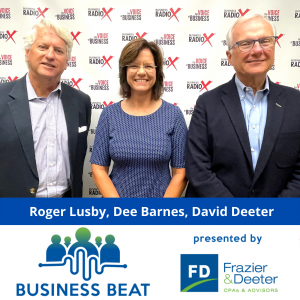
Frazier & Deeter’s Business Beat: Dr. Nicholas Alley and Hilary Beeston, Area-I

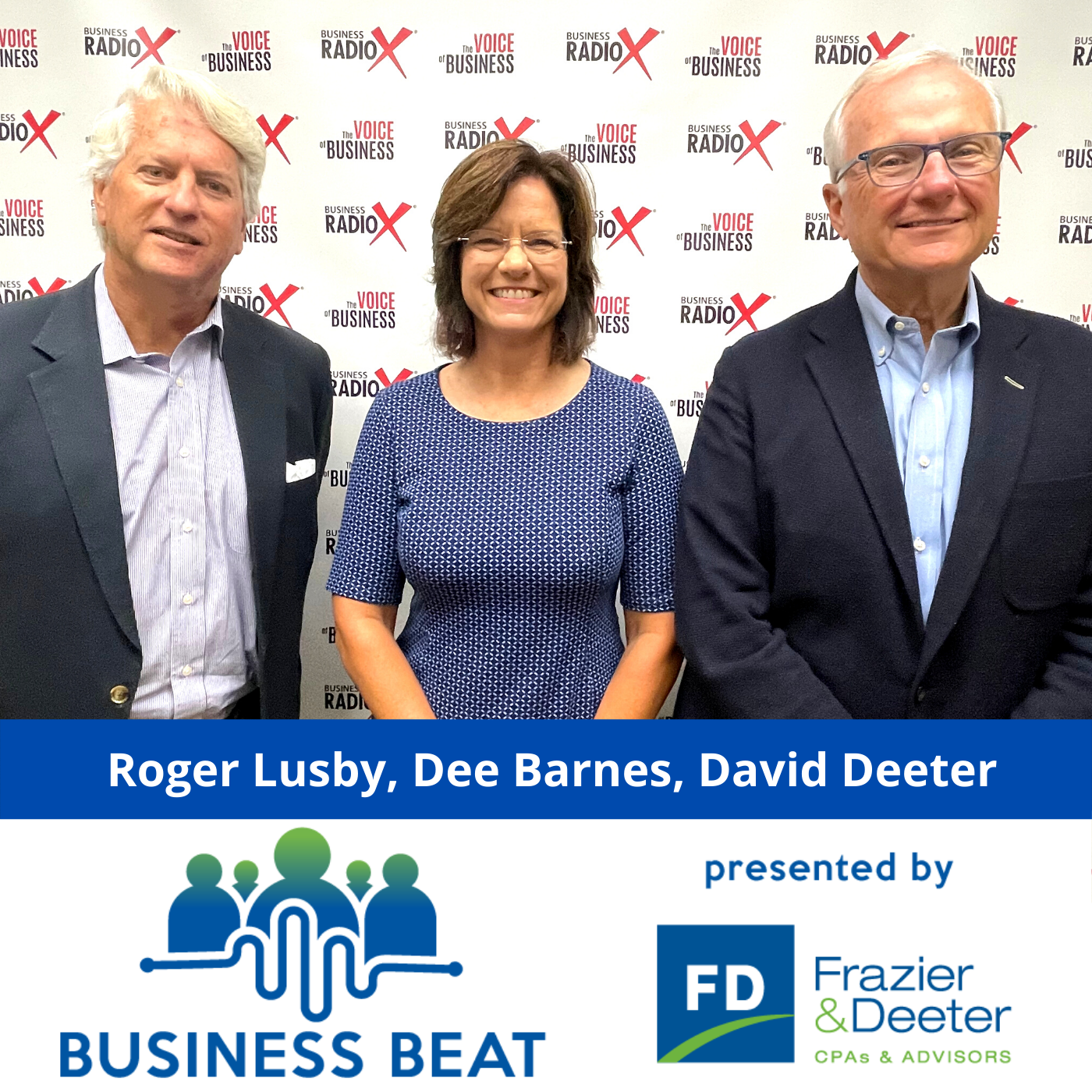
Dr. Nicholas Alley and Hilary Beeston, Co-Founders of Area-I, joined Frazier & Deeter’s Roger Lusby and Donna Beatty to discuss the keys to their successful work in Unmanned Aerial Systems (UAS). Nick and Hilary shared their backgrounds, how Area-I got started, challenges of working with the federal government, why UAS are so important, how they’ve created an attractive working environment for their team, and much more.  Business Beat is presented by Alpharetta CPA firm Frazier & Deeter.

Area-I

Founded in 2009, Area-I has spent over a decade developing a unique and innovative aerospace company that delivers tangible results, while providing a fun and creative environment for our employees to thrive.

Area-I, Inc. is a metro-Atlanta-based Aerospace company dedicated to the development of state-of-the-art Unmanned Aircraft Systems (UAS). They specialize in the design, prototyping, optimization, integration, flight controls, and flight testing of unmanned systems from initial concept to demonstration. Area-I is quickly becoming known for the go-to source of Tube-Launched, Tube-Stored aircraft, such as its ALTIUS platform. ALTIUS offers unrivaled endurance and payload capacity in its size class. Some of Area-I’s current customers include the U.S. Air Force, SOCOM, U.S. Navy, U.S. Army, and NASA.

Company website | LinkedIn

Dr. Nicholas Alley, CEO, and Hilary Beeston, CFO, Area-I

Area-I
Hilary Beeston, CFO, and Nick Alley, CEO, Cofounders, Area-I

Dr. Nicholas Alley and Hilary Beeston cofounded Area-I in 2009.  Hilary took on the role of CFO and her work has been key to navigating Area-I’s business with the federal government.

Dr. Nicholas Alley received his Ph.D. in Mechanical Engineering with an emphasis in fluids and flight mechanics from Utah State University in 2006. Studying under Dr. Warren Phillips, he gained a background in aerodynamics and flight mechanics. While at USU, Dr. Alley was involved in the design and construction of five unmanned aircraft and was the chief engineer and faculty advisor for the student-designed USU Wright Flyer, which successfully flew at venues all over the nation in celebration of the centennial of flight.

After graduation, he spent a year at the Idaho National Laboratory (INL) where he developed and deployed unmanned aerial vehicles to aid in the protection of INL’s nuclear facilities. In the fall of 2007, he took a research faculty position in the Aerospace Engineering department at the Georgia Institute of Technology where he was the instructor for the unmanned aircraft design class and the faculty advisor for Georgia Tech’s AIAA design-build-fly student teams.

Dr. Alley left Georgia Tech in January of 2009 and founded Area-I, Inc., an aerospace technology firm in the Atlanta area that specializes in the development of unmanned aircraft systems (UAS). Since 2009, Area-I has grown to over 100 personnel, received nearly $100 million in government and private contracts, and is actively engaged in developing UAS, and UAS-related technologies for the Air Force, Navy, Army, and NASA.

At Area-I, Dr. Alley continued his tradition of aircraft design by utilizing his software tools, which can quickly and accurately predict aircraft performance, to lay the framework for a company that has since established a reputation for designing highly engineered, mission-specific unmanned aircraft. Area-I is currently leading the development and testing of new unmanned aircraft for the Air Force, Army, and Navy as well the autonomy that allows those aircraft to carry out highly specialized missions with minimal operator oversight. Area-I’s primary platform, ALTIUS, is a high-endurance fixed-wing aircraft that folds up such that it fits into a specialized launch tube. ALTIUS is then carried aloft, launched, and controlled from a mothership, such as the AC-130 gunship, the UH-60 Blackhawk, or the NOAA P-3 hurricane hunter.

LinkedIn

Frazier & Deeter

The Alpharetta office of Frazier & Deeter is home to a thriving CPA tax practice, a growing advisory practice and an Employee Benefit Plan Services group. CPAs and advisors in the Frazier & Deeter Alpharetta office serve clients across North Georgia and around the country with services such as personal tax planning, estate planning, business tax planning, business tax compliance, state and local tax planning, financial statement reviews, financial statement audits, employee benefit plan audits, internal audit outsourcing, cyber security, data privacy, SOX and other regulatory compliance, mergers and acquisitions and more. Alpharetta CPAs serve clients ranging from business owners and executives to large corporations.

Roger Lusby, Partner in Charge of Alpharetta office, Frazier & Deeter

Roger Lusby, host of Frazier & Deeter’s Business Beat, is an Alpharetta CPA and Alpharetta Office Managing Partner for Frazier & Deeter. He is also a member of the Tax Department in charge of coordinating tax and accounting services for our clientele. His responsibilities include a review of a variety of tax returns with an emphasis in the individual, estate, and corporate areas. Client assistance is also provided in the areas of financial planning, executive compensation and stock option planning, estate and succession planning, international planning (FBAR, SFOP), health care, real estate, manufacturing, technology, and service companies.

You can find Frazier & Deeter on social media:

LinkedIn | Facebook | Twitter
An episode archive of Frazier & Deeter’s Business Beat can be found here.


Tagged With: aerospace, Aerospace and defense, aircraft design, Area-I, Donna Beatty, Frazier & Deeter's Business Beat, Frazier and Deeter, Nicholas Alley, Roger Lusby, UAS, Umanned aerial systems, unmanned aircraft

Dean Wegner, Authentically American

July 20, 2021 by John Ray

Authentically American
Nashville Business Radio
Dean Wegner, Authentically American
Loading
00:00 /
RSS Feed
Share
Link
Embed

Download file

Authentically American

Dean Wegner, Authentically American (Nashville Business Radio, Episode 25)

Dean Wegner’s commitment to providing quality apparel made in the USA and creating US jobs led him to start Authentically American in 2017. Dean is passionate about making a positive impact that supports U.S. workers. Joining host John Ray, Dean shared his journey, how his military experience prepared him for starting his company, the high quality products he carries, and much more.  Nashville Business Radio is produced virtually from the Nashville studio of Business RadioX®.

Authentically American

In 2017, Dean Wegner created Authentically American® to help bring manufacturing jobs back to America by selling premium, competitively priced, apparel that is ALL Made in USA, no exceptions.  His expertise in the apparel industry, coupled with his passion for America, provided all the incentive he needed to create a brand that aims to set the universally accepted standard for premium American-made merchandise while delivering a significant impact on US job creation.

Authentically American has found the common thread with their customers to be their support for USA-made merchandise and American manufacturing.  If you are looking for your new favorite polo, the perfect tee to outfit your team, or branded merchandise reach out ! By ordering from them, you, your business, school, or non-profit organization will be wearing the new American brand reinforcing your patriotism, showing support for American industry, and honoring our Veterans and First Responders.

Where is yours made?

Company website | Twitter | Facebook | Instagram | YouTube
Dean Wegner, Founder and CEO, Authentically American

Authentically American
Dean Wegner, Founder and CEO, Authentically American

Dean is a man of deep Christian faith, a Family man, Veteran, and Entrepreneur. Dean and his bride Kelly have been married for 26 years and they have 4 children, with the youngest being adopted from Ethiopia.

Dean graduated from West Point in 1993 and served 7 years in the Army as a helicopter pilot and Army Ranger. After the Army, the majority of Dean’s business career was spent in business development, marketing, and strategy with Mars and Procter & Gamble. In 2017, Dean founded Authentically American, a Veteran owned, American-made premium apparel brand.

Authentically American is a brand that celebrates patriotism, believes in the American worker, and honors our American heroes by intentionally donating 10% of profits to Veteran and First Responder charities. As a former Division I ice hockey player, Dean is highly competitive, possesses a tireless work ethic, and still plays in a Men’s “Beer League” every week.

Dean is active in his church and serves on the board of several for-profit and non-profit companies and organizations. Dean and Authentically American are riding a wave of national media exposure having been featured in Forbes magazine, Fox News, Yahoo Finance, Newsmax TV, and SiriusXM Radio.

LinkedIn


Questions and Topics in This Interview

  • What motivated you to start Authentically American?
  • What % of apparel in the US is made in the US?
  • How do you support charities and non-profits?
  • What impact did COVID have on your business?
  • What is your top-selling product?
  • How did West Point and the military prepare you to lead a startup?
  • Can businesses partner with you?
  • What is your best-selling Collegiate license?

Nashville Business Radio is hosted by John Ray and produced virtually from the Nashville studio of Business RadioX®.  You can find the full archive of shows by following this link. The show is available on all the major podcast apps, including Apple Podcasts, Spotify, Google, Amazon, iHeart Radio, Stitcher, TuneIn, and others.

Tagged With: American made, apparel company, Authentically American, Business apparel, Dean Wegner, Made in USA, Nashville, promotional apparel, team apparel, Veteran Owned Business

Dan Cady, Cady Business Technology

July 19, 2021 by John Ray

Cady Business Technology
Minneapolis St. Paul Business Radio
Dan Cady, Cady Business Technology
Loading
00:00 /
RSS Feed
Share
Link
Embed

Download file

Cady Business Technology

Dan Cady, Cady Business Technology (Minneapolis-St. Paul Business Radio, Episode 15)

Dan started Cady Business Technology with a drive to serve the business market with customized voice systems and white glove service. Dan and host John Ray discussed optimized phone systems, what’s new in voice technology, how for most clients his firm offers hard dollars savings and better technology at the same time, and much more.  Minneapolis-St. Paul Business Radio is produced virtually by the Minneapolis St. Paul studio of Business RadioX®.

Cady Business Technology

At Cady Business Technologies headquartered in Plymouth, MN, they provide organizations of all sizes a full suite of on-premise and hosted voice phone service solutions to fit your unique business needs. They are experts in telecommunications, with over 200 years of combined telecommunications experience.

They love to boast about their staff who provides the highest level of customer support in the industry.

Cady is here to support your business at every level with an  always-available, skilled and professional support team. They help with your specific needs and concerns while giving you personalized customer support you won’t find anywhere else.

Whether you operate a local business or a national corporation, Cady Business Technologies and their partners can provide a total solution and ongoing support to meet your telecommunications and data needs.

Company website | LinkedIn | Facebook

Dan Cady, President and Owner, Cady Business Technology

Cady Business Technology
Dan Cady, President, Cady Business Technology

Dan Cady is President and Owner of Cady Business Technology, a Minnesota-based provider of business voice communications services. With over 30 years working in the telecommunications industry, Dan has extensive experience with on-site phone systems, Cloud-based solutions and other telcom technologies that help businesses use communications as a competitive advantage.

LinkedIn


Questions and Topics in this Interview

  • Why did you start Cady Business Technology?
  • Why are optimized phone systems so important to your clients’ businesses?
  • Can’t they just buy from anyone? Aren’t all solutions about the same?
  • What’s new in voice communications technology?
  • Should all companies move their telephone system to the cloud?
  •  Can I move part of my system to the cloud?
  • What services do you offer to help businesses communicate better?

Minneapolis-St. Paul Business Radio is hosted by John Ray and produced virtually from the Minneapolis St. Paul studio of Business RadioX® .  You can find the full archive of shows by following this link. The show is available on all the major podcast apps, including Apple Podcasts, Spotify, Google, Amazon, iHeart Radio, Stitcher, TuneIn, and others.

Tagged With: Cady Business Technology, cloud technology, cloud-based phone systems, Dan Cady, Minneapolis St Paul Business Radio, telephone systems, Voice Communications

The Backstory of Luring Employees Back to Work, with Mike Blake, Brady Ware & Company

July 19, 2021 by John Ray

Brady Ware
North Fulton Studio
The Backstory of Luring Employees Back to Work, with Mike Blake, Brady Ware & Company
Loading
00:00 /
RSS Feed
Share
Link
Embed

Download file

Brady Ware

The Backstory of Luring Employees Back to Work, with Mike Blake, Brady Ware & Company

Mike Blake: [00:00:00] Are we going to lure people back to work? Are we going to force them back to work? So, the topic of the day now is, people are not coming back to the workforce. And that’s the chart that I have from the St. Louis Federal Reserve on Unemployment Level and Job Openings. It shows that the number of job openings exceeds the number of unemployed people in the United States. Why are people not taking them?

Mike Blake: [00:00:30] Well, before I go directly and answer that question, this chart is really important, and if you look at no other chart and look at this one – and it also is from the St. Louis Federal Reserve and it’s the Labor Force Participation Rate. And the labor force participation rate means the percentage of adult Americans who are working, or available to work, want to work, or in the labor force – you’ll notice that the American labor force has been declining since 2000, particularly since, say, late 2008, 2009. And it recovered a bit, I think a statistical noise. Really dropped during the COVID pandemic, and has come back a little bit.

Mike Blake: [00:01:22] And I say that because it provides some useful framework around understanding the nature of unemployment and the nature of people pursuing jobs. And that is, that we have been running up against a shortage of workers for two decades now. We haven’t noticed it, for whatever reason, because we’ve had enough people, more or less, to take jobs. But that gravy train may have come to an end, but we’ll see. Like I said, economics is a slow science.

Mike Blake: [00:01:55] And, frankly, I don’t know the story yet. I don’t know whether unemployment benefits are too high and people are kicking back on the extra 300 bucks a month. You know, I cannot imagine that myself. I can’t imagine $1,200 being meaningful enough to me that I would simply stop working and be on welfare. But I acknowledge I’m not everybody. I just don’t know a portion of the population that is.

Mike Blake: [00:02:23] And I do think people have awakened, and changed priorities, and are willing to give up income for a different lifestyle. I think, you know, there’s nothing like 600,000 people dying over the course of 18 months to remind people how short and precious life is. I do think that people have discovered they’d rather live on less and would rather have more of what they expect their lives to be from a personal perspective and spiritual perspective.

Mike Blake, Brady Ware & Company

Michael Blake is the host of the Decision Vision podcast series and a Director of Brady Ware & Company. Mike specializes in the valuation of intellectual property-driven firms, such as software firms, aerospace firms, and professional services firms, most frequently in the capacity as a transaction advisor, helping clients obtain great outcomes from complex transaction opportunities. He is also a specialist in the appraisal of intellectual properties as stand-alone assets, such as software, trade secrets, and patents.

Mike has been a full-time business appraiser for 13 years with public accounting firms, boutique business appraisal firms, and an owner of his own firm. Prior to that, he spent 8 years in venture capital and investment banking, including transactions in the U.S., Israel, Russia, Ukraine, and Belarus.

LinkedIn | Facebook | Twitter | Instagram

You can find the complete Decision Vision interview here. 


The “One Minute Interview” series is produced by John Ray and in the North Fulton studio of Business RadioX® in Alpharetta. You can find the full archive of shows by following this link.

Renasant Bank has humble roots, starting in 1904 as a $100,000 bank in a Lee County, Mississippi, bakery. Since then, Renasant has grown to become one of the Southeast’s strongest financial institutions with over $13 billion in assets and more than 190 banking, lending, wealth management and financial services offices in Mississippi, Alabama, Tennessee, Georgia and Florida. All of Renasant’s success stems from each of their banker’s commitment to investing in their communities as a way of better understanding the people they serve. At Renasant Bank, they understand you because they work and live alongside you every day.

Tagged With: Brady Ware & Company, employees, unemployment benefits

Anna Palumbo, Red Triangle Interior Design

July 16, 2021 by John Ray

Red Triangle Interior Design
Nashville Business Radio
Anna Palumbo, Red Triangle Interior Design
Loading
00:00 /
RSS Feed
Share
Link
Embed

Download file

Red Triangle Interior Design

Anna Palumbo, Red Triangle Interior Design (Nashville Business Radio, Episode 24)

Red Triangle Interior Design grew out of the joys of home and art in Anna Palumbo’s childhood. She uses her unique way of designing space to transform homes, backyard offices, and retail spaces. Anna joined host John Ray to share her work, success stories, and much more. Nashville Business Radio is produced virtually from the Nashville studio of Business RadioX®.

Red Triangle Interior Design

Red Triangle Interior Design believes there are three elements to every project: the designer, the client, and the space. In the center of these three parts is the relationship that is built and the story that brings the project to life.

Red Triangle Interior Design works with you to express your personal story by creating a space and design that is unique to you and your lifestyle. Believing in giving the client a space that is not only beautiful and relevant but also comfortable and livable. Building a relationship between us and you provides a design that you, your family, and friends will enjoy for years to come. A place where you will continue to add chapters to your story.

What is Red Triangle Interior Design? The lead designer, Anna, grew up about an hour outside of Philadelphia, Pennsylvania in a little town called Chalfont. She grew up in an old stone farmhouse set far back from the road, with a long driveway leading up to the house. Not wanting the kids to be waiting for the bus out in the rain and bad weather, her dad built a large red triangle for the kids to sit in at the bottom of the driveway. Seeing that red triangle always meant coming home safe and sound. A home, and a place of meaning. Their designers want to help you build your own red triangle, that has meaning for you and your family – to help you build a home that’s unique to you.


Company website | LinkedIn | Instagram

Anna Palumbo, Principal, Red Triangle Interior Design

Red Triangle Interior Design
Anna Palumbo, Principal, Red Triangle Interior Design

Anna grew up in the suburbs of Philadelphia, Pennsylvania. Being one of six kids, she was always trying to find and create her own spaces, whether changing a closet into her own art studio or constantly rearranging the bedroom that she shared with her sisters. For her 12th birthday Anna got a drafting table, her own area away from her siblings that she could be creative and it ignited the artistic fire in her.

Anna started as a fine arts major in college but switched to Art History and received her BA in 1998. After college she started teaching pottery and selling pottery. She taught and sold her work for 14 years. During that time, she got married, had three kids and went through one dog and a couple cats.
She and her family moved to Nashville in 2015. Having only lived in the Philadelphia area her whole life, Anna was given an opportunity to reinvent herself. She sold her kiln and wheel and went back to school. She graduated with an Interior Design degree from O’More School of Design at Belmont University in 2019.

She currently lives in Franklin with her husband, 3 kids, two dogs and 1 fat cat.

Anna won the ASID Legacy Scholarship in 2016 and she also is the Save a Sample, Tennessee State winner for 2017.

LinkedIn


Questions and Topics in This Interview

  • How the company got its name
  • How Anna became an interior designer
  • Backyard offices
  • How she uses evidence-based design in my interior design
  • Her “why”
  • Her biggest goal

Nashville Business Radio is hosted by John Ray and produced virtually from the Nashville studio of Business RadioX®.  You can find the full archive of shows by following this link. The show is available on all the major podcast apps, including Apple Podcasts, Spotify, Google, Amazon, iHeart Radio, Stitcher, TuneIn, and others.

Tagged With: Anna Palumbo, backyard offices, evidence based design, home office, home office setup, interior design, interior designer, interior designer in Nashville, makeover my home office, Nashville Business Radio, Red Triangle Interior Design

David Shavzin, The Value Track, and Bob Tankesley, Neri Capital 

July 16, 2021 by John Ray

Neri Capital
North Fulton Studio
David Shavzin, The Value Track, and Bob Tankesley, Neri Capital 
Loading
00:00 /
RSS Feed
Share
Link
Embed

Download file

Exit Planning

David Shavzin, The Value Track, and Bob Tankesley, Neri Capital (ProfitSense with Bill McDermott, Episode 23)

Host Bill McDermott is joined by David Shavzin of The Value Track and Bob Tankesley of Neri Capital. David and Bob advocate that the seller of a business must take the perspective of the prospective buyer. By doing so, a seller will better understand business valuation, planning for a successful exit, and how the sale process will unfold. ProfitSense with Bill McDermott is produced and broadcast by the North Fulton Studio of Business RadioX® in Alpharetta.

David Shavzin, President,  The Value Track

Exit Planning
David Shavzin, President, The Value Track
The Value Track helps business owners sell their companies, maximize value, and create an exit on their own terms. Business owners too often get so caught up in the day-to-day that they lose sight of the key to making that future happen – building value – and are unprepared when the time comes to put their transition into action. The Value Track partners with their clients to build transferrable value and sell their companies. Whether a single owner, a family business, or simply multiple partners – whether their exit planning timeline is one year or 10 years – we take our clients through The Value Track’s 7 steps to ensure success.
Company website | LinkedIn

Bob Tankesley, Principal, M&A Advisor, Neri Capital

Bill Tankesley, Principal, M&A Advisor, Neri Capital

Neri Capital Partners, a boutique investment bank and advisory firm, consists of seasoned transactional professionals and offers a variety of investment banking services to privately held lower mid-market businesses. Our team has in-depth experience with businesses in the manufacturing, business-to-business, industrial, and healthcare market sectors. Neri Capital has closed over 150 transactions with a total enterprise value of $1.3 billion. Services include:
1. Seller representations
2. Business value estimates
3. Exit planning and strategies
4. Buyer representations
5. Corporate and capital formation

Company website | LinkedIn


About ProfitSense and Your Host, Bill McDermott

Bill McDermott
Bill McDermott

ProfitSense with Bill McDermott dives into the stories behind some of Atlanta’s successful businesses and business owners and the professionals that advise them. This show helps local business leaders get the word out about the important work they’re doing to serve their market, their community and their profession. The show is presented by McDermott Financial Solutions. McDermott Financial helps business owners improve cash flow and profitability, find financing, break through barriers to expansion and financially prepare to exit their business. The show archive can be found at profitsenseradio.com.

Bill McDermott is the Founder and CEO of McDermott Financial Solutions. When business owners want to increase their profitability, they don’t have the expertise to know where to start or what to do. Bill leverages his knowledge and relationships from 32 years as a banker to identify the hurdles getting in the way and create a plan to deliver profitability they never thought possible.

Bill currently serves as Treasurer for the Atlanta Executive Forum and has held previous positions as a board member for the Kennesaw State University Entrepreneurship Center and Gwinnett Habitat for Humanity and Treasurer for CEO NetWeavers. Bill is a graduate of Wake Forest University and he and his wife, Martha have called Atlanta home for over 40 years. Outside of work, Bill enjoys golf, traveling, and gardening.

Connect with Bill on LinkedIn and Twitter and follow McDermott Financial Solutions on LinkedIn.

Tagged With: Bill McDermott, Bob Tankesley, business transition, business valuation, David Shavzin, exit planning, Neri Capital, Profit Sense, profitability coach, Succession Planning, The Profitability Coach, The Value Track

Chris Miller, North Fulton Wills, and Andrew Walker, Brady, Ware & Company

July 16, 2021 by John Ray

North Fulton Wills
Family Business Radio
Chris Miller, North Fulton Wills, and Andrew Walker, Brady, Ware & Company
Loading
00:00 /
RSS Feed
Share
Link
Embed

Download file

North Fulton Wills

Chris Miller of North Fulton Wills and Andrew Walker with Brady, Ware & Company (Family Business Radio, Episode 22)

Both Chris Miller of North Fulton Wills in law and Andrew Walker in accounting with Brady, Ware & Company developed a passion for their respective disciplines starting in high school. They shared how they enjoy using their expertise to serve individuals, families, and businesses with host Anthony Chen. Chris Miller discussed probate and what happens when a business owner passes away, either with or without proper planning. Andrew expounded on the current state of the construction industry, prices, the impact of the pandemic on business, and much more. Family Business Radio is underwritten and brought to you by Anthony Chen with Lighthouse Financial Network.

Chris Miller, Owner, The Law Offices of J. Christopher Miller

J Christopher Miller, Owner at Law Offices of J. Christopher Miller, PC (North Fulton Wills)

The Law Offices of J. Christopher Miller, known in the community as North Fulton Wills, is a team of three attorneys and a highly skilled office manager. Its mission is to provide capable legal representation in a welcoming atmosphere.

Whether guiding clients in starting their business, helping form special needs trusts, or helping surviving spouses and family members through the grief of losing a loved one, they are there for their clients every step of the way.

North Fulton Wills helps guide clients throughout their decision-making process and walk them step by step through often difficult decisions. The ultimate goal is to make sure that all clients understand how their documents will carry out their wishes.

J. Christopher Miller focuses his time in the areas of trusts and estates, taxation, and business law. His experience with all angles of estate administration informs his common-sense style of practicing law and helps him to form estate plans that suit each client’s situation.  Chris has helped to broker reasonable settlements in a number of intra-family disputes and has successfully guided clients through estate tax filings and audits.

Chris enjoys his work in the special needs community, regularly discussing the use of Special Needs Trusts at the seasonal conferences of the Down Syndrome Association of Atlanta.   He also serves on the faculty of several CLE seminars regarding Georgia’s probate code and its Limited Liability Company (LLC) Act.  He uses his experience in counseling small businesses as a basis for workshops on drafting strong, flexible Operating Agreements for use in a variety of family business and commercial situations.  In 2014, he wrote a chapter titled “Asset Protection Planning” for a guidebook written for physicians and healthcare professionals.

Chris resides in Johns Creek with his wife, Sharon, and a 7-year-old daughter.

Chris has been recognized as one of Georgia Trend’s Legal Elite in the field of Taxes, Estates, and Trusts both in 2009 and in 2014.

Chris was also voted best attorney in the North Fulton Family Life 2014 “Best of life” contest.

Company website | LinkedIn

Andrew Walker, CPA, MBA, Brady Ware & Company

Andrew Walker, CPA, MBA, Brady Ware & Company

Brady Ware & Company has guided clients through complex financial and tax issues since the early 50s. They combine unparalleled tax, audit, and advisory expertise with industry-specific knowledge. And they work with you collaboratively and efficiently to create the custom financial solutions that fit your needs. Brady Ware’s solutions keep you compliant, minimize your tax burden, improve operations, and free up the capital your business needs to grow.

Andrew joined Brady Ware in 2012 and has over 10 years of experience in public accounting and private industry.

Andrew specializes in audit, review, and advisory services for small to medium sized construction companies, contractors and EPC’s looking to grow and increase profitability.

Company website | LinkedIn

Anthony Chen, Host of Family Business Radio

family owned craft breweries
Anthony Chen

This show is sponsored and brought to you by Anthony Chen with Lighthouse Financial Network. Securities and advisory services offered through Royal Alliance Associates, Inc. (RAA), member FINRA/SIPC. RAA is separately owned and other entities and/or marketing names, products or services referenced here are independent of RAA. The main office address is 575 Broadhollow Rd. Melville, NY 11747. You can reach Anthony at 631-465-9090 ext 5075 or by email at anthonychen@lfnllc.com.

Anthony Chen started his career in financial services with MetLife in Buffalo, NY in 2008. Born and raised in Elmhurst, Queens, he considers himself a full-blooded New Yorker while now enjoying his Atlanta, GA home. Specializing in family businesses and their owners, Anthony works to protect what is most important to them. From preserving to creating wealth, Anthony partners with CPAs and attorneys to help address all of the concerns and help clients achieve their goals. By using a combination of financial products ranging from life, disability, and long term care insurance to many investment options through Royal Alliance. Anthony looks to be the eyes and ears for his client’s financial foundation. In his spare time, Anthony is an avid long-distance runner.

The complete show archive of “Family Business Radio” can be found at familybusinessradioshow.com.

Tagged With: Andrew Walker, Anthony Chen, Brady Ware & Company, estate planning, Family Business Radio, J Christopher Miller, North Fulton Wills, wills and estates

Decision Vision Episode 125:  Should I Take Over the Family Business? – An Interview with Dan Erling, Accountants One, Inc.

July 16, 2021 by John Ray

Accountants One
Decision Vision
Decision Vision Episode 125:  Should I Take Over the Family Business? - An Interview with Dan Erling, Accountants One, Inc.
Loading
00:00 /
RSS Feed
Share
Link
Embed

Download file

Accountants One

Decision Vision Episode 125:  Should I Take Over the Family Business? – An Interview with Dan Erling, Accountants One, Inc.

Dan Erling became CEO of Accountants One suddenly when his father died in 2010. As the sales director, Dan was embedded in the business but without a plan to take over. He and host Mike Blake chart the course of Accountants One from that point, and Dan shares his insights on what it takes to inherit a business, lucky breaks, things he would have done differently, how the business eventually flourished, and much more. Decision Vision is presented by Brady Ware & Company.

Accountants One, Inc.

Accountants One is a full-service accounting and finance recruiting firm specializing in direct hire and contract placements.Accountants One

Since 1973, they have been recognized as industry experts who align as trusted staffing partners with the organizations we serve. Their relationship-driven focus consistently leads to the highest rate of placement success in the industry. Headquartered in Atlanta, Georgia, Accountants One has the infrastructure in place to serve clients across the Southeast.

The CEO of Accountants One, Dan Erling, wrote the book on hiring – literally.  The book is called MATCH: A Systematic, Sane Process for Hiring the Right Person Every Time. The book details uniqueness of our approach.

Key points include:
Recognizing that a great hire is 75% culture fit, 25% skill fit. What this means for you: they get to know you and the unique culture of your company. They find candidates who not only have the right skills, they are also the right fit for your department and company.

Finding the right person requires a coordinated project management team. What this means for you: evaluating stacks of resumes, interviewing candidates, testing them, checking references, preparing them, following up – they utilize an entire team to work on your job order.

Understanding that mis-hire can cost a company up to 15 times their salary. What this means for you: they’re objective. They get to know you, and they know their candidates. They’ve interviewed thousands of people. They’re not fooled by someone who is great at interviewing but doesn’t have what it takes to work for your company. They have the highest success rate in the industry for a reason: they have the tools to match candidates with clients.

Working a consistent, proven process ensures success. What this means for you: the right process allows them to move forward methodically and ensures that all the angles are covered, so by the time the candidate gets to you, there are no surprises. No one ‘slips through the cracks.’

Developing meaningful long-term relationships with both clients and candidates makes the difference. What this means for you: They invest in getting to know you so that they can understand the intangibles – those qualities that go beyond an email or job write-up. They are your partner. They are with you for the long haul.  They develop the same deep relationships with our candidates; they have access to excellent people who work with them exclusively and confidentially on their job search.

Company website | LinkedIn | MATCH

Dan Erling, President, Accountants One

Dan Erling is the President of Accountants One. He is in the Georgia Association of Personnel Services (GAPS) Million Dollar Hall of Fame and was recognized as one of Atlanta’s Up and Comers by the Atlanta Business Chronicle. Under Dan’s leadership, Accountants One was named one of Atlanta’s Best Places to Work. Dan is the creator of the Search for the South’s Funniest Accountant. This combination fundraiser/stereotype debunker has become an annual favorite in the accounting community – consistently bringing in over 800 people to cheer for Funny Accountants. Through the Search Accountants One has helped raise over a quarter of a million dollars for Junior Achievement of Georgia.

He earned a Bachelor of Science in Mathematics from Georgia State University and his Masters from Emory University. Before joining Accountants One, Dan was an inner-city math teacher for 8 years. In 1996, he was named the Academic Achievement Incentive Teacher of the Year for Middle Schools. In 1998, Dan had the opportunity to join his father, Bert Erling, at Accountants One. This followed several summers of working as an IT Project Manager for the firm. While Dan unexpectedly lost his dad on May 2, 2010, he considered the opportunity to work with his dad as one of the highlights of his life.

Dan’s wife, Michelle, is an art educator and painter (she painted the two pieces that hang in the lobby of the main office). He has two sons that he is very proud of. Dan’s personal interests include abstract art and music. While dedicated to working a recruiting desk, Dan spends a great deal of time consulting with companies on Hiring Best Practices. The result of this work led to his book: MATCH, A Systematic, Sane Process for Hiring the Right Person Every Time. The book was published in December 2010 by Wiley Publishing and is available wherever books and ebooks are sold. You can learn more about Dan’s philosophy of hiring as well as read his blog by visiting www.danerling.com.

Dan is on the board of Junior Achievement of Georgia. Through this non-profit, he is able to be part of making a difference in the lives of children. Something that remains incredibly important to him. Dan is also on the board of the Georgia State Panther Athletic Committee. As a Georgia State University alum, he is incredibly proud of what is going on with Panther Sports. The impact of the sports community on the downtown area also inspires him. The opportunity to serve people and bring value in an authentic way continues to motivate and inspire Dan every day. He truly loves his job.

LinkedIn

Mike Blake, Brady Ware & Company

Mike Blake, Host of the “Decision Vision” podcast series

Michael Blake is the host of the Decision Vision podcast series and a Director of Brady Ware & Company. Mike specializes in the valuation of intellectual property-driven firms, such as software firms, aerospace firms, and professional services firms, most frequently in the capacity as a transaction advisor, helping clients obtain great outcomes from complex transaction opportunities. He is also a specialist in the appraisal of intellectual properties as stand-alone assets, such as software, trade secrets, and patents.

Mike has been a full-time business appraiser for 13 years with public accounting firms, boutique business appraisal firms, and an owner of his own firm. Prior to that, he spent 8 years in venture capital and investment banking, including transactions in the U.S., Israel, Russia, Ukraine, and Belarus.

LinkedIn | Facebook | Twitter | Instagram

Brady Ware & Company

Brady Ware & Company is a regional full-service accounting and advisory firm which helps businesses and entrepreneurs make visions a reality. Brady Ware services clients nationally from its offices in Alpharetta, GA; Columbus and Dayton, OH; and Richmond, IN. The firm is growth-minded, committed to the regions in which they operate, and most importantly, they make significant investments in their people and service offerings to meet the changing financial needs of those they are privileged to serve. The firm is dedicated to providing results that make a difference for its clients.

Decision Vision Podcast Series

Decision Vision is a podcast covering topics and issues facing small business owners and connecting them with solutions from leading experts. This series is presented by Brady Ware & Company. If you are a decision-maker for a small business, we’d love to hear from you. Contact us at decisionvision@bradyware.com and make sure to listen to every Thursday to the Decision Vision podcast.

Past episodes of Decision Vision can be found at decisionvisionpodcast.com. Decision Vision is produced and broadcast by the North Fulton studio of Business RadioX®.

Connect with Brady Ware & Company:

Website | LinkedIn | Facebook | Twitter | Instagram

TRANSCRIPT

Intro: [00:00:01] Welcome to Decision Vision, a podcast series focusing on critical business decisions. Brought to you by Brady Ware & Company. Brady Ware is a regional full service accounting and advisory firm that helps businesses and entrepreneurs make visions a reality.

Mike Blake: [00:00:21] Welcome to Decision Vision, a podcast giving you, the listener, clear vision to make great decisions. In each episode, we discuss the process of decision making on a different topic from the business owners’ or executives’ perspective. We aren’t necessarily telling you what to do, but we can put you in a position to make an informed decision on your own and understand when you might need help along the way.

Mike Blake: [00:00:42] My name is Mike Blake and I’m your host for today’s program. I’m a director at Brady Ware & Company, a full service accounting firm based in Dayton, Ohio, with offices in Dayton; Columbus, Ohio; Richmond, Indiana; and Alpharetta, Georgia. Brady Ware is sponsoring this podcast, which is being recorded in Atlanta per social distancing protocols. If you would like to engage with me in social media with my Chart of the Day and other content, I’m on LinkedIn as myself and @unblakeable on Facebook, Twitter, Clubhouse, and Instagram. If you like this podcast, please subscribe on your favorite podcast aggregator and please consider leaving a review of the podcast as well.

Mike Blake: [00:01:18] So, today’s topic is, Should I take over the family business? And before I get into this, I apologize for publishing this a day later than we normally do. Just some, frankly, scheduling difficulties. Now, that everybody is allowed to go back on vacation, I took for granted the fact that people basically had nothing better to do – literally, nothing better to do than to come on my podcast. And I got into a habit of not being aggressive enough in scheduling. And so, this is coming out a day later than we normally do. I would normally just blame it on technical difficulties, but I’m just going to own it and say I got into some bad habits. But this should be the only one that gets published late. It’s only a day late, so I’m sure everybody survived.

Mike Blake: [00:02:02] But today’s topic is, Should I take over the family business? And, you know, this topic is kind of interesting from a timing standpoint. About 15 years ago, we read all over the place that there was going to be a massive wave of baby boomers handing off their businesses to Generation X and – gasp – millennials. And we thought for sure that that was going to happen. And everybody said business brokers, M&A people, investment bankers, they’re going to make a killing. Business appraisers – like myself – are going to make a killing. There was going to be this massive transfer of wealth.

Mike Blake: [00:02:45] And kind of something interesting happened was really that nothing happened. I mean, it’s still happening on an ad hoc basis. But this wave of businesses that are being transferred just really has not happened 15 years later. And I think that’s happening for a lot of reasons. I think it’s happening, one, because people had a lot of ground to make up after the wealth they lost in the ’08, ’09 recession. And I think the other thing that’s happened is because healthcare and nutrition have become so good, is that a lot of people, frankly, have a lot of juice, they have a lot of gas left in the tank at age 65. And they don’t necessarily want to go off into the sunset unless their health just starts to prevent it.

Mike Blake: [00:03:33] But the reality is – and I’m a big advocate for this – you know, this notion of retiring at 65, if you want to do it, can do it, great. But our healthcare technology and nutrition is able to keep people viable for much longer. And that’s happening with businesses. And so, the transfer of a business from one generation to another, I think, is still a very special event and it’s an important event. It’s an important event because, you know, companies that are multigenerational, they’re hard to come by because they’re hard to do. And the track record of multigenerational businesses, frankly, is not all that awesome.

Mike Blake: [00:04:17] There’s a term called shirtsleeves to shirtsleeves, that wealth that’s transferred in generation one is 90 percent gone on average by generation three. And so, the numbers are really stacked against generational wealth really being successful. And that’s why when I see a scenario under which generational transfer is somewhat successful, I think that’s something to be highlighted because there are probably lessons that we can learn from it.

Mike Blake: [00:04:49] And joining us today is a friend of mine who I’ve known a lot of years before he took over his company, actually, is Dan Erling of Accountants One, which is a full service accounting and finance recruiting firm specializing in direct hiring and contract placements. Since 1973, they have been recognized as industry experts who aligns trust and staffing partners with the organizations they serve. Their relationship driven focus consistently leads to the highest rate of placement success in the industry.

Mike Blake: [00:05:21] Headquartered in Atlanta, Georgia, Accountants One has the infrastructure in place to serve clients across the southeast. Dan Erling is the President of Accountants One. He is the Georgia Association of Personnel Services Million Dollar Hall of Fame, and was recognized as one of Atlanta’s Up and Comers by the Atlanta Business Chronicle. Under Dan’s leadership, Accountants One was named one of Atlanta’s best places to work.

Mike Blake: [00:05:44] And I can see that. The things I observe him doing with his company are so fascinating, and groundbreaking, and authentic. I’m not surprised. In fact, I steal a lot of his ideas.

Mike Blake: [00:05:56] Dan is the creator for the Search for the Souths Funniest Accountant. This combination fundraiser stereotype debunker has become an annual favorite in the accounting community, consistently bringing in over 800 people to cheer for funny accountants. So, the Search for Accountants One has helped raise over a-quarter-of-a-million dollars for junior achievement of Georgia.

Mike Blake: [00:06:16] I’ve got to do that one year. I’m not technically an accountant, but I’m sort of accounting adjacent. And the funny thing is, by the way, for those of you who are listening, you think accountants to be funny. Well, Bob Newhart started as an accountant, actually. He was a CPA before he moved over into that. Bob Newhart, even today, is still a laugh. I mean, when he’s on the Big Bang Theory, I sit up and take notice.

Mike Blake: [00:06:37] Dan wrote the book on hiring, literally. The book is called Match: A Systematic, Sane Process for Hiring the Right Person Every Time. The book details the uniqueness of their approach. And, finally, Dan is a member with me of the Swedish American Chamber of Commerce. I think he’s a Swedish descent. I am not. I’m just an interloper, but I like meatballs. Dan, welcome to the program.

Dan Erling: [00:06:58] Oh, my gosh. Thank you so much. What an honor to be here today. I feel very, very lucky to be talking with one of Atlanta’s cultural icons, the legend, Mike Blake.

Mike Blake: [00:07:15] Well, we’ll change your mind halfway through the podcast.

Dan Erling: [00:07:17] All right. You got it.

Mike Blake: [00:07:17] But I don’t think you’re too much of a flight risk. So, Accountants One was founded in 1973. I didn’t realize it was that old. Tell me the origin story. What’s the lore of the history of Accountants One?

Dan Erling: [00:07:33] All right. Quick story, my dad’s a jazz musician. He has me, he says, “Boy, I need to do something where I can make money.” And so, he becomes an accountant. Rides up the org chart, really works for mostly the same company as he went from senior accountant to regional controller. And then, said, “You know, I really am an entrepreneur at heart. I am that jazz musician.” So, when I was in high school, he bought a two person bookkeeping search firm, started doing controller searches, and ran it for years. So, there’s your origin story of Accountants One.

Mike Blake: [00:08:22] And I forgot that your father was a jazz musician. I can see that. Typically jazz musician is not the fast way to wealth. What did he play? Was it saxophone?

Dan Erling: [00:08:34] No. His stand up bass. He was a bass player.

Mike Blake: [00:08:36] Stand up bass, okay. The upright bass. Yeah. And bass players don’t make a lot in any event.

Dan Erling: [00:08:42] Oh. No. No.

Mike Blake: [00:08:43] Unless you’re Getty Lee of Rush. That’s pretty much the only one I think so.

Dan Erling: [00:08:48] That’s a good one. Sure.

Mike Blake: [00:08:48] When did you start to work in the business?

Dan Erling: [00:08:50] All right. So, in my previous life, I’ve had two jobs. I was an inner city math teacher. I was the middle school teacher of the year at APS, and loved the kids, loved that experience. I was there for eight years. But along the way, I recognized that I belonged in an entrepreneurial world, and was working summers with my dad at the three person recruiting staffing firm.

Dan Erling: [00:09:24] And one summer, when I knew it was starting to become time where I went out and established myself, I went to him and said, “Hey, Dad. You know, I’d like to join you. Can I come to Accountants One next year after I finish this group of children I had promised that I would come back?” And he said, “Yeah. But there’ll be no nepotism here.”

Dan Erling: [00:09:49] And so, in 1998 with a two year old and a four year old, I joined Accountants One. And I’ve been here ever since. It’s been a great experience. And I quickly became our top sales guy. And, now, I’m very lucky that I’m the CEO.

Mike Blake: [00:10:13] I’m fascinated by the transition. I can see why you’d be a teacher who would resonate with kids and, of course, that explains your junior achievement.

Dan Erling: [00:10:21] Yes. Oh, absolutely. I still want to give back, especially we’ve created a fund or a nonprofit to serve inner city youth. Yes.

Mike Blake: [00:10:32] I mean, that’s a big change, from APS into accounting and recruiting firm. What was it that you saw from outside and said, “You know what? I want to do that. I want to drop what I’m doing,” that clearly had a lot of meaning for you. You’re clearly very dedicated, I can tell by your voice. I just don’t know how you’re wired. What did you see from afar that made you want to get involved in that?

Dan Erling: [00:11:01] I’ve never looked at sales as trying to control people. I don’t like the manipulative aspect of sales. But I did think, “You know, if I can sell inner city kids on math and coming in here and being excited about doing math and that’s fulfilling, what can I do from a sales standpoint in terms of bringing value to people as they change jobs?” And so, it was that sales aspect and the best use of sales in terms of motivating people and helping them to achieve more and bringing true value that motivated me.

Mike Blake: [00:11:53] So, I’m going to go off the script here because I think that’s so fascinating. I speculate – and you tell me if I’m wrong – I think when you’re going to teach math to kids in APS, unless they’re unusually motivated, I mean, isn’t there a sales job in there somewhere, too, to get them engaged and get one to do the work and do hard things and grow nerve endings?

Dan Erling: [00:12:16] Yeah. Oh, this job is a lot easier than the job at APS. I mean, selling math to inner city kids, that’s a lifetime achievement. And I really, really respect teachers and always want to give back, because trying to make that happen is not only so important for our society, but it’s also so difficult and hard to do on a day to day basis. So, bless those teachers that do it. I only did it for eight years.

Mike Blake: [00:12:50] Now, most people I know who do what you do, that is recruiting and accounting, have an accounting background, I think, anyway. Is that accurate? And if so, was it hard for you to kind of get in and learn the vocabulary? Or maybe being an outsider made it easy? I don’t know. You tell me.

Dan Erling: [00:13:08] So, we’re about half and half. We’ve got Big Four CPAs on the team and we’ve got people who really never did accounting or finance. But in my case, I grew up with it, listening to my dad, understanding what he did. And, you know, if you do this long enough – I mean, you do not want me to do your books, but we probably can have a pretty deep conversation about mergers and acquisitions, and we play CFOs all the time – you learn about how it all fits together, even though you’re probably not an expert in doing.

Mike Blake: [00:13:52] So, how long did you work in the business until you started to have thoughts of, “You know what? I’d like to make a go of this when it’s my dad’s time to hang them up and move on?”

Dan Erling: [00:14:05] All right. So, I thought a lot about this interview, and I decided that if people were going to get value out of this, I needed to come clean and to tell the real story. So, I hope that I don’t later on regret anything that I’m about to say. Because if I can be of help to anybody that’s listening to this, I would be delighted.

Dan Erling: [00:14:34] So, the answer to your question as to how did I make that decision was, I absolutely did not. And if I can help anybody to be prepared for that decision, then I would feel great. And I’d be delighted to talk to anybody who’s in this space. So, in 2010, I became the CEO for the worst reason, and that is that my dad passed away. I mean, he was mowing the grass, he had a heart attack, and the paramedic said he was dead in 30 seconds.

Dan Erling: [00:15:12] So, I went from sales manager to CEO in a day. With, we had just landed a major, major account, which had a hundred contractors. And my dad was working with a bank on how to figure that out. And this is 2010, which, things were upside down economically, we just had a collapse, the banks were falling apart, they were trying to figure out how to hold themselves together. And I wound up inheriting the company at just the worst time that one could ask for.

Mike Blake: [00:16:01] And so, I want to come back to that, because I knew part of that story, I didn’t know he literally just passing away mowing the lawn. With the reason I should never mow my lawn again.

Dan Erling: [00:16:16] It’s a great reason to not mow your lawn, definitely love that.

Mike Blake: [00:16:19] Especially in the Atlanta heat. But if you’d had to do over differently, what might you have done in terms of planning? Or what did you wish might have been done in advance that would have saved headaches down the road?

Dan Erling: [00:16:37] So, the timing for this was perfect, because what I am doing right now is what I wish that I would have done back then with my dad, which is clarifying everything. It is working with a lawyer. It is working with a CPA firm. It is discussing how the transaction should happen, the tax implications, getting people that are much smarter than I. And right now, I’m working with a financial coach. My goal is that, by the end of the year – and we’re in a transition right now. Let me explain that in a moment, because I think this is important. It’s important to do it now and it’s important to do it in three years because the company will be in a much different spot.

Dan Erling: [00:17:35] But I have set a goal of delivering to my financial coach, my CPA firm, my lawyer, and key people on the Accounts One team so that they’re hearing what exactly our wishes are, how things are going to be turned over if I happen to pass away mowing my grass. This is what I wish that my dad and I would have done. I wish we would have been more disciplined to have gone through that process so that we had a documentation in place. So that it was clear, instead of me inheriting all of these problems, all of these questions on top of the stress of losing your dad.

Dan Erling: [00:18:26] And I just wanted to add that, we also have plans for doing this in three more years, because if your company is growing – I mean, if my company wasn’t growing, I probably would be fine for a ten year plan. But we’ve already put into place some things where we know where we are now. We’re going to have to relook at this again in three years as the company changes.

Mike Blake: [00:18:55] So, knowing that story, I kind of reorganized my thoughts here a little bit. Was it clear that you would be the one taking it over when that happened? In other words, was there anybody else in the company who thought, “I mean, Dan’s great, but he’s just in sales. And I’m the one who has been here for 30 years or something. I really should be running the firm. I should be the obvious successor. I’ve been the number two.” Frankly, were there other pretenders to the throne?

Dan Erling: [00:19:30] No. No.

Mike Blake: [00:19:33] Good. That made it easier then.

Dan Erling: [00:19:33] Well, in this case, because nobody would have wanted that responsibility. And I told you, I was going to tell the truth. My dad was an awesome businessman. He died at the wrong spot. Again, I went into this saying I’m going to share some things that are embarrassing. But if somebody can learn from them, I’m fine with it. Because I’m just going to say my dad was a guru businessman. I love my dad. He was an excellent dad and a great business partner. But because of the time that he died, and he was the sole owner of the company, he had some real estate that was underwater because of 2010 – it didn’t have anything to do with him – that was connected to the business.

Dan Erling: [00:20:38] So, what I wound up inheriting – isn’t this a wonderful inheritance? – is a major debt. Because it’s just like concrete galoshes here that are pulling you down. But I think it is funny, the one disagreement that my dad and I ever had in business was, “I don’t want to be an owner of property. If you want to do it, go ahead.” We did not think through the fact that if he died, what was going to happen was if those buildings were underwater, they would start to sink the company. My lawyer, my wonderful lawyer said, “Dan, you should declare bankruptcy.”

Mike Blake: [00:21:22] No kidding.

Dan Erling: [00:21:23] “Because this isn’t your fault. This is just the way things are. It’s tied to those buildings.” So, the answer to your question is, nobody else would have been crazy enough to have wanted to inherit that organization at that time.

Dan Erling: [00:21:41] Which, by the way, I’m going to throw this out here right now, my dad would be incredibly proud of us. In fact, I would say that I was very honored – I’m going to say this because I want you to know where we started. And I’m a modest person, I won the award for Most Admired CEO in Atlanta in Accounting through the Atlanta Business Chronicle. And I say that because I want you to know where we’ve come from, to where we’ve gone to, and how proud my dad would be of that change.

Dan Erling: [00:22:22] I don’t know many scenarios that could have been worse than the one that I’m painting. And if you fight through them, then you can make it. But we would have been so much better off if we would have had more planning in place for the loss of my dad.

Mike Blake: [00:22:43] So, that brings me to something I really want to get into with you, and that is that, I suspect and other clients I’ve advised, they feel sort of a push and pull of how much do you want to keep out of respect for the traditions of the firm? And how much do you want to make change, because I’m younger, I’m closer to the younger generation, I have new ideas that maybe the older generation was either reluctant to implement or really didn’t even think about? Did you have that tug of war? And if so, how did you make peace with that?

Dan Erling: [00:23:24] I think that it is critical that best idea wins whether you’re the son of the owner or not. And I think that that’s the rule of our firm. And I think that as a leader in the firm, whether you’re the CEO or not, that it is imperative in a family business to make it clear that the one rule of the business is that even the son or the daughter can be fired if they’re not good at their job. And if that’s not in place, then you wind up with a weaker organization that can be dragged down by dumb ideas that are owned by somebody who has clout because they’re a family member versus a great idea that brings value regardless of who you are.

Mike Blake: [00:24:28] So, I just thought of the question I should have asked, so I’m going to ask it now, which is, you paint a pretty bleak picture of the business when you had it fall in your lap for better or worse, right?

Dan Erling: [00:24:41] Right.

Mike Blake: [00:24:44] Why did you take it over? Was there an alternative of declaring bankruptcy, trying to sell it, doing something else with it? Why did you take it over? What was in your decision calculus to get you to that point?

Dan Erling: [00:24:57] There’s two reasons. Number one, I love the job. Now, in fairness to me, I was the sales manager. That was the responsibility that I wanted. I had two kids that I wanted to spend time with. I didn’t want to be the CEO. So, I love the job. I just didn’t have all of that responsibility. That was my dad’s thing. So, there was never any reluctance in terms of loving the job.

Dan Erling: [00:25:29] And then, the thing that really motivated me to want to keep it going was the people that this organization serves. And as I looked at myself and the others, I knew it was the right thing to do to keep it going. So, passion for the job and then love of people motivated me to keep it going. And, gosh, there’s very few people that were here then that aren’t here now.

Mike Blake: [00:26:05] So, what were some of the changes that you’ve made as a result of you taking this over and running it? Did you resist making changes? First of all, was it hard to make changes?

Dan Erling: [00:26:25] Well, especially when you didn’t have any money, yes, yes. It’s a lot easier to make changes when you’ve got some money in the bank. It’s so much easier, because you can afford to make mistakes, too, right? That is one of the benefits of having some money in the bank. But, I mean, this was a wonderful, flexible job that had great earning potential and the ability to be flexible, to match with my my schedule as I was taking care of my family.

Dan Erling: [00:27:04] What happened after I became the CEO was, I realized that in order to scale it up, it needed more processes. So, we added a COO, we added structure to the organization, we added a controller, we have a director of recruitment now. So, a lot of structural changes. The biggest change would be the addition of a COO. That was our first executive that wasn’t a salesperson.

Dan Erling: [00:27:36] And the impact that Tom Kapish, our COO, has had on the organization has been huge. And he’s been just a great partner. And the reason that over the past five years, we’ve increased three fold. We’re now up to 40 people on the team. All of that has to do with Tom in some of the structures that he’s put into place. But then, also, just adding great people to support the organization as a whole.

Dan Erling: [00:28:06] I’ll give you one one cool thing that we’ve added to the organization as you’ve had to get more sophisticated. Back in the day, when we would get a job, it would be a nice siloed recruiter working on that role. Now, we have a whole project management system, where multiple people, you have marketing, and sourcing, and a junior recruiter, and a senior recruiter, how all of those people are interconnected. We have daily scrum meetings on our searches so that we can identify where we are. That was unheard of in 2010, it wasn’t because we were unsophisticated. It was just a simple system of an individual recruiter being able to meet the needs of multiple clients. We’ve come a long way because of the growth.

Mike Blake: [00:29:12] So, you know, again, going back to the circumstances under which you literally inherited the company, did you have any kind of mental fights with yourself in terms of, you know, can I do this? Should I do this? Because I think you were so unprepared for it mentally. How could you have been otherwise? Was it hard to mentally wrap your head around the magnitude of the responsibility you are now taking on and the learning curve that you had in front of you?

Dan Erling: [00:29:47] You know, I think I’m not a very smart person, which helps a lot in situations like this. You have no idea what you’re getting yourself into. So, I think that was one of my strengths. If I would have known what I was doing, I would never have done it. But it did. I will tell you this, I now am such a better business leader because of all of the lessons that were learned through this and embracing those lessons. And I’m just going to say, wonderful team that I could rely on when things got really tough, wonderful family situation.

Dan Erling: [00:30:33] My wife was very, very supportive. I, to this day, remember her saying, “Well, the worst thing that could happen is we would lose the house and we’d have to move into some kind of an apartment somewhere, but we’d still be together.” When your wife says that, man, that gives you all of the intestinal fortitude needed to go fight the battle the next day.

Dan Erling: [00:30:57] And I learned a lot about deep breathing exercises. I’m serious, that saved my butt. So many times I’m like, I’ve got the bank calling me. I’ve got clients calling me. I’ve got problems. All of these things, what do you work on? I learned how to do some deep breathing exercises that would get me through that and then emerge from that exercise and know, “Okay. Let’s just go solve this one problem.”

Mike Blake: [00:31:35] So, when you took over the business, did you feel like it was your business right away? Or did you go through any kind of period where you felt like, you know, “I’m sort of a caretaker.” And if there was that sort of transition, how long did it take for you to really feel like the business was yours?

Dan Erling: [00:31:56] It took me five years to rid myself of the debt. After the five years, I felt it was mine. Because I knew how to read a financial, kind of, when I inherited the business. I sure do know how to read a financial now. And just big shoutout to my CPA firm who really came in. CPA firms are so much help in cases like this. This guy just really, really helped me to organize myself and run the business from an accounting standpoint.

Mike Blake: [00:32:37] So, you know, you mentioned that you changed some things, the team oriented process. What about things like branding? And actually more to the point, here’s the right question to ask, how long did it take for people to get comfortable looking at you as the face of Accountants One CEO and not kind of referencing your father?

Dan Erling: [00:33:04] Yeah. That’s a good one. I hope this doesn’t sound like I’m bragging, but I was the sales leader of the organization already.

Mike Blake: [00:33:18] That probably helped a lot.

Dan Erling: [00:33:19] It helped a lot. Exactly. Because I’m not a one dimensional sales CEO by any means. Meaning that, some CEOs, it’s all about sales. For us, it’s about many things. And sales is critical. I mean, you can’t run a business without sales. But coming out of the loss of my dad, sales was the most important thing. That was the thing that was going to keep our payroll running. It was going to keep us moving forward. So, the fact that I was an expert in sales really helped with that transition from my dad being the CEO to me now being a CEO, because I knew what buttons to push on the sales side.

Mike Blake: [00:34:17] Yeah. And I don’t want to use the term – it sounds lucky, but that’s not quite the right term. I think that somewhere along the line there is just a good match that you happen to be what your company needed most because it was underwater from a debt standpoint. Revenue is the most important thing. That wouldn’t be the case in every scenario. If you’ve been a manufacturing company, operations might have been much more paramount. Or in some other area, like if you’re running a software company, it’s writing code or might be writing code that’s paramount.

Mike Blake: [00:34:59] And I don’t know if this is by design or by fate or maybe just a subconscious match, but it sounds like, I mean, a lot of ways you have the right skillset in the right place at the right time. Whereas, maybe if you’ve been a CEO as opposed to a market facing person, it might have been a much more difficult path.

Dan Erling: [00:35:20] So, you said it. I’m going to just agree with you wholeheartedly. Complete luck.

Mike Blake: [00:35:27] That’s why you’re my favorite guest, but thank you.

Dan Erling: [00:35:30] But luck, I can’t believe how lucky we were. So many times, there could have been things that happened that would have taken us down. I have no idea how we made it through. There was several lucky things that all came together. But, you know, I talked to a lot of people in business that have been through tough times. Luck matters. I think Jim Collins talks about this all the time, the fortitude of luck. And I happen to be the right guy with the right amount of energy to get us through. And we’ve become an incredibly strong true organization now because of what we’ve been through.

Mike Blake: [00:36:18] You know, I like that. And I’ve been a big proponent of the role of luck in business as well. In fact, Scientific American published a great blog about two years ago that talked about an Italian research paper that talks about the role of luck in business and economic outcomes. That doesn’t absolve you of the responsibility to try to manufacture a better outcome. But the reality is, is that, who you’re born to may give you a head start or not. The country you’re born in, are you born in a stable economy that respects the rule of law and capitalism versus – I don’t know – Somalia, the war zone. There’s luck involved in that. You can’t deny there’s luck involved in that.

Dan Erling: [00:37:06] So, I really like the fact that you acknowledge that because I think, candidly, it shows a lot of self-awareness. And I think that’s probably a big reason why you’ve become the – not to suck up to you but that’s documented – admired CEO that you are is an acknowledgement that it’s really not about you and your brilliance. And, you know, by sheer force of will, with my bare hands, like Paul Bunyan, I took the thing. I think that humility of the limitations of all our abilities, you know, I think that probably played a big role.

Dan Erling: [00:37:44] Thank you.

Mike Blake: [00:37:47] Let me ask you this, I mean, you know, since your father had run that business – I’m doing the math in my head – 37 years, were there any clients, were there any people resources that simply couldn’t accept you as the new CEO and decided that they needed to change their relationship with the firm?

Dan Erling: [00:38:10] You know, you asked earlier what changes we made at Accountants One. One change that we never have made is this is a relationship driven firm. And so, the good thing, again, probably in the luck category, is that, we still have clients today that I knew when I was in high school because of the way my dad treated his clients and his candidates. So, I don’t think we lost a single client during that transition. Because most of my friends, they watched me grow up. So, that was the benefit of my dad, and that is still the culture. And the thing that we talk about all the time, we still have Bert’s office here, we still remember Bert, we still talk about the way he did business.

Dan Erling: [00:39:06] We’ve just added some levels of sophistication in how we deal with people, but we never forget that this is the people business. This is about connecting individuals and making a difference in their lives. And that was what my dad brought every day. And I was just lucky enough to be around. And so, when it came time to me inheriting those relationships, it was really easy because I knew him and they were my friends.

Mike Blake: [00:39:35] So, I mean, first of all, it’s really cool you still actually maintain his office.

Dan Erling: [00:39:39] Oh, yeah.

Mike Blake: [00:39:40] That’s great. You know, I think it’s helpful. I’ve been to other offices where they’ve maintained the founder’s office even after he’s left, either retirement or passing away. And I think that’s important to sort of maintain that continuity. That’s a good decision for what it’s worth.

Dan Erling: [00:39:59] Thank you.

Mike Blake: [00:40:06] You said something a couple of times, and I’m going to go back and I’m going to offer an alternative viewpoint, because you said that you’d done no preparation, you weren’t prepared to take over the business. But as you described your experience leading up to it, I actually disagree with you. You may not have had, “In case my dad dies of a heart attack, mowing the lawn, break glass plan.” Number one, I’m sure he made good on his promise that he was not going to be easy on you because you’re his kid. But number two, because he gave you the role or because you assumed the role that you did, you are getting on the job training for that role. You probably just didn’t necessarily realize it as such at that point.

Dan Erling: [00:40:51] I’m going to agree with you. I am not going to be a difficult host. I’m going to agree with you whole heartedly and say you are right. And probably the most important thing is, preparing you for – look, I’ve seen a lot of companies where the son inherits the company and is a terrible leader. Gosh, I didn’t mean to paint myself as different than that. But I’m just going to say, I think that the thing that my dad taught me day to day the important parts of business.

Dan Erling: [00:41:31] And, certainly, my message to anybody listening is, work with an organization like Brady Ware, work with professionals like Mike, to help prepare. Because it’s already hard enough when that inheritance happens, so the documentation, the tax implications, how the entity moves through the loss, and how that succession planning works, it’s so important to talk through with professionals and it will just make the job easier. So, even somebody who is prepared as I was in the nuts and bolts of the business, I had a very difficult time working through that because those pieces, the documentation, the clarity was not there. Does that make sense? Did I make my point well?

Mike Blake: [00:42:29] Yeah. It does. It does. And a much different outcome, I mean, they don’t really have mailrooms anymore, but if they did, if you’ve been working in the mailroom just to give you a job, you really would not have had any preparation and probably a different outcome.

Dan Erling: [00:42:49] We’re talking with Dan Erling, who is President of Accountants One. And the topic is, Should I take over the family business? And I want to ask you something about your title. Because I noticed that it’s not CEO. I noticed that it’s not managing partner, whatever, grand poobah. Is your dad still the CEO in your mind and you’re president? Or am I getting too psychological here?

Dan Erling: [00:43:15] I think, yes. I think I’m the president and the CEO. And I think Bert would be extremely, extremely proud that I’m wearing that.

Mike Blake: [00:43:26] So, given what you’ve learned, I know you’re doing some long term strategic planning, so good for you. And your firm, obviously, will, of course, benefit from that. In your strategic planning, are you thinking now about your children potentially being involved in the family business and paving the way or a path for them to assume your role as owner, co-owners, what have you, when that time comes?

Dan Erling: [00:43:54] That’s a great question. My philosophy with my kids was to allow them the space to make their own decisions. And they’ve both done just an exceptional job, one is a nuclear engineer and the other one is an underwater welder. And so, I don’t see them coming back, which is fine. I love them dearly, and I just wish them the best, and want them to establish themselves as they want to define themselves. So, I’ve never given them any pressure and never have I expected them to want to be part of the organization.

Mike Blake: [00:44:48] Dan, this has been a great conversation, but I want to be respectful of your time. In case somebody wants to ask a question that we didn’t ask or go deeper on something that we did, would you be willing to make yourself available if they want to follow up with you? And if so, what’s the best way for them to contact you?

Dan Erling: [00:45:05] Probably the best way to get in touch with me is through LinkedIn, and it’s just Dan Erling. I enjoy the LinkedIn format and I will certainly respond. And I would be delighted to start conversations there. Or you can reach me at dan@accountantsone.com or call me at the office, 770-395-6969.

Mike Blake: [00:45:30] Thank you, Dan. That’s going to wrap it up for today’s program. And I’d like to thank Dan Erling so much for sharing his expertise with us today.

Mike Blake: [00:45:37] We’ll be exploring a new topic each week, so please tune in so that when you’re faced with your next business decision, you have clear vision when making it. If you enjoy these podcasts, please consider leaving a review with your favorite podcast aggregator. It helps people find us that we can help them. If you would like to engage with me on social media with my Chart of the Day and other content, I’m on LinkedIn as myself and @unblakeable on Facebook, Twitter, Clubhouse, and Instagram. Once again, this is Mike Blake. Our sponsor is Brady Ware & Company. And this has been the Decision Vision podcast.


Tagged With: Accountants One, Brady Ware & Company, Dan Erling, Family Business, family business transition, family run business, MATCH: A Systematic Sane Process for Hiring the Right Person Every Time, Mike Blake

  • « Previous Page
  • 1
  • …
  • 190
  • 191
  • 192
  • 193
  • 194
  • …
  • 282
  • Next Page »

Business RadioX ® Network


Our Most Recent Episode

CONNECT WITH US

  • Email
  • Facebook
  • LinkedIn
  • Twitter
  • YouTube

Our Mission

We help local business leaders get the word out about the important work they’re doing to serve their market, their community, and their profession.

We support and celebrate business by sharing positive business stories that traditional media ignores. Some media leans left. Some media leans right. We lean business.

Sponsor a Show

Build Relationships and Grow Your Business. Click here for more details.

Partner With Us

Discover More Here

Terms and Conditions
Privacy Policy

Connect with us

Want to keep up with the latest in pro-business news across the network? Follow us on social media for the latest stories!
  • Email
  • Facebook
  • Google+
  • LinkedIn
  • Twitter
  • YouTube

Business RadioX® Headquarters
1000 Abernathy Rd. NE
Building 400, Suite L-10
Sandy Springs, GA 30328

© 2026 Business RadioX ® · Rainmaker Platform

BRXStudioCoversLA

Wait! Don’t Miss an Episode of LA Business Radio

BRXStudioCoversDENVER

Wait! Don’t Miss an Episode of Denver Business Radio

BRXStudioCoversPENSACOLA

Wait! Don’t Miss an Episode of Pensacola Business Radio

BRXStudioCoversBIRMINGHAM

Wait! Don’t Miss an Episode of Birmingham Business Radio

BRXStudioCoversTALLAHASSEE

Wait! Don’t Miss an Episode of Tallahassee Business Radio

BRXStudioCoversRALEIGH

Wait! Don’t Miss an Episode of Raleigh Business Radio

BRXStudioCoversRICHMONDNoWhite

Wait! Don’t Miss an Episode of Richmond Business Radio

BRXStudioCoversNASHVILLENoWhite

Wait! Don’t Miss an Episode of Nashville Business Radio

BRXStudioCoversDETROIT

Wait! Don’t Miss an Episode of Detroit Business Radio

BRXStudioCoversSTLOUIS

Wait! Don’t Miss an Episode of St. Louis Business Radio

BRXStudioCoversCOLUMBUS-small

Wait! Don’t Miss an Episode of Columbus Business Radio

Coachthecoach-08-08

Wait! Don’t Miss an Episode of Coach the Coach

BRXStudioCoversBAYAREA

Wait! Don’t Miss an Episode of Bay Area Business Radio

BRXStudioCoversCHICAGO

Wait! Don’t Miss an Episode of Chicago Business Radio

Wait! Don’t Miss an Episode of Atlanta Business Radio