
Business RadioX ®

  • Home
  • Business RadioX ® Communities
    • Southeast
      • Alabama
        • Birmingham
      • Florida
        • Orlando
        • Pensacola
        • South Florida
        • Tampa
        • Tallahassee
      • Georgia
        • Atlanta
        • Cherokee
        • Forsyth
        • Greater Perimeter
        • Gwinnett
        • North Fulton
        • North Georgia
        • Northeast Georgia
        • Rome
        • Savannah
      • Louisiana
        • New Orleans
      • North Carolina
        • Charlotte
        • Raleigh
      • Tennessee
        • Chattanooga
        • Nashville
      • Virginia
        • Richmond
    • South Central
      • Arkansas
        • Northwest Arkansas
    • Midwest
      • Illinois
        • Chicago
      • Michigan
        • Detroit
      • Minnesota
        • Minneapolis St. Paul
      • Missouri
        • St. Louis
      • Ohio
        • Cleveland
        • Columbus
        • Dayton
    • Southwest
      • Arizona
        • Phoenix
        • Tucson
        • Valley
      • Texas
        • Austin
        • Dallas
        • Houston
    • West
      • California
        • Bay Area
        • LA
        • Pasadena
      • Colorado
        • Denver
      • Hawaii
        • Oahu
  • FAQs
  • About Us
    • Our Mission
    • Our Audience
    • Why It Works
    • What People Are Saying
    • BRX in the News
  • Resources
    • BRX Pro Tips
    • B2B Marketing: The 4Rs
    • High Velocity Selling Habits
    • Why Most B2B Media Strategies Fail
    • 9 Reasons To Sponsor A Business RadioX ® Show
  • Partner With Us
  • Veteran Business RadioX ®

What Your Genes Say About Your Cancer Risk – Episode 43, To Your Health With Dr. Jim Morrow

October 29, 2020 by John Ray

What Your Genes Say About Your Cancer Risk
North Fulton Studio
What Your Genes Say About Your Cancer Risk - Episode 43, To Your Health With Dr. Jim Morrow
Loading
00:00 /
RSS Feed
Share
Link
Embed

Download file

What Your Genes Say About Your Cancer Risk – Episode 43, To Your Health With Dr. Jim Morrow

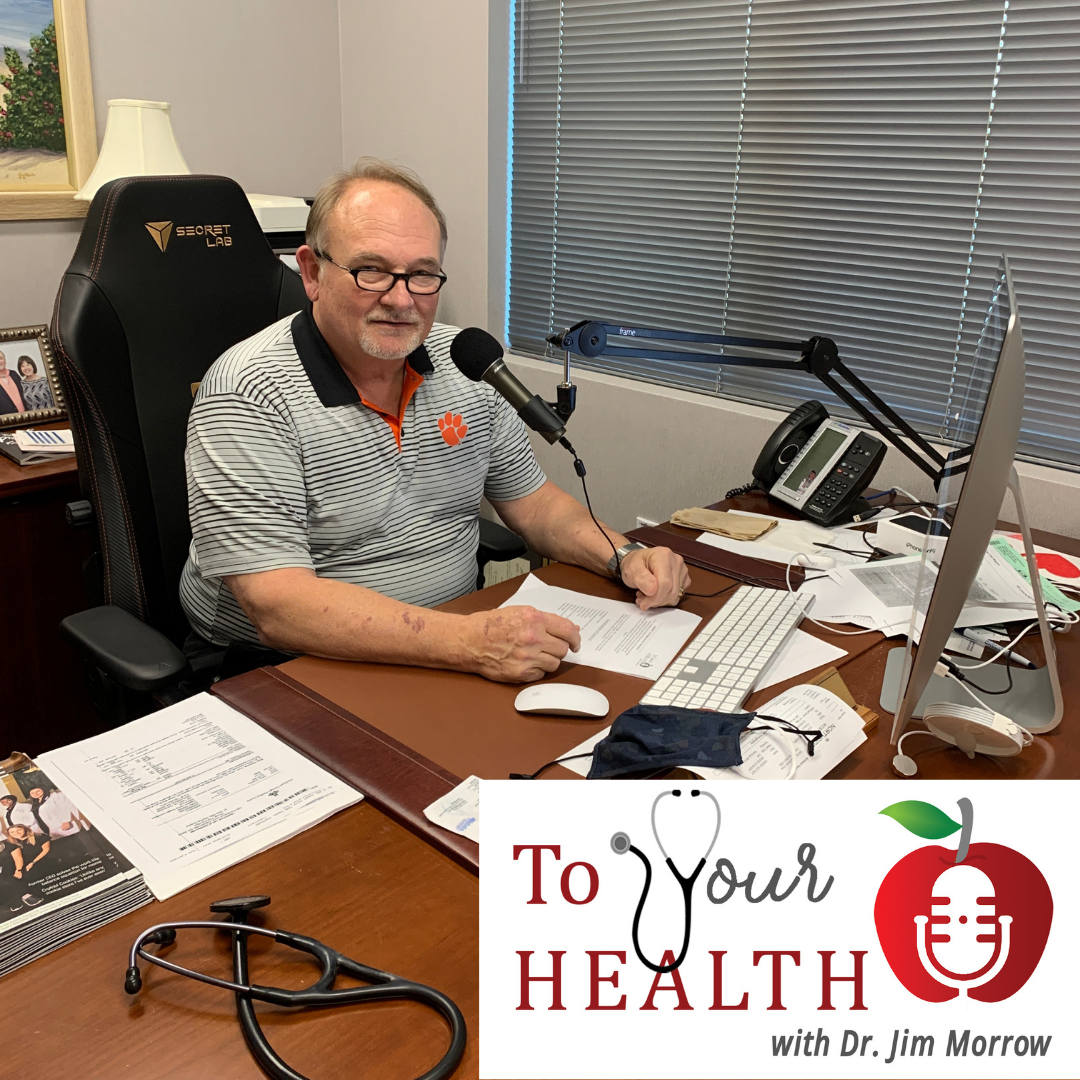
On this episode of “To Your Health,” Dr. Jim Morrow discusses what your genes say about your cancer risk, particularly breast cancer. He explains the genes found to impact chances of developing breast cancer as well as genetic testing. In addition, Dr. Morrow explains the difference between isolation and quarantine when it comes to Covid-19.  “To Your Health” is brought to you by Morrow Family Medicine, which brings the CARE back to healthcare.

About Morrow Family Medicine and Dr. Jim Morrow

Morrow Family Medicine is an award-winning, state-of-the-art family practice with offices in Cumming and Milton, Georgia. The practice combines healthcare information technology with old-fashioned care to provide the type of care that many are in search of today. Two physicians, three physician assistants and two nurse practitioners are supported by a knowledgeable and friendly staff to make your visit to Morrow Family Medicine one that will remind you of the way healthcare should be.  At Morrow Family Medicine, we like to say we are “bringing the care back to healthcare!”  Morrow Family Medicine has been named the “Best of Forsyth” in Family Medicine in all five years of the award, is a three-time consecutive winner of the “Best of North Atlanta” by readers of Appen Media, and the 2019 winner of “Best of Life” in North Fulton County.

Dr. Jim Morrow, Morrow Family Medicine, and Host of “To Your Health With Dr. Jim Morrow”

Covid-19 misconceptionsDr. Jim Morrow is the founder and CEO of Morrow Family Medicine. He has been a trailblazer and evangelist in the area of healthcare information technology, was named Physician IT Leader of the Year by HIMSS, a HIMSS Davies Award Winner, the Cumming-Forsyth Chamber of Commerce Steve Bloom Award Winner as Entrepreneur of the Year and he received a Phoenix Award as Community Leader of the Year from the Metro Atlanta Chamber of Commerce.  He is married to Peggie Morrow and together they founded the Forsyth BYOT Benefit, a charity in Forsyth County to support students in need of technology and devices. They have two Goldendoodles, a gaggle of grandchildren and enjoy life on and around Lake Lanier.

Facebook: https://www.facebook.com/MorrowFamMed/

LinkedIn: https://www.linkedin.com/company/7788088/admin/

Twitter: https://twitter.com/toyourhealthMD

The complete show archive of “To Your Health with Dr. Jim Morrow” addresses a wide range of health and wellness topics, and can be found at www.toyourhealthradio.com.

Dr. Morrow’s Show Notes

What Your Genes Say About Your Cancer Risk

  • Virtually every human ailment has some basis in our genes.
    • Until recently, doctors were able to take the study of genes, or genetics, into consideration only in cases of birth defects and a limited set of other diseases.
    • These were conditions, such as sickle cell anemia,
      • which have very simple,
      • predictable inheritance patterns because each is caused by a change in a single gene.
  • With the vast trove of data about human DNA generated by the Human Genome Project and other genomic research,
    • scientists and clinicians have more powerful tools to study the role that multiple genetic factors acting together and with the environment play in much more complex diseases.
    • These diseases, such as
      • cancer,
      • diabetes,
      • and cardiovascular disease constitute the majority of health problems in the United States.
    • Genome-based research is already enabling medical researchers to develop improved diagnostics,
      • more effective therapeutic strategies,
      • evidence-based approaches for demonstrating clinical efficacy,
      • and better decision-making tools for patients and providers.
    • Ultimately, it appears inevitable that treatments will be tailored to a patient’s particular genomic makeup.
      • Thus, the role of genetics in health care is starting to change profoundly and the first examples of the era of genomic medicine are upon us.
  • It is important to realize, however,
    • that it often takes considerable
      • time,
      • effort,
      • and funding
        • to move discoveries from the scientific laboratory into the medical clinic.
      • Most new drugs based on genome-based research are estimated to be at least 10 to 15 years away,
      • though recent genome-driven efforts in lipid-lowering therapy have considerably shortened that interval.
    • According to biotechnology experts, it usually takes more than a decade for a company to conduct the kinds of clinical studies needed to receive approval from the Food and Drug Administration.
  • Screening and diagnostic tests, however, are here.
    • Rapid progress is also being made in the emerging field of pharmacogenomics,
      • which involves using information about a patient’s genetic make-up to better tailor drug therapy to their individual needs.
  • Clearly, genetics remains just one of several factors that contribute to people’s risk of developing most common diseases.
    • Diet,
    • lifestyle,
    • and environmental exposures also come into play for many conditions,
      • including many types of cancer.
      • Still, a deeper understanding of genetics will shed light on more than just hereditary risks
        • by revealing the basic components of cells and, ultimately,
          • explaining how all the various elements work together to affect the human body in both health and disease.

What Is A Gene?

  • Each person’s DNA contains the code used to build the human body and keep it functioning.
    • Genes are the small sections of DNA that code for individual traits.
    • For example, someone with naturally red hair has a gene that causes his or her hair to be red.
  • All inherited traits are passed down through genes.
    • Each person has two copies of every gene:
      • one gene from each parent.
      • Since each parent passes down exactly half of their genes to each child, any of the parent’s genetic traits has a 50% chance of being passed on to their offspring.

Screening for Hereditary Breast and Ovarian Cancers

  • The goal of screening is to prevent cancer or to find the disease at an early stage, increasing the chance that it can be treated.

Screening Guidelines for Women at Average Breast Cancer Risk

  • We recommend the following for women at average risk of breast cancer:
    • Women between the ages of 25 and 40 should have anannual clinical breast examination.
    • Women 40 and oldershould have an annual mammogram in addition to an annual clinical breast examination.
    • Ultrasound may be recommended for women with dense breast tissue.
    • All womenshould consider performing a monthly self breast exam beginning at age 20 and become familiar with their breasts so they are better able to notice changes.

What Is BRCA?

  • The name “BRCA” is an abbreviation for “BReast CAncer gene.”
    • BRCA1 and BRCA2 are two different genes that have been found to impact a person’s chances of developing breast cancer.
  • Every human has both the BRCA1 and BRCA2 genes.
    • Despite what their names might suggest,
      • BRCA genes do not cause breast cancer.
      • In fact, these genes normally play a big role in preventing breast cancer.
      • They help repair DNA breaks that can lead to cancerand the uncontrolled growth of tumors.
      • Because of this, the BRCA genes are known as tumor suppressor genes.
  • However, in some people these tumor suppression genes do not work properly.
    • When a gene becomes altered or broken, it doesn’t function correctly.
      • This is called a gene mutation.

BRCA Mutations

  • A small percentage of people
    • (about one in 400, or 0.25% of the population)
    • carry mutated BRCA1 or BRCA2 genes.
      • A BRCA mutation occurs when the DNA that makes up the gene becomes damaged in some way.
  • When a BRCA gene is mutated,
    • it may no longer be effective at repairing broken DNA
      • and helping to prevent breast cancer.
      • Because of this, people with a BRCA gene mutation are more likely to develop breast cancer,
        • and more likely to develop cancer at a younger age.
        • The carrier of the mutated gene can also pass a gene mutation down to his or her offspring.

BRCA Mutation Risks

  • It is estimated that one in eight women,
    • or approximately 12%,
    • will be diagnosed with breast cancer in her lifetime.
  • However, women with certain genetic mutations have a higher lifetime risk of the disease.
    • It’s estimated that 55 – 65% of women with the BRCA1 mutation will develop breast cancer before age 70.
  • Approximately 45% of women with a BRCA2 mutation will develop breast cancer by age 70.
  • Women with a BRCA1 or BRCA2 mutation who overcome their breast cancer with treatmentappear to have a higher-than-average chance of developing a second cancer.
    • This is called a recurrence. Cancers related to a BRCA1 mutation are also more likely to be triple negative breast cancer, which can be more aggressive and difficult to treat.
  • You may find these statistics alarming.
    • However, it’s important to note that less than 10% of women diagnosed with breast cancer have a BRCA mutation.
    • Also, with early detection, the vast majority of breast cancer cases can be successfully treated—and that’s true even for people who have a BRCA1 or BRCA2 mutation.

Who Should Be Tested For BRCA?

  • While BRCA1 and BRCA2 gene mutationsmay increase your odds of developing breast cancer,
    • your odds of having either mutation are pretty small.
    • An estimated 0.25% of the general population carries a mutated BRCA gene,
      • or about one out of every 400 people.
  • For some people, though, the chances of having a BRCA gene mutation are much higher.
    • Genes are inherited,
      • which is why knowing your family history is important when determining breast cancer risks.
      • If one of your parents has a BRCA mutation,
        • you have a 50% chance of inheriting the mutated gene.
      • Odds can also vary depending on a person’s ethnicity.
        • For example, people of Ashkenazi Jewish descent have a 2.5% chance of inheriting a BRCA mutation,
          • or about 10 times the rate of the general population.
        • Because the overall odds are so low,
          • most experts recommend that only people with a heightened risk get tested for BRCA mutations.
          • Likewise, insurance companies often only cover genetic counseling and testing for individuals who are at high risk.
          • A person could be considered at high risk for BRCA mutations if they have a family history of:
            • Breast cancer diagnosed before age 50.
            • Male breast cancer at any age.
            • Multiple relatives on the same side of the family with breast cancer.
            • Multiple breast cancers in the same woman.
            • Both breast and ovarian cancer in the same woman.
            • Ashkenazi Jewish heritage.

How To Get BRCA Genetic Testing

  • Genetic counseling is recommended for those who are interested in being tested for breast cancer gene mutations.
    • You can talk to a doctor about getting a referral to a genetic counselor,
      • who can help determine whether genetic testing would make sense based on family history and risk factors.
      • Since many genetic tests only look for one specific gene mutation,
        • the counselor can often help determine which mutations to test for.
      • The genetic test itself simply involves taking a small sample of blood or saliva, which is sent to a lab for analysis.
        • Results can take several weeks or months.
      • Genetic testing results are not always clear-cut:
        • A test result can be positive, meaning that the patient does carry the gene mutation.
        • A negative test result indicates that they do not have that particular gene mutation.
          • It does not, however, rule out the possibility of having mutations in other genes.
          • It also does not rule out the possibility of developing breast cancer.
          • Most breast cancer cases are not hereditary,
            • so everyone should still have an early detection plan.
          • Genetic test results can also be uncertain or ambiguous.
            • An ambiguous test result means that a mutation has been found on the gene,
              • but it is not yet known whether that particular mutation has any effect on the chances of developing breast cancer.
            • After receiving genetic test results,
              • a patient should meet again with a genetic counselor to clarify what the results mean.
              • Whether the results are positive, negative, or ambiguous can impact many life decisions, and a counselor can help navigate those decisions.

What To Do If You’ve Tested Positive

  • It’s natural to feel worried if you’ve tested positive for a gene mutation.
    • It’s true that these gene mutations can significantly increase your chances of developing breast cancer.
    • However, it’s important to keep in mind that many people who carry such gene mutations never develop breast cancer.
    • Even for those who do,
      • early diagnosisand treatment make it very likely that they will overcome the disease.
      • With early detection, the vast majority of people survive breast cancer and go on to live full, normal lives.

Early Detection Plans

  • People with BRCA gene mutations have a higher-than-average chance of developing breast cancer,
    • and are more likely to develop it at a younger age.
    • Women with a BRCA1 or BRCA2 mutation can have a 45 – 65% chance of being diagnosed with breast cancer before age 70.
  • The good news is that,
    • with this knowledge, you can create a custom early detection plan with your doctor to increase the chances that your breast cancer is detected early.
      • Early detection makes breast cancer far easier to treat.
      • Overall, the five-year relative survival rate for breast cancer detected in the localized stage
        • (there is no sign that the cancer has spread outside of the breast) is 99%.
      • An early detection plan for someone with a BRCA or PALB2 gene mutation will likely involve more frequent breast cancer screenings starting at a younger age.
        • It may also involve different types of screenings,
          • such as ultrasoundor MRI scans.
          • Your doctor can help recommend which screenings you should have, and when you should have them.

Preventative Surgery

  • Though some consider it extreme,
    • women with high-risk BRCA mutations may choose to undergo preventative surgery to help reduce the risk of developing breast cancer.
  • A preventative double mastectomy(or bilateral prophylactic mastectomy)
    • is the surgical removal of both breasts before cancer has a chance to develop and/or spread.
    • There are different types of preventative mastectomies;
      • some remove the entire breast,
      • while others leave the skin and nipples intact to aid in breast reconstruction surgery.
    • Actress and filmmaker Angelina Joliedrew public attention to using surgery to proactively address BRCA gene mutations when she publicly shared her story of undergoing a preventative double mastectomy.
      • She later chose to also have her ovaries and fallopian tubes removed, a procedure known as a preventative oophorectomy.
    • Though such preventative or prophylactic surgeries decrease the risk of developing breast cancer by about 90%,
      • they don’t eliminate the risk entirely.
      • Surgery itself also carries its own set of risks and costs,
      • which need to be carefully considered.
      • Your doctor can help you understand the options and risks and make the choice that is right for you.

BRCA And Breast Cancer Treatment

  • If someone with a BRCA mutation does develop breast cancer,
    • the treatments used may be different than for people who do not carry the gene mutation.
  • People with BRCA1 mutations are more likely to develop triple negative breast cancer.
    • Triple negative breast cancer does not respond to hormone therapy or certain drugs.
    • However, chemotherapy may be more effective at treating triple negative cases than it is against other types of cancer.
  • Breast cancer patients with BRCA1 or BRCA2 mutations are also more likely to later develop a second cancer,
    • either in the same or the opposite breast.
    • Because of this, they may opt for a double mastectomy instead of a single or partial mastectomy.
    • Removing the healthy breast along with the cancerous one is essentially another form of a preventative mastectomy.
  • Though research is still ongoing,
    • some findings indicate that certain types of cancer treatment drugs might be more effective than others in patients with BRCA gene mutations.
  • As always, your doctor can help determine which breast cancer treatments are right for you.

Other Considerations

  • There are many emotions and decisions that come along with a positive BRCA mutation test result.
    • Feelings can range from fear to anger, sadness, or guilt.
    • There can be questions about whether your children or other family members should be tested.
      • For some, it can affect the decision of whether or not to have children.
      • You may have concerns about passing on the mutated gene to your offspring;
        • some women even choose preventative surgeries that can make it difficult or impossible to have children.
      • Genetic counselors can help you navigate the waters and understand all the risks, decisions, and emotions involved.

What Your Genes Say About Your Cancer Risk

Tagged With: breast cancer, breast cancer treatments, cancer risk, Dr. Jim Morrow, genes, genetic testing, Morrow Family Medicine

WellStar Chamber Luncheon Series: Women INfluencing Business Awards Winners Julie Haley, Gloria Mattei, and Jennifer Cantor

October 29, 2020 by John Ray

Women INfluencing Business Awards
North Fulton Studio
WellStar Chamber Luncheon Series: Women INfluencing Business Awards Winners Julie Haley, Gloria Mattei, and Jennifer Cantor
Loading
00:00 /
RSS Feed
Share
Link
Embed

Download file

Women INfluencing Business Awards

WellStar Chamber Luncheon Series: Women INfluencing Business Awards Winners Julie Haley, Gloria Mattei, and Jennifer Cantor (GNFCC 400 Insider, Episode 50)

Women INfluencing Business Awards winners were announced at this GNFCC event featuring a keynote address by Marcia Miller, Founder, Mud Pie. Gloria Mattei of Nothing Bundt Cakes and Jennifer Cantor of Rivers Academy each received the Rising Star Award, and Julie Haley of Edge Solutions was awarded Business Woman of Excellence. Congratulations to these accomplished women!

The host of “The GNFCC 400 Insider” is GNFCC CEO Kali Boatright and the show is presented by the Greater North Fulton Chamber of Commerce and produced by the North Fulton studio of Business RadioX®. John Ray and North Fulton Business RadioX served as the media sponsor for this event.

Keynote Speaker – Marcia Miller, Mud Pie

Marcia Miller, Mud Pie

As founder and CEO of Mud Pie, Marcia Miller built her business by creating one great product at a time.  Today, Mud Pie’s HOME, KIDS and WOMEN’S FASHION divisions generate over $100 million in revenue by selling to thousands of specialty and independent retailers worldwide.

In 1988, after several years in sales, Miller started her first gift collection with 20 faux terracotta products and a simple catalog created at a local photo store.  Today, she leads a team of talented designers who have made Mud Pie one of the top companies in the gift industry.  Every major trade recognition has been awarded to Mud Pie, and Marcia has been personally recognized for her leadership and entrepreneurship.  Her honors include EY Entrepreneur of the Year Southeast Program finalist, INC Magazine’s INC. 5000 list, The Atlanta Business Chronicle’s top women-owned firms in Atlanta, the Gift for Life Trailblazer award.  Most recently, March of Dimes named her Atlanta’s Woman of Distinction for Community Impact.

Marcia is a native Atlantan, a graduate of UGA, a wife, a mom and a new grandmother.

Rising Star Award – Gloria Mattei, Owner, Nothing Bundt Cakes

Gloria Mattei, Nothing Bundt Cakes

Gloria Mattei is the Owner of Nothing Bundt Cakes Alpharetta, Milton, Roswell. Nothing Bundt Cakes reintroduces an old family favorite – the Bundt cake – with a light, moist taste and fresh, clean look that appeals to all ages. Each 8” and 10” Bundt cake features custom concept cake decorations that are smart, contemporary, and fun to enhance any occasion, large or small, in a wide range of cake flavors and sizes. Nothing Bundt Cakes celebrates the very heart of true hospitality where all are welcome and no one is a stranger. Each thoughtful detail of the experience, from the heartfelt welcome at the door to remembering the customer’s favorite flavor, has been naturally embraced at Nothing Bundt Cakes

Nothing Bundt Cakes is not in the cake business, they are in the “joy-giving” business. Their mission is to come up with unique valuable solutions to every guest celebration need.

Rising Star Award – Jennifer Cantor, Principal and Co-Owner, Rivers Academy

Jennifer Cantor, Rivers Academy

Jennifer has been the Principal of Rivers Academy for four years. Jennifer is actively engaged with the entire staff, student body/families, and service opportunities. Throughout her educational career at Rivers Academy, she has held various positions and responsibilities including Language Arts teacher, Teacher Liaison, Admissions Director, Principal, and most recently, Co-Owner.

By being experienced and involved in so many different arenas of the organization, she is readily able to relate to her staff/teachers and their unique responsibilities. Jennifer has been instrumental in implementing programs that create continuous learning opportunities, growth and engagement for the instructors. For example, she created a Professional Development program that includes teacher collaboration, real-world learning applications, teacher mentor programs, student mentor programs, etc. As Principal, she began teacher observations with follow-ups to empower teachers with open dialogue to help them succeed.

Jennifer is extremely involved and actively engaged with the students/families of Rivers Academy. She considers it a privilege that families entrust her with the education of their child. She has implemented many programs, activities and events that add to the Rivers Academy experience.

Business Woman of Excellence Award- Julie Haley, CEO and Co-Founder, Edge Solutions

Julie Haley, Edge Solutions

Julie launched Edge Solutions from her kitchen table in John’s Creek in 2008. Edge Solutions, a boutique technology solutions provider with revenues at $50M, 34 employees in the Southeast, customers all over the US and internationally, with a UK office in London, has no outside investors and no debt. Edge specializes in providing infrastructure, cloud and automation solutions, and services to enterprise-level clients. Julie, a former business and commercial litigation attorney who uses her legal
background to set strategy and protect Edge, is passionate about building and retaining Edge’s unique culture that attracts and retains the best technology consultants in the US.

Julie has been a force in the North Fulton community for 12 years. As a founding board member of TechAlpharetta, she chaired the board at a critical time: the launch of the Innovation Center, an incubator for tech entrepreneurs, which has now launched 11 successful tech companies. Based on her belief that every company needs technology to stay ahead of the competition, she helped GNFCC launch Tech400, which aims to bring high-level tech education and events to executives in every industry.

She has served on GNFCC BOD for the past 8 years, serving on the Executive Board until stepping down in June 2019.

What is Women INfluencing Business?

The mission of GNFCC’s Women INfluencing Business Committee is to enrich, empower, elevate, and educate women at all levels of their career through programs and events, professional development and advocacy leading to business success. The focus of this committee is to engage C-level female executives to enhance the standing of the professional women in the community. The Committee collaborates on the Annual Women INfluencing Business Awards Luncheon, serves as the selection committee for award winners, assists in planning two networking breakfast events and the annual Women and Wine Social. For more information, follow this link.

About GNFCC and “The GNFCC 400 Insider”

Kali Boatright, President and CEO of GNFCC

“The GNFCC 400 Insider” is presented by the Greater North Fulton Chamber of Commerce (GNFCC) and is hosted by Kali Boatright, President and CEO of GNFCC. The Greater North Fulton Chamber of Commerce is a private, non-profit, member-driven organization comprised of over 1400 business enterprises, civic organizations, educational institutions and individuals.  Their service area includes Alpharetta, Johns Creek, Milton, Mountain Park, Roswell and Sandy Springs. GNFCC is the leading voice on economic development, business growth and quality of life issues in North Fulton County.

The GNFCC promotes the interests of our members by assuming a leadership role in making North Fulton an excellent place to work, live, play and stay. They provide one voice for all local businesses to influence decision makers, recommend legislation, and protect the valuable resources that make North Fulton a popular place to live.

For more information on GNFCC and its North Fulton County service area, follow this link or call (770) 993-8806.

For the complete show archive of “The GNFCC 400 Insider,” go to GNFCC400Insider.com. “The GNFCC 400 Insider” is produced by John Ray and the North Fulton studio of Business RadioX®.

Tagged With: Edge Solutions, Gloria Mattei, GNFCC, GNFCC women in business, Greater North Fulton Chamber of Commerce, Jennifer Cantor, Julie Haley, Kali Boatright, Marcia Miller, Mud Pie, Nothing Bundt Cakes, Nothing Bundt Cakes Alpharetta, Rivers Academy, Women INfluencing Business Awards

How to Work with Your Banker in Today’s Uncertain Economy, with Ken Davis, Renasant Bank

October 29, 2020 by John Ray

Ken-Davis-Renasant-Bank
North Fulton Studio
How to Work with Your Banker in Today's Uncertain Economy, with Ken Davis, Renasant Bank
Loading
00:00 /
RSS Feed
Share
Link
Embed

Download file

Ken-Davis-Renasant-Bank

How to Work with Your Banker in Today’s Uncertain Economy, with Ken Davis, Renasant Bank

John Ray: [00:00:00] As you talk to your business owner clients, what are you telling them in terms of what they should be doing to navigate this current environment?

Ken Davis: [00:00:11] Well, much like our family lives, John, ccommunication is critical. And so, I would say from the relationship between a banker and a business owner, communication is the critical part. Whether it’s good news or bad news, keeping the banker informed, and the banker keeping the business owner informed is the most important part that can be done.

Ken Davis: [00:00:39] Because if there’s no communication, nobody knows how to react or what to react when they’re presented with a situation, but if there’s communication all along, and there’s a conversation going about the different scenarios, then there can be some planning ahead and some risk mitigation taken, or even identifying potential risk, and talking about the cost of that risk mitigation or the cost of not mitigating that risk, and having that open dialogue, so you can plan ahead. And it may result in additional credit being extended, or it may result in maybe there’s no need for additional credit to be extended, but instead doing a few things differently with the existing indebtedness.

Ken Davis: [00:01:30] So, there are a lot of options available when you communicate and kind of lay out different scenarios, and are open about conversation and saying, “Let’s talk about this, so we can come up with a plan that’s mutually beneficial to both the owner and the business and the banker, so that we can continue that relationship long past this current crisis.”

Ken Davis, Renasant Bank, North Georgia Region Community & Business Banking President

Ken Davis has 30+ years of experience in the finance and banking industry. After graduation from college and serving six years in the U.S. Army, Ken returned to his hometown of Atlanta to begin his banking career. Prior to joining Renasant Bank, Ken served as an executive banker at other regional banks with responsibility to increase both commercial and consumer loan and deposit share in North Metro Atlanta. Davis earned a Bachelor of Arts degree from Wake Forest University and is a graduate of the American Bankers Association Stonier Graduate School of Banking.

Active in the community, Ken is a member of the Rotary Club of Roswell and serves as President of Roswell Economic Development & Tourism, Inc. In addition, he currently serves on the Board of Directors for the North Fulton Community Charities and the Gwinnett Chamber of Commerce. He has served as past Chairman of the Board of Directors of the Greater North Fulton Chamber of Commerce and is a graduate of Leadership Gwinnett.

He has served on the boards of Georgia Ensemble Theatre, North Metro Miracle League, March of Dimes of North Fulton, the Ed Isakson Alpharetta YMCA and the Chattahoochee Nature Center.

Ken and his wife, Miriam, have three grown daughters and two grandchildren.

Listen to the complete interview on North Fulton Business Radio with Ken here. 


The “One Minute Interview” series is produced by John Ray and in the North Fulton studio of Business RadioX® in Alpharetta. You can find the full archive of shows by following this link.

Renasant Bank has humble roots, starting in 1904 as a $100,000 bank in a Lee County, Mississippi, bakery. Since then, Renasant has grown to become one of the Southeast’s strongest financial institutions with over $13 billion in assets and more than 190 banking, lending, wealth management and financial services offices in Mississippi, Alabama, Tennessee, Georgia and Florida. All of Renasant’s success stems from each of their banker’s commitment to investing in their communities as a way of better understanding the people they serve. At Renasant Bank, they understand you because they work and live alongside you every day.

Decision Vision Episode 89: Should I Allow or Require my Employees to Work From Home? – An Interview with Jason Jones, Cresa

October 29, 2020 by John Ray

Jason Jones Cresa
Decision Vision
Decision Vision Episode 89: Should I Allow or Require my Employees to Work From Home? - An Interview with Jason Jones, Cresa
Loading
00:00 /
RSS Feed
Share
Link
Embed

Download file

Decision Vision Episode 89: Should I Allow or Require Employees to Work From Home? – An Interview with Jason Jones, Cresa

Jason Jones, Cresa, joins host Mike Blake to discuss the issues raised by a work from home workforce, including managing people, workforce productivity, talent recruitment, and, of course commercial real estate lease and ownership implications.  “Decision Vision” is presented by Brady Ware & Company.

Jason Jones, Principal, Cresa

Raised in Atlanta, GA, Jason Jones attended Duke University in Durham, NC on a Navy ROTC scholarship. After graduating from Duke in 1991 with a degree in political science, he traveled to Pensacola, FL and enrolled in naval flight school. In 1993 upon moving to Virginia Beach, VA, he learned to fly the A-6E Intruder as a Bombardier/Navigator and was subsequently assigned to a fleet squadron, deploying on the USS Enterprise.

In 1997 Jason left Virginia Beach to begin a tour of duty as a navy medical recruiter in Phoenix, AZ while attending Arizona State University’s Evening M.B.A. program. After leaving the Navy in 1999 he worked for one and a half years as a civilian headhunter recruiting senior executives for health insurance companies.

Upon finishing his M.B.A. in August of 2000 and before entering the business world full-time, Jason departed on a 15-month world trip on September 18th, 2000, returning to the United States on December 18th, 2001. He later documented his travels in the book Nomad:  Letters From a Westward Lap of the World.

After returning from his trip, Jason entered the commercial real estate industry, ultimately landing at Cresa.

Jason Jones leads two service lines at Cresa: Technology Advisory Services and Remote Advisory Services. Technology Advisory Services helps clients select and implement Communications (voice, video), Connectivity (Internet) and Cloud computing strategies – especially during a relocation.  Jason and his team help clients filter the confusion of evolving technologies and ensure coordination between the real estate and IT departments. Cresa Remote Advisory Services helps companies evaluate all the critical requirements of a remote work strategy. This leads to sustainable workforce strategies that balance working remotely with working in the office. Both services leverage human resources, technology, and real estate to maximize operations, improve talent attraction/retention and accelerate financial performance.

To contact Jason, follow this link.

Michael Blake, Brady Ware & Company

Mike Blake, Host of the “Decision Vision” podcast series

Michael Blake is Host of the “Decision Vision” podcast series and a Director of Brady Ware & Company. Mike specializes in the valuation of intellectual property-driven firms, such as software firms, aerospace firms and professional services firms, most frequently in the capacity as a transaction advisor, helping clients obtain great outcomes from complex transaction opportunities. He is also a specialist in the appraisal of intellectual properties as stand-alone assets, such as software, trade secrets, and patents.

Mike has been a full-time business appraiser for 13 years with public accounting firms, boutique business appraisal firms, and an owner of his own firm. Prior to that, he spent 8 years in venture capital and investment banking, including transactions in the U.S., Israel, Russia, Ukraine, and Belarus.

Brady Ware & Company

Brady Ware & Company is a regional full-service accounting and advisory firm which helps businesses and entrepreneurs make visions a reality. Brady Ware services clients nationally from its offices in Alpharetta, GA; Columbus and Dayton, OH; and Richmond, IN. The firm is growth minded, committed to the regions in which they operate, and most importantly, they make significant investments in their people and service offerings to meet the changing financial needs of those they are privileged to serve. The firm is dedicated to providing results that make a difference for its clients.

Decision Vision Podcast Series

“Decision Vision” is a podcast covering topics and issues facing small business owners and connecting them with solutions from leading experts. This series is presented by Brady Ware & Company. If you are a decision maker for a small business, we’d love to hear from you. Contact us at decisionvision@bradyware.com and make sure to listen to every Thursday to the “Decision Vision” podcast.

Past episodes of “Decision Vision” can be found at decisionvisionpodcast.com. “Decision Vision” is produced and broadcast by the North Fulton studio of Business RadioX®.

Visit Brady Ware & Company on social media:

LinkedIn:  https://www.linkedin.com/company/brady-ware/

Facebook: https://www.facebook.com/bradywareCPAs/

Twitter: https://twitter.com/BradyWare

Instagram: https://www.instagram.com/bradywarecompany/

Show Transcript

Intro: [00:00:01] Welcome to Decision Vision, a podcast series focusing on critical business decisions. Brought to you by Brady Ware & Company. Brady Ware is a regional full service accounting and advisory firm that helps businesses and entrepreneurs make visions a reality.

Mike Blake: [00:00:21] Welcome to Decision Vision, a podcast giving you, the listener, clear vision to make great decisions. In each episode, we discuss the process of decision making on a different topic from the business owners’ or executives’ perspective. We aren’t necessarily telling you what to do, but we can put you in a position to make an informed decision on your own and understand when you might need help along the way.

Mike Blake: [00:00:41] My name is Mike Blake and I’m your host for today’s program. I’m a director at Brady Ware & Company, a full service accounting firm based in Dayton, Ohio, with offices in Dayton; Columbus, Ohio; Richmond, Indiana; and Alpharetta, Georgia, which is where we are recording today. Brady Ware is sponsoring this podcast. If you like this podcast, please subscribe on your favorite podcast aggregator, and please consider leaving a review of the podcast as well.


Mike Blake: [00:01:04] So, today, we’re going to talk about, I think, a very timely decision. It’s certainly all over the place. The decision to allow or perhaps even require employees to work from home. So, just as a recap and spoiler alert, we started off 2020 – what sounds like 298 years ago – minding your own business when, all of a sudden, we have been cold clocked by a global pandemic known as the novel coronavirus-19. And as a result, extraordinary things have occurred in the day-to-day lives of most people and have impacted businesses in some fashion. Some businesses have been very positively impacted. If you’re in the mask business, I think you’re probably doing pretty well. And some have been very negatively impacted. You know, examples of that are going to be in hospitality and travel.

Mike Blake: [00:02:16] But for a lot of companies, you know, maybe you haven’t necessarily been all that financially impacted directly. But because of the way that experts have recommended -and I’m trying to keep this as nonpolitical as possible. I don’t understand why a virus has become political, but it has. But experts have recommended that we, basically, keep our distance from one another. The best thing that we can do to prevent ourselves from getting sick and being a carrier to others is to simply keep our distance, and to create barriers, and to limit our contact with strangers. And the more we can do that, the better.

Mike Blake: [00:02:58] And as a response to that, many companies have either created an option for their employees to work from home, where they previously hadn’t done. There are companies, like ours, that have kept the offices open but are not necessarily encouraging employees to come back. I think in our Dayton office, it’s probably a little bit more populated than our Atlanta office. I think, again, the doors are open, but we’re not exactly sending engraved invitations for people to come back in. And then, there are companies that has simply sent all their employees home, lock, stock, and barrel. Whether you want to come in or not, too bad. We don’t feel like we can make it safe. We don’t think it’s a responsible thing for our employees, for our customers, and for our community.

Mike Blake: [00:03:53] And this is created overnight. Massive challenges in terms of leadership, in terms of management, in terms of personnel development, in terms of a lot of the ways that we have been taught to lead and manage have suddenly been rendered inert and moved to the sideline. And we’ve talked a little bit about this in some of the other podcasts. We have talked to people about managing remote teams, and how do you support somebody working from home, and how do you support the work from home person. But those are very early in COVID. Those are very early in this experience in March and April in the heavy days where, I think, a lot of us thought that by now, as we record this in mid-October of 2020, if we hadn’t put this behind us, we would at least have seen a bright light at the end of the tunnel. And to that end, this is proving elusive.

Mike Blake: [00:04:58] And so, you know, we have to think now and companies are thinking in longer term. This isn’t a short term thing. And we’re finding also that some companies are doing very well with work from home. Some companies are contemplating making this permanent. And one of the upshots on this is it creates a cloudy outlook for the commercial real estate space. We don’t know if we’re going to need real estate as much as we did. Or if we did, it may be configured differently. It may be a different kind of real estate altogether. For example, I just read an article yesterday, it was on LinkedIn. I want to say it’s on The Wall Street Journal, but I’m not entirely certain. That skyscrapers are now very much out of vogue because you don’t want to stick people in elevators. And if the elevators are going 100 floors, that’s tough to do two people at a time. You’re going to have a lot of people getting sick in a lobby instead of the elevator. So, it’s opening up all kinds of unanticipated and strange kind of gyrations about decision making in this regard.

Mike Blake: [00:06:06] And so, I think, every business decision maker does have a decision in front of them, whether they’re actively pursuing it or whether they’re deferring it. At some point, you are going to have to decide whether or not you’re going to send your team, your workforce home, whether intentionally or comprehensively or whether by some sort of option. Most employees seem like to work from home, although some do not. And there’s increasing information available that suggests that working from home is, on the whole, a boon to productivity. So, that’s a long preamble, but a long preamble because this is a complicated and a very important topic.

Mike Blake: [00:06:53] And joining us today is our first repeat guest. And he was on earlier this year to talk about hiring veterans. Also, a very important topic. I’m fortunate I have a veteran working on my team now. A Marine who is extremely effective. We’re happy to have him. We’re very lucky to have him. But he came on really not to talk about his professional capacity, but Jason Jones, you know, he’s done something very, very interesting. I think very courageous. I think it’s going to be a case study someday. I really do. And that is, that he is a tenant representative, and he’ll talk about what exactly that means. But, in effect, he helps companies find commercial real estate. And he’s taken a step where he’s decided that he sees the world roughly the way that I’ve described and he’ll speak for himself in a minute. But he’s done something really interesting where, you know, the temptation would be to find all kinds of arguments why you should still come back into the office, because that’s how he makes his living.

Mike Blake: [00:08:09] But, instead, he’s taken the extraordinary step of risking cannibalizing his own business and making himself an expert on working from home, and remote management, and remote work services. And, frankly, I don’t know of anybody who has made themselves the expert on this. There are people who have written about it, but Jason has really made himself a student of it. So, we’re taking the extraordinary step. We normally like to have about a couple of years between appearances by guests. But I decided to break this rule because it’s depriving you, the listener, of the opportunity to benefit from his specialized expertise, where, frankly, there isn’t a lot of it out there.

Mike Blake: [00:08:53] So, I’m going to reintroduce my friend, and now holds the world record for appearances on the Decision Vision podcast, who is Jason Jones, who is now head of technology and remote advisory services at Cresa. And just as a reminder, Cresa is an international commercial real estate firm headquartered in the City of Washington. They represent tenants and provide real estate services, including corporate services, strategic planning, transaction management, project management, facilities management, workforce and location planning, portfolio lease administration, capital markets, supply chain management, sustainability and subleasing distribution. Formed in 1993, Cresta now has more than 60 offices and 90 employees.

Mike Blake: [00:09:39] Jason graduated from Duke University before serving in the United States Navy as an A-6 Intruder aviator. After departing the Navy, Jason got an MBA from Arizona State University and completed a 15 month solo trip around the world about what he wrote and published a book, Nomad: Letters from a Western Lap of the World. In response to the coronavirus pandemic and its impact on how businesses are thinking about real estate, Jason founded the Remote Advisory Service Practice. The Remote Advisory Service Practice helps clients leverage advances in technology in a new culture of acceptance for work from anywhere to attract and retain talent, reduce expenses, and reimagine the workplace. Jason, welcome back to the program.

Jason Jones: [00:10:24] Thank you. It’s great to be here, Mike. And I am thrilled to hold a new world record. That is amazing.

Mike Blake: [00:10:31] Yeah. We’ll send it to Guinness.

Jason Jones: [00:10:34] That’s what I was hoping. Wonderful. It’s great to be here and it’s always good to see you. I just enjoy being with you. And I really have a high regard for what you’ve done with Decision Vision.

Mike Blake: [00:10:45] Well, thank you. I do appreciate that. As I said, it’s nice to hear there’s at least one listener out there. So, we didn’t really get into this in the last program because that wasn’t the topic. So, we’re going to get into it now. And the first question is, describe your day job and, maybe, from a perspective pre-coronavirus in particular, what was your day job then? And kind of what did your service profile typically look like?

Jason Jones: [00:11:12] Sure. And I will tell you that I, personally, I’m a bit of an odd duck in the commercial real estate industry. But what I’ll do, I think, is most relevant is describe the business model of my company and then how I fit in. But the business model of Cresa, as you so well described, is, we are advocates for the occupier of space. Cresa is an acronym, Corporate Real Estate Service Advisors. So, we serve and advise our clients who are the occupiers of corporate real estate. And that’s 99 percent, for us, means office space and warehouse space.

Jason Jones: [00:11:51] And our job is to act as an advisor helping companies and nonprofit organizations develop their strategy for where they should have an office or a warehouse. How much space should they have? How should it be designed? And then, once we figure those things out, we go to the market. We help find the best fit, maybe three to five options, allow them to compete for our client’s business in an ethical manner that drives prices down, that drives concessions up. And then, ultimately, we help them implement moving into that space by managing the relocation project or the construction project. And then, once that’s done, or perhaps even at the very beginning of the process, if they’re already in space, we help them go through that process and renew their office or warehouse at better terms than they would be able to otherwise. So, it’s a real estate strategy and implementation business.

Mike Blake: [00:12:53] So, all the years I’ve known you and as long as I’ve known you’ve been with Cresa – I think I’ve known you since you started – but I don’t think I ever knew what it stood for. And I should have known it was an acronym, but I never asked. That’s a bucket list item that’s been ticked off.

Jason Jones: [00:13:10] Yeah. Perfect.

Mike Blake: [00:13:13] So, we’re going to get sort of a second piece of value out of you here, because this story intersects with something that I think a lot of people are facing in the coronavirus environment, which is, your business has clearly been – or at least it seems to me – has been disrupted. So, March, April rolls around, the world changes rapidly, and it’s unclear where it’s going to change to. People start being sent home en masse. What starts going through your mind as a real estate adviser and as somebody who, frankly, makes a living on helping people find the right space and getting square footage settled?

Jason Jones: [00:13:53] Yeah. Well, immediately, the very first thing that went through my mind was business continuity, which is how are my clients, our firm’s clients, and just other companies and nonprofits going to be able to maintain business continuity? How well set up or how well prepared are they for sending everyone home? And it was, practically, overnight and it was, as you recall, mandates, government mandates, which really kind of mercifully took the decision away from leaders as to whether or not to send people home and they had to. So, that very first thought in my mind was how are companies and nonprofit organizations going to be able to continue to operate with everyone working in a totally different environment than they normally did. Do they have the technology that’s available? Because this is going to now require technology that perhaps they have and perhaps they don’t. So, that was thought number one.

Jason Jones: [00:14:53] But thought number two, very soon thereafter, Mike, just a light bulb went off in my mind right away was, “Wow.” I think that this is going to be long lasting. I certainly didn’t think it was going to be a year or more, but I did think it was going to be several months. And I thought to myself, companies are going to need help understanding how to get this balance right between working from home and then one day returning to the office when that happens. And I thought maybe it would be six months. That was my personal thought at the time. But the idea of companies now experiencing a remote workforce – and by remote, in this case, remote at home. Although, remote can mean also another office location or a coffee shop. It could mean any number of locations. But remote at home, in this case, how are they going to balance that with their central office, which they still have, they’re still paying for, and now has in a large way become a nonperforming asset. So, how can we help them balance those two things and get the right blend when the day comes that they will have no restrictions, no health care restrictions on returning to the office.

Mike Blake: [00:16:22] So, you started thinking in advance about the needs. At one point, did you start to come to a realization that this is not just a service imperative for your clients, but also probably the right business move for you personally and for the firm?

Jason Jones: [00:16:42] And, again, that was very, very early on, because I recognized – and you have to understand, if you go to the landing page for Cresa’s website in big, bold letters, it says, “Think beyond space.” So, that’s our mantra. And the reason that we can do that is because we only represent or advocate for the occupier of space, never landlords. So, we’re not solely focused on how do we fill buildings? Which a landlord, that would be their interest. The owner of property wants to fill that building. That’s their business model. Our business model is advisory services for the occupant, which includes leasing space or owning space, warehouse space, office space. But it also includes helping companies with their bigger picture business strategy that leads downstream to the support infrastructure of corporate real estate.

Jason Jones: [00:17:37] Real estate is simply support for the larger business model. So, we help companies understand how are they going to manage multiple leases? How should that space be designed to maximize the benefits of culture and help to enhance their culture? How can they use space to maximize the retention and recruitment of talent, bringing in the best and the brightest? How can they use technology to enhance the workforce experience so that they can have higher productivity and greater engagement with their employees? So, there’s a bigger picture that our company takes. And it’s not just focused on space, it’s focused on the holistic approach to a company’s business. And then, we solve a lot of these business problems by leveraging real estate and beyond, which gets into how I’m a bit of an odd duck in the corporate real estate industry, which is through technology, where I have a specialization. And, now, through workforce strategy, which includes remote work as one component of a larger workforce strategy.

Mike Blake: [00:18:58] So, if I’m understanding this correctly, I want to make sure this is really clear because it is an instructive piece of the conversation. It sounds like to some extent, you’ve always seen yourself, and it sounds like you believe your firm sees itself, as a consultant on optimizing real estate as an asset – well, as an operating asset and not just trying to put bodies in square footage.

Jason Jones: [00:19:27] Absolutely.

Mike Blake: [00:19:27] And that made this – I don’t want to say transition – maybe this evolution, if I can use that term. It sounds like it made that evolution more natural than it might seem on the outside.

Jason Jones: [00:19:41] Absolutely. Because, Mike, when you think about it, and every company listening, everyone making a decision out there about their workforce, my question that I pose is, how can you possibly design your office space and commit to a certain footprint, a certain amount of office space, if you don’t first know where your employees are going to be working and how they’re going to be communicating, collaborating, and ultimately using that space. You’ve got to do the work upfront on the workforce strategy, which includes remote work and includes a central office. There’s tremendous benefits to both and there are challenges to both. But you’ve got to figure that out before then you go downstream and say, “Okay. Now, that we understand and have confidence in our workforce strategy, where people are going to be working, how they’re going to be communicating, collaborating. We’ve got the right technology in place. We have the right policies. We have compliance in place.” Then, we can design the space to fit that need and commit to a certain expense, a certain amount of space.

Jason Jones: [00:20:54] And, by the way, that commitment in real estate and understanding the nature of real estate is very important. It’s inflexible. You’re going to commit for a minimum of three years, but, typically, five to ten years to a certain amount of space. And while there’s some flexibility with sublease rights and expansion rights and rights of first refusal, it’s cumbersome to make changes. So, you want to get it right upfront and you want to have confidence that your plan for real estate fits the precursor conversation of what is your workforce strategy, where are people going to be working, and what is most advantageous for higher productivity, better recruiting and retention of talent, and better financial returns.

Mike Blake: [00:21:41] So, you’re typically talking to your clients at the sea level, whether it’s the CFO, COO, or CEO. What concerns are they most expressing to you about work from home/work from anywhere?

Jason Jones: [00:21:59] I think one of the biggest things that we hear is, I want to protect the culture of my organization. And there is a concern that extended work from home will have a deleterious effect on their culture. Because culture is best established within personal relationships where you’re face-to-face, you can see each other. And there’s just something that’s intangible about how that relationship is developed in-person versus remotely. But my counsel to them, and I think the real concern is, 100 percent work from home, which is basically what we’re still experiencing right now. I would say on average and this is anecdotal and we see a few statistics here and there that it’s approximately 10 to 20 percent of people are occupying their office space generally across the U.S. and Canada.

Mike Blake: [00:22:57] That’s true for us in Alpharetta.

Jason Jones: [00:23:00] Yeah. So, that’s about right. I think that’s a fair number right now. So, that’s a very large percentage that are not coming into the central shared office. And the concern is that that’s going to have an effect on their culture long term. How can they be creative? You’re missing serendipitous moments. Tim Cook of Apple was just interviewed by The Atlantic a couple of weeks ago. And he said that’s one of his great concerns. And that they have designed their office space at their headquarters to have common areas where people hangout and interact and mingle so that you can have serendipitous moments, you can have creative moments, share creative thoughts. And you can’t schedule those things.

Jason Jones: [00:23:43] But I think what’s going to happen is, as we cross the hurdle, eventually, of a post-COVID environment, now you’re going to have an opportunity for what I call purposeful collaboration. And that is a leader or a manager making a purposeful decision about when and where that person’s team collaborates, either works together or works independently. And that collaboration can occur in person or that collaboration can occur virtually with someone at home and someone at the office, or two people at home, or whatever the case may be. And I think that when you can blend those two things and find the right balance – this is back to culture – you’re going to be able to really make sure you’re getting all the benefits of the central office as well as leveraging this newfound cultural acceptance for working from home.

Mike Blake: [00:24:45] So, I think implicit in that is the glue that holds that culture theses together is communication. Without communication, there’s no community. There’s no culture. What are you seeing emerging in terms of best practices that allow easy communication among workers and across different platforms of the organization or different segments of the organization versus being overly intrusive and, you know, getting into nearly spying on your employees, basically? What are some best practices you’re seeing there?

Jason Jones: [00:25:33] Well, again, this comes back to leadership, leadership and thoughtful planning. There are many tools, software tools, telecommunication tools, to allow for communication between remote employees. We’re using one right now. This is a communication tool. And there are collaboration tools as well, software. But it’s how you choose to use them that’s most important. And I think one of my pieces of advice for organizations out there is to come up with cultural norms for how you, as a team or as an organization, communicate with each other. And examples of this would be, what are our hours when we are expected to respond to either voicemails and email and text messages so that we keep some structure and boundaries on our personal life and our home life? So, it could be, “Hey, from 7:00 a.m. to 7:00 p.m., it’s fair game.” Or 7:00 p.m. to 6:00 p.m., whatever the case may be. But after that, we have no expectation that you will reply to communication.

Jason Jones: [00:26:47] It could mean we, as an organization or as a team, are going to agree that we’re going to have our cameras on when we have a Zoom call or a RingCentral call. But on certain calls, perhaps just phone ones at the end of the week, you don’t have to have your camera on. So, we’re going to side culturally how we’re going to communicate. Visually, where we can see each other. Or where it’s okay to be walking your dog around the neighborhood while you’re on your conference call. You can do that now. Why shouldn’t you? Let’s have a cultural understanding of what’s acceptable and what’s not.

Jason Jones: [00:27:23] So, there’s a number of things that I think people can agree to. But the other key piece for communication is, making sure that you’re giving appropriate and consistent feedback to the remote employee. That’s very important. Because, otherwise, someone who is working remotely can feel they’re on an island. They can feel isolated. And they’re just not sure, “Am I meeting standards? Am I doing my job the way people want? Give me some feedback.” So, consistent, frequent, informal feedback – and everyone has to define what frequent means for them and their team. But I think that’s a key part of communication is making sure – and it goes both ways. The manager needs feedback also on how they’re doing sort of in a 360 view. But that’s what I would advise, is to really focus on good feedback, consistent informal communication, and then planned formal communication that perhaps is a little bit more often business reviews, for instance, than they may have been when everyone was in the office together.

Mike Blake: [00:28:37] You know, your comments here strike me as something that I’ve observed. Personally, I’m curious how you’d react to this. A lot of what you’re talking about, I would argue, are best practices even as of January 1st, 2020. You know, providing consistent feedback, providing protocols for communication, setting realistic boundaries. It’s interesting to me how coronavirus and the pandemic are, in a lot of ways, it’s what’s old is what’s new. It’s forcing us to revisit the fundamentals, I think, of leadership and management and be much more intentional. I guess, because being in person, maybe, sometimes gives us some margin for error that we wouldn’t ordinarily have. I’m not sure what it is, but I hope you get my meaning is that, a lot of these things you’re suggesting – I’m not denigrating them at all – but merely pointing out that these have been best practices before. But I think one of the lessons is that if they’re important before, they’re ten times as important now.

Jason Jones: [00:29:55] Yes. They’re accentuated for sure. Because if you’re in the office together, there’s a feeling you can manage by walking around, just kind of you feel it. Whereas, here, you have to be purposeful about the communication and the feedback. And, frankly, it can sharpen a leader, it can sharpen a manager to be more effective than they may have been otherwise.

Mike Blake: [00:30:22] I think that’s a great point and it gets into my next question beautifully, which is, how managers had to adapt to work from home or work from anywhere? And I think you just nailed it. And I’ll ask you to add to it if you would like to. But that ability to manage by walking around is not there. And, you know what? It reminds me, as you know I’m a big baseball fan. There used to be a player for the Yankees, Bernie Williams. He played centerfield for them. And he was not the greatest center fielder in terms of anticipating where the ball is going to hit. But he’s such a great athlete. He could basically outrun his mistakes. And with work from home/work from anywhere, you can’t sort of outwork your mistakes by managing by walking around, because that tool is not available. You must be more intentional because one of the tools for kind of making up for that just simply has been removed.

Jason Jones: [00:31:25] Yes. It’s interesting. I’ve done a lot of reading – as you mentioned, I really have become a student of this over the past several months. And there was a very interesting article about different qualities are now being rewarded and are more advantageous in a leader than there were when everyone was in the office together. So, previously a charismatic, gregarious leader had a lot of sway, had a lot of pull. But maybe, perhaps, they weren’t the most effective at actually getting things done and staying on course and staying on schedule. Now, getting things done, staying on course, staying on schedule is so important. And those interpersonal, gregarious, charismatic qualities are not as effective virtually as they are in person. So, it’s requiring different aspects of a leader to be successful. And what’s going to be really interesting is, when you get into a place where we can find the right balance between the two locations, remote and in office, and allowing both of those personalities to be successful.

Mike Blake: [00:32:40] That’s a really interesting point. So, I’m going to go off script here because I think that’s such a smart point. At least, I think so. I haven’t thought of it, but I think you’re dead right. And that is, that coronavirus really does play into the hands of the technical manager, not the technician per se, but the technical manager that understands, embraces, likes, is good at the nuts and bolts of managing, which is coordinating resources to produce the desired result within the desired constraints, whether there’s a time budget, whatever they are. And there’s value to that, the charismatic leader for sure. But the charismatic leader – I think I agree with you – because of how communication is, has to work a lot harder for those charismatic qualities to be effective. And even in the short term, they’re not even as valuable. They’ll eventually come back. But there is a point in a crisis where it’s not about charisma, it’s about execution.

Jason Jones: [00:33:49] That is correct. And so, what’s interesting and what can be helpful for organizations who are out there listening is, there are personnel assessments. So, in our consulting, we have partnerships with multiple organizations. And there’s a few that leverage personnel assessments that they’re, basically, psychological tests. Kind of like a Myers-Briggs, I mean, think about that. Although, it’s different because it’s geared towards the remote work environment. And these are important because they help organizations understand. They help people understand themselves. And they also help managers understand those who are reporting to them, those who they are leading, so they can best manage them based on their aptitude for remote work. How well they tend to focus? Are they an introvert? Do they like to work alone? Do they really need or thrive on interpersonal communication? So, you change your management a little bit depending on the employee and their personnel assessment.

Mike Blake: [00:35:03] So, we’ve talked about how managers are having to change. What changes are you seeing in how employees operate, carry themselves, seek to add value to the organizations with which they work?

Jason Jones: [00:35:17] Well, I think that really goes back to just making sure that they are having expectations set. So, asking for feedback from their managers, understanding what the expectations are so that they can meet or exceed them, and making sure that they are getting those things done. I think that’s really important. And, you know, it’s also really important –

Jason Jones: [00:35:47] I want to go back to the manager just for a second. It’s important for leadership at the top of the organization to do a good job of communicating larger mission and larger goals. And this goes back to my time in the military. This is very much of a military concept. So that the remote worker who is operating unsupervised throughout the day can make independent decisions that are congruous with, they’re in alignment with, the larger goals of the organization. So, there’s a leadership challenge here. There’s a leadership requirement to do a good job of communicating big picture goals and mission, so, again, that the unsupervised independent worker can make those decisions real time on their own that supports the larger mission. And that’s the same thing as, you know, you want your fire team out in the field understanding the big picture strategy that the battalion commander has back at headquarters so they can make decisions at the tip of the spear.

Mike Blake: [00:36:53] Right. So, let’s shift gears a little bit. You know, the office is changing, but it’s not going away. We’re still going to need and want, I think, office space. I’m going to ask you to put your futurist hat on a little bit, think a year or two from now, how do we think about office space differently? How do office spaces look and function differently a couple of years from now?

Jason Jones: [00:37:23] Sure. Well, a lot of this will depend on the organization and how they use the space, because a law firm is very different than a software development firm. So, probably, it really needs to be customized to the organization. But I think what you’re going to find is, as work from home or remote work becomes more deeply ingrained in the everyday fabric of the corporate America, nonprofit organizations, et cetera, you’re going to find the design of space to be different than before and the technology to be different than before. And so, specifically, I think you’re going to find a lot more flexibility in the way the work space is designed. You’re going to want to be able to move things around as organizations grow. And they have some people that now, maybe, they need to be in the office more often during a certain project. And then, they want to be remote during another project. So, you’re going to want some flexibility in how the furniture can be arranged.

Jason Jones: [00:38:36] So, actually, I think furniture is going to be a very important part of this. Creating environments not just through hard walls, but through the way furniture is arranged. And creating different environments for more casual, I’m going to say, coffee shop type environments. Because people are working in real coffee shops right now and they want to have that feeling and environment at the office as well. That’s what will woo them to come into the office. So, I think space will need to be designed to woo employees to want to come there, as opposed to preferring to be at home where they have their set up, and they’re very comfortable, and they feel very productive there.

Mike Blake: [00:39:23] So, that is interesting to me, because I did not anticipate you would say that. Only because before this whole thing started, I’ve read so much about how open workspaces have generally been considered to be a management experiment that has failed. They’ve been enormously disruptive. While they’ve perhaps facilitated collaboration on the margin, they’ve completely destroyed the potential for so-called deep work and deep thought.

Mike Blake: [00:39:59] But on the other hand, I mean, you’re right. Even, now, I imagine people are still working at Starbucks and people love to go out. I think people miss being able to go out to a place where they can just hangout for a couple of hours in an open space by themselves with a pair of noise canceling headphones. And that just occurred to me kind of what kind of a paradox that is. And that really sounds like you’re dancing on the head of a pin there of how do you create a space that is both open and welcoming, but also not chaotic.

Jason Jones: [00:40:33] Yes. And this is all about culture and leadership, which I go back to every time, is, it’s kind of like when I go to Starbucks or an independent coffee shop that I particularly like that’s not a Starbucks, people don’t come up and interrupt me and ask me questions. And when I go to the library, there’s a culture that it’s, “Shh. We’re in a library.” It’s quiet. And I think you can create those areas in office space. And then, there’s going to be other areas that the culture is, “Hey, you’re in the Romper Room over here.” You know, you’re going to get interrupted or this is where we’re playing games. And then, there’s going to be other places that are dedicated to heads down work.

Jason Jones: [00:41:16] And I think there’s going to be a lot of – I’ll go ahead and use the corporate name – Zoom room, which could be any type of technology. But, basically, they will be smaller rooms where people can gather together, teams, to have a video conference call and a collaboration working session with another office. And people who were doing that before COVID, it’s just going to become more prevalent now that there’s a greater, broader, cultural acceptance for using this type of technology and working remotely.

Mike Blake: [00:41:56] A management challenge has started to come to light, which is work from home/work from anywhere dress codes, where you see a lot of of jokes. I certainly use the tortured stereotype enough. You know, you see me in a three piece suit above the line. Below the line, you just don’t know what is there. And, frankly, you don’t want to even imagine or go there, right? And as people have slipped into a work from home, their personal morning routines have changed because they don’t feel like there’s a certain level of preparation. I think some companies are worried that’s gone kind of too far. Are you aware of that trend and that concern as well? And what do you see evolving in that regard in terms of work from home/work from anywhere dress codes?

Jason Jones: [00:42:53] Well, I think this goes back to two things. Again, it’s culture and leadership. So, what is the culture of our organization? What do we wear when we go into the office? That’s different for every company. But we have a culture that we all agree this is what we wear. And that same culture should apply or should be set for video conference calls. And that’s just leadership deciding either you can mandate or you can come to a collective consensus. And that’s a leadership decision as to which path you want to take. But that’s what that comes down to.

Jason Jones: [00:43:29] And that’s why I think people need to be thoughtful and purposeful. This is why we guide companies through a road map where there is a step-by-step process through which they cover all of these decisions. Everything that we’re talking about are so important to creating a thoughtful, balanced, and sustainable workforce strategy that includes remote work. So, I think people should go through that roadmap and ask these different questions of themselves and be a leader and take initiative to set those standards.

Mike Blake: [00:44:02] We are speaking with Jason Jones from Cresa on the Decision Vision podcast and talking about work from home/work from anywhere arrangements for a workforce. Jason, we’re running up against our time here. But I do have a couple of questions I want to get in here and one is, you know, as you have self-described or you described yourself as a student of this work from home/work from anywhere phenomenon, is there a company out there you think is really getting it right? Is there somebody that you say, “You know what? As a good kind of role model, this is a company that is kind of setting the standard for best practices.”

Jason Jones: [00:44:43] Well, what’s challenging about that question is it’s hard to know who is getting it right from a balanced perspective. Because most companies aren’t able to have the balance yet because there’s still a health care restriction. And, by the way, that is where the rubber is going to hit the road from a leadership perspective is, once that is removed, leaders are going to be challenged with what’s the right balance. What’s the right decision? How can I be purposeful in my collaboration? And I think that forward thinking organizations are looking at that now. They’re looking over the horizon. And there’s other leaders that are going to get caught flat footed.

Jason Jones: [00:45:29] But one company that I will tell you that is of interest and you can Google them and read, they’ve got a lot of information about work from home. It’s a 100 percent remote company, so that’s a little bit different, a little bit of an outlier. But they’ve got some good information about working remotely and they’ve done it very well, very successfully. It’s a company called Zapier, Z-A-P-I-E-R. They’re 100 percent remote. They’ve been around since 2011. So, they’re successful. They have over 300 employees in 28 countries. Now, they have a business model. It’s software development that lends itself to that. But if you want to read some interesting information about how they do it, I think you could pick some nuggets out of there for your organization that very, very likely will need a balanced strategy to be sustainable.

Mike Blake: [00:46:26] Jason, it’s been a great conversation. We could make this an all day seminar. But, of course, we don’t have the ability to do that. If somebody has questions about this work from home/work from anywhere phenomenon, either as an employer or employee, can they contact you with a question? And if so, how best can they do that?

Jason Jones: [00:46:45] Absolutely. And I want to say two things. You can always Google my name, Jason Jones, Atlanta, and I’ll pop right up. So, that’s probably the easiest to remember. My email address is jjones@cresa.com. And I do a webinar every second and fourth Tuesday of the month at 2:00 p.m., Eastern. We’ve been doing it for three-and-a-half months now, where we talk about the challenges and the benefits of remote work and the road map to navigate your way to a successful strategy. So, if that is of interest, it’s free. There’s no charge. We have people come on all the time. And, again, it’s very easy to schedule, it’s every second and fourth Tuesday of the month.

Mike Blake: [00:47:32] Well, thank you, I have a feeling you’ll get some takers on that. That’s going to wrap it up for today’s program. I’d like to thank Jason Jones so much for joining us and sharing his expertise with us. We’ll be exploring a new topic each week, so please tune in so that when you’re faced with your next executive decision, you have clear vision when making it. If you enjoy these podcasts, please consider leaving a review with your favorite podcast aggregator. It helps people find us that we can help them. Once again, this is Mike Blake. Our sponsor is Brady Ware & Company. And this has been the Decision Vision podcast.

Tagged With: Brady Ware & Company, commercial real estate, corporate office tenant representation, CRESA, Jason Jones, Michael Blake, Mike Blake, Productive Workforce, productivity, tenant representation

Recruiting a Diverse Workforce, with Allison O’Kelly, Corps Team

October 27, 2020 by John Ray

NFBR-Allison-O'Kelly
North Fulton Business Radio
Recruiting a Diverse Workforce, with Allison O'Kelly, Corps Team
Loading
00:00 /
RSS Feed
Share
Link
Embed

Download file

Recruiting a Diverse Workforce, with Allison O’Kelly, Corps Team (North Fulton Business Radio, Episode 299)

Corps Team Founder and CEO Allison O’Kelly joins host John Ray to discuss the increased efforts companies are making to employ a diverse workforce, tips for companies seeking to widen diversity in their ranks, and much more. Allison also addresses job seekers who are candidates for diversity hiring. “North Fulton Business Radio” is produced virtually from the North Fulton studio of Business RadioX® in Alpharetta.

Allison O’Kelly, Founder and CEO, Corps Team

Allison O’Kelly is the Founder and CEO of Corps Team and a talent acquisition expert who partners with CEOs, executives and hiring managers to recruit exceptional talent into their organizations.  Allison has grown her business from an idea to a search and staffing firm that has placed thousands of professionals in companies nationwide.

Prior to Corps Team / Mom Corps, Allison was a CPA with KPMG in Atlanta, and was in a Leadership development program with Toys R Us where she served in various roles including launching the original Babiesrus.com site, Store Director of an $11 million Toys “R” Us Store, and multi-unit store management.

Allison has been recognized in the news media (TODAY Show, Wall Street Journal, CNN, Forbes) and awarded on a national level (EY Winning Women, Working Mother, Inc. 500, Conference Board). Corps Team was named a Top 20 Woman-Owned Business in the Atlanta Business Chronicle in 2019.

Allison’s current nonprofit boards include the Alliance Theater, Harvard Business School Club of Atlanta, Galloway School Annual Fund, and UGA Terry College Emeritus Alumni Board. Allison received her MBA from Harvard Business School and her BBA in Accounting from the University of Georgia. Allison is a CPA, licensed in Georgia

Company website

LinkedIn

Facebook

Twitter

Questions/Topics Discussed in this Show

  • Tell us about what you are seeing here in Atlanta regarding diversity hiring?
  • Is it increasing significantly?
  • What are some of the businesses where you are seeing more diversity hiring? Can you cite an example?
  • What positions are you seeing an uptick in diversity hiring?
  • Do you have any tips for those who will be applying for these jobs?
  • Tips for your clients who are trying to include more diversity among their ranks?
  • What are some goals for companies to keep in mind before they begin this process? What should they think about?
  • How does diversity hiring change the way you conduct advertising?
  • How if at all has the pandemic affected hiring in general, but in regards to diversity hiring?
  • How should diverse candidates approach this new hiring process?

North Fulton Business Radio” is hosted by John Ray and produced virtually from the North Fulton studio of Business RadioX® in Alpharetta. You can find the full archive of shows by following this link. The show can be found on all the major podcast apps by searching “North Fulton Business Radio.”

Renasant Bank has humble roots, starting in 1904 as a $100,000 bank in a Lee County, Mississippi, bakery. Since then, Renasant has grown to become one of the Southeast’s strongest financial institutions with over $13 billion in assets and more than 190 banking, lending, wealth management and financial services offices in Mississippi, Alabama, Tennessee, Georgia and Florida. All of Renasant’s success stems from each of their banker’s commitment to investing in their communities as a way of better understanding the people they serve. At Renasant Bank, they understand you because they work and live alongside you every day.

Tagged With: Allison O'Kelly, Corps Team, diversity, diversity hiring, Mom Corps, Recruiting, recruiting agency, search firm, staffing, staffing firm, talent acquisition

Lauren Hisey, Lauren Hisey Consulting, Continuous Improvement Consultant & Coach

October 27, 2020 by John Ray

Lauren Hisey Consulting
North Fulton Business Radio
Lauren Hisey, Lauren Hisey Consulting, Continuous Improvement Consultant & Coach
Loading
00:00 /
RSS Feed
Share
Link
Embed

Download file

Lauren Hisey, Lauren Hisey Consulting, Continuous Improvement Consultant & Coach (North Fulton Business Radio, Episode 298)

Lauren Hisey of Lauren Hisey Consulting joins host John Ray to discuss how she helps companies address revenue and expense challenges through continuous improvement consulting and coaching. “North Fulton Business Radio” is produced virtually from the North Fulton studio of Business RadioX® in Alpharetta.

Lauren A. Hisey, Founder, Continuous Improvement Coach and Consultant, Lauren Hisey Consulting

Lauren Hisey is not your typical consultant or coach. She uses a calming influence, Continuous Improvement, Lean Six Sigma, AI knowledge through regular conversations to help create effective change within any business. Lauren helps businesses to improve profitability and culture to drive sustainable growth.

She has spent 13 years living and breathing Continuous Improvement as a coach, consultant, trainer, and speaker with different sizes businesses, universities, podcasts, and various networking associations.

Lauren has been an employee and a business owner.  She loves the innovation and creativity that entrepreneurship provides. My career has spanned different parts of the corporate world from TA/HR, Sales, Operations, Product Leadership, and Technology. She loves solving problems and  helping people and businesses to succeed.

Company website

LinkedIn

Facebook

Instagram

Questions/Topics Discussed in this Show

  • What is Continuous Improvement?
  • Can Continuous Improvement be applied to all sizes of businesses?
  • How can it be applied?
  • How do you work with your clients?
  • How do you help or determine if they need coaching or consulting?

North Fulton Business Radio” is hosted by John Ray and produced virtually from the North Fulton studio of Business RadioX® in Alpharetta. You can find the full archive of shows by following this link. The show can be found on all the major podcast apps by searching “North Fulton Business Radio.”

Renasant Bank has humble roots, starting in 1904 as a $100,000 bank in a Lee County, Mississippi, bakery. Since then, Renasant has grown to become one of the Southeast’s strongest financial institutions with over $13 billion in assets and more than 190 banking, lending, wealth management and financial services offices in Mississippi, Alabama, Tennessee, Georgia and Florida. All of Renasant’s success stems from each of their banker’s commitment to investing in their communities as a way of better understanding the people they serve. At Renasant Bank, they understand you because they work and live alongside you every day.

Tagged With: Coaching, consulting, continuous improvement, Lauren Hisey, Lauren Hisey Consulting, Lean Six Sigma

Sean Wild, Pennsylvania Oral Surgery & Dental Implant Centers and Practice Metrix

October 27, 2020 by John Ray

Pennsylvania Oral & Maxillofacial Surgery
Dental Business Radio
Sean Wild, Pennsylvania Oral Surgery & Dental Implant Centers and Practice Metrix
Loading
00:00 /
RSS Feed
Share
Link
Embed

Download file

Sean Wild, Pennsylvania Oral Surgery & Dental Implant Centers and Practice Metrix (“Dental Business Radio,” Episode 7)

Sean Wild, CEO of Pennsylvania Oral Surgery & Dental Implant Centers, discusses his multi-location practice and its growth. Sean also discusses his work as CEO of Practice Metrix, where using both technology and consultative services, he and his team help OMS owners and managers better understand and manage their practices. “Dental Business Radio” is underwritten and presented by Practice Quotient: PPO Negotiations & Analysis and produced by the North Fulton studio of Business RadioX®.

Sean Wild, Pennsylvania Oral Surgery & Dental Implant Centers

Sean Wild, CEO of Pennsylvania Oral Surgery & Dental Implant Centers discusses the complexities surrounding the growth of multi-location practices, and what it takes to go from three locations and three surgeons to 8 locations (soon to be 10) and 14 surgeons.  As you can imagine, lessons learned are invaluable to those that seek to do the same.

For more information, go to their website.

Sean Wild, CEO & Cofounder of Practice Metrix, originally OMS3, LLC

Sean also discusses his work as CEO of Practice Metrix, a business intelligence data visualization company serving 16 practice management software platforms for the past 10 years.  Its premier product, the Practice Pilot & SnapShot Pro grew out of the need to truly understand your practice data in making important practice decisions.  What started out as a Data Dashboard company, now combines technology and 10 years of interpreting providers’ data across America, and the combined experience of managing practices along with understanding how to tie data back to workflows and proven solutions in its unique consulting services – invaluable in telling the story of your practice through its data.  He and his team help OMS, Endo and Perio and large dental group owners and managers better understand and manage their practices more efficiently; transition founding members, acquire new associates and bringing greater efficiency and peace of mind to their practices.

For more information, go to their website.

Offer for “Dental Business Radio” listeners:  Sean and Practice Metrix are offering a trial business dashboard and free coding review if you mention this show when you get in touch. Email Sean directly here.

Show Transcript

Intro: [00:00:03] Live from the Business RadioX Studio in Atlanta, it’s time for Dental Business Radio. Brought to you by Practice Quotient. Practice Quotient bridges the gap between the provider and payer communities. Now, here’s your host, Patrick O’Rourke.

Patrick O’Rourke: [00:00:18] Hi there, friends of the dental business community. This is your host, Patrick O’Rourke. On this edition of Dental Business Radio, brought to you by Practice Quotient, PPO negotiations and analysis. When there’s a lot of money on the table, you probably need professional guidance. You could do it yourself, but you can also do your own taxes and represent yourself in a court of law. It doesn’t mean it’s a good idea.

Patrick O’Rourke: [00:00:47] Today, I have big man on campus, Mr. Sean Wild is with us. And so, Sean Wild has more letters after his name than alphabet soup, so I’m not going to go over that. And Sean is also one of the guys that doesn’t sit still. He does a lot of different things. And so, it would be very difficult for me to tell his story. And so, what I’m going to do, Sean, is I would like – for those that don’t know you, I would imagine a lot of the listeners here do know who you are – but for those who don’t know you, tell us about your path into the dental business world.

Sean Wild: [00:01:25] Well, first, thanks for having me on the show. I appreciate it, Pat. So, I started back in 2008. I was in automotive prior. I worked for Naval Intelligence prior to that. When we came into automotive, I was attracted to a lot of the metrics that drove business and the way that every single thing had a value on what they did. Even with a phone ringing, how much it cost and what you gain from that call. So, when I came to dental, it was by accident that it happened. I met a really progressive oral surgeon who really, to this day, we still meet every day at 6:00 in the morning, in the last 13 years every morning. And it’s just been a really inspirational ride for me. And I think we both feed off and for each other on our professional and personal levels.

Sean Wild: [00:02:15] But, anyway, he basically challenged me to come and look at his business. I did. And when I looked at his business, I was a little frightened. I was frightened that they generated so much money, but they had little green monsters running everywhere around their practice that they just need for coffee cups and named them. They were just things that you would typically not do in business. For instance, real quick, they have a person that worked for them for a long time. They start to become deficient. Well, they don’t say, “Hey, goodbye. This isn’t working out.” They, basically, gave him a title and make him a higher ranked person in the entity. And that seems to be the culture that I was walking into.

Sean Wild: [00:02:55] So, in the end, he asked me to stay on and see if I wanted to help grow his business from three locations to where we are now. And I said, “Great. But if I see something and I liked it, would you be interested if I could go change it or maybe build a piece of software or whatever it was for a solution?” So, he said, “That would be great. Would you mind if I did it with you?” So, that was the beginning of 2008. Now, we have eight locations. We went from three docs to 13 docs, requiring two more. We are going up to ten locations by the end of the year.

Sean Wild: [00:03:31] We now have a software company. The software company is OMS3. For most of the people who know us, it’s now called Practice Metrix. It was a dashboard that we discovered when we gave data to doctors and spreadsheets. They kind of melted. They couldn’t see it. So, we said we need to do something better. We need to come up with something that’s maybe more visual. You know, they worked a millimeter [inaudible] buckle when they approach things. They’re very analytical and they just can’t see empirical data.

Sean Wild: [00:04:02] So, that led us down the road of talking to a friend of mine. I said, “I’m going to go to this place called CareStream. They’re having a meeting up in Canada. I’m going to walk in and find the CEO and pitch this idea to my friend,” who’s sitting with me now. They said, “Are you crazy? They’re going to throw you out of there.” So, long story short, we did meet with the then president of CareStream and made a deal with the company to become a dashboard for their CSOMS product. And that’s how we started.

Sean Wild: [00:04:32] We were basically in a deal for a long time. And one thing it was that was restrictive for us is prevented us from going into other verticals who are bringing the same dynamic dashboard that could help tell their business story in a much easier fashion than what they had. And last two years ago, approximately 2018, we were able to enter into the rest of the dental space. We’re now in 18 practice [inaudible] softwares, all Henry Schein’s except for one, I believe, DSN, you know, just a number of great companies.

Sean Wild: [00:05:10] And the one thing we get out of that relationship is I love to see someone’s business data and show them, “Hey, did you see this? Did you see that?” Most of the time they’re like, “I see it but I don’t understand it.” And then, Pat, that led to us kind of meeting you, which I’ll talk about here shortly. But also led us to helping them understand where the data comes from, what part of their workforce is being fed from positively or negatively, and being a practice administrator all along that ride. I actually understand what the data truly means and what we have to fix internally.

Sean Wild: [00:05:48] So, we really have a good ride in helping folks understand their data. And then, I would get calls, “Sean, I’m jus too busy. I know I need to change this, but I don’t know necessarily how to change it. I don’t know what I don’t know.” “It looks like you did if you were able to go from three to, say, there’ll be ten locations and all those doctors.”

Patrick O’Rourke: [00:06:07] Not easy.

Sean Wild: [00:06:08] “I don’t know how to acquire someone. I don’t understand the marketplace, how to even negotiate that contract with them or what’s appealing to a practitioner at this point in their life.” So, you know, that just led us to doing things we do every day inside Pennsylvania Oral Surgery and help ensure that success with other folks.

Sean Wild: [00:06:31] So, when I was out and about one day, I met a person who was using your services, Pat. I, first, was a little skeptical. I was like, “Oh, here we go. So, you’re going to give me free money and it’s going to cost me something.” And, honestly, it was just that simple [inaudible]. We put the professional on, like you said. I don’t want to be a brain surgeon on myself. I have no skill sets forth, so I want to find the best brain surgeon. And it turned out you were easy to talk to. Kind of almost too easy. We would see you go away. And we weren’t sure if someone kidnapped you or we had to call [inaudible] to come retrieve you.

Patrick O’Rourke: [00:07:08] [Inaudible] all the time. Like, we did not abscond to Mexico, I promise.

Sean Wild: [00:07:12] Yes. But then, all of a sudden, you know, two or three months later, “Hey, would you accept this 18 percent higher negotiated rate or this other win?” And another great point about your services are, you might go away, but the benefits keep coming. And that’s really, to me, the true win. So, as we started, you know, helping people understand their data and then helping them grow their businesses, why not call somebody that was successful? For me, it was predictable. I enjoyed the process. I love the results. And that’s what led us to, you know, work a little bit closer together. So, anywhere I go –

Patrick O’Rourke: [00:07:52] Likewise.

Sean Wild: [00:07:52] Well, thank you for that. But anywhere I go with my consulting business, you’re just another arrow at my quiver. And I love the fact that we stay in the same – you know, we know where our lanes are. We try to do them very well. And it works out just fantastic for the client or the end user. So, from there, we just now been working on some more solutions. We’re coming out with a new patient collaborator, which is amazing. It’s the way that you get the specialists out of the drawer and not be in a drawer with seven other cards or seven other oral surgeons. It’s a way to share data back and forth. But as we treat a common patient, it’s a way to never lose their x-ray or their patient again. And, most importantly, it’s a way for the GP to know when they use my patient exchange, that they can dial in any time they want from any device across the world and see exactly the status of the patient they referred and where they’re at in a treatment plan. And, most importantly, it saves about $2,000 to 3,000 a month in stamps, mail, and letters that these folks pretty much don’t even do anything with for the most part.

Sean Wild: [00:09:04] So, that’s something that helps us continue to grow our partners in oral surgery, perio, and the rest of the specialties that we work with. And, most importantly, we grow. We are the end users. We are the hair club presidents. You know, we have the same pain. We try to come up with a great solution. We test it with some of our folks and then we share it with our clients that want to do the same, you know, gain ground without having to have pain or a number of mistakes along the way. So, I hope that tells you a little bit more about who we are.

Patrick O’Rourke: [00:09:36] I think I learn something new about you every time I talk to you. And that’s saying a lot because it’s not that we talk infrequently. I’ve never heard the expression out of the drawer. I get it. It took me a second as you were talking. I was like, “What does that mean?” And so, what I think it means – and correct me if I’m wrong – is that, general dentists and specialists in general are reliant to some degree or another. On general dentist to send them patients. They don’t do a certain service that they’re not comfortable. And so, the specialists says, you should send your implant case or your wisdom teeth or your complex oral surgery stuff over to us. We’re amazing to work with and here’s why. And some sometimes oral surgeons say the same things, right? And so, you’re looking for a way to differentiate, particularly in an environment where there’s a lot of different oral surgeons like the Metropolitan area. Am I reading that right?

Sean Wild: [00:10:42] Yeah. So, what happened to us was when I first took over the role as the CEO of Pennsylvania Oral Surgery, my principal is really sharp. He said, you know, “Why don’t you just walk around for about two months, follow us around and just watch what we do. And then, while you’re at it, why don’t you go meet my referrals.” I said, “Oh, your customers? That’d be great.” He said, “No. No. They’re my referrals.” I was like, “Well, I think they’re your customers. If they’re sending you business and you’re fulfilling their needs, they’re really your customers.” Because I came from a different business line, but, to me, you must know who your customer is if you’re going to be successful because you need to treat them the best you can.

Sean Wild: [00:11:22] So, I went out with a few folks and we would meet some of our top customers/referrals. And when I walked in, they were like, we would say, “You know, we have some extra referral cards for you. And I want to make sure that we were meeting all of your expectations.” And I watched them open a drawer and dropped our cards. And my fantastic oral surgeons, that I thought were the best anywhere in the world, into a drawer with about 14 other cards. And I thought, “Wow. This needs to change. Somehow, I need to find a way, some transformative process that would get us out of that drawer and make us their top and only choice.” And that became my mission for, really, the past 13 years as a CEO of our surgery group.

Sean Wild: [00:12:07] But, really, as a business person, I feel like we have these folks who are the best at this kind of time that they do and money to become who they are. They need to be seen differently than just anybody with an oral surgery brand, you know, or any other specialty brand. So, with my patient exchange, it’s a little icon. It’s just on your desktop. It’s so easy to use. They have the x-ray up in their software, they drop it in, they click, click, click a number, they send it. But the nice thing is, when that happens, one, you are never in a drawer. They pick you automatically because you are easy to use. And their doctor was able to look in there without having to.

Sean Wild: [00:12:50] This is typically what happens, Pat, “Get that guy on the line. I want to know about this.” Well, that guy is in surgery or that guy was in surgery. So, that doctor is standing there, their front desk has to pick up a phone and call your front desk. So, they have to find a way to get your doctor out of a place. By now, his patient is calling, “I’m here.” She’s back in that room. And then, just a whole communication pathway was just not elegant or slick. So, this, we just thought we need to keep fixing these things as an entrepreneur or just as a problem solver.

Sean Wild: [00:13:21] In my old world, if you kick the door and it bounced back in your face, so to speak -I mean, older world of being overseas – you might not kick the door and walk in fully forward. You’ll learn to take a step back. And I said, “I don’t want to do that anymore.” And that’s kind of what it was for us. We said, you know, “We don’t want to do this anymore. We don’t want to keep bothering the GPs, you know, our customers, to get a simple x-ray or to try to give them the information they need and sending a letter out.” In today’s world, I guarantee you, Pat, about 99.9 percent of our partners in the dental community are still printing letters, specialists are still printing them, put a piece in the mail, put a stamp on it, mailing it to folks who then have to find someplace to put that into a meaningful way for the GP to retrieve it. It’s just archaic.

Patrick O’Rourke: [00:14:09] I had no idea that’s how it worked.

Sean Wild: [00:14:13] Every letter, every patient that you see has to be totaled up, so to speak, in a treatment plan or some type of communication back to the referral. It has to. Or else you lose the patient, right? So, I think we’re onto something that’s going to be just so transformative for the industry. And the fact that they could just look at any devices, like [inaudible] how our product works. Look at the Cloud, pull the patient up, not only see everything that you did for the patient, but ties the dental implant company, the lab, into the process. So, the total care is being managed in one view.

Sean Wild: [00:14:51] And the really nice part is, when you want to send that patient back, they actually have a calendar in their hand that they’re looking at that lights up when that patient is coming back. So, now, they automatically know, “Oh, these four people. That’s right. That was an all-four. Wait, that was that. Let’s make sure we’re ready.” And it makes you the choice for them to do business with. That’s elegance.

Patrick O’Rourke: [00:15:14] That is elegance. That’s awesome. And so, my mind goes to, “Okay. That reduces my cost of care.” Because I’m an insurance guy, so I’m always like, how does this affect the actual cost of care, maybe health care outcomes? That’s important too. That’s very important, don’t get me wrong. But as somebody who sat in the board room, we do talk about cost of care a whole lot. Now, health care outcome, you improve the health care outcome, you reduce your cost of care, that’s generally speaking given. But this sounds to me like it makes the specialist look like a hero but, also, you’re reducing time. It’s more efficient and there’s less likelihood of x-rays getting misplaced, or wrong, or anything like that into the patient. It’s a smoother transition of care amongst the providers, which is a goal of really everybody in the industry right now, from payer to provider to patient. That would be accurate, right?

Sean Wild: [00:16:17] Yes. You just named a lot of touch points that we think that it solved. One was, for [inaudible], because that’s also a challenge to worry about, a lot of folks are just sending things back and forth in your e-mail and they’re not using encrypted devices.

Patrick O’Rourke: [00:16:33] Gmail is not HIPAA compliant is what heard.

Sean Wild: [00:16:37] Most of them are. Yeah, most of them are not. And they’re cumbersome. So, we thought it would solve that challenge. It would save a lot of trees, Pat. There’s nothing wrong with that either, right?

Patrick O’Rourke: [00:16:48] Yeah. I like trees.

Sean Wild: [00:16:48] [Inaudible]. And then, in the end, you’re also giving the GP really, truly what they want. And that is the story of – think about this, they took their coveted patient and they handed them off somewhere and they can’t see anything. Until some day, a letter arrives at their office. Hopefully, that got brought back to their attention. Because a lot of things that happened between the time it hits the office and it didn’t really got back to the GP, the dentist.

Sean Wild: [00:17:15] So, right now, they now are trained that when they want to look at something, they want to see what they want when they want to. Well, that’s not so easy in this world when we’re tethered together for paper and snail mail. And a lot of those other archaic methods are here. It’s instant gratification. They instantly know. And there’s nothing worse than having a thought, trying to remember, because 14 other things happened because you couldn’t get the answer right away. Now, you’re trying to remember again why you started.

Sean Wild: [00:17:42] So, we think it’s going to just change the way that we do – we being all of us – like you said, a better outcome comes from tying a dental implant company and their specialists into an all-four case or a complex multiple implant case. And they’re seeing the treatment plan and identifying a potential challenge, measuring twice as always, better than cutting twice. So, get a separate look there. And the lab also has the ability to share its portion. And, now, it’s a team-based approach in a virtual operating pathway, so to speak, where everybody is onboard. And yet the quarterback still remains, the GP. That’s priceless.

Sean Wild: [00:18:26] So, we think it’s really revolutionary. And whether it is or isn’t, Pat, and remember my motivation financially, I just think it’s going to change the way we do business. And once you do that, that just makes things fun from the perspective of our little company called Practice Metrix.

Patrick O’Rourke: [00:18:42] Right. I think it’s kind of cool that you’re like, “I just solved the problem for us.” And then, you’ve tested it. You believed in it, obviously, because that’s what you’re using, because that’s you. And then, you then export or you’re like, “Look, whoever wants in can jump in.” I think that’s great.

Patrick O’Rourke: [00:19:02] Let’s switch gears a little bit, because, you know, one of the topics of the recent show, really, in the environment that we’re in right now, there’s certainly a lot of folks that are in growth stage. And, you know, anecdotally, I talked to a lot of folks and when they get into – they start growing their practice. You know, you get one location and one location. You’re knocking it out of part two. Yeah. You got it going on. Three? Now, you’re starting to extend yourself. So, to me, anecdotally, this is what I’ve noticed, once you get to that three or four mark, things become a lot different because you can’t be in so many places at one time. Now, you went from three to ten now. Where do you think are some of the biggest challenges that you had to jump over?

Sean Wild: [00:19:57] Great question. That’s a great question. I think the biggest challenge internally – and this is with every human being, in my opinion – as you all rise to your highest level of incompetence season, you stay there or you do not. You decide to overcome, which takes reflection, evaluation, and change. And I think that’s where you really need to focus with a business is, whatever that thing was that made you successful to have one or two of them, there’s a brand there, whether you realize it or not.

Sean Wild: [00:20:28] And most specialists or physicians, in general, don’t realize the brand is more than just their treatment or the way they provide their care. They seem very egocentric, you know, “Of course, I treat patients great.” And you might and probably do. But does the rest of your customer facing interactions support that vision or support that outlook that you’re trying to portray? And that’s everything from the time they walk up to your front desk or to the time they finally are escorted out to their car. And was their billing completed in an efficient manner so that they’re not getting the wrong bills, and, now, you’re devaluing that brand along the way. So, we really break things down. Again, I guess it’s my ex-military background. A lot of processes. You don’t put two or three million people into the services and not have a lot of lessons learned, reflection, organization, and process review.

Sean Wild: [00:21:26] So, where I found a lot of doctor, when I first met them initially, I must be smart. My check cleared. You know, I mean, [inaudible] of money. I am pretty smart. And the truth is, they’re really highly intelligent, but they spend zero time, for the most part, learning how to operate a multimillion dollar business that they’re going to have because they are great practitioners. And then, how do you communicate across multiple locations, making sure that your brand is still the same brand in every place, field, touch all of it.

Sean Wild: [00:22:01] And then, how do you train people, and manage those people, and grow those people without processes when you’re operating in 25 square centimeters of space every day? You know, facilities are always looking in that space. They can’t see behind them. They certainly can’t see three office locations away. And they really don’t understand all those interactions because they’re not there. And how do you measure it, test it, weigh it? And that’s where data comes back in, Pat. When you start to see pay offs by percentage of a formula, my production, my collections, my patient count. If all those were seeing equal to X, and that X is lower or higher, there’s something there if you know how to dig it and figure it out.

Sean Wild: [00:22:45] And that’s where the magic really happens in my world is, I want to identify where they are, how that happened. You were easy for us, Pat. You gave us something we could easily measure. You know, it was just simple. What you do isn’t simple. To me, you must have elves. But whatever you have up there, your Santa’s workshop –

Patrick O’Rourke: [00:23:05] It’s not easy, let me tell you.

Sean Wild: [00:23:06] You did a great job for us, but it was easy to see in our percentage of collections going up, right? But how do you measure when you have two offices? In our software, you can easily see your top referrals. It’s very visual. But if one of them is no referral, it tells me automatically they’re not getting that information at the front desk. Then, I can dive in instantly and tell you, “What front desk?” And I could tell you what front desk I would want you to use as a training source with mobile locations, because it’s all math, it’s all metrics. And it’s not at all fun unless you enjoy doing it. We enjoy doing it.

Patrick O’Rourke: [00:23:44] I don’t want to do it but I think it’s cool.

Sean Wild: [00:23:48] Yeah. Exactly. But then, when you can come on the ground, we have clients all over the U.S., we fly into their practice, watch them for a day, and bring them really great, meaningful change that is measurable, that’s predictable. And on top of that, it’s profitable. Really, it seems to be taking off for us because it’s just resonating with all those folks each and every time we have an engagement. So, that’s the kind of fun part. And then, when I pull you out or someone like you, it really brings that value. It’s just the set it and forget it for me. “Hey, by the way, don’t you also want to make more money for the same work you’re doing with your carriers?” “Sure.” And we pull out that predictable [inaudible] called Practice Quotient.

Sean Wild: [00:24:31] So, we’re trying to just approach this as an engagement. I hate to say consultants. I hate to say, “We’re going to have an engagement for a year and we’re going to grow your practice. And you’re going to find, typically, a four, five X mobile greater return on the dollar you spent compared to the dollar.” Much like you do, Pat. Much like the dollar used to build previously and people like that. Who doesn’t? I’ll give you a dollar –

Patrick O’Rourke: [00:24:58] It is pretty easy.

Sean Wild: [00:24:58] Yeah. I’ll give you a dollar, you give me $5 back. But forget the financial return. We always bring – and honestly, Pat, we can measure it upfront. We know automatically through our coding reviews, because we have three professional coders and some other smart folks looking at the data, we could tell initially automatically what we’re going to bring to that practice as a financial return. And that’s great. You know, four or five [inaudible].

Patrick O’Rourke: [00:25:24] That’s amazing.

Sean Wild: [00:25:26] But put that aside. That’s not the magic. The magic is when you give a doctor time to have lunch, because they’re so disorganized with their scheduling, they just never get it. Or the time to do their notes properly and not take it away from their family at nighttime, because they’re sitting there at the office with their notes, they’re bringing it home with them. To me, that’s the sweet spot for them. You know, money is great. Nothing wrong with that, Pat. We all need it. But when you can change your life, I think, that’s when you’re starting to say, “Wow. I did something there.”

Sean Wild: [00:25:58] You know, those are the kind of relationships we like. And, typically, we’re now on our second year of consulting. We have a pretty high percentage ratio of folks that are signing on for us. We call it partnering, you know, coaching. So, we not only coach, we fly onsite. We review them continuously through the 52 weeks. We have calls and actions, call to actions, that help us, you know, show them where we are effective. Reinforce their staff, because they help us become more effective. Create reward systems internally, better management systems internally, and really clear ladders for their own staff to go and grow, because they now understand what it is you really wanted them to do.

Sean Wild: [00:26:45] Most times, the doctor walks in and they’re like, “You know.” And you’re saying, “Well, what is the challenge?” Well, they don’t know what I need, but there is that layer between that really looked at the mission, identify what it was going to be, made sure everything was there, checked twice. Because there’s no one who really understand – I shouldn’t say no one – but, you know, many times there’s one or two great people. So, when you walk into a practice, “I got married. I have Jill.” That’s it. Because there are other people in there. So, if you had a great team, you’d say, “I have the best team in the world here, Sean.”

Sean Wild: [00:27:19] So, those are the kind of things that tell us, “Hey, we’re going to be having fun here. There’s a lot for us to do.” And the practitioners are going to get to have lunch. And I’ll tell you a quick lunch story, I met a fellow – he was a gentleman that hired me – and his partner, and I sat right next to him 13 years ago. And, you know, it was August. I was looking at their business throughout the summer. And he said, “You know, Sean, I just want to have lunch. I’m a lunch guy. I just want to sit down and have a really good lunch. Is that crazy?” I said, “You know what, Andy? That’s great. And come September, we’re going to put that on the board meeting schedule. We’re going to talk about that. We’re going to get your lunch because right now you need to go back out there and work.” And he was just like, “You’re right.” Then, off he went doing more whizzes.

Sean Wild: [00:28:00] But the truth of it was, I knew that when the next year came around that I can increase his production, his predictability, have a less stressful day, and he’s going to produce more than I really want. Does that make sense?

Patrick O’Rourke: [00:28:15] Yeah. It do makes sense. The gospels that I preach, I had to learn the hard way. You know, as a business owner and entrepreneur, you run, you run, you run. But nobody has ever sat on their deathbed saying, “You know, I wish I would have put in 90 hours instead 80.” You know, it just doesn’t happen. And so, I’ve got two small kids, and that’s my priority, Dylan and Evelyn Grace. And I’ll tell you one of the more fulfilling things I’ve done that I didn’t think I would ever have time to do, I coach basketball. I don’t know if you know that. So, fifth grade basketball, Little River Eagles. That’s right. I know you like that. Philadelphia zone.

Patrick O’Rourke: [00:28:59] And so, one of the most fulfilling things I’ve ever done. And I didn’t play basketball growing up. You know, end of first year, second grade, we didn’t win one game. And last year, we only lost two. We went second round in the playoffs. And so, that kind of taught me when I look back, I mean, I’ve done a lot of good things business-wise. But the balance – you know, I was talking to a client the other day and he’s like, “Oh. Well, you know, I’m taking my first vacation.” I’m on the phone, I’m like, “Dude, if I knew you’re on vacation, I’m hanging up right now. Don’t talk to me.” And he’s like, “What do you mean?” And I’m like, “Go hang out with your family. And the world doesn’t stop turning because you’re at the beach, bro. So, chill out.”

Patrick O’Rourke: [00:29:39] The other thing that you said – and I’m going to say it another way – because I think that a lot of docs – you know, and you talked about your brand – they talk about how there’s a lot of time, effort, training, and prestige that they’ve built and what they feel. And that’s their brand. And then, as it expands, but you can’t have your eyeballs everywhere, and you don’t know what you don’t know, and you can’t see all of that. And I like analogies, so while you were explaining it, you reminded me of, like, somebody that’s a really good chef. He makes the best food ever. They’ve got a beautiful dining room and they got a great host system and everybody comes in. And it’s awesome, except for one thing, the bathroom. The bathroom is awful. The bathroom looks like a third world country. And there’s no paper towels. That ruins the entire experience. And that’s kind of what you’re saying, is, do you know all the facets of your business? Am I picking up what you’re putting down?

Sean Wild: [00:30:56] One hundred percent. It’s about identifying. An old mentor of mine probably changed my life. It took me a while to digest what he said because of maceration, I need to get a little bit older and wiser. But I was, “How did you do all those?” He was like, “It’s real simple.” Probably, I was 26 or 27 and he probably had $10 million in the bank. A self-made guy. He said, “It’s simple, kid. You do more of what works and less of what doesn’t.” “Wait. What? No. No. Tell me what you really do.” And he just looked at me. But it was so true, learn to do more of what works and less of what doesn’t. Now, when you dive into that, it’s a great statement, right? When you dive into it, it’s about evaluating.

Sean Wild: [00:31:22] And the doctors do all that. These guys are so sharp. They can’t make mistakes or they get sued. That’s what I’ve learned early on. They can’t be wrong. There is no place for wrong. So, in that light, because of the wrong, it’s going to be harm or it’s going to be, you know, legal harm. So, in that light, they’re always doing this themselves. But getting somebody outside of their world to support them that’s looking at those things every day, and inspiring people to be their best, and teaching them to measure twice and cut once, and all the things, you know, we like to use as these euphemisms. But the truth of it is, it’s only that way. There is no shortcut to it. And you have to be always looking, measuring.

Sean Wild: [00:31:22] The same with renegotiating, Pat. If you did it at one time and it was over, well, we had that done in 1974, we’re fine. We know it doesn’t work that way, you know. You know, “We better call Pat every couple of years because these guys, the truth of it is, they are working not equally harder. Exponentially harder to take our money away.” That’s their job, to get the most they can get through our services for the least amount of remittance. So, you need something like a Pat out there on the frontline that’s our special forces of negotiating for these folks. The same as we need to be looking at their business when we’re onsite or looking at their data and saying, “You know what? This portfolio you’re using.” Like, we have so many facets of savings for our engagements. It’s in procurement. It’s in their waste. It’s an overnight shipping. It’s all these things that, you know, it’s easier for me to say, “Hey, you’re going to give me 50 grand. I’m going to give you 250, 300.” Who wouldn’t do that deal? But it’s not the money, Pat. It’s that renewable energy, and effort, and outcome that you produce in their practice that when you leave that year – and I’m throwing we do – because they can go fish now forever themselves, you know, and they just take off.

Sean Wild: [00:33:35] I was a product of a single mom, a single parent, for a while. And I looked at how hard she worked and the many jobs she had. And, you know, you don’t even appreciate it when you’re six or seven, you know. But when I look at most of our medical field gals – I’m very proud to say at Pennsylvania Oral Surgery, we have a board of directors, but we also have a supervisory board – and that middle management board runs that entire practice while I can be sitting here today talking to you, it’s because of them. And they’re all female and they’re all really, really strong leaders now, and are people that other females outside of practice, because most of them are dental world or surgical world, is this female-based for the most part and support staff for doctors. So, here they are, they’re out there and are becoming role models for each other. And there’s nothing greater than that, watching somebody change your life and find a career where they only had a job. Does that make sense?

Patrick O’Rourke: [00:34:31] It does. Absolutely. Yeah. I’m [inaudible].

Sean Wild: [00:34:35] So, I think that’s what drives every time we graduate a practice, you know, it’s our team sitting around the room and we’re tossing those folks for success. We’re really tossing those middle manager levels, the manager levels, we create for the doctors so they can get all the things they want. But what they really have, and I hope they realize it, is they have a future that’s going to be less dependent on them and more dependent on our staff, and their staff can do it. They can handle it and they’ll take them to greater lengths. So, that’s greater, I guess, reliance or whatever.

Sean Wild: [00:35:10] So, that’s kind of our motivation internally and a lot of psychology. It really is. But there’s a lot of ingredients to go in the soup. And I’ll tell you this, I watched some chefs show. I love watching the cooking shows and things like that on T.V. And I watch these folks down south. And in Louisiana, I miss those old timers sitting there and she’s like, “You know what? There’s all my ingredients, you could take a peek because it’s all up here.” I tell you, it’s not the ingredients. It’s what you do with them. I thought, “You know what? She is so right.” So, you know, we’re not afraid to share what we do because sharing it, and getting it done, and producing that outcome without doctors having pain in the process, that’s the magic. That’s really the magic for us. And then, leaving and seeing them do it afterwards, there’s nothing greater than that. Nothing greater than that for our company.

Patrick O’Rourke: [00:36:04] I completely agree. When people say thank you, it makes my day. It really does, you know. And when I go to different conferences and folks walk up – I remember being in one earlier this year pre-COVID – and the guy next to us, he’s like, “I have never seen anything like that.” You know, I don’t like hanging around the booth. You don’t either. I see you occasionally walking around. But he’s like, “People just walk up to your booth and they say thank you.” And if you’re not there, they’re like, “When is Pat coming back? Can you tell him I stopped by and say thank you?” And that makes my day.

Patrick O’Rourke: [00:36:36] So, anybody listening to the show, I’m telling you that it makes me happy. Send me a Christmas card or a holiday card if you’re not into Christmas, you know. I think gratitude is really important, you know, and especially these days. I think that it keeps me going. I mean, it’s not about the money for me. I could stay in corporate. But the show is not really about me. Is there anybody that you would like to give a special mention or a shoutout to? Because I would like to give one to Mrs. Sean Wild, because every time I type in congratulations and I get confetti on my little iPhone text, I think of her. And so, thank you again, Mrs. Sean Wild.

Sean Wild: [00:37:24] Well, I appreciate that. My wife has been watching you for me. I would say the two people – obviously, the two factions of people, my wife and my children, but also my partner, Charlie Burns. I’ve been with him 35 years. I’ve worked for him and he’s worked for me. We’ve always worked together. He’s right here today with us. And, honestly, I was in Wisconsin – like you, Pat, we’re everywhere, you know? When you turn around and your partner is always there, always supporting. Nobody runs [inaudible] better than he does as far as the training and the educating goes. And, you know, without him, I wouldn’t be here, so that would be my shoutout.

Patrick O’Rourke: [00:38:01] All right. Charlie Burns. Shoutout to Charlie Burns. He is the man. And when you can’t get a hold of Sean Wild, you just find Charlie Burns. He’s kind of like Scott. Scott’s kind of worked behind the scenes. Tracy Duncan called him underrated this week, I think he liked that of. But talking to Scott is just like talking to me and he sounds just like me, but looks a lot different.

Sean Wild: [00:38:24] I think you’re probably better talking to Charlie first, but I don’t want to say it upfront. Charlie is definitely the glue of our company though. But I would say this, because of you, Pat, if there’s anybody that wants to try our dashboard, no strings attached, and maybe get a free coder review because of you and because of this opportunity here to get in front of them, I’d be glad to give it to them. And that would be, you know, take it for 60 days and enjoy it. Don’t pay for it. And if you like it, that’s great. And if not, at least you will have a amazing coder review telling you how much money you can make next year doing nothing different with the same work you’re doing.

Patrick O’Rourke: [00:39:04] So, what I heard and, listeners, what you should hear is, if you mention the words Dental Business Radio and/or Practice Quotient to the team over Practice Metrix, then you will have – say it one more time, Sean.

Sean Wild: [00:39:21] You’re going to get a dashboard to help them see their business in a much easier fashion for free for 60 days and a free coding review. Or we will look at their current billing processes, what their charges are. We have three certified professional coders, some are dental coders, some are medical coders. And what we’ll do is look at what they’re billing and how they’re billing it, and let them see immediately that they could be making X number of dollars more. If they wish to go forward, we could talk to them at that point. But, at least, we’ll know you’re leaving a couple of hundred thousand dollars or more on the table every year.

Patrick O’Rourke: [00:40:00] Let’s talk about coding just for a minute. And so, before we end this, we want to make sure that we get the contact information there. And because sometimes I get asked about the coding and I’m like, “Listen, we’re not clinical. You’re the doc, so we don’t do that.” And so, it makes sense, it’s helpful for me to know that there’s a resource there. Because those of us in the insurance industry, we’ve been talking about medical and dental integration for well over a decade, probably 20 years. And, now, everybody’s like, “Well, now, it’s high time. Is it now?” What are you seeing -you know, anecdotally – with medical versus dental, without getting into any privacy issues?

Sean Wild: [00:40:53] Sure. I think I get the question. So, think about it this way, when the physician started doing what they do, they’re pretty predictable. They want to do the same thing over and over again. So, unless someone comes to them and says, “No, no, no. You’re going to actually do this or that.” And without being in that world like everything else you said, Pat, you don’t want to be your own lawyer if you’re not an attorney. And even if you do, you probably don’t want to be, right? So, when you’re not looking for those changes, you’re trying to be, say, predictable. Or you’re not in that environment to say, “Hey, you can no longer build this way. You need to build that way.” Or, “You can now build this in conjunction with that.”

Sean Wild: [00:41:36] I’ll give you an example. There’s one code that most folks are doing anywhere between three to 10,000 of them a year. Now, what if you could add $35 to that as an acceptable billable charge? You know, that could be life changing when you take 10,000 and times that by 35. So, it’s not [inaudible] 100 percent. Or your wife’s kitchen she’s been asking for, for these last four years and you weren’t able to give it to her, you know. So, it could be anything that’s important, sending your kids to private school or a better education.

Sean Wild: [00:42:13] So, when can you look at their coding and the things they’re doing, it’s not just saying, “Hey, here’s our code.” We, actually, will fly in, attend, look at their processes, help them change their coding, help them change in the software, help them change it through their processes, make sure it gets build out effectively. And it gets returned at the end of the month or, you know, paying on time their claims hit the kick. Just separating things dental and medical and not understanding where there’s an edge on either one. When you do a lot of things and we do an oral surgery or, you know, and they’re probably all the same, you’re doing a lot of things, a simple change at the multiple is thousands, you know, so that’s really exciting for me.

Sean Wild: [00:42:58] And then, the doctors are like, you know, “I don’t know if I feel good doing that.” Let’s say that’s a potential average change. Take somebody saying we’re not sure. And you look at me like, “Wait a minute. What if there’s [inaudible] for that?” And like, “You know what? You’re right, Sean.” They just don’t know. It’s like a scary thing, once they get past that and look at it like, “You’re right. I’m billing for this. I’m billing for that. It’s the same thing.” And they need to have it or you wouldn’t be doing the thing that you’re billing for. You just said no, those are charged. Does that make sense?

Patrick O’Rourke: [00:43:27] Sure. It does.

Sean Wild: [00:43:27] That’s exciting. To me, that’s just super exciting. And then, looking at their process is when you’re onsite and you’re saying, “Wow. You’re doing this and you realize that has a cost or a benefit if you change that.” And like, “I don’t know why I do it that way. No one’s come in and said, why do I do it that way?”

Patrick O’Rourke: [00:43:48] I get that sometimes.

Sean Wild: [00:43:48] I’m sure you do. You did it with me a few times. I’m like, “Okay. You got a point there.” So, it just dropped in your realities and you usually stay there or you evolve and you don’t. So, we like to give the folks a lot of choices from everything, from their scheduling, to their billing. And especially, Pat, the way they collect money is probably our biggest win for them. We have systems, when you do a lot of procedures – we do about 77,000 procedures a year – you tend to get more efficient or you’re out of business. It’s pretty much you’re really good or –

Patrick O’Rourke: [00:44:30] Driving around town with a baseball bat. Not very efficient.

Sean Wild: [00:44:35] There you go. So, you know, what we tend to do is look at their billing processes, really, to save them money and reducing their efforts. Because they didn’t know what they were doing. They chased it not in a very effective manner. And once they look at our processes and we’re able to dial into their systems every week, Pat, and review it, then the doctor is like, “Wait a minute. I just picked up a whole billing team.” And that’s in there, too. That’s what we always hear, “Is that extra? Is that extra, Sean?” It’s like, “It is nothing extra. This is what you get for us.” And that’s probably the greatest win when you hear them go, like, someone’s not taking advantage of me. Someone’s not [inaudible]. I’m actually getting more than I thought. Pat, that’s the magic for us.

Patrick O’Rourke: [00:45:18] Yeah. That’s awesome. You’ve been busy. I’m really happy that you’ve shared all of this, because I’ve learned a lot.

Sean Wild: [00:45:26] Thank you.

Patrick O’Rourke: [00:45:28] I know you don’t sit still, but that’s a lot.

Sean Wild: [00:45:29] I would say our people really are the reason we are finding a success that, really, it’s our team. You know, Charlie and his team are just amazing. And having them partner with other folks that want to go and grow, that’s magic.

Patrick O’Rourke: [00:45:45] Amen. Amen. So, folks who want to find you or Charlie, how do they do that?

Sean Wild: [00:45:52] Sure. They can go to www.practicemetrix, that’s M-E-T-R-I-X, .com. And they can call 610-600-9932.

Patrick O’Rourke: [00:46:05] Okay. Terrific. Thank you again, Sean Wild, for being on the show. And I want to thank our sponsor and everybody on our team, on the Practice Quotient team. Nikki B., who runs it, who’s also a female and is certainly the lead. She’s really the boss in our organization. And everybody on the PQ team. Shoutout to Scott Marquardt, even though I don’t think he’s listening to the show yet. You’re underrated, brother.

Patrick O’Rourke: [00:46:35] And to Practice Quotient, PPO negotiations and analysis. You can find us at www.practicequotient.com. If you enjoyed this content, please share it. And also rate it five stars. If you did not like this content, then please get a hold of me and tell me why, and I’m happy to take your feedback. Or if you disagree, come on the show, we’ll put on the music and we’ll have a little dance. If you have really profanity laden things to say, then send it to John Ray at jray@businessradiox.com. Thank you to John Ray, and to Diane Lasorda, and everybody on the Business RadioX team for making us look and sound good. We appreciate you all. So, with that, this is your host, Patrick O’Rourke. Until next time.

About Dental Business Radio

“Dental Business Radio” covers the business side of dentistry. Host Patrick O’Rourke and his guests cover industry trends, insights, success stories, and more in this wide-ranging show. The show’s guests will include successful doctors across the spectrum of dental practice providers, as well as trusted advisors and noted industry participants. “Dental Business Radio” is underwritten and presented by Practice Quotient and produced by the North Fulton studio of Business RadioX®.

Practice Quotient

“Dental Business Radio” is sponsored by Practice Quotient. Practice Quotient, Inc. serves as a bridge between the payor and provider communities. Their clients include general dentist and dental specialty practices across the nation of all sizes, from completely fee-for-service-only to active network participation with every dental plan possible. They work with independent practices, emerging multi-practice entities, and various large ownership entities in the dental space. Their PPO negotiations and analysis projects evaluate the merits of the various in-network participation contract options specific to your Practice’s patient acquisition strategy. There is no one-size-fits-all solution.

Connect with Practice Quotient:

Website

LinkedIn

Facebook

Twitter

Tagged With: dental implants, endo, oms, oral surgery, Patrick O'Rourke, Pennsylvania Oral Surgery & Dental Implant Centers, perio, PPO Negotiations & Analysis, Practice Quotient, Sean Wild

Michael Pink, SmartPM Technologies

October 26, 2020 by John Ray

SmartPM Technologies
Alpharetta Tech Talk
Michael Pink, SmartPM Technologies
Loading
00:00 /
RSS Feed
Share
Link
Embed

Download file

Michael Pink, SmartPM Technologies (“Alpharetta Tech Talk”, Episode 20)

SmartPM Technologies Founder and CEO Michael Pink joins host John Ray to discuss how his company’s technology is changing the construction industry, in part by identifying and predicting a big pain point:  construction cost overruns. Michael also addresses how AI and machine learning will aid both contractors and owners, and how the pandemic affects the construction industry. “Alpharetta Tech Talk” is produced virtually by the North Fulton studio of Business RadioX® in Alpharetta.

Michael Pink, CEO, SmartPM Technologies, Inc.

Michael Pink possesses 20+ years of experience in the construction industry specializing in data analytics and process improvement, with a specific focus on project performance analysis and risk.

Currently, Mr. Pink is CEO of SmartPM Technologies, Inc., a firm dedicated to developing technology that assists in project controls, performance oversight and process improvement on
large commercial construction projects. SmartPM’s platform and process is currently being implemented on over 500 active projects in north America and beyond.

Mr. Pink received his BS in Industrial Engineering from Georgia Tech and his MBA from The Stern School of Business at New York University. Prior to starting SmartPM, Michael spent most of his career working as a consultant in the “Big Four” consulting environment working closely with owners, contractors, attorneys, and lenders on complex consulting assignments.

Question/Topics Covered in this Interview

  • Construction Technology and the next frontier into Analytics, and where SmartPM sits in the overall equation
  • AI, Machine Learning and how this will affects construction technology
  • The state of the construction industry currently and next year due to COVID
  • What challenges has SmartPM overcome, as a tech start up, due to COVID
  • Viewpoint on the ATL start up scene
  • What have you have learned as a person who came from industry and became a tech start up founder

About “Alpharetta Tech Talk”

“Alpharetta Tech Talk” is the radio show/podcast home of the burgeoning technology sector in Alpharetta and the surrounding GA 400 and North Fulton area. We feature key technology players from a dynamic region of over 900 technology companies. “Alpharetta Tech Talk” comes to you from from the North Fulton studio of Business RadioX® and is hosted by John Ray.

Past episodes of “Alpharetta Tech Talk” can be found at alpharettatechtalk.com.

Renasant Bank has humble roots, starting in 1904 as a $100,000 bank in a Lee County, Mississippi, bakery. Since then, Renasant has grown to become one of the Southeast’s strongest financial institutions with approximately $12.9 billion in assets and more than 190 banking, lending, wealth management and financial services offices in Mississippi, Alabama, Tennessee, Georgia and Florida. All of Renasant’s success stems from each of their banker’s commitment to investing in their communities as a way of better understanding the people they serve. At Renasant Bank, they understand you.

Tagged With: analytics, construction industry, data analytics, Machine Learning, Michael Pink, SmartPM Technologies

How to Sell When You Can’t Be in Front of Someone, with Gerry Savage, Four Pillars Consulting Group

October 26, 2020 by John Ray

Gerry-Savage-BRX
North Fulton Studio
How to Sell When You Can't Be in Front of Someone, with Gerry Savage, Four Pillars Consulting Group
Loading
00:00 /
RSS Feed
Share
Link
Embed

Download file

Gerry-Savage-BRX

How to Sell When You Can’t Be in Front of Someone, with Gerry Savage, Four Pillars Consulting Group

John Ray: [00:00:00] And hello again, folks. I’m John Ray with Business RadioX, and I’m here with Gerry Savage. And Jerry is a sales leader and president of Four Pillars Consulting Group. And the question for Gerry is, how do you build business when you can’t be in front of someone?

Gerry Savage: [00:00:23] John, this is a very interesting time in our history. And this is a time when, believe it or not, we really need to strengthen our communication skills better than ever because we can’t be in front of someone. And mostly, we’re doing Zoom calls. And so, it’s very difficult to build relationships.

Gerry Savage: [00:00:41] And one of the ways that you need to do that is that you need to be very observant about who you’re speaking to, how they’re speaking to you, and how are you responding to them because it’s almost like when you meet somebody in person, you’ve got seven seconds before you get an impression. It’s almost the same with Zoom. When they see you, and they see your background, and they see how you’re … are you looking at them? Are you’re fidgeting? Are you talking to them or not? You really need to pay attention and focus on them because people can tell whether you’re generally interested in them or not.

Gerry Savage: [00:01:12] And so, the biggest thing that you can do to move your sales process along is to show them that you’re genuinely interested in them, that you’re focused on them, you’re listening and you’re responding to the things that they ask and speak about.

John Ray: [00:01:27] Great advice, Gerry. Thank you.

Gerry Savage, Four Pillars Consulting Group

Gerry Savage began his sales career over three decades ago in 1985 after serving on active duty in the United States Marines. In 1991 he entered the field of total joint replacement, winning five President Club awards with Zimmer Orthopedics between 1995 and 2003. Gerry went on to become a distributor for Biomet Orthopedics and then eventually served as a Reginal Director for Conformis and Eastern Regional Vice President for MicroPort Orthopedics. Gerry is currently Vice President of Sales for Maxx Orthopedics U.S. He received both his undergraduate and graduate degrees in business administration from Eastern University in St. Davids, Pennsylvania, where he was also an adjunct professor.

Gerry SavageGerry’s book, The Four Pillars of Sales takes you on a real-life journey that gives you the tools necessary to reach the success you desire. Gerry eloquently weaves in his 34 years of sales experience into a unique sales process that identifies your own personality style and that of your customer. You will find yourself communicating effectively with your customers in a natural non-threatening way that finally allows you to build long-lasting relationships.

​When not traveling and pursuing his next opportunity to grow business, Gerry looks forward to spending time in Maine with family and friends, writing with his trusted Cavalier King Charles Spaniel, Brady, by his side, or at the barn riding horses. An avid equestrian, his love for horses was passed down from his grandfather and father. He has competed in the hunter ring over fences as an equestrian throughout central Pennsylvania, where he has lived for the last twelve years with his family.

Company Website

LinkedIn

Facebook

Listen to the complete North Fulton Business Radio interview with Gerry here. 


The “One Minute Interview” series is produced by John Ray and in the North Fulton studio of Business RadioX® in Alpharetta. You can find the full archive of shows by following this link.

Renasant Bank has humble roots, starting in 1904 as a $100,000 bank in a Lee County, Mississippi, bakery. Since then, Renasant has grown to become one of the Southeast’s strongest financial institutions with over $13 billion in assets and more than 190 banking, lending, wealth management and financial services offices in Mississippi, Alabama, Tennessee, Georgia and Florida. All of Renasant’s success stems from each of their banker’s commitment to investing in their communities as a way of better understanding the people they serve. At Renasant Bank, they understand you because they work and live alongside you every day.

  • « Previous Page
  • 1
  • …
  • 219
  • 220
  • 221
  • 222
  • 223
  • …
  • 276
  • Next Page »

Business RadioX ® Network


Our Most Recent Episode

CONNECT WITH US

  • Email
  • Facebook
  • LinkedIn
  • Twitter
  • YouTube

Our Mission

We help local business leaders get the word out about the important work they’re doing to serve their market, their community, and their profession.

We support and celebrate business by sharing positive business stories that traditional media ignores. Some media leans left. Some media leans right. We lean business.

Sponsor a Show

Build Relationships and Grow Your Business. Click here for more details.

Partner With Us

Discover More Here

Terms and Conditions
Privacy Policy

Connect with us

Want to keep up with the latest in pro-business news across the network? Follow us on social media for the latest stories!
  • Email
  • Facebook
  • Google+
  • LinkedIn
  • Twitter
  • YouTube

Business RadioX® Headquarters
1000 Abernathy Rd. NE
Building 400, Suite L-10
Sandy Springs, GA 30328

© 2025 Business RadioX ® · Rainmaker Platform

BRXStudioCoversLA

Wait! Don’t Miss an Episode of LA Business Radio

BRXStudioCoversDENVER

Wait! Don’t Miss an Episode of Denver Business Radio

BRXStudioCoversPENSACOLA

Wait! Don’t Miss an Episode of Pensacola Business Radio

BRXStudioCoversBIRMINGHAM

Wait! Don’t Miss an Episode of Birmingham Business Radio

BRXStudioCoversTALLAHASSEE

Wait! Don’t Miss an Episode of Tallahassee Business Radio

BRXStudioCoversRALEIGH

Wait! Don’t Miss an Episode of Raleigh Business Radio

BRXStudioCoversRICHMONDNoWhite

Wait! Don’t Miss an Episode of Richmond Business Radio

BRXStudioCoversNASHVILLENoWhite

Wait! Don’t Miss an Episode of Nashville Business Radio

BRXStudioCoversDETROIT

Wait! Don’t Miss an Episode of Detroit Business Radio

BRXStudioCoversSTLOUIS

Wait! Don’t Miss an Episode of St. Louis Business Radio

BRXStudioCoversCOLUMBUS-small

Wait! Don’t Miss an Episode of Columbus Business Radio

Coachthecoach-08-08

Wait! Don’t Miss an Episode of Coach the Coach

BRXStudioCoversBAYAREA

Wait! Don’t Miss an Episode of Bay Area Business Radio

BRXStudioCoversCHICAGO

Wait! Don’t Miss an Episode of Chicago Business Radio

Wait! Don’t Miss an Episode of Atlanta Business Radio