
Business RadioX ®

  • Home
  • Business RadioX ® Communities
    • Southeast
      • Alabama
        • Birmingham
      • Florida
        • Orlando
        • Pensacola
        • South Florida
        • Tampa
        • Tallahassee
      • Georgia
        • Atlanta
        • Cherokee
        • Forsyth
        • Greater Perimeter
        • Gwinnett
        • North Fulton
        • North Georgia
        • Northeast Georgia
        • Rome
        • Savannah
      • Louisiana
        • New Orleans
      • North Carolina
        • Charlotte
        • Raleigh
      • Tennessee
        • Chattanooga
        • Nashville
      • Virginia
        • Richmond
    • South Central
      • Arkansas
        • Northwest Arkansas
    • Midwest
      • Illinois
        • Chicago
      • Michigan
        • Detroit
      • Minnesota
        • Minneapolis St. Paul
      • Missouri
        • St. Louis
      • Ohio
        • Cleveland
        • Columbus
        • Dayton
    • Southwest
      • Arizona
        • Phoenix
        • Tucson
        • Valley
      • Texas
        • Austin
        • Dallas
        • Houston
    • West
      • California
        • Bay Area
        • LA
        • Pasadena
      • Colorado
        • Denver
      • Hawaii
        • Oahu
  • FAQs
  • About Us
    • Our Mission
    • Our Audience
    • Why It Works
    • What People Are Saying
    • BRX in the News
  • Resources
    • BRX Pro Tips
    • B2B Marketing: The 4Rs
    • High Velocity Selling Habits
    • Why Most B2B Media Strategies Fail
    • 9 Reasons To Sponsor A Business RadioX ® Show
  • Partner With Us
  • Veteran Business RadioX ®

“Should I Quit Selling in this Chaotic Business Climate?,” an Interview with Scott Siegel, Beacon Sales Advisors

April 17, 2020 by John Ray

should I quit selling
North Fulton Business Radio
"Should I Quit Selling in this Chaotic Business Climate?," an Interview with Scott Siegel, Beacon Sales Advisors
Loading
00:00 /
RSS Feed
Share
Link
Embed

Download file

should I quit selling
Scott Siegel, Beacon Sales Advisors

“Should I Quit Selling in this Chaotic Business Climate?” – Scott Siegel, Beacon Sales Advisors (North Fulton Business Radio, Episode 219)

Sales authority Scott Siegel joins us to discuss the number one question he’s fielding from clients right now:  “should I quit selling in this chaotic business climate?” It’s a must-listen show for business owners and sales managers concerned on how to manage sales in this Covid-19 world.  The host of “North Fulton Business Radio” is John Ray and the show is produced virtually from the North Fulton studio of Business RadioX® in Alpharetta.

Scott Siegel, Founder, Beacon Sales Advisors

should I quit selling
Scott Siegel ,Beacon Sales Advisors (picture taken in a previous studio visit)

Scott Siegel is the founder of Beacon Sales Advisors. He is an outsourced, fractional Vice President of Sales, who focuses on helping small and mid-size companies optimize their sales strategy, process, and execution. Scott helps companies with hiring and developing the sales force, transforming company sales culture, implementing new sales processes and procedures, and instilling best practices. He focuses not only at the strategic level but also at the tactical level; all to help companies achieve record-breaking sales.

Scott earned his bachelor’s from West Virginia Wesleyan and an MBA from the University of New Haven. He started his career with Frito-Lay and worked for Welch’s, Keurig Green Mountain and good2grow leading sales organizations ranging from $25 million to $3 billion. Scott’s held broad cross-functional leadership roles in national sales, field sales, operations, marketing and corporate strategy.
To learn more, go to the Beacon Sales Advisors website, email Scott, or call directly: 978-881-4069.

Questions and Topics in this Interview:

  • Should I quit selling in this terrible economic climate?
  • sales prospecting
  • pivoting your business
  • what works in sales right now
  • sales basics
  • building relationships
  • evaluating the sales pipeline
  • managing a sales team now
  • “trust the process”

North Fulton Business Radio” is produced virtually from the North Fulton studio of Business RadioX® in Alpharetta. You can find the full archive of shows by following this link. The show is available on all the major podcast apps, including Apple Podcasts, Spotify, Google, iHeart Radio, Stitcher, TuneIn, and others.

Renasant Bank has humble roots, starting in 1904 as a $100,000 bank in a Lee County, Mississippi, bakery. Since then, Renasant has grown to become one of the Southeast’s strongest financial institutions with over $13 billion in assets and more than 190 banking, lending, wealth management and financial services offices in Mississippi, Alabama, Tennessee, Georgia and Florida. All of Renasant’s success stems from each of their banker’s commitment to investing in their communities as a way of better understanding the people they serve. At Renasant Bank, they understand you because they work and live alongside you every day.


Tagged With: Beacon Sales Advisors, building relationships, John Ray, managing a sales team, North Fulton Business Radio, pivoting your business, relationships, Sales, sales basics, sales pipeline, sales prospecting, Scott Siegel, trust the process, what works in sales

Decision Vision Episode 61, “How Do I Manage My Business Real Estate in a COVID-19 World?” – An Interview with Brooks Morris and Andy Roberts, Cresa Atlanta

April 16, 2020 by John Ray

Cresa Atlanta
Decision Vision
Decision Vision Episode 61, "How Do I Manage My Business Real Estate in a COVID-19 World?" - An Interview with Brooks Morris and Andy Roberts, Cresa Atlanta
Loading
00:00 /
RSS Feed
Share
Link
Embed

Download file

Cresa Atlanta
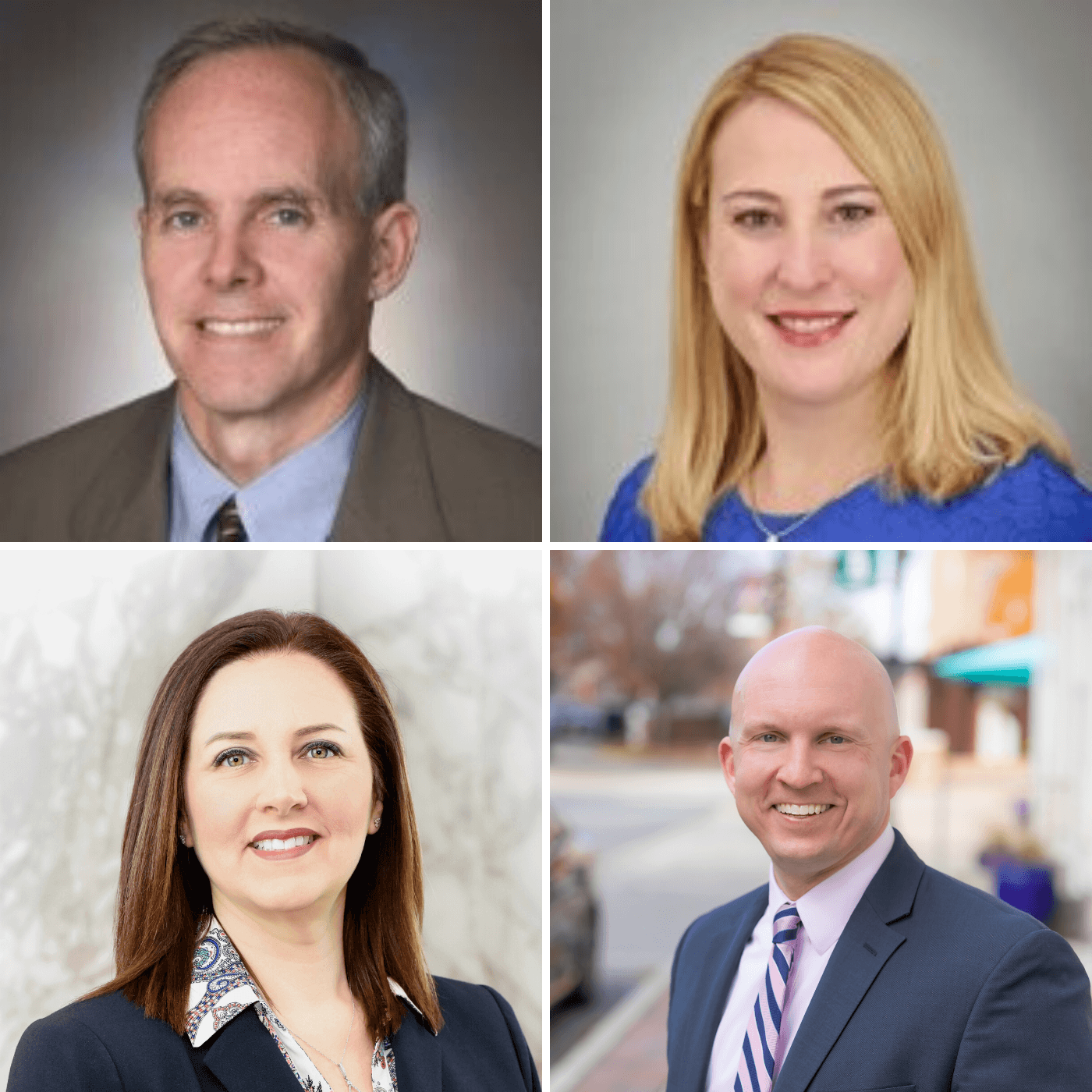
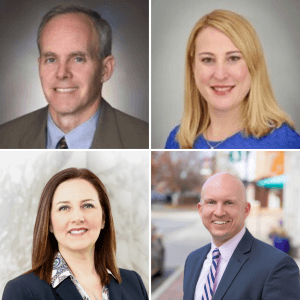
Clockwise from Upper Left: Brooks Morris, Andy Roberts, and Mike Blake

Decision Vision Episode 61, “How Do I Manage My Business Real Estate in a COVID-19 World?” – An Interview with Brooks Morris and Andy Roberts, Cresa Atlanta

The COVID-19 economic crisis has injected a new dynamic between commercial real estate landlords and their business clients, as questions around rent abatement are coming up. Brooks Morris and Andy Roberts of Cresa Atlanta join “Decision Vision” to discuss this issue and much more. “Decision Vision” is brought to you by Brady Ware & Company.

Brooks Morris, Senior Vice President, Cresa Atlanta

Cresa Atlanta
Brooks Morris, Cresa Atlanta

Brooks Morris, Senior Vice President of Cresa Atlanta, has over 16 years of executive experience. Prior to starting his real estate career, Brooks was with Enterprise Holdings, a $17 billion global transportation company. Brooks is known for recruiting, developing, leading and motivating teams to achieve targeted customer service, sales, operational growth, and profit goals. Brooks was rapidly promoted 4 times to executive positions in different markets with responsibilities overseeing multiple businesses and brands.

Joining Cresa in 2015, Brooks has a mission to deploy his years of experience through client advisement. His unique perspective from multiple angles of real estate transactions allow him to take a holistic approach while consulting on each of his clients needs. His proven results assure the focus will always be to use real estate as a platform to support employee engagement, customer satisfaction, brand recognition, growth, and profitability.

Brooks’ multiple years of experience as a Vice President and Officer at Enterprise Holdings include executing market analysis, site selection, lease negotiations, contract negotiations, P&L management, sales, budgeting, cost control, strategy, project management, and lease administration.

Andy Roberts, Senior Vice President, Cresa Atlanta

Cresa Atlanta
Andy Roberts, Cresa Atlanta

Andy Roberts began his career in commercial real estate at Wells Real Estate Funds by raising capital for various REIT portfolios that are now traded on the NYSE. During his tenure at Wells, Andy developed a passion for counseling clients on the dynamics of investing in commercial real estate.

Following his tenure with REITs, Andy joined Cresa in the summer of 2014 to help clients navigate their real estate decisions in a market where a growing percentage of properties are institutionally owned. Andy enjoys educating clients on the manner their real estate decisions impact not only their financial bottom line but their culture and labor force dynamics as well.

Cresa Atlanta

Cresa is the world’s largest tenant-only commercial real estate firm. In representing tenants exclusively—no landlords or developers—Cresa provides unbiased, conflict-free advice. Its integrated services cover every aspect of a real estate assignment, including strategic planning, employee demographics, workplace strategy, site selection, incentives negotiation, market research, transaction management, project financing, project management, portfolio management, and relocation services. Cresa offers clients customized solutions worldwide through more than 60 global offices.

To find out more on Cresa Atlanta, go to their website.

Michael Blake, Brady Ware & Company

Michael Blake is Host of the “Decision Vision” podcast series and a Director of Brady Ware & Company. Mike specializes in the valuation of intellectual property-driven firms, such as software firms, aerospace firms and professional services firms, most frequently in the capacity as a transaction advisor, helping clients obtain great outcomes from complex transaction opportunities. He is also a specialist in the appraisal of intellectual properties as stand-alone assets, such as software, trade secrets, and patents.

Mike has been a full-time business appraiser for 13 years with public accounting firms, boutique business appraisal firms, and an owner of his own firm. Prior to that, he spent 8 years in venture capital and investment banking, including transactions in the U.S., Israel, Russia, Ukraine, and Belarus.

Brady Ware & Company

Brady Ware & Company is a regional full-service accounting and advisory firm which helps businesses and entrepreneurs make visions a reality. Brady Ware services clients nationally from its offices in Alpharetta, GA; Columbus and Dayton, OH; and Richmond, IN. The firm is growth minded, committed to the regions in which they operate, and most importantly, they make significant investments in their people and service offerings to meet the changing financial needs of those they are privileged to serve. The firm is dedicated to providing results that make a difference for its clients.

Decision Vision Podcast Series

“Decision Vision” is a podcast covering topics and issues facing small business owners and connecting them with solutions from leading experts. This series is presented by Brady Ware & Company. If you are a decision maker for a small business, we’d love to hear from you. Contact us at decisionvision@bradyware.com and make sure to listen to every Thursday to the “Decision Vision” podcast. Past episodes of “Decision Vision” can be found here. “Decision Vision” is produced and broadcast by the North Fulton studio of Business RadioX®.

Visit Brady Ware & Company on social media:

LinkedIn:  https://www.linkedin.com/company/brady-ware/

Facebook: https://www.facebook.com/bradywareCPAs/

Twitter: https://twitter.com/BradyWare

Instagram: https://www.instagram.com/bradywarecompany/

Show Transcript

Intro: [00:00:06] Welcome to Decision Vision, a podcast series focusing on critical business decisions. Brought to you by Brady Ware & Company. Brady Ware is a regional, full-service accounting and advisory firm that helps businesses and entrepreneurs make visions a reality.

Mike Blake: [00:00:26] Welcome to Decision Vision, a podcast giving you, the listener, clear vision to make great decisions. In each episode, we discuss the process of decision making on a different topic from the business owners’ or executives’ perspective. We aren’t necessarily telling you what to do, but we can put you in a position to make an informed decision on your own and understand when you might need help along the way.

Mike Blake: [00:00:44] My name is Mike Blake, and I’m your host for today’s program. I’m a Director at Brady Ware & Company, a full-service accounting firm based in Dayton, Ohio, with offices in Dayton; Columbus, Ohio; Richmond, Indiana; and Alpharetta, Georgia. Brady Ware is sponsoring this podcast, which is being recorded in Atlanta per social distancing protocols. If you like this podcast, please subscribe on your favorite podcast aggregator and please consider leaving a review of the podcast.

Mike Blake: [00:01:11] This is the fourth in a subseries of topics regarding how to address the coronavirus crisis. And as everybody knows by now, we are faced with an unprecedented environment in our economy. And as one of our guests quipped before we started the show, basically, the way that he is helping save the world is by watching Netflix, but I will not out him and reveal what the nature of the show is. He can choose to out himself if he wants to, but I’m not going to do it for him.

Mike Blake: [00:01:48] But that is sort of the world that we’re living in, right? The best way we can help people is to do as little as we possibly can. And as a result of that, we are seeing an unprecedented rebalancing of the economy. We have whole industries such as restaurants that are shutting down en masse. We have other industries that are now booming and considered vital industries such as anything supply chain, grocery stores, drugstores, Amazon.com, and so forth. And we’re even now seeing companies that are stopping the businesses in which they’re normally engaged, so they can manufacture other things. Heinz is supposedly gearing up to manufacture these N95 virus protection masks. And Tesla and Ford are gearing up in partnership with General Electric to produce ventilators. We just haven’t seen anything like this before, certainly not since World War II. And even then, it’s sort of a thing tacked on.

Mike Blake: [00:03:09] So, if you’re like me and most other people who are thrashing around for some kind of guidance on how to address the issues that are now facing all of our businesses, frankly, whether we own the business, we’re an executive, or even an employee trying to help keep the lights on. And today, we’re going to talk about managing real estate assets and obligations in a shutdown world. And real estate is kind of funny. It’s one of those things that you don’t appreciate, I think, until it’s gone, in spite of the fact that we have a president who sort of made his claim to fame initially in real estate. But real estate, no pun intended, is a real issue. It’s no longer being used, and have been under some pressure anyway, particularly on the retail side, but it’s no longer being used.

Mike Blake: [00:04:11] In some cases, it’s being repurposed. We’re seeing hotels in Manhattan that are being commandeered now to serve effectively as field hospitals. That is perhaps an extreme case, but I think that’s going to come to other cities, including Atlanta. And real estate that has been—office areas that have been previously bustling with activity and have been a home away from home, frankly, for millions of employees are now shut down, locked down, basically ghost towns. And this provides a whole unique set of problems, and challenges, and maybe some opportunities too that we need to understand how to address, because just because we’re not working there, that doesn’t mean the real estate and the obligations that go with it suddenly disappear. Those have not shut them.

Mike Blake: [00:05:12] And joining us to help us understand this question are my longtime friends, Brooks Morris and Andy Roberts of Cresa. Now, you may remember, we had another person from Cresa on Jason Jones, who you used to fly navigation and ordinance and A6 intruders. It’s a fly off aircraft carriers. And he came on to help us understand the benefits of hiring veterans. But now, we’re bringing in a couple of people on from Cresa to actually talk about real estate. And Cresa is an international commercial real estate firm headquartered in Washington, DC. And they represent tenants and provide real estate services, including corporate service, strategic planning, transaction management, project management, facilities management, workforce and location planning, portfolio and lease administration, capital markets, supply chain management, sustainability, and sublease, and distribution. Formed in 1993, Cressa now has more than 60 offices and 900 employees.

Mike Blake: [00:06:14] Brooks Morris is a Senior Vice President of Cresa Atlanta with over 20 years of executive experience. Prior to starting his real estate career, Brooks is with Enterprise Holdings, a $17 billion global transportation company. Brooks is known for recruiting, developing, leading and motivating teams to achieve targeted customer service, sales, operational growth and profit goals. He was rapidly promoted four times to executive positions in different markets with responsibilities overseeing multiple businesses and brands.

Mike Blake: [00:06:45] Joining Cresa in 2015 – well, its that long already – and Brooks has a mission to deploy his years of experience to client advisement. His unique perspective from multiple angles of real estate transactions allows him to take a holistic approach while consulting on each of his clients’ needs. His proven results assure focus will always be to use real estate as a platform to support recruiting and retaining talent, brand enhancement, growth and profitability.

Mike Blake: [00:07:14] Brooks grew up in Los Angeles and played baseball for and graduated from the University of California Santa Barbara. I did not know that. He loves spending time with family, reading, golf, sports, water skiing and working in the yard. He and I have to talk about that. I hate working in the yards. Maybe we can make a trade. He and his wife and two children live in the Buckhead neighborhood of Atlanta.

Mike Blake: [00:07:37] Andy Roberts began his commercial real estate career by raising capital for various real estate investment trust portfolios that are now traded on the New York Stock Exchange. Through this experience, Andy developed a passion for consulting clients in the various dynamics of real estate. Andy joined Cresa in mid 2014 to help clients navigate their real estate decisions in a market where a growing percentage of properties are institutionally owned. Andy enjoys educating clients on the idea that their real estate decisions impact not only the financial bottom line but one’s cultural and labor dynamics as well. Andy and his wife, Jill, live in Atlanta with their four young children, where they enjoy spending time together with family and friends. And God knows, they’re getting ample opportunity to do that. Brooks and Andy, thank you so much for joining us on the program.

Brooks Morris: [00:08:25] Thank you, Mike.

Andy Roberts: [00:08:25] Thank you for having us.

Brooks Morris: [00:08:25] Good to be here.

Mike Blake: [00:08:28] So, to I want to start with something that is tangential to the topic, but I think it’s important for people to understand exactly what you do and how you do it because that will help people understand the nature of your informed perspective when we’re talking about today. And that is, what is exactly a tenant representative? It’s not a household name like a fireman, or a doctor, or a lawyer. So, maybe you can explain to our audience what a tenant representative does.

Andy Roberts: [00:09:03] Sure. So, we at Cresa and just in general, a tenant representative exclusively represents tenants. And let me back up. You have a number of commercial real estate firms. Majority of the commercial real estate firms receive a majority of the revenue from landlord representation. A tenant representative focuses on representing tenants, i.e. occupiers or companies. In general, that’s how tenant representative is defined. Now, what’s unique about Cresa, what we do is we exclusively represent tenants, i.e. occupiers. So, we are not representing any landlords, i.e. rich institutional owners. And we do that to remove all conflicts of interest, so that we are completely free to focus on the needs of our clients, the occupiers. We’re free to think beyond space and negotiate as hard as is required on behalf of our clients. So, in general, that’s what a tenant representative does. And that’s what’s unique about Cresa in that we are the largest global firm that exclusively represents tenants or as we define it, occupiers.

Brooks Morris: [00:10:20] And that’s well said. That’s well said by Andy. I’ll add one thing to that to simplify. It’s like in the residential market, you have someone selling a house, and you have a seller’s agent and a buyer’s agent. And we are the buyer’s agent in the commercial space, whether you’re buying real estate or leasing real estate.

Mike Blake: [00:10:49] And on the leasing side, I don’t know this about the buying side, so you can educate me, but at least on the leasing side, even though you’re the buyer’s agent, you make your fee from the seller or the lessor. Correct?

Brooks Morris: [00:11:03] That is correct. Just like in residential commercial real estate, it’s set up in a way that the landlords pay their broker a portion of the fee and the tenant’s broker a portion of the fee.

Mike Blake: [00:11:19] So, let’s wind the clock back to happier or more predictable times. Let’s go back to, say, February 1st. What was the commercial real estate market in Atlanta like at that point?

Brooks Morris: [00:11:36] First of all, February 1st feels like a year or two ago.

Mike Blake: [00:11:41] I know. It does.

Brooks Morris: [00:11:43] Right? It was a landlord’s market. The development around the US and very much so in Atlanta of new office space was accelerating, lots of projects, and it was a very healthy market. Tenant incentives had been reducing. Large blocks of space were competitively being pursued by multiple tenants. In some cases, for one or two large blocks of space. So, very much a landlord’s market and very much a situation where tenant had to be not just thoughtful and advance with strategy, but ready to execute when they found the right property because properties and spaces were moving quickly.

Andy Roberts: [00:12:45] And the great analysis I’d add to that was, I think, February 1st and during this pre-COVID season, we’re seeing, unlike any time before, certainly for a number of decades, labor influencing commercial real estate more than ever in the sense that the focus was on the investments need to be made to maintain a workforce and recruit a desirable workforce because we were continuing to enjoy such a long economic bull run, and if that investment was made via real estate, so be it. And you had that as well on the construction costs. Labor was so tight that the cost of construction was one of the main drivers of an increasingly more expensive market; thus, a landlord market.

Brooks Morris: [00:13:45] I’ll give one statistic. Piedmont Center in Buckhead is a group of about 15 building. And in 2016, the rental rate on those buildings was about $18 a square foot. And fast forward to February 1st of 2020, those buildings are quoting, in some cases, just over $30 dollars per square foot.

Mike Blake: [00:14:12] Wow. And I know that space too, and the space as as far as it goes. But also, I’ve never been lost in any parking lot or complex more frequently than I’ve been lost in that complex. I mean, I’ve probably inadvertently parked about three quarters of a mile away from where my meeting is supposed to be. And-.

Brooks Morris: [00:14:35] You are not alone.

Mike Blake: [00:14:37] Yeah. I’m glad to hear that because I feel like a horse’s ass, but that’s meaningful when it’s an August Atlanta day, and you’re wearing a suit and tie, and then you show to the meeting. I basically look like LeBron James at the foul line with fourth quarter of a game, just sweat pouring down my face. But even, if they’re able to raise rents that much that quickly, that shows you a pretty hot market for sure.

Mike Blake: [00:15:17] And now the commercial real estate market, I guess, sort of the question is, is there a commercial real estate market? Have you guys pretty much frozen in place now? Is there anything going on right now? What is the market or the industry look like today?

Andy Roberts: [00:15:41] To be perfectly candid, I think we’re still in the fog of war, if you will. I think there’s going to be some clarity that obviously comes with time. But just the initial impression is — I mean, just from personally, clients and deals that were already in motion that were pretty close to getting done, those have continued to move forward. New deals and most of the clients that I’m personally working with, and it seems to be the case for a number of colleagues, are saying, “Hey, let’s just put this on pause.” So, that’s one dynamic.

Andy Roberts: [00:16:21] The second dynamic is you have, obviously, across the board, companies trying to figure out, holding on to every dollar cost cutting initiatives, reaching out to their landlord, saying, “Hey, what can we do? Can we abate rent for three months? Four months?” At the same time, you have those very same landlords having the same conversation with their lenders. And it’s all across the board. I mean, candidly, very large household institutions, there’s been one that everyone would recognize that has come out and said, “Hey, three months abated. No questions asked. We want to work with you,” to another household, prominent lender that has just said, “We’re not budging. We’re not giving any grace, any mercy, period.” And so, obviously, those landlords are in a tight spot. They’ve got to turn around. They don’t want to say the same thing to their tenants, but they don’t know if they can afford not to. And so, it’s really interesting. You don’t have a consensus other than those conversations are being had, a lot of probably wait and see, but it’s really interesting because the responses are all over the map.

Brooks Morris: [00:17:40] Yeah. I say, to Andy’s point, Andy said it very well, There’s three buckets. There’s the bucket of industries. We all know retail, some transportation, hospitality, event companies that are just getting clobbered. And you’ve got the middle bucket of a lot of professional services firms and some other industries that are feeling it, but there’s a cut in revenue, but they’re doing okay. They’re just having to be diligent about making some cuts here and there within their business. And then, there’s another bucket. And a lot of this falls into the industrial space category of businesses that are actually doing as well or better.

Brooks Morris: [00:18:25] And so, depending upon who you’re working with is going to drive what you need to do in the real estate market right now for those different groups. And to Andy’s point, a lot of what I was already working on that was close to being done, if there’s any sort of certainty in their business and an expiration coming off of their lease, we are moving forward and taking action. Anything that was an expansion, because everybody has gone remote for this period of time, most of those projects have been put on pause, and it’s a wait and see. And as soon as we have more clarity, then we’ll decide on what to do moving forward.

Mike Blake: [00:19:07] It occurs to me that there’s a signaling dynamic going on here, a signaling process. When a bank or a landlord tells their borrower or their tenants respectively what they’re prepared to do in terms of flexibility, and forgiveness, and forbearance I think tells you a lot about how they think this movie ends, right? I think that if they take a soft line, they’re telling you that this movie doesn’t necessarily have a very happy ending. It may be okay, but what they’re really telling you is that we want to keep you in place. We don’t think there’s necessarily another awesome bar or another awesome tenant that’s walking around the corner. So, we’re going to go with the devil we know. We’re gonna hang on to what we have and ride it out. And if we take a haircut, we take a haircut. But we’d rather get 80 cents on the dollar than zero.

Mike Blake: [00:20:12] Whereas, I think the hard liners are basically saying, you know what, at some point, whether it’s Memorial Day, whether it’s 4th of July, Labor Day, gotta help us on that one. But there’s going to be a reboot, basically, and somebody pushes a big red button somewhere that throws a lever that’s supposed to restart the economy. And they think there’s a basically a rubber band effect, that everything’s going to go back to normal. And if you default, and if you have to default, then we’re happy to take your property because we think they’ll be a ready market, or we’re happy to declare you in default because we think that there going to be six tenants waiting around the corner. I think that’s an interesting signaling effect that economists and economics geeks like me want to maybe look at to understand what the market sentiment is going forward.

Andy Roberts: [00:21:11] That’s a great point, Bill.

Brooks Morris: [00:21:13] Yeah, it’s a great point. I think—go ahead.

Mike Blake: [00:21:16] No. You said it was a great point. I want to hear more about my great point.

Brooks Morris: [00:21:20] Well, the signal, you’re correct. It does send a signal. But, also, anytime there is change that happens or there’s challenge in a challenging environment we’re all navigating through, sometimes, it also sends the signal on with the philosophical approach of a business owner or ownership group. And sometimes, that has nothing to do with the economy moving forward and their feelings on that but just how they approach business. And are they looking at a tenant as a long-term partner and somebody that they want to share success with, or are they looking at it in a transactional way? And we’re learning right now who are the partners and who are transactional.

Mike Blake: [00:22:10] Yeah, I think that’s a great point. And you really do find out who your friends are in crisis. And maybe there’s a psychological element to it as well. I think this whole coronavirus crisis scenario in which we find ourselves has put us into a collective state of grief. And the first stage is denial. And just as I think there have been many people who’ve been in denial that I think that number is rapidly diminishing, but you can see they’re the ones going out to spring break, and they’re still getting together in large groups, and I guess coughing on each other just to see what’ll happen. But there’s probably some of that. There’s probably some of that psychology in the business market too where it’s a scenario that can go so sideways and so horrifically that I think some people and businesses psychologically just go to a place of denial because they’re just not emotionally ready to embrace the potential reality.

Brooks Morris: [00:23:24] Agreed.

Andy Roberts: [00:23:25] To your point, Michael, on an economic point, I think Brooks did it really well and made some great points. And I think what’s so unique about this scenario is it’s going to be interesting to see how the legislation plays out because historically, when it comes to real estate as a broad brush, legislation is first seen in the residential arena for. And I think probably because politicians score more points that way. For example, a number of states have already come out and said, “Hey, there can be no foreclosures on any residential homes for X number of weeks or months.”

Andy Roberts: [00:24:11] The commercial real estate arena, the legislation, if it happens, happens much further down the road. It’s going to be interesting to see if that legislation does take place in a commercial arena. So, for example,if you have tenants defaulting, to what degree can the landlords—what retribution do they have. And if they’re prevented legislatively from doing so, and I think what may drive that in this arena is, historically, defaults have been from financial reasons. So, for example, ’08-’09, there was too much debt involved and irresponsible underwriting of the debt. No one in who’s alive today has seen this type of scenario where the driver is a medical health dynamic where sadly, tragically, a thousand Americans are dying a day.

Andy Roberts: [00:25:12] And so, there’s this kind of this social element overlying this that I think is so unique where it’s not your typical debt problem. It’s just kind of a war with an invisible enemy that it’s almost like for someone to come out and foreclose, there’s kind of the level of evilness to it that I think there’s this social pervasiveness that’s unprecedented. And it’s going to be really interesting to see how it plays out. I think that could drive greater legislation in the commercial arena. For example, not allowing landlords to penalize a tenant for defaulting. Well, time will tell, but that’ll be interesting ’cause usually that legislation stops in the residential arena.

Mike Blake: [00:26:04] So, a lot of offices are empty. Ours is largely empty, although a few people are coming in, but a fraction, most of us are are working from home. If you’ve got an office that is basically empty, empty assets are scary.I remember when I was a kid, and this probably explains a lot about me, when there is an abandoned house or a house in our neighborhood that had construction that was paused for a while, we would go into that house, and we would find pieces of wood, and hack them at each other. And we’d find pieces of copper tubing and whack each other with them, basically. And it’s illustrative of what can happen if you have real estate that is not sort of being looked after. And if I’ve got an office that is now basically empty, is there something that I need to be doing as a tenant to be looking after my real estate or my space even though I don’t own it, it’s still important. It’s still an asset. Is there something I need to be doing to look after it or take care of it during this down period?

Brooks Morris: [00:27:21] It depends on the position of the real estate. So, if you’re an owner, you’re going to be looking at this differently. If you’re a tenant of a full-service office, you’re really not going to need to do anything per se because the landlord, through the full-service structure of the building or the lease contract, is gonna be responsible for everything. And I would say if there’s anything that is that you’re responsible for be within those four walls, maybe it phones, internet that you probably have already moved to remote and cloud. There may be some opportunities to make sure that your expense is being allocated appropriately.

Brooks Morris: [00:28:18] If you’re in an industrial user, and you’re on a triple net lease, and you are leasing a building that you’re the only tenant in, there lies some opportunity and operating expenses that you’re responsible for as a tenant that you can take a look at and, say, go dark in a building, basically turn certain things off so you’re not paying for them while you’re not using them. Those would be the only things that you would be really looking at doing while you’re not using their real estate, and it really pertains to industrial spaces. But those particular businesses right now, most of them are in business and, in some cases, thriving.

Mike Blake: [00:29:00] Yeah.

Andy Roberts: [00:29:00] Brooks makes a great point. I think it would be interesting or it’s worthy to note, let’s say, for example, an office building, a classy office building, there’s multiple tenants – and Brooks is right – it’s on the landlord’s onus to run that building. And so, I think every tenant in their lease is going to have typically passthrough of operating expenses and the increase in operating expenses they’re going to be responsible for paying in the next calendar year. And so I do think it’s responsible for tenants currently being communication with their landlord on what are they doing to mitigate expenses while the buildings are vacant, so the tenants can be able to enjoy those savings.

Andy Roberts: [00:29:47] And then, also, keep in touch on what are the potential increase expenses that are around the corner. So, likely there’s going to be new janitorial dynamics. There’s also, likely, when America gets back to work, if you will, you’re hearing a lot of sentiment towards kind of not everyone just goes back on Monday. It’s kind of you’re phasing in and almost to the point where you have longer hours, certain departments working in the morning, certain departments working in the evening. And you have kind of maybe an overlap of one or two just to help respect social distancing as we start phasing back in.

Andy Roberts: [00:30:30] So, then you get into an office building, the HVAC act, for example. I mean, you know, hopefully this is happening late spring and summer. Well, HVAC expenses are at their highest at that point. And typically, a building will say, “Okay, we’re going to be running back from, say, 8:00 to 6:00.” Well, now, if you’re running it from 7:00 to 8:00 or 9:00 at night, you’re going to have higher expenses. So, tenants need to be aware of how are those expenses gonna be passed on to them, and what’s going to be their cap that they have in their lease on what the expense increase will be next year. So, I do think there’s currently some planning that can take place on the tenants’ behalf that’ll serve that well.

Mike Blake: [00:31:14] Let me jump on that.

Brooks Morris: [00:31:14] Mike.

Mike Blake: [00:31:15]  Go ahead.

Brooks Morris: [00:31:16] Mike, one thing I just thought of, I should have already mentioned as it pertains to your question and what you can do while you’re not in your space right now, as it pertains to any metropolitan building that charges for parking, in most cases, right now, because you’re not using that parking, you can negotiate with your landlord to not pay for that parking potentially. We’ve done that within ours. So, that’s something, for sure, to look at.

Mike Blake: [00:31:43] Okay. Yeah, that’s good advice. That’s an actionable thing people can, if they haven’t done already, they can do right away. So, we touched upon this a little bit, but I want to make sure to address this explicitly. There’s a provision in the CARES Act, and as you mentioned, several states as well that are basically freezing home real estate obligations, but that’s not really impacting the commercial sector, right? Unless you’ve negotiated something, if you’re a business tenant, you still have to pay your rent, right?

Brooks Morris: [00:32:18] Correct.

Andy Roberts: [00:32:20] Correct. What is interesting is a number of landlords, when tenants have requested to defer rent for a number of, say, three months to please the common average, a number of landlords are saying, “Hey, noted your request. Let’s pursue these avenues with the CARES Act and let’s circle back end of April. Then, say, mid-May.” And understandably so, they’d like to see these tenants be able to receive the provisions through the CARES Act, so that, obviously, the landlords don’t have to further rent, which is understandable. But that to your point, that’s a common conversation taking place in the industry.

Mike Blake: [00:33:02] So, the unfortunate reality is that not every business is going to come back from this, but the lease obligation may still remain. So, if in fact your business is not going to survive this, but the only thing that may survive is your lease obligation, what are your options to try to get out from under or mitigate that obligation?

Brooks Morris: [00:33:34] Well, the first thing you want to do is pull out your lease, get with your commercial real estate advisor, whether that’s us or someone else, and your attorney, and make sure you understand every single component of that lease and what your options are pertaining to that contract. Usually, there’s going to be a sublease provision that allows you to sublease as an option. So, you want to understand what that looks like and what that exit might realistically look like. In some cases, some companies have negotiated termination options. So, that could be that could be an option. There could be an option to restructure your lease. Maybe there’s an option to downsize and use certain-.

Brooks Morris: [00:34:22] And communication is key here. You want to engage with your landlord after you understand what your options are. You want to know what the landlord’s position is because they may have different things happening within their building with their existing tenants. And as business comes back, depending upon how well that building’s doing, they may want that space back or need that space depending on the size. And that’s a low percentage opportunity, but it’s one that should be explored. Andy, any other thoughts that I’m missing?

Andy Roberts: [00:34:53] No, those are all great points. You’re nailing it. And, certainly, typically, a lease will spell out a termination, if you have a termination clause and/or if it’s essentially what those costs would be. I think for a tenant to be fully aware what the landlord’s costs to structure this lease, and largely the build out, what have you, to understand how the landlord is going to be viewing this financially will be advantageous for a tenant. It may be you’re having to come out of pocket for a termination agreement or clause, but just knowing eyes wide up on what that number will be, will be helpful.

Brooks Morris: [00:35:37] And my advice, the biggest thing is just to be proactive, not wait around to get with your advisors, to build a strategy quickly that you can execute quickly if that’s the direction things are going because there will be other subleases coming to the market and you want to be in front of it.

Mike Blake: [00:35:56] We’re talking with Andy Roberts and Brooks Morris of Cresa about managing your real estate obligations and assets in a pandemic world. I want to interject here. I’ve interrupted them a couple of times inadvertently, and I apologize for that. One of the challenges of doing this remotely and not in the studios, you don’t normally have the visual cues where I can tell accurately if people are done talking or not. So, I’m not on speed or anything like that. This is sort of me learning about how to conduct interviews, also, in a coronavirus world.

Mike Blake: [00:36:35] But getting back to this, I want to touch now then on something that you said because I want to drill down a little bit. And that is the reaction or the posture of the landlord does vary from landlord to landlord. And that may be driven, ultimately, by how their bank is treating this. But generally, are you finding more often than not that landlords do want to work with their tenants in some way to accommodate them? Or do you find that, still, right now, they’re more likely to take a hard line? Or is it, in fact, 50/50 as far as you’re seeing?

Andy Roberts: [00:37:15] Yeah, future-.

Brooks Morris: [00:37:16] I don’t want-.

Andy Roberts: [00:37:16] Go ahead. Go ahead, Brooks.

Brooks Morris: [00:37:18] I wouldn’t say it’s 50. It’s hard to say right now because I would say the majority are taking the approach that we want to help. There is a percentage, which is a smaller percentage, that’s basically saying yes, and taking action immediately, and saying we will help, get us this information, and we’re gonna go ahead and accommodate your requests. The larger percentage is we want to help, but we can’t. We want to make sure you really need the help. So, these are the things we need to see from you and let us process this. And I say there’s another there’s a small percentage that are taking the hard line. So, I think the lion’s share wants to help. It’s just they are taking a very thoughtful approach on what requirements need to be met in order for them to actually execute on giving that help.

Andy Roberts: [00:38:15] Yeah, I think Brooks is absolutely right. I think your question, Michael, the answer is yes, and that landlords genuinely want to help. I’m yet to encounter any landlord that’s kind of this evil villain laughing that they don’t want to help. I think, from their perspective, to be to be empathetic to their world, they’re internally discussing, okay, we have this tenant that’s been a great tenant. They’re asking for a rent deferment. We generally want to help them. And so, then, (A), what are our lenders willing to do? And (B), depending on how they’re structured financially, it’s commonly a question of, okay, well, what will the implications be to our investors?

Andy Roberts: [00:39:03] And so, a lot of times they’re kind of stuck between a rock and a hard place. You don’t want to have a very difficult conversation with either. And I think the answer in this unique health pandemic is everyone to be transparent as best you can. And I think the reality is both sides are going to have to essentially kind of receive a burden, part of the cost for us as a society to get this behind us and move on. And I think there’s a sentiment of goodwill that’ll carry that to some degree. And yet, whether it’s the investors carrying a bit of a cost, I mean, it’s not like a landlord’s quick to say no. If they do say no to a tenant because they they don’t want to say no to a new investor. For example, they don’t want to tell them that, hey, with this unprecedented economy, your dividends about to go down, and you primarily invest in our fund because of the dividend dynamic.

Andy Roberts: [00:40:06] So, they are in a tough position. And yet I think both sides, to get through this efficiently, are just gonna have to recognize and transparently have the conversation. There’s a cost to care and agree we can kind of split that amiably and move forward.

Brooks Morris: [00:40:22] And in an effort to give a tenant, who may be listening, or business owner and executive who may be listening to this, an actionable item or set expectations, to Andy’s point, these landlords either have a lender to pay themselves, and they’re not getting forgiveness for this at this point in time, or they have investors they’re paying. And so, the tenant needs to understand, they’re asking for help. And so, in order for that to work, it’s got to work for both parties. And if the landlord’s gonna help, and you really need it, there are ways in which you can structure that help where the landlord can get something maybe towards the end of the lease that’s beneficial to them, but it allows the tenant to receive relief today. So, the tenant needs to understand what they have to offer that would benefit the landlord, which makes the landlord still a lot better about giving them the relief.

Andy Roberts: [00:41:25] Yeah, Brooks makes a great point. And we’re typically seeing that take place one of two ways. One being, hey, defer three months of rent now, and you can add it on the end of the term that I’m obligated to, lease-wise, or three months of deferment now, and then that delta that you deferred amortizing that over the remaining term. Those are typically one of the two paths that we’re seeing landlords are open to having.

Mike Blake: [00:41:53] So, let’s look at another scenario, a somewhat happier scenario. Maybe when you return to work, there’s going to be a company to which to return to work, but maybe you decide that your office needs are going to be different. You decide for us, for example, in our Alpharetta office, we’ve seen a marked increase in productivity with remote working vs. being in the office. I don’t know if we’re exceptional or not, right? But other firms may decide that, for whatever reason, they kind of like this remote working kind of scenario, but they’re going to keep their office, they may have or there may be other reasons to keep it. What are other options to generate value from their leased space if they’re not necessarily going to have a full office of employees anymore, but they still want to get value out of the space that they’re already paying for it and have invested in? How much do you redeploy that space to be value added?

Brooks Morris: [00:43:06] I think it’s case by case, Mike. I mean, it really depends upon what type of business is it. Do they have clients that come into that space? Do they not have clients come into that space? Their business is gonna dictate how they can best redeploy that space. Before I get into that a little bit, I would say that it is going to be a very interesting time moving forward. I think what’s happening with this forced remote work situation is it’s really heightening the awareness of the types of jobs that are okay to do remote and the types of jobs that are not okay to do remote or shouldn’t be remote. And so, I think you’re going to see that sort of become a big topic before you understand how are you going to redeploy your space.

Brooks Morris: [00:44:13] I can also see the conversation’s accelerating around, well, if this is a job that needs to be in the office, we maybe would be okay with four days a week in the office and one day remote, and creating some more flexibility around, what does it look like? What does a work week look like for different types of positions? So, I think that’s the first thing that companies are going to need to get their hands around because you have to understand that first before you start the space program around how to use that space.

Brooks Morris: [00:44:49] But then, if you get into redeploying space and once you understand those things, you’re going to start looking at, okay, so what are the areas of our office space that could be used for hoteling and not having a desk specifically for a person or an office specifically for a person? But it starts to be shared, which is something that’s been happening. I could see that accelerating a bit, but I could also see where we’re realizing how much we like to be around people. We love connectivity. Energy is created from when you’re around people. Ideas come from serendipity that happens in water cooler discussions.

Brooks Morris: [00:45:32] And Starbucks wouldn’t have been doing so well with people that worked remote if they just stayed at home or worked by themselves. Starbucks is full of people that are remote workers because they like to be around other people. So, I think you can see office space being redeployed that replicates, to a degree, restaurant in coffee shop environments that draw their people in to that environment to work and have the energy of being around people.

Mike Blake: [00:46:02] That’s really-

Andy Roberts: [00:46:06] Yeah, I completely agree.

Mike Blake: [00:46:06] Sorry, go ahead.

Andy Roberts: [00:46:07] Well, I think Brooks makes a lot of great points. And this will continue to affirm and accelerate a trend we’ve already been witnessing in the sense that office setting and a work setting transitioning from an industrial economy to an idea-driven economy. I mean, even 10 years ago, even 5 years ago, teh degree is still pre-COVID, the degree to which the number of businesses still kind of operated with this mentality of, “Well, this is my desk. It’s just where I go stress it.” I mean, that that really kind of originated out of an industrial revolution mindset, which was you had to be there for the specific function. And yet, as we’ve obviously moved to an idea-driven economy, that no longer makes sense.

Andy Roberts: [00:47:03] And so, it doesn’t mean, obviously, it would go away with office space, what have you. It just looks dramatically different. The same sense, an idea-driven economy looks different from an industrial-driven economy. The office space will reflect it. And I think some of the things we do certainly know is, one, flexibility will continue to rise. And two, I do think you’ve had some of this degree in some place, but think about, for example, the health care industry and the financial services industry, if you’re in either of those, a main theme is going to be working with your attorney to really get buttoned up on remote security in the sense of FCC regulations and HIPAA regulations. And you’ve had a lot of that discussion from within your office, and to some degree some laptop protocol, what have you. But knowing that a flexible, remote workforce that’s not going away, some of this is going to be certainly higher post-COVID than was pre, that’s just going to continue to put more focus on what does that look like on those specific industries that are highly regulated.

Mike Blake: [00:48:13] You touched upon something I want to jump on just a little bit; although we’re running out of time, unfortunately, but it bears discussion. And that is that the bulk of what I see being written right now is that we’re never going back to the old way of doing things. People are going to work remotely a lot more. And I’m not entirely sure that’s true. I mean, I’ve been working from home for the bulk of the last 10 years or so. But I think I’m a little bit of an outlier. I’ve joked before, my wife’s biggest fear about me is not that I’m going to cheat on her but that I’m going to try to get accepted into the Mars mission as long as they start accepting overweight, middle-aged man because I’m going to jump at the opportunity isolated for 24 months. But for somebody like she who is an extrovert, it’s really tough.

Mike Blake: [00:49:12] And I think there is going to be a a demand, a pent-up demand for that socialization. And Brooks, that idea of sort of having a virtual coffee shop within the office, I actually took a note. Maybe that,  in some way, will actually redeploy our space. Can we replicate the Starbucks kind of environment if people just sort of need to change the environment to feel more productive, more creative, more free? I think it’s going to unleash some creativity in terms of how better to use space to promote that socialization.

Brooks Morris: [00:49:51] Yeah, Mike. And it was already happening. So, in the technology industry, anybody that’s been competing for developers, these companies have had to find creative ways already to attract not only through pay but just through culture and what is the office space? Is it a fun office space to come to? And I’m not talking about ping pong tables but this coffee shop/restaurant idea and having diner booth in the break room, great views with bars looking out over the city where you can sit and work, this has been happening. And I see this accelerating for that reason. And it’s really what employees have shown that they want.

Brooks Morris: [00:49:51] I’ll say I know we’re running out of time here, but I was talking to John Ray a little bit about this before the call, but I’ve got a quote from Steve Jobs because I was reading Walter Isaacson. I’m in the middle of his book on the biography of Steve Jobs. And we all know he’s not only a founder of the respected brand Apple but also Pixar. And he was avid about their office space and including at Pixar. And he is not only a denizen of the digital world, but he knew all too well the isolated potential of technology and he was a big believer of face-to-face meetings. And he said there’s a temptation in our networked age to think that an idea can be developed by email or iChat. He says that’s crazy. Creativity comes from spontaneous meetings and from random discussions. And I think there’s a lot of truth in that. I just think there’s a balance that has to be found between flexibility and how technology can allow us to be remote and flexible. But, also, when and how often should we be face-to-face and  what do those environments look like now moving forward?

Andy Roberts: [00:52:10] That’s a great point.

Mike Blake: [00:52:12] So, one last question I want to touch upon is the return-to-work scenario. I believe, and you can tell me if I’m wrong, of course, but I believe that how we—and you touched upon it actually, but how we work is going to change, and I think there’s going to be some negotiations between tenants and landlords, and how to accommodate that. For example, even professional services moved to shift work, basically, right? And is the climate control now going to be kept on and who pays for that? I think that one janitorial visit per day is not going to cut it, right? You’re going to need to sterilize the office, I think, multiple times a day. I’m certainly advocating that for our firm. And other kind of logistical issues. Employee access, do you have to put toilet paper in safe, which sounds absurd, but it’s not, right? Is  it worth thinking now about what the return-to-work scenario looks like? And are these things that you ought to be talking to your landlord about now about what that looks like, so you can agree in terms of, basically, who’s responsible for what and how?

Brooks Morris: [00:53:42] Yeah, I think before-

Andy Roberts: [00:53:42] Absolutely.

Brooks Morris: [00:53:42] Yeah. Before you have that conversation with your landlord, with your advisors and your executive team, and asking questions among all your employees, you want to understand what is your need at the company first. What your plan to address this? Because you don’t want to go get out in front of this with the landlord before you know what you’re really asking for and why because you wanted to support your long-term business needs and short-term with addressing and making sure that you’re getting the janitorial services that you need.

Brooks Morris: [00:54:18] Once you establish what the need is, then you go engage in a proactive conversation with your landlord to address those things. But I think, depending upon how long this lasts, there is an opportunity to be in a better position as a tenant with more leverage in the cycle that we may be entering into. So, this could be an opportunity for tenants to, eventually, not right away, certainly if you have a lease expiration coming up, to restructure leases. Well, there’s gonna be a lot more subleases on the market, which is going to be competitive with the direct lease options for landlords. So, I think that there’s going to be an opportunity to push some of the responsibility for additional expenses onto the landlord and have more incentives that the landlords are offering.

Andy Roberts: [00:55:19] Those are great points. And I think one noteworthy point to consider for those working primarily in an office setting who are leading a company, it’s very possible that landlords, for a season of time as we start to get back, may have kind of revised density requirements that the tenants are going to want to be aware of. And again, it’s not that landlords are looking to be difficult. We just don’t know what conversations they’re having with lenders. And primarily, that’s probably their insurance brokers in the sense of to mitigate any outbreak, it’s very possible you don’t want to kind of have an internal planning session come up with a plan and then find out it’s not compatible with what the landlord will allow. I don’t think it’s gonna last forever, but I could very well see a scenario where, hey, the ban is lifted and set in for the next 30 days, or 45, or 60 days. There’s kind of a revised density issue that landlords are asking/mandating their tenants adhere to.

Brooks Morris: [00:56:24] Yeah, I think Andy brings up a great point. Historically, square footage of use per person has been 300 square feet or higher. And over the last several years, that’s gotten down sub-200. So, you could see where there’s not as many people that need to be in the office, but they still need almost as many square feet because it’s been mandated that it’s not allowed to be that dense anymore, and you have to have more square feet per person. I could see that potentially happening.

Mike Blake: [00:57:01] Yes, certainly places like California, New York, you may very well see them. I hadn’t thought of that. I think it’s a great observation. Guys, this has been great. We’re already over time, and I want to be as I try to be uber respectful of your time. If people have other questions that we weren’t able to cover today, how can people contact you?

Andy Roberts: [00:57:23] Sure. Obviously, if you go online and Google Cresa, this is Andy Roberts and Brooks Morris. We’re both in the Atlanta office. Obviously, our website is a great resource to learn about our firm. And then, you can specifically visit the Atlanta link, as well as Brooks has a personalized bio page. I, myself, have  a personalized bio page on LinkedIn. Please feel free. We’ve got a lot of great thought leadership resources on our website. That’s probably the easiest direct place to go to. Again, www.cresa.com. And happy to be a resource specifically and/or just kind of general questions. We’re always looking to receive feedback from the frontlines, if you will. So, welcome those conversations.

Mike Blake: [00:58:17] Well, that’s going to wrap it up for today’s program. I’d like to thank Brooks Morris and Andy Roberts of Cresa so much for joining us and sharing their expertise with us. We’ll be exploring a new topic each week. So, please tune in, so that when you’re facing your next executive decision, you have clear vision when making it. If you enjoy this podcast. please consider leaving a review with your favorite podcast aggregator. That helps people find us, so that we can help them. Once again, this is Mike Blake. Our sponsor is Brady Ware & Company. And this has been the Decision Vision Podcast.

Tagged With: Andy Roberts, Brady Ware, Brady Ware & Company, Brooks Morris, commercial real estate, corporate office tenant representation, CRESA, Cresa Atlanta, Michael Blake, Mike Blake, office space, office space rental, tenant representation

Ford Stokes and Brandy Seats, Active Wealth Management; Morgan Reynolds, Colliers International

April 15, 2020 by John Ray

North Fulton Business Radio
Ford Stokes and Brandy Seats, Active Wealth Management; Morgan Reynolds, Colliers International
Loading
00:00 /
RSS Feed
Share
Link
Embed

Download file

Clockwise, from upper left: Ford Stokes, Brandy Seats, and Morgan Reynolds

“North Fulton Business Radio,” Episode 218: Ford Stokes and Brandy Seats, Active Wealth Management and Morgan Reynolds, Colliers International

Investing for future college tuition payments, 401-Ks, commercial real estate, and COVID-19 impacts were just a few of the topics discussed in this insight-rich show, as Ford Stokes and Brandy Seats, Active Wealth Management and Morgan Reynolds, Colliers International, were our guests. The host of “North Fulton Business Radio” is John Ray and the show is produced virtually from the North Fulton studio of Business RadioX® in Alpharetta.

Ford Stokes, Founder and President, Active Wealth Management

Active Wealth Management
Ford Stokes, Active Wealth Management

Prior to founding Active Wealth Management, Ford Stokes exponentially grew over a dozen companies as a Chief Marketing Officer, he’s passionate about growing our client’s wealth and has over ten years experience in the financial industry. Ford also helped successfully grow a $3 Billion Registered Investment Adviser (RIA) and a $2 Billion Independent Marketing Organization (IMO) from start-up phase to mature and significant profitability as a minority owner in both companies.

He holds an undergraduate business degree and an MBA with a dual concentration in Finance and Economics. He’s published articles on FoxBusiness.com and hosts The Active Wealth Radio Show on WGKA 920 AM on Saturdays 12:00-1:00 PM in Atlanta. He educates clients to help them invest and retire successfully.

Ford is a native Atlantan who plays ALTA Tennis, Golf and cheers on his hometown Braves, Falcons, Hawks and Atlanta United with his family. Ford and his wife, Diana, have a great time supporting their twin girls at their cheer competitions throughout the Southeast.

Find out more at the Active Wealth Management website. You can reach Ford by phone at  770- 685-1777 or email.

Brandy Seats, Sr. Vice President, Active Wealth Management

Active Wealth Management
Brandy Seats, Active Wealth Management

As Senior Vice President with Active Wealth, Brandy Seats provides a wide range of retirement planning services to clients, including complex life insurance case design as an investment vehicle.

Prior to joining Active Wealth, Seats was the Founder and President of Avalon Financial. In late 2019, Active Wealth acquired Avalon Financial, placing Seats in her current role. Before entering the financial industry, Seats worked in the healthcare industry for more than a decade working as Director of Sales and Marketing for several multi-billion-dollar clients.

Seats’ diverse work experiences allow her to take a unique, holistic approach when helping her clients’ plan for the future. Brandy holds a Series 65 Securities License and a Life and Heath License with the State of Georgia. In addition, Seats is passionate about her clients’ financial education and works to share the impact that smart money planning can have on their finances.

In her spare time, Seats enjoys volunteering and running her 501(C)(3) RAOK, Inc. (Random Acts of Kindness). RAOK brings value to the Atlanta community through projects like animal advocacy and financial literacy education.

Find out more at the Active Wealth Management website. You can reach Brandy by email or call 770- 685-1777..

Morgan Reynolds, Office Tenant Rep Broker, Colliers International

Morgan Reynolds, Colliers International

Colliers International is a leading global real estate services and investment management company. With operations in 68 countries, our more than 15,000 enterprising people work collaboratively to provide expert advice to maximize the value of property for real estate occupiers, owners and investors.

Morgan Reynolds is an Associate with Colliers International Office Services Group, specializing in tenant representation. She joins a team of four partners with a combined total of 100+ years of industry experience. Building upon the strength of her intense work ethic as a former student-athlete, Morgan takes a holistic approach to delivering real estate solutions that align with her clients’ business objectives.

She draws on her team’s experience, world class research of Colliers International, and market expertise to deliver winning outcomes for clients ranging from Fortune 500 companies to growth stage startups.

To get in touch with Morgan, you can email her directly or call her at 770-231-4503.


North Fulton Business Radio” is produced virtually from the North Fulton studio of Business RadioX® in Alpharetta. You can find the full archive of shows by following this link. The show is available on all the major podcast apps, including Apple Podcasts, Spotify, Google, iHeart Radio, Stitcher, TuneIn, and others.

Renasant Bank has humble roots, starting in 1904 as a $100,000 bank in a Lee County, Mississippi, bakery. Since then, Renasant has grown to become one of the Southeast’s strongest financial institutions with over $13 billion in assets and more than 190 banking, lending, wealth management and financial services offices in Mississippi, Alabama, Tennessee, Georgia and Florida. All of Renasant’s success stems from each of their banker’s commitment to investing in their communities as a way of better understanding the people they serve. At Renasant Bank, they understand you because they work and live alongside you every day.


Tagged With: 401-K, Active Wealth Management, Brandy Seats, Colliers International, commercial real estate, corporate office tenant representation, Ford Stokes, investments, John Ray, Morgan Reynolds, North Fulton Business Radio, tenant representation

Inspiring Women, Episode 20: Becoming The Authentic Leader You Envision

April 15, 2020 by John Ray

Inspiring Women with Betty Collins album cover
Inspiring Women PodCast with Betty Collins
Inspiring Women, Episode 20: Becoming The Authentic Leader You Envision
Loading
00:00 /
RSS Feed
Share
Link
Embed

Download file

Inspiring Women with Betty Collins album cover

Inspiring Women, Episode 20: Becoming The Authentic Leader You Envision

There’s almost a crying desire for leadership in our society which is genuine. In this episode of “Inspiring Women,” host Betty Collins discusses the characteristics of authentic leadership. “Inspiring Women” is presented by Brady Ware & Company.

Betty’s Show Notes

It’s everywhere; books, coaches, seminars on the why, the what, the who, and the how.

It’s really, in my mind, almost overkill. But the sad truth is, with all of that help, we are desperately looking for leadership that is authentic.

In our society, in politics, to corporate America, to education systems, within our homes, within professional organizations, authentic leadership is really tough to find.

Authentic leadership works on the principle that leaders can prove their legitimacy, their credibility, by nurturing sincere relationships with whomever they’re leading. Notice I did not say “I am the leader, follow me!” It isn’t about the title. It really is nurturing sincere relationships.

How do you do that?

An authentic leader encourages their followers to be more open. They appreciate their support in the success of the organization. When you want to be an authentic leader, it’s pretty tough. It’s a pretty high standard, and it takes a while to do.

This is something you have to be pretty intentional about. If you are a true authentic leader, you’ll have certain characteristics. You probably can’t have all 10 that I’ve come up with, but you’ve got to have some of these, or you’ve got to be working on them.

  • Self-awareness
  • Integrity
  • Vision
  • Focus On Long-term Results
  • Listening Skills
  • Speaking Carefully
  • Transparency
  • Consistency
  • Drawing On Experience
  • Sharing Success With Your Team

Betty Collins, CPA, Brady Ware & Company and Host of the “Inspiring Women” Podcast

Betty Collins, Brady Ware & Company

Betty Collins is the Office Lead for Brady Ware’s Columbus office and a Shareholder in the firm. Betty joined Brady Ware & Company in 2012 through a merger with Nipps, Brown, Collins & Associates. She started her career in public accounting in 1988. Betty is co-leader of the Long Term Care service team, which helps providers of services to Individuals with Intellectual and Developmental Disabilities and nursing centers establish effective operational models that also maximize available funding. She consults with other small businesses, helping them prosper with advice on general operations management, cash flow optimization, and tax minimization strategies.

In addition, Betty serves on the Board of Directors for Brady Ware and Company. She leads Brady Ware’s Women’s Initiative, a program designed to empower female employees, allowing them to tap into unique resources and unleash their full potential.  Betty helps her colleagues create a work/life balance while inspiring them to set and reach personal and professional goals. The Women’s Initiative promotes women-to-women business relationships for clients and holds an annual conference that supports women business owners, women leaders, and other women who want to succeed. Betty actively participates in women-oriented conferences through speaking engagements and board activity.

Betty is a member of the National Association of Women Business Owners (NAWBO) and she is the President-elect for the Columbus Chapter. Brady Ware also partners with the Women’s Small Business Accelerator (WSBA), an organization designed to help female business owners develop and implement a strong business strategy through education and mentorship, and Betty participates in their mentor match program. She is passionate about WSBA because she believes in their acceleration program and matching women with the right advisors to help them achieve their business ownership goals. Betty supports the WSBA and NAWBO because these organizations deliver resources that help other women-owned and managed businesses thrive.

Betty is a graduate of Mount Vernon Nazarene College, a member of the American Institute of Certified Public Accountants, and a member of the Ohio Society of Certified Public Accountants. Betty is also the Board Chairwoman for the Gahanna Area Chamber of Commerce, and she serves on the Board of the Community Improvement Corporation of Gahanna as Treasurer.

“Inspiring Women” Podcast Series

“Inspiring Women” is THE podcast that advances women toward economic, social and political achievement. The show is hosted by Betty Collins, CPA, and presented by Brady Ware and Company. Brady Ware is committed to empowering women to go their distance in the workplace and at home. Other episodes of “Inspiring Women” can be found here.

Show Transcript

[00:00:00] Becoming the authentic leader that you envision and making sure you can build that team … Authentic leaders, being an authentic leader, the 10 steps of all of it … It’s everywhere; books, coaches, seminars on the why, the what, the who, and the how. It’s really, in my mind, almost overkill, but the sad truth is, with all of that help, and with all of those things, and with all that can be thrown at you, we are desperately looking for leadership that is authentic, in all aspects. From our society, from politics, to corporate America, to education systems, within our homes, within professional organizations, authentic leadership is really tough to find.

[00:00:46]  Part of it is because it’s hard to be an authentic leader. Authentic leadership works on the principle that leaders can prove their legitimacy, their credibility, by nurturing sincere relationships with whoever they’re leading. Notice I did not say I am the leader, follow me! It isn’t about the title you finally got. “Get over it. Do as I say.” It really is nurturing sincere relationships. How do you do that?

[00:01:19]   The word authentic also is way overused everywhere, but an authentic leader encourages their followers to be more open. They appreciate their support in the success of the organization, so they really want to hear from them. It doesn’t just promote them as the leader, or it doesn’t just promote individuals. It’s a team performance.

[00:01:41]   When you want to be an authentic leader, it’s pretty tough. It’s a pretty high standard, and it takes a while to do. You’re not going to do that because you got your MBA, or something, or you’re just getting out of college, or even if you have years of experience. This is something you have to be pretty intentional about. If you are a true authentic leader, you’ll probably have certain characteristics. You probably can’t have all 10 that I’ve come up with, but you’ve got to have some of these, or you’ve got to be working on them.

[00:02:09]   Who is the person in your life, at your company, in your career, in your past, maybe in your local government? In the professional organization, when you’re thinking authentic leader, who comes to your mind immediately? And then, I have to ask this – do you think you are an authentic leader? But, probably, the real question is do others see you as that?

[00:02:34]   I want to talk about how do we get there, and what does it mean to be an authentic leader? These are just some basic ideas that I came across, and read about, and looked … I think I narrowed it down to 10 because I don’t know how you could do all 10 of these but let me go through them.

[00:02:50]   Self-awareness. An authentic leader reflects upon their actions and some of their decisions, and they examine; all along their career, they’re examining how they’re doing those things, so they can try to not be biased, and, again, being open. You lead with your heart. You focus on the long-term results, integrity. That could be an entire podcast. You’ve got to lead with vision. You’ve got to listen, and carefully speak. Of course, transparency and consistency. Those are some things that I think have to be there for you to get the title – authentic leader.

[00:03:30]   Let’s start with the first one – self-awareness. You’re reflecting on your actions, your decisions. You’re examining your own strengths and weaknesses. Then, you put a lot of effort to overcome the fears around … The people who fear maybe those things that are not going well, and you use your strengths to maximize. Self-awareness is not obsession with every aspect of your life so it’s all perfect, and it is not constantly analyzing yourself and then asking everyone’s opinion about it. Again, it’s really reflection; examination. I don’t know that you have to do it every day, but authentic leaders don’t really hide behind their flaws. They talk about them, and they acknowledge them. A lot of times they get people around them that can maybe fill in where they are not that way.

[00:04:24]   Being an authentic leader is hard work and it takes years of experience, and you’re going to fail. But everyone behaves inauthentically – is that a word? – at times, and they say things and do things they regret. So, the key is to have self-awareness; to recognize those times where you listen, and you listen to your colleagues, and wherever you’re leading as this authentic leader, who can point them out to you, and you can go, “Okay, I get that.”

[00:04:54]   If you’re going to be an authentic leader, you’ve got to lead with your heart. Probably not afraid to dig deep. Those people that can go, “Let’s just get to the core of it.” They lead their team with courage. There’s a lot of empathy, because if you’re going to really lead from the heart and listen, it takes empathy. I’m not always an empathetic person. It’s a skill that I really have to work on. Being all heart also doesn’t mean you just lead with your emotions, or you feel good, therefore, that must be coming from the heart; or you feel bad, and that’s really coming from the core.

[00:05:31]   Two situations. One, I had someone … We always had kind of a flex time in one of the companies that I worked with. One of those things was as long as you got your eight-hour day in, you were good. This was well before everybody now has flex time or works out of your house. We had somebody who really loved flex time, because they wanted to eat breakfast with their kids every morning and take them to school. The problem with his authentic leadership, though, was when it came 5:00, and he still had two more hours, he didn’t hesitate to go into someone’s office at 3:00, 4:00, or 5:00, and sit there and talk and even follow them to their car. He really wasn’t authentic. Liked it for himself. Didn’t let others do it.

[00:06:18]   I will say, of course, I’m either very egotistical, or very insecure, but I will say this with as much humbleness as I can … The success of the women’s initiative at Brady Ware, my CEO directly said this to me from the beginning; he said, “You are a leader for this because you wear the emotions on your sleeve. Your passion is there for everybody to see, and it comes out at the very core, and that’s why the Brady Ware women’s initiative is successful.” For me to have a legacy and to pass this on to someone, I’ve got to find someone with that same thing. You lead with the heart. We’ve had some success with that. It was a very nice compliment, for sure, and I’ve tried to use that in other areas, if I have that much passion. When I don’t have that kind of, where I can lead from the heart, I kind of question should I be doing this?

[00:07:14]   You’ve got to focus on long-term results, when you are an authentic leader. You don’t waste a whole lot of time worrying about maybe temporary setbacks or things that just didn’t go well. You cannot always have a stellar month. You cannot always have a stellar year. You’ve got to look long term. You know this is the right thing. It takes patience, and it takes hard work, but you can yield some rich results in the long run. So, looking forward by learning from the past generally results in good. But, again, everything can’t be stellar and huge all the time.

[00:07:50]   I hope you get the correlation; I’m going to try to describe this … I ran in a 5K only one time. It was time to get my health in order, and the book I was reading at the time said, “Find the exercise you like, and you exercise.” I said, okay, I’m going to run. I’m going to be a runner. I prepped for the 5K, somewhat, and I loved more buying the shoes, and the matching gear, and being part of the big day more. It was a community thing. At the end of the day, the race was kind of tough, but I kept my focus because I did know – when I was tired – it’s like everyone else is doing this. We can get there. There is a finish line. I met the goal. I was part of the community. It’s all really good. I finished about mid-pack, which I didn’t think was bad because I was in my 50s. I wasn’t in first place. It wasn’t this big result, but it was all part of my health plan.

[00:08:51]   So, instead of going, “Well, that didn’t work,” I just moved on to something that maybe did work. It led me to the next part of my physical health, which was really just getting a trainer. I lost, over four, or five months’ time, about 19 pounds, 13 inches. Now, those habits are really in place. I wasn’t about what I was going to look like, when I worked out at the gym with her, or whatever it was. So, I took that and learned from my past; didn’t get buried down in that one more thing didn’t work about weight. Instead, I said I’m going to look at this long term.

[00:09:25]   I prep now; I focus; I’m more patient. If I would have just said, “No more 5ks. I’m done,” I wouldn’t have the amazing results I have right now. I didn’t waste time focusing on what I didn’t accomplish in that race. Instead, I found another way to move forward and applied that somewhat to how I lead in business. It’s okay that something didn’t work. If it doesn’t, don’t keep doing it over. I wasn’t going to keep running races that I wasn’t prepared for, but I am going to, day by day, deal with my health. So, focus on the long-term results.

[00:09:58]   Integrity … Just not there today. I had a great book back in the day about President Ronald Reagan, “When Character was King,” and it was all about integrity. I would still vote for him today. That would be who I’d write in on the ballot. He was authentic to me. He wasn’t perfect, but integrity mattered to him. Of course, I’m a pretty conservative person, so, of course, I’m going to be drawn to him, but integrity was key. He just didn’t say things to say them. Generally, hat he said he meant. I kind of look that way with Barack Obama, as well. President Obama was a progressive left; he said that. He also said, “This is what I believe, and this is what I’m going to do.” There wasn’t any- What’s the word I want? There wasn’t any delusion about it. They both had different ways about their character, and integrity, because they were doing what they believed, and what they said, they meant. They were respected, yet two very, very different men.

[00:10:59]   Chances are, two people can say the same thing. The one who’s listened to probably has integrity and probably has some credibility, especially with the world we have today. If you really step back and go, “I want to understand more about integrity. I’ve got to figure that out, and character, that matters in my character …” you will be a leader, far past a lot of people.

[00:11:26]   You have to lead with vision. Authentic leaders lead with purpose and vision. Chances are, they’re going to add value to the people that they interact with, the team, and they’re going to help people also be part of the vision. They are not just the vision. That’s why I say- that’s only five, and I’m exhausted thinking about all the things I have to do to be the leader. We’ve got five more … We’ll finish up.

[00:11:50]   Listening skills and carefully speaking. What a mess we are in today with the ability to not listen and the ability to say whatever we think, and we call that freedom. Well, I look at it as a good leader … As we are making decisions right now about a next president, a good authentic leader is a good listener. Even when they don’t like your views, or you don’t like theirs, there’s listening involved.

[00:12:22]   Authentic leaders also monitor their words. They’re very careful to how they say things to the audience. Not because of political correctness, which has gone beyond, they do it because maybe they’re sensitive to the person who’s going to hear those; the impact, the actions. They’re not just messaging the right talking points. People can read right through that. Too much of today, and not just in politics, but our culture, in general, is we don’t listen, and we speak way too quickly. You want to be a better leader? People will gravitate to you, if you have listening skills and carefully speak. It’s definitely part of being that authentic leader.

[00:13:09]   Transparency … Authentic leaders obviously believe in open communication and combine their directness with empathy. I hope you heard that. They combine their directness with empathy. Transparency doesn’t mean, “Well, I told you, and I spilled my guts, and now everyone knows everything.” That might be transparency. It also might be maybe a little stupidity. “What you see is what you get” – that can be dangerous. “Well, this is just who I am!” Those things are not transparency.

[00:13:37]   We had somebody who, years ago, they were my client and always talked about his faith; always talked about transparency, and open, and honesty. Yet everyone knew he was having an affair with the administrative assistant. Everyone knew it. He didn’t know that everyone knew it … So, his transparency, no matter what, wasn’t there. It just wasn’t there. We really need it today. Transparency is about open communication; being direct with some empathy; and not just saying what you think needs to be said. People see who you are, most of the time, or they at least have some idea.

[00:14:18]   Consistency … Consistent people in your life. I want you to be thinking, who is that, and why do you go to that person on your team? It’s because they’re consistent, and you can count on them. Well, they need the same thing from you as a leader. They’re not probably going to be allured into things and allow things that just don’t … They’re not with the plan. They’re not with the steps. They’re not with what needs to happen. Consistency is a huge important thing. Sometimes, you need to divert; sometimes, you need to take another fork in the road. I get that, but, generally, in business and when you’re leading, and you want a team to follow, you can’t live in too much ‘let’s just shoot from the hip and go over here.’ You’ve got to stay with some things, and consistency is part of that.

[00:14:57]   Probably the hardest things for leaders, especially authentic, but this is one you could really just say, “I’m going to make an effort on this,” is sharing your success with your team. Everybody wants to take the credit for it. Really, when you build the team around you, and give credit, and you do it as a team, you have so much- so much more different results.

[00:15:17]   Drawing on experience … I’m 56, and I have a lot to say, and I probably have a lot of good stories to tell you. It doesn’t mean, because I tell them, and I learned the hard way, it makes me authentic. But stellar leadership will absolutely share their experiences and really have compassion that you don’t experience that. Or they might have compassion for you to experience it because you need to.

[00:15:39]   Rhett Ricart is a common name in Columbus. Of course, they have Ricart Ford, which is a- many years, it’s been number one in the country. It’s a huge, huge organization. He’s a great speaker, and he does a great presentation on his 13 mistakes. He takes that experience, and he throws it out there and says, “This is what I did.”

[00:16:02]   One of the ones I loved, he talked about ‘Don’t teach your employees to steal.’ I’m like, wow … He said, because, you know, if you were a Ricart, you could fill up your gas tank and get your tires changed, and no one ever paid for any of that. You just ate lunch on the … All the different things you do as an owner. Then, when your employees start doing that, you’re kind of mad, because you’re like, “What are you doing?” “Well, you guys do it. You’re employees here. Okay, you’re owners, but …” He just talked very, very openly about, “These are the things I didn’t do well, and I don’t want you to do that.” He’s very authentic about it. He doesn’t talk about he was perfect the whole way and that’s why they’re number one.

[00:16:40]   Authentic leadership – I’ll end with this. Your team deserves it. It’s next to impossible to do all 10 of these, but I would certainly look at the ones where you’re struggling in and make an effort to put some change there; to get your mindset differently and to really get some open, honest communication about it because your team deserves it. They need you to strive towards becoming the authentic leader. Then, one day, you’ll probably create authentic leaders around you. I’m Betty Collins. Thank you for listening today.


Tagged With: authentic leadership, Betty Collins, Brady Ware, Brady Ware & Company, compassion, Inspiring Women, Inspiring Women podcast, Inspiring Women with Betty Collins, integrity, lack of transparency, Leadership, listening, self-awareness, Transparency, vision

Deborah Schwartz Griffin, Creative Connector

April 14, 2020 by John Ray

Deborah Schwartz Griffin
North Fulton Business Radio
Deborah Schwartz Griffin, Creative Connector
Loading
00:00 /
RSS Feed
Share
Link
Embed

Download file

Deborah Schwartz Griffin
Deborah Schwartz Griffin, Creative Connector

“North Fulton Business Radio,” Episode 217 : Deborah Schwartz Griffin, Creative Connector

Deborah Schwartz Griffin loves to tell the stories of her clients and make connections which build their business. She joined “North Fulton Business Radio” to discuss the work she does as a “creative connector” and some of her success stories. The host of “North Fulton Business Radio” is John Ray and the show is produced virtually by the North Fulton studio of Business RadioX® in Alpharetta.

Deborah Schwartz Griffin, President and Founder, Creative Connector

Deborah Schwartz is a proven strategic business development and consultative sales leader with more than 25 years of experience generating revenue and fueling growth for companies and organizations. Known as The Creative Connector™, Deborah brings a wide range of skills to the table, including the ability to build trusted relationships and alliances, identify clients’ needs and develop quantifiable results.

Deborah engages with and serves clients as a consultant and coach through the business she founded in 2001, DSG & Associates LLC. Within each engagement, she works with the client organization as its vice president of strategic business development. In this role, she takes a holistic approach with clients — uncovering their pain points and priorities, as well as the impact those factors have on their business, and helping them develop a plan that drives business revenue and growth and generates a return on investment for all. With that approach, Deborah helps her clients continue to build and enhance their organization’s brand, and access a new network of strategic connections and alliances that furthers their strategic business goals and helps them reach the tipping point in their business success.

Her subject-matter expertise includes the following industries and business sectors: restaurants and franchises; foodservice equipment and supplies; hospitality; business advisory accounting, with a focus on finance and operations; trade associations; nonprofits; event production; print, graphic design and social media; and broadcast sales, television news and production.

Deborah’s list of client success stories includes helping a Savannah, Georgia-based print, graphic design and social media company, Creative Approach, open its second location in Atlanta. She created a business development, sales and marketing plan and executed it, along with a strategic networking process that significantly strengthened the company’s overall presence and generated new customers in the Atlanta market.

Working with the Women’s Foodservice Forum, Deborah retained existing partnerships and generated new and incremental business resulting in more than $100K in revenue during a five-month assignment. While helping an accounting advisory and solutions firm, Trusted CFO Solutions, she created and implemented a sales and marketing strategy and action plan that helped gain a prominent multi-unit restaurant client, which led to gaining more clients in the restaurant and hospitality sectors. In another capacity, she helped the largest dealer of foodservice equipment and supplies in the Southeast, Atlanta Fixture & Sales Company, increase its revenue by 20 percent.

During the six years that she worked with the Georgia Restaurant Association, Deborah started as an independent contractor to develop a strategy for growth and to recruit and retain restaurant, allied and corporate sponsor members. Soon after, she was hired full time and later promoted to vice president of membership and sponsorship sales, where she led business development and sales efforts with her team that doubled revenue during her tenure and grew membership tenfold. She also worked for the leading television station in the Southeast, WSB-TV, for 12 years. Through roles in broadcast sales and as business development/co-op/vendor specialist, she helped pioneer cooperative marketing campaigns that generated over $4 million in new business and nontraditional media revenue from clients in the higher education, homebuilding, associations, health care and retail industries.

Accolades received over the years include an Appreciation Award from the YWCA of Greater Atlanta for her dedication as board member from 2003-2010; a spot on the Women Looking Ahead, 100s list; a Special Recognition Award from the Atlanta Women’s Network, where she previously served as president; a Broadcast Sales Excellence Award and a “Woman Who Made a Difference Award” from WSB-TV; and a Women in Communications Clarion Award for her work as producer on a five-part television series while in Cleveland, Ohio, at WJKW-TV.

As a thought leader, Deborah enjoys speaking to business and nonprofit audiences about strategic business development, relationship selling and more. She also has made guest appearances on numerous TV broadcasts and radio shows and at business leadership conferences.

A passionate volunteer, Deborah currently serves on the board of directors of the nonprofit Star-C and is an active member of the Georgia Restaurant Association, the Metro Atlanta Chamber of Commerce, the Atlanta Convention and Visitors Bureau, OnBoard and the United Way of Greater Atlanta’s Cole Society. Previously she served on the board of directors of the Northside Hospital Foundation and the Greater Atlanta Homebuilders Association Sales and Marketing Council. Volunteering at the Atlanta Community Food Bank, The Giving Kitchen and the Atlanta Classical Academy is also a priority for her.

Deborah earned a bachelor’s degree in broadcast journalism at The Ohio State University. She starts her mornings with focus, discipline and persistence, running 15 to 20 miles per week and lifting weights. She also competes throughout the year in 5K and 10K races, and in 2016 competed in her first Publix Half Marathon. Deborah lives in Atlanta with her husband Jim.

Find out more at the Creative Connector website or call Deborah directly at 404-630-5535.

*DSG & Associates, LLC d/b/a Creative Connector.

North Fulton Business Radio” is produced virtually from the North Fulton studio of Business RadioX® in Alpharetta. You can find the full archive of shows by following this link. The show is available on all the major podcast apps, including Apple Podcasts, Spotify, Google, iHeart Radio, Stitcher, TuneIn, and others.

Renasant Bank has humble roots, starting in 1904 as a $100,000 bank in a Lee County, Mississippi, bakery. Since then, Renasant has grown to become one of the Southeast’s strongest financial institutions with over $13 billion in assets and more than 190 banking, lending, wealth management and financial services offices in Mississippi, Alabama, Tennessee, Georgia and Florida. All of Renasant’s success stems from each of their banker’s commitment to investing in their communities as a way of better understanding the people they serve. At Renasant Bank, they understand you because they work and live alongside you every day.

Tagged With: connections, creative connector, dealmaking, deborah schwartz griffin, DSG & Associates, networking

Decision Vision Episode 60, “How Can My Business Survive the Covid-19 Crisis?” – An Interview with Tommy Marsh, Brady Ware

April 14, 2020 by John Ray

Survive the Covid-19 Crisis
Decision Vision
Decision Vision Episode 60, "How Can My Business Survive the Covid-19 Crisis?" – An Interview with Tommy Marsh, Brady Ware
Loading
00:00 /
RSS Feed
Share
Link
Embed

Download file

Survive the Covid-19 Crisis
Tommy Marsh, Brady Ware & Company

Decision Vision Episode 60, “How Can My Business Survive the Covid-19 Crisis?” – An Interview with Tommy Marsh, Brady Ware & Company

Many business owners right now are asking “how can my business survive the Covid-19 crisis?” In this episode of “Decision Vision,” veteran CPA Tommy Marsh addresses the various SBA relief programs of the CARES Act, how they help business, and much more. The host of “Decision Vision” is Mike Blake, and this series is presented by Brady Ware & Company.

Tommy Marsh, Brady Ware & Company

Tommy Marsh has more than 25 years’ experience in public accounting. Prior to joining the Brady Ware family, he was a tax partner with Marsh & McConnell for 21 years.

Tommy’s responsibilities include general business consulting, strategic planning and tax and audit services. He also specializes in Federal and State income tax laws and regulations as they relate to closely held corporations and partnerships, as well as personal and financial, income and estate planning. He has significant experience in obtaining IRS ruling requests, approval for changes in tax accounting methods, and tax issues relating to problems that arise in connection with complex business transactions.

Tommy is a member of the Greater North Fulton Chamber of Commerce, the American Institute of Certified Public Accountants, as well as the Georgia Society of CPAs.

To get in touch with Tommy, you can email him or call him directly at 678-350-9503.

Michael Blake, Brady Ware & Company

Michael Blake is Host of the “Decision Vision” podcast series and a Director of Brady Ware & Company. Mike specializes in the valuation of intellectual property-driven firms, such as software firms, aerospace firms and professional services firms, most frequently in the capacity as a transaction advisor, helping clients obtain great outcomes from complex transaction opportunities. He is also a specialist in the appraisal of intellectual properties as stand-alone assets, such as software, trade secrets, and patents.

Mike has been a full-time business appraiser for 13 years with public accounting firms, boutique business appraisal firms, and an owner of his own firm. Prior to that, he spent 8 years in venture capital and investment banking, including transactions in the U.S., Israel, Russia, Ukraine, and Belarus.

Brady Ware & Company

Brady Ware & Company is a regional full-service accounting and advisory firm which helps businesses and entrepreneurs make visions a reality. Brady Ware services clients nationally from its offices in Alpharetta, GA; Columbus and Dayton, OH; and Richmond, IN. The firm is growth minded, committed to the regions in which they operate, and most importantly, they make significant investments in their people and service offerings to meet the changing financial needs of those they are privileged to serve. The firm is dedicated to providing results that make a difference for its clients.

Decision Vision Podcast Series

“Decision Vision” is a podcast covering topics and issues facing small business owners and connecting them with solutions from leading experts. This series is presented by Brady Ware & Company. If you are a decision maker for a small business, we’d love to hear from you. Contact us at decisionvision@bradyware.com and make sure to listen to every Thursday to the “Decision Vision” podcast. Past episodes of “Decision Vision” can be found here. “Decision Vision” is produced and broadcast by the North Fulton studio of Business RadioX®.

Visit Brady Ware & Company on social media:

LinkedIn:  https://www.linkedin.com/company/brady-ware/

Facebook: https://www.facebook.com/bradywareCPAs/

Twitter: https://twitter.com/BradyWare

Instagram: https://www.instagram.com/bradywarecompany/

Show Transcript

Intro: [00:00:05] Welcome to Decision Vision, a podcast series focusing on critical business decisions. Brought to you by Brady Ware & Company. Brady Ware is a regional, full-service accounting advisory firm that helps businesses and entrepreneurs make vision a reality.

Mike Blake: [00:00:25] And welcome to Decision Vision, a podcast giving you, the listener, clear vision to make great decisions. In each episode, we discuss the process of decision making on a different topic from the business owners’ or executives’ prospective. We aren’t necessarily telling you what to do, but we can put you in a position to make an informed decision on your own and understand when you might need help along the way.

Mike Blake: [00:00:45] My name is Mike Blake, and I’m your host for today’s program. I’m a Director at Brady Ware $ Company, a full-service accounting firm based in Dayton, Ohio, with offices in Dayton; Columbus, Ohio; Richmond, Indiana; and Alpharetta, Georgia. Brady Ware is sponsoring this podcast, which is being recorded in Atlanta per social distancing protocols. If you like this podcast, please subscribe and your favorite podcast aggregator and please consider leaving our view of the podcast as well.

Mike Blake: [00:01:12] This is the fifth of a subseries of topics regarding how to address the coronavirus crisis. And specifically, we’re discussing managing and leading companies in a shutdown shelter-in-place world. And we’ve gone pretty granular for the first four topics, ranging from data security, to managing remote teams, to being an effective remote worker. And by the time this is published, we may or may not have also published addressing your real estate obligations in a shutdown world.

Mike Blake: [00:01:51] But I want to sort of draw back a little bit and look at this from a 30,000-foot perspective because in addition to managing the very granular aspects of managing a company through a crisis, there is also the broad discussion of just how do you run a company in this environment and how do you lead. And let’s kind of put our cards on the table right now. We are collectively living inside of a horror movie, with the exception of we don’t have the don’t-open-that-door kind of thing. But we’re living in an unprecedented environment. And unless you’ve had – I don’t know – bomb diffusing training or something like that, none of us have specific training in how to handle a scenario like this.

Mike Blake: [00:02:53] And I think the best teacher for this kind of thing, quite candidly, is experience because, again, I don’t think there’s a course that Harvard is offering that is the Coronavirus and You: How to Manage your Company in a World That’s Being Afflicted with a Pandemic. And I think there are just sort of broad questions and conversations that as leaders, as decision makers, we would like to have, we’re trying to have, and maybe we have something in our region, in our network, or our ecosystem that can have that with us; maybe we don’t.

Mike Blake: [00:03:33] And what I want to do with the show is I want to make available too, quite candidly, one of the wisest business people I know and one of the guys you want to be in a foxhole with. And full disclosure, he is technically my boss. So, as a listener, you can decide if I’m sucking up to him or not, but if you’ve known me for more than five minutes, you know I’m not a suck-up guy. But I’ve taken an instant liking to Tommy Marsh ever since I joined the firm almost two and a half years ago. And in the short period of time, he’s become something of a mentor that I wish I’d had much earlier in my career and rarely did have. He just got a common sense to him and a way of cutting through the bullshit, but a way of addressing it with a level of humanity and compassion that you don’t see all that often, including in the accounting industry. And I think you’ll enjoy the next 45 minutes we’re going to spend with him as much as I’ve enjoyed being able to learn from him over the last two years.

Mike Blake: [00:04:45] Tommy has more than 25 years of experience in public accounting and is the managing director of our Alpharetta, Georgia office. Prior to joining the Brady Ware family, he was a tax partner with a firm called Marsh McConnell for 21 years, which, of course, that’s his name. He was co-owner and he was running that, running and owning that firm. Tommy is an involved in general business consulting, strategic planning and tax audit services. He specializes in federal and state income tax laws and regulations. They relate to closely held corporations and partnerships, as well as personal financial income and estate planning, does all this accounting stuff, yada, yada, yada. He’s a member of the Greater North Fulton Chamber of Commerce, AICPA, and the Georgia Society of CPAs.

Mike Blake: [00:05:32] But most importantly, what he does on a daily basis, I think he would tell you himself, he doesn’t do all that much raw accounting stuff anymore. He’s the guy that clients come to when they just got problems, and they’ve got major issues with their company that are potentially company or career-threatening, and they come to him for advice. And that’s the kind of guy that you want involved, that you want to ask these kinds of questions because every business, I don’t care even if you’re making N95 masks and you’re making ventilators, this environment, if you don’t navigate correctly, is an existential threat to us all. And so, great advice is it’s never been more important. And I’m so delighted I could convince Tommy to take some time off the tennis court and join us today. Tommy, welcome to the program.

Tommy Marsh: [00:06:33] Mike, thank you so much. I learned a couple of things about myself in that introduction, and it’s much appreciated. I will leave my ring on your desk because we got to have six feet apart, but I will leave it on your desk in order for you to pay the proper homage. But in all seriousness, Mike, thank you for the introduction, and I’m proud to be your partner. So, job well done.

Mike Blake: [00:07:01] So, Tom, let’s get into some background. When we say that you’re with Marsh & McConnell for 21 years. Were you the owner or and owner of that firm for all 21 years?

Tommy Marsh: [00:07:13] Yes, I’ve been in public accounting for about 38 years. And you sort of sharpen your teeth on the early years, I was with a regional farm. And then, once, I was traveling a lot. And when I started having children, I wanted to be in Atlanta versus being on a plane traveling and consulting. But I hooked up with a guy named Bob Humberstone, and myself, and Margaret McConnell, bought him out eventually. And therefore, I became an owner at about, probably, I don’t know, 20 some odd year, maybe 25 some odd years ago. So, I wasn’t a partner/of Marsh & McConnell for the 20 plus years you’ve indicated.

Mike Blake: [00:08:02] And in your career, how many financial crises have you had to weather, either as a business owner or as an executive that has to make these tough decisions?

Tommy Marsh: [00:08:14] Well, obviously, the two that come to mind, and I’m going to throw you a third one, but basically in 2008, that was the “Great Recession days” that that we all experienced. It was pretty much in the real estate world, but it also impacted banking, and financing, and a lot of industries across the board. That was a tough, tough time for a lot of people, a lot of businesses. So, that was probably the major one. The second one is what we’re experiencing today. I have never seen something like this before. So, this has got to be one of the major financial issues that are facing us today.

Tommy Marsh: [00:09:05] Now, being a CPA for a small practice and in the Marsh & McConnell years, I believe the other financial crisis that we had is with clients. When a client of yours loses a key employee, or they lose a bank funding, or they lose a line on a distributorship, I believe that I’ve had crises along the way. Nothing of magnitude as the 2008 or 2020 crisis that we’re going through today, but I can’t even tell you how many I’ve experienced of that on the front lines with clients.

Mike Blake: [00:09:48] Is this the worst crisis you think you’ve experienced in your career?

Tommy Marsh: [00:09:56] Absolutely. And I think when you talk about the 2008 Great Recession, it’s now behind us. It’s in the rearview mirror. When you talk about the 2020 coronavirus pandemic, we’re still living it. As you said, when we first started talking this morning is that we’re living it, we’re in the middle of it. And my experience has been that I believe that the unknown, most of the time, is worse than the known. And so, we’re still in the unknown part of this, whether it’s a health issue that you’re worried about, a loved one, or your children, or your spouse, or what have you from a health issue, but you’re also in a situation to where from a business owner, what’s going to happen? And so, that’s why I think for right now, it is absolutely terrifying on some stages.

Tommy Marsh: [00:10:55] However, we all know that the unknown is worse than the known. So, hopefully, in the next — and I’m not trying to put a deadline on this, but at the same token, we need to get back to work. Is that 30 days? Is that forty five? Is that 60 or 90? Only time will tell. So, yes, this is absolutely the worst situation I’ve seen in my career.

Mike Blake: [00:11:24] In the past, let’s go back to the ’08-’09 Great Recession, you and I were both advising clients back then. What advice have you given to clients in the past from financial stocks that came to you and said, “Tommy, what’s going to happen? The economy is obviously going to take a massive turn for the worse.” And they’re saying, “What do I do? What do I have to be doing?” What piece of advice that you find yourself most commonly giving out?

Tommy Marsh: [00:11:56] Well, obviously, advice is pretty much client-specific. You may have one client that really has not been impacted. So, our advice to them is, hey, it’s the general discussion and the general consulting that we do on a daily basis. Other clients typically have specific advice, but the over ending advice that I give clients is it is going to be okay. I may not know 100% what it looks like, but I believe with my experience and as much as I’ve been through the last 38 years in my industry, it’s all going to be okay. It may not look like it was prior to this, but at the end of the day, it’s all going to be okay. If we can hang in there long enough, and be healthy, and survive all of this, which I believe we will, we’ll come out the other side, and it’s all going to be okay.

Tommy Marsh: [00:12:59] Way back in my career. I would get nervous, I guess is the word, that if a client got in trouble or one of my largest clients declared bankruptcy, as a business owner, you become nervous, and what’s going to happen next, and am I going to survive and feed my family, and what have you? The reality is at the end of the day, it’s the human spirit that’s going to overcome, and we’re going to come out the other side better. Maybe a little bit different, but we’re going to come out the other side. I’m always betting on me, and you, and the clients, and the human spirit to get through this. And I believe it’s all going to be okay. So, that’s probably the 30,000-foot specific advice is it’s all going to be okay.

Mike Blake: [00:13:54] So, I know you, as I have, have fielded calls and have taken meetings with with clients about this. What are the most common worries that they’re expressing to you right now?

Mike Blake: [00:14:10] Well, it depends on the industry. So, one of the first, about the middle of March when this really was starting to shape up to where the economy was going to get shut down for whatever reason, it really depends upon what industry that you’re at. One of my trade show vendors called up and said, “When will this be over?” And I said, “Well, I’m not sure.” But if you know anything about the trade show industry, they didn’t postpone their trade shows, they canceled them. So, his worry was, “When will it get back to normalcy?” And he thinks it’s going to be in the fall. So, all the planning that we have done is for the fall.

Tommy Marsh: [00:15:01] A charity event client of mine suffered the same type of situation to where, overnight, all of his charity events that he supports were canceled. And right now, they’re pushing to have them in the fall again. So, his biggest concern and his biggest worry was, “I have assembled the best team that I’ve ever put together. How can I keep them all together? How can I keep my my great team together?”

Tommy Marsh: [00:15:33] A project company called me up, and he manufactures large displays for whether it’s a large construction client here in town or what have you. His revenue went from $7 million down to zero. “How am I gonna pay for the rent? How can I keep my my team together? How am I going to survive this and pay for my bills?” So, at the end of the day, even the hair salon that we represent, she called me up and said, “Hey, I closed the shop, sent everybody home. Will unemployment benefits be enough to take care of my team that I’ve had for the last 10 or 15 years?”

Tommy Marsh: [00:16:23] All four of those examples happened within about two and a half days of each other in the middle of March because they saw what was coming, and they were looking at what was gonna happen economically. So, at that point, most of them were just really, really, really worried, not only about their business but really about the people that work with the small business owner that they care about. So, really, it’s specific of what industry that you’re in, but you can give a sampling and a taste of what people are worried about going forward. So, those are some true-to-life examples. Obviously, I could give you probably 10 more. But then we went from 45 minutes to about an hour and fifteen, and I’m not sure we want to do that.

Mike Blake: [00:17:13] So, we, along with the rest of our industry, is scrambling to understand how the recently passed CARES/Payroll Protection Program Act is going to operate. And I think we’re starting to get a handle on it. But the interpretations are still a work in progress. But at the end of the day, I know a lot of, in particular, small businesses are looking at that as a potential savior. In your mind, how helpful do you think that is going to be for small businesses? And are you telling people to, “Yeah, this is going to be great, and it is a true lifeline,” or are you telling them that, “Maybe you should manage your expectations? This is great, but it’s not going to solve the whole thing”? Where do you kind of come down on that?

Tommy Marsh: [00:18:13] Well, that is a great question. So, a couple of comments on the frontend are, is that from about the middle of March and even to the end of March, we kept hearing about the SBA programs, and the CARES Act, and the TPP loans, and what have you. The way I see the world is that there’s really two groups of the CARES Act that is available or you could use it to your benefit.

Tommy Marsh: [00:18:45] The first part of it is your typical, what they call as the EIDL loan. It stands for economic injury disaster loan. And that is an SBA program that you go online and you apply for, which is truly a disaster loan to be able to borrow money from the federal government in order to keep your business open. You have to use the money for overhead, but that’s okay, right? In other words, if we have a good business, and we’re going to come out the other side, this is a great, great means for businesses to borrow money. And this disaster loan is no different than when a tornado hits a small town, they need relief, or a flood, they need relief, or a drought. You’re trying to loan moneys to businesses in order to survive. So, from that first part of this CARES Act, I think that’s very, very, very powerful and very, very good for the government to provide that. So, I highly recommend that. We have a lot of our clients applying for it. And hopefully, we’ll hear success stories of them funding it, and we’re starting to get that right now, is that we’re hearing clients are getting to receive the money.

Mike Blake: [00:20:13] Yeah. Go ahead.

Tommy Marsh: [00:20:16] Go ahead, Mike.

Mike Blake: [00:20:16] I was just going to say I’ve also started to see things trickling through our own internal communications and elsewhere that the money is actually starting to flow. So, in spite of the fact that I think the banks are taken a little bit by surprise that they’re going to be the frontend of processing this, and they’re scrambling to develop intake procedures and capacity. It looks like they’re actually starting to rise to the occasion fairly quickly.

Tommy Marsh: [00:20:43] And they have. And what’s interesting is up until about, again, three days to a week ago, the CPAs, not only myself but other CPAs around the country, are on the frontlines of answering questions that they really don’t know the answers to yet. So, I know it’s frustrating to some clients, but we can only do the best we can with the information that we have.

Tommy Marsh: [00:21:08] However, the other side of it is, of the CARES Act, is really it’s a separate, for lack of a better word, a bucket. And the other bucket, there’s really three things going on in this proverbial bucket that I’ve described. And basically the CARES Act, I believe, and this is my personal opinion, is trying to provide relief to people to survive two and a half months. And the reason I say that is if you break it down further, then the two and a half months, you’ll hear about the stimulus checks that individuals are getting 1200 bucks if your income is under $75,000. If you’re married jointly, you’re getting 2400 bucks. I’m not saying that everybody’s going to survive two and a half months on that kind of money, but from the stimulus side of the government, they are providing these stimulus checks, I believe, to individuals to try to weather the storm for a period of time.

Tommy Marsh: [00:22:15] The second thing that they’re doing is, is that they are maintaining in the CARES ACT, is that an employer that keeps their payroll in place, there are great credits available to them against future payroll taxes, which benefits people to keep their payroll and their team in place. So, that is a great opportunity. See your accountant to help you calculate those credits.

Tommy Marsh: [00:22:45] And then, the last would be the infamous PPP loan, which is the Paycheck Protection Program Loan. And that’s the one that’s getting the most press because if you maintain your payroll for two and a half or two months, you can borrow up to two and a half times your average monthly payroll. But if you can survive the two months of paying your regular payroll, I believe it’s in hopes that the economy gets started again and things get back to normal. So, when you look at the CARES Act, a lot of it is, “Hey, let’s see if we can survive the next two and a half months,” which we will, which we will, but that’s a that’s a high-level summary of the CARES Act in order for businesses to consider to keep going for two and a half months.

Mike Blake: [00:23:42] I agree with that. The math I did was that this is a $2.5 trillion rescue package, and the non-government piece of our national GDP is about $16 trillion of GDP, right? And so, when you work through the math, that does turn out to be 10 weeks or so of GDP in effect that the government is now replacing, right? Give or take what’s being produced by elsewhere in the economy. So, I think you’re right.

Tommy Marsh: [00:24:16] That’s very well put and that’s a great point, I believe, that whatever they’re trying to do and, again, what we’re hearing success stories that clients are now beginning to get some money, but if you think about it, there’s two things going on. What can the government do to help the citizens and small business out to get to the next event to where we’re back outside and we’re not on shelter-in-place type of things, which is under Georgia and what have you? So, that’s the first part of it. The second part of it is that, all of a sudden, we’re going to have this trillion dollar debt, but in my opinion, today, we’re just trying to make it two and a half months, right? I mean-

Mike Blake: [00:25:05] We are.

Tommy Marsh: [00:25:05] Yeah, exactly. So, I believe that the stimulus package and the CARES is really just trying to get businesses and people to, “Let’s figure this out. Let’s give us two and a half months of survival.”

Mike Blake: [00:25:20] So, tax return deadlines have been pushed back. I think it’s to July, I should know this more, but I’m not an accountant. How many full do you think that is for most business owners? Do you think that that’s appreciated – just to take one thing off their plates, they can focus on what’s right in front of them?

Tommy Marsh: [00:25:37] Well, Mike, to be very blunt with you. I think it’s the greatest law ever invented because I’m a public accountant CPA. So, I think it’s very meaningful if you want to know the truth of the matter. Now, on a serious note, it did give us a break because what was interesting was as we all know historically how important the April 15th deadline is, you have all the cartoon characters of the accountant in the white shirt with the 10 key, and the green hat on, and the visor on, and cranking out the numbers, and all that’s true.

Tommy Marsh: [00:26:14] So, what was little disturbing on the front end was we kept hearing about these SBA loans and big breaks given to other businesses, but they really didn’t take their foot off the gas pedal until later on to where they passed it to where CPA firms could defer the filing or actually taxpayers with CPAs are part of helping them prepare their taxes until July 15th. So, you and I know, Mike, because we sent our staff home, right?

Mike Blake: [00:26:47] Yeah

Tommy Marsh: [00:26:47] On a Monday, we sent everybody home to work from home because we didn’t want anybody getting sick or trying not to get them sick. But it was a great, great relief to get the filing deadline. And they’ve just recently come out with more rules to state that a lot of the filings that are normally done between now and July 15th have pretty much all been extended. So, from that aspect from a CPA firm, it was huge.

Tommy Marsh: [00:27:17] Now, from a general business type of client, really, it helps them if they owe tax, right? So, in other words, if you owe tax and you’re trying to survive the next two and a half months, they’re probably not going to make their tax payments anyway because they’re trying to keep the doors open and keep their employees in place. At that moment, it is a huge benefit for the government not to charge the typical 1% interest rate from April 15th until July 15th. They have waived that. So, from that aspect, if you are owing money, that is a great, great benefit and very meaningful to those people who just picked up the interest carry on that.

Tommy Marsh: [00:28:08] If you have a refund, obviously, the group that have refunds are still pressuring the CPAs to get the returns done. And Brady Ware is continuing to do that. We’re still in full production in order to continuously serve the clients that we have. It’s just being done a little bit differently since everybody’s at home. But yeah, in order to get refunds, you should have to file. And we are in the process of doing that. So, from a huge meaning, I think the SBA loans and the CARES package was probably more meaningful than just the “July 15th” filing date. If you want to know the truth of the matter, well, that’s my opinion. That’s totally my opinion.

Mike Blake: [00:28:58] And I’ll say for an aside here, as a shameless plug, but as a semi-outsider because I’m not in the accounting side, my busy season is fourth quarter, not second quarter or first quarter. We’ve done a fantastic job, in spite of this disruption, getting through the workflow that we’ve had to get through. And my impression is that not only has our productivity not dropped, I think it’s actually improved. I don’t know if that sort of industry wide, but that’s my perception.

Tommy Marsh: [00:29:38] Well, and that’s great of you to say because your taxes in his fourth quarter of what you do. But at the same token, I’ve got to give it to our team here. Our leadership here, the managers and the offices, the the staff, the professionalism exhibited by our team has been second to none. And I’m sure CPA firms around the country feel the same way. But right now, our team is still taking phone calls, and e-mails, and production, and reviewing, and I’ll probably at least a handful of tax returns this afternoon and keep the ship going in the right direction. But I got to give it to our team, Mike. We have a great group of of team members here that carry the buckets of water uphill. So, I don’t get credit for that. The managers that put it in place get credit for it.

Mike Blake: [00:30:38] They’ve responded very well. And again, as a clause outside because I’m not doing that stuff, it’s been impressive. So, let’s touch upon this. What have you had to change? I mean, you’re still responsible for our office of 36 people. I know you want us to be safe. I know you want us to be engaged. We also still have a job to do. We still have the public trust to serve. We still have clients that got to get stuff done, especially ones that that have refunds, because they really need those refunds. How are you adapting to changing to this new this new reality?

Tommy Marsh: [00:31:27] Well, you know me pretty well, Mike. And you can tell I’m smiling when I say this, but when we sent our team—let me back up further than that. Even prior to sending our team to work from home, you were on the front lines of this, we were in the process of saying, “Hey, team members, with the Atlanta traffic, why don’t you work one day from home, and just stay in touch, and we’ll see how it works,” right? I mean, for an accounting firm or for me, that was a big change, right, because I’m old school, and let’s get in here, and let’s get your hours done, and the chargability, and all the things that go with that.

Tommy Marsh: [00:32:09] So, for me, personally, I believe sending everybody home has changed, I’m not going to say a lot. Maybe it changes the way I look at it because our team, given the chance to be professionals without being in the office professionally, they have risen to the occasion. So, from that aspect, when we sent everybody home that Monday, I got up on Tuesday, Mike, and the sky hadn’t fallen. I went to my car, the sky was still up in the sky. I couldn’t believe it. I figured we’d be all over the parking lot. But no, the sky did not fall with us sending everybody home.

Tommy Marsh: [00:32:51] Now, that’s a little tongue in cheek because as you know, Brady Ware takes great pride with our IT, and you can log in anywhere, and the things that we do. We were already ahead of the curve of that, in my opinion. But just from a from a leadership viewpoint, obviously, it’s been harder. As you know, if you’re here on a Friday, sometimes – and again, this is rumor – you may have a fireball Friday walking around. So, what’s happened? Rumor has it there may be some virtual happy hours. So, from a leadership viewpoint, what’s happening is, I believe, everyone is incredibly professional. I also believe from a leadership viewpoint that people, our team misses the social interaction of our office. And people are coming in. I’m actually at the office today. Don’t tell Governor Kemp. But I guess I’m essential, though. So, I guess I’m good there.

Mike Blake: [00:33:54] You are essential, Tommy.

Tommy Marsh: [00:33:56] Thank you, Mike. I appreciate that. And so, what’s happening is, I think, people are coming, and they’re missing the social aspect of it, but you still got to run a business, you still got to look at the timesheets, you still got to look at production, you still got to return emails. And we’re still doing the 101 stuff, and the blocking, and tackling that we we need to do in order to take care of our clients.

Mike Blake: [00:34:21] And you’re right about that social interaction. Out of the Atlanta office, at least, we’re doing a virtual happy hour on Friday. And last Friday, half the office participated, which was remarkable. All we were doing was staring at people on the screen. Even one guy who is on vacation dialed in. I mean, I I think we need to get him counseling, but the gesture was nice. You’re right. I mean, it does show that the team has some resilience because they do miss each other. And you do have people like me on one end of the spectrum that will wander into the office once every two weeks or so just to remind people that I need a paycheck. But then, you have other people that really like to be in the office and get a good vibe from there.

Mike Blake: [00:35:11] And this segue nicely to my next question. Maybe one of the lessons, one of the good things that’s going to come out of this is we realize the sky doesn’t fall. We realize that we have hired well. We’ve always thought we hired well. We always thought we hired people that we could trust to be adults. But now, it’s been combat tested and it’s been proven victorious. And one of the things we’ve learned is that we can do this and we don’t need to focus on butts and seats anymore so much as productivity, which can maybe unleash some other good downstream effects down the road.

Tommy Marsh: [00:35:50] I totally agree. I think Brady where can look in the mirror a little bit because as I advise my clients, “Hey, why don’t you use this time to look at your business and to look at what changes you need to make, so when you come out the other side, what did we learn from it? What decisions needed to be taking place to get us to the other side? As well as once we get to the other side, then  what kind of culture and firm can you improve upon in order to be a better firm?” And that’s what I’ve been telling most clients or all clients, “Hey, look in the mirror and look at your business to see what needs to happen.”

Mike Blake: [00:36:36] And that segues, I think, into maybe the most important question I have in this interview. One of my previous interviews with a gentleman out in Silicon Valley named Shane Metcalf, and he runs basically an employee engagement software firm out there in Silicon Valley. And the thing that struck me from that interview – we just published that by the way – was he immediately looked at or turned the conversation to, how are we going to be better after all of this? And true Silicon Valley perspective, it was, “Yeah, yeah, yeah, okay. We got the virus thing going on. It’s going to do its thing. It’s going to visit tragedy among people and families. And we’re doing the best we can. But from a business perspective, it’s also creating disruption, which also means that it creates opportunity.” Very Silicon Valley way of thinking, which I have now blatantly stolen from him because I think it’s the right way to think about it.

Mike Blake: [00:37:47] And I think you think about these things the same way too, right? You’re saying we’re going to come out of this. We don’t know when. We don’t know exactly how. Although I think companies should be planning now for what that looks like, what the restart process is. How do you think companies are going to — you can make this Brady Ware specific if you would like or make it more general. How do you think companies are going to be better? Or maybe how do you think you’re going to be better professionally from all this?

Tommy Marsh: [00:38:19] Well, great question. I’m one of the best tax guys in the city because every answer, it depends, right? So, you can always answer it that way.

Mike Blake: [00:38:29] You’ll make a great economist.

Tommy Marsh: [00:38:30] Yes, exactly. So, to me, it’s a two-step process. And the first step is that like what clients are asking me today, “Hey, what about this?” and “Hey, what can I change?” and “Hey, Tommy, I need your help.” Well, the reality is I took a real estate course at college and it taught me three things, right? Location, location, location, right? We all know that old real estate joke.

Mike Blake: [00:38:59] Yeah.

Tommy Marsh: [00:38:59] Well, what’s happening today is in the coronavirus environment is really it’s cash flow, cash flow, cash flow because we need to figure out the cash flow to get us to the other side. And part of that cash flow analysis is, what moneys do I have coming in. Whether it’s from sales, or SBA loans, or fat claim, or whatever you’re going to do, that’s the first aspect of it is to say, “Hey, what money do I have coming in?

Tommy Marsh: [00:38:59] The second tier is  typically—and again, every business is a little bit different, but a lot of our clients, one of their largest expenses is, obviously, salaries. So, do you rank your owner as number one and everyone else down to number 20 or whatever? And the theory behind it is, hey, if my sales have gone down 30%, do I need to look at 30% of my salaries? That is a question mark, by the way. It’s not a rule out there.

Mike Blake: [00:40:09] Yeah.

Tommy Marsh: [00:40:09] But once you look at it in good times. Mike, what happens? You don’t really address the problem employee. You don’t really hold them accountable like you should hold them accountable because things are good, and why do I have to rock the boat to a degree? Well, when things aren’t good, it is forcing people, companies to look at their business and make those tough decisions. So, once you do that, and you have to say, “You know what, my business is down 30%, I’ve got to get rid of 30% of my workforce in order to survive,” right? We’re trying to get the cash flow to get the other side. Then, at that moment, it’s really easy to let the problem employee go or the team member who really isn’t carrying the water uphill because it’s survival.

Tommy Marsh: [00:41:02] And then, the last thing is that once you do that, you analyze your overhead. And that’s a little bit easier approach because it’s easier to to tell the specialty water person that we can no longer use their services in the break room because it’s not essential. But once you do all of this, and you get to the other side, I believe all businesses are going to be stronger, including Brady Ware. Maybe we have work anywhere policies, maybe we only meet on Mondays, or Tuesdays, or something because it’s been proven if Brady Ware so far that we have a great professional staff without having to repeat all of. that.

Tommy Marsh: [00:41:46] So, to answer your question, what it’s going to look like? I don’t know, Mike, but what it’s going to look like they’re still writing the book while we’re reading it. But I think we’re going to come out the other end a lot stronger in leadership and more trustworthy. Not that we weren’t before, but we’re going to be more professional and let our team grow and blossom where they can grow and blossom.

Mike Blake: [00:42:11] Tommy, this has been a great conversation. We could easily have it go another hour. But I know you got a lot to do, and you got ants in your pants anyway. But if we haven’t covered something that somebody else had a question about or maybe they’d want to follow up on something that we have covered, is it okay if they contact you? And if so, how best can they do that?

Tommy Marsh: [00:42:35] Two ways. The first is  my e-mail address, which is tmarsh@bradyware.com. So, tmarsha@bradyware.com or my direct line is 678-350-9503. Please call.

Mike Blake: [00:43:03] That’s going to wrap it up for today’s program. I would like to thank Tommy Marsh of Brady Ware so much for joining us and sharing his expertise with us today. We’ll be exploring a new topic each week or maybe even more frequently as we do these special episodes, but please to announce that when you’re faced with your next executive decision, you have clear vision when making it.

Mike Blake: [00:43:23] If you enjoy these podcasts, please consider leaving a review with your favorite podcast aggregator. That helps you will find us, so that we can help them. Once again, this is Mike Blake. Our sponsor is Brandy Ware & Company. And this has been the Decision Vision Podcast.

Tagged With: Brady Ware, Brady Ware & Company, CARES Act, COVID-19, covid-19 crisis management, Michael Blake, Mike Blake, SBA, survive the Covid-19 crisis, Tommy Marsh

Finding a Job in a Crisis Environment, with Patrick Lynch, CMP

April 13, 2020 by John Ray

Patrick Lynch
North Fulton Business Radio
Finding a Job in a Crisis Environment, with Patrick Lynch, CMP
Loading
00:00 /
RSS Feed
Share
Link
Embed

Download file

Patrick Lynch
Patrick Lynch, CMP

Finding a Job in a Crisis Environment, with Patrick Lynch, CMP (North Fulton Business Radio, Episode 216)

Suddenly there are millions of job seekers who a couple of months ago weren’t expecting to be looking for work. Patrick Lynch joins “North Fulton Business Radio” to talk directly to these individuals about the current job market, the outlook for hiring, furloughs, video interviews, and much more. As President-Elect of the Society for Human Resource Management’s Atlanta (SHRM-Atlanta) chapter, Patrick is an ideal guest for this topic. “North Fulton Business Radio” is hosted by John Ray and due to social distancing directive is broadcast virtually through the North Fulton studio of Business RadioX® in Alpharetta.

Patrick Lynch, CMP

Patrick Lynch is President of the CMP Southeast region. CMP is a talent and transition firm in the business of developing people and organizations across the full talent lifecycle. In doing so, the firm combines decades of experience with a contemporary approach to building people and teams.

Patrick is responsible for strategy, marketing, and leadership at CMP. He also provides executive coaching to a wide range of senior leaders, helping them develop their strategic leadership skills, servant leadership, organizational engagement, emotional intelligence, and their ability to change themselves and others. Patrick is President-Elect for the Atlanta chapter of  Society for Human Resource Management. Known as SHRM-Atlanta, it is one of the largest SHRM chapters in the U.S.

Prior to CMP, Patrick held senior leadership roles in marketing and sales with leading consumer product companies, such as Georgia Pacific, Kao Brands, Kraft/General Foods, and The HON Company. His certifications and training include The Birkman Method, MBTI, and the Adele Lynn EQ Leadership Institute. Patrick is also a basketball coach for the Special Olympics, a mentor for Year Up, and a board member of Special Pops Tennis: a non-profit that offers an adaptive tennis program specifically designed to share the sport with children and adults with intellectual disabilities.

To get in touch with Patrick, you can email him or call directly at 770-906-4113.  To learn more about CMP, visit their website. You can find out more about SHRM-Atlanta here.

Questions and Topics in this Interview:

  • undertaking a job search today
  • how to conduct a job search in today’s economic crisis
  • outlook for hiring
  • furloughs and layoffs
  • using LinkedIn
  • video interviewing

Patrick Lynch


North Fulton Business Radio” is broadcast from the North Fulton studio of Business RadioX®, located inside Renasant Bank in Alpharetta. Renasant Bank has humble roots, starting in 1904 as a $100,000 bank in a Lee County, Mississippi, bakery. Since then, Renasant has grown to become one of the Southeast’s strongest financial institutions with approximately $12.9 billion in assets and more than 190 banking, lending, wealth management and financial services offices in Mississippi, Alabama, Tennessee, Georgia and Florida. All of Renasant’s success stems from each of their banker’s commitment to investing in their communities as a way of better understanding the people they serve. At Renasant Bank, they understand you because they work and live alongside you every day.
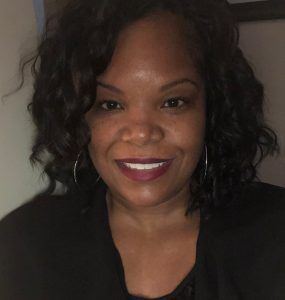
 

Tagged With: CMP, finding a job, furloughs, job search, John Ray, layoffs, LinkedIn, North Fulton Business Radio, outlook for hiring, Patrick Lynch, SHRM Atlanta, undertaking a job search, using LinkedIn, video interviewing

ProfitSense with Bill McDermott, Episode 8: Charlie B. Lewis, Jr. of Lewis Contracting Services

April 13, 2020 by John Ray

North Fulton Studio
North Fulton Studio
ProfitSense with Bill McDermott, Episode 8: Charlie B. Lewis, Jr. of Lewis Contracting Services
Loading
00:00 /
RSS Feed
Share
Link
Embed

Download file

Lewis Contracting Services
Charlie Lewis and Bill McDermott

ProfitSense with Bill McDermott, Episode 8:  Charlie B. Lewis, Jr. of Lewis Contracting Services,LLC

Lewis Contracting Services’ Charlie Lewis joins host Bill McDermott to talk about his company’s growth, surviving the 2008 recession, the challenging projects his firm takes on, developing key talent, and much more. It’s an inspiring story! “ProfitSense with Bill McDermott” is broadcast from the North Fulton Studio of Business RadioX® in Alpharetta.

Charlie B. Lewis, Jr.,  Operations Manager, Lewis Contracting Services, LLC

Lewis Contracting Services
Charlie Lewis, Lewis Contracting Services

Lewis Contracting Services is one of the leading site development contractors in the Southeast.

It is a full service, heavy civil contracting company. They provide a comprehensive range of commercial construction services to various business, government, and educational sectors.

They specialize in clearing and grubbing, grading, excavation, utilities and drainage construction, paving, site clean-up, pump stations, force main retention and detention ponds, collector sewers, and underground piping.

Visit their website to learn more or contact Charlie at 404-522-1538.

About Your Host, Bill McDermott

Bill McDermott

Bill McDermott is Founder and CEO of McDermott Financial Solutions. After over three decades working for both national and community banks, Bill uses his expert knowledge to assist closely held companies with improving profitability, growing their business and finding financing. Bill is passionate about educating business owners about pertinent topics in the banking and finance arena.

He currently serves as Treasurer for the Atlanta Executive Forum and has held previous positions as board member for the Kennesaw State University Entrepreneurship Center and Gwinnett Habitat for Humanity and Treasurer for CEO NetWeavers. Bill is a graduate of Wake Forest University and he and his wife, Martha have called Atlanta home for over 40 years. Outside of work, Bill enjoys golf, traveling and gardening.

Connect with Bill on LinkedIn and Twitter and follow McDermott Financial Solutions on LinkedIn. The complete show archive for ProfitSense with Bill McDermott” can be found at profitsenseradio.com.

Lewis Contracting Services


Tagged With: Charlie Lewis, commercial construction, Construction, contracting, Lewis Contracting Services, ProfitSense, ProfitSense with Bill McDermott

Jay Litton and Katherine Simons, RUMC Job Networking

April 10, 2020 by John Ray

RUMC Job Networking
North Fulton Business Radio
Jay Litton and Katherine Simons, RUMC Job Networking
Loading
00:00 /
RSS Feed
Share
Link
Embed

Download file

RUMC Job Networking

“North Fulton Business Radio,” Episode 215: Jay Litton and Katherine Simons, RUMC Job Networking

RUMC Job Networking has touched literally thousands of lives in the well over two decades of its existence. Jay Litton and Katherine Simons, co-leaders of this ministry of Roswell United Methodist Church, join the show to talk about how they have morphed their programming to a virtual platform, advice they’d offer job seekers in this economic climate, and much more. The host of “North Fulton Business Radio” is John Ray and the show is produced virtually from the North Fulton studio of Business RadioX® in Alpharetta.

RUMC Job Networking

For over 25 years RUMC Job Networking has been providing employment workshops, ‘mini’ job fairs, and evening dinners with keynote speakers to those in need of employment or job readiness. RUMC Job Networking exists to teach job seekers how to begin and sustain a job search while providing emotional support and encouragement. They provide this support through mentoring, community prayer partners (all faiths and denominations), and support groups.

Since 2010, they have been training on job readiness while making states and other countries aware of the need for Job Networking including: Holland, Singapore, Portugal and London. The impact of this program has reached the attention of ABC World News, Fox 5 News, the Wall Street Journal, and the Atlanta Journal. Their interview on National Public Radio discussed how a community works together to help the unemployed. They have developed close relationships with the state and federal departments of labor and have attended events hosted by the White House and the Community Partnerships for Faith Based Programs. They have reinforced that we are filling a gap they cannot serve.

RUMC Job Networking meets the 2nd and 4th Mondays of the month. During the coronavirus pandemic they have gone virtual, still meeting on the 2nd and 4th Mondays of the month, so they can stay engaged with job seekers during their job search.

To connect with RUMC Job Networking, visit their website to find their next meeting and agenda.

Jay Litton

RUMC Job Networking
Jay Litton

Jay Litton is a Senior Enterprise Account Executive at Sumo Logic. He is a seasoned enterprise sales/sales management executive with a track record of success as both an individual contributor and in sales leadership roles. During his career, Jay has achieved top performing status during at both start ups and multi-billion dollar organizations.

He has been providing career advice at RUMC Job Networking since inception of the ministry. With Katherine Simons, he co-leads a team of over 300 volunteer professionals who donate their time with an eight-hour agenda twice each month. Jay is also known as the creator of the WoW! Interview™ having taught over 10,000 professionals in career transition.

Jay previously appeared on Business RadioX® in 2017; you can find that episode here.

Katherine Simons

RUMC Job Networking
Katherine Simons

Katherine Simons is the previous owner of DDS Staffing Resources specializing in the temporary and permanent staffing of medical and dental staff . She also partnered with her son-in-law Tim Rush, in ownership of a Healthcare Job Board, Healthcare Staffing Innovations, LLC which features www.advancedpracticejobs.com, the largest and most successful job board highlighting nurse practitioners and physician assistants.

In addition to co-leading RUMC Job Networking with Jay, Katherine has served as Chairperson for New Members and Assimilation at Roswell United Methodist Church, a 6000 member congregation, She serves on the Board of Directors for the Greater North Fulton Chamber of Commerce and on the HomeStretch Board of Directors.

Katherine is author of Loving Your Neighbor, A Faith Community’s Response to the Unemployment Crisis, written in 2010, but so timely in our current environment.

Show Notes from Jay and Katherine:

  • Stay Positive, Move Forward and Keep the Faith…
    Stay Positive by…..
    1.  Keep your energy level high through diet, exercise, rest, and positive thinking
    2.  Surround yourself with friends who have a good story to tell.  Stay away from “downers”
    3. Trust that God has a Plan for your life and it is up to you to see and hear it.  Be willing to try new things.  It could lead to his plan.
    4.  Be like Thomas Edison….see every “no” as that much closer to a “yes” answer.  Learn from the “no’s”
    5.  Go places where you find positive people .  Today, there are many ways to connect with positive ideas on-line.
    6.  Be ready everyday for a virtual interview.  Be dressed.  Look the part.
    Move Forward by…
    1.  Continuing to learn and try new job search techniques
    2.  Connecting with people in your industry
    3.  Practice and prepare for company interviews PPQ
    4.  Track how many calls you need to make to accomplish a result.  A result may be a conversation, an introduction, a new direction, an interview.  Once you know how many calls it takes to get to one of these results, schedule every day to make the necessary calls.
    5.  Treat the process like an Adventure.  You never know what’s around the next corner.
    6.  Keep a notebook of all successes and lessons learned.
    7.  Clear up conflicts that would cause references to be less than stellar.  Never give reference for a job without calling person first to ask and explain the opportunity.  A positive or negative reference can make or break the next step.
    Moving Forward…
    1. Learn LinkedIn like never before.
    2. Learn Zoom – interview yourself on camera with a free Zoom subscription
    3. Research – Get daily emails from the Atlanta Business Chronicle and other information rich sources that are locally based.
    Keep the Faith by…..
    1. We believe that you should not do your job search alone. God should included through prayers.
    2. Take our Crossroads Career class which covers 7 steps of the job search and shows how God is in every step.
    3. Consider taking a bible study via a free Zoom subscription with a few friends.
    4. See God work in other people by listening to others and see where you can help.
     
    Final comments…
    1. Notice that people are being hired. We just received an email on Wednesday from an excited job seeker that attended one of our recent mini job fair.
    2. Believe it is not “if” but “when” you will go on next interview
    3. Continue to stay in shape….work head, heart, and body muscles
    4. Where can you volunteer your time…even virtually to help others or a nonprofit group that helps others.
    5. Biggest surprise? Lots of layoffs but companies are hiring.
    6. Biggest concern? The layoffs mean quality people are hitting the market. You need great job search skills and persistence to win.
    Taking Action!
    1. Attend our virtual RUMC Job Networking meeting on Monday, April 13th and our upcoming meeting agenda. Visit the RUMC Job Networking website for details.
    2. Subscribe to our email Groups called Groups.io. to get the job leads submitted to us by employers and volunteers.

RUMC Job Networking

North Fulton Business Radio” is produced virtually from the North Fulton studio of Business RadioX® in Alpharetta. You can find the full archive of shows by following this link. The show is available on all the major podcast apps, including Apple Podcasts, Spotify, Google, iHeart Radio, Stitcher, TuneIn, and others.

Renasant Bank has humble roots, starting in 1904 as a $100,000 bank in a Lee County, Mississippi, bakery. Since then, Renasant has grown to become one of the Southeast’s strongest financial institutions with over $13 billion in assets and more than 190 banking, lending, wealth management and financial services offices in Mississippi, Alabama, Tennessee, Georgia and Florida. All of Renasant’s success stems from each of their banker’s commitment to investing in their communities as a way of better understanding the people they serve. At Renasant Bank, they understand you because they work and live alongside you every day.
Tagged With: Jay Litton, job networking, job search, Katherine Simons, LinkedIn, networking, RUMC Job Networking, virtual interview

  • « Previous Page
  • 1
  • …
  • 240
  • 241
  • 242
  • 243
  • 244
  • …
  • 276
  • Next Page »

Business RadioX ® Network


Our Most Recent Episode

CONNECT WITH US

  • Email
  • Facebook
  • LinkedIn
  • Twitter
  • YouTube

Our Mission

We help local business leaders get the word out about the important work they’re doing to serve their market, their community, and their profession.

We support and celebrate business by sharing positive business stories that traditional media ignores. Some media leans left. Some media leans right. We lean business.

Sponsor a Show

Build Relationships and Grow Your Business. Click here for more details.

Partner With Us

Discover More Here

Terms and Conditions
Privacy Policy

Connect with us

Want to keep up with the latest in pro-business news across the network? Follow us on social media for the latest stories!
  • Email
  • Facebook
  • Google+
  • LinkedIn
  • Twitter
  • YouTube

Business RadioX® Headquarters
1000 Abernathy Rd. NE
Building 400, Suite L-10
Sandy Springs, GA 30328

© 2025 Business RadioX ® · Rainmaker Platform

BRXStudioCoversLA

Wait! Don’t Miss an Episode of LA Business Radio

BRXStudioCoversDENVER

Wait! Don’t Miss an Episode of Denver Business Radio

BRXStudioCoversPENSACOLA

Wait! Don’t Miss an Episode of Pensacola Business Radio

BRXStudioCoversBIRMINGHAM

Wait! Don’t Miss an Episode of Birmingham Business Radio

BRXStudioCoversTALLAHASSEE

Wait! Don’t Miss an Episode of Tallahassee Business Radio

BRXStudioCoversRALEIGH

Wait! Don’t Miss an Episode of Raleigh Business Radio

BRXStudioCoversRICHMONDNoWhite

Wait! Don’t Miss an Episode of Richmond Business Radio

BRXStudioCoversNASHVILLENoWhite

Wait! Don’t Miss an Episode of Nashville Business Radio

BRXStudioCoversDETROIT

Wait! Don’t Miss an Episode of Detroit Business Radio

BRXStudioCoversSTLOUIS

Wait! Don’t Miss an Episode of St. Louis Business Radio

BRXStudioCoversCOLUMBUS-small

Wait! Don’t Miss an Episode of Columbus Business Radio

Coachthecoach-08-08

Wait! Don’t Miss an Episode of Coach the Coach

BRXStudioCoversBAYAREA

Wait! Don’t Miss an Episode of Bay Area Business Radio

BRXStudioCoversCHICAGO

Wait! Don’t Miss an Episode of Chicago Business Radio

Wait! Don’t Miss an Episode of Atlanta Business Radio