Business RadioX ®

  • Home
  • Business RadioX ® Communities
    • Southeast
      • Alabama
        • Birmingham
      • Florida
        • Orlando
        • Pensacola
        • South Florida
        • Tampa
        • Tallahassee
      • Georgia
        • Atlanta
        • Cherokee
        • Forsyth
        • Greater Perimeter
        • Gwinnett
        • North Fulton
        • North Georgia
        • Northeast Georgia
        • Rome
        • Savannah
      • Louisiana
        • New Orleans
      • North Carolina
        • Charlotte
        • Raleigh
      • Tennessee
        • Chattanooga
        • Nashville
      • Virginia
        • Richmond
    • South Central
      • Arkansas
        • Northwest Arkansas
    • Midwest
      • Illinois
        • Chicago
      • Michigan
        • Detroit
      • Minnesota
        • Minneapolis St. Paul
      • Missouri
        • St. Louis
      • Ohio
        • Cleveland
        • Columbus
        • Dayton
    • Southwest
      • Arizona
        • Phoenix
        • Tucson
        • Valley
      • Texas
        • Austin
        • Dallas
        • Houston
    • West
      • California
        • Bay Area
        • LA
        • Pasadena
      • Colorado
        • Denver
      • Hawaii
        • Oahu
  • FAQs
  • About Us
    • Our Mission
    • Our Audience
    • Why It Works
    • What People Are Saying
    • BRX in the News
  • Resources
    • BRX Pro Tips
    • B2B Marketing: The 4Rs
    • High Velocity Selling Habits
    • Why Most B2B Media Strategies Fail
    • 9 Reasons To Sponsor A Business RadioX ® Show
  • Partner With Us
  • Veteran Business RadioX ®

Ron Wilder, 1-800 Water Damage of North Fulton

July 16, 2020 by John Ray

1-800 Water Damage
North Fulton Business Radio
Ron Wilder, 1-800 Water Damage of North Fulton
Loading
00:00 /
RSS Feed
Share
Link
Embed

Download file

1-800 Water Damage

Ron Wilder, 1-800 Water Damage of North Fulton (North Fulton Business Radio, Episode 260)

The owner of 1-800 Water Damage of North Fulton, Ron Wilder, joined host John Ray to discuss his entrepreneurial journey and why his desire to serve people is fulfilled through his business. “North Fulton Business Radio” is produced virtually by the North Fulton studio of Business RadioX® in Alpharetta.

1-800 Water Damage of North Fulton

Unexpected flooding, fire, or sewage disasters take a great toll on home or business owners and leave damage in their wake. Their local restoration experts use advanced equipment and techniques to perform property damage restoration in Fulton and DeKalb Counties in Georgia. Their IICRC-certified restoration professionals deal with damage stemming from water, smoke, fire, sewage, and mold. 1-800 WATER DAMAGE is trusted nationwide for high quality restoration services, and they are proud to bring those services to the North Fulton community. With over a decade of experience, their restoration professionals have the tools and knowledge necessary to get customer’s property looking like new again.

Ron Wilder, Owner/Operator, 1-800 Water Damage of North Fulton

Ron’s career began in the Army National Guard where he served 8 years. It was the launching pad for his graduation from The Ohio State University as a Certified Public Accountant.  Ron’s career included over 23 years in the accounting profession helping people.

As next phase, he now leads the 1-800 WATER DAMAGE of North Fulton team with a continued focus on helping people.

Point of Contact for Ron Wilder

Company website

LinkedIn

Twitter

Questions/Topics Discussed in this Show

  • How has your company been since COVID-19?
  • What makes you different from all the other companies in your industry?
  • Why the change from Corporate America to being an Entrepreneur?
  • Why did you pick the Property Restoration industry?
  • How would previous customers describe you all?
  • As a business owner, what are your top three priorities?
  • How do you define success?
  • Explain a time when you exceed a customer’s expectation

North Fulton Business Radio” is produced virtually from the North Fulton studio of Business RadioX® in Alpharetta. You can find the full archive of shows by following this link. The show is available on all the major podcast apps, including Apple Podcasts, Spotify, Google, iHeart Radio, Stitcher, TuneIn, and others.

Renasant Bank has humble roots, starting in 1904 as a $100,000 bank in a Lee County, Mississippi, bakery. Since then, Renasant has grown to become one of the Southeast’s strongest financial institutions with over $13 billion in assets and more than 190 banking, lending, wealth management and financial services offices in Mississippi, Alabama, Tennessee, Georgia and Florida. All of Renasant’s success stems from each of their banker’s commitment to investing in their communities as a way of better understanding the people they serve. At Renasant Bank, they understand you because they work and live alongside you every day.

C

Tagged With: flooding, John Ray, mold, mold remediation, North Fulton, North Fulton Business Radio, property restoration, restoration, restoration services, Ron Wilder, sewage cleanup, sewage disasters, water damage

Decision Vision Episode 74: How Can I Improve My Business Decision Making Skills? – An Interview with Tyler Ludlow, Decision Skills Institute

July 16, 2020 by John Ray

decision making skills
Decision Vision
Decision Vision Episode 74: How Can I Improve My Business Decision Making Skills? - An Interview with Tyler Ludlow, Decision Skills Institute
Loading
00:00 /
RSS Feed
Share
Link
Embed

Download file

decision making skills

Decision Vision Episode 74:  How Can I Improve My Business Decision Making Skills? – An Interview with Tyler Ludlow, Decision Skills Institute

Decision making skills are vital for any successful business owner. In this edition of “Decision Vision,” decision scientist Tyler Ludlow joins host Mike Blake to discuss the process for making good decisions and much more. “Decision Vision” is presented by Brady Ware & Company.

Decision Skills Institute

The Institute helps people that might otherwise might be overwhelmed by complexity, stress, or worry, to overcome them and take action. We took 50 years of cutting-edge research, applied for decades at the world’s most successful companies, and created a framework that empowers individuals to consistently make better decisions, leading to better results, faster. We are the Robin Hoods of Decision Science!

Tyler Ludlow, Founder and Chief Decision Scientist, Decision Skills Institute

As a decision scientist, Tyler Ludlow helps people everywhere turn decision burdens into opportunities for growth.

He began his Decision Science career at Unilever, part of the team that won the 2008 DAS Practice Award for embedding DA into organizational decision making.  Two years later Chevron won the same award prior to receiving the first Raiffa-Howard Award for Organizational Decision Quality in 2014.  Meanwhile, Tyler joined Lilly in 2012 and was a part of the team that received the Raiffa-Howard Award in 2016.

At Lilly he facilitated large, complex, and strategic decisions, such as a $750M clinical trial investment and corporate change initiatives that structurally changed the business.  Tyler has trained over a thousand business leaders and managers in basic and advanced decision science applications, always with a practice-oriented, how-can-I-actually-use-this-stuff mindset.  He is now the owner at Decision Science Advisory, a company focused on establishing and strengthening decision expertise groups in the pharmaceutical industry.

After a decade of helping senior leaders and organizations make large, complex, and strategic decisions, he turned his focus to individual and personal contexts.  He established and led Lilly’s efforts to support and enable better decision making between patients and their healthcare providers, including creating the Shared Decision Making Summit, an event that brings together stakeholders from across healthcare (patients, caregivers, advocates, providers, researchers, pharma companies, regulators, etc) to identify practical ways to collectively change and improve healthcare decision making.  He founded the Decision Skills Institute to make cutting-edge decision science accessible to everyone.  It’s mission is to make the world more deciderate by impacting 10 million decisions in 10 years.

At home, he with his wife try to apply decision science in one of the most difficult contexts – in parenting their ten children.

Michael Blake, Brady Ware & Company

Mike Blake, Host of the “Decision Vision” podcast series

Michael Blake is Host of the “Decision Vision” podcast series and a Director of Brady Ware & Company. Mike specializes in the valuation of intellectual property-driven firms, such as software firms, aerospace firms and professional services firms, most frequently in the capacity as a transaction advisor, helping clients obtain great outcomes from complex transaction opportunities. He is also a specialist in the appraisal of intellectual properties as stand-alone assets, such as software, trade secrets, and patents.

Mike has been a full-time business appraiser for 13 years with public accounting firms, boutique business appraisal firms, and an owner of his own firm. Prior to that, he spent 8 years in venture capital and investment banking, including transactions in the U.S., Israel, Russia, Ukraine, and Belarus.

Brady Ware & Company

Brady Ware & Company is a regional full-service accounting and advisory firm which helps businesses and entrepreneurs make visions a reality. Brady Ware services clients nationally from its offices in Alpharetta, GA; Columbus and Dayton, OH; and Richmond, IN. The firm is growth minded, committed to the regions in which they operate, and most importantly, they make significant investments in their people and service offerings to meet the changing financial needs of those they are privileged to serve. The firm is dedicated to providing results that make a difference for its clients.

Decision Vision Podcast Series

“Decision Vision” is a podcast covering topics and issues facing small business owners and connecting them with solutions from leading experts. This series is presented by Brady Ware & Company. If you are a decision maker for a small business, we’d love to hear from you. Contact us at decisionvision@bradyware.com and make sure to listen to every Thursday to the “Decision Vision” podcast.

Past episodes of “Decision Vision” can be found at decisionvisionpodcast.com. “Decision Vision” is produced and broadcast by the North Fulton studio of Business RadioX®.

Visit Brady Ware & Company on social media:

LinkedIn:  https://www.linkedin.com/company/brady-ware/

Facebook: https://www.facebook.com/bradywareCPAs/

Twitter: https://twitter.com/BradyWare

Instagram: https://www.instagram.com/bradywarecompany/

Show Transcript

Intro: [00:00:01] Welcome to Decision Vision, a podcast series focusing on critical business decisions. Brought to you by Brady Ware & Company. Brady Ware is a regional full-service accounting and advisory firm that helps businesses and entrepreneurs make visions a reality.

Mike Blake: [00:00:21] And welcome to Decision Vision, a podcast giving you, the listener, clear vision to make great decisions. In each episode, we discuss the process of decision making on a different topic from the business owner’s or executive’s perspective. We aren’t necessarily telling you what to do, but we can put you in a position to make an informed decision on your own and understand when you might need help along the way.

Mike Blake: [00:00:41] My name is Mike Blake and I’m your host for today’s program. I’m a director at Brady Ware & Company, a full-service accounting firm based in Dayton, Ohio, with offices in Dayton, Columbus, Ohio, Richmond, Indiana, and Alpharetta, Georgia. Brady Ware is sponsoring this podcast, which is being recorded in Atlanta for social distancing protocols. If you like this podcast, please subscribe on your favorite podcast aggregator. And please consider leaving a review of the podcast as well.

Mike Blake: [00:01:09] So today’s topic is a little bit of a meta topic. And by meta, what I mean is that, this podcast is called Decision Vision. And for the most part, the topics have involved exploring the process of making a decision on a particular topic. We’ve gotten more granular and topical from time to time because events warranted it, or I just thought it was interesting, or, quite frankly, because the conversation needed to be more tactical, particularly during the onset of the coronavirus pandemic. But today we’re going to kind of go out in a different direction and explore the process of making good decisions.

Mike Blake: [00:01:58] And I think we’re going to do a series of these over time that explore different facets of making a good decision generally. And how to develop a good decision-making skill set. And I was kind of inspired by this, of all things a MasterClass video. And if you spend any time on YouTube, for some reason, your MasterClass will throw up a commercial on YouTube. And by the way, those things are fantastic. I watch the commercials – just the commercials. They are so good.

Mike Blake: [00:02:36] But anyway, they had this thing by Garry Kasparov, who is a world chess champion and a dominant player for a very long time. And he has a MasterClass on chess playing. And I used to play chess competitively. I don’t anymore. I’m too old and I do other things now. But one of the things that he said about the value of the game of chess, I thought it was so insightful. And for all the games I played and all that I’ve studied about the game, I never really understood this. It’s that the game of chess makes you a better decision maker. Because the game of chess is about making decisions. It is a process of making decisions and thinking ahead. And not just thinking ahead, but also having to decide, you know, “Do I move this piece here? This piece there? Do I capture this piece? Don’t I not capture this piece?” And every move is a decision. And I thought, “Wow. That’s really neat and profound.” I didn’t waste all that time in college and high school playing chess.

Mike Blake: [00:03:42] And so, a few weeks ago, I ran into this fellow – rather he was introduced to me by Brian Falony, who’s our marketing director here at Brady Ware. And he’s a specialist on making decisions. And a specialist on making a decision in one particular facet that I find excruciatingly interesting. And I know that’s a strange turn of phrase. But it really is that. And that is, the use of data in making decisions. And, you know, data is all now. It really has been for about ten years or so. Everybody is listening to this podcast or at least 98 percent of you, I’m sure, have heard the term big data. Most of you probably has a pretty good idea as to what it means, has a handle on it.

Mike Blake: [00:04:42] But what do you do with that? Right? And is big data for me? I happen to be a numbers geek. I do numbers for a living. So, I have some training in data analytics. But a lot of people don’t. And data analytics was really not taught in business school any meaningful way until about 10, 15 years ago, with the exception of some very specialized programs, for example, at Georgia Tech.

Mike Blake: [00:05:10] And on top of that – and this will probably be another topic that I’d do at some point – but for those who know me or listen to the podcast, you know, I do a lot of work with startups. And I can’t tell you how many times somebody pitches me a deal and they say, “Our business model is data. And we’re going to sell that data to folks that want to use that data.” But then you sort of get into it, “Well, how do you do that?” Or, “What’s the data worth?” Or, “What’s the business that even sell data?” And very quickly that conversation goes from smooth sailing to running a ground in about 19 icebergs and a rocky shore. Because data is so – oddly enough, data for something that is designed to be very specific. Once you really sort of get down to brass tacks, you try to convert the — into useful, actionable business strategy. It’s not all that easy to do.

Mike Blake: [00:06:10] And so, helping us with that is my new friend, Tyler Ludlow, who is Founder and Chief Decision Scientist of Decision Skills Institute. After earning a Degree in Applied Mathematics and an MBA, Tyler studied Decision Science at Stanford University. He then mastered its application at Global 500 companies leading decisions for $750 million investment, a global product launch, and more. Tyler has worked with top universities such as Stanford, Yale, and Dartmouth, as well as 18 of the top 20 pharmaceutical companies.

Mike Blake: [00:06:45] After a decade in those contexts, Tyler decided to pull a Robin Hood at decision science and founded the Decisions Skills Institute to bring it to people everywhere. He helps people like you turn your decision burdens into opportunities for growth. Tyler’s best decisions were marrying his wife and having their ten children. That’s not a typo. I may have to go into that as well. Talk about a recidivist. Together they enjoy the outdoors. I’ll bet you do this. No space for anybody. Hiking, backpacking, rafting, ice climbing, etc. Tyler, thanks so much for coming on the program and welcome.

Tyler Ludlow: [00:07:21] Hey, thank you. I’m glad to be here.

Mike Blake: [00:07:24] Ten children?

Tyler Ludlow: [00:07:27] Yes. And actually, I had to recently update that description. A couple months ago, it used to be nine but we have a little two-month-old.

Mike Blake: [00:07:34] Well, congratulations. Are you guys like The Partridge Family and you just drive around in an old school bus or what?

Tyler Ludlow: [00:07:42] We haven’t owned a regular vehicle in a long time, that’s for sure. Yeah. No. But we love it. We love it. They’re great kids. They’re awesome. It’s a lot of fun. It’s a party.

Mike Blake: [00:07:54] I mean, do all ten still live at home? I mean, some must be out of the house by now.

Tyler Ludlow: [00:07:59] Our oldest is 21 and he has an interesting life that kid. His senior year of high school, he did a computer full-time programming bootcamp, three=month program thing. So, he’s had a full=time professional career job as a developer at Geico for two years now. And is looking to buy his first house shortly. So, he’ll be moving out. And then our 19-year-old will be moving out shortly. But we go down every two years or so down to – well, down to our newest. So, we still have a full house at the moment.

Mike Blake: [00:08:39] Well, that’s neat. And you now hold the official Decision Vision podcast record for most children. The previous record holder was Tom Brooks, who came on, I think, somewhere in the thirties for this show. And he has eight. And I thought that record was a stand, frankly, for a lot longer than it did. So, congratulations. I know that this acknowledgement makes the whole thing worthwhile, I’m sure.

Tyler Ludlow: [00:09:05] Absolutely. Absolutely.

Mike Blake: [00:09:08] Wow. Okay. Well, that could be a separate podcast. But I did promise our audience we would talk about big data decisions, so we will transfer back to that. So, Tyler, let’s start off. What makes for a good decision? How do you know if a decision that you made is a good decision?

Tyler Ludlow: [00:09:33] That’s a great question. You know, actually, that exact question many times when I speak at an event or do a workshop, I will start with that question prompt. And use a Q&A response and then I can record everyone’s ideas. And what I find when most people answer that question, the most common theme is that I got what I wanted. They got good results. It’s something about the outcomes.

Tyler Ludlow: [00:10:02] I think it’s interesting in the corporate settings where a lot of decisions are made by committee or by group. The number two thing that I see come up is, everyone agrees on it. Everyone’s on board or something like that, which I think most of us could envision we can make a good decision. And sometimes the best decision, everyone doesn’t agree with. And as well as you can make a good decision and have bad results and have a bad outcome.

Tyler Ludlow: [00:10:33] I can also talk about kids and what not. I mean, I can’t remember the number of times where I didn’t study for a test. Which I think normally will be considered a bad decision. And still ended up getting a good or decent grade on. so that’s a good outcome. So, the key to me in answering this question is, first, being able to decouple or detangle decisions and their results or their outcomes. And to realize that we’re talking about what makes a good decision. It’s, we want to focus in on making good decisions regardless of the outcomes. Recognizing that better outcomes happen more frequently when we make good decisions.

Mike Blake: [00:11:18] And I want to spend a little bit of time on that point, because you can, in fact, have a good outcome from a bad decision, can’t you?

Tyler Ludlow: [00:11:30] Oh, yeah, yeah.

Mike Blake: [00:11:30] Right. Well, let’s-

Tyler Ludlow: [00:11:30] People notice all the time.

Mike Blake: [00:11:33] Well, they do. But take an extreme example. Let say that, a person decided that for whatever reason, they would start using drugs. And in the course of using drugs, they met another user that led to a fantastic professional opportunity. And it made them very wealthy. It made them very successful. And maybe that even led to a scenario in which they went into rehab and got off the drugs. But you’d never tell somebody to go start using drugs because that’s the path to success.

Tyler Ludlow: [00:12:12] Right. Right.

Mike Blake: [00:12:12] And I think one of the things that makes the – one of the things that makes a decision good versus bad is separating kind of process from luck. When you make a decision, the goal, I think, is to control as much of the outcome as possible. Because you control how much you just sort of stacked the deck in your favor as opposed to whether or not there is actually a good outcome.

Tyler Ludlow: [00:12:42] Yeah. There’s a lot about – I love the way you kind of separate out process. There’s the process that you use to make the decision. And then there’s sort of the moment that you decide. And then there’s all the other implementations, so to speak, putting it into action that happens down the road. And we can do all sorts of things to influence the outcome or mitigate certain risks or whatnot that help better results to show it more frequently. Usually we can’t guarantee it. That’s what makes life so interesting and exciting and fun. I mean, that’s what makes it all that variety. It also is what brings us all the stress and the worry so much about these things in the future.

Tyler Ludlow: [00:13:21] But, yeah, we do what we can at the moment that we make the decision. Then, we do our best, again, to stick to it, implement, adjust all those things afterwards. But it’s not the actual outcome itself that should be our measuring stick for whether we made a good choice or not.

Mike Blake: [00:13:37] Now, could the definition be modified, maybe if you have a process that’s leading to lots of good outcomes? Maybe that’s a way to kind of think about it, is if you have a good decision process, over time you should have better outcomes than the person that has the poorer decision process. And then that gets into basic statistical analysis that, over time as your sample size gets greater, your expected outcomes should start to match your actual outcomes from your sample size.

Tyler Ludlow: [00:14:15] Yes. Absolutely. On the nose. I tend to use the phrasing of better outcomes more frequently. You’re never guaranteed on one to be better off. But you’re right, as you make more overtime, you should be better off. Yes, absolutely.

Mike Blake: [00:14:28] So, you’re approaching decision making from a data perspective, which I love. I wish people that did what I do for a living would approach things from a more rigorous data perspective as well. But again, that’s another podcast. You know, everything is about big data and artificial intelligence now. And we sort of have this healthy sprinkling of block chain as well somewhere in there. Why aren’t we just turning everything over to robots, some websites, at this point to make our decisions?

Tyler Ludlow: [00:15:05] That’s a good question, because we probably should be turning more – we’re learning that we can be turning more and more over. So, why do we not just turn it all over? I think there’s a few reasons. One, for example, just last week, I attended a virtual conference. And it was on decision making. And at that conference, there was a session on the merging or the integration of data science and decision science.

Tyler Ludlow: [00:15:34] And one of the presenters was this gentleman who was a data scientist. And he had sort of a framework, a model, slides, some pictures, graphics that he was showing. And it was really intriguing because he showed how, from a data science perspective, one of the features that big data provides is identifying problems or opportunities. I mean, it’s seeing the patterns that we, as humans, don’t. Our brains can’t handle all that.

Tyler Ludlow: [00:16:07] And those are, I think, potential opportunities. Because I think the key – we talked about decision making process in general. I think the place that most of us go wrong is that most folks will see decision making as, “I go collect some data. I analyze it. And make a decision.” And where that cynically can go wrong is that you get the right answer to the wrong problem. That you’re not really tackling. That you’re not framing. Taking some time to sort of frame that decision. You know, what is this? What’s my main objective? What’s most important to me? Just kind of early insight and all that kind of stuff.

Tyler Ludlow: [00:16:43] And I think that is one of the opportunities to blend data – what you call it data science or big data or whatever. But data with decision making is, one, identifying the opportunities. Sometimes we don’t see those. I think big machine learning AI can bring up opportunities. So, I think that’s one way that it can help in that mix to make classic definition of being able to decide.

Tyler Ludlow: [00:17:11] Even the root of the word to decide comes from decision. You can hear it in sort of the root of the word scissors. I think they both come from the same root in Greek or Latin. And so, it’s about cutting off all options except one that then you move forward with. And that’s what a decision is. To select that best alternative, the measuring stick is what we care about. It’s the value criteria that are important to us. And AI can’t tell us that. We have to get clear on what we want. And that’s part of – I mean, AI can do it. Machinery can do a lot to learn how to find that in the data and get better at spotting a cat in the picture or other more important things. But to be clear about what’s important in the beginning and what we’re driving after, let alone to take these opportunities and then say, “Yes. This is one that we want to move after and frame that decision.” I think that’s where the humans are needed.

Mike Blake: [00:18:16] Now, I think there’s a misconception that all of a sudden data matters as if nobody used any data before to rely on making important decisions. Right?

Tyler Ludlow: [00:18:27] Right.

Mike Blake: [00:18:27] And so, it’s a misconception to say that data hasn’t been around or hasn’t been driving decisions for a long time. But what’s different now? What has changed where data is now sort of a top of mind, very much kind of vote set, if you will, a decision tool that’s available.

Tyler Ludlow: [00:18:54] Well, I think it’s just the last word that you used, availability. Something being available. I think that’s one of the biggest keys. I mean, you could layer onto that computing power, right? The ability to be able to do something with it, to make sense of it, especially to be able to make sense of it in a timely fashion. Often we don’t control the time bounds of the decisions in which we need to – that we need to make. I can think, you know, we’ve done a lot over the years with stochastic simulation or Monte Carlo simulation, being able to use a computer to do that. The theory and the thought of how that would be valuable existed before the computing power. And even in the early days, it could be done on big behemoth processors.

Tyler Ludlow: [00:19:37] But to be able to put that at people’s fingertips, I mean, I’ve worked on projects where it was, you know, all of that rocket science, so to speak, gets embedded under the hood. And the decision makers, they’re not even going to an expert anymore to work with it. It’s just happening at their fingertips. They’re getting almost instantaneous looks at distributions of potential future outcomes and then being able to make their decision about whether to go forward or not

Tyler Ludlow: [00:20:01] So, I think the availability of the data, like as you asked your question, I was thinking how a company that I used to work at, a pharma company. Every drug that we had, every molecule that we had for every potential disease that it might be efficacious in, we would do an assessment of the likelihood of it being able to clear each of its clinical study hurdles on its way to potentially being approved. And so, it’s an assessment about the future.

Tyler Ludlow: [00:20:33] And historical data in the past might be informative, but there’s a lot of subjective information about current science, regulatory stuff, and all sorts of things that we’re looking towards the future. One reason why we relied so much on subjective assessment in that process is because there wasn’t available data to be able to aggregate. That’s happening. That’s changing in more and more places where you get the data available. And then you have the computational power to make sense of it in a timeframe that’s useful for the decision maker. I think those are some of the big keys.

Mike Blake: [00:21:09] You know the Monte Carlo tools are now so powerful. And I found out with my clients to be so eye opening. I’m fortunate, I kind of made a commitment to learn that kind of modeling a long time ago. And in addition to having it sort of generate referrals for my competitors who aren’t really very comfortable doing that. When you are able to show a client not a static outcome, like a forecast, for example, or three or four forecasts based on best case scenario, worst case, middle case, scenario. That stuff drives me crazy. But instead, with Monte Carlo, you’re able to show people a full range of potential outcomes. And literally show an image that paints a picture of the distribution to show kind of the relative trade=off between likelihood of outcome and extreme amount of outcome, basically.

Mike Blake: [00:22:12] And at first my client thought it was witchcraft. But once I sort of explained to them that, “No. It’s not witchcraft. But it is different.” There’s just so much there. And I don’t think Monte Carlo simulation and the tools that enable it, they don’t get enough credit in terms of how much that can and is starting to revolutionize decision making.

Tyler Ludlow: [00:22:36] Yeah. Yeah. Dead on. And as you were talking, I was just thinking, “This is just timely.” Just last night three of my boys were playing Risk together, 19-year-old, my 14-year-old, and my nine year old. And a week or so – it may have been during this conference that I mentioned that was attending. You know, we were looking all this at remodeling stuff. And I had this idea that I should teach my kids just the concepts of Monte Carlo simulation. And I thought, it’s been a little while since we played a game of Risk. I’ll teach them to use it in Risk. And I’ll show, “Hey, you can look at these different strategies. Should I attack one country to the other? There’s a best case. There’s the worst case. There’s an average.” But it’s really the distribution of potential outcomes that you want to make your strategy based off of.

Tyler Ludlow: [00:23:23] And so, it just so happened they started their own game last night. And so, they’re partway through when I walked in. And I said, “Hey, guys. I’m going to interrupt your game a little bit. I’m going to teach you this thing called Monte Carlo simulation.” We homeschool our kids so they’re okay with a little bit of mom and dad interrupting life to do some teaching. So, we did that. And we talked, like, 15, 20 minutes. I just gave them the concepts. I showed them the loop sheets engine. That was a very light Monte Carlo engine. And they all got it. In fact, my nine-year-old was the most excited about it because he usually gets pounced on by his older brothers when he plays. But he was like, “I can have this little magic crystal ball type spreadsheet that can give me an idea of how successful I might be. That’s really cool, dad.

Tyler Ludlow: [00:24:11] So, it went better than I thought it would. But it made me think kind of like your last comments, you know, as we keep moving forward and people become more fluent in these sorts of techniques and data and in the use of it, even if they’re not a data scientist, just the usage of it, I think it will dramatically inform and increase the quality of our decision making.

Mike Blake: [00:24:35] So, what is it that makes data big? How did data go from being data to big data?

Tyler Ludlow: [00:24:42] Good question. Well, certainly back to maybe a little bit of this availability piece and the ubiquitousness of that availability. A lot of it having to do with databases becoming more proliferated in all different areas of our business. Things being more trackable so that they leave behind a database trail. And then the ability to share that data between systems. I mean, even just the analysis that we’re talking about doing, even if that analysis was possible processor-wise, and the data existed to do it with, you still have to then get the data into the system that’s going to do the analysis.

Tyler Ludlow: [00:25:27] And whether that’s an engine like Excel or add-ons into it or it’s a bespoke piece of software, the interoperability – so the availability, the ubiquitousness of that, and the interoperability of that, sharing of that data – to get it to the points where it’s gets closer to that point in time where the decision is being made or being looked into. To me, those are some of the key things that had it go from data to big data.

Tyler Ludlow: [00:25:58] I think one of the big challenges is how do you make big sense from big data? Now, we’re swimming in it. We’re swimming in this stuff. And how do you then use that in a timely fashion to actually make sense of it where it’s not a block box. Where you understand the story that’s being told. And you could communicate to somebody else this is why we’re doing it this way. As opposed to just, “Hey, this machine told me I don’t know that type things.

Mike Blake: [00:26:27] Can every business benefit from using data to drive decisions or maybe using it more than they already do?

Tyler Ludlow: [00:26:39] So, I think the answer is yes. But that’s kind of the answer that most people would expect. But then I think the cynics are rightly so in thinking, “Really? Like, everyone? All of us? Even some of these small entrepreneurs, small business folks?” Which, I think, that sort of pushback is good. So, I think the answer is yes in the right way.

Tyler Ludlow: [00:27:04] One of the biggest challenges, I think, we have in smaller organizations down to our personal lives – I think that’s the smallest organization, me and my individual life. One of the biggest challenges, I think, we have is learning how to press the pause button and reflect a little bit before we make a decision. And not just be in the flow of everything else that’s going on. And creating an opportunity like almost creating that fork in the road. And then saying, “Hey, I’m going to do something about it.” Sometimes in the moment when we’re going down the river, we don’t have the ability to necessarily make – take much time and make a decision about which fork in the river we’re going to go down just because of how fast the current is.

Tyler Ludlow: [00:27:54] So, in the moment, I think, there’s one answer about when is it appropriate to use big data and when do you just not have the time or the resources to make it makes sense. But the frequency with which it is useful goes up if we learn how to press the pause button. If we learn to sort of pre-think some of our decisions in a more strategic fashion. Rather than being so reactionary when they actually come up. And so I think in times like this, we get have a little bit of time to reflective. It provides more of an opportunity to go out and get your hands on and do something with that big data. And then once you’ve kind of pre-made that strategic decision, it might pop up here there, here there as you’re running down the river, so to speak.

Mike Blake: [00:28:38] You know, I think that last point is really smart. And I know we didn’t bring you on here to talk about the psychology of decision making. And I’m going to make a topic out of that at some point. But that pressing the pause button before you make a decision, I think I found to be so helpful. If there’s one thing that I’ve learned over my career that has made me a better decision maker, is to push pause and realize that most decisions I need to make in business are not snap decisions. Nobody expects me to make a snap decision. And there is something to taking a morning, or an afternoon, or sleeping on something, or even a weekend to make a decision that just leads to much better – just better outcomes.

Tyler Ludlow: [00:29:26] Yeah. I remember I was approached to help develop a training for, like, 3,000 thousand employees at large companies to work at. And the whole point of that training, it wasn’t around how do you make really big strategic decisions. Which was the normal place that my day job was. It was within the organization. It was about how to help employees think about just taking 15 or 20 minutes to stop and just jot down a few notes. Think through or a little bit of reflection before making that next sort of day to day – thoughtful day to day decision. So you’re absolutely right, learning to be able to do that is one of the biggest challenges. Having a great decision process is fantastic. But if you never take the time to actually deploy it, you’re missing out on it’s value.

Mike Blake: [00:30:19] Yeah. I mean, it’s rare in business that you really have to make wady snap decisions like that. We’re not in the military, so we don’t have to start moving troops around, otherwise people die. It’s like, “Okay. Well, this problem is going to be here.” As long as not using it to avoid the problem, right? There’s something to be said for sort of taking your time and perspective and adding some intellectual capital.

Mike Blake: [00:30:46] One of the things I hear about data and I hear people offer a lot of misgivings – I’m somewhat sympathetic to this argument – is that complete data is almost never reality. And can you fall into a trap of striving to collect that last bit of information that you just never actually make a decision? And then what’s that inflection point? Can you talk through what that inflection point kind of looks like or even feels like? Or you just need to say, “Okay. I’ve got enough. I’m never going to get a sure thing.” But in terms of kind of cost benefit, this is as much as I’m going to get. How do you figure that out?

Tyler Ludlow: [00:31:35] So, yeah. Great question. And I think my answer to it all come from, essentially, just building on the previous little discussion point that we had about pressing the pause button. Or the language that we use is to declare a decision. So, when you declare that decision, there’s some time that you take to say, “What’s my overall objective here? What am I trying to achieve? What are the alternatives I have on the table?” One of the biggest mistakes that people make is that they’ll frame up decisions as being, “Do I do this? Yes or no. Should I do X or Y?” Rather than being able to go sort of a step above that and say, “You know what? How do I frame these questions so I can look at a myriad of alternatives?

Tyler Ludlow: [00:32:24] One of the other mistakes that folks make is that there’s sort of some descriptive titles here. People tend to be alternative focused in their decision making rather than value focused. And what that means is, if you’re going to buy a car or something, you show up at the lot and you start looking at the alternatives, the vehicles that are available to you. And you start looking at the differences between them, horsepower, miles per gallon, leathers, whatever, the trim packages, whatever they have.

Tyler Ludlow: [00:32:56] Rather than being clear about what it is that you’re looking for, what’s important to you. Going in and only starting to look at the value focused side of it. And only going in and saying, “Okay. This is what we’re looking for. How do the options compare?” Even to the point where you’re saying, “I only want to look at options that meet these criteria.”

Tyler Ludlow: [00:33:17] So, when it comes to the data, I think the connection there is that – I’ll give an example aside from car buying. One is apropos. We work with all these kids. We’ve got a bunch of teenagers. And we were looking at another vehicle for the kids, primarily, to drive. So, I’m looking at getting a used vehicle. And I’m trying to think, “Well, what is it that we’re looking at?” If I open the Auto Trader app, there’s a couple hundred thousand vehicles. So, I specify and it needs to be under 150,000 miles. It needs to be $7,000 or less. It needs to have four or five criteria. And from that, we ended up with 14 cars that were nearby. And so, that was really easy then to start sifting through.

Tyler Ludlow: [00:33:58] And I’m not distracted by all of the other pieces of information about this vehicle. I’ve been thoughtful and say, for us, it’s the kids driving. So, it’s miles per gallon because we want them to get to good places. We might use it on long tripe, so we’re looking for leather seats for comfort. And I didn’t want it to break. I wanted it to be cheaper, but not start breaking down the next month, so some limit on the number of miles. And everything else beyond that was not all that important.

Tyler Ludlow: [00:34:28] So, I think that the first key to not being overwhelmed with data and decision making and the wrong one and getting too much is being really clear about what’s important to us. What are the criteria that we’re going to use to make the decision? And those are the only things I needed to go and gather data about or the unknowns that affect that data. I might go, can do some market research to forecast my revenue, which is going to impact my profit. And that’s what I’m basing my decision on or something.

Tyler Ludlow: [00:35:00] So, I think one is gaining clarity of those value criteria ahead of time. So, people that market stuff, like back to the car buying example, the sales guy on the lot is going to want to tell me up and down about these cars. I really only care about the information that matters to me helping to distinguish between my preferred alternative. I don’t really need all the other information. I just need my stuff. So, I think the biggest key is to be clear about our value criteria ahead of time, so that we don’t get distracted with all of the possible data that’s out there. We zero in on what’s really important to us.

Tyler Ludlow: [00:35:40] And then we get clear about saying, “Hey, is the cost of going out and getting that extra data, is that worth the additional insight that it might provide?” And the answer is not always yes. We tend to sometimes take comfort in saying, “Oh, I’ll just go get more data and more data and more data.” Even if it is data that informs my value criteria. It might not be worth it in the time or the cost that it takes to get it relative to the benefit of the additional insight that it might provide.

Mike Blake: [00:36:09] So, on the flip side of this question, I want to ask, is there value to even having a relatively small amount of data? Let’s say that you’re – I don’t know – a food truck. And you may have a very limited amount of data. Perhaps no more than simply your receipts in your inventory. And maybe you have a little bit more. But can good decisions be made on a small amount of data? Or maybe better put, on a fairly incomplete data set.

Tyler Ludlow: [00:36:46] Yes. Yes, they can. And as you’ve kind of alluded to, sometimes that’s all you have. There are some times that that’s all you could reasonably get your hands on or might be affordable to get your hands on, so to speak. And I think this is where coming back to, again, sort of framing up that decision. One of the next pieces of that is saying, “Well, what are the key unknowns that could really drive my outcome scenarios to be really good or really bad?” Like, we talked about this Monte Carlo simulations that range with its potential outcomes. So, what are the factors that really are key to that?

Tyler Ludlow: [00:37:25] So, I’ll give you an example. Years ago, I used to work for a company that did a lot of home, personal care, and food products. And so, some of those would be manufactured in big warehouses. So, we might have a huge product launch. I mean, we’re working on a product launch of a new laundry crystal. So, it was something. It wasn’t sort of a laundry powder nor was it the liquid. It was these crystal things. They were new. They were looking onto this. And it required a new manufacturing line. So, that huge capital expenditure was in the hundreds of millions of dollars. And as you looked at the overall revenue for the project, that was impactful. But it actually had a very – because that was very controlled, we knew a lot about it, it had a very small range of uncertainty around it. Whereas, the range of uncertainty around our market share was much more uncertain.

Tyler Ludlow: [00:38:17] And so, for us to go out and get that data was even a small bit would be super helpful. Whereas, the data on the CAPEX side didn’t provide sort of the benefit or as much benefit. So, having a clear idea of what are the key factors that could really swing my outcomes in one direction or the other. Again, that’s important to know beforehand. And then if you have one of those key factors that you have, even just a little insight on, a little data can go a long way. I mean, if you know nothing about something happening or not, you essentially have a 50-50 chance. But if you just get a little data that helps you to know, hey, it’s more 60-40 than 50-50. The relative value of that uncertainty, you’ve just shrunk that uncertainty by 20 percent. So, that relative value of that little piece of information can be super valuable.

Mike Blake: [00:39:18] So, one of the things I’m sure our listeners are concerned about and I’ve asked before is, “Look, this sounds great. But I don’t have Tyler’s massive education and data analytics. I don’t even have Blake’s sort of back of the envelope iPhone calculator level of data analytics.” Do you need to be a statistician or have one on your staff sort of full time in order to use big data?

Tyler Ludlow: [00:39:49] No. No – I mean, yes. This goes back to the question of should every company use it, right? If you can pick and deploy, there will be times where you want to invest more heavily in it. And times, where you invest less, I believe. And this goes back a little bit to being able to press the pause button and insert, maybe, some strategic decisions. When the time is right, you might buy into it a little bit more than not. But the basic process of being able to be recognizing how to plug data in, how it can create value, give you insight, in particular about unknowns into the future, that sort of process and principle can always be applied.

Tyler Ludlow: [00:40:30] One of the things that we teach in our workshops is how to use something that we call decision archetypes, which is a way to say there’s these simple patterns that show up over and over again in decision making that hinge on these uncertainties. And if you can just start to get a read on the ballpark, sometimes all you really need to know to make the decision is which side of the fence you’re on. You don’t necessarily know how far away from the fence you are to an exact team. At times, it’s nice to know that exact distance from the fence. But as long as I know which side of the fence I’m sitting on, then I know how to decide and how to move forward.

Tyler Ludlow: [00:41:11] And so, sometimes, just like you’re talking just a little bit of data or a little bit of – if you’re going back to your question was about, “Hey, do I need all of the analytical chops?” No. Having a process that allows you to do a little bit quickly could take and just – you know, got to take a little bit of learning. But it’s not overly complex, no.

Mike Blake: [00:41:31] We’re talking with Tyler Ludlow of Decision Skills Institute. And we’re sort of running out of time here. But a couple of questions I want to make sure we get to. One is, if I’m a small company, you know, I have limited resources. What are some tips to, maybe, at least amp up my data access or collecting game? Are there some easy things maybe a lot of companies could be doing that are not in order just to, maybe, capture more data they already have or access data, maybe, they don’t know exists? It doesn’t completely upend their entire cost structure.

Tyler Ludlow: [00:42:11] That’s a good question. I’m going to answer it in a slightly – I hope it isn’t in a field to dodging the question to your listeners. I want to say, first, I think the key is to be thoughtful about the decisions that you currently make. The bigger ones, the ones that you’re already taking some time and thought for. And to take the time to say what bits of data or information, if we knew better, might really impact our ability to make that decision in a more quality manner.

Tyler Ludlow: [00:42:48] This goes back to maybe sort of the alternative focus versus value focus bit. Before you start just collecting data, because that’s the style and the fad, I think having clarity about what data would be most meaningful is probably the first thing. And then you can set some very simple strategies to start with of being able to either collect or get your hands on that specific data at the right time. Especially if you’re a small business, and we think about collecting data off of your own processes, that can be an expensive sort of thing to put in a program, a collection program like that. Let alone in the moment. Sometimes it takes longer to do a process in a way that it’s completely trackable afterwards. So, those are investments that you’re making.

Tyler Ludlow: [00:43:39] You want to make sure you’re not doing those just because of fad. And because, “Hey, I know that if we start collecting this data, it will give us insight about this unknown.” And that can really drive our insight into potential outcomes in the future in which way we might go or things going forward. So, that would be my sort of – it’s a bit dodging the answer, but I would start with the bits of information that would be most useful.

Mike Blake: [00:44:03] I don’t think it dodges the answer. I mean, at the end of the day, kind of restating the answer back to you, I think, the answer is you may have to spend some money. Make an investment to extract the data that you already have. But it doesn’t sound like it’s a binary discussion where you either spend no money on it or you spend millions and millions of dollars on it. You can sort of snipe this and decide what data is the most important. And it could be, for some companies – you tell me if I’m wrong – some companies, just one data point or one data set makes all the difference.

Tyler Ludlow: [00:44:41] Yeah. Yeah.

Mike Blake: [00:44:42] Right? And that’s the leverage part you talked about.

Tyler Ludlow: [00:44:44] Absolutely. Absolutely. And I would say that – maybe building onto this – one of the most common themes that I tried to drive home to people when we do teaching and training and workshops and whatnot is that, we know more typically than we think we know about how things might be in the future. So, often, whether it’s scientists or whoever, I start working with someone to help make a decision, it will be clear that it kind of hinges on this one unknown. I’ll start asking about it and the response is, “Well, we don’t know, it could be anything.” Well, that’s true. What would be the height of the next person to walk through the door? Well, it could be anywhere.

Tyler Ludlow: [00:45:19] But you know what? I know it’s probably less than seven feet tall and more than four feet tall. And I could probably still go in narrower and narrower down there. And we tend to know more than we allow ourselves in first pass to think we know about something. And oftentimes just starting to put some reasonable boundaries on things, we realize we can get it into a space where we can then start deriving some insights about what we do. Rather than just saying, “Well, it could be anything. We don’t know until we bought some market research,” or whatever it might be. So, a lot of times you’ve got some of that insight just in our minds – in our heads because of our expertise and our experience.

Mike Blake: [00:45:56] Tyler, we are running out of time. And I have to let you go and do your many things. But I’m sure there are questions that our listeners have out of this discussion where they like to, maybe, ask you and get some expertise on it. Would you be willing to share your contact information if anybody wants to ask your question?

Tyler Ludlow: [00:46:13] Absolutely. If you want to follow up with me directly, my email is just Tyler@decisionskillsinstitute.com.

Mike Blake: [00:46:24] Well, great. That’s going to wrap it up for today’s program. I like to thank Tyler Ludlow, Decision Skills Institute, so much for joining us and sharing his expertise with us. We’ll be exploring a new topic each week, so please tune into so that when you’re faced with your next decision, you have clear vision when making it. If you enjoy this podcast, please consider leaving a review with your favorite podcast aggregator. It helps people find us, so that we can help them. Once again, this is Mike Blake. Our sponsor is Brady Ware & Company. And this has been the Decision Vision Podcast.

Tagged With: Brady Ware, Brady Ware & Company, business decisions, data, Decision Skills Institute, Decision Vision, decision-making, decisions, making decisions, Michael Blake, Mike Blake, Tyler Ludlow

“How a Fractional Chief Operating Officer Helps Businesses,” with Cary Matthews, Opal Partners Group

July 15, 2020 by John Ray

Opal Partners Group
North Fulton Business Radio
"How a Fractional Chief Operating Officer Helps Businesses," with Cary Matthews, Opal Partners Group
Loading
00:00 /
RSS Feed
Share
Link
Embed

Download file

“How a Fractional Chief Operating Officer Helps Businesses,” with Cary Matthews, Opal Partners Group (North Fulton Business Radio, Episode 259)

Opal Partners Group Founder Cary Matthews joins host John Ray to discuss the value a fractional chief operating officer brings to a business, including helping scale, tackling vital operational projects, and more. “North Fulton Business Radio” is produced virtually by the North Fulton studio of Business RadioX® in Alpharetta.

Opal Partners Group, LLC

Opal Partners Group, LLC (OPG) is an operations consulting firm. They work with business owners to ensure all aspects of their operations are sound and aligned with their strategic and short-term goals.

They break down client challenges into three levels of the operations hierarchy: Process, Structure, and Strategy.

From younger companies that need to add structure and process to support their growing organization to more established firms that need to solve a singular challenge, OPG can help.

For a company struggling with identifying the root of their challenges,  Opal can perform an operations audit to help hone in on the areas that need improvement.

Cary Matthews, Managing Partner, Opal Partners Group

Prior to starting OPG, Cary was COO at Trextel, LLC, a multi-technology solutions provider in the Atlanta area that performed installation, project management, and managed services for Fortune 500 companies servicing their edge networking.

In that role, Cary led the project management, support services, accounting, and human resources departments.

At Trextel, he restructured the project management and support services teams to increase employee utilization and efficiency, reduced time to invoice, improved cash flow through new vendor agreements, and formalized employee coaching and other human resources practices.

Cary earned a Bachelor of Electrical Engineering and a Master of Business Administration, both from Auburn University.

Activities include serving as a member of the MBA Advisory Board for Anderson University, board member and treasurer for Vision USA, and a member of Vistage International.

He has taken professional development classes at MIT and Georgia Tech.

Point of Contact for Cary Matthews

Company website

LinkedIn

Questions/Topics Discussed in this Show

  • What is a fractional COO? 
  • What are the characteristics of companies who hire fractional executives? 
  • What types of problems does Opal Partners help clients solve? 
  • Operations can be vary from industry to industry.  How does that impact how you help your clients? 
  • What are some of the most common questions or challenges clients bring to you? 
  • From an operations perspective, how has the pandemic changed how companies operate? 
  • What is the biggest takeaway or lesson learned that businesses should be aware of going forward? 
  • How has the rapid move to remote work arrangements affected companies and their operations? 

North Fulton Business Radio” is produced virtually from the North Fulton studio of Business RadioX® in Alpharetta. You can find the full archive of shows by following this link. The show is available on all the major podcast apps, including Apple Podcasts, Spotify, Google, iHeart Radio, Stitcher, TuneIn, and others.

Renasant Bank has humble roots, starting in 1904 as a $100,000 bank in a Lee County, Mississippi, bakery. Since then, Renasant has grown to become one of the Southeast’s strongest financial institutions with over $13 billion in assets and more than 190 banking, lending, wealth management and financial services offices in Mississippi, Alabama, Tennessee, Georgia and Florida. All of Renasant’s success stems from each of their banker’s commitment to investing in their communities as a way of better understanding the people they serve. At Renasant Bank, they understand you because they work and live alongside you every day.

Tagged With: Cary Matthews, chief operating officer, COO, fractional chief operating officer, fractional COO, fractional executives, John Ray, North Fulton Business Radio, Opal Partners Group, virtual chief operating officer

Jacqueline Grant, The Management Academy

July 15, 2020 by John Ray

Jacqueline Grant
North Fulton Business Radio
Jacqueline Grant, The Management Academy
Loading
00:00 /
RSS Feed
Share
Link
Embed

Download file

Jacqueline Grant

Jacqueline Grant, The Management Academy (North Fulton Business Radio, Episode 258)

Jacqueline Grant joins host John Ray to discuss why now is a great time for experienced corporate professionals to start their own consulting business, how to determine what consulting services you can offer, and much more. “North Fulton Business Radio” is produced virtually by the North Fulton studio of Business RadioX® in Alpharetta.

The Management Academy

The Management Academy offers client assessment, individual achievement plans, individualized coaching, one-on-one tutoring, coaching and consulting,

They offer coaching in:

  • Project Management
  •     PMP & CAPM
  •     Scrum & Agile
  •     Risk Management
  • Business & Marketing Management
  •     Sales & Marketing
  • Information Technology Management, and
  • Healthcare Information Management

The Project Management Office (PMO) has a team of Subject Matter Expert Consultants who contribute to client projects with detail-oriented professionalism. Consultants specialize in the areas of IT,  Construction, Engineering, Product Development, Marketing, Real Estate, Healthcare, Corporate Communications, Talent Acquisition, Business Development, Entrepreneurship, ​​​​​​​and many more. They have extensive experience in project management, business development, process improvement, technology infrastructure and career coaching strategies. They can design a step-by-step, cost-effective plan for clients to achieve optimum ongoing productivity for career planning and professional development.

To learn more, visit the company website.

Jacqueline Grant, MBA, PMP, SMC, SPOC, SCT, AEC, SCMS-P, SCCS-P

Ms. Jacqueline Grant is Founder & Director of The Management Academy, LLC (TMA) and its subsidiary, the Women’s Consulting Business Summit. Her company serves entrepreneurs, small and large businesses, providing full circle business management consulting and professional development programs, courses, workshops and seminars. The focus of TMA is to provide its clients with current project management, business, marketing, leadership, career development courses and activities, to promote personal growth and professional advancement.

As a professional trainer, speaker, author and certified Project Management Professional (PMP), Jacqueline’s passion and enthusiasm for empowerment and life-long learning are the key elements which make her effective with her clients. She is the author of the upcoming, “Start Your Consulting Business NOW!” as well as “What to Expect When Taking the PMP Exam” and “Where are the Risks in Your Organization?” Ms. Grant serves on the Advisory Board of Gwinnett Technical College’s Business Division. She also successfully served a two-year term as a leadership board member of Project Management Institute (PMI) Atlanta Chapter, where she was the VP of Professional Growth.

Ms. Grant possesses over 20 years of experience working with several national non-profit organizations and substantial for-profit corporations, previously having worked as Director of Marketing for a New York based HMO, Consultant for the National Headquarters of the Girl Scouts of the USA and as Executive Director of a regional YMCA, where she was responsible for 13 locations.

Ms. Grant has provided business management and project management training to employees of the corporate headquarters of Home Depot, Chick-fil-A, Coca Cola, as well as ATT, Verizon, and HP, to name a few. She has an extensive background in corporate communications, marketing, public relations, sales, and business development, across a number of business verticals. Her expertise lies in the areas of strategic development, recruitment, community development, vendor relations, and budget development/administration. This skill set has successfully achieved significant corporate goals and objectives, which increased profitability and visibility for a variety of businesses.

Ms. Grant is a graduate of Syracuse University, with a bachelor’s degree in Psychology and a minor in Communications. She is also a graduate of Capella University, with a Masters in Business Administration. She specialized with a double major in Project Management and Information Technology Management and earned a “Graduate with Distinction” honor. Ms. Grant is married with two children.

Point of Contact for Jacqueline Grant

Company website

LinkedIn

Twitter

Questions/Topics Discussed in this Show

  • How to use the knowledge and experience you already have to start your online consulting business
  • Transitioning successfully through job loss by taking control of your time, dollar & destiny
  • What has always been on your heart or mind to do… someday? Today is that day!
  • How to determine what you can offer the world as your own business venture
  • How to position your knowledge and expertise as an authority for your new business
  • How to REALLY network in today’s online environment
  • How to fill the gaps in your own knowledge or business with your sphere of influence members
  • What’s your WHY and how to use it to generate business

North Fulton Business Radio” is produced virtually from the North Fulton studio of Business RadioX® in Alpharetta. You can find the full archive of shows by following this link. The show is available on all the major podcast apps, including Apple Podcasts, Spotify, Google, iHeart Radio, Stitcher, TuneIn, and others.

Renasant Bank has humble roots, starting in 1904 as a $100,000 bank in a Lee County, Mississippi, bakery. Since then, Renasant has grown to become one of the Southeast’s strongest financial institutions with over $13 billion in assets and more than 190 banking, lending, wealth management and financial services offices in Mississippi, Alabama, Tennessee, Georgia and Florida. All of Renasant’s success stems from each of their banker’s commitment to investing in their communities as a way of better understanding the people they serve. At Renasant Bank, they understand you because they work and live alongside you every day.

Tagged With: authority, consulting, consulting business, Jacqueline Grant, John Ray, network, North Fulton Business Radio, online consulting business, The Management Academy, women's consulting business

Inspiring Women, Episode 23: An Interview with Haley Boehning, Storyforge

July 14, 2020 by John Ray

Haley Boehning Storyforge
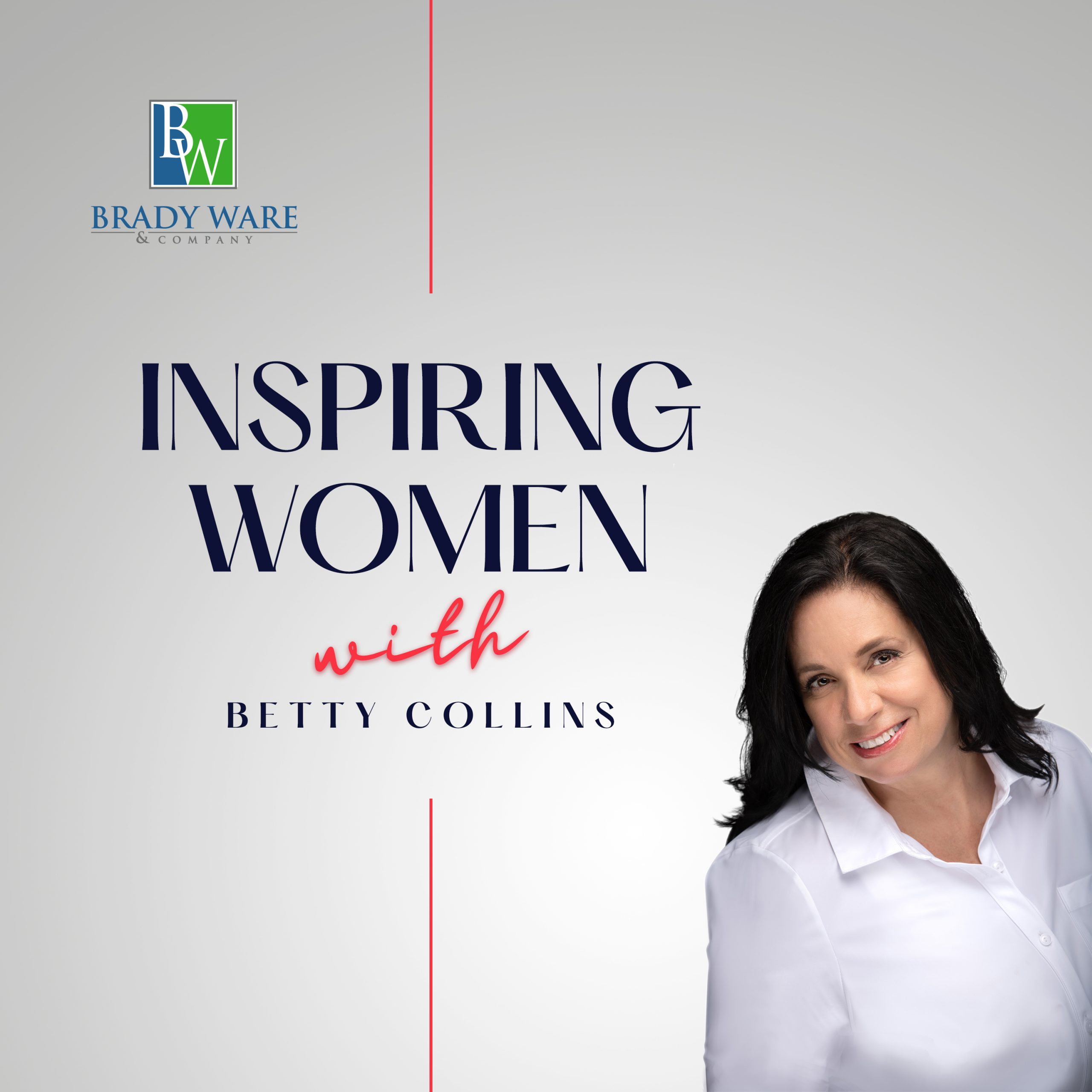
Inspiring Women PodCast with Betty Collins
Inspiring Women, Episode 23: An Interview with Haley Boehning, Storyforge
Loading
00:00 /
RSS Feed
Share
Link
Embed

Download file

Haley Boehning Storyforge
Host Betty Collins, Brady Ware, and Haley Boehning, Storyforge

Inspiring Women, Episode 23: An Interview with Haley Boehning, Storyforge

On this edition of “Inspiring Women,” host Betty Collins speaks with Haley Boehning, Storyforge, on why stories are so important in client marketing, employee engagement, and other essential company functions. The “Inspiring Women” series is underwritten by Brady Ware & Company.

Betty’s Show Notes

“When you have a story — the right story — everything changes. Customers become evangelists. Employees fully engage. Decision-making simplifies. Innovation accelerates. And marketing costs go down.” That’s what you find when you go to Storyforge’s website. I had the honor of interviewing Haley Boehning, Co-Founder and Principal of Storyforge.

“We call it a meaningful story.” And that’s what she does best.  Help businesses find their story, their higher purpose.  And when their clients discover it, it’s, as she puts it, “knock over the table” time and run out to tell the world.

I talk to Haley about:

  • The Storyforge story
  • Her story
  • The Storyforge concept and what their clients do with their story to make a difference
  • Why women can’t wait around
  • What she has learned from being a business owner
  • What would today’s Haley tell a younger Haley if she had the chance
  • Conscious Capitalism and its four tenets

Haley has decades of experience working with Fortune-500 companies, non-profits and start-ups to create alignment, elevate storytelling and build differentiated brand positions. She is a regular speaker, lecturer and author on the subject of leadership, communication and conscious capitalism.

Prior to Storyforge, Haley spent 16 years with L Brands (NYSE: LB), most recently as vice president of internal communications, directly supporting the company’s founder/CEO in strategic, leadership and internal communications to connect with 100,000 employees around the globe. As internal communications function head for the enterprise, she and her team were also responsible for all change communications including mergers, acquisitions, reorganizations and reductions in force.

Haley is chair of Conscious Capitalism Columbus, a member of the international Conscious Capitalism Inc. Community Advisory Council and a founding member of The Matriots, Ohio’s first multi-partisan PAC dedicated to electing more women to public office. She is a member and chapter sponsor of The National Association of Women Business Owners and was named to Columbus CEO’s 2020 Future 50 list, recognizing her as a leader with the ideas, energy and heart to move the region forward in the critical decade ahead.

Betty Collins, CPA, Brady Ware & Company and Host of the “Inspiring Women” Podcast

Betty Collins, Brady Ware & Company

Betty Collins is the Office Lead for Brady Ware’s Columbus office and a Shareholder in the firm. Betty joined Brady Ware & Company in 2012 through a merger with Nipps, Brown, Collins & Associates. She started her career in public accounting in 1988. Betty is co-leader of the Long Term Care service team, which helps providers of services to Individuals with Intellectual and Developmental Disabilities and nursing centers establish effective operational models that also maximize available funding. She consults with other small businesses, helping them prosper with advice on general operations management, cash flow optimization, and tax minimization strategies.

In addition, Betty serves on the Board of Directors for Brady Ware and Company. She leads Brady Ware’s Women’s Initiative, a program designed to empower female employees, allowing them to tap into unique resources and unleash their full potential.  Betty helps her colleagues create a work/life balance while inspiring them to set and reach personal and professional goals. The Women’s Initiative promotes women-to-women business relationships for clients and holds an annual conference that supports women business owners, women leaders, and other women who want to succeed. Betty actively participates in women-oriented conferences through speaking engagements and board activity.

Betty is a member of the National Association of Women Business Owners (NAWBO) and she is the President-elect for the Columbus Chapter. Brady Ware also partners with the Women’s Small Business Accelerator (WSBA), an organization designed to help female business owners develop and implement a strong business strategy through education and mentorship, and Betty participates in their mentor match program. She is passionate about WSBA because she believes in their acceleration program and matching women with the right advisors to help them achieve their business ownership goals. Betty supports the WSBA and NAWBO because these organizations deliver resources that help other women-owned and managed businesses thrive.

Betty is a graduate of Mount Vernon Nazarene College, a member of the American Institute of Certified Public Accountants, and a member of the Ohio Society of Certified Public Accountants. Betty is also the Board Chairwoman for the Gahanna Area Chamber of Commerce, and she serves on the Board of the Community Improvement Corporation of Gahanna as Treasurer.

“Inspiring Women” Podcast Series

“Inspiring Women” is THE podcast that advances women toward economic, social and political achievement. The show is hosted by Betty Collins, CPA, and presented by Brady Ware and Company. Brady Ware is committed to empowering women to go their distance in the workplace and at home. Other episodes of “Inspiring Women” can be found here.

Show Transcript

Today, I get to do an interview for my podcast. I like to do that at times. I’m fortunate enough to live in Columbus, Ohio, and there’s just a lot of women in business, or women business owners that either have a great story; they’ve had success. I could do podcasts weekly just on that. Columbus is a thriving town.

Today, I really wanted to interview Haley Boehning. She’s the co-founder of Storyforge. I’ve gotten to experience Storyforge – just go through that – through an organization I’m involved with, which is NAWBO, which is the Columbus Charter. NAWBO is the National Association of Women Business Owners. We’re the Columbus chapter, and we’re the largest chapter … Like any organization, you go through crossroads in time, where you’re like, “Which way do we go? We can do 100 things, or maybe we should do two things really well.” She came in, her, and her firm, to help us get on the same page, so that’s been my experience.

Welcome today, Haley. We’re glad that you’re with us. We’re going to talk about several things, but I tell you, I love your website. I had looked at it probably a year ago, when we started this whole thing, or probably six months ago, whatever it was, with helping NAWBO get on the same page and tell our story. I love your line … As soon as you click on it, it says, “When you have a story, the right story, everything changes.” The other thing that caught my attention, I loved: “Customers become evangelists.” That’s just … First of all, you don’t hear that word a lot – evangelists. “Employees get fully engaged.” That’s become a very hot topic, if you can achieve that; and, “Decision-making gets simplified,” which, we’re on 24/7. So, man, that could be awesome. “Innovation accelerates,” and, at the end of the day, “Your marketing costs go down.” That’s awesome. Haley, I want you to first tell us a little about Storyforge, and then, I want to talk a little bit about your story, so go ahead.

Well, thank you for having me. It’s always a delight to talk with you, and we could probably talk for four hour, so getting this into a couple of minutes will be challenging for us. Storyforge was founded by my business partner, and I about six years ago. It came out of some insights that both of us had had separately throughout our careers about what made businesses successful. Because I had worked in a large corporate environment for 17 years doing a lot of mergers and acquisitions; I had seen hundreds of businesses and noticed differences between them. Those that were successful; those that were able to really succeed and come out the other end of a crisis stronger; and those for whom a crisis, or a challenge, or growth, even some of those positive things would see these businesses crumble and fall.

My business partner had been on the marketing side. I had seen it from an internal side, and he from an external side. As we began talking about our observations, and our beliefs in business, this idea about what story can do for you, as an organization, began to form, and the clarity that we got, through studying hundreds of businesses, has proven itself to be true over the last six years. We’ve worked with hundreds of companies, and we found that there are a few pieces of a company’s story that, when they have these pieces in place, when they’re clear about them, and they’ve had the insights necessary to articulate them, it makes all the difference.

Sure. I get that because it really did with NAWBO, when we … All the sudden, I could go talk differently. Are we doing anything different? I don’t think it’s how we say it, it’s how we talk about ourselves. It’s how we get that.

Well, you said it earlier. It’s also that decision-making. Every business, every organization has a story. The question is whether they’ve been intentional about forming that story, and if they’ve let the world create the story for them, because your story, your brand, is really a collection of all the stories – the stories you tell about yourself and the stories that other people tell about you. You can let that happen in the universe, or you can try to influence it by being very clear, yourself, about who you are, what you’re trying to achieve, what you believe, what you stand for, and what it is that you, as a business, do that’s unique; what differentiates you from all of your competitors in the marketplace.

Tell us about your story of entrepreneurship.” I took this 17-year, maybe safe deal, and said, ‘I’m doing this …'” Tell your story with that.

Yeah, I often call myself an accidental entrepreneur.

That would be 50 percent of them.

50 percent, yeah. I don’t come from a family of entrepreneurs. It always seemed like a crazy idea that risk-takers – which, I don’t consider myself a risk-taker – would endeavor to try to become … It was a strange animal. I had the opportunity, after this 17-year career in the corporate world, to rethink what I wanted to do with my life, which is a wonderful gift. Being able to consider what unique skills I had … What are my superpowers that I can bring to the world, and how do I want to apply those superpowers to help others. Storyforge- the idea of creating a business like Storyforge came from that; this desire to do meaningful work – meaningful for me, meaningful for my clients, but also meaningful for the world around us – was really born from that.

Something that has intrigued me is, because I’m an accountant, I don’t even think I have a story, but I do. I know I do … But the name Storyforge being one … I always like to know where that came from. How did that come together?

Well, it’s interesting. In our process, as we work through our process with businesses, there are a lot of amazing raw materials. So that’s part of our discovery, and you’ll remember this, as we worked together, was digging in and understanding the objective realities of business, and learning about our stakeholders, and mapping them, and understanding the beliefs and the vision that was there at the founding of whatever our business was. All of these great raw materials are just raw materials. They’re inert. When you forge them together, they become an even stronger material than they were in their incomplete parts.

Yeah.

For me, as I think about Storyforge, that’s what it is. Often people forge their stories from the outside in. I have people call me regularly and say, “Do I need an Instagram account?” “How can I better improve my digital marketing?” All questions that I cannot answer, not because I’m not qualified to, but because I don’t understand what their businesses is intending to do. Without having those fundamental answers, without understanding the DNA of your business and what you’re really trying to achieve, all of those tactical questions are meaningless.

When I think of forging, there- my husband likes that show Fire Forge, where they’re making the knives. I hate the show, but I watch it … The one thing I always look at is when they they’re working hard … Of course, it’s reality TV, so none of it’s reality, right? But when they dip it in the fire, and it comes out, the piece is solid now. There’s something about that. When I think of your forge, I think of the same thing – that the story has come together, and now … Wow.

Yeah. We call it, and you’ll remember this because you were there for that moment with our NAWBO work, we call it the kicking over the tables moment. It’s the moment where the discovery has been completed, and we’ve done the hard work as a leadership team to debate and have really intensive dialogues about do we want A, or B, C, or D? Are we going this way or that way? We codify our thinking about those essential questions of the business. When it all comes together, when it’s all forged, it is like going in that water and coming out a stronger metal – a forged story. We often have to hold leaders back because they want to kick the tables out, run out the door, and start screaming it from the mountaintops.

But there is a second important phase to this work, and that’s where many businesses actually fail in this work. It’s not necessarily not forging the correct story, but figuring out what to do with the story, after you have it. Because a really, truly meaningful story is not just a story that’s told, but it’s a story that’s lived. That’s the work that I know the board of NAWBO is doing right now is thinking about all the different aspects of the organization – from people, to process, to place, to positioning, to philanthropy – and making sure that what we do is in alignment with what we say.

Well, one of the thing … You have a definite passion for women. We experienced that from the beginning of time, when you were interviewing the board, and we were going through it. One of the things that I loved that you said to us – because we were talking about the different … Why we’re on the board? We’re women in business. Why are we business owners? All those things. One of the things you said to me that I never stopped thinking about was, “Let’s not wait another decade to accomplish something as women.” I’ve thought about that ever since we talked about that.

So, your passion for women and your passion for the time is now is so there. Tell me what … Because I’m looking at, we just started a new decade, so everyone’s saying that; it’s kind of the buzzword. It’s my last decade to work. Sometimes, I say that out loud, and I go, “Oh … Yay!” Then, I go, “Oh … Did I do enough? Did I get what I needed? Did I …?” All those things come to play, where you’re thinking about legacy and stuff. But, for you, what would you love- as a woman business owner, and someone who doesn’t want us to wait 10 years or a hundred, what’s on your mind when you think about those things that you don’t want to see us wait, and let’s execute? It’s a tough question, but …

Yeah, something I think I see a lot – but especially with women business owners, with many entrepreneurs, but especially women – is we keep our nose to the grindstone. We’re in the day-to-day operations of the business and trying to make things incrementally better every day. We don’t often give ourselves the luxury of stepping back, pulling up our head, looking out at the horizon, and saying, not, “Where do I want to be this week, next week, this quarter, next quarter?” but what does 10 years from now look like? What do I want my legacy to be? What do I want to have accomplished? There is something to that truism that we underestimate what we can do in 10 years, and overestimate what we can do in one.

Yes, that’s a great saying!

I try to keep that in mind, especially when I’m working with our clients, because we … People think too small, sometimes. To be able to swing for the fences, we have to look out in the distance to be able to get there. We can’t just look at the day-to-day operations. So, I think, for me, for women business owners, I would love to see more of us give ourselves that opportunity to reflect, to think long term, to think big, sustainable growth for our business and sustainable impact for our stakeholders, for our customers, our clients, our families, ourselves. What are we really working toward? What’s all this about?

Say that one more time – not the whole thing … Say it one more time. So, we overthink- we do too much in a year, but not enough in … Say that again? I love the way you say that-

Yeah, we often … I know I do this. Every day, I overestimate what I think I can get done in a day. I leave every day with things on my to-do list. It’s just typical. So, we overestimate what we can do in a year, but we underestimate what we can do in 10.

Right, I love that [crosstalk]

-that often keeps us thinking in short-term-ism, rather than really thinking long term.

Everybody goes to their own school. Haley went to the Hard Knocks of Haley, or you got your MBA, and something that, “Oh, I wasn’t expecting to learn this, but I did …” In these last six years, especially from going from corporate America to you’re now a business owner … For me, it was a huge change when I just wanted to be an employee. I wanted somebody signing my check. I didn’t want to be the signer, right? Tell us maybe a thing or two of what you learned, getting that MBA in the last six years of business, that you would want a woman-owned business owner to know.

It’s interesting. There was a moment, for me, when I left the corporate world. I was with a group of other executives, V.P.s and above, from businesses that were transitioning out of their prior careers and into their new one. We were sitting around a table doing introductions, and everyone introduced themself the same way. They said, “Hello, my name is Haley Boehning, and I used to be the Vice President of Internal Communications at [crosstalk].” “Hi, my name is Ted Smith, and I was the Chief Financial Officer of Blank Company.”

This went around about 12 people. Then, it came to me, and I said, “We’ve got to stop doing this. We have to stop defining ourselves by the title that we have – CEO, entrepreneur, vice president. We have to rethink how we define ourselves and our identity. Wouldn’t it be wonderful if we could think about what our unique skill set is – the thing that we do better than anyone else – that exists at an intersection of a need in the world that we now can uniquely fill. If we could talk about ourselves that way, wouldn’t that be more meaningful, and wouldn’t that help us frame our identity around something bigger than a paycheck?”

What did the 12 people around the table do? They go, “Uhh …”

There was a lot of that [crosstalk] but it did change. If you ask people the right questions, they will give you far more meaningful answers.

What’s something you really feel like, in the last- in your career, in general- I know, for me, I look back and say I wish I would have been an owner sooner. I wish I would have jumped into entrepreneur sooner. When you look back over your career, over this stuff that you’ve accomplished, what do you look back and go, “If I had to do it again, what would I say to Haley, who was 30, and 40?” What would you … Is there anything that comes your mind when you think about …?

I think maybe two different Haleys. If I could go back to the Haley in her 20s, starting out in the corporate world and looking at all of these people with these very big titles, with these very big offices, at the time, I thought that being a leader meant having all the answers and that, somehow, if I worked hard enough, and if I learned everything I could learn, and I had the right mentors, that someday, I, too, could be a leader and have all the answers. Now, I realize that being a leader doesn’t mean having the answers. It means having the  questions.

Yes.

I think that-

Very good.

That insight could have served me well in my 20s. When I started the business, if I think about those early days of Storyforge, there were two lessons that I learned that now we apply, and it’s made all the difference. One is to be very, very clear about who you are, what you stand for, who you serve, and how you serve them and be willing to say no to clients. Because I’m a people pleaser. I like people to be happy. But that’s not the best approach, when you’re a business owner, or when you’re in sales, or doing business development. It’s really making sure that you’re the right fit for that client and that the client’s the right fit for you.

Very good. Great insight. Now, I’ve known you for a little while and I’ve heard you talk about an organization that you’re very involved with. I know enough about it to be dangerous, but I love the title – Conscious Capitalism.

Yes.

I would love for you to talk about that because I’m a big fan of the marketplace. The marketplace in our country is crucial. It’s not about how much money can we make, or greed, any of those things. To me, it is if you have an idea and a passion, you have the ability to do it, and you have of an environment that allows you to do it. If you’re fortunate enough, you, one day, have employees because you’re an employer. Those employees have families, which are households that form communities. It all works together. When the U.S. is successful, the country is successful, the world is because we have the abilities here to do things. When it’s mixed with really bad things, it doesn’t do well; but when it’s really good, it’s really good. I’m a huge fan of I get to be a CPA in this environment, in this country, and do things. I’m very intrigued by what is this organization, so I’d like for you to talk about that.

Well, thank you for asking about that, because I am very passionate about Conscious Capitalism, and I love the combination of the two words.

Mm-hmm. Yes.

When I go out, and I speak with audiences, generally, each audience has some concern with one of those two words. Either I’m in an audience of people that say, “Oh, capitalism … Of course. Fantastic. Best thing since sliced bread. What’s this consciousness word you keep throwing in there? What’s this woo-woo you’re trying to add to my capitalism?”

What’s that guilt thing [crosstalk]

-but when I talk with younger people … I was recently out at Denison University talking with some of their Commerce Department, and there were a lot of students who said, “Consciousness, absolutely. Capitalism? I’m not so sure about that word.” But when you ask them what they want to do when they grow up, they all want to be business people. They all want to be entrepreneurs. But capitalism, itself, has a big PR problem right now.

It does.

Conscious Capitalism was born from a book that was written by two gentlemen who you probably have heard of: John Mackey, the founder of Whole Foods, and Raj Sisodia, who is a Professor of Business at Babson College. It was codifying a way of thinking about business that wasn’t just John’s idea. It was a number of different business leaders had been practicing business this way, recognizing that business both can and should be a force for good in the world; that capitalism, itself, is one of the greatest inventions that we’ve had and has done more to lift people out of poverty than many things in the last couple hundred years, but that people have misused capitalism.

Yeah.

Because of that, we have a crisis on our hands. We need to reinvent capitalism. There’s been a lot of talk recently. Just as recently, I think, as this week, Jamie Dimon was talking about reinventing capitalism in Time Magazine. We know that the Business Roundtable has come out and redefined the purpose of business to include a purpose bigger than profitability because they see the cracks in this system. We believe that business is good because it creates value; at its most essential, it creates value. It’s ethical because it’s based on voluntary exchange.

Sure.

It’s noble because we know that when done more consciously, business can actually elevate our existence, and that’s the world that we want to create. Conscious Capitalism is an international movement. There are hundreds of thousands of people all around the globe, from Sydney to Columbus, Ohio- Sydney, Australia to Columbus, Ohio, all working to advance this idea of business as a force for good.

We think about business in terms of four principles. The first, which I’ve already mentioned, is that business should have a purpose bigger than profitability. Profitability is necessary; without margin, there’s no mission. But the purpose of the business should be to solve some need in the world and that profitability helps to drive that. Just like I need red blood cells every day to live, it’s not my reason for existence. I don’t get up every day and think, “Thank God, another day I can create red blood cells!” That idea of purpose, a purpose bigger than profitability, is the first tenet.

The second is stakeholder orientation – understanding that a business doesn’t just have one stakeholder, the shareholder; it has multiple stakeholders – employees, community, shareholders, investors, partners, vendors. All of these stakeholders need to be considered, and when we have an orientation to them, when we understand and are thoughtful about the impact and the value that we create for each of them, we’re more conscious. Then, understanding that both leadership and culture have an important role to play in the success of business.

I have two kids who said, “I will never be in business. I would never be a CPA,” and they made sure of that. I have a daughter who’s a teacher because it’s what she loves, and I have a son who is a minister because that’s what he loves. My daughter is more like me – she’s a spender. She’s one of those consumers, right? But my son and I have had long debates on capitalism, and I always remind him that, “Capitalism put you through college. Please remember that …” because it did. He will tell me, “I just need provision from somebody so I can do what I do in life.” We both see it, and we talk more about- we’re coming together more with it because there is good capitalism out there. The marketplace is so very, very necessary.

When NAWBO met with- a roundtable with Governor DeWine, I just said the marketplace has to really be held high so that the taxation can do more than just run our government. There’s tremendous need out there. There are people who can’t do and have what I have. It’s a system that has to work really well, and when it’s not run well, it’s a bad deal. I really learned about … When I came to Brady Ware in 2012, one of the things I did was read Simon Sinek’s book and did the Why University, and I had somebody help me come together. I came up with my whole why being – because I have 150 employees who are families who need health insurance, who need to live in- to have provision that forms those communities and households. It just became a whole new way to think about it.

So, then it wasn’t just accounting. Accounting is just a part of it. It’s a necessary evil that business has to have that. I’ve always loved that you’ve talked about that, and I would love to know more about it, so I wanted my audience to hear about it, as well. Because my son’s generation, the denizens that you’re talking about – he’s 28 years old – will eat chicken at Joe DeLoss’s place because he understands Joe DeLoss and what their whole social enterprise is. That’s huge for him-

Yeah. Joe DeLoss, and Hot Chicken Takeover being a local company that makes some damned fine Nashville hot chicken-

It’s awesome.

-but more importantly than that, they’re a business that was created to employ people who are difficult to employ – people who’ve been in the- who’ve been incarcerated, who are coming back into the workforce – that many other companies would overlook. I think we’re beginning to- we’re beginning to have a realization and insight as a country about the power of business, when business thinks more consciously about who does it employ, why does it employ, how does it employ? We can make a difference where we have more in common than not. We really do. There’s so much more that binds us together. Unfortunately, there’s a lack of civility, I think, in conversation, today, which often polarizes us.

Right.

But when we get down to the brass tacks of it, we all want the same things. We want communities that are thriving. We want families that are thriving. We want to leave the world a better place when we go. We want it to be better than it was when we found it, and-

It’s why I love working for Brady Ware, getting to be … Getting to even have a women’s initiative that we can … They put a lot of resource and time in. This podcast is one of those resources. It goes just beyond that, and it goes so beyond accounting. I think that’s where you see things going. There is still reality of paying the lease, and the electric; and people want to be paid well because they did spend a lot on an education, or they want to be valued, or they have goals, as well. It all wraps together, but-

Well, I’m sure you see it with your clients because you do work with so many small businesses. There’s good that business does just by being in business-

Yeah, absolutely.

Employing people by enabling people to send kids to school, enabling people to care for their elderly parents – all of the things that having a job and doing that job well enable you to do. A lot of businesses have trouble seeing a purpose bigger than just that. But we have worked with hundreds of businesses over the last six years at Storyforge. There has not been one single business that we have worked with that has not been able to articulate a purpose higher than profitability. We have worked with toilet manufacturers.

There you go.

We have worked with distilleries, and we’ve worked with accounting firms. All of them were able to find this more emotional, meaningful story about what they did that helped unite their teams and helped them think differently about how they serve their customers.

Well, this podcast is Inspiring Women, and I think we had a very inspiring woman today. I appreciate your passion, certainly, for women, for what you’ve done with NAWBO, just telling our story. Forging – I love the force of just that word. I can picture the knife going down in the- whatever they’re putting it in, I’m assuming. Then, just putting business owners, women in business, men in business, doesn’t matter … It’s this two words of conscience and capitalism together. Thank you for spending time with us today. We appreciate your efforts in coming and making time because you’re busy and you do what you do well. I’m Betty Collins, and I appreciate the opportunity that I get to do a podcast; that you get to listen to us today and check us out on our website. Thanks.

Tagged With: Betty Collins, Brady Ware, Brady Ware & Company, Employee Engagement, Haley Boehning, Inspiring Women with Betty Collins, marketing, story, Storyforge

Kevin Hill, Igigo Communications

July 13, 2020 by John Ray

Igigo Communications
North Fulton Business Radio
Kevin Hill, Igigo Communications
Loading
00:00 /
RSS Feed
Share
Link
Embed

Download file

Igigo Communications
Kevin Hill, Igigo Communications

Kevin Hill, Igigo Communications (North Fulton Business Radio, Episode 257)

Kevin Hill of Igigo Communications joins host John Ray to discuss live streaming and why businesses and other organizations should be utilizing this fast growing medium. “North Fulton Business Radio” is produced virtually by the North Fulton studio of Business RadioX® in Alpharetta.

Igigo Communications

Igigo Communications specializes in helping individuals and organizations live stream  content to their audiences.  Demystifying the process of live streaming and explaining their options, Igigo offers affordable solutions to connecting live content with viewers. There are differences between being “in the room” and watching content live online.  Igigo works with their clients to understand those differences. They built a webcast that is informative and keeps  online viewers engaged.

Live streaming tech working hard monitoring stream.

Streaming technology and equipment are ever changing and Igigo keeps up with that change.  Using industry best practices, they keep their clients “live” and in front of their audience. Their team of technicians are knowledgeable, friendly and use only professional production gear to give a client’s content the quality it deserves.

They are experts in multi-channel live streaming and professional video production. Over ten years of online streaming experience and twenty plus years of video production experience has made Igigo a company clients can count on to deliver on their next project.

Whether  in the Atlanta area, Southeast region, United States or International, Igigo can bring organizations,  clients, followers and audiences together through streaming online.

Kevin Hill, President and Founder, Igigo Communications, Inc.

Kevin founded Igigo Communications, Inc. after an award-winning career in television news where he wore many hats from a videographer and editor, to a live operations technician and producer for more than 15 years. His love for live events drew him to live streaming, where he can use his problem-solving abilities to broadcast content to the masses.

Kevin has worked on streaming projects for Fortune 500 companies to micro-businesses. His passion for video production, technical knowledge and creativity has kept him in high demand as a consultant with a wealth of knowledge on all aspects of live video production.

Point of Contact for Kevin Hill

Company website

LinkedIn

Facebook

Twitter

Instagram

Questions/Topics Discussed in this Show

  • What is live streaming?
  • Kevin’s experience in television news and deep live streaming experience
  • How can live streaming help a business or organization?
  • How has Covid-19 changed the environment for live streaming?
  • What is the different between video conferencing (such as Zoom) and live streaming?
  • What is a virtual event?
  • Tips for live streaming
  • How should a person look for when choosing a live stream provider?
  • Where do you think the future is headed for live streaming?
  • “With the internet and faster speeds, anyone can broadcast and get as big of an audience as the biggest networks around today.”

North Fulton Business Radio” is produced virtually from the North Fulton studio of Business RadioX® in Alpharetta. You can find the full archive of shows by following this link. The show is available on all the major podcast apps, including Apple Podcasts, Spotify, Google, iHeart Radio, Stitcher, TuneIn, and others.

Renasant Bank has humble roots, starting in 1904 as a $100,000 bank in a Lee County, Mississippi, bakery. Since then, Renasant has grown to become one of the Southeast’s strongest financial institutions with over $13 billion in assets and more than 190 banking, lending, wealth management and financial services offices in Mississippi, Alabama, Tennessee, Georgia and Florida. All of Renasant’s success stems from each of their banker’s commitment to investing in their communities as a way of better understanding the people they serve. At Renasant Bank, they understand you because they work and live alongside you every day.

Tagged With: Igigo Communications, John Ray, Kevin Hill, live streaming, North Fulton Business Radio, producer, television, television news, video conferencing, video production, videographer, virtual event

Denson Pepper, CPA

July 9, 2020 by John Ray

Denson Pepper CPA
North Fulton Business Radio
Denson Pepper, CPA
Loading
00:00 /
RSS Feed
Share
Link
Embed

Download file

Denson Pepper CPA

Denson Pepper, CPA (North Fulton Business Radio, Episode 254)

Denson Pepper CPA specializes in working with non-filers and delinquent tax payers in resolving their IRS and state income tax problems. Denson joined host John Ray to discuss why the IRS is expected to become more aggressive in pursuing non-filers, statute of limitations rules for non-filers, offers in compromise, and much more. “North Fulton Business Radio” is produced virtually by the North Fulton studio of Business RadioX® in Alpharetta.

Denson Pepper, CPA

Denson Pepper has been a CPA in public practice for more than 30 years in GA. His office is now located in Acworth, GA, and he works with clients all over Georgia and in multiple states. Denson specializes in helping people with their IRS and state income tax problems.

Services offered by his office:

  • Prepare prior year unfilled income tax returns and analyze alternatives for payment of unpaid taxes. Represent client before the IRS.
  • Represent clients in tax audits and audit reconsideration’s
  • Help professional practices (i.e. doctors, dentists, veterinarians, lawyers, realtors, chiropractors) coordinate tax resolution of their personal, entity and payroll tax problems.
  • Determine when Bankruptcy can be used
  • Record Reconstruction
  • Review Filed Returns for Accuracy
  • Review Taxpayer Transcripts for Accuracy and Possible Savings
  • Determine which Tax Liens can be Removed or Subordinated
  • Minimize or Eliminate Garnishments
  • If IRS has Filed Returns for you (Substitutes for Return), File Accurate Returns
  • Represent Clients before the IRS to Resolve Issues
  • Analyze Alternatives Available with Unpaid Taxes
  • Represent Clients in Collection Due Process Hearings
  • Represent Clients in Tax Audits and Audit Reconsiderations
  • File all Necessary State Income Tax Returns and Represent Clients
  • Help Taxpayers Understand Notices Received and What Must Be Done

Point of Contact for Denson Pepper

Company website

Email

Call:  678-797-5241

Questions/Topics Discussed in this Show

  • Why the Internal Revenue Service (IRS) is set to get more aggressive with non-filers
  • Non-filing of returns
  • Offer in compromise
  • Payroll noncompliance and criminality
  • Why ignoring the IRS doesn’t work
  • If you owe taxes, there are a variety of options available

North Fulton Business Radio” is produced virtually from the North Fulton studio of Business RadioX® in Alpharetta. You can find the full archive of shows by following this link. The show is available on all the major podcast apps, including Apple Podcasts, Spotify, Google, iHeart Radio, Stitcher, TuneIn, and others.

Renasant Bank has humble roots, starting in 1904 as a $100,000 bank in a Lee County, Mississippi, bakery. Since then, Renasant has grown to become one of the Southeast’s strongest financial institutions with over $13 billion in assets and more than 190 banking, lending, wealth management and financial services offices in Mississippi, Alabama, Tennessee, Georgia and Florida. All of Renasant’s success stems from each of their banker’s commitment to investing in their communities as a way of better understanding the people they serve. At Renasant Bank, they understand you because they work and live alongside you every day.

Tagged With: Internal Revenue Service, IRS, IRS settlement, non-filers, non-filing of tax returns, offer in compromise, statute of limitations, tax resolution

Alicia Butler Pierre, Equilibria, Inc.

July 9, 2020 by John Ray

Alicia Butler Pierre
North Fulton Business Radio
Alicia Butler Pierre, Equilibria, Inc.
Loading
00:00 /
RSS Feed
Share
Link
Embed

Download file

Alicia Butler Pierre

Alicia Butler Pierre, Equilibria, Inc.  (North Fulton Business Radio, Episode 255)

Alicia Butler Pierre joins host John Ray to discuss how vital business infrastructure is to a fast growing company, how customer experience is directly connected to the back office, the myth of the solopreneur, and much more. “North Fulton Business Radio” is produced virtually by the North Fulton studio of Business RadioX® in Alpharetta.

Alicia Butler Pierre, Founder and CEO, Equilibria, Inc.

Alicia Butler PierreAlicia Butler Pierre is the founder and CEO of Equilibria, Inc., a 15-year-old operations management firm. She specializes in increasing bandwidth for fast-growing organizations via business infrastructure. Alicia has a B.S. in Chemical Engineering from Louisiana State University, an MBA from Tulane University, and a Lean Six Sigma Black Belt certification. Combined, her content has over three-quarters of a million views across various online platforms.

Alicia hosts the weekly Business Infrastructure: Curing Back Office Blues podcast which recently celebrated its 100th episode. She’s also the author of the 2x Amazon bestseller, Behind the Façade: How to Structure Company Operations for Sustainable Success. Committed to doing the right things the right way, Alicia’s mantra is “to leave it better than you found it.”

Point of Contact for Alicia Butler Pierre

Company website

LinkedIn Profile

Twitter

Facebook

Questions/Topics Discussed in this Show

  • What is Business Infrastructure?
  • How business infrastructure and customer experience are intertwined
  • How has your business changed as a result of COVID-19?
  • Why do you say business infrastructure is a blessing and a curse?
  • The myth of the solopreneur
  • What home office setup tips do you have for people working from home for the first time?
  • Alicia’s book and her podcast

North Fulton Business Radio” is produced virtually from the North Fulton studio of Business RadioX® in Alpharetta. You can find the full archive of shows by following this link. The show is available on all the major podcast apps, including Apple Podcasts, Spotify, Google, iHeart Radio, Stitcher, TuneIn, and others.

Renasant Bank has humble roots, starting in 1904 as a $100,000 bank in a Lee County, Mississippi, bakery. Since then, Renasant has grown to become one of the Southeast’s strongest financial institutions with over $13 billion in assets and more than 190 banking, lending, wealth management and financial services offices in Mississippi, Alabama, Tennessee, Georgia and Florida. All of Renasant’s success stems from each of their banker’s commitment to investing in their communities as a way of better understanding the people they serve. At Renasant Bank, they understand you because they work and live alongside you every day.

Tagged With: Alicia Butler Pierre, business infrastructure, customer experience, Equilibria, Equilibria Inc., home office, home office setup, John Ray, North Fulton Business Radio, Solopreneur

Decision Vision Episode 73: Should I Sell to the Government? – An Interview with Sean Mahoney, Maston Space Systems

July 9, 2020 by John Ray

sell to the government
Decision Vision
Decision Vision Episode 73: Should I Sell to the Government? - An Interview with Sean Mahoney, Maston Space Systems
Loading
00:00 /
RSS Feed
Share
Link
Embed

Download file

sell to the government

Decision Vision Episode 73:  Should I Sell to the Government? – An Interview with Sean Mahoney, Maston Space Systems

If I decide to sell to the government, what are the challenges my business will face? Sean Mahoney of Maston Space Systems offers an experienced perspective on this question in this interview with host Mike Blake. “Decision Vision” is presented by Brady Ware & Company.

Masten Space Systems

Masten Space Systems is a private company founded in 2004 by CTO David Masten and has its headquarters in Mojave, CA.

Masten’s focus on reusable rocket technology is driven by the goal of enabling space transportation and reliable planetary landers for the Earth, Moon, Mars, and beyond. They are a passionate company of inventors, creators and builders with goals that include landing our own vehicle on the moon.

Masten competed in the NASA and Northrop Grumman Lunar Lander Challenge X Prize in 2009 with Xombie (model XA-0.1B). Xombie came away from the lunar lander challenge with an average landing accuracy of 6.3 inches qualifying it for Level One second prize of $150,000 on October 7th, 2009. The Xoie VTVL won the $1,000,000 Level Two prize of the Lunar Lander Challenge on October 30th, 2009 with an average landing accuracy of about 7.5 inches.  Masten’s future vehicles have improved this performance and landing accuracy to provide EDL and testbed flight services to customers through NASA’s Flight Opportunities program.

Sean Mahoney, CEO

Sean Mahoney is the CEO of Masten Space Systems, an aerospace R&D and flight services company that creates and deploys reliable, reusable rocket vehicles and components. Since joining Masten in 2010 as Director of Business Operations, Sean has focused on building a sustainable, customer-funded business. He has been instrumental in establishing Masten as one of the rising stars in the New Space movement. He served as COO during 2011-2012 and was named CEO in 2013.

Sean has over 15 years of corporate and technology industry experience, having founded and led a number of technology start-up ventures, and raised multiple rounds of private funding. Sean began his career overseeing technical sales and building internal organizations as a manager at AT&T’s Enterprise hosting division.

Sean received his MBA from Emory University’s Goizueta Business School and serves in a leadership capacity for a number of entrepreneurship and environmental non-profit organizations.

Michael Blake, Brady Ware & Company

Mike Blake, Host of the “Decision Vision” podcast series

Michael Blake is Host of the “Decision Vision” podcast series and a Director of Brady Ware & Company. Mike specializes in the valuation of intellectual property-driven firms, such as software firms, aerospace firms and professional services firms, most frequently in the capacity as a transaction advisor, helping clients obtain great outcomes from complex transaction opportunities. He is also a specialist in the appraisal of intellectual properties as stand-alone assets, such as software, trade secrets, and patents.

Mike has been a full-time business appraiser for 13 years with public accounting firms, boutique business appraisal firms, and an owner of his own firm. Prior to that, he spent 8 years in venture capital and investment banking, including transactions in the U.S., Israel, Russia, Ukraine, and Belarus.

Brady Ware & Company

Brady Ware & Company is a regional full-service accounting and advisory firm which helps businesses and entrepreneurs make visions a reality. Brady Ware services clients nationally from its offices in Alpharetta, GA; Columbus and Dayton, OH; and Richmond, IN. The firm is growth minded, committed to the regions in which they operate, and most importantly, they make significant investments in their people and service offerings to meet the changing financial needs of those they are privileged to serve. The firm is dedicated to providing results that make a difference for its clients.

Decision Vision Podcast Series

“Decision Vision” is a podcast covering topics and issues facing small business owners and connecting them with solutions from leading experts. This series is presented by Brady Ware & Company. If you are a decision maker for a small business, we’d love to hear from you. Contact us at decisionvision@bradyware.com and make sure to listen to every Thursday to the “Decision Vision” podcast.

Past episodes of “Decision Vision” can be found at decisionvisionpodcast.com. “Decision Vision” is produced and broadcast by the North Fulton studio of Business RadioX®.

Visit Brady Ware & Company on social media:

LinkedIn:  https://www.linkedin.com/company/brady-ware/

Facebook: https://www.facebook.com/bradywareCPAs/

Twitter: https://twitter.com/BradyWare

Instagram: https://www.instagram.com/bradywarecompany/

Show Transcript

Intro: [00:00:02] Welcome to Decision Vision, a podcast series focusing on critical business decisions. Brought to you by Brady Ware & Company. Brady Ware is a regional full-service accounting and advisory firm that helps businesses and entrepreneurs make visions a reality.

Mike Blake: [00:00:23] Welcome to Decision Vision, a podcast giving you, the listener, a clear vision to make great decisions. In each episode, we will discuss the process of decision making on a different topic from the business owner’s or executive’s perspective. We aren’t necessarily telling you what to do, but we can put you in a position to make an informed decision on your own and understand when you might need help along the way.

Mike Blake: [00:00:42] My name is Mike Blake and I’m your host for today’s program. I’m a director at Brady Ware & Company, a full-service accounting firm based in Dayton, Ohio, with offices in Dayton; Columbus, Ohio; Richmond, Indiana; and Alpharetta, Georgia. Brady Ware is sponsoring this podcast, which is being recorded in Atlanta for social distancing protocols. If you like this podcast, please subscribe on your favorite podcast aggregator. And please consider leaving a review of the podcast as well.

Mike Blake: [00:01:08] So, today’s topic is, should I sell to the government? And, you know, this is a topic I’ve wanted to do for a while. And I think it’s even more important now given the state of our economy. And again, the slow-moving horror movie continues that we hope we’re kind of reaching at least the final act of this thing. And, you know, I think that most companies, most business owners have thought about, you know, can I sell to the government? Should I sell to the government? And it’s certainly worth thinking about because I read somewhere that, in fact, the government does buy about 20 billion dollars of stuff every day. And that $20 billion of stuff includes things from pencils to laptops, to cars to airplanes. And as it also happens, spacecraft. More on that in a minute.

Mike Blake: [00:02:10] But I think many owners then don’t pursue the notion or the idea of selling to the government because they have some concept, or some preconceived notion, or some misapprehension of what it’s like to sell to the government and do business with the government. And maybe some of those things are true. Maybe some of those things are not. So, I think we’re going to do, maybe, today is do a little bit of myth busting. Because if you could afford to not try to sell to the government before, I think most companies now are in a position where you can’t afford to walk away from clients, even if they force you, maybe, to leave your comfort zone a bit in order to conclude a sale.

Mike Blake: [00:02:57] And to help us with that, I am bringing on a guest that I wanted to bring on for a while. He’s been harder to catch without a Taser and a butterfly net because he’s been busy building his company. But he’s a guy that I’m so excited to bring on. And I’m excited to really talk to him any opportunity I get because I’ve known him for a long time. I’ve known him since he’s been with his company. And, you know, I can tell you that right now – knock on wood. I don’t want to jinx him – but his company is enjoying some success. Believe me that the road to that success has been paid with broken glass. And he has crawled it both ways up and down the hill, however you want to express it.

Mike Blake: [00:03:45] And throughout that, I know that it’s been mentally, emotionally, physically challenging as an entrepreneur to do what he has done. And quite candidly, I think lesser men would have been broke and they would have given up. And he deserves all the credit. And he’s just – you know, through all that, he’s been authentic, he’s been nice, he’s been humble, and continues to be that way. And he’s just one of the most awesome dudes you’re ever gonna deal with. And just such an easy guy to root for. And when you listen to this, you’re going to hear that in his voice. So, you know, plan to take notes. If you’re listening to this while you’re driving, jogging, whatever, don’t take notes while you’re doing that. But plan to listen to this later. Or plan to go download the transcript, which is going to be on our website, bradyware.com. But this is going to be a good one.

Mike Blake: [00:04:46] And so, it is my absolute pleasure to introduce my friend, Sean Mahoney, who is the CEO of Masten Space Systems. It’s an aerospace research and development and flight service company that creates and deploys reliable, reusable rocket vehicles and components. Since joining Masten in 2010 as director of business operations, Sean is focused on building a sustainable, customer funded business. He has been instrumental in establishing Masten as one of the rising stars in the new space movement. He served as chief operating officer during 2011 and 2012. And was named chief executive officer in 2013. Sean has over 15 years of corporate and technology industry experience, having founded and led a number of technology startup ventures and raised multiple rounds of private funding.

Mike Blake: [00:05:33] Sean began his career overseeing technical sales and building internal organizations as a manager at AT&T’s Enterprise Hosting Division. Sean received his MBA from Emory University’s Goizueta Business School. And serves in a leadership capacity for a number of entrepreneurship and environmental non-profit organizations. Sean, thank you so much for coming on the program.

Sean Mahoney: [00:05:54] Mike, a real pleasure. Thanks to you for all of your support over the years. And thanks to folks there at Brady Ware for sponsoring this podcast and giving us a platform to talk about all this cool stuff, a little bit of space, a little bit of government, and a lot of sales. So, this is really cool. And I really appreciate the introduction. I hope to live up to the hype.

Mike Blake: [00:06:18] I think you will. This is not going to be a Batman movie for sure. But, you know, I would like – I don’t do it justice. And, in fact, I probably only know 30 percent of what you’ve gone through. But can you take a couple of minutes and sort of tell the Masten story? And I’ve hinted at your success. But, A, I want to do it justice. And B, I want to give you the opportunity to kind of express it. What is the Masten story and where are you guys now?

Sean Mahoney: [00:06:51] Yes. I will endeavor to give you a version of that that’s shorter than the 16-year history of the company. Let me just do one thing. I will tell you all about Masten, but I want to make sure just in case someone only listens this far. The one key takeaway for this whole government sales thing is, unlike perhaps other things where you just need to have someone who wants to buy a thing and they have the money to pay you, government sales requires having a third thing, which is the contract vehicle. There need to be a way to pay you that thing they want to buy. And if nothing else, maybe folks can take that away. But now, we’ll come back and explain what all that means. I just want to get that plugged in upfront.

Sean Mahoney: [00:07:46] So, I first encountered Masten hanging out down around Georgia Tech, the Technology Square. And honestly, it was a true networking breakfast that I attended on a fairly regular basis hosted by Stephen Fleming, who used to run ATDC and a bunch of stuff there in Tech Square. And the conversations in this open breakfast were really just about anything. It was about different startups and what they were doing. And there was usually some football talk and usually some Georgia Tech rivalry stuff, some politics.

Sean Mahoney: [00:08:28] And then every Monday morning, this conversation would eventually turn to the topic of discussing space. And there would be a 15-minute conversation about space policy. Because there were some space, not only enthusiasts, but people who were active in the space world. Stephen Fleming, Mike Mealing, Colin Ake, and others that we’re interested in working in space. And I used to believe it was the funniest thing. I would tell people the weirdest part of my week is the 15 minutes every Monday morning where I get to have a real conversation about space policy. And it’s not a joke. Like, it’s a real conversation. At that time, I had no idea that I would wind up working in the space industry for Masten or even running it. But for years I would tell that stories. Like, “Oh, my God. You should come to this breakfast. It’s the coolest thing.” And we have this odd conversation.

Sean Mahoney: [00:09:25] So, at that time, Masten was competing for an XPRIZE. It was the Northrop Grumman NASA Centennial Challenge Lunar Lander Challenge sponsored by XPRIZE. I think I got all of them in there. And this was phenomenal, I sat in another one of those cafe down there near Tech Square and watched on a friend’s laptop as the company competed for this big XPRIZE. And what the company was doing with the prize was, was demonstrating the ability to take off and land like you would do from a lunar orbit to the surface, refuel, then do it again.

Sean Mahoney: [00:10:07] That team with Masten Space Systems at the time was a dark horse. No one expected for them to win. There was an anointed big-name company that was going to win. And Masten Space Systems won that contest. And there’s phenomenal stories about the vehicle burning up on the pad the day before it flew and won first place. All this stuff, it’s phenomenal.

Sean Mahoney: [00:10:36] And my story with the company starts to come in after that win. Six months after they won a million dollars, the folks that I knew were like, “Hey, we need to raise the money because a million dollars doesn’t get you that far.” Which is true in space. But it’s also true – for any aspiring entrepreneurs, you think a million dollars, if you think about it in your bank account, it sounds like a lot of money. If you think about it in the operating account for paying for salaries and everything else, it’s really not that much money.

Mike Blake: [00:11:15] Payroll really changes that equation.

Sean Mahoney: [00:11:17] It turns out it does. And so, that was how I kind of started getting involved to help bring some of the – it was the decision science background and kind of structuring some of the payload opportunities and the sales opportunities and helping structure things. And that was how I first got involved with the company. And the challenge at that point was we had won an XPRIZE. The other company that had won an XPRIZE before us had turned into this company called Virgin Galactic. So, SpaceShipOne and the $10 million Ansari XPRIZE had turned into Virgin Galactic. Masten wins a $1 million XPRIZE, we’re trying to figure out what do we turn it into. And so, I honestly came in to figure that out – to help figure that out. And it was one of those things that we really didn’t know what it was going to be. And to state it bluntly, we didn’t have a big runway. We didn’t have a billionaire.

Sean Mahoney: [00:12:30] My first day on payroll, there were 42 days of cash in the bank. And some of my advisers that I still respect to this day had said, “This is a terrible idea, Sean. You’ve gone through enough of these different startups.” And they’re just, you know,” You got to find something that’s going to stick. This one is the craziest one yet.” And when I present this period of time of different crazy business ideas, it absolutely is the craziest. Hands down. But Masten had three things that I was personally looking for. I was looking for an emerging market that was transitioning from the domain of deep experts to a broader audience. Kind of, like, think internet business, internet video, green tech. They were moving from deep expertise to a broader application.

Sean Mahoney: [00:13:34] I was looking for working technology because I know how hard it is. It seems so easy to take that idea and get a prototype. But getting the prototype is really important. So, I went looking for companies that were working technology and has got a good team. Like, a good place to work. A good team to work with. And Masten fit that bill and has throughout these ten – even when there were some challenges, it has fit that screen. And so, I keep working at it.

Sean Mahoney: [00:14:10] So, what the heck do we do? So, we have this vehicle that can land, a rocket powered lander. Yes, there are other big rockets that lands now. But back then, it had been done by large government programs in this competition, of which there were only two that actually made it all the way to the final competition.

Sean Mahoney: [00:14:34] And so, “Okay, Well, how do we take this and turn this into a business?” And the big idea – and I’m going to fit in this kind of government sales thing – is that the large vision of space was that this is going to move from being government to being commercial. And people are going to buy their ticket and they’re going to go to space. Or they’re going to buy cargo and things are going to go and everyone is going to be using space. And we’re going to open use of space to everyone because it’s going to be commercial. And that is a great vision of the future. It was not the reality of the customer in 2010. It is not the reality of the customer in 2020.

Sean Mahoney: [00:15:24] And so, understanding the difference between “I’m going to solve this problem for this industry by getting away from government” might be the right answer. But be careful about confusing this ideal future state with the states you have to be to get from here to there. So, what we focused then on is the thing that we had that worked. I had a rocket powered lander. Who needs a rocket powered lander? It’s a very small market. But the thing that we found that resonated was, we had a rocket powered lander that you could come fly on. And I can offer rocket flights as a service instead of selling vehicles or selling programs that can cost, you know, 30 million or 50 million. And for less than a million dollars, we can test your thing out.

Sean Mahoney: [00:16:33] And so, we’ve figured out that there was a market for doing these terrestrial test flights. And it wasn’t because of a business case analysis. And it wasn’t because I spent a bunch of time studying market reports. The reason we are successful today is because there were people working for NASA, government employees, that saw the value we could provide. And the need that they saw existing within the agency. And they brought them together. And so, first up, the idea that it’s industry versus NASA for space or any of these things, that it’s industry versus the government, is far too great a simplification. And probably, absolutely incorrect.

Sean Mahoney: [00:17:38] So, what we did then is we took a service, a rocket powered landing test bed, which – and I’ve described it from a business perspective, I’ll say, “It does precisely what nobody needs.” Like, “Wait. What?” It does not. Our service to this day does not meet the desires of the testing community. It doesn’t meet their high-level objectives. What it does is exist. So, because I have a thing that I can do, the people are willing to use it and build up until some point we will have that higher capability. And it’s weird because if you ask – if you did a market survey, and said, “Okay. Well, what does the industry wants?” You would say, “Okay. Well, it wants all these things and we can’t do that, so therefore we need to invest. We need to build the next thing, yadda, yadda, yadda.” But that’s not a business plan that would close.

Sean Mahoney: [00:19:04] So, using the thing we have, working with the customers to meet needs they have right now is kind of the thing that we did for years. Now, along with that, we were trying to take – and we were taking the technology and spreading it out into other applications. So, we are working on technology development. Working with government agencies to develop some technologies. And then taking what we had for that low-level vehicle and applying it to other markets. And there were two that we had identified.

Sean Mahoney: [00:19:42] And Dave Masten, the founder and now CTO, had from the get go the idea of reusable launch vehicle. He, along with a couple other people that you’re probably familiar with, had the same idea. And were similarly mocked for that idea. So, what you can do with the reusable rocket is I can reduce my costs of operation if I reuse the vehicle. And then to a certain degree, the payload doesn’t care, right? If I’m buying delivery to orbit, I just need to get to orbit. I don’t care how you get me there. I just want to get there.

Sean Mahoney: [00:20:34] So, one angle to the business was launch and using reusability and launch. The other one is, where is a rocket powered lander uniquely suited to meet a need? And there are places where planes and helicopters can’t go. Places where you don’t have runways. Places where you don’t have air. Places where the air is too thin. Places that are too dangerous. So, you have a whole series of things there. But the moon is one of those places. You’re not going to land with a parachute. You’re not going to land with – you have pretty much two options to land on the moon. You either crash into it or you do some sort of propulsive landing. So, we knew those were the things. But much like the adage of, you know, can you stay liquid longer than the market can stay irrational?

Mike Blake: [00:21:38] John Keynes.

Sean Mahoney: [00:21:42] So, we had big correct ideas but the timing wasn’t right. So, part of the through broken glass has been stringing together customers creating value as some of these large trends turnover in time. And so, it’s – and I don’t know if this version of the story speaks to the decision makers that are potentially listening in. But it’s hard to know what’s the difference between grit and perseverance versus being stubborn. They are largely indistinguishable except through the lens of history. And maybe there’s – I don’t know – maybe you’ve got another guest who can speak to discerning those ones. But we have been able to persist focused largely on revenue. And I can talk about the trend to raise money in the space world and all of that stuff. But this is more about the customer side of things.

Sean Mahoney: [00:23:01] And in order to support ourselves off of revenue, realized revenue, actually getting a thing done, giving someone the value that they’re paying for, that customer or the pair for us has largely been government. And even those deals and projects and things that we have worked that are not a government entity that are commercial customer, a lot of their business is for the government. And so, either directly or indirectly, I came finally to realize, “I should stop thinking about the market in terms of what could be. And focus on what is.” And so, we’ve been able to be successful building and flying rockets. We’ve had a big DARPA program a couple of years ago. Three companies were selected to design a reusable booster, Masten Space Systems and then two other companies no one has heard of, Boeing and Northrop Grumman.

Mike Blake: [00:24:12] Oh, yeah. Those has-beens.

Sean Mahoney: [00:24:15] Yes. Yeah. And you’ll also note there’s a bunch of other companies that did not win that way. So, we had that contract that was phenomenal. I learned a lot. We grew a lot. But the market for that had turned a little crazy. And I had to make the – this was a decision point. I decided to put our launch – applying our technology to a launch solution and put it on ice. Because everyone of our brother had started a launch company. And I can’t. I was burdened with the reality of understanding how hard some of this stuff is. And I could not lie and just say, “Oh, yeah. We can do this. This will be easy.” I know it’s not going to be easy. And so, some people had the benefit of idealism and enthusiasm. Or maybe they were ten times smarter than us. But I know enough to know some of the bold proclamations of what you’re gonna do aren’t going to pan out.

Sean Mahoney: [00:25:27] So, fortunately, by the time that happened, the other piece of what we’re expecting to come around was growing. And we had been quietly working for that last decade on the lunar lander side of things. But what I didn’t do was bother talking about it. Why? Well, there was a Google Lunar XPRIZE competition going on that we had supported companies, but we were not directly competing in. And I felt that the market wasn’t real yet. I did not see the ability to actually get dollars committed and flowing. That was anticipated to change. It did change.

Sean Mahoney: [00:26:14] And now, as of today, not only do we have government buying delivery of payloads to the moon, similar to they buy payload delivery to the National Space Station. Masten has not only the broad general contract, but a specific task order. And so, we’ve been selected to deliver a series of instruments for NASA. And now, it’s time to put all of this decade in my case, a-decade-and-a-half in Dave’s case, to work delivering payloads to the moon for the government, for NASA, for other government agencies, and for commercial markets as well. So, I get to serve all of them.

Mike Blake: [00:27:03] I want to interject a little bit because hat one decision point you talked about where you had to decide if you’re going to be on a launch business or the landing business, I think was really important. And tell me if I’m wrong, but I suspect there are kind of two big factors at work. Number one is that, I don’t think you have the resources really to pursue both. You kind of have to make a decision and just put all your chips in the one square. And then second, it occurs to me – not that I want to understate the difficulty – but let’s face it, there have been a lot more spacecraft that have been launched than have been landed. So, isn’t a trick of a soft landing –

Sean Mahoney: [00:27:52] Oh, God. Yeah.

Mike Blake: [00:27:54] … isn’t that kind of a more rare thing?

Sean Mahoney: [00:27:59] Yes. Yeah. So, let me address the technology piece of it. First, absolutely going up is easy. We’ve kind of known how to do that for a long time. Coming down is even easier. Even longer amount of time we figured out how gravity works. It’s that controlled landing that is the really hard part. And so, yes. Absolutely. Now, what I can tell you is that, with that understanding, Dave started out focused on the hardest part first. And that’s why the company has – we have more flight operations. We have done more rocket landings than anyone.

Sean Mahoney: [00:28:47] But we’re not bringing it back from space. We had focused on – think of it as doing more diverse stuff rather than altitude. And there was a decision point earlier on where I was like, “Okay. Do we focus on going higher and faster or do we focus on doing more and refining more of the landing?” So, the landing stuff, I feel pretty good about. I feel like we have decent enough understanding. I know there’s things that we know. I know there’s things that we don’t know. Because we actually thought we had the whole thing figured out. And then we found out we didn’t.

Sean Mahoney: [00:29:25] And so, you know, we’ve gone through that iteration. That was the landing part is the thing that has really been a core assets of ours. And it’s not just – and this is in a lot of industries and especially in space. We really like the superlatives of saying first. But first is nice for a press release. Repeatable, reliable is what you need for the business. And so, just because you did something first doesn’t mean squat if it never goes anywhere, right? If it never gets you anywhere.

Sean Mahoney: [00:30:05] And a lot of times, because of the long timelines, people are grasping – they’re seeking something to differentiate themselves and say, “Aha. Look, I did this.” And that’s great. But I am less interested – personally, as to the business side of things, I don’t care about your feet of rocketry of technical performance. What I care about is, are you creating value for your partner? Are you helping make them rock stars inside their organization? Are you helping find ways to make someone else’s life better today? And so, yes, the landings part is hard. That was not actually the problem.

Sean Mahoney: [00:30:50] I have spent a lot of time obsessing over this question of diversification versus focus, diversification versus focus. The best practice for entrepreneurship is laser like focus. Pick a thing and do that. I understand and I agree. However, that’s not exactly what we’ve done. And we were keeping multiple things open at the same time. And here’s the reason why. For space, there are a few – it’s a small N on statistics. A few big events that happen infrequently. So, I could choose, “We’re gonna be all in on the moon. Great.” And if that had been the decision in 2011, that had been fine. But we would have run out of money and gone out of business. I could’ve said we’re all in on launch. And then when launch dried up and we weren’t selected for the next DARPA phase, we could have been them out of business there.

Sean Mahoney: [00:32:11] And so, it is a difficult thing that I’ve grappled with because I understand the best practice and yet have chosen a different approach. And so, right now, the way I frame it is, delivery to the moon is our flagship. That is the thing that is very clear. That is the big thing that gains people attention. And I can show you how the other work that we’re doing aligns with providing value to the people who want to get access to the surface of the moon. And so, our terrestrial flights.

Mike Blake: [00:32:54] Sorry about that.

Sean Mahoney: [00:32:54] No. No. It’s okay.

Mike Blake: [00:32:54] But what I take out of that is, I think, a couple of very important points. Is that one misconception is that selling to the government is fundamentally different from selling to private sector clients. But what you’re telling me is, at the end of the day, it’s still about providing value even if value might be defined somewhat differently. And it’s about making your customer somehow better. And along the way, while you talked a little bit in your story about, you know, there are some strong advocates from Masten because they know they got a technically, and I presume, decided to become advocates. And that tells me that somehow you were able to develop a relationship with the government or something in the government.

Mike Blake: [00:33:54] And I think a lot of people wouldn’t expect that that’s something you could do, at least not in a typical way. When we think about relations with the government, frankly, we think about lobbyists and we think about having your senator make a well-placed phone call to somebody. But we don’t think of it necessarily in terms of just good old-fashioned garden variety, people to people relationships. But it sounds like that that actually does – that actually is present.

Sean Mahoney: [00:34:27] Yeah. And by the way, working in space has this problem is that it oftentimes is so cool that it distracts us from whatever other conversation we’re having. So, here we’ve talked all this stuff about Masten and haven’t really addressed some of the government part.

Sean Mahoney: [00:34:44] So, yeah, first of all, the government, you do not sell to the government. No organization is actually monolithic. And that’s a mindset. Like, you’re not selling into a faceless blob. No matter what, whether you’re selling to a small company or a big company, the government. You are selling to individuals. And that is a key thing I think some people don’t quite understand. It’s not like you’re just throwing in a proposal and then someone throws money at you. There’s someone on the other side of that. That is a person that has things that they’re trying to accomplish.

Sean Mahoney: [00:35:37] And just like if you’re selling to a local mom and pop shop and you’re selling them something. The same thing applies if you’re selling something to the government. You’ve got to understand as best you can what they’re trying to do. And it’s not maybe as easy as going in. But it’s also not impossible. And it’s not necessarily as hard. So, the perception that it’s only for the bigs is not accurate. And it’s demonstrably not accurate, like, there are some specific things that are clear that our federal government has interests in working with small business.

Sean Mahoney: [00:36:23] I will tell you that there is this thing called industry capture, where any industry that is selling to the government often has a lot of influence in what the government asks for and wants to buy. It is not necessarily these whole arms, like the ideal maybe that the government chooses to acquire things and companies have to propose against it. But oftentimes the thing the government asked for is influenced and shouldn’t be influenced by what the market can provide.

Sean Mahoney: [00:37:04] And so, it is an interesting challenge. Because from the government standpoint, their risk posture is different. It’s sometimes very similar to a large organization. It used to be – and every industry has the saying, no one gets fired for buying blank industry leader. No one gets fired for buying from IBM. It doesn’t matter if it’s a good deal or a bad deal, or whatever. It doesn’t matter. They’re the industry leader. So, you’re not going to get in trouble if you buy from them.

Mike Blake: [00:37:38] Well, right now, I’d imagine in your world, nobody gets fired for buying from Grumman or Raytheon or –

Sean Mahoney: [00:37:44] Correct.

Mike Blake: [00:37:45] … Boeing, right? And I have to imagine that at least crossed your mind –

Sean Mahoney: [00:37:50] Oh, yeah.

Mike Blake: [00:37:51] … as pertaining to these things, right?

Sean Mahoney: [00:37:54] Absolutely.

Mike Blake: [00:37:54] Did it turn out that that was a legitimate fear?

Sean Mahoney: [00:38:01] Yes.

Mike Blake: [00:38:01] Or once you got in, did you find out that maybe they even kind of root for the little guy?

Sean Mahoney: [00:38:07] There are –

Mike Blake: [00:38:10] It’s not monolithic, right? It depends.

Sean Mahoney: [00:38:12] It’s not. Right. Yeah. It’s not. Yeah. So, I don’t know if it makes sense to do the negatives. Let me start with the negatives because it’s better to start there. There is an awful lot of process that is designed to prevent government fraud, waste, and abuse. There is a lot of things that exist to prevent the government from doing bad, stupid, fraudulent things. And you know what? On principle, everyone says, “Yeah, of course. We want the government to reduce fraud.”

Sean Mahoney: [00:38:53] There is a point, however, where you get diminishing returns. And so, there is an information asymmetry for you to this particular industry. And the incumbents who have mature processes and systems. And that becomes right there is the kind of the key difference. That information asymmetry means that you don’t know about the federal acquisition requirements. And if you don’t know how to quote them chapter and verse, you may wind up getting yourself into some difficulty because you have this extra burden, this extra cost of compliance. So, that favors larger companies.

Sean Mahoney: [00:39:41] Now, I will flip to the opposite side and say, “Yes.” And the government aware of that. And there are specific initiatives that have been around for a long time. And new ones where people on the government side are trying to find ways to reduce or circumnavigate those burdens of doing business with the government. And the first one is to point out the SBIR program, Small Business Innovation and Research. And then there’s an STTR, which is – oh, I don’t know. I forgot the acronym.

Mike Blake: [00:40:13] Science and Technology Transfer –

Sean Mahoney: [00:40:13] Yeah. R –

Mike Blake: [00:40:20] … Research, something like that. Yeah.

Sean Mahoney: [00:40:20] The idea there is that this is federally mandated to be a percentage of federal agency budget across, I think, 11 different agencies. And it is money that they have to spend on small businesses. Small businesses is defined as less than 500 people. So, this is obligated money that they have to push this away. The question is, how do you go about tapping into it. And how do you make sure that this is something that’s not going to just bog you down?

Mike Blake: [00:40:59] Let’s dive into that. So, how do you – I mean, what’s the first step, right? When you’ve figured out that NASA ought to be an important customer, I mean, do you just do you just call NASA up and say, “Hey, I’ve got this landing system. And, hey, you might want to use it to land on Mars, the moon, or whatever?” How do you start?

Sean Mahoney: [00:41:22] Yeah. “Dear NASA, please buy my rocket stuff.”

Mike Blake: [00:41:27] Door to door? I mean, “Hey, bud. Do you want to buy my landing system?”

Sean Mahoney: [00:41:31] The first thing to do is not to build a rocket. The first thing to do is go talk to people and understand their pain points. And so, I will refer you to the customer discovery model, and the iCore, and Steve Blank. And understand the pain in the market first. And then build a solution to it. How do you understand a pain in the market? Well, there are a lot of things that are available.

Sean Mahoney: [00:42:18] Number one, go look at the previous SBIR solicitations and the topics that are there. And you can read through what has been selected. And you can call those companies, you can call those sponsors. Most government officials probably have phone numbers and contact information available publicly that you don’t have to pay for because it’s probably required one way or another. So, you can actually pick up the phone and call people and say, “Hey, I saw the solicitation was out last year. Do you guys get what you need? Or are you looking for something different? What’s coming up in the future?” Ask the questions.

Sean Mahoney: [00:43:02] Reading industry papers. The scientists and the engineers that write industry trade papers, whatever that is, look them up, call them up. I can tell you they love talking about those papers that they wrote. And I will also tell you most people don’t read those papers and don’t refer to them. And you will immediately – if you have a topic and you actually, like, pick up and read their thing, they’ll be thrilled to talk about the thing that they spent their time writing the paper on. And can help guide you into, “Okay. Well, here’s a pain point that I know somebody has.”

Sean Mahoney: [00:43:40] And then the other one is just show up and be useful. Go to conferences, volunteer. If you’re trying to get into an industry, find an industry group. Volunteer to serve on a panel, to do a thing, to take tickets, and whatever. Become part of the community. Become a known entity. And that way you can help work your way in.

Sean Mahoney: [00:44:11] So, I know I had just kind of networked your way into the government. It sounds kind of odd. But again, it’s not the government. It is, probably, an agency. And more particularly a director. And more particularly a group. And more particularly a set of, you know, 50 to 100 people that work in and around whatever domain you have interest in. So, how to get in, that’s my recommendation for that. It is kind of pick up the phone, but start with the questions.

Mike Blake: [00:44:49] Now, let me ask you this, how did you find the government or NASA? I guess, they are not monolithic. So, I’ll ask you to talk about what you’ve actually done. How you found NASA or whatever specific office you are dealing with in NASA in terms of their responsiveness? You know, I think many of us – I don’t want to be ideological here – but many of us, when we think of the government, we basically think of the DMV. And everybody’s a DMV. And not everybody is a DMV. I don’t think the DMV could launch vehicles into orbit. But the perception is that they’re slow as molasses. And it’s going to be a nightmare in terms of length of sales cycle. And they can’t make a decision. How has your experience been relative to that perception?

Sean Mahoney: [00:45:42] Spot on.

Mike Blake: [00:45:45] Really?

Sean Mahoney: [00:45:45] In some cases, spot on. And it’s important to realize the different objectives and the different world that your government partner lives in. And it’s one thing to say, “Well, it’s crazy that this thing takes 18 months.” They might know that it’s crazy. But it also might be the way things are. And to a certain degree, some of this is a gravity problem. And this is not a space thing. A gravity problem is one of those ones that is not worth getting upset about because it’s just there. And government bureaucracy, like, if you want to skip the bureaucracy and want to just take straight payments from someone, feel free. However, you’re likely to have then have to pay the price when someone says, “Hey, how come you didn’t follow procedures and yadda, yadda, yadda.” Right?

Sean Mahoney: [00:46:52] So, yes, there are some things that are absolutely infuriating. A sales cycle for some of these things, even small amounts of money, can be 18 months easily. And if you want to go all the way back to the beginning and having the conversation with a person you want to sponsor a topic that you then apply to, that you then get selected for, then you negotiate a contract for them, and start executing on, you know, two years for a small business? I don’t know about you, but my lifestyle, like, were fruit flies. I live week to week, day to day, month to month.

Mike Blake: [00:47:37] Now, the sales cycle requires – go ahead. Sorry.

Sean Mahoney: [00:47:40] No. It’s an entirely different thing. And it’s not worth railing against it to say, “Oh, it’s not fair. It’s not right.” You know what? It’s not fair and it’s not right and it doesn’t matter. It is. And so, play the game. Play the field. Understand that it’s going to take that long. And figure out, maybe, the choice is you don’t wanna do it.

Sean Mahoney: [00:48:05] Let me also flip around the other side and say, doing a project with the Air Force – and I’m not kidding you on this – we submitted a proposal. We were contacted nine days later on a Saturday telling us we’d been selected. And we had a contract a week after that. That is unheard of. That was only 50K, but it doesn’t matter. That is the speed and why are they moving that fast? Because DOD realized that they had made it so difficult to work with. That the best and brightest are busy building, you know, the next Uber app and are not even engaging with the government. I don’t need to bother with your process and your BS and all the rest of it. I am just going to sell my stuff to someone who can pay me. And I don’t have to deal with the FAR and they don’t have to deal with all this other crap.

Sean Mahoney: [00:49:07] So, there are pieces that are in effect. Sometimes they’re referred to as Other Transaction Authority, OTA. And this can be a program if it’s set up that way. Whether the government can have reduced amount of certification, all of this other stuff that goes on. But you’ve got to have someone that’s willing to find and exercise those things.

Sean Mahoney: [00:49:38] And let me just real quick, because I talked about SBIR and I talked about the long sales cycle and how much of a pain on the butt it is. And for $125,000, it just doesn’t make sense. But this is the thing. And you have to add even more time to get to this point. Phase one might be 50, might be 150K. Not a whole lot. Phase twos might be half-a-million to a-million-and-a-half. That’s better, right? You do successful. But yield on an SBIR, depending upon the agency, 15 percent, sometimes less. Phase one to phase two, maybe 50 percent. But once you have completed an SBIR successfully, phase one, now you have a contract vehicle that will allow someone in the government to sole source a contract to you as long as it relates to that topic.

Sean Mahoney: [00:50:51] And so, I’m going to bring it back to what I said at the very beginning, someone wanting to buy the thing you’re selling, the service or product, having the budget and the money to pay for it. And you need a way for them to be able to get that to you. If you think about your business and you set it up so that you are building customers, and building budgets to support, and building a portfolio of contracts that can be used to send business to you, it can open this whole world up. So, it is a big wall in the front, but can be very beneficial once you get through it.

Mike Blake: [00:51:39] So, we’re talking with Sean Mahoney of Masten Space Systems. I think a takeaway from that is that if you are personally or institutionally impatient, selling to the government is probably not for you.

Sean Mahoney: [00:51:54] It does require – yeah.

Mike Blake: [00:51:59] I mean, again, there is a nine-day contract and so forth. But let’s face it, if you’re just the impatient type –

Sean Mahoney: [00:52:04] Yeah. Or find someone to partner with who will take half the value of the contract or more and handle all that stuff for you. Right?

Mike Blake: [00:52:17] Okay. Yeah.

Sean Mahoney: [00:52:17] If you’re really impatient, but you’ve got something that’s really valuable, don’t complain about giving up a whole – “Oh, well. I did all this work.” Yep. But you can’t sell to anybody so it doesn’t matter. Right? But yeah, it is not for the impatient. But then again, I would say entrepreneurship is not for the impatient. It takes time. You need to move extraordinarily quick every day. But then, also, it’s a marathon. So, you got to do both. You got to sprint every day in a marathon and keep your wits about you. Then it’s phenomenal, but it’s not easy, to say the least.

Mike Blake: [00:53:06] So, we’re running out of time and there are a couple more questions I want to try to sneak in here if I can. One question is about cost sensitivity. On the one hand, you hear about the government that they always go to the lowest bidder. On the other hand, you hear about $500 toilet seats. So, in your experience, what’s the reality there?

Sean Mahoney: [00:53:31] Different types of contract. So, you have a cost plus contract where the government will choose a vendor. And then, basically, you do change orders to keep adding things on. Or you then have firm fixed price contracts, which is this is the thing, you deliver it regardless. Now, in an ideal world, things that are mature would be that firm fixed price because you know your cost of production. You know, you’re selling pencils to the government. Fine.

Sean Mahoney: [00:54:06] In reality, things have kind of become inverted. And so, Masten, as a small research company, is doing from fixed price contracting for highly uncertain projects because of our R&D. I’m willing to take that risk. I have to build my pricing to the government sufficiently to cover my risk. They would be willing to allow a given contract to put me under. Does the government care about price? Yes and no. I wish I could say it’s one single answer. It’s not.

Sean Mahoney: [00:54:54] I will say to the entrepreneurs, selling on price is very difficult. And it can kill you. If you think I will cut my rate to the government in order to win this contract but you can’t pay yourself, then you will die because you’re not hitting enough. And the same in symmetry as I talked about earlier can bite you here. I am a strong advocate for the idea of SBIR programs. Basically, just coming up with a standard deduction on your tax form. They should have a standard rate and say, “We’re going to pay 200 bucks an hour on an SBIR,” or whatever it is.

Sean Mahoney: [00:55:50] In reality, you have to submit your pricing even on a firm fixed. Then you have to go through negotiations. My recommendation is use Bureau of Labor Statistics numbers. Use those industry numbers that you can. And do not allow the fact that you are taking less than market salary. And then passing that direct benefit on into an SBIR program. Because then you’ll never get yourself out of it. Right?

Sean Mahoney: [00:56:30] And so, that’s one of the things, I did not agree to price our services at the obscenely lower rate that we pay ourselves divided by 2,000 hours and say, “Okay. You can buy one hour at one/2,000ths of our salary.” No. That is not a sustainable business. So, I’m not saying government is going to buy gold plated stuff. But I am saying don’t sell on price. Because regardless if you’re selling to the government or anything else, selling on price is a bad idea.

Mike Blake: [00:57:16] Sean, there’s a lot of stuff we could still cover, but I also know you’re really busy. But if somebody wants to ask you more about selling to the government, you’re experience with it, how can people contact you? Can people contact you? And if so, how could they do it?

Sean Mahoney: [00:57:32] Yes. You can absolutely contact me, smahoney@masten.aero, A-E-R-O. That’s my email. I can not guarantee you that I’m going to be able to catch every single one. But what I’d be happy to do, if there are folks that are interested from this conversation, I’m happy to pull folks together and do another kind of seminar, Q&A sort of thing. We’re a little bit busy. I am trying to get us on our way to the moon. But I absolutely believe in making sure we’re taking others with us.

Sean Mahoney: [00:58:17] I have benefited from your advice and guidance and from others in the Atlanta area, throughout the space industry, and honoring the support they have given us. I’m doing the same. It doesn’t have to be space related. We’re absolutely trying to make sure that we don’t pull at the ladder behind us. And share some of the things that we’ve learned to help others. So, drop me an email and we’ll make sure we set something up. If you get hammered with questions about this stuff, I’m happy to do a second round less about the space stuff and more about some of these crazy contracting stories which I’m happy to share as well.

Mike Blake: [00:59:01] Very good. Well, that’s going to wrap it up for today’s program. And I’d like to thank Sean Mahoney of Masten Space System so much for joining us and sharing his expertise. We’ll be exploring any topic each week. So, please tune in so that when you’re faced with your next decision, you have a clear vision when making them. If you enjoyed these podcasts, please consider leaving a review with your favorite podcast aggregator. That helps people find us that we can help them. Once again, this is Mike Blake. Our sponsors, Brady Ware & Company. And this has been the Decision Vision podcast.

Tagged With: Brady Ware, Brady Ware & Company, government contracting, Government Contracts, Masten Space Systems, Michael Blake, Mike Blake, sales cycle, Sean Mahoney, sell to the goverment, technology transfer

  • « Previous Page
  • 1
  • …
  • 238
  • 239
  • 240
  • 241
  • 242
  • …
  • 283
  • Next Page »

Business RadioX ® Network


Our Most Recent Episode

CONNECT WITH US

  • Email
  • Facebook
  • LinkedIn
  • Twitter
  • YouTube

Our Mission

We help local business leaders get the word out about the important work they’re doing to serve their market, their community, and their profession.

We support and celebrate business by sharing positive business stories that traditional media ignores. Some media leans left. Some media leans right. We lean business.

Sponsor a Show

Build Relationships and Grow Your Business. Click here for more details.

Partner With Us

Discover More Here

Terms and Conditions
Privacy Policy

Connect with us

Want to keep up with the latest in pro-business news across the network? Follow us on social media for the latest stories!
  • Email
  • Facebook
  • Google+
  • LinkedIn
  • Twitter
  • YouTube

Business RadioX® Headquarters
1000 Abernathy Rd. NE
Building 400, Suite L-10
Sandy Springs, GA 30328

© 2026 Business RadioX ® · Rainmaker Platform

BRXStudioCoversLA

Wait! Don’t Miss an Episode of LA Business Radio

BRXStudioCoversDENVER

Wait! Don’t Miss an Episode of Denver Business Radio

BRXStudioCoversPENSACOLA

Wait! Don’t Miss an Episode of Pensacola Business Radio

BRXStudioCoversBIRMINGHAM

Wait! Don’t Miss an Episode of Birmingham Business Radio

BRXStudioCoversTALLAHASSEE

Wait! Don’t Miss an Episode of Tallahassee Business Radio

BRXStudioCoversRALEIGH

Wait! Don’t Miss an Episode of Raleigh Business Radio

BRXStudioCoversRICHMONDNoWhite

Wait! Don’t Miss an Episode of Richmond Business Radio

BRXStudioCoversNASHVILLENoWhite

Wait! Don’t Miss an Episode of Nashville Business Radio

BRXStudioCoversDETROIT

Wait! Don’t Miss an Episode of Detroit Business Radio

BRXStudioCoversSTLOUIS

Wait! Don’t Miss an Episode of St. Louis Business Radio

BRXStudioCoversCOLUMBUS-small

Wait! Don’t Miss an Episode of Columbus Business Radio

Coachthecoach-08-08

Wait! Don’t Miss an Episode of Coach the Coach

BRXStudioCoversBAYAREA

Wait! Don’t Miss an Episode of Bay Area Business Radio

BRXStudioCoversCHICAGO

Wait! Don’t Miss an Episode of Chicago Business Radio

Wait! Don’t Miss an Episode of Atlanta Business Radio