
Business RadioX ®

  • Home
  • Business RadioX ® Communities
    • Southeast
      • Alabama
        • Birmingham
      • Florida
        • Orlando
        • Pensacola
        • South Florida
        • Tampa
        • Tallahassee
      • Georgia
        • Atlanta
        • Cherokee
        • Forsyth
        • Greater Perimeter
        • Gwinnett
        • North Fulton
        • North Georgia
        • Northeast Georgia
        • Rome
        • Savannah
      • Louisiana
        • New Orleans
      • North Carolina
        • Charlotte
        • Raleigh
      • Tennessee
        • Chattanooga
        • Nashville
      • Virginia
        • Richmond
    • South Central
      • Arkansas
        • Northwest Arkansas
    • Midwest
      • Illinois
        • Chicago
      • Michigan
        • Detroit
      • Minnesota
        • Minneapolis St. Paul
      • Missouri
        • St. Louis
      • Ohio
        • Cleveland
        • Columbus
        • Dayton
    • Southwest
      • Arizona
        • Phoenix
        • Tucson
        • Valley
      • Texas
        • Austin
        • Dallas
        • Houston
    • West
      • California
        • Bay Area
        • LA
        • Pasadena
      • Colorado
        • Denver
      • Hawaii
        • Oahu
  • FAQs
  • About Us
    • Our Mission
    • Our Audience
    • Why It Works
    • What People Are Saying
    • BRX in the News
  • Resources
    • BRX Pro Tips
    • B2B Marketing: The 4Rs
    • High Velocity Selling Habits
    • Why Most B2B Media Strategies Fail
    • 9 Reasons To Sponsor A Business RadioX ® Show
  • Partner With Us
  • Veteran Business RadioX ®

Howard Page, TeamLogic IT, and Tommy Heaton, Small Business Development Center (SBDC) at Georgia State University

August 27, 2019 by John Ray

North Fulton Business Radio
Howard Page, TeamLogic IT, and Tommy Heaton, Small Business Development Center (SBDC) at Georgia State University
Loading
00:00 /
RSS Feed
Share
Link
Embed

Download file

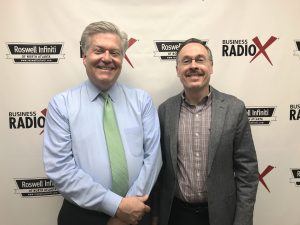
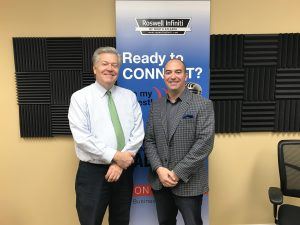
John Ray, Howard Page, and Tommy Heaton

“North Fulton Business Radio,” Episode 158:  Howard Page, TeamLogic IT, and Tommy Heaton, Small Business Development Center (SBDC) at Georgia State University

On this edition of “North Fulton Business Radio,” Howard Page of TeamLogic IT talks technology services and cybersecurity, and Tommy Heaton outlines some of the advisory work and classes offered by the SBDC at GSU.

Howard Page, TeamLogic IT, Atlanta Midtown

Howard Page

Howard Page is the Owner of TeamLogic IT, Atlanta Midtown. Their philosophy is simple:  they treat you the way you’d want to be treated. They make the technology invisible so your focus is on what you do best, growing your business. They’re flexible. They accommodate different levels of service from fully-outsourced IT to supplemental IT to projects. They follow best practices. They have documented implementation across the whole IT market. They’re dedicated. They will not stop learning about your business and thinking of ways to improve it via technology.

For more information, follow this link or call Howard directly at 770-450-0910.

Tommy Heaton, Small Business Development Center at Georgia State

Tommy Heaton

Tommy Heaton is a Small Business Consultant with the Small Business Development Center (SBDC) at Georgia State. With 17 locations across the state of Georgia, the SBDC’s goal is to enhance the economic well-being of Georgians by providing a wide range of educational services for small business owners and aspiring entrepreneurs. The SBDC offers one-on-one consultation on a wide variety of subjects to address the needs of Georgia’s small business community.

For more information on the SBDC Grow Smart Program mentioned on the show, go to this link. For information on other upcoming SBDC classes and events in the Atlanta office, go to their website.

To contact SBDC at GSU directly, call 404-413-7830.


“North Fulton Business Radio” is broadcast from the North Fulton studio of Business RadioX®, located inside Renasant Bank in Alpharetta. Renasant Bank has humble roots, starting in 1904 as a $100,000 bank in a Lee County, Mississippi, bakery. Since then, Renasant has grown to become one of the Southeast’s strongest financial institutions with approximately $12.9 billion in assets and more than 190 banking, lending, wealth management and financial services offices in Mississippi, Alabama, Tennessee, Georgia and Florida. All of Renasant’s success stems from each of their banker’s commitment to investing in their communities as a way of better understanding the people they serve. At Renasant Bank, they understand you because they work and live alongside you every day.


Tagged With: cyber attacks, cyber security, georgia sbdc. SBDC at GSU, Grow Smart Program, Howard Page, managed IT services, Midtown Atlanta, North Fulton Business Radio, phishing attack, small business consultant, small business consulting, Small Business Development Center, small business development center at Georgia State, Team Logic IT, technology advisor, Thomas Heaton, Tommy Heaton

The GNFCC 400 Insider: All Things Alpharetta, An Interview with Janet Rodgers, Awesome Alpharetta (Alpharetta CVB) and Matt Thomas, City of Alpharetta Economic Development

August 23, 2019 by John Ray

North Fulton Studio
North Fulton Studio
The GNFCC 400 Insider: All Things Alpharetta, An Interview with Janet Rodgers, Awesome Alpharetta (Alpharetta CVB) and Matt Thomas, City of Alpharetta Economic Development
Loading
00:00 /
RSS Feed
Share
Link
Embed

Download file

Kali Boatright, Matthew Thomas, and Janet Rodgers

Episode 27, All Things Alpharetta

Why does Alpharetta keep achieving such high rankings for quality of life? What makes Alpharetta such an attractive place to do business, particularly for technology companies? What are some of the signature events which draw visitors to Alpharetta? Join Host Kali Boatright as she poses these questions and more to Janet Rodgers, Awesome Alpharetta, and Matthew Thomas, Economic Development Manager of the City of Alpharetta. The “GNFCC 400 Insider” is presented by the Greater North Fulton Chamber of Commerce.

Janet Rodgers, Awesome Alpharetta, the Alpharetta Convention & Visitors Bureau

Janet Rodgers, Awesome Alpharetta, the Alpharetta CVB

Janet Rodgers is President and CEO of Awesome Alpharetta, the Alpharetta Convention & Visitors Bureau. The mission statement of the Alpharetta CVB is “to position the city of Alpharetta as a regionally, nationally and globally recognized premier tourism destination by developing quality programs and facilities to attract overnight visitors.”

The Alpharetta CVB uses innovative and targeted marketing strategies, along with aggressive sales efforts, to attract overnight visitors to the city. They do this in three key areas:

1.  Increasing the awareness and identity of Alpharetta as a destination for the leisure and individual traveler and raising awareness of the economic importance of the visitor industry to Alpharetta by placing advertisements, writing press releases, utilizing social media and maintaining a technologically advanced website

2. Employing a variety of sales strategies to increase the number of group room nights booked in Alpharetta’s 26 hotels through attendance at tradeshows, association meetings and conferences as well as sales calls and site visits with event organizers

3. Providing leadership for the visitor industry, coordinating activities, encouraging marketing activities and partnerships, and projecting an appealing image on behalf of the city of Alpharetta

For more information on the Alpharetta CVB and their services, call 678-297-2811 and request their brochure, “A Look at the Alpharetta Convention and Visitors Bureau.” You can also visit the Awesome Alpharetta website.

Matthew Thomas, City of Alpharetta Economic Development

Matthew Thomas, City of Alpharetta

Matthew Thomas is the Economic Development Manager for the City of Alpharetta.

There’s a reason why more than 640 technology-based businesses have made their home in Alpharetta, and it’s not just the nice houses and great weather. The city’s fiber-optic network is the most extensive and redundant in the Southeast, and they work closely with state and local economic development agencies to provide tax credits and incentives to complement any brand of business. Some of the biggest and most recognized names in the tech industry are thriving in Alpharetta. With more than 20 million square feet of office space, there’s plenty of room in the neighborhood for you next expansion.

The City of Alpharetta has been recognized nationally in a variety of awards and rankings, including Best Small City to Start Business (Entrepreneur.com), Best Atlanta Suburb (Movoto), Top 25 Best Places to Move (Forbes), 7th Friendliest City (Forbes), and 6th Fastest Growing City (U.S. Census, 2012).

For more information, go to GrowAlpharetta.com, or call 678-297-6024.

About GNFCC and “The GNFCC 400 Insider”

Kali Boatright, President and CEO of the Greater North Fulton Chamber of Commerce

“The GNFCC 400 Insider” (formerly “North Atlanta’s Bizlink”) is presented by the Greater North Fulton Chamber of Commerce (GNFCC) and is hosted by Kali Boatright, President and CEO of GNFCC. The Greater North Fulton Chamber of Commerce is a private, non-profit, member-driven organization comprised of over 1400 business enterprises, civic organizations, educational institutions and individuals.  Their service area includes Alpharetta, Johns Creek, Milton, Mountain Park, Roswell and Sandy Springs. GNFCC is the leading voice on economic development, business growth and quality of life issues in North Fulton County.

The GNFCC promotes the interests of our members by assuming a leadership role in making North Fulton an excellent place to work, live, play and stay. They provide one voice for all local businesses to influence decision makers, recommend legislation, and protect the valuable resources that make North Fulton a popular place to live.

For more information on GNFCC and its North Fulton County service area, follow this link or call (770) 993-8806.

Tagged With: economic development, economic development in Alpharetta, GNFCC, gnfcc podcast, GNFCC President, gnfcc radio, gnfcc radio show, greater north fulton chamber, Greater North Fulton Chamber of Commerce, Iron Kids Triathalon, Kali Boatright, Matt Thomas, Matthew Thomas, millennials, North Fulton, North Point Mall, staycation, Taste of Alpharetta, The Greater North Fulton Chamber of Commerce, tourism, Wire & Wood

Decision Vision Episode 29: Should I Cooperate with a Competitor? – An Interview with Tom Brooks, Windham Brannon

August 22, 2019 by John Ray

Decision Vision
Decision Vision
Decision Vision Episode 29: Should I Cooperate with a Competitor? – An Interview with Tom Brooks, Windham Brannon
Loading
00:00 /
RSS Feed
Share
Link
Embed

Download file

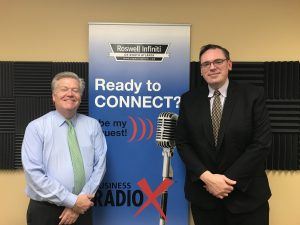
Mike Blake and Tom Brooks

Should I Cooperate with a Competitor?

Why would you collaborate with a competitor? How do you establish and maintain trust with a competitor you cooperate with?  Host Mike Blake, Head of the Valuation Practice at Brady Ware, discusses these questions and more with Tom Brooks, Director of the Valuation Practice at Windham Brannon. “Decision Vision” is presented by Brady Ware & Company.

Tom Brooks, Windham Brannon

Tom Brooks, Windham Brannon

Tom Brooks is a Principal and Director of the Valuation Practice at Windham Brannon. Tom has over 20 years of experience handling valuation and litigation support matters. He specializes in guiding clients with the valuation of their businesses, business interests, and intangible assets for mergers and acquisitions, gift and estate planning, financial and tax reporting, charitable giving, strategic planning, shareholder disputes, commercial litigation, and marital dissolution. Tom has worked with businesses of all sizes, including start-up companies to larger companies with over $1 billion in revenues. He is effective at communicating complex valuation issues and collaborating with his clients in building successful relationships.

Prior to joining Windham Brannon, he was a Senior Manager in the Valuation practice of a leading tax and advisory firm. As a licensed CPA in Georgia, Accredited in Business Valuation (ABV) and as an Accredited Senior Appraiser (ASA), Tom often speaks for organizations such as the Atlanta National Association of Certified Valuation Analysts (NACVA) chapter, the Georgia Society of Certified Public Accountants and Atlanta Alumni of Retired Revenue Agents. He has also presented for Georgia Tech and LaGrange College accounting students and at Merrill Lynch seminars.

Michael Blake, Brady Ware & Company

Mike Blake, Host of “Decision Vision”

Michael Blake is Host of the “Decision Vision” podcast series and a Director of Brady Ware & Company. Mike specializes in the valuation of intellectual property-driven firms, such as software firms, aerospace firms and professional services firms, most frequently in the capacity as a transaction advisor, helping clients obtain great outcomes from complex transaction opportunities. He is also a specialist in the appraisal of intellectual properties as stand-alone assets, such as software, trade secrets, and patents.

Mike has been a full-time business appraiser for 13 years with public accounting firms, boutique business appraisal firms, and an owner of his own firm. Prior to that, he spent 8 years in venture capital and investment banking, including transactions in the U.S., Israel, Russia, Ukraine, and Belarus.

Brady Ware & Company

Brady Ware & Company is a regional full-service accounting and advisory firm which helps businesses and entrepreneurs make visions a reality. Brady Ware services clients nationally from its offices in Alpharetta, GA; Columbus and Dayton, OH; and Richmond, IN. The firm is growth minded, committed to the regions in which they operate, and most importantly, they make significant investments in their people and service offerings to meet the changing financial needs of those they are privileged to serve. The firm is dedicated to providing results that make a difference for its clients.

Decision Vision Podcast Series

“Decision Vision” is a podcast covering topics and issues facing small business owners and connecting them with solutions from leading experts. This series is presented by Brady Ware & Company. If you are a decision maker for a small business, we’d love to hear from you. Contact us at decisionvision@bradyware.com and make sure to listen to every Thursday to the “Decision Vision” podcast. Past episodes of “Decision Vision” can be found here. “Decision Vision” is produced and broadcast by the North Fulton studio of Business RadioX®.

Visit Brady Ware & Company on social media:

LinkedIn:  https://www.linkedin.com/company/brady-ware/

Facebook: https://www.facebook.com/bradywareCPAs/

Twitter: https://twitter.com/BradyWare

Instagram: https://www.instagram.com/bradywarecompany/

Show Transcript

Intro: [00:00:01] Welcome to Decision Vision, a podcast series focusing on critical business decisions, brought to you by Brady Ware & Company. Brady Ware is a regional, full-service, accounting and advisory firm that helps businesses and entrepreneurs make vision a reality.

Michael Blake: [00:00:20] And welcome to Decision Vision, a podcast giving you, the listener, clear vision to make great decisions. In each episode, we discuss the process of decision making on a different topic. Rather than making recommendations because everyone’s circumstances are different, we talk to subject matter experts about how they would recommend thinking about that decision.

Michael Blake: [00:00:37] My name is Mike Blake, and I’m your host for today’s program. I’m a Director at Brady Ware & Company, a full-service accounting firm based in Dayton, Ohio, with offices in Dayton; Columbus, Ohio; Richmond, Indiana; and Alpharetta, Georgia, which is where we are recording today. Brady Ware is sponsoring this podcast. If you like this podcast, please subscribe on your favorite podcast aggregator. And please also consider leaving a review of the podcast as well.

Michael Blake: [00:01:01] So, our topic today is cooperating with competitors. And this is a a ticklish topic. We think of competitors in the marketplace, regardless of our industry, it could be public accounting, it could be advisory, it could be manufacturing cars, it could be airlines. Very few businesses are not in a competitive scenario in some case. And by the way, if you are in a business that isn’t in one, please write me. I’d like to know what that is, so I can then compete with you because that sounds great.

Michael Blake: [00:01:38] And what I’ve learned over the last 15 years or so that I’ve been in business is that some industries just can’t get along. Like years and years ago, I did a project for Coca-Cola Enterprises. And I was a contractor there doing some financial analysis. And at the time, you walk into their office, and everything is Coca-Cola red. They got polar bears all over the place, and bottles of Coke, and everything else. And it’s definitely rah-rah, sort of, company branding is at the forefront. And if—I did not do this, but somebody else I knew did, went off premises, and then came back with a bag full of Taco Bell, which at the time was owned by Pepsi Co. Now, Yum! Brands, I don’t know if Pepsi is owned by them or not, but that was a big no-no. Like even having food from the competing beverage was not a fireable offense, but boy, you’ve got the Coca-Cola stink eye, and then some when you did that.

Michael Blake: [00:02:39] I imagine there was a time when you had that kind of rivalry at Microsoft and Apple. I don’t think that’s the case today. And we think of of competition as something that, frankly, we have to destroy, that they are enemies, that they are opposing us, that they are taking food out of our mouths, and that they are something to be feared and disliked. But I think in modern business, that’s not necessarily always the case. And you see industries where, in certain cases, competitors do band together. The auto industry, as competitive as they are, they do band together in order to promote safety in their industry. They band together to make sure that regulations aren’t too constraining.

Michael Blake: [00:03:27] In the airline industry, I think the same thing. I think the same thing is true. You see partnerships all over the place where maybe companies are cross-selling each other’s services. And maybe, I’ll go back to airlines, they’re actually a really good example too because of your quote sharing. So, my family and I are going to take a trip to Scandinavia later this year, and our plane ticket says Delta. But at some point, we’re probably going to be put on an SAS plane, or a Norwegian airplane, or something. We don’t know that, but because those are competitors that are cooperating, right, that’s the kind of customer experience that we’re going to have. And because they cooperate, we don’t have to get out at Paris, and then walk the rest of the way to Copenhagen, which would be a real pain in the neck.

Michael Blake: [00:04:12] And so, I wanted to explore this because in my particular practice—and I don’t know if I’m exceptional in either direction or right about the average, but I can tell you in my practice in business valuation, about somewhere between 20% and 30% of my business actually comes from competing firms. And I don’t necessarily know that I’m exceptional, but on the off chance that is exceptional some way, that means that there’s a lesson to learn. I want to talk about what if your competitors aren’t your mortal enemies? What if you’re not just always locked in a life-and-death struggle with your competitors? And not in a way where you’re forming a cartel. I mean, our firm is not a big enough firm. I’m not going to cartel anything. But there’s a long—there’s a big gap between cartel and cutthroat, winner-take-all competition.

Michael Blake: [00:05:10] And so, that’s what I want to talk about today because if you’re not thinking about competitors in terms of if there’s a potential partnership and a potential cooperation and opportunity, you may be leaving money on the table. You may be leaving business value on the table. And maybe, also, you’re living a more stressful life than you have to. And so, I’ve brought in a guest today that, I think, this will be a little bit of a different conversation because I’m going to be more of an active participant rather than an interviewer.

Michael Blake: [00:05:38] But I brought in my friend Tom Brooks today, who is a competitor with whom that I cooperate quite a bit. Tom is a Director in the Valuation of Litigation Services Group of Windham Brannon PC, a midsized certified public accounting firm in Atlanta. I think about the same size as Brady Ware. I haven’t measured it, but I get the sense we’re about roughly the same size. Tom has over 20 years of experience handling valuation and litigation support matters. He specializes in guiding clients at the valuation of their businesses, business interests, and intangible assets for mergers and acquisitions, gift and estate planning, financial and tax reporting, charitable giving, strategic planning, shareholder disputes, commercial litigation, and marital dissolution. Tom has worked with businesses of all sizes, including startup companies to larger companies with over $1 billion in revenues. He is effective at communicating complex valuation issues, and collaborating with his clients, and building successful relationships.

Michael Blake: [00:06:35] Prior to joining Windham Brannon, he was a Senior Manager in the Valuation Practice of a leading tax advisory firm. As a licensed CPA in Georgia, accredited in business valuation, and as an accredited senior appraiser, Tom often speaks for organizations such as the Atlanta National Association for Certified Valuation Analysts or NACVA – that has got to be the weirdest, most awkward acronym in the history of mankind. And I’m a NACVA member, so I can speak to that internally – the Georgia Society of Certified Public Accountants and Atlanta Alumni of Retired Revenue Agents. He has also presented for Georgia Tech, and LaGrange College Accounting Students, and at Merrill Lynch seminars. And Tom and I used to work together. And he won’t admit this, but I actually worked for him technically, at least, 15 years ago. And we have tracked each other’s careers and have been good friends ever since. And it’s a terrific pleasure to have Tom Brooks in the program. Tom, thanks for coming on.

Tom Brooks: [00:07:32] It’s great to be on. Mike, I appreciate it. That’s quite an intro, and I think it makes me sound a little better than I really am. And yeah, you really didn’t work for me, Mike. That wasn’t really the case.

Michael Blake: [00:07:43] So, you see. I mean, he’s only saying that, so that if I do something bad, he doesn’t want the blame for it. So, talk to us a little bit about your practice in Windham Brannon. How big is that practice, generally speaking? I’m not looking for a number of terms or anything. And what do you focus on within that practice?

Tom Brooks: [00:08:01] Yeah. Our practice highlights a lot of what you highlighted in my bio, which is a mouthful, but traditional business valuation of privately held entities. A number of reasons that clients may perform those. You’ve probably talked about those a lot on your program and on the podcast here. But we do a lot of work around exit planning for our clients, management planning, which can be very broad, to keeping a scorecard.

Tom Brooks: [00:08:28] What’s my business worth? Why am I—the investments that I’m making, the growth that I’m achieving, why is that happening and how does it impact value? We do a lot of work as a firm in Windham Brannon. We’ve got a large high-net worth practice. So, we do a lot of work with our high-net worth clients that have their businesses. And they may be looking at transition planning. How do we transition the business to the next generation? If there’s no next generation, what’s the next—how do we exit? And then, financial reporting. And for accounting purposes, valuation for purchase price allocations, goodwill impairment, stock compensation. And then, finally, probably the last piece to our puzzle in terms of our jigsaw puzzle of our practice would be litigation support in terms of commercial litigation cases and where valuation comes into play in those.

Tom Brooks: [00:09:20] Our practice has been in existence now for 18 months. And we have within—we practice as a litigation and valuation group together. We’ve got two partners and a senior manager in that group. So, I will say that I’ve been announced as a new principal in the firm, Mike, so-

Michael Blake: [00:09:42] Oh, Congratulations! We heard it here first.

Tom Brooks: [00:09:46] So, it’s a great—it’s been a good—we’ve had a good, very successful start in the 18 months that I’ve been in Windham Brannon.

Michael Blake: [00:09:51] That is great. That is great to hear. I know that was kind of the plan when you joined, but I know you never take anything for granted. And that road to principle can be a bumpy one too. So, we’ll amend that bio. You’re a principal now at Windham Brannon. Your Excellency.

Tom Brooks: [00:10:08] Don’t go there, Mike.

Michael Blake: [00:10:12] So, you have chosen, I think, in your career, really, to be pretty open about cooperating with competing firm, not just ours, but others. We don’t need to be exclusive, so. But why is that? Why do you have that outlook and that philosophy?

Tom Brooks: [00:10:30] I think it all comes back to—and this may hit—this may be a recurring theme this afternoon. It comes back to trust. I mean, it’s not—I’m not an open book that no matter who I sit down with in terms of my competitors, but I’m not afraid to ask questions when you develop that level of trust with somebody to say, “Am I handling this client situation right?” And it’s not like we’re sitting here sharing our Rolodex or client names and revealing that. It’s talking more about issues that we may face as practitioners. And again, I’m sure these are topics that you’ve talked about. If we were to talk about technical topics and valuation, you and I could have two—there could be two very different approaches. And they may not be or they could be similar.

Tom Brooks: [00:11:13] So, so much of our—and in the career field of valuation, frequently, it said that it may be more science or more art than science, rather. And so, why wouldn’t you—in my case, I think it’s just kind of how I’m wired as well. Why wouldn’t you open yourself up and be trustworthy of some other folks potentially? Again, it’s not everybody but those, that over time, you developed a relationship like that with. You’ve just got to develop that high level of trust before you can get to where you’re going to kind of be a friendly, friendly competitor.

Michael Blake: [00:11:49] And I’ll interject to that. I think another ingredient to that is ego. I think in the valuation profession, more than most other areas of accounting, ego is more prominent and more pronounced, right? And we both know practitioners that what other faults they have, healthy self-esteem is not one of them.

Tom Brooks: [00:12:09] Right.

Michael Blake: [00:12:09] Right? And I do think that our profession, sometimes, encourages or discourages that. I think our profession, sometimes, a little bit more water coolery. Nobody is either sort of is good or maybe good in a certain area. But what we tend to put people in the bucket. They’re either a genius or an idiot, right? Not learning, not trending, whatever, right?

Tom Brooks: [00:12:35] Right.

Michael Blake: [00:12:36] And I think part of the willingness to cooperate is a willingness to be vulnerable, right?

Tom Brooks: [00:12:43] Right.

Michael Blake: [00:12:43] And say, “Look, I don’t know everything about this. I don’t.” We do some estate and gift tax work, but you do 10 times more work there. And that’s okay, I’m willing to say, “Look, I don’t think I need to necessarily give up the engagement, but I do need to sort of phone a friend,” right?

Tom Brooks: [00:13:02] And like you, I’ve got other—and you and I probably just talked about issues like that. And there have been issues that I’ve raised around technology that I’ve phoned you about. And I have other former co-workers and, now, competitors that, again, have very good relationships with. The same thing, you referenced the gift and estate. They’ll call and say, “Hey, I’m dealing with this issue. I don’t deal with it that often. Can you…”  Usually, most of the time even, you or somebody else are going to call and say, “Here’s the way I’m thinking about it.” They’re not asking you to solve their problem. They’re asking you to help them. And you may take them in a completely different direction. But that does speak yet of that vulnerability to be willing to listen, and ask somebody, and say, “Okay, there’s a better way to do it than the way I’m thinking about it. And I want to go find the right way,” because that’s the best answer for your client.

Michael Blake: [00:13:48] Yeah. And you’ll learn something, right?

Tom Brooks: [00:13:49] Right.

Michael Blake: [00:13:49] And one question you have to ask later. And you mentioned something I didn’t thought of. I think it’s a really important point. My father was in this industry too, but he had two jobs over the course of his career. I think I’m on number eight now, and I’ve got, at least, 17 or 18 years of work left in me, give or take health. So, will this be my last job? I don’t know. I think we all hope it is. That’s why I’m a director. But we’re, now, building networks of people that we worked with in our generation and subsequent generations much more rapidly than I think generations before us, aren’t we? And that probably contributes to this, doesn’t it?

Tom Brooks: [00:14:29] I think that’s the case. And again, this is not—there’s no, I guess, poll data to back it up. But I think you’re right. I think especially—and I can’t speak to any other platform other than accounting firms. That’s where I’ve spent most of my career. But you do, at times, get that hesitancy and sense. And maybe it is from some of the older partners or the generation before us. And it’s not to say all of them are that way, but there can be a very strong hesitancy. “Well, Tom, you want to refer our client that we can’t do work for to another accounting firm?” And that is one reason I would say our success has been great at Windham Brannon because my partners aren’t thinking that way. It’s just—but I’ve seen it throughout life in terms of my career, and I’ve seen it. Other practitioners will tell me the same thing that they experience some of those same roadblocks when you do want to have this healthy, friendly, competitive nature to your relationship.

Michael Blake: [00:15:32] Well, and we’ve had—you and I have had that because the firm I used to work for before Brady Ware was of that mind was that just referring stuff to another CPA firm, that was just not on the table.

Tom Brooks: [00:15:44] Right.

Michael Blake: [00:15:44] And it killed me that I had to basically tell you that because I didn’t want you to refer stuff thinking of those stuff coming back because it was not, and it did not. So, that was a very liberating thing about sort of planting my flag. And I think now, that other firm has sort of started to loosen up a little bit in terms of sharing. But that can be a real issue. And I’ll admit, maybe 10 years ago, I might have had—10-12 years ago, I might have had that same mindset. You’ve just got to hold on to every client like they’re the last life vest on the Titanic.

Tom Brooks: [00:16:15] Right.

Michael Blake: [00:16:17] Right? But then, with us, especially, we can get into something, what I call a valuation Vietnam, where you think you’re getting into something that’s going to turn out fine. And then, you get in, and you’re not, and it’s not. And maybe—and you look back, you think, “Boy, I’m not sure I should have taken that on.” But halfway through, you’re, kind of, committed. You just got to figure it out. And you learn that I don’t know that I even did myself a favor by taking every seat. If Tom were here doing this, he would have been done three weeks ago. And here I am, here I am tearing my hair out at 2:00 a.m. trying to figure out this problem. And I think there’s a maturity element to that.

Tom Brooks: [00:16:56] No, time teaches you a lot in any form no matter what your career choice is. I believe that especially when you listen to business owners and entrepreneurs. We’ve all failed probably in some capacity somewhere, and it’s how do you learn from that. And, again, it’s taking the ego out of it, and being willing to learn, and being open. It’s not—I think it’s along the same lines that when we’re told no, or we don’t win an assignment, probably when I first started, that would hurt me a lot more than it does now. You have to lose some engagements to figure some things out and to learn a little bit more about how people view you in the marketplace.

Tom Brooks: [00:17:38] And so, I think it just goes to some humility along the way too that you learn, and you make some mistakes, and being willing to learn from those. And so, again, as you age and mature in your business career, hopefully, you become more open to these types of concepts.

Michael Blake: [00:17:57] And I think it helps to have definition in terms of what you just know. You just know in your heart of hearts, you’re not very good at doing. I’ve been very open with you and anybody who’ll listen, I don’t do litigation. I’m not very good at it, and I’m not willing or interested to make the investment required to become even mediocre at it. So, being a mediocre expert witness, that’s a bad day, being deposed when you know you’re not that great.

Michael Blake: [00:18:29] And that is maturity, but I think it’s also liberating. And I think in a certain way to it, it actually helps your brand, right? I don’t get a lot of litigation referrals anymore, either now, because the market has known like, “Blake, he’s just not going to do it.” But I think that tends to lead to more projects that you are good at being sent your way. And I think the market respects you more when you’ll turn them down, right?

Tom Brooks: [00:18:58] I agree. I mean, what you and I do is professional services. This isn’t just about being a CPA. And for listeners out there, especially in professional services arena, this is really what it gets back to. It’s your firm’s reputation. And some people may have their own firm. So, the name may go—your individual name may go with the firm name. But at the end of the day, as a practicing valuation specialist at Windham Brannon, it’s both my reputation and the firm’s reputation every day that are on the line. And that’s a risk that I have to manage as a practice leader. And with firm leadership, when you have questions about engagements that you may or may not want to take on.

Tom Brooks: [00:19:36] But like you said, it’s kind of one of those, “Maybe I would have been better off.” But thinking ahead and as you encounter something that’s going to be considered maybe outside your comfort zone, it doesn’t mean that we don’t take all assignments outside our comfort zone because, sometimes, it relates to something we’ve done before, and you just got to stretch yourself and learn, like you said earlier in the podcast. And that’s what we—many times, that’s the way we take new tasks on or responsibilities is we learn. And some of it for us is on the job. And we don’t have all the answers, as you said, but, sometimes, it’s almost like phone a friend, right?

Michael Blake: [00:20:13] Yeah.

Tom Brooks: [00:20:13] I mean that’s what you just talked about. And sometimes, those things will help you kind of navigate those challenging situations. But, again, having those open relationships that you can do that, to use your word, it’s liberating to be able to know that in the event that I’m struggling with something, I’ve got a lifeline out there to help me make sure that I’m doing the right thing for my client.

Michael Blake: [00:20:36] So, I’d like to revisit the trust discussion because I think so much of that, ultimately, comes down to that. And there are two areas I want to explore. One is, what are some of those dimensions of trust? It’s obvious, part of it is going to be just, are you competent, right? I’ll give you the fine China, don’t drop it, please. But there are kind of other elements of trust that belong there too, right? So, talk a little bit about what those trust features look like.

Tom Brooks: [00:21:05] Yeah, I think that’s one of the things in thinking about what we’re going to talk about today as I went through in my head. It’s kind of, like you said, the opposite, potentially, of trust. Like you, you get to see a lot of work product come across your desk of your competitors, whether it’d be just one of your partners is asking you to review something because they had a valuation done by an outside firm, or maybe it’s the on the accounting side that our audit team needs something reviewed, and I’m looking at it. So, the first element is kind of that competency. It’s just kind of that, does the expert that we may send this out to, do they have the competency, and will they be taken care of? The way I think of it as well is, will my client or the firm’s client be taken care of as well as they would have been taken care of by me?

Tom Brooks: [00:22:03] So, it really does come down to that trust. Some of it is just years and years. In my case, it’s years. I mean we, I think, have trusted each other a lot longer probably than just the 10-15 years, and we departed the firm that we worked with together, but it’s also developed over time. And so, I think it’s time. So, there’s a time element to it because you got to get to know the person.

Tom Brooks: [00:22:25] I think you have to also understand – and I think maybe this is an element of trust is – are they motivated to do the right thing? Again, I think that’s something that you’ve got to gage. There’s a high level—in doing this, there’s nothing that we can grab at and grasp. There’s nothing tangible. All this is intangible, and there’s risk associated with that when you do that, when you’re putting yourself out there, and potentially handing another name off. So, I think it’s that, again, at the end of the day, these are all elements of trust. But really, that is the key element, at the end of the day, the kind of that you got to come back to.

Michael Blake: [00:23:05] And in the second point I want to ask about trust is, trust between the two direct participants, such as between you and me is great, but it’s not enough, right? We also have to have organizational trust. And unless you have another announcement to make, you’re not the managing partner of your firm.

Tom Brooks: [00:23:26] No.

Michael Blake: [00:23:26] And I’m not the managing partner of my firm. And there is no danger of that announcement ever being made. I can promise you that.

Tom Brooks: [00:23:32] This side as well.

Michael Blake: [00:23:32] So, in our case, in the case of many people, we also had to help build organizational trust, right?

Tom Brooks: [00:23:43] Absolutely. That was—when you and I first landed between Brady Ware and Windham Brannon, it was one of the first things that we did because our moves kind of coincided with each other.

Michael Blake: [00:23:51] We’re a month apart.

Tom Brooks: [00:23:52] Yeah. It was we got together for breakfast with our managing partners and some of our other key senior partners. And you just did begin to develop that rapport, and that openness, and, again, those lines of communication. Maybe this is the word I was looking for in the prior answer but transparency. And, again, it doesn’t mean that we’re coming with a client roster list and go, “And here’s ours. Where’s yours? Here’s yours.” And we’re just exchanging names like that.

Michael Blake: [00:24:17] Like lineup cards.

Tom Brooks: [00:24:18] Right. Client confidentiality still trumps all these and precedes all of these. So, that’s the utmost important thing that we have is to maintain. And again, in that confidence, that’s where your trust comes in. But it does take, in our case, where you’re with a larger firm organizationally, you’ve got to have that confidence because many times for you and I, it’s not just something that comes across my desk that comes through, say, a referral to me from one of my outside sources outside the firm. It’s something inside the firm. So, my partners have to trust that again and have that confidence that Mike Blake and Brady Ware are going to take care of them. And so, you’re right, organizational trust on top of the individual relational trust that exists is really critical as well.

Michael Blake: [00:25:05] And take care of them and not try to exploit the opportunity too, right?

Tom Brooks: [00:25:11] Yeah, right. That becomes an underlying element. And I think that goes back to when we talked about some of the distrust that occurs within many firms and across probably every professional service line there is that you would have in terms of thinking about sending a potential client out to a competitor is right. Are they going to poach them completely? Are they going to be looking to market other service lines in there? And you’ve got to have those conversations, and they’re just really open and direct. Those who are not, I would share when we had ours, those were not difficult conversations. It was just, “Well, here’s how we conduct ourselves.” And I guess it’s kind of like dating. I mean, it’s kind of like we were just figuring each other out, so to speak. And in our case, it’s worked really well that, again, between us and the relationship we already had and our partners, it’s just gone. We’re able to do that.

Michael Blake: [00:26:10] So, sometimes there can be speed bumps in a partnership, right? And these are—by definition, they’re sensitive relationships. No matter how long the trust is, there’s always going to be a speed bump. And to my mind, I’m always kind of worried that, “Oh, boy.”

Tom Brooks: [00:26:28] What did Tom do now?

Michael Blake: [00:26:29] Well, anybody, right?

Tom Brooks: [00:26:31] Right. No.

Michael Blake: [00:26:31] And I’ll tell you that I kind of tell our people, “This is a Windham Brannon referral. This has got to be red as red carpets on this one, because I don’t want to go back and tell—I don’t want to face him if it’s not great.” But there can be speed bumps. And how do you—what do you think is the best way to kind of handle those speed bumps, so that they don’t jeopardize the broader relationship?

Tom Brooks: [00:27:01] I think it goes back to what we kind of just articulated and spoke about in our last answer was that it’s got to be open lines of communication and transparency. You’re right. I mean, even if I had never handed that client off and, I could have done the work for whatever reason, clients are complex in terms of the issues that we face, and the demands that we face, the time, whether it’d be—the demands are just numerous. And it’s what we signed up for. We love serving our clients, but that hiccup could have occurred with anybody.

Tom Brooks: [00:27:39] So, I think it’s just important to know that, again, take the ego out of it. None of us are perfect. None of us has—again, these are intangible issues that we’re dealing with typically with clients. The technical issues, yes, but relational, this is all soft skills. These aren’t hard, tangible skills. So, I think, it’s, again, having that open line of communication and transparency.

Tom Brooks: [00:28:04] And if there was a hiccup, I think, first, come up with an action plan to solve the problem if you’re the firm that received kind of the referral. And then, obviously, if there was something that was significant enough, you need to reach back out across the aisle to the firm that referred the work to you, and say, “Hey, here’s what happened. Here’s what we did.” And if there is anything, potentially, they can help you with to get over that hump, then that’s it. I mean, the client has to come first, and their interests have to come first, and serving them, and making sure you get to the finish line. So, I think it’s just what has to happen to do that.

Michael Blake: [00:28:42] Now, one area that is most common that leads to competitor cooperation in our industry is a conflict, right?

Tom Brooks: [00:28:51] Right.

Michael Blake: [00:28:51] We can just get conflict. I tried to send you a piece of work, you got conflicted out of it. I know that was very painful, but you have to do the right thing for an existing client, right? But talk to our audience, what does a conflict look like? Is a conflict always black and white or the sort of shades of gray we have to make a judgment call? What is that conflict thought process look like?

Tom Brooks: [00:29:17] Yeah, I think there can be shades of gray. I mean, some are very obvious.  Let’s just—to use an example, litigation that if we were working for the plaintiff in some capacity, obviously, we’re probably hired by their legal counsel, and we’ve got an underlying client. But if we had been on—and then you look at the defendant, and go, “Oh, they’re an audit client of Windham Brannon. We’re not going to take that on. I mean, that’s just a conflict for us. It’s not something that where we would want to go. And I think there’s a direct conflict anyways.”

Tom Brooks: [00:29:50] Some of them can be a little more gray. I mean, this is more of an independence issue that we face as well. It’s not gray, but I’ll highlight it. So, for our auditors, our audit clients that have financial reporting issues that have valuation embedded in them, Windham Brannon can’t do that valuation work. So, we call it independence, but it’s really a conflict. We can’t produce a valuation, then, that one of my audit or that our audit teams goes and audits and signs off on it because we’re all under the same house of Windham Brannon. So, those are obvious.

Tom Brooks: [00:30:22] I think, sometimes, it can be—maybe it’s going back to the litigation scenario to paint just kind of a grey issue is you may not have a direct or a perceived direct conflict, but it may be that, in this case, again, let’s just say we were potentially representing the plaintiff. The defendant, somehow, isn’t a client of Windham Brannon, but they’re close to Windham Brannon. They have maybe referred some work to Windham Brannon. That’s just not a position. Potentially, again, it’s not that we couldn’t take the assignment, but you also may not take it because you’d say, “Well, that’s just not a position we want to put ourselves in with that defendant that the spigot may turn off or it may create, as you described before, one of those speed bumps. We really don’t want to have to navigate that speed bump.”

Michael Blake: [00:31:13] There are no speed bumps by accident. You don’t want to go making them on your own, right?

Tom Brooks: [00:31:16] Right, exactly. Well said, yeah.

Michael Blake: [00:31:17] So, another conflict I run to on occasion, which is not strictly one, but I get very uncomfortable with and, usually, we’ll try to try to sidestep it is maybe it’s not a litigation but a partner buyout, right? So, the client will come to us and say, “I want to buy out my partner,” or their service partner will come to me and say, “We have a client that want to buy the partner. Can we do an appraisal?” I said, “Well, we could do an appraisal.” And strictly speaking, there’s no conflict there, right? But let me ask you this question, if we come up with an answer that the client doesn’t like, right, is it going to make them mad at you?” They said yes. So, I don’t think we want to do this then, right?

Tom Brooks: [00:32:00] Right.

Michael Blake: [00:32:01] That’s not a conflict with a capital C.

Tom Brooks: [00:32:03] Right.

Michael Blake: [00:32:03] But it’s a conflict with a small C with a lot of underlines underneath it.

Tom Brooks: [00:32:07] Yeah. It’s kind of managing your firm risk at the end of the day. It comes back to, just like I said, just assessing, is that a place or a client relationship that we want to be in and take on? Sometimes, I laugh at it. You turn something away, or what you perceive is to do the right thing in some capacity, or you lose an engagement for whatever reason. Well, probably within, it may not be 24 hours, but within a week, there’s a better opportunity that turns around that you like better than the last one that had some hair on it, so.

Michael Blake: [00:32:43] Yeah, that’s called maturity. I like to think that in exchange for my gray hair and two arthritic ankles, I get some benefit out of that. In fact, to that point, I can think of a few assignments that I wish I had not taken. I can’t think of a single one that I turned down, and I wished I’d hung on to.

Tom Brooks: [00:33:04] Right.

Michael Blake: [00:33:04] Not a single one. Oh man, it never happened.

Tom Brooks: [00:33:06] Right.

Michael Blake: [00:33:08] So, talk about the sort of cooperation. In your mind, do you think you need to have sort of a written agreement? Does everything have to be kind of a papered over joint venture, or can these relationships be sustained on an informal basis?

Tom Brooks: [00:33:26] I think they can. I think it’s situational-dependent. So, we’ll go with it depends, which is always a good answer, right?

Michael Blake: [00:33:36] Jim would not like that one, right?

Tom Brooks: [00:33:38] That’s right, exactly. So, I think there’s—I can think back to 20 years ago at a prior firm where I had gone to work with. And I was a manager at that time, but was brought on to help kind of manage the valuation practice day to day that it wasn’t all the way up to a day-to-day practice. And before I got there, there were two tax partners. They had a retainer agreement with one of the more nationally known valuation experts. Then, it was the same thing like we talked about earlier, “Hey, I got this question,” or “Can you review this for us?” And that was padded with an agreement and a retainer that the experts, so to speak, just stayed out in front of.

Tom Brooks: [00:34:24] And I’ve had it as well where it’s not necessarily padded. You just, “Hey, I need another set of eyes to see this,” almost like a QC capacity, helping me review a project, and there’s no agreement in place, but a bill comes, and we pay it, and that is what it is. And then, there’s a larger—then, you may have a larger project maybe where it’s more of a subcontracting nature. Maybe you’re in a spot that you can’t produce all the volume of work, but at the same time, you certainly can manage it if you’re able to subcontract that. And that probably gets memorialized with an agreement with rates, and everything else, and protective language, “Yes, we’re not going to solicit your client,” those types of things.

Tom Brooks: [00:35:17] So, it may be a little bit of a long answer, but it depends. On each three of those scenarios or two of the three, you had an agreement. The other one, you don’t, I think some of it, then, comes back to that trust level as well. Again, we’ll keep harping on that as to the nature of that relationship that you have, whether you need to have it written or not. And then, it’s really up to both firms or individuals to figure out, how do we cement that?

Michael Blake: [00:35:47] So, one area that some of our listeners are probably thinking about is – boy, I’m not sure I like this one – when competitors start to cooperate, that sounds like they’re forming some kind of cartel, right. This is how it got started or whatnot. But in most cases, that really isn’t what happens. When we do this, we’re not price fixing or anything like that, are we?

Tom Brooks: [00:36:11] No, not at all. It’s, “Hey, here’s an opportunity.” Again, there’s no expected, “I’m going to get this back in return,” or no price fixing. It’s what’s best for our client. So, there’s just no, I’d say, illicit concepts in the background, lurking in the background that’s in either of our minds and what we’ve done. And I would never associate myself with somebody that would have that. To me, the world is too big, and there’s too many valuation assignments out there that even though, sometimes, you’re going, “Oh, man. I wish I had another one,” or whatever, but there’s plenty of opportunities for all of us to be efficient in the same pond. The pond is actually really big. And I actually think it’s really deep.

Tom Brooks: [00:36:57] So, many times, for the people even that I know and meet with as competitors, I can say that I’m very friendly with. It’s frequent that I don’t come up against them even in—whether it’s through RFP or there’s an opportunity, and somebody is reaching out to two or three valuation firms. Now, I don’t come across them. So, it’s just the concept, I think, of – again, I’ll repeat it – doing the right thing for your client, and who is that most trusted source, then, that you need to send him to for the situation you have?

Tom Brooks: [00:37:31] And I wouldn’t expect you to send me every assignment. You may say, “This isn’t right for Tom and Windham Brannon. It’s not something that—it doesn’t fit Tom’s bailiwick on what he does.” And I know that you’ve got other folks that you work with or that you spend time with in terms of opportunity. So, that’s not offensive to me.

Michael Blake: [00:37:50] Right. We’re seeing other people.

Tom Brooks: [00:37:51] Right. Yes.

Michael Blake: [00:37:52] And we know that. We don’t have each other’s varsity jacket, or a letter ring, or anything like that, right?

Tom Brooks: [00:37:57] You don’t have my class ring?

Michael Blake: [00:37:57] So, I want to draw this out. We’ve talked a lot about the valuation world, but I want to draw this out a little bit sort of higher level. So, one thing I’ve observed, and I’m curious about your experience, is that one way where competitors may cooperate is on an exit, right? If you’re a company that you’re getting to that point where you’re looking for a sale or for a strategic expansion either way, right, one of the most logical targets is going to be a competitor because they understand your business. They probably understand you.

Tom Brooks: [00:38:33] Right.

Michael Blake: [00:38:33] You may have some relationship with them. And down the road, that may be a very important value-building relationship. Have you seen something similar?

Tom Brooks: [00:38:45] I can’t say that I’ve necessarily seen it, but what I hear from the business owners I talk to, and I think you talked about it as well, and I’m not going to say that it’s generational, but I am amazed that when you do talk to clients and, again, business owners, entrepreneurs, how much they do know and how much time they do spend frequently with their competitors. And I don’t think it’s always just at a conference, like an industry conference. And maybe that is where a lot of these conversations occur, but I do get the impression that, again, it’s not sharing everything about whether it’d be their cost structure, if they’re a manufacturing client. “Well, we’ve got this technology now in place and this is setting us apart.” You’re not going to share that, but very much, many, I find, of my clients do know a lot about their competitors, or if they are looking at an exit, why certain competitors, they would prefer them to be a potential buyer versus others.

Michael Blake: [00:39:46] So, I want to be respectful of your time here. We’re going to wrap things up, but I do have a couple of other questions. If we can kind of sum up here ingredients that go into a good cooperative competitive relationship. We’ve talked about trust. That’s clearly one. Are there one or two other ingredients you can think of that help make relationships like that be mutually lucrative and sustainable?

Tom Brooks: [00:40:10] I think, I’ve used—the other word that I used is transparency and communication. It will probably be the other two words that I think if you summed it up. Again, transparency, to repeat, it isn’t just, “I’m going to tell you everything about my practice.” It’s, “Here’s a little bit about my practice. Here’s about our clients.” And obviously, when it comes to a specific referral, yes, you’re going to probably have a name at that point. But even when you’re meeting with people, whether it’d be over launch, or coffee, or a meeting at somebody’s office as a competitor, again, you’ve got to—if you want to, I’ll say, kind of be on the receiving end, probably, then you need to be, again, talking openly about your own business. So, that’s transparency.

Tom Brooks: [00:40:52] And then, that open line of communication is just be willing to—the other word, I guess, we’d say for it as vulnerable, as you talked about. And so, that’s just kind of just as a—I think you’ve got to get comfortable with that. And if you’re not, then you may struggle getting to that point. And the folks that you’re trying to be more friendly with may pick up on that.

Tom Brooks: [00:41:17] But the other thing that I’ve said frequently is that I’m willing to be the first one to extend the olive branch in a case because you don’t know how it’s going to go. Many times, probably—I don’t know if anybody else’s lunches are like mine, but sometimes it just becomes more of a social lunch. You have a great lunch, but you kind of go, “Well, that was great. And I really got to know somebody. And I think we could work together,” but does the phone ever ring for the work?

Michael Blake: [00:41:45] Right.

Tom Brooks: [00:41:45] So, I think that happens to all of us. But, now, now it becomes, how do you become more purposeful? And then, translating that to a relationship. So, it’s kind of that same thing. Be willing to be vulnerable and extend that olive branch to be the first one because, sometimes, it’s, “Well, are they in the boat with me or out? I have one foot in. Are we all in the boat?” So, that comfort level of knowing that I could extend it one time, and I may not ever get anything that comes back to me or an opportunity that I see come my way.

Michael Blake: [00:42:21] And alongside that notion of vulnerability, I think it’s also differentiation and defining yourself, right? I think if you’re in a business where you truly feel or think that it’s important that you handle every opportunity that comes through, no matter what, it’s much harder to find grounds for cooperating with a competitor.

Tom Brooks: [00:42:48] Right.

Michael Blake: [00:42:48] Right? And maybe that’s right, maybe that’s wrong for your practice. For mine, it’s not right. But on the other hand, if you tend towards more specialization, as I certainly believe. I’m a big fan of Rod Burkhardt. In this regard, he is a strong advocate of specialization and differentiating yourself that way. Then, the opportunities for cooperation, I think, become much more obvious-

Tom Brooks: [00:43:13] Right.

Michael Blake: [00:43:14] … and they become much more natural.

Tom Brooks: [00:43:16] Agree.

Michael Blake: [00:43:16] Right? This is in the wrong box. I know Tom’s got this box. So, we’re just going to do this. It really just sort of becomes a system.

Tom Brooks: [00:43:23] Right.

Michael Blake: [00:43:24] I don’t have to think about it.

Tom Brooks: [00:43:25] Right. No, absolutely. You got to know your own strengths and weaknesses. And again, maybe we’ll call that maturity. It does take some time to figure that out and as you’re building a practice. What do you want to be when you grow up? And we’re always refining that. But it just is that time teaches you a lot, and I still have a lot to learn.

Michael Blake: [00:43:50] And I will say this, a way that I benefit from cooperating with competitors is one of my marketing points that I use with prospects is that we get about 25% of our referrals from our competitors, right?

Tom Brooks: [00:44:08] That’s a good point. I mean, we’ve touched on it. I think it suggests that you know what you’re doing, and that you are qualified because in our world, Mike, as you know, and, again, maybe some of your listeners know in your podcast is that, you don’t have to have any credentials to sign a valuation report.

Michael Blake: [00:44:25] No.

Tom Brooks: [00:44:26] There’s nothing that you have to do. I mean, you could just hang a shingle and you could be mister, “Hey, I can appraise your business.” And it’s not all about the credentials behind your name. That’s part of it. So, that’s the first thing you potentially want to look at or consider when you’re thinking about looking at a friendly competitor, but then it becomes that reputation, and do they have the ability to do it? And so, yeah, if you can sit there and tell your prospect, “Yeah, 25%-30% of my work comes from my competitors,” that shines a pretty bright light on you. I think, it sets the bar pretty high for you as that specialist in that space.

Michael Blake: [00:44:59] I found that, I mean, especially since I don’t do litigation, they don’t even care about the letters after my name, right? I mean, they don’t know what they are.

Tom Brooks: [00:45:07] Right.

Michael Blake: [00:45:07] Sometimes, they ask and get bored about halfway through. But that part, because when your competitors are validating you, because ostensibly you know how to evaluate me much better than the prospect, well, that carries a lot of weight.

Tom Brooks: [00:45:21] Well, that’s right. And I’ve kind of figured out some math. And I don’t know if this is right, but I’ve probably reviewed several hundred appraisals of other firms, and I get to see their work. So, again, you begin to get to see-

Michael Blake: [00:45:35] That’s a lot.

Tom Brooks: [00:45:35] You get to see what your competitors and what their work product looks like. And so, you can begin to, in your mind, go, “Okay. Just even from a technical perspective, I can trust them,” or “I can’t trust them,” or they’re doing some things technically that you go, “I couldn’t agree with or sign off on. I don’t want our client to have to potentially get to a wrong answer because their provider is not doing the right thing technically for them.”

Michael Blake: [00:46:05] Right. So, we’re coming up to the end of our time here, but can people contact you if they have a question about a coopetition or cooperating with a competitor?

Tom Brooks: [00:46:15] Sure. Always be glad to chat with folks or email correspondence. Email is tbrooks@windhambrannon.com. And direct dial 678-510-2748 at the office.

Michael Blake: [00:46:40] All right. And there you have it. That’s going to wrap it up for today’s program on Cooperating with Competitors. I’d like to thank my pal, Tom Brooks, very much for joining us and sharing his expertise with us today. We’ll be exploring a new topic each week. So, please tune in, so that when you’re faced with your next business decision, you have clear vision when making it. If you enjoy this podcast, please consider leaving a review with your favorite podcast aggregator. It helps people find us, so that we can help them. Once again, this is Mike Blake. Our sponsor is Brady Ware & Company. And this has been the Decision Vision Podcast.

Tagged With: CPa, CPA firm, Dayton accounting, Dayton business advisory, Dayton CPA, Dayton CPA firm, Decision Vision, litigation, Michael Blake, Mike Blake, referral, referrals, referrals to competitors, Tom Brooks, Transparency, trust, valuations, Windham Brannon

Adrian O’Connor, Global Accounting Network, and Gabriel Vaca, Hispanic Business Center

August 20, 2019 by John Ray

North Fulton Business Radio
Adrian O'Connor, Global Accounting Network, and Gabriel Vaca, Hispanic Business Center
Loading
00:00 /
RSS Feed
Share
Link
Embed

Download file

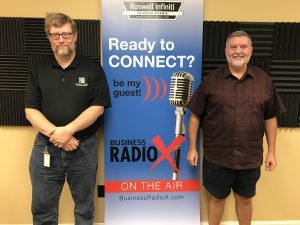
John Ray, Gabriel Vaca, and Adrian O’Connor

“North Fulton Business Radio,” Episode 157:  Adrian O’Connor, Global Accounting Network, and Gabriel Vaca, Hispanic Business Center

Are you trying to recruit great accounting talent? Are you an Hispanic business looking to learn and to connect? If either of those questions resonate with you, then join us for this edition of “North Fulton Business Radio,” as host John Ray speaks with Adrian O’Connor, Global Accounting Network, and Gabriel Vaca, Hispanic Business Center.

Adrian O’Connor, Global Accounting Network

Adrian O’Connor

Adrian O’Connor is the CEO of Global Accounting Network. Global Accounting Network is a boutique recruiting firm specialising in in connecting top tier finance professionals with exciting employers across the US and internationally. With over 60 years of recruitment experience in the finance sector, GAN is able to provide a bespoke service to their clients and candidates with unrivalled recruitment expertise and specific industry knowledge. In a competitive market, GAN has developed relationships with both huge public companies and innovative SMEs through delivering quality where others have not. We offer impartial advice to both active and passive jobseekers, and ensure the recruitment process is one that suits their needs. With excellent attention to detail and a strong network of contacts, we recruit Chief Financial Officers, Finance Directors, Finance Transformation and Change specialists, Financial Controllers, Technical Finance Managers, Commercial Managers, Financial Modellers, Systems Accountants and Financial/Management Accountants.

For more information, go to the Global Accounting Network website, or contact Adrian directly at 404-900-3865.

Gabriel Vaca, Hispanic Business Network

Gabriel Vaca

Gabriel Vaca is the Executive Director of the Hispanic Business Center, the programming arm of the Georgia Hispanic Chamber of Commerce. The Hispanic Business Center focuses primarily on developing programming, seminars and curriculum that accelerates and transforms small business to profitable growth as well as provides grants to small Hispanic businesses through a Business Accelerator program and offers Health Care programs to Hispanic businesses.

Gabriel was the COO of the Georgia Hispanic Chamber of Commerce since 2018 and transitioned in 2019 to the Hispanic Business Center. Gabriel retired in 2018 from UPS International after 24 years and was responsible for consulting and supporting UPS’s largest enterprise customers in their logistics and global supply chain. Mr. Vaca has been an integral part of the growth transformation of the GHCC for over 12 years and has held a variety of positions, such as Chairman of the Board as well as Chairman of the Hispanic Business Center. He is a founder and graduate of the GHCC Cultivating Hispanic Leadership Institute and founding member of Crecer, the UPS Latino Business Resource Group.

For more information, visit the Hispanic Business Center website or contact Gabriel directly at 770-375-9067.


“North Fulton Business Radio” is broadcast from the North Fulton studio of Business RadioX®, located inside Renasant Bank in Alpharetta. Renasant Bank has humble roots, starting in 1904 as a $100,000 bank in a Lee County, Mississippi, bakery. Since then, Renasant has grown to become one of the Southeast’s strongest financial institutions with approximately $12.9 billion in assets and more than 190 banking, lending, wealth management and financial services offices in Mississippi, Alabama, Tennessee, Georgia and Florida. All of Renasant’s success stems from each of their banker’s commitment to investing in their communities as a way of better understanding the people they serve. At Renasant Bank, they understand you because they work and live alongside you every day.

Tagged With: Gabriel Vaca, Georgia Hispanic Chamber of Commerce, Global Accounting Network, Hispanic Business Center, Hispanic Chamber, north fulton business, North Fulton Business Radio, Recruiting, small business education, staffing, supplier diversity

Frazier & Deeter’s Business Beat: Sen. Brandon Beach

August 20, 2019 by John Ray

Business Beat
Business Beat
Frazier & Deeter’s Business Beat: Sen. Brandon Beach
Loading
00:00 /
RSS Feed
Share
Link
Embed

Download file

Show Summary

Georgia State Sen. Brandon Beach joins Frazier & Deeter’s “Business Beat” to talk about the freight and logistics industry in Georgia, growth opportunities with the Port of Savannah and Atlanta’s Hartsfield-Jackson International Airport, and more. “Business Beat” is brought to you by Alpharetta CPA firm Frazier & Deeter.

Senator Brandon Beach, Georgia Senate District 21 and Chairman of the Senate Transportation Committee

Georgia Sen. Brandon Beach

Sen. Brandon Beach was elected to the Georgia State Senate in 2013. He represents District 21 which includes portions of Cherokee and Fulton counties. Senator Beach is the Chairman of the Senate Transportation Committee. He is also a member of the Economic Development, Higher Education and Science and Technology committees. Sen. Beach served as the Chairman of the Public Private Partnership Committee (P3 Committee). Under his leadership, the P3 Committee was able to acquire key local transportation projects approved for Cherokee and North Fulton.

Sen. Beach was named Executive Director of the North Fulton Community Improvement District (CID) in January 2018. Previously, he was President of the North Fulton CID and President & CEO of the Greater North Fulton Chamber of Commerce. Under his leadership, the North Fulton CID has invested more than $20 million to help bring more than $100 million in new infrastructure for the District area.

In 2001, Governor Sonny Perdue appointed Sen. Beach to the board of Georgia Regional Transportation Authority (GRTA). In 2008, he was selected to chair one of GRTA’s most important committees — The Land Development Committee. In this role, Sen. Beach is responsible for leading a review of every significant development brought before the 16-county area that GRTA serves. Sen. Beach was elected to the Board of the Georgia Department of Transportation by state legislators from the 6th Congressional District in 2008.

Sen. Beach is a member of numerous community boards including the Regional Business Coalition, Grady Hospital Board of Visitors, the Greater Metro Atlanta American Heart Association, the Georgia Association of Chamber of Commerce Executives, Encore Park and the Historic Roswell Convention and Visitors Bureau. Senator Beach received an undergraduate degree from Louisiana State University and a Masters in Business Administration degree from Centenary College. He is also a graduate of the Regional Leadership Institute and a former member of the Alpharetta City Council and the Alpharetta Planning and Zoning Commission. He and his wife, Shuntel, have two children and have lived in Alpharetta for the past 24 years.

Frazier & Deeter

The Alpharetta office of Frazier & Deeter is home to a thriving CPA tax practice, a growing advisory practice and an Employee Benefit Plan Services group. CPAs and advisors in the Frazier & Deeter Alpharetta office serve clients across North Georgia and around the country with services such as personal tax planning, estate planning, business tax planning, business tax compliance, state and local tax planning, financial statement reviews, financial statement audits, employee benefit plan audits, internal audit outsourcing, cyber security, data privacy, SOX and other regulatory compliance, mergers and acquisitions and more. Alpharetta CPAs serve clients ranging from business owners and executives to large corporations.

Roger Lusby, Partner in Charge of Alpharetta office, Frazier & Deeter

Roger Lusby, host of Frazier & Deeter’s “Business Beat,” is an Alpharetta CPA and Alpharetta Office Managing Partner for Frazier & Deeter. He is also a member of the Tax Department in charge of coordinating tax and accounting services for our clientele. His responsibilities include a review of a variety of tax returns with an emphasis in the individual, estate, and corporate areas. Client assistance is also provided in the areas of financial planning, executive compensation and stock option planning, estate and succession planning, international planning (FBAR, SFOP), health care, real estate, manufacturing, technology and service companies.


Find Frazier & Deeter on social media:

LinkedIn: https://www.linkedin.com/company/frazier-&-deeter-llc/
Facebook: https://www.facebook.com/FrazierDeeter
Twitter: https://twitter.com/frazierdeeter

Past episodes of Frazier & Deeter’s “Business Beat” can be found here.

Tagged With: CSX, Delta Air Lines, Delta Airlines, express lanes, fiber, fiber broadband, Frazier & Deeter's Business Beat, Frazier and Deeter, Frazier Deeter, GA 400, GA 400 express lanes, GA Senator Brandon Beach, Georgia 400, Georgia Senate, Georgia Senator Brandon Beach, GRETA, Hartsfield Jackson Airport, Hartsfield Jackson International Airport, heavy rail, light rail, MARTA, Metro Atlanta traffic, Norfolk Southern, Port of Savannah, reversable lanes, Roger Lusby, Roger Lusby CPA, scooters, Sen. Brandon Beach, Senate Transportation Committee, Shuntel Beach, Smart Cities, talent development, The ATL, Transportation Committee, transportation infrastructure, transportation innovation, truck freight, U.S. Congress

Tim Fulton, Small Business Matters, and Anthony Chen, “Family Business Radio”

August 19, 2019 by John Ray

North Fulton Business Radio
Tim Fulton, Small Business Matters, and Anthony Chen, "Family Business Radio"
Loading
00:00 /
RSS Feed
Share
Link
Embed

Download file

John Ray, Anthony Chen, and Tim Fulton

“North Fulton Business Radio,” Episode 156:  Tim Fulton, Small Business Matters, and Anthony Chen, “Family Business Radio”

On this edition of “North Fulton Business Radio,” host John Ray speaks with small business consultant Tim Fulton, Small Business Matters, and family business specialist Anthony Chen, host of “Family Business Radio” on Business RadioX®.

Tim Fulton, Small Business Matters

Tim Fulton, Small Business Matters

Tim Fulton is a nationally recognized small business consultant and advocate. He has been involved in entrepreneurship for the past thirty years in varying capacities as a successful business owner, a small business counselor, and as an adjunct university professor. In 1994, he started Small Business Matters, an independent management consulting and training practice. During this time he has worked with companies such as Lucent Technologies, Carlson Companies, Insignia ESG, and Georgia Power.

Tim’s past work experience also includes serving as the assistant director of the Small Business Development Center at Clayton State University and the Director of the Family Business Institute at Florida International University. He has worked with thousands of business start-ups and existing business entities as a catalyst for starting and growing their business enterprise.

Tim’s own entrepreneurial experience includes the ownership and operation of several fast-growing retail and service businesses. Each of which resulted in successful M&A opportunities. In addition, he was one of the founders of a successful Atlanta-based INC 500 internet software company.

Tim currently is a Vistage Group Chair in Atlanta, Georgia. Over the past fourteen years, Tim has facilitated over 500 executive group meetings, participated in over 3000 face-to face discussions with chief executives, and trained over 2000 small business owners.

Tim Fulton is the author of a very popular award-winning book on small business titled Small Business Matters.  This past year he published his second book Small Business Matters and All That Jazz. He has also been published and featured in numerous magazines and newspapers including the Atlanta Business Chronicle, Entrepreneur Magazine, and Catalyst Magazine. Tim also publishes his own award-winning electronic monthly newsletter, SMALL BUSINESS MATTERS, for small business owners.

Starting in 2013, Tim Fulton began hosting the Small Business Matters Conference in Atlanta. The event features twelve different speakers and over 200 small business owners and key executives in attendance.

For more information, go to the Small Business Matters website.  To contact Tim directly, you can email or call directly at 678-427-9436.

Anthony Chen, “Family Business Radio”

Anthony Chen, Host of “Family Business Radio”

Anthony Chen is a financial advisor with Lighthouse Financial Network and the host of “Family Business Radio” on Business RadioX®.

Anthony started his career in financial services with MetLife in Buffalo, NY in 2008. Born and raised in Elmhurst, Queens, he considers himself a full-blooded New Yorker while now enjoying his Atlanta, GA home. Specializing in family businesses and their owners, Anthony works to protect what is most important to them. From preserving to creating wealth, Anthony partners with CPAs and attorneys to help address all of the concerns and help clients achieve their goals. By using a combination of financial products ranging from life, disability, and long term care insurance to many investment options through Royal Alliance. Anthony looks to be the eyes and ears for his client’s financial foundation. In his spare time, Anthony is an avid long-distance runner.

Securities and advisory services offered through Royal Alliance Associates, Inc. (RAA), member FINRA/SIPC. RAA is separately owned and other entities and/or marketing names, products or services referenced here are independent of RAA. The main office address is 575 Broadhollow Rd. Melville, NY 11747. You can reach Anthony at 631-465-9090 ext 5075 or by email.


“North Fulton Business Radio” is broadcast from the North Fulton studio of Business RadioX®, located inside Renasant Bank in Alpharetta. Renasant Bank has humble roots, starting in 1904 as a $100,000 bank in a Lee County, Mississippi, bakery. Since then, Renasant has grown to become one of the Southeast’s strongest financial institutions with approximately $12.9 billion in assets and more than 190 banking, lending, wealth management and financial services offices in Mississippi, Alabama, Tennessee, Georgia and Florida. All of Renasant’s success stems from each of their banker’s commitment to investing in their communities as a way of better understanding the people they serve. At Renasant Bank, they understand you because they work and live alongside you every day.
 

Tagged With: emotional intelligence, EQ, Family Business, family business advisors, family business owners, Family Business Radio, family business success story, grit, growth paradox, Lighthouse Financial Network, north fulton business, North Fulton Business Radio, retirement planning, small business advice, small business advisory, small business consulting, Small Business Matters, Small Business Matters Bootcamp, Small Business Matters Conference, Tim Fulton, toughness

Susan Knox, Corporate Connections

August 16, 2019 by John Ray

North Fulton Business Radio
Susan Knox, Corporate Connections
Loading
00:00 /
RSS Feed
Share
Link
Embed

Download file

Susan Knox and John Ray

“North Fulton Business Radio,” Episode 155:  Susan Knox, Corporate Connections

Need to build professional relationships? Want your pipeline to be bursting? Then you should check out this edition of “North Fulton Business Radio,” as Susan Knox, President of Corporate Connections, joins host John Ray.

Susan Knox, Corporate Connections

Susan Knox, Corporate Connections

Corporate Connections opens the right doors to the right relationships. Corporate Connections, founded by Susan Knox, is the premier business development firm in the Southeast, and has been for over 20 years. Based in Atlanta, Susan believes the key to successful and scalable business growth is cultivating strong, long-lasting, strategic relationships. Corporate Connections generates revenue for professionals by providing strategic corporate introductions. Her mission is to provide professionals with increased business opportunities by providing stronger contacts, broader network exposure, more qualified business opportunities, ultimately growing your company.

For more information, call Susan directly at 770-757-8300, email her, or go to the Corporate Connections website.


“North Fulton Business Radio” is broadcast from the North Fulton studio of Business RadioX®, located inside Renasant Bank in Alpharetta. Renasant Bank has humble roots, starting in 1904 as a $100,000 bank in a Lee County, Mississippi, bakery. Since then, Renasant has grown to become one of the Southeast’s strongest financial institutions with approximately $12.9 billion in assets and more than 190 banking, lending, wealth management and financial services offices in Mississippi, Alabama, Tennessee, Georgia and Florida. All of Renasant’s success stems from each of their banker’s commitment to investing in their communities as a way of better understanding the people they serve. At Renasant Bank, they understand you because they work and live alongside you every day.
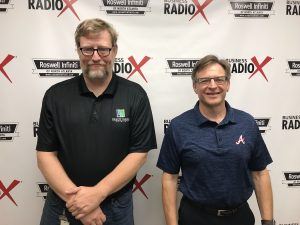
Tagged With: confidence, connections, Corporate Connections, dressed for success, networking, North Fulton Business Radio, professional connections, professional presence, professional relationships, professional service firms, professional services, Susan Knox

Decision Vision Episode 28: Should I Raise Angel Capital? – An Interview with Charlie Paparelli, Paparelli Ventures

August 15, 2019 by John Ray

Decision Vision
Decision Vision
Decision Vision Episode 28: Should I Raise Angel Capital? – An Interview with Charlie Paparelli, Paparelli Ventures
Loading
00:00 /
RSS Feed
Share
Link
Embed

Download file

Mike Blake and Charlie Paparelli

Should I Raise Angel Capital?

What are the steps involved in raising angel capital? What traits are angel investors looking for in the founder of a startup? Noted angel investor and startup mentor Charlie Paparelli answers these questions and more in a wide-ranging interview with host Mike Blake. “Decision Vision” is presented by Brady Ware & Company.

Charlie Paparelli, Paparelli Ventures

Charlie Paparelli, Paparelli Ventures

Charlie Paparelli is a twenty-five year professional angel investor focused on helping entrepreneurs achieving their dream of starting and growing their own company. Five years ago, he began sharing his experiences in a twice-weekly blog to entrepreneurs and angel investors at paparelli.com. In addition to his writing, he is a speaker and a coach helping founders and their new teams build enormously valuable companies.

He invested in over 35 entrepreneurs over the last 25 years. He is the Angel in Residence at Georgia Tech’s Atlanta Technology Development Center. He is also a mentor at the Atlanta Tech Village. He is Chairman of the Atlanta High Tech Prayer Breakfast. The Breakfast is in its 28th year. It is the largest networking event in Atlanta technology, and it is an evangelical outreach. He has held many community leadership roles during his 40 year career in Atlanta technology.

Charlie is married to Kathy for 42 years. They have four children and three grandchildren with another on the way. They are members of Church of the Apostles in Atlanta. Charlie is an avid motorcyclist whose current ride is a 2019 BMW R1250RT.

Michael Blake, Brady Ware & Company

Mike Blake, Host of “Decision Vision”

Michael Blake is Host of the “Decision Vision” podcast series and a Director of Brady Ware & Company. Mike specializes in the valuation of intellectual property-driven firms, such as software firms, aerospace firms and professional services firms, most frequently in the capacity as a transaction advisor, helping clients obtain great outcomes from complex transaction opportunities. He is also a specialist in the appraisal of intellectual properties as stand-alone assets, such as software, trade secrets, and patents.

Mike has been a full-time business appraiser for 13 years with public accounting firms, boutique business appraisal firms, and an owner of his own firm. Prior to that, he spent 8 years in venture capital and investment banking, including transactions in the U.S., Israel, Russia, Ukraine, and Belarus.

Brady Ware & Company

Brady Ware & Company is a regional full-service accounting and advisory firm which helps businesses and entrepreneurs make visions a reality. Brady Ware services clients nationally from its offices in Alpharetta, GA; Columbus and Dayton, OH; and Richmond, IN. The firm is growth minded, committed to the regions in which they operate, and most importantly, they make significant investments in their people and service offerings to meet the changing financial needs of those they are privileged to serve. The firm is dedicated to providing results that make a difference for its clients.

Decision Vision Podcast Series

“Decision Vision” is a podcast covering topics and issues facing small business owners and connecting them with solutions from leading experts. This series is presented by Brady Ware & Company. If you are a decision maker for a small business, we’d love to hear from you. Contact us at decisionvision@bradyware.com and make sure to listen to every Thursday to the “Decision Vision” podcast. Past episodes of “Decision Vision” can be found here. “Decision Vision” is produced and broadcast by the North Fulton studio of Business RadioX®.

Visit Brady Ware & Company on social media:

LinkedIn:  https://www.linkedin.com/company/brady-ware/

Facebook: https://www.facebook.com/bradywareCPAs/

Twitter: https://twitter.com/BradyWare

Instagram: https://www.instagram.com/bradywarecompany/

Show Transcript

Intro: [00:00:01] Welcome to Decision Vision, a podcast series focusing on critical business decisions, brought to you by Brady Ware & Company. Brady Ware is a regional, full-service, accounting and advisory board that helps businesses and entrepreneurs make vision a reality.

Michael Blake: [00:00:20] And welcome to Decision Vision, a podcast giving you, the listener, clear vision to make great decisions. In each episode, we discuss the process of decision making on a different topic. Rather than making recommendations because everyone’s circumstances are different, we talk to subject matter experts about how they would recommend thinking about that decision.

Michael Blake: [00:00:37] My name is Mike Blake, and I’m your host for today’s program. I’m a Director at Brady Ware &Company, a full service accounting firm based in Dayton, Ohio, with offices in Dayton; Columbus, Ohio; Richmond, Indiana; and Alpharetta, Georgia, which is where we are recording today. Brady Ware is sponsoring this podcast. If you like this podcast, please subscribe on your favorite podcast aggregator, and please also consider leaving a review of this podcast as well.

Michael Blake: [00:01:01] Our topic today is seeking angel capital. And for those of you who don’t know me, most of you don’t because you’re out somewhere on the internet, I’ve been a cheerleader and advocate in the angel capital world for really as long as I can remember. My first job out of school actually was helping entrepreneurs in the former Soviet Union and in Russia. And at that time, there wasn’t even a term for angel capital. It’s kind of fascinating because the whole business vocabulary was evolving at that time.

Michael Blake: [00:01:34] And  when I moved to Atlanta about 15 years or so ago, I got a taste of the early stage capital scene here. And the one theme that was recurring was you can’t get a deal done here, there’s no angel capital, et cetera, et cetera, et cetera. If you live in Atlanta, it’s tedious. If you don’t, this is news to you. And the thing I, sort of, thought was, well, I saw people making investments in Minsk. And I can’t imagine that investing in Atlanta is harder than investing in Minsk. Maybe I’m wrong, but I can’t imagine it’s that big a difference. There’s got to be something kind of going on here. And as it kind of got more into the community, I was very fortunate, the community embraced me very quickly. I started to learn about the gears and cogs about this.

Michael Blake: [00:02:21] And as I start to learn more about angel capital and early stage investing, in general, and with the travels I’ve had abroad, I came to a conclusion that for all the things that we, as Americans, think make us unique, I’m not sure anything makes us more unique than the angel and venture capital sectors. I’m not sure anything makes us more unique than the way that we support startups. And if you look at at the word “entrepreneurship” in other languages, if you directly translate them, they almost have a sense of doing something semi-devious. If you’re enterprising, that’s not necessarily a good thing. But in the United States, we have a unique cultural facet where the entrepreneur is folk hero. And I can’t think of any other place in the world where we elevate the entrepreneur to that status.

Michael Blake: [00:03:13] And one of the things that makes the entrepreneurial sector go is angel capital. You can’t bootstrap a new car company. You can’t bootstrap a new airplane company, right. And many of the largest companies, the most important inventions in the world that we think of today, at some point, were funded by angel capital. Columbus’s expedition to the new world was funded by Angel Capital called The Royal Family of Spain. Thomas Edison-

Charlie Paparelli: [00:03:53] Queen Isabella.

Michael Blake: [00:03:53] King Ferdinand, who’s with Queen Isabella, right?

Charlie Paparelli: [00:03:56] Yeah.

Michael Blake: [00:03:56] I was going to say King Ferdinand. I knew that was not right, so I choke. It’s Queen Isabella. Thank you. Thomas Edison was funded for the light bulb and for General Electric by a guy named JP Morgan. And so, angel capital pervades almost everything that we think about in terms of the American economic story. And I think if you don’t understand angel capital, you don’t understand a big part about how American business works.

Michael Blake: [00:04:24] And so, here to talk about that is somebody that I’ve known, and, for a long time, I’ve come to respect. He doesn’t even know this, but he’s a spiritual mentor to me. If you don’t ― if you haven’t listened to his or read his emails, get on his email list. There’s how many? I think three times a week. They’re just phenomenal. Not good – great. Required reading. And his name is Charlie Paparelli.

Michael Blake: [00:04:47] Charlie is a 25-year professional angel investor focused on helping entrepreneurs in achieving their dream of starting and growing their own company. Five years ago, he began sharing his experience at a twice-weekly blog – so, it’s twice weekly, just assuming – to entrepreneurs and angel investors at paparelli.com. In addition to his writing, he is a speaker and a coach helping founders and their new teams build enormously valuable companies. He invested in over 35 entrepreneurs over the last 25 years. And we’re going to come back to that.

Michael Blake: [00:05:16] He is the Angel-in-Residence at Georgia Tech’s Atlanta Technology Development Center. He is also a mentor at the Atlanta Tech Village. He is chairman of the Atlanta High Tech Prayer Breakfast, which is the largest pre-6:00 a.m. start event on the Atlanta calendar. Now, that may be a small list, but it is a big deal. That breakfast is in its 28th year. It is the largest networking event in Atlanta technology, and it is an evangelical outreach. And as an aside, whenever I remember, I’ve been to about three or four of those, and one of them was an executive from Apple. Charlie will remind his name. But he’s an executive from Apple who had to come on and talk, I think, a day or two after Steve Jobs passed away, as I recall. And that was some powerful stuff. That was as raw as it gets.

Michael Blake: [00:06:11] Charlie has helped many community leadership roles during his 40-year career in Atlanta technology including Angel Lounge, which is an offshoot of Startup Lounge that serves to educate current and aspiring angel investors in the Atlanta community. Charlie is married to Kathy for 42 years. They have four children and three grandchildren, with another on the way. They are members of Church of the Apostles in Atlanta. And Charlie is an avid motorcyclist whose current ride is a 2019 BMW R125. Nope, that’s wrong. R1250 RT. Got it. That’s a lot of letters and numbers.

Charlie Paparelli: [00:06:46] That’s what it is, yeah.

Michael Blake: [00:06:48] Charlie, thank you so much for coming on the program. I’ve been looking forward to this since we started talking about it several weeks ago.

Charlie Paparelli: [00:06:53] Same here, Mike. I always love the work that you were doing. We started Angel Lounge as an offshoot, as you said, a startup lounge. I wanted to be a part of what you were doing. You’re saying we’re missing this piece. And that’s where we came up with the idea of Angel Lounge.

Michael Blake: [00:07:06] And I think due to that, I think there’s more capital available in Atlanta than there has been because I think you’re making people feel safer and more confident about making those commitments.

Charlie Paparelli: [00:07:17] Yeah. Angel Lounge, we focused Angel Lounge instead of trying to march more companies in front of people, it took us a while to get to the right formula. But the formula that we’re using is, really, our mission is to just help angel investors or those who are interested in becoming angel investors to help make them better investors by sharing each other’s stories and experience with them.

Michael Blake: [00:07:39] So, I’d like to start this podcast with the basic vocabulary question, because I think not everybody knows what angel investing is. They may think it’s venture capital, but angel investing and venture capital are related, but they’re not quite the same, are they?

Charlie Paparelli: [00:07:53] No, they’re very different. If you think about when we ― venture capital, basically, is mutual funds for high-risk investments, all right. So, if you know how mutual funds work, I mean, you have a mutual fund manager, and he has partners, and they raise money to, then, invest that money for other people in mostly public stocks. Public stocks, things that you can get in and out of pretty quickly. So, they might put in 1% to 5% of their own money into that big mutual fund. So, venture capitalists, the difference between them is they’re investing in companies that are privately held companies. And as privately held companies, you can’t get in and out of them quickly. Once you’re in, you’re in forever, okay.


Michael Blake: [00:08:47] Right. That door makes a loud slamming noise.

Charlie Paparelli: [00:08:48] It does, yeah. It’s all ― so, we’re all excited to get in. And then, next thing we’re doing is looking for exits, and we’re driving along the highway, and there are none. You’re just on there, and you hope you don’t run out of gas till you get to that last exit. So, venture capitalists, hopefully, people put money in venture capitalists, and big pension funds put money there simply because it’s a high-risk, high-reward alternative. So, you’ll find some of these big pension funds who will put in maybe up to 3% to 5% of their total fund into high-risk alternatives, of which venture is one of those.

Charlie Paparelli: [00:09:23] Angel investing, on the other hand, that’s like your own money. So, it’s like running your ― it’s like taking whatever money that you thought you wanted to put into higher risk ventures, whether it be $100,000, or $250,000, or some cases, it could be multiple millions of dollars, and you say, “No, I want to be an angel investor. I want to be on the ground. I want to invest in these early-stage startups. I want to work with these entrepreneurs. And I’m willing to risk my personal fortune on this one segment.” So, you have a lot less people, a lot less company — fewer companies that you’ll be spreading that risk across. And so, that makes the risk even higher as an angel investor versus venture capital.

Michael Blake: [00:10:08] Now, I want to clarify one thing just because you happen to be the guest, it only happens to be called an angel investor because that’s a term of art. It has nothing to do with a religious affiliation. Even though you happen to be very open about your faith, there are plenty of people who aren’t that way that are angel investors, right? There’s not a a Christian element to it, necessarily.

Charlie Paparelli: [00:10:28] There’s no Christian element to it. In fact, the term angel investor goes back to people in New York on Broadway who actually wanted to get their shows funded, their new ideas for Broadway shows. And people would come in, and they would ― very wealthy people would liked the idea, and they would fund the show. And those people were called by the producers of those shows angel investors. And that’s where the term ― that’s the genesis of the term angel investor.

Michael Blake: [00:11:00] I had no idea. I did not know that. And the producers, the people who funded Springtime for Hitler were actually angel investors.

Charlie Paparelli: [00:11:07] Oh, you would bring up that example, but, yes, that’s true. Yeah.

Michael Blake: [00:11:10] Well, my wife is Jewish. She’s a big Mel Brooks fan. And I will say, as an aside, by the way, the funniest six minutes in cinema is Springtime for Hitler. Only Mel Brooks can make the Nazis funny. So, we often hear about friends and family as investors. Do they qualify as angels too, or are they sort of a different animal?

Charlie Paparelli: [00:11:29] No, I would call — friends and family, there’s a term called the 3Fs, okay? Family, friends, and fools, okay, are those very, very early stage investors. And when you’re — when an entrepreneur is raising money, the first thing that he’s raising money around or on, as a foundation, is his credibility. Well, the first people that find the person, the entrepreneur, to be credible, especially if it’s his first time being an entrepreneur, is his family. If his family doesn’t think that he or she could do it, then why should anybody else think they should — they’d be able to do it?

Charlie Paparelli: [00:12:11] So, I think that the first round is always friends and family, because they’re other people that say, “Oh, my God. If Mike Blake is starting this company, and Mike is so smart, and I think he’s going to be able to build something great. I have no idea what his idea is. I don’t know what the market is. I don’t know anything. But I know Mike, and I’ll put money behind Mike.” So, I think they are angels. They’re the — they’ve been called fools, but I think what they’re doing — I know what they’re doing. They’re betting on the individual because they have a very deep and long personal relationship with them.

Michael Blake: [00:12:44] So, you bring something up that I want to make sure that we cover because there’s a timeline of maturity here, right? And that friends and family round, if you will, that investment is really banking on the credibility, which means there isn’t a business yet, right. There’s there’s a hope, an idea, right? A story, I guess-

Charlie Paparelli: [00:13:05] Yeah. Just somebody-

Michael Blake: [00:13:05] … in most cases?

Charlie Paparelli: [00:13:06] Most of the time, somebody will come to you and say, “Yeah, this is something that I’ve been doing. I’ve been working for such and such a company for a while.” These are the kind of people that I’ve gotten — I’m attracted to. “I’ve been working in this industry for a while, working for this company for a while. I’m 35 years old. I’ve been through… ” — either “I developed an expertise as a programmer” or “I developed an expertise as a salesperson,” or whatever. “But I know this industry, and I have this idea, and I brought it to my bosses, and no one’s interested in it. And I just can’t let loose of it. And I really want to start a company around it, but I have no idea how to do that. But I think a lot of people will buy whatever I’m going to build or sell.” And that’s kind of how it gets started.

Charlie Paparelli: [00:13:56] And then, the first place they have to go is they have to go to somebody. So, that’s all they have. They have this story. There’s interest and that they — it’s this passion. It’s, sort of, like a God-given idea they can’t let loose of, but they need to be able to feed — they’re 35. They need to be able to feed their family, and they need to start putting money away for college, and all this for the kids, and everything that we all do. They have houses, cars. They’ve got it all. How do they survive? Well, that’s where the angel comes in and says, “We can help you meet your personal expenses at the beginning while you develop — while you unhook from the corporation and your salary,” which is step one. And then, you start building out this idea.

Michael Blake: [00:14:38] You brought something up. I’m going to deviate from a script here because I think that’s — I think it’s important. That 35-year-old, the most — the iconic entrepreneur is somebody who’s in their 20s. To us, they’re basically kids, right. But they actually don’t start most companies, do they?

Charlie Paparelli: [00:14:57] No. You say iconic. What do you mean the iconic?

Michael Blake: [00:14:59] An iconic. Iconic, like the Mark Zuckerbergs, the Bill Gates of the world, Steve Jobs.

Charlie Paparelli: [00:15:05] Oh, I see what you’re saying, yeah.

Michael Blake: [00:15:05] In some case, they actually drop out of school, so they can start whatever it is they’re going to start. But actually, most entrepreneurs look like that 35-year-old, don’t they?

Charlie Paparelli: [00:15:14] Yeah, I think the statistics proved out that it’s somewhere between 35 and 38. And my statistics actually prove out this companies that were successful for me that I invested in, that’s exactly how old people were. So, they have enough. Really, like when I got out of college, I grew up, my father was a middle — he was a train man on the Jersey Central Railroad for 38 years. When I sat around the dinner table, we didn’t talk about business. In fact, I remember I was the first one in my family, first male in my family to actually get a degree from college. And I was getting an accounting degree, and they told us we need to read The Wall Street Journal. I’m reading The Wall Street Journal, and I didn’t even know what I was reading. It didn’t make any sense to me because I had no context or understanding of basic business.

Charlie Paparelli: [00:16:01] So, it’s really, when you come out of school, what do you know about business? What do you know about building a company? What do you know about the disciplines of building a product, the disciplines of launching a product? How to gain — how to hire people? How to do business reviews or reviews for people? Okay. How to properly give a presentation? You don’t know any of this stuff. You have to learn it. And so, that’s why I think those 15 to 18 years out of college, that’s the foundation where you have to prove out your functional expertise, as well as your management expertise.

Michael Blake: [00:16:38] I think the only thing I knew about business was what I remembered from watching that Michael J. Fox movie, The Secret of My Success. That was pretty much it.

Charlie Paparelli: [00:16:46] I don’t remember that.

Michael Blake: [00:16:47] Yeah, nor does anybody else. That’s-

Charlie Paparelli: [00:16:49] Okay.

Michael Blake: [00:16:49] Yeah. So, let’s, sort of, then, now get into the seat of that person that thinks they’ve got that idea, right, and they’re convinced that idea’s got legs, and the company they’re working for is not going to buy it. They sit down, they take you out to lunch, or they sit down for your own office hours at the ATDC. What do you tell them in terms of they’re if going to embark on a venture — I’m sorry, angel capital raising process, what should that entrepreneur be prepared to do?

Charlie Paparelli: [00:17:21] In order to?

Michael Blake: [00:17:24] To raise capital? I’ve got an idea. I need somebody to write me a bigger check than I can write myself. What is that process going to look like?

Charlie Paparelli: [00:17:34] All right. So, I’m going to speak beyond the friends and family.

Michael Blake: [00:17:37] Yeah.

Charlie Paparelli: [00:17:37] So, friends and family is going to provide that bridge to get you from a weekly payroll or weekly salary, if you will, to being an entrepreneur or starting your own business, in effect, okay. So, now, your future and your family’s future is dependent upon you making money. So, tell me again, what are you looking for in this?

Michael Blake: [00:18:03] I’m just looking for the process of raising angel capital, right. I’ve decided I’m going to raise angel capital. What do those steps look like to get from want to raise angel capital to having a check in the bank?

Charlie Paparelli: [00:18:18] All right. Part of this myth, I mean, you talked about entrepreneurs as folk heroes. And there’s a myth around the folk hero that soon as I come up with an idea, the next step is to actually raise capital, okay? Really, the next step is to start building a business. Capital is attracted to businesses. Capital isn’t just attracted to purely ideas, all right. I look back at Facebook, for example. So, when Zuckerberg — what happened with Zuckerberg, he started Facebook, basically, as a freshman at Harvard, I believe was Harvard.

Michael Blake: [00:18:58] I think so, yeah.

Charlie Paparelli: [00:18:59] Yeah. And, sort of, a nerdy guy, wanted to meet people, introvert. He didn’t want to meet people. He want to meet girls. So, what he did is he put together this little site to have people meet each other over this internet. And it was only open to the freshman class at Harvard. And he started to gain traction because there’s a lot of nerds, I guess, that go to Harvard.

Michael Blake: [00:19:30] I think that’s fair.

Charlie Paparelli: [00:19:31] Yeah. And they don’t-

Michael Blake: [00:19:32] I only drove by Harvard when I lived up in Boston, but I think that’s correct.

Charlie Paparelli: [00:19:35] Yeah, all right. Well, they needed to meet each other. So, they didn’t know how to do it. So, they started doing it over the web, this new medium, if you will. And then from there, it started to kind of take off. So, he met people. He became, sort of, a little bit of a rock star in his freshman class and other people in the college. And Harvard said, “Well, what about us as sophomores, and juniors, and seniors, and all that?” And, of course, we always know that seniors always like to pick up freshmen girls, right? That’s kind of how that works. And so, he opened it up, and it just became for Harvard. And then from Harvard, other people started to contact him, and said, “Hey, we’re at MIT. We want to do the same thing. Can you open it up?” So, he started to open up these silos where they couldn’t talk to each other. You can only talk within your educational institution. And from there, it’s sort of just expanded.

Charlie Paparelli: [00:20:27] At some point, people said — he said, “I need to — this thing is so popular now. I need to kind of get some money here, so I can live on and continue to build it out.” And that’s when he got his first venture capital. And by then, he had exposed — he had expanded to high schools, again, siloed. And when he first got some capital in there, it was probably angel money to start with, is they said to him, “Look, why are you doing this siloed approach? Why don’t you just kind of open it up horizontally to anybody who wants to be part of this?” And that was the beginning of Facebook.

Charlie Paparelli: [00:21:00] And that so — he started to build out the attractiveness of the idea and the business model, and that’s what it was. And he had no idea what the business model was going to be when he started. But later, it came about that it was going to be advertising-based because he had captured all of our data, and he was able to sell it to all of the advertisers.

Michael Blake: [00:21:18] Yeah.

Charlie Paparelli: [00:21:19] It worked out really well for him. But the first step, really, is for these — is to think, “I have to build a business.” Don’t think, “I have to raise capital. I have to build a business.” If you build something that looks like it’s going to be a business, that, actually, there’s some buyers out there for whatever service or product that you’re selling, then an angel investor like myself can come in and say, “It looks like this can turn into a big business,” or “This can turn into a $500,000 business, max,” or “Maybe it’s going to be a $5 million business,” then we can size what type of investment it would require. And then, we could figure out what kind of returns that we might possibly get based on the investment we put in.

Michael Blake: [00:22:00] And you and I, I think, both know and have met entrepreneurs that, I think, I’ve gotten that backwards where their business seems to be raising capital.

Charlie Paparelli: [00:22:09] Yeah.

Michael Blake: [00:22:11] That doesn’t work very well, does it?

Charlie Paparelli: [00:22:12] Yeah. One of the things I worry about in our community and other communities is we don’t celebrate. We don’t seem to celebrate the progress that a company makes in their marketplace. But what the news covers is how much money they raised on the last round. Money doesn’t build companies, people build companies.

Michael Blake: [00:22:34] Yeah.

Charlie Paparelli: [00:22:34] So, we should be celebrating, “Oh, my gosh, they did a deal with AT&T.” That should be the news, not that they raised $50 dollars in the last round at a $200 million valuation.

Michael Blake: [00:22:48] Yeah, I agree with that.

Charlie Paparelli: [00:22:50] Yeah, you’re right. So, the end point, what we celebrate is some milestone in the process as opposed to the business successes themselves.

Michael Blake: [00:23:03] So, to  raise money for a small business, angel capital is not necessarily the only game in town. It’s not necessarily the best route to go, right? You could — for example, you might be able to obtain a small business loan, right, or you may be to finance things through credit cards. Can you talk a little bit about what differentiates one opportunity that makes it appropriate for angel capital and what maybe makes another opportunity more appropriate for a small business loan kind of scenario?

Charlie Paparelli: [00:23:34] Yeah. Small business loans and credit cards, they all kind of fall in the same bucket. They’re probably 25% interest type loans.

Michael Blake: [00:23:43] Yeah.

Charlie Paparelli: [00:23:43] So, you’ve got to think of them more like working capital loans. So, I need some — I’m invoicing my — I’m doing a service company, so I’m invoicing my customers. I’ve got a 45 to 60-day, sort of, window before that money comes back in. So. maybe I can use credit cards, and I can use these business loans, if you will, to kind of finance that. But for longtime financing, 25% interest is gonna be quite a burden as you go forward. So, I see those as working capital loans.

Charlie Paparelli: [00:24:17] The angel, the other side is banking. Can I go to a bank and get a loan? Well, if you’ve got enough assets, enough collateral, and enough money in the bank, they’re willing to give you a loan. But most of these people don’t have the credit worthiness to get any meaningful sized loan that’s going to kind of move the needle for the business. So, it forces you into selling stock in your company as opposed to just accumulating debt to kind of go forward. So, with stock, you don’t have debt. You have — you’ve sold off a piece. But, now, you have a partner. And that’s what an angel investor is. They’re a financial partner in the company. So you’ve sold off 30%, or 50%, or whatever the number might be depending upon how early stage you are of your company to this investor who’s now going to be hanging out with you for a very long time.

Michael Blake: [00:25:12] And the timing issue, I think, is so important that an angel investor, if they’re experienced – and not all of them are – understands that doors are slammed shut, and you’re on a highway for a while, right? The bank, maybe they understand the door’s slammed shut, but if you’re going to be on that highway for a long time, that meter runs really quickly, right, as that interest kind of piles up. And it takes cash out of the business. But if you can pay that back fairly quickly, maybe that does make sense. If you have enough cash flow initially to kind of — as you said, as you sell through your inventory or whatnot, maybe it makes sense to do that.

Charlie Paparelli: [00:25:54] Yeah. It depends upon — I guess there’s a couple of things to consider is, what kind of business am I building? If I have to spend a lot of time in order to build out a product, a bank loan is probably not gonna be a good way to go. But if I’m doing a services company, or if I’m a reseller of some type of other products, so I’m really looking to just buy product, and then resell product, bank loans make a heck of a lot of sense because you can keep moving them. You can pay them back, you can take them down, you can do it that way. But if I have this long-term investment that I have to make in order to get set up to build my company, well, bank loans, like you said, accrued interest kind of grows very, very rapidly. And then, you’re kind of under water.

Charlie Paparelli: [00:26:44] The other thing to consider is that, do you know enough about what you’re doing to build a company? So, this is where angels come in too. They’re just not people who come with money, but they come with expertise and network. So, if you could find those kind of what I’ll call smart money angels, then they could bring a lot of value to the business to increase your chances of success and mitigate your risk.

Michael Blake: [00:27:11] I want to drill down on that because I know in your model, I think, your smart money is involved. I think you are involved with a greater degree because you do fewer deals, right? I think, in the intro, I think it said you did 30 deals over 25 years, something of that nature, right?

Charlie Paparelli: [00:27:28] Right.

Michael Blake: [00:27:28] So, you are not — you, yourself, you’re not spreading thin. You are going deep into one or two deals at any given point in time. And correct me if I’m wrong, but I think that’s, sort of, on the deeper end of the spectrum. Not all angels are as involved on a day-to-day basis as an intimate partner as are you. Is that fair?

Charlie Paparelli: [00:27:50] That’s very fair.

Michael Blake: [00:27:52] And then, there’s a spectrum. And then, on the other side — and I’ll just share with the listeners some insider baseball. We often call those doctor and dentist deals, right? Nothing against doctors or dentists, but there’s a stereotype that they have money but not the experience of being angel investors. Often, they’ll make an investment but not be involved, right.

Charlie Paparelli: [00:28:16] But the other side of the reason that doctors and dentists get involved too is there’s a jealousy that the business guys are making all the money.

Michael Blake: [00:28:26] Okay.

Charlie Paparelli: [00:28:26] So, they want to become a business guy and that becomes an easy, sort of, on-ramp angel investing, but it’s a quick way to kind of lose some of their hard-earned, sort of, cash flow too.

Michael Blake: [00:28:37] Yeah. Yeah. Oh, sure. That’s a great way to lose money, right?

Charlie Paparelli: [00:28:40] Yeah.

Michael Blake: [00:28:40] But as somebody who’s seeking angel capital, right, on the one hand, what you’re offering, you’re offering experience, you’re offering expertise, you’re offering support. The other edge of that sword is I got to share the steering wheel, right? There’s built-in, day-to-day, in-your-face accountability with which not everybody in the world is necessarily comfortable, right? And some capital seekers will say, “You know what? You’re telling me this dumb money is just going to write me $100,000 check, and then not bother me? Great. Where do I sign?” What does that funding seeker not getting right? What are they overlooking or what are — yeah. What are they failing to see because they see that “free money?”

Charlie Paparelli: [00:29:29] Yeah. I have people — I had a call just the other day, in fact, somebody who was saying to me this is their third time, actually, starting a company. And, actually, the first two companies, they had exits. So, they figured they had the formula down, they’re just going to be successful. So, this is a guy that has total exits that were equal to $37 million in exit. So, this is a pretty successful guy in health care, in the health care vertical. And he’s saying to me, “You know and understand. You understand how to price these deals out. I don’t have revenue yet in this one. I do have a lot of experience. I’ve got good track record. I think that people should pay a much higher amount of money as angel investors for the stock than I’m going to sell in this company at this stage.”

Charlie Paparelli: [00:30:16] And I said, “Well, you’ve got a choice. If you want people who are going to come in, who are going to add to the credibility of your new company, your idea, and also lock arms with you for any future, sort of — be of value add for any future funding that you’re going to do,” I said, “you’re going to have to — you’re selling to professional angel investors who are going to be asking for — they’re looking for good returns, and they understand how hard it is to build companies. So, you’re going to be pricing your company lower than you would with inexperienced – the doctors and dentists.” You go to doctors and dentists, and they say, “Oh, well, I’m pricing this brand new company, never raised money before, has no revenue, hasn’t built the product yet. We’re going to price it at $10 million.” Okay. And from the outside, you might say, “Wow, that’s a really good deal, $10 millions because I look at the stock market and all those companies have billion dollar valuations. So, this is a great deal.”

Charlie Paparelli: [00:31:14] Whereas an angel investor would probably say, “What did you raise money on your last deal for that first round?” He said, “Well, they got an outsized return because I priced it at $2 billion pre-money.” And I said, “Well, that’s what it was worth. And they didn’t get a ridiculously high sign.” I said, “What was the returns they got?” He said, “They got a 10-time return on their money.” I said, “So, what? So, what? Why does that bother you? You were a success. You made millions of dollars because of these people that put this money in.” He said, “Well, I think that I could make even more.” I said, “Well, how much more money do you want to make?” And he said, “Well, it’s not about the money. It’s about fairness.” And I said, “Oh, so it’s about greed, but it’s not about the money.” You know what I mean? It’s like a ridiculous conversation. So, I would say-

Michael Blake: [00:32:00] This is why I don’t argue with you, by the way.

Charlie Paparelli: [00:32:02] So, what do you like? Yeah. So, what you’re missing out on if you get what we’ll call as inexperienced money as opposed to using the pejorative term, is you’re missing out on the experience. I mean, I’ve been an entrepreneur in my earliest days. We built companies from scratch. We did exits. I worked for corporations. I know what it is to to build leaders. I know how to hire people. I know to help. I have a network of people I can bring to the company. I can make introductions to executives. That’s very valuable. Well, if you’ve got a doctor, and he’s not going to do any of that, he’s going to call you up and say, “So, what happened last week?”

Michael Blake: [00:32:44] Right.

Charlie Paparelli: [00:32:44] You know.

Michael Blake: [00:32:44] Unless somebody faints at the board meeting, that’s great. But otherwise, he’s not going to bring that much to the table, right?

Charlie Paparelli: [00:32:49] Exactly.

Michael Blake: [00:32:49] So-

Charlie Paparelli: [00:32:49] So, that’s what you miss out.

Michael Blake: [00:32:51] And you said something that  I want to touch on because I think this is really important. That 10x return, I don’t think that’s really an outsized return when you consider the risk that’s being taken, right? So, I just posted two days ago on my chart of the day, when you look at venture returns, which is more mature than angel, right, 65% of those deals don’t make their money back, right?

Charlie Paparelli: [00:33:14] Right.

Michael Blake: [00:33:14] So, it’s up to a 1.0x return, which means that’s cash and cash. Best scenario, you get your money back, which means that two-thirds of deals lose money, right?

Charlie Paparelli: [00:33:27] Right.

Michael Blake: [00:33:27] Two-thirds of deals in the S&P 500 do not lose money if you’re just sort of in a broad index, right?

Charlie Paparelli: [00:33:32] Right.

Michael Blake: [00:33:32] So, it’s kind of like drilling for oil that the deals that are successful also kind of got to pay for the deals that weren’t, right? The well that strikes oil also has to pay for the drills you put in that didn’t strike oil.

Charlie Paparelli: [00:33:46] Right.

Michael Blake: [00:33:47] And so, if you’re successful, perhaps you’re thinking, “Boy, you know, 10x returns seems rather greedy.” But from the investor’s standpoint, you got to have that, or you’ve got to have that aspirationally. You have to hit it once in a while or the economics, given the risk and the failure rate, just don’t work out, right?

Charlie Paparelli: [00:34:06] Yes. So, what you wind up with, I think that the average angel that has been doing it for some — let’s say, a 10-year period, I think their returns are somewhere — somebody — this is somebody that presented at Angel Lounge. I think those returns were somewhere around 3% to 6% as an internal rate of return.

Michael Blake: [00:34:26] Oh, my gosh.

Charlie Paparelli: [00:34:26] Well, that’s an awful lot of risk and an awful lot of work, okay, to get those kind of returns. And what happens is when you’re speaking with entrepreneurs, every entrepreneur know his company is going to be a great success, and it’s going to be worth a lot of money. What he doesn’t have is any kind of context to say, “As an angel investor, I’m looking at 20 people that look like you, okay, and I’m seeing — I really understand where the risk is because I’ve talked to people at all different levels. You seem to be the most attractive, but there’s no guarantee that you’re going to be successful.”.

Charlie Paparelli: [00:35:05] That guy I talked about in health care, I said, “You’ve got millions of dollars.” He says — I said, “Why don’t you put your money into this thing if it’s such a good deal?” And he said, “Well, I’ve already put $200,000 in.” And I said, “Well, $200,000 to you is nothing based on the exits that you had. So, you’ve got to be worth more than $15 million.” He goes, “Well, I’m not going to tell you what I’m worth, but you’re not far off.”

Charlie Paparelli: [00:35:28] And then I said, “Well, if this is such a great deal, if it’s so low risk that you’re going to be a success, why would you want to share it with anybody?” And he said, “Well, there’s always a chance that it’s going to fail.” I said, “Well, you didn’t say that in the first 20 minutes of our conversation, you know.” But you see, this is the reality of it. So, I want to take no risk, and I want all the risk to be put on the investors. And I don’t think they should get more than a three-time return if it works.” And I said to him, “Would you invest in that deal?” And he didn’t answer me. But you see, it’s crazy the way these deals get positioned.

Michael Blake: [00:36:06] Well, you know, I think in fairness, it’s sort of in a symmetry of kind of how you look at it. From the entrepreneur’s deal, they have one deal, and that’s it, right? But I want to build on something that you said. Even the deals you invest in, let’s say — I know you don’t do this, but let’s say you’re an angel that’s got money in six deals, right?

Charlie Paparelli: [00:36:26] Yeah.

Michael Blake: [00:36:28] When you put money in those six deals, you didn’t think any of them were going to fail individually. You wouldn’t have put your money in, right? You think that all of them are going to be successful when you put your money in, but you know that four of them are not, or five of them are not, or maybe all six of them are going to lose. You just don’t know which ones.

Charlie Paparelli: [00:36:45] You know, it’s funny that you say that, the four of the six will not be okay. There is such a deep sense of denial. Even me who has been through this that I still think I’ll be six for six. Okay? That’s why we do these deals. You know, I mean, you can’t be an angel investor, and not be idealistic, outsized, idealistic, and outsized hopeful. Otherwise, you wouldn’t do these things.

Michael Blake: [00:37:10] Right.

Charlie Paparelli: [00:37:11] So, that’s what happens.

Michael Blake: [00:37:11] Nobody would ever enlist for the army if they thought they’re the one that’s going to get shot.

Charlie Paparelli: [00:37:15] That’s right. That’s right.

Michael Blake: [00:37:16] You got to have that going in. It just doesn’t make any sense, right? So, how much lead time? I mean, how long do you think — how long does it normally take? Let’s say there’s a successful angel funding process that takes place. As an entrepreneur is thinking about their business plan, how long does that process usually take?

Charlie Paparelli: [00:37:39] Well, it’s a hard question to answer, but if I’d say in general terms, I would say 90 days.

Michael Blake: [00:37:47] Okay.

Charlie Paparelli: [00:37:47] Okay. But it’s highly dependent. If we’re speaking to entrepreneurs and business people here, it’s highly dependent upon the quality of your business. If you are sitting here, and you don’t really have anything, and the idea doesn’t really even solve a clear business problem, you can spend the next two years trying to find the first person that’s going to put money behind that. And in that two years, you’re going to change, change, change, improve, do better until you hit on some business that makes sense based on your expertise. And then, the 90 days will kick in.

Michael Blake: [00:38:23] Right.

Charlie Paparelli: [00:38:23] All right. So, it could be forever to never, okay? Or if you really do, in fact, have something, it could be as quick as 30 days, okay? That happens if you get the first person who has high credibility as an angel in the deal, then it’s a pile-on. Everybody’s got to be in the deal, right, because the credibility went up. If Charlie thinks that Mike has got a really good shot at this, and Charlie’s done a lot of these deals, I’ll put money in that deal. Well, what’s the deal? I don’t even know what it is, but Charlie’s on the deal. I’m going to do the deal. You know, that’s the old thing that we had about the t-shirt for Sig Mosley, right, who was sort of the godfather of angel investing in Atlanta that said “Sig said no.”

Michael Blake: [00:39:08] Yeah.

Charlie Paparelli: [00:39:10] Right? If Sig said no, you were dead.

Michael Blake: [00:39:12] That was already a horse head in your bed, basically.

Charlie Paparelli: [00:39:13] Yeah, exactly. That’s what it was. But if he said yes, everybody wanted in on the deal. They don’t even know what they were investing.

Michael Blake: [00:39:20] Right.

Charlie Paparelli: [00:39:21] That’s the [crosstalk].

Michael Blake: [00:39:22] It could have been alpaca as a service. And if Sig was in, you’re in.

Charlie Paparelli: [00:39:26] That’s it.

Michael Blake: [00:39:26] Now,  saddle me up, right.

Charlie Paparelli: [00:39:28] That was it.

Michael Blake: [00:39:29] So, what do you think about angel groups? There are angel groups out there. We have won the Atlanta Technology Angels, which, as my editorializing, some years are great; some years, you don’t quite know where they are. I don’t think you’ve ever been a very active member as an investor of angel groups, if I’m — correct me if I’m wrong, obviously. But do you have an opinion of angel groups as a place for somebody to go to look for capital?

Charlie Paparelli: [00:39:55] Yeah, I think that angel groups have been — angel groups have been through a process here over the last, I would say 20 years. And it’s taken them that long to get to a model that actually works. And what they’re serving is not entrepreneurs. What they’re serving as passive investors. And passive investors, I always say that wealthy — the passive investors are independently wealthy people. And my definition, personal definition of independently wealthy is I can do whatever I want, whenever I want, which means I have complete control over my time. Well, I might say as a wealthy individual, “I want to be an angel investor.” Well, if all of a sudden, I create a relationship with the entrepreneur, and I put money in, and he sees value in me, well, I might start getting calls like on Saturday morning, which is when I play golf, that this guy lost a big deal, and he just has to meet me for breakfast.

Charlie Paparelli: [00:41:00] Well, what happens is we have all these people that want to do it, but they don’t want to put time in. So, they need somebody to kind of represent them. So, what happened is over the years, these models went from sort of loosely-goosey, “Let’s have a meeting and see who wants to invest,” to actually putting putting in paying dues and paying a group of people to actually vet the deals, present the deals, do the due diligence on the deals, put the terms sheets together, negotiate the term sheets, and then present them to these passive investors. That’s where these groups have gone now. So, if you look at AIM, A-I-M-

Michael Blake: [00:41:38] Yeah, familiar with them.

Charlie Paparelli: [00:41:38] Right? Down in Birmingham. And then, you look also at Matt Dunbar Venture South in Greenville, they have adopted that model. It took them a while to get there, but they’ve adopted the model, and it works because it satisfies the needs and interests of the passive angel investors. So, they have these huge networks of people.

Michael Blake: [00:42:02] And they are funding deals. I know AIM would probably be one of the most active angel investors in Georgia, I think.

Charlie Paparelli: [00:42:10] They are one of. In fact, they started a group here in Atlanta.

Michael Blake: [00:42:16] Oh, okay. I didn’t know that.

Charlie Paparelli: [00:42:17] Yeah, they have their own group. And ATA, the Atlanta Technology Angels, like you said, they’ve had their ups and downs. And so, they haven’t quite had the leadership to kind of build something out longer term. So, they have ebbed and flowed, but they’ve been at a few good deals, you know. Even with this sort of loosey-goosey unstructured model that they have.

Michael Blake: [00:42:38] So, I want to ask you a question I get asked a lot. And that is, from your perspective, how much do business plans and financial models matter? Are they overrated? Are they underrated?

Charlie Paparelli: [00:42:52] Well, I’m a very early stage investor.

Michael Blake: [00:42:55] Right.

Charlie Paparelli: [00:42:55] Right? So, for me, they’re not rated, all right? So, what I look for is my business plan, where we kind of get started, is to say, “Let’s do a three-month forecast. Let’s start with how much money you’re going to spend over that three months.”

Michael Blake: [00:43:11] Got it.

Charlie Paparelli: [00:43:11] “And is there any opportunity for any kind of revenue in that time?” So, really, we’re very granular, okay?  But to sit here and say, “Well, here’s my five-year plan,” I say, “The first thing we need to do is we need to be able to get to cash-flow positive. Then, we can have a plan going forward. But if we can’t get the cash flow positive, that deficit is going to be make up by investors, and investors are going to be part of this drag on you as you try to kind of go forward.” So, I don’t know.

Michael Blake: [00:43:43] And that’s why you like — I mean, in your model, you like to kind of be the only guy, because I think it’s less of a distraction, right?

Charlie Paparelli: [00:43:50] Well, what I’ve done is always — it’s been me and maybe two or three other guys.

Michael Blake: [00:43:56] Okay.

Charlie Paparelli: [00:43:56] But they’re people that I trust. People don’t even know they exist. But I bring them along in some cases. Like one guy, I invite invested in a sales tax business that was selling to telecom, and there was a sales tax prep business, who I called it the ADP of sales tax. Well, I didn’t know telecom buyers. Well, I brought a fellow that’s a very good friend of mine who was a telecom executive, worked for AT&T, fast track guy. I brought him in. He walked me into two deals. Just walked in. One call, boom, we went in, they bought the stuff. Well, that’s really high value.

Michael Blake: [00:44:31] Yeah.

Charlie Paparelli: [00:44:31] So, he knew telecom, and he knew the buyers. So, I understand how to build companies from scratch, and I understand building leadership teams. He was on the other hand. He was the industry expertise that kind of brought us, and he had network like that. Sometimes, I’ll bring in somebody who’s a sales expert in the particular channel, and that would be another guy to kind of bring along that would be very helpful in the deal. So, everybody I bring along has got to be additive to the deal-

Michael Blake: [00:44:59] Okay.

Charlie Paparelli: [00:44:59] … to mitigate the risk and increase chances of success.

Michael Blake: [00:45:04] All right. So, we’re running out of time, but I have two questions I want to ask before we get you out of here and get you back to doing your angel investing. Three founder traits that turn you on?

Charlie Paparelli: [00:45:16] Three founder traits that turn me on. One is that this is the time for this company to start in this person’s life. So, I look at an idea as an arc, and I look at a person’s life as an arc, okay? So, I look at this intersection between where you are in your life as an entrepreneur, and this idea, and where it is in the marketplace. And if there looks like there’s an intersection, I call that, it’s almost like a God moment. It’s a miracle has happened, okay? It’s not artificial. It’s like it had to happen. And I think if we look back at companies like Apple, and Amazon, and Facebook, those are all those kind of moments. And I’m not saying I’ve ever invested in billion-dollar kind of companies, but that’s what I look for in an entrepreneur because it’s very personal. So, it’s not just, “Oh, I was walking down the street, and I came up with this idea.” It has to fit in their life.

Charlie Paparelli: [00:46:12] Secondly is they have to have — for me, they have to have the industry expertise. So, they are 35. So, they do have expertise in a particular functional area. And they also have a lot of experience in that marketplace. So, they have customers they can call on. They have employees who would like to come along with them because they respect them. So, that mitigates risk.

Charlie Paparelli: [00:46:35] And then, lastly, I look for character. And the character I look for, for me, which has been easy to just look for somebody who has a Christian foundation. And the reason for that is, at least, I know what they are supposed to stand for, all right?

Michael Blake: [00:46:54] I know why you’re saying it like that. Okay.

Charlie Paparelli: [00:46:55] There is some level. We’re all hypocrites, we’re all sinners, okay? But there has to be some level of integrity that we can count on. There’s a reason for your [indiscernible]. I say there’s two types of entrepreneurs. There’s those entrepreneurs who believe that there is a God, and it’s them. And there’s other entrepreneurs who realize there is a God, and it’s not them. I invest in the people who know there’s a God, and it’s not them. So, there’s higher level moral authority effect that speaks into their life. When everything’s going well, everybody’s honest, and everybody’s hard working, and everybody believes in helping the other guy. When things get tough, that’s when the values show up. So, I try to get — that last piece of character is very important to me.

Michael Blake: [00:47:41] That’s a great note to kind of wrap things up on. Can people contact you if they have more questions about this angel investing thing?

Charlie Paparelli: [00:47:50] They could write me. That would work.

Michael Blake: [00:47:52] How would they write you?

Charlie Paparelli: [00:47:53] They could send an e-mail to charlie@paparelli.com.

Michael Blake: [00:47:57] Okay.

Charlie Paparelli: [00:47:58] But sign up for the blog at paparelli.com.

Michael Blake: [00:48:03] Yeah.

Charlie Paparelli: [00:48:03] That would be great.

Michael Blake: [00:48:04] Do sign up for it. I kid you not, when it comes out, I read it. I don’t — I can’t remember the last time. It was late. It may have been late once or twice. And when it is, I miss it. So, keep doing. I’m very glad that you do it. It’s very inspirational.

Charlie Paparelli: [00:48:16] Thank you for your support.

Michael Blake: [00:48:16] So, that’s going to wrap it up for today’s program. I’d like to thank Charlie Paparelli so much for joining us and sharing his expertise with us today. We’ll be exploring a new topic each week. So, please tune in, so that when you’re faced with your next business decision, you have clear vision when making it. If you enjoy this podcast, please consider leaving a review with your favorite podcasts aggregator. It helps people find us, so that we can help them. Once again, this is Mike Blake. Our sponsor’s Brady Ware & Company. And this has been the Decision Vision Podcast.

Tagged With: CPa, CPA firm, Dayton accounting, Dayton business advisory, Dayton CPA, Dayton CPA firm, Decision Vision, early stage startups, investing in startups, Michael Blake, Mike Blake, Paparelli Ventures, Startup, startup investing, startups, Venture South

To Your Health With Dr. Jim Morrow: Episode 14, Skin Cancer

August 14, 2019 by John Ray

North Fulton Studio
North Fulton Studio
To Your Health With Dr. Jim Morrow: Episode 14, Skin Cancer
Loading
00:00 /
RSS Feed
Share
Link
Embed

Download file

Dr. Jim Morrow, Host, “To Your Health With Dr. Jim Morrow”

Episode 14, Skin Cancer

One in six Americans develop skin cancer at some point in their life, and skin cancers account for one-third of all cancers in the country. On this edition of “To Your Health With Dr. Jim Morrow,” Dr. Jim Morrow addresses the prevention of and screening for skin cancer, as well as specific skin cancers to be aware of. “To Your Health” is brought to you by Morrow Family Medicine, which brings the CARE back to healthcare.

About Morrow Family Medicine and Dr. Jim Morrow

Morrow Family Medicine is an award-winning, state-of-the-art family practice with offices in Cumming and Milton, Georgia. The practice combines healthcare information technology with old-fashioned care to provide the type of care that many are in search of today. Two physicians, three physician assistants and two nurse practitioners are supported by a knowledgeable and friendly staff to make your visit to Morrow Family Medicine one that will remind you of the way healthcare should be.  At Morrow Family Medicine, we like to say we are “bringing the care back to healthcare!”  Morrow Family Medicine has been named the “Best of Forsyth” in Family Medicine in all five years of the award, is a three-time consecutive winner of the “Best of North Atlanta” by readers of Appen Media, and the 2019 winner of “Best of Life” in North Fulton County.

Dr. Jim Morrow, Morrow Family Medicine, and Host of “To Your Health With Dr. Jim Morrow”

Dr. Jim Morrow, Morrow Family Medicine, and Host of “To Your Health With Dr. Jim Morrow”

Dr. Jim Morrow is the founder and CEO of Morrow Family Medicine. He has been a trailblazer and evangelist in the area of healthcare information technology, was named Physician IT Leader of the Year by HIMSS, a HIMSS Davies Award Winner, the Cumming-Forsyth Chamber of Commerce Steve Bloom Award Winner as Entrepreneur of the Year and he received a Phoenix Award as Community Leader of the Year from the Metro Atlanta Chamber of Commerce.  He is married to Peggie Morrow and together they founded the Forsyth BYOT Benefit, a charity in Forsyth County to support students in need of technology and devices. They have two Goldendoodles, a gaggle of grandchildren and enjoy life on and around Lake Lanier.

Facebook: https://www.facebook.com/MorrowFamMed/

LinkedIn: https://www.linkedin.com/company/7788088/admin/

Twitter: https://twitter.com/toyourhealthMD

Dr. Morrow’s Show Notes on Skin Cancer

  • One in six Americans develops skin cancer at some point.
    • Skin cancer accounts for one third of all cancers in the United States.
    • Most patients with skin cancer develop non-melanoma skin cancer.
      • This group of cancers includes basal cell carcinoma, the most common neoplasm worldwide, and squamous cell carcinoma.
      • Fortunately, mortality associated with non-melanoma skin cancer is unusual.
    • However, malignant melanoma accounts for 75 percent of all deaths associated with skin cancer.
  • Melanoma, the eighth most common malignancy in the United States, is the cancer with the most rapidly increasing incidence.
    • 1 of 1,500 Americans born in 1935 were likely to develop melanoma, compared with 1 of 105 persons born in 1993.
    • Non-melanoma skin cancer typically affects older persons; the frequency of melanoma peaks between 20 and 45 years of age.
    • Mortality rates are higher in men than in women.
    • This higher rate may occur because lesions tend to develop in less easily observed areas, such as the back, in men.
    • Mortality is also increased in blacks for this reason, as is the propensity to develop more aggressive tumors and to be diagnosed at later stages.
    • The rising incidence of skin cancer over the past several decades may be primarily attributed to increased sun exposure associated with societal and lifestyle changes and to depletion of the protective ozone layer.

Prevention of Skin Cancer

  • Avoid the sun during peak hours.
    • Generally, this is between 10 a.m. and 4 p.m.
    • Water, snow, sand and concrete reflect light and increase the risk of sunburn.
  • Wear sun protective clothing.
    • This includes pants, shirts with long sleeves, sunglasses and hats.
  • Use sunscreen.
    • Look for water-resistant, broad-spectrum coverage with an SPF of at least 30, which blocks 97 percent of the sun’s UVB rays.
    • Apply sunscreen generously, and reapply every two hours — or more often if you’re swimming or sweating.
    • Higher-number SPFs block slightly more of the sun’s UVB rays, but no sunscreen can block 100 percent of the sun’s UVB rays.

Screening for Skin Cancer

  • While early detection and treatment of skin cancer can improve patient outcomes, convincing data regarding the benefit of mass screening programs are lacking.
    • In addition, the ability to identify potentially malignant lesions varies with physician training.
    • So, except for very high-risk persons with a history of skin cancer or atypical mole syndrome, for whom periodic screening is universally recommended, there is considerable debate about who should be screened, who should perform the screening and how often screening should be performed.
    • Part of the screening process should include an assessment of patient risk.
  • Basically,
    • Age 20 to 39 years: complete skin examination every three years
    • Age 40 years and older: annual complete skin examination
  • When screening is performed, the examiner must systematically inspect the entire skin surface.
    • The patient should completely disrobe and remove concealing cosmetics.
    • Daylight is the ideal light source
    • Photographs may improve the quality of documentation and detection of lesion changes over time.
  • ABCDE Rule:
    • Asymmetry (one half of the mole doesn’t match the other),
    • Border irregularity,
    • Color that is not uniform,
    • Diameter greater than 6 mm (about the size of a pencil eraser), and
    • Evolving size, shape or color.

Specific Skin Neoplasms

ACTINIC KERATOSES

  • Actinic keratoses, sometimes called solar keratoses, often arise on chronically sun-damaged body areas such as the face, ears, arms and hands.
    • They may provide an indication of a person’s cumulative ultraviolet light exposure and, therefore, that person’s risk for all types of skin cancer.
    • Actinic keratoses are often ill-defined and irregular, ranging from 1 mm to several centimeters in size.
    • They may be lesions that can be seen or felt, and generally have a scaly appearance.
    • Patients often have multiple lesions.
  • The lesions are usually pale brown or flesh-colored but may be yellow, reddish-brown or even dark brown or black following trauma.
  • The rate of malignant transformation of individual actinic keratoses to squamous cell carcinoma is less than one per 1,000 per year,
    • but treatment of lesions is indicated to decrease the chance of progression to squamous cell carcinoma.
  • Skin biopsy is occasionally required to rule out squamous cell carcinoma.
  • Cryotherapy with liquid nitrogen is the treatment of choice for most cases of actinic keratosis.
    • Curettage, or scraping away the lesion, may also be used and may be used in conjunction with cryosurgery or electrodessication (burning).
    • Surgical excision is rarely required but may be useful in excluding squamous cell carcinoma as a possible cause in lesions that are larger than 0.5 cm in diameter.
    • Chemical destruction of superficial lesions may be used when there are many lesions, particularly on the face and head.
      • 5-fluorouracil (5-FU), is most commonly used.
      • Areas other than the head and neck require the higher concentrations because of greater skin thickness.
      • In conventional regimens, 5-FU is applied twice daily for two to five weeks.
      • Adverse effects include true hypersensitivity, secondary bacterial and herpetic infection, and post-inflammatory pigmentation changes.
      • This therapy is often associated with significant discomfort related to an intense inflammatory response.
      • Pulsed dosing regimens aimed at reducing skin irritation have met with mixed success.
      • Topical corticosteroids may reduce inflammation but also make the treatment end point difficult to discern.
    • Other therapies used occasionally for treatment of actinic keratoses include laser, topical Retin-A, chemical peeling and facial dermabrasion.

BASAL CELL CARCINOMA

  • Basal cell carcinoma is the most common skin neoplasm.
    • Basal cell carcinomas
      • are usually located on the face or the backs of the hands.
      • They typically grow slowly and generally spread only locally.
      • Metastasis is quite rare.
    • While a preliminary diagnosis of basal cell carcinoma may be made on the basis of appearance, incisional or excisional biopsy is required for definitive diagnosis.
    • Cure rates of 95 to 99 percent can be achieved for low-risk lesions using simple excision with margins of 2 to 5 mm.
    • A lesion is considered low risk if it is less than 1.5 cm in diameter; has not previously been treated; is not in a difficult-to-treat area, like the H zone of the face; and is nodular or cystic.
    • Treatment of basal cell carcinomas with cryotherapy can also be successful, but healing may take weeks, and success depends on the skill of the cryotherapist.
      • Mohs’ micrographic surgery is the treatment of choice for most sclerosing basal cell carcinomas, as well as for large tumors and those located in areas that are difficult to treat.
      • Radiation therapy produces cure rates of 90 to 95 percent but has the same limitations as those outlined for squamous cell carcinoma treatment.
    • Other therapies used occasionally include topical Retin-A.

 SQUAMOUS CELL CARCINOMA

  • Squamous cell carcinoma is the second most common skin cancer, comprising 20 percent of all cases of non-melanoma skin cancer.
    • This is the most common tumor in elderly patients, and it is usually the result of a high lifetime cumulative dose of solar radiation.
      • A new study finds that some types of human papillomaviruses, or HPVs, may increase the risk of squamous cell skin cancers.
    • However, other irritants and exposures may lead to squamous cell carcinoma.
    • Up to 60 percent of squamous cell carcinomas occur at the site of a previous actinic keratosis.
    • Changes in an actinic keratosis that suggest evolution to squamous cell carcinoma include pain, erythema, ulceration, induration, hyperkeratosis and increasing size.
    • As many as 50 to 60 percent of squamous cell carcinomas occur on the head and neck.
    • Other common sites include the hands and forearms, upper trunk and lower legs.
    • Squamous cell carcinomas typically appear as small, palpable tumors that may grow moderately rapidly over a period of months and range from a few millimeters to centimeters in size.
    • They may appear nodular, and may be reddish-brown, pink or flesh-colored.
    • Larger squamous cell carcinomas may appear crusted, erythematous or eroded. In contrast to basal cell carcinoma, a definitive edge is difficult to demonstrate when a squamous cell carcinoma lesion is stretched.
  • Histologic confirmation by a full-thickness skin biopsy (incisional or excisional) is mandatory before definitive treatment.
    • Well-differentiated lesions less than 2 cm in diameter can be treated with surgical excision, with a cure rate approaching 99 percent.
  • Squamous cell carcinomas may grow aggressively and are associated with a 2 to 6 percent risk of metastasis.
    • Risk factors for metastasis include increasing lesion depth and location on the lip or ear.
    • The most common locations for metastatic spread are the regional lymph nodes, lungs and liver.
    • Once metastasis occurs, the five-year cure rate for squamous cell carcinoma is 34 percent.
    • Recurrence and metastasis typically occur within three years of initial treatment.
  • Mohs’ micrographic surgery involves gradual lesion excision using serial frozen section analysis and precise mapping of excised tissue until a tumor-free plane is reached.
    • Mohs’ micrographic surgery is used when tissue removal must be kept to a minimum for cosmetic reasons or to maximize function.
    • It is the treatment of choice for difficult and high-risk squamous cell carcinomas, including lesions that are:
      • larger than 2 cm in diameter;
      • located in areas where deep invasion is more likely or tumor extent is hard to assess, such as the nasolabial folds, eyelids and periauricular areas (facial “H zone”);
      • rapidly growing;
      • recurrent or incompletely excised;
      • ill-defined;
      • located in an area of previous irradiation; or
      • Cure rates of 99 percent have been reported.
    • Cryotherapy and the combination of curettage and desiccation are reserved for treatment of superficial tumors, lesions less than 2 cm in diameter and lesions located on the trunk and extremities.
    • Radiation therapy may be employed when preservation of function and cosmesis are critical, when patients refuse surgery, when metastasis is present or when an adjunct to surgery is required for high-risk tumors.
    • Because of the long-term risk of radiation-induced carcinoma, radiation therapy is used only in patients older than 60 years.

MALIGNANT MELANOMA

  • There are four types of malignant melanoma.
  • The two most common ones are:
    • The superficial spreading type is the most common among whites and accounts for 70 percent of all melanomas.
      • It usually occurs in adults and may develop anywhere on the body but appears with increased frequency on the upper backs of both men and women and on the legs of women
  • Nodular melanoma (accounting for 15 to 30 percent of all melanomas) is a dome-shaped, pedunculated or nodular lesion that may occur anywhere on the body.
    • It is commonly dark brown or reddish brown but may occasionally be uncolored.
    • Nodular melanomas tend to rapidly invade the dermis from the onset with no apparent horizontal growth phase.
    • These tumors are frequently misdiagnosed, because they may resemble blood blisters, hemangiomas, dermal nevi or polyps

Bottom Line on Skin Cancer

  • The incidence of skin cancer is increasing by epidemic proportions.
    • The use of tanning beds the risk of basal cell carcinoma by 1.5 times and squamous cell carcinoma by 2.5 times.
    • Basal cell cancer remains the most common skin neoplasm, and simple excision is generally curative.
    • Squamous cell cancers may be preceded by actinic keratoses – premalignant lesions.
      • While squamous cell carcinoma is usually easily cured with local excision, it may invade deeper structures and metastasize.
  • Aggressive local growth and metastasis are common features of malignant melanoma, which accounts for 75 percent of all deaths associated with skin cancer.
    • Early detection greatly improves the prognosis of patients with malignant melanoma.
    • The differential diagnosis of pigmented lesions is challenging, although the ABCD (Asymmetry, Border, Color, Diameter) checklists are helpful in determining which pigmented lesions require excision.
    • Sun exposure remains the most important risk factor for all skin neoplasms.
    • Thus, patients should be taught basic “safe sun” measures: sun avoidance during peak ultraviolet-B hours; proper use of sunscreen and protective clothing; and avoidance of sun tanning.

[Thanks to the American Academy of Family Physicians for much of the information provided in this episode.]

Tagged With: cryotherapy, Cumming doctor, Cumming family care, Cumming family doctor, Cumming family medicine, Cumming family physician, Cumming family practice, Cumming md, Cumming physician, cyrotherapy, Dr. Jim Morrow, malignant melanoma, melanoma, Milton doctor, Milton family care, Milton family doctor, Milton family medicine, Milton family physician, Milton family practice, Milton md, Milton physician, Morrow Family Medicine, skin cancer, solar keratoses, sun exposure, Sunscreen

  • « Previous Page
  • 1
  • …
  • 258
  • 259
  • 260
  • 261
  • 262
  • …
  • 276
  • Next Page »

Business RadioX ® Network


Our Most Recent Episode

CONNECT WITH US

  • Email
  • Facebook
  • LinkedIn
  • Twitter
  • YouTube

Our Mission

We help local business leaders get the word out about the important work they’re doing to serve their market, their community, and their profession.

We support and celebrate business by sharing positive business stories that traditional media ignores. Some media leans left. Some media leans right. We lean business.

Sponsor a Show

Build Relationships and Grow Your Business. Click here for more details.

Partner With Us

Discover More Here

Terms and Conditions
Privacy Policy

Connect with us

Want to keep up with the latest in pro-business news across the network? Follow us on social media for the latest stories!
  • Email
  • Facebook
  • Google+
  • LinkedIn
  • Twitter
  • YouTube

Business RadioX® Headquarters
1000 Abernathy Rd. NE
Building 400, Suite L-10
Sandy Springs, GA 30328

© 2025 Business RadioX ® · Rainmaker Platform

BRXStudioCoversLA

Wait! Don’t Miss an Episode of LA Business Radio

BRXStudioCoversDENVER

Wait! Don’t Miss an Episode of Denver Business Radio

BRXStudioCoversPENSACOLA

Wait! Don’t Miss an Episode of Pensacola Business Radio

BRXStudioCoversBIRMINGHAM

Wait! Don’t Miss an Episode of Birmingham Business Radio

BRXStudioCoversTALLAHASSEE

Wait! Don’t Miss an Episode of Tallahassee Business Radio

BRXStudioCoversRALEIGH

Wait! Don’t Miss an Episode of Raleigh Business Radio

BRXStudioCoversRICHMONDNoWhite

Wait! Don’t Miss an Episode of Richmond Business Radio

BRXStudioCoversNASHVILLENoWhite

Wait! Don’t Miss an Episode of Nashville Business Radio

BRXStudioCoversDETROIT

Wait! Don’t Miss an Episode of Detroit Business Radio

BRXStudioCoversSTLOUIS

Wait! Don’t Miss an Episode of St. Louis Business Radio

BRXStudioCoversCOLUMBUS-small

Wait! Don’t Miss an Episode of Columbus Business Radio

Coachthecoach-08-08

Wait! Don’t Miss an Episode of Coach the Coach

BRXStudioCoversBAYAREA

Wait! Don’t Miss an Episode of Bay Area Business Radio

BRXStudioCoversCHICAGO

Wait! Don’t Miss an Episode of Chicago Business Radio

Wait! Don’t Miss an Episode of Atlanta Business Radio