Please log in to view this content
Search Results for: atdc
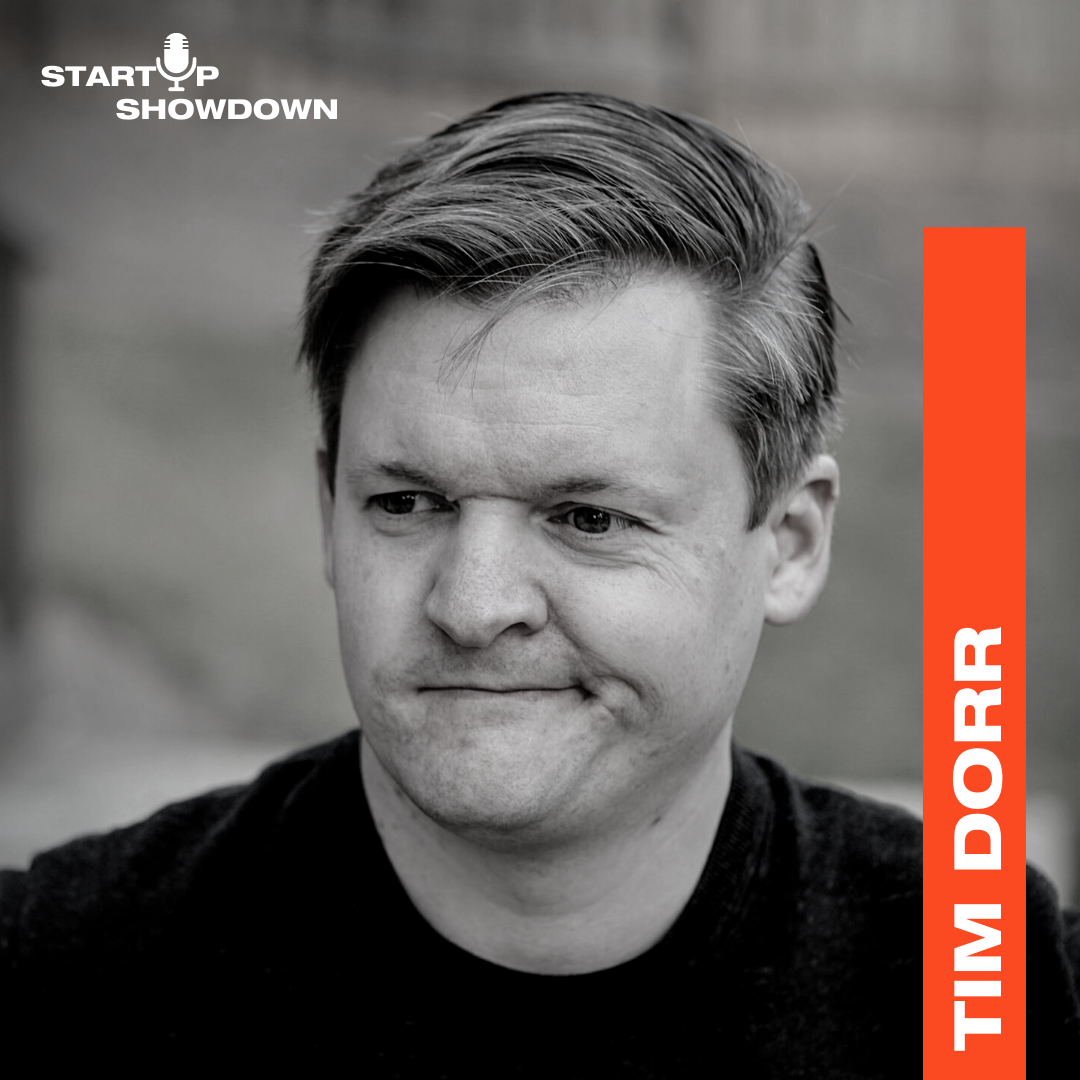
Tim Dorr With Techstars

/
RSS Feed
 Tim Dorr is the Managing Director of Techstars Atlanta in partnership with Cox Enterprises. He is also a co-founder of Salesloft, one of the largest startups to come out of Atlanta, Georgia with a $2.3B valuation.
Prior to that, he created the first coworking space in Atlanta, Ignition Alley, was an entrepreneur-in-residence at the Advanced Technology Development Center (ATDC) at Georgia Tech, and has been an advisor at Atlanta Tech Village.
Connect with Tim on LinkedIn.
TRANSCRIPT
Intro: [00:00:04] Welcome back to the startup Showdown podcast where we discuss pitching, funding and scaling startups. Join us as we interview winners, mentors and judges of the monthly $120,000 pitch competition powered by Panoramic Ventures. We also discuss the latest updates in software Web3, Healthcare, Tech, FinTech, and more. Now sit tight as we interview this week’s guest and their journey through entrepreneurship.
Lee Kantor: [00:00:38] Lee Kantor here another episode of Startup Showdown, and this is going to be a good one. Today on Startup Showdown, we have Tim Dorr with techstars. Welcome, Tim. Tim, before we get too far into this, can you share with our listeners about the Atlanta rendition of Techstars? How did you get involved with it and what’s your mission? How you serving folks? Sure.
Tim Dorr: [00:00:59] I’m the new managing director of Techstars Atlanta in partnership with Cox. And I’m going to be managing the summer program coming up. I’m taking over for Dave Payne, who was the previous managing director. It’s a generalist program. We’re not really focused on any verticals or markets, really. What I’m hoping to do with the program, though, is find some more brand names for the Southeast. It’s definitely a big focus for me is to I’ve had a lot of success through the Atlanta specific startup ecosystem, and I’m sure we’ll get into that in a bit. But in having my own success, I want to see more success stories out there. It’s kind of my own personal thesis to go create a dozen more copies of me in whatever way makes sense for them. It doesn’t necessarily have to be financial, but I want to do that through Techstars and really what I want to do in particular is find some of these like large brand name companies, you know, kind of think like the ones we’ve already had success with here in Atlanta, like MailChimp, Greenlight, Counly, like everyone knows them. You know, they’re such strong brands and they’re really something we can rally around in the Southeast to draw the attention here that like we’re as viable a startup hub as the the coasts.
Tim Dorr: [00:02:33] Like, you don’t have to go out to the Bay Area or L.A. you don’t have to go to New York. There’s another option where the culture, the talent, the resources, the geography, everything is just so perfectly aligned to create amazing startups in. And I just want to use more of these brand name companies that can come out of Techstars as flags we can plant in the sand to really get the attention of folks like, Hey, come out here. There’s something something going on here. So that’s what I’m looking to do with the the Techstars Atlanta program. And actually, like, how I got into the role was actually through a former managing director, Michael Cone. I was talking with him just about general investing stuff. Him and Sean O’Brien who run over line and they were just giving me some advice on that that front. And Michael just mid-conversation had an idea, said, Hey, would you be interested in the MD role at Techstars? And I kind of paused for a second and said, Sure. And then that kicked off an email that kicked off a whole interview process. And here I am.
Lee Kantor: [00:03:46] Now, what are some of the qualities that those Atlanta based brands that you were holding up have in common, that other kind of aspiring or emerging brands can either emulate or model themselves after?
Tim Dorr: [00:04:03] I mean it definitely like male chimps case there’s a really strong just brand name to MailChimp if you remember that that serial podcast from several years ago there was an advertisement for MailChimp at the front of it and they did this kind of like man on the street interviews with folks and some lady was reading off a card and didn’t know how to pronounce MailChimp. She pronounce it as MailChimp, and that kind of became a little meme for a bit, but it was funny about that. In particular was that even though she mispronounced the name of the company, everyone still knew that she was talking about MailChimp and it was just that kind of like pervasive, strong brand that is of the same caliber is like, you know, like Disney or Coca-Cola, like, you know, these incredibly strong brands that like can cut through even like a mispronunciation to get people’s attention. I really think something like that is amazing that, you know, Ben and Dan have created over MailChimp in particular. So there’s definitely like the branding aspect of it and then really leveraging some of the unique properties of the Southeast. I mean, we have amazing talent here. You know, there are a lot of like really talented folks to work on things, you know, I know watching Tope build out Counly over Atlanta Tech Village because we were cohabitating there alongside Sales Loft, which I’m a co-founder on like watching him kind of make use of these amazing folks to like really build out a really strong company which didn’t take that many people to really reach the like pervasive level of being the de facto standard for, you know, online scheduling. You know, it’s pretty incredible how little it took to get to that worldwide success that they have now. And, you know, they’ve grown quite a bit since then, but now it’s definitely making use of those unique resources that we have here.
Lee Kantor: [00:06:09] Now, do you think that we have the density that the coasts might have where a person works in a startup and it doesn’t you know, it doesn’t go the way they planned and they can just jump to another startup and not kind of abandon the startup dream.
Tim Dorr: [00:06:25] Yeah. I mean, there’s so many opportunities for, you know, in particular, like the way I look at Techstars now coming into it is that we’re a piece of a larger puzzle. We’re not an island by which there’s a silo of activity happening. And it’s amazing for Techstars, but not amazing for anyone else. There are definitely programs and resources out there. We have hubs like Atlanta Tech Village, like I mentioned at DC, at Georgia Tech and at DC. There are various accelerator programs there. Like I’m not doing them as competitors. I’m viewing them as being a piece of the puzzle. Like you might go over to ATB and do the It Takes a village pre accelerator program is kind of a starting point to figure some things out and then kind of as you start to get the business going, you come over to me, go through Techstars and then maybe you have like a very enterprise specific play or you could make use of that. You go over to engage and Blake Payton’s program over there where they partner with various Fortune 50 companies in the southeast here in Atlanta. And you get access to like the C suite of like Chick fil A and UPS and Home Depot. These like incredibly large companies, you get direct access to the very top of it. These are all components which come together to really create a unique opportunity to create a startup. So there’s just so many opportunities to, you know, if you go through one, it doesn’t work out like you can get back on the the horse and try again. Whether it is either starting another thing yourself or joining one of the the many, many, many startups that exist in the Southeast, you know, just seeing the amazing opportunities that we have here, you know, there’s so much that you can get involved with very directly, very easily.
Lee Kantor: [00:08:29] Now, if you were to kind of create a startup ecosystem from scratch, what are the elements that were lacking here in Atlanta?
Tim Dorr: [00:08:41] I mean, the things that were lacking previously were particularly capital, but that’s actually been fixed. So, you know, the sponsor panoramic, they’re a very large fund that has established itself in the Southeast. I mentioned overlying earlier there’s Outlander Tech Square Ventures. I’m blanking on others, unfortunately, under the gun here. I do know a lot. I think the if I’m if I remember the numbers correctly, I believe $1,000,000,000 of new capital came into Atlanta last year. So there is a lot going on here that we have in terms of resources. Really, what’s happened in Atlanta over the past, say decade has been a transformation of the startup ecosystem from being a bunch of people kind of hanging out, wanting to do something to being a functioning, well-structured machine that just spits out great startups. And in particular, it’s starting to feed back into itself. And you have, you know, the leaders coming out of these amazing companies that are doing amazing things. So like I mentioned, Tope and Ben and Dan, a MailChimp top order. It sells loft. You know, they’re starting to because they’ve had success and I humbly include myself in this, you know, that feeding back into that ecosystem is starting to create that exponential growth where, you know, a dozen people come out of it in one cycle, contribute back whether that’s in just time or capital or whatever, back into the ecosystem to help it continue to grow. And then, you know, a couple dozen people come out and then a couple of hundred, you know, it starts to really feed back in itself very quickly. And we’re starting to see that like first cycle really happen. So. Yeah. I mean, like, I feel like the disadvantages are kind of gone at this point. It’s really just us continuing to hone and operate that machine that we’ve established here and continuing to just grow, grow, grow. Like we’re essentially. Atlanta is a growth stage startup now. We are no longer in the the product market fit. We’ve figured it out now. We just need to continue to scale up.
Lee Kantor: [00:11:06] Now, how do you feel we’re doing when it comes to underserved founders or founders from others or groups?
Tim Dorr: [00:11:16] There’s definitely a lot of work to be done there and I feel like we’ve been making great strides on that. For Techstars at least I can definitely speak to the fact that it’s something we care a lot about, and it’s not like we’re not trying to hit numbers here. Like that’s not the goal here. The goal is that we’re trying to fundamentally change how we source startups so that we can find those founders who are not being seen because it’s just frankly, it’s an injustice that we’re not doing that because like every time I run into somebody and they’ve never talked to anyone before or they, they’ve only just figured out that there’s a startup ecosystem here and they’re, they’re not getting seen by anyone. They have great ideas, they have really good ideas, and they have a ton of drive and passion like they absolutely want to get it done. Like I was talking with one startup who it’s her first time doing anything. She’s figuring everything out from scratch. And she was just a teacher last year. You know, she is brand new to this entire world and is somebody that may have gone overlooked in the past very easily and wouldn’t have gotten access to the resources that she needs to get the help to move forward as a founder in particular, but also for her particular idea.
Tim Dorr: [00:12:44] And yeah, I mean, for for Techstars, it’s important that we’re establishing systems where we can make sure we are both finding the kind of founders that are not getting seen yet. And we’re encouraging those founders to come out of the woodwork a bit and reach out to us like we want to make sure we’re being welcoming as well. We definitely have a lot of interest in whether it’s race, gender, age, disability status, veteran status, things like that. We want to make sure that we’re we’re being as accommodating and welcoming for those kinds of founders as possible so that they don’t have to have like as much as the the startup ecosystem might have biases against them. They also have biases against us which are well deserved. And we want to make sure we’re breaking those down as well so that they can feel welcome and included in the process. It’s definitely about inclusion and making sure that they have a seat at the table too.
Lee Kantor: [00:13:56] And I think it goes along with what you said earlier about having those brand names. If we can get the companies that are from underrepresented, folks that have kind of working towards a brand name or have a brand name to show what is possible and that they can aspire to do this. This is this is a dream that can come true and open their minds to this as a career path. I think that would help out as well.
Tim Dorr: [00:14:25] Absolutely.
Lee Kantor: [00:14:27] Now, what part of this process gets you fired up? Like, what do you enjoy about working with these early stage folks that, you know, get you up in the morning, get you excited to do what you do?
Tim Dorr: [00:14:41] It’s definitely about. You know, like the best founders that we have come through the door are the ones that are most amenable to change and the ones that want to learn and grow. And I love really like connecting with them on that level and helping them see maybe something from a different angle and a different perspective, but at the same time, like not instructing them to do something per se, you know, just exposing them to another way of thinking. So like one thing I always say about Techstars in particular is that like, well, we’re called an accelerator, quote unquote. We are actually going to slow you down for three months. And that’s because we’re asking you to, for those three months, really step off the gas of like the build, build, build mode of the startup. Because chances are you have your blinders on, you’re headed towards the target. You want to just hit that target no matter what. And, you know, if the thinking is if you get to that target, everything will be great. That’s your success point. And usually that’s not true. Usually you need to, course correct as you go, but it’s really hard to do that. That’s a skill that takes a lot of learning, a lot of a lot of failure to figure out like, that’s something you have to do. So what Techstars is going to do is, you know, really force you to break down that assumption. And that’s definitely where I can help the most is, you know, kind of structurally how we do it is we have a very mentor based program.
Tim Dorr: [00:16:19] And one thing we do upfront to connect you with mentors is we do this thing called Mentor Madness, and it’s basically a week long process. You’re meeting with all 100 mentors that we have. You’re doing these quick 15 minute meetings. They are just the most raw, honest, objective feedback you’ll ever get in your company. There’s no time to defend yourself, so you just got to listen and write things down as fast as you can and you’re going to hear a bunch of stuff. Some of it will be complete crap and bad advice, but you’re going to start hearing a lot of like the same thing over and over again from like, you know, ten different people in a row. And that forces you to start to say, hey, I keep hearing the same thing that maybe I need to be doing this thing that I haven’t been doing in my business. And that can start to break down that that stubbornness barrier of like, I think I know the right direction or I think this target is where we should be headed and really start to think, think about things differently for your business and realize maybe there are different perspectives on what I’m doing. And then we pair you with your mentors, and the ones that really resonated with you on that are the ones that are going to help you the most. And we run through the program and really the acceleration comes after the program where, you know, the demo day is over, kind of back to normal and you want to step back on that gas.
Tim Dorr: [00:17:40] But now you have a plan in place. You know, you’re headed in a better direction and you have that skill set to be able to stop and take a take a moment to say, okay, maybe we’re not headed in the exact right direction. Let’s course correct a little bit to the right. And you have your mentors like the one thing I will point out is like the mentors are mentors for life potentially. You know, we definitely encourage that. It’s not just limited to those 13 weeks, then we take them back. Like these mentors are mentors you can have forever and they can be advisors to your company, they can be investors in your company even. You know, these are definitely like long term relationships and you have them as a way as a sounding board potentially to say like, hey, are we actually headed in the right direction here? Or does your opinion differ and suggest that we should do something differently? So kind of going back like that’s where like I definitely prefer to help is when somebody comes in and says, hey, is this the right direction to go in or do we need to course correct and kind of working through with them like to figure out, okay, what is a better strategy here or what is a, an adjusted strategy? Or maybe we just need to pivot entirely and do something different. You know, kind of working through those challenges are definitely the most engaging for me.
Lee Kantor: [00:18:58] Now, what’s the biggest piece of advice you can share with a startup founder to even enter the Techstars program? What do they have to what’s something actionable they can be doing today that will give them a shot of getting into the Techstars program?
Tim Dorr: [00:19:14] I definitely say B considering. You know, again, kind of like doing this like course correction work comes down a lot to really being good at customer discovery. There’s a very good book on this topic called The Mom Test. It’s actually written by a local Atlanta native. I forget his name off top of my head, but it’s like ten bucks on Amazon. It’s really quick read. It’s very practical in this nature. Like, that’s the one thing I like about it. It’s not very like theoretical about customer discovery. It gives you like actual talk tracks that you can see both the things to ask and why to ask them. And really, like all customer discovery about is about is discovering what is the problem space that your customer lives in. Like, what are their issues? What are they dealing with? You know, kind of like working through that sort of thing. And if you’re doing a lot of customer discovery, that’s great. I’d love to hear that. Like you’re talking with dozens or hundreds or maybe even thousands of customers to really understand what is going wrong in their world. And you really strongly understand their problem space because that will just help you long term. Like as a business when it gets to like selling mode, when you switch to the other side of things because you understand the problem space so well, you understand where they are, where their head space is at. You can when you sit down and sell them.
Tim Dorr: [00:20:48] You’re not selling from the other side of the table. You’re selling on the same side of the table as them. You’re selling alongside them rather than to them. So I love to see that kind of like that’s to me is a traction metric. A lot of people come to Techstars and say like, Well, how much revenue do we need? Like, how many customers do we need? Like, No, that’s actually not the issue. Techstars is really wide open when it comes to the stage or companies that like anything from a back of the napkin idea up to like I’m about to raise my like second or third round of funding and anything in between. So like what matters more to me is just like when it comes to traction, quote unquote, it’s not so much the, the revenue numbers. It’s like how much have you connected to your your market space? And are you like actively working through talking with customers, understanding their needs and like setting yourself up for that kind of success when it comes to selling and actually obtaining customers? Because if you don’t understand your customers, maybe you have some revenue, but that might have just been dumb luck that got you that revenue. You know, if you’re actually listening to them and getting feedback, getting input, then the traction you have is more real in my mind. So I definitely look at like the kind of like work you’ve done to really understand your market in particular.
Lee Kantor: [00:22:15] Now, if somebody wants to learn more about the Techstars program, what’s the best way to do that?
Tim Dorr: [00:22:23] I mean, you can read the text. We have I think it’s roughly 50 different programs. We actually have a second program now in Atlanta as well. Melissa Peggy’s is the new managing director of the Techstars Atlanta, powered by Jp morgan program, which runs opposite of mine. So I’m runs in the summer. We also have the Cox Social Impact Program that runs in the winter. And then Melissa’s programs are running in the essentially the fall and the spring. So pretty much 24 seven. There’s something Techstars going on in Atlanta. And if you want to learn about any of those, head to Techstars dot com, you can go to the accelerators page. And one thing that’s really great there is that you can start to look through all of the programs we offer. Some of them are city based. Some of them are remote programs like Techstars anywhere. Some of them have corporate partners. Some of them do not. Some of them have a focus, like there’s a physical health accelerator in Fort Worth, Texas. There’s energy tech over in Birmingham. Some of them have a particular maybe a specific market that you’re in that you can get a lot of value out of. Like, you know, my summer program is very generalist, but if you go out to LA Matt, who runs the program out there, he has a space technology focus for one of his programs he’s actually running for, and he’s kind of nuts for doing that.
Tim Dorr: [00:23:59] But we love him. He’s he’s we’re lucky to have him. And I definitely would like look through all the accelerator programs we have, mainly when like evaluating like a Techstars accelerator, you definitely look at the, the resources being provided by that program and they’re going to be a bunch that are just not in fits entirely, but try to find ones that are close and like really examine them. And I would definitely encourage anyone who’s interested in Techstars to apply to multiple programs at the same time. There’s no disadvantage whatsoever for doing so. And on top of that, you just have more chances. Again, we have hundreds of applications for Techstars Atlanta this summer, and I’m only choosing ten companies, so the chances of anyone getting in is fairly low. So the more programs you apply to you, the more chances you have. And who knows? You might find one in there that you resonate with more than my program. For whatever reason, maybe you like the MD more or the corporate partner is a better fit for you. Whatever it is. I’m not offended by that, by the way. Feel free to to find the best program that works for your team and your needs. But yeah, consider them all and definitely apply to any that make sense. The more chances you have to get into a program, the better.
Lee Kantor: [00:25:16] Yeah, like you said, there’s a lot of resources now compared to five, ten, 15 years ago. So take advantage of them.
Tim Dorr: [00:25:24] Yes, absolutely.
Lee Kantor: [00:25:26] Well, Tim, thank you so much for sharing your story today. You’re doing important work and we appreciate you.
Tim Dorr: [00:25:31] Thank you. Definitely appreciate it.
Lee Kantor: [00:25:32] All right. This is Lee Kantor. We’ll see you all next time on Startup Showdown.
Intro: [00:25:38] As always, thanks for joining us. And don’t forget to follow and subscribe to the Startup Showdown podcast. So you get the latest episode as it drops wherever you listen to podcasts to learn more and apply to our next startup Showdown Pitch Competition Visit Showdown VC. That’s Showdown Dot VC. That’s all for this week. Goodbye for now.
Kelly Gay With OnBoard
/
RSS Feed

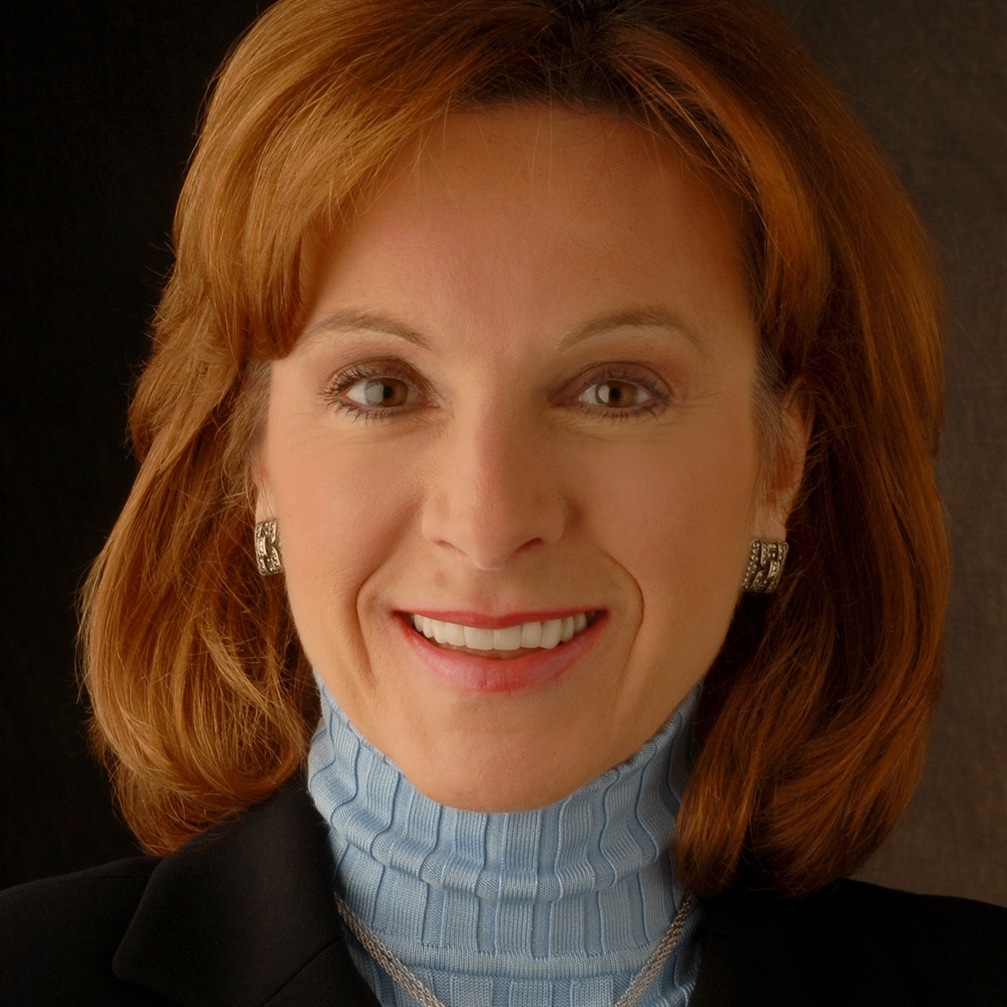
 Kelly Gay is the chair of OnBoard and immediate past chair of Venture Atlanta. She also serves on the boards of 1105 Media, the Atlanta CEO Council, ATDC, and Acivilate.
Kelly has led companies ranging from billion dollar organizations to startups. As CEO, she has led both private and public companies, all of which resulted in successful exit transactions for shareholders and employees.
Kelly is the former head of Vertical Markets for Sierra Wireless (NASDAQ: SWIR), as well as co-CEO and COO of Numerex Corp (NASDAQ: NMRX), which was acquired by Sierra Wireless in 2017. She joined Numerex with the acquisition of Omnilink Systems, where she was president and CEO.
Prior to leading Omnilink, Kelly was chair, CEO, and president of KnowledgeStorm, and led the company from startup to acquisition by TechTarget (NASDAQ: TTGT). She also led IBM in the media, entertainment, advertising, sports, music, publishing, broadcast, and cable markets as vice president of IBM’s North American Media and Entertainment division. Under her leadership, this division grew to $1.2 billion in annual sales, with 18% annual growth over a three-year period.
Kelly’s management and accomplishments have been recognized by industry-leading publications and organizations, including The Indus Entrepreneurs’ inaugural Atlanta Top Entrepreneur, IoT Now’s first Top Women of IoT, Connected World’s inaugural Top Women of M2M, and Pathbuilders’ first Inspiria Award. The companies Kelly led were recognized with Inc.’s Inc. 500, the Deloitte Technology Fast 500, BtoB’s Media Power 50, and Software Magazine’s Software 500.
Kelly serves on the boards of directors of OnBoard, where she is the chair; Venture Atlanta, where she is the past chair; 1105 Media, where she is the lead digital marketing director; Acivilate, and the Atlanta CEO Council. She also serves on the governing board of the Advanced Technology Development Center, named by Forbes as one of the Incubators Changing the World.
Kelly is a magna cum laude graduate of Tulane University with a bachelor’s degree in economics. She was the first Newcomb College recipient in the school’s history to receive the Murphy Prize in Political Economy, awarded by the Murphy Institute.
Connect with Kelly on LinkedIn.
What You’ll Learn In This Episode
- The transformation of Atlanta’s tech community
- Advice to up and coming female technology leaders
- Perspective on where the future of Atlanta’s tech ecosystem is headed
This transcript is machine transcribed by Sonix
TRANSCRIPT
Intro: [00:00:04] Broadcasting live from the Business RadioX Studios in Atlanta, Georgia. It’s time for Atlanta Business Radio brought to you by on pay built in Atlanta. OnPay is the top rated payroll and HR software anywhere. Get one month free at Onpay. Now here’s your host.
Lee Kantor: [00:00:31] Lee Kantor here, another episode of Atlanta Business Radio, and this is going to be a good one, but before we get started, it’s important to recognize our sponsor on pay. Without them, we couldn’t be sharing these important stories today on the Atlanta Business Radio. We have Kelly Gay, who is the first female that was awarded the John Imlay Leadership Award. Congratulations and welcome, Kelly.
Kelly Gay: [00:00:55] Thank you, Lee. Thank you so much.
Lee Kantor: [00:00:57] Now, before we get to 400 things, can you let our listeners know a little bit about your career? It spans a year or two and then the history of Atlanta, the technology scene. But you have such an interesting background. Can you share a little bit of the highlights?
Kelly Gay: [00:01:13] Yes, absolutely. So highlights I. Hi, my Atlanta and my non Atlanta, a portion of my career, my non Atlanta portion of my career, essentially this of IBM starting as a marketing rep or sales rep at IBM and partying after 19 years with IBM from Atlanta. Actually, by then, we’ve been moved back to Atlanta or to Atlanta, departing as the vice president of media and entertainment for IBM. And that meant serving the industries that made up media and made up entertainment, not not dealing with the media in in terms of marketing. So always using all these customer facing love that. And in Atlanta, I have run two venture backed companies and sold both of those two public companies. One was knowledge, storm one was Omni Lane, and then I was asked to sell the public company to another public company, which was Sierra Wireless out of Canada. And that has all occurred. While I’ve lived in Atlanta, I would say the most significant part of my Atlanta. Her tenure, though, has been the joy and the involvement I had had in this Atlanta technology community. Lee, as you know, I’ve been very involved in the Technology Association of Georgia over the years then to Atlanta, where, well, I was the chairman of the tag. I was chairman of Venture Atlanta involved in on board, which is an organization focused on women moving women forward in both their leadership opportunities as well as helping them get on board. And then Techbridge and early days with Sidetrack and Atlanta CEO Council and HTC, et cetera, et cetera. Just those are the kind of things that this technology community affords all of us and I have taken full advantage of it.
Lee Kantor: [00:03:15] Now, how have you seen the community evolve over the years? I know women in technology. We’ve been involved with that group for a long time and that was the, you know, born because of the lack of women in technology, and they needed a place to kind of hang out together and help each other. How have you seen kind of females fare in technology over the years?
Kelly Gay: [00:03:38] Great. If you don’t mind, I’ll start with technology overall in the Atlanta community and then add to it with the what I’ve seen for women because it all a continuum. When I first became involved in the Atlanta technology community with the 1999 2000 kind of time period, the fabulous entrepreneurs are fabulous companies. You know, that was the heyday of of DSL and internet security systems coming of age and certainly MSA and, you know, early successes, lots of fabulous entrepreneurs and executives. But it wasn’t all bundled up, shall we say, as a community that relied upon each other and built off of each other’s successes over time. It was a little more wild, Westy, just because that’s where we were at that time in terms of the development of the technology community in Atlanta. What I see now is a clear understanding by the leadership and the base technology base of people who work in this industry in Atlanta, a clear understanding. We are all pulling each other up every penny, the rest of the companies of every venture firm that has a great exit or invest in a unicorn or lead the unicorn. The rest of the venture community by virtue of the airtime that it creates for the city and and that investing community overall startup community, we are second only to New York. So I guess we’re third and San Francisco, but we’re in terms of raw volume of startups.
Kelly Gay: [00:05:33] It’s pretty funny that we’re in when you’re when you’re being mentioned and have that kind of success in the startup community and then we have a whole set of organizations and community, well, community organizations that support that community, the sort of community and those entrepreneurs. And what I see is it’s all we’re all working together to create this phenomenal technology community that Atlanta has, which then leads to women. We have got so many, just so many talented, capable women leaders, women executives, women CEOs, women engineers. You can go on and on in the city. And I think the technology community, the business community overall and our industry here in town have all rallied around. This needs to be a moment to start recognizing. And I don’t mean with awards, I mean, recognizing the talent and the contributions that not only women, but all underrepresented communities in this in Atlanta can contribute to our growth and our success and on the brand of Atlanta community technology community. And I’ve said a number of times if we can’t in Atlanta, take advantage of the fantastic, underrepresented, very diverse, very broad technology community that we have here in Atlanta. What city can? And I, you see it all coming together and and that does include women.
Lee Kantor: [00:07:10] Only now do you think that something that kind of leans in our favor here in Atlanta and I think Atlanta is unique compared to the other cities you mentioned that are kind of these startup communities in that Atlanta has such a diverse economy and there is there’s multiple industries that touch technology and it’s primarily be to be like there’s not a lot of B2C companies in technology that are the household names, but there’s a lot of B2B companies that are kind of running maybe those B2C companies or they’re or they’re the kind of the background of those B2C companies. But the fact that it’s B2B may be kind of a little more anonymous and not kind of front page news that allows leaders to kind of jump maybe from one company to another a little easier here in Atlanta than maybe in these other areas.
Kelly Gay: [00:08:04] Yeah, I think there’s there are both good and bad to what you just said in terms and you know, somebody who’s on the other side of the equation as you just outlined it, there’s good and bad on that side, too. I actually don’t think that this Atlantic technology community in general, I don’t think I don’t think we took jobs like in general, like you see happen in San Francisco. I do think there is a higher level of, you know, loyalty will use that word or commitment to what you’re doing. And part of it is we’re not as big as San Francisco or the New York communities because we’re not as big a city in terms of technology and the respect of community matters and your reputation matters and people are aware of that. Additionally, we have a pretty youthful community here, which is a great strength of ours, just a fabulous strength of ours. And many of them are joining smaller entrepreneurial companies where they can make a real difference. And then you’re very invested in the difference that you make and and you become a critical, critical part of the growth of a company. And people aren’t going to switch jobs when when that’s your situation.
Kelly Gay: [00:09:19] So those are the good things related to the B2B and the size and scope of what we have. You are right. We are more the things that make it all work. There’s nothing wrong with being the things that make it all work, like being so, so big in the city with us being the number one financial payment processing clearinghouse, Atlanta being the number one Georgia, really because there are some outside of Georgia. So outside of Atlanta, the number one payment processing, clearing technology stations, shall we call it, in the world? That’s not glamorous, that’s not A. But it generates billions and billions of dollars of revenue, some of which much of which gets infused back into the Atlanta community. So I do think there are some things. No, we don’t have the big big retail names or the big consumer names that do your brand. So that’s a little harder to come by when you don’t have it. But. But you know, to me, the B2B element with Atlanta, overall, we’re very functional city. We’re a very practical city. We are. Pragmatic in our approach, we’re not showing General as a city. It all comes together to me.
Lee Kantor: [00:10:37] Yeah, and I had a funny thing happen to me. I was doing broadcast from Fintech South a few years ago and that was a global conference and people were coming from all over the world to come to Atlanta. And I would ask some of these people who were when they were leaving their country and they were saying, Hey, I’m coming to America for this big global fintech conference. And and I said, when you told them you were going to Atlanta, did they know like what was their take on that? Because I’m sure their assumption was, Oh, this has to be in New York or in Silicon Valley or in Boston. But Atlanta, you know, for people who don’t know, like you said, this were the world where all the action is in that space. But it’s not just common knowledge and and it’s frustrating. I remember at the time when you were beginning, you know, Atlanta always had kind of a chip on the shoulder that, hey, why aren’t we getting any of this attention? There’s a lot of great things happening here. And it’s like you said, when we’re the people that are running kind of the companies that are making headlines, it’s frustrating that we’re not getting our due. But I think. But just by doing the, you know, grinding and doing the blocking and the tackling of the work that it is starting to come, you know, everything is kind of leaning our way nowadays. So many people are exiting and staying here and doing more to help the community grow. It’s really kind of a golden age, I think, for for the city when it comes to technology.
Kelly Gay: [00:12:04] I completely agree with you and on a point you said about people growing and being successful and staying with the city. We’re so fortunate that we have people willing to do that. That is how San Francisco became. San Francisco is in terms of technology, is this wealth of knowledge and capability and expertize that you need there and grew the next thing and next thing. So we’re very lucky on that. It is frustrating. At one level, we we have to beat the drum seven times more loudly. To do that, we are worth the city. That’s bad in terms of the contribution we’re making certain industries. Technology is one, but communications is another. Iot is another distribution, technology, transportation. I mean, there are a lot of great hub for that’s bad. Good of it, however, is that we don’t have a hyper. We don’t have a tulip bulb bubble occurring because everything is here in Atlanta. It’s more rational. It’s more pragmatic. If at a time, a company at a time, a person at a time. And so it just generates a better result in terms of our growth.
Lee Kantor: [00:13:21] Yeah. Like our foundation is strong and it’s diverse so that it can withstand, you know, a downturn in any one given market where we have enough infrastructure here that’s going to support us.
Kelly Gay: [00:13:37] Yeah, you’re absolutely right. And our infrastructure, you know, we’re a we’re a backbone to so many of the things that travel on the internet was quietly, just quietly in the background being this this, you know, infrastructure city that makes the internet work makes companies make payments work. You know, I don’t know that we mind being this quiet. You know, megatropolis in terms of technology and that contribution, because we wouldn’t attract the companies, we have been able to protect this city, all we were doing was yelling right here.
Lee Kantor: [00:14:20] Well, and you’re seeing the ripples go beyond Atlanta in terms of the southeast now in Nashville and Birmingham, Chattanooga. There’s other kind of areas sprouting in technology. And, you know, we might have been the catalyst to get it going or at least kind of have people looking in this area of the country, at least. But you’re seeing some of the ripples, you know, appear throughout the southeast.
Kelly Gay: [00:14:48] You’re right about that. And while not every city recognizes that Atlanta is a bit of a hub, not with not the we’re the only ones in the southeast. There’s one or two, shall we say, in Florida. And then burgeoning burgeoning success in Nashville and Charlotte and that kind of thing. But if you look at, for instance, just center Atlanta, we had over 400 applications from 16 states to come to Atlanta, and any venture conference in the southeast will tell you that venture. Atlanta has figured out the formula to to showcase. Hard southeastern companies, certainly Atlanta based companies, both early states and more world stage companies, over 60 percent of the presenting companies on stage at Venture Atlanta, of which there were almost 100 presenting companies ninety one overall. But of that, 91 over 60 percent were from 12 different southeastern states, with a little bit over to the West as well. And get this late fifty nine percent of the of the companies that ultimately presented were led by underrepresented founders back to where we started with both women and diverse populations. And we in Atlanta can can attract that and showcase it. Yeah, very unique among the southeast
Lee Kantor: [00:16:13] And not only unique, it’s important because there’s a lot of folks out there that fall under that category that deserve a chance to be seen and heard.
Kelly Gay: [00:16:23] You’re completely right. I wish I’d been here to the punch on that critically important. And beyond the critically important. You see, Atlanta has always had such great corporate leadership outside of technology as well in terms of being good citizens, being proper shepherds of the human race. And you see companies overall, yes, many in technology, but many not in technology and in many consumer brands, for instance, looking at each other and saying, you know, we’ve an obligation and an opportunity better for a company and our community by lifting up this population of diverse, talented people that we represent. You see it happening all over the city. And technology is just one of the places that has been smart enough to take advantage of the great base of both leadership and a base of employees from every walk of life.
Lee Kantor: [00:17:27] Now, if you look into your crystal ball, what are you seeing coming into 2022 and then beyond as we hopefully get out of this pandemic? And then we go back to some sense of normalcy, even if that normalcy is just dealing with these kind of an endemic at this point?
Kelly Gay: [00:17:45] Right, right? You know? I think we all would like to believe there will be a moment it’s over. I think we all would like that. We’re desperate for that. I don’t I do think we’re headed towards an endemic, but I don’t think it’s fun and it will. You know, the flu is an endemic olarinde and endemic. There’s a set of things you can just not wipe out. The flu is a great example, but we manage it and we manage it fine. I think technology stands at a wonderful place in terms of being able to deal with whatever comes our way because people can work remotely. We have the technology to work remotely. We are all about providing populations with the ability to do your job with with great tools from wherever you are. That’s the great strength of technology, much of the work. Yeah, it’s much work technology companies being able to do that work from wherever you are and, you know, so many collaborative tools and and the ability for those teams to work collaboratively. I think that we will. No, I’m not worried about technology industry in the population of industries that Atlanta and its very diverse set of industries represents will be fine as an industry. I think that our big industries, let’s just use fintech and payment processing as an example. I think those will continue to thrive because there is no question that scale drives scale.
Kelly Gay: [00:19:25] And I hope it continues at a rate that can be consumed properly by the city, by the employment base, by the number of companies that are created so that we don’t create, you know, the equivalent of a Dutch tulip bubble and some trouble. I don’t think it will. We’re just too practical a city and too diverse for us to lean all in on one thing and create a problem for ourselves. So I do I. We’ll continue to drive scale. I think that the our diverse population. Is it down? And I think there are many technology companies realizing it’s a gem and there as a group that is a gem of humankind, that other companies in other cities would love to be able to replicate where they are, but they can’t. And so you see a fair number of companies. Yes, many of them are smaller. Moving to Atlanta and Georgia, but certainly the Atlanta metropolitan area to be able to capitalize on the opportunity of. Having a diverse workforce, which, you know, has so many benefits, it has so many benefits to your current employees, you know, who want to live in that kind of a world. And so I do think that we’ll see companies continue to to move to Atlanta to participate in this in this fabulous environment that we have.
Lee Kantor: [00:21:06] Yeah, I mean, it’s it’s a true melting pot, and I’ve been fortunate to do some of the radio for ATC and Georgia State University’s Entrepreneurship Institute and to see those the startups that come out of each one of those are totally different, even though there are just a few blocks apart, you know, from there just down the road from each other. But it’s a different group of people, a different kind of mission and different kind of activities that interest them and they’re good at. And it’s just fascinating to see them both have a place to grow and learn, and people are investing in them and helping them get to new levels. And I think that that is, you know, that raises all boats, that kind of effort and that type of collaboration. I think that’s what we need here in Atlanta. More of and that’s what the country needs as a whole.
Kelly Gay: [00:21:54] Mm hmm. I completely agree and you said an important thing, but the populations are different and the support and raising up is probably a little different. But the strength is in all of us. No one of us, the strength is and the strength is in the diversity. And I mean that broadly, not just underrepresented communities. And that’s an important point that you just make.
Lee Kantor: [00:22:21] Well, thank you so much for all that you do, and congratulations on the John M. Leo Award. We really appreciate you and your work here in the city and beyond. And if there’s anything we could be doing for you, please let us know. We think your work is important.
Kelly Gay: [00:22:38] Well, thank you. Thank you so much, Liane. Thanks for the time.
Lee Kantor: [00:22:41] All right, this is Lee Kantor Willis Hale next time on Atlanta Business Radio.
About Our Sponsor
OnPay’s payroll services and HR software give you more time to focus on what’s most important. Rated “Excellent” by PC Magazine, we make it easy to pay employees fast, we automate all payroll taxes, and we even keep all your HR and benefits organized and compliant.
Our award-winning customer service includes an accuracy guarantee, deep integrations with popular accounting software, and we’ll even enter all your employee information for you — whether you have five employees or 500. Take a closer look to see all the ways we can save you time and money in the back office.
Follow OnPay on LinkedIn, Facebook, and Twitter
Melanie Flores and Chris Nedza, Symtrain
/
RSS Feed
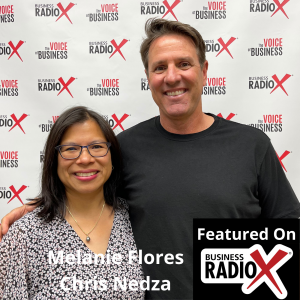
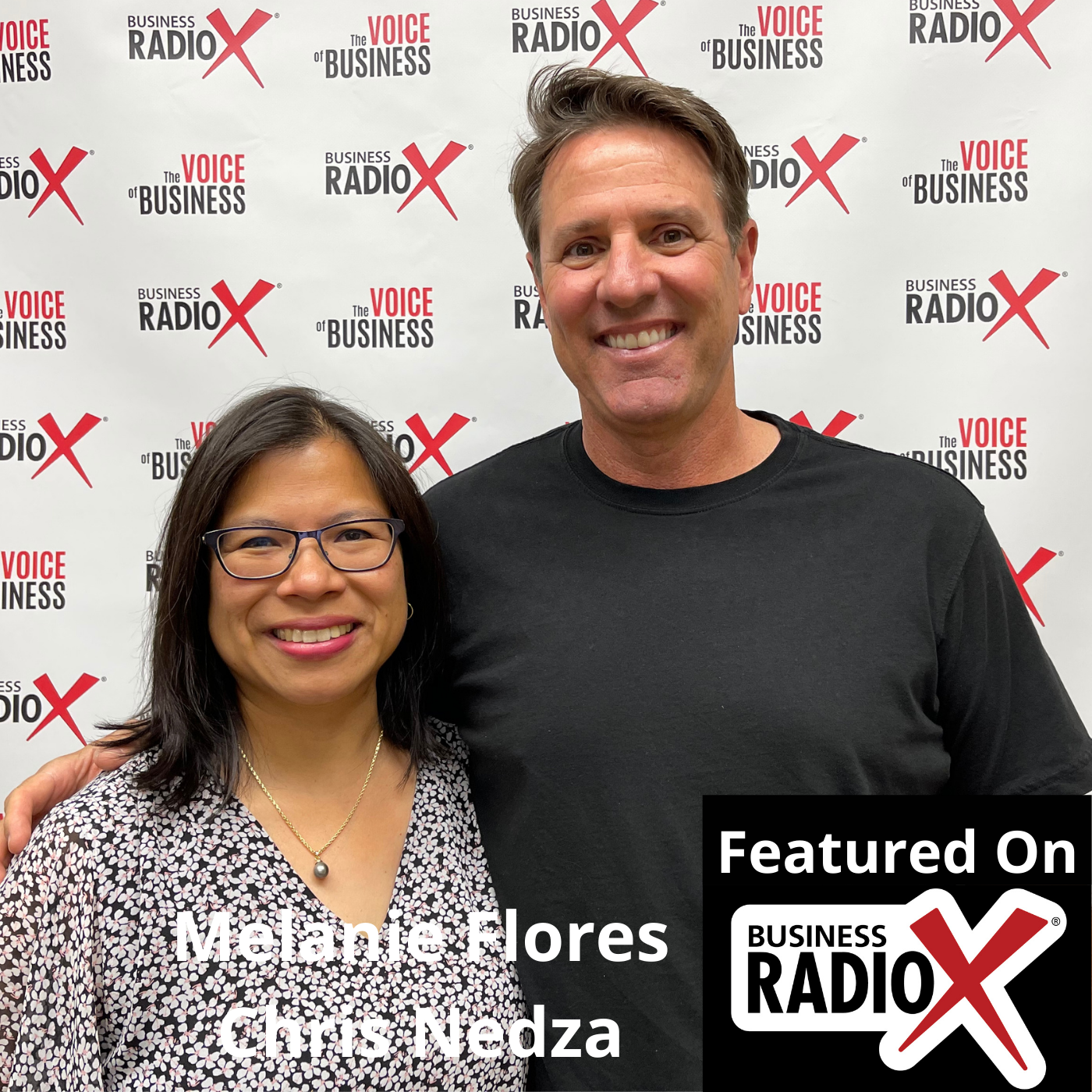
 Melanie Flores and Chris Nedza, Symtrain (North Fulton Business Radio, Episode 394)
Facing the twin challenges of training and retaining employees while providing consistent customer service, salon owners and real estate companies now have the technology of Symtrain to rely on. Using Symtrain ensures customer-facing personnel are well-trained and provide outstanding customer service. Melanie Flores, Program Manager at Symtrain, and Chris Nedza, who mentors Symtrain through Georgia Tech’s ATDC, joined host John Ray to discuss Symtrain’s efficacy, impact, other verticals their technology can be applied to, and much more. North Fulton Business Radio is broadcast from the North Fulton studio of Business RadioX® inside Renasant Bank in Alpharetta.
Symtrain
Instructional training is not enough. People learn best by doing. In fact, we retain only 10% of what we’re “taught” compared to 90% of what we “do”. That’s because experience is immersive and gets us “involved”. But it can also be costly and difficult to scale, especially remotely. So, all too often learning happens on the job, which really means “on the customer”.
Symtrain engages employees in simulated work experiences that feel “real” – working at their own pace, anywhere, anytime, on any device. So, they’re empowered to take charge of their own learning and success. As a result, they learn faster, retain more, build confidence, and master the skills they need to deliver the best customer interactions every time.
While our platform makes it easy to create and manage simulations, we also offer expert professional services to help businesses succeed:
- EConsulting and Needs Assessment
- ETraining and Simulation Integration
- ESimulation Design and Implementation
- ECurriculum Planning
Company website | LinkedIn | Twitter
Melanie Flores, Program Manager, SymTrain
Melanie Flores is the Program Manager at SymTrain. She leverages an engineer’s mind, a teacher’s heart, and a gardener’s hands to help people learn and share memorable experiences together. She started up Corning’s optical fiber factory in the Charlotte, NC area, founded a popular kindergarten engineering design workshop based on a famous MIT course, and led the STEM coaching team serving Easter Seals teachers across metro Atlanta. Her work has been featured by TEDxJacksonville, TEDxAlpharettaWomen, Women 2.0, the National Association of Independent Schools, Engineering is Elementary, MIT’s pK-12 Action Group, the Boston Museum of Science, and many other entities. In June 2021 she joined SymTrain, an Atlanta-based tech startup. She is excited to apply her passion for learning and customer experience to the workforce development space. In her spare time, she enjoys reading, traveling, and spending time outdoors with her husband and two sons.
Chris Nedza, Entrepreneur in Residence, Advanced Technology Development Center (ATDC) at Georgia Tech
Chris Nedza is a serial entrepreneur and loves diving into a start-up business. He’s built an Inc. 500 company, led a turnaround as the CEO of a restaurant Point of Sale company, became CEO of an Ozone based technology company, and even brought his creative thinking and love of students to Gwinnett County Public Schools by becoming a high-school teacher and ultimately coordinator of academy business partnerships in 2014.
He most recently founded and scaled ZeeZor, a real-time mobile reporting and employee engagement platform for the beauty industry. ZeeZor was acquired by Vista Private Equity group in early 2020 and became part of Mindbody, a business management software system for the fitness, wellness and salon/spa industry.
Chris is currently serving as an EIR (entrepreneur-in-residence) and is on the faculty/staff of Georgia-Tech University. In his role, he helps technology companies with ideation>launch>funding>scale.
He has an undergraduate degree in economics from the University of Georgia and an MBA from Emory University. He is a frequent contributing author, keynote speaker, devoted husband, father to 6 sons, drummer at church and championship level Pizza eater.
Questions and Topics
- What does SymTrain do?
- How did this business come about?
- Why do you care about solving this problem?
- Tell us about one of your customers and how you made their lives better.
- What are SalonScripts and how are they different from the rest of SymTrain’s offerings?
- Who does SalonScripts help?
- Where do you see this business going next? Who else could you serve?
North Fulton Business Radio is hosted by John Ray, and broadcast and produced from the North Fulton studio of Business RadioX® inside Renasant Bank in Alpharetta. You can find the full archive of shows by following this link. The show is available on all the major podcast apps, including Apple Podcasts, Spotify, Google, Amazon, iHeart Radio, Stitcher, TuneIn, and others.
Renasant Bank has humble roots, starting in 1904 as a $100,000 bank in a Lee County, Mississippi, bakery. Since then, Renasant has grown to become one of the Southeast’s strongest financial institutions with over $13 billion in assets and more than 190 banking, lending, wealth management and financial services offices in Mississippi, Alabama, Tennessee, Georgia and Florida. All of Renasant’s success stems from each of their banker’s commitment to investing in their communities as a way of better understanding the people they serve. At Renasant Bank, they understand you because they work and live alongside you every day.
 Special thanks to A&S Culinary Concepts for their support of this edition of North Fulton Business Radio. A&S Culinary Concepts, based in Johns Creek, is an award-winning culinary studio, celebrated for corporate catering, corporate team building, Big Green Egg Boot Camps, and private group events. They also provide oven-ready, cooked from scratch meals to go they call “Let Us Cook for You.” To see their menus and events, go to their website or call 678-336-9196.
Craig Haynor with Green Feather and Robin Gregg with RoadSync
/
RSS Feed
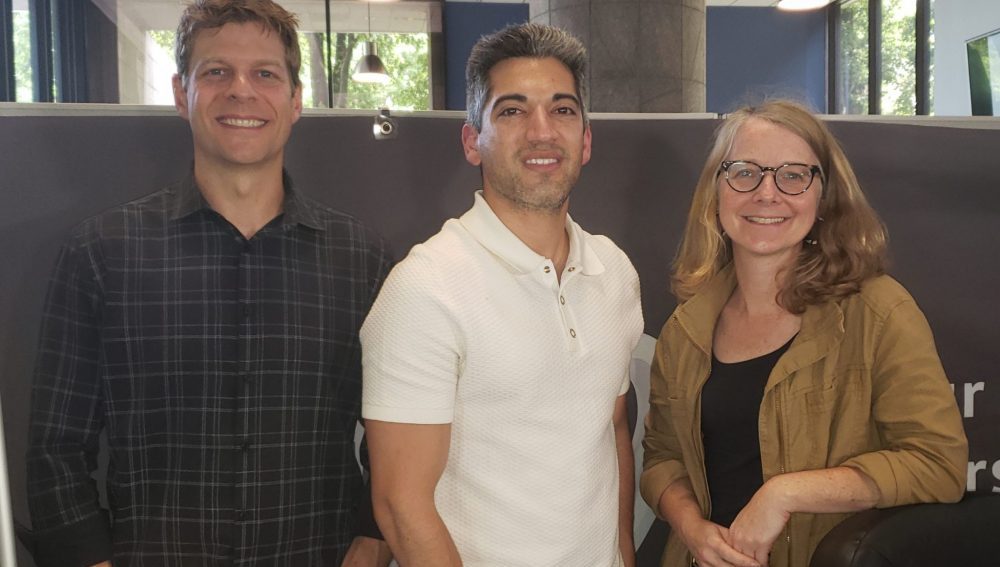
 Craig Haynor is CEO and Co-Founder of Green Feather and CEO of Ally Commerce, both of which are technology businesses native to Atlanta, GA.
Green Feather’s flagship product, Feather Pay, is a payment platform that provides patients total flexibility in how they pay for healthcare. Ally Commerce provides eCommerce technology and operational services to brand manufactures seeking to engage their customers directly through digital channels.
Craig and his incredibly supportive family of three live in Marietta, GA and are proud to call the Atlanta metro home for the last five years.
Connect with Craig on LinkedIn.
 Robin Gregg is the CEO of RoadSync, a digital financial platform that powers business transactions in the logistics industry.
Robin combines her strong leadership skills with a keen understanding of scaling startups. She has over 15 years of experience building and launching financial solutions to consumers and businesses.
Prior to RoadSync, Robin held leadership roles at FleetCor, alternative payment provider Revolution Money (sold to Amex in 2010), and Capital One. She started her career in management consulting at Charles River Associates.
Active in numerous local and national professional organizations, Robin currently serves as a mentor for the ATDC, Georgia Tech’s technology incubator and has held numerous leadership roles, including Co-President, of the Harvard Business School Club of Atlanta. She is also an active member of the Entrepreneurs’ Organization.
Robin holds a BA from Washington and Lee and received her MBA from Harvard Business School. After growing up in West Virginia, 20 minutes away from the midpoint of the Appalachian Trail, she now calls Atlanta home.
Connect with Robin on LinkedIn.
Decision Vision Episode 113: Should I Disclose My Mental Illness? – An Interview with Jacqui Chew, iFusion and TEDxAtlanta
/
RSS Feed
Decision Vision Episode 113: Should I Disclose My Mental Illness? – An Interview with Jacqui Chew, iFusion and TEDxAtlanta
Diagnosed with bipolar disorder in 2005, Jacqui Chew seeks to normalize the conversation around mental illness. In a candid and open conversation with host Mike Blake, Jacqui discussed the journey to her diagnosis and how she’s learned to manage it. She also offered advice to HR directors and the rest of us who are approached by an employee or friend who discloses their mental illness. “Decision Vision” is presented by Brady Ware & Company.
Jacqui Chew, iFusion and TEDxAtlanta
Jacqui Chew is an award-winning marketing and business executive with more than two decades of experience delivering creative, data-driven strategies for venture-backed, high-growth companies. A proven positioning expert, brand builder, and innovation thought-leader with P/L experience, her programs contribute to MQL growth.
A creative problem solver and convener, Jacqui believes in the potential for ideas to change the world. As licensee of TEDxAtlanta, one of the largest TED affiliates in the region, she galvanizes a team of volunteers to produce the annual TEDxAtlanta show. Under her leadership, tickets for nine of the 11 sold out weeks before. This must-attend event has become the platform for tomorrow’s leaders playing host to renowned bioethicist Paul Root Wolpe, hunger eradication entrepreneur Jasmine Crowe, and Ryan Gravel, the “father” of the Atlanta Beltline.
Jacqui served as senior vice president of marketing at Avertium, an award-winning cybersecurity firm founded from a three-company roll-up. She led brand marketing, demand generation, social media, PR, sales enablement, analytics, marketing operations, and communications. During her tenure, Jacqui spearheaded the company’s successful repositioning, messaging and rebranding and, its CRM/marketing automation platform integration. She also worked cross-functionally to support the acquisition of a fourth company during this period.
Previously, as CMO-in-residence at the Advanced Technology Development Center at Georgia Tech (ATDC), a globally ranked business incubator, she worked with the 170+ companies to develop their go-to-market and product strategy. During her tenure, she also developed and taught the incubator’s first strategic marketing curriculum.
Prior to ATDC, Jacqui founded iFusion, a fractional CMO consultancy for high-growth venture-backed companies. Primary client projects: positioning, messaging, customer journey mapping, marketing plan development and marketing and sales alignment. The company led the launch of more than two dozen companies/products and contributed to $100+m in funds raised.
Jacqui served in executive marketing roles at PeopleSoft (acq by Oracle), Stonesoft (acq by McAfee now Intel), Silverpop(acq by IBM) and worked, on the agency side, with IBM Global Services, The Weather Channel, KontrolFreek, MessageGears, Preparis, Venture Atlanta, EarthLink and eBay.
Website | LinkedIn | Jacqui’s TEDx Video
Mike Blake, Brady Ware & Company

Michael Blake is the host of the “Decision Vision” podcast series and a Director of Brady Ware & Company. Mike specializes in the valuation of intellectual property-driven firms, such as software firms, aerospace firms, and professional services firms, most frequently in the capacity as a transaction advisor, helping clients obtain great outcomes from complex transaction opportunities. He is also a specialist in the appraisal of intellectual properties as stand-alone assets, such as software, trade secrets, and patents.
Mike has been a full-time business appraiser for 13 years with public accounting firms, boutique business appraisal firms, and an owner of his own firm. Prior to that, he spent 8 years in venture capital and investment banking, including transactions in the U.S., Israel, Russia, Ukraine, and Belarus.
Brady Ware & Company
Brady Ware & Company is a regional full-service accounting and advisory firm which helps businesses and entrepreneurs make visions a reality. Brady Ware services clients nationally from its offices in Alpharetta, GA; Columbus and Dayton, OH; and Richmond, IN. The firm is growth-minded, committed to the regions in which they operate, and most importantly, they make significant investments in their people and service offerings to meet the changing financial needs of those they are privileged to serve. The firm is dedicated to providing results that make a difference for its clients.
Decision Vision Podcast Series
“Decision Vision” is a podcast covering topics and issues facing small business owners and connecting them with solutions from leading experts. This series is presented by Brady Ware & Company. If you are a decision-maker for a small business, we’d love to hear from you. Contact us at decisionvision@bradyware.com and make sure to listen to every Thursday to the “Decision Vision” podcast.
Past episodes of “Decision Vision” can be found at decisionvisionpodcast.com. “Decision Vision” is produced and broadcast by the North Fulton studio of Business RadioX®.
Connect with Brady Ware & Company:
Website | LinkedIn | Facebook | Twitter | Instagram
TRANSCRIPT
Intro: [00:00:02] Welcome to Decision Vision, a podcast series focusing on critical business decisions. Brought to you by Brady Ware & Company. Brady Ware is a regional full-service accounting and advisory firm that helps businesses and entrepreneurs make visions a reality.
Mike Blake: [00:00:21] Welcome to Decision Vision, a podcast giving you, the listener, clear vision to make great decisions. In each episode, we discuss the process of decision making on a different topic from the business owners’ or executives’ perspective. We aren’t necessarily telling you what to do, but we can put you in a position to make an informed decision on your own and understand when you might need help along the way.
Mike Blake: [00:00:40] My name is Mike Blake and I’m your host for today’s program. I’m a Director at Brady Ware & Company, a full service accounting firm based in Dayton, Ohio, with offices in Dayton; Columbus, Ohio; Richmond, Indiana; and Alpharetta, Georgia. Brady Ware is sponsoring this podcast, which is being recorded in Atlanta per social distancing protocols. If you would like to engage with me on social media with my Chart of the Day and other content, I’m on LinkedIn as myself, and @unblakeable on Facebook, Twitter, Clubhouse, and Instagram. If you like this podcast, please subscribe on your favorite podcast aggregator, and please consider leaving a review of the podcast as well.
Mike Blake: [00:01:15] Today’s topic is, Should I be open about my mental illness? One in five U.S. adults report that they suffer with some sort of mental illness, and an estimated two-and-a-half percent of U.S. adults experience bipolar disorder at some point in their lifetimes, 7.1. percent of U.S. adults are characterized as having major depression. And these are numbers that go back to 2019. And in case you haven’t heard, most of us had kind of a rough year in 2020. We had a combination of a once in a century global pandemic. We had unprecedented, massive social upheaval. And in some places in the country, we had murder hornets.
Mike Blake: [00:01:59] And, you know, for a lot of us, it’s been a rough ride, a lot rougher than usual. And most of us, I’m sure, have heard, many have read, and seen many stories of the mental toll that the pandemic has taken on many of us, ranging from job loss to being cooped up at home, to having to take on home roles that we were not prepared for. For example, I am the world’s lousiest Spanish teacher for home schooling our son, which is not necessarily our plan. We can only hope we can order a Taco Bell because I think that’s the only thing I’m qualifying him to do. But his ten, he might grow out of it.
Mike Blake: [00:02:39] And, you know, you think about mental illness, and I’m hoping that kind of one good thing that comes out of the pandemic is, I hope it makes us more aware of mental illness and it kind of give it its due. You know, years ago, I served on the board of a nonprofit called Care and Counseling Center of Georgia, whose mission was to provide mental health care services to low income folks. And they did a really good job of it in spite of my being on the board.
Mike Blake: [00:03:13] But one of the things you learn about mental health and mental – you will actually learn about two things. Number one is, your mental health is still sort of taken a backseat to so-called physical health. And, you know, you grow up and you talk about people who are either tough or they’re not tough. And some people of faith will claim that that makes them impervious to any kind of mental illness and so forth. Even to the point where, you know, it wasn’t that long ago, I think a lot of people thought that mental illness was a choice.
Mike Blake: [00:03:51] And secondly, I think people are understanding now that not only does it need to be destigmatize, but the thing on mental health is that if you don’t have mental health, a lot of bad downstream things happen. They can happen at the micro level where it impacts your job, it impacts your personal relationships, it impacts your ability to be a fully engaged, fully actualized member of society, fully actualized person. And in very extreme cases, particularly the United States where gun ownership is plentiful, mental illness that is either undiagnosed, untreated, unmonitored, simply not paying enough attention to, can have, frankly, catastrophic results.
Mike Blake: [00:04:38] And I can’t help but wonder how different might our world be if we gave, frankly, mental illnesses its due. And I think now as we are entering this this trans-pandemic phase where, you know, many of us are becoming vaccinated and we’re starting to kind of wrestle with returning to work, we’re wrestling with returning to restaurants, going back to baseball games, and so forth. And, you know, the mental health issues aren’t going away. In fact, you could argue that there are more mental health issues that are going to be created by sending people back to the office.
Mike Blake: [00:05:18] And I think and I hope that one thing is abundantly clear that, you know, mental health simply cannot be ignored anymore. It’s not the moral thing to do. And I would argue it’s not the business correct thing to do. Because if you have even a small business of 25 people, statistically speaking, five of those people are really struggling with a diagnosable disorder. And one of them probably has something akin to bipolar disorder. And they’ve just done a very good job of hiding it or we’ve done a very good job of not seeing it.
Mike Blake: [00:05:57] And so, therefore, I wanted to cover this topic. It’s not an easy topic. I’m certainly not a physician, but I think it’s so important. I think we have to equip ourselves. Statistically speaking, again, there are thousands of listeners listening to this that are struggling with this question. And then, for people like me, who at least I don’t believe that I have a diagnosable mental illness, others may disagree, but I don’t believe that I do.
Mike Blake: [00:06:22] But I do want to make sure that every resource is available in my network and my company – of which I’m a shareholder – that if there are folks – again, statistically speaking, there are a number of people – that are struggling with mental illness of some kind that we, as a company, do the right thing. That we are compassionate, that we are accommodating, and that we stand up for them, and we don’t abandon them. We don’t try to force them into the shadows. And so, I hope that that thesis makes sense to use as we kind of go through, I think, what is a very challenging and necessary topic.
Mike Blake: [00:07:01] And joining us today to help us talk about this is Jacqui Chew. Jacqui works at the intersection of storytelling, innovation, and business. And I’ve known her for a long time. In fact, I took over her office once. She deploys the power of narrative design and reframing an organization’s brand story for resonance and to inspire action. Described as the Lara Croft of problem solving, Jacqui is a seasoned business operator with a passion for building inclusive teams and working cross-functionally to bring disparate groups together towards a common goal.
Mike Blake: [00:07:33] As the curator and licensee of TEDxAtlanta, Jacqui is always on the lookout for change makers and innovations that are solving for the challenges of today and those just around the corner. Under her leadership, first of TEDxPeachtree from 2009 to 2018 and presently of TEDxAtlanta, Atlanta has grown in recognition within the global TEDx community as an innovation hub for technology, health care, and social impact initiatives. And I’m a big fan of TEDx. I watch three to four TEDx videos a week. And I’ve watched Jacqui’s video as well, we’ll refer to that in our conversation. Jacqui is resourceful, tenacious, and well-networked in the Atlanta business, social impact, and technology communities. Jacqui Chew, welcome to the program.
Jacqui Chew: [00:08:16] Thank you for having me, Mike.
Mike Blake: [00:08:21] So, Jacqui, I brought you on because you’ve chosen to hold yourself out there as a person that has bipolar disorder and has figured out how to navigate life with that particular disorder. So, you know, I’ve read about bipolar disorder. Thank God I don’t have it. I don’t have a family member that has it. I have a couple of friends that have. But explain to the audience in your kind of best terms, how would you describe bipolar disorder to somebody?
Jacqui Chew: [00:08:54] So, first of all, I would call it a mood disorder, because the symptoms manifests itself in extremes in mood changes. And this isn’t to be confused with a person who is “moody.” But mood changes from the standpoint of severe depression to the point where you would lose interest in what you normally enjoy. Or you have a really severe depressive episode would be if you are unable to sleep and you find yourself crying uncontrollably at absolutely nothing, severe fatigue. So, these are severe manifestations of depression. So, there’s that aspect of it.
Jacqui Chew: [00:09:50] At the worst in terms of depression, the worst manifestation of a symptom on the depression side is suicide, thoughts of self-harm and, in some cases, self-harm. So, that’s that part of it. The other side of the equation or the other end of the pendulum is mania and manic episode. So, mania is generally characterized as severe anger to the point of violence. So, for instance, this individual that I know from our support group sessions, when he is in mania, he specifically does not drive. He actually specifically has stopped driving because there are certain types of traffic situations that trigger the symptoms and cause him to act out in violence.
Jacqui Chew: [00:10:59] Other expected symptoms of mania is excessive shopping. You know, maxing out your credit cards. And then, yet another is hypersexuality, which can be really, really hard. Now, I’m not a doctor. These are sort of observations and sharings over the years since – gosh – I’ve been going to support group sessions and since 2005. So, over the years, these are some of the experiences that my fellow attendees have shared with the group. And so, these are some of the symptoms. It’s generally two opposite extremes experienced by an individual, and each of those extremes could be experienced by the person for a couple hours, a couple of weeks.
Jacqui Chew: [00:11:59] I’ll give you an example. There was a point in time when I wasn’t diagnosed, which I remember staying up for three days and going through a complete cleaning of my house. Now, I did end up with a very clean condo, but I didn’t realize at the time that I was experiencing mania and that I wasn’t able to sleep. I was hyperactive. There was just a lot of energy. And I was probably a lot blown up. I was testier and quicker to anger than normal. And this went on for a couple weeks, as I recall. Now, looking back after my diagnosis in 2005, I recognized through my therapy sessions that these moments in time or periods in my life that I had dismissed as just me being the eccentric me that I am were actually symptoms. I was experiencing episodes. That was a very long explanation.
Mike Blake: [00:13:13] Well, I think it deserves it. And for the audience listening at home, too, I think bipolar disorder until recently was more commonly known as manic depressive disorder. Correct?
Jacqui Chew: [00:13:26] Yes. Correct.
Mike Blake: [00:13:27] That’s sort of the new or maybe that’s the clinical. I’m not sure why the name change. But if it sounds like manic depressive disorder, the answer is, yeah, because it is. So, you know, I watched your video and you described a time which I guess is 15, 16 years ago when you kind of came to a crisis point effectively where you sought specific medical attention, and I want to come to that.
Mike Blake: [00:13:56] But before I get to that particular moment, I’m curious, before you got to that moment, was there a gradual kind of trail of breadcrumbs, if you will, of increasingly frequent or severe symptoms that led you to that point where, “Man, this is not right. This is not what most human beings have to go through.” Or as is the case with something like schizophrenia, did one day all of a sudden or in a very short period of time, you simply became bipolar. Does it work one of the two ways? Did you have one of those two experiences?
Jacqui Chew: [00:14:34] I can’t speak for, you know, my peers. But I can tell you, for me, I had no idea that anything was wrong with me. That period of time of three days where I stayed up and cleaned my loft, I think that was back in 2004. And I wasn’t diagnosed until towards the end of January of 2005. And the reason why I know this is because – and I talk about this in my TED talk – it was an evening, I was watching Jeopardy, and then I was prompt while I was watching Jeopardy, which is not something that you would normally do. Though, I didn’t think very much of it, actually, which is kind of strange in and of itself now in hindsight.
Jacqui Chew: [00:15:30] And the next day going into work, I found myself, essentially, just staring at a document for a very long time. It didn’t seem like a very long time, but it turned out to be a very long time and then realizing that I wasn’t processing any of the words that I was looking at. And that was when it was like a stroke of panic. It was a surge of panic where I knew something was wrong, I didn’t know what was wrong. So, I called my regular doctor and it was an emergency. I called him and I explained what had happened. I didn’t explain the night before and the crime, but I just explained to him that I really couldn’t understand anything that I was reading.
Jacqui Chew: [00:16:27] He was clearly concerned and he gave me the names of three doctors and phone numbers. Now, that in and of itself was a little strange because I could write numbers and read numbers, but I couldn’t really write the names of the doctors and read it back to myself. I don’t really know how to explain that. So, I had to remember, so I, essentially, just remembered the first name and wrote down the first number, because that’s all that I could process at the time. And so, I was very fortunate.
Jacqui Chew: [00:17:06] Now, I called that particular doctor, that psychiatrist. Now, he couldn’t see me for a-month-and-a-half. I mean, that kind of tells you, 2005, our health care system was just not geared toward helping people with mental health challenges. So, unless, of course, had I said to my doctor that I thought about killing myself, I had thoughts of self-harm, that would have been a whole different ball of wax.
Mike Blake: [00:17:38] Right. You have to move to the front of the line at that point.
Jacqui Chew: [00:17:40] Pretty much. And there’s another story about that. I’ll explain that in a second. So, there wasn’t a slot in time for six weeks. I made the appointment. I wrote down the date. And then, I was very fortunate because a few days later the office called me. The doctor’s office called me and said, “Hey, we have a cancellation. Would you like to come in? Are you available to come in?” And I did. So, that was super fortunate for me because, at that point in time, I was starting to hallucinate. And I knew I was hallucinating because there’s no way that I was hanging off of the rafters on my loft with a noose around my neck. I knew that wasn’t happening. So, I knew I was hallucinating. So, that began my journey until today. That was how it all began.
Mike Blake: [00:18:48] So, when you were first diagnosed, did you feel that you had to hide your condition? Did you feel like you sort of had to tell the whole world? Did it not make an impact if you felt like it’s just like being told I have arthritis? How did you kind of emotionally react to that?
Jacqui Chew: [00:19:12] Well, so you have to remember, this is 2005, before people could talk about these things, before it was normal. I mean, ADHD in your kid was something to be ashamed of, still, at the time. Or people would talk about their kids in [inaudible] like, “Oh, my child has autism.” Just none of this was okay to talk about. And so, I’m thinking about becoming an evangelist or raising awareness. I wasn’t. I had no idea, first of all, what this is all about.
Jacqui Chew: [00:19:56] First of all, I wasn’t diagnosed with bipolar disorder. My original diagnosis was schizophrenia. Which, you know, there are similarities in symptoms. I mean, the fact that I was seeing myself hanging from the rafters and I was hearing voices, that is classic schizophrenia symptoms. So, I was diagnosed that way and I was prescribed medication for that. And along with going into therapy with my psychiatrist, he also recommended that I go to a support group on a regular basis. So, I didn’t know that it was a lifelong condition. That there is no cure. I had no clue. And it was one of those, like, eye for an eye. So, if I take my meds, I do all the things that my doctor wanted me to do, I’m going to be okay. All of this will stop. And I can just move on. So, this is 2005, and I did.
Jacqui Chew: [00:21:15] And then, for the longest time, I just assumed that I was fine. [Inaudible]. Now, we did find out six weeks later or two months later that the schizophrenic diagnosis was incorrect. It was bipolar disorder because my hallucinations receded once I was putting into place some of the sleep hygiene, the official term. Like, taking the television out of your bedroom. By the way, you cannot or should not, no one should be watching television and go to sleep. It’s really bad for you. I can’t tell you the science behind it, it was explained to me, I forget. But it’s really bad.
Jacqui Chew: [00:22:03] And so, just practicing good sleep hygiene, getting eight hours of sleep, ensuring that it’s deep REM restful sleep. Those were the measures that I took. When I went back to my sixth week visit, it was hallucinations that got away. Some of the other symptoms still persisted. And he was able to give me a correct diagnosis of bipolar disorder and then we went from there. So, I was in no way thinking about telling people. It was more about getting well. How do I get well? How do I ensure that I can cognitively process reading works?
Jacqui Chew: [00:22:55] I’m a knowledge worker. It’s what I do for a living. I’m a writer. I tell stories. I read messaging. I help entrepreneurs with their positioning. And if I’m unable to be on my game from a cognitive function point of view, then I don’t have a way to be self-sufficient. It’s Maslow’s Hierarchy of Needs. You first have to take care of your bare essentials. And because I was living on my own, my family is still 10,000 miles away. I essentially was my own person, my own provider, and I had to take care of myself. So, that was the sole focus.
Jacqui Chew: [00:23:46] I have to tell you that this erroneous notion that bipolar can be cured. And after a period of time, I can just go back to doing all the things that I used to do. You know, that’s not even good for me, was a really bad thing and catastrophic because I had a relapse and a really severe episode of 15 months starting February-ish of 2008. And I didn’t come out of it until July, August of 2009.
Mike Blake: [00:24:20] And, you know, that’s something I think is very underappreciated, maybe unappreciated, about mental illness. I’m not a doctor either, but I’m not aware of any mental illness that is considered curable. I’ve never heard a psychiatrist say, “I cured somebody of X or Y.” Right now with the current state of the art science, it’s all about treatment and management. Right? Again, unless there’s a radical shift in technology, it ain’t going away. And if you’re afflicted in some way like that, then it’s just going to be your companion.
Jacqui Chew: [00:25:01] Right. Well, you know, it’s amazing. We know we have gone so far or come so far in terms of technological advancements. Advancements in all kinds of areas. But scientists are still somewhat mystified by the brain and how it works. They do know that it’s a chemical imbalance. It is truly a chemical imbalance. They’re not entirely sure what causes it altogether. They know that some types of bipolar disorder, and there are four types. Some types are triggered by damage to the hippocampus part of the brain. Some of it has to do with the neurotransmitters not firing the right way. So, there’s not a lot of clarity.
Jacqui Chew: [00:26:10] And then, of course, there’s environmental factors as well. There are theories that it’s genetic – actually, it’s not a theory. They’ve done experiments with twins and they’ve seen that mood disorders, there’s a genetic underpinning to mood disorders. And environmental factors like stress or death in family or substance abuse, those factors could trigger symptoms.
Mike Blake: [00:26:50] So, yes. I want to kind of seize on that a little bit, grab a hold of that for a little bit, because you mentioned in your video that you had to implement a certain rule. Because there’s one certain work trigger that you highlighted. So, I was wondering if you could talk about that and has it worked?
Jacqui Chew: [00:27:10] You are referring, like, to the no asshole rule.
Mike Blake: [00:27:15] I am indeed. Thanks for coming on the podcast anyway. I hope you’re alright.
Jacqui Chew: [00:27:23] You know, I think so. So, in mood disorders, like for me, there are stressors and there are triggers. So, stressors are conditions that kind of exacerbate that gives me a heightened sense of stress – hence, stressors – which then triggers a certain emotion. Triggers are, literally like for me – I can’t speak for the rest of my peers here – there are certain behavior, certain personality types, and, sometimes, in some cases certain phrases that trigger me to anger, to behave in a certain way that I have no control over. And they also trigger such an overwhelming sense of doubt and fear and shame, even, that I have no control over. It’s completely irrational and I have no control over it.
Jacqui Chew: [00:28:38] And so, the no asshole rule has everything to do with a certain kind of personality that, unfortunately, is quite persistent in the technology, I dare say, in this –
Mike Blake: [00:28:54] There’s no shortage of assholes. Yeah. Yeah.
Jacqui Chew: [00:28:59] Yes.
Mike Blake: [00:28:59] And we make more.
Jacqui Chew: [00:29:01] So, when I say asshole, what I mean is there are certain traits. Like, people who always demand more and they move the goalpost. I think we’ve all experienced coworkers or managers like that, who they demand without ever providing positive reinforcement. And when a certain goal had been attained, instead of taking a moment to acknowledge or appreciate, they move the goalpost just a little bit further. And for me, that sort of personality is a trigger for me. And so, I’ve tried very, very hard to steer away from working with people like that. And in many cases, I’ve had to develop coping mechanisms. So, you hear that a lot if you come to my group support sessions. We talk about coping mechanisms.
Mike Blake: [00:30:25] I’m sure you do.
Jacqui Chew: [00:30:26] And just techniques to moderate the impact of certain kinds of behavior that trigger us. Because in many cases, in the workplace, you can’t always remove yourself from personalities like that. You just have to find ways of reducing and minimizing the exposure to personalities like that.
Mike Blake: [00:30:53] So, I’d like to talk about that because I think that’s a very important subject and starts to intersect with the business part of it, if you will. And what I’d like to ask about that, first of all is this, is that, given that you know these things about yourself, do you entirely take it upon yourself to minimize your exposure to these triggers? Or do you kind of try to work with the people that you’re involved with and say, “Hey, look. You know, I sort of have this thing going on and these four things are really not good. And I’d like to try to avoid those in this environment as much.” can you have conversations like that? Am I just sort of off the reservation?
Jacqui Chew: [00:31:45] If I care enough about the person and respect the person enough, quite honestly, Mike, I’ll take the trouble to do that. Because honestly – let me give you an analogy and perhaps this would become clear. If someone is being abusive or discriminatory toward me, it is not my responsibility to tell them that they are and to teach them some other way. I don’t think it’s my responsibility. And I don’t want to carry that burden. That’s me personally. I know other people would.
Jacqui Chew: [00:32:25] However, if I care and I respect the person enough, and want to continue to have a relationship with that person, an ongoing sustainable relationship with that person, then I would because I want a sustainable ongoing relationship. Then, the amount of investment that I would have to make that the outcome warrants the investment. Because it’s a big investment. It is very difficult. So, first of all, that person has to have some semblance of empathy.
Mike Blake: [00:33:04] Yeah. That it’s a nonstarter, right?
Jacqui Chew: [00:33:08] Correct. One of the primary reasons why assholes are assholes, Mike, is because they lack empathy and self-awareness. And I, in my years, have come to the conclusion that some people just can’t help themselves. And who am I to help them stop being an asshole? So, I’m just going to work with them as best as the situation calls for it to get the job done, to accomplish the goal, and move on. That’s how I feel. That’s my coping mechanism. It would take too much energy for me to manage my disorder and try to change these people.
Jacqui Chew: [00:34:00] The situation is quite different if a person is exhibiting these behavior traits, these less desirable behavior traits, but has some semblance of empathy. They just don’t know it. They don’t know what they’re doing. But if they did, if I thought that if they did know what they were doing, and it’s the impact of their behavior on others that they would consider a different way. If I detected that and I wanted a sustainable relationship with these people, I would make the investment.
Jacqui Chew: [00:34:39] And yes, I would absolutely say, “Look -” and I would train it to the standpoint of I have a mood disorder. And that, too, is a very self-centric thing and that’s just not my style. I would make the standpoint of, “Look, when you say these kinds of things in this sort of a situation, you may not mean it this way.” But let me tell you how it’s being perceived. And if this is not the way you want it to be perceived, then let’s find a better way of articulating your thoughts. And that’s how I do it.
Mike Blake: [00:35:20] So, beyond this particular approach, which is a very sort of – let’s call it – individualized or even a non-scalable approach, because that’s been focused to one person at a time. And I think that’s part of where the ROI equation comes in that you’re describing. Are there other things that you need to do to kind of protect yourself? For example, I would imagine because you said that a good sleep schedule is essential to managing your condition. To me, that says it would be very difficult for you to be in a culture that thrives on the all-nighter. It sounds like that’s something that could be not only suboptimal, but potentially even dangerous for you.
Jacqui Chew: [00:36:05] Yes. And, actually, when I violate my no asshole rule and I allow myself to be consumed by let’s work an all-nighter type of culture is when I get into trouble. I literally get myself very sick. And so, yes, there’s a measure of protection that I have to put around my boundaries. So, this is where boundaries come in. And people without the bipolar disorder have boundaries.
Jacqui Chew: [00:36:41] Now, what is really interesting, I think, in my situation that I think is worth noting for your listeners who may find themselves in a similar situation is, I am naturally a high performance, hard charging individual. That is my nature.
Mike Blake: [00:37:04] Yeah. I’ve seen it.
Jacqui Chew: [00:37:04] Unfortunately, my nature is hurtful to my condition. So, I have to fight my default and learn a new default. And so, what I’ve done is learning a new default – perhaps, old dogs can’t learn new tricks, as the saying goes. Learning a new default has proven to be too difficult. So, what I’ve done is I’ve created extensions to the default. So, it’s like home improvement. I’ve added extensions and caveats to the default where, yes, when it is absolutely necessary, I will work the 80 hour week. But I will not work the 80 hour week, I would work for a week, maybe two, at most. And then, I have to go back to a 40, 50 hour week, which is a normal week for me. Or I take a mental health game – you hear people say that all the time – where you take a Friday and you just switch it up.
Jacqui Chew: [00:38:18] Now, I have learned as a coping mechanism to turn off my phone and go off grid one day out of every weekend. You have Saturday, you have Sunday, so I either pick a Saturday or Sunday – usually it’s a Sunday – where I completely go off grid and I do not check phone, emails, nothing. So, it’s kind of like an electronic detox or digital detox.
Mike Blake: [00:38:51] Well, you know, I mean, a lot of the things you’re describing sound like they’re probably pretty useful for people that aren’t fighting bipolar disorder, frankly. I can tell you something, I’ve started to become very mindful of my own sleep schedule, because when you can operate in short sleep, it’s a blessing and a curse. It’s a blessing because it allows you to to do more. But for me, Parkinson’s Law just takes over. And all it does, it allows me to outwork my mistakes. And that’s not really an optimal place to be anyway. So, you know, the way you described these sort of parameters in a way that I think are consistent with kind of best practices for mental maintenance anyway.
Jacqui Chew: [00:39:39] Indeed. So, many of the measures that I’ve taken, anyone and everyone, really, should take regardless of what sort of a workspace they’re on, it really doesn’t matter. And so, I’ll be very specific. If you have a television in your bedroom, remove it. This is probably the hardest one for most people, because a lot of people I know have televisions in their bedrooms. It’s terrible. Eight hours of sleep? Now, some people need eight. I need six hours of sleep. Six good hours of sleep is sufficient for me. It’s the quality sleep more than the quantity of sleep.
Jacqui Chew: [00:40:31] So, for me to process problems, I need to be doing something else. So, this is the other thing about corporate America is, it’s not always forgiving about extracurricular activities. There are some cultures that they don’t condone a person, an employee, having nonprofit work or volunteer work or anything like that, when they want you and all of you and all of your time.
Jacqui Chew: [00:41:06] So, I stay away from cultures like that because that is not how I operate ultimately. My optimal goal is the ability to problem solve at work, but I’m on problem solving whilst I’m doing other things, other activities that are not work related, like organizing TEDxAtlanta. That actually is invigorating. It’s a very renewing process of organizing that endeavor. And it helps me process the other kind of work problems that I have, the revenue generating problems that I have that I’m helping to overcome and add value to. That is my mode.
Jacqui Chew: [00:41:47] So, I think people have to find what works for them. I’m describing what actually works for me in this instance. The whole sleep hygiene thing, absolutely, that works for everybody. That applies to everybody. The hours, that’s individualized. Everyone has a sweet spot. And then, finally – gosh – a lot of what happens that may not be obvious is that people with bipolar disorder, when there is an episode and there’s a true multi-week, multi-month episode of depression, what it does is, it also completely obliterates your self-confidence. And one of the ways to rebuild self-confidence is to do volunteer work.
Jacqui Chew: [00:42:43] So, when I experienced the very long episode from February 2008 to 2009, July, August, was the way I slowly came back to the world, so to speak, was beyond the talk therapy, beyond the medication, beyond the group support sessions every two weeks, every month. I also began to volunteer at, actually, St. Vincent de Paul in this case, where something as simple as stocking shelves at the food bank. So, rebuilding a sense of confidence is really, really important in the recovery process as well. And engaging in activities that reinforce your sense of self when you’re not in an episode, when things are being managed, when your condition is being managed is also very important.
Mike Blake: [00:43:58] So, one question I want to make sure to get to is – and I’m curious about this for myself, because as a manager, as a leader, I may encounter this – if somebody that were in my charge were to approach me and sort of close the door and just say, “Hey, look. I’ve got this issue. I’ve got this issue of bipolar disorder. And I just want to let you know about it, because some things you may not expect to happen, might happen. Or I may have specific needs, I need help manage it.” What’s the best way for me to react to that? Should I react to it? Do I hit them off to H.R.? I mean, how can I engage constructively in that conversation?
Jacqui Chew: [00:44:50] Well, that’s a tough one, Mike, because you’re now wandering into labor laws and H.R., all of that. That’s the difference. So, I’ll tell you how I react in the past to team members who come to me whose work performance had visibly, obviously fallen off. And I’ve had this composition, I initiated a conversation. And then, they told me that there has been a series of deaths in the family and they were just not feeling well. It’s months apart. So, first of all, regardless of what your H.R. policy is about this, I think it’s important to just listen. Sometimes the best action is no action. And sometimes the person may just want to be heard.
Jacqui Chew: [00:45:50] People have to consider that. I mean, there may not be an action necessarily. The person, they just want to be heard. Because it’s very lonely when you’re experiencing symptoms. You feel like you’re the only one in the world feeling it when it’s not true. But your brain is telling you that you’re the only one. So, just being an ear and not committing to anything, not saying anything, and just understanding and showing kindness and empathy, that sometimes can be enough.
Mike Blake: [00:46:34] I really like that. And, you know, it reminds me actually of a quote from Art of War that suggests that one of the hardest things to do but the best thing to do is simply nothing. I’m paraphrasing. It’s really, one of the hardest things to do in battle is wait. But, you know, it translates very well there that sometimes the best thing to do is just nothing. And for somebody like me who prefers to be proactive and, frankly, would like to help, if somebody comes to me with something like that, my first instinct is how can I help? Even though I am patently unqualified to help somebody. I don’t have that condition. I’ll have medical training. You know, I read what I read on the Internet, half of which is probably wrong. But I think that’s a really good piece of advice. I really do. And it’s surprisingly hard.
Jacqui Chew: [00:47:32] Yes, it is. So, being heard is often times the best answer for the person across the table who is sharing something that is very difficult for them to share. Making sure that they feel heard is possibly the best gift that you can give them as manager. Now, I think, though, the situation would be different if you are sensing that they could possibly hurt themselves. It could be in that state. You never know. So, first of all, you never know. But if you even have a glimmer of that, then it’s time to have a conversation with your H.R. to better understand all the different angles.
Mike Blake: [00:48:32] We’re talking with Jacqui Chew, and the topic is, Should I be open about my mental illness? And that conversation is adjacent to something that I started a conversation in our company, about, three years ago – not long after I joined, actually. And this is in the wake of the Ohio State scandal where one coach was abusing his wife, and other coaches knew, and apparently didn’t do anything. Certainly, not enough to kind of intervene in that. And the question I ask and still ask – because there’s really no great answer – is, as an employer, as a leader, if I hear something like that in my firm, what are my obligations, both ethical and legal? What are my constraints, both ethical and legal? And I think what you just described is actually quite adjacent to that.
Mike Blake: [00:49:32] So, we need to wrap up here. We could do this for a lot longer, but we have limited time. I want to be respectful of the rest of your day. But I am curious about about one thing, you know, in the 15, 16 years that you’ve struggled with this and have become an advocate for awareness, do you think that as a society we’ve gotten better at acknowledging the importance, severity, and impact of mental illness?
Jacqui Chew: [00:50:03] Unequivocally, yes. And it’s been accelerated by the onset of COVID. Ironically, COVID has affected such a large swath of the population in terms of the social distancing and isolation having such a profound impact on a person’s psyche and for many people. That it has given those of us who were diagnosed before, who have diagnosed condition, it’s given us a broader audience. There’s more empathy. There’s less likelihood of the other person, saying, “Oh, it’s all in your head.”
Mike Blake: [00:50:51] Right. It’s a stupid thing to say.
Jacqui Chew: [00:50:57] Well, people say it.
Mike Blake: [00:50:59] There’s no shortage of stupid things for people to say. But go on.
Jacqui Chew: [00:50:59] There you go. Or this notion that, if you take a pill, if you take a series of pills, and you go to your doctor, you’ll be fine. Because the pandemic has affected so many people in so many different ways that there’s a really good chance if you talk to your neighbors, they know someone in their family or they know someone in their second ring of peers or friends and associates who’ve been affected by the pandemic from a mental health point of view.
Jacqui Chew: [00:51:37] So, my point is, mental health issues are more prevalent as a result of the pandemic. And, therefore, the conversation around it is just more mainstream. COVID has mainstreamed mental health, and the challenges, and the symptoms, and the problems. And there’s a distinct level volume of conversation that’s happening on social media, on Clubhouse, and on Twitter.
Jacqui Chew: [00:52:14] I mean, even at Ted, I spent my lunch time listening and watching a whole panel of iconic TED speakers as part of this thing that Ted puts together. And Monica Lewinsky was there. She’s a huge advocate for mental health and normalizing the conversation around mental health. She shares my vision and my wish that – gosh – I wish that it could be a dinner table conversation, just like diabetes. Like, talking about how’s your dad’s diabetes coming along? How’s he managing it? Is he exercising? I wish we could talk about how’s your brother’s mood disorder coming along? Is he getting his weekly needs? I mean, I would love to see that happen. And I think we are closer. We’re not there, but we’re closer because of the pandemic.
Mike Blake: [00:53:10] I think that’s a great place to put a pin in this and wrap it up. And maybe we’ll do a part two at some point. I only got through about half the questions, but that’s fine. How can people contact you for more information about this, maybe just to share their journey or get your advice?
Jacqui Chew: [00:53:28] Sure. So, I’m active on Facebook. It’s just Jacqui Chew. I’m also active on LinkedIn, also Jacqui Chew. And I have a website, jacquichew.com.
Mike Blake: [00:53:39] Yeah. As you can tell, Jacqui is not an introvert. She is not hard to find. And that’s going to wrap it up for today’s program. I like to thank Jacqui so much for joining us and sharing her expertise with us. And on a side note, frankly, just for having the courage to be this advocate, I am confident that it has helped a lot of people over the way. And I’m equally confident is going to help at least a few listeners to this program.
Mike Blake: [00:54:05] We’ll be exploring a new topic each week, so please tune in so that when you’re faced with your next business decision, you have clear vision when making it. If you enjoy these podcasts, please consider leaving a review with your favorite podcast aggregator. It helps people find us that we can help them. If you like to engage with me on social media, with my Chart of the Day and other content, I’m on LinkedIn as myself and @unblakeable on Facebook, Twitter, Clubhouse, and Instagram. Once again, this is Mike Blake. Our sponsor is Brady Ware & Company. And this has been the Decision Vision podcast.
Shannon Denton with Wripple
/
RSS Feed

 Shannon Denton is a Co-Founder of Wripple and the former Global CEO of leading digital agency Razorfish. During his 16-year career at Razorfish, Shannon was a key executive leader that helped to grow Razorfish to a $750M business serving top brands worldwide.
During Shannon’s tenure as CEO, the company received numerous industry recognitions including multiple appearances on Ad Age’s A List and top rankings in high-profile analyst reports such as Gartner’s Magic Quadrant for Digital Marketing Services and Forrester’s Wave’s for Digital Experience and Commerce Consultancies.
Prior to Wripple and since leaving Razorfish in 2017, Shannon has been active in Atlanta’s startup scene as an angel investor, board member, Techstars mentor and Entrepreneur in Residence (EIR) at the ATDC incubator located at Georgia Tech. Immediately prior to his tenure at Razorfish, he was the President &
CEO of an Internet consultancy startup that he sold and combined with Razorfish and other acquired businesses.
In summary, Shannon has extensive experience in high-tech, professional services, innovation and running high-growth businesses. As part of his startup and executive management experience, Shannon has acquired and integrated several businesses, led successful exits and raised more than $40M of Venture Capital. Shannon started his career in Technology as a Software Engineer, Architect and Product Manager and early in his career, led the creation of several successful software products from scratch.
Connect with Shannon on LinkedIn.
What You’ll Learn in This Episode
- How COVID has impacted Wripple
- How other companies can adapt to changing workforce dynamics
- Where the best place is to engage people for work / find talent and more
- Industries that are hiring right now
- Skills that are most in demand, given COVID-19
- What can someone who is currently unemployed do to better their chances of landing a job
About Our Sponsor
OnPay’s payroll services and HR software give you more time to focus on what’s most important. Rated “Excellent” by PC Magazine, we make it easy to pay employees fast, we automate all payroll taxes, and we even keep all your HR and benefits organized and compliant.
Our award-winning customer service includes an accuracy guarantee, deep integrations with popular accounting software, and we’ll even enter all your employee information for you — whether you have five employees or 500. Take a closer look to see all the ways we can save you time and money in the back office.
Network Show Tiles
Decision Vision Episode 78: Should I Join a Non-Profit Board? – An Interview with Cindy Cheatham, Good Advisors
/
RSS Feed
Decision Vision Episode 78: Should I Join a Non-Profit Board? – An Interview with Cindy Cheatham, Good Advisors
Cindy Cheatham of Good Advisors joins host Mike Blake to explore the issues to consider as one decides whether to join a non-profit board. “Decision Vision” is presented by Brady Ware & Company.
Cindy Cheatham, President, Good Advisors
Good Advisors LLC, is an independent management consulting organization led by Cindy Cheatham focused on strategic and business planning, board development, and organizational development for a diverse range of national, regional and local nonprofits and social-impact minded businesses.
Ms. Cheatham is very passionate about her work, always seeking to advance the impact of the clients she serves both during and after her engagements.
Prior to Good Advisors, Ms. Cheatham served as the VP of Consulting for the Georgia Center for Nonprofits where she led and oversaw work with foundations and hundreds of nonprofits. She also served as Venture Catalyst at Georgia Tech’s ATDC where she advised entrepreneurs and worked to build the entrepreneurial ecosystem. Ms. Cheatham began her consulting career with leading management consultancy Bain & Company
Ms. Cheatham is a frequent speaker on topics including leadership and succession, strategic and business planning, governance, collaborations and partnerships, nonprofit business models , social enterprise and entrepreneurship. She has developed and facilitated award-winning leadership programs.
Ms. Cheatham is active in the community where she serves as an elder of North Avenue Presbyterian Church. She has been a leader in a variety of Dekalb County Schools . Ms. Cheatham is a 2010 fellow of the Georgia Partnership for Excellence in Education (GPEE) Policy Fellowship Program.
She is a University of North Carolina at Chapel Hill Tarheel Honors Graduate and an MBA with distinction from Harvard Business School.
Michael Blake, Brady Ware & Company
Michael Blake is Host of the “Decision Vision” podcast series and a Director of Brady Ware & Company. Mike specializes in the valuation of intellectual property-driven firms, such as software firms, aerospace firms and professional services firms, most frequently in the capacity as a transaction advisor, helping clients obtain great outcomes from complex transaction opportunities. He is also a specialist in the appraisal of intellectual properties as stand-alone assets, such as software, trade secrets, and patents.
Mike has been a full-time business appraiser for 13 years with public accounting firms, boutique business appraisal firms, and an owner of his own firm. Prior to that, he spent 8 years in venture capital and investment banking, including transactions in the U.S., Israel, Russia, Ukraine, and Belarus.
Brady Ware & Company
Brady Ware & Company is a regional full-service accounting and advisory firm which helps businesses and entrepreneurs make visions a reality. Brady Ware services clients nationally from its offices in Alpharetta, GA; Columbus and Dayton, OH; and Richmond, IN. The firm is growth minded, committed to the regions in which they operate, and most importantly, they make significant investments in their people and service offerings to meet the changing financial needs of those they are privileged to serve. The firm is dedicated to providing results that make a difference for its clients.
Decision Vision Podcast Series
“Decision Vision” is a podcast covering topics and issues facing small business owners and connecting them with solutions from leading experts. This series is presented by Brady Ware & Company. If you are a decision maker for a small business, we’d love to hear from you. Contact us at decisionvision@bradyware.com and make sure to listen to every Thursday to the “Decision Vision” podcast.
Past episodes of “Decision Vision” can be found at decisionvisionpodcast.com. “Decision Vision” is produced and broadcast by the North Fulton studio of Business RadioX®.
Visit Brady Ware & Company on social media:
LinkedIn: https://www.linkedin.com/company/brady-ware/
Facebook: https://www.facebook.com/bradywareCPAs/
Twitter: https://twitter.com/BradyWare
Instagram: https://www.instagram.com/bradywarecompany/
Show Transcript
Intro: [00:00:01] Welcome to Decision Vision, a podcast series focusing on critical business decisions. Brought to you by Brady Ware & Company. Brady Ware is a regional full service accounting and advisory firm that helps businesses and entrepreneurs make visions a reality.
Mike Blake: [00:00:21] And welcome to Decision Vision, a podcast giving you, the listener, clear vision to make great decisions. In each episode, we discuss the process of decision making on a different topic from the business owner’s or executive’s perspective. We aren’t necessarily telling you what to do, but we can put you in a position to make an informed decision on your own and understand when you might need help along the way.
Mike Blake: [00:00:40] My name is Mike Blake and I’m your host for today’s program. I’m a director at Brady Ware & Company, a full service accounting firm based in Dayton, Ohio. With offices in Dayton, Columbus, Ohio, Richmond, Indiana, and Alpharetta, Georgia. Brady Ware is sponsoring this podcast, which is being recorded in Atlanta for social distancing protocols. If you like this podcast, please subscribe on your favorite podcast aggregator and please consider leaving a review of the podcast as well.
Mike Blake: [00:01:07] Today’s topic is, should I accept a nonprofit board position? And, you know, this is a trickier topic than, I think, maybe some people appreciate. And a lot of it, I think, depends on kind of what stage of life, what stage of career you’re on. When I was 20 years younger and I did not yet have two arthritic ankles and gray hair, you know, I’d be inclined to accept almost any kind of board position because, one, I was stunned that anybody wanted me. And number two, that I would want to – that’s a great way to build professional experience, to build a network, to build certain skills. We’re going to talk about that later today.
Mike Blake: [00:01:58] But as one kind of advances in life and in one’s career and has, frankly, more choices and more demands on their time, the discussion of deciding whether or not to join a nonprofit board, I think, becomes a lot more complex. And, you know, some people may find out that they’re not particularly good board members. One of the things I’ve figured out over my career, I’m really not a great board member. I do my share for nonprofits, but I’m a better kind of rank and file person than I am a board member. I’m more effective when I get out there doing stuff rather than planning the stuff. But that’s not me. As we’re going to find out, the doing and the planning are equally valuable, but they’re different skill sets.
Mike Blake: [00:02:50] And joining a nonprofit board should be a very seriously taken decision. And the decision may not simply be to join a board, but which board do you join? Chances are you will have multiple opportunities at once that come up. And being able to sift through kind of whether or not to take on multiple opportunities, or how one opportunity is a better fit than another, or whether to do it at all is an important decision.
Mike Blake: [00:03:23] And we have a terrific guest to come on to talk exactly about that. And it’s my friend, Cindy Cheatham, who is president of Good Advisors. And I’ll get to her formal introduction in just a second. But Cindy and I have known each other for more years than we probably cared to admit to one another. But we both kind of grew up a little bit in the Atlanta startup community. And that’s where we both met. And then, several years ago she kind of branched off into nonprofit support and consulting work. And I’ve done my thing in corporate finance and now decision science. But that’s kind of where we both kind of intersect. And I don’t think that’s by accident.
Mike Blake: [00:04:11] I think in Atlanta – I think in any thriving startup ecosystem, you almost have to have a nonprofit mentality to be successful, especially in Atlanta ten, fifteen years ago, where we did not have any kind of thriving venture capital ecosystem. It was very much a work in progress. And it wasn’t progressing very far or very fast at the time. And Cindy may disagree, but from my perspective, you know, serving the startup ecosystem was almost like serving on a nonprofit board or serving in a nonprofit capacity. I think it draws that kind of mentality. And I think it’s interesting now how that kind of comes full circle, at least, in terms of our relationship and where we’ve bumped into each other over the years.
Mike Blake: [00:05:04] Good Advisors is an independent management consulting organization focused on serving diverse organizations, including nonprofits, social enterprises, and entrepreneurial businesses. And we recently recorded a podcast on benefit corporation. So, in fact, that was published last week as I record this episode on July 31st, so check that out. They provide strategic consulting in areas of planning, organizational development and effectiveness, governance collaborations and partnerships, and leadership coaching. They also provide customer retreat, facilitation, training, and workshops using experience as a certified facilitator and development of award winning practical adult education programs. Their particular strengths include ability to bring strength and analytics with excellence in working with people and organizations to accomplish goals and to undertake successful change initiatives.
Mike Blake: [00:05:56] Cindy helps motivate, lead, and equip mission minded leaders and organizations to achieve their full potential by developing and sharpening their strategy, strengthening their leaders, launching new products or services, growing revenue, and forming strategic partnerships. Cindy is particularly skilled at working with people in organizations who conceptualize a future and lead them through a process of planning and change. She’s a very quick learner and is able to quickly assess an organization while also bringing objectivity to the work to design a practical yet innovative plan or solution for a diverse range of clients.
Mike Blake: [00:06:31] Cindy takes a value-added approach, always seeking to use her network of business associates and leaders to facilitate valuable connections on behalf of her clients. Cindy is passionate about helping her clients to get great results for themselves and their organizations. Oh, and by the way, she has an undergraduate degree from the University of North Carolina and a Harvard MBA. So, definitely on the far right of the bell curve in terms of IQ. Cindy, welcome to the program.
Cindy Cheatham: [00:06:58] Thank you. It’s a pleasure to be here. And yeah, I resonate very much. I always tell people that I used to work with cash-strapped change the world startups. And now, I’m working with change the world cash-strapped nonprofits. So, you and I are on the same page there.
Mike Blake: [00:07:14] It’s like slipping from one old pair of shoes into another, right? So, as we always do or we typically do on the show, let’s set a baseline here. What is a nonprofit board and why do nonprofit boards exist?
Cindy Cheatham: [00:07:32] Yes. Well, there are different types of organizations as we know, private businesses, government, public organizations. And nonprofit is one of the types that the government has created a tax status for and has a regulatory framework for. What we particularly, probably, think about when we think about nonprofit boards is the 501(c)(3), which is the charitable model where the IRS is giving those nonprofits the benefit of not paying taxes as well as securing and taking donations. And the donors get a tax deduction in return.
Cindy Cheatham: [00:08:08] There are also 501(c)(6) that most of us, as business leaders and professionals, we are part of associations. So, those are different. 501(c)(6) nonetheless are a type of nonprofit. But the ones I think we’re mostly talking about today are the charitable 501(c)(3).
Cindy Cheatham: [00:08:26] And it’s a legal responsibility. I like the fact that you said that this is a serious decision because I think a lot of people don’t take it as seriously as they should. You are legally responsible for being the fiduciary of the nonprofit’s mission success. That’s why the government has created that. It’s a public good and you have the duty of care, loyalty, and obligation as a board member.
Mike Blake: [00:08:50] And you mentioned something about a 501(c)(6) and not as many people, I think, are familiar with it because it’s really not the big name. But as you know and some of our listeners know, I started or co-founded and then ran a nonprofit called Startup Lounge, which helps entrepreneurs go from idea to venture to business. And we had a pretty good ten year run. And as we were forming that, the best advice we ever received was not to do a (C)(3) but instead to do a (C)(6). Because, you know, we were doing it, as Scott Burkett, our guest in Episode 2, he would readily admit we were a couple of knuckleheads who didn’t know what we were doing. All we wanted to do was to execute a mission. And the oversight for a (C)(3) is so much greater than that for a (C)(6), which is almost non-existent. It was the perfect fit for us. But until we got that advice, we hadn’t even heard of it. And, really, it was great advice that we got.
Cindy Cheatham: [00:09:50] Yeah. Good. Good choice.
Mike Blake: [00:09:54] So, when we think or we bring up the term nonprofit board, I think if you’re not familiar with it, one’s mind can then think to something with which you are familiar with, which is a corporate board. Are they very similar things or are they very different kind of animals?
Cindy Cheatham: [00:10:12] Well, they’re both similar in that they have governance responsibilities. Legally, they both can be sued. Ideally, they both are adding value to the entity through their strategic partnering with, typically, the executive. A good executive board relationship is key to a successful board. There’s similar attributes of the most effective corporate boards to nonprofit boards asking tough questions, not just being consensus driven. But a lot of the practices of the culture of boards that make for effective boards are similar.
Cindy Cheatham: [00:10:51] But they’re quite different in that nonprofit board members are supposed to go in there and they’re legally responsible for not having self-interest. They have to sign conflicts of interest. And nonprofit boards tend to operate more from consensus. For-profit boards can sometimes operate that way, but a lot of times for-profit board – sorry – for-profit boards can have investors who have a stake directly. They can have majority control. Both of them can have issues between executive and CEO. But don’t get me wrong, there’s challenges of managing that relationship among both. But for-profit boards, also, frankly, I think in many ways have an easier job of measuring success.
Cindy Cheatham: [00:11:37] Bottom line, financial success metrics are easier for the nonprofit board who’s trying to understand how do we measure success in a mission that’s very difficult. We all know there’s a lot of difficult problems out there. How do we take somebody who’s abused and turn their lives around? How do we get more equity in America? These are difficult problems and these nonprofit boards have a more difficult lens in terms of being responsible for understanding how to achieve a mission goal and having the right measurement tools to do so. No easier bottom line in the nonprofit world.
Mike Blake: [00:12:19] So, you brought up something that I want to follow up on. So, we’re right on schedule. I’m going to rip up the script already. If somebody is going to join a nonprofit board for the first time and they have experience interacting with or maybe sitting on a corporate or company board, do board members behave similarly or do they behave differently? And you kind of inferred this, but I really like to hit this directly because I suspect that if you’re not used to a nonprofit and you’ve only dealt with a for-profit, can there be a little bit of culture shock there?
Cindy Cheatham: [00:12:56] Yeah. I mean, I know some corporate boards are very high performing, some are more casual, some are more formal. But I would say as a general rule, probably, the corporate board is probably more formal because just the nature of corporate beans. Kind of nonprofit boards can really vary. They can be extremely corporate in their practices and buttoned up, you know, with their agenda and closely following it depending on the chair. But they can be very casual in nature and very informal in nature, everything in between.
Cindy Cheatham: [00:13:34] So, If a corporate board member is used to everything being buttoned up, you know, all the material sent out weeks and weeks in advance, all well done, very well organized agenda, and everybody having done their homework. Of course, corporate board members in many cases are getting paid to do that work, so that helps. Or they have a personal incentive to do that work. They can go on to a nonprofit board and have a bit of culture shock for a variety of reasons.
Cindy Cheatham: [00:14:04] One is because it doesn’t sometimes always operate as formally and professionally. And that is not always as clear and available too. Frankly, a lot of times they don’t do their homework. You know, they go in with more casualness to the prep and the commitment that they make. Which frustrates the heck out of me when I see these great corporate people just come and show up to a board meeting and not taking it seriously. So, there’s different reasons for that.
Mike Blake: [00:14:32] Now, I’ve encountered a term and I suspect you’re familiar with it, too, that talks about three different kinds of roles that individual board members often serve. And it’s referred to and, at least, I’ve heard it as sort of the three W’s, which is wisdom, work, and wealth. Have you heard of something like that as well? And if so, can you talk about what those things mean?
Cindy Cheatham: [00:14:58] Yeah. Absolutely. Whether you call it wisdom, work, and wealth or time, talent, wealth, absolutely. Yeah, I try to break it down into the three hats. One is on the wisdom side, it’s the strategy lens. You know, you’re responsible for helping to shape a strategy of a nonprofit along with the executive to shape the funding strategy, to shape the mission strategy, and bring your wisdom of your field or your professionalism to that role.
Cindy Cheatham: [00:15:30] On the talent side, again, a nonprofit board should ideally have a mix of the different talent, whether it be the marketing talent, the legal talent, the business development. We always need salespeople that are willing to knock down doors and open up doors for recruiting board members, for opening up doors to donors. So, that’s on the talent side. And that ideally gets deployed by your committee work or taking on a pro bono. Sometimes, you know, nonprofits are run by board members who literally are the marketing. Small nonprofits have their boards running the operations. That’s not the ideal. You know, you have to be careful in a larger board that the board member keeps their lane and doesn’t get into the daily operations of the nonprofit. But they usually do their talent through the committee.
Cindy Cheatham: [00:16:24] And then, the time. Time is rolling up your sleeves and literally going and showing up. When we’re not in a pandemic and we actually get together for fundraising events, or tours, or events, program events, board members should show up to some of those events and have a presence. They should be a spokesperson and they should be out there opening up doors with their time.
Mike Blake: [00:16:51] So, what I take from that is a lot of times when we think about who serves on a board, we think that, “Oh, wow. You have to be a big time donor or a big time influencer, corporate giant, something like that, to serve in a nonprofit board.” It doesn’t sound like that’s necessarily the case, is it?
Cindy Cheatham: [00:17:11] No. It really, really varies. There’s a lot of different types of boards. The high museum board, you know, is certainly a board that does tend to be seeking the C levels, CEOs and people with a lot of wealth. But even there, they have their executive board and then they have, you know, the larger, larger board. But the vast, vast majority of nonprofits, they need some wealth, ideally. And they need a handful of people that are willing to at least help organize the board’s role in fundraising. But what they mostly need are people willing to not just show up to meetings, but to actually help be a team leader, whether it be an officer or a committee chair.
Cindy Cheatham: [00:17:59] And so, I worked with the Federal Reserve in placing people on boards. And one of my favorite board members that’s become the chair of two different boards that I placed him on, he always says, “You know, the Federal Reserve doesn’t have a big corporate foundation behind us. So, I know that I have to give leadership. That on my role, I can write my small check or my modest check, but what I know I can bring is leadership to a board.” And sure enough, he’s risen to chair because he’s demonstrated and been willing to go in as an officer and provide that critical leadership.
Mike Blake: [00:18:37] Now, is it a prerequisite that if you’re recruited for a nonprofit board or maybe you, yourself, want to approach and join or see if there’s an opportunity to join, is it a prerequisite that you have to already be a subject matter expert? Let’s just take for example, the ALS Association, which is a charity near and dear to my heart. Would I have to be an expert in Lou Gehrig’s disease to be considered for a board? Or is that not necessarily either a qualifying or disqualifying criteria?
Cindy Cheatham: [00:19:18] It’s definitely not a criteria. What is important, I think – one of the number one things that I think is important is that the individual joining does have a passion and/or at least a strong interest. If they’re doing it in part because the networking opportunity or in part because their corporation says, “Hey, this is a cause we support and we need somebody to represent,” which frequently happens. You know, Cox or others say we support environmental causes. We support these education causes. We need somebody to serve on the JA board, you know, Junior Achievement. So, it can be a combination. But passion and interest is important. So, if you really can’t get excited about the mission of the organization, either because you don’t have personal experience or expertise, I would think twice.
Cindy Cheatham: [00:20:05] But no, you don’t need to be an expert. It is helpful for every board to have one or two people that can relate to the mission, either because their family member has Lou Gehrig’s, their child has it. That really does fuel a lot of passion and commitment. And some of our best nonprofits were founded because of the personal experience of Mothers Against Drunk Driving. You know, that’s how a lot of these things get started. But it’s not essential. And frankly, you need diverse thinking on a board. You don’t want everybody to come from the same experience and have the same perspective. You need different thinkers.
Mike Blake: [00:20:47] Corporate board members are often compensated. What about nonprofit board members, are nonprofit board members typically compensated in any way?
Cindy Cheatham: [00:20:55] No. You know, they can sometimes get their expenses reimbursed for travel and so forth. I rarely ever see that. Maybe some of the larger nonprofits that have people gathering, national ones that have people having to travel all across the country occasionally. But for the most part, people just pay for that themselves. Their compensation is in the goodwill of doing good and in the relationships. One of the reasons people most join a board is also the opportunity for the relationships that they form with fellow board members and colleagues, the collegiality, the sense of doing good, the learning that they have that may be different from the way that things work in their organization. Having a different perspective of decision making, collaboration, working in a more diverse environment than where they may come from. So, it’s really all those learnings and the relationships and then the sense of doing good, that’s their compensation.
Mike Blake: [00:21:55] Now, other than doing good and serving a cause that I believe in, for example, are there other benefits to joining a nonprofit board?
Cindy Cheatham: [00:22:06] I mean, absolutely. You know, like I said, relationships and networking, not everybody values the network as much as I do. But I know it’s kind of a pay it forward when you have a network of people that you’ve worked with well in your life. Frankly, with my business, I barely even got a website. It’s kind of embarrassing, I think, I got one up about a year or so ago. But it’s all based on my network and referrals from all the various places I’ve worked over the years and people I’ve worked with that have led to the opportunities that I have. And so, you know, people have a life ahead of them, whether it be a new career, a business opportunity, a referral, even getting people to help your kids get internships and so forth.
Cindy Cheatham: [00:22:54] I have a lot of people on boards that are always calling me and saying, “Hey, there’s this young person from UGA who wants to get into nonprofits. Will you help me?” And then, if you want to get into leadership programs like LEAD Atlanta as a young person or Leadership Atlanta, you have to have a track record of community leadership. So, for example, with the Federal Reserve, some of their young high potentials, they come to me and say, “Hey, can you help this person find a good board where they can find a passion and a fit and gain community leadership experience?”
Cindy Cheatham: [00:23:25] Because, one, we believe in doing that because we need to get outside of our four walls and see how the community is doing and to see the economic health. And two, we want our leaders to be in a position to further lead and to be candidates for LEAD Atlanta and Leadership Atlanta, for example.
Mike Blake: [00:23:47] Now, what about building new skills? Can you learn skills from a nonprofit that you can then take back to your life in the for-profit world?
Cindy Cheatham: [00:23:57] Absolutely. Not everybody has, for example, been part of strategic planning or had the chance to be part of a strategic planning committee. Because they might be a bean counter or an accountant. Or even if you’re an accountant, you may not have done fund accounting before. There’s the learning around just – there’s just different types of problems and problem solving. If you’re used to a very corporate decision making environment and the nonprofit you’re in is more of a shared – you know, there’s not as much – it depends on the nonprofit but a lot of nonprofits are less hierarchical in nature. And so, the world is moving to be less hierarchical. So, even just the way that you collaborate to get things done and make decisions together can be a learning exercise from your work in nonprofit.
Mike Blake: [00:24:58] Now, a question, I think, that follows from that is, if I’m considering joining a nonprofit board, is it okay for me to consider kind of what’s in it for me? Not from a rich man standpoint financially, but at least from a perspective of how it might help my career, how it might help develop my skill set. Is it okay to consider that in evaluating the opportunity? Or is that considered being opportunistic or too self-centered? Is that a legitimate way to or, at least, a legitimate consideration?
Cindy Cheatham: [00:25:39] Absolutely. And as long as it can be managed so it’s not a conflict of interest, you know, where you’re pushing your own priority and interest within the board operations. I mean, there are even bankers, for example, that do business as a bank, that sit on nonprofit boards. You just have to have practices to make sure you make non-conflicted, that you have competitive processes.
Cindy Cheatham: [00:26:03] But to the extent that there’s learning that you want to do, you know, “Hey, I do this for a day job. I’m in finance, but I really want to have a chance. I’ve never sat on the strategy team of a for-profit before of my business. I really am looking forward to being part of the executive leadership.” That’s a learning. Yeah, absolutely. It makes you more motivated.
Cindy Cheatham: [00:26:31] You know, I’m interviewing somebody for a board right now and this person is a PhD and engineering graduate from Georgia Tech. She has a lot to bring to this particular STEM oriented nonprofit board, but she told me one of her reasons is that she wants to learn. And she just started her own nonprofit and she’s trying to get her feet and her learning undertaken and I think that’s fine. And I appreciate her sharing that that was one of three reasons that she’s interested in this nonprofit board. I think she’ll be more motivated as a result as long as she’s not conflicted and I don’t think there is a conflict there.
Mike Blake: [00:27:14] Now, we touched upon this a little bit earlier, but I do want to hit it directly. And that is that, I think when a lot of people think about joining a nonprofit board, that means they’re automatically going to be on the hook for raising a certain amount of money or sponsoring one or multiple tables at their annual fundraising event or gala. Is that necessarily true? I mean, do you have to kind of come to the table with some significant financial resources to be a viable board member?
Cindy Cheatham: [00:27:47] You know, I highly recommend that the best boards do expect a give and/or get from all their board members. There are some that don’t. And they particularly are ones that maybe have their predominant funding coming from the government, for example. Not all nonprofit funding comes from philanthropy. The predominant income stream, if you add it all up in nonprofit, comes from, one, a lot of fee for services. All the schools in the world that are nonprofits, they charge tuition. Two, government money.
Cindy Cheatham: [00:28:21] But the ones that rely heavily on philanthropy, I always recommend that the nonprofits do ask their board members to be the role models, to be the first to give their time and their talent. But that doesn’t mean it’s a lot. I mean, it can be – but I do recommend it’s a meaningful amount for that particular board member. So, it should be one of your top three to five checks that you stroke, you know, if you’re religious, to your synagogue or your church, to your kid’s school, your university, and then the one or two boards. It should be a meaningful check that then can allow you to then better represent when you’re out there as a spokesperson to help get money to help be able to speak to the reason.
Cindy Cheatham: [00:29:13] I always ask board members, why is this board worth your time and your money? You have to be able to speak to that and be able to give your time and give your money. Otherwise, you could just be a pro bono expert. Sit outside the board, give your expertise as a marketing person, give your expertise as a pro bono accountant.
Cindy Cheatham: [00:29:34] Does that answer your question? But it doesn’t mean that – you know, boards can range from having no dollar amount to as many as – Big Brothers Big Sisters asks for a $10,000 check. So, yes. There are some boards that ask for a lot. I always try to work with board members providing what is your comfort zone, what is something meaningful that you can give, and then match that up to the nonprofit.
Mike Blake: [00:29:59] And my understanding, a big portion, a big piece of that, too, is that potential donors almost always ask, what is your percentage of board participation? Meaning, what percentage of your board members have made themselves a financial contribution? How much financial skin in the game do they have? And it really got to be 100 percent. Anything less than 100 percent does tend to raise a red flag, doesn’t it?
Cindy Cheatham: [00:30:27] Yeah. Not only that, but some of the institutions will ask for the total dollars raised. And they look at that and they’ll then look at the composition of your board. And they don’t expect a lot. If your board is composed – if it’s a grassroots organization in a disadvantaged community with community leaders and pastors and ministers and just community people, they don’t expect necessarily the same dollars as if you were a CEO board.
Cindy Cheatham: [00:30:58] The other thing that people need to realize about nonprofit donations that come from the board, so many dollars out there that come from large institutions, like foundations, are what they call restricted. Restricted means they’re giving you a grant to accomplish a certain program or with certain expectations. Thankfully, not all institutions do that. The community foundation has been a big proponent of non-restricted grants that basically are saying, “Tell us what your overall strategy is and we’re going to trust it. We’re not going to micromanage where you spend.”
Cindy Cheatham: [00:31:37] But a lot of the large grants do have – you know, they’re either funding a particular program or they’re funding like, “Hey, we’re going to help you hire your first fundraiser.” So, the dollars that come from board members are what I consider gold money because it’s unrestricted. It allows the nonprofit to have some of their own control of their own money for their own priorities. Including, “Hey, we actually need to invest in something. Like, we need to hire a fundraising person. We think it can pay off. We don’t have the dollars for that. Otherwise, we think that we can do this.” And sometimes you can even use that to go out and do a challenge grant. You know, a board can say, “Hey, we’re going to raise 30,000. We’re going to go and challenge the community to get another 30,000.”
Mike Blake: [00:32:28] And that brings up a point I want to drill down because it brings up a question that, actually, I never thought of. And that is, because you mentioned that donors not just look at amount of board participation, but actually the dollar amount contributed. And it brings to mind, at least my understanding that, you know, no foundation wants to be overly responsible for the survival of one organization. They don’t want one organization to be so dependent upon them that if they change mission, don’t have as much money themselves to give that year. That all of a sudden, that particular organization is imperiled. So, I like to see diversity of financing sources. Is there a percentage of, sort of a target percentage, if you will, of overall operating budgets they like to see coming from the board in terms of – so, is there a percentage they like to see?
Cindy Cheatham: [00:33:29] You know, again, like I said, if it’s a grassroots organization, that would maybe be – well, it would probably tend to be a smaller budgeted organization. I don’t see that. I’ve never seen that target set. But I do see sometimes boards say, shouldn’t it be closer to ten percent that in total, in aggregate, which usually is driven.
Cindy Cheatham: [00:33:51] It’s good if a board has a couple, what I call, major givers on it. You know, there can be a board that has a bunch of people giving $500 or $1,000. But then, it’s helpful if there’s a handful that are able to get five or ten. And most major givers are then able – they tend to have peers that can give five or ten, right? Their peer network. So, you know, I’ve seen ten percent thrown out there, sometimes five percent. But I think it’s just a point of leverage too. When a board is saying, “Hey, we need to do these things,” and they’re setting strategy and they’re not sure how they’re going to fund it. And sort of you add it up and say, “Well, we think we can get 80 percent of the way there.” That’s a good time to say, “Board, can we step our game up?” I think board members, just like donors, want to see what’s the case for support.
Cindy Cheatham: [00:34:48] And nonprofits need to not just expect board members to give. They need to also be able to communicate why do we need your money even for a board. It shouldn’t just be an expectation. There should still be a process of that board being able to ask questions and feel good about how the nonprofit is using the money and to make a case for why do we need more money. You know, how are our dollars going to help achieve results? And of course, they’re part of shaping that as part of strategy development with the executive director. But if they don’t feel like there’s a reason to write more checks then they need to also self-evaluate. “Well, then why don’t we believe in the mission? Do we not have a future that we’re excited to help make us realize?” If that makes sense? There still need to be a case for support made even with board members, especially if you’re asking them for something more or substantial.
Mike Blake: [00:35:50] Sure. I mean, you can’t go out and advocate for the organization if you, yourself, don’t believe in it and don’t understand it, right? And that’s a reasonable expectation of a board member. Now, let’s say that now a listener has been hanging out with us for, you know, the 35 minutes or so we’ve been on and they’re now seriously considering joining a nonprofit board, maybe accepting an invitation or proactively pursuing one. What is kind of a personal inventory that I might take for myself to determine if I have the right tools or personal characteristics to be a good board member or even if I would find it rewarding?
Cindy Cheatham: [00:36:38] Yeah. Well, I think, you know, have I met one or more of the people in the organization or are there people that I would enjoy working with? Do I have a passion for the cause or an interest? Do I see that there may be a seat or a place for me that I might feel like I could contribute? There’s either – of course, it’s obvious if they need a treasurer and I’m willing to be treasurer. You know, an immediate match in terms of a need that they’re trying to fill. Are the expectations give, get, and/or time? Even the meeting frequency and time, you know, the time of day, are they a morning board or are they an evening board? I mean, I know somebody who was meeting on Friday nights. That have to work in your life.
Cindy Cheatham: [00:37:27] And then, you know, at the end of the day, am I excited? Do I feel like this is going to – you know, it’s a commitment. Am I excited to take on this new challenge and this commitment and feel like it’s – you know, and they have been thoughtful about it, too, and not just, “Hey, somebody grabbed me and said come join this board.” The process of joining the board ideally should be not just, “Hey, Mike asked me to join Board X.” There’s very little exchange of information, very little thoughtfulness.
Cindy Cheatham: [00:38:04] So, I would encourage and urge people to not jump right away, to do some of their homework. Including, like, is there any major crisis going on with this organization? I mean, very few nonprofits are really super, super stable in this pandemic. You know, just like small businesses, nonprofits are particularly vulnerable and that’s always the case. But of course, pandemic makes it worse.
Cindy Cheatham: [00:38:29] But, you know, is the organization – this is not a reason not to join, but at least having clarity. Is there any reserve? What’s the balance sheet look like? Has there been any – you know, have we been operating in the black or the red? How does the board feel about where the board is right now? Or is there some kind of board crisis going on? Is our long time 20 year founder going to all of a sudden retire on day one when I join the board and we’re going to have to do one of the hardest things the board has to do, find a new CEO? Just sort of be eyes wide open to what the current situation is, too, because that can really influence your experience as a board member.
Mike Blake: [00:39:15] We’re talking with Cindy Cheatham of Good Advisors. And we’re discussing the decision point of should I join a nonprofit board. We’ve only got time for a couple more questions, so I want to make sure I get them in because I know we have a little bit of a hard stop here. But one question I do want to make sure we get to is – and we just touched upon it with that last responses – you know, typically with a nonprofit board, what kind of time commitment is the board member typically looking at?
Cindy Cheatham: [00:39:45] Well, it can really vary, but the BoardSource, which is a national consultancy focused on governance does this yearly, would say that an officer can spend as many as six, eight, ten hours a month, a chair especially. But I think on average, four to six hours per month for the board, you know, for a board that’s doing its job, that is kind of doing the wisdom, talent, and wealth. So, you know, it’s not giant, but it’s not unsubstantial as you think about the amount of free time we have relative to exercise, family, and other other commitments that we may have.
Mike Blake: [00:40:26] Now, one thing you touched upon earlier and I want to make sure we get to is, you know, joining a nonprofit board is not like going to community college. It’s a serious commitment. You don’t just sort of sign up and walk in. And one of the things that makes it a serious commitment is that there is real liability if things go south and it’s kind of on your watch. How do do board members manage that liability? Or does the nonprofit help manage that liability? What is the strategy for doing that?
Cindy Cheatham: [00:41:01] Well, the board is responsible for its duty of care, obligation, and so forth to follow the law. And should be responsible to make sure the nonprofit does have policies in place for things like finances, financial controls to prevent fraud, HR policies in terms of whistleblower, nondiscriminatory policies, and so forth. So one, their job is to make sure those policies and practices are in place and to do that audit. But they should also have nonprofit board insurance. There is insurance just like there is for corporate boards. You know, that is an insurance policy.
Cindy Cheatham: [00:41:44] But what I see a lot of times is board members who are particularly sensitive to risk. And a lot of the people that I place at the Federal Reserve are very much risk – you know, they manage risk and they come from finance. And so, they’ll go into a board and ask a lot of questions around the audit and see practices or lack of practices and take leadership in putting those in place. That’s one of the roles of a board is to bring those practices to reduce the liabilities and the risk. So, it’s their job to do it. And then, on the protection side, it’s fair to ask do you have directors and officers insurance? And the vast majority do. And you can go to Georgia Center for Nonprofits and others to secure that relatively inexpensively.
Mike Blake: [00:42:38] Now, let’s go to kind of the other end of the spectrum, let’s say that I really get a lot out of serving on a nonprofit board. And maybe I’m at a point in my life in my career where, you know, I can make a substantial commitment to nonprofit support. Is it possible, or ill advised, or somewhere in between to serve on multiple boards?
Cindy Cheatham: [00:43:03] Oh, absolutely. I would say a good number of community minded leaders that do like that work do find a lot of fulfillment from it and are frankly good at leadership sit on multiple boards. You know, and especially ones that just – yeah. But it’s a big commitment. I always encourage people to think twice, and three, and four times before they do that, especially joining at the same time because there’s always a learning curve of going onto boards.
Cindy Cheatham: [00:43:40] And I had one individual that went on two different boards. One was really very much aligned with the corporate center interest. “This is going to be very good for my career and very much appreciated me serving on this board, because this is right up the alley of my – this is really the business that my bank is in.” So, I’m going to see that board service is really kind of more professional. And the other one was the Ronald McDonald House, which was very, very personal. And so, that’s also common, too, because there are professional boards that you can serve on for some professional purposes. And then, there’s another one that really is just totally kind of melt your heart. “This cause is near and dear to me.” So, he did both of those well, because I think he had strong motivations. And he’s one of those just very organized giving people that can get a lot done in a little bit of time.
Mike Blake: [00:44:36] So, actually that brings up another question I want to touch upon, because I think we can squeeze this in. And that is, if I’m thinking of joining a nonprofit board, what kind of support should I reasonably expect from my employer to allocate the time or allow me the time to just sit on a nonprofit? Or do companies make allowances for that? Do companies recognize that it’s in their best interest to have their employees and their leaders out there serving the community? Or do businesses and employers tend to think of it as the same thing as going fishing that if you want to do this, that’s fine, but it’s a hobby and it’s separate from work
Cindy Cheatham: [00:45:20] Well, I think it varies. I haven’t seen enough of how small more entrepreneurial businesses do this. But I would think that they should – you know, that if they don’t have an established policy or practice for encouraging service or these practices, a lot of corporations, large established corporations, they have policies on amount of service time you can take during the workday. And they have those policies all in practice. They communicate them. They encourage them. They even organize their team based events to help people utilize those community service hours. They have matching gifts to match. You know, if you give a certain number of hours, you can also earn a match and gifts. So, big established companies absolutely encourage – professional service firms, legal, accounting, encourage it because of business development purposes.
Cindy Cheatham: [00:46:17] So, you know, it really varies. And then, of course, just talking to your boss. A lot of times it’s you and your relationship to your direct supervisor in terms of how this is going to impact. If your meetings are always at lunch time or always during the workday, you just have to have a good – even if your corporation encourages it, it’s always good to just kind of give a heads up to your supervisor and get them on board. But some of the best companies, the most thriving, purposeful companies are also encouraging of leadership in the community for both personal satisfaction as well as a corporate benefit. They see the learning. They see the professional development. They see the goodwill that comes when their employees know that their employer is encouraging them to have a life in the community and not just in their building.
Mike Blake: [00:47:13] Cindy, we are unfortunately out of time, as is typically the case. I have a lot more questions that I could ask, but we do need to be respectful of your time. But I’m sure our listeners have other questions they love to follow up with you about. How can people contact you for more information about this topic?
Cindy Cheatham: [00:47:31] Sure. Well, I have a website. It’s www.good, G-O-O-D, and then, dash advisors, A-D-V-I-S-O-R-S.com. And then, cindy@good-advisors.com. I welcome additional questions and opportunities. I really enjoyed this conversation, Mike. And appreciate any time to collaborate with you. Let’s keep it going.
Mike Blake: [00:47:57] All right. Thanks so much. That’s going to wrap it up for today’s program. I’d like to thank Cindy Cheatham so much for joining us and sharing her expertise with us today.
Mike Blake: [00:48:06] We’ll be exploring a new topic each week. So, please tune in so that when you’re faced with your next executive decision, you have clear vision when making it. If you enjoy this podcast, please consider leaving a review with your favorite podcast aggregator. It helps people find us that we can help them. Once again, this is Mike Blake. Our sponsor is Brady Ware & Company. And this has been the Decision Vision podcast.














