Business RadioX ®

  • Home
  • Business RadioX ® Communities
    • Southeast
      • Alabama
        • Birmingham
      • Florida
        • Orlando
        • Pensacola
        • South Florida
        • Tampa
        • Tallahassee
      • Georgia
        • Atlanta
        • Cherokee
        • Forsyth
        • Greater Perimeter
        • Gwinnett
        • North Fulton
        • North Georgia
        • Northeast Georgia
        • Rome
        • Savannah
      • Louisiana
        • New Orleans
      • North Carolina
        • Charlotte
        • Raleigh
      • Tennessee
        • Chattanooga
        • Nashville
      • Virginia
        • Richmond
    • South Central
      • Arkansas
        • Northwest Arkansas
    • Midwest
      • Illinois
        • Chicago
      • Michigan
        • Detroit
      • Minnesota
        • Minneapolis St. Paul
      • Missouri
        • St. Louis
      • Ohio
        • Cleveland
        • Columbus
        • Dayton
    • Southwest
      • Arizona
        • Phoenix
        • Tucson
        • Valley
      • Texas
        • Austin
        • Dallas
        • Houston
    • West
      • California
        • Bay Area
        • LA
        • Pasadena
      • Colorado
        • Denver
      • Hawaii
        • Oahu
  • FAQs
  • About Us
    • Our Mission
    • Our Audience
    • Why It Works
    • What People Are Saying
    • BRX in the News
  • Resources
    • BRX Pro Tips
    • B2B Marketing: The 4Rs
    • High Velocity Selling Habits
    • Why Most B2B Media Strategies Fail
    • 9 Reasons To Sponsor A Business RadioX ® Show
  • Partner With Us
  • Veteran Business RadioX ®

Search Results for: marketing matters

Integrating Faith and Business: Insights from André Blythe, Author of Some Assembly Required

June 3, 2025 by John Ray

André Blythe, Author of Some Assembly Required, on North Fulton Business Radio with host John Ray
North Fulton Business Radio
Integrating Faith and Business: Insights from André Blythe, Author of Some Assembly Required
Loading
00:00 /
RSS Feed
Share
Link
Embed

Download file

André Blythe, Author of Some Assembly Required, on North Fulton Business Radio with host John Ray

Integrating Faith and Business: Insights from André Blythe, Author of Some Assembly Required: Discovering God’s Plan for Your Life (North Fulton Business Radio, Episode 875)

In this inspiring episode of North Fulton Business Radio, host John Ray sits down with Andre Blythe, author of Some Assembly Required: Discovering God’s Plans for Your Life. Andre, a senior leader in the payments and human capital management space and ordained minister since 1994, shares his journey of integrating faith and business without compartmentalizing his life.

Andre opens up about his recent career challenges, including being laid off just one week after his book launch, and how he used this setback as an opportunity to mentor others and grow personally. He discusses the importance of patience in discovering life’s plans, the danger of expecting success to be “beamed down” like in Star Trek, and why we need to “grow where we are planted.”

Key topics covered include balancing bivocational responsibilities, building authentic influence while contributing to your community, and why self-identity matters more than the roles we play. Andre also shares practical advice for professionals struggling to integrate their personal values with their career ambitions.

John Ray is the host of North Fulton Business Radio. The show is produced by John Ray and North Fulton Business Radio, LLC, an affiliate of Business RadioX®, and is recorded inside Renasant Bank in Alpharetta.

Key Takeaways from this Episode:

Don’t compartmentalize your identity – Be authentically yourself across all areas of life rather than wearing different “masks” for work, faith, and personal situations
Grow through what you’re going through – Instead of asking, “Why is this happening to me?” Ask, “What is God teaching me in this season?”
Balance personal success with community contribution – While building your career and brand is important, ensure you’re also pouring into others and making things better for your community
Grow where you are planted – Even when you feel underutilized or in a lesser role, focus on contributing excellently to your current situation rather than waiting for the “perfect” opportunity

Topics Discussed in this Episode

00:00 Introduction and Welcome
00:31 Guest Introduction: André Blythe
01:44 André Blythe‘s Background and Career
03:28 The Journey of Writing Some Assembly Required
04:30 Integrating Faith and Business
06:08 Dealing with Career Challenges
09:18 Mentoring and Helping Others
19:51 Balancing Business and Ministry
24:36 Closing Remarks and Contact Information
25:42 Final Words and Show Wrap-Up

André Blythe, Author of Some Assembly Required: Discovering God’s Plan for Your Life

André Blythe is a senior corporate leader who is also a Bible teacher and Christian minister who has been in pastoral service since 1994.

His passion for writing grew from his sermons. He believes discovering God’s plan involves active participation, not just focusing on the end, often drawing inspiration from Jeremiah 29:11. From humble beginnings to corporate success and pastoral leadership, André‘s story is a powerful testament to the grace of God’s guidance. Through personal struggles and triumphs, he discovered the importance of aligning his life with God’s plan rather than moving ahead on his own.

Now, he’s ready to share how you can do the same. André enjoys time with his wife, Leslie, and son, Myles.

About North Fulton Business Radio and host John Ray

With over 870 shows and having featured over 1,300 guests, North Fulton Business Radio is the longest-running podcast in the North Fulton area, covering business in our community like no one else. We are the undisputed “Voice of Business” in North Fulton!

The show invites a diverse range of business, non-profit, and community leaders to share their significant contributions to their market, community, and profession. There’s no discrimination based on company size, and there’s never any “pay to play.” North Fulton Business Radio supports and celebrates businesses by sharing positive stories that traditional media ignore. Some media lean left. Some media lean right. We lean business.

John Ray, host of  North Fulton Business Radio, and Owner, Ray Business Advisors

John Ray is the host of North Fulton Business Radio. John and the team at North Fulton Business Radio, LLC, an affiliate of Business RadioX®, produce the show, and it is recorded inside Renasant Bank in Alpharetta.

The studio address is 275 South Main Street, Alpharetta, GA 30009.

You can find the full archive of shows by following this link. The show is available on all the major podcast apps, including Apple Podcasts, Spotify, Google, Amazon, iHeart Radio, and many others.
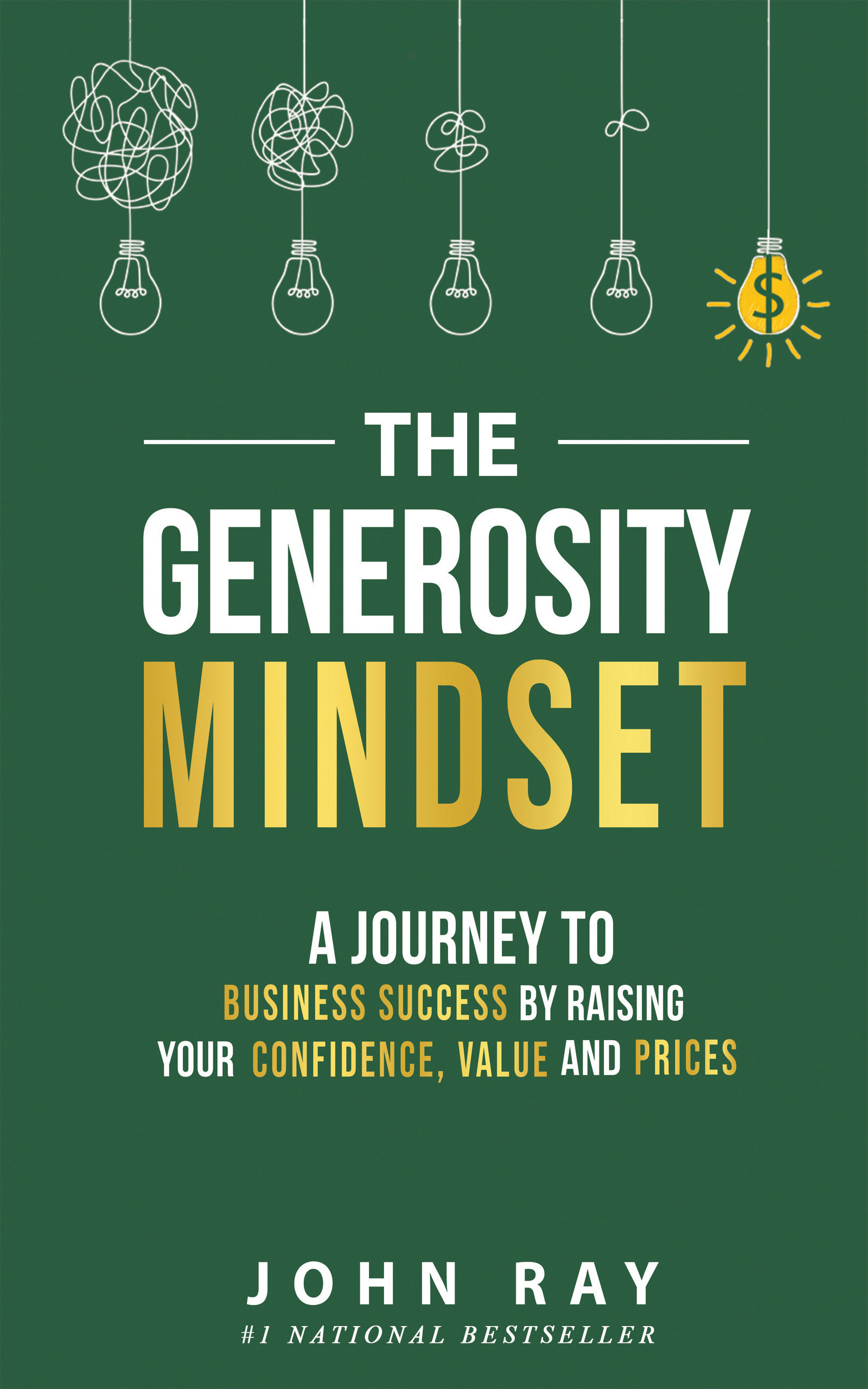
John Ray, The Generosity MindsetJohn Ray also operates his own business advisory practice. John’s services include advising solopreneurs and small professional services firms on their value, their positioning and business development, and their pricing. His clients are professionals who are selling their expertise, such as consultants, coaches, attorneys, CPAs, accountants, bookkeepers, marketing professionals, and other professional services practitioners.

John is the national bestselling author of The Generosity Mindset: A Journey to Business Success by Raising Your Confidence, Value, and Prices.

Tagged With: André Blythe, Author, career change, Christian Ministry, faith and business, John Ray, minister, North Fulton Business Radio

Embracing Accountability and Love: The ATL Approach to Media Leadership

June 3, 2025 by angishields

HVR-iHeartMedia-Feature
High Velocity Radio
Embracing Accountability and Love: The ATL Approach to Media Leadership
Loading
00:00 /
RSS Feed
Share
Link
Embed

Download file

In this episode of High Velocity Radio, Lee Kantor interviews Spencer Bynes, Atlanta Metro President of iHeartMedia. Spencer discusses iHeartMedia’s transformation from a traditional radio company to a dynamic media organization, including podcasts and live events. He shares leadership strategies for revitalizing struggling markets, emphasizing the importance of accountability, tenacity, and love in building a strong organizational culture. The conversation covers managing change, fostering innovation, and developing leadership in a fast-paced industry. Spencer offers practical advice on balancing risk-taking with accountability and highlights the need for patience and engagement during times of disruption.

Spencer-BynesSpencer Bynes is the Metro President of a six-station cluster in Atlanta, Georgia, for iHeartMedia, the nation’s leading audio company. As the first Black Metro President appointed in Atlanta, Bynes oversees all programming, marketing and operations efforts, while developing and managing key partnerships across the company’s platforms.

With more than 25 years of experience as an entrepreneur, business developer, leader and executive coach, Bynes has thrived in diverse industries, including Oil & Gas, Healthcare, Broadcast Media, Consumer Package Goods, Nonprofit, Fine Arts and Entertainment, Higher Education, Construction and Industrial Services. His proven track record of generating revenue, driving performance and leading successful sales organizations showcases his exceptional business acumen.

Previously, Bynes served as iHeartMedia Texas Area President from 2021 to 2023, where he drove revenue growth and delivered the highest sustainable profit margins for five community markets. His leadership in Beaumont, Texas, earned the team the Community Market of the Year award in 2022 for the highest year-over-year revenue growth.

Bynes’s journey also includes roles as Director of Talent Management and Talent Acquisition at iHeartMedia and Talent Acquisition Manager for Coca-Cola North America. His entrepreneurial spirit led him to establish Accendo International, recognized as one of the “Fastest Growing Women-Owned Businesses” by the Houston Business Journal in 2012 and 2013. iHeartMedia-logp

Living in Atlanta, Bynes immerses himself in community engagements and enjoys golfing, one of his true passions. He feels incredibly fortunate for the opportunities he has been given and is dedicated to leaving a legacy of success for the next generation of iHeartMedia leaders. Bynes’s story is one of growth, development and unwavering commitment to excellence.

Connect with Spencer on LinkedIn.

Episode Highlights

  • Evolution of iHeartMedia from a traditional radio company to a comprehensive media organization.
  • Spencer Bynes’s vision for enhancing iHeartMedia’s presence in the Atlanta market.
  • Importance of leadership in turning around struggling organizations.
  • Role of organizational culture in employee engagement and performance.
  • Strategies for managing culture during times of disruption in the media industry.
  • Emphasis on accountability, tenacity, and love (ATL) as core values.
  • Balancing innovation and risk-taking within an entrepreneurial mindset.
  • The significance of leading by context rather than consensus.
  • Need for patience in leadership development amidst rapid industry changes.
  • Encouragement of collective intelligence and collaboration in problem-solving.

Transcript-iconThis transcript is machine transcribed by Sonix.
 

TRANSCRIPT

Intro: Broadcasting live from the Business RadioX studios in Atlanta, Georgia. It’s time for High Velocity Radio.

Lee Kantor: Lee Kantor here. Another episode of High Velocity Radio, and this is going to be a good one. Today on the show we have Spencer Bynes. He is the Atlanta metro president for iHeartMedia. Welcome, Spencer.

Spencer Bynes: Thank you. Lee, it’s a pleasure to be here.

Lee Kantor: Um, for folks who aren’t familiar, can you just give us, um, I called it iHeartRadio. That’s what back in the day, it was called for a while, but now it’s iHeartMedia. Can you talk about that? Uh, just kind of mission purpose and how you’re serving folks in Atlanta?

Spencer Bynes: Yeah. I mean, uh, for those who aren’t familiar with iHeartMedia, we are the number one audio company, uh, Atlanta today and say that with great pride, um, we reach about nine out of ten Americans every day. We are the number one podcast content provider on the globe as well. Uh, and now doing that internationally, um, we offer not only, you know, about 900 radio stations across the United States, but, uh, now are launching podcast hubs in APAC and Doha and Qatar in that area. And we, you know, of course, you’ve seen iHeart music festivals and country festivals. And so we’ve got lots of tentpole events, live events, um, all across the country as well, along with iHeart music, uh, Awards, podcast awards. So everything media, I think a lot of folks think of us as just a radio company, but we are a full fledged media organization.

Lee Kantor: So, um, before we got on the air, you mentioned that, uh, you’ve been working, um, in several different markets before you got to Atlanta. Can you talk about, um, what your plans are in Atlanta and, how you see this market evolving?

Spencer Bynes: Yeah. Um, my plans for Atlanta is, you know, iHeartMedia has never been a dominant, uh, cluster in this market. So certainly, I think my first and foremost goal is to help us get into the rightful position of of, uh, leading media in this in this marketplace. We’ve got a lot of competitors in the market. And within our company, uh, Atlanta has always been, uh, a struggling market. So my goal is to come here and help us consistently drive revenue, um, in a positive manner, drive performance in a in a positive manner. That’s that’s what I do. This is my second tour of duty, uh, with iHeart. I was here about 16, 18 years ago when it was Clear Channel Media and a totally different role. So I’m classed as a market fixer. Um, because of my background. And, um, I was running five markets in Texas before I got here and was able to turn those markets around. And we had a pretty phenomenal year last year in this market, um, and recognized some revenues that haven’t been seen in quite a while. And, uh, you know, when you look at Miller Kaplan in terms of digital revenue and total revenue overall, we were at the top of the market. So, um, we’re on we’re on plan, as they say, to do some of the things that we want to accomplish here in Atlanta.

Lee Kantor: So let’s talk about kind of what you’ve learned about turning around, uh, companies like this, what are some of the things and maybe you can share some leadership advice that you’ve gotten over the years. Um, how do you go about kind of turning around a situation? Um, obviously when you’re brought on, everything’s not Well, or else they probably wouldn’t be calling you. But for any organization that might be struggling or plateauing or maybe going negative, what are some of the things that you do right away? What is kind of your first 100 days look like when you’re taking on a new challenge?

Spencer Bynes: I love this question, Lee. Now you’re getting to the to the core of my DNA, and that’s that’s really helping people. I had a a consulting firm, um, when I, after I left, I clear channel the first time and, um, our, our tagline was you only better. Um, meaning that everyone has talent. It’s just up to leadership to identify that talent and then focus it in the right direction. So it’s a it’s a pretty easy template for me that I’ve seen work consistently. And it really has a foundation of three things people, process and product. And coming in and looking at those three buckets. And this works For any company. And I’m my background is executive coaching and leadership development. And so when I would come in, I’ve worked in pretty much every vertical you can think of, of coaching CEOs and senior level executives. And when you look at people, process and product, you come in. And those first I come into a market, the first 30 to 60 days, I interview everyone in the building, uh, from, uh, the janitorial staff all the way up to the senior executives in that market. And I ask them, you know, basic questions, typically three questions around who you know, what do you do for the company? How do you add value? Uh, and what, uh, can I, as a market president, do to help you achieve your goals? What’s so interesting to me is how do I add value is probably the toughest question for everyone to answer.

Spencer Bynes: I typically get answers around their job Um, description more so than how they add value and connecting the dots on. How does a company make money? How does the company value what I bring to the table? So it’s it’s always an interesting people think it’s a trick question, but once I get all of those those interviews done, I give everyone about 20 minutes of my time until I get through the whole list. I consolidate that information into some common themes, bring everybody back into a room, and share what I’ve learned from those conversations. And then we prioritize based on impact. Meaning, uh, I will from those conversations pretty quickly. Know, um, do I have challenges on the people side, on the product side? Um, or, you know, in that performance? So when you’re looking at people, product and process, um, if the processes are broken, uh, You can you can identify those quickly.

Spencer Bynes: And typically what I’ve seen is it’s a little bit of both of you have some outdated processes or uh, some poor communication around process that when you fix those, you immediately start to see a revenue shift. Um, it’s a little bit harder on the people side because people may be miscast in their role, um, or have outgrown the roles, outgrown them, or they haven’t been upskilled or trained or coached. Some of those things you can fix and some you can’t. And once you find those, those individuals and you and you either move them around in the organization and put them in a better space or you replace them, revenue starts to magically appear as well. But that’s the quick formula for that, and it takes some time. Uh, out of the six markets I’ve been in, uh, some move quickly and I see dramatic change, uh, because those problems have been there for a while and haven’t been changed. When we change them, it immediately impacts in a positive way. Some are a little bit deeper rooted in process, and it takes you a little bit of time to uncover those. But those those principles work no matter what industry you’re in.

Lee Kantor: Now, when you ask the question, how do you bring value? Is that doesn’t that speak to the culture of the organization? Because if they’re answering in a very this is my you know, this is what’s on my job description, that sounds like they have a very transactional view of what’s going on in the organization. But if they can answer more holistically, that sounds like the culture is healthier and that they understand kind of what their mission is and what they should be doing. How do you kind of fix culture, or is that something that, you know, by changing the people in the process, you fix the culture? Um, can you speak to that?

Spencer Bynes: Yeah. I think the answer, the short answer is it depends, Lee, because you may find that culture is super valuable. Um, and someone else may have a difference of opinion. I think it really depends on who you are, what role you play in the organization, and how much influence do you have if you’re one of the leaders in the organization, uh, that is responsible for a team, um, how you drive culture and influence culture matters a lot, but if you’re an individual contributor who doesn’t have a lot of influence, that it may it may be different. So I’ve learned over the years is to ask the question and then holistically step back to see what are the trends, because you can’t. And this is my opinion. I wouldn’t say that this is scientifically proven or anything, but I believe that you cannot manage Age people because they’re too diverse. They’re too unpredictable. What you can do is manage behavior because behavior is universal across, um, race, origin, you know, religion, all of those types of things, behavior, human behavior, you can pretty much predict to a certain degree based on circumstances. So as a leader, I think a lot of leaders fall into trying to manage people and not behaviors. And then as a leader, you need to basically give direction, remove obstacles, motivate, uh, and provide resources for people to do their jobs. If you can do those things consistently and keep it simple, the rest really falls into place. There’s a I think this is a Nick Saban, uh, saying, I don’t know, but I really like it is don’t focus on the success. Focus on the standards. If you continually raise your standards, success is inevitable. And so that’s that’s the type of culture that I try to to instill in those places that I’ve been given responsibility over. If I can get people to individually look at what their standards are day to day and them to raise their standards up incrementally over time, collectively it makes a huge difference.

Lee Kantor: So how do you manage the culture of an organization when they’re in an industry that is kind of chaotic and going through a disruption or going through, um, a lot of innovation that, um, especially in, in kind of older organizations where maybe the trust has eroded over time that they people have been made promises that haven’t been kept or, or it feels like they’re in an industry where they’re falling behind. Um, can you talk a little bit about how to manage that in in a time of disruption? Because there are so many organizations that are being disrupted, um, even in your industry where, uh, you all had to make a shift from radio to digital, um, but in other organizations where maybe AI is becoming more and more prevalent, uh, can you talk to how to handle that type of chaos?

Spencer Bynes: Yeah, and I love the question as well. Um, I think in in times of chaos, you got to find some way of, of. Finding common ground, uh, that everyone can, can rally around. Because change is always going to be the one thing that’s consistent. We are always going to experience that change. And, uh, this, this, this season of change has been probably more dramatic and unpredictable than what I’ve seen in many, many years is a very real example. Uh, and when my team hears this, this broadcast, they’re probably going to roll their eyes because I say it all the time is, um, ATL is a common term used in Atlanta, you know, welcome to the ATL. You’re in the ATL. And so I’m big on acronyms ATL is for for us here at iHeart is accountability tenacity and love. And that’s what we rally around. That is the price to get in to our organization. And it also is the standard to stay. And what I mean by accountability, tenacity and love, which helps you manage through the chaos, manage through the change is what can be a consistent rally cry for everyone is we thrive on accountability, meaning that we all are responsible for our part and doing our job. And we don’t mind, you know, receiving those messages centered around accountability, and we don’t mind holding others accountable to what they said they’re going to do.

Spencer Bynes: Um, we are tenacious, ferocious about being our best and being a successful in the task that we’ve been given. And then the third is, if you don’t love what you do, if you don’t love being here or love doing what you do, then why are you doing it? And so we try to find those people who don’t love it. And if the chaos is creating situations where you don’t love it as much because it’s too damn hard right now to do it or to too many obstacles, then go find something else. Life is way too short for you to to do something and spend so much time and energy in trying to reach goals. If you don’t love it, I’m the type of person that kind of runs toward the dumpster fire, and I love to problem solve. So Atlanta was a destination for me that provided those opportunities for for me to do those things. And ATL is something that is in my core belief system, and it helps me get out of bed every day and come to work. And I try to find people who have that same mentality. I try to identify ways to help them get there, and if they can’t get there, then we don’t, you know, we don’t want them to stay and we try to find ways to help them find a way out. Does that help?

Lee Kantor: Yeah. Um, it sounds like you spend a lot of your time in large organizations trying to create this kind of entrepreneurial mindset. When you’re doing that and you’re embracing innovation that you know, every entrepreneurial venture needs as kind of a kind of a guiding star. How do you balance that with accountability and, um, and not make people afraid to take risks knowing that some of the risks aren’t going to work? The odds are, you know, most of them aren’t going to work to some degree, but it’s a matter of iterating and learning and creating that growth mindset along with the entrepreneurial mindset and embracing that innovation just has failure or learnings attached to it, no matter how good you are at it.

Spencer Bynes: Hey, I probably will sound like a you know, I have all these sayings, uh, this is just stuff I picked up along the way. So and I mean these genuinely, um, when you think about innovation and creativity, I, I believe in leading, and someone has to take the hit for when you, when you don’t meet those goals. And so. So while I am the market uh, metro president for for Atlanta, leading is not my sole responsibility. Everyone plays a leadership role in this organization. And so while I don’t lead by consensus, I do lead by context. So I try to bring the brains brain trust together, all of us together to help problem solve and use, uh, the value of all of these different diverse minds and perspectives that we have, um, to get, uh, some contextual information around how do we how do we solve this problem of of getting more revenue or getting new customers back, uh, or in and getting customers that left back, all those types of problems that we deal with on a day to day basis. I try to use those to, to help us solve problems together. But at the same time, um, I have a mentality of, of we don’t lose, we learn. Uh, and that’s something I’ve picked up along the way, too. Don’t be afraid to lose if you’re if you’re not failing. Um, on certain things that you’ve never done before.

Spencer Bynes: Uh, you’re not trying hard enough. So there is, you know, there is a lot of failure. I was thinking about this this morning. Um, uh, I said, I’m going to coin this as a Spencer phrase, and I’m probably stealing it, and I just don’t remember where I got it from. But it’s like success is an island in the middle of the ocean of failure, right? It’s just a respite. Success is temporary. It it just is always fleeting. And so success is just a resting point for you to now increase your standard, you know, step out of your comfort zone, take more chances, and more than likely you’re going to fail along the way before you succeed. So that success just gives you an opportunity to catch your breath. For those that are driven to then go launch back out into the deep. And I really believe that I’m fanatical about that. And I, I encourage people, you know, get in and fail quickly. Don’t wallow in it. Don’t look behind you. You can’t win a race, you know, looking behind you. But get in there and take a chance. You know, when we’re doing we’re prospecting for new business. I was like, get in there. And you’re going to be told no more than you’re going to tell you. You’re told yes anyway. So get in and take the no. Learn from it and then come back and ask again.

Lee Kantor: Yeah. One of my favorite, um, quotes along that the, the line of what you’re saying is the obstacle is the way. There there is no path that has no obstacles. The obstacles are just part of the journey. So don’t take it personal. You’re going to have to find a way around it, over and under it, through it, whatever. But that’s just part of it. It’s not something that you can avoid.

Spencer Bynes: Yeah, I heard Steve Harvey say something one time that made me chuckle because he was like, you know, pain is part of the part of the journey. Quit tripping about the pain. You know pain is the way to. To the success. So don’t trip about the pain.

Lee Kantor: Right. That’s growth.

Spencer Bynes: I mean, yeah, embrace it.

Lee Kantor: That’s it. I mean, I 100% agree. Um, so what do you need more of? How can we help you?

Spencer Bynes: Wow. Nobody ever asked me that. Uh. Uh, what do I need more of? Um, it’s the one thing that I probably can’t get. And that’s that’s. I think it’s time. Um. I think you giving me an opportunity to express my my opinion on on this, because I think I have. I worked in media for about seven years and then left, and I worked in consumer packaged goods, and I worked in, in air services and oil and gas. And what I find in media is that, um, because of what you said, it being volatile and so much change and Gin and very, very dynamic. Um, we don’t tend to have a lot of patience when it comes to leadership development and growth. And, you know, there’s a difference between between change and transformation, because we see a lot of change in our industry almost, if not weekly, monthly, yearly, but every year, I mean, this industry is different. Um, the leadership is different. And if you’re not performing, uh, at a high level, you may not be given the chance to lose and then come back and win, um, because the pressures are so high. So I would say, you know, what I need is, is for more leaders to, to be committed to transformation. And that takes time. It takes commitment. It takes, um, you paying attention. It takes active listening, um, and and consistent, uh, focus on the people. Uh, so giving me a platform to at least share that I appreciate that.

Lee Kantor: Yeah. And I think it’s aiming higher, maybe at a different type of mission than you’re initially looking at what your impact can be.

Spencer Bynes: Well said.

Lee Kantor: Well, Spencer, thank you so much, uh, for sharing your story today. You’re doing such important work, and we appreciate you. If somebody wants to connect with you, what is the best way to do that? Or even learn more about iHeart, uh, media? Uh, where should they go?

Spencer Bynes: Well, absolutely. Go to iheartmedia.com, and you can learn about all of the different opportunities that we have, whether you’re on our career page or if you want to learn more about some of the different mediums we have within, uh, an assets that we have within the organization. Um, you can reach me at Spencer at Spencer or Spencer at iHeartMedia. Dot com is probably the best way to get Ahold of me. And again, Lee, I appreciate you’re doing great work. I think this is something that everyone needs. We don’t have enough opportunities to have conversations. And that’s the power of radio is having those, um, engaging conversations around some of the things that that impact us every day. So continue to do what you’re doing. I listened to some of your broadcasts, and I’ve gotten some insights from it just in preparing for this conversation. And, uh, you’re doing great work.

Lee Kantor: Well. Thank you. This is Lee Kantor. We’ll see you all next time on High Velocity Radio.


Tagged With: iHeartMedia

Nick Lopez with LIME Painting

June 2, 2025 by angishields

FMR-LIME-Painting-Feature
Denver Business Radio
Nick Lopez with LIME Painting
Loading
00:00 /
RSS Feed
Share
Link
Embed

Download file

LIME-Painting-logo

Nick-LopezNick Lopez is the Founder of LIME Painting, a premium home improvement franchise that’s redefining excellence in the painting industry.

A first-generation college graduate with a BS in Business Marketing from Michigan State University, Nick launched his first painting company at just 19 years old to pay for college. What began as a summer job quickly sparked a lifelong passion for craftsmanship and entrepreneurship.

Upon returning to Colorado, Nick founded LIME Painting in Denver, developing a game-changing model that connects top-tier professional painters with clients who value quality and integrity.

Today, Nick leads a fast-growing franchise network built on purpose, partnership, and performance.

Connect with Nick on LinkedIn.

Transcript-iconThis transcript is machine transcribed by Sonix.
 

TRANSCRIPT

Intro: Coming to you live from the Business RadioX studio. It’s Franchise Marketing Radio. Ready to revolutionize your franchise with AI? Franchise now empowers franchises with advanced AI solutions, automatic processes, and enhanced marketing strategies. From personalized customer interactions to predictive analytics, we help you harness AI to drive growth and efficiency. Transform your franchise with the power of AI. Visit Franchise Now to learn more and take your business into the future. Now here’s your host.

Rob Gandley: Welcome back, everybody, to another episode of Franchise Marketing Radio where we spotlight the trailblazers transforming the franchise landscape. I’m your host, Rob Ganley, and today we’re diving into a conversation that’s all about Craftsmanship, credibility and category disruption. Our guest is someone who’s redefining what painting means in the world of franchising. He is the founder and CEO of a premium brand that serves the top 1% of homes, blending artistry, professionalism and a scalable business model to deliver results that speak for themselves. Please welcome Nick Lopez, founder of LIME Painting. Welcome to the show.

Nick Lopez: All right. Thanks for having me.

Rob Gandley: It’s great to have you. And, you know, the audience might not know, but I. I know you pretty well. We’ve known each other for a number of years. I wasn’t around when you launched things. So it’s amazing to see where things have gone and many of your assumptions and your, I’ll say, your gut feel as an early entrepreneur were, I think, proving themselves to be correct. And the way you position in the markets, we’re going to break that down. But let’s just start with the beginning. Let’s talk about the origin of all this. How did you wind up creating this brand? And tell us a little bit about how it all merged.

Nick Lopez: Ah, thank you for saying all that, Rob. And it was fun, uh, working with you. Really, as we were emerging, uh, we hadn’t quite yet awarded a territory. And, yeah, we we, uh, did quite a bit of projects and developed a friendship. Most certainly. And so I, you know, when you mentioned seeing the evolution of the brand and, uh, you know, some of the, the vision, you know, that coming into fruition and, and seeing that all play out. But my goodness. Yeah. My story starts in college. I am from Denver, but I was out of state student first generation and, uh, had maxed out a $500 credit card just to get my flight out to East Lansing. I went there and wrestled my freshman year. I was a preferred walk on, and my, uh, hope was that I would get a scholarship and that would pay my way through school. The reality was that I didn’t get a scholarship my freshman year, and I maxed out all my credit cards. So I started a painting company, uh, called Spartan College Painters. I know, real creative. Being a Spartan going to Michigan State and I, you know, I looked at the bigger the home, the bigger the college bills. It would help me pay. And that was really my logic. And it was, you know, it was 2008, middle of the Great Recession. Keep in mind this is Michigan, the auto industry. And so it was certainly an interesting Time. You know, I’m 18. I clearly very little experience or really none.

Nick Lopez: And I folks trusted me and allowed me to paint their home, thankfully. And you know, there’s nominal barriers to entry. I quickly learned and so I kept hearing customers say things like, hey, Nick, thanks for showing up. Thanks for answering your phone. Thanks for doing a good job. And on the back end, you know, they they, uh, just, uh, gave me very basic compliments. And as an 18 year old, you just love those compliments. They keep you going. And I that built, uh, on itself. And I eventually got into my business degree where I was sitting in a marketing class and my professor was talking about positioning. And I just thought about my experience. And, uh, he talked about two accesses, one being price, one being quality. If you’re high price, high quality, that’s your lane. That’s where you stay. There is a difference between a Toyota Camry and a Mercedes-Benz, right? And, uh, it’s really the positioning in the auto industry. It’s an easy one to relate it to. And, uh, painting is no different. But in my experience, you know, I looked at the compliments I was getting, the nominal experience, uh, early on, obviously, that, uh, changed over time, but, um, that, uh, was, uh, clearly a gap there. And, uh, even though I was inexperienced, I did due diligence. Painting is not rocket science. I put my best foot forward. I cared about people. I served them well. I did what I said I was going to do, and fundamentally that was already a competitive advantage.

Nick Lopez: And, you know, you know, and I’m in my business classes learning about just that competitive advantage. So I got curious about national companies that were focused on that sector. And I couldn’t find any. And so I talked to a mentor of mine and he said, Nick, you have to read this book. Uh e-myth Revisited by Michael Gerber. And that’s where I learned about franchising and specifically being in business for yourself, but not by yourself. That was a model that I just loved. I, I grew up an athlete. I loved the locker room aspect. And uh, for me, franchising put it all together. And that was back in 2010 where I really committed to franchising. Uh, moved home to Denver in 2013 and launched lion painting. So ran a Spartan College. Painters eventually worked with other folks across Michigan from different universities to run, you know, their, um, kind of sector within Michigan. But, uh, moved home and, and launched lime and really spent those first four years proving out the unit economics and, uh, really leveling up the business and, you know, proving it out, uh, and, uh, getting it ready to scale. And then I joined the IFA, and I joined the franchise hub, where I met you, and I went through an incubation phase of preparing to scale over a couple of years. Such a fun time and, uh, such an important period in our brand. And what has created high, you know, so much opportunity for folks that for me was, uh, something that I had recognized in college and wanted to solve that problem in the market and deliver value to an underserved market that likes to pay more, to get more.

Nick Lopez: They don’t like to overpay, but they care about quality. And clearly, home improvement could benefit from being leveled up. I in terms of having a luxury sector. I again Mercedes-Benz you can think Uber black. Um, and uh, yeah, we really started scaling in Q4 of 2020 and uh, reached the century mark. Uh, we’re working on uh, 200 locations currently. Uh, we’re we’re a high growth company. Uh, we want to do it in a diligent manner and to do it in a collaborative manner and to do it in a genuine manner that sets us up to collaborate with our partners and deliver a service in the market that it has shown across our states that we’re open in that the value that I seen in Michigan and in Denver, you know, it’s translated to so many territories and, uh, frankly, to, uh, so many, uh, awesome people’s lives. And that’s been the the best part is seeing the way that it, uh, not only changed my life, but, uh, has changed, uh, so many different, uh, folks lives across different parts of the country. And that that, for me, is why I got into franchising to make a difference, to do good. And, uh, so that’s what we’re doing. We’re making history by defining the luxury sector in the home services space.

Rob Gandley: You said so many good things in that in that answer. One of the things that I just had in my head was the and I know you’re a wrestler, right? So you’re like, I kind of like that locker room. And I’m thinking that’s exactly what a franchisee is like. It is like you, but you got to be a wrestler, though, because it’s a little different. You’re the only one out on the mat. And so, you know, in a way you’re the franchisee is yes. They got everybody around them to support them. But they got to show up and and execute, you know, the plan. But I thought that was a great analogy. If you were to pick a sport, I think that’s one of the best sports to pick. Um, but really cool. Um, but yeah, no, I mean, I know it’s it’s been, uh, it’s funny you said, uh, yeah, they liked me because I showed up and I answered my phone and I did a good job. Um, you took that to a true premium brand, right? Just doing what’s expected, which should be expected. And I understand in the home services business it’s not always the case with certain independent people. But but still then you took it further, right? You took it into line painting, which is a premium brand. I wanted to ask you about the branding, right. Because you had line painting when we met. Like you had that pretty well vetted. You had the logo. I always just remember feeling that’s how it felt to me like this. These guys are about premium. Tell me a little bit about how you’ve maintained that. How did you grow that? So in other words, I feel like the brand was there and you kind of just fit this big network into it, right? But how have you kept that going over these last several years and making sure that that is reflected in what you build.

Nick Lopez: Right. It’s hard to not stray away from the, the, the lime way. Right? But what’s made us great serving our sector, we’re really good at serving our clients. And it’s simple. We’re the friendly neighborhood painter that’s an expert, and we’re values driven. So Get Lined is a slogan that we live by at lime. It’s something that all of our owners, uh, frankly, anybody within our organization, uh, agrees to do business in that posture. Uh, you know, it stands for gratitude, enthusiasm, tenacity, love, integrity, mission excellence and discipline. Uh, you mentioned the wrestling. And, you know, that’s probably the grit that you’re speaking to. And, you know, being in a in a service based company, it’s not a sexy company, uh, per se. It’s not a cool company, per se. But, um, yeah, it is an old school contracting company. We’re a blue collar company, but we’re certainly bringing white collar sophistication and, um, really leveling up the customer experience. And, uh, that’s what we that’s how we look at it, you know, just serving our customers and bringing more value. It’s crazy to think that I’ve been doing this now, serving this customer base for just about two decades. Uh, and so we’re just continuing to level up and, uh, within a franchise organization that’s the incredible, um, benefit of a franchise, the collaboration that happens across, um, so many different regions and there’s so many skills and experience. And, uh, so if we can unite behind our process and double down there, uh, now we can leverage all of the ownership talent across the franchise. But it’s a commitment to serving each other in a posture that is collaborative and united on the customer versus, you know.

Nick Lopez: You know, hey, I’m right, you’re right. Uh, my idea, your idea within a franchise organization or frankly, any really, um, but specifically a franchise where there’s shared ownership and there’s, uh, franchise partners and, uh, it’s just a unique model. And so you really have to be intentional about, um, you know, having a healthy, collaborative approach, but also having the systems and the infrastructure to have the feedback and then to implement it. Um, and, but, but that’s the the power of a franchise. Um, you know, our job as a franchisor is to go wide, award as many, uh, territories to qualified partners. And our partners, their job is to be number one, to be the the best friendly neighborhood painter. That’s an expert. And, uh, for us, that’s in a sector that has been highly fragmented. You know, a lot of ma and pa inconsistent experiences for the customer. And so by us uniting behind the lime Way and doubling down on our resources, and you see the power behind a national organization, you know, versus a solo, um, company. And, uh, that’s what’s really given us the success that we have. It’s our franchise partners and, uh, their alignment with our vision and what we’re doing here at lime. And so, you know, our job is to find as many folks that are passionate about that and and being just that, uh, the best friendly neighborhood painter that’s an expert for our luxury sector.

Rob Gandley: Yeah. Very cool. So that. But everything you’re saying sounds easy. Like the way you’re explaining. Oh, yeah. That’s it. But I, I know, like, in the beginning and you’re the leader, you know, you got your team around you. Which the franchisor side. Right. The home office. And then you’ve got the network. Right. And it did build up over time. But um, you, you know and I know you and I know you, you are a person of integrity. Right. And that is going to always be more important than any material gain. Right? For, for you. You have to have both. So I know that your standard is high. So just in terms of helping the team around you adopt that and that being down then downstream to the franchisee. So they then embody that. How do you do that? Is there something you can share that you kind of learned? Because I’m sure you didn’t have all the answers in the beginning, but is there something you’ve used to kind of help others lead the way you lead? Is there something that you know works well to make that happen.

Nick Lopez: Yeah. Our our owners get stuff done, right. Their leaders, their, you know, um, and you know, they’re going to come in and execute and operate and execute on the playbook. Um, which is not easy to your point, right. It takes intentional effort to be a business owner and to be a successful business owner, of course. But up front, there has to be alignment around, hey, you’re passionate and committed to being the best friendly neighborhood painter that’s an expert, and you’re aligned behind these values because if so, you can plug into our training. You can go through our onboarding. We have an entire business growth blueprint, uh, you know, which is all, uh, complemented by certifications and, uh, you name it. But that is the line weight. That is a franchise where you have access to training and support, mastermind groups, collaboration forums, uh, you know, a board of advisors working on the vision, a leadership group, a support team that is committed to, uh, everything that goes into running a national company. But even at home office. Right. I just talked about our franchise partners. But even home office there is alignment around, uh, that commitment to supporting our franchise partners in, uh, doing just that, going through our playbook and becoming a, a business owner within our, uh, empire model, within our growth platform.

Rob Gandley: Yeah, yeah. Now that’s, um, uh, like I said, getting rallying the troops under one common thought process is, much more difficult than it sounds, but it’s so important. And like, if I talk to other people, I know they’re going to say a lot of the same things you’re saying, which is the point. It’s like, but getting that done, I can always tell when when a culture is like that and people really embody the whole point right, of the brand. And I love that. So thank you. Thank you for sharing that. And I know that’s come and it’s still something you work on. You got to keep working on it.

Nick Lopez: But always always being humbled Rob every day. My gosh. Yep.

Rob Gandley: Absolutely absolutely right. Which which makes it fun right. We’re we’re both we both love franchising and and love what it offers. And it’s a it’s a continual process of learning. Uh, but it’s about people and relationships, which ultimately I believe is really why we’re all here. I mean, beyond that, uh, it’s kind of what are we doing? But it’s those relationships. And I think franchising is is amazing because it offers so many unique relationships and very gratifying ones. So you had mentioned that earlier where, um, you know, you’re seeing now some people, you know, not only have you have a big network, but you’ve got people now running these businesses for a while. They are the number one person in their market. They’re the people think painting. They they think of a lime van or the logo. And by the way, I just think it’s such a fresh brand. I always felt that it hasn’t. He said it wasn’t very sexy. And you’re right. I mean, home services really aren’t, but man, you made it about as sexy as you can make it. I don’t think anyone made there’s not as sexy or painting brand right than lime painting. So congrats on that idea. Um, but anyway. All right, so let’s keep going. Uh, let’s break down a little bit. How has. And I know you and I both share this passion, but we both like technology, right? And I know that we like to use technology where it can make the difference. Right, with those relationships with our customers making an impact. So tell me a little bit more how you’re how you’re managing things through this technological Change that. We’re all going through that at a level that’s really beyond anything we’ve seen, and it’s been going on since the day you were in business, really. You know, it’s always been a factor. But tell me a little bit more about how you’re leading. I guess start with is basic is how do you even figure out what to focus on, like because there’s probably a ton of stuff coming at you all the time. So how do you zero in on the things that matter.

Nick Lopez: Right? Yeah. You have to figure out what matters, what your strengths are, and then do everything you can to delegate to folks that can do it better. And that takes time, of course. Um, but I yeah, that’s that’s a big part of it. Certainly. Yeah.

Rob Gandley: So in terms of, in terms of like if you are evaluating like technologies or whether or not I mean, I’m sure franchisees have ideas. And you talked about interacting with them and like you said, very smart people, like they come from places that you’re like, whoa, like that background, right? I used to be a rocket scientist. Now I decided to have a line painting or something. But, I mean, there’s always very unique people and they’re very, very accomplished in many ways. And so you can learn a lot. So like, you know, how do you deal with anybody, like when you hear, hey, there’s this cool whizzbang thing I saw or this other company I know, does this thing like, how do you assess, how do you know? Alright, that’s worth time. No, that’s not worth time. And while still keeping that encouragement of hey, let’s collaborate. Like how do you balance that?

Nick Lopez: Right. If it if it doesn’t make you excited and and it’s draining you, you shouldn’t be doing it right. That’s what you should be delegating. And so that’s a good check uh, for I think the most recent one. Eventually I got to a point with my inbox where I just realized that it, uh, there were other things that I should be focused on, and so just systematizing and delegating something like that frees up so much mental bandwidth and that, you know, being the visionary at lime. We work off of iOS and you know, we implemented it back in 2020. And so, you know, our integrator, um, myself, you know, we’re um, you know, doubling down on our, uh, strengths. And for me, that strategy and vision. So you talk about technology. I just love using AI as a filter and an enhancer for architecting our vision, our strategy. Uh, and, yeah, that’s been such a, uh. Really? Gasoline? It’s a propeller for how? What we’re doing. And so that’s been a way that I’ve implemented technology and have leveled up personally.

Rob Gandley: Yeah. So, uh. And what you said was very profound. I, I, you know, it’s something I find myself and I kind of I’m in the, I, you know, transformation big picture stuff, right? I, you know, it’s a little bit of everything, but it’s a lot to do with mindset right now, people understanding how to leverage it. And one of the things you just mentioned was the strategy and the vision and the, you know, sort of architecting and brainstorming and, and really shortcutting the process of the thinking. Right? Because guys like you and I, we’ll be thinking a lot. We’re creative. We have ideas. Right? It’s always flowing. It’s hard to shut it off. In fact, one time Elon Musk was interviewed and he’s like, I don’t think anyone wants to be me because, like, you wouldn’t want to be in my head. He said a comment like that because it was just constant storm of information. Like he just to kind of zero in. Right. But it is it’s an issue. But that’s the thing is that I in many ways I think will simplify technology. It’ll remove the noise if you so use tech to simplify tech. Right in a sense. So it kind of helps you make those decisions a little quicker, see it a little clearer, right? Why am I putting energy into that? I really should just focus on this or no, we’re good where we are and maybe we level up or whatever it is, but it gets you get to that clarity really quick. So I think that’s a really good piece of advice is like, go there, brainstorm with it, interact.

Rob Gandley: And it just helps you think clearer in a faster way. So I thought that was that was important. But I think a lot of people don’t do it yet. And I think that’s a disadvantage, especially for leaders like yourself. Um, so that’s that’s really cool to hear. So with, with all this, you know, going on. Right. There’s still just this evolution of people. Right? So like our buying patterns, the way we assess working with people, you know, in the consumer world it’s evolving. Right? I mean, you know, if you look at these big platforms like Amazon that has changed our our habits, our expectations of how we, you know, evaluate quality and all these things or what we want, how Now. How is the home services business evolving over these years? I know you’ve been in it for almost two decades, and you know, what would you say is something you can point to that is maybe measurably different? I know a lot of the same things, right? But you know, what is sort of evolving and what do you have your eye on in terms of just being ready for that? Like, you know, how does the buyer buy? Like, are they buying a little differently? Are they expecting a little differently? You know what I mean. Like how do you see things evolving, especially with things like AI and which makes the consumer even smarter now, right. They can even get to information even better. Right. So but anyway, what are your thoughts on that?

Nick Lopez: Oh, that’s an easy one. It’s it’s definitely been technology. Just seeing the way that technology has propelled the industry. It’s been awesome. And what has been innovative over many iterations for us across our tech stack. Uh, you know, the industry, uh, We’re constantly having to iterate is my point, because technology is ever changing and making things simpler and easier, more efficient. And and so for us, we’re always trying to get the edge by implementing the latest, greatest. And if it works for us, we double down on it. If it doesn’t, you know, we double down on what has and we’re on to the next. But technology is an amplifier and it certainly propelled our growth. And I’ve watched it, uh, really level the playing ground and give so much more value to customers, which is what it’s all about. Improving the customer experience and technology has played a big part of helping the blue collar space become a little bit more, uh, professionalized and that that white collar sophistication that that makes a customer experience that much more, uh, you know, they they have that much more peace of mind.

Rob Gandley: Yeah. And you know, what you were saying earlier is like, you’re very simple about it, but it was like, yeah, they they thanked me for calling, answering the phone and showing up on time. But you know what? Running a business like this is hard. It’s not always easy to balance all those things if you don’t have the systems, processes and technology to do it. So in a very fundamental level, it’s what enables that consistency. Right? Where you know that that that guy’s on time, he does good work. You know, he answers my questions. I it’s all those basic things. And then above that is the delight right. It’s the this is when people leave the great reviews and refer you to people. And so it becomes your quality becomes your part of your marketing. Right. So I wanted to talk a little bit about marketing just to, you know, we don’t have to go into I know there’s so much you could cover, but like just in a very simple way. What would you say is your core marketing model? And I know that you had when we worked together originally. I know there were some key things, some simple, straightforward approaches. And I’m just wondering like what is like sort of the simple version of the short answer of what does that franchisee need to focus on his first year when it comes to sales and marketing? How do you approach that, that line?

Nick Lopez: Yeah. You know, from a tech perspective, it’s automation, right? Automation that complements our, uh, you know, proven, uh, lead acquisition strategies.

Rob Gandley: Got it, got it. And, you know, I remember. So you talk about automation, you know, is it still like a big focus. And I know other home services brands. And I talked to different brands like this, but a lot of it has to do with the community you’re in. Right. So like you’re you’re in a community that you can either go into it. And I know a lot of times door knocking or leaving, leaving things on doorknobs or those types of interactions with the community, right. With the people, uh, kind of become the mayor, right. But then once you do get that first client in that neighborhood, well, that becomes an advertisement in a sense, right? I would assume. And so then the quality and what they’re saying about you and their experience is being shared. Now, that kind of multiplies throughout the the sphere there, that that local sphere, is that a big part of what you guys focus on is, is just ensuring that you’re you’re doing like once you get that deal, make sure you’re doing amazing job because the neighbors are right nearby. And hopefully you get three, four, five in every neighborhood or whatever it looks like. But like, tell me, is that a big focus of of the model?

Nick Lopez: Right. We we certainly want to compound uh, that is important. Doing a good job providing value customers uh, refer and recommend. And, uh, when we’re the friendly neighborhood painter that’s an expert. We do a great job at that. Uh, everything takes care of itself. And, uh, the number one indicator of growing a big business is referral and repeat business. And you’re not always in year one getting your first customers. The great thing is you’re in the market for ten plus years, and you’ll come to serve clients in the same neighborhoods, and you will be that friendly neighborhood painter.

Rob Gandley: And so with your model, I know it’s a lot to do with the esthetic beauty, because the homes you you paint are beautiful, right? Um, and so that’s a great look, much like a restaurant. You know, they have the beautiful food they can show pictures of. And I know you guys have a lot of great content around the work you do. Um, so I know that’s probably part of it. Um, so I guess, I guess the thought is, um, you know, beyond And the the actual doing the work right and doing a good job. Therefore it’s sort of a the the poster for the local area there. But but what have you found outside of that that, you know, I don’t know more more pointing towards digital. Right. Just to kind of understand like is there something that works well for a business model like this that’s related to digital? Right. Is it more social media? Is it more search related stuff? I’m sure there’s certain things you you believe you need to have foundationally, what does that look like. And and how do you guide and direct your franchisees.

Nick Lopez: Right. Um, this is exciting for us at lime. We’ve been, um, such a, um, a an in the market, uh, company. And, uh, now that we’ve grown and reached our franchise owner base, uh, that we’re currently at, and know, we’ve implemented our brand fund and so everybody pays 2% into the brand fund. And that allows us to develop, um, more proven lead acquisition strategies that, you know, just provide more leads, more appointments, uh, for our franchise partners, uh, our Franchise Advisory Council has been critical in designing that and making sure that it’s what our franchise partners want, uh, as well as just our strategy for the company and the department. I know we talked about EOS, uh, and, and so that that’s been a big, uh, level up for us, uh, in, uh, really building out, uh, more social media, uh, support on the local level, uh, as well as SEO, because those are really the two best digital, uh areas. Although they’re very expensive, they’re very competitive. When you want to continue to grow on the unit level, at least for us, you know, now, you know, we’ve implemented our brand fund and that’s going to do just that, take our brand to the next level. Uh, we we have a very experienced board of advisors that have helped us, uh, to implement it at a world class level. Our franchise partners are are really excited about it. And at the end of the day, it’s about improving the customer experience in, in, uh, communicating how we can deliver that value, uh, on a unit level. And so the fact that we are where we are without such a simple part of I’m a, I’m a marketing major. So, uh, for me, though, you know, being founder and bootstrapped and, uh, being really good at our acquisition strategies, we’ve really just focused on scaling that core part of our business. And, uh, now we’re we’re going to become monsters with marketing as well.

Rob Gandley: Yeah, yeah. No, you need the momentum. You need the the network, you know, and and what you just said simplifies a very complicated landscape. I mean, you know, like you said earlier, your inbox becomes ridiculous with all these places you supposedly can advertise better, right? Get higher quality leads or what have you. But there is a need to innovate. There’s a need to test, there’s a need to pilot, and you can’t not do it. And part of the Home office, uh, almost any brand would say is to try to, you know, prove those things out. And if they start to work at a small level, then you can roll them out at a larger level. But, you know, as a small business owner, forget it. Trying to keep up just with new Google strategies. Just just Google ads. It’s just that, right? It would be overwhelming. Too many things to talk about. So it’s great to have the brand to be able to do that. And it sounds very positive because you just need to be able to test and prove things out and then do it and do it at a large level. So that’s that’s tremendous. Um, yeah.

Nick Lopez: Do it and do it in collaboration. Rob. Do it. Do it in collaboration. That that’s key. You know, I love coming on these shows and sharing all these tips and tricks. Uh, I know the vast majority of folks won’t implement, um, but the ones that will I know it’ll improve our, our, um, our space. And the better that our space gets. Uh, that’s just good for everybody. Uh, franchising is does so many wonderful things. And so I always love sharing, uh, best practices in all my best practices have come from lessons learned, tons of mentors that that have their own lessons learned. And I love to learn from those ones and not the personal ones. But if I can share some learnings, uh, that that is, uh, certainly, uh, a high priority for me. And if I could do it in collaboration with you, that’s even better.

Rob Gandley: Yeah. No doubt. No doubt. I mean, one great tip I got from a previous guest was he thought that the marketing teams at brands should collaborate more. Like they should as a as an industry, right? We should all like how can we help each other? Because franchising in general, uh, is great for communities. It’s great for people. Right? And I just yeah, it’s like like you said, I mean, you know, the local franchisee, his job is to be, you know, the number one person, the guy, the person people think of. But there’s a huge network, almost a family of people that they interact with that, that they make a difference to. And so all of this kind of funnels in again, it’s about relationships, right? Yes. We’re providing painting another person’s providing restaurants and other persons providing children’s care and so forth. Right? All important, but they’re all local community based things that we all. So anyway, that’s why I love franchising and I appreciate it. So to kind of piggyback on what you just said, I know. So you have a book, right? And you talk about leadership a lot. Is there any, you know, just for guys like you? I mean, you’ve now done something that’s very hard to do in franchising or in any business, right? We all we know the stats of like the failure rates of things and all that. So you’ve gotten to this place where you can look back and say, yeah, I’ve learned from others, but I’ve also learned from good old Nick teaching Nick, you know, some new lessons. So, like, what would you share with other leaders like you or even, like you said, other, maybe other companies in home services that really have it on their heart to do a franchise? What would be the advice you might share as a leader?

Nick Lopez: Oh, wow. I would share, Make sure that you have done your due diligence on what it means to be a franchisor versus, you know, whatever it is that you do could be health and wellness, fitness, home services. When you start to scale and go into franchising, you hear it all the time. It’s a totally different business. Uh, and so that should be taken with the utmost diligence. And, and, you know, you definitely want to prepare to put your best foot forward. You or your group and partners, however you’re going about it for me, just solo founder led. But, um, my gosh, it’s been an obsession. Uh, I don’t think I took a Saturday off in my 20s. Uh, you met me in that time period. I started franchising. I was 29 when we started scaling. But I met you right before that and I, you know, all the way back to 2018, I was probably, uh, I don’t know how many over a decade into this franchise vision to scale and deliver value to, to our client base. And, uh, that is a, a great responsibility. And so when you go into a franchise partnership, uh, it is the most powerful growth model, uh, in the world, really. And but it has to be done in alignment, uh, through values, skill set and, and, uh, really thorough expectations.

Nick Lopez: Uh, and look, you’re not going to be perfect. Your first ten franchise, uh, partners. Right. But your partners know that. And you work in collaboration and you work in collaboration with your partners over different phases. And so that’s a great responsibility not only to our customer, but to our franchise partners, their employees, the home office, uh, we impact a lot of people in a lot of communities. And that’s why franchising is so collaborative in nature. Right? The industry within an organization. It’s rooted in collaboration. And, uh, you know, the franchise relations piece, vendor relations, uh, industry relations. It’s it’s a it’s a great space to be in. And, uh, it’s only getting started in so many ways. It’s it really, uh, is a transformative, uh, growth vehicle to do good in communities and to improve the customer experience. And with AI and automation, it’s only going to be it’s only going to accelerate, uh, the value that franchising brings to communities. Uh, marketing’s going through so many different awesome changes. I feel like us implementing our brand fund and doubling down on marketing, it’s so it’s so plug and play these days. Uh, it’s a it’s really a great time to be in franchising. To be in business.

Rob Gandley: Yeah I love it. Yeah. It is the it is like the resistance. Like the things that would slow your idea flow down and your ability to take action and see things work or not work. It’s much easier with AI, right? It has made life a bit easier, especially for, uh, the marketing side of things. Just all the content and all the different things you’re trying to get done. And yeah, it just it does break those barriers down. So it’s going to be fun. I’m going to enjoy it too. So we’re going to be we’re going to be learning from each other. I can’t yeah. Can’t wait. But so, um, you know, you talk about.

Nick Lopez: You talk about where I spend my time. Rob. That’s where I spend it nowadays. Try to protect as much of my time and focus on technology and marketing.

Rob Gandley: Yeah, I love that. That’s my passion right there. The the tech shaped marketer. I’ve always been that guy. They didn’t have that name back in, you know, 2000. But it was this weird blend of having some technical skill and loving marketing and sales. So but then I learned franchising and then put it all together and I’m enjoying my life, so it’s been great.

Nick Lopez: But yeah.

Rob Gandley: But I tell you, you you you made a comment. I said, you’re in good company because another guy made a comment like that and he’s very well known guy named Bill gates. And he said, he goes, I don’t think I took a weekend off my first ten years. So you’re right in there, man. That’s hey, there’s the there’s the key. Just don’t work. Don’t take off for ten years. There you go. Right. But it takes passion. It takes commitment and conviction. And you had that. And so, you know, it’s not really work when you’re when you’re just being who you’ve been called to be. So that’s good. Um, so looking ahead and as we wrap up, I want to make sure you have a minute just to share with the audience just a little bit more about where you see the brand going and where you’re expanding. And if there’s priorities in the country where you’re really focused on. But tell me a little bit more about some of your vision and future here over the next, say, five years. How does that look for us?

Nick Lopez: We’re so obsessed right now about unit level economics, uh, franchise owner profitability, uh, that that’s an obsession for us and, uh, being the best in market, uh, location by location. And, uh, the more we focus on those two things, you know, everything takes care of itself. So in terms of long term, you know, I don’t really. I feel like things change so rapidly, especially these days. How we just we just try to max out what we can in about 6 to 12 month periods. And, uh, we might do a little bit of two year, three year. But again, so much changes, especially being in a high growth company. Uh, it’s always evolving. Um, so yeah, for us it’s just about being, uh, the best friendly neighborhood painter market by market and driving as much profitability, um, to our customer or, excuse me, to our franchise partners. Uh, like you said earlier, easier said than done. Uh, but, uh, we have, uh, so much traction and momentum in those areas. And the more we just consistently apply focus there, the more we collaborate. Rate I. You know, we we walk into what we’re being intentional about. So yeah, as a company we’re focused on being the number one market by market and uh, improving profitability.

Rob Gandley: You know, and the great thing is you’re right a lot. I love that answer, by the way, Nick, I mean, it’s a guy that knows you’re right. You can’t plan five years out anymore. It’d be kind of not wouldn’t make sense to. Right. There’s just so much on the horizon. Um, but I love what you said because it’s. It is the things. There’s things that will never change. And things like unit level economics. Right. Profitability, which is translate happy franchisees, happy communities, happy customers. Right. That is that’s not going to change how you do that might change, but that’s not going to change, which is good. So you stay focused on that part. And uh, that that is the that is the key. So I appreciate you, man. I appreciate you being on the show today. Uh, before I do let you go, do you want to share the website or just any way that if someone’s inspired to maybe get involved with lime, uh, and maybe start their own territory, what have you, can you share a little more information with the audience?

Nick Lopez: Absolutely. And and thanks for having me on. I was really looking forward to, uh, this show, but, uh, you can check out my show. It’s called the Level Up with Nick Lopez Show. You can find it on any podcast platform. Uh, I have the pleasure of talking to thought leaders in business, franchising, high performance personal development. I talk to a lot of franchise partners, uh, a lot of franchising discussions. Thought leaders. Uh, definitely recommend checking it out. Obviously, I’m a little biased. Uh, but, yeah, you can find me there. Linkedin. I’m constantly putting stuff up there. So if you you want to follow me directly, uh, you can check out my LinkedIn page as well.

Rob Gandley: Yes, sir. And it’s lime painting, right. Is that. And then lime painting franchise com I believe is the two domains. Am I right? Yeah.

Nick Lopez: Yeah. Oh, yeah.

Rob Gandley: Beautiful. So as I said, guys, you just heard it from Nick. You should follow Nick. And yes, that would be a tremendous show to also plug into along with Franchise Marketing Radio. But I tell you, I love I love franchising, like, no matter what, who you bring to it, no one can argue with the, the the the the amazing creation of the concept. Right. Just it’s the only true business opportunity that really exists. Everything else is sort of just bait and switch, I think. But this is true, right? You know, it’s like you said earlier, I just wanted to say that, you know, a lot of times the franchisee side and the franchisor side, a lot of times is this idea that the franchisees looking at the franchisor, well, it’s also who you’re bringing in these amazing people. And so I think that’s just an important dynamic that makes franchising so like unique like that you have almost like this mastermind. That’s huge. But it’s also not just a mastermind like most masterminds are different businesses, right? We might all be CEOs but different industries, right? Which is good. It’s helpful but like to to be able to mastermind with people in the same role and in the same industry. That’s just different. That doesn’t exist in many places. So except franchising. So I love it. And I’m sure everybody you interview does too. So they must they you know I recommend plug into that that podcast. So thanks again Nick I appreciate having you on. And I just want to say thank you again to the audience. Please share the show if you find value. And bye for now.


Tagged With: LIME Painting

Navigating Gender Dynamics in Leadership: Insights from an Executive Coach

May 22, 2025 by angishields

HVR-Surge-Partners-Feature
High Velocity Radio
Navigating Gender Dynamics in Leadership: Insights from an Executive Coach
Loading
00:00 /
RSS Feed
Share
Link
Embed

Download file

In this episode of High Velocity Radio, host Stone Payton interviews Dorothy Doppstadt, an executive coach from Surge Partners LLC. Dorothy shares her mission to empower leaders with clarity, confidence, and purpose, drawing from her extensive background in communications and leadership development. She discusses the challenges of starting her coaching practice, the importance of assessments, and the distinct approaches men and women take in leadership. Dorothy emphasizes building trust and rapport with clients and highlights the transformative power of effective communication.

Dorothy Doppstadt combines powerful communications credentials and extensive industry experience with a strengths-based approach to coach leaders across matrixed organizations in global Fortune 500 Companies. Understanding the subtleties of savvy relationship building, Dorothy uses direct feedback in powerful ways to help clients find their voice, strengthen their presence, and build stronger cross-functional coalitions for maximum business impact.

Some of the outcomes she’s helped leaders achieve include financial turnarounds of major business units, developing profitable new lines of business, and strategic shifts in employee engagement successfully lowering turnover costs. Her background spans different leadership roles as a national award- winning ABC News editor, faculty member at Columbia University Graduate School of Journalism, and business trainer for diverse New York City employees.

Thriving on collaboration with leaders taking on increased scope, navigating transitions and organizational restructuring, Dorothy offers one-on-one executive coaching, team coaching to strengthen trust and change behaviors to drive performance, and organizational coaching to enhance the patterns and flow of communications within an organization for increased productivity and employee satisfaction.

Connect with Dorothy on LinkedIn.

Episode Highlights

  • Empowering leaders to lead with clarity, confidence, and purpose.
  • The transformative power of effective communication in organizations.
  • Dorothy’s journey into executive coaching and her background in communications.
  • Coaching approach focused on one-on-one sessions with high-level leaders.
  • Challenges faced in establishing a coaching practice and building a client base.
  • Common misconceptions about coaching and the importance of direct engagement.
  • Gender dynamics in leadership and differences in communication styles.
  • Building trust and rapport with clients as a key aspect of coaching.
  • The coaching process, including initial assessments and goal setting.
  • Recognizing signals that indicate the need for coaching among executives.

Transcript-iconThis transcript is machine transcribed by Sonix.
 

TRANSCRIPT

Intro: Broadcasting live from the Business RadioX studios in Atlanta, Georgia. It’s time for High Velocity Radio.

Stone Payton: Welcome to the High Velocity Radio show, where we celebrate top performers producing better results in less time. Stone Payton here with you this afternoon. You guys are in for a real treat. Please join me in welcoming to the broadcast with Surge Partners, LLC, Dorothy Doppstadt. How are you?

Dorothy Doppstadt : Very nice to be here, Stone.

Stone Payton: It’s a delight to have you. So I think a great place to start would be if you could share with us just mission. Purpose? What are you really out there trying to do for folks, Dorothy?

Dorothy Doppstadt : Well, I’ve. I’ve been really kind of blessed in that in all my different ventures of work, I’ve always really believed in what I’m doing. So, you know, I’m a former award winning ABC news editor. So I always knew the power of communications, you know, to drive meaningful change. And as an executive coach, which I’ve been now for about 20 years, I helped leaders sharpen their communications, build relationships, elevate their presence, and cultivate more effective teams, which makes for happier people in the organization. So my mission is to empower leaders to lead with clarity and confidence and purpose in the hopes of transforming organizations and the people within them for lasting positive impact.

Stone Payton: Well, it sounds like noble work If you can get it, I’d love to hear a little bit more about the background in your journey to to get to this point. I bet it wasn’t a straight line, probably some some nips and turns.

Dorothy Doppstadt : Oh my goodness. It certainly was not a straight line. In fact, Stone. I had no idea I would ever be so affiliated with business. I, um, never interested me, right? I was liberal arts all the way. And yet, it turns out business is perhaps one of the most creative occupations there is. Who knew? I didn’t know, and so I never thought I would end up doing what I’m doing now, which is kind of fantastic.

Stone Payton: Well, say more about the work, a little bit about the mechanism. Is it one on one work? Is it group work? A little bit of both.

Dorothy Doppstadt : It. I just was in Utah, um, for some organization development with a wonderful agency called synergy. But usually I tend to do one on one with leaders. That’s where I find I have the most impact. And I also have found that my sweet spot is with high level leaders.

Stone Payton: So at this point in your career, in this point in the development of your practice, what are you finding the most rewarding? What do you what are you enjoying the most these days?

Dorothy Doppstadt : I really enjoy working with leaders who don’t really get their full potential. And by not getting, I mean that they might have some imposter syndrome, or they’re nervous about really being able to do the role to its full capacity and getting them to lean in more of who they are. Right. So I’m going to steal a line from Marshall Goldsmith, who’s a very well-known executive coach. When he says, I work with successful people to make them more successful. And that’s what I like to do. I mean, they’re at a certain place in their career, and they didn’t just get there by happenstance. So I could give you an example if you want it.

Stone Payton: Absolutely. Please.

Dorothy Doppstadt : Okay. Well, I recently finished a coaching engagement, usually there about six months. And, um, I, I coached a fortune 500, you know, pharmaceutical, you know, VP on her communications, how she’s showing up on her leadership presence, which is really very much interior and her storytelling. Um, and the outcome after her hard work was she was promoted to SVP and global clinical operations head leaning 11,000 employees in 50 different countries. So one of the things she was really nervous about was seeing if she could fill her predecessor’s shoes and she could indeed. Or how to speak in town halls with such diverse cultures, with people from different countries showing up. And it turned out that this she was a woman, was so agile and knew so much about the business that once she could get out of her own way and start to understand that really presenting like, say, in town halls or Or in different large scale presentations. It’s about storytelling.

Stone Payton: How does the whole sales and marketing thing work for a practice like yours? Do you have a mature enough practice now that maybe it’s not even a challenge, but early on, when you began to transition to doing this work, was it? Was it tough just getting the business?

Dorothy Doppstadt : Oh, very much so. You have to have a lot of patience. Uh, people think when they start their own business and they’ll be an executive coach, and it’s just going to happen right away. One of the first things I did and women tend to over credential themselves, men tend to under credential. In other words, when there’s a job posting, women show up over credentialed and the men under credentialed. So one of the first thing I things I did was I needed to understand business and, uh, different industries and organizational systems. So I got my, um, executive and organizational coaching certification from Columbia University, which was a partnership with Columbia Business School for business Acumen, and then also with, uh, Teacher’s College for how adults learn. We learn differently than children. And that is why consensus and getting buy in from the client or the leader with his or her team is so important. It’s everything. That’s the only way we change if we want to.

Stone Payton: That is so true. So what, if anything, do people often get wrong or misunderstand about the nature of your work? Like are there some myths or preconceived notions when they’re walking into the idea of a coaching relationship? And you have to educate through that before you can really start doing any real work.

Dorothy Doppstadt : No, I really don’t spend time on what coaching is. I, I ask during chemistry meetings, which is how it starts to see if this is a good fit for them or for the coach. I say, do you mind if we dive right in and and we start. And I tend to be quite direct from growing up in a newsroom and asking questions. And also because I work with such high level leaders, I also I do some consulting as well. They want to have support and answers because it’s kind of crazy out there. Stone, have you noticed that?

Stone Payton: I have.

Dorothy Doppstadt : Okay.

Stone Payton: A moment ago, you were talking, uh, speaking to a couple of differences in men and women, men having a tendency to not get to be far less credentialed as you’re working with business owners and high level leaders. Do you find some distinctions in men and women in the way that they just approach the work and approach these conversations?

Dorothy Doppstadt : That’s such a great question. Um, one of the things I’ve noticed is a pattern, uh, with some men who don’t understand the importance of, you know, social equity and how important it is to take the time to get to know people, to have inner personal, positive relationships. They want to get right to the to the bottom line, which is usually money. And I had a wonderful experience with this man who just made CFO of a medical device company. He was terribly shy and introverted. He never felt he had the right background to speak to board members or CEOs and that kind of thing. He came from the military where he got his education paid for. He was this brilliant person, and it was just about starting to slow down and realize that he not only had the skill sets and the ability, but if he wanted to get where he wanted to, which was to move up and get CFO. I’m just so pleased for him. He needed to have better social interactions. People think communications is the soft stuff and there’s nothing soft about it at all.

Stone Payton: Nothing I’m trying to in my shoes. And I’m not a coach or really a consultant, except to a very small group of people within our system. I’m trying to get my arms around the level of trust and confidence that you must have to endear with a prospective client, or certainly a client, to get any real work done. Can you speak to that a little bit?

Dorothy Doppstadt : Sure. Um, you have to build rapport. You have to really have the client understand you’re on their side. And so I often will say, why don’t you see how it goes for you? Why don’t you just try this? Do a yes and mindset and see what feedback you get and how it is. And actually, with this same client I was just talking about, I had him go back to his wife, whom he dearly loved and had known forever and ever asking her had she noticed any difference in his behavior? Because that’s all we have to go on is our behavior. And she said, yeah, it’s a lot better with you. She said, you seem a lot happier, a lot more relaxed, a lot more present. That made me very happy.

Stone Payton: Well, sure. So I know the answer to this question is probably yes, but I’m going to ask it anyway just so we can get on the topic. Have you had the benefit of one or more mentors along the way to help you kind of navigate this terrain of, of coaching and making a real business out of it.

Dorothy Doppstadt : Making a real business out of it? No. You have to keep in there. And, um, I tended to go to executive coaching agencies, uh, where the clients were vetted and the coaches were vetted with certain, um, credentials. And just to give you an example about how different my background was, and this this is just a little side detour, I promise, that is being interviewed for ABC News management. Never had HR get near us because they wanted certain people to be able to get into the newsroom and be reporter editors and to question authority and all of that. Whereas as an executive coach, you have to get ready to partner with the HR business partner of the client or of the organization. So that was so interesting for me. And like all things, some HR people are great. Some HR people are so-so. It just it just depends. So that was the choice that I made was to get on coaching benches so I could start to build a portfolio. Right. Because, you know, people are not going to just find me in my living room.

Stone Payton: So going back to your whole process, I’d like to dive in a little deeper if you’re up for it. So there’s that. I believe you you referred to it as as a chemistry meeting, a chemistry conversation. Can you walk us through some of the next steps in your process so we can get a picture of what an an engagement or a relationship with you might look like over time.

Dorothy Doppstadt : Sure. So the client has to choose the coach. That’s the way it works. I’m not famous enough to. I choose the client. No. And so, you know, we speak anywhere from 30 minutes to 45 minutes. I have found longer is not useful. And seeing if it’s a fit and seeing if, um, what I’m saying makes sense to the person. I just got a new engagement from a top leader in in retail that he was finding what I was saying very helpful. So once they pick you, then there’s usually this engagement where it starts with, you know, the first session going over roles and logistics and outcomes and what they want to work on then seeing if there are assessments offered with the coaching engagement. I love the Hogan. It’s I call it the white male corporate assessment because it’s it’s really tough and it certainly changed me. And assessments are so great because you can it just starts to objectify language. This is what this is saying. I’ll say to a client, what do you think? And then hopefully I can get a 360, which really builds on my reporting skills, where the client and their manager pick 6 to 8 people all around them, you know, peers above direct reports and other stakeholders where I asked them all the same four questions.

Dorothy Doppstadt : And then I write up a report and what starts to happen is that clear patterns emerge. So let’s take the the recent, um, CFO client who just got that role, which is what he wanted. There was a pattern that he needed to a soften his edges. Right. You know. Hello, Stone. How are you? Didn’t that kind of thing. And then also not just read the data, but start to take a more leadership role in starting to help change the data? So a whole different way of thinking. And then we, after we’ve gone through all the very robust feedback of assessments and three 60s and unpacking stuff, we we just start meeting one on one to speak about what matters to the client, what’s important. Do you have a presentation coming up? Would you like to work on that? Do you have a is there a kind of a communications glitch with the stakeholder you Do you want to work on that? That kind of thing.

Stone Payton: I love the way that you talk about utilizing an assessment, because I’m getting the idea that, um, maybe assessments aren’t necessarily designed to be prescriptive. Maybe they shouldn’t be prescriptive, but what a marvelous catalog. Uh, catalyst for genuine conversation.

Dorothy Doppstadt : Exactly.

Stone Payton: You’re asking them, what do you think? And then you’re opening up the conversation. Yeah.

Dorothy Doppstadt : Yeah. I mean, I didn’t even know what an assessment was. So I got, uh, certified, I think in two years in, like, 5 or 6 of them. And out of them all, except for the, um, emotional quotient to the EQ. I liked the Hogan the best for higher leaders because it’s divided into different reports of your values. You always want to go over the leader’s values and North Star. And then it’s how the leader is showing up every day, how people see him and then potential leadership. Derailers. So but between all those reports, there’s a lot of info and data to get.

Stone Payton: So I’m going to switch gears on you for a minute, if I might. Before we wrap, I’m interested to know, uh, what are you into when you’re not doing coaching and consulting? Uh, pursuits, hobbies. What do you like to do outside the scope of this work?

Dorothy Doppstadt : Well, I’m. I love where I live, um, I live in Manhattan on the Upper West Side, and so I love to go to museum and art shows. I love to go to screenings with films because I got my MFA in film. I was a screenwriter for a little bit. I loved just to walk around the city and in the parks, and I love to go up to Maine, so I have kind of a lot I do. I think I always yeah, there’s a lot I really, really like. There’s some really great shows going on now in New York.

Stone Payton: So Yeah. Sounds like you stay busy. So what are some signals? If I’m an executive, um, what are some signals that I ought to at least be entertaining? The idea of having a conversation. Having a chemistry conversation with with someone. What’s happening in my world? That.

Dorothy Doppstadt : Oh. Great question. I mean, what I have found, and I do a lot of fortune 500 companies, so they’re global and all different industries, from tech to aerospace to telecommunications to retail to pharma. I have found that you need to get along. You need to be able to play in the sandbox. And what starts to happen is they tend to run into more conflict than need it, because it’s a really hard role to be a leader, because you have to bring people along and things are changing so quickly out there. Um, it said that there’s new technology every 11 minutes. Wow. And yeah, it’s it’s it’s so crazy. And this is where the social energy and having cross-functional relationships throughout the organization is so important. Leaders who can pick up a phone and get somebody on the other end are able to solve problems and find solutions quicker.

Stone Payton: All right. So what’s the best way for our listeners to reach out, maybe have a more substantive conversation with you? Tap into your work. What’s the best way for them to connect?

Dorothy Doppstadt : Um, well, I have a website that I need to update, and I think this interview is going to make me do it. And that’s my name, Dorothy Obstat. Uh, d o double P, as in Peter s t as in Tom, A as in apple, D as in dog, t as in Tom dorothy.stat.com. It’s my website and on it you will see a way to contact me. That would be the best way.

Stone Payton: Well Dorothy, it has been an absolute delight having you on the show this afternoon. Thank you for your insight, your perspective, and your vigor for the work.

Dorothy Doppstadt : Thank you so much, Stone. It was a pleasure talking with you.

Stone Payton: All right, until next time. This is Stone Payton for our guest today, Dorothy Dobbs STAT with Surge Partners, LLC and everyone at the Business RadioX family saying, we’ll see you in the fast lane.


Tagged With: Surge Partners

Leading Through Chaos and Finding Clarity in Change, with Amy Comeau, Author of Every Storm Runs Out of Rain

May 22, 2025 by John Ray

Leading Through Chaos and Finding Clarity in Change, with Amy Comeau, Author of Every Storm Runs Out of Rain, on the North Fulton Business Radio podcast with host John Ray
North Fulton Business Radio
Leading Through Chaos and Finding Clarity in Change, with Amy Comeau, Author of Every Storm Runs Out of Rain
Loading
00:00 /
RSS Feed
Share
Link
Embed

Download file

Leading Through Chaos and Finding Clarity in Change, with Amy Comeau, Author of Every Storm Runs Out of Rain, on the North Fulton Business Radio podcast with host John Ray

Leading Through Chaos and Finding Clarity in Change, with Amy Comeau, Author of Every Storm Runs Out of Rain (North Fulton Business Radio, Episode 874)

In this episode of North Fulton Business Radio, host John Ray speaks with Amy Comeau, consultant, speaker, and author of Every Storm Runs Out of Rain. Amy shares the story behind her book, a leadership memoir drawn from her experience leading a healthcare marketing team through the early days of the COVID-19 pandemic.

She discusses the power of reflection, the importance of communication during uncertainty, and the lessons leaders can draw from moments of upheaval. Amy explains how leaders can stay focused on what truly matters, manage change in a way that builds trust, and maintain clarity even when nothing feels certain. The conversation touches on emotional resilience, practical leadership tools, and the difference between reacting and responding when everything is shifting.

This episode is a thoughtful resource for anyone navigating organizational change or seeking to lead with intention during uncertain times.

John Ray is the host of North Fulton Business Radio. The show is produced by John Ray and North Fulton Business Radio, LLC, an affiliate of Business RadioX®, and is recorded inside Renasant Bank in Alpharetta.

Key Takeaways from this Episode:

  • Leadership Is Grounded in Presence: Amy’s practice of writing weekly emails created stability and connection for her team during crisis.
  • Focus on the “Squiggly Middle”: Great leaders direct energy toward what truly matters and what they can control—not the chaos around them.
  • Reflection Builds Clarity: Sharing real-time thoughts helped Amy process the moment and lead more effectively.
  • Change Is Constant: The lessons she shares apply beyond the pandemic and offer a framework for any chaotic or transitional season.
  • Simple Tools Have Power: Whiteboarding exercises and asking better questions are small actions that produce strategic clarity.

Topics Discussed in this Episode

00:00 Introduction and Welcome to North Fulton Business Radio
00:29 Guest Introduction: Amy Comeau
01:44 Amy’s Background and Book Overview
02:36 Leadership Lessons from the Pandemic
06:13 Managing Change and Team Dynamics
08:11 Balancing Control and Responsibility
18:20 Burnout and Personal Reflections
20:22 Recovering from Burnout
21:02 Burnout and Grief: Unexpected Similarities
22:19 Finding Joy in Dark Times
23:08 Recognizing Non-Clinical Healthcare Workers
26:07 The Importance of Every Role in Healthcare
29:50 Consulting Through Chaotic Change
32:53 The Therapeutic Power of Writing
35:02 Where to Find Amy’s Book
36:17 Final Thoughts and Gratitude

Author, Consultant, and Speaker Amy Comeau

Amy Moudy Comeau, MBA, is an acclaimed and award-winning marketing executive with decades of experience leading marketing teams in health care, education and the arts.

A graduate of Northwestern University and Goizueta Business School at Emory University, Comeau is a respected thought leader in marketing, health care, and leadership.

She is the author of the award-winning book Every Storm Runs Out of Rain: Leading a Health Care Marketing Team Through a Global Pandemic, and she currently speaks and consults on marketing, communications, and leadership.

She resides in Conyers, Georgia, with her family and is a proud Buffalo native.

Website | LinkedIn

About North Fulton Business Radio and host John Ray

With over 870 shows and having featured over 1,300 guests, North Fulton Business Radio is the longest-running podcast in the North Fulton area, covering business in our community like no one else. We are the undisputed “Voice of Business” in North Fulton!

The show invites a diverse range of business, non-profit, and community leaders to share their significant contributions to their market, community, and profession. There’s no discrimination based on company size, and there’s never any “pay to play.” North Fulton Business Radio supports and celebrates businesses by sharing positive stories that traditional media ignore. Some media lean left. Some media lean right. We lean business.

John Ray, host of  North Fulton Business Radio, and Owner, Ray Business Advisors

John Ray is the host of North Fulton Business Radio. John and the team at North Fulton Business Radio, LLC, an affiliate of Business RadioX®, produce the show, and it is recorded inside Renasant Bank in Alpharetta.

The studio address is 275 South Main Street, Alpharetta, GA 30009.

You can find the full archive of shows by following this link. The show is available on all the major podcast apps, including Apple Podcasts, Spotify, Google, Amazon, iHeart Radio, and many others.

John Ray, The Generosity MindsetJohn Ray also operates his own business advisory practice. John’s services include advising solopreneurs and small professional services firms on their value, their positioning and business development, and their pricing. His clients are professionals who are selling their expertise, such as consultants, coaches, attorneys, CPAs, accountants and bookkeepers, marketing professionals, and other professional services practitioners.

John is the national bestselling author of The Generosity Mindset: A Journey to Business Success by Raising Your Confidence, Value, and Prices.

Tagged With: Amy Comeau, Author, burnout, dealing with burnout, Healthcare, healthcare leadership, healthcare marketing, John Ray, Leadership, Leadership Lessons, North Fulton Business Radio, pandemic, team dynamics

Lessons in Resilience: How Personal Experiences Shape Business Success and Community Impact

May 22, 2025 by angishields

CBRX-052025-Feature
Cherokee Business Radio
Lessons in Resilience: How Personal Experiences Shape Business Success and Community Impact
Loading
00:00 /
RSS Feed
Share
Link
Embed

Download file

CBRX-052025-banner

Brought to you by Diesel David and Main Street Warriors

CherokeeSponsorImageDieselDavidMSW

In this episode of Cherokee Business Radio, Joshua Kornitsky is joined by Jesslyn Rollins, Tom and Joanne Curtin, and Josh Monroe. Jesslyn, CEO of BIOLYTE, shares how her mother’s battle with breast cancer inspired the creation of a medical-strength sports drink. She emphasizes customer connection and the company’s growth. Tom and Joanne discuss their journey in real estate, transitioning from teaching, and the importance of coaching. They highlight their charitable organization, The Curtin Team Cares, which supports local educators. Josh shares insights on community involvement and personal development. The episode underscores the significance of community engagement and leveraging personal experiences for business success.

Jesslyn-Rollins-bwJesslyn Rollins has a track record of bringing ideas to life. When her father, a board-certified Anesthesiologist and Pain Specialist, asked her to head up sales for his new hydration solution, BIOLYTE®, the IV in a bottle®, she hit the streets and sold it out of her Toyota Highlander.

Seven years later, Jesslyn has worked her way up from Director of Sales to now the company’s CEO. Under her leadership, BIOLYTE has grown into a multi-million dollar business whose products are available in 20,000+ retail locations. Jesslyn’s leadership style is understanding, creative, and a tidal-wave of energy.

Honored as one of Atlanta Business Chronicle’s “Most Admired CEOs” in 2023 and one of Atlanta Business Chronicle “40 Under 40” in 2022, her main role is to ensure all aspects of the company are executing on BIOLYTE’s central vision – being a LYTE when our neighbors need us most. BioLyte-logo

BIOLYTE is committed to being a LYTE in our local community by supporting our neighbors. Working with hundreds of local charities, health centers, and schools, the BIOLYTE Family wants to make sure that everyone, especially the underdog, has a fighting chance. Since its beginning in 2017, BIOLYTE has donated over $1M bottles and over $100k to Cancer Charities in Georgia.

Jesslyn grew up and lives in Atlanta, Georgia. She graduated Magna Cum Laude from the University of Georgia and majored in Theatre and Communications with a minor in Human Development. Jesslyn teaches high school Sunday School at her church, Northside United Methodist, and is an active donor to her alma mater’s theater programs: The Lovett School, The College of Charleston, and UGA.

She loves animals (especially her corgis: Cornbread and Pork Chop), handcrafted cocktails, and stand-up comedy.

Follow BIOLYTE on LinkedIn, X and Facebook.

Curtin-Team-logo

Tom-Joanne-CurtinTom Curtin co-founded the Curtin Team in 2001, helping grow it into a top-producing group with over 2,000 home sales in sales.

A real estate investor and mentor, he’s passionate about financial freedom and work-life balance.

Tom lives in Milton with his wife Joanne and their two children.

Joanne Curtin, founder of the Curtin Team, has led the business to over 2,000 home sales since 2001.

She’s also President of Curtin Team Cares, the nonprofit she co-founded in 2018 to serve the local community.

Joanne lives in Milton with her husband Tom and their two children.

Follow The Curtin Team on LinkedIn and Facebook.

Corient-logo

Josh-Monroe-bwJosh Monroe is an Associate Partner and Wealth Advisor at Corient, a Registered Investment Advisor. Before joining Corient in 2019, Josh spent 8 years at a leading insurance and investment firm in a variety of roles including compliance and supervision.

Josh is passionate about helping his clients and making complex financial concepts easy to understand. Josh is a CERTIFIED FINANCIAL PLANNER™ practitioner and holds the Certified Investment Management Analyst® certification, administered by Investments & Wealth Institute and taught in conjunction with the Yale School of Management. He also holds the Chartered Financial Consultant designation and graduated cum laude from Georgia State University.

As a Chartered Special Needs Consultant designee, Josh works with families with special needs and understands the unique planning challenges they face. Through deep dialogue and thoughtful planning, Josh helps families develop a financial strategy tailored to the unique needs of their loved ones. Josh is a member of the fee-only National Association of Personal Financial Advisors (NAPFA). He has been a contributing author to Kiplinger.com and CNBC.com.

Josh and his wife, Danielle, live in Kennesaw with their daughter, Emma and son, Tyler. As a foster and adoptive family, they have welcomed more than 10 children into their home. They are active members at Woodstock City Church engaged as community group leaders.

Josh enjoys exercising, being outdoors, and playing music and games with his family.

Connect with Josh on LinkedIn.

Transcript-iconThis transcript is machine transcribed by Sonix.
 

TRANSCRIPT

Automatically Transcribed With Podsqueeze

Intro 00:00:07 Broadcasting live from the Business RadioX Studios in Woodstock, Georgia. It’s time for Cherokee Business Radio. Now, here’s your host.

Joshua Kornitsky 00:00:24 Good morning, and welcome back to Cherokee Business Radio. This is Joshua Kornitsky, professional iOS implementer and host of Cherokee Business Radio. We’ve got a wonderful group of guests here today. I want to start by welcoming them in and saying good morning to Jesslyn Rollins, the CEO of BIOLYTE. Good morning, Jesslyn. How are you?

Jesslyn Rollins 00:00:45 Good morning. I am so thrilled to be here. Thank you so much for having me.

Joshua Kornitsky 00:00:49 Thank you so much for being here. you know, you and I had the opportunity to meet at a couple of other networking events. And when you spoke at the Marietta Business association. And I was really, really struck by your story in the story of BIOLYTE. Would you mind sharing that with folks?

Jesslyn Rollins 00:01:05 Yeah, I’d be honored. So what? BIOLYTE is my family’s company. So a few years ago, my mom was diagnosed with breast cancer, and when she was going through her chemo treatments, she was very sick and very dehydrated to the point where she couldn’t keep up with chemo without getting IVs.

Jesslyn Rollins 00:01:23 So my dad is a board certified anesthesiologist and pain specialist. Oh, wow. He’s got years of experience tailoring his patients IV bags with nutritional supplementation to help them feel better. So when sports drinks, children’s rehydration products, electrolyte powders were not working, my dad used his experience to combine the science of an IV bag with the convenience of a sports drink. And today we’ve got BIOLYTE, the first medical strength sports drink on the market.

Joshua Kornitsky 00:01:56 That’s just incredible. And a tier local in Georgia.

Jesslyn Rollins 00:01:59 Oh, yeah. It’s literally down the road in Marietta.

Joshua Kornitsky 00:02:02 That’s fantastic. Most important question how is your mom?

Jesslyn Rollins 00:02:06 Phenomenal question. Mom is doing. Amazing. And she gets to have the best job in the world, which is being a grandmother to all of her four grandchildren and one on the way.

Joshua Kornitsky 00:02:19 That’s fantastic. Congratulations to your family. And I’m most important, congratulations to your mom. So over the course of that journey, I mean, are you someone that has always been focused on business and driven to to get the strongest, best products out there? How did how did your journey with Violet happen?

Jesslyn Rollins 00:02:39 So if you would have caught me in a business class in at UGA or the College of Charleston where I went, it was because I was interested in one of the boys in that class.

Jesslyn Rollins 00:02:49 It had absolutely nothing to do with or my background has nothing to do with business, So I’m actually a theater major.

Joshua Kornitsky 00:02:58 Well that’s great.

Jesslyn Rollins 00:02:59 And so I majored in theater from UGA. And I had a string of different careers. I was a professional actress. I worked at the Laughing Skull Comedy Lounge selling tickets. I was a recruiter. And obviously, throughout this entire experience, I was early 20s, living at home. Thank you to mom and dad. And my dad had kept Violet a secret in our family. And so he approached me and said, hey, Jess, I know the comedy thing really isn’t working out, so could you help me grow this business? And first you had to explain what the product was and that it was showing up. we had over 5000 bottles showing up at my parents home in Atlanta. Wow. And so I actually put those improv skills, those theater skills to, to use And started selling door to door to high school football teams. And now we’re in over 20,000 locations across the country.

Joshua Kornitsky 00:04:01 That’s absolutely incredible. And I follow you on LinkedIn, and I happen to see a few weeks back when when you shared from some time back, just an email from Publix, and I was wondering if you would share that kind of strange story.

Jesslyn Rollins 00:04:14 Yes. Okay, so this is freaking wild. It was. It is not normal in our industry whatsoever. Typically what has to happen is you have to bang down doors to get these retailers to take your email, take your phone call. And back in 2019, I got an email from our director of logistics, Kelli O’Hara. And Kelly drove trucks for 25 years. And so email was not his strong suit. But in the top of the email it said, hey Jessalyn, Publix is interested in bio light. And I was like, dang it, Kelly, what are you talking about? I thought he was getting my hopes up. Sure. And it was actually an email in my inbox from Publix corporate saying, hey, we’ve seen your performance in Atlanta, we’ve seen your performance in Kroger, and we want to bring Violet in to all Publix.

Jesslyn Rollins 00:05:04 And that’s been a relationship that’s been going on ever since.

Joshua Kornitsky 00:05:07 That’s fantastic. What a what a crazy way for them to reach out to a little non-traditional wild.

Jesslyn Rollins 00:05:12 I mean, that email came in at 235 on a Tuesday, and I called the buyer at 235 on a Tuesday.

Joshua Kornitsky 00:05:21 So as, as the Violet story has, has, been building over, I think, about eight years now. Yes, eight years. What are some of the things that you’ve learned along that journey?

Jesslyn Rollins 00:05:34 Oh, gosh. I mean, where do you want me to begin? but since I don’t, I can’t take up everybody’s morning. Sure. probably the number one thing that stands out is, and this is, it’s it’s going to be something that you hear over and over and over again. But I really want everybody to turn their ears on when I say this, because it truly there’s a reason why people say it over and over again, which is you have to stay connected to your customer. So in those early days, from the formulation to the label to our marketing pitch, everything was built from personal interactions with customers when I was sampling in Publix and in Kroger.

Jesslyn Rollins 00:06:23 So everything that you see today is built off of those interactions where buyer light has ever got off track. It was we it was because we did not keep that open line of communication with our customers. We got insulated. We got, you know, we got a big fancy headquarters and we thought we were making all the right decisions, just like for people making those decisions. And that’s really when we got off the mark, was when we were not truly engaged and truly listening to our customers. And so Violet has since bought because it’s medical strength, hydration. We’ve bought an ambulance and we have trademarked it the third, the Thirst responder.

Joshua Kornitsky 00:07:11 So so I had that to ask you about because I think that’s just fantastic. So the first responder and I think you told me you’re going on tour.

Jesslyn Rollins 00:07:20 That’s exactly right. So the first responder responds to the thirst. You’re talking about high school football games. You’re talking about run clubs anywhere where people are thirsty. We are there to, quench the thirst. And we’re really, really excited about that.

Jesslyn Rollins 00:07:37 And just having personal interactions with our customers in a fun and engaging way.

Joshua Kornitsky 00:07:41 That’s fantastic. And going back to that, right. The connection to your customers. How do your how do your customers usually reach to you? through what medium is the best way?

Jesslyn Rollins 00:07:52 So if you were to call by customer service line, you’re going to get a real person.

Joshua Kornitsky 00:07:56 Really?

Jesslyn Rollins 00:07:57 I I’m not that old, but I’m pretty old fashioned when it comes. And southern, I’m pretty old fashioned and southern when it comes to good old fashioned customer service. And so it it brings me so much joy. We’ve got this individual on our team, Dylan, who is just such a light. and when you call in, Dylan’s going to pick up the phone and answer questions for you. And so and if you look at the studies, like having somebody pick up, even if it’s on like the fifth ring, if somebody picks up whatever strife or issue that a customer is dealing with immensely gets lowered by just having somebody on the phone.

Jesslyn Rollins 00:08:39 And so I’m I’m happy about that.

Joshua Kornitsky 00:08:41 I’m I’m convinced on that one based on my own life experience, but that’s fantastic to hear that you’ve got someone dedicated to just listening to the customer, and when that feedback comes in, that’s something that’ll that’ll make its way to your ears.

Jesslyn Rollins 00:08:54 100%. I was just on the phone with Dylan, actually, before this, before my time with you. And so I’m really, really excited and constantly interested in what our customers are saying.

Joshua Kornitsky 00:09:07 So you also had shared with me that that there’s a rebranding coming for Violet.

Jesslyn Rollins 00:09:13 Yes. Okay.

Joshua Kornitsky 00:09:14 So was that driven by customers?

Jesslyn Rollins 00:09:16 Oh, dude. So. So here, here’s the deal. Violet has had. This is going to be Violet 3.0. So we rolled out with Violet. And how I like to describe our first packaging is it looks like if scrubs was a sports Drake, like it was super medical, not very inviting. And then through those customer interactions, we reiterated it to say the IV in a bottle right front and center because that’s what grabbed customer’s attention.

Jesslyn Rollins 00:09:46 So we got on the phone with our buyer at Qty. So we’re in QuikTrip. And what he was saying was was that I love your product. I think it’s phenomenal. I think it’s the best thing on the market for dehydration relief. And I personally use it, but I do not think that your product commands your premium price point with your packaging. You have got to update your packaging. And I took that and met with I got a cold email from this group called ultra. I think they’re up in Minnesota and they are. I mean, they have done Hershey’s, they have done Reese’s, they have done nature’s way in regards to packaging. And I knew that it couldn’t be just me in a spreadsheet anymore. It had to get elevated. So the new packaging really premium premium ises our product and that That nod to the ivy in a bottle. My favorite thing about the new packaging is the line that runs through right front and center of the bottle, because it’s that nod. It’s that, you know, visualization of that ivy in a bottle.

Jesslyn Rollins 00:10:57 And then on the back, it talks about very briefly and very succinctly, that Violet combines the science of an ivy bag with the convenience of a sports drink to create a medical strength hydration solution.

Joshua Kornitsky 00:11:10 That’s fantastic. And it.

Jesslyn Rollins 00:11:11 Looks So good.

Joshua Kornitsky 00:11:13 And is it in market now or is it coming shortly? When? When? So, should we look?

Jesslyn Rollins 00:11:17 Right now we’re in first and first out because we we wanted to prioritize sustainability and not just tossing a bunch of bottles. And so we’re working that through the market. And so the first product that you’re going to see on the shelf is more than likely going to be the mixed berry flavor. And it’ll be mixed and in with the old bottles. And really It’s the way that ultra and I have described it is. It’s not a revolution, it’s an evolution. So you’re not going to be confused on what is what. You’re going to know that it’s a natural evolution of our brand.

Joshua Kornitsky 00:11:50 That’s fantastic. So it’s it’s already starting to arrive in the market.

Jesslyn Rollins 00:11:54 That’s exactly right. I was packing boxes yesterday and, you know, some, some of the boxes that we were doing had a mix of the old product and the new product, and we were like, hey, it’s still a great product. It’s still the same thing, but it’s going to be a mix for now.

Joshua Kornitsky 00:12:10 That’s awesome. And you’re obviously a very hands on CEO, right? You’re in there packing boxes.

Jesslyn Rollins 00:12:14 Oh, absolutely. Yeah. That’s that’s how we got started. And that’s how that’s how we’re going to grow.

Joshua Kornitsky 00:12:19 So where can people find going back to the first responder. Because I just love the name where where can people is is there a way to follow it on on social? How will I know where it will be? Or is it just sort of a pop up surprise right now?

Jesslyn Rollins 00:12:33 So that is a great question. And that is something that we probably need to do a better job of, because right now it’s very much like the first responder went here and then it was there and then it was there.

Jesslyn Rollins 00:12:44 It’s very like past tense where we probably need to bring it for front and center and focus on the future of, like, where would you like to see it? and so let me get back to you on that answer.

Joshua Kornitsky 00:12:56 Well, and we will, on our side for Cherokee Business Radio, we’ll have your, social links and ways to reach Violet and yourself. Yeah. So by all means, if you’ll let us know when when you decide, we’ll update the page. We’ll even bring you back on just so you can share the adventures. You should probably document those so that we can turn that into a fun video later.

Jesslyn Rollins 00:13:18 That’s a great idea.

Joshua Kornitsky 00:13:19 I can’t wait to see where that goes. I think it’s such a clever concept and such a wonderful idea.

Jesslyn Rollins 00:13:25 And if if I could say one more thing. If anybody has an event, a tournament, a run, clubs, just a birthday party, something where you want to see the first responder. We are building the schedule as we go, so please keep us in mind if you would like.

Joshua Kornitsky 00:13:41 What about a charitable organization that maybe is doing stuff helping people with houses, things like that?

Jesslyn Rollins 00:13:46 Oh, I hear it’s a very sweaty job when people.

Joshua Kornitsky 00:13:49 So we’ll we’ll get to that in a minute. But I, I got an inside track I think. so I do want to turn just a little bit more serious for just a moment because this is something that that matters a great deal to both of us, I think. And we had talked about, as you were evolving with Violet, and as Violet itself was evolving, we talked about, sort of your approach with getting advice. Yes. And, and if you would share a I really liked your outlook around how you take advice or how you solicit advice.

Jesslyn Rollins 00:14:24 Yeah. So as you can tell, I’m the type of person that I love talking to people. I love different experience and different backgrounds. But when it comes to advice. a lot of times that’s tripped me up because I have asked so many people for advice and really, even if they’re a great person, they’re not qualified to be giving me that advice.

Jesslyn Rollins 00:14:47 And there’s a quote that I want to turn to of, like, never ask a person for directions if they’ve never left their house. And so I’m getting I’m getting very selective on like if it is a, if it is a specific marketing piece of advice I’m looking for or, a growth strategy that I’m looking for. Not every person is going to be suited to give the best advice. So focus. So highlight who that person is and then go and ask them.

Joshua Kornitsky 00:15:18 I think that’s great. Great guidance. The the I jokingly offer advice to new parents that I also advice offer advice to some of my clients, which is simply don’t take anyone else’s advice because no one else runs your company. You can see guidance. You can seek inspiration. But at the end of the day, you’re the one that’s going to make the decision, that’s going to steer the organization or the child or the destination ultimately is up to you. So as as captain of your ship, you’ve got to get that informed perspective and then decide for yourself.

Joshua Kornitsky 00:15:51 Yeah. Because nobody else runs your place. Well, I can’t thank you enough for sharing your story and the story of of bio life. And I’ll try not to laugh when I say first responder, but I love it so dang much. That’s great. I can’t wait to follow and see where it goes and where it’s going to be. And, you know. Jesselyn Rollins CEO Bilott. Thank you so much for being here with us. I hope you’re able to hang out. We’ve got some very, very interesting guests that are coming up next. Do you mind?

Jesslyn Rollins 00:16:17 Yeah. Duh. I’m here to learn. I’m gonna go get my notebook, actually.

Joshua Kornitsky 00:16:20 And one last thing. Shout out to all the theater kids. There absolutely is a bright, shining future down the way. You just have to be creative.

Jesslyn Rollins 00:16:29 And break.

Joshua Kornitsky 00:16:29 A leg and break a leg. There you go. Well, thank you. Jesslyn Rollins, CEO of BIOLYTE. Next in the studio is, I can honestly say, two people that have changed my life.

Joshua Kornitsky 00:16:41 I have in studio with me, Tom Curtin, CEO of the Curtin Team, and Joanne Curtin, the founder of the Curtin Team and also the president and co-founder of the Curtin Team Cares, charitable organization. So good morning and welcome to Cherokee Business Radio.

Tom Curtin 00:16:57 Good morning.

Joanne Curtin 00:16:57 Thank you so much, Joshua. This is exciting. I’m very impressed.

Joshua Kornitsky 00:17:01 Well, thank you guys for being here. And the reason I can say they changed my life is many, many years ago, when my wife and I had our first home. this. I don’t even remember the year. We. It sat and sat and sat and sat and I went to this place called Google and said, who’s the best realtor in Cobb County? And a month later, my house was gone. Which leads me to Tom and Joanne. So, Tom, Joanne, tell me, what is the curtain team?

Joanne Curtin 00:17:27 Well, the curtain team is a an evolution of, just me starting the real estate business and honing it into a life that I wanted to live.

Joanne Curtin 00:17:43 You know, a life worth living. real estate can eat you up. And you learn this as you’re in the business. but I got into real estate, in 2001 because I just was five years into teaching. I have a master’s in early childhood. Ed, and, I taught school for five years. Tom had me do all the QuickBooks and pay all the bills, and I was like, wow, we don’t have much left. After, you know, a year. having a master’s degree of teaching. And we were on the wedding circuit one after the other, every weekend was a wedding And everyone was telling me I should get into the business of real estate. And one of the people I really looked up to growing up was in real estate, and I just loved her life, loved her kids, and decided I would get into real estate and asked around. Got advice. People said have thick skin, have much reserves and always be closing. so anyway, got into real estate. I told my principal I wasn’t coming back and he was like, next time I see you, I’m sure you’ll be driving a Lexus.

Joanne Curtin 00:18:59 And I was like, whatever. That’s a pipe dream. but got into real estate in 2001, and started with a coach, and, just needed to know the skills because I’d never been trained how to be an effective realtor. so it started out with a coach, and then I just became very coachable and, and then grab Tom about a year and a half in and said, I really need help. And that’s when Tom jumped in. And I think 2002, you got your license. Tom. And Tom and I interrupt each other’s sentences constantly, and I know he’s ready to jump in.

Joshua Kornitsky 00:19:42 So, Tom, tell us, tell us. So Joanne brought us brought us up.

Tom Curtin 00:19:46 To.

Joshua Kornitsky 00:19:47 Joanne, brought us up to here making making the big elementary school teacher money and and from there, all all jokes aside, because Lord knows we’d all be up the creek without the elementary school teachers. But I do want to ask if if that early childhood education helped you in the real estate business.

Joanne Curtin 00:20:05 Well, yeah, I mean, it was, it’s definitely a, I mean, I, I love teaching.

Joanne Curtin 00:20:10 I mean, I’m very, I, I love to teach and I know what instruction should look like, and I have influence, and I don’t care what anybody tells you, but the best teachers out there have influence. How else can you get kids to learn during a school day unless you have influence? So influences is really, I think, what teachers have.

Joshua Kornitsky 00:20:32 So that’s great. So I’m sorry, Tom, I cut you off, not Joe. That’s all right. I wanted to hear your side of this story.

Tom Curtin 00:20:38 So, the. Well, the funny thing I always joke about is I was telling Joanne to get into real estate, but she had to hear it from somebody else. Of course, that’s how it works, right? With husband and wife. So, anyway, I was in the corporate world, and, worked for a large corporation that was getting acquired. And part of that acquisition was they laid off a lot of folks in the regional offices, which I was in Atlanta regional office.

Tom Curtin 00:21:06 my intent, because at that time, Joanne had not yet even had a closing. Right? I mean, she was brand new in the business, right. was to just go back into the corporate world, and keep that, you know, quote, steady Income. Secure income. Well, about a week after that layoff happened was when nine over 11 happened. and so all of the interviews, everything I had lined up, went, went out the window and I started to look around and say, well, I need to figure something else out. Like temporarily was always the the idea. So I did, briefly do mortgages. Had an acquaintance that had. So we thought that would work well together. Sure. and then in the background, I was starting to help Joanne, like, on the business side. Like. Oh, let me just do that. Let me do that. You know, I could do that marketing thing. I could do this, that. And I was taking on a lot of pieces.

Tom Curtin 00:21:58 to where one day we looked up and I was like, you know, I feel like we’d make a lot more money if I just went all in on this, with you. And that’s kind of how it started. So we always had that sort of division of labor, right? Where I was like the back end guy.

Joshua Kornitsky 00:22:13 And clear accountability. We call that clear accountability.

Tom Curtin 00:22:15 So it was like, you go keep doing what you’re doing and I’ll clean up all these messes on the back side, right. Was how we started.

Joshua Kornitsky 00:22:23 So one and the team’s been successful. It’s it’s grown and grown and and and that leads me to the question is, is it? It grew beyond Tom and Joanne. And you actually did start a team. Why why did you start a team.

Joanne Curtin 00:22:37 Well, we so I mentioned the coach earlier and I’m I’m a coachable person. I think that’s why I’ve loved education so much. And every coach I ever had, and I’m a maximizer like that’s my strength finder. If anybody does strength finding, that’s one of my high ones activators another.

Joanne Curtin 00:22:54 So I like to create the chaos. That’s why Tom, you know, cleans it up. But the the coaches have always helped me find where I can maximize time, money, talent. And I would just write all those down on a piece of paper. And then on the other side was everything I was terrible at. Right. Or that wasn’t working. And I would pull the paper off. Rip the paper in half and create a new job with that piece of paper. And that that first rip was Tom’s role when he came on board. Because I didn’t know what all of these things were in inspections. And so Tom did all of my inspections. And in the real estate world, everybody was like, I need a Tom. Like, because we have to deal with inspections. Nobody likes that. Sure. so that was kind of the first rip. And then we created a lot of momentum with just that one, leverage piece. And then every year the team was created because now Tom had to maximize.

Joanne Curtin 00:23:52 Now we’re both in coaching and the papers keep getting ripped. And then the the team has to grow to actually service clients. Well or else you’re just not doing you’re not even maximizing what you could be doing for your clients 100%.

Joshua Kornitsky 00:24:07 And Tom, you and I had talked previously to to some level, and I know how important the leadership aspect of it is to you and that coaching in that shaping of your team. So can you speak a little bit about that and how you work the internal mechanism to keep it running?

Tom Curtin 00:24:24 Yeah. so I mean, a couple of things I’ll say. I think, like Joanne said, we’ve always tried to fulfill our strengths, right? And work on our strength. and we have different skill sets. So I’m. I’m a achiever on the strength finders, Joanne. Number one is, activator. So those two work well together. Yeah. as you know.

Joanne Curtin 00:24:45 There’s a book called Rocket Fuel.

Joshua Kornitsky 00:24:46 I read that.

Joanne Curtin 00:24:48 That’s that’s actually our marriage.

Joshua Kornitsky 00:24:50 Okay.

Joanne Curtin 00:24:50 Yeah. Or that was building our business.

Tom Curtin 00:24:53 So, you know, with that, I there’s certain things that I can do that I have more patience or tolerance for. So the one on one kind of coaching of agents. And Joanne loves to teach, but to a certain extent. Right. Like, she’s going to she’s going to teach, but not necessarily do the one on one coaching. Right? So that was something that I stepped into. I think also from a, from a leadership standpoint, just the hiring. Right. And kind of the systems and creating creating the job roles that we’ve created over time. really the like the business building side of it has always been like my side of it. Right. Joanne’s super, great at sales, high energy. You know, people love to follow her, including myself. Right.

Joanne Curtin 00:25:48 And I love I love challenges. So I would kind of run towards a challenge. but Tom, naturally, is like a supporter like that. Supportive patience.

Tom Curtin 00:25:58 Right. So I don’t think it was always like in the beginning it was to be successful.

Tom Curtin 00:26:03 Right? And like, let me help her do that. And then at some point, she didn’t want to be the one going out on and doing the sales side of it. And we had to figure that out. And that was, you know, part of what I had to figure out was like, okay, how do we keep the business going when Joanne’s not the one sitting at the kitchen table anymore?

Joshua Kornitsky 00:26:20 Well, and that leads to a great question, which is, you know, what happens. How do you prepare for a future where Tom and Joanne maybe aren’t at every kitchen table? Well, because I think we’re probably there already.

Joanne Curtin 00:26:33 Well, you can’t shortchange it because I tried. I tried a.

Joshua Kornitsky 00:26:37 Lot. There’s no shortcuts to what you’re saying.

Joanne Curtin 00:26:39 I had babies. I mean, I had I don’t know how we did it, Tom. We did it, but. Wow. you just can’t shortchange it. And and I did try. So at the end of the day, you cannot expect a client to trust someone that you do not trust.

Joanne Curtin 00:26:58 And you have to genuinely say, this person in your home with me right now is better than I am at this. I know because I’ve trained them and they’ve done more of this than I actually have. So until you really believe that that person is going to be better at whatever it is that you are, then you don’t have the right to be to be leveraging them. and, you know, like I said, I, I tried that, but then it always came back and then I had to finish it up. It always came back to me. So I got my job back. And the minute you get your job back. You’ve taken their resignation. I mean, they have to go because they can’t. They just don’t have the trust.

Joshua Kornitsky 00:27:40 Tom.

Tom Curtin 00:27:41 yeah, I mean, I, I think to just with that growth, I mean, it’s been painful in some cases because we do lose people, right? There’s turnover. It’s natural. You have to deal with that. and you have to be willing to, you know, go through it multiple times.

Tom Curtin 00:27:58 And in our case, you know, it took, probably going through that 2 or 3 times to find kind of the right mix of having Joanne being able to step out confidently and not get pulled back in. I feel like we’re there now. but, you know, it took a little bit.

Joshua Kornitsky 00:28:15 Well, it it makes sense. You’ve got to kind of iterate till you get there. But but, you know, earlier Jessalyn said something that I happen to know is a hot spot for both of you and in a very positive way. Just. And you had mentioned how important it is to be connected to your customers. And I know as a former curtain team customer, I am I am reached to consistently, but not annoyingly. And I want to say that in front of you guys because it’s not too much. It’s really, I think, a well-honed just enough. Right. So I know that if I have a need, there’s someone there. And if I think I have a need, there’s somebody there.

Joshua Kornitsky 00:28:56 But it’s not like, hey, how are you today? So can you talk to what what brought you guys to that level of customer focus?

Joanne Curtin 00:29:05 Oh, gosh. I feel like, I mean, I’m, I the reason I didn’t love teaching so much is because you would teach the children, and then they would leave, and then you’d have to start again, start from zero, teach them how to read again. But with clients like there’s relationships and you have those for so long. And I’m just like, I had a pencil box when I was like in third grade and it said third grade to college. Like, I believe in loyalty, like, and just staying the course and never giving up. So I expect like all these relationships, to stay there and I want to be able to help them. So I took it personally and I feel like taking your business personally. Some people think that’s a negative. I think everything should be taken personally.

Joshua Kornitsky 00:29:56 It’s hard not to.

Joanne Curtin 00:29:57 Yeah, because they’re people.

Joanne Curtin 00:29:59 So I want to know, like what can we do to help? That’s basically what we do. What can we do to help? Hope that we did care calls after Covid. That was just one of the most humbling, you know, experiences to call and just listen. So anything you want to add to that, Tom?

Joshua Kornitsky 00:30:18 Oh, well, so so from there, right about that caring, we, we arrive at curtain team cares. So so would you tell us what curtain team cares is about and who it helps?

Tom Curtin 00:30:31 so we started Curtain Team Cares in 2018. And prior to that, you know, we were always leaning into the community and doing different things, but it was sort of a shotgun approach, like, you know, we were wherever somebody raised their hand, we were kind of all over the place. And Joanne and I had talked about it and decided, you know, maybe we should form our own nonprofit and try to really figure out a course. and so over since 2018, we’ve, we’ve developed what we feel like is our niche, right, with what we do.

Tom Curtin 00:31:05 so we definitely focus on local, right? It’s very localized. And what we started last year, and do every year, I’ll let Joanne dive into a little bit more, but it’s called our home refresh project. and it does tie together her background in education because we do focus on giving back, to local educators. but also then ties into real estate. So.

Joanne Curtin 00:31:30 Yeah. Well, and when I look back, you know, 2018 was a dark time in real estate. I mean, it was just it was just apparently it was, a great reset when you look back. But at the time, it just felt very hard. And there was a lot of change going on. And the that’s when the nonprofit started. And I feel like that was the natural place for like a helper to go, when sometimes you were helping in your business, but nobody appreciated it. Everybody was beating you down. And this nonprofit was a way to just love what we were doing. And I think it was, you know, it was a healing time, in a way, for when I only when I look back on it, I didn’t quite know what was happening at the time.

Joshua Kornitsky 00:32:18 It’s always clear when you’re in the rear view.

Joanne Curtin 00:32:20 Right. And that was the time that I reached out to just local schools, and I was a mentor to just an individual student. I felt like I needed to help somebody because I needed to feel better. And that was just a natural. I was doing it just with one student. And then we found out our business was trying to create this within multiple, ways to help teachers. So the Home Refresh project, we were, really inspired by, an agent in Boise, Idaho that does this in her home town. And we did a zoom call with her with our team, with our board know, with our team, actually, and then shared it with our board. But, the home refresh is it’s tied into, for us local educators and staff members in our Roswell Area School district. Okay. And anyone can nominate themselves. they can nominate a coworker, a fellow teacher. It can be anonymous. You can put your name on it.

Joanne Curtin 00:33:24 We get both. And, we interview them once we’ve chosen the winner, which has to have a few criteria with it. kind of location’s a big one because this home refresh project is completely donation based. There’s no money that, is needed from the recipient. the vendors give their time, tools, and their labor at no cost. And we take donations to provide furniture, what have you that the the winner ends up needing. And so the refresh is really to interview the winner and ask, what do you feel like you need in your home right now? And it’s not up to us. We see homes every day and I could I could guess what I think you need, but I would never because it’s not what they need. They need something completely different. or they may ask us, you know, some, some advice, but mainly it’s very clear what would improve their property. And, last year it was more of a home office place to actually have some respite, you know, come and, be surrounded by family photos of family members.

Joanne Curtin 00:34:38 And, it was it was so moving to know how we helped them. And one of the, participants and volunteers knew, knew the backstory of, the family and how to specifically help in ways that we never did. So if someone is, has a relationship to the recipient, that really brings some Intel to level up the experience that we provide.

Joshua Kornitsky 00:35:08 And if, if, if an existing. So you would share, Tom, that you leverage your existing vendors that that you work with now.

Tom Curtin 00:35:15 Yeah. So they, you know we we lean into what depending on what they need in this last one, you know, was a lot of painting, interior or exterior, needed some things fixed. We had to put in a new sidewalk.

Joanne Curtin 00:35:29 and they did it in the rain, in the freezing cold. And I have videos, I tell you what. And they weren’t that thirsty at the time, but we will. I mean.

Joshua Kornitsky 00:35:38 But when they were done, they.

Joanne Curtin 00:35:39 Were. Yeah, this is in November when we do it.

Joanne Curtin 00:35:41 So we do it really kind of home for the holidays. I mean, everyone’s in a very giving spirit. And that was just a, a little aside of.

Joshua Kornitsky 00:35:50 So when do you open your nomination?

Tom Curtin 00:35:52 It’s open now. so yeah, we’re we’re receiving nominations now with our goal is August 1st to August 1st. We’ll choose, you know.

Joanne Curtin 00:36:01 The project and the way that the way that the word gets out. I go to peer bar, and my peer bar always ends the workout with, you know, reminding everyone to make nominations or donate if they choose. And, but that’s only because one of our board members asked them to to put out the QR codes for donation. But the way it’s run is the we have liaisons on the board, and someone is a liaison for each school, and they communicate directly with the principal. And we do throughout the year, whether we need to fund a field trip or a sleepover. You know, of a slumber sleepover field trip that the fifth grade has just recently done.

Joanne Curtin 00:36:41 But then they, they put it in their newsletter and put out in their, teachers. I call it the tornado room. And, you know, they’re the ones that share the message. And then we take donations directly. They email us directly with their nomination form.

Joshua Kornitsky 00:36:57 Well, and that brings up a great point, right. If if someone does want to donate or if someone is is in the contractor space and wants to offer their time, what’s the best way for them to get Ahold of you to to reach out if they want to send money or donate time?

Tom Curtin 00:37:11 Yeah. I mean, we’ve got all the details there in the forms on our website. team cares.org. Okay, perfect. The website.

Joshua Kornitsky 00:37:20 So that’s just fantastic what you’re doing with certain teams care. And as we wind down, there was one other thing that I had really wanted to ask about, and I want to tie it into a question and simply say, you know, what’s next for the curtain team? And I know that you talked about Tom, investing in real estate.

Joshua Kornitsky 00:37:41 I wanted to give you a chance to share what you’re doing there.

Tom Curtin 00:37:43 Yeah. I mean, that’s that’s really was kind of the start of it. Joanne read the book. Rich dad, poor dad. when she was still teaching. And that led her to say I, you know this. Something’s got to change. we have to build. Well, when we originally got into real estate, we’ve always looked at it through the lens of investing. and over the years, as, as we’ve done our own personal investing, we have taught clients, we teach, have taught classes on this, we’ve helped a lot of clients take that first step into investing in real estate. I think everybody should own at least one investment property. and so, you know, for us, we personally built a real estate portfolio that, really will will allow us to step back, you know, from the real estate sales if, if and when we choose to tour.

Joshua Kornitsky 00:38:36 And I gather that that even now, regardless of the economic times, real estate, sort of one of those things that doesn’t go away.

Tom Curtin 00:38:43 No.

Joanne Curtin 00:38:43 Oh, even more, I mean, the I mean, this market, if anything, should have showed people why they should have invested in what was inflating. Hello. It’s all about the property I need.

Joshua Kornitsky 00:38:53 I need a time machine.

Joanne Curtin 00:38:55 Yeah, and.

Joshua Kornitsky 00:38:56 It’ll make a big.

Joanne Curtin 00:38:57 Difference. It’s not going backwards. It’s not going.

Joshua Kornitsky 00:38:59 Back. Yeah. No, it rarely does. Well, Tom, Joanne, thank you guys so much from the curtain team for for sharing your insight. And as mentioned earlier, we’ll have all of the appropriate contact information for the curtain team for curtain time cares with phone numbers and emails on our site. But if you’ll go ahead and give us your website so that we can get people to you.

Tom Curtin 00:39:21 Yeah, it’s just curtin team.com. So c u r t i n t e a m.

Joshua Kornitsky 00:39:28 That’s fantastic. And I see I misspelled it here on the paper but nobody sees that. Put me.

Tom Curtin 00:39:32 Right.

Joshua Kornitsky 00:39:32 Well, I apologize for the misspelling. I found out a few weeks ago I had a guest on who I’d known for two years, and I’d been saying his last name wrong the entire time.

Joshua Kornitsky 00:39:40 So we all live and learn. But thank you for your graciousness. Thank you guys for sharing your incredible story. I really appreciate it. Thank you. And if you’re able to, please stay. We have one more guest, and I’m so excited to have him. So. Josh Monroe. Josh Monroe is is a financial advisor that works with the loved ones of special needs folks, from the organization Corriente. And I have to before I even say anything. The first day that I began my new life as as an iOS implementer, I had to get out of my comfort zone and walk into, 3 or 4 networking meetings the first day, the very first human being I met on the very first day at the Kennesaw Business Association was Josh Monroe. Josh, tell us about yourself.

Josh Monroe 00:40:30 Yeah, well thank you, Joshua. I’m so excited to be here and just such wonderful stories that that we’ve heard this morning. yeah. So I, I’ve been in the financial planning business for about 15 years now.

Josh Monroe 00:40:43 And a few years ago really, Lee, started honing my focus on serving families that have loved ones with special needs, most often children. typically middle school and high school years is when parents reach out to me and we start that planning. so I have done planning for years for families normally focused on retirement or helping send kids to school and, now get to help families prepare their children with special needs for a lifetime of support and, just stability.

Joshua Kornitsky 00:41:20 It’s it’s incredible work that you do. If I can ask you to, to help those of us who don’t live in that universe to understand what are some of the unique financial needs and the planning needs for for these families?

Josh Monroe 00:41:34 Absolutely. So I mentioned retirement and, you know, education planning, those priorities still exist for families that have a child with special needs. But very often there’s a reality that that child may never be financially independent. So that adds a huge additional responsibility for mom and dad. They’d like to be able to retire, but now they’ve also got to make sure their child can be supported for their whole life.

Josh Monroe 00:42:00 And what we’re seeing with a lot of advanced treatment and medical care, a lot of these kids are living full life expectancy.

Joshua Kornitsky 00:42:08 Which is wonderful.

Josh Monroe 00:42:09 Absolutely wonderful. But that means there could be a time when Mom and dad aren’t here anymore, but they want to make sure that there’s still resources and someone watching out for their child. so we also move into government benefits. There’s some great government benefits. A lot of them are outdated and grossly in need of some updating for inflation. but a lot of people don’t even know what’s available or what their child might qualify for, so there’s some education around that. And then very importantly, how assets are left for an individual with special needs. Special needs trusts are really important for several reasons. One, it can protect the child from being taken advantage of by someone else. Sure, maybe the child doesn’t really have the ability to manage their money on their own. So it’s placing a, you know, conservator or somebody in that role to oversee the money. And also a lot of these government benefits have very low asset caps.

Josh Monroe 00:43:12 So for example SSI, which is supplemental Social Security income, if you have more than $2,000 of cash, you now have too much money to qualify for that. Pretty modest benefit.

Joshua Kornitsky 00:43:27 Absurd.

Josh Monroe 00:43:28 So a special needs trust can be a way that grandparents can leave money for a child, or mom and dad can leave money for a child and it not end up hurting them by now, kicking them off of a government benefit that’s really vital for their daily life.

Joshua Kornitsky 00:43:41 Sure, that that makes perfect sense. So, Josh, how did you get into this? What? What brought you here?

Josh Monroe 00:43:46 Yeah, it’s a good question. There are really two things, that happened around the same time in my life. in 2017, my wife Danielle and I became foster parents. And over the course of the years that we’ve, had kids in our home, several of them have had some level of special needs. So we saw firsthand just the, demand of juggling multiple therapy appointments and additional doctor’s appointments. And it’s a lot when, you know, when children in foster care, the state is paying for those, but it’s still just a lot emotionally to manage.

Joshua Kornitsky 00:44:24 Absolutely.

Josh Monroe 00:44:25 Much less when you have the financial responsibility as well. And around the same time, in my financial practice, I got introduced to, a couple that had a 17 year old son with special needs. And when we started talking, all of their questions were around what was going to happen for him next and what would happen to him if Mom and Dad weren’t here. And I really wanted to be able to help them, and I didn’t have all the answers. So I reached out to some some other people that work in this space, did a lot of research, and as we solved some of those big problems together, I saw a emotional weight lifted from those parents shoulders that had never seen before. Yes, planning for retirement can be impactful, but the mom told me for 17 years I’ve been lying awake at night worried about what’s going to happen to our son, and now we have some of those answers. And that’s when I knew. This is the type of work I want to do if I can make that difference for more families.

Josh Monroe 00:45:28 So I went and found a designation program, Chartered Special Needs Consultant, and it builds on the Certified Financial Planner program. So you’ve got tax planning, insurance planning, retirement planning. But it starts to get into understanding special needs trusts and the importance of them. I don’t draft these legal documents, but I need to be able to help my clients understand how important they are and the the purpose that they’re going to serve. And then it also educated me on a lot of these government benefit programs like SSI that I mentioned, some other Medicaid and other waiver programs, and that has helped me educate my clients on a lot of what’s out there. And it even opened a lot of, conversations on the emotional side of how to advise parents when they’re carrying this very heavy.

Joshua Kornitsky 00:46:24 I can’t imagine what an emotional dialogue it’s going to be.

Josh Monroe 00:46:27 So, so it’s been about four years now that I’ve really focused on this is where I want to grow my business. This is where I want to have an impact.

Joshua Kornitsky 00:46:35 So a lot of thoughts come to mind.

Joshua Kornitsky 00:46:39 The first one is, is is just because this is, for many people, an understood but abstract concept. The need for a chartered special needs consultant. Right. Can can you without obviously tying to anybody’s specific personal case, can you share with us where where in your experience doing this where this type of planning made a made a difference?

Josh Monroe 00:47:03 Yeah, I’ll share a story. I’ve worked with a family whose child was late in high school. special needs. Probably not going to be financially independent. Very good chance that there will be some work income for their child. But we had to have the conversation around guardianship. And when this child turns 18, if mom and dad don’t take any steps, otherwise this individual is viewed by the state of Georgia as a full fledged adult with all the responsibilities and decision making. So an important question that I ask families once their child is 15, 16, 17 is, you know, are you comfortable? Do you feel like they have the mental capacity, the emotional capacity to make these decisions? Or should we engage with a, you know, a special needs attorney to really investigate the need for guardianship and guardianship just means that mom and dad or another, you know, named loved one can continue to be that primary decision maker.

Josh Monroe 00:48:12 And that can be really important for for medical treatment for this child.

Joshua Kornitsky 00:48:16 All kinds of.

Josh Monroe 00:48:17 Decisions. You’ve got financial decisions, medical treatment. You know, once you turn 18, if you say, I don’t want to go to that doctor’s appointment anymore.

Joshua Kornitsky 00:48:24 You don’t have.

Josh Monroe 00:48:24 To. You don’t have to. You don’t have to take your meds. So, so just walking through that decision and that can be a really tough conversation. you know, so often these parents have focused on the positive milestones, the things that their children have overcome and achieved. And for a few moments, they you need them to stop and focus on the things that their child may not be able to do for themselves.

Joshua Kornitsky 00:48:51 Which is a hard discussion.

Josh Monroe 00:48:52 It’s a really hard discussion, but it’s so important. so this particular family, we decided we we did need to pursue guardianship. And then, you know, you go through the conversations of who should that be? Who should the successors be? And a very common, conversation we have is the desire to name a sibling as a contingent or a backup successor.

Josh Monroe 00:49:17 And that can be the right fit for a lot of families. But if this sibling is 22 or 20.

Joshua Kornitsky 00:49:24 They’re not any better equipped to handle.

Josh Monroe 00:49:25 Right. So also just helping families think through that. And you know, there are, you know, professional trustees that that can step into those roles. And there’s a lot of, different solutions there. But I think it’s just helping families think a few steps ahead of where they may not have thought before, and then trying to help them make the right decision for their child. with all planning, we want to have flexibility because our hope is that their child can be as independent as possible. So we don’t want to put so many guardrails in that, well, now they can go get a job, but we’re going to choose not to know. We always are looking for more restrictions. We can take off the plan and support their independence. So, this family now, they’ve found a college program that is working for their child. And, you know, we’re just excited to see what the future holds.

Josh Monroe 00:50:20 But we’ve walked through some of these big decisions. Yeah. Big milestones.

Joshua Kornitsky 00:50:24 Thank you. That I think that puts it in context to help people sort of digest and understand it. So. So it leads me to to my last two questions. And the first one, may sound crass, but it’s just reality, right? So do I have to be a millionaire in order to make this work? Because it seems like there must be a lot of, financial challenge.

Josh Monroe 00:50:44 Yeah, that’s a great question. And no, you don’t have to have $1 million or more to to have a conversation with me or even to do a lot of this planning. there are a lot of government resources that can actually be easier to qualify for when you have less assets. That’s great. but there’s still so much red tape. And just navigating that, that’s really important. and I’ve had the conversation with some families that more money doesn’t always solve all the problems. One of the interesting things about Medicaid is they have some unique access to certain therapies or certain day camps that you can’t get to on private pay, and that can be a humbling conversation for a mom and dad that have worked really hard to build up a lot of money, thinking that’s going to solve all of their at least financial trouble, and they still need to find ways to qualify their child for Medicaid.

Josh Monroe 00:51:37 so I’m always happy to have a conversation with anybody. I, really believe that when you help others, good things are going to happen, and I agree. I’m just so passionate about helping this, this population that if there’s anything I can share that opens a new avenue or a new benefit that that could help them, I’d always love to have that conversation.

Joshua Kornitsky 00:52:00 So that brings me to the last logical question for you, which is what is the best time for a parent or a loved one connected to someone with special needs? When should they reach out? Should they wait till they’re 1516 years old?

Josh Monroe 00:52:14 In general, the earlier the better. But the reality is, I’ve noticed the trend is in those early years, there’s so much just Understanding what the diagnosis is and getting all of those therapy appointments and the IEPs at school, that that’s really overwhelming. So I’ve found that middle school and early high school is most often when parents have the just the mental bandwidth, the emotional bandwidth to start planning long term and get a little bit more perspective than just making it day to day.

Josh Monroe 00:52:46 so as as their children start to reach those early teen years, middle school, I think that’s a great time to engage. But like I said, the earlier the better. You can always do more planning.

Joshua Kornitsky 00:52:56 Sure. Well, Josh Monroe, certified financial planner, but chartered special needs consultant with Orient. I can’t thank you enough. How how should people get in touch with you if they. And again, we’ll have it on our website. But if you would share.

Josh Monroe 00:53:10 Yeah, absolutely. You can reach out to me directly. My phone number is 400 485-7109 eight. Or you can email me at Josh Centcom.

Joshua Kornitsky 00:53:23 And Monroe is Monroe. That’s right. Showing that I can spell some names correctly. And as my last name is Quincy, I think I’d pay more attention. My apologies to all. Josh. I can’t thank you enough. So, we’re we’re going to wrap up for today, but I want to thank all of my guests today. Jessalyn Rollins, CEO of firelight, Tom Curtin, Joanne Curtin of the Curtin team.

Joshua Kornitsky 00:53:47 Thank you both. And Josh Monroe, certified financial planner and chartered special needs consultant. I, I am humbled by what you’ve shared, but, feel really, really positive to know that there’s help out there for folks. So this has been another episode of Cherokee Business Radio. I can’t thank you enough for tuning in, and I look forward to seeing you next time.

Tagged With: BIOLYTE, Corient, THe Curtin Team

You Don’t Have to Be Perfect to Be Powerful, with Diana Fritz

May 21, 2025 by John Ray

You Don't Have to Be Perfect to Be Powerful, with Diana Fritz, on The Price and Value Journey podcast with host John Ray
North Fulton Studio
You Don't Have to Be Perfect to Be Powerful, with Diana Fritz
Loading
00:00 /
RSS Feed
Share
Link
Embed

Download file

You Don't Have to Be Perfect to Be Powerful, with Diana Fritz, on The Price and Value Journey podcast with host John Ray

You Don’t Have to Be Perfect to Be Powerful, with Diana Fritz (The Price and Value Journey, Episode 133)

In this episode of The Price and Value Journey, executive coach and author Diana Fritz shares the story behind her hard-earned wisdom. She talks about how surviving cancer, navigating single parenthood, and leading in high-stakes environments taught her that strength is not about perfection. It is about showing up with honesty, clarity, and conviction, especially when life gets messy.

Diana and host John Ray explore how embracing your own imperfection can make you a more powerful leader and service provider. They discuss emotional resilience, self-leadership, and the quiet confidence that comes from doing the work no one sees. If you have ever felt like you needed to have it all together to lead, sell, or grow your business, this conversation will help you let go of that belief and replace it with something more truthful and lasting.

The Price and Value Journey is presented by John Ray and produced by North Fulton Business Radio, LLC, an affiliate of the Business RadioX® podcast network.

Diana Fritz, Leadership and Change Consultant

Diana Fritz
Diana Fritz

Diana Fritz is a dynamic executive leader, cancer thriver, and passionate advocate for authenticity, resilience, and positive impact.

With over 25 years of experience spanning executive leadership, operations, human resources, business planning, and technology, Diana has built a reputation for fostering teamwork, driving organizational health, and leading with influence, not just a title.

A member of the Maxwell Leadership Executive Program, a Corporate Facilitator, and a Certified DISC Consultant, Diana is dedicated to empowering individuals and organizations through open, engaging, and values-driven leadership. Her mission is to Uniquely Imperfect. Uniquely Qualified. : Overcome Adversity, Escape the Imperfection Mentality, and Journey from Self to Serve, by Diana Fritzcreate a meaningful impact and ensure every person she encounters feels valued.

Diana is the author of Uniquely Imperfect. Uniquely Qualified: Overcome Adversity, Escape the Imperfection Mentality, and Journey from Self to Serve. In her inspiring book, Diana shares her powerful journey through cancer, blending personal experience with reflection and practical guidance. Her message is both vulnerable and empowering: we all have some “type of cancer,” and our flaws often make us the best leaders and servants. This book encourages readers to navigate emotional and high-stakes decisions with grace, to recognize their inherent value even in the midst of struggle, and to reframe adversity as a source of strength and a light for others.

Beyond her professional achievements, Diana is a devoted wife, mother, and committed volunteer. She thrives on sharing insights about leadership, resilience, and navigating challenges with authenticity.

Website | LinkedIn

Key Takeaways from Diana Fritz in this Episode

  • You don’t have to be perfect to lead with impact. Diana shares how her experiences with cancer, single parenthood, and executive leadership taught her that power comes from showing up honestly, not flawlessly.

  • Hardship can sharpen your purpose. Instead of weakening her, Diana’s challenges gave her clarity about what matters and how she wanted to lead and serve.

  • Authenticity builds deeper trust than performance ever will. Clients and teams don’t need polished personas. They need someone who’s real, grounded, and present, even when things are uncertain.

Topics Discussed in this Episode

00:00 Introduction to Diana Fritz
02:38 Diana’s Personal Journey with Cancer
05:55 Mindset and Adversity
09:23 Influence of Viktor Frankl and Stephen Covey
13:10 Applying Lessons in Leadership and Life
16:59 Resilience and Reflection
24:33 The Gold in Our Broken Edges
26:01 Embracing Uniquely Imperfect
28:45 The Power of Authenticity
31:16 Overcoming Self-Doubt
34:03 Redefining Normal
35:09 Confidence in Imperfection
39:47 Practical Tips for Imperfect Leadership
42:13 Connecting with Diana Fritz

About The Price and Value Journey Podcast

The Price and Value Journey is a show for expert-service professionals who want more than formulas and quick fixes. If you’re a solo or small-firm provider—consultant, coach, attorney, CPA, or fractional executive—you know the real work of building a practice goes far beyond pricing. It’s about finding clarity, showing up with confidence, and learning how to express the full value of what you do in ways that clients understand and appreciate.

The Price and Value Journey Podcast with host John RayHosted by John Ray, business advisor and author of The Generosity Mindset, this podcast explores the deeper journey behind running a services business: how you think about your work, how you relate to clients, and how you sustain a business that’s not only profitable but deeply fulfilling. Yes, we talk pricing, but we also talk mindset, business development, trust, empathy, positioning, and all the intangible ingredients that make a practice thrive.

With solo episodes and conversations featuring thoughtful guests, The Price and Value Journey is a companion for professionals who are building something meaningful. Produced in partnership with North Fulton Business Radio, LLC, an affiliate of Business RadioX®, the podcast is accessible on all major podcast platforms. The complete show archive is here.

John Ray, Host of The Price and Value Journey

John Ray, Author of The Generosity Mindset and Host of The Price and Value Journey

John Ray is the host of The Price and Value Journey.

John owns Ray Business Advisors, a business advisory practice. John’s services include business coaching and advisory work, as well as advising solopreneurs and small professional services firms on their pricing. John is passionate about the power of pricing for business owners, as changing pricing is the fastest way to change the profitability of a business. His clients are professionals who are selling their expertise, such as attorneys, CPAs, accountants and bookkeepers, consultants, coaches, marketing professionals, and other professional services practitioners.

In his other business, John is a podcast show host, strategist, and the owner of North Fulton Business Radio, LLC, an affiliate of Business RadioX®. John and his team work with B2B professionals to create and conduct their podcast using The Generosity Mindset® Method: building and deepening relationships in a non-salesy way that translates into revenue for their business.

John is also the host of North Fulton Business Radio. With over 850 shows and having featured over 1,300 guests, North Fulton Business Radio is the longest-running podcast in the North Fulton area, covering business in its region like no one else.

John’s book, The Generosity Mindset: A Journey to Business Success by Raising Your Confidence, Value, and Prices

The Generosity Mindset, by John RayJohn is the #1 national best-selling author of The Generosity Mindset: A Journey to Business Success by Raising Your Confidence, Value, and Prices.

If you are a professional services provider, your goal is to do transformative work for clients you love working with and get paid commensurate with the value you deliver to them. While negative mindsets can inhibit your growth, adopting a different mindset, The Generosity Mindset™, can replace those self-limiting beliefs. The Generosity Mindset enables you to diagnose and communicate the value you deliver to clients and, in turn, more effectively price to receive a portion of that value.

Whether you’re a consultant, coach, marketing or branding professional, business advisor, attorney, CPA, or work in virtually any other professional services discipline, your content and technical expertise are not proprietary. What’s unique, though, is your experience and how you synthesize and deliver your knowledge. What’s special is your demeanor or the way you deal with your best-fit clients. What’s invaluable is how you deliver outstanding value by guiding people through massive changes in their personal lives and in their businesses that bring them to a place they never thought possible.

Your combination of these elements is unique in your industry. There lies your value, but it’s not the value you see. It’s the value your best-fit customers see in you.

If pricing your value feels uncomfortable or unfamiliar to you, this book will teach you why putting a price on the value your clients perceive and identify serves both them and you, and you’ll learn the factors involved in getting your price right.

The book is available at all major physical and online book retailers worldwide. Follow this link for further details.

Connect with John Ray:

Website | LinkedIn | Twitter

Business RadioX®:  LinkedIn | Twitter | Facebook | Instagram

Tagged With: adversity, authenticity, Diana Fritz, imperfect leadership, imperfection, John Ray, Leadership, mindset, resilience, self doubt, Stephen Covey, The Price and Value Journey, trust, Viktor Frankl

Building Confidence: How Career Coaches Transform Job Search Experiences

May 20, 2025 by angishields

ALR-Marie-Zimenoff-Feature
Association Leadership Radio
Building Confidence: How Career Coaches Transform Job Search Experiences
Loading
00:00 /
RSS Feed
Share
Link
Embed

Download file

In this episode of Association Leadership Radio, Lee Kantor talks with Marie Zimenoff, CEO of Career Thought Leaders. Marie discusses her organization’s role in supporting career coaches, resume writers, and personal branding strategists globally. She highlights the evolution of career coaching, the importance of community among coaches, and the essential skills needed for effective coaching. The conversation also addresses the challenges job seekers face in today’s competitive market and the proactive strategies they should adopt. Marie emphasizes the need for legitimacy in coaching, combating misinformation, and the value of modern tools and continuous learning for career coaches.

Career-Thought-Leaders-logo

Marie Zimenoff is known as a pioneer on the leading edge of career industry trends and technology. She began her professional career as an advisor and recruiter in higher education while completing her MEd in human resource studies, career and counselling development. In 2008—the peak of the Great Recession—Marie left the university to start her business.

Inspired by a passion to make a difference in the industry, as CEO of Career Thought Leaders and Resume Writing Academy, she trains career professionals around the globe in resume writing, career coaching, and business development through webinars, certifications, and weekly Trend Tuesday Live videos on the Career Thought Leaders YouTube channel.

She is known internationally for sharing practical tools and technology tips that prepare audiences for the future of work.

Connect with Marie on LinkedIn.

What You’ll Learn in This Episode

  • The role and significance of Career Thought Leaders in supporting career coaches and job seekers.
  • The evolution of career coaching from its historical roots to its current state.
  • Challenges faced by job seekers in a competitive job market, especially during economic uncertainty.
  • The importance of empowering clients and building their confidence in the job search process.
  • Essential skills and qualities that make a successful career coach.
  • The misconception that optimizing resumes and LinkedIn profiles alone guarantees job success.
  • The necessity of proactive networking and relationship-building in job searching.
  • The value of community and collaboration among career coaches for sharing knowledge and best practices.
  • The impact of misinformation in the career coaching industry and the need for credible advice.
  • The diverse backgrounds of career coaches and how this diversity enhances the coaching experience.

Transcript-iconThis transcript is machine transcribed by Podsqueeze.

TRANSCRIPT

Intro 00:00:02 Broadcasting live from the business radio X Studios in Atlanta, Georgia. It’s time for Association Leadership Radio. Now here’s your host.

Lee Kantor 00:00:20 Lee Cantor here, another episode of Association Leadership Radio. And this is going to be a good one. Today on the show we have Marie Siminoff and she is the CEO of Career Thought Leaders. Welcome.

Marie Zimenoff 00:00:33 Welcome. Thank you for having me. I’m glad to be here.

Lee Kantor 00:00:36 Well, I’m so excited to learn what you’re up to. Tell us a little bit about Career Thought Leaders. How you serving folks?

Marie Zimenoff 00:00:42 Yeah. So Career Thought Leaders is an international organization that serves, I always say, people who help people find jobs. So career coaches, resume writers, personal branding strategists, people that help individuals move into a new job or move up in a job and find something that makes them happy and feel fulfilled in their work.

Lee Kantor 00:01:05 Are there a lot of those folks out there?

Marie Zimenoff 00:01:07 You know, it’s kind of surprising. So we serve individuals in about 40 countries. You know, anywhere you can think of there are people that are doing this kind of work.

Marie Zimenoff 00:01:19 We have people who have gone through our certifications that are in India, Singapore, Nigeria, obviously all across the US and Canada. It’s just amazing to see the different way that careers are talked about in different places, but that we’re all doing the same basic kind of work, trying to help people find a way to use their talents and earn a livable wage.

Lee Kantor 00:01:50 Now, this type of career coaching is this kind of a new phenomenon, or has this been going on for a long time, but maybe only like a few people were taking advantage of it, but now it seems like more and more it’s been democratized to a certain degree.

Marie Zimenoff 00:02:03 You know, it’s interesting. So, I mean, the roots of this work are the vocational counseling that was being done in high schools. You know, ever since probably the very early 1900s, and then got a kick up in 1950s when especially people were coming back from war and trying to figure out what they were going to do. And you saw some of the assessments, like the Myers-Briggs Type Indicator.

Marie Zimenoff 00:02:27 And those types of things came more onto the scene at that time. The independent career practitioner has been well, well and thriving, I would say at least since the mid 80s. Career. Thought leaders was in founded as Career Masters Alliance in the mid 90s, and then changed names to Career Thought Leaders in 2009. So I’d say at least since the early to mid 90s, there’s been a fairly large market for resume writing career coaching for an independent, and in addition to the work that’s been going on at universities, community colleges, high schools, workforce centers around the U.S., but also around the globe, and there’s similar types of activities going on.

Lee Kantor 00:03:17 So what’s your backstory? How did you get to the point where you’re now kind of over a membership group that’s helping serve all these folks?

Marie Zimenoff 00:03:26 Yeah. So I started in in college, I wanted to be a counselor. I thought I wanted to be a school counselor. And then, as you know, as we find things happen, I took my first school counseling class and heard the other people in that class, many of whom were high school teachers, becoming counselors, just talking about their work and and how they were mainly creating schedules and working with parents.

Marie Zimenoff 00:03:51 And I thought, well, that wasn’t quite what I had in mind. So I got an opportunity to do an internship at a local community college, as well as work in an academic department at Colorado State University, and started to get into, okay, maybe I could work at a college. And then while I was in my master’s degree program, I had an opportunity to do a internship at a private practice. And, I really enjoyed the diversity, and I was working in the private practice with private clients. I was also teaching at the local workforce center because it was the Great Recession of 2008 at that time. And so I just saw the opportunity to go out on my own, contracting with Workforce Center, working with different resume writers and, just, you know, one thing happens, falls into another. I became president of a national organization. And they got to know the owners of career thought leaders through that role. And so in 2015, I actually just celebrated my ten year anniversary. I took over the leadership of Korea Thought Leaders and Resume Writing academy in February March of 2015.

Lee Kantor 00:05:11 So you started out through like the, I guess, the classics through the school system, and you got to sample each of those. But then when you went into private practice and you saw the the variety of different individuals at different stages of their career, that was more rewarding and that resonated with you.

Marie Zimenoff 00:05:28 Yeah. And just the opportunity, to bring because I’ve always been a learner and, and, you know, had the opportunity to go out and get training in all these different methodologies and modalities and was bringing that back to my university colleagues as well as the local workforce center colleagues. And I saw that they sometimes just didn’t have the thirst for it, or oftentimes didn’t have the funding for it. And that opportunity to have a bigger impact by up leveling the other coaches then by, you know, not just impacting individual clients one by one, but impacting all of the clients that they were serving as well. And that was I really enjoyed that creating curriculum. I started training coaches in, you know, 2010 or so at the workforce centers and was developing courses for them to use with their individuals coming through the workforce Center.

Marie Zimenoff 00:06:30 A lot of them had never seen mid-level professionals coming through the workforce center, right. They were serving more of the the TANF population, folks that have been unemployed, folks that were more entry level blue collar roles. And then when the Great Recession hit, you had engineers and scientists and all of these folks coming into the workforce centers, and they didn’t have the tools to to help them. And so that was really where my thirst for knowledge met the need of this audience, who needed new knowledge and new tools, and created a bunch of programs that then got rolled into career thought leaders when I took over the leadership for the organization.

Lee Kantor 00:07:13 Now, what is kind of the clientele of a typical, career coach? Are they are they focused locally or are they the world’s their oyster. Like, what type of clients do they go after, or do they have a niche like they specialize in engineers or how does that work?

Marie Zimenoff 00:07:31 Yeah. That’s interesting. We were just doing a lead generation class with our coaches, and it’s very similar to what we teach our job seekers that the more defined you are, the more proactive you can be.

Marie Zimenoff 00:07:44 That doesn’t mean that everybody needs to niche down in every area. But you’ve got Geography industry role level. You can pick between those things. You know, how specific do you want to be? If you want to be local, then you can have more breadth than some of the other ways because you’re promoting local, you’re marketing through local channels, those types of things. If you want to be international, then you probably have to be more focused in terms of industry and role so that you can break through the noise and have some proactive marketing channels that you can find and use. So some people, you know, do target more and age group or level some people target more. The industry, you know, they’re really into. We have a colleague that’s really into the program management project management industry. And there’s a lot of different ways to to pick a niche. But there are coaches that serve every niche from, you know, all the different levels, all the different types of careers. And, you know, people who are not high earners are still paying for these types of services because it keeps them out of work, you know, less time and those types of things.

Marie Zimenoff 00:09:01 And then there are quite a few people in our industry who focus on executives, but there’s definitely an option for everyone to get help because people don’t know how to navigate the landscape to find a job today.

Lee Kantor 00:09:17 So now in your group, is it, it’s targeted towards people that are helping other people get into a new or, their current career, finding a job in some manner?

Marie Zimenoff 00:09:30 Yeah, yeah. So our coaches are mainly career coaches, job search coaches, interview preparation, resume writers, as well as, some leadership coaches. A lot of times the leadership kind of crosses over with career now.

Lee Kantor 00:09:48 How does it how do you differentiate yourself from like a recruiter?

Marie Zimenoff 00:09:52 Yeah. So recruiters work on the company side. Recruiters are paid by the company. They’re trying to find candidates for a company. And there’s very few headhunters that a job seeker can pay to find them. A job that’s really not a thing. Most of the time, when a job seeker is approached by someone who says they do that, it is either a scam straight up, or it’s a recruiter who’s guaranteeing interviews.

Marie Zimenoff 00:10:21 But that’s because they’re they’re got employers they’re working with, so they’re really not guaranteeing the job. There’s a few specific industries where there actually are valid headhunters that an individual can hire to go out and find them a job, but recruiters are typically working for the company to hire someone. A coach is working with an individual not just to find a job, but to learn the process of job search and to be more confident. To understand how to network, to understand how to reach, you know, reach out to recruiters. To understand how to communicate their background in a strategic way. So they’re working on the individuals side to give them the skills they need to find a job.

Lee Kantor 00:11:12 And to make them as marketable as possible.

Marie Zimenoff 00:11:15 Exactly.

Lee Kantor 00:11:17 Because I run into so many people that, they never get asked, like recruiters are never finding them and they’re always questioning, like, what am I? What do I have to do to get someone to pick me? And that’s a very vulnerable position to be in. And I’m sure it’s very frustrating.

Marie Zimenoff 00:11:36 It is, you know, and people will say, oh, this must be a great time for your business with the market. And I’m like, well, not really. Like coaches want to be empowering. We want to help people who are employed, but looking to make a move from that position of power. Working with people who are laid off, unemployed, struggling. Like, of course we want to do that work because it’s important work to get people back to work and feeling like they’re contributing to their family, their life, all of that. But that is very emotionally hard work to do for both the candidate and the coach. It’s very important work, but I wouldn’t necessarily say it’s a great time for our business because it is. It’s hard. It’s not easy to find a job right now in some sections. It’s, you know, it’s very all over the place. But it it is more challenging of a market. And that means that, you know, we’re dealing with people who are, as you just pointed out, struggling with the Identity part of it, and do I matter? And how do I get people to pay attention to me? And all of that just gets even more frustrating during this time, during these times of economic uncertainty.

Lee Kantor 00:12:54 So what are the qualities of a good career coach? What are some of the must have qualities?

Marie Zimenoff 00:13:01 So the challenge for a career coach in particular, is that we’re constantly walking the line between consultant and coach, because people come to us and because they want our expertise in how to find a job. But when it comes right down to it, each individual is an expert in their own personal approach, their own will and will not dos right? Their own industry, perhaps. And so we are a guide, but we do have to provide a little bit more direction structure sometimes information than then some other types of coaches do. Because there is a structure to career transition to career exploration. There’s a pattern to it. And so we’re holding this container for the pattern while being very careful not to step too much into that advisor or consultant role to the place where we disempower the client from driving their own success. Right. We can’t go to an interview with them. We can’t go to their job for them.

Marie Zimenoff 00:14:08 And so they have to make those decisions themselves. Even though when they initially come to us, they think we should tell them how to do it right. so it’s a it is a place that requires a lot of, self-knowledge and being able to recognize when we’re giving advice and when to switch back into the coach role. So you have to have strong coaching role skills. You also need that knowledge of the career development process, the career change process. Job search. You have to know those things, but yet be almost confident enough that you don’t have to rely on your knowledge of those things to add value to your client, because you understand the real value you add to your client is leading them to find their own answers. Even though there are best practices and those types of things out there.

Lee Kantor 00:15:05 Now, I would imagine in today’s world, some of your work has to be around how to optimize your LinkedIn profile or or have a good, you know, submission of a resume or cover letter, things that are the blocking and tackling, I would imagine, of today’s job search.

Marie Zimenoff 00:15:22 Yes. Yeah. And to help job seekers not get stuck there, because in some ways those are a false focus. Because no matter how much you optimize your LinkedIn profile. The idea that you’re magically going to get found by a recruiter is is somewhat hooey, right? I mean, yes, we want an optimized profile. We want those keywords in there. But when it comes right down to it, your job search is going to be proactive. Researching people, networking with people, making connections so that someone refers you to that, to that recruiter. Because even the best profiles are one of a million, you know, maybe one of a couple thousand, depending on the type of work you’re aiming for. And so yes, we need that piece, but we also have to help people not get hyper focused or stuck there because it’s kind of like a business, right? You got a business, you got a website. But if you just sat around optimizing your website, in today’s world, you’d still have a hard time getting found.

Marie Zimenoff 00:16:32 You’ve got to go out there and drive traffic to your website, right?

Lee Kantor 00:16:35 You have to build relationships. You have to be proactive. You can’t. I think a lot of people are looking for that silver bullet where like, oh, I’m going to optimize my LinkedIn. I’m going to, you know, submit so many things on these job boards. And then I’ll just sit back and wait for the offers to come in. But I think that, like you said, it’s those even the weak ties amongst your network that’s going to get you your job more likely than just submitting and then being picked. Right.

Marie Zimenoff 00:17:06 Exactly. And it’s a balance because you do need to apply to things that are a good fit, and you have to have strong documents to be able to do that. And yet when people get stuck there too much, then they get disheartened because they’re not hearing back. And it’s like, well, there’s really nothing wrong with what you’re doing. It’s just that we’ve got to get some other plates spinning here as well.

Lee Kantor 00:17:29 But are those plates the ones that, as a coach, you have a harder time getting the people to do that kind of work. The, you know, go and meet somebody or have a conversation with a human being and talk about it. Or if you know somebody in that company, even though they’re not the hiring manager, still meet them because they might know somebody that is hiring, like, you know, all that kind of legwork that helps you just increases your chances of being referred in by somebody and having a leg up. So you’re kind of differentiate yourself.

Marie Zimenoff 00:18:01 Exactly. And so we give our coaches, I like to liken it to a menu. So there’s many different job search tactics that people could apply. you know, warm networking, cold networking, outreach, volunteering. There’s just there’s all these things that they could apply. Talking to recruiters, we want to help people choose the things that they’ll do, because it doesn’t matter if it’s the best strategy on earth, if you won’t do it right.

Marie Zimenoff 00:18:29 Right. We want to help people figure out how to execute those options in a way that they can execute. so there’s, you know, we were just talking about, you know, all the different ways to quote unquote, network. And so a coach is getting here’s the menu of things that you can do to be most effective in your search. Where do you want to start? What feels like a good fit for you. And then even inside of those those tactics that people might choose, there’s nuances in how they do it that they can align with their personal style, with their industry, with their role, with their level. Everything is is going to be done just a little bit differently, so that it’s something that that they can consistently execute. Because we know that’s really the difference, right? When you’re in business, whatever it is. Execution is the secret sauce and it with job search. That’s maybe even more true because no one’s going to do it for you.

Lee Kantor 00:19:33 And I would think that this is where your association is so important to the coaches out there, because you’re hearing and learning of best practices and these little nuances and tweaks that might be occurring to stay as current as possible, that an individual doing this by themselves, without the help of a community like yours, that they would be falling behind and their things might become more obsolete faster than what you’re learning, kind of on a day to day basis.

Marie Zimenoff 00:20:00 Exactly. And it’s the power of the community that helps keep each other up to date, because it’s a lot in our field. Right. We’re talking economics, political, you know, the rate of change in a job, the rate of technology that’s changing all jobs, there’s a lot to know, which makes it exciting for most of us. But it does make it challenging to make sure we’re not giving outdated information, that we don’t get caught. You know, I like to say that we talk about trends, but not what’s trendy, because what’s trendy can actually hurt people. you know, kind of put them on a path that isn’t going to be successful right now, but it’s what’s going on are the trends that we really need to pay attention to versus what’s just trendy and is going to come and go.

Lee Kantor 00:20:52 And also and it gives the, coach the legitimacy because like you mentioned, that in this world, you’re unfortunately dealing with some people that are making kind of false promises and that that you don’t want to be kind of lumped in with that type of a, of a recruiter or career coach.

Marie Zimenoff 00:21:11 And it’s challenging because there’s a lot of people out there who say, oh, you know, this coach doesn’t know what they’re talking about. And it’s, you know, a lot of it’s context and what they’ve experienced. And there are people giving advice that I don’t agree with. Does that necessarily mean they’re wrong or bad? We have to talk more about the context. I do see things that I wish oh, people wouldn’t say that in such a broad, sweeping way because part of what they’re saying might be true. But the overarching impact of it is sometimes harmful. Like the whole, you know, your resume has got to be optimized, or these data points that people throw around 80% of of resumes never get seen by a human. It’s like, where on earth did that come from? That is not true. Yes, there may be a percentage of resumes that is not seen by human, but it is nowhere near 80%. And so those fear tactic statements and sometimes unfortunately coaches share that with the best of intentions.

Marie Zimenoff 00:22:07 Right. Trying to help people be more thoughtful in what they’re doing. But when we share those data points that are false, it ultimately backfires. So those are definitely things that make it challenging in our space to communicate the strategies and the need for coaching, but not to do it in a way that that, continue some of those false narratives.

Lee Kantor 00:22:32 Now, is there a story you can share, maybe one of the members that you have that you work with, that they started at a certain level. And now being associated with the association and their learning and the community that they’ve been able to, you know, maybe do some interesting things as their career has evolved.

Marie Zimenoff 00:22:51 Yeah, it’s been thinking about some, one individual who’s just getting into career space. So one of our main topic types of, of clients is a coach who may have coaching training but not career specific. And so they come in and they’re like, okay, I’ve been helping people with this, but it’s like kind of the blind leading the blind, right? We’re we’re wandering around out here and, and we’re doing some things, but we’re not getting there very quickly.

Marie Zimenoff 00:23:19 And most of our work is to create structures and programs that people can use with their clients so that they’re not spending as much time teaching and doing those things in the sessions. They’ve got worksheets and a structure that the client can do. Then they come into the session and we’re having more focused conversations, more reflective conversations that move the work forward instead of the spiral, which is in some cases inevitable in the career space. But, we have that, that, that process and structure kind of laid out for us so that then we can pay more attention to the human inside of it as we go. And so this woman, you know, has great coaching background, wanting to figure out how do I help people change careers in a more structured way, and now has been doing it for a few months, maybe about almost a year. Seeing that process and the, the the Process and the progress. That’s what I was looking for, the progress that the clients make. Faster with just a few, just a few tweaks to this.

Marie Zimenoff 00:24:37 The structure. So that she can help people go through it and still, you know, managing it when clients have kickbacks. Right. Or back setbacks.

Lee Kantor 00:24:48 Setbacks. Right.

Marie Zimenoff 00:24:50 Yeah. But you’ve got this structure that you can lead people through. And so you’re getting better results with clients, which means they’re happier. They’re referring more of their friends and family to you. And you’re feeling more successful because you’ve got that structure to, to lead to their outcomes that they wanted.

Lee Kantor 00:25:07 So what is your biggest challenge right now? Is it to get new members, to, you know, to grow and have, you know, more coaches throughout the world be part of your organization? What do you need more of and how can we help?

Marie Zimenoff 00:25:23 Yeah. I mean, our mission. So in addition to being a membership organization, we’re also, you know, a think tank. We have a lot of free resources out there available, like our Career thought Leaders YouTube channel. And, you know, our mission is to provide those resources so that everyone doing this work, whether they’re a member of our organization or not, that everyone doing this work is got the best tools, the latest information, and therefore getting the better outcomes for their clients of all ages.

Marie Zimenoff 00:25:56 So we’d love to get more eyes on our YouTube channel, especially more people engaging with those resources free and paid because things are moving quickly. And if they are coaching with job search methods from ten years ago, they’re likely missing out on a lot of the tools that they are job seekers could be using to do the parts that can be done faster, faster and spend more time with the challenges, the fears that keep people from doing the work that really matters.

Lee Kantor 00:26:31 Now, what is kind of the the person that isn’t a career coach yet? What are they doing before they become a career coach? Usually, do they come from HR or do they come from coaching?

Marie Zimenoff 00:26:43 They come from all over. So we get people that have been managers or leaders in organizations. We get, you know, teachers. We’re getting some university folks who are getting let go. With the swift change in educational funding, both in the US and in Canada. we do get HR professionals, some recruiters that want to add this type of work to their recruiting practice.

Marie Zimenoff 00:27:11 it is a variety of backgrounds. Like I said, we got the project manager turned career coach that focuses on helping people in that industry marketers brands. Yeah that and it’s that’s part of the beauty to is that you people from all over come to be coaches and then they can help people. Not only, you know, where they’ve been all over the place, but they can help people specifically that are coming out of the same place as they’ve been.

Lee Kantor 00:27:41 And does your work happen all virtually or online, or do you have chapters around the world?

Marie Zimenoff 00:27:48 Yeah, we are 90% virtual. we all we’ve been. So before my time, we were doing tele classes where we mailed things to people and had tele classes. so we’ve been doing zoom since before it was a thing, before everyone else was. And and like I said, 40 different countries around the world. We get together in person once a year, and have that opportunity to deepen the colleague relationships. chips, but we get together while our membership group gets together every Tuesday virtually around the globe.

Marie Zimenoff 00:28:25 And we have that opportunity to to learn from what other people are doing, all around the globe.

Lee Kantor 00:28:33 And do you have any advice for other, association leaders out there when it comes to engaging a remote, virtual membership? Are there some do’s and don’ts you’ve learned over the years in order to keep people engaged and keep people excited about being part of it?

Marie Zimenoff 00:28:50 Yeah. So we have, we have a really engaged group. I’m, I’m told from my members that part of what makes it so inclusive is that I am, well, I, I try to practice what I preach. So I am leading the group, but I am not I am not the focus of it. And I think as an association leader, that can be challenging because you want to put together the structures and those types of things. But when it comes right down to it, you get more engagement if the if your members have ownership. And so like we have just one example. We have a Facebook group. And I don’t have to comment on every post.

Marie Zimenoff 00:29:34 I don’t have to do any kind of campy. Oh it’s Tuesday. Share your favorite technology types of posts. It grew very organically because we didn’t create a sage on the on the stage feel. It’s not about me. It’s not about me being the the most all knowing person. it’s really about the community coming together and sharing with each other, which as adults, when we get to share, when we get to be the teacher, that’s really when we learn. And so we try to step back and create those opportunities for the people in our association.

Lee Kantor 00:30:14 Good stuff. Well, if somebody wants to learn more, get Ahold of you or somebody on the team, what is the website? What’s the best way to connect?

Marie Zimenoff 00:30:22 Yeah. Career thought leaders. Career thought leaders. And like I said, our Career thought leaders YouTube channel is, always cranking out new content there, as well as our LinkedIn page, obviously, since we’re in the career space, career thought leaders LinkedIn page, and individually independent, my personal page, happy to connect with people there as well.

Lee Kantor 00:30:46 Well, Marie, thank you so much for sharing your story today. You’re doing important work and we appreciate you.

Marie Zimenoff 00:30:52 Well, thank you so much. It was fun to to chat with you for a little while.

Lee Kantor 00:30:55 All right. This is Lee Kanter. We’ll see you all next time on Association Leadership Radio.

Tagged With: Career Thought Leaders

Self-Leadership for Sustainable Success, with Dr. Kate McCombs

May 14, 2025 by John Ray

Self-Leadership for Sustainable Success, with Dr. Kate McCombs, Samford University and RH Leadership, on The Price and Value Journey podcast with host John Ray
North Fulton Studio
Self-Leadership for Sustainable Success, with Dr. Kate McCombs
Loading
00:00 /
RSS Feed
Share
Link
Embed

Download file

Self-Leadership for Sustainable Success, with Dr. Kate McCombs, Samford University and RH Leadership, on The Price and Value Journey podcast with host John Ray

Self-Leadership for Sustainable Success, with Dr. Kate McCombs (The Price and Value Journey, Episode 132)

In this episode of The Price and Value Journey, host John Ray discusses the often-overlooked aspect of self-leadership with Dr. Kate McCombs, assistant professor of management at Samford University and founder of RH Leadership. Kate defines self-leadership as the practice of influencing one’s own thoughts, behaviors, and motivations to achieve goals. She explains its critical importance for solo and small firm professionals, emphasizing that self-leadership is not a personality trait but a learned skill set. Kate shares her personal journey in leadership, particularly highlighting how becoming a mother taught her the vital need for self-leading in everyday life. She also discusses how self-leadership can prevent burnout, foster employee engagement, and ensure sustainable personal and organizational growth. Practical tips on setting intentional goals, self-observation, and balancing efficiency with effectiveness are also explored.

The Price and Value Journey is presented by John Ray and produced by North Fulton Business Radio, LLC, an affiliate of the Business RadioX® podcast network.

Dr. Kate McCombs, Samford University and RH Leadership

Dr. Kate McCombs
Dr. Kate McCombs

Kate McCombs, Ph.D., is an Assistant Professor of Management at Samford University’s Brock School of Business in Birmingham, Alabama. She joined the faculty in 2021 and teaches courses in leadership, human resource and organizational management, and entrepreneurship. In addition to her academic role, Kate is the founder of RH Leadership, where she provides leadership coaching, workshops, and training for businesses, with a focus on developing emerging leaders.

Kate holds a Ph.D. in Business Administration and Management from Florida Atlantic University, a master’s degree in international business, and a bachelor’s degree in finance from the University of Florida. Before entering academia, she worked in finance with Siemens Healthcare in New York City and Raleigh, North Carolina, and later in sales in Nashville, Tennessee.

Her research explores leadership, identity work, and gender roles, with recent publications on topics such as narcissism, charisma, and character in U.S. presidential elections. She has also co-authored studies on self-leadership strategies and work-life conflict.

Kate is actively involved in professional development organizations. She completed Momentum’s Upward Early Career Program, which supports the growth of female leaders in Alabama, and currently serves as the 2023–2024 Rotary Transition Chair for the Rotaract Club of Birmingham.

Her work has been recognized with several honors, including the inaugural Brock School of Business Mission Impact Award and the Professor Larron C. (Larry) Harper Service Award for her integration of community service into leadership education.

LinkedIn | RH Leadership website | Samford University website

Key Takeaways from Kate McCombs in this Episode

  • Self-leadership is a skill, not a personality trait. You don’t have to be naturally confident or extroverted to lead yourself well. You just need to build habits and stay intentional.

  • You can look successful on the outside and still feel like you’re falling apart. Many professionals appear to be thriving while quietly burning out. Kate emphasizes the importance of aligning your business with your energy and values.

  • Consistent, intentional action matters more than doing more. Instead of chasing productivity, Kate encourages professionals to choose one focus, track it, and reflect on how it’s working.

Topics Discussed in this Episode

00:00 Introduction and Welcome to The Price and Value Journey
01:18 Meet Kate McCombs: Leadership Expert
02:43 Kate’s Journey to Self-Leadership
04:42 Understanding Self-Leadership
09:43 Self-Leadership for Solopreneurs
12:37 The Importance of Self-Leadership in Business
21:03 Engagement and Personal Agency
26:53 The Importance of Pausing and Intentional Reactions
29:35 Balancing Efficiency and Effectiveness
31:55 Self-Leadership Skills and Technology
36:44 Overcoming Overwhelm with Intentionality
42:12 Advice for Emerging Leaders
45:05 Practical Tips for Self-Leadership
46:50 Conclusion and Contact Information

About The Price and Value Journey Podcast

The Price and Value Journey is a show for expert-service professionals who want more than formulas and quick fixes. If you’re a solo or small-firm provider—consultant, coach, attorney, CPA, or fractional executive—you know the real work of building a practice goes far beyond pricing. It’s about finding clarity, showing up with confidence, and learning how to express the full value of what you do in ways that clients understand and appreciate.

The Price and Value Journey Podcast with host John RayHosted by John Ray, business advisor and author of The Generosity Mindset, this podcast explores the deeper journey behind running a services business: how you think about your work, how you relate to clients, and how you sustain a business that’s not only profitable but deeply fulfilling. Yes, we talk pricing, but we also talk mindset, business development, trust, empathy, positioning, and all the intangible ingredients that make a practice thrive.

With solo episodes and conversations featuring thoughtful guests, The Price and Value Journey is a companion for professionals who are building something meaningful. Produced in partnership with North Fulton Business Radio, LLC, an affiliate of Business RadioX®, the podcast is accessible on all major podcast platforms. The complete show archive is here.

John Ray, Host of The Price and Value Journey

John Ray, Author of The Generosity Mindset and Host of The Price and Value Journey

John Ray is the host of The Price and Value Journey.

John owns Ray Business Advisors, a business advisory practice. John’s services include business coaching and advisory work, as well as advising solopreneurs and small professional services firms on their pricing. John is passionate about the power of pricing for business owners, as changing pricing is the fastest way to change the profitability of a business. His clients are professionals who are selling their expertise, such as attorneys, CPAs, accountants and bookkeepers, consultants, coaches, marketing professionals, and other professional services practitioners.

In his other business, John is a podcast show host, strategist, and the owner of North Fulton Business Radio, LLC, an affiliate of Business RadioX®. John and his team work with B2B professionals to create and conduct their podcast using The Generosity Mindset® Method: building and deepening relationships in a non-salesy way that translates into revenue for their business.

John is also the host of North Fulton Business Radio. With over 850 shows and having featured over 1,300 guests, North Fulton Business Radio is the longest-running podcast in the North Fulton area, covering business in its region like no one else.

John’s book, The Generosity Mindset: A Journey to Business Success by Raising Your Confidence, Value, and Prices

The Generosity Mindset, by John RayJohn is the #1 national best-selling author of The Generosity Mindset: A Journey to Business Success by Raising Your Confidence, Value, and Prices.

If you are a professional services provider, your goal is to do transformative work for clients you love working with and get paid commensurate with the value you deliver to them. While negative mindsets can inhibit your growth, adopting a different mindset, The Generosity Mindset™, can replace those self-limiting beliefs. The Generosity Mindset enables you to diagnose and communicate the value you deliver to clients and, in turn, more effectively price to receive a portion of that value.

Whether you’re a consultant, coach, marketing or branding professional, business advisor, attorney, CPA, or work in virtually any other professional services discipline, your content and technical expertise are not proprietary. What’s unique, though, is your experience and how you synthesize and deliver your knowledge. What’s special is your demeanor or the way you deal with your best-fit clients. What’s invaluable is how you deliver outstanding value by guiding people through massive changes in their personal lives and in their businesses that bring them to a place they never thought possible.

Your combination of these elements is unique in your industry. There lies your value, but it’s not the value you see. It’s the value your best-fit customers see in you.

If pricing your value feels uncomfortable or unfamiliar to you, this book will teach you why putting a price on the value your clients perceive and identify serves both them and you, and you’ll learn the factors involved in getting your price right.

The book is available at all major physical and online book retailers worldwide. Follow this link for further details.

Connect with John Ray:

Website | LinkedIn | Twitter

Business RadioX®:  LinkedIn | Twitter | Facebook | Instagram

Tagged With: Habits, intentional habits, intentionality, John Ray, Kate McCombs, Leadership, RH Leadership, Samford University, self-leadership, skill set development, solopreneurs, The Price and Value Journey

  • « Previous Page
  • 1
  • …
  • 12
  • 13
  • 14
  • 15
  • 16
  • …
  • 65
  • Next Page »

Business RadioX ® Network


Our Most Recent Episode

CONNECT WITH US

  • Email
  • Facebook
  • LinkedIn
  • Twitter
  • YouTube

Our Mission

We help local business leaders get the word out about the important work they’re doing to serve their market, their community, and their profession.

We support and celebrate business by sharing positive business stories that traditional media ignores. Some media leans left. Some media leans right. We lean business.

Sponsor a Show

Build Relationships and Grow Your Business. Click here for more details.

Partner With Us

Discover More Here

Terms and Conditions
Privacy Policy

Connect with us

Want to keep up with the latest in pro-business news across the network? Follow us on social media for the latest stories!
  • Email
  • Facebook
  • Google+
  • LinkedIn
  • Twitter
  • YouTube

Business RadioX® Headquarters
1000 Abernathy Rd. NE
Building 400, Suite L-10
Sandy Springs, GA 30328

© 2025 Business RadioX ® · Rainmaker Platform

BRXStudioCoversLA

Wait! Don’t Miss an Episode of LA Business Radio

BRXStudioCoversDENVER

Wait! Don’t Miss an Episode of Denver Business Radio

BRXStudioCoversPENSACOLA

Wait! Don’t Miss an Episode of Pensacola Business Radio

BRXStudioCoversBIRMINGHAM

Wait! Don’t Miss an Episode of Birmingham Business Radio

BRXStudioCoversTALLAHASSEE

Wait! Don’t Miss an Episode of Tallahassee Business Radio

BRXStudioCoversRALEIGH

Wait! Don’t Miss an Episode of Raleigh Business Radio

BRXStudioCoversRICHMONDNoWhite

Wait! Don’t Miss an Episode of Richmond Business Radio

BRXStudioCoversNASHVILLENoWhite

Wait! Don’t Miss an Episode of Nashville Business Radio

BRXStudioCoversDETROIT

Wait! Don’t Miss an Episode of Detroit Business Radio

BRXStudioCoversSTLOUIS

Wait! Don’t Miss an Episode of St. Louis Business Radio

BRXStudioCoversCOLUMBUS-small

Wait! Don’t Miss an Episode of Columbus Business Radio

Coachthecoach-08-08

Wait! Don’t Miss an Episode of Coach the Coach

BRXStudioCoversBAYAREA

Wait! Don’t Miss an Episode of Bay Area Business Radio

BRXStudioCoversCHICAGO

Wait! Don’t Miss an Episode of Chicago Business Radio

Wait! Don’t Miss an Episode of Atlanta Business Radio