Business RadioX ®

  • Home
  • Business RadioX ® Communities
    • Southeast
      • Alabama
        • Birmingham
      • Florida
        • Orlando
        • Pensacola
        • South Florida
        • Tampa
        • Tallahassee
      • Georgia
        • Atlanta
        • Cherokee
        • Forsyth
        • Greater Perimeter
        • Gwinnett
        • North Fulton
        • North Georgia
        • Northeast Georgia
        • Rome
        • Savannah
      • Louisiana
        • New Orleans
      • North Carolina
        • Charlotte
        • Raleigh
      • Tennessee
        • Chattanooga
        • Nashville
      • Virginia
        • Richmond
    • South Central
      • Arkansas
        • Northwest Arkansas
    • Midwest
      • Illinois
        • Chicago
      • Michigan
        • Detroit
      • Minnesota
        • Minneapolis St. Paul
      • Missouri
        • St. Louis
      • Ohio
        • Cleveland
        • Columbus
        • Dayton
    • Southwest
      • Arizona
        • Phoenix
        • Tucson
        • Valley
      • Texas
        • Austin
        • Dallas
        • Houston
    • West
      • California
        • Bay Area
        • LA
        • Pasadena
      • Colorado
        • Denver
      • Hawaii
        • Oahu
  • FAQs
  • About Us
    • Our Mission
    • Our Audience
    • Why It Works
    • What People Are Saying
    • BRX in the News
  • Resources
    • BRX Pro Tips
    • B2B Marketing: The 4Rs
    • High Velocity Selling Habits
    • Why Most B2B Media Strategies Fail
    • 9 Reasons To Sponsor A Business RadioX ® Show
  • Partner With Us
  • Veteran Business RadioX ®

Search Results for: marketing matters

BRX Pro Tip: 3 Must Haves When Creating Compelling Case Studies

November 28, 2024 by angishields

BRXmic99
BRX Pro Tips
BRX Pro Tip: 3 Must Haves When Creating Compelling Case Studies
Loading
00:00 /
RSS Feed
Share
Link
Embed

Download file

BRX-Banner

BRX Pro Tip: 3 Must Haves When Creating Compelling Case Studies

Stone Payton : And we are back with Business RadioX Pro Tips. Lee Kantor, Stone Payton here with you. Lee, what are you learning recently about creating truly compelling case studies?

Lee Kantor: I think having case studies on your website and your materials when you’re selling somebody something is super important. They have to be able to see that you can really deliver what you promise, and having examples of how other people have used your service and benefited from your service is super important when it comes to persuading someone to try to buy what you’re selling.

Lee Kantor: So number one, I would focus in on the customer and their experience, not just the product or service. So highlight the customer’s challenges, their goals, and how you’re offering. Help them achieve whatever their desired outcome was. And I would use direct quotes from the customer to add authenticity. You want to get as much of this information in the – out of the mouth of your customer, not your marketing team.

Lee Kantor: Number two, I would quantify the impact your solution had on the customer with specific metrics that demonstrate the value that you provided. So if you’re saying we increase revenue, don’t say you increase revenue, say you increase revenue by so much, or you reduce costs by so much, or you improve efficiency by so much. Specificity matters, and it’s important to capture the exact amount if you possibly can. And this helps potential customers understand the real-world benefits of the service that you’re providing.

Lee Kantor: And number three is structure the case study like a story. Don’t just make it, you know, dry numbers or charts or things like that. So try to kind of set the scene by introducing the customer and their situation, their challenge, and then describe how your service was implemented. And then at the end, you close by showcasing the final results.

Lee Kantor: So I think it’s super important to have case studies. And I think it’s super important to put case studies on your website, in your marketing materials. And if you use some of these kinds of tactics within the case study, I think you’re going to have a lot more people buying what you’re selling.

Donna Beatty, Frazier & Deeter, LIVE from the 2024 GNFCC BOLD Women’s Leadership Summit

November 22, 2024 by John Ray

LIVE from the 2024 GNFCC BOLD Women's Leadership Summit, with Donna Beatty, Frazier & Deeter
North Fulton Business Radio
Donna Beatty, Frazier & Deeter, LIVE from the 2024 GNFCC BOLD Women's Leadership Summit
Loading
00:00 /
RSS Feed
Share
Link
Embed

Download file

LIVE from the 2024 GNFCC BOLD Women's Leadership Summit, with Donna Beatty, Frazier & Deeter

Donna Beatty, Frazier & Deeter, LIVE from the 2024 GNFCC BOLD Women’s Leadership Summit (North Fulton Business Radio, Episode 821)

In this live remote interview, North Fulton Business Radio host John Ray interviews Donna Beatty, Tax Partner with Frazier & Deeter, at the 2024 GNFCC BOLD Women’s Leadership Summit. Donna shares her experiences in tax and advisory work, her role as a GNFCC Chamber diplomat, and the importance of setting boundaries for self-care. She also highlights the value of Frazier & Deeter’s sponsorship and involvement in supporting women’s professional growth, discussing how the firm’s initiatives, such as talking partners and women affinity groups, foster a supportive work environment.

This interview was originally broadcast live from the 2024 GNFCC BOLD Women’s Leadership Summit held at The Commons at Phase in Alpharetta, Georgia.

John Ray is the host of North Fulton Business Radio. The show is recorded and produced by the North Fulton affiliate of Business RadioX® inside Renasant Bank in Alpharetta.
Donna Beatty, Tax Partner, Frazier & Deeter

As a Partner in Frazier & Deeter’s Tax Practice, Donna Beatty brings a wealth of professional tax and accounting knowledge to the firm. Her experience encompasses providing comprehensive tax planning, review, advisory, and compliance services to closely held businesses, high-net-worth individuals, and professional services groups. She has extensive expertise consulting with small businesses on financial software and has worked with clients in industries that include real estate, construction, manufacturing & distribution, retail, professional services, technology, entertainment, and family-owned businesses. Donna specializes in helping law firms and real estate investment groups with complex tax matters. Her expansive industry knowledge allows Donna to provide background insight in an evolving market; she has successfully represented clients with the Internal Revenue Service in Washington, D.C.

Donna prides herself on solid professional relationships with clients and thrives on learning and fulfilling her client’s needs and expectations. Until 1994, she was a Principal at the firm before moving to become a partner at a small local accounting firm.

Professional & Civic Organizations: American Institute of Certified Public Accountants (AICPA), Georgia Society of Certified Public Accountants (GSCPA), Atlanta Tax Forum, Board Member, Past President, Better Business Bureau Serving Metro Atlanta, Athens & NE GA, Board V.P., and C5 Georgia Youth Foundation, Board Member, Past Chair.

LinkedIn

Frazier & Deeter

Frazier & Deeter is an award-winning accounting and advisory firm serving clients worldwide, ranging from Fortune Global 500 companies to growing small businesses. The firm’s brand promise, Investing in Relationships to Make a Difference®, reflects its commitment to exceeding client expectations by addressing evolving needs as businesses grow. Known for exceptional client satisfaction, Frazier & Deeter focuses not only on meeting present accounting needs but also on providing advisory services that support future success.

Frazier & Deeter offers a comprehensive suite of tax, audit, accounting, and advisory services through its offices in Atlanta, Charlotte, Las Vegas, Nashville, Alpharetta, and Tampa, as well as international locations in London, Cambridge, and India. The firm has received numerous accolades for the quality of its work and dedication to client responsiveness, including recognition as a Top 50 firm, a Best of the Best Accounting Firm, a Best Firm to Work For®, and a Best Firm for Women in Leadership. Additionally, Frazier & Deeter is recognized as an award-winning Deliberately Developmental Organization, fostering a culture that prioritizes the growth of its team members every day.

The firm is registered with the Public Company Accounting Oversight Board, the Canadian Public Accountability Board, and the American Institute of Certified Public Accountants. Frazier & Deeter is also a member of CPAmerica.

The Frazier & Deeter family of brands includes Frazier & Deeter, LLC; Frazier & Deeter UK, LLP; Frazier & Deeter India Private Limited; FD Real Asset Advisors; FD Family Office; and SignatureFD.

Website | LinkedIn |Facebook | Instagram

Topics Discussed in this Episode

00:00 Introduction and Event Overview
00:34 Interview with Donna Beatty: Background and Role
01:22 The Importance of Networking and Community Involvement
02:10 Frazier & Deeter’s Support for Women’s Leadership
03:55 Insights from the Summit: Self-Care and Boundaries
06:46 Frazier & Deeter’s Culture and Employee Support
08:27 Closing Remarks and Contact Information

About North Fulton Business Radio and host John Ray

With over 800 shows and having featured over 1,200 guests, North Fulton Business Radio is the longest-running podcast in the North Fulton area, covering business in our community like no one else. We are the undisputed “Voice of Business” in North Fulton!

The show welcomes a wide variety of business, non-profit, and community leaders to get the word out about the important work they’re doing to serve their market, their community, and their profession. There’s no discrimination based on company size, and there’s never any “pay to play.” North Fulton Business Radio supports and celebrates business by sharing positive business stories that traditional media ignore. Some media leans left. Some media leans right. We lean business.

John Ray, Business RadioX - North Fulton, and Owner, Ray Business Advisors
John Ray, Business RadioX – North Fulton, and Owner, Ray Business Advisors

John Ray is the host of North Fulton Business Radio. The show is recorded and produced from the North Fulton studio of Business RadioX® inside Renasant Bank in Alpharetta. You can find the full archive of shows by following this link. The show is available on all the major podcast apps, including Apple Podcasts, Spotify, Google, Amazon, iHeart Radio, and many others.
The studio address is 275 South Main Street, Alpharetta, GA 30009.

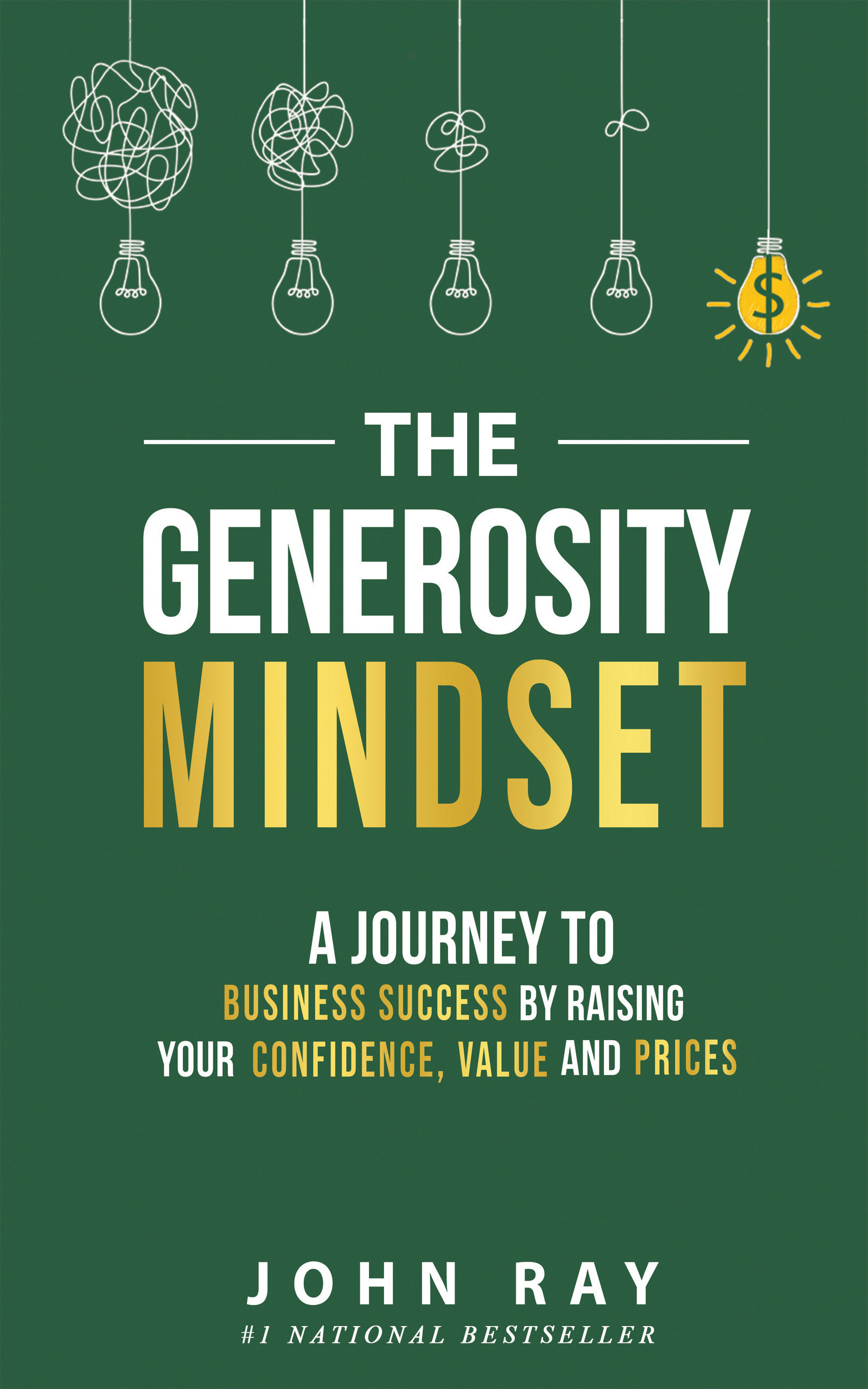
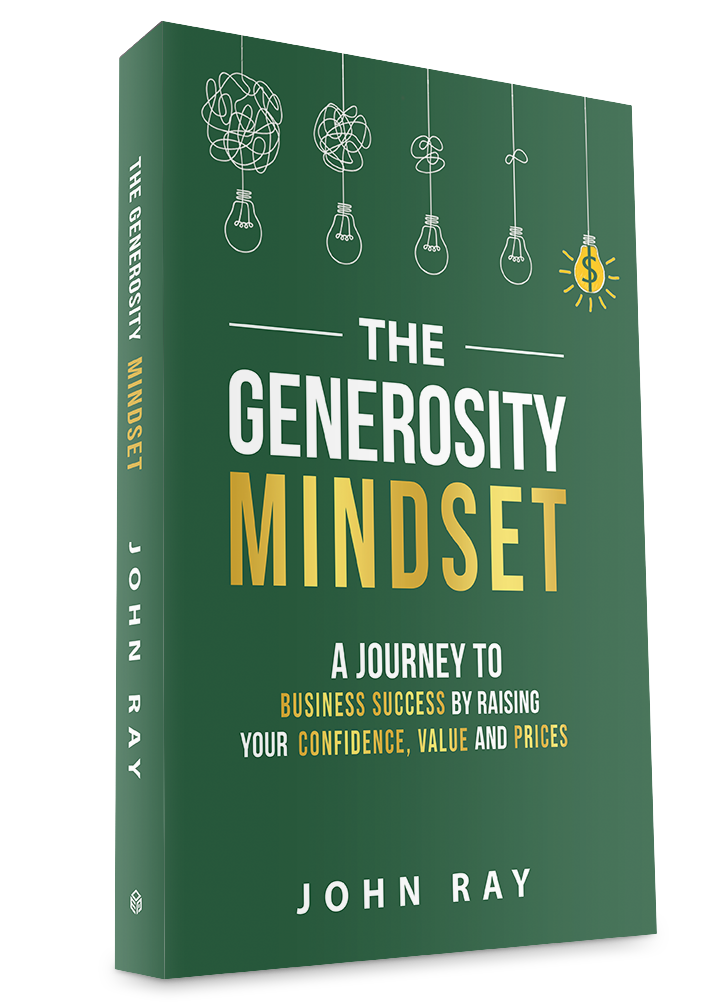
John Ray, The Generosity MindsetJohn Ray also operates his own business advisory practice. John’s services include advising solopreneurs and small professional services firms on their value, their positioning and business development, and their pricing. His clients are professionals who are selling their expertise, such as consultants, coaches, attorneys, CPAs, accountants and bookkeepers, marketing professionals, and other professional services practitioners.

John is the national bestselling author of The Generosity Mindset: A Journey to Business Success by Raising Your Confidence, Value, and Prices.

Tagged With: 2024 GNFCC BOLD Women's Leadership Summit, Donna Beatty, Frazier Deeter, GNFCC, Greater North Fulton Chamber of Commerce, John Ray, North Fulton Business Radio, Partner at Frazier & Deeter, Women in Business, Women in Leadership

The CEO’s Playbook: Mastering Growth Challenges in Mid-Market Companies

November 12, 2024 by angishields

WIM-KarenPosey-Feature
Women in Motion
The CEO's Playbook: Mastering Growth Challenges in Mid-Market Companies
Loading
00:00 /
RSS Feed
Share
Link
Embed

Download file

In this episode of Women in Motion, Lee Kantor interviews Karen Posey, CEO and Managing Partner of KP Strategies. Karen shares her journey from working in sales and operations for Fortune 500 companies to consulting for mid-market organizations. The discussion focuses on the unique challenges faced by mid-market CEOs and the importance of strategic planning. Karen introduces the “six things that only a CEO can do,” which include vision clarity, first team dynamics, stakeholder engagement, strategic organizational alignment, effective board management, and personal effectiveness.

Karen-PoseyKaren Posey is the CEO and Managing Partner of KP Strategies, a management consulting firm dedicated to helping mid-market CEOs tackle the tough challenges that stand in the way of predictable and rapid growth.

Before founding KP Strategies, Karen launched four successful organizations, led a regional turnaround for an IT infrastructure company, served as a Senior Consultant at a management consulting firm, held the role of VP of Strategy and Consumer Experience for a $12 billion healthcare payer, and served as CEO of a MedTech wound care company.
Throughout her career, Karen has been recognized multiple times for her high-performance leadership and ability to deliver winning strategies and growth for Fortune 100 companies.

Karen and KP Strategies offer mid-market CEOs proven best practices through tailored approaches designed for busy executives. KP Strategies provides project-based consulting and a distinctive virtual CEO Accelerator, which empowers CEOs to focus on what only they can do to drive growth. The program also supports the CEO’s senior leadership team through a peer-based community that enhances accountability and fosters growth. KP-Strategies-LogoExercise

As a certified woman-owned business, Karen is committed to supporting women in business and serves as the Forum Chair for the Women’s Business Enterprise Council West in Colorado. Her passion for helping CEOs succeed extends to her roles as a judge for the Titan CEO 100 and as a mentor for aspiring entrepreneurs through the Denver Economic Development Organization and the Colorado Women’s Chamber of Commerce.

Connect with Karen on LinkedIn.

Music Provided by M PATH MUSIC

Transcript-iconThis transcript is machine transcribed by Sonix


TRANSCRIPT

Intro: Broadcasting live from the Business RadioX studios, it’s time for Women In Motion. Brought to you by WBEC-West. Join forces. Succeed together. Now, here’s your host.

Lee Kantor: Lee Kantor here. Another episode of Women In Motion. And this is going to be a good one. But before we get started, it’s important to recognize our sponsor, WBEC-West. Without them, we couldn’t be sharing these important stories.

Lee Kantor: Today on Women In Motion, we have Karen Posey, who is the CEO and managing partner of KP Strategies. Welcome.

Karen Posey : Thank you. Great to be here.

Lee Kantor: Well, I am so excited to learn what you’re up to. Tell us about KP Strategies. How are you serving folks?

Karen Posey : Yes, I work with mid-market CEOs helping them drive growth, and I do that through a lot of strategic planning, business planning, as well as helping them do the six things that only they, the CEO, can do.

Lee Kantor: Now, what’s your backstory? Have you always been involved in this line of work?

Karen Posey : I’ve had my business for eight years. And then prior to that, I worked for a previous management consulting firm, and in my last corporate role, I was vice president of strategy and consumer experience for a $12 billion payer, so have had a lot of experience working with Fortune 500 companies when I was in a previous management consulting role, and I’ve just spent a lot of time. I’ve had – I’ve run my own wound care company as a CEO and turned around an IT infrastructure company.

Karen Posey : So I had a lot of experience kind of in that role of either starting businesses from scratch or turning around businesses. So this was just a natural progression for me to start my own business eight years ago and to really work with CEOs, you know, helping them solve the biggest challenges they face because there’s so much that gets in the way of them driving growth.

Lee Kantor: Now, when you began your career, was it – or are you coming at this from an operations side, a sales side, a management side? Like what is kind of the lens of business, you know, that you started out with?

Karen Posey : Yeah. Great question. I started out in sales and sales leadership. So I was in the sales role for probably three years. And then I moved into leadership and never looked back. So I was in sales for the first 20 years of my career and then was a general manager of an IT infrastructure company, and that’s really where I honed my operations skills.

Karen Posey : So I would say that, you know, my real strength, although I certainly understand sales and can help organizations, it’s really helping them drive growth through not only strategies that they use, but also I’m very strong in the operations side.

Lee Kantor: So now that you work with so many organizations, are you seeing common threads that CEOs, maybe mistakes that they’re making?

Karen Posey : Yeah. You know, that’s why I talk a lot about the six things that only a CEO can do. I think, you know, it’s so hard, and especially in the middle market. So when I define middle market, I’m really talking about CEOs. You know, Google’s definition is 10 million to a billion. That’s a pretty big range. But I tend to work – my sweet spot is between 30 million and 300 million. And I would tell you, you know, based on those CEOs, typically what got them where they are today isn’t going to help them get to the next level. Right?

Karen Posey : And so, you know, a lot of them by the time – my business is heavy referral and by the time I’m referred to them, they’re typically frustrated. They’re stuck. They’re really struggling. You know, being a CEO is a lonely job. Matter of fact, you know, loneliness, CEOs that are lonely, 61% of them say that it affects their performance. That’s a McKinsey stat, by the way. But, you know, it’s real.

Karen Posey : And so, you know, really helping these CEOs really overcome what’s getting in the way of growth for the company. A lot of times I find it’s the first team, what I call their first team, which is their senior leadership team. But it also can be, you know, sometimes it’s that they’re growing. I’m working with one CEO right now. They’re growing so rapidly that actually their operations haven’t been able to keep up. And so I’ve really been doing a deep dive with operations. And I did a level of discovery first with employees and key stakeholders to really know where we needed to focus. But I’m really helping them scale up their operations because it was woefully behind.

Lee Kantor: Now, you’ve mentioned a couple of times the six things that only a CEO can do. Do you mind sharing those six things?

Karen Posey : Happy to share it. I talk about it all the time. So, first and foremost is vision clarity. And what I mean by vision clarity, it’s one thing to have a vision, and vision should be at least ten years out. And I think even with the vision, I think CEOs struggle a lot of times.

Karen Posey : You know, when I first start working with them, their vision is that, hey, they want to be the premier this or the best this or number one that. And what I really work with them on is I help them go to the future to see the future and make sure they have the insight they need to really come up with the right vision.

Karen Posey : Because, you know, let’s put it this way, if Netflix would have said that they wanted to be, 20 years ago, the number one DVD company in America, where would they be today? Right? Thank goodness Reed Hastings, their former CEO, really was able to dream out 20 years and had an amazing vision for the company that they’re fulfilling today.

Karen Posey : But that’s the vision piece. The vision – the clarity piece comes in to once you have a great vision, does everyone in the organization know what it is? And honestly, 78% of employees feel like their leaders don’t have a clear direction for the company. Well, I would argue a lot of them, they have a clear direction. They might have a great vision and strategic priorities and core values. The problem is they don’t have vision clarity. All the employees from entry level up don’t know what they are. I mean, I find that all the time and that’s a big problem.

Karen Posey : And if you have vision clarity, here’s why that matters. I just did a keynote last week in Atlanta, in front of 120 high-tech CEOs at the Best of Breed Conference, and I talked a little bit about vision clarity. But when you have vision clarity, companies that have that have 58% greater revenue, 32% higher profits, as well as their employee engagement is 16X, and they retain customers 2 to 1. It’s incredible, the difference.

Lee Kantor: It’s because everybody knows what the kind of the True North is. If they buy into the True North, then every activity they’re doing is towards that end. But if there isn’t clarity, you know, you’re missing slightly and that just, you know, compounds.

Karen Posey : 100%. So vision clarity is first and foremost. And these aren’t – these don’t have to be in order, but vision clarity your – what I call your first team which is your senior leadership team. And this is – the reason I call it the first team is this is another area where CEOs really struggle, is because they have a senior leadership team but they don’t work as what I call a first team. In other words, they all lead functional areas.

Karen Posey : So for example, if you’re CFO, Chief Marketing officer, CMO, you have functional teams you’re responsible for, but the first team should be your priority and they should be working on the biggest challenges the company faces. And a lot of times, they’re not doing that. And so, I really work with the CEO, helping them on the team composition, team practices, and really their operating rhythm because they get that down and they have their priorities. And if they’re fortunate enough to all be in the same location, which is rare these days, but they even need to sit together because that first team should absolutely be their top priority in solving the biggest challenges the company faces today. Right?

Lee Kantor: Now, does that activity – let me interrupt you for one second. That activity – so you’re the senior leadership team. You have a first team, but each of your reports has a first team. And that should trickle down. These same best practices should work throughout the whole entire organization. Right?

Karen Posey : Well, to clarify, the first team is the folks that report directly to the CEO. That’s really what I call the first team. And it shouldn’t necessarily trickle down. The whole point of the first team is that they truly are focused on the biggest challenges that the company faces and that they can work effectively together with the CEO. That’s really the key. They’re functional groups.

Karen Posey : So for example, if you’re the CFO, their functional group might be finance. And yes, they’re responsible for finance, but that truly is their second priority. Their first priority is to that senior leadership team or that first team in the CEO. Does that make sense?

Lee Kantor: Yeah. So that your first team is kind of – they’re the main drivers of change in the organization. That’s where the leadership is taking place.

Karen Posey : Yeah. Well, the leadership should be trickling down to all leaders in the organization. But yes, this is – the first team is the key, what I call linchpins, for driving change in the organization. Because if they haven’t bought into the vision, if they haven’t bought into the core values, if they haven’t bought into the strategic priorities, and they’re not also communicating that throughout the organization, then you don’t have vision clarity. Right? So the CEO needs to do it but so does the first team.

Lee Kantor: Right. So they all – right. They’re all singing from the same song sheet.

Karen Posey : 100%. So the first, the vision clarity. The second is first team. The third is really engaging stakeholders out there. So the CEO is responsible for those key stakeholders in the industry, making sure they know who your company is. They spend time with key opinion leaders so that they’re not only involved, and they keep up with what the industry trends are and the biggest movers and shakers, but those movers and shakers, those key opinion leaders also know what your organization does. So important.

Karen Posey : The fourth – excuse me – is strategic organizational alignment. So that is culture, it’s talent, and it’s organizational design. And that’s very important. And, you know, so many organizations struggle today with culture just because there’s, you know, we’re all – a lot of them are so spread out. So culture plays a big role.

Karen Posey : And even when we talk about talent, the CEOs are responsible for all talent. In the mid-market, they should have a vice president or chief human resource officer, or VP of HR that’s responsible for talent. But where the CEO is responsible is for the highest-value roles in the organization. So strategic organizational design really focuses on talent, culture, and organizational design, which is so important. So that’s the fourth.

Karen Posey : The fifth is having an effective board. You know, it’s interesting there’s a stat out there from PwC recently that 70% of CEOs rate their boards as poor. Oh, my gosh, 70%. And so, there’s a big opportunity really looking at what does an effective board looks like. So there’s a lot to be said there. So that’s the fifth.

Karen Posey : And the final is personal effectiveness. And I leave that as last because I spent a lot of time with CEOs also on their personal effectiveness. So in other words, they need to know themselves. What gives them energy? What depletes their energy? The things that deplete their energy, they need to be giving those tasks to others in the organization. They need to be focused on those high-energy, high-value things, and they need to surround themselves with people in the organization that is protecting their time.

Karen Posey : The other thing is under personal effectiveness is really understanding their leadership model and perspective. So in other words, thinking about what do they stand for? What won’t they tolerate? What’s the legacy they want to leave for their organization? Right? So that’s leadership perspective. And it’s important that people, their leaders, their first team specifically understand that about them.

Karen Posey : And the third under personal effectiveness is their brand. And the brand is so important. For a CEO to stay humble, show gratitude, and really understand who they are and what they’re portraying is vitally important.

Lee Kantor: Now, you mentioned – you mentioned that 70% of CEOs think their boards are ineffective. Doesn’t that speak to their own personal effectiveness?

Karen Posey : Some of it does. You know, honestly, I find – it’s interesting. CEOs, when they first take over the role, they think that if they have a board that yeah they’re going to need to spend 10% of their time or some time with the board. But I will tell you, that is the biggest thing, that is an eye-opener – I wouldn’t say the biggest, just one of the biggest eye-openers for CEOs, the board really takes, on average, about 25% of their time, and they’ve really got to work that board and help the board understand their role versus the role of the CEO and the first team. Because also there’s another stat. A follow-up stat to the 70% is that 40% of board members are confused on their role versus the role of the CEO in their first team.

Karen Posey : So, yeah, there’s a lot of reasons for dysfunction. It can happen just, you know, not having board members that aren’t engaged; they’re not focused on the right objectives, not having clear charter, not having clear processes. There’s a lot of reasons that that can happen. But the CEO needs to really devote time to making sure they have the right board members and that they’re really helping them guide them on the strategy, not developing the strategy, not involved in the strategic plan, but helping them, you know, just guiding them on the strategy. And the other big part of the board, quite frankly, is hiring and succession planning for the CEO.

Lee Kantor: Right. Well, that’s what’s surprising to me, because isn’t the board the one that hires the CEO? And if they’re not on the same page at go, I mean, neither one of them is doing their job.

Karen Posey : Yes, yes, yes. And you know what tends to happen honestly? It kind of -it happens over time. It’s not like it happens overnight. You get board members sometimes that have been on there for a long time. They’re not engaged anymore. You also find that a lot of times when I first start working with the CEO, their board is just a reporting board, right? So getting that right structure and the right board members is so important.

Lee Kantor: Now, sometimes the board hires you to kind of fix the CEO, or is this something that the CEO is saying, “Look, we’re struggling here and the board is part of the problem”?

Karen Posey : Yeah, it’s I would say most of the time it is the CEO that is engaging me. But I have been engaged twice now by board members saying, hey, we’d love your help. We’re not, we’re not, we’re not confident in the direction of the organization. We’d like you to come in and help them with their strategic plan. And let’s really look at their yearly operations plan. And, you know, let’s make sure we’ve got the right vision for the company. So, yeah.

Lee Kantor: So, now a lot of the listeners here are aspiring mid-market companies, but maybe they’re a little smaller. Is there any kind of advice or low-hanging fruit you can give to an aspiring mid-market organization in order for them to get to a new level?

Karen Posey : Yes. You know, there are – there’s lots of great tools. If you’re a $3 to $5 million organization, you know, and you’re trying to get a strategic plan done, go out. EOS is a tremendous program. It’s really perfect for companies under 50 employees. Leverage that program. Think about your vision, really, you know.

Karen Posey : Some of these principles of the six things that work for mid-market companies would work for smaller companies. The ones that would specifically work for smaller organizations are definitely get your vision down, get your vision clarity down. Make sure everybody in the organization knows where you’re going, what your strategic priorities are, and your core values.

Karen Posey : The second one would be work with your first team. Make sure that your senior leadership team, you’ve got the right team composition, you’ve got the right team practices and operating rhythm for that first team. So important.

Karen Posey : I would say also of the six, focus on your own personal effectiveness. You know, a lot of times I find with smaller organizations, I have kind of mentored startups over the years through the Entrepreneur Center in – I’m originally from Ohio, so I worked with two of the entrepreneurial centers there and worked with a lot of startups. And the personal effectiveness of the CEO is vitally important. It’s always important, but it’s vitally important when you’re smaller because, candidly, a lot of times it’s the CEO that might be the roadblock to a lot of growth or expansion because traditionally they know their widget, but they don’t know how to grow a business.

Karen Posey : So, you know, I always refer back to what investors say. They would rather have an amazing CEO and an amazing first team. So in other words, an amazing senior leadership team and a mediocre strategy versus an amazing strategy and a mediocre team. So, that would be my advice for a smaller organization.

Lee Kantor: Now, what is kind of the pain that these middlemen, middle market companies are having where they – what are some of the leading indicators that, hey, maybe we do have a problem? Is it kind of a plateauing sale? Is it maybe we’re having a hard time hiring or keeping our people? Like, what are kind of some of the symptoms that maybe things are a little off?

Karen Posey : Yeah, some of the symptoms are they’re all rowing in different directions. Excuse me. The CEO is spending too much time, what I call, in the business and not on the business, focused on more of the strategic aspects of the business. When I talk about the first team not working together, you know, everybody’s rowing in a different direction. They’re really struggling with execution. That’s a big piece.

Karen Posey : What other are the common things I see? I also see that, you know, they, you know, it’s interesting. They’re struggling with their first team. They’ve lost confidence in some of their first team members. And, you know, that’s their senior leadership team. I equate a first-team like a family. Every family has a level of dysfunction. You love them, but they have a level of dysfunction.

Karen Posey : The first team is the same way. And making sure you really have a first, a solid, high-performing first team is so important. And a lot of times when I first start working with the CEO, they think they’ve got a pretty strong first team. I get in there and I start working with them and we uncover some things that help them realize that sometimes, and this is specifically in the middle market, what got them here isn’t going to get them to the next level. And they have a lot of aspirations for growth. And sometimes they outgrow people. And that’s hard. It’s super hard. But they’ve got to be able to make those tough choices and make those bold decisions.

Karen Posey : So another thing I see a lot is CEOs lack that confidence to make the bold decisions because maybe they don’t have good vision clarity. They haven’t identified why it’s happening, but they just – they lose confidence in their decisions and they’re afraid to make those bold moves. And I got to tell you, successful CEOs, the great CEOs make bold moves early and they make them often because you have to. Otherwise, you’re not going to – it’s hard to compete. It’s hard to grow. There’s a lot of things pulling at a CEO every day.

Lee Kantor: Well, I would imagine that that’s one of the really maybe an unintended benefit of working with an organization like yours, where you can kind of give them the confidence to make the bold move and, like, you’re kind of taking some of the heat as the bad guy instead of them. Like, this is, you know, maybe they’re afraid, maybe it’s some team member that’s been around since the beginning and they’re, you know, they’re hesitant to, you know, punish, not punish, but kind of there’s a loyalty there that is overriding maybe an effectiveness.

Karen Posey : Well said. I think the other thing too is that, you know, I talked about loneliness earlier. Loneliness, seriously, it’s real. And being a CEO is a lonely job. There’s things you can’t talk to your first team about. You want to be close to them, but you also need to keep your distance. There are decisions you have to make that only you can make. You can’t run a company by, you know, a group decision. There are some big decisions that sometimes the CEO by themself has to make.

Karen Posey : And that’s where I also spend a lot of time. I really help the CEO. I’m kind of – they call me and run those things by me, the things that they can’t share with their first team because they need a coach to guide them on some of those big, bold decisions that they need to make. And they’re hard.

Lee Kantor: Right.

Karen Posey : And that’s a big role I play.

Lee Kantor: Right. And also, it’s kind of your – they can vet maybe the, quote-unquote, dumb idea that might sound crazy, but it might be the one that needs to be made and they might be hesitant to share that with everybody. You’re a safer place for them to share.

Karen Posey : Yeah. And the other thing they know for sure. Here’s the other challenge. The bigger your company gets, it happens – it’s not intentional. But what happens is you start getting filtered information. The bigger you get, the more filtered the information is that you receive.

Karen Posey : Your first team sometimes tells you what you want to hear because it’s in their best interest a lot of times to do that, so you really don’t get a clear-eyed view of reality. And what I give to my CEOs is I tell them the truth. That’s the only way I know how to work with them. That’s why they’re paying me. And that’s the value I bring, is that their first team, even if they ran it by their first team, their first team might have told them it was a great idea.

Lee Kantor: Right.

Karen Posey : And they share it with me. And I’m like, “Well, here’s some things you might want to think about.” Right? “Here’s some holes I see in that.” And they need someone that can be totally honest and transparent with them.

Lee Kantor: Now, why was it important for you to kind of become part of the WBEC-West community? And what were you kind of thinking when it was time to join?

Karen Posey : You know, I am originally from Ohio. I’ve only been out in Colorado here three years, and I actually had clients of mine that came to me and said, “Karen, we are a part of, you know, Women Business Enterprise National Council. You need to join. Here’s the benefits.” I looked into it and I’m like, “Wow! What an amazing organization.”

Karen Posey : Well, when I moved to Colorado, one of the first things I did because I didn’t know anyone out here was I made contact with Jaymee Lomax and said, “How can I get involved?” I really want to get involved in WBEC-West, and specifically in Colorado, because I want to help. I’m very passionate about not only helping CEOs but specifically female CEOs. I want to see all women rise.

Karen Posey : And so, I was very fortunate that at the time there was an opening coming up in Colorado. This was three years ago. And I’ve been fortunate enough, and it’s been my honor to be forum chair for WBEC-West here in Colorado. So it’s been fantastic. I’ve met so many amazing people; just Pamela – what Pamela Williamson is doing for WBEC-West and the people she has aligned herself with and her board members. It’s truly an honor to serve because I love where they’re headed and the great things they’re doing for women every day.

Lee Kantor: So who is that ideal middle market organization for you to work with? Do you have a niche in terms of industry, or are you kind of industry agnostic?

Karen Posey : I’m industry agnostic, but I will tell you my background is health care, high-tech IT. And actually, I do a lot for people that work with the government, so any government contractors just coming from Ohio. I have a lot of background working with, you know, Air Force Research labs, NASA, and whatnot. But I can work with all industries. But yeah, that’s been my background.

Lee Kantor: And if somebody wants to learn more and connect with you or somebody on the team, what is the website? What is the best way to connect?

Karen Posey : Thank you. Yes, it’s www.kpstrategies.net.

Lee Kantor: All right. Well, Karen, thank you so much for sharing your story today. You’re doing such important work and we appreciate you.

Karen Posey : Thank you so much. Really enjoyed my time today.

Lee Kantor: All right. This is Lee Kantor. We’ll see you all next time on Women In Motion.


Tagged With: KP Strategies

Building Bridges: The Power of Collaboration in the Perimeter Area

October 28, 2024 by angishields

Chamber Spotlight
Chamber Spotlight
Building Bridges: The Power of Collaboration in the Perimeter Area
Loading
00:00 /
RSS Feed
Share
Link
Embed

Download file

CS-AdamForrand-Banner

In this episode of Chamber Spotlight, Lee Kantor talks with Adam Forrand, President and CEO of the Sandy Springs Perimeter Chamber. They discuss the recent merger of two local chambers, forming a unified regional Chamber of Commerce. Adam highlights the chamber’s role in supporting both large corporations and small to mid-sized businesses, fostering community engagement, and driving economic development.

The episode also covers the benefits of chamber membership, the importance of collaboration among businesses, and the diverse industries represented in the perimeter area, emphasizing the chamber’s commitment to innovation and entrepreneurship.

Transcript-iconThis transcript is machine transcribed by Sonix


TRANSCRIPT

Intro: Broadcasting live from the Business RadioX studio in Sandy Springs, Georgia. It’s time for Chamber Spotlight, brought to you by Corp Care, your Employee Assistance program partner. Caring for them because we care about you. For more information, go to CorpCareep.com. Now here’s your host.

Lee Kantor: Lee Kantor here another episode of Chamber Spotlight and this is going to be a good one. But before we get into it, it’s important to recognize our sponsor CorpCare. Without them we couldn’t be sharing these important stories. Today on Chamber Spotlight, we have the president and CEO of the Sandy Springs Perimeter Chamber, Mr. Adam Forrand. Welcome.

Adam Forrand: Hi, Lee.

Lee Kantor: I am so excited to hear an update kind of state of the union of the chamber. I know a lot of exciting things are happening. Would you like to share?

Adam Forrand: Absolutely. You have found us at a fabulous time in our organization’s history and our growth. The Sandy Springs Perimeter Chamber, as our Board of Directors and the board of Directors of the Perimeter Chamber this summer agreed in principle to merge our two chambers into a unified regional chamber of commerce serving the leading cities, the perimeter leading cities of Sandy Springs and Dunwoody. And we are in the process of integrating our two organizations from a technical and operational standpoint, all in service to our members, with our goal being that come January 1st, 2025, that our members of both organizations find the power and the potential and the opportunity that a larger chamber can bring them.

Lee Kantor: Now, what was kind of the impetus for this kind of combination collaboration to to bring the chambers together? I know there’s a lot of growth in the perimeter area. I know there’s a lot of activity in the the cities that surround the perimeter. But what was kind of the catalyst that brought you both together?

Adam Forrand: You know, I’d say a maturation of our two communities, the cities, the municipalities themselves of Sandy Springs and Dunwoody as they continue to grow and mature in terms of their service to their residents. We find ourselves in the context of a marketplace, the central perimeter market. The economy here has been here for many, many years and has been recognized across the southeast as an epicenter of employment and and business and commerce. And what you find is the convergence, if you will, of touring cities and equity and building and brands about what’s happening in these two cities, along with the the bedrock that is the central perimeter economy. And this conversation has been going on for the last ten, 11, 12 years, about two municipally focused chambers coming together to better serve the region. And I think it just reflects sort of that time and in a post-pandemic recovery as well, is that as our economy continues to evolve with uncertainty and economic environments, that the evolution of the central perimeter deserves a strong regional chamber for both small businesses, solopreneurs as as well as the fortune 500 that call perimeter home.

Lee Kantor: Now, there’s obviously a lot of large organizations and companies here in the perimeter area that have decided to headquarter and to call home. Yes. Um, how do you foresee the chamber creating value for them as members and also serve, like you mentioned, the many more small to midsize businesses that also are in the perimeter? Because I would imagine that’s one of the challenges, is to create value for all of the constituents. It is a.

Adam Forrand: Challenge for sure, but on the continuum of resources and partnerships and opportunities that a chamber, a good, strong chamber, can provide a member and the business community. It does run that full gamut from a small business to a large business. So we’ll start with those large businesses that you described that are resident here in Sandy Springs and Dunwoody, who continue to choose to remain in this community as they consolidate offices from across, say, the southeast or across North America into a focused hub of activity. And we’re hearing these announcements on a daily basis as new lease arrangements come up across the perimeter, that they have particular needs, cultural needs of their organizations to bring people back into the office. And as talent talent acquisition, talent retention remains a competitive challenge for all employers of all sizes. A chamber like ours can help activate relationships for those large employers among, say, their young professionals, those who are 40 and under. We know that if young professionals meet other young professionals outside of their own work environment, in the community in which perhaps they work or play or even live, that there’s a higher likelihood that they will remain committed not only just to that employer, but to the community itself.

Adam Forrand: So we are going to convene and catalyze these relationships among young professionals through our Perimeter Young Professionals program. We also know that the importance of employee resource groups, ERGs, and business resource groups Brgs and their connection to the community is a facet of that connectivity that a large employer has to the to those local residents, and the impact that they can have in advancing and sustaining these ergs and brgs. And we can serve as a conduit to making those connections and relationships to ensure that these particular areas of focus or concern or issues in the community that the large employers have articulated and stated as being important to them, that we help them activate that here in Sandy Springs and Dunwoody as well. So from a from a large standpoint, a large employer standpoint, we can serve as that local hyper local partner to activate these relationships. Um, whether it’s in talent, whether it’s in enterprise, whether it’s an issue oriented opportunities.

Lee Kantor: Now, um, as part of your role in the chamber, is is part of your role, um, helping attract other businesses to the community? Is that, um, part of the mission or is that something economic development in those locales are in charge of?

Adam Forrand: Most certainly we are a partner to our city’s economic development leadership. So in Sandy Springs and Dunwoody, we work very closely in partnership with them, um, particularly as those cities provide Opportunities to provide incentives to recruit businesses, as well as retain businesses and employers in our community as well. That looks different from one conversation to another, but our role as the local chamber is to ensure that there’s a vibrant, economic, prosperous environment in which executives choose to live, um, that they know that their employees can live in, uh, and that there is opportunity here for growth. And that growth may be challenged by, uh, amount of square footage they have access to, or perhaps the amenities in the region and the community in which they live, and they work and they play. And our job is to be sure that our members are growing and are prosperous, and then in turn, makes it a very attractive environment in which businesses would seek to relocate or to expand within.

Lee Kantor: And that relocation, obviously, the business climate has to be right, but also it has to be right for their employees. So there has to be kind of. That’s where I think the small to midsize businesses come in, right? Where everything is working hand in hand. If you have a thriving small and midsize business community that lends itself to the larger organizations employees to have a happy life and to live closer, to go into the office and do things like that. Indeed.

Adam Forrand: Yeah. The smaller businesses that provide the professional or personal services to the employees, uh, you know, as as mundane as it is, we need these services to live our lives in the high quality of life. And so whether it is, uh, your local dry cleaner or your daycare or even the quality of restaurants, the fast, fast service that you may receive for any part of your life, that is the ecosystem, that is a community and that every business contributes to that quality of life.

Lee Kantor: So what are the things as a chamber expands throughout the region? What are the things you need more of and how can we help you?

Adam Forrand: Oh, well, we need, uh, What we need more of is more engagement. And engagement shows up in many different ways. In this particular case, I’ll specifically speak to the engagement of our business owners, our leaders, those who are chamber members, to bring their knowledge and their expertise to the benefit of their fellow members. Uh, one phrase that I use often is that we want our members to show up to coach and to be coached. And what I mean by that is that they bring their subject matter expertise to the room, that if another member should be so appropriately vulnerable to say that I need help in this particular domain or this particular area that we can find and make those matches and connections that a member can help another member. And so that type of engagement in which that knowledge and expertise is shared to the benefit of fellow members in their goals and pursuits of growing their business. And so we do that in person. We convene and catalyze these relationships through over 80 events over a year. Um, but we’re also going to transition into doing so electronically and digitally in, uh, in asynchronous ways as well. And so, uh, what that means is that we’re seeking more members, we’re seeking more experts, we’re seeking more expertise and knowledge and a commitment to growing their business as well as other people’s businesses in this community.

Lee Kantor: All right. So let’s give the pitch to each of those constituents. So if you were talking to a small business owner, what would be your pitch to them to become a member? And not only just pay dues to be a member, but to actually lean in and get involved with the organization?

Adam Forrand: Yeah, membership is an interesting thing. Um, there’s a lot of analogies that we can use about membership and optimizing and maximizing membership, and they’re not many of them are not perfect. Um, and so the pitch would be that as the decision maker, if you’re the business owner and you are deciding to make an investment in your business through chamber membership, that the membership is not necessarily yours and yours alone as an individual. Although you may be the decision maker, you may be the one making that financial investment. The rest of your team needs to be on that membership roster that you deputize. You enable, and you empower the rest of your team to show up at our events, to be present at the opportunities to learn and to grow, to represent your business. And that way, your enterprise, your company gets the full benefit of membership and not just you as the owner or the decision maker. And that’s a challenge because people think about membership as being their own, their own personal membership. And we use some mixed analogies, like a gym membership. Like if you don’t show up to the gym, then you’re not going to get the benefit of it.

Adam Forrand: Like that’s such an individual thing. We’re trying to find ways in which we project that onto the business itself, that the business itself, if the business does not show up through its representatives, through through any member, any or any person, employee of that organization is a member of the chamber, that they show up and leverage the benefit of the of of their chamber membership, their businesses membership, then that’s the best thing that they can do. And that means that perhaps there’s some expertise in a very specific domain as it relates to finance or accounting or marketing, that a fellow fellow member can show up and help them with. Maybe it’s a young professional who’s learning about business development that they can show up and meet their peers and learn and grow together. And so it really is a an enterprise wide proposition that I would ask more specifically, if there are some acute areas of pain or challenge that perhaps our resources and our fellow members can help them with.

Lee Kantor: Right. And that’s something important for the small business owner to understand, even if they have a small team. The brand is the member, correct? It’s not the individual. And that mindset shift is really important because that the the brand then can use that as a benefit to attract and retain employees because they’re getting part of their when they work there, they’re getting access to all of the benefits of the chamber.

Adam Forrand: They are they are. And these are great experiences for professionals of all ages, at all levels within an organization to be able to step out of the business, step into community, a community of other business professionals who are there to help and support. Have an enjoyable experience for sure. We are very proud of the quality of the experiences that we produce, but ultimately it’s what you get out of it in terms of the resources, the connectivity, the support, the encouragement, the inspiration. You will find that, Uh, as as every member of your team encounters and experiences and engages with the chamber. Your organization will benefit from that.

Lee Kantor: All right, so now let’s pitch these kind of billion dollar firms that are around here. Now, you mentioned some of the benefits of being part of the chamber and active in the chamber. But what are what’s your pitch when you’re talking to, you know, one of these fortune 500 company leads?

Adam Forrand: Absolutely. Well, beyond being able to activate and support their talent retention, acquisition and development needs around young professionals or engaging in employee resource groups or business resource groups. Ultimately, it sends a signal to the community that as a resident of this community, these large businesses are concerned about the quality of life here and the quality of the economy, and that through an investment in their local chamber, they are then parlaying that into additional resources to support small businesses of all types. And so it shows up in manifests itself in many ways, certainly visibly, when you can see that a large employer, a large global Fortune 50, has made such an investment in their local community. It’s reassuring. Um, but the flip side of that is there’s also a benefit to that. It reminds people in this community that they are an employer, that they are an employer of choice, and that, uh, if you do not want to commute across the metro and you’re looking for an opportunity in a large enterprise, there may be a company, a member of ours that is hiring today that may really suit your particular skill set and your knowledge that you can contribute to and improve the quality of your life as well that you can contribute. So we talk about that not just from a from a young professional standpoint, but also the these brands, these consumer brands that are easily recognized, that are members of our chamber and fly great flags on tops of buildings here in Sandy Springs and Dunwoody are fabulous. And it’s a reminder, hopefully to them that their employer brand here in the local community is just as strong and that it’s conveyed.

Lee Kantor: Now, for folks who aren’t aware of maybe the types of industries that are represented here in the perimeter. Yes. And especially when you expand beyond Sandy Springs into the perimeter as a region, can you share some of the industries that maybe aren’t on the radar of people who aren’t familiar with this part of town? Well, I.

Adam Forrand: Think there’s two parts to that, Lee. One is we can name those sectors or verticals or industry by name and think about specifically what they do. So we’ll use transportation distribution and logistics as an example. Ups, a fortune 50 company headquartered here in Sandy Springs. Everyone knows what Brown can do for you. And they think of the trucks, they think of the deliveries, they think of the retail storefront services. But what they may not think of is the fact that marketing, accounting and finance and all those operational opportunities are based here as well. Right. Um, but then there’s a clustering effect around transportation distribution logistics that there are a number of, um, well known, uh, companies that in that sector that are known in that sector for their specialties. Um, perhaps they may specialize in cold distribution and storage. Perhaps they specialize in a particular food group. And these companies are clustered here as well. Um, they’re in the same buildings. They share a propensity for the the needs of talent that they share among them as well. And so there are big brand names, consumer brand names, and there are a whole host of lesser known names that are in those same sectors. So transportation distribution and logistics, for example. But each of those companies have a full complement of enterprise wide jobs that that they need to fill as well.

Adam Forrand: Um, financial technology, uh, we process over I think the latest data I heard was like 79% of all financial transactions in the US come through Sandy Springs and metro Atlanta. And these are names that many people may not recognize, but Global Payments Deluxe, uh, there’s a whole host of companies that are in the fintech space are based here as well. Um, we are certainly well known for our concentration, the density of fast casual restaurants that are owned by private equity firms and other, uh, other organizations that, uh, go by the name of Inspire Brands and Roark Capital and go to foods, and they have got a whole host of consumer brands that we would recognize as well. But they’re all based here. But it’s the entire enterprise is based here. All their marketing operations, their supply chain and distribution operations are based here as well. And certainly last but not least, health sciences, health services. We have got a density of, uh, service providers, practitioners, researchers here in central perimeter that ensure that not only are our residents well taken care of, but we’re advancing medical sciences and discoveries in the community as well.

Lee Kantor: Now, I think you brought up an important point when it comes to having these large firms here. Um, it does create kind of a cluster effect where that the other companies that serve them in a variety of ways. It’s also a good idea for them to be close, in close proximity of them, so they can have access to them when those people need them to deliver some of the services that they outsource, for sure.

Adam Forrand: And we also know that, um, not only just from a vendor supplier standpoint that there’s those relationships, but many joint ventures and perhaps research and development come out of these relationships that are clustered in these communities as well. We know that there’s test kitchens in our communities. We know that there are R&D labs testing alternative supply chain distribution methods and models as well in our own community. And these are, uh, companies that are in that sector that are very interested and very keen on these relationships and proximity matters, for sure. Yeah.

Lee Kantor: And a lot of times, um, what happens is those large entities acquire the smaller entities, and that happens more times than I can count, I think in just in doing the show over the years, that you see that happening, that somebody as part of one of those clusters starts delivering a service that the larger entity likes, and then all of a sudden cut to a few years later, they’re acquiring that organization. Yeah.

Adam Forrand: And that’s where innovation occurs. Innovation occurs certainly within the confines of these large employers, but it also occurs when entrepreneurs take a step out and believe that they that they have a a new and better and a different way of doing things. And so conceptually, this is a ripe environment for entrepreneurs as well to, to test those waters, to be in the environment in which they know other industry sector companies can, will be able to easily evaluate and to partner and to test and advance innovation in those respective areas.

Lee Kantor: So if somebody wants to connect and learn more, what is the easiest way to plug into the chamber?

Adam Forrand: Oh boy. Well, you can find us certainly online everywhere, but Sandy springs.org is the current URL for the Sandy Springs Perimeter Chamber of Commerce. But you can just Google us. You can hit Sandy Springs perimeter chamber and you’ll find us on all the social medias as well. Uh, happy to connect with you on LinkedIn. Uh, as well, uh, where where we try to focus some of our business oriented conversations as well. Um, but we are in the community. Uh, we’ve got a fabulous office here in Sandy Springs as well that we open up for programs and events as well.

Lee Kantor: Is there an event that you would recommend a prospective chamber member attending? Is there something, uh, that they should know about? And and can they just go to try it out?

Adam Forrand: Absolutely. We program breakfast, lunch and dinner. We, uh, welcome nonmembers to come and enjoy and experience firsthand what a chamber membership may feel like and look like for them. Uh, to test those waters and ask those questions and meet those other subject matter experts who are showing up to help coach them. Um, we have a monthly luncheon where we bring in a particular subject matter expert who has some expertise that can help and inform and educate and perhaps inspire our members. That’s once a month, uh, we, uh, our next one will be in November on the I think it’s the 15th of November where we’ll have Justin Campbell from Assembly Studios, Atlanta, uh, a big new production complex, uh, on the top end perimeter over by 85. Uh, and talking about what they’re doing, not just in the backstage in the back. Lots there in terms of production, but they’re community facing activities as well as they seek to enrich our economy.

Lee Kantor: Yeah. And that’s another sector in the area that maybe people aren’t aware that is happening.

Adam Forrand: It is. It is because it happens in nooks and crannies and in locations and sets sort of tucked in in a way. You see those yellow signs, but, uh, gray, gray television has made a significant investment in our region, uh, With the support of NBC universal. With that, Assembly Studios Atlanta. It’s certainly a bright, shining star.

Lee Kantor: Yeah. Um, the perimeter is definitely where things are happening. The center of gravity of the city seems to be moving north into our backyard.

Adam Forrand: There is definitely power and magnetism here in perimeter. I think it always has been. Um, to, you know, uh, to a certain degree, at a certain times and the ebbs and flows of, of where investments are made. Uh, but definitely pay attention to the headlines of what’s happening in perimeter.

Lee Kantor: All right. Before we wrap one more time, the website, Sandy Springs.

Adam Forrand: Org. Uh, we’d love to have you there. Uh, but Google Sandy Springs, perimeter chamber.

Lee Kantor: All right. Adam. Well, thank you so much for sharing your story. You’re doing important work, and we appreciate you. Thank you. Lee. All right. This is Lee Kantor. We’ll see you all next time on Chamber Spotlight.


From Tech Support to Trust: Transforming Company Culture in the Digital Age

October 28, 2024 by angishields

Sandy Springs Business Radio
From Tech Support to Trust: Transforming Company Culture in the Digital Age
Loading
00:00 /
RSS Feed
Share
Link
Embed

Download file

SSBRX-CTDD-banner

In this episode of Sandy Springs Business Radio, Rachel Simon and Lee Kantor talk with Adam Bieber, Director of Business Development at Logic Speak and Founder of Synergetic Culture®. They explore the evolving landscape of IT services and the critical role of cybersecurity in modern businesses. Adam emphasizes that every business is now a technology company due to the digital age. He discusses the importance of fostering a positive company culture, employee retention, and the need for leaders to build trust and personal connections within their teams. The conversation also highlights the value of authenticity in personal branding on platforms like LinkedIn.

Synergetic-Culture-logoAdam-BieberAdam Bieber is the director of business development for an MSP (managed service provider) called Logic Speak. He’s also the founder of a leadership and sales consulting firm called Synergetic Culture®.

More importantly Adam is a husband and father and he has an amazing family.

Follow Synergetic Culture® on LinkedIn.

Transcript-iconThis transcript is machine transcribed by Sonix.


TRANSCRIPT

Intro: Broadcasting live from the Business RadioX studios in Sandy Springs, Georgia. It’s time for Sandy Springs Business Radio. Now, here’s your host.

Lee Kantor: Lee Kantor here with Rachel Simon, another episode of Sandy Springs Business Radio. And this one is brought to you by Connect the Dots Digital. When you’re ready to leverage LinkedIn to meet your business goals, go to Connect the Dots dot digital. Welcome, Rachel.

Rachel Simon: Hi Lee.How are you?

Lee Kantor: I am doing well. So excited about the show. You got a great guest.

Rachel Simon: Yes. And we’re back in the studio. Yeah, that’s a great day. Yeah, we have a great guest. I’m super excited about this conversation. So I’m really happy to welcome Adam Bieber with Logic Speak. Nice to meet you.

Adam Bieber: Rachel, thank you so much for having me. It’s great to be with both of you today. I really appreciate it and excited. Excited to chat.

Rachel Simon: Ya’ll, he’s a pro. We’re going to have a great conversation here. So let’s just kick it off. Tell us a little bit about you your company what you do.


Adam Bieber: Sure. Yeah. Well like you said, my name is Adam Bieber. I am the director of business development for a managed IT and cybersecurity company local to the north metro Atlanta area. Um, we’ve been in business for 20 years. We serve small to medium businesses providing technology support, technology strategy and planning and all the things that need to be considered when it comes to how you do business, how you interact online, protecting your digital assets, cybersecurity, all of that fun stuff. So I get to go and meet with prospective clients, meet with existing clients, hear what’s happening, hear from them, work on building relationships and bring them in to work with us and hopefully to drive their business forward.

Rachel Simon: It’s interesting. I was just talking with somebody recently about the change. We were talking about another industry that has sort of shifted the way it has, because I remember back in my early career, you know, there was the IT guy who had to do all the things right. He had to like, deal with the servers. And then everything from dealing with the servers to helping, you know, the older, potentially less computer savvy people figure out how to use their mouse. Yep, yep.

Adam Bieber: But or how to hook up to.

Rachel Simon: The printer or how to. Yeah, exactly. So it seems like today companies are really doing more with outsourcing those IT services.

Adam Bieber: Yeah. The reality is as technology evolves and as business evolves, every company, whether they like it or not, is a technology company. And so I always say, whether you have a digital footprint or data to protect, you’re a good client for us. And really that’s anybody. Everybody’s got data to protect. Everybody’s got a digital footprint and they need to consider those things more on the side of cyber threat cybersecurity protecting their their data, not just their data, but their clients data. And yeah, so it has evolved from, you know, just the guy that sets up the printer and fixes the server. What does that even mean to is there.

Rachel Simon: Even a server?

Adam Bieber: Yeah, exactly. So now we do a lot of that virtually. We utilize the Microsoft Azure cloud to be able to spin up virtual servers and be able to serve businesses so that if there were some type of catastrophic event to their brick and mortar, they’re still able to operate and conduct business. And then, you know, putting in all the puzzle pieces that they need to make sure that they have access to all the applications and, um, files and things of that nature. So, yeah, it’s evolved.

Rachel Simon: Is there a certain industry that you all work with?

Adam Bieber: Yeah, that’s a good question. We tend to work with professional services the most. So that’s going to be like your financial advisory firm, CPA firms lawyers things like that. We also work a lot locally with engineering firms. Our founder’s wife actually owns an engineering company. And so through that network, we’ve been able to serve a lot of the engineering firms in the in the area were also part of a couple associations that focus on on that, that vertical, um, nonprofits and churches. Um, kind of the tagline at the end of our mission statement is to have a positive impact on the community. And so we love to give back to churches and nonprofits that are doing good things in the community that we can support and protect. So usually they’re, um, 20 or so employees or greater. Um, that’s kind of where we found our sweet spot to be. And then, um, usually when you’re in that realm, you’re looking at 3 to 5 million in revenue or greater. Um, and that’s where we can come in and really do a lot of, a lot of good things, um, within a, within a healthy budget to be able to support.

Lee Kantor: So now part of your backstory is you help companies with culture. Um, why is culture important to you and why is it important to firms that you serve?

Adam Bieber: Yeah, I love that question. Um, it is it is incredibly crucial. Um, the way that I think about culture is less about what you do and more about how you feel about what you do. And it’s interesting. There’s so many different data points that you could pull out. Um, and it seems to be a hot topic right now, but people care about the environment that they’re going in to work. And, um, sometimes people will, uh, take less money for a better culture, um, or make a lateral move that’s not necessarily up the corporate, the corporate ladder in order to be in a better environment. And so to me, it’s crucial. Um, but what I like talking about is how it doesn’t matter what position you have in the organization, you can impact and affect the culture. Um, and so what I like to talk about through some of my consulting on that side, but also through the podcast that I have, is about maximizing your influence and impact so that anybody can make a difference in the culture that they’re a part of.

Lee Kantor: Now, do you find that, um, culture is one of those things. My background’s in marketing, so I look at it through the lens of marketing. Like when it comes to branding, it’s one of those things that are going to happen whether you put energy into it or not. People are going to have an opinion about your brand, whether you’ve been kind of mindful about it or not. Is culture the same thing that if you ignore culture, a culture is going to develop without any of your input, and so you might as well invest resources into it?

Adam Bieber: Yep, 100%. I love that you drew that parallel between the marketing industry and culture. I often say culture is formed either by design or by default. And so the default settings when you get a new laptop or a new electronic, usually the default settings are not enough. You got to tweak, you got to customize, you got to build it or customize it the way that you want that thing to to operate. And the same goes for your culture. When you design it, you’re actually being proactive about how you create it and develop it. And I’ve just been so blessed. Logic speak already had such a healthy, thriving culture, so I felt like I got to step into an organization that truly lived and breathed what it was that I was so passionate about.

Rachel Simon: Do you think in the culture, you know, it’s such an interesting word, right? Because people have, uh, it’s one of those words, I think that when you hear it in the within the work, uh, context, it either is like, yes, or. Oh. Um, but sometimes do you see that companies kind of use it as a crutch of why they can’t innovate? Like, oh, that’s not our culture. That’s not the way we do things here. Um, um.

Adam Bieber: I see it more as a, um, justification for toxic behavior. Yeah. Um, and so, you know, we’re just a culture that works really, really hard. Um, well, that that doesn’t that’s not a justifiable answer when you’re talking to someone that just put in a 70 hour a week. That’s not healthy. Um, and so I see it more on that aspect of not being willing to make changes and kind of own up to the design that you have for your culture if it is toxic. Um, and so, uh, that can be a really hard thing to change. And, um, what what I’ve found is it has to start at the top. There has to be buy in from the executive executive level down in order for people to really jump on board and get involved. And unfortunately, it’s uncomfortable, like, um, growth is uncomfortable. Change is uncomfortable. Um, you know, I’ve been involved in really fast paced, growing companies where it seemed like every week there was a new process and a new way of doing things, and the change was so stinking uncomfortable. Um, but that kept us on our toes and that kept us moving and growing. And I like to use the image of, like a either a river or a, a a stagnant pond. That stagnant pond grows a ton of bacteria, has a bunch of nasty pollen. We’re in the south. The pollen just sits on the top of it. It’s gross. It’s disgusting. It’s not safe to drink. Um, but when you think about a river that moves and that filters through rocks that is constantly rushing, that has power and strength. Um, you have you have cleaner water. Um, and so that’s just kind of how I think about culture and growth.

Rachel Simon: And that’s a great analogy actually. Like, I mean, especially again, for the since I can absolutely picture that gross stagnant pond covered in nasty pollen that you would never let your dog get in. Like, no, don’t get in there. Uh, um, yeah. It’s so interesting the way, um, you know, again, there is like definitely that level of, uh, hesitation and fear when change needs to happen. But I agree with you that pretty much anything that is worth building and growing has to start at the top. Yep. Otherwise, it’s really, really hard to actually make it happen and make it happen successfully. Yeah, no.

Adam Bieber: 100%. It, um, Uh, as as a leader by title. It’s it’s your job to to rally the people that work with you and work under you. Um, to head in whatever direction and execute. And it’s not just about executing the business. It’s about doing it in a way that builds the people. And so when everybody can be on the same page and they can they can work together and they can they trust each other, there’s a high level of trust involved. Um, you can see some really amazing things. I’ve seen people that are super trustworthy and may not be the most polished looking salesperson, and they are more successful because they are trustworthy and they have that grit and they execute and they know the culture versus the person that just has, you know, the suave or, you know, the look or the, you know, maybe they came from the bigger school or what have you.

Lee Kantor: Yeah. Now, what are some kind of symptoms that a company’s culture might be not on the right path? Is it like something like we’re having trouble hiring, Or is it come down to sales where, you know, our sales have plateaued? Are there some kind of warning signs for organizations you could share?

Adam Bieber: Yeah. I mean, I think probably the biggest one is retention. Employee retention. Um, you know, that says a lot about an organization. If you’ve done any job searching or had to go through the process of applying for jobs. Um, one of the things I always encourage people that are in that season is to take a look at some of the other factors, not just how many positions do they have to fill, but look at how long they’ve been hiring for that role. Like maybe go look at some of the people that have that role and look at how long they’ve been at the company. Reach out to them on LinkedIn. Ask them, hey, what do you think? I’m seriously considering applying. Um, I’ve had people in previous roles reach out to me and just say, hey, we don’t know each other, but we’re connected. I see that you work here. You’ve been here for two years. You’ve been here for three years. What are your thoughts? Um, can you give it to me straight? And I think we need to do more of that because, um, employee retention is a big, big indicator on on the health of the organization and the health of the culture also. I think people sometimes blow it up on social media where they present themselves in one way. Um, uh, and say on LinkedIn, the company does and the people that work at the company. But then when you get one on one with someone, you realize that is not at all how it how it looks and how it happens. Um, that’s always a red flag for me. Um, I was just having a conversation this morning with someone who’s worked at a big company in the area and I said, is the hype real? Like, I know it, I’ve seen it. I, I’ve been aware of the company. And she just said for what I was doing. No, it’s not. And I was like, wow. Um, so yeah, maybe those are a couple couple indicators.

Rachel Simon: That’s interesting. The hype like meaning what they’re presenting on their like company page as being like and.

Adam Bieber: Just as employees.

Rachel Simon: We have a ping pong table.

Adam Bieber: Yeah yeah yeah yeah yeah yeah. We do beer Fridays and, you know, get pizza at the end of the quarter. Like, that’s very interesting.

Rachel Simon: Yeah, because obviously LinkedIn is something I talk about a lot. Sure. And, um, you know, it’s it’s so important for people to actually present what’s actually happening. Yeah. Um, because otherwise, to your point, it’s not really the reality of what it is like to be an employee of that company.

Adam Bieber: Sure. And, I mean, I encourage people that, um, are building their personal brand on LinkedIn. I, I tell them I’m like, look, you can look at what everybody else is doing, but just sound like yourself. Like, if you don’t sound like yourself on, on, on that online presence, it just feels fake. Um, I’ve had plenty of conversations where somebody’s got this loud personality through the keyboard. And then when you’re sitting down one on one, it’s hard to hold a conversation and you’re going, wait, I’m just confused. You’re not who I thought you were. Um, and it may not be any detriment to their character. It just gives you an unsettling feeling of like, okay, I’m just confused. So I always just tell people I’m like, if that’s not you. Don’t be that person. Just be yourself and who you are will resonate with the right people.

Rachel Simon: Oh, 100%. I mean, I completely agree. I think that there’s that’s one of the big challenges when you’re for people who are trying to build their brand on LinkedIn is they they forget that. And I was just again talking about this yesterday, um, you know, with a B2B company and they’re like, well, we’re B2B and we’re trying to present this, you know, corporate, uh, you know, whatever vision of who we are. Sure. But ultimately, you are still selling to a human being.

Adam Bieber: Yeah. You’re people selling to people, right?

Rachel Simon: Yeah. You’re just a business selling to a person in another business. Yep. Not a consumer. So we got to remember the humanity piece well.

Adam Bieber: And the farther upstream I think you go, the loss in communication like the, the, the bigger gap that happens there where it’s just, hey, I’m the vendor. All I’m doing is just, you know, trying to get the renewals and the transactions and they keep it very transactional. It’s like, no, like the downstream person that is also a business owner. They care a lot about their business. It’s their baby. It’s their, you know, their their life’s work. It’s their legacy. So talk to them like that. Treat them like a human being.

Lee Kantor: So now is there any exercises or any activities you can share for an organization to help kind of number one, safeguard against that incongruity where they’re they might be thinking there’s something that they’re not and how the public is perceiving them. Is there anything you can share that can give somebody something actionable today to say, hey, hey, we’re a little off the mark here. Let’s do this so that we can be better. Yeah.

Adam Bieber: Um, to me, it comes back to the trust of the human beings on the team. Um, if there’s no trust between people, then no team building exercise in one day is going to get you there. Um, that’s something that has to be cultivated and built. And so if you’re leading, um, you know, one team of three people, or you’re over a a couple of teams or a division or an entire group. As the leader, my encouragement would be find ways to connect with your people personally. And I think like that’s a whole nother subject. That could be a whole nother podcast. People say, check your, you know, personal stuff at the door, like, no, we’re human beings. Going back to that point, if you have a really horrible morning and you just got some really difficult news, you’re going to I’m I’m an emotional person. I wear that on my face so people know if there’s something going on. Um, cultivate personal connections, personal touch points, um, be consistent. Um, uh, honor what you say you’re going to do. And it doesn’t have to be this crazy big transformation.

Adam Bieber: Like, if for like very practical action steps. I always encourage leaders when I’m talking to them, like build into your routine either weekly or bi weekly. Touch points with your team and spend ten minutes of that meeting just connecting with them personally. How’s it going? How are you? How’s your family? What sports are your kids in and be genuine about it. Ask questions. Be be. Be curious. Um. Get into some of the business stuff. Get into. Hey, this is where I see you going. This is where you’re headed. Um, change up the way that you do your one on ones. Cultivate trust with your team. It’s hard to do it in an instant. But over time, you start to build this rapport and this this trust. And that trust turns into loyalty. It’s loyalty to the leader. It’s loyalty to the brand, loyalty to the company. And people want to stick around for for loyal, loyal bosses and loyal people. So, um, yeah, that it’s kind of hard to just say, do this one thing, but that would be where I would start.

Lee Kantor: Great.

Rachel Simon: Yeah. No, it is, um, I mean, it is really kind of just going back to basics, right? Yeah. I mean, I think that sometimes, especially as, like, organizations get bigger and bigger, they put this distance between the top and the, you know, the leadership and the people kind of lower down. Um, but, you know, we have to remember that everybody is showing up to work for a common goal, right? To move the business. The goals of that organization forward. So, yeah. Um, no, that’s that’s so interesting because you’ve got so many different aspects of like what you do professionally, right? You’ve got like your full time job, your consultancy. You’re also like a LinkedIn super user. So tell us a little bit about like what inspired you to start to build your brand. Yeah.

Adam Bieber: So I can actually relate it back. There’s a gentleman who I don’t think would care that I use his name because he’s in this, in this, uh, greater Atlanta area. His name is Peter Pasternak. And, um, he, uh, the company that I worked for with him, um, they were doing remodels and home renovations, and this was like, in my early 20s. And every time I would see him, um, he would ask me, Adam, did you build your network today? And I would look at him and be like, no, dude, I’m like, wearing boots. And I’m on this job site. Like, no, I didn’t build. And he would just say, build your network today. And then I watched him. And the way he cultivated relationships and they would do this real estate networking event that actually still happens, which is really cool. Um, and I think they just celebrated 14 or 16 years. Um, and I credit it back to him. He saw the value of building a network, cultivating relationships. And so that’s when I started. It was years ago, and I just wanted to connect with people and try to try to build and cultivate relationships. And I’ve seen in different seasons and stages of my life. And then kind of the growth trajectory of my career, it has been such a joy and a benefit to be able to, um, know so many great people, be connected to so many amazing people, support my friends that start businesses, support other creators and entrepreneurs, um, and and really, um, really build each other up. And that’s something that I’ve just loved about the the networking world, the LinkedIn world. Um, and when I launched my podcast almost three years ago, it gave me an immediate audience that was ready to hear more of my thoughts, ideas, and passions. And so it’s just been fun to be able to do that and, and share the things that I’m passionate about with others.

Rachel Simon: Can you think of a story of like a result of the what you’ve kind of put into LinkedIn? You know, like, I mean, there’s probably a great, you know, even if it’s because I can think of so many different ways of, you know, over the years where you’ve been able to connect this person with this person and it results in this. Right? Like, yeah.

Adam Bieber: I would just say like some of the coolest relationships. Um, and there’s been several very recently, like this year, um, I think out of the six most recent podcast guests, three of them were just LinkedIn connections that I met over LinkedIn. Um, saw their content, believed in who they were, start to got to know them just because of their presence. And, you know, going through the filter of like know like and trust like these were people that I felt like I got to know I really did like them. And I started to trust the validity of what they do. And then we connect. And one of the more recent ones, his name is Jeff. He runs a marketing agency. They have this really cool AI platform. They’re doing all kinds of different, um, marketing for, for businesses. Um, he and I were connected and he just reached out and was like, dude, I think we think a lot alike. I think we’re similar. I’d love to just get on a call if it’s any value. I’d love to jump on the podcast and share. And I just loved it. We got on the phone and it was like we were brothers. We knew, you know, we hit it off kind of like you and me when we first got on the phone. Rachel, we just hit it off. Um, and so it’s just it was just so cool. And then he came on the podcast and he started one and was like, all right, dude, I might call you and ask questions. And and then I got the camera that he uses. And so it’s just been fun to, to collaborate and help and, and build relationships like that. There’s so many stories just like that one.

Lee Kantor: Now, you mentioned earlier, um, a tactic that Peter Pasternack uses of having in-person events. And I know, Rachel, you believe also in that, but is there any kind of tips you can share on how to execute an in-person event and to elevate your network, you know, from maybe online to in real life? Sure. Um, in order to deepen those relationship and accelerate relationships.

Adam Bieber: Sure, absolutely. Um, I’ll take it from the perspective of not not necessarily, um, like going through the nuts and bolts of event execution, because that’s not my strong suit. Uh, but showing up how you show up matters. That’s just a good law for life. Um, how you show up for your kids, how you show up for your spouse, how you show up to network, how you show up to work. It matters. Um, and so I, I always like to encourage, to show up, not looking for what you can get, but for looking for where you can serve. Um, and so I whenever I’m talking to people, I’m always thinking through the lens of, do I know someone that I could connect them to? Is there a way that I could? Um. And what’s so cool about the world and how it works? And, you know, whether you think it’s divine or just something in the ether or however you view it, that value that you give to someone comes back around and it’s amazing. And so I always go into I’ve come to your events, Rachel, I’ve, you know, I try to be at different events throughout the week and I always just go in with that mindset. Go in curious, ask questions, learn about people, um, share a little bit about who you are, and then look for ways that you can add value. And it’s so cool when those connections come back around and start introducing you to people that you can do business with that align. Um, it’s it’s more organic that way. It’s more relational that way. Um, I have a hard time when I walk into a room and somebody comes up and shoves the business card, and this is what I do, and we should work together. And I want to hear about, um, and it just it’s disingenuous. It doesn’t feel, um, it’s.

Rachel Simon: Icky. It just it’s it’s I try to.

Adam Bieber: Avoid that word, but it is. It’s not completely. Yeah.

Rachel Simon: And that’s why that doesn’t work on LinkedIn either in the DMs. Um. Oh, gosh. Yeah. No, I, you know, I love in-person events, and, um, we’re doing another. I’ll just do a little plug. We’re doing another LinkedIn local ATL happy hour in November. November 13th at Barn in Dunwoody. And, um, you know, just being a convener I think is so fun. Yeah. Right. And getting people in the room together and like, I’ve been really into these more relaxed events where it’s just like, hey, we’re going to this bar. Come get yourself a drink and talk to cool people. And you never know who you’re going to talk. And every single time we host these, somebody tells me, oh, I met this really good person, and now we’re doing x, y, z. Yeah. Yeah.

Adam Bieber: And if you’re no matter what realm of business you’re in, if you’re an entrepreneur or solopreneur or you work for a company, you’re in sales. You’re not in sales. How you present yourself, um, in in person and online. See, like when I leave those events, I take the business cards and I look those people up and I kind of just do a, you know, I connect with them and then I just, I kind of feel them out through their online presence and the ones that are super genuine. It’s just so cool because you build this relationship. They know what I’m about. I know what they’re about. We’re not sitting there trying to just sell, sell, sell to each other. But then what’s awesome is something not as sexy as information technology and cybersecurity comes up. They go, oh, Adam Bieber, you should call logic speak. I know somebody let me connect you. And that’s that’s the really cool thing that happens as a result. It’s not the driving force or the goal, but it’s one of the byproducts of building relationships and doing it in person in such a neat and cool way.

Rachel Simon: Yeah, and obviously your online persona should absolutely match the way you’re showing up in the real world. It’s really, really weird when it doesn’t for sure. Yeah.

Adam Bieber: I’m sure you’ve got stories.

Rachel Simon: I have a lot of stories. I have a lot of stories. But, you know, sometimes it’s like you just never know. Um, when you, you know, strike up a conversation. I was at a networking event last night, and, you know. Oh, hey. Hi. How are you? What do you do? Oh, I’m a CPA. I’m an accountant. And I was like, oh, my son’s an accounting major at Georgia. And he’s like, he is. Does he need an internship? I’m like, well, in fact, yes, he’s looking for internships, right? So I’m like, amazing, mutually beneficial introduction. Yep. Um, you just never know.

Adam Bieber: Yeah, they may never be a coaching client, but they’re going to be a big fan of you. They’re going to start to get to know you, your family and how cool. I mean, I call them circle of influence opportunities, where you just are the person that people think about. And I’ve actually started I would encourage others to do this. I’ve started creating. I’m actually going to put it in a spreadsheet because for me it was like a mental Rolodex of like, who do I know that does what and who do I trust? Who’s in my network that I believe in trust in? I would do business with if I was ready or able or needed. And so I’ve started to kind of build, like I know who I’m going to print with, I know who I’m going to ship with, I know who I’m going to, you know, buy a house with and get a loan from and, you know, all these things and it’s just from building relationships, networking, talking to people. And when the time comes, you can either give them direct business or you can point them in the right direction of somebody who needs them.

Rachel Simon: Yes, my husband would call that the I got a guy for that.

Adam Bieber: Yes, yes. I used to be one of my favorite things to be able to say I got it. And my brother actually just texted me the last week and I can’t remember what he asked for, and I and I wrote back, unfortunately, I do not have a guy for that.

Lee Kantor: So is there a story you could share about your work at Logic Speak? Maybe that illustrates how you were able to help a company that had a challenge, and once they started working with you, you were able to help them get to a new level.

Adam Bieber: Yeah, sure. Um, so what’s really cool about the kind of the clientele that we work with? Most companies already have a provider. Um, most companies are used to working with a third party IT company that comes in and augments a lot of the, the, the tasks that an IT person would do on the larger company side. Sometimes they have that IT person that goes and works on the server or helps people connect to printers and they work for that company, but they also know that it’s too much for that one person to handle. So they augment. And we call that co-managed. Um, so with that being said, a lot of times we work with people that have previous experience with other providers. Um, the Atlanta market, there’s a lot of IT providers. It’s very saturated. Um, and there’s a lot of really good ones. There’s some that struggle to really do all the things that they say they do, but there’s also a lot of really amazing companies in this area. Um, and sometimes what happens is a company will grow to a certain size and then they will, um, go through the acquisition process, get acquired. I think it’s every like small business person’s dream is to sell and, you know, sail off into the sunset. And so we actually had a recent scenario with a company that they had a really good relationship. Their their IT company was very close. That guy got the opportunity to sell sail off into the sunset.

Adam Bieber: He was involved for a while. And then his kind of terms of sticking around during the transition ended And when things transitioned, this company went from local provider really hands on approach personal to national provider IT team somewhere else, service desk somewhere else, having to fly people out if they want to meet with them. And it just wasn’t meeting their business needs. There are businesses that thrive with that model. There’s a bunch of them that I know that are doing really well, but for the ones that need that personal connection and personal touch, it was too much change. They went through a backup and disaster recovery issue. They had a server get hacked because of the gap in communication. It took them three weeks to get their data back from their provider and that should never happen. Um, we put systems in place that you can either spin it up within minutes. Um, that cost extra. There’s a whole nother layer of software and hardware that needs to be incorporated. Or we can we can restore within a business day. It took them three weeks to get. And we’re talking client data. So it was just a monumental, um, the, the, the lady that ran the office has, uh, she’s nearing retirement. She said this was the second worst day of my life, which is just crazy. And so we were able to come in. Hey, we’re down the road. Um, we can help.

Adam Bieber: Here’s what we’ll do. And I just kept showing up to the office and sitting with her and talking with them and meeting the team and getting them introduced to our executive staff. And what’s so cool is Jason’s been been leading the company for 20 years. Um, if I tell him, hey, we need to go in person and meet with this person, he will make the time to go and meet with the five person, ten person, 20 person company, sit down and answer questions and help provide reassurances that they need. So it’s just been really cool. We’ve been able to really turn the corner on their perception of our industry, and they just said, please don’t sell. And Jason said, it’s not on my radar right now. I’ll let you know if it does come up. But, um, just a neat experience to be able to kind of flip the script a little bit for them on their current experience and give them a much better one. And I’ll just say this most the number one feedback we got from our end of year surveys from our clients was your team is very kind to work with, and that’s saying a lot about it people. We have a genuinely kind, easy to work with team. All the technicians, all of our engineers. They’re brilliant, but they’re also genuinely good and kind people and that makes a difference. That’s such a nice compliment. Yeah, it is.

Lee Kantor: And it speaks to the culture.

Adam Bieber: Yeah it does.

Rachel Simon: Yeah, it sure does. That’s you would not expect that in the. I’m sure that was a surprise like kind you’d think like oh brilliant. Competent like yeah. Responsive. But they’re just like genuinely nice, genuinely kind.

Adam Bieber: They’re lucky to work. They’re here. We’re not we’re not shipping it offshore. Um, larger companies need to do that I get it. It’s, you know, it is a business practice. I’m not here to knock it. But when you can really connect with the person that you’re talking to, I mean, it all kind of connects to go back to building relationships. Humans helping humans. Um. Ah, Jason, who founded Logic Speak, will often say we are people serving people. We’re not going to we’re not going to sit there and just think that we’re machines, serving machines. That’s not how we do things. We are people who serve people.

Rachel Simon: And and like you said, if you’re working in a lot of the professional services, we’re talking attorneys, accountants. That’s a lot of very highly classified and important information that needs to be secure.

Lee Kantor: Yeah, and they’re probably not tech savvy. So they they’re relying on humans to help them solve this problem. Right.

Adam Bieber: The going rate for cybercrime is $164 per piece of compromised information. So take one document that has address, phone number, name, social.

Rachel Simon: Security number, social.

Speaker5: Security, credit card routing.

Adam Bieber: Information, credit card information. One one document could cost thousands. And then you take a legal document. I unfortunately got divorced five years ago. I’m remarried now, but when I went through that process, the stack of papers that I had to go through and read, oh my gosh, if one attorney got hit and only one client’s information was compromised, we’re talking about thousands, tens of thousands of dollars in not just losses, but, um, um, fines. And I mean, it really could be catastrophic. And so then when you multiply that over multiple clients, um, it’s so serious and so important to have a strong practice in place, a posture that says we’re going to protect and defend from all cybercrime. Yeah.

Rachel Simon: I mean, and, you know, to reiterate what you said earlier, every organization, no matter how small, is a technology company these days, because we all do everything through our technology, through our different platforms, right? Even if you’re a solopreneur and you’re using QuickBooks, you’re a technology company.

Speaker5: Yep.

Rachel Simon: Um, awesome.

Lee Kantor: Now, if somebody wants to learn more about your IT firm or your consultancy, what are the websites? What’s the best way to connect with you?

Adam Bieber: Yeah, I, think I’m pretty easy to find. My last name is Bieber and spelled just like Justin Bieber. So I would say connect with me on LinkedIn because that’s the best way. I’m there most of the time during the day. Um, but if you want to email me directly with logic speak, it’s just hello at Logic Speak Comm. That’s a super easy one. And the name of my podcast is Synergetic Culture. Um, that pops up too if you search Spotify and Apple and then the email for that is Adam at Synergetic culture.com. You’re an.

Rachel Simon: Easy man to.

Speaker5: Find. Yeah.

Lee Kantor: And the website for logic. Yeah.

Adam Bieber: W-w-w dot logic speak.com.

Lee Kantor: Good stuff. Well thank you so much for sharing your story.

Adam Bieber: Thank you for having me. This has been a lot of fun. I really appreciate you guys and hope to do it again soon.

Rachel Simon: Yes, we loved having you on.

Speaker5: All right.

Lee Kantor: This is Lee Kantor for Rachel Simon. We’ll see you all next time on Sandy Springs Business Radio.


About Your Host

Rachel-SimonRachel Simon is the CEO & Founder of Connect the Dots Digital. She helps B2B companies close more business by leveraging the power of LinkedIn.

Rachel works with professionals, both individuals and teams, to position their authentic brand on LinkedIn so they can connect organically with ideal clients, attract the best talent, and stand out as a leader in their industry.

Connect-the-Dots-Digital-logov2

Connect with Rachel on LinkedIn.

Olivia Newell and the Team from Theory Salon

October 24, 2024 by angishields

CBRX-Theory-Salon-Feature
Cherokee Business Radio
Olivia Newell and the Team from Theory Salon
Loading
00:00 /
RSS Feed
Share
Link
Embed

Download file

CBRX-Theory-Salon-bannerbw

Theory Salon is a culture that provides visionary looks with a world class customer experience. With a welcoming environment and luxury product lines like L’Oreal Professionnel and Oribe, we value integrity.

You will find through our passion for one’s craft, our dedication to establishing a salon that works with purpose and meaning.

Commitment to innovation, and continued education is a must, because we know that it is integral to keeping our skills sharp and our artistry inspired.

The driving forces behind the Theory Salon experience are to provide unparalleled hospitality and extraordinary hair artistry.

Olivia-headshotOlivia Newell is a small business owner in Woodstock that does it all, from hair and makeup to consulting for other local businesses.  She is a L’Oreal Professionnel Educator and she grew up in the Woodstock area. She graduated from the University of Georgia in 2013 with a degree in Public Relations.

For over 18 years, Olivia managed, staffed and trained in the salon industry upon opening Theory Salon with her two business partners. She firmly believes in continuing education and travels from New York to LA throughout the year to train, coach, and mentor other salons.

She has a passion for both hair and makeup, while specializing in cutting, blonding, balayage. Olivia is a L’Oreal Pro Certified Balayage Artist, Network Expert Color Specialist, as well as being Keratin Complex Smoothing Treatment certified.

When she’s not behind the chair making her clients laugh, you can find her planning her next travel adventure or spending time with her hubby, son Sullivan and three pups!

Andi-headshotBeing a Woodstock native, Andi graduated from Paul Mitchell and joined the Theory family in summer of 2021.

Andi specializes in blondes, where she is a true perfectionist and stays busy foiling her clients. She also holds a certificate for Keratin Complex Smoothing Treatment.

When not at the salon, you can find her by any body of water or cuddling up with her pets.

Lacey-headshotLacey is from Modesto, California, and joined the Theory team in the early spring of 2019. She attended Kennesaw State University before pursuing her passion for hair in 2016.

Lacey has a love for balayage, pina coladas, and getting caught in the rain. She considers her chair a safe space for all conversation and values each unique relationship the hair industry has brought her.

She is Theory Salon’s L’Oreal Color Ambassador where she holds a certification in the art of color.

Jess-headshotJess is from right here in Woodstock!  She graduated from Chattahoochee Technical College with her Master Cosmetology License in 2020 and spent a year working with wigs and toppers.

Since starting at Theory she has grown a passion for natural lived in color as well as formal and bridal hair styles.

Outside the salon, she is teaching children’s choir at her church or coaching her swim team!

Emma-headshotEmma is originally from McDonough Georgia, but raised in Kennesaw.  She graduated from Chattahoochee Technical College on the President’s List with her Cosmetology Certificate.

Her goal is to provide a welcoming environment for her clients and be a creative asset to the Theory team. Emma loves color and is a head spa guru with our Japanese Head Spa.

In her free time, Emma enjoys exercising with her dog Bella and continuing her education with hair.

Follow Theory Salon on Facebook and Instagram.

Transcript-iconThis transcript is machine transcribed by Sonix.


TRANSCRIPT

Intro: Broadcasting live from the Business RadioX studios in Woodstock, Georgia. It’s time for Cherokee Business Radio. Now, here’s your host.

Stone Payton: Welcome to another exciting and informative edition of Cherokee Business Radio. Stone Payton here with you this morning. You guys are in for a real treat. Please join me in welcoming back to the program with Theory Salon, Miss Olivia Newell. How are you?

Olivia Newell: I’m good. Thank you so much for having me back.

Stone Payton: It is a delight to have you. What have you been up to since we talked last?

Olivia Newell: So many things. And I’m even more excited because today I brought some of my girls from the salon. So I’m so excited to have them here with me.

Stone Payton: So the last time you and I traded emails. I think it was you had some exciting news about New York Fashion Week and then it blossomed to even more stuff. Get us updated. Yes.

Olivia Newell: So last time I saw you was last year, right before our fall market and right before I was heading to New York Fashion Week for the first time, which was really cool. Um, so I went on the trip. It was fabulous. I worked for BP, who is the owner of the boutique brand. He’s from Italy, and I had the honor of working with him last year at New York Fashion Week, and I got to work for him again this year. Um, and then after the fashion week was over, we got offered to do, like a partnership with him. Um, and that kind of in itself looks like fashion weeks for Paris, Milan, London, Berlin, all these exciting opportunities. Um, another thing that I think is so cool, I’ve always loved, like, the fashion world. And this partnership with him will help lead us to do brand campaigns such as like Dolce and Gabbana and Fendi and Prada. Whenever they’re doing like photo shoots or commercials, will be the team that they call to do, like hair, makeup, nails were a part of that, like boutique family now.

Stone Payton: Well, congratulations on the momentum.

Olivia Newell: Thank you. My business partners and I were leaving next week for Milan to officially sign on and and get the team started.

Stone Payton: I didn’t mention as we started, but we’ve got a studio full. Tell us who you brought with you.

Olivia Newell: Yes, yes. So today we have Lacey Lang. She’s one of our stylists.

Lacey: Hello.

Olivia Newell: Andi Dirk. She’s one of our stylists.

Andi Dirk: Hi.

Olivia Newell: Jessica Inibit. As I say, last time, I’m like, I don’t know how to say this. She’s one of our stylists. And then Emma Cosentino. Okay.

Emma: Hello.

Olivia Newell: The last names are hard.

Stone Payton: All right, well, let’s start with you, Miss Lacey. Tell us a little bit about what drew you to? To work at theory?

Lacey: Oh, yeah. Gosh. Forever ago. Um, I started at theory. Well, I started actually, Olivia had a different salon in a different place, and I was led there. Um, when I was in college, I started doing hair and myself, just like, in my bathroom. And someone suggested, um, that salon and I interviewed with Olivia and was just, like, all work so hard, please. And so she hired me when I was 19. Wow. Um, yeah. Like weeks.

Stone Payton: Ago.

Lacey: So I’ve worked with them for almost nine years, actually. Yeah. So it feels amazing. Um, and I went through their apprenticeship program. So from the very beginning of my whole hair life, I’ve been with Olivia. So thankful for that. I tell you what. Um. And. Yeah, now to being a I’m a level three stylist at theory, so that’s super cool. We just got promoted.

Stone Payton: Um, Congratulations.

Lacey: Thank you. And yeah, getting to. I never in a million years would have dreamed to be traveling to do hair in other countries or anything. And, um, it’s been such a beautiful. Yeah, journey to get to do that and to meet incredible people and work behind the chair. So cool.

Stone Payton: So what do you remember about that initial interview? What kind of questions did you have to field, or did you ask all the questions?

Lacey: Oh no, I didn’t know what to expect at all. Um, I do remember I went in to interview after another girl who really looked like she had it, um, and I had quite.

Stone Payton: Literally took the air out of her tires and it.

Lacey: Yeah, I had just cut all of my hair off in my bathroom. And so Olivia asked me like, what do you, you know, what’s your experience? What do you know about hair? And I was like, you’re looking at it, babe. This is it. Um, but I told her that I would clean toilets. I would do whatever. Um, but she just. Yeah, she was so warm and welcoming, Um, and was really kind of like, you know, we’ll teach you what you need to know if you’re willing to put in the work.

Stone Payton: So you mentioned the apprenticeship program. Say more about that.

Lacey: Yeah. So you can, you know, go to beauty school, which is kind of a traditional way to move through that process. And you learn everything quick. And then you go into a salon and you learn more. And the apprenticeship program is takes you longer, but you just it’s all hands on kind of stuff. So I’m working under a mentor and yeah, starting from the ground up just in salon work really.

Stone Payton: So so I have the same question for all of you. And then my, my next victim is Emma. But what brought you to theory? Why theory? Because you you’ve got some choices, right?

Emma: Yeah, I actually don’t even I don’t live in the Woodstock area, so it took a while to figure out where I wanted to work. And when I was looking for salons, it was actually the New York Fashion Week that really, really drew me in because, you know, I started simple. I went on Google salons and Woodstock, and then I went through websites and Instagrams, and when I saw theories, Instagram. It was first. Lacey’s tattoos that, like, really drew me in. I was like, okay, this place is cool. It’s him. Like, there’s a lot of freedom. And then I saw their New York Fashion Week and I was like, oh my gosh, I can do my dream in Woodstock. I kind of always assumed that if I wanted to get to fashion, I would have to go towards the city. And so to be able to do it and kind of a small town, you could call it and get to accomplish something so big is my like final decision. I was like, I have to go here. So I submitted an application and I was interviewed and I was kind of hired in my interview. I feel like she basically was like, well, look at you.

Stone Payton: You go girl.

Emma: I had already done hair school, so I did the more traditional route. I spent a year and I went to Chattahoochee Tech. They have a hair program there, and I graduated last year in November and then got theories position in December. So I’m I’m the baby here. I’ve in the process. I assist some days still and then I’m in the process of taking clients. So I have two client days and then three assistant days. So they do it very gracefully. So the more I build my books and the more comfortable I get, I’ll get granted more days. So that’s really cool.

Stone Payton: I get the sense that the onboarding, the development processes here are pretty robust. Is that your experience, Jess?

Jess: Yeah. So like Olivia kind of said, I’ve been working with theory for almost two years in January, and I actually came to theory already as a licensed hairdresser, having just shy of about two years. I was working for a different company, and I, I knew stuff about hair, but it was my first time, like in a real salon environment. So I was like, I don’t know what the heck I’m doing. It’s like, I need help. I need some guidance. Um, and so I actually interviewed with Olivia’s mom, who’s one of the other owners, Joy. And she was like, she’s like, if you want, we can give you a few days. But she’s like, if you want to assist, it would kind of be a cool way for you to get used to a salon environment and all that kind of stuff. And so I was like, yes, please, please, please, please. So I assisted four days and then I already had a day behind the chair since I already had a few clients. So it was like like Emma said, it was a very nice way to get into it and start building the clientele and everything. Yeah.

Stone Payton: So how do you get new clients? Is it a lot of referral? I mean, you can’t really do typical sales and marketing or maybe you can. Yeah.

Jess: So there’s there’s so many different ways social media has a big impact in it. Um, for me personally, I’m very involved in my church. And so a lot of my clients are from my church, which is amazing and so much fun. Um, and then, like, kids, you know, if you ever get kids in, then the mom wants to come to you and everything like that. Just being a happy, fun person. Family wants to come see you because you’re just having fun. You’re having conversations, you’re enjoying each other. It’s it’s really easy. You can go so many different ways to build a clientele.

Stone Payton: All right, Andi, it’s all butterflies and unicorns, as far as I can tell. Give us the real dish here now. Tell us about your experience.

Andi: So I did go to Paul Mitchell and once I finished.

Stone Payton: Steve and I have heard of Paul Mitchell. Yeah, there’s Paul Mitchell and Olivia Newell.

Andi: That’s so funny.

Andi: Yeah. So I went to Paul Mitchell. And then once I finished there, I did interview at a few different salons and theory salon, I think was like the second or third place that I did interview at. Olivia interviewed me. And funny enough, at that time there was no AC.

Stone Payton: That’s a tough environment to recruit in.

Andi: It was, it was.

Andi: And you know, I yes, I actually had extensions at the time and, you know, jeans and a long sleeve shirt. Um, and, you know, Olivia gave the interview, you know, using the papers, fanning both of us at the same time.

Andi:

Andi: I felt like it was very welcoming. And I really enjoyed the environment, the energy. That sounds very young to say. Um, but I think that whenever we do walk into places, you can feel energy. Um, and so, yeah, I mean, since then, I was an assistant for six months, I want to say seven months. Um, I was very nervous to go on the floor. And actually, I remember in our salon meeting, I thought that I had two months before, um, going on the floor. And Olivia looked at me and said, nope, you’re going next month. Actually, within a few weeks. And so nervous. Um, but if she wouldn’t have pushed me, then I wouldn’t be where I’m at today. So I’m so thankful. Very grateful. Don’t get me wrong, the industry is hard. You know, things aren’t given to you. Um, but within time, you know, your hard work does pay off.

Stone Payton: So say more about the salon meeting.

Andi: I’m intrigued. Well, more so, like.

Stone Payton: Margaritas Mondays.

Andi: Or I wish. No.

Andi: Um, but. So every Thursday morning, we do have class and so that kind of goes on a rotation. It is a mandatory class. It kind of keeps up with our education. Um, and so I believe once every month or once every two months, we do have a normal salon meeting to kind of check in with everyone, see if there’s any issues that we have, kind of go over any issues that we have. Also with being on the floor with some of our clients. Um, and so, yeah, just tons of education, which is great.

Stone Payton: So how long have you been at it at this point?

Andi: So 2019 is whenever I started going to beauty school, I would say 2020 was when I started working at the salon. Um, and so it’ll be going on my fourth year.

Stone Payton: Fantastic. So at this point, what are you finding the most rewarding? What’s the most fun about the work for you these days?

Andi: Um.

Andi: I don’t know. I feel like it’s.

Stone Payton: Okay to say.

Andi: Cash. Yeah.

Andi: Which sounds bad, but I do really enjoy all of my client relationships. Um, I think that that is very great. One of my clients just got married, and it was amazing to kind of go through her engagement to, you know, hearing everything. Um, as well as, you know, I have heard the downside about Passings and just kind of being there and over time, you know, your job is still hard, but these are all like your friends, you know, granted, you do have to be professional, you know? Um, but yeah.

Stone Payton: So I really I have that question of everyone and we’ll just go around the table. So I’ll ask, uh, Jess next, but I am genuinely interested in what’s, um, what’s stoking the fire for you these days, because in my experience, that can change and evolve over time. How about you, Jess? Yeah.

Jess: So my my kind of direction for my career has recently changed very much. So, um, I love being behind the chair and doing, like, lived in, um, specialties, whatever that may be. But I’ve really grown a love and passion for bridal. I love doing bridal hair. It’s so, so, so much fun. The cool thing about the hair industry is there’s so many different things you can do with it. If you want to, you can be like just a cutting specialist. You can be a color, you can be a stylist. There’s so many different opportunities. So if you want to, you can kind of change it up with whatever feels fun and everything. But for me, recently, I’ve really been into the bridal stuff and everything has been so much fun.

Stone Payton: Is there any interest of anyone here in specializing in old men with broken dreams?

Lacey: There’s not a good market.

Andi: Not a good.

Stone Payton: But but you, you do cut men’s hair or you don’t.

Andi: Yes, sir. Yeah, yeah you do.

Jess: Yeah, we all do.

Stone Payton: Oh, wow. Okay. All right, Miss Emma, it’s kind of a hard act to follow. I’m sorry. I’m making you.

Andi: Follow.

Emma: I feel like I fall a bit with everyone. I have to agree with Andy that, like, the relations with your clients you have are super duper huge. You learn so much about people, and it. It makes your job so fun. It doesn’t feel like you’re working. You just have these friends all day and then even your coworkers. It’s like, I forget I’m working when we’re bored, we just. We do each other’s hair. We hang out in the back like it never feels that stressful or that you’re working. But the most exciting things for me have just been the opportunities. I love the idea of getting to potentially travel and whatever that looks like. The fashion weeks is definitely my biggest dream and that’s something I want to be involved in, even if that’s just standing in a corner and watching like that would feel like such an accomplishment. But I mean, there’s so much fun. Me and Jess recently did like a branding photo shoot, and that was super fun to do and meet these girls and do their hair and have this whole networking group that we created, and it felt very professional, but also so, so freaking fun to get to do this thing. And we we rented a studio and we did everyone’s hair and we took pictures and it was a blast. And I loved being able to do stuff like that. Anything that’s networking really is up my alley.

Andi: Yeah.

Stone Payton: And I’m going to come to you on this, Lacey, but I want to dive more into this branding shoot, because that’s a whole different ball game, right? Yeah.

Jess: It was our definitely our first time ever doing it. It was just kind of fun because we both have really enjoyed styling and everything. And so we both just wanted an opportunity to show our work and get connected. I mean, that was one of the main things that Olivia always talked about, like branding yourself with other owners, other businesses, other things because it’s it’s just fun at the end of the day, getting to know other people in the industry, whether it is in the hair industry or we connected with a young photographer. And it was just so much fun just getting to hang out with all the girls. And like Emma said, we kind of got an opportunity to tip toe into that whole, like, professional world of doing people’s hair, having a timeline, like all that kind of stuff.

Andi: Oh, I bet.

Stone Payton: There is a lot of. I would think there could be some pressure, right? Time pressure that you got to. Oh, yeah.

Emma: Oh, it was stressful trying to figure out like, okay, we need the studio for this amount of time. It’s going to take us x amount of time to do each person’s hair. The photographer needs this amount of time to get the photos. And it was stressful and it went by so fast. But at the end of the day, it was it was really cool to see our work payback with the photos we got.

Andi: Oh, I’ll bet.

Jess: And the girls just had so much fun. That was really fun. They were like, I’ve never had my hair done before.

Andi: Yeah.

Jess: We got you girls so much fun.

Emma: Yeah, the outfits we brought, like, a whole wardrobe for them. And it was a lot. A lot of fun.

Stone Payton: It sounds like a lot of fun.

Andi: Yeah.

Emma: Got to make some content with it, which is always exciting and so necessary. Now with the industry to have your social media up to date.

Stone Payton: So you could add this to your portfolio and oh yeah, this.

Emma: Will be on my Instagram. I’m on the radio. Yeah, yeah.

Andi: Same same same. Very cool.

Stone Payton: What are you enjoying the most, Miss Lacey? What’s what’s fun about it these days for you?

Andi: Oh, yeah, I know.

Lacey: Well, and now we’re like a broken record because I definitely. I mean, I love doing hair. I love, um, it’s so cool because hair is definitely, like, such a tangible thing that you can, like, see, so visually your ability to improve. So, you know, looking at the pictures that I took when I first started and being like, wow, I’m so good at this. And then seeing those pictures now, like, wow, okay, girl, you really did that.

Andi: Um.

Lacey: But that hair, like, especially going through the apprenticeship program and, like, working under a mentor who is another one of the owners at theory that I remember when I was assisting that one of her clients moved the day that she came in to get her hair done so that she could see me while I was assisting. And that really opened my eyes to like, wow, there’s a whole ecosystem that exists inside a salon that matters to people, you know? And I got Christmas gifts from these clients. And I mean, yeah, to have these moments where you are sharing and like Andy was saying, like, you know, processes of people, you know, dating, getting married, having children and then doing their children’s hair, you know, and that it’s not, you know, hair is hair, but it’s not just hair either. It’s these like incredible. Yeah. It’s just incredible. And then yeah, all the coworkers. Oh my gosh. Yeah. Ridiculous. You know, you come into the salon and you.

Speaker9: Have.

Lacey: You never know what you’re going to walk into.

Andi: It could be a fashion show.

Lacey: We could be crying on the couch. You know, we could be making people dance for their discount. You never know what’s happening. Show up on Halloween and see what’s going on. See what’s going on on Halloween. So it’s always something and I leave. I mean, pretty much every day being like, wow, I can’t believe this is my job. People really cry going to their jobs, and I get to just have like, the absolute best time of my life.

Stone Payton: It didn’t dawn on me that Christmas cookies and in your case, just, you know, maybe I would bring some deer sausage or something.

Andi: I’m into that. I’m into that for sure. Please share.

Stone Payton: It’s part of the comp.

Andi: Package, right? Yeah.

Stone Payton: So who at the table is, is or has traveled for this New York thing? Is that anybody at the table traveled for that.

Lacey: Oh well we went so we haven’t done a fashion week, but we have um, Andy and I have been to the Academy in New York, the L’Oreal Academy, and I’ve taken some classes and y’all.

Stone Payton: Are dropping some names that even I recognize.

Lacey: Yeah, it was amazing. Um, we are a L’Oreal salon, and so they obviously the biggest beauty company in the world. So getting to be educated by some of, I mean the top people in the world is, I mean, mind blowing. But to continually be able to like, wow, this is so cool and be kind of on the cutting edge of stuff.

Stone Payton: So in just a moment, I’m going to get Olivia back on the microphone and ask her some questions, which is why I’m going to ask him a first before she has to go. Emma and Olivia are sharing a microphone because they brought like the whole team. And I got this little bitty, you know, I don’t know if Olivia needs a microphone. Did you hear that? Uh, but I’ll ask him this first, and then we’ll head over to Olivia. But again, I want to hear this from everybody. Interest, pursuits, hobbies, passions outside the scope of your work. It’s no secret I like to hunt, fish, and travel for my listeners. But, Emma, you nerd out about anything else.

Emma: I don’t know, I feel like my life now is all about beauty. Like everything I watched my Instagram, everything is something beauty related. But I’m a big crafty person picking up how to crochet. I don’t know what I’m gonna do with it yet, but it’s fun. Something to do with my hands. I definitely need to stay busy. It’s what I’ve noticed and one of the reasons I got in the industry, it’s like it’s a hands on job. I’m on my feet, I’m talking, I’m moving. And so I do anything outside that can keep me busy working out or crafts, I would say, are my biggest things.

Stone Payton: Neat. How about you, Jess?

Jess: Um, well, like you said, I love hunting. I am an outdoorsy girl. Um, grew up with a bunch of fun. Fun? Like, country uncles and stuff like that. So anything outside I absolutely love. And then I just, I love community, I love hanging out with people. So any opportunity I can to just hang out with my friends, go shopping. I love like the symphony. I love going and seeing art museums, stuff like that. So anything kind of like that’s fun for me.

Andi: Well, in.

Stone Payton: My experience has been and it sounds like maybe yours too. There’s not like this hard line between this is my work. This is my play. This is my community. It for a lot of us, I think it all kind of blends together.

Jess: Oh, yeah. For sure. I mean, like Andy said, community also comes from my clients in the chair. I mean, so many of them are friends prior to being clients or to a degree, come become really close friends after when they come into their appointment. It’s like, so how was the date? Did you have so much fun or be like, did you get your dress for prom or stuff like that? So it’s fun because they do interlock a lot.

Stone Payton: Yeah. So Andy, you collect stamps, what’s your deal? Um.

Andi: Honestly, a lot of my time outside the salon is either shopping. I do have a spending problem.

Andi: I was right about.

Stone Payton: The cash thing earlier. Right? It’s a direct.

Andi: Connection.

Andi: Um, read.

Lacey: Her like a book.

Andi: Yes.

Andi: Um. Or recently, it’s been working out. I’ve been getting into fitness and trying to lose weight. Um, down 22 pounds, which is very exciting.

Stone Payton: And we made you walk right by those donuts on the way in. I’m sorry about.

Andi: That. No no, no.

Andi: Um, but, yeah, that’s pretty much my life. And hanging out with my dog.

Andi: Oh, you’re a dog person.

Andi: I am my boyfriend, my high school sweetheart. He drives semis, so he is gone a lot. So kind of. You know, my dog is my best friend. Sure.

Andi: So. Yeah.

Stone Payton: Lacey, what are you into? If you’re not cutting hair or styling hair.

Lacey: Oh, yeah. Um, I play pool, actually. Yeah, I’m on a billiards team, so that’s pretty fun. Yeah, I went to Las Vegas to play in the World nine ball championship this year. That was really cool. Um, yeah. So that’s kind of I mean, most of the time I like after work, try to talk the girls into, like, you guys trying to go play some pool. It works. Every once in a while, you should see Olivia on a pool table. She’s pretty good. No, she’s shaking her head, but that’s. That’s not true.

Stone Payton: Lacey could probably beat you with a broomstick, right? Right. Yeah.

Olivia Newell: It’s terrible.

Stone Payton: So I’ll tell on myself. I got a marketing degree. This was a long, long time ago. You could see I’m a little longer in the tooth than everybody else in this room. Uh, But I didn’t go to class a lot. And so I got, you know, kind of good in pool and ping pong and actually, I got good enough in ping pong to call it table tennis. Okay, okay. So I hit the next level, and I discovered that I was like, you know, the king of the hill in my little pool room. But, buddy, I didn’t have to travel a mile down the road to find somebody better.

Andi: Yeah, that’s. Yeah, but.

Stone Payton: You’re you’re hanging out with the big dogs. You went to, like, the nine ball.

Andi: Yeah. I mean.

Lacey: I can’t say that we did super well being there, but having made it was so cool. Yeah, but I play on a team, so it wasn’t just me. Most of the guys on my team are really great. My boyfriend and I play together, and so there’s eight people on my team, and all of them managed to to get us there. And I got my little pom poms out and oh.

Andi: Yeah, it was great.

Stone Payton: And so regularly here locally though, you’ll go play like in a league or something. Yeah.

Lacey: Yeah I play on the APA. Mhm.

Stone Payton: Yeah that sounds official. That is fun.

Lacey: It’s the amateur pool association.

Andi: Very cool. Yeah.

Lacey: Yeah it’s super cool. It’s really fun.

Stone Payton: I love asking that question. You just never know what you’re going to learn about people. All right. Olivia. I do want to dive into the particulars of this whole partnership, the New York Fashion Week. But and I’m really looking for and I know our listeners are, too. Just insight on how you how you you get a little aperture, a little opening to do some good, and then it just continues to build and snowball. That is not pure luck. There’s there’s something you’re doing to create what you’ve created and to, to have this new opportunity.

Olivia Newell: I think I have a slight obsession. My my brain doesn’t turn off like my I always laugh. One of my business partners, Lita, like my best ideas come at night. So she’ll she’s very used to getting, like, a 1 a.m. text. Like, I got this business plan. We got to save this much money for a down payment, and we got to do this, and then we’re going to go here, and we’re going to go there. And she wakes up and she’s like, okay, just run the numbers. But like sounds good. So she’s always like on board to my my crazy. Um, but yeah, I actually spent some time with them this weekend. My husband threw me a surprise birthday party and I was happy birthday, 1,000% shocked and it’s very hard to get something past me. So he did good. But I was outside in my backyard by the fire, talking to my mom, my business partner and Lita and we were just chatting. And I’ve always wanted to fully embrace like a true motto for our business and our salon and what we stand for. And I’ve always had one, but I would say that it was like a generic motto, like we’re a luxury luxury salon, we offer you a high end experience, blah blah blah.

Olivia Newell: But there was no like story to it. And I feel like as S3 business owners have been together for going on eight years, I feel like we finally have like our story to tell. And I think the main focus that I was realizing this weekend is I love that our salon literally sees all walks of life. Like, you don’t come in and see everyone with lived in blond extensions and feel like, oh, I can’t get my hair done here. Like, I don’t look like that. We have. I mean, I think you’re the the newest baby, Emma, 21, all the way up to my mom, who’s 70. So we have so many different generations of women that work in our salon as stylists that you will see everyone from, like just said, children all the way up to like people are getting driven there from the nursing home, like all walks of life. So I love that. Um, it’s just so great. Like the girls were saying, the community of people and you just get to know, you know, our community so well and everyone’s so great. It’s awesome.

Stone Payton: So three owners. Yeah. And so how do you, if we’re not getting too much into the secret sauce, how do divide up the responsibilities. Responsibilities.

Olivia Newell: It’s great. I, I truly have to say I would never ever do a salon by myself. It is so hard. You’re always working, never a day off. But having two business partners, I mean, we laugh all the time. Like, this is my second marriage, I’m married to my husband, but I’m also married to my mom and Leah with the business. Um, it’s great. Like throughout, you know, I have a four year old Covid happen. All the things throughout all of that. It’s been a nice shift. Wherever one drops the ball, the next one picks it up. Um, we’re always there for one another. We’re always in constant communication through our group text. Um, we try to make sure that at least one of us is in the salon all the time. We’re going to be gone for a week, though. You girls are gonna have a party, I know it, um, but but yeah, it’s, um, it’s it’s good. Um, it’s almost like, unspoken, unsaid what the responsibilities are. Everyone just knows. And if you can’t do your role for whatever’s going on in your life, it’s. You’re given such grace that I truly am so thankful to have them as my business partners. It’s it’s been an incredible journey with them.

Stone Payton: Okay, so say more about this partnership. Kind of share with us again how it got started and where you think it’s headed. And any counsel that you have for other people that are trying to scale or trying to really leverage good relationships like that in, uh. Uh, a tangential is not the right word. Connected businesses. Yeah.

Olivia Newell: I think my biggest thought on that is just say yes to everything. Um, I from the minute we opened theory, my thought was I want everyone when they hear that word to know that it’s a salon and Woodstock. So it was just about like getting the name out there. So I was like, almost like business to business, like door calling, just going to businesses, dropping off our business card, introducing myself, offering the owners to do free hair, um, whatever, whatever I could do, and then any kind of like networking event, the ypo stuff that they have in Woodstock. I was there every week on Friday morning at 8 a.m., um, just doing all of the things anytime that someone wanted to do a photo shoot or a fashion show or literally anything, I’m like, yes, we’ll be there. Yes, my my team will come. We did an event a few weeks ago in downtown Woodstock at one of the boutiques. We did like a braid and, um, Tensile bar. So we’re going everywhere. We’re doing all the things. Um, so I just think that’s a good way. And I’m so proud to see, like my younger two girls, I talk about them like they’re like my family, but, um, my younger two girls like, it makes nothing makes me more happy than to see them, like, have such a passion to, like, network and brand and put themselves out there. Because I truly know that, like, that’s what’s worked for me. And like you said, the secret sauce. And so I love that they have that drive within. And I feel like my job as the leader is just to like, smooth that and like, shape it. So yeah.

Stone Payton: Fantastic. All right. Before we wrap, I would love to leave our listeners with a little bit of advice. Counsel. I call them pro tips from from the four of you. Um, so put a little thought, since I give you all this advance notice into you’re speaking to the world. So now you get to go on record and, I don’t know, maybe you want to focus your comments on a younger person in there. They’re considering a career in this arena. Counsel for them or, I don’t know, maybe coach a client on what to be looking for in a, you know, maybe they live in a different town and these are the characteristics they ought to be looking for in a salon. But let’s leave them if we could. You know, each of you, please, maybe a pro tip or something. Andy, can we just put you on the hot seat just right out of the box like that?

Andi: Um, my biggest advice it’s going to be towards stylist is don’t give up. This job is very hard. It’s going to take a lot of time. Stay that extra hour two hours after the work day, you know, to get that client in. Because who knows. You know they’ll come back. Their friends will come back. Um, don’t ever turn anyone away. When I first started, it took a lot to be confident and comfortable having consultations with clients and figuring out, okay, this is what she wants. Have no idea how I’m going to get there, but I’m going to get there. You just need to keep trying. And over the years you will get better. Kind of like Lacey was saying, looking back at pictures. Um, the other thing is find your salon that you truly love. Because as much as I hate to say it, you know, there can be very toxic salons and you want to be able to go into work knowing that you’re around your friends all day and that you can go and ask them for advice. And, you know, and if you’re not enjoying it in that salon, that might just not be the salon for you. That doesn’t mean that the industry isn’t.

Stone Payton: Very nice, Jess.

Jess: Um, I was actually going to kind of say basically what Andy was saying, but this is to the stylist, because I know this really had a big impact for me, but I struggled really hard with finding a salon that I felt safe in. It’s a very vulnerable industry. You can be brought down very easily. Um, and theory really stood out to me when I was looking at just in their in their Instagram post, the Instagram post literally said no drama. If you have drama, we don’t want you.

Andi: Yeah, and here’s your.

Stone Payton: Recruiting tip.

Andi: Guys. And it’s it’s.

Jess: Funny and it’s silly, but that actually is very important in an industry of women, which are awesome. But oftentimes we can tear each other down so easily. And it can be a competition and finding somewhere that you feel like you can be an individual, but also be a part of a team at the same time is very, very important. And if you can find that you’re going to grow and thrive in the industry in a way that you never thought you could.

Stone Payton: Fantastic. What do you think, Miss Emma?

Emma: So I have to kind of tag team all of them, like the industry can be so discouraging. And as a baby stylist, I’m seeing that kind of firsthand. It really takes a while to get established. But education, I would say, is so important. The industry is constantly changing, and I mean, season by season, there is something bigger and better, and there’s always going to be a better stylist than you. So I would say it’s so important to make sure that you never stop learning. And that’s something I’m so grateful about. Theory is not only do we have classes weekly on education that we learn from, um, our stylist ourselves, or we have like guest come in and teach us, but we also are partners with L’Oreal, so we get so much free education from them, which is huge because I, I know, at least from theory, I will never stop learning from them. And then what I decide to do outside of there, you know, it’s always beneficial, but you always need to keep always need to keep learning. Everything’s always changing.

Andi: That is.

Stone Payton: Good counsel. So, Lacey, if you’ll mention L’Oreal one more time, I could send them an invoice.

Lacey: Yeah, mine’s definitely similar. Um, but like, definitely focusing on having your. It’s so great to go and, like, have your friends there, but like, having strong like, mentorship in the salon, like me knowing that I can go and that we have I have a relationship with our owners that I can bring up anything that I feel like I’m struggling with, that maybe I feel like, you know, the that we just need as a community and feeling heard by the people that, um, that run your salon or that, you know, I know that I can go to Olivia, I can go to my specific mentor, Lita, and be like, I don’t know what I’m doing, you know, going in the back and having my freak out and, um, having somebody that’s going to guide you that is not, you know, in the weeds with you. Um, yeah. Finding, finding a mentor.

Andi: You know, stuff.

Andi: And it’s not only when it comes to owners or different people coming in for classes, it’s also other stylists. And, you know, not to shout out Lacey, but, um, Lacey has helped me grow a lot because with the owners, sometimes they’re a little farther in advance sometimes, and it needs to be dumbed down to beginner. Um, but Lacey has helped me a ton, um, throughout my journey and given me advice. I mean, I’ve lost friendships because I valued, you know, my work and where I want to be in my future. And that kind of happens throughout all walks of life. Stop crying.

Andi: Um, love you girl.

Andi: But, you know, it is a big thing that, like, Emma can come to me or, you know, anyone and Lacey as well, or whoever, and be like, what do you think of this formula? Or what do you think of how I’m going to go about this haircut? And it’s not a judgmental like, you don’t know what’s going on. It’s, you know, very true and honest and is like, take a second, breathe will formulate through this together. And the other thing is Lita, one of the owners, she will question you and she will make you stand there. She will ask you a question about why you’re formulating this, and you will stand there and she won’t give you the answer. But over time it has really helped you learn. But anyways, yeah, love my girls.

Andi: Olivia.

Stone Payton: I know we stole the microphone from you, but you must be absolutely beaming with pride.

Andi: Yeah, to be like a little mama bear. Proud. So proud. Wow.

Stone Payton: This is fantastic. Congratulations on the momentum, the insight, the perspective. Ladies, it has been an absolute delight having you in the studio. And we’d love to have you back sometime. Olivia knows I’m being quite sincere and maybe keep us updated on the on the progress, but this has been a delightful way to invest a Monday morning. Thank you all for coming and joining us.

Andi: Thank you so much.

Stone Payton: All right. Until next time. This is Stone Payton for our guest today from Theory Salon and everyone here at the Business RadioX family saying, we’ll see you again on Cherokee Business Radio.


Tagged With: Theory Salon

Taylor English: A Unique Legal Model for Client Success, with Marc Taylor and Michele Stumpe

October 23, 2024 by John Ray

Taylor English: A Unique Legal Model for Client Success, with Marc Taylor and Michele Stumpe, Taylor English Duma LLP, as heard on North Fulton Business Radio with host John Ray
North Fulton Business Radio
Taylor English: A Unique Legal Model for Client Success, with Marc Taylor and Michele Stumpe
Loading
00:00 /
RSS Feed
Share
Link
Embed

Download file

Taylor English: A Unique Legal Model for Client Success, with Marc Taylor and Michele Stumpe, Taylor English Duma LLP, as heard on North Fulton Business Radio with host John Ray

Taylor English: A Unique Legal Model for Client Success, with Marc Taylor and Michele Stumpe (North Fulton Business Radio, Episode 811)

In this episode of North Fulton Business Radio, host John Ray welcomes Marc Taylor and Michele Stumpe, partners at Taylor English, as they discuss the rapid growth and client-focused approach of their law firm. Taylor English started with just four lawyers in the mid-2000s and has expanded to around 140 attorneys across multiple states. The conversation highlights the firm’s unique value-driven philosophy, real-time compensation system, and emphasis on personal care for their professionals, flexibility, and entrepreneurial spirit. Marc and Michele explain how these elements attract top legal talent and cater to small and midsized businesses while maintaining strong client relationships. Michele shares her transition from big law and highlights the firm’s community involvement, including support for charities like The Giving Kitchen. The discussion also covers the firm’s commitment to core values amidst growth, fostering a collaborative culture among staff, and staying purpose-driven to provide unique client value.

John Ray is the host of North Fulton Business Radio. The show is recorded and produced by the North Fulton affiliate of Business RadioX® inside Renasant Bank in Alpharetta.

Taylor English Duma LLP

Taylor English Duma LLP is a full-service law firm headquartered in Atlanta, GA. Built from the ground up to provide highest-quality legal services for optimal value, the firm combines the best aspects of a traditional law firm with seasoned attorneys managing their practices throughout the United States.

Together, their attorneys work each day to provide timely, creative, and cost-effective counsel to help clients solve problems and achieve goals. Taylor English represents all types of clients, from Fortune 500 companies to start ups to individuals.

The firm is the Georgia law firm member of GGI Global Alliance AG, the leading worldwide alliance of accounting and law firms.

Website | LinkedIn | X (Twitter) | YouTube

Marc Taylor, Partner, Taylor English Duma LLP

Marc Taylor, Partner, Taylor English Duma LLP

Innovative corporate leadership and its positive impact on his clients’ success is Marc Taylor’s passion. Mr. Taylor believes in seizing opportunities for his clients, representing many industry sectors with both astute conscientiousness and considered pragmatism. From organizational policy reviews to multimillion-dollar transactions through to exit strategies, Mr. Taylor has provided corporate counsel to businesses and their executives with an eye on their future.

Along with his colleagues, Mr. Taylor has helped drive the growth of Taylor English from four lawyers to approximately 180 lawyers today, making the firm the fastest-growing law firm in Georgia and one of the fastest-growing firms in the country. In his law practice, he represents management in corporate leadership, litigation and risk mitigation and labor and employment relationships.

When corporate matters lead to litigation, Mr. Taylor has proudly advocated for clients in hundreds of matters. He is comfortable leading the defense of his clients due to his experience as trial counsel in federal and state courts throughout the country.

In representations involving employees, Mr. Taylor handles matters for employers ranging from individual and class action discrimination lawsuits to state law defamation and tort claims. Mr. Taylor has successfully represented employers in federal and state courts, as well as administrative proceedings before the Equal Employment Opportunity Commission (EEOC), National Labor Relations Board (NLRB), Occupational Safety and Health Administration (OSHA), U.S. Department of Labor (DOL) and various state agencies in more than 30 states.

Before forming Taylor English Duma LLP, Mr. Taylor practiced law at an Atlanta-based, full service law firm, serving as a partner from 1997-2005 and as in-house employment counsel at Medaphis Corp. (now McKesson Corp.), a company with more than 10,000 employees, from 1995-1997. While serving as in-house employment counsel, he was responsible for investigating and handling all employment-related disputes. In this role, he developed and implemented nationwide employment law training programs and an alternative dispute resolution program that succeeded in reducing Medaphis’ employment-related lawsuits by 75 percent in a two-year period.

Mr. Taylor has been a frequent speaker at seminars that focus on topics involving a full range of law firm and legal department management, corporate strategy and employment relationship issues.

He is married and has three children.

Firm Website | LinkedIn

Michele Stumpe, Partner, Taylor English Duma LLP

Michele Stumpe, Partner, Taylor English Duma LLP

Michele Stumpe is a seasoned litigator with both plaintiff and defense experience who is a trusted adviser to clients in the hospitality and retail industries. Ms. Stumpe is a certified mediator both in Georgia and East Africa. At Taylor English, she focuses her practice on hospitality and dram shop litigation, alcohol licensing and consulting, premises liability and dispute resolution. Known as one of the top attorneys in the Southeast for alcohol licensing and permits, Ms. Stumpe provides clients with a full range of services, including licensing, training, policy implementation, risk management, and legal representation.

In addition to her hospitality practice, Ms. Stumpe represents individuals and corporations in general litigation matters. She is a strategic partner who helps evaluate clients’ policies, procedures and implementation to minimize litigation risks. Ms. Stumpe is also passionate about early case assessment and resolution. She provides consulting services for various trade associations, including the Georgia Restaurant Association (GRA), Georgia Food Industry Association (GFIA) and the Georgia Association of Convenience Stores (GACS). In 2002, she developed “The Responsible Alcohol Sales & Service” (RASS) workshops to educate hospitality owners on the legal responsibilities of serving alcohol to consumers. The program was so well received that many Georgia jurisdictions now require attendance as a prerequisite to obtaining an alcohol license.

Business groups frequently ask Ms. Stumpe to speak on early case resolution, negotiation, conflict resolution and alcohol sales compliance issues. She has been a featured speaker at trade associations, legal education and law enforcement seminars, and consumer radio programs. Her exemplary work has been recognized through a host of awards, including the Georgia Restaurant Association Chairman’s Award, Atlanta Magazine’s Women Making a Mark and a special Conservation Award presented by Jane Goodall.

Ms. Stumpe enjoys volunteer work, scuba diving, gardening and golf when not practicing law. She is a co-founder of The Giving Kitchen, an Atlanta non-profit organization that provides crisis medical funds to employees in the hospitality industry. Ms. Stumpe also travels to Africa annually to work with underprivileged children and endangered wildlife through another non-profit that she co-founded, Children of Conservation. The organization provides scholarships to over 400 schoolchildren in Africa.

Firm Website | LinkedIn

Topics Discussed in this Episode

00:00 Introduction and Welcome to North Fulton Business Radio
01:46 Meet the Guests: Marc Taylor and Michele Stumpe
02:02 The Story of Taylor English
03:34 Growth and Client Service Philosophy
05:33 Michele’s Journey and Entrepreneurial Spirit
09:12 The Unique Model of Taylor English
15:26 Client Relationships and Firm Culture
16:51 Adapting to New Challenges
18:42 Client Relationships and Problem Solving
19:36 Handling Client Pain Points
21:23 Challenges of Rapid Growth
23:26 Expanding in Other Metro Regions
27:31 Maintaining the Original Vision
32:44 Contact Information and Closing Remarks

Renasant Bank supports North Fulton Business Radio

Renasant BankRenasant Bank has humble roots, starting in 1904 as a $100,000 bank in a Lee County, Mississippi, bakery. Since then, Renasant has become one of the Southeast’s strongest financial institutions, with over $17 billion in assets and more than 180 banking, lending, wealth management, and financial services offices throughout the region. All of Renasant’s success stems from each of their banker’s commitment to investing in their communities as a way of better understanding the people they serve. At Renasant Bank, they understand you because they work and live alongside you every day.

Website | LinkedIn | Facebook | Instagram | X (Twitter) | YouTube

About North Fulton Business Radio and host John Ray

With over 800 shows and having featured over 1,200 guests, North Fulton Business Radio is the longest-running podcast in the North Fulton area, covering business in our community like no one else. We are the undisputed “Voice of Business” in North Fulton!

The show welcomes a wide variety of business, non-profit, and community leaders to get the word out about the important work they’re doing to serve their market, their community, and their profession. There’s no discrimination based on company size, and there’s never any “pay to play.” North Fulton Business Radio supports and celebrates business by sharing positive business stories that traditional media ignore. Some media leans left. Some media leans right. We lean business.

John Ray, Business RadioX - North Fulton, and Owner, Ray Business Advisors
John Ray, Business RadioX – North Fulton, and Owner, Ray Business Advisors

John Ray is the host of North Fulton Business Radio. The show is recorded and produced from the North Fulton studio of Business RadioX® inside Renasant Bank in Alpharetta. You can find the full archive of shows by following this link. The show is available on all the major podcast apps, including Apple Podcasts, Spotify, Google, Amazon, iHeart Radio, and many others.

The studio address is 275 South Main Street, Alpharetta, GA 30009.

John Ray, The Generosity MindsetJohn Ray also operates his own business advisory practice. John’s services include advising solopreneurs and small professional services firms on their value, their positioning and business development, and their pricing. His clients are professionals who are selling their expertise, such as consultants, coaches, attorneys, CPAs, accountants and bookkeepers, marketing professionals, and other professional services practitioners.

John is the national bestselling author of The Generosity Mindset: A Journey to Business Success by Raising Your Confidence, Value, and Prices.

Tagged With: John Ray, law firm, Marc Taylor, Michele Stumpe, North Fulton Business Radio, purpose built, Taylor English, Taylor English Duma

Patent Attorney Ben Peeler

October 7, 2024 by angishields

Ben-Peeler-Featurev3
Cherokee Business Radio
Patent Attorney Ben Peeler
Loading
00:00 /
RSS Feed
Share
Link
Embed

Download file

Ben-Peeler-banner

Ben-Peeler-hsMr. Ben Peeler provides his services to clients for real property, intellectual property, and general corporate matters. As a licensed Patent Attorney, Mr. Peeler is eligible to prosecute patent applications to the U.S. Patent and Trademark Office on behalf of his clients.

Mr. Peeler also has experience assisting clients with trademark and copyright issues in both the transactional and litigation settings. Mr. Peeler works with clients on a variety of software and technology issues, from licensing to works-for-hire. In addition to intellectual property matters, Mr. Peeler has also assisted many clients in the litigation of real property and home construction matters.

A Georgia native, Mr. Peeler graduated from the University of Georgia with both a bachelor’s degree in Microbiology and a J.D. While in law school, Mr. Peeler worked on intellectual property and general contract matters for a multinational financial technology corporation and represented Gwinnett County.

Mr. Peeler also served as the Executive Editor of the Journal of Intellectual Property, and the Events Coordinator of the Intellectual Property Law Society. After graduating from Law School, Mr. Peeler served a term as a judicial clerk to the Honorable Judge Wilbanks in

A resident of Canton, Mr. Peeler enjoys playing chess, cooking, and watching the Dawgs in his free time.

Transcript-iconThis transcript is machine transcribed by Sonix.


TRANSCRIPT

Intro: Broadcasting live from the Business RadioX studios in Woodstock, Georgia. This is Fearless Formula with Sharon Cline.

Sharon Cline: Welcome to Fearless Formula on Business RadioX, where we talk about the ups and downs of the business world and offer words of wisdom for business success. I’m your host, Sharon Cline, and I haven’t done a show in like a month, so I’m so happy to be back at the studio. I’ve been missing my chit chats with various people here in Cherokee County, but today I’m excited to chit chat with an attorney with the company. I guess it’s called Field Connolly Walker LLP.

Ben Peeler: Flint. Connolly and Walker. That’s right. We’re a we’re a law firm in downtown Canton.

Sharon Cline: That’s right. This is Ben Peeler. He’s an attorney. And I just asked him what the difference between attorney and lawyer is, because I don’t know the difference. So why don’t you explain? Sure.

Ben Peeler: Well, there there is no real difference between an attorney and a lawyer. I’m sure. You know, back in the 1610, in England where, you know, we get all this, all of our legal system from or 90% of it. Um, there was some, you know, very critical difference. And if you called someone a lawyer and they were really an attorney, you would have to get into a duel.

Sharon Cline: But these days, they don’t do that. That’s right.

Ben Peeler: The the biggest difference is if you’re in Georgia, sometimes you’ll be called a lawyer. Um, and if you’re in New York, you’ll be a lawyer.

Sharon Cline: That’s about it. But they all do the same thing. That’s right. Ben, you are a Georgia native.

Ben Peeler: That’s right. I grew up in Sandy Springs. Um, was born in a hospital that doesn’t exist anymore. It was Dunwoody Hospital. Um, and lived in Sandy Springs, uh, until I went to UGA for undergrad. And then, because I couldn’t figure out what else to do, I went to UGA for law school.

Sharon Cline: Because you just weren’t sure. You just didn’t have that 100% know my direction kind of thing.

Ben Peeler: Oh, absolutely. I, I thought that I would go into medicine. Um, up until about my junior or senior year of college and then realized that that was not going to happen. Why?

Sharon Cline: Why did you realize that?

Ben Peeler: So I’m the only attorney in my family. Um, I didn’t have any sort of idea about what attorney. What being an attorney looked like. I didn’t know, really. You know, I didn’t know any attorneys, really. Most of my family were in medicine, and I figured I would follow in their footsteps until I spent a lot of time hanging out and, uh, shadowing with, uh, various doctors of different specialties. And they were all, you know, very wonderful people. Um, and it was, but I realized very quickly it was something that I was not cut out to do. Um. Do you know the work and the the patients and everything? Um, and medical school just would not have been for me. And so I had to take a very quick about face and figure out what I was going to do. Um, because my, my undergraduate degree was in microbiology. It was way too late at that point to change majors. And so I had to sort of roll with the punches and adapt and figure out what I was going to do. And, um, uh, I had basically decided that I was going to take a bunch of, you know, standardized tests out of, out of after finishing college. Um, while I did that, I spent a year working at a liquor store and stocking the shelves. I was not very good at that. Um, but I took the, uh, the Lsat, which is the law school test, and, uh, did well enough on that, that I figured, hey, you know, maybe I can stick around Athens for a couple more years. And so that’s what I did.

Sharon Cline: So when you were, um, contemplating law school, do they ask you to specialize in a particular kind of law? A particular kind of law?

Ben Peeler: No. So that’s one of the things that I think is very interesting about going to law school and being a lawyer is, you know, the person that negotiates LeBron James’s contract. Um, and the person on the Supreme Court and, you know, someone that you see, you know, commercials or advertisements for on the subway, they all got the same degree. Um, you know, sometimes from the same school. Um, the, the when, when you’re a first year, what’s called a one-l in law school, you take a standardized sort of regiment of courses, you’ll take your first semester. Um, and this is true pretty much any law school you go to across the country. Um, but at Georgia, at least, you’ll take torts, contracts and civil procedure and legal writing your first year. Everybody does it. Um, your second year, you get to, you’ll take, uh, constitutional law, criminal law. Um, and then you get to pick something else that, that you want to take. And, um, you know, Georgia is a really great law school. And so they offer all kinds of directions that you can go to. But, um, it’s really sort of up to you like, what.

Sharon Cline: What what resonates with your heart or exactly.

Ben Peeler: To figure out. You know, I like this. I don’t really like this. I learned very early on, I do not like criminal law. So I stayed away from that. Um, and I found out, um, pretty early on that, that I liked intellectual property, um, you know, going into law school, like I said, I didn’t know any lawyers. I didn’t know really anything about the law. I didn’t know what a tort was. So that was an interesting first day of that class.

Sharon Cline: I bet there’s so many. I mean, it’s just the idea of understanding all of the different laws and reasons we have them and how complicated they can be and how litigious this whole world can be. I imagine it’s overwhelming.

Ben Peeler: Yeah. You you know, I think that’s a big part of what going to law school is about, is it’s not training you to be, you know, a lawyer in the sense that as soon as you get out, you’re ready to, you know, get into practice and get into court. Obviously, they prepare you a little bit for that, but mostly it’s about how do you think, like a lawyer and how do you think in a way where you can, you know, make an argument, make a argue a position and serve a client? But before you, you know, realistically, it took me about a year or so out of out of law school and clerking to, um, really understand the business side of law. That’s something that they don’t really cover. True, true.

Sharon Cline: Because you are going to potentially I mean, you you have to understand the law, but then you have to understand how to navigate a business of law. Exactly. Which is fascinating too. It’s like being a doctor. But then you have to figure out the the part of you that is like the the doctor’s practice. You’re going to be on your own, or are you going to be part of a family practice or how are you going to contract yourself out or whatever? Exactly. It’s a lot. Yeah.

Ben Peeler: And I don’t think that it’s something that they cover in medical school, from what I understand that at least. And but yeah, in law school, 90%, 95% of what you learn, um, is not, you know, how do you file something with the court? Um, how do you talk to a client who’s angry about, you know, how their case is going? Um, you know, how do you how do you get business? How do you get a new client in, um, that’s something that you have to learn when you’re sort of when you’re already out, when you’re when you’re in practice, sort of on the streets, so to speak.

Sharon Cline: When you talk about intellectual property, it’s so interesting because it’s not like we’re talking a physical something sometimes. Right. So how do you how do you okay. Explain, if you don’t mind what intellectual property is. Sure.

Ben Peeler: So the best explanation that I can come up with to differentiate, um, you know, real or personal property with intellectual property is if I have an apple and I eat the apple, or I grow the apple, or I sell the apple, you can’t have the apple. Just, you know, by the laws of physics, if I have it, you can’t also have it. But the same isn’t true for an idea or a song or a story. Um, you know, or a trademark, anything like that. If I tell you the story now, there’s, you know, functionally, there’s two copies of the story in the world. And if you tell somebody, it can go on. And me having the story doesn’t stop anyone else from holding on to it in the same way it would for something physical. So, uh, law sort of developed around how do you protect something that, that, you know, we want artists to be able to, to profit from their work. We want to encourage, you know, in the sort of, um, John Lockean, um, you know, Adam Smith style of, of capitalism and, and, um, sort of the ideals of the free market and, you know, enjoying the fruits of your labor. How do we allow somebody who creates something to enjoy the fruits of their labor. If somebody can take those fruits without, you know, physically lifting them off the ground. Um, and so that’s where intellectual property came from. There’s sort of three. Well, no, there’s four big, um, I guess branches on the intellectual property tree. Um, as I said before, there’s trademarks, which has to do with, um, protecting the identity of your business. So if your business, you want, um, to let people know that a product or a service is yours and you want to stop competitors from passing it off as theirs. Counterfeiting, that sort of thing. Um, you know, this sort of, sort of whole idea came about in the, um, you know, the Middle Ages where they would people would blacksmiths would stamp their work or artisans would stamp their work bread.

Sharon Cline: I heard bread companies would put their own like, like almost logo on top of bread when they baked it so they could say it was theirs.

Ben Peeler: Right. Yeah. Some some identifier of source so that, you know, people know, hey, this is good quality because I made it. Um, but I don’t want other people to take this mark that I’ve come to identify it as mine and use it because they might not have as good of a quality as I do. So that’s sort of where trademarks came out of. And as you sort of said now, a lot of, a whole lot of things can be a trademark. Obviously you’ve got, you know, the, the pretty standard ones, like the word um, Amazon is trademarked, um.

Sharon Cline: Even just the word, but not just the logo. Exactly right.

Ben Peeler: Just the word can be a trademark. The logo can be a trademark. You know, you think Apple the the you know, the picture of the apple with a bite taken out of it. Um, that alone is a trademark. Things like colors can be trademarks. The John Deere tractors That green. Yeah. That’s trademarked. Interesting sounds can be trademarked. The Taco Bell ding. That’s trademarked. You know, if I, if I open up a taco stand, I can’t use that same ding to advertise my my tacos. Um, I am sure.

Sharon Cline: Every place I look there is some trademark associated with some even Business RadioX with their own trademark.

Ben Peeler: Absolutely. Yeah. And they’re very important. Um, but they’re just, like I said, one branch of the intellectual property tree. Um, you’ve also got copyrights, which are basically any sort of work of they typically fall into works of art, but really any sort of work of creativity. Um, you know, books, songs, poems, it can if it can be. I’m going to get a little technical. Um, if it can be fixed in a what’s called a tangible medium of expression. So anything creative that can be fixed in a tangible medium of expression, that means paint it on a wall, put on a CD, um, you know, a photograph.

Sharon Cline: Something that you’ve created that’s out of your mind and actually into the world, into.

Ben Peeler: The world, and that someone else can look at and experience what was what, what was in your mind. Wow. Um, all.

Sharon Cline: Of these definitions are so important, right? Because someone could come and say, well, I mean, they didn’t do this. It’s just because it exists here doesn’t mean that it’s this. I could just imagine someone trying to use semantics. Oh, yeah. To make it seem like they’re not doing something wrong. Well, that’s.

Ben Peeler: Our job, you know? Yeah, in a sense, that’s, um, you know, sometimes when you don’t have the facts on your side, you’ve got to really wiggle the law to try it, to try and, um, get your client out of a jam, but, um, yeah. So copyrights, um, those, those are more, more so for sort of artistic works, but anything creative. The bar is basically as low as a phone book. If it’s any more creative than a list of names and phone numbers in alphabetical order, it can be copyrighted.

Sharon Cline: Okay.

Ben Peeler: Um, the third branch are patents. Um, without getting too deep into it, that’s one of the things that I specialize in. Um, uh, patents are basically a contract between you and the government to say I’ve invented this thing. Um, utility patents, which are the most common kind, are, uh, have to do with inventions. They’re what you typically think of with a patent, you know, something that you’ve created that’s useful and helps people. Um, and a patent is basically a contract with the government that says in exchange for me telling everybody else how this thing works, um, the government will give me a monopoly on my my invention for 20 years. Realistically, it’s more like 17 years. But, um, in essence, that’s what it is. It’s. I’ve invented this thing. I will tell everybody else how this thing works so that when my monopoly expires, everyone gets to use this thing. Everyone gets to enjoy sort of the benefits of my of my creativity, my ingenuity. Um, but for now, because we’re trying to protect that idea, protect, um, incentivize people to spend the time, you know, tinkering. You think of the person tinkering in their garage, right? They invested time, they invested money, and they invested their, you know, intellectual capabilities into making this thing. We want to be able to reward them, and not just as soon as they make it. Someone else comes along and gets to use it without. Yeah, they don’t.

Sharon Cline: Get to profit if in some way, you know, for their own inspiration and hard work. Got it. Exactly.

Ben Peeler: So. So that’s a patent, a utility patent. There’s also design patents, but they’re they’re a little bit more niche. I don’t really need to get into it right now. And then the fourth big branch are trade secrets. And I know getting getting close to Halloween.

Sharon Cline: And there’s attorney client privilege too, right. So you’re going to have some trade secrets. What’s an example of, like, a fake trade secret, one that doesn’t get you in trouble?

Ben Peeler: Well, I can I can give you an example of a of a real trade secret that I don’t know the secret of. So we’re all good. Okay. Um, the the formula. Well, there’s two, I guess. Since we’re in Georgia, I’ll say the Coca-Cola secret formula is a trade secret, right? I know that that they have a secret formula, but I don’t know what it is. So as long as they try to keep it a secret, They can protect it. And I can’t, you know, sneak into their office, try and crack the safe to get to get to it. Okay. Trade secrets are sort of the flip side. The other side of the coin of patents, right? Patents. Are you telling everybody how this thing works? Trade secrets are. Nobody can know how this works. Um, because, again, I’ve spent time and, you know, money and intellectual capability to develop this, um, this ingenuity. Right. This way of doing business, this chemical, this whatever. Um, and so people should be punished if they try and, you know, break, break the secret. Uh. Got it. So, yeah, WD 40 is the other. Oh, the other example of a of.

Sharon Cline: A trade secret.

Ben Peeler: Right. How how what the formula of that is.

Sharon Cline: So how often are you defending The okay, my brain runs very fast, so I’m trying to articulate what I mean. No problem. So let’s say that I have my own podcast here, Business RadioX. And I want to use a quick, uh, sound from Joe Rogan’s podcast because it applies, right? I’m taking his voice and putting it into my podcast, but that’s his voice, right? Am I allowed to use that?

Ben Peeler: So you’re touching on something that’s that’s very important, especially like you said in sort of today’s media environment, um, you know, streaming and YouTube and podcasts, people can take.

Sharon Cline: Lots of things, right? You know.

Ben Peeler: Um, uh, this comes up a lot. It’s something called fair use. Um, and this applies to, uh, mostly pretty much copyrighted material and trademarked material. Um, you know, think, you know, you watch SNL and they have, you know, maybe target or something, right? You know, target isn’t sponsoring that skit, but they can still use it. Fair use is, you know, we’ve recognized that there are limits to protection for intellectual property and that there are some times when you’re using it where it’s not, um, harming the creator of it in the way that we, you know, the way that we want to protect them. So, um, an example of fair use that you’ll see fairly often is, uh, or particularly on things like YouTube are commentary or criticism. You know, if you, if you’re providing commentary, if you’re, you know, reviewing a movie, you can show parts of that movie, you can show, uh, parts of that podcast, you know, whatever, whatever it is that you’re commenting or reviewing, because otherwise how could the people that you’re giving the review for know what you’re talking about? Um, but, you know, your review isn’t a substitute for the movie. People aren’t watching your review View normally aren’t watching your review instead of watching the movie, they’re watching your review because they want to know what you think about the movie.

Sharon Cline: So it’s okay to use a clip of or just in the background or whatever, a little bit of the movie, right? Yeah.

Ben Peeler: To to explain.

Sharon Cline: Context. Right.

Ben Peeler: To explain what you’re talking about. Um, another example is things like parody or satire. Um, there’s the sort of quintessential case in, in the legal world for for parody and satire is the song Pretty Woman by Roy Orbison. Okay. Uh, two Live Crew did a cover of that song. Um, but a parody of it, um, where instead of Pretty Woman, it was big hairy Woman. Um.

Sharon Cline: What? I have missed that in my history of life. I don’t know how I’d never heard of this. Okay. Go ahead. Sorry.

Ben Peeler: But it’s it’s a pretty funny. Um. It’s a pretty funny parody. But, yeah, the the record company who owned Pretty Woman sued two Live Crew saying, hey, that’s that’s our song. You can’t, you know, you. And obviously they used a, a big portion of the Pretty Woman song. They used, uh, enough to make you think that they were covering Pretty Woman. Mhm. Um, and, uh, two Live Crew was successful in arguing. No, it it’s a parody. We’re allowed to make fun of this thing. We’re not. You know, people aren’t wanting to listen to Roy Orbison and then saying oh, well, you know, two Live Crew will do. It’s they want to listen to someone make fun of Roy Orbison and and you’re.

Sharon Cline: Allowed to do that.

Ben Peeler: And you’re allowed to do that and sort of that’s where, at least for me, the really fun, intellectual part of it gets in because in the case of parody, You want to get as close as you can to the thing that you’re making fun of, because it’s not. It’s not a good joke if the people watching can’t tell what you’re making fun of.

Sharon Cline: Like Weird Al Yankovic doing all that kind of parody of Michael Jackson and everything else, you know?

Ben Peeler: Exactly. And in Weird Al’s case, I think he gets permission from the artist, but it’s more of a respect kind of thing. He just wants to be respectful and make sure the artist you know is okay with their song being made fun of. But he legally, in all you know, I don’t want to make a blanket statement, but in nearly every case, he probably could get away with making the song without their permission.

Sharon Cline: He just he just asks out of respect. I mean, that’s great. Exactly. Well, so can someone’s voice be trademarked? Like, um. Oh, gosh, who’s got an amazing voice? All right. Let’s say Demi Moore has a very distinctive sort of raspy sound. Can her voice be trademarked in some way where someone can’t take it and use it for something.

Ben Peeler: So that gets into it’s a very good question, and it gets into what are called the your rights of publicity, which are very related. It’s sort of an offshoot of this copyright, this intellectual property and how it and it’s how it relates to sort of your rights as a person. Um, obviously this is a huge topic right now with all, you know, AI coming out where you can get AI copies of, you know, celebrities singing songs or, um, you know, even paying a.

Sharon Cline: Bunch of things they’d never say in real life. Right?

Ben Peeler: Exactly.

Sharon Cline: How do you deal with that?

Ben Peeler: It’s tough. Um, you know, sort of. Practically speaking. Um, it’s a violation of your right to publicity. You know, if if I, Um, have, you know, an eye of Demi Moore’s voice saying something or singing something and that she didn’t sing. You know, just philosophically, we can understand. That’s not fair. That’s not right. Um, and she has a right to her image. This is coming up to, you know, we’re hitting a lot of topics is coming up to, you know, college sports with the name, image and likeness. Um, you know, developments that are happening there that, um, we have a right to our our name, our image, our likeness. Uh, you know, what our voice is. And and that’s that’s something that is in a very sort of cutting edge area of the law right now. The law is a little slow to catch up to technology. The law is almost always way behind technology and just barely catching up before the new sort of technological advance happens. But um, but yeah, the, the. So to get back to your original question, um, you wouldn’t necessarily copyright your voice, um, or excuse me, trademark your voice. Um, but you would have a right to the use of your voice. And so if someone else tried to use it, um, to, you know, to promote something or just to just to use it, um, you would, you would be able to, to stop them and.

Sharon Cline: Well, so I’m thinking about how much is okay. Let’s say, for example, I go on TikTok and someone has got a little quick screenshot of someone else’s TikTok and they want to talk about what the story is. Those things are okay. I mean, this is like happening, like you said, real time all the time. And the law cannot predict that there’s going to be AI or TikTok where these things come up. So they do have to catch up, I imagine. Oh yeah. But are those the kinds of cases that you specifically deal with?

Ben Peeler: So those those are among the case types of cases? Yes. We, um, you know, we deal with on on both the plaintiff, the, the person bringing a lawsuit and the defendant, the person defending a lawsuit. We, uh, both bring cases for people and defend, uh, people in a variety of intellectual property issues, um, copyrights trade. You know, there’s a trademark dispute. Someone, um, you know, someone has a business name that they’ve been operating under for 15 years, and then they find out that somebody else in Tennessee or somebody else in Mississippi or wherever is using that same name and just started. And, you know, customers are being confused. They, you know, Google. I’m just going to make up a name, you know, um, you know, A1 delivery or something, you know, Um, they, uh, you know, they’re googling for that. And then the business in Mississippi comes up, and they what? They wanted the business in Georgia. Um, you know, you we, we assist people in, in those sorts of cases with help with, you know, protecting their, their mark, protecting their the name of their business. Because, you know, if people don’t if you can’t protect the name of your business, ultimately that is your business.

Sharon Cline: Wow. Okay. So is there a particular case that you’ve worked on that is sort of the one that stands out in your mind, something you think about a lot or was specifically like either the most challenging, the most rewarding. Is there something that sort of, I don’t know, takes up space in your mind more than something else?

Ben Peeler: Oh, gosh. Um, that’s a that’s a hard one. I I’d have to think about that. You know, every case is so unique and has its own sort of challenges. And, you know, there’s times where, um, there’s there’s times where it’s, you know, looking rough, and then and then you pull out and you’re like, wow, we killed it. We we did great on that. Um, you know, we I work with an office of just absolutely fantastic lawyers and fantastic people. Um, and so for for any given case, I there’s a few that probably come to mind. I don’t I don’t necessarily want to get into specifics about, you know, what what they were about just, um, you know, trying to trying to be respectful of everyone’s privacy, of course. But, um, yeah, there’s, um, there have been an interesting patent case that I worked on that involved, um, that that involved sort of this software that was, um, sort of on the cutting edge of, of assisting businesses in, um, in their, their marketing efforts and sort of the challenges of something that cutting edge, trying to get that going with the Patent and Trademark Office the USPTO got you. And yeah, they’re interesting trademark cases. Um, the but the other thing that I do as well is, you know, we do a little bit of just general litigation. Um, so anything really involving a business, you work on a lot of construction cases. Um, and just, you know, just business disputes between businesses or between business partners.

Sharon Cline: What do you think you’ve learned about humans, human nature? Uh, in your, your, um, interactions with people?

Ben Peeler: Wow. Uh, really pulling out the the deep ones, huh?

Sharon Cline: That’s what fearless formula is all about.

Ben Peeler: No, it’s it’s a great question. Um, what have I learned about human nature, I think. I think part of it is that people can be a little quick to, um, they can be a little quick to judge, and they can be a little quick to sort of want justice or want, um, I guess a quick resolution to things without, you know, without understanding, you know, the sort of the legal processes is ever moving, but it is ever slow. And so one of the things that I always try and tell people when, when they start off with is when they start off with us is, you know, this is not going to be, you know, an easy breezy process. And unfortunately, there are probably a lot of lawyers that will tell you otherwise, you know, that will try and sell you and say, you know, sign up with us. You know, we’ll get you won’t have to do anything. Um, that’s not how it works. Um, but, you know, slow and steady wins the race, as they say. Um, And so we usually come out pretty well. But but I think people. From what I’ve observed, um, I think people are generally fundamentally good and that they want justice and that very few times, in very few cases that I’ve worked, there has ever been a bad guy. You know, most of these are just people with all kinds of life stresses.

Ben Peeler: Um, you know, outside of the case that we’re working on that have their own problems in their lives. And, you know, we we see a piece of it, but they’re not they’re not the villain. You know, it’s easy to it’s easy to tell yourself, particularly when you’re on the other side of a case with someone, when you’re in a fight with somebody, that they’re a villain and that you’re a hero. But part of our job is to stay objective. You know, Abraham Lincoln said, whoever hires, you know, represents themself as an attorney has a fool for a client. Our job is to sort of stay objective and stay sort of outside and be able to see, um, sort of the big picture and sort of take the emotion out of things. And I think that, um, being in that role, you do get to see, you know, that ultimately, you know, we have a duty to our client, but that that our client is just a person dealing with another person. And at the end of the day, people don’t typically want to fight, they want to get along. And so if you can help them do that, I think that’s um, I think that’s that’s sort of what we’re here to do.

Sharon Cline: How challenging is it to keep your emotions out of of your. Um, I don’t know. I want to say work, but being able to relate to people who are in a very highly charged emotional state, because oftentimes we’re talking about money, right? So and money just kind of can, can bring out some of the worst in people. So how do you keep yourself from becoming emotionally involved? What do you do?

Ben Peeler: Well, you know, I think that’s a great observation that, you know, a lot of the times people come to us in sort of highly charged circumstances because money is involved and they want, you know, people care a lot about their money, of course. And so keeping keeping out of that emotional state, I think, is, is not terribly difficult because it’s not it’s not my money. Right. Okay. Um, and I can sort of be a little bit more objective and say, hey, you know, um, there, you know, you’re, you’re out, say $20,000 and they’re offering you 15. I get $5,000. Is a lot of money. Yeah, but maybe it’s worth it to buy your peace sort of thing.

Sharon Cline: Interesting, interesting.

Ben Peeler: So, you know, keeping myself out of it, out of sort of the emotional state is usually not that difficult. Um, particularly, you know, because I view my job as sort of being a counselor of some sort. You know, sometimes attorneys are called counselor, and it’s certainly not in the same way that, you know, a therapist or something is a counselor, but a little bit. But, yeah, we’re there to give advice and we’re there to help sort of simmer people down. And, you know, they can they can be upset and they can yell, um, and then at the end of it, I know they’re not yelling at me. I can sit down and say, okay, now that we’ve got that through, let’s move forward. Let’s figure this out.

Sharon Cline: Several years ago, I saw this series. It was like a limited series. I think it might have been on HBO. It was called The Night Of, and it was about this, uh, gentleman who met this girl, and he went home with her. And the next morning she was killed. She had been murdered. And he didn’t he didn’t recall anything that had happened. So of course he was arrested. And the issue that his attorney, who was played by John Turturro, which I think I’m saying his name correctly, um, he was he was saying to this guy, this guy is like, I’m innocent. And his attorney, John, was like, it really doesn’t matter if you are or not. It’s what can be proven as enough to give people doubt of your of your innocence. That’s. So he just kind of kept this. This kid kept saying, you know, but I didn’t like what about the fact that I didn’t do it, you know, and he was like, you really just need to kind of give up the idea that even though you believe you’re innocent, you know what? Can someone else encourage a jury to believe, you know, and can that be proven or disproven? Really? It’s like how it’s the way that the truth can be used, or the way a perception can be used to make you look kind of guilty. And I just remember that feeling of dread I had in my stomach, like, what if I were in this situation and it sure looked like I did something bad, but I know I didn’t. How would I be able to fight? Because there is this this feeling in me like the truth is the truth, you know? Right, right. But it really doesn’t apply in, um, when you’ve got a law that can be, I don’t know, maybe not manipulated. I don’t know if that’s the right word, but the perception of of the truth can be used in a way that doesn’t work for you. Is there anything that surprises you about your your profession in this way?

Ben Peeler: Sure. So so that sort of, you know, on on that point, it’s why basically any lawyer will tell you, you know, if you’re arrested, ask for a lawyer, don’t, you know, have your have your rights read to you and plead the Fifth Amendment. Um, don’t don’t tell the don’t tell the police anything. Because even if you’re well-meaning, their job is to solve the case and find a find a suspect and get them, you know, get them arrested and then get them ultimately convicted of the crime. They’re not there to sort of they’re not there to help you. Um, they’re there to help society. Yeah, they’re there to help solve the case. So, you know, that’s why the golden advice, if you were ever arrested, you know, be quiet. Don’t don’t tell, don’t tell anybody anything except that you want a lawyer. Um.

Sharon Cline: Would you do that? Would you do that if you were arrested? Would you be like, I need an attorney? Oh, absolutely.

Ben Peeler: Like, you know, like I said, number one, I don’t know. I do not specialize in criminal law. Right. And just like we were talking about before, when it’s your own case.

Sharon Cline: Yeah. You’re not going to be.

Ben Peeler: The emotions come into it and you’re convinced and you’re saying, well, if I just make this argument or if I just, you know, present this, then everyone will know that I’m innocent. And when you have someone, you know, looking over your shoulder who has more experience than you and is more objective than you to say, having someone there to say that’s not a good idea is when you’re when you’re playing with your your freedom, you know, it’s priceless.

Sharon Cline: Stakes are too.

Ben Peeler: High. Exactly. Um, the the the plot of the show that you were just talking about reminded me of a of a story that I’d heard. You know, people, attorneys always trade old, you know, war stories. They call them war stories. Yeah. Um, and I heard one about, uh, about an attorney that was representing a defendant in a murder case, and, um, he was fairly certain that his his client was guilty. Um, they had a lot of evidence against them. Um, and so he went into the last day of the trial, and he decided that he needed he needed a Hail Mary, that they weren’t going to be able to get out of this on a technicality. And so he is making his closing argument, and he ends it with something along the lines of, um, and, you know, ladies and gentlemen of the jury, I can promise you that my client is not guilty. And you know how I can do that? Because the victim is going to walk through these courtroom doors right now. And he pointed at the doors of the courtroom, and the jury all turned, you know, and looked. And, of course, nobody walked in, right? You know, nobody came through those doors. And then he said, ah, but you see, you thought that I might be telling you looked you thought that I might be telling the truth. You thought there was a chance someone would come through that door. That’s what a reasonable doubt looks like. You for one second. You had a doubt that that the that that there really.

Sharon Cline: Was a victim.

Ben Peeler: Right. And so they go back and deliberate. The jury goes back, and then they come back out some hours later and they find his client guilty. And afterwards he goes back and he says, well, you know, well, why did you find him guilty if, um, if you all looked and the foreman of the jury says, yeah, we all looked, but your client didn’t.

Sharon Cline: Oh. Ooh. I need a minute. Yeah.

Ben Peeler: And so that, um. Wow. Yeah, that that story always stuck with me about, you know, the idea of a reasonable doubt and what that looks like to different people and how you introduce that, um, in a case, obviously, you know, we deal with civil cases, right? So the burden is a little different, right? Um, but you’re always even in a civil case, you know, where you have to convince a jury or you have to convince a judge. In some cases, you’re always looking for that one little piece, even if even if you’re not going to, you know, even if you feel like you’ve you’ve got a stinker. You’re always looking for that one little piece that can maybe break it for you. Yeah.

Sharon Cline: Uh, what do you think people don’t know about what it’s like to be an attorney like you are? What would you want people to know? Do they have misconceptions of what it’s like to be an attorney?

Ben Peeler: Um. You know, I think that a obviously, you know, I’m going to come out and say it. Attorneys are not the most popular people. Um, there, you know, there are a lot of great attorney jokes. Um, I don’t know if I can even say a lot of the ones that I know on the air, but, um, you know, I think that the thing that, that maybe most people don’t know is that it’s at the end of the day, it’s a job like any other. Um, you know, we’re certainly not, you know, these, you know, ivory tower, um, you know, people that that look down on everybody else and. Yeah.

Sharon Cline: Infallible.

Ben Peeler: Right. Exactly. Yeah. Everybody makes mistakes. Yeah. Um, and a lot of our I would say a lot of our job is not, you know, showing up. This differs, you know, attorney to attorney, but a lot of the times you’re not showing up to court every day to argue to the judge. You’re trying, at least in my line of work, trying to work out between two people that have a problem. You’re there to figure out the solution without, you know, costing your client as little money as possible. Um, you know, there are some attorneys out there who, you know, like every profession, there’s some, you know, there’s some unscrupulous ones who will, you know, bill their client for everything just to keep the case churning just so that they can keep billing. But, um, I think the really good ones, um, they’re there to save as much money as possible to, to stop the case, you know, as early as possible and to prevent it from, you know, becoming one of these Charles Dickens esque things where, you know, that’s.

Sharon Cline: Such a good concept that you just pointed. Yeah, that goes on and on. And I imagine you’re right that there are, of course, in every profession there are people who have nefarious intentions. But you’re saying for the most part, most attorneys and lawyers that, you know, are really they’re doing the best job they can for their client.

Ben Peeler: They’re there. And, you know, it’s sort of like doctors. They’re there to help you on one of your worst days. Um, you know, like, pretty much like going to the doctor unless, you know, you’re, um, you’re you’re you’re giving birth or something like that. Most of the time when you go to the doctor, you go to the hospital, you’re not having a good time.

Sharon Cline: Yeah, it’s a problem.

Ben Peeler: Right. And most of the time, the similar exception is adoptions. Most of the time when you’re going to an attorney, you’re not having a good time. There’s a problem and it’s usually an expensive problem. Yeah. Um, and so the really good attorneys are there to help guide you through, you know, I think I think a lot of people maybe only have, you know, hire an attorney, maybe once in their life or twice in their life, you know, and it’s probably one of the lesser experiences that they have, you know, that they’re having this bad problem. But our job is to, you know, be there for you and help you solve that problem.

Sharon Cline: What do you think your fearless formula is? In other words, you know, obviously everybody’s got we’re all human and have all of these different emotions. And fear oftentimes limits people’s lives. Um, in terms of the the legal world, I’m sure, because the stakes can be so high in so many different ways. There’s there is fear or, you know, maybe trepidation or dread. What is your fearless formula? How do you work around those feelings that so that it doesn’t hinder you?

Ben Peeler: Um, so I try and remember, number one, that, you know, I made it this far. Um, it can be easy to get wrapped up in, you know, the, the minutia of a problem that you’re working on. But if you sort of take a step back, take a deep breath, you know, and realize I’ve gone through a whole lot worse than this. Um, you know, I think back to, for example, when I was in undergrad, um, and didn’t know what I was going to do, um, had a microbiology degree that I didn’t think I was going to get any use for and was stocking shelves at a liquor store. And the other job I had was getting up at five in the morning to work at a restaurant, um, the breakfast shift at a restaurant. And just, you know, where I am now is, is, um, you know, I’ve come a long way since then. And so being able to sort of sit back and say, okay, I’ve made it this far. I’ve made it through challenges that are worse than this. Um, I’m here because I can think. Um, now, let me think about it is I think how I, you know, deal with deal with problems where I, you know, I’ll have self-doubts or I’ll have, you know, fears about. Well, what you know is this the is this the right step for me to take career wise? Is this the right step for me to take professionally, you know, personally? Is this the right. Um, we were talking a little bit earlier, um, that I had recently bought a house, um, first time home buyer. And, you know, there’s a lot of stress involved in that and the same the same idea, sort of stepping back and thinking, all right, I’ve made decisions in the past. I’ve made good decisions. I think I can make a good decision here. Let me just think about it. Is my so I would say my if you had to put it on a bumper sticker, I’d say my fearless formula is you’re good at thinking. Let’s think about it.

Sharon Cline: It’s a good one. Because basically what you’re saying is, I’ve proven to myself that I can solve problems, that I can use my best judgment I have. Obviously, my life isn’t complete disaster. You know, I’m able to point to instances where I had a tough decision and I reasoned it out and I made the best decision I could. There’s something kind of releasing about that, I guess, in a way, in that we all just make the best decisions we can in the moments that we’re presented them, and then you hope you’re okay to live with whatever the consequences of that. But if we are all just making the best decisions in the moment, what else can we be expected to to do? Right, right, right.

Ben Peeler: That we only get sort of, you know, we only get one moment at a time and we can use our past decisions, our past moments to help make this one. But, you know, time only moves in one direction and you’ve got to make a decision. Not making a decision is a decision. Yes. Um, and so, you know, sort of accepting that and accepting that a decision has to be made and that thinking about, okay, now that I know that I have to make a decision, let’s make it is, I think, like you said, freeing.

Sharon Cline: I mean, it’s so interesting because like you said, there’s this balance between being such a feeling person, you know, and living in the world of feelings, but then also, uh, detaching from feelings and using what you know intellectually to guide people. You have a lot of hats you wear.

Ben Peeler: I suppose. Yeah. There’s, um, you know, like, like anybody else, you know, I can get I can, um, you know, get excited, get mad, you know, whatever. I’m certainly not, you know, a robot, a robot. Yeah.

Sharon Cline: That’s good to know.

Ben Peeler: But, um, yeah, it’s all about, I think. Knowing, you know, through experience or intuition what hat you need to wear in that moment. Sometimes you know, your client just needs to just needs to yell or they just need to, you know, be angry for a little bit. And at that point, you know, nothing I learned in law school is helpful. They don’t need to know about, you know, the personal jurisdiction question or the Erie Doctrine or anything. They don’t need to know about that. They just, you know, they need to to have someone who can listen to them and say, okay, let’s fix it. And then sometimes they come to you and say, okay, you know, I’ve been sued. Here’s what’s going on. You say, all right, this is a classic case where, you know, we need to make a standing argument. Here’s the things that I need from you. It’s it’s all about, you know, having the experience and the intuition to know what hat you need to wear when.

Sharon Cline: Wow. Been your job or profession, I should say is really fascinating to me, and I’m excited to chat with you again at some point as we get further into the notion of intellectual property and AI and all of the advancements that seem to be happening even as we’re sitting here having this conversation, you know, um, that the world is moving so fast in a certain way, and to get the law to keep up with it is is challenging. But as as time goes on, I imagine we’ll be making more precedences regarding.

Ben Peeler: Absolutely. That. Absolutely. There’s that’s something that I actually write about a lot on our firm website. Um. Com has a section for blogs, and I have a one that I keep try to keep active. Um, where I discuss developments and things like, uh, the Copyright Office allowing AI art and how they handle that, or the patent office and how they handle patents that were drafted by AI or involve AI.

Sharon Cline: Good lord. Okay. I just before we go, I wanted to ask you if you’ve heard about this. There’s a program that is an AI program that if I were to type up a bunch of notes from a lecture. I can upload all of those notes, and it gets translated into podcast form, where two people are speaking and they’re explaining in a conversation style the notes that someone took off.

Ben Peeler: That’s freaky.

Sharon Cline: It is. I’m just like, where? Where do we go from here? I just can’t my brain cannot keep up. But it sounds amazing because it’s spoken. It’s not told in like a dry way. It’s almost like you’re just listening to a conversation and you can learn in a different way. Yeah, well.

Ben Peeler: It reminds me of, like, Blade Runner, where at some point you’ll have, you know, the AI summary, you have a lecture and then you have the AI make a summary of it, and then you upload that summary to the podcast AI format. Yeah. Format. And then you have another AI digested and summarized that it’s like you have the computers talking to the computers.

Sharon Cline: And making a movie out of it. Oh, Lord. It’ll be so fascinating to to observe. We’re in a very interesting time right now.

Ben Peeler: Oh, absolutely. I’m a I’m a big sci fi guy. And, um, you know, there are all these questions that get asked about, you know, our place in a world with AI and computers. And, you know, what does it mean to be alive? We I could talk for an hour.

Sharon Cline: I know right about that. Well, I want to thank you so much for coming to the studio. It was somewhat of a last minute addition into my my fearless formula world, but I’m so grateful to have had a moment to chit chat with you, because on the times that I see you, we’re usually very distracted and surrounded by lots of people. So anytime I get a moment of one on one here in the studio and get to ask some deeper questions, I really feel like I get to understand someone a little bit better. And so thank you for being so generous.

Ben Peeler: Absolutely. I had a phenomenal time. Thank you again for having me.

Sharon Cline: Of course, if anyone wanted to get in touch with you, how could they do that?

Ben Peeler: Sure. So, um, you can call our. I work at the. As I said, at the Flint, Connelly and Walker firm in downtown canton. You could give us a call at (770) 720-4411. You can shoot me an email at BPR at law firm.com. Um, or just look me up on the web. Um, I think you can find me there. I don’t I don’t do a whole lot of social media stuff. Just never been my thing. But, um. Yeah, those those are the. Or just call our office and and ask for me, and I’m helping. I’m happy to, you know, help any way I can.

Sharon Cline: Well, Ben Peeler, thank you so much for coming to the studio today. Yeah.

Ben Peeler: Thank you Sharon.

Sharon Cline: Sure. And thank you all for listening to Fearless Formula here on Business RadioX. And again, this is Sharon Cline reminding you with knowledge and understanding we can all have our own fearless formula. Have a great day.


Paul Zanardo, Zanardo Dezignz, Beau Billington, The Free Agent, and Mitesh Patel, Blue Sky Law

September 30, 2024 by John Ray

Paul Zanardo, Zanardo Dezignz, Beau Billington, The Free Agent, and Mitesh Patel, Blue Sky Law on ProfitSense with Host Bill McDermott
North Fulton Studio
Paul Zanardo, Zanardo Dezignz, Beau Billington, The Free Agent, and Mitesh Patel, Blue Sky Law
Loading
00:00 /
RSS Feed
Share
Link
Embed

Download file

Paul Zanardo, Zanardo Dezignz, Beau Billington, The Free Agent, and Mitesh Patel, Blue Sky Law on ProfitSense with Host Bill McDermott

Paul Zanardo, Zanardo Dezignz, Beau Billington, The Free Agent, and Mitesh Patel, Blue Sky Law (ProfitSense with Bill McDermott, Episode 62)

In this episode of ProfitSense, host Bill McDermott talks with three distinguished guests—Paul Zanardo, Beau Billington, and Mitesh Patel—about the strategies behind marketing, the value of fractional executives, and the essentials of business exits. Paul Zanardo, Zanardo Dezignz, discusses misconceptions in marketing and the importance of organic growth over paid ads. Beau Billington, The Free Agent, elaborates on the role and benefits of fractional executives in business. Mitesh Patel, Blue Sky Law, covers critical facets of preparing for a business exit, such as legal audits and maximizing company value. 

Bill McDermott concludes the show with an insightful comparison between financial planners and business exit planners, emphasizing the significance of both for entrepreneurs.

ProfitSense with Bill McDermott is sponsored and presented by Bill McDermott, The Profitability Coach, and the show is produced by John Ray and the North Fulton affiliate of Business RadioX® in Alpharetta.

Paul Zanardo, Zanardo Dezignz

Paul Zanardo, Zanardo Dezignz, on ProfitSense with host Bill McDermott
Paul Zanardo, Zanardo Dezignz

Paul Zanardo is the CEO and Founder of Zanardo Dezignz.

Paul Zanardo’s background of over 25 years was in sales and marketing. He turned his attention to entrepreneurship in the early 2000’s. While studying website design and earning his degree in graphic design, he opened Zanardo Dezignz in the same year of 2015. Zanardo Dezignz has grown into an award-winning, nationwide marketing communications agency with locations in Alpharetta and Lawrenceville, GA.

Zanardo Dezignz exists to honor God by partnering with business service providers on website design, hosting services, SEO, graphic design, & digital marketing, achieving the highest reputations online.

Paul was named Solopreneur of the Year by the Greater North Fulton Chamber of Commerce in 2024.

Website | LinkedIn |  Instagram | Facebook | X (Twitter) | TikTok | Paul’s LinkedIn

Beau Billington, The Free Agent

Beau Billington, The Free Agent, on ProfitSense with Host Bill McDermott
Beau Billington, The Free Agent

Beau Billington is the Founder of The Free Agent.

The Free Agent helps companies hire above their weight class, helping them unlock that next level of growth by providing access to vetted and battle-tested experts. They deliver interim, fractional and strategic leadership to plan, scale, and grow your business.

The Free Agent provides access to a vetted bench of battle-tested experts that work directly with technology companies in hyper-growth. Their experts have backgrounds in sales, marketing, technology, product, operations, and finance and are available on a fractional, interim, or full-time basis. Simply put, they provide the right strategic expertise at precisely the right time in order to accelerate results.

Their Core Values:

  • Open and Honest (Transparent)
  • Own the Outcome, Either Positive or Negative (Accountable)
  • Clear and Quick Communication (Responsive)
  • Intimately Understand our Customers Needs (Inquisitive)
  • In the Trenches with Customers and Employees alike (Dependable)

Website | LinkedIn | Beau’s LinkedIn

Mitesh Patel, Blue Sky Law

Mitesh Patel, Blue Sky Law, on ProfitSense with Host Bill McDermott
Mitesh Patel, Blue Sky Law

Mitesh Patel is Founder and Principal of Blue Sky Law.

Blue Sky Law is a boutique law firm focused solely on middle-market, privately held companies. Blue Sky Law is armed with experienced attorneys from diverse work backgrounds, and its specialties include mergers & acquisitions, employment disputes and counseling, corporate law, business disputes, contract disputes, general litigation, and real estate transactions and disputes.

Blue Sky Law’s attorneys have decades of combined experience in handling legal business-related matters for their corporate clients, which matters include buying and selling of businesses, creating partnership agreements and contracts, buying and selling commercial real estate, filing and defending lawsuits on behalf of our corporate clients, including partnership disputes, noncompete and trade secret disputes, landlord and tenant disputes, and all types of breach of contract suits.

From entities to acquisitions to disputes, Blue Sky Law knows that the devil is in the details when it comes to navigating business law. They learn the intricacies of your business and offer flexible and individualized service. As former business owners themselves, Blue Sky Law’s attorneys understand that business owners face a complex, ever-changing legal landscape.

Website | LinkedIn | Instagram | Facebook | YouTube | Mitesh’s LinkedIn

Topics Discussed in this Episode

00:00 Welcome to ProfitSense
00:44 Meet the Guests: Paul Zanardo, Beau Billington, and Mitesh Patel
01:00 Paul Zanardo on Marketing Misconceptions
02:17 The Importance of SEO and Online Reputation
06:37 Challenges with WordPress and Ethical Marketing
11:09 Introduction to Beau Billington and The Free Agent
11:24 Understanding Fractional Executives
12:38 The Origin Story of The Free Agent
14:22 Product Market Fit and Business Growth
16:31 When to Leverage Fractional vs. Full-Time Resources
19:44 Current Market Trends and Future Outlook
21:51 Introduction to Mitesh Patel and Blue Sky Law
22:17 Preparing for Business Exit: When and How
25:22 Maximizing Business Value: Key Strategies
26:59 Understanding Legal Audits for Businesses
33:36 Tax Credits and Deductions for Manufacturers
36:57 Finding the Right Attorney for Your Business
39:40 Bill McDermott’s Commentary: Financial Planner vs. Business Exit Planner
42:15 Conclusion and Final Thoughts

About ProfitSense and Your Host, Bill McDermott

Bill McDermott
Bill McDermott

ProfitSense with Bill McDermott dives into the stories behind some of Atlanta’s successful businesses and business owners and the professionals that advise them. This show helps local business leaders get the word out about the important work they’re doing to serve their market, their community, and their profession.

Follow this link to find the show archive.

The show is presented by The Profitability Coach. The Profitability Coach helps business owners improve cash flow and profitability, find financing, break through barriers to expansion, and financially prepare to exit their business.

Bill McDermott is the Founder and CEO of The Profitability Coach. When business owners want to increase their profitability, they don’t have the expertise to know where to start or what to do. Bill leverages his knowledge and relationships from 32 years as a banker to identify the hurdles getting in the way and create a plan to deliver profitability they never thought possible.

Bill currently serves as Treasurer for the Atlanta Executive Forum and has held previous positions as a board member for the Kennesaw State University Entrepreneurship Center, Gwinnett Habitat for Humanity, and Treasurer for CEO NetWeavers. Bill is a graduate of Wake Forest University, and he and his wife, Martha, have called Atlanta home for over 40 years. Outside of work, Bill enjoys golf, traveling, and gardening.

Connect with Bill on LinkedIn and Instagram and follow The Profitability Coach on LinkedIn.

Tagged With: Beau Billington, Bill McDermott, Blue Sky Law, fractional executives, Mitesh Patel, Paul Zanardo, ProfitSense, ProfitSense with Bill McDermott, The Free Agent, The Profitability Coach, Zanardo Dezignz, Zanardo Dezignz LLC

  • « Previous Page
  • 1
  • …
  • 16
  • 17
  • 18
  • 19
  • 20
  • …
  • 65
  • Next Page »

Business RadioX ® Network


Our Most Recent Episode

CONNECT WITH US

  • Email
  • Facebook
  • LinkedIn
  • Twitter
  • YouTube

Our Mission

We help local business leaders get the word out about the important work they’re doing to serve their market, their community, and their profession.

We support and celebrate business by sharing positive business stories that traditional media ignores. Some media leans left. Some media leans right. We lean business.

Sponsor a Show

Build Relationships and Grow Your Business. Click here for more details.

Partner With Us

Discover More Here

Terms and Conditions
Privacy Policy

Connect with us

Want to keep up with the latest in pro-business news across the network? Follow us on social media for the latest stories!
  • Email
  • Facebook
  • Google+
  • LinkedIn
  • Twitter
  • YouTube

Business RadioX® Headquarters
1000 Abernathy Rd. NE
Building 400, Suite L-10
Sandy Springs, GA 30328

© 2025 Business RadioX ® · Rainmaker Platform

BRXStudioCoversLA

Wait! Don’t Miss an Episode of LA Business Radio

BRXStudioCoversDENVER

Wait! Don’t Miss an Episode of Denver Business Radio

BRXStudioCoversPENSACOLA

Wait! Don’t Miss an Episode of Pensacola Business Radio

BRXStudioCoversBIRMINGHAM

Wait! Don’t Miss an Episode of Birmingham Business Radio

BRXStudioCoversTALLAHASSEE

Wait! Don’t Miss an Episode of Tallahassee Business Radio

BRXStudioCoversRALEIGH

Wait! Don’t Miss an Episode of Raleigh Business Radio

BRXStudioCoversRICHMONDNoWhite

Wait! Don’t Miss an Episode of Richmond Business Radio

BRXStudioCoversNASHVILLENoWhite

Wait! Don’t Miss an Episode of Nashville Business Radio

BRXStudioCoversDETROIT

Wait! Don’t Miss an Episode of Detroit Business Radio

BRXStudioCoversSTLOUIS

Wait! Don’t Miss an Episode of St. Louis Business Radio

BRXStudioCoversCOLUMBUS-small

Wait! Don’t Miss an Episode of Columbus Business Radio

Coachthecoach-08-08

Wait! Don’t Miss an Episode of Coach the Coach

BRXStudioCoversBAYAREA

Wait! Don’t Miss an Episode of Bay Area Business Radio

BRXStudioCoversCHICAGO

Wait! Don’t Miss an Episode of Chicago Business Radio

Wait! Don’t Miss an Episode of Atlanta Business Radio