

Business RadioX ®

  • Home
  • Business RadioX ® Communities
    • Southeast
      • Alabama
        • Birmingham
      • Florida
        • Orlando
        • Pensacola
        • South Florida
        • Tampa
        • Tallahassee
      • Georgia
        • Atlanta
        • Cherokee
        • Forsyth
        • Greater Perimeter
        • Gwinnett
        • North Fulton
        • North Georgia
        • Northeast Georgia
        • Rome
        • Savannah
      • Louisiana
        • New Orleans
      • North Carolina
        • Charlotte
        • Raleigh
      • Tennessee
        • Chattanooga
        • Nashville
      • Virginia
        • Richmond
    • South Central
      • Arkansas
        • Northwest Arkansas
    • Midwest
      • Illinois
        • Chicago
      • Michigan
        • Detroit
      • Minnesota
        • Minneapolis St. Paul
      • Missouri
        • St. Louis
      • Ohio
        • Cleveland
        • Columbus
        • Dayton
    • Southwest
      • Arizona
        • Phoenix
        • Tucson
        • Valley
      • Texas
        • Austin
        • Dallas
        • Houston
    • West
      • California
        • Bay Area
        • LA
        • Pasadena
      • Colorado
        • Denver
      • Hawaii
        • Oahu
  • FAQs
  • About Us
    • Our Mission
    • Our Audience
    • Why It Works
    • What People Are Saying
    • BRX in the News
  • Resources
    • BRX Pro Tips
    • B2B Marketing: The 4Rs
    • High Velocity Selling Habits
    • Why Most B2B Media Strategies Fail
    • 9 Reasons To Sponsor A Business RadioX ® Show
  • Partner With Us
  • Veteran Business RadioX ®

Search Results for: marketing matters

Navigating Gender Dynamics in Leadership: Insights from an Executive Coach

May 22, 2025 by angishields

HVR-Surge-Partners-Feature
High Velocity Radio
Navigating Gender Dynamics in Leadership: Insights from an Executive Coach
Loading
00:00 /
RSS Feed
Share
Link
Embed

Download file

In this episode of High Velocity Radio, host Stone Payton interviews Dorothy Doppstadt, an executive coach from Surge Partners LLC. Dorothy shares her mission to empower leaders with clarity, confidence, and purpose, drawing from her extensive background in communications and leadership development. She discusses the challenges of starting her coaching practice, the importance of assessments, and the distinct approaches men and women take in leadership. Dorothy emphasizes building trust and rapport with clients and highlights the transformative power of effective communication.

Dorothy Doppstadt combines powerful communications credentials and extensive industry experience with a strengths-based approach to coach leaders across matrixed organizations in global Fortune 500 Companies. Understanding the subtleties of savvy relationship building, Dorothy uses direct feedback in powerful ways to help clients find their voice, strengthen their presence, and build stronger cross-functional coalitions for maximum business impact.

Some of the outcomes she’s helped leaders achieve include financial turnarounds of major business units, developing profitable new lines of business, and strategic shifts in employee engagement successfully lowering turnover costs. Her background spans different leadership roles as a national award- winning ABC News editor, faculty member at Columbia University Graduate School of Journalism, and business trainer for diverse New York City employees.

Thriving on collaboration with leaders taking on increased scope, navigating transitions and organizational restructuring, Dorothy offers one-on-one executive coaching, team coaching to strengthen trust and change behaviors to drive performance, and organizational coaching to enhance the patterns and flow of communications within an organization for increased productivity and employee satisfaction.

Connect with Dorothy on LinkedIn.

Episode Highlights

  • Empowering leaders to lead with clarity, confidence, and purpose.
  • The transformative power of effective communication in organizations.
  • Dorothy’s journey into executive coaching and her background in communications.
  • Coaching approach focused on one-on-one sessions with high-level leaders.
  • Challenges faced in establishing a coaching practice and building a client base.
  • Common misconceptions about coaching and the importance of direct engagement.
  • Gender dynamics in leadership and differences in communication styles.
  • Building trust and rapport with clients as a key aspect of coaching.
  • The coaching process, including initial assessments and goal setting.
  • Recognizing signals that indicate the need for coaching among executives.

Transcript-iconThis transcript is machine transcribed by Sonix.


TRANSCRIPT

Intro: Broadcasting live from the Business RadioX studios in Atlanta, Georgia. It’s time for High Velocity Radio.

Stone Payton: Welcome to the High Velocity Radio show, where we celebrate top performers producing better results in less time. Stone Payton here with you this afternoon. You guys are in for a real treat. Please join me in welcoming to the broadcast with Surge Partners, LLC, Dorothy Doppstadt. How are you?

Dorothy Doppstadt : Very nice to be here, Stone.

Stone Payton: It’s a delight to have you. So I think a great place to start would be if you could share with us just mission. Purpose? What are you really out there trying to do for folks, Dorothy?

Dorothy Doppstadt : Well, I’ve. I’ve been really kind of blessed in that in all my different ventures of work, I’ve always really believed in what I’m doing. So, you know, I’m a former award winning ABC news editor. So I always knew the power of communications, you know, to drive meaningful change. And as an executive coach, which I’ve been now for about 20 years, I helped leaders sharpen their communications, build relationships, elevate their presence, and cultivate more effective teams, which makes for happier people in the organization. So my mission is to empower leaders to lead with clarity and confidence and purpose in the hopes of transforming organizations and the people within them for lasting positive impact.

Stone Payton: Well, it sounds like noble work If you can get it, I’d love to hear a little bit more about the background in your journey to to get to this point. I bet it wasn’t a straight line, probably some some nips and turns.

Dorothy Doppstadt : Oh my goodness. It certainly was not a straight line. In fact, Stone. I had no idea I would ever be so affiliated with business. I, um, never interested me, right? I was liberal arts all the way. And yet, it turns out business is perhaps one of the most creative occupations there is. Who knew? I didn’t know, and so I never thought I would end up doing what I’m doing now, which is kind of fantastic.

Stone Payton: Well, say more about the work, a little bit about the mechanism. Is it one on one work? Is it group work? A little bit of both.

Dorothy Doppstadt : It. I just was in Utah, um, for some organization development with a wonderful agency called synergy. But usually I tend to do one on one with leaders. That’s where I find I have the most impact. And I also have found that my sweet spot is with high level leaders.

Stone Payton: So at this point in your career, in this point in the development of your practice, what are you finding the most rewarding? What do you what are you enjoying the most these days?

Dorothy Doppstadt : I really enjoy working with leaders who don’t really get their full potential. And by not getting, I mean that they might have some imposter syndrome, or they’re nervous about really being able to do the role to its full capacity and getting them to lean in more of who they are. Right. So I’m going to steal a line from Marshall Goldsmith, who’s a very well-known executive coach. When he says, I work with successful people to make them more successful. And that’s what I like to do. I mean, they’re at a certain place in their career, and they didn’t just get there by happenstance. So I could give you an example if you want it.

Stone Payton: Absolutely. Please.

Dorothy Doppstadt : Okay. Well, I recently finished a coaching engagement, usually there about six months. And, um, I, I coached a fortune 500, you know, pharmaceutical, you know, VP on her communications, how she’s showing up on her leadership presence, which is really very much interior and her storytelling. Um, and the outcome after her hard work was she was promoted to SVP and global clinical operations head leaning 11,000 employees in 50 different countries. So one of the things she was really nervous about was seeing if she could fill her predecessor’s shoes and she could indeed. Or how to speak in town halls with such diverse cultures, with people from different countries showing up. And it turned out that this she was a woman, was so agile and knew so much about the business that once she could get out of her own way and start to understand that really presenting like, say, in town halls or Or in different large scale presentations. It’s about storytelling.

Stone Payton: How does the whole sales and marketing thing work for a practice like yours? Do you have a mature enough practice now that maybe it’s not even a challenge, but early on, when you began to transition to doing this work, was it? Was it tough just getting the business?

Dorothy Doppstadt : Oh, very much so. You have to have a lot of patience. Uh, people think when they start their own business and they’ll be an executive coach, and it’s just going to happen right away. One of the first things I did and women tend to over credential themselves, men tend to under credential. In other words, when there’s a job posting, women show up over credentialed and the men under credentialed. So one of the first thing I things I did was I needed to understand business and, uh, different industries and organizational systems. So I got my, um, executive and organizational coaching certification from Columbia University, which was a partnership with Columbia Business School for business Acumen, and then also with, uh, Teacher’s College for how adults learn. We learn differently than children. And that is why consensus and getting buy in from the client or the leader with his or her team is so important. It’s everything. That’s the only way we change if we want to.

Stone Payton: That is so true. So what, if anything, do people often get wrong or misunderstand about the nature of your work? Like are there some myths or preconceived notions when they’re walking into the idea of a coaching relationship? And you have to educate through that before you can really start doing any real work.

Dorothy Doppstadt : No, I really don’t spend time on what coaching is. I, I ask during chemistry meetings, which is how it starts to see if this is a good fit for them or for the coach. I say, do you mind if we dive right in and and we start. And I tend to be quite direct from growing up in a newsroom and asking questions. And also because I work with such high level leaders, I also I do some consulting as well. They want to have support and answers because it’s kind of crazy out there. Stone, have you noticed that?

Stone Payton: I have.

Dorothy Doppstadt : Okay.

Stone Payton: A moment ago, you were talking, uh, speaking to a couple of differences in men and women, men having a tendency to not get to be far less credentialed as you’re working with business owners and high level leaders. Do you find some distinctions in men and women in the way that they just approach the work and approach these conversations?

Dorothy Doppstadt : That’s such a great question. Um, one of the things I’ve noticed is a pattern, uh, with some men who don’t understand the importance of, you know, social equity and how important it is to take the time to get to know people, to have inner personal, positive relationships. They want to get right to the to the bottom line, which is usually money. And I had a wonderful experience with this man who just made CFO of a medical device company. He was terribly shy and introverted. He never felt he had the right background to speak to board members or CEOs and that kind of thing. He came from the military where he got his education paid for. He was this brilliant person, and it was just about starting to slow down and realize that he not only had the skill sets and the ability, but if he wanted to get where he wanted to, which was to move up and get CFO. I’m just so pleased for him. He needed to have better social interactions. People think communications is the soft stuff and there’s nothing soft about it at all.

Stone Payton: Nothing I’m trying to in my shoes. And I’m not a coach or really a consultant, except to a very small group of people within our system. I’m trying to get my arms around the level of trust and confidence that you must have to endear with a prospective client, or certainly a client, to get any real work done. Can you speak to that a little bit?

Dorothy Doppstadt : Sure. Um, you have to build rapport. You have to really have the client understand you’re on their side. And so I often will say, why don’t you see how it goes for you? Why don’t you just try this? Do a yes and mindset and see what feedback you get and how it is. And actually, with this same client I was just talking about, I had him go back to his wife, whom he dearly loved and had known forever and ever asking her had she noticed any difference in his behavior? Because that’s all we have to go on is our behavior. And she said, yeah, it’s a lot better with you. She said, you seem a lot happier, a lot more relaxed, a lot more present. That made me very happy.

Stone Payton: Well, sure. So I know the answer to this question is probably yes, but I’m going to ask it anyway just so we can get on the topic. Have you had the benefit of one or more mentors along the way to help you kind of navigate this terrain of, of coaching and making a real business out of it.

Dorothy Doppstadt : Making a real business out of it? No. You have to keep in there. And, um, I tended to go to executive coaching agencies, uh, where the clients were vetted and the coaches were vetted with certain, um, credentials. And just to give you an example about how different my background was, and this this is just a little side detour, I promise, that is being interviewed for ABC News management. Never had HR get near us because they wanted certain people to be able to get into the newsroom and be reporter editors and to question authority and all of that. Whereas as an executive coach, you have to get ready to partner with the HR business partner of the client or of the organization. So that was so interesting for me. And like all things, some HR people are great. Some HR people are so-so. It just it just depends. So that was the choice that I made was to get on coaching benches so I could start to build a portfolio. Right. Because, you know, people are not going to just find me in my living room.

Stone Payton: So going back to your whole process, I’d like to dive in a little deeper if you’re up for it. So there’s that. I believe you you referred to it as as a chemistry meeting, a chemistry conversation. Can you walk us through some of the next steps in your process so we can get a picture of what an an engagement or a relationship with you might look like over time.

Dorothy Doppstadt : Sure. So the client has to choose the coach. That’s the way it works. I’m not famous enough to. I choose the client. No. And so, you know, we speak anywhere from 30 minutes to 45 minutes. I have found longer is not useful. And seeing if it’s a fit and seeing if, um, what I’m saying makes sense to the person. I just got a new engagement from a top leader in in retail that he was finding what I was saying very helpful. So once they pick you, then there’s usually this engagement where it starts with, you know, the first session going over roles and logistics and outcomes and what they want to work on then seeing if there are assessments offered with the coaching engagement. I love the Hogan. It’s I call it the white male corporate assessment because it’s it’s really tough and it certainly changed me. And assessments are so great because you can it just starts to objectify language. This is what this is saying. I’ll say to a client, what do you think? And then hopefully I can get a 360, which really builds on my reporting skills, where the client and their manager pick 6 to 8 people all around them, you know, peers above direct reports and other stakeholders where I asked them all the same four questions.

Dorothy Doppstadt : And then I write up a report and what starts to happen is that clear patterns emerge. So let’s take the the recent, um, CFO client who just got that role, which is what he wanted. There was a pattern that he needed to a soften his edges. Right. You know. Hello, Stone. How are you? Didn’t that kind of thing. And then also not just read the data, but start to take a more leadership role in starting to help change the data? So a whole different way of thinking. And then we, after we’ve gone through all the very robust feedback of assessments and three 60s and unpacking stuff, we we just start meeting one on one to speak about what matters to the client, what’s important. Do you have a presentation coming up? Would you like to work on that? Do you have a is there a kind of a communications glitch with the stakeholder you Do you want to work on that? That kind of thing.

Stone Payton: I love the way that you talk about utilizing an assessment, because I’m getting the idea that, um, maybe assessments aren’t necessarily designed to be prescriptive. Maybe they shouldn’t be prescriptive, but what a marvelous catalog. Uh, catalyst for genuine conversation.

Dorothy Doppstadt : Exactly.

Stone Payton: You’re asking them, what do you think? And then you’re opening up the conversation. Yeah.

Dorothy Doppstadt : Yeah. I mean, I didn’t even know what an assessment was. So I got, uh, certified, I think in two years in, like, 5 or 6 of them. And out of them all, except for the, um, emotional quotient to the EQ. I liked the Hogan the best for higher leaders because it’s divided into different reports of your values. You always want to go over the leader’s values and North Star. And then it’s how the leader is showing up every day, how people see him and then potential leadership. Derailers. So but between all those reports, there’s a lot of info and data to get.

Stone Payton: So I’m going to switch gears on you for a minute, if I might. Before we wrap, I’m interested to know, uh, what are you into when you’re not doing coaching and consulting? Uh, pursuits, hobbies. What do you like to do outside the scope of this work?

Dorothy Doppstadt : Well, I’m. I love where I live, um, I live in Manhattan on the Upper West Side, and so I love to go to museum and art shows. I love to go to screenings with films because I got my MFA in film. I was a screenwriter for a little bit. I loved just to walk around the city and in the parks, and I love to go up to Maine, so I have kind of a lot I do. I think I always yeah, there’s a lot I really, really like. There’s some really great shows going on now in New York.

Stone Payton: So Yeah. Sounds like you stay busy. So what are some signals? If I’m an executive, um, what are some signals that I ought to at least be entertaining? The idea of having a conversation. Having a chemistry conversation with with someone. What’s happening in my world? That.

Dorothy Doppstadt : Oh. Great question. I mean, what I have found, and I do a lot of fortune 500 companies, so they’re global and all different industries, from tech to aerospace to telecommunications to retail to pharma. I have found that you need to get along. You need to be able to play in the sandbox. And what starts to happen is they tend to run into more conflict than need it, because it’s a really hard role to be a leader, because you have to bring people along and things are changing so quickly out there. Um, it said that there’s new technology every 11 minutes. Wow. And yeah, it’s it’s it’s so crazy. And this is where the social energy and having cross-functional relationships throughout the organization is so important. Leaders who can pick up a phone and get somebody on the other end are able to solve problems and find solutions quicker.

Stone Payton: All right. So what’s the best way for our listeners to reach out, maybe have a more substantive conversation with you? Tap into your work. What’s the best way for them to connect?

Dorothy Doppstadt : Um, well, I have a website that I need to update, and I think this interview is going to make me do it. And that’s my name, Dorothy Obstat. Uh, d o double P, as in Peter s t as in Tom, A as in apple, D as in dog, t as in Tom dorothy.stat.com. It’s my website and on it you will see a way to contact me. That would be the best way.

Stone Payton: Well Dorothy, it has been an absolute delight having you on the show this afternoon. Thank you for your insight, your perspective, and your vigor for the work.

Dorothy Doppstadt : Thank you so much, Stone. It was a pleasure talking with you.

Stone Payton: All right, until next time. This is Stone Payton for our guest today, Dorothy Dobbs STAT with Surge Partners, LLC and everyone at the Business RadioX family saying, we’ll see you in the fast lane.


Tagged With: Surge Partners

Leading Through Chaos and Finding Clarity in Change, with Amy Comeau, Author of Every Storm Runs Out of Rain

May 22, 2025 by John Ray

Leading Through Chaos and Finding Clarity in Change, with Amy Comeau, Author of Every Storm Runs Out of Rain, on the North Fulton Business Radio podcast with host John Ray
North Fulton Business Radio
Leading Through Chaos and Finding Clarity in Change, with Amy Comeau, Author of Every Storm Runs Out of Rain
Loading
00:00 /
RSS Feed
Share
Link
Embed

Download file

Leading Through Chaos and Finding Clarity in Change, with Amy Comeau, Author of Every Storm Runs Out of Rain, on the North Fulton Business Radio podcast with host John Ray

Leading Through Chaos and Finding Clarity in Change, with Amy Comeau, Author of Every Storm Runs Out of Rain (North Fulton Business Radio, Episode 874)

In this episode of North Fulton Business Radio, host John Ray speaks with Amy Comeau, consultant, speaker, and author of Every Storm Runs Out of Rain. Amy shares the story behind her book, a leadership memoir drawn from her experience leading a healthcare marketing team through the early days of the COVID-19 pandemic.

She discusses the power of reflection, the importance of communication during uncertainty, and the lessons leaders can draw from moments of upheaval. Amy explains how leaders can stay focused on what truly matters, manage change in a way that builds trust, and maintain clarity even when nothing feels certain. The conversation touches on emotional resilience, practical leadership tools, and the difference between reacting and responding when everything is shifting.

This episode is a thoughtful resource for anyone navigating organizational change or seeking to lead with intention during uncertain times.

John Ray is the host of North Fulton Business Radio. The show is produced by John Ray and North Fulton Business Radio, LLC, an affiliate of Business RadioX®, and is recorded inside Renasant Bank in Alpharetta.

Key Takeaways from this Episode:

  • Leadership Is Grounded in Presence: Amy’s practice of writing weekly emails created stability and connection for her team during crisis.
  • Focus on the “Squiggly Middle”: Great leaders direct energy toward what truly matters and what they can control—not the chaos around them.
  • Reflection Builds Clarity: Sharing real-time thoughts helped Amy process the moment and lead more effectively.
  • Change Is Constant: The lessons she shares apply beyond the pandemic and offer a framework for any chaotic or transitional season.
  • Simple Tools Have Power: Whiteboarding exercises and asking better questions are small actions that produce strategic clarity.

Topics Discussed in this Episode

00:00 Introduction and Welcome to North Fulton Business Radio
00:29 Guest Introduction: Amy Comeau
01:44 Amy’s Background and Book Overview
02:36 Leadership Lessons from the Pandemic
06:13 Managing Change and Team Dynamics
08:11 Balancing Control and Responsibility
18:20 Burnout and Personal Reflections
20:22 Recovering from Burnout
21:02 Burnout and Grief: Unexpected Similarities
22:19 Finding Joy in Dark Times
23:08 Recognizing Non-Clinical Healthcare Workers
26:07 The Importance of Every Role in Healthcare
29:50 Consulting Through Chaotic Change
32:53 The Therapeutic Power of Writing
35:02 Where to Find Amy’s Book
36:17 Final Thoughts and Gratitude

Author, Consultant, and Speaker Amy Comeau

Amy Moudy Comeau, MBA, is an acclaimed and award-winning marketing executive with decades of experience leading marketing teams in health care, education and the arts.

A graduate of Northwestern University and Goizueta Business School at Emory University, Comeau is a respected thought leader in marketing, health care, and leadership.

She is the author of the award-winning book Every Storm Runs Out of Rain: Leading a Health Care Marketing Team Through a Global Pandemic, and she currently speaks and consults on marketing, communications, and leadership.

She resides in Conyers, Georgia, with her family and is a proud Buffalo native.

Website | LinkedIn

About North Fulton Business Radio and host John Ray

With over 870 shows and having featured over 1,300 guests, North Fulton Business Radio is the longest-running podcast in the North Fulton area, covering business in our community like no one else. We are the undisputed “Voice of Business” in North Fulton!

The show invites a diverse range of business, non-profit, and community leaders to share their significant contributions to their market, community, and profession. There’s no discrimination based on company size, and there’s never any “pay to play.” North Fulton Business Radio supports and celebrates businesses by sharing positive stories that traditional media ignore. Some media lean left. Some media lean right. We lean business.

John Ray, host of  North Fulton Business Radio, and Owner, Ray Business Advisors

John Ray is the host of North Fulton Business Radio. John and the team at North Fulton Business Radio, LLC, an affiliate of Business RadioX®, produce the show, and it is recorded inside Renasant Bank in Alpharetta.

The studio address is 275 South Main Street, Alpharetta, GA 30009.

You can find the full archive of shows by following this link. The show is available on all the major podcast apps, including Apple Podcasts, Spotify, Google, Amazon, iHeart Radio, and many others.

John Ray, The Generosity MindsetJohn Ray also operates his own business advisory practice. John’s services include advising solopreneurs and small professional services firms on their value, their positioning and business development, and their pricing. His clients are professionals who are selling their expertise, such as consultants, coaches, attorneys, CPAs, accountants and bookkeepers, marketing professionals, and other professional services practitioners.

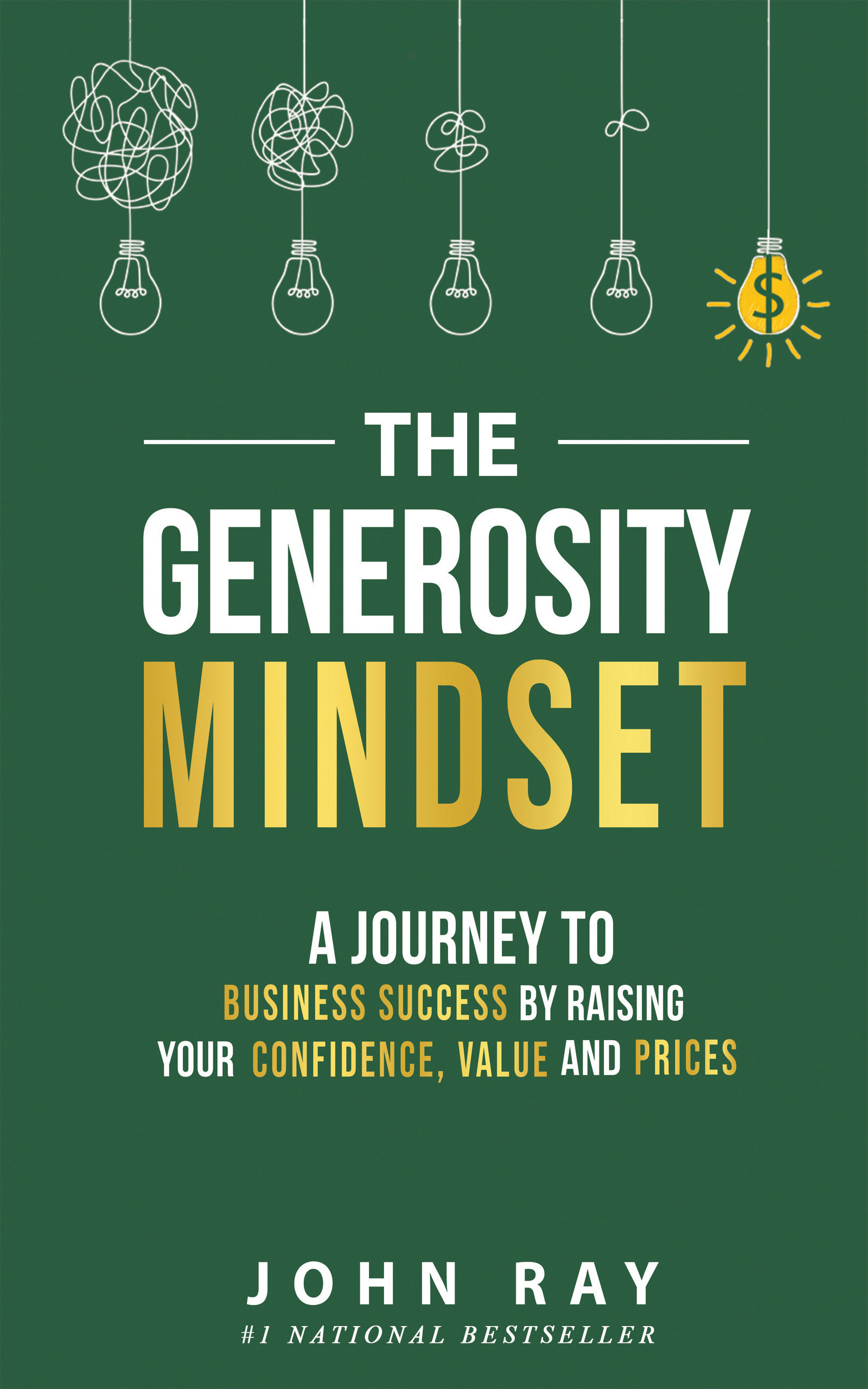
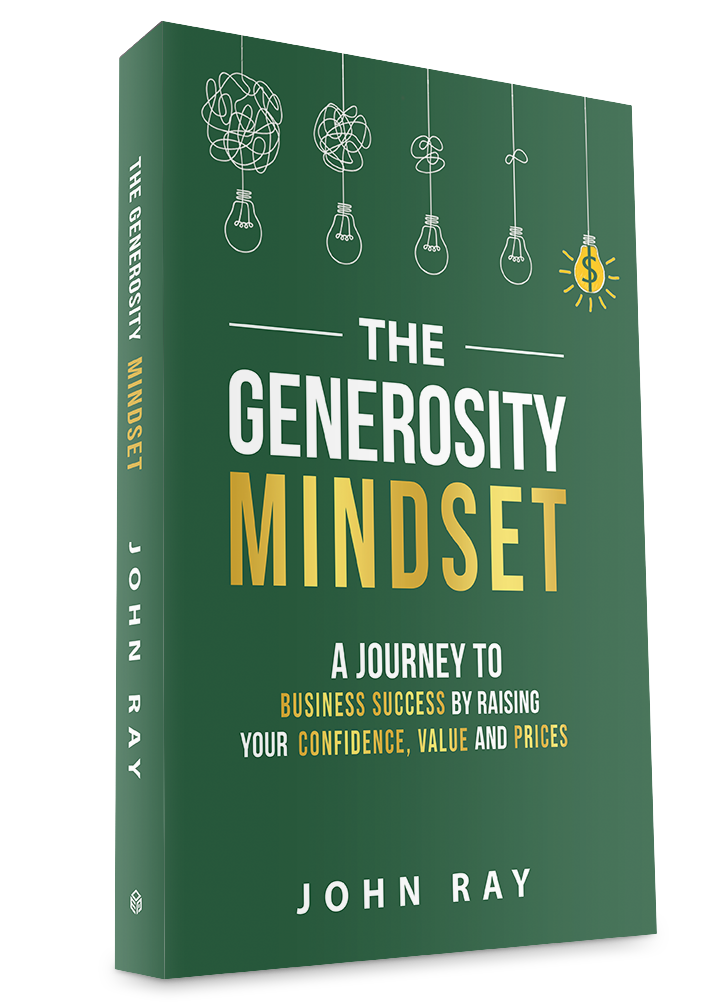
John is the national bestselling author of The Generosity Mindset: A Journey to Business Success by Raising Your Confidence, Value, and Prices.

Tagged With: Amy Comeau, Author, burnout, dealing with burnout, Healthcare, healthcare leadership, healthcare marketing, John Ray, Leadership, Leadership Lessons, North Fulton Business Radio, pandemic, team dynamics

Lessons in Resilience: How Personal Experiences Shape Business Success and Community Impact

May 22, 2025 by angishields

CBRX-052025-Feature
Cherokee Business Radio
Lessons in Resilience: How Personal Experiences Shape Business Success and Community Impact
Loading
00:00 /
RSS Feed
Share
Link
Embed

Download file

CBRX-052025-banner

Brought to you by Diesel David and Main Street Warriors

CherokeeSponsorImageDieselDavidMSW

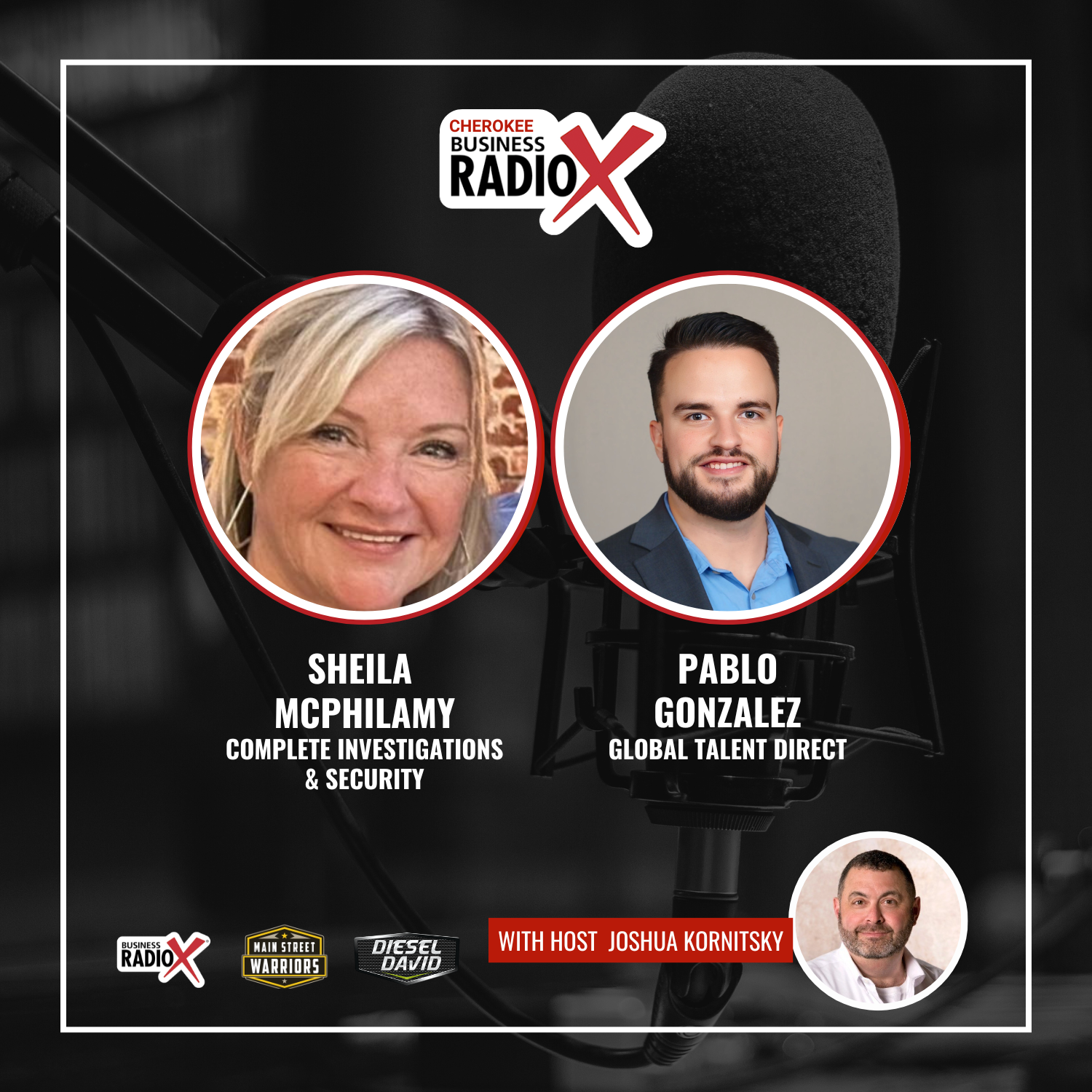
In this episode of Cherokee Business Radio, Joshua Kornitsky is joined by Jesslyn Rollins, Tom and Joanne Curtin, and Josh Monroe. Jesslyn, CEO of BIOLYTE, shares how her mother’s battle with breast cancer inspired the creation of a medical-strength sports drink. She emphasizes customer connection and the company’s growth. Tom and Joanne discuss their journey in real estate, transitioning from teaching, and the importance of coaching. They highlight their charitable organization, The Curtin Team Cares, which supports local educators. Josh shares insights on community involvement and personal development. The episode underscores the significance of community engagement and leveraging personal experiences for business success.

Jesslyn-Rollins-bwJesslyn Rollins has a track record of bringing ideas to life. When her father, a board-certified Anesthesiologist and Pain Specialist, asked her to head up sales for his new hydration solution, BIOLYTE®, the IV in a bottle®, she hit the streets and sold it out of her Toyota Highlander.

Seven years later, Jesslyn has worked her way up from Director of Sales to now the company’s CEO. Under her leadership, BIOLYTE has grown into a multi-million dollar business whose products are available in 20,000+ retail locations. Jesslyn’s leadership style is understanding, creative, and a tidal-wave of energy.

Honored as one of Atlanta Business Chronicle’s “Most Admired CEOs” in 2023 and one of Atlanta Business Chronicle “40 Under 40” in 2022, her main role is to ensure all aspects of the company are executing on BIOLYTE’s central vision – being a LYTE when our neighbors need us most. BioLyte-logo

BIOLYTE is committed to being a LYTE in our local community by supporting our neighbors. Working with hundreds of local charities, health centers, and schools, the BIOLYTE Family wants to make sure that everyone, especially the underdog, has a fighting chance. Since its beginning in 2017, BIOLYTE has donated over $1M bottles and over $100k to Cancer Charities in Georgia.

Jesslyn grew up and lives in Atlanta, Georgia. She graduated Magna Cum Laude from the University of Georgia and majored in Theatre and Communications with a minor in Human Development. Jesslyn teaches high school Sunday School at her church, Northside United Methodist, and is an active donor to her alma mater’s theater programs: The Lovett School, The College of Charleston, and UGA.

She loves animals (especially her corgis: Cornbread and Pork Chop), handcrafted cocktails, and stand-up comedy.

Follow BIOLYTE on LinkedIn, X and Facebook.

Curtin-Team-logo

Tom-Joanne-CurtinTom Curtin co-founded the Curtin Team in 2001, helping grow it into a top-producing group with over 2,000 home sales in sales.

A real estate investor and mentor, he’s passionate about financial freedom and work-life balance.

Tom lives in Milton with his wife Joanne and their two children.

Joanne Curtin, founder of the Curtin Team, has led the business to over 2,000 home sales since 2001.

She’s also President of Curtin Team Cares, the nonprofit she co-founded in 2018 to serve the local community.

Joanne lives in Milton with her husband Tom and their two children.

Follow The Curtin Team on LinkedIn and Facebook.

Corient-logo

Josh-Monroe-bwJosh Monroe is an Associate Partner and Wealth Advisor at Corient, a Registered Investment Advisor. Before joining Corient in 2019, Josh spent 8 years at a leading insurance and investment firm in a variety of roles including compliance and supervision.

Josh is passionate about helping his clients and making complex financial concepts easy to understand. Josh is a CERTIFIED FINANCIAL PLANNER™ practitioner and holds the Certified Investment Management Analyst® certification, administered by Investments & Wealth Institute and taught in conjunction with the Yale School of Management. He also holds the Chartered Financial Consultant designation and graduated cum laude from Georgia State University.

As a Chartered Special Needs Consultant designee, Josh works with families with special needs and understands the unique planning challenges they face. Through deep dialogue and thoughtful planning, Josh helps families develop a financial strategy tailored to the unique needs of their loved ones. Josh is a member of the fee-only National Association of Personal Financial Advisors (NAPFA). He has been a contributing author to Kiplinger.com and CNBC.com.

Josh and his wife, Danielle, live in Kennesaw with their daughter, Emma and son, Tyler. As a foster and adoptive family, they have welcomed more than 10 children into their home. They are active members at Woodstock City Church engaged as community group leaders.

Josh enjoys exercising, being outdoors, and playing music and games with his family.

Connect with Josh on LinkedIn.

Transcript-iconThis transcript is machine transcribed by Sonix.


TRANSCRIPT

Automatically Transcribed With Podsqueeze

Intro 00:00:07 Broadcasting live from the Business RadioX Studios in Woodstock, Georgia. It’s time for Cherokee Business Radio. Now, here’s your host.

Joshua Kornitsky 00:00:24 Good morning, and welcome back to Cherokee Business Radio. This is Joshua Kornitsky, professional iOS implementer and host of Cherokee Business Radio. We’ve got a wonderful group of guests here today. I want to start by welcoming them in and saying good morning to Jesslyn Rollins, the CEO of BIOLYTE. Good morning, Jesslyn. How are you?

Jesslyn Rollins 00:00:45 Good morning. I am so thrilled to be here. Thank you so much for having me.

Joshua Kornitsky 00:00:49 Thank you so much for being here. you know, you and I had the opportunity to meet at a couple of other networking events. And when you spoke at the Marietta Business association. And I was really, really struck by your story in the story of BIOLYTE. Would you mind sharing that with folks?

Jesslyn Rollins 00:01:05 Yeah, I’d be honored. So what? BIOLYTE is my family’s company. So a few years ago, my mom was diagnosed with breast cancer, and when she was going through her chemo treatments, she was very sick and very dehydrated to the point where she couldn’t keep up with chemo without getting IVs.

Jesslyn Rollins 00:01:23 So my dad is a board certified anesthesiologist and pain specialist. Oh, wow. He’s got years of experience tailoring his patients IV bags with nutritional supplementation to help them feel better. So when sports drinks, children’s rehydration products, electrolyte powders were not working, my dad used his experience to combine the science of an IV bag with the convenience of a sports drink. And today we’ve got BIOLYTE, the first medical strength sports drink on the market.

Joshua Kornitsky 00:01:56 That’s just incredible. And a tier local in Georgia.

Jesslyn Rollins 00:01:59 Oh, yeah. It’s literally down the road in Marietta.

Joshua Kornitsky 00:02:02 That’s fantastic. Most important question how is your mom?

Jesslyn Rollins 00:02:06 Phenomenal question. Mom is doing. Amazing. And she gets to have the best job in the world, which is being a grandmother to all of her four grandchildren and one on the way.

Joshua Kornitsky 00:02:19 That’s fantastic. Congratulations to your family. And I’m most important, congratulations to your mom. So over the course of that journey, I mean, are you someone that has always been focused on business and driven to to get the strongest, best products out there? How did how did your journey with Violet happen?

Jesslyn Rollins 00:02:39 So if you would have caught me in a business class in at UGA or the College of Charleston where I went, it was because I was interested in one of the boys in that class.

Jesslyn Rollins 00:02:49 It had absolutely nothing to do with or my background has nothing to do with business, So I’m actually a theater major.

Joshua Kornitsky 00:02:58 Well that’s great.

Jesslyn Rollins 00:02:59 And so I majored in theater from UGA. And I had a string of different careers. I was a professional actress. I worked at the Laughing Skull Comedy Lounge selling tickets. I was a recruiter. And obviously, throughout this entire experience, I was early 20s, living at home. Thank you to mom and dad. And my dad had kept Violet a secret in our family. And so he approached me and said, hey, Jess, I know the comedy thing really isn’t working out, so could you help me grow this business? And first you had to explain what the product was and that it was showing up. we had over 5000 bottles showing up at my parents home in Atlanta. Wow. And so I actually put those improv skills, those theater skills to, to use And started selling door to door to high school football teams. And now we’re in over 20,000 locations across the country.

Joshua Kornitsky 00:04:01 That’s absolutely incredible. And I follow you on LinkedIn, and I happen to see a few weeks back when when you shared from some time back, just an email from Publix, and I was wondering if you would share that kind of strange story.

Jesslyn Rollins 00:04:14 Yes. Okay, so this is freaking wild. It was. It is not normal in our industry whatsoever. Typically what has to happen is you have to bang down doors to get these retailers to take your email, take your phone call. And back in 2019, I got an email from our director of logistics, Kelli O’Hara. And Kelly drove trucks for 25 years. And so email was not his strong suit. But in the top of the email it said, hey Jessalyn, Publix is interested in bio light. And I was like, dang it, Kelly, what are you talking about? I thought he was getting my hopes up. Sure. And it was actually an email in my inbox from Publix corporate saying, hey, we’ve seen your performance in Atlanta, we’ve seen your performance in Kroger, and we want to bring Violet in to all Publix.

Jesslyn Rollins 00:05:04 And that’s been a relationship that’s been going on ever since.

Joshua Kornitsky 00:05:07 That’s fantastic. What a what a crazy way for them to reach out to a little non-traditional wild.

Jesslyn Rollins 00:05:12 I mean, that email came in at 235 on a Tuesday, and I called the buyer at 235 on a Tuesday.

Joshua Kornitsky 00:05:21 So as, as the Violet story has, has, been building over, I think, about eight years now. Yes, eight years. What are some of the things that you’ve learned along that journey?

Jesslyn Rollins 00:05:34 Oh, gosh. I mean, where do you want me to begin? but since I don’t, I can’t take up everybody’s morning. Sure. probably the number one thing that stands out is, and this is, it’s it’s going to be something that you hear over and over and over again. But I really want everybody to turn their ears on when I say this, because it truly there’s a reason why people say it over and over again, which is you have to stay connected to your customer. So in those early days, from the formulation to the label to our marketing pitch, everything was built from personal interactions with customers when I was sampling in Publix and in Kroger.

Jesslyn Rollins 00:06:23 So everything that you see today is built off of those interactions where buyer light has ever got off track. It was we it was because we did not keep that open line of communication with our customers. We got insulated. We got, you know, we got a big fancy headquarters and we thought we were making all the right decisions, just like for people making those decisions. And that’s really when we got off the mark, was when we were not truly engaged and truly listening to our customers. And so Violet has since bought because it’s medical strength, hydration. We’ve bought an ambulance and we have trademarked it the third, the Thirst responder.

Joshua Kornitsky 00:07:11 So so I had that to ask you about because I think that’s just fantastic. So the first responder and I think you told me you’re going on tour.

Jesslyn Rollins 00:07:20 That’s exactly right. So the first responder responds to the thirst. You’re talking about high school football games. You’re talking about run clubs anywhere where people are thirsty. We are there to, quench the thirst. And we’re really, really excited about that.

Jesslyn Rollins 00:07:37 And just having personal interactions with our customers in a fun and engaging way.

Joshua Kornitsky 00:07:41 That’s fantastic. And going back to that, right. The connection to your customers. How do your how do your customers usually reach to you? through what medium is the best way?

Jesslyn Rollins 00:07:52 So if you were to call by customer service line, you’re going to get a real person.

Joshua Kornitsky 00:07:56 Really?

Jesslyn Rollins 00:07:57 I I’m not that old, but I’m pretty old fashioned when it comes. And southern, I’m pretty old fashioned and southern when it comes to good old fashioned customer service. And so it it brings me so much joy. We’ve got this individual on our team, Dylan, who is just such a light. and when you call in, Dylan’s going to pick up the phone and answer questions for you. And so and if you look at the studies, like having somebody pick up, even if it’s on like the fifth ring, if somebody picks up whatever strife or issue that a customer is dealing with immensely gets lowered by just having somebody on the phone.

Jesslyn Rollins 00:08:39 And so I’m I’m happy about that.

Joshua Kornitsky 00:08:41 I’m I’m convinced on that one based on my own life experience, but that’s fantastic to hear that you’ve got someone dedicated to just listening to the customer, and when that feedback comes in, that’s something that’ll that’ll make its way to your ears.

Jesslyn Rollins 00:08:54 100%. I was just on the phone with Dylan, actually, before this, before my time with you. And so I’m really, really excited and constantly interested in what our customers are saying.

Joshua Kornitsky 00:09:07 So you also had shared with me that that there’s a rebranding coming for Violet.

Jesslyn Rollins 00:09:13 Yes. Okay.

Joshua Kornitsky 00:09:14 So was that driven by customers?

Jesslyn Rollins 00:09:16 Oh, dude. So. So here, here’s the deal. Violet has had. This is going to be Violet 3.0. So we rolled out with Violet. And how I like to describe our first packaging is it looks like if scrubs was a sports Drake, like it was super medical, not very inviting. And then through those customer interactions, we reiterated it to say the IV in a bottle right front and center because that’s what grabbed customer’s attention.

Jesslyn Rollins 00:09:46 So we got on the phone with our buyer at Qty. So we’re in QuikTrip. And what he was saying was was that I love your product. I think it’s phenomenal. I think it’s the best thing on the market for dehydration relief. And I personally use it, but I do not think that your product commands your premium price point with your packaging. You have got to update your packaging. And I took that and met with I got a cold email from this group called ultra. I think they’re up in Minnesota and they are. I mean, they have done Hershey’s, they have done Reese’s, they have done nature’s way in regards to packaging. And I knew that it couldn’t be just me in a spreadsheet anymore. It had to get elevated. So the new packaging really premium premium ises our product and that That nod to the ivy in a bottle. My favorite thing about the new packaging is the line that runs through right front and center of the bottle, because it’s that nod. It’s that, you know, visualization of that ivy in a bottle.

Jesslyn Rollins 00:10:57 And then on the back, it talks about very briefly and very succinctly, that Violet combines the science of an ivy bag with the convenience of a sports drink to create a medical strength hydration solution.

Joshua Kornitsky 00:11:10 That’s fantastic. And it.

Jesslyn Rollins 00:11:11 Looks So good.

Joshua Kornitsky 00:11:13 And is it in market now or is it coming shortly? When? When? So, should we look?

Jesslyn Rollins 00:11:17 Right now we’re in first and first out because we we wanted to prioritize sustainability and not just tossing a bunch of bottles. And so we’re working that through the market. And so the first product that you’re going to see on the shelf is more than likely going to be the mixed berry flavor. And it’ll be mixed and in with the old bottles. And really It’s the way that ultra and I have described it is. It’s not a revolution, it’s an evolution. So you’re not going to be confused on what is what. You’re going to know that it’s a natural evolution of our brand.

Joshua Kornitsky 00:11:50 That’s fantastic. So it’s it’s already starting to arrive in the market.

Jesslyn Rollins 00:11:54 That’s exactly right. I was packing boxes yesterday and, you know, some, some of the boxes that we were doing had a mix of the old product and the new product, and we were like, hey, it’s still a great product. It’s still the same thing, but it’s going to be a mix for now.

Joshua Kornitsky 00:12:10 That’s awesome. And you’re obviously a very hands on CEO, right? You’re in there packing boxes.

Jesslyn Rollins 00:12:14 Oh, absolutely. Yeah. That’s that’s how we got started. And that’s how that’s how we’re going to grow.

Joshua Kornitsky 00:12:19 So where can people find going back to the first responder. Because I just love the name where where can people is is there a way to follow it on on social? How will I know where it will be? Or is it just sort of a pop up surprise right now?

Jesslyn Rollins 00:12:33 So that is a great question. And that is something that we probably need to do a better job of, because right now it’s very much like the first responder went here and then it was there and then it was there.

Jesslyn Rollins 00:12:44 It’s very like past tense where we probably need to bring it for front and center and focus on the future of, like, where would you like to see it? and so let me get back to you on that answer.

Joshua Kornitsky 00:12:56 Well, and we will, on our side for Cherokee Business Radio, we’ll have your, social links and ways to reach Violet and yourself. Yeah. So by all means, if you’ll let us know when when you decide, we’ll update the page. We’ll even bring you back on just so you can share the adventures. You should probably document those so that we can turn that into a fun video later.

Jesslyn Rollins 00:13:18 That’s a great idea.

Joshua Kornitsky 00:13:19 I can’t wait to see where that goes. I think it’s such a clever concept and such a wonderful idea.

Jesslyn Rollins 00:13:25 And if if I could say one more thing. If anybody has an event, a tournament, a run, clubs, just a birthday party, something where you want to see the first responder. We are building the schedule as we go, so please keep us in mind if you would like.

Joshua Kornitsky 00:13:41 What about a charitable organization that maybe is doing stuff helping people with houses, things like that?

Jesslyn Rollins 00:13:46 Oh, I hear it’s a very sweaty job when people.

Joshua Kornitsky 00:13:49 So we’ll we’ll get to that in a minute. But I, I got an inside track I think. so I do want to turn just a little bit more serious for just a moment because this is something that that matters a great deal to both of us, I think. And we had talked about, as you were evolving with Violet, and as Violet itself was evolving, we talked about, sort of your approach with getting advice. Yes. And, and if you would share a I really liked your outlook around how you take advice or how you solicit advice.

Jesslyn Rollins 00:14:24 Yeah. So as you can tell, I’m the type of person that I love talking to people. I love different experience and different backgrounds. But when it comes to advice. a lot of times that’s tripped me up because I have asked so many people for advice and really, even if they’re a great person, they’re not qualified to be giving me that advice.

Jesslyn Rollins 00:14:47 And there’s a quote that I want to turn to of, like, never ask a person for directions if they’ve never left their house. And so I’m getting I’m getting very selective on like if it is a, if it is a specific marketing piece of advice I’m looking for or, a growth strategy that I’m looking for. Not every person is going to be suited to give the best advice. So focus. So highlight who that person is and then go and ask them.

Joshua Kornitsky 00:15:18 I think that’s great. Great guidance. The the I jokingly offer advice to new parents that I also advice offer advice to some of my clients, which is simply don’t take anyone else’s advice because no one else runs your company. You can see guidance. You can seek inspiration. But at the end of the day, you’re the one that’s going to make the decision, that’s going to steer the organization or the child or the destination ultimately is up to you. So as as captain of your ship, you’ve got to get that informed perspective and then decide for yourself.

Joshua Kornitsky 00:15:51 Yeah. Because nobody else runs your place. Well, I can’t thank you enough for sharing your story and the story of of bio life. And I’ll try not to laugh when I say first responder, but I love it so dang much. That’s great. I can’t wait to follow and see where it goes and where it’s going to be. And, you know. Jesselyn Rollins CEO Bilott. Thank you so much for being here with us. I hope you’re able to hang out. We’ve got some very, very interesting guests that are coming up next. Do you mind?

Jesslyn Rollins 00:16:17 Yeah. Duh. I’m here to learn. I’m gonna go get my notebook, actually.

Joshua Kornitsky 00:16:20 And one last thing. Shout out to all the theater kids. There absolutely is a bright, shining future down the way. You just have to be creative.

Jesslyn Rollins 00:16:29 And break.

Joshua Kornitsky 00:16:29 A leg and break a leg. There you go. Well, thank you. Jesslyn Rollins, CEO of BIOLYTE. Next in the studio is, I can honestly say, two people that have changed my life.

Joshua Kornitsky 00:16:41 I have in studio with me, Tom Curtin, CEO of the Curtin Team, and Joanne Curtin, the founder of the Curtin Team and also the president and co-founder of the Curtin Team Cares, charitable organization. So good morning and welcome to Cherokee Business Radio.

Tom Curtin 00:16:57 Good morning.

Joanne Curtin 00:16:57 Thank you so much, Joshua. This is exciting. I’m very impressed.

Joshua Kornitsky 00:17:01 Well, thank you guys for being here. And the reason I can say they changed my life is many, many years ago, when my wife and I had our first home. this. I don’t even remember the year. We. It sat and sat and sat and sat and I went to this place called Google and said, who’s the best realtor in Cobb County? And a month later, my house was gone. Which leads me to Tom and Joanne. So, Tom, Joanne, tell me, what is the curtain team?

Joanne Curtin 00:17:27 Well, the curtain team is a an evolution of, just me starting the real estate business and honing it into a life that I wanted to live.

Joanne Curtin 00:17:43 You know, a life worth living. real estate can eat you up. And you learn this as you’re in the business. but I got into real estate, in 2001 because I just was five years into teaching. I have a master’s in early childhood. Ed, and, I taught school for five years. Tom had me do all the QuickBooks and pay all the bills, and I was like, wow, we don’t have much left. After, you know, a year. having a master’s degree of teaching. And we were on the wedding circuit one after the other, every weekend was a wedding And everyone was telling me I should get into the business of real estate. And one of the people I really looked up to growing up was in real estate, and I just loved her life, loved her kids, and decided I would get into real estate and asked around. Got advice. People said have thick skin, have much reserves and always be closing. so anyway, got into real estate. I told my principal I wasn’t coming back and he was like, next time I see you, I’m sure you’ll be driving a Lexus.

Joanne Curtin 00:18:59 And I was like, whatever. That’s a pipe dream. but got into real estate in 2001, and started with a coach, and, just needed to know the skills because I’d never been trained how to be an effective realtor. so it started out with a coach, and then I just became very coachable and, and then grab Tom about a year and a half in and said, I really need help. And that’s when Tom jumped in. And I think 2002, you got your license. Tom. And Tom and I interrupt each other’s sentences constantly, and I know he’s ready to jump in.

Joshua Kornitsky 00:19:42 So, Tom, tell us, tell us. So Joanne brought us brought us up.

Tom Curtin 00:19:46 To.

Joshua Kornitsky 00:19:47 Joanne, brought us up to here making making the big elementary school teacher money and and from there, all all jokes aside, because Lord knows we’d all be up the creek without the elementary school teachers. But I do want to ask if if that early childhood education helped you in the real estate business.

Joanne Curtin 00:20:05 Well, yeah, I mean, it was, it’s definitely a, I mean, I, I love teaching.

Joanne Curtin 00:20:10 I mean, I’m very, I, I love to teach and I know what instruction should look like, and I have influence, and I don’t care what anybody tells you, but the best teachers out there have influence. How else can you get kids to learn during a school day unless you have influence? So influences is really, I think, what teachers have.

Joshua Kornitsky 00:20:32 So that’s great. So I’m sorry, Tom, I cut you off, not Joe. That’s all right. I wanted to hear your side of this story.

Tom Curtin 00:20:38 So, the. Well, the funny thing I always joke about is I was telling Joanne to get into real estate, but she had to hear it from somebody else. Of course, that’s how it works, right? With husband and wife. So, anyway, I was in the corporate world, and, worked for a large corporation that was getting acquired. And part of that acquisition was they laid off a lot of folks in the regional offices, which I was in Atlanta regional office.

Tom Curtin 00:21:06 my intent, because at that time, Joanne had not yet even had a closing. Right? I mean, she was brand new in the business, right. was to just go back into the corporate world, and keep that, you know, quote, steady Income. Secure income. Well, about a week after that layoff happened was when nine over 11 happened. and so all of the interviews, everything I had lined up, went, went out the window and I started to look around and say, well, I need to figure something else out. Like temporarily was always the the idea. So I did, briefly do mortgages. Had an acquaintance that had. So we thought that would work well together. Sure. and then in the background, I was starting to help Joanne, like, on the business side. Like. Oh, let me just do that. Let me do that. You know, I could do that marketing thing. I could do this, that. And I was taking on a lot of pieces.

Tom Curtin 00:21:58 to where one day we looked up and I was like, you know, I feel like we’d make a lot more money if I just went all in on this, with you. And that’s kind of how it started. So we always had that sort of division of labor, right? Where I was like the back end guy.

Joshua Kornitsky 00:22:13 And clear accountability. We call that clear accountability.

Tom Curtin 00:22:15 So it was like, you go keep doing what you’re doing and I’ll clean up all these messes on the back side, right. Was how we started.

Joshua Kornitsky 00:22:23 So one and the team’s been successful. It’s it’s grown and grown and and and that leads me to the question is, is it? It grew beyond Tom and Joanne. And you actually did start a team. Why why did you start a team.

Joanne Curtin 00:22:37 Well, we so I mentioned the coach earlier and I’m I’m a coachable person. I think that’s why I’ve loved education so much. And every coach I ever had, and I’m a maximizer like that’s my strength finder. If anybody does strength finding, that’s one of my high ones activators another.

Joanne Curtin 00:22:54 So I like to create the chaos. That’s why Tom, you know, cleans it up. But the the coaches have always helped me find where I can maximize time, money, talent. And I would just write all those down on a piece of paper. And then on the other side was everything I was terrible at. Right. Or that wasn’t working. And I would pull the paper off. Rip the paper in half and create a new job with that piece of paper. And that that first rip was Tom’s role when he came on board. Because I didn’t know what all of these things were in inspections. And so Tom did all of my inspections. And in the real estate world, everybody was like, I need a Tom. Like, because we have to deal with inspections. Nobody likes that. Sure. so that was kind of the first rip. And then we created a lot of momentum with just that one, leverage piece. And then every year the team was created because now Tom had to maximize.

Joanne Curtin 00:23:52 Now we’re both in coaching and the papers keep getting ripped. And then the the team has to grow to actually service clients. Well or else you’re just not doing you’re not even maximizing what you could be doing for your clients 100%.

Joshua Kornitsky 00:24:07 And Tom, you and I had talked previously to to some level, and I know how important the leadership aspect of it is to you and that coaching in that shaping of your team. So can you speak a little bit about that and how you work the internal mechanism to keep it running?

Tom Curtin 00:24:24 Yeah. so I mean, a couple of things I’ll say. I think, like Joanne said, we’ve always tried to fulfill our strengths, right? And work on our strength. and we have different skill sets. So I’m. I’m a achiever on the strength finders, Joanne. Number one is, activator. So those two work well together. Yeah. as you know.

Joanne Curtin 00:24:45 There’s a book called Rocket Fuel.

Joshua Kornitsky 00:24:46 I read that.

Joanne Curtin 00:24:48 That’s that’s actually our marriage.

Joshua Kornitsky 00:24:50 Okay.

Joanne Curtin 00:24:50 Yeah. Or that was building our business.

Tom Curtin 00:24:53 So, you know, with that, I there’s certain things that I can do that I have more patience or tolerance for. So the one on one kind of coaching of agents. And Joanne loves to teach, but to a certain extent. Right. Like, she’s going to she’s going to teach, but not necessarily do the one on one coaching. Right? So that was something that I stepped into. I think also from a, from a leadership standpoint, just the hiring. Right. And kind of the systems and creating creating the job roles that we’ve created over time. really the like the business building side of it has always been like my side of it. Right. Joanne’s super, great at sales, high energy. You know, people love to follow her, including myself. Right.

Joanne Curtin 00:25:48 And I love I love challenges. So I would kind of run towards a challenge. but Tom, naturally, is like a supporter like that. Supportive patience.

Tom Curtin 00:25:58 Right. So I don’t think it was always like in the beginning it was to be successful.

Tom Curtin 00:26:03 Right? And like, let me help her do that. And then at some point, she didn’t want to be the one going out on and doing the sales side of it. And we had to figure that out. And that was, you know, part of what I had to figure out was like, okay, how do we keep the business going when Joanne’s not the one sitting at the kitchen table anymore?

Joshua Kornitsky 00:26:20 Well, and that leads to a great question, which is, you know, what happens. How do you prepare for a future where Tom and Joanne maybe aren’t at every kitchen table? Well, because I think we’re probably there already.

Joanne Curtin 00:26:33 Well, you can’t shortchange it because I tried. I tried a.

Joshua Kornitsky 00:26:37 Lot. There’s no shortcuts to what you’re saying.

Joanne Curtin 00:26:39 I had babies. I mean, I had I don’t know how we did it, Tom. We did it, but. Wow. you just can’t shortchange it. And and I did try. So at the end of the day, you cannot expect a client to trust someone that you do not trust.

Joanne Curtin 00:26:58 And you have to genuinely say, this person in your home with me right now is better than I am at this. I know because I’ve trained them and they’ve done more of this than I actually have. So until you really believe that that person is going to be better at whatever it is that you are, then you don’t have the right to be to be leveraging them. and, you know, like I said, I, I tried that, but then it always came back and then I had to finish it up. It always came back to me. So I got my job back. And the minute you get your job back. You’ve taken their resignation. I mean, they have to go because they can’t. They just don’t have the trust.

Joshua Kornitsky 00:27:40 Tom.

Tom Curtin 00:27:41 yeah, I mean, I, I think to just with that growth, I mean, it’s been painful in some cases because we do lose people, right? There’s turnover. It’s natural. You have to deal with that. and you have to be willing to, you know, go through it multiple times.

Tom Curtin 00:27:58 And in our case, you know, it took, probably going through that 2 or 3 times to find kind of the right mix of having Joanne being able to step out confidently and not get pulled back in. I feel like we’re there now. but, you know, it took a little bit.

Joshua Kornitsky 00:28:15 Well, it it makes sense. You’ve got to kind of iterate till you get there. But but, you know, earlier Jessalyn said something that I happen to know is a hot spot for both of you and in a very positive way. Just. And you had mentioned how important it is to be connected to your customers. And I know as a former curtain team customer, I am I am reached to consistently, but not annoyingly. And I want to say that in front of you guys because it’s not too much. It’s really, I think, a well-honed just enough. Right. So I know that if I have a need, there’s someone there. And if I think I have a need, there’s somebody there.

Joshua Kornitsky 00:28:56 But it’s not like, hey, how are you today? So can you talk to what what brought you guys to that level of customer focus?

Joanne Curtin 00:29:05 Oh, gosh. I feel like, I mean, I’m, I the reason I didn’t love teaching so much is because you would teach the children, and then they would leave, and then you’d have to start again, start from zero, teach them how to read again. But with clients like there’s relationships and you have those for so long. And I’m just like, I had a pencil box when I was like in third grade and it said third grade to college. Like, I believe in loyalty, like, and just staying the course and never giving up. So I expect like all these relationships, to stay there and I want to be able to help them. So I took it personally and I feel like taking your business personally. Some people think that’s a negative. I think everything should be taken personally.

Joshua Kornitsky 00:29:56 It’s hard not to.

Joanne Curtin 00:29:57 Yeah, because they’re people.

Joanne Curtin 00:29:59 So I want to know, like what can we do to help? That’s basically what we do. What can we do to help? Hope that we did care calls after Covid. That was just one of the most humbling, you know, experiences to call and just listen. So anything you want to add to that, Tom?

Joshua Kornitsky 00:30:18 Oh, well, so so from there, right about that caring, we, we arrive at curtain team cares. So so would you tell us what curtain team cares is about and who it helps?

Tom Curtin 00:30:31 so we started Curtain Team Cares in 2018. And prior to that, you know, we were always leaning into the community and doing different things, but it was sort of a shotgun approach, like, you know, we were wherever somebody raised their hand, we were kind of all over the place. And Joanne and I had talked about it and decided, you know, maybe we should form our own nonprofit and try to really figure out a course. and so over since 2018, we’ve, we’ve developed what we feel like is our niche, right, with what we do.

Tom Curtin 00:31:05 so we definitely focus on local, right? It’s very localized. And what we started last year, and do every year, I’ll let Joanne dive into a little bit more, but it’s called our home refresh project. and it does tie together her background in education because we do focus on giving back, to local educators. but also then ties into real estate. So.

Joanne Curtin 00:31:30 Yeah. Well, and when I look back, you know, 2018 was a dark time in real estate. I mean, it was just it was just apparently it was, a great reset when you look back. But at the time, it just felt very hard. And there was a lot of change going on. And the that’s when the nonprofit started. And I feel like that was the natural place for like a helper to go, when sometimes you were helping in your business, but nobody appreciated it. Everybody was beating you down. And this nonprofit was a way to just love what we were doing. And I think it was, you know, it was a healing time, in a way, for when I only when I look back on it, I didn’t quite know what was happening at the time.

Joshua Kornitsky 00:32:18 It’s always clear when you’re in the rear view.

Joanne Curtin 00:32:20 Right. And that was the time that I reached out to just local schools, and I was a mentor to just an individual student. I felt like I needed to help somebody because I needed to feel better. And that was just a natural. I was doing it just with one student. And then we found out our business was trying to create this within multiple, ways to help teachers. So the Home Refresh project, we were, really inspired by, an agent in Boise, Idaho that does this in her home town. And we did a zoom call with her with our team, with our board know, with our team, actually, and then shared it with our board. But, the home refresh is it’s tied into, for us local educators and staff members in our Roswell Area School district. Okay. And anyone can nominate themselves. they can nominate a coworker, a fellow teacher. It can be anonymous. You can put your name on it.

Joanne Curtin 00:33:24 We get both. And, we interview them once we’ve chosen the winner, which has to have a few criteria with it. kind of location’s a big one because this home refresh project is completely donation based. There’s no money that, is needed from the recipient. the vendors give their time, tools, and their labor at no cost. And we take donations to provide furniture, what have you that the the winner ends up needing. And so the refresh is really to interview the winner and ask, what do you feel like you need in your home right now? And it’s not up to us. We see homes every day and I could I could guess what I think you need, but I would never because it’s not what they need. They need something completely different. or they may ask us, you know, some, some advice, but mainly it’s very clear what would improve their property. And, last year it was more of a home office place to actually have some respite, you know, come and, be surrounded by family photos of family members.

Joanne Curtin 00:34:38 And, it was it was so moving to know how we helped them. And one of the, participants and volunteers knew, knew the backstory of, the family and how to specifically help in ways that we never did. So if someone is, has a relationship to the recipient, that really brings some Intel to level up the experience that we provide.

Joshua Kornitsky 00:35:08 And if, if, if an existing. So you would share, Tom, that you leverage your existing vendors that that you work with now.

Tom Curtin 00:35:15 Yeah. So they, you know we we lean into what depending on what they need in this last one, you know, was a lot of painting, interior or exterior, needed some things fixed. We had to put in a new sidewalk.

Joanne Curtin 00:35:29 and they did it in the rain, in the freezing cold. And I have videos, I tell you what. And they weren’t that thirsty at the time, but we will. I mean.

Joshua Kornitsky 00:35:38 But when they were done, they.

Joanne Curtin 00:35:39 Were. Yeah, this is in November when we do it.

Joanne Curtin 00:35:41 So we do it really kind of home for the holidays. I mean, everyone’s in a very giving spirit. And that was just a, a little aside of.

Joshua Kornitsky 00:35:50 So when do you open your nomination?

Tom Curtin 00:35:52 It’s open now. so yeah, we’re we’re receiving nominations now with our goal is August 1st to August 1st. We’ll choose, you know.

Joanne Curtin 00:36:01 The project and the way that the way that the word gets out. I go to peer bar, and my peer bar always ends the workout with, you know, reminding everyone to make nominations or donate if they choose. And, but that’s only because one of our board members asked them to to put out the QR codes for donation. But the way it’s run is the we have liaisons on the board, and someone is a liaison for each school, and they communicate directly with the principal. And we do throughout the year, whether we need to fund a field trip or a sleepover. You know, of a slumber sleepover field trip that the fifth grade has just recently done.

Joanne Curtin 00:36:41 But then they, they put it in their newsletter and put out in their, teachers. I call it the tornado room. And, you know, they’re the ones that share the message. And then we take donations directly. They email us directly with their nomination form.

Joshua Kornitsky 00:36:57 Well, and that brings up a great point, right. If if someone does want to donate or if someone is is in the contractor space and wants to offer their time, what’s the best way for them to get Ahold of you to to reach out if they want to send money or donate time?

Tom Curtin 00:37:11 Yeah. I mean, we’ve got all the details there in the forms on our website. team cares.org. Okay, perfect. The website.

Joshua Kornitsky 00:37:20 So that’s just fantastic what you’re doing with certain teams care. And as we wind down, there was one other thing that I had really wanted to ask about, and I want to tie it into a question and simply say, you know, what’s next for the curtain team? And I know that you talked about Tom, investing in real estate.

Joshua Kornitsky 00:37:41 I wanted to give you a chance to share what you’re doing there.

Tom Curtin 00:37:43 Yeah. I mean, that’s that’s really was kind of the start of it. Joanne read the book. Rich dad, poor dad. when she was still teaching. And that led her to say I, you know this. Something’s got to change. we have to build. Well, when we originally got into real estate, we’ve always looked at it through the lens of investing. and over the years, as, as we’ve done our own personal investing, we have taught clients, we teach, have taught classes on this, we’ve helped a lot of clients take that first step into investing in real estate. I think everybody should own at least one investment property. and so, you know, for us, we personally built a real estate portfolio that, really will will allow us to step back, you know, from the real estate sales if, if and when we choose to tour.

Joshua Kornitsky 00:38:36 And I gather that that even now, regardless of the economic times, real estate, sort of one of those things that doesn’t go away.

Tom Curtin 00:38:43 No.

Joanne Curtin 00:38:43 Oh, even more, I mean, the I mean, this market, if anything, should have showed people why they should have invested in what was inflating. Hello. It’s all about the property I need.

Joshua Kornitsky 00:38:53 I need a time machine.

Joanne Curtin 00:38:55 Yeah, and.

Joshua Kornitsky 00:38:56 It’ll make a big.

Joanne Curtin 00:38:57 Difference. It’s not going backwards. It’s not going.

Joshua Kornitsky 00:38:59 Back. Yeah. No, it rarely does. Well, Tom, Joanne, thank you guys so much from the curtain team for for sharing your insight. And as mentioned earlier, we’ll have all of the appropriate contact information for the curtain team for curtain time cares with phone numbers and emails on our site. But if you’ll go ahead and give us your website so that we can get people to you.

Tom Curtin 00:39:21 Yeah, it’s just curtin team.com. So c u r t i n t e a m.

Joshua Kornitsky 00:39:28 That’s fantastic. And I see I misspelled it here on the paper but nobody sees that. Put me.

Tom Curtin 00:39:32 Right.

Joshua Kornitsky 00:39:32 Well, I apologize for the misspelling. I found out a few weeks ago I had a guest on who I’d known for two years, and I’d been saying his last name wrong the entire time.

Joshua Kornitsky 00:39:40 So we all live and learn. But thank you for your graciousness. Thank you guys for sharing your incredible story. I really appreciate it. Thank you. And if you’re able to, please stay. We have one more guest, and I’m so excited to have him. So. Josh Monroe. Josh Monroe is is a financial advisor that works with the loved ones of special needs folks, from the organization Corriente. And I have to before I even say anything. The first day that I began my new life as as an iOS implementer, I had to get out of my comfort zone and walk into, 3 or 4 networking meetings the first day, the very first human being I met on the very first day at the Kennesaw Business Association was Josh Monroe. Josh, tell us about yourself.

Josh Monroe 00:40:30 Yeah, well thank you, Joshua. I’m so excited to be here and just such wonderful stories that that we’ve heard this morning. yeah. So I, I’ve been in the financial planning business for about 15 years now.

Josh Monroe 00:40:43 And a few years ago really, Lee, started honing my focus on serving families that have loved ones with special needs, most often children. typically middle school and high school years is when parents reach out to me and we start that planning. so I have done planning for years for families normally focused on retirement or helping send kids to school and, now get to help families prepare their children with special needs for a lifetime of support and, just stability.

Joshua Kornitsky 00:41:20 It’s it’s incredible work that you do. If I can ask you to, to help those of us who don’t live in that universe to understand what are some of the unique financial needs and the planning needs for for these families?

Josh Monroe 00:41:34 Absolutely. So I mentioned retirement and, you know, education planning, those priorities still exist for families that have a child with special needs. But very often there’s a reality that that child may never be financially independent. So that adds a huge additional responsibility for mom and dad. They’d like to be able to retire, but now they’ve also got to make sure their child can be supported for their whole life.

Josh Monroe 00:42:00 And what we’re seeing with a lot of advanced treatment and medical care, a lot of these kids are living full life expectancy.

Joshua Kornitsky 00:42:08 Which is wonderful.

Josh Monroe 00:42:09 Absolutely wonderful. But that means there could be a time when Mom and dad aren’t here anymore, but they want to make sure that there’s still resources and someone watching out for their child. so we also move into government benefits. There’s some great government benefits. A lot of them are outdated and grossly in need of some updating for inflation. but a lot of people don’t even know what’s available or what their child might qualify for, so there’s some education around that. And then very importantly, how assets are left for an individual with special needs. Special needs trusts are really important for several reasons. One, it can protect the child from being taken advantage of by someone else. Sure, maybe the child doesn’t really have the ability to manage their money on their own. So it’s placing a, you know, conservator or somebody in that role to oversee the money. And also a lot of these government benefits have very low asset caps.

Josh Monroe 00:43:12 So for example SSI, which is supplemental Social Security income, if you have more than $2,000 of cash, you now have too much money to qualify for that. Pretty modest benefit.

Joshua Kornitsky 00:43:27 Absurd.

Josh Monroe 00:43:28 So a special needs trust can be a way that grandparents can leave money for a child, or mom and dad can leave money for a child and it not end up hurting them by now, kicking them off of a government benefit that’s really vital for their daily life.

Joshua Kornitsky 00:43:41 Sure, that that makes perfect sense. So, Josh, how did you get into this? What? What brought you here?

Josh Monroe 00:43:46 Yeah, it’s a good question. There are really two things, that happened around the same time in my life. in 2017, my wife Danielle and I became foster parents. And over the course of the years that we’ve, had kids in our home, several of them have had some level of special needs. So we saw firsthand just the, demand of juggling multiple therapy appointments and additional doctor’s appointments. And it’s a lot when, you know, when children in foster care, the state is paying for those, but it’s still just a lot emotionally to manage.

Joshua Kornitsky 00:44:24 Absolutely.

Josh Monroe 00:44:25 Much less when you have the financial responsibility as well. And around the same time, in my financial practice, I got introduced to, a couple that had a 17 year old son with special needs. And when we started talking, all of their questions were around what was going to happen for him next and what would happen to him if Mom and Dad weren’t here. And I really wanted to be able to help them, and I didn’t have all the answers. So I reached out to some some other people that work in this space, did a lot of research, and as we solved some of those big problems together, I saw a emotional weight lifted from those parents shoulders that had never seen before. Yes, planning for retirement can be impactful, but the mom told me for 17 years I’ve been lying awake at night worried about what’s going to happen to our son, and now we have some of those answers. And that’s when I knew. This is the type of work I want to do if I can make that difference for more families.

Josh Monroe 00:45:28 So I went and found a designation program, Chartered Special Needs Consultant, and it builds on the Certified Financial Planner program. So you’ve got tax planning, insurance planning, retirement planning. But it starts to get into understanding special needs trusts and the importance of them. I don’t draft these legal documents, but I need to be able to help my clients understand how important they are and the the purpose that they’re going to serve. And then it also educated me on a lot of these government benefit programs like SSI that I mentioned, some other Medicaid and other waiver programs, and that has helped me educate my clients on a lot of what’s out there. And it even opened a lot of, conversations on the emotional side of how to advise parents when they’re carrying this very heavy.

Joshua Kornitsky 00:46:24 I can’t imagine what an emotional dialogue it’s going to be.

Josh Monroe 00:46:27 So, so it’s been about four years now that I’ve really focused on this is where I want to grow my business. This is where I want to have an impact.

Joshua Kornitsky 00:46:35 So a lot of thoughts come to mind.

Joshua Kornitsky 00:46:39 The first one is, is is just because this is, for many people, an understood but abstract concept. The need for a chartered special needs consultant. Right. Can can you without obviously tying to anybody’s specific personal case, can you share with us where where in your experience doing this where this type of planning made a made a difference?

Josh Monroe 00:47:03 Yeah, I’ll share a story. I’ve worked with a family whose child was late in high school. special needs. Probably not going to be financially independent. Very good chance that there will be some work income for their child. But we had to have the conversation around guardianship. And when this child turns 18, if mom and dad don’t take any steps, otherwise this individual is viewed by the state of Georgia as a full fledged adult with all the responsibilities and decision making. So an important question that I ask families once their child is 15, 16, 17 is, you know, are you comfortable? Do you feel like they have the mental capacity, the emotional capacity to make these decisions? Or should we engage with a, you know, a special needs attorney to really investigate the need for guardianship and guardianship just means that mom and dad or another, you know, named loved one can continue to be that primary decision maker.

Josh Monroe 00:48:12 And that can be really important for for medical treatment for this child.

Joshua Kornitsky 00:48:16 All kinds of.

Josh Monroe 00:48:17 Decisions. You’ve got financial decisions, medical treatment. You know, once you turn 18, if you say, I don’t want to go to that doctor’s appointment anymore.

Joshua Kornitsky 00:48:24 You don’t have.

Josh Monroe 00:48:24 To. You don’t have to. You don’t have to take your meds. So, so just walking through that decision and that can be a really tough conversation. you know, so often these parents have focused on the positive milestones, the things that their children have overcome and achieved. And for a few moments, they you need them to stop and focus on the things that their child may not be able to do for themselves.

Joshua Kornitsky 00:48:51 Which is a hard discussion.

Josh Monroe 00:48:52 It’s a really hard discussion, but it’s so important. so this particular family, we decided we we did need to pursue guardianship. And then, you know, you go through the conversations of who should that be? Who should the successors be? And a very common, conversation we have is the desire to name a sibling as a contingent or a backup successor.

Josh Monroe 00:49:17 And that can be the right fit for a lot of families. But if this sibling is 22 or 20.

Joshua Kornitsky 00:49:24 They’re not any better equipped to handle.

Josh Monroe 00:49:25 Right. So also just helping families think through that. And you know, there are, you know, professional trustees that that can step into those roles. And there’s a lot of, different solutions there. But I think it’s just helping families think a few steps ahead of where they may not have thought before, and then trying to help them make the right decision for their child. with all planning, we want to have flexibility because our hope is that their child can be as independent as possible. So we don’t want to put so many guardrails in that, well, now they can go get a job, but we’re going to choose not to know. We always are looking for more restrictions. We can take off the plan and support their independence. So, this family now, they’ve found a college program that is working for their child. And, you know, we’re just excited to see what the future holds.

Josh Monroe 00:50:20 But we’ve walked through some of these big decisions. Yeah. Big milestones.

Joshua Kornitsky 00:50:24 Thank you. That I think that puts it in context to help people sort of digest and understand it. So. So it leads me to to my last two questions. And the first one, may sound crass, but it’s just reality, right? So do I have to be a millionaire in order to make this work? Because it seems like there must be a lot of, financial challenge.

Josh Monroe 00:50:44 Yeah, that’s a great question. And no, you don’t have to have $1 million or more to to have a conversation with me or even to do a lot of this planning. there are a lot of government resources that can actually be easier to qualify for when you have less assets. That’s great. but there’s still so much red tape. And just navigating that, that’s really important. and I’ve had the conversation with some families that more money doesn’t always solve all the problems. One of the interesting things about Medicaid is they have some unique access to certain therapies or certain day camps that you can’t get to on private pay, and that can be a humbling conversation for a mom and dad that have worked really hard to build up a lot of money, thinking that’s going to solve all of their at least financial trouble, and they still need to find ways to qualify their child for Medicaid.

Josh Monroe 00:51:37 so I’m always happy to have a conversation with anybody. I, really believe that when you help others, good things are going to happen, and I agree. I’m just so passionate about helping this, this population that if there’s anything I can share that opens a new avenue or a new benefit that that could help them, I’d always love to have that conversation.

Joshua Kornitsky 00:52:00 So that brings me to the last logical question for you, which is what is the best time for a parent or a loved one connected to someone with special needs? When should they reach out? Should they wait till they’re 1516 years old?

Josh Monroe 00:52:14 In general, the earlier the better. But the reality is, I’ve noticed the trend is in those early years, there’s so much just Understanding what the diagnosis is and getting all of those therapy appointments and the IEPs at school, that that’s really overwhelming. So I’ve found that middle school and early high school is most often when parents have the just the mental bandwidth, the emotional bandwidth to start planning long term and get a little bit more perspective than just making it day to day.

Josh Monroe 00:52:46 so as as their children start to reach those early teen years, middle school, I think that’s a great time to engage. But like I said, the earlier the better. You can always do more planning.

Joshua Kornitsky 00:52:56 Sure. Well, Josh Monroe, certified financial planner, but chartered special needs consultant with Orient. I can’t thank you enough. How how should people get in touch with you if they. And again, we’ll have it on our website. But if you would share.

Josh Monroe 00:53:10 Yeah, absolutely. You can reach out to me directly. My phone number is 400 485-7109 eight. Or you can email me at Josh Centcom.

Joshua Kornitsky 00:53:23 And Monroe is Monroe. That’s right. Showing that I can spell some names correctly. And as my last name is Quincy, I think I’d pay more attention. My apologies to all. Josh. I can’t thank you enough. So, we’re we’re going to wrap up for today, but I want to thank all of my guests today. Jessalyn Rollins, CEO of firelight, Tom Curtin, Joanne Curtin of the Curtin team.

Joshua Kornitsky 00:53:47 Thank you both. And Josh Monroe, certified financial planner and chartered special needs consultant. I, I am humbled by what you’ve shared, but, feel really, really positive to know that there’s help out there for folks. So this has been another episode of Cherokee Business Radio. I can’t thank you enough for tuning in, and I look forward to seeing you next time.

Tagged With: BIOLYTE, Corient, THe Curtin Team

You Don’t Have to Be Perfect to Be Powerful, with Diana Fritz

May 21, 2025 by John Ray

You Don't Have to Be Perfect to Be Powerful, with Diana Fritz, on The Price and Value Journey podcast with host John Ray
North Fulton Studio
You Don't Have to Be Perfect to Be Powerful, with Diana Fritz
Loading
00:00 /
RSS Feed
Share
Link
Embed

Download file

You Don't Have to Be Perfect to Be Powerful, with Diana Fritz, on The Price and Value Journey podcast with host John Ray

You Don’t Have to Be Perfect to Be Powerful, with Diana Fritz (The Price and Value Journey, Episode 133)

In this episode of The Price and Value Journey, executive coach and author Diana Fritz shares the story behind her hard-earned wisdom. She talks about how surviving cancer, navigating single parenthood, and leading in high-stakes environments taught her that strength is not about perfection. It is about showing up with honesty, clarity, and conviction, especially when life gets messy.

Diana and host John Ray explore how embracing your own imperfection can make you a more powerful leader and service provider. They discuss emotional resilience, self-leadership, and the quiet confidence that comes from doing the work no one sees. If you have ever felt like you needed to have it all together to lead, sell, or grow your business, this conversation will help you let go of that belief and replace it with something more truthful and lasting.

The Price and Value Journey is presented by John Ray and produced by North Fulton Business Radio, LLC, an affiliate of the Business RadioX® podcast network.

Diana Fritz, Leadership and Change Consultant

Diana Fritz
Diana Fritz

Diana Fritz is a dynamic executive leader, cancer thriver, and passionate advocate for authenticity, resilience, and positive impact.

With over 25 years of experience spanning executive leadership, operations, human resources, business planning, and technology, Diana has built a reputation for fostering teamwork, driving organizational health, and leading with influence, not just a title.

A member of the Maxwell Leadership Executive Program, a Corporate Facilitator, and a Certified DISC Consultant, Diana is dedicated to empowering individuals and organizations through open, engaging, and values-driven leadership. Her mission is to Uniquely Imperfect. Uniquely Qualified. : Overcome Adversity, Escape the Imperfection Mentality, and Journey from Self to Serve, by Diana Fritzcreate a meaningful impact and ensure every person she encounters feels valued.

Diana is the author of Uniquely Imperfect. Uniquely Qualified: Overcome Adversity, Escape the Imperfection Mentality, and Journey from Self to Serve. In her inspiring book, Diana shares her powerful journey through cancer, blending personal experience with reflection and practical guidance. Her message is both vulnerable and empowering: we all have some “type of cancer,” and our flaws often make us the best leaders and servants. This book encourages readers to navigate emotional and high-stakes decisions with grace, to recognize their inherent value even in the midst of struggle, and to reframe adversity as a source of strength and a light for others.

Beyond her professional achievements, Diana is a devoted wife, mother, and committed volunteer. She thrives on sharing insights about leadership, resilience, and navigating challenges with authenticity.

Website | LinkedIn

Key Takeaways from Diana Fritz in this Episode

  • You don’t have to be perfect to lead with impact. Diana shares how her experiences with cancer, single parenthood, and executive leadership taught her that power comes from showing up honestly, not flawlessly.

  • Hardship can sharpen your purpose. Instead of weakening her, Diana’s challenges gave her clarity about what matters and how she wanted to lead and serve.

  • Authenticity builds deeper trust than performance ever will. Clients and teams don’t need polished personas. They need someone who’s real, grounded, and present, even when things are uncertain.

Topics Discussed in this Episode

00:00 Introduction to Diana Fritz
02:38 Diana’s Personal Journey with Cancer
05:55 Mindset and Adversity
09:23 Influence of Viktor Frankl and Stephen Covey
13:10 Applying Lessons in Leadership and Life
16:59 Resilience and Reflection
24:33 The Gold in Our Broken Edges
26:01 Embracing Uniquely Imperfect
28:45 The Power of Authenticity
31:16 Overcoming Self-Doubt
34:03 Redefining Normal
35:09 Confidence in Imperfection
39:47 Practical Tips for Imperfect Leadership
42:13 Connecting with Diana Fritz

About The Price and Value Journey Podcast

The Price and Value Journey is a show for expert-service professionals who want more than formulas and quick fixes. If you’re a solo or small-firm provider—consultant, coach, attorney, CPA, or fractional executive—you know the real work of building a practice goes far beyond pricing. It’s about finding clarity, showing up with confidence, and learning how to express the full value of what you do in ways that clients understand and appreciate.

The Price and Value Journey Podcast with host John RayHosted by John Ray, business advisor and author of The Generosity Mindset, this podcast explores the deeper journey behind running a services business: how you think about your work, how you relate to clients, and how you sustain a business that’s not only profitable but deeply fulfilling. Yes, we talk pricing, but we also talk mindset, business development, trust, empathy, positioning, and all the intangible ingredients that make a practice thrive.

With solo episodes and conversations featuring thoughtful guests, The Price and Value Journey is a companion for professionals who are building something meaningful. Produced in partnership with North Fulton Business Radio, LLC, an affiliate of Business RadioX®, the podcast is accessible on all major podcast platforms. The complete show archive is here.

John Ray, Host of The Price and Value Journey

John Ray, Author of The Generosity Mindset and Host of The Price and Value Journey

John Ray is the host of The Price and Value Journey.

John owns Ray Business Advisors, a business advisory practice. John’s services include business coaching and advisory work, as well as advising solopreneurs and small professional services firms on their pricing. John is passionate about the power of pricing for business owners, as changing pricing is the fastest way to change the profitability of a business. His clients are professionals who are selling their expertise, such as attorneys, CPAs, accountants and bookkeepers, consultants, coaches, marketing professionals, and other professional services practitioners.

In his other business, John is a podcast show host, strategist, and the owner of North Fulton Business Radio, LLC, an affiliate of Business RadioX®. John and his team work with B2B professionals to create and conduct their podcast using The Generosity Mindset® Method: building and deepening relationships in a non-salesy way that translates into revenue for their business.

John is also the host of North Fulton Business Radio. With over 850 shows and having featured over 1,300 guests, North Fulton Business Radio is the longest-running podcast in the North Fulton area, covering business in its region like no one else.

John’s book, The Generosity Mindset: A Journey to Business Success by Raising Your Confidence, Value, and Prices

The Generosity Mindset, by John RayJohn is the #1 national best-selling author of The Generosity Mindset: A Journey to Business Success by Raising Your Confidence, Value, and Prices.

If you are a professional services provider, your goal is to do transformative work for clients you love working with and get paid commensurate with the value you deliver to them. While negative mindsets can inhibit your growth, adopting a different mindset, The Generosity Mindset™, can replace those self-limiting beliefs. The Generosity Mindset enables you to diagnose and communicate the value you deliver to clients and, in turn, more effectively price to receive a portion of that value.

Whether you’re a consultant, coach, marketing or branding professional, business advisor, attorney, CPA, or work in virtually any other professional services discipline, your content and technical expertise are not proprietary. What’s unique, though, is your experience and how you synthesize and deliver your knowledge. What’s special is your demeanor or the way you deal with your best-fit clients. What’s invaluable is how you deliver outstanding value by guiding people through massive changes in their personal lives and in their businesses that bring them to a place they never thought possible.

Your combination of these elements is unique in your industry. There lies your value, but it’s not the value you see. It’s the value your best-fit customers see in you.

If pricing your value feels uncomfortable or unfamiliar to you, this book will teach you why putting a price on the value your clients perceive and identify serves both them and you, and you’ll learn the factors involved in getting your price right.

The book is available at all major physical and online book retailers worldwide. Follow this link for further details.

Connect with John Ray:

Website | LinkedIn | Twitter

Business RadioX®:  LinkedIn | Twitter | Facebook | Instagram

Tagged With: adversity, authenticity, Diana Fritz, imperfect leadership, imperfection, John Ray, Leadership, mindset, resilience, self doubt, Stephen Covey, The Price and Value Journey, trust, Viktor Frankl

Building Confidence: How Career Coaches Transform Job Search Experiences

May 20, 2025 by angishields

ALR-Marie-Zimenoff-Feature
Association Leadership Radio
Building Confidence: How Career Coaches Transform Job Search Experiences
Loading
00:00 /
RSS Feed
Share
Link
Embed

Download file

In this episode of Association Leadership Radio, Lee Kantor talks with Marie Zimenoff, CEO of Career Thought Leaders. Marie discusses her organization’s role in supporting career coaches, resume writers, and personal branding strategists globally. She highlights the evolution of career coaching, the importance of community among coaches, and the essential skills needed for effective coaching. The conversation also addresses the challenges job seekers face in today’s competitive market and the proactive strategies they should adopt. Marie emphasizes the need for legitimacy in coaching, combating misinformation, and the value of modern tools and continuous learning for career coaches.

Career-Thought-Leaders-logo

Marie Zimenoff is known as a pioneer on the leading edge of career industry trends and technology. She began her professional career as an advisor and recruiter in higher education while completing her MEd in human resource studies, career and counselling development. In 2008—the peak of the Great Recession—Marie left the university to start her business.

Inspired by a passion to make a difference in the industry, as CEO of Career Thought Leaders and Resume Writing Academy, she trains career professionals around the globe in resume writing, career coaching, and business development through webinars, certifications, and weekly Trend Tuesday Live videos on the Career Thought Leaders YouTube channel.

She is known internationally for sharing practical tools and technology tips that prepare audiences for the future of work.

Connect with Marie on LinkedIn.

What You’ll Learn in This Episode

  • The role and significance of Career Thought Leaders in supporting career coaches and job seekers.
  • The evolution of career coaching from its historical roots to its current state.
  • Challenges faced by job seekers in a competitive job market, especially during economic uncertainty.
  • The importance of empowering clients and building their confidence in the job search process.
  • Essential skills and qualities that make a successful career coach.
  • The misconception that optimizing resumes and LinkedIn profiles alone guarantees job success.
  • The necessity of proactive networking and relationship-building in job searching.
  • The value of community and collaboration among career coaches for sharing knowledge and best practices.
  • The impact of misinformation in the career coaching industry and the need for credible advice.
  • The diverse backgrounds of career coaches and how this diversity enhances the coaching experience.

Transcript-iconThis transcript is machine transcribed by Podsqueeze.

TRANSCRIPT

Intro 00:00:02 Broadcasting live from the business radio X Studios in Atlanta, Georgia. It’s time for Association Leadership Radio. Now here’s your host.

Lee Kantor 00:00:20 Lee Cantor here, another episode of Association Leadership Radio. And this is going to be a good one. Today on the show we have Marie Siminoff and she is the CEO of Career Thought Leaders. Welcome.

Marie Zimenoff 00:00:33 Welcome. Thank you for having me. I’m glad to be here.

Lee Kantor 00:00:36 Well, I’m so excited to learn what you’re up to. Tell us a little bit about Career Thought Leaders. How you serving folks?

Marie Zimenoff 00:00:42 Yeah. So Career Thought Leaders is an international organization that serves, I always say, people who help people find jobs. So career coaches, resume writers, personal branding strategists, people that help individuals move into a new job or move up in a job and find something that makes them happy and feel fulfilled in their work.

Lee Kantor 00:01:05 Are there a lot of those folks out there?

Marie Zimenoff 00:01:07 You know, it’s kind of surprising. So we serve individuals in about 40 countries. You know, anywhere you can think of there are people that are doing this kind of work.

Marie Zimenoff 00:01:19 We have people who have gone through our certifications that are in India, Singapore, Nigeria, obviously all across the US and Canada. It’s just amazing to see the different way that careers are talked about in different places, but that we’re all doing the same basic kind of work, trying to help people find a way to use their talents and earn a livable wage.

Lee Kantor 00:01:50 Now, this type of career coaching is this kind of a new phenomenon, or has this been going on for a long time, but maybe only like a few people were taking advantage of it, but now it seems like more and more it’s been democratized to a certain degree.

Marie Zimenoff 00:02:03 You know, it’s interesting. So, I mean, the roots of this work are the vocational counseling that was being done in high schools. You know, ever since probably the very early 1900s, and then got a kick up in 1950s when especially people were coming back from war and trying to figure out what they were going to do. And you saw some of the assessments, like the Myers-Briggs Type Indicator.

Marie Zimenoff 00:02:27 And those types of things came more onto the scene at that time. The independent career practitioner has been well, well and thriving, I would say at least since the mid 80s. Career. Thought leaders was in founded as Career Masters Alliance in the mid 90s, and then changed names to Career Thought Leaders in 2009. So I’d say at least since the early to mid 90s, there’s been a fairly large market for resume writing career coaching for an independent, and in addition to the work that’s been going on at universities, community colleges, high schools, workforce centers around the U.S., but also around the globe, and there’s similar types of activities going on.

Lee Kantor 00:03:17 So what’s your backstory? How did you get to the point where you’re now kind of over a membership group that’s helping serve all these folks?

Marie Zimenoff 00:03:26 Yeah. So I started in in college, I wanted to be a counselor. I thought I wanted to be a school counselor. And then, as you know, as we find things happen, I took my first school counseling class and heard the other people in that class, many of whom were high school teachers, becoming counselors, just talking about their work and and how they were mainly creating schedules and working with parents.

Marie Zimenoff 00:03:51 And I thought, well, that wasn’t quite what I had in mind. So I got an opportunity to do an internship at a local community college, as well as work in an academic department at Colorado State University, and started to get into, okay, maybe I could work at a college. And then while I was in my master’s degree program, I had an opportunity to do a internship at a private practice. And, I really enjoyed the diversity, and I was working in the private practice with private clients. I was also teaching at the local workforce center because it was the Great Recession of 2008 at that time. And so I just saw the opportunity to go out on my own, contracting with Workforce Center, working with different resume writers and, just, you know, one thing happens, falls into another. I became president of a national organization. And they got to know the owners of career thought leaders through that role. And so in 2015, I actually just celebrated my ten year anniversary. I took over the leadership of Korea Thought Leaders and Resume Writing academy in February March of 2015.

Lee Kantor 00:05:11 So you started out through like the, I guess, the classics through the school system, and you got to sample each of those. But then when you went into private practice and you saw the the variety of different individuals at different stages of their career, that was more rewarding and that resonated with you.

Marie Zimenoff 00:05:28 Yeah. And just the opportunity, to bring because I’ve always been a learner and, and, you know, had the opportunity to go out and get training in all these different methodologies and modalities and was bringing that back to my university colleagues as well as the local workforce center colleagues. And I saw that they sometimes just didn’t have the thirst for it, or oftentimes didn’t have the funding for it. And that opportunity to have a bigger impact by up leveling the other coaches then by, you know, not just impacting individual clients one by one, but impacting all of the clients that they were serving as well. And that was I really enjoyed that creating curriculum. I started training coaches in, you know, 2010 or so at the workforce centers and was developing courses for them to use with their individuals coming through the workforce Center.

Marie Zimenoff 00:06:30 A lot of them had never seen mid-level professionals coming through the workforce center, right. They were serving more of the the TANF population, folks that have been unemployed, folks that were more entry level blue collar roles. And then when the Great Recession hit, you had engineers and scientists and all of these folks coming into the workforce centers, and they didn’t have the tools to to help them. And so that was really where my thirst for knowledge met the need of this audience, who needed new knowledge and new tools, and created a bunch of programs that then got rolled into career thought leaders when I took over the leadership for the organization.

Lee Kantor 00:07:13 Now, what is kind of the clientele of a typical, career coach? Are they are they focused locally or are they the world’s their oyster. Like, what type of clients do they go after, or do they have a niche like they specialize in engineers or how does that work?

Marie Zimenoff 00:07:31 Yeah. That’s interesting. We were just doing a lead generation class with our coaches, and it’s very similar to what we teach our job seekers that the more defined you are, the more proactive you can be.

Marie Zimenoff 00:07:44 That doesn’t mean that everybody needs to niche down in every area. But you’ve got Geography industry role level. You can pick between those things. You know, how specific do you want to be? If you want to be local, then you can have more breadth than some of the other ways because you’re promoting local, you’re marketing through local channels, those types of things. If you want to be international, then you probably have to be more focused in terms of industry and role so that you can break through the noise and have some proactive marketing channels that you can find and use. So some people, you know, do target more and age group or level some people target more. The industry, you know, they’re really into. We have a colleague that’s really into the program management project management industry. And there’s a lot of different ways to to pick a niche. But there are coaches that serve every niche from, you know, all the different levels, all the different types of careers. And, you know, people who are not high earners are still paying for these types of services because it keeps them out of work, you know, less time and those types of things.

Marie Zimenoff 00:09:01 And then there are quite a few people in our industry who focus on executives, but there’s definitely an option for everyone to get help because people don’t know how to navigate the landscape to find a job today.

Lee Kantor 00:09:17 So now in your group, is it, it’s targeted towards people that are helping other people get into a new or, their current career, finding a job in some manner?

Marie Zimenoff 00:09:30 Yeah, yeah. So our coaches are mainly career coaches, job search coaches, interview preparation, resume writers, as well as, some leadership coaches. A lot of times the leadership kind of crosses over with career now.

Lee Kantor 00:09:48 How does it how do you differentiate yourself from like a recruiter?

Marie Zimenoff 00:09:52 Yeah. So recruiters work on the company side. Recruiters are paid by the company. They’re trying to find candidates for a company. And there’s very few headhunters that a job seeker can pay to find them. A job that’s really not a thing. Most of the time, when a job seeker is approached by someone who says they do that, it is either a scam straight up, or it’s a recruiter who’s guaranteeing interviews.

Marie Zimenoff 00:10:21 But that’s because they’re they’re got employers they’re working with, so they’re really not guaranteeing the job. There’s a few specific industries where there actually are valid headhunters that an individual can hire to go out and find them a job, but recruiters are typically working for the company to hire someone. A coach is working with an individual not just to find a job, but to learn the process of job search and to be more confident. To understand how to network, to understand how to reach, you know, reach out to recruiters. To understand how to communicate their background in a strategic way. So they’re working on the individuals side to give them the skills they need to find a job.

Lee Kantor 00:11:12 And to make them as marketable as possible.

Marie Zimenoff 00:11:15 Exactly.

Lee Kantor 00:11:17 Because I run into so many people that, they never get asked, like recruiters are never finding them and they’re always questioning, like, what am I? What do I have to do to get someone to pick me? And that’s a very vulnerable position to be in. And I’m sure it’s very frustrating.

Marie Zimenoff 00:11:36 It is, you know, and people will say, oh, this must be a great time for your business with the market. And I’m like, well, not really. Like coaches want to be empowering. We want to help people who are employed, but looking to make a move from that position of power. Working with people who are laid off, unemployed, struggling. Like, of course we want to do that work because it’s important work to get people back to work and feeling like they’re contributing to their family, their life, all of that. But that is very emotionally hard work to do for both the candidate and the coach. It’s very important work, but I wouldn’t necessarily say it’s a great time for our business because it is. It’s hard. It’s not easy to find a job right now in some sections. It’s, you know, it’s very all over the place. But it it is more challenging of a market. And that means that, you know, we’re dealing with people who are, as you just pointed out, struggling with the Identity part of it, and do I matter? And how do I get people to pay attention to me? And all of that just gets even more frustrating during this time, during these times of economic uncertainty.

Lee Kantor 00:12:54 So what are the qualities of a good career coach? What are some of the must have qualities?

Marie Zimenoff 00:13:01 So the challenge for a career coach in particular, is that we’re constantly walking the line between consultant and coach, because people come to us and because they want our expertise in how to find a job. But when it comes right down to it, each individual is an expert in their own personal approach, their own will and will not dos right? Their own industry, perhaps. And so we are a guide, but we do have to provide a little bit more direction structure sometimes information than then some other types of coaches do. Because there is a structure to career transition to career exploration. There’s a pattern to it. And so we’re holding this container for the pattern while being very careful not to step too much into that advisor or consultant role to the place where we disempower the client from driving their own success. Right. We can’t go to an interview with them. We can’t go to their job for them.

Marie Zimenoff 00:14:08 And so they have to make those decisions themselves. Even though when they initially come to us, they think we should tell them how to do it right. so it’s a it is a place that requires a lot of, self-knowledge and being able to recognize when we’re giving advice and when to switch back into the coach role. So you have to have strong coaching role skills. You also need that knowledge of the career development process, the career change process. Job search. You have to know those things, but yet be almost confident enough that you don’t have to rely on your knowledge of those things to add value to your client, because you understand the real value you add to your client is leading them to find their own answers. Even though there are best practices and those types of things out there.

Lee Kantor 00:15:05 Now, I would imagine in today’s world, some of your work has to be around how to optimize your LinkedIn profile or or have a good, you know, submission of a resume or cover letter, things that are the blocking and tackling, I would imagine, of today’s job search.

Marie Zimenoff 00:15:22 Yes. Yeah. And to help job seekers not get stuck there, because in some ways those are a false focus. Because no matter how much you optimize your LinkedIn profile. The idea that you’re magically going to get found by a recruiter is is somewhat hooey, right? I mean, yes, we want an optimized profile. We want those keywords in there. But when it comes right down to it, your job search is going to be proactive. Researching people, networking with people, making connections so that someone refers you to that, to that recruiter. Because even the best profiles are one of a million, you know, maybe one of a couple thousand, depending on the type of work you’re aiming for. And so yes, we need that piece, but we also have to help people not get hyper focused or stuck there because it’s kind of like a business, right? You got a business, you got a website. But if you just sat around optimizing your website, in today’s world, you’d still have a hard time getting found.

Marie Zimenoff 00:16:32 You’ve got to go out there and drive traffic to your website, right?

Lee Kantor 00:16:35 You have to build relationships. You have to be proactive. You can’t. I think a lot of people are looking for that silver bullet where like, oh, I’m going to optimize my LinkedIn. I’m going to, you know, submit so many things on these job boards. And then I’ll just sit back and wait for the offers to come in. But I think that, like you said, it’s those even the weak ties amongst your network that’s going to get you your job more likely than just submitting and then being picked. Right.

Marie Zimenoff 00:17:06 Exactly. And it’s a balance because you do need to apply to things that are a good fit, and you have to have strong documents to be able to do that. And yet when people get stuck there too much, then they get disheartened because they’re not hearing back. And it’s like, well, there’s really nothing wrong with what you’re doing. It’s just that we’ve got to get some other plates spinning here as well.

Lee Kantor 00:17:29 But are those plates the ones that, as a coach, you have a harder time getting the people to do that kind of work. The, you know, go and meet somebody or have a conversation with a human being and talk about it. Or if you know somebody in that company, even though they’re not the hiring manager, still meet them because they might know somebody that is hiring, like, you know, all that kind of legwork that helps you just increases your chances of being referred in by somebody and having a leg up. So you’re kind of differentiate yourself.

Marie Zimenoff 00:18:01 Exactly. And so we give our coaches, I like to liken it to a menu. So there’s many different job search tactics that people could apply. you know, warm networking, cold networking, outreach, volunteering. There’s just there’s all these things that they could apply. Talking to recruiters, we want to help people choose the things that they’ll do, because it doesn’t matter if it’s the best strategy on earth, if you won’t do it right.

Marie Zimenoff 00:18:29 Right. We want to help people figure out how to execute those options in a way that they can execute. so there’s, you know, we were just talking about, you know, all the different ways to quote unquote, network. And so a coach is getting here’s the menu of things that you can do to be most effective in your search. Where do you want to start? What feels like a good fit for you. And then even inside of those those tactics that people might choose, there’s nuances in how they do it that they can align with their personal style, with their industry, with their role, with their level. Everything is is going to be done just a little bit differently, so that it’s something that that they can consistently execute. Because we know that’s really the difference, right? When you’re in business, whatever it is. Execution is the secret sauce and it with job search. That’s maybe even more true because no one’s going to do it for you.

Lee Kantor 00:19:33 And I would think that this is where your association is so important to the coaches out there, because you’re hearing and learning of best practices and these little nuances and tweaks that might be occurring to stay as current as possible, that an individual doing this by themselves, without the help of a community like yours, that they would be falling behind and their things might become more obsolete faster than what you’re learning, kind of on a day to day basis.

Marie Zimenoff 00:20:00 Exactly. And it’s the power of the community that helps keep each other up to date, because it’s a lot in our field. Right. We’re talking economics, political, you know, the rate of change in a job, the rate of technology that’s changing all jobs, there’s a lot to know, which makes it exciting for most of us. But it does make it challenging to make sure we’re not giving outdated information, that we don’t get caught. You know, I like to say that we talk about trends, but not what’s trendy, because what’s trendy can actually hurt people. you know, kind of put them on a path that isn’t going to be successful right now, but it’s what’s going on are the trends that we really need to pay attention to versus what’s just trendy and is going to come and go.

Lee Kantor 00:20:52 And also and it gives the, coach the legitimacy because like you mentioned, that in this world, you’re unfortunately dealing with some people that are making kind of false promises and that that you don’t want to be kind of lumped in with that type of a, of a recruiter or career coach.

Marie Zimenoff 00:21:11 And it’s challenging because there’s a lot of people out there who say, oh, you know, this coach doesn’t know what they’re talking about. And it’s, you know, a lot of it’s context and what they’ve experienced. And there are people giving advice that I don’t agree with. Does that necessarily mean they’re wrong or bad? We have to talk more about the context. I do see things that I wish oh, people wouldn’t say that in such a broad, sweeping way because part of what they’re saying might be true. But the overarching impact of it is sometimes harmful. Like the whole, you know, your resume has got to be optimized, or these data points that people throw around 80% of of resumes never get seen by a human. It’s like, where on earth did that come from? That is not true. Yes, there may be a percentage of resumes that is not seen by human, but it is nowhere near 80%. And so those fear tactic statements and sometimes unfortunately coaches share that with the best of intentions.

Marie Zimenoff 00:22:07 Right. Trying to help people be more thoughtful in what they’re doing. But when we share those data points that are false, it ultimately backfires. So those are definitely things that make it challenging in our space to communicate the strategies and the need for coaching, but not to do it in a way that that, continue some of those false narratives.

Lee Kantor 00:22:32 Now, is there a story you can share, maybe one of the members that you have that you work with, that they started at a certain level. And now being associated with the association and their learning and the community that they’ve been able to, you know, maybe do some interesting things as their career has evolved.

Marie Zimenoff 00:22:51 Yeah, it’s been thinking about some, one individual who’s just getting into career space. So one of our main topic types of, of clients is a coach who may have coaching training but not career specific. And so they come in and they’re like, okay, I’ve been helping people with this, but it’s like kind of the blind leading the blind, right? We’re we’re wandering around out here and, and we’re doing some things, but we’re not getting there very quickly.

Marie Zimenoff 00:23:19 And most of our work is to create structures and programs that people can use with their clients so that they’re not spending as much time teaching and doing those things in the sessions. They’ve got worksheets and a structure that the client can do. Then they come into the session and we’re having more focused conversations, more reflective conversations that move the work forward instead of the spiral, which is in some cases inevitable in the career space. But, we have that, that, that process and structure kind of laid out for us so that then we can pay more attention to the human inside of it as we go. And so this woman, you know, has great coaching background, wanting to figure out how do I help people change careers in a more structured way, and now has been doing it for a few months, maybe about almost a year. Seeing that process and the, the the Process and the progress. That’s what I was looking for, the progress that the clients make. Faster with just a few, just a few tweaks to this.

Marie Zimenoff 00:24:37 The structure. So that she can help people go through it and still, you know, managing it when clients have kickbacks. Right. Or back setbacks.

Lee Kantor 00:24:48 Setbacks. Right.

Marie Zimenoff 00:24:50 Yeah. But you’ve got this structure that you can lead people through. And so you’re getting better results with clients, which means they’re happier. They’re referring more of their friends and family to you. And you’re feeling more successful because you’ve got that structure to, to lead to their outcomes that they wanted.

Lee Kantor 00:25:07 So what is your biggest challenge right now? Is it to get new members, to, you know, to grow and have, you know, more coaches throughout the world be part of your organization? What do you need more of and how can we help?

Marie Zimenoff 00:25:23 Yeah. I mean, our mission. So in addition to being a membership organization, we’re also, you know, a think tank. We have a lot of free resources out there available, like our Career thought Leaders YouTube channel. And, you know, our mission is to provide those resources so that everyone doing this work, whether they’re a member of our organization or not, that everyone doing this work is got the best tools, the latest information, and therefore getting the better outcomes for their clients of all ages.

Marie Zimenoff 00:25:56 So we’d love to get more eyes on our YouTube channel, especially more people engaging with those resources free and paid because things are moving quickly. And if they are coaching with job search methods from ten years ago, they’re likely missing out on a lot of the tools that they are job seekers could be using to do the parts that can be done faster, faster and spend more time with the challenges, the fears that keep people from doing the work that really matters.

Lee Kantor 00:26:31 Now, what is kind of the the person that isn’t a career coach yet? What are they doing before they become a career coach? Usually, do they come from HR or do they come from coaching?

Marie Zimenoff 00:26:43 They come from all over. So we get people that have been managers or leaders in organizations. We get, you know, teachers. We’re getting some university folks who are getting let go. With the swift change in educational funding, both in the US and in Canada. we do get HR professionals, some recruiters that want to add this type of work to their recruiting practice.

Marie Zimenoff 00:27:11 it is a variety of backgrounds. Like I said, we got the project manager turned career coach that focuses on helping people in that industry marketers brands. Yeah that and it’s that’s part of the beauty to is that you people from all over come to be coaches and then they can help people. Not only, you know, where they’ve been all over the place, but they can help people specifically that are coming out of the same place as they’ve been.

Lee Kantor 00:27:41 And does your work happen all virtually or online, or do you have chapters around the world?

Marie Zimenoff 00:27:48 Yeah, we are 90% virtual. we all we’ve been. So before my time, we were doing tele classes where we mailed things to people and had tele classes. so we’ve been doing zoom since before it was a thing, before everyone else was. And and like I said, 40 different countries around the world. We get together in person once a year, and have that opportunity to deepen the colleague relationships. chips, but we get together while our membership group gets together every Tuesday virtually around the globe.

Marie Zimenoff 00:28:25 And we have that opportunity to to learn from what other people are doing, all around the globe.

Lee Kantor 00:28:33 And do you have any advice for other, association leaders out there when it comes to engaging a remote, virtual membership? Are there some do’s and don’ts you’ve learned over the years in order to keep people engaged and keep people excited about being part of it?

Marie Zimenoff 00:28:50 Yeah. So we have, we have a really engaged group. I’m, I’m told from my members that part of what makes it so inclusive is that I am, well, I, I try to practice what I preach. So I am leading the group, but I am not I am not the focus of it. And I think as an association leader, that can be challenging because you want to put together the structures and those types of things. But when it comes right down to it, you get more engagement if the if your members have ownership. And so like we have just one example. We have a Facebook group. And I don’t have to comment on every post.

Marie Zimenoff 00:29:34 I don’t have to do any kind of campy. Oh it’s Tuesday. Share your favorite technology types of posts. It grew very organically because we didn’t create a sage on the on the stage feel. It’s not about me. It’s not about me being the the most all knowing person. it’s really about the community coming together and sharing with each other, which as adults, when we get to share, when we get to be the teacher, that’s really when we learn. And so we try to step back and create those opportunities for the people in our association.

Lee Kantor 00:30:14 Good stuff. Well, if somebody wants to learn more, get Ahold of you or somebody on the team, what is the website? What’s the best way to connect?

Marie Zimenoff 00:30:22 Yeah. Career thought leaders. Career thought leaders. And like I said, our Career thought leaders YouTube channel is, always cranking out new content there, as well as our LinkedIn page, obviously, since we’re in the career space, career thought leaders LinkedIn page, and individually independent, my personal page, happy to connect with people there as well.

Lee Kantor 00:30:46 Well, Marie, thank you so much for sharing your story today. You’re doing important work and we appreciate you.

Marie Zimenoff 00:30:52 Well, thank you so much. It was fun to to chat with you for a little while.

Lee Kantor 00:30:55 All right. This is Lee Kanter. We’ll see you all next time on Association Leadership Radio.

Tagged With: Career Thought Leaders

Self-Leadership for Sustainable Success, with Dr. Kate McCombs

May 14, 2025 by John Ray

Self-Leadership for Sustainable Success, with Dr. Kate McCombs, Samford University and RH Leadership, on The Price and Value Journey podcast with host John Ray
North Fulton Studio
Self-Leadership for Sustainable Success, with Dr. Kate McCombs
Loading
00:00 /
RSS Feed
Share
Link
Embed

Download file

Self-Leadership for Sustainable Success, with Dr. Kate McCombs, Samford University and RH Leadership, on The Price and Value Journey podcast with host John Ray

Self-Leadership for Sustainable Success, with Dr. Kate McCombs (The Price and Value Journey, Episode 132)

In this episode of The Price and Value Journey, host John Ray discusses the often-overlooked aspect of self-leadership with Dr. Kate McCombs, assistant professor of management at Samford University and founder of RH Leadership. Kate defines self-leadership as the practice of influencing one’s own thoughts, behaviors, and motivations to achieve goals. She explains its critical importance for solo and small firm professionals, emphasizing that self-leadership is not a personality trait but a learned skill set. Kate shares her personal journey in leadership, particularly highlighting how becoming a mother taught her the vital need for self-leading in everyday life. She also discusses how self-leadership can prevent burnout, foster employee engagement, and ensure sustainable personal and organizational growth. Practical tips on setting intentional goals, self-observation, and balancing efficiency with effectiveness are also explored.

The Price and Value Journey is presented by John Ray and produced by North Fulton Business Radio, LLC, an affiliate of the Business RadioX® podcast network.

Dr. Kate McCombs, Samford University and RH Leadership

Dr. Kate McCombs
Dr. Kate McCombs

Kate McCombs, Ph.D., is an Assistant Professor of Management at Samford University’s Brock School of Business in Birmingham, Alabama. She joined the faculty in 2021 and teaches courses in leadership, human resource and organizational management, and entrepreneurship. In addition to her academic role, Kate is the founder of RH Leadership, where she provides leadership coaching, workshops, and training for businesses, with a focus on developing emerging leaders.

Kate holds a Ph.D. in Business Administration and Management from Florida Atlantic University, a master’s degree in international business, and a bachelor’s degree in finance from the University of Florida. Before entering academia, she worked in finance with Siemens Healthcare in New York City and Raleigh, North Carolina, and later in sales in Nashville, Tennessee.

Her research explores leadership, identity work, and gender roles, with recent publications on topics such as narcissism, charisma, and character in U.S. presidential elections. She has also co-authored studies on self-leadership strategies and work-life conflict.

Kate is actively involved in professional development organizations. She completed Momentum’s Upward Early Career Program, which supports the growth of female leaders in Alabama, and currently serves as the 2023–2024 Rotary Transition Chair for the Rotaract Club of Birmingham.

Her work has been recognized with several honors, including the inaugural Brock School of Business Mission Impact Award and the Professor Larron C. (Larry) Harper Service Award for her integration of community service into leadership education.

LinkedIn | RH Leadership website | Samford University website

Key Takeaways from Kate McCombs in this Episode

  • Self-leadership is a skill, not a personality trait. You don’t have to be naturally confident or extroverted to lead yourself well. You just need to build habits and stay intentional.

  • You can look successful on the outside and still feel like you’re falling apart. Many professionals appear to be thriving while quietly burning out. Kate emphasizes the importance of aligning your business with your energy and values.

  • Consistent, intentional action matters more than doing more. Instead of chasing productivity, Kate encourages professionals to choose one focus, track it, and reflect on how it’s working.

Topics Discussed in this Episode

00:00 Introduction and Welcome to The Price and Value Journey
01:18 Meet Kate McCombs: Leadership Expert
02:43 Kate’s Journey to Self-Leadership
04:42 Understanding Self-Leadership
09:43 Self-Leadership for Solopreneurs
12:37 The Importance of Self-Leadership in Business
21:03 Engagement and Personal Agency
26:53 The Importance of Pausing and Intentional Reactions
29:35 Balancing Efficiency and Effectiveness
31:55 Self-Leadership Skills and Technology
36:44 Overcoming Overwhelm with Intentionality
42:12 Advice for Emerging Leaders
45:05 Practical Tips for Self-Leadership
46:50 Conclusion and Contact Information

About The Price and Value Journey Podcast

The Price and Value Journey is a show for expert-service professionals who want more than formulas and quick fixes. If you’re a solo or small-firm provider—consultant, coach, attorney, CPA, or fractional executive—you know the real work of building a practice goes far beyond pricing. It’s about finding clarity, showing up with confidence, and learning how to express the full value of what you do in ways that clients understand and appreciate.

The Price and Value Journey Podcast with host John RayHosted by John Ray, business advisor and author of The Generosity Mindset, this podcast explores the deeper journey behind running a services business: how you think about your work, how you relate to clients, and how you sustain a business that’s not only profitable but deeply fulfilling. Yes, we talk pricing, but we also talk mindset, business development, trust, empathy, positioning, and all the intangible ingredients that make a practice thrive.

With solo episodes and conversations featuring thoughtful guests, The Price and Value Journey is a companion for professionals who are building something meaningful. Produced in partnership with North Fulton Business Radio, LLC, an affiliate of Business RadioX®, the podcast is accessible on all major podcast platforms. The complete show archive is here.

John Ray, Host of The Price and Value Journey

John Ray, Author of The Generosity Mindset and Host of The Price and Value Journey

John Ray is the host of The Price and Value Journey.

John owns Ray Business Advisors, a business advisory practice. John’s services include business coaching and advisory work, as well as advising solopreneurs and small professional services firms on their pricing. John is passionate about the power of pricing for business owners, as changing pricing is the fastest way to change the profitability of a business. His clients are professionals who are selling their expertise, such as attorneys, CPAs, accountants and bookkeepers, consultants, coaches, marketing professionals, and other professional services practitioners.

In his other business, John is a podcast show host, strategist, and the owner of North Fulton Business Radio, LLC, an affiliate of Business RadioX®. John and his team work with B2B professionals to create and conduct their podcast using The Generosity Mindset® Method: building and deepening relationships in a non-salesy way that translates into revenue for their business.

John is also the host of North Fulton Business Radio. With over 850 shows and having featured over 1,300 guests, North Fulton Business Radio is the longest-running podcast in the North Fulton area, covering business in its region like no one else.

John’s book, The Generosity Mindset: A Journey to Business Success by Raising Your Confidence, Value, and Prices

The Generosity Mindset, by John RayJohn is the #1 national best-selling author of The Generosity Mindset: A Journey to Business Success by Raising Your Confidence, Value, and Prices.

If you are a professional services provider, your goal is to do transformative work for clients you love working with and get paid commensurate with the value you deliver to them. While negative mindsets can inhibit your growth, adopting a different mindset, The Generosity Mindset™, can replace those self-limiting beliefs. The Generosity Mindset enables you to diagnose and communicate the value you deliver to clients and, in turn, more effectively price to receive a portion of that value.

Whether you’re a consultant, coach, marketing or branding professional, business advisor, attorney, CPA, or work in virtually any other professional services discipline, your content and technical expertise are not proprietary. What’s unique, though, is your experience and how you synthesize and deliver your knowledge. What’s special is your demeanor or the way you deal with your best-fit clients. What’s invaluable is how you deliver outstanding value by guiding people through massive changes in their personal lives and in their businesses that bring them to a place they never thought possible.

Your combination of these elements is unique in your industry. There lies your value, but it’s not the value you see. It’s the value your best-fit customers see in you.

If pricing your value feels uncomfortable or unfamiliar to you, this book will teach you why putting a price on the value your clients perceive and identify serves both them and you, and you’ll learn the factors involved in getting your price right.

The book is available at all major physical and online book retailers worldwide. Follow this link for further details.

Connect with John Ray:

Website | LinkedIn | Twitter

Business RadioX®:  LinkedIn | Twitter | Facebook | Instagram

Tagged With: Habits, intentional habits, intentionality, John Ray, Kate McCombs, Leadership, RH Leadership, Samford University, self-leadership, skill set development, solopreneurs, The Price and Value Journey

How Headshots Build Personal Brand Power, with Sarah Adams, Blue Chip Branding & Headshots

May 5, 2025 by John Ray

How Headshots Build Personal Brand Power, with Sarah Adams, Blue Chip Branding & Headshots, on North Fulton Business Radio with host John Ray
North Fulton Business Radio
How Headshots Build Personal Brand Power, with Sarah Adams, Blue Chip Branding & Headshots
Loading
00:00 /
RSS Feed
Share
Link
Embed

Download file

How Headshots Build Personal Brand Power, with Sarah Adams, Blue Chip Branding & Headshots, on North Fulton Business Radio with host John Ray

How Headshots Build Personal Brand Power, with Sarah Adams, Blue Chip Branding & Headshots (North Fulton Business Radio, Episode 868)

In this episode of North Fulton Business Radio, host John Ray welcomes Sarah Adams, founder of Blue Chip Branding & Headshots. Sarah shares her journey from college photographer to personal branding expert, explaining how a single headshot can transform how professionals present themselves. She discusses what most people get wrong about headshots, why branding matters in visual presentation, and how subtle changes in posture or expression can shift perception. With a background in marketing, Sarah brings a unique approach that blends creativity, strategy, and confidence-building. Whether you are a business owner, executive, or professional looking to elevate your image, this conversation will change how you think about being seen.

John Ray is the host of North Fulton Business Radio. The show is produced by John Ray and North Fulton Business Radio, LLC, an affiliate of Business RadioX®, and is recorded inside Renasant Bank in Alpharetta.

Sarah Adams, Blue Chip Branding & Headshots

Sarah Adams, Blue Chip Branding & Headshots
Sarah Adams

Sarah Adams owns Blue Chip Branding & Headshots, a photography studio that specializes in standout professional headshot photography for individuals and companies.

With a background in digital marketing, Sarah founded her business in 2022 with the belief that human connection is the number one factor that affects business success. Today, Sarah marries her photography and marketing expertise by crafting images that send the right message to each client’s intended audience.

Outside the studio, Sarah loves spending time outdoors with her husband and young daughter. She is a graduate of the University of Georgia and is on a mission to become Atlanta’s most well-known and trusted headshot photographer.

Website | LinkedIn | Instagram | Facebook

Topics Discussed in this Episode

00:00 Introduction to North Fulton Business Radio
00:27 Guest Introduction: Sarah Adams from Blue Chip Branding & Headshots
02:14 Sarah Adams’ Journey into Photography
05:04 The Importance of Headshots in Personal Branding
07:30 Sarah’s Unique Approach to Photography Sessions
10:07 John Ray’s Personal Experience with Sarah’s Photography
11:39 Making Clients Comfortable During Photo Sessions
18:10 Building Confidence in Photo Sessions
18:30 The Role of Collaboration in Photography
19:46 Understanding the Client’s Perspective
20:38 The Value of a Professional Headshot
23:46 The Aspirational Aspect of Headshots
27:03 When to Refresh Your Headshot
29:35 Connecting with Clients During Photo Sessions
34:19 Conclusion and Contact Information

About North Fulton Business Radio and host John Ray

With over 860 shows and having featured over 1,300 guests, North Fulton Business Radio is the longest-running podcast in the North Fulton area, covering business in our community like no one else. We are the undisputed “Voice of Business” in North Fulton!

The show invites a diverse range of business, non-profit, and community leaders to share their significant contributions to their market, community, and profession. There’s no discrimination based on company size, and there’s never any “pay to play.” North Fulton Business Radio supports and celebrates businesses by sharing positive stories that traditional media ignore. Some media lean left. Some media lean right. We lean business.

John Ray, host of  North Fulton Business Radio, and Owner, Ray Business Advisors

John Ray is the host of North Fulton Business Radio. The show is produced by John Ray and North Fulton Business Radio, LLC, an affiliate of Business RadioX®, and recorded inside Renasant Bank in Alpharetta.

The studio address is 275 South Main Street, Alpharetta, GA 30009.

You can find the full archive of shows by following this link. The show is available on all the major podcast apps, including Apple Podcasts, Spotify, Google, Amazon, iHeart Radio, and many others.

John Ray, The Generosity MindsetJohn Ray also operates his own business advisory practice. John’s services include advising solopreneurs and small professional services firms on their value, their positioning and business development, and their pricing. His clients are professionals who are selling their expertise, such as consultants, coaches, attorneys, CPAs, accountants and bookkeepers, marketing professionals, and other professional services practitioners.

John is the national bestselling author of The Generosity Mindset: A Journey to Business Success by Raising Your Confidence, Value, and Prices.

Tagged With: Blue Chip Branding & Headshots, executive image, Headshot Photographer, headshot photography, headshots, image, John Ray, North Fulton Business Radio, personal brand, personal branding, Photography, professional branding, Sarah Adams

Leisa Reid With Get Speaking Gigs Now

April 28, 2025 by Jacob Lapera

High Velocity Radio
High Velocity Radio
Leisa Reid With Get Speaking Gigs Now
Loading
00:00 /
RSS Feed
Share
Link
Embed

Download file

Do you want to be a speaker, but aren’t sure what to talk about, where to go to find gigs, or how to offer your services from stage? As the Founder of Get Speaking Gigs Now, Leisa Reid trains entrepreneurs who want to use public speaking as a soul-fulfilling marketing strategy.

Clients who work closely with her build their speaking skills and confidence through the Speaker’s Training Academy. They get their “Talks Ready to Rock,” and learn how to STAY booked as speakers through easy to implement strategies.

As a speaker herself, she has successfully booked and delivered over 600 speaking engagements. She is the CEO of the International Speaker Network, a community of heart centered speakers who value collaboration, relationships, results and fun.

In her book, Get Speaking Gigs Now, she shares her 7 Step System to Getting Booked, Staying Booked & Attracting Your Ideal Clients Through Speaking.

Connect with Leisa on LinkedIn and follow her on Facebook.

What You’ll Learn In This Episode

  • How can entrepreneurs tell if speaking is the right marketing strategy for their business
  • What’s a simple way speakers can attract ideal clients without feeling pushy
  • What’s the biggest obstacle aspiring speakers face—and how can they quickly overcome it

Transcript-iconThis transcript is machine transcribed by Sonix.


TRANSCRIPT

Intro: Broadcasting live from the Business RadioX studios in Atlanta, Georgia. It’s time for High Velocity Radio.

Lee Kantor: Lee Kantor here. Another episode of High Velocity Radio and this is going to be a good one. Today on the show, we have Leisa Reid, who is with Get Speaking Gigs Now. Welcome, Lisa.

Leisa Reid: Hi, Lee.

Lee Kantor: I am so excited to learn what you’re up to. Tell us about your company. How you serving folks?

Leisa Reid: I serve entrepreneurs who have a deep calling to use public speaking as a way to attract their clients.

Lee Kantor: So what’s your backstory? How did you get involved in this line of work?

Leisa Reid: Well, I. My dad would say I probably started in preschool when I started teaching other kids how to speak English, when he wanted me to go to a Spanish speaking school and learn Spanish. But I started professionally speaking in In 2013, and my first year I booked 83 speaking engagements in my local area, brought in hundreds of clients to the company I was representing, and started an organization for speakers and network, and people started asking me for help all the time and I told them no until eventually one day I decided to tell them yes.

Lee Kantor: Now tell us about how that beginning started, where I guess you were working for someone and they said, you know what? As part of our marketing, we’re going to use speaking. And FYI, you’re the speaker. Like, how did that all kind of bubble up?

Leisa Reid: It was a company that has been around for decades and they’re still around. So they’ve probably been around over 40 years now. So they had started that model a long, long time ago. And it really worked. They do experiential work. And so it helped to give people an experience of the work. It was like a personal development model. And so that had worked for them for years. I loved the work that they did. And when they said, would you like to be a speaker for us? I said, yes, I actually have a bachelor’s and master’s degree in speech communication. So it wasn’t like a total 180 from what I love to do. I just hadn’t done that professionally.

Lee Kantor: So now if a person is kind of in a boat where maybe in a similar way where they’re thinking, hey, you know what, maybe I can be a speaker too. What are some of the, I would guess, foundational things you have to really get right before you can even attempt getting that first speaking gig?

Leisa Reid: Yeah, there are some things I call it getting our ducks in rows and we would want to what I call get your talk ready to rock. Meaning you need to have it decide what your talk is going to be called. What’s the title, what’s the description? What are the learning points for the audience, and what’s your call to action? Those are the key decisions that you want to make right out the gate. Because once you say that you’re a speaker, even if you’re at a barbecue or you are saying it on LinkedIn or wherever on your website, people are going to ask you, what do you speak about? So that would I would think that’s the first step. But you also want to consider who is going to be hearing that talk. Who would be best served by your knowledge. So there’s this thing that happens where both of those things need to happen somewhat simultaneously.

Lee Kantor: Now when you work with clients, are they coming to you as like, say, I’m an entrepreneur and, you know, maybe I’m an accountant and I’m like, you know what? I’m pretty good speaker. So I think I’m going to use speaking as a way to get my name out there and get the word out about what we do. Um, or are they coming to you with, hey, I’m want to be a speaker for a living. And that’s, you know, I think I can be the next Tony Robbins.

Leisa Reid: Uh, most of my clients are utilizing public speaking as a way to generate clients. So if they’re an accountant and they want to use speaking to get clients, or they’re an attorney or a doctor or a coach, a nutritional coach, a healer, those are different types of people that have I’ve worked with and they just have a desire to do it. They enjoy it, they think it’s fun. You got to do sales and marketing anyway. Might as well enjoy yourself doing it. When someone comes to me and they just want to be like, no, I only want to be a full time speaker, that’s it. I’ll typically refer them out if like, especially if they don’t have a program at all. It really depends. If they’re newer into speaking, then it’s actually a really good idea for us to work together so that they can start to get an idea of what they need to put together and how they would start to approach it, especially if they have something to offer. If they don’t have anything to offer, like they’re they’re just going to generate money through a speaker fee and nothing else. Then I usually refer them out to someone else.

Lee Kantor: That’s so interesting because in our business, we work with entrepreneurs and we tell them the same exact thing. If you want to be famous, um, you know, we can have the beginning steps, but that’s not what we do. We’re here to help an entrepreneur kind of leverage the platform to make more money in whatever they’re doing.

Leisa Reid: Exactly. And I think a lot of times people miss that. There’s a lot of misconceptions. I’m sure that you find this, too, Lee, in the speaker world, because that is how it used to be. It was like you are a speaker, period, and you don’t do anything else. But now it’s like, no, it’s a platform. You you can utilize the platform and leverage it to do the thing that you love. The other thing. So for me, it’s about like, well, can we make marketing and sales fun? And if you enjoy speaking then yes, you can. You can make it fun.

Lee Kantor: Yeah. That’s so interesting that a lot of people think that whatever the it doesn’t matter really, the platform is that their first inclination is I’m going to do it to become famous like that. It’s a path for me to become famous or, you know, make a viral video. Whatever the thing is, whatever the new platform is, they think it’s a means for them to be famous. But that’s such a lottery ticket effort to to be famous in doing anything.

Leisa Reid: I think that’s I can really relate to what you’re saying, Lee, because when someone comes, I don’t get that too often in my industry. But there is a couple of times I’ll get that where I get the sense that they just want to be like, I want to be on the biggest stages ever and be like, Tony Robbins or whatever. That’s not really my client. Um, and that’s there’s nothing wrong with those desires. That’s just not my area of focus. I definitely work with, and we’re probably aligned here. I work with people who want to make a difference. People who want to make an impact, people who have a purpose. They’re a little more heart centered, um minded, and they just really want to educate people because what they’re doing matters and they’re actually providing solutions for people, but they need to attract more people.

Lee Kantor: Right? Yeah. No, it’s just interesting that there were these parallels. I never connected the dots that you would have those same issues that we have that uh, sometimes, you know, like your lane sounds like our lane. Look, we’re here. We are very specific skills. And if you want to do this thing, we can help you. But if you want to do this other thing, uh, you know, we probably can give you some general advice, but you’re better served going somewhere else. And and that’s probably a good lesson for entrepreneurs at all. You got to know when to say yes and when to say no to anything.

Leisa Reid: I agree, like you’re creating your own path, your own, your own lane. What do you want that to look like? What do you enjoy versus what you think you might enjoy. And everyone has a different approach to that. And that’s totally okay.

Lee Kantor: Now, when you’re working with us for an aspiring speaker or sometimes these people have never spoken before, they just think they would be good at it.

Leisa Reid: I do have occasionally some people who’ve never actually spoken before. Usually they come to me and they already know they’re good at it. Maybe it was something they did a long time ago and they just really enjoyed it. Or they volunteer for things like that, or they get asked to speak because they’re really good in front of an audience, but they don’t have a strategy or a plan. It’s kind of been happenstance. It hasn’t really happened on purpose. There’s been no intention. It’s more reactionary. Um, occasionally I will get someone who’s never spoken like officially before. And depending on the skill sets they bring to the table, we’ll just start where they are. I was I gave up a long time ago, Lee, of thinking that everyone was going to come to me at exactly the same point. I have found that what we do, especially when we have, like our speaker readiness assessment call, I will say, okay, tell me what you’ve got. You know what, what holes are in the boat. What do we need to do to get you to the place that you want to be? And we start from there.

Lee Kantor: Now, are there certain things that are maybe, uh, indicators that you’d be good at it? Like if you’re if you’re the person they ask to do the sales presentations or you’re the person that they asked to go to networking meetings, like, are there certain kind of indicators that, hey, you probably can pull this off?

Leisa Reid: I think it’s really a personal, internal, personal desire. I because I don’t want to get into like, oh, you need you know, you need to be an extrovert or an introvert or whatever. I have had clients who fall along all those different spectrums. So it doesn’t mean that you aren’t shy potentially, but what? Or that you’re really outgoing. It could be any of those things. But what I have found, the commonality is when my clients come to me like before, they’re my clients. They will confess to me. I’ve always wanted to do this. Like, I look at that speaker when I’m. I’m in the audience and I think I could be up there like I should, I should be doing this. And they have talks that start occurring in their mind like they’re they’re crafting them. And they’ve always secretly wanted to do it and they just didn’t know the roadmap. So we take like whatever that desire is, whether they’ve done it before or not. How can we get them that clear roadmap so then they can go out and do that thing that they’ve been dreaming about for a long time.

Lee Kantor: So really at the heart of it is if there is a desire to do it, then you can give them a pretty good shot at at getting some momentum. And maybe that escape velocity needed to launch their career.

Leisa Reid: Yeah. And and not just the so there’s desire. But then now we’re talking about entrepreneurs. So it’s like we’ll have a very candid conversation. All right. What are your programs. What are your offerings. Does this make sense for you to do this? If you’re selling a book for 14.95 and that’s all you have on the shelf, you’re probably going to need to develop some programs first or some services or some products or something that you can offer because, uh, a lower ticket is going to be a little tricky if there’s no sales funnel behind that.

Lee Kantor: And then in order to have a sales funnel that sells an inexpensive item, you better have a lot of money behind that.

Leisa Reid: Yeah. Or what? Yeah. However, however, it’s going to look like I do work with a lot of coaches, which is usually pretty simple. Their programs are 1000, 3000, 5000, 10,000. Something along those lines. So even if they got one client from one talk. Usually they’re going to get their investment back pretty quickly.

Lee Kantor: Right. So now let’s talk about uh, you mentioned coaches. So a business coach comes to you. Says I’m in. What do I have to do? So what are can you walk me through kind of. The steps that you or the maybe that initial conversation you’re having with. That business coach in order to, um, build out their, uh, talk.

Leisa Reid: Yeah. We have a. Get your talk ready to rock session. And it’s a two hour deep dive where we decide their title, description, learning points and call to action. Not necessarily in that order, but that’s what they come out with. Then they can go and work on their slides, or we discuss what’s the what’s the next step for them and then start practicing it and refining it, shifting it, letting it evolve until it’s ready to until they feel like, okay, I am ready now to take this to the market. We’ll do that within the first 30 days of working together, because that is the catapult to all the other stuff. So once you have your talk decided, then you can start creating your speaker sheet. You can start adding it on to your website. You can start talking about on social media. You can start practicing it. Then you start all of a sudden you start getting booked and we figure out, like, where’s your ideal audience going to be? How would you field questions? How would you create the conversation in order to get booked? How do you start to develop your own comfortability with, um, those kind of conversations and tracking it all and really having a system to being a booked speaker.

Lee Kantor: Now, how long is a typical talk nowadays?

Leisa Reid: I create a 30 minute talk because in my opinion, and I don’t know if you agree with this, Lee, but it’s much easier to cut than or it’s much easier to expand than it is to cut. So if we created a 60 minute talk, the person would be like, oh my gosh, what do I cut? This is so hard. Everything’s so important. If we create a 30 minute talk, you can always add in more stories, more engagement, more exercises, more whatever. You know, depending on the person’s style. Um, it’s much easier to add than it is to, to cut. And I find I usually talk for 30 minutes is very standard 45 minutes an hour. Those are those are pretty standard.

Lee Kantor: Now, the speaking opportunities that will be presented to your clients or prospective clients, are they all paid or are they all not paid? Like how does the kind of the money work when it comes to speaking?

Leisa Reid: That’s a great question. And I get that, gosh, if I had a dollar for every time I had that question. So the how I look at it is what I call monetize your speaking. So if we have a plan that you can monetize your speaking regardless of the speaker fee, that’s what we want to do. Um, so that way that client could go for speaking engagements that have a fee or don’t have a fee, but know that, oh, I’m in the right room with the right offer, with the right talk. Um, probably going to have good odds of of receiving some clients or some traction there. So that way we can not limit ourselves on just the speaker fee alone, because sometimes that would be way less than it would be if you received a few clients out of the speaking engagement.

Lee Kantor: And then, um, where do they go for these speaking opportunities? Is there is it just locally or is the world your oyster?

Leisa Reid: Well, the world is our oyster right now, which is pretty exciting. Again, this this is really depends on the person. So it’s not a cookie cutter standard. This is the exact model for every single person. So what we do is we figure out okay, what’s your lifestyle? What’s your personality, what’s your desire? What are your business goals. And we put all those things into the the filter and figure out okay then this is the kind of engagements that you’re going to be going for. This is the kind of engagements you’re probably not going to want. So we figure that out. It’s different for every single person. But with zoom now when I used to speak in person. Nine. 99% of the time. Plus I also was, um, you know, selling to a local event. So there was a reason why I stayed close by. But once Covid hit, nearly all my speaking engagements are virtual now. So it depends on the on the client and where they live and what they’re trying to achieve.

Lee Kantor: Now, are there different speaking mechanics? Um, when you’re doing something virtual as opposed to in person?

Leisa Reid: Oh, yeah. Yes, definitely. Slight. I call them like fraternal twins. You know, they a lot of things could be similar but could be similar. Excuse me, but I had to really adjust when I went back in person after the pandemic. Kind of lifted a little bit. I had forgotten all the things that I needed to to bring. I was like, oh yeah, I need a cord, and I need, I need a clicker, and I need to make sure my slides are, you know, going to be on the computer wherever I’m going. Did they receive them like just little things like that. Handouts for the tables. How many people are going to be there? Those things I used to do hundreds of times before the pandemic. But then I had a couple of years where everything was virtual and I had forgotten. Wait. All these things I need to remember. So, uh, there there’s pros and cons to both. But I would say for virtual, it’s pretty simple. You click, you know, as long as you have your links and everything ready to go in the chat, you have slides. If you’re using slides and you have a great microphone and a webcam, uh, you are good to go. When you’re speaking in person, you need to remember to bring some extra things.

Lee Kantor: And then, um, when you’re helping your clients get launched and maybe book that first, um, gig. Is there some do’s and don’ts or is there is there kind of places to look early on to get some just flight time.

Leisa Reid: Yeah, there’s definitely places to look. And again, it would depend. We still want to go for something that’s, um, you know, kind of an easy yes or somewhere you would feel comfortable. Oftentimes we’ll start with a warm, I call it start with your warm market. Who do you know? Who might you know, who knows someone who books speakers or who belongs to an organization that brings in outside speakers? So Warm Market is an easier place to go because you’re probably going to get an answer. You’re probably going to get someone on the, you know, on a on a zoom call to to talk or a phone call. Uh, they’ll be more apt to give you an opportunity if they’ve never heard of you. That type of a thing.

Lee Kantor: Now, if you’re doing, um, a talk to an organization, how do you kind of elegantly weave in some sort of offer to buy stuff? If everybody’s kind of an employee of a company?

Leisa Reid: Yeah. That’s different. So again, I love this question because speaking is like a deck of cards. There’s a lot of different games you can play, but you need to know what game you’re playing and how to win. Right? So we don’t want to offend or give an offer that seems awkward or outside of the scope of the event, because no one’s going to, you know, it’ll it’ll create a little awkwardness. It really depends on what you’ve discussed with the organizer and what our what’s the framework of you being there, for example, if gosh, that’s such a good question. I have so many thoughts because if you were there speaking to, let’s say, a lunch and learn and they’re an organization brings you in, they might pay you to deliver this lunch and learn to their employees and to provide value. You might be working on a contract with the with the organization to offer something for all their employees. So you’re not necessarily selling to the employees. You might be already sold, you may already have a contract tract created or you’re looking to create a contract. But if you’re if you’re saying, well, I’d like to reach these employees because there’s this, let’s say a nutritional coaching and you want to they they’re like, yeah, fine.

Lee Kantor: Right. Everybody eats. So everybody’s my prospect. Yeah.

Leisa Reid: So then, so then if it’s okay and and they say you can offer this thing that you’re doing whether it’s a free something to get on a mailing list or a free a low ticket offer to try something out or, or maybe it’s let’s have a conversation about coaching. So again, it will depend on the venue and the conversations and the purpose. All that needs to be nuanced. And I think that’s where speakers get stuck. They think, oh, just one offer for everything, and I’m going to just force it on every single audience I have. And I don’t agree with that. I think you should have a monetization menu, and you pick and choose depending on, on the venue that you’re at and the rules And because you don’t want to burn those bridges.

Lee Kantor: Now, is there, um, some best practices when it comes to the actual next, uh, the call to action you’d like when you’re having, uh, speak, uh, talk like I know you mentioned it depends whatever that call to action might be, but is there, like, is it better to have a free thing versus a paid thing or, um, you know, like there’s a whole menu of calls to action, right? It could be by my annual, um, coaching package. It could be, you know, here’s a PDF of the ten things you should do the next time you’re doing whatever I’m an expert in.

Leisa Reid: Yeah, it depends on how the person’s business model is set up. Like if, for example, I have one client who, um, she she’s just getting her slides together right now. She wants to sell her course that she’s creating, um, versus doing more coaching for people. So she’s kind of not necessarily interested in jumping on a phone call with them. She’d rather them just go to this thing, purchase the course and be done with it. And that’s where she is in her business, where I have another client who has a mastermind and uses a phone call, a free phone call to generate clients to join her mastermind. But she wants to have a conversation with them first, because she wants to make sure that you know, she’s protecting who else is in the mastermind and needs to interview them. So it really depends. Um, another client I had, she wasn’t. She was in between business, like she was selling one of her businesses and moving into another one, but wanted to really boost her Instagram and her email list so she would use those as her calls to action. Since she didn’t, she was still kind of baking her new business idea. Um, behind the scenes.

Lee Kantor: Now, is this a reason? I mean, because it sounds like a compelling reason, just as it is to work with you or somebody on your team. Because if you can help me get that right, I’m just leaps and bounds ahead of somebody who’s just throwing stuff against the wall and hoping it works and then seeing, you know, oh, well, that didn’t work. Let me try this other thing. But by having an expert by my side, I’m probably closer to the bull’s eye than I would be if I’m just throwing the dart. Um, you know, on my own.

Leisa Reid: Absolutely. And I think one of the biggest mistakes people make is they spend all the time when they’re speaking at the beginning. They spend all their time on this content and trying to whittle down all their expertise into, you know, 30 minutes and they then forget to do the call to action. They haven’t even thought of what the call to action is going to be. And then it’s like this afterthought, and they will forget to do it completely run out of time. Or it’s really clunky. It doesn’t, it doesn’t. It’s not consistent throughout the whole thing and it gets people off guard. So there’s all these different mistakes that I’ll see people make when it comes to the call to action, then it’s usually because they’ve never had sales experience, which is fine. It’s not taught in most college courses and which I don’t know why that that is astounding to me.

Lee Kantor: That should be an elementary school skill. I know.

Leisa Reid: I don’t know, especially in elementary school. They’re so primed they they have no problem bugging you over and.

Lee Kantor: Over, right. To buy, uh, wrapping paper or popcorn or cookies like they.

Leisa Reid: Yeah. Well, if any any parent, I mean, any parent can definitely agree that kids can be persistent as all get out so they’re primed and ready to go to be salespeople. I don’t know why they don’t teach that in elementary school and high school and college, but they don’t. So.

Lee Kantor: So it’s your job now. Now, I guess you’ve taken on the charge here.

Leisa Reid: Yeah. They don’t teach it in medical school or law school either. So sometimes I’ll have a medical doctor or a or, you know, PhD, uh, client or an attorney who’s like, why, why is this not working? And I’m like, well, you’re not. Have you ever sold before?

Lee Kantor: Right? Like.

Leisa Reid: You know.

Lee Kantor: You got to ask them to buy something at some point. Yeah.

Leisa Reid: So it’s a different animal.

Lee Kantor: So, um, so what’s the, uh, for anybody listening here? And they’re contemplating speaking. So what’s the path for them to, you know, what’s your call to action to get them, uh, at least into your funnel and into kind of your, uh, speaking universe?

Leisa Reid: There are a couple ways, uh, one, you can get five top tips to get more speaking gigs now. So that’s further information than what we’ve talked about today. If you’re like, oh man, I really do want to be a speaker. I don’t want to think about that. I want I could use that. And that’s easy. You can just go to get speaking gigs. Now.com it’s right there for you. And if you are thinking, I need to talk to her like yesterday, and I want to start getting booked on stages quicker, and I and I need to figure out this roadmap so that I can catapult my business and really use speaking to attract my clients. Then you can go. You can. We can have a conversation at the get speaking gigs now.

Lee Kantor: Good stuff. Well congratulations on all the success. And I know you have an academy also, right?

Leisa Reid: We do. Yeah, we have the speakers training Academy, and that’s for people who are like really serious about. Yep. I want to get I want to get to the front of the line, get me closer to the target. So I’m not trying to figure this out on my own.

Lee Kantor: Well, again, thank you so much for sharing your story today. You’re doing such important work and we appreciate you.

Leisa Reid: Thank you. Lee.

Lee Kantor: All right. This is Lee Kantor. We’ll see you all next time on High Velocity Radio.

Tagged With: Get Speaking Gigs Now, Leisa Reid

Georgia Technology Summit 2025: Laura Gibson-Lamonthe with Georgia Fintech Academy

April 24, 2025 by angishields

ABR-Georgia-Fintech-Academy-Feature
Atlanta Business Radio
Georgia Technology Summit 2025: Laura Gibson-Lamonthe with Georgia Fintech Academy
Loading
00:00 /
RSS Feed
Share
Link
Embed

Download file

Georgia-Technology-Summit

Georgia Technology Summit brings together 1000+ Georgia-focused technologists to network, learn, and engage with the latest trends in Georgia innovation. This year’s summit was held at the Woodruff Arts Center, a stunning and iconic cultural landmark located in the heart of Midtown Atlanta.

Laura-Gibson-LamontheAs the Executive Director of the Georgia Fintech Academy, Laura Gibson-Lamothe’s primary objective is to drive meaningful impact within the industry through the implementation of a comprehensive diverse talent development program.

The Georgia Fintech Academy focuses on educating and empowering the next generation of fintech professionals by fostering collaboration with 26 institutions aligned with the University System of Georgia, as well as private universities and HBCUs. Our commitment extends to creating academic pathways to fintech at the secondary level, strategically cultivating a reservoir of talented individuals poised to shape the future of the industry.

Connect with Laura on LinkedIn.

Transcript-iconThis transcript is machine transcribed by Sonix.


TRANSCRIPT

Intro: Broadcasting live from the Georgia Technology Summit 2025 at the Woodruff Arts Center. This is Business RadioX. And now here’s your host.

Lee Kantor: Lee Kantor here, broadcasting live from the Woodruff Arts Center for the Georgia Technology Summit 2025. So excited to be talking to my next guest, Laura Gibson-Lamonthe. And she is with the Georgia Fintech Academy. Welcome.

Laura Gibson-Lamonthe: Thank you. So happy to be here.

Lee Kantor: Well, I’m so excited to learn what you’re up to. Uh, catch us up. Tell us about the Georgia Fintech Academy. How you serving, folks?

Laura Gibson-Lamonthe: Yes. So we are a talent development initiative within the University System of Georgia, serving all 26 public facing institutions across the state with a fintech curriculum. And so we’re not only providing this the skills and education for our students, but helping them navigate pathways into this industry. So it’s an exciting opportunity to join industry at events like this one. Um, and so we’re here today with several students representing a number of different universities, giving them access to the network and the insights from a technology perspective right here, live in action on campus here at the Woodruff Center.

Lee Kantor: So fintech is one of the, uh, hubs that we have here in technology in the metro Atlanta area. How do you develop the, uh, curriculum for your academies? Are you partnering with the enterprise organizations, like what does that kind of collaboration look like?

Laura Gibson-Lamonthe: Yeah, I like to say we are in lock step with the industry. The industry is evolving so quickly. It’s such a dynamic, uh, field and an exciting time around innovation. And so for us to innovate on the curriculum and how we deliver it means that we have to continuously refine and ensure that we have a close understanding of where the industry. Trends are heading and how we can best provide some of that education in. The curriculum. And so we work with a lot of our partners and have developed a routine where we’re reviewing the curriculum. We’re allowing industry to opine upon that curriculum, and then we’re making curriculum enhancements along the way. And so it’s it’s been exciting to to come and attend these events where, you know, people are showcasing real time some of the technology developments that they have on their radar. And we’re already, you know, writing down notes, um, have conversations, follow ups, obviously, I and embedded payments and some other trends are at the forefront of conversations. We now have to kind of take that back into our, our our mothership. I say, and dissect what that means from an education perspective and ensure that our curriculum is reflective of what the industry is doing and focusing on.

Lee Kantor: So, uh, tell us a little bit about the student who is attracted to this. Like, when does their interest begin? Is it something that you have to even start thinking about? Let’s create some curriculum for elementary and middle and high school.

Laura Gibson-Lamonthe: Yes, yes. So we work closely with the Department of Education. We have students that are taking under the dual enrollment program, uh, focused uh, classes on fintech. Uh, but then outside of that, we’re also providing some exposure early on. I think one of the things that’s a prerequisite to fintech is financial literacy. Um, which is a whole nother conversation we should have in the future. Right. But for math, I mean.

Lee Kantor: That’s critical for even if you’re not going to pursue it as a career, that just that kind of base education is invaluable.

Laura Gibson-Lamonthe: Yep. And I think financial literacy is almost the gateway to fintech for me personally, financial literacy and having to overcome some challenges, um, that I’ve had navigating, you know, just being a consumer, um, and someone who is, you know, starting to earn money and learning how to, you know, best, manage money. It it opened the doors to conversations around the technology that’s providing solutions and services for people to, uh, basically transact, uh, financially. And so for me, it became a career through my financial literacy journey. And I think for students, it’s about educating them about, you know, traditional finance, um, you know, best practices. And it kind of opens that door for, hey, there’s a career in this industry for me, right?

Lee Kantor: My dream is if education could explain to a young person the power of compounding, if they could just do that at a super young age. Um, I think it’s a game changer.

Laura Gibson-Lamonthe: Yes, it is. And I think one of the things that’s really exciting for me is to start seeing some of the students who are taking that, uh, extra step to become founders. So they’re identifying the pain points and the challenges through that financial literacy journey to say, I actually want to be a part of the solution, um, and bring that to the table. So it’s not necessarily just traditional pathways. We’re also focused on entrepreneurship as well.

Lee Kantor: So now, um, has how long has the academy been around?

Laura Gibson-Lamonthe: We’re about to celebrate our five year anniversary. So super excited. 10,000 students.

Lee Kantor: 10,000 students. Yeah. I mean, can you imagine 10,000 people going through the how? That’s so important.

Laura Gibson-Lamonthe: It is, it is. And it’s it’s all happening right here in Georgia. So we’re getting major focus from some of our competitors. And I think, you know, states outside of the state of Georgia that are looking in, uh, at the success of the program and what we’ve been able to achieve. But our focus now is, is really emphasizing the need for jobs, um, internships, full time placement. Obviously, the market is is, you know, taking a shift lately. And our focus is really trying to identify where those opportunities are and help students get placed in them. So we’re constantly facilitating those conversations with companies.

Lee Kantor: Now, has there been any, uh, graduates that have gone on either to start their own business or any kind of success stories you can share?

Laura Gibson-Lamonthe: Yeah, I think one of my favorite success stories, um, only because I’m here in the, uh, the Georgia Technology Summit, uh, last year at, uh, one of the other partner events, Fintech South, we had a student who was literally manning the table, the booth in the expo hall for Truist. Uh, and that student was a recent graduate of the Georgia Fintech Academy. We also had around 30 students attending that event, just as, uh, registrants for and participating in that event. They saw her and were like, that’s what we want to get to. We want to be on the other side working and representing that Truist brand. And I think for me, that was a full cycle of seeing that student, obviously, um, for me seeing her sophomore, junior, senior year and then now working as a career professional at Truist. But then seeing the students who were reflecting on that near peer as a as a goal for what they were aspirational.

Lee Kantor: And now it’s real.

Laura Gibson-Lamonthe: Exactly, exactly. And then the other.

Lee Kantor: Could be you.

Laura Gibson-Lamonthe: Yes, exactly. It could be you. It’s attainable. I think so many times students see, especially at these conferences, they see the executives. Right. You know, folks who are more, you know, tenured and senior in their roles. And it’s a little bit out of touch, right?

Lee Kantor: They don’t see they don’t connect the dots how that’s kind of viable for them. But when they see somebody they know or seen around, all of a sudden they’re there. Yep. Then why not me?

Laura Gibson-Lamonthe: Yes, yes. And we talk about representation that really matters. Representation means a lot of things. Um, it could be, you know, something where it connects with the student and they can they can now kind of realize that that goal and that, that focus. So, um, those opportunities are there’s so many of them that I’ve come across and watching students, you know, get on the stage and represent their own brands as entrepreneurs or as another one. Um, and we’ve had students that, you know, apprentice with some startups here in the state. Um, you know, we’ve had students go over and work at the Atlanta Tech Village, which is doing exciting things here in Atlanta and Georgia as well. Um, and so being able to see them shine in different ways, in different capacities and kind of broaden their horizons as far as where their career pathway could lead them has been been really rewarding.

Lee Kantor: So what do you need more of? How can we help you?

Laura Gibson-Lamonthe: Yes, I need jobs. I need job. Job jobs, I need internships. I’m looking for internships and and and jobs. Full time placement opportunities. These roles, um, vary. I think in the fintech space, people think, you know, traditionally data science, cybersecurity. But we have, you know, students that are navigating pathways towards product, uh, management, product development, project management, marketing, even, um, consulting sales. There are so many different segments in this space. And I think for our students, we’re we’re now looking at, uh, just the industry much more broadly. And so for for folks who are in an organization who are looking for early talent, um, and not just early talent, we also have, uh, folks that are continuing ed, they have, you know, more years of experience under their belt who are coming back into the academic fold to, you know, continue to refine their skills. And so we do have a growing portfolio of experienced professionals and some that are just embarking on their journey at the early talent stage.

Lee Kantor: Now, um, why was it important for you? Are you attending the event here or are you did you bring some students with you?

Laura Gibson-Lamonthe: I did bring some students with me. Um, and they’re they’re being good. They’re in the the main session right now and the main stage. Um, you know, we actually had a pep talk coaching session where we did kind of, like networking best practices, how to maximize what you’re getting out of this event. And so they’re they’re out here, um, meeting and learning and soaking up everything they can. Um, and so for us, it’s been, you know, kind of helping facilitate the, the networking, getting them warm and comfortable in this space. I think this also gives them an opportunity to demonstrate what they’ve learned, since they don’t necessarily get that, they get that with their peers. But to put them in a in an immersive experience where we are putting them, you know, with a couple of hundred or more, uh, professionals is is something that really gets them to, to get that practice and that skill refined.

Lee Kantor: So when you’re working with enterprise level organizations, or I’m sure you’re open to having conversations with startups as well. Yeah. Who at that organization is the right person for you to talk to? So you can explain the value of collaborating?

Laura Gibson-Lamonthe: Yeah. I think, you know, initially we start off with a lot of the folks in the talent space, air recruiting. Um, but for me, it’s really been, uh, extremely beneficial to, to meet with the folks that are on the tech side. You know, tech managers, leaders who are driving the talent acquisition strategy versus the execution of that strategy. So if you are anyone that’s influencing, uh, the plans for scalability within your organization when it comes to human resources and, and, and the people within your organization, that’s that’s who I really want to talk with. Um, for us, it’s going beyond the fact that you might have an immediate need to start starting to get more strategic about future state and what your growth goals are. Um, because those change over time and as we talked about earlier, the economy and where it stands today, and it’s a luxury to really invest in early talent, but it’s an imperative, uh, for the sustainability of any organization, no matter what stage you are in. Um, a matter of fact. So I think for having that conversation really requires leaders who are transforming and building and developing their organizations.

Lee Kantor: So if somebody wants to learn more, what’s the best way to connect with you or somebody on your team?

Laura Gibson-Lamonthe: Yes. So I would recommend going to our website, Georgia Fintech Academy. Org or you can find me on LinkedIn Laura Gibson Lamoth. Um, or if you just look up Laura Gibson, I pop up, uh, as well. Um, but we are always active. Um, you can find us at a lot of the industry events, uh, coming up, um, as well as, uh, some of the things that we’re doing on various campuses. So look out for us on on either channel.

Lee Kantor: Well, Laura, thank you so much for sharing your story today. You’re doing such important work and we appreciate you.

Laura Gibson-Lamonthe: Thank you for having me.

Lee Kantor: All right. This is Lee Kantor back in a few at Georgia Technology Summit 2025.


Tagged With: Georgia Fintech Academy, Georgia Technology Summit 2025

  • « Previous Page
  • 1
  • …
  • 17
  • 18
  • 19
  • 20
  • 21
  • …
  • 69
  • Next Page »

Business RadioX ® Network


Our Most Recent Episode

CONNECT WITH US

  • Email
  • Facebook
  • LinkedIn
  • Twitter
  • YouTube

Our Mission

We help local business leaders get the word out about the important work they’re doing to serve their market, their community, and their profession.

We support and celebrate business by sharing positive business stories that traditional media ignores. Some media leans left. Some media leans right. We lean business.

Sponsor a Show

Build Relationships and Grow Your Business. Click here for more details.

Partner With Us

Discover More Here

Terms and Conditions
Privacy Policy

Connect with us

Want to keep up with the latest in pro-business news across the network? Follow us on social media for the latest stories!
  • Email
  • Facebook
  • Google+
  • LinkedIn
  • Twitter
  • YouTube

Business RadioX® Headquarters
1000 Abernathy Rd. NE
Building 400, Suite L-10
Sandy Springs, GA 30328

© 2026 Business RadioX ® · Rainmaker Platform

BRXStudioCoversLA

Wait! Don’t Miss an Episode of LA Business Radio

BRXStudioCoversDENVER

Wait! Don’t Miss an Episode of Denver Business Radio

BRXStudioCoversPENSACOLA

Wait! Don’t Miss an Episode of Pensacola Business Radio

BRXStudioCoversBIRMINGHAM

Wait! Don’t Miss an Episode of Birmingham Business Radio

BRXStudioCoversTALLAHASSEE

Wait! Don’t Miss an Episode of Tallahassee Business Radio

BRXStudioCoversRALEIGH

Wait! Don’t Miss an Episode of Raleigh Business Radio

BRXStudioCoversRICHMONDNoWhite

Wait! Don’t Miss an Episode of Richmond Business Radio

BRXStudioCoversNASHVILLENoWhite

Wait! Don’t Miss an Episode of Nashville Business Radio

BRXStudioCoversDETROIT

Wait! Don’t Miss an Episode of Detroit Business Radio

BRXStudioCoversSTLOUIS

Wait! Don’t Miss an Episode of St. Louis Business Radio

BRXStudioCoversCOLUMBUS-small

Wait! Don’t Miss an Episode of Columbus Business Radio

Coachthecoach-08-08

Wait! Don’t Miss an Episode of Coach the Coach

BRXStudioCoversBAYAREA

Wait! Don’t Miss an Episode of Bay Area Business Radio

BRXStudioCoversCHICAGO

Wait! Don’t Miss an Episode of Chicago Business Radio

Wait! Don’t Miss an Episode of Atlanta Business Radio