
Business RadioX ®

  • Home
  • Business RadioX ® Communities
    • Southeast
      • Alabama
        • Birmingham
      • Florida
        • Orlando
        • Pensacola
        • South Florida
        • Tampa
        • Tallahassee
      • Georgia
        • Atlanta
        • Cherokee
        • Forsyth
        • Greater Perimeter
        • Gwinnett
        • North Fulton
        • North Georgia
        • Northeast Georgia
        • Rome
        • Savannah
      • Louisiana
        • New Orleans
      • North Carolina
        • Charlotte
        • Raleigh
      • Tennessee
        • Chattanooga
        • Nashville
      • Virginia
        • Richmond
    • South Central
      • Arkansas
        • Northwest Arkansas
    • Midwest
      • Illinois
        • Chicago
      • Michigan
        • Detroit
      • Minnesota
        • Minneapolis St. Paul
      • Missouri
        • St. Louis
      • Ohio
        • Cleveland
        • Columbus
        • Dayton
    • Southwest
      • Arizona
        • Phoenix
        • Tucson
        • Valley
      • Texas
        • Austin
        • Dallas
        • Houston
    • West
      • California
        • Bay Area
        • LA
        • Pasadena
      • Colorado
        • Denver
      • Hawaii
        • Oahu
  • FAQs
  • About Us
    • Our Mission
    • Our Audience
    • Why It Works
    • What People Are Saying
    • BRX in the News
  • Resources
    • BRX Pro Tips
    • B2B Marketing: The 4Rs
    • High Velocity Selling Habits
    • Why Most B2B Media Strategies Fail
    • 9 Reasons To Sponsor A Business RadioX ® Show
  • Partner With Us
  • Veteran Business RadioX ®

Search Results for: marketing matters

Adam Hatcher and Greg Silberman: The Inner Family Business

December 17, 2025 by John Ray

How the “Inner Family Business” Protects the Operating Business, Adam Hatcher, Twenty One Clear, LLC, and Greg Silberman, Ritterband & Co. (Family Business Radio, Episode 71), with host Anthony Chen
Family Business Radio
Adam Hatcher and Greg Silberman: The Inner Family Business
Loading
00:00 /
RSS Feed
Share
Link
Embed

Download file

How the “Inner Family Business” Protects the Operating Business, Adam Hatcher, Twenty One Clear, LLC, and Greg Silberman, Ritterband & Co. (Family Business Radio, Episode 71), with host Anthony Chen

How the “Inner Family Business” Protects the Operating Business, Adam Hatcher, Twenty One Clear, LLC, and Greg Silberman, Ritterband & Co. (Family Business Radio, Episode 71)

On this episode of Family Business Radio, host Anthony Chen welcomes Adam Hatcher of Twenty One Clear LLC and Greg Silberman, Ritterband & Co., to explore what it really takes for family businesses to work together and stay together across generations. Adam shares lessons from 13 years inside his own multigenerational family company and introduces the idea of the “inner family business,” the separate system inside the operating company that requires intentional attention, not just good intentions.

Adam outlines practical governance moves that prevent predictable blowups, including a cadence of dedicated family business meetings and clear ways to handle tension points like compensation, hiring family members, and what happens when a family member exits the business. He also explains why families need to decide, explicitly, how they will balance the interests of the company, the clients, and the family, because different priority orders create conflict in everyday decisions.

Greg brings the tax, accounting, and advisory perspective from his work leading Ritterband & Co., a unified firm identity formed by integrating multiple legacy practices under one structure. He discusses the industry’s shift from compliance-only work toward proactive planning, ongoing guidance, and long-term strategy. He also shares how values and giving practices can show up in wealth decisions and why his firm is building Ritterband Stewardship Plans™ designed around monthly dashboards, quarterly reviews, and audit-readiness.

Family Business Radio is underwritten and brought to you by Anthony Chen with Lighthouse Financial Network. The show is produced by John Ray and the North Fulton affiliate of Business RadioX®.

Key Takeaways from This Episode

  • The “inner family business” is a real system inside the company, and it will not stay healthy by accident.
  • A steady cadence of family business meetings prevents small issues from turning into permanent fractures.
  • Clear rules are necessary for compensation, hiring, and exit decisions, held together by trust and follow-through.
  • Families need to agree on the priority order of company, clients, and family, because misalignment quietly poisons decisions.
  • Accounting firms are moving beyond compliance toward proactive planning and ongoing advisory relationships.
  • Ritterband Stewardship Plans™ reflect the market’s demand for clearer visibility, audit-readiness, and consistent decision support.

Topics Discussed in this Episode

00:00 Introduction to Family Business Radio
00:38 Guest Introduction: Adam Hatcher of Twenty One Clear
00:48 Adam Hatcher’s Family Business Journey
01:54 Balancing Family and Business
03:55 Joining the Family Business
07:08 Deciding to Step Back
10:53 Helping Family Businesses Thrive
14:09 Common Mistakes in Family Businesses
17:39 Contact Information and Resources
18:20 Guest Introduction: Greg Silverman
19:36 Exploring Family Dynamics in CPA Practices
19:52 Acquiring and Integrating CPA Practices
20:40 Challenges and Strategies in Modern CPA Firms
23:03 The Evolution of CPA Services
27:10 The Future of CPA Practices and Personal Reflections
32:01 The Importance of Giving and Legacy Planning
33:55 Final Thoughts and Closing Remarks

Adam Hatcher, Twenty One Clear, LLC

Adam Hatcher, Twenty One Clear, LLC

Adam Hatcher is the founder of Twenty One Clear, LLC, a family business consultant with deep experience in scaling family-owned enterprises. He grew up in his family’s staffing and recruiting firm (MAU Workforce Solutions), where he established the legal office, modernized human resources, led strategic planning, served as general counsel, and sat on the board of advisors and family council for over 13 years.​

Under his leadership, the company expanded from a regional $100 million firm to a nationwide $500 million organization, securing major clients like BMW, Chick-fil-A, Kimberly-Clark, Southern Company, and Truist while managing three generations of family dynamics. Hatcher drove key initiatives, including $50 million in acquisitions, performance management systems, cost reductions, and a major reorganization ahead of the company’s 50th year.​

Twenty One Clear, LLC provides strategic consulting and fractional executive services to “chaos-proof” family businesses, emphasizing trust, communication, and clarity across family roles as owners, employees, and relatives. The firm helps startups and small- to mid-sized companies address challenges like hiring family members, daily collaboration, ownership transitions, and exits.

Website | LinkedIn

Greg Silberman, Ritterband & Co.

Greg Silberman, Ritterband & Co.

Greg Silberman, CPA, CFA, CAIA, is Managing Director of Ritterband & Co. in Atlanta, Georgia. He advises high-net-worth individuals and growing businesses on tax planning and structuring, accounting, and long-term wealth strategy, with added depth in investments, private equity and debt, and M&A advisory. Greg brings more than 20 years of global financial experience across Europe, Asia, and North America, including senior investment leadership and alternative investment portfolio management.

Ritterband & Co. is a tax, accounting, and advisory firm formed by bringing three legacy firms under one unified identity: SJ Gorowitz, Reed Quinn & McClure, and Van Huss, Hogan, McCurry & Associates. The firm’s approach is anchored in clarity, precision, and purpose, helping clients make informed decisions across tax, accounting, and financial matters while supporting long-term planning. Beginning in early 2026, the firm expects to introduce Ritterband Stewardship Plans™, featuring monthly dashboards, quarterly reviews, and audit-readiness, along with expanded tax and accounting capabilities, an upgraded client portal, and new strategic and long-term planning services.

Website | LinkedIn

Anthony Chen, Host of Family Business Radio

Anthony Chen, Host of Family Business Radio

Family Business Radio is sponsored and brought to you by Anthony Chen with Lighthouse Financial Network. Securities and advisory services are offered through OSAIC, member FINRA/SIPC. RAA is separately owned, and other entities and/or marketing names, products, or services referenced here are independent of OSAIC. The main office address is 575 Broadhollow Rd., Melville, NY 11747. You can reach Anthony at 631-465-9090, ext. 5075, or by email at anthonychen@lfnllc.com.

Anthony Chen started his career in financial services with MetLife in Buffalo, NY, in 2008. Born and raised in Elmhurst, Queens, he considers himself a full-blooded New Yorker while now enjoying his Atlanta, GA, home. Specializing in family businesses and their owners, Anthony works to protect what is most important to them. From preserving to creating wealth, Anthony partners with CPAs and attorneys to help address all of the concerns and help clients achieve their goals. By using a combination of financial products ranging from life, disability, and long-term care insurance to many investment options through Royal Alliance, Anthony looks to be the eyes and ears for his client’s financial foundation. In his spare time, Anthony is an avid long-distance runner.

Follow this link to access the complete show archive of Family Business Radio.

Tagged With: accounting firm roll-up, Adam Hatcher, advisory services, Anthony Chen, Chaos Proof, CPA advisory, CPA practice acquisition, exit planning, exiting the family business, faith-based businesses, family business compensation, family business consulting, family business governance, family business legacy, Family Business Radio, family business trust, family meetings, giving back, Greg Silberman, hiring family members, multigenerational business, quarterly family meetings, Ritterband & Co., subscription pricing, Succession Planning, tax planning, tithing, Twenty One Clear, Wealth transfer

Bill Ellis: Your Brand is The Value Clients Perceive in You

December 17, 2025 by John Ray

Bill Ellis on Client-Perceived Value, Staying Teachable, and Why Questions Matter More Than Answers (The Price and Value Journey, Episode 156), with host John Ray
North Fulton Studio
Bill Ellis: Your Brand is The Value Clients Perceive in You
Loading
00:00 /
RSS Feed
Share
Link
Embed

Download file

Bill Ellis on Client-Perceived Value, Staying Teachable, and Why Questions Matter More Than Answers (The Price and Value Journey, Episode 156), with host John Ray

Bill Ellis on Client-Perceived Value, Staying Teachable, and Why Questions Matter More Than Answers (The Price and Value Journey, Episode 156)

Bill Ellis, brand strategist and host of the What’s the Point? podcast, joins host John Ray on The Price and Value Journey to discuss how professional service providers can build sustainable practices by understanding a fundamental truth: your brand is the value clients perceive in you, not what you think you offer.

With 24 years at Anheuser-Busch before launching his consulting practice in 2004, Bill shares challenging lessons about translating corporate expertise to small business clients. He explains why his corporate approach initially failed with solo practitioners and small firms and how learning to “remain teachable” transformed his practice. Bill discusses how client feedback led him to add “confidant” to his service offerings when clients kept seeking someone they could trust completely to discuss sensitive business and personal decisions they couldn’t share elsewhere.

Bill introduces his “ladder of success” framework, explaining how he realized his own ladder was leaning against the wrong building at Anheuser-Busch. He discusses the importance of asking the question “What’s the point?” to help clients move past assumptions and discover what they’re truly trying to accomplish, why better communication beats more communication, and his formula for culture: core values times behavior equals culture. Throughout the conversation, Bill emphasizes that questions are more valuable than answers and that staying flexible as your practice evolves is essential for long-term success.

The Price and Value Journey is presented by John Ray and produced by North Fulton Business Radio, LLC, an affiliate of the Business RadioX® podcast network.

Key Takeaways You Can Use from This Episode

  • Your brand is client-perceived value, not what you think you offer. Success comes from understanding where clients see value, not convincing them to see it where you think they should.
  • Remain teachable throughout your career. Bill’s mentor gave him this two-word advice 40 years ago, and it remains central to his practice—admitting you don’t have all the answers is essential for growth.
  • Corporate expertise doesn’t translate directly to small business clients. Bill learned he had to “soften his corporate approach” and translate what makes corporations successful into language that relates to solo practitioners and small firms.
  • Questions are more valuable than answers. Asking, “What’s the point?” helps clients examine whether they’re pursuing the right goals before building plans to achieve them.
  • Your ladder may be leaning against the wrong building. Recognizing fundamental misalignment in your career or practice—not just working harder—is essential for fulfillment and success.
  • Client feedback shapes your positioning. Bill became a “confidant” because clients kept seeking that more profound relationship, not because he decided to add it as a service line.
  • Better communication beats more communication. When people say, “We need more communication,” they actually need clearer, more effective communication tailored to how different people receive information.

Topics Discussed in this Episode

00:00 Introduction to Bill Ellis
01:52 Bill’s Transition from Corporate to Coaching
05:04 Evolving as a Coach and Consultant
07:49 The Importance of Branding and Value
14:01 Defining the Role of a Confidant
22:12 The Power of Asking the Right Questions
26:07 The Role of a Confidant
27:22 Empathy and Confidentiality
29:56 Communication and Culture
35:43 Core Values and Behavior
38:21 Finding Your Purpose
40:25 Bill’s Podcast Journey
45:11 Conclusion and Contact Information

Bill Ellis

Bill Ellis
Bill Ellis

Bill Ellis is a business confidant who works with senior leaders across the United States and the Middle East. His clients range from founders and corporate executives to lawyers, psychologists, and owners of fast-moving service businesses. He helps them think clearly, manage pressure, and reconnect to what truly matters in their work.

Bill’s career includes many years in branding and purpose advisory, which has shaped his belief that clarity is one of the greatest strengths a leader can develop. He brings this same curiosity to his podcast, What’s The Point?, where he explores how people find direction, meaning and resilience through their own stories.

He is also the author of Women Who Won, a collection of stories celebrating remarkable women and the achievements, large and small, that still motivate him. He wrote the book for men and women alike, including his grandchildren, as a reminder that courage often starts with a single step.

Alongside his advisory work, Bill speaks to audiences about leadership, purpose, and the power of clear thinking.

He divides his time between the US and Dubai, where his wife is based, and this cross-cultural perspective informs the way he understands leadership and purpose today.

Website | LinkedIn

John Ray, Host of The Price and Value Journey

John Ray, Author of The Generosity Mindset and Host of The Price and Value Journey

John Ray is the host of The Price and Value Journey.

John owns Ray Business Advisors, a business advisory practice. John’s services include business coaching and advisory work, as well as advising solopreneurs and small professional services firms on their pricing. John is passionate about the power of pricing for business owners, as changing pricing is the fastest way to change the profitability of a business. His clients are professionals who are selling their expertise, such as attorneys, CPAs, accountants and bookkeepers, consultants, coaches, marketing professionals, and other professional services practitioners.

John is a podcast show host and the owner of North Fulton Business Radio, LLC, an affiliate of Business RadioX®. John and his team work with B2B professionals to create and conduct their podcast using The Generosity Mindset® Method: building and deepening relationships in a non-salesy way that translates into revenue for their business.

John is also the host of North Fulton Business Radio. With over 900 shows and having featured over 1,300 guests, North Fulton Business Radio is the longest-running podcast in the North Fulton area, covering business in its region like no one else.

John’s book, The Generosity Mindset: A Journey to Business Success by Raising Your Confidence, Value, and Prices

John Ray at Barnes & Noble with his book, The Generosity MindsetJohn Ray is the author of the five-star rated book The Generosity Mindset: A Journey to Business Success by Raising Your Confidence, Value, and Prices, praised by readers for its practical insights on raising confidence, value, and prices.

If you are a professional services provider, your goal is to do transformative work for clients you love working with and get paid commensurate with the value you deliver to them. While negative mindsets can inhibit your growth, adopting a different mindset, The Generosity Mindset®, can replace those self-limiting beliefs. The Generosity Mindset enables you to diagnose and communicate the value you deliver to clients and, in turn, more effectively price to receive a portion of that value.

Whether you’re a consultant, coach, marketing or branding professional, business advisor, attorney, CPA, or work in virtually any other professional services discipline, your content and technical expertise are not proprietary. What’s unique, though, is your experience and how you synthesize and deliver your knowledge. What’s special is your demeanor or the way you deal with your best-fit clients. What’s invaluable is how you deliver outstanding value by guiding people through massive changes in their personal lives and in their businesses that bring them to a place they never thought possible.

Your combination of these elements is unique in your industry. There lies your value, but it’s not the value you see. It’s the value your best-fit customers see in you.

If pricing your value feels uncomfortable or unfamiliar to you, this book will teach you why putting a price on the value your clients perceive and identify serves both them and you, and you’ll learn the factors involved in getting your price right.

The book is available at all major physical and online book retailers worldwide. Follow this link for further details.

Connect with John Ray:

Website | LinkedIn | Email

Business RadioX®:  LinkedIn | Twitter | Facebook | Instagram

Tagged With: Anheuser-Busch, Bill Ellis, brand management, Brand Strategist, business communication, client perceived value, coaching practice, confidant, consulting business, corporate to consulting transition, culture building, executive coach, John Ray, professional branding, remain teachable, service provider marketing, The Price and Value Journey, value proposition, What's the Point podcast

Michael Dodsworth: How Fanfare Is Reinventing the Art of the Product Drop

December 15, 2025 by angishields

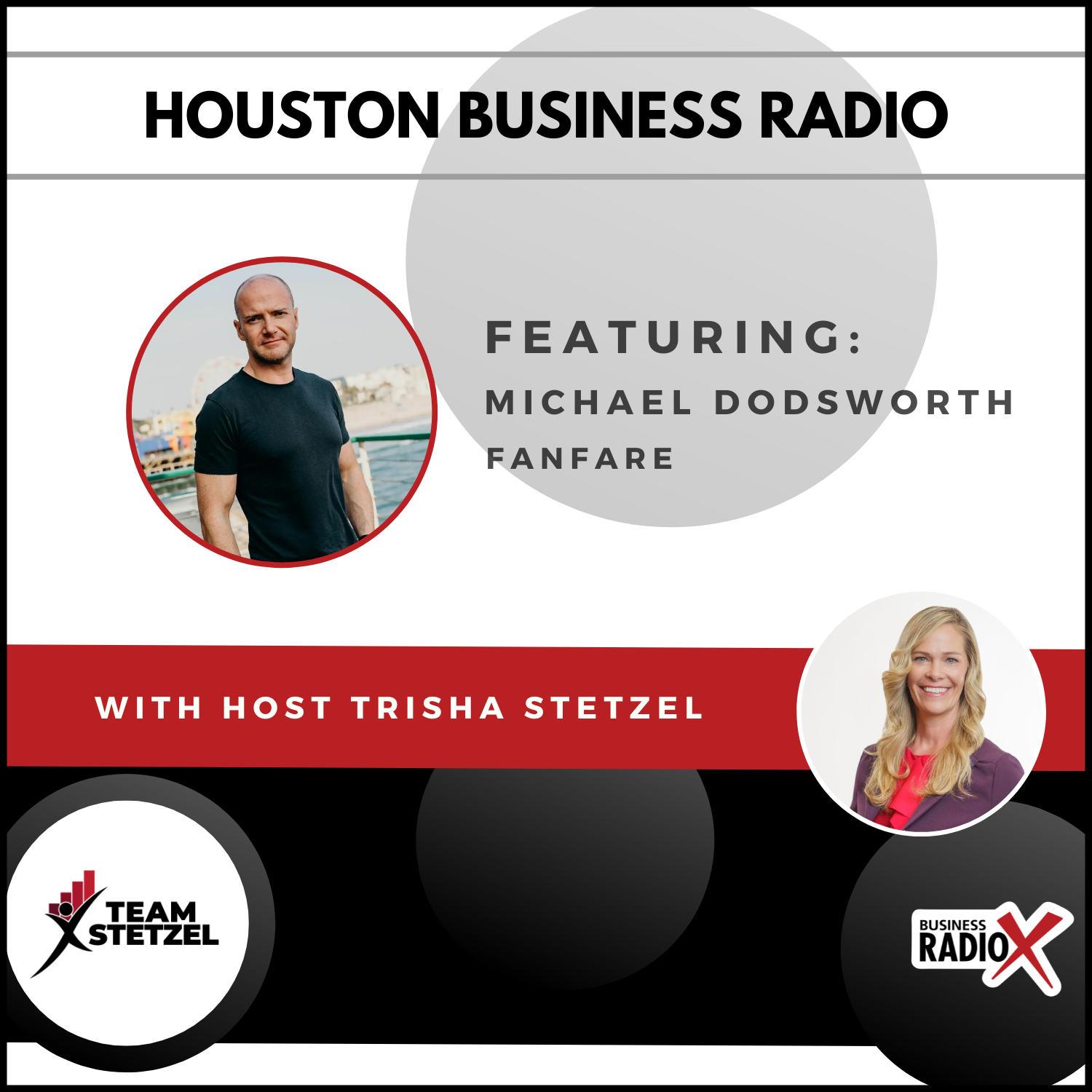
HBR-Fanfare-Feature
Houston Business Radio
Michael Dodsworth: How Fanfare Is Reinventing the Art of the Product Drop
Loading
00:00 /
RSS Feed
Share
Link
Embed

Download file

Fanfare-log

michael-dodsworth-FoodHealsPodcastMichael Dodsworth is the founder and CEO of Fanfare, a platform designed to transform product launches, brand events, and collaborations into seamless, unforgettable experiences.

Under his leadership, Fanfare helps companies create deeper customer connections, boost engagement, and capture actionable insights from every interaction. By blending technology with human-centered design, Michael is redefining how brands build loyalty in an increasingly competitive landscape.

LinkedIn: https://www.linkedin.com/in/michael-dodsworth/
Website: https://fanfare.io/

Transcript-iconThis transcript is machine transcribed by Sonix
 

TRANSCRIPT

Intro: Broadcasting live from the Business RadioX studios in Houston, Texas. It’s time for Houston Business Radio. Now, here’s your host.

Trisha Stetzel: Hello, Houston. Trisha Stetzel here bringing you another episode of Houston Business Radio. It is my pleasure to introduce you to my guest today, Michael Dodsworth, founder and CEO of Fanfare, a platform that helps brands turn product launches, events and collaborations into unforgettable experiences. Michael and his team are redefining what it means to launch something in today’s attention economy, helping companies not only create buzz but capture real, actionable insights that drive loyalty long after they drop. So sneak peek into things that we might be talking about from ticketing and retail to live events and brand partnerships. Michael’s journey has taken him through some of the most high stakes, high pressure corners of commerce, including launch disasters, sold out moments and everything in between. His mission, with Fanfare, is simple but ambitious to make every product launch feel like an event fans remember and brands can learn from. Michael, welcome to the show.

Michael Dodsworth: It’s great to be here. Nodding along to my own intro. It’s a good sign.

Trisha Stetzel: Well, I’m so excited to have you on the show. So Michael, tell us a little bit more about you.

Michael Dodsworth: Uh, so I, as you can probably tell from the accent and not from around these parts, uh, Fanfare is based in LA. I found myself on these shores through all kinds of different forks in the road. Uh, but started life in the north of the UK. Uh, became an engineer pretty early in life. A software engineer. Um, my brother brought home a Commodore 64, and that was me hooked. And since then, I’ve been building software. I’ve been building platforms. Uh, found my way into San Francisco through an acquisition of a very small company and had the opportunity to work in amazing places with amazing people and on issues of scale that I think is pretty rare and unique and has helped kind of build this appreciation for these, these moments, uh, these launch day shenanigans that we all see. Um, but these surges in traffic, the bots, the bad actors, like these are all very, very gnarly technical challenges to try and get your arms around. And we don’t see we don’t see a lot of brands and vendors, even even people with lots of resources been able to take those on. So that’s that’s kind of the, the, the origin of me. Uh, the origin of Fanfare really came out of just frustration as a consumer, having spent my life loving going to live events, going to festivals, and Struggling every single time to get tickets. It’s just incredibly painful and it’s a pain that we all share. Like everyone has their their bad moment like it may be.

Michael Dodsworth: You know, you sat in line for four hours, for five hours, and you saw all the tickets vanish onto the secondary market. But maybe it’s, you know, you booked tickets to the US open, and when you turned up, the tickets were not valid. They were illegitimate tickets. Uh, so I’ve, I’ve heard all kinds of stories, uh, on that spectrum. I’ve felt a lot of that pain. And, uh, I set out at the start of, uh, when was this? This was 2016. Uh, we started a company rival, which, as the name suggests, is going after the likes of Ticketmaster and so on. And we really wanted to provide some competition. Uh, we felt like there really needed to be a better way for consumers to do this. You quickly realize that it’s not just the consumers, it’s the people on the other side of the fence, the teams, the promoters, the artists are also having horrible moments when things go on sale. Uh, and we we built this platform, uh, it was looking good. And when we were at the start of the pandemic, uh, rival was scooped up by Ticketmaster. And that kind of I was hopeful that this would allow me to solve for these frustrations at a larger scale. But that’s not how things turned out. So I ended up just, uh, being frustrated that these problems weren’t being solved and starting my own thing to to go after this.

Trisha Stetzel: Okay. All right. So in the vein of Ticketmaster, uh, or beat them at their own game, what lessons have you learned with the experiences as you’ve moved through this journey with Fanfare?

Michael Dodsworth: Yeah, I think, uh, we, I mean, we had all of our values on the wall, and one of them was, uh, respect the problem, solve it simply. Uh, the more we spoke to team owners, to promoters, to venues. The realization of all of the complexity of what they’re doing, just managing these venues is incredibly complex. Working around the seasons of all of the different teams, the sports, the artists like, it’s incredibly, incredibly difficult what they do. And it’s not something that you can just stand up a platform that does something very simple, and they’re going to be able to do their day to day. So that was one, um, it was interesting learning about the the different incentives that different people have in the ticketing industry. You know, I think, uh, and, and often at cross-purposes. Uh, so we really wanted to slow the process down and make it more deliberative and more more careful and so on. But the promoters want to say, you know, sold out in 50s. Right. And so you’re kind of thrown at odds in all kinds of different circumstances. And I think that’s the source of some of the frustration that people feel when tickets go on sale. And there’s there’s only a small sliver of tickets available.

Michael Dodsworth: That’s often because the teams have kind of passed off risk by giving tickets to brokers and third parties and so on. So there’s a lot, I think, at play there. Um, and I think one of the really important, like, um, things to learn from the teams was they, they were they were all trying to create moments. They weren’t just trying to sell tickets. They were really especially the the really forward thinking teams were trying to think about ways that they can really create fandom and really go after, you know, creating experiences that people will remember. Well, uh, good experiences, like the moment they took their kids to see their first baseball game and what could they do to try and elevate those experiences? Like, could they offer them, like a better seat if they knew that this was their first time, could they try and get them back in to the venue if they knew that? These people are kind of on the cusp of becoming lifelong fans of the Dodgers. Say, uh, so these are, I think, interesting realizations. Like, they’re really thinking about how they can, like, create something that’s memorable and they just didn’t have the means to do it.

Trisha Stetzel: Yeah. The client journey, that’s what’s really bubbling up for me, right? This whole client journey. So you started your story with being on the other side as a patron, trying to buy tickets, and now you’re on the inside working with the teams who are trying to create moments. How did you at what point did you realize that it wasn’t just about selling the tickets, it was about these moments that these teams wanted to create for these families or people who were just buying tickets?

Michael Dodsworth: Yeah, I think it was it was more just reminding me Of. Like what? What memorable moments have I taken? Like, why am I a fan of a particular person or a particular brand even? And it is often these kind of special, special experiences that we share. Right. I think, um, you know, I can remember my first football game. I can remember a rugby game, uh, rugby final. Like, these are like memories that really stick. And, uh, I think hearing the teams talk about what they wanted to do and thinking, like, living in that, you know, the, the, the mind of the family going in and having like, special treatment and like, merch given like all of those things I think would just have created an amazing experience for me. Um, I think Covid taking that away also reminded me how much I missed those experiences. Like being around people, been around groups of people who all like, commonly share in something. I think I really missed that. And, uh, yeah, I think that reinforces me how. How important these, these opportunities are for teams, for artists, for for brands. Even so. I think that’s that’s where it came from.

Trisha Stetzel: Yeah. So there’s so much noise out there, Michael. Just so much noise. And we’re all bombarded with so many things that are going on. So how does Fanfare cut through the noise and really create this moment or this journey for the client?

Michael Dodsworth: Yeah. What we’ve seen is like, why the noise gets created is often because the brands have very little information or understanding of what works, what doesn’t work, so they end up just bombarding people. Like my inbox is filled with, with the only one.

Michael Dodsworth: Absolute like I, you know, I have just kind of carved out an inbox over there that I just occasionally look at. Um, just because they don’t know what channel works, they don’t know how often they don’t know, like what’s really going to move the needle with people, what’s, you know, what’s important to people and so on. So I think without all of the, the information and the the ways of using that information, they just kind of scattergun approach it. And that’s what we all feel like when we see those messages go out. Uh, emails in particular. It’s because they’re just, you know, they’re trying their best, but they don’t really have any way of focusing. So I think for our brands been able to give them those tools. If you want to create an experience that’s special, you need to carve out some experience just for your VIPs or just for your, you know, loyal subscribers. And then you don’t want to send messages too often. The most effective way is to reach people is maybe the Friday before, maybe two weeks before. And here’s the channels that work with these people so that, you know, there’s there’s a very high signal to noise on the messages that the brands send out. So when people see a message from a brand they care about, they know it’s not just spam, right? They know it’s something important and they may want to look at. So I think that’s how we’ve tried to help brands with this, like provide them data so that they can make more focused decisions about how they reach people.

Trisha Stetzel: Yeah. So we’re moving from Michael, the patron, to Michael, the engineer businessman, making sure that we’re looking at the data. Uh, and I think that is so important. Um, as we get kind of to the middle of our conversation, I know folks are already interested in connecting with you. So would you give us the best way to find you and connect with you?

Michael Dodsworth: Yeah, I’m on LinkedIn. You can find me Michael Dodsworth. Uh, is my handle. But there are not many Michael Dodsworth’s in the world, thankfully, so you can find me pretty easily. Grab some time. I’m always happy to talk about this stuff if you have something coming up, if you know you have a launch coming up or something you want to get on sale, please reach out. You can also find us on Fanfare. Uh, we’ve been trying to produce articles and blogs, uh, some content around all of these releases. Whether they go well, whether they don’t go well. The to do’s, the the do not do’s of these kind of events and what we’ve learned from it.

Trisha Stetzel: Thank you for that. All right you guys LinkedIn Michael Dodsworth is the best place. That’s actually I think that’s how I found you. Or maybe we found each other on matchmaker FM which is a podcast matching. Right. Which is great to, uh, to go and meet some really cool people. Excited to have you on today. Can we do just have one little fun conversation around Taylor Swift, maybe? If there are any Swifties out there. Uh, all right, tell me the story.

Trisha Stetzel: How so? Tell me about switch to and the drop that broke everything.

Michael Dodsworth: Yeah, I mean, these these things happen so frequently. Uh, there’s the feeling I remember a friend reaching out after the switch to release and he said, I think this is part of the process when things fall over. Uh, I think this is deliberate, like it must be because it happens every time. There’s no way this is just they can’t scale to meet these requirements. And I’m like, no, no, no. They lost business when this happened, right? People went to Best Buy. It fell over. So they went to Walmart or whoever. So these are these are painful moments. And I’m kind of surprised still how often like if I need to find case studies of people who’ve had drops go badly. It’s a really easy dip into X or wherever you can quickly find people who’ve had issues. So, um, I mean, Taylor Swift, uh, everyone on the inside, I’m sure, saw that coming. Uh, you know, just a high volume on sale on Ticketmaster. These things, I mean, they go badly almost every time they happen. So Oasis shortly after that, Ariana Grande recently all had serious issues. I think in the Taylor Swift case, this was a presale that fell over. So not just in the general on sale. This was just her most loyal fans showing up excitedly to try and get Taylor Swift tickets.

Michael Dodsworth: And they’re met with just, you know, an error page or worse. Like they get their tickets and then they vanish. So, I mean, this comes from, you know, kind of an ailing platform like Ticketmaster has been doing this for a long, long time. And I would say, you know, having not invested as heavily as you would like on the technology side, um, having like scooped together all kinds of acquisitions and kind of glued them together. What you end up with is a system that, you know, when you really pressure test it, when you really put some, you know, put some people in there at high scale that it just falls apart. And that’s what you see with with Oasis, with Ariana Grande. Like all of these things just really challenge a platform that is difficult to now. Right the ship. Um, you know, I’ve worked at places where we’ve had platforms that have some years behind them, and it’s a real it’s a constant effort to make sure that they are current, to make sure that they can deal with the traffic volumes as they increase and to keep on top of things like bots and so on. So I think this is just, you know, it’s a difficult problem to solve. Um, but it’s it’s not something that you can kind of tack on after the fact easily.

Michael Dodsworth: It requires like a multi-year effort. And I, I haven’t seen that kind of effort from many platforms, uh, on in the ticketing industry, which is, I think, why rivals approach starting something new, knowing that these kind of traffic volumes happen, that you should prepare for them and you should build everything you do, uh, around those kind of events is where rival came from. And that’s what we’ve done here is just knowing that, you know, at the scale of 3 million Swifties, a lot of things can be put under a lot of pressure, and you have to be the platform that stays up around these things. So, I mean, I’ve been in situations where we’ve had outages, where we’ve had these kind of moments on the other side. It’s incredibly painful. It’s I mean, there was an outage yesterday from AWS. Uh, these things cause enormous damage. And as an engineer in those moments, there’s some scar tissue for sure, built up around those moments. Um, but it really is just been very disciplined about how you build and really keeping like this particular feature, this particular element of what you’re doing top of mind whenever you do it. So nothing really gets into Fanfare without it being fully, uh, Pressure tested to make sure that we can stay up.

Trisha Stetzel: Yeah. Okay. So now I’m. I’m wondering, like, business lessons from Michael. Like, what have you learned about doing business along this journey? From being a patron, taking your, uh, engineer skills, building the platform, staying ahead of the game. What have you learned about business on this journey?

Michael Dodsworth: I mean, I’ve had to learn a lot quickly. That’s the. That was actually one of the reasons for starting Fanfare is I felt like as an engineer, like I had the engineering chops, but there was a whole world out there that I was less familiar, that I was less comfortable with. And the most, the quickest way of getting there was to start something myself and really test myself in that way. So, I mean, I think realizing coming from an engineering perspective, like there’s always the focus on the product, like what it does, how it does it, and the quick realization that people don’t really care too much about that. They don’t care about the details. They don’t care about the amazing engineering you may have done to build some feature. Like, I see a lot of engineers who quickly jump into the walkthroughs and things like that. And it’s not about that. It’s about understanding people’s pain. Like what are they trying to do? Why can’t they do it and listen to how they’ve been going through the motions and what they’ve done to set this up? And what are they really trying to achieve from this? Because, you know, sometimes the answer is not your platform, right? Sometimes the answer is not the cool feature you’ve built. It’s, uh, you know, it’s really talking to to people and understanding what they’re doing. So I think that was a, an adjustment. Uh, like sometimes you think you’ve gotten there and then you, you know, you read your own notes, uh, you go back and look and you’re like, I’m, I’m definitely still talking about how the platform can solve a problem they’ve not talked about yet. Uh, so there’s some great material out there. There’s a book called The Mom Test that someone, uh, pointed me at. And I point people at, uh, generally it’s just, uh, a good way of kind of level setting on that and making sure that you really are getting the right answers. Uh, and not just trying to reaffirm something that you already believe and things like that. So I think that’s been an important lesson.

Trisha Stetzel: Yeah, absolutely. I think oftentimes we lean into all of the bells and whistles. Let me tell you about all these amazing things on my product or my service and the way it doesn’t make them feel anything. Right. Those don’t create an emotion. For some people it may, but it doesn’t create that emotion. And you, you talked about this at the at the top of our conversation around the journey and the moment. And that’s really what matters. That’s what people are looking for. And I love that. Fanfare is really focused on that. I think that’s amazing. Okay, so if it’s all right, I’ll switch gears just a little bit. You talk about the sneaker culture. Can you give me a little more insight on that?

Michael Dodsworth: Yeah. So I’m an aspiring sneakerhead. I have a large collection in my wardrobe that’s a little bit embarrassing when people come across it. Um, I think there’s a lot people can learn. Brands can learn more, traditional brands can learn from sneaker culture. And I see I see more established brands reaching for this kind of model. Um, and the idea of, you know, running limited sales, doing collaborations and again, like trying to create a community feel around a product like sneaker heads are a group, right? They, they, they understand each other. They know the pain that each other went through to get the products. Like, you can see people walking around in, you know, Travis Scott dunks, for example, and most people don’t notice it. Most people look, look past things like that. But people who know know that they went through incredible pain to probably get those products. So I think it’s that feeling of creating a community around a brand, uh, Supreme were incredibly effective. Like anything that went on sale with the Supreme logo on people would jump over to to to get after. So I think that’s a really important lesson, is trying to create a community of people who love your products, who will espouse, uh, the products, values and, and kind of bought into the story.

Michael Dodsworth: Um, and we see people doing that all kinds of different ways. Sometimes it is the narrative of the brand, sometimes it is having people buy into the, the, the origin story, uh, what the brand is going after. Sometimes it’s just the quality of the products that people put out there can, you know, form a community around that brand. People do it in different ways. Uh, we saw a soap brand in LA called Doctor Squatch do a collaboration with Sydney Sweeney where they had, uh, Sydney Sweeney infused bath water soap. Uh, like, completely bizarre but incredible way of just getting attention to your brand and driving people towards it like you’re the brand that’s, you know, it’s soap. Uh, but you’re trying to deliver and, like, inject a bit of humor into it and a little bit like, uh, you know, trying to do something a little different. So people do it in different ways. But I think trying to do something that creates this, this feeling of community, I think is really important.

Trisha Stetzel: Mhm. So tell me a little bit more about Fanfare and the role that Fanfare is playing in creating these communities. And uh, why someone would want to go and check out Fanfare.

Michael Dodsworth: Yeah. So we kind of facilitate these launch experiences. So if you have a product that’s going on sale, uh, like I say, building a community may mean rewarding your most loyal subscribers, let’s say. So you want to create an experience that goes on sale at a particular time, and you want someone else to take care of how that on sale happens. You don’t want to be scrambling around in the moment to try and flip things on flip. Flip things off. So we facilitate that. You want to also make sure that they are messaged in the right way, through the right channels, at the right time like that. We can help you structure all of this as a marketing and event. So all the way from announcement through to actually running the experience itself. And then once you’re in the experience doing things that I think help foster that fandom. So things like moving your most loyal members forward in line or giving them exclusive access or rewarding their time even if they’re not successful, like if you’re selling only ten of a thing, most people are going to be disappointed in some way. But if you can give them something in that moment, if you can give them early access to the next drop. Uh, we’ve seen a brand Do they call it the L club? Uh, the people who failed five times to get some particular product were now eligible to an exclusive drop. Like, if that really keeps people, uh, engaged with the brand, there’s a feeling like you are having this exchange with the brand. Like you’re giving them your time and attention, and they’re giving you something back in return. Uh, so I think that’s how we can help.

Trisha Stetzel: Um, I love that. And just creating this community and getting people involved and making them feel special.

Trisha Stetzel: Right. Making it feel special. So who do you serve, Michael? Uh, for those people who are listening, who might be interested, who do you serve?

Michael Dodsworth: So we I mean, we started life going after the people who are running drops, who know drops, but are struggling to manage the process. So streetwear footwear is where we started life. But this is like any where you find scarcity is a good place to to add Fanfare. So this can be you have a a loyal audience, you have a following online and you want to put merch out there. You want to monetize what you have. Like this is a great way of doing that. Live events, luxury products, collectibles. Um, we heard from a guy who he loved ten figure coffee grinders and was frustrated with the process. Like, we found all kinds of places where you have these scarce products and a bad process. So that’s where we can come in.

Trisha Stetzel: Okay, fantastic. You guys, if you’re interested, please go take a look. It’s Fanfare and it’s f a f a r e at I o is where you’ll find that. Or you can find Michael Dodsworth on LinkedIn. I’ve got one more question for you. Before we wrap up today, you’ve seen both chaos and even magic in the world of of launches. So if you could leave our listeners with one piece of advice today about turning high pressure moments into lasting momentum. What would it be?

Michael Dodsworth: Yeah, I think the brands and the people we’ve seen successful on this really are trying to really are trying to create something that’s kind of magical for the people who care. Uh, I think, you know, trying to just give people coupons and discount codes just doesn’t cut it, like trying to to engage people, you know, and trying to keep those people engaged with the brand is a real full time effort for people. Um, and I think, you know, trying to do that and trying to create special moments for, for people, for their loyal fans is is incredibly powerful. Like, we see people really move the needle like I think, um, uh, I’m trying Stanley was a great example of that. You know, I think trying to create something that went viral was was their target and their sales numbers. I think it was three x their revenue every year for the last three. Like incredible growth from really going after this model.

Trisha Stetzel: And everybody wanted the pink one and they were always out. I’m just saying this Stanley mug. Everyone needed one. Yeah, absolutely. Uh, Michael, thank you so much for being with me today. Anything else that we didn’t cover today that you wanted to chat about?

Michael Dodsworth: I think that I think that covered a lot of it. I would just say if you if you are struggling with some of these events, uh, as a consumer, like, I’m with you, I’m with I’m with you there. Like, this is painful. Um, and I’m always open to hearing about new and interesting ways people find this problem. Um, whether that’s a brand, whether it’s, you know, people trying to book swim lessons for their kids, uh, these are all painful processes that we go through. So I’m always open to hear about this.

Trisha Stetzel: It’s not just the big things. It’s the everyday things that we’re trying to do as well. Thank you so much for being on. This has been such a great conversation.

Michael Dodsworth: Thank you so much.

Trisha Stetzel: All right, you guys, that’s all the time we have for today. If you found value in this conversation that I had with Michael today, please share it with a fellow entrepreneur, veteran or Houston leader ready to grow. Be sure to follow, rate and review the show. It helps us reach more bold business minds just like yours and your business. Your leadership and your legacy are about one intentional step at a time. So stay inspired, stay focused, and keep building the business and the life you deserve.


Discovering and Eliminating Blind Spots: A Guide for Business Owners Seeking Growth

December 15, 2025 by Jacob Lapera

High Velocity Radio
High Velocity Radio
Discovering and Eliminating Blind Spots: A Guide for Business Owners Seeking Growth
Loading
00:00 /
RSS Feed
Share
Link
Embed

Download file

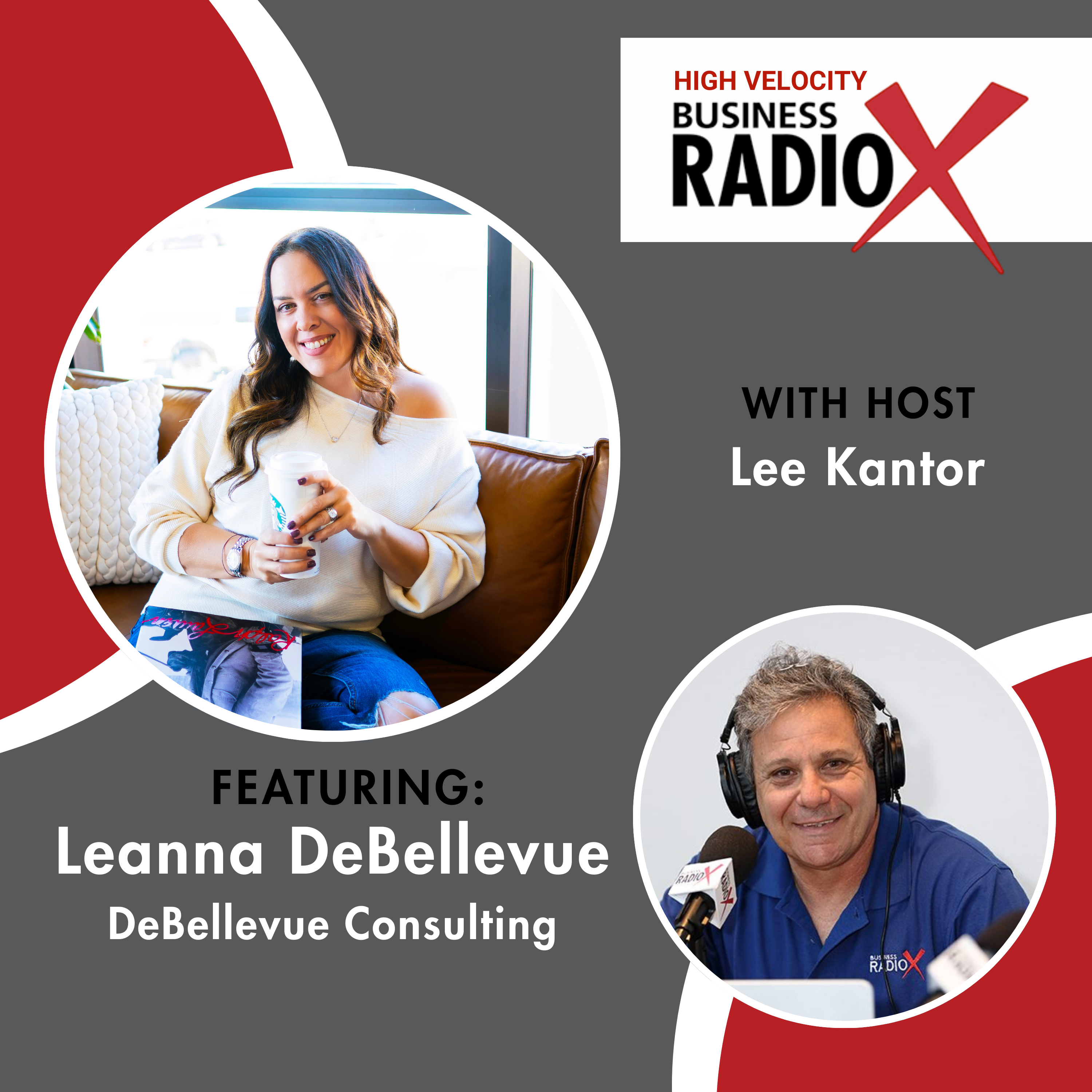
In this episode of High Velocity Radio, Lee interviews Leanna DeBellevue, owner of DeBellevue Consulting and former digital marketing agency leader. Leanna shares her journey from running and selling her agency to launching her consulting practice, where she helps business owners identify and overcome “blind spots” that hinder growth. The conversation covers the importance of accountability, authentic leadership, and adapting to changes like AI in marketing. Leanna also introduces her new Accountability Collective initiative and offers practical advice for entrepreneurs seeking clarity and sustainable business success.

Leanna DeBellevue is an international speaker, consultant, and the former founder of DeBellevue Global Marketing Agency—an award-winning firm recognized as the 2025 Business of the Year by the Gilbert Chamber and the 2024 Best Marketing Agency in the East Valley.

After scaling her agency for more than 15 years and inspiring audiences across 13 countries, she sold the business and stepped into her next chapter: helping leaders eliminate blind spots, think more strategically, and stay accountable to the goals that matter most.

She has been featured in outlets like HuffPost, appeared on numerous podcasts, and previously served on the Forbes Magazine Council. In 2023, she was honored with an induction into Who’s Who in America by the Marquis Publication Board

What sets her apart is her belief that success doesn’t have to cost you your life outside of work. As a mom, wife, and proud “Lolli,” she’s passionate about showing business owners how to chase big goals while still protecting their time, energy, and joy.

Through her consulting work, she helps leaders get clear, get focused, and take action in a way that feels aligned and sustainable—not overwhelming.

She brings years of experience, real-world perspective, and a genuine love for helping people grow. Get ready for an honest, insightful conversation about what it takes to perform at a high level without burning out, how to spot the blind spots holding you back, and how to build a business that works *for* your life instead of the other way around.

Connect with Leanna on LinkedIn and Facebook.

What You’ll Learn In This Episode

  • Identifying and overcoming “blind spots” in business.
  • The importance of accountability and having accountability partners.
  • Challenges business owners face regarding self-awareness and growth.
  • The role of honest conversations in uncovering business obstacles.
  • Insights on selling a business and the importance of company culture.
  • The impact of artificial intelligence on marketing and the need for authenticity.
  • Introduction of the Accountability Collective for business owners.
  • Strategies for maintaining work-life balance and managing workload as a consultant.

Transcript-iconThis transcript is machine transcribed by Sonix.

 

TRANSCRIPT

Intro: Broadcasting live from the Business RadioX studios in Atlanta, Georgia. It’s time for High Velocity Radio.

Lee Kantor: Lee Kantor here. Another episode of High Velocity Radio, and this is going to be a good one. Today on the show we have the owner of DeBellevue Consulting, Leanna DeBellevue. Welcome.

Leanna DeBellevue: Thank you so much for having me, I appreciate it.

Lee Kantor: Well, I’m excited to learn about your practice. Tell us about your firm. How you serving folks?

Leanna DeBellevue: Yeah, so I was a digital marketing business owner. I had my own agency for about 15 years. I just sold that in August of this year. And everyone kept asking me, what is next? What is next? And it took me a little, a little bit to figure it out. But I realized that business owners, we get in our own way a lot and we don’t have a ton of accountability. There’s so many blind spots And so my next step, my next chapter, is actually born out of necessity of what I see other people around me, myself included, needing, which is eliminating blind spots, just having open, honest conversations and helping each other navigate this, this roller coaster of business ownership.

Lee Kantor: Now with your clients that you have, are they I mean, they’re called blind spots or are they even aware they have them?

Leanna DeBellevue: No. You know, honestly, it’s those people that say, man, I feel like I’ve tried everything and I’m just not getting to that next level, or I’ve hit a ceiling and I can’t figure out why. A lot of times they are not sure what the issue is. They just know that it’s something holding them back.

Lee Kantor: So. So how does that kind of show itself to a one of your clients? Like what is the symptoms or signals that they might be having some issues that that there are things out there holding them back?

Leanna DeBellevue: Yeah, a lot of times they don’t even know that they need someone like me until they get into a conversation with someone like me. Right. I’ll ask them, like, you know, kind of, what are your goals or what are you working towards? What are you most excited about in your business this year? Or, you know, kind of what’s that next step for you? And a lot of times people are just like, you know, man, with the economy changing, I’ve really been struggling. I can’t quite get my footing or. Man, I’m so busy. I would love to bring on, you know, someone to help kind of take some stress off me, but I just can’t. And it’s just those, those quick little moments of I really want to. But the second I hear that. But I know that nine times out of ten, there’s probably a blind spot that they’re just not able to identify that will help them kind of figure out and have that aha moment.

Lee Kantor: Now, is there anything a listener could do right now to kind of maybe have one of those blind spots appear before them? Is there some things that you recommend that they can do themselves that can kind of show them that they might have some blind spots to work on?

Leanna DeBellevue: Yeah, absolutely. So, you know, I relied heavily on my tribe of other fellow business owners when I was in the middle of owning my agency. And a lot of times, you just really need someone to mirror back what you’re saying. I think a lot of times as business owners, we know what the problem is, but we’re so used to saying it to ourselves that we don’t even hear it. So a lot of times I would ask someone that I trusted. Half the time it was my husband, the other time, half the time it was other business owners that I knew, hey, this is what I’m struggling with. Will you just talk it out with me? And, you know, like I needed to hire someone. I need to hire someone. But I’m not really quite sure what that position would look like to take stuff off my plate. Right. And just really kind of. Okay, so here’s the problem. Here’s, like, I’m not I’m not seeing the connection. What am I missing? And a lot of times people can see the problem all around you. You just can’t see it for yourself. So really having a conversation and honest conversation with someone that you trust and say, what I’m going to tell you all of the details. What am I missing? Or what do you see that I’m not? And that a lot of times will start the ball rolling with identifying a blind spot.

Lee Kantor: Now, that sounding board that you’re choosing to do this exercise, is it better if they kind of know you pretty well? Or is it work better if they’re, you know, kind of more of an acquaintance?

Leanna DeBellevue: I don’t know if that part matters as much as it is typically someone who is also a business owner. Right? It’s such a different world when you’re creating something out of nothing. Most of the time, uh, it your mind shifts, uh, mindset needs to shift a little bit. So talking to other business owners I think is typically more helpful, whether it’s an acquaintance or someone you know. Well, if it’s someone you know well, you might get to the answer a little bit quicker. Um, I think a lot of times those around us know our weaknesses. Um, they don’t always bring it to our attention, but they at least notice them themselves so they can have that conversation with you.

Lee Kantor: Now, you mentioned earlier accountability. How important is it to have some sort of an accountability partner on your team?

Leanna DeBellevue: Yeah, that was a game changer for us in business. Um, it was really easy when you are the owner, to put other people off and to say, oh, I’ll get that to you later. I’ll get that to you later, and later may never come. And those are typically the things that you’re putting off, are typically the things you need to do to get the business going in the direction that you need to. So, um, I have two really good friends that every morning, um, excuse me, every Monday morning we would get on a quick text thread, say the 3 or 4 things that we were going to get accomplished that week. We would check in with each other on Wednesday. The following Friday, we had to hold ourselves accountable. Did I get things done that I said I was going to? In the six months that we did that, my business grew leaps and bounds because I finally stopped putting off the things that I was, you know, had been putting off for so long, and it was simply because I had to tell someone else that I was going to do it.

Lee Kantor: Now, um, can you share a little bit? I mean, you don’t have to say word for word what we’re in those messages, but can you give the listener an idea of what goes into one of those accountability questions? And like, if you didn’t make, you know, you didn’t accomplish what you set out to? What does that conversation look like? Do you mind sharing some of the, you know, kind of the particulars so we can kind of hear what it looked like in, you know, in real life, not just conceptually.

Leanna DeBellevue: Yeah, absolutely. So, um, use myself for an example. Um, I needed to put, um, we were needing to create a new CRM. Um, our old CRM just was not holding any of the customer information that we needed it to. It was very limited. So I had been putting this off for about six, 6 to 8 months because I knew it was going to be a time suck for me, and I just really didn’t want to do it. And so I remember on a Monday I said to the girls, I said, hey, I’m going to research CRMs. I need to figure out which one I’m going to get to. And they lovingly questioned me on it. They said, okay, that’s not going to take a whole week. What’s the next step that you’re going to get done along with that? And I said, okay, I’m going to research it and I will make a decision on what that CRM is. On Wednesday, we had a quick check in. Literally it was a question of is everyone on track this week or is there something that, um, a lot of times something will come up during the week that maybe it’s a much larger process than you originally thought it was going to be? Or maybe you’ve come up against a question that you don’t know how to answer.

Leanna DeBellevue: But in this case, it was Wednesday. I still hadn’t done it. I said, nope, just haven’t gotten the time. They said, what? You know what time, what day and time are you going to carve out to do some research? I said Thursday, finished it on Thursday by the end of the day. Friday. I did have a decision. I said, this is the CRM we’re going to use and here’s why. You know, kind of why I went in the direction that I did and they said, great, when are you going to get it? Get it implemented? So literally, had I not just had 1 or 2 little sentences, a saying, you said you were going to do it, why aren’t you doing it? And how are you going to make time to do it? And then great, you met that goal. Now how are you going to take it to the next step or the next level? So what I’ve been putting off for, I think about eight months, I got done in about two and a half weeks.

Lee Kantor: Yeah, that goes to something that I found, um, and myself and other people is that you break promises to yourself all the time, but you keep appointments with others, like you show up when another person says, can you do this? Or here’s this thought, you’re going to respond. You’re not going to ignore that person, but to yourself. If this was all happening internally, it’ll go on forever.

Leanna DeBellevue: Yes, 1,000%. I’m great at doing what I’m telling others that I’m going to do for them. But when it came to myself, yes, I would break promises to myself daily and it was really just putting a chokehold on our growth.

Lee Kantor: Now, when you’re working with your clients, um, are you having these kind of difficult conversations? Because this could be, you know, you’re you’re asking someone to change some behaviors here that are pretty set.

Leanna DeBellevue: Yeah. Yeah, it’s a lot of hard conversations. Um, but I think there’s two things that I think makes it easier to have those conversations. One is that as a business owner, I have made these same mistakes. I am coming from a place of being in the trenches with them. Um, so there’s no judgment. It’s not, you know, well, you should have done this or why didn’t you do that? It’s okay. This is what you told me. This is what you said was important. I want to help you navigate this. Right. Um, I think it’s very rare to see roadblocks, um, in a business where the business owner is not, you know, kind of the most responsible for that, right? We get in our own ways all the time. Um, but I tell people there is no judgment. I just want to help you navigate. And once there’s that trust established, and they see that it’s very gentle guidance, but still, um, still pretty firm, right? Um, once they see that by taking those prompts and moving through the uncomfortableness, they get to that next goal, working together becomes easier and easier and more and more, um, fulfilling for them because they know that doing the hard thing is going to result in the the success that they’re looking for.

Lee Kantor: Now, when you’re working with clients, do you have a point of entry? That’s kind of an easy way to kind of learn how to work together?

Leanna DeBellevue: Yeah. We have, um, a lot of different areas that we discuss in business. I tell people all the time, you might think that the problem is staffing, but in reality it’s a process. Or you might think it’s process, but in reality it’s it’s your offer. So we really look at the, the business as a whole. Um, and then I try and work on the things that feel the smallest first because people will start seeing that progress and it starts to build. Right then they’re really excited. Okay. Well, only took me a couple of days to see progress here. Now let me look at in this, you know, kind of this area of that area. And so by the time you’re doing really hard things, you have that momentum and you have that, um, excitement that it doesn’t feel as overwhelming as it might have in the very beginning.

Lee Kantor: So you’re trying to have an initial kind of, uh, holistic conversation to understand kind of the big picture. So then you can start diagnosing where there’s opportunities.

Leanna DeBellevue: Yeah. And I really do think that most people know, um, it’s either just hard to get it out or we really don’t have time to stop and think about the problem. Right. Because you’re putting out one fire after another fire after another fire, when the reality is sometimes you just need to take a step back, relax a second, take a deep breath, look at everything, look at the landscape, and then make a decision.

Lee Kantor: Now, you mentioned earlier that you built and sold an agency. Can you talk about what that was like to build something from scratch and then, um, exit from it? Because a lot of people have that dream, but it’s not a reality for folks.

Leanna DeBellevue: Yeah. And I honestly, I had no idea that the probability of our business selling, um, I didn’t realize that, um, it would be such a, um, a hard task to take on. Um, we were told it would take about 6 to 12 months to sell. I knew for about the year before that I had grown it into where I felt I wanted to take it, like all the boxes were checked, all of the goals that I wanted to, you know, tend to accomplish, I had accomplished. And so I knew it was kind of time to pass the baton to someone who was more excited. They’ve got that fresh, you know, kind of fresh new look and take on the business. And so I did that. Partly everyone was saying, you know, we were blessed enough to win. 2024 Business Marketing, top digital marketing agency of the East Valley. 2025 we got business of the year. Everyone asked me, why would you go out now? Right? Like you’re just picking up your, you know, everything is great. But I knew it was time. I knew that I had taken it as far as I had wanted to take it.

Leanna DeBellevue: And I knew that with AI and everything else coming in. It would take a total reinvention. And I really just didn’t feel like I had that reinvention. So they, uh, we took it to a business broker. They did an evaluation. They said it would take 6 to 12 months to sell. Um, and we had a full price offer in a week with a 30 day close. So in my mind, I’d given myself six months to to a full year to kind of release this, you know, kind of business. Um, next thing I knew, 45 days later, we were we were out. And it’s been an amazing journey. Um, but I think in business, you know, when you’ve taken it as far as you want to or can, and I was just it was a timing thing. Right? We had just we hit the timing just right. But I think a lot of that goes back to having those processes in place, having those difficult conversations. I think if I didn’t have that accountability, you know, the last year before that, we wouldn’t have been in a position to sell at the value that we did.

Lee Kantor: Now, can you talk about kind of the thinking when it came to exiting? Were you did you always go, okay, I’m going to sell this to a stranger or did you ever consider I’m going to sell it to, you know, my employees? Did you? Were there other options that you kind of looked at before you landed on what you landed on?

Leanna DeBellevue: You know, I never thought I was going to give it up. I didn’t. It just. It was. A time that I just I was done. I don’t know what happened. I think all of those boxes were checked. All of the revenue goals had been met. And I think I thought something magical would happen when you got to a certain level and things would just get easier and it would just be kind of, you know, kind of take on a life of itself and didn’t need as much of my attention. And I realized that the more that I needed to, the bigger we got, the more I needed to pour into. So, um, I never thought I was going to sell it when the time came. Um, I didn’t think that our staff, um, would have the mindset. They are fantastic at what they do. Um, but I didn’t have anyone on the team that saw the company in its entirety and had a vision for it in its entirety. They each had a vision for it within their own specific areas. Um, and because of that, I knew that I wanted to find someone who had a passion for, uh, growth and for the digital space in its entirety.

Lee Kantor: Now, did you kind of actively seek out individuals that you knew, or was this something you gave it to the broker, and the broker then just started asking around.

Leanna DeBellevue: Yeah, we took it to the broker. Um, and I think I was gonna give them because we were under contract with them until the end of the year. I figured that I would give them until the end of the year to see how it played out. And then potentially, if they didn’t have someone, um, that I could do, people reach out to people that I knew. Um, here in the Valley, we are one of the larger agencies. So I knew a lot of the the smaller agencies couldn’t necessarily absorb us, um, or purchase us. So I knew that more than likely it was going to have to go either out of state or to one of the really large firms. And I didn’t want it to go to a large firm because as as big as our company was, it still had a very small feel, and I didn’t want that to get lost.

Lee Kantor: So you were trying to have it be a culture fit as well?

Leanna DeBellevue: Absolutely. And that’s the number one thing. When we were speaking to potential buyers, um, the focus was on our staff and on our culture. Um, our culture was one that I’m so proud of and of everything that that we built and all of our accomplishments, all of our athletes. I think the number one thing that I was most proud of was our team and our company culture, and that’s something that I protected for your sake. And I told my husband, I don’t care what the offer is, um, or who it’s from. If it’s not going to be a cultural fit, I don’t want to to go down that road. So thankfully we did find someone that definitely had a lot of the same ideas and understood culture and wanted to protect that as well.

Lee Kantor: Now that you’ve, uh, I guess, kind of downsized your responsibilities in your life into the firm that you have now, um, have you noticed a difference on maybe quality of life or your work life balance, or was that was that ever an issue for you?

Leanna DeBellevue: It definitely was an issue for me. I think knowing that I was positioning myself to sell the last three months, um, that I was in the business before we took it to market, I started to remove myself. Um, I didn’t think it would be fair to sell the company to someone that was solely dependent on me. I wanted to test our, you know, our team, our processes and all of that. Um, so I did have a fairly good work life balance. If anything, it might be the opposite now because it is just a startup again. Um, I’m used to having a full staff that did everything. An assistant, you know, a team for this, a director for that, and different people to lean on. Now I’m back to being the, you know, the marketing department and the PR department and our, you know, our everything, right? And everything all over again. Um, that said, I’m very, very protective of my time because I know that if there’s not a balance or that balance gets thrown off, that will hurt the trajectory of our company.

Lee Kantor: So now is your work still in marketing? Does it touch that at all or you’re more of a general kind of business consulting?

Leanna DeBellevue: Um, just general business. We will look at the marketing aspect of something because that is an important aspect of someone’s business, but I don’t do any of the actual work. You know, I can oversee, like, hey, you need to look at your KPIs here or you need to, you know, kind of, you know, focus more on SEO this quarter or something along those lines. So I’ll give direction, but I’m not actually responsible for the results anymore, which has taken such a huge amount of weight off, which has been nice.

Lee Kantor: Now anything, um, any opinions about what’s happening in the world of marketing with the advent of, uh, all the AI stuff that’s going on and how quickly things are moving in that regard, do you have any ideas, any trends that you’re seeing or any shifts of how people are thinking?

Leanna DeBellevue: Yeah, I think, you know, the pendulum is swinging more towards an AI driven world, which I think can be great for making some processes faster. But what I’m seeing for businesses who are getting the results that are game changing for them is they’re using AI tools as a resource, but they’re still leaning into telling authentic, value driven stories, right? Um, I think now with AI, people are starting to question more and more is this real? Is this authentic? Is this I mean, we’re seeing videos that we’re like, you know, what is this? And then we find out it’s AI. So it’s making us question, um, what it is we’re seeing. So those brands and those, um, business owners that can tell stories authentically and they’re just really seeking true connection. People are flocking to them. It doesn’t have to be all of this high tech AI generated, um, you know, business plans and marketing plans and all of these things. It really is. How are you showing up for your clients in a way that’s authentic, which is something that I think a lot of people thought AI would take us away from. But that trend of kind of pushing back a little against that and showing up authentically is, is just amazing for our clients that we work with.

Lee Kantor: So that’s that’s now becoming a point of differentiation is if you can show up authentically. I, I.

Leanna DeBellevue: Know that sounds silly, but.

Lee Kantor: Well, it’s not silly. It’s just that’s the way it used to be. Like, that’s. Yeah. You know, it used to be. That’s what, you know, you would meet face to face. You would look someone in the eye and you would do business or you wouldn’t. And it got to the point where we were scaling everything and everything was, you know, trying to scale, scale, scale that you lose some of the humanity.

Leanna DeBellevue: Yep. I think the pendulum swinging back into that humanity. I think at the end of the day, as great as some of these features are, um, we are always going to want a human connection and brands that show up with that connection. They’re hitting it out of the park every time.

Lee Kantor: So now, um, I was on your website and I saw that you’re doing something that kind of leans into that authenticity. Uh, the accountability Collective. Can you talk a little bit about that?

Leanna DeBellevue: Yeah. No, this is great. We’re so excited to launch this. It’s launching in January. Um, it is exactly what my girlfriends and I had, um, that brought our business to the next level. It is an accountability group, um, where we’re going to meet three times a week. Monday morning. We’re checking in. What are you getting done this week? Wednesday. We’re just going to do a quick literally a one liner. Are you doing what you said you were going to do? If not, is there anything we can help with. And then Friday did you get it done? It sounds so easy and so simple, but it’s the one thing that business owners time and time and time again are telling me that they’re missing. And then when I come in and I implement that accountability for them, they’re like, man, I wish I had had this all along. So now we’re gonna open it up and we’re going to offer it to everybody. Um, whether you’ve got personal goals or business goals that you’re trying to achieve, let’s let’s get some accountability around that and see if we can’t move that needle.

Lee Kantor: And will it be delivered in the same way that you discussed earlier through via text?

Leanna DeBellevue: Um, I think we’re going to do, um, we’re going to have a couple of different options because I know with time zones and, you know, things are it’s hard to get everybody in one space at one time. Um, we’re going to have a zoom option. We’ll have a WhatsApp option, and then we’ll have a text option. So I really don’t want there to be a reason why people haven’t, you know, why people can’t participate. Um, you know, if it’s 8 a.m. and you’re in the car drop off line, right, with your kids, and it’s not a good time to meet. Great. Just make sure that you text us by 9 a.m. what you’re going to get done. Um, some people like to have that face to face interaction. So we’ll meet on zoom. So we’re we’re opening it up to a variety of ways just to meet people where they are.

Lee Kantor: So what do you need more of? How can we help you?

Leanna DeBellevue: Yeah. Great. Um, I would love to talk to business owners who know that they’re doing the job that they are called to do, whether that’s plumbing or, um, a school teacher or a marketing agency, whatever that is. But they just are missing something. They don’t know what that something is. They just need a little guidance. Um, I tell people all the time, typically the way I work with people is very short lived. Um, they just really need to get over that one hump, and then they don’t need me again until they hit that next ceiling or that next, you know, kind of area where they’re transitioning. So, um, I love having conversations with people, helping them have that aha moment and the light bulb goes off. And then nine times out of ten they know what to do after that. So anyone who’s just tired of being tired, tired of struggling, tired of not knowing what that answer is, that’s a great that’s a great person for me to have a conversation with.

Lee Kantor: And for somebody who wants to learn more or connect with you or somebody on the team, what’s the website? What’s the best way to connect?

Leanna DeBellevue: Great. It’s w-w-w dot com. All of our social media handles are at Bellevue Consulting, so we can be found on almost any platform.

Lee Kantor: Well, Liana, thank you so much for sharing your story. You’re doing such important work and we appreciate you.

Leanna DeBellevue: Thank you so much. I appreciate your time.

Lee Kantor: All right. This is Lee Kantor. We’ll see you all next time on High Velocity Radio.

Tagged With: DeBellevue Consulting, Leanna Debellevue

Aaron Trahan: From Chaos to Clarity – A Performance Mindset for Scalable Growth

December 2, 2025 by angishields

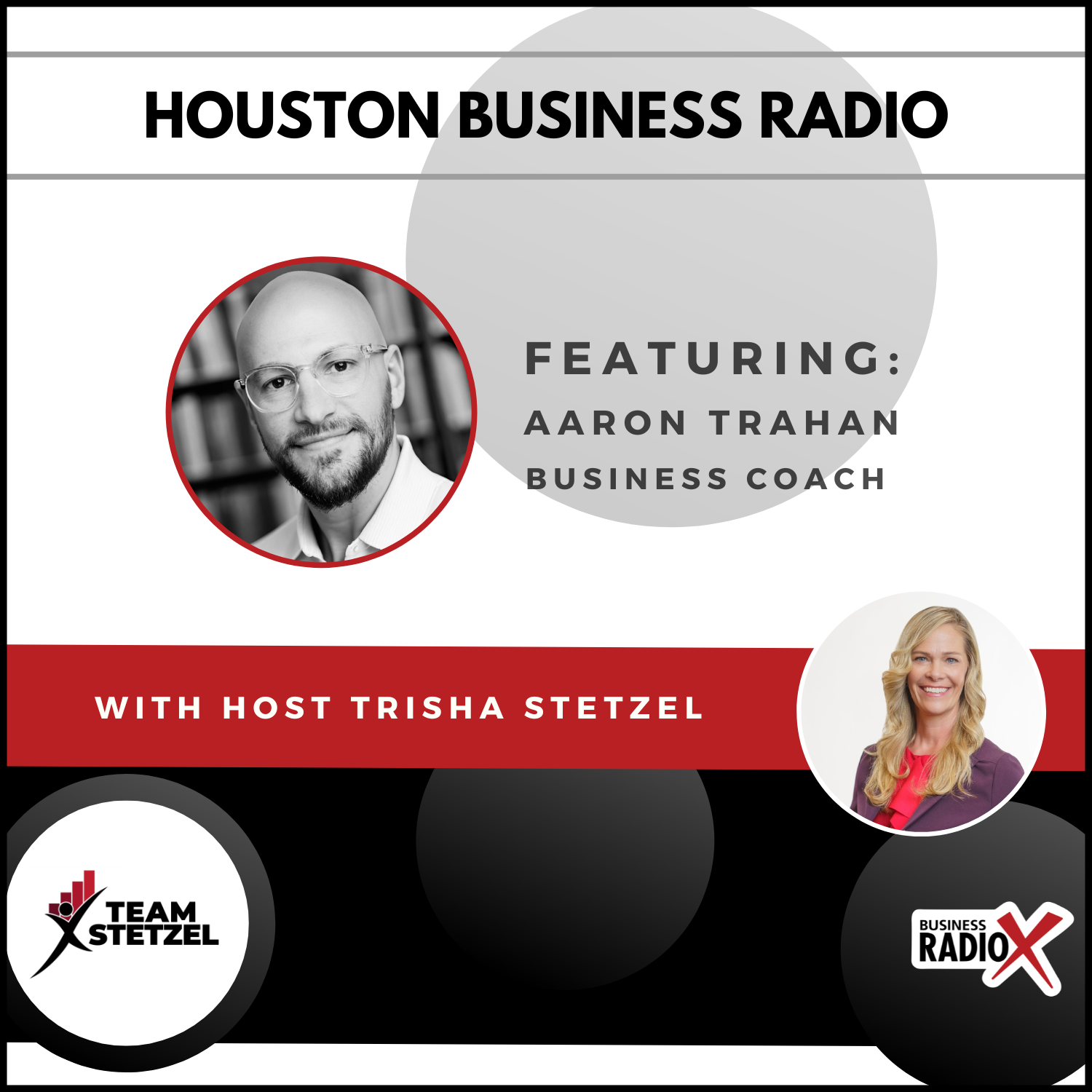
HBR-Aaron-Trahan-Feature
Houston Business Radio
Aaron Trahan: From Chaos to Clarity - A Performance Mindset for Scalable Growth
Loading
00:00 /
RSS Feed
Share
Link
Embed

Download file

A13F745C-B967-4E04-8CAE-1FB8638CE912-AaronTrahanAaron Trahan is a business coach, advisor, and former corporate executive with over 20 years of experience leading high-growth consumer businesses.

By age 30, he was leading a billion-dollar retail brand, building a reputation for scaling teams, operations, and profitability.

Today, Aaron helps B2C companies implement customized operating systems that drive clarity, execution, and sustainable growth—blending leadership expertise with proven coaching strategies. IMG1994-AaronTrahan

LinkedIn: https://www.linkedin.com/in/aarontrahancoaching/
Website: https://performancemindsetcoaching.co/

Transcript-iconThis transcript is machine transcribed by Sonix

 

TRANSCRIPT

Intro: Broadcasting live from the Business RadioX studios in Houston, Texas. It’s time for Houston Business Radio. Now, here’s your host.

Trisha Stetzel: Hello, Houston. Trisha Stetzel here bringing you another episode of Houston Business Radio. Today’s guest is Aaron Trahan, founder of Performance Mindset and a seasoned executive with more than 20 years of leadership experience in both corporate and startup environments. By the age of 30, Aaron was leading $1 billion publicly traded company, a role that gave him deep insight into what drives growth and what derails it. Today, he works with leaders and organizations to to achieve sustainable, profitable growth by breaking the chaos cycle and creating systems of clarity, focus and accountability. Aaron’s mission is to help leaders get better at getting better and build businesses that scale the right way. Aaron, welcome to the show.

Aaron Trahan: Hi Trisha, thank you so much for having me excited for this conversation.

Trisha Stetzel: Yeah. Me too. And for those of you who are not watching on video, you need to jump over to the YouTube channel because Aaron has this most beautiful Winnie in the background. And I’m not going to tell you what it is. So you guys just have to jump on and see.

Aaron Trahan: It’s it’s always good to have a cute, uh, cute, fluffy business partner, you know?

Trisha Stetzel: Yeah, absolutely. All right, Aaron, tell us a little bit more about who you are.

Aaron Trahan: Yeah. You know, I am someone who really, from an early age, just gravitated towards this big, bold concept of continuous improvement. Um, I was kind of just a nerd of business books from a very early age. I started watching CNBC to just learn about what all this stuff means. Someone asked me is like, do you even know what showing up on that thing running across the bottom? And I just remember saying, not entirely, but I’m I’m learning, right? And so it just this concept of growth and continuous improvement. And before I even really knew what the concept of scaling really was about, that’s it was just kind of a gravitational pull for me, and not only on an individual level of just trying to understand how can I be a better leader, how can I lead teams more effectively, but also then how that translated to an organizational level and really just finding myself, um, you know, positively obsessed with what is it that allows Those leaders and organizations to find the next level to keep growing over a long time. But more importantly, what is it that prevents them from doing that? Why do leaders burn out once great high growth organizations, you know, either become a non growth organization or fail outright? And so, um, that was kind of the invisible journey that I was on that eventually led me to, um, you know, being a seasoned executive operator to now finding myself on the other side of the table, serving those leaders, operators and businesses of trying to avoid the same mistakes that I made, being able to access all the lessons and key insights without having to acquire the same scars that I had to acquire.

Trisha Stetzel: Um, I love that. Not that you have all the scars, but that you’re able to bring all of your expertise, your knowledge and experience to others that you serve. Now that’s amazing. All right. Names always have a meaning. And I want to dive into performance mindset which is your business. So talk to me one about the name of your business. And then let’s take a little deeper dive into the services that you provide.

Aaron Trahan: Sure. Yeah. It’s, uh, it’s probably one of the most frequently asked questions that I get is performance mindset kind of what? Tell me more about that. And, you know, kind of going back to the past 20 years that I’ve had in and around all sorts of businesses, of all sorts of shapes and sizes. You know, I think the great work that Carol Dweck did at Stanford University of really bringing the concept of a fixed mindset and a growth mindset to the mainstream, I think was was pretty valuable for all of us. But I think as I started to understand the nuances there, I started to realize that, you know, when we think about that in terms of the application to business, I just found a different story kind of playing out. In reality, nobody is going to admit to having a fixed mindset first and for all. And so every room that I was speaking to, every team I was a part of, whenever I would ask the question and really explain what a growth mindset is all about, every hand in the room is going to go up and say, yep, that’s me. I’ve got to fix our growth mindset. That’s what I’m all about. And so then I started back to that curiosity of what makes people grow, leaders evolve, and what prevents leadership growth. I started scratching my head of saying, well, if everyone has a growth mindset, why are we having these wild variabilities in performance and outcomes and results? And what I realized was there’s kind of a next level to it with a growth mindset, that thinking and believing that nothing’s fixed, you can develop and grow and build intelligence and capabilities.

Aaron Trahan: That’s great. But what I was starting to understand was thinking and believing can only take you so far. It’s missing a key ingredient and it’s the willing to take action. So when I kind of think about what shows up a lot in the business world, it’s much more nuanced than just fixed versus growth mindset. I think it’s really kind of a status quo mindset of people getting comfortable with where kind of they are, and things are good enough, so to speak. But then this other group has the performance mindset, which is just the bias to action to continuously improve. They’re not looking in the rear view mirror, kind of hanging their hat on what has already been achieved, or look at what we’ve done. It’s always asking the question how do we further improve? How do we continuously get better? Where can there be areas to take it up a notch? Where am I not operating either at an individual or an organizational level at anywhere close to our full potential? So for me, it really became this status quo mindset. Are we comfortable with where things are and we’re just kind of playing the status quo game. Then it becomes the the performance mindset. Are we willing to take the action and do what’s required to truly see better performance and better results? And so for me, that’s what that was kind of the narrative that I was seeing play out in the arena of business. It’s not as simple as fixed versus growth. It’s much more about status quo versus that bias for action to do what’s required to get better performance.

Trisha Stetzel: Okay, so how do we get from status quo or just this growth mindset where we’re just sitting still to performance.

Aaron Trahan: Yeah, I think it it is all around first generating awareness, right. For for everything that I do, it all really starts there. And I love kind of the saying that says a weakness or a development area that you’re not aware of will never be strengthened. Right. And so much around that status quo thinking is really that belief that, you know, good enough is always going to, at some point lead to complacency. And when you’re complacent, you’re not going to be intentionally driving awareness around where the gaps are. And look for high performers. Gaps may not be underperformance. The gap we are really focused on is where you’re performing versus where, you know you can potentially be performing. So it’s kind of it’s a you versus you. It’s am I better tomorrow than I was yesterday? And do we understand and put the awareness on where the gaps are that if we took action to evolve, develop, build the capabilities will get us closer to that full potential that makes us 1% better every day. That drives the continuous improvement. And that’s not always a comfortable place to be in. Always looking for how to develop. What more can I do? What more am I capable of? It requires it just requires a different intention to build the awareness, to learn where to act, to generate a better outcome. And if you’re in the comfort zone of the status quo, that’s just going to be an area that is, you know, never going to be found in that zone.

Trisha Stetzel: Yeah, absolutely. So what are your thoughts around doing it alone versus surrounding yourself with the right people.

Aaron Trahan: Oh, I, um, I’m just a big believer that you can only go so far alone. Um, you know, I’ve I’ve been the beneficiary of having a lot of great mentors, a lot of great coaching. Um, whenever I realized that I personally needed to leave that one zone of comfort and status quo thinking into a performance mindset, I needed a third party. I needed a coach to help me see what I wasn’t seeing. I needed someone to not only help me identify that there are corners coming up, but then to be able to have, you know, develop some insights, um, to proactively maybe understand and see what’s around those corners. And yeah, I think if the only, only voice of accountability that you’re kind of listening to, uh, is that voice inside your own head, I, uh, I think it’s going to be tough to really tap into the full potential that I think is there for, uh, all leaders and organizations. So I’m a big believer, um, that with others is a accelerated path to ultimately getting you to your destination.

Trisha Stetzel: Yeah, absolutely. And by the way, you need to check who’s in your room, too, right? Because we want to surround ourselves, like Aaron and I, uh, have the same kind of very uplifting, above the line energy, and we wouldn’t want to hang around. I hope I don’t want to speak for you, but I don’t want to hang around with people who have negative energy. I want them to have more energy than me and more passion. Uh, yeah. So that I can strive to be there, I love that. So let’s take this from growth mindset to sustainable growth. So can we unpack why the how of growth matters more than the how fast?

Aaron Trahan: Yes, absolutely. And it’s such a great time period of the year to have this conversation, because I believe Inc. magazine just recently released their updated list of what’s referred to as the Inc. 5000, which is the 5000 fastest growing private companies in America. And as you can imagine, every small and medium sized business would love to be on this list. What better marketing for you to put on your website or in a promotional blast of saying we are an Inc. 5000 company? Now, what’s interesting about this to kind of start this part of the conversation is fast. Growth is good, but it should not be the only thing you’re optimizing for, because follow up studies from this great list of the fastest growing companies has found a troublesome kind of where are they now? Um, you know, story that’s unfolded. And what the data shows is that 68% of companies that make the Inc. 5000 list remember the fastest growing companies in America over the next 5 to 8 years, 68%. More than two thirds of these companies either fail outright or are no longer a growth company, and they’re a significantly smaller size. And I think that just really puts an exclamation point on sustainable growth, growth that you can continue to maintain and work to compound over a long period of time is always going to be a better option than just rapid expansion.

Aaron Trahan: Back to having great mentors and someone sharing wisdom with you. I had to learn this the hard way, so I’ve got very intimate, first hand experience of all the chaos that emerges when you grow too fast. So luckily, I had a mentor on my board who pulled me aside after a not so pleasant board meeting to remind me never grow faster than you and your team’s ability to manage it. And that was always a stark reminder for me. It’s that if growth starts to outpace your ability to execute your team’s ability to manage it, chaos starts to ensue. Um, look, the graveyard is full of companies that grew too quickly, were not able to implement the systems and the structure to be able to support it and maintain it. And unfortunately, far too many businesses die by a result of collapsing under the weight of their growing pains, not from competition. Um, and so I think it’s just an important reminder that growing the right way, your ability to make sure you can manage it, the ability to generate operating leverage, um, allowing the growth to compound over longer periods of time is always going to be far more important than trying to just increase the top line by all costs as fast as possible.

Trisha Stetzel: Mhm. Yeah. That’s such a great point Aaron. And I know people are already wanting to connect with you to learn more or even just to pick your brain. If you let people do that maybe you do every once in a while. What is the best way for the listeners to connect with you? Aaron.

Aaron Trahan: Yeah, the two places I show up, most, uh, one’s going to be on LinkedIn. I would highly encourage anyone to connect, reach out. I’m always trying to share, um, the things that I’ve learned along the way and continue to learn. I’m pretty transparent with my community there of. Look, learn from my lesson. Avoid my scars. Uh, and then for a more in-depth review, my website would be the best place to go to really understand how I help executives and organizations. And that’s simply performance mindset coaching. Dot CEO uh, so those will be the two places that you’re going to be able to get access to me as quickly as possible.

Trisha Stetzel: Fantastic. And if you’re trying to connect with Aaron on LinkedIn, you can find him at r r o t r a h a n. And it’s actually Aaron Trahan. Coaching is the handle for LinkedIn if you guys are looking for him there. Okay I heard you say chaos cycle. I think we probably have an idea of what it is you described, what it is. But if we find ourselves in that chaos cycle, how do we break free from it?

Aaron Trahan: Yeah, yeah. So I think it it really comes down to one important thing. And if I could back up for a second, I think for a lot of business owners, founders, leaders, you know, it almost kind of feels like chaos is just kind of part of the game, right? It’s just if you’re in a growing business, there’s going to be some chaos that comes along with that. And I think while that’s true, I think there’s there’s different flavors of chaos to look for sure. When an organization stretching and growing and we’re reaching new heights, there’s going to be that healthy chaos that comes with stretch. But what to look out for is when the chaos really starts to hold the organization back. When you start to feel like there’s bottlenecks everywhere, you’re playing whack a mole. Your days feel much more like a, um, a day long firefight than actually doing things that are productive, that can drive the business forward. So to more directly answer your question, it all comes down to prioritization. And here’s what I’ve seen in businesses that have been a part of businesses that I help and just businesses that I’m observing is there tends to be a chaos cycle that ensues when some of the negative flavor of chaos shows up. And by the way, I’m a firm believer that when you’re experiencing that chaos in the business, that’s nothing more than the business’s way of screaming out to you that it needs better structure and needs better systems.

Aaron Trahan: That’s that’s just think about that as the language at which your, your business is communicating to you. But where the cycle starts is really going to be around your ability to properly manage prioritizations or the inability that shows up as priority mismanagement. And here’s what I see so much Uch when priorities start to be mismanaged. That could be in the form of your team feeling like priorities or switching every single week, or everything’s a priority. You know, when a business has 20 different priorities. Whether your employees say it to you or not, what they are talking about is we don’t know what the hell to focus on, right? And so priority mismanagement will always drive the next stage of the cycle, which is fragmented. Organizational focus. Focus for any business in any industry is a superpower. Period. Full stop. So when you think about the priorities at which the top level of an organization’s driving down to the team, when that’s not clear, when there’s too many, when they’re constantly changing the focus, that superpower of your organization is never going to be in the right dosage, in the right spot. So it’s going to be fragmented. It’s everywhere. So what happens when priority mismanagement leads to a lack of organizational focus? Results suffer. You see it in weak execution. You’re missing expectations. You thought sales would be here. They come in way short. We’re scrambling to figure out why. And so what do leadership teams do after this third stage? Priorities.

Aaron Trahan: Priorities were mismanaged. There’s not enough focus in the right area. Results start to show up. Weaker than expected. We need new priorities. We need a new initiative. We we need a new growth strategy to kind of get things back on track. Which then takes us back to the very top of the cycle. And you’ve now created the vicious loop. Too many or constantly changing priorities, fragmenting focus even more on, on and on through the cycle. And so to stop the cycle, to get out of the chaos cycle really comes down to a business’s ability to prioritize. And I like to think about it in terms of a question. If I was to randomly show up to your team leadership or management manager meeting, and if I was to go into the room unannounced and secretly ask everyone the same question, what are the top 2 or 3 priorities for the business, and why are these the priorities for the business right now? What would happen? Would everybody say the same thing? Would everybody say something different? So to break the chaos cycle, you have to have that team saying something similar to each other, because when they’re saying things different about the downstream chaos that that creates in an organization, everybody thinks the priority is different, which means their focus is behind something and nothing may come back and align to what is truly most important for the organization.

Trisha Stetzel: Yes, yes and yes and yes. All of these things resonate with me so deeply. Erin, thank you for taking us down that path. So does this play into that business GPS system that you talk about? Yeah. So can we dive into that a little bit 100%.

Aaron Trahan: And that’s why as I kind of in my the seat that I sit in today, kind of helping leadership teams and organizations avoid the same mistakes that I unfortunately made. You know, the past decade for me has kind of been a reverse engineering of what were the what were the tools that I was lacking, what were the frameworks and the systems that if I would have used, I could have avoided the mistakes, missteps and failures that that showed up on on my path that I had to course correct on. And yeah, because prioritization that I found is so critically important. I kind of like to think of it in terms of a business GPS. So if we were to pull out our phones and pull out whatever your maps app of choice is Apple Maps, Google Maps, whatever it is, remember, these companies that built these apps have spent billions of dollars to make it useful for us consumers. But it requires us to enter a critical data point for it to work. We need a clear destination. And if we don’t have a clear destination, that billions of dollars poured into this app will never work for us. So I’m sitting here talking to you today from Austin, Texas, right. And look, if we were to just type in central Texas into Google Maps, it’ll give us a million different options to choose from. Even if you, you know, you went into Southwest Austin. Okay, we maybe have thousands now, right? But until you get a specific location or address, that’s the only way you’re going to get an optimized route to take you from where you currently are to where you want to end up.

Aaron Trahan: I take businesses through that. Same thing is, where do we want to be over not too far out in the future because then it starts to lose its teeth. Not too short in time because we need some ability to kind of think out and plan. So I found two years to kind of be the sweet spot. So where I love to start working with businesses is really getting their teams firm on what’s our two year destination, kind of call it the vision. Within the vision, where do we want to end up? And I, I serve as kind of the challenger in the room to say, bring it down to abstract to conceptual, being the best or world class like that we can operationalize around that. How do we quantify what that looks like? How do we plug in my address in Austin and not just Central Texas or the greater Austin area. And then from there, we just didn’t execute a very streamlined, working backwards experiment. If we get the team very, very focused and aligned on what our two year vision looks like, where we want to end up, then knowing where we need to be at 12 months, knowing where we need to be at six months, knowing what’s most important over the next three months starts to get very clear and very simple. And now the prioritization of what we’re going to prioritize and what we’re not has the necessary guardrails for us to easily determine priorities from priorities. But most importantly, it helps an organization say no way more often than they are today. And as.

Trisha Stetzel: Oh my gosh.

Aaron Trahan: So.

Trisha Stetzel: I know.

Aaron Trahan: You said.

Speaker4: Yeah, Go ahead.

Aaron Trahan: Yeah. Is Warren Buffett’s always said the difference between highly, highly successful people and average people is the highly successful people say no to virtually almost everything. And it’s because the priority scope is so defined. We know what we’re going to say yes to. That fits within that scope. Everything outside of it is a no or not yet.

Trisha Stetzel: Mhm. I love this. So you just took us on this beautiful journey. Aaron thank you so much for this amazing conversation. I’ve got one last ask. Tell me your favorite client story.

Aaron Trahan: Hmm. My favorite client story is the one that’s top of mind. Was the call that I was actually just on. Um, okay. This is this was a client that was in the physical therapy space and also did some longevity, uh, strength training of really helping people coming in for physical therapy and a part of the country where people are very active, um, and have a huge interest in staying active for longer. But as you can imagine, someone running a big physical therapy operation and another business, the challenge was I can’t get out of the business. I kind of feel like so much depends on me. I’m the bottleneck. I’m reactive and firefighting all day long. And, you know, I’m not sure I want to keep doing this. Right. It’s like I’m working harder. Only for poor results on the bottom line. And so taking this client in his business through these different types of tools, we were able to get very clear on where we wanted to be. We were able to get very clear on what matters most. And we were able to then start prioritizing what needs to come off his plate, what needs to go on to different plates, how do we streamline the organization? Where where are the areas that’s really holding the business back? Um, and as you can imagine, the work that we’ve been doing over the past couple years where literally the call that I was just on before this call, a lot of the conversation was talked about how great the team is doing, how he’s got a team of individuals now operating like owners.

Aaron Trahan: He’s able to be 95% strategic, 5% tactical. Two years ago, it was the exact opposite. He was 95% reactive, 5% strategic margins have expanded in the business top lines expanding in the business. And he’s putting in fewer hours than he ever thought was possible in a growing, optimized business. And so it was just one of those feel good calls of seeing seeing someone be able to create the business that they dreamed of, for it to perform the way that he envisioned it performing without him having to be the bottleneck in every single step of the way.

Trisha Stetzel: Mm, I love that. So something simple, if you’re in your business and you can’t take vacation because you’re so embedded in it, you need to talk to Aaron. I’m just saying.

Aaron Trahan: It’s it’s kind of, uh. It’s nothing more than helping build the bridge, right? I think every business kind of has three islands, right? Vision, strategy and execution. And so few times I’ve seen are those islands connected with a clear bridge? That’s all we did in this case is we took the vision of what he wanted. We created a strategy that would make that vision tangible and put in the mechanisms to drive day in, day out, week in, week out execution to generate week over week progress. And so his three islands now have very tight, very solid, very well built bridges connecting those three islands.

Speaker5: Wow. That’s beautiful.

Trisha Stetzel: Thank you so much for this conversation today, I felt like I went on a journey and maybe even thought about vacation for a minute. We’re growth mindset. Oh no performance mindset. This was fantastic. Aaron, thank you so much for your time today.

Aaron Trahan: Yeah. Thank you for having me.

Trisha Stetzel: That’s all the time we have for today, guys. So if you found this conversation with Aaron valuable, please share it with a fellow entrepreneur, a veteran or a Houston business leader. Ready to grow. Be sure to follow, rate, and review the show and helps us reach more bold business minds just like yours and your business, your leadership and your legacy are built one intentional step at a time. So stay inspired, stay focused, and keep building the business and the life you deserve.


Navigating the Tech Maze: Simplifying Technology Solutions for Veteran Entrepreneurs

November 26, 2025 by angishields

VBR-Rob-Broadhead-Featurev2
Veteran Business Radio
Navigating the Tech Maze: Simplifying Technology Solutions for Veteran Entrepreneurs
Loading
00:00 /
RSS Feed
Share
Link
Embed

Download file

In this episode of Veteran Business Radio, Lee Kantor talks with Rob Broadhead, founder of RB Consulting. Rob discusses how his firm helps veteran-owned businesses leverage technology by first understanding their unique processes and goals. He emphasizes a business-driven, agile approach to technology solutions, the importance of clear requirements, and practical uses of AI. Rob also shares advice on hiring fractional tech leaders and recounts a successful client engagement. 

RB-Consulting-logo

Rob-BroadheadRob Broadhead is a seasoned software developer, technology strategist, and entrepreneur with over 30 years of experience designing, building, and leading software projects across industries and platforms.

From enterprise systems to custom solutions for startups and small businesses, Rob has worn many hats — including architect, director of development, database administrator, and mentor — always focused on delivering practical, effective solutions.

In 2001, Rob founded RB Consulting to offer hands-on software development and implementation services. After seeing too many projects suffer from poor planning and technology misalignment, he shifted the company’s focus.

Today, RB Consulting helps clients avoid common IT pitfalls through well-crafted project planning, strategic consulting, and end-to-end development solutions. Under Rob’s leadership, RB Consulting has grown into a collaborative team of skilled developers who share his vision of improving the world through thoughtful, high-impact technology.

A passionate educator and mentor, Rob founded Develpreneur.com in 2016 to help developers grow in their careers. Through blog posts, courses, and The Develpreneur Podcast, he shares hard-earned insights and practical advice focused on growth, leadership, and lifelong learning.

He loves wine, travel (roamingwithrobalie.com), ice hockey, handball, and sharing stories with others through books, blogs, and podcasts. Feel free to check out his latest one page as well. https://rb-sns.com/guestinfo.php

Connect with Rob on LinkedIn.

Episode Highlights

  • The role of RB Consulting in assisting veteran-owned businesses with technology integration.
  • A business-driven approach to technology solutions, focusing on understanding client operations and challenges.
  • Common scenarios prompting clients to seek consulting services, such as growth phases and market expansion.
  • The importance of identifying business pain points and strengths before recommending technology.
  • The types of businesses RB Consulting typically works with, including startups and growth-phase companies.
  • The engagement model of RB Consulting, emphasizing client empowerment and ongoing support.
  • The cautious approach to integrating artificial intelligence (AI) in business processes.
  • The significance of clear communication and precise requirements when utilizing AI and technology tools.
  • The agile project management methodology employed by RB Consulting for technology implementations.
  • Advice for hiring fractional CIOs or CTOs, focusing on alignment of values and understanding of business challenges.

Transcript-iconThis transcript is machine transcribed by Sonix.


TRANSCRIPT

Intro: Broadcasting live from the Business RadioX studios in Atlanta, Georgia. It’s time for Veterans Business Radio, brought to you by ATL vets, providing the tools and support that help veteran owned businesses thrive. For more information, go to ATL vetsource. Now here’s your host.

Lee Kantor: Lee Kantor here another episode of Veteran Business Radio and this is going to be a good one. But before we get started, it’s important to recognize our sponsor, ATL vets, inspiring veterans to build their foundation of success and empowering them to become the backbone of society after the uniform. For more information, go to ATL vets. Today on the show we have the founder of RB Consulting, Rob Broadhead. Welcome.

Rob Broadhead: Thanks a lot. Happy to be here.

Lee Kantor: Well, I’m excited to learn what you’re up to. Tell us about RB Consulting. How are you serving folks?

Rob Broadhead: Well, we help businesses find a way to leverage technology to do business better. And actually usually that starts with sitting down with them and talking about their business instead of it being a technology forward approach. It really is business driven. We find that processes are very important, and getting those out of the head of the the leaders and the owners of companies can sometimes be a little bit of a it’s an excellent practice, and that’s usually the most important first step, so that we can really help everybody understand and be on the same page with how things work, how the business is organized, what matters to it, and honestly, sometimes what doesn’t. Setting those proper priorities. And then from there, then we can talk about how to leverage all of the all of the blessings that technology can give you today without hopefully without, while avoiding all of the curses and the sprawl and all the other things that are the headaches that sometimes causes us.

Lee Kantor: Now, what is kind of the pain your clients are having right before they call you? Is are they coming to you because, like, they got a ransomware attack or something bad. Their computers have crashed. Like, are they coming for you to triage something? And then you start having these strategic conversations? Are they kind of having other kinds of problems within the business that, you know, a fractional CIO or CTO could help them?

Rob Broadhead: Uh, it is it is usually not a a fire erupting per se, like a security breach or something like that. Um, we actually and honestly, our ideal customers are those that it’s really more they are in a situation where they are, uh, for lack of better words, stuck where they’re, they’re at a point where they’re, you know, they’re making a change. Either the business is growing, uh, they may be launching a new line of products or going into a new market, or it may be a brand new business. So it is where, you know, owners are in a situation where they say, you know, the business leaders are in a situation where they say, you know what? We’ve we’ve got to prepare for this next phase, and we’re really not comfortable or not real sure on what we have. Uh, a lot of times, also acquisitions that’ll happen where there’s you’ve got a lot of technology. You may even have a big team, but you’re really not comfortable with what they do, what they provide, and how are they going to help you move forward. And that’s where we start having those conversations and say, okay, well let’s see. Let’s see what you got and let’s, you know, go to the war essentially go to war with the Army you’ve got with you.

Lee Kantor: And then what are some of the things you’re asking them in those initial conversations, like, do you have to know their kind of their tech stack. You have to understand kind of what you’re dealing with before you kind of can make recommendations.

Rob Broadhead: Yeah. But really usually the first question is going to be tends to be much more. It’s non-technical. We’re talking about things like what are your pain points? Where are your what are your strengths and weaknesses of your business as you see it right now, it’s things like, you know, are you really great at customer service? Are you, uh, are you delivering your products on time or are you having problems with that or are you having problems with your vendors? Are you having challenges communicating with your staff? There’s a lot of these. There’s a lot of things that just businesses can run into. And that’s where we start, because we want to figure out where the low hanging fruit is. What are the things that we can look at first to try to solve, to give you that, you know, benefit as soon as possible? And then as we get into that, that’s when we start talking more about, okay, now that we’ve got the, you know, the 50,000 foot view, let’s drill into some of those things and talk about how the organization is laid out. Uh, what are the, you know, the details, the nitty gritty details of things like your technology stack? Uh, some of it also a lot of it is where are you located? Are you a single headquarters or single location? Are you multiple? Are you a virtual company? Uh, because all of those things come into play when we’re trying to recommend, we’re going to recommend a solution because we’re not coming at you from a, you know, for example, like saying that we’re a Microsoft provider. So we’re going to recommend you the best way to use Microsoft Tools or the best way is to use Oracle. The best way to use whatever your you know, the technology does your is. Instead, we’re going to start from your business and figure out a right size solution for your business and where you’re at business wise, the vertical you’re in, and even geographically in the staff that you have to try to get the best fit for you.

Lee Kantor: So what is kind of the size and number of employees of a typical client? It are you working with kind of one person startups, or are you typically working with enterprise level organizations like who’s your best fit client?

Rob Broadhead: Our best fit tends to be, um, two. There’s really two fits. It is it’s startups. Because the nice thing there is, you have a, you know, completely clear whiteboard of what you can talk about, where you want to go. You can keep it really around their vision and their budget and then build a solution there. But also, um, probably even the people that need us the most, the most are those that have, uh, we refer to it as they’ve gotten out of the survival mode, and now they’re getting into the growth mode of their companies, so they’re usually a couple of years old. They could range from five to 50 or 100 employees. And they’re in the, you know, maybe in the low millions of their, their revenue. But they’re they’re sitting to a point where they said, hey, we’re we’ve been working our butts off. We’ve we’ve scrambled, we’ve scratched, we’ve clawed. And now we feel like we want to make this sustainable because, you know, working your butt off all the time is is not sustainable in the long run. And so they’re ready to get into that growth. And that’s where we’ll say, okay, well let’s look at what you’ve built and what you’ve got. And how do we turn that into systems and processes and automation and things like that that will help you grow and scale, uh, without, you know, running you into an early grave.

Lee Kantor: And when you work with them, are you coming in to kind of do that project and it ends there, or is this something like once you start working with them, you want it to be kind of an ongoing retainer type relationship where you’re monitoring and maybe you’re watching their back and staying ahead of things before they turn into problems.

Rob Broadhead: Ideally we like to we’re we’re we believe in the, you know, teach a man to fish over giving them a fish kind of approach. So we try to do what we can to put systems and people in place so that they can move forward. Somewhere along the way, they can move forward without us. We start with a recommendation, an assessment and recommendation, and sometimes the organization is set to go from there. Usually they’re going to, at least in the first couple of steps, are going to work with us to, you know, to help get things in place or to help. Just make sure that everybody’s on the same page. Uh, sometimes it sometimes it does take a while because there’s sort of a pilot project. And then once that gets in front of people, then the owners say, oh, wait, now that we’ve got this, we can do that, and then we can do this other thing. Uh, sometimes it takes a little while, but our goal throughout all of that is to not be, um, we don’t want to be, you know, we want you to give us a call because you’re just saying, hey, things are going great as opposed to just feeling like you’re constantly having to come back to us and ask us for more.

Lee Kantor: Now, how are you handling your conversations with your clients or prospective clients when it comes to AI? I mean, that seems to be, uh, all over the place and people. I mean, I would imagine they in their head, they think they know how it could help, but in reality, it’s not going to do what maybe they picture in their head. How do you have those conversations?

Rob Broadhead: Uh, it’s I’m chuckling as you ask that. We just, uh, I also have a podcast that I do, and we just had a conversation for an hour with, uh, somebody in the, in the exactly the same space where we, we talked about AI and the, the challenges, particularly from a business owner point of view. And with those, uh, we are you know, we’ve been researching it and it’s the level it is today. There’s not too many people that are going to be very far ahead of where you’re at as a business owner. But, um, technologists like us that have worked with it and smart systems and things like that for a few years, we’ve we’ve got at least we’ve got an eye on where you can go. Uh, a lot of times it’s we start with caution. And, um, for myself, I’m a big fan of caution and proof of concepts or, um, you know, minimal viable products or something like that to say, let’s, let’s talk instead of slapping AI at something, let’s go back to, like, what are you really trying to solve? And then once we look at understand the problem and the solution, then we can look at where AI can be applied to it. Um, there’s a lot of there’s a lot of things that people think AI will fix that it won’t or at least won’t right away. Uh, and even more of them that you have to yes, you can use it, but you have to be very intentional and understand what you’re you’re dealing with when you get into, uh, using AI and what your investments are and what you have to invest in your technology and even your people to make sure that you are getting the most out of that investment.

Lee Kantor: Now, are you, as a software developer, using it when it comes to coding?

Rob Broadhead: I use it extensively. I use it daily. I have used it to, uh. They call. They have this thing vibe coding. And, uh, I guess it’s don’t really use that as much. Uh, but it is a facet of that. Uh, since I’ve, I can write code and understand code and correct code based on what AI does. Uh, plus also we have our best practices and things like that. We’re able to, uh, generate some of the stuff, the stuff we’ve done in the past, uh, where at least it takes us at least at at least half the time, and sometimes quite a bit less to get it done. Uh, there’s, there’s cases where we’re seeing, you know, 70 and 80% productivity gains for the, the direct, uh, the coding part of it, uh, this design side and things like that, not as much, but we, uh, we definitely use it from the coding side, and we use it from a business side a lot. We use it a lot for, uh, for marketing materials and content and things like that to help give us a, a starting point so that we can then, you know, spend a little less time writing that, that nice article instead really focus on, uh, use it for the research and then, you know, gather it and write it up and turn it into something that, you know, that we’ve we are now presenting and not just, you know, a a collection of data points.

Lee Kantor: So if people are working with you, they would be using AI. It might just not be customer facing like it would be happening in the background.

Rob Broadhead: Yeah, most likely there’s there are very few things that we don’t. We there are very few things we don’t try to apply AI in some way, form or fashion at this point.

Lee Kantor: But it’s hard to have your clients kind of utilize it in the way that you’re utilizing it. There’s not a place for your clients to use it as a developer is using it.

Rob Broadhead: Uh, well, for developers, we’re using it to generate code, uh, for our businesses. There’s a for our clients. Uh, there’s there are definitely non coding solutions to AI that we talk about on a regular basis. Um, we actually I have talked extensively about how we think this is going to be Um, this is going to help people and force people to be, in a sense, better managers and more clear communicators. Uh, we’ve a lot of people I’ve seen a lot of people that talk about using having chats with, uh, with AI agents. And I think that is, uh, a really great approach for businesses. There’s a lot of things that you can get from a conversation, we’ll call it with, uh, with an AI, uh, application. You can use it for research. You can get a lot of, uh, out of the box ideas. I’ll give a very brief example is we’re about to my wife and I are about to embark on a lot of travel. Uh, going to a lot of some places we haven’t been before, and we have been able to use AI to, uh, actually, throughout the process, because we’re actually going to be digital nomads. We’ve, we’ve had, uh, AI send us, you know, provide us links and places to go to learn more about, uh, all of our, you know, travel visas and places to rent, um, you know, like Airbnbs and places to stay. Places to go see.

Rob Broadhead: And what are some of the sights and some of the concerns about that area as far as like timing and scheduling? Uh, down to like train schedules and planes? It actually has. We actually evolved our original plan quite a bit based on, uh, AI conversations and, uh, the sort of the rabbit holes. We went down there because there were we had our plan, uh, we had sort of our thoughts roughly of how it was supposed to be. And as we started going down some of the the steps to get there, AI would mention things or say things that led us in a different path. And, uh, we’ve been very happy with what we’ve seen out of it. And I can see that you can take that with almost any topic. So I think as a as a business user, I think that’s, uh, as a business owner, I think that is something that you should, you know, we’ll call it, play around with it and get comfortable with it. Uh, I think it’s here to stay and your competition is going to be using it. So you need to get comfortable as well. And those are some of the conversations we have is like, how do you if somebody doesn’t understand? They’re like, I don’t even know where to begin. Then we’ll talk to them about ways to begin and how to get started or something like that.

Lee Kantor: And you made a good point that they give you links that you should check, because we’re still at a trust but verify stage with this technology.

Rob Broadhead: It will I. My most frustrating conversation I had with this was with an application we were building as it was. One of the things that was doing is it was providing LinkedIn links for people that we were part of, the data that we were pulling back. And even though we specifically said, if you can’t verify the link, don’t give it to us, it would still generate a link and give it to us and say it was valid. And we’re like, no, it’s not. So we finally had to say, just don’t even don’t even try to add that into the information because it was it was effectively lying to us.

Lee Kantor: Yeah. When I recommend people play with it, um, I think it, it really opens their eyes on what it can do, but also what it can’t do. And to be wary of those kind of limitations. And it is frustrating where you’re like, just do you know you’re supposed to be working for me? And I’m telling you not to give me this, and you keep giving me this like I it like I’m talking to a toddler. Like that’s just ignoring me.

Rob Broadhead: Well, that is that is the best thing I now I’ve heard it from a couple people in conversations. To think of it as AI is like a super junior, like a, you know, an a person, a new hire that is fresh, you know, fresh out of business school or whatever. But they know everything. They have this amazing amount of knowledge, but the communication skills are lacking. And so I think sometimes that’s on both sides. I think it will help us as we look at our conversations to be more, uh, to learn how to be more specific and detailed when we ask questions of it, because AI is sort of unforgiving in that sense. So if you leave something out, uh, sometimes you will end up getting completely the completely wrong answer. And honestly, if you don’t understand what you’re asking, uh, then you can end up in a in a very bad place. Uh, we’ve I’ve seen more than a few, uh, basically rapes that have been built obviously through AI. And it is it actually ends up being nonsensical because I think it’s because the person that did it, you know, had a very, uh, general idea. They said, hey, go do this. And they didn’t understand where they needed to tie down some of the details. And sometimes they don’t even they didn’t understand what, uh, what they were asking for, for lack of a better term. For example, like if somebody says, hey, I need a CRM for my, my business. Well, you know, we all sort of know, okay, that’s a customer relationship management application. But there’s that is a big wide umbrella. And there’s a lot of things that can be involved in that, that you may or may not understand if you’re, you know, as far as building an application. And if you try to just have AI do that for you, you’re probably going to miss out on a on a lot of pieces or get some stuff that, like I said, sometimes it’s just conflicting data.

Lee Kantor: Yeah, you have to know how to write prompts. And um. It’s not you can’t be kind of general or broad that that’s opening up a can of worms.

Rob Broadhead: Yes.

Lee Kantor: Now, how, um, when you’re working with your clients, how, like, how do you kind of at the end of the project, how do you know it’s time to high five or hunker down and and do more? How do you measure success?

Rob Broadhead: We tend to do it in, uh, I love to do like phases or versions. Usually now it’s, it’s phases because even, uh, even though we’ll the approach we take uh, is based off of something called the agile approach. And one of the key things that we work with is regular, uh, usable, as they call it usable software. And so we try to do is we try to take whatever the project is and then break it down into, uh, steps or phases, where along the way we will put something in front of the customer. They’ll be able to see what’s there. They’ll be able to have some usefulness out of that application. And we’ll usually start with, uh, you know, x number of features and functions and sort of where we want it to go. And as we are building out those releases, then we will there’s an evolution of that that either is, uh, an expansion where it’s like, well, hey, we really need these additional features, or sometimes it’s reduction where it’s like, oh, hey, since we’ve got this, we don’t need these other things that we thought we needed. And there is a it ends up being it’s there’s definitely an art to it is finding, uh, good logical stopping points. And it very much varies from project to project because it has to do with what they have in place as far as, uh, their team and their systems, uh, because sometimes they don’t have if they don’t have it, if they don’t want to hire any IT people, they don’t want to outsource stuff, then if they want to do any additional features, then, you know, we’re going to have to come back and do it.

Rob Broadhead: But even then we try to do it in a sort of like essentially a project based a finite definition of what that product is. And we even start at the beginning of a project and talk about like what is what is done mean? Like, what are the things that we even if we’re not sure all the features, what are the key things, the why for this project that we’ll be able to look at all the time and say, you know, if we lay down at the beginning, the project, there’s three things that we needed to do. Then as we’re going through the project and we’re, you know, maybe features are being scoped in and stuff like that, we can look at it and say, well, does this serve the purpose of those three things that we talked about? If it does, okay. But if it doesn’t, then do we, do we want to expand it or not. And we just it really is it’s a constant, uh, really. It’s a constant check, you know, on a regular basis to check in and just say, okay, we are we doing what we said we wanted to do? Are we on track? And then you end up sort of walking it in at that point to say, okay, now we can start knocking out the tasks that need to be done to get that, uh, to a completion phase.

Lee Kantor: Now, um, is there any advice you would give somebody who is hiring their first kind of fractional CIO or CTO? Is there some do’s and don’ts that you recommend people follow?

Rob Broadhead: Um, I think for any hire, one of the things I always say is, is get to know the person to some, you know, interviews are okay, but usually like a second interview, it’s a it’s not a skill or experience interview where you can just sort of get to know the person, particularly like a fractional CTO, CIO level. You want somebody that you you can personally work with, that you feel like they have a lot of your same, uh, your same values and vision and things like that, because you don’t want somebody that comes in and has a very different approach to, to business and maybe even a view of the world than you do, because this is somebody that’s going to be helping you achieve, you know, achieve your goals. So I think that would be part of it. And the other is, is talk to them about your the problems that you have and you should be able through that that conversation. Uh, get from them some ideas of how to solve those problems. And if the solutions that they’re saying make sense, they, they are in line with like what you would do or I mean, they and they may be completely innovative, so they may be completely new. But in hearing them you’re like, yeah, that that makes sense. That’s a that would be a logical approach. Uh, but then great. But if they’re saying things that don’t make sense to you or that seem in particular that seem, um, for lack of a better term, ignorant of your, your business and your model and your industry. Then maybe you want to, you know, that’s where a good clue to red flag to maybe move on to somebody else. Because there’s when you get into that level, when you got people that are helping you define and automate your processes, you need somebody that also, um, either knows your business like you do, or you feel like they are going to be able to step in and understand it enough to be able to, to do those processes.

Lee Kantor: Is there a story you can share that maybe illustrates how you’ve successfully worked with a client. Don’t name the name of the organization, but maybe share the challenge they had when they started working with you, and how you were able to help them get to a new level.

Rob Broadhead: Um, I’ll go. One with was, uh, it was actually a whole series of it was an engagement that lasted for quite a while, and it was a lot took a lot of different roles. Uh, when we initially stepped in, when they initially talked to us, they needed somebody to help them evaluate their systems and their their team. They’d been around for decades. Their team had been around for decades. I think the the most junior person in the organization had been there like 24 years or something like that. So this was a a set solid team. There was actually the one of them was sort of getting to the point where they were going to retire, and they’re just been, you know, things that the company, the organization was used to and, uh, the, the leader, the head of the department said, you know, I’m not sure if this is. Is this normal or not? It was one of those like, you know, let’s let’s do a little check in and see what happens. So brought us in and we took a look at their their all of it, their systems, their processes, their team. We interviewed all of them. We talked to a lot of the other department heads and ended up, uh, saying, you know, they they actually did have a really good team. They weren’t, you know, they weren’t knocking stuff out of the park, but also they were actually they didn’t have the resources to do. So. Um, they were able to sort of, you know, they were able to get the job done and for the salaries and the price they were getting paid, they were paying for in that it was like, this is you’ve actually got a pretty good deal going here.

Rob Broadhead: Uh, but within that, that was also we got to know the team. So as the one, um, you know, the, the one department manager retired then we actually continued to work with them. We helped them with a couple of their technical issues. We helped them go, uh, really we didn’t. I guess we did do a little bit of an interview of their what the the replacement IT person became, uh, but also really a lot of it was helping them build out like a job posting and and job requirements and to help them figure out like, what are they looking for to replace this person because, you know, it was somebody that had very niche skills that was in their department that they could try to find that, but you wouldn’t find them in a way that would be affordable. Versus we said, well, here’s what you can do. Here’s how you can massage it. These are the kinds of people you can work with that you can bring in. And they will they’ll be able to learn what you need them to learn, but also be able to help you grow and have a modern approach. And it ended up being great, had a great relationship with all of them throughout, and ended up being one of these things that it’s like, like some of your best business relationships. There was a whole lot of like personal things that came out of it, and a lot of great ways we were able to help each other. So it was, uh, those are the kinds of things you the kind of, uh, projects and engagements you love to have.

Lee Kantor: So if somebody wants to learn more, have a more substantive conversation with you or somebody on the team, what is the website? What’s the best way to connect?

Rob Broadhead: Uh, RB consulting site is rb dash SNS. Sam. Sam. Um, you can shoot me an email. Rob at rb Swns.com. And also, I’m fairly active on LinkedIn so you can find I don’t think there’s a ton of raw broadheads. And I’d be the one that’s, uh, I think it’s got me listed as RB consulting, so it’s pretty easy to find in a search. And I’d love to have talk to people. And there is on the site, there is a couple ways links to get Ahold of us, uh, either to do a free 30 minute call just to, to have a phone call, a zoom call. Uh, and also we’ve got, uh, sort of like an introductory technology assessment that you can do if you want something that’s a little deeper.

Lee Kantor: Well, Rob, thank you so much for sharing your story today. You’re doing such important work and we appreciate you.

Rob Broadhead: Thanks a lot. Thanks for having me. I appreciate being here.

Lee Kantor: All right. This is Lee Kantor. We’ll see you all next time on Veterans Business Radio.


Joshua Kornitsky: Coaching with Curiosity – The Human Side of EOS

November 20, 2025 by angishields

HBR-Joshua-Kornitsky-Feature
Houston Business Radio
Joshua Kornitsky: Coaching with Curiosity - The Human Side of EOS
Loading
00:00 /
RSS Feed
Share
Link
Embed

Download file

EOSLogoReg2Gradient-JoshuaKornitsky


EOS2023Headshot-JoshuaKornitskyJoshua Kornitsky
is a fourth-generation entrepreneur and Professional EOS Implementer® with more than 20 years of experience across technology, strategy, and business leadership.

His career began in the automotive industry alongside his father, giving him early exposure to the complexities of running a family business. From there, he expanded into IT, software development, training, and executive leadership, cultivating a deep understanding of organizational growth and operational efficiency.

In 2015, Joshua helped lead a company through the implementation of the Entrepreneurial Operating System® (EOS®), which became a turning point in his career. I

nspired by the transformation he witnessed firsthand, he later co-founded a simulation-based training software company, which he also ran on EOS. These lived experiences—as a leader, founder, and now implementer—give him an authentic, practical lens through which he helps teams break through ceilings and achieve clarity, alignment, and accountability.

Today, Joshua coaches leadership teams nationwide, guiding them to execute their visions with purpose and discipline through the EOS framework. He also hosts a show on Business RadioX, where he highlights inspiring business stories and community impact.

Based in Georgia with his wife, two daughters, and mother, Joshua brings both heart and strategy to every client relationship, offering coaching in person and virtually across the U.S.

LinkedIn: https://www.linkedin.com/in/joshuakornitsky/
Website: http://atlantaeos.com

Transcript-iconThis transcript is machine transcribed by Sonix


TRANSCRIPT

Intro: Broadcasting live from the Business RadioX studios in Houston, Texas. It’s time for Houston Business Radio. Now, here’s your host.

Trisha Stetzel: Hello, Houston. Trisha Stetzel here bringing you another episode of Houston Business Radio. Today’s guest is Joshua Kornitsky, a fourth generation entrepreneur and professional eo’s implementer with more than 20 years of experience in technology, business strategy, and organizational growth. Joshua first experienced the power of EOS as a leader in 2015, when this system brought clarity and growth to his own company. Since then, he’s lived EOS as an owner, a leader, and now as a coach, helping leadership teams across the country align their vision, strengthen accountability, and execute with confidence. He also hosts a Business RadioX show. You guys Have to Listen to It, where he highlights business leaders making an impact in their communities. Joshua brings a unique perspective on how iOS transforms both companies and cultures. Joshua, welcome to the show.

Joshua Kornitsky: Thank you for having me, Trisha. It’s really great to be here.

Trisha Stetzel: I’m so excited. I can tell when I’m doing people’s bios, they get a little uncomfortable. They’re like, really? She’s going to say all those great things about me. Yes, I am, because we don’t do it for ourselves very often.

Joshua Kornitsky: It’s true, it’s true.

Trisha Stetzel: Very excited to have you on today. So, Joshua, tell us a little bit more about who you are.

Joshua Kornitsky: Wow. Well, thank you for the opportunity to talk about myself. I appreciate that. Um, as you said, a fourth generation entrepreneur, uh, I was born in the northeast. My parents, my grandparents both owned new car dealerships, and just through the evolution of what that business was like, I ended up in the car business. But we as a family are no longer involved. Uh, and to go back to the to the great great grandparents, that first generation of entrepreneurs, uh, they were immigrants coming here and did what they needed to do in order to get started. And in those days, pretty much everybody had to be an entrepreneur in one way or another. Um, I’m I’m somewhat amused and pleased to tell you that my great great grandmother, uh, was a bootlegger, um, making, I presume, bathtub gin, that I’m not a gin guy. But if I could figure out how to make bourbon well, at home, I might do that. Um, but I. I was born into the automotive industry, and I’m forever grateful for that because, um, it allowed me to see every aspect of of the good, the bad and the ugly of working with businesses, working with people And learning how to engage and interact. Because as the auto industry has in many regards, uh, created a negative impression of itself, not everybody is that way. And having grown up, uh, and being taught by my dad, who also had been in it since he was a teenager, I learned that there were two ways you could approach things. One was to to hit a customer over the head hard and make a bunch of money, but never see them again, or take good care of a customer. Make a fair profit, treat them well and you will see them over and over. And that was kind of my foundation in business was understanding that. And uh, when my dad passed, he was selling cars to the grandchildren of people that had bought cars from him initially. So it’s a proven process, right? It’s a strategy that works. Treat people well and they’ll come back to you. Yeah, absolutely.

Trisha Stetzel: Absolutely. That is an amazing story. Thank you for sharing that and being a fourth generation entrepreneur is, um, I find few and far between. We don’t see as many people coming from that background, if you will, and I love the lessons that you’ve learned from that. So you’ve also worked across IT industries, software design, executive leadership. How does that play into where you’ve landed today? And being in a an owner or a coach in the EOS space?

Joshua Kornitsky: So thank you. That’s a great question. Um, the first thing that I’ll tell you is that that anything with technology, whatever I used to know has a limited applicability today, but the skills remain the same. And in the skills that I developed, because I, I was early in on technology when there weren’t very many people in able or capable or knowledgeable or more directly curious, uh, that that we’re able to step up and learn and help. So the biggest thing that I think technology brought into my life that carried forward to now is that curiosity, because I’ve learned over time that the best way that I can offer any type of guidance or structure through iOS or through any other engagement is to understand first what it is that the the individuals I’m dealing with are contending with. And, and it’s all too easy to be prescriptive and to walk in the door and say, well, here’s this system. Everybody needs to do what I say when I say, and it’ll all work out. Number one, you’re not going to succeed. Number two, they’re not going to succeed. And number three, if you try to use the same recipe, you can’t bake 17 different cakes. You’re only going to end up with one. And it’s probably not going to be a good one. My apologies. That’s my mom ringing through on bypass.

Trisha Stetzel: You know what? It’s all good. And listen, we’re all human here. And even before we started recording, we talked about, uh, how we both are caring for aging parents. And it happens. Right? It’s just part of what we do.

Joshua Kornitsky: It does? And, uh. Yep. It does. And I and I love her dearly. And I’ll check on her as soon as we’re done.

Trisha Stetzel: Yeah. This is what makes us human, Joshua. Fair enough. All right, so, Joshua, clearly you have a great IT background, leadership background. I’m very curious. I’d like to roll you back all the way to 2015 with your first experience with, um, iOS and the implementation of that. What was the biggest shift you noticed in 2015 that really grabbed your attention about this implementation?

Joshua Kornitsky: Well, so let me set the context a little. We I had been recruited to become chief technology officer for a B2B lead gen company. Me, and they were a successful company. They’d been in business at that point, probably eight, eight, nine years. Um, and they were growing, but they’d hit a ceiling and, and that’s what caused them to go out and look for help. And, and quite often that’s what brings entrepreneurs looking for a solution is, is what brings them to the book traction, which is what EOS is based on by Gino Wickman. And for us, um, they brought an implementer in or the CEO brought an implementer in. And we began the process and it’s quite normal. Um, I remember to this day it’s quite normal to think, oh, it’s the flavor of the month. You know, this month everyone’s going to wear blue shirts because it’ll change the way we are. Uh, but it turned out that the system really isn’t promising magic, and that’s what got my attention first. The second thing that got my attention was it doesn’t pretend to bring magic, the discipline and the accountability that I learned. And the biggest thing that changed for me was understanding that you you could have a highly accountable culture and still be at a place that people enjoyed working because the, the, the assumption is quite often that, that, oh, well, you know, you’re just bringing in more scrutiny, more depth of drilling down to understand every aspect of where every second of every day goes. And that’s not at all what it’s about. What it’s about is understanding that in an open culture where people aren’t afraid and they understand their job and they align to the core values that they’re actually able to to exceed their own expectations and provide an unbelievably, um, inspired level of, of work and service because they want to be there.

Joshua Kornitsky: And that to me, that spoke to me, that’s who I am. I’ve always been someone that’s been drawn to making sure that the work that I do matters to me. I’m a fan of Daniel Pink’s book drive. And in in drive, he talks about how intrinsic motivation is by far the most powerful form of motivation out there, and that’s what speaks to me. So what I found in iOS as chief technology officer was the ability to help the folks who worked with me do, uh, their jobs more effectively, to have clarity when they came into work to understand what the expectations of them were at both a micro and a macro level. And together we were able to set goals that made sense. That helped drive us forward. And I know it sounds like I’m reading off a cue card, but that’s really what what excited me about it. So much so that that I co-founded a software company with one of the principles of, of, uh, the company I was working for. And we started with us right out the gate. And it was only because we were both experienced in it that it made sense. Typically, it doesn’t really align with the startup. But, uh, while I did step away from that company, I believe they’re still running on us today. Wow.

Trisha Stetzel: That’s amazing. All right, so I want to take a deeper dive into iOS. There are likely people listening who have no idea what iOS is, and there may be some misconceptions about it. You tackled a few of those things as you were talking about your experience in the beginning. So let’s talk about iOS. Take a deeper dive and any misconceptions that you think people may have about it.

Speaker1: Sure.

Joshua Kornitsky: That’d be easy. The the very briefly, what iOS does more than anything else is three things. It gets everybody aligned around the vision of the founders of the organization. It instills discipline and accountability, Traction, as we call it, and it works to help the leadership team, which in an entrepreneurial business, which is who we typically work with. Often that that leadership team came together because different people with different skill sets organically either grew into the role or there was an identified need, and they brought somebody into the role, and they typically can have very disparate backgrounds and very disparate experiences. So while they’re capable of working together, they may not have healthy relationships as a leadership team. So that’s what we do is we we do that vision traction, then help them become healthy. And as the leadership team embraces it, so does the rest of the organization. And that’s really in a nutshell, what what EOS can do for a business and as it progresses and matures. And I had a quarterly planning session with one of my, um, I’m already graduated clients, meaning a client that went through the whole system, which takes about two years and they still bring me in to facilitate their quarterly and their annual planning. And we pushed hard as a group to see what we could do to continue to improve what’s already working. Because I’m not a believer in saying, you know, nobody on a scale of 1 to 10, nobody’s a ten that doesn’t speak to who I am. You can get to attend, but I’d like to believe that there’s an 11. I’d like to believe that we can continue to grow and excel, but it all starts with the work they do. So the only thing I really do is facilitate the brilliance in the room. I don’t bring the brilliance. I just bring a structure that that makes it.

Trisha Stetzel: And that’s what makes you a great coach. I love that, Joshua. It’s all about standing in the greatness of our clients, right? I think you and I share that same ideal. Um, if people are already interested in having a conversation with you. They want to learn more about iOS or the implementation, or just ask you some questions. What’s the best way for folks to connect with you?

Joshua Kornitsky: So I’ve got a long first name and a long last name, and I my my email address is at EOS worldwide. So what I did is I took my cell phone number (678) 414-7696, which you can call. But I put a I registered it as a URL. So dial that.com and it’ll bring you to the the website where you can get in touch with me. Uh because otherwise it’s Jay at EOS worldwide. Com and I joke that I have to get extra long business cards in order to fit that. So 6784147696.com we’ll get you to me.

Trisha Stetzel: Wow. It says the guy who infamously comes from technology. What a great idea.

Joshua Kornitsky: I just want to make it simple. You know, the easier we make it for people to find us.

Trisha Stetzel: Yes, absolutely. Okay. For those of you who are going to go look up Joshua or find him on LinkedIn. His name is spelled j o s h u a last name k o r n I t s k y. It’s so much easier to go to his phone number. Com so.

Joshua Kornitsky: You can go.

Trisha Stetzel: Everything that you’re looking for. You guys know I’ll put that in the show notes so you can point and click. If you’re sitting at your computer please do not do that. If you are driving in your car, wait until you get home and then you can point and click and connect directly with Joshua. Okay. So back to this conversation. Listen, you’ve lived iOS as a leader and owner and implementer. You bring such a unique perspective to your clients because of that and because of your background. So I’d really love to hear tactically, um, how you really create this alignment. Right? You talk a lot about culture in the business and the leaders embracing what’s happening, and then everyone follows. So give me some like tactical ways that that’s happening as you’re implementing this tool with your clients.

Joshua Kornitsky: So the way that that we work with our clients and I say we because there are 850 US implementers around the world, uh, we all can determine where we help one another. I’m willing to travel. Others aren’t. Uh, I have clients that are fully virtual, and I mention that because the journey is the same, regardless of whether it’s virtual or in person. We start with a day called a focus day. Actually, back it up. We start with what’s what’s a 90 minute meeting, which is where the leadership team, uh, gets into a room with me or gets onto a zoom call with me and I give them a 10,000 foot overview. Because if you expect someone to be able to jump right into something transformational with no knowledge. You’re going to be disappointed. So we give that 10,000 foot overview where I take them through at a very high level. How EOS is is designed, what it helps with, where it enables them to, to find areas to improve. And what is, as I mentioned earlier, what’s really, really important is it as a system. And this is something we say internally. It’s intended to be handrails not handcuffs. So we we want to to take them through the leadership team, through the education process. If what they hear in the 90 minute meeting speaks to them. And I’m going to give you a 45 second overview, we explain to them the history of the US.

Joshua Kornitsky: I talked to them to understand who they are and what their goals are. And then at a very high level, I take them through the six key components of iOS, which, when Gino Wickman wrote the book traction, what he ultimately determined was that all business problems fall into six categories vision, having people aligned with where you’re going, people having the right people in the right seats, data using real hard data rather than aspirational accounting, as I call it. Um, and when you’ve got that first half down where you’ve got the right people in the right seats, you know where you’re going and you’re using real data issues pop up. Pretty common, pretty clear. So we teach our clients how to identify and resolve those issues and make them go away forever. Then the fifth key component is process. And that’s just simply having determining what the right and best way things need to happen and getting that documented and, uh, followed by everybody there. That’s really the magical key to if there’s any magic here. That’s where scalability lives in. In. Trisha. I know that you are a veteran. And thank you for for your service. But in the military, a little bit process driven. I presume that process is there because it works.

Speaker4: Uh huh.

Joshua Kornitsky: You know, and and while it may be occasionally, uh, redundant, the best way to make sure that airplane takes off every time, the best way to make sure that that boat doesn’t have an issue is to have a checklist and to make sure. So we work with them, but they control the pace. And then the the last piece we do is we teach them about traction. We teach them about setting what we call rocks, which is a metaphor for a goal. And we teach them about having an established meeting pulse. And that’s really the 90 minute meeting, and we take them through it once they find that, that, that it is the right path for them. Uh, we’ll set up a focus day and we spend eight hours together with the leadership team. During that eight hours, we teach them about hitting the ceiling and how to break through hitting the ceiling. And then we start with this remarkable document that that is free to anybody that wants it at EOS worldwide. Com or they can reach me and I’ll share it with them. It’s called the Vision Traction Organizer. It’s eight simple questions. What are your core values? What’s your core focus? What are you best at? What’s your ten year or long term target? What’s your marketing strategy? Meaning what do you say to people? Who are the people you want to talk to? And what is it you say to them? Then we set out a three year picture, a one year plan.

Joshua Kornitsky: We establish goals for the next 90 days, and then we keep a list of all of the other issues that are important, but that we’re not going to deal with now because there is a magic to getting those on paper. Because if you and I talk about something and we both agree that someone’s got to walk the dog, but neither one of us write that down, the dog’s going to be scratching at the door or we’re going to be cleaning up. Um, and and really, that’s iOS at the highest level in a nutshell. There’s, there’s other tools that we teach over those two years. But once we’ve gone through those first initial three days, which are spread apart because you got to have time to absorb it, you’ve got to have time to to understand it and try it on. Then I meet with my clients once a quarter and and do a two day annual planning every year. And it just leaves them all of the time in the world to understand that the business has to keep going, to operate their business, to succeed in their business, but with a different structure and a, in most cases, a completely different type of accountability. Um, that’s that’s it in the nutshell.

Trisha Stetzel: Okay. Yeah. That’s amazing. Now, I heard you say I know people are already interested. They’re like, oh, I need to talk to Joshua because this sounds right up my alley. But I heard you say earlier that this isn’t necessarily meant for Are startups. So what type of client or you know, at what stage of business does iOS make the most sense for? And who do you find are your I’ll call them your best clients or your ideal clients for iOS.

Joshua Kornitsky: In a perfect world, iOS is is designed and built for organizations between 10 and 250 employees. I personally have clients with less than ten I don’t currently, but in the past have had clients above 250. But that’s the sweet spot. And in the idea behind it is a startup has uh. And I’ve been part of two startups. A startup has one thing in common. They all have is is too many hats and not enough heads. And in that instance, I will tell you that iOS could stop that brilliance from shining by imposing a rule set on a on a business that’s simply not mature yet. Um. With regards to anything that’s already struggling. While yes, iOS would help, we don’t typically want to talk to folks who are struggling because adding additional work into what is already a stressful situation is really unlikely to benefit them, because they’re in they’re in the staying alive mode. Um, so who we typically work with are clients that their business is doing well and they just can’t seem to break through to get to that next level. And they find the book traction because they’ve tried everything. And if you think about the entrepreneurial mindset, these are folks who solve their own problems. So they’re not accustomed to reaching for help. And when they finally have that moment where they go, you know, I’m going to have to reach for somebody, that’s when we can help them. Because if they’re not ready, and I’ll use the analogy that I use when I talk to people. If my lovely wife tells me, hey, you should lose a little weight, I’ll nod and acknowledge her. If my doctor says you really should use lose a little bit of weight, I’m going to pay attention, but I’m probably going to just nod my head.

Joshua Kornitsky: But when I go to put on my jeans and they’re a little tight, oh, crap, looks like I need to lose a little weight. That’s where we do the most effective work, because if someone or a leadership team or a leader doesn’t feel like change is the only thing that’s going to make the difference, there’s not any amount of anything I can say that’s going to change their universe until they’re ready to embrace it. And that’s the hardest part, because in that entrepreneurial mindset, I know it, I have it. Part of you feels like you’ve done something wrong if you need help. Yeah. And and I have very, very healthy clients that I, that I met that were already very healthy. And you still have to help them understand that, that if they are theoretically at $10 million and their goal is to get to $30 million in five years, the skills you need at 10 million are very different than the skills you need at 30 million. The personnel you need, the things that the business will require, all of those things you don’t necessarily have that ability to scale today. You can certainly plan for it. Yeah. And that’s just part of the natural growth that comes with every business. You can’t rush that. Uh, there’s a famous old technology book called, uh, The Mythical Man Month. And in that book from the 1960s talking about data processing on cards, they say that you you must work to overcome the common management belief that you can accelerate the baby by hiring nine pregnant women and be pregnant for one month only. It doesn’t work that way. There isn’t a shortcut. But. But there are best practices, and that’s what we can help them with.

Trisha Stetzel: I love that, okay, so I shouldn’t tell anyone that their pants are too tight. They have to experience it themselves. That’s what I’m getting.

Joshua Kornitsky: That’s the analogy. But but speaking as someone who occasionally has that challenge, you do know when it when it’s the case and you know it’s it’s time. Yeah. Either that or you got to buy new pants and that’s not going to help your business grow.

Speaker4: No, that’s definitely not going to help your business grow.

Trisha Stetzel: Okay. So I our time has flown by. And Joshua, I’ve got one last question for you before we wrap up. So for those business owners that are listening who do feel stuck, or maybe they know that their pants are too tight, uh, and they feel out of alignment with their teams. What’s one simple step that they can take today or tomorrow to start moving closer to the clarity and accountability Ability that iOS will provide.

Joshua Kornitsky: So it’s funny that you use the word clarity, and there was no discussion on this, um, built in to iOS at the leadership team level and ultimately through the business is this concept of a clarity break. Take a piece of paper and a pen or a pad and a pen. Put your phone down, put your laptop on, do not disturb and and said, start with an hour once a week and just set that time aside and don’t focus on anything other than what does your business need. And and just think about what does your business need. And from there, I suspect very strongly that you’ll fill up that pad. The good news is you’re everything that’s great in your business. You’re responsible for. You made that everything that’s a little off kilter. Well, sorry you made that, too. But by starting to just create that list of the things that your business needs. The next thing that you can do is prioritize that list. And once you’ve prioritized that list, you can begin to take incremental steps, just little things. You know, it’s everyone wants to to move the mountain in a day, so to say. Um, all you’ve got to do is, is 1% better than the last time you did it. And you can make that impact over time. So stop. I have a I have two daughters. My youngest daughter and I talk often about the concept of you. The only way to solve a big problem is, is you eat the elephant and bites. The only way to solve your big business problems. You’re not likely to have a massive revelation or a lottery win that’s going to change everything tomorrow. Perfectionism is the enemy of progress. Just take an incremental step and and reach for help. There are people that really and truly have a help first mentality and and want to help.

Trisha Stetzel: Yeah, just like you Joshua. That’s why we connected, right? You you have said so many things that would come straight out of my mouth. And I love the idea of 1% better or eat that elephant one bite at a time because we can’t swallow it whole. That’s just the bottom line. Okay. Thank you so much for being with us today. I have learned so much about you. You guys, if you want to connect with Joshua on email, I know his name is very long, but it’s J dot at EOS worldwide comm or Joshua. Give us that website where we can 6784147696.com.

Joshua Kornitsky: And I’m old school so I’m happy to actually talk on the phone too. But that’s the number you can call. Or you, you, you can go to the website and it’ll direct you to how to find me.

Trisha Stetzel: I love that yeah. You guys, Joshua and I, we are very much alike. So get on the phone with Joshua, have a conversation, learn more about what he’s doing, and if you feel like it’s the right fit, then just say yes. Joshua, thank you so much for being with me today.

Joshua Kornitsky: Trisha. Thank you so much for having me. It was an absolute joy.

Speaker4: Awesome.

Trisha Stetzel: That’s all the time we have for today, guys. If you found value in this conversation that I had with Joshua today, please share it with a fellow entrepreneur, veteran or Houston business leader ready to grow. And as always, please follow, rate and review the show. It helps us reach more bold business minds just like yours and your business. Your leadership and your legacy are built one intentional step at a time. So stay inspired, stay focused, and keep building the business and the life you deserve.


Blooming Success: How French Florist is Changing the Game in Floral Retail

November 20, 2025 by angishields

FMR-French-Florist-Feature
Franchise Marketing Radio
Blooming Success: How French Florist is Changing the Game in Floral Retail
Loading
00:00 /
RSS Feed
Share
Link
Embed

Download file

In this episode of Franchise Marketing Radio, Lee Kantor interviews Michael Jacobson, CEO of French Florist. Michael shares his journey from corporate consulting to revitalizing his uncle’s struggling flower shop by adopting European floral culture and modernizing operations. He discusses overcoming industry challenges like outdated technology and high commissions, and explains French Florist’s focus on customer experience, direct sourcing, and franchisee support. The episode highlights the company’s impressive growth, unique franchising philosophy, and commitment to making flowers an everyday joy, not just a luxury for special occasions.

Michael-JacobsonMichael Jacobson, CEO of French Florist, didn’t walk into a flower shop expecting anything. It was a favor, helping his uncle sell a business most people would’ve driven past without noticing. The kind of place with dusty corners, a poorly-lit sign, and just enough life left to survive. For Michael, standing there, looking around, it sank in.

This was how America gave flowers now. Flowers were rushed, impersonal, and often treated as just a transaction. No ritual. Just product moving through a pipeline. And yet, this was how people were trying to say “I love you.” “I miss you.” “I’m sorry.” The most emotional gesture in human history had been flattened into a transaction. And no one seemed to notice.

It began with a refusal to accept that this was good enough for flowers. He stripped the entire system to its studs and rethought everything. Every process, every touchpoint. He built a new system from scratch.. One that cut out the noise. One that honored the hands, the farms, the designers, the clients giving and receiving. Because when people send flowers, they are trusting us with their heart. And that should never be taken lightly.

To Michael there’s a permanence in flowers that goes much beyond how long they last. The blooms eventually experience their circle of life, but the feeling stays. The moment they carry becomes part of us.

Inspired by the European tradition of living with flowers daily, Michael wants to shift how Americans see them—not as a luxury, but as an essential meaning they bring to life. Flowers are love, and they are how we know that life can be beautiful. Everyone deserves to feel that.

Today, French Florist has grown from a quiet neighborhood shop into a rising national brand, expanding across the country. But to Michael, scale was never the point. The point was to protect a standard.

In a culture addicted to efficiency, French Florist is building something a little more human. Every stem is placed with intention. Every arrangement is an offering. Every delivery is a quiet rebellion against the idea that love and beauty are optional.

For Michael, it’s always been about the flowers. And through them, a more loving world.

Follow French Florist on LinkedIn.

Episode Highlights

  • Transformation of the floral industry in the U.S. through European floral culture.
  • Personal journey of transitioning from corporate consulting to running a flower shop.
  • Challenges faced by traditional florists, including outdated technology and high commissions from intermediaries.
  • Strategies for improving operations, technology, and supply chain management.
  • Focus on enhancing customer experience and emotional connection with flowers.
  • Growth and revenue achievements of French Florist, including significant financial milestones.
  • Importance of aligning franchisees with company values and commitment to quality.
  • Training and support provided to franchisees, emphasizing hands-on experience.
  • Strategies for creating exceptional customer experiences and building loyalty.
  • Insights into the franchising philosophy and community-building approach of French Florist.

Transcript-iconThis transcript is machine transcribed by Sonix.


TRANSCRIPT

Intro: Coming to you live from the Business RadioX studio. It’s Franchise Marketing Radio.

Lee Kantor: Lee Kantor here. Another episode of Franchise Marketing Radio and this is going to be a good one. Today on the show we have the CEO with French Florist, Michael Jacobson. Welcome.

Michael Jacobson: Thanks, Lee. Wonderful to be here.

Lee Kantor: Well, I am excited to learn what you’re up to. Tell us a little bit about French Florist. How are you serving folks?

Michael Jacobson: Definitely. Yeah. So flowers are something that I don’t know. I’m going to say a couple controversial things on this podcast, so you’re gonna have to curb me if I say anything that’s too offensive. Okay.

Lee Kantor: Fire away.

Michael Jacobson: I don’t think Americans appreciate flowers enough. Okay, hear me out. Our name is French Florist, but we’re an American brand. Okay, how does that make sense? We are a company that borrows from the European way of living, and we want to bring that to America. The current American culture with flowers are, I think, so. I’ll curb myself here. I think we do appreciate flowers, but we think of them as a luxury, right? We purchase them for a birthday anniversary, even if it’s for something sad, like a funeral. And you’re sending your condolences. And no matter why or you know what you’re sending flowers for, what you’re telling the person, if you’re buying it as a gift, is that you’re thinking about them, that you care about them and and that you love them, right. And so at the really at the root of it, love is the core emotion. That is flowers. Flowers are love and flowers therefore are you know how we know that life can be beautiful? They’re the largest, most important emotion that exists on our earth, if I may say that as well. And there’s nothing that’s more powerful than love. And so that’s the industry that we get to work in. And that’s that’s a really cool thing. I don’t know if we should be treating that as a luxury. It’s a heck, I don’t know how to better show love to somebody. I will say in like, in a material way.

Michael Jacobson: Flowers are still material, but I think they’re the most immaterial material gift that somebody can give to show that you love them. I think that diamonds try to do that, but I think the diamond industry is kind of messed up and they’re really expensive. So I think flowers do the job better. And so just full circle back to the European kind of borrowing from there. If you look at Europe, the difference is that Europeans do buy flowers a lot more frequently, buy flowers for themselves, which I think is important. It’s an act of self-love and it’s a way of life. They go home and go to the bodega or whatever it might be to, and it doesn’t even they don’t even have to purchase flowers. I think that it’s a beautiful thing to go and pick flowers from your, you know, grandmother’s house and get them for free. So but it’s a different culture. It’s a different way of life. And it’s a little bit more beautiful. The way that flowers are appreciated, I think creates a little bit more of a loving world. And ultimately that’s why our company exists. Our mission, our driving force at the end of the day Um, is to create a more loving world. And I think that even if we create a 1% more loving world, that’s a worthwhile mission. So that’s what we’re up to.

Lee Kantor: So how what was kind of the genesis? Sounds like part of the Genesis was you went to Europe and you saw some things that you were like, hey, maybe this could work here. But what was like, how did you get into the the florist business?

Michael Jacobson: Lee, I wish I had a romantic story. Uh, it’s, you know, I think that, uh, we try to make life really romantic. And parts of it are definitely when I walk into the flower shop and, uh, it’s it’s a really cool feeling. It is very romantic space to be in, but, um, I know I didn’t travel to Europe, so this is how we started. I was working a really boring corporate job that I hated. Um, I’m sure a lot of folks can relate. And I was at a college, um, didn’t really want to, you know, you hear the risks of startups and how frequently they fail. So I always kind of had that fire in my belly to do something more entrepreneurial, but didn’t want to take that risk right out of college. So I joined a consulting firm. A good firm, and I learned a lot. I’m happy I did it, but it just didn’t feed that fire in my belly. So I was. After a while of working there, I was looking for my next opportunity. Uh, and when you’re looking for opportunity, it’s crazy what can happen. But, um, I got a call from my uncle. He said, hey, Mike, I I’ve been running this flower shop for 38 years. It’s called French Florist. Uh, is it one location? Just mom and pop and just kind of like any other flower shop that you might envision. You know, there’s a green and purple paint on the walls. Uh, paper flying everywhere is like four fax machines. Um, but just, you know, just a neighborhood mom and pop shop. And he said, I want to sell the business. I’m tired. I’m working six days a week, 60 hours, and I’m not making any money.

Michael Jacobson: Uh, you know, so my background is in finance as well, so I’m sure I wasn’t his first call, but, uh, nonetheless, he. I don’t know if he called a broker and the broker didn’t want to list the business. It was, um, there were a lot of kind of nuances on why that business was going to be hard to sell. Uh, but I came in and ultimately I, uh, was going to help him sell the business. So I, you know, it started out as a side project. And, uh, after a couple of months of working with him to clean up the business, get the books in a better condition, um, uh, just get everything ready to sell. Uh, I was doing due diligence on the industry as well. What other shops are doing? Well, what they’re not doing well, what multiples they’re selling for all the normal stuff to sell a business. And I realized that it wasn’t just him that was struggling. Uh, every single florist, um, is struggling with the same, if not the same, very, very similar problems. It’s either related to technology, uh, intermediaries like one 800 flowers taking massive commissions and destroying kind of the financial position of these shops. Uh, the technology supply chain is a big issue. Um, a marketing, the whole whole host of there’s like it wasn’t any one thing, but it was all of them pretty much struggling with all of those problems. An amalgamation of massive issues and the current state of the industry is it got to a very, very antiquated state. And there’s a whole story of how it got to where it is today that we can rabbit hole go down that rabbit hole if you want to.

Michael Jacobson: But it’s a very antiquated space. There’s 30,000 flower shops around the country. 99% of them are single unit owner operators. It’s a very, very fragmented space. So, you know, we have innovation in the coffee industry. Beyond Starbucks. Starbucks was kind of the genesis for consolidation. They created a brand that was consistent, reliable quality at the time. Uh, and they’re trying to make a comeback. But we have innovation beyond that. Now, our our industry, the floral industry hasn’t even had the Starbucks effect. And I don’t we don’t compare our brand to Starbucks. We’re doing things differently. But uh, but that’s how antiquated it is. It’s been stagnant for a long time. So that’s what fired me up. Um, florists were struggling. Uh, and ultimately, what that means is that if, if, if you’re not feeling good inside, you’re not going to show up for the folks around you in the best way that you can. So if the florist is struggling, that’s going to bleed into a poor consumer experience. And so I recognized, um, alongside our team, that the consumers are not receiving a product or service. That is what they could or should receive in our industry. So there’s a systemic issue. And if we could fix this one flower shop and just do it right, um, invest for the long term, you know, ten, 15, 20 year investments as opposed to like needing to maximize ROI over a 2 or 3 year period. Right? Um, that sounded pretty fun to us. So I jumped ship. And that was about seven years ago, and I haven’t looked back.

Lee Kantor: So what? Um, so you look at your your uncle’s floral floral shop and what was kind of the low hanging fruit to, to fix up to improve the situation?

Michael Jacobson: Yeah, there was low hanging fruit. Um, the very first decision that I made in the company, uh, I will tell you that florists are wonderful people. I’ve never met a florist who’s not a great person. Uh, they have huge hearts. They’re very creative. They’re very passionate. Uh, they’re not really money driven, I would say, because they’re working really hard. They love what they do, and they’re not really typically not making a lot, or at least in the past. Right. Um, and so, um, my uncle was no different. He, he was, you know, best friends with, uh, the phone salesman. And I looked at the financials. We were paying, like, $13,000 for our phones. Uh, and, you know, I came into the business and, um, do it. The right thing to do is listen and learn. Uh, I didn’t know much. And so I spent the first couple of months just doing a lot of listening. And, you know, the customer service rep that worked for us, um, said, hey, our phones are really bad, that I have a hard time hearing the customer on the other end, and they have a hard time hearing me. I’m like, perfect. We need to change phone systems. That’s an easy lift. So I looked at the phone bill. We’re paying 13 grand a year, and I went to my uncle and I said, like, why are you paying 13 grand a year? And he’s like, oh, no, it’s the best phone system. Like, here’s the contact. Um, he’s a great guy. He’ll take care of it. If there’s an issue, he’ll fix it anyways. You know, phone sales guy is not, uh, you know, um, I’ll leave it there.

Michael Jacobson: It’s so, you know, we looked at different phone systems, and, uh, we’re now now we’re paying for a way higher quality phone system that is like $120 a month, right? Or $1,000? A little more than $1,000 a year, saving 90%. So there was a ton, like, uh, I kid you not, probably about a hundred things that were kind of like that that got the business from losing money to break even or, you know, in the black, um, a little profitable and, uh, you know, so there was low hanging fruit. But the systemic issues, supply chain, marketing, tech infrastructure, um, uh disintermediating is where as well. The number one player in our space is one 800 flowers. The way that their model works, they syndicate the order that they get to a local florist, which I guess is fine. But the problem with it is they take a massive up to a 40% commission after all of their fees are considered 40% commission on that order. So the florist is getting crushed. So just, you know, we were able to get the business to a decent position by just by cleaning up, like best practice stuff. But in order to transform the business from, you know, doing 200, 300,000 to 500, 600,000 to the next year doing, I think it was like 3 million to 6 million to 9 million out of one location. Um, that there were a lot of issues that we needed to solve that were deep systemic issues. And that’s when we started to tackle those issues. That’s where we started to see real results.

Lee Kantor: And then so. So how do you go to $9 million in a single location? Is there that much floral business in a is that really the potential? So.

Michael Jacobson: Yeah, I mean, I feel like we’re just getting started, too. Yeah. It’s not only, uh, I think it’s a showcase of what the potential is. Um, but yeah, we so we were doing over 9 million out of one location, and, uh.

Lee Kantor: And that’s just local, like, that’s not we’re shipping it to, you know, all over the world. This is in one.

Michael Jacobson: Just one la store delivering within, like a 45 minute radius. Um, yeah. It’s pretty insane. Um, so we were like, wow, maybe LA is a special market and it is. La is a special market. But it’s only I can say that because I’m from here. But, uh, you know, we opened a second store. That store, uh, did over uh, or did just shy of a million in its first year. Um, we opened a third store. That one did over a million in its first year. So as we opened them up, we got better and better at them at doing that. Um, the average flower shop does around 350 K in revenue. So and we’re doing about a million in the first year. Um, so yeah, I mean, it’s.

Lee Kantor: And the drivers of that? Is it just more people ordering more often? Like what is the driver or is it? Brand new people to buying flowers. Like what do you get people to buy more often? Like are you creating more occasions for purchase? Like what drives it?

Michael Jacobson: Yeah, it’s a good it’s a good question. So there’s two types of marketing, right. There’s demand capture which people are already searching for the product. Um, for example, they search on ChatGPT.

Lee Kantor: So they’re just picking you instead of a different floors.

Michael Jacobson: Yeah. So that’s that. And then there’s demand generation, which is like, uh, right.

Lee Kantor: Someone who hadn’t thought of. Right. I hadn’t thought of giving flowers. Now I’m giving flowers from you.

Michael Jacobson: Yeah. So, um. Yeah. So both are great, uh, ways to build revenue. Um, but, uh, but no, there’s there’s really that much demand to capture. People do send a lot of flowers, and, uh, you know, we have, um, I will sit here and say, like, we do have the best customer service. We do have the best quality flowers. Um, we do have the best client experience, but we don’t stop there. Uh, we go beyond all of that and we say, like, having the best. All of those things makes a company good. But how do we make our company great? And that comes down to the emotion, uh, the experience, um, the feeling that people have when they purchase through us and, and then backing that up with a, with an incredibly strong product offering. So, um, it took a lot of that. Branding is important. Uh, but writing goes only so far as your ability to deliver against that brand promise. So you actually do have to have great operational excellence in order to execute. And so, yeah, we, uh, got really good at, um, yeah. I mean, our tech infrastructure is phenomenal. We built a ton of our own tech, so we were able to scale easily, um, supply chain. We started importing from the farms. So we’re getting better pricing, uh, and, um, higher quality flowers. So that’s a better margins for us that we can reinvest into the client experience in other ways. But also, we can pass some of that discount along to the consumer.

Michael Jacobson: So, um, you know, they’re getting really competitive pricing and then also ultimately a better product too. They’re not. The supply chain is normally, you know, grows on a farm, goes to a processor, to a consolidator, to a logistics agency in the country of origin like Ecuador, Colombia, Mexico, Canada, Thailand, Holland, wherever we import flowers from. And then they land in the states at a logistics agency, they go to a wholesaler, then to the retailer, then to the consumer. Right. That’s that is a heck of a supply chain. So we cut a lot of folks out in that by importing directly from the farm and we air freight, um, everything. So, uh, we’re not shipping, you know, flowers on a boat. Um, so we’re just maximizing the, the vase life, uh, in terms of the quality of the flowers are much better purchasing through us. Um, and, uh, yeah, we developed a lot of loyalty that way. So not only did we get good at new client acquisition, but client retention was really, um, started to get good. Um, and it’s it’s there’s not. I wish I could say there’s a secret sauce to what we did. Um, but just kind of like doing the right thing and making literally every decision that we humanly could, um, rooted in how, like, is this decision going to meaningfully improve the client experience? Uh, and, uh, and that’s gotten us pretty far so far.

Lee Kantor: Now, when you’re trying to improve the client experience, uh, as a flower shop owner, the client is the buyer. The flowers, if you’re trying to do that in terms of being a franchisor, your client’s also the franchisee. Um, how do you kind of attract the the right franchisee to French florist?

Michael Jacobson: Yeah. That’s so good. I actually appreciate the way that you asked that question. I think a lot of franchisors sell. Uh, we don’t sell. Um, you’re not going to hear me on this podcast, say, hey, join our franchise. Um, we don’t do that. Um, we find, you know, we we showcase what we’re doing, and, um, if someone feels attracted to the opportunity, then they’ll reach out to us and we can share information in terms of, like, if it’s going to be a good fit. Um, we, I guess, like, pride ourselves on, like, as a franchisor, we are our primary job. Um, if you’re looking at the franchise owner as one of our clients, which you’re right, they are, and their experience matters. Um. Our our job as the franchisor is to make sure that we’re bringing a network of franchise owners in that create an incredible system. And it’s a big deal, because if we make, like people talk about how important hiring is, um, and it is, uh, it really is. But you can theoretically sorry to be blunt. You could fire an employee if you make a mistake. You can’t really fire a franchise owner. Uh, and even if they’re producing great, you know, unit economics are really healthy. And if they’re just, like, an asshole, uh, and other franchise owners don’t like them, or, like, we don’t want that in our system, right? So anyways, we we, uh, we just say what we’re doing out there.

Michael Jacobson: Folks will come in and they go through our process. They realize what our what our values and vision and kind of culture looks like. They talk to a lot of our existing franchise owners to say, you know, if you could go back in time, um, would you open a French florist again? And, uh, that puts a lot of really healthy pressure on us to make sure our franchise owners are really happy. Um, and so a lot of the, uh, a lot of the folks that we’ve been able to attract actually have been through stuff like this, like doing podcasts and just talking about how passionate we are about our industry. And, uh, and that’s been our primary source of leads, actually, is through podcast. Believe it or not, we do some light advertising in other areas. But uh, but yeah, we don’t we don’t. Unlike, uh, we don’t use brokers. We don’t use an outsourced sales organization. Um, a lot of it is very organic. Our cost per lead is like very, very low compared to industry standard.

Lee Kantor: Now, when you’re, um, kind of finding the right partner, uh, franchisee, partner, what are some of the qualities that maybe have bubbled up since you’ve been doing this for a minute? Um, what does successful franchisees, what qualities do they exhibit and what is their background like yours as finance, or are they are they former florists like that are just frustrated of making, you know, 350 and saying, I want a million. Like what? What is the franchisee profile look like?

Michael Jacobson: Yeah, we we really uh, in the early days and we’re still in the early days, uh, still kind of we feel like we’re on the ground floor just kind of getting started, which is really it’s a fun place to be. But, um, in our experience so far, we worked the, uh, almost the full spectrum, I would say, from a florist that’s frustrated and they want to convert their flower shop. We’ve done a few of those. They’ve done really well. Uh, all the way to, like, a president of a private equity firm. Hates his job and wants to quit. Uh, and decided to open up a couple French florist locations. That was interesting. Um, all the way in between, you have entrepreneurs that want to do, like ETA or search fund stuff. They’ll they’ll buy a florist and they want to convert it to a French florist. Uh, we have folks that are, um, like marine, uh, veterans and, uh, um, are looking to get into business after their career, uh, in the Marines in that case. And, uh, just an incredible amount of discipline and ability to follow a process that was remarkable. Um, uh, partner for us and everything in between. But the folks that are doing really well, um, are people that are purpose and mission driven and that, of course, uh, this is business. You’re making a business decision in a large sense. I think a lot of folks try to separate business from personal. I get it. I do it to an extent, I guess, but, um. But it’s all one life, right? Like you can’t. I don’t know if that’s fully how it works.

Michael Jacobson: And so, you know, making a decision in your life and folks that are intentional about this, where there is purpose and the work that you choose, you spend a lot of your life working and being intentional about what you go and do. We try to find people that have gone through that and maybe, you know, you worked corporate for a long time. You, you know, maybe had a lot of success in that and that should be celebrated. But maybe it’s time to be your own boss. Right. And that’s more of the traditional franchise path. Um, I think that’s a great thing. And so what I look for, and if you ask any of our team members, they’ll give you slightly different answers. Our ops team will give you an answer or, you know, everybody will give you a different answer. Mine is really from a values perspective where, um, I get that you want to make money. That’s that’s money can create freedom. And I think it’s a great thing, but, um. Okay. You made a bunch of money. Then what? What are you going to go and do with it? Do you want to go and travel, or do you want to go spend more time with the kids? You want to go and start a charity? I really don’t care what it is, but I like knowing that. Why? And I don’t want I don’t want you to open a French florist for purely for money. Um, there needs to be a deeper reason for it. And, uh, and I think that’s important. So I look for that.

Lee Kantor: Now when a person raises their hand, say, I’m interested, do they have to be the one that’s putting flowers in vases, or is it something that, um, they can be kind of, uh, not in the shop, or you want them to be in the shop? Or do they have to be artistic? You know, what about those kind of qualities?

Michael Jacobson: Yeah, totally. No, I mean, I, you know, look, I came from outside the industry. Um, you don’t want me designing. We have. I mean, that’s really where the magic happens. Uh, so. Right.

Lee Kantor: But do I have to know that or do I have to be inherently kind of creative, or is it something that you can give me a protocol to follow that I can just go, okay, this. I can make something look beautiful, even though that I’m not an artist.

Michael Jacobson: Yeah. So, no, we we recommend. Unless you feel, you know, we do work with some folks that are unbelievably creative and they will be kind of the lead designer or the lead florist in the shop. That’s what they want. Most of our franchise owners are not that way. I’m not that way. So you can run a flower shop without any experience? Um, there’s a lot of training involved. Uh, and you need to hire one of the most important hires that you will make is that lead designer. So you get that hire, right? And a lot of stuff kind of falls into place. Um, people are everything. We we can have great systems. We can have great marketing. We can have great everything. Tech. Um, right. And, uh, but the people that are running the systems, uh, are very important. It’s, um, so, so we make a big deal of hiring and, and we provide a lot of resources for that, and we’ve gotten good at it. So, um, you don’t have to have that kind of experience. What we do look for, though, are folks that are really dedicated and are willing to, like, I’ve done every job, uh, except for designing, I would say.

Michael Jacobson: But, like, delivery driver, um, shop assistant processing the flowers. I have tried my hand at design. Right. Uh, at being the manager of a store, um, being a regional manager, buying the flowers, all of the jobs that couldn’t possibly exist in running a flower shop. But, uh, and I think that it’s been really was a really great experience for me because I know how to do all of the jobs, and I won’t ask someone to do something that I wouldn’t be willing to do. And I think there’s, um, that’s a good thing. But so for our franchise owners, we want them to be kind of in the business, if you will, for, um, about six months, uh, and do all the jobs, uh, and learn it. And you don’t have to be in the business forever. I know the goal is to work on your business. Uh, but, uh, but being in your business and really learning the trade, uh, will give you a point of leverage to be able to make decisions not from the outside, but from the inside. And, uh, that’s taken us really far. And so we’re big advocates of that for our franchise owners as well.

Lee Kantor: Now, you mentioned customer experience and customer success, can you give some advice to our listeners? Um, when it comes to kind of raising the game, uh, when it comes to that customer experience? Because I, uh, I mean, I had one of my favorite brands. I’m not gonna name the name of the brand that I use personally. I love the product, but I hate, hate the customer service, I would switch. Wow. Even though I love the product, I would switch because their customer service is so terrible. Um, so I am a big believer in customer experience and it doesn’t end at the transaction. So can you share some advice when it comes to, um, you know, upleveling customer experience?

Michael Jacobson: Yeah. I’ll give you one thing that’s like more strategic. That’s worked for us. Then I’ll give you one tactical thing that we’ve done that’s worked for us, that you could do for your business. The strategic one. Um, do you know Tiffany’s? The jewelry company?

Lee Kantor: Sure.

Michael Jacobson: So, look, you can go into Tiffany’s, and if you’re buying a gift, uh, presumably diamonds or something, right? Or for someone, you can go in there and you can spend $300 on, uh, on a necklace. That’s probably the cheapest thing that they offer. Um, they’ll also sell you a necklace for $30,000. Right. Uh, the the really interesting part about Tiffany’s for me is that if you buy option A or option B, both of them are going to come in that turquoise Tiffany blue box. And before the person who’s receiving the gift opens the box, the box is the first thing they see. And when you hand somebody a Tiffany’s box, that turquoise blue, it’s that color and that branding that evokes the emotional response, not even what’s in it. There is such incredible power in the feeling that’s associated with that color that they’ve been able to create. Uh, and, um, and that’s a really interesting thing where. You can spend $300 or $30,000, but you can evoke the same emotion because of not before the person even opens the box. Right? So for us, I mean, I think at French Florist, we don’t really want to sell 30,000 flowers, but, um, that’s not the goal. But if we can create a $30,000 feeling where people can walk into our store and kind of get that Tiffany Blue experience with us, even if they’re spending $20, like they can’t spend their whole paycheck on flowers, that’s fine. Uh, we don’t view flowers as a luxury in the way that Tiffany’s views diamonds as a luxury. We think everybody deserves to have flowers. Um, but we want to provide them that kind of Tiffany level experience.

Michael Jacobson: Um, and that’s. And that’s served us well. So that that’s a little bit more like kind of high level. I don’t know how helpful that is, but like one, one example of customer service more tactically that’s been good for us is when one of our core values is exceeding expectations. Uh, we we view that in a lot of different ways, but probably the most important is when it comes to our clients, uh, the folks that we serve, um, how can we exceed their expectations? And so we want to deliver ten out of ten work for them. But before that, ten out of ten ships, uh, we stop and we say, what’s the one thing that we could do to push this from a ten out of ten experience to an 11 out of ten experience? And I think I think a ten out of ten experience probably is like they have these are the best quality flowers that they’ve ever got. Um, the quality is beautiful. Uh, they called to check the status of the order. Somebody picked up within seconds and answered all of their questions. Uh, came in beautiful branding that it’s a it’s a it’s a good some maybe would somebody would even say, you know, a very, a very good experience. Um, how do you make that an 11 out of ten experience? I love what you said. The transaction doesn’t end when at the point of transaction, uh, follow up with them. Um, and what we’ve done and I think something that you could try implementing in your business as well, and we’ve seen profound results with it, is send the customer a handwritten card, like we are in the age of technology and automation and a lack of human connection more than ever right now.

Michael Jacobson: Um, and people are craving that. And if you send them, like a genuine handwritten card, just thanking them and reminding them of, like, how beautiful it is, like, especially for flowers to, um, 95% of our customers are giving flowers as a gift to somebody else. And people put so much emphasis on the recipient and how beautiful of a feeling it is to receive flowers. But what about the sender? Like, what an amazing act that they were, the spark that created that love in the world. And like they should feel like the hero, right? So we’re going to remind them that, like, what an amazing thing that they’ve just done. Uh, and it helps build loyalty, um, and done in a genuine or an authentic way. Uh, they feel that, like, we really do believe in our, uh, the power of flowers and how beautiful flowers are. And, um, we don’t even care if they purchased through us. I think if they purchased through us, they’re going to have great experience. But I think that it builds trust. Where like, hey, this is a company that understands how special flowers are, and I trust them when I do send flowers to somebody that I’m going to purchase through them. Right. So it’s not as transactional. It’s a little more relational. It’s but you do have to do it in an authentic way. Consumers are smart and they’ll see through like, you know, um, tactics that that they don’t truly believe in. So you need to find an authentic way to do it.

Lee Kantor: Now, is there a story you can share about a franchisee that maybe, um, kind of got a result partnering with you and being a franchisee with you that maybe exceeded their expectations? Is there someone that in your system right now that is really killing it and maybe is obviously happy about it, but maybe a little blown away by what could be?

Michael Jacobson: Yeah, I mean, hopefully all of them. Uh, the one that comes to mind, uh, all of them are unbelievable, but are very, very first franchise owner. Uh, he worked for different franchisors before he’s been exposed to the franchise world for a long time. He left his job and said, I’ve looked at franchising for, you know, I’ve been in this ecosystem for a long time. I want to open a franchise now. I’ve seen a lot. I feel like I can make a good decision. So he looked at 5 or 6 different franchises. He ended up choosing ours, which was a nice compliment. Um, and you know, he is early of the early adopter mindset and, uh, we’re we’re still in the early adopter phase. So we’re looking for folks that are willing to kind of go through the learnings with us. But he really was just such a phenomenal partner for us. But even for him, um, you know, we’ve been able to produce great results, uh, in, in the financials, uh, reflect that. And historically, what we’ve been able to accomplish, I think that, um, he opened his first shop and especially as the very, very first owner in the system, he was expecting a lot of rough patches and maybe not hitting the numbers that we would hit. Um, but he. Yeah, no, he blew it out of the water, and he, uh, just has done absolutely phenomenal. He’s, uh, looking at open a opening, a second and third unit now. Um, so it’s, uh, it’s been good. I don’t think that we’re I don’t think we’re under delivering. I think that we continue to invest unbelievably heavily into the infrastructure and support that we’re able to provide our franchise owners as well. Um, there’s always room for improvement. We are in the early adopter stages, so there are rough patches, but like all of our franchise owners have been so good because we genuinely are trying to create a great system for everybody, um, that they’ve been working with us. And so, like, honestly, they’ve exceeded our expectations. I don’t know if we exceed theirs, but you’ll have to ask them for yourself.

Lee Kantor: Well, if somebody wants to learn more, have a more substantive conversation with you or somebody on the team, what’s the website? What’s the best way to connect?

Michael Jacobson: Yeah, sure. I mean, you can always reach out personally. Um, and I’m happy to direct you in the right way or have a conversation. My email is Michael at French Florist. And then if you just want to learn more information on your own, you can go to French florist franchise. Com there’s some information there. And once a month, we host something called the Discovery Days. You come in and spend like 6 or 7 hours with us. You look under the hood, look at all the tech, look at all of that. So it’s super informational and really gives you a good picture of what it looks like to run a French florist. Um, there’s always a lot of fun too. So.

Lee Kantor: And that’s online. That’s virtual.

Michael Jacobson: No. It’s in-person. You fly to Southern California and it’s, uh. Yeah, we show you the real deal for sure.

Lee Kantor: Cool. Well, Michael, thank you so much for sharing your story today. You’re doing such important work, and we appreciate you.

Michael Jacobson: Awesome. Thanks, I appreciate it. Same for you. Thanks for the platform. Appreciate your time.

Lee Kantor: All right. This is Lee Kantor. We’ll see you all next time on Franchise Marketing Radio.


Todd Howard: The Power of Knowing What Makes You Different

November 17, 2025 by angishields

HBR-Todd-Howard-Feature
Houston Business Radio
Todd Howard: The Power of Knowing What Makes You Different
Loading
00:00 /
RSS Feed
Share
Link
Embed

Download file

ToddHowardheadshotmedres-ToddHowardTodd Howard, founder of Grow A Niche Business, is a seasoned product strategist and go-to-market expert with over 25 years of experience.

He has launched and scaled a diverse range of niche ventures, each focused on delivering distinct, high-impact value.

Today, Todd helps experienced coaches and advisors uncover their unique methodologies and transform their expertise into clearly positioned, sellable services.

Using his proven niche discovery framework, Todd guides clients through a process of identifying their unique approach, building signature services, and attracting ideal clients.

His work has helped over 100 professionals shift from generalists to in-demand specialists—turning invisible offers into irresistible ones.

Through Grow A Niche Business, Todd empowers thought leaders to stand out, scale up, and serve with clarity and confidence. GrowANicheBusinesslogo

LinkedIn: https://www.linkedin.com/in/stoddhoward/
Website: https://growanichebusiness.com

Transcript-iconThis transcript is machine transcribed by Sonix


TRANSCRIPT

Intro: Broadcasting live from the Business RadioX studios in Houston, Texas. It’s time for Houston Business Radio. Now, here’s your host.

Trisha Stetzel: Hello, Houston. Trisha Stetzel here bringing you another episode of Houston Business Radio. Today’s guest, Todd Howard. Oh, and by the way, he’s a friend of mine. We’ll talk about that founder of Grow a Niche Business. Todd has spent his career as a product and go to market strategist, launching a wide range of businesses, each built on finding something unique. Now, through growing niche business, he helps entrepreneurs and leaders cut through the noise, define their niche, and build companies that stand out and succeed. Todd’s work is all about showing why Niching isn’t just smart strategy, it’s the future of business. Todd, welcome to the show.

Todd Howard: Thank you very much, Trisha. This is going to be fun.

Trisha Stetzel: I’m so excited to have you on today. So tell us a little bit more about Todd.

Todd Howard: Yeah. I, um, uh, the intro that you read was great. I have spent most of my career trying to figure out what makes a business unique. Um, I’ve owned a construction company. I started coworking before coworking existed. I don’t mean to claim that I’m the only one that did it, obviously. Um. Uh, I retooled, uh, a format for men’s groups to try and get that up and running. I’ve always done these kind of quirky businesses on the margins, and the the work that I’ve done has either been successful or not based on one thing. Could I figure out what made my service unique, and could I find the specific market that that worked for? And to the extent that I could figure that out, sort of solve that puzzle, the business went really well to the extent that I couldn’t. The business didn’t do well. And so that has steered me in the direction of helping clients figure that thing out. What is unique about you? How do we harness that and then let that direct us to the market you need to be working with? Because in my opinion, that’s most of the battle. So anyway, that’s what brings me to, uh, what I’m doing right now with growth niche.

Trisha Stetzel: I love it. Okay, I want to ask you a silly question. Okay. Some people say niche. Some people say niche. What is it?

Todd Howard: That is not a silly question. I get asked that so often. The short answer is both are appropriate. In English, niche is preferred. So the original word comes from is French, so it is niche. However, the word originally originated in the 1700s. Okay. Well, English speakers who use the word did not say niche because there wasn’t a globalization of language yet people didn’t in the US, didn’t know the way people pronounced it in, uh, France. So the earliest English dictionary says you pronounce it niche. And it wasn’t until decades later that they said you can also pronounce it niche. So if you want to be a purist, say niche. But if you want to say what? No. What has the English language revolved around is niche. So there’s not a wrong answer. Is the is the sum of all that?

Trisha Stetzel: I’m so glad because you said niche. I said niche. I’m from Texas, so I used to say niche all the time. And it sounds really Texan. Yeah.

Todd Howard: So I sometimes I say niche if I just am feeling fancy and I kind of want to, you know, it just naturally happens. Both are fine.

Trisha Stetzel: Okay, good. Well, I feel better about that. Thank goodness I haven’t been saying it wrong. I can choose whichever one. Pecan. Pecans. Tomato. Tomato. We’ll move on. Perfect. All right. Um, one of the reasons why I asked you to come on the show is because I agree with you. It’s not just your opinion that that we struggle with finding who it is that we serve. Uh, and you take it even a step further, and we’ll talk about that in a few minutes. Why do you think so many businesses struggle to figure out who it is that they serve, or figure out their niche?

Todd Howard: It is really hard. It’s I think that it’s stumped most everyone, and collectively we’ve let ourselves in the wrong direction. Uh, people are the. To answer your question really specifically, the reason it’s hard is because people are looking in the wrong place, and so they’re never going to find it. People believe that a niche is a market, and the reason they believe that is because when they wander up to a group of people that are talking about their niche, they’re describing a market. Someone will say, I work with manufacturing companies that make $5 million or more. I work with teachers. And when you hear people name a market as their answer for what is their niche, you begin to believe, well, they’ve chosen a market. And so I need to choose a market. And so people go about looking for a market that in their mind already exists and is the right fit for them. They will never achieve niche status with their business by doing that. And the reason comes back to what a niche really is. So I’m going to pivot for just a minute and answer the next question I know you would ask. What is a niche? If we’re going about it the wrong way. It means that we think it’s something it’s not. So what is it? Is a word that translated means to nest. It is the act of finding a safe place for your business.

Todd Howard: Literally think of the way a bird builds a nest, and that will give you the starting point of how you need to think about a niche. Now, in business terms, building a nest, what we would say is you find a defensible position in a market, right? We’re going for safety. That’s the whole point. So the way that you find a safe place for your business is you find a defensible position in a market. So you can’t find a defensible position in a market simply by choosing that market, because someone else can choose that same market. For example, I know you work with veterans, and so if you were to say my niche is veterans, I work with veterans. I’m a I’m a coach, I do this, that and the other work with veterans. That doesn’t prevent me from coming along and saying, well, I work with veterans, I do this, that, and the other. I have a product for veterans. And now veterans are confused. Well, okay, I got two people now saying they’re right for me. The point is, choosing a market does not give you a defensible position in that market. That’s what makes this whole thing so difficult, is that people are trying to achieve a defensible position in a market by choosing a market. And when other people choose the same market, they go, huh? I’m left with nothing.

Trisha Stetzel: Hmm. All right. So I’d like to take this just a little bit deeper. So I, I serve veterans who serve veterans. What is it, then that I would ask myself, or how do I take this just a little bit deeper so that I actually find my or get closer to my niche versus just the market.

Todd Howard: Right. That’s the right next question. So if you’re trying to achieve a defensible position, then the first thing I do with my clients is I say, okay, let’s switch out the word niche for defensible position. We’re going to find our niche. But for right now, the target that you’re looking for is a defensible position in a market. You want to give a market a reason to choose you over everyone else so that you can say, ha ha, everybody else that serves veterans, I have a defensible position in this market. So what is that thing that gives you that? And the answer to that question is a unique approach. That’s how you find your niche. Once you develop a unique approach, you let your unique approach lead you to a market, and it will give you a defensible position once you get there. So let’s take the example of veterans. Let’s say that I were to analyze your business and my business. And I figured out and we put veterans aside, say, yeah, let’s let’s come to market at the end. And I said, Trisha, what are the things that you do? What are the unique abilities that you bring, the unique approach or the unique route that you take and working with someone, the unique experience that they have? How is it different from the competition? Once I understand that, then I say, everybody else is going this way. But Trisha kind of goes this way, and I understand your approach and how it’s different from everyone else.

Todd Howard: Once I understand that, or in my case with my clients, once I help you develop that, then I go, okay, now that we know your unique approach, who gets the biggest benefit from your unique approach? It might be veterans, but it might be somebody else. It might be a larger market that includes veterans and others as well. So when you go looking for the market, when you try and leapfrog over figuring out your own unique approach and just land on a market and grab it like it’s a land grab, you miss because anybody else could claim that market. But when you back up and go, okay, I’m willing to work with whomever gets the biggest benefit. Let me figure out my unique approach and get a real crystal clear idea of that. Once you have that, you go, huh? I’m perfect for them. My approach fits their situation perfectly. So what I need to do is I need to go talk to that market, explain my approach. And they’re going to go, oh my God. Everybody else I’ve been I’ve been changing the way I do business to to, you know, fit the frameworks that people are bringing me. You, Trisha, have the you have an approach that perfectly fits where I am and they’re going to choose you. That’s when you accomplish a niche, when you find your unique approach.

Trisha Stetzel: Okay. So, uh, a few things that are bubbling up for me. One, we have land crabs here and you’re not allowed to get rid of them. So I’m just saying and they keep digging holes in my yard. Um, I’m kidding about that. Not really. Um, as people are going through this process with you, Todd, I know that there are some listeners right now saying, well, I don’t even know what my own unique approach is. Is that something that you help your clients with?

Todd Howard: That is exclusively what I do. I help people develop their unique approach. I built a framework that they I walk through with them and we develop their unique approach. Once we have their unique approach, at the end of the process, we choose their market and it’s exciting to watch the light bulb go on when they realize they’re perfect for a subset of market. Absolutely perfect. But they never knew it because they were so busy looking for the most profitable market. They weren’t looking at the unique approach they brought to the table.

Trisha Stetzel: So I’m also thinking about people who want to serve everyone because they’re so afraid that they’re going to lose business if they niche down right, if they really focus in this one area. So how do you help your clients get past that fear of what about everyone else? I serve everyone, anyone? Someone.

Todd Howard: Yeah. There’s a there’s a couple of of logical questions I ask on the front end, and then I show them how they’re ideally suited for a different market on the back end. The questions on the front end I asked them, how many clients do you think you need to be successful? And if you are an advisor or consultant? Most advisors and consultants that I’ve spoken with aim for 1 to 3 times their highest annual annual salary in corporate. Depending on their price point, they can accomplish that with 5 to 20 clients per year. So you do the math. You may say, well, I need a little more than that. That’s okay. The point is, you need a small number of clients. The way that you’re profitable is you need to stop wasting time talking to the wrong clients, looking through the pile to find the ones that will say yes. So if your goal is profitability and you want to lower the cost associated with sales and marketing, it benefits you to figure out your unique approach and talk to the subset of the market that’s already looking for you. Once people do that math in their head, they realize, I don’t want to chase everybody. That’s exhausting. That’s a highly competitive, expensive approach to trying to find the people that are right for me. Then as we work together and I take them through my process, they begin to discover I have a lot of really great stuff to bring to the table. I am a specialist in areas that I did not realize. And as they build their approach and they see it, they can hold it in their hand and just look at it for a minute. They realize, man, this is really good for them or them. And they lean into that subset of the market that’s perfect for them. Once they see their unique approach and once they understand how this works, I never have to convince somebody to ignore everyone else and go talk to them.

Trisha Stetzel: Mhm. All right. You guys know why I like Todd right. This is why we’re friends. Because yeah we’re on the same page here. So I know that there are listeners who already want to reach out and connect with you. Todd what is the best way for folks to do that?

Todd Howard: The best way is to go to grow a niche.com. And there’s only one button on my website. Schedule a call. Schedule a call with me. It’s a free call. Uh, one of the things that I am willing to do for everyone is if you feel like you have a niche, and most people do, this isn’t a new concept. People have tried to think about their ICP and lean that direction. I’m perfectly fine having a conversation. You can describe your niche to me, and I’ll tell you honestly whether or not I think you’re there. And if you’re not, I’ll help you see what you can do to make some adjustments. Some people have a pretty unique way of doing things, but they’ve never thought about the competition the way they should. Some people have spent a lot of time thinking about the competition, but they’ve not created a unique approach for a subset of the market. So people are missing the mark. You know, one way or the other. And in a 30 minute call, I’m happy to help. Just shine a light on it and say, here’s where you are close or far from your niche. And here’s what I would recommend as a next step if they want to work with me after that, great. But at the very least they can get off the call and go, got it? I see the missing piece that was preventing me from landing on the answer that I wanted.

Trisha Stetzel: Did you guys hear that? Todd’s willing to have a 30 minute conversation with you about where you’re at in this process? It’s amazing. So grow a niche. Business.com is where it’s grown.

Todd Howard: Business.com I am currently changing that because it’s too long even for me. So by the time this airs, it’s growing. Niche.com I got that domain. I’m tired of saying the long sentence. Perfect.

Trisha Stetzel: I thought that’s what you said. Yes. Okay.

Todd Howard: Schedule a call. We’ll talk about it, and I’ll help you see where you may be missing it.

Trisha Stetzel: All right, so we’ve tackled all of the logical listeners. We’ve told them what it is that they need to go do. Now, I’ve got some other, uh, shiny object listeners, and they need stories. So can you give a couple of examples of businesses that have really nailed their niche so the listeners can get a picture of what it looks like in practice?

Todd Howard: Yes. I’m going to give you, uh, I can give you a dozen. I’ll try and limit it to three, I promise. Your listeners have heard of these people too. The first one is Simon Sinek. Everyone’s heard of Simon Sinek. Simon Sinek is a fantastic case study on what it is to have a unique approach. Simon Sinek is a leadership and development coach. If you go to his website, you will see somewhere on that page the words leadership and development, because that’s what he does. That’s the industry that he has has grabbed Ahold of. However, Simon doesn’t spend any time telling you about the industry he serves. He spends 100% of the time telling you about the unique approach he takes to serve the industry. Simon Sinek says that in his opinion, the way that you move people is through inspiration. It’s not carrot, it’s not stick, it’s inspiration. If you want people to follow your company, buy your products, follow you within your organization, inspire them. He’s been very open about that. As a result, companies that believe that there’s something inspirational about what they do want to work with Simon. They walk right past every leadership and development coach on the planet. They’re willing to pay ten times the price to work with Simon, because Simon has developed a unique approach that figures out what’s inspirational about you, brings it into the forefront of your strategy, and uses it as the guiding light for your company.

Todd Howard: I’ll give you another example. Uh, not quite as popular, but pretty popular. Jocko Willink. Jocko is a Navy Seal commander turned business coach. He’s written children’s books. He’s got a long list of businesses. But originally, after the military, he was also a leadership and development coach. Which is interesting because on the surface, you wouldn’t think Simon Sinek and Jocko are in the same category, but they exactly are. Leadership development coach. Same story. Jocko doesn’t spend any time talking about the industry he serves. He spends 100% of the time talking about the unique approach he takes to serve that industry. Jocko believes that to be a good leader, you have to have battlefield awareness, and he’s very articulate with his idea. He can explain what happens in a, in a, in a commander’s mind in the field. What’s lacking in the in the business world? And there are certain people that will line up and pay ten times the going rate to work with Jocko, because they believe in his approach. They believe his approach uniquely fits them. And so as a result, Jocko has a niche market.

Todd Howard: People that fit his approach. Simon has a niche market, people that fit his approach. And so if I were to take us back in time 30 years ago and say, do you think it’s possible as many leadership and development coaches that have come out of the 70s and 80s. Do you think it’s possible that two people could think up a niche in leadership and development right now, in the 2000? You’d say forget it. There’s thousands of leadership and development coaches. How is that possible? All the markets are taken. Simon creates a unique approach. Jocko creates a unique approach to this day. They are known by their unique approach, more than they’re known by their product. And I can go on and on. Criss Angel. Fantastic. In the in the world of magic Dave Ramsey. His ability to take financial advisory and go right into the conversations needed between partners to talk about their personal finances, be honest with each other. The baby steps, all of that. That’s an approach. And once you see it, you can’t unsee it. And you realize this is what you need to do to build a niche. You have to develop your own unique approach. And when you do, your market is obvious and the sales will come.

Trisha Stetzel: So we only have so much time and I could just sit here and listen to your stories all day. I’m like, yes, yes, yes, of course this all makes sense, but instead of telling more stories, I’d like to circle back around Todd to the service that you provide. So very clear that you help people identify this niche and then you help them with something else. So I would love to talk about the full service that you offer, even beyond helping people identify their niche. Can you talk a little bit about that?

Todd Howard: Yeah. Thank you. The first step is to find your niche. You need to understand your unique approach, the market that you serve. That’s a huge aha moment. And in the big scheme of things. That’s step one in working with me. The next step, and it’s a critical step, is that we need to build a product that delivers your unique approach to that market. It’s not enough to take let’s take somebody who’s a business coach. You can’t be a generic business coach with generic templates and generic, um, arguments and logics and all logic and all of that, and walk up to veterans and say, hey, veterans, I’m perfect for you. I’m the I’m the business coach you should hire. They’re going to say why your product looks like everybody else. Your marketing is niched, but your product is not. Hasn’t been adjusted for me. So what we have to do, the second part of my service is that we’re going to take your unique approach, and we’re going to build a product. And what I mean when I say product, I literally mean a service. Step one we do this. Step two we do this. Step three we do this. Here’s the outcome of step three. Here’s how long step three takes. All of those details can be built out prior to working with a client, so that when you meet a client, instead of saying, hire me, I’m going to make you money. We’re going to, you know, you’re going to like me.

Todd Howard: Instead, you say to the client, let me tell you what I’m going to do. I have designed a service specifically for people in this situation, and here’s the service I’ve built. First, we do this for this reason. Second, we do this for this reason. And and so on. When you get done with explaining your product, the customer has the evidence they need to say you’re the right fit for me. You’re hired. And I’ve seen it happen over and over again. When I work with my clients, I say, okay, finding your niche, that was for you, building the product. That’s for them. So those are the two steps we take. We’re going to find your niche. Then we’re going to build a product specifically for them. And when you get up and talk about what you do, which, by the way, is exactly what Simon does when he says find your why, that’s actually the first step in his service. When you talk about what you do and how you do it, and you describe the steps, people go, I want to take that journey, you’re hired. So to sum it up, those are the two things I do. I will help you find your niche by helping you develop a unique approach. And then together we will build your product. So you know exactly what you bring to the table and can explain it to people who are looking for a service like yours.

Trisha Stetzel: I love that, and to be clear, for those of you out there who have been in your business for quite a long time and have a lot of products and services, Todd is really good at helping you hone in on what parts of those products and services that you already have that you can put together Other for putting your unique approach out there, right? For specifically for your niche so you don’t have to go build something brand new. Don’t let that scare you. If you have a lot of content, uh, Todd can help you put that together in such a way that it speaks to your niche.

Todd Howard: Yeah, that’s exactly right. As many of my clients as not work with me to hone what they have. It’s not a dump. Everything and rewrite. It’s a. You’ve got something. Can we hone it down? Make the adjustments. We need to find the ICP you’re looking for. We go through the same process. But yes, we can tweak what you have if what you have is already built around your unique approach.

Trisha Stetzel: I love that. Okay, so we’re at the end of our time. Todd, I’ve got one last thing that I would love for you to leave the audience with, and it’s really just bringing everything back full circle. So you’ve built and studied niche businesses, you’ve learned your lessons. Now you teach those lessons or you help others get there faster than you did on your own. If you can leave our listeners with one piece of advice about why Niching matters in their business not just for today, but for the future of their business. What would it be?

Todd Howard: The days of the coach as a collaborator are over and it’s because of AI. I have heard lots of stories about AI. I’ve did a deep dive to understand all of this. There are a lot of coaches and advisors that are fundamentally setting themselves up as an advisor. They have templates and frameworks and formats and advice and industry knowledge, and they want to come alongside a business and say, let me be a partner with you to help you think through things. If you want a really big reality check that I did for myself as well, go to cloud AI or any other AI tool. I’m not affiliated with that, it’s just one that I found Sound and have a collaborative conversation with AI and see how good AI is at bringing frameworks and formulas and advice to the table. So if you have been banking on a successful coaching or advisory business based on the idea that I’m going to collaborate and be a best practices vehicle or vessel to my clients, please hear that AI will replace that. The way that you get out of that trap is you develop a unique approach that takes someone from point A to point B, and when you go to a client and say, I’m not here to collaborate with you, although we’ll collaborate, I’m not just going to be a voice in your ear. I’m going to take you to this destination. We are going to get here together, and here are the steps we’re going to take to get there. When you do that, AI becomes a tool, not a threat. So I highly recommend if you are in the services industry, fundamentally advising clients, get out of the collaboration space. Develop a unique approach where you can take someone to a destination. That’s how you survive the future. Um, as it relates to AI.

Trisha Stetzel: Love this. Todd, it’s been such a pleasure to have you on today. Thank you for coming on and sharing such wisdom with me and the folks who are listening today.

Todd Howard: You’re welcome. Thank you very much for this chance. It was fun.

Trisha Stetzel: Absolutely. You guys, Todd Howard, grow a niche business and where you can find him is grow a niche. It’s d g o w a n I c h com. As of when you’re listening to this. And you can also find him on LinkedIn, which is probably where I found him in the first place. Oh no. We were referred to each other through someone we know, which was even better, right? Uh, so you guys reach out to Todd with your questions, and again, he has offered to do a 30 minute session with you guys free of charge. So take advantage of that. Todd, again, thank you so much for being with me.

Todd Howard: You’re welcome. Thank you. Trisha, this was fun.

Trisha Stetzel: This is all the time we have for today. If you found value in the conversation that I had with Todd today, please share it with a fellow entrepreneur, veteran or Houston business leader ready to grow. Be sure to follow, rate, and review the show. It helps us reach more bold business minds just like yours and your business. Your leadership and your legacy are built one intentional step at a time. So stay inspired, stay focused, and keep building the business and the life you deserve.


  • « Previous Page
  • 1
  • …
  • 12
  • 13
  • 14
  • 15
  • 16
  • …
  • 70
  • Next Page »

Business RadioX ® Network


Our Most Recent Episode

CONNECT WITH US

  • Email
  • Facebook
  • LinkedIn
  • Twitter
  • YouTube

Our Mission

We help local business leaders get the word out about the important work they’re doing to serve their market, their community, and their profession.

We support and celebrate business by sharing positive business stories that traditional media ignores. Some media leans left. Some media leans right. We lean business.

Sponsor a Show

Build Relationships and Grow Your Business. Click here for more details.

Partner With Us

Discover More Here

Terms and Conditions
Privacy Policy

Connect with us

Want to keep up with the latest in pro-business news across the network? Follow us on social media for the latest stories!
  • Email
  • Facebook
  • Google+
  • LinkedIn
  • Twitter
  • YouTube

Business RadioX® Headquarters
1000 Abernathy Rd. NE
Building 400, Suite L-10
Sandy Springs, GA 30328

© 2026 Business RadioX ® · Rainmaker Platform

BRXStudioCoversLA

Wait! Don’t Miss an Episode of LA Business Radio

BRXStudioCoversDENVER

Wait! Don’t Miss an Episode of Denver Business Radio

BRXStudioCoversPENSACOLA

Wait! Don’t Miss an Episode of Pensacola Business Radio

BRXStudioCoversBIRMINGHAM

Wait! Don’t Miss an Episode of Birmingham Business Radio

BRXStudioCoversTALLAHASSEE

Wait! Don’t Miss an Episode of Tallahassee Business Radio

BRXStudioCoversRALEIGH

Wait! Don’t Miss an Episode of Raleigh Business Radio

BRXStudioCoversRICHMONDNoWhite

Wait! Don’t Miss an Episode of Richmond Business Radio

BRXStudioCoversNASHVILLENoWhite

Wait! Don’t Miss an Episode of Nashville Business Radio

BRXStudioCoversDETROIT

Wait! Don’t Miss an Episode of Detroit Business Radio

BRXStudioCoversSTLOUIS

Wait! Don’t Miss an Episode of St. Louis Business Radio

BRXStudioCoversCOLUMBUS-small

Wait! Don’t Miss an Episode of Columbus Business Radio

Coachthecoach-08-08

Wait! Don’t Miss an Episode of Coach the Coach

BRXStudioCoversBAYAREA

Wait! Don’t Miss an Episode of Bay Area Business Radio

BRXStudioCoversCHICAGO

Wait! Don’t Miss an Episode of Chicago Business Radio

Wait! Don’t Miss an Episode of Atlanta Business Radio